EP4397773A1 - Procédé de détection de variation de nombre de copies et son application - Google Patents
Procédé de détection de variation de nombre de copies et son application Download PDFInfo
- Publication number
- EP4397773A1 EP4397773A1 EP22863369.9A EP22863369A EP4397773A1 EP 4397773 A1 EP4397773 A1 EP 4397773A1 EP 22863369 A EP22863369 A EP 22863369A EP 4397773 A1 EP4397773 A1 EP 4397773A1
- Authority
- EP
- European Patent Office
- Prior art keywords
- sample
- tested
- copy number
- sequencing data
- target
- Prior art date
- Legal status (The legal status is an assumption and is not a legal conclusion. Google has not performed a legal analysis and makes no representation as to the accuracy of the status listed.)
- Pending
Links
Images







Classifications
-
- G—PHYSICS
- G16—INFORMATION AND COMMUNICATION TECHNOLOGY [ICT] SPECIALLY ADAPTED FOR SPECIFIC APPLICATION FIELDS
- G16B—BIOINFORMATICS, i.e. INFORMATION AND COMMUNICATION TECHNOLOGY [ICT] SPECIALLY ADAPTED FOR GENETIC OR PROTEIN-RELATED DATA PROCESSING IN COMPUTATIONAL MOLECULAR BIOLOGY
- G16B20/00—ICT specially adapted for functional genomics or proteomics, e.g. genotype-phenotype associations
- G16B20/30—Detection of binding sites or motifs
-
- C—CHEMISTRY; METALLURGY
- C12—BIOCHEMISTRY; BEER; SPIRITS; WINE; VINEGAR; MICROBIOLOGY; ENZYMOLOGY; MUTATION OR GENETIC ENGINEERING
- C12Q—MEASURING OR TESTING PROCESSES INVOLVING ENZYMES, NUCLEIC ACIDS OR MICROORGANISMS; COMPOSITIONS OR TEST PAPERS THEREFOR; PROCESSES OF PREPARING SUCH COMPOSITIONS; CONDITION-RESPONSIVE CONTROL IN MICROBIOLOGICAL OR ENZYMOLOGICAL PROCESSES
- C12Q1/00—Measuring or testing processes involving enzymes, nucleic acids or microorganisms; Compositions therefor; Processes of preparing such compositions
- C12Q1/68—Measuring or testing processes involving enzymes, nucleic acids or microorganisms; Compositions therefor; Processes of preparing such compositions involving nucleic acids
- C12Q1/6869—Methods for sequencing
-
- G—PHYSICS
- G16—INFORMATION AND COMMUNICATION TECHNOLOGY [ICT] SPECIALLY ADAPTED FOR SPECIFIC APPLICATION FIELDS
- G16B—BIOINFORMATICS, i.e. INFORMATION AND COMMUNICATION TECHNOLOGY [ICT] SPECIALLY ADAPTED FOR GENETIC OR PROTEIN-RELATED DATA PROCESSING IN COMPUTATIONAL MOLECULAR BIOLOGY
- G16B20/00—ICT specially adapted for functional genomics or proteomics, e.g. genotype-phenotype associations
- G16B20/10—Ploidy or copy number detection
-
- G—PHYSICS
- G16—INFORMATION AND COMMUNICATION TECHNOLOGY [ICT] SPECIALLY ADAPTED FOR SPECIFIC APPLICATION FIELDS
- G16B—BIOINFORMATICS, i.e. INFORMATION AND COMMUNICATION TECHNOLOGY [ICT] SPECIALLY ADAPTED FOR GENETIC OR PROTEIN-RELATED DATA PROCESSING IN COMPUTATIONAL MOLECULAR BIOLOGY
- G16B20/00—ICT specially adapted for functional genomics or proteomics, e.g. genotype-phenotype associations
- G16B20/20—Allele or variant detection, e.g. single nucleotide polymorphism [SNP] detection
-
- G—PHYSICS
- G16—INFORMATION AND COMMUNICATION TECHNOLOGY [ICT] SPECIALLY ADAPTED FOR SPECIFIC APPLICATION FIELDS
- G16B—BIOINFORMATICS, i.e. INFORMATION AND COMMUNICATION TECHNOLOGY [ICT] SPECIALLY ADAPTED FOR GENETIC OR PROTEIN-RELATED DATA PROCESSING IN COMPUTATIONAL MOLECULAR BIOLOGY
- G16B30/00—ICT specially adapted for sequence analysis involving nucleotides or amino acids
- G16B30/10—Sequence alignment; Homology search
Definitions
- Copy number variations are one of the common types of variations in the human genome. CNVs include two types of variations: amplification and deletion. Detection of gene copy number variations can be used to monitor the genomic status of subjects, as well as to discover associations between specific diseases and certain genomic variations. For example, copy number variations in genes can lead to a variety of common genetic diseases, such as the risk of hereditary breast cancer due to deletion of the BRCA1/2 genes; copy number variations can also affect the occurrence and development of tumors. For example, amplification of the HER2 gene is not only related to tumor development but is also an important clinical treatment monitoring and prognostic indicator, and a crucial biomarker for targeted therapy in cancer.
- the aim of the present application is to address the deficiencies in existing technologies by providing a method for detecting abnormalities in gene copy numbers. This method can at least reduce batch effects, errors, and/or improve the stability of copy number detection results, which is of great importance for determining copy number variation-related driving events and interpreting tumor genomic evolution information.
- the present application provides a copy number variation detection method and application thereof.
- the present application provides a copy number status analysis device, including the following modules: a receiving module for acquiring sequencing data of a sample group to be tested; a determination module for determining the target gene of the sample to be tested; a judgment module for determining the copy number status of the target gene of the sample to be tested based on the sequencing data of the sample group to be tested.
- the present application provides a storage medium, which records programs capable of executing the methods in the present application.
- next-generation sequencing generally refer to the second generation of high-throughput sequencing technology and subsequent developments of even higher throughput sequencing methods.
- Next-generation sequencing platforms include, but are not limited to, existing sequencing platforms such as Illumina. With the continuous development of sequencing technology, those skilled in the art can understand that sequencing methods and devices using other approaches can also be adopted for this method. For example, next-generation sequencing can have advantages such as high sensitivity, large throughput, high sequencing depth, or low cost.
- MPS Massively Parallel Signature Sequencing
- Polony Sequencing 454 pyrosequencing
- Illumina Solexa
- Ion semiconductor sequencing DNA nano-ball sequencing
- Complete Genomics DNA nano-array and combinatorial probe-anchor ligation sequencing etc.
- Next-generation sequencing can make it possible to perform detailed and comprehensive analysis of a species' transcriptome and genome, hence it is also known as deep sequencing.
- the method of the present application can also be applied to sanger sequencing, next-generation sequencing, third-generation sequencing, or single-molecule sequencing (SMS).
- SMS single-molecule sequencing
- database generally refers to an organized entity of related data, regardless of the representation of the data or the organized entity.
- the organized entity of related data can take the form of tables, mappings, grids, groups, datagrams, files, documents, lists, or any other form.
- the database can include any data collected and stored in a computer-accessible manner.
- computational module generally refers to a functional module used for computation.
- the computational module can calculate output values or conclusions or results based on input values, for example, the computational module can primarily be used to compute output values.
- the computational module can be tangible, such as the processor of an electronic computer, a computer or electronic device with a processor, or a computer network, or can be a program, command line, or software package stored on electronic media.
- the term "judgment module” generally refers to a functional module used to obtain relevant judgment results.
- the judgment module can calculate output values or conclusions or results based on input values, for example, the judgment module can primarily be used for obtaining conclusions or results.
- the judgment module can be tangible, such as the processor of an electronic computer, a computer or electronic device with a processor, or a computer network, or it can be a program, command line, or software package stored on electronic media.
- sample acquisition module generally refers to a functional module used to obtain the sample of the subject.
- the sample acquisition module can include the reagents and/or instruments needed to obtain the sample (such as tissue, blood, saliva, pleural effusion, peritoneal effusion, cerebrospinal fluid, etc.).
- the sample acquisition module can include items such as blood collection needles, blood collection tubes, and/or blood sample transport boxes.
- the device of the present application may not contain or contain one or more of the mentioned sample acquisition modules and may optionally have the function of outputting the measurements of the samples in the present application.
- the term "receiving module” generally refers to a functional module used to obtain the measurement values from the sample described.
- the receiving module can input the samples in the present application (such as tissue, blood, saliva, pleural effusion, peritoneal effusion, cerebrospinal fluid, etc.).
- the receiving module can input the measurement values of the samples in the present application (such as tissue, blood, saliva, pleural effusion, peritoneal effusion, cerebrospinal fluid, etc.).
- the receiving module can detect the status of the sample.
- the data receiving module can optionally perform the gene sequencing in the present application (such as next-generation sequencing).
- the data receiving module can optionally include the reagents and/or instruments required for the gene sequencing.
- the data receiving module can optionally detect sequencing depth, sequencing read length count, or copy number.
- copy number variation generally refers to the amplification or deletion of copy numbers in a target region, target gene, or target region within a target gene.
- the copy number variation analysis method provided in the present application can be used for therapeutic or diagnostic purposes.
- the copy number variation analysis method provided in the present application can be used for non-therapeutic or diagnostic purposes, such as determining the presence of copy number variations through sequencing results.
- sliding window method generally refers to a method of dividing a window region, for example, dividing a full-length region into multiple windows with the same or different window region lengths.
- the full-length region can be divided into multiple windows with the same or different step lengths.
- the full-length region can be divided into multiple windows with the same window region length and the same step length.
- a quality-approved sample generally refers to samples that meet quality control standards.
- a quality-approved sample may refer to samples with an average sequencing depth, minimum sequencing depth, and/or coverage uniformity that meet the standards.
- an average sequencing depth that qualifies may refer to samples with an average sequencing depth of approximately 100x or more.
- a sample with minimum sequencing depth that qualifies may refer to sample with a minimum sequencing depth of approximately 30x or more.
- a sample with coverage uniformity that qualifies may refer to sample where the percentage of bases that are greater than or equal to 20% of the sample's average sequencing depth constitutes approximately 90% or more of the total number of bases in the sample.
- disqualified target region generally refers to regions with low sequencing quality.
- disqualified regions may not be suitable for analysis of copy number variations.
- disqualified regions may not be suitable for constructing references or baselines.
- filtering out disqualified regions can improve the accuracy of the detection results; in other cases, not filtering out disqualified regions can also yield detection results with certain accuracy.
- disqualified regions may refer to regions with low sequencing depth; for example, disqualified regions may refer to regions that vary greatly among different samples.
- low capture efficiency region generally refers to regions that are not easily captured by probes. For example, when a certain sequence combination exists in a region, it may be difficult to capture by nucleic acid probes.
- low capture efficiency regions may refer to regions with low sequencing depth.
- low capture efficiency regions may refer to regions where the sequencing read length counts is approximately 5 or lower.
- GC content generally refers to the ratio of guanine (G) and cytosine (C) to the total nucleotides in a gene sequence (base sequence).
- the term "targeted sequencing panel” or “panel” generally refers to a set or group of detection targets.
- one or more target regions are captured and detected by designing one or more probes, and such one or more probes can constitute a targeted sequencing panel.
- a targeted sequencing panel can be arbitrarily designed for target genes, target regions, or regions of interest, such as several exon regions.
- probes can refer to oligonucleotides complementary to the target region's oligonucleotides or target nucleic acids used in research.
- the target region is the region aimed at when designing probes.
- sequencing depth commonly refers to the number of times a specific region (such as a specific gene, specific region, or specific base) is detected. Sequencing depth may refer to a sequence of bases detected through sequencing. For example, by mapping the sequencing to the human reference genome and optionally deduplicating, it is possible to determine and count the number of sequencing reads at specific genes, specific regions, or specific base positions, as a measure of sequencing depth. In some cases, sequencing depth can be related to the copy number status. For example, sequencing depth can be influenced by the copy number state.
- sequencing data generally refers to the data of short sequences obtained after sequencing.
- sequencing data includes the base sequence of sequencing reads, the number of sequencing reads, etc.
- sequencing bias generally refers to the bias in sequencing data produced by different regions.
- the special arrangement of sequences in a region or the base proportion can affect the count of sequencing reads for that region. For example, when a region has a higher or lower GC content, the count of sequencing reads for that region may deviate from that of regions with a GC content close to 50%.
- the term “degree of distribution similarity” can refer to the similarity in the distribution of two sets of data.
- the degree of distribution similarity can refer to the similarity in the count of sequencing reads between a reference sample group and a sample to be tested across one or more regions.
- the term “statistical distance” can refer to the distance between the data values of two sets of data.
- statistical distance can refer to the statistical measure of the difference in the count of sequencing reads between a reference sample group and a sample to be tested across one or more regions.
- the statistical distance can be calculated using Euclidean distance, Chebyshev distance, Mahalanobis distance, etc.
- the term "statistical value” can refer to analytical values calculated based on the data values of samples.
- the statistical values in the present application can refer to mean, variance, standard deviation, median, mode, etc. Those skilled in the art may choose one or more statistical values for analyzing data based on actual situations.
- the term "probability distribution” generally refers to the distribution law of the values taken by a random variable.
- the probability distribution can take different forms.
- the normal distribution can serve as a probability distribution for a type of random variable.
- the term “smoothing” generally refers to a data processing method that reduces the deviation among one or more differences in the present application.
- smoothing may refer to fitting scatter data to a smooth line.
- smoothing can be achieved through methods like local weighted regression to analyze and smooth the data.
- the smoothing can include obtaining the average of a certain number of differences in the present application.
- the smoothing can include selecting data values corresponding to different lengths based on a certain region length, and calculating the differences among the data values.
- the smoothing can include dividing the cumulative value of the differences within a certain length range by the region length to obtain a ratio.
- the ratio can be considered the average difference for the differences within that length range.
- local weighted regression generally refers to a regression analysis method that introduces weights locally in the regression analysis between input variables and target variables.
- local weighted regression can be conducted and processed through algorithms like loess(X-Y) based on Y for local weighted regression analysis of X.
- denoising generally refers to the removal or reduction of noise in data.
- denoising can be achieved by extracting useful signals from noisy data using methods like transform analysis, principal component analysis, singular value decomposition, and/or Gaussian filtering.
- cluster analysis generally refers to a method of categorizing similar objects into different groups through classification, such that members within the same group share some similar attributes.
- K-means clustering generally refers to a method of cluster analysis.
- K-means clustering can classify a set of data into several (K) categories based on K cluster centers, where each piece of data is closest to its nearest cluster center and minimizes the sum of distances.
- the term "Grubbs' test” generally refers to a method for identifying and/or removing outliers. For example, by determining whether a value fits within the overall distribution range, it can be determined whether the value is an outlier.
- the term "T-test” generally refers to a statistical hypothesis test that follows a student's t-distribution. For example, a T-test can confirm whether copy number variation of a specific target gene in a sample to be tested is significant.
- the present application provides a copy number status analysis method, which can include acquiring sequencing data from a sample group to be tested; determining the target gene of the sample to be tested; and determining the copy number status of the target gene of the sample to be tested based on the sequencing data of the sample group to be tested.
- the present application provides a copy number status analysis method, which can include the following steps:
- the step (S1) of the method of the present application may also include step (S1-2): acquiring quality-approved samples from the sample group to be tested, where the quality-approved samples can include samples qualified in average sequencing depth, minimum sequencing depth, and/or coverage uniformity.
- samples qualified in average sequencing depth can include samples with an average sequencing depth of approximately 100x or above.
- samples qualified in minimum sequencing depth can include samples with a minimum sequencing depth of approximately 30x or above.
- various quality thresholds can be adjusted according to the sequencing conditions.
- the normalization coefficient can be determined by calculating the average value of the sequencing data of all quality-approved samples in the control window region. For example, before determining the normalization coefficient, it is possible to screen out the coverage level values of abnormal samples in the control window region.
- the abnormal coverage level values can be the coverage level values of samples judged to be abnormal in each control window region through an outlier analysis method.
- the outlier analysis method can include the Grubbs test.
- each window can contain the coverage level values of quality-approved samples within that batch for that window, and then the Grubbs test can be used to determine whether the coverage levels contain outliers. If outliers are present, they can be removed.
- the step (S2) in the present application may also include step (S2-3): determining the significance of copy number variation for the sample to be tested based on the sequencing data for each window region of the sample to be tested and the sequencing data of other samples in the sample group to be tested for the corresponding window region.
- the step (S2-3) in the present application can include determining candidate regions for copy number variation based on the copy number for each window region of the sample to be tested.
- the present application provides a copy number status analysis method, which can include the following steps:
- the step (S1) or module (M1) of the present application can include step (S1-1) or module (M1-1): acquiring the sequencing data of the sample to be tested and/or the reference samples through gene sequencing.
- the gene sequencing can include next-generation sequencing (NGS).
- NGS next-generation sequencing
- the gene sequencing of the present application can include any chosen high-throughput sequencing method or module, device. Sequencing can be selected from the group consisting of: Solexa sequencing technology, 454 sequencing technology, SOLiD sequencing technology, Complete Genomics sequencing method, and semiconductor (Ion Torrent) sequencing technology and their corresponding devices.
- the sample to be tested and/or the reference samples can include samples containing nucleic acids.
- the sample source of the present application can be any sample containing nucleic acids, such as tissue, blood, saliva, pleural effusion, abdominal effusion, cerebrospinal fluid, etc.
- the sequence of modules in device module (M1-2) can be arbitrary: normalizing the sequencing data of the sample to be tested and/or reference samples, smoothing the sequencing data of the sample to be tested and/or reference samples, and filtering out target regions with abnormal GC content.
- the target regions with abnormal GC content may include regions with a GC content of approximately 25% or lower and/or regions with a GC content of approximately 75% or higher.
- the grouping may include grouping the reference samples through cluster analysis methods or devices programmed for this process.
- the methods of cluster analysis may include K-means clustering, hierarchical clustering, density clustering, grid clustering, probabilistic model clustering, or neural network model clustering, etc.
- the method or device programmed for cluster analysis may include any method or device programmed for clustering, classification, and grouping.
- the number of reference samples may be approximately 30 or more.
- the number of reference samples may be approximately 50 or more.
- the number of reference samples may be approximately 30 or more, approximately 40 or more, approximately 50 or more, approximately 60 or more, approximately 70 or more, approximately 80 or more, approximately 90 or more, approximately 100 or more, approximately 200 or more, approximately 300 or more, approximately 400 or more, approximately 500 or more, or approximately 1000 or more.
- the grouping may include dividing into approximately 2 groups or more. For example, when the sequencing data of all reference samples are quite similar, only 1 group may the sequencing data be divided into.
- the grouping includes dividing into approximately 2 or more, approximately 3 or more, approximately 4 or more, approximately 5 or more, approximately 6 or more, approximately 7 or more, approximately 8 or more, approximately 9 or more, approximately 10 or more, approximately 20 or more, approximately 30 or more, approximately 40 or more, approximately 50 or more, approximately 60 or more, approximately 70 or more, approximately 80 or more, approximately 90 or more, or approximately 100 or more.
- the number of reference samples in each group may be approximately 30 or more.
- the number of reference samples in each group may be approximately 30 or more, approximately 40 or more, approximately 50 or more, approximately 60 or more, approximately 70 or more, approximately 80 or more, approximately 90 or more, approximately 100 or more, approximately 200 or more, approximately 300 or more, approximately 400 or more, approximately 500 or more, or approximately 1000 or more.
- the step (S2) or module (M2) may include step (S2-2) or module (M2-2): confirming the statistical values of the sequencing data of the reference sample groups.
- the statistical values of the sequencing data of the reference sample groups can serve as various candidate baselines.
- confirming the statistical values can include calculating the mean and/or standard deviation of the reference samples in each group on the target region.
- the step (S2) or module (M2) may include step (S2-3) or module (M2-3): screening out disqualified target region from the reference samples.
- the disqualified target region can include low capture efficiency regions and/or unstable regions.
- the disqualified target region can include target regions with sequencing read length counts approximately 5 or lower.
- disqualified target region can include target regions with sequencing read length counts approximately 30 or lower, approximately 20 or lower, approximately 10 or lower, approximately 5 or lower, approximately 4 or lower, approximately 3 or lower, approximately 2 or lower, approximately 1 or lower, or approximately 0 or lower.
- the disqualified target region can include target regions with a coefficient of variation approximately 0.8 or higher, where the coefficient of variation is the ratio of the standard deviation to the mean of the sequencing data of the reference samples in each group on the target region.
- the disqualified target region can include target regions with a coefficient of variation approximately 0.8 or higher, approximately 0.9 or higher, or approximately 1.0 or higher.
- the individual thresholds for low capture efficiency regions and/or unstable regions can be adjusted based on sequencing conditions.
- the step (S3) or module (M3) may include confirming the similarity between the sample to be tested and the reference sample groups.
- confirming the similarity can include, based on the sequencing data of the reference sample groups and the sample to be tested on the target region, confirming the degree of distribution similarity between the reference sample groups and the sample to be tested.
- the similarity can include the approximation degree of the sequencing data of the reference sample groups and the sample to be tested on the target region.
- confirming the similarity can include confirming the degree of distribution similarity between the reference sample groups and the sample to be tested by calculating statistical distance, methods of similarity algorithms, or devices programmed for this process.
- the statistical distance can include the statistical value of the difference in the sequencing data of the reference sample groups and the sample to be tested on the target region.
- the statistical distance can include the statistical value of the absolute value of the difference in the sequencing data of the reference sample groups and the sample to be tested on the target region.
- the statistical distance can include the statistical value of the p-th power of the absolute value of the difference in the sequencing data of the reference sample groups and the sample to be tested on the target region, where p is 1 or greater.
- the statistical value can include the sum value.
- the high similarity can include a short statistical distance between the reference sample group and the sample to be tested within the target region.
- the statistical distance can include the Minkowski distance.
- the similarity algorithm may include cosine similarity, Pearson correlation coefficient, Spearman's rank correlation, log-likelihood similarity, cross-entropy, etc.
- the copy number variation can include amplification and/or deletion.
- the step (S4) or module (M4) can include step (S4-1) or module (M4-1): determining the copy number CN i of the target gene in the target region i of the sample to be tested.
- the ploidy can be 2.
- the ploidy can be 1.
- the ploidy can be adjusted according to specific conditions when the subject is polyploid.
- the step (S4) or module (M4) can include step (S4-2) or module (M4-2): denoising the copy number in the target region of the sample to be tested.
- denoising can include using transformation analysis, principal component analysis, singular value decomposition, and/or Gaussian filtering methods or devices recording such procedures to denoise the copy number in the target region of the sample to be tested.
- the target gene can include genes where copy number variation is to be determined.
- the target gene can include genes selected from the following group: ALK (Transcript ID can be NM_004304.4), ERBB2 (Transcript ID can be NM_004448.3), EGFR (Transcript ID can be NM_005228.3), FGFR1 (Transcript ID can be NM_023110.2), FGFR2 (Transcript ID can be NM_000141.4), CDK4 (Transcript ID can be NM_000075.3), and MET (Transcript ID can be NM_000245.3).
- ALK Transcript ID can be NM_004304.4
- ERBB2 Transcript ID can be NM_004448.3
- EGFR Transcript ID can be NM_005228.3
- FGFR1 Transcript ID can be NM_023110.2
- FGFR2 Transcript ID can be NM_000141.4
- CDK4 Transcript ID can be NM_000075.3
- MET Transcript ID can be NM_000245.3
- samples are selected from the following group: tissue, blood, saliva, pleural effusion, peritoneal effusion, and cerebrospinal fluid.
- the step (S4-3) or module (M4-3) can include determining CN g based on the length of the exons of the target gene of the sample to be tested and the copy number CN i on the target region i of the sample to be tested.
- the step (S4) or module (M4) can include step (S4-4) or module (M4-4): determining the probability of the presence of copy number variation in the target region of the sample to be tested.
- the probability distribution can include normal probability distribution.
- the probability distribution can include any common probability distribution.
- the probability distribution can include any discrete probability distribution.
- the probability distribution can include any continuous probability distribution.
- the step (S4) or module (M4) can include step (S4-5) or module (M4-5): determining the proportion of significant copy number amplification or deletion present in the target gene of the sample to be tested, sigRatio.
- the step (S4-5) or module (M4-5) can include dividing the number of target regions with significant copy number variation occurring on the target gene by the total number of target regions on the target gene, to obtain sigRatio.
- the step (S4) or module (M4) may include step (S4-6) or module (M4-6): determining the statistical test parameter for the presence of copy number variations in the target gene of the sample to be tested.
- the statistical test parameter may include a p-value determined through significance testing.
- the significance test may include a T-test.
- the significance test may be any significance testing method, and significance testing method modified according to the actual situation.
- sigRatio th can be approximately 0.3 to approximately 1.
- sigRatio th can be approximately 0.3, approximately 0.4, approximately 0.5, approximately 0.6, approximately 0.7, approximately 0.8, approximately 0.9, or approximately 1.0.
- the present application provides a database establishment method, which can include acquiring sequencing data from multiple reference samples, as well as dividing the reference samples into two or more groups of reference samples.
- the present application provides a database establishment device, which can include modules for implementing the database establishment method of the present application.
- the copy number status analysis method can include: (S3) determining the reference sample group closest to the sample to be tested; (S4) determining the copy number status of the target gene of the sample to be tested based on the sequencing data from the closest reference sample group.
- the copy number status analysis device can include: (M3) a computational module, for determining the reference sample group closest to the sample to be tested; (M4) a judgment module, for determining the copy number status of the target gene of the sample to be tested based on the sequencing data from the closest reference sample group.
- the present application provides a copy number status analysis method, which can include the following steps:
- the present application provides a device, which can include the storage medium in the present application.
- the non-volatile computer-readable storage medium can include floppy disks, flexible disks, hard disks, solid-state storage (SSS) (such as solid-state drives (SSD)), solid-state cards (SSC), solid-state modules (SSM), enterprise flash drives, magnetic tapes, or any other non-transient magnetic media, etc.
- SSD solid-state drives
- SSC solid-state cards
- SSM solid-state modules
- enterprise flash drives magnetic tapes, or any other non-transient magnetic media, etc.
- the non-volatile computer-readable storage medium can also include punch cards, paper tapes, optical discs (or any other physical medium with hole patterns or other optically recognizable marks), compact disc read-only memory (CD-ROM), rewritable CDs (CD-RW), digital versatile discs (DVD), Blu-ray discs (BD), and/or any other non-transient optical media.
- CD-ROM compact disc read-only memory
- CD-RW rewritable CDs
- DVD digital versatile discs
- BD Blu-ray discs
- the present application provides a method of the present application, which can be applied in genome-wide association studies.
- quality control was performed on each sample to assess whether the average sequencing depth, minimum sequencing depth, and coverage uniformity met the specified requirements.
- the requirements were an average sequencing depth ⁇ 100X, minimum sequencing depth ⁇ 30X, and coverage uniformity ⁇ 90%.
- the detection method of the present application could test at least 10 samples that met the quality criteria.
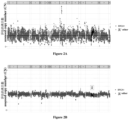
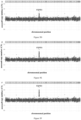
- the distribution of BRCA1 gene exon copy numbers demonstrates that, compared to the traditional method based on constructing a reference baseline, the method of the present application achieved better uniformity of copy number results, especially for batch B probes with significant batch differences, with a more pronounced effect, and no false-positive copy number variations were detected in both groups of experimental data.
- the database in the present application which included two or more reference sample groups with consistency in variation across target regions, was obtained.
- the advantage of the database in the present application was: through large-scale sample cluster analysis, reference samples were divided into different categories of reference sample groups, constructing sample-specific background baselines, significantly reducing the false positives produced by batch effects in the detection of copy number variations in high-throughput sequencing data, and increasing the stability of results.
- the method in the present application to eliminate batch effects did not require ensuring a sufficient number of samples of the same gene panel within the same batch, greatly reducing the difficulties in practical applications.
- a baseline was constructed using 655 reference samples, employing the database establishment method in the present application, such as the k-means clustering algorithm, to divide the reference samples into 5 reference sample groups, thus constructing 5 different candidate baselines for the database.
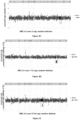
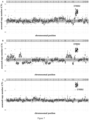
- the optimal baseline matched using the method of the present application is closest to the sample to be tested (the distance value between the sample and the baseline is the smallest), resulting in the lowest overall fluctuation in copy number (SD), the most stable copy number distribution graph, and minimal noise, indicating that the detection results of this method were more stable.
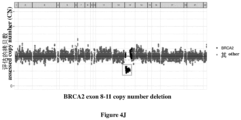
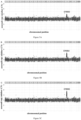
- the method of present application could stably detect all genes and different copy number states, whereas other baselines could not stably detect when the copy number was 3.
Landscapes
- Life Sciences & Earth Sciences (AREA)
- Health & Medical Sciences (AREA)
- Engineering & Computer Science (AREA)
- Physics & Mathematics (AREA)
- Chemical & Material Sciences (AREA)
- Bioinformatics & Cheminformatics (AREA)
- Proteomics, Peptides & Aminoacids (AREA)
- Biotechnology (AREA)
- Analytical Chemistry (AREA)
- General Health & Medical Sciences (AREA)
- Biophysics (AREA)
- Spectroscopy & Molecular Physics (AREA)
- Evolutionary Biology (AREA)
- Molecular Biology (AREA)
- Medical Informatics (AREA)
- Genetics & Genomics (AREA)
- Theoretical Computer Science (AREA)
- Bioinformatics & Computational Biology (AREA)
- Organic Chemistry (AREA)
- Wood Science & Technology (AREA)
- Zoology (AREA)
- Microbiology (AREA)
- Immunology (AREA)
- Biochemistry (AREA)
- General Engineering & Computer Science (AREA)
- Measuring Or Testing Involving Enzymes Or Micro-Organisms (AREA)
- Apparatus Associated With Microorganisms And Enzymes (AREA)
Applications Claiming Priority (3)
| Application Number | Priority Date | Filing Date | Title |
|---|---|---|---|
| CN202111002171.4A CN113674803B (zh) | 2021-08-30 | 2021-08-30 | 一种拷贝数变异的检测方法、装置、存储介质及其应用 |
| CN202111095132.3A CN113789371B (zh) | 2021-09-17 | 2021-09-17 | 一种基于批次矫正的拷贝数变异的检测方法 |
| PCT/CN2022/115447 WO2023030233A1 (fr) | 2021-08-30 | 2022-08-29 | Procédé de détection de variation de nombre de copies et son application |
Publications (2)
| Publication Number | Publication Date |
|---|---|
| EP4397773A1 true EP4397773A1 (fr) | 2024-07-10 |
| EP4397773A4 EP4397773A4 (fr) | 2025-09-10 |
Family
ID=85410853
Family Applications (1)
| Application Number | Title | Priority Date | Filing Date |
|---|---|---|---|
| EP22863369.9A Pending EP4397773A4 (fr) | 2021-08-30 | 2022-08-29 | Procédé de détection de variation de nombre de copies et son application |
Country Status (3)
| Country | Link |
|---|---|
| EP (1) | EP4397773A4 (fr) |
| JP (1) | JP7745090B2 (fr) |
| WO (1) | WO2023030233A1 (fr) |
Families Citing this family (4)
| Publication number | Priority date | Publication date | Assignee | Title |
|---|---|---|---|---|
| CN117334249B (zh) * | 2023-05-30 | 2026-03-17 | 上海品峰医疗科技有限公司 | 基于扩增子测序数据检测拷贝数变异的方法、设备和介质 |
| CN117265069B (zh) * | 2023-09-21 | 2024-05-14 | 北京安智因生物技术有限公司 | 基于半导体测序平台检测brca1/2基因拷贝数变异 |
| CN117153249B (zh) * | 2023-10-26 | 2024-02-02 | 北京华宇亿康生物工程技术有限公司 | 用于检测smn基因拷贝数变异的方法、设备和介质 |
| CN120748484B (zh) * | 2025-08-15 | 2025-11-18 | 广州燃石医学检验所有限公司 | 基因拷贝数变异类型检测方法及相关产品 |
Family Cites Families (14)
| Publication number | Priority date | Publication date | Assignee | Title |
|---|---|---|---|---|
| US20130316915A1 (en) | 2010-10-13 | 2013-11-28 | Aaron Halpern | Methods for determining absolute genome-wide copy number variations of complex tumors |
| ES2741966T3 (es) | 2011-12-31 | 2020-02-12 | Bgi Genomics Co Ltd | Método para detectar una variación genética |
| WO2013107048A1 (fr) | 2012-01-20 | 2013-07-25 | 深圳华大基因健康科技有限公司 | Procédé et système pour déterminer s'il existe une variabilité du nombre de copies dans un génome échantillon, et support lisible par ordinateur |
| WO2016000267A1 (fr) * | 2014-07-04 | 2016-01-07 | 深圳华大基因股份有限公司 | Procédé permettant de déterminer la séquence d'une sonde et procédé de détection de variation structurale génomique |
| CN104133914B (zh) * | 2014-08-12 | 2017-03-08 | 厦门万基生物科技有限公司 | 一种消除高通量测序引入的gc偏差及对染色体拷贝数变异的检测方法 |
| US20160300013A1 (en) * | 2015-04-10 | 2016-10-13 | Agilent Technologies, Inc. | METHOD FOR SIMULTANEOUS DETECTION OF GENOME-WIDE COPY NUMBER CHANGES, cnLOH, INDELS, AND GENE MUTATIONS |
| US10395759B2 (en) | 2015-05-18 | 2019-08-27 | Regeneron Pharmaceuticals, Inc. | Methods and systems for copy number variant detection |
| CN106951737B (zh) * | 2016-11-18 | 2019-06-14 | 南方医科大学 | 一种检测流产组织dna拷贝数变异和嵌合体的方法 |
| CN108256292B (zh) | 2016-12-29 | 2021-11-02 | 浙江安诺优达生物科技有限公司 | 一种拷贝数变异检测装置 |
| CN106650312B (zh) * | 2016-12-29 | 2022-05-17 | 浙江安诺优达生物科技有限公司 | 一种用于循环肿瘤dna拷贝数变异检测的装置 |
| CN108427864B (zh) * | 2018-02-14 | 2019-01-29 | 南京世和基因生物技术有限公司 | 一种拷贝数变异的检测方法、装置以及计算机可读介质 |
| CN111968701B (zh) * | 2020-08-27 | 2022-10-04 | 北京吉因加科技有限公司 | 检测指定基因组区域体细胞拷贝数变异的方法和装置 |
| CN113674803B (zh) * | 2021-08-30 | 2023-08-08 | 广州燃石医学检验所有限公司 | 一种拷贝数变异的检测方法、装置、存储介质及其应用 |
| CN113789371B (zh) * | 2021-09-17 | 2024-09-10 | 广州燃石医学检验所有限公司 | 一种基于批次矫正的拷贝数变异的检测方法 |
-
2022
- 2022-08-29 EP EP22863369.9A patent/EP4397773A4/fr active Pending
- 2022-08-29 JP JP2024514011A patent/JP7745090B2/ja active Active
- 2022-08-29 WO PCT/CN2022/115447 patent/WO2023030233A1/fr not_active Ceased
Also Published As
| Publication number | Publication date |
|---|---|
| JP2024532497A (ja) | 2024-09-05 |
| JP7745090B2 (ja) | 2025-09-26 |
| EP4397773A4 (fr) | 2025-09-10 |
| WO2023030233A1 (fr) | 2023-03-09 |
Similar Documents
| Publication | Publication Date | Title |
|---|---|---|
| CN113674803B (zh) | 一种拷贝数变异的检测方法、装置、存储介质及其应用 | |
| EP4397773A1 (fr) | Procédé de détection de variation de nombre de copies et son application | |
| CN109880910B (zh) | 一种肿瘤突变负荷的检测位点组合、检测方法、检测试剂盒及系统 | |
| CN111321140B (zh) | 一种基于单样本的肿瘤突变负荷检测方法和装置 | |
| US20250259709A1 (en) | Systems and methods for evaluating tumor fraction | |
| CN109427412B (zh) | 用于检测肿瘤突变负荷的序列组合和其设计方法 | |
| US20220399080A1 (en) | Methods and products for minimal residual disease detection | |
| WO2019157791A1 (fr) | Procédé et dispositif de détection de variations du nombre de copies, et milieu pouvant être lu par ordinateur | |
| US12603150B2 (en) | Calculating cell-type RNA profiles for diagnosis and treatment | |
| CN110387419B (zh) | 实体瘤多基因检测基因芯片及其制备方法和检测装置 | |
| CN113249483B (zh) | 一种检测肿瘤突变负荷的基因组合、系统及应用 | |
| US20220072553A1 (en) | Device and method for detecting tumor mutation burden (tmb) based on capture sequencing | |
| CN120690283B (zh) | 基因标志物在食道、胃、肠多癌种早筛中的应用、早筛模型构建方法以及检测装置 | |
| US12494290B2 (en) | Noise measure for copy number analysis on targeted panel sequencing data | |
| CN116940987A (zh) | 用于确定变体频率和监测疾病进展的方法 | |
| Tang et al. | Tumor mutation burden derived from small next generation sequencing targeted gene panel as an initial screening method | |
| US20230057154A1 (en) | Somatic variant cooccurrence with abnormally methylated fragments | |
| EP4629247A1 (fr) | Procédés et systèmes d'estimation de fraction tumorale circulante informée d'une tumeur | |
| EP4600963A1 (fr) | Procédés et systèmes pour déterminer la charge mutationnelle d'une tumeur du sang dans un dosage de biopsie liquide | |
| KR20180112727A (ko) | 생물학적 시료의 핵산 품질을 결정하는 방법 | |
| KR102491485B1 (ko) | 순환 종양 핵산의 복제수 변이 분석 방법 | |
| CN118043892A (zh) | 体细胞变体与异常甲基化片段的共现 | |
| WO2023164713A1 (fr) | Ensembles de sondes pour dosage de biopsie liquide | |
| HK40057523B (zh) | 一种拷贝数变异的检测方法、装置、存储介质及其应用 | |
| CN114908163A (zh) | 预测肺癌免疫检查点抑制剂疗效的标志物及其应用 |
Legal Events
| Date | Code | Title | Description |
|---|---|---|---|
| STAA | Information on the status of an ep patent application or granted ep patent |
Free format text: STATUS: THE INTERNATIONAL PUBLICATION HAS BEEN MADE |
|
| PUAI | Public reference made under article 153(3) epc to a published international application that has entered the european phase |
Free format text: ORIGINAL CODE: 0009012 |
|
| STAA | Information on the status of an ep patent application or granted ep patent |
Free format text: STATUS: REQUEST FOR EXAMINATION WAS MADE |
|
| 17P | Request for examination filed |
Effective date: 20240327 |
|
| AK | Designated contracting states |
Kind code of ref document: A1 Designated state(s): AL AT BE BG CH CY CZ DE DK EE ES FI FR GB GR HR HU IE IS IT LI LT LU LV MC MK MT NL NO PL PT RO RS SE SI SK SM TR |
|
| DAV | Request for validation of the european patent (deleted) | ||
| DAX | Request for extension of the european patent (deleted) | ||
| REG | Reference to a national code |
Ref country code: DE Ref legal event code: R079 Free format text: PREVIOUS MAIN CLASS: C12Q0001686900 Ipc: G16B0020100000 |
|
| A4 | Supplementary search report drawn up and despatched |
Effective date: 20250807 |
|
| RIC1 | Information provided on ipc code assigned before grant |
Ipc: G16B 20/10 20190101AFI20250801BHEP Ipc: C12Q 1/6869 20180101ALI20250801BHEP Ipc: G16B 20/20 20190101ALI20250801BHEP Ipc: G16B 20/30 20190101ALI20250801BHEP Ipc: G16B 30/10 20190101ALI20250801BHEP |