EP4397774A2 - Procédés de codage à barres de molécules d'acide nucléique à partir de cellules individuelles ou de populations de cellules - Google Patents
Procédés de codage à barres de molécules d'acide nucléique à partir de cellules individuelles ou de populations de cellules Download PDFInfo
- Publication number
- EP4397774A2 EP4397774A2 EP24163869.1A EP24163869A EP4397774A2 EP 4397774 A2 EP4397774 A2 EP 4397774A2 EP 24163869 A EP24163869 A EP 24163869A EP 4397774 A2 EP4397774 A2 EP 4397774A2
- Authority
- EP
- European Patent Office
- Prior art keywords
- sequence
- nucleic acid
- cell
- barcode
- bead
- Prior art date
- Legal status (The legal status is an assumption and is not a legal conclusion. Google has not performed a legal analysis and makes no representation as to the accuracy of the status listed.)
- Granted
Links
Images


















Classifications
-
- C—CHEMISTRY; METALLURGY
- C12—BIOCHEMISTRY; BEER; SPIRITS; WINE; VINEGAR; MICROBIOLOGY; ENZYMOLOGY; MUTATION OR GENETIC ENGINEERING
- C12N—MICROORGANISMS OR ENZYMES; COMPOSITIONS THEREOF; PROPAGATING, PRESERVING, OR MAINTAINING MICROORGANISMS; MUTATION OR GENETIC ENGINEERING; CULTURE MEDIA
- C12N15/00—Mutation or genetic engineering; DNA or RNA concerning genetic engineering, vectors, e.g. plasmids, or their isolation, preparation or purification; Use of hosts therefor
- C12N15/09—Recombinant DNA-technology
- C12N15/10—Processes for the isolation, preparation or purification of DNA or RNA
- C12N15/1003—Extracting or separating nucleic acids from biological samples, e.g. pure separation or isolation methods; Conditions, buffers or apparatuses therefor
-
- C—CHEMISTRY; METALLURGY
- C12—BIOCHEMISTRY; BEER; SPIRITS; WINE; VINEGAR; MICROBIOLOGY; ENZYMOLOGY; MUTATION OR GENETIC ENGINEERING
- C12N—MICROORGANISMS OR ENZYMES; COMPOSITIONS THEREOF; PROPAGATING, PRESERVING, OR MAINTAINING MICROORGANISMS; MUTATION OR GENETIC ENGINEERING; CULTURE MEDIA
- C12N15/00—Mutation or genetic engineering; DNA or RNA concerning genetic engineering, vectors, e.g. plasmids, or their isolation, preparation or purification; Use of hosts therefor
- C12N15/09—Recombinant DNA-technology
- C12N15/10—Processes for the isolation, preparation or purification of DNA or RNA
- C12N15/1034—Isolating an individual clone by screening libraries
- C12N15/1062—Isolating an individual clone by screening libraries mRNA-Display, e.g. polypeptide and encoding template are connected covalently
-
- C—CHEMISTRY; METALLURGY
- C12—BIOCHEMISTRY; BEER; SPIRITS; WINE; VINEGAR; MICROBIOLOGY; ENZYMOLOGY; MUTATION OR GENETIC ENGINEERING
- C12N—MICROORGANISMS OR ENZYMES; COMPOSITIONS THEREOF; PROPAGATING, PRESERVING, OR MAINTAINING MICROORGANISMS; MUTATION OR GENETIC ENGINEERING; CULTURE MEDIA
- C12N15/00—Mutation or genetic engineering; DNA or RNA concerning genetic engineering, vectors, e.g. plasmids, or their isolation, preparation or purification; Use of hosts therefor
- C12N15/09—Recombinant DNA-technology
- C12N15/10—Processes for the isolation, preparation or purification of DNA or RNA
- C12N15/1034—Isolating an individual clone by screening libraries
- C12N15/1065—Preparation or screening of tagged libraries, e.g. tagged microorganisms by STM-mutagenesis, tagged polynucleotides, gene tags
-
- C—CHEMISTRY; METALLURGY
- C12—BIOCHEMISTRY; BEER; SPIRITS; WINE; VINEGAR; MICROBIOLOGY; ENZYMOLOGY; MUTATION OR GENETIC ENGINEERING
- C12N—MICROORGANISMS OR ENZYMES; COMPOSITIONS THEREOF; PROPAGATING, PRESERVING, OR MAINTAINING MICROORGANISMS; MUTATION OR GENETIC ENGINEERING; CULTURE MEDIA
- C12N15/00—Mutation or genetic engineering; DNA or RNA concerning genetic engineering, vectors, e.g. plasmids, or their isolation, preparation or purification; Use of hosts therefor
- C12N15/09—Recombinant DNA-technology
- C12N15/10—Processes for the isolation, preparation or purification of DNA or RNA
- C12N15/1034—Isolating an individual clone by screening libraries
- C12N15/1075—Isolating an individual clone by screening libraries by coupling phenotype to genotype, not provided for in other groups of this subclass
-
- C—CHEMISTRY; METALLURGY
- C12—BIOCHEMISTRY; BEER; SPIRITS; WINE; VINEGAR; MICROBIOLOGY; ENZYMOLOGY; MUTATION OR GENETIC ENGINEERING
- C12N—MICROORGANISMS OR ENZYMES; COMPOSITIONS THEREOF; PROPAGATING, PRESERVING, OR MAINTAINING MICROORGANISMS; MUTATION OR GENETIC ENGINEERING; CULTURE MEDIA
- C12N15/00—Mutation or genetic engineering; DNA or RNA concerning genetic engineering, vectors, e.g. plasmids, or their isolation, preparation or purification; Use of hosts therefor
- C12N15/09—Recombinant DNA-technology
- C12N15/10—Processes for the isolation, preparation or purification of DNA or RNA
- C12N15/1096—Processes for the isolation, preparation or purification of DNA or RNA cDNA Synthesis; Subtracted cDNA library construction, e.g. RT, RT-PCR
-
- C—CHEMISTRY; METALLURGY
- C12—BIOCHEMISTRY; BEER; SPIRITS; WINE; VINEGAR; MICROBIOLOGY; ENZYMOLOGY; MUTATION OR GENETIC ENGINEERING
- C12N—MICROORGANISMS OR ENZYMES; COMPOSITIONS THEREOF; PROPAGATING, PRESERVING, OR MAINTAINING MICROORGANISMS; MUTATION OR GENETIC ENGINEERING; CULTURE MEDIA
- C12N5/00—Undifferentiated human, animal or plant cells, e.g. cell lines; Tissues; Cultivation or maintenance thereof; Culture media therefor
- C12N5/06—Animal cells or tissues; Human cells or tissues
- C12N5/0602—Vertebrate cells
-
- C—CHEMISTRY; METALLURGY
- C12—BIOCHEMISTRY; BEER; SPIRITS; WINE; VINEGAR; MICROBIOLOGY; ENZYMOLOGY; MUTATION OR GENETIC ENGINEERING
- C12Q—MEASURING OR TESTING PROCESSES INVOLVING ENZYMES, NUCLEIC ACIDS OR MICROORGANISMS; COMPOSITIONS OR TEST PAPERS THEREFOR; PROCESSES OF PREPARING SUCH COMPOSITIONS; CONDITION-RESPONSIVE CONTROL IN MICROBIOLOGICAL OR ENZYMOLOGICAL PROCESSES
- C12Q1/00—Measuring or testing processes involving enzymes, nucleic acids or microorganisms; Compositions therefor; Processes of preparing such compositions
- C12Q1/68—Measuring or testing processes involving enzymes, nucleic acids or microorganisms; Compositions therefor; Processes of preparing such compositions involving nucleic acids
- C12Q1/6804—Nucleic acid analysis using immunogens
-
- C—CHEMISTRY; METALLURGY
- C12—BIOCHEMISTRY; BEER; SPIRITS; WINE; VINEGAR; MICROBIOLOGY; ENZYMOLOGY; MUTATION OR GENETIC ENGINEERING
- C12Q—MEASURING OR TESTING PROCESSES INVOLVING ENZYMES, NUCLEIC ACIDS OR MICROORGANISMS; COMPOSITIONS OR TEST PAPERS THEREFOR; PROCESSES OF PREPARING SUCH COMPOSITIONS; CONDITION-RESPONSIVE CONTROL IN MICROBIOLOGICAL OR ENZYMOLOGICAL PROCESSES
- C12Q1/00—Measuring or testing processes involving enzymes, nucleic acids or microorganisms; Compositions therefor; Processes of preparing such compositions
- C12Q1/68—Measuring or testing processes involving enzymes, nucleic acids or microorganisms; Compositions therefor; Processes of preparing such compositions involving nucleic acids
- C12Q1/6806—Preparing nucleic acids for analysis, e.g. for polymerase chain reaction [PCR] assay
-
- C—CHEMISTRY; METALLURGY
- C12—BIOCHEMISTRY; BEER; SPIRITS; WINE; VINEGAR; MICROBIOLOGY; ENZYMOLOGY; MUTATION OR GENETIC ENGINEERING
- C12Q—MEASURING OR TESTING PROCESSES INVOLVING ENZYMES, NUCLEIC ACIDS OR MICROORGANISMS; COMPOSITIONS OR TEST PAPERS THEREFOR; PROCESSES OF PREPARING SUCH COMPOSITIONS; CONDITION-RESPONSIVE CONTROL IN MICROBIOLOGICAL OR ENZYMOLOGICAL PROCESSES
- C12Q1/00—Measuring or testing processes involving enzymes, nucleic acids or microorganisms; Compositions therefor; Processes of preparing such compositions
- C12Q1/68—Measuring or testing processes involving enzymes, nucleic acids or microorganisms; Compositions therefor; Processes of preparing such compositions involving nucleic acids
- C12Q1/6813—Hybridisation assays
- C12Q1/6816—Hybridisation assays characterised by the detection means
-
- C—CHEMISTRY; METALLURGY
- C12—BIOCHEMISTRY; BEER; SPIRITS; WINE; VINEGAR; MICROBIOLOGY; ENZYMOLOGY; MUTATION OR GENETIC ENGINEERING
- C12Q—MEASURING OR TESTING PROCESSES INVOLVING ENZYMES, NUCLEIC ACIDS OR MICROORGANISMS; COMPOSITIONS OR TEST PAPERS THEREFOR; PROCESSES OF PREPARING SUCH COMPOSITIONS; CONDITION-RESPONSIVE CONTROL IN MICROBIOLOGICAL OR ENZYMOLOGICAL PROCESSES
- C12Q1/00—Measuring or testing processes involving enzymes, nucleic acids or microorganisms; Compositions therefor; Processes of preparing such compositions
- C12Q1/68—Measuring or testing processes involving enzymes, nucleic acids or microorganisms; Compositions therefor; Processes of preparing such compositions involving nucleic acids
- C12Q1/6813—Hybridisation assays
- C12Q1/6834—Enzymatic or biochemical coupling of nucleic acids to a solid phase
-
- C—CHEMISTRY; METALLURGY
- C12—BIOCHEMISTRY; BEER; SPIRITS; WINE; VINEGAR; MICROBIOLOGY; ENZYMOLOGY; MUTATION OR GENETIC ENGINEERING
- C12Q—MEASURING OR TESTING PROCESSES INVOLVING ENZYMES, NUCLEIC ACIDS OR MICROORGANISMS; COMPOSITIONS OR TEST PAPERS THEREFOR; PROCESSES OF PREPARING SUCH COMPOSITIONS; CONDITION-RESPONSIVE CONTROL IN MICROBIOLOGICAL OR ENZYMOLOGICAL PROCESSES
- C12Q1/00—Measuring or testing processes involving enzymes, nucleic acids or microorganisms; Compositions therefor; Processes of preparing such compositions
- C12Q1/68—Measuring or testing processes involving enzymes, nucleic acids or microorganisms; Compositions therefor; Processes of preparing such compositions involving nucleic acids
- C12Q1/6844—Nucleic acid amplification reactions
- C12Q1/6853—Nucleic acid amplification reactions using modified primers or templates
-
- C—CHEMISTRY; METALLURGY
- C12—BIOCHEMISTRY; BEER; SPIRITS; WINE; VINEGAR; MICROBIOLOGY; ENZYMOLOGY; MUTATION OR GENETIC ENGINEERING
- C12Q—MEASURING OR TESTING PROCESSES INVOLVING ENZYMES, NUCLEIC ACIDS OR MICROORGANISMS; COMPOSITIONS OR TEST PAPERS THEREFOR; PROCESSES OF PREPARING SUCH COMPOSITIONS; CONDITION-RESPONSIVE CONTROL IN MICROBIOLOGICAL OR ENZYMOLOGICAL PROCESSES
- C12Q1/00—Measuring or testing processes involving enzymes, nucleic acids or microorganisms; Compositions therefor; Processes of preparing such compositions
- C12Q1/68—Measuring or testing processes involving enzymes, nucleic acids or microorganisms; Compositions therefor; Processes of preparing such compositions involving nucleic acids
- C12Q1/6844—Nucleic acid amplification reactions
- C12Q1/686—Polymerase chain reaction [PCR]
-
- C—CHEMISTRY; METALLURGY
- C12—BIOCHEMISTRY; BEER; SPIRITS; WINE; VINEGAR; MICROBIOLOGY; ENZYMOLOGY; MUTATION OR GENETIC ENGINEERING
- C12Q—MEASURING OR TESTING PROCESSES INVOLVING ENZYMES, NUCLEIC ACIDS OR MICROORGANISMS; COMPOSITIONS OR TEST PAPERS THEREFOR; PROCESSES OF PREPARING SUCH COMPOSITIONS; CONDITION-RESPONSIVE CONTROL IN MICROBIOLOGICAL OR ENZYMOLOGICAL PROCESSES
- C12Q1/00—Measuring or testing processes involving enzymes, nucleic acids or microorganisms; Compositions therefor; Processes of preparing such compositions
- C12Q1/68—Measuring or testing processes involving enzymes, nucleic acids or microorganisms; Compositions therefor; Processes of preparing such compositions involving nucleic acids
- C12Q1/6869—Methods for sequencing
-
- C—CHEMISTRY; METALLURGY
- C12—BIOCHEMISTRY; BEER; SPIRITS; WINE; VINEGAR; MICROBIOLOGY; ENZYMOLOGY; MUTATION OR GENETIC ENGINEERING
- C12Q—MEASURING OR TESTING PROCESSES INVOLVING ENZYMES, NUCLEIC ACIDS OR MICROORGANISMS; COMPOSITIONS OR TEST PAPERS THEREFOR; PROCESSES OF PREPARING SUCH COMPOSITIONS; CONDITION-RESPONSIVE CONTROL IN MICROBIOLOGICAL OR ENZYMOLOGICAL PROCESSES
- C12Q1/00—Measuring or testing processes involving enzymes, nucleic acids or microorganisms; Compositions therefor; Processes of preparing such compositions
- C12Q1/68—Measuring or testing processes involving enzymes, nucleic acids or microorganisms; Compositions therefor; Processes of preparing such compositions involving nucleic acids
- C12Q1/6869—Methods for sequencing
- C12Q1/6874—Methods for sequencing involving nucleic acid arrays, e.g. sequencing by hybridisation
-
- C—CHEMISTRY; METALLURGY
- C12—BIOCHEMISTRY; BEER; SPIRITS; WINE; VINEGAR; MICROBIOLOGY; ENZYMOLOGY; MUTATION OR GENETIC ENGINEERING
- C12Q—MEASURING OR TESTING PROCESSES INVOLVING ENZYMES, NUCLEIC ACIDS OR MICROORGANISMS; COMPOSITIONS OR TEST PAPERS THEREFOR; PROCESSES OF PREPARING SUCH COMPOSITIONS; CONDITION-RESPONSIVE CONTROL IN MICROBIOLOGICAL OR ENZYMOLOGICAL PROCESSES
- C12Q1/00—Measuring or testing processes involving enzymes, nucleic acids or microorganisms; Compositions therefor; Processes of preparing such compositions
- C12Q1/68—Measuring or testing processes involving enzymes, nucleic acids or microorganisms; Compositions therefor; Processes of preparing such compositions involving nucleic acids
- C12Q1/6844—Nucleic acid amplification reactions
- C12Q1/6853—Nucleic acid amplification reactions using modified primers or templates
- C12Q1/6855—Ligating adaptors
Definitions
- Nucleic acid sequencing can be used to obtain information in a wide variety of biomedical contexts, including diagnostics, prognostics, biotechnology, and forensic biology. Sequencing may involve methods including Maxam-Gilbert sequencing and chain-termination methods, or de novo sequencing methods including shotgun sequencing and bridge PCR, or next-generation methods including polony sequencing, 454 pyrosequencing, Illumina sequencing, SOLiD sequencing, Ion Torrent semiconductor sequencing, HeliScope single molecule sequencing, SMRT ® sequencing, and others. Nucleic acid sequencing technologies, including next-generation DNA sequencing, have been useful for genomic and proteomic analysis of cell populations.
- Such cells include, but are not limited to, cancer cells, fetal cells, and immune cells involved in immune responses.
- methods, compositions and systems for analyzing individual cells or a small population of cells including the analysis and attribution of nucleic acids from and to these individual cells or cell populations.
- the present disclosure provides a method for nucleic acid sequencing, comprising (a) providing a plurality of droplets, wherein a droplet of the plurality of droplets comprises (i) a ribonucleic acid (RNA) molecule comprising a nucleic acid sequence, and (ii) a bead comprising a nucleic acid barcode molecule coupled thereto, wherein the nucleic acid barcode molecule comprises a barcode sequence; (b) using the RNA molecule and the nucleic acid barcode molecule to generate a barcoded nucleic acid molecule comprising, from a 5'end to a 3'end, a sequence corresponding to the nucleic acid sequence of the RNA molecule and a complement of the barcode sequence; and (c) sequencing the barcoded nucleic acid molecule or a derivative thereof.
- RNA ribonucleic acid
- a bead comprising a nucleic acid barcode molecule coupled thereto, wherein the nucleic acid barcode
- the RNA molecule is from a cell. In some embodiments, the droplet comprises the cell. In some embodiments, the method further comprises releasing the RNA molecule from the cell prior to (b).
- each of the plurality of nucleic acid molecules comprises the barcode sequence. In some embodiments, each of the plurality of nucleic acid molecules comprises an additional barcode sequence that varies across the plurality of nucleic acid molecules.
- the nucleic acid barcode molecule comprises a template switching sequence.
- the droplet comprises (i) an additional nucleic acid molecule comprising an additional nucleic acid sequence, and (ii) an additional nucleic acid barcode molecule comprising an additional barcode sequence, and wherein in (b) the additional nucleic acid molecule and the additional nucleic acid barcode molecule are used to generate an additional barcoded nucleic acid molecule comprising, from a 5'end to a 3'end, the additional barcode sequence and an additional sequence corresponding to the additional nucleic acid sequence.
- the additional nucleic acid barcode molecule is coupled to the bead. In some embodiments, the additional nucleic acid barcode molecule is coupled to an additional bead.
- the method further comprises releasing the barcoded nucleic acid molecule or a derivative thereof from the droplet.
- the barcoded nucleic acid molecule further comprises, towards a 3' end, a functional sequence for permitting the barcoded nucleic acid molecule or a derivative thereof to couple to a flow cell of a sequencer.
- the sequence is a reverse complement of the nucleic acid sequence.
- the method further comprises releasing the nucleic acid barcode molecule from the bead.
- the nucleic acid barcode molecule is released from the bead before the barcoded nucleic acid molecule is generated.
- the nucleic acid barcode molecule is released from the bead while the barcoded nucleic acid molecule is generated.
- the nucleic acid barcode molecule is released from the bead after the barcoded nucleic acid molecule is generated.
- the bead is a gel bead.
- the present disclosure provides a method for generating a labeled polynucleotide.
- the method comprises (a) subjecting a reaction mixture to a first amplification reaction under conditions sufficient to generate a first amplification product, wherein the reaction mixture comprises a template polynucleotide and (i) a primer having a sequence towards a 3' end that hybridizes to the template polynucleotide, and (ii) a template switching oligonucleotide that comprises a first predefined sequence towards a 5' end; and (b) subjecting the first amplification product to a second amplification reaction in the presence of a barcoded oligonucleotide under conditions sufficient to generate a second amplification product, wherein the barcoded oligonucleotide comprises a sequence of at least a segment of the template switching oligonucleotide and at least a second predefined sequence, wherein (i) the second amplification reaction uses the first amplification product as
- the second amplification reaction uses the first amplification product as a template and the barcoded oligonucleotide as a primer. In some embodiments, the second amplification reaction uses the barcoded oligonucleotide as a template and at least a portion of the first amplification product as a primer.
- the template polynucleotide is obtained from a single cell.
- the single cell is an immune cell.
- the immune cell is a T-cell.
- the immune cell is a B-cell.
- the method further comprises lysing the single cell in the same reaction volume to obtain the template polynucleotide prior to generating the first amplification product in the first amplification reaction.
- a concentration of the template switching oligonucleotide in the same reaction volume is at least twenty times that of a concentration of the barcoded oligonucleotide in the same reaction volume. In some embodiments, a concentration of the template switching oligonucleotide in the same reaction volume is at least fifty times that of a concentration of the barcoded oligonucleotide in the same reaction volume. In some embodiments, a concentration of the template switching oligonucleotide in the same reaction volume is at least one hundred times that of a concentration of the barcoded oligonucleotide in the same reaction volume. In some embodiments, a concentration of the template switching oligonucleotide in the same reaction volume is at least two hundred times that of a concentration of the barcoded oligonucleotide in the same reaction volume.
- the second amplification reaction is facilitated using an enzyme comprising polymerase activity.
- the enzyme is a DNA-dependent polymerase.
- the primer is among a plurality of primers.
- the sequence towards the 3' end of the primer comprises a random sequence.
- the sequence towards the 3' end of the primer comprises a gene specific sequence.
- the sequence towards the 3' end of the primer comprises a polyA sequence.
- the method further comprises subjecting the second amplification product to sequencing.
- the method further comprises subjecting the additional amplification product to sequencing.
- the cell is a mammalian cell. In some embodiments, the cell is an immune cell. In some embodiments, the immune cell is a B-cell. In some embodiments, the immune cell is a T-cell. In some embodiments, the cell is cancer cell. In some embodiments, the cancer cell is obtained from a tissue sample. In some embodiments, the cancer cell is obtained from a biological fluid. In some embodiments, the biological fluid comprises blood. In some embodiments, the biological fluid comprises lymph fluid.
- the reaction volume further comprises an enzyme.
- the enzyme is a DNA polymerase.
- the enzyme is a reverse transcriptase.
- the reaction volume further comprises at least one reagent for nucleic acid amplification.
- the at least one reagent comprises dNTPs.
- the at least one reagent comprises oligonucleotide primers.
- the microcapsule comprises a polymer gel. In some embodiments, the polymer gel is a polyacrylamide. In some embodiments, the microcapsule comprises a bead. In some embodiments, the bead is a gel bead. In some embodiments, the microcapsule comprises a chemical cross-linker. In some embodiments, the chemical cross-linker is a disulfide bond. In some embodiments, the dissociation condition is at least one of a biological stimulus, a chemical stimulus, a thermal stimulus, an electrical stimulus, a magnetic stimulus, a photo stimulus, or any combination thereof.
- the barcoded oligonucleotide comprises at least one of an adaptor sequence, a barcode sequence, unique molecular identifier sequence, a primer binding site, and a sequencing primer binding site.
- the same reaction volume comprises an emulsion, a droplet, or a microwell.
- the method further comprises performing a third reaction, wherein the third reaction specifically amplifies variable region cDNAs, wherein the variable region cDNA are derived from a T cell receptor cDNA, a B cell receptor cDNA, or an immunoglobulin cDNA.
- the third reaction comprises use of a primer that specifically binds in the constant region of the T cell receptor cDNA, B cell receptor cDNA, or immunoglobulin cDNA, and extends through the variable region of the T cell receptor cDNA, B cell receptor cDNA, or immunoglobulin cDNA.
- the present disclosure provides a non-transitory computer-readable medium comprising machine-executable code that, upon execution by one of more computer processors, implements a method for nucleic acid sequencing, comprising (a) providing a plurality of droplets, wherein a droplet of the plurality of droplets comprises (i) a ribonucleic acid (RNA) molecule comprising a nucleic acid sequence, and (ii) a bead comprising a nucleic acid barcode molecule coupled thereto, wherein the nucleic acid barcode molecule comprises a barcode sequence; (b) using the RNA molecule and the nucleic acid barcode molecule to generate a barcoded nucleic acid molecule comprising, from a 5'end to a 3'end, a sequence corresponding to the nucleic acid sequence of the RNA molecule and a complement of the barcode sequence; and (c) sequencing the barcoded nucleic acid molecule or a derivative thereof.
- RNA ribonucleic acid
- sequence of nucleotide bases in one or more polynucleotides generally refers to methods and technologies for determining the sequence of nucleotide bases in one or more polynucleotides.
- the polynucleotides can be, for example, deoxyribonucleic acid (DNA) or ribonucleic acid (RNA), including variants or derivatives thereof (e.g., single stranded DNA).
- Sequencing can be performed by various systems currently available, such as, with limitation, a sequencing system by Illumina, Pacific Biosciences, Oxford Nanopore, or Life Technologies (Ion Torrent).
- Such devices may provide a plurality of raw genetic data corresponding to the genetic information of a subject (e.g., human), as generated by the device from a sample provided by the subject. In some situations, systems and methods provided herein may be used with proteomic information.
- the term "bead,” as used herein, generally refers to a particle.
- the bead may be a solid or semi-solid particle.
- the bead may be a gel.
- the bead may be formed of a polymeric material.
- the bead may be magnetic or non-magnetic.
- Non-limiting examples of chemical cross-linkers include cystamine, gluteraldehyde, dimethyl suberimidate, N-Hydroxysuccinimide crosslinker BS3, formaldehyde, carbodiimide (EDC), SMCC, Sulfo-SMCC, vinylsilane, N,N'diallyltartardiamide (DATD), N,N'-Bis(acryloyl)cystamine (BAC), or homologs thereof.
- the crosslinker used in the present disclosure contains cystamine.
- acrylic acid a species comprising free COOH groups
- acrylamide acrylamide
- bis(acryloyl)cystamine can be co-polymerized together to generate a gel bead comprising free COOH groups.
- the COOH groups of the gel bead can be activated (e.g., via 1-Ethyl-3-(3-dimethylaminopropyl)carbodiimide (EDC) and N-Hydroxysuccinimide (NHS) or 4-(4,6-Dimethoxy-1,3,5-triazin-2-yl)-4-methylmorpholinium chloride (DMTMM)) such that they are reactive (e.g., reactive to amine functional groups where EDC/NHS or DMTMM are used for activation).
- EDC 1-Ethyl-3-(3-dimethylaminopropyl)carbodiimide
- NHS N-Hydroxysuccinimide
- DTMM 4-(4,6-Dimethoxy
- addition of moieties to a gel bead after gel bead formation may be advantageous.
- addition of an oligonucleotide (e.g., barcoded oligonucleotide) after gel bead formation may avoid loss of the species during chain transfer termination that can occur during polymerization.
- smaller precursors e.g., monomers or cross linkers that do not comprise side chain groups and linked moieties
- a degradable bead may be introduced into a partition, such as a droplet of an emulsion or a well, such that the bead degrades within the partition and any associated species (e.g., oligonucleotides) are released within the droplet when the appropriate stimulus is applied.
- the free species e.g., oligonucleotides
- a polyacrylamide bead comprising cystamine and linked, via a disulfide bond, to a barcode sequence, may be combined with a reducing agent within a droplet of a water-in-oil emulsion.
- reducing agents may include ⁇ -mercaptoethanol, (2S)-2-amino-1,4-dimercaptobutane (dithiobutylamine or DTBA), tris(2-carboxyethyl) phosphine (TCEP), or combinations thereof.
- a reducing agent may degrade the disulfide bonds formed between gel precursors forming the bead, and thus, degrade the bead.
- a change in pH of a solution such as an increase in pH, may trigger degradation of a bead.
- exposure to an aqueous solution, such as water may trigger hydrolytic degradation, and thus degradation of the bead.
- Patent Application Publication No. 20140155295 the full disclosure of which is incorporated herein by reference in its entirety for all purposes.
- Emulsion systems for creating stable droplets in non-aqueous or oil continuous phases are described in detail in, e.g., U.S. Patent Application Publication No. 20100105112 , the full disclosure of which is incorporated herein by reference in its entirety for all purposes.
- the relative flow rates of the fluids can be selected such that a majority of partitions are occupied, e.g., allowing for only a small percentage of unoccupied partitions.
- the flows and channel architectures are controlled as to ensure a desired number of singly occupied partitions, less than a certain level of unoccupied partitions and less than a certain level of multiply occupied partitions.
- these flows are controlled so as to present non-Poissonian distribution of single occupied partitions while providing lower levels of unoccupied partitions.
- the above noted ranges of unoccupied partitions can be achieved while still providing any of the single occupancy rates described above.
- the use of the systems and methods described herein creates resulting partitions that have multiple occupancy rates of less than 25%, less than 20%, less than 15%, less than 10%, and in many cases, less than 5%, while having unoccupied partitions of less than 50%, less than 40%, less than 30%, less than 20%, less than 10%, and in some cases, less than 5%.
- a substantial percentage of the overall occupied partitions can include both a microcapsule (e.g., bead) comprising barcoded oligonucleotides and a cell.
- multiply occupied partitions e.g., containing two, three, four or more cells and/or microcapsules (e.g., beads) comprising barcoded oligonucleotides within a single partition.
- the flow characteristics of the cell and/or bead containing fluids and partitioning fluids may be controlled to provide for such multiply occupied partitions.
- the flow parameters may be controlled to provide a desired occupancy rate at greater than 50% of the partitions, greater than 75%, and in some cases greater than 80%, 90%, 95%, or higher.
- the droplets may have overall volumes that are less than 1000 pL, less than 900 pL, less than 800 pL, less than 700 pL, less than 600 pL, less than 500 pL, less than 400pL, less than 300 pL, less than 200 pL, less than 100pL, less than 50 pL, less than 20 pL, less than 10 pL, or even less than 1 pL.
- sample fluid volume e.g., including co-partitioned cells
- the sample fluid volume within the partitions may be less than 90% of the above described volumes, less than 80%, less than 70%, less than 60%, less than 50%, less than 40%, less than 30%, less than 20%, or even less than 10% the above described volumes.
- partitioning species may generate a population or plurality of partitions.
- any suitable number of partitions can be generated to generate the plurality of partitions.
- a plurality of partitions may be generated that comprises at least about 1,000 partitions, at least about 5,000 partitions, at least about 10,000 partitions, at least about 50,000 partitions, at least about 100,000 partitions, at least about 500,000 partitions, at least about 1,000,000 partitions, at least about 5,000,000 partitions at least about 10,000,000 partitions, at least about 50,000,000 partitions, at least about 100,000,000 partitions, at least about 500,000,000 partitions or at least about 1,000,000,000 partitions.
- the plurality of partitions may comprise both unoccupied partitions (e.g., empty partitions) and occupied partitions
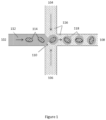
- the channel structure can include channel segments 102, 104, 106 and 108 communicating at a channel junction 110.
- a first aqueous fluid 112 that includes suspended cells 114 may be transported along channel segment 102 into junction 110, while a second fluid 116 that is immiscible with the aqueous fluid 112 is delivered to the junction 110 from channel segments 104 and 106 to create discrete droplets 118 of the aqueous fluid including individual cells 114, flowing into channel segment 108.
- this second fluid 116 comprises an oil, such as a fluorinated oil, that includes a fluorosurfactant for stabilizing the resulting droplets, e.g., inhibiting subsequent coalescence of the resulting droplets.
- a fluorinated oil such as a fluorinated oil
- fluorosurfactant for stabilizing the resulting droplets, e.g., inhibiting subsequent coalescence of the resulting droplets.
- cells may be encapsulated within a microcapsule that comprises an outer shell or layer or porous matrix in which is entrained one or more individual cells or small groups of cells, and may include other reagents. Encapsulation of cells may be carried out by a variety of processes. Such processes combine an aqueous fluid containing the cells to be analyzed with a polymeric precursor material that may be capable of being formed into a gel or other solid or semi-solid matrix upon application of a particular stimulus to the polymer precursor.
- Such stimuli include, e.g., thermal stimuli (either heating or cooling), photo-stimuli (e.g., through photo-curing), chemical stimuli (e.g., through crosslinking, polymerization initiation of the precursor (e.g., through added initiators), or the like.
- microcapsules comprising cells may be carried out by a variety of methods.
- air knife droplet or aerosol generators may be used to dispense droplets of precursor fluids into gelling solutions in order to form microcapsules that include individual cells or small groups of cells.
- membrane based encapsulation systems may be used to generate microcapsules comprising encapsulated cells as described herein.
- microfluidic systems like that shown in Figure 1 may be readily used in encapsulating cells as described herein.
- non-aqueous fluid 116 may also include an initiator to cause polymerization and/or crosslinking of the polymer precursor to form the microcapsule that includes the entrained cells.
- initiator to cause polymerization and/or crosslinking of the polymer precursor to form the microcapsule that includes the entrained cells.
- polymer precursor/initiator pairs include those described in U.S. Patent Application Publication No. 20140378345 , the full disclosure of which are hereby incorporated herein by reference in their entireties for all purposes.
- the activation agent may comprise a cross-linking agent, or a chemical that activates a cross-linking agent within the formed droplets.
- the activation agent may comprise a polymerization initiator.
- the TEMED may diffuse from the second fluid 116 into the aqueous first fluid 112 comprising the linear polyacrylamide, which will activate the crosslinking of the polyacrylamide within the droplets, resulting in the formation of the gel, e.g., hydrogel, microcapsules 118, as solid or semi-solid beads or particles entraining the cells 114.
- the gel e.g., hydrogel, microcapsules 118, as solid or semi-solid beads or particles entraining the cells 114.
- other 'activatable' encapsulation compositions may also be employed in the context of the methods and compositions described herein.
- degradation of the microcapsule may be accomplished through the introduction of an appropriate reducing agent, such as DTT or the like, to cleave disulfide bonds that cross link the polymer matrix (See, e.g., U.S. Patent Application Publication No. 20140378345 , the full disclosures of which are hereby incorporated herein by reference in their entirety for all purposes.
- an appropriate reducing agent such as DTT or the like
- Encapsulated cells or cell populations provide certain potential advantages of being storable, and more portable than droplet based partitioned cells. Furthermore, in some cases, it may be desirable to allow cells to be analyzed to incubate for a select period of time, in order to characterize changes in such cells over time, either in the presence or absence of different stimuli.
- encapsulation of individual cells may allow for longer incubation than partitioning in emulsion droplets, although in some cases, droplet partitioned cells may also be incubated for different periods of time, e.g., at least 10 seconds, at least 30 seconds, at least 1 minute, at least 5 minutes, at least 10 minutes, at least 30 minutes, at least 1 hour, at least 2 hours, at least 5 hours, or at least 10 hours or more.
- the encapsulation of cells may constitute the partitioning of the cells into which other reagents are co-partitioned.
- encapsulated cells may be readily deposited into other partitions, e.g., droplets, as described above.
- surfactant based lysis solutions may be used to lyse cells, although these may be less desirable for emulsion based systems where the surfactants can interfere with stable emulsions.
- lysis solutions may include non-ionic surfactants such as, for example, TritonX-100 and Tween 20.
- lysis solutions may include ionic surfactants such as, for example, sarcosyl and sodium dodecyl sulfate (SDS).
- Electroporation, thermal, acoustic or mechanical cellular disruption may also be used in certain cases, e.g., non-emulsion based partitioning such as encapsulation of cells that may be in addition to or in place of droplet partitioning, where any pore size of the encapsulate is sufficiently small to retain nucleic acid fragments of a desired size, following cellular disruption.
- non-emulsion based partitioning such as encapsulation of cells that may be in addition to or in place of droplet partitioning, where any pore size of the encapsulate is sufficiently small to retain nucleic acid fragments of a desired size, following cellular disruption.
- reagents can also be co-partitioned with the cells, including, for example, DNase and RNase inactivating agents or inhibitors, such as proteinase K, chelating agents, such as EDTA, and other reagents employed in removing or otherwise reducing negative activity or impact of different cell lysate components on subsequent processing of nucleic acids.
- DNase and RNase inactivating agents or inhibitors such as proteinase K
- chelating agents such as EDTA
- the cells may be exposed to an appropriate stimulus to release the cells or their contents from a co-partitioned microcapsule.
- a chemical stimulus may be co-partitioned along with an encapsulated cell to allow for the degradation of the microcapsule and release of the cell or its contents into the larger partition.
- this stimulus may be the same as the stimulus described elsewhere herein for release of oligonucleotides from their respective microcapsule (e.g., bead).
- this may be a different and non-overlapping stimulus, in order to allow an encapsulated cell to be released into a partition at a different time from the release of oligonucleotides into the same partition.
- the length of a switch oligo may be 2, 3, 4, 5, 6, 7, 8, 9, 10, 11, 12, 13, 14, 15, 16, 17, 18, 19, 20, 21, 22, 23, 24, 25, 26, 27, 28, 29, 30, 31, 32, 33, 34, 35, 36, 37, 38, 39, 40, 41, 42, 43, 44, 45, 46, 47, 48, 49, 50, 51, 52, 53, 54, 55, 56, 57, 58, 59, 60, 61, 62, 63, 64, 65, 66, 67, 68, 69, 70, 71, 72, 73, 74, 75, 76, 77, 78, 79, 80, 81, 82, 83, 84, 85, 86, 87, 88, 89, 90, 91, 92, 93, 94, 95, 96, 97, 98, 99, 100, 101, 102, 103, 104, 105, 106, 107, 108, 109, 110, 111, 112, 113, 114,
- the length of a switch oligo may be at most 2, 3, 4, 5, 6, 7, 8, 9, 10, 11, 12, 13, 14, 15, 16, 17, 18, 19, 20, 21, 22, 23, 24, 25, 26, 27, 28, 29, 30, 31, 32, 33, 34, 35, 36, 37, 38, 39, 40, 41, 42, 43, 44, 45, 46, 47, 48, 49, 50, 51, 52, 53, 54, 55, 56, 57, 58, 59, 60, 61, 62, 63, 64, 65, 66, 67, 68, 69, 70, 71, 72, 73, 74, 75, 76, 77, 78, 79, 80, 81, 82, 83, 84, 85, 86, 87, 88, 89, 90, 91, 92, 93, 94, 95, 96, 97, 98, 99, 100, 101, 102, 103, 104, 105, 106, 107, 108, 109, 110, 111, 112, 113, 114
- the nucleic acids contained therein may be further processed within the partitions.
- the nucleic acid contents of individual cells can be provided with unique identifiers such that, upon characterization of those nucleic acids they may be attributed as having been derived from the same cell or cells.
- the ability to attribute characteristics to individual cells or groups of cells is provided by the assignment of unique identifiers specifically to an individual cell or groups of cells.
- Unique identifiers e.g., in the form of nucleic acid barcodes can be assigned or associated with individual cells or populations of cells, in order to tag or label the cell's components (and as a result, its characteristics) with the unique identifiers.
- the resulting population of partitions can also include a diverse barcode library that includes at least 1,000 different barcode sequences, at least 5,000 different barcode sequences, at least 10,000 different barcode sequences, at least at least 50,000 different barcode sequences, at least 100,000 different barcode sequences, at least 1,000,000 different barcode sequences, at least 5,000,000 different barcode sequences, or at least 10,000,000 different barcode sequences.
- each partition of the population can include at least 1,000 oligonucleotide molecules, at least 5,000 oligonucleotide molecules, at least 10,000 oligonucleotide molecules, at least 50,000 oligonucleotide molecules, at least 100,000 oligonucleotide molecules, at least 500,000 oligonucleotides, at least 1,000,000 oligonucleotide molecules, at least 5,000,000 oligonucleotide molecules, at least 10,000,000 oligonucleotide molecules, at least 50,000,000 oligonucleotide molecules, at least 100,000,000 oligonucleotide molecules, and in some cases at least 1 billion oligonucleotide molecules.
- a mixed, but known barcode sequences set may provide greater assurance of identification in the subsequent processing, e.g., by providing a stronger address or attribution of the barcodes to a given partition, as a duplicate or independent confirmation of the output from a given partition.
- a substantial percentage of the overall occupied partitions will include both a bead and a cell and, in some cases, some of the partitions that are generated will be unoccupied. In some cases, some of the partitions may have beads and cells that are not partitioned 1:1. In some cases, it may be desirable to provide multiply occupied partitions, e.g., containing two, three, four or more cells and/or beads within a single partition.
- channel segments 202, 204, 206, 208 and 210 are provided in fluid communication at channel junction 212.
- An aqueous stream comprising the individual cells 214, is flowed through channel segment 202 toward channel junction 212. As described above, these cells may be suspended within an aqueous fluid, or may have been pre-encapsulated, prior to the partitioning process.
- fragmentation may be accomplished through the co-partitioning of shearing enzymes, such as endonucleases, in order to fragment the nucleic acids into smaller fragments.
- shearing enzymes such as endonucleases
- endonucleases may include restriction endonucleases, including type II and type IIs restriction endonucleases as well as other nucleic acid cleaving enzymes, such as nicking endonucleases, and the like.
- fragmentation may not be desired, and full length nucleic acids may be retained within the partitions, or in the case of encapsulated cells or cell contents, fragmentation may be carried out prior to partitioning, e.g., through enzymatic methods, e.g., those described herein, or through mechanical methods, e.g., mechanical, acoustic or other shearing.
- the oligonucleotides disposed upon the bead may be used to barcode and amplify fragments of those nucleic acids.
- the oligonucleotides present on the beads that are co-partitioned with the cells are released from their beads into the partition with the cell's nucleic acids.
- the oligonucleotides can include, along with the barcode sequence, a primer sequence at its 5'end. This primer sequence may be a random oligonucleotide sequence intended to randomly prime numerous different regions on the cell's nucleic acids, or it may be a specific primer sequence targeted to prime upstream of a specific targeted region of the cell's genome.
- the primer portion of the oligonucleotide can anneal to a complementary region of the cell's nucleic acid.
- Extension reaction reagents e.g., DNA polymerase, nucleoside triphosphates, co-factors (e.g., Mg2+ or Mn2+), that are also co-partitioned with the cells and beads, then extend the primer sequence using the cell's nucleic acid as a template, to produce a complementary fragment to the strand of the cell's nucleic acid to which the primer annealed, which complementary fragment includes the oligonucleotide and its associated barcode sequence.
- Annealing and extension of multiple primers to different portions of the cell's nucleic acids will result in a large pool of overlapping complementary fragments of the nucleic acid, each possessing its own barcode sequence indicative of the partition in which it was created.
- these complementary fragments may themselves be used as a template primed by the oligonucleotides present in the partition to produce a complement of the complement that again, includes the barcode sequence.
- this replication process is configured such that when the first complement is duplicated, it produces two complementary sequences at or near its termini, to allow formation of a hairpin structure or partial hairpin structure, the reduces the ability of the molecule to be the basis for producing further iterative copies.
- the methods and systems described herein may be used to characterize cell features, such as cell surface features, e.g., proteins, receptors, etc.
- the methods described herein may be used to attach reporter molecules to these cell features, that when partitioned as described above, may be barcoded and analyzed, e.g., using DNA sequencing technologies, to ascertain the presence, and in some cases, relative abundance or quantity of such cell features within an individual cell or population of cells.
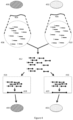
- Individual cells are then partitioned into separate partitions, e.g., droplets 514 and 516, along with their associated ligand/reporter molecules, as well as an individual barcode oligonucleotide bead as described elsewhere herein, e.g., beads 522 and 524, respectively.
- the barcoded oligonucleotides are released from the beads and used to attach the barcode sequence the reporter molecules present within each partition with a barcode that is common to a given partition, but which varies widely among different partitions.
- a partition is a droplet in an emulsion
- the emulsion can be broken and the contents of the droplet pooled in order to complete operations 612 through 616.
- barcode oligonucleotides may be digested with exonucleases after the emulsion is broken. Exonuclease activity can be inhibited by ethylenediaminetetraacetic acid (EDTA) following primer digestion.
- operation 610 may be performed either within the partitions based upon co-partitioning of the reverse transcription mixture, e.g., reverse transcriptase and associated reagents, or it may be performed in bulk.
- the oligonucleotide 702 includes an anchoring sequence 714, it will more likely hybridize to and prime reverse transcription at the sequence end of the poly-A tail of the mRNA.
- all of the cDNA transcripts of the individual mRNA molecules will include a common barcode sequence segment 710.
- the transcripts made from different mRNA molecules within a given partition will vary at this unique sequence. This provides a quantitation feature that can be identifiable even following any subsequent amplification of the contents of a given partition, e.g., the number of unique segments associated with a common barcode can be indicative of the quantity of mRNA originating from a single partition, and thus, a single cell.
- the transcripts are then amplified, cleaned up and sequenced to identify the sequence of the cDNA transcript of the mRNA, as well as to sequence the barcode segment and the unique sequence segment.
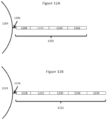
- the oligonucleotide may include functional sequences that are used in subsequent processing, such as functional sequence 908, which may include a sequencer specific flow cell attachment sequence, e.g., a P5 sequence for Illumina sequencing systems, as well as functional sequence 910, which may include sequencing primer sequences, e.g., a R1 primer binding site for Illumina sequencing systems.
- a barcode sequence 912 is included within the structure for use in barcoding the sample RNA.
- An RNA specific (e.g., mRNA specific) priming sequence, such as poly-T sequence 914 is also included in the oligonucleotide structure.
- An anchoring sequence segment (not shown) may be included to ensure that the poly-T sequence hybridizes at the sequence end of the mRNA.
- An additional sequence segment 916 may be provided within the oligonucleotide sequence.
- This additional sequence can provide a unique molecular identifier (UMI) sequence segment, e.g., as a random N-mer sequence that varies across individual oligonucleotides coupled to a single bead, whereas barcode sequence 912 can be constant among oligonucleotides tethered to an individual bead.
- UMI unique molecular identifier
- this unique sequence can serve to provide a unique identifier of the starting mRNA molecule that was captured, in order to allow quantitation of the number of original expressed RNA, e.g., mRNA counting.
- individual beads can include tens to hundreds of thousands or even millions of individual oligonucleotide molecules, where, as noted, the barcode segment can be constant or relatively constant for a given bead, but where the variable or unique sequence segment will vary across an individual bead.
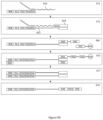
- a cell is co-partitioned along with a barcode bearing bead, switch oligo 924, and other reagents such as reverse transcriptase, a reducing agent and dNTPs into a partition (e.g., a droplet in an emulsion).
- a partition e.g., a droplet in an emulsion
- this provides a quantitation feature that can be identifiable even following any subsequent amplification of the contents of a given partition, e.g., the number of unique segments associated with a common barcode can be indicative of the quantity of mRNA originating from a single partition, and thus, a single cell.
- the cDNA transcript 922 is then amplified with primers 926 (e.g., PCR primers) in operation 954.
- primers 926 e.g., PCR primers
- the amplified product is then purified (e.g., via solid phase reversible immobilization (SPRI)) in operation 956.
- SPRI solid phase reversible immobilization
- the amplified product is then sheared, ligated to additional functional sequences, and further amplified (e.g., via PCR).
- the functional sequences may include a sequencer specific flow cell attachment sequence 930, e.g., a P7 sequence for Illumina sequencing systems, as well as functional sequence 928, which may include a sequencing primer binding site, e.g., for a R2 primer for Illumina sequencing systems, as well as functional sequence 932, which may include a sample index, e.g., an i7 sample index sequence for Illumina sequencing systems.
- a sequencer specific flow cell attachment sequence 930 e.g., a P7 sequence for Illumina sequencing systems
- functional sequence 928 which may include a sequencing primer binding site, e.g., for a R2 primer for Illumina sequencing systems
- functional sequence 932 which may include a sample index, e.g., an i7 sample index sequence for Illumina sequencing systems.
- operations 950 and 952 can occur in the partition
- operations 954, 956 and 958 can occur in bulk solution (e.g., in a pooled mixture outside of the partition).
- a partition is a droplet in an emulsion
- the emulsion can be broken and the contents of the droplet pooled in order to complete operations 954, 956 and 958.
- operation 954 may be completed in the partition.
- barcode oligonucleotides may be digested with exonucleases after the emulsion is broken. Exonuclease activity can be inhibited by ethylenediaminetetraacetic acid (EDTA) following primer digestion.
- EDTA ethylenediaminetetraacetic acid
- RNA e.g., cellular RNA
- functional sequence 908 may be a P7 sequence and functional sequence 910 may be a R2 primer binding site.
- the functional sequence 930 may be a P5 sequence
- functional sequence 928 may be a R1 primer binding site
- functional sequence 932 may be an i5 sample index sequence for Illumina sequencing systems.
- the configuration of the constructs generated by such a barcode oligonucleotide can help minimize (or avoid) sequencing of the poly-T sequence during sequencing.
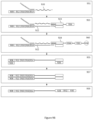
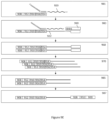
- Shown in Figure 9B is another example method for RNA analysis, including cellular mRNA analysis.
- the switch oligo 924 is co-partitioned with the individual cell and barcoded bead along with reagents such as reverse transcriptase, a reducing agent and dNTPs into a partition (e.g., a droplet in an emulsion).
- the switch oligo 924 may be labeled with an additional tag 934, e.g., biotin.
- the cell is lysed while the barcoded oligonucleotides 902 (e.g., as shown in Figure 9A ) are released from the bead (e.g., via the action of the reducing agent).
- the cDNA can be isolated with a pull-down operation (e.g., via magnetic separation, centrifugation) before amplification (e.g., via PCR) in operation 955, followed by purification (e.g., via solid phase reversible immobilization (SPRI)) in operation 957 and further processing (shearing, ligation of sequences 928, 932 and 930 and subsequent amplification (e.g., via PCR)) in operation 959.
- sequence 908 is a P7 sequence and sequence 910 is a R2 primer binding site
- sequence 930 is a P5 sequence and sequence 928 is a R1 primer binding site
- sequence 932 is an i5 sample index sequence.
- sequence 908 is a P5 sequence and sequence 910 is a R1 primer binding site
- sequence 930 is a P7 sequence and sequence 928 is a R2 primer binding site
- sequence 932 is an i7 sample index sequence.
- operations 951 and 953 can occur in the partition
- operations 960, 955, 957 and 959 can occur in bulk solution (e.g., in a pooled mixture outside of the partition).
- a partition is a droplet in an emulsion
- the emulsion can be broken and the contents of the droplet pooled in order to complete operation 960.
- the operations 955, 957, and 959 can then be carried out following operation 960 after the transcripts are pooled for processing.
- sequence 908 is a P5 sequence and sequence 910 is a R1 primer binding site.
- the poly-T segment 914 of the released barcode oligonucleotide then hybridizes to the poly-A tail of mRNA 920 that is released from the cell.
- the poly-T segment 914 is then extended in a reverse transcription reaction using the mRNA as a template to produce a cDNA transcript 922 complementary to the mRNA and also includes each of the sequence segments 908, 912, 910, 916 and 914 of the barcode oligonucleotide. Terminal transferase activity of the reverse transcriptase can add additional bases to the cDNA transcript (e.g., polyC).
- the biotin labeled second strand can be contacted with an interacting tag 936, e.g., streptavidin, which may be attached to a magnetic bead 938.
- the cDNA can be isolated with a pull-down operation (e.g., via magnetic separation, centrifugation) before amplification (e.g., via polymerase chain reaction (PCR)) in operation 965, followed by purification (e.g., via solid phase reversible immobilization (SPRI)) in operation 967 and further processing (shearing, ligation of sequences 928, 932 and 930 and subsequent amplification (e.g., via PCR)) in operation 969.
- PCR polymerase chain reaction
- SPRI solid phase reversible immobilization
- the poly-T segment 914 of the released barcode oligonucleotide then hybridizes to the poly-A tail of mRNA 920 that is released from the cell.
- the poly-T segment 914 is then extended in a reverse transcription reaction using the mRNA as a template to produce a cDNA transcript 922 complementary to the mRNA and also includes each of the sequence segments 908, 912, 910, 916 and 914 of the barcode oligonucleotide. Terminal transferase activity of the reverse transcriptase can add additional bases to the cDNA transcript (e.g., polyC).
- the switch oligo 924 may then hybridize with the cDNA transcript and facilitate template switching.
- a sequence complementary to the switch oligo sequence can then be incorporated into the cDNA transcript 922 via extension of the cDNA transcript 922 using the switch oligo 924 as a template.
- the mRNA 920, cDNA transcript 922 and switch oligo 924 can be denatured, and the cDNA transcript 922 can be hybridized with a capture oligonucleotide 944 labeled with an additional tag 946, e.g., biotin.
- biotin-labeled capture oligonucleotide 944 which is hybridized to the cDNA transcript, can be contacted with an interacting tag 936, e.g., streptavidin, which may be attached to a magnetic bead 938.
- an interacting tag 936 e.g., streptavidin
- the cDNA transcript can be amplified (e.g., via PCR) with primers 926 at operation 975, followed by purification (e.g., via solid phase reversible immobilization (SPRI)) in operation 977 and further processing (shearing, ligation of sequences 928, 932 and 930 and subsequent amplification (e.g., via PCR)) in operation 979.
- SPRI solid phase reversible immobilization
- sequence 930 is a P5 sequence and sequence 928 is a R1 primer binding site and sequence 932 is an i5 sample index sequence.
- sequence 930 is a P7 sequence and sequence 928 is a R2 primer binding site and sequence 932 is an i7 sample index sequence.
- operations 971 and 973 can occur in the partition, while operations 966, 975, 977 (purification), and 979 can occur in bulk (e.g., outside the partition).
- the emulsion can be broken and the contents of the droplet pooled in order to complete operations 966, 975, 977 and 979.
- Shown in Figure 9E is another example method for RNA analysis, including cellular RNA analysis.
- an individual cell is co-partitioned along with a barcode bearing bead, a switch oligo 990, and other reagents such as reverse transcriptase, a reducing agent and dNTPs into a partition (e.g., a droplet in an emulsion).
- the cell is lysed while the barcoded oligonucleotides (e.g., 902 as shown in Figure 9A ) are released from the bead (e.g., via the action of the reducing agent).
- sequence 908 is a P7 sequence
- sequence 910 is a R2 primer binding site.
- sequences 928, 932 and 930 are then fragmented and ligated to additional functional sequences, such as sequences 928, 932 and 930 and, in some cases, further amplified (e.g., via PCR).
- sequence 908 is a P7 sequence and sequence 910 is a R2 primer binding site
- sequence 930 is a P5 sequence and sequence 928 is a R1 primer binding site and sequence 932 is an i5 sample index sequence.
- sequence 930 is a P7 sequence and sequence 928 is a R2 primer binding site and sequence 932 is an i7 sample index sequence.
- the DNA transcripts prior to removing a portion of the DNA transcripts, can be contacted with an RNase to break down residual RNA.
- operations 981 and 983 can occur in the partition, while operations 968, 970, 985 and 987 can occur in bulk (e.g., outside the partition).
- a partition is a droplet in an emulsion, the emulsion can be broken and the contents of the droplet pooled in order to complete operations 968, 970, 985 and 987.
- oligonucleotides coupled to beads may include primers with sequences that are targeted for such target regions (e.g., constant regions).
- polyT primer regions can instead be gene specific primer sequences.
- RNA analysis including messenger RNA (mRNA, including mRNA obtained from a cell) analysis
- mRNA messenger RNA
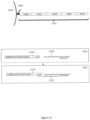
- Figure 10 Another example of a barcode oligonucleotide for use in RNA analysis, including messenger RNA (mRNA, including mRNA obtained from a cell) analysis is shown in Figure 10 .
- the overall oligonucleotide 1002 is coupled to a bead 1004 by a releasable linkage 1006, such as a disulfide linker.
- the oligonucleotide may include functional sequences that are used in subsequent processing, such as functional sequence 1008, which may include a sequencer specific flow cell attachment sequence, e.g., a P7 sequence, as well as functional sequence 1010, which may include sequencing primer sequences, e.g., a R2 primer binding site.
- functional sequence 1008 which may include a sequencer specific flow cell attachment sequence, e.g., a P7 sequence
- functional sequence 1010 which may include sequencing
- a barcode sequence 1012 is included within the structure for use in barcoding the sample RNA.
- An RNA specific (e.g., mRNA specific) priming sequence such as poly-T sequence 1014 may be included in the oligonucleotide structure.
- An anchoring sequence segment (not shown) may be included to ensure that the poly-T sequence hybridizes at the sequence end of the mRNA.
- An additional sequence segment 1016 may be provided within the oligonucleotide sequence. This additional sequence can provide a unique molecular identifier (UMI) sequence segment, as described elsewhere herein.
- An additional functional sequence 1020 may be included for in vitro transcription, e.g., a T7 RNA polymerase promoter sequence.
- individual beads can include tens to hundreds of thousands or even millions of individual oligonucleotide molecules, where, as noted, the barcode segment can be constant or relatively constant for a given bead, but where the variable or unique sequence segment will vary across an individual bead.
- a cell is co-partitioned along with a barcode bearing bead, and other reagents such as reverse transcriptase, reducing agent and dNTPs into a partition (e.g., a droplet in an emulsion).
- a partition e.g., a droplet in an emulsion.
- the cell is lysed while the barcoded oligonucleotides 1002 are released (e.g., via the action of the reducing agent) from the bead, and the poly-T segment 1014 of the released barcode oligonucleotide then hybridizes to the poly-A tail of mRNA 1020.
- the functional sequences may include a sequencer specific flow cell attachment sequence 1030, e.g., a P5 sequence, as well as functional sequence 1028, which may include sequencing primers, e.g., a R1 primer binding sequence, as well as functional sequence 1032, which may include a sample index, e.g., an i5 sample index sequence.
- RNA transcripts can be reverse transcribed to DNA, the DNA amplified (e.g., via PCR), and sequenced to identify the sequence of the cDNA transcript of the mRNA, as well as to sequence the barcode segment and the unique sequence segment.
- operations 1050 and 1052 can occur in the partition, while operations 1054, 1056, 1058 and 1060 can occur in bulk (e.g., outside the partition).
- operations 1054, 1056, 1058 and 1060 can occur in bulk (e.g., outside the partition).
- the emulsion can be broken and the contents of the droplet pooled in order to complete operations 1054, 1056, 1058 and 1060.
- functional sequence 1008 may be a P5 sequence and functional sequence 1010 may be a R1 primer binding site.
- functional sequence 1030 may be a P7 sequence
- functional sequence 1028 may be a R2 primer binding site
- functional sequence 1032 may be an i7 sample index sequence.
- individual beads can include tens to hundreds of thousands or even millions of individual oligonucleotide molecules, where, as noted, the barcode segment can be constant or relatively constant for a given bead, but where the variable or unique sequence segment will vary across an individual bead.
- a cell is co-partitioned along with a microcapsule (e.g., bead bearing a barcoded oligonucleotide), polyT sequence, and other reagents such as a DNA polymerase, a reverse transcriptase, oligonucleotide primers, dNTPs, and reducing agent into a partition (e.g., a droplet in an emulsion).
- a partition e.g., a droplet in an emulsion.
- the partition can serve as a reaction volume.
- the reaction volume can be subjected to an amplification reaction to generate an amplification product.
- the polyT sequence hybridizes to the polyA tail of mRNA 1120 released from the cell as illustrated in operation 1150.
- the polyT sequence is then extended in a reverse transcription reaction using the mRNA as a template to produce a cDNA transcript 1122 complementary to the mRNA. Terminal transferase activity of the reverse transcriptase can add additional bases to the cDNA transcript (e.g., polyC) in a template independent manner.
- the barcoded oligonucleotide upon release from the microcapsule, can be present in the reaction volume at any suitable concentration.
- the barcoded oligonucleotide is present in the reaction volume at a concentration of about 0.2 ⁇ M, 0.3 ⁇ M, 0.4 ⁇ M, 0.5 ⁇ M, 1 ⁇ M, 5 ⁇ M, 10 ⁇ M, 15 ⁇ M, 20 ⁇ M, 25 ⁇ M, 30 ⁇ M, 35 ⁇ M, 40 ⁇ M, 50 ⁇ M, 100 ⁇ M, 150 ⁇ M, 200 ⁇ M, 250 ⁇ M, 300 ⁇ M, 400 ⁇ M, or 500 ⁇ M.
- individual beads can include tens to hundreds of thousands or even millions of individual oligonucleotide molecules, where, as noted, the barcode segment can be constant or relatively constant for a given bead, but where the variable or unique sequence segment will vary across an individual bead.
- a cell is co-partitioned along with a barcode bearing bead and other reagents such as RNA ligase and a reducing agent into a partition (e.g., a droplet in an emulsion).
- a partition is a droplet in an emulsion
- the emulsion can be broken and the contents of the droplet pooled for additional operations.
- Additional reagents that may be co-partitioned along with the barcode bearing bead may include oligonucleotides to block ribosomal RNA (rRNA) and nucleases to digest genomic DNA and cDNA from cells.
- rRNA removal agents may be applied during additional processing operations.
- the configuration of the constructs generated by such a method can help minimize (or avoid) sequencing of the poly-T sequence during sequencing.
- the priming sequence 1234 may be a random N-mer.
- sequence 1228 is a P7 sequence and sequence 1230 is a R2 primer binding site.
- sequence 1228 is a P5 sequence and sequence 1230 is a R1 primer binding site.
- the individual cell is co-partitioned along with a barcode bearing bead, poly-T sequence, and other reagents such as reverse transcriptase, polymerase, a reducing agent and dNTPs into a partition (e.g., droplet in an emulsion).
- the cell is lysed while the barcoded oligonucleotides are released from the bead (e.g., via the action of the reducing agent) and the poly-T sequence hybridizes to the poly-A tail of cellular mRNA.
- the poly-T sequence hybridizes to the poly-A tail of cellular mRNA.
- cDNA transcripts of cellular mRNA can be produced.
- the RNA can then be degraded with an RNase.
- the priming sequence 1234 in the barcoded oligonucleotide can then randomly hybridize to the cDNA transcripts.
- the oligonucleotides can be extended using polymerase enzymes and other extension reagents co-partitioned with the bead and cell similar to as shown in Figure 3 to generate amplification products (e.g., barcoded fragments), similar to the example amplification product shown in Figure 3 (panel F).
- amplification products e.g., barcoded fragments
- the barcoded nucleic acid fragments may, in some cases subjected to further processing (e.g., amplification, addition of additional sequences, clean up processes, etc. as described elsewhere herein) characterized, e.g., through sequence analysis.
- sequencing signals can come from full length RNA.
- the primer and template switching oligonucleotide may be universal to all partitions.
- the partitions may individually contain more than one cell, one cell, no cells, or nucleic acids derived from a cell.
- the primer may comprise at least a polyT segment capable of hybridizing and priming an extension reaction from the polyA segment of an mRNA.
- the primer may comprise a random sequence capable of hybridizing to and priming extension reactions randomly on various polynucleotide templates.
- a gene specific primer having a barcode sequence can then be used for primer extension using the cDNA molecule (e.g., amplification product of the template polynucleotide) as a template.
- a primer comprising a barcode can hybridize to the cDNA molecule via sequence complementarity. Extension of the primer using the cDNA molecule as template may result in a polynucleotide product comprising the template polynucleotide sequence and the barcode sequence located at the 5' end of the template polynucleotide sequence.
- Non-limiting examples of ligases which can be used in embodiments herein include CircLigase I and CircLigase II (Epicentre; Madison, WI), Escherichia coli DNA ligase, Thermus filiformis DNA ligase, Tth DNA ligase, Thermus scotoductus DNA ligase (I and II), T3 DNA ligase, T4 DNA ligase, T4 RNA ligase, T7 DNA ligase, Taq ligase, Ampligase (Epicentre ® Technologies Corp.), VanC-type ligase, 9° N DNA Ligase, Tsp DNA ligase, DNA ligase I, DNA ligase III, DNA ligase IV, Sso7-T3 DNA ligase, Sso7-T4 DNA ligase, Sso7-T7 DNA ligase, Sso7-Taq DNA ligase, Sso7-E
- the oligonucleotide comprising the barcode sequence is ligated to the template polynucleotide within a partition (e.g., droplet or well).
- a partition in some cases, comprises a polynucleotide sample comprising the template polynucleotide, an oligonucleotide having the barcode sequence, a ligase enzyme, and any other suitable reagents for ligation.
- the ligase can implement the attachment of the oligonucleotide comprising the barcode sequence to the template polynucleotide within the partition.
- the processes and systems described herein may also be used to characterize individual cells as a way to provide an overall profile of a cellular, or other organismal population.
- a variety of applications require the evaluation of the presence and quantification of different cell or organism types within a population of cells, including, for example, microbiome analysis and characterization, environmental testing, food safety testing, epidemiological analysis, e.g., in tracing contamination or the like.
- the analysis processes described above may be used to individually characterize, sequence and/or identify large numbers of individual cells within a population. This characterization may then be used to assemble an overall profile of the originating population, which can provide important prognostic and diagnostic information.
- reporter molecules can comprise the same sequence, or a particular binding group will include a known set of reporter oligonucleotide sequences.
- the reporter molecules can be different and attributable to the particular binding group.
- the reporter oligonucleotides may be provided having any of a range of different lengths, depending upon the diversity of reporter molecules desired or a given analysis, the sequence detection scheme employed, and the like. In some cases, these reporter sequences can be greater than about 5 nucleotides in length, greater than about 10 nucleotides in length, greater than about 20, 30, 40, 50, 60, 70, 80, 90, 100, 120, 150 or even 200 nucleotides in length. In some cases, these reporter nucleotides may be less than about 250 nucleotides in length, less than about 200, 180, 150, 120 100, 90, 80, 70, 60, 50, 40, or even 30 nucleotides in length.
- a cell surface profile of individual cells Based upon the reporter molecules that emanate from an individual partition based upon the presence of the barcode sequence, one may then create a cell surface profile of individual cells from a population of cells. Profiles of individual cells or populations of cells may be compared to profiles from other cells, e.g., 'normal' cells, to identify variations in cell surface features, which may provide diagnostically relevant information. In particular, these profiles may be particularly useful in the diagnosis of a variety of disorders that are characterized by variations in cell surface receptors, such as cancer and other disorders.
- the blocker sequences can be optimized by selecting sequences that maximize the predicted melting temperature of the (blocker):rRNA duplex against all human ribosomal RNA molecules.
- Table 1 Spacer sequences GG_S1_6 TTATATGGG GG_S1_10 TTTCTTATATGGG GG_S1_20 AAATCAAATCTTTCTTATATGGG GG_S1_30 ACAAACAAATAAATCAAATCTTTCTTATATGGG GG_S2_6 TTTAAAGGG GG_S2_10 GAAATTTAAAGGG GG_S2_20 CACTCTACATGAAATTTAAAGGG GG_S2_30 CCAAAGTTGTCACTCTACATGAAATTTAAAGGG GL6_S3_6 ATATAAGGG GL6_S3_10 ATATATATAAGGG GL6_S3_20 ATATATATATATATATATAAGGG GL6_S3_30 ATATATATATATATATATATATATATATATATATATATATATATAAGGG Table 2 provides examples of blocker sequences that are optimized by selecting sequences that maximize the predicted melting temperature of the (blocker):rRNA duplex against all human
- N and W represent any of ⁇ A,C,G,T ⁇ and any of ⁇ A,T ⁇ respectively that make up the UMI sequence. UMIs may be different across different oligos on the same bead.
- N1 is any one of ⁇ A,C,G,T ⁇ ; N1 positions with ratios of 25%, 25%, 25% and 25% for the four nucleotides.
- N2 is any one of ⁇ A,C,G,T ⁇ ; N2 positions with ratios of 40%, 10%, 10% and 40% for the four nucleotides.
- a cell barcode may be a 16 base sequence that is a random choice from about 737,000 sequences.
- the length of the barcode (16) can be altered.
- the diversity of potential barcode sequences (737k) can be alterable.
- the defined nature of the barcode can be altered, for example, it may also be completely random (16 Ns) or semi-random (16 bases that come from a biased distribution of nucleotides).
- the canonical UMI sequence may be a 10 nucleotide randomer.
- the length of the UMI can be altered.
- the random nature of the UMI can be altered, for example, it may be semi-random (bases that come from a biased distribution of nucleotides.)
- the distribution of UMI nucleotide(s) may be biased; for example, UMI sequences that do not contain Gs or Cs may be less likely to serve as primers.
- the spacer may alterable within given or predetermined parameters. For example one method may give an optimal sequence of TTTCTTATAT, but using a slightly different optimization strategy results in a sequence that is likely just as or nearly as good.
- the selected template switching region can comprise 3 consecutive riboGs or more.
- the selected template switching region can comprise 4, 5, 6, 7, 8, 9, 10, 11, 12,13, 14, 15, 16, 17, 18, 19, 20 consecutive riboGs or more.
- Alternative nucleotide may be used such as deoxyribo Gs, LNA G's, and potentially any combination thereof.
- enrichment increases accuracy and sensitivity of methods for sequencing TCR, BCR and immunoglobulin genes at a single cell level. In certain embodiments, enrichment increases the number of sequencing reads that map to a TCR, BCR, or immunoglobulin gene. In some embodiments, enrichment leads to greater than or equal to 25%, 30%, 35%, 40%, 45%, 50%, 55%, 60%, 65%, 70%, 75%, 80%, 85%, 90%, 95% or more of total sequencing reads mapping to a TCR, BCR or immunoglobulin gene.
- enrichment leads to greater than or equal to 25%, 30%, 35%, 40%, 45%, 50%, 55%, 60%, 65%, 70%, 75%, 80%, 85%, 90%, 95% or more of total sequencing reads mapping to a variable region of a TCR, BCR or immunoglobulin gene.
- an enrichment step can be employed. Enrichment may be useful for the sequencing and analysis of genes that may be related yet highly polymorphic.
- an enriched gene comprises a TCR sequence, a BCR sequence, or an immunoglobulin sequence.
- an enriched gene comprises a mitochondrial gene or a cytochrome family gene.
- enrichment is employed after an initial round of reverse transcription (e.g., cDNA production). In some embodiments, enrichment is employed after an initial round of reverse transcription and cDNA amplification for at least 5, 10, 15, 20, 25, 30, 40 or more cycles. In some embodiments, enrichment is employed after a cDNA amplification.
- the amplified cDNA can be subjected to a clean up step before the enrichment step using a column, gel extraction, or beads in order to remove unincorporated primers, unincorporated nucleotides, very short or very long nucleic acid fragments and enzymes.
- enrichment is followed by a clean-up step before sequencing library preparation.
- greater than about 50%, 60%, 70%, 80%, 85%, 90%, 95 % or more cDNA or cDNA fragments fall within a range of about 300 base pairs to about 900 base pairs, of about 400 base pairs to about 800 base pairs, of about 500 base pairs to about 700 base pairs, or of about 500 base pairs to about 600 base pairs.
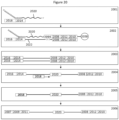
- Figure 20 shows an example enrichment scheme.
- the oligonucleotide is extended yielding an anti-sense strand 2022 which is appended by multiple cytidines on the 3' end.
- a template switching oligonucleotide attached to a gel bead 2038 is provided and a riboG of the TSO pairs with the cytidines of the sense strand and is extended to create a sense and an antisense strand.
- the template switching oligonucleotide is released from the gel bead during extension. In some cases, the template switching oligonucleotide is released from the gel bead prior to extension. In some cases, the template switching oligonucleotide is released from the gel bead after extension.
- the TSO comprises a barcode 2012 and one or two additional functional sequences 2008 and 2012. The additional functional sequences can comprise a P7 or R2 sequence for attachment to an Illumina sequencing flow cell, for example.
- Operations 2001 and 2002 may be performed in a partition (e.g., droplet or well). Subsequent to operation 2002, the nucleic acid product from operations 2001 and 2002 may be removed from the partition and in some cases pooled with other products from other partitions for subsequent processing.
- cDNA molecules as in 2003 which are mixed templates comprising a barcode and sequencing primers. In some cases, not all of these cDNA molecules will comprise a target variable region sequence.
- a primer 2018 that anneals to a sequence 3' of a TCR, BCR or immunoglobulin variable region 2020 specifically amplifies the variable region comprising cDNAs yielding products as shown in operation 2005.
- Such enrichment may be performed for various approaches described herein, such as, e.g., the approaches described above in the context of Figures 19A and 19B .
- primer 2018 anneals in a constant region of a TCR (e.g., TCR-alpha or TCR-beta), BCR or immunoglobulin gene. After amplification the products are sheared, adaptors ligated and amplified a second time to add additional functional sequences 2007 and 2011 and a sample index 2009 as shown in operation 2006.
- the additional functional sequences can functionally complement the first pair 2008 and 2010 and comprise for example a P5 or R1 sequence.
- Figure 21 shows example size distributions after cDNA amplification but before enrichment (A), after enrichment but before sequencing library prep (B), and after sequencing library preparation (C).
- the initial poly-T primer, comprising sequences 2016 and 2014 can be attached to a gel bead as opposed to the TSO.
- the poly-T comprising primer comprises functional sequences and barcode sequences 2008, 2010, 2012, and the TSO comprises sequence 2016. Operations 2003-2006 may be performed in bulk.
- clonotype information derived from next-generation sequencing data of cDNA prepped from cellular RNA is combined with other targeted on non targeted cDNA enrichment to illuminate functional and ontological aspects of B-cell and T cells that express a given TCR, BCR, or immunoglobulin.
- clonotype information is combined with analysis of expression of an immunologically relevant cDNA.
- the cDNA encodes a cell lineage marker, a cell surface functional marker, immunoglobulin isotype, a cytokine and/or chemokine, an intracellular signaling polypeptide, a cell metabolism polypeptide, a cell-cycle polypeptide, an apoptosis polypeptide, a transcriptional activator/inhibitor, an miRNA or lncRNA.
- TCR T-cell Receptor
- Tools for assembling T-cell Receptor (TCR) sequences may use known sequences of V and C regions to "anchor" assemblies. This may make such tools only applicable to organisms with well characterized references (human and mouse). However, most mammalian T cell receptors have similar amino acid motifs and similar structure. In the absence of a reference, a method can scan assembled transcripts for regions that are diverse or semi-diverse, find the junction region which should be highly diverse, then scan for known amino acid motifs.
- the complementary CDRs such as the CDR1, CDR2, or CDR3, region be accurately delimited, only that a diverse sequence is found that can uniquely identify the clonotype.
- One advantage of this method is that the software may not require a set of reference sequences and can operate fully de novo , thus this method can enable immune research in eukaryotes with poorly characterized genomes/transcriptomes.
- the methods described herein allow simultaneously obtaining single-cell gene expression information with single-cell immune receptor sequences (TCRs/BCRs). This can be achieved using the methods described herein, such as by amplifying genes relevant to lymphocyte function and state (either in a targeted or unbiased way) while simultaneously amplifying the TCR/BCR sequences for clonotyping. This can allow such applications as 1) interrogating changes in lymphocyte activation/response to an antigen, at the single clonotype or single cell level; or 2) classifying lymphocytes into subtypes based on gene expression while simultaneously sequencing their TCR/BCRs. UMIs are typically ignored during TCR (or generally transcriptome) assembly.
- a reservoir fluidly coupled to channel 202 may be provided with an aqueous suspension of cells 214, while a reservoir coupled to channel 204 may be provided with an aqueous suspension of beads 216 carrying the oligonucleotides.
- Channel segments 206 and 208 may be provided with a non-aqueous solution, e.g., an oil, into which the aqueous fluids are partitioned as droplets at the channel junction 212.
- an outlet reservoir may be fluidly coupled to channel 210 into which the partitioned cells and beads can be delivered and from which they may be harvested.
- the channel segments may be coupled to any of a variety of different fluid sources or receiving components, including tubing, manifolds, or fluidic components of other systems.
- kits for analyzing individual cells or small populations of cells may include one, two, three, four, five or more, up to all of partitioning fluids, including both aqueous buffers and non-aqueous partitioning fluids or oils, nucleic acid barcode libraries that are releasably associated with beads, as described herein, microfluidic devices, reagents for disrupting cells amplifying nucleic acids, and providing additional functional sequences on fragments of cellular nucleic acids or replicates thereof, as well as instructions for using any of the foregoing in the methods described herein.
- Figure 17 shows a computer system 1701 that is programmed or otherwise configured to implement methods of the disclosure including nucleic acid sequencing methods, interpretation of nucleic acid sequencing data and analysis of cellular nucleic acids, such as RNA (e.g., mRNA), and characterization of cells from sequencing data.
- the computer system 1701 can be an electronic device of a user or a computer system that is remotely located with respect to the electronic device.
- the electronic device can be a mobile electronic device.
- the storage unit 1715 can be a data storage unit (or data repository) for storing data.
- the computer system 1701 can be operatively coupled to a computer network ("network") 1730 with the aid of the communication interface 1720.
- the network 1730 can be the Internet, an internet and/or extranet, or an intranet and/or extranet that is in communication with the Internet.
- the network 1730 in some cases is a telecommunication and/or data network.
- the network 1730 can include one or more computer servers, which can enable distributed computing, such as cloud computing.
- the network 1730, in some cases with the aid of the computer system 1701, can implement a peer-to-peer network, which may enable devices coupled to the computer system 1701 to behave as a client or a server.
- the CPU 1705 can execute a sequence of machine-readable instructions, which can be embodied in a program or software.
- the instructions may be stored in a memory location, such as the memory 1710.
- the instructions can be directed to the CPU 1705, which can subsequently program or otherwise configure the CPU 1705 to implement methods of the present disclosure. Examples of operations performed by the CPU 1705 can include fetch, decode, execute, and writeback.
- the CPU 1705 can be part of a circuit, such as an integrated circuit.
- a circuit such as an integrated circuit.
- One or more other components of the system 1701 can be included in the circuit.
- the circuit is an application specific integrated circuit (ASIC).
- the computer system 1701 can communicate with one or more remote computer systems through the network 1730.
- the computer system 1701 can communicate with a remote computer system of a user.
- remote computer systems include personal computers (e.g., portable PC), slate or tablet PC's (e.g., Apple ® iPad, Samsung ® Galaxy Tab), telephones, Smart phones (e.g., Apple ® iPhone, Android-enabled device, Blackberry ® ), or personal digital assistants.
- the user can access the computer system 1701 via the network 1730.
- Methods as described herein can be implemented by way of machine (e.g., computer processor) executable code stored on an electronic storage location of the computer system 1701, such as, for example, on the memory 1710 or electronic storage unit 1715.
- the machine executable or machine readable code can be provided in the form of software.
- the code can be executed by the processor 1705.
- the code can be retrieved from the storage unit 1715 and stored on the memory 1710 for ready access by the processor 1705.
- the electronic storage unit 1715 can be precluded, and machine-executable instructions are stored on memory 1710.
- aspects of the systems and methods provided herein can be embodied in programming.
- Various aspects of the technology may be thought of as “products” or “articles of manufacture” typically in the form of machine (or processor) executable code and/or associated data that is carried on or embodied in a type of machine readable medium.
- Machine-executable code can be stored on an electronic storage unit, such as memory (e.g., read-only memory, random-access memory, flash memory) or a hard disk.
- “Storage” type media can include any or all of the tangible memory of the computers, processors or the like, or associated modules thereof, such as various semiconductor memories, tape drives, disk drives and the like, which may provide non-transitory storage at any time for the software programming.
- Carrier-wave transmission media may take the form of electric or electromagnetic signals, or acoustic or light waves such as those generated during radio frequency (RF) and infrared (IR) data communications.
- RF radio frequency
- IR infrared
- Common forms of computer-readable media therefore include for example: a floppy disk, a flexible disk, hard disk, magnetic tape, any other magnetic medium, a CD-ROM, DVD or DVD-ROM, any other optical medium, punch cards paper tape, any other physical storage medium with patterns of holes, a RAM, a ROM, a PROM and EPROM, a FLASH-EPROM, any other memory chip or cartridge, a carrier wave transporting data or instructions, cables or links transporting such a carrier wave, or any other medium from which a computer may read programming code and/or data.
- Many of these forms of computer readable media may be involved in carrying one or more sequences of one or more instructions to a processor for execution.
- the computer system 1701 can include or be in communication with an electronic display 1735 that comprises a user interface (UI) 1740 for providing, for example, results of nucleic acid sequencing, analysis of nucleic acid sequencing data, characterization of nucleic acid sequencing samples, cell characterizations, etc.
- UI user interface
- Examples of UI's include, without limitation, a graphical user interface (GUI) and web-based user interface.
- Methods and systems of the present disclosure can be implemented by way of one or more algorithms.
- An algorithm can be implemented by way of software upon execution by the central processing unit 1705.
- the algorithm can, for example, initiate nucleic acid sequencing, process nucleic acid sequencing data, interpret nucleic acid sequencing results, characterize nucleic acid samples, characterize cells, etc.
- Example II Cellular RNA analysis using emulsions
- reverse transcription with template switching and cDNA amplification is performed in emulsion droplets with operations as shown in Figure 9A .
- the reaction mixture that is partitioned for reverse transcription and cDNA amplification includes Jurkat cells, beads bearing barcoded oligonucleotides/0.2% TritonX-100/5x Kapa buffer, 2x Kapa HS HiFi Ready Mix, 4 ⁇ M switch oligo, and Smartscribe.
- the mixture is partitioned such that a majority or all of the droplets comprise a single cell and single bead.
- the cells are lysed while the barcoded oligonucleotides are released from the bead, and the poly-T segment of the barcoded oligonucleotide hybridizes to the poly-A tail of mRNA that is released from the cell as in operation 950.
- the poly-T segment is extended in a reverse transcription reaction as in operation 952 and the cDNA transcript is amplified as in operation 954.
- the thermal cycling conditions are 42 °C for 130 minutes; 98 °C for 2 min; and 35 cycles of the following 98 °C for 15 sec, 60 °C for 20 sec, and 72 °C for 6 min.
- B-cell receptors BCRs
- Ig receptors Other receptors (e.g., B-cell receptors (BCRs) and Ig receptors) can be similarly analyzed using the methods described herein by partitioning the appropriate immune cell type for generating labeled polynucleotides and using receptor specific primers to generate amplification products.
- BCRs B-cell receptors
- Ig receptors Ig receptors
- TCR T-cell Receptor
- cellular suspensions of 3,000; 6,000; or 12,000 primary human T cells were loaded on a GemCode Single Cell Instrument (10x Genomics, Pleasanton, CA) to generate single cell-gel bead emulsions (SC-GEMs).
- the gel beads were modified to carry a template switching oligonucleotide (TSO) as shown in Figure 18 or Figure 20 at 8 ⁇ M, yielding a final concentration of 0.32 ⁇ M in GEM.
- TSO template switching oligonucleotide
- reverse transcription was performed on the cells in emulsion using a poly-T primer and reverse transcriptase for 5 minutes at 55°C, followed by 1 hour and 55 minutes at 52°C.
- FIG. 22 shows the cDNA yields from all three cellular suspensions. cDNA yields from 12,000 cells was greater than either 6,000 or 3,000 cells, which yielded similar amounts.
- Indexed sequencing libraries were constructed using the GemCode Single Cell 3' Library Kit, following these steps: 1) end repair and A-tailing; 2) adapter ligation; 3) post-ligation cleanup with SPRIselect; 4) sample index PCR and cleanup. These sequencing libraries were sequenced using an Illumina MiSeq sequencer. Sequencing performance of poly-T primed libraries was compared to libraries constructed from enriched cDNA libraries created by using an enriched priming method which substituted the poly-T primer with primers that bound the constant region of TCR ⁇ , TCR ⁇ , or both.
- GEMs gel bead emulsions
- GEMs for example, can be aqueous droplets comprising gel beads.
- a template polynucleotide comprising an mRNA molecule can be reverse transcribed by a reverse transcriptase and a primer comprising a poly(dT) region.
- the polynucleotide product (shown as a double-stranded molecule, but can optionally be a single-stranded transcript) can be subjected to a first target enrichment polymerase chain reaction (PCR) using a primer that hybridizes to the Read 1 region and a second primer that hybridizes to a first region of the constant region (C) of the receptor sequence (e.g., TCR or BCR).
- PCR polymerase chain reaction
- the product of the first target enrichment PCR can be subjected to a second, optional target enrichment PCR.
- a second primer that hybridizes to a second region of the constant region (C) of the receptor can be used.
Landscapes
- Chemical & Material Sciences (AREA)
- Life Sciences & Earth Sciences (AREA)
- Health & Medical Sciences (AREA)
- Organic Chemistry (AREA)
- Engineering & Computer Science (AREA)
- Zoology (AREA)
- Genetics & Genomics (AREA)
- Wood Science & Technology (AREA)
- Proteomics, Peptides & Aminoacids (AREA)
- Bioinformatics & Cheminformatics (AREA)
- Biotechnology (AREA)
- General Engineering & Computer Science (AREA)
- Microbiology (AREA)
- General Health & Medical Sciences (AREA)
- Biochemistry (AREA)
- Biomedical Technology (AREA)
- Molecular Biology (AREA)
- Physics & Mathematics (AREA)
- Biophysics (AREA)
- Analytical Chemistry (AREA)
- Immunology (AREA)
- Crystallography & Structural Chemistry (AREA)
- Plant Pathology (AREA)
- Bioinformatics & Computational Biology (AREA)
- Chemical Kinetics & Catalysis (AREA)
- Cell Biology (AREA)
- Pathology (AREA)
- Measuring Or Testing Involving Enzymes Or Micro-Organisms (AREA)
Applications Claiming Priority (5)
| Application Number | Priority Date | Filing Date | Title |
|---|---|---|---|
| US201662410326P | 2016-10-19 | 2016-10-19 | |
| US201762490546P | 2017-04-26 | 2017-04-26 | |
| EP17862611.5A EP3529357B1 (fr) | 2016-10-19 | 2017-10-18 | Procédés de codage de molécules d'acide nucléique provenant de cellules individuelles |
| EP21214927.2A EP4026905B1 (fr) | 2016-10-19 | 2017-10-18 | Procédés de codage à barres de molécules d'acide nucléique à partir de cellules individuelles ou de populations de cellules |
| PCT/US2017/057269 WO2018075693A1 (fr) | 2016-10-19 | 2017-10-18 | Procédés et systèmes de codage de molécules d'acide nucléique provenant de cellules individuelles ou de populations de cellules |
Related Parent Applications (2)
| Application Number | Title | Priority Date | Filing Date |
|---|---|---|---|
| EP17862611.5A Division EP3529357B1 (fr) | 2016-10-19 | 2017-10-18 | Procédés de codage de molécules d'acide nucléique provenant de cellules individuelles |
| EP21214927.2A Division EP4026905B1 (fr) | 2016-10-19 | 2017-10-18 | Procédés de codage à barres de molécules d'acide nucléique à partir de cellules individuelles ou de populations de cellules |
Related Child Applications (1)
| Application Number | Title | Priority Date | Filing Date |
|---|---|---|---|
| EP26163318.4 Division-Into | 2026-03-09 |
Publications (3)
| Publication Number | Publication Date |
|---|---|
| EP4397774A2 true EP4397774A2 (fr) | 2024-07-10 |
| EP4397774A3 EP4397774A3 (fr) | 2024-11-06 |
| EP4397774B1 EP4397774B1 (fr) | 2026-04-15 |
Family
ID=62019072
Family Applications (3)
| Application Number | Title | Priority Date | Filing Date |
|---|---|---|---|
| EP17862611.5A Active EP3529357B1 (fr) | 2016-10-19 | 2017-10-18 | Procédés de codage de molécules d'acide nucléique provenant de cellules individuelles |
| EP21214927.2A Active EP4026905B1 (fr) | 2016-10-19 | 2017-10-18 | Procédés de codage à barres de molécules d'acide nucléique à partir de cellules individuelles ou de populations de cellules |
| EP24163869.1A Active EP4397774B1 (fr) | 2016-10-19 | 2017-10-18 | Procédés de codage à barres de molécules d'acide nucléique à partir de cellules individuelles ou de populations de cellules |
Family Applications Before (2)
| Application Number | Title | Priority Date | Filing Date |
|---|---|---|---|
| EP17862611.5A Active EP3529357B1 (fr) | 2016-10-19 | 2017-10-18 | Procédés de codage de molécules d'acide nucléique provenant de cellules individuelles |
| EP21214927.2A Active EP4026905B1 (fr) | 2016-10-19 | 2017-10-18 | Procédés de codage à barres de molécules d'acide nucléique à partir de cellules individuelles ou de populations de cellules |
Country Status (6)
| Country | Link |
|---|---|
| US (5) | US20180105808A1 (fr) |
| EP (3) | EP3529357B1 (fr) |
| CN (2) | CN109983126A (fr) |
| DK (1) | DK3529357T3 (fr) |
| SG (2) | SG11201903519UA (fr) |
| WO (1) | WO2018075693A1 (fr) |
Families Citing this family (290)
| Publication number | Priority date | Publication date | Assignee | Title |
|---|---|---|---|---|
| US8835358B2 (en) | 2009-12-15 | 2014-09-16 | Cellular Research, Inc. | Digital counting of individual molecules by stochastic attachment of diverse labels |
| US10787701B2 (en) | 2010-04-05 | 2020-09-29 | Prognosys Biosciences, Inc. | Spatially encoded biological assays |
| US20190300945A1 (en) | 2010-04-05 | 2019-10-03 | Prognosys Biosciences, Inc. | Spatially Encoded Biological Assays |
| GB201106254D0 (en) | 2011-04-13 | 2011-05-25 | Frisen Jonas | Method and product |
| US11435358B2 (en) | 2011-06-23 | 2022-09-06 | Board Of Regents, The University Of Texas System | Single molecule peptide sequencing |
| US9404864B2 (en) | 2013-03-13 | 2016-08-02 | Denovo Sciences, Inc. | System for imaging captured cells |
| CN103998394B (zh) | 2011-08-01 | 2016-08-17 | 德诺弗科学公司 | 细胞捕获系统和使用方法 |
| US10466160B2 (en) | 2011-08-01 | 2019-11-05 | Celsee Diagnostics, Inc. | System and method for retrieving and analyzing particles |
| CA2865575C (fr) | 2012-02-27 | 2024-01-16 | Cellular Research, Inc. | Compositions et trousses pour le comptage moleculaire |
| AU2013302756C1 (en) | 2012-08-14 | 2018-05-17 | 10X Genomics, Inc. | Microcapsule compositions and methods |
| US10323279B2 (en) | 2012-08-14 | 2019-06-18 | 10X Genomics, Inc. | Methods and systems for processing polynucleotides |
| US9951386B2 (en) | 2014-06-26 | 2018-04-24 | 10X Genomics, Inc. | Methods and systems for processing polynucleotides |
| US10584381B2 (en) | 2012-08-14 | 2020-03-10 | 10X Genomics, Inc. | Methods and systems for processing polynucleotides |
| US11591637B2 (en) | 2012-08-14 | 2023-02-28 | 10X Genomics, Inc. | Compositions and methods for sample processing |
| US10273541B2 (en) | 2012-08-14 | 2019-04-30 | 10X Genomics, Inc. | Methods and systems for processing polynucleotides |
| US9701998B2 (en) | 2012-12-14 | 2017-07-11 | 10X Genomics, Inc. | Methods and systems for processing polynucleotides |
| US10752949B2 (en) | 2012-08-14 | 2020-08-25 | 10X Genomics, Inc. | Methods and systems for processing polynucleotides |
| EP4592400A3 (fr) | 2012-10-17 | 2025-10-29 | 10x Genomics Sweden AB | Procédés et produits pour optimiser la detection localisée ou spatiale de l'expression génique dans un échantillon de tissu |
| CA2894694C (fr) | 2012-12-14 | 2023-04-25 | 10X Genomics, Inc. | Procedes et systemes pour le traitement de polynucleotides |
| US10533221B2 (en) | 2012-12-14 | 2020-01-14 | 10X Genomics, Inc. | Methods and systems for processing polynucleotides |
| US9752181B2 (en) | 2013-01-26 | 2017-09-05 | Denovo Sciences, Inc. | System and method for capturing and analyzing cells |
| KR20200140929A (ko) | 2013-02-08 | 2020-12-16 | 10엑스 제노믹스, 인크. | 폴리뉴클레오티드 바코드 생성 |
| US9707562B2 (en) | 2013-03-13 | 2017-07-18 | Denovo Sciences, Inc. | System for capturing and analyzing cells |
| US9856535B2 (en) | 2013-05-31 | 2018-01-02 | Denovo Sciences, Inc. | System for isolating cells |
| US10391490B2 (en) | 2013-05-31 | 2019-08-27 | Celsee Diagnostics, Inc. | System and method for isolating and analyzing cells |
| CA2916662C (fr) | 2013-06-25 | 2022-03-08 | Prognosys Biosciences, Inc. | Procedes et systemes pour determiner des motifs spatiales de cibles biologiques dans un echantillon |
| KR102758333B1 (ko) | 2013-08-28 | 2025-01-23 | 벡톤 디킨슨 앤드 컴퍼니 | 대량의 동시 단일 세포 분석 |
| US10395758B2 (en) | 2013-08-30 | 2019-08-27 | 10X Genomics, Inc. | Sequencing methods |
| US9824068B2 (en) | 2013-12-16 | 2017-11-21 | 10X Genomics, Inc. | Methods and apparatus for sorting data |
| BR112016023625A2 (pt) | 2014-04-10 | 2018-06-26 | 10X Genomics, Inc. | dispositivos fluídicos, sistemas e métodos para encapsular e particionar reagentes, e aplicações dos mesmos |
| CA2953469A1 (fr) | 2014-06-26 | 2015-12-30 | 10X Genomics, Inc. | Analyse de sequences d'acides nucleiques |
| US12312640B2 (en) | 2014-06-26 | 2025-05-27 | 10X Genomics, Inc. | Analysis of nucleic acid sequences |
| WO2015200893A2 (fr) | 2014-06-26 | 2015-12-30 | 10X Genomics, Inc. | Procédés d'analyse d'acides nucléiques provenant de cellules individuelles ou de populations de cellules |
| BR112017008877A2 (pt) | 2014-10-29 | 2018-07-03 | 10X Genomics Inc | métodos e composições para sequenciamento de ácido nucleico-alvo |
| US9975122B2 (en) | 2014-11-05 | 2018-05-22 | 10X Genomics, Inc. | Instrument systems for integrated sample processing |
| JP6769969B2 (ja) | 2015-01-12 | 2020-10-14 | 10エックス ジェノミクス, インコーポレイテッド | 核酸配列決定ライブラリーを作製するためのプロセス及びシステム、並びにこれらを使用して作製したライブラリー |
| WO2016138496A1 (fr) | 2015-02-27 | 2016-09-01 | Cellular Research, Inc. | Codage à barres moléculaire à adressage spatial |
| WO2016160844A2 (fr) | 2015-03-30 | 2016-10-06 | Cellular Research, Inc. | Procédés et compositions pour codage à barres combinatoire |
| EP3901282B1 (fr) | 2015-04-10 | 2023-06-28 | Spatial Transcriptomics AB | Analyse de plusieurs acides nucléiques spatialement différenciés de spécimens biologiques |
| EP4582556A3 (fr) | 2015-04-23 | 2025-10-08 | Becton, Dickinson and Company | Procédés et compositions pour l'amplification de transcriptome entier |
| JP6940484B2 (ja) | 2015-09-11 | 2021-09-29 | セルラー リサーチ, インコーポレイテッド | ライブラリー正規化のための方法および組成物 |
| US11371094B2 (en) | 2015-11-19 | 2022-06-28 | 10X Genomics, Inc. | Systems and methods for nucleic acid processing using degenerate nucleotides |
| JP6954899B2 (ja) | 2015-12-04 | 2021-10-27 | 10エックス ゲノミクス,インコーポレイテッド | 核酸の解析のための方法及び組成物 |
| WO2017138984A1 (fr) | 2016-02-11 | 2017-08-17 | 10X Genomics, Inc. | Systèmes, procédés, et milieux destinés à l'assemblage de novo de données de séquence du génome entier |
| WO2017197343A2 (fr) | 2016-05-12 | 2017-11-16 | 10X Genomics, Inc. | Filtres microfluidiques sur puce |
| WO2017197338A1 (fr) | 2016-05-13 | 2017-11-16 | 10X Genomics, Inc. | Systèmes microfluidiques et procédés d'utilisation |
| US10301677B2 (en) | 2016-05-25 | 2019-05-28 | Cellular Research, Inc. | Normalization of nucleic acid libraries |
| US10202641B2 (en) | 2016-05-31 | 2019-02-12 | Cellular Research, Inc. | Error correction in amplification of samples |
| US10640763B2 (en) | 2016-05-31 | 2020-05-05 | Cellular Research, Inc. | Molecular indexing of internal sequences |
| CN109791157B (zh) | 2016-09-26 | 2022-06-07 | 贝克顿迪金森公司 | 使用具有条形码化的寡核苷酸序列的试剂测量蛋白质表达 |
| IL266197B2 (en) | 2016-10-24 | 2024-03-01 | Geneinfosec Inc | Hiding information contained within nucleic acids |
| US10815525B2 (en) | 2016-12-22 | 2020-10-27 | 10X Genomics, Inc. | Methods and systems for processing polynucleotides |
| US10550429B2 (en) | 2016-12-22 | 2020-02-04 | 10X Genomics, Inc. | Methods and systems for processing polynucleotides |
| EP4029939B1 (fr) | 2017-01-30 | 2023-06-28 | 10X Genomics, Inc. | Procédés et systèmes de codage à barres de cellules individuelles sur la base de gouttelettes |
| US12264411B2 (en) | 2017-01-30 | 2025-04-01 | 10X Genomics, Inc. | Methods and systems for analysis |
| CN110382708A (zh) | 2017-02-01 | 2019-10-25 | 赛卢拉研究公司 | 使用阻断性寡核苷酸进行选择性扩增 |
| US10995333B2 (en) | 2017-02-06 | 2021-05-04 | 10X Genomics, Inc. | Systems and methods for nucleic acid preparation |
| US10544413B2 (en) | 2017-05-18 | 2020-01-28 | 10X Genomics, Inc. | Methods and systems for sorting droplets and beads |
| EP4435113B1 (fr) | 2017-05-18 | 2025-12-10 | 10X Genomics, Inc. | Procédés et systèmes de tri de gouttelettes et de billes |
| EP3445876B1 (fr) | 2017-05-26 | 2023-07-05 | 10X Genomics, Inc. | Analyse de la chromatine accessible par une transposase d'une cellule unique |
| US10400235B2 (en) | 2017-05-26 | 2019-09-03 | 10X Genomics, Inc. | Single cell analysis of transposase accessible chromatin |
| CN110719959B (zh) | 2017-06-05 | 2021-08-06 | 贝克顿迪金森公司 | 针对单细胞的样品索引 |
| WO2019023269A1 (fr) | 2017-07-25 | 2019-01-31 | California Institute Of Technology | Découverte d'épitopes à médiation par trogocytose |
| US10610865B2 (en) | 2017-08-22 | 2020-04-07 | 10X Genomics, Inc. | Droplet forming devices and system with differential surface properties |
| US10391492B2 (en) | 2017-08-29 | 2019-08-27 | Celsee Diagnostics, Inc. | System and method for isolating and analyzing cells |
| US10837047B2 (en) | 2017-10-04 | 2020-11-17 | 10X Genomics, Inc. | Compositions, methods, and systems for bead formation using improved polymers |
| US10590244B2 (en) | 2017-10-04 | 2020-03-17 | 10X Genomics, Inc. | Compositions, methods, and systems for bead formation using improved polymers |
| WO2019084043A1 (fr) | 2017-10-26 | 2019-05-02 | 10X Genomics, Inc. | Méthodes et systèmes de préparation d'acide nucléique et d'analyse de chromatine |
| WO2019083852A1 (fr) | 2017-10-26 | 2019-05-02 | 10X Genomics, Inc. | Réseaux de canaux microfluidiques pour partitionnement |
| EP3700672B1 (fr) | 2017-10-27 | 2022-12-28 | 10X Genomics, Inc. | Procédés de préparation et d'analyse d'échantillons |
| SG11201913654QA (en) | 2017-11-15 | 2020-01-30 | 10X Genomics Inc | Functionalized gel beads |
| US10829815B2 (en) | 2017-11-17 | 2020-11-10 | 10X Genomics, Inc. | Methods and systems for associating physical and genetic properties of biological particles |
| WO2019108851A1 (fr) | 2017-11-30 | 2019-06-06 | 10X Genomics, Inc. | Systèmes et procédés de préparation et d'analyse d'acides nucléiques |
| EP3724658A1 (fr) | 2017-12-12 | 2020-10-21 | 10X Genomics, Inc. | Systèmes et procédés de traitement de cellule unique |
| CN111712579B (zh) | 2017-12-22 | 2024-10-15 | 10X基因组学有限公司 | 用于处理来自一个或多个细胞的核酸分子的系统和方法 |
| US12377396B2 (en) | 2018-02-05 | 2025-08-05 | The Board Of Trustees Of The Leland Stanford Junior University | Systems and methods for multiplexed measurements in single and ensemble cells |
| SG11202007686VA (en) | 2018-02-12 | 2020-09-29 | 10X Genomics Inc | Methods characterizing multiple analytes from individual cells or cell populations |
| SG11202008080RA (en) * | 2018-02-22 | 2020-09-29 | 10X Genomics Inc | Ligation mediated analysis of nucleic acids |
| US11639928B2 (en) | 2018-02-22 | 2023-05-02 | 10X Genomics, Inc. | Methods and systems for characterizing analytes from individual cells or cell populations |
| WO2019169028A1 (fr) | 2018-02-28 | 2019-09-06 | 10X Genomics, Inc. | Séquençage de transcriptomes par ligation aléatoire |
| CN112262218B (zh) | 2018-04-06 | 2024-11-08 | 10X基因组学有限公司 | 用于单细胞处理中的质量控制的系统和方法 |
| JP7358388B2 (ja) | 2018-05-03 | 2023-10-10 | ベクトン・ディキンソン・アンド・カンパニー | 反対側の転写物末端における分子バーコーディング |
| CN112272710A (zh) | 2018-05-03 | 2021-01-26 | 贝克顿迪金森公司 | 高通量多组学样品分析 |
| WO2019217758A1 (fr) | 2018-05-10 | 2019-11-14 | 10X Genomics, Inc. | Procédés et systèmes de génération de banque moléculaire |
| US11932899B2 (en) | 2018-06-07 | 2024-03-19 | 10X Genomics, Inc. | Methods and systems for characterizing nucleic acid molecules |
| US11703427B2 (en) | 2018-06-25 | 2023-07-18 | 10X Genomics, Inc. | Methods and systems for cell and bead processing |
| CA3110800A1 (fr) | 2018-07-12 | 2020-01-16 | Board Of Regents, The University Of Texas System | Detection dans le voisinage moleculaire par des oligonucleotides |
| US12188014B1 (en) | 2018-07-25 | 2025-01-07 | 10X Genomics, Inc. | Compositions and methods for nucleic acid processing using blocking agents |
| US20200032335A1 (en) | 2018-07-27 | 2020-01-30 | 10X Genomics, Inc. | Systems and methods for metabolome analysis |
| SG11202101164TA (en) * | 2018-08-03 | 2021-03-30 | 10X Genomics Inc | Methods and systems to minimize barcode exchange |
| WO2020041148A1 (fr) | 2018-08-20 | 2020-02-27 | 10X Genomics, Inc. | Procédés et systèmes pour la détection d'interactions protéine-adn à l'aide d'une ligature de proximité |
| US12065688B2 (en) | 2018-08-20 | 2024-08-20 | 10X Genomics, Inc. | Compositions and methods for cellular processing |
| WO2020047005A1 (fr) | 2018-08-28 | 2020-03-05 | 10X Genomics, Inc. | Résolution de réseaux spatiaux |
| US20210332424A1 (en) | 2018-08-28 | 2021-10-28 | 10X Genomics, Inc. | Methods of generating an array |
| US11519033B2 (en) | 2018-08-28 | 2022-12-06 | 10X Genomics, Inc. | Method for transposase-mediated spatial tagging and analyzing genomic DNA in a biological sample |
| US20210340596A1 (en) * | 2018-09-28 | 2021-11-04 | Fluent Biosciences Inc. | Target capture and barcoding in monodisperse droplets |
| ES2992135T3 (es) | 2018-10-01 | 2024-12-09 | Becton Dickinson Co | Determinar secuencias de transcripción 5 |
| CA3117476A1 (fr) | 2018-10-05 | 2020-04-09 | Board Of Regents, The University Of Texas System | Capture et liberation de peptide n-terminal en phase solide |
| US11932849B2 (en) | 2018-11-08 | 2024-03-19 | Becton, Dickinson And Company | Whole transcriptome analysis of single cells using random priming |
| US12529094B2 (en) | 2018-12-10 | 2026-01-20 | 10X Genomics, Inc. | Imaging system hardware |
| US11459607B1 (en) | 2018-12-10 | 2022-10-04 | 10X Genomics, Inc. | Systems and methods for processing-nucleic acid molecules from a single cell using sequential co-partitioning and composite barcodes |
| WO2020123316A2 (fr) | 2018-12-10 | 2020-06-18 | 10X Genomics, Inc. | Procédés de détermination d'un emplacement d'un analyte biologique dans un échantillon biologique |
| US11492660B2 (en) | 2018-12-13 | 2022-11-08 | Becton, Dickinson And Company | Selective extension in single cell whole transcriptome analysis |
| US20220033811A1 (en) * | 2018-12-28 | 2022-02-03 | Biobloxx Ab | Method and kit for preparing complementary dna |
| US11926867B2 (en) | 2019-01-06 | 2024-03-12 | 10X Genomics, Inc. | Generating capture probes for spatial analysis |
| EP3906318A1 (fr) * | 2019-01-06 | 2021-11-10 | 10X Genomics, Inc. | Procédés et systèmes d'enrichissement de codes-barres |
| US11649485B2 (en) | 2019-01-06 | 2023-05-16 | 10X Genomics, Inc. | Generating capture probes for spatial analysis |
| US12169198B2 (en) | 2019-01-08 | 2024-12-17 | 10X Genomics, Inc. | Systems and methods for sample analysis |
| US11845983B1 (en) | 2019-01-09 | 2023-12-19 | 10X Genomics, Inc. | Methods and systems for multiplexing of droplet based assays |
| ES2945227T3 (es) | 2019-01-23 | 2023-06-29 | Becton Dickinson Co | Oligonucleótidos asociados con anticuerpos |
| EP3924505B1 (fr) | 2019-02-12 | 2025-12-17 | 10X Genomics, Inc. | Procédés de traitement de molécules d'acides nucléiques |
| US12305239B2 (en) | 2019-02-12 | 2025-05-20 | 10X Genomics, Inc. | Analysis of nucleic acid sequences |
| US11467153B2 (en) | 2019-02-12 | 2022-10-11 | 10X Genomics, Inc. | Methods for processing nucleic acid molecules |
| WO2020167866A1 (fr) | 2019-02-12 | 2020-08-20 | 10X Genomics, Inc. | Systèmes et procédés pour le chargement de transposons |
| US12275993B2 (en) | 2019-02-12 | 2025-04-15 | 10X Genomics, Inc. | Analysis of nucleic acid sequences |
| WO2020167862A1 (fr) | 2019-02-12 | 2020-08-20 | 10X Genomics, Inc. | Systèmes et procédés pour le transfert de réactifs entre des gouttelettes |
| US11851683B1 (en) | 2019-02-12 | 2023-12-26 | 10X Genomics, Inc. | Methods and systems for selective analysis of cellular samples |
| WO2020167920A1 (fr) | 2019-02-14 | 2020-08-20 | Cellular Research, Inc. | Amplification de transcriptome entier et ciblé hybride |
| US11655499B1 (en) | 2019-02-25 | 2023-05-23 | 10X Genomics, Inc. | Detection of sequence elements in nucleic acid molecules |
| SG11202111242PA (en) | 2019-03-11 | 2021-11-29 | 10X Genomics Inc | Systems and methods for processing optically tagged beads |
| EP3947722A1 (fr) * | 2019-03-27 | 2022-02-09 | 10X Genomics, Inc. | Systèmes et procédés pour le traitement d'arn à partir de cellules |
| WO2020206238A2 (fr) * | 2019-04-05 | 2020-10-08 | Rootpath Genomics, Inc. | Compositions et procédés pour l'assemblage de gènes récepteurs de lymphocytes t |
| US10633693B1 (en) | 2019-04-16 | 2020-04-28 | Celsee Diagnostics, Inc. | System and method for leakage control in a particle capture system |
| US11273439B2 (en) | 2019-05-07 | 2022-03-15 | Bio-Rad Laboratories, Inc. | System and method for target material retrieval from microwells |
| AU2020267743B2 (en) | 2019-05-07 | 2023-04-06 | Bio-Rad Laboratories, Inc. | System and method for automated single cell processing |
| WO2020243579A1 (fr) | 2019-05-30 | 2020-12-03 | 10X Genomics, Inc. | Procédés de détection de l'hétérogénéité spatiale d'un échantillon biologique |
| WO2020251802A1 (fr) | 2019-06-14 | 2020-12-17 | Bio-Rad Laboratories, Inc. | Système et procédé de traitement automatique de cellules individuelles et analyses |
| CN120099137A (zh) | 2019-07-22 | 2025-06-06 | 贝克顿迪金森公司 | 单细胞染色质免疫沉淀测序测定 |
| KR20220076453A (ko) * | 2019-08-14 | 2022-06-08 | 아이리퍼트와, 인크. | 올리고-dT 역전사된 RNA로부터 TCR 알파 및 베타 쇄 VDJ를 회수하는 프로브 포획 방법 |
| WO2021046475A1 (fr) * | 2019-09-06 | 2021-03-11 | 10X Genomics, Inc. | Systèmes et procédés de codage de cellules et de billes cellulaires |
| US12235262B1 (en) | 2019-09-09 | 2025-02-25 | 10X Genomics, Inc. | Methods and systems for single cell protein analysis |
| EP4468252A3 (fr) | 2019-10-01 | 2025-02-19 | 10x Genomics, Inc. | Les systèmes et méthodes d'identification des caractéristiques morphologiques dans les échantillons de tissus |
| JP2022550596A (ja) * | 2019-10-05 | 2022-12-02 | ミッション バイオ インコーポレイテッド | シングルセルで同時に検出されるコピー数変動及び単一ヌクレオチド変動のための方法、システム、及び装置 |
| EP4022309B1 (fr) | 2019-10-11 | 2023-01-04 | 10X Genomics, Inc. | Procédés de détection et d'analyse d'analyte |
| WO2021091611A1 (fr) | 2019-11-08 | 2021-05-14 | 10X Genomics, Inc. | Agents de capture d'analytes marqués spatialement pour le multiplexage d'analytes |
| JP7522189B2 (ja) | 2019-11-08 | 2024-07-24 | ベクトン・ディキンソン・アンド・カンパニー | 免疫レパートリーシーケンシングのための完全長v(d)j情報を得るためのランダムプライミングの使用 |
| ES3024383T3 (en) | 2019-11-13 | 2025-06-04 | 10X Genomics Inc | Generating capture probes for spatial analysis |
| WO2021102003A1 (fr) | 2019-11-18 | 2021-05-27 | 10X Genomics, Inc. | Systèmes et procédés de classification de tissu |
| EP4062372B1 (fr) | 2019-11-22 | 2024-05-08 | 10X Genomics, Inc. | Systèmes et procédés d'analyse spatiale d'analytes à l'aide d'un alignement de repères |
| GB201918340D0 (en) * | 2019-12-12 | 2020-01-29 | Cambridge Entpr Ltd | Spatial barcoding |
| ES2982420T3 (es) | 2019-12-23 | 2024-10-16 | 10X Genomics Inc | Métodos para el análisis espacial mediante el uso de la ligazón con plantilla de ARN |
| EP4081656A1 (fr) | 2019-12-23 | 2022-11-02 | 10X Genomics, Inc. | Compositions et méthodes d'utilisation d'échantillons biologiques fixés dans des dosages basés sur des compartiments |
| CN115135984B (zh) | 2019-12-23 | 2025-12-23 | 10X基因组学有限公司 | 可逆固定试剂及其使用方法 |
| US11649497B2 (en) | 2020-01-13 | 2023-05-16 | Becton, Dickinson And Company | Methods and compositions for quantitation of proteins and RNA |
| US12365942B2 (en) | 2020-01-13 | 2025-07-22 | 10X Genomics, Inc. | Methods of decreasing background on a spatial array |
| WO2021146219A1 (fr) | 2020-01-13 | 2021-07-22 | Becton, Dickinson And Company | Capture de cellules à l'aide d'oligonucléotides contenant de la du |
| CN115698282A (zh) | 2020-01-13 | 2023-02-03 | 福路伦特生物科学公司 | 单细胞测序 |
| US12405264B2 (en) | 2020-01-17 | 2025-09-02 | 10X Genomics, Inc. | Electrophoretic system and method for analyte capture |
| US11702693B2 (en) | 2020-01-21 | 2023-07-18 | 10X Genomics, Inc. | Methods for printing cells and generating arrays of barcoded cells |
| WO2021147356A1 (fr) * | 2020-01-21 | 2021-07-29 | 苏州恒瑞宏远医疗科技有限公司 | Appareil de réaction et son procédé de traitement, et dispositif de préparation de microsphères d'embolisation et son procédé de préparation |
| US11732299B2 (en) | 2020-01-21 | 2023-08-22 | 10X Genomics, Inc. | Spatial assays with perturbed cells |
| EP4093884A4 (fr) * | 2020-01-24 | 2024-05-15 | Vanderbilt University | Méthodes d'identification d'anticorps de blocage de ligand et de détermination de la puissance d'anticorps |
| US20210230681A1 (en) | 2020-01-24 | 2021-07-29 | 10X Genomics, Inc. | Methods for spatial analysis using proximity ligation |
| US11821035B1 (en) | 2020-01-29 | 2023-11-21 | 10X Genomics, Inc. | Compositions and methods of making gene expression libraries |
| WO2021155057A1 (fr) | 2020-01-29 | 2021-08-05 | Becton, Dickinson And Company | Puits à code-barres pour la cartographie spatiale de cellules individuelles par séquençage |
| US12076701B2 (en) | 2020-01-31 | 2024-09-03 | 10X Genomics, Inc. | Capturing oligonucleotides in spatial transcriptomics |
| CN115427584A (zh) * | 2020-01-31 | 2022-12-02 | 贝克顿迪金森公司 | 嗜中温dna聚合酶延伸阻断物 |
| US12110541B2 (en) | 2020-02-03 | 2024-10-08 | 10X Genomics, Inc. | Methods for preparing high-resolution spatial arrays |
| US11898205B2 (en) | 2020-02-03 | 2024-02-13 | 10X Genomics, Inc. | Increasing capture efficiency of spatial assays |
| US12112833B2 (en) | 2020-02-04 | 2024-10-08 | 10X Genomics, Inc. | Systems and methods for index hopping filtering |
| US11732300B2 (en) | 2020-02-05 | 2023-08-22 | 10X Genomics, Inc. | Increasing efficiency of spatial analysis in a biological sample |
| WO2021158925A1 (fr) | 2020-02-07 | 2021-08-12 | 10X Genomics, Inc. | Évaluation quantitative et automatisée de la performance de perméabilisation pour la transcriptomique spatiale |
| US11835462B2 (en) | 2020-02-11 | 2023-12-05 | 10X Genomics, Inc. | Methods and compositions for partitioning a biological sample |
| AU2021221158A1 (en) | 2020-02-13 | 2022-09-22 | 10X Genomics, Inc. | Methods for characterizing cells using gene expression and chromatin accessibility |
| CN115428088A (zh) | 2020-02-13 | 2022-12-02 | 10X基因组学有限公司 | 用于基因表达和dna染色质可及性的联合交互式可视化的系统和方法 |
| US12399123B1 (en) | 2020-02-14 | 2025-08-26 | 10X Genomics, Inc. | Spatial targeting of analytes |
| US12281357B1 (en) | 2020-02-14 | 2025-04-22 | 10X Genomics, Inc. | In situ spatial barcoding |
| US11891654B2 (en) | 2020-02-24 | 2024-02-06 | 10X Genomics, Inc. | Methods of making gene expression libraries |
| WO2021173719A1 (fr) | 2020-02-25 | 2021-09-02 | Becton, Dickinson And Company | Sondes bi-spécifiques permettant l'utilisation d'échantillons monocellulaires en tant que contrôle de compensation de couleur unique |
| US11926863B1 (en) | 2020-02-27 | 2024-03-12 | 10X Genomics, Inc. | Solid state single cell method for analyzing fixed biological cells |
| CN115461470A (zh) * | 2020-02-28 | 2022-12-09 | 10X基因组学有限公司 | 用于从组织中分离核和细胞的方法 |
| US11768175B1 (en) | 2020-03-04 | 2023-09-26 | 10X Genomics, Inc. | Electrophoretic methods for spatial analysis |
| US11504719B2 (en) | 2020-03-12 | 2022-11-22 | Bio-Rad Laboratories, Inc. | System and method for receiving and delivering a fluid for sample processing |
| WO2021207610A1 (fr) | 2020-04-10 | 2021-10-14 | 10X Genomics, Inc. | Procédé de traitement de protéase à basse température pour la préparation d'échantillons biologiques |
| EP4139485B1 (fr) | 2020-04-22 | 2023-09-06 | 10X Genomics, Inc. | Procédés d'analyse spatiale utilisant un appauvrissement d'arn ciblée |
| WO2021222301A1 (fr) | 2020-04-27 | 2021-11-04 | 10X Genomics, Inc. | Procédés et systèmes d'analyse et d'identification de multiplets de codes à barres |
| WO2021222302A1 (fr) | 2020-04-27 | 2021-11-04 | 10X Genomics, Inc. | Procédés et systèmes pour augmenter l'efficacité de la récupération des cellules |
| WO2021226290A1 (fr) | 2020-05-05 | 2021-11-11 | 10X Genomics, Inc. | Procédés d'identification de molécules de liaison à l'antigène |
| US11851700B1 (en) | 2020-05-13 | 2023-12-26 | 10X Genomics, Inc. | Methods, kits, and compositions for processing extracellular molecules |
| US11661625B2 (en) | 2020-05-14 | 2023-05-30 | Becton, Dickinson And Company | Primers for immune repertoire profiling |
| US12416603B2 (en) | 2020-05-19 | 2025-09-16 | 10X Genomics, Inc. | Electrophoresis cassettes and instrumentation |
| EP4414459B1 (fr) | 2020-05-22 | 2025-09-03 | 10X Genomics, Inc. | Mesure spatio-temporelle simultanée de l'expression génique et de l'activité cellulaire |
| EP4153776B1 (fr) | 2020-05-22 | 2025-03-05 | 10X Genomics, Inc. | Analyse spatiale pour détecter des variants de séquence |
| EP4158058B1 (fr) * | 2020-06-02 | 2025-08-06 | 10X Genomics, Inc. | Enrichissement de séquences d'acides nucléiques |
| US12157913B2 (en) | 2020-06-02 | 2024-12-03 | Becton, Dickinson And Company | Oligonucleotides and beads for 5 prime gene expression assay |
| US12265079B1 (en) | 2020-06-02 | 2025-04-01 | 10X Genomics, Inc. | Systems and methods for detecting analytes from captured single biological particles |
| AU2021283174A1 (en) * | 2020-06-02 | 2023-01-05 | 10X Genomics, Inc. | Nucleic acid library methods |
| EP4600376A3 (fr) * | 2020-06-02 | 2025-10-22 | 10X Genomics, Inc. | Transcriptome spatial pour récepteurs d'antigènes |
| US12031177B1 (en) | 2020-06-04 | 2024-07-09 | 10X Genomics, Inc. | Methods of enhancing spatial resolution of transcripts |
| WO2021252747A1 (fr) | 2020-06-10 | 2021-12-16 | 1Ox Genomics, Inc. | Procédés de distribution de fluide |
| US12435363B1 (en) | 2020-06-10 | 2025-10-07 | 10X Genomics, Inc. | Materials and methods for spatial transcriptomics |
| CN115917062A (zh) * | 2020-06-25 | 2023-04-04 | 生物辐射实验室股份有限公司 | 条码化方法和组合物 |
| ES2994976T3 (en) | 2020-06-25 | 2025-02-05 | 10X Genomics Inc | Spatial analysis of dna methylation |
| US12168801B1 (en) | 2020-07-02 | 2024-12-17 | 10X Genomics, Inc. | Hybrid/capture probe designs for full-length cDNA |
| US12209280B1 (en) | 2020-07-06 | 2025-01-28 | 10X Genomics, Inc. | Methods of identifying abundance and location of an analyte in a biological sample using second strand synthesis |
| US11981960B1 (en) | 2020-07-06 | 2024-05-14 | 10X Genomics, Inc. | Spatial analysis utilizing degradable hydrogels |
| US11761038B1 (en) | 2020-07-06 | 2023-09-19 | 10X Genomics, Inc. | Methods for identifying a location of an RNA in a biological sample |
| US11932901B2 (en) | 2020-07-13 | 2024-03-19 | Becton, Dickinson And Company | Target enrichment using nucleic acid probes for scRNAseq |
| US12391940B2 (en) | 2020-07-31 | 2025-08-19 | Becton, Dickinson And Company | Single cell assay for transposase-accessible chromatin |
| US12553898B1 (en) | 2020-08-10 | 2026-02-17 | 10X Genomics, Inc. | Fluorescent hybridization of antibody-oligonucleotide for multiplexing and signal amplification |
| US11981958B1 (en) | 2020-08-20 | 2024-05-14 | 10X Genomics, Inc. | Methods for spatial analysis using DNA capture |
| US12580044B1 (en) | 2020-09-02 | 2026-03-17 | 10X Genomics, Inc. | Systems and methods for identifying cells that are antigen-specific for an immunogenic feature |
| WO2022061150A2 (fr) | 2020-09-18 | 2022-03-24 | 10X Geonomics, Inc. | Appareil de manipulation d'échantillons et procédés d'enregistrement d'images |
| US11926822B1 (en) | 2020-09-23 | 2024-03-12 | 10X Genomics, Inc. | Three-dimensional spatial analysis |
| WO2022066760A1 (fr) | 2020-09-23 | 2022-03-31 | 10X Genomics, Inc. | Gélification enzymatique sélective |
| US12298314B2 (en) | 2020-10-09 | 2025-05-13 | 10X Genomics, Inc. | Methods and compositions for analyzing target binding of molecules |
| WO2022076914A1 (fr) | 2020-10-09 | 2022-04-14 | 10X Genomics, Inc. | Procédés et compositions pour le profilage d'un répertoire immunitaire |
| CN116964219A (zh) | 2020-10-09 | 2023-10-27 | 10X基因组学有限公司 | 用于分析抗原结合分子的方法和组合物 |
| WO2022081643A2 (fr) | 2020-10-13 | 2022-04-21 | 10X Genomics, Inc. | Compositions et procédés pour générer des molécules de liaison à un antigène recombinant à partir de cellules uniques |
| CN112309500B (zh) * | 2020-10-30 | 2024-08-30 | 广州序科码生物技术有限责任公司 | 一种基于单细胞测序数据唯一片段序列捕获方法 |
| US12084715B1 (en) | 2020-11-05 | 2024-09-10 | 10X Genomics, Inc. | Methods and systems for reducing artifactual antisense products |
| US12480158B1 (en) | 2020-11-05 | 2025-11-25 | 10X Genomics, Inc. | Methods and systems for processing polynucleotides |
| WO2022103712A1 (fr) | 2020-11-13 | 2022-05-19 | 10X Genomics, Inc. | Nano-séparations (enzymes de traitement d'acides nucléiques encapsulées) pour la lyse cellulaire et réactions multiples dans des dosages basés sur la séparation |
| US11827935B1 (en) | 2020-11-19 | 2023-11-28 | 10X Genomics, Inc. | Methods for spatial analysis using rolling circle amplification and detection probes |
| EP4247967A1 (fr) | 2020-11-20 | 2023-09-27 | Becton, Dickinson and Company | Profilage de protéines hautement exprimées et faiblement exprimées |
| CN112718027B (zh) * | 2020-12-10 | 2022-10-18 | 致慧医疗科技(上海)有限公司 | 微流控芯片和温敏材料复合系统及其制备方法和应用 |
| CN116685850A (zh) | 2020-12-15 | 2023-09-01 | 贝克顿迪金森公司 | 单细胞分泌组分析 |
| EP4729631A2 (fr) | 2020-12-21 | 2026-04-22 | 10X Genomics, Inc. | Procédés, compositions et systèmes de capture de sondes et/ou de codes à barres |
| CN114231600A (zh) * | 2020-12-29 | 2022-03-25 | 上海市儿童医院 | 一种单细胞转录组体外扩增方法 |
| EP4275051A1 (fr) | 2021-01-08 | 2023-11-15 | 10X Genomics, Inc. | Méthodes de génération de molécules de liaison à un antigène à partir de cellules individuelles |
| US12398262B1 (en) | 2021-01-22 | 2025-08-26 | 10X Genomics, Inc. | Triblock copolymer-based cell stabilization and fixation system and methods of use thereof |
| EP4421491A3 (fr) | 2021-02-19 | 2024-11-27 | 10X Genomics, Inc. | Procédé d'utilisation d'un dispositif de support d'analyse modulaire |
| WO2022178304A1 (fr) | 2021-02-19 | 2022-08-25 | 10X Genomics, Inc. | Procédés à haut rendement d'analyse et de maturation d'affinité d'une molécule de liaison à un antigène |
| CN117178061A (zh) | 2021-02-23 | 2023-12-05 | 10X基因组学有限公司 | 单细胞聚糖谱分析 |
| WO2022182664A1 (fr) | 2021-02-23 | 2022-09-01 | 10X Genomics, Inc. | Procédé de compartimentage d'épitope de nouveaux anticorps monoclonaux |
| WO2022182662A1 (fr) | 2021-02-23 | 2022-09-01 | 10X Genomics, Inc. | Compositions et procédés pour cartographier l'affinité d'une molécule de liaison à un antigène à des régions d'antigène d'intérêt |
| CN117015617B (zh) | 2021-02-23 | 2025-04-04 | 10X基因组学有限公司 | 基于探针的核酸和蛋白质分析 |
| EP4298239B1 (fr) | 2021-02-23 | 2025-11-05 | 10X Genomics, Inc. | Procédés de criblage de médicaments |
| AU2022238446A1 (en) | 2021-03-18 | 2023-09-07 | 10X Genomics, Inc. | Multiplex capture of gene and protein expression from a biological sample |
| EP4305196B1 (fr) | 2021-04-14 | 2025-04-02 | 10X Genomics, Inc. | Procédés de mesure d'une mauvaise localisation d'un analyte |
| WO2022221428A1 (fr) | 2021-04-14 | 2022-10-20 | 10X Genomics, Inc. | Compositions et procédés pour la détection et l'analyse d'analytes d'une seule cellule |
| EP4320271B1 (fr) | 2021-05-06 | 2025-03-19 | 10X Genomics, Inc. | Procédés pour augmenter la résolution d'une analyse spatiale |
| WO2022256313A1 (fr) | 2021-06-01 | 2022-12-08 | 10X Genomics, Inc. | Validation d'un identificateur moléculaire unique associé à une séquence d'acide nucléique d'intérêt |
| WO2022256345A1 (fr) | 2021-06-01 | 2022-12-08 | 10X Genomics, Inc. | Procédés et systèmes d'ingénierie des anticorps, et leurs fragments de liaison à l'antigène, en vue d'obtenir des caractéristiques modifiées |
| WO2022256503A1 (fr) | 2021-06-03 | 2022-12-08 | 10X Genomics, Inc. | Procédés, compositions, kits et systèmes pour améliorer la capture d'analytes pour une analyse spatiale |
| WO2022265965A1 (fr) | 2021-06-14 | 2022-12-22 | 10X Genomics, Inc. | Variants de la transcriptase inverse pour une performance améliorée |
| EP4359755A1 (fr) | 2021-06-23 | 2024-05-01 | 10X Genomics, Inc. | Procédé de découpage-fixation et dispositif de découpage pour la préparation d'échantillons biologiques |
| EP4373966B1 (fr) | 2021-07-26 | 2025-04-09 | 10X Genomics, Inc. | Traitement d'acides nucléiques par circularisation |
| US12553805B2 (en) | 2021-08-02 | 2026-02-17 | 10X Genomics, Inc. | Methods of preserving a biological sample |
| WO2023022925A1 (fr) | 2021-08-17 | 2023-02-23 | 10X Genomics, Inc. | Compositions, systèmes et procédés d'optimisation enzymatique |
| WO2023034489A1 (fr) | 2021-09-01 | 2023-03-09 | 10X Genomics, Inc. | Procédés, compositions et kits pour bloquer une sonde de capture sur un réseau spatial |
| WO2023060110A1 (fr) | 2021-10-05 | 2023-04-13 | 10X Genomics, Inc. | Procédés d'analyse de cellules immunitaires |
| WO2023059646A1 (fr) | 2021-10-06 | 2023-04-13 | 10X Genomics, Inc. | Systèmes et procédés d'évaluation d'échantillons biologiques |
| EP4430398B1 (fr) | 2021-11-10 | 2025-12-31 | 10X Genomics, Inc. | Procédés d'identification de molécules de liaison à l'antigène |
| WO2023086880A1 (fr) | 2021-11-10 | 2023-05-19 | 10X Genomics, Inc. | Procédés, compositions et kits pour déterminer l'emplacement d'un analyte dans un échantillon biologique |
| CN118354843A (zh) * | 2021-12-01 | 2024-07-16 | 液滴基因组学私人有限公司 | 核-壳微胶囊、制备工艺及用途 |
| WO2023102118A2 (fr) | 2021-12-01 | 2023-06-08 | 10X Genomics, Inc. | Procédés, compositions et systèmes pour la détection améliorée d'analytes in situ et analyse spatiale |
| CN118369438A (zh) | 2021-12-10 | 2024-07-19 | 伯乐实验室有限公司 | 用形态可调节功能化颗粒进行样品处理的组合物、方法和系统 |
| WO2023114310A1 (fr) | 2021-12-15 | 2023-06-22 | 10X Genomics, Inc. | Procédés d'amélioration de la sensibilité d'un profilage immunitaire à l'aide d'antigènes oligo-marqués |
| WO2023114473A2 (fr) | 2021-12-16 | 2023-06-22 | 10X Genomics, Inc. | Variants de transcriptases inverses recombinantes pour une performance améliorée |
| CN114250224B (zh) * | 2021-12-16 | 2024-02-27 | 福建和瑞基因科技有限公司 | 一种用于提取或检测样本中小分子rna的核酸组合物及其试剂盒和方法 |
| WO2023122033A1 (fr) | 2021-12-20 | 2023-06-29 | 10X Genomics, Inc. | Auto-test pour dispositif d'imagerie |
| CN118974836A (zh) * | 2022-03-08 | 2024-11-15 | 10X基因组学有限公司 | 将光学拥挤最小化的原位代码设计方法 |
| EP4508238A2 (fr) | 2022-04-12 | 2025-02-19 | 10X Genomics, Inc. | Compositions et procédés de génération et de caractérisation de molécules de liaison à un antigène recombinant |
| US20250272996A1 (en) | 2022-04-26 | 2025-08-28 | 10X Genomics, Inc. | Systems and methods for evaluating biological samples |
| WO2023215861A1 (fr) | 2022-05-06 | 2023-11-09 | 10X Genomics, Inc. | Réactifs pour caractériser des molécules de liaison à l'antigène à partir de cellules immunitaires |
| WO2023225201A1 (fr) | 2022-05-20 | 2023-11-23 | 10X Genomics, Inc. | Compositions et procédés pour caractériser des récepteurs de cellules t, ou de type cellules t à partir de cellules uniques |
| WO2023225294A1 (fr) | 2022-05-20 | 2023-11-23 | 10X Genomics, Inc. | Molécules complexes d'histocompatibilité majeure améliorées |
| WO2023225259A1 (fr) | 2022-05-20 | 2023-11-23 | 10X Genomics, Inc. | Compositions et procédés de caractérisation de molécules de liaison à l'antigène à partir de cellules uniques |
| WO2023235596A1 (fr) | 2022-06-03 | 2023-12-07 | 10X Genomics, Inc. | Systèmes et procédés de détermination de spécificité de liaison à l'antigène de molécules de liaison à l'antigène |
| WO2023235570A1 (fr) | 2022-06-03 | 2023-12-07 | 10X Genomics, Inc. | Procédés et compositions pour l'identification de molécules de liaison à l'antigène à l'aide de la cartographie de l'antigène fondée sur les lipoparticules |
| WO2023236121A1 (fr) * | 2022-06-08 | 2023-12-14 | 深圳华大生命科学研究院 | Procédé de détection d'une cellule rare, appareil et utilisation de celui-ci |
| WO2023250422A1 (fr) | 2022-06-23 | 2023-12-28 | 10X Genomics, Inc. | Compositions et procédés pour caractériser des molécules de liaison à un antigène multispécifiques à partir de cellules uniques |
| WO2024006734A1 (fr) | 2022-06-27 | 2024-01-04 | 10X Genomics, Inc. | Procédés de préparation et d'utilisation de compositions de réactifs multimères du cmh |
| EP4547858A1 (fr) | 2022-06-29 | 2025-05-07 | 10x Genomics, Inc. | Analyse d'acides nucléiques et de protéines à l'aide de sondes |
| WO2024015862A1 (fr) | 2022-07-13 | 2024-01-18 | 10X Genomics, Inc. | Procédés de caractérisation de molécules de liaison à l'antigène à partir d'échantillons biologiques |
| WO2024015856A1 (fr) | 2022-07-13 | 2024-01-18 | 10X Genomics, Inc. | Compositions et méhodes pour caractériser des caractéristiques de liaison de molécules de liaison à l'antigène à partir de cellules uniques |
| WO2024015378A1 (fr) | 2022-07-13 | 2024-01-18 | 10X Genomics, Inc. | Procédés et systèmes de caractérisation de molécules de liaison à l'antigène exprimées par des cellules immunitaires |
| WO2024015733A1 (fr) | 2022-07-13 | 2024-01-18 | 10X Genomics, Inc. | Procédés et systèmes améliorés pour l'identification et la caractérisation de molécules de liaison à l'antigène à partir de cellules uniques |
| EP4565870A1 (fr) | 2022-08-05 | 2025-06-11 | 10x Genomics, Inc. | Systèmes et procédés de quantification d'immunofluorescence |
| CN119585414A (zh) * | 2022-08-10 | 2025-03-07 | 贝克顿·迪金森公司 | 单细胞的高效分区加载 |
| US20260055395A1 (en) | 2022-08-24 | 2026-02-26 | 10X Genomics, Inc. | Compositions and methods for antigenic epitope mapping in biological samples |
| WO2024050299A1 (fr) | 2022-08-29 | 2024-03-07 | 10X Genomics, Inc. | Procédés et compositions améliorés pour la caractérisation de molécules de liaison à l'antigène à partir de cellules uniques |
| US20260085309A1 (en) * | 2022-09-14 | 2026-03-26 | Yale University | Compositions for cDNA Synthesis and Transcriptome Profiling and Methods of Use Thereof |
| WO2024076908A1 (fr) | 2022-10-03 | 2024-04-11 | 10X Genomics, Inc. | Compositions et procédés d'analyse de sites d'insertion génomique d'acides nucléiques exogènes |
| US12534721B2 (en) | 2022-10-06 | 2026-01-27 | Illumina, Inc. | Quantitative detection and analysis of moleculesip |
| WO2024098046A1 (fr) | 2022-11-04 | 2024-05-10 | 10X Genomics, Inc. | Systèmes et procédés pour déterminer la spécificité d'antigène de molécules de liaison à un antigène et visualiser des données de clonotypage de cellule immunitaire adaptative |
| EP4482979B1 (fr) | 2022-11-09 | 2025-10-01 | 10X Genomics, Inc. | Procédés, compositions et kits pour déterminer l'emplacement de plusieurs analytes dans un échantillon biologique |
| CN115948389A (zh) * | 2023-01-10 | 2023-04-11 | 北京可瑞生物科技有限公司 | 扩增TCR α链和/或β链的引物组合及其应用 |
| GB2629157A (en) * | 2023-04-18 | 2024-10-23 | The Institute Of Cancer Res Royal Cancer Hospital | T cell receptor sequencing |
| WO2024258911A1 (fr) | 2023-06-13 | 2024-12-19 | 10X Genomics, Inc. | Protéines de liaison à l'adn spécifiques d'une séquence |
| WO2025064703A1 (fr) | 2023-09-21 | 2025-03-27 | 10X Genomics, Inc. | Compositions et procédés de hachage de particules |
| WO2025102355A1 (fr) * | 2023-11-17 | 2025-05-22 | Singleron (Nanjing) Biotechnologies, Ltd. | Procédés et réactifs pour analyse d'arn pleine longueur à cellule unique à haut rendement |
| WO2025111369A1 (fr) | 2023-11-21 | 2025-05-30 | 10X Genomics, Inc. | Analyse de polynucléotides et de protéines à l'aide de sondes |
| WO2025166072A1 (fr) | 2024-02-01 | 2025-08-07 | 10X Genomics, Inc. | Compositions et procédés d'analyse d'échantillon |
| WO2025166185A1 (fr) | 2024-02-02 | 2025-08-07 | 10X Genomics, Inc. | Procédés de séquençage d'arn guide crispr dans des flux de travail monocellulaires |
| WO2025236270A1 (fr) * | 2024-05-17 | 2025-11-20 | 深圳华大生命科学研究院 | Procédé de marquage de code à barres et code à barres |
| WO2025264588A1 (fr) | 2024-06-18 | 2025-12-26 | 10X Genomics, Inc. | Détection de polymorphisme d'un seul nucléotide (snp) par ligature à matrice d'arn |
| WO2025264702A1 (fr) | 2024-06-18 | 2025-12-26 | 10X Genomics, Inc. | Hydrogels 3d pour le séquençage d'acides nucléiques |
| WO2026060165A1 (fr) | 2024-09-13 | 2026-03-19 | 10X Genomics, Inc. | Protéomique à cellule unique |
Citations (5)
| Publication number | Priority date | Publication date | Assignee | Title |
|---|---|---|---|---|
| US6265552B1 (en) | 1993-07-30 | 2001-07-24 | Affymax Technologies N.V. | Biotinylation of proteins |
| US20100105112A1 (en) | 2006-08-07 | 2010-04-29 | Christian Holtze | Fluorocarbon emulsion stabilizing surfactants |
| US20140155295A1 (en) | 2012-08-14 | 2014-06-05 | 10X Technologies, Inc. | Capsule array devices and methods of use |
| US20140378350A1 (en) | 2012-08-14 | 2014-12-25 | 10X Technologies, Inc. | Compositions and methods for sample processing |
| US20140378345A1 (en) | 2012-08-14 | 2014-12-25 | 10X Technologies, Inc. | Compositions and methods for sample processing |
Family Cites Families (9)
| Publication number | Priority date | Publication date | Assignee | Title |
|---|---|---|---|---|
| US8748103B2 (en) * | 2008-11-07 | 2014-06-10 | Sequenta, Inc. | Monitoring health and disease status using clonotype profiles |
| WO2014071361A1 (fr) * | 2012-11-05 | 2014-05-08 | Rubicon Genomics | Marquage par code-barre d'acides nucléiques |
| WO2014108850A2 (fr) * | 2013-01-09 | 2014-07-17 | Yeda Research And Development Co. Ltd. | Analyse de transcriptome à haut débit |
| GB2525568B (en) * | 2013-03-15 | 2020-10-14 | Abvitro Llc | Single cell barcoding for antibody discovery |
| DK3089822T3 (da) * | 2013-12-30 | 2022-05-02 | Atreca Inc | Analyse af nukleinsyrer associeret med enkelte celler under anvendelse af nukleinsyrestregkoder |
| WO2015200541A1 (fr) * | 2014-06-24 | 2015-12-30 | Bio-Rad Laboratories, Inc. | "barcoding" par pcr numérique |
| WO2015200893A2 (fr) * | 2014-06-26 | 2015-12-30 | 10X Genomics, Inc. | Procédés d'analyse d'acides nucléiques provenant de cellules individuelles ou de populations de cellules |
| EP3950944A1 (fr) | 2014-09-15 | 2022-02-09 | AbVitro LLC | Séquençage à haut débit de banque de nucléotides |
| JP6769969B2 (ja) * | 2015-01-12 | 2020-10-14 | 10エックス ジェノミクス, インコーポレイテッド | 核酸配列決定ライブラリーを作製するためのプロセス及びシステム、並びにこれらを使用して作製したライブラリー |
-
2017
- 2017-10-18 DK DK17862611.5T patent/DK3529357T3/da active
- 2017-10-18 SG SG11201903519UA patent/SG11201903519UA/en unknown
- 2017-10-18 EP EP17862611.5A patent/EP3529357B1/fr active Active
- 2017-10-18 WO PCT/US2017/057269 patent/WO2018075693A1/fr not_active Ceased
- 2017-10-18 CN CN201780072012.7A patent/CN109983126A/zh active Pending
- 2017-10-18 EP EP21214927.2A patent/EP4026905B1/fr active Active
- 2017-10-18 EP EP24163869.1A patent/EP4397774B1/fr active Active
- 2017-10-18 CN CN202210679630.0A patent/CN114875125A/zh active Pending
- 2017-10-18 SG SG10202012440VA patent/SG10202012440VA/en unknown
- 2017-11-29 US US15/825,740 patent/US20180105808A1/en not_active Abandoned
-
2020
- 2020-12-22 US US17/131,494 patent/US20210238581A1/en not_active Abandoned
-
2022
- 2022-03-11 US US17/692,758 patent/US20220389503A1/en active Pending
- 2022-03-11 US US17/692,792 patent/US20220333191A1/en not_active Abandoned
-
2023
- 2023-04-17 US US18/301,565 patent/US20240067953A1/en active Pending
Patent Citations (5)
| Publication number | Priority date | Publication date | Assignee | Title |
|---|---|---|---|---|
| US6265552B1 (en) | 1993-07-30 | 2001-07-24 | Affymax Technologies N.V. | Biotinylation of proteins |
| US20100105112A1 (en) | 2006-08-07 | 2010-04-29 | Christian Holtze | Fluorocarbon emulsion stabilizing surfactants |
| US20140155295A1 (en) | 2012-08-14 | 2014-06-05 | 10X Technologies, Inc. | Capsule array devices and methods of use |
| US20140378350A1 (en) | 2012-08-14 | 2014-12-25 | 10X Technologies, Inc. | Compositions and methods for sample processing |
| US20140378345A1 (en) | 2012-08-14 | 2014-12-25 | 10X Technologies, Inc. | Compositions and methods for sample processing |
Non-Patent Citations (6)
| Title |
|---|
| COUFAL, N. G. ET AL., NATURE, vol. 460, 2009, pages 1127 - 1131 |
| FANG ET AL.: "Fluoride-Cleavable Biotinylation Phosphoramidite for 5'-end-Labeling and Affinity Purification of Synthetic Oligonucleotides", NUCLEIC ACIDS RES., vol. 31, no. 2, 15 January 2003 (2003-01-15), pages 708 - 715 |
| MORGAN ET AL.: "PLoS Comput. Biol.", vol. 8, December 2012, pages: e1002808 |
| MUOTRI, A. R. ET AL., NATURE, vol. 468, 2010, pages 443 - 446 |
| PATEL ET AL.: "Single-cell RNA-seq highlights intratumoral heterogeneity in primary glioblastoma", SCIENCE DOI: 10.1126/SCIENCE.1254257, 12 June 2014 (2014-06-12) |
| RAM ET AL., SYST. BIOL. REPROD. MED., vol. 57, no. 3, June 2011 (2011-06-01), pages 162 - 170 |
Also Published As
| Publication number | Publication date |
|---|---|
| US20220333191A1 (en) | 2022-10-20 |
| EP4026905A1 (fr) | 2022-07-13 |
| EP3529357B1 (fr) | 2022-03-09 |
| US20210238581A1 (en) | 2021-08-05 |
| US20220389503A1 (en) | 2022-12-08 |
| EP3529357A4 (fr) | 2020-06-24 |
| CN109983126A (zh) | 2019-07-05 |
| US20180105808A1 (en) | 2018-04-19 |
| US20240067953A1 (en) | 2024-02-29 |
| EP4026905C0 (fr) | 2024-04-17 |
| DK3529357T3 (da) | 2022-04-25 |
| SG10202012440VA (en) | 2021-01-28 |
| EP4397774B1 (fr) | 2026-04-15 |
| WO2018075693A1 (fr) | 2018-04-26 |
| EP4397774A3 (fr) | 2024-11-06 |
| SG11201903519UA (en) | 2019-05-30 |
| EP4026905B1 (fr) | 2024-04-17 |
| EP3529357A1 (fr) | 2019-08-28 |
| CN114875125A (zh) | 2022-08-09 |
Similar Documents
| Publication | Publication Date | Title |
|---|---|---|
| US20240067953A1 (en) | Methods and systems for processing polynucleotides | |
| US11732302B2 (en) | Methods and systems for processing polynucleotides | |
| US12600961B2 (en) | Methods and systems for droplet-based single cell barcoding | |
| US10480029B2 (en) | Methods and systems for processing polynucleotides | |
| US20250146181A1 (en) | Methods and systems for droplet-based single cell barcoding |
Legal Events
| Date | Code | Title | Description |
|---|---|---|---|
| PUAI | Public reference made under article 153(3) epc to a published international application that has entered the european phase |
Free format text: ORIGINAL CODE: 0009012 |
|
| STAA | Information on the status of an ep patent application or granted ep patent |
Free format text: STATUS: THE APPLICATION HAS BEEN PUBLISHED |
|
| AC | Divisional application: reference to earlier application |
Ref document number: 3529357 Country of ref document: EP Kind code of ref document: P Ref document number: 4026905 Country of ref document: EP Kind code of ref document: P |
|
| AK | Designated contracting states |
Kind code of ref document: A2 Designated state(s): AL AT BE BG CH CY CZ DE DK EE ES FI FR GB GR HR HU IE IS IT LI LT LU LV MC MK MT NL NO PL PT RO RS SE SI SK SM TR |
|
| REG | Reference to a national code |
Ref country code: DE Ref legal event code: R079 Ipc: C12N0015100000 Ref country code: DE Ref legal event code: R079 Ref document number: 602017094886 Country of ref document: DE Free format text: PREVIOUS MAIN CLASS: C12Q0001686900 Ipc: C12N0015100000 |
|
| PUAL | Search report despatched |
Free format text: ORIGINAL CODE: 0009013 |
|
| AK | Designated contracting states |
Kind code of ref document: A3 Designated state(s): AL AT BE BG CH CY CZ DE DK EE ES FI FR GB GR HR HU IE IS IT LI LT LU LV MC MK MT NL NO PL PT RO RS SE SI SK SM TR |
|
| RIC1 | Information provided on ipc code assigned before grant |
Ipc: C12Q 1/6869 20180101ALI20241001BHEP Ipc: C12N 15/10 20060101AFI20241001BHEP |
|
| STAA | Information on the status of an ep patent application or granted ep patent |
Free format text: STATUS: REQUEST FOR EXAMINATION WAS MADE |
|
| 17P | Request for examination filed |
Effective date: 20250501 |
|
| GRAP | Despatch of communication of intention to grant a patent |
Free format text: ORIGINAL CODE: EPIDOSNIGR1 |
|
| STAA | Information on the status of an ep patent application or granted ep patent |
Free format text: STATUS: GRANT OF PATENT IS INTENDED |
|
| INTG | Intention to grant announced |
Effective date: 20251111 |
|
| GRAS | Grant fee paid |
Free format text: ORIGINAL CODE: EPIDOSNIGR3 |
|
| GRAA | (expected) grant |
Free format text: ORIGINAL CODE: 0009210 |
|
| STAA | Information on the status of an ep patent application or granted ep patent |
Free format text: STATUS: THE PATENT HAS BEEN GRANTED |
|
| AC | Divisional application: reference to earlier application |
Ref document number: 4026905 Country of ref document: EP Kind code of ref document: P Ref document number: 3529357 Country of ref document: EP Kind code of ref document: P |
|
| AK | Designated contracting states |
Kind code of ref document: B1 Designated state(s): AL AT BE BG CH CY CZ DE DK EE ES FI FR GB GR HR HU IE IS IT LI LT LU LV MC MK MT NL NO PL PT RO RS SE SI SK SM TR |
|
| REG | Reference to a national code |
Ref country code: CH Ref legal event code: F10 Free format text: ST27 STATUS EVENT CODE: U-0-0-F10-F00 (AS PROVIDED BY THE NATIONAL OFFICE) Effective date: 20260415 |
|
| REG | Reference to a national code |
Ref country code: DE Ref legal event code: R096 Ref document number: 602017094886 Country of ref document: DE |