EP4397788A1 - Article résistant à l'usure et procédé de fabrication - Google Patents
Article résistant à l'usure et procédé de fabrication Download PDFInfo
- Publication number
- EP4397788A1 EP4397788A1 EP23198923.7A EP23198923A EP4397788A1 EP 4397788 A1 EP4397788 A1 EP 4397788A1 EP 23198923 A EP23198923 A EP 23198923A EP 4397788 A1 EP4397788 A1 EP 4397788A1
- Authority
- EP
- European Patent Office
- Prior art keywords
- wear resistant
- metallic glass
- bulk metallic
- article
- glass coating
- Prior art date
- Legal status (The legal status is an assumption and is not a legal conclusion. Google has not performed a legal analysis and makes no representation as to the accuracy of the status listed.)
- Pending
Links
Images


Classifications
-
- C—CHEMISTRY; METALLURGY
- C23—COATING METALLIC MATERIAL; COATING MATERIAL WITH METALLIC MATERIAL; CHEMICAL SURFACE TREATMENT; DIFFUSION TREATMENT OF METALLIC MATERIAL; COATING BY VACUUM EVAPORATION, BY SPUTTERING, BY ION IMPLANTATION OR BY CHEMICAL VAPOUR DEPOSITION, IN GENERAL; INHIBITING CORROSION OF METALLIC MATERIAL OR INCRUSTATION IN GENERAL
- C23C—COATING METALLIC MATERIAL; COATING MATERIAL WITH METALLIC MATERIAL; SURFACE TREATMENT OF METALLIC MATERIAL BY DIFFUSION INTO THE SURFACE, BY CHEMICAL CONVERSION OR SUBSTITUTION; COATING BY VACUUM EVAPORATION, BY SPUTTERING, BY ION IMPLANTATION OR BY CHEMICAL VAPOUR DEPOSITION, IN GENERAL
- C23C24/00—Coating starting from inorganic powder
- C23C24/08—Coating starting from inorganic powder by application of heat or pressure and heat
- C23C24/082—Coating starting from inorganic powder by application of heat or pressure and heat without intermediate formation of a liquid in the layer
- C23C24/085—Coating with metallic material, i.e. metals or metal alloys, optionally comprising hard particles, e.g. oxides, carbides or nitrides
-
- B—PERFORMING OPERATIONS; TRANSPORTING
- B32—LAYERED PRODUCTS
- B32B—LAYERED PRODUCTS, i.e. PRODUCTS BUILT-UP OF STRATA OF FLAT OR NON-FLAT, e.g. CELLULAR OR HONEYCOMB, FORM
- B32B15/00—Layered products comprising a layer of metal
- B32B15/01—Layered products comprising a layer of metal all layers being exclusively metallic
-
- C—CHEMISTRY; METALLURGY
- C22—METALLURGY; FERROUS OR NON-FERROUS ALLOYS; TREATMENT OF ALLOYS OR NON-FERROUS METALS
- C22C—ALLOYS
- C22C45/00—Amorphous alloys
- C22C45/02—Amorphous alloys with iron as the major constituent
-
- C—CHEMISTRY; METALLURGY
- C22—METALLURGY; FERROUS OR NON-FERROUS ALLOYS; TREATMENT OF ALLOYS OR NON-FERROUS METALS
- C22C—ALLOYS
- C22C45/00—Amorphous alloys
- C22C45/04—Amorphous alloys with nickel or cobalt as the major constituent
-
- C—CHEMISTRY; METALLURGY
- C22—METALLURGY; FERROUS OR NON-FERROUS ALLOYS; TREATMENT OF ALLOYS OR NON-FERROUS METALS
- C22C—ALLOYS
- C22C45/00—Amorphous alloys
- C22C45/08—Amorphous alloys with aluminium as the major constituent
-
- C—CHEMISTRY; METALLURGY
- C22—METALLURGY; FERROUS OR NON-FERROUS ALLOYS; TREATMENT OF ALLOYS OR NON-FERROUS METALS
- C22C—ALLOYS
- C22C45/00—Amorphous alloys
- C22C45/10—Amorphous alloys with molybdenum, tungsten, niobium, tantalum, titanium, or zirconium or Hf as the major constituent
-
- C—CHEMISTRY; METALLURGY
- C23—COATING METALLIC MATERIAL; COATING MATERIAL WITH METALLIC MATERIAL; CHEMICAL SURFACE TREATMENT; DIFFUSION TREATMENT OF METALLIC MATERIAL; COATING BY VACUUM EVAPORATION, BY SPUTTERING, BY ION IMPLANTATION OR BY CHEMICAL VAPOUR DEPOSITION, IN GENERAL; INHIBITING CORROSION OF METALLIC MATERIAL OR INCRUSTATION IN GENERAL
- C23C—COATING METALLIC MATERIAL; COATING MATERIAL WITH METALLIC MATERIAL; SURFACE TREATMENT OF METALLIC MATERIAL BY DIFFUSION INTO THE SURFACE, BY CHEMICAL CONVERSION OR SUBSTITUTION; COATING BY VACUUM EVAPORATION, BY SPUTTERING, BY ION IMPLANTATION OR BY CHEMICAL VAPOUR DEPOSITION, IN GENERAL
- C23C24/00—Coating starting from inorganic powder
- C23C24/08—Coating starting from inorganic powder by application of heat or pressure and heat
- C23C24/10—Coating starting from inorganic powder by application of heat or pressure and heat with intermediate formation of a liquid phase in the layer
-
- C—CHEMISTRY; METALLURGY
- C23—COATING METALLIC MATERIAL; COATING MATERIAL WITH METALLIC MATERIAL; CHEMICAL SURFACE TREATMENT; DIFFUSION TREATMENT OF METALLIC MATERIAL; COATING BY VACUUM EVAPORATION, BY SPUTTERING, BY ION IMPLANTATION OR BY CHEMICAL VAPOUR DEPOSITION, IN GENERAL; INHIBITING CORROSION OF METALLIC MATERIAL OR INCRUSTATION IN GENERAL
- C23C—COATING METALLIC MATERIAL; COATING MATERIAL WITH METALLIC MATERIAL; SURFACE TREATMENT OF METALLIC MATERIAL BY DIFFUSION INTO THE SURFACE, BY CHEMICAL CONVERSION OR SUBSTITUTION; COATING BY VACUUM EVAPORATION, BY SPUTTERING, BY ION IMPLANTATION OR BY CHEMICAL VAPOUR DEPOSITION, IN GENERAL
- C23C30/00—Coating with metallic material characterised only by the composition of the metallic material, i.e. not characterised by the coating process
-
- F—MECHANICAL ENGINEERING; LIGHTING; HEATING; WEAPONS; BLASTING
- F01—MACHINES OR ENGINES IN GENERAL; ENGINE PLANTS IN GENERAL; STEAM ENGINES
- F01D—NON-POSITIVE DISPLACEMENT MACHINES OR ENGINES, e.g. STEAM TURBINES
- F01D5/00—Blades; Blade-carrying members; Heating, heat-insulating, cooling or antivibration means on the blades or the members
- F01D5/12—Blades
- F01D5/14—Form or construction
- F01D5/147—Construction, i.e. structural features, e.g. of weight-saving hollow blades
-
- F—MECHANICAL ENGINEERING; LIGHTING; HEATING; WEAPONS; BLASTING
- F01—MACHINES OR ENGINES IN GENERAL; ENGINE PLANTS IN GENERAL; STEAM ENGINES
- F01D—NON-POSITIVE DISPLACEMENT MACHINES OR ENGINES, e.g. STEAM TURBINES
- F01D5/00—Blades; Blade-carrying members; Heating, heat-insulating, cooling or antivibration means on the blades or the members
- F01D5/12—Blades
- F01D5/28—Selecting particular materials; Particular measures relating thereto; Measures against erosion or corrosion
- F01D5/288—Protective coatings for blades
-
- B—PERFORMING OPERATIONS; TRANSPORTING
- B22—CASTING; POWDER METALLURGY
- B22F—WORKING METALLIC POWDER; MANUFACTURE OF ARTICLES FROM METALLIC POWDER; MAKING METALLIC POWDER; APPARATUS OR DEVICES SPECIALLY ADAPTED FOR METALLIC POWDER
- B22F10/00—Additive manufacturing of workpieces or articles from metallic powder
- B22F10/20—Direct sintering or melting
- B22F10/28—Powder bed fusion, e.g. selective laser melting [SLM] or electron beam melting [EBM]
-
- B—PERFORMING OPERATIONS; TRANSPORTING
- B22—CASTING; POWDER METALLURGY
- B22F—WORKING METALLIC POWDER; MANUFACTURE OF ARTICLES FROM METALLIC POWDER; MAKING METALLIC POWDER; APPARATUS OR DEVICES SPECIALLY ADAPTED FOR METALLIC POWDER
- B22F10/00—Additive manufacturing of workpieces or articles from metallic powder
- B22F10/60—Treatment of workpieces or articles after build-up
- B22F10/64—Treatment of workpieces or articles after build-up by thermal means
-
- B—PERFORMING OPERATIONS; TRANSPORTING
- B22—CASTING; POWDER METALLURGY
- B22F—WORKING METALLIC POWDER; MANUFACTURE OF ARTICLES FROM METALLIC POWDER; MAKING METALLIC POWDER; APPARATUS OR DEVICES SPECIALLY ADAPTED FOR METALLIC POWDER
- B22F7/00—Manufacture of composite layers, workpieces, or articles, comprising metallic powder, by sintering the powder, with or without compacting wherein at least one part is obtained by sintering or compression
- B22F7/06—Manufacture of composite layers, workpieces, or articles, comprising metallic powder, by sintering the powder, with or without compacting wherein at least one part is obtained by sintering or compression of composite workpieces or articles from parts, e.g. to form tipped tools
- B22F7/062—Manufacture of composite layers, workpieces, or articles, comprising metallic powder, by sintering the powder, with or without compacting wherein at least one part is obtained by sintering or compression of composite workpieces or articles from parts, e.g. to form tipped tools involving the connection or repairing of preformed parts
- B22F2007/068—Manufacture of composite layers, workpieces, or articles, comprising metallic powder, by sintering the powder, with or without compacting wherein at least one part is obtained by sintering or compression of composite workpieces or articles from parts, e.g. to form tipped tools involving the connection or repairing of preformed parts repairing articles
-
- B—PERFORMING OPERATIONS; TRANSPORTING
- B22—CASTING; POWDER METALLURGY
- B22F—WORKING METALLIC POWDER; MANUFACTURE OF ARTICLES FROM METALLIC POWDER; MAKING METALLIC POWDER; APPARATUS OR DEVICES SPECIALLY ADAPTED FOR METALLIC POWDER
- B22F5/00—Manufacture of workpieces or articles from metallic powder characterised by the special shape of the product
- B22F5/04—Manufacture of workpieces or articles from metallic powder characterised by the special shape of the product of turbine blades
-
- B—PERFORMING OPERATIONS; TRANSPORTING
- B22—CASTING; POWDER METALLURGY
- B22F—WORKING METALLIC POWDER; MANUFACTURE OF ARTICLES FROM METALLIC POWDER; MAKING METALLIC POWDER; APPARATUS OR DEVICES SPECIALLY ADAPTED FOR METALLIC POWDER
- B22F7/00—Manufacture of composite layers, workpieces, or articles, comprising metallic powder, by sintering the powder, with or without compacting wherein at least one part is obtained by sintering or compression
- B22F7/06—Manufacture of composite layers, workpieces, or articles, comprising metallic powder, by sintering the powder, with or without compacting wherein at least one part is obtained by sintering or compression of composite workpieces or articles from parts, e.g. to form tipped tools
-
- B—PERFORMING OPERATIONS; TRANSPORTING
- B22—CASTING; POWDER METALLURGY
- B22F—WORKING METALLIC POWDER; MANUFACTURE OF ARTICLES FROM METALLIC POWDER; MAKING METALLIC POWDER; APPARATUS OR DEVICES SPECIALLY ADAPTED FOR METALLIC POWDER
- B22F7/00—Manufacture of composite layers, workpieces, or articles, comprising metallic powder, by sintering the powder, with or without compacting wherein at least one part is obtained by sintering or compression
- B22F7/06—Manufacture of composite layers, workpieces, or articles, comprising metallic powder, by sintering the powder, with or without compacting wherein at least one part is obtained by sintering or compression of composite workpieces or articles from parts, e.g. to form tipped tools
- B22F7/08—Manufacture of composite layers, workpieces, or articles, comprising metallic powder, by sintering the powder, with or without compacting wherein at least one part is obtained by sintering or compression of composite workpieces or articles from parts, e.g. to form tipped tools with one or more parts not made from powder
-
- B—PERFORMING OPERATIONS; TRANSPORTING
- B33—ADDITIVE MANUFACTURING TECHNOLOGY
- B33Y—ADDITIVE MANUFACTURING, i.e. MANUFACTURING OF THREE-DIMENSIONAL [3D] OBJECTS BY ADDITIVE DEPOSITION, ADDITIVE AGGLOMERATION OR ADDITIVE LAYERING, e.g. BY 3D PRINTING, STEREOLITHOGRAPHY OR SELECTIVE LASER SINTERING
- B33Y10/00—Processes of additive manufacturing
-
- B—PERFORMING OPERATIONS; TRANSPORTING
- B33—ADDITIVE MANUFACTURING TECHNOLOGY
- B33Y—ADDITIVE MANUFACTURING, i.e. MANUFACTURING OF THREE-DIMENSIONAL [3D] OBJECTS BY ADDITIVE DEPOSITION, ADDITIVE AGGLOMERATION OR ADDITIVE LAYERING, e.g. BY 3D PRINTING, STEREOLITHOGRAPHY OR SELECTIVE LASER SINTERING
- B33Y40/00—Auxiliary operations or equipment, e.g. for material handling
- B33Y40/20—Post-treatment, e.g. curing, coating or polishing
-
- B—PERFORMING OPERATIONS; TRANSPORTING
- B33—ADDITIVE MANUFACTURING TECHNOLOGY
- B33Y—ADDITIVE MANUFACTURING, i.e. MANUFACTURING OF THREE-DIMENSIONAL [3D] OBJECTS BY ADDITIVE DEPOSITION, ADDITIVE AGGLOMERATION OR ADDITIVE LAYERING, e.g. BY 3D PRINTING, STEREOLITHOGRAPHY OR SELECTIVE LASER SINTERING
- B33Y80/00—Products made by additive manufacturing
-
- C—CHEMISTRY; METALLURGY
- C22—METALLURGY; FERROUS OR NON-FERROUS ALLOYS; TREATMENT OF ALLOYS OR NON-FERROUS METALS
- C22C—ALLOYS
- C22C1/00—Making non-ferrous alloys
- C22C1/04—Making non-ferrous alloys by powder metallurgy
- C22C1/05—Mixtures of metal powder with non-metallic powder
- C22C1/051—Making hard metals based on borides, carbides, nitrides, oxides or silicides; Preparation of the powder mixture used as the starting material therefor
- C22C1/053—Making hard metals based on borides, carbides, nitrides, oxides or silicides; Preparation of the powder mixture used as the starting material therefor with in situ formation of hard compounds
-
- C—CHEMISTRY; METALLURGY
- C22—METALLURGY; FERROUS OR NON-FERROUS ALLOYS; TREATMENT OF ALLOYS OR NON-FERROUS METALS
- C22C—ALLOYS
- C22C2200/00—Crystalline structure
- C22C2200/02—Amorphous
-
- C—CHEMISTRY; METALLURGY
- C22—METALLURGY; FERROUS OR NON-FERROUS ALLOYS; TREATMENT OF ALLOYS OR NON-FERROUS METALS
- C22C—ALLOYS
- C22C32/00—Non-ferrous alloys containing at least 5% by weight but less than 50% by weight of oxides, carbides, borides, nitrides, silicides or other metal compounds, e.g. oxynitrides, sulfides, whether added as such or formed in situ
- C22C32/0047—Non-ferrous alloys containing at least 5% by weight but less than 50% by weight of oxides, carbides, borides, nitrides, silicides or other metal compounds, e.g. oxynitrides, sulfides, whether added as such or formed in situ with carbides, nitrides, borides or silicides as the main non-metallic constituents
- C22C32/0073—Non-ferrous alloys containing at least 5% by weight but less than 50% by weight of oxides, carbides, borides, nitrides, silicides or other metal compounds, e.g. oxynitrides, sulfides, whether added as such or formed in situ with carbides, nitrides, borides or silicides as the main non-metallic constituents only borides
-
- C—CHEMISTRY; METALLURGY
- C22—METALLURGY; FERROUS OR NON-FERROUS ALLOYS; TREATMENT OF ALLOYS OR NON-FERROUS METALS
- C22C—ALLOYS
- C22C32/00—Non-ferrous alloys containing at least 5% by weight but less than 50% by weight of oxides, carbides, borides, nitrides, silicides or other metal compounds, e.g. oxynitrides, sulfides, whether added as such or formed in situ
- C22C32/0047—Non-ferrous alloys containing at least 5% by weight but less than 50% by weight of oxides, carbides, borides, nitrides, silicides or other metal compounds, e.g. oxynitrides, sulfides, whether added as such or formed in situ with carbides, nitrides, borides or silicides as the main non-metallic constituents
- C22C32/0078—Non-ferrous alloys containing at least 5% by weight but less than 50% by weight of oxides, carbides, borides, nitrides, silicides or other metal compounds, e.g. oxynitrides, sulfides, whether added as such or formed in situ with carbides, nitrides, borides or silicides as the main non-metallic constituents only silicides
-
- F—MECHANICAL ENGINEERING; LIGHTING; HEATING; WEAPONS; BLASTING
- F05—INDEXING SCHEMES RELATING TO ENGINES OR PUMPS IN VARIOUS SUBCLASSES OF CLASSES F01-F04
- F05D—INDEXING SCHEME FOR ASPECTS RELATING TO NON-POSITIVE-DISPLACEMENT MACHINES OR ENGINES, GAS-TURBINES OR JET-PROPULSION PLANTS
- F05D2220/00—Application
- F05D2220/30—Application in turbines
- F05D2220/36—Application in turbines specially adapted for the fan of turbofan engines
-
- F—MECHANICAL ENGINEERING; LIGHTING; HEATING; WEAPONS; BLASTING
- F05—INDEXING SCHEMES RELATING TO ENGINES OR PUMPS IN VARIOUS SUBCLASSES OF CLASSES F01-F04
- F05D—INDEXING SCHEME FOR ASPECTS RELATING TO NON-POSITIVE-DISPLACEMENT MACHINES OR ENGINES, GAS-TURBINES OR JET-PROPULSION PLANTS
- F05D2240/00—Components
- F05D2240/20—Rotors
- F05D2240/30—Characteristics of rotor blades, i.e. of any element transforming dynamic fluid energy to or from rotational energy and being attached to a rotor
- F05D2240/303—Characteristics of rotor blades, i.e. of any element transforming dynamic fluid energy to or from rotational energy and being attached to a rotor related to the leading edge of a rotor blade
-
- F—MECHANICAL ENGINEERING; LIGHTING; HEATING; WEAPONS; BLASTING
- F05—INDEXING SCHEMES RELATING TO ENGINES OR PUMPS IN VARIOUS SUBCLASSES OF CLASSES F01-F04
- F05D—INDEXING SCHEME FOR ASPECTS RELATING TO NON-POSITIVE-DISPLACEMENT MACHINES OR ENGINES, GAS-TURBINES OR JET-PROPULSION PLANTS
- F05D2240/00—Components
- F05D2240/20—Rotors
- F05D2240/30—Characteristics of rotor blades, i.e. of any element transforming dynamic fluid energy to or from rotational energy and being attached to a rotor
- F05D2240/304—Characteristics of rotor blades, i.e. of any element transforming dynamic fluid energy to or from rotational energy and being attached to a rotor related to the trailing edge of a rotor blade
-
- F—MECHANICAL ENGINEERING; LIGHTING; HEATING; WEAPONS; BLASTING
- F05—INDEXING SCHEMES RELATING TO ENGINES OR PUMPS IN VARIOUS SUBCLASSES OF CLASSES F01-F04
- F05D—INDEXING SCHEME FOR ASPECTS RELATING TO NON-POSITIVE-DISPLACEMENT MACHINES OR ENGINES, GAS-TURBINES OR JET-PROPULSION PLANTS
- F05D2300/00—Materials; Properties thereof
- F05D2300/10—Metals, alloys or intermetallic compounds
- F05D2300/11—Iron
-
- F—MECHANICAL ENGINEERING; LIGHTING; HEATING; WEAPONS; BLASTING
- F05—INDEXING SCHEMES RELATING TO ENGINES OR PUMPS IN VARIOUS SUBCLASSES OF CLASSES F01-F04
- F05D—INDEXING SCHEME FOR ASPECTS RELATING TO NON-POSITIVE-DISPLACEMENT MACHINES OR ENGINES, GAS-TURBINES OR JET-PROPULSION PLANTS
- F05D2300/00—Materials; Properties thereof
- F05D2300/10—Metals, alloys or intermetallic compounds
- F05D2300/12—Light metals
- F05D2300/121—Aluminium
-
- F—MECHANICAL ENGINEERING; LIGHTING; HEATING; WEAPONS; BLASTING
- F05—INDEXING SCHEMES RELATING TO ENGINES OR PUMPS IN VARIOUS SUBCLASSES OF CLASSES F01-F04
- F05D—INDEXING SCHEME FOR ASPECTS RELATING TO NON-POSITIVE-DISPLACEMENT MACHINES OR ENGINES, GAS-TURBINES OR JET-PROPULSION PLANTS
- F05D2300/00—Materials; Properties thereof
- F05D2300/10—Metals, alloys or intermetallic compounds
- F05D2300/12—Light metals
- F05D2300/123—Boron
-
- F—MECHANICAL ENGINEERING; LIGHTING; HEATING; WEAPONS; BLASTING
- F05—INDEXING SCHEMES RELATING TO ENGINES OR PUMPS IN VARIOUS SUBCLASSES OF CLASSES F01-F04
- F05D—INDEXING SCHEME FOR ASPECTS RELATING TO NON-POSITIVE-DISPLACEMENT MACHINES OR ENGINES, GAS-TURBINES OR JET-PROPULSION PLANTS
- F05D2300/00—Materials; Properties thereof
- F05D2300/10—Metals, alloys or intermetallic compounds
- F05D2300/13—Refractory metals, i.e. Ti, V, Cr, Zr, Nb, Mo, Hf, Ta, W
-
- F—MECHANICAL ENGINEERING; LIGHTING; HEATING; WEAPONS; BLASTING
- F05—INDEXING SCHEMES RELATING TO ENGINES OR PUMPS IN VARIOUS SUBCLASSES OF CLASSES F01-F04
- F05D—INDEXING SCHEME FOR ASPECTS RELATING TO NON-POSITIVE-DISPLACEMENT MACHINES OR ENGINES, GAS-TURBINES OR JET-PROPULSION PLANTS
- F05D2300/00—Materials; Properties thereof
- F05D2300/10—Metals, alloys or intermetallic compounds
- F05D2300/13—Refractory metals, i.e. Ti, V, Cr, Zr, Nb, Mo, Hf, Ta, W
- F05D2300/131—Molybdenum
-
- F—MECHANICAL ENGINEERING; LIGHTING; HEATING; WEAPONS; BLASTING
- F05—INDEXING SCHEMES RELATING TO ENGINES OR PUMPS IN VARIOUS SUBCLASSES OF CLASSES F01-F04
- F05D—INDEXING SCHEME FOR ASPECTS RELATING TO NON-POSITIVE-DISPLACEMENT MACHINES OR ENGINES, GAS-TURBINES OR JET-PROPULSION PLANTS
- F05D2300/00—Materials; Properties thereof
- F05D2300/10—Metals, alloys or intermetallic compounds
- F05D2300/13—Refractory metals, i.e. Ti, V, Cr, Zr, Nb, Mo, Hf, Ta, W
- F05D2300/132—Chromium
-
- F—MECHANICAL ENGINEERING; LIGHTING; HEATING; WEAPONS; BLASTING
- F05—INDEXING SCHEMES RELATING TO ENGINES OR PUMPS IN VARIOUS SUBCLASSES OF CLASSES F01-F04
- F05D—INDEXING SCHEME FOR ASPECTS RELATING TO NON-POSITIVE-DISPLACEMENT MACHINES OR ENGINES, GAS-TURBINES OR JET-PROPULSION PLANTS
- F05D2300/00—Materials; Properties thereof
- F05D2300/10—Metals, alloys or intermetallic compounds
- F05D2300/13—Refractory metals, i.e. Ti, V, Cr, Zr, Nb, Mo, Hf, Ta, W
- F05D2300/133—Titanium
-
- F—MECHANICAL ENGINEERING; LIGHTING; HEATING; WEAPONS; BLASTING
- F05—INDEXING SCHEMES RELATING TO ENGINES OR PUMPS IN VARIOUS SUBCLASSES OF CLASSES F01-F04
- F05D—INDEXING SCHEME FOR ASPECTS RELATING TO NON-POSITIVE-DISPLACEMENT MACHINES OR ENGINES, GAS-TURBINES OR JET-PROPULSION PLANTS
- F05D2300/00—Materials; Properties thereof
- F05D2300/10—Metals, alloys or intermetallic compounds
- F05D2300/13—Refractory metals, i.e. Ti, V, Cr, Zr, Nb, Mo, Hf, Ta, W
- F05D2300/134—Zirconium
-
- F—MECHANICAL ENGINEERING; LIGHTING; HEATING; WEAPONS; BLASTING
- F05—INDEXING SCHEMES RELATING TO ENGINES OR PUMPS IN VARIOUS SUBCLASSES OF CLASSES F01-F04
- F05D—INDEXING SCHEME FOR ASPECTS RELATING TO NON-POSITIVE-DISPLACEMENT MACHINES OR ENGINES, GAS-TURBINES OR JET-PROPULSION PLANTS
- F05D2300/00—Materials; Properties thereof
- F05D2300/10—Metals, alloys or intermetallic compounds
- F05D2300/14—Noble metals, i.e. Ag, Au, platinum group metals
- F05D2300/143—Platinum group metals, i.e. Os, Ir, Pt, Ru, Rh, Pd
- F05D2300/1431—Palladium
-
- F—MECHANICAL ENGINEERING; LIGHTING; HEATING; WEAPONS; BLASTING
- F05—INDEXING SCHEMES RELATING TO ENGINES OR PUMPS IN VARIOUS SUBCLASSES OF CLASSES F01-F04
- F05D—INDEXING SCHEME FOR ASPECTS RELATING TO NON-POSITIVE-DISPLACEMENT MACHINES OR ENGINES, GAS-TURBINES OR JET-PROPULSION PLANTS
- F05D2300/00—Materials; Properties thereof
- F05D2300/10—Metals, alloys or intermetallic compounds
- F05D2300/14—Noble metals, i.e. Ag, Au, platinum group metals
- F05D2300/143—Platinum group metals, i.e. Os, Ir, Pt, Ru, Rh, Pd
- F05D2300/1432—Ruthenium
-
- F—MECHANICAL ENGINEERING; LIGHTING; HEATING; WEAPONS; BLASTING
- F05—INDEXING SCHEMES RELATING TO ENGINES OR PUMPS IN VARIOUS SUBCLASSES OF CLASSES F01-F04
- F05D—INDEXING SCHEME FOR ASPECTS RELATING TO NON-POSITIVE-DISPLACEMENT MACHINES OR ENGINES, GAS-TURBINES OR JET-PROPULSION PLANTS
- F05D2300/00—Materials; Properties thereof
- F05D2300/10—Metals, alloys or intermetallic compounds
- F05D2300/14—Noble metals, i.e. Ag, Au, platinum group metals
- F05D2300/143—Platinum group metals, i.e. Os, Ir, Pt, Ru, Rh, Pd
- F05D2300/1435—Rhodium
-
- F—MECHANICAL ENGINEERING; LIGHTING; HEATING; WEAPONS; BLASTING
- F05—INDEXING SCHEMES RELATING TO ENGINES OR PUMPS IN VARIOUS SUBCLASSES OF CLASSES F01-F04
- F05D—INDEXING SCHEME FOR ASPECTS RELATING TO NON-POSITIVE-DISPLACEMENT MACHINES OR ENGINES, GAS-TURBINES OR JET-PROPULSION PLANTS
- F05D2300/00—Materials; Properties thereof
- F05D2300/10—Metals, alloys or intermetallic compounds
- F05D2300/16—Other metals not provided for in groups F05D2300/11 - F05D2300/15
- F05D2300/161—Manganese
-
- F—MECHANICAL ENGINEERING; LIGHTING; HEATING; WEAPONS; BLASTING
- F05—INDEXING SCHEMES RELATING TO ENGINES OR PUMPS IN VARIOUS SUBCLASSES OF CLASSES F01-F04
- F05D—INDEXING SCHEME FOR ASPECTS RELATING TO NON-POSITIVE-DISPLACEMENT MACHINES OR ENGINES, GAS-TURBINES OR JET-PROPULSION PLANTS
- F05D2300/00—Materials; Properties thereof
- F05D2300/20—Oxide or non-oxide ceramics
- F05D2300/21—Oxide ceramics
- F05D2300/2102—Glass
-
- F—MECHANICAL ENGINEERING; LIGHTING; HEATING; WEAPONS; BLASTING
- F05—INDEXING SCHEMES RELATING TO ENGINES OR PUMPS IN VARIOUS SUBCLASSES OF CLASSES F01-F04
- F05D—INDEXING SCHEME FOR ASPECTS RELATING TO NON-POSITIVE-DISPLACEMENT MACHINES OR ENGINES, GAS-TURBINES OR JET-PROPULSION PLANTS
- F05D2300/00—Materials; Properties thereof
- F05D2300/20—Oxide or non-oxide ceramics
- F05D2300/21—Oxide ceramics
- F05D2300/211—Silica
-
- F—MECHANICAL ENGINEERING; LIGHTING; HEATING; WEAPONS; BLASTING
- F05—INDEXING SCHEMES RELATING TO ENGINES OR PUMPS IN VARIOUS SUBCLASSES OF CLASSES F01-F04
- F05D—INDEXING SCHEME FOR ASPECTS RELATING TO NON-POSITIVE-DISPLACEMENT MACHINES OR ENGINES, GAS-TURBINES OR JET-PROPULSION PLANTS
- F05D2300/00—Materials; Properties thereof
- F05D2300/20—Oxide or non-oxide ceramics
- F05D2300/22—Non-oxide ceramics
-
- F—MECHANICAL ENGINEERING; LIGHTING; HEATING; WEAPONS; BLASTING
- F05—INDEXING SCHEMES RELATING TO ENGINES OR PUMPS IN VARIOUS SUBCLASSES OF CLASSES F01-F04
- F05D—INDEXING SCHEME FOR ASPECTS RELATING TO NON-POSITIVE-DISPLACEMENT MACHINES OR ENGINES, GAS-TURBINES OR JET-PROPULSION PLANTS
- F05D2300/00—Materials; Properties thereof
- F05D2300/20—Oxide or non-oxide ceramics
- F05D2300/22—Non-oxide ceramics
- F05D2300/222—Silicon
-
- F—MECHANICAL ENGINEERING; LIGHTING; HEATING; WEAPONS; BLASTING
- F05—INDEXING SCHEMES RELATING TO ENGINES OR PUMPS IN VARIOUS SUBCLASSES OF CLASSES F01-F04
- F05D—INDEXING SCHEME FOR ASPECTS RELATING TO NON-POSITIVE-DISPLACEMENT MACHINES OR ENGINES, GAS-TURBINES OR JET-PROPULSION PLANTS
- F05D2300/00—Materials; Properties thereof
- F05D2300/20—Oxide or non-oxide ceramics
- F05D2300/22—Non-oxide ceramics
- F05D2300/228—Nitrides
-
- F—MECHANICAL ENGINEERING; LIGHTING; HEATING; WEAPONS; BLASTING
- F05—INDEXING SCHEMES RELATING TO ENGINES OR PUMPS IN VARIOUS SUBCLASSES OF CLASSES F01-F04
- F05D—INDEXING SCHEME FOR ASPECTS RELATING TO NON-POSITIVE-DISPLACEMENT MACHINES OR ENGINES, GAS-TURBINES OR JET-PROPULSION PLANTS
- F05D2300/00—Materials; Properties thereof
- F05D2300/60—Properties or characteristics given to material by treatment or manufacturing
- F05D2300/603—Composites; e.g. fibre-reinforced
- F05D2300/6033—Ceramic matrix composites [CMC]
Definitions
- the present disclosure relates to wear resistant articles and their methods of making via additively printing.
- Hot corrosion of gas turbine engine components generally occurs when sulfur compounds and/or dust attacks the components' surfaces. Sources of sulfur compounds include fuel and ingestion from environment. Dust predominately comes from environment ingestion. The presence of corrosive compounds and/or dust is responsible for corrosion of hot section components like compressors and/or disks.
- At least one of' in the context of, e.g., "at least one of A, B, and C” refers to only A, only B, only C, or any combination of A, B, and C.
- Wear resistant articles are generally provided, along with methods of their formation via additive manufacturing processes.
- the wear resistant article generally includes a substrate and a bulk metallic glass coating.
- the bulk metallic glass coating includes an alloy of a base metal, a transition metal, boron, and silicon.
- the bulk metallic glass coating has a thickness of 50 micrometers ( ⁇ m) or greater and a functionally graded microstructure.
- the method includes additively printing a bulk metallic glass coating onto at least a portion of the article.
- the bulk metallic glass coating incudes an alloy of a base metal, a transition metal, boron, and silicon.
- the bulk metallic glass coating has a thickness of 50 ⁇ m or greater.
- iron, nickel and cobalt-based superalloys have been developed for engine components subjected to high temperatures.
- titanium alloys have been used for the leading edges of composite fan blades. These alloys are subjected to foreign object damage (FOD) such as sand, dust, bird strikes, hail stones as well as erosion from moisture.
- FOD foreign object damage
- inexpensive bulk metallic glass alloy compositions including, for example, Ti-TM-B-Si, Fe-TM- ⁇ -Si, Ni/Co-TM-B-Si, Al-TM-B-Si (where "TM" refers to a transition metal or mixture of transition metals) may be additively printed on to surface thereof, such as on the leading edge thereof.
- the terms “forward” or “front” refer to a location relatively upstream in an air flow passing through or around a component
- the engine 10 has a fan 12, booster 16, compressor 18, combustor 20, high pressure turbine or "HPT" 22, and low-pressure turbine or “LPT” 24 arranged in serial flow relationship.
- pressurized air from the compressor 18 is mixed with fuel in the combustor 20 and ignited, thereby generating combustion gases.
- Some work is extracted from these gases by the high-pressure turbine 22 which drives the compressor 18 via an outer shaft 26.
- the combustion gases then flow into the low-pressure turbine 24, which drives the fan 12 and booster 16 via an inner shaft 28.
- the inner casing 40 includes a thin layer of shroud material 41 positioned adjacent to a blade tip path defined by the blades 30 of the fan 12.
- the shroud material 41 is supported by a containment structure 43.
- the containment structure 43 is generally solid and is not configured as a honeycomb structure or as other trench filler material such as that found in a conventional fan casing. Instead, the casing 40 consists essentially of a solid metal containment structure 43 and the shroud material 41.
- a small radial gap 14 is present between the tips 34 of the fan blades 30 and the inner annular surface 50. It is this clearance, i.e., the radial gap 14, that is minimized in order to promote the efficiency of the engine 10.
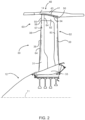
- the body portion 57 of the leading edge guard 60 is made from a first material that may be a metal alloy of a composition providing desired strength and weight characteristics.
- suitable metal alloys for construction of the leading edge guard 60 include titanium-based alloys and superalloys, nickel-based alloys and superalloys, and iron-based alloys and superalloys.
- the body portion 57 of the leading edge guard may also be made of a nonmetallic material.
- the tip cap 62 overlies portions of the pressure and suction sides 35, 36 that are adjacent to the tip 34.
- the tip cap 62 provides additional impact protection, as well as stiffens the airfoil body 31 along the tip 34 and the trailing edge 39.
- the tip cap 62 includes a pair of side walls 76 and 78.
- the exterior surfaces of the side walls 76 and 78 collectively define an exterior surface of the tip cap 62.
- the shape and dimensions of the exterior surface are selected to act as an aerodynamic extension of the airfoil body 31. Stated another way, the exterior shape of the blade 30 is defined in part by the airfoil body 31 and in part by the tip cap 62.
- the tip cap 62 may be attached to the airfoil body 31 with a known type of adhesive.
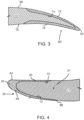
- FIG. 5 depicts, in cross-section, the coating of the present disclosure deposited on an engine component to form a wear resistant article 105.
- Wear resistant coating 110 is deposited on the surface 120 of a substrate 130 to define the wear resistant article 105.
- the wear resistant article 105 may be any component used in a gas turbine engine, such as a turbine engine disks, blades, and/or retainers as described hereinabove.
- the surface 120 can be any surface of an engine component 105.
- the substrate 130 may comprise a superalloy based on titanium, nickel, cobalt, iron or a combination thereof.
- the wear resistant article 105 of the present disclosure includes a bulk metallic glass coating 110 on a substrate.
- the substrate is made of titanium, aluminum, iron, nickel, cobalt, niobium, chromium, molybdenum, tantalum, tungsten, rhenium, or an alloy thereof (including superalloys thereof).
- the substrate is made of titanium or an alloy thereof (including superalloys thereof).
- the substrate is a leading edge of a fan blade of a jet engine.
- Bulk metallic glass is a solid metallic material with an amorphous (disordered) atomic structure, as compared to convention metal materials which have an ordered crystalline atomic structure. Unlike conventional glass materials, bulk metallic glasses are good electrical conductors. Bulk metallic glasses provide high strength (on the order of about 1 to 4 gigapascals) and good ductility (e.g., 1% to 5%). This combination provides strong coatings with resistance to fracture. In addition, bulk metallic glasses are generally corrosion resistant. Accordingly, the bulk metallic glass coating provides an advantageous combination of strength, long life, and wear resistance.
- the bulk metallic glass of the present disclosure is an alloy including a base metal (M), a transition metal (TM), boron (B), and silicon (Si) M-TM-B-Si.
- the base metal is titanium, aluminum, iron, nickel, or cobalt or a combination thereof.
- the base metal is titanium.
- the transition metal may be any known transition metal(s).
- the transition metal is vanadium, chromium, manganese, iron, cobalt, nickel, zirconium, niobium, molybdenum, ruthenium, rhodium, tungsten, hafnium, tantalum, tungsten, or rhenium, or a combination thereof.
- the transition metal is molybdenum, zirconium, palladium, or tungsten, or a combination thereof.
- the transition metal is present in an amount of 0.1% to 15% by weight, or 0.5% to 10% by weight, or 1% to 5% by weight based on the total weight of the bulk metallic glass. Without wishing to be bound by any particular theory, it is believed that this amount of transition metal allows for the formation of particles of transition metal borides and/or silicides in the bulk metallic glass coating while still allowing for the ductile metal matrix to remain substantially continuous.
- the boron is present in an amount of 1% to 5% by weight, or 1.5% to 4% by weight, or 2% to 3% by weight based on the total weight of the bulk metallic glass.
- the silicon is present in an amount of 1% to 10% by weight, or 2% to 7.5% by weight, or 3 to 5% by weight based on the total weight of the bulk metallic glass coating. Without wishing to be bound by any particular theory, it is believed that this amount of boron and the silicon allows for the formation of particles of transition metal borides and/or silicides in the bulk metallic glass coating, which have very high hardness.
- the borides and/or silicides particles are present in an amount of 0.5% to 20% by weight, or 1% to 10% by weight, or 2% to 5% by weight based on the total weight of the bulk metallic glass coating.
- the bulk metallic glass coatings take the form of transition metal boride and/or silicide particles interspersed in a ductile metal matrix.
- the bulk metallic coatings may have a functionally graded microstructure.
- “functionally graded microstructure” means that the metallic glass coating has areas of hard particles trapped or suspended in a metal matrix continuous phase, which is more ductile. These alternating hard and ductile areas produce a material that, as discussed above, is both strong and wear resistant.
- the surface may also be provided with a pattern in which some areas have great hardness and other have greater ductility to provide the same combination of strength and wear resistance.
- a pattern may be formed by controlling/varying the amount of transition metal borides and/or silicides supplied to particular areas (e.g., decreasing the amount of transition metal borides and/or silicides in certain areas while increasing the amount of transition metal borides and/or silicides in other areas).
- Such patterns may be formed by additive manufacturing technologies.
- Additive manufacturing technologies may generally be described as technologies for building objects point-by-point or layer-by-layer, typically in a vertical direction. Other methods of fabrication are contemplated and within the scope of the present disclosure. For example, although the discussion herein refers to the addition of material to form successive layers or point-by-point addition, the presently disclosed subject matter may be practiced with any additive manufacturing technology or other manufacturing technology, including layer-additive processes, layer-subtractive processes, or hybrid processes. Additive printing encompasses a variety of technologies for producing components in an additive, point-by-point fashion. In powder bed fusion, a focused energy beam is used to fuse powder particles together. The energy beam may be either an electron beam or laser.
- Laser powder bed fusion processes are referred to in the industry by many different names, the most common of which being selective laser sintering (SLS) and selective laser melting (SLM), depending on the nature of the powder fusion process.
- SLS selective laser sintering
- SLM selective laser melting
- DMLS direct metal laser sintering
- DMLM direct metal laser melting
- a bulk metallic glass coating is additively printed onto at least a portion of an article.
- a powder containing the base metal, the transition metal, boron, and silicon is deposited on the surface of the substrate and successive portions of the powder are then fused to form the bulk metallic glass coating.
- the bulk metallic glass coating is subjected to further heat treatment, such as annealing, to produce particles of transition metal borides and/or silicides, which have very high hardness.
- the heat treatment is the local heating of the bulk metallic glass coating to a temperature of 300 °C to 600 ° C (such as 300 °C to 500 °C).
- the heat treatment can be carried out during initial manufacturing or may be carried out at a later time, for example, when the article has been assembled into an end product.
- the boride and/or silicide particles are present in an amount of 0.5% to 20% by weight, or 1% to 10% by weight, or 2% to 5% by weight based on the total weight of the bulk metallic glass coating.
- the bulk metallic glass coating has a thickness of 50 ⁇ m to 20 millimeters, or 500 ⁇ m to 10 millimeters, or 1 millimeter to 5 millimeters.
- a wear resistant article comprising: a substrate; and a bulk metallic glass coating comprising an alloy of a base metal, a transition metal, boron, and silicon, wherein the bulk metallic glass coating has a thickness of 50 ⁇ m or greater and a functionally graded microstructure.
- the substrate comprising a metal selected from the group consisting of titanium, aluminum, iron, nickel, cobalt, niobium, chromium, molybdenum, tantalum, tungsten, rhenium, and alloys thereof.
- the wear resistant article of one or more of these clauses comprising: 0.1% to 15% of the transition metal, 1 to 5% boron, and 1 to 10% silicon.
- the portion of the article being coated comprises a metal selected from the groups consisting of titanium, aluminum, iron, nickel, cobalt, niobium, chromium, molybdenum, tantalum, tungsten, rhenium, and alloys thereof.
Landscapes
- Chemical & Material Sciences (AREA)
- Engineering & Computer Science (AREA)
- Mechanical Engineering (AREA)
- Materials Engineering (AREA)
- Metallurgy (AREA)
- Organic Chemistry (AREA)
- Chemical Kinetics & Catalysis (AREA)
- General Engineering & Computer Science (AREA)
- Architecture (AREA)
- Other Surface Treatments For Metallic Materials (AREA)
Applications Claiming Priority (2)
| Application Number | Priority Date | Filing Date | Title |
|---|---|---|---|
| IN202311001109 | 2023-01-05 | ||
| US18/298,409 US12385405B2 (en) | 2023-01-05 | 2023-04-11 | Wear resistant article and method of making |
Publications (1)
| Publication Number | Publication Date |
|---|---|
| EP4397788A1 true EP4397788A1 (fr) | 2024-07-10 |
Family
ID=88146549
Family Applications (1)
| Application Number | Title | Priority Date | Filing Date |
|---|---|---|---|
| EP23198923.7A Pending EP4397788A1 (fr) | 2023-01-05 | 2023-09-21 | Article résistant à l'usure et procédé de fabrication |
Country Status (1)
| Country | Link |
|---|---|
| EP (1) | EP4397788A1 (fr) |
Citations (5)
| Publication number | Priority date | Publication date | Assignee | Title |
|---|---|---|---|---|
| US20110204700A1 (en) * | 2007-02-06 | 2011-08-25 | Ut-Battelle, Llc | In-situ composite formation of damage tolerant coatings utilizing laser |
| WO2018218077A1 (fr) * | 2017-05-24 | 2018-11-29 | California Institute Of Technology | Matériaux à base de métal amorphe hypoeutectique pour fabrication additive |
| US11014162B2 (en) * | 2017-05-26 | 2021-05-25 | California Institute Of Technology | Dendrite-reinforced titanium-based metal matrix composites |
| EP4092287A1 (fr) * | 2020-01-17 | 2022-11-23 | Kolon Industries, Inc. | Corps de frein dispositif de frein |
| EP4092309A1 (fr) * | 2020-01-17 | 2022-11-23 | Kolon Industries, Inc. | Tube et son procédé de fabrication |
-
2023
- 2023-09-21 EP EP23198923.7A patent/EP4397788A1/fr active Pending
Patent Citations (5)
| Publication number | Priority date | Publication date | Assignee | Title |
|---|---|---|---|---|
| US20110204700A1 (en) * | 2007-02-06 | 2011-08-25 | Ut-Battelle, Llc | In-situ composite formation of damage tolerant coatings utilizing laser |
| WO2018218077A1 (fr) * | 2017-05-24 | 2018-11-29 | California Institute Of Technology | Matériaux à base de métal amorphe hypoeutectique pour fabrication additive |
| US11014162B2 (en) * | 2017-05-26 | 2021-05-25 | California Institute Of Technology | Dendrite-reinforced titanium-based metal matrix composites |
| EP4092287A1 (fr) * | 2020-01-17 | 2022-11-23 | Kolon Industries, Inc. | Corps de frein dispositif de frein |
| EP4092309A1 (fr) * | 2020-01-17 | 2022-11-23 | Kolon Industries, Inc. | Tube et son procédé de fabrication |
Similar Documents
| Publication | Publication Date | Title |
|---|---|---|
| US8528208B2 (en) | Methods of fabricating a coated component using multiple types of fillers | |
| US8601691B2 (en) | Component and methods of fabricating a coated component using multiple types of fillers | |
| EP3162917B1 (fr) | Procédés de réparation d'un revêtement barrière thermique d'un composant de turbine à gaz et composants ainsi obtenus | |
| US9598963B2 (en) | Components with microchannel cooling | |
| US9476306B2 (en) | Components with multi-layered cooling features and methods of manufacture | |
| US9249670B2 (en) | Components with microchannel cooling | |
| CN102536465B (zh) | 使用短效涂层制作构件的方法 | |
| US9511436B2 (en) | Composite composition for turbine blade tips, related articles, and methods | |
| EP3252277B1 (fr) | Bande de frottement abradable de joint externe | |
| US20160032766A1 (en) | Components with micro cooled laser deposited material layer and methods of manufacture | |
| EP3255254B1 (fr) | Bande de frottement abradable de joint externe | |
| JP5791882B2 (ja) | 冷間溶射を用いたタービンローターの製作 | |
| EP2730669B1 (fr) | Superalliages à base de nickel | |
| US12385405B2 (en) | Wear resistant article and method of making | |
| CN118291974A (zh) | 耐磨制品及制造方法 | |
| Alvin et al. | NETL research efforts on development and integration of advanced material systems and airfoil cooling configurations for future land-based gas turbine engines |
Legal Events
| Date | Code | Title | Description |
|---|---|---|---|
| PUAI | Public reference made under article 153(3) epc to a published international application that has entered the european phase |
Free format text: ORIGINAL CODE: 0009012 |
|
| STAA | Information on the status of an ep patent application or granted ep patent |
Free format text: STATUS: THE APPLICATION HAS BEEN PUBLISHED |
|
| AK | Designated contracting states |
Kind code of ref document: A1 Designated state(s): AL AT BE BG CH CY CZ DE DK EE ES FI FR GB GR HR HU IE IS IT LI LT LU LV MC ME MK MT NL NO PL PT RO RS SE SI SK SM TR |
|
| STAA | Information on the status of an ep patent application or granted ep patent |
Free format text: STATUS: REQUEST FOR EXAMINATION WAS MADE |
|
| 17P | Request for examination filed |
Effective date: 20250103 |