EP4397972A2 - Ausrichtungsabbildungsschätzung - Google Patents
Ausrichtungsabbildungsschätzung Download PDFInfo
- Publication number
- EP4397972A2 EP4397972A2 EP24171832.9A EP24171832A EP4397972A2 EP 4397972 A2 EP4397972 A2 EP 4397972A2 EP 24171832 A EP24171832 A EP 24171832A EP 4397972 A2 EP4397972 A2 EP 4397972A2
- Authority
- EP
- European Patent Office
- Prior art keywords
- measurements
- polymer
- series
- mer
- sequence
- Prior art date
- Legal status (The legal status is an assumption and is not a legal conclusion. Google has not performed a legal analysis and makes no representation as to the accuracy of the status listed.)
- Pending
Links
Images


Classifications
-
- C—CHEMISTRY; METALLURGY
- C12—BIOCHEMISTRY; BEER; SPIRITS; WINE; VINEGAR; MICROBIOLOGY; ENZYMOLOGY; MUTATION OR GENETIC ENGINEERING
- C12Q—MEASURING OR TESTING PROCESSES INVOLVING ENZYMES, NUCLEIC ACIDS OR MICROORGANISMS; COMPOSITIONS OR TEST PAPERS THEREFOR; PROCESSES OF PREPARING SUCH COMPOSITIONS; CONDITION-RESPONSIVE CONTROL IN MICROBIOLOGICAL OR ENZYMOLOGICAL PROCESSES
- C12Q1/00—Measuring or testing processes involving enzymes, nucleic acids or microorganisms; Compositions therefor; Processes of preparing such compositions
- C12Q1/68—Measuring or testing processes involving enzymes, nucleic acids or microorganisms; Compositions therefor; Processes of preparing such compositions involving nucleic acids
- C12Q1/6869—Methods for sequencing
-
- G—PHYSICS
- G01—MEASURING; TESTING
- G01N—INVESTIGATING OR ANALYSING MATERIALS BY DETERMINING THEIR CHEMICAL OR PHYSICAL PROPERTIES
- G01N33/00—Investigating or analysing materials by specific methods not covered by groups G01N1/00 - G01N31/00
- G01N33/48—Biological material, e.g. blood, urine; Haemocytometers
- G01N33/483—Physical analysis of biological material
- G01N33/487—Physical analysis of biological material of liquid biological material
- G01N33/48707—Physical analysis of biological material of liquid biological material by electrical means
- G01N33/48721—Investigating individual macromolecules, e.g. by translocation through nanopores
-
- G—PHYSICS
- G16—INFORMATION AND COMMUNICATION TECHNOLOGY [ICT] SPECIALLY ADAPTED FOR SPECIFIC APPLICATION FIELDS
- G16B—BIOINFORMATICS, i.e. INFORMATION AND COMMUNICATION TECHNOLOGY [ICT] SPECIALLY ADAPTED FOR GENETIC OR PROTEIN-RELATED DATA PROCESSING IN COMPUTATIONAL MOLECULAR BIOLOGY
- G16B30/00—ICT specially adapted for sequence analysis involving nucleotides or amino acids
-
- G—PHYSICS
- G16—INFORMATION AND COMMUNICATION TECHNOLOGY [ICT] SPECIALLY ADAPTED FOR SPECIFIC APPLICATION FIELDS
- G16B—BIOINFORMATICS, i.e. INFORMATION AND COMMUNICATION TECHNOLOGY [ICT] SPECIALLY ADAPTED FOR GENETIC OR PROTEIN-RELATED DATA PROCESSING IN COMPUTATIONAL MOLECULAR BIOLOGY
- G16B30/00—ICT specially adapted for sequence analysis involving nucleotides or amino acids
- G16B30/10—Sequence alignment; Homology search
Definitions
- the first to third aspects of the present invention relate to analysis of a polymer using a biochemical analysis system that comprises at least one sensor element that comprises a nanopore.
- the fourth aspect of the present invention relates to the estimation of an alignment mapping between a series of measurements of a polymer comprising polymer units, and a reference sequence of polymer units.
- the polymer may be, for example but without limitation, a polynucleotide in which the polymer units are nucleotides.
- biochemical analysis system that provide measurements of polymer units for the purpose of determining the sequence.
- one type of measurement system uses a nanopore.
- Biochemical analysis systems that use a nanopore have been the subject of much recent development.
- successive measurements of a polymer are taken from a sensor element comprising a nanopore are taken during translocation of the polymer through the nanopore.
- Some property of the system depends on the polymer units in the nanopore, and measurements of that property are taken.
- This type of measurement system using a nanopore has considerable promise, particularly in the field of sequencing a polynucleotide such as DNA or RNA.
- the first and second aspects of the present invention are concerned with providing such an increase.
- a method of controlling a biochemical analysis system for analysing polymers that comprise a sequence of polymer units wherein the biochemical analysis system comprises at least one sensor element that comprises a nanopore, and the biochemical analysis system is operable to take successive measurements of a polymer from a sensor element, during translocation of the polymer through the nanopore of the sensor element,
- Such a method involves analysing measurements taken from the polymer when it has partially translocated through the nanopore, i.e. during translocation of the polymer through the nanopore.
- the series of measurements taken from the polymer during the partial translocation are analysed using reference data derived from at least one reference sequence of polymer units.
- This analysis provides a measure of similarity between the sequence of polymer units of the partially translocated polymer and the at least one reference sequence. Responsive to that measure of similarity, action may be taken to reject the polymer to take measurements from a further polymer if the similarity to the reference sequence indicates no further analysis of the polymer is needed, for example because the polymer being measured is not of interest.
- sequencing performed with 100% accuracy would allow an initial determination to be made after measurement of around 30 nucleotides.
- the determination may be made after measurement of a few hundred nucleotides, typically 250 nucleotides. This compares to the biochemical analysis system being able to perform measurements on sequences ranging in length from many hundreds to tens of thousands (and potentially more) nucleotides.
- the analysis that provides a measure of similarity between the sequence of polymer units of the partially translocated polymer and the at least one reference sequence may in itself use known techniques for comparing measurements to references. However, in contrast to the present method, such known techniques are typically performed measurements taken after the translocation has been completed.
- a method of controlling a biochemical analysis system for analysing polymers that comprise a sequence of polymer units wherein the biochemical analysis system comprises at least one sensor element that comprises a nanopore, and the biochemical analysis system is operable to take successive measurements of a polymer from a sensor element, during translocation of the polymer through the nanopore of the sensor element,
- the third aspect of the present invention is concerned with an application of a specific form of biochemical analysis that may be performed using nanopores.
- the reference sequence of polymer units from which the reference data is derived could be a wanted sequence. In that case, the step of selectively completing the translocation of the polymer into the collection chamber is performed responsive to the measure of similarity indicating that the partially translocated polymer is the wanted sequence. However, this is not essential. In some applications, the reference sequence of polymer units from which the reference data is derived could be an unwanted sequence. In that case, the step of selectively completing the translocation of the polymer into the collection chamber is performed responsive to the measure of similarity indicating that the partially translocated polymer is not the unwanted sequence.
- the measure of similarity may indicate similarity with the entirety of the reference sequence, or with a portion of the reference sequence.
- biochemical analysis systems that implement a method similar to that of the first, second or third aspect of the invention.
- the fourth aspect of the present invention is concerned with alignment between a series of measurements of a polymer comprising polymer units, and a reference sequence of polymer units.
- the model comprises: transition weightings, in respect of each transition between successive k-mer states in the series of k-mer states, for possible transitions between the possible types of k-mer state; and emission weightings, in respect of each type of k-mer state that represent the chances of observing given values of measurements for that k-mer.
- the model may be for example a Hidden Markov Model (HMM).
- HMM Hidden Markov Model
- a method of estimating an alignment mapping between (a) a series of measurements of a polymer comprising polymer units, wherein the measurements are dependent on a k-mer, being k polymer units of the polymer, where k is an integer, and (b) a reference sequence of polymer units; the method using a reference model that treats the measurements as observations of a reference series of k-mer states corresponding to the reference sequence of polymer units, wherein the reference model comprises:
- This method therefore uses a reference model in respect of the reference sequence.
- the reference model treats the measurements as observations of a reference series of k-mer states corresponding to the reference sequence of polymer units, and comprises transition weightings for transitions between the k-mer states in the reference series of k-mer states; and in respect of each k-mer state, emission weightings for different measurements being observed when the k-mer state is observed.
- The may be, for example but without limitation a HMM.
- the method can improve the accuracy of the estimation of the alignment method, compared to the known techniques discussed above that involve initially estimating the sequence of polymer units and then estimating an alignment mapping to the reference sequence of polymer units by comparing the identity of the polymer units. This is for the following reasons.
- the use of the reference model is similar to the model disclosed in WO-2013/041878 to estimate the sequence of polymer units, for example using transition weightings and emission weightings of a similar form, and applying the same mathematical treatment to the model.
- the reference model itself is different from the model disclosed in WO-2013/041878 which is a generic model of the measurement system, wherein each k-mer state may in general be of any of the possible types of k-mer state.
- transition weightings are provided in respect of each transition between successive k-mer states in the series of k-mer states, for various possible transitions between the possible types of the k-mer states.
- the source of the reference model may vary depending on the application.
- the reference model may be generated from the reference sequence of polymer units. This is useful in applications where the reference sequence is known, for example from a library or from earlier experiments.
- generation of the reference model may be performed using stored emission weightings in respect of a set of possible types of k-mer state.
- this allows generation of the reference model for any reference sequence of polymer units, based solely on the stored data concerning the emission weightings for the possible types of k-mer state.
- the reference model may be generated from a series of reference measurements of a polymer that comprises the reference sequence of polymer units. This is useful, for example, in applications where the reference sequence of polymer units is measured contemporaneously with the target polymer. In particular, in this example there is no requirement that the identity of the polymer units in the reference sequence are themselves known.
- Generation of the model may be part of a larger framework of model training examining a large collection of reference measurements derived from observing a large collection of series of k-mer states in order to find the unknown parameters of a mathematical model, such as the emission and transition weightings.
- EM expectation-maximisation
- the Baum-Welch algorithm may be used.
- Such algorithms are iterative: initial guesses are made for the parameters of the model, with updates being applied by examining a set of training measurements. Application of the resultant HMM to a second distinct set of measurements will yield improved results (assuming the second set can be described by the same model as the training data).
- the polynucleotide may be long, for example at least 5kB (kilo-bases), i.e. at least 5,000 nucleotides, or at least 30kB (kilo-bases), i.e. at least 30,000 nucleotides.
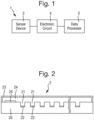
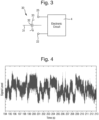
- the sensor device 2 is prepared to form an array of sensor elements 30, one of which is shown schematically in Fig. 3 .
- Each sensor element 30 is made by forming a membrane 31 across a respective well 21 in the first form of the sensor device 2 or across each compartment in the second form of the sensor device 2, and then by inserting a pore 32 into the membrane 31.
- the membrane 31 seals the respective well 21 from the sample chamber 24.
- the membrane 31 may be made of amphiphilic molecules such as lipid.
- Each sensor element 30 is capable of being operated to take electrical measurements from a polymer during translocation of the polymer 33 through the pore 32, using the sensor electrode 22 in respect of each sensor element 30 and the common electrode 25.
- the translocation of the polymer 33 through the pore 32 generates a characteristic signal in the measured property that may be observed, and may be referred to overall as an "event".
- Suitable ⁇ -barrel pores include, but are not limited to, ⁇ -toxins, such as ⁇ -hemolysin, anthrax toxin and leukocidins, and outer membrane proteins/porins of bacteria, such as Mycobacterium smegmatis porin (Msp), for example MspA, outer membrane porin F (OmpF), outer membrane porin G (OmpG), outer membrane phospholipase A and Neisseria autotransporter lipoprotein (NalP).
- Msp Mycobacterium smegmatis porin
- OmpF outer membrane porin F
- OmpG outer membrane porin G
- NalP Neisseria autotransporter lipoprotein
- ⁇ -helix bundle pores comprise a barrel or channel that is formed from ⁇ -helices.
- Suitable ⁇ -helix bundle pores include, but are not limited to, inner membrane proteins and ⁇ outer membrane proteins, such as WZA and ClyA toxin.
- the biological pore may be a naturally occurring pore or may be a mutant pore.
- Typical pores are described in WO-2010/109197 , Stoddart D et al., Proc Natl Acad Sci, 12;106(19):7702-7 , Stoddart D et al., Angew Chem Int Ed Engl. 2010;49(3):556-9 , Stoddart D et al., Nano Lett. 2010 Sep 8;10(9):3633-7 , Butler TZ et al., Proc Natl Acad Sci 2008; 105(52):20647-52 , and WO-2012/107778 .
- the biological pore may be inserted into a membrane, such as an amphiphilic layer, for example a lipid bilayer.
- An amphiphilic layer is a layer formed from amphiphilic molecules, such as phospholipids, which have both hydrophilic and lipophilic properties.
- the amphiphilic layer may be a monolayer or a bilayer.
- the amphiphilic layer may be a co-block polymer such as disclosed by ( Gonzalez-Perez et al., Langmuir, 2009, 25, 10447-10450 ) or by PCT/GB2013/052767 , published as WO2014/064444 .
- a biological pore may be inserted into a solid state layer.
- the polynucleotide binding protein is preferably a polynucleotide handling enzyme.
- a polynucleotide handling enzyme is a polypeptide that is capable of interacting with and modifying at least one property of a polynucleotide.
- the enzyme may modify the polynucleotide by cleaving it to form individual nucleotides or shorter chains of nucleotides, such as di- or trinucleotides.
- the enzyme may modify the polynucleotide by orienting it or moving it to a specific position.
- the polynucleotide handling enzyme does not need to display enzymatic activity as long as it is capable of binding the target polynucleotide and controlling its movement through the pore.
- the enzyme may be modified to remove its enzymatic activity or may be used under conditions which prevent it from acting as an enzyme. Such conditions are discussed in more detail below.
- a variant will preferably be at least 50% homologous to that sequence based on amino acid identity. More preferably, the variant polypeptide may be at least 55%, at least 60%, at least 65%, at least 70%, at least 75%, at least 80%, at least 85%, at least 90% and more preferably at least 95%, 97% or 99% homologous based on amino acid identity to the amino acid sequence of Seq IDs: 5, 6, 7, 8 or 9 over the entire sequence.
- the variant may differ from the wild-type sequence in any of the ways discussed above with reference to Seq ID: 2.
- the enzyme may be covalently attached to the pore as discussed above.
- Suitable strategies for single strand DNA sequencing are the translocation of the DNA through the pore 32, both cis to trans and trans to cis, either with or against an applied potential.
- the most advantageous mechanism for strand sequencing is the controlled translocation of single strand DNA through the pore 32 under an applied potential.
- Exonucleases that act progressively or processively on double stranded DNA can be used on the cis side of the pore to feed the remaining single strand through under an applied potential or the trans side under a reverse potential.
- a helicase that unwinds the double stranded DNA can also be used in a similar manner.
- the single strand DNA exonucleases or single strand DNA dependent polymerases can act as molecular motors to pull the recently translocated single strand back through the pore in a controlled stepwise manner, trans to cis, against the applied potential.
- the single strand DNA dependent polymerases can act as molecular brake slowing down the movement of a polynucleotide through the pore. Any moieties, techniques or enzymes described in WO-2012/107778 or WO-2012/033524 could be used to control polymer motion.
- the ion current may typically be the DC ion current, although in principle an alternative is to use the AC current flow (i.e. the magnitude of the AC current flowing under application of an AC voltage).
- the biochemical analysis system 1 may take electrical measurements of types other than current measurements of ion current through a nanopore as described above.
- Other possible electrical measurement include: current measurements, impedance measurements, tunnelling measurements (for example as disclosed in Ivanov AP et al., Nano Lett. 2011 Jan 12;11(1):279-85 ), and field effect transistor (FET) measurements (for example as disclosed in WO2005/124888 ).
- FET field effect transistor
- the biochemical analysis system 1 may take optical measurements.
- a suitable optical method involving the measurement of fluorescence is disclosed by J. Am. Chem. Soc. 2009, 131 1652-1653 .
- the measurement system 8 may take electrical measurements of types other than current measurements of ion current through a nanopore as described above. Possible electrical measurement include: current measurements, impedance measurements, tunnelling measurements (for example as disclosed in Ivanov AP et al., Nano Lett. 2011 Jan 12;11(1):279-85 ), and field effect transistor (FET) measurements (for example as disclosed in WO2005/124888 ).
- current measurements impedance measurements
- tunnelling measurements for example as disclosed in Ivanov AP et al., Nano Lett. 2011 Jan 12;11(1):279-85
- FET field effect transistor
- Optical measurements may be combined with electrical measurements ( Soni GV et al., Rev Sci Instrum. 2010 Jan;81(1):014301 ).
- the biochemical analysis system 1 may take simultaneous measurements of different natures.
- the measurement may be of different natures because they are measurements of different physical properties, which may be any of those described above.
- the measurements may be of different natures because they are measurements of the same physical properties but under different conditions, for example electrical measurements such as current measurements under different bias voltages.
- a typical form of the signal output by many types of the sensor device 2 as a series of raw measurements 11 is a "noisy step wave", although without limitation to this signal type.
- An example of a series of raw measurements 11 having this form is shown in Fig. 4 for the case of an ion current measurement obtained using a type of the measurement system 8 comprising a nanopore.
- each measurement taken by the biochemical analysis system 1 is dependent on a k-mer, being k polymer units of the respective sequence of polymer units, where k is a positive integer.
- each measurement is dependent on a k-mer of plural polymer units (i.e. where k is a plural integer). That is, each measurement is dependent on the sequence of each of the polymer units in the k-mer where k is a plural integer.
- the signal moves between a set of levels, which may be a large set. Given the sampling rate of the instrumentation and the noise on the signal, the transitions between levels can be considered instantaneous, thus the signal can be approximated by an idealised step trace.
- the measurements corresponding to each state are constant over the time scale of the event, but for most types of the biochemical analysis system 1 will be subject to variance over a short time scale. Variance can result from measurement noise, for example arising from the electrical circuits and signal processing, notably from the amplifier in the particular case of electrophysiology. Such measurement noise is inevitable due the small magnitude of the properties being measured. Variance can also result from inherent variation or spread in the underlying physical or biological system of the biochemical analysis system 1. Most types of the biochemical analysis system 1 will experience such inherent variation to greater or lesser extents. For any given types of the biochemical analysis system 1, both sources of variation may contribute or one of these noise sources may be dominant.
- each group of measurements may be referred to as a "state”.
- the event consisting of translocation of the polymer through the pore 32 may occur in a ratcheted manner.
- the ion current flowing through the nanopore at a given voltage across the pore 32 is constant, subject to the variance discussed above.
- each group of measurements is associated with a step of the ratcheted movement.
- Each step corresponds to a state in which the polymer is in a respective position relative to the pore 32.
- the states may occur as a result of a binding event in the nanopore.
- Reverting to the biochemical analysis system 1 may take electrical measurements of types other than current measurements of ion current through a nanopore as described above.
- Other possible electrical measurement include: current measurements, impedance measurements, tunnelling measurements (for example as disclosed in Ivanov AP et al., Nano Lett. 2011 Jan 12;11(1):279-85 ), and field effect transistor (FET) measurements (for example as disclosed in WO2005/124888 ).
- FET field effect transistor
- the electronic circuit 4 is connected to the sensor electrode 22 in respect of each sensor element 30 and to the common electrode 25.
- the electronic circuit 4 may have an overall arrangement as described in WO 2011/067559 .
- the electronic circuit 4 is arranged as follows to control the application of bias voltages across each sensor element 3 and to take the measurements from each sensor element 3.
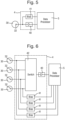
- FIG. 5 A first arrangement for the electronic circuit 4 is illustrated in Fig. 5 which shows components in respect of a single sensor element 30 that are replicated for each one of the sensor elements 30.
- the electronic circuit 4 includes a detection channel 40 and a bias control circuit 41 each connected to the sensor electrode 22 of the sensor element 30.
- the detection channel 40 takes measurements from the sensor electrode 22.
- the detection channel 40 is arranged to amplify the electrical signals from the sensor electrode 22.
- the detection channel 40 is therefore designed to amplify very small currents with sufficient resolution to detect the characteristic changes caused by the interaction of interest.
- the detection channel 40 is also designed with a sufficiently high bandwidth to provide the time resolution needed to detect each such interaction. These constraints require sensitive and therefore expensive components.
- the detection channel 40 may be arranged as described in detail in WO-2010/122293 or WO 2011/067559 to each of which reference is made and each of which is incorporated herein by reference.
- the bias control circuit 41 supplies a bias voltage to the sensor electrode 22 for biasing the sensor electrode 22 with respect to the input of the detection channel 40.
- the bias voltage supplied by the bias control circuit 41 is selected to enable translocation of a polymer through the pore 32.
- Such a bias voltage may typically be of a level up to -200 mV.
- the bias voltage supplied by the bias control circuit 41 may also be selected so that it is sufficient to eject the translocating from the pore 32.
- the bias control circuit 41 By causing the bias control circuit 41 to supply such a bias voltage, the sensor element 30 is operable to eject a polymer that is translocating through the pore 32.
- the bias voltage is typically a reverse bias, although that is not always essential. When this bias voltage is applied, the input to the detection circuit 40 is designed to remain at a constant bias potential even when presented with a negative current (of similar magnitude to the normal current, typically of magnitude -50pA to -100pA).
- the first arrangement for the electronic circuit 4 illustrated in Fig. 5 requires a separate detection channel 40 for each sensor element 30 which is expensive to implement.
- a second arrangement for the electronic circuit 4 which reduces the number of detection channels 40 is illustrated in Fig. 6 .
- the number of sensor elements 30 in the array is greater than the number of detection channels 40 and the biochemical sensing system is operable to take measurements of a polymer from sensor elements selected in an multiplexed manner, in particular an electrically multiplexed manner.
- This is achieved by providing a switch arrangement 42 between the sensor electrodes 23 of the sensor elements 30 and the detection channels 40.
- Fig. 6 shows a simplified example with four sensor cells 30 and two detection channels 40, but the number of sensor cells 30 and detection channels 40 can by greater, typically much greater.
- the sensor device 2 might comprise a total of 4096 sensor elements 30 and 1024 detection channels 40.
- the switch arrangement 42 may be arranged as described in detail in WO-2010/122293 .
- the switch arrangement 42 may comprise plural 1-to-N multiplexers each connected to a group of N sensor elements 30 and may inlcude appropriate hardware such as a latch to select the state of the switching.
- the biochemical analysis system 1 may be operated to take measurements of a polymer from sensor elements 30 selected in an electrically multiplexed manner.
- the switch arrangement 42 may be controlled in the manner described in WO-2010/122293 to selectively connect the detection channels 40 to respective sensor elements 30 that have acceptable quality of performance on the basis of the amplified electrical signals that are output from the detection channels 40, but in addition the switching arrangement is controlled as described further below.
- this second arrangement also includes a bias control circuit 41 in respect of each sensor element 30.
- the sensor elements 30 are selected in an electrically multiplexed manner
- other types of biochemical analysis system 1 could be configured to switch between sensor elements in a spatially multiplexed manner, for example by movement of a probe used to take electrical measurements, or by control of an optical system used to take optical measurements from the different spatial locations of different sensor elements 30.
- the data processor 5 connected to the electronic circuit 4 is arranged as follows.
- the data processor 5 may be a computer apparatus running an appropriate program, may be implemented by a dedicated hardware device, or may be implemented by any combination thereof.
- the computer apparatus where used, may be any type of computer system but is typically of conventional construction.
- the computer program may be written in any suitable programming language.
- the computer program may be stored on a computer-readable storage medium, which may be of any type, for example: a recording medium which is insertable into a drive of the computing system and which may store information magnetically, optically or opto-magnetically; a fixed recording medium of the computer system such as a hard drive; or a computer memory.
- the data processor 5 may comprise a card to be plugged into a computer such as a desktop or laptop.
- the data used by the data processor 5 may be stored in a memory 10 thereof in a conventional manner.
- the data processor 5 controls the operation of the electronic circuit 3. As well as controlling the operation of the detection channels 41, the data processor controls the bias control circuits 41 and controls the switching of the switch arrangement 31. The data processor 5 also receives and processes the series of measurements from each detection channel 40. The data processor 5 stores and analyses the series of measurements, as described further below.
- the data processor 5 controls the bias control circuits 41 to apply bias voltages that are sufficient to enable translocation of polymers through the pores 32 of the sensor elements 30.
- This operation of the biochemical sensor element 41 allows collection of series of measurements from different sensor elements 30 which may be analysed by the data processor 5, or by another data processing unit, to estimate the sequence of polymer units in a polymer, for example using techniques as described in WO-2013/041878 . Data from different sensor elements 30 may be collected and combined.
- the data processor 5 receives and analyses the series of raw measurements 11 taken by the sensor device 2, and supplied from the electronic circuit 4.
- the data processor 5 may also provide control signals to the electronic circuit 5, for example to select the voltage applied across the biological pore 1 in the sensor device 2.
- the series of raw measurements 11 may be supplied over any suitable connection, for example a direct connection in the case that the data processor 5 and the sensor device 2 are physically located together, or any type of network connection in the case that the data processor 5 and the sensor device 2 are physically remote from each other.
- a method shown in Fig. 7 of controlling the biochemical analysis system 1 to analyse polymers This method is in accordance with the first aspect of the present invention and is performed in a manner that increases the speed of analysis by rejecting the polymer no further analysis is needed.
- This method is implemented in the data processor 5. This method is performed in parallel in respect of each sensor element 30 from which a series of measurements is taken, that is every sensor element 30 in the first arrangement for the electronic circuit 4, and each sensor element 30 that is connected to a detection channel 40 by the switch arrangement 42 in the second arrangement for the electronic circuit 4.
- step C1 the biochemical analysis system 1 is operated by controlling the bias control circuit 30 to apply a bias voltage across the pore 32 of the sensor element 30 that is sufficient to enable translocation of polymer. Based on the output signal from the detection channel 40, translocation is detected and a measurements start to be taken. A series of measurements is taken over time.
- Fig. 9 shows an example of such a state detection step SD that looks for short-term increases in the derivative of the series of raw measurements 11 as follows.
- Step C2 is performed when a polymer has partially translocated through the nanopore, i.e. during the translocation.
- the series of measurements taken from the polymer during the partial translocation is collected for analysis, which is referred to herein as a "chunk" of measurements.
- Step C2 may be performed after a predetermined number of measurements have been taken so that the chunk of measurements is of predefined size, or may alternatively after a predetermined amount of time.
- the size of the chunk of measurements may be defined by parameters that are initialised at the start of a run, but are changed dynamically so that the size of the chunk of measurements changes.
- the general model 60 may of the type described in WO-2013/041878 . Reference is made to WO-2013/041878 for the details of the model. The general model 60 described further below with reference to Fig. 13 .
- the measure of fit is derived, for example as the likelihood of the measurements being observed from the most likely sequence of k-mer states. Such a measure of fit indicates the quality of the measurements.
- the method causes a polymer to be rejected if the similarity to the reference sequence of polymer units indicates no further analysis of the polymer is needed or if the measurements taken from that polymer are of poor quality as determined by the model such that further translocation and measurement is not warranted.
- the extent to which data is indicated by the model as not being sufficiently good depends upon the complexity of the model itself. For example a more complex model may have parameters which can address some of the conditions that could give rise to a rejection.
- Conditions that might give rise to rejection may include for example: drift in the signal that is unacceptable; high noise; un-modelled behaviour; irregular system errors such as temperature fluctuation; and/or errors due to the electro-physical system.
- the following steps operate on the series of raw measurements 11 taken by the sensor device 2, i.e. being a series of measurements of the type described above comprising successive groups of plural measurements that are dependent on the same k-mer without a priori knowledge of number of measurements in any group.
- the raw measurements 11 are pre-processed using a state detection step SD to derive a series of measurements 12 that are used in the following steps instead of the raw measurements.
- the state detection state SD may be performed in the same manner as in step C1 as described above with reference to Figs. 8 and 9 .
- Step D2 is performed when a polymer has partially translocated through the nanopore, i.e. during the translocation.
- the series of measurements taken from the polymer during the partial translocation is collected for analysis, which is referred to herein as a "chunk" of measurements.
- Step D2 may be performed after a predetermined number of measurements have been taken so that the chunk of measurements is of predefined size, or may alternatively after a predetermined amount of time.
- the size of the chunk of measurements may be defined by parameters that are initialised at the start of a run, but are changed dynamically so that the size of the chunk of measurements changes.
- step D4 If the decision made in step D4 is (b) to complete the translocation of the polymer into the well 21, then the method proceeds to step D6 without repeating the steps D2 and D3 so that no further no further analysis of measurements is performed.
- step D6 the translocation of the polymer into the well 21 is completed. As a result the polymer is collected in the well 21.
- Step D6 may be performed by continuing to apply the same bias voltage across the pore 32 of the sensor element 30 that enables translocation of polymer.
- step D1 the method repeats. Repeated performance of the method causes successive polymers from the sample chamber 24 to be translocated and processed.
- the method makes use of the measure of similarity provided by the analysis of the series of measurements taken from the polymer during the partial translocation as the basis for whether or notusccessive polymers are collected in the well 21.
- polymers from the sample in the sample chamber 24 are sorted and desired polymers are selectively collected in the well 21.
- the method may be applied to a wide range of applications.
- the method could be applied to polymers that are polynucleotides, for example viral genomes or plasmids.
- a viral genome typically has a length of order 10-15kB (kilobases) and a plasmid typically has a length of order 4kB.
- the polynucleotides would not have to be fragmented and could be collected whole.
- the collected viral genome or plasmid could be used in any way, for example to transfect a cell. Transfection is the process of introducing DNA into a cell nucleus and is an important tool used in studies investigating gene function and the modulation of gene expression, thus contributing to the advancement of basic cellular research, drug discovery, and target validation. RNA and proteins may also be transfected.
- the degree of similarity, as indicated by the measure of similarity, that is used as the basis for the decision in step D4 may vary depending on the application and the nature of the reference sequence. Thus provided that the decision is dependant on the measure of similarity, there is in general no limitation on the degree of similarity that is used to make the different decisions.
- the reference sequence of polymer units from which the reference data 50 is derived is a wanted sequence.
- a decision to complete the translocation is made to responsive to the measure of similarity indicating that the partially translocated polymer is the wanted sequence, a relatively high degree of similarity may be used as the basis to complete the translocation.
- the reference sequence of polymer units is an unwanted sequence.
- a decision to complete the translocation is made to responsive to the measure of similarity indicating that the partially translocated polymer is not the unwanted sequence.
- the degree of similarity may vary depending on the nature of the reference sequence in the context of the application. Where it is intended to distinguish between similar sequences a higher degree of similarity may be required as the basis for the rejection.
- the method may be performed using the same reference data 50 and the same criteria in step D4 in respect of each sensor element 30. In that case, each well 21 collects the same polymers in parallel.
- the method may be performed to collect different polymers in different wells 21.
- differential sorting is performed.
- different reference data 50 is used in respect of different sensor elements 30.
- the same reference data 50 is used in respect of different sensor elements 30, but step D4 is performed with different dependence on the measure of similarity in respect of different sensor elements.
- reference sequence of polymer units may be used, depending on the application.
- the reference sequence of polymer units may comprise one or more reference genomes or a region of interest of the one or more genomes to which the measurement is compared.
- the source of the reference data 50 may vary depending on the application.
- the reference data may be generated from the reference sequence of polymer units or from measurements taken from the reference sequence of polymer units.
- the reference data 50 may be pre-stored having been generated previously. In other applications, the reference data 50 is generated at the time the method is performed.
- the reference data 50 may be provided in respect of a single reference sequence of polymer units or plural reference sequences of polymer units. In the latter case, either step D3 is performed in respect of each sequence or else one of the plural reference sequences is selected for use in step D3. In the latter case, the selection may be made based on various criteria, depending on the application.
- the reference data 50 may be applicable to different types of biochemical analysis system 1 (e.g. different nanopores) and/or ambient conditions, in which case the selection of the reference model 70 described below is based on the type of biochemical analysis system 1 actually used and/or the actual ambient conditions.
- the biochemical analysis system 1 described above is an example of a biochemical analysis system that comprises an array of sensor elements that each comprise a nanopore.
- the methods described above may be applied generally to any biochemical analysis system that is operable to take successive measurements of polymers, possibly without the use of nanopores.
- the biochemical analysis system may be operable to take successive measurements of polymers selected in a spatially multiplexed manner.
- the polymers may be disposed on a substrate in different spatial locations and the spatial multiplexing may be provided by movement of the probe of the scanning probe microscope.
- the resolution of the AFM tip may be less fine than the dimensions of an individual polymer unit. As such the measurement may be a function of multiple polymer units.
- the AFM tip may be functionalised to interact with the polymer units in an alternative manner to if it were not functionalised.
- the AFM may be operated in contact mode, non-contact mode, tapping mode or any other mode.
- the resolution of the measurement may be less fine than the dimensions of an individual polymer unit such that the measurement is a function of multiple polymer units.
- the STM may be operated conventionally or to make a spectroscopic measurement (STS) or in any other mode.
- the form of the reference data 50 as used in any of the methods described above will now be discussed.
- the reference data 50 may take various forms that are derived from the reference sequence of polymer units in different ways.
- the analysis performed in step C4 or D4 to provide the measure of similarity is dependent on the form of the reference data 50.
- the reference data 50 represents the identity of the polymer units of the at least one reference sequence.
- step C4 or D4 comprises the process shown in Fig. 13 , as follows.
- step C4a-1 the chunk of measurements 63 is analysed to provide an estimate 64 of the identity of the polymer units of a sequence of polymer units of the partially translocated polymer.
- Step C4a-1 may in general be performed using any method for analysing the measurements taken by the biochemical analysis system.
- the transition weightings 61 are provided in respect of each transition between successive k-mer states in the series of k-mer states. Each transition may be considered to be from an origin k-mer state to a destination k-mer state.
- the transition weightings 61 represent the relative weightings of possible transitions between the possible types of the k-mer state, that is from an origin k-mer state of any type to a destination k-mer state of any type. In general, this includes a weighting for a transition between two k-mer states of the same type.
- the emission weightings 62 are provided in respect of each type of k-mer state.
- the emission weightings 62 are weightings for different measurements being observed when the k-mer state is of that type.
- the emission weightings 62 may be thought of as representing the chances of the chances of observing given values of measurements for that k-mer state, although they do not need to be probabilities.
- the transition weightings 61 may be thought of as representing the chances of the possible transition, although they do not need to be probabilities. Therefore, the transition weightings 61 take account of the chance of the k-mer state on which the measurements depend transitioning between different k-mer states, which may be more or less likely depending on the types of the origin and destination k-mer states.
- the model may be a HMM in which the transition weightings 61 and emission weightings 62 are probabilities.
- Step C4a-1 uses the reference model 60 to derive an estimate 64 of the identity of the polymer units of a sequence of polymer units of the partially translocated polymer. This may be performed using known techniques that are applicable to the nature of the reference model 60. Typically, such techniques derive the estimate 64 based on the likelihood of the measurements predicted by the reference model 60 being observed from sequences of k-mer states. As described in WO-2013/041878 , such techniques may be performed on the series of raw measurements 11 or the series of measurements 12.
- the analytical technique may be a known algorithm for solving the HMM, for example the Viterbi algorithm which is well known in the art.
- the estimate 64 is derived based on the likelihood predicted by the general model 60 being produced by overall sequences of k-mer states.
- the analytical technique may be of the type disclosed in Fariselli et al., "The posterior-Viterbi: a new decoding algorithm for hidden Markov models", Department of Biology, University of Casadio, archived in Cornell University, submitted 4 January 2005 .
- a posterior matrix (representing the probabilities that the measurements are observed from each k-mer state) and obtain a consistent path, being a path where neighbouring k-mer states are biased towards overlapping, rather than simply choosing the most likely k-mer state per event. In essence, this allows recovery of the same information as obtained directly from application of the Viterbi algorithm.
- step C4a-2 the estimate 64 is compared with the reference data 50 to provide the measure of similarity 65.
- This comparison may use any known technique for comparing two sequence of polymer units, typically being an alignment algorithm that derives an alignment mapping between the sequence of polymer units, together with a score for the accuracy of the alignment mapping which is therefore the measure of similarity 65.
- Any of a number of available fast alignment algorithms may be used, such as Smith-Waterman alignment algorithm, BLAST or derivatives thereof, or a k-mer counting technique.
- This example of the form of the reference data 50 has the advantage that the process for deriving the measure of similarity 65 is rapid, but other forms of the reference data are possible.
- the reference data 50 represents actual or simulated measurements taken by the biochemical analysis system 1.
- step C4 or D4 comprises the process shown in Fig. 14 which simply comprises step C4b of comparing the chunk of measurements 63, which in this case is taken from the series of raw measurements 11, with the reference data 50 to derive the measure of similarity 65. Any suitable comparison may be made, for example using a distance function to provide a measure of the distance between the two series of measurements, as the measure of similarity 65.
- the reference data 50 represents a feature vector of time-ordered features representing characteristics of the measurements taken by the biochemical analysis system 1.
- a feature vector may be derived as described in detail in WO-2013/121224 to which reference is made and which is incorporated herein by reference.
- step C4 or D4 comprises the process shown in Fig. 15 which is performed as follows.
- step C4c-1 the chunk of measurements 63, which in this case is taken from the series of raw measurements 11, is analysed to derive a feature vector 66 of time-ordered features representing characteristics of the measurements.
- step C4c-2 the feature vector 66 is compared with the reference data 50 to derive the measure of similarity 65.
- the comparison may be performed using the methods described in detail in WO-2013/121224 .
- Step C4d may be performed as follows.
- the transition weightings 71 represent transitions between the k-mer states 73 of the reference series.
- Those k-mer states 73 correspond to the reference sequence of polymer units.
- successive k-mer states 73 in the reference series corresponds to a successive overlapping groups of k polymer units.
- each k-mer states 73 is of a type corresponding to the combination of the different types of each polymer unit in the group of k polymer units.
- a transition 76 to the subsequent k-mer states 73 beyond the next k-mer state 73 is allowed. This models the likelihood of no measurement being taken from the next k-mer state, so that successive measurements in the series of measurements 12 being taken from k-mers of the reference sequence of polymer units that are separated. This may be referred to as a "skip".
- the transition weightings 71 represent this transition 76 as having a relatively low likelihood compared to the transition 74.
- the algorithm derives a score for the accuracy of the alignment mapping, for example representing the likelihood that the estimate of the alignment mapping is correct, for example because the algorithm derives the alignment mapping based on such a score for different paths through the model.
- this score for the accuracy of the alignment mapping is therefore the measure of similarity 65
- the process is performed as follows.
- the transition weightings 71 are derived for transitions between the reference series of k-mer states 73 derived in step P1.
- the transition weightings 71 take the form described above, defined with respect to the reference series of k-mer states 73.
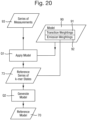
- the reference model 70 may be generated from a series of reference measurements 93 taken from the reference sequence of polymer units by the process shown in Fig. 20 , as follows. This is useful, for example, in applications where the reference sequence of polymer units is measured contemporaneously with the target polymer. In particular, in this example there is no requirement that the identity of the polymer units in the reference sequence are themselves known.
- the series of reference measurements 93 may be taken from the polymer that comprises the reference sequence of polymer units by the biochemical analysis system 1.
- the emission weightings 72 are derived for each k-mer state 73 in the series of k-mer states 73 derived in step Q1, by selecting the emission weightings from the weightings of the further model 50 according to the type of the k-mer state 73.
- the emission weightings for each type of k-mer state 73 in the reference model are the same as the emission weightings for that type of k-mer state 73 in the further model 50.
- step C3 For each of the types of application, there might be a slightly different use of the method shown in Fig. 7 . A mixture of the types of application might also be used.
- the analysis performed in step C3 and/or the basis of the decision in step C4 might also be adjusted dynamically as the run proceeds. For example, there might be no decision logic applied initially, then logic is used later into the run when enough data has built up to make decisions. Alternatively, the decision logic may change during a run.
- the first type of application may also be beneficially used to sequence contaminants in a sample.
- the reference sequence would be the sequence of the components known to be present in the sample. For example, this could be used to detect contaminants in a food product such as a meat product like a beef product.
- the reference sequence would be the sequence of polynucleotides from the organism from which the food product is derived (for example the genome of that organism).
- the reference sequence may be the sequence of the genome of a cow. Any polymers in the sample having a measure of similarly indicating that they correspond to the cow genome may be rejected, whilst polymers having a measure of similarity indicating that they do not correspond to the cow genome may be retained in the nanopore and sequenced fully.
- the reference sequence of polymer units from which the reference data 50 is derived is a target, and in step C4 a decision to reject the polymer is made to responsive to the measure of similarity indicating that the partially translocated polymer is not the target.
- This second type of application may be beneficially used to sequence a gene of interest from a sample of DNA.
- the reference sequence is a target which may be a portion of a polynucleotide such as a gene of interest, and the polymers may comprise fragments of polynucleotides such as DNA from the sample. Any polymers in the sample having a measure of similarity indicating that they are not similar to the target (gene of interest) may be rejected. The remaining polymers may be retained and sequenced. This allows for rapid sequencing of a gene of interest and is advantageous over prior art methods which require isolating the target gene of interest before sequencing it (for example by hybridisation of the gene of interest to probes attached to a solid surface).
- Such isolation techniques are time consuming and are not required when using the method of the invention.
- One example of such an application would be the sequencing of the human genome.
- the human genome contains 50Mb (Mega-bases) of coding sequence. It would be ideal to be able to sequence that 50Mb and not the remaining 3,000Mb. Thus, the amount of DNA which is "off target " (which should be rejected) is 3,000Mb.
- the DNA will be fragmented into fragments approximately 10Kb in length, and therefore 3,000Mb will represent approximately 300,000 fragments.
- the remaining 50Mb which is similar to the target polymer will take 2,000 seconds (at 25 bases per second the time taken will equal 50,000,000/25 or 2,000,000 seconds).
- the total time to sequence the described 50Mb of the target polymer is the sum of the amount of time taken to sequence off-target polymer and the amount of time taken to sequence on-target polymer, which is 3,000,000 + 2,000,000 or 5,000,000 seconds per nanopore.
- This second type of application may also be beneficially used to identify whether bacteria in a sample (for example from a hospitalised patient) are antibiotic resistant.
- the reference sequence will be a target which may be a polynucleotide corresponding to a particular antibiotic resistance gene. Any polymers in the sample having a measure of similarity indicating that they are not similar to the target antibiotic resistance gene may be rejected. If no polymers are detected having a measure of similarity indicating that they are similar to the antibiotic resistance gene, this would indicate that the bacterium is missing the particular antibiotic resistance gene. Alternatively, if polymers are detected that do have a measure of similarity indicating that they are similar to the antibiotic resistance gene, these may be retained and sequenced, and the sequence used to determine whether the antibiotic resistance gene is functional.
- the off-target polymer (genome of the bacterium) will be around 5000kb and the on-target polymer (region of interest) will be around 5kb.
- the method of the invention would sequence the DNA approximately 40 times faster than if the nanopore was not able to eject unwanted polymers.
- This second type of application may also be beneficially used to sequence total bacterial mRNA.
- the reference sequence may be a target sequence such as an annotated version of the bacterial genome.
- the polymers may comprise RNA from a sample of the bacterium. Any polymers in the sample having a measure of similarity indicating that they are not similar to the target bacterial genome will relate to rRNA or tRNA and can be rejected. The remaining polymers will correspond to mRNA and can be sequenced to provide the sequence of the total bacterial mRNA.
- the on target polymer would be the mRNA (which is approximately 5% of the total RNA) and the off-target polymer would be the tRNA and the rRNA which is approximately 95% of the total RNA.
- This second type of application may also be beneficially used to identify a bacterial strain, for phenotyping or for SNP (single-nucleotide polymorphism) detection, where the strain of the bacterium is not known.
- the polymers may be fragments of polynucleotides from a bacterial sample. Initially no polymers are rejected (no reference sequence is used) and any polymer which has partially translocated through the pores is sequenced, but when sufficient sequence information has been obtained to allow the user to determine the strain of the bacteria, then a reference sequence is selected.
- the reference sequence will correspond to a target region of interest and will depend on the species of bacterium which has been defined.
- any polymers which partially translocate through the pores and have a measure of similarity indicating that they are similar to the reference sequence (the target portion of interest) are be retained and sequenced fully, whilst other polymers may be rejected. This will allow detection of phenotype or the presence of SNPs.
- the polymers may be fragments of polynucleotides obtained from a cancer patient.
- the reference sequence may be target sequences. These target sequences may be sequences of polynucleotides such as genes associated with different classes of cancers. Any polymers having a measure of similarity to these target sequences will be retained and other polymers rejected.
- the reference sequence can be refined such that the reference sequence now comprises targets having sequences of polynucleotides associated with sub-classes of cancer.
- the reference sequence of polymer units from which the reference data 50 is derived an already measured sequence of polymer units
- a decision to reject the polymer is made to responsive to the measure of similarity indicating that the partially translocated polymer is already measured sequence of polymer units.
- Such a type of application may be used to enable accurate sequencing of a genome.
- the determination of the sequence of a genome requires that sequences of multiple strands of DNA is performed, and for accuracy, a consensus sequences for that portion of DNA should be determined.
- polymers corresponding to the same portion of that sequence should be sequenced enough times to be able to define an accurate consensus sequence.
- the method of the invention may be used to quickly and accurately sequence a genome.
- the polymers may comprise DNA from a sample of the DNA of the organism for which the genome is to be defined.
- the reference sequence is a portion of that DNA for which sufficient measurements have already been taken (in this case for which sufficient sequence data has been obtained to provide an accurate consensus sequence). Initially no sequences are rejected.
- the reference sequence of polymer units from which the reference data 50 is derived comprises plural targets, and in step C4 a decision to reject the polymer is made to responsive to the measure of similarity indicating that the partially translocated polymer is one of the targets.
- the targets may represent different polymers.
- any polymer which has a measure of similarity indicating that they are similar to the reference sequence can be assigned to one "bucket" and the number of polymers detected belonging to each "bucket" can be quantified.
- the polymer will be rejected once sufficient information has been obtained about the polymer to determine whether it has a measure of similarity indicating that it is similar to one of the reference sequences.
- An example of the use of such a technique is the quantification of a contaminant.
- the polymers may be a sample of a food product such as a beef product.
- the reference sequence may comprise a target having a sequence found in cow DNA and a target having a sequence found in horse DNA.
- the proportion of polymers which are similar to the cow DNA target and the proportion of polymer whish are similar to the horse DNA can be calculated using this method, and this will indicate the level of contamination of a beef product with horse meat.
- this technique can be used to determine the proportion of different bacteria present in a sample, such as a sample from an infected patient.
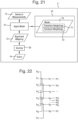
- the method shown in Fig. 16 results in generation of an alignment mapping. This method may be applied more generally as follows.
- the method uses the reference model 70 of the reference sequence of polymer units, the reference model 70 being stored in the memory 10 of the data processor 5.
- the reference model 70 takes the same form as described above, treating the measurements as observations of a reference series of k-mer states corresponding to the reference sequence of polymer units.
- the application of the model intrinsically derives an estimate 13 of an alignment mapping between the series of measurements and the reference series of k-mer states 73.
- This may be understood as follows.
- the application of the model provides estimates of the type of k-mer state from which each measurement is observed, i.e. the initial series of estimates of k-mer states 34 and the discrete estimated k-mer states 35 which each estimate the type of the k-mer state from which each measurement is observed.
- the alignment mapping between the series of measurements and the reference series of k-mer states 73 also provides an alignment mapping between the series of measurements and the reference sequence of polymer units.
- Fig. 22 illustrates an example of an alignment mapping to illustrate its nature.
- Fig. 22 shows an alignment mapping between polymer units p0 to p7 of the reference sequence, k-mer states k1 to k6 of the reference series and measurements m1 to m7.
- k is three.
- the horizontal lines indicate an alignment between a k-mer state and a measurement, or in the case of a dash an alignment to a gap in the other series.
- the polymer units p0 to p7 of the reference sequence are aligned to k-mer states k1 to k6 of the reference series as illustrated.
- K-mer state k1 corresponds to, and is mapped to, polymer units p1 to p3 and so on.
- k-mer state k1 is mapped to measurement m1
- k-mer state k2 is mapped to measurement m2
- k-mer state k3 is mapped to a gap in the series of measurements
- k-mer state k4 is mapped to measurement m3
- measurements m4 and m5 are mapped to a gap in the series of k-mer states.
- the analytical technique applied in the alignment step S1 may take a variety of forms that are suitable for the form of the reference model 70.
- the analytical technique may be a known algorithm for solving the HMM, for example the Forwards-Backwards algorithm or the Viterbi algorithm, which is well known in the art.
- Such algorithms in general avoid a brute force calculation of the likelihood of all possible paths through the sequence of states, and instead identify state sequences using a simplified method based on the likelihood.
- the derived estimate 13 of the alignment mapping comprises, for each measurement 12 in the series, weightings in respect of different k-mer states 73 in the reference series of k-mer states 73.
- such an alignment mapping may be represented by M i,j where the index i labels the measurements and the index j labels the k-mer states in the reference series, and so where there are K k-mer states the values M i,1 to M i,K represents the weightings in for the i-th measurement in respect of each k-mer state 73 in the reference series of k-mer states 73.
- the estimate 13 does not represent a single k-mer state 73 as being mapped to each measurement, but instead provides weightings for different possible k-mer states 73 being so mapped to each measurement.
- a score 14 representing the likelihood that the estimate 13 of the alignment mapping is correct. This may be derived from the estimate 13 of the alignment mapping itself using a straightforward probabilistic technique, or alternatively may be derived as an intrinsic part of alignment step S 1
- the derived estimate 13 of the alignment mapping comprises, for each measurement in he series, a discrete estimate of a k-mer state in the reference series of k-mer states.
- a discrete estimate of a k-mer state in the reference series of k-mer states may be represented by M i where the index i labels the measurements and M i can take the values 1 to K indicating the K k-mer states.
- the estimate 13 represents a single k-mer state 73 as being mapped to each measurement.
- the derived estimate may be of this type when the analytical technique applied is the Viterbi algorithm as described above, wherein the analysis technique estimates the sequence of k-mers based on the likelihood predicted by the model of the series of measurements being produced by the reference series of k-mer states.
- derived estimate 13 of the alignment mapping comprises discrete estimates of a k-mer state
- the algorithm intrinsically derives the score 14 representing the likelihood that the estimate 13 of the alignment mapping is correct, because the algorithm derives the alignment mapping based on such a score for different paths through the model.
- a separate scoring step S2 is not performed.
- the score is simply the likelihood predicted by the model associated with the derived estimate 13 of the alignment mapping.
- the method shown in Fig. 21 has a wide range of applications in which it is desirable to estimate an alignment mapping between a series of measurements of a polymer and a reference sequence of polymer units and/or a score indicating the likelihood of the alignment mapping being accurate.
- Such estimation of an alignment mapping may be used in a variety of applications such as comparison to a reference to provide identification or detection of the presence, absence or extent of a polymer in a sample, for example to provide a diagnosis.
- the potential range of specific applications is vast and could be applied to the detection of any analyte having a DNA sequence.
- the above example refers to a single reference model 70.
- multiple reference models 70 may be used.
- the method shown in Fig. 21 may be applied using each reference model 70, or one of the reference models 70 may be selected.
- the selection may be made based on various criteria, depending on the application.
- the reference models 70 may be applicable to different types of sensor device 2 (e.g. different nanopores) and/or ambient conditions, in which case the selection of the reference model 8 is based on the type of sensor device 2 actually used and/or the actual ambient conditions.
- the selection may be made based on an analyte to be detected, for example whether particularly G/C rich or whether the experiment is to determine particular epigenetic information.
- a method of estimating an alignment mapping between (a) a series of measurements of a polymer comprising polymer units, wherein the measurements are dependent on a k-mer, being k polymer units of the polymer, where k is an integer, and (b) a reference sequence of polymer units; the method using a reference model that treats the measurements as observations of a reference series of k-mer states corresponding to the reference sequence of polymer units, wherein the reference model comprises:
- the method may further comprise generating the reference model from a series of reference measurements of a polymer comprising the reference sequence of polymer units.
- the step of generating the reference model may uses a further model that treats the series of reference measurements as observations of a further series of k-mer states of different possible types, wherein the further model comprises:
- the reference model may be pre-stored.
- the model may be a Hidden Markov Model.
Landscapes
- Life Sciences & Earth Sciences (AREA)
- Chemical & Material Sciences (AREA)
- Health & Medical Sciences (AREA)
- Engineering & Computer Science (AREA)
- Physics & Mathematics (AREA)
- Proteomics, Peptides & Aminoacids (AREA)
- General Health & Medical Sciences (AREA)
- Analytical Chemistry (AREA)
- Biophysics (AREA)
- Organic Chemistry (AREA)
- Biomedical Technology (AREA)
- Biotechnology (AREA)
- Bioinformatics & Cheminformatics (AREA)
- Spectroscopy & Molecular Physics (AREA)
- Wood Science & Technology (AREA)
- Zoology (AREA)
- Molecular Biology (AREA)
- Immunology (AREA)
- Biochemistry (AREA)
- Medical Informatics (AREA)
- Evolutionary Biology (AREA)
- Theoretical Computer Science (AREA)
- Bioinformatics & Computational Biology (AREA)
- Microbiology (AREA)
- General Engineering & Computer Science (AREA)
- Genetics & Genomics (AREA)
- Nanotechnology (AREA)
- Food Science & Technology (AREA)
- Urology & Nephrology (AREA)
- Hematology (AREA)
- Pathology (AREA)
- Medicinal Chemistry (AREA)
- General Physics & Mathematics (AREA)
- Measuring Or Testing Involving Enzymes Or Micro-Organisms (AREA)
- Apparatus Associated With Microorganisms And Enzymes (AREA)
- Investigating Or Analyzing Materials By The Use Of Electric Means (AREA)
- Management, Administration, Business Operations System, And Electronic Commerce (AREA)
Applications Claiming Priority (6)
| Application Number | Priority Date | Filing Date | Title |
|---|---|---|---|
| GBGB1418366.9A GB201418366D0 (en) | 2014-10-16 | 2014-10-16 | Estimating alignment mapping between polymer measurements and reference sequence |
| GBGB1418379.2A GB201418379D0 (en) | 2014-10-16 | 2014-10-16 | Control of analysis of a polymer |
| GBGB1507742.3A GB201507742D0 (en) | 2015-05-06 | 2015-05-06 | Control of analysis of a polymer |
| PCT/GB2015/053083 WO2016059427A1 (en) | 2014-10-16 | 2015-10-16 | Analysis of a polymer |
| EP15784133.9A EP3207154B1 (de) | 2014-10-16 | 2015-10-16 | Analyse eines polymers |
| EP21194294.1A EP3971300B1 (de) | 2014-10-16 | 2015-10-16 | Sortierung von polymeren |
Related Parent Applications (3)
| Application Number | Title | Priority Date | Filing Date |
|---|---|---|---|
| EP15784133.9A Division EP3207154B1 (de) | 2014-10-16 | 2015-10-16 | Analyse eines polymers |
| EP21194294.1A Division-Into EP3971300B1 (de) | 2014-10-16 | 2015-10-16 | Sortierung von polymeren |
| EP21194294.1A Division EP3971300B1 (de) | 2014-10-16 | 2015-10-16 | Sortierung von polymeren |
Publications (2)
| Publication Number | Publication Date |
|---|---|
| EP4397972A2 true EP4397972A2 (de) | 2024-07-10 |
| EP4397972A3 EP4397972A3 (de) | 2024-10-09 |
Family
ID=54337813
Family Applications (3)
| Application Number | Title | Priority Date | Filing Date |
|---|---|---|---|
| EP24171832.9A Pending EP4397972A3 (de) | 2014-10-16 | 2015-10-16 | Ausrichtungsabbildungsschätzung |
| EP21194294.1A Active EP3971300B1 (de) | 2014-10-16 | 2015-10-16 | Sortierung von polymeren |
| EP15784133.9A Active EP3207154B1 (de) | 2014-10-16 | 2015-10-16 | Analyse eines polymers |
Family Applications After (2)
| Application Number | Title | Priority Date | Filing Date |
|---|---|---|---|
| EP21194294.1A Active EP3971300B1 (de) | 2014-10-16 | 2015-10-16 | Sortierung von polymeren |
| EP15784133.9A Active EP3207154B1 (de) | 2014-10-16 | 2015-10-16 | Analyse eines polymers |
Country Status (6)
| Country | Link |
|---|---|
| US (4) | US10689697B2 (de) |
| EP (3) | EP4397972A3 (de) |
| JP (1) | JP6709213B2 (de) |
| KR (1) | KR102551897B1 (de) |
| CN (4) | CN107109490B (de) |
| WO (1) | WO2016059427A1 (de) |
Families Citing this family (48)
| Publication number | Priority date | Publication date | Assignee | Title |
|---|---|---|---|---|
| GB0724736D0 (en) | 2007-12-19 | 2008-01-30 | Oxford Nanolabs Ltd | Formation of layers of amphiphilic molecules |
| JP6457811B2 (ja) | 2011-09-23 | 2019-01-23 | オックスフォード ナノポール テクノロジーズ リミテッド | ポリマー単位を含むポリマーの解析 |
| GB201202519D0 (en) | 2012-02-13 | 2012-03-28 | Oxford Nanopore Tech Ltd | Apparatus for supporting an array of layers of amphiphilic molecules and method of forming an array of layers of amphiphilic molecules |
| CN104321441B (zh) | 2012-02-16 | 2016-10-19 | 牛津楠路珀尔科技有限公司 | 聚合物的测量的分析 |
| GB201222928D0 (en) | 2012-12-19 | 2013-01-30 | Oxford Nanopore Tech Ltd | Analysis of a polynucleotide |
| EP4397972A3 (de) | 2014-10-16 | 2024-10-09 | Oxford Nanopore Technologies PLC | Ausrichtungsabbildungsschätzung |
| US11514289B1 (en) | 2016-03-09 | 2022-11-29 | Freenome Holdings, Inc. | Generating machine learning models using genetic data |
| GB201609221D0 (en) | 2016-05-25 | 2016-07-06 | Oxford Nanopore Tech Ltd | Method |
| WO2017223515A1 (en) | 2016-06-23 | 2017-12-28 | F. Hoffman-La Roche Ag | Formation and calibration of nanopore sequencing cells |
| GB201611770D0 (en) | 2016-07-06 | 2016-08-17 | Oxford Nanopore Tech | Microfluidic device |
| GB201620450D0 (en) | 2016-12-01 | 2017-01-18 | Oxford Nanopore Tech Ltd | Method |
| CA3053086A1 (en) | 2017-02-10 | 2018-08-16 | Oxford Nanopore Technologies Limited | Modified nanopores, compositions comprising the same, and uses thereof |
| US11567944B2 (en) | 2017-03-24 | 2023-01-31 | Garvan Institute Of Medical Research | Processing of sequencing data streams |
| GB201707140D0 (en) | 2017-05-04 | 2017-06-21 | Oxford Nanopore Tech Ltd | Method |
| GB2568895B (en) | 2017-11-29 | 2021-10-27 | Oxford Nanopore Tech Ltd | Microfluidic device |
| EP3731959B1 (de) | 2017-12-29 | 2025-10-08 | Clear Labs, Inc. | Automatisierte priming- und bibliotheksladevorrichtung |
| GB2569977A (en) * | 2018-01-05 | 2019-07-10 | Oxford Nanopore Tech Ltd | Method |
| EP3745857A1 (de) | 2018-02-02 | 2020-12-09 | Bayer Aktiengesellschaft | Bekämpfung resistenter schadorganismen |
| GB201801768D0 (en) | 2018-02-02 | 2018-03-21 | Oxford Nanopore Tech Ltd | Synthesis method |
| JP2021165634A (ja) * | 2018-04-20 | 2021-10-14 | 株式会社Screenホールディングス | 電流値データ取得方法および電流計測装置 |
| GB2574048B (en) | 2018-05-24 | 2021-06-16 | Oxford Nanopore Tech Ltd | Nanopore sensor component with electrostatic discharge protection |
| GB201809323D0 (en) | 2018-06-06 | 2018-07-25 | Oxford Nanopore Tech Ltd | Method |
| US10941342B2 (en) | 2018-07-23 | 2021-03-09 | Samsung Display Co., Ltd. | Etchant composition and method of manufacturing wiring substrate using the same |
| GB201821155D0 (en) | 2018-12-21 | 2019-02-06 | Oxford Nanopore Tech Ltd | Method |
| JP7492200B2 (ja) | 2019-03-12 | 2024-05-29 | オックスフォード ナノポール テクノロジーズ ピーエルシー | ナノ細孔センシングデバイスと操作方法およびその成形方法 |
| GB2580988B (en) | 2019-03-19 | 2022-04-13 | Oxford Nanopore Tech Ltd | Current measurement apparatus, molecular entity sensing apparatus, method of measuring a current, method of sensing a molecular entity |
| GB201907243D0 (en) * | 2019-05-22 | 2019-07-03 | Oxford Nanopore Tech Ltd | Sensing interactions between molecular entities and nanapores |
| CN112578106B (zh) * | 2020-04-13 | 2022-04-22 | 南京大学 | 一种纳米孔道单分子蛋白质测序仪 |
| GB202016874D0 (en) | 2020-10-23 | 2020-12-09 | Oxford Nanopore Tech Ltd | Nanopore support structure and manufacture thereof |
| JP2023530155A (ja) | 2020-06-18 | 2023-07-13 | オックスフォード ナノポール テクノロジーズ ピーエルシー | ナノポアを通って移動するポリヌクレオチドを特徴付ける方法 |
| US20230295712A1 (en) * | 2020-06-18 | 2023-09-21 | Oxford Nanopore Technologies Plc | A method of selectively characterising a polynucleotide using a detector |
| GB202009349D0 (en) | 2020-06-18 | 2020-08-05 | Oxford Nanopore Tech Ltd | Method |
| EP4675256A3 (de) | 2020-07-17 | 2026-01-28 | Oxford Nanopore Technologies PLC | Nanoporenmessvorrichtung |
| GB202103605D0 (en) | 2021-03-16 | 2021-04-28 | Oxford Nanopore Tech Ltd | Alignment of target and reference sequences of polymer units |
| JP7823320B2 (ja) * | 2021-03-29 | 2026-03-04 | 住友金属鉱山株式会社 | 高分子の分子動力学計算方法、高分子の分子動力学計算装置 |
| GB202118906D0 (en) | 2021-12-23 | 2022-02-09 | Oxford Nanopore Tech Ltd | Method |
| JP2025517736A (ja) | 2022-05-17 | 2025-06-10 | オックスフォード ナノポール テクノロジーズ ピーエルシー | 方法及びアダプター |
| GB202215442D0 (en) | 2022-10-19 | 2022-11-30 | Oxford Nanopore Tech Plc | Analysis of a polymer |
| CN120202306A (zh) | 2022-11-01 | 2025-06-24 | 牛津纳米孔科技公开有限公司 | 生化分析系统以及控制生化分析系统的方法 |
| WO2024099985A1 (en) | 2022-11-10 | 2024-05-16 | Bayer Aktiengesellschaft | Targeted crop protection product application based on genetic profiles |
| WO2024101988A1 (en) | 2022-11-11 | 2024-05-16 | Umc Utrecht Holding B.V. | Computer-implemented method for identifying a dna modification |
| GB202304324D0 (en) | 2023-03-24 | 2023-05-10 | Oxford Nanopore Tech Plc | Method and kits |
| GB202307486D0 (en) | 2023-05-18 | 2023-07-05 | Oxford Nanopore Tech Plc | Method |
| GB202407044D0 (en) | 2024-05-17 | 2024-07-03 | Oxford Nanopore Tech Plc | Polymer analysis using transformer neural network |
| GB202407247D0 (en) | 2024-05-21 | 2024-07-03 | Oxford Nanopore Tech Plc | Method |
| WO2026057755A1 (en) | 2024-09-13 | 2026-03-19 | Oxford Nanopore Technologies Plc | Adaptors and kits for rna molecules labelling and characterising |
| GB2644084A (en) | 2024-09-16 | 2026-03-18 | Oxford Nanopore Tech Plc | Augmented consensus and variant calling |
| GB202413747D0 (en) | 2024-09-18 | 2024-10-30 | Oxford Nanopore Tech Plc | Preprocessing nanopore signals |
Citations (16)
| Publication number | Priority date | Publication date | Assignee | Title |
|---|---|---|---|---|
| WO2000028312A1 (en) | 1998-11-06 | 2000-05-18 | The Regents Of The University Of California | A miniature support for thin films containing single channels or nanopores and methods for using same |
| WO2000079257A1 (en) | 1999-06-22 | 2000-12-28 | President And Fellows Of Harvard College | Molecular and atomic scale evaluation of biopolymers |
| WO2005124888A1 (en) | 2004-06-08 | 2005-12-29 | President And Fellows Of Harvard College | Suspended carbon nanotube field effect transistor |
| WO2009035647A1 (en) | 2007-09-12 | 2009-03-19 | President And Fellows Of Harvard College | High-resolution molecular graphene sensor comprising an aperture in the graphene layer |
| WO2009077734A2 (en) | 2007-12-19 | 2009-06-25 | Oxford Nanopore Technologies Limited | Formation of layers of amphiphilic molecules |
| WO2010086603A1 (en) | 2009-01-30 | 2010-08-05 | Oxford Nanopore Technologies Limited | Enzyme mutant |
| WO2010109197A2 (en) | 2009-03-25 | 2010-09-30 | Isis Innovation Limited | Method |
| WO2010122293A1 (en) | 2009-04-20 | 2010-10-28 | Oxford Nanopore Technologies Limited | Lipid bilayer sensor array |
| WO2011046706A1 (en) | 2009-09-18 | 2011-04-21 | President And Fellows Of Harvard College | Bare single-layer graphene membrane having a nanopore enabling high-sensitivity molecular detection and analysis |
| WO2011067559A1 (en) | 2009-12-01 | 2011-06-09 | Oxford Nanopore Technologies Limited | Biochemical analysis instrument |
| WO2012033524A2 (en) | 2010-09-07 | 2012-03-15 | The Regents Of The University Of California | Control of dna movement in a nanopore at one nucleotide precision by a processive enzyme |
| WO2012107778A2 (en) | 2011-02-11 | 2012-08-16 | Oxford Nanopore Technologies Limited | Mutant pores |
| WO2013041878A1 (en) | 2011-09-23 | 2013-03-28 | Oxford Nanopore Technologies Limited | Analysis of a polymer comprising polymer units |
| WO2013121224A1 (en) | 2012-02-16 | 2013-08-22 | Oxford Nanopore Technologies Limited | Analysis of measurements of a polymer |
| WO2014064444A1 (en) | 2012-10-26 | 2014-05-01 | Oxford Nanopore Technologies Limited | Droplet interfaces |
| WO2014064443A2 (en) | 2012-10-26 | 2014-05-01 | Oxford Nanopore Technologies Limited | Formation of array of membranes and apparatus therefor |
Family Cites Families (83)
| Publication number | Priority date | Publication date | Assignee | Title |
|---|---|---|---|---|
| US5795782A (en) | 1995-03-17 | 1998-08-18 | President & Fellows Of Harvard College | Characterization of individual polymer molecules based on monomer-interface interactions |
| US6128587A (en) | 1997-01-14 | 2000-10-03 | The Regents Of The University Of California | Method and apparatus using Bayesian subfamily identification for sequence analysis |
| JPH11178575A (ja) | 1997-12-22 | 1999-07-06 | Hitachi Ltd | Dna塩基配列解析装置、方法及び記録媒体 |
| WO2000039333A1 (en) | 1998-12-23 | 2000-07-06 | Jones Elizabeth Louise | Sequencing method using magnifying tags |
| NO986133D0 (no) | 1998-12-23 | 1998-12-23 | Preben Lexow | FremgangsmÕte for DNA-sekvensering |
| WO2002042496A2 (en) | 2000-11-27 | 2002-05-30 | The Regents Of The University Of California | Methods and devices for characterizing duplex nucleic acid molecules |
| US20020197618A1 (en) | 2001-01-20 | 2002-12-26 | Sampson Jeffrey R. | Synthesis and amplification of unstructured nucleic acids for rapid sequencing |
| JP2002325581A (ja) | 2001-04-27 | 2002-11-12 | Adgene Co Ltd | 核酸溶解曲線及び核酸解離曲線を用いた未知あるいは既知核酸変異検出法及び表示法 |
| JP2003256435A (ja) | 2002-03-06 | 2003-09-12 | Fujitsu Ltd | 配列データ統合処理方法、配列データ統合処理装置及び配列データ統合処理プログラム |
| JP2005176730A (ja) | 2003-12-19 | 2005-07-07 | Hitachi Ltd | cDNA配列をゲノム配列にマッピングする方法 |
| US20050136408A1 (en) | 2003-12-19 | 2005-06-23 | May Tom-Moy | Methods and systems for characterizing a polymer |
| US7238485B2 (en) | 2004-03-23 | 2007-07-03 | President And Fellows Of Harvard College | Methods and apparatus for characterizing polynucleotides |
| KR100614827B1 (ko) | 2004-05-06 | 2006-08-25 | 재단법인서울대학교산학협력재단 | 양방향 은닉 마코프 모델을 이용한 완숙한마이크로알엔에이 위치예측방법 및 이를 구현하기 위한컴퓨터 프로그램을 기록한 저장매체 |
| US20060019259A1 (en) | 2004-07-22 | 2006-01-26 | Joyce Timothy H | Characterization of biopolymers by resonance tunneling and fluorescence quenching |
| US20060073489A1 (en) * | 2004-10-05 | 2006-04-06 | Gangqiang Li | Nanopore separation devices and methods of using same |
| US20130071837A1 (en) | 2004-10-06 | 2013-03-21 | Stephen N. Winters-Hilt | Method and System for Characterizing or Identifying Molecules and Molecular Mixtures |
| GB0505971D0 (en) | 2005-03-23 | 2005-04-27 | Isis Innovation | Delivery of molecules to a lipid bilayer |
| US20070048745A1 (en) * | 2005-08-30 | 2007-03-01 | Joyce Timothy H | Systems and methods for partitioned nanopore analysis of polymers |
| US7960105B2 (en) * | 2005-11-29 | 2011-06-14 | National Institutes Of Health | Method of DNA analysis using micro/nanochannel |
| US20100291548A1 (en) | 2006-03-12 | 2010-11-18 | Applera Corporation | Methods of Detecting Target Nucleic Acids |
| WO2007137225A2 (en) | 2006-05-19 | 2007-11-29 | The University Of Chicago | Method for indexing nucleic acid sequences for computer based searching |
| US7731826B2 (en) | 2006-08-17 | 2010-06-08 | Electronic Bio Sciences, Llc | Controlled translocation of a polymer in an electrolytic sensing system |
| US20080092760A1 (en) | 2006-10-19 | 2008-04-24 | Heidelberger Druckmaschinen Ag | Device and Method for Driving a Reversing Gripper in a Sheet-Processing Machine, Reversing Drum and Printing Press |
| US8003319B2 (en) | 2007-02-02 | 2011-08-23 | International Business Machines Corporation | Systems and methods for controlling position of charged polymer inside nanopore |
| US20110121840A1 (en) | 2007-02-20 | 2011-05-26 | Gurdial Singh Sanghera | Lipid Bilayer Sensor System |
| EP2156179B1 (de) | 2007-04-04 | 2021-08-18 | The Regents of The University of California | Verfahren zur verwendung einer nanopore |
| WO2009020682A2 (en) | 2007-05-08 | 2009-02-12 | The Trustees Of Boston University | Chemical functionalization of solid-state nanopores and nanopore arrays and applications thereof |
| DK2171088T3 (en) | 2007-06-19 | 2016-01-25 | Stratos Genomics Inc | Nucleic acid sequencing in a high yield by expansion |
| GB2453377A (en) | 2007-10-05 | 2009-04-08 | Isis Innovation | Transmembrane protein pores and molecular adapters therefore. |
| US8852864B2 (en) | 2008-01-17 | 2014-10-07 | Sequenom Inc. | Methods and compositions for the analysis of nucleic acids |
| US8628940B2 (en) | 2008-09-24 | 2014-01-14 | Pacific Biosciences Of California, Inc. | Intermittent detection during analytical reactions |
| US20110229877A1 (en) | 2008-07-07 | 2011-09-22 | Oxford Nanopore Technologies Limited | Enzyme-pore constructs |
| EP2310534B1 (de) | 2008-07-07 | 2018-09-05 | Oxford Nanopore Technologies Limited | Basennachweispore |
| CA2774710C (en) | 2008-09-22 | 2016-08-02 | University Of Washington | Msp nanopores and related methods |
| CA2741996A1 (en) | 2008-10-29 | 2010-05-14 | Trustees Of Boston University | Sequence preserved dna conversion |
| US8452546B1 (en) | 2008-11-07 | 2013-05-28 | Electronic Biosciences, Inc. | Method for deducing a polymer sequence from a nominal base-by-base measurement |
| GB0820927D0 (en) | 2008-11-14 | 2008-12-24 | Isis Innovation | Method |
| EP2391726B1 (de) | 2009-01-29 | 2015-09-23 | Stratos Genomics Inc. | Hochdurchsatz-nukleinsäuresequenzierung mittels expansion und zugehörige verfahren |
| EP2391732B1 (de) | 2009-01-30 | 2015-05-27 | Oxford Nanopore Technologies Limited | Verfahren die adaptoren zur nukleinsaure constructen für transmembrane sequenzierung benutzen |
| US8986928B2 (en) | 2009-04-10 | 2015-03-24 | Pacific Biosciences Of California, Inc. | Nanopore sequencing devices and methods |
| US8748091B2 (en) | 2009-12-18 | 2014-06-10 | The Board Of Trustees Of The University Of Illinois | Characterizing stretched polynucleotides in a synthetic nanopassage |
| US8324914B2 (en) | 2010-02-08 | 2012-12-04 | Genia Technologies, Inc. | Systems and methods for characterizing a molecule |
| CN102834716B (zh) | 2010-02-23 | 2016-03-30 | 华盛顿大学 | 人工分枝菌酸膜 |
| CN102918166A (zh) | 2010-03-30 | 2013-02-06 | 波士顿大学董事会 | 用于纳米孔解链依赖性核酸测序的工具和方法 |
| US8828211B2 (en) | 2010-06-08 | 2014-09-09 | President And Fellows Of Harvard College | Nanopore device with graphene supported artificial lipid membrane |
| WO2012003330A2 (en) | 2010-06-30 | 2012-01-05 | Stratos Genomics, Inc | Multiplexed identification of nucleic acid sequences |
| WO2012009578A2 (en) * | 2010-07-14 | 2012-01-19 | The Curators Of The University Of Missouri | Nanopore-facilitated single molecule detection of nucleic acids |
| GB2500360B (en) | 2010-12-22 | 2019-10-23 | Genia Tech Inc | Nanopore-based single DNA molecule characterization, identification and isolation using speed bumps |
| US9068221B2 (en) | 2011-02-09 | 2015-06-30 | Life Technologies Corporation | Method of analysis of genetic markers |
| US20120316075A1 (en) | 2011-03-30 | 2012-12-13 | Noblegen Biosciences, Inc. | Sequence preserved dna conversion for optical nanopore sequencing |
| CN108051578B (zh) | 2011-04-04 | 2020-07-24 | 哈佛大学校长及研究员协会 | 通过局部电位测量进行的纳米孔感测 |
| EP4737389A2 (de) | 2011-05-27 | 2026-05-06 | Oxford Nanopore Technologies PLC | Kopplungsverfahren |
| WO2012178093A1 (en) | 2011-06-24 | 2012-12-27 | Electronic Biosciences Inc. | High contrast signal to noise ratio device components |
| US9145623B2 (en) | 2011-07-20 | 2015-09-29 | Thermo Fisher Scientific Oy | Transposon nucleic acids comprising a calibration sequence for DNA sequencing |
| JP6298404B2 (ja) | 2011-07-25 | 2018-03-20 | オックスフォード ナノポール テクノロジーズ リミテッド | 膜貫通ポアを用いる二重鎖ポリヌクレオチド配列決定のためのヘアピンループ方法 |
| CN104039979B (zh) | 2011-10-21 | 2016-08-24 | 牛津纳米孔技术公司 | 使用孔和Hel308解旋酶表征目标多核苷酸的酶方法 |
| WO2013067208A1 (en) | 2011-11-02 | 2013-05-10 | Genia Technologies, Inc. | Systems and methods for determining genetic data |
| AU2012360244B2 (en) | 2011-12-29 | 2018-08-23 | Oxford Nanopore Technologies Limited | Enzyme method |
| US9617591B2 (en) | 2011-12-29 | 2017-04-11 | Oxford Nanopore Technologies Ltd. | Method for characterising a polynucleotide by using a XPD helicase |
| CN107828877A (zh) | 2012-01-20 | 2018-03-23 | 吉尼亚科技公司 | 基于纳米孔的分子检测与测序 |
| WO2013123379A2 (en) | 2012-02-16 | 2013-08-22 | The Regents Of The University Of California | Nanopore sensor for enzyme-mediated protein translocation |
| KR102083695B1 (ko) | 2012-04-10 | 2020-03-02 | 옥스포드 나노포어 테크놀로지즈 리미티드 | 돌연변이체 리세닌 기공 |
| US10612083B2 (en) | 2012-04-19 | 2020-04-07 | University Of Washington Through Its Center For Commercialization | Methods and compositions for generating reference maps for nanopore-based polymer analysis |
| GB2559073A (en) * | 2012-06-08 | 2018-07-25 | Pacific Biosciences California Inc | Modified base detection with nanopore sequencing |
| JP6429773B2 (ja) | 2012-07-19 | 2018-11-28 | オックスフォード ナノポール テクノロジーズ リミテッド | 酵素構築物 |
| US11155860B2 (en) | 2012-07-19 | 2021-10-26 | Oxford Nanopore Technologies Ltd. | SSB method |
| CA2879261C (en) | 2012-07-19 | 2022-12-06 | Oxford Nanopore Technologies Limited | Modified helicases |
| US10065154B2 (en) * | 2012-10-05 | 2018-09-04 | Massachusetts Institute Of Technology | Nanofluidic sorting system for gene synthesis and pcr reaction products |
| GB201222928D0 (en) | 2012-12-19 | 2013-01-30 | Oxford Nanopore Tech Ltd | Analysis of a polynucleotide |
| CN117947149A (zh) | 2013-10-18 | 2024-04-30 | 牛津纳米孔科技公开有限公司 | 经修饰的酶 |
| SI3074534T1 (sl) * | 2013-11-26 | 2019-08-30 | Illumina, Inc. | Postopki določanja zaporedja polinukleotidov |
| WO2015140535A1 (en) | 2014-03-21 | 2015-09-24 | Oxford Nanopore Technologies Limited | Analysis of a polymer from multi-dimensional measurements |
| WO2015150786A1 (en) | 2014-04-04 | 2015-10-08 | Oxford Nanopore Technologies Limited | Method for characterising a double stranded nucleic acid using a nano-pore and anchor molecules at both ends of said nucleic acid |
| GB201408652D0 (en) | 2014-05-15 | 2014-07-02 | Oxford Nanopore Tech Ltd | Model adjustment during analysis of a polymer from nanopore measurements |
| CA2959220A1 (en) | 2014-09-01 | 2016-03-10 | Vib Vzw | Mutant csgg pores |
| EP4397972A3 (de) | 2014-10-16 | 2024-10-09 | Oxford Nanopore Technologies PLC | Ausrichtungsabbildungsschätzung |
| CN116200476A (zh) | 2016-03-02 | 2023-06-02 | 牛津纳米孔科技公开有限公司 | 靶分析物测定方法、突变CsgG单体及其构筑体、及聚核苷酸和寡聚孔 |
| GB201620450D0 (en) | 2016-12-01 | 2017-01-18 | Oxford Nanopore Tech Ltd | Method |
| GB201707138D0 (en) | 2017-05-04 | 2017-06-21 | Oxford Nanopore Tech Ltd | Machine learning analysis of nanopore measurements |
| AU2018290975B2 (en) | 2017-06-29 | 2024-10-03 | President And Fellows Of Harvard College | Deterministic stepping of polymers through a nanopore |
| CN117106038B (zh) | 2017-06-30 | 2025-12-09 | 弗拉芒区生物技术研究所 | 新颖蛋白孔 |
| GB201819378D0 (en) | 2018-11-28 | 2019-01-09 | Oxford Nanopore Tech Ltd | Analysis of nanopore signal using a machine-learning technique |
| US20230295712A1 (en) | 2020-06-18 | 2023-09-21 | Oxford Nanopore Technologies Plc | A method of selectively characterising a polynucleotide using a detector |
-
2015
- 2015-10-16 EP EP24171832.9A patent/EP4397972A3/de active Pending
- 2015-10-16 US US15/519,325 patent/US10689697B2/en active Active
- 2015-10-16 EP EP21194294.1A patent/EP3971300B1/de active Active
- 2015-10-16 JP JP2017520502A patent/JP6709213B2/ja active Active
- 2015-10-16 EP EP15784133.9A patent/EP3207154B1/de active Active
- 2015-10-16 CN CN201580069073.9A patent/CN107109490B/zh active Active
- 2015-10-16 WO PCT/GB2015/053083 patent/WO2016059427A1/en not_active Ceased
- 2015-10-16 CN CN202211448003.2A patent/CN115851894B/zh active Active
- 2015-10-16 CN CN202510769351.7A patent/CN120666008A/zh active Pending
- 2015-10-16 CN CN202510769251.4A patent/CN120666007A/zh active Pending
- 2015-10-16 KR KR1020177013088A patent/KR102551897B1/ko active Active
-
2020
- 2020-05-12 US US15/930,198 patent/US11401549B2/en active Active
-
2022
- 2022-06-28 US US17/852,192 patent/US12545955B2/en active Active
-
2024
- 2024-12-20 US US18/991,325 patent/US12545956B2/en active Active
Patent Citations (16)
| Publication number | Priority date | Publication date | Assignee | Title |
|---|---|---|---|---|
| WO2000028312A1 (en) | 1998-11-06 | 2000-05-18 | The Regents Of The University Of California | A miniature support for thin films containing single channels or nanopores and methods for using same |
| WO2000079257A1 (en) | 1999-06-22 | 2000-12-28 | President And Fellows Of Harvard College | Molecular and atomic scale evaluation of biopolymers |
| WO2005124888A1 (en) | 2004-06-08 | 2005-12-29 | President And Fellows Of Harvard College | Suspended carbon nanotube field effect transistor |
| WO2009035647A1 (en) | 2007-09-12 | 2009-03-19 | President And Fellows Of Harvard College | High-resolution molecular graphene sensor comprising an aperture in the graphene layer |
| WO2009077734A2 (en) | 2007-12-19 | 2009-06-25 | Oxford Nanopore Technologies Limited | Formation of layers of amphiphilic molecules |
| WO2010086603A1 (en) | 2009-01-30 | 2010-08-05 | Oxford Nanopore Technologies Limited | Enzyme mutant |
| WO2010109197A2 (en) | 2009-03-25 | 2010-09-30 | Isis Innovation Limited | Method |
| WO2010122293A1 (en) | 2009-04-20 | 2010-10-28 | Oxford Nanopore Technologies Limited | Lipid bilayer sensor array |
| WO2011046706A1 (en) | 2009-09-18 | 2011-04-21 | President And Fellows Of Harvard College | Bare single-layer graphene membrane having a nanopore enabling high-sensitivity molecular detection and analysis |
| WO2011067559A1 (en) | 2009-12-01 | 2011-06-09 | Oxford Nanopore Technologies Limited | Biochemical analysis instrument |
| WO2012033524A2 (en) | 2010-09-07 | 2012-03-15 | The Regents Of The University Of California | Control of dna movement in a nanopore at one nucleotide precision by a processive enzyme |
| WO2012107778A2 (en) | 2011-02-11 | 2012-08-16 | Oxford Nanopore Technologies Limited | Mutant pores |
| WO2013041878A1 (en) | 2011-09-23 | 2013-03-28 | Oxford Nanopore Technologies Limited | Analysis of a polymer comprising polymer units |
| WO2013121224A1 (en) | 2012-02-16 | 2013-08-22 | Oxford Nanopore Technologies Limited | Analysis of measurements of a polymer |
| WO2014064444A1 (en) | 2012-10-26 | 2014-05-01 | Oxford Nanopore Technologies Limited | Droplet interfaces |
| WO2014064443A2 (en) | 2012-10-26 | 2014-05-01 | Oxford Nanopore Technologies Limited | Formation of array of membranes and apparatus therefor |
Non-Patent Citations (11)
| Title |
|---|
| FARISELLI ET AL.: "Department of Biology", 4 January 2005, UNIVERSITY OF CASADIO, article "The posterior-Viterbi: a new decoding algorithm for hidden Markov models" |
| GONZALEZ-PEREZ ET AL., LANGMUIR, vol. 25, 2009, pages 10447 - 10450 |
| IVANOV AP ET AL., NANO LETT., vol. 11, no. 1, 12 January 2011 (2011-01-12), pages 279 - 85 |
| J. AM. CHEM. SOC., vol. 131, 2009, pages 1652 - 1653 |
| LIEBERMAN KR ET AL., J AM CHEM SOC., vol. 132, no. 50, 2010, pages 17961 - 72 |
| LUAN B ET AL., PHYS REV LETT., vol. 104, no. 23, 2010, pages 238103 |
| SONI GV ET AL., REV SCI INSTRUM., vol. 81, no. 1, January 2010 (2010-01-01), pages 014301 |
| STODDART D ET AL., ANGEW CHEM INT ED ENGL., vol. 49, no. 3, 2010, pages 556 - 9 |
| STODDART D ET AL., NANO LETT., vol. 10, no. 9, 8 September 2010 (2010-09-08), pages 3633 - 7 |
| STODDART D ET AL., PROC NATL ACAD SCI, vol. 105, no. 106, 2008, pages 20647 - 52 |
| STODDART D ET AL., PROC NATL ACAD SCI, vol. 12, no. 19, pages 7702 - 7 |
Also Published As
| Publication number | Publication date |
|---|---|
| EP3207154B1 (de) | 2022-03-16 |
| CN107109490A (zh) | 2017-08-29 |
| JP2017532049A (ja) | 2017-11-02 |
| EP3971300A1 (de) | 2022-03-23 |
| CN107109490B (zh) | 2022-12-02 |
| US20210079460A1 (en) | 2021-03-18 |
| CN115851894A (zh) | 2023-03-28 |
| EP3971300B1 (de) | 2024-06-05 |
| EP3207154A1 (de) | 2017-08-23 |
| CN120666007A (zh) | 2025-09-19 |
| KR102551897B1 (ko) | 2023-07-06 |
| KR20170069273A (ko) | 2017-06-20 |
| US11401549B2 (en) | 2022-08-02 |
| US20230167494A1 (en) | 2023-06-01 |
| US10689697B2 (en) | 2020-06-23 |
| US20250188537A1 (en) | 2025-06-12 |
| CN120666008A (zh) | 2025-09-19 |
| JP6709213B2 (ja) | 2020-06-10 |
| US20170233804A1 (en) | 2017-08-17 |
| CN115851894B (zh) | 2025-06-27 |
| WO2016059427A1 (en) | 2016-04-21 |
| US12545956B2 (en) | 2026-02-10 |
| US12545955B2 (en) | 2026-02-10 |
| EP4397972A3 (de) | 2024-10-09 |
Similar Documents
| Publication | Publication Date | Title |
|---|---|---|
| US12545956B2 (en) | Analysis of a polymer | |
| US12486534B2 (en) | Analysis of a polynucleotide via a nanopore system | |
| EP2814980B1 (de) | Analyse von messungen eines polymers | |
| EP4605742A1 (de) | Analyse eines polymers | |
| EP4612327A1 (de) | Biochemisches analysesystem und verfahren zur steuerung eines biochemischen analysesystems |
Legal Events
| Date | Code | Title | Description |
|---|---|---|---|
| PUAI | Public reference made under article 153(3) epc to a published international application that has entered the european phase |
Free format text: ORIGINAL CODE: 0009012 |
|
| STAA | Information on the status of an ep patent application or granted ep patent |
Free format text: STATUS: THE APPLICATION HAS BEEN PUBLISHED |
|
| AC | Divisional application: reference to earlier application |
Ref document number: 3207154 Country of ref document: EP Kind code of ref document: P Ref document number: 3971300 Country of ref document: EP Kind code of ref document: P |
|
| AK | Designated contracting states |
Kind code of ref document: A2 Designated state(s): AL AT BE BG CH CY CZ DE DK EE ES FI FR GB GR HR HU IE IS IT LI LT LU LV MC MK MT NL NO PL PT RO RS SE SI SK SM TR |
|
| REG | Reference to a national code |
Ref country code: DE Ref legal event code: R079 Free format text: PREVIOUS MAIN CLASS: G01N0033487000 Ipc: G16B0030000000 |
|
| PUAL | Search report despatched |
Free format text: ORIGINAL CODE: 0009013 |
|
| AK | Designated contracting states |
Kind code of ref document: A3 Designated state(s): AL AT BE BG CH CY CZ DE DK EE ES FI FR GB GR HR HU IE IS IT LI LT LU LV MC MK MT NL NO PL PT RO RS SE SI SK SM TR |
|
| RIC1 | Information provided on ipc code assigned before grant |
Ipc: C12Q 1/6869 20180101ALI20240904BHEP Ipc: G01N 33/487 20060101ALI20240904BHEP Ipc: C12Q 1/68 20180101ALI20240904BHEP Ipc: G16B 30/10 20190101ALI20240904BHEP Ipc: G16B 30/00 20190101AFI20240904BHEP |
|
| STAA | Information on the status of an ep patent application or granted ep patent |
Free format text: STATUS: REQUEST FOR EXAMINATION WAS MADE |
|
| 17P | Request for examination filed |
Effective date: 20250409 |