EP4397986A1 - Vorrichtung zur kalkulation des verschleisszustands, verfahren zur kalkulation des verschleisszustands und programm - Google Patents
Vorrichtung zur kalkulation des verschleisszustands, verfahren zur kalkulation des verschleisszustands und programm Download PDFInfo
- Publication number
- EP4397986A1 EP4397986A1 EP21955887.1A EP21955887A EP4397986A1 EP 4397986 A1 EP4397986 A1 EP 4397986A1 EP 21955887 A EP21955887 A EP 21955887A EP 4397986 A1 EP4397986 A1 EP 4397986A1
- Authority
- EP
- European Patent Office
- Prior art keywords
- deterioration
- charge
- secondary battery
- index
- thickness
- Prior art date
- Legal status (The legal status is an assumption and is not a legal conclusion. Google has not performed a legal analysis and makes no representation as to the accuracy of the status listed.)
- Pending
Links
Images
Classifications
-
- H—ELECTRICITY
- H01—ELECTRIC ELEMENTS
- H01M—PROCESSES OR MEANS, e.g. BATTERIES, FOR THE DIRECT CONVERSION OF CHEMICAL ENERGY INTO ELECTRICAL ENERGY
- H01M10/00—Secondary cells; Manufacture thereof
- H01M10/42—Methods or arrangements for servicing or maintenance of secondary cells or secondary half-cells
- H01M10/4285—Testing apparatus
-
- G—PHYSICS
- G01—MEASURING; TESTING
- G01B—MEASURING LENGTH, THICKNESS OR SIMILAR LINEAR DIMENSIONS; MEASURING ANGLES; MEASURING AREAS; MEASURING IRREGULARITIES OF SURFACES OR CONTOURS
- G01B21/00—Measuring arrangements or details thereof, where the measuring technique is not covered by the other groups of this subclass, unspecified or not relevant
- G01B21/02—Measuring arrangements or details thereof, where the measuring technique is not covered by the other groups of this subclass, unspecified or not relevant for measuring length, width, or thickness
- G01B21/08—Measuring arrangements or details thereof, where the measuring technique is not covered by the other groups of this subclass, unspecified or not relevant for measuring length, width, or thickness for measuring thickness
-
- G—PHYSICS
- G01—MEASURING; TESTING
- G01R—MEASURING ELECTRIC VARIABLES; MEASURING MAGNETIC VARIABLES
- G01R31/00—Arrangements for testing electric properties; Arrangements for locating electric faults; Arrangements for electrical testing characterised by what is being tested not provided for elsewhere
- G01R31/36—Arrangements for testing, measuring or monitoring the electrical condition of accumulators or electric batteries, e.g. capacity or state of charge [SoC]
- G01R31/367—Software therefor, e.g. for battery testing using modelling or look-up tables
-
- G—PHYSICS
- G01—MEASURING; TESTING
- G01R—MEASURING ELECTRIC VARIABLES; MEASURING MAGNETIC VARIABLES
- G01R31/00—Arrangements for testing electric properties; Arrangements for locating electric faults; Arrangements for electrical testing characterised by what is being tested not provided for elsewhere
- G01R31/36—Arrangements for testing, measuring or monitoring the electrical condition of accumulators or electric batteries, e.g. capacity or state of charge [SoC]
- G01R31/382—Arrangements for monitoring battery or accumulator variables, e.g. SoC
-
- G—PHYSICS
- G01—MEASURING; TESTING
- G01R—MEASURING ELECTRIC VARIABLES; MEASURING MAGNETIC VARIABLES
- G01R31/00—Arrangements for testing electric properties; Arrangements for locating electric faults; Arrangements for electrical testing characterised by what is being tested not provided for elsewhere
- G01R31/36—Arrangements for testing, measuring or monitoring the electrical condition of accumulators or electric batteries, e.g. capacity or state of charge [SoC]
- G01R31/385—Arrangements for measuring battery or accumulator variables
- G01R31/387—Determining ampere-hour charge capacity or SoC
-
- G—PHYSICS
- G01—MEASURING; TESTING
- G01R—MEASURING ELECTRIC VARIABLES; MEASURING MAGNETIC VARIABLES
- G01R31/00—Arrangements for testing electric properties; Arrangements for locating electric faults; Arrangements for electrical testing characterised by what is being tested not provided for elsewhere
- G01R31/36—Arrangements for testing, measuring or monitoring the electrical condition of accumulators or electric batteries, e.g. capacity or state of charge [SoC]
- G01R31/392—Determining battery ageing or deterioration, e.g. state of health
-
- G—PHYSICS
- G01—MEASURING; TESTING
- G01R—MEASURING ELECTRIC VARIABLES; MEASURING MAGNETIC VARIABLES
- G01R31/00—Arrangements for testing electric properties; Arrangements for locating electric faults; Arrangements for electrical testing characterised by what is being tested not provided for elsewhere
- G01R31/36—Arrangements for testing, measuring or monitoring the electrical condition of accumulators or electric batteries, e.g. capacity or state of charge [SoC]
- G01R31/396—Acquisition or processing of data for testing or for monitoring individual cells or groups of cells within a battery
-
- H—ELECTRICITY
- H01—ELECTRIC ELEMENTS
- H01M—PROCESSES OR MEANS, e.g. BATTERIES, FOR THE DIRECT CONVERSION OF CHEMICAL ENERGY INTO ELECTRICAL ENERGY
- H01M10/00—Secondary cells; Manufacture thereof
- H01M10/05—Accumulators with non-aqueous electrolyte
- H01M10/052—Li-accumulators
-
- H—ELECTRICITY
- H01—ELECTRIC ELEMENTS
- H01M—PROCESSES OR MEANS, e.g. BATTERIES, FOR THE DIRECT CONVERSION OF CHEMICAL ENERGY INTO ELECTRICAL ENERGY
- H01M10/00—Secondary cells; Manufacture thereof
- H01M10/42—Methods or arrangements for servicing or maintenance of secondary cells or secondary half-cells
- H01M10/48—Accumulators combined with arrangements for measuring, testing or indicating the condition of cells, e.g. the level or density of the electrolyte
-
- H—ELECTRICITY
- H01—ELECTRIC ELEMENTS
- H01M—PROCESSES OR MEANS, e.g. BATTERIES, FOR THE DIRECT CONVERSION OF CHEMICAL ENERGY INTO ELECTRICAL ENERGY
- H01M4/00—Electrodes
- H01M4/02—Electrodes composed of, or comprising, active material
- H01M4/04—Processes of manufacture in general
- H01M4/0438—Processes of manufacture in general by electrochemical processing
- H01M4/044—Activating, forming or electrochemical attack of the supporting material
- H01M4/0445—Forming after manufacture of the electrode, e.g. first charge, cycling
- H01M4/0447—Forming after manufacture of the electrode, e.g. first charge, cycling of complete cells or cells stacks
-
- H—ELECTRICITY
- H01—ELECTRIC ELEMENTS
- H01M—PROCESSES OR MEANS, e.g. BATTERIES, FOR THE DIRECT CONVERSION OF CHEMICAL ENERGY INTO ELECTRICAL ENERGY
- H01M4/00—Electrodes
- H01M4/02—Electrodes composed of, or comprising, active material
- H01M4/04—Processes of manufacture in general
- H01M4/0438—Processes of manufacture in general by electrochemical processing
- H01M4/045—Electrochemical coating; Electrochemical impregnation
-
- G—PHYSICS
- G01—MEASURING; TESTING
- G01R—MEASURING ELECTRIC VARIABLES; MEASURING MAGNETIC VARIABLES
- G01R31/00—Arrangements for testing electric properties; Arrangements for locating electric faults; Arrangements for electrical testing characterised by what is being tested not provided for elsewhere
- G01R31/36—Arrangements for testing, measuring or monitoring the electrical condition of accumulators or electric batteries, e.g. capacity or state of charge [SoC]
- G01R31/374—Arrangements for testing, measuring or monitoring the electrical condition of accumulators or electric batteries, e.g. capacity or state of charge [SoC] with means for correcting the measurement for temperature or ageing
-
- H—ELECTRICITY
- H01—ELECTRIC ELEMENTS
- H01M—PROCESSES OR MEANS, e.g. BATTERIES, FOR THE DIRECT CONVERSION OF CHEMICAL ENERGY INTO ELECTRICAL ENERGY
- H01M10/00—Secondary cells; Manufacture thereof
- H01M10/42—Methods or arrangements for servicing or maintenance of secondary cells or secondary half-cells
- H01M10/44—Methods for charging or discharging
-
- H—ELECTRICITY
- H01—ELECTRIC ELEMENTS
- H01M—PROCESSES OR MEANS, e.g. BATTERIES, FOR THE DIRECT CONVERSION OF CHEMICAL ENERGY INTO ELECTRICAL ENERGY
- H01M4/00—Electrodes
- H01M4/02—Electrodes composed of, or comprising, active material
- H01M4/64—Carriers or collectors
- H01M4/66—Selection of materials
- H01M4/661—Metal or alloys, e.g. alloy coatings
-
- Y—GENERAL TAGGING OF NEW TECHNOLOGICAL DEVELOPMENTS; GENERAL TAGGING OF CROSS-SECTIONAL TECHNOLOGIES SPANNING OVER SEVERAL SECTIONS OF THE IPC; TECHNICAL SUBJECTS COVERED BY FORMER USPC CROSS-REFERENCE ART COLLECTIONS [XRACs] AND DIGESTS
- Y02—TECHNOLOGIES OR APPLICATIONS FOR MITIGATION OR ADAPTATION AGAINST CLIMATE CHANGE
- Y02E—REDUCTION OF GREENHOUSE GAS [GHG] EMISSIONS, RELATED TO ENERGY GENERATION, TRANSMISSION OR DISTRIBUTION
- Y02E60/00—Enabling technologies; Technologies with a potential or indirect contribution to GHG emissions mitigation
- Y02E60/10—Energy storage using batteries
Definitions
- the present invention relates to a deterioration state estimation device, a deterioration state estimation method, and a program.
- Secondary batteries are known to deteriorate after repeated charge and discharge during use. Therefore, various methods for estimating the deterioration state of secondary batteries have been proposed.
- the present applicant has found that in a secondary battery whose negative electrode does not contain a negative electrode active material, the linearity between the thickness of a predetermined portion of the secondary battery at least including the negative electrode and the deterioration index of the secondary battery is significant.
- a deterioration state estimation device including: a thickness measurement value acquisition unit that acquires a thickness measurement value which is a measurement value of a thickness of a predetermined portion including at least a negative electrode of a secondary battery whose negative electrode does not contain a negative electrode active material; a charged state estimation unit that calculates a charge index estimation value which is an estimation value of a charge index indicating a charged state of the secondary battery; a deterioration state estimation unit that, by referring to at least any one of deterioration characteristic information after full charge that defines a relationship between the thickness after full charge and a deterioration index indicating a deterioration state of the secondary battery and deterioration characteristic information after complete discharge that defines a relationship between the thickness after complete discharge and the deterioration index, calculates a deterioration index estimation value which is an estimation value of the deterioration index for the secondary battery, based on the thickness measurement value and the charge index estimation value; and an output unit that outputs
- a deterioration index estimation value can be calculated based on the thickness measurement value and the charge index estimation value and output by referring to at least any one of deterioration characteristic information after full charge and deterioration characteristic information after complete discharge.
- the deterioration index can be measured based on the thickness measurement of the predetermined portion of the secondary battery and the estimation of the charge index of the secondary battery after the deterioration characteristic information after full charge and the deterioration characteristic information after complete discharge are prepared in advance, the deterioration state can be easily estimated.
- both the deterioration characteristic information after full charge and the deterioration characteristic information after complete discharge exhibit strong linearity, which improves the accuracy of estimating the deterioration state.
- deterioration state estimation device a deterioration state estimation method, and a program capable of highly accurately estimating the deterioration state and the service life of a secondary battery whose negative electrode does not contain a negative electrode active material with a simple configuration.
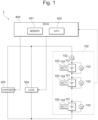
- FIG. 1 is a block diagram illustrating an example of a schematic configuration of a power supply device 1 according to the present embodiment.
- the power supply device 1 includes, for example, a battery module 100, a charger 200, a load 300, and a battery management system (BMS) 400.
- BMS battery management system
- the battery module 100 includes a plurality of lithium secondary batteries 101 connected in series.
- the lithium secondary battery 101 may form one secondary battery cell.
- the number of the lithium secondary batteries 101 included in the battery module 100 is not particularly limited.
- the plurality of lithium secondary batteries 101 may have the same characteristics or different characteristics. At least some of the lithium secondary batteries 101 included in the battery module 100 may be connected in parallel. The configuration of the lithium secondary battery 101 will be described later in detail.
- the battery module 100 further has a current sensor 102 connected in series with the plurality of lithium secondary batteries 101.
- the current sensor 102 is connected in series with the plurality of lithium secondary batteries 101, detects the current flowing through the lithium secondary batteries 101, and supplies the current value to the BMS 400.
- the battery module 100 further has a voltage sensor 103 provided in parallel for each of the plurality of lithium secondary batteries 101.
- Each of these voltage sensors 103 detects a voltage (inter-terminal voltage) between the positive electrode terminal and the negative electrode terminal of the lithium secondary battery 101, and supplies the voltage value to the BMS 400.
- the battery module 100 further has a temperature sensor 104 provided for each of the plurality of lithium secondary batteries 101.
- Each of these temperature sensors 104 is thermally coupled to each of the lithium secondary batteries 101, detects the temperature of each of the lithium secondary batteries 101, and supplies the temperature value to the BMS 400.
- the battery module 100 further has a thickness sensor 105 provided for each of the plurality of lithium secondary batteries 101.
- Each of these thickness sensors 105 has, for example, an optional configuration capable of measuring the thickness of a pressure sensor, a displacement sensor, or the like, measures the thickness of a predetermined portion of the lithium secondary battery 101, and supplies the measurement value to the BMS 400.
- the predetermined portion of the lithium secondary battery 101 from which the thickness sensor 105 measures the thickness may be any portion (including the whole) as long as the portion is defined to include at least a negative electrode 130 which will be described later.
- the predetermined portion may be a portion from one end to the other end of a sealed container of the lithium secondary battery 101 or may be a portion formed only of the negative electrode 130.
- the predetermined portion of the lithium secondary battery 101 from which the thickness sensor 105 measures the thickness may be defined to at least include the portion of the thickness T of the negative electrode 130. Therefore, the thickness sensor 105 may be capable of measuring the thickness of the predetermined portion including the thickness T of the negative electrode 130 shown in FIG. 2 .
- the configuration of the charger 200 is not particularly limited, and for example, a charging connector connectable to a charging plug connected to an external power supply may be provided and may be configured to convert power supplied from the external power supply into charging power of the lithium secondary battery 101.
- the lithium secondary battery 101 can be, for example, connected to the charger 200, and charged with a charging current supplied by the charger 200 under the control of the BMS 400.
- the configuration of the load 300 is not particularly limited, and may be configured as, for example, a drive device for an electric vehicle (electric car, hybrid car), or the like and can be driven by the power supplied from the lithium secondary battery 101.
- the lithium secondary battery 101 can be, for example, connected to the load 300 to supply a current to the load 300 under the control of the BMS 400 for discharge.
- the BMS 400 is a controller that includes, for example, a memory 401 and a CPU 402, and controls the charge and discharge of the lithium secondary battery 101 included in the battery module 100.
- the CPU 402 includes one or a plurality of processors and peripheral circuits thereof, and collectively controls the overall operation of the BMS 400.
- the CPU 402 executes processing based on programs (operating system programs, driver programs, application programs, and the like) stored in the memory 401.
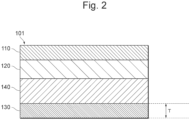
- FIG. 2 is a schematic cross-sectional view of the lithium secondary battery 101 according to the present embodiment.
- the lithium secondary battery 101 in the present embodiment includes a positive electrode 120 and a negative electrode 130 which does not have a negative electrode active material.
- a positive electrode current collector 110 is arranged on a side of the positive electrode 120, opposite to a surface facing the negative electrode 130, and a separator 140 is arranged between the positive electrode 120 and the negative electrode 130.
- Examples of conductive aids used in the positive electrode 120 include, but are not limited to, carbon black, single-wall carbon nanotubes (SWCNT), multi-wall carbon nanotubes (MWCNT), carbon nanofibers (CF), acetylene black, and the like.
- the binder is not particularly limited and examples thereof include polyvinylidene fluoride, polytetrafluoroethylene, styrene butadiene rubber, acrylic resins, polyimide resins, and the like.
- the average thickness of the positive electrode current collector 110 is preferably 4 ⁇ m or more and 20 ⁇ m or less, more preferably 5 ⁇ m or more and 18 ⁇ m or less, and still more preferably 6 ⁇ m or more and 15 ⁇ m or less. In such an aspect, since the volume of the positive electrode current collector 110 occupied in the lithium secondary battery 101 is decreased, the energy density of the lithium secondary battery 101 is further improved.
- fluorinated alkyl compound examples include a compound having an ether bond (which will hereinafter be called "ether compound"), a compound having an ester bond, a compound having a carbonate bond, and the like. From the viewpoint of further improving solubility of the electrolyte in the electrolytic solution and from the viewpoint that the SEI layer is more easily formed, the fluorinated alkyl compound is preferably an ether compound.
- Examples of the third fluorine solvent include
- a method for producing the lithium secondary battery 101 as shown in FIG. 2 is not particularly limited as long as the method is a method for producing a lithium secondary battery having the above-described configuration and examples of the method include the method as follows.
- the positive electrode current collector 110 on which the positive electrode 120 is formed, the separator 140, and the negative electrode 130 obtained as described above are laminated in this order to obtain a laminate as shown in FIG. 2 .
- the laminate obtained as described above is then sealed in the sealed container together with the electrolytic solution to obtain the lithium secondary battery 101.
- the sealed container is not particularly limited and examples include a laminate film.
- the memory unit 410 is a memory unit configured using the memory 401 described above, and stores, for example, charge and discharge history information, charge and discharge characteristic information, deterioration characteristic information after full charge, and deterioration characteristic information after complete discharge.
- state of health is also referred to as a "capacity retention rate”, and refers to a ratio (%) of the current full charge capacity (second full charge capacity) of the battery relative to the full charge capacity (first full charge capacity) in a state in which the battery is not deteriorated (new and unused). Further, for example, the deterioration index may be the number of charge and discharge cycles.
- the linearity between the thickness of the predetermined portion and the deterioration index of the lithium secondary battery 101 is significant.
- the linearity is stronger than the linearity of a lithium ion secondary battery that does not have the structural feature of "the negative electrode does not contain a negative electrode active material".
- the charge and discharge control unit 420 controls the charge and discharge of the lithium secondary battery 101.
- the charge and discharge control unit 420 supplies a current from the charger 200 to the lithium secondary battery 101 to charge the lithium secondary battery 101.
- the charge and discharge control unit 420 supplies the current from the lithium secondary battery 101 to the load 300 to discharge the lithium secondary battery 101.
- the monitoring unit 430 acquires values (a current value, a voltage value, and a temperature value) detected by various sensors (current sensor 102, voltage sensor 103, and temperature sensor 104) included in the battery module 100 according to the charge and discharge of the lithium secondary battery 101, then generates charge and discharge history information based on the detected values, and stores the generated information in the memory unit 410.
- the thickness measurement value acquisition unit 440 acquires the measurement value of the thickness of the predetermined portion of the lithium secondary battery 101 from the thickness sensor 105.
- the predetermined portion of the lithium secondary battery 101 from which the thickness sensor 105 measures the thickness may be any portion (including the whole) as long as the portion is defined to include at least a negative electrode 130 which will be described later.
- the predetermined portion may be a portion from one end to the other end of a sealed container of the lithium secondary battery 101 or may be a portion formed only of the negative electrode 130.
- the deterioration state estimation unit 460 estimates the deterioration state of the lithium secondary battery 101 by calculating a deterioration index estimation value which is an estimation value of a deterioration index indicating the deterioration state of the lithium secondary battery 101. Specifically, the deterioration state estimation unit 460 calculates a deterioration index estimation value for the lithium secondary battery 101 based on the measurement value of the thickness of the predetermined portion of the lithium secondary battery 101 and the charge index estimation value by referring to at least any one of the deterioration characteristic information after full charge and the deterioration characteristic information after complete discharge measured in advance using the lithium secondary battery 101 for measurement and stored in the memory unit 410. As described above, the deterioration index may be, for example, a full charge capacity decrease, SOH, the number of charge and discharge cycles, or the like.
- the output unit 470 outputs various information including the calculated SOH estimation value (an example of a deterioration index estimation value). For example, the output unit 470 may transmit the calculated information such as SOH to any information processing apparatus, or may display the calculated information on a display unit.
- the calculated SOH estimation value an example of a deterioration index estimation value.
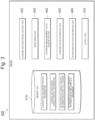
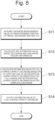
- FIG. 6 is a diagram illustrating an example of an operation flow of a deterioration state estimation process by the power supply device 1 according to the present embodiment.
- the thickness measurement value acquisition unit 440 acquires a measurement value of a thickness (thickness measurement value) of a predetermined portion of the lithium secondary battery 101 (target lithium secondary battery 101) whose deterioration state is to be estimated from the thickness sensor 105.
- the target lithium secondary battery 101 may be any lithium secondary battery 101 included in the battery module 100.
- the charged state estimation unit 450 calculates an SOC estimation value of the target lithium secondary battery 101 based on the latest charge and discharge history information of the target lithium secondary battery 101 by referring to the charge and discharge characteristic information for each of the number of charge and discharge cycles stored in the memory unit 410. Specifically, the charged state estimation unit 450 compares the latest charge and discharge history information of the target lithium secondary battery 101 with the charge and discharge characteristic information for each of the number of charge and discharge cycles stored in the memory unit 410, and then specifies charge and discharge characteristic information having the smallest difference from the charge and discharge history information.
- the charged state estimation unit 450 specifies the charge amount and the discharge amount corresponding to the latest voltage value in the charge and discharge history information, calculates the ratio of the charge amount and the discharge amount to the full charge capacity, and determines the calculated value as the SOC estimation value.
- the deterioration state estimation unit 460 calculates an estimation value of a full charge capacity decrease for the target lithium secondary battery 101 based on the thickness measurement value acquired in Step S11 and the SOC estimation value calculated in Step S12 by referring to at least any one of the deterioration characteristic information after full charge and the deterioration characteristic information after complete discharge.
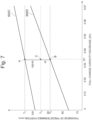
- FIG. 7 is a diagram for describing a calculation method of an estimation value of a full charge capacity decrease.
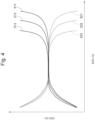
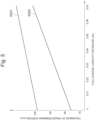
- the deterioration characteristic information after full charge 600C and the deterioration characteristic information after complete discharge 600D which are the same as those shown in FIG. 4 , are shown.
- FIG. 7 the deterioration characteristic information after full charge 600C and the deterioration characteristic information after complete discharge 600D, which are the same as those shown in FIG. 4 , are shown.
- the calculation method of the estimation value of the full charge capacity decrease will be described in three cases including (1) a case where the SOC estimation value is 100 (%) (after the lithium secondary battery 101 is fully charged), (2) a case where the SOC estimation value is 0 (%) (after the lithium secondary battery 101 is completely discharged), and (3) a case where the SOC estimation value is more than 0 (%) and less than 100 (%) (neither after the lithium secondary battery 101 is fully charged nor after lithium secondary battery 101 is completely discharged).
- the deterioration state estimation unit 460 calculates a full charge capacity decrease corresponding to the thickness measurement value in the deterioration characteristic information after full charge 600C as an estimation value of the full charge capacity decrease.
- the thickness measurement value acquired in Step S11 is TC
- a full charge capacity decrease at a point A corresponding to the thickness measurement value TC is D1. Therefore, the D1 is an estimation value of the full charge capacity decrease in a case where the thickness measurement value is TC and the SOC estimation value is 100 (%).
- the deterioration state estimation unit 460 calculates a full charge capacity decrease corresponding to the thickness measurement value in the deterioration characteristic information after complete discharge 600D as an estimation value of a full charge capacity decrease.
- the thickness measurement value acquired in Step S11 is TD
- a full charge capacity decrease at a point B corresponding to the thickness measurement value TD is D1. Therefore, the D1 is an estimation value of the full charge capacity decrease in a case where the thickness measurement value is TD and the SOC estimation value is 0 (%).
- the deterioration state estimation unit 460 calculates an estimation value of a full charge capacity decrease as described below. It is assumed that the thickness measurement value acquired in Step S11 is Tm, and the SOC estimation value calculated in Step S12 is R.
- the battery thickness in the deterioration characteristic information after full charge 600C refers to the thickness after full charge
- the battery thickness in the deterioration characteristic information after complete discharge 600D refers to the thickness after complete discharge.
- the deterioration state estimation unit 460 calculates a ratio of a difference between the thickness measurement value and the thickness after complete discharge with respect to a difference between the thickness after full charge and the thickness after complete discharge for any full charge capacity decrease. For example, in FIG. 7 , in a case where the full charge capacity decrease is D1, the point A on the deterioration characteristic information after full charge 600C, and the point B on the deterioration characteristic information after complete discharge 600D each correspond to the full charge capacity decrease D1. Then, when the thickness after full charge at the point A is TC and the thickness after complete discharge at the point B is TD, the difference between the thickness after full charge TC and the thickness after complete discharge TD for the full charge capacity decrease D1 is TC - TD.
- a difference between the thickness measurement value Tm and the thickness after complete discharge TD for the full charge capacity decrease D1 is Tm - TD.
- the above-described ratio (the ratio of the difference between thickness measurement value and the thickness after complete discharge to the difference between the thickness after full charge and the thickness after complete discharge) is (Tm - TD)/(TC - TD).
- FIG. 7 a case where the full charge capacity decrease in a case where the ratio (Tm - TD)/(TC - TD) is equal to the SOC estimation value R is D1 is shown.
- the reason that the (Tm - TD)/(TC - TD), which is the ratio (the ratio of the difference between the thickness measurement value and the thickness after complete discharge to the difference between the thickness after full charge and the thickness after complete discharge) and the SOC estimation value R are compared is that in the lithium secondary battery 101 according to the present embodiment, the thickness of the predetermined portion of the lithium secondary battery 101 at least including the negative electrode 130 exhibits strong linearity with respect to the SOC. That is, as described above, since the negative electrode 130 does not contain a negative electrode active material in the lithium secondary battery 101 according to the present embodiment, the amount of lithium metal precipitated on the negative electrode 130 by the charge and discharge exhibits strong linearity with the amount of charge and discharge of the lithium secondary battery 101.
- the thickness of the predetermined portion of the lithium secondary battery 101 including at least the negative electrode 130 exhibits strong linearity with the charged state of the lithium secondary battery 101. Accordingly, as in the case (3) above in Step S13, even in a case where the SOC estimation value is more than 0 (%) and less than 100 (%) (neither after the lithium secondary battery 101 is fully charged nor after the lithium secondary battery 101 is completely discharged), the ratio of the thickness measurement value to the difference between the thickness after full charge and the thickness after complete discharge closely marches the SOC estimation value, and thus the accuracy of the calculated deterioration index (full charge capacity decrease or the like) is secured.
- the negative electrode contains a negative electrode active material in a lithium ion secondary battery, and lithium ions are accumulated as an electrochemical reaction product by intercalation, changes (expansion, contraction, and the like) in the volume and dimension of the electrode do not have a linear relationship (proportional relationship or the like) with respect to an increase or a decrease in the quantity of electricity during charge and discharge.
- the negative electrode active material is carbon
- a large change in volume occurs at a structural change from LiC 12 to LiC 6 or the like, and thus, the dimensional change of the electrode is non-linear with respect to a charge index such as SOC.
- the term "high energy density” or “have a high energy density” means that the capacity is high relative to the total volume or total mass of the battery.
- the energy density is preferably 800 Wh/L or more or 350 Wh/kg or more, more preferably 900 Wh/L or more or 400 Wh/kg or more, and still more preferably 1000 Wh/L or more or 450 Wh/kg or more.
- the discharge capacity after charge and discharge cycles may be 60% or more, 65% or more, 70% or more, 75% or more, 80% or more, or 85% or more of the first discharge capacity after the initial charge.
Landscapes
- Physics & Mathematics (AREA)
- General Physics & Mathematics (AREA)
- Engineering & Computer Science (AREA)
- Manufacturing & Machinery (AREA)
- Chemical & Material Sciences (AREA)
- Chemical Kinetics & Catalysis (AREA)
- Electrochemistry (AREA)
- General Chemical & Material Sciences (AREA)
- Secondary Cells (AREA)
- Tests Of Electric Status Of Batteries (AREA)
Applications Claiming Priority (1)
| Application Number | Priority Date | Filing Date | Title |
|---|---|---|---|
| PCT/JP2021/031689 WO2023031990A1 (ja) | 2021-08-30 | 2021-08-30 | 劣化状態推定装置、劣化状態推定方法、及びプログラム |
Publications (2)
| Publication Number | Publication Date |
|---|---|
| EP4397986A1 true EP4397986A1 (de) | 2024-07-10 |
| EP4397986A4 EP4397986A4 (de) | 2024-11-06 |
Family
ID=85412277
Family Applications (1)
| Application Number | Title | Priority Date | Filing Date |
|---|---|---|---|
| EP21955887.1A Pending EP4397986A4 (de) | 2021-08-30 | 2021-08-30 | Vorrichtung zur kalkulation des verschleisszustands, verfahren zur kalkulation des verschleisszustands und programm |
Country Status (6)
| Country | Link |
|---|---|
| US (1) | US20240210488A1 (de) |
| EP (1) | EP4397986A4 (de) |
| JP (1) | JP7587892B2 (de) |
| KR (2) | KR20250160214A (de) |
| CN (1) | CN117716249A (de) |
| WO (1) | WO2023031990A1 (de) |
Families Citing this family (5)
| Publication number | Priority date | Publication date | Assignee | Title |
|---|---|---|---|---|
| WO2025083443A1 (ja) * | 2023-10-17 | 2025-04-24 | 日産自動車株式会社 | バッテリシステム及び劣化状態推定方法 |
| JP2025146417A (ja) * | 2024-03-22 | 2025-10-03 | 本田技研工業株式会社 | リチウム金属電池の劣化状態判定装置、リチウム金属電池の劣化状態判定方法、及びプログラム |
| KR20250147368A (ko) * | 2024-04-04 | 2025-10-13 | 주식회사 엘지에너지솔루션 | 충전 조건 설정 장치 및 그의 동작 방법 |
| WO2025248653A1 (ja) * | 2024-05-29 | 2025-12-04 | 日産自動車株式会社 | 電池モジュールの検査方法及び検査装置 |
| CN119438944B (zh) * | 2025-01-08 | 2025-11-11 | 比亚迪股份有限公司 | 电池状态检测方法、装置、设备、存储介质及程序产品 |
Family Cites Families (16)
| Publication number | Priority date | Publication date | Assignee | Title |
|---|---|---|---|---|
| JP3237229B2 (ja) | 1992-09-09 | 2001-12-10 | 株式会社日立製作所 | 二次電池システム |
| JPH08194037A (ja) * | 1995-01-19 | 1996-07-30 | Nippon Soken Inc | アルカリ電池の残存容量測定方法および装置 |
| JP4797640B2 (ja) | 2006-01-18 | 2011-10-19 | トヨタ自動車株式会社 | 二次電池の寿命推定装置 |
| CN102047493A (zh) * | 2008-12-05 | 2011-05-04 | 松下电器产业株式会社 | 电池包 |
| CN106068461A (zh) * | 2014-03-18 | 2016-11-02 | 株式会社东芝 | 劣化推测方法、劣化推测系统及劣化推测程序 |
| JP2016061562A (ja) * | 2014-09-12 | 2016-04-25 | トヨタ自動車株式会社 | 二次電池における満充電容量の劣化度推定装置 |
| CN110476072B (zh) * | 2017-03-29 | 2022-11-04 | 株式会社杰士汤浅国际 | 劣化估计装置、劣化估计方法和记录介质 |
| JP2019113410A (ja) * | 2017-12-22 | 2019-07-11 | 三菱自動車工業株式会社 | 二次電池の劣化状態推定装置 |
| CN111801586B (zh) * | 2018-03-07 | 2023-08-01 | 松下知识产权经营株式会社 | 可充电电池的残存性能评价方法、可充电电池的残存性能评价程序、运算装置及残存性能评价系统 |
| KR20200131297A (ko) * | 2018-03-30 | 2020-11-23 | 후지필름 가부시키가이샤 | 고체 전해질 시트, 전고체 이차 전지용 부극 시트 및 전고체 이차 전지의 제조 방법 |
| CN110911764B (zh) * | 2018-09-14 | 2023-01-10 | 丰田自动车株式会社 | 二次电池系统及二次电池的劣化状态推定方法 |
| JP7398190B2 (ja) * | 2018-09-25 | 2023-12-14 | 株式会社Gsユアサ | 二次電池の再利用方法、及びコンピュータプログラム |
| JP2020071035A (ja) * | 2018-10-29 | 2020-05-07 | ルネサスエレクトロニクス株式会社 | 経年劣化検知装置、寿命予測装置および寿命予測方法 |
| JP2020145063A (ja) * | 2019-03-06 | 2020-09-10 | 三菱自動車工業株式会社 | バッテリーシステム |
| JP2020148592A (ja) * | 2019-03-13 | 2020-09-17 | トヨタ自動車株式会社 | 全固体金属リチウム二次電池の劣化状態の推定方法 |
| JP6798051B2 (ja) * | 2020-01-30 | 2020-12-09 | 株式会社東芝 | 充電パターン作成装置、充電制御装置、充電パターン作成方法、プログラム、及び蓄電システム |
-
2021
- 2021-08-30 WO PCT/JP2021/031689 patent/WO2023031990A1/ja not_active Ceased
- 2021-08-30 JP JP2023544798A patent/JP7587892B2/ja active Active
- 2021-08-30 KR KR1020257035497A patent/KR20250160214A/ko active Pending
- 2021-08-30 CN CN202180100575.9A patent/CN117716249A/zh active Pending
- 2021-08-30 EP EP21955887.1A patent/EP4397986A4/de active Pending
- 2021-08-30 KR KR1020247003167A patent/KR20240027757A/ko active Pending
-
2024
- 2024-02-29 US US18/591,347 patent/US20240210488A1/en active Pending
Also Published As
| Publication number | Publication date |
|---|---|
| KR20250160214A (ko) | 2025-11-11 |
| KR20240027757A (ko) | 2024-03-04 |
| US20240210488A1 (en) | 2024-06-27 |
| WO2023031990A1 (ja) | 2023-03-09 |
| EP4397986A4 (de) | 2024-11-06 |
| CN117716249A (zh) | 2024-03-15 |
| JPWO2023031990A1 (de) | 2023-03-09 |
| JP7587892B2 (ja) | 2024-11-21 |
Similar Documents
| Publication | Publication Date | Title |
|---|---|---|
| US20240210488A1 (en) | Deterioration state estimation device, deterioration state estimation method, and program | |
| US11901504B2 (en) | Rechargeable battery cell having an SO2-based electrolyte | |
| US20220149437A1 (en) | Lithium-ion battery, and related battery module, battery pack, and apparatus | |
| EP3071983B1 (de) | Spannungsüberwachung zur gesundheitszustandsüberwachung von batterien mit referenzelektroden | |
| US9379418B2 (en) | Battery with reference electrode for voltage monitoring | |
| US20230194621A1 (en) | Information processing device, information processing method, and program | |
| WO2011030832A1 (ja) | 蓄電デバイス用非水電解液および蓄電デバイス | |
| JP2008300180A (ja) | 非水電解質二次電池 | |
| US20230246240A1 (en) | Lithium secondary battery | |
| JP2011165343A (ja) | 非水電解質二次電池装置およびその負極を充電する方法 | |
| US20230246238A1 (en) | Lithium secondary battery | |
| WO2011034149A1 (ja) | 二次電池用非水電解液 | |
| JP2019169446A (ja) | 蓄電素子の内部短絡の検査方法、及び蓄電素子 | |
| JP5673179B2 (ja) | 組電池 | |
| US20250246693A1 (en) | Secondary battery, battery module, battery pack, and electrical device | |
| JP2008091041A (ja) | 非水電解質二次電池 | |
| EP4481888A2 (de) | Verfahren zur verwaltung einer lithium-ionen-sekundärbatterie und batterieverwaltungssystem | |
| CN105428656B (zh) | 非水电解质二次电池 | |
| US20240030494A1 (en) | Lithium secondary battery | |
| JP2011076976A (ja) | 放電可能容量算出方法および放電可能容量算出装置 | |
| EP4645646A1 (de) | Ladesteuerungsverfahren für eine sekundärbatterie mit wasserfreiem elektrolyt, ladesteuerungssystem für eine sekundärbatterie mit wasserfreiem elektrolyt und stromversorgungsvorrichtung damit | |
| CN119585903A (zh) | 锂离子二次电池用非水电解液和使用该非水电解液锂离子二次电池 | |
| KR20220020208A (ko) | 비수전해질 이차 전지 | |
| JP2016178065A (ja) | リチウムイオン二次電池用電解液およびこれを用いたリチウムイオン二次電池 | |
| JP2021044151A (ja) | リチウムイオン電池モジュール及びリチウムイオン電池モジュールの充電方法 |
Legal Events
| Date | Code | Title | Description |
|---|---|---|---|
| STAA | Information on the status of an ep patent application or granted ep patent |
Free format text: STATUS: THE INTERNATIONAL PUBLICATION HAS BEEN MADE |
|
| PUAI | Public reference made under article 153(3) epc to a published international application that has entered the european phase |
Free format text: ORIGINAL CODE: 0009012 |
|
| STAA | Information on the status of an ep patent application or granted ep patent |
Free format text: STATUS: REQUEST FOR EXAMINATION WAS MADE |
|
| 17P | Request for examination filed |
Effective date: 20240318 |
|
| AK | Designated contracting states |
Kind code of ref document: A1 Designated state(s): AL AT BE BG CH CY CZ DE DK EE ES FI FR GB GR HR HU IE IS IT LI LT LU LV MC MK MT NL NO PL PT RO RS SE SI SK SM TR |
|
| A4 | Supplementary search report drawn up and despatched |
Effective date: 20241004 |
|
| RIC1 | Information provided on ipc code assigned before grant |
Ipc: H01M 10/44 20060101ALN20240927BHEP Ipc: H01M 10/052 20100101ALN20240927BHEP Ipc: H01M 4/66 20060101ALN20240927BHEP Ipc: H01M 10/48 20060101ALI20240927BHEP Ipc: H01M 10/42 20060101ALI20240927BHEP Ipc: G01R 31/396 20190101ALI20240927BHEP Ipc: G01R 31/382 20190101ALI20240927BHEP Ipc: H01M 4/04 20060101ALI20240927BHEP Ipc: G01R 31/392 20190101AFI20240927BHEP |
|
| DAV | Request for validation of the european patent (deleted) | ||
| DAX | Request for extension of the european patent (deleted) | ||
| STAA | Information on the status of an ep patent application or granted ep patent |
Free format text: STATUS: EXAMINATION IS IN PROGRESS |
|
| 17Q | First examination report despatched |
Effective date: 20250416 |