EP4398155A2 - Mischung aus neuronalen expertennetzwerken - Google Patents
Mischung aus neuronalen expertennetzwerken Download PDFInfo
- Publication number
- EP4398155A2 EP4398155A2 EP24177244.1A EP24177244A EP4398155A2 EP 4398155 A2 EP4398155 A2 EP 4398155A2 EP 24177244 A EP24177244 A EP 24177244A EP 4398155 A2 EP4398155 A2 EP 4398155A2
- Authority
- EP
- European Patent Office
- Prior art keywords
- output
- expert
- gating
- neural network
- neural networks
- Prior art date
- Legal status (The legal status is an assumption and is not a legal conclusion. Google has not performed a legal analysis and makes no representation as to the accuracy of the status listed.)
- Pending
Links
Images


Classifications
-
- G—PHYSICS
- G06—COMPUTING OR CALCULATING; COUNTING
- G06N—COMPUTING ARRANGEMENTS BASED ON SPECIFIC COMPUTATIONAL MODELS
- G06N3/00—Computing arrangements based on biological models
- G06N3/02—Neural networks
- G06N3/04—Architecture, e.g. interconnection topology
- G06N3/045—Combinations of networks
-
- G—PHYSICS
- G06—COMPUTING OR CALCULATING; COUNTING
- G06N—COMPUTING ARRANGEMENTS BASED ON SPECIFIC COMPUTATIONAL MODELS
- G06N3/00—Computing arrangements based on biological models
- G06N3/02—Neural networks
- G06N3/04—Architecture, e.g. interconnection topology
- G06N3/048—Activation functions
-
- G—PHYSICS
- G06—COMPUTING OR CALCULATING; COUNTING
- G06N—COMPUTING ARRANGEMENTS BASED ON SPECIFIC COMPUTATIONAL MODELS
- G06N3/00—Computing arrangements based on biological models
- G06N3/02—Neural networks
- G06N3/04—Architecture, e.g. interconnection topology
- G06N3/0495—Quantised networks; Sparse networks; Compressed networks
-
- G—PHYSICS
- G06—COMPUTING OR CALCULATING; COUNTING
- G06N—COMPUTING ARRANGEMENTS BASED ON SPECIFIC COMPUTATIONAL MODELS
- G06N3/00—Computing arrangements based on biological models
- G06N3/02—Neural networks
- G06N3/04—Architecture, e.g. interconnection topology
- G06N3/0499—Feedforward networks
-
- G—PHYSICS
- G06—COMPUTING OR CALCULATING; COUNTING
- G06N—COMPUTING ARRANGEMENTS BASED ON SPECIFIC COMPUTATIONAL MODELS
- G06N3/00—Computing arrangements based on biological models
- G06N3/02—Neural networks
- G06N3/08—Learning methods
-
- G—PHYSICS
- G06—COMPUTING OR CALCULATING; COUNTING
- G06N—COMPUTING ARRANGEMENTS BASED ON SPECIFIC COMPUTATIONAL MODELS
- G06N3/00—Computing arrangements based on biological models
- G06N3/02—Neural networks
- G06N3/08—Learning methods
- G06N3/082—Learning methods modifying the architecture, e.g. adding, deleting or silencing nodes or connections
-
- G—PHYSICS
- G06—COMPUTING OR CALCULATING; COUNTING
- G06N—COMPUTING ARRANGEMENTS BASED ON SPECIFIC COMPUTATIONAL MODELS
- G06N3/00—Computing arrangements based on biological models
- G06N3/02—Neural networks
- G06N3/08—Learning methods
- G06N3/084—Backpropagation, e.g. using gradient descent
-
- G—PHYSICS
- G06—COMPUTING OR CALCULATING; COUNTING
- G06N—COMPUTING ARRANGEMENTS BASED ON SPECIFIC COMPUTATIONAL MODELS
- G06N3/00—Computing arrangements based on biological models
- G06N3/02—Neural networks
- G06N3/04—Architecture, e.g. interconnection topology
- G06N3/044—Recurrent networks, e.g. Hopfield networks
- G06N3/0442—Recurrent networks, e.g. Hopfield networks characterised by memory or gating, e.g. long short-term memory [LSTM] or gated recurrent units [GRU]
-
- G—PHYSICS
- G06—COMPUTING OR CALCULATING; COUNTING
- G06N—COMPUTING ARRANGEMENTS BASED ON SPECIFIC COMPUTATIONAL MODELS
- G06N3/00—Computing arrangements based on biological models
- G06N3/02—Neural networks
- G06N3/04—Architecture, e.g. interconnection topology
- G06N3/0464—Convolutional networks [CNN, ConvNet]
Definitions
- Neural networks are machine learning models that employ one or more layers of nonlinear units to predict an output for a received input.
- Some neural networks include one or more hidden layers in addition to an output layer. The output of each hidden layer is used as input to another layer in the network, i.e., another hidden layer or the output layer.
- Each layer of the network generates an output from a received input in accordance with current values of a respective set of parameters.
- the neural network includes a Mixture of Experts (MoE) subnetwork between a first neural network layer and a second neural network layer in the neural network.
- MoE subnetwork includes a plurality of expert neural networks, in which each expert neural network is configured to process a first layer output generated by the first neural network layer in accordance with a respective set of expert parameters of the expert neural network to generate a respective expert output.
- the MoE subnetwork further includes a gating subsystem configured to: select, based on the first layer output, one or more of the expert neural networks and determine a respective weight for each selected expert neural network, provide the first layer output as input to each of the selected expert neural networks, combine the expert outputs generated by the selected expert neural networks in accordance with the weights for the selected expert neural networks to generate an MoE output, and provide the MoE output as input to the second neural network layer.
- a gating subsystem configured to: select, based on the first layer output, one or more of the expert neural networks and determine a respective weight for each selected expert neural network, provide the first layer output as input to each of the selected expert neural networks, combine the expert outputs generated by the selected expert neural networks in accordance with the weights for the selected expert neural networks to generate an MoE output, and provide the MoE output as input to the second neural network layer.
- the expert neural networks may have the same or similar architectures but different parameter values.
- Combining the expert outputs generated by the selected expert neural network may include: weighting the expert output generated by each of the selected expert neural networks by the weight for the selected expert neural network to generate a weighted expert output, and summing the weighted expert outputs to generate the MoE output.
- Processing the first layer output to generate a weight vector that includes a respective weight for each of the plurality of expert neural networks in accordance with a set of gating parameters may include: generating an initial gating output, wherein generating the initial gating output comprises applying the set of gating parameters to the first layer output; applying a sparsifying function to the initial gating output to generate a sparsified initial gating output; and applying a softmax function to the sparsified initial gating output to generate the weight vector.
- the gating subsystem comprises a parent gating subnetwork and a plurality of child gating subnetworks, in which each of the child gating subnetworks manages a disjoint subset of the plurality of expert neural networks from each other child gating subnetwork.
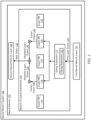
- FIG. 1 shows an example of a neural network system 100.
- the neural network system 100 is an example of a system implemented as computer programs on one or more computers in one or more locations, in which the systems, components, and techniques described below can be implemented.
- the system 100 includes a neural network 102 that can be configured to receive any kind of digital data input and to generate any kind of score, classification, or regression output based on the input.
- the output generated by the neural network 102 for a given image may be scores for each of a set of object categories, with each score representing an estimated likelihood that the image contains an image of an object belonging to the category.
- the output generated by the neural network for a given Internet resource, document, or portion of a document may be a score for each of a set of topics, with each score representing an estimated likelihood that the Internet resource, document, or document portion is about the topic.
- the output generated by the neural network 102 may be a score that represents an estimated likelihood that the particular content element will be clicked on.
- the output generated by the neural network 102 may be a score for each of a set of content elements, with each score representing an estimated likelihood that the user will respond favorably to being recommended the content element.
- the output generated by the neural network 102 may be a score for each of a set of pieces of text in another language, with each score representing an estimated likelihood that the piece of text in the other language is a proper translation of the input text into the other language.
- the output generated by the neural network 102 may be a score for each of a set of pieces of text, each score representing an estimated likelihood that the piece of text is the correct transcript for the utterance.
- the neural network 102 includes a stack of neural network layers.
- the stack of neural network layers can be any kind of neural network layers, for example, Long Short-Term Memory (LSTM) neural network layers or other recurrent neural network layers, convolutional neural network layers, or fully-connected neural network layers.
- the stack of neural network layers may include a mixture of two or more different kinds of neural network layers.
- the neural network 102 includes one or more Mixture of Experts (MoE) subnetworks between the stacked neural network layers.
- MoE Mixture of Experts
- the neural network 102 includes a MoE subnetwork 130 arranged between a first neural network layer 104 and a second neural network layer 108 in the neural network 102.
- the first neural network layer 104 and the second neural network layer 108 can be any kind of neural network layer, for example, a LSTM neural network layer or other recurrent neural network layer, a convolutional neural network layer, or a fully-connected neural network layer.
- one or both of the first neural network layer 104 and the second neural network layer 108 can be other MoE subnetworks.
- the MoE subnetwork 130 includes multiple expert neural networks, e.g., expert neural networks 114-122. Each expert neural network in the MoE subnetwork 130 can be configured to process a first layer output 124 generated by the first neural network layer 104 in accordance with a respective set of expert parameters of the expert neural network to generate a respective expert output.
- a MoE subnetwork can include a large number of expert neural networks, e.g., thousands of expert neural networks.
- Each expert neural network can be a feed-forward neural network with its own parameters.
- the expert neural networks are configured to receive the same sized inputs and produce the same-sized outputs.
- the expert neural networks are feed-forward neural networks with identical architectures, but with different parameters.
- Each expert neural network may have a very large number of parameters. For example, each expert neural network may have one to two million parameters, making the total number of parameters of the MoE subnetwork to billions of parameters.
- the MoE subnetwork includes a large number of expert neural networks, only a small number of them are selected during the processing of any given network input by the neural network 102, e.g., only a small number of the expert neural networks are selected to process the first layer output 124.
- the neural network 102 includes a gating subsystem 110 that is configured to select, based on the first layer output 124, one or more of the expert neural networks, and determine a respective weight for each selected expert neural network.
- the gating subsystem 110 then provides the first layer output as input to each of the selected expert neural networks.
- the gating subsystem 110 combines the expert outputs generated by the selected expert neural networks in accordance with the weights for the selected expert neural networks to generate a MoE output 132.
- the gating subsystem 110 then provides the MoE output 132 as input to the second neural network layer 108.
- the gating subsystem 110 includes a gating subnetwork 112 that is configured to process the first layer output to generate a weight vector that includes a respective weight for each of the plurality of expert neural networks in accordance with a set of gating parameters of the gating subnetwork, and to select one or more of the expert neural networks based on the weights in the weight vector.
- the gating subnetwork 112 is configured to process a given input x (e.g., the first layer output 124) to generate a weight vector G ( x ).
- the weight vector G ( x ) includes a respective weight for each expert neural network in the set of n expert neural networks.
- the gating subnetwork 112 is configured to select one or more expert neural networks from the set of n expert neural networks based on the weights in the weight vector G ( x ).
- the weight vector G ( x ) is a sparse n-dimensional vector that includes non-zero weights for only a few of the expert neural networks in the set.
- the number of non-zero weights is an integer and is very small in comparison with the number of expert neural networks in the MoE subnetwork 130.
- the MoE subnetwork 130 may have hundreds to thousands of expert neural networks, and the weight vector G ( x ) may have one, two, or five non-zero weights.
- the number of non-zero weights can be determined based on criteria such as computational costs, model quality (e.g., prediction quality), and whether the MoE subnetwork 130 is under a testing or training condition.
- the number of non-zero weights can be modified before each network input or can be held fixed for all network inputs.
- the number of non-zero weights is set to a value that is larger than 1 for at least some network inputs processed during the training.
- the gating subnetwork 112 selects only expert neural networks that have non-zero weights in the weight vector G(x). For example, the expert neural networks 116 and 120 in FIG. 1 have non-zero weights and therefore are selected for further processing.
- the gating subsystem 110 combines the expert outputs generated by the selected expert neural networks by weighting the expert output generated by each of the selected expert neural networks (e.g., expert output 126 generated by the expert neural network 116 and expert output 128 generated by the expert neural network 120) by the weight for the selected expert neural network to generate a weighted expert output, and summing the weighted expert outputs (e.g., the weighted expert outputs 134 and 136) to generate the MoE output 132.
- the selected expert neural networks e.g., expert output 126 generated by the expert neural network 116 and expert output 128 generated by the expert neural network 120
- the gating subsystem 110 After generating the MoE output 132, the gating subsystem 110 provides the MoE output 132 as input to the second neural network layer 108 for further processing.
- the second neural network layer 108 can be another MoE subnetwork instead of a conventional neural network layer.
- the branching factor of the gating subnetwork 112 can be reduced by using a multi-level hierarchical MoE subnetwork.
- the gating subsystem 110 can include a parent gating subnetwork and multiple child gating subnetworks, in which each of the child gating subnetworks is itself a secondary MoE subnetwork with its own gating subnetwork.
- Each of the child gating subnetworks manages a disjoint subset of multiple expert neural networks from each other child gating subnetwork.
- the parent gating subnetwork chooses a sparse weighted combination of the child gating subnetworks and generates a MoE output based on the sparse weighted combination.
- conditional computation where parts of the MoE subnetwork 130 are active on a per-input example basis, can significantly increase the computational capacity of the neural network 102 without a proportional increase in computation.
- the MoE subnetwork 130 can have thousands of expert neural networks but only very few expert neural networks need to be evaluated for each input.
- the neural network 102 can achieve significantly better results than prior approaches at lower computational costs, especially for tasks such as language modeling and machine translation, where model capacity is critical for absorbing the vast quantities of knowledge available in the training corpora.
- the neural network 102 can be trained on a language modeling task that has a dataset including a billion to a hundred billion words.
- the neural network 102 can be trained on a single language pair machine translation task with a dataset of tens of millions of sentence pairs. In yet another example, the neural network 102 can be trained on a multilingual machine translation task that has a very large combined dataset of twelve language pairs. During training, various components of the neural network 102 can be trained jointly by back-propagation.
- FIG. 2 is a flow diagram of an example process 200 for generating a mixture-of-experts (MoE) output for an input using an MoE subnetwork, e.g., the MoE subnetwork 130 of FIG. 1 .
- MoE mixture-of-experts
- the process will be described as being performed by a system of one or more computers located in one or more locations.
- a neural network system e.g., the neural network system 100 of FIG. 1 , appropriately programmed, can perform the process.
- the system receives as input a first layer output generated by a neural network layer preceding the MoE subnetwork (step 202).
- the MoE subnetwork includes multiple expert neural networks and a gating subsystem that includes a gating subnetwork.
- the system processes the first layer output to generate a weight vector that includes a respective weight for each of the multiple expert neural networks in accordance with a set of gating parameters of the gating subnetwork.
- the system selects one or more of the multiple expert neural networks based on the weights in the weight vector.
- the weight vector is a sparse vector that includes non-zero weights for only a few of the expert neural networks, and the system selects only expert neural networks that have non-zero weights in the weight vector. Generating the weight vector is described in more detail below with reference to FIG. 3 .
- the processes 200 and 300 can be used as part of generating a network output for a training input.
- the gradient of an objective function can be backpropagated to adjust the values of the parameters of various components of the neural network 102 to improve the quality of the network output relative to a known output for the training input.
- a computer program which may also be referred to or described as a program, software, a software application, an app, a module, a software module, a script, or code, can be written in any form of programming language, including compiled or interpreted languages, or declarative or procedural languages; and it can be deployed in any form, including as a stand-alone program or as a module, component, subroutine, or other unit suitable for use in a computing environment.
- a program may, but need not, correspond to a file in a file system.
- Machine learning models can be implemented and deployed using a machine learning framework, e.g., a TensorFlow framework, a Microsoft Cognitive Toolkit framework, an Apache Singa framework, or an Apache MXNet framework.
- a machine learning framework e.g., a TensorFlow framework, a Microsoft Cognitive Toolkit framework, an Apache Singa framework, or an Apache MXNet framework.
- Embodiments of the subject matter described in this specification can be implemented in a computing system that includes a back-end component, e.g., as a data server, or that includes a middleware component, e.g., an application server, or that includes a front-end component, e.g., a client computer having a graphical user interface, a web browser, or an app through which a user can interact with an implementation of the subject matter described in this specification, or any combination of one or more such back-end, middleware, or front-end components.
- the components of the system can be interconnected by any form or medium of digital data communication, e.g., a communication network. Examples of communication networks include a local area network (LAN) and a wide area network (WAN), e.g., the Internet.
- LAN local area network
- WAN wide area network
Landscapes
- Engineering & Computer Science (AREA)
- Theoretical Computer Science (AREA)
- Physics & Mathematics (AREA)
- Computing Systems (AREA)
- General Physics & Mathematics (AREA)
- Biomedical Technology (AREA)
- Biophysics (AREA)
- Computational Linguistics (AREA)
- Data Mining & Analysis (AREA)
- Evolutionary Computation (AREA)
- General Health & Medical Sciences (AREA)
- Molecular Biology (AREA)
- Life Sciences & Earth Sciences (AREA)
- General Engineering & Computer Science (AREA)
- Artificial Intelligence (AREA)
- Mathematical Physics (AREA)
- Software Systems (AREA)
- Health & Medical Sciences (AREA)
- Management, Administration, Business Operations System, And Electronic Commerce (AREA)
- Debugging And Monitoring (AREA)
- Image Analysis (AREA)
- Machine Translation (AREA)
- Feedback Control In General (AREA)
- Data Exchanges In Wide-Area Networks (AREA)
Applications Claiming Priority (4)
| Application Number | Priority Date | Filing Date | Title |
|---|---|---|---|
| US201662418135P | 2016-11-04 | 2016-11-04 | |
| US201662432497P | 2016-12-09 | 2016-12-09 | |
| PCT/US2017/059909 WO2018085643A1 (en) | 2016-11-04 | 2017-11-03 | Mixture of experts neural networks |
| EP17804369.1A EP3535704B1 (de) | 2016-11-04 | 2017-11-03 | Mischung aus neuronalen expertennetzwerken |
Related Parent Applications (2)
| Application Number | Title | Priority Date | Filing Date |
|---|---|---|---|
| EP17804369.1A Division EP3535704B1 (de) | 2016-11-04 | 2017-11-03 | Mischung aus neuronalen expertennetzwerken |
| EP17804369.1A Division-Into EP3535704B1 (de) | 2016-11-04 | 2017-11-03 | Mischung aus neuronalen expertennetzwerken |
Publications (2)
| Publication Number | Publication Date |
|---|---|
| EP4398155A2 true EP4398155A2 (de) | 2024-07-10 |
| EP4398155A3 EP4398155A3 (de) | 2024-10-02 |
Family
ID=60452764
Family Applications (2)
| Application Number | Title | Priority Date | Filing Date |
|---|---|---|---|
| EP17804369.1A Active EP3535704B1 (de) | 2016-11-04 | 2017-11-03 | Mischung aus neuronalen expertennetzwerken |
| EP24177244.1A Pending EP4398155A3 (de) | 2016-11-04 | 2017-11-03 | Mischung aus neuronalen expertennetzwerken |
Family Applications Before (1)
| Application Number | Title | Priority Date | Filing Date |
|---|---|---|---|
| EP17804369.1A Active EP3535704B1 (de) | 2016-11-04 | 2017-11-03 | Mischung aus neuronalen expertennetzwerken |
Country Status (5)
| Country | Link |
|---|---|
| US (4) | US10719761B2 (de) |
| EP (2) | EP3535704B1 (de) |
| JP (1) | JP6853354B2 (de) |
| CN (1) | CN109923558A (de) |
| WO (1) | WO2018085643A1 (de) |
Families Citing this family (50)
| Publication number | Priority date | Publication date | Assignee | Title |
|---|---|---|---|---|
| US11379715B2 (en) * | 2017-12-15 | 2022-07-05 | Meta Platforms, Inc. | Deep learning based distribution of content items describing events to users of an online system |
| WO2019186996A1 (ja) * | 2018-03-30 | 2019-10-03 | 日本電気株式会社 | モデル推定システム、モデル推定方法およびモデル推定プログラム |
| CN119493796A (zh) * | 2018-09-27 | 2025-02-21 | 渊慧科技有限公司 | 可扩展和压缩的神经网络数据储存系统 |
| CN111325311B (zh) * | 2018-12-14 | 2024-03-29 | 深圳云天励飞技术有限公司 | 用于图像识别的神经网络模型生成方法及相关设备 |
| CN109657802B (zh) * | 2019-01-28 | 2020-12-29 | 清华大学深圳研究生院 | 一种混合专家强化学习方法及系统 |
| US11093714B1 (en) * | 2019-03-05 | 2021-08-17 | Amazon Technologies, Inc. | Dynamic transfer learning for neural network modeling |
| CN110414669A (zh) * | 2019-07-02 | 2019-11-05 | 四川大学 | 一种加速神经网络结构选择的方法 |
| US20210125077A1 (en) * | 2019-10-25 | 2021-04-29 | The Governing Council Of The University Of Toronto | Systems, devices and methods for transfer learning with a mixture of experts model |
| EP4073714A1 (de) * | 2019-12-13 | 2022-10-19 | Qualcomm Technologies, Inc. | Föderierte mischungsmodelle |
| GB2599180A (en) * | 2020-06-01 | 2022-03-30 | Samsung Electronics Co Ltd | Method for improved binarized neural networks |
| WO2021247944A1 (en) * | 2020-06-03 | 2021-12-09 | Qualcomm Technologies, Inc. | Federated mixture models |
| CN115699041A (zh) * | 2020-06-05 | 2023-02-03 | 谷歌有限责任公司 | 利用专家模型的可扩展迁移学习 |
| US11176495B1 (en) * | 2020-06-21 | 2021-11-16 | Liquidity Capital M. C. Ltd. | Machine learning model ensemble for computing likelihood of an entity failing to meet a target parameter |
| WO2022006329A1 (en) * | 2020-06-30 | 2022-01-06 | Google Llc | Attention neural networks with conditional computation |
| US20220059200A1 (en) * | 2020-08-21 | 2022-02-24 | Washington University | Deep-learning systems and methods for medical report generation and anomaly detection |
| US12572794B2 (en) * | 2020-10-20 | 2026-03-10 | Nvidia Corporation | System and method for automated optimization of a neural network model |
| CN112487211B (zh) * | 2020-12-15 | 2024-04-26 | 交控科技股份有限公司 | 一种轨道交通知识库构建方法及系统 |
| US12058321B2 (en) * | 2020-12-16 | 2024-08-06 | Tencent America LLC | Method and apparatus for video coding |
| WO2022150649A1 (en) * | 2021-01-07 | 2022-07-14 | Google Llc | Neural networks with switch layers |
| US12518135B2 (en) * | 2021-02-05 | 2026-01-06 | Google Llc | Sparse and differentiable mixture of experts neural networks |
| US12493787B2 (en) * | 2021-04-28 | 2025-12-09 | Arm Limited | Systems having a plurality of neural networks |
| WO2022248676A1 (en) * | 2021-05-27 | 2022-12-01 | Deepmind Technologies Limited | Continual learning neural network system training for classification type tasks |
| EP4285285A1 (de) * | 2021-05-28 | 2023-12-06 | Google LLC | Verarbeitung von bildern unter verwendung einer mischung von experten |
| JP7683457B2 (ja) * | 2021-10-28 | 2025-05-27 | トヨタ自動車株式会社 | 材料のスペクトルデータを用いた材料内含有元素種推定システム |
| CN116126507A (zh) * | 2021-11-12 | 2023-05-16 | 北京智源人工智能研究院 | 一种面向MoE神经网络层的推理方法、系统和电子设备 |
| CN114429195B (zh) * | 2022-01-21 | 2024-07-19 | 清华大学 | 混合专家模型训练的性能优化方法和装置 |
| GB2629966A (en) * | 2022-01-28 | 2024-11-13 | Google Llc | Routing to expert subnetworks in mixture-of-experts neural networks |
| US12547872B2 (en) * | 2022-03-31 | 2026-02-10 | Microsoft Technology Licensing, Llc | Machine learning model processing based on perplexity |
| US20230316042A1 (en) * | 2022-03-31 | 2023-10-05 | Microsoft Technology Licensing, Llc | Mixture of experts models with sparsified weights |
| CN114821718A (zh) * | 2022-04-20 | 2022-07-29 | 深圳市商汤科技有限公司 | 人脸特征的提取方法、人脸识别模型的训练方法和装置 |
| CN114841315A (zh) * | 2022-04-22 | 2022-08-02 | 北京百度网讯科技有限公司 | 混合专家模型实现方法、系统、电子设备及存储介质 |
| US12579470B2 (en) | 2022-06-24 | 2026-03-17 | Microsoft Technology Licensing, Llc | Systems and methods for distributing layers of special mixture-of-experts machine learning models |
| CN116204700A (zh) * | 2022-08-03 | 2023-06-02 | 北京百度网讯科技有限公司 | 目标排序模型的训练方法、目标排序方法及装置 |
| CN115510971B (zh) * | 2022-09-26 | 2025-09-05 | 北京智谱华章科技股份有限公司 | 基于具有混合专家结构的图神经网络的论文分类方法 |
| CN115766208A (zh) * | 2022-11-14 | 2023-03-07 | 潍柴动力股份有限公司 | 通信系统的入侵检测方法、检测装置以及自动驾驶系统 |
| CN115730646A (zh) * | 2022-12-30 | 2023-03-03 | 赵继胜 | 一种基于部分量化的混合专家网络优化方法 |
| CN116486492A (zh) * | 2022-12-30 | 2023-07-25 | 支付宝(杭州)信息技术有限公司 | 活体检验模型训练及活体检验方法、装置以及存储介质 |
| US20240273346A1 (en) * | 2023-02-13 | 2024-08-15 | Microsoft Technology Licensing, Llc | Self-balancing mixture of experts |
| US20250045621A1 (en) * | 2023-08-02 | 2025-02-06 | Visa International Service Association | System, Method, Computer Program Product for Operating a Gated Multilayer Perceptron Machine Learning Model Architecture |
| CN117115090A (zh) * | 2023-08-03 | 2023-11-24 | 江苏中铭慧业科技有限公司 | 一种基于混合专家模型的裸土覆盖检测方法 |
| CN118194917B (zh) * | 2024-05-17 | 2024-07-30 | 山东浪潮科学研究院有限公司 | 一种基于混合专家模型的语言模型改进结构的方法及系统 |
| CN118550707B (zh) * | 2024-06-17 | 2025-10-28 | 北京百度网讯科技有限公司 | 用于大模型的任务执行方法、装置、设备、介质和产品 |
| CN118863055B (zh) * | 2024-06-25 | 2026-02-17 | 北京大学 | 一种混合专家模型推理方法 |
| CN118410851B (zh) * | 2024-07-03 | 2024-10-15 | 浪潮电子信息产业股份有限公司 | 一种混合专家模型路由网络优化方法、产品、装置及介质 |
| CN118468929B (zh) * | 2024-07-09 | 2024-11-15 | 苏州元脑智能科技有限公司 | 神经网络模型处理方法、装置、设备及存储介质 |
| WO2026015992A1 (en) * | 2024-07-13 | 2026-01-22 | Qualcomm Incorporated | Operating mixture-of-experts (moe) architectures using neural processing units |
| DE102024209115A1 (de) | 2024-09-23 | 2026-03-26 | Robert Bosch Gesellschaft mit beschränkter Haftung | Computerimplementiertes Verfahren sowie ein Fahrassistenzsystem zur effizienteren Verarbeitung von Sensordaten, Fahrzeug und Computerprogrammprodukt |
| CN120320329A (zh) * | 2025-06-11 | 2025-07-15 | 内蒙古电力(集团)有限责任公司内蒙古电力科学研究院分公司 | 一种基于深度学习的配电网潮流计算方法、装置及设备 |
| CN120746064A (zh) * | 2025-09-03 | 2025-10-03 | 国网安徽省电力有限公司合肥供电公司 | 虚拟电厂响应能力评估方法及设备 |
| CN121148370B (zh) * | 2025-11-18 | 2026-02-24 | 烟台大学 | 一种基于梯度智调子网池的人机交互语音感知方法及系统 |
Family Cites Families (16)
| Publication number | Priority date | Publication date | Assignee | Title |
|---|---|---|---|---|
| JP3035106B2 (ja) * | 1993-03-11 | 2000-04-17 | 株式会社東芝 | 大規模情報認識回路 |
| JPH0962645A (ja) * | 1995-08-22 | 1997-03-07 | Nippon Telegr & Teleph Corp <Ntt> | 専門家の階層混合モデルの構築的学習方法 |
| US6208983B1 (en) * | 1998-01-30 | 2001-03-27 | Sarnoff Corporation | Method and apparatus for training and operating a neural network for detecting breast cancer |
| JP3411847B2 (ja) * | 1999-03-01 | 2003-06-03 | 日本電信電話株式会社 | 入力機器用色再現方法及び装置、並びにこの方法のプログラムを記録した記録媒体 |
| CN100421585C (zh) * | 2003-02-25 | 2008-10-01 | 中国海洋大学 | 建立卷烟叶组配方维护混合专家系统的方法 |
| CN101634605B (zh) * | 2009-04-10 | 2011-03-30 | 北京工业大学 | 基于混合推理和神经网络的齿轮箱故障智能诊断方法 |
| CN101793887B (zh) * | 2010-01-09 | 2013-03-20 | 中国水产科学研究院黄海水产研究所 | 大菱鲆养殖水质评价的模糊神经网络专家系统的构建方法 |
| US10453479B2 (en) * | 2011-09-23 | 2019-10-22 | Lessac Technologies, Inc. | Methods for aligning expressive speech utterances with text and systems therefor |
| CN103324981B (zh) * | 2013-05-20 | 2015-12-02 | 浙江大学 | 基于神经网络的放化疗规范化质量控制的量化方法 |
| CN103488887B (zh) * | 2013-09-16 | 2016-06-22 | 北京理工大学 | 一种基于混合专家网络的产品可靠性评估方法 |
| US9721190B2 (en) * | 2014-12-19 | 2017-08-01 | Google Inc. | Large-scale classification in neural networks using hashing |
| US11080587B2 (en) * | 2015-02-06 | 2021-08-03 | Deepmind Technologies Limited | Recurrent neural networks for data item generation |
| CN104732274A (zh) * | 2015-03-10 | 2015-06-24 | 华南理工大学 | 一种智能计算机 |
| CN105445646A (zh) * | 2015-12-14 | 2016-03-30 | 国家电网公司 | 基于神经网络专家系统的模数电路故障诊断的测试方法 |
| CN105913450A (zh) * | 2016-06-22 | 2016-08-31 | 武汉理工大学 | 基于神经网络图像处理的轮胎橡胶炭黑分散度评价方法及系统 |
| US10032256B1 (en) * | 2016-11-18 | 2018-07-24 | The Florida State University Research Foundation, Inc. | System and method for image processing using automatically estimated tuning parameters |
-
2017
- 2017-11-03 WO PCT/US2017/059909 patent/WO2018085643A1/en not_active Ceased
- 2017-11-03 EP EP17804369.1A patent/EP3535704B1/de active Active
- 2017-11-03 EP EP24177244.1A patent/EP4398155A3/de active Pending
- 2017-11-03 CN CN201780068472.2A patent/CN109923558A/zh active Pending
- 2017-11-03 JP JP2019522815A patent/JP6853354B2/ja active Active
-
2019
- 2019-04-24 US US16/393,063 patent/US10719761B2/en active Active
-
2020
- 2020-05-20 US US16/879,187 patent/US11790214B2/en active Active
-
2023
- 2023-09-08 US US18/244,171 patent/US12067476B2/en active Active
-
2024
- 2024-07-18 US US18/776,868 patent/US20250021799A1/en active Pending
Also Published As
| Publication number | Publication date |
|---|---|
| US12067476B2 (en) | 2024-08-20 |
| JP6853354B2 (ja) | 2021-03-31 |
| CN109923558A (zh) | 2019-06-21 |
| US20250021799A1 (en) | 2025-01-16 |
| US10719761B2 (en) | 2020-07-21 |
| EP3535704A1 (de) | 2019-09-11 |
| JP2019537133A (ja) | 2019-12-19 |
| WO2018085643A1 (en) | 2018-05-11 |
| US20200279150A1 (en) | 2020-09-03 |
| EP3535704B1 (de) | 2024-06-26 |
| US20190251423A1 (en) | 2019-08-15 |
| US20230419079A1 (en) | 2023-12-28 |
| US11790214B2 (en) | 2023-10-17 |
| EP4398155A3 (de) | 2024-10-02 |
Similar Documents
| Publication | Publication Date | Title |
|---|---|---|
| US12067476B2 (en) | Mixture of experts neural networks | |
| US11875262B2 (en) | Learning neural network structure | |
| US10936949B2 (en) | Training machine learning models using task selection policies to increase learning progress | |
| US11928601B2 (en) | Neural network compression | |
| US11922281B2 (en) | Training machine learning models using teacher annealing | |
| US11443170B2 (en) | Semi-supervised training of neural networks | |
| RU2666308C1 (ru) | Слои пакетной нормализации | |
| EP3563306B1 (de) | Batch-renormalisierungsschichten | |
| US11455514B2 (en) | Hierarchical device placement with reinforcement learning | |
| EP3586276B1 (de) | Sequenzverarbeitung mit online-aufmerksamkeit | |
| EP3955168A1 (de) | Modelle eines komprimierten rekurrenten neuronalen netzwerks | |
| US20220230065A1 (en) | Semi-supervised training of machine learning models using label guessing | |
| US10671909B2 (en) | Decreasing neural network inference times using softmax approximation | |
| US20220108174A1 (en) | Training neural networks using auxiliary task update decomposition | |
| US20240013769A1 (en) | Vocabulary selection for text processing tasks using power indices |
Legal Events
| Date | Code | Title | Description |
|---|---|---|---|
| PUAI | Public reference made under article 153(3) epc to a published international application that has entered the european phase |
Free format text: ORIGINAL CODE: 0009012 |
|
| STAA | Information on the status of an ep patent application or granted ep patent |
Free format text: STATUS: THE APPLICATION HAS BEEN PUBLISHED |
|
| AC | Divisional application: reference to earlier application |
Ref document number: 3535704 Country of ref document: EP Kind code of ref document: P |
|
| AK | Designated contracting states |
Kind code of ref document: A2 Designated state(s): AL AT BE BG CH CY CZ DE DK EE ES FI FR GB GR HR HU IE IS IT LI LT LU LV MC MK MT NL NO PL PT RO RS SE SI SK SM TR |
|
| PUAL | Search report despatched |
Free format text: ORIGINAL CODE: 0009013 |
|
| AK | Designated contracting states |
Kind code of ref document: A3 Designated state(s): AL AT BE BG CH CY CZ DE DK EE ES FI FR GB GR HR HU IE IS IT LI LT LU LV MC MK MT NL NO PL PT RO RS SE SI SK SM TR |
|
| RIC1 | Information provided on ipc code assigned before grant |
Ipc: G06N 3/0464 20230101ALN20240826BHEP Ipc: G06N 3/0442 20230101ALN20240826BHEP Ipc: G06N 3/084 20230101ALI20240826BHEP Ipc: G06N 3/082 20230101ALI20240826BHEP Ipc: G06N 3/048 20230101ALI20240826BHEP Ipc: G06N 3/045 20230101AFI20240826BHEP |
|
| STAA | Information on the status of an ep patent application or granted ep patent |
Free format text: STATUS: REQUEST FOR EXAMINATION WAS MADE |
|
| 17P | Request for examination filed |
Effective date: 20250327 |