EP4398260A2 - Umleitungserkennungssystem - Google Patents
Umleitungserkennungssystem Download PDFInfo
- Publication number
- EP4398260A2 EP4398260A2 EP24177683.0A EP24177683A EP4398260A2 EP 4398260 A2 EP4398260 A2 EP 4398260A2 EP 24177683 A EP24177683 A EP 24177683A EP 4398260 A2 EP4398260 A2 EP 4398260A2
- Authority
- EP
- European Patent Office
- Prior art keywords
- recording
- transaction records
- diversion
- event
- surveillance
- Prior art date
- Legal status (The legal status is an assumption and is not a legal conclusion. Google has not performed a legal analysis and makes no representation as to the accuracy of the status listed.)
- Granted
Links
Images




Classifications
-
- A—HUMAN NECESSITIES
- A61—MEDICAL OR VETERINARY SCIENCE; HYGIENE
- A61J—CONTAINERS SPECIALLY ADAPTED FOR MEDICAL OR PHARMACEUTICAL PURPOSES; DEVICES OR METHODS SPECIALLY ADAPTED FOR BRINGING PHARMACEUTICAL PRODUCTS INTO PARTICULAR PHYSICAL OR ADMINISTERING FORMS; DEVICES FOR ADMINISTERING FOOD OR MEDICINES ORALLY; BABY COMFORTERS; DEVICES FOR RECEIVING SPITTLE
- A61J7/00—Devices for administering medicines orally, e.g. spoons; Pill counting devices; Arrangements for time indication or reminder for taking medicine
- A61J7/0076—Medicament distribution means
-
- G—PHYSICS
- G06—COMPUTING OR CALCULATING; COUNTING
- G06F—ELECTRIC DIGITAL DATA PROCESSING
- G06F16/00—Information retrieval; Database structures therefor; File system structures therefor
- G06F16/20—Information retrieval; Database structures therefor; File system structures therefor of structured data, e.g. relational data
- G06F16/24—Querying
-
- G—PHYSICS
- G08—SIGNALLING
- G08B—SIGNALLING SYSTEMS, e.g. PERSONAL CALLING SYSTEMS; ORDER TELEGRAPHS; ALARM SYSTEMS
- G08B21/00—Alarms responsive to a single specified undesired or abnormal condition and not otherwise provided for
- G08B21/18—Status alarms
- G08B21/182—Level alarms, e.g. alarms responsive to variables exceeding a threshold
-
- G—PHYSICS
- G16—INFORMATION AND COMMUNICATION TECHNOLOGY [ICT] SPECIALLY ADAPTED FOR SPECIFIC APPLICATION FIELDS
- G16H—HEALTHCARE INFORMATICS, i.e. INFORMATION AND COMMUNICATION TECHNOLOGY [ICT] SPECIALLY ADAPTED FOR THE HANDLING OR PROCESSING OF MEDICAL OR HEALTHCARE DATA
- G16H20/00—ICT specially adapted for therapies or health-improving plans, e.g. for handling prescriptions, for steering therapy or for monitoring patient compliance
- G16H20/10—ICT specially adapted for therapies or health-improving plans, e.g. for handling prescriptions, for steering therapy or for monitoring patient compliance relating to drugs or medications, e.g. for ensuring correct administration to patients
- G16H20/13—ICT specially adapted for therapies or health-improving plans, e.g. for handling prescriptions, for steering therapy or for monitoring patient compliance relating to drugs or medications, e.g. for ensuring correct administration to patients delivered from dispensers
-
- G—PHYSICS
- G16—INFORMATION AND COMMUNICATION TECHNOLOGY [ICT] SPECIALLY ADAPTED FOR SPECIFIC APPLICATION FIELDS
- G16H—HEALTHCARE INFORMATICS, i.e. INFORMATION AND COMMUNICATION TECHNOLOGY [ICT] SPECIALLY ADAPTED FOR THE HANDLING OR PROCESSING OF MEDICAL OR HEALTHCARE DATA
- G16H40/00—ICT specially adapted for the management or administration of healthcare resources or facilities; ICT specially adapted for the management or operation of medical equipment or devices
- G16H40/20—ICT specially adapted for the management or administration of healthcare resources or facilities; ICT specially adapted for the management or operation of medical equipment or devices for the management or administration of healthcare resources or facilities, e.g. managing hospital staff or surgery rooms
-
- G—PHYSICS
- G16—INFORMATION AND COMMUNICATION TECHNOLOGY [ICT] SPECIALLY ADAPTED FOR SPECIFIC APPLICATION FIELDS
- G16H—HEALTHCARE INFORMATICS, i.e. INFORMATION AND COMMUNICATION TECHNOLOGY [ICT] SPECIALLY ADAPTED FOR THE HANDLING OR PROCESSING OF MEDICAL OR HEALTHCARE DATA
- G16H40/00—ICT specially adapted for the management or administration of healthcare resources or facilities; ICT specially adapted for the management or operation of medical equipment or devices
- G16H40/60—ICT specially adapted for the management or administration of healthcare resources or facilities; ICT specially adapted for the management or operation of medical equipment or devices for the operation of medical equipment or devices
- G16H40/63—ICT specially adapted for the management or administration of healthcare resources or facilities; ICT specially adapted for the management or operation of medical equipment or devices for the operation of medical equipment or devices for local operation
-
- G—PHYSICS
- G16—INFORMATION AND COMMUNICATION TECHNOLOGY [ICT] SPECIALLY ADAPTED FOR SPECIFIC APPLICATION FIELDS
- G16H—HEALTHCARE INFORMATICS, i.e. INFORMATION AND COMMUNICATION TECHNOLOGY [ICT] SPECIALLY ADAPTED FOR THE HANDLING OR PROCESSING OF MEDICAL OR HEALTHCARE DATA
- G16H10/00—ICT specially adapted for the handling or processing of patient-related medical or healthcare data
- G16H10/60—ICT specially adapted for the handling or processing of patient-related medical or healthcare data for patient-specific data, e.g. for electronic patient records
Definitions
- Diversion may refer to the transfer of a controlled and/or high-value substance to a third party who is not legally authorized to receive, possess, and/or consume the substance for personal use or personal gain.
- High-value and/or controlled prescription medications notably opiates, opioids, and narcotics, may be especially prone to diversion.
- a prescription pain medication may be diverted when a clinician keeps the prescription pain medication for unauthorized personal use instead of administering the prescription pain medication to a patient or wasting the prescription pain medication.
- generating evidence of the diversion of medication and identifying the diversion may be difficult, as cameras may merely record hours of footage without context, and without clearly showing the actual diversion of medication.
- Such systems may be unreliable, difficult to maintain, expensive, and require a significant amount of device resources (e.g., power, processing time, memory, network bandwidth, and the like).
- Systems, methods, and articles of manufacture including computer program products, are provided for preventing the diversion of medication using one or more surveillance devices to capture transactions involving the medication and a diversion controller to generate easily sortable evidence of diversion that corresponds to the captured transactions.
- a method may be provided.
- the method may include detecting a triggering event at at least one dispensing cabinet including medication.
- the method may also include activating, in response to the detection of the triggering event, one or more surveillance devices to capture a recording comprising a possible diversion event at the at least one dispensing cabinet. At least one of the one or more surveillance devices may have an area of detection that includes the at least one dispensing cabinet.
- the method may also include generating one or more transaction records associated with the recording.
- the method may also include linking the one or more transaction records to at least a portion of the recording that comprises the captured possible diversion event.
- the method may further include filtering, based on the one or more transaction records, a plurality of recordings comprising the recording, to determine whether the possible diversion event occurred.
- the method may also include in response to a determination that the possible diversion event occurred, generating an alert indicating that the possible diversion event has occurred.
- the linking includes linking the one or more transaction records with one or more of a timestamp indicating a start time and an end time of the triggering event during at least the portion of the recording, and a surveillance device identifier of a surveillance device of the one or more surveillance devices that captured at least the portion of the recording.
- the method also includes storing, at the at least one dispensing cabinet, the linked one or more transaction records and at least the portion of the recording.
- the plurality of recordings are filtered at a database remote from the at least one dispensing cabinet.
- the method also includes accessing, at a database remote from the at least one dispensing cabinet, the one or more transaction records and the recording captured by the one or more surveillance devices.
- the method also includes determining, based on the filtered transaction records and the recording, that the possible diversion event has occurred.
- the triggering event includes one or more of an individual entering a patient room, an individual being located within a predetermined proximity of the at least one dispensing cabinet for a threshold amount of time, and an individual interacting with the at least one dispensing cabinet.
- the one or more surveillance devices comprises a first surveillance device positioned on the at least one dispensing cabinet and a second surveillance device positioned on an auxiliary device coupled with the at least one dispensing cabinet.
- the captured possible diversion event is transmitted from an auxiliary surveillance device hub at the auxiliary device to a main surveillance device hub at the at least one dispensing cabinet.
- the one or more transaction records comprises one or more of a clinician identifier, a patient identifier, a transaction type, a transaction identifier, a witness identifier, and a medication type.
- the method also includes detecting, based on the recording, a quantity of the medication retrieved from the at least one dispensing cabinet.
- the determination that the possible diversion event occurred may include determining that the detected quantity of the medication is different from an expected quantity of the medication.
- Implementations of the current subject matter can include methods consistent with the descriptions provided herein as well as articles that comprise a tangibly embodied machine-readable medium operable to cause one or more machines (e.g., computers, etc.) to result in operations implementing one or more of the described features.
- computer systems are also described that may include one or more processors and one or more memories coupled to the one or more processors.
- a memory which can include a non-transitory computer-readable or machine-readable storage medium, may include, encode, store, or the like one or more programs that cause one or more processors to perform one or more of the operations described herein.
- Computer implemented methods consistent with one or more implementations of the current subject matter can be implemented by one or more data processors residing in a single computing system or multiple computing systems.
- Such multiple computing systems can be connected and can exchange data and/or commands or other instructions or the like via one or more connections, including, for example, to a connection over a network (e.g. the Internet, a wireless wide area network, a local area network, a wide area network, a wired network, or the like), via a direct connection between one or more of the multiple computing systems, etc.
- a network e.g. the Internet, a wireless wide area network, a local area network, a wide area network, a wired network, or the like
- a direct connection between one or more of the multiple computing systems etc.
- a possible diversion event including the diversion of a medication may occur at any point in time during the compounding, dispensing, administration, and/or wasting of the medication.
- diversion may take many forms, including the removal of more doses than are permitted to be dispensed, removal of a dose and replacement with an illegitimate dose, replacement of a liquid controlled substance with saline or other liquids, and/or the like.
- Prescription pain medications such as, for example, opioids, morphine, hydromorphone, fentanyl, and/or the like, may be especially prone to diversion due to a lack sufficient custodial oversight during the dispensing, administration, and wasting of the prescription pain medication.
- dispensing cabinets such as automated dispensing cabinets
- medical facilities may be accessible to multiple clinicians.
- different clinicians may be responsible for the dispensing, administration, and wasting of the medication.
- it may be difficult to determine when the diversion actually occurred, obtain evidence that diversion actually occurred, and identify the individuals responsible for the diversion.
- Cameras connected to medical facility security systems may generally be used to record images, video, and/or audio of a room at the medical facility, allowing for a security team to sift through the recorded images, video, and/or audio.
- Such systems do not provide useful information to the security team about the individuals who accessed the dispensing cabinet in the room, what was accessed at the dispensing cabinet, what should have been accessed and/or wasted at the dispensing cabinet, and/or the like.
- Such systems may also require the security team to review thousands of hours of security footage to determine who entered the particular room, without providing useful information to the security team.
- the cameras may be positioned such that they are unable to provide a clear image of exactly who accessed the dispensing cabinet, what was taken from the dispensing cabinet, whether a correct amount of medication was taken from and/or wasted at the dispensing cabinet and/or the like.
- the diversion detection system described herein may desirably generate useful evidence of the diversion of medication that may help to more easily identify the individual responsible for the diversion.
- the diversion detection system described herein may use a surveillance system having one or more surveillance devices to capture one or more diversion events.
- the diversion detection system described herein may also include a diversion controller to generate one or more transaction records associated with the diversion event.
- the captured diversion and associated transaction records may be transmitted to and be stored at a dispensing cabinet, and/or be transmitted to and be stored at a database to be later filtered to provide evidence of the diversion event.
- the transaction records may also be linked to the diversion event.
- Linking the one or more transaction records with at least a portion of the recording that includes the captured diversion event allows for each of the portions of the recording to be filtered more easily by the associated transaction records. This may reduce the required device resources (e.g., power, processing time, memory, network bandwidth, and the like) to determine whether a diversion event occurred. For example, such configurations may help to more quickly sort the transaction records and/or a relevant portion of the recording, to quickly and/or efficiently determine whether a diversion occurred and if the diversion event occurred, the individual, medication, and/or patient associated with the diversion event.
- device resources e.g., power, processing time, memory, network bandwidth, and the like
- linking the transaction records with at least the portion of the recording that includes the possible diversion event may significantly reduce the amount of time it takes to identify that a diversion has occurred and the clinician or patient involved with the diversion, prevent the diversion event from occurring or continuing, and/or reduce the likelihood that the diversion will occur.
- a diversion detection system may be configured to monitor and/or track access to the medication stored in a dispensing cabinet by at least capturing data associated with individuals who access the dispensing cabinet, for example, to retrieve medication and/or return unused medication, and/or data associated with an actual or possible diversion event.
- the diversion detection system may capture images, videos, and/or audio recordings from one or more surveillance devices, of the individuals accessing the dispensing cabinet, of the medication being retrieved and/or wasted at the dispensing cabinet, and/or the like.
- the diversion detection system may also perform a biometric scan to capture, for example, a fingerprint, iris pattern, retina pattern, handwritten signature, voice, and/or the like, of the individuals accessing the dispensing cabinet.
- the diversion detection system may be configured to receive an identification number and/or a passcode that uniquely identifies the individuals accessing the dispensing cabinet.
- the diversion detection system may be configured to generate one or more transaction records associated with the captured images, videos, and/or audio recordings.
- the diversion detection system may generate evidence of the diversion event to help to more easily identify that a diversion event has occurred and/or identify the individuals performing the diversion.
- the diversion detection system described herein may also help to identify the individual responsible for the diversion when a diversion event has been detected in real-time or after the diversion event occurred.
- the diversion detection system described herein may additionally and/or alternatively help to detect whether a diversion event has occurred by determining whether a discrepancy exists in the medication retrieved from the dispensing cabinet (e.g., an incorrect amount of medication is returned and/or wasted at the dispensing cabinet, and/or the like).
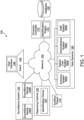
- FIG. 1 depicts a system diagram illustrating a diversion detection system 100, in accordance with some example embodiments.
- the diversion detection system 100 may include a diversion controller 110, at least one dispensing cabinet 130, an auxiliary device 170, a surveillance system 135, one or more data systems 160, and a client 140.
- the diversion controller 110, the dispensing cabinet 130, the auxiliary device 170, the surveillance system 135, the one or more data systems 160, and the client 140 may be communicatively coupled via a network 150.
- the diversion controller 110 may be coupled to or otherwise form a part of the dispensing cabinet 130, the auxiliary device 170, and/or the surveillance system 135.
- the client 140 may be coupled to or otherwise form a part of the dispensing cabinet 130, the auxiliary device 170, and/or the surveillance system 135.
- the network 150 may be any wired and/or wireless network including, for example, a public land mobile network (PLMN), a wide area network (WAN), a local area network (LAN), a virtual local area network (VLAN), the Internet, and/or the like.
- PLMN public land mobile network
- WAN wide area network
- LAN local area network
- VLAN virtual local area network
- the Internet and/or the like.
- the dispensing cabinet 130 may include an identification device 147.
- the identification device 147 may be a biometric reader configured to capture, for example, a fingerprint, iris pattern, retina pattern, handwritten signature, voice, and/or the like, of the individuals accessing the dispensing cabinet 130.
- the identification device 147 may be configured to receive the identification numbers and/or passcodes of the individuals accessing the dispensing cabinet 130 via, for example, a keyboard and/or a keycard scanner.
- the keycard scanner may obtain this data (e.g., the identification numbers and/or passcodes) in any manner including, for example, near-field communication (NFC), radio frequency identification (RFID), barcodes, quick response (QR) codes, and/or the like.
- NFC near-field communication
- RFID radio frequency identification
- QR quick response
- the surveillance system 135 may include one or more surveillance devices, such as a first surveillance device 135A and a second surveillance device 135B, which may be any recording device including, for example, a video camera, a still image camera, an audio recorder, and/or the like.
- the one or more surveillance devices may have an area of detection that includes the dispensing cabinet 130.
- the surveillance system 135 also includes a motion sensor coupled with one or more of the surveillance devices. Additionally and/or alternatively, the surveillance devices may be capable of recording images and/or video in the dark or other low-light environments.
- the first and second surveillance devices 135A, 135B may be coupled to, be positioned on, or otherwise form a part of the dispensing cabinet 130, the auxiliary device 170, which may include one or more auxiliary devices coupled with (e.g., via a wired or wireless connection) the dispensing cabinet 130, or a room of the patient.
- the surveillance system 135 may be configured to capture images, videos, and/or audio recordings of individuals accessing the dispensing cabinet 130, for example, to retrieve and/or return medication.
- FIG. 2 illustrates an example of the surveillance system 135 consistent with implementations of the current subject matter.
- the surveillance system 135 may include a first surveillance device 135A, a second surveillance device 135B, a third surveillance device 135C, a fourth surveillance device 135D, a fifth surveillance device 135E, a sixth surveillance device 135F, a seventh surveillance device 135G, and an eighth surveillance device 135H.
- the surveillance system 135 may include one, two, three, four, five, six, seven, eight, nine, or ten or more surveillance devices. As shown in FIG.
- the first and second surveillance devices 135A, 135B are positioned on the dispensing cabinet 130 and are coupled to a main surveillance device hub 137.
- the first and second surveillance devices 135A, 135B may capture a clinician's face and/or hands at the dispensing cabinet 130.
- the first and second surveillance devices 135A, 135B may capture recordings (e.g., video, audio, and/or still images) and the diversion controller 110 (e.g., the detection engine 115) may generate one or more transaction records associated with the recordings.
- the detection engine 115 may transmit the recordings and/or the associated transaction records from the first and second surveillance devices 135A, 135B to the main surveillance device hub 137 of the dispensing cabinet 130.
- the auxiliary device 170 includes a first auxiliary device 170A and a second auxiliary device 170B, which may be coupled to the dispensing cabinet 130 via a wired or wireless connection (e.g., via the network 150).
- the first auxiliary device 170A may include a first auxiliary surveillance device hub 137A, which may communicate with the main surveillance device hub 137 via the network 150.
- the first auxiliary device 170A may include the third and fourth surveillance devices 135C, 135D, which may capture recordings and the detection engine 115 may generate one or more transaction records associated with the recordings.
- the detection engine 115 may transmit the recordings and/or the associated transaction records from the third and fourth surveillance devices 135C, 135D to the first auxiliary surveillance device hub 137A. From the first auxiliary surveillance device hub 137A, the detection engine 115 may transmit the recordings and/or the associated transaction records to the main surveillance device hub 137.
- the detection engine 115 may transmit the recordings and/or the associated transaction records from the seventh surveillance device 135G (or one or more of the other surveillance devices) directly to the main surveillance device hub 137.
- the eighth surveillance device 137H may be positioned at another location in the room of the patient, separate from one of the auxiliary devices 170. The detection engine 115 may transmit the recordings and/or the associated transaction records from the eighth surveillance device 135H directly to the main surveillance device hub 137, via the network 150.
- FIG. 3 depicts the dispensing cabinet 130, in accordance with some example embodiments.
- the dispensing cabinet 130 may include a plurality of drawers including, for example, a first drawer 220A, a second drawer 220B, a third drawer 220C, a fourth drawer 220D, and/or the like.
- the surveillance system 135 of the dispensing cabinet 130 may include a plurality of cameras including, for example, a first camera 210A, a second camera 210B, a third camera 210C, a fourth camera 210D, a fifth camera 210E, and/or the like, which may be the same or similar to the surveillance devices described above with respect to FIG. 2 .
- the dispensing cabinet 130 may further include an input/output device 230, which may include a keyboard, a monitor, a touchscreen, and/or the like. It should be appreciated that the input/output device 230 may be part of the identification device 135B, and/or the client 140. For example, an individual accessing the dispensing cabinet 130 may enter, via the input/output device 230, an identification number and/or a passcode that uniquely identifies the individual. Moreover, the dispensing cabinet 130 may include a different quantity of cameras and/or drawers than shown.
- each camera in the surveillance system 135 may have a different field of view, and may be activated upon detection of one or more triggering events.
- the first camera 210A may be a front facing camera configured to capture images, audio, and/or videos that include the face of the individuals who access the dispensing cabinet 130. The first camera 210A may be activated when an individual interacts with the input/output device 230.
- the second camera 210B, the third camera 210C, the fourth camera 210D, and the fifth camera 210E may be downward facing cameras configured to capture images and/or videos of the interiors of the corresponding drawers.
- the second camera 210B may be activated in response to the first drawer 220A being opened.
- the second camera 210B may further capture images and/or videos of medication being removed from and/or returned to the first drawer 220A.
- the third camera 210C may be activated in response to the second drawer 220B being opened.
- the third camera 210C may capture images and/or videos of medication being removed from and/or returned to the second drawer 220B.
- the first camera 210A, the second camera 210B, the third camera 210C, the fourth camera 210D, and/or the fifth camera 210E may be activated upon detection of a triggering event (discussed in more detail below), such as whenever an individual accesses the dispensing cabinet 130.
- a triggering event discussed in more detail below
- the second camera 220B may be activated in order to capture images and/or videos of the individual returning the unused medication to the first drawer 220A. These images and/or videos may provide evidence of diversion including, for example, efforts to tamper with the unused medication.
- the first camera 220A may also be activated in order to capture images and/or videos that includes the face of the individual. These images and/or videos, and associated transaction records generated by the detection engine 115, may be used to corroborate the identity of the individual returning the medication to the dispensing cabinet 130.
- the surveillance system 135 may be used to count a number of medications, or a quantity of a medication in a dose (e.g., a number of pills) retrieved from a drawer of the dispensing cabinet 130.
- the detection engine 115 may determine, based on the recordings from at least one of the cameras (e.g., the second camera 210B, the third camera 210C, the fourth camera 210D, and the fifth camera 210E) pointing at the corresponding drawers, the quantity of medication retrieved from the particular drawer.
- the diversion controller 110 may determine based on the recordings, whether the correct amount of the medication has been withdrawn from the drawers of the dispensing cabinet 130.
- the diversion controller 110 may request that the clinician show the quantity of the medication withdrawn from the drawers, scan a barcode or other identifier, representing the medication type or other information about the medication, at the input/output device 230, and/or the like.
- the detection engine 115 may record the detected quantity, and compare the detected quantity to an expected quantity based on one or more user inputs. Based on the comparison, the detection engine 115 may determine that a possible diversion event has occurred when the detected quantity of medication does not correspond to the expected quantity. In some embodiments, upon the detection of a diversion event or a possible diversion event, the detection engine 115 may generate one or more alerts.
- Such configurations may help to improve diversion detection because the quantity of a medication actually withdrawn may be more easily and accurately compared to the quantity of medication that should have been withdrawn or wasted by the clinician. Such configurations may also help to detect if the incorrect medication has been withdrawn and/or if an expired medication has been withdrawn (e.g., via the barcode scanning).
- the configurations may be established for users of the system.
- a configuration may identify which sensors or input devices to activate.
- a configuration may include identification of what information is required to be collected by the activated sensors or input devices. For example, if a camera is identified for activation, a number of images to capture may be identified by the configuration.
- the configuration may identify an analysis engine for determining the sufficiency of the collected information. For example, if a camera is identified for activation, an image recognition engine may be identified to determine whether the image identifies the desired elements for an adequate evidence record (e.g., facial recognition, medication recognition, optical character recognition, or others).
- the analysis may include volume detection, voice recognition, keyword or speech recognition, or the like.
- a set of configurations may be defined to dynamically select an appropriate configuration.
- the selection may be based on substance type (e.g., controlled substance transactions), user or user classification (e.g., specific users, users with a threshold risk score, "junior" nursing staff, traveling nurses, etc.), by time of the witnessing session (e.g., day, night, day of week, holidays, etc.), location of witnessing (e.g., if a user is accessing medications outside of their assigned care area), or other detectable characteristic of the user or dispensing transaction.
- the system may include one or more graphical user interfaces to facilitate definition of configurations by offering control elements to receive and verify the relevant parameters for configurations.
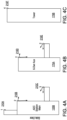
- FIGS. 4A-4C illustrate side views of the dispensing cabinet 130 and the first and second auxiliary devices 170A, 170B, which may be coupled (e.g., via a wired or wireless connection) to the dispensing cabinet 130.
- one or more surveillance devices may be positioned at various locations.
- a first surveillance device e.g., the first camera 210A
- a keyboard of the input/output device 230 also see FIG.
- a second camera (e.g., the second camera 210B) may be positioned to capture the clinician moving the drawer of the dispensing cabinet 130 and/or withdrawing medication from the dispensing cabinet 130
- a third camera e.g., the third camera 210C
- the first auxiliary device 170A may include a fourth camera (e.g., the fourth camera 210D) that may be positioned to capture the clinician moving the drawer of the dispensing cabinet 130 and/or withdrawing medication from a drawer of the first auxiliary device 170A (see also FIG.
- the second auxiliary device 170B also includes a sixth camera (e.g., a sixth camera 210F) that captures one or more regions of the room of the patient.
- a sixth camera e.g., a sixth camera 210F
- the one or more data systems 160 may include an inventory system 160A, a patient care system 160B, an administrative system 160C, and an electronic medical record (EMR) system 160D.
- a triggering event may occur, causing the surveillance system 135 to begin an investigative workflow (e.g., record, via a surveillance device, a video, a still image, audio, and/or the like), generate one or more transaction records corresponding to the recordings, generate an alert, and/or the like.
- an investigative workflow e.g., record, via a surveillance device, a video, a still image, audio, and/or the like
- generate one or more transaction records corresponding to the recordings generate an alert, and/or the like.
- a triggering event may occur when a clinician (or other individual) enters a patient room, is within a predetermined distance (e.g., one, two, three, four, or five or more feet) from the dispensing cabinet 130 for a threshold amount of time (e.g., 30 seconds, 1 minute, 5 minutes, 30 minutes, 1 hour, or more), attempts to access or accesses the dispensing cabinet 130, and/or interacts with the identification device 147 of the dispensing cabinet 130.
- the triggering event may additionally and/or alternatively occur when one or more of the surveillance devices are at least partially occluded and/or become dark, and/or the like.
- the triggering event may additionally and/or alternatively occur when the diversion detection system detects that an individual who has been previously identified as a possible diverter, enters the room of the patient.
- a clinician dispensing a medication for a patient from the dispensing cabinet 130 may cause the surveillance system 135 to begin the investigative workflow, and the diversion controller 110 to generate a transaction record that corresponds to the investigative workflow.
- Each transaction record may include one or more transaction values corresponding to, for example, a timestamp indicating the start and/or end time of the transaction, a clinician identifier of the clinician, a device identifier of the dispensing cabinet and/or auxiliary device, a patient identifier of the patient, a medication identifier of the medication retrieved from the dispensing cabinet, a quantity of the medication retrieved from the medication cabinet, prescription order identifiers, inventory information, patient status, shift identifiers, location tracking identifiers, electronic health record identifiers, a transaction type, a witness identifier, and/or the like.
- a clinician using a wasting station to waste unused medication from the patient may trigger the generation of another transaction record that includes a timestamp, the clinician identifier of the clinician, a clinician identifier of another clinician witnessing the wasting, a device identifier of the wasting station, the patient identifier of the patient, an identifier of the medication being wasted, a quantity of the medication being wasted, and/or the like.
- the "wasting" of a medication may refer to the disposal of a substance in accordance with institutional guidelines and/or government regulations. For example, the proper wasting of a prescription pain medication may require the controlled substance to be collected in a designated receptacle (e.g., wasting stations) while in the presence of one or more witnesses.
- the diversion controller 110 may generate the transaction records at the time the triggering event is detected, at predetermined time intervals during a triggering event (e.g., every 30 seconds, 1 minute, 30 minutes, 1 hour, 12 hours, etc.) after a triggering event has been detected, and/or continuously after a triggering event has been detected.
- the transaction records may linked to a recording of the surveillance system 135 and be transmitted to and/or stored locally at the dispensing cabinet 130.
- the transaction records may be linked to a recording of the surveillance system 135 and transmitted to a database to be later accessed and/or filtered to detect that a diversion has taken place, identify a possible diverter, and/or the like.
- FIG. 6 illustrates an example of the transaction records 602 generated by the diversion controller 110 corresponding to one or more recordings that are stored at the dispensing cabinet 130 and/or at the database 120 of the diversion controller 110.
- the diversion controller 110 may trigger an alert, which may include a notification that may be provided via a user interface 145 at the client 140.
- the notification may be provided via a short messaging service (SMS) text, an email, a webpage, an application, and/or the like.
- SMS short messaging service
- the diversion controller 10 may cause an increase in a sampling rate of one or more of the surveillance devices of the surveillance system 135, record video and/or images in color, rather than in black and white, divert additional electronic and/or memory resources to the surveillance system 135 and/or the like.
- At least a portion of the data (e.g., the transaction records) captured and linked to a recording of the surveillance system 135, for example, by the diversion controller 110, the surveillance system 135 and/or the identification device 147, together with the corresponding recordings, may be stored at the dispensing cabinet 130, and/or may be transmitted to the diversion controller 110 (or a database 120 coupled with the diversion controller 110) via the network 150.
- the diversion controller 110 may be coupled with any number of computing systems capable of providing data associated with the flow of medication throughout one or more medical facilities including, for example, from being delivered and inducted into the inventory system 160A to being dispensed from the dispensing cabinet 130, administered to patients via the patient care system 160B, and/or ultimately wasted by being disposed of at the dispensing cabinet 130.
- the inventory system 160A may be configured to track the supply of medication available at one or more medical facilities.
- the patient care system 160B may include one or more devices for administering medications to patients including, for example, patient controlled analgesic pumps.
- the administrative system 160C may track the personnel at one or more medical facilities including, for example, personal data, shift schedules, vacation days, and/or the like.
- the inventory system 160A, the patient care system 160B, the administrative system 160C, and/or the EMR system 160D may provide electronic medication administration records including, for example, patient records, caregiver records, medication records, and/or the like.
- the patient records may include, for example, patient identifications, patient locations, demographics, health data (e.g., pain scales, vitals, and/or the like), caregiver assignments, and/or the like.
- the caregiver records may include, for example, caregiver identifications, caregiver schedules and/or actual times worked, caregiver locations, caregiver patient assignments, and/or the like.
- the medication records may include, for example, date and/or time of medication administration, identification of administered medications, strength and/or concentration of administered medications, dosage of administered medications, dosage forms of administered medications, date and/or time of medication orders, strength and/or concentration of ordered medications, dosage of ordered medications, dosage form of ordered medications, and/or the like.
- the data (e.g., the captured recordings, the transaction records, and the non-transactional records) received at the diversion controller 110 may be evaluated by the diversion controller 110 in real time and/or stored at a database 120 coupled with the diversion controller 110 for evaluation at a later time.
- the diversion controller 110 may include a machine learning engine configured to detect, based on the data received at the diversion controller 110 and/or stored at the database 120, diversion of medication, suspicious behavior indicative of the diversion of medication, and/or the like and flag the diversion or suspicious behavior.
- the diversion controller 110 may additionally and/or alternatively include a detection engine 115 configured to detect diversion or possible diversion of medication by generating the transaction records, linking the transaction record to a corresponding recording, filtering the transaction records based on one or more of the related transaction records, and/or triggering one or more alerts based on the filtered transaction records.
- a detection engine 115 configured to detect diversion or possible diversion of medication by generating the transaction records, linking the transaction record to a corresponding recording, filtering the transaction records based on one or more of the related transaction records, and/or triggering one or more alerts based on the filtered transaction records.
- the diversion detection system 100 may detect or otherwise identify anomalous behavior indicating that a diversion has or may have occurred.
- Anomalous behavior may include the triggering event described above.
- anomalous behavior may include accessing the dispensing cabinet at inconsistent times and/or with abnormal frequency, irregularities in wasted and/or returned medications, routinely selecting the same clinician to witness the wasting of medications, tailgating in which a clinician routinely accesses a medication management device within a threshold quantity of time after another clinician, withdrawal of medication for a discharged and/or deceased patient, excessive cancellations and/or overrides, and/or the like.
- FIG. 7 depicts a flowchart illustrating a process 700 for generating evidence, by a diversion detection system (e.g., the diversion detection system 100) to identify a possible diversion event, during which medication may be diverted, in accordance with some example embodiments.
- a possible diversion event may occur at any point in time during the compounding, dispensing, administration, and/or wasting of the medication.
- the diversion event may take many forms, including the removal of more doses than are permitted to be dispensed, removal of a dose and replacement with an illegitimate dose, replacement of a liquid controlled substance with saline or other liquids, removal of the incorrect type of medication and/or the like.
- the diversion detection system may include at least one dispensing cabinet including a medication.
- the diversion detection system may additionally and/or alternatively include a surveillance device having an area of detection that includes the at least one dispensing cabinet.
- a diversion controller (e.g., the diversion controller 110) may detect a triggering event at a dispensing cabinet (e.g., the dispensing cabinet 130) including medication.
- the dispensing cabinet may be coupled to the diversion controller via a wired and/or wireless connection.
- the triggering event may include a clinician (or other individual) entering a patient room, an individual being positioned within a predetermined proximity (e.g., one, two, three, four, or five or more feet) of the dispensing cabinet for a threshold amount of time (e.g., 30 seconds, 1 minute, 5 minutes, 30 minutes, 1 hour, or more), which may be detected by a motion detection device coupled with the dispensing cabinet, an individual accessing or attempting to access the dispensing cabinet, and/or an individual otherwise interacting with the identification device (e.g., the identification device 147) of the dispensing cabinet or another part of the dispensing cabinet (or auxiliary devices), such as the drawers of the dispensing cabinet and/or the input/output device coupled with the dispensing cabinet.
- a clinician or other individual entering a patient room
- an individual being positioned within a predetermined proximity (e.g., one, two, three, four, or five or more feet) of the dispensing cabinet for a threshold amount of time (e
- the triggering event may additionally and/or alternatively include detecting that one or more of the surveillance devices are at least partially occluded, are damaged, and/or the like.
- the triggering event may additionally and/or alternatively include detecting that an individual who has been previously identified as a possible diverter, enters the room of the patient and/or attempts to access the dispensing cabinet.
- the diversion controller may activate, in response to the detection of the triggering event, one or more surveillance devices to capture a recording.
- the recording may include a possible diversion event that occurred at the dispensing cabinet.
- the one or more surveillance devices (e.g., the one or more surveillance devices from the surveillance system 135) may include any recording device including, for example, a video camera, a still image camera, an audio recorder, and/or the like.
- the surveillance devices may be coupled to, be positioned on, or otherwise form a part of the dispensing cabinet, an auxiliary device, such as an auxiliary device coupled to the dispensing cabinet, and/or a room of the patient.
- the surveillance devices may be configured to capture images, videos, and/or audio recordings of individuals accessing the dispensing cabinet, for example, to retrieve and/or return medication.
- the surveillance system upon detection of the triggering event, may move one or more surveillance devices, change the focus and/or zoom of one or more surveillance devices, and/or activate additional surveillance devices (such as at the dispensing cabinet, within a drawer of the dispensing cabinet, at the auxiliary device, and/or at other locations) in order to capture images and/or videos of the individual at specific angles such as, for example, overhead shots of the individual's hands manipulating medication within the dispensing cabinet.
- the activation at 704 may be dynamic based on the configuration applicable to the transaction.
- the activation at 704 may include collecting the necessary criteria to select an appropriate configuration from a set of configurations.
- Each of the transaction records may include one or more transaction values corresponding to, for example, a timestamp indicating the start and/or end time of the transaction, a clinician identifier of the clinician, a device identifier of the dispensing cabinet and/or auxiliary device, a surveillance device identifier of the surveillance devices (e.g., positioned on or in the dispensing cabinet, auxiliary device, or other location), a patient identifier of the patient, a medication identifier of the medication retrieved from the dispensing cabinet, a quantity of the medication retrieved from the medication cabinet, prescription order identifiers, inventory information, patient status, shift identifiers, location tracking identifiers, electronic health record identifiers, a transaction type, a witness identifier, and/or the like.
- a timestamp indicating the start and/or end time of the transaction
- a clinician identifier of the clinician e.g., positioned on or in the dispensing cabinet, auxiliary device, or other location
- a clinician using a wasting station to waste unused medication from the patient may trigger the generation of another transaction record that includes a timestamp, the clinician identifier of the clinician, a clinician identifier of another clinician witnessing the wasting, a device identifier of the wasting station, the patient identifier of the patient, an identifier of the medication being wasted, a quantity of the medication being wasted, and/or the like.
- the transaction records may include data associated with one or more individuals accessing the dispensing cabinet to retrieve and/or return the medication.
- the generated transaction records and at least a portion of the linked recording are transmitted to a main surveillance device hub at the dispensing cabinet.
- the one or more transaction records and the recording captured by the one or more surveillance devices may be stored at the dispensing cabinet.
- the generated transaction records and at least a portion of the linked recording may be transmitted directly from one or more of the surveillance devices.
- the generated transaction records and at least a portion of the linked recording may be transmitted first to an auxiliary surveillance device hub located at one or more of the auxiliary devices, and then transmitted to the main surveillance device hub at the dispensing cabinet.
- the dispensing cabinet e.g., via the main surveillance device hub
- a plurality of recordings comprising the recording may be filtered, at the database and based on one or more of the transaction records, to determine whether the possible diversion event has occurred. For example, one or more transaction records may be selected. Based on the selection of the one or more transaction records, the diversion controller may access the database coupled with the diversion controller, and display, via a user input/output coupled with the diversion controller, such as a display that is remote from the dispensing cabinet, the at least a portion of the recording that is linked to the selected transaction records.
- a user input/output coupled with the diversion controller such as a display that is remote from the dispensing cabinet
- the diversion controller may detect, based on the filtered transaction records and the recording, that the possible diversion event has occurred.
- the diversion controller may detect, based on the transaction records and/or the recording, that the possible diversion event has occurred based on suspicious or anomalous behavior indicative of the diversion of medication, and/or the like, and flag the diversion or behavior.
- the diversion controller may determine that the individual associated with the possible diversion event (which may be detected based on the transaction records linked with the recording) has exhibited an anomalous behavior.
- Anomalous behavior may include the triggering event described above.
- anomalous behavior may include accessing the dispensing cabinet at inconsistent times and/or with abnormal frequency, irregularities in wasted and/or returned medications, routinely selecting the same clinician to witness the wasting of medications, tailgating in which a clinician routinely accesses a medication management device within a threshold quantity of time after another clinician, withdrawal of medication for a discharged and/or deceased patient, excessive cancellations and/or overrides, and/or the like.
- anomalous behavior may include determining that one or more of the surveillance devices has been blocked or at least partially occluded.
- one or more sensors e.g., light sensors, motion sensors, and the like
- the diversion controller may, in response to the determination that the possible diversion event has occurred, generate an alert indicating that the possible diversion event has occurred and/or may have occurred.
- An alert may include a notification that may be provided via a user interface at the client, the dispensing cabinet, and/or a remote display.
- the notification may be provided via a short messaging service (SMS) text, an email, a webpage, an application, and/or the like.
- SMS short messaging service
- the diversion controller may trigger an alert in response to the detection of an initial triggering event, such as when one or more of the surveillance devices of the surveillance system are at least partially occluded.
- the diversion controller may, in response to the determination that the possible diversion event has occurred, transmit a message to control the dispensing cabinet or other hardware within the environment. For example, a control message may be transmitted to lock the dispensing cabinet or otherwise prevent access to one or more drawers of the dispensing cabinet. Additionally and/or alternatively, the diversion controller may, in response to the determination that the possible diversion event has occurred, request an additional witness, additional evidence collection, or other authorization before permitting access to the dispensing cabinet. Accordingly, the diversion detection system described herein may desirably generate useful and sortable evidence of the diversion of medication that may help to more easily and quickly identify the individual responsible for the diversion.
- the computing system 800 can include a processor 810, a memory 820, a storage device 830, and input/output devices 840.
- the processor 810, the memory 820, the storage device 830, and the input/output devices 840 can be interconnected via a system bus 850.
- the processor 810 is capable of processing instructions for execution within the computing system 800.
- the processor 810 can be a single-threaded processor.
- the processor 810 can be a multi-threaded processor.
- the processor 810 is capable of processing instructions stored in the memory 820 and/or on the storage device 830 to present graphical information for a user interface provided via the input/output device 840.
- the memory 820 is a computer readable medium such as volatile or nonvolatile that stores information within the computing system 800.
- the memory 820 can store data structures representing configuration object databases, for example.
- the storage device 830 is capable of providing persistent storage for the computing system 800.
- the storage device 830 can be a floppy disk device, a hard disk device, an optical disk device, or a tape device, or other suitable persistent storage means.
- the input/output device 840 provides input/output operations for the computing system 800.
- the input/output device 840 includes a keyboard and/or pointing device.
- the input/output device 840 includes a display unit for displaying graphical user interfaces.
- the input/output device 840 can provide input/output operations for a network device.
- the input/output device 840 can include Ethernet ports or other networking ports to communicate with one or more wired and/or wireless networks (e.g., a local area network (LAN), a wide area network (WAN), the Internet).
- LAN local area network
- WAN wide area network
- the Internet the Internet
- the computing system 800 can be used to execute various interactive computer software applications that can be used for organization, analysis and/or storage of data in various formats.
- the computing system 800 can be used to execute software applications. These applications can be used to perform various functionalities, e.g., planning functionalities (e.g., generating, managing, editing of spreadsheet documents, word processing documents, and/or any other objects, etc.), computing functionalities, communications functionalities, etc.
- the applications can include various add-in functionalities or can be standalone computing products and/or functionalities.
- the functionalities can be used to generate the user interface provided via the input/output device 840.
- the user interface can be generated and presented to a user by the computing system 800 (e.g., on a computer screen monitor, etc.).
- aspects of the system may be provided within a school to dispense medications to specific students.
- the features described facilitate generation of evidence to indicate which student took which medication at a specific location and time.
- the guided collection of the relevant data points allows even novice (e.g., children) to efficiently and safely receive the appropriate medications.
- One or more aspects or features of the subject matter described herein can be realized in digital electronic circuitry, integrated circuitry, specially designed ASICs, field programmable gate arrays (FPGAs) computer hardware, firmware, software, and/or combinations thereof.
- These various aspects or features can include implementation in one or more computer programs that are executable and/or interpretable on a programmable system including at least one programmable processor, which can be special or general purpose, coupled to receive data and instructions from, and to transmit data and instructions to, a storage system, at least one input device, and at least one output device.
- the programmable system or computing system may include clients and servers. A client and server are remote from each other and typically interact through a communication network. The relationship of client and server arises by virtue of computer programs running on the respective computers and having a client-server relationship to each other.
- the machine-readable medium can store such machine instructions non-transitorily, such as for example as would a non-transient solid-state memory or a magnetic hard drive or any equivalent storage medium.
- the machine-readable medium can alternatively or additionally store such machine instructions in a transient manner, such as for example, as would a processor cache or other random access memory associated with one or more physical processor cores.
- one or more aspects or features of the subject matter described herein can be implemented on a computer having a display device, such as for example a cathode ray tube (CRT) or a liquid crystal display (LCD) or a light emitting diode (LED) monitor for displaying information to the user and a keyboard and a pointing device, such as for example a mouse or a trackball, by which the user may provide input to the computer.
- a display device such as for example a cathode ray tube (CRT) or a liquid crystal display (LCD) or a light emitting diode (LED) monitor for displaying information to the user and a keyboard and a pointing device, such as for example a mouse or a trackball, by which the user may provide input to the computer.
- CTR cathode ray tube
- LCD liquid crystal display
- LED light emitting diode
- keyboard and a pointing device such as for example a mouse or a trackball
- Other kinds of devices can be used to provide
- phrases such as "at least one of' or “one or more of' may occur followed by a conjunctive list of elements or features.
- the term “and/or” may also occur in a list of two or more elements or features. Unless otherwise implicitly or explicitly contradicted by the context in which it used, such a phrase is intended to mean any of the listed elements or features individually or any of the recited elements or features in combination with any of the other recited elements or features.
- the phrases “at least one of A and B;” “one or more of A and B;” and “A and/or B” are each intended to mean "A alone, B alone, or A and B together.”
- a similar interpretation is also intended for lists including three or more items.
- a message encompasses a wide variety of formats for communicating (e.g., transmitting or receiving) information.
- a message may include a machine readable aggregation of information such as an XML document, fixed field message, comma separated message, or the like.
- a message may, in some embodiments, include a signal utilized to transmit one or more representations of the information. While recited in the singular, it will be understood that a message may be composed, transmitted, stored, received, etc. in multiple parts.
- data generated or detected can be forwarded to a "remote" device or location, where "remote,” means a location or device other than the location or device at which the program is executed.
- a remote location could be another location (e.g., office, lab, etc.) in the same city, another location in a different city, another location in a different state, another location in a different country, etc.
- office, lab, etc. e.g., office, lab, etc.
- the two items can be in the same room but separated, or at least in different rooms or different buildings, and can be at least one mile, ten miles, or at least one hundred miles apart.
Landscapes
- Engineering & Computer Science (AREA)
- Health & Medical Sciences (AREA)
- General Health & Medical Sciences (AREA)
- Public Health (AREA)
- Business, Economics & Management (AREA)
- Primary Health Care (AREA)
- Medical Informatics (AREA)
- Epidemiology (AREA)
- General Business, Economics & Management (AREA)
- Biomedical Technology (AREA)
- General Physics & Mathematics (AREA)
- Physics & Mathematics (AREA)
- Theoretical Computer Science (AREA)
- Chemical & Material Sciences (AREA)
- Medicinal Chemistry (AREA)
- Bioinformatics & Cheminformatics (AREA)
- Data Mining & Analysis (AREA)
- Life Sciences & Earth Sciences (AREA)
- Databases & Information Systems (AREA)
- Animal Behavior & Ethology (AREA)
- Computational Linguistics (AREA)
- Emergency Management (AREA)
- Veterinary Medicine (AREA)
- General Engineering & Computer Science (AREA)
- Medical Treatment And Welfare Office Work (AREA)
- Accommodation For Nursing Or Treatment Tables (AREA)
- Radar Systems Or Details Thereof (AREA)
- Geophysics And Detection Of Objects (AREA)
- Measurement Of Velocity Or Position Using Acoustic Or Ultrasonic Waves (AREA)
- Financial Or Insurance-Related Operations Such As Payment And Settlement (AREA)
- Medical Preparation Storing Or Oral Administration Devices (AREA)
Priority Applications (1)
| Application Number | Priority Date | Filing Date | Title |
|---|---|---|---|
| EP25212907.7A EP4664480A3 (de) | 2020-02-11 | 2021-02-09 | Umleitungserkennungssystem |
Applications Claiming Priority (3)
| Application Number | Priority Date | Filing Date | Title |
|---|---|---|---|
| US202062975056P | 2020-02-11 | 2020-02-11 | |
| PCT/US2021/017242 WO2021163051A1 (en) | 2020-02-11 | 2021-02-09 | Diversion detection system |
| EP21710660.8A EP4104188B1 (de) | 2020-02-11 | 2021-02-09 | Umlenkungserkennungssystem |
Related Parent Applications (1)
| Application Number | Title | Priority Date | Filing Date |
|---|---|---|---|
| EP21710660.8A Division EP4104188B1 (de) | 2020-02-11 | 2021-02-09 | Umlenkungserkennungssystem |
Related Child Applications (1)
| Application Number | Title | Priority Date | Filing Date |
|---|---|---|---|
| EP25212907.7A Division EP4664480A3 (de) | 2020-02-11 | 2021-02-09 | Umleitungserkennungssystem |
Publications (4)
| Publication Number | Publication Date |
|---|---|
| EP4398260A2 true EP4398260A2 (de) | 2024-07-10 |
| EP4398260A3 EP4398260A3 (de) | 2024-07-24 |
| EP4398260C0 EP4398260C0 (de) | 2025-11-05 |
| EP4398260B1 EP4398260B1 (de) | 2025-11-05 |
Family
ID=74860402
Family Applications (3)
| Application Number | Title | Priority Date | Filing Date |
|---|---|---|---|
| EP21710660.8A Active EP4104188B1 (de) | 2020-02-11 | 2021-02-09 | Umlenkungserkennungssystem |
| EP24177683.0A Active EP4398260B1 (de) | 2020-02-11 | 2021-02-09 | Umleitungserkennungssystem |
| EP25212907.7A Pending EP4664480A3 (de) | 2020-02-11 | 2021-02-09 | Umleitungserkennungssystem |
Family Applications Before (1)
| Application Number | Title | Priority Date | Filing Date |
|---|---|---|---|
| EP21710660.8A Active EP4104188B1 (de) | 2020-02-11 | 2021-02-09 | Umlenkungserkennungssystem |
Family Applications After (1)
| Application Number | Title | Priority Date | Filing Date |
|---|---|---|---|
| EP25212907.7A Pending EP4664480A3 (de) | 2020-02-11 | 2021-02-09 | Umleitungserkennungssystem |
Country Status (9)
| Country | Link |
|---|---|
| US (1) | US20210249121A1 (de) |
| EP (3) | EP4104188B1 (de) |
| JP (2) | JP7725483B2 (de) |
| KR (1) | KR20220139935A (de) |
| CN (1) | CN115380333A (de) |
| AU (1) | AU2021220164A1 (de) |
| BR (1) | BR112022015783A2 (de) |
| CA (1) | CA3170373A1 (de) |
| WO (1) | WO2021163051A1 (de) |
Families Citing this family (4)
| Publication number | Priority date | Publication date | Assignee | Title |
|---|---|---|---|---|
| CN115380299A (zh) | 2020-02-24 | 2022-11-22 | 康尔福盛303公司 | 模块化见证装置 |
| CA3183423A1 (en) | 2020-05-14 | 2021-11-18 | Carefusion 303, Inc. | Wasting station for medications |
| US12482554B2 (en) | 2021-02-26 | 2025-11-25 | Carefusion 303, Inc. | Dosage normalization for detection of anomalous behavior |
| US20230077660A1 (en) * | 2021-09-10 | 2023-03-16 | Cerner Innovation, Inc. | Intelligent system for automatically testing and selecting from multiple data models for accurate diversion prediction |
Family Cites Families (6)
| Publication number | Priority date | Publication date | Assignee | Title |
|---|---|---|---|---|
| JP5245211B2 (ja) | 2006-05-08 | 2013-07-24 | 富士通株式会社 | 監視システム |
| US9910965B2 (en) * | 2011-09-16 | 2018-03-06 | Aesynt Incorporated | Systems, methods and computer program product for monitoring interactions with a medication storage device |
| US20130282392A1 (en) * | 2012-04-20 | 2013-10-24 | Scott Wurm | System and method of securely storing, dispensing, and inventorying medications and samples |
| US10515722B2 (en) * | 2015-10-15 | 2019-12-24 | Omnicell, Inc. | Medical equipment with diversion mechanism |
| US10468128B2 (en) | 2017-04-11 | 2019-11-05 | Canon Medical Systems Corporation | Apparatus and method for presentation of medical data |
| US11081220B2 (en) * | 2018-02-02 | 2021-08-03 | Carefusion 303, Inc. | System and method for dispensing medication |
-
2021
- 2021-02-09 WO PCT/US2021/017242 patent/WO2021163051A1/en not_active Ceased
- 2021-02-09 BR BR112022015783A patent/BR112022015783A2/pt unknown
- 2021-02-09 JP JP2022548984A patent/JP7725483B2/ja active Active
- 2021-02-09 US US17/171,699 patent/US20210249121A1/en active Pending
- 2021-02-09 CA CA3170373A patent/CA3170373A1/en active Pending
- 2021-02-09 KR KR1020227030872A patent/KR20220139935A/ko active Pending
- 2021-02-09 CN CN202180026820.6A patent/CN115380333A/zh active Pending
- 2021-02-09 EP EP21710660.8A patent/EP4104188B1/de active Active
- 2021-02-09 EP EP24177683.0A patent/EP4398260B1/de active Active
- 2021-02-09 AU AU2021220164A patent/AU2021220164A1/en not_active Abandoned
- 2021-02-09 EP EP25212907.7A patent/EP4664480A3/de active Pending
-
2025
- 2025-08-06 JP JP2025131672A patent/JP2025166074A/ja active Pending
Also Published As
| Publication number | Publication date |
|---|---|
| KR20220139935A (ko) | 2022-10-17 |
| AU2021220164A1 (en) | 2022-09-08 |
| EP4104188C0 (de) | 2024-06-05 |
| JP2025166074A (ja) | 2025-11-05 |
| EP4398260C0 (de) | 2025-11-05 |
| CN115380333A (zh) | 2022-11-22 |
| EP4664480A3 (de) | 2026-02-11 |
| US20210249121A1 (en) | 2021-08-12 |
| BR112022015783A2 (pt) | 2022-10-11 |
| EP4664480A2 (de) | 2025-12-17 |
| JP2023513762A (ja) | 2023-04-03 |
| CA3170373A1 (en) | 2021-08-19 |
| JP7725483B2 (ja) | 2025-08-19 |
| EP4398260A3 (de) | 2024-07-24 |
| EP4398260B1 (de) | 2025-11-05 |
| EP4104188B1 (de) | 2024-06-05 |
| EP4104188A1 (de) | 2022-12-21 |
| WO2021163051A1 (en) | 2021-08-19 |
Similar Documents
| Publication | Publication Date | Title |
|---|---|---|
| US20250226075A1 (en) | Modular witnessing device | |
| US20210343386A1 (en) | System and method for dispensing medication | |
| EP4398260B1 (de) | Umleitungserkennungssystem | |
| US12249421B2 (en) | Opioid management system | |
| US12462930B2 (en) | Peer community based anomalous behavior detection | |
| US20180247703A1 (en) | Medication administration auditing systems and methods | |
| US12482554B2 (en) | Dosage normalization for detection of anomalous behavior | |
| CA3089829C (en) | System and method for dispensing medication | |
| US20220375581A1 (en) | Rare instance analytics for diversion detection |
Legal Events
| Date | Code | Title | Description |
|---|---|---|---|
| PUAI | Public reference made under article 153(3) epc to a published international application that has entered the european phase |
Free format text: ORIGINAL CODE: 0009012 |
|
| STAA | Information on the status of an ep patent application or granted ep patent |
Free format text: STATUS: THE APPLICATION HAS BEEN PUBLISHED |
|
| REG | Reference to a national code |
Ref legal event code: R079 Free format text: PREVIOUS MAIN CLASS: G16H0040630000 Ipc: G16H0020130000 Ref country code: DE Ref legal event code: R079 Ref document number: 602021042078 Country of ref document: DE Free format text: PREVIOUS MAIN CLASS: G16H0040630000 Ipc: G16H0020130000 |
|
| PUAL | Search report despatched |
Free format text: ORIGINAL CODE: 0009013 |
|
| AC | Divisional application: reference to earlier application |
Ref document number: 4104188 Country of ref document: EP Kind code of ref document: P |
|
| AK | Designated contracting states |
Kind code of ref document: A2 Designated state(s): AL AT BE BG CH CY CZ DE DK EE ES FI FR GB GR HR HU IE IS IT LI LT LU LV MC MK MT NL NO PL PT RO RS SE SI SK SM TR |
|
| AK | Designated contracting states |
Kind code of ref document: A3 Designated state(s): AL AT BE BG CH CY CZ DE DK EE ES FI FR GB GR HR HU IE IS IT LI LT LU LV MC MK MT NL NO PL PT RO RS SE SI SK SM TR |
|
| RIC1 | Information provided on ipc code assigned before grant |
Ipc: G16H 40/63 20180101ALI20240614BHEP Ipc: G16H 20/13 20180101AFI20240614BHEP |
|
| STAA | Information on the status of an ep patent application or granted ep patent |
Free format text: STATUS: REQUEST FOR EXAMINATION WAS MADE |
|
| 17P | Request for examination filed |
Effective date: 20250117 |
|
| RAP3 | Party data changed (applicant data changed or rights of an application transferred) |
Owner name: CAREFUSION 303, INC. |
|
| GRAP | Despatch of communication of intention to grant a patent |
Free format text: ORIGINAL CODE: EPIDOSNIGR1 |
|
| STAA | Information on the status of an ep patent application or granted ep patent |
Free format text: STATUS: GRANT OF PATENT IS INTENDED |
|
| INTG | Intention to grant announced |
Effective date: 20250602 |
|
| GRAS | Grant fee paid |
Free format text: ORIGINAL CODE: EPIDOSNIGR3 |
|
| GRAA | (expected) grant |
Free format text: ORIGINAL CODE: 0009210 |
|
| STAA | Information on the status of an ep patent application or granted ep patent |
Free format text: STATUS: THE PATENT HAS BEEN GRANTED |
|
| AC | Divisional application: reference to earlier application |
Ref document number: 4104188 Country of ref document: EP Kind code of ref document: P |
|
| AK | Designated contracting states |
Kind code of ref document: B1 Designated state(s): AL AT BE BG CH CY CZ DE DK EE ES FI FR GB GR HR HU IE IS IT LI LT LU LV MC MK MT NL NO PL PT RO RS SE SI SK SM TR |
|
| REG | Reference to a national code |
Ref country code: CH Ref legal event code: F10 Free format text: ST27 STATUS EVENT CODE: U-0-0-F10-F00 (AS PROVIDED BY THE NATIONAL OFFICE) Effective date: 20251105 Ref country code: GB Ref legal event code: FG4D |
|
| REG | Reference to a national code |
Ref country code: DE Ref legal event code: R096 Ref document number: 602021042078 Country of ref document: DE |
|
| REG | Reference to a national code |
Ref country code: IE Ref legal event code: FG4D |
|
| U01 | Request for unitary effect filed |
Effective date: 20251201 |
|
| U07 | Unitary effect registered |
Designated state(s): AT BE BG DE DK EE FI FR IT LT LU LV MT NL PT RO SE SI Effective date: 20251205 |
|
| U20 | Renewal fee for the european patent with unitary effect paid |
Year of fee payment: 6 Effective date: 20260129 |
|
| PGFP | Annual fee paid to national office [announced via postgrant information from national office to epo] |
Ref country code: GB Payment date: 20260128 Year of fee payment: 6 |
|
| PG25 | Lapsed in a contracting state [announced via postgrant information from national office to epo] |
Ref country code: ES Free format text: LAPSE BECAUSE OF FAILURE TO SUBMIT A TRANSLATION OF THE DESCRIPTION OR TO PAY THE FEE WITHIN THE PRESCRIBED TIME-LIMIT Effective date: 20251105 |
|
| PG25 | Lapsed in a contracting state [announced via postgrant information from national office to epo] |
Ref country code: NO Free format text: LAPSE BECAUSE OF FAILURE TO SUBMIT A TRANSLATION OF THE DESCRIPTION OR TO PAY THE FEE WITHIN THE PRESCRIBED TIME-LIMIT Effective date: 20260205 |
|
| PG25 | Lapsed in a contracting state [announced via postgrant information from national office to epo] |
Ref country code: HR Free format text: LAPSE BECAUSE OF FAILURE TO SUBMIT A TRANSLATION OF THE DESCRIPTION OR TO PAY THE FEE WITHIN THE PRESCRIBED TIME-LIMIT Effective date: 20251105 |
|
| PG25 | Lapsed in a contracting state [announced via postgrant information from national office to epo] |
Ref country code: RS Free format text: LAPSE BECAUSE OF FAILURE TO SUBMIT A TRANSLATION OF THE DESCRIPTION OR TO PAY THE FEE WITHIN THE PRESCRIBED TIME-LIMIT Effective date: 20260205 |
|
| PG25 | Lapsed in a contracting state [announced via postgrant information from national office to epo] |
Ref country code: IS Free format text: LAPSE BECAUSE OF FAILURE TO SUBMIT A TRANSLATION OF THE DESCRIPTION OR TO PAY THE FEE WITHIN THE PRESCRIBED TIME-LIMIT Effective date: 20260305 |
|
| PG25 | Lapsed in a contracting state [announced via postgrant information from national office to epo] |
Ref country code: PL Free format text: LAPSE BECAUSE OF FAILURE TO SUBMIT A TRANSLATION OF THE DESCRIPTION OR TO PAY THE FEE WITHIN THE PRESCRIBED TIME-LIMIT Effective date: 20251105 |