EP4398530A2 - Verfahren und vorrichtung zur übertragung einer protokolldateneinheit der physikalischen schicht - Google Patents
Verfahren und vorrichtung zur übertragung einer protokolldateneinheit der physikalischen schicht Download PDFInfo
- Publication number
- EP4398530A2 EP4398530A2 EP24161590.5A EP24161590A EP4398530A2 EP 4398530 A2 EP4398530 A2 EP 4398530A2 EP 24161590 A EP24161590 A EP 24161590A EP 4398530 A2 EP4398530 A2 EP 4398530A2
- Authority
- EP
- European Patent Office
- Prior art keywords
- ltf
- 4xeht
- sequence
- 2xeht
- parta
- Prior art date
- Legal status (The legal status is an assumption and is not a legal conclusion. Google has not performed a legal analysis and makes no representation as to the accuracy of the status listed.)
- Granted
Links
Images





Classifications
-
- H—ELECTRICITY
- H04—ELECTRIC COMMUNICATION TECHNIQUE
- H04L—TRANSMISSION OF DIGITAL INFORMATION, e.g. TELEGRAPHIC COMMUNICATION
- H04L27/00—Modulated-carrier systems
- H04L27/26—Systems using multi-frequency codes
- H04L27/2601—Multicarrier modulation systems
- H04L27/2602—Signal structure
- H04L27/261—Details of reference signals
- H04L27/2613—Structure of the reference signals
- H04L27/26132—Structure of the reference signals using repetition
-
- H—ELECTRICITY
- H04—ELECTRIC COMMUNICATION TECHNIQUE
- H04B—TRANSMISSION
- H04B7/00—Radio transmission systems, i.e. using radiation field
- H04B7/02—Diversity systems; Multi-antenna system, i.e. transmission or reception using multiple antennas
- H04B7/04—Diversity systems; Multi-antenna system, i.e. transmission or reception using multiple antennas using two or more spaced independent antennas
- H04B7/0413—MIMO systems
-
- H—ELECTRICITY
- H04—ELECTRIC COMMUNICATION TECHNIQUE
- H04B—TRANSMISSION
- H04B7/00—Radio transmission systems, i.e. using radiation field
- H04B7/02—Diversity systems; Multi-antenna system, i.e. transmission or reception using multiple antennas
- H04B7/04—Diversity systems; Multi-antenna system, i.e. transmission or reception using multiple antennas using two or more spaced independent antennas
- H04B7/06—Diversity systems; Multi-antenna system, i.e. transmission or reception using multiple antennas using two or more spaced independent antennas at the transmitting station
-
- H—ELECTRICITY
- H04—ELECTRIC COMMUNICATION TECHNIQUE
- H04L—TRANSMISSION OF DIGITAL INFORMATION, e.g. TELEGRAPHIC COMMUNICATION
- H04L25/00—Baseband systems
- H04L25/02—Details ; arrangements for supplying electrical power along data transmission lines
- H04L25/0202—Channel estimation
- H04L25/0224—Channel estimation using sounding signals
-
- H—ELECTRICITY
- H04—ELECTRIC COMMUNICATION TECHNIQUE
- H04L—TRANSMISSION OF DIGITAL INFORMATION, e.g. TELEGRAPHIC COMMUNICATION
- H04L27/00—Modulated-carrier systems
- H04L27/26—Systems using multi-frequency codes
- H04L27/2601—Multicarrier modulation systems
- H04L27/2602—Signal structure
- H04L27/261—Details of reference signals
-
- H—ELECTRICITY
- H04—ELECTRIC COMMUNICATION TECHNIQUE
- H04L—TRANSMISSION OF DIGITAL INFORMATION, e.g. TELEGRAPHIC COMMUNICATION
- H04L27/00—Modulated-carrier systems
- H04L27/26—Systems using multi-frequency codes
- H04L27/2601—Multicarrier modulation systems
- H04L27/2602—Signal structure
- H04L27/261—Details of reference signals
- H04L27/2613—Structure of the reference signals
-
- H—ELECTRICITY
- H04—ELECTRIC COMMUNICATION TECHNIQUE
- H04L—TRANSMISSION OF DIGITAL INFORMATION, e.g. TELEGRAPHIC COMMUNICATION
- H04L27/00—Modulated-carrier systems
- H04L27/26—Systems using multi-frequency codes
- H04L27/2601—Multicarrier modulation systems
- H04L27/2614—Peak power aspects
- H04L27/262—Reduction thereof by selection of pilot symbols
-
- H—ELECTRICITY
- H04—ELECTRIC COMMUNICATION TECHNIQUE
- H04L—TRANSMISSION OF DIGITAL INFORMATION, e.g. TELEGRAPHIC COMMUNICATION
- H04L5/00—Arrangements affording multiple use of the transmission path
- H04L5/003—Arrangements for allocating sub-channels of the transmission path
- H04L5/0048—Allocation of pilot signals, i.e. of signals known to the receiver
-
- H—ELECTRICITY
- H04—ELECTRIC COMMUNICATION TECHNIQUE
- H04W—WIRELESS COMMUNICATION NETWORKS
- H04W72/00—Local resource management
- H04W72/04—Wireless resource allocation
- H04W72/044—Wireless resource allocation based on the type of the allocated resource
- H04W72/0453—Resources in frequency domain, e.g. a carrier in FDMA
-
- H—ELECTRICITY
- H04—ELECTRIC COMMUNICATION TECHNIQUE
- H04L—TRANSMISSION OF DIGITAL INFORMATION, e.g. TELEGRAPHIC COMMUNICATION
- H04L5/00—Arrangements affording multiple use of the transmission path
- H04L5/0001—Arrangements for dividing the transmission path
- H04L5/0003—Two-dimensional division
- H04L5/0005—Time-frequency
- H04L5/0007—Time-frequency the frequencies being orthogonal, e.g. OFDM(A) or DMT
-
- H—ELECTRICITY
- H04—ELECTRIC COMMUNICATION TECHNIQUE
- H04W—WIRELESS COMMUNICATION NETWORKS
- H04W84/00—Network topologies
- H04W84/02—Hierarchically pre-organised networks, e.g. paging networks, cellular networks, WLAN [Wireless Local Area Network] or WLL [Wireless Local Loop]
- H04W84/10—Small scale networks; Flat hierarchical networks
- H04W84/12—WLAN [Wireless Local Area Networks]
Definitions
- Embodiments of this application relate to the field of wireless communication technologies, and in particular, to a method and an apparatus for transmitting a physical layer protocol data unit.
- Channel estimation is a process of estimating, under a specific criterion, a parameter of a channel through which a radio signal passes. Accuracy of channel estimation directly affects the performance of the whole system.
- wireless local area network wireless local area network
- IEEE Institute of Electrical and Electronics Engineers (institute of electrical and electronics engineers, IEEE) 802.11g/a, 802.11n, and 802.11ac
- a long training field long training field, LTF sequence that may be used for channel estimation
- OFDMA orthogonal frequency division multiple access
- 802.11ax 802.11ax standard
- LTF sequence used for channel estimation is also specified in the 802.11ax standard.
- the 802.11ax standard can hardly meet user requirements in aspects such as a high throughput, low jitter, and a low latency. Therefore, there is an urgent need to develop a next-generation WLAN technology, for example, an IEEE 802.11be standard, an extremely high throughput (extremely high throughput, EHT) standard, or a Wi-Fi 7 standard.
- EHT extremely high throughput
- Embodiments of this application provide a method and an apparatus for transmitting a physical layer protocol data unit, to provide an LTF sequence that has a relatively low PAPR on entire bandwidth, on a single resource unit, on a combined resource unit, and in a considered multi-stream scenario.
- a method for transmitting a physical layer protocol data unit including: generating a physical layer protocol data unit PPDU, where the PPDU includes a long training field LTF sequence; and sending the PPDU.
- a method for transmitting a physical layer protocol data unit including: receiving a PPDU; and parsing the received PPDU to obtain a long training field LTF sequence included in the PPDU.
- the apparatus includes:
- a transceiver unit is configured to receive a PPDU
- a processing unit is configured to parse the received PPDU to obtain a long training field LTF sequence included in the PPDU.
- the method for transmitting a PPDU in this application may be implemented by a communications device in a wireless communications system, or a chip or a processor in a communications device.
- the communications device may be an access point (access point, AP) device or a station (station, STA) device.
- the communications device may alternatively be a wireless communications device that supports parallel transmission over a plurality of links.
- the communications device may be referred to as a multi-link device or a multi-band device (multi-band device). Compared with a communications device that supports only single-link transmission, the multi-link device has higher transmission efficiency and a higher throughput.
- APs are access points for mobile users to access wired networks, and are mainly deployed in homes, buildings, and campuses, or are deployed outdoors.
- the AP is equivalent to a bridge that connects a wired network and a wireless network.
- a main function of the AP is to connect wireless network clients together, and then connect the wireless network to the Ethernet.
- the AP may be a terminal device or a network device with a wireless fidelity (wireless fidelity, Wi-Fi) chip.
- the AP may be a device that supports a plurality of WLAN standards such as 802.11.
- FIG. 2a shows a diagram of an internal structure of an AP product.
- the AP may have a plurality of antennas or may have a single antenna.
- the AP includes a physical layer (physical layer, PHY) processing circuit and a media access control (media access control, MAC) processing circuit.
- the physical layer processing circuit may be configured to process a physical layer signal
- the MAC layer processing circuit may be configured to process a MAC layer signal.
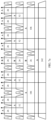
- FIG. 4 is a schematic diagram of an 80 MHz carrier plan (tone plan) in 802.1The according to an embodiment of this application.
- 80 MHz bandwidth in 802.11be includes 36 RU26s, or 16 RU52s, or eight RU106s, or four RU242s, or two RU484s and five direct current subcarriers/null subcarriers (that is, two RU489s, where each RU489 includes one RU484 and five direct current subcarriers/null subcarriers), or one RU996 and five direct current subcarriers.
- Pilot distribution of the tone plan shown in FIG. 3 and pilot distribution of the tone plan shown in FIG. 4 are also different.
- Table 1 to Table 6 subsequently describe the pilot distribution of the tone plan shown in FIG. 4 .
- For the pilot distribution of the tone plan shown in FIG. 3 refer to a conventional technology, and details are not described.
- An RU484 is used in 40 MHz multi-user transmission, and a RU996 is used in 80 MHz or 160 MHz multi-user transmission. It should be understood that a 160 MHz tone plan may be considered as two 80 MHz tone plans, a 240 MHz tone plan may be considered as three 80 MHz tone plans, and a 320 MHz tone plan may be considered as four 80 MHz tone plans. Details are not described herein.
- Table 1 Data subcarrier and pilot subcarrier indexes of RU26s Positions of 1 st to 18 th RU26s Positions of 19 th to 36 th RU26s Pilot Positions 26-tone RU [-499 -474] [13 38] ⁇ -494, -480 ⁇ , ⁇ -468, -454 ⁇ , ⁇ -440, -426 ⁇ , ⁇ -414, -400 ⁇ , 1-386, -372 ⁇ , 1-360, -346 ⁇ , 1-334, -320 ⁇ , 1-306, -292 ⁇ , 1-280, -266 ⁇ , 1-246, -232 ⁇ , ⁇ -220,-206 ⁇ , ⁇ -192,-178 ⁇ , ⁇ -166,-152 ⁇ , ⁇ -140, -126 ⁇ , ⁇ -112,-98 ⁇ , ⁇ -86,-72 ⁇ , ⁇ -58,-44 ⁇ , ⁇ -32,-18 ⁇ , ⁇ 18, 32 ⁇ , ⁇ 44, 58 ⁇ , ⁇ 72, 86 ⁇ ,
- Each row in a second column and a third column in Table 1 above indicates one RU26.
- the last row in the second column indicates an 18 th RU26 [-38, -13], and a position of the 18 th RU26 is from a subcarrier numbered -38 to a subcarrier numbered -13.
- a fifth row in the third column indicates a 23 rd RU26 [120, 145], and a position of the 23 rd RU26 is from a subcarrier numbered 120 to a subcarrier numbered 145.
- a fourth column in Table 1 above indicates pilot subcarrier indexes of corresponding 26-tone RUs in sequence.
- a first 26-tone RU is a subcarrier numbered -499 to a subcarrier numbered -474, and pilot subcarriers are a subcarrier numbered -494 and a subcarrier numbered -480.
- a second 26-tone RU is a subcarrier numbered -473 to a subcarrier numbered -448, and pilot subcarriers are a subcarrier numbered -468 and a subcarrier numbered -454.
- a 36 th 26-tone RU is a subcarrier numbered 474 to a subcarrier numbered 499, and pilot subcarriers are a subcarrier numbered 480 and a subcarrier numbered 494. It may be understood that the 26-tone RU and the RU26 may be interchangeably used.
- Each row in a second column in Table 2 above indicates one RU.
- a first row in the second column indicates a first RU52 [-499, -448], and a position of the first RU52 is from a subcarrier numbered -499 to a subcarrier numbered -448.
- a third column in Table 2 above indicates pilot subcarrier indexes of corresponding 52-tone RUs in sequence.
- a second 52-tone RU is a subcarrier numbered -445 to a subcarrier numbered - 394
- pilot subcarriers are a subcarrier numbered -440, a subcarrier numbered -426, a subcarrier numbered -414, and a subcarrier numbered -400. It may be understood that the 52-tone RU and the RU52 may be interchangeably used.
- Table 3 Data subcarrier and pilot subcarrier indexes of RU106s Positions of 1 st to 8 th RU106s Pilot Positions 106-tone RU [-499 -394] ⁇ -494, -468, -426, -400 ⁇ , ⁇ -360, -334, -292, -266 ⁇ , ⁇ -246, -220, -178, -152 ⁇ , ⁇ -112, -86, -44, -18 ⁇ , ⁇ 18, 44, 86, 112 ⁇ , [-365 -260] [-252 -147] [-118 -13] [13 118] [147 252] ⁇ 152, 178, 220, 246 ⁇ , ⁇ 266, 292, 334, 360 ⁇ , ⁇ 400, 426, 468, 494 ⁇ [260 365] [394 499]
- Table 4 Data subcarrier and pilot subcarrier indexes of RU242s Positions of 1 st to 4 th RU242s Pilot Positions 242-tone RU [-500 -259] ⁇ -494, -468, -426, -400, -360, -334, -292, -266 ⁇ , ⁇ -246, -220, -178, -152, -112, -86, -44, -18 ⁇ , ⁇ 18, 44, 86, 112, 152, 178, 220, 246 ⁇ , ⁇ 266, 292, 334, 360, 400, 426, 468, 494 ⁇ [-253 -12] [12 253] [259 500]
- data subcarrier and pilot subcarrier indexes of RU484s are shown in Table 5 below.
- a 484-tone RU and the RU484 may be interchangeably used. It may be understood that an 80 MHz 484-tone RU in 802.11ax is an RU including 484 consecutive subcarriers; an 80 MHz 484-tone RU in 802.11be is still 468 data subcarriers and 16 pilot subcarriers, but has five direct current subcarriers or null subcarriers in the middle.
- a first 484-tone RU is subcarriers numbered from -500 to -12, where five direct current subcarriers are numbered -258, -257, -256, -255, and -254, and 16 pilot subcarriers are numbered -494, -468, -426, -400, -360, -334, -292, -266, -246, -220, -178, -152, -112, -86, -44, and -18.
- Table 5 Data subcarrier and pilot subcarrier indexes of RU484s Positions of 1 st to 2 nd RU484s Pilot Positions 484-tone RU [-500 -259 ⁇ -494, -468, -426, -400, 360, -334, -292, -266, -246, -220, -178, -152, -112, -86, -44, -18 ⁇ , ⁇ 18, 44, 86, 112, 152, 178, 220, 246, 266, 292, 334, 360, 400, 426, 468, 494 ⁇ -253 -12] [12 253 259 500]
- a first 996-tone RU is subcarriers numbered from -500 to 500, where five direct current subcarriers are numbered -2, -1, 0, 1, and 2, and 16 pilot subcarriers are numbered -468, -400, -334, -266, -220, -152, -86, -18, +18, +86, +152, +220, +266, +334, +400, +468.
- Table 6 Data subcarrier and pilot subcarrier indexes of an RU996 Position of the RU996 Pilot Positions 996-tone RU [-500 -3 3 500] ⁇ -468, -400, -334, -266, -220, -152, -86, -18, +18, +86, +152, +220, +266, +334, +400, +468 ⁇
- an LTF sequence included in the PPDU provided in the embodiments of this application is used in 240 MHz bandwidth and 320 MHz bandwidth, and the 240 MHz bandwidth and the 320 MHz bandwidth may be constructed by using the 80 MHz tone plan shown in FIG. 4 .
- a subcarrier design of 160 MHz bandwidth is based on two 80 MHz tone plans, that is, [RU subcarrier index, pilot position subcarrier index] in 80 MHz - 512: [RU subcarrier index, pilot position subcarrier index] in 80 MHz + 512.
- a subcarrier design of the 240 MHz bandwidth is based on three 80 MHz tone plans.
- a subcarrier design of the 320 MHz bandwidth is based on two 160 MHz tone plans, that is, [Pilot indices in 160 MHz/pilot indexes in 160 MHz] - 1024: [Pilot indices in 160 MHz/pilot indexes in 160 MHz] + 1024.
- the peak to average power ratio (peak to average power ratio, PAPR) is a peak to average ratio for short.
- the peak to average power ratio may be a ratio of an instantaneous power peak value of a continuous signal to an average signal power value in one symbol.
- An OFDM symbol is obtained by superimposing a plurality of independently modulated subcarrier signals.
- phases of subcarriers are the same or similar, superimposed signals are modulated by a same initial phase signal, resulting in a relatively large instantaneous power peak value.
- An OFDM system has a disadvantage of a high PAPR, and especially in high bandwidth, more subcarriers lead to a more severe PAPR.
- a MIMO-OFDM signal with a relatively large peak to average ratio is very likely to enter a nonlinear area of the power amplifier.
- the high PAPR causes nonlinear signal distortion, resulting in obvious spectrum spreading interference and in-band signal distortion. This reduces system performance. Therefore, when a sequence is designed, a smaller PAPR of the sequence is better
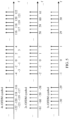
- FIG. 5 is a schematic diagram of 4x, 2x, and 1x modes applicable to an embodiment of this application. 20 MHz bandwidth is used as an example.
- positions of subcarriers are marked as -128, -127, ..., -2, -1, 0, 1, 2, ..., and 127, subcarriers that are of a 4x HE-LTF element and that carry a long training field sequence are located at -122, -121, ..., -3, -2, 2, 3, , 121, and 122.
- subcarriers that are of a 2x HE-LTF element and that carry a long training field sequence are located at -61, -60, ..., -2, -1, 1, 2, , 60, and 61.
- subcarriers that are of a 1x HE-LTF element and that carry a long training field sequence are centrally located at -120, -116, ..., -8, -4, 4, 8, ..., 116, and 120, and remaining subcarriers are null subcarriers.
- the positions of the subcarriers may be marked as -32, -31, ..., -2, -1, 0, 1, 2, ..., and 31.
- subcarriers that are of a 1x HE-LTF element and that carry a long training field sequence are located at -30, -29, ..., -2, -1, 1, 2, ..., 29, and 30.
- a pilot subcarrier and a data subcarrier on each LTF symbol of an LTF field corresponding to the Wi-Fi signal are multiplied by different values, thereby changing a structure of an original LTF sequence. This may cause a PAPR value of the signal of the LTF field to be high when multiplied by some coefficients.
- Each row of the R-matrix is equal to a first row of the P-matrix.
- a size of the P-matrix is generally 2 ⁇ 2, 4 ⁇ 4, 6 ⁇ 6, 8 ⁇ 8, 10 ⁇ 10, 12 ⁇ 12, 14 ⁇ 14, 16 ⁇ 16, or the like.
- orthogonality may be implemented by using a P-matrix of a size 4 ⁇ 4.
- Elements in P-matrices of different sizes are different, and may indicate different rotated phases.
- elements in P-matrices of sizes 4 * 4, 8 * 8, and 16 * 16 are all 1 and -1, and correspond to a same rotated phase.
- pilot position and the non-pilot position are multiplied by a same value, a PAPR that is of a sequence obtained after phase rotation and that is on a single RU, on a combined RU, or on entire bandwidth does not change relative to a PAPR of an original sequence.
- phase rotation is considered for the LTF sequence, and a PAPR of an obtained rotated sequence is relatively low on a single RU, on a combined RU, and on entire bandwidth. Therefore, a PAPR of the sequence is relatively low in a multi-stream scenario.
- a second row in Table 7 represents average PAPR values of a data part on different resource units
- a third row represents PAPR values on different resource units when a 2x HE-LTF sequence with 80 MHz bandwidth in 802.11ax is applied to 80 MHz bandwidth in 802.1lbe
- a fourth row represents PAPR values on different resource units when a 4x HE-LTF sequence with 80 MHz bandwidth in 802.11ax is applied to 80 MHz bandwidth in 802.11be. It may be learned from Table 7 that PAPR values on resource units (RU26, RU52, and RU484 + RU242) in a second column, a third column, and the last column in Table 7 are greater than average PAPR values of the data part.
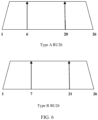
- pilot subcarriers of some RU26 resource units are located at 6 th and 20 th subcarriers of the 26 subcarriers, as shown in FIG. 6 .
- This type of RU26 is referred to as a Type A RU26 in this application.
- pilot subcarriers of some other RU26 resource units are located at 7 th and 21 st subcarriers of the 26 subcarriers.
- This type of RU26 is referred to as a Type B RU26 in this application.
- the embodiments of this application provide a plurality of possible LTF sequences. These LTF sequences have relatively low PAPR values on a single RU, relatively low PAPR values on a combined RU, and relatively low PAPR values on entire bandwidth.
- LTF sequences have relatively low PAPR values on a single RU, relatively low PAPR values on a combined RU, and relatively low PAPR values on entire bandwidth.
- rotated sequences obtained after phase rotation is performed on these sequences have relatively low PAPR values on a single RU, relatively low PAPR values on a combined RU, and relatively low PAPR values on entire bandwidth. It may be understood that a smaller PAPR value indicates a lower requirement on a linear power amplifier and better performance.
- Step 4 Determine a basic sequence set S MRU 106 A and a basic sequence set S MRU 106 B .
- An RU106 basic sequence is selected from the Type A RU106 basic sequence set obtained in A3 of step 3, and a basic sequence of a first Type A RU52 in the RU106 basic sequence and a basic sequence of a Type A RU26 (a first Type A RU26 in a second Type A RU52) adjacent to the first Type A RU52 are spliced into a multiple-resource unit (MRU) sequence.
- MRU multiple-resource unit
- PAPR values that are on the corresponding Type A RU52 + RU26 and that are of a plurality of rotated sequences corresponding to the spliced multiple-resource unit sequence are calculated. If the PAPR value of each rotated sequence is less than a specified threshold, the multiple-resource unit sequence may be used as a basic sequence that meets a condition. The multiple-resource unit sequence may be added to the basic sequence set S MRU 106 A .
- Each sequence in the basic sequence set S MRU 106 A and a corresponding rotated sequence have relatively low PAPRs on a corresponding Type A RU106, and have relatively low PAPRs on all sub-RU resource units (for example, Type A RU52s and Type A RU26s) included in the Type A RU106.
- the multiple-resource unit sequence obtained by combining the first Type A RU52 and the Type A RU26 adjacent to the first Type A RU52 also has a relatively low PAPR value on the corresponding Type A RU52 + RU26.
- Each sequence in the basic sequence set S MRU 106 B and a corresponding rotated sequence have relatively low PAPRs on a corresponding Type B RU106, and have relatively low PAPRs on all sub-RU resource units (for example, Type B RU52s and Type B RU26s) included in the Type B RU106.
- a multiple-resource unit sequence obtained by combining a first Type B RU52 and a Type B RU26 adjacent to the first Type B RU52 also has a relatively low PAPR value on a corresponding Type B RU.
- One basic sequence is separately selected from the basic sequence set S RU 242 A obtained in A6 of step 6 and the basic sequence set S RU 242 B obtained in B6 of step 6, and the selected basic sequences are spliced into a sequence of an RU484.
- PAPR values that are on the RU484 and that are of a plurality of rotated sequences corresponding to the sequence of the RU484 are calculated. If the PAPR value of each rotated sequence is less than a specified threshold (the specified threshold may be a PAPR average value, median value, or the like of a data part of the Type A RU242), the sequence of the RU484 may be used as a basic sequence that meets a condition.
- the basic sequence may be added to the RU484 basic sequence set S RU 484 .
- Operation (2) Reverse an order of elements in a sequence. It is assumed that a sequence is 123456, and a sequence obtained by reversing an order of elements in the sequence is 654321.
- LTF sequences with 80 MHz bandwidth, 160 MHz bandwidth, 240 MHz bandwidth, and 320 MHz bandwidth in the 2x mode are described above. Then, LTF sequences with 80 MHz bandwidth, 160 MHz bandwidth, 240 MHz bandwidth, and 320 MHz bandwidth in the 4x mode are described.
- 4xEHT_LTF_80M A possible 4x LTF sequence with 80 MHz bandwidth is denoted by 4xEHT_LTF_80M.
- Subcarrier numbers of the sequence 4xEHT_LTF_80M range from -500 to 500.
- PAPR values of 4xEHT_LTF_160M, 4xEHT_LTF_240M, and 4xEHT_LTF_320M on the RU52s are the same as the PAPR values of 4xEHT_LTF_80M on the RU52s.
- sequence 4xEHT_LTF_partB is obtained by reversing an order of the sequence 4xEHT_LTF_partA and then negating an element value at an even-numbered position, that is, negating an element at
- 4xEHT_LTF_160M A possible 4x LTF sequence with 160 MHz bandwidth is denoted by 4xEHT_LTF_160M.
- 4xEHT_LTF_160M may be constructed based on 4xEHT_LTF_80M described in (11), and subcarrier numbers of the sequence 4xEHT_LTF_160M range from -1012 to 1012.
- 4xEHT_LTF_160M -1012:1012 ⁇ 4xEHT_LTF_partA, 0 5 , 4xEHT_LTF_partB, 0 23 , 4xEHT_LTF_partA, 0 5 , -4xEHT_LTF_partB ⁇ .
- 4xEHT_LTF_320M A possible 4x LTF sequence with 320 MHz bandwidth is denoted by 4xEHT_LTF_320M.
- 4xEHT_LTF_320M is constructed based on 4xEHT_LTF_160M described in (12), and subcarrier numbers of the sequence 4xEHT_LTF_320M range from -2036 to 2036.
- 4xEHT_LTF_320M -2036:2036 ⁇ 4xEHT_LTF_160M -1012:1012 , 0 23 , -4xEHT_LTF_160M -1012:1012 ⁇ .
- 4xEHT_LTF_240M A possible 4x LTF sequence with 240 MHz bandwidth is denoted by 4xEHT_LTF_240M.
- 4xEHT_LTF_240M is constructed based on 4xEHT_LTF_160M described in (12) and 4xEHT_LTF_80M described in (11). For example, when an 80 MHz channel in a 320 MHz channel is missing, a 240 MHz channel is formed, and the formed 240 MHz channel may be continuous or discontinuous in frequency domain.
- a punctured 4x EHT LTF sequence corresponding to 320 MHz bandwidth may be used as a sequence with 240 MHz bandwidth.
- Subcarrier numbers of the sequence 4xEHT_LTF_240M range from -1524 to 1524.
- -4xEHT_LTF_80M -500:500 represents negation (that is, multiplied by -1) of all elements in the sequence 4xEHT_LTF_80M -500:500 ; and 0 23 represents 23 consecutive Os.
- 4xEHT_LTF_240M -1524:1524 in the two examples in (14) 4xEHT_LTF_80M -500:500 is 4xEHT_LTF_80M -500:500 in (11), and 4xEHT_LTF_160M -1012:1012 is 4xEHT_LTF_160M -1012:1012 in (12).
- Operation (1) Multiply elements in a sequence by -1.
- Operation (2) Reverse an order of elements in a sequence.
- Operation (3) Multiply an element at an even-numbered or odd-numbered position in a sequence by - 1.
- Table 10 provides a comparison result between PAPR median values (a third column) of a BPSK (a modulation mode) data part and maximum PAPR values (a second column) in PAPRs that are of the sequence 4xEHT_LTF_320M described in (13) and a plurality of corresponding rotated sequences and that are on different single-RUs, various combined RUs, and entire bandwidth.
- an RU52 is used as an example.
- An 80 MHz sequence includes 16 RU52s, that is, 16 PAPRs.
- a maximum value of the 64 PAPRs is 4.95.
- 4xEHT_LTF_160M, 4xEHT_LTF_240M, and 4xEHT_LTF_320M are obtained based on the sequence 4xEHT_LTF_80M.
- PAPR values of 4xEHT_LTF_160M, 4xEHT_LTF_240M, and 4xEHT_LTF_320M on the RU52s are the same as the PAPR values of 4xEHT_LTF_80M on the RU52s.
- a multi-stream scenario is also considered, and rotated sequences obtained after phase rotation is performed on these sequences have relatively low PAPR values on a single RU, relatively low PAPR values on a combined RU, and relatively low PAPR values on entire bandwidth.
- Table 10 Comparison between PAPR maximum values of 4x EHT LTF sequences on a single RU, a combined RU, and entire bandwidth under considered influence of a plurality of P-matrices and PAPR median values of a BPSK data part RU Size Max PAPR Median PAPR of BPSK Data RU26 4.49 5.89 RU52 4.95 6.71 RU52 + RU26 5.79 7.10 RU106 5.13 7.29 RU106 + RU26 5.33 7.44 RU242 6.12 7.94 RU484 6.41 8.44 RU484 + RU242 7.95 8.83 RU996 6.34 8.84 RU996 + RU484 8.79 9.17 RU2*996 6.32 9.27 or 9.28 RU2*996 + RU48
- 4xEHT_LTF_80M -500:500 ⁇ 4xEHT_LTF_partA, 0 5 , 4xEHT_LTF_partB ⁇ .
- -500 to 500 are subcarrier indexes (the indexes may also be referred to as numbers), 0 5 represents five consecutive Os, 4xEHT_LTF_partA includes 498 elements, and 4xEHT_LTF_partB includes 498 elements.
- 4xEHT_LTF_160M A possible 4x LTF sequence with 160 MHz bandwidth is denoted by 4xEHT_LTF_160M.
- 4xEHT_LTF_160M may be constructed based on 4xEHT_LTF_80M described in (16), and subcarrier numbers of the sequence 4xEHT_LTF_160M range from -1012 to 1012.
- 4xEHT_LTF_160M -1012:1012 ⁇ 4xEHT_LTF_partA, 0 5 , 4xEHT_LTF_partB, 0 23 , -4xEHT_LTF_partA, 0 5 , 4xEHT_LTF_partB ⁇ .
- -4xEHT_LTF_partA represents negation (multiplied by -1) of all elements in the sequence 4xEHT_LTF_partA; 0 23 represents 23 consecutive Os; 0 5 represents five consecutive Os; and 4xEHT_LTF_partA and 4xEHT_LTF_partB in 4xEHT_LTF_160M -1012:1012 are 4xEHT_LTF_partA and 4xEHT_LTF_partB described in (16).
- 4xEHT_LTF_320M A possible 4x LTF sequence with 320 MHz bandwidth is denoted by 4xEHT_LTF_320M.
- 4xEHT_LTF_320M is constructed based on 4xEHT_LTF_160M described in (17), and subcarrier numbers of the sequence 4xEHT_LTF_320M range from -2036 to 2036.
- 4xEHT_LTF_320M -2036:2036 ⁇ 4xEHT_LTF_160M -1012:1012 , 0 23 , -4xEHT_LTF_80M -500:500 , 0 23 , -4xEHT_LTF_partA, 0 5 , 4xEHT_LTF_partB ⁇ .
- 4xEHT_LTF_240M A possible 4x LTF sequence with 240 MHz bandwidth is denoted by 4xEHT_LTF_240M.
- 4xEHT_LTF_240M is constructed based on 4xEHT_LTF_160M described in (17) and 4xEHT_LTF_80M described in (16). For example, when an 80 MHz channel in a 320 MHz channel is missing, a 240 MHz channel is formed, and the formed 240 MHz channel may be continuous or discontinuous in frequency domain.
- a punctured 4x EHT LTF sequence corresponding to 320 MHz bandwidth may be used as a sequence with 240 MHz bandwidth.
- Subcarrier numbers of the sequence 4xEHT_LTF_240M range from -1524 to 1524.
- 4xEHT_LTF_240M -1524:1524 in the two examples in (19) 4xEHT_LTF_80M -500:500 is 4xEHT_LTF_80M -500:500 in (16)
- 4xEHT_LTF_160M -1012:1012 is 4xEHT_LTF_160M -1012:1012 in (17).
- Operation (2) Reverse an order of elements in a sequence.
- Operation (3) Multiply an element at an even-numbered or odd-numbered position in a sequence by - 1.
- PAPR values of 4xEHT_LTF_160M, 4xEHT_LTF_240M, and 4xEHT_LTF_320M on the RU52s are the same as the PAPR values of 4xEHT_LTF_80M on the RU52s.
- This embodiment of this application further provides the following LTF sequences with 80 MHz bandwidth, 160 MHz bandwidth, 240 MHz bandwidth, and 320 MHz bandwidth in the 2x mode.
- 2xEHT_LTF_160M A possible 2x LTF sequence with 160 MHz bandwidth is denoted by 2xEHT_LTF_160M.
- 2xEHT_LTF_160M may be constructed based on 2xEHT_LTF_partA and 2xEHT_LTF_partB described in (21), and subcarrier numbers of the sequence 2xEHT_LTF_160M range from -1012 to 1012.
- 2xEHT_LTF_320M A possible 2x LTF sequence with 320 MHz bandwidth is denoted by 2xEHT_LTF_320M.
- 2xEHT_LTF_320M is constructed based on 2xEHT_LTF_partA and 2xEHT_LTF_partB described in (21), and subcarrier numbers of the sequence 2xEHT_LTF_320M range from -2036 to 2036.
- 2xEHT_LTF_320M -2036:2036 ⁇ 2xEHT_LTF_partA, 0 5 , 2xEHT_LTF_partB, 0 23 , 2xEHT_LTF_partA, 0 5 , -2xEHT_LTF_partB, 0 23 , 2xEHT_LTF_partA, 0 5 , 2xEHT_LTF_partB, 0 23 , -2xEHT_LTF_partA, 0 5 , 2xEHT_LTF_partB ⁇ .
- 2xEHT_LTF_80M is 2xEHT_LTF_80M -500:500 in (21);
- 2xEHT_LTF_partA and 2xEHT_LTF_partB are 2xEHT_LTF_partA and 2xEHT_LTF_partB in (21);
- -2xEHT_LTF_partB represents negation (that is, multiplied by -1) of all elements in the sequence 2xEHT_LTF_partB; 0 5 represents five consecutive Os; and 0 23 represents 23 consecutive Os.
- 2xEHT_LTF_240M -1524:1524 ⁇ 2xEHT_LTF_partA, 0 5 , -2xEHT_LTF_partB, 0 23 , 2xEHT_LTF_160M -1012:1012 ⁇ .
- Table 12 provides a comparison result between PAPR median values (a third column) of a BPSK (a modulation mode) data part and maximum PAPR values (a second column) in PAPRs that are of the sequence 2xEHT_LTF_320M described in (23) and a plurality of corresponding rotated sequences and that are on different single-RUs, various combined RUs, and entire bandwidth.
- an RU26 is used as an example.
- An 80 MHz sequence includes 36 RU26s, that is, 36 PAPRs.
- Amaximum value of the 144 PAPRs is 5.76.
- 2xEHT_LTF_160M, 2xEHT_LTF_240M, and 2xEHT_LTF_320M are obtained based on the sequence 2xEHT_LTF_80M.
- PAPR values of 2xEHT_LTF_160M, 2xEHT_LTF_240M, and 2xEHT_LTF_320M on the RU26s are the same as the PAPR values of 2xEHT_LTF_80M on the RU26s.
- 2xEHT_LTF_80M A possible 2x LTF sequence with 80 MHz bandwidth is denoted by 2xEHT_LTF_80M.
- Subcarrier numbers of the sequence 2xEHT_LTF_80M range from -500 to 500.
- 2xEHT_LTF_160M -1012:1012 ⁇ -2xEHT_LTF_partA, 0 5 , 2xEHT_LTF_partB, 0 23 , 2xEHT_LTF_partA, 0 5 , 2xEHT_LTF_partB ⁇ .
- 2xEHT_LTF_80M -500:500 , 2xEHT_LTF_partA, and 2xEHT_LTF_partB are respectively 2xEHT_LTF_80M -500:500 , 2xEHT_LTF_partA, and 2xEHT_LTF_partB in (31);
- -2xEHT_LTF_partB represents negation (that is, multiplied by -1) of all elements in the sequence 2xEHT_LTF_partB; 0 5 represents five consecutive Os; and 0 23 represents 23 consecutive Os.
- 2xEHT_LTF_320M A possible 2x LTF sequence with 320 MHz bandwidth is denoted by 2xEHT_LTF_320M.
- 2xEHT_LTF_320M is constructed based on 2xEHT_LTF_partA and 2xEHT_LTF_partB described in (31), and subcarrier numbers of the sequence 2xEHT_LTF_320M range from -2036 to 2036.
- 2xEHT_LTF_partA and 2xEHT_LTF_partB are 2xEHT_LTF_partA and 2xEHT_LTF_partB in (31);
- -2xEHT_LTF_partA represents negation (that is, multiplied by -1) of all elements in the sequence 2xEHT_LTF_partA;
- -2xEHT_LTF_partB represents negation (that is, multiplied by -1) of all elements in the sequence 2xEHT_LTF_partB;
- 0 5 represents five consecutive Os; and 0 23 represents 23 consecutive Os.
- 2xEHT_LTF_240M A possible 2x LTF sequence with 240 MHz bandwidth is denoted by 2xEHT_LTF_240M.
- 2xEHT_LTF_240M is constructed based on 2xEHT_LTF_160M described in (32) or based on 2xEHT_LTF_partA and 2xEHT_LTF_partB in (31). For example, when an 80 MHz channel in a 320 MHz channel is missing, a 240 MHz channel is formed, and the formed 240 MHz channel may be continuous or discontinuous in frequency domain.
- a punctured 2x EHT LTF sequence corresponding to 320 MHz bandwidth may be used as a sequence with 240 MHz bandwidth.
- Subcarrier numbers of the sequence 2xEHT_LTF_240M range from -1524 to 1524.
- 2xEHT_LTF_240M -1524:1524 ⁇ 2xEHT_LTF_160M -1012:1012 , 0 23 , 2xEHT_LTF_partA, 0 5 , -2xEHT_LTF_partB ⁇ .
- Operation (2) Reverse an order of elements in a sequence. It is assumed that a sequence is 123456, and a sequence obtained by reversing an order of elements in the sequence is 654321.
- a possible 2x LTF sequence with 80 MHz bandwidth is denoted by 2xEHT_LTF_80M.
- Subcarrier numbers of the sequence 2xEHT_LTF_80M range from -500 to 500.
- 2xEHT_LTF_80M -500:500 ⁇ 2xEHT_LTF_partA, 0 5 , 2xEHT_LTF_partB ⁇ , where -500 to 500 are subcarrier indexes (the indexes may also be referred to as numbers), 0 5 represents five consecutive Os, 2xEHT_LTF_partA includes 498 elements, and 2xEHT_LTF_partB includes 498 elements.
- sequence 2xEHT_LTF_partB is obtained by reversing an order of the sequence 2xEHT_LTF_partA and then negating an even-numbered element in non-zero elements, that is, negating an element at a position that is an integer multiple of 4.
- 2xEHT_LTF_160M -1012:1012 ⁇ -2xEHT_LTF_partA, 0 5 , 2xEHT_LTF_partB, 0 23 , 2xEHT_LTF_80M -500:500 ⁇ .
- 2xEHT_LTF_320M A possible 2x LTF sequence with 320 MHz bandwidth is denoted by 2xEHT_LTF_320M.
- 2xEHT_LTF_320M is constructed based on 2xEHT_LTF_160M described in (37), and subcarrier numbers of the sequence 2xEHT_LTF_320M range from -2036 to 2036.
- 2xEHT_LTF_160M -1012:1012 in 2xEHT_LTF_320M -2036:2036 is 2xEHT_LTF_160M -1012:1012 in (37); -2xEHT_LTF_160M -1012:1012 represents negation (that is, multiplied by -1) of all elements in the sequence 2xEHT_LTF_160M -1012:1012 ; and 0 23 represents 23 consecutive 0s.
- 2xEHT_LTF_240M A possible 2x LTF sequence with 240 MHz bandwidth is denoted by 2xEHT_LTF_240M.
- 2xEHT_LTF_240M is constructed based on 2xEHT_LTF_160M in (37) or based on 2xEHT_LTF_80M in (36). For example, when an 80 MHz channel in a 320 MHz channel is missing, a 240 MHz channel is formed, and the formed 240 MHz channel may be continuous or discontinuous in frequency domain.
- a punctured 2x EHT LTF sequence corresponding to 320 MHz bandwidth may be used as a sequence with 240 MHz bandwidth.
- Subcarrier numbers of the sequence 2xEHT_LTF_240M range from -1524 to 1524.
- 2xEHT_LTF_240M -1524:1524 ⁇ -2xEHT_LTF_160M -1012:1012 , 0 23 , -2xEHT_LTF_partA, 0 5 , 2xEHT_LTF_partB ⁇ .
- 2xEHT_LTF_240M -1524:1524 ⁇ -2xEHT_LTF_80M -500:500 , 0 23 , 2xEHT_LTF_160M -1012:1012 ⁇ .
- 2xEHT_LTF_80M -500:500 is 2xEHT_LTF_80M -500:500 in (36);
- 2xEHT_LTF_160M -1012:1012 is 2xEHT_LTF_160M -1012:1012 in (37);
- -2xEHT_LTF_80M -500:500 represents negation (that is, multiplied by -1) of all elements in the sequence 2xEHT_LTF_80M -500:500 ; and 0 23 represents 23 consecutive 0s.
- Operation (2) Reverse an order of elements in a sequence. It is assumed that a sequence is 123456, and a sequence obtained by reversing an order of elements in the sequence is 654321.
- Operation (3) Multiply an even-numbered or odd-numbered element in non-zero elements by -1.
- Table 15 provides a comparison result between PAPR median values (a third column) of a BPSK (a modulation mode) data part and maximum PAPR values (a second column) in PAPRs that are of the sequence 2xEHT_LTF_320M described in (38) and a plurality of corresponding rotated sequences and that are on different single-RUs, various combined RUs, and entire bandwidth.
- an RU26 is used as an example.
- An 80 MHz sequence includes 36 RU26s, that is, 36 PAPRs.
- Amaximum value of the 144 PAPRs is 5.76.
- 2xEHT_LTF_160M, 2xEHT_LTF_240M, and 2xEHT_LTF_320M are obtained based on the sequence 2xEHT_LTF_80M.
- PAPR values of 2xEHT_LTF_160M, 2xEHT_LTF_240M, and 2xEHT_LTF_320M on the RU26s are the same as the PAPR values of 2xEHT_LTF_80M on the RU26s.
- a multi-stream scenario is also considered, and rotated sequences obtained after phase rotation is performed on these sequences have relatively low PAPR values on a single RU, relatively low PAPR values on a combined RU, and relatively low PAPR values on entire bandwidth.
- Table 15 Comparison between PAPR maximum values of 2x EHT LTF sequences on a single RU, a combined RU, and entire bandwidth under considered influence of a plurality of P-matrices and PAPR median values of a BPSK data part RU Size Max PAPR (dB) Median PAPR of BPSK Data (dB) RU26 5.76 5.89 RU52 4.98 6.71 RU52 + RU26 6.23 7.10 RU106 4.55 7.29 RU106 + RU26 5.45 7.44 RU242 5.09 7.94 RU484 5.53 8.44 RU484 + RU242 7.61 8.83 RU996 5.45 8.84 RU996 + RU484 7.71 9.17 RU2*996 5.63 or 8.33 9.27 or 9.
- This embodiment of this application further provides the following LTF sequences with 80 MHz bandwidth, 160 MHz bandwidth, 240 MHz bandwidth, and 320 MHz bandwidth in the 4x mode.
- 4xEHT_LTF_80M A possible 4x LTF sequence with 80 MHz bandwidth is denoted by 4xEHT_LTF_80M.
- Subcarrier numbers of the sequence 4xEHT_LTF_80M range from -500 to 500.
- 4xEHT_LTF_80M -500:500 ⁇ 4xEHT_LTF_partA, 0 5 , 4xEHT_LTF_partB ⁇ .
- -500 to 500 are subcarrier indexes (the indexes may also be referred to as numbers), 0 5 represents five consecutive 0s, 4xEHT_LTF_partA includes 498 elements, and 4xEHT_LTF_partB includes 498 elements.
- 4xEHT_LTF_160M A possible 4x LTF sequence with 160 MHz bandwidth is denoted by 4xEHT_LTF_160M.
- 4xEHT_LTF_160M may be constructed based on 4xEHT_LTF_partA and 4xEHT_LTF_partB described in (41), and subcarrier numbers of the sequence 4xEHT_LTF_160M range from -1012 to 1012.
- 4xEHT_LTF_160M -1012:1012 ⁇ 4xEHT_LTF_partA, 0 5 , 4xEHT_LTF_partB, 0 23 , 4xEHT_LTF_partA, 0 5 , -4xEHT_LTF_partB ⁇ .
- 4xEHT_LTF_160M -1012:1012 is 4xEHT_LTF_160M -1012:1012 in (42);
- 4xEHT_LTF_partA and 4xEHT_LTF_partB are 4xEHT_LTF_partA and 4xEHT_LTF_partB described in (41);
- -4xEHT_LTF_partA represents negation (that is, multiplied by -1) of all elements in the sequence 4xEHT_LTF_partA; 0 23 represents 23 consecutive 0s; and 0 5 represents five consecutive 0s.
- Operation (3) Multiply an element at an even-numbered or odd-numbered position in a sequence by - 1.
- a multi-stream scenario is also considered, and rotated sequences obtained after phase rotation is performed on these sequences have relatively low PAPR values on a single RU, relatively low PAPR values on a combined RU, and relatively low PAPR values on entire bandwidth.
- Table 16 Comparison between PAPR maximum values of 4x EHT LTF sequences on a single RU, a combined RU, and entire bandwidth under considered influence of a plurality of P-matrices and PAPR median values of a BPSK data part RU Size Max PAPR Median PAPR of BPSK Data RU26 4.17 5.89 RU52 4.62 6.71 RU52 + RU26 5.37 7.10 RU106 4.98 7.29 RU106 + RU26 5.72 7.44 RU242 5.45 7.94 RU484 5.79 8.44 RU484 + RU242 7.95 8.83 RU996 5.80 8.84 RU996 + RU484 8.00 9.17 RU2*996 6.03 9.27 or 9.28 RU2*996 + RU48
- 4xEHT_LTF_320M -2036:2036 ⁇ 4xEHT_LTF_160M -1012:1012 , 0 23 , -4xEHT_LTF_160M -1012:1012 ⁇ .
- 4xEHT_LTF_160M -1012:1012 is 4xEHT_LTF_160M -1012:1012 in (47); -4xEHT_LTF_160M -1012:1012 represents negation (that is, multiplied by -1) of all elements in the sequence 4xEHT_LTF_160M -1012:1012 ; and 0 23 represents 23 consecutive 0s.
- 4xEHT_LTF_240M A possible 4x LTF sequence with 240 MHz bandwidth is denoted by 4xEHT_LTF_240M.
- 4xEHT_LTF_240M is constructed based on 4xEHT_LTF_160M described in (47) and 4xEHT_LTF_80M described in (46), or based on -4xEHT_LTF_partA, 0 5 , 4xEHT_LTF_partB described in (46). For example, when an 80 MHz channel in a 320 MHz channel is missing, a 240 MHz channel is formed, and the formed 240 MHz channel may be continuous or discontinuous in frequency domain.
- a punctured 4x EHT LTF sequence corresponding to 320 MHz bandwidth may be used as a sequence with 240 MHz bandwidth.
- Subcarrier numbers of the sequence 4xEHT_LTF_240M range from -1524 to 1524.
- 4xEHT_LTF_partA and 4xEHT_LTF_partB are 4xEHT_LTF_partA and 4xEHT_LTF_partB in (46);
- 4xEHT_LTF_160M -1012:1012 is 4xEHT_LTF_160M -1012:1012 in (47);
- -4xEHT_LTF_partA represents negation (that is, multiplied by -1) of all elements in the sequence 4xEHT_LTF_partA; 0 23 represents 23 consecutive 0s; and 0 5 represents five consecutive 0s.
- Operation (2) Reverse an order of elements in a sequence.
- the foregoing describes the method for transmitting a PPDU in the embodiments of this application.
- the following describes an apparatus for transmitting a PPDU in the embodiments of this application.
- the apparatus for transmitting a PPDU in the embodiments of this application includes an apparatus for transmitting a PPDU and applied to a transmit end and an apparatus for transmitting a PPDU and applied to a receive end.
- the apparatus for transmitting a PPDU and applied to a transmit end is the first communications device in the foregoing method, and has any function of the first communications device in the foregoing method; and the apparatus for transmitting a physical layer protocol data unit and applied to a receive end is the second communications device in the foregoing method, and has any function of the second communications device in the foregoing method.
- the communications device may be divided into functional units based on the foregoing method example.
- each functional unit may be obtained through division based on each corresponding function, or two or more functions may be integrated into one processing unit.
- the integrated unit may be implemented in a form of hardware, or may be implemented in a form of a software functional unit. It should be noted that in the embodiments of this application, division into the units is an example and is merely logical function division, and may be other division in an actual implementation.
- the units described as separate parts may or may not be physically separate, and parts displayed as units may or may not be physical units, may be located in one position, or may be distributed on a plurality of network units. Some or all of the units may be selected based on actual requirements to achieve the objectives of the solutions of the embodiments of this application.
Landscapes
- Engineering & Computer Science (AREA)
- Signal Processing (AREA)
- Computer Networks & Wireless Communication (AREA)
- Power Engineering (AREA)
- Mobile Radio Communication Systems (AREA)
- Lubricants (AREA)
- Transition And Organic Metals Composition Catalysts For Addition Polymerization (AREA)
- Medicines That Contain Protein Lipid Enzymes And Other Medicines (AREA)
- Pharmaceuticals Containing Other Organic And Inorganic Compounds (AREA)
- Electrotherapy Devices (AREA)
- Train Traffic Observation, Control, And Security (AREA)
- Communication Control (AREA)
- Photoreceptors In Electrophotography (AREA)
Priority Applications (1)
| Application Number | Priority Date | Filing Date | Title |
|---|---|---|---|
| EP25217930.4A EP4730727A2 (de) | 2020-08-03 | 2021-08-02 | Verfahren und vorrichtung zur übertragung einer protokolldateneinheit der physikalischen schicht |
Applications Claiming Priority (5)
| Application Number | Priority Date | Filing Date | Title |
|---|---|---|---|
| CN202010769451 | 2020-08-03 | ||
| CN202010851834 | 2020-08-21 | ||
| CN202010930892.0A CN114070534A (zh) | 2020-08-03 | 2020-09-07 | 一种传输物理层协议数据单元的方法及装置 |
| EP21854117.5A EP4156535B1 (de) | 2020-08-03 | 2021-08-02 | Verfahren und vorrichtung zur übertragung einer protokolldateneinheit der physikalischen schicht |
| PCT/CN2021/110080 WO2022028369A1 (zh) | 2020-08-03 | 2021-08-02 | 一种传输物理层协议数据单元的方法及装置 |
Related Parent Applications (2)
| Application Number | Title | Priority Date | Filing Date |
|---|---|---|---|
| EP21854117.5A Division EP4156535B1 (de) | 2020-08-03 | 2021-08-02 | Verfahren und vorrichtung zur übertragung einer protokolldateneinheit der physikalischen schicht |
| EP21854117.5A Division-Into EP4156535B1 (de) | 2020-08-03 | 2021-08-02 | Verfahren und vorrichtung zur übertragung einer protokolldateneinheit der physikalischen schicht |
Related Child Applications (1)
| Application Number | Title | Priority Date | Filing Date |
|---|---|---|---|
| EP25217930.4A Division EP4730727A2 (de) | 2020-08-03 | 2021-08-02 | Verfahren und vorrichtung zur übertragung einer protokolldateneinheit der physikalischen schicht |
Publications (4)
| Publication Number | Publication Date |
|---|---|
| EP4398530A2 true EP4398530A2 (de) | 2024-07-10 |
| EP4398530A3 EP4398530A3 (de) | 2024-10-09 |
| EP4398530C0 EP4398530C0 (de) | 2025-12-24 |
| EP4398530B1 EP4398530B1 (de) | 2025-12-24 |
Family
ID=80119962
Family Applications (3)
| Application Number | Title | Priority Date | Filing Date |
|---|---|---|---|
| EP24161590.5A Active EP4398530B1 (de) | 2020-08-03 | 2021-08-02 | Verfahren und vorrichtung zur übertragung einer protokolldateneinheit der physikalischen schicht |
| EP25217930.4A Pending EP4730727A2 (de) | 2020-08-03 | 2021-08-02 | Verfahren und vorrichtung zur übertragung einer protokolldateneinheit der physikalischen schicht |
| EP21854117.5A Active EP4156535B1 (de) | 2020-08-03 | 2021-08-02 | Verfahren und vorrichtung zur übertragung einer protokolldateneinheit der physikalischen schicht |
Family Applications After (2)
| Application Number | Title | Priority Date | Filing Date |
|---|---|---|---|
| EP25217930.4A Pending EP4730727A2 (de) | 2020-08-03 | 2021-08-02 | Verfahren und vorrichtung zur übertragung einer protokolldateneinheit der physikalischen schicht |
| EP21854117.5A Active EP4156535B1 (de) | 2020-08-03 | 2021-08-02 | Verfahren und vorrichtung zur übertragung einer protokolldateneinheit der physikalischen schicht |
Country Status (12)
| Country | Link |
|---|---|
| US (3) | US11784772B2 (de) |
| EP (3) | EP4398530B1 (de) |
| JP (3) | JP7521106B2 (de) |
| KR (2) | KR20250158814A (de) |
| CN (2) | CN116015579B (de) |
| AU (1) | AU2021323163B2 (de) |
| BR (1) | BR112022026463A2 (de) |
| CA (1) | CA3187581C (de) |
| ES (2) | ES3060937T3 (de) |
| MX (1) | MX2023000460A (de) |
| PL (1) | PL4156535T3 (de) |
| WO (1) | WO2022028369A1 (de) |
Families Citing this family (6)
| Publication number | Priority date | Publication date | Assignee | Title |
|---|---|---|---|---|
| CN116015579B (zh) * | 2020-08-03 | 2023-12-08 | 华为技术有限公司 | 一种传输物理层协议数据单元的方法及装置 |
| CN114070697B (zh) * | 2020-08-05 | 2023-02-10 | 华为技术有限公司 | 一种传输物理层协议数据单元的方法及装置 |
| US12574177B2 (en) * | 2020-11-18 | 2026-03-10 | Lg Electronics Inc. | Trigger frame |
| US12402108B2 (en) * | 2022-05-31 | 2025-08-26 | Qualcomm Incorporated | 60 GHz physical layer convergence protocol (PLCP) protocol data unit (PPDU) formats |
| CN119232527A (zh) * | 2023-06-30 | 2024-12-31 | 华为技术有限公司 | 通信方法及装置 |
| CN119788255B (zh) * | 2025-03-10 | 2025-06-13 | 北京翌特视讯科技有限公司 | 一体化微波传输设备的信号高效传输方法及系统 |
Family Cites Families (15)
| Publication number | Priority date | Publication date | Assignee | Title |
|---|---|---|---|---|
| WO2013122377A1 (ko) * | 2012-02-14 | 2013-08-22 | 엘지전자 주식회사 | 무선랜 시스템에서 데이터 유닛 전송 방법 및 이를 지원하는 장치 |
| AU2015304131B2 (en) * | 2014-08-21 | 2018-08-02 | Lg Electronics Inc. | Method for uplink transmission in wireless communication system and apparatus therefor |
| WO2016089056A1 (ko) * | 2014-12-02 | 2016-06-09 | 엘지전자 주식회사 | 무선 랜 시스템에서 프리엠블 시퀀스의 생성 방법 |
| ES2901442T3 (es) * | 2015-05-05 | 2022-03-22 | Huawei Tech Co Ltd | Procedimiento y aparato de transmisión de una unidad de datos del protocolo de capa física |
| CN113612591A (zh) | 2015-08-26 | 2021-11-05 | 华为技术有限公司 | 传输he-ltf序列的方法和装置 |
| KR20170032646A (ko) * | 2015-09-15 | 2017-03-23 | 주식회사 아이티엘 | 고효율 무선랜에서 상향링크 다중 사용자-다중입력 다중출력을 위한 긴 트레이닝 필드 송신 방법 및 장치 |
| CN108540412B (zh) | 2015-11-23 | 2019-03-26 | 华为技术有限公司 | 无线局域网数据传输方法和装置 |
| CN108449728B (zh) * | 2016-01-07 | 2019-07-09 | 华为技术有限公司 | 无线局域网信息传输方法和装置 |
| EP3402091B1 (de) | 2016-01-08 | 2020-05-13 | Huawei Technologies Co., Ltd. | Signalübertragungsverfahren, empfangsverfahren, endgerätevorrichtung, basisstation und system |
| CN110138421B (zh) * | 2018-02-08 | 2022-05-17 | 华为技术有限公司 | 信道探测方法及相关装置 |
| US20190288895A1 (en) | 2018-03-16 | 2019-09-19 | Qualcomm Incorporated | Wireless communication via a large bandwidth channel |
| CN117880037A (zh) * | 2018-03-31 | 2024-04-12 | 华为技术有限公司 | 一种信息传输方法及装置 |
| CN112821998A (zh) * | 2019-11-15 | 2021-05-18 | 华为技术有限公司 | 传输物理层协议数据单元的方法和装置 |
| WO2021194088A1 (ko) * | 2020-03-26 | 2021-09-30 | 엘지전자 주식회사 | 320mhz를 위한 2x ltf 시퀀스 |
| CN116015579B (zh) * | 2020-08-03 | 2023-12-08 | 华为技术有限公司 | 一种传输物理层协议数据单元的方法及装置 |
-
2020
- 2020-09-07 CN CN202211511879.7A patent/CN116015579B/zh active Active
- 2020-09-07 CN CN202211511907.5A patent/CN116015580A/zh active Pending
-
2021
- 2021-08-02 AU AU2021323163A patent/AU2021323163B2/en active Active
- 2021-08-02 JP JP2023505440A patent/JP7521106B2/ja active Active
- 2021-08-02 EP EP24161590.5A patent/EP4398530B1/de active Active
- 2021-08-02 EP EP25217930.4A patent/EP4730727A2/de active Pending
- 2021-08-02 MX MX2023000460A patent/MX2023000460A/es unknown
- 2021-08-02 PL PL21854117.5T patent/PL4156535T3/pl unknown
- 2021-08-02 EP EP21854117.5A patent/EP4156535B1/de active Active
- 2021-08-02 KR KR1020257034809A patent/KR20250158814A/ko active Pending
- 2021-08-02 KR KR1020237000594A patent/KR102874997B1/ko active Active
- 2021-08-02 CA CA3187581A patent/CA3187581C/en active Active
- 2021-08-02 ES ES24161590T patent/ES3060937T3/es active Active
- 2021-08-02 ES ES21854117T patent/ES2983964T3/es active Active
- 2021-08-02 BR BR112022026463A patent/BR112022026463A2/pt unknown
- 2021-08-02 WO PCT/CN2021/110080 patent/WO2022028369A1/zh not_active Ceased
-
2022
- 2022-12-15 US US18/066,933 patent/US11784772B2/en active Active
-
2023
- 2023-08-16 US US18/451,080 patent/US12231363B2/en active Active
-
2024
- 2024-07-10 JP JP2024111008A patent/JP7728930B2/ja active Active
-
2025
- 2025-01-14 US US19/021,113 patent/US20250247183A1/en active Pending
- 2025-08-13 JP JP2025134827A patent/JP2025186234A/ja active Pending
Also Published As
Similar Documents
| Publication | Publication Date | Title |
|---|---|---|
| EP4156535B1 (de) | Verfahren und vorrichtung zur übertragung einer protokolldateneinheit der physikalischen schicht | |
| US12500803B2 (en) | Physical layer protocol data unit transmission method and apparatus | |
| EP3681113B1 (de) | Datenübertragungsverfahren und -vorrichtung in einem drahtlosen lokalen netzwerk | |
| CN116319228A (zh) | 设计短训练序列的方法和装置 | |
| JP2023502384A (ja) | 物理層プロトコルデータユニットを伝送するための方法および装置 | |
| EP3599746B1 (de) | Verfahren zum senden oder empfangen eines signals in einem drahtlosen lan-system und vorrichtung für besagtes verfahren | |
| CN113078987B (zh) | 传输物理层协议数据单元的方法和装置 | |
| CN114070534A (zh) | 一种传输物理层协议数据单元的方法及装置 | |
| EP4040821A1 (de) | Verfahren und vorrichtung zum senden/empfangen einer physischen protokolldateneinheit | |
| BR122024015786A2 (pt) | Método e aparelho para transmitir unidade de dados de protocolo de camada física | |
| BR122024015780A2 (pt) | Método e aparelho para transmitir unidade de dados de protocolo de camada física | |
| JP2019522938A (ja) | 信号伝送方法及び信号伝送装置 |
Legal Events
| Date | Code | Title | Description |
|---|---|---|---|
| PUAI | Public reference made under article 153(3) epc to a published international application that has entered the european phase |
Free format text: ORIGINAL CODE: 0009012 |
|
| STAA | Information on the status of an ep patent application or granted ep patent |
Free format text: STATUS: THE APPLICATION HAS BEEN PUBLISHED |
|
| AC | Divisional application: reference to earlier application |
Ref document number: 4156535 Country of ref document: EP Kind code of ref document: P |
|
| AK | Designated contracting states |
Kind code of ref document: A2 Designated state(s): AL AT BE BG CH CY CZ DE DK EE ES FI FR GB GR HR HU IE IS IT LI LT LU LV MC MK MT NL NO PL PT RO RS SE SI SK SM TR |
|
| REG | Reference to a national code |
Ref country code: DE Ref legal event code: R079 Ref country code: DE Ref legal event code: R079 Ref document number: 602021045268 Country of ref document: DE Free format text: PREVIOUS MAIN CLASS: H04L0027260000 Ipc: H04L0025020000 |
|
| PUAL | Search report despatched |
Free format text: ORIGINAL CODE: 0009013 |
|
| AK | Designated contracting states |
Kind code of ref document: A3 Designated state(s): AL AT BE BG CH CY CZ DE DK EE ES FI FR GB GR HR HU IE IS IT LI LT LU LV MC MK MT NL NO PL PT RO RS SE SI SK SM TR |
|
| RIC1 | Information provided on ipc code assigned before grant |
Ipc: H04L 5/00 20060101ALN20240904BHEP Ipc: H04L 27/26 20060101ALI20240904BHEP Ipc: H04B 7/06 20060101ALI20240904BHEP Ipc: H04B 7/0413 20170101ALI20240904BHEP Ipc: H04L 25/02 20060101AFI20240904BHEP |
|
| STAA | Information on the status of an ep patent application or granted ep patent |
Free format text: STATUS: REQUEST FOR EXAMINATION WAS MADE |
|
| 17P | Request for examination filed |
Effective date: 20250409 |
|
| GRAP | Despatch of communication of intention to grant a patent |
Free format text: ORIGINAL CODE: EPIDOSNIGR1 |
|
| STAA | Information on the status of an ep patent application or granted ep patent |
Free format text: STATUS: GRANT OF PATENT IS INTENDED |
|
| RIC1 | Information provided on ipc code assigned before grant |
Ipc: H04L 25/02 20060101AFI20250808BHEP Ipc: H04B 7/0413 20170101ALI20250808BHEP Ipc: H04B 7/06 20060101ALI20250808BHEP Ipc: H04L 27/26 20060101ALI20250808BHEP Ipc: H04L 5/00 20060101ALN20250808BHEP |
|
| INTG | Intention to grant announced |
Effective date: 20250829 |
|
| GRAS | Grant fee paid |
Free format text: ORIGINAL CODE: EPIDOSNIGR3 |
|
| GRAA | (expected) grant |
Free format text: ORIGINAL CODE: 0009210 |
|
| STAA | Information on the status of an ep patent application or granted ep patent |
Free format text: STATUS: THE PATENT HAS BEEN GRANTED |
|
| AC | Divisional application: reference to earlier application |
Ref document number: 4156535 Country of ref document: EP Kind code of ref document: P |
|
| AK | Designated contracting states |
Kind code of ref document: B1 Designated state(s): AL AT BE BG CH CY CZ DE DK EE ES FI FR GB GR HR HU IE IS IT LI LT LU LV MC MK MT NL NO PL PT RO RS SE SI SK SM TR |
|
| REG | Reference to a national code |
Ref country code: CH Ref legal event code: F10 Free format text: ST27 STATUS EVENT CODE: U-0-0-F10-F00 (AS PROVIDED BY THE NATIONAL OFFICE) Effective date: 20251224 Ref country code: GB Ref legal event code: FG4D |
|
| REG | Reference to a national code |
Ref country code: DE Ref legal event code: R096 Ref document number: 602021045268 Country of ref document: DE |
|
| U01 | Request for unitary effect filed |
Effective date: 20251224 |
|
| U07 | Unitary effect registered |
Designated state(s): AT BE BG DE DK EE FI FR IT LT LU LV MT NL PT RO SE SI Effective date: 20260107 |
|
| REG | Reference to a national code |
Ref country code: ES Ref legal event code: FG2A Ref document number: 3060937 Country of ref document: ES Kind code of ref document: T3 Effective date: 20260330 |
|
| PG25 | Lapsed in a contracting state [announced via postgrant information from national office to epo] |
Ref country code: NO Free format text: LAPSE BECAUSE OF FAILURE TO SUBMIT A TRANSLATION OF THE DESCRIPTION OR TO PAY THE FEE WITHIN THE PRESCRIBED TIME-LIMIT Effective date: 20260324 |
|
| PG25 | Lapsed in a contracting state [announced via postgrant information from national office to epo] |
Ref country code: HR Free format text: LAPSE BECAUSE OF FAILURE TO SUBMIT A TRANSLATION OF THE DESCRIPTION OR TO PAY THE FEE WITHIN THE PRESCRIBED TIME-LIMIT Effective date: 20251224 |
|
| PG25 | Lapsed in a contracting state [announced via postgrant information from national office to epo] |
Ref country code: RS Free format text: LAPSE BECAUSE OF FAILURE TO SUBMIT A TRANSLATION OF THE DESCRIPTION OR TO PAY THE FEE WITHIN THE PRESCRIBED TIME-LIMIT Effective date: 20260324 |