EP4398536A2 - Gestion et commande de passerelle virtuelle - Google Patents
Gestion et commande de passerelle virtuelle Download PDFInfo
- Publication number
- EP4398536A2 EP4398536A2 EP24177279.7A EP24177279A EP4398536A2 EP 4398536 A2 EP4398536 A2 EP 4398536A2 EP 24177279 A EP24177279 A EP 24177279A EP 4398536 A2 EP4398536 A2 EP 4398536A2
- Authority
- EP
- European Patent Office
- Prior art keywords
- configuration
- client
- user
- vgc
- client device
- Prior art date
- Legal status (The legal status is an assumption and is not a legal conclusion. Google has not performed a legal analysis and makes no representation as to the accuracy of the status listed.)
- Pending
Links
Images







Classifications
-
- H—ELECTRICITY
- H04—ELECTRIC COMMUNICATION TECHNIQUE
- H04L—TRANSMISSION OF DIGITAL INFORMATION, e.g. TELEGRAPHIC COMMUNICATION
- H04L41/00—Arrangements for maintenance, administration or management of data switching networks, e.g. of packet switching networks
- H04L41/08—Configuration management of networks or network elements
- H04L41/085—Retrieval of network configuration; Tracking network configuration history
-
- H—ELECTRICITY
- H04—ELECTRIC COMMUNICATION TECHNIQUE
- H04L—TRANSMISSION OF DIGITAL INFORMATION, e.g. TELEGRAPHIC COMMUNICATION
- H04L41/00—Arrangements for maintenance, administration or management of data switching networks, e.g. of packet switching networks
- H04L41/02—Standardisation; Integration
- H04L41/0213—Standardised network management protocols, e.g. simple network management protocol [SNMP]
-
- H—ELECTRICITY
- H04—ELECTRIC COMMUNICATION TECHNIQUE
- H04L—TRANSMISSION OF DIGITAL INFORMATION, e.g. TELEGRAPHIC COMMUNICATION
- H04L41/00—Arrangements for maintenance, administration or management of data switching networks, e.g. of packet switching networks
- H04L41/02—Standardisation; Integration
- H04L41/022—Multivendor or multi-standard integration
-
- H—ELECTRICITY
- H04—ELECTRIC COMMUNICATION TECHNIQUE
- H04L—TRANSMISSION OF DIGITAL INFORMATION, e.g. TELEGRAPHIC COMMUNICATION
- H04L41/00—Arrangements for maintenance, administration or management of data switching networks, e.g. of packet switching networks
- H04L41/08—Configuration management of networks or network elements
- H04L41/0803—Configuration setting
-
- H—ELECTRICITY
- H04—ELECTRIC COMMUNICATION TECHNIQUE
- H04L—TRANSMISSION OF DIGITAL INFORMATION, e.g. TELEGRAPHIC COMMUNICATION
- H04L41/00—Arrangements for maintenance, administration or management of data switching networks, e.g. of packet switching networks
- H04L41/08—Configuration management of networks or network elements
- H04L41/0803—Configuration setting
- H04L41/0813—Configuration setting characterised by the conditions triggering a change of settings
-
- H—ELECTRICITY
- H04—ELECTRIC COMMUNICATION TECHNIQUE
- H04L—TRANSMISSION OF DIGITAL INFORMATION, e.g. TELEGRAPHIC COMMUNICATION
- H04L61/00—Network arrangements, protocols or services for addressing or naming
- H04L61/50—Address allocation
- H04L61/5007—Internet protocol [IP] addresses
- H04L61/5014—Internet protocol [IP] addresses using dynamic host configuration protocol [DHCP] or bootstrap protocol [BOOTP]
-
- H—ELECTRICITY
- H04—ELECTRIC COMMUNICATION TECHNIQUE
- H04L—TRANSMISSION OF DIGITAL INFORMATION, e.g. TELEGRAPHIC COMMUNICATION
- H04L63/00—Network architectures or network communication protocols for network security
- H04L63/08—Network architectures or network communication protocols for network security for authentication of entities
- H04L63/0876—Network architectures or network communication protocols for network security for authentication of entities based on the identity of the terminal or configuration, e.g. MAC address, hardware or software configuration or device fingerprint
-
- H—ELECTRICITY
- H04—ELECTRIC COMMUNICATION TECHNIQUE
- H04L—TRANSMISSION OF DIGITAL INFORMATION, e.g. TELEGRAPHIC COMMUNICATION
- H04L63/00—Network architectures or network communication protocols for network security
- H04L63/10—Network architectures or network communication protocols for network security for controlling access to devices or network resources
- H04L63/102—Entity profiles
-
- H—ELECTRICITY
- H04—ELECTRIC COMMUNICATION TECHNIQUE
- H04L—TRANSMISSION OF DIGITAL INFORMATION, e.g. TELEGRAPHIC COMMUNICATION
- H04L67/00—Network arrangements or protocols for supporting network services or applications
- H04L67/2866—Architectures; Arrangements
- H04L67/30—Profiles
- H04L67/303—Terminal profiles
-
- H—ELECTRICITY
- H04—ELECTRIC COMMUNICATION TECHNIQUE
- H04L—TRANSMISSION OF DIGITAL INFORMATION, e.g. TELEGRAPHIC COMMUNICATION
- H04L67/00—Network arrangements or protocols for supporting network services or applications
- H04L67/2866—Architectures; Arrangements
- H04L67/30—Profiles
- H04L67/306—User profiles
-
- H—ELECTRICITY
- H04—ELECTRIC COMMUNICATION TECHNIQUE
- H04L—TRANSMISSION OF DIGITAL INFORMATION, e.g. TELEGRAPHIC COMMUNICATION
- H04L67/00—Network arrangements or protocols for supporting network services or applications
- H04L67/34—Network arrangements or protocols for supporting network services or applications involving the movement of software or configuration parameters
-
- H—ELECTRICITY
- H04—ELECTRIC COMMUNICATION TECHNIQUE
- H04L—TRANSMISSION OF DIGITAL INFORMATION, e.g. TELEGRAPHIC COMMUNICATION
- H04L69/00—Network arrangements, protocols or services independent of the application payload and not provided for in the other groups of this subclass
- H04L69/14—Multichannel or multilink protocols
-
- H—ELECTRICITY
- H04—ELECTRIC COMMUNICATION TECHNIQUE
- H04L—TRANSMISSION OF DIGITAL INFORMATION, e.g. TELEGRAPHIC COMMUNICATION
- H04L41/00—Arrangements for maintenance, administration or management of data switching networks, e.g. of packet switching networks
- H04L41/02—Standardisation; Integration
- H04L41/0226—Mapping or translating multiple network management protocols
-
- H—ELECTRICITY
- H04—ELECTRIC COMMUNICATION TECHNIQUE
- H04L—TRANSMISSION OF DIGITAL INFORMATION, e.g. TELEGRAPHIC COMMUNICATION
- H04L41/00—Arrangements for maintenance, administration or management of data switching networks, e.g. of packet switching networks
- H04L41/08—Configuration management of networks or network elements
- H04L41/0803—Configuration setting
- H04L41/0813—Configuration setting characterised by the conditions triggering a change of settings
- H04L41/0816—Configuration setting characterised by the conditions triggering a change of settings the condition being an adaptation, e.g. in response to network events
-
- H—ELECTRICITY
- H04—ELECTRIC COMMUNICATION TECHNIQUE
- H04L—TRANSMISSION OF DIGITAL INFORMATION, e.g. TELEGRAPHIC COMMUNICATION
- H04L41/00—Arrangements for maintenance, administration or management of data switching networks, e.g. of packet switching networks
- H04L41/12—Discovery or management of network topologies
-
- H—ELECTRICITY
- H04—ELECTRIC COMMUNICATION TECHNIQUE
- H04L—TRANSMISSION OF DIGITAL INFORMATION, e.g. TELEGRAPHIC COMMUNICATION
- H04L67/00—Network arrangements or protocols for supporting network services or applications
- H04L67/50—Network services
- H04L67/535—Tracking the activity of the user
Definitions
- aspects of the disclosure may provide efficient, effective, and convenient ways of managing network devices.
- a client router may connect to an upstream virtual gateway.
- the virtual gateway may manage a large number of client devices.
- Each client device may be represented virtually within the gateway as a virtual router.
- the virtual gateways may be distributed regionally, in order to manage large numbers of client devices and/or to reduce transmission delays.
- a system may allow for the control and management of wireless devices at scale.
- a service provider may provide more advanced services for a wider variety of downstream devices with less management by the client. This may be accomplished by virtualizing client devices such as modems and/or routers owned or leased to a client. In some instances, the client devices may be client routers.
- the client devices may forward higher layer traffic along to a virtual gateway, such as the virtual routers of a Virtual Routing Gateway. This may be done via an overlay network.
- the Virtual Routing Gateway may then communicate with a Virtual Gateway Controller described in Figs. 3-7 .
- the Virtual Gateway Controller may perform networking tasks, or may send configuration information to the Virtual Routing Gateway. In this manner, networking functions for the client devices may be performed by virtual routers and/or gateways upstream from the client routers.
- Fig. 1 illustrates an example information distribution network in which one or more of the various features described herein may be implemented.
- the illustrated information distribution network is only one example of a network and is not intended to suggest any limitation as to the scope of use or functionality of the disclosure.
- the illustrated network should not be interpreted as having any dependency or requirement relating to any component or combination of components in an information distribution network.
- the network 100 may be a fiber-optic system comprising optical fibers extending from an Optical Line Terminal (OLT) to numerous Optical Network Terminals (ONTs) communicatively coupled with various gateway interface devices.
- the network 100 may be a Digital Subscriber Line (DSL) system that includes a local office 103 communicating with numerous gateway interface devices.
- the network 100 may be an HFC network in which Internet traffic is routed over both optical and coaxial communication paths to a gateway interface device in or near a user's home.
- Various aspects of the disclosure may operate on one or more of the networks described herein or any other network architectures now known or later developed.
- the network 100 may use a series of interconnected communication links 101 (e.g., coaxial cables, optical fibers, wireless links, etc.) to connect a premises 102 (e.g., a home or other user environment) to the local office 103.
- the communication links 101 may include any wired communication links, wireless communication links, communications networks, or combinations thereof.
- portions of the communication links 101 may be implemented with fiber-optic cable, while other portions of the communication links 101 may be implemented with coaxial cable.
- the communication links 101 may also include various communications components such as splitters, filters, amplifiers, wireless components, and other components for communicating data.
- Data may include, for example, Internet data, voice data, weather data, media content, and any other information.
- Media content may include, for example, video content, audio content, media on demand, video on demand, streaming video, television programs, text listings, graphics, advertisements, and other content.
- a media content item may represent an individual piece of media content, such as a particular movie, television episode, online video clip, song, audio recording, image, or any other data.
- a media content item may be fragmented into segments, such as a plurality of two-second video fragments that may be separately addressed and retrieved.
- the local office 103 may include an interface 104, which may be a computing device configured to manage communications between devices on the network of the communication links 101 and backend devices, such as a server.
- the interface 104 may be a CMTS.
- the termination system may be as specified in a standard, such as, in an example of an HFC-type network, the Data Over Cable Service Interface Specification (DOCSIS) standard, published by Cable Television Laboratories, Inc.
- the termination system may be configured to transmit data over one or more downstream channels or frequencies to be received by various devices, such as modems in the premises 102, and to receive upstream communications from those modems on one or more upstream frequencies.
- DOCSIS Data Over Cable Service Interface Specification
- the premises 102 may include an interface 120, which may include a modem 110 (or any device), for communicating on the communication links 101 with the local office 103, the one or more external networks 109, or both.
- the modem 110 may be a coaxial cable modem (for coaxial cable links), a broadband modem (for DSL links), a fiber interface node (for fiber-optic links), or any other device or combination of devices.
- the modem 110 may be a part of, or communicatively coupled to, the gateway 111.
- the gateway 111 may be, for example, a wireless router, a set-top box, a computer server, or any other computing device or combination.
- the gateway 111 may be any computing device for communicating with the modem 110 to allow one or more other devices in the example home 102a to communicate with the local office 103, the one or more external networks 109, or other devices communicatively coupled thereto.
- the gateway 111 may include local network interfaces to provide communication signals to client devices in or near the example home 102a, such as a television 112, a set-top box 113, a personal computer 114, a laptop computer 115, a wireless device 116 (e.g., a wireless laptop, a tablet computer, a mobile phone, a portable gaming device a vehicular computing system, a mobile computing system, a navigation system, an entertainment system in an automobile, marine vessel, aircraft, or the like), or any other device.
- client devices in or near the example home 102a such as a television 112, a set-top box 113, a personal computer 114, a laptop computer 115, a wireless device 116 (e.g., a wireless laptop, a tablet computer,
- a device 200 may include a processor 201, which may execute instructions of a computer program to perform any of the functions and steps described herein.
- the instructions may be stored in any type of computer-readable medium or memory to configure the operation of the processor 201.
- instructions may be stored in a Read-Only Memory (ROM) 202, a Random Access Memory (RAM) 203, a removable media 204, such as a Universal Serial Bus (USB) drive, Compact Disk (CD) or Digital Versatile Disk (DVD), hard drive, floppy disk, or any other desired electronic storage medium.
- Instructions may also be stored in a hard drive 205, which may be an internal or external hard drive.
- the device 200 may include one or more output devices, such as a display 206 (e.g., an integrated or external display, monitor, or television), and may include a device controller 207, such as a video processor.
- the device 200 may include an input device 208, such as a remote control, keyboard, mouse, touch screen, microphone, motion sensing input device, and/or any other input device.
- FIG. 3 depicts an illustrative example of a virtual gateway control and management system.
- a Virtual Gateway Controller (VGC) 300 may manage numerous client routers 306 through one or more Virtual Routing Gateways (VRG) 303.
- the VGC and/or the VRG may be implemented as a computing device 200.
- the VGC 300 may operate on a central server.
- the VGC 300 may operate at a national distribution center for a service provider.
- the VGC 300 may operate in a distributed server architecture.
- some components may be housed at a national distribution center, while other components may be housed in a regional distribution center.
- Client routers 306 may be routing or gateway devices in the home.
- the client routers 306 may be implemented as interfaces 120.
- the GCCP 309 may also provide instructions for configuration and management of logical connections to one or more VRGs 303 and/or one or more client routers 306.
- the GCCP may provide configuration data stored in a state database 348 to a VRG 303 through a Configuration REST API 327.
- the VRG may then manage one or more virtual routers 330 based on the configuration data.
- the virtual routers 330 may be logical representations of actual client routers 306, and may transfer layer 2 (L2) and layer 3 (L3) traffic from the client routers 306 in to the virtual router 330. For example, wireless routers in a neighborhood may each be mapped to a virtual router 330. All L2/L3 traffic may pass directly on to the virtual router 330.
- the routing information may be encapsulated as encapsulated traffic 333.
- the encapsulated traffic 333 may be encapsulated with Generic Router Encapsulation (GRE).
- GRE Generic Router Encapsulation
- the encapsulated traffic may comprise a container that may identify and/or aggregate messages. This may have the advantage of alleviating issues that may occur during buffering. For example, multiple data packets may be encapsulated as a single MessageEnvelope message. If a first packet and second packet are separated by a third packet, the system may be able to identify that the first packet and the third packet comprise the same MessageEnvelope message.
- GRE encapsulation may have the benefit of providing a robust network, because tunnels may be opened and closed dynamically (in some embodiments they may not establish continuous connections, which may be prone to interruption).
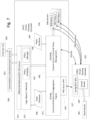
- the VGC 300 may contain a Connected Devices Identification and Aggregation Engine (CDIAE) 312.
- the CDIAE 312 may read information and connection status for all client routers 306 connected to VRGs 303.
- the CDIAE 312 may receive and store L2/L3 information passed on by the VRGs 303.
- the Hardware APIs 339 may receive and store information related to physical connections, such as wireless signal strength or an Ethernet interface, by communicating to the Telescope APIs 321. Further discussion of reading the status of network devices may be found in Fig. 6 .
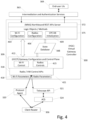
- Fig. 4 depicts an illustrative example of a system for hardware configuration and management. In some instances, the system may be implemented as part of a larger system, such as that depicted in Fig. 3 .
- a VGC 300 may contain modules configured to manage the configuration of hardware features of one or more client routers 306. Because hardware features may exist on a level below that of logical features, it may be advantageous to utilize a system such as that depicted in Fig. 4 for hardware configuration (rather than sending configuration data over logical connections) in order to more effectively configure physical settings of a device.
- An end-user user interface (UI) 369 may be an end-user application that allows for a user to manage configurations.
- the NRAS 372 may interface with one or more logic objects and/or methods 375. Those logic objects and/or methods may include configuration modules for various aspects of hardware configuration. In some instances, the logic objects and/or methods may include a wi-fi configuration module 403. The wi-fi configuration module 403 may manage the wireless configuration of client routers 306. For example, the wi-fi configuration module 403 may provide methods for setting up service set identifications (SSIDs), setting up wireless security, and/or various other wireless protocol settings. In some instances, the logic objects and/or methods may include a radio configuration module 406. The radio configuration module 406 may manage wireless channels, wireless transmit power, and/or various other radio transmission settings.
- SSIDs service set identifications
- radio configuration module 406 may manage wireless channels, wireless transmit power, and/or various other radio transmission settings.
- the logic objects and/or methods may include a module for CPE database (DB) initialization 409.
- the CPE DB initialization module 409 may manage the initialization of consumer-premises databases.
- the logic objects and/or methods may store or retrieve information in a state database 348.
- the logic objects and/or methods may also communicate with a GCCP 309.
- a CPE may be a wireless range extender associated with a client router 306.
- the wireless range extender may have settings for one or more antennas. These settings may be stored on the VGC 300 in order to facilitate effective communication between the client router 306 and other devices and/or CPEs associated with the client router 306.
- the CPE database may store information regarding the CPEs.
- the stored information may allow for the storage, changing, and reconfiguration of CPE settings.
- the VGC 300 may update, restore, and/or reconfigure settings on a CPE using one of the systems and/or methods described herein regarding client router 306.
- a configuration change sent to client router 306 may comprise a change to parental controls on a set-top box.
- the client router 306 may implement the changes itself using built-in functionality and/or pass the changes on to the set-top box so that the set-top box may implement changes.
- the set-top box may communicate back to the VGC 300 (such as through error or status messages) via the client router 306 using the systems and/or methods described herein regarding the client router 306.
- the GCCP 309 may set or retrieve hardware settings on one or more client routers 306.
- the GCCP 309 may include a wi-fi controls 412 and/or radio controls 415. In some instances, these controls may be hardware and/or software configured to manage wi-fi or radio settings on one or more client routers 306.
- the GCCP may invoke commands through radio/hardware control APIs 318. These commands may instruct a Telescope API 321 to set wi-fi parameters 418 and/or radio parameters 421. Parameters may be received from end-user UIs 369, a state database 348, or may be a part of the radio/hardware control APIs 318.
- the Telescope API 321 may forward communication changes to the ACS 324.
- the ACS 324 may acknowledge the command, and/or send appropriate commands to the client routers 306 to change settings.
- the commands may be in the form of Technical Report 069 (TR069) commands.
- the client routers 306 may store a record of what configurations are performed and/or how the configurations are performed. If the ACS acknowledges an error-free configuration, the GCCP may store the configuration change in the state database 348. Configuration changes may also be communicated back to end-user UIs 369, which may be displayed to a user.
- a protocol agent 320 may assist with transmitting one or more messages between the VGC 300 and the client router 306.
- the protocol agent 320 may be an intermediary server which may exist between the VGC 300 and the client router 306.
- accompanying software and/or a portion of the protocol agent 320 may also exist on the VGC 300 and/or client router 306.
- the protocol agent 320 may comprise software on an intermediary server and a subroutine running on the client router 320.
- the protocol agent 320 may facilitate communication and/or network awareness for the client router 306.
- the protocol agent 320 may assist the client router 306 in opening a connection with the VGC 300 and maintaining that connection.
- a given VGC 300 in one location may be associated with a large number of connected client routers 306 in a variety of locations.
- Client routers 306 may have difficulty finding network addresses and/or encounter impediments to communication (such as firewalls on client routers 306).
- connections may be established faster and/or more easily.
- the protocol agent 320 may facilitate the client router 306 establishing communication by storing the network addresses for the client routers 306 and their associated VGCs 300.
- the client router 306 may transmit a message that may indicate that the message is intended for some VGC 300, though it may not indicate a particular VGC 300 or address.
- the message may pass through a protocol agent 320, which may determine the correct VGC 300 for the message, perform any necessary translation (such as described below), and transmit the message on to the correct VGC 300.
- a message from the VGC 300 to the client router 306 may identify the client router 306 using an identifier other than a network address.
- the protocol 320 may receive the message from the VGC 300, determine the network address of the client router 306 based on the identifier, and transmit the message to the client router 306.
- a protocol agent 320 may be used to translate commands from a form used by the VGC 300 to a form used by the client router 306. It may be advantageous for the VGC 300 to utilize a consistent terminology for commands and/or objects used by the VGC for internal storage and/or communication with the VRG 303 and/or client router 306. For example, the VGC 300 may use a canonical data object model, such as Technical Report 181 (TR181), for at least a subset of commands and/or objects used by the VGC 300. In some instances, the protocol agent 320 may send and/or receive messages using asynchronous communication. However, other devices may not be compatible with the terminology used by the VGC 300.
- TR181 Technical Report 181
- the protocol agent 320 may facilitate bi-directional and/or asynchronous communication between the VGC 300 and the client router 306.
- the client router 306 may initiate communication by sending a message as described above.
- the VGC 300 may then authenticate the client router 306 in response to the message.
- a continuous and/or open virtual connection may exist between the client router 306 and the VGC 300 through the protocol agent 320.
- This connection may utilize sockets, TR181, TR069, remote SSH, SNMP, any other such protocol and/or data object model, and/or any combination of any such protocol and/or data object model (such as by utilizing the translation functions of a protocol agent 320 as described above).
- the VGC 300 and/or client router 306 may send message to each other through the authenticated virtual connection, which may occur asynchronously and/or concurrently. This may have the advantage of reducing the impact of transmissions by reducing the number of re-authentications required for messages.
- the protocol agent 320 may facilitate the transmission of messages over the bi-directional framework. For example, the protocol agent 320 may receive a TR181 message from a web socket connection to the VGC 300. The protocol agent 320 may then perform a translation of the message to translate the message to a format compatible with SNMP, and transmit the message to the client router 306. The protocol agent 320 may also act as a communication buffer for transmissions between the VGC 300 and the client router 306. For example, the VGC 300 may send a message via a bi-directional web socket connection to the protocol agent 320. However, the protocol agent 320 may be connected via a uni-directional connection to the client router 306, which the client router 306 may be using to send a message to the VGC 300.
- the protocol agent 320 may buffer the message from the VGC 300 while it receives the message from the client router 306, and then transmit the message from the VGC 300 to the client router 306 when the uni-directional connection becomes available. This may have the advantage of functionally allowing bi-directional and/or asynchronous communication when one or more connections are uni-directional.
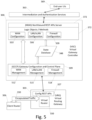
- Fig. 5 depicts an illustrative example of a system for router logical configuration and management.
- the system may be implemented as part of a larger system, such as that depicted in Fig. 3 .
- a VGC 300 may include modules configure to manage the logical configuration of one or more client routers 306.
- a user and/or device associated with and/or connected to the VGC 300 may set configuration settings.
- End-user UIs 369 may allow a user to configure logical router configuration.
- the end-user UIs 369 may communicate with intermediation and authentication services 363.
- the intermediation and authentication services may pass information and/or configuration parameters to the NRAS 372 of the VGC 300.
- configuration parameters may include Internet Protocol parameters, firewall parameters, DHCP parameters, NAT parameters, and/or other such networking parameters.
- the GCCP 309 of the VGC 300 may communicate with the Configuration REST APIs 327 of a VRG 303.
- the VRG 303 may perform the various logical routing functions, such as WAN, LAN/vLAN, and firewall functions, by configuring the virtual routers 330.
- the VRG may store a record of what configurations are performed and/or how the configurations are performed.
- the configuration change may be stored in a state database 348.
- the end-user UI may display any configuration changes executed to the client routers 306 or the virtual router 330.
- a user may log into an end-user UI 369 to access a policy management screen.
- Policy management screens may allow the user to view or alter configuration information.
- the configuration information may be sent through intermediation and authentication services 363 to the NRAS 372 of a VGC 300.
- the NRAS 372 may access logic objects and/or methods 375.
- the logical objects and/or methods 375 may include a policy scheduler 703 and/or a policy manager 706.
- the policy scheduler 703 may allow for changes in the scheduling of a policy.
- the policy manager 706 may retrieve or store information from the policy scheduler 703, a state database 348 (which may pull from a CDIAE using methods described herein), or from the CACPM 342. If a change to the configuration may be desired, the policy manager may initiate a change by sending a command to the CACPM 342.
- the VGC 300 may send policy information to the VRG 303, such as information identifying the policy or rules for enforcement of the policy.
- the VRG 303 may enforce an access policy on the traffic, such as restricting the traffic, by itself.
- the VRG 303 may send a DNS request with information identifying the client devices and/or users or the policy to be enforced to DNS servers 378.
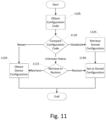
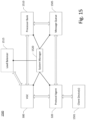
- Fig. 8 depicts an illustrative method for router configuration.
- the VGC 300 may receive a configuration request. For example, a user may access an interface screen on the end-user UI 369. The user may select configuration options on the screen. This may trigger a configuration request to be transferred to the VGC 300 according to one of the systems described in Figs. 4-7 .
- the computing device may retrieve a stored configuration.
- the VGC 300 may obtain a configuration stored in a state database 348. After retrieving the stored configuration, the computing device may then proceed to setting the stored configuration on the client device in step 1130.
- Fig. 12 depicts an illustrative system for synchronizing messages between the VGC 300 and the client router 306.
- the system may be referred to as a synchronization engine.
- the VGC 300 may manage, track, and/or update configuration changes that occur on the client router 306 via the sync engine depicted in Fig. 12 .
- the sync agent may be an intermediary between the VGC 300 and the client router 306.
- the sync engine may comprise telescope APIs 321, an ACS 324, and/or a protocol agent 320.
- the device may store the configID in a transaction history database.
- This database may store configuration changes and/or configIDs associated with each set of changes. For example, the database may store that the seventh configuration change corresponds to configID "7" and set an SSID name on the device to "ourhotspot," while the eight configuration change corresponds to configID "8" and set the password to "1234.”
- the translation server may receive the acknowledgement from the translation interpreter running on the client router 306.
- the translation server may translate the acknowledgement into a form understood by the VGC 300.
- the translation server may translate a TR-069 acknowledgement into a TR181 acknowledgement.
- the client router 306 may perform a data consistency check ("DCC") test.
- the DCC test may confirm that the VGC 300 is currently up-to-date regarding any configuration changes made on the client router 306. For example, an encryption setting may have been changed on a web-UI of the client router 306.
- the VGC 300 may be unaware of the encryption setting change. If an SSID change is requested by the VGC 300, but the new SSID would be incompatible with the unreported encryption setting change, unwanted behavior may result. Thus, it may be advantageous to ensure that the VGC 300 is aware of any configuration changes made to the client router 306. Further discussion of the DCC may be found in Fig. 13 .
- the client router 306 may change one or more configuration settings consistent with instructions received from the VGC 300 or another source. For example, the client router 306 may set the SSID to "ourhotspot" consistent to instructions from the VGC 300. In another example, the client router 306 may set a wireless encryption to "AES" consistent to instructions from a separate SSH connection.
- the client router 306 may store the configuration method code. For example, if the configuration was received from the VGC 300, the client router 306 may store the code "512" as the configuration method code for the device.
- the VGC 300 may receive the status message from the translation server running on the sync agent and detect the change method code.
- the change method code may indicate whether the status message indicates a configuration set by the VGC 300, by a separate device, or that details are unknown.
- the change method code may indicate that the settings were previously sent by the VGC 300, such as by code "512.”
- the change method code may indicate that the settings were set by a web UI on the client router 306, such as by code "45.”
- the message may indicate that the settings were sent by an unknown source, such as code "0.”
- the VGC 300 may determine the configID in step 1257.
- the VGC 300 may determine that an additional change has been performed externally. After detecting the configID, the VGC 300 may inform the VGC API at step 1260 and log the configuration change in a transaction history database in step 1263.
- This may have the advantage of assisting in troubleshooting the client router 306, as a technician and/or user may be able to identify what changes were made to a device, by whom the changes were made, and/or when the changes were made. For example, a user may have recently had issues connecting an older device to the client router 306.
- a technician may determine that the web UI changing the wireless encryption to "AES" made the laptop incompatible. The technician may then change the wireless encryption setting to a different setting that would be compatible (which may use a new config change request at step 1403).
- Fig. 13 depicts an illustrative method for performing a data consistency check (DCC).
- a client router 306 may communicate with the VGC 300 via a protocol agent 320. As discussed herein, the VGC 300 may communicate settings for the client router 306 via the protocol agent 320. In some instances, settings from other sources may be stored on the client router 306 without being uploaded to the VGC 300. For example, while the VGC 300 is attempting to set configuration settings on the client router 306, the client router 306 may receive configuration settings from another source (such as SNMP, SSH, a local web interface, command line interface, etc.). By checking that the data known to the VGC 300 is consistent with the data actually stored on the client router 306, the system may avoid overwriting settings or storing incompatible settings on the client router 306.
- DCC data consistency check
- a set request may be a request for a device, such as a client router 306, to configure one or more settings on the device.
- a device such as a client router 306, to configure one or more settings on the device.
- he VGC 300 may receive a request to change client settings from an end-user UI 369.
- the VGC 300 may request a configuration setting change on a client router 306.
- the set request may comprise DCC test data.
- DCC test data may comprise data that indicates a status associated with a previous configuration. This may be used by the device to determine if the previous configuration known by the originator of the set request matches a configuration on the device.
- DCC test data may comprise a change method code (CMC) and a configID. The device may compare the change method code and/or configID to determine if they match a change method code and configID associated with the most recent previous changes made to the device.
- DCC test data that does not match the most recent configuration data stored by the device may indicate a synchronization problem.
- the device may change configuration settings based on instructions from a web UI on the device. These settings may not be reported to a later requesting device, and the later requesting device may attempt to make changes in ignorance of the current settings of the device. By detecting the synchronization problem, the device may prevent incompatible settings being used and/or recent settings from being overridden.
- the device may determine if the set request contains DCC test data. If no DCC test data is provided by a requesting device, then the method may conclude by changing the configuration settings in step 1315 without examining DCC test data. If DCC test data were provided with the set request, then the device may proceed to examine change method code data in step 1320.
- the device may perform a set operation.
- the device may examine the set request to determine any changes to configuration settings requested in the set request.
- the set request may comprise no DCC test data, a configID of "9,” a change method code of "512,” and a request to change an SSID name to "ourhotspot.”
- the device may then store the most recent configID as "9,” the most recent change method code as "512,” and change the SSID name to "ourhotspot.”
- the DCC test data which may comprise a configID and a change method code corresponding to the last known configuration, may differ from a new configID and/or change method code of the set request corresponding to the later configuration changes requested by the set request.
- the device may determine if the change method code test data matches the most recent change method code stored by the device. If the change method code test data does not match the stored change method code, it may indicate that the requesting device is unaware of recent changes and a synchronization error has occurred. For example, if the requesting device sent change method code test data comprising "512,” but the most recent change method code stored by the device was "38,” then the device may determine that the change method code does not match and a synchronization error may have occurred. If the data does not match, the device may proceed to sending a change method code test error at step 1330. If the data does match, then the device may proceed to determining if configID test data is present at step 1335.
- the device may send a change method code test error.
- the error may indicate that the change method code test data did not match the most recent change method code data stored by the device, and may comprise the most recent configuration data.
- the change method code test error may indicate that the test data of "512" did not match the stored value of "38,” that the configID of the device is "9,” and that the last change was to the SSID name.
- the device may perform a get operation at step 1350.
- the device may determine if the configID test data matches the most recent configID stored by the device. If the configID test data does not match the stored change method code, it may indicate that the requesting device is unaware of recent changes and a synchronization error has occurred. For example, if the requesting device sent a configID comprising "8,” but the most recent configID stored by the device was "9,” then the device may determine that the configID does not match and a synchronization error may have occurred. In some instances, the configID may iteratively count up for every change, so a mismatch may indicate how many changes were unknown to the requesting device.
- the mismatch may indicate that two changes have been made that were unreported and/or the requesting device is unaware of. If the data does not match, the device may proceed to sending a configID test error at step 1345. If the data does match, then the device may proceed to performing a set operation at step 1355.
- the device may send a configID test error.
- the error may indicate that the configID test data did not match the most recent configID data stored by the device, and may comprise the most recent configID.
- the configID test error may indicate that the test data of "8" did not match the stored value of "9,” that the change method code of the device is "38,” and that the last change was to the SSID name.
- the device may perform a get operation at step 1350.
- the device may perform a get operation. If a synchronization error was detected, the device may attempt to inform the requesting device of the configuration settings stored on the device. In some instances, the process of the device transmitting configuration information to another device may be referred to as a "get operation.” For example, if the device has a configID of "9,” but a requesting device expected a configID of "8," the device may initiate a get operation that sends a message informing the requesting device of the configuration settings currently applied to and/or stored on the device. After sending the requesting device the information, the device may receive a request for a new set operation at step 1305.
- the requesting device may take action based on the information obtained in the get operation.
- the requesting device may inform a user of the synchronization error, and/or determine how to handle the error.
- a VGC 300 that is informed of a test data mismatch on a client router 306 may provide information to the user via an end-user UI 369 that informs the user that there was a data mismatch.
- the requesting device may then request that the user determine whether to accept the settings currently stored on the device or override the settings with other settings.
- a user accessing the VGC 300 through an end-user UI 369 who was informed that an SSID name change request resulted in a DCC test failure may command the VGC 300 to use the settings previously stored on a client router 306, but to send a new set request so as to change the SSID name change.
- the user may command the VGC 300 to override the most recent changes in the client router 306 with settings stored in the VGC 300.
- this determination may be automatic. For instance, if a requesting device receives a data mismatch error, it may reset the device to the most recent settings known to the requesting device. Alternatively, the requesting device may update its stored settings to match the device.
- the device may perform a set operation.
- the device may examine the set request to determine any changes to configuration settings requested in the set request.
- the set request may comprise a change method code test data of "512,” a configID test data of "8,” a configID of "9,” a change method code of "512,” and a request to change an SSID name to "ourhotspot.”
- the device may then store the most recent configID as "9,” the most recent change method code as "512,” and change the SSID name to "ourhotspot.”
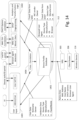
- Fig. 14 depicts an illustrative system for identifying and/or tracking devices.
- the system may correspond to the Device Fingerprinting 606 and Data Correlation & Normalization 612 aspects of the Connected Devices ID & Aggregation Engine (CDIAE) 312 of Fig. 6 .
- the CDIAE 312 may utilize a Device Profile Database 1401, an Analytic and Transformation Logic 1402, and/or a User Input 1403 to perform the device identification, tracking, and/or visibility functions of the Device Fingerprinting 606 and the Data Correlation & Normalization 612 modules.
- a user of a wireless device 116 may connect to a wireless network.
- the wireless network may utilize any wireless networking standard, such as an 802.xx standard, cellular communication network standard (e.g., 3GPP, LTE, etc.), and/or any other wireless networking standard.
- a user may enter a premises and attempt to connect to the wireless LAN (e.g. Wi-Fi) of the premises.
- a user may connect to an access point established by a service provider in a public area to be a wireless hotspot for customers of the service provider.
- a user may connect to a cellular access point with a phone.
- the Analytics and Transformation Logic 1402 may comprise one or more Media Access Control (MAC) - Organizationally Unique Identifier (OUI) Manufacturer Data analysis modules.
- This module may be configured to extract unique MAC address information for the wireless device 116, such as a 48-bit identifier and/or a 12 hexadecimal character formatted in any number of various configurations.
- This module may also be configured to extract a unique OUI (e.g. NIC vendor) that identifies vendor and/or manufacturer information for the wireless device 116, such as a 24-bit identifier assigned by a standard configuration control organization.
- This extracted MAC OUI information may be used to identify a plurality of information, such as owner information for the wireless device 116 and/or NIC vendor information.
- the system may be configured to simply determine with one hundred percent probability that the wireless device 116 is of device type A based on the user input correlating with the DHCP Fingerprinting. In the alternative, the system may be configured to simply add the user input information regarding device type into the aggregate in order to recalculate the probability of identifying the wireless device 116.
- the Cross-Correlation module 1404 may have one or more rules, which have been pre-set (by users, administrators, and/or the system itself) to resolve conflicts. For example, a rule may be set stating that the greater probability will prevail. Under such a rule, the system would determine that the wireless device 116 is of device type D. Then, the system may access a Device Profile Database 120 to determine whether a policy is associated with the user and device type D. The system may then apply the policy. In another example, a rule may state that some devices are given more weight than others.
- Device type D may be a model that is only owned by a few thousand consumers, while device type F may be owned by several million customers. The system may thus require that the probability that the wireless device 116 is of device type D to be at least 90 percent, or the device is labeled as device type F.
- a rule may give greater weight to any user input.
- any determinations of the Browser Agent Detection module may be assigned a probability score of 16.7 percent.
- Any determinations based on the User Input 1403 may be assigned a probability score of 50 percent, which may represent the greater weight for user input. In this example, if the User Input 1403 indicates that the device type of the wireless device 116 is type G, but the other three modules determine that the device type of the wireless device 116 is type H, then the probability score may be tied at 50 percent to 50 percent.
- Embodiment 1 may be combined with the above Embodiment 1, Embodiment 2, and/or Embodiment 3 in any combination or sub-combination, including:
Landscapes
- Engineering & Computer Science (AREA)
- Computer Networks & Wireless Communication (AREA)
- Signal Processing (AREA)
- Computer Security & Cryptography (AREA)
- General Engineering & Computer Science (AREA)
- Computing Systems (AREA)
- Computer Hardware Design (AREA)
- Power Engineering (AREA)
- Data Exchanges In Wide-Area Networks (AREA)
- Business, Economics & Management (AREA)
- General Business, Economics & Management (AREA)
- Multimedia (AREA)
- Computer And Data Communications (AREA)
Applications Claiming Priority (3)
| Application Number | Priority Date | Filing Date | Title |
|---|---|---|---|
| US201562146008P | 2015-04-10 | 2015-04-10 | |
| US15/094,404 US10404532B2 (en) | 2015-04-10 | 2016-04-08 | Virtual gateway control and management |
| EP16164653.4A EP3079305B1 (fr) | 2015-04-10 | 2016-04-11 | Contrôle et gestion de passerelle virtuelle |
Related Parent Applications (1)
| Application Number | Title | Priority Date | Filing Date |
|---|---|---|---|
| EP16164653.4A Division EP3079305B1 (fr) | 2015-04-10 | 2016-04-11 | Contrôle et gestion de passerelle virtuelle |
Publications (2)
| Publication Number | Publication Date |
|---|---|
| EP4398536A2 true EP4398536A2 (fr) | 2024-07-10 |
| EP4398536A3 EP4398536A3 (fr) | 2024-08-07 |
Family
ID=55808365
Family Applications (2)
| Application Number | Title | Priority Date | Filing Date |
|---|---|---|---|
| EP16164653.4A Active EP3079305B1 (fr) | 2015-04-10 | 2016-04-11 | Contrôle et gestion de passerelle virtuelle |
| EP24177279.7A Pending EP4398536A3 (fr) | 2015-04-10 | 2016-04-11 | Gestion et commande de passerelle virtuelle |
Family Applications Before (1)
| Application Number | Title | Priority Date | Filing Date |
|---|---|---|---|
| EP16164653.4A Active EP3079305B1 (fr) | 2015-04-10 | 2016-04-11 | Contrôle et gestion de passerelle virtuelle |
Country Status (3)
| Country | Link |
|---|---|
| US (3) | US10404532B2 (fr) |
| EP (2) | EP3079305B1 (fr) |
| CA (1) | CA2926667A1 (fr) |
Families Citing this family (56)
| Publication number | Priority date | Publication date | Assignee | Title |
|---|---|---|---|---|
| IL246890B (en) * | 2015-07-22 | 2018-06-28 | Shalev Mordechi | Distributed access control |
| KR102374677B1 (ko) * | 2015-11-27 | 2022-03-15 | 삼성전자 주식회사 | 무선 통신을 이용한 전자장치의 관리 방법과 장치 |
| DK179594B1 (en) | 2016-06-12 | 2019-02-25 | Apple Inc. | User interface for managing controllable external devices |
| US10149193B2 (en) | 2016-06-15 | 2018-12-04 | At&T Intellectual Property I, L.P. | Method and apparatus for dynamically managing network resources |
| US10476839B2 (en) * | 2016-08-15 | 2019-11-12 | Cisco Technology, Inc. | Datapath triggered on-demand NFV service activation |
| CN106533749B (zh) * | 2016-10-28 | 2020-02-04 | 国电南瑞科技股份有限公司 | 一种电力调度自动化系统间数据转发配置自动同步方法 |
| US10284730B2 (en) | 2016-11-01 | 2019-05-07 | At&T Intellectual Property I, L.P. | Method and apparatus for adaptive charging and performance in a software defined network |
| US10454836B2 (en) | 2016-11-01 | 2019-10-22 | At&T Intellectual Property I, L.P. | Method and apparatus for dynamically adapting a software defined network |
| US10505870B2 (en) | 2016-11-07 | 2019-12-10 | At&T Intellectual Property I, L.P. | Method and apparatus for a responsive software defined network |
| US10469376B2 (en) | 2016-11-15 | 2019-11-05 | At&T Intellectual Property I, L.P. | Method and apparatus for dynamic network routing in a software defined network |
| CN106357468B (zh) * | 2016-11-18 | 2019-04-02 | 北京知道创宇信息技术有限公司 | 一种判断网络服务器的服务规范的方法和装置 |
| US10039006B2 (en) | 2016-12-05 | 2018-07-31 | At&T Intellectual Property I, L.P. | Method and system providing local data breakout within mobility networks |
| US10264075B2 (en) * | 2017-02-27 | 2019-04-16 | At&T Intellectual Property I, L.P. | Methods, systems, and devices for multiplexing service information from sensor data |
| US10469286B2 (en) | 2017-03-06 | 2019-11-05 | At&T Intellectual Property I, L.P. | Methods, systems, and devices for managing client devices using a virtual anchor manager |
| US11229023B2 (en) | 2017-04-21 | 2022-01-18 | Netgear, Inc. | Secure communication in network access points |
| US10212289B2 (en) | 2017-04-27 | 2019-02-19 | At&T Intellectual Property I, L.P. | Method and apparatus for managing resources in a software defined network |
| US10673751B2 (en) | 2017-04-27 | 2020-06-02 | At&T Intellectual Property I, L.P. | Method and apparatus for enhancing services in a software defined network |
| US10819606B2 (en) | 2017-04-27 | 2020-10-27 | At&T Intellectual Property I, L.P. | Method and apparatus for selecting processing paths in a converged network |
| US10749796B2 (en) | 2017-04-27 | 2020-08-18 | At&T Intellectual Property I, L.P. | Method and apparatus for selecting processing paths in a software defined network |
| US10257668B2 (en) | 2017-05-09 | 2019-04-09 | At&T Intellectual Property I, L.P. | Dynamic network slice-switching and handover system and method |
| US10382903B2 (en) | 2017-05-09 | 2019-08-13 | At&T Intellectual Property I, L.P. | Multi-slicing orchestration system and method for service and/or content delivery |
| US10070344B1 (en) | 2017-07-25 | 2018-09-04 | At&T Intellectual Property I, L.P. | Method and system for managing utilization of slices in a virtual network function environment |
| CN109803028B (zh) * | 2017-11-16 | 2022-05-13 | 华为技术有限公司 | 一种用于配置业务流的方法及装置 |
| TW201926108A (zh) * | 2017-12-04 | 2019-07-01 | 和碩聯合科技股份有限公司 | 網路安全系統及其方法 |
| US10104548B1 (en) | 2017-12-18 | 2018-10-16 | At&T Intellectual Property I, L.P. | Method and apparatus for dynamic instantiation of virtual service slices for autonomous machines |
| JP6888567B2 (ja) * | 2018-02-26 | 2021-06-16 | 日本電信電話株式会社 | 通信装置、通信方法、及びプログラム |
| CN118102037A (zh) | 2018-05-07 | 2024-05-28 | 苹果公司 | 用于查看实况视频馈送和录制视频的用户界面 |
| US11153268B2 (en) | 2018-10-17 | 2021-10-19 | Hewlett Packard Enterprise Development Lp | Cloud-based dynamic host configuration protocol configuration |
| US11411941B2 (en) * | 2019-01-04 | 2022-08-09 | Comcast Cable Communications, Llc | Establishing trust with network device |
| US11363071B2 (en) * | 2019-05-31 | 2022-06-14 | Apple Inc. | User interfaces for managing a local network |
| US10904029B2 (en) | 2019-05-31 | 2021-01-26 | Apple Inc. | User interfaces for managing controllable external devices |
| US11178015B2 (en) * | 2019-08-01 | 2021-11-16 | Zebra Technologies Corporation | System, method and apparatus for updating network configuration parameters |
| DE102020103546B3 (de) * | 2020-02-12 | 2021-07-01 | Audi Aktiengesellschaft | Verfahren zur Konfiguration eines Netzwerks, insbesondere in einem Kraftfahrzeug |
| US12309148B2 (en) * | 2020-03-04 | 2025-05-20 | Netskope, Inc. | Systems and methods for device fingerprinting |
| WO2021194087A1 (fr) * | 2020-03-25 | 2021-09-30 | 삼성전자 주식회사 | Procédé et appareil de transmission d'application informatique en périphérie mobile |
| US11079913B1 (en) | 2020-05-11 | 2021-08-03 | Apple Inc. | User interface for status indicators |
| CN111752659B (zh) * | 2020-06-23 | 2024-07-19 | 杭州雾联科技有限公司 | 一种基于网络的usb设备异步共享方法 |
| EP4292254B1 (fr) * | 2021-02-13 | 2025-08-06 | Oracle International Corporation | Invalidation d'informations de flux mises en cache dans une infrastructure en nuage |
| US12592877B2 (en) | 2021-02-13 | 2026-03-31 | Oracle International Corporation | Packet flow in a cloud infrastructure based on cached and non-cached configuration information |
| US11516185B2 (en) * | 2021-03-13 | 2022-11-29 | Oracle International Corporation | Methods, systems, and computer readable media for enabling cloud-based management services using an on-sii e management cloud engine |
| US12114250B2 (en) | 2021-04-26 | 2024-10-08 | Arrcus Inc. | Selective importing of UE addresses to VRF in 5G networks |
| US11632692B2 (en) | 2021-04-26 | 2023-04-18 | Arrcus Inc. | Use of IP networks for routing of cellular data packets |
| US12063583B2 (en) * | 2021-04-26 | 2024-08-13 | Arrcus Inc. | Use of IP networks for routing of cellular data packets |
| US11849381B2 (en) | 2021-04-26 | 2023-12-19 | Arrcus Inc. | Use of IP networks for routing of cellular data packets |
| US20220365667A1 (en) | 2021-05-15 | 2022-11-17 | Apple Inc. | User interfaces for managing accessories |
| US11936805B2 (en) * | 2021-08-10 | 2024-03-19 | CentryLink Intellectual Property LLC | AutoMate—automated interface between call center agents and network orchestration systems via application programming interfaces (APIs) |
| CN116346945B (zh) * | 2021-12-24 | 2025-05-23 | 戴尔产品有限公司 | 经由智能网络接口控制器实现的可信网络协议代理 |
| CN114285857B (zh) * | 2021-12-31 | 2024-01-26 | 中企云链(北京)金融信息服务有限公司 | 负载均衡方法以及装置、系统 |
| CN114979077B (zh) * | 2022-05-23 | 2024-05-24 | 中移(杭州)信息技术有限公司 | 设备识别方法、设备、存储介质及装置 |
| US12379827B2 (en) | 2022-06-03 | 2025-08-05 | Apple Inc. | User interfaces for managing accessories |
| CN115102960B (zh) * | 2022-06-20 | 2023-08-22 | 国网信通亿力科技有限责任公司 | 一种基于伸缩部署的企业物联管理系统 |
| US12457169B2 (en) * | 2022-09-13 | 2025-10-28 | Jpmorgan Chase Bank, N.A. | Method and system for providing automated message routing |
| US11979291B1 (en) * | 2022-10-27 | 2024-05-07 | Red Hat, Inc. | Cluster boundary enforcer service |
| CN115834354B (zh) * | 2022-12-30 | 2024-08-30 | 天翼云科技有限公司 | 一种虚拟网关重启的方法、系统、设备和介质 |
| CN116860138B (zh) * | 2023-07-18 | 2024-02-09 | 广东保伦电子股份有限公司 | 一种电子白板内容和背景同步缩放的实现方法及处理终端 |
| CN121000641B (zh) * | 2025-10-24 | 2026-02-24 | 四川天邑康和通信股份有限公司 | Fttr-b多租户分布式异常检测方法、装置、设备及介质 |
Family Cites Families (119)
| Publication number | Priority date | Publication date | Assignee | Title |
|---|---|---|---|---|
| EP1271843B1 (fr) * | 2001-06-18 | 2007-08-15 | Hewlett-Packard Company | Procédé et systéme pour identifier des équipements tels que des PCs qui sont reliés par un réseau |
| US7313819B2 (en) * | 2001-07-20 | 2007-12-25 | Intel Corporation | Automated establishment of addressability of a network device for a target network environment |
| US7650420B2 (en) | 2001-12-28 | 2010-01-19 | The Directv Group, Inc. | System and method for content filtering |
| US7231450B1 (en) | 2002-04-24 | 2007-06-12 | At&T Corporation | Method for providing reliable soft goods license authorization |
| JP4077689B2 (ja) | 2002-08-28 | 2008-04-16 | 日本放送協会 | コンテンツ送信方法、コンテンツ送信装置、コンテンツ送信プログラムおよびコンテンツ受信方法、コンテンツ受信装置、コンテンツ受信プログラム |
| US7954136B2 (en) | 2002-10-08 | 2011-05-31 | Koolspan, Inc. | Self-management network access using localized access management |
| US7239877B2 (en) * | 2003-10-07 | 2007-07-03 | Accenture Global Services Gmbh | Mobile provisioning tool system |
| US9251519B1 (en) | 2003-12-31 | 2016-02-02 | Google Inc. | Systems and methods for monetizing subscription and archival news content |
| US7594121B2 (en) * | 2004-01-22 | 2009-09-22 | Sony Corporation | Methods and apparatus for determining an identity of a user |
| US8024225B1 (en) | 2004-01-27 | 2011-09-20 | Amazon Technologies, Inc. | Controlling access to services via usage models |
| US7565529B2 (en) | 2004-03-04 | 2009-07-21 | Directpointe, Inc. | Secure authentication and network management system for wireless LAN applications |
| US20060140182A1 (en) | 2004-12-23 | 2006-06-29 | Michael Sullivan | Systems and methods for monitoring and controlling communication traffic |
| US8005913B1 (en) | 2005-01-20 | 2011-08-23 | Network Protection Sciences, LLC | Controlling, filtering, and monitoring of mobile device access to the internet, data, voice, and applications |
| US20080307339A1 (en) | 2006-03-20 | 2008-12-11 | Kidzui, Inc. | Child-oriented computing system |
| WO2006124570A2 (fr) * | 2005-05-12 | 2006-11-23 | Feeva Technology, Inc. | Contenus multimedias diriges determines en fonction des preferences utilisateur |
| US8085808B2 (en) * | 2005-05-12 | 2011-12-27 | Verizon Services Corp. | Automatic configuration of network devices for network services |
| US20060272014A1 (en) | 2005-05-26 | 2006-11-30 | Mcrae Matthew B | Gateway notification to client devices |
| US20060293057A1 (en) | 2005-06-24 | 2006-12-28 | Mazerski Thomas M | System and method for secure web-based mobile phone parental controls |
| EP1921559A1 (fr) | 2005-08-31 | 2008-05-14 | Sony Corporation | Dispositif d'enregistrement de groupe, dispositif de libération d'enregistrement de groupe, procédé d'enregistrement de groupe, dispositif d'acquisition de licence, procédé d'acquisition de licence, dispositif de réglage d'heure et procéde |
| US7720463B2 (en) | 2005-09-02 | 2010-05-18 | Tekelec | Methods, systems, and computer program products for providing third party control of access to media content available via broadcast and multicast service (BCMCS) |
| CN100499494C (zh) | 2005-09-13 | 2009-06-10 | 华为技术有限公司 | 一种远程管理本地网络设备的系统及实现方法 |
| US20070150918A1 (en) | 2005-12-22 | 2007-06-28 | Sony Ericsson Mobile Communications Ab | Methods, devices, and computer program products for providing parental control over access to media content using a mobile terminal |
| US8000345B2 (en) * | 2006-02-24 | 2011-08-16 | Siemens Aktiengesellschaft | Proxy agent for providing remote management of equipment in a communication network |
| US8086698B2 (en) * | 2006-06-02 | 2011-12-27 | Google Inc. | Synchronizing configuration information among multiple clients |
| US20080016196A1 (en) | 2006-07-14 | 2008-01-17 | Anthology Solutions, Inc. | System and method for automatic storage and serving of digital content |
| CA2556464C (fr) * | 2006-08-18 | 2012-04-17 | Diversinet Corp. | Methode de detection et de classification automatiques |
| US20080049767A1 (en) | 2006-08-25 | 2008-02-28 | At&T Corp. | Method for controlling multiple network services based on a user profile |
| US9444839B1 (en) * | 2006-10-17 | 2016-09-13 | Threatmetrix Pty Ltd | Method and system for uniquely identifying a user computer in real time for security violations using a plurality of processing parameters and servers |
| EP2092763B1 (fr) * | 2006-10-23 | 2019-03-27 | T-Mobile USA, Inc. | Système et procédé pour gérer une fonctionnalité et une configuration de point d'accès |
| EP2092433B1 (fr) * | 2006-10-31 | 2018-08-01 | Mitel Networks Corporation | Procédé et système pour une configuration d'entités de réseau |
| US20080141293A1 (en) | 2006-12-08 | 2008-06-12 | Sony Corporation | Convenient parental restriction control of video output |
| US20080222707A1 (en) | 2007-03-07 | 2008-09-11 | Qualcomm Incorporated | Systems and methods for controlling service access on a wireless communication device |
| US8046839B2 (en) | 2007-04-13 | 2011-10-25 | Qualcomm Incorporated | Mobile unit parental control |
| JP5138359B2 (ja) | 2007-12-27 | 2013-02-06 | エヌ・ティ・ティ アイティ株式会社 | リモートアクセス方法 |
| US9003488B2 (en) * | 2007-06-06 | 2015-04-07 | Datavalet Technologies | System and method for remote device recognition at public hotspots |
| US20110004913A1 (en) * | 2007-07-31 | 2011-01-06 | Symbol Technologies, Inc. | Architecture for seamless enforcement of security policies when roaming across ip subnets in ieee 802.11 wireless networks |
| US20090089826A1 (en) | 2007-09-28 | 2009-04-02 | Echostar Technologies Corporation | Systems and methods for managing parental control information in multiple entertainment devices |
| US20090113039A1 (en) | 2007-10-25 | 2009-04-30 | At&T Knowledge Ventures, L.P. | Method and system for content handling |
| US8935381B2 (en) | 2007-11-27 | 2015-01-13 | Zettics, Inc. | Method and apparatus for real-time collection of information about application level activity and other user information on a mobile data network |
| US8868741B2 (en) | 2008-03-03 | 2014-10-21 | Leapfrog Enterprises, Inc. | Method and apparatus for custodial monitoring, filtering, and approving of content |
| US8312484B1 (en) | 2008-03-28 | 2012-11-13 | United Video Properties, Inc. | Systems and methods for blocking selected commercials |
| CN101572617B (zh) * | 2008-04-30 | 2011-11-09 | 华为终端有限公司 | 移动通信设备的管理方法、装置及系统 |
| WO2009146637A1 (fr) * | 2008-06-06 | 2009-12-10 | 华为技术有限公司 | Procédé et dispositif pour conjonction de dispositif et de passerelle |
| US8948731B2 (en) | 2008-07-18 | 2015-02-03 | Qualcomm Incorporated | Rating of message content for content control in wireless devices |
| US20100015926A1 (en) | 2008-07-18 | 2010-01-21 | Luff Robert A | System and methods to monitor and analyze events on wireless devices to predict wireless network resource usage |
| WO2010019095A1 (fr) | 2008-08-15 | 2010-02-18 | Telefonaktiebolaget L M Ericsson (Publ) | Procédé de gestion de contenus multimédia réservés dans un système tv |
| US8578506B2 (en) | 2008-10-06 | 2013-11-05 | Telefonaktiebolaget Lm Ericsson (Publ) | Digital rights management in user-controlled environment |
| US20100100898A1 (en) | 2008-10-16 | 2010-04-22 | Lucent Technologies Inc. | Method and apparatus for personalized multi-user centralized control and filtering of iptv content |
| US20100121744A1 (en) | 2008-11-07 | 2010-05-13 | At&T Intellectual Property I, L.P. | Usage data monitoring and communication between multiple devices |
| US20100162342A1 (en) | 2008-12-22 | 2010-06-24 | At&T Intellectual Property I, L.P. | Parental controls for multiple devices |
| US8428036B2 (en) | 2009-01-22 | 2013-04-23 | Belair Networks Inc. | System and method for providing wireless local area networks as a service |
| US8490176B2 (en) | 2009-04-07 | 2013-07-16 | Juniper Networks, Inc. | System and method for controlling a mobile device |
| US20110010383A1 (en) * | 2009-07-07 | 2011-01-13 | Thompson Peter C | Systems and methods for streamlining over-the-air and over-the-wire device management |
| CN101958878B (zh) * | 2009-07-15 | 2013-06-26 | 华为终端有限公司 | 一种设备远程管理的方法及装置 |
| US8825036B2 (en) | 2009-08-20 | 2014-09-02 | T-Mobile Usa, Inc. | Parent telecommunication device configuration of activity-based child telecommunication device |
| US9208337B2 (en) | 2009-09-22 | 2015-12-08 | Denise G. Tayloe | Systems, methods, and software applications for providing and identity and age-appropriate verification registry |
| US8347362B2 (en) | 2009-09-30 | 2013-01-01 | Alcatel Lucent | Usage control services performed in an end user device |
| US8489637B2 (en) * | 2009-11-19 | 2013-07-16 | International Business Machines Corporation | User-based DNS server access control |
| US8387118B2 (en) | 2009-12-02 | 2013-02-26 | At&T Mobility Ii, Llc | System and method for monitoring usage of a user device |
| US10027676B2 (en) | 2010-01-04 | 2018-07-17 | Samsung Electronics Co., Ltd. | Method and system for multi-user, multi-device login and content access control and metering and blocking |
| WO2011099168A1 (fr) * | 2010-02-15 | 2011-08-18 | Telefonaktiebolaget L M Ericsson (Publ) | Nœud de réseau destiné à détecter un dispositif de communication |
| US20110209206A1 (en) | 2010-02-23 | 2011-08-25 | Microsoft Corporation | Access restriction for computing content |
| US9742811B2 (en) * | 2010-03-18 | 2017-08-22 | Nominum, Inc. | System for providing DNS-based control of individual devices |
| US20110231898A1 (en) * | 2010-03-18 | 2011-09-22 | Tovar Tom C | Systems and methods for collaboratively creating an internet mediation policy |
| US9992234B2 (en) * | 2010-03-18 | 2018-06-05 | Nominum, Inc. | System for providing DNS-based control of individual devices |
| US10263958B2 (en) * | 2010-03-18 | 2019-04-16 | Nominum, Inc. | Internet mediation |
| EP3232610B1 (fr) * | 2010-03-22 | 2020-03-04 | Koninklijke KPN N.V. | Système et procédé de gestion d'une requête de configuration |
| US9204193B2 (en) | 2010-05-14 | 2015-12-01 | Rovi Guides, Inc. | Systems and methods for media detection and filtering using a parental control logging application |
| US8898303B2 (en) | 2010-09-09 | 2014-11-25 | Albert J. McGowan | Enterprise grade rights management |
| US9015270B2 (en) | 2010-10-08 | 2015-04-21 | Time Warner Cable Enterprises Llc | Apparatus and methods for enforcing content protection rules during data transfer between devices |
| US8694642B2 (en) * | 2010-10-21 | 2014-04-08 | Opendns, Inc. | Selective proxying in domain name systems |
| US8706864B1 (en) | 2010-11-30 | 2014-04-22 | Amazon Technologies, Inc. | Behavior monitoring and compliance for multi-tenant resources |
| US8621056B2 (en) | 2010-12-02 | 2013-12-31 | Microsoft Corporation | Enabling plural computing devices to communicate using a master account |
| CN102130937A (zh) * | 2010-12-03 | 2011-07-20 | 华为终端有限公司 | 一种管理终端设备的方法、代理设备及系统 |
| US9667483B2 (en) * | 2010-12-23 | 2017-05-30 | Koninklijke Kpn N.V. | Method, gateway device and network system for configuring a device in a local area network |
| US8769060B2 (en) * | 2011-01-28 | 2014-07-01 | Nominum, Inc. | Systems and methods for providing DNS services |
| US20120216222A1 (en) | 2011-02-23 | 2012-08-23 | Candelore Brant L | Parental Control for Audio Censorship |
| US20130041909A1 (en) | 2011-04-08 | 2013-02-14 | Alan Coleman | Method and system for dynamic identity validation |
| CN102957551B (zh) * | 2011-08-23 | 2015-08-05 | 华为终端有限公司 | 一种批量管理设备的方法和系统 |
| US20130054433A1 (en) * | 2011-08-25 | 2013-02-28 | T-Mobile Usa, Inc. | Multi-Factor Identity Fingerprinting with User Behavior |
| US8812670B2 (en) * | 2011-10-11 | 2014-08-19 | Telefonaktiebolaget L M Ericsson (Publ) | Architecture for virtualized home IP service delivery |
| US9973590B2 (en) * | 2011-11-26 | 2018-05-15 | Bing Wu | User identity differentiated DNS resolution |
| US9419852B1 (en) * | 2011-12-30 | 2016-08-16 | Akamai Technologies, Inc. | Systems and methods for identifying and characterizing client devices |
| US9215234B2 (en) * | 2012-01-24 | 2015-12-15 | Hewlett Packard Enterprise Development Lp | Security actions based on client identity databases |
| US9165124B1 (en) * | 2012-02-01 | 2015-10-20 | Convertro, Inc. | Systems and methods for identifying a returning web client |
| US8438184B1 (en) * | 2012-07-30 | 2013-05-07 | Adelphic, Inc. | Uniquely identifying a network-connected entity |
| US9197498B2 (en) * | 2012-08-31 | 2015-11-24 | Cisco Technology, Inc. | Method for automatically applying access control policies based on device types of networked computing devices |
| US20140089661A1 (en) * | 2012-09-25 | 2014-03-27 | Securly, Inc. | System and method for securing network traffic |
| US8514828B1 (en) * | 2012-10-30 | 2013-08-20 | Aruba Networks, Inc. | Home virtual local area network identification for roaming mobile clients |
| US8913272B2 (en) * | 2013-03-11 | 2014-12-16 | Xerox International Partners | Virtual printer interface node |
| US9961110B2 (en) * | 2013-03-15 | 2018-05-01 | Verisign, Inc. | Systems and methods for pre-signing of DNSSEC enabled zones into record sets |
| US9647779B2 (en) * | 2013-04-22 | 2017-05-09 | The Nielsen Company (Us), Llc | Systems, methods, and apparatus to identify media devices |
| US9032106B2 (en) * | 2013-05-29 | 2015-05-12 | Microsoft Technology Licensing, Llc | Synchronizing device association data among computing devices |
| US9674301B2 (en) * | 2013-09-10 | 2017-06-06 | Rogers Communications Inc. | Home gateway devices and methods for facilitating connections between customer premises equipment devices and servers |
| FR3011419A1 (fr) * | 2013-09-30 | 2015-04-03 | Orange | Procede d'administration d'une pluralite d'equipements locaux |
| US9854057B2 (en) * | 2014-05-06 | 2017-12-26 | International Business Machines Corporation | Network data collection and response system |
| US9716623B2 (en) * | 2014-05-22 | 2017-07-25 | Verizon Patent And Licensing Inc. | Automatic and secure activation of a universal plug and play device management device |
| EP2993927B1 (fr) * | 2014-09-02 | 2018-11-07 | Compal Broadband Networks Inc. | Procédé de reconnaissance ET Système utilisant celui-ci |
| US20160094645A1 (en) * | 2014-09-26 | 2016-03-31 | Microsoft Corporation | Dns-based load balancing |
| US10091312B1 (en) * | 2014-10-14 | 2018-10-02 | The 41St Parameter, Inc. | Data structures for intelligently resolving deterministic and probabilistic device identifiers to device profiles and/or groups |
| US9860328B2 (en) * | 2014-10-17 | 2018-01-02 | Verizon Patent And Licensing Inc. | Associating web page requests in a web access system |
| US9692711B2 (en) * | 2014-12-22 | 2017-06-27 | Verizon Patent And Licensing Inc. | DNS redirecting for data roaming offering |
| US9405813B1 (en) * | 2015-02-19 | 2016-08-02 | Vuclip | Media device knowledge base |
| CN106033510B (zh) * | 2015-03-13 | 2018-12-21 | 阿里巴巴集团控股有限公司 | 一种用户设备识别方法及系统 |
| CN104734893B (zh) * | 2015-04-02 | 2018-02-27 | 重庆邮电大学 | 一种面向wia‑pa网络的tr069协议管理方法 |
| EP3286658A4 (fr) * | 2015-04-20 | 2018-11-21 | Luma Home, Inc. | Dispositif de sécurité et de gestion internet |
| US10129271B2 (en) * | 2015-05-28 | 2018-11-13 | Cisco Technology, Inc. | Tracking users over network hosts based on user behavior |
| US10992678B1 (en) * | 2015-09-15 | 2021-04-27 | Sean Gilman | Internet access control and reporting system and method |
| US9967237B2 (en) * | 2015-09-17 | 2018-05-08 | Cox Communications, Inc. | Systems and methods for implementing a layer two tunnel for personalized service functions |
| US20170238235A1 (en) * | 2016-02-17 | 2017-08-17 | Zitovault, Inc. | Wireless router and router management system |
| US10051652B2 (en) * | 2016-02-24 | 2018-08-14 | Viasat, Inc. | Methods and systems for establishing in-flight network traffic policies for personal electronic devices |
| US20170262523A1 (en) * | 2016-03-14 | 2017-09-14 | Cisco Technology, Inc. | Device discovery system |
| AU2017242543B2 (en) * | 2016-03-31 | 2021-08-05 | Bitdefender Ipr Management Ltd | System and methods for automatic device detection |
| EP3482595B1 (fr) | 2016-07-07 | 2021-09-01 | LG Electronics Inc. | Procédé et équipement d'utilisateur destinés à la réception d'un signal de liaison descendante |
| EP3500033B1 (fr) | 2016-08-12 | 2021-03-31 | LG Electronics Inc. -1- | Procédé et appareil de transmission d'informations d'aide sps dans un système de communication sans fil |
| US10341814B2 (en) * | 2017-03-17 | 2019-07-02 | SCRRD, Inc. | Wireless device detection, tracking, and authentication platform and techniques |
| US10862885B2 (en) * | 2017-03-20 | 2020-12-08 | Forescout Technologies, Inc. | Device identification |
| US10776798B2 (en) * | 2017-04-25 | 2020-09-15 | Comscore, Inc. | Device identification systems and methods |
| CN112640381B (zh) * | 2018-06-18 | 2024-03-08 | 帕洛阿尔托网络公司 | 检测物联网设备的不合期望的行为的方法和系统 |
-
2016
- 2016-04-08 US US15/094,404 patent/US10404532B2/en active Active
- 2016-04-11 EP EP16164653.4A patent/EP3079305B1/fr active Active
- 2016-04-11 CA CA2926667A patent/CA2926667A1/fr active Pending
- 2016-04-11 EP EP24177279.7A patent/EP4398536A3/fr active Pending
-
2019
- 2019-07-03 US US16/502,965 patent/US11611471B2/en active Active
-
2022
- 2022-12-19 US US18/083,762 patent/US20230144444A1/en active Pending
Also Published As
| Publication number | Publication date |
|---|---|
| EP3079305B1 (fr) | 2024-06-05 |
| US10404532B2 (en) | 2019-09-03 |
| EP3079305A1 (fr) | 2016-10-12 |
| EP4398536A3 (fr) | 2024-08-07 |
| US20160301566A1 (en) | 2016-10-13 |
| CA2926667A1 (fr) | 2016-10-10 |
| US20230144444A1 (en) | 2023-05-11 |
| US20200036584A1 (en) | 2020-01-30 |
| US11611471B2 (en) | 2023-03-21 |
Similar Documents
| Publication | Publication Date | Title |
|---|---|---|
| US20230144444A1 (en) | Virtual Gateway Control and Management | |
| US12199981B2 (en) | Embedded authentication in a service provider network | |
| US10616077B2 (en) | System architecture and methods for controlling and managing networking devices and expediting new service delivery in a subscriber's home network using micro-domains | |
| US9491079B2 (en) | Remote monitoring and controlling of network utilization | |
| US10389628B2 (en) | Exposing a subset of hosts on an overlay network to components external to the overlay network without exposing another subset of hosts on the overlay network | |
| US10771372B2 (en) | Transmitting test traffic on a communication link | |
| US12513592B2 (en) | Wi-Fi network supporting multiple virtual networks | |
| US20170293752A1 (en) | Detecting Unauthorized Devices | |
| US12095677B2 (en) | Application port management | |
| KR101334417B1 (ko) | 서비스 기반의 공동 액세스 네트워크 서비스 제공 방법 및 장치 | |
| US20200136864A1 (en) | Over-The-Top Access to Distributed Local Resources | |
| US20220038422A1 (en) | Authentication and firewall enforcement for internet of things (iot) devices | |
| US10797906B2 (en) | Over-the-top internet service provisioning | |
| CN105306238A (zh) | 终端接入方法、装置和系统 | |
| US12010112B2 (en) | Remote secured console over a secured connection for inoperable virtual machine | |
| CN119561936A (zh) | 网关管理方法、装置、终端和存储介质 |
Legal Events
| Date | Code | Title | Description |
|---|---|---|---|
| PUAI | Public reference made under article 153(3) epc to a published international application that has entered the european phase |
Free format text: ORIGINAL CODE: 0009012 |
|
| STAA | Information on the status of an ep patent application or granted ep patent |
Free format text: STATUS: REQUEST FOR EXAMINATION WAS MADE |
|
| REG | Reference to a national code |
Ref country code: DE Ref legal event code: R079 Free format text: PREVIOUS MAIN CLASS: H04L0041081600 Ipc: H04L0061501400 |
|
| PUAL | Search report despatched |
Free format text: ORIGINAL CODE: 0009013 |
|
| 17P | Request for examination filed |
Effective date: 20240522 |
|
| AC | Divisional application: reference to earlier application |
Ref document number: 3079305 Country of ref document: EP Kind code of ref document: P |
|
| AK | Designated contracting states |
Kind code of ref document: A2 Designated state(s): AL AT BE BG CH CY CZ DE DK EE ES FI FR GB GR HR HU IE IS IT LI LT LU LV MC MK MT NL NO PL PT RO RS SE SI SK SM TR |
|
| AK | Designated contracting states |
Kind code of ref document: A3 Designated state(s): AL AT BE BG CH CY CZ DE DK EE ES FI FR GB GR HR HU IE IS IT LI LT LU LV MC MK MT NL NO PL PT RO RS SE SI SK SM TR |
|
| RIC1 | Information provided on ipc code assigned before grant |
Ipc: H04L 69/14 20220101ALI20240704BHEP Ipc: H04L 67/00 20220101ALI20240704BHEP Ipc: H04L 41/0816 20220101ALI20240704BHEP Ipc: H04L 41/0226 20220101ALI20240704BHEP Ipc: H04L 41/085 20220101ALI20240704BHEP Ipc: H04L 67/303 20220101ALI20240704BHEP Ipc: H04L 61/5014 20220101AFI20240704BHEP |
|
| P01 | Opt-out of the competence of the unified patent court (upc) registered |
Free format text: CASE NUMBER: APP_41308/2024 Effective date: 20240712 |
|
| STAA | Information on the status of an ep patent application or granted ep patent |
Free format text: STATUS: EXAMINATION IS IN PROGRESS |
|
| 17Q | First examination report despatched |
Effective date: 20250623 |