EP4398575A2 - Codage video utilisant des subdivisions multi-arborescentes d'images - Google Patents
Codage video utilisant des subdivisions multi-arborescentes d'images Download PDFInfo
- Publication number
- EP4398575A2 EP4398575A2 EP24162721.5A EP24162721A EP4398575A2 EP 4398575 A2 EP4398575 A2 EP 4398575A2 EP 24162721 A EP24162721 A EP 24162721A EP 4398575 A2 EP4398575 A2 EP 4398575A2
- Authority
- EP
- European Patent Office
- Prior art keywords
- tree
- blocks
- block
- prediction
- sub
- Prior art date
- Legal status (The legal status is an assumption and is not a legal conclusion. Google has not performed a legal analysis and makes no representation as to the accuracy of the status listed.)
- Granted
Links
Images






Classifications
-
- H—ELECTRICITY
- H04—ELECTRIC COMMUNICATION TECHNIQUE
- H04N—PICTORIAL COMMUNICATION, e.g. TELEVISION
- H04N19/00—Methods or arrangements for coding, decoding, compressing or decompressing digital video signals
- H04N19/10—Methods or arrangements for coding, decoding, compressing or decompressing digital video signals using adaptive coding
- H04N19/102—Methods or arrangements for coding, decoding, compressing or decompressing digital video signals using adaptive coding characterised by the element, parameter or selection affected or controlled by the adaptive coding
- H04N19/119—Adaptive subdivision aspects, e.g. subdivision of a picture into rectangular or non-rectangular coding blocks
-
- H—ELECTRICITY
- H04—ELECTRIC COMMUNICATION TECHNIQUE
- H04N—PICTORIAL COMMUNICATION, e.g. TELEVISION
- H04N19/00—Methods or arrangements for coding, decoding, compressing or decompressing digital video signals
- H04N19/10—Methods or arrangements for coding, decoding, compressing or decompressing digital video signals using adaptive coding
- H04N19/102—Methods or arrangements for coding, decoding, compressing or decompressing digital video signals using adaptive coding characterised by the element, parameter or selection affected or controlled by the adaptive coding
- H04N19/129—Scanning of coding units, e.g. zig-zag scan of transform coefficients or flexible macroblock ordering [FMO]
-
- H—ELECTRICITY
- H04—ELECTRIC COMMUNICATION TECHNIQUE
- H04N—PICTORIAL COMMUNICATION, e.g. TELEVISION
- H04N19/00—Methods or arrangements for coding, decoding, compressing or decompressing digital video signals
- H04N19/10—Methods or arrangements for coding, decoding, compressing or decompressing digital video signals using adaptive coding
- H04N19/102—Methods or arrangements for coding, decoding, compressing or decompressing digital video signals using adaptive coding characterised by the element, parameter or selection affected or controlled by the adaptive coding
- H04N19/13—Adaptive entropy coding, e.g. adaptive variable length coding [AVLC] or context adaptive binary arithmetic coding [CABAC]
-
- H—ELECTRICITY
- H04—ELECTRIC COMMUNICATION TECHNIQUE
- H04N—PICTORIAL COMMUNICATION, e.g. TELEVISION
- H04N19/00—Methods or arrangements for coding, decoding, compressing or decompressing digital video signals
- H04N19/10—Methods or arrangements for coding, decoding, compressing or decompressing digital video signals using adaptive coding
- H04N19/102—Methods or arrangements for coding, decoding, compressing or decompressing digital video signals using adaptive coding characterised by the element, parameter or selection affected or controlled by the adaptive coding
- H04N19/132—Sampling, masking or truncation of coding units, e.g. adaptive resampling, frame skipping, frame interpolation or high-frequency transform coefficient masking
-
- H—ELECTRICITY
- H04—ELECTRIC COMMUNICATION TECHNIQUE
- H04N—PICTORIAL COMMUNICATION, e.g. TELEVISION
- H04N19/00—Methods or arrangements for coding, decoding, compressing or decompressing digital video signals
- H04N19/10—Methods or arrangements for coding, decoding, compressing or decompressing digital video signals using adaptive coding
- H04N19/169—Methods or arrangements for coding, decoding, compressing or decompressing digital video signals using adaptive coding characterised by the coding unit, i.e. the structural portion or semantic portion of the video signal being the object or the subject of the adaptive coding
- H04N19/17—Methods or arrangements for coding, decoding, compressing or decompressing digital video signals using adaptive coding characterised by the coding unit, i.e. the structural portion or semantic portion of the video signal being the object or the subject of the adaptive coding the unit being an image region, e.g. an object
-
- H—ELECTRICITY
- H04—ELECTRIC COMMUNICATION TECHNIQUE
- H04N—PICTORIAL COMMUNICATION, e.g. TELEVISION
- H04N19/00—Methods or arrangements for coding, decoding, compressing or decompressing digital video signals
- H04N19/10—Methods or arrangements for coding, decoding, compressing or decompressing digital video signals using adaptive coding
- H04N19/169—Methods or arrangements for coding, decoding, compressing or decompressing digital video signals using adaptive coding characterised by the coding unit, i.e. the structural portion or semantic portion of the video signal being the object or the subject of the adaptive coding
- H04N19/17—Methods or arrangements for coding, decoding, compressing or decompressing digital video signals using adaptive coding characterised by the coding unit, i.e. the structural portion or semantic portion of the video signal being the object or the subject of the adaptive coding the unit being an image region, e.g. an object
- H04N19/176—Methods or arrangements for coding, decoding, compressing or decompressing digital video signals using adaptive coding characterised by the coding unit, i.e. the structural portion or semantic portion of the video signal being the object or the subject of the adaptive coding the unit being an image region, e.g. an object the region being a block, e.g. a macroblock
-
- H—ELECTRICITY
- H04—ELECTRIC COMMUNICATION TECHNIQUE
- H04N—PICTORIAL COMMUNICATION, e.g. TELEVISION
- H04N19/00—Methods or arrangements for coding, decoding, compressing or decompressing digital video signals
- H04N19/10—Methods or arrangements for coding, decoding, compressing or decompressing digital video signals using adaptive coding
- H04N19/169—Methods or arrangements for coding, decoding, compressing or decompressing digital video signals using adaptive coding characterised by the coding unit, i.e. the structural portion or semantic portion of the video signal being the object or the subject of the adaptive coding
- H04N19/1883—Methods or arrangements for coding, decoding, compressing or decompressing digital video signals using adaptive coding characterised by the coding unit, i.e. the structural portion or semantic portion of the video signal being the object or the subject of the adaptive coding the unit relating to sub-band structure, e.g. hierarchical level, directional tree, e.g. low-high [LH], high-low [HL], high-high [HH]
-
- H—ELECTRICITY
- H04—ELECTRIC COMMUNICATION TECHNIQUE
- H04N—PICTORIAL COMMUNICATION, e.g. TELEVISION
- H04N19/00—Methods or arrangements for coding, decoding, compressing or decompressing digital video signals
- H04N19/46—Embedding additional information in the video signal during the compression process
-
- H—ELECTRICITY
- H04—ELECTRIC COMMUNICATION TECHNIQUE
- H04N—PICTORIAL COMMUNICATION, e.g. TELEVISION
- H04N19/00—Methods or arrangements for coding, decoding, compressing or decompressing digital video signals
- H04N19/50—Methods or arrangements for coding, decoding, compressing or decompressing digital video signals using predictive coding
- H04N19/503—Methods or arrangements for coding, decoding, compressing or decompressing digital video signals using predictive coding involving temporal prediction
- H04N19/51—Motion estimation or motion compensation
- H04N19/513—Processing of motion vectors
- H04N19/517—Processing of motion vectors by encoding
- H04N19/52—Processing of motion vectors by encoding by predictive encoding
-
- H—ELECTRICITY
- H04—ELECTRIC COMMUNICATION TECHNIQUE
- H04N—PICTORIAL COMMUNICATION, e.g. TELEVISION
- H04N19/00—Methods or arrangements for coding, decoding, compressing or decompressing digital video signals
- H04N19/50—Methods or arrangements for coding, decoding, compressing or decompressing digital video signals using predictive coding
- H04N19/503—Methods or arrangements for coding, decoding, compressing or decompressing digital video signals using predictive coding involving temporal prediction
- H04N19/51—Motion estimation or motion compensation
- H04N19/53—Multi-resolution motion estimation; Hierarchical motion estimation
-
- H—ELECTRICITY
- H04—ELECTRIC COMMUNICATION TECHNIQUE
- H04N—PICTORIAL COMMUNICATION, e.g. TELEVISION
- H04N19/00—Methods or arrangements for coding, decoding, compressing or decompressing digital video signals
- H04N19/50—Methods or arrangements for coding, decoding, compressing or decompressing digital video signals using predictive coding
- H04N19/59—Methods or arrangements for coding, decoding, compressing or decompressing digital video signals using predictive coding involving spatial sub-sampling or interpolation, e.g. alteration of picture size or resolution
-
- H—ELECTRICITY
- H04—ELECTRIC COMMUNICATION TECHNIQUE
- H04N—PICTORIAL COMMUNICATION, e.g. TELEVISION
- H04N19/00—Methods or arrangements for coding, decoding, compressing or decompressing digital video signals
- H04N19/50—Methods or arrangements for coding, decoding, compressing or decompressing digital video signals using predictive coding
- H04N19/593—Methods or arrangements for coding, decoding, compressing or decompressing digital video signals using predictive coding involving spatial prediction techniques
-
- H—ELECTRICITY
- H04—ELECTRIC COMMUNICATION TECHNIQUE
- H04N—PICTORIAL COMMUNICATION, e.g. TELEVISION
- H04N19/00—Methods or arrangements for coding, decoding, compressing or decompressing digital video signals
- H04N19/60—Methods or arrangements for coding, decoding, compressing or decompressing digital video signals using transform coding
-
- H—ELECTRICITY
- H04—ELECTRIC COMMUNICATION TECHNIQUE
- H04N—PICTORIAL COMMUNICATION, e.g. TELEVISION
- H04N19/00—Methods or arrangements for coding, decoding, compressing or decompressing digital video signals
- H04N19/60—Methods or arrangements for coding, decoding, compressing or decompressing digital video signals using transform coding
- H04N19/61—Methods or arrangements for coding, decoding, compressing or decompressing digital video signals using transform coding in combination with predictive coding
-
- H—ELECTRICITY
- H04—ELECTRIC COMMUNICATION TECHNIQUE
- H04N—PICTORIAL COMMUNICATION, e.g. TELEVISION
- H04N19/00—Methods or arrangements for coding, decoding, compressing or decompressing digital video signals
- H04N19/70—Methods or arrangements for coding, decoding, compressing or decompressing digital video signals characterised by syntax aspects related to video coding, e.g. related to compression standards
-
- H—ELECTRICITY
- H04—ELECTRIC COMMUNICATION TECHNIQUE
- H04N—PICTORIAL COMMUNICATION, e.g. TELEVISION
- H04N19/00—Methods or arrangements for coding, decoding, compressing or decompressing digital video signals
- H04N19/90—Methods or arrangements for coding, decoding, compressing or decompressing digital video signals using coding techniques not provided for in groups H04N19/10-H04N19/85, e.g. fractals
- H04N19/91—Entropy coding, e.g. variable length coding [VLC] or arithmetic coding
-
- H—ELECTRICITY
- H04—ELECTRIC COMMUNICATION TECHNIQUE
- H04N—PICTORIAL COMMUNICATION, e.g. TELEVISION
- H04N19/00—Methods or arrangements for coding, decoding, compressing or decompressing digital video signals
- H04N19/90—Methods or arrangements for coding, decoding, compressing or decompressing digital video signals using coding techniques not provided for in groups H04N19/10-H04N19/85, e.g. fractals
- H04N19/96—Tree coding, e.g. quad-tree coding
Definitions
- the present invention relates to coding schemes for coding a spatially sampled information signal using sub-division and coding schemes for coding a sub-division or a multitree structure, wherein representative embodiments relate to picture and/or video coding applications.
- the blocks are predicted by either inter-picture prediction or intra-picture prediction.
- the blocks can have different sizes and can be either quadratic or rectangular.
- the partitioning of a picture into blocks can be either fixed by the syntax, or it can be (at least partly) signaled inside the bitstream.
- syntax elements are transmitted that signal the subdivision for blocks of predefined sizes. Such syntax elements may specify whether and how a block is subdivided into smaller blocks and associated coding parameters, e.g. for the purpose of prediction. For all samples of a block (or the corresponding blocks of sample arrays) the decoding of the associated coding parameters is specified in a certain way.
- a single intermediate prediction signal for the block (or the corresponding blocks of sample arrays) is generated, and the final prediction signal is build by a combination including superimposing the intermediate prediction signals.
- the corresponding weighting parameters and potentially also a constant offset (which is added to the weighted sum) can either be fixed for a picture, or a reference picture, or a set of reference pictures, or they can be included in the set of prediction parameters for the corresponding block.
- the difference between the original blocks (or the corresponding blocks of sample arrays) and their prediction signals, also referred to as the residual signal is usually transformed and quantized. Often, a two-dimensional transform is applied to the residual signal (or the corresponding sample arrays for the residual block).
- the blocks (or the corresponding blocks of sample arrays), for which a particular set of prediction parameters has been used, can be further split before applying the transform.
- the transform blocks can be equal to or smaller than the blocks that are used for prediction. It is also possible that a transform block includes more than one of the blocks that are used for prediction. Different transform blocks can have different sizes and the transform blocks can represent quadratic or rectangular blocks.
- After transform, the resulting transform coefficients are quantized and so-called transform coefficient levels are obtained. The transform coefficient levels as well as the prediction parameters and, if present, the subdivision information is entropy coded.
- each of these 8x8 blocks can be either coded as one 8x8 block, or as two 8x4 blocks, or as two 4x8 blocks, or as four 4x4 blocks.
- the small set of possibilities for specifying the partitioning into blocks in state-of-the-art image and video coding standards has the advantage that the side information rate for signaling the sub-division information can be kept small, but it has the disadvantage that the bit rate required for transmitting the prediction parameters for the blocks can become significant as explained in the following.
- the side information rate for signaling the prediction information does usually represent a significant amount of the overall bit rate for a block.
- the side information rate can become a significant part of the overall bit rate. But since several of the small blocks still represent areas of the same object or part of an object, the prediction parameters for a number of the obtained blocks are the same or very similar.
- the sub-division or tiling of a picture into smaller portions or tiles or blocks substantially influences the coding efficiency and coding complexity.
- a sub-division of a picture into a higher number of smaller blocks enables a spatial finer setting of the coding parameters, whereby enabling a better adaptivity of these coding parameters to the picture/video material.
- setting the coding parameters at a finer granularity poses a higher burden onto the amount of side information necessary in order to inform the decoder on the necessary settings.
- any freedom for the encoder to (further) sub-divide the picture/video spatially into blocks tremendously increases the amount of possible coding parameter settings and thereby generally renders the search for the coding parameter setting leading to the best rate/distortion compromise even more difficult.
- the present application is based on the finding that spatially dividing an array of information samples representing a spatially sampled information signal into tree root regions first with then sub-dividing, in accordance with multi-tree-sub-division information extracted from a data-stream, at least a subset of the tree root regions into smaller simply connected regions of different sizes by recursively multi-partitioning the subset of the tree root regions enables finding a good compromise between a too fine sub-division and a too coarse sub-division in rate-distortion sense, at reasonable encoding complexity, when the maximum region size of the tree root regions into which the array of information samples is spatially divided, is included within the data stream and extracted from the data stream at the decoding side.
- a decoder comprises an extractor configured to extract a maximum region size and multi-tree-sub-division information from a data stream, a sub-divider configured to spatially divide an array of information samples representing a spatially sampled information signal into tree root regions of the maximum region size and sub-dividing, in accordance with the multi-tree-sub-division information, at least a subset of the tree root regions into smaller simply connected regions of different sizes by recursively multi-partitioning the subset of tree root regions; and a reconstuctor configured to reconstruct the array of information samples from the data stream using the sub-division into the smaller simply connected regions.
- the data stream also contains the maximum hierarchy level up to which the subset of tree root regions are subject to the recursive multi-partitioning.
- the reconstructor may be configured to perform one or more of the following measures at a granularity which depends on the multi-tree sub-division: decision which prediction mode among, at least, intra and inter prediction mode to use; transformation from spectral to spatial domain, performing and/or setting parameters for, an inter-prediction; performing and/or setting the parameters for an intra prediction.
- the extractor may be configured to extract syntax elements associated with the leaf regions of the partitioned treeblocks in a depth-first traversal order from the data stream.
- the extractor is able to exploit the statistics of syntax elements of already coded neighboring leaf regions with a higher likelihood than using a breadth-first traversal order.
- a further sub-divider is used in order to sub-divide, in accordance with a further multi-tree sub-division information, at least a subset of the smaller simply connected regions into even smaller simply connected regions.
- the first-stage sub-division may be used by the reconstructor for performing the prediction of the area of information samples, while the second-stage sub-division may be used by the reconstructor to perform the retransformation from spectral to spatial domain.
- a further maximum region size is contained in the data stream, the further maximum region size defining the size of tree root sub-regions into which the smaller simply connected regions are firstly divided before sub-dividing at least a subset of the tree root sub-regions in accordance with the further multi-tree sub-division information into even smaller simply connected regions.
- the data stream comprises a first subset of syntax elements disjoined from a second subset of syntax elements forming the multi-tree sub-division information, wherein a merger at the decoding side is able to combine, depending on the first subset of syntax elements, spatially neighboring smaller simply connected regions of the multi-tree sub-division to obtain an intermediate sub-division of the array of samples.
- the reconstructor may be configured to reconstruct the array of samples using the intermediate sub-division.
- the multi-tree sub-division information is likely to get more complex due to the treeroot regions getting larger.
- the maximum region size is small, it becomes more likely that neighboring treeroot regions pertain to information content with similar properties so that these treeroot regions could also have been processed together. The merging fills this gap between the afore-mentioned extremes, thereby enabling a nearly optimum sub-division of granularity.
- the merging syntax elements allow for a more relaxed or computationally less complex encoding procedure since if the encoder erroneously uses a too fine sub-division, this error may be compensated by the encoder afterwards, by subsequently setting the merging syntax elements with or without adapting only a small part of the syntax elements having been set before setting the merging syntax elements.
- the maximum region size and the multi-tree-sub-division information is used for the residual sub-division rather than the prediction sub-division.
- the reconstructor may use a zigzag scan in order to scan the tree root regions with, for each tree root region to be partitioned, treating the simply connected leaf regions in depth-first traversal order before stepping further to the next tree root region in the zigzag scan order.
- simply connected leaf regions of the same hierarchy level may be traversed in a zigzag scan order also.
- the sequential coding of the flags should use probability estimation contexts which are the same for flags associated with nodes of the multi-tree structure lying within the same hierarchy level of the multi-tree structure, but different from nodes of the multi-tree structure lying within different hierarchy levels of the multi-tree structure, thereby allowing for a good compromise between the number of contexts to be provided and the adaptation to the actual symbol statistics of the flags on the other hand.
- the flags which may be used for setting the context for a predetermined flag may be those corresponding to areas lying to the top of and/or to the left of the area to which the predetermined flag corresponds. Moreover, the flags used for selecting the context may be restricted to flags belonging to the same hierarchy level as the node with which the predetermined flag is associated.
- a coded scheme for coding a signaling of a multi-tree structure which enables a more effective coding.
- the coded signaling comprises an indication of a highest hierarchy level and a sequence of flags associated with nodes of the multi-tree structure unequal to the highest hierarchy level, each flag specifying whether the associated node is an intermediate node or child node, and a sequentially decoding, in a depth-first or breadth-first traversal order, of the sequence of flags from the data stream takes place, with skipping nodes of the highest hierarchy level and automatically appointing same leaf nodes, thereby reducing the coding rate.
- the coded signaling of the multi-tree structure may comprise the indication of the highest hierarchy level.
- the context used for coding the flags of the secondary sub-division may be selected such that the contexts are the same for the flags associated with areas of the same size.
- a favorable merging or grouping of simply connected regions into which the array of information samples is sub-divided is coded with a reduced amount of data.
- a predetermined relative locational relationship is defined enabling an identifying, for a predetermined simply connected region, of simply connected regions within the plurality of simply connected regions which have the predetermined relative locational relationship to the predetermined simply connected region. Namely, if the number is zero, a merge indicator for the predetermined simply connected region may be absent within the data stream.
- a reference neighbor identifier may identify a proper subset of the number of simply connected regions having the predetermined relative location relationship to the predetermined simply connected region and this proper subset is used when adopting the coding parameters or predicting the coding parameters of the predetermined simply connected region.
- the combination of the sub-division and the merging enables achieving intermediate sub-divisions which would not be possible by way of recursive multi-partitioning only so that the concatenation of the sub-division and the merging by use of disjoined sets of syntax elements enables a better adaptation of the effective or intermediate sub-division to the actual content of the two-dimensional information signal.
- the additional overhead resulting from the additional subset of syntax elements for indicating the merging details is negligible.
- Fig. 1 shows an encoder according to an embodiment of the present invention.
- the encoder 10 of Fig. 1 comprises a predictor 12, a residual precoder 14, a residual reconstructor 16, a data stream inserter 18 and a block divider 20.
- the encoder 10 is for coding a temporal spatially sampled information signal into a data stream 22.
- the temporal spatially sampled information signal may be, for example, a video, i.e., a sequence of pictures. Each picture represents an array of image samples.
- Other examples of temporal spatially information signals comprise, for example, depth images captured by, for example, time-of-light cameras.
- the encoder 10 of Fig. 1 is configured to create the data stream 22 such that the syntax elements of the data stream 22 describe the pictures in a granularity lying between whole pictures and individual image samples.
- the divider 20 is configured to sub-divide each picture 24 into simply connected regions of different sizes 26. In the following these regions will simply be called blocks or sub-regions 26.
- the predictor 12, the residual precoder 14, the residual reconstructor 16 and the data stream inserter 18 operate on picture sub-divisions defined by divider 20.
- predictor 12 uses a prediction sub-division defined by divider 20 in order to determine for the individual sub-regions of the prediction sub-division as to whether the respective sub-region should be subject to intra picture prediction or inter picture prediction with setting the corresponding prediction parameters for the respective sub-region in accordance with the chosen prediction mode.
- divider 20 decides for each picture 24 how to sub-divide same into sub-regions 26.
- predictor 12 decides for each sub-region corresponding to this sub-division, how to predict the respective sub-region.
- Predictor 12 outputs the prediction of the sub-region to the inverting input of substractor 34 and to the further input of adder 36 and outputs prediction information reflecting the way how predictor 12 obtained this prediction from previously encoded portions of the video, to data stream inserter 18.
- Residual precoder 14 subjects each residual sub-region to a transformation from spatial to spectral domain by a two-dimensional transform followed by, or inherently involving, a quantization of the resulting transform coefficients of the resulting transform blocks whereby distortion results from the quantization noise.
- the data stream inserter 18 may, for example, losslessly encode syntax elements describing the afore-mentioned transform coefficients into the data stream 22 by use of, for example, entropy encoding.
- the residual reconstructor 16 reconverts, by use of a re-quantization followed by a re-transformation, the transform coefficients into a residual signal wherein the residual signal is combined within adder 36 with the prediction used by subtractor 34 for obtaining the prediction residual, thereby obtaining a reconstructed portion or subregion of a current picture at the output of adder 36.
- Predictor 12 may use the reconstructed picture subregion for intra prediction directly, that is for predicting a certain prediction sub-region by extrapolation from previously reconstructed prediction sub-regions in the neighborhood. However, an intra prediction performed within the spectral domain by predicting the spectrum of the current subregion from that of a neighboring one, directly would theoretically also be possible.
- predictor 12 may use previously encoded and reconstructed pictures in a version according to which same have been filtered by an optional in-loop filter 38.
- In-loop filter 38 may, for example, comprise a de-blocking filter and/or an adaptive filter having a transfer function adapted to advantageously form the quantization noise mentioned before.
- sub-divider 28 may be configured to determine for each picture or for each group of pictures a prediction sub-division and a subordinate residual sub-division by firstly dividing the picture into a regular arrangement of treeblocks 150, recursively partitioning a subset of these treeblocks by quadtree sub-division in order to obtain the prediction sub-division into prediction blocks - which may be treeblocks if no partitioning took place at the respective treeblock, or the leaf blocks of the quadtree sub-division - with then further sub-dividing a subset of these prediction blocks in a similar way, by, if a prediction block is greater than the maximum size of the subordinate residual sub-division, firstly dividing the respective prediction block into a regular arrangement of sub-treeblocks with then sub-dividing a subset of these sub-treeblocks in accordance with the quadtree sub-division procedure in order to obtain the residual blocks - which may be prediction blocks if no division into sub-treeblocks
- sub-divider 28 defined a primary sub-division for prediction purposes and a subordinate sub-division of the blocks of different sizes of the primary sub-division for residual coding purposes.
- the data stream inserter 18 coded the primary sub-division by signaling for each treeblock in a zigzag scan order, a bit sequence built in accordance with Fig. 6a along with coding the maximum primary block size and the maximum hierarchy level of the primary sub-division. For each thus defined prediction block, associated prediction parameters have been included into the data stream. Additionally, a coding of similar information, i.e., maximum size, maximum hierarchy level and bit sequence in accordance with Fig.
- extractor 102 may select one context of a set of contexts, which is associated with that hierarchy level 0 depending on the hierarchy level 0 flag of neighboring treeblocks, or even further, depending on information contained within the bit strings defining the quadtree sub-division of neighboring treeblocks of the currently-processed treeblock, such as the top and left neighbor treeblock.
- step 312 the operation proceeds in step 316 with a check as to whether further child nodes pertaining the current node exist. That is, when extractor 102 performs the check in step 316, it has already been checked in step 312 that the current hierarchy level is a hierarchy level other than 0 hierarchy level. This, in turn, means that a parent node exists, which belongs to a tree root block 150 or one of the smaller blocks 152a-d, or even smaller blocks 152a-d, and so on. The node of the tree structure, which the recently-decoded flag belongs to, has a parent node, which is common to three further nodes of the current tree structure.
- step 402 a check is performed as to whether the prediction block size of the currently-visited block is greater than the internal parameter denoting the current size. If this is the case, the currently-visited prediction block, which may be a leaf block of the prediction sub-division or a treeblock of the prediction sub-division, which has not be partitioned any further, is greater than the maximum residual block size and in this case, the process of Fig. 8 proceeds with step 300 of Fig. 7 . That is, the currently-visited prediction block is divided into residual treeroot blocks and the first flag of the flag sequence of the first residual treeblock within this currently-visited prediction block is decoded in step 302, and so on.
- the luma component is one plane group
- the chroma component forms the other plane group
- the input signal was divided into prediction blocks using a primary quadtree structure and it was described how these prediction blocks were further sub-divided into residual blocks using a subordinate quadtree structure.
- the sub-division might not end at the subordinate quadtree stage. That is, the blocks obtained from a division using the subordinate quadtree structure might be further sub-divided using a tertiary quadtree structure. This division, in turn, might be used for the purpose of using further coding tools that might facilitate encoding the residual signal.
- sub-division performed by sub-divider 28 and sub-divider 104a, respectively.
- the sub-division defined by sub-divider 28 and 104a, respectively may control the processing granularity of the afore-mentioned modules of encoder 10 and decoder 100.
- the sub-dividers 228 and 104a, respectively are followed by a merger 30 and merger 104b, respectively. It should be noted, however, that the mergers 30 and 104b are optional and may be left away.
- the merger provides the encoder with the opportunity of combining some of the prediction blocks or residual blocks to groups or clusters, so that the other, or at least some of the other modules may treat these groups of blocks together.
- the predictor 12 may sacrifice the small deviations between the prediction parameters of some prediction blocks as determined by optimization using the subdivision of subdivider 28 and use prediction parameters common to all these prediction blocks instead if the signalling of the grouping of the prediction blocks along with a common parameter transmission for all the blocks belonging to this group is more promising in rate/distortion ratio sense than individually signaling the prediction parameters for all these prediction blocks.
- the processing for retrieving the prediction in predictors 12 and 110, itself, based on these common prediction parameters, may, however, still take place prediction-block wise. However, it is also possible that predictors 12 and 110 even perform the prediction process once for the whole group of prediction blocks.
- the grouping of prediction blocks is not only for using the same or common prediction parameters for a group of prediction blocks, but, alternatively, or additionally, enables the encoder 10 to send one prediction parameter for this group along with prediction residuals for prediction blocks belonging to this group, so that the signaling overhead for signalling the prediction parameters for this group may be reduced.
- the merging process may merely influence the data stream inserter 18 rather than the decisions made by residual pre-coder 14 and predictor 12.
- the just-mentioned aspect also applies to the other sub-divisions, such as the residual sub-division or the filter sub-division mentioned above.
- the sample arrays of the signal to be encoded are usually partitioned into particular sets of samples or sample sets, which may represent rectangular or quadratic blocks, or any other collection of samples, including arbitrarily-shaped regions, triangles or other shapes.
- the simply-connected regions were the prediction blocks and the residual blocks resulting from the multi-tree sub-division.
- the sub-division of sample arrays may be fixed by the syntax or, as described above, the sub-division may be, at least partially, signaled inside the bit stream.
- sample sets may be merged such that all sample sets of such a group share the same coding parameters, which can be transmitted together with one of the sample sets in the group.
- the coding parameters do not have to be transmitted for each sample set of the group of sample sets individually, but, instead, the coding parameters are transmitted only once for the whole group of sample sets.
- the side information rate for transmitting the coding parameters may be reduced and the overall coding efficiency may be improved.
- an additional refinement for one or more of the coding parameters can be transmitted for one or more of the sample sets of a group of sample sets. The refinement can either be applied to all sample sets of a group or only to the sample set for which it is transmitted.
- the prediction parameters associated with a merged group of sample sets can be re-estimated, such as by performing a new motion search or the prediction parameters that have already been determined for the common sample set and the candidate sample set or group of sample sets for merging could be evaluated for the considered group of sample sets.
- a particular rate/distortion cost measure could be evaluated for additional candidate groups of sample sets.
- merging provides the above-mentioned briefly discussed advantages, such as reducing the side information rate bit in image and video coding applications.
- Particular sets of samples which may represent the rectangular or quadratic blocks or arbitrarily-shaped regions or any other collection of samples, such as any simply-connected region or samples are usually connected with a particular set of coding parameters and for each of the sample sets, the coding parameters are included in the bit stream, the coding parameters representing, for example, prediction parameters, which specify how the corresponding set of samples is predicted using already-coded samples.
- the partitioning of the sample arrays of a picture into sample sets may be fixed by the syntax or may be signaled by the corresponding sub-division information inside the bit stream.
- the coding parameters for the sample set may be transmitted in a predefined order, which is given by the syntax.
- merger 30 is able to signal, for a common set of samples or a current block, such as a prediction block or a residual block that it is merged with one or more other sample sets, into a group of sample sets.
- the coding parameters for a group of sample sets therefore, needs to be transmitted only once.
- the coding parameters of a current sample set are not transmitted if the current sample set is merged with a sample set or an already-existing group of sample sets for which the coding parameters have already been transmitted.
- the coding parameters for the current set of samples are set equal to the coding parameters of the sample set or group of sample sets with which the current set of samples is merged.
- an additional refinement for one or more of the coding parameters can be transmitted for a current sample set. The refinement can either be applied to all sample sets of a group or only to the sample set for which it is transmitted.
- the set of all previously coded/decoded sample sets is called the "set of causal sample sets". See, for example, Fig. 3c . All the blocks shown in this Fig. are the result of a certain sub-division, such as a prediction sub-division or a residual sub-division or of any multitree subdivision, or the like, and the coding/decoding order defined among these blocks is defined by arrow 350.
- the sets of samples that can be used for the merging with a current set of samples is called the "set of candidate sample sets" in the following and is always a subset of the "set of causal sample sets".
- the way how the subset is formed can either be known to the decoder or it can be specified inside the data stream or bit stream from the encoder to the decoder. If a particular current set of samples is coded/decoded and its set of candidate sample sets is not empty, it is signaled within the data stream at the encoder or derived from the data stream at the decoder whether the common set of samples is merged with one sample set out of this set of candidate sample sets and, if so, with which of them. Otherwise, the merging cannot be used for this block, since the set of candidate sample sets is empty anyway.
- the determination of candidate sample sets may be based on a sample inside the current set of samples, which is uniquely geometrically-defined, such as the upper-left image sample of a rectangular or quadratic block. Starting from this uniquely geometrically-defined sample, a particular non-zero number of samples is determined, which represent direct spatial neighbors of this uniquely geometrically-defined sample.
- this particular, non-zero number of samples comprises the top neighbor and the left neighbor of the uniquely geometrically-defined sample of the current set of samples, so that the non-zero number of neighboring samples may be, at the maximum, two, one if one of the top or left neighbors is not available or lies outside the picture, or zero in case of both neighbors missing.
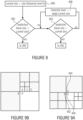
- the set of candidate sample sets could then be determined to encompass those sample sets that contain at least one of the non-zero number of the just-mentioned neighboring samples. See, for example, Fig. 9a .
- the current sample set currently under consideration as merging object shall be block X and its geometrically uniquely-defined sample, shall exemplarily be the top-left sample indicated at 400.
- the top and left neighbor samples of sample 400 are indicated at 402 and 404.
- the set of causal sample sets or set of causal blocks is highlighted in a shaded manner. Among these blocks, blocks A and B comprise one of the neighboring samples 402 and 404 and, therefore, these blocks form the set of candidate blocks or the set of candidate sample sets.
- the set of candidate sample sets determined for the sake of merging may additionally or exclusively include sets of samples that contain a particular non-zero number of samples, which may be one or two that have the same spatial location, but are contained in a different picture, namely, for example, a previously coded/decoded picture.
- a block of a previously coded picture could be used, which comprises the sample at the same position as sample 400.
- the top neighboring sample 404 or merely the left neighboring sample 402 could be used to define the afore-mentioned non-zero number of neighboring samples.
- the set of candidate sample sets may be derived from previously-processed data within the current picture or in other pictures.
- the derivation may include spatial directional information, such as transform coefficients associated with a particular direction and image gradients of the current picture or it may include temporal directional information, such as neighboring motion representations. From such data available at the receiver/decoder and other data and side information within the data stream, if present, the set of candidate sample sets may be derived.
- merger 30 and data stream inserter 18 cooperate in order to transmit one or more syntax elements for each set of samples, which specify whether the set of samples is merged with another sample set, which, in turn, may be part of an already-merged group of sample sets and which of the set of candidate sample sets is employed for merging.
- the extractor 102 extracts these syntax elements and informs merger 104b accordingly.
- one or two syntax elements are transmitted for specifying the merging information for a specific set of samples.
- the first syntax element specifies whether the current set of samples is merged with another sample set.
- block X was a prediction block, in which case the proper subset of the coding parameters could be a subset of the prediction parameters for this block X, such as a subset out of a set comprising a picture reference index and motion-mapping information, such as a motion vector.
- the subset of coding parameters is a subset of residual information, such as transform coefficients or a map indicating the positions of the significant transform coefficients within block X. Based on this information, both data stream inserter 18 and extractor 102 are able to use this information in order to determine a subset out of blocks A and B, which form, in this specific embodiment, the previously-mentioned preliminary set of candidate sample sets.
- the afore-mentioned threshold against which the afore-mentioned distances are compared may be fixed and known to both encoder and decoder or may be derived based on the calculated distances such as the median of the difference values, or some other central tendency or the like.
- the reduced set of candidate sample sets would unavoidably be a proper subset of the preliminary set of candidate sample sets.
- only those sets of samples are selected out of the preliminary set of candidate sample sets for which the distance according to the distance measure is minimized.
- exactly one set of samples is selected out of the preliminary set of candidate sample sets using the afore-mentioned distance measure. In the latter case, the merging information would only need to specify whether the current set of samples is to be merged with a single candidate set of samples or not.
- the set of candidate blocks could be formed or derived as described in the following with respect to Fig. 9a .
- Starting from the top-left sample position 400 of the current block X in Fig. 9a its left neighboring sample 402 position and its top neighboring sample 404 position is derived - at its encoder and decoder sides.
- the set of candidate blocks can, thus, have only up to two elements, namely those blocks out of the shaded set of causal blocks in Fig. 9a that contain one of the two sample positions, which in the case of Fig. 9a , are blocks B and A.
- the set of candidate blocks can only have the two directly neighboring blocks of the top-left sample position of the current block as its elements.
- the candidate set of blocks represents a subset of the above-described sets of blocks, which were determined by the neighborhood in spatial or time direction.
- the subset of candidate blocks may be fixed, signaled or derived.
- the derivation of the subset of candidate blocks may consider decisions made for other blocks in the picture or in other pictures. As an example, blocks that are associated with the same or very similar coding parameters than other candidate blocks might not be included in the candidate set of blocks.
- merge_flag is signaled, specifying whether the current block is merged with any of the candidate blocks. If the merge _flag is equal to 0 (for "false"), this block is not merged with one of its candidate blocks and all coding parameters are transmitted ordinarily. If the merge _flag is equal to 1 (for "true"), the following applies. If the set of candidate blocks contains one and only one block, this candidate block is used for merging. Otherwise, the set of candidate blocks contains exactly two blocks. If the prediction parameters of these two blocks are identical, these prediction parameters are used for the current block. Otherwise (the two blocks have different prediction parameters), a flag called merge_left_flag is signaled.
- Fig. 10 showing steps performed by extractor 102 to extract the merging information from the data stream 22 entering input 116.
- the identification and step 450 may comprise the identification among previously decoded blocks, i.e. the causal set of blocks, based on neighborhood aspects.
- those neighboring blocks may be appointed candidate, which include certain neighboring samples neighboring one or more geometrically predetermined samples of the current block X in space or time.
- the step of identifying may comprise two stages, namely a first stage involving an identification as just-mentioned, namely based on the neighborhood, leading to a preliminary set of candidate blocks, and a second stage according to which merely those blocks are appointed candidates the already transmitted coding parameters of which fulfill a certain relationship to the a proper subset of the coding parameters of the current block X, which has already been decoded from the data stream before step 450.
- step 460 the process of Fig. 10 steps forward to step 466 where a check is performed as to whether the coding parameters or the interesting part of the coding parameters - namely the subpart thereof relating to the part not yet having been transferred within the data stream for the current block - are identical to each other. If this is the case, these common coding parameters are set as merge reference or the candidate blocks are set as merge partners in step 468 and the respective interesting coding parameters are used for adaption or prediction in step 464.
- the merge partner itself may have been a block for which merging was signaled.
- the adopted or predictively obtained coding parameters of that merging partner are used in step 464.
- the syntax for signaling which of the blocks of the candidate blocks to be used may be set simultaneously and/or parallel at the encoder and decoder side. For example, if there are three choices for candidate blocks identified in step 450, the syntax is chosen such that only these three choices are available and are considered for entropy coding, for example, in step 470. In other words, the syntax element is chosen such that its symbol alphabet has merely as many elements as choices of candidate blocks exist. The probabilities for all other choices may be considered to be zero and the entropy-coding/decoding may be adjusted simultaneously at encoder and decoder.
- the prediction parameters that are inferred as a consequence of the merging process may represent the complete set of prediction parameters that are associated with the current block or they may represent a subset of these prediction parameters such as the prediction parameters for one hypothesis of a block for which multi-hypothesis prediction is used.
- Fig. 9a shows an example for a quadtree-based subdivision of a picture into prediction blocks of variable size.
- the top two blocks of the largest size are so-called treeblocks, i.e., they are prediction blocks of the maximum possible size.
- the other blocks in this figure are obtained as a subdivision of their corresponding treeblock.
- the considered sets of samples may be rectangular or quadratic blocks, in which case the merged sets of samples represent a collection of rectangular and/or quadratic blocks.
- the considered sets of samples are arbitrarily shaped picture regions and the merged sets of samples represent a collection of arbitrarily shaped picture regions.
- the following discussion focuses on coding parameters between blocks of different sample arrays of a picture in an image or video coding application, and, in particular, a way of adaptively predicting coding parameters between different sample arrays of a picture in, for example, but not exclusively the encoder and decoder of Figs. 1 and 2 , respectively, or another image or video coding environment.
- the sample arrays can, as noted above, represent sample arrays that are related to different color components or sample arrays that associate a picture with additional information such as transparency data or depth maps. Sample arrays that are related to color components of a picture are also referred to as color planes.
- the technique described in the following is also referred to as inter-plane adoption/prediction and it can be used in block-based image and video encoders and decoders, whereby the processing order of the blocks of the sample arrays for a picture can be arbitrary.
- the encoder can choose, for example based on a rate-distortion criterion, whether all or some of the sample arrays for a particular block are coded using the same coding parameters or whether different coding parameters are used for different sample arrays. This selection can also be achieved by signaling for a particular block of a sample array whether specific coding parameters are inferred from an already coded co-located block of a different sample array. It is also possible to arrange different sample arrays for a picture in groups, which are also referred to as sample array groups or plane groups. Each plane group can contain one or more sample arrays of a picture.
- the inter-plane prediction allows a greater freedom in selecting the trade-off between the side information rate and prediction quality relative to the state-of-the-art coding of pictures consisting of multiple sample arrays.
- the advantage is an improved coding efficiency relative to the conventional coding of pictures consisting of multiple sample arrays.
- a block can be associated with only a subset of the mentioned coding parameters.
- the coding parameters for a block can additionally include intra prediction modes, but coding parameters such as reference indices and motion parameters that specify how an inter prediction signal is generated are not specified; or if the block prediction mode specifies inter prediction, the associated coding parameters can additionally include reference indices and motion parameters, but intra prediction modes are not specified.
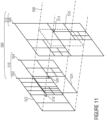
- Fig. 11 shows illustratively a picture 500 composed of three sample arrays 502, 504 and 506.
- the sample arrays are shown as if they were registered against each other spatially, so that the sample arrays 502-506 overlay each other along a direction 508 and so that a projection of the samples of the sample arrays 502-506 along the direction 508 results in the samples of all these sample arrays 502-506 to be correctly spatially located to each other.
- the planes 502 and 506 have been spread along the horizontal and vertical direction in order to adapt their spatial resolution to each other and to register them to each other.
- sample array 504 is considered to form the primary array relative to sample array 502, which forms a subordinate array relative to primary array 504.
- the subdivision of sample array 504 into blocks as decided by subdivider 30 of Fig. 1 is adopted by subordinate array 502 wherein, in accordance with the example of Fig. 11 , due to the vertical resolution of sample array 502 being half the resolution in the vertical direction of primary array 504, each block has been halved into two horizontally juxtapositioned blocks, which, due to the halving are quadratic blocks again when measured in units of the sample positions within sample array 502.
- the reference plane group can be a primary plane group or a secondary plane group.
- the co-location between blocks of different planes within a plane group is readily understandable as the subdivision of the primary sample array 504 is spatially adopted by the subordinate sample array 502, except the just-described sub-partitioning of the blocks in order to render the adopted leaf blocks into quadratic blocks.
- the co-location might be defined in a way so as to allow for a greater freedom between the subdivisions of these plane groups.
- the co-located block inside the reference plane group is determined.
- the derivation of the co-located block and the reference plane group can be done by a process similar to the following. A particular sample 514 in the current block 516 of one of the sample arrays 506 of the secondary plane group 512 is selected.
- both the subdivision of a block into prediction blocks and the coding parameters specifying how that subblocks are predicted are adaptively inferred or predicted from an already coded co-located block of a different plane group for the same picture.
- one of the two or more plane groups is coded as primary plane group. For all blocks of this primary plane group, the subdivision information and the prediction parameters are transmitted without referring to other plane groups of the same picture. The remaining plane groups are coded as secondary plane groups. For blocks of the secondary plane groups, one or more syntax elements are transmitted that signal whether the subdivision information and the prediction parameters are inferred or predicted from a co-located block of other plane groups or whether the subdivision information and the prediction parameters are transmitted in the bitstream.
- One of the one or more syntax elements may be referred to as inter-plane prediction flag or inter-plane prediction parameter. If the syntax elements signal that the subdivision information and the prediction parameters are not inferred or predicted, the subdivision information for the block and the prediction parameters for the resulting subblocks are transmitted in the bitstream without referring to other plane groups of the same picture. If the syntax elements signal that the subdivision information and the prediction parameters for the subblock are inferred or predicted, the co-located block in a so-called reference plane group is determined. The assignment of the reference plane group for the block can be configured in multiple ways.
- the inheritance information indicates, if inheritance is indicated to be used, at least one inheritance region of the array of information samples, which is composed of a set of leaf regions and corresponds to an hierarchy level of the sequence of hierarchy levels of the multi-tree subdivision, being lower than each of the hierarchy levels with which the set of leaf regions are associated.
- the inheritance information indicates as to whether inheritance is to be used or not for the current sample array such as the treeblock 150. If yes, it denotes at least one inheritance region or subregion of this treeblock 150, within which the leaf regions share coding parameters.
- the inheritance region may not be a leaf region. In the example of Fig. 12b , this inheritance region may, for example, be the region formed by subblocks 156a to 156b. Alternatively, the inheritance region may be larger and may encompass also additionally the subblocks 154a,b and d, and even alternatively, the inheritance region may be the treeblock 150 itself with all the leaf blocks thereof sharing coding parameters associated with that inheritance region.
- step 552 the inheritance information is checked as to whether inheritance is to be used or not. If yes, the process of Fig. 13 proceeds with step 554 where an inheritance subset including at least one syntax element of a predetermined syntax element type is extracted from the data stream per inter-inheritance region. In the following step 556, this inheritance subset is then copied into, or used as a prediction for, a corresponding inheritance subset of syntax elements within the set of syntax elements representing the coding parameters associated with the set of leaf regions which the respective at least one inheritance region is composed of. In other words, for each inheritance region indicated within the inheritance information, the data stream comprises an inheritance subset of syntax elements. In even other words, the inheritance pertains to at least one certain syntax element type or syntax element category which is available for inheritance.
- All the syntax elements contained in the inheritance subset is copied into or used as a prediction for the corresponding coding parameters of the leaf blocks within that inheritance region, i.e. leaf blocks 154a,b,d and 156a to 156d. In case of prediction being used, residuals are transmitted for the individual leaf blocks.
- the residual tree as an extension of the prediction tree.
- prediction blocks can be further divided into smaller blocks for the purpose of residual coding.
- the corresponding subdivision for residual coding is determined by one or more subordinate quadtree(s).
- Re c Re s SIT Re s
- r Re c Re s + p
- the decoding order for prediction is the same as the residual decoding order, which is illustrated in Figure 16 .
- Each residual leaf node is decoded as described in the previous paragraph.
- the reconstructed signal r is stored in a buffer as shown in Figure 16 . Out of this buffer, the reference samples r ' will be taken for the next prediction and decoding process.
- Fig. 17 shows decoder according to such a further embodiment.
- the decoder comprises an extractor 600, a subdivider 602 and a reconstructor 604. These blocks are connected in series in the order mentioned between an input 606 and an output 608 of the decoder of Fig. 17 .
- the extractor 600 is configured to extract a maximum region size and a multitree-subdivision information from a data stream received by the decoder at the input 606.
- the maximum region size may correspond, for example, to the above-mentioned maximum block size which indicated the size of the simply connected regions, now briefly called " blocks", of the prediction subdivision, or to the maximum block size defining the size of the treeblocks of the residual subdivision.
- the multitree-subdivision information may correspond to the quadtree subdivision information and may be coded into the bitstream in a way similar to Figs. 6a and 6b .
- the quadtree subdivision described above with respect to the foregoing figures was merely one example out of a high number of possible examples.
- the number of child nodes to a parent node may be any number greater than one, and the number may vary in accordance with the hierarchy level.
- the partitioning of a subdivision node may not be formed such that the area of the subblocks corresponding to the child nodes of a certain node are equal to each other. Rather, other partitioning rules may apply and may vary from hierarchy level to hierarchy level.
- an information on the maximum hierarchy level of the multitree subdivision or, corresponding thereto, the minimum size of the sub-region resulting from the multitree subdivision needs not to be transmitted within the data stream and the extractor may thus not extract such information from the data stream.
- the subdivider 602 is configured to spatially divide an array of information samples such as array 24, into tree root regions 150 of the maximum region size.
- the array of information samples may, as described above, represent a temporarily varying information signal, such as a video or a 3-D video or the likes. Alternatively, the array of information samples may represent a still picture.
- the subdivider 602 is further configured to subdivide, in accordance with the multitree-subdivision information extracted by extractor 600, at least a subset of the tree root regions into smaller simply connected regions of different sizes by recursively multi-partitioning the subset of the tree root regions. As just-described with respect to extractor 600, the partitioning is not restricted to quad-partitioning.
- the reconstructor 604 is configured to reconstruct the array of information samples from the data stream 606, using the subdivision into the smaller simply connected regions.
- the smaller simply connected regions correspond to the blocks shown in Fig. 3c , for example, or to the blocks shown in Figs. 9a and 9b .
- the processing order is not restricted to the depth-first traversal order.
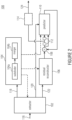
- element 102 of Fig. 2 corresponds to element 600 of Fig. 12
- element 104a of Fig. 2 corresponds to subdivider 602 of Fig. 12
- the elements 104b, 106, 108, 110, 112 and 114 form the reconstructor 604.
- the multitree subdivision information 612 and the remaining data 610 may be coded such into the data stream that the multitree subdivision information 612 precedes the remaining data 610, but as also described above, the multitree-subdivision information 612 may be interleaved with the remaining data 610 in units of the subregions into which the array of information samples is split according to the multitree subdivision information. Also, the subdivision information may change over time such as for each picture.
- the coding may be performed using time-wise prediction. That is, merely the differences to the preceding subdivision information may be coded. The just-said does also apply for the maximum region size. However, the latter may also change at a coarser time resolution.
- the data stream may further comprise an information on the maximum hierarchy level, namely information 616.
- the three empty boxes shown in dotted lines at 618 shall indicate that the data stream may also comprise the data elements 612-616 another time for a further multitree-subdivision, which may be a subordinate subdivision relative to the multitree-subdivision defined by elements 612-616, or may be a subdivision of the array of information samples independently defined.
- Fig. 19 shows, in a very abstract way, an encoder for generating the data stream of Fig. 18 decodable by the decoder of Fig. 17 .
- the encoder comprises a subdivider 650 and a final coder 652.
- the subdivider is configured to determine a maximum region size and multitree-subdivision information and to spatially divide and subdivide the array of information samples accordingly just as the subdivider 602, thus controlled by the information 612 and 614 transmitted within the data stream.
- the final decoder 652 is configured to encode the array of information samples into the data stream using the subdivision into the smaller simply connected regions defined by subdivider 650 along with the maximum region size and the multitree-subdivision information.
- a decoder may be structured as shown in Fig. 20 .
- the decoder of Fig. 20 comprises a sub-divider 700 and a reconstructor 702.
- the subdivider is configured to spatially subdivide, using a quadtree subdivision, an array of information samples representing a spatially sampled information signal, such as the array of information samples 24, into blocks of different sizes by recursively quadtree partitioning as described, for example, with respect to Fig. 3c and Figs. 9a and 9b , respectively.
- the reconstructor 702 is configured to reconstruct the array of information samples from a data stream using the subdivision into the blocks or simply connected regions with treating the blocks in a depth-first traversal order, such as the depth-first traversal order having been described above and shown at 350 in Fig. 3c , for example.
- subdivider 700 of Fig. 20 may not expect the data stream to comprise an information on a maximum region size 514 of the quadtree subdivision. Further, a maximum hierarchy level 616 may not be indicated in the data stream in accordance with the embodiment of Fig. 20 . In accordance with the embodiment of Fig. 20 , even the quadtree subdivision information needs not to be explicitly signaled within the data stream in the sense of especially dedicated syntax elements. Rather, subdivider 700 could predict the quadtree-subdivision from an analysis of the remaining data of the data stream such as an analysis of a thumbnail picture potentially contained within the data stream.
- the subdivider 700 is configured to, in extracting the quadtree subdivision information from the data stream, predict the subdivision information for the current array of information samples from a previously reconstructed/decoded quadtree-subdivision of a previously decoded array of information samples in case the array of information samples belongs to a picture of a video or some other temporally varying information signal. Further, the predivision of the sample array into treeblocks, as it was the case with the above described embodiments of Fig. 1 to 16 , needs not to be performed. Rather, the quadtree subdivision may directly performed on the sample array as it is.
- subdivider 700 corresponds to the subdivider 104a of Fig. 2
- the reconstructor 702 corresponds to elements 104b, 106, 108, 110, 112 and 114. Similar to the description of Fig. 17 , merger 104b may be left off. Further, the reconstructor 702 is not restricted to hybrid coding. The same applies to the reconstructor 604 of Fig. 12 .
- the decoder Fig. 15 may comprise an extractor extracting, for example, quadtree subdivision information based on which the sub-divider spatially subdivides the array of information samples, with this extractor corresponding to the extractor 102 of Fig. 2 . As shown with a dotted arrow, subdivider 700 may even predict a subdivision of the current array of information samples from a reconstructed array of information samples output by reconstructor 702.
- An encoder able to provide a data stream which is decodable by a decoder of Fig. 25 is structured as shown in Fig. 19 , namely into a subdivider and a final coder with the subdivider being configured to determine the quadtree subdivision and spatially subdivided array of information samples accordingly and the final coder being configured to code the array of information samples into the data stream using the subdivision by treating the block in the depth-first traversal order.
- Fig. 21 shows a decoder for decoding a coded signaling of a multitree structure prescribing a spatial multitree-subdivision of a treeblock such as the signaling shown in Figs. 6a and 6b with respect to a quadtree subdivision.
- the multitree-subdivision is not restricted to a quadtree-subdivision.
- the number of child nodes per parent node may differ depending on the hierarchy level of the parent node, in a way known to both encoding and decoding side, or in a way indicated to the decoder as side information.
- the coded signaling comprises a sequence of flags associated with nodes of the multitree structure in a depth-first traveral order such as the order 350 in Fig. 3c .
- Each flag specifies whether an area of the treeblock corresponding to the node with which the respective flag is associated is multi-partitioned, such as the flags of the flag sequences in Figs. 6a and 6b .
- the decoder in Fig. 21 is then configured to sequentially entropy-decode the flags using probability estimation contexts which are the same for flags associated with nodes of the multitree structure lying within the same hierarchy level of the multitree structure, but different for nodes of the multitree structure lying within different hierarchy levels of the multitree structure.
- the depth-first traversal order helps in exploiting the statistics of neighboring samples of neighboring subblocks of the multitree structure, while the use of different probability estimation context for flags associated with different hierarchy level nodes enables a compromise between context managing overhead on the one hand and coding efficiency on the other hand.
- Fig. 21 may generalize the aforementioned description with respect to Figs. 1-16 in another way.
- the decoder of Fig. 16 could be configured to decode a coded signal of a multitree structure, which is not necessarily prescribing a spatial multitree-subdivision of a treeblock, but which comprises a sequence of flags associated with nodes of the multitree structure in a depth-first traversal order as it was described above.
- the multitree structure could be used at the decoding side for other purposes such as in other coding applications, such as audio coding or other applications. Further, according to this alternative for Fig.
- the coded signaling also comprises an information on the maximum hierarchy level of the multitree structure and the sequence of flags is associated merely with nodes of the multitree structure in a depth-first order not being associated with nodes lying within this maximum hierarchy level.
- a respective encoder for providing the coded signaling of a multitree structure decoded by a decoder of Fig. 21 may also be used independent from the application scenery described above.
- aspects have been described in the context of an apparatus, it is clear that these aspects also represent a description of the corresponding method, where a block or device corresponds to a method step or a feature of a method step. Analogously, aspects described in the context of a method step also represent a description of a corresponding block or item or feature of a corresponding apparatus.
- Some or all of the method steps may be executed by (or using) a hardware apparatus, like for example, a microprocessor, a programmable computer or an electronic circuit. In some embodiments, some one or more of the most important method steps may be executed by such an apparatus.
- the inventive encoded/compressed signals can be stored on a digital storage medium or can be transmitted on a transmission medium such as a wireless transmission medium or a wired transmission medium such as the Internet.
- embodiments of the invention can be implemented in hardware or in software.
- the implementation can be performed using a digital storage medium, for example a floppy disk, a DVD, a Blu-Ray, a CD, a ROM, a PROM, an EPROM, an EEPROM or a FLASH memory, having electronically readable control signals stored thereon, which cooperate (or are capable of cooperating) with a programmable computer system such that the respective method is performed. Therefore, the digital storage medium may be computer readable.
- Some embodiments according to the invention comprise a data carrier having electronically readable control signals, which are capable of cooperating with a programmable computer system, such that one of the methods described herein is performed.
- embodiments of the present invention can be implemented as a computer program product with a program code, the program code being operative for performing one of the methods when the computer program product runs on a computer.
- the program code may for example be stored on a machine readable carrier.
- inventions comprise the computer program for performing one of the methods described herein, stored on a machine readable carrier.
- an embodiment of the inventive method is, therefore, a computer program having a program code for performing one of the methods described herein, when the computer program runs on a computer.
- a further embodiment of the inventive methods is, therefore, a data carrier (or a digital storage medium, or a computer-readable medium) comprising, recorded thereon, the computer program for performing one of the methods described herein.
- a further embodiment comprises a processing means, for example a computer, or a programmable logic device, configured to or adapted to perform one of the methods described herein.
- a processing means for example a computer, or a programmable logic device, configured to or adapted to perform one of the methods described herein.
- a further embodiment comprises a computer having installed thereon the computer program for performing one of the methods described herein.
- a programmable logic device for example a field programmable gate array
- a field programmable gate array may cooperate with a microprocessor in order to perform one of the methods described herein.
- the methods are preferably performed by any hardware apparatus.
Landscapes
- Engineering & Computer Science (AREA)
- Multimedia (AREA)
- Signal Processing (AREA)
- Compression Or Coding Systems Of Tv Signals (AREA)
- Compression, Expansion, Code Conversion, And Decoders (AREA)
- Two-Way Televisions, Distribution Of Moving Picture Or The Like (AREA)
Applications Claiming Priority (9)
| Application Number | Priority Date | Filing Date | Title |
|---|---|---|---|
| EP2010054843 | 2010-04-13 | ||
| EP10159819 | 2010-04-13 | ||
| EP15174132.9A EP2947884B1 (fr) | 2010-04-13 | 2011-04-08 | Codage video utilisant des subdivisions multi-arborescentes d'images |
| EP23177811.9A EP4228269B1 (fr) | 2010-04-13 | 2011-04-08 | Codage video utilisant des subdivisions multi-arborescentes d'images |
| EP20155687.5A EP3703377B1 (fr) | 2010-04-13 | 2011-04-08 | Codage video utilisant des subdivisions multi-arborescentes d'images |
| PCT/EP2011/055534 WO2011128269A1 (fr) | 2010-04-13 | 2011-04-08 | Codage vidéo utilisant des subdivisions d'images à arborescence multiples |
| EP21198746.6A EP3955579B1 (fr) | 2010-04-13 | 2011-04-08 | Codage video utilisant des subdivisions multi-arborescentes d'images |
| EP11714644.9A EP2559245B1 (fr) | 2010-04-13 | 2011-04-08 | Codage video utilisant une sub-division multi-tree des images |
| EP19187893.3A EP3621306B1 (fr) | 2010-04-13 | 2011-04-08 | Codage video utilisant des subdivisions multi-arborescentes d'images |
Related Parent Applications (7)
| Application Number | Title | Priority Date | Filing Date |
|---|---|---|---|
| EP19187893.3A Division EP3621306B1 (fr) | 2010-04-13 | 2011-04-08 | Codage video utilisant des subdivisions multi-arborescentes d'images |
| EP11714644.9A Division EP2559245B1 (fr) | 2010-04-13 | 2011-04-08 | Codage video utilisant une sub-division multi-tree des images |
| EP23177811.9A Division EP4228269B1 (fr) | 2010-04-13 | 2011-04-08 | Codage video utilisant des subdivisions multi-arborescentes d'images |
| EP23177811.9A Division-Into EP4228269B1 (fr) | 2010-04-13 | 2011-04-08 | Codage video utilisant des subdivisions multi-arborescentes d'images |
| EP21198746.6A Division EP3955579B1 (fr) | 2010-04-13 | 2011-04-08 | Codage video utilisant des subdivisions multi-arborescentes d'images |
| EP20155687.5A Division EP3703377B1 (fr) | 2010-04-13 | 2011-04-08 | Codage video utilisant des subdivisions multi-arborescentes d'images |
| EP15174132.9A Division EP2947884B1 (fr) | 2010-04-13 | 2011-04-08 | Codage video utilisant des subdivisions multi-arborescentes d'images |
Publications (4)
| Publication Number | Publication Date |
|---|---|
| EP4398575A2 true EP4398575A2 (fr) | 2024-07-10 |
| EP4398575A3 EP4398575A3 (fr) | 2024-08-21 |
| EP4398575B1 EP4398575B1 (fr) | 2025-05-28 |
| EP4398575C0 EP4398575C0 (fr) | 2025-05-28 |
Family
ID=44115570
Family Applications (11)
| Application Number | Title | Priority Date | Filing Date |
|---|---|---|---|
| EP24162721.5A Active EP4398575B1 (fr) | 2010-04-13 | 2011-04-08 | Codage video utilisant des subdivisions multi-arborescentes d'images |
| EP23177811.9A Active EP4228269B1 (fr) | 2010-04-13 | 2011-04-08 | Codage video utilisant des subdivisions multi-arborescentes d'images |
| EP21198748.2A Active EP3958573B1 (fr) | 2010-04-13 | 2011-04-08 | Codage vidéo utilisant des subdivisions multi-arborescentes d'images |
| EP21198746.6A Active EP3955579B1 (fr) | 2010-04-13 | 2011-04-08 | Codage video utilisant des subdivisions multi-arborescentes d'images |
| EP20155687.5A Active EP3703377B1 (fr) | 2010-04-13 | 2011-04-08 | Codage video utilisant des subdivisions multi-arborescentes d'images |
| EP19187893.3A Active EP3621306B1 (fr) | 2010-04-13 | 2011-04-08 | Codage video utilisant des subdivisions multi-arborescentes d'images |
| EP25202436.9A Pending EP4672756A3 (fr) | 2010-04-13 | 2011-04-08 | Codage video utilisant des subdivisions multi-arborescentes d'images |
| EP24162722.3A Active EP4398576B1 (fr) | 2010-04-13 | 2011-04-08 | Codage video utilisant des subdivisions multi-arborescentes d'images |
| EP11714644.9A Active EP2559245B1 (fr) | 2010-04-13 | 2011-04-08 | Codage video utilisant une sub-division multi-tree des images |
| EP24162720.7A Active EP4398574B1 (fr) | 2010-04-13 | 2011-04-08 | Codage video utilisant des subdivisions multi-arborescentes d'images |
| EP15174132.9A Active EP2947884B1 (fr) | 2010-04-13 | 2011-04-08 | Codage video utilisant des subdivisions multi-arborescentes d'images |
Family Applications After (10)
| Application Number | Title | Priority Date | Filing Date |
|---|---|---|---|
| EP23177811.9A Active EP4228269B1 (fr) | 2010-04-13 | 2011-04-08 | Codage video utilisant des subdivisions multi-arborescentes d'images |
| EP21198748.2A Active EP3958573B1 (fr) | 2010-04-13 | 2011-04-08 | Codage vidéo utilisant des subdivisions multi-arborescentes d'images |
| EP21198746.6A Active EP3955579B1 (fr) | 2010-04-13 | 2011-04-08 | Codage video utilisant des subdivisions multi-arborescentes d'images |
| EP20155687.5A Active EP3703377B1 (fr) | 2010-04-13 | 2011-04-08 | Codage video utilisant des subdivisions multi-arborescentes d'images |
| EP19187893.3A Active EP3621306B1 (fr) | 2010-04-13 | 2011-04-08 | Codage video utilisant des subdivisions multi-arborescentes d'images |
| EP25202436.9A Pending EP4672756A3 (fr) | 2010-04-13 | 2011-04-08 | Codage video utilisant des subdivisions multi-arborescentes d'images |
| EP24162722.3A Active EP4398576B1 (fr) | 2010-04-13 | 2011-04-08 | Codage video utilisant des subdivisions multi-arborescentes d'images |
| EP11714644.9A Active EP2559245B1 (fr) | 2010-04-13 | 2011-04-08 | Codage video utilisant une sub-division multi-tree des images |
| EP24162720.7A Active EP4398574B1 (fr) | 2010-04-13 | 2011-04-08 | Codage video utilisant des subdivisions multi-arborescentes d'images |
| EP15174132.9A Active EP2947884B1 (fr) | 2010-04-13 | 2011-04-08 | Codage video utilisant des subdivisions multi-arborescentes d'images |
Country Status (18)
| Country | Link |
|---|---|
| US (20) | US10771822B2 (fr) |
| EP (11) | EP4398575B1 (fr) |
| JP (2) | JP5856143B2 (fr) |
| KR (15) | KR101747201B1 (fr) |
| CN (20) | CN106358045B (fr) |
| BR (3) | BR122020007669B1 (fr) |
| DK (7) | DK2559245T3 (fr) |
| ES (10) | ES3036885T3 (fr) |
| FI (3) | FI4228269T3 (fr) |
| HR (1) | HRP20250346T1 (fr) |
| HU (9) | HUE063343T2 (fr) |
| LT (5) | LT3621306T (fr) |
| PL (10) | PL3703377T3 (fr) |
| PT (7) | PT3703377T (fr) |
| RS (5) | RS63059B1 (fr) |
| SI (5) | SI3958573T1 (fr) |
| TW (14) | TWI545526B (fr) |
| WO (1) | WO2011128269A1 (fr) |
Families Citing this family (115)
| Publication number | Priority date | Publication date | Assignee | Title |
|---|---|---|---|---|
| US8867854B2 (en) * | 2008-10-01 | 2014-10-21 | Electronics And Telecommunications Research Institute | Image encoder and decoder using undirectional prediction |
| BR122020007923B1 (pt) * | 2010-04-13 | 2021-08-03 | Ge Video Compression, Llc | Predição interplano |
| KR101626688B1 (ko) | 2010-04-13 | 2016-06-01 | 지이 비디오 컴프레션, 엘엘씨 | 샘플 영역 병합 |
| TWI575887B (zh) | 2010-04-13 | 2017-03-21 | Ge影像壓縮有限公司 | 在樣本陣列多元樹細分中之繼承技術 |
| RS63059B1 (sr) | 2010-04-13 | 2022-04-29 | Ge Video Compression Llc | Kodiranje videa primenom podele sa više stabala na slikama |
| CN107105300B (zh) | 2010-12-06 | 2020-04-28 | 太阳专利托管公司 | 图像解码方法及图像解码装置 |
| US9848197B2 (en) | 2011-03-10 | 2017-12-19 | Qualcomm Incorporated | Transforms in video coding |
| USRE47366E1 (en) | 2011-06-23 | 2019-04-23 | Sun Patent Trust | Image decoding method and apparatus based on a signal type of the control parameter of the current block |
| PL2725791T3 (pl) | 2011-06-23 | 2024-02-26 | Sun Patent Trust | Sposób dekodowania obrazów, sposób kodowania obrazów |
| KR102062283B1 (ko) | 2011-06-24 | 2020-01-03 | 선 페이턴트 트러스트 | 화상 복호 방법, 화상 부호화 방법, 화상 복호 장치, 화상 부호화 장치 및 화상 부호화 복호 장치 |
| WO2012176464A1 (fr) | 2011-06-24 | 2012-12-27 | パナソニック株式会社 | Procédé de décodage d'image, procédé de codage d'image, dispositif de décodage d'image, dispositif de codage d'image et dispositif de codage/décodage d'image |
| BR112013030347B1 (pt) | 2011-06-27 | 2022-06-28 | Sun Patent Trust | Método de decodificação de imagem, método de codificação de imagem, aparelho de decodificação de imagem, aparelho de codificação de imagem e aparelho de codificação e de decodificação de imagem |
| MY165469A (en) | 2011-06-28 | 2018-03-23 | Sun Patent Trust | Image decoding method, image coding method, image decoding apparatus, image coding apparatus, and image coding and decoding apparatus |
| MX2013010892A (es) | 2011-06-29 | 2013-12-06 | Panasonic Corp | Metodo de decodificacion de imagenes, metodo de codificacion de imagenes, aparato de decodificacion de imagenes, aparato de codificacion de imagenes y aparato de codificacion y decodificacion de imagenes. |
| KR102060619B1 (ko) | 2011-06-30 | 2019-12-30 | 선 페이턴트 트러스트 | 화상 복호 방법, 화상 부호화 방법, 화상 복호 장치, 화상 부호화 장치 및 화상 부호화 복호 장치 |
| PL2728869T3 (pl) | 2011-06-30 | 2022-02-28 | Sun Patent Trust | Sposób dekodowania obrazów |
| KR102404121B1 (ko) | 2011-07-11 | 2022-05-31 | 선 페이턴트 트러스트 | 화상 복호 방법, 화상 부호화 방법, 화상 복호 장치, 화상 부호화 장치 및 화상 부호화 복호 장치 |
| US11496760B2 (en) | 2011-07-22 | 2022-11-08 | Qualcomm Incorporated | Slice header prediction for depth maps in three-dimensional video codecs |
| US9521418B2 (en) | 2011-07-22 | 2016-12-13 | Qualcomm Incorporated | Slice header three-dimensional video extension for slice header prediction |
| US9288505B2 (en) | 2011-08-11 | 2016-03-15 | Qualcomm Incorporated | Three-dimensional video with asymmetric spatial resolution |
| US20130083852A1 (en) * | 2011-09-30 | 2013-04-04 | Broadcom Corporation | Two-dimensional motion compensation filter operation and processing |
| US9485503B2 (en) | 2011-11-18 | 2016-11-01 | Qualcomm Incorporated | Inside view motion prediction among texture and depth view components |
| US20130128971A1 (en) * | 2011-11-23 | 2013-05-23 | Qualcomm Incorporated | Transforms in video coding |
| US9667994B2 (en) | 2012-10-01 | 2017-05-30 | Qualcomm Incorporated | Intra-coding for 4:2:2 sample format in video coding |
| EP2920969A4 (fr) * | 2012-11-13 | 2016-07-13 | Intel Corp | Architecture de codec vidéo pour l'exécution d'opérations vidéo de dernière génération |
| CN104704827B (zh) * | 2012-11-13 | 2019-04-12 | 英特尔公司 | 用于下一代视频的内容自适应变换译码 |
| WO2014120368A1 (fr) * | 2013-01-30 | 2014-08-07 | Intel Corporation | Codage entropique adaptatif de contenu pour une vidéo de prochaine génération |
| GB2512829B (en) | 2013-04-05 | 2015-05-27 | Canon Kk | Method and apparatus for encoding or decoding an image with inter layer motion information prediction according to motion information compression scheme |
| EP2984837B1 (fr) * | 2013-04-08 | 2018-01-17 | GE Video Compression, LLC | Prédiction inter-composante |
| US20140325152A1 (en) * | 2013-04-26 | 2014-10-30 | Samsung Electronics Company, Ltd. | Quadtree based data management for memory |
| US20150063455A1 (en) * | 2013-09-02 | 2015-03-05 | Humax Holdings Co., Ltd. | Methods and apparatuses for predicting depth quadtree in three-dimensional video |
| CN111526359B (zh) | 2013-10-18 | 2023-01-06 | Ge视频压缩有限责任公司 | 多分量图片或视频编码概念 |
| US9842424B2 (en) * | 2014-02-10 | 2017-12-12 | Pixar | Volume rendering using adaptive buckets |
| CN104125469B (zh) * | 2014-07-10 | 2017-06-06 | 中山大学 | 一种用于hevc的快速编码方法 |
| CN105992000B (zh) * | 2015-03-06 | 2019-03-22 | 扬智科技股份有限公司 | 影像流的处理方法及其影像处理装置 |
| EP3099072A1 (fr) * | 2015-05-28 | 2016-11-30 | Parabola Research Limited | Procédé, système et dispositif de codage d'image et de vidéo |
| US10003807B2 (en) | 2015-06-22 | 2018-06-19 | Cisco Technology, Inc. | Block-based video coding using a mixture of square and rectangular blocks |
| US10009620B2 (en) | 2015-06-22 | 2018-06-26 | Cisco Technology, Inc. | Combined coding of split information and other block-level parameters for video coding/decoding |
| EP3375188B1 (fr) * | 2015-11-10 | 2025-12-31 | InterDigital Madison Patent Holdings, SAS | Systèmes et procédés de codage dans un environnement de codage vidéo à base de super-blocs |
| EP3363199B1 (fr) | 2015-11-27 | 2021-05-19 | MediaTek Inc. | Procédé et appareil de codage entropique et de modélisation de contexte pour un codage de vidéo et d'image |
| US10212444B2 (en) | 2016-01-15 | 2019-02-19 | Qualcomm Incorporated | Multi-type-tree framework for video coding |
| US9942548B2 (en) * | 2016-02-16 | 2018-04-10 | Google Llc | Entropy coding transform partitioning information |
| US11223852B2 (en) | 2016-03-21 | 2022-01-11 | Qualcomm Incorporated | Coding video data using a two-level multi-type-tree framework |
| US10623774B2 (en) | 2016-03-22 | 2020-04-14 | Qualcomm Incorporated | Constrained block-level optimization and signaling for video coding tools |
| CN117061743A (zh) | 2016-04-29 | 2023-11-14 | 世宗大学校产学协力团 | 用于对图像信号进行编码/解码的方法和设备 |
| US10560712B2 (en) * | 2016-05-16 | 2020-02-11 | Qualcomm Incorporated | Affine motion prediction for video coding |
| CN109479131B (zh) * | 2016-06-24 | 2023-09-01 | 世宗大学校产学协力团 | 视频信号处理方法及装置 |
| CN116828177A (zh) * | 2016-06-24 | 2023-09-29 | 世宗大学校产学协力团 | 视频信号解码和编码方法、比特流的传输方法 |
| KR102321394B1 (ko) * | 2016-08-01 | 2021-11-03 | 한국전자통신연구원 | 영상 부호화/복호화 방법 |
| US10609423B2 (en) | 2016-09-07 | 2020-03-31 | Qualcomm Incorporated | Tree-type coding for video coding |
| US10812795B2 (en) | 2016-09-30 | 2020-10-20 | Lg Electronic Inc. | Method for processing picture based on intra-prediction mode and apparatus for same |
| US20200045305A1 (en) * | 2016-09-30 | 2020-02-06 | Lg Electronics Inc. | Picture processing method and apparatus for same |
| ES2988737T3 (es) * | 2016-10-04 | 2024-11-21 | B1 Institute Image Technology Inc | Procedimiento y aparato de codificación/decodificación de datos de imagen |
| US20180109814A1 (en) * | 2016-10-14 | 2018-04-19 | Mediatek Inc. | Method And Apparatus Of Coding Unit Information Inheritance |
| IT201600122898A1 (it) * | 2016-12-02 | 2018-06-02 | Ecole Polytechnique Fed Lausanne Epfl | Metodi e apparati per codificare e decodificare immagini o flussi video digitali |
| US10373384B2 (en) * | 2016-12-12 | 2019-08-06 | Google Llc | Lightfield compression using disparity predicted replacement |
| CN116567235A (zh) * | 2016-12-16 | 2023-08-08 | 夏普株式会社 | 图像解码装置 |
| US10848788B2 (en) | 2017-01-06 | 2020-11-24 | Qualcomm Incorporated | Multi-type-tree framework for video coding |
| KR20180089290A (ko) * | 2017-01-31 | 2018-08-08 | 세종대학교산학협력단 | 영상의 부호화/복호화 방법 및 장치 |
| WO2018169571A1 (fr) * | 2017-03-15 | 2018-09-20 | Google Llc | Modèles de mouvement paramétrés à base de segmentation |
| US10855997B2 (en) * | 2017-04-14 | 2020-12-01 | Mediatek Inc. | Secondary transform kernel size selection |
| NL2018969B1 (en) | 2017-05-23 | 2018-12-04 | Boskalis Bv Baggermaatschappij | Method and system for forming structures in fluid, especially under water |
| KR102586674B1 (ko) * | 2017-07-04 | 2023-10-06 | 후아웨이 테크놀러지 컴퍼니 리미티드 | 경계 강제 파티션에 대한 개선 |
| CN110892719B (zh) * | 2017-07-17 | 2023-06-09 | 汉阳大学校产学协力团 | 影像编码/解码方法及装置 |
| CA3061701C (fr) * | 2017-09-28 | 2025-12-09 | Lg Electronics Inc. | Procede et dispositif de decodage d'image conformes a une structure divisee de blocs dans un systeme de codage d'image |
| US11877001B2 (en) | 2017-10-10 | 2024-01-16 | Qualcomm Incorporated | Affine prediction in video coding |
| EP3474233A1 (fr) * | 2017-10-19 | 2019-04-24 | Thomson Licensing | Procédé et appareil de codage/décodage de la géométrie d'un nuage de points représentant un objet 3d |
| US11144523B2 (en) * | 2017-11-17 | 2021-10-12 | Battelle Memorial Institute | Methods and data structures for efficient cross-referencing of physical-asset spatial identifiers |
| CN117676138A (zh) * | 2017-12-06 | 2024-03-08 | V-诺瓦国际有限公司 | 编码信号的方法、编码器、解码数据流的方法以及解码器 |
| CN109996075B (zh) * | 2017-12-29 | 2022-07-12 | 华为技术有限公司 | 一种图像解码方法及解码器 |
| EP3514969B1 (fr) * | 2018-01-18 | 2021-08-04 | BlackBerry Limited | Procédés et dispositifs utilisant un codage direct dans une compression de nuage de points |
| WO2019190202A1 (fr) * | 2018-03-27 | 2019-10-03 | 주식회사 케이티 | Procédé et dispositif de traitement de signal vidéo |
| KR102665985B1 (ko) * | 2018-03-29 | 2024-05-21 | 프라운호퍼-게젤샤프트 추르 푀르데룽 데어 안제반텐 포르슝 에 파우 | 픽쳐 경계 처리를 사용하여 픽쳐를 인코딩하고 디코딩하는 장치 및 방법 |
| NZ769114A (en) | 2018-04-01 | 2022-04-29 | B1 Institute Image Technology Inc | Method and apparatus for encoding/decoding image |
| US10659781B2 (en) * | 2018-04-02 | 2020-05-19 | Tencent America LLC | Concatenated coding units in flexible tree structure |
| KR20200047723A (ko) * | 2018-05-03 | 2020-05-07 | 엘지전자 주식회사 | 영상 코딩 시스템에서 블록 사이즈에 따른 변환을 사용하는 영상 디코딩 방법 및 그 장치 |
| CN110636299B (zh) | 2018-06-21 | 2022-06-14 | 北京字节跳动网络技术有限公司 | 用于处理视频数据的方法、装置及计算机可读记录介质 |
| KR102909417B1 (ko) * | 2018-06-27 | 2026-01-08 | 파나소닉 인텔렉츄얼 프로퍼티 코포레이션 오브 아메리카 | 삼차원 데이터 부호화 방법, 삼차원 데이터 복호 방법, 삼차원 데이터 부호화 장치, 및 삼차원 데이터 복호 장치 |
| CN110662029A (zh) * | 2018-06-30 | 2020-01-07 | 上海天荷电子信息有限公司 | 动态和自适应地限制取值范围的数据压缩方法和装置 |
| JP7195073B2 (ja) * | 2018-07-10 | 2022-12-23 | 古野電気株式会社 | グラフ生成装置 |
| TWI764015B (zh) * | 2018-07-13 | 2022-05-11 | 弗勞恩霍夫爾協會 | 分區框內寫碼技術 |
| CN110753222B (zh) * | 2018-08-14 | 2022-03-25 | 北京达佳互联信息技术有限公司 | 视频编码方法和确定采用帧间编码方式的方法及设备 |
| CN113273198B (zh) * | 2018-11-06 | 2024-10-18 | 交互数字Vc控股公司 | 用于视频编码和解码的多个编解码单元之间的参数分组 |
| WO2020108574A1 (fr) * | 2018-11-28 | 2020-06-04 | Beijing Bytedance Network Technology Co., Ltd. | Procédé d'amélioration de mode de dérivation de transformée ou de quantification |
| US10917636B2 (en) | 2018-12-03 | 2021-02-09 | Tencent America LLC | Method and apparatus for video coding |
| US11589050B2 (en) | 2018-12-18 | 2023-02-21 | Hfi Innovation Inc. | Method and apparatus of encoding or decoding video blocks with constraints during block partitioning |
| MX2021006569A (es) * | 2018-12-21 | 2021-07-07 | Panasonic Ip Corp America | Metodo de codificacion de datos tridimensionales, metodo de decodificacion de datos tridimensionales, dispositivo codificador de datos tridimensionales y dispositivo decodificador de datos tridimensionales. |
| SI3903489T1 (sl) | 2018-12-27 | 2024-07-31 | Huawei Technologies Co., Ltd. | Izboljšave prilagodljivega razvrščanja ploščic pri kodiranju videa |
| KR20250171412A (ko) * | 2018-12-28 | 2025-12-08 | 후아웨이 테크놀러지 컴퍼니 리미티드 | 비디오 인코더, 비디오 디코더 및 대응하는 방법 |
| WO2020182093A1 (fr) | 2019-03-08 | 2020-09-17 | Beijing Bytedance Network Technology Co., Ltd. | Signalisation d'informations de remodelage en traitement vidéo |
| KR20250173596A (ko) * | 2019-03-12 | 2025-12-10 | 프라운호퍼 게젤샤프트 쭈르 푀르데룽 데어 안겐반텐 포르슝 에. 베. | 효율적인 파티션-기반 인트라 코딩 개념의 구현 |
| PH12021552544A1 (en) | 2019-04-18 | 2022-07-04 | Beijing Bytedance Network Tech Co Ltd | Restriction on applicability of cross component mode |
| BR112021019675A2 (pt) | 2019-04-23 | 2021-12-07 | Beijing Bytedance Network Tech Co Ltd | Método para processamento de mídia visual, aparelho codificador de vídeo, aparelho decodificador de vídeo, e, mídia legível por computador |
| WO2020224629A1 (fr) | 2019-05-08 | 2020-11-12 | Beijing Bytedance Network Technology Co., Ltd. | Conditions d'applicabilité d'un codage à composants croisés |
| US11240499B2 (en) | 2019-05-24 | 2022-02-01 | Tencent America LLC | Method and apparatus for video coding |
| CN111699684B (zh) * | 2019-06-14 | 2022-05-06 | 深圳市大疆创新科技有限公司 | 三维数据点的编解码方法和装置 |
| EP3973707A4 (fr) | 2019-06-22 | 2022-08-31 | Beijing Bytedance Network Technology Co., Ltd. | Élément de syntaxe pour mise à l'échelle résiduelle de chrominance |
| US10992947B2 (en) * | 2019-06-28 | 2021-04-27 | Blackberry Limited | Planar mode in octree-based point cloud coding |
| CN114128280B (zh) | 2019-07-07 | 2023-11-14 | 北京字节跳动网络技术有限公司 | 色度残差缩放的信令通知 |
| EP3800886B1 (fr) | 2019-10-01 | 2025-03-12 | BlackBerry Limited | Mode angulaire de codage de nuage de points basé sur un arbre |
| FR3102631A1 (fr) * | 2019-10-25 | 2021-04-30 | Valeo Vision | Procédé de gestion des données d'images et dispositif d'éclairage automobile |
| KR20210066291A (ko) * | 2019-11-28 | 2021-06-07 | 주식회사 피제이팩토리 | 멀티 뎁스 이미지 생성 방법 및 이를 위한 프로그램을 기록한 기록매체 |
| CN111325044B (zh) * | 2020-01-31 | 2021-08-20 | 中国原子能科学研究院 | 一种用于核电站新组件编码的确定方法、识别系统及识别方法 |
| TWI899162B (zh) * | 2020-05-06 | 2025-10-01 | 法商內數位Ce專利控股公司 | 具有阿爾法層的3d場景傳輸 |
| US11432018B2 (en) * | 2020-05-11 | 2022-08-30 | Tencent America LLC | Semi-decoupled partitioning for video coding |
| WO2023020446A1 (fr) * | 2021-08-16 | 2023-02-23 | Mediatek Inc. | Réordonnancement de candidats et affinement de vecteur de mouvement pour un mode de partitionnement géométrique |
| WO2023020444A1 (fr) | 2021-08-16 | 2023-02-23 | Mediatek Inc. | Réordonnancement de candidats pour mode de fusion avec différence de vecteur de mouvement |
| US11917283B2 (en) * | 2021-10-27 | 2024-02-27 | Tencent America LLC | Split rendering for lightfield/immersive media using edge-cloud architecture and peer-to-peer streaming |
| US12164886B2 (en) | 2021-12-22 | 2024-12-10 | Samsung Electronics Co., Ltd. | Method and apparatus for generating applications |
| CN114494711B (zh) * | 2022-02-25 | 2023-10-31 | 南京星环智能科技有限公司 | 一种图像特征的提取方法、装置、设备及存储介质 |
| US12256077B2 (en) | 2022-03-22 | 2025-03-18 | Tencent America LLC | Systems and methods for regularization-free multi-hypothesis arithmetic coding |
| EP4345994A4 (fr) | 2022-04-27 | 2025-02-12 | LG Energy Solution, Ltd. | Module de batterie, bloc-batterie et véhicule les comprenant |
| US12120327B2 (en) | 2023-02-01 | 2024-10-15 | Realtek Semiconductor Corp. | Method for processing LCEVC enhancement layer of residuals |
| CN116705042B (zh) * | 2023-06-19 | 2026-02-10 | 中国科学技术大学 | 一种长帧移语音相位谱预测方法及装置 |
| WO2025159579A1 (fr) * | 2024-01-26 | 2025-07-31 | 경희대학교 산학협력단 | Procédé et dispositif de codage/décodage d'image |
Family Cites Families (281)
| Publication number | Priority date | Publication date | Assignee | Title |
|---|---|---|---|---|
| FR2633468B1 (fr) | 1988-06-24 | 1990-11-09 | France Etat | Procede de codage de donnees d'assistance a la reconstruction d'images electroniques animees sous-echantillonnees |
| US5809270A (en) | 1992-06-30 | 1998-09-15 | Discovision Associates | Inverse quantizer |
| US5784631A (en) | 1992-06-30 | 1998-07-21 | Discovision Associates | Huffman decoder |
| US7095783B1 (en) | 1992-06-30 | 2006-08-22 | Discovision Associates | Multistandard video decoder and decompression system for processing encoded bit streams including start codes and methods relating thereto |
| US6408097B1 (en) * | 1993-08-30 | 2002-06-18 | Sony Corporation | Picture coding apparatus and method thereof |
| US5446806A (en) | 1993-11-15 | 1995-08-29 | National Semiconductor Corporation | Quadtree-structured Walsh transform video/image coding |
| CA2145361C (fr) | 1994-03-24 | 1999-09-07 | Martin William Sotheran | Gestionnaire de tampons |
| DE69527525T2 (de) | 1995-08-21 | 2003-04-03 | Alcatel, Paris | Verfahren zur Schachtelung von Datenrahmen, Übertragungsfehlerkorrekturanordnung und Modulator damit |
| JP2000500887A (ja) | 1995-09-25 | 2000-01-25 | アドビ システムズ インコーポレイテッド | 電子文書への最適アクセス |
| JPH10511532A (ja) | 1995-10-18 | 1998-11-04 | フィリップス エレクトロニクス ネムローゼ フェンノートシャップ | ビデオ画像符号化方法 |
| WO1997017797A2 (fr) * | 1995-10-25 | 1997-05-15 | Sarnoff Corporation | Appareil et procede d'evaluation du mouvement de blocs de longueur variable fondee sur une quadripartition |
| TW346571B (en) | 1996-02-06 | 1998-12-01 | Matsushita Electric Industrial Co Ltd | Data reception apparatus, data transmission apparatus, information processing system, data reception method |
| US6005981A (en) | 1996-04-11 | 1999-12-21 | National Semiconductor Corporation | Quadtree-structured coding of color images and intra-coded images |
| DE19615493A1 (de) | 1996-04-19 | 1997-10-23 | Philips Patentverwaltung | Verfahren zur Bildsegmentierung |
| CN100521787C (zh) | 1996-05-28 | 2009-07-29 | 松下电器产业株式会社 | 图像预测编码方法 |
| US6639945B2 (en) | 1997-03-14 | 2003-10-28 | Microsoft Corporation | Method and apparatus for implementing motion detection in video compression |
| US6057884A (en) | 1997-06-05 | 2000-05-02 | General Instrument Corporation | Temporal and spatial scaleable coding for video object planes |
| US6269192B1 (en) * | 1997-07-11 | 2001-07-31 | Sarnoff Corporation | Apparatus and method for multiscale zerotree entropy encoding |
| CN1882092B (zh) | 1998-03-10 | 2012-07-18 | 索尼公司 | 利用编码历史信息的编码转换系统 |
| US6067574A (en) * | 1998-05-18 | 2000-05-23 | Lucent Technologies Inc | High speed routing using compressed tree process |
| US6269175B1 (en) | 1998-08-28 | 2001-07-31 | Sarnoff Corporation | Method and apparatus for enhancing regions of aligned images using flow estimation |
| US6563953B2 (en) | 1998-11-30 | 2003-05-13 | Microsoft Corporation | Predictive image compression using a single variable length code for both the luminance and chrominance blocks for each macroblock |
| US7085319B2 (en) | 1999-04-17 | 2006-08-01 | Pts Corporation | Segment-based encoding system using segment hierarchies |
| JP2000350207A (ja) | 1999-06-08 | 2000-12-15 | Matsushita Electric Ind Co Ltd | 低解像度ビデオ復号化のための一般化直交変換方法および装置 |
| FI116992B (fi) | 1999-07-05 | 2006-04-28 | Nokia Corp | Menetelmät, järjestelmä ja laitteet audiosignaalin koodauksen ja siirron tehostamiseksi |
| JP2003513538A (ja) * | 1999-10-22 | 2003-04-08 | アクティブスカイ,インコーポレイテッド | オブジェクト指向ビデオシステム |
| JP3957937B2 (ja) | 1999-12-21 | 2007-08-15 | キヤノン株式会社 | 画像処理装置及び方法並びに記憶媒体 |
| EP1404135B1 (fr) | 2000-01-21 | 2016-12-14 | Nokia Technologies Oy | Système et méthode d'estimation de mouvement pour un codeur vidéo |
| FI116819B (fi) | 2000-01-21 | 2006-02-28 | Nokia Corp | Menetelmä kuvien lähettämiseksi ja kuvakooderi |
| US6910001B2 (en) * | 2000-03-22 | 2005-06-21 | Schlumberger Technology Corp. | Distributed multiresolution geometry modeling system and method |
| US6785423B1 (en) | 2000-05-26 | 2004-08-31 | Eastman Kodak Company | Producing a compressed digital image organized into layers having information relating to different viewing conditions and resolutions |
| CN1383684A (zh) * | 2000-06-14 | 2002-12-04 | 皇家菲利浦电子有限公司 | 彩色视频编码与解码方法 |
| JP2004505520A (ja) | 2000-07-25 | 2004-02-19 | コーニンクレッカ フィリップス エレクトロニクス エヌ ヴィ | ウェーブレット分解を用いたビデオ符号化方法 |
| AUPR063400A0 (en) * | 2000-10-06 | 2000-11-02 | Canon Kabushiki Kaisha | Xml encoding scheme |
| US7929610B2 (en) | 2001-03-26 | 2011-04-19 | Sharp Kabushiki Kaisha | Methods and systems for reducing blocking artifacts with reduced complexity for spatially-scalable video coding |
| US7450641B2 (en) | 2001-09-14 | 2008-11-11 | Sharp Laboratories Of America, Inc. | Adaptive filtering based upon boundary strength |
| JP2003018602A (ja) | 2001-04-24 | 2003-01-17 | Monolith Co Ltd | 画像データ符号化および復号のための方法および装置 |
| US6987866B2 (en) | 2001-06-05 | 2006-01-17 | Micron Technology, Inc. | Multi-modal motion estimation for video sequences |
| US7483581B2 (en) | 2001-07-02 | 2009-01-27 | Qualcomm Incorporated | Apparatus and method for encoding digital image data in a lossless manner |
| JP2003018604A (ja) | 2001-07-04 | 2003-01-17 | Matsushita Electric Ind Co Ltd | 画像信号符号化方法、画像信号符号化装置および記録媒体 |
| US6971770B2 (en) | 2001-09-06 | 2005-12-06 | Martin Professional A/S | Lighting apparatus |
| EP1351510A4 (fr) | 2001-09-14 | 2008-12-10 | Ntt Docomo Inc | Procede de codage, procede de decodage, appareil de codage, appareil de decodage, systeme de traitement d'image, programme de codage, et programme de decodage |
| US6950469B2 (en) * | 2001-09-17 | 2005-09-27 | Nokia Corporation | Method for sub-pixel value interpolation |
| JP2005506775A (ja) * | 2001-10-16 | 2005-03-03 | コーニンクレッカ フィリップス エレクトロニクス エヌ ヴィ | ビデオ符号化方法及び対応する送信可能なビデオ信号 |
| EP1445957A4 (fr) | 2001-11-16 | 2009-05-06 | Ntt Docomo Inc | Procede de codage d'image, procede de decodage d'image, codeur et decodeur d'image, programme, signal de donnees informatiques et systeme d'emission d'image |
| RU2237284C2 (ru) * | 2001-11-27 | 2004-09-27 | Самсунг Электроникс Ко., Лтд. | Способ генерирования структуры узлов, предназначенных для представления трехмерных объектов с использованием изображений с глубиной |
| US7295609B2 (en) | 2001-11-30 | 2007-11-13 | Sony Corporation | Method and apparatus for coding image information, method and apparatus for decoding image information, method and apparatus for coding and decoding image information, and system of coding and transmitting image information |
| EP1324615A1 (fr) | 2001-12-28 | 2003-07-02 | Deutsche Thomson-Brandt Gmbh | Transcodage de flux MPEG pour l'addition du contenu de sous-images |
| KR20030065606A (ko) * | 2002-01-30 | 2003-08-09 | 양송철 | 개인 자동독립코드를 이용한 멀티트리구조의 보너스 적립순환 시스템과 그 방법 |
| KR20030068606A (ko) | 2002-02-15 | 2003-08-25 | (주)하이브레인아이엔씨 | 컴퓨터에서 전자 학습지의 운용 방법 |
| US6680996B2 (en) | 2002-02-19 | 2004-01-20 | Jordan Valley Applied Radiation Ltd. | Dual-wavelength X-ray reflectometry |
| CN101132528B (zh) * | 2002-04-12 | 2011-08-03 | 三菱电机株式会社 | 元数据再生、分发、检索装置、元数据再生成条件设定装置 |
| JP4130780B2 (ja) | 2002-04-15 | 2008-08-06 | 松下電器産業株式会社 | 画像符号化方法および画像復号化方法 |
| US20030198290A1 (en) | 2002-04-19 | 2003-10-23 | Dynamic Digital Depth Pty.Ltd. | Image encoding system |
| US7433526B2 (en) | 2002-04-30 | 2008-10-07 | Hewlett-Packard Development Company, L.P. | Method for compressing images and image sequences through adaptive partitioning |
| CN1666532A (zh) | 2002-07-02 | 2005-09-07 | 松下电器产业株式会社 | 图像编码方法和图像解码方法 |
| US7154952B2 (en) | 2002-07-19 | 2006-12-26 | Microsoft Corporation | Timestamp-independent motion vector prediction for predictive (P) and bidirectionally predictive (B) pictures |
| US6975773B1 (en) | 2002-07-30 | 2005-12-13 | Qualcomm, Incorporated | Parameter selection in data compression and decompression |
| JP3950777B2 (ja) | 2002-09-30 | 2007-08-01 | キヤノン株式会社 | 画像処理方法、画像処理装置および画像処理プログラム |
| US7266247B2 (en) | 2002-09-30 | 2007-09-04 | Samsung Electronics Co., Ltd. | Image coding method and apparatus using spatial predictive coding of chrominance and image decoding method and apparatus |
| JP2004135252A (ja) | 2002-10-09 | 2004-04-30 | Sony Corp | 符号化処理方法、符号化装置及び復号化装置 |
| US7254533B1 (en) | 2002-10-17 | 2007-08-07 | Dilithium Networks Pty Ltd. | Method and apparatus for a thin CELP voice codec |
| EP1431919B1 (fr) | 2002-12-05 | 2010-03-03 | Samsung Electronics Co., Ltd. | Procédé et appareil pour le codage et le décodage d'objets tridimensionnels au moyen d'octrees |
| CN1795680B (zh) | 2003-03-03 | 2010-06-16 | 新加坡科技研究局 | 采用avc帧内预测以便对数字视频进行编码的方法和装置 |
| US7366352B2 (en) | 2003-03-20 | 2008-04-29 | International Business Machines Corporation | Method and apparatus for performing fast closest match in pattern recognition |
| US7643558B2 (en) | 2003-03-24 | 2010-01-05 | Qualcomm Incorporated | Method, apparatus, and system for encoding and decoding side information for multimedia transmission |
| GB2454195A (en) | 2007-10-30 | 2009-05-06 | Sony Corp | Address generation polynomial and permutation matrix for DVB-T2 16k OFDM sub-carrier mode interleaver |
| BRPI0408835A (pt) | 2003-03-28 | 2006-04-04 | Digital Accelerator Corp | método e aparelho de codificação de quadro residual de movimento com base em transformada com base supercompleta para compressão de vìdeo |
| HUP0301368A3 (en) | 2003-05-20 | 2005-09-28 | Amt Advanced Multimedia Techno | Method and equipment for compressing motion picture data |
| US7083903B2 (en) | 2003-06-17 | 2006-08-01 | Lam Research Corporation | Methods of etching photoresist on substrates |
| JP4815107B2 (ja) | 2003-07-16 | 2011-11-16 | 三星電子株式会社 | カラー平面間予測を利用した無損失映像符号化/復号化方法及び装置 |
| KR100624429B1 (ko) | 2003-07-16 | 2006-09-19 | 삼성전자주식회사 | 칼라 영상을 위한 비디오 부호화/복호화 장치 및 그 방법 |
| US7010044B2 (en) | 2003-07-18 | 2006-03-07 | Lsi Logic Corporation | Intra 4×4 modes 3, 7 and 8 availability determination intra estimation and compensation |
| FR2858741A1 (fr) | 2003-08-07 | 2005-02-11 | Thomson Licensing Sa | Dispositif et procede de compression d'images numeriques |
| US7724827B2 (en) | 2003-09-07 | 2010-05-25 | Microsoft Corporation | Multi-layer run level encoding and decoding |
| CN1322472C (zh) * | 2003-09-08 | 2007-06-20 | 中国人民解放军第一军医大学 | 基于小波变换的预测四叉树图像压缩及解压方法 |
| EP1684435A4 (fr) | 2003-10-29 | 2007-01-10 | Nec Corp | Appareil de decodage ou de codage, tampon intermediaire insere entre le decodeur ou l'encodeur de signes arithmetiques et dispositif de binarisation ou de debinarisation |
| KR20050045746A (ko) | 2003-11-12 | 2005-05-17 | 삼성전자주식회사 | 계층 구조의 가변 블록 크기를 이용한 움직임 추정 방법및 장치 |
| DE602004017689D1 (de) | 2003-11-21 | 2008-12-24 | Samsung Electronics Co Ltd | Vorrichtung und Methode zur Erzeugung von kodierten Blockanordnungen für ein Alpha-Kanalbild sowie Alpha-Kanalkodierungs und -dekodierungsvorrichtung und -methode. |
| US7418455B2 (en) | 2003-11-26 | 2008-08-26 | International Business Machines Corporation | System and method for indexing weighted-sequences in large databases |
| KR100556911B1 (ko) | 2003-12-05 | 2006-03-03 | 엘지전자 주식회사 | 무선 동영상 스트리밍 서비스를 위한 동영상 데이터의 구조 |
| US7362809B2 (en) | 2003-12-10 | 2008-04-22 | Lsi Logic Corporation | Computational reduction in motion estimation based on lower bound of cost function |
| US7599435B2 (en) * | 2004-01-30 | 2009-10-06 | Fraunhofer-Gesellschaft Zur Foerderung Der Angewandten Forschung E.V. | Video frame encoding and decoding |
| US7649539B2 (en) * | 2004-03-10 | 2010-01-19 | Microsoft Corporation | Image formats for video capture, processing and display |
| US20050206741A1 (en) | 2004-03-19 | 2005-09-22 | Raber Gregory W | Law enforcement vehicle surveillance system |
| CN1691087B (zh) | 2004-04-26 | 2011-07-06 | 图形安全系统公司 | 用于解码数字编码图像的系统和方法 |
| ES2383656T3 (es) * | 2004-04-28 | 2012-06-25 | Panasonic Corporation | Aparato de generación de flujos de imágenes en movimiento, aparato de codificación de imágenes en movimiento, aparato multiplexador de imágenes en movimiento y aparato de descodificación de imágenes en movimiento |
| CN1281065C (zh) | 2004-05-20 | 2006-10-18 | 复旦大学 | 基于树状结构的等级树集合划分视频图像压缩方法 |
| CN100534196C (zh) | 2004-05-25 | 2009-08-26 | Nxp股份有限公司 | 用于编码数字视频数据的方法和设备 |
| US20060002474A1 (en) | 2004-06-26 | 2006-01-05 | Oscar Chi-Lim Au | Efficient multi-block motion estimation for video compression |
| CN1812579B (zh) | 2004-06-27 | 2010-04-21 | 苹果公司 | 在视频数据流的编码和解码中存储设备的有效使用 |
| US7292257B2 (en) | 2004-06-28 | 2007-11-06 | Microsoft Corporation | Interactive viewpoint video system and process |
| CN1268136C (zh) | 2004-07-02 | 2006-08-02 | 上海广电(集团)有限公司中央研究院 | 基于图像切片结构的帧场自适应编码方法 |
| KR100657268B1 (ko) | 2004-07-15 | 2006-12-14 | 학교법인 대양학원 | 컬러 영상의 신축적 부호화, 복호화 방법 및 장치 |
| CN101124589A (zh) | 2004-08-09 | 2008-02-13 | 图形安全系统公司 | 通过使用多级图像编码和解码来认证对象的系统和方法 |
| CN1589022A (zh) * | 2004-08-26 | 2005-03-02 | 中芯联合(北京)微电子有限公司 | 多模式运动估计中由朝向树决定的宏块分割模式选择方法 |
| DE102004059978B4 (de) * | 2004-10-15 | 2006-09-07 | Fraunhofer-Gesellschaft zur Förderung der angewandten Forschung e.V. | Vorrichtung und Verfahren zum Erzeugen einer codierten Videosequenz und zum Decodieren einer codierten Videosequenz unter Verwendung einer Zwischen-Schicht-Restwerte-Prädiktion sowie ein Computerprogramm und ein computerlesbares Medium |
| CN101416149A (zh) | 2004-10-21 | 2009-04-22 | 索尼电子有限公司 | 以高级视频编解码器文件格式支持保真度范围扩展 |
| CN1780278A (zh) | 2004-11-19 | 2006-05-31 | 松下电器产业株式会社 | 子载波通信系统中自适应调制与编码方法和设备 |
| US20060120454A1 (en) | 2004-11-29 | 2006-06-08 | Park Seung W | Method and apparatus for encoding/decoding video signal using motion vectors of pictures in base layer |
| KR100703734B1 (ko) | 2004-12-03 | 2007-04-05 | 삼성전자주식회사 | Dct 업샘플링을 이용한 다 계층 비디오 인코딩/디코딩방법 및 장치 |
| CN101073265B (zh) | 2004-12-03 | 2012-08-22 | 汤姆森许可贸易公司 | 可缩放视频编码方法 |
| US7970219B2 (en) | 2004-12-30 | 2011-06-28 | Samsung Electronics Co., Ltd. | Color image encoding and decoding method and apparatus using a correlation between chrominance components |
| KR101138392B1 (ko) | 2004-12-30 | 2012-04-26 | 삼성전자주식회사 | 색차 성분의 상관관계를 이용한 컬러 영상의 부호화,복호화 방법 및 그 장치 |
| US20060153300A1 (en) | 2005-01-12 | 2006-07-13 | Nokia Corporation | Method and system for motion vector prediction in scalable video coding |
| US20060153295A1 (en) | 2005-01-12 | 2006-07-13 | Nokia Corporation | Method and system for inter-layer prediction mode coding in scalable video coding |
| EP1849303A2 (fr) | 2005-02-18 | 2007-10-31 | THOMSON Licensing | Méthode pour le codage d'image échelonnable |
| EP1894412A1 (fr) | 2005-02-18 | 2008-03-05 | THOMSON Licensing | Action procede permettant de deriver des informations de codage pour des images hautes resolution a partir d'images basse resolution et dispositifs de codage et de decodage faisant appel a ce procede |
| JP4504230B2 (ja) | 2005-03-02 | 2010-07-14 | 株式会社東芝 | 動画像処理装置、動画像処理方法、及び動画像処理プログラム |
| TWI259727B (en) | 2005-03-09 | 2006-08-01 | Sunplus Technology Co Ltd | Method for rapidly determining macroblock mode |
| US7961963B2 (en) | 2005-03-18 | 2011-06-14 | Sharp Laboratories Of America, Inc. | Methods and systems for extended spatial scalability with picture-level adaptation |
| EP1711018A1 (fr) | 2005-04-08 | 2006-10-11 | Thomson Licensing | Méthode et appareil pour le codage et décodage d'images vidéo. |
| US20060233262A1 (en) | 2005-04-13 | 2006-10-19 | Nokia Corporation | Signaling of bit stream ordering in scalable video coding |
| KR101246915B1 (ko) | 2005-04-18 | 2013-03-25 | 삼성전자주식회사 | 동영상 부호화 또는 복호화 방법 및 장치 |
| KR100763181B1 (ko) | 2005-04-19 | 2007-10-05 | 삼성전자주식회사 | 기초계층과 향상계층의 데이터를 바탕으로 예측 정보를코딩하여 코딩율을 향상시키는 방법 및 장치 |
| KR100746007B1 (ko) | 2005-04-19 | 2007-08-06 | 삼성전자주식회사 | 엔트로피 코딩의 컨텍스트 모델을 적응적으로 선택하는방법 및 비디오 디코더 |
| EP1880364A1 (fr) | 2005-05-12 | 2008-01-23 | Bracco Imaging S.P.A. | Procede de codage des pixels ou des voxels d'une image numerique et procede de traitement d'images numeriques |
| US7548853B2 (en) | 2005-06-17 | 2009-06-16 | Shmunk Dmitry V | Scalable compressed audio bit stream and codec using a hierarchical filterbank and multichannel joint coding |
| CN101213842A (zh) | 2005-06-29 | 2008-07-02 | 诺基亚公司 | 用于使用运动补偿时域滤波的视频编码中的更新步骤的方法和装置 |
| KR100644490B1 (ko) | 2005-07-01 | 2006-11-10 | 엘에스전선 주식회사 | 난연성 전선 피복재료 조성물 및 이를 이용한 해양 케이블 |
| JP2007043651A (ja) | 2005-07-05 | 2007-02-15 | Ntt Docomo Inc | 動画像符号化装置、動画像符号化方法、動画像符号化プログラム、動画像復号装置、動画像復号方法及び動画像復号プログラム |
| JP4444180B2 (ja) | 2005-07-20 | 2010-03-31 | 株式会社東芝 | テクスチャ符号化装置、テクスチャ復号化装置、方法、およびプログラム |
| KR20070012201A (ko) | 2005-07-21 | 2007-01-25 | 엘지전자 주식회사 | 영상 신호의 인코딩 및 디코딩 방법 |
| CN101228794B (zh) | 2005-07-21 | 2011-05-11 | 汤姆森许可贸易公司 | 针对加权预测的可分级视频编码方法及设备 |
| CA2610276C (fr) | 2005-07-22 | 2013-01-29 | Mitsubishi Electric Corporation | Codeur d'image et decodeur d'image, methode de codage d'image et methode de decodage d'image, programme de codage d'image et programme de decodage d'image et support d'enregistrement lisible par ordinateur enregistre avec un programme de codage d'image et support d'enregistrement lisible par ordinateur enregistre avec un programme de decodage d'image |
| US8879635B2 (en) | 2005-09-27 | 2014-11-04 | Qualcomm Incorporated | Methods and device for data alignment with time domain boundary |
| US8625678B2 (en) | 2005-09-29 | 2014-01-07 | Telecom Italia S.P.A. | Method for scalable video coding on a plurality of space resolution levels |
| CN101288311B (zh) | 2005-10-12 | 2011-05-11 | 汤姆森特许公司 | 用于可分级视频编码和解码中的加权预测的方法和装置 |
| BRPI0616745A2 (pt) * | 2005-10-19 | 2011-06-28 | Thomson Licensing | codificação / decodificação de vìdeo com múltiplas visualizações usando codificação / decodificação de vìdeo escalonável |
| KR100763196B1 (ko) | 2005-10-19 | 2007-10-04 | 삼성전자주식회사 | 어떤 계층의 플래그를 계층간의 연관성을 이용하여부호화하는 방법, 상기 부호화된 플래그를 복호화하는방법, 및 장치 |
| KR100873636B1 (ko) | 2005-11-14 | 2008-12-12 | 삼성전자주식회사 | 단일 부호화 모드를 이용하는 영상 부호화/복호화 방법 및장치 |
| RU2340114C1 (ru) | 2005-11-18 | 2008-11-27 | Сони Корпорейшн | Устройство и способ кодирования, устройство и способ декодирования и система передачи |
| KR100717055B1 (ko) | 2005-11-18 | 2007-05-10 | 삼성전자주식회사 | Cabac 복호기에서 복수의 이진 값들을 파이프라인방식에 의하여 복호화하는 방법 및 이를 위한 복호화 장치 |
| GB0600141D0 (en) | 2006-01-05 | 2006-02-15 | British Broadcasting Corp | Scalable coding of video signals |
| WO2007077116A1 (fr) | 2006-01-05 | 2007-07-12 | Thomson Licensing | Procédé de prévision de mouvement intercouche |
| KR20070074452A (ko) | 2006-01-09 | 2007-07-12 | 엘지전자 주식회사 | 영상신호의 엔코딩/디코딩시의 레이어간 예측 방법 |
| US8457201B2 (en) | 2006-01-09 | 2013-06-04 | Lg Electronics Inc. | Inter-layer prediction method for video signal |
| US8315308B2 (en) | 2006-01-11 | 2012-11-20 | Qualcomm Incorporated | Video coding with fine granularity spatial scalability |
| US8861585B2 (en) | 2006-01-20 | 2014-10-14 | Qualcomm Incorporated | Method and apparatus for error resilience algorithms in wireless video communication |
| WO2007111806A2 (fr) | 2006-03-23 | 2007-10-04 | Massachusetts Eye And Ear Infirmary | Compositions et procedes pour la reduction des tissus adipeux de l'organisme |
| US7929608B2 (en) | 2006-03-28 | 2011-04-19 | Sony Corporation | Method of reducing computations in intra-prediction and mode decision processes in a digital video encoder |
| KR101205077B1 (ko) | 2006-03-31 | 2012-11-27 | 인텔 코포레이션 | 디코더, 소프트 비트 블록 디코딩 방법, 데이터 저장 시스템, 멀티캐리어 수신기 및 기계 액세스 가능한 매체 |
| US7916934B2 (en) | 2006-04-04 | 2011-03-29 | Mitsubishi Electric Research Laboratories, Inc. | Method and system for acquiring, encoding, decoding and displaying 3D light fields |
| CN101052120A (zh) | 2006-04-06 | 2007-10-10 | 丁宜良 | 用于数字广播节目的复合式播放系统 |
| AU2007260586B2 (en) | 2006-06-14 | 2012-08-02 | Elders Toll Formulation Pty Ltd | Herbicidal composition and method for removing unwanted foliage |
| CN101047733B (zh) * | 2006-06-16 | 2010-09-29 | 华为技术有限公司 | 短信处理方法以及装置 |
| KR101526914B1 (ko) * | 2006-08-02 | 2015-06-08 | 톰슨 라이센싱 | 비디오 디코딩을 위한 적응형 기하학적 파티셔닝 방법 및 장치 |
| US20080086545A1 (en) | 2006-08-16 | 2008-04-10 | Motorola, Inc. | Network configuration using configuration parameter inheritance |
| WO2008027192A2 (fr) * | 2006-08-25 | 2008-03-06 | Thomson Licensing | Procédés et appareil destinés à effectuer un partitionnement à résolution réduite |
| WO2008030067A1 (fr) | 2006-09-07 | 2008-03-13 | Lg Electronics Inc. | Procédé et dispositif de décodage/codage d'un signal vidéo |
| CN100471275C (zh) | 2006-09-08 | 2009-03-18 | 清华大学 | 用于h.264/avc编码器的运动估计方法 |
| CN100486336C (zh) | 2006-09-21 | 2009-05-06 | 上海大学 | 基于h.264压缩域运动对象实时分割方法 |
| JP4956612B2 (ja) | 2006-10-12 | 2012-06-20 | 株式会社東芝 | 画像符号化装置及び画像符号化方法 |
| US9014280B2 (en) | 2006-10-13 | 2015-04-21 | Qualcomm Incorporated | Video coding with adaptive filtering for motion compensated prediction |
| JP2008097498A (ja) | 2006-10-16 | 2008-04-24 | Olympus Corp | プロセッシング・エレメント、コントロール・ユニット、及びこれらを備える処理システム、分散処理方法 |
| JP5134001B2 (ja) | 2006-10-18 | 2013-01-30 | アップル インコーポレイテッド | 下層のフィルタリングを備えたスケーラブルビデオ符号化 |
| US7775002B2 (en) | 2006-11-10 | 2010-08-17 | John Puchniak | Portable hurricane and security window barrier |
| CN101401430B (zh) | 2006-11-17 | 2012-02-29 | Lg电子株式会社 | 用于解码/编码视频信号的方法及装置 |
| CN1976488A (zh) | 2006-12-01 | 2007-06-06 | 陈锋 | 基于第三代移动通信网络的汽车防盗系统 |
| EP1933564A1 (fr) | 2006-12-14 | 2008-06-18 | Thomson Licensing | Procédé et appareil de codage et/ou de décodage de données vidéo à l'aide d'un ordre de prédiction adaptatif pour la prédiction spatiale et de profondeur de bit |
| TWI351883B (en) | 2006-12-28 | 2011-11-01 | Nippon Telegraph & Telephone | Video encoding method and decoding method, apparat |
| CN104822062B (zh) | 2007-01-08 | 2018-11-30 | 诺基亚公司 | 用于视频编码中扩展空间可分级性的改进层间预测 |
| US20100046620A1 (en) | 2007-01-09 | 2010-02-25 | Jung-Won Kang | Scalable video coding encoder with adaptive reference fgs and fgs motion refinement mechanism and method thereof |
| WO2008088768A2 (fr) | 2007-01-11 | 2008-07-24 | Thomson Licensing | Procédés et appareil pour utiliser une syntaxe pour l'élément de syntaxe de drapeau_bloc_codé et élément de syntaxe de motif_bloc_codé pour les profils prédictifs intra 4 :4 :4 cavlc, intra 4 :4 :4 élevé et 4 :4 :4 élevé dans un codag |
| CN101222641B (zh) | 2007-01-11 | 2011-08-24 | 华为技术有限公司 | 帧内预测编解码方法及其装置 |
| US20080170793A1 (en) | 2007-01-12 | 2008-07-17 | Mitsubishi Electric Corporation | Image encoding device and image encoding method |
| JP2008193627A (ja) | 2007-01-12 | 2008-08-21 | Mitsubishi Electric Corp | 画像符号化装置、画像復号装置、および画像符号化方法、画像復号方法 |
| JP5026092B2 (ja) | 2007-01-12 | 2012-09-12 | 三菱電機株式会社 | 動画像復号装置および動画像復号方法 |
| CN101018333A (zh) | 2007-02-09 | 2007-08-15 | 上海大学 | 空域可分级信噪比精细可分级视频编码方法 |
| JP2010135863A (ja) | 2007-03-28 | 2010-06-17 | Toshiba Corp | 画像符号化方法及び装置 |
| EP2140684B1 (fr) | 2007-04-12 | 2018-08-15 | Thomson Licensing DTV | Procédé et appareil de fusion selon le contexte pour des modes skip/direct pour un codage et un décodage vidéo |
| KR20080093386A (ko) | 2007-04-16 | 2008-10-21 | 한국전자통신연구원 | 컬러 동영상 신축 부호화와 복호화 방법 및 그 장치 |
| TW200845723A (en) | 2007-04-23 | 2008-11-16 | Thomson Licensing | Method and apparatus for encoding video data, method and apparatus for decoding encoded video data and encoded video signal |
| US20090165041A1 (en) | 2007-12-21 | 2009-06-25 | Penberthy John S | System and Method for Providing Interactive Content with Video Content |
| CN100515087C (zh) * | 2007-05-30 | 2009-07-15 | 威盛电子股份有限公司 | 决定二相邻的宏区块是否位于相同条带区域的方法和装置 |
| KR100906243B1 (ko) | 2007-06-04 | 2009-07-07 | 전자부품연구원 | Rgb 색 공간 신호의 영상 부호화 방법 |
| CN100496129C (zh) | 2007-06-05 | 2009-06-03 | 南京大学 | 基于h.264多路视频转码复用的方法 |
| CN101321283B (zh) | 2007-06-10 | 2010-04-07 | 华为技术有限公司 | 兼容不同大小块变换的编解码方法及编解码器 |
| JP5801054B2 (ja) | 2007-06-12 | 2015-10-28 | トムソン ライセンシングThomson Licensing | スライスデータ用のマルチパスビデオのシンタックス構造をサポートする方法及び装置 |
| JP2008311781A (ja) | 2007-06-12 | 2008-12-25 | Ntt Docomo Inc | 動画像符号化装置、動画像復号化装置、動画像符号化方法、動画像復号化方法、動画像符号化プログラム及び動画像復号化プログラム |
| CN101325714B (zh) | 2007-06-13 | 2010-10-27 | 华为技术有限公司 | 变换数据处理方法和装置以及编码、解码方法和装置 |
| JP4551948B2 (ja) | 2007-06-13 | 2010-09-29 | シャープ株式会社 | 線状光源装置、面発光装置、面状光源装置、および、液晶表示装置 |
| KR101518999B1 (ko) | 2007-06-14 | 2015-05-12 | 톰슨 라이센싱 | 코딩된 비트스트림의 수정 |
| US8619853B2 (en) | 2007-06-15 | 2013-12-31 | Qualcomm Incorporated | Separable directional transforms |
| US8085852B2 (en) | 2007-06-26 | 2011-12-27 | Mitsubishi Electric Research Laboratories, Inc. | Inverse tone mapping for bit-depth scalable image coding |
| US8345968B2 (en) | 2007-06-28 | 2013-01-01 | Mitsubishi Electric Corporation | Image encoding device, image decoding device, image encoding method and image decoding method |
| CN100534186C (zh) | 2007-07-05 | 2009-08-26 | 西安电子科技大学 | 基于码率预分配的jpeg2000自适应率控制系统及方法 |
| US8458612B2 (en) | 2007-07-29 | 2013-06-04 | Hewlett-Packard Development Company, L.P. | Application management framework for web applications |
| TWI338869B (en) * | 2007-08-03 | 2011-03-11 | Via Tech Inc | Method and apparatus for block-based digital encoded picture |
| CN101119493B (zh) * | 2007-08-30 | 2010-12-01 | 威盛电子股份有限公司 | 区块式数字编码图像的译码方法及装置 |
| KR20090030681A (ko) | 2007-09-20 | 2009-03-25 | 삼성전자주식회사 | 영상처리장치, 디스플레이장치, 디스플레이 시스템 및 그제어방법 |
| JP4461165B2 (ja) | 2007-09-26 | 2010-05-12 | 株式会社東芝 | 画像処理装置、方法およびプログラム |
| EA201000382A1 (ru) * | 2007-09-28 | 2011-08-30 | Всеволод Юрьевич Мокрушин | Способ кодирования цифровых сигналов (варианты), способ декодирования цифровых сигналов (варианты), устройство для их реализации (варианты) и система для передачи изображений по каналам связи с ограниченной пропускной способностью (варианты) |
| KR101403343B1 (ko) * | 2007-10-04 | 2014-06-09 | 삼성전자주식회사 | 부화소 움직임 추정을 이용한 인터 예측 부호화, 복호화방법 및 장치 |
| CN101822056B (zh) | 2007-10-12 | 2013-01-02 | 汤姆逊许可公司 | 用于视频编解码几何划分的双向预测模式划分的方法和装置 |
| BRPI0818649A2 (pt) * | 2007-10-16 | 2015-04-07 | Thomson Licensing | Métodos e aparelho para codificação e decodificação de vídeo em superblocos geometricamente particionados. |
| US7777654B2 (en) | 2007-10-16 | 2010-08-17 | Industrial Technology Research Institute | System and method for context-based adaptive binary arithematic encoding and decoding |
| CN101676744B (zh) * | 2007-10-31 | 2012-07-11 | 北京航空航天大学 | 一种复杂背景低信噪比下弱小目标高精度跟踪方法 |
| US8270472B2 (en) | 2007-11-09 | 2012-09-18 | Thomson Licensing | Methods and apparatus for adaptive reference filtering (ARF) of bi-predictive pictures in multi-view coded video |
| US8553781B2 (en) | 2007-12-07 | 2013-10-08 | Thomson Licensing | Methods and apparatus for decoded picture buffer (DPB) management in single loop decoding for multi-view video |
| US8540158B2 (en) | 2007-12-12 | 2013-09-24 | Yiwu Lei | Document verification using dynamic document identification framework |
| US20090154567A1 (en) | 2007-12-13 | 2009-06-18 | Shaw-Min Lei | In-loop fidelity enhancement for video compression |
| US8126054B2 (en) | 2008-01-09 | 2012-02-28 | Motorola Mobility, Inc. | Method and apparatus for highly scalable intraframe video coding |
| EP2232875A2 (fr) | 2008-01-11 | 2010-09-29 | Thomson Licensing | Codage vidéo et de profondeur |
| US8155184B2 (en) | 2008-01-16 | 2012-04-10 | Sony Corporation | Video coding system using texture analysis and synthesis in a scalable coding framework |
| US8311353B2 (en) | 2008-01-21 | 2012-11-13 | Telefonaktiebolaget Lm Ericsson (Publ) | Prediction-based image processing |
| ATE524927T1 (de) | 2008-01-21 | 2011-09-15 | Ericsson Telefon Ab L M | Auf prädiktion basierende bildverarbeitung |
| US7556514B1 (en) | 2008-01-24 | 2009-07-07 | Sony Ericsson Mobile Communications Ab | Electrical power supply device, and connector |
| KR101291196B1 (ko) | 2008-01-25 | 2013-07-31 | 삼성전자주식회사 | 영상의 부호화, 복호화 방법 및 장치 |
| US8711948B2 (en) | 2008-03-21 | 2014-04-29 | Microsoft Corporation | Motion-compensated prediction of inter-layer residuals |
| US8179974B2 (en) | 2008-05-02 | 2012-05-15 | Microsoft Corporation | Multi-level representation of reordered transform coefficients |
| US20100220469A1 (en) | 2008-05-23 | 2010-09-02 | Altair Engineering, Inc. | D-shaped cross section l.e.d. based light |
| TWI373959B (en) * | 2008-06-09 | 2012-10-01 | Kun Shan University Of Technology | Wavelet codec with a function of adjustable image quality |
| KR101517768B1 (ko) | 2008-07-02 | 2015-05-06 | 삼성전자주식회사 | 영상의 부호화 방법 및 장치, 그 복호화 방법 및 장치 |
| CN101632763A (zh) | 2008-07-24 | 2010-01-27 | 夏范音 | 一种固血丸 |
| KR20100018810A (ko) | 2008-08-07 | 2010-02-18 | 전자부품연구원 | 초고화질 영상 부호화, 복호화 방법 및 장치 및 컴퓨터로판독가능한 기록매체 |
| US8406307B2 (en) | 2008-08-22 | 2013-03-26 | Microsoft Corporation | Entropy coding/decoding of hierarchically organized data |
| EP2161936A1 (fr) | 2008-09-04 | 2010-03-10 | Panasonic Corporation | Filtres adaptatifs localement pour un codage vidéo contrôlé par des données de corrélation locale |
| US8750379B2 (en) | 2008-09-11 | 2014-06-10 | General Instrument Corporation | Method and apparatus for complexity-scalable motion estimation |
| JP5422168B2 (ja) | 2008-09-29 | 2014-02-19 | 株式会社日立製作所 | 動画像符号化方法および動画像復号化方法 |
| US20100086031A1 (en) | 2008-10-03 | 2010-04-08 | Qualcomm Incorporated | Video coding with large macroblocks |
| US8619856B2 (en) * | 2008-10-03 | 2013-12-31 | Qualcomm Incorporated | Video coding with large macroblocks |
| US8634456B2 (en) | 2008-10-03 | 2014-01-21 | Qualcomm Incorporated | Video coding with large macroblocks |
| US8503527B2 (en) * | 2008-10-03 | 2013-08-06 | Qualcomm Incorporated | Video coding with large macroblocks |
| CN101404774B (zh) | 2008-11-13 | 2010-06-23 | 四川虹微技术有限公司 | 运动搜索中宏块划分模式的选择方法 |
| JP5394212B2 (ja) | 2008-12-19 | 2014-01-22 | トムソン ライセンシング | データを挿入する方法、挿入されたデータを読み出す方法 |
| JP5001964B2 (ja) | 2009-02-18 | 2012-08-15 | 株式会社エヌ・ティ・ティ・ドコモ | 画像符号化装置、方法およびプログラム、並びに、画像復号装置、方法およびプログラム |
| CN101493890B (zh) | 2009-02-26 | 2011-05-11 | 上海交通大学 | 基于特征的动态视觉注意区域提取方法 |
| WO2010131903A2 (fr) | 2009-05-12 | 2010-11-18 | Lg Electronics Inc. | Procédé et appareil de traitement d'un signal vidéo |
| US8810562B2 (en) | 2009-05-19 | 2014-08-19 | Advanced Micro Devices, Inc. | Hierarchical lossless compression |
| US8306355B2 (en) | 2009-07-13 | 2012-11-06 | Sharp Laboratories Of America, Inc. | Methods and systems for reducing compression artifacts |
| EP2457196A4 (fr) * | 2009-07-21 | 2013-02-06 | Qualcomm Inc | Procédé et système de détection et d'amélioration d'images vidéo |
| KR101624649B1 (ko) | 2009-08-14 | 2016-05-26 | 삼성전자주식회사 | 계층적인 부호화 블록 패턴 정보를 이용한 비디오 부호화 방법 및 장치, 비디오 복호화 방법 및 장치 |
| KR101456498B1 (ko) * | 2009-08-14 | 2014-10-31 | 삼성전자주식회사 | 계층적 부호화 단위의 스캔 순서를 고려한 비디오 부호화 방법 및 장치, 비디오 복호화 방법 및 장치 |
| KR101452860B1 (ko) | 2009-08-17 | 2014-10-23 | 삼성전자주식회사 | 영상의 부호화 방법 및 장치, 영상 복호화 방법 및 장치 |
| EP2991353B1 (fr) * | 2009-10-01 | 2017-03-08 | SK Telecom Co., Ltd. | Appareil de codage d'image utilisant une couche divisée |
| KR101457418B1 (ko) * | 2009-10-23 | 2014-11-04 | 삼성전자주식회사 | 계층적 부호화 단위의 크기에 따른 비디오 부호화 방법과 그 장치, 및 비디오 복호화 방법과 그 장치 |
| US8594200B2 (en) | 2009-11-11 | 2013-11-26 | Mediatek Inc. | Method of storing motion vector information and video decoding apparatus |
| JP5475409B2 (ja) | 2009-11-20 | 2014-04-16 | 三菱電機株式会社 | 動画像符号化装置および動画像符号化方法 |
| WO2011063397A1 (fr) | 2009-11-23 | 2011-05-26 | General Instrument Corporation | Codage en profondeur sous la forme d'un canal supplémentaire ajouté à une séquence vidéo |
| KR20110071047A (ko) | 2009-12-20 | 2011-06-28 | 엘지전자 주식회사 | 비디오 신호 디코딩 방법 및 장치 |
| US20110170608A1 (en) | 2010-01-08 | 2011-07-14 | Xun Shi | Method and device for video transcoding using quad-tree based mode selection |
| US8315310B2 (en) | 2010-01-08 | 2012-11-20 | Research In Motion Limited | Method and device for motion vector prediction in video transcoding using full resolution residuals |
| WO2011096770A2 (fr) | 2010-02-02 | 2011-08-11 | (주)휴맥스 | Appareil et procédé de codage/décodage d'image |
| KR20110135471A (ko) * | 2010-06-11 | 2011-12-19 | (주)휴맥스 | 블록 병합을 이용한 영상 부호화/복호화 장치 및 방법 |
| US20110194613A1 (en) | 2010-02-11 | 2011-08-11 | Qualcomm Incorporated | Video coding with large macroblocks |
| KR101529992B1 (ko) * | 2010-04-05 | 2015-06-18 | 삼성전자주식회사 | 픽셀 그룹별 픽셀값 보상을 위한 비디오 부호화 방법과 그 장치, 및 픽셀 그룹별 픽셀값 보상을 위한 비디오 복호화 방법과 그 장치 |
| KR101847072B1 (ko) * | 2010-04-05 | 2018-04-09 | 삼성전자주식회사 | 영상 부호화 방법 및 장치, 비디오 복호화 방법 및 장치 |
| KR101750046B1 (ko) * | 2010-04-05 | 2017-06-22 | 삼성전자주식회사 | 트리 구조에 따른 부호화 단위에 기반한 인루프 필터링을 수반하는 비디오 부호화 방법과 그 장치 및 복호화 방법과 그 장치 |
| US20110249743A1 (en) | 2010-04-09 | 2011-10-13 | Jie Zhao | Super-block for high performance video coding |
| US8942282B2 (en) | 2010-04-12 | 2015-01-27 | Qualcomm Incorporated | Variable length coding of coded block pattern (CBP) in video compression |
| KR101626688B1 (ko) | 2010-04-13 | 2016-06-01 | 지이 비디오 컴프레션, 엘엘씨 | 샘플 영역 병합 |
| CN105915920B (zh) | 2010-04-13 | 2019-09-24 | Ge视频压缩有限责任公司 | 一种跨平面预测的方法、解码器、编码器 |
| TWI575887B (zh) * | 2010-04-13 | 2017-03-21 | Ge影像壓縮有限公司 | 在樣本陣列多元樹細分中之繼承技術 |
| CN106028045B (zh) | 2010-04-13 | 2019-06-25 | Ge视频压缩有限责任公司 | 解码数据流的方法、生成数据流的方法及其解码器 |
| BR122020007923B1 (pt) | 2010-04-13 | 2021-08-03 | Ge Video Compression, Llc | Predição interplano |
| RS63059B1 (sr) | 2010-04-13 | 2022-04-29 | Ge Video Compression Llc | Kodiranje videa primenom podele sa više stabala na slikama |
| US8923892B2 (en) | 2010-05-14 | 2014-12-30 | Qualcomm Incorporated | Method and apparatus for updating femtocell proximity information |
| US9532059B2 (en) | 2010-10-05 | 2016-12-27 | Google Technology Holdings LLC | Method and apparatus for spatial scalability for video coding |
| CN107071438B (zh) | 2010-10-08 | 2020-09-01 | Ge视频压缩有限责任公司 | 编码器和编码方法与解码器和解码方法 |
| HUE072362T2 (hu) | 2010-11-04 | 2025-11-28 | Ge Video Compression Llc | Blokkegyesítési és kihagyási módot támogató képkódolás |
| US20120170648A1 (en) | 2011-01-05 | 2012-07-05 | Qualcomm Incorporated | Frame splitting in video coding |
| WO2012160797A1 (fr) | 2011-05-20 | 2012-11-29 | Panasonic Corporation | Procédés et appareils de codage et de décodage de vidéo à l'aide d'une prédiction inter-plans colorés |
| CN107529709B (zh) | 2011-06-16 | 2019-05-07 | Ge视频压缩有限责任公司 | 解码器、编码器、解码和编码视频的方法及存储介质 |
| KR101338299B1 (ko) | 2011-06-29 | 2013-12-09 | 주식회사 엘지화학 | 고전압용 이차전지 |
| JP5717672B2 (ja) | 2012-02-29 | 2015-05-13 | ユニ・チャーム株式会社 | 吸収性物品 |
| US20140095320A1 (en) | 2012-05-10 | 2014-04-03 | Drawbridge, Inc. | System and Method for Determining Related Digital Identities |
| KR101366104B1 (ko) | 2012-06-22 | 2014-02-25 | 주식회사 쎄코 | 진공증착용 발열조립체 및 이를 구비하는 진공증착장치 |
| EP2898697A4 (fr) | 2012-09-24 | 2016-10-19 | Qualcomm Inc | Codage de carte de profondeur |
| KR102021028B1 (ko) | 2012-12-04 | 2019-09-16 | 삼성디스플레이 주식회사 | 유기 발광 표시 장치 |
| EP2984837B1 (fr) | 2013-04-08 | 2018-01-17 | GE Video Compression, LLC | Prédiction inter-composante |
| US9264728B2 (en) | 2014-01-10 | 2016-02-16 | Sony Corporation | Intra-plane and inter-plane predictive method for Bayer image coding |
| US9783149B2 (en) | 2014-07-22 | 2017-10-10 | Autoliv Development Ab | Side airbag device |
| KR102149827B1 (ko) | 2015-01-21 | 2020-08-31 | 삼성전자주식회사 | 인터 레이어 비디오 복호화 방법 및 그 장치 및 인터 레이어 비디오 부호화 방법 및 그 장치 |
| CN106325631B (zh) | 2015-07-10 | 2023-03-07 | 宸鸿科技(厦门)有限公司 | 一种具有压力侦测的触控显示模组及其驱动方法 |
| US11284080B2 (en) | 2016-12-30 | 2022-03-22 | Telefonaktiebolaget Lm Ericsson (Publ) | Decoded picture buffer management for handling cross-picture data prediction |
| WO2020140948A1 (fr) | 2019-01-02 | 2020-07-09 | Beijing Bytedance Network Technology Co., Ltd. | Dérivation de vecteur de mouvement entre des motifs de division |
| CN113711612B (zh) | 2019-04-20 | 2023-05-26 | 北京字节跳动网络技术有限公司 | 视频编解码中的色度语法元素的信令 |
| CN117499625A (zh) | 2019-09-01 | 2024-02-02 | 北京字节跳动网络技术有限公司 | 视频编解码中预测权重的对准 |
| CN115606184B (zh) | 2020-04-01 | 2026-01-30 | 抖音视界有限公司 | 对量化参数增量的信令通知的控制 |
| US11962936B2 (en) | 2020-09-29 | 2024-04-16 | Lemon Inc. | Syntax for dependent random access point indication in video bitstreams |
-
2011
- 2011-04-08 RS RS20220222A patent/RS63059B1/sr unknown
- 2011-04-08 KR KR1020127029634A patent/KR101747201B1/ko active Active
- 2011-04-08 BR BR122020007669-0A patent/BR122020007669B1/pt active IP Right Grant
- 2011-04-08 CN CN201610730760.7A patent/CN106358045B/zh active Active
- 2011-04-08 CN CN201610730759.4A patent/CN106231324B/zh active Active
- 2011-04-08 PT PT201556875T patent/PT3703377T/pt unknown
- 2011-04-08 KR KR1020207028323A patent/KR102245669B1/ko active Active
- 2011-04-08 PL PL20155687T patent/PL3703377T3/pl unknown
- 2011-04-08 ES ES24162721T patent/ES3036885T3/es active Active
- 2011-04-08 KR KR1020147027407A patent/KR101598510B1/ko active Active
- 2011-04-08 DK DK11714644.9T patent/DK2559245T3/en active
- 2011-04-08 HU HUE21198748A patent/HUE063343T2/hu unknown
- 2011-04-08 HU HUE19187893A patent/HUE057597T2/hu unknown
- 2011-04-08 CN CN201610730770.0A patent/CN106231327B/zh active Active
- 2011-04-08 CN CN201180024833.6A patent/CN102893608B/zh active Active
- 2011-04-08 SI SI201132090T patent/SI3958573T1/sl unknown
- 2011-04-08 EP EP24162721.5A patent/EP4398575B1/fr active Active
- 2011-04-08 BR BR122020007668-2A patent/BR122020007668B1/pt active IP Right Grant
- 2011-04-08 PT PT191878933T patent/PT3621306T/pt unknown
- 2011-04-08 HU HUE21198746A patent/HUE062603T2/hu unknown
- 2011-04-08 RS RS20220188A patent/RS63034B1/sr unknown
- 2011-04-08 ES ES19187893T patent/ES2907203T3/es active Active
- 2011-04-08 CN CN201510472788.0A patent/CN105120287B/zh active Active
- 2011-04-08 ES ES24162722T patent/ES3053791T3/es active Active
- 2011-04-08 KR KR1020207028322A patent/KR102311520B1/ko active Active
- 2011-04-08 LT LTEP19187893.3T patent/LT3621306T/lt unknown
- 2011-04-08 ES ES21198748T patent/ES2953850T3/es active Active
- 2011-04-08 KR KR1020157013754A patent/KR101704668B1/ko active Active
- 2011-04-08 PL PL24162722.3T patent/PL4398576T3/pl unknown
- 2011-04-08 DK DK21198748.2T patent/DK3958573T3/da active
- 2011-04-08 CN CN201610739220.5A patent/CN106231336B/zh active Active
- 2011-04-08 KR KR1020177015628A patent/KR101872281B1/ko active Active
- 2011-04-08 EP EP23177811.9A patent/EP4228269B1/fr active Active
- 2011-04-08 PL PL11714644T patent/PL2559245T3/pl unknown
- 2011-04-08 KR KR1020247028106A patent/KR102877436B1/ko active Active
- 2011-04-08 PL PL24162721.5T patent/PL4398575T3/pl unknown
- 2011-04-08 DK DK23177811.9T patent/DK4228269T3/da active
- 2011-04-08 PL PL23177811.9T patent/PL4228269T3/pl unknown
- 2011-04-08 CN CN201610739317.6A patent/CN106231338B/zh active Active
- 2011-04-08 CN CN201610739218.8A patent/CN106231335B/zh active Active
- 2011-04-08 HU HUE23177811A patent/HUE070491T2/hu unknown
- 2011-04-08 LT LTEP20155687.5T patent/LT3703377T/lt unknown
- 2011-04-08 EP EP21198748.2A patent/EP3958573B1/fr active Active
- 2011-04-08 EP EP21198746.6A patent/EP3955579B1/fr active Active
- 2011-04-08 SI SI201132089T patent/SI3955579T1/sl unknown
- 2011-04-08 CN CN201610739208.4A patent/CN106231333B/zh active Active
- 2011-04-08 KR KR1020217031920A patent/KR102451474B1/ko active Active
- 2011-04-08 FI FIEP23177811.9T patent/FI4228269T3/fi active
- 2011-04-08 LT LTEP23177811.9T patent/LT4228269T/lt unknown
- 2011-04-08 CN CN201610736869.1A patent/CN106231330B/zh active Active
- 2011-04-08 RS RS20250254A patent/RS66701B1/sr unknown
- 2011-04-08 CN CN201610730768.3A patent/CN106231326B/zh active Active
- 2011-04-08 HU HUE11714644A patent/HUE025960T2/en unknown
- 2011-04-08 HU HUE15174132A patent/HUE045693T2/hu unknown
- 2011-04-08 KR KR1020227034164A patent/KR102520192B1/ko active Active
- 2011-04-08 HU HUE24162721A patent/HUE072451T2/hu unknown
- 2011-04-08 LT LTEP21198746.6T patent/LT3955579T/lt unknown
- 2011-04-08 KR KR1020197018213A patent/KR102129404B1/ko active Active
- 2011-04-08 EP EP20155687.5A patent/EP3703377B1/fr active Active
- 2011-04-08 ES ES21198746T patent/ES2953668T3/es active Active
- 2011-04-08 CN CN201510472800.8A patent/CN105120288B/zh active Active
- 2011-04-08 LT LTEP21198748.2T patent/LT3958573T/lt unknown
- 2011-04-08 HU HUE20155687A patent/HUE057200T2/hu unknown
- 2011-04-08 PT PT211987482T patent/PT3958573T/pt unknown
- 2011-04-08 CN CN201610730738.2A patent/CN106231323B/zh active Active
- 2011-04-08 JP JP2013504211A patent/JP5856143B2/ja active Active
- 2011-04-08 DK DK19187893.3T patent/DK3621306T3/da active
- 2011-04-08 KR KR1020237011748A patent/KR102592133B1/ko active Active
- 2011-04-08 HU HUE24162720A patent/HUE072449T2/hu unknown
- 2011-04-08 EP EP19187893.3A patent/EP3621306B1/fr active Active
- 2011-04-08 PL PL21198748.2T patent/PL3958573T3/pl unknown
- 2011-04-08 DK DK15174132T patent/DK2947884T3/da active
- 2011-04-08 EP EP25202436.9A patent/EP4672756A3/fr active Pending
- 2011-04-08 ES ES23177811T patent/ES3023482T3/es active Active
- 2011-04-08 ES ES24162720T patent/ES3036862T3/es active Active
- 2011-04-08 CN CN201610736897.3A patent/CN106231331B/zh active Active
- 2011-04-08 RS RS20230767A patent/RS64605B1/sr unknown
- 2011-04-08 SI SI201132129T patent/SI4228269T1/sl unknown
- 2011-04-08 PL PL15174132T patent/PL2947884T3/pl unknown
- 2011-04-08 EP EP24162722.3A patent/EP4398576B1/fr active Active
- 2011-04-08 PT PT231778119T patent/PT4228269T/pt unknown
- 2011-04-08 SI SI201132045T patent/SI3621306T1/sl unknown
- 2011-04-08 KR KR1020237011747A patent/KR102699111B1/ko active Active
- 2011-04-08 EP EP11714644.9A patent/EP2559245B1/fr active Active
- 2011-04-08 CN CN201610739290.0A patent/CN106231337B/zh active Active
- 2011-04-08 CN CN201610730766.4A patent/CN106231325B/zh active Active
- 2011-04-08 EP EP24162720.7A patent/EP4398574B1/fr active Active
- 2011-04-08 CN CN201610736845.6A patent/CN106231329B/zh active Active
- 2011-04-08 ES ES20155687T patent/ES2904650T3/es active Active
- 2011-04-08 KR KR1020207003599A patent/KR102163680B1/ko active Active
- 2011-04-08 RS RS20230768A patent/RS64606B1/sr unknown
- 2011-04-08 KR KR1020257035495A patent/KR20250156849A/ko active Pending
- 2011-04-08 ES ES11714644.9T patent/ES2549734T3/es active Active
- 2011-04-08 SI SI201132043T patent/SI3703377T1/sl unknown
- 2011-04-08 WO PCT/EP2011/055534 patent/WO2011128269A1/fr not_active Ceased
- 2011-04-08 FI FIEP21198746.6T patent/FI3955579T3/fi active
- 2011-04-08 PT PT117146449T patent/PT2559245E/pt unknown
- 2011-04-08 CN CN201610736938.9A patent/CN106231332B/zh active Active
- 2011-04-08 PL PL19187893T patent/PL3621306T3/pl unknown
- 2011-04-08 PL PL21198746.6T patent/PL3955579T3/pl unknown
- 2011-04-08 FI FIEP21198748.2T patent/FI3958573T3/fi active
- 2011-04-08 ES ES15174132T patent/ES2752227T3/es active Active
- 2011-04-08 KR KR1020187017801A patent/KR101994900B1/ko active Active
- 2011-04-08 DK DK20155687.5T patent/DK3703377T3/da active
- 2011-04-08 PT PT211987466T patent/PT3955579T/pt unknown
- 2011-04-08 DK DK21198746.6T patent/DK3955579T3/da active
- 2011-04-08 BR BR112012026383-8A patent/BR112012026383B1/pt active IP Right Grant
- 2011-04-08 CN CN201610736815.5A patent/CN106231328B/zh active Active
- 2011-04-08 EP EP15174132.9A patent/EP2947884B1/fr active Active
- 2011-04-08 CN CN201610739210.1A patent/CN106231334B/zh active Active
- 2011-04-08 PL PL24162720.7T patent/PL4398574T3/pl unknown
- 2011-04-08 PT PT151741329T patent/PT2947884T/pt unknown
- 2011-04-08 HR HRP20250346TT patent/HRP20250346T1/hr unknown
- 2011-04-12 TW TW100112640A patent/TWI545526B/zh active
- 2011-04-12 TW TW106105964A patent/TWI664607B/zh active
- 2011-04-12 TW TW113111148A patent/TWI880688B/zh active
- 2011-04-12 TW TW104123545A patent/TWI553593B/zh active
- 2011-04-12 TW TW110121018A patent/TWI764752B/zh active
- 2011-04-12 TW TW111134064A patent/TWI801315B/zh active
- 2011-04-12 TW TW114110349A patent/TWI909999B/zh active
- 2011-04-12 TW TW110121017A patent/TWI746414B/zh active
- 2011-04-12 TW TW108118367A patent/TWI705418B/zh active
- 2011-04-12 TW TW112115708A patent/TWI840202B/zh active
- 2011-04-12 TW TW109106524A patent/TWI726635B/zh active
- 2011-04-12 TW TW105124461A patent/TWI578273B/zh active
- 2011-04-12 TW TW111117967A patent/TWI775719B/zh active
- 2011-04-12 TW TW109128744A patent/TWI733566B/zh active
-
2012
- 2012-10-11 US US13/649,251 patent/US10771822B2/en active Active
-
2015
- 2015-03-24 JP JP2015061416A patent/JP6150832B2/ja active Active
-
2016
- 2016-06-28 US US15/195,067 patent/US9591335B2/en active Active
- 2016-06-28 US US15/195,407 patent/US9596488B2/en active Active
-
2017
- 2017-01-24 US US15/413,852 patent/US10805645B2/en active Active
- 2017-01-24 US US15/413,590 patent/US10250913B2/en active Active
-
2018
- 2018-10-01 US US16/148,417 patent/US10708628B2/en active Active
- 2018-10-09 US US16/155,281 patent/US10681390B2/en active Active
- 2018-11-20 US US16/197,232 patent/US10856013B2/en active Active
-
2019
- 2019-06-19 US US16/446,150 patent/US10687086B2/en active Active
- 2019-09-05 US US16/561,427 patent/US10764608B2/en active Active
- 2019-09-10 US US16/566,063 patent/US10721495B2/en active Active
-
2020
- 2020-01-31 US US16/778,484 patent/US10893301B2/en active Active
- 2020-04-22 US US16/855,266 patent/US11102518B2/en active Active
- 2020-08-07 US US16/987,530 patent/US11546642B2/en active Active
-
2021
- 2021-03-24 US US17/211,013 patent/US11778241B2/en active Active
-
2022
- 2022-11-04 US US18/052,616 patent/US11736738B2/en active Active
- 2022-11-04 US US18/052,718 patent/US11856240B1/en active Active
-
2023
- 2023-07-26 US US18/359,798 patent/US11910029B2/en active Active
-
2024
- 2024-01-29 US US18/425,034 patent/US12328453B2/en active Active
-
2025
- 2025-04-28 US US19/191,124 patent/US20250324105A1/en active Pending
Non-Patent Citations (2)
| Title |
|---|
| "PROCESSING. ICASSP", vol. 3, 23 May 1989, IEEE, pages: 1854 - 1857 |
| SANTILLANA-RIVERO J ET AL.: "SIGNAL PROCESSING OF HDTV. L'AQUILA", vol. 2, 2 March 1988, ELSEVIER, article "HIERARCHICAL MOTION-BASED IMAGE SEGMENTATION APPLIED TO HDTV", pages: 367 - 374 |
Also Published As
Similar Documents
| Publication | Publication Date | Title |
|---|---|---|
| EP2559245B1 (fr) | Codage video utilisant une sub-division multi-tree des images | |
| EP4407987A2 (fr) | Héritage dans une subdivision en plusieurs arborescences d'une matrice d'échantillons | |
| HK40113095A (en) | Video coding using multi-tree sub-divisions of images | |
| HK40113086A (en) | Video coding using multi-tree sub-divisions of images | |
| HK40113085A (en) | Video coding using multi-tree sub-divisions of images | |
| HK40069138A (en) | Video coding using multi-tree sub-divisions of images | |
| HK40068056A (en) | Video coding using multi-tree sub-divisions of images | |
| HK40069138B (en) | Video coding using multi-tree sub-divisions of images | |
| HK40068056B (en) | Video coding using multi-tree sub-divisions of images | |
| HK40113085B (en) | Video coding using multi-tree sub-divisions of images | |
| HK40099371A (en) | Video coding using multi-tree sub-divisions of images | |
| HK40099371B (en) | Video coding using multi-tree sub-divisions of images | |
| HK40113592A (en) | Inheritance in sample array multitree subdivision | |
| HK40113593A (en) | Inheritance in sample array multitree subdivision | |
| HK40113964A (en) | Inheritance in sample array multitree subdivision | |
| HK40116384A (en) | Inheritance in sample array multitree subdivision | |
| HK40025576A (en) | Video coding using multi-tree sub-divisions of images | |
| HK40037252A (en) | Video coding using multi-tree sub-divisions of images | |
| HK40037252B (en) | Video coding using multi-tree sub-divisions of images | |
| HK40037328A (en) | Inter-plane prediction | |
| HK1218033B (en) | Video coding using multi-tree sub-divisions of images |
Legal Events
| Date | Code | Title | Description |
|---|---|---|---|
| PUAI | Public reference made under article 153(3) epc to a published international application that has entered the european phase |
Free format text: ORIGINAL CODE: 0009012 |
|
| STAA | Information on the status of an ep patent application or granted ep patent |
Free format text: STATUS: REQUEST FOR EXAMINATION WAS MADE |
|
| 17P | Request for examination filed |
Effective date: 20240521 |
|
| AC | Divisional application: reference to earlier application |
Ref document number: 2559245 Country of ref document: EP Kind code of ref document: P Ref document number: 2947884 Country of ref document: EP Kind code of ref document: P Ref document number: 3621306 Country of ref document: EP Kind code of ref document: P Ref document number: 3703377 Country of ref document: EP Kind code of ref document: P Ref document number: 3955579 Country of ref document: EP Kind code of ref document: P Ref document number: 4228269 Country of ref document: EP Kind code of ref document: P |
|
| AK | Designated contracting states |
Kind code of ref document: A2 Designated state(s): AL AT BE BG CH CY CZ DE DK EE ES FI FR GB GR HR HU IE IS IT LI LT LU LV MC MK MT NL NO PL PT RO RS SE SI SK SM TR |
|
| REG | Reference to a national code |
Ref country code: DE Ref legal event code: R079 Ref document number: 602011075356 Country of ref document: DE Free format text: PREVIOUS MAIN CLASS: H04N0019700000 Ipc: H04N0019960000 Ref country code: DE Ref legal event code: R079 Free format text: PREVIOUS MAIN CLASS: H04N0019700000 Ipc: H04N0019960000 |
|
| PUAL | Search report despatched |
Free format text: ORIGINAL CODE: 0009013 |
|
| P01 | Opt-out of the competence of the unified patent court (upc) registered |
Free format text: CASE NUMBER: APP_40912/2024 Effective date: 20240710 |
|
| AK | Designated contracting states |
Kind code of ref document: A3 Designated state(s): AL AT BE BG CH CY CZ DE DK EE ES FI FR GB GR HR HU IE IS IT LI LT LU LV MC MK MT NL NO PL PT RO RS SE SI SK SM TR |
|
| RIC1 | Information provided on ipc code assigned before grant |
Ipc: H04N 19/70 20140101ALI20240718BHEP Ipc: H04N 19/176 20140101ALI20240718BHEP Ipc: H04N 19/119 20140101ALI20240718BHEP Ipc: H04N 19/46 20140101ALI20240718BHEP Ipc: H04N 19/91 20140101ALI20240718BHEP Ipc: H04N 19/96 20140101AFI20240718BHEP |
|
| GRAP | Despatch of communication of intention to grant a patent |
Free format text: ORIGINAL CODE: EPIDOSNIGR1 |
|
| STAA | Information on the status of an ep patent application or granted ep patent |
Free format text: STATUS: GRANT OF PATENT IS INTENDED |
|
| INTG | Intention to grant announced |
Effective date: 20241223 |
|
| RIC1 | Information provided on ipc code assigned before grant |
Ipc: H04N 19/70 20140101ALI20241213BHEP Ipc: H04N 19/176 20140101ALI20241213BHEP Ipc: H04N 19/119 20140101ALI20241213BHEP Ipc: H04N 19/46 20140101ALI20241213BHEP Ipc: H04N 19/91 20140101ALI20241213BHEP Ipc: H04N 19/96 20140101AFI20241213BHEP |
|
| REG | Reference to a national code |
Ref country code: HK Ref legal event code: DE Ref document number: 40113095 Country of ref document: HK |
|
| GRAS | Grant fee paid |
Free format text: ORIGINAL CODE: EPIDOSNIGR3 |
|
| GRAA | (expected) grant |
Free format text: ORIGINAL CODE: 0009210 |
|
| STAA | Information on the status of an ep patent application or granted ep patent |
Free format text: STATUS: THE PATENT HAS BEEN GRANTED |
|
| AC | Divisional application: reference to earlier application |
Ref document number: 2559245 Country of ref document: EP Kind code of ref document: P Ref document number: 2947884 Country of ref document: EP Kind code of ref document: P Ref document number: 3621306 Country of ref document: EP Kind code of ref document: P Ref document number: 3703377 Country of ref document: EP Kind code of ref document: P Ref document number: 3955579 Country of ref document: EP Kind code of ref document: P Ref document number: 4228269 Country of ref document: EP Kind code of ref document: P |
|
| AK | Designated contracting states |
Kind code of ref document: B1 Designated state(s): AL AT BE BG CH CY CZ DE DK EE ES FI FR GB GR HR HU IE IS IT LI LT LU LV MC MK MT NL NO PL PT RO RS SE SI SK SM TR |
|
| REG | Reference to a national code |
Ref country code: GB Ref legal event code: FG4D |
|
| REG | Reference to a national code |
Ref country code: CH Ref legal event code: EP |
|
| REG | Reference to a national code |
Ref country code: IE Ref legal event code: FG4D Ref country code: DE Ref legal event code: R096 Ref document number: 602011075356 Country of ref document: DE |
|
| U01 | Request for unitary effect filed |
Effective date: 20250625 |
|
| U07 | Unitary effect registered |
Designated state(s): AT BE BG DE DK EE FI FR IT LT LU LV MT NL PT RO SE SI Effective date: 20250701 |
|
| P04 | Withdrawal of opt-out of the competence of the unified patent court (upc) registered |
Free format text: CASE NUMBER: APP_30996/2025 Effective date: 20250627 |
|
| REG | Reference to a national code |
Ref country code: SK Ref legal event code: T3 Ref document number: E 46788 Country of ref document: SK |
|
| REG | Reference to a national code |
Ref country code: ES Ref legal event code: FG2A Ref document number: 3036885 Country of ref document: ES Kind code of ref document: T3 Effective date: 20250925 |
|
| PG25 | Lapsed in a contracting state [announced via postgrant information from national office to epo] |
Ref country code: NO Free format text: LAPSE BECAUSE OF FAILURE TO SUBMIT A TRANSLATION OF THE DESCRIPTION OR TO PAY THE FEE WITHIN THE PRESCRIBED TIME-LIMIT Effective date: 20250828 |
|
| PG25 | Lapsed in a contracting state [announced via postgrant information from national office to epo] |
Ref country code: HR Free format text: LAPSE BECAUSE OF FAILURE TO SUBMIT A TRANSLATION OF THE DESCRIPTION OR TO PAY THE FEE WITHIN THE PRESCRIBED TIME-LIMIT Effective date: 20250528 |
|
| PG25 | Lapsed in a contracting state [announced via postgrant information from national office to epo] |
Ref country code: RS Free format text: LAPSE BECAUSE OF FAILURE TO SUBMIT A TRANSLATION OF THE DESCRIPTION OR TO PAY THE FEE WITHIN THE PRESCRIBED TIME-LIMIT Effective date: 20250828 |
|
| PG25 | Lapsed in a contracting state [announced via postgrant information from national office to epo] |
Ref country code: IS Free format text: LAPSE BECAUSE OF FAILURE TO SUBMIT A TRANSLATION OF THE DESCRIPTION OR TO PAY THE FEE WITHIN THE PRESCRIBED TIME-LIMIT Effective date: 20250928 |
|
| REG | Reference to a national code |
Ref country code: GR Ref legal event code: EP Ref document number: 20250401616 Country of ref document: GR Effective date: 20251009 |
|
| REG | Reference to a national code |
Ref country code: HU Ref legal event code: AG4A Ref document number: E072451 Country of ref document: HU |
|
| PG25 | Lapsed in a contracting state [announced via postgrant information from national office to epo] |
Ref country code: SM Free format text: LAPSE BECAUSE OF FAILURE TO SUBMIT A TRANSLATION OF THE DESCRIPTION OR TO PAY THE FEE WITHIN THE PRESCRIBED TIME-LIMIT Effective date: 20250528 |
|
| PLBE | No opposition filed within time limit |
Free format text: ORIGINAL CODE: 0009261 |
|
| STAA | Information on the status of an ep patent application or granted ep patent |
Free format text: STATUS: NO OPPOSITION FILED WITHIN TIME LIMIT |
|
| PGFP | Annual fee paid to national office [announced via postgrant information from national office to epo] |
Ref country code: GB Payment date: 20260319 Year of fee payment: 16 |
|
| REG | Reference to a national code |
Ref country code: CH Ref legal event code: L10 Free format text: ST27 STATUS EVENT CODE: U-0-0-L10-L00 (AS PROVIDED BY THE NATIONAL OFFICE) Effective date: 20260409 |
|
| PGFP | Annual fee paid to national office [announced via postgrant information from national office to epo] |
Ref country code: TR Payment date: 20260327 Year of fee payment: 16 |
|
| PGFP | Annual fee paid to national office [announced via postgrant information from national office to epo] |
Ref country code: CZ Payment date: 20260327 Year of fee payment: 16 |
|
| PGFP | Annual fee paid to national office [announced via postgrant information from national office to epo] |
Ref country code: GR Payment date: 20260320 Year of fee payment: 16 Ref country code: PL Payment date: 20260324 Year of fee payment: 16 |
|
| PGFP | Annual fee paid to national office [announced via postgrant information from national office to epo] |
Ref country code: SK Payment date: 20260325 Year of fee payment: 16 |
|
| U20 | Renewal fee for the european patent with unitary effect paid |
Year of fee payment: 16 Effective date: 20260319 |
|
| PLAA | Information modified related to event that no opposition was filed |
Free format text: ORIGINAL CODE: 0009299DELT |