EP4398632A1 - Procédé et appareil de communication - Google Patents
Procédé et appareil de communication Download PDFInfo
- Publication number
- EP4398632A1 EP4398632A1 EP22875017.0A EP22875017A EP4398632A1 EP 4398632 A1 EP4398632 A1 EP 4398632A1 EP 22875017 A EP22875017 A EP 22875017A EP 4398632 A1 EP4398632 A1 EP 4398632A1
- Authority
- EP
- European Patent Office
- Prior art keywords
- candidate
- network device
- information
- target
- cell
- Prior art date
- Legal status (The legal status is an assumption and is not a legal conclusion. Google has not performed a legal analysis and makes no representation as to the accuracy of the status listed.)
- Pending
Links
Images



Classifications
-
- H—ELECTRICITY
- H04—ELECTRIC COMMUNICATION TECHNIQUE
- H04W—WIRELESS COMMUNICATION NETWORKS
- H04W36/00—Hand-off or reselection arrangements
- H04W36/0005—Control or signalling for completing the hand-off
- H04W36/0055—Transmission or use of information for re-establishing the radio link
- H04W36/0058—Transmission of hand-off measurement information, e.g. measurement reports
-
- H—ELECTRICITY
- H04—ELECTRIC COMMUNICATION TECHNIQUE
- H04W—WIRELESS COMMUNICATION NETWORKS
- H04W36/00—Hand-off or reselection arrangements
-
- H—ELECTRICITY
- H04—ELECTRIC COMMUNICATION TECHNIQUE
- H04W—WIRELESS COMMUNICATION NETWORKS
- H04W36/00—Hand-off or reselection arrangements
- H04W36/0005—Control or signalling for completing the hand-off
- H04W36/0055—Transmission or use of information for re-establishing the radio link
- H04W36/0069—Transmission or use of information for re-establishing the radio link in case of dual connectivity, e.g. decoupled uplink/downlink
-
- H—ELECTRICITY
- H04—ELECTRIC COMMUNICATION TECHNIQUE
- H04W—WIRELESS COMMUNICATION NETWORKS
- H04W36/00—Hand-off or reselection arrangements
- H04W36/0005—Control or signalling for completing the hand-off
- H04W36/0083—Determination of parameters used for hand-off, e.g. generation or modification of neighbour cell lists
- H04W36/00835—Determination of neighbour cell lists
-
- H—ELECTRICITY
- H04—ELECTRIC COMMUNICATION TECHNIQUE
- H04W—WIRELESS COMMUNICATION NETWORKS
- H04W36/00—Hand-off or reselection arrangements
- H04W36/04—Reselecting a cell layer in multi-layered cells
-
- H—ELECTRICITY
- H04—ELECTRIC COMMUNICATION TECHNIQUE
- H04W—WIRELESS COMMUNICATION NETWORKS
- H04W36/00—Hand-off or reselection arrangements
- H04W36/08—Reselecting an access point
-
- H—ELECTRICITY
- H04—ELECTRIC COMMUNICATION TECHNIQUE
- H04W—WIRELESS COMMUNICATION NETWORKS
- H04W36/00—Hand-off or reselection arrangements
- H04W36/24—Reselection being triggered by specific parameters
- H04W36/30—Reselection being triggered by specific parameters by measured or perceived connection quality data
-
- H—ELECTRICITY
- H04—ELECTRIC COMMUNICATION TECHNIQUE
- H04W—WIRELESS COMMUNICATION NETWORKS
- H04W36/00—Hand-off or reselection arrangements
- H04W36/24—Reselection being triggered by specific parameters
- H04W36/30—Reselection being triggered by specific parameters by measured or perceived connection quality data
- H04W36/302—Reselection being triggered by specific parameters by measured or perceived connection quality data due to low signal strength
-
- H—ELECTRICITY
- H04—ELECTRIC COMMUNICATION TECHNIQUE
- H04W—WIRELESS COMMUNICATION NETWORKS
- H04W36/00—Hand-off or reselection arrangements
- H04W36/34—Reselection control
Definitions
- the UE may be handed over to a PCell to maintain communication quality of the UE.
- the UE needs to measure all neighboring cells on a frequency, which is inefficient and affects handover effect.
- a PCell handover if the UE disconnects from a PSCell, a data throughput of the UE decreases.
- the target master network device may send the first information to the source master network device, the source master network device sends the first information to the terminal device, and the terminal device may measure a part or all of the M candidate primary cells indicated by the first information, so that the source master network device can select the target candidate primary cell for the terminal device based on the measurement results.
- a process of handing over the terminal device to a primary cell in a DC scenario or an MC scenario is implemented.
- the source master network device determines the target candidate primary cell, which means that the source master network device has a decision right to select the target candidate primary cell, so that a selection result is more accurate, and a proper target candidate primary cell is selected for the terminal device, to improve communication quality of the terminal device in the target candidate primary cell.
- a selection result is accurate, a process in which reselection is required because the selected target candidate primary cell is improper is reduced, and communication efficiency of the terminal device can be improved.
- dual-connectivity communication can still be maintained, to improve a data throughput.
- the method further includes: receiving a second measurement result from the terminal device, where the second measurement result includes measurement results of a part or all of the N candidate primary secondary cells, and the second measurement result is used to select the target candidate primary secondary cell.
- the terminal device may further measure the candidate primary secondary cell.
- a measurement result of the candidate primary secondary cell may be used to assist the source master network device in selecting the target candidate primary secondary cell for the terminal device for access.
- the handover command includes first indication information, and the first indication information indicates the terminal device to be connected to the target candidate primary secondary cell.
- the first indication information includes, for example, an identifier of the target candidate primary secondary cell, or may indicate the target candidate primary secondary cell in another manner.
- a measurement result of a candidate primary secondary cell included in the second measurement result is higher than a first threshold; and/or the measurement result of the candidate primary secondary cell included in the second measurement result meets a selection condition of the candidate primary secondary cell.
- the terminal device may report a measurement result of a candidate primary secondary cell only when the measurement result of the candidate primary secondary cell meets a corresponding condition. If a measurement result of a candidate primary secondary cell does not meet the first threshold or a selection condition of the candidate primary secondary cell, the terminal device may not report the measurement result of the candidate primary secondary cell. In this manner, a measurement result of a candidate primary secondary cell with a good measurement result may be reported to the source master network device for selection by the source master network device.
- the second measurement result is included in layer 1 control information or layer 2 control information.
- a handover process is based on a layer 1 or a layer 2. Therefore, the second measurement result may be included in the layer 1 control information or the layer 2 control information.
- both a generation speed and a transmission speed of the layer 1 control information or the layer 2 control information are high. Therefore, handover efficiency of the terminal device can be improved.
- the receiving first information from a target master network device includes: receiving handover request acknowledgment information from the target master network device, where the handover request acknowledgment information includes the first information.
- the method further includes: sending a handover request message to the target master network device, where the handover request message includes information about a source secondary network device that the terminal device accesses when accessing the source master network device.
- the information about the source secondary network device of the terminal device includes, for example, information about a primary secondary cell provided by the source secondary network device.
- the primary secondary cell provided by the source secondary network device may also be used as a candidate primary secondary cell when the terminal device is handed over.
- a measurement result of a candidate primary secondary cell included in the second measurement result is higher than a first threshold; and/or the measurement result of the candidate primary secondary cell included in the second measurement result meets a selection condition of the candidate primary secondary cell.
- the first information further includes at least one selection condition, each selection condition corresponds to one candidate primary secondary cell, the selection condition includes a priority of the candidate primary secondary cell, and/or includes a first threshold value, and the first threshold value is a threshold value that needs to be met by a parameter value obtained through measurement when the candidate primary secondary cell is selected.
- the second measurement result is included in layer 1 control information or layer 2 control information.
- the method further includes: sending third indication information to the target master network device, where the third indication information indicates that the terminal device is to access the target candidate primary secondary cell.
- the terminal device may send the third indication information to the target candidate primary cell (or the target master network device that provides the target candidate primary cell), to indicate that the terminal device is to be connected to the target candidate primary secondary cell, so that the target candidate primary cell can determine a candidate primary secondary cell that the terminal device accesses, and the target candidate primary cell can subsequently perform a corresponding configuration on the target candidate primary secondary cell.
- a first communication system may include a source master network device, a target master network device, and at least one secondary network device.
- the source master network device may be the source master network device in the first aspect or the second aspect
- the target master network device may be the target master network device in the first aspect or the second aspect
- the at least one secondary network device may be the at least one secondary network device in the first aspect or the second aspect.
- the target master network device is configured to send first information to the source master network device.
- a communication method may be performed by a source network device of a terminal device, or may be performed by another device including a function of the source network device, or may be performed by a chip system or another function module.
- the chip system or the function module can implement the function of the source network device.
- the chip system or the function module is, for example, disposed in the source network device.
- the communication method may be applied to a single-connectivity scenario, and the source network device is a network device accessed by the terminal device before a cell handover.
- the communication method may be applied to a DC scenario or an MC scenario. In the DC or MC scenario, the method may be applied to a primary cell handover process.
- the source network device is, for example, a source master network device of the terminal device, namely, a master network device accessed by the terminal device before a primary cell handover.
- the communication method may also be applied to a primary secondary cell handover process.
- the source network device is, for example, a master network device of the terminal device.
- the source network device is, for example, an access network device such as a base station.
- the third information may further include reference information, for example, include the first reference information and/or the second reference information, to indicate a delta configuration object corresponding to a radio resource configuration included in the third information, so that the terminal device can obtain a radio resource configuration of a candidate cell.
- the method further includes: sending the address information of the target network device to at least one network device other than the target network device.
- the at least one network device is a target network device to which the terminal device may be subsequently handed over, and the at least one network device may be used as a secondary network device or may be used as a master network device.
- the source network device is a master network device
- the target network device is a target secondary network device
- the at least one network device includes a source master network device of the terminal device
- the source master network device can obtain address information of the target secondary network device.
- the source master network device may migrate data of the terminal device to the target secondary network device based on the address information of the target secondary network device, and does not need to obtain the address information through control plane interaction, to improve data transfer efficiency.
- the method further includes: sending sixth indication information to the terminal device.
- the sixth indication information indicates to use a first cell as a candidate cell when the terminal device is handed over from the first cell to a second cell.
- the currently accessed cell is, for example, a primary cell or a primary secondary cell.
- the currently accessed cell may be automatically used as a candidate cell. In this way, a network may no longer need to configure the currently accessed cell as a candidate cell of the terminal device, to reduce a network workload and expand a selection range of the terminal device during a handover.
- the method further includes: receiving a measurement result from the terminal device, where the measurement result includes measurement results of a part or all of the K candidate cells, and the measurement result is used to select the target candidate cell; and sending a first handover command to the terminal device, where the first handover command indicates the terminal device to be handed over to the target candidate cell.
- the terminal device may measure a part or all of the K candidate cells, and report obtained measurement results to the source network device, so that the source network device can select the target candidate cell for the terminal device based on the measurement results. For example, the source network device selects a cell with a good measurement result as the target candidate cell as much as possible, to improve communication quality of the terminal device.
- the third information further includes first reference information, the first reference information indicates to determine a radio resource configuration of a first candidate cell based on a radio resource configuration of a reference cell corresponding to the first candidate cell, and the first candidate cell is one of the K candidate cells; and/or the third information further includes second reference information, the second reference information indicates that a radio resource configuration of a second candidate cell is determined based on a radio resource configuration of a cell currently accessed by the terminal device, or indicates that information about the radio resource configuration of the second candidate cell is configured in a form of all configuration, and the second candidate cell is one of the K candidate cells.
- the method further includes: storing radio resource configurations of the K candidate cells.
- a communication system includes a source network device and a target network device.
- the source network device is, for example, the source network device according to any one of the fourth aspect to the sixth aspect.
- the target network device is, for example, the target network device according to any one of the fourth aspect to the sixth aspect.
- the source network device is configured to send a first message to the target network device, where the first message is used to request to hand over the terminal device to the target network device, the first message includes fourth indication information and address information of the source network device, the fourth indication information indicates that the terminal device is to be handed over to the target network device through a layer 1 or layer 2-based handover process, and the address information of the source network device is used to migrate data to the source network device.
- a computer-readable storage medium configured to store a computer program or instructions.
- the computer program or the instructions is/are run, the method performed by the terminal device or the network device in the foregoing aspects is implemented.
- the terminal device may be sometimes referred to as user equipment (user equipment, UE), a terminal, an access station, a UE station, a remote station, a wireless communication device, a user apparatus, or the like.
- user equipment user equipment
- UE user equipment
- access station a UE station
- remote station a wireless communication device
- wireless communication device a user apparatus, or the like.
- UE is used as an example of the communication apparatus for description.
- a network device in embodiments of this application includes, for example, an access network device and/or a core network device.
- the access network device is a device having a wireless transceiver function, and is configured to communicate with the terminal device.
- the access network device includes but is not limited to a base transceiver station (BTS), a NodeB (NodeB), an evolved NodeB (eNodeB/eNB, or gNodeB/gNB), a transmission reception point (transmission reception point, TRP), a base station evolved from the 3rd generation partnership project (3rd generation partnership project, 3GPP), an access node in a wireless fidelity (wireless fidelity, Wi-Fi) system, a wireless relay node, a wireless backhaul node, and the like in the foregoing communication systems.
- BTS base transceiver station
- NodeB NodeB
- eNodeB/eNB evolved NodeB
- TRP transmission reception point
- 3GPP 3rd generation partnership project
- a communication apparatus configured to implement a function of the network device may be a network device, or may be an apparatus, for example, a communication module or a chip system, that can support the network device in implementing the function.
- the apparatus may be installed in the network device.
- an example in which the apparatus configured to implement the function of the network device is the network device is for describing the technical solutions provided in embodiments of this application.
- the "network device” is, for example, an "access network device”, and an example in which a base station is used as an “access network device” is used for description in this application.
- MR-DC includes various forms, for example, evolved universal terrestrial radio access new radio dual-connectivity (E-UTRA NR dual connectivity, EN-DC), next-generation radio access network evolved universal terrestrial radio access dual-connectivity (next generation-RAN E-UTRA dual connectivity, NGEN-DC), new radio evolved universal terrestrial radio access dual-connectivity (NR E-UTRA dual connectivity, NE-DC), and new radio dual-connectivity (NR dual connectivity, NR-DC).
- a master node is a long term evolution (long term evolution, LTE) base station connected to a 4th generation mobile communication technology (the 4th generation, 4G) evolved packet core (evolved packet core, EPC), and a secondary node is an NR base station.
- LTE long term evolution
- 4G 4th generation mobile communication technology
- EPC evolved packet core
- a master node is an LTE base station ng-eNB connected to a 5th generation core (5th generation core, 5GC) of a 5th generation mobile communication technology (5th generation, 5G), and a secondary node is an NR base station.
- a master node is an NR base station connected to a 5GC
- a secondary node is an LTE base station.
- a master node is an NR base station connected to a 5GC
- a secondary node is an NR base station.
- a secondary node may have a user plane connection to a core network connected to a master node. That is, in a downlink direction, the core network connected to the master node may directly send data to the UE through the secondary node; and in an uplink direction, the UE may directly send data to the core network connected to the master node through the secondary node. Moreover, in addition to establishing a control plane connection, there may also be a user plane connection between the master node and the core network.
- a serving cell group provided by an MN for the UE may also be referred to as a master cell group (master cell group, MCG).
- a serving cell group provided by an SN for the UE is referred to as a secondary cell group (secondary cell group, SCG).
- MCG master cell group
- SN serving cell group
- SCG secondary cell group
- One MN may provide one or more MCGs
- one SN may provide one or more SCGs
- one MCG includes at least one cell (cell)
- one SCG also includes at least one cell.
- the cell is a primary cell (primary cell, PCell) of the UE.
- a PCell is a cell operating on a primary carrier.
- the UE performs an initial connection setup procedure or starts a connection reestablishment procedure in the PCell.
- the PCell is indicated as a primary cell.
- At least one of the following items (pieces) refers to any combination of these items, including any combination of singular items (pieces) or plural items (pieces).
- at least one of a, b, or c indicates a, b, c, a and b, a and c, b and c, or a, b, and c, where a, b, and c may be singular or plural.
- ordinal numerals such as “first” and “second” in embodiments of this application are used to distinguish between a plurality of objects, and are not intended to limit a size, content, a sequence, a time sequence, an application scenario, priorities, or importance of the plurality of objects.
- first information and second information may be same information, or may be different information.
- the names do not indicate a difference in size, content, priority, application scenario, importance, or the like of the two pieces of information.
- a target master network device may send the first information to a source master network device, the source master network device sends the first information to UE, and the UE may measure a part or all of M candidate primary cells indicated by the first information, so that the source master network device can select a target candidate primary cell for a terminal device based on measurement results.
- a primary cell handover process of the UE in an MR-DC scenario is implemented.
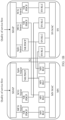
- FIG. 1C is a schematic diagram of the MR-DC scenario.
- UE is currently connected to one master node (namely, a master node 1 in FIG. 1C ) and a secondary node (namely, a secondary node 1 in FIG. 1C ).
- the UE may be handed over to another PCell provided by the master node 1, or may be handed over to a PCell provided by another master node.
- an example in which the UE is handed over to a PCell provided by another master node is used.
- the another master node is referred to as a target master node, and is represented as a master node 2 in FIG. 1C .
- the PCell handover of the UE may also relate to a PSCell handover.
- the UE may be handed over to another PSCell provided by the secondary node 1, or the secondary node 1 may be changed to another secondary node and the UE may be handed over to a PSCell provided by the another secondary node.
- an example in which the UE is handed over to a PCell provided by another secondary node is used.
- the another secondary node is referred to as a target secondary node, and is represented as a secondary node 2 in FIG. 1C .
- the UE may not perform a PSCell handover.
- the UE may be connected to one master node and at least two secondary nodes, and each secondary node may provide one PSCell for the UE.
- PCell and PSCell handover processes of the UE in the MC scenario are similar to those in the MR-DC scenario described in FIG. 1C , and details are not described again.
- the target MN sends first information to the source MN.
- the source MN receives the first information from the target MN.
- a current handover process is, for example, a layer (layer, L) 1 or layer 2-based handover process.
- the MN handover process in this embodiment of this application may be a layer 1 or layer 2-based handover process.
- the layer 1 or layer 2-based handover process after obtaining a measurement result of a reference signal, UE may send the measurement result to a network device by using layer 1 or layer 2 control information. Compared with layer 3 control information, the layer 1 or layer 2 control information is generated at a higher speed, and therefore a delay in sending the measurement result by the UE can be reduced.
- the measurement result may also be a layer 1 measurement result.
- a layer 3 measurement result may be obtained after the UE filters a plurality of measurement results.
- a layer 2 is, for example, a media access control (media access control, MAC) layer, and the layer 2 control information includes, for example, a media access control (media access control, MAC) control element (control element, CE).
- a layer 3 is, for example, a radio resource control (radio resource control, RRC) layer.
- Information about one SCG includes information about one candidate PSCell, and may further include other information about the SCG.
- the information about the MCG and the information about the SCG are sent to the source MN by using the first information, so that the source MN can prepare a candidate PCell and/or a candidate PSCell for the UE.
- the information about the N candidate PSCells may include information about a source SN of the UE and/or information about a PSCell provided by the source SN.
- the source SN of the UE is an SN accessed by the UE before the current PCell handover.
- the PSCell provided by the source SN may be a PSCell (namely, a PSCell to which the UE is currently connected) accessed by the UE before the current PCell handover, or may be another candidate PSCell that the UE has not accessed.
- the at least one candidate SN may include the source SN of the UE. If the UE still accesses the source SN after an MN handover, the UE can keep the SN unchanged after the MN handover.
- the source SN can be prevented from transferring some downlink data that has not been sent to the UE to the another candidate SN, and a handover procedure of the UE can be simplified.
- the source SN may be unchanged, in an SN handover process of the UE, a configuration between the UE and the source SN may not need to be released, and the UE may keep a connection to the source SN in the handover process, to prolong time of using the MR-DC by the UE and reduce impact on a throughput rate of the UE.
- the source SN is unchanged, there is no need to reconfigure another candidate SN, to reduce signaling overheads caused by a configuration process.
- the M candidate PCells are determined by the target MN for the UE.
- the M candidate PCells are determined by the target MN based on candidate PCells provided by the source MN in a handover request message.
- the N candidate PSCells are determined by the at least one candidate SN for the UE, and the at least one candidate SN may be determined by the target MN for the UE.
- Each candidate SN may provide one or more candidate PSCells for the UE.
- the target MN may send the information about the M candidate PCells and the information about the N candidate PSCells to the source MN.
- the M candidate PCells may be used as candidate PCells of the UE, and the N candidate PSCells may be used as candidate PSCells of the UE.
- the source MN sends the first information to the UE.
- the UE receives the first information from the source MN.
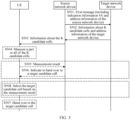
- S203 The UE sends a first measurement result to the source MN.
- the source MN receives the first measurement result from the UE.
- the first measurement result may be layer 1 signal quality corresponding to the candidate PCell or layer 3 signal quality corresponding to the candidate PCell.
- the first measurement result carries indication information to indicate a beam identifier and/or a cell identifier of the candidate PCell, so as to indicate a beam of a candidate PCell corresponding to the first measurement result or indicate a candidate PCell of the first measurement result.
- a beam may be a synchronization signal and a physical broadcast channel block (synchronization signal and PBCH block, SSB), or a channel state information-reference signal (channel state information-reference signal, CSI-RS).
- a beam identifier may be an SSB index (SSB index), or a CSI-RS index (CSI-RS index).
- the second measurement result may be layer 1 signal quality corresponding to the candidate PSCell or layer 3 signal quality corresponding to the candidate PSCell.
- the second measurement result carries indication information to indicate a beam identifier and/or a cell identifier of the candidate PSCell, so as to indicate a beam of a candidate PSCell corresponding to the second measurement result or indicates a candidate PSCell of the second measurement result.
- the second reporting condition is that a measurement result of a candidate PSCell meets a first selection condition.
- the first information further indicates H first selection conditions.
- Each first selection condition is a selection condition of one candidate PSCell, and H is an integer greater than or equal to 1.
- the UE may determine a selection condition of a candidate PSCell. If the UE obtains a measurement result of a candidate PSCell, the UE may determine, based on the first selection condition, whether to report the measurement result of the candidate PSCell. If the measurement result meets the first selection condition of the candidate PSCell, the UE may send the measurement result of the candidate PSCell to the source MN.
- the handover command includes first indication information.
- the first indication information may indicate the UE to be connected to the target candidate PSCell, and the target candidate PSCell includes one or more PSCells in the N candidate PSCells.
- the target candidate PSCell includes one or more PSCells in the N candidate PSCells.
- the UE is currently in a DC state
- the UE when the UE is in the DC state, the UE has one SN, the SN may provide one or more candidate PSCells for the UE, and the UE may be connected to one of the candidate PCells, to implement dual-connectivity communication.
- the source MN may select the target candidate PSCell from the N candidate PSCells based on the second measurement result.
- the source MN may select the target candidate PSCell from the N candidate PSCells based on the first measurement result and the second measurement result.
- the source MN may further consider other information in addition to the first measurement result and/or the second measurement result.
- the other information includes, for example, current network loads of a part or all of the N candidate PSCells, or adaptation between geographical locations of a part or all of the N candidate PSCells and a moving path of the UE. In this way, the selected target candidate PSCell is more accurate and more suitable for access by the UE.
- the target candidate PSCell has a correspondence with the target candidate PCell.
- the source MN may determine whether a measurement result of a candidate PSCell having a correspondence with the target candidate PCell is good. For example, if a value of a measurement result of a candidate PSCell is greater than a third threshold, it is considered that the measurement result of the candidate PSCell is good; if a value of a measurement result of a candidate PSCell is not greater than the third threshold, it is considered that the measurement result of the candidate PSCell is poor.
- the source master network device may determine the target candidate primary cell, which means that the source master network device has a decision right to select the target candidate primary cell, so that a selection result is more accurate, and a proper target candidate primary cell is selected for the UE, to improve communication quality of the UE in the target candidate primary cell.
- a selection result is accurate, a process in which reselection is required because the selected target candidate primary cell is improper is reduced, and communication efficiency of the UE can be improved.
- dual-connectivity communication can still be maintained, to improve a data throughput.
- the UE may determine the target candidate cell, and the source master network device does not need to select the target candidate cell.
- S203 and S204 may be replaced with the following step: The UE determines the target candidate PCell (or selects the target candidate PCell and the target candidate PSCell) based on the first measurement result (or the first measurement result, the second measurement result, and the like).
- the UE may not need to report the measurement result to the source master network device, but may select the target candidate cell based on the measurement result. This can reduce transmission overheads, and can also improve handover efficiency because a reporting process is reduced.
- the UE may send third indication information to the source MN.
- the third indication information may indicate that the UE is to access the target candidate PSCell.
- the UE may no longer maintain dual-connectivity communication.
- the handover command may not indicate the UE to be connected to the target candidate PSCell.
- the source MN determines that measurement results of all candidate PSCells corresponding to the target candidate PCell are poor (for example, none of values of measurement results of PSCells included in the second measurement result meet a selection threshold), and/or determines that none of measurement results of candidate PSCells corresponding to the target candidate PCell meet corresponding second selection conditions, the source MN may not determine the target candidate PSCell for the UE.
- the addition request message includes fourth indication information.
- the fourth indication information indicates that the addition request message is a layer 1 or layer 2-based addition request message, or indicates that the current SN addition process is a layer 1 or layer 2-based addition process, or indicates that the UE is to be handed over to the target candidate primary cell through a layer 1 or layer 2-based handover process.
- the target MN may send, to the source MN, a second index that indicates the at least one correspondence (for example, the second index is carried outside the first information), and the second index also indicates the at least one correspondence, or the second index may indicate the at least one first index.
- the source MN may interpret the second index.
- the source MN may send a second index of a correspondence between the candidate PCell and the candidate PSCell to the UE, so that the UE learns, based on the second index, a candidate PCell and a candidate PSCell to which the UE is to be handed over.
- the UE may select one candidate PCell from the M candidate PCells as the target candidate PCell based on the second selection condition and the first measurement result (or the first measurement result and the second measurement result).
- the UE may send third indication information to the source MN.
- the third indication information may indicate that the UE is to access the target candidate PCell.
- the UE may send indication information to the target candidate PCell.
- the indication information is referred to as, for example, the third indication information, and may indicate that the UE is to access the target candidate PSCell (or indicate that the UE is to be connected to the target candidate PSCell), or indicate that the UE has accessed the target candidate PSCell, or indicate that the UE has received a command for accessing the target candidate PSCell.
- the third indication information may carry an identifier of the target candidate PSCell. In this way, it is convenient for the target MN to configure information about the target candidate PCell for the UE.
- the target candidate PSCell may send access indication information to the target candidate PCell.
- the access indication information may indicate that the UE has successfully accessed the target candidate PSCell.
- the access indication information may carry the identifier of the target candidate PSCell.
- the target candidate PCell it is convenient for the target candidate PCell to configure the information about the target candidate PCell for the UE.
- the target candidate PCell can quickly determine, based on the access indication information, the target candidate PSCell accessed by the UE. Therefore, the target candidate PCell can correctly configure information about the target candidate PSCell, to improve communication efficiency of the UE.
- the UE may also send indication information to the target candidate PCell. Details are not described.
- the target candidate PSCell may also send the access indication information to the target candidate PCell. Details are not described. In conclusion, mutual reference may be made to content of the embodiment shown in FIG. 2 and content of the embodiment shown in FIG. 3 .
- the method may be applied to an MC scenario or a DC scenario.
- the method may be applied to a PCell handover process.
- the source network device described below is, for example, a source master network device of the UE, namely, a source MN
- the target network device described below is, for example, a target master network device of the UE, namely, a target MN.
- the method may be applied to a PSCell handover process.
- the source network device described below is, for example, a source secondary network device of the UE, namely, a source SN
- the target network device described below is, for example, a target secondary network device of the UE, namely, a target SN.
- the first message may further include indication information #B, and the indication information #B may indicate that when the UE is handed over from the target network device back to the source network device, the target network device is allowed not to send a handover request message to the source network device.
- the source network device is a source MN
- the target network device is a target MN. After the UE is handed over to the target MN, if the UE needs to be handed over back to the source MN, the target MN may not send a handover request message to the source MN, and the target MN may directly indicate the UE to be handed over to the source MN, to improve handover efficiency.
- the address information of the target network device is further distinguished in uplink and downlink. That is, the address information of the target network device included in the first message may include uplink address information of the target network device and/or downlink address information of the target network device.
- the source network device may not need to request the address information of the target network device from the target network device, but may directly use the address information previously obtained from the target network device, to improve handover efficiency.
- the source network device may send the address information of the target network device, or send the information #B and the address information of the target network device to at least one network device other than the target network device.
- Network devices included in the at least one network device are not limited in this embodiment of this application.
- the at least one network device is a target network device to which the UE may be subsequently handed over, and the at least one network device may be used as an SN of the UE or may be used as an MN of the UE.
- the source network device is an MN
- the target network device is a target SN
- the at least one network device includes a source SN of the UE.
- the source SN can obtain address information of the target SN.
- a handover decision party (the handover decision party is a device that determines the candidate cell, for example, the source network device or the UE) can select the candidate cell; if a value of a first parameter obtained by the UE by measuring a candidate cell is less than the threshold, the candidate cell cannot be selected.
- the parameter condition reflects signal quality, and the signal quality may be layer 1 signal quality or layer 3 signal quality. For descriptions of concepts such as the layer 1 signal quality or the layer 3 signal quality, refer to the embodiment shown in FIG. 2 or FIG. 3 .
- the network side may select a candidate cell with good signal quality for the UE, or the UE may select a candidate cell with good signal quality.
- the second message may be a handover request acknowledgment message.
- the second message may be an SN addition request acknowledgment message.
- the second message may be an SN addition request acknowledgment message.
- step S502 may be replaced with: The target SN sends the information #B to the source SN, and correspondingly, the source SN receives the information #B from the target SN.
- the target SN first sends an SN addition request acknowledgment message including the information #B to the MN, and then the MN sends the SN change acknowledgment message including the information #B to the source SN.
- the information #B may include information about an MCG or information about an SCG.
- the information #B includes the information about the SCG.
- a plurality of PSCells may be configured for the UE in history. To enable the UE to be handed over between the plurality of PSCells, in this embodiment of this application, when a PSCell handover occurs, the UE may retain information about each SCG previously configured by the network side for the UE. The network side may further subsequently configure information about a new SCG for the UE.
- Information about an SCG may be obtained through delta configuration (delta configuration) performed based on information about another SCG. For example, SCG information 1 is obtained through delta configuration performed based on SCG information 2.
- the network device When configuring the SCG information 1 for the UE, the network device (for example, the target network device) needs to send only a changed part of the SCG information 1 relative to the SCG information 2 to the UE, and the network device may not need to send a part that is the same as the SCG information 2 to the UE. This reduces signaling overheads.
- the information #B uses this delta configuration manner, after the source network device sends the information #B to the UE, the UE may not know information about an SCG based on which delta configuration is performed to obtain information about an SCG included in the information #B. As a result, the UE cannot obtain the information about the SCG included in the information #B. The same applies to information about an MCG.
- the information #B may further include reference information, to indicate a delta configuration object corresponding to a radio resource configuration included in the information #B.
- the radio resource configuration included in the information #B is, for example, a part of the information about the MCG (which may be referred to as partial information of the MCG), or a part of the information about the SCG (which may be referred to as partial information of the SCG), or a part of a radio resource configuration of the MCG (which may be referred to as a partial radio resource configuration of the MCG), or a part of a radio resource configuration of the SCG (which may be referred to as a partial radio resource configuration of the SCG).
- the first reference information may indicate to perform delta configuration based on all of the radio resource configuration of the reference cell corresponding to the first candidate cell and the partial radio resource configuration corresponding to the first candidate cell in the information #B, to determine all of the radio resource configuration of the first candidate cell.
- All of a radio resource configuration of a candidate cell is all of the configuration of the candidate cell, and is not just a radio resource configuration of the candidate cell included in the information #B.
- the first reference information indicates a reference cell, to implicitly indicate that the reference cell is a cell corresponding to the first candidate cell, and the UE needs to determine all of the radio resource configuration of the first candidate cell based on the radio resource configuration of the reference cell.
- partial radio resource configurations of some candidate cells included in the information #B may be obtained after delta configuration performed based on a radio resource configuration of the cell currently accessed by the UE.
- the information #B may also include corresponding indication information.
- the information #B includes a partial radio resource configuration corresponding to a second candidate cell, and the second candidate cell is one of the K candidate cells.
- the information #B further includes second reference information, and the second reference information is reference information corresponding to the second candidate cell.
- the second reference information may indicate to perform delta configuration (delta configuration) based on the radio resource configuration of the cell currently accessed by the UE and the partial radio resource configuration corresponding to the second candidate cell in the information #B, to determine all of a radio resource configuration of the second candidate cell.
- the second reference information and the first reference information may be different types of information. For example, a quantity of bits of the second reference information is different from that of the first reference information, and/or a format of the second reference information is different from that of the first reference information.
- the second candidate cell is a candidate PSCell
- the partial radio resource configuration of the second candidate cell included in the information #B is partial information about an SCG corresponding to the candidate PSCell.
- the cell currently accessed by the UE is another PSCell, and the radio resource configuration of the cell currently accessed by the UE is information about an SCG corresponding to the currently accessed cell.
- the second reference information indicates that delta configuration may be performed based on the information about the SCG corresponding to the currently accessed cell and the partial information about the SCG corresponding to the second candidate cell in the information #B, to determine all information about the SCG of the candidate PSCell.
- the second candidate cell is a candidate PCell
- the partial radio resource configuration of the second candidate cell included in the information #B is partial information about an MCG corresponding to the candidate PCell.
- the cell currently accessed by the UE is another PCell, and the radio resource configuration of the cell currently accessed by the UE is information about an MCG corresponding to the currently accessed cell.
- the second reference information indicates that delta configuration may be performed based on the information about the MCG corresponding to the currently accessed cell and the partial information about the MCG corresponding to the second candidate cell in the information #B, to determine all information about the MCG of the candidate PCell.
- the information #B may not include corresponding indication information.
- the information #B includes a partial radio resource configuration corresponding to the second candidate cell.
- the second candidate cell is one of the K candidate cells, and the information #B does not include reference information corresponding to the second candidate cell. If the information #B does not include the second reference information, to indicate that delta configuration is performed based on the radio resource configuration of the cell currently accessed by the UE and the partial radio resource configuration corresponding to the second candidate cell in the information #B, to determine the radio resource configuration of the second candidate cell.
- the second candidate cell is a candidate PSCell
- the partial radio resource configuration of the second candidate cell included in the information #B is partial information about an SCG corresponding to the candidate PSCell.
- the cell currently accessed by the UE is another PSCell
- a radio resource configuration of the cell currently accessed by the UE is information about an SCG corresponding to the currently accessed cell.
- the information #B does not include the reference information corresponding to the second candidate cell to indicate that delta configuration is performed based on the information about the SCG corresponding to the currently accessed cell and the partial information about the SCG corresponding to the second candidate cell in the information #B, to determine all information about the SCG of the candidate PSCell.
- the second candidate cell is a candidate PCell
- the partial radio resource configuration of the second candidate cell included in the information #B is partial information about an MCG corresponding to the candidate PCell.
- the cell currently accessed by the UE is another PCell
- a radio resource configuration of the cell currently accessed by the UE is information about an MCG corresponding to the currently accessed cell.
- the information #B does not include the reference information corresponding to the second candidate cell to indicate that delta configuration is performed based on the information about the MCG corresponding to the currently accessed cell and the partial information about the MCG corresponding to the second candidate cell in the information #B, to determine all information about the MCG of the candidate PCell.
- the information #B may further include radio resource configurations of some candidate cells. These radio resource configurations may not be delta configured based on any radio resource configuration, but are full configurations (full configuration). That is, these radio resource configurations include all content, and do not need to be indicated by using another radio resource configuration. In this case, if the UE does not access a cell currently, and radio resource configurations of some candidate cells included in the information #B are full configurations, the information #B may not include corresponding reference information.
- the UE does not access a cell currently, and the information #B includes a radio resource configuration corresponding to a third candidate cell.
- the third candidate cell is one of the K candidate cells, and the information #B does not include reference information corresponding to the third candidate cell.
- the information #B may indicate, by not including the reference information corresponding to the third candidate cell, that the radio resource configuration of the third candidate cell included in the information #B is a full configuration.
- the UE does not access a PSCell currently, the third candidate cell is a candidate PSCell, and the radio resource configuration of the third candidate cell included in the information #B is information about an SCG corresponding to the candidate PSCell.
- the information #B indicates, by not including the reference information corresponding to the third candidate cell, that the information about the SCG corresponding to the candidate PSCell included in the information #B is all information about the SCG.
- the third candidate cell is a candidate PCell
- the radio resource configuration of the third candidate cell included in the information #B is information about an MCG corresponding to the candidate PCell.
- the information #B indicates, by not including the reference information corresponding to the third candidate cell, that the information about the MCG corresponding to the candidate PCell included in the information #B is all configuration information.
- the source network device sends the information #B to the UE.
- the UE receives the information #B from the source network device.
- the information #B may be used by the source network device or the UE to determine, from the K candidate cells, a target cell that the UE accesses.
- the UE may store K radio resource configurations (information about K SCGs or information about K MCGs) included in the information #B. For example, the UE may directly store the K radio resource configurations, or for a delta configuration in the K radio resource configurations, the UE may determine a full configuration based on an indication of the information #B, and then store the full configuration.
- K radio resource configurations information about K SCGs or information about K MCGs
- the UE determines, based on the first reference information, that all information about the SCG of the candidate PSCell may be determined based on the information about the SCG corresponding to the reference cell and the partial information about the SCG of the first candidate cell in the information #B.
- the UE may store the partial information about the SCG corresponding to the candidate PSCell and store the first reference information, or store all the information about the SCG of the candidate PSCell.
- the first candidate cell is a candidate PCell
- the radio resource configuration of the first candidate cell included in the information #B is information about an MCG corresponding to the candidate PCell.
- the reference cell is another PCell, and the radio resource configuration of the reference cell is information about an MCG corresponding to the PCell.
- the UE determines, based on the first reference information, that all information about the MCG of the candidate PCell may be determined based on the information about the MCG corresponding to the PCell.
- the UE may store the information about the MCG corresponding to the candidate PCell, and store the first reference information.
- the UE may determine all the information about the MCG of the candidate PCell based on the information about the MCG corresponding to the PCell, and store all the information about the MCG of the candidate PCell.
- the information #B includes the partial radio resource configuration corresponding to the second candidate cell, and the second candidate cell is one of the K candidate cells.
- the information #B further includes the second reference information, and the second reference information is reference information corresponding to the second candidate cell.
- the UE may determine, based on the second reference information, to perform delta configuration based on the radio resource configuration of the cell currently accessed by the UE and the partial radio resource configuration corresponding to the second candidate cell in the information #B, to determine all of the radio resource configuration of the second candidate cell.
- the UE may store the partial radio resource configuration of the second candidate cell included in the information #B, and store the second reference information; or the UE stores all of the radio resource configuration of the second candidate cell.
- the second candidate cell is a candidate PSCell
- the partial radio resource configuration of the second candidate cell included in the information #B is partial information about an SCG corresponding to the candidate PSCell.
- the cell currently accessed by the UE is another PSCell
- a radio resource configuration of the cell currently accessed by the UE is information about an SCG corresponding to the cell currently accessed.
- the UE determines, based on the second reference information, that delta configuration may be performed based on the information about the SCG corresponding to the currently accessed PSCell and the partial information about the SCG corresponding to the second candidate cell in the information #B, to determine all information about the SCG corresponding to the candidate PSCell.
- the UE determines, based on the second reference information, that all information about the MCG of the candidate PCell may be determined based on the information about the MCG corresponding to the PCell and the partial information about the MCG of the second candidate cell in the information #B.
- the UE may store the partial information about the MCG corresponding to the candidate PCell and store the second reference information. Alternatively, the UE may store all the information about the MCG of the candidate PCell.
- the information #B includes a partial radio resource configuration corresponding to the second candidate cell.
- the second candidate cell is one of the K candidate cells, and the information #B does not include reference information corresponding to the second candidate cell. If the UE currently accesses a cell, because the information #B does not include the second reference information, the UE may determine all of the radio resource configuration of the second candidate cell based on a radio resource configuration of the cell currently accessed by the UE. When the UE stores the radio resource configuration of the second candidate cell, there may be different storage manners. For example, the UE may store the partial radio resource configuration of the second candidate cell included in the information #B.
- the UE may add third reference information for the radio resource configuration of the second candidate cell, to indicate a cell corresponding to the radio resource configuration of the second candidate cell (the cell is the cell currently accessed by the UE).
- the UE may perform delta configuration based on the radio resource configuration of the cell currently accessed by the UE and the partial radio resource configuration of the second candidate cell in the information #B, to obtain all of the radio resource configuration of the second candidate cell, and store all of the radio resource configuration of the second candidate cell. In this case, the UE may no longer add the third reference information for the second candidate cell.
- the information #B includes all of a radio resource configuration corresponding to the third candidate cell, and the third candidate cell is one of the K candidate cells.
- the information #B does not include reference information corresponding to the third candidate cell.
- the UE may determine, based on the information #B that does not include the reference information corresponding to the third candidate cell, that the radio resource configuration of the third candidate cell included in the information #B is a full configuration, and the UE may store the full configuration.
- the UE further stores fourth reference information, to indicate that delta configuration does not need to be performed on the radio resource configuration of the third candidate cell with reference to the radio resource configuration of the another cell, or indicate that the stored radio resource configuration of the third candidate cell is a full configuration.
- the UE does not access a PSCell currently, the third candidate cell is a candidate PSCell, and the radio resource configuration of the third candidate cell is information about an SCG corresponding to the candidate PSCell.
- the source network device may further send indication information #C to the UE, and the UE may receive the indication information #C from the source network device.
- the indication information #C may indicate that when the UE is handed over from the currently accessed cell to another cell, the cell currently accessed is used as a candidate cell. That is, a radio resource configuration of the currently accessed cell is stored as a radio resource configuration of a candidate cell.
- the currently accessed cell is, for example, a PCell or a PSCell.
- the currently accessed cell may be used as a candidate cell for a next cell handover of the UE.
- S504 The UE measures a part or all of the K candidate cells.
- the information #B includes selection conditions #C of K PSCells (that is, the information #B includes selection conditions of the K candidate cells).
- the selection condition #C may be the first selection condition in S307.
- the selection conditions #C of the K PSCells may not be included in the information #B, and the source network device may send K selection conditions #D to the UE.
- the source network device may send the K selection conditions #D to the UE.
- the K selection conditions #D are selection conditions of the K PSCells, and one selection condition #D corresponds to one PSCell.
- the K selection conditions #D and the K selection conditions #C may be the same, not completely the same, or completely different. For example, the K selection conditions #D are determined by the source network device.
- the source network device sends a handover command to the UE.
- the UE receives the handover command from the source network device.
- the handover command may indicate to hand over to a target candidate cell.
- the target candidate cell is one of the K candidate cells.
- a prerequisite for the handover to the target candidate cell as indicated by the handover command is that a measurement result of the target candidate cell is good, or a measurement result of the target candidate cell can meet a selection condition of the target candidate cell, or a measurement result of the target candidate cell is better than a measurement result of a cell currently accessed by the UE.
- the handover command may not indicate handover, or the source network device may not send the handover command: All measurement results of the K candidate cells are poor, none of measurement results of the K candidate cells meet a corresponding candidate cell selection condition, or all measurement results of the K candidate cells are worse than the measurement result of the candidate cell (a cell provided by the source network device) currently accessed by the UE.
- the handover command indicates to hand over to the target candidate cell is used.
- the source MN may select one of the K candidate cells based on the measurement result, and indicate the UE to access the candidate cell.
- the candidate cell is the target candidate cell.
- the core network device may send the data of the PDU session or the QoS flow to the another target network device again, and does not need to indicate the another target network device to establish the PDU session or the QoS flow.
- S508 The UE selects a target candidate cell based on a measurement result.
- the UE may send the indication information #D to the MN.
- the indication information #D may indicate that the UE is to access the target candidate PSCell, so that the MN determines a PSCell that the UE selects to access.
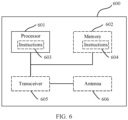
- FIG. 6 is a schematic diagram of a structure of a communication apparatus 600 according to an embodiment of this application.
- the communication apparatus 600 may be the terminal device according to any one of the embodiment shown in FIG. 2 , the embodiment shown in FIG. 3 , or the embodiment shown in FIG. 5 , and is configured to implement the method performed by the terminal device in the foregoing method embodiments.
- the communication apparatus 600 may be the network device according to any one of the embodiment shown in FIG. 2 , the embodiment shown in FIG. 3 , or the embodiment shown in FIG. 5 , and is configured to implement the method corresponding to the network device in the foregoing method embodiments.
- the network device is, for example, the source master network device in the embodiment shown in FIG. 2 , or the source master network device in the embodiment shown in FIG. 3 , or the source network device in the embodiment shown in FIG. 5 , or the target network device in the embodiment shown in FIG. 5 .
- For a specific function refer to the descriptions in the foregoing method embodiments.
- the communication apparatus 600 includes one or more memories 602, configured to store instructions 604.
- the instructions 604 may be run on the processor 601, so that the communication apparatus 600 performs the method described in the foregoing method embodiments.
- the memory 602 may further store data.
- the processor and the memory may be separately disposed, or may be integrated together.
- the communication apparatus 600 may store instructions 603 (which may also be referred to as code or a program sometimes).
- the instructions 603 may be run on the processor 601, so that the communication apparatus 600 performs the method described in the foregoing embodiments.
- the processor 601 may store data.
- the communication apparatus 600 may further include a transceiver 605 and an antenna 606.
- the transceiver 605 may be referred to as a transceiver unit, a transceiver, a transceiver circuit, an input/output interface, or the like, and is configured to implement a transceiver function of the communication apparatus 600 through the antenna 606.
- the transceiver 605 is configured to receive first information from a source master network device of the communication apparatus 600 through the antenna 606.
- the first information includes information about M candidate primary cells and information about N candidate primary secondary cells.
- the M candidate primary cells are determined by a target master network device for the communication apparatus 600
- the N candidate primary secondary cells are determined by at least one secondary network device for the communication apparatus 600
- M and N are positive integers.
- the transceiver 605 is configured to send a first measurement result to the source master network device through the antenna 606.
- the transceiver 605 is configured to receive third information and sixth indication information from a source network device of the communication apparatus 600 through the antenna 606.
- the third information includes information about K candidate cells determined by a target network device of the communication apparatus 600 for the communication apparatus 600, and the sixth indication information indicates to use a currently accessed cell as a candidate cell when the communication apparatus 600 is handed over from the currently accessed cell to another cell.
- the computer-readable medium may include but is not limited to: a random access memory (random access memory, RAM), a read-only memory (read-only memory, ROM), a programmable read-only memory (programmable ROM, PROM), an erasable programmable read-only memory (erasable PROM, EPROM), an electrically erasable programmable read-only memory (electrically erasable programmable read-only memory, EEPROM), a compact disc read-only memory (compact disc read-only memory, CD-ROM), a universal serial bus flash disk (universal serial bus flash disk), a removable hard disk, another optical disc memory, a magnetic disk storage medium, or another magnetic storage device, or any other medium that can be used to carry or store expected program code in a form of an instruction or a data structure and that can be accessed by a computer.
- RAM random access memory
- ROM read-only memory
- PROM programmable read-only memory
- EPROM erasable programmable read-only memory
Landscapes
- Engineering & Computer Science (AREA)
- Computer Networks & Wireless Communication (AREA)
- Signal Processing (AREA)
- Mobile Radio Communication Systems (AREA)
Applications Claiming Priority (2)
| Application Number | Priority Date | Filing Date | Title |
|---|---|---|---|
| CN202111158934.4A CN115915304A (zh) | 2021-09-30 | 2021-09-30 | 通信方法及装置 |
| PCT/CN2022/122238 WO2023051634A1 (fr) | 2021-09-30 | 2022-09-28 | Procédé et appareil de communication |
Publications (2)
| Publication Number | Publication Date |
|---|---|
| EP4398632A1 true EP4398632A1 (fr) | 2024-07-10 |
| EP4398632A4 EP4398632A4 (fr) | 2024-12-25 |
Family
ID=85729471
Family Applications (1)
| Application Number | Title | Priority Date | Filing Date |
|---|---|---|---|
| EP22875017.0A Pending EP4398632A4 (fr) | 2021-09-30 | 2022-09-28 | Procédé et appareil de communication |
Country Status (4)
| Country | Link |
|---|---|
| US (1) | US20240244491A1 (fr) |
| EP (1) | EP4398632A4 (fr) |
| CN (1) | CN115915304A (fr) |
| WO (1) | WO2023051634A1 (fr) |
Families Citing this family (18)
| Publication number | Priority date | Publication date | Assignee | Title |
|---|---|---|---|---|
| US12238660B2 (en) * | 2021-08-19 | 2025-02-25 | Electronics And Telecommunications Research Institute | Beam management method using hierarchical beams, and apparatus therefor |
| CN116074906A (zh) * | 2021-11-03 | 2023-05-05 | 维沃软件技术有限公司 | 切换方法、终端及网络侧设备 |
| CN116567757B (zh) * | 2022-01-28 | 2025-12-19 | 展讯通信(上海)有限公司 | 一种辅小区组配置方法、装置、芯片及模组设备 |
| CN117412303A (zh) * | 2022-07-06 | 2024-01-16 | 大唐移动通信设备有限公司 | 小区管理方法、装置、终端及网络设备 |
| CN117858174A (zh) * | 2022-09-30 | 2024-04-09 | 展讯通信(上海)有限公司 | 候选主辅小区评估方法及装置、计算机可读存储介质 |
| US20240313837A1 (en) * | 2023-03-17 | 2024-09-19 | Qualcomm Incorporated | Techniques to determine a priority of a channel state information report |
| WO2024239212A1 (fr) * | 2023-05-22 | 2024-11-28 | 北京小米移动软件有限公司 | Procédé et appareil de rapport de résultat de mesure de faisceau, et dispositif et support de stockage |
| CN121220112A (zh) * | 2023-07-14 | 2025-12-26 | Oppo广东移动通信有限公司 | 通信方法、终端设备和网络设备 |
| CN119485529A (zh) * | 2023-08-11 | 2025-02-18 | 大唐移动通信设备有限公司 | 信息处理方法及装置 |
| CN119497163A (zh) * | 2023-08-21 | 2025-02-21 | 大唐移动通信设备有限公司 | 信息传输方法、装置、终端及网络设备 |
| WO2025165413A2 (fr) * | 2023-09-29 | 2025-08-07 | Ofinno, Llc | Transfert de données pour mobilité déclenchée par couche inférieure |
| CN120129011A (zh) * | 2023-12-08 | 2025-06-10 | 华为技术有限公司 | 一种通信方法及装置 |
| WO2025161005A1 (fr) * | 2024-02-04 | 2025-08-07 | Oppo广东移动通信有限公司 | Procédé de communication sans fil et dispositif terminal |
| WO2025166721A1 (fr) * | 2024-02-08 | 2025-08-14 | Oppo广东移动通信有限公司 | Procédé de communication sans fil et dispositif de communication |
| WO2025171562A1 (fr) * | 2024-02-15 | 2025-08-21 | Apple Inc. | Procédés pour la transmission de signaux de diffusion et la gestion de cellules dans des communications sans fil |
| CN120825751A (zh) * | 2024-04-12 | 2025-10-21 | 中兴通讯股份有限公司 | 小区切换方法、装置、存储介质及电子装置 |
| WO2026000209A1 (fr) * | 2024-06-25 | 2026-01-02 | Oppo广东移动通信有限公司 | Procédé et appareil de transfert de réseau, dispositif, support de stockage et puce |
| WO2026025408A1 (fr) * | 2024-07-31 | 2026-02-05 | Oppo广东移动通信有限公司 | Procédés de communication sans fil, équipements terminaux et dispositifs de réseau |
Family Cites Families (13)
| Publication number | Priority date | Publication date | Assignee | Title |
|---|---|---|---|---|
| DE112017004789T5 (de) * | 2016-11-04 | 2019-06-06 | Intel IP Corporation | Systeme, Verfahren und Vorrichtungen für eine Make-before-break-Übergabe und Sekundärzellgruppenneukonfiguration |
| US10568004B2 (en) * | 2017-03-23 | 2020-02-18 | Futurewei Technologies, Inc. | Layer 2 (L2) mobility for new radio (NR) networks |
| WO2019139517A1 (fr) * | 2018-01-12 | 2019-07-18 | Telefonaktiebolaget Lm Ericsson (Publ) | Configuration delta dans une architecture divisée de type ran comportant une unité centrale et des unités distribuées |
| CN110290530B (zh) * | 2018-03-19 | 2021-04-13 | 维沃移动通信有限公司 | 无线通信的方法、源节点和目标节点 |
| US11395197B2 (en) * | 2018-08-21 | 2022-07-19 | Nokia Technologies Oy | Dual connectivity handover |
| WO2020164016A1 (fr) * | 2019-02-13 | 2020-08-20 | Oppo广东移动通信有限公司 | Procédé et dispositif de commutation de cellule |
| CN115002855A (zh) * | 2019-08-15 | 2022-09-02 | 华为技术有限公司 | 通信方法和通信装置 |
| CN112788672B (zh) * | 2019-11-07 | 2022-05-10 | 大唐移动通信设备有限公司 | 一种辅基站变更方法、主基站、辅基站和终端 |
| US11671961B2 (en) * | 2019-12-20 | 2023-06-06 | Qualcomm Incorporated | Signaling of multiple candidate cells for L1/L2-centric inter-cell mobility |
| CN113133066A (zh) * | 2019-12-31 | 2021-07-16 | 中国移动通信有限公司研究院 | 一种切换方法和网络设备 |
| CN113141638B (zh) * | 2020-01-19 | 2022-08-09 | 普天信息技术有限公司 | 触发条件切换或条件辅小区改变的方法、终端及网络设备 |
| WO2021159336A1 (fr) * | 2020-02-12 | 2021-08-19 | Nokia Shanghai Bell Co., Ltd. | Transfert à double connectivité |
| CN113271632B (zh) * | 2020-02-14 | 2023-09-05 | 中国移动通信有限公司研究院 | 信息的上报、接收方法、终端及网络设备 |
-
2021
- 2021-09-30 CN CN202111158934.4A patent/CN115915304A/zh active Pending
-
2022
- 2022-09-28 EP EP22875017.0A patent/EP4398632A4/fr active Pending
- 2022-09-28 WO PCT/CN2022/122238 patent/WO2023051634A1/fr not_active Ceased
-
2024
- 2024-03-28 US US18/620,213 patent/US20240244491A1/en active Pending
Also Published As
| Publication number | Publication date |
|---|---|
| WO2023051634A1 (fr) | 2023-04-06 |
| US20240244491A1 (en) | 2024-07-18 |
| CN115915304A (zh) | 2023-04-04 |
| EP4398632A4 (fr) | 2024-12-25 |
Similar Documents
| Publication | Publication Date | Title |
|---|---|---|
| US20240244491A1 (en) | Communication method and apparatus | |
| AU2017213508B2 (en) | A wireless device, and methods therein for handling a device-to-device (d2d) communication during handover in a wireless telecommunications network | |
| EP3146759B1 (fr) | Procédure de rétablissement dans des réseaux en connectivité double | |
| US20250142432A1 (en) | Configuration enhancements for l1/l2 mobility | |
| CN113518397B (zh) | 一种测量方法和装置 | |
| US12375534B2 (en) | Voice over internet protocol multimedia subsystem | |
| US11849498B2 (en) | Communication system | |
| WO2018137666A1 (fr) | Procédé de transmission de données, dispositif de réseau, et équipement terminal | |
| CN116326161B (zh) | 信号的接收和发送方法、装置和通信系统 | |
| EP4099796A1 (fr) | Procédé de transfert entre systèmes et appareil de communication | |
| CN102695290B (zh) | 数据传递方法及系统 | |
| WO2021226967A1 (fr) | Procédé et dispositif de transfert intercellulaire | |
| WO2024061165A1 (fr) | Procédé et appareil de communication | |
| EP4387299A1 (fr) | Procédé de communication et appareil associé | |
| US20250048229A1 (en) | Communication method and device | |
| US20250274836A1 (en) | Method and apparatus for compliance check in communication system | |
| CN120434727A (zh) | 无线通信方法、终端设备以及网络设备 | |
| CN120266552A (zh) | 用于维持ta值的方法及设备 | |
| CN118975306A (zh) | 用于小区组改变的方法及设备 | |
| EP4014556A1 (fr) | Préparation de multiples cellules cibles pour un transfert intercellulaire dans un réseau de communication sans fil | |
| WO2023227090A1 (fr) | Procédé et appareil de mise à jour de cellule pour groupe de cellules secondaires, et support de stockage | |
| WO2024051584A1 (fr) | Procédé et appareil de configuration | |
| WO2025031365A1 (fr) | Procédé et appareil de communication | |
| WO2025113594A1 (fr) | Procédé et appareil de communication | |
| CN119922675A (zh) | 一种通信方法及装置 |
Legal Events
| Date | Code | Title | Description |
|---|---|---|---|
| STAA | Information on the status of an ep patent application or granted ep patent |
Free format text: STATUS: THE INTERNATIONAL PUBLICATION HAS BEEN MADE |
|
| PUAI | Public reference made under article 153(3) epc to a published international application that has entered the european phase |
Free format text: ORIGINAL CODE: 0009012 |
|
| STAA | Information on the status of an ep patent application or granted ep patent |
Free format text: STATUS: REQUEST FOR EXAMINATION WAS MADE |
|
| 17P | Request for examination filed |
Effective date: 20240404 |
|
| AK | Designated contracting states |
Kind code of ref document: A1 Designated state(s): AL AT BE BG CH CY CZ DE DK EE ES FI FR GB GR HR HU IE IS IT LI LT LU LV MC MK MT NL NO PL PT RO RS SE SI SK SM TR |
|
| A4 | Supplementary search report drawn up and despatched |
Effective date: 20241125 |
|
| RIC1 | Information provided on ipc code assigned before grant |
Ipc: H04W 36/30 20090101ALI20241119BHEP Ipc: H04W 36/34 20090101ALI20241119BHEP Ipc: H04W 36/08 20090101ALI20241119BHEP Ipc: H04W 36/00 20090101AFI20241119BHEP |
|
| DAV | Request for validation of the european patent (deleted) | ||
| DAX | Request for extension of the european patent (deleted) | ||
| STAA | Information on the status of an ep patent application or granted ep patent |
Free format text: STATUS: EXAMINATION IS IN PROGRESS |
|
| 17Q | First examination report despatched |
Effective date: 20251114 |