EP4398635A2 - Procédé et appareil de commande d'un dispositif utilisateur dans un réseau - Google Patents
Procédé et appareil de commande d'un dispositif utilisateur dans un réseau Download PDFInfo
- Publication number
- EP4398635A2 EP4398635A2 EP24177914.9A EP24177914A EP4398635A2 EP 4398635 A2 EP4398635 A2 EP 4398635A2 EP 24177914 A EP24177914 A EP 24177914A EP 4398635 A2 EP4398635 A2 EP 4398635A2
- Authority
- EP
- European Patent Office
- Prior art keywords
- nsag
- network
- information
- user device
- random
- Prior art date
- Legal status (The legal status is an assumption and is not a legal conclusion. Google has not performed a legal analysis and makes no representation as to the accuracy of the status listed.)
- Pending
Links
Images


Classifications
-
- H—ELECTRICITY
- H04—ELECTRIC COMMUNICATION TECHNIQUE
- H04W—WIRELESS COMMUNICATION NETWORKS
- H04W48/00—Access restriction; Network selection; Access point selection
- H04W48/18—Selecting a network or a communication service
-
- H—ELECTRICITY
- H04—ELECTRIC COMMUNICATION TECHNIQUE
- H04W—WIRELESS COMMUNICATION NETWORKS
- H04W60/00—Affiliation to network, e.g. registration; Terminating affiliation with the network, e.g. de-registration
- H04W60/04—Affiliation to network, e.g. registration; Terminating affiliation with the network, e.g. de-registration using triggered events
-
- H—ELECTRICITY
- H04—ELECTRIC COMMUNICATION TECHNIQUE
- H04W—WIRELESS COMMUNICATION NETWORKS
- H04W74/00—Wireless channel access
- H04W74/08—Non-scheduled access, e.g. ALOHA
- H04W74/0833—Random access procedures, e.g. with 4-step access
-
- H—ELECTRICITY
- H04—ELECTRIC COMMUNICATION TECHNIQUE
- H04W—WIRELESS COMMUNICATION NETWORKS
- H04W76/00—Connection management
- H04W76/20—Manipulation of established connections
-
- H—ELECTRICITY
- H04—ELECTRIC COMMUNICATION TECHNIQUE
- H04W—WIRELESS COMMUNICATION NETWORKS
- H04W8/00—Network data management
- H04W8/22—Processing or transfer of terminal data, e.g. status or physical capabilities
-
- H—ELECTRICITY
- H04—ELECTRIC COMMUNICATION TECHNIQUE
- H04W—WIRELESS COMMUNICATION NETWORKS
- H04W36/00—Hand-off or reselection arrangements
- H04W36/0005—Control or signalling for completing the hand-off
- H04W36/0055—Transmission or use of information for re-establishing the radio link
- H04W36/0072—Transmission or use of information for re-establishing the radio link of resource information of target access point
-
- H—ELECTRICITY
- H04—ELECTRIC COMMUNICATION TECHNIQUE
- H04W—WIRELESS COMMUNICATION NETWORKS
- H04W36/00—Hand-off or reselection arrangements
- H04W36/12—Reselecting a serving backbone network switching or routing node
-
- H—ELECTRICITY
- H04—ELECTRIC COMMUNICATION TECHNIQUE
- H04W—WIRELESS COMMUNICATION NETWORKS
- H04W60/00—Affiliation to network, e.g. registration; Terminating affiliation with the network, e.g. de-registration
-
- H—ELECTRICITY
- H04—ELECTRIC COMMUNICATION TECHNIQUE
- H04W—WIRELESS COMMUNICATION NETWORKS
- H04W8/00—Network data management
- H04W8/22—Processing or transfer of terminal data, e.g. status or physical capabilities
- H04W8/24—Transfer of terminal data
Definitions
- a network slice is a logical end-to-end virtual network that can be dynamically created and that provides specific capabilities and characteristics. Multiple network slices may be created on top of a common shared physical network infrastructure to run services that may have different requirements on latency, reliability, throughput and mobility. For example, in 5G, network slicing will be a key feature to support different services using the same underlying mobile network infrastructure.
- a method for controlling a user device comprises receiving, by the user device, a configuration message from a network node, the configuration message indicating whether to perform a cell reselection procedure and/or a random-access procedure taking into account priority of one or more network slice groups; and performing, by the user device, the cell reselection procedure and/or the random-access procedure taking into account priority of one or more network slice groups in accordance with the configuration message.
- the method may further comprise determining, by the user device, whether the configuration message includes priority information related to the cell reselection procedure and/or the random-access procedure; in response to determining a presence of the priority information, deriving, by the user device, that the configuration message indicates to perform the cell reselection procedure and/or the random-access procedure taking into account priority of one or more network slice groups; and in response to determining an absence of the priority information, deriving, by the user device, that the configuration message indication to not perform the cell reselection procedure and/or the random-access procedure taking into account priority of one or more network slice groups.
- the configuration message may include a single indication comprising a first bit indicating whether to perform the cell reselection procedure taking into account priority of one or more network slice groups and a second bit indicating whether to perform the random-access procedure taking into account priority of one or more network slice groups.
- the user device may comprise at least one processor, and at least one memory including computer program code.
- the computer program code may cause the user device, when executed with the at least one processor, to receive a configuration message from a network node, the configuration message indicating whether to perform a cell reselection procedure and/or a random-access procedure taking into account priority of one or more network slice groups; and perform the cell reselection procedure and/or the random-access procedure in accordance with the configuration message taking into account priority of one or more network slice groups.
- the behavior of the user device may be controlled to enable/disable at least one of the cell reselection procedure and the random-access procedure selectively.
- the computer program code may cause the user device, when executed with the at least one processor, to determine whether the configuration message includes priority information related to the cell reselection procedure and/or the random-access procedure; in response to determining a presence of the priority information, derive that the configuration message indicates to perform the cell reselection procedure and/or the random-access procedure taking into account priority of one or more network slice groups; and in response to determining an absence of the priority information, derive that the configuration message indication to not perform the cell reselection procedure and/or the random-access procedure taking into account priority of one or more network slice groups.
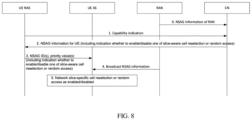
- the configuration message may include network slice access stratum group, NASG, information for one or more single network slice selection assistance information, S-NSSAI, in a configured NSSAI.
- the user device may comprise means being adapted to provide, by the first layer to the second layer, information to selectively enable or disable performing the cell reselection procedure and/or the random-access procedure taking into account priority of one or more network slice groups.
- the first layer may comprise a non-access stratum layer and the second layer may comprise an access stratum layer.
- the user device may comprise a first layer receiving the configuration message and a second layer performing the cell reselection procedure and/or the random-access procedure taking into account priority of one or more network slice groups.
- the computer program code may cause the user device, when executed with the at least one processor, to provide, by the first layer to the second layer, information for the cell reselection procedure taking into account priority of one or more network slice groups if the configuration message implies that the cell reselection procedure taking into account priority of one or more network slice groups needs to be performed; and provide, by the first layer to the second layer, information for the random-access procedure taking into account priority of one or more network slice groups if the configuration message implies that the random-access procedure taking into account priority of one or more network slice groups needs to be performed.
- the network device may comprise means being adapted to send a configuration message to the user device, the configuration message indicating whether the user device is to perform a cell reselection procedure and/or a random-access procedure taking into account priority of one or more network slice groups; and means being adapted to perform the cell reselection procedure and/or the random-access procedure taking into account priority of one or more network slice groups in accordance with the configuration message with the user device.
- the network node may control the behavior of the user device to enable/disable at least one of the cell reselection procedure and the random-access procedure selectively.
- the configuration message may include at least one of a first indication indicating whether to perform the cell reselection procedure taking into account priority of one or more network slice groups and a second indication indicating whether to perform the random-access procedure taking into account priority of one or more network slice groups.
- the configuration message may include a single indication comprising a first bit indicating whether to perform the cell reselection procedure taking into account priority of one or more network slice groups and a second bit indicating whether to perform the random-access procedure taking into account priority of one or more network slice groups.
- the computer program code may cause the network device, when executed with the at least one processor, to indicate that the user device is to perform the cell reselection procedure and/or the random-access procedure taking into account priority of one or more network slice groups by sending the configuration message including priority information related to the cell reselection procedure and/or the random-access procedure; and indicate that the user device is not to perform the cell reselection procedure and/or the random-access procedure taking into account priority of one or more network slice groups by sending the configuration not including the priority information.
- the network device may comprise means being adapted to indicate that the user device is to perform the cell reselection procedure and/or the random-access procedure taking into account priority of one or more network slice groups by sending the configuration message including priority information related to the cell reselection procedure and/or the random-access procedure; and means being adapted to indicate that the user device is not to perform the cell reselection procedure and/or the random-access procedure taking into account priority of one or more network slice groups by sending the configuration not including the priority information.
- the computer program code may cause the network device, when executed with the at least one processor, to receive, from the user device, capability information indicating support for the cell reselection procedure and/or the random-access procedure taking into account priority of one or more network slice groups.
- the configuration message may be sent in response to receiving the capability information and indicating whether to enable or disable the cell reselection procedure and/or the random-access procedure supported by the user device.
- the network device may comprise means being adapted to receive, from the user device, capability information indicating support for the cell reselection procedure and/or the random-access procedure taking into account priority of one or more network slice groups.
- the configuration message may be sent in response to receiving the capability information and indicating whether to enable or disable the cell reselection procedure and/or the random-access procedure supported by the user device.
- the user device may comprise a user equipment (UE) and the network node may comprise an access and mobility management function (AMF) of a network.
- the network may support network slicing.
- the above-noted aspects and features may be implemented in systems, apparatuses, methods, articles and/or non-transitory computer-readable media depending on the desired configuration.
- the subject disclosure may be implemented in and/or used with a number of different types of devices, including but not limited to cellular phones, tablet computers, wearable computing devices, portable media players, and any of various other computing devices.
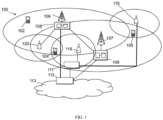
- a wireless communication system 100 such as that shown in FIG. 1
- mobile communication devices, user devices, User Equipment (UE) 102, 104, 105 are provided wireless access via at least one base station (e.g., next generation NB, gNB), similar wireless transmitting and/or receiving node or network node.
- Base stations may be controlled or assisted by at least one appropriate controller apparatus, so as to enable operation thereof and management of mobile communication devices in communication with the base stations.
- the controller apparatus may be located in a Radio Access Network (RAN) (e.g., wireless communication system 100) or in a Core Network (CN) (not shown) and may be implemented as one central apparatus or its functionality may be distributed over several apparatuses.
- RAN Radio Access Network
- CN Core Network
- the controller apparatus may be part of the base station and/or provided by a separate entity such as a Radio Network Controller (RNC).
- RNC Radio Network Controller
- control apparatus 108 and 109 are shown to control the respective macro level base stations 106 and 107.
- the control apparatus of a base station can be interconnected with other control entities.
- the control apparatus is typically provided with memory capacity and at least one data processor.
- the control apparatus and functions may be distributed between a plurality of control units. In some systems, the control apparatus may additionally or alternatively be provided in the RNC.
- base stations 106 and 107 are shown as connected to a wider communications network 113 via gateway 112.
- a further gateway function may be provided to connect to another network.
- each UE may also be capable of receiving signals from (and possibly within communication range of) one or more other cells (which might be provided by the base stations and/or any other base stations), which may be referred to as “neighboring cells”.
- the communication devices 102, 104, 105 may access the communication system based on various access techniques, such as Code Division Multiple Access (CDMA), or Wideband CDMA (WCDMA).
- CDMA Code Division Multiple Access
- WCDMA Wideband CDMA
- Other non-limiting examples comprise Time Division Multiple Access (TDMA), Frequency Division Multiple Access (FDMA) and various schemes thereof such as the Interleaved Frequency Division Multiple Access (IFDMA), Single Carrier Frequency Division Multiple Access (SC-FDMA) and Orthogonal Frequency Division Multiple Access (OFDMA), Space Division Multiple Access (SDMA) and so on.
- TDMA Time Division Multiple Access
- FDMA Frequency Division Multiple Access
- IFDMA Interleaved Frequency Division Multiple Access
- SC-FDMA Single Carrier Frequency Division Multiple Access
- OFDMA Orthogonal Frequency Division Multiple Access
- SDMA Space Division Multiple Access
- Network architecture in NR may be similar to that of LTE-A.
- Base stations of NR systems may be known as next generation Node Bs (gNBs).
- Changes to the network architecture may depend on the need to support various radio technologies and finer Quality of Service (QoS) support, and some on-demand requirements for QoS levels to support Quality of Experience (QoE) of user point of view.
- QoS Quality of Service
- QoE Quality of Experience
- network aware services and applications, and service and application aware networks may bring changes to the architecture. Those are related to Information Centric Network (ICN) and User-Centric Content Delivery Network (UC-CDN) approaches.
- ICN Information Centric Network
- UC-CDN User-Centric Content Delivery Network
- the UPF is controlled by a Session Management Function (SMF) that receives policies from a Policy Control Function (PCF).
- SMF Session Management Function
- PCF Policy Control Function
- the CN may also include an Access and Mobility Function (AMF).
- AMF Access and Mobility Function
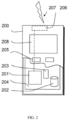
- the communication device 200 may provide, for example, communication of data for carrying communications such as voice, electronic mail (e-mail), text message, multimedia and so on. Users may thus be offered and provided numerous services via their communication devices. Non-limiting examples of these services comprise two-way or multi-way calls, data communication or multimedia services or simply an access to a data communications network system, such as the Internet. Users may also be provided broadcast or multicast data. Non-limiting examples of the content comprise downloads, television and radio programs, videos, advertisements, various alerts and other information.
- a communication device may be a modem integrated into an industrial actuator (e.g., a robot arm) and/or a modem acting as an Ethernet-hub that will act as a connection point for one or several connected Ethernet devices (which connection may be wired or unwired).
- an industrial actuator e.g., a robot arm
- a modem acting as an Ethernet-hub that will act as a connection point for one or several connected Ethernet devices (which connection may be wired or unwired).
- the communication device 200 may receive signals over an air or radio interface 207 via appropriate apparatus for receiving and may transmit signals via appropriate apparatus for transmitting radio signals.
- transceiver apparatus is designated schematically by block 206.
- the transceiver apparatus 206 may be provided for example by means of a radio part and associated antenna arrangement.
- the antenna arrangement may be arranged internally or externally to the communication device 200.
- the communication device 200 may be capable of operating with one or more air interface standards, communication protocols, modulation types, access types, and/or the like.
- Signals sent and received by the processor may include signaling information in accordance with an air interface standard of an applicable cellular system, and/or any number of different wireline or wireless networking techniques, comprising but not limited to Wi-Fi, WLAN techniques, such as Institute of Electrical and Electronics Engineers (IEEE) 802.11, 802.16, 802.3, ADSL, DOCSIS, and/or the like.
- IEEE Institute of Electrical and Electronics Engineers
- these signals may include speech data, user generated data, user requested data, and/or the like.
- the processor may include circuitry for implementing audio/video and logic functions of the communication device 200.
- the processor may comprise a digital signal processor device, a microprocessor device, an analog-to-digital converter, a digital-to-analog converter, and/or the like. Control and signal processing functions of the communication device 200 may be allocated between these devices according to their respective capabilities.
- the processor may additionally comprise an internal voice coder, an internal data modem, and/or the like.
- the processor may include functionality to operate one or more software programs, which may be stored in memory.
- the processor and stored software instructions may be configured to cause the communication device 200 to perform actions.
- the processor may be capable of operating a connectivity program, such as a web browser.
- the connectivity program may allow the communication device 200 to transmit and receive web content, such as location-based content, according to a protocol, such as Wireless Application Protocol (WAP), HyperText Transfer Protocol (HTTP), and/or the like.
- WAP Wireless Application Protocol
- HTTP HyperText Transfer Protocol
- the communication device 200 may also comprise a user interface including, for example, an earphone or speaker, a ringer, a microphone, a display, a user input interface, and/or the like, which may be operationally coupled to the processor.
- the display may, as noted above, include a touch sensitive display, where a user may touch and/or gesture to make selections, enter values, and/or the like.
- the processor may also include user interface circuitry configured to control at least some functions of one or more elements of the user interface, such as the speaker, the ringer, the microphone, the display, and/or the like.
- the communication device 200 may include other short-range transceivers, such as an infrared (IR) transceiver, a Bluetooth TM (BT) transceiver operating using Bluetooth TM wireless technology, a wireless Universal Serial Bus (USB) transceiver, a Bluetooth TM Low Energy transceiver, a ZigBee transceiver, an ANT transceiver, a cellular device-to-device transceiver, a wireless local area link transceiver, and/or any other short-range radio technology.
- the communication device 200 and more specifically, the short-range transceiver may be capable of transmitting data to and/or receiving data from electronic devices within the proximity of the apparatus, such as within 10 meters, for example.
- the communication device 200 including the Wi-Fi or WLAN modem may also be capable of transmitting and/or receiving data from electronic devices according to various wireless networking techniques, including 6LoWPAN, Wi-Fi, Wi-Fi low power, WLAN techniques such as IEEE 802.11 techniques, IEEE 802.15 techniques, IEEE 802.16 techniques, and/or the like.
- various wireless networking techniques including 6LoWPAN, Wi-Fi, Wi-Fi low power, WLAN techniques such as IEEE 802.11 techniques, IEEE 802.15 techniques, IEEE 802.16 techniques, and/or the like.
- the communication device 200 (i.e., UE or a user device in a network) comprises the processor (e.g., the at least one data processing entity 201) and the memory (e.g., the at least one memory 202).
- the memory includes computer program code causing the communication device 200 to perform processing according to the methods described below with reference to FIG. 6 .
- FIGS. 6 to 8 Before referring to FIGS. 6 to 8 and describing the methods for controlling behavior of a user device towards a cell in a sliced network according to some embodiments of the subject disclosure, some background information and aspects related to the subject disclosure will be provided.
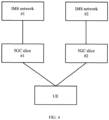
- network slicing enables a communications service provider to provide dedicated virtual networks over a common network infrastructure.
- the different virtual or logical networks may be designed to provide different networking characteristics such as different Quality of Service (QoS) capabilities in order to host services with diverse requirements and Service Level Agreements (SLAs).
- QoS Quality of Service
- SLAs Service Level Agreements
- the virtual networks may be customized to meet specific needs of various applications, services, devices, customers and/or operators.
- the network slicing enables provision of different services to the end device.
- network slices may differ either in their service requirements like URLLC and eMBB or the tenant that provides those services.
- the TA is a logical concept of an area where a user can move around without updating the MME and is the LTE, EPS or 5GS counterpart of the location area and routing area of GSM, WCDMA and GPRS.
- the TA consists of a set of cells.
- TAs can be grouped into lists of tracking areas (TA lists), which can be configured on the UE. For example, the network allocates a list with one or more TAs to the user. In certain operations, the UE may move freely in all TAs of the list without updating the MME.
- the RA is a list consisting of TAs, which is configured to the UE by the network.
- the RA are used to track the UE for paging purposes. If the UE leaves the RA, the UE will let the network know through Non-Access Stratum (NAS) registration request (referred to as mobility registration update) such that the correct RA can be configured to the UE.
- NAS Non-Access Stratum
- the network may configure one or more network slice AS groups (NSAGs) valid in one or more tracking areas (TAs).
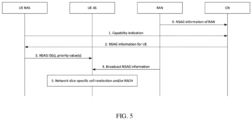
- the RAN may provide (or update) the CN (such as the AMF with values of the NSAG(s) in a TA, with which an S-NSSAI is associated, using the NG Set Up and RAN Configuration Update procedures.
- the CN (or AMF) does not know the purpose of the NSAG(s). That is, the NSAG(s) may be for random access or for cell reselection.
- the CN may receive capability indication(s) from the NAS layer of the UE. For example, if the UE supports NSAG(s), the UE indicates to the CN that the UE supports NSAG(s) in the 5GMM Core Network Capability.
- the CN may configure the UE with NSAG information for one or more S-NSSAIs in the Configured NSSAI, by including the NSAG Information in the Registration Accept message or the UE Configuration Command message, at step 2.
- the CN or AMF
- the CN or AMF
- a NSAG is for cell reselection or for random access turns out only in an implicit way from signaling the UE receives from the RAN (e.g., if a slice group is advertised for cell reselection by RAN, then it may be used for cell reselection).
- the NAS layer of the UE indicates to the AS layer of the UE to operate according to the indication(s) provided by the CN (or AMF).
- the indication(s) may correspond to a single indication with multiple bits and may also be a response to the UE MM capability that indicates if the UE supports one or both features (i.e., random-access procedure and the cell reselection procedure).
- the NAS layer may receive from the AS layer the groups relevant for the current location for random-access or cell reselections purposes.
- the NAS layer may provide NSAG ID(s) and priority value(s) to the AS layer according to the indication(s).
- NSAG information includes:
- Example embodiments of the subject disclosure may be implemented by computer software executable by a data processor of the mobile device, such as in the processor entity, or by hardware, or by a combination of software and hardware.
- Computer software or program also called program product, including software routines, applets and/or macros, may be stored in any apparatus-readable data storage medium and they comprise program instructions to perform particular tasks.
- a computer program product may comprise one or more computer-executable components which, when the program is run, are configured to carry out embodiments.
- the one or more computer-executable components may be at least one software code or portions of it.
Landscapes
- Engineering & Computer Science (AREA)
- Computer Networks & Wireless Communication (AREA)
- Signal Processing (AREA)
- Computer Security & Cryptography (AREA)
- Databases & Information Systems (AREA)
- Mobile Radio Communication Systems (AREA)
- Data Exchanges In Wide-Area Networks (AREA)
Priority Applications (1)
| Application Number | Priority Date | Filing Date | Title |
|---|---|---|---|
| EP24177914.9A EP4398635A3 (fr) | 2022-05-04 | 2022-05-04 | Procédé et appareil de commande d'un dispositif utilisateur dans un réseau |
Applications Claiming Priority (2)
| Application Number | Priority Date | Filing Date | Title |
|---|---|---|---|
| EP22171670.7A EP4274311B1 (fr) | 2022-05-04 | 2022-05-04 | Procédé et appareil de commande d'un dispositif d'utilisateur dans un réseau |
| EP24177914.9A EP4398635A3 (fr) | 2022-05-04 | 2022-05-04 | Procédé et appareil de commande d'un dispositif utilisateur dans un réseau |
Related Parent Applications (2)
| Application Number | Title | Priority Date | Filing Date |
|---|---|---|---|
| EP22171670.7A Division-Into EP4274311B1 (fr) | 2022-05-04 | 2022-05-04 | Procédé et appareil de commande d'un dispositif d'utilisateur dans un réseau |
| EP22171670.7A Division EP4274311B1 (fr) | 2022-05-04 | 2022-05-04 | Procédé et appareil de commande d'un dispositif d'utilisateur dans un réseau |
Publications (2)
| Publication Number | Publication Date |
|---|---|
| EP4398635A2 true EP4398635A2 (fr) | 2024-07-10 |
| EP4398635A3 EP4398635A3 (fr) | 2024-10-09 |
Family
ID=81580598
Family Applications (2)
| Application Number | Title | Priority Date | Filing Date |
|---|---|---|---|
| EP24177914.9A Pending EP4398635A3 (fr) | 2022-05-04 | 2022-05-04 | Procédé et appareil de commande d'un dispositif utilisateur dans un réseau |
| EP22171670.7A Active EP4274311B1 (fr) | 2022-05-04 | 2022-05-04 | Procédé et appareil de commande d'un dispositif d'utilisateur dans un réseau |
Family Applications After (1)
| Application Number | Title | Priority Date | Filing Date |
|---|---|---|---|
| EP22171670.7A Active EP4274311B1 (fr) | 2022-05-04 | 2022-05-04 | Procédé et appareil de commande d'un dispositif d'utilisateur dans un réseau |
Country Status (6)
| Country | Link |
|---|---|
| US (2) | US20250301506A1 (fr) |
| EP (2) | EP4398635A3 (fr) |
| JP (1) | JP2025516266A (fr) |
| CN (1) | CN119138026A (fr) |
| ES (1) | ES3039511T3 (fr) |
| WO (1) | WO2023213603A1 (fr) |
Families Citing this family (2)
| Publication number | Priority date | Publication date | Assignee | Title |
|---|---|---|---|---|
| US20230209424A1 (en) * | 2021-12-27 | 2023-06-29 | Apple Inc. | User equipment and core network signaling for radio access network slice based cell re-selction |
| CN119138025A (zh) * | 2022-05-04 | 2024-12-13 | 三星电子株式会社 | 用于在无线通信系统中支持网络切片的优先级的方法和设备 |
Family Cites Families (5)
| Publication number | Priority date | Publication date | Assignee | Title |
|---|---|---|---|---|
| ES2888407T3 (es) * | 2018-09-25 | 2022-01-04 | Ericsson Telefon Ab L M | Solicitud de reanudación seguida por liberación y redirección |
| CN116830666A (zh) * | 2021-02-12 | 2023-09-29 | 联想(新加坡)私人有限公司 | 基于经注册用户装备的准入控制 |
| US20240196316A1 (en) * | 2021-02-18 | 2024-06-13 | Telefonaktiebolaget Lm Ericsson (Publ) | Systems and methods for inhomogeneous slice support |
| EP4422329A4 (fr) * | 2021-10-20 | 2025-01-29 | NEC Corporation | Terminal radio et procédé associé |
| KR20250143361A (ko) * | 2022-01-27 | 2025-10-01 | 인터디지탈 패튼 홀딩스, 인크 | 네트워크 슬라이싱 서빙 영역을 지원하기 위한 방법, 아키텍처, 장치 및 시스템 |
-
2022
- 2022-05-04 EP EP24177914.9A patent/EP4398635A3/fr active Pending
- 2022-05-04 EP EP22171670.7A patent/EP4274311B1/fr active Active
- 2022-05-04 ES ES22171670T patent/ES3039511T3/es active Active
-
2023
- 2023-04-25 US US18/862,447 patent/US20250301506A1/en active Pending
- 2023-04-25 WO PCT/EP2023/060707 patent/WO2023213603A1/fr not_active Ceased
- 2023-04-25 JP JP2024564534A patent/JP2025516266A/ja active Pending
- 2023-04-25 CN CN202380038297.8A patent/CN119138026A/zh active Pending
-
2024
- 2024-11-26 US US18/961,007 patent/US20250088956A1/en active Pending
Also Published As
| Publication number | Publication date |
|---|---|
| US20250088956A1 (en) | 2025-03-13 |
| CN119138026A (zh) | 2024-12-13 |
| EP4274311B1 (fr) | 2025-07-30 |
| ES3039511T3 (en) | 2025-10-22 |
| WO2023213603A1 (fr) | 2023-11-09 |
| EP4398635A3 (fr) | 2024-10-09 |
| EP4274311A1 (fr) | 2023-11-08 |
| JP2025516266A (ja) | 2025-05-27 |
| US20250301506A1 (en) | 2025-09-25 |
Similar Documents
| Publication | Publication Date | Title |
|---|---|---|
| US20250088956A1 (en) | Method and apparatus for controlling a user device in a network | |
| US20250274996A1 (en) | Method and apparatus for controlling a user device | |
| EP3756333B1 (fr) | Procédé, appareil et programme informatique | |
| EP4210396A1 (fr) | Procédé et appareil pour attribuer une tranche de réseau pour une session associée à un système existant | |
| US20230180157A1 (en) | Apparatus, Method and Computer Program | |
| US20250386266A1 (en) | Cell reselection mechanisms interworking | |
| US20240236942A9 (en) | Methods and apparatuses for controlling multi-usim behaviour of user equipment | |
| HK40112236A (en) | Method and apparatus for controlling a user device in a network | |
| EP4322581A1 (fr) | Procédé et appareil pour contrôler des tranches de réseau demandées par un équipement utilisateur | |
| US20250220637A1 (en) | Method and apparatus for paging | |
| EP3777447B1 (fr) | Appareil, procédé et programme informatique | |
| US20250324335A1 (en) | Methods and apparatus of operating user equipment and network devices | |
| US20260025718A1 (en) | Method and apparatus for dual connectivity conditional handover recovery | |
| US12477316B2 (en) | Network slice local switching at a distributed unit | |
| US20240205813A1 (en) | Method and apparatus to access core networks via gateway functions | |
| WO2024166063A2 (fr) | Mobilité à travers une zone de service de tranche limitée pendant des transferts intra-gnb et inter-gnb | |
| HK40106706A (en) | Method and apparatus to access core networks via gateway functions |
Legal Events
| Date | Code | Title | Description |
|---|---|---|---|
| PUAI | Public reference made under article 153(3) epc to a published international application that has entered the european phase |
Free format text: ORIGINAL CODE: 0009012 |
|
| STAA | Information on the status of an ep patent application or granted ep patent |
Free format text: STATUS: THE APPLICATION HAS BEEN PUBLISHED |
|
| AC | Divisional application: reference to earlier application |
Ref document number: 4274311 Country of ref document: EP Kind code of ref document: P |
|
| AK | Designated contracting states |
Kind code of ref document: A2 Designated state(s): AL AT BE BG CH CY CZ DE DK EE ES FI FR GB GR HR HU IE IS IT LI LT LU LV MC MK MT NL NO PL PT RO RS SE SI SK SM TR |
|
| PUAL | Search report despatched |
Free format text: ORIGINAL CODE: 0009013 |
|
| AK | Designated contracting states |
Kind code of ref document: A3 Designated state(s): AL AT BE BG CH CY CZ DE DK EE ES FI FR GB GR HR HU IE IS IT LI LT LU LV MC MK MT NL NO PL PT RO RS SE SI SK SM TR |
|
| RIC1 | Information provided on ipc code assigned before grant |
Ipc: H04W 8/24 20090101ALN20240904BHEP Ipc: H04W 48/18 20090101ALN20240904BHEP Ipc: H04W 36/12 20090101AFI20240904BHEP |
|
| REG | Reference to a national code |
Ref country code: HK Ref legal event code: DE Ref document number: 40112236 Country of ref document: HK |
|
| STAA | Information on the status of an ep patent application or granted ep patent |
Free format text: STATUS: REQUEST FOR EXAMINATION WAS MADE |
|
| 17P | Request for examination filed |
Effective date: 20250408 |
|
| STAA | Information on the status of an ep patent application or granted ep patent |
Free format text: STATUS: EXAMINATION IS IN PROGRESS |
|
| 17Q | First examination report despatched |
Effective date: 20260306 |