EP4400512A1 - Anti-ang2-antikörper, herstellungsverfahren dafür und anwendung davon - Google Patents
Anti-ang2-antikörper, herstellungsverfahren dafür und anwendung davon Download PDFInfo
- Publication number
- EP4400512A1 EP4400512A1 EP21956409.3A EP21956409A EP4400512A1 EP 4400512 A1 EP4400512 A1 EP 4400512A1 EP 21956409 A EP21956409 A EP 21956409A EP 4400512 A1 EP4400512 A1 EP 4400512A1
- Authority
- EP
- European Patent Office
- Prior art keywords
- seq
- ang2
- heavy
- antibody
- hcdr2
- Prior art date
- Legal status (The legal status is an assumption and is not a legal conclusion. Google has not performed a legal analysis and makes no representation as to the accuracy of the status listed.)
- Pending
Links
Images

Classifications
-
- C—CHEMISTRY; METALLURGY
- C12—BIOCHEMISTRY; BEER; SPIRITS; WINE; VINEGAR; MICROBIOLOGY; ENZYMOLOGY; MUTATION OR GENETIC ENGINEERING
- C12N—MICROORGANISMS OR ENZYMES; COMPOSITIONS THEREOF; PROPAGATING, PRESERVING, OR MAINTAINING MICROORGANISMS; MUTATION OR GENETIC ENGINEERING; CULTURE MEDIA
- C12N5/00—Undifferentiated human, animal or plant cells, e.g. cell lines; Tissues; Cultivation or maintenance thereof; Culture media therefor
- C12N5/10—Cells modified by introduction of foreign genetic material
-
- A—HUMAN NECESSITIES
- A61—MEDICAL OR VETERINARY SCIENCE; HYGIENE
- A61K—PREPARATIONS FOR MEDICAL, DENTAL OR TOILETRY PURPOSES
- A61K39/00—Medicinal preparations containing antigens or antibodies
- A61K39/395—Antibodies; Immunoglobulins; Immune serum, e.g. antilymphocytic serum
-
- C—CHEMISTRY; METALLURGY
- C07—ORGANIC CHEMISTRY
- C07K—PEPTIDES
- C07K16/00—Immunoglobulins [IG], e.g. monoclonal or polyclonal antibodies
- C07K16/18—Immunoglobulins [IG], e.g. monoclonal or polyclonal antibodies against material from animals or humans
- C07K16/22—Immunoglobulins [IG], e.g. monoclonal or polyclonal antibodies against material from animals or humans against growth factors ; against growth regulators
-
- A—HUMAN NECESSITIES
- A61—MEDICAL OR VETERINARY SCIENCE; HYGIENE
- A61K—PREPARATIONS FOR MEDICAL, DENTAL OR TOILETRY PURPOSES
- A61K47/00—Medicinal preparations characterised by the non-active ingredients used, e.g. carriers or inert additives; Targeting or modifying agents chemically bound to the active ingredient
- A61K47/50—Medicinal preparations characterised by the non-active ingredients used, e.g. carriers or inert additives; Targeting or modifying agents chemically bound to the active ingredient the non-active ingredient being chemically bound to the active ingredient, e.g. polymer-drug conjugates
- A61K47/51—Medicinal preparations characterised by the non-active ingredients used, e.g. carriers or inert additives; Targeting or modifying agents chemically bound to the active ingredient the non-active ingredient being chemically bound to the active ingredient, e.g. polymer-drug conjugates the non-active ingredient being a modifying agent
- A61K47/68—Medicinal preparations characterised by the non-active ingredients used, e.g. carriers or inert additives; Targeting or modifying agents chemically bound to the active ingredient the non-active ingredient being chemically bound to the active ingredient, e.g. polymer-drug conjugates the non-active ingredient being a modifying agent the modifying agent being an antibody, an immunoglobulin or a fragment thereof, e.g. an Fc-fragment
- A61K47/6835—Medicinal preparations characterised by the non-active ingredients used, e.g. carriers or inert additives; Targeting or modifying agents chemically bound to the active ingredient the non-active ingredient being chemically bound to the active ingredient, e.g. polymer-drug conjugates the non-active ingredient being a modifying agent the modifying agent being an antibody, an immunoglobulin or a fragment thereof, e.g. an Fc-fragment the modifying agent being an antibody or an immunoglobulin bearing at least one antigen-binding site
- A61K47/6845—Medicinal preparations characterised by the non-active ingredients used, e.g. carriers or inert additives; Targeting or modifying agents chemically bound to the active ingredient the non-active ingredient being chemically bound to the active ingredient, e.g. polymer-drug conjugates the non-active ingredient being a modifying agent the modifying agent being an antibody, an immunoglobulin or a fragment thereof, e.g. an Fc-fragment the modifying agent being an antibody or an immunoglobulin bearing at least one antigen-binding site the antibody targeting a cytokine, e.g. growth factors, VEGF, TNF, a lymphokine or an interferon
-
- A—HUMAN NECESSITIES
- A61—MEDICAL OR VETERINARY SCIENCE; HYGIENE
- A61P—SPECIFIC THERAPEUTIC ACTIVITY OF CHEMICAL COMPOUNDS OR MEDICINAL PREPARATIONS
- A61P35/00—Antineoplastic agents
-
- C—CHEMISTRY; METALLURGY
- C07—ORGANIC CHEMISTRY
- C07K—PEPTIDES
- C07K16/00—Immunoglobulins [IG], e.g. monoclonal or polyclonal antibodies
-
- A—HUMAN NECESSITIES
- A61—MEDICAL OR VETERINARY SCIENCE; HYGIENE
- A61K—PREPARATIONS FOR MEDICAL, DENTAL OR TOILETRY PURPOSES
- A61K39/00—Medicinal preparations containing antigens or antibodies
- A61K2039/505—Medicinal preparations containing antigens or antibodies comprising antibodies
-
- C—CHEMISTRY; METALLURGY
- C07—ORGANIC CHEMISTRY
- C07K—PEPTIDES
- C07K2317/00—Immunoglobulins specific features
- C07K2317/20—Immunoglobulins specific features characterized by taxonomic origin
- C07K2317/22—Immunoglobulins specific features characterized by taxonomic origin from camelids, e.g. camel, llama or dromedary
-
- C—CHEMISTRY; METALLURGY
- C07—ORGANIC CHEMISTRY
- C07K—PEPTIDES
- C07K2317/00—Immunoglobulins specific features
- C07K2317/20—Immunoglobulins specific features characterized by taxonomic origin
- C07K2317/24—Immunoglobulins specific features characterized by taxonomic origin containing regions, domains or residues from different species, e.g. chimeric, humanized or veneered
-
- C—CHEMISTRY; METALLURGY
- C07—ORGANIC CHEMISTRY
- C07K—PEPTIDES
- C07K2317/00—Immunoglobulins specific features
- C07K2317/30—Immunoglobulins specific features characterized by aspects of specificity or valency
- C07K2317/31—Immunoglobulins specific features characterized by aspects of specificity or valency multispecific
-
- C—CHEMISTRY; METALLURGY
- C07—ORGANIC CHEMISTRY
- C07K—PEPTIDES
- C07K2317/00—Immunoglobulins specific features
- C07K2317/50—Immunoglobulins specific features characterized by immunoglobulin fragments
- C07K2317/52—Constant or Fc region; Isotype
-
- C—CHEMISTRY; METALLURGY
- C07—ORGANIC CHEMISTRY
- C07K—PEPTIDES
- C07K2317/00—Immunoglobulins specific features
- C07K2317/50—Immunoglobulins specific features characterized by immunoglobulin fragments
- C07K2317/52—Constant or Fc region; Isotype
- C07K2317/522—CH1 domain
-
- C—CHEMISTRY; METALLURGY
- C07—ORGANIC CHEMISTRY
- C07K—PEPTIDES
- C07K2317/00—Immunoglobulins specific features
- C07K2317/50—Immunoglobulins specific features characterized by immunoglobulin fragments
- C07K2317/52—Constant or Fc region; Isotype
- C07K2317/53—Hinge
-
- C—CHEMISTRY; METALLURGY
- C07—ORGANIC CHEMISTRY
- C07K—PEPTIDES
- C07K2317/00—Immunoglobulins specific features
- C07K2317/50—Immunoglobulins specific features characterized by immunoglobulin fragments
- C07K2317/55—Fab or Fab'
-
- C—CHEMISTRY; METALLURGY
- C07—ORGANIC CHEMISTRY
- C07K—PEPTIDES
- C07K2317/00—Immunoglobulins specific features
- C07K2317/50—Immunoglobulins specific features characterized by immunoglobulin fragments
- C07K2317/56—Immunoglobulins specific features characterized by immunoglobulin fragments variable (Fv) region, i.e. VH and/or VL
- C07K2317/565—Complementarity determining region [CDR]
-
- C—CHEMISTRY; METALLURGY
- C07—ORGANIC CHEMISTRY
- C07K—PEPTIDES
- C07K2317/00—Immunoglobulins specific features
- C07K2317/50—Immunoglobulins specific features characterized by immunoglobulin fragments
- C07K2317/56—Immunoglobulins specific features characterized by immunoglobulin fragments variable (Fv) region, i.e. VH and/or VL
- C07K2317/569—Single domain, e.g. dAb, sdAb, VHH, VNAR or nanobody®
-
- C—CHEMISTRY; METALLURGY
- C07—ORGANIC CHEMISTRY
- C07K—PEPTIDES
- C07K2317/00—Immunoglobulins specific features
- C07K2317/60—Immunoglobulins specific features characterized by non-natural combinations of immunoglobulin fragments
-
- C—CHEMISTRY; METALLURGY
- C07—ORGANIC CHEMISTRY
- C07K—PEPTIDES
- C07K2317/00—Immunoglobulins specific features
- C07K2317/70—Immunoglobulins specific features characterized by effect upon binding to a cell or to an antigen
-
- C—CHEMISTRY; METALLURGY
- C07—ORGANIC CHEMISTRY
- C07K—PEPTIDES
- C07K2317/00—Immunoglobulins specific features
- C07K2317/70—Immunoglobulins specific features characterized by effect upon binding to a cell or to an antigen
- C07K2317/76—Antagonist effect on antigen, e.g. neutralization or inhibition of binding
-
- C—CHEMISTRY; METALLURGY
- C07—ORGANIC CHEMISTRY
- C07K—PEPTIDES
- C07K2317/00—Immunoglobulins specific features
- C07K2317/90—Immunoglobulins specific features characterized by (pharmaco)kinetic aspects or by stability of the immunoglobulin
- C07K2317/92—Affinity (KD), association rate (Ka), dissociation rate (Kd) or EC50 value
-
- C—CHEMISTRY; METALLURGY
- C07—ORGANIC CHEMISTRY
- C07K—PEPTIDES
- C07K2317/00—Immunoglobulins specific features
- C07K2317/90—Immunoglobulins specific features characterized by (pharmaco)kinetic aspects or by stability of the immunoglobulin
- C07K2317/94—Stability, e.g. half-life, pH, temperature or enzyme-resistance
-
- C—CHEMISTRY; METALLURGY
- C07—ORGANIC CHEMISTRY
- C07K—PEPTIDES
- C07K2319/00—Fusion polypeptide
Definitions
- the present disclosure relates to the field of medicines and, specifically, to an ANG2 (human angiopoietin-2) antibody, a preparation method therefor and an application thereof.
- ANG2 human angiopoietin-2
- An antibody targeting ANG2 can inhibit neovascular generation and leakage and reduce the occurrence of an inflammatory response.
- ANG/Tie2 is an important signal pathway that regulates angiogenesis.
- ANG1 promotes the phosphorylation of an endothelial cell receptor Tie2, attracts perivascular cells such as vascular smooth muscle cells and pericytes to surround and support endothelial cells, promotes vascular remodeling, maintains vascular integrity and regulates a vascular function.
- ANG1 can protect a blood vessel from a lesion and maintain vascular morphology, while ANG2 promotes vascular leakage, resulting in hypotension and an abnormal vascular structure.
- the present disclosure provides a specific monoclonal antibody targeting ANG2 that plays a role in inhibiting pro-angiogenesis activity of ANG2 and treating diseases and conditions caused by or related to an angiogenic process such as fundus neovascular disease, rheumatoid arthritis and psoriasis.
- angiogenesis is very critical to tumor growth and maintenance, and the monoclonal antibody that inhibits ANG2 can also play a role in a process of treating a cancer.
- the present disclosure further provides a bispecific antibody targeting ANG2 and VEGF.
- the antibody of the present disclosure can bind to human ANG2, rabbit ANG2 and monkey ANG2.
- the present disclosure relates to the following aspects:
- a CDR of an antibody is responsible for the binding specificity of the antibody to an antigen.
- sequences of heavy chain and light chain variable regions of the antibody are known, there are several methods for determining the CDR of the antibody at present, including Kabat, IMGT, Chothia and AbM numbering systems.
- each application about a definition of a CDR of the antibody or a variant of the antibody will be within the scope of the terms defined and used herein. If the amino acid sequence of the variable region of the antibody is given, those skilled in the art may generally determine particular CDR without relying on any experimental data other than the sequence.
- a heavy-chain single-domain antibody is also referred to as a VHH domain, a VHH antibody fragment or a VHH antibody, which is a variable domain of an antigen-binding immunoglobulin referred to as a "heavy-chain antibody” (an antibody devoid of a light chain) ( Hamers-Casterman C, Atarhouch T, Muyldermans S, Robinson G, Hamers C, Songa EB, BEndahman N, Hamers R.: "Naturally occurring antibodies devoid of light chains", Nature 363, 446-448, 1993 ).
- the VHH domain specifically binds to an epitope without another antigen-binding domain.
- the VHH domain is a small, stable and efficient antigen recognition unit formed by a single immunoglobulin domain.
- the heavy-chain single-domain antibody of the present disclosure may be conjugated to a bioactive substance that has a requirement to form a recombinant protein.
- the bioactive substance is selected from, for example, a toxin having enzymatic activity or an active fragment (for example, abrin, ricin A, pseudomonas exotoxin or diphtheria toxin) of the toxin, a tumor necrosis factor or an interferon (for example, IFN- ⁇ ), a biological response modifier (for example, lymphokines IL-2, IL-2, IL2-6, IL-10 and GM-CSF) and an Fc fragment.
- a toxin having enzymatic activity or an active fragment for example, abrin, ricin A, pseudomonas exotoxin or diphtheria toxin
- a tumor necrosis factor or an interferon for example, IFN- ⁇
- a biological response modifier for example, lymphokines IL-2, IL-2, IL
- Fc fragment contained in the recombinant protein of the present disclosure may enable the recombinant protein to form a dimer and prolong an in vivo half-life of the recombinant protein.
- Fc fragments that may be used in the present disclosure may come from different subtypes of immunoglobulins such as IgG (such as an IgG1, IgG2, IgG3 or IgG4 subtype), IgA1, IgA2, IgD, IgE or IgM.
- the antibody of the present disclosure may be: (i) a polypeptide where one or more conservative or non-conservative amino acid residues (preferably the conservative amino acid residue) are substituted, or (ii) a polypeptide having a substituent in one or more amino acid residues, or (iii) a polypeptide formed through the fusion of a mature polypeptide with another compound (for example, a compound that lengthens a half-life of the polypeptide, for example, polyethylene glycol), or (iv) a polypeptide (for example, a preamble sequence, or a secretory sequence, or a sequence used for purifying this polypeptide, or a fibrinogen sequence, or a fusion protein formed with a 6His tag) formed through the fusion of an additional amino acid sequence to this polypeptide sequence.
- these fragments, derivatives and analogs belong to the scope well known to those skilled in the art.
- a “conservative amino acid substitution” refers to the substitution of an amino acid residue with an amino acid residue with a similar side chain. Families of amino acid residues with similar side chains have been defined in the art. These families include amino acids with basic side chains (such as lysine, arginine and histidine), amino acids with acidic side chains (such as aspartic acid and glutamic acid), amino acids with uncharged polar side chains (such as glycine, asparagine, glutamine, serine, threonine, tyrosine and cysteine), amino acids with non-polar side chains (such as alanine, valine, leucine, isoleucine, proline, phenylalanine, methionine and tryptophan), amino acids with ⁇ -branched side chains (such as threonine, valine and isoleucine) and amino acids with aromatic side chains (such as tyrosine, phenylalanine, tryptophan and histidine).
- basic side chains
- a non-essential amino acid residue of an immunoglobulin polypeptide is preferably substituted by another amino acid residue from the same side chain family.
- a string of amino acids may be substituted by a structurally similar amino acid string. The latter differs in an order and/or a composition of a side chain family.
- Non-limiting examples of the conservative amino acid substitution are provided in the following table, where a similarity score of 0 or higher indicates a conservative substitution between these two amino acids:
- the conservative substitution is preferably such a substitution, that is, one amino acid in the following groups (a) to (e) is substituted by another amino acid residue in the same group: (a) a small aliphatic, non-polar or slightly polar residue: Ala, Ser, Thr, Pro and Gly; (b) a polar and negatively charged residue and an (uncharged) amide: Asp, Asn, Glu and Gln; (c) a polar and positively charged residue: His, Arg and Lys; (d) a large aliphatic and non-polar residue: Met, Leu, Ile, Val and Cys; and (e) an aromatic residue: Phe, Tyr and Trp.
- An especially preferred conservative substitution is as follows: Ala is substituted by Gly or Ser; Arg is substituted by Lys; Asn is substituted by Gln or His; Asp is substituted by Glu; Cys is substituted by Ser; Gln is substituted by Asn; Glu is substituted by Asp; Gly is substituted by Ala or Pro; His is substituted by Asn or Gln; Ile is substituted by Leu or Val; Leu is substituted by Ile or Val; Lys is substituted by Arg, Gln or Glu; Met is substituted by Leu, Tyr or Ile; Phe is substituted by Met, Leu or Tyr; Ser is substituted by Thr; Thr is substituted by Ser; Trp is substituted by Tyr; Tyr is substituted by Trp; and/or Phe is substituted by Val, Ile or Leu.
- amino acids have similar structural features and performance:
- the antibody of the present disclosure may be combined with a therapeutic agent (for example, chemotherapeutic drugs such as cisplatin and carboplatin), a prodrug, a peptide, a protein, an enzyme, a virus, a lipid, a biological response modifier, an agent or PEG.
- a therapeutic agent for example, chemotherapeutic drugs such as cisplatin and carboplatin
- a prodrug for example, chemotherapeutic drugs such as cisplatin and carboplatin
- a prodrug for example, chemotherapeutic drugs such as cisplatin and carboplatin
- a prodrug for example, chemotherapeutic drugs such as cisplatin and carboplatin
- a prodrug for example, chemotherapeutic drugs such as cisplatin and carboplatin
- a prodrug for example, chemotherapeutic drugs such as cisplatin and carboplatin
- a prodrug for example,
- the antibody of the present disclosure may be linked to or fused to the therapeutic agent, and the therapeutic agent may include detectable labels, such as a radioactive label, an immunomodulator, a hormone, an enzyme, an oligonucleotide, a photoactive therapeutic agent or a diagnostic agent, a cytotoxic agent, an ultrasound enhancing agent, a non-radioactive label, a combination thereof, and other components known in the art; wherein yhe cytotoxic agent may be a drug or a toxin.
- detectable labels such as a radioactive label, an immunomodulator, a hormone, an enzyme, an oligonucleotide, a photoactive therapeutic agent or a diagnostic agent, a cytotoxic agent, an ultrasound enhancing agent, a non-radioactive label, a combination thereof, and other components known in the art; wherein yhe cytotoxic agent may be a drug or a toxin.
- a recombinant human ANG2 protein corresponding to an amino acid at position Lys275-Phe496 of human ANG2 is referred to as hANG2 for short hereinafter with a sequence shown in SEQ ID NO: 32.
- a sequence of a monkey ANG2 protein is shown in SEQ ID NO: 33, and the monkey ANG2 protein is referred to as cynoANG2 for short hereinafter.
- Specific amino acid sequence information of ANG2 ECD molecules is shown in Table 1.
- Table 1 Sequence information of recombinant human ANG2 Species Sequence SEQ ID NO: Tag HHHHHHH 31 human ANG2 (hANG2) 32 monkey ANG2 (cynoANG2) 33
- RNAiso Plus reagent TAKARA, 9109
- Nucleic acid fragments each having a length of 750 bp of heavy chain antibody variable regions and constant regions CH2 were amplified first through a PCR amplification method, and then the nucleic acid fragments each having a length of 750 bp recovered in the previous step were used as templates to amplify target fragments, that is, fragments of the heavy chain antibody variable regions.
- Ligation products were electrotransformed into Escherichia coli competent cells TG1, and ligation products of each alpaca were transformed through electrical shock 10 times.
- Library volumes were calculated through gradient dilution and plating, and sizes of phage libraries of the two alpacas were 1.21 ⁇ 10 9 and 1 ⁇ 10 9 , respectively.
- 96 clones were randomly selected from a titer plate for identification. The results show that an insertion rate is 100%.
- a plate was coated with the hANG2 protein in 10 ⁇ g/well and placed overnight at 4°C. On the next day, after two hours of blocking with 1% BSA at room temperature, 100 ⁇ L phages (2 ⁇ 10 9 pfu/well, from the phage library of the heavy-chain single-domain antibody constructed in 1.1) were added and incubated for 1 h at 37°C. Then, washing was performed with PBST (PBS contained 0.05% Tween 20) five times to wash away unbound phages.
- PBST PBS contained 0.05% Tween 20
- phages specifically binding to hANG2 were eluted with glycine-hydrochloric acid (200 mM) and infected with Escherichia coli TG1 growing in a logarithmic phase to generate and purify phages for the next round of screening. After the same screening process was repeated for two rounds, the obtained phages were infected with Escherichia coli TG1 and plated, and monoclones were selected from the plate and sequenced. According to the sequence alignment results, a protein sequence of each clone was analyzed, and clones with different CDR1, CDR2 and CDR3 sequences were considered as different antibody strains. Finally, ten strains of different antibodies were obtained in total.
- An ELISA plate was separately coated with an hANG2 protein solution and BSA in 2 ⁇ L/well and placed overnight at 4°C. Supernatant was discarded, and 300 ⁇ L blocking solution (PBS containing 3% BSA) was added to each well and blocked for 2 h at 37°C. Supernatant collected after centrifugation was added to wells of the ELISA plate in 200 ⁇ L per well and subjected to standing incubation for 2 h at room temperature, and supernatant was discarded. Washing was performed with PBST (PBS contained 0.1% Tween 20) in 200 ⁇ L/well three times.
- PBST PBS contained 0.1% Tween 20
- Diluted HRP-labeled anti-VHH secondary antibodies (Genscript, A01861) were added in a volume of 100 ⁇ L/well and incubated for 1 h at room temperature, wherein the secondary antibodies were used after dilution according to 1:10000 with a diluent of PBS containing 1% BSA. Washing was performed with PBST in 200 ⁇ L/well five times. A TMB color developing solution (BD, 55214) was added in 100 ⁇ L/well, and color developing was performed for 8 min at 37°C.2M HCl stopping solution was added in 100 ⁇ L/well. After the stopping solution was added, values at 450 nm were read with a microplate reader within 30 minutes.
- Table 3 OD values obtained after heavy-chain single-domain antibodies bind to hANG2 antigens Clone No. OD Value Obtained after Binding to hANG2 OD Value Obtained after Binding to BSA B1-G8 2.021 0.065 B1-G3 1.572 0.067 B4-D3 1.679 0.059 B2-E2 1.962 0.070 B2-F10 2.061 0.063 B4-C11 1.58 0.071 B1-H9 1.495 0.058 B3-H7 1.82 0.056 B3-C11 1.63 0.071 B2-A6 2.39 0.049
- Coding DNA sequences corresponding to monoclonal antibody heavy chain variable regions (SEQ ID NOs: 1 to 10) cloned through PCR were ligated to coding DNA corresponding to a human IgG1 heavy chain constant region (GenBank No. AK303185.1) to construct heavy-chain antibodies to obtain the expression plasmids of the anti-ANG2 heavy-chain single-domain antibodies-Fc, and vectors were generally pcDNA3.1(-) (purchased from Invitrogen) or other eukaryotic expression vectors.
- Plasmid extraction was performed by using an Endofree Plasmid Maxi Kit (Qiagen, Cat. No. 12391), and specific operations were performed according to an instruction provided by a manufacturer.
- CHO-S cells were cultured in a CD CHO medium (Gibco, Cat. No. 10743-029) in a 5% CO 2 cell incubator at 37°C.
- the plasmids containing the sequences of the anti-ANG2 heavy-chain single-domain antibodies-Fc were co-transfected into the CHO-S cells to express the antibodies-Fc.
- the culture temperature was reduced to 32°C, and 3.5% 2 ⁇ EFC+ (Gibco, Cat. No.
- Antibodies-Fc in culture supernatant were obtained through protein A affinity chromatography and cation-exchange chromatography purification. A concentration of the purified antibodies-Fc was determined by a UV absorbance at 280 nm and an extinction coefficient corresponding to each protein. The purity and homogeneity of the antibodies-Fc were assessed through SDS-PAGE and SE-HPLC. Alternatively, secondary purification was performed through ion exchange and SEC of Superdex 200 to prepare high-purity antibody-Fc samples for later use.
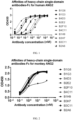
- the affinities of the ten anti-ANG2 heavy-chain single-domain antibodies-Fc were evaluated through the ELISA detection method.
- An ELISA plate was coated with an ANG2 protein solution in 2 ⁇ L/well and placed overnight at 4°C. Supernatant was discarded, and 300 ⁇ L blocking solution (PBS containing 3% BSA) was added to each well and blocked for 2 h at 37°C.
- the anti-ANG2 heavy-chain single-domain antibodies-Fc were subjected to gradient dilution with a diluent of PBS containing 1% BSA. For example, an initial concentration of dilution was 500 nM, and the anti-ANG2 heavy-chain single-domain antibodies-Fc were diluted 10 times to 8 concentration gradients.
- the diluted anti-ANG2 heavy-chain single-domain antibodies-Fc were added to wells of the ELISA plate in 200 ⁇ L per well and subjected to standing incubation for 2 h at room temperature, and supernatant was discarded. Washing was performed with PBST (PBS contained 0.1% Tween 20) in 200 ⁇ L/well three times. Diluted HRP-labeled anti-human Fc secondary antibodies (SIGMA, A8667) were added in a volume of 100 ⁇ L/well and incubated for 1 h at room temperature, wherein the secondary antibodies were used after dilution according to 1:20000 with a diluent of PBS containing 1% BSA. Washing was performed with PBST in 200 ⁇ L/well five times.
- a TMB color developing solution (BD, 55214) was added in 100 ⁇ L/well, and color developing was performed for 8 min at 37°C. 2M HCl stopping solution was added in 100 ⁇ L/well. After the stopping solution was added, values at 450 nm were read with the microplate reader within 30 minutes. The data were analyzed by using GraphPad Prism6.0 software, and the fitting of the affinities was performed to obtain EC50 values. The results are shown in FIG. 1, FIG. 2 and Table 5. B2-E2-Fc has the highest affinities for the human ANG2 and monkey ANG2 proteins.
- a 96-well plate was treated with 100 ⁇ L and 2 ⁇ g/mL hTIE2-Fc (Novoprotein, CW98) prepared in PBS and incubated overnight at 4°C. Then, the plate was washed with a PBS wash buffer containing 0.1% Tween-20 three times, and 300 ⁇ L PBS containing 1% BSA was added and blocked for 2 h.
- the anti-ANG2 heavy-chain single-domain antibodies-Fc to be detected were diluted and mixed with hANG2 having a final concentration of 10 ⁇ g/mL. After one hour of incubation at 37°C, the antigen-antibody mixture was added to the 96-well plate and incubated for 1 h at 37°C.
- B2-E2-Fc was evaluated according to the following acid stability and thermal stability evaluation methods.
- a solution of the eluted anti-ANG2 heavy-chain single-domain antibody-Fc was not neutralized.
- a structure of the bispecific antibody includes a light chain and a heavy chain, where the light chain and the heavy chain are paired to form an interchain disulfide bond, and two heavy chains are paired to form an interchain disulfide bond, wherein the heavy chain is (VH)-(CH1)-(hinge region)-(Fc)-(linker peptide)-(VHH), and the light chain is (VL)-(light chain constant region), wherein VH and VL are heavy chain and light chain variable regions of an anti-VEGF antibody, and VHH is a variable region of an anti-ANG2 heavy-chain single-domain antibody.
- Table 8 Amino acid sequences of bispecific antibodies (Numbering scheme IMGT) Bispecific Antibody Chain Domain Amino Acid Sequence (CDR is underlined, and mutation site is in block) SEQ ID NO Y400C heavy chain anti-VEGF heavy chain variable region (VH) 24 HCDR1: GYDFTHYG (SEQ ID NO: 50) HCDR2: INTYTGEP (SEQ ID NO: 51) HCDR3: AKYPYYYGTSHWYFDV (SEQ ID NO: 53) CH1 25 hinge region DKTHTCPPCP 26 Fc constant region 29 linker peptide GGGGS 30 anti-ANG2 heavy-chain single-domain antibody (VHH) 4 light chain anti-VEGF light chain variable region (VL) 27 LCDR1: QDISNY (SEQ ID NO: 54) LCDR2: FTS (SEQ ID NO: 58) LCDR3: QQYSTVPWT (SEQ ID NO: 59) light chain constant region 28 Y400E heavy chain anti-
- test antibodies were captured by using a Sensor Chip ProteinA chip (GE, Cat. No. 28995056), and the antigen human ANG2 protein (623-AN-025/CF, R&D) was used as an analyte to detect kinetics and affinity data obtained after the antigen human ANG2 protein bound to the test samples.
- An initial concentration of the detection of the binding of the antigen to the test samples was 10 nM.
- the antigen was subjected to 2-fold gradient dilution, that is, concentrations of the diluted antigen were 10 nM, 5 nM, 2.5 nM, 1.25 nM and 0.625 nM, respectively.
- the antigen was injected from the low concentration to the high concentration in sequence.
- the detection results of the affinities for the human ANG2 show that the bispecific antibodies have relatively strong affinities for the human ANG2.
- HUVEC cells H-003, Allcells in a good growth state were prepared into a single cell suspension. After cell counting, the cells were plated in a 96-well plate in 10 5 cells/well. A final concentration of the human ANG2 protein (623-AN-025/CF, R&D) was 10 ⁇ g/mL, which was constant.
- the antibodies to be detected were added to each well according to an experimental design, respectively. The highest concentration of the antibodies was 1000 nM, the antibodies were subjected to 5-fold dilution in sequence and 7 concentration gradients were set in total, and meanwhile, a blank control and a positive control RG7716 (ATAD00534, Atagenix) were set.
- the antibodies of the present disclosure specifically bind to ANG2 but do not bind to ANG1, and meanwhile, the antibodies of the present disclosure only inhibit ANG2 from binding to receptors TIE2 of ANG2 but do not inhibit ANG1 from binding to receptors TIE2 of ANG1.
- the antibodies of the present disclosure are particularly useful in inhibiting pro-angiogenesis activity of ANG2 and treating diseases and conditions caused by or related to an angiogenic process.
- HUVEC cells H-003, Allcells in a good growth state were prepared into a single cell suspension. After cell counting, the cells were plated in a 96-well plate in 10 5 cells/well. A final concentration of the human ANG1 protein (623-AN/CF, R&D) was 10 ⁇ g/mL, which was constant.
- the antibodies to be detected were added to each well according to an experimental design, respectively. The highest concentration of the antibodies was 1000 nM, the antibodies were subjected to 5-fold dilution in sequence and 7 concentration gradients were set in total, and meanwhile, a blank control and a positive control hTIE2-Fc (Novoprotein, CW98) were set.
- the bispecific antibodies Y400C and Y400E have no binding blocking activity on ANG1 and the HUVEC cells.
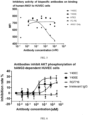
- Bispecific antibodies inhibit AKT phosphorylation of hANG2-dependent HUVEC cells
- a Phospho-AKT analysis kit (64AKSPE1-1, Cisbio) includes two labeled antibodies: one with a donor fluorophore and the other with a receptor.
- a reason for selecting the first antibody is that the first antibody specifically binds to a phosphorylation motif on the protein, and a reason for selecting the second antibody is that an ability of the second antibody to identify the protein is independent of a phosphorylation state of the protein.
- HUVEC cells were co-incubated with serially diluted samples and ANG2 with a constant concentration. Functional activity of ANG2 and an inhibitory effect of the samples on the functional activity of ANG2 were evaluated according to a degree of AKT phosphorylation of the HUVEC cells.
- HUVEC cells (70013502, ATCC) in a good growth state were prepared into a single cell suspension. After cell counting, the cells were plated in a 96-well plate in 10 5 cells/well.
- a final concentration of the human ANG2 protein (623-AN-025/CF, R&D) was 10 ⁇ g/mL, which was constant.
- the antibodies to be detected were added to each well according to an experimental design, respectively.
- the highest concentration of the antibodies was 1000 nM, the antibodies were subjected to 5-fold dilution in sequence and 8 concentration gradients were set in total, and meanwhile, a blank control and a positive control RG7716 (ATAD00534, Atagenix) were set. After the cells were incubated for 10 min at 37°C, supernatant was removed from wells. After a lysis buffer was added, incubation was performed with shaking for 30 min at room temperature.
Landscapes
- Health & Medical Sciences (AREA)
- Chemical & Material Sciences (AREA)
- Organic Chemistry (AREA)
- Life Sciences & Earth Sciences (AREA)
- General Health & Medical Sciences (AREA)
- Medicinal Chemistry (AREA)
- Genetics & Genomics (AREA)
- Engineering & Computer Science (AREA)
- Immunology (AREA)
- Biochemistry (AREA)
- Bioinformatics & Cheminformatics (AREA)
- Proteomics, Peptides & Aminoacids (AREA)
- Veterinary Medicine (AREA)
- Molecular Biology (AREA)
- Biophysics (AREA)
- Public Health (AREA)
- Animal Behavior & Ethology (AREA)
- Pharmacology & Pharmacy (AREA)
- Biotechnology (AREA)
- Biomedical Technology (AREA)
- Wood Science & Technology (AREA)
- Zoology (AREA)
- General Chemical & Material Sciences (AREA)
- Nuclear Medicine, Radiotherapy & Molecular Imaging (AREA)
- Chemical Kinetics & Catalysis (AREA)
- Microbiology (AREA)
- Epidemiology (AREA)
- General Engineering & Computer Science (AREA)
- Cell Biology (AREA)
- Mycology (AREA)
- Peptides Or Proteins (AREA)
- Medicines Containing Antibodies Or Antigens For Use As Internal Diagnostic Agents (AREA)
- Micro-Organisms Or Cultivation Processes Thereof (AREA)
- Medicinal Preparation (AREA)
Applications Claiming Priority (1)
| Application Number | Priority Date | Filing Date | Title |
|---|---|---|---|
| PCT/CN2021/117697 WO2023035226A1 (zh) | 2021-09-10 | 2021-09-10 | 抗ang2抗体及其制备方法和应用 |
Publications (2)
| Publication Number | Publication Date |
|---|---|
| EP4400512A1 true EP4400512A1 (de) | 2024-07-17 |
| EP4400512A4 EP4400512A4 (de) | 2025-07-23 |
Family
ID=85507170
Family Applications (1)
| Application Number | Title | Priority Date | Filing Date |
|---|---|---|---|
| EP21956409.3A Pending EP4400512A4 (de) | 2021-09-10 | 2021-09-10 | Anti-ang2-antikörper, herstellungsverfahren dafür und anwendung davon |
Country Status (12)
| Country | Link |
|---|---|
| US (1) | US20240425575A1 (de) |
| EP (1) | EP4400512A4 (de) |
| JP (1) | JP2024534964A (de) |
| KR (1) | KR20240048555A (de) |
| CN (1) | CN118251412A (de) |
| AU (1) | AU2021463580A1 (de) |
| CA (1) | CA3231417A1 (de) |
| CO (1) | CO2024003519A2 (de) |
| IL (1) | IL311318A (de) |
| JO (1) | JOP20240051A1 (de) |
| MX (1) | MX2024002962A (de) |
| WO (1) | WO2023035226A1 (de) |
Family Cites Families (9)
| Publication number | Priority date | Publication date | Assignee | Title |
|---|---|---|---|---|
| JP5823871B2 (ja) * | 2008-12-10 | 2015-11-25 | アブリンクス エン.ヴェー. | 血管新生に関連した疾患及び障害の治療のための、アンジオポイエチン/Tieシステムに指向性を有するアミノ酸配列及びこれを含むポリペプチド |
| US9527925B2 (en) * | 2011-04-01 | 2016-12-27 | Boehringer Ingelheim International Gmbh | Bispecific binding molecules binding to VEGF and ANG2 |
| US20130078247A1 (en) * | 2011-04-01 | 2013-03-28 | Boehringer Ingelheim International Gmbh | Bispecific binding molecules binding to dii4 and ang2 |
| EP2831111B1 (de) * | 2012-03-30 | 2019-03-20 | Boehringer Ingelheim International GmbH | Ang2 bindende moleküle |
| JP2020521797A (ja) * | 2017-06-02 | 2020-07-27 | ベーリンガー インゲルハイム インターナショナル ゲゼルシャフト ミット ベシュレンクテル ハフツング | 抗がん剤組み合わせ治療 |
| US20200369770A1 (en) * | 2018-01-08 | 2020-11-26 | Nanjing Legend Biotech Co., Ltd. | Multispecific antigen binding proteins and methods of use thereof |
| US20220185875A1 (en) * | 2019-03-18 | 2022-06-16 | Jiangsu Hengrui Medicine Co., Ltd. | Bispecific antibody specifically bound to vegf and ang2 |
| WO2021119832A1 (en) * | 2019-12-20 | 2021-06-24 | Kisoji Biotechnology Inc. | Polypeptides, protein complexes and method for making same |
| JP2024520693A (ja) * | 2021-06-04 | 2024-05-24 | イノベント バイオロジクス(スーチョウ)カンパニー,リミティド | VEGFとAng2に結合する二重特異性結合分子およびその使用 |
-
2021
- 2021-09-10 EP EP21956409.3A patent/EP4400512A4/de active Pending
- 2021-09-10 KR KR1020247010141A patent/KR20240048555A/ko active Pending
- 2021-09-10 MX MX2024002962A patent/MX2024002962A/es unknown
- 2021-09-10 US US18/690,330 patent/US20240425575A1/en active Pending
- 2021-09-10 CN CN202180102284.3A patent/CN118251412A/zh active Pending
- 2021-09-10 AU AU2021463580A patent/AU2021463580A1/en active Pending
- 2021-09-10 CA CA3231417A patent/CA3231417A1/en active Pending
- 2021-09-10 JP JP2024515391A patent/JP2024534964A/ja active Pending
- 2021-09-10 IL IL311318A patent/IL311318A/en unknown
- 2021-09-10 WO PCT/CN2021/117697 patent/WO2023035226A1/zh not_active Ceased
-
2024
- 2024-03-10 JO JOJO/P/2024/0051A patent/JOP20240051A1/ar unknown
- 2024-03-20 CO CONC2024/0003519A patent/CO2024003519A2/es unknown
Also Published As
| Publication number | Publication date |
|---|---|
| MX2024002962A (es) | 2024-05-17 |
| CA3231417A1 (en) | 2023-03-16 |
| WO2023035226A1 (zh) | 2023-03-16 |
| US20240425575A1 (en) | 2024-12-26 |
| JP2024534964A (ja) | 2024-09-26 |
| KR20240048555A (ko) | 2024-04-15 |
| AU2021463580A1 (en) | 2024-04-11 |
| JOP20240051A1 (ar) | 2024-03-10 |
| CN118251412A (zh) | 2024-06-25 |
| CO2024003519A2 (es) | 2024-04-29 |
| EP4400512A4 (de) | 2025-07-23 |
| IL311318A (en) | 2024-05-01 |
Similar Documents
| Publication | Publication Date | Title |
|---|---|---|
| CN112512581B (zh) | 针对cldn18.2和cd3的抗体构建体 | |
| CN107849136B (zh) | 抗TfR抗体及其在治疗增殖性和炎性疾病中的用途 | |
| AU2015341884B2 (en) | CD3/CD38 T cell retargeting hetero-dimeric immunoglobulins and methods of their production | |
| CN112409483B (zh) | 抗pd-l1纳米抗体 | |
| JP2020122013A (ja) | Cd3イプシロンおよびbcmaに対する二特異性抗体 | |
| CN119371549A (zh) | 结合dll3和cd3的双特异性抗体构建体 | |
| AU2022229993A9 (en) | Pharmaceutical composition containing anti-tslp antibody | |
| EP4157876B1 (de) | Anti-pd-1-antikörper | |
| US20230357398A1 (en) | Novel human antibodies binding to human cd3 epsilon | |
| KR20230098335A (ko) | 클리핑 비율이 감소된 항원 결합 도메인 | |
| EP4400512A1 (de) | Anti-ang2-antikörper, herstellungsverfahren dafür und anwendung davon | |
| TW202436360A (zh) | 抗ang2抗體及其製備方法和應用 | |
| US20240287168A1 (en) | Anti-vegf antibody and use thereof | |
| EA051396B1 (ru) | Антитело к ang2, способ его получения и его применение | |
| HK40112204A (en) | Anti-pd-1 antibodies | |
| CN119816519A (zh) | 抗ror1抗体、包含其的双特异性抗体及其用途 | |
| HK40082160B (en) | Anti-pd-1 antibodies | |
| HK40082160A (en) | Anti-pd-1 antibodies | |
| EA050517B1 (ru) | Антигенсвязывающий домен с пониженной скоростью расщепления | |
| BR112018000650B1 (pt) | Anticorpos anti-trf e sua utilização no tratamento de transtornos proliferativos e inflamatórios |
Legal Events
| Date | Code | Title | Description |
|---|---|---|---|
| STAA | Information on the status of an ep patent application or granted ep patent |
Free format text: STATUS: THE INTERNATIONAL PUBLICATION HAS BEEN MADE |
|
| PUAI | Public reference made under article 153(3) epc to a published international application that has entered the european phase |
Free format text: ORIGINAL CODE: 0009012 |
|
| STAA | Information on the status of an ep patent application or granted ep patent |
Free format text: STATUS: REQUEST FOR EXAMINATION WAS MADE |
|
| 17P | Request for examination filed |
Effective date: 20240322 |
|
| AK | Designated contracting states |
Kind code of ref document: A1 Designated state(s): AL AT BE BG CH CY CZ DE DK EE ES FI FR GB GR HR HU IE IS IT LI LT LU LV MC MK MT NL NO PL PT RO RS SE SI SK SM TR |
|
| DAV | Request for validation of the european patent (deleted) | ||
| DAX | Request for extension of the european patent (deleted) | ||
| A4 | Supplementary search report drawn up and despatched |
Effective date: 20250624 |
|
| RIC1 | Information provided on ipc code assigned before grant |
Ipc: C07K 16/22 20060101AFI20250617BHEP Ipc: A61K 39/395 20060101ALI20250617BHEP Ipc: A61P 35/00 20060101ALI20250617BHEP Ipc: C12N 5/10 20060101ALI20250617BHEP Ipc: C12N 15/13 20060101ALI20250617BHEP |