EP4400543A1 - Composition de résine thermoplastique, procédé pour la fabriquer, et article moulé la comprenant - Google Patents
Composition de résine thermoplastique, procédé pour la fabriquer, et article moulé la comprenant Download PDFInfo
- Publication number
- EP4400543A1 EP4400543A1 EP23874055.9A EP23874055A EP4400543A1 EP 4400543 A1 EP4400543 A1 EP 4400543A1 EP 23874055 A EP23874055 A EP 23874055A EP 4400543 A1 EP4400543 A1 EP 4400543A1
- Authority
- EP
- European Patent Office
- Prior art keywords
- weight
- resin composition
- thermoplastic resin
- alkyl acrylate
- compound
- Prior art date
- Legal status (The legal status is an assumption and is not a legal conclusion. Google has not performed a legal analysis and makes no representation as to the accuracy of the status listed.)
- Pending
Links
Images
Classifications
-
- C—CHEMISTRY; METALLURGY
- C08—ORGANIC MACROMOLECULAR COMPOUNDS; THEIR PREPARATION OR CHEMICAL WORKING-UP; COMPOSITIONS BASED THEREON
- C08L—COMPOSITIONS OF MACROMOLECULAR COMPOUNDS
- C08L51/00—Compositions of graft polymers in which the grafted component is obtained by reactions only involving carbon-to-carbon unsaturated bonds; Compositions of derivatives of such polymers
- C08L51/04—Compositions of graft polymers in which the grafted component is obtained by reactions only involving carbon-to-carbon unsaturated bonds; Compositions of derivatives of such polymers grafted on to rubbers
-
- C—CHEMISTRY; METALLURGY
- C08—ORGANIC MACROMOLECULAR COMPOUNDS; THEIR PREPARATION OR CHEMICAL WORKING-UP; COMPOSITIONS BASED THEREON
- C08K—Use of inorganic or non-macromolecular organic substances as compounding ingredients
- C08K5/00—Use of organic ingredients
- C08K5/16—Nitrogen-containing compounds
- C08K5/34—Heterocyclic compounds having nitrogen in the ring
- C08K5/3467—Heterocyclic compounds having nitrogen in the ring having more than two nitrogen atoms in the ring
- C08K5/3472—Five-membered rings
- C08K5/3475—Five-membered rings condensed with carbocyclic rings
-
- C—CHEMISTRY; METALLURGY
- C08—ORGANIC MACROMOLECULAR COMPOUNDS; THEIR PREPARATION OR CHEMICAL WORKING-UP; COMPOSITIONS BASED THEREON
- C08L—COMPOSITIONS OF MACROMOLECULAR COMPOUNDS
- C08L2201/00—Properties
- C08L2201/08—Stabilised against heat, light or radiation or oxydation
-
- C—CHEMISTRY; METALLURGY
- C08—ORGANIC MACROMOLECULAR COMPOUNDS; THEIR PREPARATION OR CHEMICAL WORKING-UP; COMPOSITIONS BASED THEREON
- C08L—COMPOSITIONS OF MACROMOLECULAR COMPOUNDS
- C08L2203/00—Applications
- C08L2203/30—Applications used for thermoforming
-
- C—CHEMISTRY; METALLURGY
- C08—ORGANIC MACROMOLECULAR COMPOUNDS; THEIR PREPARATION OR CHEMICAL WORKING-UP; COMPOSITIONS BASED THEREON
- C08L—COMPOSITIONS OF MACROMOLECULAR COMPOUNDS
- C08L2205/00—Polymer mixtures characterised by other features
- C08L2205/02—Polymer mixtures characterised by other features containing two or more polymers of the same C08L -group
- C08L2205/025—Polymer mixtures characterised by other features containing two or more polymers of the same C08L -group containing two or more polymers of the same hierarchy C08L, and differing only in parameters such as density, comonomer content, molecular weight, structure
-
- C—CHEMISTRY; METALLURGY
- C08—ORGANIC MACROMOLECULAR COMPOUNDS; THEIR PREPARATION OR CHEMICAL WORKING-UP; COMPOSITIONS BASED THEREON
- C08L—COMPOSITIONS OF MACROMOLECULAR COMPOUNDS
- C08L2205/00—Polymer mixtures characterised by other features
- C08L2205/03—Polymer mixtures characterised by other features containing three or more polymers in a blend
-
- C—CHEMISTRY; METALLURGY
- C08—ORGANIC MACROMOLECULAR COMPOUNDS; THEIR PREPARATION OR CHEMICAL WORKING-UP; COMPOSITIONS BASED THEREON
- C08L—COMPOSITIONS OF MACROMOLECULAR COMPOUNDS
- C08L2205/00—Polymer mixtures characterised by other features
- C08L2205/03—Polymer mixtures characterised by other features containing three or more polymers in a blend
- C08L2205/035—Polymer mixtures characterised by other features containing three or more polymers in a blend containing four or more polymers in a blend
-
- C—CHEMISTRY; METALLURGY
- C08—ORGANIC MACROMOLECULAR COMPOUNDS; THEIR PREPARATION OR CHEMICAL WORKING-UP; COMPOSITIONS BASED THEREON
- C08L—COMPOSITIONS OF MACROMOLECULAR COMPOUNDS
- C08L2207/00—Properties characterising the ingredient of the composition
- C08L2207/53—Core-shell polymer
-
- C—CHEMISTRY; METALLURGY
- C08—ORGANIC MACROMOLECULAR COMPOUNDS; THEIR PREPARATION OR CHEMICAL WORKING-UP; COMPOSITIONS BASED THEREON
- C08L—COMPOSITIONS OF MACROMOLECULAR COMPOUNDS
- C08L2312/00—Crosslinking
Definitions
- the present invention relates to a thermoplastic resin composition, a method of preparing the same, and a molded article including the same. More particularly, the present invention relates to a thermoplastic resin composition having excellent processability and film processability due to excellent mechanical properties, such as impact strength, tensile strength, and flexural strength, and fluidity, and being applicable to unpainted materials due to excellent transparency, and non-whitening properties that prevent occurrence of whitening when bent or struck, a method of preparing the thermoplastic resin composition, and a molded article including the thermoplastic resin composition.
- ABS resins Acrylonitrile-butadiene-styrene resins
- conjugated diene rubber conjugated diene rubber
- ABS resins are based on butadiene rubber, which contains chemically unstable unsaturated bonds
- rubber polymers contained in ABS resins are easily damaged by ultraviolet rays.
- ABS resins have very poor weather resistance and are not suitable as outdoor materials.
- ASA resin acrylate-styrene-acrylonitrile graft copolymer
- a representative acrylic copolymer is an acrylate-styrene-acrylonitrile graft copolymer (hereinafter referred to as "ASA resin").
- ASA resins have excellent physical properties such as processability, impact resistance, chemical resistance, and weather resistance. Due to these advantages, ASA resins are used in various fields such as building materials, interior and exterior materials for automobiles and motorcycles, electrical and electronic products, ships, leisure products, and horticultural products, and demand thereof is rapidly increasing.
- the present invention has been made in view of the above problems, and it is one object of the present invention to provide a thermoplastic resin composition having excellent processability and film processability due to excellent mechanical properties, such as impact strength, tensile strength, and flexural strength, and fluidity, having excellent transparency, and non-whitening properties, having excellent UV shielding capability in short wavelengths with high energy, and having a luxurious appearance.
- thermoplastic resin composition It is another object of the present invention to provide a method of preparing the thermoplastic resin composition.
- thermoplastic resin composition It is yet another object of the present invention to provide a molded article manufactured using the thermoplastic resin composition.
- the present invention has an effect of providing a thermoplastic resin composition having excellent processability and film processability due to excellent mechanical properties, such as impact strength, tensile strength, and flexural strength, and fluidity, being capable of providing an aesthetically pleasing appearance due to excellent transparency, and non-whitening properties that prevent occurrence of whitening when bent or struck, and being applicable to unpainted materials, a method of preparing the thermoplastic resin composition, and a molded article including the thermoplastic resin composition.
- the present invention has an effect of providing a thermoplastic resin composition having a luxurious appearance due to excellent UV shielding capability in short wavelengths with high energy, a method of preparing the same, and a molded article including the same.
- the present invention has an effect of providing a molded article including the thermoplastic resin composition of the present invention.
- the molded article can provide physical properties superior to those required in the market.
- thermoplastic resin composition of the present invention a method of preparing the same, and a molded article including the same will be described in detail.
- the present inventors confirmed that, while researching a thermoplastic resin composition capable of providing a finishing material having an aesthetically pleasing appearance and being applicable to unpainted materials, when a base resin including an alkyl acrylate-aromatic vinyl compound-vinyl cyanide compound graft copolymer and one or more selected from the group consisting of a (meth)acrylic acid alkyl ester polymer and a (meth)acrylic acid alkyl ester compound-aromatic vinyl compound-vinyl cyanide compound copolymer; and an acrylic copolymer were included in a predetermined content ratio, and the alkyl acrylate coverage value of the thermoplastic resin composition was adjusted within a predetermined range, mechanical properties, such as impact strength, tensile strength, and flexural strength, fluidity, transparency, and non-whitening properties were excellent, and processability, film processability, and appearance quality were greatly improved.
- thermoplastic resin composition was applicable to unpainted materials.
- a benzotriazole-based UV stabilizer was included in a small amount, weather resistance and UV shielding capability were also improved. Based on these results, the present inventors conducted further studies to complete the present invention.
- thermoplastic resin composition of the present invention will be described in detail as follows.
- the thermoplastic resin composition of the present invention includes 100 parts by weight of a base resin including an alkyl acrylate-aromatic vinyl compound-vinyl cyanide compound graft copolymer (A) containing alkyl acrylate rubber and one or more (B) selected from the group consisting of a (meth)acrylic acid alkyl ester polymer (b-1) and a (meth)acrylic acid alkyl ester compound-aromatic vinyl compound-vinyl cyanide compound copolymer (b-2); and 0.1 to 6 parts by weight of an acrylic copolymer (C).
- the thermoplastic resin composition has an alkyl acrylate coverage (X) value of 65 % by weight or more as calculated by Equation 1 below.
- the thermoplastic resin composition may have excellent processability and film processability, and the thermoplastic resin composition may be applicable to unpainted materials due to excellent transparency, and non-whitening properties that prevent occurrence of whitening when bent or struck.
- X G ⁇ Y / Y ⁇ 100
- Equation 1 G represents a gel content (wt%) based on a total weight of the thermoplastic resin composition, and Y represents an alkyl acrylate content (wt%) in a gel based on a total weight of the thermoplastic resin composition.
- thermoplastic resin composition of the present invention will be described in detail.
- the graft copolymer (A) may be included in an amount of 41 to 80 % by weight, preferably 45 to 75 % by weight, more preferably 45 to 65 % by weight, still more preferably 47 to 55 % by weight.
- mechanical properties such as impact strength, tensile strength, and flexural strength, transparency, and processability may be excellent.
- the graft copolymer (A) may be included in an amount of 45 to 75 % by weight, preferably 50 to 70 % by weight, still more preferably 50 to 60 % by weight. Within this range, mechanical properties, such as impact strength, tensile strength, and flexural strength, transparency, and processability may be excellent.
- the graft copolymer (A) may include alkyl acrylate rubber (core) and an aromatic vinyl compound-vinyl cyanide compound copolymer (shell) surrounding the alkyl acrylate rubber.
- the graft copolymer (A) may include 25 to 50 % by weight, preferably 30 to 50 % by weight, more preferably 35 to 50 % by weight of alkyl acrylate rubber (core); and 50 to 75 % by weight, preferably 50 to 70 % by weight, more preferably 50 to 65 % by weight of an aromatic vinyl compound-vinyl cyanide compound copolymer (shell) surrounding the alkyl acrylate rubber.
- core alkyl acrylate rubber
- an aromatic vinyl compound-vinyl cyanide compound copolymer (shell) surrounding the alkyl acrylate rubber.
- the alkyl acrylate rubber may include alkyl acrylate rubber having an average particle diameter of 50 to 120 nm, preferably 60 to 120 nm, more preferably 80 to 110 nm. Within this range, excellent impact strength, gloss, and non-whitening properties may be imparted to a finally prepared thermoplastic resin composition.
- the average particle diameter may be measured by dynamic light scattering, and specifically, may be measured as an intensity value using a Nicomp 380 particle size analyzer (manufacturer: PSS) in a Gaussian mode.
- a sample may be prepared by diluting 0.1 g of latex (TSC: 35 to 50 wt%) 1,000 to 5,000-fold with distilled water, and the average particle diameter may be measured using flow cells in an auto-dilution manner and in a mode of dynamic light scattering/intensity 300 kHz/intensity-weight Gaussian analysis.
- temperature may be set to 23 °C
- measurement wavelength may be set to 632.8 nm
- channel width may be set to 10 ⁇ sec.
- the alkyl acrylate rubber may be prepared by emulsion-polymerizing an alkyl acrylate.
- the alkyl acrylate rubber may be prepared by mixing an acrylate-based compound, an emulsifier, an initiator, a grafting agent, a crosslinking agent, an electrolyte, and a solvent and emulsion-polymerizing the mixture. In this case, due to excellent grafting efficiency, mechanical properties may be excellent.
- the alkyl acrylate rubber may include an aromatic vinyl compound.
- mechanical properties may be further improved.
- the alkyl acrylate rubber may include an aromatic vinyl compound in an amount of 0.1 to 25 % by weight, preferably 2 to 23 % by weight, more preferably 5 to 20 % by weight. Within this range, mechanical properties, gloss, and transparency may be excellent without deteriorating physical properties.
- the alkyl acrylate rubber may include a seed, preferably a rubber seed.
- the seed may be prepared by polymerizing 1 to 20 % by weight, preferably 2 to 15 % by weight, more preferably 3 to 10 % by weight of one or more monomers selected from the group consisting of an aromatic vinyl compound, a vinyl cyanide compound, and an alkyl acrylate. Within this range, impact resistance, weather resistance, and physical property balance may be excellent.
- the aromatic vinyl compound-vinyl cyanide compound copolymer (shell) may have a weight average molecular weight of 40,000 to 120,000 g/mol, preferably 50,000 to 110,000 g/mol, more preferably 60,000 to 110,000 g/mol. Within this range, processability and non-whitening properties may be excellent without reducing impact strength.
- the weight average molecular weight may be measured using gel permeation chromatography (GPC, Waters Breeze).
- GPC gel permeation chromatography
- the weight average molecular weight may be measured using tetrahydrofuran (THF) as an eluate through gel permeation chromatography (GPC, Waters Breeze).
- THF tetrahydrofuran
- PS polystyrene
- the weight average molecular weight may be measured under conditions of solvent: THF, column temperature: 40 °C, flow rate: 0.3 ml/min, sample concentration: 20 mg/ml, injection amount: 5 ⁇ l, column model: 1 ⁇ PLgel 10 ⁇ m MiniMix-B (250 ⁇ 4.6 mm) + 1 ⁇ PLgel 10 ⁇ m MiniMix-B (250 ⁇ 4.6 mm) + 1 ⁇ PLgel 10 ⁇ m MiniMix-B Guard (50 ⁇ 4.6 mm), equipment name: Agilent 1200 series system, refractive index detector: Agilent G1362 RID, RI temperature: 35 °C, data processing: Agilent ChemStation S/W, and test method (Mn, Mw and PDI): OECD TG 118.
- solvent THF
- column temperature 40 °C
- flow rate 0.3 ml/min
- sample concentration 20 mg/ml
- injection amount 5 ⁇ l
- column model 1 ⁇ PLgel 10 ⁇
- the aromatic vinyl compound-vinyl cyanide compound copolymer (shell) may include 55 to 85 % by weight of an aromatic vinyl compound and 15 to 45 % by weight of a vinyl cyanide compound, preferably 60 to 80 % by weight of an aromatic vinyl compound and 20 to 40 % by weight of a vinyl cyanide compound, more preferably 65 to 75 % by weight of an aromatic vinyl compound and 25 to 35 % by weight of a vinyl cyanide compound.
- impact resistance and weather resistance may be excellent.
- the aromatic vinyl compound-vinyl cyanide compound copolymer (shell) may preferably include an alkyl acrylate. In this case, the physical property balance between impact resistance, processability, and non-whitening properties may be excellent.
- the aromatic vinyl compound-vinyl cyanide compound copolymer (shell) may include 60 to 85 % by weight of an aromatic vinyl compound, 5 to 35 % by weight of a vinyl cyanide compound, and 1 to 20 % by weight of an alkyl acrylate, preferably 65 to 80 % by weight of an aromatic vinyl compound, 12 to 27 % by weight of a vinyl cyanide compound, and 5 to 15 % by weight of an alkyl acrylate, more preferably 70 to 75 % by weight of an aromatic vinyl compound, 17 to 22 % by weight of a vinyl cyanide compound, and 7 to 10 % by weight of an alkyl acrylate.
- impact resistance and weather resistance may be excellent.
- the alkyl acrylate may be an alkyl acrylate containing an alkyl group having 1 to 15 carbon atoms.
- the alkyl acrylate may include one or more selected from the group consisting of methyl acrylate, ethyl acrylate, propyl acrylate, butyl acrylate, 2-ethylbutyl acrylate, octyl acrylate, 2-ethylhexyl acrylate, hexyl acrylate, heptyl acrylate, n-pentyl acrylate, and lauryl acrylate, more preferably an alkyl acrylate containing an alkyl group having 1 to 4 carbon atoms, still more preferably butyl acrylate, ethylhexyl acrylate, or a mixture thereof.
- the aromatic vinyl compound may include one or more selected from the group consisting of styrene, ⁇ -methyl styrene, o-methyl styrene, ⁇ -methyl styrene, m-methyl styrene, ethyl styrene, isobutyl styrene, t-butyl styrene, o-bromostyrene, ⁇ -bromostyrene, m-bromostyrene, o-chlorostyrene, ⁇ -chlorostyrene, m-chlorostyrene, vinyltoluene, vinylxylene, fluorostyrene, and vinylnaphthalene, preferably one or more selected from the group consisting of styrene and ⁇ -methyl styrene, still more preferably styrene.
- styrene and ⁇ -methyl styrene still more preferably s
- the vinyl cyanide compound may include one or more selected from the group consisting of acrylonitrile, methacrylonitrile, phenylacrylonitrile, and ⁇ -chloroacrylonitrile, preferably acrylonitrile.
- the graft copolymer (A) may be prepared by emulsion polymerization. In this case, gloss and surface hardness may be excellent.
- Emulsion polymerization methods commonly practiced in the art to which the present invention pertains may be used in the present invention without particular limitation.
- an emulsion graft polymerization method may be used.
- a polymer including a certain compound (monomer) means a polymer prepared by polymerizing the compound (monomer), and a unit in the polymer is derived from the compound.
- the graft copolymer (A) may have a grafting degree of 58 % or more, preferably 58 to 150 %, more preferably 65 to 140 %, still more preferably 65 to 130 %, still more preferably 65 to 100 %, still more preferably 65 to 80 % as calculated by Equation 3 below.
- grafting degree (%) [Weight (g) of grafted monomers/Rubber weight (g)] ⁇ 100
- the weight (g) of grafted monomers is obtained by subtracting rubber weight (g) from the weight (g) of insoluble matter (gel) obtained by dissolving the graft copolymer in acetone and performing centrifugation, and the rubber weight (g) is the weight (g) of rubber components theoretically added to graft copolymer powder.
- the weight of insoluble matter (gel) When the weight of insoluble matter (gel) is measured, 0.5 g of the powdered graft copolymer (A) is added to 50 ml of acetone, followed by stirring at room temperature for 12 hours. Then, centrifugation is performed to separate insoluble matter that is not dissolved in acetone, followed by drying for 12 hours. Then, the weight of the insoluble matter (gel) is measured.
- the rubber weight (g) is the weight (g) of rubber components theoretically added to 0.5 g of the powdered graft copolymer (A).
- (B) One or more selected from the group consisting of (meth)acrylic acid alkyl ester polymer (b-1) and (meth)acrylic acid alkyl ester compound-aromatic vinyl compound-vinyl cyanide compound copolymer (b-2)
- the one or more (B) selected from the group consisting of a (meth)acrylic acid alkyl ester polymer (b-1) and a (meth)acrylic acid alkyl ester compound-aromatic vinyl compound-vinyl cyanide compound copolymer (b-2) may be included in an amount of 20 to 59 % by weight, preferably 25 to 55 % by weight, more preferably 35 to 55 % by weight, still more preferably 45 to 53 % by weight. Within this range, processability, transparency, and non-whitening properties may be excellent.
- the one or more (B) selected from the group consisting of a (meth)acrylic acid alkyl ester polymer (b-1) and a (meth)acrylic acid alkyl ester compound-aromatic vinyl compound-vinyl cyanide compound copolymer (b-2) may preferably be a mixture of a (meth)acrylic acid alkyl ester polymer (b-1) and a (meth)acrylic acid alkyl ester compound-aromatic vinyl compound-vinyl cyanide compound copolymer (b-2). In this case, transparency, weather resistance, and UV-visible light transmittance may be excellent.
- the weight ratio (b-1:b-2) of the (meth)acrylic acid alkyl ester polymer (b-1) to the (meth)acrylic acid alkyl ester compound-aromatic vinyl compound-vinyl cyanide compound copolymer (b-2) may be preferably 7:3 to 8.2:1.8, more preferably 7.5:2.5 to 8:2. Within this range, transparency, weather resistance, and UV-visible light transmittance may be excellent.
- the (meth)acrylic acid alkyl ester polymer (b-1) may be included in an amount of 10 to 59 % by weight, preferably 25 to 45 % by weight, more preferably 27 to 42 % by weight. Within this range, transparency, gloss, and non-whitening properties may be excellent while maintaining mechanical properties.
- the (meth)acrylic acid alkyl ester polymer (b-1) may be included in an amount of 5 to 45 % by weight, preferably 15 to 40 % by weight, more preferably 25 to 40 % by weight. Within this range, transparency, gloss, and non-whitening properties may be excellent while maintaining mechanical properties.
- the (meth)acrylic acid alkyl ester polymer (b-1) may include one or more selected from the group consisting of a (meth)acrylic acid methyl ester, a (meth)acrylic acid ethyl ester, a (meth)acrylic acid propyl ester, a (meth)acrylic acid 2-ethyl hexyl ester, a (meth)acrylic acid decyl ester, and a (meth)acrylic acid lauryl ester, preferably a methacrylic acid alkyl ester, an acrylic acid alkyl ester, or a mixture thereof, more preferably a polymethyl methacrylate resin.
- gloss, colorability, and scratch resistance may be excellent.
- the (meth)acrylic acid alkyl ester polymer may be a polymer including a (meth)acrylic acid alkyl ester in an amount of greater than 85 % by weight, 90 % by weight or more, or 95 % by weight or more.
- the "acrylic acid alkyl ester” or the “methacrylic acid alkyl ester” may both mean the “(meth)acrylic acid alkyl ester”.
- the polymethyl methacrylate resin may include methyl methacrylate and methyl acrylate.
- the polymethyl methacrylate resin may include methyl acrylate in an amount of 1 to 10 % by weight, more preferably 2 to 7 % by weight. Within this range, due to excellent compatibility with the (meth)acrylic acid alkyl ester compound-aromatic vinyl compound-vinyl cyanide compound copolymer (b-2), transparency, fluidity, and impact resistance may be improved.
- the polymer (b-1) may have a weight average molecular weight of 50,000 to 150,000 g/mol, preferably 60,000 to 130,000 g/mol, more preferably 70,000 to 120,000 g/mol, still more preferably 80,000 to 110,000 g/mol. Within this range, transparency, non-whitening properties, and UV-visible total light transmittance may be excellent while maintaining impact resistance.
- the (meth)acrylic acid alkyl ester polymer (b-1) may have a glass transition temperature of 80 to 130 °C, preferably 90 to 120 °C. Within this range, heat resistance may be excellent.
- the glass transition temperature may be measured using a differential scanning calorimeter (DSC) according to ASTM D3418.
- DSC differential scanning calorimeter
- the glass transition temperature may be measured at a heating rate of 10 °C/min using a differential scanning calorimeter (Q100 DSC, TA Instruments Co.).
- the (meth)acrylic acid alkyl ester polymer (b-1) may be prepared by suspension polymerization.
- Suspension polymerization methods commonly practiced in the art to which the present invention pertains may be used in the present invention without particular limitation.
- the polymer (b-2) may be included in an amount of 10 to 59 % by weight, preferably 17 to 40 % by weight, more preferably 12 to 32 % by weight. Within this range, compatibility with the (meth)acrylic acid alkyl ester polymer (b-1), mechanical properties, and fluidity may be excellent.
- the polymer (b-2) may be included in an amount of 1 to 35 % by weight, preferably 5 to 30 % by weight, more preferably 5 to 20 % by weight. Within this range, compatibility with the (meth)acrylic acid alkyl ester polymer (b-1), mechanical properties, and fluidity may be excellent.
- the polymer (b-2) may include 60 to 90 % by weight of a (meth)acrylic acid alkyl ester compound, 5 to 30 % by weight of an aromatic vinyl compound, and 1 to 20 % by weight of a vinyl cyanide compound.
- compatibility with the graft copolymer (A) and the (meth)acrylic acid alkyl ester polymer (b-1), impact resistance, transparency, UV-visible light transmittance, and non-whitening properties may be excellent.
- the polymer (b-2) may include 65 to 85 % by weight of a (meth)acrylic acid alkyl ester compound, 10 to 25 % by weight of an aromatic vinyl compound, and 1 to 15 % by weight of a vinyl cyanide compound.
- compatibility with the graft copolymer (A) and the (meth)acrylic acid alkyl ester polymer (b-1) mechanical properties, transparency, UV-visible light transmittance, and non-whitening properties may be excellent.
- the polymer (b-2) may include 70 to 80 % by weight of a (meth)acrylic acid alkyl ester compound, 15 to 20 % by weight of an aromatic vinyl compound, and 5 to 10 % by weight of a vinyl cyanide compound.
- compatibility with the graft copolymer (A) and the (meth)acrylic acid alkyl ester polymer (b-1) mechanical properties, transparency, UV-visible light transmittance, and non-whitening properties may be excellent.
- the (meth)acrylic acid alkyl ester compound may include one or more selected from the group consisting of a (meth)acrylic acid methyl ester, a (meth)acrylic acid ethyl ester, a (meth)acrylic acid propyl ester, a (meth)acrylic acid 2-ethyl hexyl ester, a (meth)acrylic acid decyl ester, and a (meth)acrylic acid lauryl ester.
- the types of aromatic vinyl compound and vinyl cyanide compound included in the polymer (b-2) may be the same as the types of aromatic vinyl compound and vinyl cyanide compound included in the graft copolymer (A) of the present invention.
- the polymer (b-2) may have a weight average molecular weight of 50,000 to 150,000 g/mol, preferably 50,000 to 140,000 g/mol, more preferably 600,000 to 130,000 g/mol, still more preferably 70,000 to 130,000 g/mol. Within this range, tensile strength, flexural strength, impact strength, and non-whitening properties may be excellent.
- the polymer (b-2) may be prepared by bulk polymerization.
- Bulk polymerization methods commonly practiced in the art to which the present invention pertains may be used in the present invention without particular limitation.
- the acrylic copolymer (C) may be included in an amount of 0.1 to 6 parts by weight, preferably 0.5 to 5 parts by weight, more preferably 0.5 to 4 parts by weight, still more preferably 0.5 to 3.5 parts by weight, still more preferably 0.8 to 3 parts by weight, still more preferably 0.8 to 2.5 parts by weight.
- mechanical properties, fluidity, transparency, non-whitening properties, and film processability may be excellent.
- the acrylic copolymer (C) may include an alkyl acrylate-based crosslinking body including 5 to 20 % by weight of an alkyl acrylate monomer and 0.01 to 0.3 % by weight of a crosslinking agent; 54 to 90 % by weight of a methyl methacrylate monomer; and 4 to 40 % by weight of one or more selected from the group consisting of an alkyl acrylate monomer and an alkyl methacrylate monomer.
- an alkyl acrylate-based crosslinking body including 5 to 20 % by weight of an alkyl acrylate monomer and 0.01 to 0.3 % by weight of a crosslinking agent; 54 to 90 % by weight of a methyl methacrylate monomer; and 4 to 40 % by weight of one or more selected from the group consisting of an alkyl acrylate monomer and an alkyl methacrylate monomer.
- mechanical properties, fluidity, transparency, non-whitening properties, and film processability may be excellent.
- the crosslinking agent may include one or more selected from the group consisting of aryl methacrylate, trimethylol propane, triacrylate, and divinyl benzene.
- a crosslinking body may refer to a polymer with increased molecular weight due to extension of the chains thereof by a crosslinking agent.
- the alkyl acrylate-based crosslinking body plays a role in improving die swelling properties by increasing the swelling degree of the acrylic copolymer.
- the alkyl acrylate-based crosslinking body may have a swelling index of 3 to 10, preferably 4 to 9. Within this range, film processability may be excellent.
- swelling index Weight (g) before drying after centrifugation/weight (g) after drying after centrifugation
- the alkyl acrylate compound of the crosslinking body may be a linear, branched, or cyclic compound containing an alkyl group having 1 to 18 carbon atoms.
- the alkyl acrylate compound as a monomer may be a linear, branched, or cyclic compound containing an alkyl group having 1 to 18 carbon atoms.
- the alkyl acrylate compound as a monomer may include one or more selected from the group consisting of methyl acrylate, ethyl acrylate, n-butyl acrylate, lauryl acrylate, stearyl acrylate, 2-ethylhexyl acrylate, and cyclohexyl acrylate.
- the alkyl methacrylate compound as a monomer may be a linear, branched, or cyclic compound containing an alkyl group having 2 to 18 carbon atoms.
- the alkyl methacrylate compound as a monomer may include one or more selected from the group consisting of n-butyl methacrylate, lauryl methacrylate, stearyl methacrylate, tridecyl methacrylate, i-butyl methacrylate, t-butyl methacrylate, 2-ethylhexyl methacrylate, and cyclohexyl methacrylate.
- the acrylic copolymer (C) may be prepared by emulsion polymerization, suspension polymerization, or solution polymerization, preferably emulsion polymerization. In this case, processability and impact strength may be excellent.
- Emulsion polymerization, suspension polymerization, and solution polymerization methods commonly practiced in the art to which the present invention pertains may be used in the present invention without particular limitation.
- a method of preparing the acrylic copolymer (C) may preferably include a step (i) of preparing an alkyl acrylate-based crosslinking body having a swelling degree of 3 to 10 by including 5 to 20 parts by weight of an alkyl acrylate-based monomer and 0.01 to 0.3 parts by weight of a crosslinking agent; a step (ii) of, before or after the step (i) of preparing the alkyl acrylate-based crosslinking body, adding 27.5 to 45 parts by weight of methyl methacrylate, 2 to 20 parts by weight of one or more monomers selected from the group consisting of an alkyl acrylate compound containing an alkyl group having 1 to 18 carbon atoms and an alkyl methacrylate compound containing an alkyl group having 2 to 18 carbon atoms, an emulsifier, a crosslinking agent, a polymerization initiator, and a redox catalyst and performing emulsion polymerization to prepare a polymer; and a step of
- steps (i) and (ii) may be performed in separate locations or reactors.
- the acrylic copolymer (C) may have a weight average molecular weight of 900,000 to 1,300,000 g/mol, preferably 950,000 to 1,250,000 g/mol, more preferably 1,000,000 to 1,200,000 g/mol. Within this range, mechanical properties may be excellent, and flowability may be improved.
- the acrylic copolymer (C) may have a relative viscosity of 1.0 to 10.0, preferably 1.5 to 7.0, more preferably 1.8 to 5.5, still more preferably 2.0 to 4.0 as measured according to ISO 3105. Within this range, fluidity may be improved, and film processability may be excellent.
- the acrylic copolymer (C) may be prepared, or a commercially available product may be used as long as the product follows the definition of the present invention.
- the benzotriazole-based UV stabilizer (D) may be included in an amount of 0.3 to 4.5 parts by weight, preferably 0.7 to 3 parts by weight, more preferably 0.7 to 2.5 parts by weight, still more preferably 0.7 to 1.5 parts by weight. Within this range, mechanical properties, fluidity, transparency, gloss, weather resistance, and UV shielding capability may be excellent.
- the benzotriazole-based UV stabilizer (D) may include one or more selected from the group consisting of (2-(2'-hydroxy-5'-t-octylphenyl)-benzotriazole, 2-(2'-hydroxy-5'-methylphenyl)benzotriazole, 2-(2'-hydroxy-3'-tert-butyl-5'-methylphenyl)-5-chloro-benzotriazole, 2-(2'-hydroxy-3',5'-di-tert-butylphenyl)-5-chlorobenzotriazole, 2-(2'-hydroxy-3,5-di-tert-amylphenyl)benzotriazole, 2-[2'-hydroxy-3',5'-di(1,1-dimethylbenzyl)phenyl]-2H-benzotriazole, 2-(2'-hydroxy-3',5'-di-t-butylphenyl)benzotriazole, and 2-(2H-benzotrizol
- the benzotriazole-based UV stabilizer (D) may be 2-(2'-hydroxy-3'-tert-butyl-5'-methylphenyl)-5-chloro-benzotriazole, 2-[2'-hydroxy-3',5'-di(1,1-dimethylbenzyl)phenyl]-2H-benzotriazole, or a mixture thereof, more preferably 2-(2'-hydroxy-3'-tert-butyl-5'-methylphenyl)-5-chloro-benzotriazole.
- mechanical properties, fluidity, transparency, gloss, weather resistance, and UV shielding capability may be excellent.
- the thermoplastic resin composition may have an alkyl acrylate coverage value (X) of 65 % by weight or more, preferably 75 % by weight or more, more preferably 85 % by weight or more, still more preferably 85 to 130 % by weight, still more preferably 85 to 120 % by weight as calculated by Equation 1 below.
- X alkyl acrylate coverage value
- Equation 1 G represents a gel content (wt%) based on a total weight of the thermoplastic resin composition, and Y represents an alkyl acrylate content (wt%) in a gel based on a total weight of the thermoplastic resin composition.
- the alkyl acrylate content in the gel of the thermoplastic resin composition refers to an alkyl acrylate content (based on 100% by weight in total of the added thermoplastic resin) in the insoluble matter collected in the process of calculating a gel content described above.
- the gel content refers to the content of insoluble matter based on 100% by weight in total of the thermoplastic resin.
- the alkyl acrylate content is quantitatively measured through nuclear magnetic resonance (NMR) analysis or Fourier transform infrared spectroscopy (FT-IR) analysis.
- NMR nuclear magnetic resonance
- FT-IR Fourier transform infrared spectroscopy
- NMR analysis means analysis by 1 H NMR.
- NMR analysis may be performed using methods commonly practiced in the art. Specific measurement examples are as follows.
- FT-IR analysis may be performed using methods commonly practiced in the art. Specific measurement examples are as follows.
- thermoplastic resin composition When measuring the gel content, 1 g of a thermoplastic resin composition is added to 30 ml of acetone, followed by stirring at room temperature for 12 hours. Then, centrifugation is performed to separate insoluble matter that is not dissolved in acetone, followed by drying for 12 hours. Then, the weight of the insoluble matter is measured, and the gel content is calculated by Equation 2 below.
- 1 g of a thermoplastic resin composition is added to 30 ml of acetone, followed by stirring at 210 rpm and room temperature using an orbital shaker (equipment name: Lab companion SKC-6075) for 12 hours.
- the alkyl acrylate coverage value is a parameter that indicates the degree of dispersion of the aromatic vinyl compound-vinyl cyanide compound polymer grafted onto the alkyl acrylate rubber in the thermoplastic resin composition.
- a high alkyl acrylate coverage value indicates that the aromatic vinyl compound-vinyl cyanide compound polymer grafted onto the alkyl acrylate rubber is evenly distributed. That is, the polymer evenly surrounds the rubber. In this case, gloss may increase, and tensile strength, colorability, and non-whitening properties may be excellent.
- the alkyl acrylate coverage value increases, the distance between rubber particles decreases. In this case, voids caused by cracks occurring in the thermoplastic resin composition may be reduced, thereby preventing occurrence of whitening during bending.
- the difference between the alkyl acrylate coverage value and the grafting degree is that the alkyl acrylate coverage value indicates the degree of dispersion of the aromatic vinyl compound-vinyl cyanide compound polymer grafted onto the alkyl acrylate in the thermoplastic resin composition, and the grafting degree indicates the amount of the aromatic vinyl compound-vinyl cyanide compound polymer grafted onto the alkyl acrylate in the alkyl acrylate-aromatic vinyl compound-vinyl cyanide compound graft copolymer.
- the alkyl acrylate coverage value is quantitatively calculated based on the content of the alkyl acrylate actually present in the thermoplastic resin composition using an NMR analyzer or FT-IR, and the grafting degree is calculated based on the content of rubber components added during polymerization.
- the thermoplastic resin composition may have a melt flow index (220 °C, 10 kg) of preferably 4.5 g/10 min or more, more preferably 5.5 g/10 min or more, still more preferably 6.5 g/10 min or more, still more preferably 6.5 to 15 g/10 min, still more preferably 7.5 to 13 g/10 min as measured according to ASTM D1238. Within this range, physical property balance and film processability may be excellent.
- the thermoplastic resin composition may have a melt flow index of preferably 6.5 g/10 min or more, more preferably 7 g/10 min or more, still more preferably 8 g/10 min or more, still more preferably 9 g/10 min or more, still more preferably 9 to 17 g/10 min as measured at 220 °C under a load of 10 kg according to ASTM D1238. Within this range, physical property balance and film processability may be excellent.
- the thermoplastic resin composition may have an Izod impact strength (specimen thickness: 1/4", room temperature) of preferably 5.3 kgf-cm/cm or more, more preferably 5.5 kgf ⁇ cm/cm or more, still more preferably 5.5 to 10 kgf ⁇ cm/cm as measured according to ASTM D256. Within this range, physical property balance and film processability may be excellent.
- room temperature may be a point within the range of 20 ⁇ 5 °C.
- the thermoplastic resin composition may have a tensile strength of 300 kgf/cm 2 or more, preferably 350 kgf/cm 2 or more, more preferably 350 to 500 kgf/cm 2 as measured at a cross-head speed of 50 mm/min using a specimen having a thickness of 3.2 mm according to ASTM D638. Within this range, physical property balance and film processability may be excellent.
- the thermoplastic resin composition may have a flexural strength of preferably 530 kgf/cm 2 or more, more preferably 580 kgf/cm 2 or more, still more preferably 580 to 750 kgf/cm 2 as measured at a span of 50 mm and a test speed 50 mm/min using a specimen having a thickness of 3.2 mm according to ASTM D790. Within this range, physical property balance and film processability may be excellent.
- the thermoplastic resin composition may have a total light transmittance (Tt) of preferably 78 % or more, more preferably 82 % or more, still more preferably 82 to 100 % as measured using an injection specimen having a thickness of 3 mm according to ASTM D1003. Within this range, due to excellent physical property balance and transparency, the thermoplastic resin composition may be applicable to unpainted products.
- Tt total light transmittance
- the thermoplastic resin composition may have a total light transmittance (Tt) of preferably 78 % or more, more preferably 82 % or more, still more preferably 82 to 100 % as measured using a sheet having a thickness of 0.15 mm according to ASTM D1003. Within this range, due to excellent physical property balance and transparency, an aesthetically pleasing appearance may be provided.
- Tt total light transmittance
- the thermoplastic resin composition may have a haze of preferably 5.7 % or less, more preferably 4.5 % or less, still more preferably 4.1 % or less, still more preferably 0.1 to 4.1 % as measured using an injection specimen having a thickness of 3 mm according to ASTM D1003. Within this range, due to excellent physical property balance and transparency, the thermoplastic resin composition may be applicable to unpainted products.
- the thermoplastic resin composition may have a haze of preferably 5.7 % or less, more preferably 4.5 % or less, still more preferably 0.1 to 4.5 % as measured using a sheet having a thickness of 0.15 mm according to ASTM D1003. Within this range, due to excellent physical property balance and transparency, an aesthetically pleasing appearance may be provided.
- the thermoplastic resin composition may have a haze of preferably 10 % or less, more preferably 9.2 % or less, still more preferably 0.1 to 9.2 %. Within this range, due to excellent physical property balance, the thermoplastic resin composition may be used as an unpainted material.
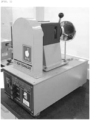
- FIG. 1 An example of the Erichsen cupping tester of the present invention is shown in FIG. 1 below.
- the thermoplastic resin composition may have a total light transmittance of preferably 80 % or more, more preferably 82 % or more, still more preferably 82 to 100 %. Within this range, due to excellent physical property balance, the thermoplastic resin composition may be used as an unpainted material.
- the thermoplastic resin composition may have a UV-visible light transmittance of preferably 8 % or less, more preferably 6 % or less, still more preferably 4 % or less, still more preferably 3 % or less, still more preferably 0.01 to 3 % as measured at 380 nm using a sheet having a thickness of 0.15 mm and a UV-visible light spectrophotometer. Within this range, physical property balance may be excellent, and UV shielding capability may be excellent in short wavelengths with high energy, thereby preventing discoloration of a substrate.
- a high UV-visible light transmittance value at 380 nm indicates that UV shielding capability is excellent.
- thermoplastic resin composition may have a weather resistance ( ⁇ E) of preferably 5.5 or less, more preferably 4.7 or less, still more preferably 4.4 or less, still more preferably 0.01 to 4.4. Within this range, physical property balance may be excellent. In addition, discoloration may be prevented even after long-term external exposure, and thus an aesthetically pleasing appearance may be realized.
- ⁇ E L ′ ⁇ L 0 2 + a ′ ⁇ a 0 2 + b ′ ⁇ b 0 2
- L', a', and b' represent L, a, and b values measured using a CIE LAB color coordinate system after leaving a specimen, respectively.
- L 0 , a 0 , and b 0 represent L, a, and b values measured using the CIE LAB color coordinate system before leaving the specimen, respectively.
- lamination of the upper sheet and the substrate may be performed at 160 °C using a mini hot press (QMESYS Heating Plate Tester).
- thermoplastic resin composition may have a weather resistance ( ⁇ E) of preferably 5.7 or less, more preferably 4.5 or less, still more preferably 3.5 or less, still more preferably 0.01 to 3.5. Within this range, physical property balance may be excellent. In addition, discoloration may be prevented even after long-term external exposure, and thus an aesthetically pleasing appearance may be realized.
- thermoplastic resin composition may have a weather resistance ( ⁇ E) of preferably 6.5 or less, more preferably 5.5 or less, still more preferably 4.5 or less, still more preferably 0.01 to 4.5. Within this range, physical property balance may be excellent. In addition, discoloration may be prevented even after long-term external exposure, and thus an aesthetically pleasing appearance may be realized.
- the thermoplastic resin composition may have a thickness deviation of preferably 0.02 mm or less, more preferably 0.01 mm or less. Within this range, due to excellent physical property balance and film processability, a luxurious appearance may be provided.
- thickness may be measured using ABSOLUTE ID-C1012BS (Mitutoyo Co.).
- the thermoplastic resin composition may further include 0.01 to 5 parts by weight, preferably 0.05 to 3 parts by weight, more preferably 0.1 to 2 parts by weight, still more preferably 0.5 to 1 part by weight of each of one or more selected from the group consisting of a heat stabilizer, a lubricant, a dye, a pigment, a colorant, an antistatic agent, an antibacterial agent, a processing aid, a metal deactivator, a flame retardant, a smoke suppressant, an anti-drip agent, an anti-friction agent, and an anti-wear agent.
- the required physical properties of the thermoplastic resin composition of the present invention may be implemented without deterioration in the intrinsic physical properties thereof.
- the heat stabilizer may preferably include a first heat stabilizer and a second heat stabilizer.
- the first heat stabilizer may be a phenolic heat stabilizer.
- the first heat stabilizer may include one or more selected from the group consisting of 2-t-butyl-6-(3-t-butyl-2-hydroxy-5-methylbenzyl)-4-methylphenyl acrylate, 2-[1-(2-hydroxy-3,5-di-t-pentylphenyl)ethyl]-4,6-di-t-pentylphenyl acrylate, 1,6-hexanediolbis-[3-(3,5-di-t-butyl-4-hydroxyphenyl)propionate], 2,2-thiodiethylenebis-[3-(3,5-di-t-butyl-4-hydroxyphenyl)propionate], 3,5-di-t-butyl-4-hydroxybenzylphosphonatediethyl ester, tris(2,6-dimethyl-3-hydroxy-4-t-butylbenzyl)isocyanurate, tri
- the second heat stabilizer may be a phosphorus heat stabilizer.
- the second heat stabilizer may include one or more selected from the group consisting of bis(dialkylphenyl)pentaerythritol diphosphite ester, phosphite ester, trioctyl phosphite, trilauryl phosphite, tridecyl phosphite, (octyl)diphenyl phosphite, tris(2,4-di-t-butylphenyl) phosphite, triphenyl phosphite, tris(butoxyethyl) phosphite, tris(nonylphenyl) phosphite, distearylpentaerythritol diphosphite, tetra(tridecyl)-1,1,3-tris(2-methyl-5-t-butyl-4-hydroxy-phenyl)but
- the lubricant may preferably include one or more selected from the group consisting of an aliphatic amide-based lubricant, a fatty acid ester-based lubricant, and olefin-based wax.
- the aliphatic amide-based lubricant may preferably include one or more selected from the group consisting of stearamide, oleamide, erucamide, ethylene bis stearamide, and ethylene bis oleamide.
- the fatty acid ester-based lubricant may preferably include one or more selected from the group consisting of a fatty acid ester of an alcohol or polyhydric alcohol, hardened oil, butyl stearate, monoglyceride stearate, pentaerythritol tetrastearate, stearylstearate, ester wax, and an alkyl phosphate ester.
- the olefin-based wax may preferably be polyethylene wax.
- thermoplastic resin composition
- a method of preparing the thermoplastic resin composition of the present invention includes a step of kneading and extruding 100 parts by weight of a base resin including an alkyl acrylate-aromatic vinyl compound-vinyl cyanide compound graft copolymer (A) containing alkyl acrylate rubber and one or more (B) selected from the group consisting of a (meth)acrylic acid alkyl ester polymer (b-1) and a (meth)acrylic acid alkyl ester compound-aromatic vinyl compound-vinyl cyanide compound copolymer (b-2); and 0.1 to 6 parts by weight of an acrylic copolymer (C) at 200 to 300 °C and 100 to 500 rpm.
- a base resin including an alkyl acrylate-aromatic vinyl compound-vinyl cyanide compound graft copolymer (A) containing alkyl acrylate rubber and one or more (B) selected from the group consisting of a (meth)acryl
- the thermoplastic resin composition has an alkyl acrylate coverage (X) value of 65 % by weight or more as calculated by Equation 1 below.
- X alkyl acrylate coverage
- the thermoplastic resin composition may have excellent processability and film processability, and the thermoplastic resin composition may be applicable to unpainted materials due to excellent transparency, and non-whitening properties that prevent occurrence of whitening when bent or struck.
- an aesthetically pleasing appearance may be provided.
- Equation 1 G represents a gel content (wt%) based on a total weight of the thermoplastic resin composition, and Y represents an alkyl acrylate content (wt%) in a gel based on a total weight of the thermoplastic resin composition.
- thermoplastic resin composition shares all the technical characteristics of the above-described thermoplastic resin composition. Accordingly, repeated description thereof will be omitted.
- the kneading and extruding may be performed at preferably 200 to 300 °C, more preferably 210 to 260 °C, still more preferably 220 to 250 °C using an extrusion kneader. Within this range, extrusion may be performed stably and kneading may be performed efficiently. At this time, the temperature is temperature set in a cylinder.
- the kneading and extruding may be performed at a screw rotation rate of 100 to 500 rpm, preferably 150 to 450 rpm, more preferably 200 to 400 rpm. In this case, due to appropriate throughput per unit time, process efficiency may be excellent.
- thermoplastic resin composition obtained by extrusion may be prepared in pellets using a pelletizer.
- Extrusion kneaders commonly used in the art to which the present invention pertains may be used without particular limitation, and a twin-screw extrusion kneader is preferably used.
- a molded article of the present invention includes the thermoplastic resin composition.
- thermoplastic resin composition due to excellent mechanical properties, such as impact strength, tensile strength, and flexural strength, and fluidity, processability and film processability may be excellent.
- non-whitening properties no whitening occurs even when bent or struck, and thus the molded article may be applicable to unpainted materials.
- a luxurious appearance due to excellent UV shielding capability in short wavelengths with high energy, a luxurious appearance may be provided.
- the molded article may be a film or a sheet, preferably a finishing material, more preferably a decorative sheet for indoor furniture and decoration, a finishing material for outdoor building materials, or a finishing material for roofs.
- a finishing material preferably a decorative sheet for indoor furniture and decoration, a finishing material for outdoor building materials, or a finishing material for roofs.
- an aesthetically pleasing appearance may be obtained, and discoloration of a substrate may be prevented.
- a method of manufacturing the molded article may preferably include a step of manufacturing an extrudate by kneading and extruding 100 parts by weight of a base resin including an alkyl acrylate-aromatic vinyl compound-vinyl cyanide compound graft copolymer (A) containing alkyl acrylate rubber and one or more (B) selected from the group consisting of a (meth)acrylic acid alkyl ester polymer (b-1) and a (meth)acrylic acid alkyl ester compound-aromatic vinyl compound-vinyl cyanide compound copolymer (b-2); and 0.1 to 6 parts by weight of an acrylic copolymer (C) at 200 to 300 °C and 100 to 500 rpm; and a step of manufacturing a molded article by molding the extrudate, wherein the extrudate has an alkyl acrylate coverage (X) value of 65 % by weight or more as calculated by Equation 1 below.
- X alkyl acrylate coverage
- Equation 1 G represents a gel content (wt%) based on a total weight of the thermoplastic resin composition, and Y represents an alkyl acrylate content (wt%) in a gel based on a total weight of the thermoplastic resin composition.
- the extrudate may have a pellet shape or a plate shape.
- the plate shape is not particularly limited as long as the plate shape is generally defined as a plate shape in the art to which the present invention pertains.
- the plate shape may include a flat shape, a sheet shape, and a film shape.
- thermoplastic resin composition of the present invention the method of preparing the same, and the molded article including the same, it should be noted that other conditions or equipment not explicitly described herein may be appropriately selected within the range commonly practiced in the art without particular limitation.
- the components shown in Tables 1 and 2 were fed into a twin-screw extruder. Then, melt-kneading and extrusion were performed at 230 °C and 150 rpm to prepare pellets. The melt flow index and alkyl acrylate coverage value of the prepared pellets were measured. Then, the pellets were injected at 220 °C and a screw speed of 100 to 200 rpm using an injection machine (VC 330/80 TECJ PRO, ENGEL Co.) to obtain a specimen for evaluating appearance and physical properties.
- an injection machine VC 330/80 TECJ PRO, ENGEL Co.
- Equation 1 G represents a gel content (wt%) based on a total weight of the thermoplastic resin composition, and Y represents an alkyl acrylate content (wt%) in a gel based on a total weight of the thermoplastic resin composition.
- the alkyl acrylate content in the gel was quantitatively calculated using an 1 NMR analyzer or FT-IR. Specific measurement conditions are as follows.
- the weight (g) of grafted monomers is obtained by subtracting rubber weight (g) from the weight (g) of insoluble matter (gel) obtained by dissolving the graft copolymer in acetone and performing centrifugation, and the rubber weight (g) is the weight (g) of rubber components theoretically added to graft copolymer powder.
- the thickness was measured using ABSOLUTE ID-C1012BS (Mitutoyo Co.).
- thermoplastic resin compositions of Examples 1 to 5 according to the present invention exhibited mechanical properties such as impact strength, tensile strength, and flexural strength and melt flow index equal or superior to those of Comparative Examples 1 to 3 outside the range of the present invention.
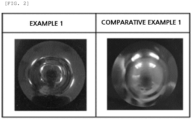
- haze was low in both the injection specimen and the film after the Erichsen test, total light transmittance was high, non-whitening properties were excellent, and the thickness deviation of a film was small, indicating that processability and film processability were excellent.
- Comparative Example 2 not including the acrylic copolymer (C)
- film processability and film processability were reduced.
- Comparative Example 3 including the acrylic copolymer (C) in an amount exceeding the range of the present invention melt flow index was very low, and total light transmittance, haze, and whitening resistance were poor in both the injection specimen and the film after an Erichsen cupping test.
- film processability was reduced.
- the components shown in Tables 3 and 4 were fed into a twin-screw extruder. Then, melt-kneading and extrusion were performed at 230 °C and 150 rpm to prepare pellets. The melt flow index and alkyl acrylate coverage value of the prepared pellets were measured. Then, the pellets were injected at 220 °C and a screw speed of 100 to 200 rpm using an injection machine (VC 330/80 TECJ PRO, ENGEL Co.) to obtain a specimen for evaluating appearance and physical properties.
- an injection machine VC 330/80 TECJ PRO, ENGEL Co.
- L', a', and b' represent L, a, and b values measured using a CIE LAB color coordinate system after leaving a specimen, respectively.
- L 0 , a 0 , and b 0 represent L, a, and b values measured using the CIE LAB color coordinate system before leaving the specimen, respectively.
- the thickness was measured using ABSOLUTE ID-C1012BS (Mitutoyo Co.).
- thermoplastic resin compositions of Additional Examples 1 to 7 according to the present invention compared to Additional Comparative Examples 1 to 3 outside the range of the present invention, melt flow index, total light transmittance, haze, non-whitening properties, UV-visible light transmittance, weather resistance, and thickness deviation were excellent. These results indicated that, in the case of Additional Examples 1 to 7, transparency, film processability, and UV shielding capability were excellent.
- thermoplastic resin composition when a thermoplastic resin composition is prepared by including a base resin including an alkyl acrylate-aromatic vinyl compound-vinyl cyanide compound graft copolymer (A) and one or more (B) selected from the group consisting of a (meth)acrylic acid alkyl ester polymer (b-1) and a (meth)acrylic acid alkyl ester compound-aromatic vinyl compound-vinyl cyanide compound copolymer (b-2); and an acrylic copolymer (C) in a predetermined content ratio and adjusting an alkyl acrylate coverage value in the thermoplastic resin composition within a predetermined range, due to excellent mechanical properties, such as impact strength, tensile strength, and flexural strength, and fluidity, the thermoplastic resin composition may have excellent processability and film processability.
- A alkyl acrylate-aromatic vinyl compound-vinyl cyanide compound graft copolymer
- B alkyl acrylate-aromatic vinyl compound-vin
- thermoplastic resin composition may be applicable to unpainted materials due to excellent transparency and non-whitening properties that prevent occurrence of whitening when bent or struck.
- UV shielding capability may be excellent in short wavelengths with high energy, and thus an aesthetically pleasing appearance may be realized.
- Example 1 compared to Comparative Example 1, after an Erichsen cupping test, no whitening occurred.
Landscapes
- Chemical & Material Sciences (AREA)
- Health & Medical Sciences (AREA)
- Chemical Kinetics & Catalysis (AREA)
- Medicinal Chemistry (AREA)
- Polymers & Plastics (AREA)
- Organic Chemistry (AREA)
- Compositions Of Macromolecular Compounds (AREA)
- Manufacture Of Macromolecular Shaped Articles (AREA)
Applications Claiming Priority (3)
| Application Number | Priority Date | Filing Date | Title |
|---|---|---|---|
| KR1020220135354A KR20240055275A (ko) | 2022-10-20 | 2022-10-20 | 열가소성 수지 조성물, 이의 제조방법 및 이를 포함하는 성형품 |
| KR1020220135348A KR20240055269A (ko) | 2022-10-20 | 2022-10-20 | 열가소성 수지 조성물, 이의 제조방법 및 이를 포함하는 성형품 |
| PCT/KR2023/012213 WO2024085398A1 (fr) | 2022-10-20 | 2023-08-17 | Composition de résine thermoplastique, procédé pour la fabriquer, et article moulé la comprenant |
Publications (2)
| Publication Number | Publication Date |
|---|---|
| EP4400543A1 true EP4400543A1 (fr) | 2024-07-17 |
| EP4400543A4 EP4400543A4 (fr) | 2025-02-26 |
Family
ID=90731384
Family Applications (1)
| Application Number | Title | Priority Date | Filing Date |
|---|---|---|---|
| EP23874055.9A Pending EP4400543A4 (fr) | 2022-10-20 | 2023-08-17 | Composition de résine thermoplastique, procédé pour la fabriquer, et article moulé la comprenant |
Country Status (5)
| Country | Link |
|---|---|
| US (1) | US20250236726A1 (fr) |
| EP (1) | EP4400543A4 (fr) |
| JP (1) | JP2025534563A (fr) |
| TW (1) | TWI886549B (fr) |
| WO (1) | WO2024085398A1 (fr) |
Family Cites Families (8)
| Publication number | Priority date | Publication date | Assignee | Title |
|---|---|---|---|---|
| JP2958232B2 (ja) * | 1993-10-07 | 1999-10-06 | 三菱レイヨン株式会社 | 艶消し性熱可塑性樹脂組成物 |
| KR100548630B1 (ko) * | 2003-09-04 | 2006-01-31 | 주식회사 엘지화학 | 아크릴계 공중합체 조성물, 이를 제조하는 방법 및 이를포함하는 염화비닐계 수지 조성물 |
| KR101276454B1 (ko) * | 2009-12-10 | 2013-06-19 | 주식회사 삼양사 | 저광택 열가소성 수지 조성물 |
| KR101688684B1 (ko) * | 2013-09-30 | 2016-12-21 | 롯데첨단소재(주) | 내화학성이 우수한 투명 열가소성 수지 조성물 |
| KR102707170B1 (ko) * | 2021-01-22 | 2024-09-20 | 주식회사 엘지화학 | 열가소성 수지 조성물, 이의 제조방법 및 이를 포함하는 성형품 |
| KR102687068B1 (ko) * | 2021-01-22 | 2024-07-23 | 주식회사 엘지화학 | 열가소성 수지 조성물, 이의 제조방법 및 이를 포함하는 성형품 |
| KR102638769B1 (ko) | 2021-03-30 | 2024-02-20 | 주식회사 뷰온 | 표면 광학 검사 장치 |
| KR20220135348A (ko) | 2021-03-30 | 2022-10-07 | 정용혁 | 반려동물의 실내 미니 운동장 |
-
2023
- 2023-08-17 JP JP2024527230A patent/JP2025534563A/ja active Pending
- 2023-08-17 EP EP23874055.9A patent/EP4400543A4/fr active Pending
- 2023-08-17 US US18/697,888 patent/US20250236726A1/en active Pending
- 2023-08-17 WO PCT/KR2023/012213 patent/WO2024085398A1/fr not_active Ceased
- 2023-08-25 TW TW112132007A patent/TWI886549B/zh active
Also Published As
| Publication number | Publication date |
|---|---|
| EP4400543A4 (fr) | 2025-02-26 |
| TWI886549B (zh) | 2025-06-11 |
| US20250236726A1 (en) | 2025-07-24 |
| TW202417572A (zh) | 2024-05-01 |
| JP2025534563A (ja) | 2025-10-17 |
| WO2024085398A1 (fr) | 2024-04-25 |
Similar Documents
| Publication | Publication Date | Title |
|---|---|---|
| EP4098698B1 (fr) | Composition de résine thermoplastique, son procédé de préparation et article moulé la comprenant | |
| EP4074779B1 (fr) | Composition de résine thermoplastique, son procédé de préparation et article moulé la comprenant | |
| EP4063455B1 (fr) | Composition de résine thermoplastique, son procédé de production et article moulé la comprenant | |
| EP4400543A1 (fr) | Composition de résine thermoplastique, procédé pour la fabriquer, et article moulé la comprenant | |
| EP4098697B1 (fr) | Composition de résine thermoplastique, son procédé de production et article moulé la comprenant | |
| EP4397709A1 (fr) | Composition de résine thermoplastique, procédé pour la produire, et article moulé la contenant | |
| EP4700085A1 (fr) | Composition de résine thermoplastique, procédé de production associé et article moulé la contenant | |
| KR20240055269A (ko) | 열가소성 수지 조성물, 이의 제조방법 및 이를 포함하는 성형품 | |
| KR20240055274A (ko) | 열가소성 수지 조성물, 이의 제조방법 및 이를 포함하는 성형품 | |
| KR20240055275A (ko) | 열가소성 수지 조성물, 이의 제조방법 및 이를 포함하는 성형품 | |
| KR20240055276A (ko) | 열가소성 수지 조성물, 이의 제조방법 및 이를 포함하는 성형품 | |
| KR20240055273A (ko) | 열가소성 수지 조성물, 이의 제조방법 및 이를 포함하는 성형품 | |
| KR20250055798A (ko) | 열가소성 수지 조성물, 이의 제조방법 및 이를 포함하는 성형품 | |
| KR20240055631A (ko) | 열가소성 수지 조성물, 이의 제조방법 및 이를 포함하는 성형품 | |
| EP4700086A1 (fr) | Composition de résine thermoplastique, son procédé de préparation et article moulé la comprenant | |
| KR20250055796A (ko) | 열가소성 수지 조성물, 이의 제조방법 및 이를 포함하는 성형품 | |
| KR20250059798A (ko) | 열가소성 수지 조성물, 이의 제조방법 및 이를 포함하는 성형품 | |
| KR20240055272A (ko) | 열가소성 수지 조성물, 이의 제조방법 및 이를 포함하는 성형품 |
Legal Events
| Date | Code | Title | Description |
|---|---|---|---|
| STAA | Information on the status of an ep patent application or granted ep patent |
Free format text: STATUS: UNKNOWN |
|
| STAA | Information on the status of an ep patent application or granted ep patent |
Free format text: STATUS: THE INTERNATIONAL PUBLICATION HAS BEEN MADE |
|
| PUAI | Public reference made under article 153(3) epc to a published international application that has entered the european phase |
Free format text: ORIGINAL CODE: 0009012 |
|
| STAA | Information on the status of an ep patent application or granted ep patent |
Free format text: STATUS: REQUEST FOR EXAMINATION WAS MADE |
|
| 17P | Request for examination filed |
Effective date: 20240408 |
|
| AK | Designated contracting states |
Kind code of ref document: A1 Designated state(s): AL AT BE BG CH CY CZ DE DK EE ES FI FR GB GR HR HU IE IS IT LI LT LU LV MC ME MK MT NL NO PL PT RO RS SE SI SK SM TR |
|
| A4 | Supplementary search report drawn up and despatched |
Effective date: 20250124 |
|
| RIC1 | Information provided on ipc code assigned before grant |
Ipc: C08K 5/3475 20060101ALI20250120BHEP Ipc: C08L 33/12 20060101ALI20250120BHEP Ipc: C08L 33/06 20060101ALI20250120BHEP Ipc: C08L 51/04 20060101AFI20250120BHEP |
|
| DAV | Request for validation of the european patent (deleted) | ||
| DAX | Request for extension of the european patent (deleted) |