EP4400549A1 - Organophiler smektit, der mit cholin zur adsorption von mykotoxinen funktionalisiert ist - Google Patents
Organophiler smektit, der mit cholin zur adsorption von mykotoxinen funktionalisiert ist Download PDFInfo
- Publication number
- EP4400549A1 EP4400549A1 EP24151099.9A EP24151099A EP4400549A1 EP 4400549 A1 EP4400549 A1 EP 4400549A1 EP 24151099 A EP24151099 A EP 24151099A EP 4400549 A1 EP4400549 A1 EP 4400549A1
- Authority
- EP
- European Patent Office
- Prior art keywords
- smectite
- adsorption
- ota
- mycotoxins
- zea
- Prior art date
- Legal status (The legal status is an assumption and is not a legal conclusion. Google has not performed a legal analysis and makes no representation as to the accuracy of the status listed.)
- Pending
Links
Images







Classifications
-
- C—CHEMISTRY; METALLURGY
- C09—DYES; PAINTS; POLISHES; NATURAL RESINS; ADHESIVES; COMPOSITIONS NOT OTHERWISE PROVIDED FOR; APPLICATIONS OF MATERIALS NOT OTHERWISE PROVIDED FOR
- C09C—TREATMENT OF INORGANIC MATERIALS, OTHER THAN FIBROUS FILLERS, TO ENHANCE THEIR PIGMENTING OR FILLING PROPERTIES ; PREPARATION OF CARBON BLACK ; PREPARATION OF INORGANIC MATERIALS WHICH ARE NO SINGLE CHEMICAL COMPOUNDS AND WHICH ARE MAINLY USED AS PIGMENTS OR FILLERS
- C09C1/00—Treatment of specific inorganic materials other than fibrous fillers; Preparation of carbon black
- C09C1/40—Compounds of aluminium
- C09C1/42—Clays
-
- A—HUMAN NECESSITIES
- A61—MEDICAL OR VETERINARY SCIENCE; HYGIENE
- A61K—PREPARATIONS FOR MEDICAL, DENTAL OR TOILETRY PURPOSES
- A61K33/00—Medicinal preparations containing inorganic active ingredients
- A61K33/06—Aluminium, calcium or magnesium; Compounds thereof, e.g. clay
-
- A—HUMAN NECESSITIES
- A61—MEDICAL OR VETERINARY SCIENCE; HYGIENE
- A61K—PREPARATIONS FOR MEDICAL, DENTAL OR TOILETRY PURPOSES
- A61K33/00—Medicinal preparations containing inorganic active ingredients
- A61K33/06—Aluminium, calcium or magnesium; Compounds thereof, e.g. clay
- A61K33/12—Magnesium silicate
Definitions
- the invention concerns a process for the preparation of an organophilic smectite functionalized with choline and the smectite obtainable from the same process.
- the smectite of the invention is capable of sequestering a wide spectrum of structurally different mycotoxins and may therefore be used as an additive and/or supplement to food and feed to reduce exposure to mycotoxins and prevent their toxicity (mycotoxicosis).
- Mycotoxins are fungal metabolites that are toxic to vertebrates and other groups of animals even at low concentrations.
- Aflatoxins are a group of mycotoxins produced by fungi of the Aspergillus genus and have been found to be both toxic and carcinogenic to humans and animals.
- Aflatoxin B1 (AFB1) and mixtures of B1, B2, G1, G2 and M1 aflatoxins are carcinogenic to humans and were included in Group 1 by the IARC (International Agency for Research on Cancer).
- the diseases ( mycotoxicoses ) caused by these toxins are quite varied and involve a wide range of susceptible animal species, including humans. Due to toxicity and diffusion in agri-food products, aflatoxin B1 (AFB1), deoxynivalenol (DON), zearalenone (ZEA), ochratoxin A (OTA), fumonisin B1 (FB1) and T-2 and HT-2 toxins are of particular interest. The extent of damage each toxin can cause is highly species-dependent. These mycotoxins are often found simultaneously in foodstuffs (co-contamination) due to environmental and substrate conditions. Due to co-contamination problems, it is very likely that humans and animals are exposed to mixtures rather than single compounds, which can produce toxicological interactions with synergistic effects. One of the strategies to reduce exposure to mycotoxins is to reduce their bioavailability by including inert, indigestible materials with adsorbent activity in the feed.
- mycotoxin adsorbent agents include aluminosilicates, activated carbons, indigestible complex carbohydrates (cellulose, polysaccharides found in the cell walls of yeast and bacteria such as glucomannans, peptidoglycans, and others), and synthetic polymers such as cholestyramine and polyvinylpyrrolidone and derivatives.
- Silicate minerals are the largest class of mycotoxin sequestering agents, and most studies on the mitigation of mycotoxicoses using adsorbent agents have focused on aluminosilicates. In this group, there are 2 important subclasses: the phyllosilicate subclass and the tectosilicate subclass.
- Phyllosilicates include bentonites (smectites, montmorillonite), kaolinites, illite. Tectosilicates include zeolites.
- Bentonite is a clay mineral from the smectite family, mainly made up of montmorillonite.
- Smectites are a group of minerals that show expandability, due to absorption of both water and organic molecules within the structural layers, and also notable cation exchange properties.
- the clay mineral making them up in the crystalline state derives from devitrification and consequent chemical alteration of glass of magmatic origin, generally tuff or volcanic ash.
- the nature and volcanic origins of bentonite deposits give rise to often highly heterogeneous varieties of the mineral.
- Bentonites have been shown to act as enterosorbents that very strongly and selectively bind aflatoxins in the gastrointestinal (GI) tract of humans and animals decreasing their bioavailability and associated toxicity.
- these clays have the limitation of being quite effective against aflatoxins while not being able to prevent the toxic effects of Fusarium mycotoxins (such as fumonisins, trichothecenes or ZEA) and ochratoxins.
- Fusarium mycotoxins such as fumonisins, trichothecenes or ZEA
- ZEA Fusarium mycotoxins
- OTA and ZEA can range from high to limited, and the efficacy against trichothecenes (DON, T-2, HT-2) is close to zero.
- Clay feed additives were initially used to prevent cracking and improve the technological properties of animal feed.
- Clay-based products are also present on the European market and certified as natural bioregulators to protect human health by preventing and alleviating symptoms caused by exposure to pollutants. These products act like a sponge, selectively absorbing pollutants in the gastro-intestinal tract, and then expelling them naturally from the body. Clays and minerals, in fact, are not digestible and are expelled naturally, together with the pollutants they have absorbed, through the feces through the intestine, without burdening the metabolism.
- Montmorillonites treated with organic cations such as hexadecyltrimethylammonium (HDTMA) and phenyltrimethylammonium (PTMA), more effectively removed organic contaminants, such as benzene and toluene, from water compared to untreated clays.
- organic cations such as hexadecyltrimethylammonium (HDTMA) and phenyltrimethylammonium (PTMA)
- HDTMA hexadecyltrimethylammonium
- PTMA phenyltrimethylammonium
- montmorillonite more effectively retained AFB1 from an aqueous cornmeal extract compared to untreated montmorillonite.
- the organic cations HDTMA and PTMA are toxic and therefore cannot be considered suitable as components of clay additives intended for animal feeding.
- the acid treatment in addition to producing a proton exchange with silicate metals, has the effect of dissolving the octahedral/tetrahedral structures typical of clay crystalline structure, to produce a high porosity compound, with an amorphous structure comparable to carbon-based materials rather than smectite.
- the acidic mineral is also treated with lecithin.
- the capacity especially of acid smectite to adsorb AFB1 and ZEA, as well as a series of synthetic chemical contaminants, is demonstrated only with in vitro tests.
- the known modified clays have therefore shown a selective capacity to adsorb mycotoxins and for some of them a certain toxicity has been reported in the literature.
- the object of the present invention is therefore to provide a food additive that is capable of sequestering structurally different mycotoxins and that can be included in food and feed to reduce exposure to mycotoxins and prevent the onset of mycotoxicosis.
- the inventors surprisingly found a raw material and a series of process steps that made it possible to have a new organophilic smectite capable of sequestering structurally different mycotoxins and, therefore, being able to be used as a food and feed additive.
- the invention concerns a process for the preparation of an organophilic smectite functionalized with choline comprising the following steps:
- the inventors in fact, carried out preliminary analyses and realized that smectites of the sodium type and of sedimentary geological origin are better performing than the calcium or hydrothermal smectites of the prior art and have therefore surprisingly modified the activation and functionalization process, thus obtaining choline-functionalized organophilic smectites highly performing in the adsorption of a wide range of mycotoxins, as will be apparent from the experimental part.
- the inventors found that the use of low amounts of sulfuric acid, with respect to the amount of smectite, for activation before the functionalization step, allowed the structure of the mineral to be preserved, improving its adsorption performance.
- the product of the invention differed from those of the prior art.
- step b) involving treatment of said smectite with H 2 SO 4 in an amount in the range from 10% to 30% by weight with respect to the smectite dry weight, and at a temperature in the range from 20°C at 50°C, allowed to obtain an activated smectite with an unchanged crystalline structure compared to the sodium smectite of step a).
- the invention therefore concerns an organophilic smectite functionalized/intercalated with choline obtainable by the process of the invention, wherein said organophilic smectite comprises at least the organic modifier consisting of choline in the mineral interlayer.
- the additive developed by the inventors can therefore be classified as a "bio-organoclay” or “bio-organic clay” and has demonstrated effectiveness as a multi-mycotoxin binder, which was confirmed in animals, both laboratory animals and in livestock farming, using the biomarker approach.
- the choline-functionalized organophilic smectites of the invention did not show selective adsorption of a single group of mycotoxins, generally aflatoxins, but showed an excellent adsorption capacity of a wide range of mycotoxins.
- Prior art smectites have shown selective aflatoxin adsorption capacity and little or almost no adsorption efficiency against other low-polarity and hydrophobic mycotoxins, such as zearalenones, ochratoxins, and fumonisins, while the smectites invention were found to be active also against these mycotoxins.
- the organophilic smectite of the invention with an acidic character and comprising an organic modifier consisting of choline in the mineral interlayer, was found to be active in sequestering a wide range of mycotoxins including aflatoxin B1 (AFB1), zearalenone (ZEA), ochratoxin A (OTA) and fumonisin B1 (FB1).
- ARB1 aflatoxin B1
- ZAA zearalenone
- OTA ochratoxin A
- FB1 fumonisin B1
- the smectite of the invention as a bio-organoclay showed to be capable of simultaneously sequestering, in vitro, from 10 to 100%, preferably over 95%, of AFB1, FB1, OTA and ZEA over a wide range of pH values (3-9), preferably at a concentration of 1 ppm for each toxin in the pool.
- the organophilic smectite of the invention is able to simultaneously sequestering AFB1, ZEA, OTA and FB1, at bio-organoclay dosages equal to or greater than 0.1% w/v, with maximum adsorption capacity values (expressed as ⁇ g of toxin adsorbed per mg of smectite) of between 30-150 ⁇ g/mg for AFB1, 20-150 ⁇ g/mg for FB1, 20-60 ⁇ g/mg for ZEA and 4-20 ⁇ g/mg for OTA.
- maximum adsorption capacity values expressed as ⁇ g of toxin adsorbed per mg of smectite
- the invention concerns the use of the organophilic smectite of the invention for mycotoxin decontamination from food products, in particular feed, to prevent their toxic effects in living organisms, including laboratory animals and in livestock farming.
- Living organisms in the present invention mean monogastric animals (including chickens, pigs, fish and rodents), polygastric animals (such as dairy cows, sheep, goats, etc.) and human beings.
- Mycotoxins preferably comprise AFB1, ZEA, OTA and FB1.
- the invention relates to the use of the organophilic smectite of the invention for reducing gastro-intestinal absorption and exposure of humans and animals to mycotoxins, as measured by specific biomarkers (of exposure and/or effect) of mycotoxins.
- the invention therefore concerns the choline-functionalized organophilic smectite of the invention for use in the treatment and prevention of mycotoxicosis of humans and animals.
- the markers are mainly, but not exclusively, focused on the measurement of plasma and/or urinary profiles of mycotoxins and their metabolites, and on the values of AUC (area under the curve), Cmax (maximum absorption concentration), as well as on the concentration values of mycotoxins and their metabolites in biological samples, such as biological fluids, tissues, organs, hair, feces, etc..
- organophilic smectite of the invention therefore, administered orally by addition to food or feed, at dosages equal to or greater than 0.25% w/w with respect to the weight of the food product, was able to reduce the values of mycotoxin biomarkers by 10 to 95%.
- organophilic smectite of the invention advantageously did not show toxic side effects and did not interfere with the absorption of micronutrients, including water-soluble vitamins, fat-soluble vitamins and minerals.
- the organophilic smectite of the invention was able to prevent mycotoxin toxicity, such as acute and chronic mycotoxicosis and the onset of cancer.
- organophilic smectites can therefore be advantageously used as additives in foods or supplements and as animal feed additives.
- the invention concerns a food product, a feed or a supplement comprising the smectite of the invention as an additive.
- the invention therefore concerns a process for the preparation of an organophilic smectite functionalized with choline comprising the following steps:
- the process of the invention involves the step a) of supplying a sodium smectite of sedimentary geological origin.
- the smectite is preferably in a crude form and contains from about 15% to 50% moisture, more preferably about 20%.
- the sodium smectite of the invention preferably contains an amount equal to or greater than 70% of montmorillonite.
- step b) depends on the geological origin of the smectites of the invention which should be of the sedimentary, and not hydrothermal, type.
- Step b) of the invention consists in treating the sodium smectite of sedimentary geological origin with H 2 SO 4 in an amount in the range from 10% to 30% by weight with respect to the smectite dry weight, at a temperature in the range from 20°C to 50°C, to obtain an activated smectite.
- Example 2 As detailed in Example 2 in the experimental part and from the mycotoxin adsorption data reported in Table 1, it can be seen that sodium smectites of sedimentary origin, if activated with sulfuric acid, produce activated smectites with higher and broader adsorbent power, compared to calcium and hydrothermal type smectites.
- the activation step occurs with sulfuric acid.
- sulfuric acid in a concentration in the range from 10% to 30% by weight with respect to the smectite dry weight, was found to be the most effective in the subsequent mycotoxin adsorption step.
- an amount of about 15% was found to be the most effective in improving mycotoxin adsorption.
- Table 2 shows the results for mycotoxin adsorption recorded by activating a sodium smectite of sedimentary geological origin with an organic (citric) acid and an inorganic (sulfuric) acid at a concentration of 10% by weight with respect to the dry weight of smectite.
- an organic (citric) acid and an inorganic (sulfuric) acid at a concentration of 10% by weight with respect to the dry weight of smectite.
- activation with sulfuric acid was more effective in increasing the adsorbent power of native smectite.
- the results in Table 2 were obtained using the multi-mycotoxin adsorption test described in the experimental part (Example 2).
- an acid concentration of 15% is preferred as it significantly increases the adsorption of all toxins and, in particular, OTA, compared to lower acid concentrations.
- ZEA, OTA and FB1 adsorptions increased significantly as the concentration of sulfuric acid increased, being maximum at the acid concentration of 15%.
- the results in Table 3 were also obtained using the multi-mycotoxin adsorption test described in the experimental part (Example 2).
- the treatment step with sulfuric acid preferably takes place for a reaction time of 3 to 7 minutes, more preferably about 5 minutes.
- the treatment step with H 2 SO 4 takes place at a temperature in the range from 20°C to 50°C, preferably around 25°C.
- the activated smectite preferably adsorbed >90% of AFB1, FB1 and OTA, and >64% of ZEA regardless of the pH value of the medium.
- step b) when carried out at 25°C allowed the mycotoxins to be effectively adsorbed regardless of the pH values.
- step b) of the process of the invention is carried out with an acid concentration and for a time such as not to alter the crystalline structure of the starting mineral, as evidenced by spectroscopic analysis (XRD) reported in the experimental part.
- XRD spectroscopic analysis
- smectites acid activation is therefore carried out in "mild” conditions, with an acid concentration, at a temperature and for a time such as not to alter the crystalline structure of the starting mineral.
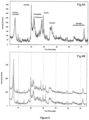
- the results of the spectroscopic ( Figure 3 ) and mineralogical (Table 5) analyses have in fact demonstrated that the smectite of step a) and the activated smectite of step b) had a similar structure and comparable chemical-physical properties.
- Step c) of the process of the invention consists in treating the activated smectite of step b) with at least one modifying agent consisting of a quaternary ammonium salt of formula [(CH 3 ) 3 N + (CH 2 ) 2 OH] X-, where X- is a monovalent anion, where said modifying agent is at a concentration in the range of 30 to 130 meq/100g, to obtain a functionalized smectite.
- Said monovalent anion is preferably selected from the group consisting of chloride, hydroxide anion, bitartrate and dihydrogen citrate.
- Step c) of the invention in fact, made it possible to significantly improve the adsorption of ZEA and OTA, showing high efficacy also against AFB1 and FB1.
- Example 6 The results in Table 6 of Example 2 in the experimental part highlight that choline chloride is the most effective modifying agent for increasing the mycotoxin adsorption capacity of the final products.
- a sodium smectite of sedimentary origin (not activated) was functionalized with the modifiers listed in Table 6 including lecithin of the prior art.
- choline chloride was found to be significantly more effective in increasing the adsorption of ZEA, OTA and FB1 (especially at acidic pH).
- the results in Table 6 were obtained using the multi-mycotoxin adsorption test described in the experimental part (Example 2).
- step c) a concentration of choline chloride in the range from 30 to 130 meq/100g, preferably from 60 to 75 meq/100g, is therefore used.
- the modifying agent choline chloride could be used in dried or liquid form.
- the dried form was advantageous from an industrial point of view.
- step b) and step c), if both carried out in the sequence shown allow for a surprising improvement in mycotoxins adsorption compared to the products of the prior art.
- Step c) was also carried out according to the optimal conditions indicated above, i.e. choline chloride was used at a concentration in the range from 65 to 75 meq/100g.
- the mycotoxin adsorption values were recorded at neutral and acidic pH using the multi-mycotoxin adsorption and analysis (UHPLC-PDA/FLD/MS) techniques described in the experimental part of Example 2. The results are reported in Table 8 of the same example.
- the preparation process of organophilic smectite involves a step d) of extruding the functionalized smectite to reach a temperature of the extrudate equal to or higher than 45°C and drying it in the range from 30°C to 80°C.
- Step d) therefore involves an extrusion process during which the extrudate should reach temperatures equal to or higher than 45°C, and subsequent drying in an oven at a temperature of about 65°C.
- the extrusion step allows mechanical energy to be imparted to promote cationic exchange in the product, in order to obtain the clay modified with choline defined in the invention as organophilic smectite.
- the invention concerns an organophilic smectite obtainable from the process of the invention, wherein said organophilic smectite comprises the organic modifier consisting of choline in the mineral interlayer.
- Said organophilic smectite preferably has an acidic character.
- the final product of the process i.e. the organophilic smectite, acidic and modified with the organic modifier consisting of choline in the mineral interlayer, is also called MMDA " multi-mycotoxin detoxifying agent ".
- the invention concerns the use of the organophilic smectite of the invention for mycotoxin adsorption.
- the inventors also tested the final product to study the mycotoxin adsorption mechanism and to determine the best adsorption conditions.
- the effect of adsorbent dosage, toxin concentration, pH of the medium and temperature on adsorption efficiency was studied.
- the main adsorption (maximum capacity, affinity, chemoadsorption) and thermodynamics parameters were determined.
- Example 3 As described in the experimental part (Example 3), the effect of the adsorbent concentration on the adsorption of mycotoxins was investigated through the use of equilibrium isotherms.
- the adsorption experiments were performed in triplicate, at gastric and intestinal pH, testing a fixed amount of toxins (1 ⁇ g/mL) with different dosages of the smectite of the invention (0.0005-0.5% w/v).
- the adsorption of AFB1, FB1, ZEA, and OTA was significantly affected by the dosage, and the percentage of mycotoxins removed from the buffer solutions at both pH values increased as the amount of smectite increased (Example 3).
- the experimental AFB1, ZEA, OTA and FB1 adsorption values were in the range of 10 - 100% for AFB1, 3 - 100% for ZEA, 3 - 100% for OTA and 7 - 100% for FB1.
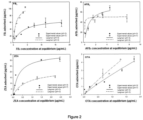
- MMDA was analyzed by the equilibrium adsorption isotherm method to study the effect of toxin concentration on the extent of mycotoxin adsorption, and to calculate the maximum capacity and affinity parameters (see for details the experimental part, Example 5). Due to the high efficiency of MMDA in the mycotoxin adsorption, extremely low dosages of smectite of the invention (0.05-0.005%) were used.
- the adsorption parameters i.e. the maximum adsorption capacity (C max ) and affinity were calculated by non-linear interpolation and analysis of the experimental adsorption data using the Langmuir and Freundlich mathematical models.
- the bio-organoclay object of the invention had high maximum capacity and affinity values in a physiological pH range.
- the maximum adsorption capacity values expressed as ⁇ g of adsorbed toxin per mg of smectite were in the range between 30-150 ⁇ g/mg for AFB1, 20-150 ⁇ g/mg for FB1, 20-60 ⁇ g/mg for ZEA and 4-20 ⁇ g/mg for OTA.
- the affinity values (k d ) were very high, exceeding 1 mL/ ⁇ g. K d values higher than unity indicate, in fact, high capacity and aptitude of the adsorbent to sequester target toxins even at low concentrations.
- Mycotoxin adsorption parameters were affected by the pH of the medium differently depending on the toxin.
- the adsorptions of AFB1 and ZEA were favored by acidic pH, while the adsorption of FB1 and OTA mainly occurred at neutral pH.
- the raw clay (native Na-smectite) adsorbed FB1 and OTA preferably at acidic pH, while their adsorption was negligible or non-existent at neutral pH.
- the product of the invention i.e. Na-smectite chemically activated with an inorganic acid and modified with a quaternary ammonium salt of formula [(CH 3 ) 3 N + (CH 2 ) 2 OH] X - , where X - is a monovalent anion, preferably choline chloride, had polarity of the mineral surface and water occupation in the interlayer such as to facilitate the incorporation of mycotoxin molecules into the smectite interlayer.
- thermodynamic parameters for the adsorption of AFB1, ZEA, OTA and FB1 were calculated.
- Physisorption involves weak associations including van der Waals, dipole-dipole, induced dipole, and hydrogen bonding. Chemisorption involves a chemical reaction or electron sharing between adsorbent and adsorbate. Physisorption is described as having an enthalpy of ⁇ 20 kJ/mol, while chemisorption is generally ⁇ 200 kJ/mol. According to the performed test, the enthalpy values calculated for AFB1, ZEA, FB1 and OTA were of -11.05, -21.75, -95.79 and -4.201 kJ/mol, respectively, indicating a predominant physical adsorption phenomenon. In conclusion, the thermodynamic parameters calculated for the adsorption of mycotoxins by the new organophilic smectite provided information on the type of interactions involved in the process.
- Hydrophobic interactions could be associated with the adsorption of AFB1, OTA and ZEA (small positive ⁇ H 0 and ⁇ S 0 values). Electrostatic interactions explained the higher ⁇ H 0 and negative ⁇ S 0 values (-0.234 kJ/(mol*°K) calculated for FB1 adsorption.
- the smectite of the invention acts as an adsorbent capable of sequestering, with high capacity and affinity, the main mycotoxins present in products intended for human and animal nutrition, removing them from gastro-intestinal absorption, facilitating their elimination in the feces and preventing toxic effects and acute and chronic intoxications, known as mycotoxicosis, including cancer.
- the invention therefore, also concerns a food product, a supplement or an animal feed including the smectite of the invention as an additive.
- the additive at dosages preferably equal to or higher than 0.1% w/v is able to sequester more than 95% of AFB1, FB1, OTA and ZEA (1 ⁇ g/mL), in a wide range of pH values (3-9).
- Mycotoxin desorption and isothermal equilibrium assays showed that bio-organoclay can bind mycotoxins stably and with high capacity and affinity.
- the final product can be considered safe, as it is obtained using agents listed in the European Union Register of Feed Additives (EC Regulation, n.1831/2003) and food supplements and/or pharmaceuticals.
- the product of the invention was also tested in vivo on laboratory and zootechnical animals and was found to be an excellent multi-mycotoxin decontaminating agent.
- the smectite of the invention has in fact significantly reduced the values of mycotoxin exposure biomarkers, in particular the values of urinary excretion and oral absorption of mycotoxins, in rats and pigs (Example 6).
- the bio-organic clay of the invention has therefore shown high efficacy in the adsorption of AFB1, ZEA, OTA and FB1 in several in vitro tests using stringent experimental conditions (Examples 2-5).
- the biomarker approach the mycotoxin adsorption efficacy of bio-organic clay was confirmed in rats and for all target mycotoxins (Example 6).
- the smectite of the invention was significantly effective for AFB1 and OTA, while it reduced systemic exposure to ZEA and FB1 insignificantly (Example 6).
- the smectite of the invention therefore, proved to be effective as an adsorbent material capable of sequestering structurally different mycotoxins, both in vitro and in vivo.
- organophilic smectite of the invention in fact, administered orally by addition to food and feed, at dosages equal to or higher than 0.25% w/v with respect to the weight of the food product, significantly reduced the values of the mycotoxin biomarkers.
- organophilic smectite of the invention did not produce toxic side effects and did not interfere with the absorption of micronutrients (including water-soluble vitamins, fat-soluble vitamins, and minerals).
- the organophilic smectite of the invention has proven capable of preventing the toxic effects of mycotoxins (acute and chronic mycotoxicoses) in living organisms (laboratory animals and pigs).
- the invention relates to the use of the organophilic smectite of the invention for the reduction of gastro-intestinal absorption and exposure of humans and animals to mycotoxins, as measured by specific biomarkers (of exposure and/or effect) of mycotoxins.
- the invention therefore concerns the choline-functionalized organophilic smectite of the invention for use in the treatment and prevention of mycotoxicosis in humans and animals.
- Example 1 Process for the preparation of an organophilic smectite of the invention
- step a The process for the preparation of the organophilic smectite involved (step a) the use of a raw clay belonging to the group of smectites of the sodium type and sedimentary origin, with high swelling capacity in water, containing 70% or more of montmorillonite as main mineral and 20% of moisture.
- step b the raw mineral was treated with concentrated sulfuric acid (96% purity) at an optimal moisture value of the raw mineral of about 25-30%, for a short period of time (5 min) and at room temperature (preferably 25°C).
- the acid was added at 15% by weight with respect to the raw clay dry weight and uniformly distributed throughout the clay mass by manual or mechanical mixing.
- the crude was dried at 60-65°C in a ventilated oven and ground.
- step c For the functionalization with choline chloride (step c ), the acid-activated and ground clay was brought to 16% moisture and treated with choline chloride, at the optimal concentration of 65-75 meq/100g with respect to the clay dry weight. After choline chloride addition, the material was kneaded for 10 minutes at moderate speed and mixed occasionally to ensure homogeneity.
- step d the kneading was subjected to an extrusion process in order to have an extrudate at temperatures equal to or higher than 45°C (step d ), dried in a ventilated oven at 65°C, brought to a moisture of about 9% and ground to have a final product with very fine grain size (500 to 200 ⁇ m screens).
- Example 2 Multi-mycotoxin adsorption test (with a single concentration of adsorbent and toxins) and preliminary tests for the development of the organophilic smectite of the invention.
- the suspension was then incubated under agitation, with an orbital shaker, thermostatically controlled at 37°C ( ⁇ 0.5°C), at a speed of 250 rpm for 90 minutes (contact time). After the incubation period, the samples were allowed to settle, and 1 mL-volumes of suspension were transferred into Eppendorf tubes and centrifuged for 20 minutes at 14,000 x g and 25°C.
- the "blank” control was prepared using the working solution of mycotoxins in buffer without adsorbents. This was subjected to the same test procedure and was used to study the stability of mycotoxins in buffer solutions or any possible non-specific adsorption on the surfaces of the reaction tubes.
- the "negative” control was, instead, a buffer solution containing the mycotoxin-free material, also treated like the test samples and used to study any material components that could interfere with the mycotoxin chromatographic analysis. All experiments, including blank and negative controls, were set up in triplicate.
- the amount of mycotoxin adsorbed was calculated as the difference between the amount of mycotoxin in the supernatant of the "blank control" tests (in the absence of adsorbent) and the amount measured in the supernatant of the experimental tests with the adsorbents. This amount was then compared to the amount present in the supernatant of the same controls and expressed as a percentage.
- step a the type of smectite to be used for the preparation of the additive (step a ); the type of acid, the concentration and conditions (time and temperature) for activation (step b ); the type and concentration of the modifying agent for functionalization, and the operating conditions for modification ( step c ) were evaluated.
- the measurement of mycotoxin adsorption values determined as described above was used to evaluate the process yield and efficiency, and to select the best experimental conditions for the preparation of organophilic smectite.
- the experimental conditions that allowed to have a final product with a broad spectrum of action, capable of simultaneously adsorbing the target mycotoxins, and at physiological pH values (both gastric and intestinal) were considered optimal.
- smectites with different geological origins (hydrothermal or sedimentary) and of calcium or sodium types, were activated with sulfuric acid at 10% by weight with respect to the smectite dry weight, for a short period of time and at a temperature of 25°C.
- the adsorbent capacity of native and activated mycotoxins was determined by the method described above and expressed as a percentage.
- Table 1 shows the adsorption values of mycotoxins (AFB1, ZEA, OTA and FB1) recorded at acidic and neutral pH for two hydrothermal (calcium) smectites and two sedimentary (sodium) smectites, before (native smectites) and after activation with sulfuric acid.
- step b To choose the type of acid to be used for activation (step b ), organic or inorganic acids were tested.
- Table 2 reports the mycotoxin adsorption results recorded by activating a sodium smectite of sedimentary geological origin with an organic acid (citric acid) and an inorganic acid (sulfuric acid) at a concentration of 10% by weight with respect to the smectite dry weight. All materials (native smectite and activated smectites) were tested (as described above) at a concentration of 0.1% (w/v), at pH 3 and 7, and against a pool of mycotoxins (AFB1, ZEA, OTA and FB1) at a concentration of 1 ⁇ g/mL each. Table 2.
- Table 3 reports the mycotoxin adsorption values obtained by activating native smectite with increasing concentrations of sulfuric acid (from 1% to 15%). Table 3. Study of the effect of sulfuric acid concentration on the yield of the smectite activation process in terms of mycotoxin adsorption.
- a further study concerned the effect of the temperature of the activation process with sulfuric acid on the adsorbent power of the final, activated product.
- a sodium smectite of sedimentary geological origin was activated with sulfuric acid at 15% by weight with respect to the smectite dry weight, for a time of about 5 minutes and at a temperature of 25°C and 80°C.
- the ability to adsorb the target mycotoxins was measured in the experimental conditions described above.
- the adsorption values (expressed as a percentage) are shown in Table 4. Table 4. Effect of treatment temperature with 15% sulfuric acid on mycotoxin adsorption at different pH values.
- step b allowed the mycotoxins to be effectively removed regardless of the pH values of the medium, while higher temperatures (as in in the prior art) gave little or no improvement.
- the acid activation of the smectites was carried out in controlled, not strong conditions, with an acid concentration not exceeding 15% w/w, at low temperature (room temperature) and for a short period of time (5 min), thus not altering the crystalline structure of the starting raw smectite.
- the results of spectroscopic analyses, including X-ray diffractometry, XRD ( Figure 3 ) and mineralogical analysis (Table 5) demonstrate, in fact, that raw and acid activate smectites have similar mineral structure and comparable chemical-physical properties.
- FIG. 3A shows the diffractogram of a mineral based on sodium smectite with the main peaks indicated.
- Figure 3B represents the diffractogram of a similar smectite treated as in the invention with 15% w/w of sulfuric acid.
- the comparison of the XRD spectra of raw and acid-activated smectites highlight retention of the typical smectite peaks even after acid treatment, confirming that acid activation did not substantially alter the structure thereof.
- the main mineral identified in each of the two samples in fact, was found to belong to the group of smectites with a dioctahedral structure (montmorillonite), as suggested by the XRD peak at 1,493-1,500 ⁇ (d 060 value) (Table 5).
- Table 5 Values of chemical-physical parameters measured for raw smectite and smectite activated with 15% sulfuric acid.
- step c) the type of modifying agent to be used in step c) for preparing a bio-organoclay with a large adsorption capacity for the mycotoxins of interest was analyzed.
- the preliminary study for the development of the bio-organoclay further concerned the effect of the concentration of the optimal modifying agent of step c), choline chloride, on process yield and performances of the intermediate products in terms of the mycotoxin percentage adsorption.
- the values in Table 7 show that the mycotoxin adsorption efficacy of bio-organoclays obtained by structural modification of a sodium smectite of sedimentary origin with choline chloride is significantly influenced by the concentration of the modifying agent and has a maximum at a concentration of 65 meq/100g. An increase in adsorption values was recorded especially for those mycotoxins for which native smectite showed poor efficacy at gastric pH.
- step b) sodium smectites of sedimentary geological origin were used and treated in the optimal conditions of step b), i.e . using sulfuric acid at 15% by weight with respect to the clay dry weight and at a temperature of 25°C.
- Step c) was also carried out according to the optimal conditions indicated above, i.e. choline chloride was used at a concentration in the range from 65 to 75 meq/100g.
- Mycotoxin adsorption values were recorded at neutral and acidic pH using the multi-mycotoxin adsorption and analysis (UHPLC-PDA/FLD/MS) technique described above. The results are reported in Table 8 below.
- Table 8 Evaluation of the effect of chemical pre-activation on the adsorption of mycotoxins by bio-organoclays. The organophilic bio-clays were obtained using the optimal concentration of choline chloride (65-75 meq/100g).
- the inventors believe that the functionalization of activated smectite with the choline salt involves the occurrence of ion exchange reactions between the clay solvated ions and the choline molecules. Following these reactions, the clay lamellae will be intercalated with a lamellar interlayer largely consisting of choline, linked via Coulomb-type interactions with the lamella and the free organic portion in the interlayer. The effect of this exchange resulted in an increase in the interlamellar space and in the d 001 value of the bio-organoclay.
- the bentonite samples were characterized by X-ray fluorescence (XRF) analysis to determine the amount of various metals and by X-ray diffraction (XRD) analysis to determine the content of crystalline minerals. Furthermore, further NMR, FT-IR and SEM analyses were carried out to characterize the bio-organoclay and distinguish it from similar compounds.
- XRF X-ray fluorescence
- XRD X-ray diffraction
- bio-organophilic smectite differs from raw smectite in that it does not disperse in water and therefore does not allow the measurement of pH and CEC values. As it does not swell in water, it has a zero swelling index.
- smectite is still the prevalent mineral, but unlike raw smectite this has higher d 001 values, being a smectite intercalated with choline, which causes an increase in the interlamellar space.
- bio-organoclay has higher values of loss upon calcination determined by the greater presence of organic material in the final product.
- Chemical-physical properties of a raw sodium-type smectite and of the same smectite activated with sulfuric acid and modified with choline chloride to obtain the bio-organophilic smectite object of the invention Chemical-physical parameters Measurement Unit Natural Smectite Bio-organophilic Smectite Total free moisture % 6.7 5.9 pH (5% deionized water dispersion) 8.9 - Dry residue over 45 micron sieve % 26.6 60.70 Dry residue over 75 micron sieve % 5.2 35.20 Swell index ml/2g 20 - Methylene blue absorption (CEC/MBA) mg/g 250 - Carbonate content % 4.6 5.0 Na 2 O % 1.76 2.57 MgO % 1.76 1.58 Al 2 O 3 % 17.94 15.42 SiO 2 % 62.77 49.32 P 2 O 5 % 0.11 0.16 K 2 O % 1.22 0.95 CaO % 3.31 3.60 TiO 2 % 0.35
- Example 1 The effect of the dosage of the organophilic smectite (bio-organoclay) of the invention (Example 1) on simultaneous adsorption of mycotoxins was studied using the equilibrium isotherm method.
- Adsorption experiments were performed in triplicate as described in Example 2, at constant pH (pH 7 and 3), testing a fixed amount of each mycotoxin (AFB1, ZEA, OTA and FB1) at a concentration of 1 ⁇ g/mL, with increasing amounts of adsorbent (0.0005-0.5% w/v corresponding to 0.005-5 mg/mL).
- the adsorption values measured for each mycotoxin in the pool were expressed as a percentage and plotted as a function of the adsorbent/mycotoxin weight ratio.
- Adsorbent dosage (%) w/v AFB 1 adsorption (%) ZEA adsorption (%) OTA adsorption (%) FB 1 adsorption (%) pH 3 pH 7 pH 3 pH 7 pH 3 pH 7 mean SD mean SD mean SD mean SD mean SD mean SD mean SD mean SD mean SD mean SD mean SD mean SD mean SD mean SD mean SD mean SD mean SD mean SD mean SD mean SD mean SD mean SD mean SD mean SD mean SD mean SD mean SD mean SD mean SD mean SD mean SD mean SD mean SD mean SD mean SD mean SD mean SD mean SD mean SD mean SD mean SD mean SD mean SD mean SD mean SD mean SD mean SD mean SD mean SD mean SD mean SD mean SD mean SD mean SD mean SD mean SD mean SD mean SD mean SD mean SD mean SD mean SD mean SD mean SD mean SD mean SD mean SD mean SD mean SD mean SD mean SD mean SD mean SD mean SD mean SD mean SD mean SD mean SD mean SD mean SD mean SD mean SD mean SD mean SD mean SD mean SD mean SD mean SD mean SD mean SD mean SD mean SD mean SD mean SD mean SD mean SD mean SD mean SD mean
- the smectite of the invention sequestered AFB1, ZEA, OTA and FB1 to an equal extent and in all pH ranges, recording adsorption values of ⁇ 95% in all cases.
- C ⁇ dimensionless quantity
- Example 5 Equilibrium adsorption isotherms to determine the extent of mycotoxin adsorption (maximum capacity and affinity) and thermodynamic parameters.
- the equilibrium adsorption isotherm method was used to study 1) the mechanism of mycotoxin adsorption by the smectite object of the invention; 2) the effect of toxin concentration and temperature on the adsorption process; 3) to determine the extent of adsorption and the adsorption parameters (maximum capacity and affinity), 4) as well as, to measure the thermodynamic parameters.
- C max maximum adsorption capacity
- K d affinity
- C max (maximum adsorption capacity) values were expressed as the amount of adsorbed mycotoxin ( ⁇ g) per mg of product.
- the affinity is correlated with the adsorption energy and was expressed as mL/ ⁇ g. All adsorption isotherms consisted of 8 or more experimental points.
- Figure 2 shows the graphs of the equilibrium adsorption isotherms for AFB1, ZEA, OTA and FB1 obtained for the bio-organoclay object of the invention at different pH values (3 and 7).
- Table 13 shows the maximum adsorption capacity and affinity values measured for bio-organoclay using the equilibrium isotherm method. This table shows the C max and K d values calculated for each toxin at different pH values, the mathematical model used for interpolation and analysis of the experimental data, and the dosage of adsorbent material. Table 13: Equilibrium isotherm parameters calculated at 37°C and different pH values for the adsorption of aflatoxin B1 (AFB1), zearalenone (ZEA), ochratoxin A (OTA) and fumonisin (FB1) by bio-organoclay object of the invention.
- AZA zearalenone
- OTA ochratoxin A
- FB1 fumonisin
- Mycotoxin adsorption parameters were affected by the pH of the medium differently, depending on the toxin.
- the adsorptions of AFB1 and ZEA were favored by acidic pH, while the adsorption of FB1 and OTA mainly occurred at neutral pH.
- the raw clay (native Na-smectite) adsorbed FB1 and OTA preferably at acidic pH, while their adsorption was negligible or non-existent at neutral pH.
- the product of the invention i.e. Na-smectite chemically activated and modified with choline chloride, had a polarity of the mineral surface and water occupation in the interlayer such as to facilitate the incorporation of mycotoxin molecules into the intermediate layer of the smectite. Since mycotoxins are only slightly soluble in water based on their high K ow value (octanol/water partition coefficient), this change in polarity could have facilitated the adsorption of mycotoxins by the bio-organoclay.
- 5.0 ⁇ 0.5°C, 37.0 ⁇ 0.5°C, 50.0 ⁇ 0.5°C and 70.0 ⁇ 0.5°C allowed us to study the influence of temperature variation on mycotoxin adsorption, as well as to calculate the thermodynamic parameters ( ⁇ G°, ⁇ H° and ⁇ S°) relating to the adsorption process.
- the isotherms were carried out by testing a fixed quantity of bio-organoclay (0.05-0.005% w/v) with buffered solutions of mycotoxins at different concentrations ( ⁇ g/mL). The isotherms consisted of 8 or more experimental points.
- K 0 are obtained by interpolating In(q e /C e ) with respect to C e and extrapolating the C e value at zero.
- the value of K 0 is used in the following equation to determine Gibbs free energy of adsorption ( ⁇ G 0 ).
- ⁇ G 0 ⁇ RT ln K 0
- R is the universal gas constant (8.314 J mol -1 K -1 ); T is the absolute temperature (K).
- K the absolute temperature
- Physisorption involves weak associations including van der Waals, dipole-dipole, induced dipole, and hydrogen bonding. Chemisorption involves a chemical reaction or electron sharing between adsorbent and adsorbate. Physisorption is described as having an enthalpy of ⁇ 20 kJ/mol, while chemisorption is generally ⁇ 200 kJ/mol.
- thermodynamic parameters calculated for the adsorption of mycotoxins by the new organophilic smectite provided information on the type of interactions involved in the process. Hydrophobic interactions could be associated with the adsorption of AFB1, OTA and ZEA (small positive ⁇ H 0 and ⁇ S 0 values). Electrostatic interactions explained the higher ⁇ H 0 and negative ⁇ S 0 values (-0.234 kJ/(mol*°K) calculated for FB1 adsorption.
- Example 6 Verification of the efficacy of the bio-organoclay object of the invention in reducing the bioavailability of mycotoxins in in vivo tests with animals (rats and pigs).
- the organophilic smectite object of the invention with adsorbent activity against a broad spectrum of mycotoxins was tested in vivo, in laboratory animals (rats) and pigs, using the "biomarkers” approach (exposure biomarkers).
- EFSA requires, in fact, that additives to be proposed as mycotoxin decontaminants for feeds are tested, in vitro and in vivo, to evaluate their mode of action, specificity, efficacy and safety of use. In vivo studies in which non-specific parameters are measured (e.g . growth, feed conversion, etc.) are not considered sufficient to demonstrate the efficacy of these additives. Toxicokinetic studies, based on the absorption, distribution, metabolization and excretion (ADME) of mycotoxins, are therefore necessary to evaluate the possible effects of the additive on toxin absorption in target organisms. Furthermore, EFSA requires that the interaction of additives with the absorption of dietary micronutrients is studied.
- ADME absorption, distribution, metabolization and excretion
- the toxicokinetic parameters were compared between the groups, i.e. the group of control animals to which only mycotoxins were administered (individually or as a mixture) and the animals of the "additive-treated" group to which mycotoxins were administered in addition to the organophilic smectite object of the invention.
- the number of animals/replicates for each group allowed comparison and statistical analysis of the results.
- Vitamin A Vitamin A
- vitamin B12 vitamin B12
- calcium as model compounds for water-soluble vitamins, fat-soluble vitamins, and minerals, respectively
- the animal testing was carried out in collaboration with Bari University (for rat testing) and with Ghent University (Belgium, for pig testing) and after approval by the respective Ethics Committees and the Bodies in Charge of Animal Welfare.
- the bio-organoclay object of the invention was administered to rats and pigs, by intragastric bolus, at a concentration corresponding to an inclusion level in the feed of 0.5% (w/w).
- Mycotoxins were administered individually to rats, while a cocktail of the four toxins was tested with piglets.
- the doses of mycotoxins administered to individual animals and expressed as mg of toxin per kg of body weight (mg/kg bw) are reported below.
- the amount of daily feed intake by the rats was 100 g/kg body weight.
- Pigs 2.0 mg/kg of FB1, 0.33 mg/kg of ZEA, 0.10 mg/kg of AFB1, 0.05 mg/kg of OTA.
- the feed intake was equal to 50 g/kg body weight.
- the animals in the treated groups received only one dose of the product of the invention mixed with the mycotoxin cocktail, while the rats were treated with the product of the invention throughout the experiment.
- a daily dose of clay was suspended in apple juice to make it more palatable, diluted with water and administered ad libitum.
- This approach was suggested to protect animals from those mycotoxins (ZEA, FB1 and OTA) which undergo enterohepatic circulation after intestinal absorption.
- the effect of the presence of feed on the absorption of mycotoxins was determined only in pigs.
- Rats were housed individually in metabolic cages to collect urine samples at different times: from 0h (before administration) up to 72 h after administration of AFB1, ZEA or FB1; and from 0 h up to 336 h for OTA (due to the OTA long half-life). Plasma samples were collected from the pigs, at different timepoints, from 0 to 72 h after administration of the bolus with the toxins +/- bio-organoclay.
- the mycotoxin biomarkers analyzed in rat urine were AFM1, ZEA and its phase I biotransformation metabolites ( ⁇ -ZOL, ⁇ -ZOL, and ⁇ -ZAL), OTA, and FB1.
- the biomarkers of mycotoxin exposure were analyzed using validated UPLC-FLD/PDA/MS methods. Data on normalized urinary excretion of mycotoxins and/or metabolites were expressed as (n)mol of mycotoxin/(n)mol of creatinine.
- the area under the curve (AUC 0 ⁇ t) values in the time range 0 - 72/320 hours and the maximum concentration in urine (C max ) were calculated for the target mycotoxins and/or metabolites and were used to compare the "control" and "treated” groups.
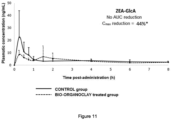
- mycotoxin biomarkers were analyzed in pig plasma and were AFB1, OTA, FB1 and ZEA-glucuronide. Biomarker analysis was performed using a validated LC-MS/MS method. Toxicokinetic analysis of plasma concentration/time profiles for individual mycotoxins was performed by non-compartmental analysis and the following parameters were calculated: area under the plasma concentration/time curve from 0 h to the last sampling point with values above LOQ (AUC 0 ⁇ t ) or at infinity (AUC 0 ⁇ ), maximum plasma concentration (C max ), time to maximum plasma concentration (T max ), elimination half-life (T 1/2 el ) and elimination rate constant (k el ). As in the studies with rats, the effect of the smectite of the invention on ZEA, OTA, FB1 and AFB1 oral absorption was evaluated by comparing the toxicokinetic parameters between the control and bio-organoclay-treated groups.
- the efficacy of mycotoxin adsorption by the bio-organoclay of the invention was confirmed in rats for all the mycotoxins tested.
- the bio-organoclay was significantly effective for AFB1 and OTA, while it reduced systemic exposure to ZEA and FB1 non-significantly.
- bio-organoclay did not significantly alter the serum concentrations of Vit A, Vit B12 and Ca at a dose of 0.25 g clay/kg of body weight in pigs.
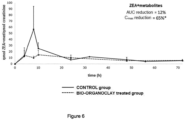
- Tables 15 - 21 and Figures 5 - 8 show the urinary excretion values measured for AFB1, ZEA, OTA and FB1 in rats from the "control" and “treated” groups with bio-organoclay.
- the bio-organoclay has, in fact, reduced by 90% the toxin excretion parameters (AUC 0 ⁇ t and C max ) and the overall total excretion of AFM1.
- the total excretion of AFM1 calculated taking into account the amount of toxin measured in urine samples collected up to 72 hours corresponded to 0.3 ⁇ 0.1% of the administered dose.
- the bio-organoclay-based product object of the invention significantly reduced the overall excretion of ZEA+metabolites at T max (8h) with respect to the control group.
- the overall excretion of ZEA and metabolites was slightly affected by bio-organoclay. Lower AUC values with respect to control were determined for the main urinary biomarkers of ZEA ingestion, i.e . ZEA and ⁇ -ZOL. Table 18.
- FB1 urinary excretion values (AUC 0 ⁇ 72 and C max at 24 hours) in rats treated with 125 mg of bio-organoclay/animal were significantly lower than those measured for animals in the control group (p ⁇ 0.05).
- the total excretion of toxin by the animals belonging to the bio-clay treated group was equal to 0.62 ⁇ 0.12% of the administered dose, and this value was significantly lower (p ⁇ 0.05) than that measured for the animals of the group control (1.18 ⁇ 0.52%).
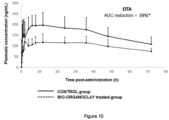
- Tables 22 - 25 and Figures 9-12 report the toxicokinetic and plasma concentration results measured in the pig test for animals in the "control" and bio-organoclay "treated” groups.
- the bio-organoclay confirmed its efficacy in sequestering AFB1 also in the gastrointestinal tract of pigs and in reducing its bioavailability.
- C1 and T1 subgroups the feed was suspended from 12 hours before to 4 hours after the administration of the bolus. Values represent the mean+/- SD.
- AUC 0 ⁇ ⁇ area under the curve from time zero to infinity; AUC 0 ⁇ t area under the curve from time zero to the last sampling point with values above LOQ; C max : maximum plasma concentration; T max : time to maximum plasma concentration; T 1 / 2 el: elimination half-life; k el : elimination rate constant; Rel. F: relative oral bioavailability.
- bio-organoclay did not significantly alter the serum concentrations of Vit A, Vit B12 and Ca after the administration of a single dose of 0.25 g of additive/kg of body weight.
Landscapes
- Health & Medical Sciences (AREA)
- Chemical & Material Sciences (AREA)
- Inorganic Chemistry (AREA)
- Medicinal Chemistry (AREA)
- Pharmacology & Pharmacy (AREA)
- Epidemiology (AREA)
- Life Sciences & Earth Sciences (AREA)
- Animal Behavior & Ethology (AREA)
- General Health & Medical Sciences (AREA)
- Public Health (AREA)
- Veterinary Medicine (AREA)
- Dispersion Chemistry (AREA)
- Organic Chemistry (AREA)
- Solid-Sorbent Or Filter-Aiding Compositions (AREA)
Applications Claiming Priority (1)
| Application Number | Priority Date | Filing Date | Title |
|---|---|---|---|
| IT102023000000237A IT202300000237A1 (it) | 2023-01-11 | 2023-01-11 | Smectite organofila per l’adsorbimento di micotossine |
Publications (1)
| Publication Number | Publication Date |
|---|---|
| EP4400549A1 true EP4400549A1 (de) | 2024-07-17 |
Family
ID=85792000
Family Applications (1)
| Application Number | Title | Priority Date | Filing Date |
|---|---|---|---|
| EP24151099.9A Pending EP4400549A1 (de) | 2023-01-11 | 2024-01-10 | Organophiler smektit, der mit cholin zur adsorption von mykotoxinen funktionalisiert ist |
Country Status (2)
| Country | Link |
|---|---|
| EP (1) | EP4400549A1 (de) |
| IT (1) | IT202300000237A1 (de) |
Citations (2)
| Publication number | Priority date | Publication date | Assignee | Title |
|---|---|---|---|---|
| EP0133071A2 (de) * | 1983-06-27 | 1985-02-13 | Ceca S.A. | Modifizierter organophiler Ton |
| US20210137971A1 (en) | 2018-08-20 | 2021-05-13 | Timothy D PHILLIPS | Edible enterosorbents used to mitigate acute exposures to ingestible environmental toxins following outbreaks, natural disasters and emergencies |
-
2023
- 2023-01-11 IT IT102023000000237A patent/IT202300000237A1/it unknown
-
2024
- 2024-01-10 EP EP24151099.9A patent/EP4400549A1/de active Pending
Patent Citations (2)
| Publication number | Priority date | Publication date | Assignee | Title |
|---|---|---|---|---|
| EP0133071A2 (de) * | 1983-06-27 | 1985-02-13 | Ceca S.A. | Modifizierter organophiler Ton |
| US20210137971A1 (en) | 2018-08-20 | 2021-05-13 | Timothy D PHILLIPS | Edible enterosorbents used to mitigate acute exposures to ingestible environmental toxins following outbreaks, natural disasters and emergencies |
Non-Patent Citations (1)
| Title |
|---|
| WILLIAM F. JAYNESRICHARD E. ZARTMAN TOXINS (BASEL, AFLATOXIN TOXICITY REDUCTION IN FEED BY ENHANCED BINDING TO SURFACE-MODIFIED CLAY ADDITIVES, vol. 3, no. 6, June 2011 (2011-06-01), pages 551 - 565 |
Also Published As
| Publication number | Publication date |
|---|---|
| IT202300000237A1 (it) | 2024-07-11 |
Similar Documents
| Publication | Publication Date | Title |
|---|---|---|
| EP1890804B1 (de) | Verwendung von stevensit zur mykotoxinadsorption | |
| Marković et al. | Adsorption of the mycotoxin zearalenone by clinoptilolite and phillipsite zeolites treated with cetylpyridinium surfactant | |
| Huwig et al. | Mycotoxin detoxication of animal feed by different adsorbents | |
| Wang et al. | Simultaneous adsorption of aflatoxin B1 and zearalenone by mono-and di-alkyl cationic surfactants modified montmorillonites | |
| US5165946A (en) | Animal feed additive and method for inactivating mycotoxins present in animal feeds | |
| US20120219683A1 (en) | Toxin adsorbent | |
| Phillips et al. | Characterization of clay-based enterosorbents for the prevention of aflatoxicosis | |
| EP2279787B1 (de) | Mycotoxinadsorbens | |
| EP1333919B1 (de) | Verwendung aktivierter schichtsilikate zur mykotoxinadsorption | |
| JPH05503432A (ja) | 動物飼料添加剤および動物飼料中に存在するマイコトキシンの不活性化方法 | |
| CA2165574A1 (en) | Method and composition for achieving animal weight gain with mycotoxin-contaminated animal food | |
| Arvide et al. | Smectite clay adsorption of aflatoxin vs. octahedral composition as indicated by FTIR | |
| Ledoux et al. | In vitro and in vivo testing of adsorbents for detoxifying mycotoxins in contaminated feedstuffs. | |
| Sprynskyy et al. | Separation of aflatoxin B1 from synthetic physiological fluids using talc and diatomite: Kinetic and isotherm aspects | |
| Barrientos-Velazquez et al. | Efficacy of two Texas bentonites in binding aflatoxin B1 and in reducing aflatoxicosis in broilers | |
| CZ20022905A3 (cs) | Organominerální adsorbent mykotoxinů jako přísada do krmiv, způsob výroby a použití | |
| IT202300000237A1 (it) | Smectite organofila per l’adsorbimento di micotossine | |
| EP1860955A1 (de) | Verwendung von talk und/oder chlorit zur mykotoxinadsorption | |
| CN109939648A (zh) | 一种复合型广谱性霉菌毒素吸附剂及其制备方法 | |
| Ahmadou et al. | Binders used in feed for their protection against mycotoxins | |
| EP3278674A1 (de) | Verwendung eines adsorptionsmittels zur entfernung von deoxynivalenol aus tierfutter | |
| Jaynes et al. | Influence of soluble feed proteins and clay additive charge density on aflatoxin binding in ingested feeds | |
| Pimpukdee et al. | The characterization of clays and cetylpyridiniumexchanged clays for their ability to adsorb zearalenone | |
| Hsu | Selecting and modifying smectites and layered double hydroxides to bind fumonisin B1, ochratoxin A, zearalenone, and deoxynivalenol | |
| EP3476477A1 (de) | Mykotoxin-adsorptionsmittel auf basis eines betain-derivats für ausgewogenes tierfutter |
Legal Events
| Date | Code | Title | Description |
|---|---|---|---|
| PUAI | Public reference made under article 153(3) epc to a published international application that has entered the european phase |
Free format text: ORIGINAL CODE: 0009012 |
|
| STAA | Information on the status of an ep patent application or granted ep patent |
Free format text: STATUS: THE APPLICATION HAS BEEN PUBLISHED |
|
| AK | Designated contracting states |
Kind code of ref document: A1 Designated state(s): AL AT BE BG CH CY CZ DE DK EE ES FI FR GB GR HR HU IE IS IT LI LT LU LV MC ME MK MT NL NO PL PT RO RS SE SI SK SM TR |
|
| STAA | Information on the status of an ep patent application or granted ep patent |
Free format text: STATUS: REQUEST FOR EXAMINATION WAS MADE |
|
| 17P | Request for examination filed |
Effective date: 20250113 |
|
| RIN1 | Information on inventor provided before grant (corrected) |
Inventor name: CAVALLINI, IRENE Inventor name: MENICAGLI, ELENA Inventor name: GRECO, DONATO Inventor name: D'ASCANIO, VITO Inventor name: AVANTAGGIATO, GIUSEPPINA |
|
| RAP3 | Party data changed (applicant data changed or rights of an application transferred) |
Owner name: LAVIOSA S.P.A. Owner name: CONSIGLIO NAZIONALE DELLE RICERCHE |
|
| STAA | Information on the status of an ep patent application or granted ep patent |
Free format text: STATUS: EXAMINATION IS IN PROGRESS |
|
| 17Q | First examination report despatched |
Effective date: 20251020 |