EP4400564A1 - Wasserstoffherstellung aus einem synthesegas auf biomassebasis - Google Patents
Wasserstoffherstellung aus einem synthesegas auf biomassebasis Download PDFInfo
- Publication number
- EP4400564A1 EP4400564A1 EP23151635.2A EP23151635A EP4400564A1 EP 4400564 A1 EP4400564 A1 EP 4400564A1 EP 23151635 A EP23151635 A EP 23151635A EP 4400564 A1 EP4400564 A1 EP 4400564A1
- Authority
- EP
- European Patent Office
- Prior art keywords
- gas
- pyrolysis
- biomass
- hydrogen production
- production system
- Prior art date
- Legal status (The legal status is an assumption and is not a legal conclusion. Google has not performed a legal analysis and makes no representation as to the accuracy of the status listed.)
- Withdrawn
Links
Images

Classifications
-
- C—CHEMISTRY; METALLURGY
- C10—PETROLEUM, GAS OR COKE INDUSTRIES; TECHNICAL GASES CONTAINING CARBON MONOXIDE; FUELS; LUBRICANTS; PEAT
- C10K—PURIFYING OR MODIFYING THE CHEMICAL COMPOSITION OF COMBUSTIBLE GASES CONTAINING CARBON MONOXIDE
- C10K3/00—Modifying the chemical composition of combustible gases containing carbon monoxide to produce an improved fuel, e.g. one of different calorific value, which may be free from carbon monoxide
- C10K3/001—Modifying the chemical composition of combustible gases containing carbon monoxide to produce an improved fuel, e.g. one of different calorific value, which may be free from carbon monoxide by thermal treatment
- C10K3/003—Reducing the tar content
- C10K3/005—Reducing the tar content by partial oxidation
-
- C—CHEMISTRY; METALLURGY
- C01—INORGANIC CHEMISTRY
- C01B—NON-METALLIC ELEMENTS; COMPOUNDS THEREOF; METALLOIDS OR COMPOUNDS THEREOF NOT COVERED BY SUBCLASS C01C
- C01B3/00—Hydrogen; Gaseous mixtures containing hydrogen; Separation of hydrogen from mixtures containing it; Purification of hydrogen; Reversible storage of hydrogen
- C01B3/02—Production of hydrogen; Production of gaseous mixtures containing hydrogen
- C01B3/32—Production of hydrogen; Production of gaseous mixtures containing hydrogen by reaction of gaseous or liquid organic compounds with gasifying agents, e.g. water, carbon dioxide or air
- C01B3/34—Production of hydrogen; Production of gaseous mixtures containing hydrogen by reaction of gaseous or liquid organic compounds with gasifying agents, e.g. water, carbon dioxide or air by reaction of hydrocarbons with gasifying agents
- C01B3/36—Production of hydrogen; Production of gaseous mixtures containing hydrogen by reaction of gaseous or liquid organic compounds with gasifying agents, e.g. water, carbon dioxide or air by reaction of hydrocarbons with gasifying agents using oxygen; using mixtures containing oxygen as gasifying agents
-
- C—CHEMISTRY; METALLURGY
- C01—INORGANIC CHEMISTRY
- C01B—NON-METALLIC ELEMENTS; COMPOUNDS THEREOF; METALLOIDS OR COMPOUNDS THEREOF NOT COVERED BY SUBCLASS C01C
- C01B3/00—Hydrogen; Gaseous mixtures containing hydrogen; Separation of hydrogen from mixtures containing it; Purification of hydrogen; Reversible storage of hydrogen
- C01B3/50—Separation of hydrogen or hydrogen-containing gases from gaseous mixtures, e.g. purification
-
- C—CHEMISTRY; METALLURGY
- C10—PETROLEUM, GAS OR COKE INDUSTRIES; TECHNICAL GASES CONTAINING CARBON MONOXIDE; FUELS; LUBRICANTS; PEAT
- C10J—PRODUCTION OF PRODUCER GAS, WATER-GAS, SYNTHESIS GAS FROM SOLID CARBONACEOUS MATERIAL, OR MIXTURES CONTAINING THESE GASES; CARBURETTING AIR OR OTHER GASES
- C10J3/00—Production of combustible gases containing carbon monoxide from solid carbonaceous fuels
- C10J3/58—Production of combustible gases containing carbon monoxide from solid carbonaceous fuels combined with pre-distillation of the fuel
- C10J3/60—Processes
- C10J3/64—Processes with decomposition of the distillation products
-
- C—CHEMISTRY; METALLURGY
- C10—PETROLEUM, GAS OR COKE INDUSTRIES; TECHNICAL GASES CONTAINING CARBON MONOXIDE; FUELS; LUBRICANTS; PEAT
- C10J—PRODUCTION OF PRODUCER GAS, WATER-GAS, SYNTHESIS GAS FROM SOLID CARBONACEOUS MATERIAL, OR MIXTURES CONTAINING THESE GASES; CARBURETTING AIR OR OTHER GASES
- C10J3/00—Production of combustible gases containing carbon monoxide from solid carbonaceous fuels
- C10J3/58—Production of combustible gases containing carbon monoxide from solid carbonaceous fuels combined with pre-distillation of the fuel
- C10J3/60—Processes
- C10J3/64—Processes with decomposition of the distillation products
- C10J3/66—Processes with decomposition of the distillation products by introducing them into the gasification zone
-
- C—CHEMISTRY; METALLURGY
- C10—PETROLEUM, GAS OR COKE INDUSTRIES; TECHNICAL GASES CONTAINING CARBON MONOXIDE; FUELS; LUBRICANTS; PEAT
- C10B—DESTRUCTIVE DISTILLATION OF CARBONACEOUS MATERIALS FOR PRODUCTION OF GAS, COKE, TAR, OR SIMILAR MATERIALS
- C10B53/00—Destructive distillation, specially adapted for particular solid raw materials or solid raw materials in special form
- C10B53/02—Destructive distillation, specially adapted for particular solid raw materials or solid raw materials in special form of cellulose-containing material
-
- C—CHEMISTRY; METALLURGY
- C10—PETROLEUM, GAS OR COKE INDUSTRIES; TECHNICAL GASES CONTAINING CARBON MONOXIDE; FUELS; LUBRICANTS; PEAT
- C10J—PRODUCTION OF PRODUCER GAS, WATER-GAS, SYNTHESIS GAS FROM SOLID CARBONACEOUS MATERIAL, OR MIXTURES CONTAINING THESE GASES; CARBURETTING AIR OR OTHER GASES
- C10J2300/00—Details of gasification processes
- C10J2300/09—Details of the feed, e.g. feeding of spent catalyst, inert gas or halogens
- C10J2300/0913—Carbonaceous raw material
- C10J2300/0916—Biomass
-
- C—CHEMISTRY; METALLURGY
- C10—PETROLEUM, GAS OR COKE INDUSTRIES; TECHNICAL GASES CONTAINING CARBON MONOXIDE; FUELS; LUBRICANTS; PEAT
- C10J—PRODUCTION OF PRODUCER GAS, WATER-GAS, SYNTHESIS GAS FROM SOLID CARBONACEOUS MATERIAL, OR MIXTURES CONTAINING THESE GASES; CARBURETTING AIR OR OTHER GASES
- C10J2300/00—Details of gasification processes
- C10J2300/09—Details of the feed, e.g. feeding of spent catalyst, inert gas or halogens
- C10J2300/0913—Carbonaceous raw material
- C10J2300/094—Char
-
- C—CHEMISTRY; METALLURGY
- C10—PETROLEUM, GAS OR COKE INDUSTRIES; TECHNICAL GASES CONTAINING CARBON MONOXIDE; FUELS; LUBRICANTS; PEAT
- C10J—PRODUCTION OF PRODUCER GAS, WATER-GAS, SYNTHESIS GAS FROM SOLID CARBONACEOUS MATERIAL, OR MIXTURES CONTAINING THESE GASES; CARBURETTING AIR OR OTHER GASES
- C10J2300/00—Details of gasification processes
- C10J2300/09—Details of the feed, e.g. feeding of spent catalyst, inert gas or halogens
- C10J2300/0953—Gasifying agents
- C10J2300/0973—Water
-
- C—CHEMISTRY; METALLURGY
- C10—PETROLEUM, GAS OR COKE INDUSTRIES; TECHNICAL GASES CONTAINING CARBON MONOXIDE; FUELS; LUBRICANTS; PEAT
- C10J—PRODUCTION OF PRODUCER GAS, WATER-GAS, SYNTHESIS GAS FROM SOLID CARBONACEOUS MATERIAL, OR MIXTURES CONTAINING THESE GASES; CARBURETTING AIR OR OTHER GASES
- C10J2300/00—Details of gasification processes
- C10J2300/12—Heating the gasifier
- C10J2300/1207—Heating the gasifier using pyrolysis gas as fuel
-
- C—CHEMISTRY; METALLURGY
- C10—PETROLEUM, GAS OR COKE INDUSTRIES; TECHNICAL GASES CONTAINING CARBON MONOXIDE; FUELS; LUBRICANTS; PEAT
- C10J—PRODUCTION OF PRODUCER GAS, WATER-GAS, SYNTHESIS GAS FROM SOLID CARBONACEOUS MATERIAL, OR MIXTURES CONTAINING THESE GASES; CARBURETTING AIR OR OTHER GASES
- C10J2300/00—Details of gasification processes
- C10J2300/12—Heating the gasifier
- C10J2300/1253—Heating the gasifier by injecting hot gas
-
- C—CHEMISTRY; METALLURGY
- C10—PETROLEUM, GAS OR COKE INDUSTRIES; TECHNICAL GASES CONTAINING CARBON MONOXIDE; FUELS; LUBRICANTS; PEAT
- C10J—PRODUCTION OF PRODUCER GAS, WATER-GAS, SYNTHESIS GAS FROM SOLID CARBONACEOUS MATERIAL, OR MIXTURES CONTAINING THESE GASES; CARBURETTING AIR OR OTHER GASES
- C10J2300/00—Details of gasification processes
- C10J2300/16—Integration of gasification processes with another plant or parts within the plant
- C10J2300/164—Integration of gasification processes with another plant or parts within the plant with conversion of synthesis gas
- C10J2300/1643—Conversion of synthesis gas to energy
- C10J2300/165—Conversion of synthesis gas to energy integrated with a gas turbine or gas motor
Definitions
- the present invention relates to a method of hydrogen production from a biomass-based synthesis gas, wherein the synthesis gas is produced by pyrolysis.
- Two-step pyrolysis and gasification of biomass has proven to be an advantageous method of producing a hydrogen-rich synthesis gas from a biomass feedstock, as for instance described in international patent application WO2023281085 by the present applicant.
- an improved method of producing hydrogen would be advantageous, and in particular a more efficient and/or improved method of hydrogen production from a biomass-based feed stock would be advantageous.
- the above-described object and several other objects are intended to be obtained in a first aspect of the invention by providing a method of hydrogen production from a biomass-based synthesis gas in a biomass-based hydrogen production system comprising a pyrolysis reactor and a gasification reactor.
- the method comprises providing a biomass feedstock, and pyrolysing the biomass feedstock in the pyrolysis reactor to produce a pyrolysis gas (PG) and a solid pyrolysis char (PC).
- PG pyrolysis gas
- PC solid pyrolysis char
- the method further comprises at least partially oxidizing the pyrolysis gas into a oxidized pyrolysis gas by providing an oxidizing gas, and gasifying the pyrolysis char in the gasification reactor using the partially oxidized pyrolysis gas to produce a synthesis gas (SG), the synthesis gas having a high content of hydrogen molecules, H 2 .
- SG synthesis gas
- the method comprises separating the synthesis gas (SG) into two streams, one being a hydrogen-rich stream (H2G) and the other being an off-gas (OG) stream, wherein the off-gas stream comprises hydrogen at a lower concentration than in the hydrogen-rich stream and other synthesis gas (SG) elements, and extracting mechanical energy (ME), electrical energy (EE) and/or thermal energy (TE) from the off-gas (OG) by way of an energy conversion system (ECS).
- the method comprises using said mechanical, electrical, and/or thermal energy (ME, EE and TE) to provide power to the biomass-based hydrogen production system.
- the method simultaneously provides a hydrogen-rich stream as a useful output, while also utilizing the off-gas stream to power part of the production process, such as the gasification or gas separation, or other components or sub-processes in the system.
- the off-gas may be seen to power parasitic loads of the gasification system and the gas separation system. This reduces the external energy demand of the production process, thus improving efficiency.
- utilizing the off-gas in this way helps ensure safe disposal of toxic carbon monoxide content of the off-gas.
- the content of hydrogen molecules in the synthesis gas may for instance be at least 10%v, such as at least 20%v, at least 30%v, at least 40%v, at least 50%v, or even higher.
- the hydrogen-rich stream H2G may for instance have a content of hydrogen molecules of at least 85%v, such as 90%v, such as 95%v, or even 99.999%v.
- separating the synthesis gas into the two streams may be done in multiple ways, such as using pressure swing adsorption (PSA), cryogenic separation, membranes, such as proton membranes, etc.
- PSA pressure swing adsorption
- cryogenic separation membranes, such as proton membranes, etc.
- the energy conversion system comprises an internal combustion engine (ICE), and wherein the off-gas is used to fuel the internal combustion engine.
- the off-gas is used to produce mechanical work, which may in turn be used to drive a generator for producing electrical energy.
- the mechanical work may be used directly to power, e.g., a compressor.
- the energy conversion system comprises a fuel cell (FC), and wherein the off-gas is used to fuel the fuel cell.
- the off-gas is used to produce electrical energy from the fuel cell.
- the fuel cell may also provide thermal energy for further exploitation in performing the method.
- the energy conversion system comprises an organic Rankine cycle (ORC), and wherein a temperature difference between the combusted off-gas and an ambient temperature is utilized to drive the organic Rankine cycle.
- ORC organic Rankine cycle
- the energy conversion system comprises combusting the off-gas by means of a burner section and utilizing the generated thermal energy for supplying heat to the biomass-based hydrogen production system.
- the electrical output (EE) from the energy conversion system is used for powering other electrical systems of the biomass-based hydrogen production system.
- Such electrical system could comprise feeders of the biomass feedstock and/or the pyrolysis char, or other components such as control units (PLC), servos, compressors, sensors etc.
- the pyrolysis reactor and the gasification reactor are separate units. In this way, the different temperature ranges needed for the two processes may conveniently be achieved.
- the pyrolysis reactor and the gasification reactor is a combined unit comprising a pyrolysis zone and a gasification zone.
- the energy flow in particular the heat flow, in the process may be utilized efficiently.
- an improved energy efficiency is achieved, compared to having separate processes.
- the partially oxidized pyrolysis gas is used as primary gasification agent to gasify the pyrolysis char.
- the pyrolysis gas produced may be directly used in the gasification process of the pyrolysis char.
- the partially oxidized pyrolysis gas is used in conjunction with at least one other gasification agent to gasify the pyrolysis char.
- the at least one other gasification agent comprises steam.
- the invention provides a biomass-based hydrogen production system.
- the system comprises a pyrolysis reactor comprising a biomass feedstock inlet and a pyrolysis gas and char outlet.
- the pyrolysis reactor is adapted for pyrolysis of a biomass feedstock into a pyrolysis gas and a pyrolysis char.
- the system further comprises a gasification reactor in communication with the pyrolysis gas and char outlet, the gasification reactor further comprising a synthesis gas outlet.
- the gasification reactor is adapted for gasification of the pyrolysis char using the pyrolysis gas, to produce a synthesis gas exiting the gasification reactor via the synthesis gas outlet.
- the system additionally comprises a synthesis gas separator in communication with the synthesis gas outlet, wherein the synthesis gas separator is adapted for separating the synthesis gas into a hydrogen rich stream output via a hydrogen rich stream output, and an off-gas stream output via an off-gas output.
- the synthesis gas separator is adapted to ensure during operation that the off-gas stream comprises hydrogen at a lower concentration than in the hydrogen rich stream.
- the system comprises an energy conversion system connected to the off-gas stream output, wherein the energy conversion system is adapted to generate mechanical energy, electrical energy and/or thermal energy from the off-gas, and for providing said mechanical, electrical, and/or thermal energy to at least partly power the biomass-based hydrogen production system.
- the generated energy may be used to power the pyrolysis reactor, the gasification reactor, and/or the synthesis gas separator.
- a particularly energy-efficient biomass-based hydrogen production system is achieved, by exploiting the off-gas to produce electrical and thermal energy, and using this energy to at least partly power the biomass-based hydrogen production system itself.
- the hydrogen rich stream may be further processed e.g. to obtain a desired level of purity.
- the energy conversion system comprises an internal combustion engine (ICE), and wherein the off-gas is used to fuel the internal combustion engine.
- the off-gas is used to produce mechanical work, which may in turn be used directly to power, e.g., a compressor, or to drive a generator for producing electrical energy.
- the energy conversion system comprises a fuel cell (FC), and wherein the off-gas is used to fuel the fuel cell.
- the off-gas is used to produce electrical energy from the fuel cell.
- thermal energy dissipated from the fuel cell may also be utilized in the system.
- the energy conversion system comprises an organic Rankine cycle (ORC), and wherein a temperature difference between the off-gas and an ambient temperature is utilized to drive the organic Rankine cycle.
- ORC organic Rankine cycle
- the electrical output (EE) from the energy conversion system is used for powering other electrical systems of the biomass-based hydrogen production system.
- Such electrical system could comprise feeders of the biomass feedstock and/or the pyrolysis char, or other components such as control units (PLC), servos, compressors, sensors etc.
- the pyrolysis reactor and gasification reactor comprised as a combined reactor, the combined reactor comprising a pyrolysis zone and a gasification zone.
- the pyrolysis reactor and gasification reactor separated by a oxidization zone, the oxidization zone being adapted for facilitating a partial oxidization of the pyrolysis gas into a partially oxidized pyrolysis gas, substantially before the partially oxidized pyrolysis gas reaches the gasification reactor.
- the oxidization zone being adapted for facilitating a partial oxidization of the pyrolysis gas into a partially oxidized pyrolysis gas, substantially before the partially oxidized pyrolysis gas reaches the gasification reactor.
- the oxidization zone is comprised by the pyrolysis reactor.
- the oxidization zone is comprised by the gasification reactor.
- the oxidization zone is comprised by a conduit connecting the pyrolysis reactor and the gasification reactor.
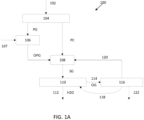
- FIG. 1A is a flow-chart illustrating an embodiment of the method of hydrogen production from a biomass-based synthesis gas 100 in a biomass-based hydrogen production system.
- biomass feedstock is provided 102, such as residues from cultivating wheat, corn, sugar, tobacco, or palm oil.
- the biomass feedstock is pyrolysed 104 in a pyrolysis reactor, to produce both a pyrolysis gas PG and a solid pyrolysis char PC.
- the pyrolysis gas PG is oxidized 106, at least partially, into a partially oxidized pyrolysis gas OPG by providing an oxidizing gas 107.
- the partially oxidized pyrolysis gas OPG is used to gasify 108 the pyrolysis char PC to produce a synthesis gas SG.
- the content of hydrogen molecules in the synthesis gas may for instance be at least 10%v, such as at least 20%v, at least 30%v, at least 40%v, at least 50%v, or even higher.
- the synthesis gas is then separated 110, using a separator, into a hydrogen-rich stream 112/H2G and an off-gas stream 114/OG.
- the hydrogen-rich stream H2G comprises gas with a hydrogen content that is significantly higher than the off-gas stream OG.
- the hydrogen-rich stream H2G may have a content of hydrogen molecules of at least 85%v, such as 90%v, such as 95%v, or even 99.999%v.
- the off-gas stream OG typically comprises a mix of gaseous components, such as CO, CO2, CH4, N2, and even H2. The exact mix will depend on the particular biomass feedstock used for the process, the operating parameters, etc.
- the off-gas stream typically comprises both flammable and inert gas components, and may therefore be used for generating electrical and thermal energy 116 using an energy conversion system ECS.
- One or both of the generated electrical and thermal energy 118 is then used as an energy source for the biomass-based hydrogen production system, here illustrated by providing energy for the gas separation 110 and the gasification 108.
- the energy may be provided to any components of the system. If more energy is produced than needed to power the biomass-based hydrogen production system, this surplus energy may be exported 122 to an energy offtaker. After separating 110 the synthesis gas, the hydrogen-rich stream 112 may be output to a H2 offtaker.
- the energy conversion system may for example comprise an internal combustion engine ICE, a fuel cell, or an organic Rankine Cycle.
- ICE internal combustion engine
- fuel cell fuel cell
- organic Rankine Cycle an organic Rankine Cycle
- the energy conversion system comprises an internal combustion engine fueled by the off-gas, and used to drive a generator for producing electrical power.
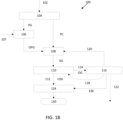
- FIG. 1B illustrates an embodiment of the method similar to the flow-chart illustrated in figure 1A , where like reference numerals refer to like parts. Thus, only the differences will be described here.
- the hydrogen-rich output stream 112 is further compressed 124 in a compressor, before the hydrogen-rich gas is output 130 for an H2 offtaker.
- the energy conversion system ECS may also provide any surplus electrical and/or thermal energy to help power compressing 126 the hydrogen-rich output stream, not just to the separation 120 or energy offtaker 122.
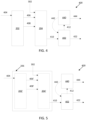
- Figure 2a and 2b illustrates two embodiments of pyrolysing the biomass feedstock and gasifying the pyrolysis char.
- Figure 2a shows that pyrolysing 104 the biomass feedstock occurs in a pyrolysis reactor 202 that is separate from a gasification reactor 204 in which gasification 108 of the pyrolysis char PC takes place. Between the two reactors 202, 204, partial or full oxidation 106 of the pyrolysis gas occurs by providing an oxidizing gas 107.
- FIG 2b the same processes of pyrolysis 104 and gasification 108 occurs, but in a combined reactor 206.
- pyrolysis 104 occurs in a pyrolysis zone 202', while gasification 108 occurs in a gasification zone 204'. Since the pyrolysis gas contains both CO2 and H2O, the heat present in the combined reactor 206 will lead to some conversion to CO and H2, even without providing an oxidizing gas from the outside. However, an oxidizing gas 107 may also optionally be provided to the combined reactor 206 in this embodiment.
- Figure 3a illustrates that the partially oxidized pyrolysis gas OPG is used as the primary gasification agent to gasify 108 the pyrolysis char PC, thus producing the synthesis gas SG.
- Figure 3b shows an embodiment wherein the partially oxidized pyrolysis gas OPG is used together with a second gasification agent 302 to gasify 108 the pyrolysis char PC and produce the synthesis gas SG.
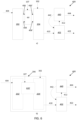
- FIG. 4 illustrates an embodiment of the biomass-based hydrogen production system 400 according to the invention, comprising a pyrolysis reactor 202, a gasification reactor 204, a gas separator 402, and an energy conversion system 440.
- the pyrolysis reactor 202 comprises a biomass feedstock inlet 404, a pyrolysis gas outlet 406, and a pyrolysis char outlet 408.
- the pyrolysis gas outlet 406 and the pyrolysis char outlet 408 are both connected as inlets to the gasification reactor 204.
- a second gasification agent 302 may be injected in the gasification reactor 204.
- the synthesis gas SG is produced, as shown in fig. 3 .
- the synthesis gas SG comprises a high ratio of hydrogen, but also other gaseous components such as CO, CO2, CH4, and N2.
- a gas outlet 410 is connected as an inlet to the gas separator 402.
- the gas separator 402 is configured to separate the input gas stream into a hydrogen-rich output stream and an off-gas stream.
- the hydrogen-rich output stream is directed to a hydrogen output 422.
- the off-gas stream is directed by the gas separator 402 to an off-gas output 412, which is connected to an energy conversion system (ECS) 440.
- ECS energy conversion system
- the energy conversion system 440 may take many different forms, but is adapted to extract electrical energy and thermal energy from the off-gas, and to return this energy via an energy output 442 back to power the biomass-based hydrogen production system, here illustrated by providing energy to the gas separator 402. Any remaining off-gas may be output via the off-gas output 444.
- Figure 5 shows another embodiment of the system 400 that relates to the embodiment shown in figure 4 . Therefore, only the differences are discussed here.
- the pyrolysis reactor 202 and the gasification reactor 204 are provided as a combined reactor 206, having a pyrolysis zone 202' and a gasification zone 204'. Otherwise, the processes are equivalent to the embodiment of figure 4 .
- Figure 6a and 6b illustrate different embodiments of the system 400, in particular different configurations of an oxidation zone 620.
- FIG 6a corresponds to that of figure 4 , where like reference numerals refer to like parts.
- This embodiment differs by comprising an oxidation zone 620 between the pyrolysis reactor 202 and the gasification reactor 204.
- the oxidation zone 620 is configured to allow for partial or full oxidation of the pyrolysis gas received via the pyrolysis gas outlet 406 by use of an oxidizing gas 107, before passing on the partially oxidized pyrolysis gas via a partially oxidized pyrolysis gas inlet 406' to the gasification reactor 204.
- the pyrolysis char passes from the pyrolysis reactor 202 via the pyrolysis char outlet 408, the oxidation zone 620, and pyrolysis char inlet 408' to the gasification reactor 204 for subsequent gasification by use of the partially oxidized pyrolysis gas.
- the oxidation zone 620 may be provided as a separate oxidation reactor, or as part of conduits from the pyrolysis reactor 202 to the gasification reactor 204.
- the combined reactor 206 is further configured to provide an oxidation zone 620' between the pyrolysis zone 202' and the gasification zone 204'.
- the oxidation zone 620' may partly overlap either the pyrolysis zone 202' and/or the gasification zone 204'.
- This embodiment is particularly energy efficient, since the heat from the pyrolysis in the pyrolysis zone 202' is efficiently transferred to the oxidation zone 620' and the gasification zone 204', and even further to the hydrotreatment reactor 402 as indicated by arrow 411.
Landscapes
- Chemical & Material Sciences (AREA)
- Organic Chemistry (AREA)
- Engineering & Computer Science (AREA)
- Combustion & Propulsion (AREA)
- Oil, Petroleum & Natural Gas (AREA)
- Chemical Kinetics & Catalysis (AREA)
- Inorganic Chemistry (AREA)
- Health & Medical Sciences (AREA)
- General Health & Medical Sciences (AREA)
- Physics & Mathematics (AREA)
- Thermal Sciences (AREA)
- General Chemical & Material Sciences (AREA)
- Hydrogen, Water And Hydrids (AREA)
Priority Applications (3)
| Application Number | Priority Date | Filing Date | Title |
|---|---|---|---|
| EP23151635.2A EP4400564A1 (de) | 2023-01-13 | 2023-01-13 | Wasserstoffherstellung aus einem synthesegas auf biomassebasis |
| EP24700962.4A EP4649124A1 (de) | 2023-01-13 | 2024-01-15 | Wasserstofferzeugung und abgasnutzung aus einem biomassebasierten synthesegas |
| PCT/EP2024/050782 WO2024149901A1 (en) | 2023-01-13 | 2024-01-15 | Hydrogen production and off-gas utilisation from a biomass-based synthesis gas |
Applications Claiming Priority (1)
| Application Number | Priority Date | Filing Date | Title |
|---|---|---|---|
| EP23151635.2A EP4400564A1 (de) | 2023-01-13 | 2023-01-13 | Wasserstoffherstellung aus einem synthesegas auf biomassebasis |
Publications (1)
| Publication Number | Publication Date |
|---|---|
| EP4400564A1 true EP4400564A1 (de) | 2024-07-17 |
Family
ID=84981034
Family Applications (2)
| Application Number | Title | Priority Date | Filing Date |
|---|---|---|---|
| EP23151635.2A Withdrawn EP4400564A1 (de) | 2023-01-13 | 2023-01-13 | Wasserstoffherstellung aus einem synthesegas auf biomassebasis |
| EP24700962.4A Pending EP4649124A1 (de) | 2023-01-13 | 2024-01-15 | Wasserstofferzeugung und abgasnutzung aus einem biomassebasierten synthesegas |
Family Applications After (1)
| Application Number | Title | Priority Date | Filing Date |
|---|---|---|---|
| EP24700962.4A Pending EP4649124A1 (de) | 2023-01-13 | 2024-01-15 | Wasserstofferzeugung und abgasnutzung aus einem biomassebasierten synthesegas |
Country Status (2)
| Country | Link |
|---|---|
| EP (2) | EP4400564A1 (de) |
| WO (1) | WO2024149901A1 (de) |
Citations (4)
| Publication number | Priority date | Publication date | Assignee | Title |
|---|---|---|---|---|
| EP1278813B1 (de) * | 2000-03-15 | 2006-06-21 | Cowi Radgivende Ingeniorer A/S | Verfahren und system zur zersetzung wasserhaltiger brennstoffe oder anderer kohlenstoffhaltiger materialien |
| WO2007092084A2 (en) * | 2005-12-21 | 2007-08-16 | Callahan Richard A | Integrated gasification combined cycle synthesis gas membrane process |
| US20110030384A1 (en) * | 2009-08-10 | 2011-02-10 | General Electric Company | Syngas cleanup section with carbon capture and hydrogen-selective membrane |
| WO2023281085A1 (en) | 2021-07-08 | 2023-01-12 | Mash Makes A/S | Hydrotreatment of a fuel feed |
-
2023
- 2023-01-13 EP EP23151635.2A patent/EP4400564A1/de not_active Withdrawn
-
2024
- 2024-01-15 WO PCT/EP2024/050782 patent/WO2024149901A1/en not_active Ceased
- 2024-01-15 EP EP24700962.4A patent/EP4649124A1/de active Pending
Patent Citations (4)
| Publication number | Priority date | Publication date | Assignee | Title |
|---|---|---|---|---|
| EP1278813B1 (de) * | 2000-03-15 | 2006-06-21 | Cowi Radgivende Ingeniorer A/S | Verfahren und system zur zersetzung wasserhaltiger brennstoffe oder anderer kohlenstoffhaltiger materialien |
| WO2007092084A2 (en) * | 2005-12-21 | 2007-08-16 | Callahan Richard A | Integrated gasification combined cycle synthesis gas membrane process |
| US20110030384A1 (en) * | 2009-08-10 | 2011-02-10 | General Electric Company | Syngas cleanup section with carbon capture and hydrogen-selective membrane |
| WO2023281085A1 (en) | 2021-07-08 | 2023-01-12 | Mash Makes A/S | Hydrotreatment of a fuel feed |
Non-Patent Citations (1)
| Title |
|---|
| GADSBØLL RASMUS ØSTERGAARD ET AL: "Flexible TwoStage biomass gasifier designs for polygeneration operation", ENERGY, ELSEVIER, AMSTERDAM, NL, vol. 166, 28 October 2018 (2018-10-28), pages 939 - 950, XP085565448, ISSN: 0360-5442, DOI: 10.1016/J.ENERGY.2018.10.144 * |
Also Published As
| Publication number | Publication date |
|---|---|
| WO2024149901A1 (en) | 2024-07-18 |
| EP4649124A1 (de) | 2025-11-19 |
Similar Documents
| Publication | Publication Date | Title |
|---|---|---|
| US20100076097A1 (en) | Chemical Product Providing System and Method for Providing a Chemical Product | |
| US6832485B2 (en) | Method of and apparatus for producing power using a reformer and gas turbine unit | |
| US7276306B2 (en) | System for the co-production of electricity and hydrogen | |
| US5479462A (en) | Method for producing methanol by use of nuclear heat and power generating plant | |
| CA2208154C (en) | Method for the combined generation of synthesis gas and power | |
| US11142832B2 (en) | Methods and systems for syngas production and for efficient, flexible energy generation | |
| US20070289214A1 (en) | Systems and methods for integration of gasification and reforming processes | |
| US20240150169A1 (en) | Electrolysis and pyrolytic natural gas conversion systems for hydrogen and liquid fuel production | |
| EP1854761A3 (de) | Verfahren zur Erzeugung von Strom und eines wasserstoffreichen Gases durch Dampfreformierung einer Kohlenwasserstofffraktion mit Kalorienzufuhr durch Verbrennung von Wasserstoff in situ | |
| WO1999055618A1 (en) | Method and apparatus for the production of synthesis gas | |
| CN114651089A (zh) | 生产包含一氧化碳和氢气的合成气 | |
| EP4400564A1 (de) | Wasserstoffherstellung aus einem synthesegas auf biomassebasis | |
| EP2454217A2 (de) | Grossflächige syngas-btu-verstärkung zur stromerzeugung | |
| US9328631B2 (en) | Self-generated power integration for gasification | |
| KR20140057103A (ko) | 석탄가스화 복합발전 연계형 연료전지 시스템 및 가스 공급 방법 | |
| WO2002065564A2 (en) | Fuel cell power generation system with gasifier | |
| WO2023281085A1 (en) | Hydrotreatment of a fuel feed | |
| JP6336257B2 (ja) | ガス化燃料電池複合発電システム及びその運転方法 | |
| US20080141645A1 (en) | System and method for low emissions combustion | |
| JP6301118B2 (ja) | ガス化燃料電池複合発電システム及びガス化燃料電池複合発電システムの運転方法 | |
| US7707817B2 (en) | Fuel processor | |
| JP2007138900A (ja) | 水素製造設備併用発電システム、発電方法 | |
| Castaldi et al. | Hydrogen Production Via Gasification of Solid Carbon Fuels | |
| CN110862838A (zh) | 一种化学产品提供系统 | |
| Camero-Vega et al. | Simulation of a thermochemical process for the generation of power from biomass. |
Legal Events
| Date | Code | Title | Description |
|---|---|---|---|
| PUAI | Public reference made under article 153(3) epc to a published international application that has entered the european phase |
Free format text: ORIGINAL CODE: 0009012 |
|
| STAA | Information on the status of an ep patent application or granted ep patent |
Free format text: STATUS: THE APPLICATION HAS BEEN PUBLISHED |
|
| AK | Designated contracting states |
Kind code of ref document: A1 Designated state(s): AL AT BE BG CH CY CZ DE DK EE ES FI FR GB GR HR HU IE IS IT LI LT LU LV MC ME MK MT NL NO PL PT RO RS SE SI SK SM TR |
|
| STAA | Information on the status of an ep patent application or granted ep patent |
Free format text: STATUS: THE APPLICATION IS DEEMED TO BE WITHDRAWN |
|
| 18D | Application deemed to be withdrawn |
Effective date: 20250118 |