EP4400995A1 - Procédé d'adaptation dynamique d'une politique d'accès pour une application mise en uvre par conteneur pendant l'exécution - Google Patents
Procédé d'adaptation dynamique d'une politique d'accès pour une application mise en uvre par conteneur pendant l'exécution Download PDFInfo
- Publication number
- EP4400995A1 EP4400995A1 EP23151743.4A EP23151743A EP4400995A1 EP 4400995 A1 EP4400995 A1 EP 4400995A1 EP 23151743 A EP23151743 A EP 23151743A EP 4400995 A1 EP4400995 A1 EP 4400995A1
- Authority
- EP
- European Patent Office
- Prior art keywords
- application
- trust
- container
- access policy
- runtime
- Prior art date
- Legal status (The legal status is an assumption and is not a legal conclusion. Google has not performed a legal analysis and makes no representation as to the accuracy of the status listed.)
- Withdrawn
Links
Images

Classifications
-
- G—PHYSICS
- G06—COMPUTING OR CALCULATING; COUNTING
- G06F—ELECTRIC DIGITAL DATA PROCESSING
- G06F21/00—Security arrangements for protecting computers, components thereof, programs or data against unauthorised activity
- G06F21/60—Protecting data
- G06F21/62—Protecting access to data via a platform, e.g. using keys or access control rules
- G06F21/6218—Protecting access to data via a platform, e.g. using keys or access control rules to a system of files or objects, e.g. local or distributed file system or database
-
- G—PHYSICS
- G06—COMPUTING OR CALCULATING; COUNTING
- G06F—ELECTRIC DIGITAL DATA PROCESSING
- G06F21/00—Security arrangements for protecting computers, components thereof, programs or data against unauthorised activity
- G06F21/50—Monitoring users, programs or devices to maintain the integrity of platforms, e.g. of processors, firmware or operating systems
- G06F21/52—Monitoring users, programs or devices to maintain the integrity of platforms, e.g. of processors, firmware or operating systems during program execution, e.g. stack integrity ; Preventing unwanted data erasure; Buffer overflow
- G06F21/53—Monitoring users, programs or devices to maintain the integrity of platforms, e.g. of processors, firmware or operating systems during program execution, e.g. stack integrity ; Preventing unwanted data erasure; Buffer overflow by executing in a restricted environment, e.g. sandbox or secure virtual machine
-
- H—ELECTRICITY
- H04—ELECTRIC COMMUNICATION TECHNIQUE
- H04L—TRANSMISSION OF DIGITAL INFORMATION, e.g. TELEGRAPHIC COMMUNICATION
- H04L63/00—Network architectures or network communication protocols for network security
- H04L63/08—Network architectures or network communication protocols for network security for authentication of entities
- H04L63/0823—Network architectures or network communication protocols for network security for authentication of entities using certificates
-
- H—ELECTRICITY
- H04—ELECTRIC COMMUNICATION TECHNIQUE
- H04L—TRANSMISSION OF DIGITAL INFORMATION, e.g. TELEGRAPHIC COMMUNICATION
- H04L63/00—Network architectures or network communication protocols for network security
- H04L63/10—Network architectures or network communication protocols for network security for controlling access to devices or network resources
- H04L63/101—Access control lists [ACL]
-
- H—ELECTRICITY
- H04—ELECTRIC COMMUNICATION TECHNIQUE
- H04L—TRANSMISSION OF DIGITAL INFORMATION, e.g. TELEGRAPHIC COMMUNICATION
- H04L63/00—Network architectures or network communication protocols for network security
- H04L63/20—Network architectures or network communication protocols for network security for managing network security; network security policies in general
Definitions
- the invention relates to a method, a system and a computer program product for dynamically creating an access policy for a container-implemented application during runtime.
- Container virtualization is a virtualization method at the operating system level. It provides computer programs with a complete runtime environment virtually within an isolated or closed software container.
- the runtime environment can be used by a large number of containers and accesses an operating system kernel of a guest computer.
- the operating system kernel can restrict access to resources depending on the user and context under which a process is running.
- Software containers referred to below as containers for short, thus represent a resource-saving type of virtualization compared to virtual machines that have their own operating system and are assigned hardware resources of the underlying system with the help of a hypervisor and have their own operating system kernel. They encapsulate a software application running in a container from the underlying guest computer.
- a container image is required, which contains not only the application software but also the binaries and libraries required for the application software.
- the container image is used with the help of deployment information, also known as referred to as a deployment configuration, a container, more precisely a container instance, is created on the guest computer and executed on the runtime environment of the guest computer.
- An orchestrated runtime environment comprises an orchestrator and at least one guest computer, usually a large number of guest computers that are assigned to the orchestrator.
- the orchestrator starts, manages and terminates container instances on the assigned guest computers.
- Typical orchestrated runtime environments are Kubernetes-based container environments that manage, for example, cloud-based container-as-a-service environments or virtual instances operated in a cloud as nodes of an orchestrated runtime environment.
- Access authorizations are granted based on the identity of a client on a target service.
- the identity is determined on the basis of digital certificates, in particular in accordance with the X.509 standard, and the content defined in the certificate.
- the trustworthiness of the certificate is confirmed by a digital signature from a certification authority issuing the certificate or a trustworthy central certification authority.
- a fundamental element of TLS procedures is the definition of a so-called trust store, which uses certificates from the issuing certification authority as a trust anchor. with which the application can validate the certificate and thus the identity of the requesting client.
- the TLS protocol is used in different application contexts. For example, an access request is authorized by the client when the container instance validates the identity or certificate of the client and compares it with an authorization policy. If the identities or their trust anchors are not known in advance and the authorization policies for a target application are nevertheless to be defined in advance, this is not possible using known procedures.
- access permissions to the containerized application can be defined in advance, for example by a developer of the application. This is possible without the actual authorized access users/clients or their final identities being known at the time the access policy is created.
- the access policy is enforced by the verification unit, which is designed as an integral part of the container instance or as a standalone facility outside the application.
- the application-specific access policy comprises at least one role-specific access policy and the identities released for the application are assigned to the role-specific policies by the management device according to a role assigned to them.
- an additional validation identifier that was not previously contained in the trust store and is valid for the validation of permitted identities is added to the trust store during runtime and this updated trust store is made available to the container instance.
- the trust store can be updated during the application's runtime. For example, if a certificate for an authorized user or for their identity is revoked and a new certificate is created by another certification authority, the validation ID of the other certification authority can be added to the trust store, thus enabling validation of the new certificate.
- the additional validation identifier replaces the first validation identifier or the additional validation identifier is included in the trust store in addition to the first validation identifier.
- the validation identifier is a certificate comprising a public key of a certification authority or a certificate comprising the public key of a certificate of a subset of the released identities.
- the trust store is provided by allocating a memory area on which the updated trust store is stored to the container instance.
- the trust store can be flexibly and easily assigned to one or more container instances of an application or to container instances of different applications.
- the allocated memory area is a persistent memory or a volatile memory and/or the allocated memory area is generated dynamically during runtime by the management device.
- the trust store can be deleted when the system is switched off, or retained with persistent memory. This means that the trust store can be flexibly adapted to the application or the requirements of the application environment.
- the trust store is created by selecting a correspondingly preconfigured trust store from the plurality of trust stores.
- a selection of pre-configured trust stores reduces the configuration effort for each application and shortens the time to deploy the trust store.
- each identity that is released for the application and/or the certificate the shared identity is assigned a trust status.
- each trust status is assigned a scope of validity and the trust status is only valid in the assigned scope of validity.
- An operator of a runtime environment can set the scope of the trust status, for example, to the guest computer, in an orchestrated runtime environment to the orchestrated cluster, site-specific, and the like for each runtime environment or for each application that is run on a guest computer or a cluster.
- the trust database thus includes all identities released for the application and other access conditions of the identities for the application.
- the identities released to the application are provided by the trust database, and the runtime-specific access policy is recreated from the application-specific access policy when an entry in the trust database is changed, added or deleted.
- the trust database thus provides the information for creating the runtime-specific access policy of the container instance or the container runtime environment during the runtime of the container instance. Changes can therefore easily be made to the access policy during the runtime of the container instance.
- the system comprises an orchestration device if the application is running in an orchestrated environment.
- the at least one container instance of the application is started, managed and stopped by the orchestration device on the guests of a cluster of guests.
- the orchestration device creates and/or manages the trust store, communicates the application-specific access policy together with the deployment configuration to the guest, and creates and manages the trust store.
- the invention relates to a computer program product comprising a non-transitory computer-readable medium that can be loaded directly into a memory of at least one digital computer, comprising program code parts that, when the program code parts are executed by the at least one digital computer, cause the latter to carry out the steps of the method.
- the terms “receive”, “create”, “verify”, “allow” and the like preferably refer to actions and/or processes and/or processing steps that change and/or generate data and/or convert the data into other data, wherein the data can be represented or present in particular as physical quantities, for example as electrical impulses.
- the system and components optionally included therein, such as the guest computer, the verification unit, the trust database, the orchestration device, and the like, can comprise one or more processors.
- a processor can in particular be a central processing unit (CPU), a microprocessor or a microcontroller, for example an application-specific integrated circuit or a digital signal processor, possibly in combination with a memory unit for storing program instructions, etc.
- a computer program product such as a computer program means, can be provided or delivered, for example, as a computer-readable storage medium, in the form of a memory card, USB stick, CD-ROM, DVD or also in the form of a downloadable file from a server in a network.
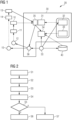
- Fig.1 shows a system 20 according to the invention in an application scenario with an accessor 10 and an accessor 13 who want to access an application.
- the application is implemented on at least one container instance 31.
- Various application components can also be executed in different container instances 31 and provide the application in the interaction of the individual container instances.
- Each of the container instances 31 is executed in a container runtime environment on a guest computer.
- a trust store 36 also referred to as a trust store, provides the validation identifiers.
- the validatable data structure 11, 14 is a digital certificate, for example according to the X.509 standard.
- the identity is determined by the contents defined in the certificate.
- the certificate is signed with a digital signature of a certification authority 12, 15.
- the validation identifier is a root certificate, also called a root certificate, with whose The application that wants to determine the identity of the accessing party 10, 14 can use this to validate the identity defined in the certificate.
- the trust store 36 thus provides the root certificates for validating the identities or their certificates.
- the security protocol for example the TLS protocol, is used to authenticate and authorize requests from accessors, for example container-implemented or non-containerized applications or application components.
- the accessor is authenticated by validating the certificate using the validation identifier and authorized to access the application by comparing it with an access policy.
- the access policy directly references the identity stored in the certificate, for example a serial number of the certificate.
- the identity can be, for example, a subject, a serial number or any attribute of the certificate or any combination of attributes of the certificate. The identity is chosen so that it is unique.
- the system 20 enables this.
- the system 20 comprises a guest computer 30, a trust database 40 and a management device 50.
- the guest computer 30 comprises a container runtime environment 31 on which the container instance 31 can be executed based on a provisioning configuration 32.
- the guest computer 30 further comprises a control unit which is designed to receive an application-specific access policy 33 and to receive identities released for access from the trust database 40 and to create a runtime-specific access policy 34 therefrom.
- the guest computer 30 comprises the Furthermore, a verification unit 35, which is configured to validate an access request from an accesser against the runtime-specific access policy 34 and the trust store 36.
- the verification device 35 is, for example, designed as an integral part of the application in the container instance or as a separate container-implemented function on the guest computer 30.
- the management device 50 manages the trust database 40 and uses it to create the trust store 36.
- the management device 50 is designed, in particular in a non-orchestrated environment, as an extension of the runtime environment or as an "orchestration container" on the guest computer.
- the management device instantiates the runtime-specific access policy from the application-specific access policy and assigns the trust stores to the instances.
- the system 20 comprises at least one processor and a memory, which are designed to load a computer program product comprising a non-transitory computer-readable medium and program code parts into the memory and to carry out the steps of the method upon execution of the program code parts.
- the idea underlying the invention is that the creator of a container-implemented application additionally delivers an application-specific access policy together with the provisioning information 32, also called deployment configuration.
- the application-specific access policy includes predefined, generally known placeholders that represent roles. The roles Identities that are known at runtime are assigned by the operator of the runtime environment.
- an application-specific access policy 33 and a provisioning configuration 32 for the container-implemented application are received on a container runtime environment of a guest computer.
- the application-specific access policy 33 and the provisioning configuration 32 are provided by the management device 50 to the container runtime environment.
- the orchestration device executes the functions of the management device 50.
- a container instance 31 is then created in accordance with the provisioning configuration 32 and on the container runtime environment, see S2, and a runtime-specific access policy 34 is created for the container instance 31, see S3.
- the application-specific access policy 33 is updated with the identities of accessors released for the application.
- the released identities are provided by a trust database 40.
- the trust store 36 comprising at least one validation identifier for validating the validity of the at least one released identity is created and assigned to the container instance 31 and provided.
- the trust store 36 is preferably created or updated by the management or orchestration device 50.
- the method steps S3 and S4 can also be carried out in reverse order.
- the access request to the container instance 31 is checked against the runtime-specific access policy based on the identity of an accessor 10, 13 contained in the access request.
- 34 and the trust store 36 are checked by a verification unit 35, see S5. If the identity or its certificate is validated as valid by one of the validation identifiers from the trust store 36, the verification result of the access request is positive, the accessing party 10, 13 is permitted access to the application, see process step S6. If this is not the case, a rejection function is carried out, see S7.
- the application-specific access policy 33 preferably comprises at least one role-specific access policy that assigns access rules to the role that an accessor and thus his identity assumes for the application. If the identity has the role of a maintenance unit, the identity is granted access to, for example, a log storage of the application. and the identities/certificates released for the application are assigned to the role-specific policies by the management device in accordance with a role assigned to them.
- Fig.1 As shown, different accessors 10, 13, which are represented by different identities, can use different certificates 11, 14 for authentication at runtime, which are issued by different certification authorities 12, 15.
- the container instance 31 In order for a container-implemented application, ie the container instance 31, to be able to check the trustworthiness of the certificate of the accessor 10, 13, it is necessary for the container instance to be provided with an updated trust store 36 by the management or orchestration device 50 whenever a new validation identifier of the certification authority, for example a new root certificate with a new public key, is known in the management or orchestration device 50.
- the new certificate of the certification authority is made known, for example, by an administrator.
- Fig.3 shows the process for creating and/or updating the runtime-specific access policy as a flow chart.
- a validation identifier is made known, for example by an administrator in the management device 50, see step 81.
- a certificate reference and its trust status and/or its scope are received, see 86, a check is made to see whether this certificate reference, its trust status and scope are already present in the trust database, see 87. If this is the case, a check is made to see whether these have changed, see 88. If this is not the case, no further action is taken, see 89. If the certificate reference, its trust status and scope have changed, the runtime-specific access policy, see 92, is changed based on the application-specific access policy, see 91.
- an additional validation identifier that was not previously contained in the trust store 36 and is valid for the validation of permitted identities is added to the trust store 36 during runtime, this updated trust store is made available to the container instance 31.
- the additional validation identifier replaces the validation identifier if the additional validation identifier is a change to an existing validation identifier.
- the additional validation identifier is added to the trust store 36 in addition to the first validation identifier if the additional validation identifier is a validation identifier of a previously unknown certification authority.
- the creation and provision of the trust store 36 is implemented in an orchestrated environment, for example using an orchestrator software Kubernetes, by means of an independent orchestrator extension.
- the orchestrator extension always makes a new trust store 36 available to the container instance 31 when an existing validation ID of the certification authority 12, 15 changes in the cluster or a new certification authority and thus another validation ID is created. With the help of the orchestrator extension, an updated or new trust store is created in both cases.
- the trust store is made available, for example, via a defined storage area, also known as a volume, which is accessible to the container instance 31.
- the storage area can be persistent or volatile storage.
- the storage area is preferably created dynamically at runtime by the management or orchestration device. In the case of Kubernetes, all resources to be defined here can be stored in the orchestrator, for example, using custom resource definitions.
- the trust store for the container instance 31 is created by selecting the correspondingly preconfigured trust store from the plurality of trust stores and assigned to the container instance 31. The assignment can be made, for example, by referencing labels that are defined within the provisioning information 32 of the application.
- the assignment of individualized trust stores 36 has the advantage that communication with container instances that do not contain a "block by default" access policy can also be regulated, since the existence of a certificate in the respective trust store is a minimum requirement for establishing mTLS communication.
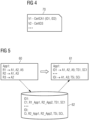
- Fig.4 shows a trust store 70.
- the trust store includes a validation identifier for each of the identities released for the application.
- a validation identifier V1 is, for example, a root certificate of a first certification authority that has issued certificates for the identities ID1, ID2.
- a validation identifier V2 is, for example, a certificate of the identity ID3.
- the trust database is configured as follows. Each of the identities released for the application or each certificate of the released identities is assigned a trust status. Assignment is made in the trust database. Access rights are assigned to the identity depending on the trust status of the identity. The trust status of the identity is assigned, for example, depending on the issuing certification authority of the identity certificate or a parameter contained in the certificate. The trust status of an identity is managed for this purpose by the administrator using the management device in trust database 40. In the case of the Kubernetes orchestration solution, for example, entries can be managed using corresponding custom resource definitions. For example, identities or certificates issued by a first certification authority can be assigned a higher trust status than identities/certificates issued by a second certification authority.
- identities are not unique in certificates issued by different certification authorities, the identity is assigned an identifier of the issuing certification authority.
- the identity, the identity's certificate and the associated identifier of the issuing certification authority are called an identity reference.
- identity reference For a certification authority itself, it is assumed that the same identity is not issued multiple times by the certification authority. If an identity is assigned to different container instances, it is preferably assumed that these cannot assume different trust statuses.
- a scope of the trust status is defined in addition to the identity reference.
- the scope of the trust status can, for example, be defined in relation to one or more clusters in orchestrated environments and/or in relation to one or more namespaces and/or in relation to guest computers and/or individual container instances or applications. If several differently defined entries with overlapping scopes are defined, the narrowest scope of validity is preferably used for the application-specific or runtime-specific access policy. For example, if a scope of validity includes the application and a scope of validity includes the entire cluster, the validity is used for the narrower scope of the application.
- Cluster refers to the totality of the guest computers that are managed by an orchestration device.
- the identities in the trust database can also be defined using regular expressions, so that, for example, a complete certification authority, The same identities can be assigned to individual certificates or to multiple certification authorities.
- Fig.5 shows an example structure or content of an application-specific access policy 60, the runtime-specific policy 61 and the trust database 62.
- roles of accessers are defined for the relevant application Appl and each role is assigned one or more application components A1,..., A5 that are permitted to access.
- the trust database 62 includes for each identity ID1,...,IDi released for the application its certificate C1,...Ci preferably with an identifier of a certification authority issuing the certificate, and a role assigned to the identity ID1 in the application R1_App1, and/or a trust status TS1,...,TSi and/or a scope SC1,...,SCi of the trust status TS1,...,TSi in the application. If an identity is also released for other applications, for example application App2, the role of the identity for the other application is optionally entered in the entry for these identities, see the role R2_App2 in the entries for the identities ID1 and IDi in the trust database 62 in Fig.5 .
- the runtime-specific policy 61 is created for the application Appl based on the application-specific access policy 60 and the trust database 62.
- the policies 20, 61 include at least one, but usually several, policies for different roles or identities. Each of these policies can be updated individually in the application-specific access policy 60 and the runtime-specific policy 61.
- the identity ID1 is determined in the trust database 62 as the identity with the role R1. This identity ID1 is entered in the application-specific access policy 60 together with its trust status TS1 and scope SC1 and thus receives access to the data stored in the application-specific access policy 60.
- Access policy 60 specifies the application components A1, A2, A5.
- the role R2_App1 is entered in the trust database 62 for the identity IDi. Accordingly, the identity IDi, as well as its trust status TSi and/or scope SCi for access to the application components A1, A3 of the application Appl are entered in the runtime-specific policy 61.
- the functionalities of the management device 50 are arranged in an orchestration device. If an entry is added to the trust database 62 within a cluster, the orchestration device checks whether the application-specific access policy 60 needs to be updated due to the changed settings, see also Fig.2 . It is assumed that the application-specific access policy 60 is accessible to the orchestration device. This is ensured by passing the application-specific access policy 60 to the guest computer with the provisioning configuration or, alternatively, storing it in another location known to the orchestration device. The check is carried out by the orchestration device translating the application-specific access policy 60 into a runtime-specific access policy 61 using the extension described above, by replacing the previously known roles stored in the application-specific access policy 60 with the identity references of the certificates stored in the trust database.
- the runtime-specific access policy is recreated from the application-specific access policy when an entry in the trust database is changed, added or deleted.
- the management device 50 can create a checksum after creating a runtime-specific access policy 61 and store it in the trust database An updated runtime-specific access policy is only made available to the guest computer if the checksum of the newly updated runtime-specific access policy differs from the checksum in the trust database.
- Access to the application can be permitted on a certificate-specific basis, i.e. for a single identity or its certificate and/or depending on individual certification authorities of individual certificates.
- the application developer who is also responsible for defining access permissions to an app, can take on the complex task of defining the rules.
- the operator simply assigns the trust status to a certification authority or a known certificate and thus maps the rules to be applied to the identity known within the runtime environment.
- Access policies can restrict both inbound and outbound access to the application.
- the trust store can be assigned individually to an application or to a single container instance within the application.
- All method steps can be implemented by the corresponding devices that are suitable for carrying out the respective method step. All functions that can be carried out by material features can be a method step of the method. All described and/or drawn features can be advantageously combined with one another within the scope of the invention. The invention is not limited to the described embodiments.
Landscapes
- Engineering & Computer Science (AREA)
- Computer Security & Cryptography (AREA)
- Computer Hardware Design (AREA)
- Theoretical Computer Science (AREA)
- General Engineering & Computer Science (AREA)
- Software Systems (AREA)
- Physics & Mathematics (AREA)
- Signal Processing (AREA)
- Computer Networks & Wireless Communication (AREA)
- General Physics & Mathematics (AREA)
- Computing Systems (AREA)
- Databases & Information Systems (AREA)
- Health & Medical Sciences (AREA)
- Bioethics (AREA)
- General Health & Medical Sciences (AREA)
- Storage Device Security (AREA)
Priority Applications (2)
| Application Number | Priority Date | Filing Date | Title |
|---|---|---|---|
| EP23151743.4A EP4400995A1 (fr) | 2023-01-16 | 2023-01-16 | Procédé d'adaptation dynamique d'une politique d'accès pour une application mise en uvre par conteneur pendant l'exécution |
| PCT/EP2023/083699 WO2024153380A1 (fr) | 2023-01-16 | 2023-11-30 | Procédé d'adaptation dynamique d'une politique d'accès pour une application mise en œuvre par un conteneur à l'exécution |
Applications Claiming Priority (1)
| Application Number | Priority Date | Filing Date | Title |
|---|---|---|---|
| EP23151743.4A EP4400995A1 (fr) | 2023-01-16 | 2023-01-16 | Procédé d'adaptation dynamique d'une politique d'accès pour une application mise en uvre par conteneur pendant l'exécution |
Publications (1)
| Publication Number | Publication Date |
|---|---|
| EP4400995A1 true EP4400995A1 (fr) | 2024-07-17 |
Family
ID=85018659
Family Applications (1)
| Application Number | Title | Priority Date | Filing Date |
|---|---|---|---|
| EP23151743.4A Withdrawn EP4400995A1 (fr) | 2023-01-16 | 2023-01-16 | Procédé d'adaptation dynamique d'une politique d'accès pour une application mise en uvre par conteneur pendant l'exécution |
Country Status (2)
| Country | Link |
|---|---|
| EP (1) | EP4400995A1 (fr) |
| WO (1) | WO2024153380A1 (fr) |
Citations (2)
| Publication number | Priority date | Publication date | Assignee | Title |
|---|---|---|---|---|
| CN107566393A (zh) * | 2017-09-26 | 2018-01-09 | 山东浪潮商用系统有限公司 | 一种基于受信任证书的动态权限验证系统及方法 |
| US20200233689A1 (en) * | 2019-01-23 | 2020-07-23 | Vmware, Inc. | Methods and systems for securely and efficiently clustering distributed processes using a consistent database |
-
2023
- 2023-01-16 EP EP23151743.4A patent/EP4400995A1/fr not_active Withdrawn
- 2023-11-30 WO PCT/EP2023/083699 patent/WO2024153380A1/fr not_active Ceased
Patent Citations (2)
| Publication number | Priority date | Publication date | Assignee | Title |
|---|---|---|---|---|
| CN107566393A (zh) * | 2017-09-26 | 2018-01-09 | 山东浪潮商用系统有限公司 | 一种基于受信任证书的动态权限验证系统及方法 |
| US20200233689A1 (en) * | 2019-01-23 | 2020-07-23 | Vmware, Inc. | Methods and systems for securely and efficiently clustering distributed processes using a consistent database |
Also Published As
| Publication number | Publication date |
|---|---|
| WO2024153380A1 (fr) | 2024-07-25 |
Similar Documents
| Publication | Publication Date | Title |
|---|---|---|
| DE112020000538B4 (de) | Feinkörnige zugriffskontrolle auf token-grundlage | |
| DE112018004411B4 (de) | Zugriffssteuerung in mikrodienst-architekturen | |
| DE112018002031B4 (de) | Sichern einer betriebssystemkonfiguration unter verwendung von hardware | |
| DE112021002245T5 (de) | Verhindern einer unberechtigten bereitstellung von paketen in clustern | |
| DE69815599T2 (de) | Verfahren und Vorrichtung zum Schutz von Anwendungsdaten in sicheren Speicherbereichen | |
| DE112021005478T5 (de) | Verfahren zum schutz eines edge-gerät-vertrauenswerts | |
| EP4154139B1 (fr) | Surveillance étendue de l'intégrité d'une image de récipient | |
| DE102023102487A1 (de) | Erweiterung von oidc-authentifizierung auf service-account für die duale autorisierung | |
| DE112021004613T5 (de) | Redigierbare blockchain | |
| DE112021004115B4 (de) | Sicherheitssystem für eine Segmentierung von Computerdatei-Metadaten | |
| DE112022001944B4 (de) | Verteilte dekomposition von string-automatisierter schlussfolgerung unter verwendung von prädikaten | |
| DE112020002343T5 (de) | Verteilung von Sicherheitsberechtigungsnachweisen | |
| DE102022109009A1 (de) | Ein management-cluster mit integrationsdienst zur bereitstellung und verwaltung eines dienstes in tenant-clustern | |
| DE102016105062A1 (de) | Nähengestützte Berechtigungsprüfung für einheitenübergreifend verteilte Daten | |
| DE112023000477T5 (de) | Privatsphärenfreundlicher austausch von asset-token | |
| DE102021130811A1 (de) | Blockchain-selektive world-state-datenbank | |
| DE112023004948T5 (de) | Rollenbasierte berechtigungsdelegation in einem anbieternetz | |
| DE112021006481T5 (de) | Realm-auswahl für föderierte berechtigungsprüfungen auf grundlage eines zweitfaktors | |
| WO2022008201A1 (fr) | Procédé de validation étendue d'une image de conteneur | |
| DE60017438T2 (de) | System zur betriebsmittelzugriffsteuerung | |
| DE112021005837T5 (de) | Dezentrale sendeverschlüsselung und schlüsselerzeugungseinrichtung | |
| DE112018008066T5 (de) | Virtualisierte Netzwerkfunktionen | |
| EP4400995A1 (fr) | Procédé d'adaptation dynamique d'une politique d'accès pour une application mise en uvre par conteneur pendant l'exécution | |
| EP4254862A1 (fr) | Procédé de mise en uvre d'un processus d'autorisation d'une application client | |
| DE112022000390T5 (de) | Signaturüberprüfung von cluster-ressourcen |
Legal Events
| Date | Code | Title | Description |
|---|---|---|---|
| PUAI | Public reference made under article 153(3) epc to a published international application that has entered the european phase |
Free format text: ORIGINAL CODE: 0009012 |
|
| STAA | Information on the status of an ep patent application or granted ep patent |
Free format text: STATUS: THE APPLICATION HAS BEEN PUBLISHED |
|
| AK | Designated contracting states |
Kind code of ref document: A1 Designated state(s): AL AT BE BG CH CY CZ DE DK EE ES FI FR GB GR HR HU IE IS IT LI LT LU LV MC ME MK MT NL NO PL PT RO RS SE SI SK SM TR |
|
| STAA | Information on the status of an ep patent application or granted ep patent |
Free format text: STATUS: THE APPLICATION IS DEEMED TO BE WITHDRAWN |
|
| 18D | Application deemed to be withdrawn |
Effective date: 20250118 |