EP4401469A1 - Zellenneuauswahlverfahren und kommunikationsvorrichtung - Google Patents
Zellenneuauswahlverfahren und kommunikationsvorrichtung Download PDFInfo
- Publication number
- EP4401469A1 EP4401469A1 EP22877954.2A EP22877954A EP4401469A1 EP 4401469 A1 EP4401469 A1 EP 4401469A1 EP 22877954 A EP22877954 A EP 22877954A EP 4401469 A1 EP4401469 A1 EP 4401469A1
- Authority
- EP
- European Patent Office
- Prior art keywords
- network slice
- terminal device
- slice group
- target
- cell
- Prior art date
- Legal status (The legal status is an assumption and is not a legal conclusion. Google has not performed a legal analysis and makes no representation as to the accuracy of the status listed.)
- Pending
Links
- 238000000034 method Methods 0.000 title claims abstract description 253
- 238000004891 communication Methods 0.000 title claims abstract description 126
- 238000012545 processing Methods 0.000 claims description 70
- 230000015654 memory Effects 0.000 claims description 25
- 238000004590 computer program Methods 0.000 claims description 11
- 230000008569 process Effects 0.000 description 137
- 230000006870 function Effects 0.000 description 37
- 238000010586 diagram Methods 0.000 description 31
- 241000272522 Anas Species 0.000 description 13
- 230000005540 biological transmission Effects 0.000 description 12
- 238000005516 engineering process Methods 0.000 description 7
- 238000001914 filtration Methods 0.000 description 7
- 230000000694 effects Effects 0.000 description 5
- 230000003993 interaction Effects 0.000 description 5
- 238000005259 measurement Methods 0.000 description 5
- 238000006243 chemical reaction Methods 0.000 description 4
- 238000013461 design Methods 0.000 description 4
- 230000001960 triggered effect Effects 0.000 description 4
- 230000008878 coupling Effects 0.000 description 3
- 238000010168 coupling process Methods 0.000 description 3
- 238000005859 coupling reaction Methods 0.000 description 3
- 241001365914 Taira Species 0.000 description 2
- 230000009471 action Effects 0.000 description 2
- 230000001174 ascending effect Effects 0.000 description 2
- 239000003795 chemical substances by application Substances 0.000 description 2
- 238000011161 development Methods 0.000 description 2
- 230000007774 longterm Effects 0.000 description 2
- 230000007246 mechanism Effects 0.000 description 2
- 238000010295 mobile communication Methods 0.000 description 2
- 101150096310 SIB1 gene Proteins 0.000 description 1
- 230000002457 bidirectional effect Effects 0.000 description 1
- 230000001413 cellular effect Effects 0.000 description 1
- 230000008859 change Effects 0.000 description 1
- 239000000446 fuel Substances 0.000 description 1
- 230000000977 initiatory effect Effects 0.000 description 1
- 238000013507 mapping Methods 0.000 description 1
- 230000006855 networking Effects 0.000 description 1
- 230000003287 optical effect Effects 0.000 description 1
- 239000000047 product Substances 0.000 description 1
- 230000011664 signaling Effects 0.000 description 1
- 230000003068 static effect Effects 0.000 description 1
- 239000013589 supplement Substances 0.000 description 1
Images





Classifications
-
- H—ELECTRICITY
- H04—ELECTRIC COMMUNICATION TECHNIQUE
- H04W—WIRELESS COMMUNICATION NETWORKS
- H04W36/00—Hand-off or reselection arrangements
- H04W36/08—Reselecting an access point
-
- H—ELECTRICITY
- H04—ELECTRIC COMMUNICATION TECHNIQUE
- H04W—WIRELESS COMMUNICATION NETWORKS
- H04W36/00—Hand-off or reselection arrangements
-
- H—ELECTRICITY
- H04—ELECTRIC COMMUNICATION TECHNIQUE
- H04W—WIRELESS COMMUNICATION NETWORKS
- H04W36/00—Hand-off or reselection arrangements
- H04W36/0005—Control or signalling for completing the hand-off
- H04W36/0055—Transmission or use of information for re-establishing the radio link
- H04W36/0061—Transmission or use of information for re-establishing the radio link of neighbour cell information
-
- H—ELECTRICITY
- H04—ELECTRIC COMMUNICATION TECHNIQUE
- H04W—WIRELESS COMMUNICATION NETWORKS
- H04W36/00—Hand-off or reselection arrangements
- H04W36/0005—Control or signalling for completing the hand-off
- H04W36/0055—Transmission or use of information for re-establishing the radio link
- H04W36/0072—Transmission or use of information for re-establishing the radio link of resource information of target access point
-
- H—ELECTRICITY
- H04—ELECTRIC COMMUNICATION TECHNIQUE
- H04W—WIRELESS COMMUNICATION NETWORKS
- H04W36/00—Hand-off or reselection arrangements
- H04W36/13—Cell handover without a predetermined boundary, e.g. virtual cells
-
- H—ELECTRICITY
- H04—ELECTRIC COMMUNICATION TECHNIQUE
- H04W—WIRELESS COMMUNICATION NETWORKS
- H04W48/00—Access restriction; Network selection; Access point selection
- H04W48/18—Selecting a network or a communication service
-
- H—ELECTRICITY
- H04—ELECTRIC COMMUNICATION TECHNIQUE
- H04W—WIRELESS COMMUNICATION NETWORKS
- H04W48/00—Access restriction; Network selection; Access point selection
- H04W48/08—Access restriction or access information delivery, e.g. discovery data delivery
- H04W48/12—Access restriction or access information delivery, e.g. discovery data delivery using downlink control channel
Definitions
- This application relates to the field of wireless technologies, and in particular, to a cell reselection method and a communication apparatus.
- Network Slicing Network Slicing
- This application provides a cell reselection method and a communication apparatus, applied to a network slicing scenario.
- a first aspect of this application provides a cell reselection method.
- the method is performed by a terminal device, or the method is performed by some components (for example, a processor, a chip, or a chip system) in a terminal device, or the method may be implemented by a logical module or software that can implement all or some functions of a terminal device.
- some components for example, a processor, a chip, or a chip system
- the method may be implemented by a logical module or software that can implement all or some functions of a terminal device.
- an example in which the cell reselection method is performed by a terminal device is used for description.
- the terminal device determines priority information of a target network slice group, where the priority information indicates a priority of the target network slice group; and the terminal device performs cell reselection based on a cell frequency that is associated with the target network slice group and determined based on the priority information.
- the terminal device determines the priority information indicating the target network slice group, in a process of performing cell reselection by the terminal device, performs cell reselection based on the cell frequency that is associated with the target network slice group and determined based on the priority information. In other words, the terminal device performs cell reselection based on a cell frequency that is associated with the target network slice group and determined based on the priority of the target network slice group.
- the solution in which the terminal device performs cell reselection based on the cell frequency that is associated with the target network slice group and determined based on the priority information enables the terminal device to perform cell reselection by using a network slice group as a granularity for cell reselection. Therefore, the cell reselection solution is applicable to a scenario in which communication is performed based on a network slice group, and can improve a cell reselection success rate and communication efficiency.
- the network device uses cell reselection information (for example, cell frequency information) associated with the network slice group as one piece of information to be sent to the terminal device, and uses slice information of a network slice included in the network slice group as another piece of information to be sent to the terminal device.
- cell reselection information for example, cell frequency information
- the target network slice group includes one or more network slice groups, and each network slice group includes one or more network slices.
- a second aspect of this application provides a cell reselection method.
- the method is performed by a terminal device, or the method is performed by some components (for example, a processor, a chip, or a chip system) in a terminal device, or the method may be implemented by a logical module or software that can implement all or some functions of a terminal device.
- the cell reselection method is performed by a terminal device is used for description.
- the terminal device determines a cell frequency associated with a target network slice group, and then the terminal device performs cell reselection based on the cell frequency associated with the target network slice group.
- the terminal device performs cell reselection based on the cell frequency associated with the target network slice group.
- the solution in which the terminal device performs cell reselection based on the cell frequency associated with the target network slice group enables the terminal device to perform cell reselection by using a network slice group as a granularity for cell reselection. Therefore, the cell reselection solution is applicable to a scenario in which communication is performed based on a network slice group, and can improve a cell reselection success rate and communication efficiency.
- the target network slice group includes one network slice group.
- the target network slice group includes a plurality of network slice groups.
- a process in which the terminal device performs cell reselection based on the cell frequency associated with the target network slice group may include: The terminal device determines priority information of the target network slice group, where the priority information indicates a priority of the target network slice group; and the terminal device performs cell reselection based on a cell frequency that is associated with the target network slice group and determined based on the priority information.
- the target network slice group includes a network slice that the terminal device expects to access.
- the target network slice group includes the network slice that the terminal device expects to access.
- the terminal device determines the target network slice group based on the network slice that the terminal device expects to access.
- the terminal device may determine the target network slice group in advance based on one or more network slices that the terminal device expects to access.
- the target network slice group determined by the terminal device includes a group of network slices that the terminal device expects to access.
- the terminal device may perform communication in the target cell, to obtain a network service (associated with a service) corresponding to the network slice that the terminal device expects to access.
- the network slice that the terminal device expects to access includes at least one of the following: a network slice indicated by an allowed (Allowed) single network slice selection assistance information (single network slice selection assistance information, NSSAI) information element, a network slice indicated by a requested NSSAI (Requested NSSAI) information element, a network slice indicated by a suspended NSSAI (suspended NSSAI) information element, or a network slice related to a mobile originated traffic (mobile originated traffic, MO traffic) service.
- NSSAI single network slice selection assistance information
- the terminal device may determine, in different scenarios based on the network slice (denoted as a target network slice) indicated in the foregoing plurality of manners, the network slice that the terminal device expects to access. For example, for a terminal device in an idle (Idle) state, the terminal device may determine one or more network slices indicated by allowed NSSAI as network slices that the terminal device expects to access. For another example, for a terminal device in an inactive (Inactive) state, the terminal device may determine one or more network slices indicated by suspended NSSAI as network slices that the terminal device expects to access. Therefore, a plurality of implementations are provided to implement communication in different scenarios.
- the target network slice group includes a default network slice (or referred to as a network slice corresponding to default NSSAI).
- the target network slice group includes a default network slice group
- the default network slice group includes one or more default network slices.
- the target network slice group is determined based on (at least) a correspondence between a network slice and a network slice group, and when the correspondence between a network slice and a network slice group (denoted as a first correspondence for ease of reference below) is invalid (or is not applicable, is not adapted, or the like) in a first area in which the terminal device is currently located, the target network slice group includes a default network slice.
- the first correspondence is a correspondence between a network slice and a network slice group, and the first area includes a registration area (registration area, RA), a tracking area (tracking area, TA), or a public land mobile network (public land mobile network, PLMN) area.
- the correspondence (or referred to as a mapping relationship, an association relationship, or the like) between a network slice and a network slice group specifically indicates a network slice group to which a network slice belongs, or indicates a network slice included in a network slice group.
- the terminal device may determine that the target network slice group includes the default network slice. In other words, the terminal device determines a default network slice group including the default network slice as the target network slice group. In this way, the terminal device performs cell reselection based on a cell frequency associated with the default network slice group provided by the network device in the first area, to avoid a cell reselection failure.
- the default network slice group includes one or more default network slices.
- the terminal device may determine that the target network slice group includes the default network slice group.
- a network slice included in the default network slice group may be specifically one or more default network slices (Default Slice) (defined by an operator).
- the first correspondence may be a correspondence that is between a network slice and a network slice group and that is indicated by the network device and last received by the terminal device.
- the first correspondence is associated with a second area
- the second area may include an RA, a TA, or a PLMN area.
- different areas RA, TA, or PLMN
- there may be different correspondences between a network slice and a network slice group. That the target network slice group is determined based on the first correspondence may include: The terminal device determines the target network slice group based on the first correspondence.
- the terminal device receives a system message, and the system message may include information indicating the first area in which the terminal device is currently located.
- the terminal device determines that the first correspondence is valid; or when the first area indicated by the system message is different from the second area associated with the first correspondence, the terminal device determines that the first correspondence is invalid.
- each network slice group in the target network slice group includes one or more target network slices that the terminal device expects to access.
- the terminal device may perform communication in the target cell, to obtain a network service (associated with a service) corresponding to the network slice that the terminal device expects to access.
- the terminal device may directly determine, based on the target network slice group, the target cell including a plurality of target network slices, so that the terminal device can more quickly obtain more types of network services in the target cell that supports communication based on the plurality of target network slices, to improve user experience.
- that the terminal device determines the priority information of the target network slice group includes: The terminal device receives the priority information from a network device. In other words, the terminal device determines the priority information based on an indication of the network device.
- the priority information is carried in first indication information, and the first indication information indicates at least the priority information.
- the first indication information further indicates a priority of a network slice group other than the target network slice group.
- the terminal device may determine the priority information of the target network slice group based on information sent by the network device. In this way, the terminal device can determine, based on an indication (for example, the first indication information) of the network device, a network slice group configured by the network device, thereby improving a success rate of subsequent cell reselection.
- an indication for example, the first indication information
- that the terminal device determines the priority information of the target network slice group includes: The terminal device determines the priority information based on information about a historically used (or historically accessed) network slice.
- the information about the historically used network slice includes a quantity of times of the historically used network slice, a frequency of the historically used network slice, and the like.
- the terminal device may determine the priority information of the target network slice group based on the information about the network slice historically used by the terminal device.
- the information about the historically used network slice may reflect specific information (for example, service preference information or duration) of the terminal device to some extent, so that the terminal device performs cell reselection based on the priority information determined based on the information about the historically accessed network slice.
- the determined target cell can provide a network service corresponding to the specific information of the terminal device, to improve user experience.
- the priority information is determined based on a quantity and/or priority information of network slices included in each network slice group in the target network slice group.
- that the terminal device determines the priority information of the target network slice group includes: The terminal device determines the priority information based on first information from the network device, where the first information indicates the quantity and/or priority information of network slices included in each network slice group in the target network slice group.
- the priority information includes a priority level, a priority value, or the like.
- the terminal device may determine the priority information of the target network slice group based on the quantity and/or priority information of network slices included in each network slice group in the target network slice group. In other words, the terminal device determines the priority information based on the information (for example, priority information or quantity information) about the network slice included in the target network slice group.
- the first information is determined based on an indication of the network device, so that the terminal device can determine, based on the indication (namely, the first information) of the network device, information about a network slice included in a network slice group configured by the network device, thereby improving a success rate of subsequent cell reselection.
- the first information includes at least one of the following:
- the first information may be specifically one piece or a combination of the foregoing information.
- a basis for determining the priority information may be provided from information in a plurality of dimensions (for example, a dimension of priority information and a dimension of quantity information).
- that the terminal device performs cell reselection based on the cell frequency that is associated with the target network slice group and determined based on the priority information includes: The terminal device performs cell reselection based on a target cell frequency, where the target cell frequency is one or more cell frequencies that are indicated by the priority information and associated with a network slice group with a highest priority in the target network slice group.
- the terminal device performs cell reselection based on the target cell frequency
- the terminal device if the terminal device cannot find a neighboring cell that meets a camping condition after performing frequency sweep based on the target cell frequency, the terminal device performs cell reselection based on one or more cell frequencies associated with a network slice group with a second highest priority (or another priority) in the target network slice group.
- the terminal device may specifically perform cell reselection at the one or more cell frequencies associated with the network slice group with the highest priority, to improve a success rate of performing cell reselection by the terminal device.
- that the terminal device performs cell reselection based on the target cell frequency includes: The terminal device performs cell reselection based on a frequency priority corresponding to the target cell frequency.
- the method further includes: The terminal device receives indication information from the network device, where the indication information indicates to perform cell reselection based on a frequency priority corresponding to a first cell frequency after cell reselection performed based on the target cell frequency fails, and the first cell frequency includes at least one of the following:
- the terminal device may further receive the indication information, so that in the process of performing cell reselection based on the target cell frequency, the terminal device may determine, based on the indication information, that after cell reselection performed based on the target cell frequency fails, the terminal device may perform cell reselection based on the frequency priority corresponding to the first cell frequency. In this way, when cell reselection performed based on the target cell frequency fails, the terminal device may further perform cell reselection based on the indication information, to further improve a success rate of performing cell reselection by the terminal device.
- the cell frequency that is not associated with a network slice may also be expressed as a cell frequency that is not determined based on a network slice or a cell frequency that does not need to be determined based on a network slice.
- the cell frequency that is not associated with a network slice group may also be expressed as a cell frequency that is not determined based on a network slice group or a cell frequency that does not need to be determined based on a network slice group.
- the network slice set may include one or more network slices, and each network slice may be associated with one or more cell frequencies.
- the terminal device may determine a plurality of cell frequencies based on the plurality of network slices, to improve a success rate of cell reselection performed by the terminal device based on the cell frequency associated with the network slice set.
- the network slice group set may include one or more network slice groups, and each network slice group may be associated with one or more cell frequencies.
- the terminal device may determine a plurality of cell frequency groups based on the plurality of network slice groups, to improve a success rate of cell reselection performed by the terminal device based on the cell frequency associated with the network slice group set.
- the network slice set may further include another network slice.
- the network slice group set may further include another network slice group. This is not limited herein.
- an identifier for example, a network slice index or a network slice name
- a network slice index for example, a network slice index or a network slice name
- a network slice list for example, a network slice index or a network slice name
- a mathematical relational expression for example, a bitmap, or another form. This is not limited herein.
- an identifier for example, a network slice group index or a network slice group name
- a network slice group index for example, a network slice group index or a network slice group name
- the list may be referred to as a slice group list (Slice Group List); or may be implemented in another form, for example, a mathematical relational expression, a bitmap, or another form. This is not limited herein.
- the terminal device performs cell reselection based on the target cell frequency includes:
- the indication information includes at least one of the following: a quantity of times of performing cell reselection based on the first cell frequency, duration of performing cell reselection based on the first cell frequency, a start moment of performing cell reselection based on the first cell frequency, or an end moment of performing cell reselection based on the first cell frequency.
- the indication information received by the terminal device may include the foregoing "at least one" cell reselection implementation, so that when the terminal device fails to perform cell reselection based on the target cell frequency, the terminal device may further determine, based on the indication information, an implementation of performing cell reselection based on the first cell frequency, to further improve a success rate of performing cell reselection by the terminal device.
- a third aspect of this application provides a cell reselection method.
- the method is performed by a network device, or the method is performed by some components (for example, a processor, a chip, or a chip system) in a network device, or the method may be implemented by a logical module or software that can implement all or some functions of a network device.
- the network device determines first indication information, where the first indication information indicates priority information of a target network slice group, and the priority information indicates a priority of the target network slice group; and the network device sends the first indication information to a terminal device.
- the first indication information sent by the network device indicates the priority of the target network slice group, so that the terminal device performs cell reselection based on a cell frequency that is associated with the target network slice group and determined based on the first indication information.
- the solution in which the terminal device performs cell reselection based on the cell frequency that is associated with the target network slice group and determined based on the first indication information enables the terminal device to perform cell reselection by using a network slice group as a granularity for cell reselection. Therefore, the cell reselection solution is applicable to a scenario in which communication is performed based on a network slice group, and can improve a cell reselection success rate and communication efficiency.
- the terminal device may determine the priority information of the target network slice group based on the first indication information sent by the network device
- the terminal device can also determine, based on an indication (that is, the first indication information) of the network device, a network slice group configured by the network device, thereby improving a success rate of subsequent cell reselection.
- the first indication information further indicates a priority of a network slice group other than the target network slice group.
- the method further includes: The network device sends indication information to the terminal device, where the indication information indicates to perform cell reselection based on a frequency priority corresponding to a first cell frequency after cell reselection performed based on the target cell frequency fails, and the first cell frequency includes at least one of the following:
- the network slice set may further include another network slice.
- the network slice group set may further include another network slice group. This is not limited herein.
- an identifier for example, a network slice index or a network slice name
- a network slice index for example, a network slice index or a network slice name
- a network slice list for example, a network slice index or a network slice name
- a mathematical relational expression for example, a bitmap, or another form. This is not limited herein.
- an identifier for example, a network slice group index or a network slice group name
- a network slice group index for example, a network slice group index or a network slice group name
- the list may be referred to as a slice group list (Slice Group List); or may be implemented in another form, for example, a mathematical relational expression, a bitmap, or another form. This is not limited herein.
- the network device may further send the indication information to the terminal device, so that in the process of performing cell reselection based on the target cell frequency, the terminal device may determine, based on the indication information, that after cell reselection performed based on the target cell frequency fails, the terminal device may perform cell reselection based on the frequency priority corresponding to the first cell frequency. In this way, when cell reselection performed based on the target cell frequency fails, the terminal device may further perform cell reselection based on the indication information, to further improve a success rate of performing cell reselection by the terminal device.
- the indication information includes at least one of the following: a quantity of times of performing cell reselection based on the first cell frequency, duration of performing cell reselection based on the first cell frequency, a start moment of performing cell reselection based on the first cell frequency, or an end moment of performing cell reselection based on the first cell frequency.
- the indication information sent by the network device may include the foregoing "at least one" cell reselection implementation, so that when the terminal device fails to perform cell reselection based on the target cell frequency, the terminal device may further determine, based on the indication information, an implementation of performing cell reselection based on the first cell frequency, to further improve a success rate of performing cell reselection by the terminal device.
- a fourth aspect of this application provides a communication apparatus.
- the apparatus may implement the method in any one of the first aspect or the possible implementations of the first aspect.
- the apparatus includes a corresponding unit or module configured to perform the method.
- the unit or module included in the apparatus can be implemented by software and/or hardware.
- the apparatus may be a terminal device, or the apparatus may be a component (for example, a processor, a chip, or a chip system) in a terminal device, or the apparatus may be a logical module or software that can implement all or some functions of a terminal device.
- the communication apparatus includes at least a processing unit.
- the processing unit is configured to determine priority information of a target network slice group, where the priority information indicates a priority of the target network slice group.
- the processing unit is configured to perform cell reselection based on a cell frequency that is associated with the target network slice group and determined based on the priority information.
- a fifth aspect of this application provides a communication apparatus.
- the apparatus may implement the method in any one of the second aspect or the possible implementations of the second aspect.
- the apparatus includes a corresponding unit or module configured to perform the method.
- the unit or module included in the apparatus can be implemented by software and/or hardware.
- the apparatus may be a terminal device, or the apparatus may be a component (for example, a processor, a chip, or a chip system) in a terminal device, or the apparatus may be a logical module or software that can implement all or some functions of a terminal device.
- the communication apparatus includes at least a processing unit.
- the processing unit is configured to determine a cell frequency associated with a target network slice group.
- the processing unit is configured to perform cell reselection based on the cell frequency associated with the target network slice group.
- the target network slice group includes one network slice group.
- the target network slice group includes a plurality of network slice groups.
- a process in which the terminal device performs cell reselection based on the cell frequency associated with the target network slice group may include: The terminal device determines priority information of the target network slice group, where the priority information indicates a priority of the target network slice group; and the terminal device performs cell reselection based on a cell frequency that is associated with the target network slice group and determined based on the priority information.
- the target network slice group includes a network slice that the terminal device expects to access.
- the network slice that the terminal device expects to access includes at least one of the following: a network slice indicated by an allowed NSSAI information element, a network slice indicated by a requested NSSAI information element, a network slice indicated by a suspended NSSAI information element, or a network slice related to a mobile originated traffic service.
- the target network slice group includes a default network slice.
- the target network slice group is determined based on a correspondence between a network slice and a network slice group, and when the correspondence between a network slice and a network slice group is invalid in a first area in which the terminal device is currently located, the target network slice group includes a default network slice.
- the first area includes a registration area (registration area, RA), a tracking area (tracking area, TA), or a public land mobile network (public land mobile network, PLMN) area.
- the apparatus further includes a transceiver unit, and that the processing unit is configured to determine priority information of a target network slice group includes: the processing unit is configured to receive the priority information from a network device through the transceiver unit.
- processing unit is configured to determine priority information of a target network slice group includes: the processing unit is configured to determine the priority information based on information about a historically used network slice.
- the priority information is determined based on a quantity and/or priority information of network slices included in each network slice group in the target network slice group.
- the processing unit is configured to perform cell reselection based on a cell frequency that is associated with the target network slice group and determined based on the priority information includes: the processing unit is configured to perform cell reselection based on a target cell frequency, where the target cell frequency is one or more cell frequencies associated with a network slice group with a highest priority in the target network slice group.
- the transceiver unit is further configured to receive indication information, where the indication information indicates to perform cell reselection based on a frequency priority corresponding to a first cell frequency after cell reselection performed based on the target cell frequency fails, and the first cell frequency includes at least one of the following:
- the indication information includes at least one of the following: a quantity of times of performing cell reselection based on the first cell frequency, duration of performing cell reselection based on the first cell frequency, a start moment of performing cell reselection based on the first cell frequency, or an end moment of performing cell reselection based on the first cell frequency.
- a sixth aspect of this application provides a communication apparatus.
- the apparatus may implement the method in any one of the third aspect or the possible implementations of the third aspect.
- the apparatus includes a corresponding unit or module configured to perform the method.
- the unit or module included in the apparatus can be implemented by software and/or hardware.
- the apparatus may be a network device, or the apparatus may be a component (for example, a processor, a chip, or a chip system) in a network device, or the apparatus may be a logical module or software that can implement all or some functions of a network device.
- the communication apparatus includes a processing unit and a transceiver unit.
- the processing unit is configured to determine priority information of a target network slice group, where the priority information indicates a priority of the target network slice group.
- the transceiver unit is configured to send the priority information.
- the transceiver unit is further configured to send indication information, where the indication information indicates to perform cell reselection based on a frequency priority corresponding to a first cell frequency after cell reselection performed based on the target cell frequency fails, and the first cell frequency includes at least one of the following:
- the indication information includes at least one of the following: a quantity of times of performing cell reselection based on the first cell frequency, duration of performing cell reselection based on the first cell frequency, a start moment of performing cell reselection based on the first cell frequency, or an end moment of performing cell reselection based on the first cell frequency.
- a seventh aspect of embodiments of this application provides a communication apparatus, including at least one processor.
- the at least one processor is coupled to a memory, and the memory is configured to store a program or instructions.
- the at least one processor is configured to execute the program or the instructions, so that the apparatus implements the method according to any one of the first aspect or the possible implementations of the first aspect, or the apparatus implements the method according to any one of the second aspect or the possible implementations of the second aspect, or the apparatus implements the method according to any one of the third aspect or the possible implementations of the third aspect.
- An eighth aspect of embodiments of this application provides a computer-readable storage medium storing one or more computer-executable instructions.
- the processor When the computer-executable instructions are executed by a processor, the processor performs the method according to any one of the first aspect or the possible implementations of the first aspect, or the processor performs the method according to any one of the second aspect or the possible implementations of the second aspect, or the processor performs the method according to any one of the third aspect or the possible implementations of the third aspect.
- a ninth aspect of embodiments of this application provides a computer program product (or referred to as a computer program) storing one or more computers.
- the processor When the computer program product is executed by a processor, the processor performs the method according to any one of the first aspect or the possible implementations of the first aspect, or the processor performs the method according to any one of the second aspect or the possible implementations of the second aspect, or the processor performs the method according to any one of the third aspect or the possible implementations of the third aspect.
- a tenth aspect of embodiments of this application provides a chip system.
- the chip system includes at least one processor, configured to support a communication apparatus in implementing the function in any one of the first aspect or the possible implementations of the first aspect; or configured to support a communication apparatus in implementing the function in any one of the second aspect or the possible implementations of the second aspect; or configured to support a communication apparatus in implementing the function in any one of the third aspect or the possible implementations of the third aspect.
- the chip system may further include a memory, configured to store program instructions and data that are necessary for the communication apparatus.
- the chip system may include a chip, or may include a chip and another discrete component.
- the chip system further includes an interface circuit, and the interface circuit provides program instructions and/or data for the at least one processor.
- An eleventh aspect of embodiments of this application provides a communication system.
- the communication system includes the communication apparatus in the fourth aspect and the communication apparatus in the sixth aspect, and/or the communication system includes the communication apparatus in the fifth aspect and the communication apparatus in the sixth aspect, and/or the communication system includes the communication apparatus in the seventh aspect.
- the terminal device performs cell reselection based on the cell frequency that is associated with the target network slice group and determined based on the priority information. In other words, the terminal device performs cell reselection based on a cell frequency that is associated with the target network slice group and determined based on the priority of the target network slice group.
- the solution in which the terminal device performs cell reselection based on the cell frequency that is associated with the target network slice group and determined based on the priority information enables the terminal device to perform cell reselection by using a network slice group as a granularity for cell reselection. Therefore, the cell reselection solution is applicable to a scenario in which communication is performed based on a network slice group, and can improve a cell reselection success rate and communication efficiency.
- the network device can send configuration information (for example, carried in a scheduling message and/or an indication message) to the terminal device.
- the terminal device further performs network configuration based on the configuration information, so that network configurations of the network device and the terminal device are aligned.
- network configurations of the network device and the terminal device are aligned.
- align means that when there is an interaction message between the network device and the terminal device, the network device and the terminal device have a consistent understanding for a carrier frequency for sending and receiving the interaction message, determining of a type of the interaction message, a meaning of field information carried in the interaction message, or another configuration of the interaction message.
- the network device may be another apparatus providing a wireless communication function for the terminal device.
- a specific technology and a specific device form that are used by the network device are not limited in embodiments of this application. For ease of description, this is not limited in embodiments of this application.
- the network device may further include a core network device.
- the core network device includes a network element such as a mobility management entity (mobility management entity, MME), a home subscriber server (home subscriber server, HSS), a serving gateway (serving gateway, S-GW), a policy and charging rules function (policy and charging rules function, PCRF), or a public data network gateway (public data network gateway, PDN gateway, P-GW) in a 4G network; or an access and mobility management function (access and mobility management function, AMF), a user plane function (user plane function, UPF), or a session management function (session management function, SMF) in a 5G network.
- the core network device may further include another core network device in a 5G network and a next-generation network of the 5G network.
- an apparatus configured to implement a function of a network device may be a network device, or may be an apparatus that can support the network device in implementing the function, for example, a chip system.
- the apparatus may be installed in the network device.
- the technical solutions provided in embodiments of this application the technical solutions provided in embodiments of this application are described by using an example in which the apparatus configured to implement a function of a network device is a network device.
- the configuration means that a base station/server sends configuration information of some parameters or values of parameters to a terminal by using a message or signaling, so that the terminal determines a parameter for communication or a resource for transmission based on the values or the information.
- the preconfiguration may be parameter information or a parameter value negotiated by a base station/server with a terminal device in advance, or may be parameter information or a parameter value that is to be used by a base station/server or a terminal device and that is specified in a standard protocol, or may be parameter information or a parameter value pre-stored in a base station/server or a terminal device. This is not limited in this application.
- values and parameters may be changed or updated.
- target in A, B, and C includes A, B, C, AB, AC, BC, or ABC.
- ordinal numbers such as “first” and “second” in embodiments of this application are used to distinguish between a plurality of objects, and are not used to limit a sequence, a time sequence, priorities, or importance of the plurality of objects.
- the communication system includes a network device and a terminal device.
- the network device is used as a configuration information sending entity
- the terminal device is used as a configuration information receiving entity.
- an entity in the communication system sends configuration information to another entity, and sends data to the another entity, or receives data sent by the another entity.
- the another entity receives the configuration information, and sends data to the configuration information sending entity based on the configuration information, or receives data sent by the configuration information sending entity.
- FIG. 1 is a schematic diagram of a communication system according to this application.
- FIG. 1 shows one network device and six terminal devices as an example.
- the six terminal devices are respectively a terminal device 1, a terminal device 2, a terminal device 3, a terminal device 4, a terminal device 5, and a terminal device 6.
- the terminal device 1 is a smart teacup
- the terminal device 2 is a smart air conditioner
- the terminal device 3 is a smart fuel dispenser
- the terminal device 4 is a vehicle
- the terminal device 5 is a mobile phone
- the terminal device 6 is a printer is used for description.
- a configuration information sending entity may be the network device.
- the network device is a base station (Base Station) and each terminal device is UE is used for description.
- Configuration information receiving entities may be UE 1 to UE 6.
- the base station and the UE 1 to the UE 6 form a communication system.
- the UE 1 to the UE 6 may send uplink data to the network device, and the network device needs to receive the uplink data sent by the UE 1 to the UE 6.
- the network device may send configuration information to the UE 1 to the UE 6.
- the UE 4 to the UE 6 may alternatively form a communication system.
- a configuration information sending entity and a configuration information receiving entity each may be UE.
- the UE 5 serves as a network device, that is, the configuration information sending entity.
- the UE 4 and the UE 6 serve as terminal devices, that is, configuration information receiving entities.
- the UE 5 separately sends configuration information to the UE 4 and the UE 6, and receives uplink data sent by the UE 4 and the UE 6.
- the UE 4 and the UE 6 receive the configuration information sent by the UE 5, and send the uplink data to the UE 5.
- Network Slicing Network Slicing
- a plurality of logical subnets that have different features and are isolated from each other may be virtualized on a same physical infrastructure (physical infrastructure), to provide a service for a user in a targeted manner.
- services provided by different logical subnets may include enhanced mobile broadband (enhanced mobile broadband, eMBB), ultra-reliable and low-latency communication (ultra-reliable and low-latency communication, URLLC), massive machine-type communication (massive machine-type communications, mMTC), and the like.
- S-NSSAI single network slice selection assistance information
- NSSAI is specifically classified into the following types:
- Cell reselection refers to a process in which UE in an idle or inactive state monitors signal quality of a neighboring cell and a current cell to select an optimal cell to provide a service signal.
- Cell reselection basically includes the following three processes:
- a cell reselection priority and signal quality of a current camping cell need to be considered during neighboring cell measurement.
- a process of neighboring cell measurement may be briefly described as follows: If a priority of a neighboring cell is higher than that of a current cell, UE needs to unconditionally start measurement regardless of quality of the current cell of the UE.
- UE measures signal quality of the current camping cell and compares the signal quality with a quality criterion delivered by a network device; and if the signal quality is high than the criterion, the UE does not measure the neighboring cell; or if the signal quality is lower than the criterion, the UE measures the neighboring cell. After cell reselection measurement, cell quality starts to be determined and cell reselection is performed.
- Related bases include signal quality of a serving cell, signal quality of a neighboring cell, and a reselection threshold and a cell access parameter (whether a cell is barred (barred), whether a cell is reserved (reserved), an access level, and the like) delivered by a network device.
- a cell frequency used by a terminal device in a cell reselection process may be configured based on a granularity of a network slice (or a network slice group). In this case, how the terminal device performs cell reselection is an urgent technical problem to be resolved.
- this application provides a cell reselection method and a communication apparatus.
- a solution in which the terminal device performs cell reselection based on a cell frequency that is associated with a target network slice group and determined based on priority information enables the terminal device to perform cell reselection by using a network slice group as a granularity for cell reselection. Therefore, the cell reselection solution is applicable to a scenario in which communication is performed based on a network slice group, and can improve a cell reselection success rate and communication efficiency.
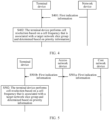
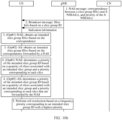
- FIG. 2 is a schematic diagram of a cell reselection method according to this application. The method includes the following steps.
- S201 A terminal device determines priority information of a target network slice group.
- the terminal device determines the priority information of the target network slice group in step S201, where the priority information indicates a priority of the target network slice group.
- Each network slice group in the target network slice group includes one or more network slices.
- the terminal device performs cell reselection based on a cell frequency that is associated with the target network slice group and determined based on the priority information.
- a process in which the terminal device performs cell reselection based on the cell frequency that is associated with the target network slice group and determined based on the priority information may include: When the terminal device is in an idle (IDLE) state or an inactive (INACTIVE) state, the terminal device performs cell reselection based on the cell frequency that is associated with the target network slice group and determined based on the priority information.
- the terminal device may perform cell reselection based on a granularity of a network slice.
- a cell frequency used by the terminal device in a cell reselection process is configured based on a granularity of a network slice, after determining a specific network slice (including one or more network slices), the terminal device performs cell reselection based on a cell frequency associated with the specific network slice.
- that the terminal device performs cell reselection based on a granularity of a network slice may include the following process.
- ARAN may broadcast a cell reselection priority for a slice.
- one or more network slices that the terminal device expects to access may be referred to as target network slices (Intended Slice) (or another name, which is not limited herein).
- the target network slice is network slice-related information received by an access stratum (access stratum, AS) of the terminal device from a non-access stratum (non-access stratum, NAS) in different cases.
- AS access stratum
- NAS non-access stratum
- the terminal device may apply for new NSSAI, that is, the target network slice may be (a network slice indicated by) requested NSSAI.
- the target network slice may be (a network slice indicated by) allowed NSSAI.
- the target network slice may be (a network slice indicated by) suspended NSSAI, that is, (a network slice indicated by) related NSSAI of an activated protocol data unit (protocol data unit, PDU) session in which context of the terminal device is suspended in the inactive state.
- PDU protocol data unit
- Mobile originated traffic mobile originated traffic, MO traffic
- the target network slice is (a network slice indicated by) NSSAI related to a mobile originated (mobile originated, MO) service.
- the terminal device may perform cell reselection based on a granularity of a network slice group.
- a cell frequency used by the terminal device in a cell reselection process is configured based on a granularity of a network slice group, after determining a specific network slice group (including one or more network slice groups), the terminal device performs cell reselection based on a cell frequency associated with the specific network slice group.
- a concept of the network slice group (Slice Group) is further proposed, that is, one or more network slices are grouped and identified according to a specific rule.
- a network device uses cell reselection information (for example, cell frequency information) associated with the network slice group as one piece of information to be sent to the terminal device, and uses slice information of a network slice included in the network slice group as another piece of information to be sent to the terminal device.
- cell reselection information for example, cell frequency information
- the grouping rule may include the following implementations.
- Solution 1 Grouping is performed based on an SST.
- Solution 2 Grouping is performed based on a unified access control (unified access control, UAC) access category (access category, AC).
- UAC unified access control
- AC access category
- Solution 3 Grouping is performed based on another network slice grouping mechanism different from Solution 1 and Solution 2.
- NSSAI Network Slice Group ID
- a same network slice group identifier in the specific area includes same NSSAI.
- the correspondence has the following features.
- Feature 1 bidirectional correspondence. For example, there may be related NSSAI corresponding to a network slice group identifier, and there may be a network slice group identifier corresponding to NSSAI.
- Feature 2 The correspondence is provided by a core network (core network, CN) element for the terminal device by using a NAS, and may be implemented based on a specific terminal device (for example, an SST carried in allowed NSSAI/configured NSSAI/subscribed NSSAI) or a non-specific terminal device (for example, based on actual network deployment).
- CN core network
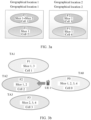
- FIG. 3a shows an example of an SST group carried in allowed NSSAI/configured NSSAI/subscribed NSSAI, for example, an eMBB type and a URLLC type.
- a cell 1 (Cell 1) and a cell 2 (Cell 2) are at a geographical location 1 (Geographical Location 1)
- a cell 3 (Cell 3) and a cell 4 (Cell 4) are at a geographical location 2 (Geographical Location 2).
- a supported access frequency is denoted as a frequency 2 (Frequency 2, F2)
- supported network slices include a network slice 1 and a network slice 2 (Slice 1+Slice 2).
- a supported access frequency is denoted as a frequency 1 (Frequency 1, F1)
- a supported network slice includes the network slice 1 (Slice 1).
- a supported access frequency is denoted as F2
- a supported network slice includes the slice 1.
- a supported access frequency is denoted as F1
- a supported network slice includes the slice 1.
- a correspondence obtained based on an example of a slice group of a specific terminal device may be represented as follows:
- FIG. 3b shows an example of a simple grouping correspondence performed based on an actual deployment status of a network slice in a current network.
- a cell 0 is located in a tracking area 0 (tracking area 0, TA0)
- a cell 1 is located in a tracking area 1 (tracking area 1, TA1)
- a cell 2 is located in a tracking area 2 (tracking area 2, TA2)
- a cell 3 is located in a tracking area 3 (tracking area 3, TA3).
- a supported access frequency is denoted as a frequency 0 (Frequency 0, F0)
- supported network slices include a network slice 1, a network slice 2, a network slice 3, and a network slice 4 (Slice 1, 2, 3, 4).
- a supported access frequency is denoted as F1
- supported network slices include the network slice 1 and the network slice 3 (Slice 1, 3).
- a supported access frequency is denoted as F2
- supported network slices include the network slice 1 and the network slice 2 (Slice 1, 2).
- a supported access frequency is denoted as a frequency 3 (Frequency 3, F3)
- supported network slices include the network slice 2, the network slice 3, and the network slice 4 (Slice 2, 3, 4).
- a correspondence obtained based on an example of a network slice group of a non-specific terminal device may be represented as follows:
- a granularity of area validity corresponding to a correspondence between a network slice group and a network slice may be a TAIRA or a PLMN area.
- the TAIRA granularity indicates a dynamic correspondence, which is determined by a tracking area update (tracking area update, TAU).
- TAU tracking area update
- the PLMN granularity indicates a static correspondence, which is determined based on subscription information between the terminal device and an operator.
- a mainstream selection is to support introduction of a network slice grouping mechanism (that is, Solution 3) different from Solution 1 and Solution 2 to avoid the foregoing problem.
- a network slice grouping mechanism that is, Solution 3
- a reason is that in the SST-based grouping manner, network slices having different SDs may not be differentiated, and in the UAC AC-based grouping manner, because some network slices in a same AC are not supported by some access network devices, misalignment between the terminal device and the access network devices may be caused.
- the terminal device may perform cell reselection based on a granularity of a network slice group by using the implementation process shown in FIG. 2 .
- step S201 of the implementation process shown in FIG. 2 the terminal device determines the priority information of the target network slice group, where the priority information indicates the priority of the target network slice group.
- Each network slice group in the target network slice group includes one or more network slices.
- step S202 of the implementation process shown in FIG. 2 the terminal device performs cell reselection based on the cell frequency that is associated with the target network slice group and determined based on the priority information.
- the target network slice group includes one network slice group.
- the terminal device may not perform the process of "determining the priority information of the target network slice group" in step S201, but directly perform step S202 of "performing cell reselection based on a cell frequency associated with the target network slice group".
- the terminal device determines the cell frequency associated with the target network slice group, and then the terminal device performs cell reselection based on the cell frequency associated with the target network slice group.
- the terminal device performs cell reselection based on the cell frequency associated with the target network slice group.
- the solution in which the terminal device performs cell reselection based on the cell frequency associated with the target network slice group enables the terminal device to perform cell reselection by using a network slice group as a granularity for cell reselection. Therefore, the cell reselection solution is applicable to a scenario in which communication is performed based on a network slice group, and can improve a cell reselection success rate and communication efficiency.
- each network slice group may be associated with one or more cell frequencies.
- the terminal device may separately perform cell reselection at the plurality of cell frequencies based on a frequency (reselection) priority configured (or preconfigured) by the network device.
- the terminal device may determine, based on a broadcast message of the network device, a cell frequency associated with each network slice group in the target network slice group.
- the terminal device may determine, based on a unicast message (for example, an RRC release message) of the network device, a cell frequency associated with each network slice group in the target network slice group.
- a unicast message for example, an RRC release message
- that the terminal device performs cell reselection based on the cell frequency that is associated with the target network slice group and determined based on the priority information in step S202 includes: The terminal device performs cell reselection based on a target cell frequency, where the target cell frequency is one or more cell frequencies that are indicated by the priority information and associated with a network slice group with a highest priority in the target network slice group.
- the terminal device may perform cell reselection at the one or more cell frequencies associated with the network slice group with the highest priority, to improve a success rate of performing cell reselection by the terminal device.
- the terminal device performs cell reselection based on the target cell frequency in step S202, if the terminal device cannot find a neighboring cell that meets a camping condition after performing frequency sweep based on the target cell frequency, the terminal device performs cell reselection based on one or more cell frequencies associated with a network slice group with a second highest priority (or another priority) in the target network slice group.
- the terminal device performs cell reselection based on the target cell frequency includes: The terminal device performs cell reselection based on a frequency priority corresponding to the target cell frequency.
- the target cell frequency may include one or more cell frequencies, and the terminal device may determine the target cell frequency based on a frequency (reselection) priority configured (or preconfigured) by the network device, so that the terminal device performs cell reselection based on the frequency priority corresponding to the target cell frequency in step S202.
- the terminal device may determine, based on a broadcast message of the network device, the one or more cell frequencies associated with the network slice group with the highest priority in the target network slice group, that is, the target cell frequency; or the terminal device may determine, based on a unicast message (for example, an RRC release message) of the network device, the one or more cell frequencies associated with the network slice group with the highest priority in the target network slice group, that is, the target cell frequency.
- a broadcast message of the network device the one or more cell frequencies associated with the network slice group with the highest priority in the target network slice group, that is, the target cell frequency
- a unicast message for example, an RRC release message
- the method further includes: The terminal device receives indication information from the network device, where the indication information indicates to perform cell reselection based on a frequency priority corresponding to a first cell frequency after cell reselection performed based on the target cell frequency fails, and the first cell frequency includes at least one of the following: a cell frequency associated with one or more network slices included in a network slice set, where the network slice set includes a network slice that the terminal device expects to access; a cell frequency that is not associated with a network slice; a cell frequency associated with one or more network slice groups included in a network slice group set, where the network slice group set includes a network slice group corresponding to a network slice that the terminal device expects to access; a cell frequency that is not associated with a network slice group; or one or more cell frequencies that are indicated by the priority information and associated with a network slice group other than the network slice group with the highest priority in the target network slice group.
- step S202 when the first cell frequency does not include the one or more cell frequencies (denoted as second cell frequencies for ease of description) that are indicated by the priority information and associated with the network slice group other than the network slice group with the highest priority in the target network slice group, that the terminal device performs cell reselection based on the target cell frequency in step S202 includes: After the terminal device determines that cell reselection performed based on the target cell frequency fails, the terminal device performs cell reselection based on the second cell frequency. After the terminal device determines that cell reselection performed based on the second cell frequency fails, the terminal device performs cell reselection based on the first cell frequency.
- the terminal device may further receive the indication information, so that in the process of performing cell reselection based on the target cell frequency in step S202, the terminal device may determine, based on the indication information, that after cell reselection performed based on the target cell frequency fails, the terminal device may perform cell reselection based on the frequency priority corresponding to the first cell frequency. In this way, when cell reselection performed based on the target cell frequency fails, the terminal device may further perform cell reselection based on the indication information, to further improve a success rate of performing cell reselection by the terminal device.
- the network slice set may further include another network slice.
- the network slice included in the network slice set may include configured S-NSSAI and/or allowed S-NSSAI, and there may be one or more pieces of configured S-NSSAI or allowed S-NSSAI.
- an identifier for example, a network slice index or a network slice name
- the network slice included in the network slice set may be implemented in a form of a list, where the list may be referred to as a slice list (Slice List); or may be implemented in another form, for example, a mathematical relational expression, a bitmap, or another form. This is not limited herein.
- the network slice group set may further include another network slice group.
- a network slice included in any network slice group in the network slice group set may include configured S-NSSAI and/or allowed S-NSSAI, and there may be one or more pieces of configured S-NSSAI or allowed S-NSSAI.
- an identifier for example, a network slice group index or a network slice group name
- a network slice group index or a network slice group name may be implemented in a form of a list, where the list may be referred to as a slice group list (Slice Group List); or may be implemented in another form, for example, a mathematical relational expression, a bitmap, or another form. This is not limited herein.
- the first cell frequency may include the foregoing plurality of implementations.
- a quantity of the foregoing "at least one" included in the first cell frequency is k for description, where k is greater than or equal to 1.
- the following further describes implementations of the indication information based on different values of k.
- the first cell frequency may include one of the five items in the foregoing "at least one".
- the first cell frequency may include at least two of the five items in the foregoing "at least one", and an execution sequence of the at least two items may not be limited.
- the first cell frequency may include at least two of the five items in the foregoing "at least one", and the terminal device may determine an execution sequence of the at least two items in a configuration or preconfiguration manner.
- the terminal device may determine the execution sequence of the at least two items in the configuration or preconfiguration manner. This is not limited herein.
- the indication information is an information element with a variable value.
- the information element with the variable value indicates whether to perform cell reselection based on the frequency priority corresponding to the first cell frequency after cell reselection performed based on the target cell frequency fails.
- the indication information when a value of the indication information is a first value, the indication information indicates to perform cell reselection based on the frequency priority corresponding to the first cell frequency after cell reselection performed based on the target cell frequency fails.
- the indication information indicates that cell reselection does not need to be performed based on the frequency priority corresponding to the first cell frequency after cell reselection performed based on the target cell frequency fails.
- the first value is different from the second value.
- the first cell frequency may include one of the five items in the foregoing "at least one".
- the value corresponding to the indication information may include a Boolean value, that is, the Boolean value indicates whether to perform cell reselection based on a frequency priority corresponding to one of the five frequencies.
- the first value is "true (true)”
- the second value is "false (false)”.
- the value corresponding to the indication information may include a bit value, that is, the bit value indicates whether to perform cell reselection based on a frequency priority corresponding to one of the five frequencies. For example, when a quantity of bits occupied by the indication information is "1", the first value is "1", and the second value is "0"; or the first value is "0", and the second value is "1".
- the first cell frequency may include at least two of the five items in the foregoing "at least one".
- the value corresponding to the indication information may include one Boolean value, that is, one Boolean value indicates whether to perform cell reselection based on frequency priorities corresponding to the at least two cell frequencies.
- the value corresponding to the indication information may include one bit value, that is, one bit value indicates whether to perform cell reselection based on frequency priorities corresponding to the at least two cell frequencies.
- the value corresponding to the indication information may include at least two Boolean values, that is, at least two Boolean values respectively indicate whether to perform cell reselection based on frequency priorities corresponding to the at least two cell frequencies.
- the value corresponding to the indication information may include at least two bit values, that is, at least two bit values respectively indicate whether to perform cell reselection based on frequency priorities corresponding to the at least two cell frequencies.
- the indication information is an optional information element.
- the optional information element indicates whether to perform cell reselection based on the frequency priority corresponding to the first cell frequency after cell reselection performed based on the target cell frequency fails.
- a message sent by the network device when a message sent by the network device includes the indication information, it indicates to perform cell reselection based on the frequency priority corresponding to the first cell frequency after cell reselection performed based on the target cell frequency fails; or when a message sent by the network device does not include the indication information, it indicates that cell reselection does not need to be performed based on the frequency priority corresponding to the first cell frequency after cell reselection performed based on the target cell frequency fails.
- the message sent by the network device may include a broadcast message, an RRC message, a MAC CE message, a DCI message, or the like, or may be another message. This is not limited herein.
- the indication information includes at least one of the following: a quantity of times of performing cell reselection based on the first cell frequency, duration of performing cell reselection based on the first cell frequency, a start moment of performing cell reselection based on the first cell frequency, or an end moment of performing cell reselection based on the first cell frequency.
- a quantity of items included in the "at least one" herein is denoted as P below, where P is greater than or equal to 1.
- the indication information received by the terminal device may include at least one cell reselection manner in the "P items", so that when the terminal device fails to perform cell reselection based on the target cell frequency, the terminal device may further determine, based on the indication information, a reselection manner of performing cell reselection based on the first cell frequency, to further improve a success rate of performing cell reselection by the terminal device.
- the first cell frequency may include one of the five items in the foregoing "at least one".
- the indication information may indicate, by using at least one of the P items, a reselection manner of performing cell reselection based on a frequency priority corresponding to one of the five frequencies.
- the first cell frequency may include at least two of the five items in the foregoing "at least one".
- the indication information may include one piece of "at least one of the P items" information, to indicate, by using the one piece of "at least one of the P items” information, a reselection manner of performing cell reselection based on frequency priorities corresponding to the at least two cell frequencies.
- the indication information may include at least two pieces of "at least one of the P items" information, to respectively indicate, by using the at least two pieces of "at least one of the P items” information, a reselection manner of performing cell reselection based on frequency priorities corresponding to the at least two cell frequencies.
- the terminal device performs cell reselection based on the cell frequency that is associated with the target network slice group and determined based on the priority information. In other words, the terminal device performs cell reselection based on a cell frequency that is associated with the target network slice group and determined based on the priority of the target network slice group.
- the solution in which the terminal device performs cell reselection based on the cell frequency that is associated with the target network slice group and determined based on the priority information enables the terminal device to perform cell reselection by using a network slice group as a granularity for cell reselection. Therefore, the cell reselection solution is applicable to a scenario in which communication is performed based on a network slice group, and can improve a cell reselection success rate and communication efficiency.
- the network device uses cell reselection information (for example, cell frequency information) associated with the network slice group as one piece of information to be sent to the terminal device, and uses slice information of a network slice included in the network slice group as another piece of information to be sent to the terminal device.
- cell reselection information for example, cell frequency information
- the target network slice group includes the network slice that the terminal device expects to access.
- the target network slice group includes the network slice that the terminal device expects to access.
- the terminal device determines the target network slice group based on the network slice that the terminal device expects to access.
- the terminal device may determine the target network slice group in advance based on one or more network slices that the terminal device expects to access.
- the target network slice group determined by the terminal device is a group of network slices that the terminal device expects to access.
- the terminal device may perform communication in the target cell, to obtain a network service (associated with a service) corresponding to the network slice that the terminal device expects to access.
- the network slice that the terminal device expects to access includes at least one of the following: a network slice indicated by an allowed (Allowed) single network slice selection assistance information (single network slice selection assistance information, NSSAI) information element, a network slice indicated by a requested NSSAI (Requested NSSAI) information element, a network slice indicated by a suspended NSSAI (suspended NSSAI) information element, or a network slice related to a mobile originated traffic (mobile originated traffic, MO traffic) service.
- NSSAI single network slice selection assistance information
- NSSAI single network slice selection assistance information
- Requested NSSAI Request NSSAI
- suspended NSSAI suspended NSSAI
- a network slice related to a mobile originated traffic mobile originated traffic, MO traffic
- the terminal device may determine, in different scenarios based on the network slice (denoted as a first network slice, or may be referred to as a target network slice (Intended Slice)) indicated in the foregoing plurality of manners, the network slice that the terminal device expects to access. For example, for a terminal device in an idle (Idle) state, the terminal device may determine one or more network slices indicated by allowed NSSAI as network slices that the terminal device expects to access. For another example, for a terminal device in an inactive (Inactive) state, the terminal device may determine one or more network slices indicated by suspended NSSAI as network slices that the terminal device expects to access. Therefore, a plurality of implementations are provided to implement communication in different scenarios.
- a process of determining the first network slice by the terminal device that is, a process of determining one or more network slices that the terminal device expects to access
- the terminal device performs cell reselection based on a granularity of a network slice. Details are not described herein again.
- the target network slice group is determined based on (at least) a correspondence between a network slice and a network slice group, and when the correspondence between a network slice and a network slice group (denoted as a first correspondence for ease of reference below) is invalid (or is not applicable, is not adapted, or the like) in a first area in which the terminal device is currently located, the target network slice group includes a default network slice.
- the first correspondence is a correspondence between a network slice and a network slice group, and the first area includes a registration area (registration area, RA), a tracking area (tracking area, TA), or a public land mobile network (public land mobile network, PLMN) area.
- the terminal device may determine a default network slice group as the target network slice group when the first correspondence is invalid in the first area in which the terminal device is currently located. In other words, the terminal device determines that the target network slice group includes the default network slice. In this way, the terminal device performs cell reselection based on a cell frequency associated with the default network slice group provided by the network device in the first area, to avoid a cell reselection failure.
- the default network slice group includes one or more default network slices.
- the terminal device may determine that the target network slice group includes the default network slice group.
- a network slice included in the default network slice group may be specifically one or more default network slices (Default Slice) (defined by an operator).
- the first correspondence may be a correspondence that is between a network slice and a network slice group and that is indicated by the network device and last received by the terminal device.
- the correspondence that is between a network slice and a network slice group and that is indicated by the network device may be carried in a NAS message (or referred to as a unicast message).
- the first correspondence is associated with a second area
- the second area may include an RA, a TA, or a PLMN area.
- different areas RA, TA, or PLMN
- there may be different correspondences between a network slice and a network slice group. That the target network slice group is determined based on the first correspondence may include: The terminal device determines the target network slice group based on the first correspondence.
- the terminal device receives a system message, and the system message may include information indicating the first area in which the terminal device is currently located.
- the terminal device determines that the first correspondence is valid; or when the first area indicated by the system message is different from the second area associated with the first correspondence, the terminal device determines that the first correspondence is invalid.
- the terminal device may directly determine, based on the target network slice group, the target cell including a plurality of target network slices, so that the terminal device can more quickly obtain more types of network services in the target cell that supports communication based on the plurality of target network slices, to improve user experience.
- the terminal device may determine the priority information of the target network slice group based on a plurality of implementations. For example, the terminal device may determine the priority information based on an indication of the network device. For another example, the terminal device determines the priority information based on locally recorded historical slice information. The following separately provides descriptions with reference to specific implementation examples.
- a process in which the terminal device determines the priority information of the target network slice group may specifically include: The terminal device receives the priority information from the network device. In other words, the terminal device determines the priority information based on an indication of the network device.
- the priority information and the foregoing "indication information indicating to perform cell reselection based on the frequency priority corresponding to the first cell frequency after cell reselection performed based on the target cell frequency fails" may be carried in a same message.
- the priority information is carried in first indication information, and the first indication information indicates at least the priority information.
- the first indication information further indicates a priority of a network slice group other than the target network slice group.
- an implementation process of the cell reselection method shown in FIG. 2 may be represented as an implementation process shown in FIG. 4 .
- the implementation process of step S201 shown in FIG. 2 is implemented by "step S401 in which the terminal device receives the first indication information from the network device".
- step S402 refer to the implementation process of step S202 shown in FIG. 2 .
- the terminal device receives the first indication information from the network device in step S401, and correspondingly, the network device sends the first indication information to the terminal device in step S401.
- the terminal device may determine the priority information of the target network slice group based on the first indication information sent by the network device, where the first indication information indicates at least the priority information. In this way, the terminal device can determine, based on an indication (for example, the first indication information) of the network device, a network slice group configured by the network device, thereby improving a success rate of subsequent cell reselection in step S402.
- the network device may be specifically an access network device.
- the implementation process may be implemented by using a procedure shown in FIG. 5 .
- a cell reselection method shown in FIG. 5 includes the following process.
- S501a A core network device sends first indication information to an access network device.
- S501b The access network device sends the first indication information to a terminal device.
- the terminal device performs cell reselection based on a cell frequency that is associated with a target network slice group and determined based on priority information (indicated by the first indication information).
- step S502 shown in FIG. 5 refer to the implementation process of step S402.
- Step S401 shown in FIG. 4 is implemented by using step S501a and step S501b shown in FIG. 5 .
- the access network device may receive, in step S501a, a NAS message that carries the first indication information and that is sent by the core network device.
- step S501b the access network device forwards the NAS message that carries the first indication information to the terminal device, so that the terminal device receives the first indication information.
- the priority information is determined based on a quantity and/or priority information of network slices included in each network slice group in the target network slice group.
- a process in which the terminal device determines the priority information of the target network slice group specifically includes: The terminal device determines the priority information based on first information, where the first information indicates the quantity and/or priority information of network slices included in each network slice group in the target network slice group.
- an implementation process of the cell reselection method shown in FIG. 2 may be represented as an implementation process shown in FIG. 6 .
- the implementation process of step S201 shown in FIG. 2 may be implemented by using "step S601a in which a core network device sends first information to an access network device", "step S601b in which the access network device sends the first information to a terminal device", and "step S602 in which the terminal device determines priority information based on the first information”.
- step S603 refer to the implementation process of step S202 shown in FIG. 2 .
- the access network device may receive, in step S601a, a NAS message that carries the first information and that is sent by the core network device.
- the access network device forwards the NAS message that carries the first information to the terminal device, so that the terminal device receives the first information.
- the terminal device may determine the priority information of the target network slice group based on information about a network slice included in the target network slice group indicated by the first information. In other words, in step S602, the terminal device determines the priority information based on the information (for example, priority information or quantity information) about the network slice included in the target network slice group.
- the first information is determined based on an indication of the network device in step S601b, so that the terminal device can determine, based on the indication (namely, the first information) of the network device, information about a network slice included in a network slice group configured by the network device, thereby improving a success rate of subsequent cell reselection in step S603 (namely, step S202 shown in FIG. 2 ).
- the first information includes at least one of the following:
- the first information may be specifically one piece or a combination of the foregoing information.
- a basis for determining the priority information may be provided from information in a plurality of dimensions (for example, a dimension of priority information and a dimension of quantity information).
- each network slice may appear in the target network slice group only once.
- network slices included in different network slice groups in the target network slice group are different (or network slices included in different network slice groups in the target network slice group do not include a same network slice).
- the implementation process shown in FIG. 2 may alternatively be implemented by using an implementation process shown in FIG. 7 .
- the implementation process shown in FIG. 7 includes the following steps.
- S701a A core network device sends second information to an access network device.
- the access network device sends the second information to a terminal device.
- the terminal device performs cell reselection based on a cell frequency that is associated with a target network slice group and determined based on the second information.
- a difference from the implementation process of the cell reselection method shown in FIG. 2 lies in that in the implementation shown in FIG. 7 , after the terminal device receives the second information in step S701b, in step S702, the terminal device may determine, based on a priority of a network slice indicated by the second information, a network slice group corresponding to a network slice with a highest priority, and perform cell reselection based on a frequency associated with the network slice group.
- a priority of a network slice may be equivalent to a priority of a network slice group to which the network slice belongs. Therefore, in step S702, the terminal device may perform, based on the priority of the network slice (equivalent to a priority of the target network slice group) indicated by the second information, cell reselection at the cell frequency associated with the target network slice group. This provides a solution in the special scenario shown in FIG. 7 .
- a process in which the terminal device determines the priority information of the target network slice group specifically includes: The terminal device determines the priority information based on information about a historically used (or historically accessed) network slice.
- the terminal device may determine the priority information of the target network slice group based on the information about the network slice historically used by the terminal device.
- the information about the historically used network slice may reflect specific information (for example, service preference information or duration) of the terminal device to some extent, so that the terminal device performs, in step S202 shown in FIG. 2 , cell reselection based on the priority information determined based on the information about the historically accessed network slice.
- the determined target cell can provide a network service corresponding to the specific information of the terminal device, to improve user experience.
- a cell 1 is a camping cell (Camping Cell) of a terminal device (denoted as UE), and a cell 2, a cell 3, and a cell 4 are candidate cells of the UE.
- UE camping Cell
- a supported access frequency is denoted as F1
- supported network slices include a network slice 1, a network slice 3, and a network slice 4 (Slice 1, 3, 4).
- a supported access frequency is denoted as F2
- supported network slices include a network slice 2, the network slice 3, the network slice 4, and a network slice 5 (Slice 2, 3, 4, 5).
- a supported access frequency is denoted as F3
- supported network slices include the network slice 1, the network slice 2, and the network slice 5 (Slice 1, 2, 5).
- a supported access frequency is denoted as F4
- supported network slices include the network slice 3 and the network slice 4 (Slice 3, 4).
- a correspondence (determined based on Solution 1, Solution 2, Solution 3, or another solution) between different network slice groups and a plurality of network slices may include the following.
- the foregoing four cells are located in a same RA (or TA or PLMN area). In other words, the correspondence based on the foregoing grouping is valid in all the four cells.
- an ascending order of slice priorities meets: the network slice 1, the network slice 2, the network slice 3, the network slice 4, and the network slice 5, denoted as P(S1) ⁇ P(S2) ⁇ P(S3) ⁇ P(S4) ⁇ P(S5).
- step 1 and step 2 in any one of the following implementation example 1 to implementation example 6 are an implementation example of step S201 in the foregoing embodiment in FIG. 2
- step 3 in any one of the following implementation example 1 to implementation example 6 is an implementation example of step S202 in the foregoing embodiment in FIG. 2 .
- Implementation example 1 is an implementation example of Implementation 1.
- Step 1 The terminal device determines a target network slice group corresponding to (one or more) target network slices.
- a NAS of the terminal device determines that the target network slice is S3, and the terminal device determines that a correspondence between a target network slice group and associated NSSAI is valid in a current RA (or TA or PLMN area). In this case, the terminal device finds a corresponding target network slice group based on S-NSSAI of S3 by using the correspondence. In other words, the terminal device determines that the target network slice group is the network slice group 1, the network slice group 2, and the network slice group 4 (denoted as SG1, SG2, and SG4).
- Step 2 The terminal device determines priority information of the target network slice group based on a NAS message (from a CN).
- the terminal device may perform filtering in step 2 based on a quantity of target network slices included in each network slice group in the target network slice group. Because a quantity of target network slices (that is, S3) included in each of SG1, SG2, and SG4 is 1, the terminal device determines that the target network slice group does not need to be filtered and excludes some network slice groups.
- a process in which the terminal device determines that the target network slice group includes the network slice group 1, the network slice group 2, and the network slice group 4 may include the following two implementations.
- the target network slice group is the network slice group 1, the network slice group 2, and the network slice group 4.
- the priority of the target network slice group may be obtained from a NAS message that is directly sent by the CN to the terminal device through the NAS.
- a priority form of the target network slice group may be a specific value assigned to a priority corresponding to each target network slice group, or may be a target network slice group ID list obtained through sorting according to a specific rule.
- the following implementation process may be obtained based on the foregoing condition described in the scenario shown in FIG. 8 .
- a process in which the terminal device determines the priority information of the target network slice group based on the NAS message (from the CN) may include the following two implementations.
- Manner 1 The NAS of the terminal device obtains the priority of the target network slice group based on the priority information that is of the target network slice group and that is directly provided by the CN.
- Manner 2 The NAS of the terminal device forwards, to the AS, the priority information that is of the target network slice group and that is directly provided by the CN, and then the AS obtains the priority of the target network slice group based on the information.
- Step 3 The terminal device performs cell reselection based on the priority information of the target network slice group obtained in step 2.
- the terminal device performs cell reselection based on a frequency priority corresponding to a target network slice group with a highest priority. For example, it can be learned from step 2 that the target network slice group with the highest priority is SG1, and cell reselection of the terminal device is performed based on a broadcast frequency (reselection) priority corresponding to SG1.
- Implementation example 2 is an implementation example of Implementation 2.
- Step 1 The terminal device determines a target network slice group corresponding to a target network slice.
- ANAS of the terminal device determines that the target network slice is S1, and it is known that a correspondence between a target network slice group and associated NSSAI is valid in a current RA.
- a corresponding target network slice group for example, SG1 and SG3, is found based on S-NSSAI of S1 by using the correspondence.
- Step 2 The terminal device determines priority information of the target network slice group based on first information.
- the terminal device determines a priority of the target network slice group based on the first information (including a quantity of network slices associated with the target network slice group and a priority corresponding to each network slice).
- an implementation form of the priority information may be a specific value assigned to a priority corresponding to each target network slice group, or may be a target network slice group list obtained through sorting according to a specific rule.
- the foregoing process may further include two implementations.
- the terminal device may determine the priority information based on a slice quantity of network slices included in each network slice group in the target network slice group. Specifically, the terminal device sets a priority based on a quantity of network slices associated with the target network slice group. A larger quantity of network slices associated with the target network slice group corresponds to a higher priority of the target network slice group.
- both SG1 and SG3 are associated with three network slices. Therefore, priorities further need to be differentiated.
- the terminal device may determine the priority information based on a priority of a network slice included in each network slice group in the target network slice group. Specifically, the terminal device sets a priority based on a sum of network slice priorities corresponding to network slices associated with the target network slice group. A larger sum of priorities of the network slices associated with the target network slice group corresponds to a higher priority of the target network slice group.
- priorities of SG1 and SG3 further need to be differentiated.
- Values and a sum (Sum) of network slice priorities provided in this embodiment are logical concepts of the priorities.
- P(Sx) represents only a priority of Sx.
- the priority may be a specific value (denoted as value), or may be a priority sequence obtained by sorting a plurality of network slices.
- a method for determining the priority of the target network slice group is similar to the foregoing method. If a network slice priority is obtained based on a priority sequence obtained by sorting a plurality of network slices, to further calculate the priority of the target network slice group by using the sum, a value needs to be first assigned to the network slice priority.
- a specific implementation is not limited.
- the terminal device may determine the priority information based on priority information of a network slice included in the target network slice group.
- the terminal device sets a priority of each network slice group in the target network slice group based on a priority corresponding to a network slice with a highest priority associated with the network slice group.
- a higher priority corresponding to the network slice with the highest priority associated with the target network slice group corresponds to a higher priority of the target network slice group. If network slices with the highest priority correspond to a same priority, a network slice with the highest priority continues to be found in remaining slices, and so on, until the priority of the target network slice group is differentiated.
- a priority corresponding to a network slice with a highest priority in network slices associated with SG1 is P(S4)
- a priority corresponding to a network slice with a highest priority in network slices associated with SG3 is P(S5).
- an implementation process of step 2 may include the following two implementations.
- ANAS of the terminal device obtains the priority of the target network slice group based on an identifier of the target network slice group, a quantity of network slices associated with the target network slice group, and a priority corresponding to each network slice.
- Manner 2 ANAS of the terminal device forwards an identifier of the target network slice group, a quantity of network slices associated with the target network slice group, and a priority corresponding to each network slice to an AS, and then the AS obtains the priority of the target network slice group based on the foregoing information.
- Step 3 The terminal device performs cell reselection based on the priority information obtained in step 2.
- the terminal device performs cell reselection based on a frequency priority corresponding to a target network slice group with a highest priority. For example, it can be learned from step 2 that the target network slice group with the highest priority is SG3, and cell reselection of the terminal device is performed based on a broadcast frequency (reselection) priority corresponding to SG3.
- Step 1 The terminal device determines a target network slice group corresponding to a target network slice.
- ANAS of the terminal device determines that the target network slice is S2, and it is known that a correspondence between a target network slice group and associated NSSAI is valid in a current RA.
- a corresponding target network slice group that is, SG2 and SG3, is found based on S-NSSAI of S2 by using the correspondence.
- Step 2 The terminal device determines priority information of the target network slice group based on first information.
- the terminal device determines a priority of the target network slice group based on the first information (including a quantity of network slices associated with the target network slice group and a priority corresponding to each network slice) in step 2.
- an implementation form of the priority information may be a specific value assigned to a priority corresponding to each target network slice group, or may be a target network slice group list obtained through sorting according to a specific rule.
- an implementation process of step 2 may include the following two implementations.
- ANAS of the terminal device obtains the priority of the target network slice group based on an identifier of the target network slice group, a quantity of network slices associated with the target network slice group, and a priority corresponding to each network slice.
- Manner 2 ANAS of the terminal device forwards an identifier of the target network slice group, a quantity of network slices associated with the target network slice group, and a priority corresponding to each network slice to an AS, and then the AS obtains the priority of the target network slice group based on the foregoing information.
- the target network slice is the network slice 2
- a determining process in which the terminal device sequentially participates in "determining the priority information" based on the information included in the first information in step 2 refer to the foregoing determining process corresponding to the case in which the target network slice is the network slice 1. Details are not described herein again.
- the terminal device may determine the priority information based on a slice quantity of network slices included in each network slice group in the target network slice group. Specifically, the terminal device sets a priority based on a quantity of network slices associated with the target network slice group. A larger quantity of network slices associated with the target network slice group corresponds to a higher priority of the target network slice group.
- SG2 is associated with four slices
- Step 3 The terminal device performs cell reselection based on the priority information obtained in step 2.
- the terminal device performs cell reselection based on a frequency priority corresponding to a target network slice group with a highest priority. For example, it can be learned from step 2 that the target network slice group with the highest priority is SG2, and cell reselection of the terminal device is performed based on a broadcast frequency (reselection) priority corresponding to SG2.
- the network device before step 3, the network device further sends indication information.
- the terminal device receives the indication information from the network device, where the indication information indicates to perform cell reselection based on a frequency priority corresponding to a first cell frequency after cell reselection performed based on the target cell frequency fails, and the first cell frequency includes at least one of the following: a cell frequency associated with one or more network slices included in a network slice set, where the network slice set includes a network slice that the terminal device expects to access; a cell frequency that is not associated with a network slice; a cell frequency associated with one or more network slice groups included in a network slice group set, where the network slice group set includes a network slice group corresponding to a network slice that the terminal device expects to access; a cell frequency that is not associated with a network slice group; or one or more cell frequencies that are indicated by the priority information and associated with a network slice group other than the network slice group with the highest priority in the target network slice group.
- the terminal device may further receive the indication information, so that in the process of performing cell reselection based on the target cell frequency (one or more cell frequencies corresponding to SG2) in step 3, the terminal device may determine, based on the indication information, that after cell reselection performed based on the target cell frequency fails, the terminal device may perform cell reselection based on the frequency priority corresponding to the first cell frequency. In this way, when cell reselection performed based on the target cell frequency fails, the terminal device may further perform cell reselection based on the indication information, to further improve a success rate of performing cell reselection by the terminal device.
- step 3 when the first cell frequency does not include the one or more cell frequencies (denoted as second cell frequencies for ease of description) that are indicated by the priority information and associated with the network slice group other than the network slice group with the highest priority in the target network slice group, that the terminal device performs cell reselection in step 3 includes: After the terminal device determines that cell reselection performed based on the one or more cell frequencies corresponding to SG2 fails, the terminal device performs cell reselection based on the second cell frequency (that is, one or more cell frequencies corresponding to SG3). After the terminal device determines that cell reselection performed based on the second cell frequency fails, the terminal device performs cell reselection based on the first cell frequency.
- the second cell frequency that is, one or more cell frequencies corresponding to SG3
- the indication information may be an information element with a variable value (for example, one or more Boolean values, or one or more bit values), or the indication information may be an optional information element.
- a variable value for example, one or more Boolean values, or one or more bit values
- the indication information may be an optional information element.
- the terminal device may perform a plurality of cell reselection processes based on a plurality of implementations of the first cell frequency in step 3.
- the terminal device after the terminal device fails to perform cell reselection based on the one or more cell frequencies corresponding to SG2 in step 3, the terminal device performs cell reselection based on one or more cell frequencies corresponding to SG1 and SG3.
- the terminal device when the first cell frequency includes the one or more cell frequencies that are indicated by the priority information and associated with the another network slice group other than the network slice group with the highest priority in the target network slice group, it can be learned from step 1 that the "another network slice group" includes SG3.
- the terminal device after the terminal device fails to perform cell reselection based on the one or more cell frequencies corresponding to SG2 in step 3, the terminal device performs cell reselection based on one or more cell frequencies corresponding to SG3.
- the terminal device when the first cell frequency includes the cell frequency that is not associated with a network slice and/or the cell frequency that is not associated with a network slice group, after the terminal device fails to perform cell reselection based on the one or more cell frequencies corresponding to SG2 in step 3, the terminal device falls back to a legacy (legacy) cell reselection procedure.
- the terminal device falls back to a legacy (legacy) cell reselection procedure.
- one or more cell frequencies included in the first cell frequency do not need to be determined based on a network slice (and/or a network slice group).
- the first cell frequency may include any one of the five items in the foregoing "at least one" is used as an example for description.
- the terminal device may determine, in the configuration or preconfiguration manner, the execution sequence of the at least two items. For an implementation process of each of the at least two items, refer to the description of the foregoing example. Details are not described herein again.
- Implementation example 3 is an implementation example of Implementation 2.
- Step 1 The terminal device determines a target network slice group corresponding to a target network slice.
- ANAS of the terminal device determines that the target network slices are S1, S2, and S4, and it is known that a correspondence between a target network slice group and associated NSSAI is valid in a current RA.
- a corresponding target network slice group that is, SG1, SG2, SG3, and SG4, is found based on S-NSSAI of S1, S2, and S4 by using the correspondence.
- Step 2 The terminal device determines priority information of the target network slice group based on first information.
- the terminal device determines a priority of the target network slice group based on the first information (including a quantity of network slices associated with the target network slice group and a priority corresponding to each network slice) in step 2.
- an implementation form of the priority information may be a specific value assigned to a priority corresponding to each target network slice group, or may be a target network slice group list obtained through sorting according to a specific rule.
- the foregoing process may further include two implementations.
- the terminal device may determine the priority information based on a slice quantity of network slices included in each network slice group in the target network slice group. Specifically, the terminal device sets a priority based on a quantity of slices associated with the target network slice group. A larger quantity of slices associated with the target network slice group corresponds to a higher priority of the target network slice group.
- SG1, SG2, and SG3 are respectively associated with three, four, and three network slices. Therefore, it can be learned that a priority corresponding to SG2 is the highest, and priorities of SG1 and SG3 further need to be differentiated (a remaining procedure in step 2 is similar to that in the implementation example 2, and for details, refer to the foregoing implementation process).
- the foregoing process may further include two implementations.
- ANAS of the terminal device obtains the priority of the target network slice group based on an identifier of the target network slice group, a quantity of slices associated with the target network slice group, and a priority corresponding to each network slice.
- Manner 2 A NAS of the terminal device forwards an identifier of the target network slice group, a quantity of slices associated with the target network slice group, and a priority corresponding to each network slice to an AS, and then the AS obtains the priority of the target network slice group based on the foregoing information.
- Step 3 Perform cell reselection based on a frequency priority corresponding to a target network slice group with a highest priority.
- step 2 it can be learned from step 2 that the target network slice group with the highest priority is SG2, and cell reselection of the terminal device is performed based on a broadcast frequency (reselection) priority corresponding to SG2.
- any one of the implementation example 2 and the implementation example 3 may be implemented by using a process shown in FIG. 9 .
- a target network slice is denoted as an intended slice
- an identifier of a target network slice group is denoted as an intended slice group ID(s).
- the process shown in FIG. 9 specifically includes the following steps.
- the terminal device determines, in step A5, that a correspondence between a network slice and a network slice group (for an implementation process of the correspondence, refer to the foregoing description in FIG. 2 , and details are not described herein again) is invalid (or is not applicable, is not adapted, or the like) in a first area in which the terminal device is currently located, the terminal device determines that cell reselection cannot be performed based on a frequency priority corresponding to the intended slice group ID with the highest priority determined in step A4 (or step A7 or step A10). Then, the terminal device may perform cell reselection based on a frequency priority corresponding to a default network slice group including one or more default network slices, to improve a cell reselection success rate.
- the implementation processes of the foregoing implementation example 2 and implementation example 3 may alternatively be implemented by using a process shown in FIG. 10a . As shown in FIG. 10a , the process includes the following steps.
- the terminal device is denoted as UE and network devices include an access network device denoted as a gNB and a core network device denoted as a CN is used for description.
- the process shown in FIG. 10a may alternatively be implemented by using a process shown in FIG. 10b .
- a difference between the two processes lies in an implementation of step 2, and other steps are the same.
- the broadcast message may further include "indication information indicating to perform cell reselection based on the frequency priority corresponding to the first cell frequency after cell reselection performed based on the target cell frequency fails".
- the "indication information” and the "first cell frequency” refer to the foregoing descriptions. Details are not described herein again. Therefore, in step 5 shown in FIG.
- the terminal device when the terminal device fails to perform cell reselection based on the frequency priority corresponding to the intended slice group ID with the highest priority, the terminal device may perform cell reselection based on the first cell frequency indicated by the indication information, to improve a cell reselection success rate of the terminal device.
- the "indication information" may alternatively be carried in another message, for example, an RRC message, a MAC CE message, or a DCI message, or may be another message. This is not limited herein.
- system overheads can be reduced, transmission security can be ensured, and a priority of a slice group ID is determined to adapt to a solution of performing cell reselection based on a granularity of a network slice group and a service scenario triggered by MO.
- Implementation example 4 is an implementation example of Implementation 2.
- Step 1 The terminal device determines a target network slice group corresponding to a target network slice.
- a NAS of the terminal device determines that the target network slice is S3, and it is known that a correspondence between a target network slice group and associated NSSAI is valid in a current RA.
- a corresponding target network slice group that is, SG1, SG2, and SG4, is found based on S-NSSAI of S3 by using the correspondence.
- Step 2 The terminal device determines priority information of the target network slice group based on first information.
- the terminal device determines a priority of the target network slice group based on the first information (including a priority corresponding to each network slice associated with the target network slice group) in step 2.
- an implementation form of the priority information may be a specific value assigned to a priority corresponding to each target network slice group, or may be a target network slice group list obtained through sorting according to a specific rule.
- the foregoing process may further include two implementations.
- the terminal device may determine the priority information based on priority information of a network slice included in the target network slice group.
- the terminal device sets a priority of each network slice group in the target network slice group based on a priority corresponding to a network slice with a highest priority associated with the network slice group.
- a higher priority corresponding to the network slice with the highest priority associated with the target network slice group corresponds to a higher priority of the target network slice group. If network slices with the highest priority correspond to a same priority, a network slice with a highest priority continues to be found in remaining slices, and so on, until the priority of the target network slice group is differentiated.
- priorities corresponding to network slices with a highest priority in network slices associated with SG1, SG2, and SG4 are respectively P(S4), P(S5), and P(S4). It can be learned from P(S4) ⁇ P(S5) that a priority corresponding to SG2 is the highest.
- the foregoing process may further include two implementations.
- ANAS of the terminal device obtains the priority of the target network slice group based on an identifier of the target network slice group, and a priority corresponding to each network slice associated with the target network slice group.
- Manner 2 A NAS of the terminal device forwards an identifier of the target network slice group, and a priority corresponding to each network slice associated with the target network slice group to an AS, and then the AS obtains the priority of the target network slice group based on the foregoing information.
- Step 3 The terminal device performs cell reselection based on the priority information obtained in step 2.
- the terminal device performs cell reselection based on a frequency priority corresponding to a target network slice group with a highest priority. For example, it can be learned from step 2 that the target network slice group with the highest priority is SG2, and cell reselection of the terminal device is performed based on a broadcast frequency (reselection) priority corresponding to SG2.
- Implementation example 5 is an implementation example of Implementation 2.
- Step 1 The terminal device determines a target network slice group corresponding to a target network slice.
- ANAS of the terminal device determines that the target network slices are S1, S2, and S4, and it is known that a correspondence between a target network slice group and associated NSSAI is valid in a current RA.
- a corresponding target network slice group that is, SG1, SG2, SG3, and SG4, is found based on S-NSSAI of S1, S2, and S4 by using the correspondence.
- Step 2 The terminal device determines priority information of the target network slice group based on first information.
- the terminal device determines a priority of the target network slice group based on the first information (including a priority corresponding to each network slice associated with the target network slice group) in step 2.
- an implementation form of the priority information may be a specific value assigned to a priority corresponding to each target network slice group, or may be a target network slice group list obtained through sorting according to a specific rule.
- the foregoing process may further include two implementations.
- the terminal device may determine the priority information based on priority information of a network slice included in the target network slice group.
- the terminal device sets a priority of each network slice group in the target network slice group based on a priority corresponding to a network slice with a highest priority associated with the network slice group.
- a higher priority corresponding to the network slice with the highest priority associated with the target network slice group corresponds to a higher priority of the target network slice group. If network slices with the highest priority correspond to a same priority, a network slice with a highest priority continues to be found in remaining network slices, and so on, until the priority of the target network slice group is differentiated.
- priorities corresponding to network slices with a highest priority in network slices associated with SG1, SG2, and SG3 are respectively P(S4), P(S5), and P(S5). It can be learned from P(S4) ⁇ P(S5) that a priority corresponding to SG1 is the lowest.
- the foregoing process may further include two implementations.
- ANAS of the terminal device obtains the priority of the target network slice group based on an identifier of the target network slice group, and a priority corresponding to each network slice associated with the target network slice group.
- Manner 2 A NAS of the terminal device forwards an identifier of the target network slice group, and a priority corresponding to each network slice associated with the target network slice group to an AS, and then the AS obtains the priority of the target network slice group based on the foregoing information.
- Step 3 The terminal device performs cell reselection based on the priority information obtained in step 2.
- the terminal device performs cell reselection based on a frequency priority corresponding to a target network slice group with a highest priority. For example, it can be learned from step 2 that the target network slice group with the highest priority is SG2, and cell reselection of the terminal device is performed based on a broadcast frequency (reselection) priority corresponding to SG2.
- any one of the implementation example 4 and the implementation example 5 may be implemented by using a process shown in FIG. 11 .
- the process shown in FIG. 11 specifically includes the following steps.
- the terminal device may receive, from the network device, "indication information indicating to perform cell reselection based on the frequency priority corresponding to the first cell frequency after cell reselection performed based on the target cell frequency fails".
- the terminal device fails to perform cell reselection based on the frequency priority corresponding to the intended slice group ID with the highest priority, the terminal device further needs to perform cell reselection at the first cell frequency based on the indication information.
- the terminal device determines, in step B9, that a correspondence between a network slice and a network slice group (for an implementation process of the correspondence, refer to the foregoing description in FIG. 2 , and details are not described herein again) is invalid (or is not applicable, is not adapted, or the like) in a first area in which the terminal device is currently located, the terminal device determines that cell reselection cannot be performed based on a frequency priority corresponding to the intended slice group ID with the highest priority determined in step B8. Then, the terminal device may perform cell reselection based on a frequency priority corresponding to a default network slice group including one or more default network slices, to improve a cell reselection success rate.
- implementation processes of the foregoing implementation example 4 and implementation example 5 may alternatively be implemented by using a process shown in FIG. 12a . As shown in FIG. 12a , the process includes the following steps.
- terminal device is denoted as UE and network devices include an access network device denoted as a gNB and a core network device denoted as a CN is used for description.
- gNB access network device
- CN core network device
- the process shown in FIG. 12a may alternatively be implemented by using a process shown in FIG. 12b .
- a difference between the two processes lies in an implementation of step 2, and other steps are the same.
- the broadcast message may further include "indication information indicating to perform cell reselection based on the frequency priority corresponding to the first cell frequency after cell reselection performed based on the target cell frequency fails".
- the "indication information” and the "first cell frequency” refer to the foregoing descriptions. Details are not described herein again. Therefore, in step 5 shown in FIG.
- the terminal device when the terminal device fails to perform cell reselection based on the frequency priority corresponding to the intended slice group ID with the highest priority, the terminal device may perform cell reselection based on the first cell frequency indicated by the indication information, to improve a cell reselection success rate of the terminal device.
- the "indication information" may alternatively be carried in another message, for example, an RRC message, a MAC CE message, or a DCI message, or may be another message. This is not limited herein.
- system overheads can be reduced, transmission security can be ensured, and a priority of a slice group ID is determined to adapt to a solution of performing cell reselection based on a granularity of a network slice group and a service scenario triggered by MO.
- Implementation example 6 is an implementation example of Implementation 3.
- Step 1 The terminal device determines a target network slice group corresponding to a target network slice.
- ANAS of the terminal device determines that the target network slices are S1, S2, and S4, and it is known that a correspondence between a target network slice group and associated NSSAI is valid in a current PLMN. In this case, a corresponding target network slice group is found based on S-NSSAI of S1, S2, and S4 by using the correspondence. In other words, the terminal device determines that target network slice groups are the network slice group 1, the network slice group 2, the network slice group 3, and the network slice group 4 (that is, SG1, SG2, SG3, and SG4).
- Step 2 Determine priority information of the target network slice group based on information that is about a historically used network slice and that is stored by the terminal device in the NAS.
- the terminal device may perform filtering in step 2 based on a quantity of target network slices included in each network slice group in the target network slice group.
- Quantities of target network slices that is, S1, S2, and S4 included in SG1, SG2, SG3, and SG4 are (2, 2, 2, 1). Therefore, the terminal device needs to exclude some options (that is, exclude SG4) when determining the target network slice group.
- the terminal device determines that the target network slice group after filtering is the network slice group 1, the network slice group 2, and the network slice group 3 (that is, SG1, SG2, and SG3).
- a process in which the terminal device determines that the target network slice group is the network slice group 1, the network slice group 2, and the network slice group 3 may include the following two implementations.
- the priority of the target network slice group may be obtained from the information that is about the historically used network slice and that is stored by the terminal device in the NAS (for example, the information about the historically used network slice is a quantity of used times, or denoted as a quantity of indexed times). For example, a target network slice group with a larger quantity of indexed times has a higher priority. If quantities of indexed times are the same, priorities are further differentiated according to the method in the implementation example 1 or 2.
- a priority form of the target network slice group may be a specific value assigned to a priority corresponding to each target network slice group, or may be a target network slice group list obtained through sorting according to a specific rule.
- the foregoing process may further include two implementations.
- Manner 1 The NAS of the terminal device directly obtains the priority of the target network slice group based on historical information stored in the NAS.
- Manner 2 The NAS of the terminal device forwards, to the AS, historical information stored in the NAS, and then the AS obtains the priority of the target network slice group based on the foregoing information.
- Step 3 The terminal device performs cell reselection based on the priority information obtained in step 2.
- step 3 the terminal device performs cell reselection based on a frequency priority corresponding to a target network slice group with a highest priority.
- the target network slice group with the highest priority is SG1
- cell reselection of the terminal device is performed based on a broadcast frequency (reselection) priority corresponding to SG1.
- the implementation processes of the foregoing implementation example 1 and implementation example 6 may alternatively be implemented by using a process shown in FIG. 13a . As shown in FIG. 13a , the process includes the following steps.
- terminal device is denoted as UE and network devices include an access network device denoted as a gNB and a core network device denoted as a CN is used for description.
- gNB access network device
- CN core network device
- the process shown in FIG. 13a may alternatively be implemented by using a process shown in FIG. 13b .
- a difference between the two processes lies in an implementation of step 2, and other steps are the same.
- the broadcast message may further include "indication information indicating to perform cell reselection based on the frequency priority corresponding to the first cell frequency after cell reselection performed based on the target cell frequency fails".
- the "indication information” and the "first cell frequency” refer to the foregoing descriptions. Details are not described herein again. Therefore, in step 5 shown in FIG.
- the terminal device when the terminal device fails to perform cell reselection based on the frequency priority corresponding to the intended slice group ID with the highest priority, the terminal device may perform cell reselection based on the first cell frequency indicated by the indication information, to improve a cell reselection success rate of the terminal device.
- the "indication information" may alternatively be carried in another message, for example, an RRC message, a MAC CE message, or a DCI message, or may be another message. This is not limited herein.
- system overheads can be reduced, transmission security can be ensured, and a priority of a slice group ID is determined to adapt to a solution of performing cell reselection based on a granularity of a network slice group and a service scenario triggered by MO.
- a cell 1 is a camping cell (Camping Cell) of a terminal device (denoted as UE), and a cell 2, a cell 3, and a cell 4 are candidate cells of the UE.
- UE camping Cell
- a supported access frequency is denoted as F1
- a supported network slice includes the network slice 1 (Slice 1).
- a supported access frequency is denoted as F2
- supported network slices include the network slice 2 and the network slice 4 (Slice 2, 4).
- a supported access frequency is denoted as F3
- a supported network slice includes the network slice 5 (Slice 5).
- a supported access frequency is denoted as F4
- a supported network slice includes the network slice 3 (Slice 3).
- different network slice groups and a plurality of network slices are determined based on actual cell deployment (each network slice corresponds to only a specific network slice group, in other words, different network slice groups include different network slices).
- An example is as follows.
- the foregoing four cells are located in a same RA (or TA or PLMN area). In other words, the correspondence based on the foregoing grouping is valid in all the four cells.
- an ascending order of network slice priorities meets: the network slice 1, the network slice 2, the network slice 3, the network slice 4, and the network slice 5, denoted as P(S1) ⁇ P(S3) ⁇ P(S5) ⁇ P(S4) ⁇ P(S2).
- step 1 in the following implementation example 7 is an implementation example of step S201 in the embodiment in FIG. 2
- step 2 in the following implementation example 7 is an implementation example of step S202 in the embodiment in FIG. 2 .
- Implementation example 7 is an implementation example of Implementation 2 (that is, the foregoing implementation process shown in FIG. 7 ).
- Step 1 The terminal device determines a target network slice group corresponding to a target network slice with a highest priority.
- the foregoing process may further include two implementations.
- Step 2 The terminal device performs cell reselection based on the target network slice group determined in step 1.
- step 2 the terminal device performs cell reselection based on a frequency priority corresponding to the foregoing target network slice group.
- step 1 it can be learned from step 1 that the target network slice group is SG2, and cell reselection of the terminal device is performed based on a broadcast frequency (reselection) priority corresponding to SG2.
- the implementation process of the foregoing implementation example 7 may alternatively be implemented by using a process shown in FIG. 15a . As shown in FIG. 15a , the process includes the following steps.
- the terminal device is denoted as UE and network devices include an access network device denoted as a gNB and a core network device denoted as a CN is used for description.
- the process shown in FIG. 15a may alternatively be implemented by using a process shown in FIG. 15b .
- a difference between the two processes lies in an implementation of step 2, and other steps are the same.
- the broadcast message may further include "indication information indicating to perform cell reselection based on the frequency priority corresponding to the first cell frequency after cell reselection performed based on the target cell frequency fails".
- the "indication information” and the "first cell frequency” refer to the foregoing descriptions. Details are not described herein again. Therefore, in step 4 shown in FIG.
- the terminal device when the terminal device fails to perform cell reselection based on the frequency priority corresponding to the intended slice group ID with the highest priority, the terminal device may perform cell reselection based on the first cell frequency indicated by the indication information, to improve a cell reselection success rate of the terminal device.
- the "indication information" may alternatively be carried in another message, for example, an RRC message, a MAC CE message, or a DCI message, or may be another message. This is not limited herein.
- a priority of a slice group ID is determined to adapt to a solution of performing cell reselection based on a granularity of a network slice group and a service scenario triggered by MO.
- a corresponding slice group ID is found based on S-NSSAI corresponding to an intended slice with a highest priority by using the correspondence, and a priority of the intended slice group ID(s) does not need to be further determined.
- the slice group ID is the intended slice group ID.
- FIG. 16 is a schematic implementation diagram of a communication apparatus according to an embodiment of this application.
- the communication apparatus may specifically perform an implementation process related to the terminal device in any one of the foregoing embodiments.
- the communication apparatus 1600 is configured to perform the cell reselection method related to the terminal device, and the communication apparatus 1600 includes at least a processing unit 1601.
- the processing unit 1601 is configured to determine priority information of a target network slice group, where the priority information indicates a priority of the target network slice group.
- the processing unit 1601 is configured to perform cell reselection based on a cell frequency that is associated with the target network slice group and determined based on the priority information.
- the communication apparatus 1600 is configured to perform the cell reselection method related to the terminal device, and the communication apparatus 1600 includes at least a processing unit 1601.
- the processing unit 1601 is configured to determine a cell frequency associated with a target network slice group.
- the processing unit 1601 is configured to perform cell reselection based on the cell frequency associated with the target network slice group.
- the target network slice group includes a network slice that the terminal device expects to access.
- the network slice that the terminal device expects to access includes at least one of the following: a network slice indicated by an allowed NSSAI information element, a network slice indicated by a requested NSSAI information element, a network slice indicated by a suspended NSSAI information element, or a network slice related to a mobile originated traffic service.
- the target network slice group includes a default network slice.
- the target network slice group is determined based on a correspondence between a network slice and a network slice group, and when the correspondence between a network slice and a network slice group is invalid in a first area in which the terminal device is currently located, the target network slice group includes a default network slice.
- the first area includes a registration area (registration area, RA), a tracking area (tracking area, TA), or a public land mobile network (public land mobile network, PLMN) area.
- the apparatus further includes a transceiver unit 1602, and that the processing unit 1601 is configured to determine priority information of a target network slice group includes: the processing unit 1601 is configured to receive the priority information from a network device through the transceiver unit 1602.
- processing unit 1601 is configured to determine priority information of a target network slice group includes: the processing unit 1601 is configured to determine the priority information based on information about a historically used network slice.
- the priority information is determined based on a quantity and/or priority information of network slices included in each network slice group in the target network slice group.
- processing unit 1601 is configured to perform cell reselection based on a cell frequency that is associated with the target network slice group and determined based on the priority information includes: the processing unit 1601 is configured to perform cell reselection based on a target cell frequency determined based on the priority information, where the target cell frequency is one or more cell frequencies associated with a network slice group with a highest priority in the target network slice group.
- the transceiver unit 1602 is further configured to receive indication information, where the indication information indicates to perform cell reselection based on a frequency priority corresponding to a first cell frequency after cell reselection performed based on the target cell frequency fails, and the first cell frequency includes at least one of the following:
- the indication information includes at least one of the following: a quantity of times of performing cell reselection based on the first cell frequency, duration of performing cell reselection based on the first cell frequency, a start moment of performing cell reselection based on the first cell frequency, or an end moment of performing cell reselection based on the first cell frequency.
- the communication apparatus 1600 is configured to perform the communication method related to the foregoing network device, and the communication apparatus 1600 includes a processing unit 1601 and a transceiver unit 1602.
- the processing unit 1601 is configured to determine priority information of a target network slice group, where the priority information indicates a priority of the target network slice group.
- the transceiver unit 1602 is configured to send the priority information.
- the transceiver unit 1602 is further configured to send indication information, where the indication information indicates to perform cell reselection based on a frequency priority corresponding to a first cell frequency after cell reselection performed based on the target cell frequency fails, and the first cell frequency includes at least one of the following:
- the indication information includes at least one of the following: a quantity of times of performing cell reselection based on the first cell frequency, duration of performing cell reselection based on the first cell frequency, a start moment of performing cell reselection based on the first cell frequency, or an end moment of performing cell reselection based on the first cell frequency.
- FIG. 17 shows a communication apparatus in the foregoing embodiments according to an embodiment of this application.
- the communication apparatus 1700 may be the terminal device shown in any one of the foregoing embodiments, or the communication apparatus 1700 may be some components (such as a processor, a chip, or a chip system) in the terminal device shown in any one of the foregoing embodiments.
- FIG. 17 is a schematic diagram of a possible logical structure of the communication apparatus 1700.
- the communication apparatus 1700 may include but is not limited to at least one processor 1701 and a communication port 1702. Further, optionally, the apparatus may further include a memory 1703 and a bus 1704. In this embodiment of this application, the at least one processor 1701 is configured to perform control processing on an action of the communication apparatus 1700.
- the communication apparatus 1700 may be configured to perform the method described in any one of the embodiments shown in FIG. 2 to FIG. 15b .
- FIG. 2 is used as an example.
- the communication apparatus 1700 may determine priority information of a target network slice group in step S201, and the communication apparatus 1700 may further perform cell reselection based on a cell frequency that is associated with the target network slice group and determined based on the priority information in step S202.
- the processor 1701 may be a central processing unit, a general-purpose processor, a digital signal processor, an application-specific integrated circuit, a field programmable gate array or another programmable logic device, a transistor logic device, a hardware component, or any combination thereof.
- the processor may implement or execute logical blocks, modules, and circuits in various examples described with reference to content disclosed in this application.
- the processor may be a combination of processors implementing a computing function, for example, a combination of one or more microprocessors, or a combination of a digital signal processor and a microprocessor.
- the communication apparatus 1700 shown in FIG. 17 may be specifically configured to implement other steps implemented by the terminal device in the foregoing corresponding method embodiments, and implement technical effects corresponding to the terminal device.
- the communication apparatus 1700 shown in FIG. 17 refer to the descriptions in the foregoing method embodiments. Details are not described herein again.
- FIG. 18 is a schematic diagram of a structure of a network device or some components (for example, a processor, a chip, or a chip system) of a network device in the foregoing embodiments according to an embodiment of this application.
- a network device or some components (for example, a processor, a chip, or a chip system) of a network device in the foregoing embodiments according to an embodiment of this application.
- FIG. 18 an example in which the example diagram of the structure shown in FIG. 18 is a schematic diagram of a structure of a network device is used for description.
- the network device may include an access network device or a core network device.
- FIG. 18 the schematic diagram of the structure of the network device shown in FIG. 18 may be used to perform the method described in any one of the embodiments shown in FIG. 2 to FIG. 15b .
- FIG. 4 is used as an example.
- the network device may send first indication information to a terminal device in step S401.
- the network device includes at least one processor 1811.
- the network device may further include a target network interface 1814.
- the network device further includes a target memory 1812, a target transceiver 1813, and one or more antennas 1815.
- the processor 1811, the memory 1812, the transceiver 1813, and the network interface 1814 are connected, for example, by using a bus. In this embodiment of this application, the connection may include various interfaces, transmission lines, buses, or the like. This is not limited in this embodiment.
- the antenna 1815 is connected to the transceiver 1813.
- the network interface 1814 is configured to enable the network device to communicate with another communication device by using a communication link.
- the network interface 1814 may include a network interface between the network device and a core network device, for example, an S1 interface.
- the network interface may include a network interface between the network device and another network device (for example, another network device or core network device), for example, an X2 or Xn interface.
- the processor 1811 is mainly configured to: process a communication protocol and communication data, control the entire network device, execute a software program, and process data of the software program, for example, configured to support the network device in performing an action described in the embodiments.
- the network device may include a baseband processor and a central processing unit.
- the baseband processor is mainly configured to process the communication protocol and the communication data.
- the central processing unit is mainly configured to control the entire terminal device, execute the software program, and process the data of the software program.
- the processor 1811 in FIG. 18 may integrate functions of the baseband processor and the central processing unit.
- the baseband processor and the central processing unit may alternatively be independent processors, and are interconnected by using a technology such as a bus.
- the terminal device may include a plurality of baseband processors to adapt to different network standards, the terminal device may include a plurality of central processing units to enhance processing capabilities of the terminal device, and components of the terminal device may be connected by using various buses.
- the baseband processor may also be expressed as a baseband processing circuit or a baseband processing chip.
- the central processing unit may also be expressed as a central processing circuit or a central processing chip.
- a function of processing the communication protocol and the communication data may be built in the processor, or may be stored in the memory in a form of a software program, and the processor executes the software program to implement a baseband processing function.
- the memory is mainly configured to store the software program and data.
- the memory 1812 may exist independently, and is connected to the processor 1811.
- the memory 1812 and the processor 1811 may be integrated together, for example, integrated into one chip.
- the memory 1812 can store program code for performing the technical solutions in embodiments of this application, and execution is controlled by the processor 1811.
- Various types of executed computer program code may also be considered as a driver of the processor 1811.
- FIG. 18 shows only one memory and one processor.
- the memory may also be referred to as a storage medium, a storage device, or the like.
- the memory may be a storage element on a same chip as the processor, that is, an on-chip storage element, or may be an independent storage element. This is not limited in this embodiment of this application.
- the transceiver 1813 may be configured to support receiving or sending of a radio frequency signal between the network device and a terminal, and the transceiver 1813 may be connected to the antenna 1815.
- the transceiver 1813 includes a transmitter Tx and a receiver Rx.
- the one or more antennas 1815 may receive a radio frequency signal
- the receiver Rx of the transceiver 1813 is configured to receive the radio frequency signal from the antenna, convert the radio frequency signal into a digital baseband signal or a digital medium-frequency signal, and provide the digital baseband signal or the digital medium-frequency signal to the processor 1811, so that the processor 1811 performs further processing, for example, demodulation processing and decoding processing, on the digital baseband signal or the digital medium-frequency signal.
- the transmitter Tx in the transceiver 1813 is further configured to receive a modulated digital baseband signal or digital medium-frequency signal from the processor 1811, convert the modulated digital baseband signal or digital medium-frequency signal into a radio frequency signal, and send the radio frequency signal by using the one or more antennas 1815.
- the receiver Rx may selectively perform one or more levels of down-mixing processing and analog-to-digital conversion processing on the radio frequency signal to obtain the digital baseband signal or the digital medium-frequency signal.
- a sequence of the down-mixing processing and the analog-to-digital conversion processing is adjustable.
- the transmitter Tx may selectively perform one or more levels of up-mixing processing and digital-to-analog conversion processing on the modulated digital baseband signal or digital medium-frequency signal to obtain the radio frequency signal.
- a sequence of the up-mixing processing and the digital-to-analog conversion processing is adjustable.
- the digital baseband signal and the digital medium-frequency signal may be collectively referred to as a digital signal.
- the transceiver may also be referred to as a transceiver unit, a transceiver machine, a transceiver apparatus, or the like.
- a component configured to implement a receiving function in the transceiver unit may be considered as a receiving unit
- a component configured to implement a sending function in the transceiver unit may be considered as a sending unit.
- the transceiver unit includes a receiving unit and a sending unit.
- the receiving unit may also be referred to as a receiver, an input port, a receiving circuit, or the like.
- the sending unit may be referred to as a transmitter machine, a transmitter, a transmission circuit, or the like.
- the network device shown in FIG. 18 may be specifically configured to implement the steps implemented by the network device in the foregoing method embodiments, and implement technical effects corresponding to the network device.
- the network device shown in FIG. 18 refer to the descriptions in the foregoing method embodiments. Details are not described herein again.
- An embodiment of this application further provides a computer-readable storage medium that stores one or more computer-executable instructions.
- the processor When the computer-executable instructions are executed by a processor, the processor performs the method in the possible implementations of the terminal device in the foregoing embodiments.
- An embodiment of this application further provides a computer-readable storage medium that stores one or more computer-executable instructions.
- the processor When the computer-executable instructions are executed by a processor, the processor performs the method in the possible implementations of the network device in the foregoing embodiments.
- An embodiment of this application further provides a computer program product (or referred to as a computer program) that stores one or more computers.
- a computer program product (or referred to as a computer program) that stores one or more computers.
- the processor executes the method in the possible implementations of the foregoing terminal device.
- An embodiment of this application further provides a computer program product that stores one or more computers.
- the computer program product is executed by a processor, the processor performs the method in the possible implementations of the foregoing network device.
- An embodiment of this application further provides a chip system.
- the chip system includes at least one processor, configured to support a terminal device in implementing functions in the foregoing possible implementations of the terminal device.
- the chip system further includes an interface circuit, and the interface circuit provides program instructions and/or data for the at least one processor.
- the chip system may further include a memory.
- the memory is configured to store program instructions and data that are necessary for the terminal device.
- the chip system may include a chip, or may include a chip and another discrete component.
- An embodiment of this application further provides a chip system.
- the chip system includes at least one processor, configured to support a network device in implementing functions in the foregoing possible implementations of the network device.
- the chip system further includes an interface circuit, and the interface circuit provides program instructions and/or data for the at least one processor.
- the chip system may further include a memory.
- the memory is configured to store program instructions and data that are necessary for the network device.
- the chip system may include a chip, or may include a chip and another discrete component.
- the network device may be specifically the network device in the foregoing method embodiments.
- An embodiment of this application further provides a communication system.
- the network system architecture includes the terminal device and the network device in any one of the foregoing embodiments.
- the disclosed system, apparatus, and method may be implemented in other manners.
- the described apparatus embodiments are merely examples.
- division into the units is merely logical function division.
- a plurality of units or components may be combined or integrated into another system, or some features may be ignored or not performed.
- the displayed or discussed mutual couplings or direct couplings or communication connections may be implemented through some interfaces, and indirect couplings or communication connections between apparatuses or units may be implemented in an electrical, mechanical, or another form.
- the units described as separate parts may or may not be physically separate, and parts displayed as units may or may not be physical units, may be located in one place, or may be distributed on a plurality of network units. Some or all of the units may be selected according to an actual requirement to achieve the objectives of the solutions in the embodiments.
- function units in embodiments of this application may be integrated into one processing unit, or each unit may exist alone physically, or two or more units may be integrated into one unit.
- the integrated unit may be implemented in a form of hardware, or may be implemented in a form of a software function unit.
- the integrated unit When the integrated unit is implemented in a form of a software function unit and sold or used as an independent product, the integrated unit may be stored in a computer-readable storage medium.
- the computer software product is stored in a storage medium and includes several instructions for instructing a computer device (which may be a personal computer, a server, or a network device) to perform all or some of the steps of the methods described in embodiments of this application.
- a computer device which may be a personal computer, a server, or a network device
- the foregoing storage medium includes any medium that can store program code, such as a USB flash drive, a removable hard disk, a read-only memory (ROM, Read-Only Memory), a random access memory (RAM, Random Access Memory), a magnetic disk, or an optical disc.
Landscapes
- Engineering & Computer Science (AREA)
- Computer Networks & Wireless Communication (AREA)
- Signal Processing (AREA)
- Computer Security & Cryptography (AREA)
- Mobile Radio Communication Systems (AREA)
Applications Claiming Priority (3)
| Application Number | Priority Date | Filing Date | Title |
|---|---|---|---|
| CN202111177627 | 2021-10-09 | ||
| CN202210017906.9A CN115955703A (zh) | 2021-10-09 | 2022-01-07 | 一种小区重选的方法及通信装置 |
| PCT/CN2022/123824 WO2023056938A1 (zh) | 2021-10-09 | 2022-10-08 | 一种小区重选的方法及通信装置 |
Publications (2)
| Publication Number | Publication Date |
|---|---|
| EP4401469A1 true EP4401469A1 (de) | 2024-07-17 |
| EP4401469A4 EP4401469A4 (de) | 2025-01-08 |
Family
ID=85803180
Family Applications (1)
| Application Number | Title | Priority Date | Filing Date |
|---|---|---|---|
| EP22877954.2A Pending EP4401469A4 (de) | 2021-10-09 | 2022-10-08 | Zellenneuauswahlverfahren und kommunikationsvorrichtung |
Country Status (3)
| Country | Link |
|---|---|
| US (1) | US20240259901A1 (de) |
| EP (1) | EP4401469A4 (de) |
| WO (1) | WO2023056938A1 (de) |
Cited By (1)
| Publication number | Priority date | Publication date | Assignee | Title |
|---|---|---|---|---|
| EP4478755A4 (de) * | 2022-02-11 | 2025-04-16 | Beijing Xiaomi Mobile Software Co., Ltd. | Beziehungsanzeigeverfahren und -vorrichtung, informationsübertragungsverfahren und -vorrichtung, kommunikationsvorrichtung und speichermedium |
Families Citing this family (2)
| Publication number | Priority date | Publication date | Assignee | Title |
|---|---|---|---|---|
| EP4420421A1 (de) * | 2021-10-19 | 2024-08-28 | Lenovo (Singapore) Pte. Ltd. | Bestimmung der frequenzpriorisierung in der drahtlosen kommunikation |
| CN117135710B (zh) * | 2023-08-10 | 2024-04-30 | 杭州必博半导体有限公司 | 小区重选方法、装置、电子设备、存储介质及程序产品 |
Family Cites Families (11)
| Publication number | Priority date | Publication date | Assignee | Title |
|---|---|---|---|---|
| CN109246775B (zh) * | 2017-06-16 | 2021-09-07 | 华为技术有限公司 | 小区重选方法及相关设备 |
| CN109803279B (zh) * | 2017-11-16 | 2021-06-25 | 大唐移动通信设备有限公司 | 一种切片管理方法、基站及终端 |
| CN110662261B (zh) * | 2018-06-30 | 2022-06-28 | 华为技术有限公司 | 一种网络切片的资源分配方法及装置 |
| CN111866991A (zh) * | 2019-04-30 | 2020-10-30 | 中国移动通信有限公司研究院 | 一种终端接入方法及设备 |
| CN111149387B (zh) * | 2019-10-21 | 2022-07-01 | 北京小米移动软件有限公司 | 小区重选方法及装置、通信设备 |
| WO2021142576A1 (zh) * | 2020-01-13 | 2021-07-22 | Oppo广东移动通信有限公司 | 无线通信方法、终端设备和网络设备 |
| EP4096292A4 (de) * | 2020-01-20 | 2023-08-23 | Beijing Xiaomi Mobile Software Co., Ltd. | Zellenneuwahlverfahren und -gerät, informationsübertragungsverfahren und -gerät, kommunikationsvorrichtung und speichermedium |
| KR102932742B1 (ko) * | 2020-01-20 | 2026-02-27 | 지티이 코포레이션 | 슬라이스 특정 정보에 대한 방법 |
| WO2022082445A1 (zh) * | 2020-10-20 | 2022-04-28 | 北京小米移动软件有限公司 | 频率优先级确定、信息下发方法及装置、设备及介质 |
| EP4090123A1 (de) * | 2021-05-10 | 2022-11-16 | Nokia Technologies Oy | Verfahren und benutzergerät für zugriff auf slice-spezifische rach-ressourcenpools |
| US20240292297A1 (en) * | 2021-06-23 | 2024-08-29 | Beijing Xiaomi Mobile Software Co., Ltd. | Methods and apparatus for determining cell and indicating support, communication apparatus, and storage medium |
-
2022
- 2022-10-08 EP EP22877954.2A patent/EP4401469A4/de active Pending
- 2022-10-08 WO PCT/CN2022/123824 patent/WO2023056938A1/zh not_active Ceased
-
2024
- 2024-04-08 US US18/629,049 patent/US20240259901A1/en active Pending
Cited By (1)
| Publication number | Priority date | Publication date | Assignee | Title |
|---|---|---|---|---|
| EP4478755A4 (de) * | 2022-02-11 | 2025-04-16 | Beijing Xiaomi Mobile Software Co., Ltd. | Beziehungsanzeigeverfahren und -vorrichtung, informationsübertragungsverfahren und -vorrichtung, kommunikationsvorrichtung und speichermedium |
Also Published As
| Publication number | Publication date |
|---|---|
| WO2023056938A1 (zh) | 2023-04-13 |
| US20240259901A1 (en) | 2024-08-01 |
| EP4401469A4 (de) | 2025-01-08 |
Similar Documents
| Publication | Publication Date | Title |
|---|---|---|
| US11622339B2 (en) | Communication method and communications apparatus | |
| US12207180B2 (en) | Communication method and apparatus | |
| US11363435B2 (en) | Network slicing-aware access network | |
| EP3493601B1 (de) | Auswahl von einem netzwerk-slice | |
| US12309873B2 (en) | Multi-SIM dynamic capabilities | |
| EP4401469A1 (de) | Zellenneuauswahlverfahren und kommunikationsvorrichtung | |
| US20250211594A1 (en) | Access Category Handling for Wireless Communication Systems | |
| EP3968676A1 (de) | Informationskonfigurationsverfahren und -vorrichtung | |
| EP3820192A1 (de) | Kommunikationsverfahren, zugangsnetzwerkvorrichtung und endgerätevorrichtung | |
| JP2022534084A5 (de) | ||
| US20190380166A1 (en) | Discontinuous reception method, terminal, and network device | |
| US11122494B2 (en) | Access method, and terminal | |
| EP3920579A1 (de) | Drahtloses netzwerkkommunikationsverfahren, netzwerkvorrichtung und endgerät | |
| WO2023185295A1 (zh) | 通信方法及终端设备、核心网设备 | |
| GB2588802A (en) | Apparatus, method and computer program | |
| WO2021026929A1 (zh) | 一种通信方法及装置 | |
| EP4383935A1 (de) | Kommunikationsverfahren und -vorrichtung | |
| WO2023116488A1 (zh) | 用于配置的方法和通信装置 | |
| US20240137910A1 (en) | Methods and apparatuses for controlling multi-usim behaviour of user equipment | |
| TW202201995A (zh) | 無線通信的裝置和方法 | |
| CN115955703A (zh) | 一种小区重选的方法及通信装置 | |
| CN118474912B (zh) | 一种通信方法和通信装置 | |
| EP4686256A1 (de) | Kommunikationsverfahren und kommunikationsvorrichtung |
Legal Events
| Date | Code | Title | Description |
|---|---|---|---|
| STAA | Information on the status of an ep patent application or granted ep patent |
Free format text: STATUS: THE INTERNATIONAL PUBLICATION HAS BEEN MADE |
|
| PUAI | Public reference made under article 153(3) epc to a published international application that has entered the european phase |
Free format text: ORIGINAL CODE: 0009012 |
|
| STAA | Information on the status of an ep patent application or granted ep patent |
Free format text: STATUS: REQUEST FOR EXAMINATION WAS MADE |
|
| 17P | Request for examination filed |
Effective date: 20240411 |
|
| AK | Designated contracting states |
Kind code of ref document: A1 Designated state(s): AL AT BE BG CH CY CZ DE DK EE ES FI FR GB GR HR HU IE IS IT LI LT LU LV MC ME MK MT NL NO PL PT RO RS SE SI SK SM TR |
|
| REG | Reference to a national code |
Ref country code: DE Ref legal event code: R079 Free format text: PREVIOUS MAIN CLASS: H04W0036000000 Ipc: H04W0048180000 |
|
| A4 | Supplementary search report drawn up and despatched |
Effective date: 20241211 |
|
| RIC1 | Information provided on ipc code assigned before grant |
Ipc: H04W 48/18 20090101AFI20241205BHEP |
|
| DAV | Request for validation of the european patent (deleted) | ||
| DAX | Request for extension of the european patent (deleted) |