EP4403042A2 - Geschmackszusammensetzungen und haustierfutterprodukte damit - Google Patents
Geschmackszusammensetzungen und haustierfutterprodukte damit Download PDFInfo
- Publication number
- EP4403042A2 EP4403042A2 EP24177135.1A EP24177135A EP4403042A2 EP 4403042 A2 EP4403042 A2 EP 4403042A2 EP 24177135 A EP24177135 A EP 24177135A EP 4403042 A2 EP4403042 A2 EP 4403042A2
- Authority
- EP
- European Patent Office
- Prior art keywords
- compound
- certain embodiments
- substituted
- flavor composition
- food product
- Prior art date
- Legal status (The legal status is an assumption and is not a legal conclusion. Google has not performed a legal analysis and makes no representation as to the accuracy of the status listed.)
- Pending
Links
Images




















































Classifications
-
- A—HUMAN NECESSITIES
- A23—FOODS OR FOODSTUFFS; TREATMENT THEREOF, NOT COVERED BY OTHER CLASSES
- A23K—FODDER
- A23K20/00—Accessory food factors for animal feeding-stuffs
- A23K20/10—Organic substances
- A23K20/111—Aromatic compounds
-
- A—HUMAN NECESSITIES
- A23—FOODS OR FOODSTUFFS; TREATMENT THEREOF, NOT COVERED BY OTHER CLASSES
- A23K—FODDER
- A23K20/00—Accessory food factors for animal feeding-stuffs
- A23K20/10—Organic substances
- A23K20/116—Heterocyclic compounds
- A23K20/132—Heterocyclic compounds containing only one nitrogen as hetero atom
-
- A—HUMAN NECESSITIES
- A23—FOODS OR FOODSTUFFS; TREATMENT THEREOF, NOT COVERED BY OTHER CLASSES
- A23K—FODDER
- A23K20/00—Accessory food factors for animal feeding-stuffs
- A23K20/10—Organic substances
- A23K20/142—Amino acids; Derivatives thereof
-
- A—HUMAN NECESSITIES
- A23—FOODS OR FOODSTUFFS; TREATMENT THEREOF, NOT COVERED BY OTHER CLASSES
- A23K—FODDER
- A23K20/00—Accessory food factors for animal feeding-stuffs
- A23K20/10—Organic substances
- A23K20/153—Nucleic acids; Hydrolysis products or derivatives thereof
-
- A—HUMAN NECESSITIES
- A23—FOODS OR FOODSTUFFS; TREATMENT THEREOF, NOT COVERED BY OTHER CLASSES
- A23K—FODDER
- A23K50/00—Feeding-stuffs specially adapted for particular animals
- A23K50/40—Feeding-stuffs specially adapted for particular animals for carnivorous animals, e.g. cats or dogs
-
- A—HUMAN NECESSITIES
- A23—FOODS OR FOODSTUFFS; TREATMENT THEREOF, NOT COVERED BY OTHER CLASSES
- A23K—FODDER
- A23K50/00—Feeding-stuffs specially adapted for particular animals
- A23K50/40—Feeding-stuffs specially adapted for particular animals for carnivorous animals, e.g. cats or dogs
- A23K50/42—Dry feed
-
- A—HUMAN NECESSITIES
- A23—FOODS OR FOODSTUFFS; TREATMENT THEREOF, NOT COVERED BY OTHER CLASSES
- A23K—FODDER
- A23K50/00—Feeding-stuffs specially adapted for particular animals
- A23K50/40—Feeding-stuffs specially adapted for particular animals for carnivorous animals, e.g. cats or dogs
- A23K50/48—Moist feed
-
- A—HUMAN NECESSITIES
- A23—FOODS OR FOODSTUFFS; TREATMENT THEREOF, NOT COVERED BY OTHER CLASSES
- A23L—FOODS, FOODSTUFFS OR NON-ALCOHOLIC BEVERAGES, NOT OTHERWISE PROVIDED FOR; PREPARATION OR TREATMENT THEREOF
- A23L27/00—Spices; Flavouring agents or condiments; Artificial sweetening agents; Table salts; Dietetic salt substitutes; Preparation or treatment thereof
- A23L27/20—Synthetic spices, flavouring agents or condiments
- A23L27/204—Aromatic compounds
-
- A—HUMAN NECESSITIES
- A23—FOODS OR FOODSTUFFS; TREATMENT THEREOF, NOT COVERED BY OTHER CLASSES
- A23L—FOODS, FOODSTUFFS OR NON-ALCOHOLIC BEVERAGES, NOT OTHERWISE PROVIDED FOR; PREPARATION OR TREATMENT THEREOF
- A23L27/00—Spices; Flavouring agents or condiments; Artificial sweetening agents; Table salts; Dietetic salt substitutes; Preparation or treatment thereof
- A23L27/20—Synthetic spices, flavouring agents or condiments
- A23L27/21—Synthetic spices, flavouring agents or condiments containing amino acids
-
- A—HUMAN NECESSITIES
- A23—FOODS OR FOODSTUFFS; TREATMENT THEREOF, NOT COVERED BY OTHER CLASSES
- A23L—FOODS, FOODSTUFFS OR NON-ALCOHOLIC BEVERAGES, NOT OTHERWISE PROVIDED FOR; PREPARATION OR TREATMENT THEREOF
- A23L27/00—Spices; Flavouring agents or condiments; Artificial sweetening agents; Table salts; Dietetic salt substitutes; Preparation or treatment thereof
- A23L27/20—Synthetic spices, flavouring agents or condiments
- A23L27/21—Synthetic spices, flavouring agents or condiments containing amino acids
- A23L27/22—Synthetic spices, flavouring agents or condiments containing amino acids containing glutamic acids
-
- A—HUMAN NECESSITIES
- A23—FOODS OR FOODSTUFFS; TREATMENT THEREOF, NOT COVERED BY OTHER CLASSES
- A23L—FOODS, FOODSTUFFS OR NON-ALCOHOLIC BEVERAGES, NOT OTHERWISE PROVIDED FOR; PREPARATION OR TREATMENT THEREOF
- A23L27/00—Spices; Flavouring agents or condiments; Artificial sweetening agents; Table salts; Dietetic salt substitutes; Preparation or treatment thereof
- A23L27/20—Synthetic spices, flavouring agents or condiments
- A23L27/23—Synthetic spices, flavouring agents or condiments containing nucleotides
-
- A—HUMAN NECESSITIES
- A23—FOODS OR FOODSTUFFS; TREATMENT THEREOF, NOT COVERED BY OTHER CLASSES
- A23L—FOODS, FOODSTUFFS OR NON-ALCOHOLIC BEVERAGES, NOT OTHERWISE PROVIDED FOR; PREPARATION OR TREATMENT THEREOF
- A23L27/00—Spices; Flavouring agents or condiments; Artificial sweetening agents; Table salts; Dietetic salt substitutes; Preparation or treatment thereof
- A23L27/20—Synthetic spices, flavouring agents or condiments
- A23L27/23—Synthetic spices, flavouring agents or condiments containing nucleotides
- A23L27/235—Synthetic spices, flavouring agents or condiments containing nucleotides containing also amino acids
-
- A—HUMAN NECESSITIES
- A23—FOODS OR FOODSTUFFS; TREATMENT THEREOF, NOT COVERED BY OTHER CLASSES
- A23L—FOODS, FOODSTUFFS OR NON-ALCOHOLIC BEVERAGES, NOT OTHERWISE PROVIDED FOR; PREPARATION OR TREATMENT THEREOF
- A23L27/00—Spices; Flavouring agents or condiments; Artificial sweetening agents; Table salts; Dietetic salt substitutes; Preparation or treatment thereof
- A23L27/88—Taste or flavour enhancing agents
-
- A—HUMAN NECESSITIES
- A23—FOODS OR FOODSTUFFS; TREATMENT THEREOF, NOT COVERED BY OTHER CLASSES
- A23V—INDEXING SCHEME RELATING TO FOODS, FOODSTUFFS OR NON-ALCOHOLIC BEVERAGES AND LACTIC OR PROPIONIC ACID BACTERIA USED IN FOODSTUFFS OR FOOD PREPARATION
- A23V2002/00—Food compositions, function of food ingredients or processes for food or foodstuffs
Definitions
- the presently disclosed subject matter relates to compounds that modulate the activity of an umami taste receptor, and to flavor compositions that include at least one such compound, as well as to methods of identifying such compounds.
- the flavor compositions can be used to enhance or modify the palatability, taste and/or flavor of pet food products.
- the flavor compositions can include combinations of compounds, and can be added to pet food products in various delivery system formats.
- the compounds that modulate the activity of an umami taste receptor can include one or more transmembrane compound, nucleotide derivative, nucleotide, first amino acid, second amino acid, or combinations thereof.
- Taste profiles for edible compositions include basic tastes such as sweet, salt, bitter, sour, umami and kokumi. Taste profiles have also been described as including free fatty acid tastes. Chemical compounds that elicit these tastes are often referred to as tastants. It is hypothesized that tastants are sensed by taste receptors in the mouth and throat which transmit signals to the brain where the tastants and resulting taste profiles are registered.
- Taste receptors include the T1R class of taste receptors such as T1R1, T1R2 and T1R3, which interact as heterodimers to function as taste receptors. For example, T1R2/T1R3 responds to sweet stimuli and the T1R1/T1R3 heterodimer recognizes the umami taste.
- Cats and members of the Felidae family fail to express a functional T1R2 monomer indicating that the primary functional T1R class taste receptor in cats is the umami receptor, T1R1/T1R3. Further, cats have shown a preference for food compositions with an umami taste.
- human T1R1/T1R3 responds to the amino acid glutamate as an agonist, and to nucleotides, notably IMP and GMP, as positive allosteric modulators.
- Human T1R1/T1R3 also responds to compounds that bind the transmembrane domain of the receptor. For example, N-(heptan-4-yl)benzo[d][1,3]dioxole-5-carboxamide), which is a positive allosteric modulator of the receptor, was shown to bind to the human T1R1 transmembrane domain by domain swapping experiments ( Zhang et.al.
- Allosteric modulators that bind to the transmembrane domain are also known to modulate the activity of multiple members of the Class III GPCRs, including mGluR receptors and the CaSR receptor.
- mGluR receptors include mGluR receptors and the CaSR receptor.
- both human and cat T1R1/T1R3 respond synergistically to combinations of nucleotides and amino acids.
- Pet food manufacturers have a long-standing desire to provide pet food products that have high nutritional value.
- pet food manufacturers desire a high degree of palatability so that pets can receive the full nutritional benefit from their food.
- domestic animals, especially cats are notoriously fickle in their food preferences, and often refuse to eat a pet food product that it has accepted over some time or refuse to eat any more than a minimal amount of a pet food product.
- pet owners frequently change types and brands of pet food in order to maintain their pets in a healthy and contented condition.
- the enhancement or modification can be to increase the intensity of a desirable attribute, to replace a desirable attribute that is not present or somehow lost in the pet food product, or to decrease the intensity of an undesirable attribute.
- compositions comprising one or more transmembrane compounds and/or nucleotide derivatives that enhance, increase and/or modulate the activity of the umami receptor, T1R1/T1R3.
- the flavor composition comprises a transmembrane compound of Formula Tm-1: wherein R 1 - 7 , X 1 and n 1 are described herein below.
- the present disclosure provides salts and stereoisomers of the compounds of Formula Tm-1.
- the transmembrane compound comprises a compound of Formula Tm-2 having the following structure: wherein R 4 , R 5 , R 6 , R 7 , X 1 , and n 1 are described herein below.
- the present disclosure provides salts and stereoisomers of the compounds of Formula Tm-2.
- the flavor composition comprises one or more transmembrane compounds of Formulas Tm-20 to Tm-40, as described herein.
- the flavor composition comprises a transmembrane compound of Formula Tm-3: wherein R 1 - 5 , X 1 and n 1 are described herein below.
- the present disclosure provides salts and stereoisomers of the compounds of Formula Tm-3.
- the flavor composition comprises a transmembrane compound of Formula Tm-4: wherein R 1 - 2 , X 1 and n 1 are described herein below.
- the present disclosure provides salts and stereoisomers of the compounds of Formula Tm-4.
- the flavor composition comprises one or more transmembrane compounds of Formulas Tm-41 to Tm-55, as described herein.
- the flavor composition comprises a transmembrane compound of Formula Tm-5: wherein R 1 , R 2 , and X 1-3 are described herein below.
- the present disclosure provides salts and stereoisomers of the compounds of Formula Tm-5.
- the flavor composition comprises a transmembrane compound of Formula Tm-6: wherein R 1 and R 2 are described herein below.
- the present disclosure provides salts and stereoisomers of the compounds of Formula Tm-6.
- the flavor composition comprises a transmembrane compound of Formula Tm-7: wherein R 1 and R 2 are described herein below.
- the present disclosure provides salts and stereoisomers of the compounds of Formula Tm-7.
- the flavor composition comprises one or more transmembrane compounds of Formulas Tm-56 to Tm-74, as described herein.
- the flavor composition comprises a transmembrane compound of Formula Tm-8: wherein R 1 , R 2 , X 1-4 and n 1 are described herein below.
- the present disclosure provides salts and stereoisomers of the compounds of Formula Tm-8.
- the flavor composition comprises a transmembrane compound of Formula Tm-76, as described herein.
- the flavor composition comprises a transmembrane compound of Formula Tm-13: wherein R 1 -R 3 , Y and X 1-4 are described herein below.
- the present disclosure provides salts and stereoisomers of the compounds of Formula Tm-13.
- the flavor composition comprises a transmembrane compound of Formula Tm-12: wherein R 1 -R 3 , Y and X 1-3 are described herein below.
- the present disclosure provides salts and stereoisomers of the compounds of Formula Tm-12.
- the flavor composition comprises a transmembrane compound of Formula Tm-75, as described herein.
- the flavor composition comprises one or more transmembrane compounds of Formulas Tm-77 to Tm-104, as described herein.
- the flavor composition can further comprise at least one nucleotide or nucleotide derivative.
- nucleotides include guanosine monophosphate (GMP), guanosine diphosphate (GDP), guanosine triphosphate (GTP), adenosine monophosphate (AMP), adenosine diphosphate (ADP), adenosine triphosphate (ATP), cytidine monophosphate (CMP), cytidine diphosphate (CDP), cytidine triphosphate (CTP, inosine monophosphate (IMP), inosine diphosphate (IDP), inosine triphosphate (ITP), uridine monophosphate (UMP), uridine diphosphate (UDP), uridine triphosphate (UTP), thymidine monophosphate (TMP), thymidine diphosphate (TDP), thymidine triphosphate (TTP), xanthosine monophosphate (XMP
- the flavor composition can further comprise a nucleotide selected from the group consisting of guanosine monophosphate (GMP), inosine monophosphate (IMP), and a combination thereof.
- a nucleotide selected from the group consisting of guanosine monophosphate (GMP), inosine monophosphate (IMP), and a combination thereof.
- the flavor composition further comprises one or more first amino acids and/or one or more second amino acids. In certain embodiments, the flavor composition further comprises at least one, two, three, four, five or more first amino acids and/or at least one, two, three, four, five or more second amino acids. In certain embodiments, the flavor composition further comprises at least one first amino acid and/or at least one second amino acid. In certain embodiments, the flavor composition comprises at least two first amino acids and/or at least one second amino acid. In certain embodiments, the flavor composition further comprises at least one first amino acid and/or at least two second amino acids. In certain embodiments, the flavor composition further comprises at least two first amino acids and/or at least two second amino acids.
- Non-limiting examples of a first amino acid include tryptophan, phenylalanine, histidine, glycine, cysteine, alanine, tyrosine, serine, methionine, asparagine, leucine, and combinations thereof.
- Non-limiting examples of a second amino acid include asparagine, threonine, isoleucine, proline, glutamic acid, aspartic acid, hydroxyl proline, arginine, cystine, glutamine, lysine, valine, ornithine, monosodium glutamate, taurine, and combinations thereof.
- the flavor composition further comprises alanine.
- the flavor composition further comprises glycine.
- the flavor composition further comprises histidine.
- the flavor composition comprises one or more nucleotide derivatives of Formulas Nt-1 to Nt-55, as described herein.
- the flavor composition further comprises alanine and guanosine monophosphate (GMP).
- GMP alanine and guanosine monophosphate
- the flavor composition further comprises alanine and inosine monophosphate (IMP).
- IMP alanine and inosine monophosphate
- the present disclosure provides for food product comprising a flavor composition as described herein, wherein the flavor composition is present at a concentration of about 0.0001 weight % to about 10 weight % of the food product. In other embodiments, the flavor composition is present at a concentration of from about 0.001 ppm to about 1,000 ppm of the food product. In yet other embodiments, the flavor composition is present at a concentration of from about 1 pM to about 1 M, or about 1 ⁇ M to about 1 M of the food product.
- the flavor composition is present in an amount effective to increase the palatability of the food product, as determined by a panel of taste testers.
- the present disclosure provides for a method of increasing an umami taste intensity in a food product comprising admixing a food product with the flavor compositions described herein, wherein the flavor composition is present at a concentration of from about 0.0001 weight % to about 10 weight % of the admixture. In other embodiments, the flavor composition is present at a concentration of from about 0.001 ppm to about 1,000 ppm of the admixture. In yet other embodiments, the flavor composition is present at a concentration of from about 1 pM to about 1 M, or about 1 ⁇ M to about 1 M of the admixture.
- the present disclosure provides for a method of increasing an umami taste intensity in a food product comprising admixing a food product with the flavor compositions described herein, wherein the flavor composition is present in an amount effective to increase the palatability of the food product, as determined by a panel of taste testers.
- the increase in umami taste intensity comprises an increase in umami aftertaste.
- the present disclosure also provides for methods of preparing a food product comprising a flavor composition described herein, wherein the method comprises thermal processing of a food product precursor, wherein the flavor composition is generated during the thermal processing.
- thermal processing include, for example, sterilization, retorting, extrusion, injection molding or combinations thereof.
- the food products described herein comprise pet food products, for example, feline pet food products such as wet and/or dry feline pet food products.
- the pet food products comprise canine pet food products such as wet and/or dry canine pet food products.
- the food products described herein comprise human food products.
- the present application relates to flavor compositions that include at least one nucleotide derivative and/or transmembrane compound.
- the flavor compositions can be used to increase the palatability and/or enhance or modify the taste of various pet food products such as a nutritionally-complete pet food.
- the flavor compositions can be used to increase the umami taste of a pet food product.
- the flavor compositions can further include combinations of compounds, including nucleotides and/or amino acids, and can be added to pet food products in various delivery system formats.
- the term “about” or “approximately” means within an acceptable error range for the particular value as determined by one of ordinary skill in the art, which will depend in part on how the value is measured or determined, i.e., the limitations of the measurement system. For example, “about” can mean within 3 or more than 3 standard deviations, per the practice in the art. Alternatively, “about” can mean a range of up to 20%, preferably up to 10%, more preferably up to 5%, and more preferably still up to 1% of a given value. Alternatively, particularly with respect to biological systems or processes, the term can mean within an order of magnitude, preferably within 5-fold, and more preferably within 2-fold, of a value.
- taste refers to a sensation caused by activation or inhibition of receptor cells in a subject's oral cavity.
- taste can be selected from the group consisting of sweet, sour, salt, bitter, kokumi and umami.
- "taste” can include free fatty acid taste. See, e.g., Cartoni et al., J. of Neuroscience, 30(25): 8376-8382 (2010 ), the contents of which are incorporated herein by reference.
- a taste is elicited in a subject by a "tastant.”
- a tastant is a synthetic tastant.
- the tastant is prepared from a natural source.
- taste profile refers to a combination of tastes, such as, for example, one or more of a sweet, sour, salt, bitter, umami, kokumi and free fatty acid taste.
- a taste profile is produced by one or more tastant that is present in a composition at the same or different concentrations.
- a taste profile refers to the intensity of a taste or combination of tastes, for example, a sweet, sour, salt, bitter, umami, kokumi and free fatty acid taste, as detected by a subject or any assay known in the art.
- modifying, changing or varying the combination of tastants in a taste profile can change the sensory experience of a subject.
- "aftertaste” refers to the taste intensity of a food product that is perceived after the food product is removed from the mouth or oral cavity.
- flavor refers to one or more sensory stimuli, such as, for example, one or more of taste (gustatory), smell (olfactory), touch (tactile) and temperature (thermal) stimuli.
- the sensory experience of a subject exposed to a flavor can be classified as a characteristic experience for the particular flavor.
- a flavor can be identified by the subject as being, but not limited to, a floral, citrus, berry, nutty, caramel, chocolate, peppery, smoky, cheesy, meaty, etc., flavor.
- a flavor composition can be selected from a liquid, solution, dry powder, spray, paste, suspension and any combination thereof.
- the flavor can be a natural composition, an artificial composition, a nature identical, or any combination thereof.
- aroma and “smell” refer to an olfactory response to a stimulus.
- an aroma can be produced by aromatic substances that are perceived by the odor receptors of the olfactory system.
- flavor profile refers to a combination of sensory stimuli, for example, tastes, such as sweet, sour, bitter, salty, umami, kokumi and free fatty acid tastes, and/or olfactory, tactile and/or thermal stimuli.
- the flavor profile comprises one or more flavors which contribute to the sensory experience of a subject.
- modifying, changing or varying the combination of stimuli in a flavor profile can change the sensory experience of a subject.
- admixing for example, “admixing the flavor composition or combinations thereof of the present application with a food product,” refers to the process where the flavor composition, or individual components of the flavor composition, is mixed with or added to the completed product or mixed with some or all of the components of the product during product formation or some combination of these steps.
- product refers to the product or any of its components.
- This admixing step can include a process selected from the step of adding the flavor composition to the product, spraying the flavor composition on the product, coating the flavor composition on the product, suspending the product in the flavor composition, painting the flavor composition on the product, pasting the flavor composition on the product, encapsulating the product with the flavor composition, mixing the flavor composition with the product and any combination thereof.
- the flavor composition can be a solution, liquid, dry powder, spray, paste, suspension and any combination thereof.
- the nucleotide derivatives and/or transmembrane compounds of a flavor composition can be generated during the thermal processing of a pet food product, e.g., sterilization, retorting, injection molding and/or extrusion, from precursor compounds present in the pet food product.
- a nucleotide derivative and/or transmembrane compound of a flavor composition can be generated during the processing of a pet food product and additional components of the flavor composition, e.g., a nucleotide and/or an amino acid, can be added to the pet food product by admixing.
- ppm means parts-per-million and is a weight relative parameter.
- a part-per-million is a microgram per gram, such that a component that is present at 10 ppm is present at 10 micrograms of the specific component per 1 gram of the aggregate mixture.
- palatability can refer to the overall willingness of a human or non-human animal, for example, a companion animal, to eat a certain food product. Increasing the "palatability" of a food product can lead to an increase in the enjoyment and acceptance of the food by the human or non-human animal to ensure the human or non-human animal eats a "healthy amount" of the food.
- health amount of a food refers to an amount that enables the human or non-human animal to maintain or achieve an intake contributing to its overall general health in terms of micronutrients, macronutrients and calories, for example, such as set out in the "Mars Petcare Essential Nutrient Standards.”
- palatability can mean a relative preference of a human or non-human animal for one food product over another.
- the preferred food product when a human or non-human animal shows a preference for one of two or more food products, the preferred food product is more "palatable,” and has “enhanced palatability.”
- the relative palatability of one food product compared to one or more other food products can be determined, for example, in side-by-side, free-choice comparisons, e.g., by relative consumption of the food products, or other appropriate measures of preference indicative of palatability.
- Palatability can be determined by a standard testing protocol in which the animal has equal access to both food products such as a test called "two-bowl test” or "versus test.” Such preference can arise from any of the animal's senses, but can be related to, inter alia, taste, aftertaste, smell, mouth feel and/or texture.
- pet food or “pet food product” means a product or composition that is intended for consumption by a companion animal, such as cats, dogs, guinea pigs, rabbits, birds and horses.
- the companion animal can be a "domestic” cat such as Felis domesticus.
- the companion animal can be a "domestic” dog, e.g., Canis lupus familiaris.
- a "pet food” or “pet food product” includes any food, feed, snack, food supplement, liquid, beverage, treat, toy (chewable and/or consumable toys), meal substitute or meal replacement.
- human food or “human food product” means a product or composition that is intended for consumption by a human.
- a “human food” or “human food product” includes any food, feed, snack, food supplement, liquid, beverage, treat, toy (chewable and/or consumable toys), meal substitute or meal replacement.
- a "food product” includes human and/or pet food products.
- nutrients-complete refers to food product, for example, a pet food product, that contains all known required nutrients for the intended recipient of the food product, in appropriate amounts and proportions based, for example, on recommendations of recognized or competent authorities in the field of companion animal nutrition. Such foods are therefore capable of serving as a sole source of dietary intake to maintain life, without the addition of supplemental nutritional sources.
- flavor composition refers to at least one compound or biologically acceptable salt thereof that modulates, including enhancing, multiplying, potentiating, decreasing, suppressing, or inducing, the tastes, smells, flavors and/or textures of a natural or synthetic tastant, flavoring agent, taste profile, flavor profile and/or texture profile in an animal or a human.
- the flavor composition comprises a combination of compounds or biologically acceptable salts thereof.
- the flavor composition includes one or more excipients.
- agonist refers to at least one compound or biologically acceptable salt thereof that modulates, including enhancing, multiplying, potentiating, or inducing the activity of a receptor to which it binds or otherwise interacts with.
- the term is used to describe compounds that act alone to activate the receptor, or to describe "positive allosteric modulator” (also known as “PAM”) compounds, which positively enhance the action of other agonists.
- PAM positive allosteric modulator
- “synergy,” “synergistically” or “synergistic effect” refers to an effect produced by two or more individual components in which the total effect produced by these components, when utilized in combination, is greater than the sum of the individual effects of each component acting alone.
- the term “synergistically effective” refers to any combined amount of a nucleotide derivative and/or transmembrane compound, and an additional compound (e.g., an amino acid, nucleotide, or a compound that binds to the transmembrane domains of T1R1 or T1R3 ( see, for example, Zhang et al., Proc Natl Acad Sci USA. 2008 Dec 30;105(52):20930-4, Epub 2008 Dec 22 )), that exhibits synergistic activation of the T1R1/T1R3 receptor or increased palatability of a pet food product.
- alkyl refers to a straight or branched C 1 -C 20 (preferably C 1 -C 6 ) hydrocarbon group consisting solely of carbon and hydrogen atoms, containing no unsaturation, and which is attached to the rest of the molecule by a single bond, e.g ., methyl, ethyl, n -propyl, 1-methylethyl (isopropyl), n -butyl, n -pentyl, 1,1-dimethylethyl ( t -butyl).
- alkenyl refers to a C 2 -C 20 (preferably C 2 -C 12 ) aliphatic hydrocarbon group containing at least one carbon-carbon double bond and which may be a straight or branched chain, e.g., ethenyl, 1-propenyl, 2-propenyl (allyl), isopropenyl, 2-methyl-1-propenyl, 1-butenyl, 2-butenyl.
- alkynyl refers to a C 2 -C 20 (preferably C 2 -C 12 ) aliphatic hydrocarbon group containing at least one carbon-carbon triple bond and which may be a straight or branched chain, e.g., ethynyl, 1-propynyl, 2-propynyl.
- cycloalkyl denotes an unsaturated, non-aromatic mono- or multicyclic hydrocarbon ring system (containing, for example, C 3 -C 6 ) such as cyclopropyl, cyclobutyl, cyclopentyl, cyclohexyl.
- multicyclic cycloalkyl groups containing, for example, C 6 -C 15
- cycloalkalkyl refers to a cycloalkyl as defined above directly attached to an alkyl group as defined above, that results in the creation of a stable structure such as cyclopropylmethyl, cyclobutylethyl, or cyclopentylethyl.
- ethereal refers to an alkyl group or cycloalkyl group as defined above having at least one oxygen incorporated into the alkyl chain, e.g., methyl ethyl ether, diethyl ether, tetrahydrofuran.
- Such groups can also be described as alkoxyalkyl or alkoxycycloalkyl groups.
- aminoalkyl refers to an alkyl group or a cycloalkyl group as defined above having at least one nitrogen atom, e.g., n-butyl amine and tetrahydrooxazine.
- aryl refers to aromatic radicals having in the range of about 6 to about 14 carbon atoms such as phenyl, naphthyl, tetrahydronapthyl, indanyl, biphenyl.
- arylalkyl refers to an aryl group as defined above directly bonded to an alkyl group as defined above, e.g., -CH 2 C 6 H 5 , and -C 2 H 4 C 6 H 5 .
- heterocyclic refers to a stable 3- to 15-membered ring radical, which consists of carbon atoms and one or more, for example, from one to five, heteroatoms selected from the group consisting of nitrogen, oxygen and sulfur.
- the heterocyclic ring radical may be a monocyclic or bicyclic ring system, which may include fused or bridged ring systems, and the nitrogen, carbon, oxygen or sulfur atoms in the heterocyclic ring radical may be optionally oxidized to various oxidation states.
- the nitrogen atom may be optionally quaternized; and the ring radical may be partially or fully saturated, or the ring radical may be fully unsaturated ( i.e., heteroaromatic or heteroaryl aromatic).
- the heterocyclic ring radical may be attached to the main structure at any heteroatom or carbon atom that results in the creation of a stable structure.
- heteroaryl refers to a heterocyclic ring wherein the ring is aromatic.
- heteroarylalkyl refers to heteroaryl ring radical as defined above directly bonded to alkyl group.
- the heteroarylalkyl radical may be attached to the main structure at any carbon atom from alkyl group that results in the creation of a stable structure.
- heterocyclyl refers to a heterocylic ring radical as defined above.
- the heterocyclyl ring radical may be attached to the main structure at any heteroatom or carbon atom that results in the creation of a stable structure.
- the term "umami receptor” refers to a G protein coupled receptor (GPCR), for example, a T1R1/T1R3 GPCR.
- GPCR G protein coupled receptor
- the umami receptor can be for example, a cat, dog, human or non-human mammal umami receptor.
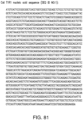
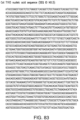
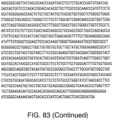
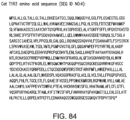
- the cat T1R1 is a protein comprising an amino acid sequence as set forth in SEQ ID NO:2, or a sequence at least 99, 98, 97, 96, 95, 90, 85 or 80 percent homologous thereto (homology, as that term is used herein, may be measured using standard software such as BLAST or FASTA), and is encoded, for example, by a nucleic acid comprising a sequence as set forth in SEQ ID NO: 1, or a sequence at least 99, 98, 97, 96, 95, 90, 85 or 80 percent homologous thereto (homology, as that term is used herein, may be measured using standard software such as BLAST or FAST A).
- the cat T1R3 is a protein comprising an amino acid sequence as set forth in SEQ ID NO:4, or a sequence at least 99, 98, 97, 96, 95, 90, 85 or 80 percent homologous thereto (homology, as that term is used herein, may be measured using standard software such as BLAST or FASTA), and is encoded, for example, by a nucleic acid comprising a sequence as set forth in SEQ ID NO:3, or a sequence at least 99, 98, 97, 96, 95, 90, 85 or 80 percent homologous thereto (homology, as that term is used herein, may be measured using standard software such as BLAST or FASTA).
- the present disclosure relates to flavor compositions that include at least one nucleotide derivative.
- the nucleotide derivative is an umami taste enhancing compound.
- the nucleotide derivatives disclosed herein were identified through the in silico modeling of the nucleotide derivatives within the binding pocket of the feline T1R1/T1R3 receptor ("Umami receptor").
- the flavor compositions can be used to enhance or modify the palatability, taste or flavor of pet food product.
- the flavor compositions can include combinations of compounds, for example, combinations of one or more nucleotide derivatives and/or one or more amino acids and/or one or more nucleotides and/or one or more transmembrane compounds, as described herein, and can be added to pet food product compositions in various delivery system formats.
- the nucleotide derivative can be a compound listed in Tables 2 and 5-13 below.
- the nucleotide derivative comprises a compound of Formula Nt-1 having the following structure:
- R 1 in Formula Nt-1 is selected from
- R 1 in Formula Nt-1 is selected from the compounds listed in Table 1.
- Table 1 R 1 group of nucleotide derivatives of Formula Nt-1 R 1 wherein Q 1 , Q 2 , Q 3 and Q 4 are independently selected from H, CH 3 , -SCH 3 , N(R 19 )(R 20 ), F, Cl, Br, I, -OCH 3 , O, S, unsubstituted or substituted branched or unbranched lower alkyl (C 1 -C 10 ), substituted or unsubstituted aryl, -(CH 2 ) 1-6 NH 2 , -(CH 2 ) 1-4 aryl, S(O) 1-2 Q 6 , COOCH 3 , COOEt, -(CH 2 ) 0-4 Ph, c-C 3 H 5 , c-C 4 H 7 , c-C 5 H 9 , c-C 6 H 10 and -CH 2 CH 2 CH 2 CH 2 -; wherein Q 6
- Q 2 , Q 3 and Q 4 are independently selected from H, CH 3 , -SCH 3 , N(R 19 )(R 20 ), F, Cl, Br, I, -OCH 3 , O, S, unsubstituted or substituted branched or unbranched lower alkyl (C 1 -C 10 ), substituted or unsubstituted aryl, -(CH 2 ) 1-4 aryl, S(O) 1-2 Q 6 , COOCH 3 , COOEt, -(CH 2 ) 0-4 Ph, c-C 3 H 5 , c-C 4 H 7 , c-C 5 H 9 , c-C 6 H 10 and -CH 2 CH 2 CH 2 CH 2 ; wherein Q 6 is selected from Me and Ph; wherein R 19 and R 20 are independently selected from H, CH 3 , -SCH 3 , F, Cl, Br, I, -OCH 3 , O, S, branched or unbranched lower alkyl
- Q 30 and Q 4 are independently selected from H, CH 3 , -SCH 3 , N(R 19 )(R 20 ), F, Cl, Br, I, -OCH 3 , O, S, unsubstituted or substituted branched or unbranched lower alkyl (C 1 -C 10 ), substituted or unsubstituted aryl, - (CH 2 ) 1-4 aryl, S(O) 1-2 Q 6 , COOCH 3 , COOEt, -(CH 2 ) 0-4 Ph, c-C 3 H 5 , c-C 4 H 7 , c-C 5 H 9 , c-C 6 H 10 and -CH 2 CH 2 CH 2 CH 2 ; wherein Q 6 is selected from Me and Ph; wherein R 19 and R 20 are independently selected from H, CH 3 , -SCH 3 , F, Cl, Br, I, -OCH 3 , O, S, branched or unbranched lower alkyl (C 1 -
- Q 4 is selected from H, CH 3 , -SCH 3 , N(R 19 )(R 20 ), F, Cl, Br, I, -OCH 3 , O, S, unsubstituted or substituted branched or unbranched lower alkyl (C 1 -C 10 ), substituted or unsubstituted aryl, -(CH 2 ) 1-4 aryl, S(O) 1-2 Q 6 , COOCH 3 , COOEt, -(CH 2 ) 0-4 Ph, c-C 3 H 5 , c-C 4 H 7 , c-C 5 H 9 , c-C 6 H 10 and -CH 2 CH 2 CH 2 CH 2 ; wherein Q 6 is selected from Me and Ph; wherein R 19 and R 20 are independently selected from H, CH 3 , -SCH 3 , F, Cl, Br, I, -OCH 3 , O, S, branched or unbranched lower alkyl (C 1 -C 10 ,
- Q 7 is selected from H, CH 3 , -SCH 3 , N(R 1g )(R 20 ), F, Cl, Br, I, -OCH 3 , O, S, unsubstituted or substituted branched or unbranched lower alkyl (C 1 -C 10 ), substituted or unsubstituted aryl, -(CH 2 ) 1-4 aryl, S(O) 1-2 Q 6 , COOCH 3 , COOEt, -(CH 2 ) 0-4 Ph, c-C 3 H 5 , c-C 4 H 7 , c-C 5 H 9 , c-C 6 H 10 and -CH 2 CH 2 CH 2 CH 2 ; wherein Q 6 is selected from Me and Ph; wherein R 19 and R 20 are independently selected from H, CH 3 , -SCH 3 , F, Cl, Br, I, -OCH 3 , O, S, branched or unbranched lower alkyl (C 1 -C 10
- Q 7 and Q 8 are independently selected from H, CH 3 , -SCH 3 , N(R 19 )(R 20 ), F, Cl, Br, I, -OCH 3 , O, S, unsubstituted or substituted branched or unbranched lower alkyl (C 1 -C 10 ), substituted or unsubstituted aryl, - (CH 2 ) 1-4 aryl, S(O) 1-2 Q 6 , COOCH 3 , COOEt, -(CH 2 ) 0-4 Ph, c-C 3 H 5 , c-C 4 H 7 , c-C 5 H 9 , c-C 6 H 10 and -CH 2 CH 2 CH 2 CH 2 ; wherein Q 6 is selected from Me and Ph; wherein R 19 and R 20 are independently selected from H, CH 3 , -SCH 3 , F, Cl, Br, I, -OCH 3 , O, S, branched or unbranched lower alkyl (C 1 -
- Q 2 , Q 3 , Q 7 and Q 8 are independently selected from H, CH 3 , -SCH 3 , N(R 19 )(R 20 ), F, Cl, Br, I, -OCH 3 , O, S, unsubstituted or substituted branched or unbranched lower alkyl (C 1 -C 10 ), substituted or unsubstituted aryl, -(CH 2 ) 1-4 aryl, S(O) 1-2 Q 6 , COOCH 3 , COOEt, -(CH 2 ) 0-4 Ph, c-C 3 H 5 , c-C 4 H 7 , c-C 5 H 9 , c-C 6 H 10 and -CH 2 CH 2 CH 2 CH 2 ; wherein Q 6 is selected from Me and Ph; wherein R 19 and R 20 are independently selected from H, CH 3 , -SCH 3 , F, Cl, Br, I, -OCH 3 , O, S, branched or unbranched
- Q 7 is selected from H, CH 3 , -SCH 3 , N(R 19 )(R 20 ), F, Cl, Br, I, -OCH 3 , O, S, unsubstituted or substituted branched or unbranched lower alkyl (C 1 -C 10 ), substituted or unsubstituted aryl, -(CH 2 ) 1-4 aryl, S(O) 1-2 Q 6 , COOCH 3 , COOEt, -(CH 2 ) 0-4 Ph, c-C 3 H 5 , c-C 4 H 7 , c-C 5 H 9 , c-C 6 H 10 and -CH 2 CH 2 CH 2 CH 2 ; wherein Q 6 is selected from Me and Ph; wherein R 19 and R 20 are independently selected from H, CH 3 , -SCH 3 , F, Cl, Br, I, -OCH 3 , O, S, branched or unbranched lower alkyl (C 1 -C 10 ,
- Q 2 , Q 3 and Q 7 are independently selected from H, CH 3 , -SCH 3 , N(R 19 )(R 20 ), F, Cl, Br, I, -OCH 3 , O, S, unsubstituted or substituted branched or unbranched lower alkyl (C 1 -C 10 ), substituted or unsubstituted aryl, - (CH 2 ) 1-4 aryl, S(O) 1-2 Q 6 , COOCH 3 , COOEt, -(CH 2 ) 0-4 Ph, c-C 3 H 5 , c-C 4 H 7 , c-C 5 H 9 , c-C 6 H 10 and -CH 2 CH 2 CH 2 CH 2 ; wherein Q 6 is selected from Me and Ph; wherein R 19 and R 20 are independently selected from H, CH 3 , -SCH 3 , F, Cl, Br, I, -OCH 3 , O, S, branched or unbranched lower alkyl
- Q 2 , Q 3 and Q 4 are independently selected from H, CH 3 , -SCH 3 , N(R 19 )(R 20 ), F, Cl, Br, 1, -OCH 3 , O, S, unsubstituted or substituted branched or unbranched lower alkyl (C 1 -C 10 ), substituted or unsubstituted aryl, - (CH 2 ) 1-4 aryl, S(O) 1-2 Q 6 , COOCH 3 , COOEt, -(CH 2 ) 0-4 Ph, c-C 3 H 5 , c-C 4 H 7 , c-C 5 H 9 , c-C 6 H 10 and -CH 2 CH 2 CH 2 CH 2 ; wherein Q 6 is selected from Me and Ph; wherein R 19 and R 20 are independently selected from H, CH 3 , -SCH 3 , F, Cl, Br, I, -OCH 3 , O, S, branched or unbranched lower alkyl (C
- W is selected from O or S; wherein Q 3 is selected from substituted or unsubstituted lower alkyl branched and unbranched (C 1 -C 15 ), substituted or unsubstituted aryl, substituted or unsubstituted furan, substituted or unsubstituted thiophene, substituted or unsubstituted phenyl, substituted or unsubstituted pyridine and substituted or unsubstituted naphthalene; and wherein Q 4 is selected from O, S, CH 3 , SCH 3 , H, Br, F, Cl and I.
- W is selected from O or S; wherein R is derived from the side-chains of the 21 naturally occurring amino acids; wherein Q is selected from substituted or unsubstituted lower alkyl branched and unbranched (C 1 -C 15 ), substituted or unsubstituted aryl, substituted or unsubstituted furan, substituted or unsubstituted thiophene, substituted or unsubstituted phenyl, substituted or unsubstituted pyridine and substituted or unsubstituted naphthalene; and wherein Q 4 is selected from O, S, CH 3 , SCH 3 , H, Br, F, Cl and I.
- W is selected from O or S; wherein Q 30 is selected from substituted or unsubstituted lower alkyl branched and unbranched (C 1 -C 15 ), substituted or unsubstituted aryl, substituted or unsubstituted furan, substituted or unsubstituted thiophene, substituted or unsubstituted phenyl, substituted or unsubstituted pyridine and substituted or unsubstituted naphthalene; and wherein Q 4 is selected from O, S, CH 3 , SCH 3 , H, Br, F, Cl and I.
- the nucleotide derivative comprises a compound of Formula Nt-2 having the following structure:
- the nucleotide derivative comprises a compound of Formula Nt-3 having the following structure:
- the nucleotide derivative comprises a compound of Formula Nt-4 having the following structure:
- the nucleotide derivative comprises a compound of Formula Nt-5 having the following structure:
- the nucleotide derivative comprises a compound of Formula Nt-6 having the following structure:
- the nucleotide derivative comprises a compound of Formula Nt-7 having the following structure:
- the nucleotide derivative comprises a compound of Formula Nt-8 having the following structure:
- the nucleotide derivative comprises a compound of Formula Nt-9 having the following structure:
- the nucleotide derivative comprises a compound of Formula Nt-10 having the following structure:
- the nucleotide derivative comprises a compound of Formula Nt-11 having the following structure:
- the nucleotide derivative comprises a compound of Formula Nt-12 having the following structure:
- the nucleotide derivative comprises a compound of Formula Nt-13 having the following structure:
- the nucleotide derivative comprises a compound of Formula Nt-14 having the following structure:
- the nucleotide derivative comprises a compound of Formula Nt-15 having the following structure:
- the nucleotide derivative comprises a compound of Formula Nt-16 having the following structure:
- the nucleotide derivative comprises a compound of Formula Nt-17 having the following structure:
- the nucleotide derivative comprises a compound of Formula Nt-18 having the following structure:
- the nucleotide derivative comprises a compound of Formula Nt-19 having the following structure:
- the nucleotide derivative comprises a compound of Formula Nt-20 having the following structure:
- the nucleotide derivative comprises a compound of Formula Nt-21 having the following structure:
- the nucleotide derivative comprises a compound of Formula Nt-22 having the following structure:
- the nucleotide derivative comprises a compound of Formula Nt-23 having the following structure:
- the nucleotide derivative comprises a compound of Formula Nt-24 having the following structure:
- the nucleotide derivative comprises a compound of Formula Nt-25 having the following structure:
- the nucleotide derivative comprises a compound of Formula Nt-26 having the following structure:
- the nucleotide derivative comprises a compound of Formula Nt-27 having the following structure:
- the nucleotide derivative comprises a compound of Formula Nt-28 having the following structure:
- the nucleotide derivative comprises a compound of Formula Nt-29 having the following structure:
- the nucleotide derivative comprises a compound of Formula Nt-30 having the following structure:
- the nucleotide derivative comprises a compound of Formula Nt-31 having the following structure:
- the nucleotide derivative comprises a compound of Formula Nt-32 having the following structure:
- the nucleotide derivative comprises a compound of Formula Nt-33 having the following structure:
- the nucleotide derivative comprises a compound of Formula Nt-34 having the following structure:
- the nucleotide derivative comprises a compound of Formula Nt-35 having the following structure:
- the nucleotide derivative comprises a compound of Formula Nt-36 having the following structure:
- the nucleotide derivative comprises a compound of Formula Nt-37 having the following structure:
- the nucleotide derivative comprises a compound of Formula Nt-38 having the following structure:
- the nucleotide derivative comprises a compound of Formula Nt-39 having the following structure:
- the nucleotide derivative comprises a compound of Formula Nt-40 having the following structure:
- the nucleotide derivative comprises a compound of Formula Nt-41 having the following structure:
- the nucleotide derivative comprises a compound of Formula Nt-42 having the following structure:
- the nucleotide derivative comprises a compound of Formula Nt-43 having the following structure:
- the nucleotide derivative comprises a compound of Formula Nt-44 having the following structure:
- the nucleotide derivative comprises a compound of Formula Nt-45 having the following structure:
- the nucleotide derivative comprises a compound of Formula Nt-46 having the following structure:
- the nucleotide derivative comprises a compound of Formula Nt-47 having the following structure:
- the nucleotide derivative comprises a compound of Formula Nt-48 having the following structure:
- the nucleotide derivative comprises a compound of Formula Nt-49 having the following structure:
- the nucleotide derivative comprises a compound of Formula Nt-50 having the following structure:
- the nucleotide derivative comprises a compound of Formula Nt-51 having the following structure:
- the nucleotide derivative comprises a compound of Formula Nt-52 having the following structure:
- the nucleotide derivative comprises a compound of Formula Nt-53 having the following structure:
- the nucleotide derivative comprises a compound of Formula Nt-54 having the following structure:
- the nucleotide derivative comprises a compound of Formula Nt-55 having the following structure:
- the nucleotide derivative can be a salt, stereoisomer or a comestible form of compounds of Formulas Nt-1 to Nt-55 and/or the compounds listed in Tables 2 and 6-14.
- Table 2 Nucleotide derivatives Chemical Name Adenosine 3',5'-diphosphate (ADP) 2'-/3'-O-(N'-Methyl-anthraniloyl) adenosine-5'-O-monophosphate (MANT-AMP) 2'-Deoxy-3'-O-(N'-methylanthraniloyl)adenosine-5'-O-monophosphate Adenosine-5'-O-monophosphorothioate(5'-AMPS) 1, N6- Ethenoadenosine- 5'- O- monophosphate ( ⁇ -5'-AMP) 2'-Deoxy-N6-methyl adenosine 3',5'-diphosphate 2'- Deoxya
- the nucleotide derivatives of the present disclosure comprise a salt of the nucleotide derivative, for example, but not limited to, an acetate salt or a formate salt.
- the nucleotide derivative salt comprises an anion (-) (for example, but not limited to, Cl - , O 2- , CO 3 2- , HCO 3 - , OH - , NO 3 - , PO 4 3- , SO 4 2- , CH 3 COO - , HCOO - and C 2 O 4 2- ) bonded via an ionic bond with a cation (+) (for example, but not limited to, Al 3+ , Ca 2+ , Na + , K + , Cu 2+ , H + , Fe 3+ , Mg 2+ , NH 4 + and H 3 O + ).
- the nucleotide derivative salt comprises a cation (+) bonded via an ionic bond with an anion (-).
- the nucleotide derivatives of the present application are identified through in silico modeling of the feline T1R1/T1R3 receptor ("Umami receptor"), wherein the nucleotide derivatives of the present application comprise a structure that fits within a binding site of the feline T1R1/T1R3 receptor.
- the nucleotide derivatives of the present application are identified through an in vitro assay, wherein the nucleotide derivatives activate a feline TIR1/T1R3 receptor expressed by cells in vitro.
- the nucleotide derivatives activate the receptor alone, or in combination with other T1R1/T1R3 binding agents, such as the nucleotides, amino acids and transmembrane compounds described herein, and/or in combination with amino acids described herein that bind to one or more other receptors.
- the in vitro assay comprises the in vitro assays described in the Examples section of the present application.
- the present application also provides for compositions that modulate an umami receptor, for example, a T1R1/T1R3 receptor, wherein the compositions interact with one or more amino acids in a Venus Flytrap domain of the umami receptor.
- the Venus Flytrap domain (VFT) is present in T1R1.
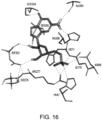
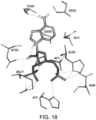
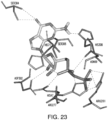
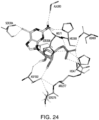
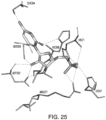
- the amino acids that the composition interacts with comprise one or more of Thr449, Ser172, Glu170, Glu301, His71, His47, Arg277, His308, Asn69, Asn302, Ser306, Ser384, Asp302, Ser306, and Ala380.
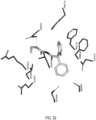
- the composition comprises a nucleotide and/or nucleotide derivative, wherein the nucleotide and/or nucleotide derivative interacts with one, two, three, four, five, six, seven, eight or more of His71, Arg277, His308, Ser306, Ser384, Ala380, His47, Asn69, and Asp302 of T1R1.
- the composition comprises a nucleotide and/or nucleotide derivative, wherein the nucleotide and/or nucleotide derivative interacts with one, two, three, four or more of Met383, Ser385, Ile309, Ser107, and Asp49 of T1R1.
- the amino acid residues of the VFT may coordinate the phosphates, diphosphates, triphosphates, bisphosphates, phosphate mimetics (e.g. acidic functionalities such as COOH, SO 3 H, NHOH, etc.), of a nucleotide and/or nucleotide derivative, and include one or more of His71, His47, Arg277, His308, Ile309, Asn69, Ser107, and Asp49 of T1R1.
- phosphates e.g. acidic functionalities such as COOH, SO 3 H, NHOH, etc.
- At least one phosphate of the nucleotide and/or nucleotide derivative interacts with one, two, three, four or more of His71, His47, Arg277, His308, and Asn69 of T1R1.
- binding of a nucleotide and/or nucleotide derivative to the VFT involves interactions between negatively charged groups of amino acids in the phosphate binding region of VFT and a nucleotide and/or nucleotide derivative phosphate.
- the amino acid residues of the VFT may coordinate the sugar atoms of a nucleotide and/or nucleotide derivative (or, for example, a modified sugar or sugar replacement), and can include Asp302 and/or Ser306 of T1R1.
- At least one sugar molecule of the nucleotide and/or nucleotide derivative interacts with amino acids Asp302 and/or Ser306 of T1R1.
- the amino acid residues of the VFT may coordinate a nitrogenous base of a nucleotide and/or nucleotide derivative, and can include one or more of Ser384, Ser385, Ala380, Met383, Glul70 and Asp302 of T1R1.
- the nitrogenous base of the nucleotide and/or nucleotide derivative interacts with one, two or more of Ser384, His308, and Ala380 of T1R1.
- a sugar molecule of the nucleotide and/or nucleotide derivative interacts with Asp302 of the VFT, wherein Asp302 is oriented to simultaneously coordinate the zwitterionic backbone nitrogen of a bound amino acid and the sugar of the nucleotide or nucleotide derivative.
- the composition interacts with the umami Venus Flytrap domain (VFT) according to any combination of interactions described herein, for example, one, two, three or more of the interactions.
- VFT umami Venus Flytrap domain
- the interactions between a nucleotide and/or nucleotide derivative and the VFT may further include additional hydrophobic interactions that add to the interaction energy of the nucleotide and/or nucleotide derivative to the VFT.
- the interaction between the composition and the one or more amino acids comprises one or more hydrogen bond, covalent bond, noncovalent bond, salt bridge, physical interaction, and combinations thereof.
- the interactions can also be any interaction characteristic of a ligand receptor interaction known in the art. Such interactions can be determined by, for example, site directed mutagenesis, x-ray crystallography, x-ray or other spectroscopic methods, Nuclear Magnetic Resonance (NMR), cross-linking assessment, mass spectroscopy or electrophoresis, displacement assays based on known agonists, structural determination and combinations thereof.
- the interactions are determined in silico, for example, by theoretical means such as docking a compound into the VFT domain using molecular docking, molecular modeling, molecular simulation, or other means known to persons of ordinary skill in the art.
- the present application also provides for methods of identifying a compound that modulates the activity of an umami receptor, for example, a T1R1, wherein the compound is identified based on its ability to interact with one or more of the amino acids described herein that are present in the VFT domain of T1R1.
- the method comprises contacting a test agent with a feline T1R1 umami receptor, detecting an interaction between the test agent and one more amino acids in a VFT interacting site of the feline T1R1 umami receptor, and selecting as the compound, a test agent that interacts with one or more of the amino acids.
- the present disclosure relates to flavor compositions that include at least one transmembrane compounds.
- the transmembrane compound is an umami taste enhancing compound.
- the transmembrane compounds disclosed herein were identified through the in silico modeling of putative agonists within the transmembrane region of T1R1 of the feline T1R1/T1R3 receptor ("Umami receptor").
- a transmembrane compound is a composition that interacts with (e.g., binds to) a region of a T1R1 comprising the transmembrane domain of T1R1.
- such interactions with the transmembrane domain of T1R1 agonizes the T1R1/T1R3 or umami receptor.
- the transmembrane compound acts synergistically with other T1R1 agonists or modulators to modulate the activity of the T1R1/T1R3 or umami receptor.
- the flavor compositions can be used to enhance or modify the palatability, taste or flavor of pet food product.
- the flavor compositions can include combinations of compounds, for example, combinations of transmembrane compounds, and/or nucleotides, and/or nucleotide derivatives and/or amino acids, and can be added to pet food product compositions in various delivery system formats.
- the transmembrane compound comprises a compound of Formula Tm-1 having the following structure:
- aryl has its standard chemical meaning and may comprise the following, but is not limited to, Ph, pyridine, thiophene, furan, napthyl, indole, benzothiophene, benzofuran, quinolone, isoquinoline, pyrrole, N-(methyl)pyrolle, imidazole, thiazole, pyrimidine, isoxazole, oxazole, isoindole, indolizine, purine, pyrazine, and pyrieazine.
- attachments of the aryl group may be placed at various carbon centers, as would be understood by one of ordinary skill in the art.
- biaryl ring systems include, for example, phenyl - phenyl, phenyl - pyridyl, phenyl - thiophene, thiophene - thiophene, and phenyl - furan.
- the transmembrane compound comprises a compound of Formula Tm-2 having the following structure: wherein R 4 , R 5 , R 6 , R 7 , X 1 , and n 1 are as defined for Formula Tm-1.
- the transmembrane compound comprises a compound of Formula Tm-20 having the following structure:
- the transmembrane compound comprises a compound of Formula Tm-21 having the following structure:
- the transmembrane compound comprises a compound of Formula Tm-22 having the following structure:
- the transmembrane compound comprises a compound of Formula Tm-23 having the following structure:
- the transmembrane compound comprises a compound of Formula Tm-24 having the following structure:
- the transmembrane compound comprises a compound of Formula Tm-25 having the following structure:
- the transmembrane compound comprises a compound of Formula Tm-26 having the following structure:
- the transmembrane compound comprises a compound of Formula Tm-27 having the following structure:
- the transmembrane compound comprises a compound of Formula Tm-28 having the following structure:
- the transmembrane compound comprises a compound of Formula Tm-29 having the following structure:
- the transmembrane compound comprises a compound of Formula Tm-30 having the following structure:
- the transmembrane compound comprises a compound of Formula Tm-31 having the following structure:
- the transmembrane compound comprises a compound of Formula Tm-32 having the following structure:
- the transmembrane compound comprises a compound of Formula Tm-33 having the following structure:
- the transmembrane compound comprises a compound of Formula Tm-34 having the following structure:
- the transmembrane compound comprises a compound of Formula Tm-35 having the following structure:
- the transmembrane compound comprises a compound of Formula Tm-36 having the following structure:
- the transmembrane compound comprises a compound of Formula Tm-37 having the following structure:
- the transmembrane compound comprises a compound of Formula Tm-38 having the following structure:
- the transmembrane compound comprises a compound of Formula Tm-39 having the following structure:
- the transmembrane compound comprises a compound of Formula Tm-40 having the following structure:
- the transmembrane compound comprises a compound of Formula Tm-3 having the following structure:
- aryl has its standard chemical meaning and may comprise, but is not limited to, Ph, pyridine, thiophene, furan, napthyl, indole, benzothiophene, benzofuran, quinolone, isoquinoline, pyrrole, N-(methyl)pyrolle, imidazole, thiazole, pyrimidine, isoxazole, oxazole, isoindole, indolizine, purine, pyrazine, and pyrieazine.
- attachments of the aryl group may be placed at various carbon centers, as would be understood by one of ordinary skill in the art.
- asymmetric centers may be of either (R) or (S) configuration, as would be understood by one of ordinary skill in the art.
- biaryl ring systems include, for example, phenyl - phenyl, phenyl - pyridyl, phenyl - thiophene, thiophene - thiophene, and penyl - furan.
- the transmembrane compound comprises a compound of Formula Tm-4 having the following structure:
- the transmembrane compound comprises a compound of Formula Tm-41 having the following structure:
- the transmembrane compound comprises a compound of Formula Tm-42 having the following structure:
- the transmembrane compound comprises a compound of Formula Tm-43 having the following structure:
- the transmembrane compound comprises a compound of Formula Tm-44 having the following structure:
- the transmembrane compound comprises a compound of Formula Tm-45 having the following structure:
- the transmembrane compound comprises a compound of Formula Tm-46 having the following structure:
- the transmembrane compound comprises a compound of Formula Tm-47 having the following structure:
- the transmembrane compound comprises a compound of Formula Tm-48 having the following structure:
- the transmembrane compound comprises a compound of Formula Tm-49 having the following structure:
- the transmembrane compound comprises a compound of Formula Tm-50 having the following structure:
- the transmembrane compound comprises a compound of Formula Tm-51 having the following structure:
- the transmembrane compound comprises a compound of Formula Tm-52 having the following structure:
- the transmembrane compound comprises a compound of Formula Tm-53 having the following structure:
- the transmembrane compound comprises a compound of Formula Tm-54 having the following structure:
- the transmembrane compound comprises a compound of Formula Tm-55 having the following structure:
- the transmembrane compound comprises a compound of Formula Tm-6 having the following structure: wherein R 1 or R 2 are selected independently from the group consisting of a substituted or unsubstituted alkyl, substituted or unsubstituted alkenyl, substituted or unsubstituted alkynyl, substituted or unsubstituted cycloalkyl, substituted or unsubstituted aryl, substituted or unsubstituted cycloalkalkyl, substituted or unsubstituted arylalkyl, substituted or unsubstituted heteroarylalkyl, substituted or unsubstituted heteroaryl, substituted or unsubstituted heterocyclic, substituted or unsubstituted alkoxy, substituted or unsubstituted aryloxy, hydroxyl, hydrogen, substituted or unsubstituted ethereal, substituted or unsubstituted benzothiazolyl, substituted
- R 1 or R 2 can comprise the following structure: wherein R 3 , R 4 , R 5 , R 6 and R 7 are selected independently from the group consisting of hydrogen, halogen, cyano, azido, hydroxyl, substituted or unsubstituted sulfonyl, substituted or unsubstituted sulfonamido, substituted or unsubstituted alkyl, substituted or unsubstituted alkenyl, substituted or unsubstituted cycloalkyl, substituted or unsubstituted aryl, substituted or unsubstituted cycloalkalkyl, substituted or unsubstituted arylalkyl, substituted or unsubstituted heteroarylalkyl, substituted or unsubstituted heteroaryl, substituted or unsubstituted amido, substituted or unsubstituted heterocyclic, substituted or unsubstituted alkoxy, substituted
- two or more of R 3 , R 4 , R 5 , R 6 and R 7 may be taken together to form a ring, which can be heterocyclic (i.e ., contain one or more heteroatoms) or which can be entirely carbocyclic and which can independently be saturated or unsaturated.
- R 1 and R 2 are unsubstituted phenyl groups.
- R 1 is an unsubstituted phenyl group and R 2 is a substituted phenyl group.
- the transmembrane compound comprises a compound of Formula Tm-7 having the following structure: wherein R 1 and R 2 are as defined above for Formula Tm-6.
- the transmembrane compound comprises a compound of Formula Tm-5 having the following structure:
- the transmembrane compound comprises a compound of Formula Tm-9 having the following structure: wherein X 1-5 are selected independently from the group consisting of O and S; and wherein R 1 and R 2 are as defined above for Formula Tm-6.
- the transmembrane compound comprises a compound of Formula Tm-10 having the following structure: wherein X 1-5 are selected independently from the group consisting of O and S; and wherein R 1 and R 2 are as defined above for Formula Tm-6.
- the transmembrane compound comprises a compound of Formula Tm-11 having the following structure: wherein X 1-3 are selected independently from the group consisting of O and S; and wherein R 1 and R 2 are as defined above for Formula Tm-6.
- the transmembrane compound comprises a compound of Formula Tm-56 having the following structure:
- the transmembrane compound comprises a compound of Formula Tm-57 having the following structure:
- the transmembrane compound comprises a compound of Formula Tm-58 having the following structure:
- the transmembrane compound comprises a compound of Formula Tm-59 having the following structure:
- the transmembrane compound comprises a compound of Formula Tm-60 having the following structure:
- the transmembrane compound comprises a compound of Formula Tm-61 having the following structure:
- the transmembrane compound comprises a compound of Formula Tm-62 having the following structure:
- the transmembrane compound comprises a compound of Formula Tm-63 having the following structure:
- the transmembrane compound comprises a compound of Formula Tm-64 having the following structure:
- the transmembrane compound comprises a compound of Formula Tm-65 having the following structure:
- the transmembrane compound comprises a compound of Formula Tm-66 having the following structure:
- the transmembrane compound comprises a compound of Formula Tm-67 having the following structure:
- the transmembrane compound comprises a compound of Formula Tm-68 having the following structure:
- the transmembrane compound comprises a compound of Formula Tm-69 having the following structure:
- the transmembrane compound comprises a compound of Formula Tm-70 having the following structure:
- the transmembrane compound comprises a compound of Formula Tm-71 having the following structure:
- the transmembrane compound comprises a compound of Formula Tm-72 having the following structure:
- the transmembrane compound comprises a compound of Formula Tm-73 having the following structure:
- the transmembrane compound comprises a compound of Formula Tm-74 having the following structure:
- the transmembrane compound comprises a compound of Formula Tm-19 having the following structure: wherein R 1 or R 2 are selected independently from the group consisting of a substituted or unsubstituted alkyl, substituted or unsubstituted alkenyl, substituted or unsubstituted alkynyl, substituted or unsubstituted cycloalkyl, substituted or unsubstituted aryl, substituted or unsubstituted cycloalkalkyl, substituted or unsubstituted arylalkyl, substituted or unsubstituted heteroarylalkyl, substituted or unsubstituted heteroaryl, substituted or unsubstituted heterocyclic, substituted or unsubstituted alkoxy, substituted or unsubstituted aryloxy, hydroxyl, hydrogen, substituted or unsubstituted ethereal, substituted or unsubstituted benzothiazolyl, substituted
- R 1 or R 2 can comprise the following structure: wherein R 3 , R 4 , R 5 , R 6 and R 7 are selected independently from the group consisting of hydrogen, halogen, cyano, azido, hydroxyl, substituted or unsubstituted sulfonyl, substituted or unsubstituted sulfonamido, substituted or unsubstituted alkyl, substituted or unsubstituted alkenyl, substituted or unsubstituted cycloalkyl, substituted or unsubstituted aryl, substituted or unsubstituted cycloalkalkyl, substituted or unsubstituted arylalkyl, substituted or unsubstituted heteroarylalkyl, substituted or unsubstituted heteroaryl, substituted or unsubstituted amido, substituted or unsubstituted heterocyclic, substituted or unsubstituted alkoxy, substituted
- two or more of R 3 , R 4 , R 5 , R 6 and R 7 may be taken together to form a ring, which can be heterocyclic (i.e., contain one or more heteroatoms) or which can be entirely carbocyclic and which can independently be saturated or unsaturated.
- R 1 and R 2 are unsubstituted phenyl groups.
- R 1 is an unsubstituted phenyl group and R 2 is a substituted phenyl group.
- the transmembrane compound comprises a compound of Formula Tm-12 having the following structure:
- the transmembrane compound comprises a compound of Formula Tm-13 having the following structure:
- the transmembrane compound comprises a compound of Formula Tm-14 having the following structure:
- the transmembrane compound comprises a compound of Formula Tm-15 having the following structure: wherein R 1-2 are as described for Formulas Tm-19, Tm-12 and Tm-13.
- the transmembrane compound comprises a compound of Formula Tm-16 having the following structure:
- the transmembrane compound comprises a compound of Formula Tm-17 having the following structure: wherein R 1-2 are as described for Formulas Tm-19, Tm-12 and Tm-13.
- the transmembrane compound comprises a compound of Formula Tm-18 having the following structure: wherein R 1 is as described for Formulas Tm-19, Tm-12 and Tm-13.
- the transmembrane compound comprises a compound of Formula Tm-75 having the following structure:
- the transmembrane compound comprises a compound of Formula Tm-8 having the following structure:
- R 1 and/or R 2 can comprise the following structure: wherein R 3 , R 4 , R 5 , R 6 and R 7 are selected independently from the group consisting of hydrogen, halogen, cyano, azido, hydroxyl, substituted or unsubstituted sulfonyl, substituted or unsubstituted sulfonamido, substituted or unsubstituted alkyl, substituted or unsubstituted alkenyl, substituted or unsubstituted cycloalkyl, substituted or unsubstituted aryl, substituted or unsubstituted cycloalkalkyl, substituted or unsubstituted arylalkyl, substituted or unsubstituted heteroarylalkyl, substituted or unsubstituted heteroaryl, substituted or unsubstituted amido, substituted or unsubstituted heterocyclic, substituted or unsubstituted alkoxy,
- two or more of R 3 , R 4 , R 5 , R 6 and R 7 may be taken together to form a ring, which can be heterocyclic (i.e., contain one or more heteroatoms) or which can be entirely carbocyclic and which can independently be saturated or unsaturated.
- R 1 and R 2 are unsubstituted phenyl groups.
- R 1 is an unsubstituted phenyl group and R 2 is a substituted phenyl group.
- the transmembrane compound comprises a compound of Formula Tm-76 having the following structure:
- the transmembrane compound comprises a compound of Formula Tm-77 having the following structure:
- the transmembrane compound comprises a compound of Formula Tm-78 having the following structure:
- the transmembrane compound comprises a compound of Formula Tm-79 having the following structure:
- the transmembrane compound comprises a compound of Formula Tm-80 having the following structure:
- the transmembrane compound comprises a compound of Formula Tm-81 having the following structure:
- the transmembrane compound comprises a compound of Formula Tm-82 having the following structure:
- the transmembrane compound comprises a compound of Formula Tm-83 having the following structure:
- the transmembrane compound comprises a compound of Formula Tm-84 having the following structure:
- the transmembrane compound comprises a compound of Formula Tm-85 having the following structure:
- the transmembrane compound comprises a compound of Formula Tm-86 having the following structure:
- the transmembrane compound comprises a compound of Formula Tm-87 having the following structure:
- the transmembrane compound comprises a compound of Formula Tm-88 having the following structure:
- the transmembrane compound comprises a compound of Formula Tm-89 having the following structure:
- the transmembrane compound comprises a compound of Formula Tm-90 having the following structure:
- the transmembrane compound comprises a compound of Formula Tm-91 having the following structure:
- the transmembrane compound comprises a compound of Formula Tm-92 having the following structure:
- the transmembrane compound comprises a compound of Formula Tm-93 having the following structure:
- the transmembrane compound comprises a compound of Formula Tm-94 having the following structure:
- the transmembrane compound comprises a compound of Formula Tm-95 having the following structure:
- the transmembrane compound comprises a compound of Formula Tm-96 having the following structure:
- the transmembrane compound comprises a compound of Formula Tm-97 having the following structure:
- the transmembrane compound comprises a compound of Formula Tm-98 having the following structure:
- the transmembrane compound comprises a compound of Formula Tm-99 having the following structure:
- the transmembrane compound comprises a compound of Formula Tm-100 having the following structure:
- the transmembrane compound comprises a compound of Formula Tm-101 having the following structure:
- the transmembrane compound comprises a compound of Formula Tm-102 having the following structure:
- the transmembrane compound comprises a compound of Formula Tm-103 having the following structure:
- the transmembrane compound comprises a compound of Formula Tm-104 having the following structure:
- the transmembrane compound comprises a compound described in Table 3 below. Table 3.
- Transmembrane compounds Compound Nme 5-bromo-N-(pentan-3-yl)furan-2-carboxamide 3,4-dimethyl-N-(pentan-3-yl)benzamide; N-(1-ethylpropyl)-3,4-dimethylbenzamide 4-methoxy-3-methyl-N-(1-phenylethyl)benzamide N-(2,3-dimethylcyclohexyl) benzo[d][1,3]dioxole-5-carboxamide ethyl 2-(benzo[d][1,3]dioxole-5-carboxamido)-3-methylbutanoate; ethyl N-(1,3-benzodioxol-5 ylcarbonyl) valinate 4-methoxy-3-methyl-N-(pentan-2-yl)benzamide N-(
- the transmembrane compounds of the present disclosure comprise a salt of the transmembrane compound, for example, but not limited to, an acetate salt, a TFA salt or a formate salt.
- the transmembrane compound salt comprises an anion (-) (for example, but not limited to, Cl - , F - , Br - , O 2- , CO 3 2- , HCO 3 - , OH - , NO 3 - , PO 4 3- , SO 4 2- , CH 3 COO - , HCOO-, C 2 O 4 2- and CN - ) bonded via an ionic bond with a cation (+) (for example, but not limited to, Al 3+ , Ca 2+ , Na + , K + , Cu 2+ , H + , Fe 3+ , Mg 2+ , Ag + , NH 4 + , H 3 O + , Hg 2 2+ ).
- the transmembrane compound salt comprises an anion
- the transmembrane compound can be a salt, stereoisomer or a comestible form of a transmembrane compound described herein, for example, compounds of Formulas Tm-1 to Tm-104.
- compositions that modulate the activity of an umami receptor for example, a T1R1/T1R3 receptor
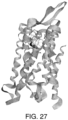
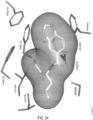
- the compositions interact with one or more amino acids in a transmembrane domain of the umami receptor, for example, a seven transmembrane domain (7TM) in T1R1.
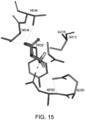
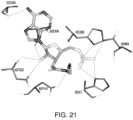
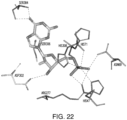
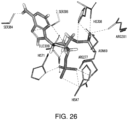
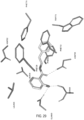
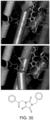
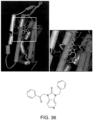
- the amino acids that the compositions interact with comprise 1, 2, 3, 4, 5, 6, 7, 8, 9, 10, 11, 12, 13, 14, 15 or more of Ala795, Ala796, Asn792, Trp773, Phe776, Ala731, Phe728, Leu730, Phe732, Asn735, Ala689, Ser686, Gln690, Ile693, Cys694, Leu695, Arg634, Gln635, Phe642, Ala639, Ala643, and Leu638.
- amino acids that the compositions interact with comprise Asn735 and/or Ser686.
- amino acids that the compositions interact with comprise 1, 2, 3, 4, 5, 6, 7 or more of Trp773, Phe776, Phe732, Phe728, Leu730, Leu695, Leu638, and Phe642.
- the amino acids that the compositions interact with comprise 1, 2, 3, 4, or more of Trp773, Phe776, Phe732, Phe728, and Phe642.
- the amino acids that interact with the composition undergo ring stacking interactions to the bound composition.
- the composition interacts with the umami 7TM domain according to any combination of interactions described herein, for example, one, two, three or more of the interactions.
- the interactions between the composition and the 7TM may further include additional hydrophobic interactions that add to the interaction energy of the composition to the 7TM.
- the interaction between a composition and the one or more T1R1 7TM domain amino acids comprises one or more hydrogen bond, covalent bond, non-covalent bond, salt bridge, physical interaction, and combinations thereof.
- the interactions can also be any interaction characteristic of a ligand receptor interaction known in the art. Such interactions can be determined by, for example, site directed mutagenesis, x-ray crystallography, x-ray or other spectroscopic methods, Nuclear Magnetic Resonance (NMR), cross-linking assessment, mass spectroscopy or electrophoresis, cryo -microscopy, displacement assays based on known agonists, structural determination and combinations thereof.
- the interactions are determined in silico , for example, by theoretical means such as docking a compound into the T1R1 7TM domain using molecular docking, molecular modeling, molecular simulation, or other means known to persons of ordinary skill in the art.
- the present application also provides for methods of identifying a compound that modulates the activity of an umami receptor, for example, a T1R1, wherein the compound is identified based on its ability to interact with one or more of the amino acids described herein that are present in the 7TM domain of T1R1.
- the method comprises contacting a test agent with a feline T1R1 umami receptor, detecting an interaction between the test agent and one more amino acids in a 7TM interacting site of the feline T1R1 umami receptor, and selecting as the compound, a test agent that interacts with one or more of the amino acids.
- the flavor compositions of the present disclosure can be used to enhance the umami taste and/or increase the palatability of pet food products, such as cat food products.
- the flavor compositions can include combinations of compounds, and can be added to the pet food product in various delivery systems.
- the present disclosure relates to methods for modulating the umami taste of a pet food product comprising: a) providing at least one pet food product, or a precursor thereof, and b) combining the pet food product, or precursor thereof, with at least a umami taste modulating amount of at least one flavor composition, for example, comprising one or more nucleotide derivatives and/or one or more transmembrane compound, or a comestibly acceptable salt thereof, so as to form an enhanced pet food product.
- the flavor compositions of the present disclosure can enhance the umami taste and/or palatability of a pet food product, such as, for example, a pet food product including wet pet food products, dry pet food products, moist pet food products, pet beverage products and/or snack pet food products.
- a pet food product including wet pet food products, dry pet food products, moist pet food products, pet beverage products and/or snack pet food products.
- one or more of the flavor compositions of the present disclosure can be added to a pet food product, in an amount effective to modify, enhance or otherwise alter a taste or taste profile of the pet food product.
- the modification can include, for example, an increase or enhancement in the umami taste of the pet food product, as determined by animals, e.g. , cats and/or dogs, or in the case of formulation testing, as determined by a panel of animal taste testers, e.g. , cats and/or dogs, via procedures known in the art.
- a pet food product can be produced that contains a sufficient amount of at least one flavor composition described herein, for example, comprising a nucleotide derivative, e.g. , a compound of Formula Nt-1, to produce a pet food product having the desired taste, e.g. , umami.
- a nucleotide derivative e.g. , a compound of Formula Nt-1
- a pet food product can be produced that contains a sufficient amount of at least one flavor composition described herein, for example, comprising a transmembrane compound, e.g. , a compound of Formula Tm-1 to Tm-19, to produce a pet food product having the desired taste, e.g. , umami.
- a transmembrane compound e.g. , a compound of Formula Tm-1 to Tm-19
- a pet food product can be produced that contains a sufficient amount of a flavor composition comprising at least one, two, three, four, five, six or more nucleotide derivatives.
- a pet food product can be produced that contains a sufficient amount of a flavor composition comprising at least one, two, three, four, five, six or more transmembrane compounds.
- a modulating amount of one or more of the flavor compositions of the present disclosure can be added to the pet food product, so that the pet food product has an increased palatability as compared to a pet food product prepared without the flavor composition, as determined by animals, e.g., cats and/or dogs, or in the case of formulation testing, as determined by a panel of animal taste testers, via procedures known in the art.
- the flavor composition is added to a pet food product in an amount effective to increase, enhance and/or modify the palatability of the pet food product.
- the concentration of flavor composition admixed with a pet food product to modulate and/or improve the palatability and/or umami taste of the pet food product can vary depending on variables, such as, for example, the specific type of pet food product, what umami compounds are already present in the pet food product and the concentrations thereof, and the enhancer effect of the particular flavor composition on such umami compounds.
- the flavor composition is admixed with a pet food product wherein the flavor composition is present in an amount of from about 0.001 ppm to about 1,000 ppm.
- the flavor composition can be present in the amount from about 0.001 ppm to about 750 ppm, from about 0.001 ppm to about 500 ppm, from about 0.001 ppm to about 250 ppm, from about 0.001 ppm to about 150 ppm, from about 0.001 ppm to about 100 ppm, from about 0.001 ppm to about 75 ppm, from about 0.001 ppm to about 50 ppm, from about 0.001 ppm to about 25 ppm, from about 0.001 ppm to about 15 ppm, from about 0.001 ppm to about 10 ppm, from about 0.001 ppm to about 5 ppm, from about 0.001 ppm to about 4 ppm, from about 0.001 ppm to about 3 ppm, from about 0.001 ppm to about 2 ppm, from about 0.001 ppm to about 1 ppm, from about 0.01 ppm to about 1,000
- the flavor composition is present in the pet food product at an amount greater than about 0.001 ppm, greater than about 0.01 ppm, greater than about 0.1 ppm, greater than about 1 ppm, greater than about 2 ppm, greater than about 3 ppm, greater than about 4 ppm, greater than about 5 ppm, greater than about 10 ppm, greater than about 25 ppm, greater than about 50 ppm, greater than about 75 ppm, greater than about 100 ppm, greater than about 250 ppm, greater than about 500 ppm, greater than about 750 ppm or greater than about 1000 ppm, and values in between.
- a nucleotide derivative of the present disclosure is present in a food product in an amount that is sufficient to modulate, activate and/or enhance an umami receptor, e.g., a T1R1/T1R3 receptor.
- a nucleotide derivative can be present in a food product in an amount from about 1 pM to about 1 M, from about 1 nM to about 1 M, from about 1 ⁇ M to about 1 M, from about 1 mM to about 1 M, from about 10 mM to about 1 M, from about 100 mM to about 1 M, from about 250 mM to about 1 M, from about 500 mM to about 1 M, from about 750 mM to about 1 M, from about 0.001 ⁇ M to about 1 M, from about 0.001 ⁇ M to about 750 mM, from about 0.001 ⁇ M to about 500 mM, from about 0.001 ⁇ M to about 250 mM, from about 0.001
- a transmembrane compound of the present disclosure is present in amount of a compound that is sufficient to modulate, activate or enhance an umami receptor, e.g., feline T1R1/T1R3 receptor.
- a transmembrane compound can be present in a food product in an amount from about 1 pM to about 10 M, from about 1 pM to about 1 M, from about 1 nM to about 1 M, from about 1 ⁇ M to about 1 M, from about 1 mM to about 1 M, from about 10 mM to about 1 M, from about 100 mM to about 1 M, from about 250 mM to about 1 M, from about 500 mM to about 1 M, from about 750 mM to about 1 M, from about 1 ⁇ M to about 1 M, from about 1 ⁇ M to about 750 mM, from about 1 pM to about 500 mM, from about 1 ⁇ M to about 250 mM, from about 1 ⁇ M
- the flavor composition is admixed with a food product wherein the flavor composition is present in an amount of from about 0.0001 to about 10% weight/weight (w/w) of the food product.
- the flavor composition can be present in the amount from about 0.0001 % to about 10%, from about 0.0001% to about 1%, from about 0.0001% to about 0.1% , from about 0.0001 to about 0.01%, from about 0.0001% to about 0.001%, from about 0.001% to about 10%, from about 0.001% to about 1%, from about 0.01% to about 1% or from about 0.1% to about 1%, and values in between.
- the nucleotide derivatives and/or transmembrane compounds of the present application are blended together in various ratios or are blended together with other compounds, e.g., nucleotides and/or amino acids and/or furanones, to form various flavor compositions.
- nucleotides, amino acids and furanones are disclosed in Patent Application Nos. PCT/EP2013/072788 , PCT/EP2013/072789 , PCT/EP2013/072790 , and PCT/EP2013/072794 , which are incorporated herein by reference in their entireties.
- the nucleotide derivatives and/or transmembrane compounds that are blended with other compounds are one or more compounds of Formula Nt-1 to Nt-55 and/or one or more compounds of Formula Tm-1 to Tm-104.
- nucleotide derivatives that are blended with other compounds include nucleotide derivatives of Formulas Nt-1 to Nt-55 and Tables 2 and 6-14.
- the transmembrane compounds that are blended with other compounds include transmembrane compounds of Formulas Tm-1 to Tm-104.
- the flavor composition comprises at least one nucleotide derivative and/or at least one transmembrane compound, and at least one nucleotide as described herein.
- the flavor composition comprises at least two, three, four, five or more nucleotides as described herein.
- nucleotides include guanosine monophosphate (GMP), guanosine diphosphate (GDP), guanosine triphosphate (GTP), adenosine monophosphate (AMP), adenosine diphosphate (ADP), adenosine triphosphate (ATP), cytidine monophosphate (CMP), cytidine diphosphate (CDP), cytidine triphosphate (CTP), inosine monophosphate (IMP), inosine diphosphate (IDP, inosine triphosphate (ITP), uridine monophosphate (UMP), uridine diphosphate (UDP), uridine triphosphate (UTP), thymidine monophosphate (TMP), thymidine diphosphate (TDP), thymidine triphosphate (TTP), and xant
- the flavor composition can include a nucleotide present in a food product which can be present in an amount of from about 1 pM to about 1 M, from about 1 nM to about 1 M, from about 1 ⁇ M to about 1 M, from about 1 mM to about 1 M, from about 10 mM to about 1 M, from about 100 mM to about 1 M, from about 250 mM to about 1 M, from about 500 mM to about 1 M, from about 750 mM to about 1 M, from about 1 ⁇ M to about 1 M, from about 1 ⁇ M to about 750 mM, from about 1 ⁇ M to about 500 mM, from about 1 ⁇ M to about 250 mM, from about 1 ⁇ M to about 100 mM, from about 1 ⁇ M to about 50 mM, from about 1 ⁇ M to about 25 mM, from about 1 ⁇ M to about 10 mM, from about 1 ⁇ M to about 1 mM, from about 1 ⁇ M to about 1 mM
- the nucleotide can be present in an amount of greater than about 1 mM or greater than about 2.5 mM of the pet food product. In certain non-limiting embodiments, the nucleotide and/or nucleotide derivative can be present in an amount of less than about 100 mM, less than about 50 mM, less than about 20 mM or less than about 10 mM of the pet food product. In a certain, non-limiting embodiments, the nucleotide is present in an amount of about 5 mM of the pet food product.
- the flavor composition comprises at least one transmembrane compound and at least one nucleotide and/or nucleotide derivative, which can be IMP, GMP or a mixture thereof.
- the at least one nucleotide can be a combination of GMP and IMP comprising about 1 % to about 99% of GMP and from about 1% to about 99% of IMP, or from about 20% to about 80% of GMP and from about 20% to about 80% of IMP, or about 50% GMP and about 50% IMP, or about 10% GMP and about 90% IMP, or about 20% GMP and about 80% IMP, or about 30% GMP and about 70% IMP, or about 40% GMP and about 60% IMP, or about 60% GMP and about 40% IMP, or about 70% GMP and about 30% IMP, or about 80% GMP and about 20% IMP or about 10% GMP and about 90% IMP.
- the flavor composition further comprises at least one amino acid as described herein.
- the flavor composition comprises at least one nucleotide derivative and/or at least one transmembrane compound, and at least one amino acid as described herein. In certain embodiments, the flavor composition comprises at least two, three, four, five or more amino acids as described herein.
- the flavor composition comprises at least one, two, three, four, five or more first amino acids and/or at least one, two, three, four, five or more second amino acids.
- the flavor composition comprises at least one first amino acid and at least one second amino acid.
- the flavor composition comprises at least two first amino acids and at least one second amino acid.
- the flavor composition comprises at least one first amino acid and at least two second amino acids.
- the flavor composition comprises at least two first amino acids and at least two second amino acids.
- the flavor composition further comprises at least one nucleotide as described herein.
- Non-limiting examples of a first amino acid include tryptophan, phenylalanine, histidine, glycine, cysteine, alanine, tyrosine, serine, methionine, asparagine, leucine and combinations thereof.
- Non-limiting examples of a second amino acid include asparagine, threonine, isoleucine, proline, glutamic acid, aspartic acid, hydroxyl proline, arginine, cystine, glutamine, lysine, valine, ornithine, taurine, monosodium glutamate (MSG) and combinations thereof.
- the at least one first amino acid and/or the second amino acid, alone or in combination can be present in an amount of from about 1 mM to about 1 M, or from about 250 mM to about 1 M, or from about 5 mM to about 500 mM, or from about 10 mM to about 100 mM, or from about 15 mM to about 50 mM, or from about 20 mM to about 40 mM of the pet food product.
- the amino acid(s) can be present at an amount less than about 1 M, less than about 200 mM, less than about 100 mM, less than about 50 mM, less than about 20 mM or less than about 10 mM of the pet food product.
- the first amino acid and/or the second amino acid, alone or in combination can be present in an amount of about 25 mM of the pet food product.
- the amino acids of the compositions described herein that modulate an umami receptor can interact with one or more amino acids in a Venus Flytrap domain of the umami receptor.
- the Venus Flytrap domain (VFT) is present in T1R1.
- the VFT amino acids that the composition interacts with comprises one or more of Thr149, Tyr220, Thrl48, Thr449, Ser172, Glu170, Glu301, His71, His47, Arg277, His308, Asn69, Asn302, Ser306, Ser384, Asp302, Ser306, and Ala380.
- the composition comprises an amino acid, wherein the amino acid interacts with one, two, three, four, five, six or more of Ser172, Thr149, Thr148, Glu301, Tyr220, Glu170 and Asp302 of T1R1.
- the composition interacts with one, two, three, four, five or more of Thr149, Ser172, Tyr220, Thr148, Glu170, and/or Asp302, wherein the interactions can comprise, for example, hydrogen bonds, salt-bridges, and/or Pi-cation interactions.
- the composition interacts with Glu170 and/or Asp302 of the VFT domain, wherein the composition does not include L-Glutamate or L-Aspartic Acid.
- Glu170 and Asp302 help coordinate the zwitterionic nitrogen of the amino acid ligand of the composition that fits the active site of T1R1, while simultaneously establishing an electrostatic environment that is inhospitable to binding L-Glutamate and L-Aspartic Acid.
- the composition interacts with the VFT according to any combination of interactions described herein, for example, one, two, three or more of the interactions.
- the interactions between amino acid and the VFT may further include additional hydrophobic interactions that add to the interaction energy of the amino acid to the VFT.
- the interaction between the composition and the one or more VFT amino acids comprises one or more hydrogen bond, covalent bond, non-covalent bond, salt bridge, physical interaction, and combinations thereof.
- the interactions can also be any interaction characteristic of a ligand receptor interaction known in the art. Such interactions can be determined by, for example, site directed mutagenesis, x-ray crystallography, x-ray or other spectroscopic methods, Nuclear Magnetic Resonance (NMR), cross-linking assessment, mass spectroscopy or electrophoresis, displacement assays based on known agonists, structural determination and combinations thereof.
- the interactions are determined in silico , for example, by theoretical means such as docking a compound into the VFT domain using molecular docking, molecular modeling, molecular simulation, or other means known to persons of ordinary skill in the art.
- the present application also provides for methods of identifying a compound that modulates the activity of an umami receptor, for example, a T1R1, wherein the compound is identified based on its ability to interact with one or more of the amino acids described herein that are present in the VFT domain of T1R1.
- the method comprises contacting a test agent with a feline T1R1 umami receptor, detecting an interaction between the test agent and one more amino acids in a VFT interacting site of the feline T1R1 umami receptor, and selecting as the compound, a test agent that interacts with one or more of the amino acids.
- the flavor compositions of the present application can be incorporated into a delivery system for use in pet food products.
- Delivery systems can be liquid or solid, aqueous or non-aqueous. Delivery systems are generally adapted to suit the needs of the flavor composition and/or the pet food product into which the flavor composition will be incorporated.
- the flavoring compositions can be employed in liquid form, dried form and/or solid form. When used in dried form, suitable drying means such as spray drying can be used. Alternatively, a flavoring composition can be encapsulated or absorbed onto water soluble materials, including but not limited to materials such as cellulose, starch, sugar, maltodextrin, gum arabic and so forth. The actual techniques for preparing such dried forms are well-known in the art, and can be applied to the presently disclosed subject matter.
- flavor compositions of the presently disclosed subject matter can be used in many distinct physical forms well known in the art to provide an initial burst of taste, flavor and/or texture; and/or a prolonged sensation of taste, flavor and/or texture.
- physical forms include free forms, such as spray dried, powdered, and beaded forms, and encapsulated forms, and mixtures thereof.
- the nucleotide derivatives and/or transmembrane compounds of a flavor composition can be generated during processing of the pet food.
- the nucleotide derivatives and/or transmembrane compounds can be generated from precursor compounds during thermal processing, e.g. , retorting, extrusion and/or sterilization, of the pet food.
- encapsulation techniques can be used to modify the flavor systems.
- flavor compounds, flavor components or the entire flavor composition can be fully or partially encapsulated.
- Encapsulating materials and/or techniques can be selected to determine the type of modification of the flavor system.
- the encapsulating materials and/or techniques are selected to improve the stability of the flavor compounds, flavor components or flavor compositions; while in other embodiments the encapsulating materials and/or techniques are selected to modify the release profile of the flavor compositions.
- Suitable encapsulating materials can include, but are not limited to, hydrocolloids such as alginates, pectins, agars, guar gums, celluloses, and the like, proteins, polyvinyl acetate, polyethylene, crosslinked polyvinyl pyrrolidone, polymethylmethacrylate, polylactidacid, polyhydroxyalkanoates, ethylcellulose, polyvinyl acetatephthalate, polyethylene glycol esters, methacrylicacid-co-methylmethacrylate, ethylene-vinylacetate (EVA) copolymer, and the like, and combinations thereof.
- hydrocolloids such as alginates, pectins, agars, guar gums, celluloses, and the like
- proteins polyvinyl acetate, polyethylene, crosslinked polyvinyl pyrrolidone, polymethylmethacrylate, polylactidacid, polyhydroxyalkanoates, ethylcellulose, poly
- Suitable encapsulating techniques can include, but are not limited to, spray coating, spray drying, spray chilling, absorption, adsorption, inclusion complexing (e.g. , creating a flavor/cyclodextrin complex), coacervation, fluidized bed coating or other process can be used to encapsulate an ingredient with an encapsulating material.
- Encapsulated delivery systems for flavoring agents or sweetening agents can contain a hydrophobic matrix of fat or wax surrounding a sweetening agent or flavoring agent core.
- the fats can be selected from any number of conventional materials such as fatty acids, glycerides or poly glycerol esters, sorbitol esters, and mixtures thereof.
- fatty acids include but are not limited to hydrogenated and partially hydrogenated vegetable oils such as palm oil, palm kernel oil, peanut oil, rapeseed oil, rice bran oil, soybean oil, cottonseed oil, sunflower oil, safflower oil and combinations thereof.
- Examples of glycerides include, but are not limited to, monoglycerides, diglycerides and triglycerides.
- Waxes can be chosen from the group consisting of natural and synthetic waxes and mixtures thereof.
- Non-limiting examples include paraffin wax, petrolatum, carbowax, microcrystalline wax, beeswax, carnauba wax, candellila wax, lanolin, bayberry wax, sugarcane wax, spermaceti wax, rice bran wax, and mixtures thereof.
- the fats and waxes can be use individually or in combination in amounts varying from about 10 to about 70%, and alternatively in amounts from about 30 to about 60%, by weight of the encapsulated system. When used in combination, the fat and wax can be present in a ratio from about 70:10 to 85:15, respectively.
- Liquid delivery systems can include, but are not limited to, systems with a dispersion of the flavor compositions of the present application, such as in carbohydrate syrups and/or emulsions. Liquid delivery systems can also include extracts where the nucleotide derivative, transmembrane compound, and/or the flavor compositions are solubilized in a solvent. Solid delivery systems can be created by spray drying, spray coating, spray chilling, fluidized bed drying, absorption, adsorption, coacervation, complexation, or any other standard technique. In some embodiments, the delivery system can be selected to be compatible with or to function in the edible composition. In certain embodiments, the delivery system will include an oleaginous material such as a fat or oil. In certain embodiments, the delivery system will include a confectionery fat such as cocoa butter, a cocoa butter replacer, a cocoa butter substitute, or a cocoa butter equivalent.
- suitable drying means such as spray drying may be used.
- a flavoring composition may be adsorbed or absorbed onto substrates such as water soluble materials, such as cellulose, starch, sugar, maltodextrin, gum arabic and so forth may be encapsulated.
- substrates such as water soluble materials, such as cellulose, starch, sugar, maltodextrin, gum arabic and so forth may be encapsulated.
- water soluble materials such as cellulose, starch, sugar, maltodextrin, gum arabic and so forth may be encapsulated.
- the actual techniques for preparing such dried forms are well known in the art.
- the flavor compositions of the present disclosed subject matter can be used in a wide variety of pet food products.
- suitable pet food products include wet food products, dry food products, moist food products, pet food supplements (e.g. , vitamins), pet beverage products, snack and treats and pet food categories described herein.
- the combination of the flavoring composition(s) of the presently disclosed subject matter together with a pet food product and optional ingredients, when desired, provides a flavoring agent that possesses unexpected taste and imparts, for example, an umami and/or savory sensory experience.
- the flavor compositions disclosed herein can be added prior to, during or after formulation processing or packaging of the pet food product, and the components of the flavor composition can be added sequentially or simultaneously.
- one or more of the components of the flavor compositions disclosed herein can be generated during the production of the pet food product from precursor compounds, e.g. , during thermal food processing.
- a nucleotide derivative and/or transmembrane compound of a flavor composition can be generated during the production of a pet food product and additional components of the flavor composition can be added prior to, during or after formulation processing or packaging of the pet food product.
- the pet food product is a nutritionally complete dry food product.
- a dry or low moisture-containing nutritionally-complete pet food product can comprise less than about 15% moisture, and include from about 10 to about 60% fat, from about 10% to about 70% protein and from about 30% to about 80% carbohydrates, e.g., dietary fiber and ash.
- the pet food product is a nutritionally complete wet food product.
- a wet or high moisture-containing nutritionally-complete pet food product can comprise greater than about 50% moisture.
- the wet pet food product includes from about 40% fat, from about 50% protein and from about 10% carbohydrates, e.g. , dietary fiber and ash.
- the pet food product is a nutritionally complete moist food product.
- a moist, e.g. , semi-moist or semi-dry or soft dry or soft moist or intermediate or medium moisture containing nutritionally-complete pet food product comprises from about 15 to about 50% moisture.
- the pet food product is a pet food snack product.
- pet food snack products include snack bars, pet chews, crunchy treats, cereal bars, snacks, biscuits and sweet products.
- the protein source can be derived from a plant source, such as lupin protein, wheat protein, soy protein and combinations thereof.
- the protein source can be derived from a variety of animal sources.
- animal protein include beef, pork, poultry, lamb, or fish including, for example, muscle meat, meat byproduct, meat meal or fish meal.
- the taste, flavor and/or palatability attributes of a pet food product can be modified by admixing a flavor composition with the food product, or generated under food preparation conditions, as described herein.
- the attribute(s) can be enhanced or reduced by increasing or decreasing the concentration of the flavor composition admixed or generated with the food product.
- the taste attributes of the modified food product can be evaluated as described herein, and the concentration of flavor composition admixed or generated with the food product can be increased or decreased based on the results of the evaluation.
- the taste and/or palatability attributes can be measured using an in vitro assay, wherein a compound's ability to activate a feline umami receptor expressed by cells in vitro at different concentrations is measured.
- an increase in the activation of the receptor correlates with an increase in the taste and/or palatability attributes of the compound.
- the composition is measured alone or in combination with other compounds.
- the in vitro assay comprises the in vitro assays described in the Examples section of the present application.
- the in vitro assay comprises recombinant cells expressing an umami receptor encoded by nucleic acid introduced into the cells (e.g., an exogenous nucleic acid).
- the in vitro assay comprises cells expressing an umami receptor that is native to the cells.
- examples of such cells expressing a native umami receptor include, for example but not limited to, cat and/or dog taste cells.
- the cat and/or dog taste cells expressing an umami receptor are isolated from a cat and/or dog and cultured in vitro.
- the taste and/or palatability attributes can be measured using a panelist of taste testers.
- the panel can contain feline panelists.
- the panel can include canine panelists.
- the palatability of a pet food product can be determined by the consumption of a pet food product containing a flavor composition alone ( e.g. , the one bowl test, monadic ranking).
- the palatability of a pet food product can be determined by the preferential consumption of a pet food product containing a flavor composition, disclosed herein, versus a pet food product that does not contain the flavor composition or another flavor composition (e.g. , the two bowl test for testing preference, difference and/or choice).
- the palatability and/or umami taste of a flavor composition can be determined by the preferential consumption of a water solution containing a flavor composition, disclosed herein, versus a water solution that does not contain the flavor composition or contains a different flavor composition (e.g. , the two bottle test).
- a solution panel can be used to compare the palatability of a range of concentrations of compounds in a monadic exposure.
- the solution can contain a palatability enhancer, for example, L-histidine, as an ingestive/positive tastant to increase baseline solution intake, therefore enabling the identification of a potential negative impact of the test compound.
- the intake ratio for each pet food product or water solution can be determined by measuring the amount of one ration consumed divided by the total consumption.
- the consumption ratio (CR) can then be calculated to compare the consumption of one ration in terms of the other ration to determine the preferential consumption of one food product or water solution over the other.
- the difference in intake (g) can be used to assess the average difference in intake between the two solutions in a two bottle test or between two pet food products in a two bowl test at a selected significance level, for example, at the 5% significance level to determine an average difference in intake with a 95% confidence interval.
- any significance level may be used, for example, a 1, 2, 3, 4, 5, 10, 15, 20, 25, or 50% significance level.
- percentage preference scores e.g., the percentage preference for one solution or food product by an animal is the percentage of the total liquid or food product ingested during the test that that solution or food product accounts for, can also be calculated.
- the nucleotide derivatives and/or transmembrane compounds of the present disclosure can be generated using standard chemosynthesis processes.
- the chemosynthesis process provides a nucleotide derivative and/or transmembrane compound having a purity of at least 99.999%, or at least 99%, or at least 95%, or at least 90%, or at least 85 or at least 80%.
- the nucleotide derivatives and/or transmembrane compounds can be prepared using standard hydrolysis processes such as those employing acids, enzymes or a combination of acids and enzymes.
- the nucleotide derivatives and/or transmembrane compounds of the present disclosure can also be generated under food preparation conditions, e.g., during the production of a pet food product.
- the nucleotide derivatives and/or transmembrane compounds of the present disclosure can be generated during a thermal food process, e.g. , sterilization, retorting and/or extrusion, from precursor compounds present in the pet food.
- a liquid and/or a powder palatant can also be added to enhance the taste of a pet food, e.g., to a dry pet food product, and to increase the palatability of the pet food.
- the palatant can be a digest of meat ( e.g.
- nucleotide derivative and/or transmembrane compound can be admixed with or generated in the liquid and/or powder palatant prior to its addition to the pet food product.
- nucleotide derivative and/or transmembrane compound can be admixed with or generated in the liquid and/or powder palatant after its addition to the pet food product.
- the flavor compositions of the present disclosure comprise one or more transmembrane compounds of Formulas Tm-1 to Tm-104.
- such compounds can, without limitation, be synthesized by any means known in the art.
- parabanic acid derivative transmembrane compound compounds can be synthesized according to the following synthesis scheme:
- the feline T1R1/T1R3 receptor i.e ., umami receptor
- One of the binding sites present on the feline T1R1/T1R3 receptor can bind nucleotide and/or nucleotide derivatives as described herein.
- a second binding site present on the feline T1R1/T1R3 receptor can bind first group amino acids as described herein, and a third binding site present on the feline T1R1/T1R3 receptor (i.e., the T1R1 7TM domain) can bind transmembrane compounds as described herein.
- the binding of a first group amino acid can change the conformation of the feline T1R1/T1R3 receptor to allow greater contact with a bound nucleotide and/or nucleotide derivative, and result in synergistic activation of the umami receptor.
- the second group amino acids can interact with one or more other receptors and do not compete with first amino acids for binding to the umami receptor.
- the addition of a second group amino acid to a flavor composition can enhance the flavor perception of the composition. Binding of a transmembrane compound to the receptor, as described herein, further activates the receptor, thereby enhancing or modifying the palatability of a food product comprising such compounds.
- the present disclosure provides for a flavor composition
- a flavor composition comprising at least one nucleotide and/or nucleotide derivative that binds to a first binding site on the umami receptor and/or at least one first group amino acid that binds to a second binding site on the umami receptor and/or at least one transmembrane compound that binds to a third binding site on the umami receptor (e.g. within the 7TM domain of an umami receptor) and/or at least one second group amino acid that binds to a distinct receptor.
- the presently disclosed subject provides flavor compositions that comprise at least one, two, three, four, five or more nucleotide derivatives and/or at least one, two, three, four, five or more nucleotides and/or at least one, two, three, four, five or more transmembrane compounds and/or at least one, two, three, four, five or more first group amino acids and/or at least one, two, three, four, five or more second group amino acids.
- the present disclosure provides for a flavor composition
- a flavor composition comprising at least one nucleotide derivative, and at least one, two, three, four, five or more first group amino acids and/or at least one, two, three, four, five or more second group amino acids selected from Table 4.
- the present disclosure provides for a flavor composition comprising at least one nucleotide derivative and at least one first group amino acid selected from Table 4.
- the present disclosure provides for a flavor composition comprising at least one nucleotide derivative and at least one second group amino acid selected from Table 4.
- the present disclosure provides for a flavor composition
- a flavor composition comprising at least one nucleotide derivative, and at least one first group amino acid and at least one second group amino acid selected from Table 4.
- the present disclosure provides for a flavor composition
- a flavor composition comprising at least one nucleotide derivative, and at least two first group amino acids and at least one second group amino acid selected from Table 4.
- the present disclosure provides for a flavor composition
- a flavor composition comprising at least one nucleotide derivative, and at least one first group amino acid and at least two second group amino acids selected from Table 4.
- the present disclosure provides for a flavor composition comprising at least one nucleotide derivative, and at least two first group amino acids and at least two second group amino acids selected from Table 4.
- the present disclosure provides for a flavor composition
- a flavor composition comprising at least one nucleotide derivative, and at least one nucleotide and at least one first group amino acid selected from Table 4.
- the present disclosure provides for a flavor composition
- a flavor composition comprising at least one nucleotide derivative, and at least one nucleotide and at least one second group amino acid selected from Table 4.
- the present disclosure provides for a flavor composition
- a flavor composition comprising at least one nucleotide derivative, and at least one nucleotide and at least one, two, three, four, five or more first group amino acids and/or at least one, two, three, four, five or more second group amino acids selected from Table 4.
- the present disclosure provides for a flavor composition comprising at least one nucleotide derivative, at least one nucleotide, and at least one first group amino acid and at least one second group amino acid selected from Table 4. Table 4.
- the present disclosure provides for a flavor composition comprising at least one nucleotide derivative, histidine and proline.
- the present disclosure provides for a flavor composition comprising at least one nucleotide derivative, alanine and proline.
- the present disclosure provides for a flavor composition comprising at least one nucleotide derivative, glycine and proline.
- the present disclosure provides for a flavor composition comprising at least one nucleotide derivative, phenylalanine and proline.
- the present disclosure provides for a flavor composition comprising at least one nucleotide derivative, tryptophan and proline.
- the present disclosure provides for a flavor composition comprising at least one nucleotide derivative, tyrosine and proline.
- the present disclosure provides for a flavor composition comprising at least one nucleotide derivative, histidine and threonine.
- the present disclosure provides for a flavor composition comprising at least one nucleotide derivative, alanine and threonine.
- the present disclosure provides for a flavor composition comprising at least one nucleotide derivative, glycine and threonine.
- the present disclosure provides for a flavor composition comprising at least one nucleotide derivative, phenylalanine and threonine.
- the present disclosure provides for a flavor composition comprising at least one nucleotide derivative, tryptophan and threonine.
- the present disclosure provides for a flavor composition comprising at least one nucleotide derivative, tyrosine and threonine.
- the present disclosure provides for a flavor composition comprising at least one nucleotide derivative, histidine and glutamic acid.
- the present disclosure provides for a flavor composition comprising at least one nucleotide derivative, alanine and glutamic acid.
- the present disclosure provides for a flavor composition comprising at least one nucleotide derivative, glycine and glutamic acid.
- the present disclosure provides for a flavor composition comprising at least one nucleotide derivative, phenylalanine and glutamic acid.
- the present disclosure provides for a flavor composition comprising at least one nucleotide derivative, tryptophan and glutamic acid.
- the present disclosure provides for a flavor composition comprising at least one nucleotide derivative, tyrosine and glutamic acid.
- any of the flavor compositions disclosed above can further comprise at least one nucleotide and/or at least one transmembrane compound, as described herein.
- the present disclosure provides for a flavor composition comprising adenosine 3',5'-diphosphate and alanine.
- the present disclosure provides for a flavor composition comprising 6-thioguanosine-5'-O- monophosphate and alanine.
- the present disclosure provides for a flavor composition comprising 2'-, 3'-O-(N'-methylanthraniloyl)guanosine-5'-O-monophosphate and alanine.
- the present disclosure provides for a flavor composition comprising 2-amino-6-chloropurineriboside-5'-O-monophosphate and alanine.
- the present disclosure provides for a flavor composition comprising 6-chloropurineriboside-5'-O-monophosphate and alanine.
- the present disclosure provides for a flavor composition comprising inosine triphosphate (ITP) and alanine.
- ITP inosine triphosphate
- the present disclosure provides for a flavor composition comprising inosine triphosphate (ITP), alanine and IMP.
- the present disclosure provides for a flavor composition
- a flavor composition comprising 1-(2-bromophenyl)-3-((1R, 2S)-2-hydroxy-2,3-dihydro-1H-inden-1-yl)urea, alanine and IMP.
- the present disclosure provides for a flavor composition
- a flavor composition comprising N-(benzo[d][1,3]dioxol-5-yl)-2-propylpentanamide, alanine and IMP.
- the present disclosure provides for a flavor composition
- a flavor composition comprising N-(heptan-4-yl)benzo[d][1,3]dioxole-5-carboxamide, alanine and IMP.
- the present disclosure provides for a flavor composition
- a flavor composition comprising N-(2-amino-2-oxo-1-phenylethyl)-3-chloro-4,5-dimethoxybenzamide, alanine and IMP.
- the present disclosure provides for a flavor composition
- a flavor composition comprising (E)-3-(4-methoxyphenyl)-N-(pentan-3-yl)acrylamide, alanine and IMP.
- the present disclosure provides for a flavor composition
- a flavor composition comprising 1-benzyl-3-(2-oxo-2-phenylethyl)imidazolidine-2,4,5-trione, alanine and IMP.
- the present disclosure provides for a flavor composition comprising 1H-imidazo[4,5-c]pyridin-2(3H)-one, alanine and IMP.
- the present disclosure provides for a flavor composition
- a flavor composition comprising N-(heptan-4-yl)benzo[d][1,3]dioxole-5-carboxamide, phenylalanine and GMP.
- the present disclosure provides for a flavor composition
- a flavor composition comprising a combination of N-(heptan-4-yl)benzo[d][1,3]dioxole-5-carboxamide with a first amino acid (Group A amino acid), second amino acid (Group B amino acid) and one or more nucleotide, as described below.
- Table 5 Flavor compositions comprising a transmembrane compound, first amino acid (Group A), second amino acid (Group B) and a nucleotide.
- Transmembrane compound Group A amino acid: Group B amino acid: Nucleotide: N-(heptan-4-yl)benzo[d][1,3]dioxole-5-carboxamide Ala Pro IMP + GMP N-(heptan-4-yl)benzo[d][1,3]dioxole-5-carboxamide Ala Pro IMP N-(heptan-4-yl)benzo[d][1,3]dioxole-5-carboxamide Ala Pro GMP N-(heptan-4-yl)benzo[d][1,3]dioxole-5-carboxamide Gly Pro IMP + GMP N-(heptan-4-yl)benzo[d][1,3]dioxole-5-carboxamide Gly Pro IMP N-(heptan-4-yl)benzo[d][1,3] dioxole-5-carboxamide Gly Pro IMP N-(heptan-4-yl)
- the present disclosure provides for a pet food product comprising a flavor composition as described herein, wherein the flavor composition is present in an amount of from about 0.001 ppm to about 1,000 ppm.
- the present disclosure provides for a pet food product comprising a flavor composition as described herein, wherein the flavor composition is present at a concentration of from about 0.0001 % weight to about 10 % weight of the pet food product.
- the present disclosure provides for a pet food product comprising a flavor composition as described herein, wherein the flavor composition is present in an amount greater than about 1 ppm.
- the present disclosure provides for a pet food product comprising a flavor composition as described herein, wherein the flavor composition is present in an amount greater than about 10 ppm.
- the present disclosure provides for a pet food product comprising a flavor composition as described herein, wherein the flavor composition is present in an amount greater than about 100 ppm.
- the present disclosure provides for a pet food product comprising a nucleotide derivative as described herein, wherein the nucleotide derivative is present in an amount from about 1 pM to about 1 M.
- the present disclosure provides for a method of increasing the palatability of a pet food product comprising admixing the pet food product with a flavor composition comprising a nucleotide derivative and/or a transmembrane compound as described herein, wherein the nucleotide derivative and/or transmembrane compound is present at a concentration of from about 1 pM to about 10 M, or from about 1 pM to about 1 M in the admixture.
- the present disclosure provides for a method of increasing the palatability of a pet food product comprising producing the pet food product with a flavor composition comprising a nucleotide derivative and/or a transmembrane compound as described herein, wherein the nucleotide derivative and/or a transmembrane compound is present at a concentration of from about 1 pM to about 10 M, or from about 1 pM to about 1 M in the product.
- the present disclosure provides for a method of increasing the umami taste of a pet food product comprising admixing the pet food product with a flavor composition comprising a nucleotide derivative and/or a transmembrane compound as described herein, wherein the nucleotide derivative is present at a concentration of from 0.001 ppm to 1,000 ppm in the admixture.
- the present disclosure provides for a method of increasing the palatability of a pet food product comprising admixing the pet food product with a flavor composition comprising a nucleotide derivative and/or a transmembrane compound as described herein, wherein the flavor composition is present at a concentration of from about 0.001 ppm to 1,000 ppm in the admixture.
- the present disclosure provides for a method of increasing the umami taste of a pet food product comprising admixing the pet food product with a flavor composition comprising a nucleotide derivative and/or a transmembrane compound as described herein, wherein the flavor composition is present at a concentration of from about 0.0001 % to about 10 % weight in the admixture.
- Example 1 Activation of T1R1/T1R3 receptor by nucleotide derivatives.
- the present example describes the activation of the cat T1R1/T1R3 receptor by nucleotide derivatives in vitro.
- Nucleotide derivatives that may function as T1R1/T1R3 activators were identified by in silico modeling with the umami cat receptor, T1R1/T1R3, and selected for further testing in vitro. In vitro functional characterization of the selected nucleotide derivatives was used to evaluate the effectiveness of a nucleotide derivative in activating the T1R1/T1R3 receptor alone and in combination with amino acids and/or nucleotides.
- HEK293 cells that stably express T1R3 and inducibly express T1R1 were exposed to nucleotide derivatives alone to activate the umami receptor. Activation of the T1R1/T1R3 receptor was detected by a change in intracellular calcium levels using a calcium sensitive fluorescent dye. Cells that express T1R3 but not T1R1 were used as a control. A FLIPR ® Tetra or a FlexStation ® 3 was used for data capture.
- dose response curves were generated and the following properties were determined: EC 50 of the nucleotide derivative alone; EC 50 of the nucleotide derivative with 20 mM alanine; EC 50 of the nucleotide derivative with 0.2 mM IMP; and EC 50 of the nucleotide derivative with 20 mM alanine and 0.2 mM IMP.
- EC 50 half maximal effective concentration
- the EC 50 of the dilithium salt form of adenosine 5'-O-thiomonophosphate decreased from greater than 1 mM to 0.06 mM and the ⁇ F/F 0 extended significantly higher ( Figure 8 and Table 6).
- nucleotide derivatives alone or in combination with an amino acid, e.g. , alanine, can function as positive modulators of the T1R1/T1R3 receptor.
- Table 6. Activation of T1R1/T1R3 by nucleotide derivatives Name Chemical Structure CAS No.
- Example 2 Activation of T1R1/T1R3 Receptor by nucleotide derivative compounds in combination with an amino acid.
- the present example describes the activation of the cat T1R1/T1R3 receptor by nucleotide derivatives in combination with an amino acid in vitro.
- Nucleotide derivatives were evaluated to determine the effectiveness of the nucleotide derivatives in activating the T1R1/T1R3 receptor in combination with one or more nucleotides and/or one or more amino acids.
- HEK293 cells that stably express T1R3 and inducibly express T1R1 were exposed to nucleotide derivatives alone or in combination with one or more amino acids and/or one or more nucleotides to activate the umami receptor. Activation of the T1R1/T1R3 receptor was detected by a change in intracellular calcium levels using a calcium sensitive fluorescent dye and/or a luminescent reporter system. Cells that express T1R3 but not T1R1 were used as a control. A FLIPR ® Tetra or a FlexStation ® 3 was used for data capture.
- EC 50 values for the positive and negative controls used are summarized in Table 16.
- results The effect of all nucleotide derivatives tested in activating T1R1/T1R3 is shown in table 15.
- Treatment of HEK293 cells expressing T1R1/T1R3 receptors with the nucleotide derivative, adenosine 3',5'-diphosphate sodium salt (ADP), in combination with 20 mM alanine resulted in the activation of the T1R1/T1R3 receptor, as indicated by the maximum change in intracellular calcium levels ( ⁇ F/F 0 ) and the observed EC 50 value of 0.001 mM.
- ADP adenosine 3',5'-diphosphate sodium salt
- guanosine-based nucleotide derivatives 6-thioguanosine-5'-O-monophosphate, 2'-deoxyguanosine-5'-O-monophosphorothioate (sodium salt); 2'-, 3'- O- (N'-methylanthraniloyl) guanosine- 5'- O- monophosphate; guanosine-5'-monophosphorothioate (sodium salt); 2'-deoxy-3'-O-(N'-methylanthraniloyl) guanosine-5'-O-monophosphate; Guanosine-5'-O-(2-thiodiphosphate), 2'-deoxyguanosine-3',5'-O-bisphosphate; and 2'-deoxyguanosine-5'-O-monophosphorothioate were observed to function as an activators of T1R1/T1R3 in the presence of alanine (Table 8).
- guanosine-based nucleotide derivatives exhibited improved activity as compared to the standard nucleotide, guanosine monophosphate (GMP).
- GMP guanosine monophosphate
- 6-thioguanosine-5'-O-monophosphate exhibited an EC 50 value of 0.0009 mM in the presence of alanine and a threshold value of 0.0002 mM; whereas, GMP exhibited an EC 50 value of 0.02 mM and a threshold value of 0.008 mM (Table 8 and Figure 1 ).
- 2-Amino-6-chloropurineriboside-5'-O-monophosphate in the presence of alanine, exhibited an EC 50 value of 0.0005 mM with a threshold value of 0.00013 mM
- 6-chloropurineriboside-5'-O-monophosphate in the presence of alanine, exhibited an EC 50 value of 0.002 mM with a threshold value of 0.0005 mM (Table 9).
- purine riboside- 5'-O- monophosphate 5'-PuMP
- EC 50 value 0.02 mM
- threshold value 0.01 mM
- 0.005 mM a threshold value of 0.005 mM in the presence of alanine
- the purine-based nucleotides activated the cat Umami receptor at a lower concentration as compared to the standard nucleotide, 5'-PuMP (Table 9).
- Inosine-based nucleotide derivatives were observed to activate the receptor in the presence of alanine (Table 11). 6-thioinosine phosphate exhibited an EC 50 value of 0.02 mM in the presence of alanine and inosine triphosphate (ITP) exhibited an EC 50 value of 0.08 mM in the presence of alanine (Table 11 and Figure 6 ).
- the standard nucleotide, inosine monophosphate (IMP) exhibited an EC 50 value 0.07 mM, indicating that 6-thioinosine phosphate exhibited increased activity as compared to IMP.
- uridine-based nucleotide derivatives Similar results were observed for uridine-based nucleotide derivatives, where the nucleotide derivatives exhibited improved activity compared to uridine monophosphate (UMP).
- UMP uridine monophosphate
- the uridine-based nucleotide derivative uridine 5'-monophosphomorpholidate 4-morpholine-N,N'-dicyclohexylcarboxamidine, exhibited an EC 50 value of greater than 3 mM compared to the UMP EC 50 value of greater than 30 mM (Table 12).
- nucleotide derivatives function as positive modulators of the T1R1/T1R3 receptor and exhibit improved activity as compared to standard nucleotides.
- Table 7. Activation of T1R1/T1R3 by adenosine and adenosine-based nucleotide derivatives Name Chemical Structure CAS No. EC 50 - with Ala (mM) Max resp. ( ⁇ F/F) Max. resp.
- IMP Threshol d Adenosine 3',5'-diphosphate sodium salt (ADP) 75431-54-8 0.001 0.9578 98.9 0.00025 2'-/3'-O-(N'-Methyl-anthraniloyl) adenosine-5'-O-monophosphate sodium salt (MANT-AMP) 85287-53-2 0.01 1.915 154.1 0.0025 Adenosine 5'-monophosphate disodium salt (AMP) 4578-31-8 0.011 1.5470 159.8 0.003 2'-Deoxy-3'-O-(N'-methylanthraniloyl)adeno sine-5'-O-monophosphate N/A 0.01 0.3975 32.0 0.0025 Adenosine- 5'- O-monophosphorothioate (5'- AMPS) 19341-57-2 0.011 1.2435 128.4 0.003 1, N6- Ethenoa
- T1R1/T1R3 guanosine and guanosine-based nucleotide derivatives Name Chemical Structure CAS No. EC 50 - with Ala (mM) Max resp. ( ⁇ F/F) Max. resp.
- IMP Threshol d 6- Thioguanosine- 5'- O-monophosphate (6-T-5'-GMP) 74686-78-5 0.0009 1.3614 140.6 0.0002 2'-Deoxyguanosine-5'-O-monophosphorothioate, sodium salt 87358-26-7 0.01 1.0775 86.7 0.0025 2'-, 3'- O- (N'-Methylanthraniloyl)guan osine- 5'- O-monophosphate (MANT-5'-GMP) Fluorescent analogue of 5'-GMP 85287-54-3 0.0056 0.7190 74.3 0.0014 Guanosine-5'-monophosphorothioate sodium salt (5'-GMPS) 76310-16-2 0.01 1.29 103.8 0.0025 2'-Deoxy-3'-O-(N'-methylanthraniloyl) guanosine-5'-O-monophosphate N/A 0.01
- Inosine 5'-monophosphate disodium salt 352195-40-5 0.07 0.8681 89.7 0.018 Inosine Triphosphate (ITP) trisodium salt 35908-31-7 0.08 0.3 25.1 0.02 2'-Deoxyinosine-5'-O-monophosphorothioate, sodium salt 771477-45-3 0.1 1.0375 83.5 0.025 Inosine 5'-diphosphate (IDP) sodium salt 81012-88-6 0.65 0.3 33.3 0.1625 Table 12.
- T1R1/T1R3 by cytidine Chemical Name Chemical Structure CAS No. EC 50 - with Ala (mM) Max resp. ( ⁇ F/F) Max. resp. % of IMP Threshol d (mM) Cytidine 5'-monophosphate (CMP) 63-37-6 5.7 0.3066 31.7 1.425 Table 14.
- IMP Threshol d Ribavirin 5'-Monophosphate, Dilithium salt 66983-94-6 0.7 1.5294 158.0 0.175 5-Aminoimidazole-4-carboxamide-1- ⁇ -D-ribofuranosyl 5'-monophosphate (AICAR) 3031-94-5 >1 0.6985 72.2 0.200 6- Thioguanosine- 5'- O-diphosphate 16541-19-8 0.18 ⁇ 0.02 1.047 152.8 0.03 6- Chloropurine riboside- 5'- O-triphosphate 55673-61-5 >0.03 0.345 50.4 0.01 Table 15.
- N/D Not determined +Alanine (20mM)
- N/T Not tested
- N/A Not active
- CNBD Can not be determined
- Compound Name Activity EC 50 (mM) Max resp ⁇ F/F Max resp % of IMP Thres (mM) N6-Cyclopentyladenosine-5'-O-monophosphate (6-cPe-5'-AMP) active 0.05 1.2317 127.2 0.013 8-(4-Chlorophenylthio)adenosine-5'-O-monophosphate (8-pCPT-5'-AMP) unknown N/D N/D N/D N/D 1,N6-Ethenoadenosine-5'-O-monophosphate ( ⁇ -5'-AMP) active 0.04 1.4766 152.5 0.010 Guanosine-3'-O-monophosphate (3'-GMP) N/A N/D N/D N/D N/D Gua
- the present example describes the in silico identification of amino acids within T1R1 that interact with nucleotides and amino acids that bind to T1R1.
- the cat T1R1 is a Group C G protein-coupled receptor (GPCR) that complexes with T1R3 to form an umami taste receptor heterodimer.
- GPCR Group C G protein-coupled receptor
- VFT domain VFT domain
- a model of the cat T1R1 Venus Flytrap domain (VFT domain) was built using the crystal structure of metabotropic glutamate receptor 1EWT, another Group C GPCR ( Kunishima et al., Nature 407: 971-977 (2000 )), which is available from the Protein Data Bank ( Berman et al., Nucleic Acids Research, 28: 235-242 (2000 )).
- Crystal structures of VFT's of Group C GPCR's including metabotropic glutamate receptors mGluR1, mGluR3, mGluR5, and mGluR7, show remarkably similar modes of ligand binding to the active site cleft of the VFT's. These ligand binding modes were used to manually align the cat T1R1 VFT sequence to the sequence profile of metabotropic glutamate receptors. Subsequently, this alignment was used to perform homology modeling using the Modeller software package ( Eswar et al., Curr Protoc Bioinformatics, John Wiley & Sons, Inc., Supplement 15, 5.6.1-5.6.30 (2006 )).
- IMP and GMP were initially positioned into the cat T1R1 VFT active site following previously published modeling of IMP into human T1R1, such as described by Zhang et. al. ( Zhang et al., Proc Natl Acad Sci U S A. 105(52):20930-4 (2008 )). Nucleotide torsional bonds were varied and resulting models refined using molecular dynamics and energy minimization.
- the cat T1R1 VFT domain consists of two lobes as shown in Figure 14 .
- the upper lobe and the lower lobe are connected by three strands of protein called the hinge.
- the upper lobe is to the top in the figure; the lower lobe is to the bottom in the figure.
- the hinge is to the left.
- the flytrap domain transitions from an open to a closed conformation on agonist binding.
- Active amino acids and nucleotides bind to the VFT domain between the two lobes ( see Figure 14 ).
- Amino acids bind to a region near the hinge ( see Figure 14 : alanine is shown in CPK space filling rendering to the left in the figure).
- Nucleotides bind to a region more distal to the hinge but still located between the lobes of the flytrap ( see Figure 14 : IMP is shown in CPK space filling rendering to the right in the figure).
- Amino Acid binding Amino acid ligands bind to the hinge region of the VFT as shown in Figure 14 , and are well-coordinated by interactions near the hinge.
- Figure 15 shows an example binding mode for L-alanine illustrating possible hydrogen bonds, salt-bridge interactions, and Pi-cation interactions to Thrl49, Ser172, Tyr220, Thr148, Glu170, and Asp302. These interactions are shown as dotted lines.
- Thr149, Serl72, and Tyr220 residues were established as important to L-glutamate binding in the human umami receptor by site-directed mutagenesis ( Zhang et al., Proc Natl Acad Sci U S A. 105(52):20930-4 (2008 )).
- Glu170 and Asp302 are present in cat and mouse T1R1, but not in human. In humans, the amino acids at these positions are alanine.
- Human T1R1/T1R3 is highly selective for L-Glutamate and L-Aspartic Acid.
- cat and mouse T1R1/T1R3 respond to a broad range of amino acids.
- Glu170 and Asp302 help coordinate the zwitterionic nitrogen of amino acid ligands that fit the active site of T1R1, while simultaneously establishing an electrostatic environment that is inhospitable to binding L-Glutamate and L-Aspartic Acid.
- site directed mutagenesis Toda et.al. demonstrated that Glu170 and Asp302 are responsible for the observed difference in amino-acid ligand preferences between cat and human ( Toda et. al., J. Biol. Chem 288:36863-36877 (2013 )).
- Nucleotide binding Nucleotides bind to a position that is more distal to the hinge than do amino acids, as illustrated in Figure 14 .
- Figure 16 shows an example binding mode for GMP. Possible hydrogen bond and salt bridge interactions to the phosphate of GMP and T1R1 His47, His71, Arg277, and Asn69; the sugar of GMP and T1R1 Asn302 and Ser306; and the GMP base and T1R1 Ser384, His308, and Ala380. These interactions are shown as dotted lines.
- His308 is shown coordinating the base of GMP but may also swing to coordinate GMP's phosphate. Additional hydrophobic interactions that add to the interaction energy of the ligand to the VFT are also present, and the flexibility of the different binding sites can vary (data not shown). Different nucleotides may exhibit different interactions with T1R1, but may overlap with the interactions described herein for GMP. Structure-activity relationships (SAR) and the T1R1 model suggest that the presence of a negatively charged group in the phosphate binding region of T1R1 is important to the binding of a nucleotide to T1R1.
- SAR Structure-activity relationships
- nucleotide sugar or sugar replacement molecule
- the sugar can orient an appropriate negatively charged group to also help establish interactions between T1R1 and the phosphate region and nucleotide base region of the nucleotide.
- Asp302 is a residue present in the VFT of T1R1 in multiple species, including cat and mouse. However, in humans the amino acid at this position is alanine. Asp302 has a flexible side chain that may orient to coordinate the zwitterionic nitrogen or side-chain of a bound amino acid ligand ( Figure 15 ) or may alternatively orient to coordinate the sugar of a bound nucleotide ( Figure 16 ). Furthermore, Asp302 may also be oriented to simultaneously coordinate the zwitterionic backbone nitrogen of a bound amino acid, and the sugar of a nucleotide ( Figure 17 ).
- This bridging interaction may enhance the synergistic effect between a bound amino acid and a bound nucleotide. Because the amino acid at this position in humans is alanine, such a bridging interaction is not possible in humans.
- An alternative conformation of the nucleotide base may establish further bridging interactions between Glu170 and select nucleotide bases (data not shown).
- the present example describes the computational modeling of the T1R1/T1R3 receptor to identify putative transmembrane compounds.
- Figure 28 shows the interaction of N-benzyl-L-phenylalanine methyl ester with T1R1.
- Asparagine (Asn) 735 of the T1R1 transmembrane domain can be seen interacting with the ester of the ligand.
- a cluster of aryl residues is positioned in the active site that can coordinate with the ligand by forming ring-stacking interactions to the phenyl group of the ligand to the right in the figure.
- Figure 35 shows the modeling of 1-benzyl-3-(2-oxo-2-phenylethyl)imidazolidine-2,4,5-trione within the transmembrane region of T1R1.
- Example 5 Activation of T1R1/T1R3 Receptor by transmembrane compounds.
- the present example describes the activation of the T1R1/T1R3 receptor by transmembrane compounds in vitro.
- putative T1R1/T1R3 transmembrane compounds were identified and selected for further testing in vitro. In vitro functional characterization of the selected compounds was used to evaluate the effectiveness of the putative transmembrane compounds in activating the T1R1/T1R3 receptor alone or in combination with one or more nucleotides and/or one or more amino acids.
- HEK293 cells that stably express T1R3 and inducibly express T1R1 were exposed to transmembrane compounds alone or in combination with one or more amino acids and/or one or more nucleotides to activate the umami receptor. Activation of the T1R1/T1R3 receptor was detected by a change in intracellular calcium levels using a calcium sensitive fluorescent dye. Cells that express T1R3 but not T1R1 were used as a control. A FLIPR ® Tetra or a FlexStation ® 3 was used for data capture.
- EC 50 of the transmembrane compound alone EC 50 of the transmembrane compound with 20mM alanine
- EC 50 of the transmembrane compound with 0.2 mM IMP EC 50 of the transmembrane compound with 20mM alanine and 0.2 mM IMP.
- the term half maximal effective concentration (EC 50 ) refers to the concentration of a compound which induces a response halfway between the baseline and the maximum after a specified exposure time.
- serial dilutions of up to 10 mM of the transmembrane compound were added to the T1R1/T1R3-expressing cells.
- Results Treatment of HEK293 cells expressing T1R1/T1R3 receptors with 1-benzyl-3-(2-oxo-2-phenylethyl)imidazolidine-2,4,5-trione alone ( e.g ., in buffer) or in combination with 20mM alanine resulted in the activation of the T1R1/T1R3 receptor, as indicated by the change in intracellular calcium levels ( ⁇ F/F 0 ), and resulted in an observed EC 50 value greater than 1 mM.
- N-(benzo[d][1,3]dioxol-5-yl)-2-propylpentanamide was observed to function as an agonist of T1R1/T1R3 alone ( Figure 39 and Table 17).
- the EC 50 of N-(benzo[d][1,3]dioxol-5-yl)-2-propylpentanamide decreased and the ⁇ F/F 0 extended significantly higher ( Figure 39 and Table 17).
- the compound, (E)-3-(4-methoxyphenyl)-N-(pentan-3-yl)acrylamide functions as a transmembrane compound of T1R1/T1R3 with an EC 50 of 0.45 ⁇ 0.01.
- FIG. 44 shows the dose response curves of N-(heptan-4-yl)benzo[d][1,3]dioxole-5-carboxamide in the presence of GMP and phenylalanine; GMP, phenylalanine and alanine; GMP, phenylalanine and IMP; or GMP, phenylalanine, alanine and IMP.
- IMP functions as an allosteric modulator of the agonist activity of N-(heptan-4-yl)benzo[d][1,3]dioxole-5-carboxamide; however, these results indicate that combination of IMP and alanine resulted in a lower EC 50 value and exhibited a higher shift in ⁇ F/F 0 than IMP alone, indicating that this combination displayed a synergistic effect with N-(heptan-4-yl)benzo[d][1,3]dioxole-5-carboxamide in the activation of T1R1/T1R3 ( Figure 44 and Table 19).
- the ⁇ F/F 0 is approximately 10X higher in the presence of the ternary mixture of N-(heptan-4-yl)benzo[d][1,3]dioxole-5-carboxamide, phenylalanine and GMP, compared to combination of phenylalanine and GMP in the absence of the agonist ( Figure 45 ).
- Figure 46 shows the dose response curves for the positive and negative controls used, and the results for active compounds are summarized in Table 17.
- Table 18 shows the results for all compounds tested.
- dose response curves for amino acids were determined in the presence of 0.2 mM IMP.
- dose response curves for nucleotides were determined in the presence of 20 mM alanine.
- nucleotides alone e.g. , IMP
- nucleotides and amino acids e.g. , IMP and alanine
- Table 17 Transmembrane compounds that modulate T1R1/T1R3 activity .
- Example 6 Activation of T1R1/T1R3 Receptor by transmembrane compounds.
- the present example describes the activation of the T1R1/T1R3 receptor by transmembrane compounds in vitro.
- putative T1R1/T1R3 transmembrane compounds were identified and selected for further testing in vitro. In vitro functional characterization of the selected compounds was used to evaluate the effectiveness of the putative transmembrane compounds in activating the T1R1/T1R3 receptor alone or in combination with one or more nucleotides and/or one or more amino acids.
- results As shown in Table 21, treatment of HEK293 cells expressing T1R1/T1R3 receptors with N-benzyl-L-phenylalanine methyl ester HCl alone ( e.g., in buffer) resulted in the activation of the T1R1/T1R3 receptor with an EC 50 of 0.03 ⁇ 0.002 mM. Combining the compound with 20 mM L-alanine increased the EC 50 to 0.05 ⁇ 0.001 mM.
- nucleotides alone e.g., IMP
- nucleotides and amino acids e.g., IMP and alanine
- Example 7 Activation of T1R1/T1R3 Receptor by transmembrane compounds and nucleotide derivatives.
- the present example describes the activation of the T1R1/T1R3 receptor by transmembrane compounds and nucleotide derivatives in vitro.
- putative T1R1/T1R3 transmembrane compounds were identified and selected for further testing in vitro.
- In vitro functional characterization of the selected compounds was used to evaluate the effectiveness of the putative transmembrane compounds in activating the T1R1/T1R3 receptor alone or in combination with one or more nucleotides and/or one or more amino acids.
- Select nucleotide derivatives were also tested alone or in combination with one or more nucleotides and/or one or more amino acids.
- results The effect of all transmembrane compounds and nucleotide derivatives tested in activating T1R1/T1R3 is shown in table 26.
- Treatment of HEK293 cells expressing T1R1/T1R3 receptors with several of the transmembrane compounds alone in buffer resulted in activation of T1R1/T1R3 as indicated by the change in intracellular calcium levels ( ⁇ F/F 0 ), as shown in Table 24A-O.
- transmembrane compounds When these compounds were combined with 0.2 mM IMP, or a mixture of 0.2 mM IMP and 20 mM alanine, the transmembrane compounds were more effective in activating T1R1/T1R3, as evidenced by a decrease in the EC50 concentration of the transmembrane compounds (Table 24A-O and Figures 58-75 ).
- Table 24A-O show the EC50 for each of the active transmembrane compound alone (in buffer) and in the presence of L-alanine, IMP, and L-alanine + IMP.
- Table 25 and Figure 71 show the EC50 and dose response curves for the control compounds (20 mM of an amino acid in the presence of 0.2 mM IMP).
- nucleotides alone e.g., IMP
- nucleotides and amino acids e.g., IMP and alanine
- Tables 24A-O EC 50 of transmembrane compounds in activating T1R1/T1R3.
- Table 24A 1,3-dibenzylpyrimidine-2,4,6(1H,3H,5H)-trione T1R1/T1R3 EC 50 alone in buffer 0.26 ⁇ 0.01 mM + 20 mM L-alanine 0.31 ⁇ 0.05 mM + 0.2 mM IMP 0.52 ⁇ 0.19 mM + 20 mM L-alanine + 0.2 mM IMP > 0.3 mM
- Table 24B 4-benzyl-3-butyl-1-(2-oxo-2-(pyrrolidin-1-yl)ethyl)-1H-1,2,4-triazol-5(4H)-one T1R1/T1R3 EC 50 alone in buffer >0.6 mM + 20 mM L-alanine >0.6 mM + 0.2 mM IMP >0.3 mM + 20 mM L-alanine + 0.2 mM IMP >0.3 mM
- Table 24C 2-((3,5-dichloroph
- N/A N/D N/D N/D N/D N/D N/D N/D N/D N/D N/D N/D N/D Chromotrope FB Carmosine Food Red 3 N/A N/D N/D N/D N/D N/D N/D N/D N/D N/D N/D N/D N/D N/D Isobutyl phenylacetate Flavis 09.705 (EU Approved) N/A N/D N/D N/D N/D N/D N/D N/D N/D N/D Phenethyl phenylacetate (EU Approved) N/A N/D N/D N/D N/D N/D N/D N/D N/D N/D N/D Benzyl benzoate (EU Approved) N/A N/D N/D N/D N/D N/D N/D N/D N/D N/D N/D N/D Benzyl salicy
- Example 8 Activation of T1R1/TIR3 Receptor by transmembrane compounds.
- the present example describes the activation of the T1R1/T1R3 receptor by transmembrane compounds in vitro, wherein the transmembrane compounds function as receptor agonists and/or positive allosteric modulators (PAMs).
- PAMs positive allosteric modulators
- the transmembrane compounds increase the effect of nucleotides and amino acids on the activity of the receptor.
- T1R1/T1R3 transmembrane compounds were identified and selected for further testing in vitro as receptor agonists and/or PAMs.
- In vitro functional characterization of the selected compounds was used to evaluate the effectiveness of the putative transmembrane compounds as agonists and/or PAMs in activating the T1R1/T1R3 receptor.
- Agonist Screening Method HEK293 cells that stably express T1R3 and inducibly express T1R1 were exposed to a transmembrane compound. Activation of the T1 R1/T1R3 receptor was detected by a change in intracellular calcium levels using a calcium sensitive fluorescent dye and/or a luminescent reporter system. Cells that do not express the T1R1/T1R3 receptor were used as a control. A FLIPR ® Tetra or a FlexStation ® 3 was used for data capture.
- Each transmembrane compound was tested at concentrations of 0.01 mM, 0.1 mM, and 1 mM. Dose response curves were generated for each transmembrane compound that activated T1R1/T1R3. To generate the dose response curves, the transmembrane compound was tested at concentrations of between 0.0001 mM and 1.0 mM in the presence of GMP and Ala. Dose response curves were created wherein Ala was held constant at 20 mm, and GMP was increased from 0.001 to 1 mM (specifically, 0.001, 0.003, 0.01, 0.03, 0.1, 0.3, 0.6, and 1 mM). Similarly, GMP was held constant at 1 mM and the concentration of Ala was varied between 0.1 and 100 mM (specifically, 0.1, 0.3, 1, 3, 10, 30, 60, and 100 mM).
- HEK293 cells that stably express T1R3 and inducibly express T1R1 were exposed to transmembrane compound alone or in combination with Ala and GMP to activate the umami receptor. Activation of the T1R1/T1R3 receptor was detected by a change in intracellular calcium levels using a calcium sensitive fluorescent dye and/or a luminescent reporter system. Cells that do not express the T1R1/T1R3 receptor were used as a control. A FLIPR ® Tetra or a FlexStation ® 3 was used for data capture.
- Dose response curves were generated for each transmembrane compound at concentrations of 0 (buffer only), 0.01, 0.1 and 1 mM, wherein each of the three concentrations of transmembrane compound was tested in combination with 0.03 mM GMP + 100 mM Ala (T1); 0.6 mM GMP + 10 mM Ala (T2); 0.1 mM GMP + 60 mM Ala (T3) and 0.3 mM GMP + 60 mM Ala (T4).
- the T4 mixture was also tested in a 2-fold dilution series (the T4(X) Concentration). In these experiments, the first test concentration was 2X (2 times) the T4 concentration. The subsequent test concentrations were 2-fold dilutions from that (1X, 0.5X etc.). This dilution series was tested with or without the addition of the test compound at a constant 0.3mM concentration.
- Activation of the umami receptor was also determined in the presence of 1 mM GMP + 100 mM Ala to generate a "maximum" umami receptor activation level.
- a compound was classed as a PAM if the response to any combination of compound + Ala + GMP was greater than the sum of the response to the compound alone and the response to GMP + Alanine alone.
- Transmembrane compound name T1R1/T1R3 agonist T1R1/T1R3 PAM 1 1-benzyl-3-(2-oxo-2-phenylethyl)imidazolidine-2,4,5-trione No No 2 1-benzyl-3-(2-(2,3-dihydro-1H-inden-5-yl)-2-oxoethyl)imidazolidine-2,4,5-trione No No 3 1-benzyl-3-(2-(4-bromophenyl)-2-oxoethyl)imidazolidine-2,4,5-trione No No 4 1-benzyl-3-(2-(2,3-dihydrobenzo[b][1,4]dioxin-6-yl)-2-oxoethyl)imidazolidine-2,4,5-trione No No 5 1-benzyl-3-(2-(2,4-dimethoxyphenyl)-2-oxoethyl)imidazolidine-2,4,5-trione No
- Figures 72-80 show the dose response curves for the agonist profiling and PAM profiling for each compound identified as a T1R1/T1R3 agonist and/or PAM.
- transmembrane compounds alone can activate T1R1/T1R3 as agonists, and can also function as positive allosteric modulators of GMP and Ala activation of T1R1/T1R3, thereby reducing the amount of agonist necessary to sufficiently activate the T1R1/T1R3 receptor.
- the present example describes the in silico identification of amino acids within T1R1 that interact with transmembrane compounds that bind to T1R1.
- the cat T1R1 is a Group C G protein-coupled receptor (GPCR), as are T1R2, T1R3, CaSR, GabaB, and mGlu's.
- GPCRs comprise (1) a large external domain, called a Venus Flytrap domain (VFT), (2) a 7 transmembrane domain (7TM), and (3) a cysteine rich domain which connects VFT and 7TM.
- VFT Venus Flytrap domain
- 7TM 7 transmembrane domain
- a homology model of the cat T1R1 7TM domain was constructed based on crystal structures 4OR2 and 4OO9 from the Protein Data Bank ( Berman et al., Nucleic Acids Research, 28: 235-242 (2000 )).
- 4OR2 and 4OO9 are crystal structures of parts of two metabotropic glutamate receptors that are Group C GPCRs.
- 4OR2 is the crystal structure of the transmembrane domain of mGluR1 with a bound negative allosteric modulator (NAM) ( Wu et al., Science. 2014 Apr 4;344(6179):58-64. Epub 2014 Mar 6 .).
- 4OO9 is the crystal structure of the transmembrane domain of mGluR5 with abound NAM ( Dore et al., Nature. 2014 Jul 31;511(7511):557-62. Epub 2014 Jul 6 ).
- the models were built using the I-TASSER Suite of programs ( Yang et al., Nature Methods, 12: 7-8 (2015 )) and the Modeller software package ( Eswar et al., Curr Protoc Bioinformatics, John Wiley & Sons, Inc., Supplement 15, 5.6.1-5.6.30 (2006 )), which is part of the DiscoveryStudio (DS) suite of programs from Dassault Systemes, BIOVIA Corp., San Diego, CA, USA. There is approximately 25% sequence identity between mGluR1 and cat T1R1 7TM domains.
- N-Benzyl-L-phenylalanine methyl ester was docked into an allosteric site of the cat T1R1 7TM in the T1R1 model using the docking program BioDock from BioPredict, Inc. (Oradell, NJ, USA).
- BioDock from BioPredict, Inc. (Oradell, NJ, USA).
- a similar protocol was used to that described for modeling nucleotide docking with the VFT domain.
- N-Benzyl-L-phenylalanine methyl ester interacts with the following amino acids of the allosteric 7TM binding site of cat T1R1: Ala795, Ala796, and Asn792, which are on helix 7 of the 7TM; Trp773 and Phe776, which are on helix 6 of the 7TM; Ala731, Phe728, Leu730, Phe732, and Asn735, which are on helix 5 of the 7TM; Ala689, Ser686, Gln690, Ile693, Cys694 and Leu695, which are on helix 4 of the 7TM; and Arg634, Gln635, Phe642, Ala639, Ala643, and Leu638, which are on helix 3 of the 7TM ( Figure 28 .
- the ester group of N-Benzyl-L-phenylalanine methyl ester forms a hydrogen bond to Asn735.
- Models of other transmembrane compounds illustrate that the ligand may form hydrogen bonding interactions to Asn735, Ser686, or both.
- T1R1 active site A striking feature of the T1R1 active site is the number of residues that can undergo ring stacking interactions to a bound ligand.
- the model of N-Benzyl-L-phenylalanine methyl ester bound to T1R1 7TM shows ring-stacking interactions from the benzyl group to the transmembrane domain. This feature is common to models of other active transmembrane compounds bound to T1R1 7TM. These may contribute both to binding and to stabilization of the T1R1/T1R3 active conformation.
- T1R1 7TM amino acids that can form such interactions include Trp773, Phe776, Phe732, Phe728, and Phe642.
Landscapes
- Life Sciences & Earth Sciences (AREA)
- Chemical & Material Sciences (AREA)
- Polymers & Plastics (AREA)
- Engineering & Computer Science (AREA)
- Food Science & Technology (AREA)
- Animal Husbandry (AREA)
- Zoology (AREA)
- Health & Medical Sciences (AREA)
- Nutrition Science (AREA)
- Proteomics, Peptides & Aminoacids (AREA)
- Birds (AREA)
- Molecular Biology (AREA)
- Biochemistry (AREA)
- Fodder In General (AREA)
- Seasonings (AREA)
- Feed For Specific Animals (AREA)
- Peptides Or Proteins (AREA)
- Measuring Or Testing Involving Enzymes Or Micro-Organisms (AREA)
- Pharmaceuticals Containing Other Organic And Inorganic Compounds (AREA)
- Acyclic And Carbocyclic Compounds In Medicinal Compositions (AREA)
- Saccharide Compounds (AREA)
- General Preparation And Processing Of Foods (AREA)
- Coloring Foods And Improving Nutritive Qualities (AREA)
- Organic Low-Molecular-Weight Compounds And Preparation Thereof (AREA)
- Medicines That Contain Protein Lipid Enzymes And Other Medicines (AREA)
Applications Claiming Priority (3)
| Application Number | Priority Date | Filing Date | Title |
|---|---|---|---|
| US201462090138P | 2014-12-10 | 2014-12-10 | |
| PCT/US2015/065036 WO2016094682A2 (en) | 2014-12-10 | 2015-12-10 | Flavor compositions and pet food products containing the same |
| EP15823234.8A EP3229612B1 (de) | 2014-12-10 | 2015-12-10 | Verwendung von geschmacksstoffzusammensetzungen und tierfutterprodukte damit |
Related Parent Applications (2)
| Application Number | Title | Priority Date | Filing Date |
|---|---|---|---|
| EP15823234.8A Division-Into EP3229612B1 (de) | 2014-12-10 | 2015-12-10 | Verwendung von geschmacksstoffzusammensetzungen und tierfutterprodukte damit |
| EP15823234.8A Division EP3229612B1 (de) | 2014-12-10 | 2015-12-10 | Verwendung von geschmacksstoffzusammensetzungen und tierfutterprodukte damit |
Publications (2)
| Publication Number | Publication Date |
|---|---|
| EP4403042A2 true EP4403042A2 (de) | 2024-07-24 |
| EP4403042A3 EP4403042A3 (de) | 2025-03-05 |
Family
ID=55025439
Family Applications (5)
| Application Number | Title | Priority Date | Filing Date |
|---|---|---|---|
| EP15823235.5A Active EP3229610B1 (de) | 2014-12-10 | 2015-12-10 | Geschmacksstoffzusammensetzungen und tierfutterprodukte damit |
| EP24177135.1A Pending EP4403042A3 (de) | 2014-12-10 | 2015-12-10 | Geschmackszusammensetzungen und haustierfutterprodukte damit |
| EP15823234.8A Active EP3229612B1 (de) | 2014-12-10 | 2015-12-10 | Verwendung von geschmacksstoffzusammensetzungen und tierfutterprodukte damit |
| EP15817039.9A Pending EP3229606A2 (de) | 2014-12-10 | 2015-12-10 | Verfahren zur modulierung von geschmacksrezeptoren |
| EP15819970.3A Active EP3229611B1 (de) | 2014-12-10 | 2015-12-10 | Verbindungen zur modulierung der fettsäurerezeptoraktivität und tierfutterprodukte damit |
Family Applications Before (1)
| Application Number | Title | Priority Date | Filing Date |
|---|---|---|---|
| EP15823235.5A Active EP3229610B1 (de) | 2014-12-10 | 2015-12-10 | Geschmacksstoffzusammensetzungen und tierfutterprodukte damit |
Family Applications After (3)
| Application Number | Title | Priority Date | Filing Date |
|---|---|---|---|
| EP15823234.8A Active EP3229612B1 (de) | 2014-12-10 | 2015-12-10 | Verwendung von geschmacksstoffzusammensetzungen und tierfutterprodukte damit |
| EP15817039.9A Pending EP3229606A2 (de) | 2014-12-10 | 2015-12-10 | Verfahren zur modulierung von geschmacksrezeptoren |
| EP15819970.3A Active EP3229611B1 (de) | 2014-12-10 | 2015-12-10 | Verbindungen zur modulierung der fettsäurerezeptoraktivität und tierfutterprodukte damit |
Country Status (8)
| Country | Link |
|---|---|
| US (6) | US11185100B2 (de) |
| EP (5) | EP3229610B1 (de) |
| JP (4) | JP6899770B2 (de) |
| CN (5) | CN107249349B (de) |
| CA (2) | CA2967999C (de) |
| MX (2) | MX387871B (de) |
| RU (2) | RU2740310C2 (de) |
| WO (4) | WO2016094726A2 (de) |
Families Citing this family (19)
| Publication number | Priority date | Publication date | Assignee | Title |
|---|---|---|---|---|
| MX387871B (es) | 2014-12-10 | 2025-03-19 | Mars Inc | Metodos para modular los receptores del gusto. |
| CA3019586A1 (en) * | 2016-04-14 | 2017-10-19 | Mars, Incorporated | Compounds that modulate calcium-sensing receptor activity for modulating kokumi taste and pet food products containing the same |
| CA3034419C (en) * | 2016-09-30 | 2023-01-03 | Mars, Incorporated | Screening methods using olfactory receptors and novel compounds identified using the same |
| JP2018087158A (ja) * | 2016-11-28 | 2018-06-07 | 花王株式会社 | 猫用飲水促進剤 |
| JP2018087157A (ja) * | 2016-11-28 | 2018-06-07 | 花王株式会社 | 猫用飲水促進剤 |
| MA52415A (fr) | 2018-02-26 | 2021-01-06 | AlzeCure Pharma AB | Dérivés de triazine pour le traitement de maladies associées à des neurotrophines |
| WO2019232629A1 (en) * | 2018-06-05 | 2019-12-12 | B.C. Research Inc. | Products and methods for the treatment of mixtures of water and hydrophobic liquids |
| GB201810668D0 (en) | 2018-06-28 | 2018-08-15 | Stiftelsen Alzecure | New compounds |
| AU2019353106A1 (en) * | 2018-10-04 | 2021-05-20 | Mars, Incorporated | Peanut flavor compositions and food products containing the same |
| CN110325052B (zh) * | 2018-11-05 | 2022-11-18 | 彭险峰 | 天门冬氨酸脂肪酰基衍生物在制备动物饲料添加剂中的应用 |
| MX2021007272A (es) * | 2018-12-18 | 2021-09-23 | Xianfeng Peng | Aplicacion de un derivado de la glutamina en la preparacion de aditivos para alimentos de animales. |
| WO2020181122A1 (en) * | 2019-03-05 | 2020-09-10 | Mars, Incorporated | Peptides that modulate calcium-sensing receptor activity for modulating kokumi taste and pet food products containing the same |
| CA3164134A1 (en) | 2019-12-06 | 2021-06-10 | Vertex Pharmaceuticals Incorporated | Substituted tetrahydrofurans as modulators of sodium channels |
| US12559514B2 (en) | 2020-05-22 | 2026-02-24 | Merck Sharp & Dohme Llc | Synthesis of fluorinated nucleotides |
| CN117255622A (zh) * | 2021-06-02 | 2023-12-19 | 弗门尼舍有限公司 | 脱乙酰化方法、组合物及其用途 |
| SI4347031T1 (sl) | 2021-06-04 | 2026-01-30 | Vertex Pharmaceuticals Incorporated | N-(hidroksialkil (hetero)aril) tetrahidrofuran karboksamidi kot modulatorji natrijevih kanalčkov |
| EP4404767A2 (de) * | 2021-11-16 | 2024-07-31 | Firmenich Incorporated | Amidverbindungen und ihre verwendung als geschmacksmodifizierende mittel |
| WO2023183580A2 (en) * | 2022-03-24 | 2023-09-28 | Mars, Incorporated | Compositions for drinking water |
| CN119775157B (zh) * | 2024-12-11 | 2025-09-19 | 西安味品荟食品科技有限公司 | 一种呈味化合物及其制备方法及应用 |
Citations (2)
| Publication number | Priority date | Publication date | Assignee | Title |
|---|---|---|---|---|
| US4597970A (en) | 1984-10-05 | 1986-07-01 | Warner-Lambert Company | Chewing gum compositions containing novel sweetener delivery systems and method of preparation |
| US4722845A (en) | 1986-12-23 | 1988-02-02 | Warner-Lambert Company | Stable cinnamon-flavored chewing gum composition |
Family Cites Families (88)
| Publication number | Priority date | Publication date | Assignee | Title |
|---|---|---|---|---|
| US2948714A (en) * | 1954-02-19 | 1960-08-09 | Roussel Uclaf | New n-benzyl peptides and a process of making same |
| GB1131937A (en) | 1964-12-15 | 1968-10-30 | Kikkoman Shoyu Co Ltd | A process for improving and enhancing the palatability of foods, seasonings or beverages |
| US3524747A (en) | 1966-03-30 | 1970-08-18 | Ajinomoto Kk | Seasoning compositions and related products and methods |
| BE760075A (fr) | 1970-01-13 | 1971-06-09 | Int Flavors & Fragrances Inc | Methodes et compositions pour aromatiser les denrees alimentaires |
| US3759933A (en) | 1972-03-06 | 1973-09-18 | Ciba Geigy Corp | 3h-imidazo(4,5-c)pyridines |
| US3832471A (en) | 1972-08-24 | 1974-08-27 | Liggett & Myers Inc | Method of feeding cats thawed frozen fish flavored with 5{40 -nucleotides |
| US3993746A (en) | 1973-06-21 | 1976-11-23 | Syntex (U.S.A.) Inc. | Compositions for culturing and/or capturing fish and crustacea |
| SE422799B (sv) * | 1975-05-28 | 1982-03-29 | Merck & Co Inc | Analogiforfarande for framstellning av 1,3-dihydroimidazo (4,5-b)pyridin-2-oner |
| US4267195A (en) | 1976-09-10 | 1981-05-12 | University Of Texas | Dog food flavors |
| US4282254A (en) | 1979-10-04 | 1981-08-04 | General Foods Corporation | Dog food of improved acceptability |
| JPS56127054A (en) | 1980-02-28 | 1981-10-05 | Uni Tekisasu | Dog food flavor |
| DD154818A1 (de) * | 1980-11-26 | 1982-04-21 | Rainer Beckert | Verfahren zur herstellung von 1,3-substituierten parabansaeuren ueber deren 2,4,5-iminoderivate |
| US4804549A (en) * | 1984-10-25 | 1989-02-14 | Gaines Pet Foods Corp. | Particulate dog food palatability enhancer and process |
| US4826824A (en) | 1985-10-25 | 1989-05-02 | Duke University | Method of enhancing the taste perception of sweetness of aspartame and derivatives thereof |
| JPH03206853A (ja) | 1989-10-23 | 1991-09-10 | Sanyo Kokusaku Pulp Co Ltd | ペットフード |
| JP3031701B2 (ja) | 1990-11-27 | 2000-04-10 | チッソ株式会社 | ラクトン化合物および組成物 |
| US6166076A (en) | 1996-12-13 | 2000-12-26 | Board Of Supervisors Of Louisiana State University And Agricultural And Mechanical College | Taste enhancing food additives |
| JP2000253847A (ja) | 1999-03-10 | 2000-09-19 | Ajinomoto Co Inc | 食品の呈味改善方法 |
| JP2001095502A (ja) | 1999-10-04 | 2001-04-10 | T Hasegawa Co Ltd | 家畜用飼料添加剤 |
| JP4189108B2 (ja) * | 1999-12-06 | 2008-12-03 | 株式会社トクヤマ | アミノ酸エステル塩酸塩の製造方法 |
| WO2001060178A1 (fr) | 2000-02-15 | 2001-08-23 | Fujisawa Pharmaceutical Co., Ltd. | Agent renforçateur d'arome pour des aliments |
| EP1427425A4 (de) * | 2000-06-09 | 2006-04-05 | Univ Brigham Young | Verfahren zur behandlung von obesitas und muskulatorlähmung und ergogene hilfsmittel |
| JP2002101843A (ja) * | 2000-10-02 | 2002-04-09 | Ajinomoto Co Inc | 煮物用甘味料組成物 |
| US6528084B2 (en) | 2000-12-21 | 2003-03-04 | Hill's Pet Nutrition, Inc. | Composition and method |
| US7368285B2 (en) * | 2001-03-07 | 2008-05-06 | Senomyx, Inc. | Heteromeric umami T1R1/T1R3 taste receptors and isolated cells that express same |
| CN101891821A (zh) | 2001-06-26 | 2010-11-24 | 塞诺米克斯公司 | T1r异源寡聚的味觉受体和表达所述受体的细胞系及其在鉴定味觉化合物中的用途 |
| KR100459917B1 (ko) * | 2001-12-14 | 2004-12-03 | (주)바이오뉴트리젠 | 페놀릭산 유도체 및 이를 포함하는 혈중 지질 농도 관련질환의 예방 및 치료용 조성물 |
| GB0203306D0 (en) | 2002-02-12 | 2002-03-27 | Norferm Da | Method |
| ATE445336T1 (de) * | 2002-03-12 | 2009-10-15 | Nestle Sa | Würzmittelzusammensetzungen |
| JP2003319766A (ja) | 2002-05-01 | 2003-11-11 | Bio:Kk | ミネラルを含む飲料 |
| CA2502302A1 (en) | 2002-11-04 | 2004-05-21 | Nps Pharmaceuticals, Inc. | Quinazolinone compounds as calcilytics |
| US7632531B2 (en) | 2003-04-11 | 2009-12-15 | International Flavors & Fragnances Inc. | Alkyldienamides exhibiting taste and sensory effect in flavor compositions |
| WO2005005480A2 (en) * | 2003-06-27 | 2005-01-20 | Monell Chemical Senses Center | Taste receptors of the t1r family from domestic cat |
| BRPI0413347A (pt) | 2003-08-06 | 2006-10-10 | Senomyx Inc | novos sabores, modificadores de sabor, agentes de sabor, realçadores de sabor, agentes de sabor e/ou realçadores umami ou doces, e utilização correspondente |
| TW200526131A (en) * | 2003-11-12 | 2005-08-16 | J Oil Mills Inc | Method of application of body taste enhancer comprising long-chain highly unsaturated fatty acid and/or its ester |
| CA2547430A1 (en) | 2003-11-26 | 2005-06-09 | Takeda Pharmaceutical Company Limited | Receptor function regulating agent |
| WO2005053421A2 (en) | 2003-12-01 | 2005-06-16 | Hill's Pet Nutrition, Inc. | Palatability enhanced composition and method for animal consumption |
| JP4955080B2 (ja) | 2004-06-28 | 2012-06-20 | 株式会社エヌ・ティ・ティ・ドコモ | 受信局、送信局及び移動通信システム、並びに周波数ブロック割当方法 |
| US20060045953A1 (en) | 2004-08-06 | 2006-03-02 | Catherine Tachdjian | Aromatic amides and ureas and their uses as sweet and/or umami flavor modifiers, tastants and taste enhancers |
| CA2592842A1 (en) | 2004-12-30 | 2006-07-13 | Hill's Pet Nutrition, Inc. | Methods for enhancing the palatability of compositions for consumption by animals |
| MX2007009388A (es) * | 2005-02-04 | 2007-09-25 | Senomyx Inc | Compuestos que comprenden porciones heteroarilo unidas y su uso como modificadores del sabor unami, saborizantes y mejoradores del sabor para composiciones comestibles. |
| US7455872B2 (en) | 2005-06-20 | 2008-11-25 | Redpoint Bio Corporation | Compositions and methods for producing a salty taste in foods or beverages |
| US7452563B2 (en) | 2005-06-20 | 2008-11-18 | Redpoint Bio Corporation | Compositions and methods for producing flavored seasonings that contain reduced quantities of common salt |
| CA2615583C (en) | 2005-07-19 | 2012-09-04 | Mars Incorporated | Aroma composition and method |
| FR2889651B1 (fr) | 2005-08-09 | 2007-09-21 | Specialites Pet Food Soc Par A | Facteur d'appetence fermente et depourvu de proteines animales pour animaux |
| JP4932724B2 (ja) | 2005-09-02 | 2012-05-16 | エーザイ・アール・アンド・ディー・マネジメント株式会社 | Gpr120とホスホリパーゼとを用いる疾患に有用な物質のスクリーニング方法 |
| CN101605810B (zh) | 2005-10-20 | 2013-07-17 | 塞诺米克斯公司 | 嵌合的人甜味-鲜味和鲜味-甜味受体 |
| WO2007121604A2 (en) | 2006-04-20 | 2007-11-01 | Givaudan Sa | Method relating to sweetness enhancement |
| KR101387563B1 (ko) * | 2006-04-21 | 2014-04-25 | 세노믹스, 인코포레이티드 | 고효능의 조미용 향료를 포함하는 식품 조성물 및 이의 제조 방법 |
| CN101426381A (zh) * | 2006-04-21 | 2009-05-06 | 西诺米克斯公司 | 含有高效鲜味调料的可食用组合物及其制备方法 |
| WO2007134613A1 (en) | 2006-05-24 | 2007-11-29 | Rheoscience A/S | Modulation of gpr120 activity in adipocytes/fat tissue |
| EP2029739A4 (de) | 2006-06-02 | 2009-11-25 | Verenium Corp | Lyase-enzyme, nukleinsäuren zu deren kodierung und verfahren zu deren herstellung und verwendung |
| DE102006033109A1 (de) | 2006-07-18 | 2008-01-31 | Grünenthal GmbH | Substituierte Heteroaryl-Derivate |
| EA018646B1 (ru) | 2007-07-10 | 2013-09-30 | ДСМ АйПи АССЕТС Б.В. | Дрожжевой автолизат, способ его приготовления и применение, вкусоароматическая добавка для пищевых продуктов на его основе |
| EP2042043A1 (de) | 2007-09-26 | 2009-04-01 | Nestec S.A. | Haltbare, geschmacksverstärkende, kultivierte, wohlschmeckende Base und Herstellungsverfahren dafür |
| EP2274841A1 (de) * | 2008-04-29 | 2011-01-19 | Airbus Operations GmbH | Optische freiraumdatenübertragung |
| DE102008024206A1 (de) | 2008-05-14 | 2009-11-19 | Symrise Gmbh & Co. Kg | Aromakompositionen und Zubereitungen umfassend Nα-β-Alanyl-Dipeptide |
| CN101401621B (zh) | 2008-10-21 | 2011-06-29 | 浙江海洋学院 | 一种黄姑鱼仔稚鱼诱食剂及其制备方法 |
| CN101480231A (zh) | 2008-11-19 | 2009-07-15 | 广东海洋大学 | 一种军曹鱼复合诱食剂 |
| CN102216270A (zh) * | 2008-11-19 | 2011-10-12 | 埃科特莱茵药品有限公司 | 新型抗疟疾剂双胺 |
| CN101480229A (zh) | 2008-11-19 | 2009-07-15 | 广东海洋大学 | 一种卵形鲳鲹用复合诱食剂 |
| CN101513227B (zh) | 2009-03-20 | 2011-10-19 | 中国水产科学研究院黑龙江水产研究所 | 一种哲罗鲑用复合诱食剂 |
| WO2010108542A1 (en) | 2009-03-25 | 2010-09-30 | Nestec S.A. | A natural taste enhancing savoury base and a process for its preparation |
| EP3144299A1 (de) | 2009-05-05 | 2017-03-22 | Cambria Pharmaceuticals, Inc. | Pyrimidin-2,4,6-trione für die behandlung von amyotropher lateralsklerose |
| US8512790B2 (en) | 2009-10-15 | 2013-08-20 | Purecircle Sdn Bhd | High-purity rebaudioside D and low-calorie chocolate containing the same |
| WO2011067202A1 (en) | 2009-12-02 | 2011-06-09 | Unilever Nv | Improved method for screening a potential modulator compound of a taste receptor |
| EP2332427A1 (de) * | 2009-12-07 | 2011-06-15 | Nestec S.A. | Kalorienarme Fettersatzstoffe |
| KR20130087406A (ko) | 2010-06-22 | 2013-08-06 | 키에시 파르마슈티시 엣스. 피. 에이. | 알칼로이드 아미노에스테르 유도체 및 이의 의약 조성물 |
| US20130209625A1 (en) | 2010-07-27 | 2013-08-15 | Monell Chemical Senses Center | Methods and compositions for stimulating a felidae t1r receptor |
| WO2012039275A1 (ja) | 2010-09-24 | 2012-03-29 | アサヒグループホールディングス株式会社 | 加熱反応調味料の製造方法、調味料及び飲食品 |
| WO2012042621A1 (ja) | 2010-09-29 | 2012-04-05 | 味の素株式会社 | 塩味増強剤 |
| CN101965932B (zh) | 2010-11-02 | 2012-10-03 | 西南大学 | 一种淡水鱼诱食剂 |
| US20120315223A1 (en) * | 2011-06-13 | 2012-12-13 | Ramirez Jose E | Compositions for oral use and methods for treating the oral mucosa, lips, and perioral regions |
| US20130011345A1 (en) | 2011-07-08 | 2013-01-10 | Adam Jan Janczuk | Flavor-enhancing amide compounds |
| US20140227386A1 (en) | 2011-07-12 | 2014-08-14 | Specialites Pet Food | Palatability enhancers comprising free amino acids for use in pet foods |
| EP2731453A1 (de) | 2011-07-15 | 2014-05-21 | Givaudan SA | Geschmacksmodifizierende verbindungen |
| CN102318784A (zh) | 2011-10-24 | 2012-01-18 | 天津市晨辉饲料有限公司 | 一种海水鱼用诱食剂及其制备方法 |
| WO2013139341A1 (en) * | 2012-03-20 | 2013-09-26 | Syddansk Universitet | Gpr120 receptor modulators |
| WO2013149012A1 (en) | 2012-03-30 | 2013-10-03 | Givaudan S.A. | N-acyl amino acid derivatives as food flavouring compounds |
| PL3461348T3 (pl) * | 2012-10-31 | 2021-01-11 | Mars, Incorporated | Dodatki smakowe |
| EP3459358B1 (de) | 2012-10-31 | 2020-12-02 | Mars, Incorporated | Geschmackszusatzstoffe |
| CN109757611B (zh) | 2012-10-31 | 2023-01-31 | 马斯公司 | 氨基酸和呋喃酮的用途和方法、宠物食品及其制备方法 |
| US20150250210A1 (en) | 2012-10-31 | 2015-09-10 | Mars Incorporated | Flavour additives |
| CN103012551B (zh) * | 2012-12-14 | 2014-11-12 | 江苏奥赛康药业股份有限公司 | 一种高纯度硼替佐米的合成方法及其中间体 |
| GB201310664D0 (en) | 2013-06-14 | 2013-07-31 | Mars Inc | Feline taste receptors |
| JP2015105826A (ja) | 2013-11-28 | 2015-06-08 | 国立研究開発法人理化学研究所 | 味覚受容体細胞外ドメインを利用した味物質評価系 |
| MX387871B (es) | 2014-12-10 | 2025-03-19 | Mars Inc | Metodos para modular los receptores del gusto. |
| US10075499B2 (en) | 2016-03-01 | 2018-09-11 | Microsoft Technology Licensing, Llc | Host facility assignment for a conferencing session |
-
2015
- 2015-12-10 MX MX2017007133A patent/MX387871B/es unknown
- 2015-12-10 WO PCT/US2015/065106 patent/WO2016094726A2/en not_active Ceased
- 2015-12-10 CN CN201580075910.9A patent/CN107249349B/zh active Active
- 2015-12-10 CA CA2967999A patent/CA2967999C/en active Active
- 2015-12-10 CN CN202311140351.8A patent/CN117137048A/zh active Pending
- 2015-12-10 EP EP15823235.5A patent/EP3229610B1/de active Active
- 2015-12-10 US US15/534,434 patent/US11185100B2/en active Active
- 2015-12-10 US US15/534,421 patent/US10827772B2/en active Active
- 2015-12-10 JP JP2017527619A patent/JP6899770B2/ja active Active
- 2015-12-10 EP EP24177135.1A patent/EP4403042A3/de active Pending
- 2015-12-10 RU RU2017123818A patent/RU2740310C2/ru active
- 2015-12-10 CN CN201580067607.4A patent/CN106998743B/zh active Active
- 2015-12-10 EP EP15823234.8A patent/EP3229612B1/de active Active
- 2015-12-10 WO PCT/US2015/065036 patent/WO2016094682A2/en not_active Ceased
- 2015-12-10 US US15/534,440 patent/US20190021380A1/en active Pending
- 2015-12-10 RU RU2017123815A patent/RU2727651C2/ru active
- 2015-12-10 CN CN201580075915.1A patent/CN107427033A/zh active Pending
- 2015-12-10 JP JP2017526698A patent/JP6948259B2/ja active Active
- 2015-12-10 JP JP2017527616A patent/JP7330666B2/ja active Active
- 2015-12-10 EP EP15817039.9A patent/EP3229606A2/de active Pending
- 2015-12-10 CN CN201580067765.XA patent/CN106998771B/zh active Active
- 2015-12-10 EP EP15819970.3A patent/EP3229611B1/de active Active
- 2015-12-10 MX MX2017007132A patent/MX391807B/es unknown
- 2015-12-10 WO PCT/US2015/065046 patent/WO2016094690A1/en not_active Ceased
- 2015-12-10 JP JP2017527587A patent/JP6813485B2/ja active Active
- 2015-12-10 WO PCT/US2015/065067 patent/WO2016094702A2/en not_active Ceased
- 2015-12-10 US US15/534,413 patent/US20180168208A1/en active Pending
- 2015-12-10 CA CA2968004A patent/CA2968004C/en active Active
-
2020
- 2020-09-08 US US17/013,919 patent/US12207673B2/en active Active
-
2024
- 2024-12-19 US US18/986,945 patent/US20250127196A1/en active Pending
Patent Citations (2)
| Publication number | Priority date | Publication date | Assignee | Title |
|---|---|---|---|---|
| US4597970A (en) | 1984-10-05 | 1986-07-01 | Warner-Lambert Company | Chewing gum compositions containing novel sweetener delivery systems and method of preparation |
| US4722845A (en) | 1986-12-23 | 1988-02-02 | Warner-Lambert Company | Stable cinnamon-flavored chewing gum composition |
Non-Patent Citations (15)
| Title |
|---|
| BERMAN ET AL., NUCLEIC ACIDS RESEARCH, vol. 28, 2000, pages 235 - 242 |
| BROOKS ET AL., J COMPUT CHEM, vol. 30, no. 10, 2009, pages 545 - 614 |
| CARTONI ET AL., J. OF NEUROSCIENCE, vol. 30, no. 25, 2010, pages 8376 - 8382 |
| DORE ET AL., NATURE, vol. 511, no. 7511, 6 July 2014 (2014-07-06), pages 557 - 62 |
| ESWAR ET AL.: "Curr Protoc Bioinformatics", 2006, JOHN WILEY & SONS, INC |
| KUNISHIMA ET AL., NATURE, vol. 407, 2000, pages 971 - 977 |
| LIMBACH, NUCLEIC ACIDS RESEARCH, vol. 22, no. 12, 1994, pages 2183 - 2196 |
| TODA ET. AL., J. BIOL. CHEM, vol. 288, 2013, pages 36863 - 36877 |
| WU ET AL., SCIENCE, vol. 344, 2014, pages 58 - 64 |
| WU ET AL., SCIENCE, vol. 344, no. 6179, 6 March 2014 (2014-03-06), pages 58 - 64 |
| YANG ET AL., NATURE METHODS, vol. 12, 2015, pages 7 - 8 |
| ZHANG ET AL., PROC NATL ACAD SCI U S A, vol. 105, no. 52, 2008, pages 20930 - 4 |
| ZHANG ET AL., PROC NATL ACAD SCI U S A., vol. 105, no. 52, 2008, pages 20930 - 4 |
| ZHANG ET AL., PROC NATL ACAD SCI USA., vol. 105, no. 52, 22 December 2008 (2008-12-22), pages 20930 - 4 |
| ZHANG: "105", PROC NATL ACAD SCI USA., no. 52, 2008, pages 20930 - 4 |
Also Published As
Similar Documents
| Publication | Publication Date | Title |
|---|---|---|
| EP3229610B1 (de) | Geschmacksstoffzusammensetzungen und tierfutterprodukte damit | |
| EP3459358B1 (de) | Geschmackszusatzstoffe | |
| AU2017248750B2 (en) | Compounds that modulate calcium-sensing receptor activity for modulating kokumi taste and pet food products containing the same | |
| JP6235031B2 (ja) | 風味添加剤 | |
| EP3461343B1 (de) | Geschmackszusatzstoffe | |
| AU2003245380A1 (en) | Pharmaceutically active compounds having a tricyclic pyrazolotriazolopyrimidine ring structure and methods of use | |
| HK40105441A (zh) | 风味组合物、包含该组合物的食品及增加食品鲜味味道强度的方法 | |
| EP4498838A2 (de) | Zusammensetzungen für haustiertrinkwasser | |
| WO2025231419A1 (en) | Bitter masking compositions |
Legal Events
| Date | Code | Title | Description |
|---|---|---|---|
| PUAI | Public reference made under article 153(3) epc to a published international application that has entered the european phase |
Free format text: ORIGINAL CODE: 0009012 |
|
| STAA | Information on the status of an ep patent application or granted ep patent |
Free format text: STATUS: THE APPLICATION HAS BEEN PUBLISHED |
|
| AC | Divisional application: reference to earlier application |
Ref document number: 3229612 Country of ref document: EP Kind code of ref document: P |
|
| AK | Designated contracting states |
Kind code of ref document: A2 Designated state(s): AL AT BE BG CH CY CZ DE DK EE ES FI FR GB GR HR HU IE IS IT LI LT LU LV MC MK MT NL NO PL PT RO RS SE SI SK SM TR |
|
| P01 | Opt-out of the competence of the unified patent court (upc) registered |
Free format text: CASE NUMBER: APP_50433/2024 Effective date: 20240905 |
|
| REG | Reference to a national code |
Ref country code: DE Ref legal event code: R079 Free format text: PREVIOUS MAIN CLASS: A23L0027000000 Ipc: A23K0050420000 |
|
| PUAL | Search report despatched |
Free format text: ORIGINAL CODE: 0009013 |
|
| AK | Designated contracting states |
Kind code of ref document: A3 Designated state(s): AL AT BE BG CH CY CZ DE DK EE ES FI FR GB GR HR HU IE IS IT LI LT LU LV MC MK MT NL NO PL PT RO RS SE SI SK SM TR |
|
| RIC1 | Information provided on ipc code assigned before grant |
Ipc: A23L 27/20 20160101ALI20250127BHEP Ipc: A23L 27/23 20160101ALI20250127BHEP Ipc: A23L 27/21 20160101ALI20250127BHEP Ipc: A23K 50/48 20160101ALI20250127BHEP Ipc: A23K 20/153 20160101ALI20250127BHEP Ipc: A23K 20/142 20160101ALI20250127BHEP Ipc: A23K 20/132 20160101ALI20250127BHEP Ipc: A23K 20/111 20160101ALI20250127BHEP Ipc: A23K 50/42 20160101AFI20250127BHEP |
|
| STAA | Information on the status of an ep patent application or granted ep patent |
Free format text: STATUS: REQUEST FOR EXAMINATION WAS MADE |
|
| 17P | Request for examination filed |
Effective date: 20250826 |