EP4403318A1 - Robotersystem und verfahren zum lernen einer oder mehrerer neuer semantischer beziehungen in einer wissensbasis physischer fähigkeiten - Google Patents
Robotersystem und verfahren zum lernen einer oder mehrerer neuer semantischer beziehungen in einer wissensbasis physischer fähigkeiten Download PDFInfo
- Publication number
- EP4403318A1 EP4403318A1 EP23188286.1A EP23188286A EP4403318A1 EP 4403318 A1 EP4403318 A1 EP 4403318A1 EP 23188286 A EP23188286 A EP 23188286A EP 4403318 A1 EP4403318 A1 EP 4403318A1
- Authority
- EP
- European Patent Office
- Prior art keywords
- knowledge
- physical
- objects
- robot system
- physical skill
- Prior art date
- Legal status (The legal status is an assumption and is not a legal conclusion. Google has not performed a legal analysis and makes no representation as to the accuracy of the status listed.)
- Pending
Links
Images




Classifications
-
- B—PERFORMING OPERATIONS; TRANSPORTING
- B25—HAND TOOLS; PORTABLE POWER-DRIVEN TOOLS; MANIPULATORS
- B25J—MANIPULATORS; CHAMBERS PROVIDED WITH MANIPULATION DEVICES
- B25J9/00—Program-controlled manipulators
- B25J9/16—Program controls
- B25J9/1628—Program controls characterised by the control loop
- B25J9/163—Program controls characterised by the control loop learning, adaptive, model based, rule based expert control
-
- G—PHYSICS
- G06—COMPUTING OR CALCULATING; COUNTING
- G06N—COMPUTING ARRANGEMENTS BASED ON SPECIFIC COMPUTATIONAL MODELS
- G06N20/00—Machine learning
-
- B—PERFORMING OPERATIONS; TRANSPORTING
- B25—HAND TOOLS; PORTABLE POWER-DRIVEN TOOLS; MANIPULATORS
- B25J—MANIPULATORS; CHAMBERS PROVIDED WITH MANIPULATION DEVICES
- B25J9/00—Program-controlled manipulators
- B25J9/16—Program controls
- B25J9/1656—Program controls characterised by programming, planning systems for manipulators
-
- G—PHYSICS
- G05—CONTROLLING; REGULATING
- G05B—CONTROL OR REGULATING SYSTEMS IN GENERAL; FUNCTIONAL ELEMENTS OF SUCH SYSTEMS; MONITORING OR TESTING ARRANGEMENTS FOR SUCH SYSTEMS OR ELEMENTS
- G05B2219/00—Program-control systems
- G05B2219/30—Nc systems
- G05B2219/39—Robotics, robotics to robotics hand
- G05B2219/39451—Augmented reality for robot programming
-
- G—PHYSICS
- G05—CONTROLLING; REGULATING
- G05B—CONTROL OR REGULATING SYSTEMS IN GENERAL; FUNCTIONAL ELEMENTS OF SUCH SYSTEMS; MONITORING OR TESTING ARRANGEMENTS FOR SUCH SYSTEMS OR ELEMENTS
- G05B2219/00—Program-control systems
- G05B2219/30—Nc systems
- G05B2219/40—Robotics, robotics mapping to robotics vision
- G05B2219/40116—Learn by operator observation, symbiosis, show, watch
-
- G—PHYSICS
- G05—CONTROLLING; REGULATING
- G05B—CONTROL OR REGULATING SYSTEMS IN GENERAL; FUNCTIONAL ELEMENTS OF SUCH SYSTEMS; MONITORING OR TESTING ARRANGEMENTS FOR SUCH SYSTEMS OR ELEMENTS
- G05B2219/00—Program-control systems
- G05B2219/30—Nc systems
- G05B2219/40—Robotics, robotics mapping to robotics vision
- G05B2219/40264—Human like, type robot arm
-
- G—PHYSICS
- G05—CONTROLLING; REGULATING
- G05B—CONTROL OR REGULATING SYSTEMS IN GENERAL; FUNCTIONAL ELEMENTS OF SUCH SYSTEMS; MONITORING OR TESTING ARRANGEMENTS FOR SUCH SYSTEMS OR ELEMENTS
- G05B2219/00—Program-control systems
- G05B2219/30—Nc systems
- G05B2219/40—Robotics, robotics mapping to robotics vision
- G05B2219/40391—Human to robot skill transfer
Definitions
- the invention relates to a robot system and a method for learning one or more new semantic relations in a knowledge base of physical skills.
- Robot learning indeed aims at extending the robot's knowledge and action capabilities of intelligent physical systems by providing examples of new skills and related objects.
- imitation learning/learning from demonstration exploits physical demonstrations of tasks performed by a human teacher to learn relevant relationships between objects, actions, and effects.
- this usually requires numerous demonstrations with different movement trajectories or a plurality of different appropriate objects, often performed by multiple teachers. In this sense, the scalability of the approach is often limited to the observed demonstrations, which are not followed by an active learning phase.
- the present invention is related to robot learning from demonstration scenarios.
- a human teacher demonstrates a physical skill to a robot system. This can for instance be the task of pouring a beverage into a glass, or to insert a light bulb into a socket.
- the human demonstrates the task several times and the robot observes the demonstration.
- the system acquires the data from the human teacher using its sensory modalities, like for example a camera and microphone or acceleration or force sensors.
- the representations that are learnt into a model of the skill via LfD can be continuous or discrete. Symbolic or semantic learning is commonly understood as a kind of discrete representation learning. While continuous representations learn for instance models of trajectories, semantic learning is abstracting these, and learns for instance a model of preconditions, actions, and effects. For instance, the action of pouring the contents of a bottle into a glass requires the precondition that the bottle is open and has the effect that the glass is full. The precondition relates to the initial state while the effect relates to the achieved final state.
- Semantic learning is therefore very powerful when it comes to generalizing a skill to novel situations, since a transfer of action - effect to a different problem (starting from a different initial state or targeted at a different final state) is easy to model.
- the action "pour” can be applied to pouring the contents of a bottle into any other container than a glass (e.g., into a flowerpot).
- the transfer of actions to different problem settings is typically referred to as "generalization capability".
- the information how to generalize is often represented in a knowledge representation framework. Prominent examples are knowledge graphs.
- the present invention aims to accelerate the learning progress in semantic LfD scenarios with a novel interactive learning paradigm that reverts the information flow so that a novice user or lay can efficiently teach skills to an assistive robot system.
- the present invention aims at providing an interactive interaction and/or visualization scheme that allows novice and unskilled users to teach new actions and/or capabilities to robot systems.
- a robot system for learning one or more new semantic relations in a knowledge base of physical skills.
- the term “robot system” is abbreviated by the term "system”.
- the system is configured to obtain knowledge on a physical skill by observing a demonstration, by a human user, of the physical skill. That is, a human user may demonstrate a physical skill and the system is configured to obtain knowledge on the physical skill by observing the demonstration of the physical skill performed by the human user.
- the system is configured to update the knowledge base with the obtained knowledge. In other words, the system is configured to update the knowledge base according to the obtained knowledge.
- the system is configured to generate a hypothesis of using the physical skill in a different context compared to a context of the demonstration by performing similarity considerations on the knowledge base using the obtained knowledge.
- the system is configured to present the hypothesis to the human user.
- the system is configured to receive a confirmation or a refusal from the human user with regard to the presentation of the hypothesis to the human user.
- the system is configured to update the knowledge base according to the hypothesis in case of receiving the confirmation or discard the hypothesis in case of receiving the refusal.
- the first aspect proposes a robot system that may obtain knowledge on a physical skill (known physical skill or new physical skill) from a demonstration by a human user of the physical skill in a certain context and use the obtained knowledge on the physical skill for generating a new use case of the physical skill, i.e. proposing a usage of the physical skill in a different context.
- the term "situation" may be used as a synonym for the term "context”.
- the robot system may present the generated use case in the form of a hypothesis to the human user. This allows the user to verify whether the generated use case of the physical skill presented by the user is feasible or correct.
- the knowledge base may be updated according to the new use case of the physical skill. That is, the new use case of the physical skill and, thus, the hypothesis may become knowledge of the knowledge base.
- Obtaining knowledge on a physical skill may comprise obtaining knowledge on how to actually perform the physical skill and/or obtaining knowledge on the characteristics of the physical skill to understand the physical skill, e.g. understand how the physical skill is performed and/or an effect of the physical skill on different objects.
- obtaining knowledge on a physical skill may comprise learning to perform the physical skill and/or learning a semantic representation, i.e. meaning or understanding, of the physical skill.
- a semantic representation of a physical skill may comprise information on the meaning of the physical skill, e.g. what is happening when the physical skill is performed, for understanding the physical skill.
- a semantic representation of a physical skill may comprise information one or more constraints and/or requirements for performing the physical skill.
- the semantic representation of the physical skill may comprise information on a grasping affordance of the cup, a trajectory that may be moved along for grasping the cup of tea, one or more pouring locations at which the cup of tea may be poured out etc.
- the presentation of the hypothesis and reception of a confirmation or rejection allows teaching additional knowledge to the system in an interactive and, in comparison to full skill demonstrations, faster way.
- the system allows a novice and unskilled user to teach a new physical skill, e.g., new action(s) and/or capabilities, to the system, because the user merely confirms or refuses a hypothesis generated by the robot system.
- the system allows a user to teach a semantic representation of a known and/or observable physical skill to the system. That is, the system allows a user to teach the system a meaning or an understanding of a physical skill. This allows the system to use the understanding of the physical skill for planning and/or explanations.
- the user does not need to know the knowledge base of the robot system, i.e., a current state of the capabilities and/or knowledge of the robot system.
- the system allows the user to teach knowledge on physical skills with regard to different contexts and, thus, multiple tasks by demonstrating the physical skill in one context of the different contexts to the robot system (i.e. performing a task of the multiple tasks).
- the user does not need to demonstrate the physical skill with regard to each of the different contexts.
- the physical skill that the human user wants the robot system to learn is to pour a liquid from one container to another container.
- the aforementioned multiple tasks may comprise, for example, pouring wine from a wine bottle into a wine glass, pouring water from a water bottle into a water glass, pouring tea from a tea kettle into a tea cup, pouring coffee from a coffee pot into a coffee cup etc.
- the user may want the robot system to learn pouring a liquid from one container in another container in different contexts.
- These different contexts may, for example, comprise a wine bottle containing wine and a wine glass to be filled with wine (e.g.
- an empty or non-full wine glass a water bottle containing water and a water glass to be filled with water (e.g. an empty or non-full water glass); a tea kettle containing tea and a tea cup to be filled with tea (e.g. an empty or non-full tea cup); a coffee kettle containing coffee and a coffee cup to be filled with coffee (e.g. an empty or non-full coffee cup); etc.
- the robot system may use its knowledge base to generate a hypothesis of using the physical skill of pouring a liquid in different contexts compared to the context of the demonstration.
- the robot system may generate a hypothesis using the physical skill of pouring a liquid in the contexts of a water bottle and a water glass; a tea kettle and a tea cup, and a coffee pot and a coffee cup.
- the robot system may perform similarity considerations on the knowledge base using the obtained knowledge of the demonstrated skill of e.g. pouring wine from a wine bottle into a wine glass.
- the robot system may know from the knowledge base that a wine bottle, a water bottle, a tea kettle and a coffee pot are similar to each other in that they are each an object allowing a respective liquid to be stored.
- the robot system may know from the knowledge base that a wine glass, a water glass, tea cup and a coffee cup are similar to each other in that they are each an object allowing a liquid to be poured in it in order to be drunk by a human.
- the robot system may know from the knowledge base that a wine bottle and a wine glass are related to drinking wine, a water bottle and a water glass are related to drinking water, a tea kettle and tea cup are related to drinking tea, and a coffee pot and a coffee cup are related to drinking coffee.
- the robot system may generate the following hypotheses: Water may be poured from a water bottle into a water glass, tea may be poured from a tea kettle into a tea cup, and coffee may be poured from a coffee pot into a coffee cup.
- the robot system may present these hypotheses to the human user.
- the robot system may receive a confirmation for each of these hypotheses and may update the knowledge base according to each of these hypotheses.
- the robot system may learn different physical skills, such as pouring wine from a wine bottle into a wine glass, pouring water from a water bottle into a water glass, pouring tea from a tea kettle into a tea cup, and pouring coffee from a coffee pot into a coffee cup, by observing a demonstration of one of the different physical skills, e.g. pouring wine from a wine bottle into a wine glass.
- a human user merely demonstrates one physical skill in order for the robot system to learn different physical skills. Using a demonstrated physical skill in a new context compared to the context in which the demonstrated physical skill is demonstrated may be referred to as generalized physical skill.
- a physical skill may comprise an action performed to one or more objects optionally using one or more objects.
- a physical skill may be grasping one or more objects; sorting one or more objects; cutting one or more objects, such as one or more fruits, using an object, such as a knife; pouring a beverage into a glass; inserting a light bulb into a socket etc.
- the human user may demonstrate the physical skill one or more times.
- the physical skill may be any physical skill that may be performed by the robot system with regard to the characteristics of the robot system, such as joint limits of the robot system, speed limits of the robot system, energy consumption limits of the robot system, etc.
- Semantic learning may be abstracting physical skills and learning a model of preconditions, actions and effects with regard to the physical skills.
- the robot system may comprise one or more sensory modalities (i.e. one or more sensors) for observing the demonstration.
- the one or more sensory modalities may for example comprise at least one of the following: a camera, microphone, acceleration sensor(s), force sensor(s) etc.
- the robot system may be or may comprise a robot, such as a humanoid robot.
- the robot system may be an assistive robot system.
- the robot system may be or may comprise an assistive robot.
- An assistive robot (system) may be understood as a robot (system) that is configured to assist a human user in its daily routine and/or job.
- the robot system may comprise parts that resemble a part of a human body, such as an arm. That is, the robot system may comprise or may be a robot arm.
- the robot system may be configured to access the knowledge base.
- the knowledge base may be a part of the robot system, e.g. stored in a storage of the robot system.
- the knowledge base may be stored in one or more external storages that are accessible by the robot system.
- the knowledge base may be a semantic network.
- the knowledge base may be implemented (e.g. functionally) in the form of a knowledge representation, such as a knowledge graph.
- the knowledge base may be implemented (e.g. functionally) in the form of a semantic graph.
- a semantic relation may be an association that exists between two or more pieces of knowledge of the knowledge base.
- a semantic relation between all of the aforementioned objects may be that storage of a drinkable liquid is associated with each of them. That is, the robot system knows due to the aforementioned semantic relation that the aforementioned four liquid containers are similar to each other in that each of them is suited for storing liquid.
- a semantic relation between the tea kettle and the coffee kettle may be that storage of a hot liquid (e.g. boiling liquid) is associated with each of these two objects. That is, the robot system knows due to the aforementioned semantic relation that the tea kettle and the coffee pot are similar to each other in that each of them is suited for storing a hot (e.g. boiling) liquid.
- a semantic relation may associate to one or more objects that are known by the knowledge base at least one of one or more attributes, one or more actions, one or more effects, one or more physical skills of which the objects are subject to and one or more physical skills that use the objects.
- a knowledge base may comprise as objects a knife, an apple, and a coconut.
- the knowledge base may comprise as a semantic relation that the apple and the coconut are a fruit. That is, the aforementioned semantic relation may associate to the apple and the coconut the attribute of being a fruit. Alternatively, the aforementioned semantic relation may associate to the apple and the coconut a hierarchy of being a fruit.
- a human user may demonstrate as a physical skill to the robot system cutting an apple with a knife.
- the robot system may obtain knowledge of this physical skill, i.e. on cutting the apple with the knife, by observing the human user cutting the apple with the knife.
- the robot system may update the knowledge base with the obtained knowledge. That is, the robot system may add a semantic relation to the knowledge base that associates to the apple the physical skill of cutting with a knife, wherein the apple is subject to the physical skill, i.e. the apple is cut by the knife.
- the robot system may add a semantic relation to the knowledge base that associates to the knife the physical skill of cutting an apple, wherein the knife is used (as a tool) for cutting the apple.
- the robot system may generate a hypothesis of using the physical skill of cutting with the knife in a different context compared to the context of the demonstration by performing similarity considerations on the knowledge base using the obtained knowledge on the demonstrated physical skill of cutting an apple with the knife. For example, the robot system may generate a hypothesis that a coconut instead of the apple may be cut with the knife. That is, the robot system may generate the hypothesis of using the physical skill of cutting with a knife in a different context compared to the context of the demonstration.
- the different context is different in that the object to be cut with the knife is a coconut compared to an apple that was cut with the knife during the demonstration.
- the robot system may come to this hypothesis, because the apple and the coconut are similar to each other in that they are both a fruit.
- the robot system may present to the human user the hypothesis of cutting a coconut with the knife.
- the human user knows that a knife for cutting an apple is not suited for cutting a coconut because the coconut is harder than the apple. Therefore, the human user will refuse the presented hypothesis. That is, the robot system may receive a refusal from the human user with regard to the presentation of the hypothesis and, thus, discards the hypothesis.
- Similarity may be derived from a comparison of attributes stored in the knowledge base.
- the robot system may generate a hypothesis that a peach instead of the apple may be cut with the knife. That is, the robot system may generate the hypothesis of using the physical skill of cutting with a knife in a different context compared to the context of the demonstration. The different context is different in that the object to be cut with the knife is a peach compared to an apple that was cut with the knife during the demonstration.
- the robot system may present to the human user the hypothesis of cutting a peach with the knife. The human user knows that a knife for cutting an apple is suited for cutting a peach because the peach is as soft or softer than the apple.
- the human user will confirm the presented hypothesis. That is, the robot system may receive a confirmation from the human user with regard to the presentation of the hypothesis and, thus, update the knowledge base according to the hypothesis. That is, the robot system may add a semantic relation to the knowledge base that associates to the peach the physical skill of cutting with a knife, wherein the peach is subject to the physical skill (i.e. the physical skill is applied to the peach).
- the robot system may be configured to discard the hypothesis and store that the hypothesis has been refused, in case of receiving the refusal.
- the first aspect may propose a robot system, such as an assistive robot system, for learning one or more new semantic relations of physical skills, the system being configured to interact with a human user, wherein the system observes a demonstration of a physical skill, generates a hypothesis based on similarity considerations derived from system knowledge, present the hypothesis, receive conformation or refusal, and update the system's knowledge base accordingly.
- a robot system such as an assistive robot system
- the obtained knowledge on the physical skill may comprise knowledge on a precondition associated with the physical skill, knowledge on an action associated with the physical skill, and knowledge on an effect that results from the precondition and the action.
- a precondition of the physical skill may be an apple being an object to be cut, a knife being an object (e.g. tool) for performing the cutting, an attribute of the apple may be uncut.
- An action associated with the physical skill may be the action of cutting.
- An effect that results from the precondition and the action may be that the apple is cut in two or more pieces.
- Generating a hypothesis of using the physical skill in a different context compared to a context of the demonstration may mean generalizing the physical skill to a new context (i.e. new situation). Since a transfer of action - effect to a different problem (e.g. starting from a different initial state or targeting at a different final state) may be easy to model, generalizing a skill to novel situation may be easily achieved.
- the information or knowledge to generalize may be stored in the knowledge base. It may be represented (e.g. functionally represented) in a knowledge representation, such as a knowledge graph.
- the knowledge on the precondition associated with the physical skill may comprise knowledge on an initial state of one or more objects involved in the demonstration of the physical skill and one or more attributes of the one or more objects before the demonstration.
- the initial state may be understood as a state present before the demonstration is performed and, thus, present directly at the beginning of the demonstration.
- the knowledge on the action associated with the physical skill may comprise knowledge on an action performed during the demonstration with regard to one or more objects involved in the demonstration of the physical skill.
- the knowledge on the effect may comprise knowledge on a final state of one or more objects involved in the demonstration of the physical skill and one or more attributes of the one or more objects after the demonstration.
- the final state may be understood as a state present after the demonstration is performed and, thus, present directly at the end of the demonstration.
- this physical skill requires the precondition that the bottle is open and comprises content, and has the effect that the glass is full.
- the precondition relates to the initial state while the effect relates to the final state.
- the knowledge on the precondition associated with the physical skill of pouring the content of a bottle into a glass may comprise knowing that the bottle and the glass are used for the physical skill as an initial state of the objects involved in the physical skill.
- An initial state of an attribute of the bottle may be that the bottle is filled with a content.
- An initial state of an attribute of the glass may be that the glass is able to be filled with the content.
- the knowledge on the action associated with the physical skill of pouring the content of a bottle into a glass may be knowing that during the physical skill the content of the bottle is poured (e.g. by picking up and moving the bottle towards the glass such that the content of the bottle is poured into the glass).
- the knowledge on the effect may comprise knowing that the bottle and the glass have been used for the physical skill as a final state of the objects involved in the physical skill.
- a final state of an attribute of the bottle may be that the bottle has lost some or all of its content and a final state of an attribute of the glass may be that the glass is filled with the content of the bottle.
- the system may be configured to obtain the knowledge on the action associated with the physical skill from the human user. For example, the system may record using one or more microphones a voice of the human user telling the action associated with the physical skill.
- using the physical skill in the different context compared to the context of the demonstration comprises using the physical skill with regard to one or more new objects that are similar to one or more objects involved in the demonstration of the physical skill, and that are known by the knowledge base.
- the system may be configured to generate a hypothesis of using the physical skill with regard to one or more new objects that are similar to one or more objects involved in the demonstration of the physical skill, and that are known by the knowledge base by performing similarity considerations on the knowledge base using the obtained knowledge.
- the one or more objects involved in the demonstration of the physical skill are subject to an action associated with the physical skill.
- the glass is an object involved in the demonstration that is subject to the action of pouring that is associated with the physical skill.
- the physical skill is cutting an apple with a knife
- the apple is an object involved in the demonstration that is subject to the action of cutting that is associated with the physical skill.
- the system may be configured to perform similarity considerations on the knowledge base by selecting the one or more new objects such that the one or more new objects have at least one of a semantic similarity, a physical similarity, and one or more similar attributes compared to the one or more objects involved in the demonstration of the physical skill.
- a semantic similarity may be a number of edges in a knowledge graph.
- the knowledge base may be represented by a knowledge graph.
- a first object known by the knowledge base may be represented by a node and a second object known by the knowledge base may be represented by a further node.
- the node and the further node have a similar number of edges between nodes (e.g. similar path lengths) they may have a semantic similarity, i.e. they may be similar according to the knowledge base.
- a physical similarity may comprise one or more physical features (may be referred to as physical properties) that are similar for the new object(s) and the object(s) involved in the demonstration of the physical skill.
- the one or more physical features may comprise shape, size, material, color, weight, texture, hardness, softness, affordance etc. of the respective object(s).
- An example of a physical similarity between two objects is a similar appearance.
- an apple and a peach have a similar appearance (i.e. a physical similarity) and, thus, the peach may be selected as a new object in case the apple is involved in the demonstration of the physical skill (e.g. demonstrating how an apple may be cut using a knife).
- the apple and the peach may have a physical similarity because they have a similar shape, similar hardness and similar size as similar physical features.
- the apple and the peach may have a similar attribute with regard to the kind of food they represent, because they are both fruits.
- a cup and a pitcher may have a physical similarity in that both have a handle for a grasping action and both have pouring locations, i.e. locations at which a liquid may be filled in the cup or pitcher, or poured out of the cup or pitcher.
- the system may be configured to generate a hypothesis of using the physical skill with regard to one or more new objects that are similar to one or more objects involved in the demonstration of the physical skill, and that are known by the knowledge base by selecting the one or more new objects such that the one or more new objects have at least one of a semantic similarity, a physical similarity and one or more similar attributes compared to the one or more objects involved in the demonstration of the physical skill.
- the one or more objects involved in the demonstration of the physical skill are used by an action associated with the physical skill.
- the bottle is an object involved in the demonstration that is used by the action of pouring that is associated with the physical skill.
- the knife is an object involved in the demonstration that is used by the action of cutting that is associated with the physical skill.
- the system may be configured to perform similarity considerations on the knowledge base by selecting the one or more new objects such that the one or more new objects have at least one of a semantic similarity, a physical similarity, one or more similar attributes, and a similar effect compared to the one or more objects involved in the demonstration of the physical skill.
- a knife and a saw have a physical similarity (e.g. similar appearance) and, thus, the saw may be selected as a new object in case the knife is involved in the demonstration of the physical skill (e.g. demonstrating how an apple may be cut using a knife).
- the knife and the saw may have a similar attribute with regard to being sharp.
- the knife and the saw may have a similar effect because they both may be used for separating an element into two pieces (e.g. cutting the element into two pieces).
- the knife and the saw may have a semantic similarity in that they have a similar function of being used for cutting objects.
- the knife and saw may have a physical similarity, a semantic similarity and a similar attribute of being sharp.
- the system may be configured to generate a hypothesis of using the physical skill with regard to one or more new objects that are similar to one or more objects involved in the demonstration of the physical skill, and that are known by the knowledge base by selecting the one or more new objects such that the one or more new objects have at least one of a semantic similarity, a physical similarity, one or more similar attributes, and a similar effect compared to the one or more objects involved in the demonstration of the physical skill.
- the objects involved in the demonstration of the physical skill may be one or more objects that are subject to an action associated with the physical skill and/or one or more objects that are used by an action associated with the physical skill.
- the hypothesis could be communicate by any modality, e.g., test on a screen, gesture, speech.
- the system is configured to present the hypothesis using a holographic representation of the one or more new objects.
- the system may comprise augmented reality (AR) glasses wearable by the human user.
- the AR glasses may be configured to represent the hypothesis using a holographic representation of the one or more new objects.
- Such representation may preferably be combined with a speech output.
- the system may be configured to present the hypothesis by generating an AR holographic animation of the hypothesis, i.e. of using the physical skill (demonstrated by the human user) in a different context compared to a context of the demonstration.
- the system may comprise a screen presenting the hypothesis using a representation of the one or more new objects
- the system may be configured to generate an animation of the hypothesis and present the animation on the optional screen.
- the system may be configured to provide information on the hypothesis using sound.
- the system may comprise one or more loudspeakers for verbally presenting the hypothesis to the user.
- the aforementioned examples of visual presenting the hypothesis and verbally presenting the hypothesis to the human user may be combined.
- the system is configured to receive the confirmation or the refusal by detecting an acting by the human user on the holographic presentation.
- a confirmation button and a refusal button may be shown in the AR or on the screen.
- the system is configured to receive the confirmation or the refusal by detecting a sorting of the one or more new objects into categories.
- the system is configured to receive the confirmation or the refusal by detecting a swiping, by the human user, of the one or more new objects.
- the system may be configured to output one or more attributes of the one or more new objects, and detect a selection, by the human user, of an object with an attribute of the one or more attributes among the one or more new objects.
- the system may be configured to extend the confirmation or refusal of the hypothesis for the selected object with the attribute to other objects known by the knowledge base that comprise this attribute.
- the system may be configured to visualize at least one of a semantic similarity, a physical similarity, one or more similar attributes, and a similar effect of the one or more new objects with regard to the one or more objects involved in the demonstration of the physical skill.
- the system may comprise a screen and/or AR glasses.
- the system may be configured to visualize the aforementioned information by generating an AR holographic animation.
- the system may be configured to query, from the human user, a reason for the confirmation or refusal in response to receiving the confirmation or refusal, respectively; receive the reason from the human user; and update the knowledge base according to the received reason.
- the system may query, from the human user, a reason for the refusal.
- the system may receive as a reason for the refusal that the coconut is too hard for being cut with the knife.
- the knowledge base may be updated according to the reason, e.g. by adding the attribute "being hard” and/or "being too hard to be cut with knife” to the object "coconut” as a semantic relation.
- a method for learning one or more new semantic relations in a knowledge base of physical skills comprises obtaining knowledge on a physical skill by observing a demonstration, by a human user, of the physical skill, and updating the knowledge base with the obtained knowledge.
- the method comprises generating a hypothesis of using the physical skill in a different context compared to a context of the demonstration by performing similarity considerations on the knowledge base using the obtained knowledge, and presenting the hypothesis to the human user.
- the method comprises receiving a confirmation or a refusal from the human user with regard to the presentation of the hypothesis to the human user, and updating the knowledge base according to the hypothesis in case of receiving the confirmation or discard the hypothesis in case of receiving the refusal.
- the method according to the second aspect achieves the same advantages as the robot system according to the first aspect.
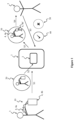
- Figure 1 schematically shows a function of an example of a robot system according to the invention for learning one or more new semantic relations in a knowledge base of physical skills.
- the robot system of Figure 1 is an example of the robot system according to the first aspect.
- the description of the robot system of the first aspect is correspondingly valid for the robot system of Figure 1 .
- the robot system 1 of Figure 1 is a robot system for learning one or more new semantic relations in a knowledge base 2 of physical skills.
- the robot system 1 may be or may comprise a robot, such as an assistive robot (not shown in Figure 1 ).
- the robot system 1 comprises the knowledge base 2 (e.g. stored in a storage of the system 1).
- the knowledge base 2 may be stored in one or more external storages that may be accessed by the system 1.
- the system 1 is configured to obtain knowledge 20 on a physical skill by observing a demonstration 10, by a human user 3, of the physical skill.
- the step of obtaining the knowledge 20 on the demonstrated physical skill is labelled in Figure 1 with the reference sign "Si".
- the physical skill demonstrated by the user 3 is pouring a content of a bottle 4,4a into a water glass 4, 4b.
- the system is configured to update the knowledge base 2 with the obtained knowledge 10. This step is labelled in Figure 1 with the reference sign "S2".
- the system 1 is configured to generate a hypothesis 30 of using the physical skill in a different context compared to a context of the demonstration 10 by performing similarity considerations on the knowledge base 2 using the obtained knowledge 20.
- the step of generating the hypothesis 30 is labelled in Figure 1 with the reference sign "S3".
- the hypothesis 30 of using the physical skill in a different context compared to a context of the demonstration 10 comprises pouring a content of a bottle 4,4a into a wine glass 4, 4b'.
- the system 1 is configured to present the hypothesis 30 to the human user 3. This step is labelled in Figure 1 with the reference sign "S4".
- the system 1 is configured to receive a confirmation 40 or a refusal 50 from the human user 3 with regard to the presentation of the hypothesis 30 to the human user 3.
- This step is labelled in Figure 1 with the reference sign "S5". Since pouring the content of the bottle 4, 4a in the wine glass 4, 4b' is possible, the human user 3 will provide a confirmation 40 with regard to the presentation of the hypothesis 30 to the robot system 1.
- the system 1 is configured to update the knowledge base 2 according to the hypothesis 30 in case of receiving the confirmation 40 or discard the hypothesis 30 in case of receiving the refusal 50.
- Figure 2 schematically shows an example of a knowledge on a physical skill that may be obtained by the robot system of Figure 1 .
- the obtained knowledge 20 on the physical skill may comprise knowledge 20a on a precondition associated with the physical skill, knowledge 20b on an action associated with the physical skill, and knowledge 20c on an effect that results from the precondition and the action.
- the precondition associated with the physical skill of pouring a content 5 of the bottle 4,4a into the glass 4,4b may comprise that the bottle 4,4a is filled with the content 5.
- An action associated to the physical skill may be pouring the content 5 of the bottle 4,4a into the glass 4, 4b.
- the effect resulting from the aforementioned precondition and the aforementioned action may comprise that the glass 4,4b is filled with the content 5 of the bottle 4,4a.
- the knowledge 20a on the precondition associated with the physical skill may comprise knowing that the bottle 4,4a and the glass 4,4b are present (as an initial state of objects 4 involved in the demonstration 10 of the physical skill) and the bottle 4,4a is filled with the content 5 (as an initial state of an attribute of the objects) before the demonstration 10.
- the knowledge 20b on the action associated with the physical skill may comprise pouring the content 5 of the bottle 4, 4a from the bottle 4, 4a into the glass 4, 4b (as knowledge on an action performed during the demonstration with regard to the objects 4 involved in the demonstration 10 of the physical skill).
- the knowledge 20c on the effect may comprise knowing that the bottle 4, 4a and the glass 4, 4b are present (as a final state of the objects 4 involved in the demonstration 10 of the physical skill) and the glass 4,4b is filled with the content 5 (as a final state of an attribute of the objects) after the demonstration 10.
- the objects 4 involved in the demonstration 10 of the physical skill comprises with the glass 4, 4b an object 4b that is subject to the action of pouring a content 5 of the bottle 4, 4a associated with the physical skill. Namely, the content 5 of the bottle 4, 4a is poured into the glass 4, 4b.
- the objects 4 involved in the demonstration 10 of the physical skill comprises with the bottle 4, 4a an object 4a that is used by the action of pouring a content 5 of the bottle 4, 4a associated with the physical skill. Namely, the content 5 of the bottle 4, 4a is poured into the glass 4, 4b.
- Figure 3 shows a flow diagram of an example of a method according to the invention for learning one or more new semantic relations in a knowledge base of physical skills.
- the method of Figure 3 is an example of the method according to the second aspect.
- the description of the method according to the second aspect is correspondingly valid for the method of Figure 3 .
- the method comprises, in a step S 5 following the step S 4 , receiving a confirmation or a refusal from the human user with regard to the presentation of the hypothesis to the human user, and, in a step S6 following the step S 5 , updating the knowledge base according to the hypothesis in case of receiving the confirmation or discard the hypothesis in case of receiving the refusal.
- the robot system 1 of Figure 1 may be configured to perform the method of Figure 3 .
- the robot system 1 of Figure 1 may be configured to perform the method of Figure 3 .
- the robot system and the method according to examples of the invention structure a skill learning process (e.g. learning one or more new semantic relations in a knowledge base of physical skills) into two different stages.
- a skill learning process e.g. learning one or more new semantic relations in a knowledge base of physical skills
- the human user may teach a new skill (i.e. physical skill) and/or capability to the robot system in a LfD sense (i.e. the human demonstrates, and the system observes).
- the system may acquire (i.e. obtain) information on the demonstrated action using its sensors and perception.
- the second learning stage starts.
- the system may create one or more hypotheses on how the physical skill may be applied differently based on its knowledge base including any information at least on actions, effects of actions and/or objects that the system already has.
- the robot system may generate a hypothesis of using the physical skill (that was demonstrated by the human user) in a different context compared to the context of the demonstration. For this, the robot system may perform similarity considerations on the knowledge base using the obtained knowledge on the physical skill that was demonstrated by the human user.
- the different context may comprise using one or more new objects for performing the physical skill that was demonstrated by the human user that are different to one or more objects used by the demonstrated physical skill.
- the different context may comprise using one or more new objects to which the demonstrated physical skill is applied that are different compared to one or more objects to which the demonstrated physical was applied.
- objects may be used as tools or be subject to an action and/or treatment with a tool. In more complex sequences of action, combinations thereof are possible.
- An object that is used by a physical skill may be referred to as "tool".
- the generated one or more hypotheses may then be communicated to the user (e.g. verbally, and/or using augmented reality) for confirmation or rejection.
- the terms "refusal” and “rejection” are used as synonyms.
- the user response may be used by the robot system to update the robot's knowledge, i.e. update the knowledge base.
- the robot system may either ask a single hypothesis using speech output.
- the robot system may, by leveraging an augmented reality (AR) setup, ask many hypotheses at once, where the AR setup provides an efficient and intuitive interface for the user to confirm/reject many hypotheses at once and spans the hypotheses space. This further accelerates the learning process.
- AR augmented reality
- the user may teach the robot system how to cut an apple using a knife.
- the robot system may create the hypothesis that all fruits are cuttable with the knife, because the robot systems knows that an apple is a fruit. That is, in the aforementioned example it is assumed that the knowledge base comprises the knowledge that an apple is a fruit (e.g. a semantic relation of the knowledge base associates the attribute "being a fruit" to the object "apple").
- the robot system may ask the user if a coconut can also be cut.
- the robot system which has observed the human user demonstrating the physical skill of cutting an apple with a knife, may generate the hypothesis of using the observed physical skill in a different context.
- the different context comprises applying the physical skill of cutting with a knife to a new object being a coconut compared to the previous object "apple" involved in the demonstration of the physical skill.
- the robot system may derive this hypothesis from the knowledge that a coconut is also a fruit. That is, the knowledge base may comprise the knowledge that a coconut is a fruit (e.g.
- the robot system may determine that the knowledge base associates to the object "apple” and the object “coconut” the attribute "being a fruit”.
- the robot system may determine that the objects "apple” and “coconut” are similar to each other and, thus, the attribute "being cuttable by a knife” that is learned from the demonstration of the physical skill of cutting an apple by a knife and associated to the object "apple” (due to the updating of the knowledge base with the obtained knowledge by observing the aforementioned demonstration) may also be associated to the object "coconut”.
- the human user may respond: "Because it is hard”. This response may lead the system to understand that an object, such as a coconut, with the property "hard” cannot be cut with a knife.
- the system may be configured to query, from the human user, a reason for the confirmation or refusal in response to receiving the confirmation or refusal, respectively: receive the reason from the human user: and update the knowledge base according to the received reason.
- a new hypothesis might be generated by the robot system.
- the robot system may present many different fruits using an augmented reality (AR) setup to visualize the generated hypothesis. For example, it may be assumed again that cutting of an apple with a knife was demonstrated as a physical skill by a human user.
- the robot system may generate a hypothesis of using the physical skill of cutting with a knife with regard to a banana, a peach, and a coconut, i.e. for cutting each of the aforementioned fruits.
- the robot system may generate an AR setup showing holographic representations of the banana, a peach and a coconut and asking the hypothesis of using the physical skill of cutting with a knife for the banana, peach and coconut.
- the robot system may do this by verbally asking "Can a knife cut the shown fruits".
- the robot system may ask the hypothesis visually by showing in the AR setup a holographic representation of a knife in addition to the holographic representations of the fruits and optionally showing curves or arrows from the holographic representation of the knife to each of the holographic representations of the fruits.
- the robot system may visually show in the AR setup the question of whether the shown knife can cut the shown fruits.
- the robot system may generate in the AR setup a confirmation region and a refusal region that are spatially separated from each other. These two regions may be distinguishable due to a labelling and/or coloring (e.g.
- confirmation region being green and refusal region being red).
- This allows a user confirming the hypothesis for a fruit (e.g. peach) suited for being cut with a knife by moving the holographic representation of that fruit (e.g. peach) into the confirmation region and refusing the hypothesis for a fruit (e.g. coconut) unsuited for being cut with a knife by moving the holographic representation of that fruit (e.g. coconut) into the refusal region.
- the robot system may be configured to receive the confirmation or the refusal by detecting a sorting of new objects that are, according to the hypothesis, subject of the action ("cutting") of the physical skill into categories (e.g. suited for being cut with a knife, and unsuited for being cut with a knife).
- the robot system may be configured to receive the confirmation or refusal detecting a swiping, by the human user, of the new objects (i.e. a swiping of the holographic representations of the new objects) e.g. into the confirmation region or the refusal region.
- a user can confirm/reject the proposed new objects (e.g. the banana, peach and the coconut) for the demonstrated physical skill of cutting with a knife, for example, by sorting them (e.g. their holographic representations) in AR spatially into a confirmation region and a refusal region (may be refered to as reject region).
- the robot system may determine that the hypothesis is refused for one or more of the proposed new objects (e.g. banana, peach and coconut) by recognizing a 'deactivating' of the one or more new objects through 'clicking', by the user, all objects that should be rejected. That is, the system may be configured to receive the confirmation or the refusal by detecting an acting by the human user on the holographic presentation. This acting may be a selection of, e.g. by clicking on, the respective holographic presentation.
- the proposed new objects e.g. banana, peach and coconut
- robots ask the teacher to provide labels for new instances or about movement parameters/ trajectories.
- these systems do not ask questions in the context of semantic learning from demonstration.
- Augmented reality has been recently increasingly used in robotics but typically for debugging by trained experts, visualizing internal states and movement intention, teleoperation, and for simplifying learning by demonstration of trajectories.
- AR has not been proposed in symbolic/semantic learning.
- the proposed robot system and method aims at simplifying, accelerating, and improving the experience of teaching a robotic system in a human-robot-interaction scenario by combining curious question generation based on one or more hypotheses, preferably with a multi-modal interface provided by AR or at least direct interaction between a human, preferably the teacher, using for example a dialogue.
- the method leverages the use of AR to communicate the robot hypotheses on multiple channels (speech, real-world grounded AR visualizations), and for intuitive interaction enabling to answer multiple hypotheses at once or providing additional details.
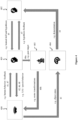
- Figure 4 shows an example of a system architecture of an optional implementation form of the system of Figure 1 .
- Figure 4 shows a system architecture in which functional modules are represented as squares labelled with reference signs 400, 401, 402, 403 and 404.
- exchanged information is depicted along arrows and denoted with reference signs 41 to 48, 40a and 40b.
- the robot system may comprise AR glasses 400 (e.g. Hololens) for an AR setup to visually communicate with a human user (e.g. visually present a hypothesis of using a physical skill in a different context).
- the robot system may further comprise a behavior engine module 401, a robot control system (RCS) 403, an episodic memory module 404, and a learning module 402.
- the behavior engine module 401, a robot control system (RCS) 403, an episodic memory module 404, and a learning module 402 may be part of a robot, e.g. assistive robot.
- the robot system thus, may comprise the AR glasses 400 and a robot, e.g. assistive robot, configured to learn a semantic relation in a knowledge base of physical skills.
- At least one of the behavior engine module 401, robot control system (RCS) 403, episodic memory module 404, and learning module 402 may be an external entity that is not part of the robot, but may be accessed by the robot. The respective external entity may be coupled or attached to the robot. At least one, optionally two or more, of the behavior engine module 401, robot control system (RCS) 403, episodic memory module 404, and learning module 402 may be part of a control unit.
- the control unit may comprise at least one of a processor, microprocessor, controller, microcontroller, application specific integrated circuit (ASIC) and field programmable gate array (FPGA).
- the teacher's behavior 41 in Figure 4 during the task demonstration may be collected through the AR glasses 400 (e.g., Hololens). These are responsible for visualizing virtual objects, recognizing the user's speech input, and recognizing manipulation actions on the (real/virtual) objects. That is, a human user may demonstrate a physical skill to the robot system using the AR glasses 400. This is only by way of example and may be implemented differently.
- the demonstration of physical skill may be demonstrated by the user in real life and the robot may comprise one or more sensors for observing that demonstration in order to obtain knowledge on the demonstrated physical skill.
- the system may represent each step in the demonstration as a triplet ⁇ state_t-1, action_t, state_t> of information.
- the information “state_t-1” is a description of the objects in the world and their attributes 43 before the action (initial state), while the information “state_t” denotes the state of the world (objects and attributes) immediately following the action (final state, target state).
- the information “action_t” may represent a skill (e.g., "use the toaster") or a single atomic action (e.g., "pick up bread”) and it may be labeled explicitly by the user via speech during teaching.
- the episodic memory module 404 may start to store such triplets 43 when a starting command is given by the user with the corresponding label (e.g., 'learn use the toaster').
- a starting command is given by the user with the corresponding label (e.g., 'learn use the toaster').
- the collected information 44 perceived during the demonstration is passed on to the learning module 402, which uses it to update its internal knowledge graph (i.e. knowledge base) and may generalize the newly acquired knowledge in order to generate a hypothesis.
- the new hypothesis is formulated to reduce the uncertainty about objects that are considered similar to the ones demonstrated according to a specific similarity score, which is derive from information on the objects already present in the knowledge base.
- the robot system may detect that a bagel is also a baked food (information included in the knowledge base) and may hypothesize that a bagel can also be heated by the toaster. Such hypotheses, along with a description of the learned +skill45, may then be passed on to the behavior engine module 401.
- This module is responsible, on the one hand, for generating the social cues 42 that the robot may displays during the demonstration (executed by the robot control system 403 or visualized by a head-mounted AR / VR device, e.g. the AR glasses 400), but also to handle the human-robot interaction during the following hypothesis-driven questioning.
- the formulated hypothesis is preferably both uttered by the robot and the involved objects (e.g., toaster, bagel) visualized by communicating to the head-mounted AR / VR device (e.g. AR glasses 400) and a graphical engine which objects to highlight (46 in Figure 4 , but see also Figure 5 ).
- the user's feedback 47 may be collected and communicated back 47 to the learning module 402 via the behavior engine module 401. This latter may also issues a command to the virtual engine to display a positive/negative visualization acknowledging the human feedback 48.
- the learning module 402 may finally extend and consolidate its knowledge about heating food in the toaster without observing a specific additional demonstration.
- the reference sign 40a may represent a gaze target, and the reference sign 40b may represent motor transformations.
- Figure 5 shows an example of a use case of the system of Figure 1 .
- Figure 5 shows a visualization of a new question, i.e. a new hypothesis of using a demonstrated physical skill in a different context, (on the top of Figure 5 ) asked by the robot system, e.g. its robot.
- the involved objects e.g. bread and microwave
- the involved objects i.e. the objects that are used by the physical skill (e.g. heating) according to the hypothesis may be highlighted.
- a positive or negative answer (i.e. a confirmation or refusal) by the user may be acknowledged by a green or red graphical element (e.g. curve, arrow), respectively (shown on the bottom left (confirmation) or bottom right (refusal) of Figure 5 ).
- a green or red graphical element e.g. curve, arrow
- the physical skill demonstrated to the robot system 1 was heating a toast 505 with a toaster 504. It is assumed that the robot system generates the hypothesis of using a microwave 503 for heating the toast 505.
- the hypothesis proposes to use the same object 4b (i.e. the toast 505) that was subject to the demonstrated physical skill (i.e. heating) but use a new object 4a' (the microwave 503) for performing the physical skill (i.e. heating) compared to the object 4a (the toaster 504) involved in the demonstration of the physical skill.
- the robot system may generate in an AR setup a curve or arrow that goes from a holographic representation of the toast 505 to a holographic representation of the microwave 503.
- the physical skill of heating may be shown in the form of text associated to the curve/arrow (e.g. "Is heating possible") and/or in form of a pictogram 501 representing the action of "heating".
- the pictogram 501 of Figure 5 used for the action of "heating” may be a symbol of a thermometer that is shown two times, wherein a left thermometer is blue (i.e. an temperature icon representing a colder state), the right thermometer is red (i.e.
- an temperature icon representing a warmer state and an arrow extends from the left thermometer to the right thermometer to indicate the action "heating”.
- This example of visualizing a hypothesis may be confirmed (i.e. the hypothesis may be confirmed) when the user performs an action, e.g. clicks, on the curve/arrow 502, and/or presses an optional confirmation button shown in the visualization (not shown in Figure 5 ).
- the user may refuse this hypothesis by performing a different action (e.g. clicking twice or swiping away) on the curve/arrow 502, and/or pressing an optional refusal button shown in the visualization (not shown in Figure 5 ).
- any other representations for visualizing objects and other elements may be used instead of holographic representation(s). That is, the optional implementation forms of the invention are not limited to holographic representation(s) and the description is correspondingly valid in case of using different means of visualization.
- holographic representation whenever the term “holographic representation” is used the term “visual representation” or “representation” may be used instead to generalize the description. This is also valid for the description of the other Figures, such as Figures 6 and 7 .
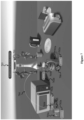
- Figure 6 shows an example of a use case of the system of Figure 1 . That is, an optional implementation of the robot system is depicted in Figure 6 .
- a human teacher 3 may wear a head-mounted augmented reality (AR) device 610.
- the AR device 610 may be AR glasses (e.g. Hololens).
- the term "human user" may be used for referring to the human teacher.
- the robot system 1 comprises a service robot 611 that is positioned at the opposite side of a table. That is, the robot system may comprise the robot 611 and optionally the AR device 610.
- FIG. 6 depicts on the left side for instance the skill of toasting a bread: For example, in a first learning stage, the teacher says: "Learn toasting bread”.
- the robot system 1 e.g. the robot 611 recognizes that it should learn the action "toasting” with the object "bread”. It will observe the scene (i.e.
- the robot system 1 may create some hypothesis how to generalize usage of the tool (e.g. toaster) to different objects and/or usage of different tools to the same object (e.g. toast).
- the tool e.g. toaster
- the same object e.g. toast
- Creating some hypothesis how to generalize the usage of the tool to different objects may comprise: Based on its knowledge base, the robot system 1 may query objects that are similar to the object "bread", and which have not yet been observed in the context of the action (e.g. toasting). Similarity may be determined for instance as a semantic similarity (number of edges in a knowledge graph, number of edges between nodes in a knowledge graph etc.), based on appearance (something looks similar as bread), based on physical similarity (at least one of similar shape, similar size, similar color, similar affordance etc.) etc. The system 1 may then generate the hypothesis based on this similarity and suggest it to the human 3.
- Similarity may be determined for instance as a semantic similarity (number of edges in a knowledge graph, number of edges between nodes in a knowledge graph etc.), based on appearance (something looks similar as bread), based on physical similarity (at least one of similar shape, similar size, similar color, similar affordance etc.) etc.
- the system 1 may then generate the hypothesis based on this similar
- Creating some hypothesis how to generalize the usage of different tools to the same object may comprise: Based on its knowledge base, the robot system 1 may query other tools that according to the system's knowledge base might be capable to create the same effect as the tool (e.g. toaster) involved in the demonstration of the physical skill (e.g. toasting). For instance, it may create the hypothesis that the toast can be heated inside a microwave: "Can I heat the toast also in the microwave?". Again, the user can verbally confirm, reject, or not answer to this hypothesis.
- the robot's hypothesis may be communicated (i.e. repesented) to the human teacher 3 by means of several cues: While the robot 611 may verbally announce the hypothesis, augmented reality holograms (i.e. holographic representations) may be displayed in the AR device 610 (e.g. AR glasses) that the human 3 is wearing. These may comprise arrows that spatially relate the objects and tools, icons that display state changes (e.g. thermometer to indicate a change of temperature), and others. Optionally, the confirmation or rejection may be illustrated using AR animations and sounds. In addition, the robot 611 may communicate additional information about the acquired skill using its movement behavior, such as for instance gazing at the object of interest, pointing or gesturing with its hands.
- the left side of Figure 6 is an illustration of a teaching situation with a human teacher 3, a robot 1 and a table with objects between them, e.g. as described above.
- the right side of Figure 6 is an illustration of AR holographic animations including at least one of spatial arrow(s) (e.g. line 604 connecting the cup 606 of milk and the kettle 608), temperature icon(s) 601a and text label(s) 603.
- the spatial arrow may be referred to as curve or arrow.
- a physical skill demonstrated by the human 3 to the robot 611 may be making a cup 606 of milk hot using the microwave 605.
- the knowledge base may comprise the knowledge that the kettle 608 may make tea of a cup 607 of tea hot. Moreover, the knowledge base may comprise the knowledge that milk and tea are similar in that they both are a drinkable beverage that may be served hot.
- the robot 611 may generate the hypothesis that a kettle 608 can make milk hot. This hypothesis as well as the reasoning by the robot 611 to come to the hypothesis may be shown in the form of a text label 603 in the AR visualization. Moreover, the hypothesis may be shown using a curve/arrow 604 pointing from a cup 606 of milk to a kettle 608, a first pictogram 601a representing "making milk hot" and a second pictogram 601b representing the task of "heating.
- the first pictogram may use the term "milk” pointed by an arrow to a red thermometer (i.e. a temperature icon representing a warm/hot state).
- the second pictogram 601b may use a symbol of a thermometer that is shown two times, wherein a left thermometer is blue (i.e. an temperature icon representing a colder state), the right thermometer is red (i.e. an temperature icon representing a warmer state) and an arrow extends from the left thermometer to the right thermometer to indicate the action "heating”.
- a first button 609a (“yes") and a second button 609b (“no") may be shown in the AR visualization that may be pressed by the human teacher to confirm or refuse the presented hypothesis.
- hypotheses are related to generalize the use of a demonstrated tools with respect to objects different than the objects used in the demonstrations, and to generalize an object with respect to tools different than the one demonstrated.
- An important aspect of this is the communication of the created hypotheses, which may be based on multiple communication cues: For example, hypotheses of the usability of objects with a tool may be presented to the user by holographically highlighting them in the scene. Objects can be virtually swiped/sorted into categories with respect to a hypothesis. Attributes of the objects can be visualized and selected by the user to provide information for all objects that share the attribute.
- the user can confirm or reject each of them using voice recognition, hand gestures or any combination of these.
- Figure 7 shows an example of a use case of the system of Figure 1 . That is, an optional implementation of the robot system is depicted in Figure 7 .
- the robot system of Figure 7 may be in line with the robot system of Figure 6 and, thus, the description of Figure 6 may be correspondingly valid.
- the robot system 1 comprises a service robot 711 that is positioned at a table. Several objects and tools are positioned on the table (such as a cup 705, and a pitcher 706 shown in Figure 7 ). It may be assumed that the service robot 711 has already obtained the knowledge that the pitcher 706 may be used for pouring liquid contained in the pitcher out of the pitcher 706.
- the semantic representation of the aforementioned physical skill may comprise the following two physical features of the pitcher 706: a grasping location 701a for grasping the pitcher 706 and a pouring location 701b, at which the liquid is poured out of the pitcher 706.
- the robot 711 may use the physical skill of pouring out liquid, of which it obtained knowledge by observing how a liquid is poured out using the pitcher 706, in a different context compared to the context of the demonstration. For this, the robot 711 may use the physical skill with regard to one or more new objects that are similar to the pitcher 706 involved in the demonstration of the physical skill of pouring out a liquid and that are known by the knowledge base of the robot 711.
- the cup 705 is known by the knowledge base of the robot 711.
- the robot 711 may perform similarity considerations on the knowledge base by selecting the cup 705 as a new object, because the cup 705 has a physical similarity compared to the pitcher 706 involved in the demonstration of the physical skill of pouring out a liquid.
- the cup 705 also comprise the following two physical features: a grasping location 701a for grasping the cup 705 and a pouring location 701b, at which the liquid is poured out of the cup 705.
- the physical similarity between the pitcher 706 and the cup 705 with regard to pouring out a liquid may comprise two physical features, namely a grasping location 701a and pouring location 701b that are similar for the cup 705 (i.e. the new object) and the pitcher 706 (i.e. the object involved in the demonstration of pouring out the liquid).
- the robot 711 may generate the hypothesis that the cup 705 and the pitcher 706 have similar physical features, i.e. similar properties with regard to pouring a liquid.
- the system 1 may visualize this, e.g. on a screen or AR glasses.
- Figure 7 exemplarily shows an illustration of AR holographic animations including a line 704 for indicating the two objects, i.e. the cup 705 and the pitcher 706, that have the similar physical features, text labels 702a, 702b and 703, and highlighting boxes 701a and 701b.
- the text label 703 may indicate that there are similar physical features.
- the text label 702a and highlighting box 701a may indicate the physical feature of the grasping location at each of the two objects 705 and 706, and the text label 702b and the highlighting box 701b may indicate the physical feature of the pouring location at each of the two objects 705 and 706.
- a robot system can be configured to be taught to prepare food with the users.
- the system can be taught by a particular user as a teacher to support cooking using user-specific types of food, as well as the particular cooking appliances available in a user's environment.
- the system can be used in home kitchen environments, in restaurants or canteens. In the latter one, it can be utilized as an assistive kitchen helper to support the kitchen staff. It can also be used in cooking demonstrations, attracting the attention of an audience for instance in a restaurant.
- a robot system can be configured to be taught to prepare beverages, drinks and/or cocktails in a restaurant or bar.
- the variation in recipes, ingredients and tools to prepare cocktails and other beverages is similarly complex as compared to the cooking application.
- a robot system can be configured to support workshop staff for simple manipulation and repair tasks.
- the system can be trained to use a particular set of machine tools, power tools, etc. and then interactively learn from its user how to apply them to different work pieces.
- the robot system may be equipped with the ability to ask curious questions about a skill and objects, i.e., creating hypotheses that can be presented to the user for confirmation or rejection.
- the hypotheses may be created by considering a certain skill and a list of candidate objects (at least one candidate object), e.g., the currently available objects in the environment.
- the hypotheses may be scored based on a confidence considering the similarity between new candidates and demonstrated object(s), using a predefined object-hierarchy. The hypothesis with the highest confidence is presented to the user, who can quickly confirm or reject it. Hypotheses with lower confidence may additionally be presented.
- the presentation of the hypothesis and reception of a confirmation or rejection allows teaching additional knowledge to the robot system in an interactive and, in comparison to full skill demonstrations, faster way. For example, after seeing a demonstration to learn to use the microwave, where the teacher heated milk, the robot can ask whether a similar object (e.g., water) can be heated in the microwave.
- XAI virtual elements in this case would highlight the candidate object and the microwave and, after receiving the user's answer, signal with red/green particles the acknowledgement of the negative/positive answer.
Landscapes
- Engineering & Computer Science (AREA)
- Software Systems (AREA)
- Theoretical Computer Science (AREA)
- Mechanical Engineering (AREA)
- Robotics (AREA)
- Evolutionary Computation (AREA)
- Medical Informatics (AREA)
- Physics & Mathematics (AREA)
- Computing Systems (AREA)
- General Engineering & Computer Science (AREA)
- General Physics & Mathematics (AREA)
- Mathematical Physics (AREA)
- Data Mining & Analysis (AREA)
- Computer Vision & Pattern Recognition (AREA)
- Artificial Intelligence (AREA)
- Manipulator (AREA)
Priority Applications (1)
| Application Number | Priority Date | Filing Date | Title |
|---|---|---|---|
| US18/415,594 US20240249189A1 (en) | 2023-01-19 | 2024-01-17 | Robot system and method for learning one or more new semantic relations in a knowledge base of physical skills |
Applications Claiming Priority (1)
| Application Number | Priority Date | Filing Date | Title |
|---|---|---|---|
| EP23152462 | 2023-01-19 |
Publications (1)
| Publication Number | Publication Date |
|---|---|
| EP4403318A1 true EP4403318A1 (de) | 2024-07-24 |
Family
ID=85018110
Family Applications (1)
| Application Number | Title | Priority Date | Filing Date |
|---|---|---|---|
| EP23188286.1A Pending EP4403318A1 (de) | 2023-01-19 | 2023-07-28 | Robotersystem und verfahren zum lernen einer oder mehrerer neuer semantischer beziehungen in einer wissensbasis physischer fähigkeiten |
Country Status (2)
| Country | Link |
|---|---|
| US (1) | US20240249189A1 (de) |
| EP (1) | EP4403318A1 (de) |
Families Citing this family (1)
| Publication number | Priority date | Publication date | Assignee | Title |
|---|---|---|---|---|
| US12321428B2 (en) * | 2021-07-08 | 2025-06-03 | Nippon Telegraph And Telephone Corporation | User authentication device, user authentication method, and user authentication computer program |
Citations (3)
| Publication number | Priority date | Publication date | Assignee | Title |
|---|---|---|---|---|
| US20130343640A1 (en) * | 2012-06-21 | 2013-12-26 | Rethink Robotics, Inc. | Vision-guided robots and methods of training them |
| US10569420B1 (en) * | 2017-06-23 | 2020-02-25 | X Development Llc | Interfacing with autonomous devices |
| US20210086370A1 (en) * | 2019-09-19 | 2021-03-25 | The Research Foundation For The State University Of New York | Negotiation-based Human-Robot Collaboration via Augmented Reality |
-
2023
- 2023-07-28 EP EP23188286.1A patent/EP4403318A1/de active Pending
-
2024
- 2024-01-17 US US18/415,594 patent/US20240249189A1/en active Pending
Patent Citations (3)
| Publication number | Priority date | Publication date | Assignee | Title |
|---|---|---|---|---|
| US20130343640A1 (en) * | 2012-06-21 | 2013-12-26 | Rethink Robotics, Inc. | Vision-guided robots and methods of training them |
| US10569420B1 (en) * | 2017-06-23 | 2020-02-25 | X Development Llc | Interfacing with autonomous devices |
| US20210086370A1 (en) * | 2019-09-19 | 2021-03-25 | The Research Foundation For The State University Of New York | Negotiation-based Human-Robot Collaboration via Augmented Reality |
Non-Patent Citations (3)
| Title |
|---|
| ABDO NICHOLA ET AL: "Learning manipulation actions from a few demonstrations", 2013 IEEE INTERNATIONAL CONFERENCE ON ROBOTICS AND AUTOMATION (ICRA); 6-10 MAY 2013; KARLSRUHE, GERMANY, IEEE, US, 6 May 2013 (2013-05-06), pages 1268 - 1275, XP032506366, ISSN: 1050-4729, ISBN: 978-1-4673-5641-1, [retrieved on 20131013], DOI: 10.1109/ICRA.2013.6630734 * |
| LUEBBERS MATTHEW B ET AL: "ARC-LfD: Using Augmented Reality for Interactive Long-Term Robot Skill Maintenance via Constrained Learning from Demonstration", 2021 IEEE INTERNATIONAL CONFERENCE ON ROBOTICS AND AUTOMATION (ICRA), IEEE, 30 May 2021 (2021-05-30), pages 3794 - 3800, XP033989776, DOI: 10.1109/ICRA48506.2021.9561844 * |
| MULLEN JAMES ET AL: "Communicating Inferred Goals With Passive Augmented Reality and Active Haptic Feedback", IEEE ROBOTICS AND AUTOMATION LETTERS, IEEE, vol. 6, no. 4, 13 September 2021 (2021-09-13), pages 8522 - 8529, XP011878965, DOI: 10.1109/LRA.2021.3111055 * |
Also Published As
| Publication number | Publication date |
|---|---|
| US20240249189A1 (en) | 2024-07-25 |
Similar Documents
| Publication | Publication Date | Title |
|---|---|---|
| Losey et al. | Learning latent actions to control assistive robots | |
| Ding et al. | Integrating action knowledge and LLMs for task planning and situation handling in open worlds | |
| Lin et al. | Onetwovla: A unified vision-language-action model with adaptive reasoning | |
| Ciocarlie et al. | Mobile manipulation through an assistive home robot | |
| Cakmak et al. | Using spatial and temporal contrast for fluent robot-human hand-overs | |
| US20240249189A1 (en) | Robot system and method for learning one or more new semantic relations in a knowledge base of physical skills | |
| US20220288777A1 (en) | Parameterized Waypoint Generation on Dynamically Parented Non-Static Objects for Robotic Autonomous Tasks | |
| Grice et al. | Assistive mobile manipulation: Designing for operators with motor impairments | |
| Ritschel et al. | Drink-o-mender: An adaptive robotic drink adviser | |
| Neumann et al. | “kognichef”: A cognitive cooking assistant | |
| Haidu et al. | Automated models of human everyday activity based on game and virtual reality technology | |
| Zhao et al. | Guided reality: Generating visually-enriched ar task guidance with llms and vision models | |
| El Hafi et al. | Teaching system for multimodal object categorization by human-robot interaction in mixed reality | |
| Cao et al. | Evaluation of an on-line adaptive gesture interface with command prediction | |
| Mao | A framework for llm-based lifelong learning in robot manipulation | |
| Kodur et al. | Structured and unstructured speech2action frameworks for human-robot collaboration: a user study | |
| Jia et al. | More than automation: User insights into the functionality and interface of wheelchair-mounted robotic arms | |
| Kostic et al. | Exploring mid-air hand interaction in data visualization | |
| Sung et al. | Synthesizing manipulation sequences for under-specified tasks using unrolled markov random fields | |
| Duan et al. | Actionet: An interactive end-to-end platform for task-based data collection and augmentation in 3d environment | |
| Guo et al. | Making everyday interfaces accessible: tactile overlays by and for blind people | |
| Kashyap et al. | Robot-Assisted Social Dining as a White Glove Service | |
| Hwang et al. | The role of mental model and shared grounds in human-robot interaction | |
| Reichel et al. | Mampf: An intelligent cooking agent for zoneless stoves | |
| Tong | Enhancing user experience in human-robot interaction in manufacturing |
Legal Events
| Date | Code | Title | Description |
|---|---|---|---|
| PUAI | Public reference made under article 153(3) epc to a published international application that has entered the european phase |
Free format text: ORIGINAL CODE: 0009012 |
|
| STAA | Information on the status of an ep patent application or granted ep patent |
Free format text: STATUS: THE APPLICATION HAS BEEN PUBLISHED |
|
| AK | Designated contracting states |
Kind code of ref document: A1 Designated state(s): AL AT BE BG CH CY CZ DE DK EE ES FI FR GB GR HR HU IE IS IT LI LT LU LV MC ME MK MT NL NO PL PT RO RS SE SI SK SM TR |
|
| STAA | Information on the status of an ep patent application or granted ep patent |
Free format text: STATUS: REQUEST FOR EXAMINATION WAS MADE |
|
| 17P | Request for examination filed |
Effective date: 20241108 |
|
| RBV | Designated contracting states (corrected) |
Designated state(s): AL AT BE BG CH CY CZ DE DK EE ES FI FR GB GR HR HU IE IS IT LI LT LU LV MC ME MK MT NL NO PL PT RO RS SE SI SK SM TR |
|
| RAP1 | Party data changed (applicant data changed or rights of an application transferred) |
Owner name: HONDA MOTOR CO., LTD. |
|
| RAP3 | Party data changed (applicant data changed or rights of an application transferred) |
Owner name: HONDA MOTOR CO., LTD. |