EP4403830A1 - Appareil de cuisson et procédé - Google Patents
Appareil de cuisson et procédé Download PDFInfo
- Publication number
- EP4403830A1 EP4403830A1 EP24153249.8A EP24153249A EP4403830A1 EP 4403830 A1 EP4403830 A1 EP 4403830A1 EP 24153249 A EP24153249 A EP 24153249A EP 4403830 A1 EP4403830 A1 EP 4403830A1
- Authority
- EP
- European Patent Office
- Prior art keywords
- cooking
- medium
- cooking appliance
- processor
- designed
- Prior art date
- Legal status (The legal status is an assumption and is not a legal conclusion. Google has not performed a legal analysis and makes no representation as to the accuracy of the status listed.)
- Pending
Links
Images









Classifications
-
- F—MECHANICAL ENGINEERING; LIGHTING; HEATING; WEAPONS; BLASTING
- F24—HEATING; RANGES; VENTILATING
- F24C—DOMESTIC STOVES OR RANGES ; DETAILS OF DOMESTIC STOVES OR RANGES, OF GENERAL APPLICATION
- F24C7/00—Stoves or ranges heated by electric energy
- F24C7/08—Arrangement or mounting of control or safety devices
- F24C7/082—Arrangement or mounting of control or safety devices on ranges, e.g. control panels, illumination
-
- F—MECHANICAL ENGINEERING; LIGHTING; HEATING; WEAPONS; BLASTING
- F24—HEATING; RANGES; VENTILATING
- F24C—DOMESTIC STOVES OR RANGES ; DETAILS OF DOMESTIC STOVES OR RANGES, OF GENERAL APPLICATION
- F24C15/00—Details
- F24C15/10—Tops, e.g. hot plates; Rings
- F24C15/102—Tops, e.g. hot plates; Rings electrically heated
- F24C15/105—Constructive details concerning the regulation of the temperature
-
- H—ELECTRICITY
- H05—ELECTRIC TECHNIQUES NOT OTHERWISE PROVIDED FOR
- H05B—ELECTRIC HEATING; ELECTRIC LIGHT SOURCES NOT OTHERWISE PROVIDED FOR; CIRCUIT ARRANGEMENTS FOR ELECTRIC LIGHT SOURCES, IN GENERAL
- H05B6/00—Heating by electric, magnetic or electromagnetic fields
- H05B6/02—Induction heating
- H05B6/06—Control, e.g. of temperature, of power
- H05B6/062—Control, e.g. of temperature, of power for cooking plates or the like
-
- H—ELECTRICITY
- H05—ELECTRIC TECHNIQUES NOT OTHERWISE PROVIDED FOR
- H05B—ELECTRIC HEATING; ELECTRIC LIGHT SOURCES NOT OTHERWISE PROVIDED FOR; CIRCUIT ARRANGEMENTS FOR ELECTRIC LIGHT SOURCES, IN GENERAL
- H05B6/00—Heating by electric, magnetic or electromagnetic fields
- H05B6/02—Induction heating
- H05B6/10—Induction heating apparatus, other than furnaces, for specific applications
- H05B6/12—Cooking devices
- H05B6/1209—Cooking devices induction cooking plates or the like and devices to be used in combination with them
-
- H—ELECTRICITY
- H05—ELECTRIC TECHNIQUES NOT OTHERWISE PROVIDED FOR
- H05B—ELECTRIC HEATING; ELECTRIC LIGHT SOURCES NOT OTHERWISE PROVIDED FOR; CIRCUIT ARRANGEMENTS FOR ELECTRIC LIGHT SOURCES, IN GENERAL
- H05B2213/00—Aspects relating both to resistive heating and to induction heating, covered by H05B3/00 and H05B6/00
- H05B2213/05—Heating plates with pan detection means
-
- H—ELECTRICITY
- H05—ELECTRIC TECHNIQUES NOT OTHERWISE PROVIDED FOR
- H05B—ELECTRIC HEATING; ELECTRIC LIGHT SOURCES NOT OTHERWISE PROVIDED FOR; CIRCUIT ARRANGEMENTS FOR ELECTRIC LIGHT SOURCES, IN GENERAL
- H05B2213/00—Aspects relating both to resistive heating and to induction heating, covered by H05B3/00 and H05B6/00
- H05B2213/06—Cook-top or cookware capable of communicating with each other
Definitions
- Embodiments of the present invention relate to a cooking appliance, cooking accessories and a method.
- Preferred embodiments relate to a machine learning-based air/structure-borne sound sensor with associated software solution for safe, energy-efficient and automated cooking, frying and warming up.
- Temperature measurements are irrelevant to humans when cooking. Whether it's 71°C on Mount Everest or 100°C on the Atlantic: water boils when it bubbles; fat is hot when it sizzles. In this way, even an inexperienced cook can monitor several pots by "listening" and make adjustments on the stove. The human ear is able to both recognize individual sounds and put them into the right context.
- Humidity sensors for monitoring water vapor are also possible.
- Other systems focus on gas stoves to detect fires, e.g. using gas sensors to monitor gas leaks or IR sensors above the stove top for early fire detection. This usually involves feedback to the gas supply of the stove or directly to the user via an app.
- the object of the present invention is to provide a concept for monitoring a cooking process (including frying, warming up, etc.) which overcomes the disadvantages present in the prior art and in particular offers an improved compromise between cost efficiency, monitoring functionality and monitoring accuracy.
- Embodiments of the present invention provide a cooking appliance (e.g. a hob) with a heat source (e.g. an induction plate) for heating a medium (e.g. food to be cooked, such as vegetables or meat or cooking water or frying fat) or a cooking utensil (e.g. the pot).
- the cooking appliance also comprises means for sound detection (e.g. airborne sound or structure-borne sound) which are designed to receive an acoustic signal (e.g. a boiling sound) originating from the medium or the cooking utensil and/or to convert it into a digital acoustic signal.
- these means for sound detection can be, for example, an airborne sound or structure-borne sound microphone or generally a microphone.
- the cooking device comprises a processor which is designed to analyze the (received and digitized) digital acoustic signal with regard to one or more features and to determine a cooking state (e.g. a boiling state) for the medium based on the one or more features or raw data.
- a processor which is designed to analyze the (received and digitized) digital acoustic signal with regard to one or more features and to determine a cooking state (e.g. a boiling state) for the medium based on the one or more features or raw data.
- the cooking appliance can have the form of a hob. There is no restriction to certain types, such as a gas hob, induction hob or infrared hob.
- the cookware can be a pot or a pan.
- the medium can, for example, be a food to be cooked, e.g. meat, or a cooking medium, e.g. cooking water or fat.
- the cooking appliance has the form of a hob that comprises several hotplates or cooking positions, wherein the processor is designed to carry out cooking position detection or hotplate detection based on the digital acoustic signals and/or additional information.
- the hotplate position or the hotplate detection information represents one of the above-mentioned features.
- Embodiments of the present invention are based on the knowledge that a cooking state can be monitored directly by acoustic monitoring by analyzing the recorded acoustic signal (structure-borne sound signal or airborne sound signal) with regard to one or more characteristics. This makes it possible to make much more detailed statements about the cooking or kitchen processes or even additional information about the presence of people in the kitchen/cooking area. Such a sensor system reacts much faster than existing sensors, so that changes in the cooking state can be responded to quickly. The monitoring is also less dependent on cookware and/or open or closed lids of the cookware.
- the cooking status is detected only on the basis of the acoustic signals, i.e. without additional information from the temperature signal or similar.
- the currently available signal can also be sufficient to detect the cooking status without taking the previous signal curve into account.
- a cooking accessory is created, e.g. as a supplement to a cooking device.
- the cooking accessory can, for example, comprise means for sound detection and the processor.
- the cooking accessory is intended for use for a cooking device with a heat source for heating a medium or a cooking vessel. and includes the two units already explained above.
- the advantage here is that the system can also be attached to existing kitchen appliances and these existing kitchen appliances can be expanded, so to speak.
- the means for sound detection can, for example, be directly assigned to a cooking utensil or the medium, so that there is then also a direct assignment to the cooking position.
- the means for sound detection it would also be conceivable for the means for sound detection to be aligned with the one or more hotplates or to align themselves automatically. The exact arrangement depends on the implementation of the means for sound detection. According to embodiments, these can have means for sound detection of airborne sound, one or more microphones and/or means for sound detection of structure-borne sound. In the case of the means for airborne sound, the microphone is advantageously aligned accordingly with the cooking utensil and/or the means to be monitored.
- means for structure-borne sound detection can be arranged directly on the cooking utensil.
- means for sound detection can also comprise external means for sound detection that are arranged directly on the cooking appliance or the cooking utensil or the kitchen ceiling in the area of the hob or the extractor hood, etc.
- the processor can have an A/D converter or can be designed to carry out preprocessing, for example by means of steps such as quantization or normalization.
- the processor can be designed for feature extraction, for example based on a time-frequency transformation, or another type of feature extraction.
- the processor can have a filter for signal filtering, in particular for minimizing noise. This filter advantageously enables the minimization of noise originating from the heating source (induction), etc.
- One possible implementation variant would be a bandpass filter.
- the processor is designed to carry out the analysis using machine learning, for example in the form of a neural network.
- the processor can train the neural network and/or the ML algorithm using training data and/or using a current digital acoustic signal or using several digital acoustic signals (for example together with associated cooking status information).
- the processor is designed, for example, to be trained on site and/or to be trained in the delivery state and/or to be adapted on site and/or to be trained using federated training.
- a digital controller is created which determines the heating power for achieving a target cooking state depending on the current cooking state.
- the processor is designed to post-process a signal derived from the digital acoustic signal by means of privacy enhancement processing, e.g. by means of a speech filter. This advantageously enables acoustic monitoring without the privacy-relevant information being passed on.
- the cooking appliance can advantageously be expanded to include additional sensors or can access additional sensors.
- additional sensors can access additional sensors.
- temperature measurements generally already provide useful information on the cooking status, but this can be valuablely supplemented by auditory noise monitoring.
- the cooking appliance has an internal database and/or an interface to an external database, which the processor can access, for example, for analysis.
- the internal database or the external database comprises information relating to one or more reference features associated with a cooking state (in stored form), wherein the processor is designed to carry out an analysis using the one or more reference features.
- the cooking appliance can have a control system that is designed to regulate the heat source depending on the determined cooking state, in particular a power for the heat source.
- the heat source can be reduced when a cooking state is reached, in particular a boiling state.
- this method can also be computer-implemented.
- a method refers to a computer program for carrying out this method.
- Fig. 1A shows a cooking device 10, which here can have, for example, four heat sources 12a-d. Each of these heat sources 12a-d can be individually controlled, for example, via a control 20, e.g. via a rotary knob 20k, or can also be changed in terms of size.
- a control 20 e.g. via a rotary knob 20k
- the visible top of a hob 10 usually consists of special glass ceramic surfaces with several cooking zones 12a-12d (heating area), which mark the area of the induction coils.
- the four rotary knobs 12k marked with numbers, give the cook the option of setting a target value for the heating power for each cooking zone.
- hobs with induction technology are also offered on the household appliance market.
- the main difference to radiant heating (infrared heating) is that the heat is generated directly in the base of the cookware (not shown). Accordingly, the cooking zone is only heated by the heat from the cookware and the surface temperature of the glass ceramic plate remains low.
- an induction hob can heat food more quickly than another type of hob. With reference to Fig. 1B This type of hob is explained.
- Fig. 1B shows a hob 10 with a cooking utensil 15.
- the cooking appliance 10 has a cooking zone 12a that can be operated using induction.
- the cooking zone 12a comprises several induction coils 12i that are driven by a converter 12u.
- the converter receives its electrical energy from the mains and is controlled by the controller 20.
- the excitation of the induction coils 12i is carried out with a corresponding excitation frequency as Fig. 1C shows.
- the available electrical power P eff is plotted over time.
- Fig. 1C shows three diagrams with three different output powers.
- the control 20 can use modulation.
- the effective electrical power can be controlled using the programmed modulation of the pulse duration (PDM) - i.e. by simply switching the oscillator on and off.
- PDM pulse duration
- an effective active power P eff is thus obtained.
- a long setting duration and short pause lead to the food being cooked heating up quickly and vice versa.
- the closed-loop system 20l is It should be noted that, starting from the desired power w(t) and a temperature signal x(t), the two-point controller 20z is controlled with the combined signal e(t) in order to apply the excitation frequency t20 or y(t) to the induction coils.
- a continuously operating controller 20pit can be used for the control system 20r of the modified loop 20l'. Accordingly, the controller 20pit does not adjust the duty cycle of the oscillator, but rather the control frequency of the coil variably, as shown by f20' (associated with y(t)).
- the control is carried out by means of the controller 20z or 20pit using a temperature sensor 20ts.
- this temperature sensor can be integrated into the glass ceramic hob and thus measures the pot temperature or can be present in the hob. Either the ergonomics or the indirect measurement of the medium temperature are problematic.
- the only boiling states of the medium temperature can vary depending on the medium or other environmental conditions, such as the altitude. The boiling point varies both depending on the altitude and depending on the medium. Regardless of the medium, however, boiling can be detected based on the sound emission of the medium in the fluid. This effect is subsequently used by the cooking device 50.
- the cooking device 50 comprises, for example, a heating element, such as an induction heating element 52, e.g. an induction coil, as explained above.
- the cooking device 50 also comprises means for sound detection 54, such as a microphone or a structure-borne sound sensor.
- the means for sound detection 54 are designed to detect the acoustic signal 56 originating from the medium 58 in the cooking utensil 59.
- the acoustic signal is then converted, for example, into a digital acoustic signal and evaluated by the processor 55.
- the evaluation can be carried out according to embodiments according to one or more features in order to determine the cooking state of the medium 58 based on these one or more features. For example, boiling information can be recognized based on the noise.
- an acoustic signal is produced by the medium during the boiling process, so that this information can be generated, for example, by means of pattern recognition. It has also been recognized that temperature information or other information, such as an evaporation or combustion state of the medium, particularly in the case of fat, can also be recognized.
- the processor 55 outputs this status information to the controller 20. Based on this, the controller 20 can control the heating power for the heating element 52, as described above in connection with the control examples from Fig. 1D , and 1F was explained.
- Fig. 2a a variant is explained in which the acoustic sensor 54 and the processor 55 are integrated into an external device, such as a retrofit device 53.
- the functionality is essentially the same, with the processor 55 then outputting the generated information and/or features as information to a programming interface of a standard hob.
- the programming interface API is provided with the reference symbol 20a.
- the generated information e.g. in the form of control data
- additional information such as a rotary knob position
- a pan detection and/or a temperature can be tapped from the interface 20a by the device 53 and included in the control.
- the conventional control can then take place using the controller 20z and the control path 20r.
- the controller is of course not limited to a two-point control; a PID controller would also be conceivable.
- the only sensor signals that can be included in the monitoring implementation examples are in Fig. 2B illustrated.
- the acoustic sensor 54 can be integrated into the ceramic hob.
- the ceramic hob optionally includes a pan detection 61 and a temperature sensor 62.
- the four input data rotary knob position, pan detection, temperature and the acoustic signal are then available, so that using these signals the excitation frequency for the controller 20, i.e. the power control, can be adjusted.
- This control can, for example, be carried out separately for each cooking zone, i.e. x times.
- the rotary knob position enters the setpoint, whereby the excitation frequency is then selected taking temperature and acoustic signal into account so that a suitable cooking state is achieved.
- the processor (not shown) creates an ML model by drawing conclusions about the dynamic system of controller and controlled system (glass ceramic plate and pot) and teaches this accordingly. Knowledge about the pot contents can also be obtained from the amount of energy supplied and the associated temperature change (temperature sensor 62).
- the pot content is therefore a corresponding feature associated with the cooking state, since both the acoustic characteristics and the cooking state itself can vary depending on the medium or pot content.
- 54 different variants are considered as means for sound detection.
- a first variant as for example in connection with Fig.3
- airborne sound can be determined.
- a MEMS microphone could be used for this.
- the determination of structure-borne sound would also be conceivable.
- a structure-borne sound sensor (structure-borne sound microphone) is an electroacoustic transducer for measuring structure-borne sound, whereby the measurement mainly relates to the investigation of vibrating surfaces. The most important parameters are the deflection, the vibration speed and the vibration acceleration. Accordingly, four types of structure-borne sound sensors are placed, for example, as in Fig. 2C These include piezoelectric sensors, MEMS sensors, strain gauges, magnetic-inductive sensors. All are used to record acceleration.
- the sound sensor such as the microphone or the structure-borne sound sensor
- the sound sensor can be positioned at different positions of the cooking surface 10 with the multiple cooking zones.
- the right Fig. 2B On the right, four sound sensors are provided, each assigned to the cooking zones 12a-d.
- the sound sensors can also be provided between the cooking zones, as in the left Fig. 2B illustrated on the left. In this case, a 1:1 assignment of sound sensor and cooking zone is not possible.
- a microphone array can also be used as a microphone. This offers several advantages, namely that several cooking zones 12a-d can be monitored using one array, for example using beamforming. According to embodiments, background noise can also be suppressed. The use of an array in particular makes it possible to detect existing background noise and then take it into account or filter it out (before further processing of the signals). According to embodiments, the microphones can be attached directly to the hob or in the cooking environment (e.g. extractor hood, kitchen ceiling, etc.).
- the processor has a corresponding filter to filter out such noise, which can be calculated depending on the choice of converter.
- a simple possibility would be to use a low-pass filter to filter the audio signal, as in Fig. 2H is shown by the reference number 55t.
- the low-pass filter also receives information such as the current excitation frequency in order to optimally filter the audio signal.
- the processor is trained in advance or supplied with trained data.
- the different signals e.g. knob position, pot detection, temperature, excitation frequency and, above all, the acoustic signal
- An ML model trained in this way SVM, CNN, TCNN, RNN, LSTM, Transformer
- sensor data is processed by intelligent signal analysis or preprocessing, e.g. time/frequency transformation or feature extraction, in combination with machine learning methods, e.g. B. by neural networks, continuously or at fixed time intervals.
- the airborne and/or structure-borne sound data are combined with other Sensor data is merged.
- the analysis can be carried out locally directly on the device or sensor. Alternatively, cloud evaluation is also possible.
- An ML model machine learning model trained in this way then enables various one or more previously defined states to be recognized, e.g. water boiling over, and this, for example, independently of the previous signal curve.
- continuous events such as a "sizzling intensity" of fat, can also be determined.
- Such a device can be integrated directly into the kitchen appliance, as is the case, for example, with Fig.4 explained or can also be intended as a retrofit element, such as Fig. 2A has shown.
- the integrated variant or the retrofit variant both offer the possibility of providing feedback to the kitchen appliance based on the results of the analysis in order to regulate its parameters, in accordance with other embodiments. Additionally or alternatively, information can also be issued to a user, e.g. via smartphone, to inform the user of the current status and, if necessary, to point out problems.
- Fig. 3B Three cooking states are shown as examples.
- Fig. 3B Based on a large number of linked sensor information (cf. Fig. 3a ), which are weighted according to their relevance, for example, three resulting recognized states "water is boiling over”, “fat is sizzling too much” or "everything is OK". These are example classes for safety functions. Based on each state, a hint can then be given or the hob power can be controlled directly. If water is boiling over or fat is sizzling too much, for example, the hob power (or the temperature setpoint) can be reduced. If everything is OK, the setpoint value from the rotary knob is used.
- this can be done via the manufacturer's API in order to make a temperature adjustment. Both classification and regression models can be used. It can also be checked whether a classification is appropriate or whether the model (e.g. prediction of a temperature value) should be improved. The user can then provide feedback via the API, which is taken into account (see below).
- the safety function is to be understood as a basic function.
- kitchen fires often occur as a result of burning fat.
- the condition of heavily sizzling fat can thus lead to a reduction in the heating output and can advantageously be detected very well using structure-borne sound or airborne sound.
- a pot boiling over is a safety-critical issue, so that this detected condition can also be assigned to a safety function.
- the self-learning algorithm can also be further trained using user feedback if, for example, it detects a pot boiling over or detects a fat temperature that is too high even though this has not yet been reached. In this respect, user feedback regarding status information can also enable training during operation.
- a kettle has an integrated heating element and can be monitored acoustically. The kettle can then be switched off based on the acoustic signal.
- Fig.3D shows a possible variant of how further information can be transmitted, e.g. from the cookware to the control system.
- an RFID tag can be provided as a sticker on the cookware, which outputs information about the functionality to the cooking device via RFID.
- the cooking device can be used according to embodiments have an RFID reader.
- a dynamic model or special function can be stored in an RFID tag and transmitted to the intelligent control of the hob.
- An interesting option would be an RFID tag that gives old pots or similar new functions. For example, "I am a kettle" in order to carry out the kettle functionality explained above.
- a convenience functionality such as a cooking mode assigned to a cooking task, can also be enabled.
- Fig. 3E shows a controller 20' with a processor 55, which receives the acoustic signal from the sensor 54.
- the controller can, according to embodiments, output information to the user, for example via Bluetooth or other radio communication means.
- the user can, for example, wear headphones shown here for voice output or a smartwatch for visual display or alarm via vibration signal.
- the sound information from the cooking area / cooking status can also be converted into representative vibration patterns and then transmitted to a smartwatch.
- the cooking medium in the cookware can be kept constant in a first state, which is detected, for example, upon confirmation by the user. If the user or the cook is satisfied with the current cooking or sizzling intensity, he or she can communicate this to the control system - similar to cruise control in a car - using a hold button. The control system then ensures that the cooking or sizzling intensity is maintained accordingly.
- the pasta water does not boil over. There is therefore no need to repeatedly readjust the heating power using the rotary knob.
- Such a function is ideal for gently simmering, warming up or keeping food warm.
- a liquid often starts to boil more strongly immediately if you want to use a lid to save energy.
- the control can differentiate between the state with lid and without lid based on the acoustic signal and then adjust the regulation accordingly.
- the acoustic signal and the behavior of the cooking medium which the control system is designed to take into account, must be taken into account.
- a specially optimized warm-up program would also be conceivable, as will be explained below.
- a warm-up program or a cooking program in general could, for example, carry out an automated regulation of the heating power according to a given recipe.
- Content stored in the recipe can, for example, be the duration of individual heating levels or the duration of individual cooking states. For example, it can be defined that cooking state A is maintained for a certain period of time, while cooking state B is maintained for a further certain period of time.
- Warm-up programs could, for example, be designed in collaboration with manufacturers of ready meals. Using a QR code on the packaging, the intelligent control can then execute a cooking program optimized by the manufacturer (amount of water + powder in the pot, scan QR code with hob/smartphone, click start, if necessary beep to stir, etc.). The same principle can be applied in cookbooks. Furthermore, different programs are also made possible in this way, for example for warming sausages such as white sausages, according to a given recipe.
- a neural network that uses the structure-borne sound to predict the temperature of the fat or the medium in the pan or in the cookware.
- the temperature of the medium to be heated is determined using an infrared thermometer and at the same time the currently prevailing structure-borne sound is recorded using a sound sensor, e.g. a piezo pickup or a microphone. These two pieces of information can be correlated.
- the relationships can be learned using an ML model (regression model).
- Information about the medium to be heated can also be read in as a further feature to be correlated.
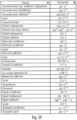
- the background is that, as the table in Fig. 3F shows that different media have different smoke points because they can be heated to different maximum temperatures.
- Fig. 3G shows an extract from a CSV marker for, for example, three different cooking intensities KS0 stove, KS1 light cooking, KS2 strong cooking, KS3 boiling over.
- One example creates an intelligent cooking sensor that can reliably detect cooking conditions and regulate them automatically. It consists, for example, of an artificial auditory perception model and a new type of power controller. Together with an induction hob, it thus forms an intelligent cyber-physical overall system. It can perceive and understand the cooking environment and change it in a targeted manner through actions - such as adjusting the heating output. With the ability to act autonomously, it forms the foundation for the smart hob of the future and the basis for user-friendly cooking assistance systems.
- the senor can be easily and quickly integrated into conventional hob systems.
- Fig. 5a illustrates the design of the sensor as a cyber-physical system.
- the three stages of perception model, system state and system controller are shown depending on the target and actual cooking state, taking the pot dynamics into account.
- the sound pressure waves perceived as environmental noise are recorded by inexpensive MEMS microphones, pre-processed in a digital signal processor and converted into a spectrogram. This contains the noise information and serves as input for the cooking state detection in the artificial auditory perception model. The output is temporarily stored as the actual cooking state.
- the information from the hob control is included in the perception (sensor fusion). This includes: indirect temperature measurements, pot detection and current heating output (see. Fig. 3a ).
- the system state M forms the input variable for the power controller as a state vector.
- the system state Z contains the desired TARGET cooking state and an internally calculated parameter for the pot dynamics. The latter characterizes the thermodynamic behavior of the entire system consisting of the hob, cookware and liquid.
- the system state Z can also be expanded to include specifications for cooking modes (e.g. energy saving mode).
- the state-based power controller R calculates the currently required heating power based on the system status and sends either a command to the hob control or a warning message to the person cooking. In this way, the TARGET cooking state can be achieved and maintained autonomously and energy efficiently.
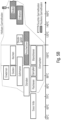
- Fig. 5b Audible cooking methods and useful cooking states are in Fig. 5b shown: Cooking or cooking is generally understood to mean the preparation of food using a heat source. A basic distinction is made between moist cooking methods (cooking in the true sense of the word) and dry cooking methods (frying, deep-frying and sweating). The main difference between the two methods of preparation is the medium used to transfer the heat to the food. For example, liquids such as water, broth, wine and milk are used for cooking; for frying, deep-frying and sweating, heating is done using fats and oils [8]. The choice of cooking method has a direct impact on the taste, tolerability and nutritional content of the prepared food - and often also on health [8]. An overview of the cooking methods regularly used in private households can be found in Fig. 5b Cooking methods that can be heard acoustically are shaded.
- the following cooking state classes were used: stove off, implosions, simmering, boiling, boiling, vigorous boiling and boiling over. This allows almost all moist cooking methods to be monitored and controlled based on their specific cooking noises.
- the state classes can be used as part of customer discovery. In this context, safety-relevant functions for roasting and deep-frying as well as roasting assistants in connection with sizzling intensities can also be implemented.
- noises are generally auditory sensations that are not directly perceived as a sound, tone, mixture of tones, harmony or bang.
- the cause of noises are vibration processes mediated by elastic bodies (e.g. a cooking pot) that spread as airborne sound in the room [9].
- elastic bodies e.g. a cooking pot
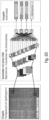
- a cooking noise does not have an exactly definable pitch, i.e. no dominant frequency (see Fig. 5c ).
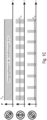
- different frequency ranges are represented to varying degrees and thus give cooking noise an individual character, which can be seen in the Mel spectrogram MS shown in Fig. 5c can be clearly seen.
- a spectrogram is the graphical representation of the temporal progression of the frequency spectrum of a signal (e.g. an audio signal) [10].
- the time signal is converted into the time-frequency domain using the short-time Fourier transform (STFT) [11].
- STFT short-time Fourier transform
- the frequencies are shown on the Y-axis in the Mel scale [12].
- striking temporal patterns also emerge.
- the temporal progression could also be learned instead of frequency ranges.
- machine learning In order to automatically analyze the acoustic signals, machine learning (ML) methods are used, e.g. in the form of deep neural networks, according to the embodiments.
- ML machine learning
- the neural network learns the relationships between cooking noise and cooking state using training data.
- the neural network After successful training, the neural network (ML or Kl model) can be used to classify cooking noises (see Fig. 5d ).
- a power controller can be used to calculate the optimal heating power:
- the sensor's power controller has the task of selecting the best possible power level based on the current system state.
- the current system state includes the perceived ACTUAL cooking state, the desired TARGET cooking state and the calculated pot dynamics.
- the optimal performance level can still be determined on the basis of the Markov Decision Process (MDP). For example, using a learned strategy (policy) or using statistically recorded, action-dependent transition probabilities. There are methods for this that fall into the areas of dynamic programming, reinforcement learning and imitation learning, among others. By selecting the appropriate boundary conditions, safety-critical conditions can be safely avoided (e.g. boiling over). A simplified example with action-dependent transition probabilities is shown in Fig. 5h shown.
- MDP Markov Decision Process
- the planned action (the power level that is most likely to lead to the desired TARGET cooking state) is finally transmitted to the hob control.
- the electronic hardware concept presented represents an initial selection of hardware components based on current findings and assumptions.
- This hardware structure allows four cooking zones to be monitored and controlled simultaneously. Accordingly, four high-quality MEMS microphones15 are provided for audio signal recording.
- the selection, positioning and alignment of these microphones, the so-called microphone concept, is to be developed as part of the EXIST start-up grant.
- the assistant In order to meet young people's need for technology and luxury and at the same time provide intuitive operation that is accessible to technology-averse end customers, the assistant is intended to be a smart cooking assistant.
- Interactive cooking apps are intended to help people cook healthy food in a fun and stress-free way, discover new recipes and test new energy-saving and automated cooking methods (e.g. preparing eggs using the Ogi method).
- Other considerations include: a connection to smart refrigerators for recipe recommendations, specially developed, sound-emitting cookware or the possibility of live transmission of cooking sounds and visual information on smartphones or VR glasses. The aim is to make cooking as attractive, interactive and relaxing as possible while providing the necessary safety.
- the processor is designed to carry out an adaptation phase in which the device or the recognition algorithm of the device adapts to the current cooking device or cookware.
- the evaluation and, if necessary, further learning is carried out using privacy enhancement technologies (homomorphic encryption, differential privacy, secure multi-party computation, or similar) in order to avoid the unwanted disclosure of sensitive information or to enable conclusions to be drawn about the participants, attributes of the participants or other sensitive information.
- privacy enhancement technologies homomorphic encryption, differential privacy, secure multi-party computation, or similar
- the processor may be configured to remove the speech as personal information, possibly by tools for filtering out speech information, such as voice activity detection.
- a hotplate or cooking zone on which the pot is located is recognized and assigned.
- the location of noises can be used for this purpose or information can be obtained from the cooking appliance, e.g. about an activated cooking zone.
- the means for sound detection can also comprise ultrasonic sensors.
- a camera sensor system is used in addition to the sound sensor system.
- aspects have been described in the context of a device, it is to be understood that these aspects also represent a description of the corresponding method, so that a block or component of a device can also be understood as a corresponding method step or as a feature of a method step. Analogously, aspects described in the context of or as a method step also represent a description of a corresponding block or detail or feature of a corresponding device.
- Some or all of the method steps can be performed by a hardware apparatus (or using a hardware apparatus), such as a microprocessor, a programmable computer, or an electronic circuit. In some embodiments, some or more of the key method steps can be performed by such an apparatus.
- a signal encoded according to the invention such as an audio signal or a video signal or a transport stream signal, can be stored on a digital storage medium or can be transmitted on a transmission medium such as a wireless transmission medium or a wired transmission medium, e.g. the Internet.
- the encoded audio signal according to the invention can be stored on a digital storage medium, or can be transmitted on a transmission medium, such as a wireless transmission medium or a wired transmission medium, such as the Internet.
- embodiments of the invention may be implemented in hardware or in software.
- the implementation may be performed using a digital storage medium, for example a floppy disk, a DVD, a Blu-ray Disc, a CD, a ROM, a PROM, an EPROM, an EEPROM or a FLASH memory, a hard disk or other magnetic or optical storage on which electronically readable control signals are stored that can or do interact with a programmable computer system in such a way that the respective method is carried out. Therefore, the digital storage medium may be computer readable.
- Some embodiments according to the invention thus comprise a data carrier having electronically readable control signals capable of interacting with a programmable computer system such that one of the methods described herein is carried out.
- embodiments of the present invention may be implemented as a computer program product having a program code, wherein the program code is operable to perform one of the methods when the computer program product is run on a computer.
- the program code can, for example, also be stored on a machine-readable medium.
- an embodiment of the method according to the invention is thus a computer program that has a program code for carrying out one of the methods described herein when the computer program runs on a computer.
- a further embodiment of the methods according to the invention is thus a data carrier (or a digital storage medium or a computer-readable medium) on which the computer program for carrying out one of the methods described herein is recorded.
- a further embodiment of the method according to the invention is thus a data stream or a sequence of signals which represents the computer program for carrying out one of the methods described herein.
- the data stream or the sequence of signals can be configured, for example, to be transferred via a data communication connection, for example via the Internet.
- a further embodiment comprises a processing device, for example a computer or a programmable logic device, which is configured or adapted to carry out one of the methods described herein.
- a processing device for example a computer or a programmable logic device, which is configured or adapted to carry out one of the methods described herein.
- a further embodiment comprises a computer on which the computer program for carrying out one of the methods described herein is installed.
- a further embodiment according to the invention comprises a device or a system which is designed to transmit a computer program for carrying out at least one of the methods described herein to a recipient.
- the transmission can be carried out electronically or optically, for example.
- the recipient can be, for example, a computer, a mobile device, a storage device or a similar device.
- the device or system can, for example, comprise a file server for transmitting the computer program to the recipient.
- a programmable logic device e.g., a field programmable gate array, an FPGA
- a field programmable gate array may interact with a microprocessor to perform any of the methods described herein.
- the methods are performed by any hardware device. This may be general-purpose hardware such as a computer processor (CPU) or hardware specific to the method such as an ASIC.
Landscapes
- Engineering & Computer Science (AREA)
- Physics & Mathematics (AREA)
- Electromagnetism (AREA)
- Chemical & Material Sciences (AREA)
- Combustion & Propulsion (AREA)
- Mechanical Engineering (AREA)
- General Engineering & Computer Science (AREA)
- Electric Stoves And Ranges (AREA)
Applications Claiming Priority (1)
| Application Number | Priority Date | Filing Date | Title |
|---|---|---|---|
| DE102023200488 | 2023-01-23 |
Publications (1)
| Publication Number | Publication Date |
|---|---|
| EP4403830A1 true EP4403830A1 (fr) | 2024-07-24 |
Family
ID=89663553
Family Applications (1)
| Application Number | Title | Priority Date | Filing Date |
|---|---|---|---|
| EP24153249.8A Pending EP4403830A1 (fr) | 2023-01-23 | 2024-01-22 | Appareil de cuisson et procédé |
Country Status (1)
| Country | Link |
|---|---|
| EP (1) | EP4403830A1 (fr) |
Cited By (1)
| Publication number | Priority date | Publication date | Assignee | Title |
|---|---|---|---|---|
| EP4650665A1 (fr) * | 2024-05-16 | 2025-11-19 | BSH Hausgeräte GmbH | Dispositif pour appareil de cuisson |
Citations (32)
| Publication number | Priority date | Publication date | Assignee | Title |
|---|---|---|---|---|
| JP3693644B2 (ja) | 2002-11-29 | 2005-09-07 | 東芝プラントシステム株式会社 | 設備の運転状態音響監視方法および設備の運転状態音響監視装置 |
| US20060177071A1 (en) | 2005-02-07 | 2006-08-10 | Honeywell International, Inc. | Method and system for detecting a predetermined sound event such as the sound of breaking glass |
| EP1913567A2 (fr) | 2004-07-23 | 2008-04-23 | Innovalarm Corporation | Ameliorations apportees a la surveillance acoustique et a la reponse sous forme d'alarme |
| CN101957083A (zh) | 2010-10-02 | 2011-01-26 | 刘德鹏 | 多功能溢流装置 |
| US8155326B2 (en) | 2007-10-09 | 2012-04-10 | Schweitzer Engineering Laboratories, Inc. | System, method, and apparatus for using the sound signature of a device to determine its operability |
| EP2590473A1 (fr) | 2011-11-04 | 2013-05-08 | BSH Bosch und Siemens Hausgeräte GmbH | Dispositif dýappareil de cuisson |
| US20130179159A1 (en) | 2012-01-06 | 2013-07-11 | Qualcomm Incorporated | Systems and methods for detecting overflow |
| JP2013225248A (ja) | 2012-04-23 | 2013-10-31 | Nec Corp | 音識別システム、音識別装置、音識別方法およびプログラム |
| CN203799469U (zh) | 2014-02-25 | 2014-08-27 | 金海重工股份有限公司 | 一种溢流报警装置 |
| CN103197630B (zh) | 2013-03-12 | 2015-11-11 | 李景禄 | 音频监控系统的自学习判据生成法 |
| US9354207B2 (en) | 2012-08-22 | 2016-05-31 | Whirlpool Corporation | Boil and boil-dry detection methods for cooking appliances using vibration sensors |
| CN105659629A (zh) | 2013-10-23 | 2016-06-08 | 京瓷株式会社 | 耳模型、人工头部以及使用它们的测量系统和测量方法 |
| EP3195694A1 (fr) | 2014-09-18 | 2017-07-26 | Electrolux Appliances Aktiebolag | Plaque de cuisson à induction avec détection de point d'ébullition et commande de l'énergie d'induction, procédé pour chauffer des aliments avec une plaque de cuisson à induction et produit de programme informatique |
| KR20180066294A (ko) | 2016-12-07 | 2018-06-19 | 전자부품연구원 | 복수의 단말을 이용한 음향 모니터링 시스템 및 방법 |
| DE102017100810A1 (de) * | 2017-01-17 | 2018-07-19 | Miele & Cie. Kg | Verfahren und Vorrichtung zum Erkennen eines Siedevorgangs beim Erwärmen zumindest eines ersten Kochgefäßes und eines zweiten Kochgefäßes auf einem Kochfeld |
| CN207731301U (zh) | 2018-01-29 | 2018-08-14 | 安徽云塔电子科技有限公司 | 一种智能传感器系统架构 |
| GB2563892A (en) | 2017-06-28 | 2019-01-02 | Kraydel Ltd | Sound monitoring system and method |
| US20190354815A1 (en) | 2018-05-15 | 2019-11-21 | Palo Alto Investors LP | Homeostatic Capacity Evaluation of Artificial Intelligence Systems |
| CN111161727A (zh) | 2019-12-25 | 2020-05-15 | 马鞍山佰兆信息科技有限公司 | 一种人工智能化无障碍操控系统 |
| CN111496802A (zh) | 2019-01-31 | 2020-08-07 | 中国移动通信集团终端有限公司 | 人工智能设备的控制方法、装置、设备及介质 |
| US20210015292A1 (en) * | 2019-07-19 | 2021-01-21 | Lg Electronics Inc. | Method and heating apparatus for estimating status of heated object |
| CN112362750A (zh) | 2020-09-25 | 2021-02-12 | 中科巨匠人工智能技术(广州)有限公司 | 一种基于人工智能的声学探测系统及装置 |
| CN212645834U (zh) | 2020-06-03 | 2021-03-02 | 广州海荣实业有限公司 | 一种溢流监测装置 |
| EP3785581A1 (fr) * | 2019-07-15 | 2021-03-03 | LG Electronics Inc. -1- | Appareil de cuisson à intelligence artificielle |
| GB2588036A (en) | 2017-06-28 | 2021-04-14 | Kraydel Ltd | Sound monitoring system and method |
| CN112804600A (zh) | 2019-11-14 | 2021-05-14 | 陈恺琳 | 一种基于ai人工智能的音响及其系统 |
| US20210232670A1 (en) | 2018-05-10 | 2021-07-29 | Llsollu Co., Ltd. | Artificial intelligence service method and device therefor |
| KR102288182B1 (ko) * | 2020-03-12 | 2021-08-11 | 한국과학기술원 | 음성 사생활 보호 방법, 음성 사생활 보호 장치 및 이를 이용한 모바일 단말 |
| CN214011777U (zh) | 2021-01-29 | 2021-08-20 | 武汉科技大学 | 一种人工智能试验系统 |
| CN216221393U (zh) | 2021-11-01 | 2022-04-08 | 广东懒博士智能科技有限公司 | 一种水溢流检测装置 |
| CN114484516A (zh) * | 2022-03-15 | 2022-05-13 | 海信家电集团股份有限公司 | 一种灶具及温度预测方法 |
| CN217090649U (zh) | 2021-11-18 | 2022-08-02 | 广东懒博士智能科技有限公司 | 一种洗碗机 |
-
2024
- 2024-01-22 EP EP24153249.8A patent/EP4403830A1/fr active Pending
Patent Citations (32)
| Publication number | Priority date | Publication date | Assignee | Title |
|---|---|---|---|---|
| JP3693644B2 (ja) | 2002-11-29 | 2005-09-07 | 東芝プラントシステム株式会社 | 設備の運転状態音響監視方法および設備の運転状態音響監視装置 |
| EP1913567A2 (fr) | 2004-07-23 | 2008-04-23 | Innovalarm Corporation | Ameliorations apportees a la surveillance acoustique et a la reponse sous forme d'alarme |
| US20060177071A1 (en) | 2005-02-07 | 2006-08-10 | Honeywell International, Inc. | Method and system for detecting a predetermined sound event such as the sound of breaking glass |
| US8155326B2 (en) | 2007-10-09 | 2012-04-10 | Schweitzer Engineering Laboratories, Inc. | System, method, and apparatus for using the sound signature of a device to determine its operability |
| CN101957083A (zh) | 2010-10-02 | 2011-01-26 | 刘德鹏 | 多功能溢流装置 |
| EP2590473A1 (fr) | 2011-11-04 | 2013-05-08 | BSH Bosch und Siemens Hausgeräte GmbH | Dispositif dýappareil de cuisson |
| US20130179159A1 (en) | 2012-01-06 | 2013-07-11 | Qualcomm Incorporated | Systems and methods for detecting overflow |
| JP2013225248A (ja) | 2012-04-23 | 2013-10-31 | Nec Corp | 音識別システム、音識別装置、音識別方法およびプログラム |
| US9354207B2 (en) | 2012-08-22 | 2016-05-31 | Whirlpool Corporation | Boil and boil-dry detection methods for cooking appliances using vibration sensors |
| CN103197630B (zh) | 2013-03-12 | 2015-11-11 | 李景禄 | 音频监控系统的自学习判据生成法 |
| CN105659629A (zh) | 2013-10-23 | 2016-06-08 | 京瓷株式会社 | 耳模型、人工头部以及使用它们的测量系统和测量方法 |
| CN203799469U (zh) | 2014-02-25 | 2014-08-27 | 金海重工股份有限公司 | 一种溢流报警装置 |
| EP3195694A1 (fr) | 2014-09-18 | 2017-07-26 | Electrolux Appliances Aktiebolag | Plaque de cuisson à induction avec détection de point d'ébullition et commande de l'énergie d'induction, procédé pour chauffer des aliments avec une plaque de cuisson à induction et produit de programme informatique |
| KR20180066294A (ko) | 2016-12-07 | 2018-06-19 | 전자부품연구원 | 복수의 단말을 이용한 음향 모니터링 시스템 및 방법 |
| DE102017100810A1 (de) * | 2017-01-17 | 2018-07-19 | Miele & Cie. Kg | Verfahren und Vorrichtung zum Erkennen eines Siedevorgangs beim Erwärmen zumindest eines ersten Kochgefäßes und eines zweiten Kochgefäßes auf einem Kochfeld |
| GB2563892A (en) | 2017-06-28 | 2019-01-02 | Kraydel Ltd | Sound monitoring system and method |
| GB2588036A (en) | 2017-06-28 | 2021-04-14 | Kraydel Ltd | Sound monitoring system and method |
| CN207731301U (zh) | 2018-01-29 | 2018-08-14 | 安徽云塔电子科技有限公司 | 一种智能传感器系统架构 |
| US20210232670A1 (en) | 2018-05-10 | 2021-07-29 | Llsollu Co., Ltd. | Artificial intelligence service method and device therefor |
| US20190354815A1 (en) | 2018-05-15 | 2019-11-21 | Palo Alto Investors LP | Homeostatic Capacity Evaluation of Artificial Intelligence Systems |
| CN111496802A (zh) | 2019-01-31 | 2020-08-07 | 中国移动通信集团终端有限公司 | 人工智能设备的控制方法、装置、设备及介质 |
| EP3785581A1 (fr) * | 2019-07-15 | 2021-03-03 | LG Electronics Inc. -1- | Appareil de cuisson à intelligence artificielle |
| US20210015292A1 (en) * | 2019-07-19 | 2021-01-21 | Lg Electronics Inc. | Method and heating apparatus for estimating status of heated object |
| CN112804600A (zh) | 2019-11-14 | 2021-05-14 | 陈恺琳 | 一种基于ai人工智能的音响及其系统 |
| CN111161727A (zh) | 2019-12-25 | 2020-05-15 | 马鞍山佰兆信息科技有限公司 | 一种人工智能化无障碍操控系统 |
| KR102288182B1 (ko) * | 2020-03-12 | 2021-08-11 | 한국과학기술원 | 음성 사생활 보호 방법, 음성 사생활 보호 장치 및 이를 이용한 모바일 단말 |
| CN212645834U (zh) | 2020-06-03 | 2021-03-02 | 广州海荣实业有限公司 | 一种溢流监测装置 |
| CN112362750A (zh) | 2020-09-25 | 2021-02-12 | 中科巨匠人工智能技术(广州)有限公司 | 一种基于人工智能的声学探测系统及装置 |
| CN214011777U (zh) | 2021-01-29 | 2021-08-20 | 武汉科技大学 | 一种人工智能试验系统 |
| CN216221393U (zh) | 2021-11-01 | 2022-04-08 | 广东懒博士智能科技有限公司 | 一种水溢流检测装置 |
| CN217090649U (zh) | 2021-11-18 | 2022-08-02 | 广东懒博士智能科技有限公司 | 一种洗碗机 |
| CN114484516A (zh) * | 2022-03-15 | 2022-05-13 | 海信家电集团股份有限公司 | 一种灶具及温度预测方法 |
Non-Patent Citations (44)
| Title |
|---|
| "Alles Wissenswerte über Kochfelder", KÜCHEN STAUDE ONLINE MAGAZIN, 19 September 2023 (2023-09-19), Retrieved from the Internet <URL:https://www.kuechen-staude.de/magazin/highlights/kochfelder-a-z/> |
| "Analysis Report By Product (Builtin, Free-standing), By Application (Household, Commercial), By Distribution Channel (Online, Specialty Stores), And Segment Forecasts, 2021 2028", GRAND VIEW RESEARCH, REPORT OVERVIEW, 2019, Retrieved from the Internet <URL:https://www.grandviewresearch.com/industry-analysis/induction-cooktops-market> |
| "Deutschland Haushalte und Haushaltsmitglieder (2022", STATISTISCHES BUNDESAMT (DESTATIS, Retrieved from the Internet <URL:https://www.destatis.de/DE/Themen/GeselIschaft-Umwelt/Bevoelkerung/Haushalte-Familien/Tabellen/1-1-privathaushalte-haushaltsmitglieder.html> |
| "Die 5 häufigsten Brandursachen", BRANDSCHUTZ ZENTRALE, May 2022 (2022-05-01), Retrieved from the Internet <URL:https://brandschutz-zentrale.de/brandschutz/einsatz/die-5-haeufigsten-brandursachen> |
| "Europa Bevölkerung 2022", STATISTISCHES BUNDESAMT (DESTATIS, March 2023 (2023-03-01), Retrieved from the Internet <URL:https://www.destatis.de/Europa/DE/Thema/Basistabelle/Bevoelkerung.html> |
| "Fast 6 Millionen ältere Menschen leben allein", STATISTISCHES BUNDESAMT (DESTATIS, September 2021 (2021-09-01), Retrieved from the Internet <URL:https://www.destatis.de/DE/Presse/Pressemitteilungen/2021/09/PD21_N057_12411.html> |
| "Geräusch", WIKIPEDIA, 30 May 2023 (2023-05-30), Retrieved from the Internet <URL:https://de.wikipedia.org/wiki/Geräusch> |
| "GERMANY KITCHEN APPLIANCES MARKET SIZE & SHARE ANALYSIS GROWTH TRENDS & FORECASTS (2023 2028", MORDOR INTELLIGENCE, REPORT OVERVIEW, 2022, Retrieved from the Internet <URL:https://www.mordorintelligence.com/industry-reports/germany-kitchen-appliancesproducts-market-industry> |
| "Hochwertige Audiosignalerfassung", TREND-GUIDE SENSORIK, 15 December 2023 (2023-12-15), Retrieved from the Internet <URL:https://www.infineon.com/dgdl/lnfineon-Xe-nsiv%20MEMS%20Mikrofone_MarktundTechnik-ART-v01_00-DE.pdf?fileld=5546d46264fee02f01650e895f1b4854#:-:text=MEMS%2DMikrofone%20bieten%20gegenüber%20her,mehreren%20Mikrofonen%20aufeinander%20abge%2D%20stimmt.> |
| "Kurzzeit-Fourier-Transformation", WIKIPEDIA, 21 November 2023 (2023-11-21), Retrieved from the Internet <URL:https://de.wikipedia.org/wiki/Kurzzeit-Fourier-Transformation> |
| "MP3-Entwickler kommen in Ruhmeshalle", STERN, March 2007 (2007-03-01), Retrieved from the Internet <URL:https://www.stern.de/digital/computer/-ce-hall-of-fame--mp3-entwickler-kommen-in-ruhmeshalle-3356668.html> |
| "Smart Kitchen Appliance Market Forecast to 2028 COVID-19 Impact and Global Analysis By Product (Ovens, Refrigerators, Sous Vide, Juicers & Blenders, Cooker & Cooking Robots, Cooktops, & Integrated Ovens & Cooktops, Others), by End User, and Connectivity", RESEARCH AND MARKETS, REPORT OVERVIEW, 2021, Retrieved from the Internet <URL:https://www.researchandmarkets.com/reports/4787380/smart-kitchen-appliance-market-forecast-to?utmsource=GNOM&utm_medium=PressRelease&utm_code=qr738s&utm_campaign=1693860+-+Smart+Kitchen+Appliance+Global+Market+Forecast%3a+An+E-sti> |
| "Smart Kitchen Appliances Market Size, Share & Trends Analysis Report By Product (Smart Refrigerators, Smart Cookware & Cooktops, Smart Dishwashers, Smart Oven, Others), By Application, By Region, And Segment Forecasts, 2023 2030", GRAND VIEW RESEARCH, REPORT OVERVIEW, 20 September 2023 (2023-09-20), Retrieved from the Internet <URL:https://www.grandviewresearch.com/industry-ana!y-sis/smart-kitchen-appliances-market> |
| "Spektrogramm", WIKIPEDIA, 28 July 2023 (2023-07-28), Retrieved from the Internet <URL:https://de.wikipedia.org/wiki/Spektrogramm> |
| "Windenergie Wieviel Strom produziert ein Windrad ?", BLUEDRIFT WISSEN UND INFOS, 12 September 2023 (2023-09-12), Retrieved from the Internet <URL:https://www.bluedrift.at/index.php/wissen-und-infos/windkraft> |
| A.-S. TURULSKI: "Weltbevölkerung nach Kontinenten Mitte des Jahres 2022", STATISTA, May 2023 (2023-05-01), Retrieved from the Internet <URL:https://de.statista.com/statistik/daten/studie/1723/umfrage/weltbevoelkerung-nach-kontinenten> |
| B. URMERSBACH: "Europäische Union & Euro-Zone: Anzahl der Privathaushalte von 2012 bis 2022", STATISTA, July 2023 (2023-07-01), Retrieved from the Internet <URL:https://de.statista.com/statistik/daten/studie/349055/umfrage/privathaushalte-in-eu-und-euro-zone/#:-:text=1m%20Jahr%202021%20gab%20es,es%20rund%20153%2e4%20Millionen> |
| C. NUGTEREN, TINYML TALKS: DEMOING THE WORLD'S FASTEST INFERENCE ENGINE FOR ARM CORTEX-M (AB SEKUNDE 822, 6 January 2022 (2022-01-06), Retrieved from the Internet <URL:https://www.youtube.com/watch?v=ComEgcN7KfY&t=822s> |
| C. WAN, HOW WE CAN ENABLE INTELLIGENCE ON ENDPOINTS, 12 December 2023 (2023-12-12), Retrieved from the Internet <URL:https://ambiq.com/blog/how-we-canenable-intelligence-on-endpoints> |
| DIPL.-ING. SASCHA GROLLMISCH, 22 November 2023 (2023-11-22), Retrieved from the Internet <URL:https://www.idmt.fraunhofer.de/en/institute/doctorands/grollmisch.html#2> |
| F NUGROHOA B PANTJAWATI: "Automation and Monitoring Smart Kitchen Based on Internet of Things (loT", IOP CONFERENCE SERIES: MATERIALS SCIENCE AND ENGINEERING, VOLUME 384, INTERNATIONAL SYMPOSIUM ON MATERIALS AND ELECTRICAL ENGINEERING (ISMEE) 2017, BANDUNG, INDONESIA |
| G. DR. MED. BETZH. DR. MED. RENZ-POLSTERA. DR. MED. SCHÄFFLER: "Sinnesorgane und Körperwahrnehmung im Alte", GESUNDH. HEUTE, 18 October 2023 (2023-10-18), Retrieved from the Internet <URL:https://www.apotheken.de/krankheiten/hintergrundwissen/10299-sinnesorgane-und-koerperwahrnehmung-im-alter> |
| GARMETHODEN - KOCHEN, DÄMPFEN, DÜNSTEN & CO, 13 November 2023 (2023-11-13) |
| H. PUDUGOSULA: "Automatic Smart and Safety Monitoring System for Kitchen Using Internet of Things", 2019 INTERNATIONAL CONFERENCE ON INTELLIGENT COMPUTING AND CONTROL SYSTEMS (ICCS), MADURAI, INDIA, 2019, pages 1174 - 1177, XP033755502, DOI: 10.1109/ICCS45141.2019.9065663 |
| H.-H. DREWS, EDER FÜNFTE BRAND IM HAUSHALT ENTSTEHT AM HERD! URSACHE: DER MENSCH, 2017, Retrieved from the Internet <URL:https://www.schadenprisma.de/wp-content/uploads/sp_2017_4_2.pdf> |
| HASSAN, CHANWAR ULJAWAID IQBALMUHAMMAD SUFYAN KHANSADDAM HUSSAINADNAN AKHUNZADAMUDABBIR ALIABDULLAH GANIMUEEN UDDINSYED SAJID ULLA: "Design and Implementation of Real-Time Kitchen Monitoring and Automation System Based on Internet of Things", ENERGIES, vol. 15, no. 18, 2022, pages 6778, Retrieved from the Internet <URL:https://doi.org/10.3390/en15186778> |
| HSU, WEI-LINGJI-YUN JHUANGCHIEN-SHIUN HUANGCHIU-KUO LIANGYAN-CHYUAN SHIAU: "Application of Internet of Things in a Kitchen Fire Prevention System", APPLIED SCIENCES, vol. 9, no. 17, 2019, pages 3520, Retrieved from the Internet <URL:https://doi.org/10.3390/app9173520> |
| K. NIGHANIA: "Various ways to evaluate a machine learning model's performance", TOWARDS DATA SCIENCE, 15 December 2023 (2023-12-15), Retrieved from the Internet <URL:https://towardsdatascience.com/various-ways-to-evaluate-a-machine-learning-models-performance-230449055f15> |
| KL-BASIERTES AKUSTISCHES MONITORING IN DER PRODUKTION, 15 December 2023 (2023-12-15), Retrieved from the Internet <URL:https://www.idmt.fraunhofer.de/de/busi-ness_units/industrial-sound-analysis.html> |
| L. FERNÄNDEZ: "„Weighted average cost for installed onshore wind energy worldwide from 2010 to 2021", STATISTA, STATISTIK, February 2023 (2023-02-01), Retrieved from the Internet <URL:https://www.statista.com/statistics/506774/weightedaverage-installed-cost-for-onshore-wind-power-worldwide/> |
| L. MONIGATTI: "Audio Classification with Deep Learning in Python", TOWARDS DATA SCIENCE, 10 May 2023 (2023-05-10), Retrieved from the Internet <URL:https://towardsda-tascience.com/audio-classification-with-deep-learning-in-python-cf752b22ba07> |
| LÄNDERDATEN: "Energiehaushalt in Deutschland", LÄNDERDATEN, 2021, Retrieved from the Internet <URL:https://www.laenderdaten.info/Europa/Deutschland/energiehaushalt.php> |
| M. SAHANIA. NAYAKR. AGRAWALD. SAHU: "A GSM, WSN and embedded web server architecture for Internet based kitchen monitoring system", 2015 INTERNATIONAL CONFERENCE ON CIRCUITS, POWER AND COMPUTING TECHNOLOGIES [ICCPCT-2015], NAGERCOIL, INDIA, 2015, pages 1 - 6, XP033175858, DOI: 10.1109/ICCPCT.2015.7159480 |
| PATENT-ANMELDUNGEN: TU ILMENAU BUNDESWEIT UNTER DEN ERSTEN ZEHN, 18 October 2023 (2023-10-18), Retrieved from the Internet <URL:https://www.mdr.de/nachrichten/thueringen/sued-thueringen/ilmenau-ilmkreis/tu-ilmenau-innovativ-patentiw-studie-100.html> |
| R. BOCKSCH, ES WERDE LICHT (ELEKTRIZITÄT, May 2023 (2023-05-01), Retrieved from the Internet <URL:https://de.statista.com/infografik/21802/anteilder-bevoelkerung-mit-zugang-zu-elektrizitaet> |
| R. MUSCHTER: "Durchschnittliche Größe der Haushalte in China in den Jahren 1990 bis 2021", STATISTA, March 2023 (2023-03-01), Retrieved from the Internet <URL:https://de.statista.com/statistik/daten/studie/220587/umfrage/durchschnittliche-groesse-der-haushalte-in-china/#:~:text=Durchschnittliche%20Größe%20der%20Haushalte%20in%20China%20bis%202021&text=lm%20Jahr%202021%20hat%20die,den%20Jahren%201990%20bis%202021> |
| S. AHRENS: "Pro-Kopf-Verbrauch von Nudeln in Deutschland bis 2021/22", STATISTA, 26 September 2023 (2023-09-26), Retrieved from the Internet <URL:https://de.statista.com/statistik/daten/studie/156453/umfrage/pro-kopf-verbrauchvon-nudeln-in-deutschland-seit-1996> |
| S. JAUSS: "Grundlagen der Signalverarbeitung und Audio-Features für Machine Learning", KL IM AUDIOBEREICH, 15 December 2023 (2023-12-15), Retrieved from the Internet <URL:https://ai.hdm-stuttgart.de/news/2023/ki-im-audiobereich-grundlagen-signalverarbeitung-ml> |
| STATISTA: "Cooking appliances and equipment (INDUSTRIES & MARKTS", STATISTA, STATISTIC REPORT DID-23654, 1 November 2022 (2022-11-01), Retrieved from the Internet <URL:https://www.statista.com/study/23654/cooking-appliances-andequipment-statista-dossier> |
| TINYML SUMMIT 2021 PROCEEDINGS, 22 March 2021 (2021-03-22), Retrieved from the Internet <URL:https://cms.tinyml.org/wp-content/uploads/summit2021/ti-nyMLSummit2021d1Awards_Syntiant.pdf> |
| UMAPATHI, N.SABBANI, S: "Futuristic Communication and Network Technologies. VICFCNT 2020. Lecture Notes in Electrical Engineering", vol. 792, 2022, SPRINGER, article "An Internet of Things (loT)-based Approach for RealTime Kitchen Monitoring Using NodeMCU 1.0" |
| UNITED NATIONS: "Household size and composition around the world", 2017, UNITED NATIONS DEPARTMENT OF ECONOMIC AND SOCIAL AFFAIRS |
| WIE KOCHEN DIE DEUTSCHEN?, 2015, Retrieved from the Internet <URL:https://aus-meinem-kochtopf.de/wie-kochen-die-deutschen/> |
| ZARIC, NIKOLAMILUTIN RADONJICNIKOLA PAVLICEVICSANJA PAUNOVIC ZARIC: "Design of a Kitchen-Monitoring and Decision-Making System to Support AAL Applications", SENSORS, vol. 21, no. 13, 2021, pages 4449, Retrieved from the Internet <URL:https://doi.org/10.3390/s21134449> |
Cited By (1)
| Publication number | Priority date | Publication date | Assignee | Title |
|---|---|---|---|---|
| EP4650665A1 (fr) * | 2024-05-16 | 2025-11-19 | BSH Hausgeräte GmbH | Dispositif pour appareil de cuisson |
Similar Documents
| Publication | Publication Date | Title |
|---|---|---|
| CN104595949B (zh) | 实现美食分享的家用智能烹饪系统 | |
| CN106037448B (zh) | 烹饪控制方法、设备及烹饪装置 | |
| CN109683516B (zh) | 辅助烹饪方法、家电设备及计算机存储介质 | |
| CN104914898B (zh) | 一种数字菜谱的生成方法及系统 | |
| DE102018111685A1 (de) | Verfahren zum Zuordnen einer Nutzereingabe zu einem Gerät | |
| DE102019134874A1 (de) | Verfahren zur Bedienung eines Geräts durch einen Benutzer mittels einer Sprachsteuerung | |
| CN104898445B (zh) | 一种信息处理方法及智能家居设备 | |
| CN107341333A (zh) | 一种辅助心理咨询的vr设备和方法 | |
| CN105981999A (zh) | 自动烹饪方法、系统,智能烹饪设备和智能烤箱 | |
| JP6543125B2 (ja) | 制御方法及び冷蔵庫 | |
| DE102017111356A1 (de) | Verfahren und Vorrichtung zum Steuern eines Kochfelds, Kochfeld mit einer Vorrichtung und Kochfeld und/oder Garbehälter mit einer Sensoreinrichtung | |
| EP4403830A1 (fr) | Appareil de cuisson et procédé | |
| WO2018066190A1 (fr) | Dispositif de traitement d'informations, procédé de traitement d'informations, et programme | |
| US11707596B2 (en) | Method and system to deliver timed and grouped sensory stimulation | |
| CN107644640A (zh) | 一种信息处理方法及家电设备 | |
| DE102018118486A1 (de) | Verfahren zum Erzeugen eines Garprogramms sowie Gargerät | |
| DE102020208345A1 (de) | Sicheres Fernsteuern eines Hausgeräts per Sprache | |
| CN208957616U (zh) | 烹饪器具及其控制系统、服务器 | |
| WO2016206889A1 (fr) | Unité de commande et procédé de détermination d'une recette | |
| CN105182772A (zh) | 基于无线传感器的家庭智能服务方法 | |
| CN108234527A (zh) | 烹饪信息处理方法、装置及系统 | |
| CN109358538A (zh) | 烹饪器具的监控方法、装置、设备和系统 | |
| EP1882886A2 (fr) | Procédé de fonctionnement d'un appareil électroménager et appareil électroménager | |
| CN113589697A (zh) | 用于家电设备的控制方法及装置、智能家电 | |
| EP3757990A1 (fr) | Procédé de fonctionnement d'un appareil à l'aide d'un utilisateur au moyen d'une commande vocale |
Legal Events
| Date | Code | Title | Description |
|---|---|---|---|
| PUAI | Public reference made under article 153(3) epc to a published international application that has entered the european phase |
Free format text: ORIGINAL CODE: 0009012 |
|
| STAA | Information on the status of an ep patent application or granted ep patent |
Free format text: STATUS: THE APPLICATION HAS BEEN PUBLISHED |
|
| AK | Designated contracting states |
Kind code of ref document: A1 Designated state(s): AL AT BE BG CH CY CZ DE DK EE ES FI FR GB GR HR HU IE IS IT LI LT LU LV MC ME MK MT NL NO PL PT RO RS SE SI SK SM TR |
|
| STAA | Information on the status of an ep patent application or granted ep patent |
Free format text: STATUS: REQUEST FOR EXAMINATION WAS MADE |
|
| 17P | Request for examination filed |
Effective date: 20250124 |
|
| STAA | Information on the status of an ep patent application or granted ep patent |
Free format text: STATUS: EXAMINATION IS IN PROGRESS |
|
| 17Q | First examination report despatched |
Effective date: 20250807 |