EP4404663A1 - Procédé et appareil de traitement d'informations, dispositif terminal et dispositif de réseau - Google Patents
Procédé et appareil de traitement d'informations, dispositif terminal et dispositif de réseau Download PDFInfo
- Publication number
- EP4404663A1 EP4404663A1 EP22869250.5A EP22869250A EP4404663A1 EP 4404663 A1 EP4404663 A1 EP 4404663A1 EP 22869250 A EP22869250 A EP 22869250A EP 4404663 A1 EP4404663 A1 EP 4404663A1
- Authority
- EP
- European Patent Office
- Prior art keywords
- information
- identification information
- transmission type
- sidelink
- indication information
- Prior art date
- Legal status (The legal status is an assumption and is not a legal conclusion. Google has not performed a legal analysis and makes no representation as to the accuracy of the status listed.)
- Pending
Links
Images

Classifications
-
- H—ELECTRICITY
- H04—ELECTRIC COMMUNICATION TECHNIQUE
- H04W—WIRELESS COMMUNICATION NETWORKS
- H04W4/00—Services specially adapted for wireless communication networks; Facilities therefor
- H04W4/30—Services specially adapted for particular environments, situations or purposes
- H04W4/40—Services specially adapted for particular environments, situations or purposes for vehicles, e.g. vehicle-to-pedestrians [V2P]
-
- H—ELECTRICITY
- H04—ELECTRIC COMMUNICATION TECHNIQUE
- H04W—WIRELESS COMMUNICATION NETWORKS
- H04W72/00—Local resource management
- H04W72/20—Control channels or signalling for resource management
- H04W72/25—Control channels or signalling for resource management between terminals via a wireless link, e.g. sidelink
-
- H—ELECTRICITY
- H04—ELECTRIC COMMUNICATION TECHNIQUE
- H04W—WIRELESS COMMUNICATION NETWORKS
- H04W28/00—Network traffic management; Network resource management
- H04W28/02—Traffic management, e.g. flow control or congestion control
- H04W28/0278—Traffic management, e.g. flow control or congestion control using buffer status reports
-
- H—ELECTRICITY
- H04—ELECTRIC COMMUNICATION TECHNIQUE
- H04W—WIRELESS COMMUNICATION NETWORKS
- H04W72/00—Local resource management
- H04W72/20—Control channels or signalling for resource management
- H04W72/21—Control channels or signalling for resource management in the uplink direction of a wireless link, i.e. towards the network
-
- H—ELECTRICITY
- H04—ELECTRIC COMMUNICATION TECHNIQUE
- H04W—WIRELESS COMMUNICATION NETWORKS
- H04W72/00—Local resource management
- H04W72/20—Control channels or signalling for resource management
- H04W72/23—Control channels or signalling for resource management in the downlink direction of a wireless link, i.e. towards a terminal
-
- H—ELECTRICITY
- H04—ELECTRIC COMMUNICATION TECHNIQUE
- H04W—WIRELESS COMMUNICATION NETWORKS
- H04W72/00—Local resource management
- H04W72/40—Resource management for direct mode communication, e.g. D2D or sidelink
-
- H—ELECTRICITY
- H04—ELECTRIC COMMUNICATION TECHNIQUE
- H04W—WIRELESS COMMUNICATION NETWORKS
- H04W76/00—Connection management
- H04W76/10—Connection setup
- H04W76/14—Direct-mode setup
-
- H—ELECTRICITY
- H04—ELECTRIC COMMUNICATION TECHNIQUE
- H04W—WIRELESS COMMUNICATION NETWORKS
- H04W92/00—Interfaces specially adapted for wireless communication networks
- H04W92/16—Interfaces between hierarchically similar devices
- H04W92/18—Interfaces between hierarchically similar devices between terminal devices
Definitions
- This application relates to the field of communications technologies, and in particular, to an information processing method, an information processing apparatus, a terminal device, and a network device.
- SL discovery is used for mutual search and discovery between terminals
- SL communication is used for inter-terminal interaction control or data information.
- a terminal first performs a SL discovery process, finds a target terminal of the SL communication, and then performs a SL communication process.
- the SL discovery may use a resource pool shared with the SL communication, and/or a resource pool dedicated to the SL discovery, a base station needs to know whether to schedule a SL discovery resource or a SL communication resource in a case that the base station schedules a resource allocation mode; and the base station in a mechanism in the related art cannot learn the information.
- An objective of the present application is to provide an information processing method and apparatus, a terminal device, and a network device, to resolve a problem in the related art that a network device cannot determine a resource type that needs to be scheduled for a terminal device.
- an embodiment of the present application provides an information processing method applied to a terminal device, the method includes: sending indication information to a network device, wherein the indication information is used to indicate relationship between a sidelink destination identity and a sidelink SL transmission type, or relationship between service type information and an SL transmission type, and the SL transmission type is SL discovery or SL communication.
- one sidelink destination identity in the relationship corresponds to one SL transmission type; and/or one service type information in the relationship corresponds to one SL transmission type.
- the indication information includes first identification information of the SL transmission type; in a case that the first identification information takes a first value, the first identification information indicates that the SL transmission type is the SL discovery; in a case that the first identification information takes a second value, the first identification information indicates that the SL transmission type is the SL communication; or,
- the indication information includes the second identification information of the SL transmission type, then in a case that the second identification information appears, the second identification information includes a sidelink destination identity, and the sidelink destination identity corresponds to a sidelink destination index.
- a resource requested by the SL-BSR is an SL discovery resource.
- sending the indication information to the network device includes: sending the indication information to the network device by using the first radio resource control RRC information, wherein the first RRC information is sidelink user equipment information SUI, or user equipment assistance information UAI, or other RRC information other than the SUI and the UAI.
- first RRC information is sidelink user equipment information SUI, or user equipment assistance information UAI, or other RRC information other than the SUI and the UAI.
- the indication information is included in a sidelink communication resource request corresponding to the sidelink destination identity, the indication information includes a sidelink destination index corresponding to the sidelink destination identity and identification information of the SL transmission type corresponding to the sidelink destination index, wherein the identification information is the first identification information, or the second identification information or the third identification information.
- the method further includes: sending an SL buffer status report to the network device, wherein the SL buffer status report carries a sidelink destination index corresponding to the sidelink destination identity.
- the UAI is further used to request a transmission resource.
- An information processing method applied to a network device includes: receiving indication information sent by a terminal device; determining a target transmission resource type according to the indication information; wherein the indication information is used to indicate relationship between a sidelink destination identity and a sidelink SL transmission type, or relationship between service type information and an SL transmission type; the SL transmission type is SL discovery or SL communication; and the target transmission resource type is an SL transmission resource type corresponding to the sidelink destination identity, or an SL transmission resource type corresponding to the service type information.
- one sidelink destination identities in the relationship corresponds to one SL transmission type; and/or one service type information in the relationship corresponds to one SL transmission type.
- the indication information includes first identification information of the SL transmission type; in a case that the first identification information takes a first value, the indication information indicates that the SL transmission type is the SL discovery; in a case that the first identification information takes a second value, the indication information indicates that the SL transmission type is the SL communication; or,
- the indication information includes the second identification information of the SL transmission type, then in a case that the second identification information appears, the second identification information includes a sidelink destination identity, and the sidelink destination identity corresponds to a sidelink destination index.
- a resource requested by the SL-BSR is determined to be an SL discovery resource.
- receiving the indication information sent by the terminal device includes: receiving the indication information sent by the terminal device by using first radio resource control RRC information, wherein the first RRC information is sidelink user equipment information SUI, or user equipment assistance information UAI, or other RRC information other than the SUI and the UAI.
- first RRC information is sidelink user equipment information SUI, or user equipment assistance information UAI, or other RRC information other than the SUI and the UAI.
- the indication information is included in a sidelink communication resource request corresponding to a sidelink destination identity, and the indication information includes a sidelink destination index corresponding to a sidelink destination identity and identification information of an SL transmission type corresponding to the sidelink destination index, wherein the identification information is the first identification information or the second identification information or the third identification information.
- the method further includes: receiving an SL buffer status report sent by the terminal device; wherein determining the target transmission resource type according to the indication information includes: determining a target transmission resource type according to the indication information and the SL buffer status report, wherein the SL buffer status report carries a sidelink destination index corresponding to the sidelink destination identity.
- the UAI is further used to request a transmission resource.
- a terminal device includes: a memory, a transceiver, and a processor, wherein the memory is used to store a computer program; the transceiver is used to send and receive data under control of the processor; and the processor is used to read the computer program in the memory and perform following operations: sending indication information to a network device by using the transceiver, wherein the indication information is used to indicate relationship between a sidelink destination identity and a sidelink SL transmission type, or relationship between service type information and an SL transmission type, and the SL transmission type is SL discovery or SL communication.
- one sidelink destination identity in the relationship corresponds to one SL transmission type; and/or one service type information in the relationship corresponds to one SL transmission type.
- the indication information includes first identification information of the SL transmission type; in a case that the first identification information takes a first value, the first identification information indicates that the SL transmission type is the SL discovery; in a case that the first identification information takes a second value, the first identification information indicates that the SL transmission type is the SL communication; or,
- the indication information includes the second identification information of the SL transmission type, then in a case that the second identification information appears, the second identification information includes a sidelink destination identity, and the sidelink destination identity corresponds to a sidelink destination index.
- a resource requested by the SL-BSR is an SL discovery resource.
- sending the indication information to the network device includes: sending the indication information to the network device by using the first radio resource control RRC information, wherein the first RRC information is sidelink user equipment information SUI, or user equipment assistance information UAI, or other RRC information other than the SUI and the UAI.
- first RRC information is sidelink user equipment information SUI, or user equipment assistance information UAI, or other RRC information other than the SUI and the UAI.
- the indication information is included in a sidelink communication resource request corresponding to the sidelink destination identity, the indication information includes a sidelink destination index corresponding to the sidelink destination identity and identification information of the SL transmission type corresponding to the sidelink destination index, wherein the identification information is the first identification information, or the second identification information or the third identification information.
- the operation performed by the processor further includes: after sending the indication information to the network device, sending an SL buffer status report to the network device by using the transceiver, wherein the SL buffer status report carries a sidelink destination index corresponding to the sidelink destination identity.
- the UAI is further used to request a transmission resource.
- a network device is provided in some embodiments of the present application.
- the network device includes: a memory, a transceiver, and a processor, wherein the memory is used to store a computer program; the transceiver is used to send and receive data under control of the processor; and the processor is used to read the computer program in the memory and perform the following operations:
- one sidelink destination identities in the relationship corresponds to one SL transmission type; and/or one service type information in the relationship corresponds to one SL transmission type.
- the indication information includes first identification information of the SL transmission type; in a case that the first identification information takes a first value, the indication information indicates that the SL transmission type is the SL discovery; in a case that the first identification information takes a second value, the indication information indicates that the SL transmission type is the SL communication; or,
- the indication information includes the second identification information of the SL transmission type, then in a case that the second identification information appears, the second identification information includes a sidelink destination identity, and the sidelink destination identity corresponds to a sidelink destination index.
- a resource requested by the SL-BSR is determined to be an SL discovery resource.
- receiving the indication information sent by the terminal device includes: receiving the indication information sent by the terminal device by using first radio resource control RRC information, wherein the first RRC information is sidelink user equipment information SUI, or user equipment assistance information UAI, or other RRC information other than the SUI and the UAI.
- first RRC information is sidelink user equipment information SUI, or user equipment assistance information UAI, or other RRC information other than the SUI and the UAI.
- the indication information is included in a sidelink communication resource request corresponding to a sidelink destination identity, and the indication information includes a sidelink destination index corresponding to a sidelink destination identity and identification information of an SL transmission type corresponding to the sidelink destination index, wherein the identification information is the first identification information or the second identification information or the third identification information.
- the operation performed by the processor further includes: receiving, by using the transceiver, an SL buffer status report sent by the terminal device; wherein determining the target transmission resource type according to the indication information includes: determining a target transmission resource type according to the indication information and the SL buffer status report, wherein the SL buffer status report carries a sidelink destination index corresponding to the sidelink destination identity.
- the UAI is further used to request a transmission resource.
- An information processing apparatus applied to a terminal device is further provided in some embodiments of the present application.
- the apparatus includes: a first sending unit, used to send indication information to a network device, wherein the indication information is used to indicate relationship between a sidelink destination identity and a sidelink SL transmission type, or relationship between service type information and an SL transmission type, and the SL transmission type is SL discovery or SL communication.
- one sidelink destination identity in the relationship corresponds to one SL transmission type; and/or one service type information in the relationship corresponds to one SL transmission type.
- the indication information includes first identification information of the SL transmission type; in a case that the first identification information takes a first value, the first identification information indicates that the SL transmission type is the SL discovery; in a case that the first identification information takes a second value, the first identification information indicates that the SL transmission type is the SL communication; or,
- the indication information includes the second identification information of the SL transmission type, then in a case that the second identification information appears, the second identification information includes a sidelink destination identity, and the sidelink destination identity corresponds to a sidelink destination index.
- a resource requested by the SL-BSR is an SL discovery resource.
- sending the indication information to the network device includes: sending the indication information to the network device by using the first radio resource control RRC information, wherein the first RRC information is sidelink user equipment information SUI, or user equipment assistance information UAI, or other RRC information other than the SUI and the UAI.
- first RRC information is sidelink user equipment information SUI, or user equipment assistance information UAI, or other RRC information other than the SUI and the UAI.
- the indication information is included in a sidelink communication resource request corresponding to the sidelink destination identity, the indication information includes a sidelink destination index corresponding to the sidelink destination identity and identification information of the SL transmission type corresponding to the sidelink destination index, wherein the identification information is the first identification information, or the second identification information or the third identification information.
- the terminal device further includes a second sending unit, used to, after sending the indication information to the network device, send an SL buffer status report to the network device, where the SL buffer status report carries a sidelink destination index corresponding to the sidelink destination identity.
- a second sending unit used to, after sending the indication information to the network device, send an SL buffer status report to the network device, where the SL buffer status report carries a sidelink destination index corresponding to the sidelink destination identity.
- the UAI is further used to request a transmission resource.
- the apparatus includes:
- one sidelink destination identities in the relationship corresponds to one SL transmission type; and/or one service type information in the relationship corresponds to one SL transmission type.
- the indication information includes first identification information of the SL transmission type; in a case that the first identification information takes a first value, the indication information indicates that the SL transmission type is the SL discovery; in a case that the first identification information takes a second value, the indication information indicates that the SL transmission type is the SL communication; or,
- the indication information includes the second identification information of the SL transmission type, then in a case that the second identification information appears, the second identification information includes a sidelink destination identity, and the sidelink destination identity corresponds to a sidelink destination index.
- a resource requested by the SL-BSR is determined to be an SL discovery resource.
- receiving the indication information sent by the terminal device includes: receiving the indication information sent by the terminal device by using first radio resource control RRC information, wherein the first RRC information is sidelink user equipment information SUI, or user equipment assistance information UAI, or other RRC information other than the SUI and the UAI.
- first RRC information is sidelink user equipment information SUI, or user equipment assistance information UAI, or other RRC information other than the SUI and the UAI.
- the indication information is included in a sidelink communication resource request corresponding to a sidelink destination identity, and the indication information includes a sidelink destination index corresponding to a sidelink destination identity and identification information of an SL transmission type corresponding to the sidelink destination index, wherein the identification information is the first identification information or the second identification information or the third identification information.
- the network device further includes: a second receiving unit, used to receive an SL buffer status report sent by the terminal device; wherein determining the target transmission resource type according to the indication information includes: determining a target transmission resource type according to the indication information and the SL buffer status report, wherein the SL buffer status report carries a sidelink destination index corresponding to the sidelink destination identity.
- the UAI is further used to request a transmission resource.
- a processor-readable storage medium is further provided in the embodiments of the present application, wherein the processor-readable storage medium stores a computer program, and the computer program is used to cause a processor to perform the information processing method of a terminal device side; or the computer program is used to cause the processor to perform the information processing method of ta network device side.
- the information processing method sends the indication information to the network device; wherein the indication information is used to indicate relationship between the sidelink destination identity and the sidelink SL transmission type, or relationship between the service type information and the SL transmission type; the SL transmission type is SL discovery or SL communication; and the terminal device can indicate the relationship between the sidelink destination identity or the service type information and the SL transmission type to the network device, so that the network device can subsequently clearly determine whether the SL discovery resource or the SL communication resource needs to be scheduled for the terminal device, thereby well solving the problem in the related art that the network device cannot determine the resource type required to be scheduled for the terminal device.
- the term "and/or” describes the association relationship of the associated objects, indicating that there may be three relationships, for example, A and/or B may indicate that A exists alone, A and B exist simultaneously, and B exists alone.
- the character “/” generally indicates an "or" relationship between the associated objects.
- a plurality of means two or more, and the other quantifiers are similar thereto.
- the applicable systems may be a Global System of Mobile Communication (GSM) system, a Code Division Multiple Access (CDMA) system, a Wideband Code Division Multiple Access (WCDMA) system, a General Packet Radio Service (GPRS) system, a Long Term Evolution (LTE) system, an LTE Frequency Division Duplex (FDD) system, an LTE Time Division Duplex (TDD) system, a Long Term Evolution Advanced (LTE-A) system, a Universal Mobile Telecommunication System (UMTS), Worldwide Interoperability for Microwave Access (WiMAX) system, a 5G New Radio (NR) system, and the like.
- GSM Global System of Mobile Communication
- CDMA Code Division Multiple Access
- WCDMA Wideband Code Division Multiple Access
- GPRS General Packet Radio Service
- LTE Long Term Evolution
- FDD Frequency Division Duplex
- TDD Time Division Duplex
- LTE-A Long Term Evolution Advanced
- UMTS Universal Mobile Telecommunication System
- WiMAX Worldwide Interoperability for
- FIG. 1 is a block diagram of a wireless communication system according to some embodiments of the present application.
- the wireless communication system includes a terminal device and a network device.
- the terminal device in this embodiment of the present application may be a device that provides voice and/or data connectivity to a user, a handheld device having a wireless connection function, or another processing device connected to a wireless modem.
- names of the terminal devices may be different, for example, in a 5G system, the terminal device may be referred to as user equipment (UE).
- UE user equipment
- the wireless terminal device may communicate with one or more core networks (Core Network, CN) through a Radio Access Network (RAN), and the wireless terminal device may be a mobile terminal device, such as a mobile phone (or referred to as a "cellular" phone) and a computer having a mobile terminal device, for example, may be a portable, pocket-sized, handheld, computer-built or vehicle-mounted mobile device, which exchanges language and/or data with a radio access network, for example, a device such as a personal communication service (PCS) phone, a cordless phone, a session initiation protocol (SIP) phone, a wireless local loop (WLL) station, and a personal digital assistant (PDA).
- PCS personal communication service
- SIP session initiation protocol
- WLL wireless local loop
- PDA personal digital assistant
- the wireless terminal device may also be referred to as a system, a subscriber unit, a subscriber station, a mobile station, a mobile, a remote station, an access point, a remote terminal, an access terminal, a user terminal, a user agent, and a user device, which are not limited in the embodiments of the present application.
- the network device in this embodiment of the present application may be a base station, and the base station may include a plurality of cells that provide services for the terminal.
- a base station may also be referred to as an access point, or may be a device in an access network that communicates with a wireless terminal device through one or more sectors on an air interface, or another name.
- the network device may be used to replace the received air frame with an Internet Protocol (IP) packet as a router between the wireless terminal device and the rest of the access network, where the rest of the access network may include an Internet Protocol (IP) communication network.
- IP Internet Protocol
- the network device may also coordinate attribute management of the air interface.
- the network device in this embodiment of the present application may be a network device (Base Transceiver Station, BTS) in a Global System for Mobile Communications (GSM) or a Code Division Multiple Access (CDMA), or may be a network device (NodeB) in Wide-band Code Division Multiple Access (WCDMA), or or may be an evolutional Node B (Evolved Node B, eNB, or e-NodeB) in a Long Term Evolution (LTE) system, a 5G base station (gNB) in a 5G Network Architecture (Next Generation System), or may be a Home Evolved Node B (HeNB), a relay node, or a femto base station, a pico base Station, and the like, which are not limited in the embodiments of the present application.
- the network device may include a centralized unit (CU) node and a distributed unit (DU) node, and the centralized unit and the distributed unit may also be geographically separated.
- One or more antennas may be used by each of the network device and the terminal device to perform multi-input multi-output (MIMO) transmission
- MIMO transmission may be single user MIMO (SU-MIMO) or multiple user MIMO (MU-MIMO).
- the MIMO transmission may be two-dimensional MIMO (2D-MIMO), three-dimensional MIMO (3D-MIMO), full dimension MIMO (FD-MIMO), or massive-MIMO, or may be diversity transmission or precoding transmission or beamforming transmission.
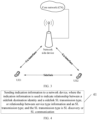
- Traditional wireless communication adopts a cellular network communication mode, that is, a terminal UE and a network side device (that is, a network device) transmit uplink and downlink data or control information through a Uu interface (an LTE air interface); as shown in FIG. 2 , the network side device is connected to the core network CN.
- the communication mode may also be understood as a communication mode of centralized network control in an LTE system.
- Sidelink communication refers to a mode in which a neighboring terminal may perform data transmission through a sidelink communication link (also referred to as sidelink or PC5) within a short distance range.
- the wireless interface corresponding to the Sidelink link is referred to as a sidelink interface (also referred to as a Sidelink interface or a PC5 interface); as shown in FIG. 3 , it may also be understood as discovery or communication of D2D (device-to-device).
- an embodiment of the present application provides an information processing method and apparatus, a terminal device, and a network device, to resolve a problem in the related art that a network device cannot accurately complete scheduling of a SL transmission resource scheduling.
- the method, the apparatus, the terminal device, and the network device are based on the same application concept, and because the principles of solving the problem by the method, the apparatus, the terminal device, and the network device are similar, the implementation of the method, the apparatus, the terminal device, and the network device may be similarly obtained by referring to each otter, and details are not described herein again.
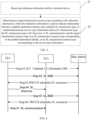
- the information processing method provided in this embodiment of the present application is applied to a terminal device, and as shown in FIG. 4 , the method includes: Step 41: sending indication information to a network device, where the indication information is used to indicate relationship between a sidelink destination identity and a sidelink SL transmission type, or relationship between service type information and an SL transmission type; and the SL transmission type is SL discovery or SL communication.
- the information processing method provided in this embodiment of the present application sends indication information to a network device; wherein the indication information is used to indicate relationship between the sidelink destination identity and the sidelink SL transmission type, or relationship between the service type information and the SL transmission type; the SL transmission type is SL discovery or SL communication; and the terminal device can indicate the relationship between the sidelink destination identity or the service type information and the SL transmission type to the network device, so that the network device can subsequently clearly determine whether the scheduling needed by the terminal device is the SL discovery resource or the SL communication resource, thereby well solving the problem in the related art that the network device cannot determine the scheduled resource type required by the terminal device.
- the service type information may be referred to as sidelink communication service type information.
- one sidelink destination identity in the relationship corresponds to one SL transmission type; and/or one service type information in the relationship corresponds to one SL transmission type.
- each SL transmission type may be accurately indicated.
- the indication information includes the first identification information of the SL transmission type; in a case that the first identification information takes a first value, the first identification information indicates that the SL transmission type is SL discovery; in a case that the first identification information takes a second value, the first identification information indicates that the SL transmission type is SL communication; or, if the indication information includes second identification information of the SL transmission type, then in a case that the second identification information appears, it indicates that the SL transmission type is SL discovery; in a case that the second identification information does not appear, it indicates that the SL transmission type is SL communication; or, if the indication information includes third identification information of an SL transmission type, then in a case that the third identification information appears, it indicates that the SL transmission type is SL communication; in a case that the third identification information does not appear, it indicates that the SL transmission type is SL discovery.
- the indication information includes identification information, which may be understood as: a field defining identification information in the indication information; "appear” may be understood as: there is filling content in a field of identification information included in the indication information; and “not appear” may be understood as: there is no filling content in a field of identification information included in the indication information.
- the indication information includes the second identification information of the SL transmission type, then in a case that the second identification information appears, the second identification information includes a sidelink destination identity, and the sidelink destination identity corresponds to a sidelink destination index.
- the second identification information may be carried in a SUI.
- the SUI may include a plurality of sidelink destination identities (for example, a destination ID), each sidelink destination identity corresponds to one sidelink destination index (for example, a destination index), and the sidelink destination index is a sequence number, in the list, of the sidelink destination identity in the SUI.
- the indication information indicates that the SL transmission type is SL discovery; in a case that the information element of the SUI includes a second information element, the indication information indicates that the SL transmission type is SL communication.
- the first information element and the second information element may be different information elements of the SUI.
- the network device may determine, based on the second identification information included in the first information element reported by the terminal, that the SL transmission type is SL discovery or the SL transmission type is SL communication.
- the second identification information may be used to identify the first information element.
- the first information element may be sl-TxResourceReqListDisc-r17, and information related to SL discovery may be reported by using the information element.
- the first information element may include second identification information.
- the second information element may be an information element other than the first information element.
- the SL transmission type is SL discovery or the SL transmission type is SL communication through the second identification information, so that the SL transmission type is indicated in a non-explicit indication manner, and resources occupied by indication information transmission can be reduced.
- the terminal device reports the SL-BSR, if the sidelink destination identity corresponding to the sidelink destination index carried in the SL-BSR is a sidelink destination identity included in the second identification information, then the resource requested by the SL-BSR is an SL discovery resource.
- the resource that is requested by the terminal device and that is related to the SL discovery or the resource related to the SL communication may be determined by using the sidelink destination index carried in the SL BSR reported by the terminal device. If the sidelink destination identity corresponding to the sidelink destination index carried in the SL-BSR is a sidelink destination identity included in the second identification information, the resource requested by the SL-BSR is an SL discovery resource. If the sidelink destination identity corresponding to the sidelink destination index carried in the SL-BSR is not the sidelink destination identity included in the second identification information, then the resource requested by the SL-BSR is a resource related to SL communication.
- the resource requested by the terminal device can be determined by using the sidelink destination identity index carried by the SL-BSR reported by the terminal device.
- sending the indication information to the network device includes: sending the indication information to the network device by using first radio resource control (RRC) information, where the first RRC information is sidelink terminal information (Sidelink UE Information NR, SUI), or UE assistance information (UAI), or other RRC information other than SUI and UAI.
- RRC radio resource control
- the SL transmission type indication may be performed in multiple manners.
- the indication information is included in a sidelink communication resource request corresponding to a sidelink destination identity, and the indication information includes a sidelink destination index corresponding to a sidelink destination identity and identification information of an SL transmission type corresponding to the sidelink destination index, where the identification information is the first identification information or the second identification information or the third identification information.
- indication of the SL transmission type can be performed under the condition that resources are saved to the maximum extent.
- the sidelink destination identity-the sidelink destination index-the SL transmission type has sequential correspondence; and subsequently, the sidelink destination index may be directly transmitted, and the network device may learn the SL transmission type of the sidelink destination identity according to the sidelink destination index.
- the sidelink communication resource request is included in SUI.
- the method further includes: sending an SL buffer status report to the network device, where the SL buffer status report carries a sidelink destination index corresponding to the sidelink destination identity.
- the UAI is further used to request a transmission resource.
- An embodiment of the present application further provides an information processing method, applied to a network device, as shown in FIG. 5 .
- the method includes:
- the information processing method provided in this embodiment of the present application includes receiving the indication information sent by the terminal device, and determining a target transmission resource type according to the indication information; wherein the indication information is used to indicate relationship between the sidelink destination identity and the sidelink SL transmission type, or relationship between the service type information and the SL transmission type; the SL transmission type is SL discovery or SL communication; the target transmission resource type is an SL transmission resource type corresponding to the sidelink destination identity, or an SL transmission resource type corresponding to the service type information; and relationship between the sidelink destination identity or the service type information and the SL transmission type can be indicated by the terminal device to the network device.
- the network device may subsequently clearly determine whether scheduling needed by the terminal device is the SL discovery resource or the SL communication resource, thereby well solving the problem in the related art that the network device cannot determine the scheduled resource type required by the terminal device.
- the service type information may be referred to as sidelink communication service type information.
- one sidelink destination identity in the relationship corresponds to one SL transmission type; and/or one service type information in the relationship corresponds to one SL transmission type.
- each SL transmission type may be accurately indicated.
- the indication information includes the first identification information of the SL transmission type, then in a case that the first identification information takes a first value, it indicates that the SL transmission type is SL discovery; in a case that the first identification information takes a second value, it indicates that the SL transmission type is SL communication; or, if the indication information includes second identification information of the SL transmission type, then in a case that the second identification information appears, it indicates that the SL transmission type is SL discovery; in a case that the second identification information does not appear, it indicates that the SL transmission type is SL communication; or, if the indication information includes third identification information of an SL transmission type, it indicates that the SL transmission type is SL communication in a case that the third identification information appears; in a case that the third identification information does not appear, it indicates that the SL transmission type is SL discovery.
- the indication information includes identification information, which may be understood as: a field defining identification information in the indication information; "appear” may be understood as: there is filling content in a field of identification information included in the indication information; and “not appear” may be understood as: there is no filling content in a field of identification information included in the indication information.
- receiving the indication information sent by the terminal device includes: receiving indication information sent by the terminal device by using the first radio resource control RRC information, where the first RRC information is sidelink UE information SUI, or terminal assistance information UAI, or other RRC information other than SUI and UAI.
- RRC information is sidelink UE information SUI, or terminal assistance information UAI, or other RRC information other than SUI and UAI.
- the indication information is included in a sidelink communication resource request corresponding to a sidelink destination identity, and the indication information includes a sidelink destination index corresponding to a sidelink destination identity and identification information of an SL transmission type corresponding to the sidelink destination index, where the identification information is the first identification information or the second identification information or the third identification information.
- indication of the SL transmission type can be performed under the condition that resources are saved to the maximum extent.
- the sidelink destination identity-the sidelink destination index-the SL transmission type has sequential correspondence; and subsequently, the sidelink destination index may be directly transmitted, and the network device may learn the SL transmission type of the sidelink destination identity according to the sidelink destination index.
- the sidelink communication resource request is included in SUI.
- the information processing method in this embodiment of the present application further includes: receiving an SL buffer status report sent by a terminal device, where the determining a target transmission resource type based on the indication information includes: determining a target transmission resource type according to the indication information and an SL buffer status report, where the SL buffer status report carries a sidelink destination index corresponding to a sidelink destination identity.
- the UAI is further used to request a transmission resource.
- the following describes the information processing method provided in this embodiment of the present application, where the following terminal device is referred to as a terminal for short, and the network device is a base station which is taken as an example.
- an embodiment of the present application provides an information processing method, which may be specifically implemented as a method in which a terminal indicates relationship between a sidelink destination identity or service type information and an SL transmission type to a base station, so that the base station may explicitly perform resource allocation for SL discovery or communication.
- This solution mainly relates to: a terminal sends indication information to a network to indicate relationship between a sidelink destination identity or service type information and an SL transmission type, where the SL transmission type may be one of the following: SL discovery and SL communication.
- the indication information may be sidelink UE information NR (SUI), UE assistance information (UAI), or other Uu interface signaling (corresponding to the foregoing other RRC information).
- the specific manner of presenting the foregoing relationship may be: SL transmission type indication information for each (sidelink) communication destination identity, or SL transmission type indication information for each service type.
- One of the sidelink destination identities corresponding to the relationship corresponds to one SL transmission type; or one of the service type information in the relationship corresponds to one SL transmission type.
- the SUI may include the relationship between a communication destination identity and an SL transmission type
- the UAI may include the relationship between the service type information and the SL transmission type.
- the indication information for one SL transmission type may be specifically implemented in any one of the following manners.
- the UE1 is a UE connected to a network
- the serving base station of the UE1 is the base station 1
- the UE1 uses the Sidelink UE Information NR (i.e. SUI) message to indicate to the base station 1 the correspondence (corresponding to the above relationship) between the sidelink communication target identifier (i.e. the sidelink destination identity) and the sidelink communication transmission type (i.e. the SL transmission type).
- the transmission type corresponding to the sidelink communication target identifier (sl-Destination Identity) 1 is SL discovery
- the transmission type corresponding to the sl-Destination Identity 2 is SL communication.
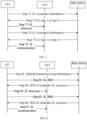
- the UE indicates the SL transmission type through the Sidelink UE Information NR message, the following steps are involved.
- Step 61 UE 1 sends a Sidelink UE Information NR message to the base station 1, where the Sidelink UE Information NR message includes correspondence between the sidelink destination identity and the SL transmission type, and the specific manner may be a sidelink communication resource request (SL-Tx Resource Req) corresponding to each sidelink destination identity, one of the following indication information is newly included:
- Sidelink UE Information NR message includes correspondence between the sidelink destination identity and the SL transmission type, and the specific manner may be a sidelink communication resource request (SL-Tx Resource Req) corresponding to each sidelink destination identity, one of the following indication information is newly included:
- the SL-Tx Resource Req may include the sl-Destination Identity-rl6, and the indication information may be understood as adding an SL transmission type to the SL-Tx resource Req.
- Step 62 UE 1 reports an SL Buffer Status Report (BSR) of SL discovery (the SL transmission type is the SL discovery), where a Destination Index (1) in the SL BSR corresponds to the sl-Destination Identity 1, and the SL transmission type is indicated as SL discovery in the message of step 61.
- BSR SL Buffer Status Report
- the Destination Index is a sequence number of the SL-Tx Resource Req, and each SL-Tx Resource Req includes one sl-Destination Identity-R16, so that each sl-Destination Identity-rl6 corresponds to one unique Destination Index; here, it may be understood that the Destination Index corresponding to the Destination Identity in the Sidelink UE Information NR identify the same destination identity.
- UE 1 indicates, to the base station 1, a sidelink destination index corresponding to the sidelink destination identity and (identification information of) an SL transmission type corresponding to the sidelink destination index; and subsequently, UE 1 sends the sidelink destination index to the base station 1, and the base station may determine the corresponding SL transmission type accordingly.
- Step 63 The base station 1 receives the SL BSR of the UE 1, and determines, according to the Destination Index, that the UE 1 requests resources of the SL discovery, and schedules the resources of the SL discovery to the UE 1 by using a physical downlink control channel (PDCCH).
- a physical downlink control channel PDCCH
- Step 64 UE 1 sends a discovery message by using the resources of the SL discovery scheduled by the base station 1.
- Step 65 UE1 reports the SL BSR of SL communication (the SL transmission type is the SL communication), wherein the Destination Index (2) in the SL BSR corresponds to the sl-Destination Identity 2, and the SL transmission type thereof is indicated as SL communication in the message in step 61.
- Step 66 The base station 1 receives the SL BSR of the UE 1, and determines, based on the Destination Index, that the UE 1 requests resources of the SL communication, and schedules the resources of the SL communication to the UE1 by using a PDCCH.
- Step 67 UE 1 performs SL communication by using the resources of SL communication scheduled by the base station 1.
- the SL-TxResourceReq in SUI sent in step 61 may be a list, including a plurality of SL-TxResourceReq, each SL-TxResourceReq includes one SL-destination Identity-r16, so that one SUI can include correspondence between multiple sl-Destination Identity-r16s and multiple SL transmission types.
- the UE 1 is a UE connected to a network
- the serving base station of the UE1 is the base station 1
- the UE1 uses the UE Assistance Information (i.e. UAI) message to indicate to the base station the correspondence (corresponding to the above relationship) between the sidelink communication service type information and the sidelink communication transmission type (that is, the SL transmission type).
- UAI UE Assistance Information
- the UE indicates the SL transmission type by using the UE Assistance Information message, including the following steps:
- the sidelink communication transmission type indication may be 1-bit indication information added in the SL-Traffic Pattern Info.
- the UAI can be used to request transmission resources, so that a report such as a BSR does not need to be sent subsequently.
- Step 73 The UE 1 sends the discovery message by using the resources of the SL discovery allocated by the base station 1.
- Step 74 The UE 1 sends a UE Assistance Information message to the base station 1, where the UE Assistance Information message includes correspondence between the sidelink communication service type information and the SL transmission type, and indicates that the SL transmission type is SL communication.
- SL-Traffic Pattern Info (transmission type information) in the UE Assistance Information may a list, and the SL-Traffic Pattern Info in each SL-Traffic Pattern Info is an indication of SL discovery or SL communication. Specifically, for each SL-Traffic Pattern Info, the UE Assistance Information includes one of the following indication information:
- Step 75 The base station 1 receives the UE Assistance Information of the UE1, determines that the UE1 requests the resources of the SL communication according to the sidelink communication transmission type indication (i.e. indication information) included in the SL-Traffic Pattern Info in the UE Assistance Information, and may configure a configured grant (configured grant type 1 or type 2, PDCCH needs to be activated for CG type 2) of the SL communication for the UE1 through a dedicated signaling. That is, the base station 1 schedules the resources of the SL communication, that is, periodic resources are configured.
- the sidelink communication transmission type indication i.e. indication information
- PDCCH needs to be activated for CG type 2
- Step 76 The UE 1 sends the communication message by using the SL communication resource allocated by the base station 1.
- the UE1 is a UE connected to a network
- the serving base station of the UE1 is the base station 1
- the UE1 uses a new RRC message (corresponding to the other RRC messages) to indicate to the base station 1 the correspondence (corresponding to the above relationship) between the sidelink communication target identifier (i.e. the sidelink destination identity) and the sidelink communication transmission type (i.e. the SL transmission type).
- Step 81 The UE 1 sends a new RRC message to the base station 1, where the new RRC message includes correspondence between the sidelink destination identity and the SL transmission type, and specifically, the SL transmission type is indicated for each sidelink destination identity in one of the following manners:
- the new RRC message includes a destination index corresponding to the sidelink destination identity, and indicates an SL transmission type corresponding to the destination index.
- the new RRC message in step 81 indicates the SL transmission types corresponding to the plurality of destination IDs.
- Step 82 UE1 reports SL BSR of the SL discovery (the SL transmission type is the SL discovery), where the sidelink destination identity corresponding to the Destination Index indicates the SL discovery in the message of step 81.
- Step 83 The base station 1 receives the SL BSR of the UE1, determines, based on the Destination Index, that the UE 1 requests the resources of the SL discovery, and uses the PDCCH to schedule the resources of SL discovery to the UE1.
- Step 84 UE 1 sends the discovery message by using the resources of SL discovery scheduled by the base station 1.
- Step 85 UE 1 reports the SL BSR of SL communication (the SL transmission type is SL communication), where the sidelink destination identity corresponding to the Destination Index indicates SL communication in the message in step 81.
- Step 86 The base station 1 receives the SL BSR of the UE1, determines, based on the Destination Index, that the UE1 requests the resources of SL communication, and uses the PDCCH to schedule the resources of SL communication to the UE1.
- Step 87 UE 1 performs SL communication by using the resources of SL communication scheduled by the base station 1.
- the foregoing first example is dynamic scheduling, and indicates an SL transmission type corresponding to the sidelink destination identity by indicating an SL transmission type corresponding to an index (which has correspondence with a destination identity) in a request list; a dynamic resource request is subsequently performed by using the SL-BSR; the second example is semi-persistent scheduling, and the UAI may directly request a resource (a periodic resource); the third example is similar to the first example, but the message may be another RRC message.
- the base station needs to schedule resources of different resource pools for SL discovery and SL communication, to provide a method for the terminal to indicate the relationship between sidelink destination identity or service type information, which solves the problem that the base station cannot determine the scheduled resource type required by the terminal device, that is, solves the problem that how the base station distinguishes the transmission resources of the SL discovery and the SL communication after the SL discovery is introduced.
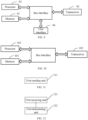
- An embodiment of the present application further provides a terminal device, as shown in FIG. 9 , the terminal device includes a memory 91, a transceiver 92, and a processor 93.
- the memory 91 is used to store a computer program; the transceiver 92 is used to send and receive data under the control of the processor 93; and the processor 93 is used to read the computer program in the memory 91 and perform the following operations: sending indication information to a network device by using the transceiver 92; where the indication information is used to indicate relationship between a sidelink destination identity and a sidelink SL transmission type, or relationship between service type information and an SL transmission type; and the SL transmission type is SL discovery or SL communication.
- the terminal device provided in this embodiment of the present application sends indication information to a network device; wherein the indication information is used to indicate relationship between the sidelink destination identity and the sidelink SL transmission type, or relationship between the service type information and the SL transmission type; the SL transmission type is SL discovery or SL communication; and the terminal device can indicate the relationship between the sidelink destination identity or the service type information and the SL transmission type to the network device, so that the network device can subsequently clearly determine whether the scheduling needed by the terminal device is the SL discovery resource or the SL communication resource, thereby well solving the problem in the related art that the network device cannot determine the scheduled resource type required by the terminal device.
- the transceiver 92 is used to receive and send data under the control of the processor 93.
- the bus architecture may include any number of interconnected buses and bridges, and specifically link various circuits of one or more processors represented by the processor 93 and the memory represented by the memory 91.
- the bus architecture may further link various other circuits, such as a peripheral device, a voltage stabilizer, and a power management circuit, which are well known in the art, and therefore are not further described herein.
- the bus interface provides an interface.
- the transceiver 92 may be a plurality of elements, that is, includes a transmitter and a receiver, and provides units for communicating with various other apparatuses on a transmission medium, where the transmission mediums include transmission media such as a wireless channel, a wired channel, and an optical cable.
- the user interface 94 may also be an interface capable of externally or internally connecting to a required device, and the connected device includes, but is not limited to, a keypad, a display, a speaker, a microphone, a joystick, and the like.
- the processor 93 is responsible for managing the bus architecture and general processing, and the memory 91 may store data used by the processor 93 when performing operations.
- the processor 93 may be a central processing unit (CPU), an application specific integrated circuit (ASIC), a field programmable gate array (FPGA), or a complex programmable logic device (CPLD), and the processor may also use a multi-core architecture.
- CPU central processing unit
- ASIC application specific integrated circuit
- FPGA field programmable gate array
- CPLD complex programmable logic device
- the processor invokes the computer program stored in the memory, and is used to perform any one of the methods provided in the embodiments of the present application according to the obtained executable instructions.
- the processor and the memory may also be physically arranged separately.
- one sidelink destination identity in the relationship corresponds to one SL transmission type; and/or one service type information in the relationship corresponds to one SL transmission type.
- the indication information includes the first identification information of the SL transmission type; in a case that the first identification information takes a first value, the first identification information indicates that the SL transmission type is SL discovery; in a case that the first identification information takes a second value, the first identification information indicates that the SL transmission type is SL communication; or, if the indication information includes second identification information of the SL transmission type, then in a case that the second identification information appears, it indicates that the SL transmission type is SL discovery; in a case that the second identification information does not appear, it indicates that the SL transmission type is SL communication; or, if the indication information includes third identification information of an SL transmission type, then in a case that the third identification information appears, it indicates that the SL transmission type is SL communication; in a case that the third identification information does not appear, it indicates that the SL transmission type is SL discovery.
- the indication information includes the second identification information of the SL transmission type, then in a case that the second identification information appears, the second identification information includes a sidelink destination identity, and the sidelink destination identity corresponds to a sidelink destination index.
- the terminal device reports the SL-BSR, if the sidelink destination identity corresponding to the sidelink destination index carried in the SL-BSR is a sidelink destination identity included in the second identification information, the resource requested by the SL-BSR is an SL discovery resource.
- sending the indication information to the network device includes: sending the indication information to the network device by using first radio resource control (RRC) information, where the first RRC information is sidelink UE information (Sidelink UE Information NR, SUI), or UE assistance information (UAI), or other RRC information other than SUI and UAI.
- RRC radio resource control
- the indication information is included in a sidelink communication resource request corresponding to a sidelink destination identity, and the indication information includes a sidelink destination index corresponding to a sidelink destination identity and identification information of an SL transmission type corresponding to the sidelink destination index, where the identification information is the first identification information or the second identification information or the third identification information.
- the operation further includes: sending an SL buffer status report to the network device by means of the transceiver, where the SL buffer status report carries a sidelink destination index corresponding to the sidelink destination identity.
- the UAI is further used to request a transmission resource.
- the above-mentioned device provided in the embodiments of the present application can implement all method steps implemented by the above-mentioned method embodiments of the terminal device side, and can achieve the same technical effect, the same parts and beneficial effects as the method embodiments will not be repeated in this embodiment.
- An embodiment of the present application further provides a network device, as shown in FIG. 10 , the network device includes a memory 101, a transceiver 102, and a processor 103:
- the memory 101 is used to store a computer program; the transceiver 102 is used to send and receive data under the control of the processor 103; and the processor 103 is used to read the computer program in the memory 101 and perform the following operations:
- the network device receives the indication information sent by the terminal device, and determines a target transmission resource type according to the indication information; wherein the indication information is used to indicate relationship between the sidelink destination identity and the sidelink SL transmission type, or relationship between the service type information and the SL transmission type; the SL transmission type is SL discovery or SL communication; the target transmission resource type is an SL transmission resource type corresponding to the sidelink destination identity, or an SL transmission resource type corresponding to the service type information; and relationship between the sidelink destination identity or the service type information and the SL transmission type can be indicated by the terminal device to the network device.
- the network device may subsequently clearly determine whether scheduling needed by the terminal device is the SL discovery resource or the SL communication resource, thereby well solving the problem in the related art that the network device cannot determine the scheduled resource type required by the terminal device.
- the transceiver 102 is used to receive and send data under the control of the processor 103.
- the bus architecture may include any number of interconnected buses and bridges, and specifically link various circuits of one or more processors represented by the processor 103 and a memory represented by the memory 101.
- the bus architecture may further link various other circuits, such as a peripheral device, a voltage stabilizer, and a power management circuit, which are well known in the art, and therefore are not further described herein.
- the bus interface provides an interface.
- the transceiver 102 may be a plurality of elements, that is, includes a transmitter and a receiver, and provides units for communicating with various other apparatuses on a transmission medium, where the transmission mediums include transmission media such as a wireless channel, a wired channel, and an optical cable.
- the processor 103 is responsible for managing the bus architecture and general processing, and the memory 101 may store data used by the processor 103 when performing operations.
- the processor 103 may be a central embedded device (CPU), an application specific integrated circuit (ASIC), a field programmable gate array (FPGA), or a complex programmable logic device (CPLD), and the processor may also use a multi-core architecture.
- CPU central embedded device
- ASIC application specific integrated circuit
- FPGA field programmable gate array
- CPLD complex programmable logic device
- one sidelink destination identity in the relationship corresponds to one SL transmission type; and/or one service type information in the relationship corresponds to one SL transmission type.
- the indication information includes the first identification information of the SL transmission type, then in a case that the first identification information takes a first value, it indicates that the SL transmission type is SL discovery; in a case that the first identification information takes a second value, it indicates that the SL transmission type is SL communication; or, if the indication information includes second identification information of the SL transmission type, then in a case that the second identification information appears, it indicates that the SL transmission type is SL discovery; in a case that the second identification information does not appear, it indicates that the SL transmission type is SL communication; or, if the indication information includes third identification information of an SL transmission type, it indicates that the SL transmission type is SL communication in a case that the third identification information appears; in a case that the third identification information does not appear, it indicates that the SL transmission type is SL discovery.
- the indication information includes the second identification information of the SL transmission type, then in a case that the second identification information appears, the second identification information includes a sidelink destination identity, and the sidelink destination identity corresponds to the sidelink destination index.
- the resource requested by the SL-BSR is an SL discovery resource.
- the receiving indication information sent by the terminal device includes: receiving indication information sent by the terminal device by using the first radio resource control RRC information, where the first RRC information is sidelink UE information SUI, or terminal assistance information UAI, or other RRC information other than SUI and UAI.
- the indication information is included in a sidelink communication resource request corresponding to a sidelink destination identity, and the indication information includes a sidelink destination index corresponding to a sidelink destination identity and identification information of an SL transmission type corresponding to the sidelink destination index, where the identification information is the first identification information or the second identification information or the third identification information.
- the operation further includes: receiving, by using the transceiver, an SL buffer status report sent by a terminal device, where the determining a target transmission resource type based on the indication information includes: determining a target transmission resource type according to the indication information and an SL buffer status report, where the SL buffer status report carries a sidelink destination index corresponding to a sidelink destination identity.
- the UAI is further used to request a transmission resource.
- An embodiment of the present application further provides an information processing apparatus, applied to a terminal device, as shown in FIG. 11 , the apparatus includes: a first sending unit 111, used to send indication information to a network device; where the indication information is used to indicate relationship between a sidelink destination identity and a sidelink SL transmission type, or relationship between service type information and an SL transmission type; and the SL transmission type is SL discovery or SL communication.
- a first sending unit 111 used to send indication information to a network device
- the indication information is used to indicate relationship between a sidelink destination identity and a sidelink SL transmission type, or relationship between service type information and an SL transmission type
- the SL transmission type is SL discovery or SL communication.
- the information processing apparatus sends indication information to a network device; wherein the indication information is used to indicate relationship between the sidelink destination identity and the sidelink SL transmission type, or relationship between the service type information and the SL transmission type; the SL transmission type is SL discovery or SL communication; and the apparatus can indicate the relationship between the sidelink destination identity or the service type information and the SL transmission type to the network device, so that the network device can subsequently clearly determine whether the scheduling needed by the terminal device is the SL discovery resource or the SL communication resource, thereby well solving the problem in the related art that the network device cannot determine the scheduled resource type required by the terminal device.
- one sidelink destination identity in the relationship corresponds to one SL transmission type; and/or one service type information in the relationship corresponds to one SL transmission type.
- the indication information includes the first identification information of the SL transmission type; in a case that the first identification information takes a first value, the first identification information indicates that the SL transmission type is SL discovery; in a case that the first identification information takes a second value, the first identification information indicates that the SL transmission type is SL communication; or, if the indication information includes second identification information of the SL transmission type, then in a case that the second identification information appears, it indicates that the SL transmission type is SL discovery; in a case that the second identification information does not appear, it indicates that the SL transmission type is SL communication; or, if the indication information includes third identification information of an SL transmission type, then in a case that the third identification information appears, it indicates that the SL transmission type is SL communication; in a case that the third identification information does not appear, it indicates that the SL transmission type is SL discovery.
- the indication information includes the second identification information of the SL transmission type, then in a case that the second identification information appears, the second identification information includes a sidelink destination identity, and the sidelink destination identity corresponds to a sidelink destination index.
- the terminal device reports the SL-BSR, if the sidelink destination identity corresponding to the sidelink destination index carried in the SL-BSR is a sidelink destination identity included in the second identification information, the resource requested by the SL-BSR is an SL discovery resource.
- sending the indication information to the network device includes: sending the indication information to the network device by using first radio resource control (RRC) information, where the first RRC information is sidelink UE information (Sidelink UE Information NR, SUI), or UE assistance information (UAI), or other RRC information other than SUI and UAI.
- RRC radio resource control
- the indication information is included in a sidelink communication resource request corresponding to a sidelink destination identity, and the indication information includes a sidelink destination index corresponding to a sidelink destination identity and identification information of an SL transmission type corresponding to the sidelink destination index, where the identification information is the first identification information or the second identification information or the third identification information.
- the information processing apparatus further includes: a second sending unit, used to send an SL buffer status report to the network device after sending the indication information to the network device, where the SL buffer status report carries a sidelink destination index corresponding to the sidelink destination identity.
- the UAI is further used to request a transmission resource.
- the above-mentioned device provided in the embodiments of the present application can implement all method steps implemented by the above-mentioned method embodiments of the terminal device side, and can achieve the same technical effect, the same parts and beneficial effects as the method embodiments will not be repeated in this embodiment.
- An embodiment of the present application further provides an information processing apparatus, applied to a network device, as shown in FIG. 12 , the apparatus includes:
- the information processing apparatus receives the indication information sent by the terminal device, and determines a target transmission resource type according to the indication information; wherein the indication information is used to indicate relationship between the sidelink destination identity and the sidelink SL transmission type, or relationship between the service type information and the SL transmission type; the SL transmission type is SL discovery or SL communication; the target transmission resource type is an SL transmission resource type corresponding to the sidelink destination identity, or an SL transmission resource type corresponding to the service type information; and relationship between the sidelink destination identity or the service type information and the SL transmission type can be indicated by the terminal device to the network device.
- the network device may subsequently clearly determine whether scheduling needed by the terminal device is the SL discovery resource or the SL communication resource, thereby well solving the problem in the related art that the network device cannot determine the scheduled resource type required by the terminal device.
- one sidelink destination identity in the relationship corresponds to one SL transmission type; and/or one service type information in the relationship corresponds to one SL transmission type.
- the indication information includes the first identification information of the SL transmission type, then in a case that the first identification information takes a first value, it indicates that the SL transmission type is SL discovery; in a case that the first identification information takes a second value, it indicates that the SL transmission type is SL communication; or, if the indication information includes second identification information of the SL transmission type, then in a case that the second identification information appears, it indicates that the SL transmission type is SL discovery; in a case that the second identification information does not appear, it indicates that the SL transmission type is SL communication; or, if the indication information includes third identification information of an SL transmission type, it indicates that the SL transmission type is SL communication in a case that the third identification information appears; in a case that the third identification information does not appear, it indicates that the SL transmission type is SL discovery.
- the indication information includes the second identification information of the SL transmission type, then in a case that the second identification information appears, the second identification information includes a sidelink destination identity, and the sidelink destination identity corresponds to the sidelink destination index.
- the resource requested by the SL-BSR is an SL discovery resource.
- the receiving indication information sent by the terminal device includes: receiving indication information sent by the terminal device by using the first radio resource control RRC information, where the first RRC information is sidelink UE information SUI, or terminal assistance information UAI, or other RRC information other than SUI and UAI.
- the indication information is included in a sidelink communication resource request corresponding to a sidelink destination identity, and the indication information includes a sidelink destination index corresponding to a sidelink destination identity and identification information of an SL transmission type corresponding to the sidelink destination index, where the identification information is the first identification information or the second identification information or the third identification information.
- the information processing apparatus further includes a second receiving unit, used to receiving an SL buffer status report sent by a terminal device, where determining a target transmission resource type based on the indication information includes: determining a target transmission resource type according to the indication information and an SL buffer status report, where the SL buffer status report carries a sidelink destination index corresponding to a sidelink destination identity.
- the UAI is further used to request a transmission resource.
- the division of the units in the embodiments of the present application is schematic, and is merely logical function division, and there may be another division manner in actual implementation.
- functional units in the embodiments of the present application may be integrated into one processing unit, or each of the units may exist alone physically, or two or more units are integrated into one unit.
- the integrated unit may be implemented in a form of hardware, or may be implemented in a form of a software functional unit.
- the integrated unit When the integrated unit is implemented in the form of a software functional unit and sold or used as an independent product, the integrated unit may be stored in a processor-readable storage medium. Based on such understanding, an essential part, or a part contributing to the related art, or some, or all, of the technical solutions of the present application may be embodied in the form of a software product, and the computer software product is stored in a storage medium and includes several instructions for causing a computer device (which may be a personal computer, a server, or a network device, etc.) or a processor to perform all or part of the steps of the method described in the embodiments of the present application.
- a computer device which may be a personal computer, a server, or a network device, etc.
- the foregoing storage medium includes: any medium that can store program codes, such as a USB flash drive, a removable hard disk, a read-only memory (Read-Only Memory, ROM), a random access memory (RAM), a magnetic disk, or an optical disk.
- program codes such as a USB flash drive, a removable hard disk, a read-only memory (Read-Only Memory, ROM), a random access memory (RAM), a magnetic disk, or an optical disk.
- An embodiment of the present application further provides a processor-readable storage medium, where the processor-readable storage medium stores a computer program, and the computer program is used to cause the processor to execute the information processing method on the terminal device side; or the computer program is used to cause the processor to perform the information processing method on the network device side.
- the processor-readable storage medium may be any usable medium or data storage device accessible by the processor, including but not limited to a magnetic memory (for example, a floppy disk, a hard disk, a magnetic tape, a magneto-optical disk (MO), etc.), an optical memory (for example, a CD, a DVD, a BD, an HVD, etc.), and a semiconductor memory (for example, a ROM, an EPROM, an EEPROM, a non-volatile memory (NAND Flash), a solid-state hard disk (SSD)), or the like.
- a magnetic memory for example, a floppy disk, a hard disk, a magnetic tape, a magneto-optical disk (MO), etc.
- an optical memory for example, a CD, a DVD, a BD, an HVD, etc.
- a semiconductor memory for example, a ROM, an EPROM, an EEPROM, a non-volatile memory (NAND Flash), a solid-state hard
- the implementation embodiments of the information processing method on the terminal device side or the network device side are all applicable to the embodiment of the processor-readable storage medium, and can also achieve the same technical effect.
- this application may be provided as a method, a system, or a computer program product. Therefore, this application may use a form of hardware only embodiments, software only embodiments, or embodiments with a combination of software and hardware. Moreover, this application may use a form of a computer program product that is implemented on one or more computer-usable storage media (including but not limited to a magnetic disk memory and an optical memory) that include computer-usable program codes.
- a computer-usable storage media including but not limited to a magnetic disk memory and an optical memory
- These computer-executable instructions may be provided to a processor of a general-purpose computer, a special-purpose computer, an embedded processor, or another programmable data processing device to produce a machine, such that the instructions executed by the processor of the computer or other programmable data processing device generate means for implementing the functions specified in one or more flows of the flowcharts and/or one or more blocks of the block diagrams.
- processor-executable instructions may also be stored in a processor-readable memory that can direct a computer or other programmable data processing device to function in a particular manner, such that the instructions stored in the processor-readable memory produce an article of manufacture including an instruction device that implements the functions specified in one or more flows of the flowcharts and/or one or more blocks of the block diagrams.
- processor-executable instructions may also be loaded onto a computer or other programmable data processing device such that a series of operational steps are performed on the computer or other programmable device to produce a computer-implemented process, such that the instructions executed on the computer or other programmable device provide steps for implementing the functions specified in one or more flows of the flowcharts and/or one or more blocks of the block diagrams.
- each of the foregoing modules is merely a division of logical functions, and during actual implementation, all or some of the foregoing modules may be integrated into one physical entity, or may be physically separated.
- the modules may all be implemented in a form of software invoked by a processing element, or may all be implemented in a form of hardware; or some modules may be implemented in a form of invoking software by using a processing element, and some modules are implemented in a form of hardware.
- the determining module may be a separately established processing element, or may be integrated in a certain chip of the foregoing apparatus, and in addition, the determining module may be stored in a memory of the foregoing apparatus in a form of program codes, and a certain processing element of the foregoing apparatus invokes and executes the function of the foregoing determining module.
- Other modules may be implemented similarly. In addition, all or some of these modules may be integrated together, or may be implemented independently.
- the processing element described herein may be an integrated circuit with signal processing capability. In an implementation process, each step of the foregoing method or the foregoing modules may be completed by using an integrated logic circuit of hardware in the processor element or an instruction in a form of software.
- each module, unit, subunit, or submodule may be one or more integrated circuits used to implement the foregoing method, for example, one or more application specific integrated circuits (ASIC), or one or more microprocessors (DSP), or one or more field programmable gate arrays (FPGA).
- ASIC application specific integrated circuit
- DSP microprocessors
- FPGA field programmable gate arrays
- the processing element may be a general-purpose processor, for example, a central processing unit (CPU) or another processor that can invoke the program codes.
- these modules may be integrated together and implemented in a form of a system-on-a-chip (SOC).
- SOC system-on-a-chip
Landscapes
- Engineering & Computer Science (AREA)
- Computer Networks & Wireless Communication (AREA)
- Signal Processing (AREA)
- Mobile Radio Communication Systems (AREA)
Applications Claiming Priority (2)
| Application Number | Priority Date | Filing Date | Title |
|---|---|---|---|
| CN202111072893.7A CN115811804B (zh) | 2021-09-14 | 2021-09-14 | 一种信息处理方法、装置、终端设备及网络设备 |
| PCT/CN2022/118677 WO2023040881A1 (fr) | 2021-09-14 | 2022-09-14 | Procédé et appareil de traitement d'informations, dispositif terminal et dispositif de réseau |
Publications (2)
| Publication Number | Publication Date |
|---|---|
| EP4404663A1 true EP4404663A1 (fr) | 2024-07-24 |
| EP4404663A4 EP4404663A4 (fr) | 2025-01-22 |
Family
ID=85481669
Family Applications (1)
| Application Number | Title | Priority Date | Filing Date |
|---|---|---|---|
| EP22869250.5A Pending EP4404663A4 (fr) | 2021-09-14 | 2022-09-14 | Procédé et appareil de traitement d'informations, dispositif terminal et dispositif de réseau |
Country Status (4)
| Country | Link |
|---|---|
| US (1) | US20240389116A1 (fr) |
| EP (1) | EP4404663A4 (fr) |
| CN (1) | CN115811804B (fr) |
| WO (1) | WO2023040881A1 (fr) |
Family Cites Families (19)
| Publication number | Priority date | Publication date | Assignee | Title |
|---|---|---|---|---|
| WO2016147235A1 (fr) * | 2015-03-19 | 2016-09-22 | 日本電気株式会社 | Dispositif et procédé de communication de service de proximité |
| CN107040864B (zh) * | 2016-02-04 | 2021-11-02 | 中兴通讯股份有限公司 | 设备到设备d2d资源的配置方法及装置 |
| CN106793154B (zh) * | 2016-07-29 | 2018-10-16 | 北京展讯高科通信技术有限公司 | D2d直接发现资源的选择方法及系统 |
| WO2019028699A1 (fr) * | 2017-08-09 | 2019-02-14 | 华为技术有限公司 | Procédé d'émission de signal et dispositif correspondant |
| CN116405902A (zh) * | 2018-08-10 | 2023-07-07 | 中兴通讯股份有限公司 | 车联网中直通链路的资源配置方法及装置 |
| CN113382388B (zh) * | 2018-11-02 | 2023-08-04 | 华为技术有限公司 | 传输方法和通信设备 |
| ES2902932T3 (es) * | 2018-11-06 | 2022-03-30 | Asustek Comp Inc | Procedimientos y aparatos para mejorar la comunicación de enlace lateral uno a uno en un sistema de comunicación inalámbrica |
| CN111436079A (zh) * | 2019-01-11 | 2020-07-21 | 华硕电脑股份有限公司 | 用于无线通信中的侧链路资源分配模式配置的方法及设备 |
| EP3925344B1 (fr) * | 2019-02-13 | 2025-05-14 | ZTE Corporation | Configuration de ressources pour communication en liaison latérale |
| CN113785650B (zh) * | 2019-05-02 | 2023-06-27 | Lg电子株式会社 | 基于不同直接链路的状态的侧链路调度请求的触发和取消 |
| EP4022966B1 (fr) * | 2019-11-07 | 2024-01-03 | LG Electronics Inc. | Procédé et appareil de rapport d'état de canal dans un système de communication sans fil |
| WO2021091337A1 (fr) * | 2019-11-07 | 2021-05-14 | Lg Electronics Inc. | Procédé et appareil permettant la transmission de l'établissement des priorités dans un système de communication sans fil |
| KR20210123938A (ko) * | 2020-04-06 | 2021-10-14 | 삼성전자주식회사 | 무선 통신 시스템에서 단말의 송신 전력 제어 방법 및 장치 |
| WO2022082537A1 (fr) * | 2020-10-21 | 2022-04-28 | 华为技术有限公司 | Procédé et appareil de communication de liaison latérale |
| CN115243402A (zh) * | 2021-04-22 | 2022-10-25 | 鸿颖创新有限公司 | 用于侧链路不连续接收机制下部分感测的方法和装置 |
| KR20240004690A (ko) * | 2021-04-28 | 2024-01-11 | 엘지전자 주식회사 | 무선통신시스템에서 사이드링크 디스커버리 자원 요청및 할당에 관련된 ue의 동작 방법 및 장치 |
| CN115515094A (zh) * | 2021-06-07 | 2022-12-23 | 中兴通讯股份有限公司 | 数据传输方法、用户设备、服务节点及存储介质 |
| KR20240041983A (ko) * | 2021-09-07 | 2024-04-01 | 엘지전자 주식회사 | 무선 통신 시스템에서 sl data를 송수신하기 위한 방법 및 그 장치 |
| CN116419186B (zh) * | 2021-12-22 | 2026-04-03 | 大唐移动通信设备有限公司 | 信息传输、资源配置方法、装置、终端设备及网络设备 |
-
2021
- 2021-09-14 CN CN202111072893.7A patent/CN115811804B/zh active Active
-
2022
- 2022-09-14 WO PCT/CN2022/118677 patent/WO2023040881A1/fr not_active Ceased
- 2022-09-14 EP EP22869250.5A patent/EP4404663A4/fr active Pending
- 2022-09-14 US US18/691,434 patent/US20240389116A1/en active Pending
Also Published As
| Publication number | Publication date |
|---|---|
| US20240389116A1 (en) | 2024-11-21 |
| EP4404663A4 (fr) | 2025-01-22 |
| CN115811804B (zh) | 2026-03-13 |
| WO2023040881A1 (fr) | 2023-03-23 |
| CN115811804A (zh) | 2023-03-17 |
Similar Documents
| Publication | Publication Date | Title |
|---|---|---|
| JP7484008B2 (ja) | ビーム指示方法、ネットワークデバイス、端末、装置及び記憶媒体 | |
| EP4366375A1 (fr) | Procédé, dispositif et appareil de transfert de groupe, et support de stockage | |
| EP4462899A1 (fr) | Procédé de détermination d'intervalle de mesure, procédé et appareil de configuration, terminal et station de base | |
| TWI857573B (zh) | 資訊傳輸方法、裝置、網路設備及終端 | |
| US20250234366A1 (en) | Resource scheduling method, device, apparatus, and storage medium | |
| US20240244451A1 (en) | Information processing method, information processing apparatus, terminal and network device | |
| US12615123B2 (en) | Data processing method and apparatus, network device, storage medium and program product | |
| CN114698109B (zh) | 上行调度方法、装置以及存储介质 | |
| WO2022237651A1 (fr) | Procédé de rapport de mesure intercellulaire, dispositif, appareil et support de stockage | |
| EP4518493A1 (fr) | Procédé, dispositif, et appareil de sélection de ressources, et support de stockage | |
| US20250056585A1 (en) | Information transmission, resource configuration method, device, terminal device and network device | |
| EP4418731B1 (fr) | Procédé et appareil de traitement d'informations, et support d'enregistrement lisible | |
| AU2021418673B2 (en) | Beam indication method and apparatus, and storage medium | |
| EP4404663A1 (fr) | Procédé et appareil de traitement d'informations, dispositif terminal et dispositif de réseau | |
| US12445250B2 (en) | Information transmission method and apparatus, and storage medium | |
| TW202406400A (zh) | 一種資訊處理方法、裝置及可讀存儲介質 | |
| CN115623604A (zh) | 信息处理方法及装置 | |
| US20260122532A1 (en) | Buffer status report reporting method, apparatus, terminal, and network device | |
| US20260129711A1 (en) | Method and apparatus for entering connected state, and terminal and network device | |
| US20250365646A1 (en) | Indication method, terminal and network-side device | |
| EP4669017A1 (fr) | Procédé et appareil de traitement de défaillance de faisceau, terminal et dispositif de réseau | |
| WO2023011529A1 (fr) | Procédé et appareil de détermination de temps d'activation de faisceau, terminal et dispositif de réseau | |
| CN121057052A (zh) | 分布式网络下多数据通道建立方法、设备及装置 | |
| CN120786700A (zh) | 上报网络优化参数的方法、设备、装置及存储介质 | |
| WO2025031368A1 (fr) | Procédé et appareil d'indication d'informations, procédé et appareil de réception d'informations et support d'enregistrement |
Legal Events
| Date | Code | Title | Description |
|---|---|---|---|
| STAA | Information on the status of an ep patent application or granted ep patent |
Free format text: STATUS: THE INTERNATIONAL PUBLICATION HAS BEEN MADE |
|
| PUAI | Public reference made under article 153(3) epc to a published international application that has entered the european phase |
Free format text: ORIGINAL CODE: 0009012 |
|
| STAA | Information on the status of an ep patent application or granted ep patent |
Free format text: STATUS: REQUEST FOR EXAMINATION WAS MADE |
|
| 17P | Request for examination filed |
Effective date: 20240319 |
|
| AK | Designated contracting states |
Kind code of ref document: A1 Designated state(s): AL AT BE BG CH CY CZ DE DK EE ES FI FR GB GR HR HU IE IS IT LI LT LU LV MC MK MT NL NO PL PT RO RS SE SI SK SM TR |
|
| REG | Reference to a national code |
Ref country code: DE Ref legal event code: R079 Free format text: PREVIOUS MAIN CLASS: H04W0072040000 Ipc: H04W0072210000 |
|
| DAV | Request for validation of the european patent (deleted) | ||
| DAX | Request for extension of the european patent (deleted) | ||
| A4 | Supplementary search report drawn up and despatched |
Effective date: 20241219 |
|
| RIC1 | Information provided on ipc code assigned before grant |
Ipc: H04W 76/14 20180101ALN20241213BHEP Ipc: H04W 72/40 20230101ALN20241213BHEP Ipc: H04W 72/23 20230101ALN20241213BHEP Ipc: H04W 92/18 20090101ALN20241213BHEP Ipc: H04W 4/40 20180101ALI20241213BHEP Ipc: H04W 72/21 20230101AFI20241213BHEP |