EP4407542A1 - Capture de temps de travail personnalisé à l'aide d'un terminal mobile portable - Google Patents
Capture de temps de travail personnalisé à l'aide d'un terminal mobile portable Download PDFInfo
- Publication number
- EP4407542A1 EP4407542A1 EP24153817.2A EP24153817A EP4407542A1 EP 4407542 A1 EP4407542 A1 EP 4407542A1 EP 24153817 A EP24153817 A EP 24153817A EP 4407542 A1 EP4407542 A1 EP 4407542A1
- Authority
- EP
- European Patent Office
- Prior art keywords
- user
- working time
- terminal
- recording
- recorded
- Prior art date
- Legal status (The legal status is an assumption and is not a legal conclusion. Google has not performed a legal analysis and makes no representation as to the accuracy of the status listed.)
- Pending
Links
Images







Classifications
-
- G—PHYSICS
- G06—COMPUTING OR CALCULATING; COUNTING
- G06Q—INFORMATION AND COMMUNICATION TECHNOLOGY [ICT] SPECIALLY ADAPTED FOR ADMINISTRATIVE, COMMERCIAL, FINANCIAL, MANAGERIAL OR SUPERVISORY PURPOSES; SYSTEMS OR METHODS SPECIALLY ADAPTED FOR ADMINISTRATIVE, COMMERCIAL, FINANCIAL, MANAGERIAL OR SUPERVISORY PURPOSES, NOT OTHERWISE PROVIDED FOR
- G06Q10/00—Administration; Management
- G06Q10/10—Office automation; Time management
- G06Q10/109—Time management, e.g. calendars, reminders, meetings or time accounting
- G06Q10/1091—Recording time for administrative or management purposes
Definitions
- the invention relates to a method for user-specific recording of working time using a mobile portable terminal with a time recording application, a corresponding time recording application, a corresponding mobile portable terminal and a system comprising a corresponding mobile portable terminal.
- temporal blurring carries the risk of having a negative impact on the well-being and health of employees.
- Excessive working hours are a source of health problems. Longer working hours can lead to overwork and excessive demands on employees, which pose a risk to the mental and physical well-being of the people concerned. In addition, longer working hours and the resulting higher stress on employees can lead to an increased risk of accidents.
- the invention is therefore based on the object of creating an improved method for recording working time.
- Embodiments include a method for user-specific recording of working time using a mobile portable terminal.
- the terminal includes a processor and a memory with program instructions of a working time recording application and a biometric sensor for recording biometric authentication data for authenticating a user of the terminal.
- Embodiments can have the advantage that the user for whom the working time is recorded can be clearly authenticated or identified using the biometric sensor. This makes it possible to exclude the possibility of the working time being recorded for someone other than the user of the terminal to be authenticated. For example, it can be prevented that a third party carries the terminal for the actual user and that the actual user performs working time. It can also be prevented that a user uses a third party device to make the actual working time appear lower by partially attributing it to the relevant third party.
- a mobile, portable device can also have the advantage that working hours can be recorded anywhere.
- no additional stationary infrastructure is required to record working hours, for example in a company building.
- working hours can be recorded using such a mobile, portable device, for example, even when the user is on the road for work.
- working hours can also be recorded in the home office without the need for additional technical devices to record working hours.
- the mobile portable device is, for example, a tablet, a laptop, a smartphone, a smartwatch, smart glasses or another mobile portable smart device.
- a smart device is understood here to be a device with a processor and a memory for storing program instructions of an application, such as a working time recording application, for execution by the processor.
- the smart device can be understood to have a communication interface for establishing a wireless communication connection, for example in a network, such as an intranet or the Internet.
- a smart device with such a communication interface is, for example, an Internet-of-Things device (loT device), which as a component of the Internet of Things (Internet-of-Things/loT) can be integrated into a network or network of electronic devices via the Internet.
- a working time recording application for recording working hours can be provided using the mobile, portable device.
- the working time recording application also enables autonomous management of the recorded working hours of the user of the device and can also provide support with regard to compliance with specifications regarding the working hours to be performed.
- the working time management of an employee can be completely taken over by the employee himself as the user of the corresponding mobile, portable device.
- a working time account assigned to the employee can be managed by the working time recording application.
- a working time account enables the employee to Employees, for example, need to manage their working hours, including dealing with vacation times, absences and overtime, perhaps in coordination with the employer.
- Advantageous areas of application include catering or craft businesses, for example.
- shipping companies or industries with traveling employees can offer other areas of application.
- the mobile portable device is a smartphone on which the working time recording application is installed.
- the time recording application enables a user, i.e. an employee, to manage or co-manage their own working hours.
- the working hours can be entered by the user themselves, for example, in order to enable independent and ongoing management of their own working hours. This can be particularly interesting for smaller companies that do not have stationary time recording devices, as well as for traveling employees. Examples include catering businesses or craft businesses without their own stationary time recording devices, as well as shipping companies and traveling employees.
- time recording application can give a user the opportunity to not only manage his or her working hours themselves, but also to be able to provide legally compliant evidence of them.
- time recording application could also be configured to manage the user's vacation time and absences. It can also enable the management of overtime.
- the management of the overtime that has accrued can, for example, also include initiating a payment or compensation in the form of time off.
- the management of vacation times, absences and/or the management of overtime is carried out by the time recording application in digital coordination with the employer.
- Working time here is understood to mean the period during which an employee fulfills his contractual work obligation.
- the working time account refers to a list of the recorded, i.e. actually worked, working hours assigned to an individual user.
- a working time account can serve as an instrument for comparing the recorded working hours with the working hours to be worked t, i.e. the working hours to be worked according to the employment contract, collective agreement or company standard, and for offsetting them if necessary.
- Time credits are built up from positive deviations, i.e. working hours worked too much.
- Time debts are built up from negative deviations, i.e. working hours worked too little.
- Time credits and time debts can be offset against each other, for example. In order to compare working hours worked and working hours to be worked, a reliable and individual measurement of the working hours actually worked by each employee is necessary.
- Such a reliable and individual measurement of the actual work performed or working time of an employee can advantageously be made possible by means of a mobile, portable device with a working time recording application and a biometric sensor.
- a working time account can be based on the principle of time compensation, in which temporary overtime or reduced working hours are recorded and compensated within a defined period of time.
- the period for compensation depends, for example, on the type of account and on individual and/or company agreements.
- Maximum limits on credits and/or time debts can be set via company agreements or, in the public sector, via service agreements.
- Flexible time compensation enables individual distribution of working hours. Deviations from normal working hours or the working hours to be performed can be regulated and normalized through flexible working hours.
- the mobile, portable device with the time recording application installed on it can provide a time recording function.
- an identity-creating functionality can be provided using the biometric sensor of the device.
- the biometric sensor makes it possible to verify the identity of the user of the device. This ensures that the working hours are recorded for the right person and/or that the recorded working hours are assigned to a working time account of the right person. Reports of working hours recorded by the device can thus be assigned to a single identified person.
- the biometric sensor is, for example, a sensor for recording DNA data, fingerprint data, body geometry data/anthropometry data, such as face, hand, ear geometry data, palm line structure data, vein structure data, such as palm vein structure data, iris data, retina data, voice recognition data, nail bed patterns, tooth pattern data and/or behavior-based data, such as movement pattern data, gait patterns, arm, hand, finger movement patterns, lip movement patterns.
- the biometric sensor comprises, for example, an optical sensor component for detecting electromagnetic radiation in the visible and/or beyond the visible spectrum, an acoustic sensor component for detecting acoustic signals and/or a motion sensor for detecting movements of the terminal device when the user carries it with them and/or uses it.
- the biometric authentication data may, for example, include one or more of the following data: DNA data, fingerprint data, body geometry data/anthropometry data such as face, hand, ear geometry data, palm line structure data, vein structure data such as palm vein structure data, iris data, retina data, voice recognition data, nail bed pattern, tooth pattern data, and/or behavior-based data such as movement pattern data, gait pattern, arm, hand, finger movement pattern, lip movement pattern.
- the indicator of the start of working time comprises a user input by means of which the user of the terminal indicates the start of working time.
- the indicator of the end of working time comprises a user input by means of which the user of the terminal indicates the end of working time.
- Embodiments can have the advantage that the user can independently display the start and/or end of working hours without the need to integrate additional technical devices.
- the corresponding input can be made, for example, using a user interface which includes, for example, a button, a keyboard, a touchscreen and/or a microphone.
- the input can, for example, include an input using a button, a keyboard, a touchscreen and/or a voice input using a microphone.
- the employee can enter the working hours to be recorded himself or indicate the start and end of the working time recording on the end device himself.
- the indicator of the start of working time comprises a location detection of a presence of the terminal device at a predefined location by the terminal device, which is associated with the start of working time.
- the indicator of the end of working time comprises a location detection of a presence of the terminal device at a predefined location by the terminal device, which is associated with the end of working time.
- Embodiments can have the advantage that a start and/or end of working time can be recorded taking into account a location recording, i.e. a location at which the terminal is located.
- a location recording i.e. a location at which the terminal is located.
- the location in itself represents an indicator for starting the recording of working time and/or for ending the recording of working time by the terminal.
- entering a workplace or leaving a predefined starting point can signal the start of work.
- leaving a workplace or arriving at a predefined destination can signal the end of work.
- the start and/or end of a working time is recorded automatically based on a corresponding location recording.
- the start and/or end of a working time requires additional input from the user of the terminal device.
- a notification is issued to the user on the terminal device following a location-based recording of the start and/or end of a working time, for example using a user interface on the terminal device.
- the user thus has the option of revising the recording of the start and/or end of a working time, for example by means of a corresponding user input; otherwise the recording of the start and/or end of a working time is saved by the terminal device as valid.
- the corresponding notification is, for example, a visual, acoustic and/or mechanical notification.
- a corresponding visual notification can be shown on a display of the terminal device, a corresponding acoustic notification can be issued via a loudspeaker on the terminal device and/or a corresponding mechanical notification can be issued by a vibration of the terminal device.
- a corresponding location recording as an indicator for the start and/or end of working hours, it is possible, for example, to automatically recognize working hours and break times, such as rest breaks or short breaks, through a recorded presence at or a recorded absence from certain locations.
- the location detection is carried out using a reception of a signal from a global navigation satellite system, such as GPS, Galileo, GLONASS or Beidou, a WLAN signal, a UWB signal, a Bluetooth signal and/or an NFC signal.
- a global navigation satellite system such as GPS, Galileo, GLONASS or Beidou
- a WLAN signal such as Wi-Fi Protected Access (WPA)
- UWB signal such as Bluetooth
- Bluetooth signal such as Bluetooth
- NFC signal such as Bluetooth
- Embodiments can have the advantage that they enable effective location detection, i.e. detection of a location of the terminal. Due to the biometric authentication of the user using the biometric sensor of the terminal, the location of the terminal corresponds to the location of the user, who must authenticate himself on site to the terminal using one or more individual biometric features.
- Location detection using a signal from a global navigation satellite system can have the advantage of enabling precise location detection globally. This can be particularly beneficial for users who travel around the world as part of their work.
- Location detection using a WLAN signal or a UWB signal can have the advantage that logging the end device into a local WLAN or UWB communications network, such as a user’s workplace, can be used to detect the location. If the corresponding local network is assigned to a location, then when the end device logs into the corresponding network, the end device can be assigned to the same location.
- the corresponding network can also be the user’s home network, for example if they work from home.
- UWB Ultra Wideband
- UWB refers to a wireless transmission of electromagnetic pulse-shaped signals over a number of parallel radio channels with low transmission power, e.g. up to a maximum of 1 mW.
- frequency ranges with a bandwidth of at least 500 MHz and/or of at least 20% of the arithmetic mean of the lower and upper limit frequencies of the frequency band used are used.
- UWB is based on generating pulses with the shortest possible pulse duration, which is why the spectrum emitted or received via a UWB antenna is larger or wider, according to the laws of Fourier transformation, the shorter the pulse duration.
- the product of the temporal and spectral width of the pulse is constant.
- the total transmission power of, for example, a few milliwatts or less is distributed over such a large frequency range that no interference is to be expected for the radio operation of narrowband transmission methods. It is therefore difficult or impossible to detect that a UWB transmission is taking place at all.
- a UWB signal appears more like noise. This enables communication that is difficult to locate and can be used in the same frequency range as conventional transmission methods.
- UWB by the end device can prevent tracking of the end device, since devices communicating via UWB cannot be located without knowledge of the UWB coding used. Furthermore, the relatively short range of UWB ensures that tracking and/or eavesdropping from a distance can be effectively prevented.
- UWB coding offers independent, instantaneous encryption of the transmitted data, which is thus protected against eavesdropping.
- UWB has a high resistance to interference signals ("jamming") due to the wide frequency band. Due to these special technical properties, which are advantageous for security applications, a communication network can be implemented using UWB, which can guarantee a high level of protection for the data transmitted via it and for the end devices involved. In particular, a high level of data transmission security can be ensured using UWB.
- the reference device can be, for example, a stationary or mobile device to which a constant location or variable location is assigned.
- the reference device can be a device that is assigned to a workplace and/or the user's work.
- such a reference device can be a device of an access control device for controlling access to a user's workplace.
- such a reference device can be a work device of the user, such as a machine, a vehicle or a computer.
- the location detection associated with the start of work includes the terminal device entering a predefined location area associated with the work.
- the location detection associated with the end of work includes the terminal device leaving the predefined location area associated with the work.
- Embodiments can have the advantage that the start or end of work can be associated with entering or leaving a location.
- the corresponding location can be, for example, a workplace of the user, such as a company building or a factory, or a location within a workplace, such as an office, a laboratory, or a sales area.
- the location can also be a mobile workplace, such as a bus, a truck, a train, a ship, or an airplane. It can also be a corresponding location or an area within such a mobile workplace.
- the times of start and/or end of work are recorded, saved and assigned to the user when the terminal device walks past or is pulled past a stationary transponder.
- behavior-based authentication of the user can be particularly advantageous, where the user does not have to carry out any additional actions solely for authentication purposes.
- the biometric authentication data recorded is behavior-based data of the user.
- Behavior-based data is data that is based on an intrinsic behavior of the user and can include, for example: movement patterns, gait patterns, arm, hand, finger movement patterns, lip movement patterns.
- behavior-based data in the form of movement data of the terminal can be recorded as the user's biometric authentication data, which is assigned to a movement of the terminal that is characteristic of the user when the terminal device walks past or is pulled past the stationary transponder.
- the corresponding times of the start and/or end of work can also be linked to a location that identifies the location of the end device.
- the corresponding location information can be determined using a company's WLAN network or using a GPS signal.
- truck drivers can also be assigned break and driving times using GPS.
- the predefined location area assigned to the work is a stationary location area. This can be the case, for example, if the user works at a stationary workplace, such as in a specific building or at a specific location outdoors.
- the predefined location area assigned to the work is a mobile location area. This can be the case, for example, if the user works at a mobile workplace, such as in a bus, in a truck, in a train, on a ship or in an airplane.
- the location area is defined relative to a workplace.
- the location area is a location area that includes the workplace.
- the location area is defined relative to a work device.
- the location area is a location area within a predefined distance from the work device.
- the location area is a location area within the work device, for example in the case of a work device in the form of a vehicle.
- the work device can be, for example, a computer, a machine or a vehicle.
- Embodiments can have the advantage that the start of work can be equated with the user or the terminal being near a work device, on a work device or in a work device, in particular a work device necessary for the user's work.
- the end of work can, for example, be equated with the user or the terminal moving away from or out of the corresponding work device.
- entry into the predefined location area assigned to the work is recorded by access to the workplace using a workplace access control system.
- the indicator of the start of working time includes an interaction of the terminal device with a work device.
- the indicator of the end of working time includes an interaction of the terminal device with a work device.
- the work device can be, for example, a computer, a machine or a vehicle.
- Embodiments can have the advantage that recording the start or end of working time is based on an actual interaction of the terminal device with the work device.
- the user of the terminal device initiates and/or controls the interaction of the terminal device with the work device, for example via a user interface of the terminal device.
- the interaction of the terminal device also represents at least an indirect interaction of the user with the work device.
- the indicator of the start of working time comprises an interaction in the form of a receipt of a login message from the work device by the terminal device, which indicates a login of the user of the terminal device to the work device.
- Embodiments can have the advantage that when the user logs on to the work device, a login message is generated by the work device and sent to the terminal device. The terminal device is thus informed of the user's login to the work device and assigns this login to the start of work or working time.
- the login message includes, for example, a user ID and/or a work device ID, which enable the terminal device to assign the login message to the user or the work device.
- the indicator of the end of working time comprises an interaction in the form of a receipt of a logoff message from the work device by the terminal device, which indicates a logoff of the user of the terminal device from the work device.
- Embodiments can have the advantage that when the user logs off from the work device, a logoff message is generated by the work device and sent to the terminal device. The terminal device is thus informed of the user's logoff from the work device and associates this logoff with the end of work or working hours.
- the logoff message includes, for example, a user ID and/or a work device ID, which enable the terminal device to associate the logoff message with the user or the work device.
- the login message and/or logout message is signed by the work device using a signature key.
- the terminal has a signature verification key of the work device for verifying signatures of the work device.
- the terminal verifies the login message or logout message of the work device using the signature verification key.
- the signature key and the signature verification key of the work device are, for example, a private and a public cryptographic key of an asymmetric key pair assigned to the work device.
- the terminal device and the work device are two different, independent devices.
- the login message or the logoff message are received by the terminal device, for example, via a wireless communication connection, such as a Bluetooth or NFC connection.
- the terminal and the work device are one and the same device, wherein the corresponding device for the user's work includes, for example, a second work-specific application and the user's logging on to or logging off from the work device, which is communicated to the terminal, is a user logging on to or logging off from the second work-specific application, which informs the working time recording application about this logging on or logging off.
- the corresponding device for the user's work includes, for example, a second work-specific application and the user's logging on to or logging off from the work device, which is communicated to the terminal, is a user logging on to or logging off from the second work-specific application, which informs the working time recording application about this logging on or logging off.
- the registration of the user of the terminal device on the work device requires successful authentication of the user to the work device.
- the logout of the user of the terminal device from the work device requires successful authentication of the user to the work device.
- Embodiments can have the advantage that it can be ensured that when the user logs on or off the work device, it is actually the user of the end device. This makes it possible to rule out the possibility of someone else logging on or off the work device and this being incorrectly assigned to the user of the end device.
- the user is authenticated to the work device using the terminal device.
- the user of the terminal device can be authenticated using the biometric sensor of the terminal device and the user can be authenticated to the work device together.
- the terminal device authenticates the user using the biometric sensor and sends an authentication confirmation to the work device.
- the user authenticates himself to the work device with this authentication confirmation.
- the work device verifies the received authentication confirmation. Successful verification of the authentication confirmation simultaneously authenticates the user on the part of the work device.
- the authentication confirmation is signed by the end device using a signature key.
- the work device has a signature verification key of the end device for verifying signatures of the end device.
- the work device verifies the authentication confirmation of the end device using the signature verification key.
- the signature key and the signature verification key of the end device are, for example, a private and a public cryptographic key of an asymmetric key pair assigned to the end device.
- the indicator of the start of working time comprises a confirmation of the start of working time by another user of another mobile portable terminal.
- the indicator of the end of working time comprises a confirmation of the end of working time by another user of another mobile portable terminal.
- a confirmation of the start of working hours and/or a confirmation of the end of working hours can be made mutually between the user's end device and the other user's other end device.
- Embodiments can have the advantage that the recording of the start and/or end of working hours each require confirmation from another user.
- this other user serves, for example, as a kind of witness for the start and/or end of working hours. This can, for example, provide additional assurance that the recorded working hours are correctly recorded working hours.
- the other user can, for example, be an employee or supervisor of the user of the terminal device.
- communication between the terminal device and the other terminal device can take place locally via a short-range communication connection, such as a Bluetooth or NFC connection. This can ensure that the other user confirms the start and/or end of working hours. and/or the user confirming the end of working hours is on site and can actually check the start and/or end of working hours.
- communication between the terminal and the other terminal can also take place via a wide-ranging network, such as the Internet or a mobile network, which enables the other user to confirm the start and/or end of working hours remotely. This can be advantageous if the user of the terminal is travelling alone while carrying out his work.
- the other user of the other mobile portable device can be, for example, a work colleague, a supervisor or an employer of the user of the mobile portable device.
- An employee who uses the corresponding mobile portable device can therefore have his working hours confirmed by the work colleague, supervisor or employer.
- the work colleague, supervisor or employer uses, for example, a corresponding other mobile portable device.
- this can provide the opportunity to have the recorded working hours confirmed by the employer when necessary or at certain times.
- Embodiments can have the advantage that cryptographic security of the confirmation can be technically implemented using the first signature key and first signature verification key of the further terminal.
- the first signature key and the first signature verification key of the further terminal are, for example, a private and a public cryptographic key of an asymmetric key pair assigned to the further terminal.
- a corresponding confirmation request can be sent to the other end device using a wireless communication connection, for example.
- the confirmation request can be sent via Bluetooth, NFC, as an email via WLAN or as an SMS via a mobile phone connection.
- the biometric authentication data includes behavior-based data of the user.
- Behavior-based data is data that is based on an intrinsic behavior of the user and can include, for example: movement patterns, gait patterns, arm, hand, finger movement patterns, lip movement patterns.
- Using behavior-based data for biometric authentication of the user can have the advantage that the user can continue his usual, characteristic behavior for the purpose of authentication without additional actions that are atypical for him being necessary. In particular, the user does not have to interrupt his usual behavior.
- a biometric sensor is used to capture the behavior-based data, which is configured to capture behavior-based data.
- the behavior-based data is, for example, movement data that is captured using a sensor component for capturing movements of the terminal device.
- the sensor component for capturing movements can, for example, comprise an acceleration sensor.
- a movement can, for example, be calculated by integrating acceleration measurements captured by the acceleration sensor.
- the sensor component for capturing movements can, for example, also detect a position of the terminal device in space and/or changes in position.
- the sensor component for capturing movements comprises a gyroscope.
- the movement data captured by the sensor component for capturing movements is, for example, acceleration, inclination and/or position data.
- Recorded movement data includes, for example, data on movements of the device caused by the user carrying the device with them, for example wearing it on their body.
- the characteristic movements of the The device is moved in a manner that is characteristic of the user. This is the case even if the user does not actively interact with the device, e.g. does not use any user interface of the device, such as a button, a keyboard, a touchscreen or a microphone.
- the terminal device comprises a classification module which is configured to recognize one or more generic movement patterns using movement data.
- the movement patterns can be, for example, gross and/or fine motor movements of the terminal device, such as those characteristic of use of the terminal device by an individual user, such as carrying and/or wearing it on the body.
- the classification module is pre-trained to recognize the generic movement patterns using training data sets with movement data from a user cohort.
- the user is registered as a user of the terminal device during a learning phase.
- the learning phase includes recording movement data of the user by the biometric sensor of the terminal device or by a corresponding sensor component of the biometric sensor and extracting one or more reference values characteristic of the user to be registered.
- the test criterion can include, for example, that there is a sufficiently high level of agreement between the recorded movement data and one or more reference values stored for the registered user.
- the test criterion can also include that the recorded movement data and/or the one or more reference values used do not exceed a maximum age.
- recorded movement data can be used in the event of successful authentication of the user to adapt and/or improve the reference values stored for the corresponding user.
- continuous learning can be implemented for the purpose of continuous adaptation and/or improvement of the classification.
- Embodiments can have the advantage that the user is actively informed when a working time limit is exceeded. This can help the user to adhere to the specified working hours and, if possible, not to exceed them. Regularly exceeding specified working hours carries the risk of the employee being overworked, which in the long term can lead to health problems and even burnout syndrome.
- the corresponding warning is, for example, a visual, acoustic and/or mechanical warning.
- a corresponding visual warning can be shown on a display of the terminal device, a corresponding acoustic warning can be issued via a loudspeaker of the terminal device and/or a corresponding mechanical warning can be issued by a vibration of the terminal device.
- an employee who uses the device to record working hours automatically receives a message in the form of a warning if the predefined first working time limit, for example in the form of a legally defined working time limit, is reached.
- Embodiments may have the advantage that the working time recording can be configured to inform or warn the user when the predefined first working time limit, such as a maximum daily working time, is reached or exceeded.
- the predefined first working time limit such as a maximum daily working time
- Section 3 of the Working Hours Act specifies a maximum permissible daily working time for reasons of employee safety and health protection. For example, it stipulates that daily working hours must not exceed eight hours. The maximum permissible working time is ten hours, for example. Exceeding the eight-hour limit by up to ten hours is only permitted in exceptional cases, for example, under the condition that the average working time per working day is eight hours within a six-month period. Any exceedance of the maximum limit must be compensated for within the corresponding period of 24 weeks.
- Embodiments can have the advantage that they can actively support the user in avoiding exceeding the maximum working hours.
- Exceeding the maximum working hours can, for example, also represent a significant risk for the employer, as the employer is liable for violations of the maximum working hours. This is particularly true for accidents at work outside of regular working hours. This can also be about protecting particularly hard-working and committed employees from themselves and, if possible, protecting them from burnout syndrome.
- the employee When using a smartphone as a terminal, the employee can be automatically informed and warned before the legally permitted working hours are reached. Either through ringtones, calls or SMS. It is also possible to warn the employee tactilely through vibration or visually through illuminated signals. Using a pager as a terminal would also be a practical solution here. It can also be an advantage for the employee and employer if the employee can or has to confirm the message received.
- Embodiments can have the advantage that if the predefined second working time limit is exceeded, an additional action in the form of releasing the time limit is necessary. For example, if a first working time limit is exceeded, a warning is issued. If the second working time limit is then exceeded, an explicit release is necessary.
- the first and second working time limits can also be one and the same working time limit and the warning can be issued in addition to or in the form of the request to release the time limit.
- the request to release the timeout can be issued visually and/or acoustically, for example.
- a corresponding request can be displayed as a visual warning on a display of the end device and/or issued acoustically via a loudspeaker of the end device.
- a visual, acoustic and/or mechanical indication signal can be issued using the terminal device.
- a corresponding visual indication signal can be shown on a display of the terminal device, a corresponding acoustic indication signal can be issued via a loudspeaker of the terminal device and/or a corresponding mechanical indication signal can be issued by vibrating the terminal device.
- the indication signal is issued continuously or at intervals until the timeout is released.
- the release includes a user release by the authenticated user of the terminal device.
- Embodiments can have the advantage that the release can be made by the user. By re-authenticating the user during the release, it can also be ensured that the release actually comes from the user.
- the second working time limit is identical to the first working time limit.
- the second working time limit is different from the first working time limit.
- the release in the form of user release requires a successful additional authentication of the user of the terminal device by the terminal device.
- the additional authentication of the user includes an additional authentication using the user's biometric authentication data, which is recorded using the biometric sensor.
- a successful additional authentication of the user requires that the recorded biometric authentication data match the stored biometric reference data of the user.
- Embodiments may have the advantage that when authenticating the user using biometric authentication data of the user, which is of the biometric sensor, it can be ensured that it is actually the authenticated user who is using the device and confirming the release.
- user authorization includes receiving and verifying a one-time password from the authenticated user.
- Embodiments can have the advantage that the use of one-time passwords can limit the options for authorizing exceedances of the second working time limit.
- a corresponding limitation can be implemented, for example, by limiting the number of one-time passwords provided.
- the user of the terminal device is only provided with a limited number of one-time passwords for authorizing exceedances of the second working time limit.
- an employer can also, for example, limit how often an employee can authorize an exceedance of the second working time limit.
- a one-time password also known as a one-time password or OTP (One-Time Password)
- OTP One-Time Password
- a one-time password is only valid for one-time use and cannot be used a second time. This means that a new one-time password is required for each authorization or authorization process. Since they can only be used once, one-time passwords are secure against both passive attacks, such as eavesdropping, and replay attacks.
- the one-time password is a one-time password available to the user, which the user enters into the terminal device using a user interface in response to the request for authorization.
- the one-time password can also be made available to the user if necessary, for example on request from an employer.
- the user can be provided with a plurality of one-time passwords in advance, which he can use if necessary until all of the one-time passwords have been used up.
- the number of one-time passwords provided can limit the number of authorizations for exceeding the second working time limit. For example, only a certain number of one-time passwords are made available to the user of the terminal device for a certain period of time. This means that the number of possible authorizations for exceeding the second working time limit can be effectively limited.
- the method further comprises sending a one-time password request using the communication interface of the terminal device to a management server.
- Embodiments may have the advantage that one or more one-time passwords can be requested from the management server if necessary or as a precaution.
- the corresponding one-time passwords are received from the management server, for example, in response to the terminal device sending the one-time password request using the communication interface.
- the one-time password request is sent via a first communication channel.
- the one or more one-time passwords are sent via a second communication channel that is different from the first communication channel.
- the first communication channel is via an Internet connection.
- the one or more one-time passwords are received from the terminal device using an SMS.
- the one or more one-time passwords are transmitted to the user independently of the end device.
- the one or more one-time passwords are sent to the user by post.
- the one or more one-time passwords are handed over to the user personally, for example by a supervisor or a responsible colleague.
- Embodiments can have the advantage that a release confirmation from another instance is necessary for successful release.
- This other instance can be, for example, a central instance, such as the employer or a supervisor.
- the second signature key and the second signature verification key of the other instance are, for example, a private and a public cryptographic key of an asymmetric key pair assigned to the other instance.
- the operating rights of the user of the terminal device to operate one or more work devices are restricted until the approval is received.
- Embodiments can have the advantage that the user requires approval to continue to fully use one or more work devices. As long as such approval is not available, his operating rights are restricted. Restricting the operating rights can have the advantage that the user can be prompted to stop his work if approval is not given. For example, as a result of the restrictions on the operating rights, the user is still able to end the use of the relevant work devices in an orderly manner and complete a work step that has been started.
- operating rights determine which rights a user has when operating the work equipment, i.e. which technical functions of the work equipment the user is allowed to perform with the work equipment. If an operating right is restricted so that the user no longer has the authorization to initiate a certain function of the work equipment, the work equipment will refuse to execute a command from the user to carry out the corresponding function.
- the user of the terminal device is prevented from operating one or more work devices until the release is received.
- Embodiments can have the advantage that the user requires approval to continue using one or more work devices. As long as such approval is not available, the user is blocked from using the corresponding work devices. Blocking the user of the terminal from operating the work devices can have the advantage that the user can be forced to stop working if approval is not given.
- Embodiments can have the advantage that the user is authenticated using an ID token in addition to the user's biometric authentication data, which is recorded using the biometric sensor.
- multi-factor authentication for example two-factor authentication
- authentication e.g. an identity check
- a possession-based factor in the form of the ID token is used, for example.
- the user must also prove possession of the ID token with the correct attributes.
- the corresponding attributes of the user are, for example, information about a name, date of birth, place of birth and/or residential address of the user.
- the user's attributes are received by the ID provider server, which confirms with its signature that it has read the corresponding attributes from an ID token and that the attributes provided are authentic attributes that match the read attributes.
- the ID provider server has, for example, an authorization certificate with which it can prove its authorization to read the attributes.
- the third signature key and the third signature verification key of the ID provider server are, for example, a private and a public cryptographic key of an asymmetric key pair assigned to the ID provider server.
- ID token is understood here to mean a mobile, portable electronic device, for example a chip card or a document on which personal attributes of a user, i.e. user attributes, are stored.
- a "document” is understood in particular to mean an identification, valuables or security document, in particular an official document, in particular a paper-based and/or plastic-based document, such as an electronic identification document, in particular a passport, identity card, visa, driver's license, vehicle registration document, vehicle registration document, health card, or a company ID, or another ID document, a chip card, means of payment, in particular a banknote, bank card or credit card, waybill or other proof of authorization.
- the ID token can be a Machine-Readable Travel Document, as standardized, for example, by the International Aviation Authority (ICAO) and/or the Federal Office for Information Security (BSI).
- IAO International Aviation Authority
- BAI Federal Office for Information Security
- the ID token with the user's attributes is provided independently of the terminal device.
- the terminal device sends an attribute request to the ID provider server using a communication interface of the terminal device and receives the one or more attributes of the user read from an ID token of the user from an ID provider server in response to the attribute request.
- the ID token is provided in the form of an ID application whose program instructions are stored in the memory of the terminal device.
- the ID provider server reads the user's attributes during the authentication of the user via the communication interface of the terminal device.
- Embodiments can have the advantage that the ID token with the user's attributes is provided by the terminal.
- the attributes are stored on the terminal in a protected manner, for example, using a security element of the terminal.
- the attributes are stored in a protected memory area of the security element.
- the attributes can therefore only be read using the security element.
- the attributes are stored in encrypted form on the terminal, with one or more cryptographic keys for decrypting the attributes stored in a protected memory area of the security element.
- the attributes can therefore only be read in plain text using the security element.
- Reading the attributes for example for authentication purposes, is therefore not possible without further ado. Rather, the attributes are effectively protected against unauthorized reading.
- proof of authorization using an authorization certificate is necessary.
- the ID provider server has an authorization certificate with which it can prove its authorization to read the attributes.
- the authorization certificate assigns the ID provider server a public cryptographic key of an asymmetric key pair.
- the ID provider server also has a private cryptographic key of the asymmetric key pair.
- the ID provider server sends a read request to read the user's attributes to the end device or the ID application implemented on the end device.
- the read request is signed, for example, with the private cryptographic key of the asymmetric key pair.
- the terminal device or the ID application checks the validity of the signature of the read request using the authorization certificate or the public cryptographic key provided by the authorization certificate. Following a successful validity check, the end device or the security element of the end device grants the ID provider server read access to the attributes.
- an encrypted communication connection is established between the end device and the ID provider server.
- the corresponding communication connection is encrypted using end-to-end encryption.
- the end device receives the user's attributes read by the ID provider server via an encrypted communication connection established between the end device and the ID provider server.
- the corresponding communication connection is encrypted using end-to-end encryption.
- the terminal device sends an attribute request to the ID provider server using a communication interface of the terminal device and receives the one or more attributes of the user read from an ID token of the user from an ID provider server in response to the attribute request.
- the user is authenticated using the biometric authentication data when reading the attributes from the terminal device.
- the match between the recorded biometric authentication data and the stored biometric reference data of the user is a prerequisite for granting the ID provider server read access to the user's attributes.
- Embodiments can have the advantage that read access of the ID provider server to the user's attributes can only be granted by the user. This ensures that the user's attributes can only be read from the terminal device by the ID provider server with the consent of the corresponding user.
- Successful authentication of the user using the biometric authentication data during the reading of the attributes is confirmed by the terminal device, for example an operating system of the terminal device, to the ID application.
- the terminal device in particular an operating system of the terminal device, can also confirm successful authentication of the user using the biometric authentication data to the time recording application.
- biometric authentication of the user to the ID application and the biometric authentication of the user to the working time recording application are carried out independently of each other.
- storing the working time recorded for the authenticated user includes local storage in the memory of the terminal device.
- Embodiments can have the advantage that the recorded working hours are stored locally, thus enabling the user to manage his or her own working hours.
- storing the working time recorded for the authenticated user includes sending an indication of the recorded working time to a server for storage.
- the indication of the recorded working time is signed by the terminal device before being sent using a fourth signature key assigned to the user of the terminal device.
- Embodiments can have the advantage of enabling secure storage of the recorded working hours on the server.
- the server is, for example, an employer's server.
- the employer has access to the user's working hours stored on the server and/or the user's working time account.
- the fourth signature key of the terminal device is, for example, a private cryptographic key of an asymmetric key pair assigned to the terminal device.
- the terminal device provides, for example, a fourth signature verification key, which is, for example, a public cryptographic key of the asymmetric key pair assigned to the terminal device.
- recorded working hours can be communicated to an employer by sending corresponding information about the recorded working hours to the server and/or integrated into a company's own time recording system and/or working time management system.
- Embodiments thus make it possible for recorded working hours to be stored in a cloud in a way that is tamper-proof, for example, i.e. in one or more storage resources that are provided as Infrastructure as a Service (laaS) for access via a network, such as the Internet.
- the corresponding storage resources are provided in the form of data centers that are connected to the Internet.
- Storage resources provided online offer storage space on which files can be stored online and which can be accessed when needed.
- Cloud computing generally describes a model that provides shared computer resources as a service, such as in the form of servers, data storage or applications, when needed, particularly via the Internet and device-independently. The provision and use of these computer resources is generally defined and takes place usually via an application programming interface (API) or, for users, via a website or an application.
- API application programming interface
- storage of the information on the recorded working time by the server requires successful verification of the signature of the information on the recorded working time using a fourth signature verification key assigned to the user of the terminal device.
- Embodiments can have the advantage that only information about the recorded working hours that is verified using a signature with the fourth signature key of the terminal device is stored on the server.
- the signature can be used to verify that the information about the recorded working hours actually represents information about working hours that was recorded by the terminal device or the working time recording application stored on the terminal device.
- the server is a blockchain server.
- the information on the recorded working hours is stored by the blockchain server in a blockchain that is at least co-managed by the blockchain server.
- Embodiments may have the advantage that a blockchain provides an effective way to store the information on recorded working hours in a tamper-proof manner.
- a blockchain is a continuously expandable list of data records in the form of individual blocks.
- New blocks are created according to a defined procedure and appended to an existing chain of blocks using cryptographic procedures.
- the new block contains a cryptographically secure hash value, i.e. a hash value, of at least the data of the immediately preceding block in the blockchain. If a block of the blockchain is to be changed or manipulated, the hash values stored in all subsequent blocks, i.e. all subsequent blocks, would also have to be manipulated.
- the cryptographic chaining process which includes the use of the hash function, can thus ensure that the blockchain cannot be subsequently changed.
- the resulting cryptographically linked chain of blocks is therefore unchangeable and forgery-proof and tamper-proof.
- the blockchain can be, for example, a public blockchain, a consortium blockchain or a private blockchain.
- a public blockchain is publicly accessible and is generally operated on a public network.
- a consortium blockchain on the other hand, is only accessible to selected entities and is generally operated on a network in which only these entities participate.
- a private blockchain is only private to one entity. accessible and is generally operated on a private network of the corresponding entity.
- New blocks of the blockchain are created using a consensus process. This consensus process can include one of the following processes: a proof of work, a proof of stake, or a proof of authority.
- Embodiments further comprise a working time recording application for user-specific recording of working time using a mobile portable terminal.
- the working time recording application comprises program instructions.
- the working time recording application is configured to carry out each of the previously described embodiments of the method for user-specific recording of working time.
- Embodiments further comprise a mobile, portable terminal for user-specific recording of working time.
- the terminal comprises a processor and a memory with program instructions of a working time recording application and a biometric sensor for recording biometric authentication data for authenticating a user of the terminal.
- the terminal is configured to carry out each of the previously described embodiments of the method for user-specific recording of working time.
- Embodiments further comprise a system comprising a mobile portable terminal according to one of the preceding embodiments of a mobile portable terminal and a server for storing an indication of the recorded working time.
- the storage of the The verification of the working time recorded by the authenticated user includes sending the information on the working time recorded to a server for storage.
- the information on the working time recorded is signed by the terminal device before being sent using a fourth signature key assigned to the user of the terminal device.
- the server receives the information on the working time recorded and verifies the signature of the information on the working time recorded using a fourth signature verification key assigned to the user of the terminal device.
- the server stores the information on the working time recorded in the working time account of the authenticated user after the signature of the information on the working time recorded has been successfully verified.
- the system is configured to carry out each of the previously described embodiments of the method for user-specific recording of working time.
- the server is a blockchain server.
- the information on the recorded working hours is stored by the blockchain server in a blockchain that is at least co-managed by the blockchain server.
- program or “program instructions” is understood here to mean, without limitation, any type of computer program that contains machine-readable instructions for controlling a functionality of the computer.
- a "processor” is understood here and below to mean a logic circuit that is used to execute program instructions.
- the logic circuit can be implemented on one or more discrete components, in particular on a chip.
- a processor includes, for example, an arithmetic unit, a control unit, registers and data lines for communication with other components.
- a "processor” is understood to mean a microprocessor or a microprocessor system comprising several processor cores and/or several microprocessors.
- a security element is understood to be a secured element of a mobile device that provides cryptographic means. These cryptographic means are protected against manipulation and are only accessible to authorized services and applications, for example via cryptographic keys. In particular, the cryptographic means can only be introduced into the security element, supplemented, changed and/or deleted by authorized services and applications.
- a security element therefore offers a tamper-proof platform, for example implemented in the form of a secure single-chip microcontroller, on which applets and/or confidential and/or cryptographic data can be stored in accordance with predefined rules and security requirements by reliably identified trustworthy instances and thus made available to authorized applications and/or operating systems.
- a security element can be embedded or integrated, for example non-destructively removable or firmly connected, i.e. not non-destructively removable.
- a security element can be implemented, for example, in the form of a Secure Element (SE).
- SE Secure Element
- the security element can, for example, comprise a SIM, UICC, SmartMicroSD, Smartcard, eSE, eSIM or eUICC.
- cryptographic keys are stored on a security element, i.e. the security element comprises a data safe for cryptographic keys or a "key store".
- a key store or security element can also be implemented as part of the main processor, for example in a TEE ("Trusted Execution Environment").
- TEE Trusteon Environment
- the security element can be implemented using a TEE.
- Security elements are implemented, for example, as hardware and/or firmware. According to embodiments, security elements or key stores can also be implemented as software.
- memory here refers to both volatile and non-volatile electronic memories or digital storage media.
- non-volatile memory is understood here to mean an electronic memory for the permanent storage of data, in particular static cryptographic keys, attributes or identifiers.
- a non-volatile memory can be configured as a non-changeable memory, which is also referred to as a read-only memory (ROM), or as a changeable memory, which is also referred to as a non-volatile memory (NVM).
- ROM read-only memory
- NVM non-volatile memory
- this can be an EEPROM, for example a flash EEPROM, referred to as flash for short.
- a non-volatile memory is characterized by the fact that the data stored on it is retained even after the power supply is switched off.
- a “volatile memory” is understood here to be an electronic memory for the temporary storage of data, which is characterized by the fact that stored data is lost when the power supply is switched off.
- this can be a volatile direct access memory, also known as random access memory (RAM), or a volatile main memory of the processor.
- RAM random access memory
- a "protected memory area” is understood here to mean an area of an electronic memory to which access, i.e. read access or write access, is only possible via a processor of the corresponding electronic device. According to embodiments, access from the processor coupled to the memory is only possible if a condition required for this is met. This can be, for example, a cryptographic condition, in particular successful authentication and/or successful authorization check of an access request.
- An “interface” or “communication interface” is understood here to be an interface via which data can be received and sent, whereby the communication interface can be configured as contact-based or contactless.
- a communication interface can, for example, enable communication via a network.
- a communication interface can, for example, provide wireless communication according to a mobile radio standard, Bluetooth, RFID, WiFi and/or NFC standard.
- a communication interface can, for example, provide cable-based communication.
- Network is understood here to mean any transmission medium with a connection for communication, in particular a local connection or a local network, in particular a local area network (LAN), a private network, in particular an intranet, and a digital private network (Virtual Private Network - VPN).
- a device can have a standard radio interface for connection to a WLAN. It can also be a public network, such as the Internet. Depending on the embodiment, this connection can also be established via a mobile network.
- An encrypted communication channel for example, is an encrypted end-to-end connection.
- An "encrypted end-to-end connection” or an “encrypted end-to-end communication channel” is understood here to be a connection between a sender and a receiver with end-to-end encryption, in which data to be transmitted is encrypted by the sender and only decrypted again by the receiver.
- the encryption of transmitted data is thus carried out across all transmission stations, so that intermediate stations cannot gain knowledge of the content of the transmitted data due to the encryption.
- the connection is cryptographically secured by the encryption in order to prevent spying and/or manipulation of the transmission, whereby a a so-called secure messaging method can be used.
- End-to-end encryption is based on two symmetric cryptographic keys, whereby a first symmetric key is used to encrypt messages and a second symmetric key is used to authenticate the sender of the message, for example using Message Authentication Code (MAC) algorithms.
- MAC Message Authentication Code
- ephemeral encryption keys are negotiated for an encrypted communication channel during the setup process, and these keys become invalid when the communication channel is terminated. Using different ephemeral keys for different communication channels makes it possible to operate a number of communication channels in parallel.
- An encrypted communication channel can be established, for example, using the Transport Layer Security (TLS) protocol, for example as part of the Hypertext Transfer Protocol Secure (HTTPS) protocol.
- TLS Transport Layer Security
- HTTPS Hypertext Transfer Protocol Secure
- An asymmetric key pair consists of a public cryptographic key, which is used to encrypt and/or decrypt data and may be passed on to third parties, for example to a sender or receiver of data, and a private cryptographic key, which is used to encrypt and/or decrypt, but also to sign data and must usually be kept secret.
- the public key enables anyone to encrypt data for the owner of the private cryptographic key and/or to check digital signatures created with the private cryptographic key.
- a private key enables its owner to decrypt data encrypted with the public cryptographic key and/or to create digital signatures for data.
- a digital signature of data includes, for example, creating a check value of the data, such as a hash value, which is encrypted with a private cryptographic key of an asymmetric key pair used as the signature key.
- a check value of the data such as a hash value
- the signature recipient only has the public cryptographic key, i.e. signature verification key, of the asymmetric key pair used. The signature recipient can therefore verify the signature, but cannot calculate it himself.
- the signature recipient calculates, for example, the check value of the signed data and compares it with the result of decrypting the signature using the signature verification key. If the calculated hash value matches the result of the decryption, the signature is correct. If the authenticity of the signature verification key is also confirmed, for example by a certificate, in particular a PKI certificate, the signature is valid.
- a “certificate” is understood here to be a digital certificate, which is also referred to as a public key certificate (PKI certificate).
- a certificate is structured data that is used to assign a public cryptographic key of an asymmetric cryptosystem to an identity, such as a person, institution or device. For cryptographic security and to prove the authenticity of the data in the certificate, these are signed by a certificate issuer.
- PKI public key infrastructure
- a so-called public key infrastructure (PKI) is implemented using PKI certificates that are based on asymmetric key pairs and, with the exception of a root certificate, are each signed by a certificate issuer with a signature key whose associated signature verification key is assigned to the certificate issuer by a PKI certificate of the corresponding certificate issuer.
- the certificate can correspond to the X.509 standard or another standard.
- the certificate is a Card Verifiable Certificate (CVC).
- An authorization certificate includes structured data that additionally defines the rights of the identity.
- the PKI provides a system for issuing, distributing and verifying digital certificates.
- a digital certificate can confirm the authenticity of a public cryptographic key and its permissible scope of application and validity.
- the digital certificate itself is protected by a digital signature, the authenticity of which can be verified using the public cryptographic key of the issuer of the certificate.
- a digital certificate is used to verify the authenticity of the issuer key.
- a chain of digital certificates can be built up, each of which confirms the authenticity of the public cryptographic key with which the previous certificate can be verified.
- Such a chain of certificates forms a so-called validation path or certification path.
- the participants of the PKI must be able to rely on the authenticity of the last certificate, the so-called root certificate, and the key certified by it, for example without another certificate.
- the root certificate is managed by a so-called root certification authority, whose assumed authenticity forms the basis for the authenticity of all PKI certificates.
- Digital certificates are, for example, confirmed by an independent, trustworthy authority (certification service provider/ZDA or trust service provider/VDA), i.e. the certification authority that issues the certificate. Certificates can be made available to a wide range of people to enable them to check electronic signatures for authenticity and validity.
- a certificate can be associated with an electronic signature and provide a signature verification key in the form of the public cryptographic key if the private key associated with the signature verification key was used as the signature key.
- a ZDA/VDA By making a certificate in association with a public cryptographic key available to the public, a ZDA/VDA enables users of asymmetric cryptosystems to assign the public cryptographic key to an identity, for example a person, an organization, or a computer system.
- a computer or a computer system can be, for example, a stationary computer, such as a personal computer (PC), service terminal or a server, or a mobile portable computer, such as a laptop, a tablet, a smartphone or another smart device.
- the computer can include an interface for connecting to the network, whereby the network can be a private or public network, in particular the Internet. Depending on the embodiment, this connection can also be established via a mobile network.
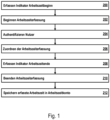
- Figure 1 shows an exemplary method for user-specific recording of working hours using a mobile portable terminal.
- the terminal comprises a processor and a memory with program instructions of a working time recording application and a biometric sensor for recording biometric authentication data for authenticating a user of the terminal.
- a biometric sensor for recording biometric authentication data for authenticating a user of the terminal.
- an indicator of a start of working hours is recorded.
- the indicator of the start of work can, for example, comprise a user input by means of which the user of the terminal device indicates the start of working hours, a location detection of a presence of the terminal device at a predefined location by the terminal device which is associated with the start of working hours, an interaction of the terminal device with a work device and/or a confirmation of the start of working hours by another user of another mobile portable terminal device.
- working time recording is started by the working time recording application.
- the user of the terminal for which the working time recording is carried out is authenticated. Authenticating the user includes authentication using the user's biometric authentication data, which is recorded using the biometric sensor. Successful authentication of the user requires that the recorded biometric authentication data match the user's stored biometric reference data. In addition to authentication using the biometric data, authentication of the user can, for example, include other authentication factors of the user, i.e. be configured as multi-factor authentication.
- the working time recording is transferred to a working time account of the user managed using the working time recording application. authenticated user.
- an indicator of an end of working time is recorded.
- the end of work indicator can, for example, comprise a user input by means of which the user of the terminal device indicates the end of working time, a location detection of a presence of the terminal device at a predefined location by the terminal device which is associated with the end of working time, an interaction of the terminal device with a work device and/or a confirmation of the end of working time by another user of another mobile portable terminal device.
- the recording of working hours is terminated upon detection of the indicator of the end of working hours.
- the working hours recorded for the authenticated user are stored in the working hours account of the authenticated user.
- the data is stored locally in the memory of the terminal device, for example.
- the storage of the working hours recorded for the authenticated user can include central storage using a server.
- the recorded working hours can be stored in the cloud.
- an indication of the recorded working hours is sent to the server for storage.
- the server can be a blockchain server, with the storage of the information on the recorded working hours being carried out by the blockchain server in a blockchain that is at least co-managed by the blockchain server.
- the user can be authenticated after the start of working hours has been recorded and/or the start of working time recording.
- recording the start of working hours and/or starting working time recording can be a prerequisite for authenticating the user.
- the user can be authenticated before the start of working hours is recorded and/or the start of working time recording. This means that, for example, authenticating the user can be a prerequisite for recording the start of working hours and/or starting working time recording.
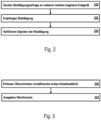
- Figure 2 shows an exemplary method for confirming the start and/or end of a working time by another user of another mobile portable device.
- an indicator of a start and/or end of a working time includes a corresponding confirmation from the other user.
- a corresponding confirmation is a necessary prerequisite for starting and/or ending a working time recording.
- a confirmation request is sent to the further mobile portable terminal.
- the confirmation is received from the further mobile portable terminal.
- the confirmation is signed, for example, using a first signature key assigned to the further user of the further mobile portable terminal.
- the signature of the confirmation is verified using a first signature verification key assigned to the further user of the further mobile portable terminal.
- recognition of the confirmation as an indicator of a start and/or end of working time requires successful verification of the corresponding signature.
- a corresponding confirmation can, for example, be a necessary prerequisite for starting and/or ending working time recording.
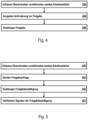
- Figure 3 shows an exemplary method for indicating that a predefined first working time limit has been exceeded.
- an exceedance of a predefined first working time limit of the authenticated user is recorded by the recorded working time.
- a warning is issued upon detection of the exceedance of the predefined first working time limit.
- the corresponding warning is, for example, a visual, acoustic and/or mechanical warning.
- a corresponding visual warning can be shown on a display of the terminal, a corresponding acoustic warning can be issued via a loudspeaker of the terminal and/or a corresponding mechanical warning can be issued by a vibration of the terminal.
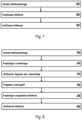
- Figure 4 shows an exemplary method for approving an exceedance of a predefined second working time limit.
- an exceedance of a predefined second working time limit of the authenticated user by the recorded working time is recorded.
- a request to approve the timeout is issued.
- a visual, acoustic and/or mechanical indication signal can be issued using the terminal device.
- a corresponding visual indication signal can be shown on a display of the terminal device, a corresponding acoustic indication signal can be issued via a loudspeaker of the terminal device and/or a corresponding mechanical indication signal can be issued by vibrating the terminal device.
- the indication signal is issued continuously or at intervals until the timeout is approved.
- an approval of the timeout is received.
- Figure 5 shows an exemplary method for approving an exceedance of a predefined second working time limit.
- an exceedance of a predefined second working time limit of the authenticated user is detected by the Working time is recorded.
- a release request is sent to a computer system associated with the further instance. For example, upon detection of the exceeding of the predefined second working time limit, a request to release the timeout is first issued on the terminal. For example, the corresponding request is shown on a display of the terminal, whereupon the user can initiate the sending of the release request and/or consent to the sending. For example, in the event of the predefined second working time limit being exceeded, the release request is sent automatically.
- a visual, acoustic and/or mechanical indication signal can be issued using the terminal device, which indicates that the predefined second working time limit has been exceeded.
- a corresponding visual indication signal can be shown on a display of the terminal device, a corresponding acoustic indication signal can be issued via a loudspeaker of the terminal device and/or a corresponding mechanical indication signal can be issued by vibrating the terminal device.
- the indication signal is issued continuously or at intervals until the time limit has been released.
- the release confirmation is received from the computer system assigned to the additional instance.
- the release confirmation is signed, for example, using a second signature key assigned to the additional instance.
- the signature of the release confirmation is verified using a second signature verification key assigned to the additional instance. In this case, release requires successful verification of the corresponding signature. For example, upon successful verification, the exceeding of the predefined second working time limit is approved.
- the communication between the terminal and the computer system assigned to the additional instance when the terminal receives the release confirmation from the computer system assigned to the additional instance takes place, for example, via an encrypted communication connection.
- the encrypted communication connection is, for example, end-to-end encrypted communication.
- Figure 6 shows an exemplary method for restricting operating rights as a result of exceeding a predefined second working time limit.
- an exceedance of a predefined second working time limit of the authenticated user by the recorded working time is recorded.
- the operating rights of the user of the terminal device to operate one or more work devices are restricted.
- the corresponding restriction of the operating rights applies until a release is received which removes the restriction.
- the terminal device sends a message that the predefined second working time limit has been exceeded to the one or more Work equipment.
- the end device sends a message that the predefined second working time limit has been exceeded to a central server, which, upon receipt of the corresponding message, restricts the operating rights of the user of the end device to operate one or more work equipment.
- the server sends a corresponding command to restrict the operating rights to the one or more work equipment.
- the message sent by the end device that the predefined second working time limit has been exceeded is, for example, signed by the end device with a signature key so that the resulting signature can be verified with an associated signature verification key.
- the command sent by the central server to the one or more work equipment to restrict the operating rights is, for example, signed by the server with a signature key so that the resulting signature can be verified with an associated signature verification key.
- a request to release the timeout is issued.
- a visual, acoustic and/or mechanical indication signal can be issued using the terminal device.
- a corresponding visual indication signal can be shown on a display of the terminal device, a corresponding acoustic indication signal can be issued via a loudspeaker of the terminal device and/or a corresponding mechanical indication signal can be issued by a vibration of the terminal device.
- the indication signal is issued continuously or at intervals until the timeout is released.
- a release of the timeout is received.
- the restriction of the operating rights is lifted.
- the terminal device sends a confirmation of the successful release to the one or more work devices.
- the terminal device sends a confirmation of the successful release to a central server, which, upon receipt of the confirmation of the successful release, causes the restriction of the operating rights of the user of the terminal to operate the one or more work devices to be lifted.
- the server sends a corresponding command to lift the restriction of the operating rights to one or more work devices.
- copies of release confirmations which are provided in the form of a user input from the user of the end device or in the form of a release confirmation from a computer system assigned to another instance, are automatically sent to the central server.
- the server upon receipt of all release confirmations required for a release, the server sends the corresponding command to lift the restriction of the operating rights to one or more work devices.
- the confirmation of successful release sent by the end device is, for example, signed by the end device with a signature key so that the resulting signature can be verified with an associated signature verification key.
- the confirmation sent by the central server For example, the command sent to one or more work devices to restrict operating rights is signed by the server with a signature key so that the resulting signature can be verified with an associated signature verification key.
- Figure 7 shows an exemplary method for authenticating the user of the terminal device using an ID token.
- Authentication using the ID token is used, for example, in the course of a method for user-specific recording of working time, as is exemplified in Figure 1 shown.
- Authentication using the ID token is carried out, for example in block 204, in addition to authentication using the user's biometric authentication data recorded with the biometric sensor of the terminal.
- Multi-factor authentication for example two-factor authentication, of the user of the terminal can thus be implemented.
- the ID token is provided, for example, as a mobile portable electronic device independent of the terminal.
- the ID token is provided in the form of an ID application whose program instructions are stored in the memory of the terminal.
- the mobile portable electronic device that provides the ID token is in this case the terminal.
- an attribute request is sent to an ID provider server.
- the requested attributes of the user are, for example, information about a name, a date of birth, a place of birth and/or a residential address of the user.
- one or more attributes of the user read from an ID token of the user are received by an ID provider server using a communication interface of the terminal.
- the received attributes of the user are signed, for example, with a third signature key of the ID provider server.
- the signature of the received attributes is verified using a third signature verification key of the ID provider server. In addition to successfully verifying the corresponding signature, successful authentication of the user requires that the received one or more attributes match one or more stored reference attributes of the user.
- a comparison of the received one or more attributes with the one or more stored reference attributes of the user is carried out.
- the received attributes are successfully verified.
- the third signature key and the third signature verification key of the ID provider server are, for example, a private and a public cryptographic key of an asymmetric key pair assigned to the ID provider server.
- the communication between the terminal and the ID provider server in the course of the Receiving the read attributes by the end device from the ID provider server takes place, for example, via an encrypted communication connection.
- the encrypted communication connection is, for example, end-to-end encrypted communication.
- Figure 8 shows an exemplary method for authenticating the user of the terminal using an ID token, in which the ID token is provided in the form of an ID application whose program instructions are stored in the memory of the terminal.
- the mobile portable electronic device providing the ID token is therefore the terminal.
- Authentication using the ID token is used, for example, in the course of a method for user-specific recording of working time, as is exemplified in Figure 1 shown.
- Authentication using the ID token is carried out, for example in block 204, in addition to authentication using the user's biometric authentication data recorded with the biometric sensor of the terminal device. Multi-factor authentication, for example two-factor authentication, of the user of the terminal device can thus be implemented.
- Reading the attributes from the ID token or the terminal is only possible, for example, using a security element of the terminal device.
- the attributes are stored in encrypted form on the terminal device, with one or more cryptographic keys for decrypting the attributes being stored in a protected memory area of the corresponding security element.
- reading the attributes in plain text can only be done using the security element.
- the attributes are stored in a protected memory area of the corresponding security element, so that reading is only possible via the corresponding security element.
- an attribute request is sent to an ID provider server.
- the requested attributes of the user are, for example, information about a name, a date of birth, a place of birth and/or a residential address of the user.
- the ID application receives a read request from the ID provider server to read the requested attributes.
- proof of authorization is necessary that the ID provider server is actually authorized to read the corresponding attributes.
- a corresponding proof of authorization is provided, for example, using an authorization certificate.
- the ID provider server has an authorization certificate with which it can prove its authorization to read the attributes.
- the authorization certificate assigns the ID provider server a public cryptographic key of an asymmetric key pair.
- the ID provider server also has a private cryptographic key of the asymmetric key pair.
- the encryption key of the asymmetric key pair provided by the ID provider server is received read request is signed using the private cryptographic key of the ID provider server.
- the terminal device verifies the signature of the read request using the public cryptographic key that the authorization certificate assigns to the ID provider server. For example, the terminal device receives the authorization certificate from the ID provider server and uses the received authorization certificate to verify the signature of the ID provider server.
- the ID application or the security element used by the ID application enables the ID provider server to read the attributes upon successful verification of the signature of the read request. If the attributes are stored in encrypted form on the terminal device, they are decrypted, for example, by the security element of the terminal device in order to enable the ID provider server to read the corresponding attributes.
- the communication between the terminal device and the ID provider server during the reading of the attributes from the terminal by the ID provider server takes place, for example, via an encrypted communication connection.
- An encrypted communication connection for example, is end-to-end encrypted communication.
- one or more of the user's attributes read from an ID token of the user are received by an ID provider server using a communication interface of the terminal device.
- the received attributes of the user are signed, for example, with a third signature key of the ID provider server.
- the signature of the received attributes is verified using a third signature verification key of the ID provider server.
- successful authentication of the user requires that the received one or more attributes match one or more of the user's stored reference attributes. Accordingly, in block 260, in addition to verifying the signature, the received one or more attributes are compared with the user's one or more of the stored reference attributes.
- the third signature key and the third signature verification key of the ID provider server are, for example, a private and a public cryptographic key of an asymmetric key pair assigned to the ID provider server.
- the communication between the terminal device and the ID provider server in the course of receiving the read attributes by the terminal device from the ID provider server takes place, for example, via an encrypted communication connection.
- an encrypted communication connection is end-to-end encrypted communication.
- Figure 9 shows an exemplary method for storing information about recorded working hours in a blockchain.
- the information about the working hours recorded for an authenticated user is sent to a server for storage, which is a blockchain server.
- the information about the recorded working hours is stored by the blockchain server in a blockchain that is at least co-managed by the blockchain server.
- the blockchain or a copy of the blockchain is provided by the blockchain server.
- the blockchain server receives an entry request from the terminal device to enter the information about the recorded working hours in the blockchain.
- the information about the recorded working hours is signed by the terminal device, for example, with a fourth signature key assigned to the user of the terminal device.
- the blockchain server verifies the signature of the information about the recorded working hours using the fourth signature verification key assigned to the user of the terminal device.
- the fourth signature key of the terminal device is, for example, a private cryptographic key of an asymmetric key pair assigned to the terminal device.
- the fourth signature verification key is provided by the end device, which is, for example, a public cryptographic key of the asymmetric key pair assigned to the end device.
- the blockchain server creates an additional block for the blockchain, in which the received information on the recorded working time is entered.
- the additional block with the information on the recorded working time is added to the blockchain by the blockchain server.
- the communication between the end device and the blockchain server when sending the information on the recorded working time from the end device to the blockchain server takes place, for example, via an encrypted communication connection.
- the encrypted communication connection is, for example, communication encrypted using end-to-end encryption.
- FIG 10 shows an exemplary mobile portable terminal 100 for working time recording.
- the terminal 100 comprises a processor 102 and a memory 106 with program instructions 104 of a working time recording application.
- the terminal 100 also comprises a biometric sensor 114 for recording biometric authentication data for authenticating a user of the terminal 100.
- the terminal 100 is configured to carry out a method for recording working time when the working time recording application is executed.
- the terminal 100 records, for example, an indicator of a start of working time.
- This indicator of the start of working time can, for example, comprise a user input which the terminal 100 receives using a user interface 116.
- the indicator of the start of working time can also include an interaction or communication of the terminal device 100 with another device using the communication interface 118. From the corresponding interaction, the terminal device 100 can, for example, identify a location at which it is located and which is associated with a job or the start of a job.
- the terminal device 100 can interact or communicate with a work device using the communication interface 118.
- the terminal device 100 Upon detection of the indicator of the start of working hours, the terminal device 100 begins, for example, a working time recording.
- the terminal device 100 also authenticates the user of the terminal device 100 for whom the working time recording is or should be carried out. Authenticating the user includes authentication using the user's biometric authentication data, which is recorded using the biometric sensor 114. Successful authentication of the user requires a match or a sufficient match between the recorded biometric authentication data and the stored biometric reference data 110 of the user.
- the user's biometric reference data 110 is stored, for example, in a protected memory area of the memory 106 of the terminal device 100.
- the working time recording is assigned to a working time account 112 of the authenticated user, which is managed using the working time recording application.
- the corresponding working time account 112 or a copy of the corresponding working time account 112 is stored, for example, in the memory 106 of the terminal device 100.
- the terminal device 100 also detects, for example, an indicator of an end of working time.
- This indicator of the end of working time can, for example, comprise a user input which the terminal device 100 receives via the user interface 116.
- the indicator of the end of working time can also comprise an interaction or communication of the terminal device 100 with another device using the communication interface 118. From the corresponding interaction, the terminal device 100 can, for example, identify a location at which it is located and which is associated with work or an end of work. For example, the terminal device 100 can interact or communicate with a work device using the communication interface 118.
- the terminal device 100 Upon detection of the indicator of the end of working time, the terminal device 100, for example, ends the recording of working time.
- the working time recorded for the authenticated user is stored in the working time account 112 of the authenticated user.
- the storage can also include, for example, storing the recorded working time in a copy of the working time account 112 managed by a server.
- the terminal device 100 sends an indication of the recorded working time to the corresponding server for this purpose using the communication interface 118.
- the terminal device 100 If, during the course of recording working hours, the terminal device 100 detects, for example, that a predefined first working time limit 120 of the authenticated user has been exceeded by the recorded working hours, the terminal device 100 issues a warning, for example.
- the warning is issued, for example, using the user interface 116.
- the corresponding warning is, for example, a visual, acoustic and/or mechanical warning.
- a corresponding visual warning can be shown on a display of the terminal device 100 included in the user interface 116
- a corresponding acoustic warning can be issued via a loudspeaker of the terminal device 100 included in the user interface 116 and/or a corresponding mechanical warning can be issued by a vibration of the terminal device 100.
- Figure 11 shows an exemplary system for recording a start of work and/or an end of work of a terminal 100.
- the terminal 100 corresponds, for example, to the Figure 10 shown exemplary terminal.
- This terminal 100 can interact or communicate with one or more other devices using the communication interface 118.
- a corresponding interaction or communication of the terminal 100 with one or more of these devices can, for example, provide an indicator of a start of work and/or an end of work.
- a location at which the terminal 100 is located and which is associated with a start and/or an end of work can be derived from the interaction or communication.
- a further device can be one of one or more access control devices 820 which are configured to control access to a work area. From an interaction of the terminal device 100 with an access control device 820, it can therefore be concluded that the corresponding work area has been entered or left. Entering the work area can represent an indicator of the start of working hours. Leaving the work area can represent an indicator of the end of working hours.
- a separate access control device 820 can be provided for entering the work area, for example at an entrance to the corresponding work area, and for leaving the work area, for example at an exit from the corresponding work area. For example, entering and leaving the work area can take place via one and the same access, which is controlled by one and the same access control device 820.
- the access control device 820 comprises, for example, a processor 822 and a memory 826 with program instructions 824. Execution of the program instructions 824 by the processor 822 causes the processor 822 to control the access control device 820 to execute an access control method. In the course of the corresponding access control method, an interaction or communication with terminal devices, such as the terminal 100, which are located in a Detection range of the access control device 820. For example, the interaction or communication takes place using NFC.
- a further device can be one of one or more communication devices 840 that are configured to implement a communication system within a work area, for example using WLAN, UWB or Bluetooth.
- a communication device 840 i.e. from receiving a corresponding signal, for example a WLAN signal, UWB signal or Bluetooth signal, from a corresponding communication device 840, it can be concluded that the corresponding work area has been entered. Entering the work area can be an indicator of the start of working hours. If a corresponding signal can no longer be received, it can be concluded that the corresponding work area has been left. Leaving the work area can be an indicator of the end of working hours.
- the communication device 840 comprises, for example, a processor 842 and a memory 846 with program instructions 844. Execution of the program instructions 844 by the processor 842 causes the processor 842 to control the communication device 840 to execute a method for communicating with terminal devices, such as the terminal device 100, which are within a signal range of a signal sent by the communication device 840 using a communication interface 848.
- the signal sent is, for example, a WLAN signal, UWB signal and/or Bluetooth signal.
- a further device can be one of one or more work devices 800 that the user of the terminal device uses in the course of his work.
- An interaction between the terminal device 100 and the work device 800 can therefore be used to determine the start of work or working time and/or the end of work or working time.
- the work device 800 sends a start of use notification to the terminal device 100.
- the work device 800 sends an end of use notification to the terminal device 100.
- the working device 800 comprises, for example, a processor 802 and a memory 806 with program instructions 804. Execution of the program instructions 804 by the processor 802 causes the processor 802 to control the working device 800 to execute a method which comprises communication with the terminal 100.
- the method comprises, for example, switching on and/or switching off the working device 800.
- the method comprises, for example, logging on and/or logging off the user of the terminal 100 at the Work device 800 or from the work device 800.
- the corresponding communication with the terminal 100 takes place using a communication interface 814 of the work device 800.
- the work device 800 also includes a user interface 812, which allows the user to switch the work device 800 on and/or off, for example.
- the user interface 812 allows the user to log in and/or log out of the work device 800.
- Figure 12 shows an exemplary system for reading attributes 126 from an ID token 500.
- the attributes 126 are provided to the terminal 100 using a known ID token 500.
- the terminal 100 corresponds, for example, to the Figure 10 shown exemplary terminal.
- corresponding attributes read from the ID token are also used.
- the corresponding attributes of the user are, for example, information about a name, a date of birth, a place of birth and/or a residential address of the user.
- the terminal 100 can, for example, send an attribute request to the ID provider server 300 via the network 160 using the communication interface 118.
- the terminal 100 receives attributes 126 of the user read from an ID token 500 from the ID provider server 300 using a communication interface 118.
- the received attributes 126 of the user are signed by the ID provider server 300, for example with a signature key 310 of the ID provider server 300.
- the terminal 100 verifies the signature of the received attributes 126 using a signature verification key 314 of the ID provider server 300.
- the signature key 310 and the signature verification key 314 of the ID provider server 100 are, for example, a private and a public cryptographic key of an asymmetric key pair assigned to the ID provider server 100.
- successful authentication of the user requires a match or sufficient match between the received one or more attributes 126 and one or more stored reference attributes 124 of the user.
- the working time account 124 defines which user it is assigned to using the corresponding reference attributes.
- the ID provider server 300 comprises, for example, a processor 302 and a memory 306 with program instructions 304. Execution of the program instructions 304 by the processor 302 causes the processor 302 to control the ID provider server 300 to execute a method for reading attributes 126 from an ID token 500. The method is executed, for example, in response to an attribute request from the terminal 100, which the ID provider server 300 receives, for example, using the communication interface 316 via the network 150.
- the ID provider server 300 has the private cryptographic key 310, which is stored, for example, in a protected memory area 308 of the memory 306, as Signature key and the associated public cryptographic key 314, provided for example by an authorization certificate 312, as a signature verification key.
- the ID provider server 300 signs, for example, a read request to read the attributes 126 to the ID token 500.
- the ID token 500 can verify the signature using the signature verification key 314 provided by the authorization certificate 312 and thus check the authorization of the ID provider server 300 to read the corresponding attributes.
- the ID provider server 300 uses, for example, the private cryptographic key 310 as a signature key.
- the resulting signature can then be verified by the terminal 100 using the public cryptographic key 314 as a signature verification key.
- the ID provider server 300 can also have an additional asymmetric key pair with an additional signature key and an additional signature verification key in addition to the asymmetric key pair 310, 314 for forwarding the read attributes 126.
- the ID provider server 300 sends the read request via the network 150, for example directly (not shown) to the ID token 500 or via a terminal 400, which establishes a communication connection with the ID token 500 for reading the attributes.
- the ID token 500 comprises, for example, a processor 502 and a memory 506 with program instructions 504. Execution of the program instructions 504 by the processor 502 causes the processor 502 to control the ID token 500 to execute a method for providing the attributes 126.
- the attributes 126 are stored, for example, in a protected memory area 508 of the memory 506.
- the ID token 500 receives, for example, a signed read request from the ID provider server 300 using the communication interface 510.
- the ID token 500 can verify this read request using the signature verification key 316 provided by the authorization certificate 312 of the ID provider server 300. For example, the ID provider server 300 transmits the authorization certificate 312 to the ID token 500 for this purpose. Upon successful verification of the signature of the read request, i.e. upon successful proof of read authorization of the ID provider server 300, the ID token 500 grants the ID provider server 300 read access to the requested attributes 126.
- the read access to the ID token 500 is carried out via the terminal 400.
- the terminal 400 comprises, for example, a processor 402 and a memory 406 with program instructions 404. Execution of the program instructions 404 by the processor 402 causes the processor 402 to control the terminal 400 to carry out a method for establishing a communication connection between the ID token 500 and the ID provider server 300.
- the terminal 400 establishes, for example, a communication connection with the ID token 500 using the communication interface 408.
- the terminal also provides a Communication connection with the ID provider server 300 using the communication interface 408.
- the communication between the ID provider server 300 and the ID token via the terminal 500 in the course of reading the attributes 126 takes place, for example, using end-to-end encryption.
- Figure 13 shows an exemplary system for reading attributes 126 from an ID token provided by a terminal 100.
- the terminal 100 corresponds, for example, to the one shown in Figure 10 shown exemplary terminal.
- the ID token is provided, for example, in the form of an ID application installed on the terminal 100 or of program instructions 128 of the corresponding ID application.
- the user's attributes are stored in the protected memory area 108 of the terminal 100 for additional authentication of the user.
- Reading the attributes 126 is only possible, for example, with a corresponding authorization certificate.
- the ID provider server 300 has a corresponding authorization certificate in the form of the authorization certificate 312.
- the ID provider server 300 according to Figure 13 corresponds, for example, to the ID provider server 300 of the Figure 12 .
- the ID provider server 300 sends the read request for reading the attributes 126 requested by the terminal 100 via the network 150 to the terminal 100 or the ID application implemented on the terminal.
- the terminal 100 or the ID application receives, for example, a signed read request from the ID provider server 300 using the communication interface 118.
- the terminal 100 or the ID application can verify this read request using the signature verification key 316 provided by the authorization certificate 312 of the ID provider server 300.
- the ID provider server 300 transmits the authorization certificate 312 to the terminal device 100 for this purpose.
- the terminal device 100 or the ID application grants the ID provider server 300 read access to the requested attributes 126.
- the ID provider server 300 then forwards the attributes 126 read in this way, for example, to the working time recording application implemented on the terminal device 100 to authenticate the user of the terminal device or the user to whom the working time account 112 is assigned.
- Figure 14 shows an exemplary system for confirming a working time start and/or a working time end by another mobile portable terminal 600.
- the terminal 100 corresponds, for example, to the one shown in Figure 10 shown exemplary terminal.
- the indicator of a working time start and/or the indicator of a working time end comprises, for example, a confirmation 614 of the working time start and/or the working time end by another user of another mobile portable terminal 600.
- the other terminal 600 comprises, for example, a processor 602 and a memory 606 with program instructions 604. Execution of the program instructions 604 by the Processor 602 causes processor 602 to execute the additional terminal 600 to carry out a method for confirming a start of working time and/or an end of working time.
- the additional terminal 600 comprises, for example, a user interface 618 via which the additional user can initiate the confirmation 614. Furthermore, the additional terminal 600 comprises, for example, a communication interface 620 for communicating with the terminal 100 via its communication interface 118.
- the communication is, for example, wireless or contactless communication, for example using Bluetooth or NFC.
- the terminal 100 sends a confirmation request to the further mobile portable terminal 600.
- the further terminal 600 creates a confirmation 614 of a start of working time and/or an end of working time.
- the confirmation 614 is signed by the further terminal 600, for example using a signature key 610 assigned to the further user of the further mobile portable terminal 600.
- the corresponding signature key 610 is stored, for example, in a protected memory area of the memory 606 of the further terminal 600.
- the terminal 100 or the working time recording application receives the confirmation 614 from the further mobile portable terminal 600 and verifies the signature of the confirmation 614 using a signature verification key 612 assigned to the further user of the further mobile portable terminal 600.
- the terminal 100 has the signature verification key 612, for example.
- the terminal 100 receives the signature verification key 612 from the further terminal 600.
- Recognition of the confirmation 614 as an indicator of a start and/or end of working time requires, for example, successful verification of the corresponding signature.
- the signature key 610 and the signature verification key 612 of the further terminal 600 are, for example, a private and a public cryptographic key of an asymmetric key pair assigned to the further terminal 600.
- Figure 15 shows an exemplary terminal 100 for recording working hours.
- the terminal 100 corresponds, for example, to the Figure 10 shown exemplary terminal.
- the exemplary terminal 100 records, for example, in the course of recording working hours, an exceedance of a predefined second working time limit 122 of the authenticated user by the recorded working time.
- This second working time limit 122 can, for example, be the same as the first working time limit 120 or be different from it.
- the second working time limit 122 defines a limit for a longer working time than the first working time limit 120.
- an explicit approval is necessary, for example.
- a visual, acoustic and/or mechanical indication signal is issued using the terminal 100.
- a corresponding visual indication signal can be displayed on a display of the terminal included in the user interface 116, a a corresponding acoustic indication signal is output via a loudspeaker of the terminal 100 included in the user interface 116 and/or a corresponding mechanical indication signal is output by means of a vibration of the terminal.
- the indication signal is output continuously or at intervals until the timeout is released. Additionally or alternatively, restrictions on the user's usage or operating rights can be released, for the removal of which the timeout must be released.
- the terminal device 100 Upon detecting that the predefined second working time limit 122 has been exceeded, the terminal device 100 issues a request to release the timeout 130, for example using the user interface 116 and/or the communication interface 118. In response to the issue of the request, the terminal device 100 receives, for example, a release 130 of the timeout.
- the release 130 comprises, for example, a user release 132 by the authenticated user of the terminal device 100.
- the terminal device 100 receives the corresponding user release 132, for example using the user interface 116.
- the user release 132 can, for example, comprise a one-time password 134, the successful verification of which is a prerequisite for a successful release 130 of the timeout.
- the one-time password 134 is a one-time password 134 available to the user.
- the one-time password 134 can also be made available to the user if necessary, for example on request, from an employer. Alternatively, the user can be provided with a plurality of one-time passwords in advance, which he can use if necessary until all of the one-time passwords have been used up.
- the number of one-time passwords provided can limit the number of authorizations for exceeding the second working time limit 122. For example, the user of the terminal 100 is only provided with a certain number of one-time passwords for a certain period of time. The number of possible authorizations for exceeding the second working time limit 122 can thus be effectively limited.
- the terminal 100 sends a one-time password request to a management server when necessary using the communication interface 118 of the terminal 100.
- the one-time password request is sent via a first communication channel using the communication interface 118.
- one or more one-time passwords are sent via a second communication channel that is different from the first communication channel.
- the first communication channel is via an Internet connection.
- the one or more one-time passwords are received from the terminal using an SMS.
- the one or more one-time passwords are transmitted to the user 100 independently of the terminal.
- the one or more one-time passwords are sent to the user by post.
- the one or more several one-time passwords are handed over to the user personally, for example by a supervisor or a responsible colleague.
- Figure 16 shows an exemplary system for removing a restriction 810 of operating rights 808 for operating a working device 800.
- the terminal 100 corresponds, for example, to the one shown in Figure 15
- the working device 800 corresponds, for example, to the device shown in Figure 11 shown exemplary work device 800.
- a definition of operating rights 808 is stored, which determine which functions of the work device 800 the user may execute or initiate. If the second working time limit 122 is exceeded, for example, a restriction 810 of the operating rights 808 is made.
- This restriction 810 can, for example, lead to the user only being able to use the corresponding work device 800 to a limited extent until the restriction 810 is lifted.
- the restriction 810 can lead to the user no longer being able to use the corresponding work device 800 until the restriction 810 is lifted.
- the restriction 810 is initiated, for example, by the work device 800 upon receipt of a notification that the second working time limit 122 has been exceeded.
- the work device 800 receives the corresponding message from the terminal 150 and/or from a central server, which manages a copy of the working time account 112 and is informed by the terminal 100 about the working time recording and in particular about exceedances of working time limits.
- the restriction 810 of the operating rights 808 is, for example, lifted again.
- the work device 800 receives the corresponding release confirmation 714, for example, from the terminal 100 and/or directly from the computer system 700 via the network 150.
- the terminal device 100 sends, for example, a release request using the communication interface 118 via the network 150 to the computer system 700 assigned to the other instance.
- the computer system 700 comprises, for example, a processor 702 and a memory 706 with program instructions 704. Execution of the program instructions 704 by the processor 702 causes the processor 702 to control the computer system 700 to execute a method for issuing a release confirmation 714 to authorize exceeding a second working time limit 122.
- the computer system 700 further comprises a communication interface 718 for communication via the network 150. In response to the release request, the computer system 700 issues, for example, the release confirmation 714.
- the computer system 700 includes a user interface 716, using which a user of the computer system 700 can initiate the issuance of the release confirmation.
- the release confirmation 714 is generated by the computer system 700 using one of the signed with a signature key 710 assigned to another instance and sent to the terminal device 100 via the network 150 using the communication interface 718.
- the terminal 100 receives the signed release confirmation 714 from the computer system 700 assigned to the further instance and verifies the signature of the release confirmation 714 using a signature verification key 712 assigned to the further instance.
- the signature key 710 and the signature verification key 712 of the further instance are, for example, a private and a public cryptographic key of an asymmetric key pair assigned to the further instance.
- a successful release 130 requires, for example, a successful verification of the corresponding signature.
- the terminal 100 forwards the release confirmation 714 to the working device 800, which can verify the signature of the release confirmation 714 using the signature verification key 712.
- the terminal 100 sends, for example, a message to the working device 800 that a successful release 144 of the timeout has occurred.
- Figure 17 shows an exemplary system 960 for storing an indication of a recorded working time using a server 900.
- the system 960 comprises a terminal 100, which, for example, corresponds to the Figure 10
- the system 960 further comprises, for example, a server 900.
- Storing a data received from the terminal 100 for an authenticated user, for example using the method according to Figure 1 , recorded working time includes, for example, sending an indication 144 of the recorded working time to the server 900 for storage.
- the server 900 includes, for example, a processor 902 and a memory 906 with program instructions 904. Execution of the program instructions 904 by the processor 902 causes the processor 902 to control the server 900 to execute a method for storing the indication 144.
- the server 900 includes a communication interface 908 for communicating with the terminal 100 via the network 150. A copy of the work account 112 of the user of the terminal 100 is stored in the memory 906 of the server 900.
- the terminal 100 sends the information 144 of the recorded working time to the server 900 via the network 150 using the communication interface 118.
- the information 144 of the recorded working time is signed by the terminal 100, for example, before being sent by the terminal 100 using a signature key 140 assigned to the user of the terminal 100.
- the signature key 140 of the terminal 100 is, for example, a private cryptographic key of an asymmetric key pair assigned to the terminal 100.
- the terminal 100 provides a signature verification key 142, which is, for example, a public cryptographic key of the asymmetric key pair assigned to the terminal 100.
- the terminal 100 provides the server 900 with the signature verification key 142.
- Saving the information 144 of the recorded working time by the server 900 requires, for example, successful verification of the signature of the information 144 of the recorded working time using the signature verification key 142.
- the information 144 of the recorded working time is saved in the copy of the working time account 112 of the authenticated user on the server 900.
- the communication between the terminal 100 and the server 900 in the course of sending the information 144 of the recorded working time from the terminal 100 to the server 900 takes place, for example, via an encrypted communication connection.
- the encrypted communication connection is, for example, communication encrypted using end-to-end encryption.
- Figure 18 shows an exemplary system 960 for storing an indication of a recorded working time in a blockchain 950.
- the system 960 comprises, for example, a blockchain server 940 which at least co-manages a blockchain 950.
- the blockchain server 940 comprises, for example, a processor 942 and a memory 948 with program instructions 944. Execution of the program instructions 944 by the processor 942 causes the processor 942 to control the blockchain server 940 to execute a method for storing the information 144 in the blockchain 950.
- the blockchain server 940 comprises a communication interface 952 for communicating with the terminal 100 via the network 150.
- the blockchain 950 is stored in the memory 948 of the blockchain server 940.
- recorded working time includes, for example, sending the information 144 of the recorded working time to the blockchain server 940 for storage.
- the blockchain server 940 provides the blockchain 950 or a copy of the blockchain 950 for storing working time information.
- the information 144 of the recorded working time is, for example, signed by the terminal device 100 with a signature key 140 assigned to the user of the terminal device 100.
- the signature key 140 of the terminal device 100 is, for example, a private cryptographic key of an asymmetric key pair assigned to the terminal device 100.
- the terminal device 100 To check signatures that were created using the signature key 140 of the terminal device 100, the terminal device 100 provides a signature verification key 142, which is, for example, a public cryptographic key of the asymmetric key pair assigned to the terminal device 100.
- the blockchain server 940 receives via the network 150 from the terminal 100 an entry request for entering the information 144 of the recorded working time in the Blockchain 950.
- the blockchain server 940 verifies the signature of the information 144 of the recorded working time using the signature verification key 142 assigned to the user of the terminal device 100.
- the blockchain server 940 creates an additional block 946 for the blockchain 950, in which the received information 144 of the recorded working time is entered.
- This additional block 946 with the information 144 of the recorded working time is added to the blockchain 950 by the blockchain server 940.
- the communication between the terminal device 100 and the blockchain server 940 in the course of sending the information 144 of the recorded working time from the terminal device 100 to the blockchain server 940 takes place, for example, via an encrypted communication connection.
- the encrypted communication connection is, for example, communication encrypted using end-to-end encryption.
Landscapes
- Business, Economics & Management (AREA)
- Human Resources & Organizations (AREA)
- Engineering & Computer Science (AREA)
- Entrepreneurship & Innovation (AREA)
- Strategic Management (AREA)
- Marketing (AREA)
- Data Mining & Analysis (AREA)
- Economics (AREA)
- Educational Administration (AREA)
- Operations Research (AREA)
- Quality & Reliability (AREA)
- Tourism & Hospitality (AREA)
- Physics & Mathematics (AREA)
- General Business, Economics & Management (AREA)
- General Physics & Mathematics (AREA)
- Theoretical Computer Science (AREA)
- Time Recorders, Dirve Recorders, Access Control (AREA)
Applications Claiming Priority (1)
| Application Number | Priority Date | Filing Date | Title |
|---|---|---|---|
| DE102023101744.6A DE102023101744A1 (de) | 2023-01-25 | 2023-01-25 | Nutzerindividuelle Arbeitszeiterfassung unter Verwendung eines mobilen tragbaren Endgeräts |
Publications (1)
| Publication Number | Publication Date |
|---|---|
| EP4407542A1 true EP4407542A1 (fr) | 2024-07-31 |
Family
ID=89723062
Family Applications (1)
| Application Number | Title | Priority Date | Filing Date |
|---|---|---|---|
| EP24153817.2A Pending EP4407542A1 (fr) | 2023-01-25 | 2024-01-25 | Capture de temps de travail personnalisé à l'aide d'un terminal mobile portable |
Country Status (2)
| Country | Link |
|---|---|
| EP (1) | EP4407542A1 (fr) |
| DE (1) | DE102023101744A1 (fr) |
Citations (5)
| Publication number | Priority date | Publication date | Assignee | Title |
|---|---|---|---|---|
| US20150302362A1 (en) * | 2012-04-25 | 2015-10-22 | ZR Investments, LLC | Time tracking device and method |
| US20190164156A1 (en) * | 2017-11-27 | 2019-05-30 | Nok Nok Labs, Inc. | Extending a secure key storage for transaction confirmation and cryptocurrency |
| US20190188932A1 (en) * | 2017-12-04 | 2019-06-20 | Saudi Arabian Oil Company | Mobile Device Attendance Verification |
| US20200082349A1 (en) * | 2018-09-07 | 2020-03-12 | Adp, Llc | Blockchain Timeclock System |
| EP4092958A1 (fr) * | 2021-05-17 | 2022-11-23 | Bundesdruckerei GmbH | Émission d'une identification numérique vérifiable |
Family Cites Families (4)
| Publication number | Priority date | Publication date | Assignee | Title |
|---|---|---|---|---|
| DE19505330A1 (de) * | 1995-02-17 | 1996-08-22 | Erich Dr Ing Hiesinger | Einrichtung zum Erfassen und Auswerten von Zeit- und/oder Betriebsdaten |
| FI112122B (fi) * | 1999-11-15 | 2003-10-31 | Nokia Corp | Tietojen käsittely ajanseurannassa |
| DE202005010634U1 (de) * | 2005-07-06 | 2005-11-03 | Hainzl, Johannes | System zum Verwalten von Arbeitsvorgängen |
| DE102017128028A1 (de) * | 2017-11-27 | 2019-05-29 | Dormakaba Ead Gmbh | Zeiterfassungsvorrichtung, Zeiterfassungssystem und Verfahren |
-
2023
- 2023-01-25 DE DE102023101744.6A patent/DE102023101744A1/de active Pending
-
2024
- 2024-01-25 EP EP24153817.2A patent/EP4407542A1/fr active Pending
Patent Citations (5)
| Publication number | Priority date | Publication date | Assignee | Title |
|---|---|---|---|---|
| US20150302362A1 (en) * | 2012-04-25 | 2015-10-22 | ZR Investments, LLC | Time tracking device and method |
| US20190164156A1 (en) * | 2017-11-27 | 2019-05-30 | Nok Nok Labs, Inc. | Extending a secure key storage for transaction confirmation and cryptocurrency |
| US20190188932A1 (en) * | 2017-12-04 | 2019-06-20 | Saudi Arabian Oil Company | Mobile Device Attendance Verification |
| US20200082349A1 (en) * | 2018-09-07 | 2020-03-12 | Adp, Llc | Blockchain Timeclock System |
| EP4092958A1 (fr) * | 2021-05-17 | 2022-11-23 | Bundesdruckerei GmbH | Émission d'une identification numérique vérifiable |
Also Published As
| Publication number | Publication date |
|---|---|
| DE102023101744A1 (de) | 2024-07-25 |
Similar Documents
| Publication | Publication Date | Title |
|---|---|---|
| EP3078218B1 (fr) | Contrôle d'accès et d'utilisation pour un véhicule automobile | |
| DE102004025084B4 (de) | Personen-Authentifizierungs-Vorrichtung und Personen-Authentifizierungs-System und Personen-Authentifizierungs-Verfahren | |
| EP3336735B1 (fr) | Création d'une base de données pour une authentification multifactorielle dynamique | |
| EP3699791B1 (fr) | Contrôle d'accès comprenant un appareil radio mobile | |
| EP3256977A1 (fr) | Procédé mis en uvre par ordinateur pour le contrôle d'accès | |
| EP4295605B1 (fr) | Authentification d'utilisateur à l'aide de deux éléments de sécurité indépendants | |
| WO2020183250A1 (fr) | Système de génération et de vérification d'identité et procédé associé | |
| EP3391278B1 (fr) | Jeton d'identification à microcontrôleur protégé | |
| EP4295257A1 (fr) | Extraction d'attributs d'identité au moyen d'un élément de sécurité distant | |
| EP3336736B1 (fr) | Jeton auxiliaire id destiné à l'authentification mulifacteur | |
| EP4407542A1 (fr) | Capture de temps de travail personnalisé à l'aide d'un terminal mobile portable | |
| EP3336732B1 (fr) | Authentification d'utilisateur à l'aide de plusieurs caractéristiques | |
| EP3882796A1 (fr) | Authentification de l'utilisateur à l'aide de deux éléments de sécurité indépendants | |
| EP4295533B1 (fr) | Authentification au moyen d'une pluralité d'identités électroniques | |
| DE102017215000A1 (de) | Steuerung einer Funktion eines Kraftfahrzeugs | |
| EP4468652B1 (fr) | Service de signature à distance utilisant un service de messagerie instantanée | |
| EP3977371B1 (fr) | Procédé et appareil de contrôle permettant la vérification sûre d'un billet électronique | |
| DE102023102687A1 (de) | Verfahren zum erzeugen eines provisionierungstokens durch ein endgerät | |
| DE102019215485A1 (de) | System und verfahren mit einer örtlich bezogenen blockchain | |
| DE102021103993A1 (de) | Initialisieren applikationsspezifischer kryptographischer Sicherheitsfunktionen | |
| DE102020101732A1 (de) | Manipulationssicherung anhand von gerätspezifischen Toleranzen | |
| DE102016123787A1 (de) | Chipimplantat mit Zweifaktorauthentifizierung |
Legal Events
| Date | Code | Title | Description |
|---|---|---|---|
| PUAI | Public reference made under article 153(3) epc to a published international application that has entered the european phase |
Free format text: ORIGINAL CODE: 0009012 |
|
| STAA | Information on the status of an ep patent application or granted ep patent |
Free format text: STATUS: THE APPLICATION HAS BEEN PUBLISHED |
|
| AK | Designated contracting states |
Kind code of ref document: A1 Designated state(s): AL AT BE BG CH CY CZ DE DK EE ES FI FR GB GR HR HU IE IS IT LI LT LU LV MC ME MK MT NL NO PL PT RO RS SE SI SK SM TR |
|
| STAA | Information on the status of an ep patent application or granted ep patent |
Free format text: STATUS: REQUEST FOR EXAMINATION WAS MADE |
|
| 17P | Request for examination filed |
Effective date: 20250131 |
|
| RAP3 | Party data changed (applicant data changed or rights of an application transferred) |
Owner name: BUNDESDRUCKEREI GMBH |