EP4408112A1 - Procédé et appareil de communication - Google Patents
Procédé et appareil de communication Download PDFInfo
- Publication number
- EP4408112A1 EP4408112A1 EP22882832.3A EP22882832A EP4408112A1 EP 4408112 A1 EP4408112 A1 EP 4408112A1 EP 22882832 A EP22882832 A EP 22882832A EP 4408112 A1 EP4408112 A1 EP 4408112A1
- Authority
- EP
- European Patent Office
- Prior art keywords
- information
- detection
- threshold
- cell
- communication device
- Prior art date
- Legal status (The legal status is an assumption and is not a legal conclusion. Google has not performed a legal analysis and makes no representation as to the accuracy of the status listed.)
- Pending
Links
- 230000006854 communication Effects 0.000 title claims abstract description 295
- 238000004891 communication Methods 0.000 title claims abstract description 259
- 238000000034 method Methods 0.000 title claims abstract description 145
- 238000001514 detection method Methods 0.000 claims abstract description 415
- 230000005540 biological transmission Effects 0.000 claims abstract description 51
- 230000011664 signaling Effects 0.000 claims description 49
- 101000741965 Homo sapiens Inactive tyrosine-protein kinase PRAG1 Proteins 0.000 claims description 30
- 102100038659 Inactive tyrosine-protein kinase PRAG1 Human genes 0.000 claims description 30
- 238000004590 computer program Methods 0.000 claims description 15
- 238000012545 processing Methods 0.000 description 33
- 230000015654 memory Effects 0.000 description 28
- 238000005259 measurement Methods 0.000 description 24
- 230000008859 change Effects 0.000 description 13
- 230000006870 function Effects 0.000 description 13
- 238000013461 design Methods 0.000 description 9
- 238000010586 diagram Methods 0.000 description 6
- 230000000694 effects Effects 0.000 description 5
- 230000008569 process Effects 0.000 description 5
- 230000003993 interaction Effects 0.000 description 4
- 238000010295 mobile communication Methods 0.000 description 4
- 230000008878 coupling Effects 0.000 description 3
- 238000010168 coupling process Methods 0.000 description 3
- 238000005859 coupling reaction Methods 0.000 description 3
- 238000011084 recovery Methods 0.000 description 3
- 238000001228 spectrum Methods 0.000 description 3
- 230000003247 decreasing effect Effects 0.000 description 2
- 230000009977 dual effect Effects 0.000 description 2
- 238000005516 engineering process Methods 0.000 description 2
- 230000000977 initiatory effect Effects 0.000 description 2
- 230000007774 longterm Effects 0.000 description 2
- 230000002093 peripheral effect Effects 0.000 description 2
- 230000001413 cellular effect Effects 0.000 description 1
- 238000000802 evaporation-induced self-assembly Methods 0.000 description 1
- 230000003287 optical effect Effects 0.000 description 1
- 230000004044 response Effects 0.000 description 1
- 230000001960 triggered effect Effects 0.000 description 1
- 239000002699 waste material Substances 0.000 description 1
Images
Classifications
-
- H—ELECTRICITY
- H04—ELECTRIC COMMUNICATION TECHNIQUE
- H04W—WIRELESS COMMUNICATION NETWORKS
- H04W74/00—Wireless channel access
- H04W74/08—Non-scheduled access, e.g. ALOHA
-
- H—ELECTRICITY
- H04—ELECTRIC COMMUNICATION TECHNIQUE
- H04W—WIRELESS COMMUNICATION NETWORKS
- H04W74/00—Wireless channel access
- H04W74/08—Non-scheduled access, e.g. ALOHA
- H04W74/0808—Non-scheduled access, e.g. ALOHA using carrier sensing, e.g. carrier sense multiple access [CSMA]
- H04W74/0816—Non-scheduled access, e.g. ALOHA using carrier sensing, e.g. carrier sense multiple access [CSMA] with collision avoidance
-
- H—ELECTRICITY
- H04—ELECTRIC COMMUNICATION TECHNIQUE
- H04L—TRANSMISSION OF DIGITAL INFORMATION, e.g. TELEGRAPHIC COMMUNICATION
- H04L5/00—Arrangements affording multiple use of the transmission path
- H04L5/003—Arrangements for allocating sub-channels of the transmission path
- H04L5/0053—Allocation of signalling, i.e. of overhead other than pilot signals
-
- H—ELECTRICITY
- H04—ELECTRIC COMMUNICATION TECHNIQUE
- H04W—WIRELESS COMMUNICATION NETWORKS
- H04W24/00—Supervisory, monitoring or testing arrangements
- H04W24/04—Arrangements for maintaining operational condition
-
- H—ELECTRICITY
- H04—ELECTRIC COMMUNICATION TECHNIQUE
- H04W—WIRELESS COMMUNICATION NETWORKS
- H04W24/00—Supervisory, monitoring or testing arrangements
- H04W24/10—Scheduling measurement reports ; Arrangements for measurement reports
-
- H—ELECTRICITY
- H04—ELECTRIC COMMUNICATION TECHNIQUE
- H04W—WIRELESS COMMUNICATION NETWORKS
- H04W72/00—Local resource management
- H04W72/04—Wireless resource allocation
- H04W72/044—Wireless resource allocation based on the type of the allocated resource
- H04W72/0457—Variable allocation of band or rate
-
- H—ELECTRICITY
- H04—ELECTRIC COMMUNICATION TECHNIQUE
- H04W—WIRELESS COMMUNICATION NETWORKS
- H04W74/00—Wireless channel access
- H04W74/08—Non-scheduled access, e.g. ALOHA
- H04W74/0808—Non-scheduled access, e.g. ALOHA using carrier sensing, e.g. carrier sense multiple access [CSMA]
-
- H—ELECTRICITY
- H04—ELECTRIC COMMUNICATION TECHNIQUE
- H04W—WIRELESS COMMUNICATION NETWORKS
- H04W74/00—Wireless channel access
- H04W74/08—Non-scheduled access, e.g. ALOHA
- H04W74/0866—Non-scheduled access, e.g. ALOHA using a dedicated channel for access
Definitions
- This application relates to the field of communication technologies, and more specifically, to a communication method and apparatus.
- Radio spectrum resources are limited resources. Usually, to use the radio spectrum resources, a license (or usually referred to as a permit) issued by a government of a local country or region is required. However, as a quantity of access network devices increases, the limited spectrum resources cannot meet a high data service requirement. To resolve this problem, a method for performing communication on an unlicensed frequency band is provided. Before performing communication on the unlicensed frequency band, a terminal needs to perform listen before talk (listen before talk, LBT) detection. The terminal and a base station may fail to communicate with each other on the unlicensed frequency band, or a communication effect is poor. In addition, in a multi-connectivity scenario, communication between the terminal and the base station may also fail. Therefore, how to optimize communication of the terminal is an urgent problem to be resolved.
- LBT listen before talk
- Embodiments of this application provide a communication method and apparatus.
- a communication method including: A communication device performs listen before talk LBT detection.
- the communication device sends first information based on a target event.
- the first information includes detection information of the LBT detection.
- the target event includes any one of the following:
- the LBT detection has a potential risk, a communication process between the communication device and a network device has a potential risk, the LBT detection fails, and the communication process between the communication device and the network device fails.
- the communication process between the communication device and the network device is performed based on the LBT detection.
- the UE when UE detects that the target event occurs, the UE records the detection information of the LBT detection. Further, the UE reports the detection information of the LBT detection to a base station.
- the base station may optimize the LBT detection based on the detection information of the LBT detection that is reported by the UE. Therefore, transmission efficiency of the UE on an unlicensed frequency band is improved, and a waiting delay of the UE is reduced.
- the LBT detection has a potential risk includes: A quantity of non-idle detection windows detected during the LBT detection is greater than a first threshold, and in this case, the detection information includes the quantity of non-idle detection windows; and/or a proportion of an idle detection window in which a difference between an energy detection result and a second threshold is less than a third threshold is greater than a fourth threshold, in this case, the detection information includes the proportion, the first information further includes the second threshold, and the second threshold is an energy detection threshold for performing the LBT detection.
- that the LBT detection has a potential risk includes: Before the communication device successfully accesses a cell, a quantity of times that the communication device attempts to access the cell is greater than a fifth threshold, or when the communication device attempts to access a cell, a quantity of low-layer LBT failure indications received by a media access control (media access control, MAC) layer is greater than a low-layer LBT failure indication threshold.
- the cell is a cell of the network device. It may be understood that the lower layer is a lower layer of the MAC layer, for example, a physical layer (physical layer). Alternatively, the lower layer may be understood as: Transmission from the lower layer to the MAC layer is performed in a receiving direction or a sending direction.
- the communication device attempts to access the cell includes: The communication device attempts to access the cell on a plurality of physical channels of a same bandwidth part BWP.
- the detection information includes information about the plurality of physical channels, and one or more of the following: duration for performing the LBT detection, a proportion of an idle detection window, a proportion of a non-idle detection window, and an energy detection result of a detection window.
- the communication device attempts to access the cell includes: The communication device attempts to access the cell in a plurality of BWPs.
- the detection information includes information about the plurality of BWPs, and one or more of the following: duration for performing the LBT detection, and a failure indication of the LBT detection.
- the method further includes:
- the communication device sends data and/or signaling to the network device in a reference period.
- the communication device receives negative acknowledgment NACK information or acknowledgment ACK information of the data and/or the signaling from the network device in the reference period.
- That the communication process between the communication device and the network device has a potential risk includes any one of the following:
- a proportion of the NACK information is greater than a sixth threshold, a proportion of the ACK information is less than a seventh threshold, a quantity of retransmissions of the data and/or the signaling is greater than an eighth threshold, and the quantity of low-layer LBT failure indications received by the MAC layer is greater than the low-layer LBT failure indication threshold.
- the first information further includes any one of the following: the proportion of the NACK information, the proportion of the ACK information, the quantity of retransmissions of the data and/or the signaling, the quantity of low-layer LBT failure indications received by the MAC layer, low-layer LBT failure indication detection time, and a maximum quantity of low-layer LBT failure indications.
- that the LBT detection fails includes: The communication device cannot access a cell on an unlicensed frequency band, and the cell is a cell of the network device.
- the detection information includes one or more of the following: a quantity of attempts to access the cell, a proportion of an idle detection window, a proportion of a non-idle detection window, an energy detection result of a detection window, duration for performing the LBT detection, a second threshold, and a quantity of backoff times.
- the second threshold is an energy detection threshold for performing the LBT detection.
- that the LBT detection fails includes: The communication device accesses a cell on a first channel of an unlicensed frequency band, but cannot communicate with the network device through the first channel, and the cell is a cell of the network device.
- the detection information includes one or more of the following: a quantity of communication attempts through the first channel, a proportion of an idle detection window, a proportion of a non-idle detection window, an energy detection result of a detection window, duration for performing the LBT detection, a second threshold, and a quantity of backoff times.
- the second threshold is an energy detection threshold for performing the LBT detection.
- the method further includes: The communication device sends data and/or signaling to the network device in a reference period.
- the communication device receives NACK information or ACK information of the data and/or the signaling from the network device in the reference period.
- That the communication process between the communication device and the network device fails includes any one of the following: A proportion of the NACK information is greater than a ninth threshold, a proportion of the ACK information is less than a tenth threshold, and a quantity of retransmissions of the data and/or the signaling is greater than an eleventh threshold.
- the detection information further includes one or more of the following: a quantity of times of performing the LBT detection, a proportion of an idle detection window, a proportion of a non-idle detection window, an energy detection result of a detection window, duration for performing the LBT detection, a second threshold, and a quantity of backoff times, where the second threshold is an energy detection threshold for performing the LBT detection.
- the method further includes: The communication device receives second information.
- the second information is used to increase the second threshold.
- an energy detection threshold for LBT detection may be increased, so that the UE preferentially preempts a channel, to increase a data transmission rate and reduce a transmission delay.
- the method further includes: The communication device receives second information.
- the second information includes a second channel, and the second information indicates to perform the LBT detection on the second channel.
- a quantity of times that the target event occurs on the second channel is less than a twelfth threshold.
- the base station may indicate, to the UE, the second channel on which the target event occurs less frequently. This facilitates subsequent data transmission of the UE.
- the method further includes: The communication device receives second information.
- the second information is used to increase a transmission priority of to-be-transmitted data.
- the method further includes: The communication device receives second information.
- the second information is used to decrease the second threshold.
- the second information is used to decrease a transmission priority of to-be-transmitted data.
- the second information sent by the base station to the UE is used to decrease the second threshold or decrease the priority of the to-be-transmitted data.
- a condition for successful LBT detection becomes more stringent. If the LBT detection still succeeds under the more stringent condition, an occurrence probability of the target event becomes lower when the UE subsequently communicates with the base station.
- the method further includes: The communication device receives third information.
- the third information indicates to perform communication on a licensed frequency band.
- the first information further includes one or more of the following: an identifier of a cell, a moment at which the target event occurs, a type of the to-be-transmitted data, a data amount of the to-be-transmitted data, and the transmission priority of the to-be-transmitted data, where the cell is a cell of the network device.
- a communication method including: A network device receives first information.
- the first information includes detection information of listen before talk LBT detection.
- the first information is based on a target event, and the target event includes any one of the following:
- the LBT detection has a potential risk
- a communication process between a communication device and the network device has a potential risk
- the LBT detection fails
- the communication process between the communication device and the network device fails.
- the communication process between the communication device and the network device is performed based on the LBT detection.
- the method further includes: The network device determines second information based on the first information.
- the second information is used to optimize the LBT detection.
- the network device sends the second information.
- the UE when UE detects that the target event occurs, the UE records the detection information of the LBT detection. Further, the UE reports the detection information of the LBT detection to a base station.
- the base station may optimize the LBT detection based on the detection information of the LBT detection that is reported by the UE. Therefore, transmission efficiency of the UE on an unlicensed frequency band is improved, and a waiting delay of the UE is reduced.
- the detection information includes a quantity of non-idle detection windows detected during the LBT detection; and/or the detection information includes a proportion of an idle detection window in which a difference between an energy detection result and a second threshold is less than a third threshold, the first information further includes the second threshold, and the second threshold is an energy detection threshold for performing the LBT detection.
- the detection information includes information about a plurality of channels in a same bandwidth part BWP, and one or more of the following:
- the method further includes:
- the network device receives data and/or signaling from the communication device in a reference period.
- the network device sends negative acknowledgment NACK information or acknowledgment ACK information of the data and/or the signaling to the communication device in the reference period.
- a proportion of the NACK information is greater than a sixth threshold, a proportion of the ACK information is less than a seventh threshold, the quantity of retransmissions of the data and/or the signaling is greater than an eighth threshold, or the quantity of low-layer LBT failure indications received by a MAC layer is greater than a low-layer LBT failure indication threshold.
- the first information further includes any one of the following: the proportion of the NACK information, the proportion of the ACK information, the quantity of retransmissions of the data and/or the signaling, the quantity of low-layer LBT failure indications received by the MAC layer, low-layer LBT failure indication detection time, and a maximum quantity of low-layer LBT failure indications.
- the low-layer LBT failure indication detection time (lbt-FailureDetectionTimer) and the maximum quantity of low-layer LBT failure indications (lbt-FailureInstanceMaxCount) may be carried in LBT failure recovery configuration information (LBT-FailureRecoveryConfig). For example, when the quantity of low-layer LBT failure indications received by the MAC layer exceeds the maximum quantity of low-layer LBT failure indications, it is determined that transmission cannot be performed on a current grant-free channel because of an LBT failure.
- the communication device cannot access a cell on an unlicensed frequency band, and the cell is a cell of the network device.
- the detection information includes one or more of the following: a quantity of times that the communication device attempts to access the cell, a proportion of an idle detection window, a proportion of a non-idle detection window, an energy detection result of a detection window, duration for performing the LBT detection, a second threshold, and a quantity of backoff times, where the second threshold is an energy detection threshold for performing the LBT detection.
- the communication device accesses a cell on a first channel of an unlicensed frequency band, but cannot communicate with the network device through the first channel, and the cell is a cell of the network device.
- the detection information includes one or more of the following: a quantity of times that the communication device attempts to perform communication through the first channel, a proportion of an idle detection window, a proportion of a non-idle detection window, an energy detection result of a detection window, duration for performing the LBT detection, a second threshold, and a quantity of backoff times, where the second threshold is an energy detection threshold for performing the LBT detection.
- the method further includes: The network device receives data and/or signaling from the communication device in a reference period.
- the network device sends negative acknowledgment NACK information or acknowledgment ACK information of the data and/or the signaling to the communication device in the reference period.
- a proportion of the NACK information is greater than a ninth threshold, a proportion of the ACK information is less than a tenth threshold, or the quantity of retransmissions of the data and/or the signaling is greater than an eleventh threshold.
- the detection information includes one or more of the following: a quantity of times of performing the LBT detection, a proportion of an idle detection window, a proportion of a non-idle detection window, an energy detection result of a detection window, duration for performing the LBT detection, a second threshold, and a quantity of backoff times.
- the second information is used to increase the second threshold.
- an energy detection threshold for LBT detection may be increased, so that the UE preferentially preempts a channel, to increase a data transmission rate and reduce a transmission delay.
- the second information includes a second channel
- the second information indicates to perform the LBT detection on the second channel
- a quantity of times that the target event occurs on the second channel is less than a twelfth threshold.
- the base station may indicate, to the UE, the second channel on which the target event occurs less frequently. This facilitates subsequent data transmission of the UE.
- the second information is used to increase a transmission priority of the to-be-transmitted data.
- the second information is used to decrease the second threshold.
- the second information is used to decrease a transmission priority of the to-be-transmitted data.
- the second information sent by the base station to the UE is used to decrease the second threshold or decrease the priority of the to-be-transmitted data.
- a condition for successful LBT detection becomes more stringent. If the LBT detection still succeeds under the more stringent condition, an occurrence probability of the target event becomes lower when the UE subsequently communicates with the base station.
- the method further includes: The network device determines third information based on the first information.
- the third information indicates to perform communication on a licensed frequency band.
- the network device sends the third information.
- the first information further includes one or more of the following: an identifier of a cell, a moment at which the target event occurs, a type of the to-be-transmitted data, a data amount of the to-be-transmitted data, and the transmission priority of the to-be-transmitted data, where the cell is a cell of the network device.
- a communication method including: A communication device obtains first indication information.
- the first indication information indicates whether the communication device records random access information between the communication device and a target secondary node SN when random access between the communication device and the target SN fails.
- the communication device determines, based on the first indication information, whether to record the random access information between the communication device and the target SN.
- the random access information includes a large amount of content, and occupies a large quantity signaling bits. Therefore, according to the solution of this application, UE may determine, based on the first indication information, whether to record the random access information. When the UE does not need to record the random access information, storage space of the UE #1 can be saved, and less signaling is wasted.
- the method when the communication device records the random access information between the communication device and the target SN, the method further includes:
- the communication device sends the random access information between the communication device and the target SN.
- a communication method including: A master node MN obtains first indication information.
- the first indication information indicates whether a communication device records random access information between the communication device and a target secondary node SN when random access between the communication device and the target SN fails.
- the MN sends the first indication information.
- the random access information includes a large amount of content, and occupies a large quantity signaling bits. Therefore, according to the solution of this application, the master node may send the first indication information to UE, and the UE may determine, based on the first indication information, whether to record the random access information. When the UE does not need to record the random access information, storage space of the UE can be saved, and less signaling is wasted.
- the method further includes: The MN receives the random access information between the communication device and the target SN.
- the MN sends the random access information between the communication device and the target SN.
- that the MN sends the random access information between the communication device and the target SN includes:
- an MN obtains first indication information includes: The MN obtains the first indication information from the target SN.
- a communication method including: A master node MN obtains third information.
- the third information is recorded by a communication device when a connection between the communication device and a first secondary node SN fails, and the third information includes measurement information of a cell.
- the MN determines, based on the third information, that the first SN is a source SN or a target SN when the communication device performs SN handover.
- the first MN sends the third information and second indication information to the first SN.
- the second indication information indicates whether there is a direct communication interface between the MN and a base station to which the cell whose measurement information is included in the third information belongs.
- the MN may send the third information and the second indication information to the first SN, so that the first SN can determine, based on the third information and the second indication information, a second SN that has a direct communication interface to the MN, to improve a success rate of subsequent SN handover performed by the UE.
- the third information further includes one or more of the following: a first primary cell and a first secondary cell in which a connection failure occurs, a second primary cell and a second secondary cell before the connection failure occurs, and duration information, where the duration information is duration between a moment at which the UE is handed over to the second primary cell and the second secondary cell to a moment at which a current connection fails.
- a communication method including: A first secondary node SN obtains third information and second indication information.
- the third information is recorded by a communication device when a connection between the communication device and the first SN fails, and the third information includes measurement information of a cell.
- the second indication information indicates whether there is a direct communication interface between a master node MN and a base station to which the cell whose measurement information is included in the third information belongs.
- the first SN selects a second SN based on the third information and the second indication information, and there is a direct communication interface between the second SN and the first MN.
- the first SN may obtain the third information and the second indication information from the MN, so that the first SN can select, based on the third information and the second indication information, a second SN that has a direct communication interface to the MN, to improve a success rate of subsequent SN handover performed by the UE.
- the third information further includes one or more of the following: a first primary cell and a first secondary cell in which a connection failure occurs, a second primary cell and a second secondary cell before the connection failure occurs, and duration information, where the duration information is duration between a moment at which the UE is handed over to the second primary cell and the second secondary cell to a moment at which a current connection fails.
- a communication device including: a transceiver unit, and a processing unit connected to the transceiver unit.
- the processing unit is configured to perform listen before talk LBT detection, and record first information.
- the first information includes detection information of the LBT detection.
- the transceiver unit is configured to send the first information based on a target event.
- the target event includes any one of the following:
- the LBT detection has a potential risk
- a communication process between the communication device and a network device has a potential risk
- the LBT detection fails
- the communication process between the communication device and the network device fails.
- the communication process between the communication device and the network device is performed based on the LBT detection.
- the transceiver unit is further configured to send data and/or signaling to the network device in a reference period.
- the transceiver unit is further configured to receive negative acknowledgment NACK information or acknowledgment ACK information of the data and/or the signaling from the network device in the reference period.
- the transceiver unit is further configured to receive second information.
- the second information is used to increase a second threshold.
- the second information includes a second channel, and the second information indicates to perform the LBT detection on the second channel.
- a quantity of times that the target event occurs on the second channel is less than a twelfth threshold.
- the second information is used to increase a transmission priority of to-be-transmitted data.
- the second information is used to decrease the second threshold.
- the second information is used to decrease a transmission priority of to-be-transmitted data.
- the transceiver unit is further configured to receive third information.
- the third information indicates to perform communication on a licensed frequency band.
- a network device including: a transceiver unit, and a processing unit connected to the transceiver unit.
- the transceiver unit is configured to receive first information.
- the first information includes detection information of listen before talk LBT detection.
- the first information is based on a target event, and the target event includes any one of the following:
- the LBT detection has a potential risk
- a communication process between a communication device and the network device has a potential risk
- the LBT detection fails
- the communication process between the communication device and the network device fails.
- the communication process between the communication device and the network device is performed based on the LBT detection.
- the processing unit is configured to determine second information based on the first information.
- the second information is used to optimize the LBT detection.
- the transceiver unit is further configured to send the second information.
- the transceiver unit is further configured to receive data and/or signaling from the communication device in a reference period.
- the transceiver unit is further configured to send negative acknowledgment NACK information or acknowledgment ACK information of the data and/or the signaling to the communication device in the reference period.
- the processing unit is configured to determine third information based on the first information.
- the third information indicates to perform communication on a licensed frequency band.
- the transceiver unit is further configured to send the third information.
- a communication device including: a transceiver unit, and a processing unit connected to the transceiver unit.
- the transceiver unit is configured to obtain first indication information.
- the first indication information indicates whether the communication device records random access information between the communication device and a target secondary node SN when random access between the communication device and the target SN fails.
- the processing unit is configured to determine, based on the first indication information, whether to record the random access information between the communication device and the target SN.
- the transceiver unit is further configured to send the random access information between the communication device and the target SN.
- a master base station MN including: a transceiver unit, and a processing unit connected to the transceiver unit.
- the transceiver unit is configured to obtain first indication information.
- the first indication information indicates whether a communication device records random access information between the communication device and a target secondary node SN when random access between the communication device and the target SN fails.
- the transceiver unit is further configured to send the first indication information.
- the transceiver unit is further configured to receive the random access information between the communication device and the target SN.
- the transceiver unit is further configured to send the random access information between the communication device and the target SN.
- the transceiver unit is further configured to send the random access information between the communication device and the target SN to the target SN.
- the transceiver unit is further configured to send the random access information between the communication device and the target SN to a source SN.
- the transceiver is configured to obtain the first indication information from the target SN.
- a master base station MN including: a transceiver unit, and a processing unit connected to the transceiver unit.
- the transceiver unit is configured to obtain third information.
- the third information is recorded by a communication device when a connection between the communication device and a first secondary node SN fails, and the third information includes measurement information of a cell.
- the processing unit is configured to determine, based on the third information, that the first SN is a source SN or a target SN when the communication device performs SN handover.
- the transceiver unit is further configured to send the third information and second indication information to the first SN.
- the second indication information indicates whether there is a direct communication interface between the MN and a base station to which the cell whose measurement information is included in the third information belongs.
- the third information further includes one or more of the following: a first primary cell and a first secondary cell in which a connection failure occurs, a second primary cell and a second secondary cell before the connection failure occurs, and duration information.
- the duration information is duration between a moment at which the UE is handed over to the second primary cell and the second secondary cell to a moment at which a current connection fails.
- a first secondary node SN including: a transceiver unit, and a processing unit connected to the transceiver unit.
- the transceiver unit is configured to obtain third information and second indication information.
- the third information is recorded by a communication device when a connection between the communication device and the first SN fails, and the third information includes measurement information of a cell.
- the second indication information indicates whether there is a direct communication interface between a master node MN and a base station to which the cell whose measurement information is included in the third information belongs.
- the processing unit is configured to select a second SN based on the third information and the second indication information, and there is a direct communication interface between the second SN and the first MN.
- the third information further includes one or more of the following: a first primary cell and a first secondary cell in which a connection failure occurs, a second primary cell and a second secondary cell before the connection failure occurs, and duration information.
- the duration information is duration between a moment at which the UE is handed over to the second primary cell and the second secondary cell to a moment at which a current connection fails.
- a communication device including a communication interface and a processor.
- the processor executes a computer program or instructions stored in a memory, so that the communication device performs the method according to any possible implementation of the first aspect to the sixth aspect.
- the memory may be located in the processor, or may be implemented by using a chip independent of the processor. This is not specifically limited in this application.
- a computer-readable storage medium includes a computer program.
- the computer program When the computer program is run on a computer, the computer is enabled to perform the method according to any possible implementation of the first aspect to the sixth aspect.
- a chip is provided.
- a processing circuit is disposed on the chip, and the processing circuit is configured to perform the method according to any possible implementation of the first aspect to the sixth aspect.
- a computer program product includes a computer program (or may be referred to as code or instructions).
- the computer program When the computer program is run, the computer is enabled to perform the method according to any possible implementation of the first aspect to the sixth aspect.
- GSM Global System for Mobile communication
- CDMA code division multiple access
- WCDMA wideband code division multiple access
- GPRS General Packet Radio Service
- LTE Long Term Evolution
- FDD Frequency Division Duplex
- TDD Time Division Duplex
- Universal Mobile Telecommunications System Universal Mobile Telecommunications System
- UMTS Universal Mobile Telecommunications System
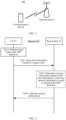
- FIG. 1 shows a communication system 100 to which an embodiment of this application is applicable.
- the communication system 100 includes a communication device and a network device.
- the communication device in embodiments of this application may be user equipment (user equipment, UE), an access terminal, a subscriber unit, a subscriber station, a mobile station, a mobile console, a remote station, a remote terminal, a mobile device, a user terminal, a terminal, a wireless communication device, a user agent, or a user apparatus.
- UE user equipment
- an access terminal a subscriber unit, a subscriber station, a mobile station, a mobile console, a remote station, a remote terminal, a mobile device, a user terminal, a terminal, a wireless communication device, a user agent, or a user apparatus.
- the terminal device may alternatively be a cellular phone, a cordless phone, a session initiation protocol (Session Initiation Protocol, SIP) phone, a wireless local loop (Wireless Local Loop, WLL) station, a personal digital assistant (Personal Digital Assistant, PDA), a handheld device having a wireless communication function, a computing device, another processing device connected to a wireless modem, a vehicle-mounted device, a wearable device, a terminal device in a 5G network, a terminal device in an evolved public land mobile network (Public Land Mobile Network, PLMN), or the like. This is not limited in embodiments of this application.
- SIP Session Initiation Protocol
- WLL Wireless Local Loop
- PDA Personal Digital Assistant
- the network device in embodiments of this application may be a device configured to communicate with the communication device.
- the network device may be a base transceiver station (Base Transceiver Station, BTS) in the global system of mobile communication (Global System of Mobile communication, GSM) system or the code division multiple access (Code Division Multiple Access, CDMA) system, or may be a NodeB (NodeB, NB) in the wideband code division multiple access (Wideband Code Division Multiple Access, WCDMA) system, or may be an evolved NodeB (Evolved NodeB, eNB, or eNodeB) in the LTE system, or may be a radio controller in a cloud radio access network (Cloud Radio Access Network, CRAN) scenario.
- BTS Base Transceiver Station
- GSM Global System of Mobile communication
- CDMA Code Division Multiple Access
- NodeB NodeB
- WCDMA Wideband Code Division Multiple Access
- Evolved NodeB, eNB, or eNodeB evolved NodeB
- the network device may be a relay station, an access point, a vehicle-mounted device, a wearable device, a network device in a 5G network, a network device in an evolved PLMN network, a network device in a future 6G network, or the like. This is not limited in embodiments of this application.
- the communication device is UE and the network device is a base station is used below for description.
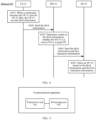
- FIG. 2 shows a communication method 200 according to this application.
- the method 200 is applicable to a scenario in which the UE communicates with the base station on an unlicensed frequency band.
- the method 200 includes the following steps.
- S210 UE #1 performs listen before talk (listen before talk, LBT) detection.
- Types of LBT detection include a type 1 (type 1) and a type 2 (type 2).
- the type 2 may be further classified into a type 2A, a type 2B, and a type 2C.
- the type 1 LBT detection is applicable to a scenario in which the UE sends a physical uplink shared channel (physical uplink shared channel, PUSCH), a physical uplink control channel (physical uplink control channel, PUCCH), a sounding reference signal (sounding reference signal, SRS), or the like.
- a procedure of the type 1 LBT detection includes the following main steps: (1) The UE #1 selects an upper limit (CWp) of a contention window based on a transmission priority of to-be-transmitted data. A correspondence between the transmission priority and CWp is shown in Table 1. CWp that is initially selected is an optional minimum value.
- the UE #1 selects an initial contention window length (denoted as N) in a uniform random manner. A value of N ranges from 0 to CWp. (3) When the UE #1 detects that energy in a specified bandwidth is less than a second threshold and lasts for duration T_d, N is decreased by 1; otherwise, a value of N remains unchanged. (4) When the value of N is decreased to 0 and at least idleness of duration T_d is detected, the UE may perform communication in a corresponding frequency band.
- a type of the LBT detection is the type 2A
- the UE #1 detects that T_short_ul is idle, the UE #1 immediately initiates transmission.
- the UE When a type of the LBT detection is the type 2B, the UE performs detection of 7 ⁇ s+9 ⁇ s. If idleness of 5 ⁇ s is detected in total and idleness of 4 ⁇ s is detected in last 9 ⁇ s, the UE may immediately initiate transmission after the detection ends.
- the UE can perform transmission without detection, but maximum transmission duration is limited to 584 ⁇ s.
- the UE #1 sends first information based on a target event.
- the first information includes detection information of the LBT detection.
- a base station #1 receives the first information.
- the UE #1 may record and send the first information.
- the UE #1 may record the first information in a storage file of the UE #1, for example, a log (log) file.
- a storage file of the UE #1 for example, a log (log) file.
- the target event includes any one of the following:
- the LBT detection has a potential risk, a communication process between the UE #1 and the base station #1 has a potential risk, the LBT detection fails, or the communication process between the UE #1 and the base station #1 fails.
- the communication process between the UE #1 and the base station #1 is performed based on the LBT detection. On a basis that the LBT detection succeeds, the UE #1 may communicate with the base station #1 on an unlicensed frequency band.
- the communication process between the UE #1 and the base station #1 includes a data and/or signaling transmission process between the UE #1 and the base station #1.
- the first information may further include one or more of the following: a moment at which the target event occurs, a type of to-be-transmitted data of the UE #1, a data amount of the to-be-transmitted data, and a transmission priority of the to-be-transmitted data.
- the following describes several possible cases in which the UE #1 sends the first information and the base station #1 receives the first information.
- the UE #1 accesses a cell #1.
- the cell #1 is a cell of the base station #1.
- the UE #1 sends the first information to the base station #1.
- the base station #1 receives the first information.
- the UE #1 may send the first information to the base station #1 on an unlicensed frequency band after accessing the cell #1 on the unlicensed frequency band.
- the UE #1 may send the first information to the base station #1 on a licensed frequency band after accessing the cell #1 on the licensed frequency band.
- the UE #1 no longer accesses a cell of the base station #1, but accesses a cell #2.
- the cell #2 is a cell of a base station #2. It should be understood that the base station #2 is different from the base station #1.
- the UE #1 sends the first information to the base station #2.
- the first information further includes an identifier of a cell in which the target event occurs (for example, an identifier of the cell #1).
- the base station #2 sends the first information to the base station #1 based on the identifier of the cell #1.
- the base station #1 receives the first information.
- the UE #1 may access the cell #2 on an unlicensed frequency band or a licensed frequency band. Further, the UE #1 may send the first information to the base station #2 on an unlicensed frequency band or a licensed frequency band.
- the UE when the UE detects that the target event occurs, the UE reports the detection information of the LBT detection to the base station. For example, when the LBT detection fails, the UE reports the detection information of the LBT detection to the base station, instead of reporting only an LBT detection failure as a cause to the base station.
- the method 200 further includes S230 and S240.
- the base station #1 determines second information based on the first information, where the second information is used to optimize the LBT detection.
- the base station #1 sends the second information to the UE #1.
- the UE #1 receives the second information.
- the UE #1 may perform subsequent LBT detection based on the second information. Compared with the previous LBT detection, the subsequent LBT detection is optimized to some extent.
- the base station may optimize the LBT detection based on the detection information of the LBT detection that is reported by the UE. Therefore, transmission efficiency of the UE on an unlicensed frequency band is improved, and a waiting delay of the UE is reduced.
- the following describes the first information and the second information in detail with reference to the four types of target events.
- a first type of target event is that the LBT detection has a potential risk.
- that the LBT detection has a potential risk means that although the LBT detection succeeds, there is a possibility of potential failure of the LBT detection. That the LBT detection has a potential risk includes but is not limited to the following cases:
- the UE #1 detects that a quantity of non-idle detection windows is greater than a first threshold during the LBT detection.
- the detection information in the first information includes the quantity of non-idle detection windows.
- the non-idle detection window may also be referred to as a busy detection window.
- the non-idle detection window may be understood as a detection window in which detected energy is greater than a second threshold.
- the second threshold is an energy detection threshold for performing the LBT detection. For the second threshold, details are not described below.
- the non-idle detection windows may be consecutive non-idle detection windows, or may be inconsecutive non-idle detection windows.
- the LBT detection has a potential risk if a quantity of consecutive non-idle detection windows is greater than 20, the LBT detection has a potential risk. Alternatively, if a quantity of inconsecutive non-idle detection windows is greater than 50, the LBT detection has a potential risk.
- the base station #1 may determine, based on the detection information, that the quantity of non-idle detection windows detected by the UE #1 during the LBT detection is greater than the first threshold.
- the UE #1 detects that an energy detection result of an idle detection window is close to the second threshold during the LBT detection.
- the UE #1 detects that a proportion (denoted as a proportion #A) of an idle detection window in which a difference between an energy detection result and the second threshold is less than a third threshold is greater than a fourth threshold.
- the detection information includes the proportion #A.
- the first information further includes the second threshold.
- the second threshold is -85 dBm
- the third threshold is 2 dBm
- the fourth threshold is 80%. If a proportion of an idle detection window in which an energy detection result is close to -85 dBm (for example, the energy detection result is -86 dBm) is greater than 80%, the detection information includes the proportion #A.
- the first information further includes the second threshold.
- the base station #1 may determine, based on the detection information, that the proportion #A is greater than the fourth threshold.
- the UE #1 detects that a quantity (denoted as a quantity #A) of idle detection windows in which a difference between an energy detection result and the second threshold is less than the third threshold is greater than a threshold #A.
- the detection information includes the quantity #A.
- the first information further includes the second threshold.
- the base station #1 may determine, based on the detection information, that the quantity #A is greater than the threshold #A.
- the UE #1 detects that a length of a contention window is greater than a threshold #B during the LBT detection.
- the detection information includes the length of the contention window.
- the threshold #B may be 15 slots.
- the base station #1 may determine, based on the detection information, that the length of the contention window is greater than the threshold #B.
- the LBT detection succeeds, but the UE #1 detects that duration of the LBT detection is greater than a threshold #C.
- the detection information includes the duration of the LBT detection.
- the threshold #C may be 5 seconds.
- the base station #1 may determine, based on the detection information, that the duration for performing the LBT detection by the UE #1 is greater than the threshold #C.
- the LBT detection succeeds, but the UE #1 detects that a proportion (denoted as a proportion #B) of idle detection windows in detection windows is less than a threshold #D during the LBT detection.
- the detection information includes the proportion #B.
- the threshold #D may be 20%.
- the base station #1 may determine, based on the detection information, that the proportion #B is less than the threshold #D.
- the UE #1 successfully accesses the cell #1, but before the UE #1 successfully accesses the cell #1, a quantity of times that the UE #1 attempts to access the cell #1 is greater than a fifth threshold.
- the UE #1 when attempting to access the cell #1, the UE #1 receives a lower-layer LBT failure indication.
- the UE #1 attempts to access the cell #1 on a plurality of physical channels of a same bandwidth part (band width part, BWP).
- BWP bandwidth part
- the detection information includes information about the plurality of physical channels, and one or more of the following: duration for performing the LBT detection, a proportion of an idle detection window, a proportion of a non-idle detection window, an energy detection result of a detection window, a quantity of low-layer LBT failure indications received by a MAC layer, low-layer LBT failure indication detection time, and a maximum quantity of low-layer LBT failure indications.
- the duration for performing the LBT detection may be duration for performing the LBT detection on each of the plurality of physical channels, or may be average duration for performing the LBT detection on the plurality of physical channels, or may be another case. This is not limited.
- the quantity of low-layer LBT failure indications received by the MAC layer may be a quantity of low-layer LBT failure indications received on at least one of the plurality of physical channels, or may be a quantity of low-layer LBT failure indications received on the plurality of physical channels, or may be another case. This is not limited in this application.
- the energy detection result of the detection window may be an energy detection result of each detection window during the LBT detection, or may be an average energy detection result of all detection windows during the LBT detection, or may be another case. This is not limited.
- the BWP may be understood as a physical channel range of an unlicensed frequency band that is configured by the base station #1 for the UE #1.
- the UE #1 attempts to access the cell #1 in a plurality of BWPs.
- the detection information includes information about the plurality of BWPs, and one or more of the following: duration for performing the LBT detection, and a failure indication of the LBT detection.
- the base station may determine, based on the detection information, that the UE #1 successfully accesses the cell #1, but a quantity of times the UE #1 attempts to access the cell #1 is greater than the fifth threshold.
- the method further includes: The UE #1 sends data and/or signaling to the base station #1 in a reference period.
- the base station #1 receives the data and/or the signaling.
- the base station #1 sends negative acknowledgment (non-acknowledge, NACK) information and/or acknowledgment (acknowledge, ACK) information of the data and/or the signaling to the UE #1 in the reference period.
- the UE #1 receives the NACK information and/or the ACK information in the reference period.
- a meaning of the reference period is the first slot (slot) that includes a physical uplink shared channel (physical uplink shared channel, PUSCH) and that is transmitted by the terminal on an unlicensed frequency band.
- slot includes a physical uplink shared channel (physical uplink shared channel, PUSCH) and that is transmitted by the terminal on an unlicensed frequency band.
- PUSCH physical uplink shared channel
- a second type of target event is that the communication process between the UE #1 and the base station #1 has a potential risk.
- the communication process between the UE #1 and the base station #1 has a potential risk: A proportion of NACK information in a reference period is greater than a sixth threshold, a proportion of ACK information in the reference period is less than a seventh threshold, and a quantity of retransmissions of data and/or signaling in the reference period is greater than an eighth threshold.
- the sixth threshold may be 80%
- the seventh threshold may be 20%
- the eighth threshold may be 8 times
- a quantity threshold of low-layer LBT failure indications may be 30 times.
- the first information further includes any one of the following: the proportion of the NACK information in the reference period, the proportion of the ACK information in the reference period, the quantity of retransmissions of the data or the signaling in the reference period, a quantity of low-layer LBT failure indications received by the MAC layer, low-layer LBT failure indication detection time, and a maximum quantity of low-layer LBT failure indications.
- the low-layer LBT failure indication detection time (lbt-FailureDetectionTimer) and the maximum quantity of low-layer LBT failure indications (lbt-FailureInstanceMaxCount) may be carried in LBT failure recovery configuration information (LBT-FailureRecoveryConfig). For example, when the quantity of low-layer LBT failure indications received by the MAC layer exceeds the maximum quantity of low-layer LBT failure indications, it is determined that transmission cannot be performed on a current grant-free channel currently because of an LBT failure.
- the base station #1 may also determine, based on the first information, that the communication process between the UE #1 and the base station #1 has a potential risk.
- a third type of target event is that the LBT detection fails.
- the LBT detection of the UE #1 fails. It should be understood that the base station #1 may also learn that the UE #1 cannot access the cell #1 on the unlicensed frequency band.
- the detection information includes one or more of the following: a quantity of attempts to access the cell #1, a proportion of an idle detection window, a proportion of a non-idle detection window, an energy detection result of a detection window, duration for performing the LBT detection, a second threshold, and a quantity of backoff times.
- the quantity of attempts to access the cell #1 may be a quantity of times that the UE #1 attempts to access the cell #1 on each channel, or may be an average quantity of times that the UE #1 attempts to access the cell #1 on a plurality of channels, or certainly, may be another case. This is not limited.
- the quantity of backoff times may be a quantity of times that a length of a contention window is increased. It should be understood that if the proportion of NACK information in the reference period reaches a specific proportion (for example, reaches 90%), a length of a contention window is increased.
- the detection information may further include information about a channel on which the UE #1 attempts.
- the UE #1 cannot access the cell #1 on all channels on an unlicensed frequency band, the UE #1 cannot access the cell #1 on the unlicensed frequency band.
- a threshold #F if a quantity of times that the UE #1 attempts to access the cell #1 on an unlicensed frequency band is greater than or equal to a threshold #F, the UE #1 cannot access the cell #1 on the unlicensed frequency band.
- the UE #1 successfully accesses the cell #1 on a first channel, but the UE #1 cannot communicate with the base station #1 through the first channel. In this case, the LBT detection of the UE #1 fails. It should be understood that the base station #1 may also learn that the UE #1 successfully accesses the cell #1, but cannot communicate with the base station #1 through the first channel.
- the detection information includes one or more of the following: a quantity of times that the UE #1 attempts to communicate with the base station #1 through the first channel, a proportion of an idle detection window, a proportion of a non-idle detection window, an energy detection result of a detection window, duration for performing the LBT detection, a second threshold, and a quantity of backoff times.
- the UE #1 successfully accesses the cell #1 on the first channel, but the UE #1 cannot occupy the first channel because the LBT detection continuously fails. As a result, the UE #1 cannot communicate with the base station #1 through the first channel.
- a fourth type of target event is that the communication process between the UE #1 and the base station #1 fails.
- the communication process between the UE #1 and the base station #1 fails:
- a proportion of NACK information in a reference period is greater than a ninth threshold, a proportion of ACK information in the reference period is less than a tenth threshold, and a quantity of retransmissions of data and/or signaling in the reference period is greater than an eleventh threshold.
- the ninth threshold is greater than the sixth threshold above, the tenth threshold is less than the seventh threshold above, and the eleventh threshold is greater than the eighth threshold above.
- the ninth threshold is 90%
- the tenth threshold is 10%
- the eleventh threshold is 9 times.
- the detection information includes one or more of the following: a quantity of times of performing the LBT detection, a proportion of an idle detection window, a proportion of a non-idle detection window, an energy detection result of a detection window, duration for performing the LBT detection, a second threshold, and a quantity of backoff times.
- the base station #1 may further configure the UE #1 to report the first information through SHR. For example, when a timer such as T310, T312, or T304 expires on an unlicensed frequency band, the UE #1 records the first information, and reports the first information through SHR.
- a timer such as T310, T312, or T304 expires on an unlicensed frequency band
- the base station #1 may determine the second information based on the first information, where the second information is used to increase the second threshold: one or more of Case 1 to Case 5 of the first type of target event, and the third type of target event.
- the second information may include a threshold #G, the threshold #G is greater than the second threshold, and the second information indicates to perform the LBT detection by using the threshold #G.
- the threshold #G is an energy detection threshold.
- the second information indicates to increase the second threshold.
- the UE #1 determines an energy detection threshold for subsequent LBT detection based on the second information.
- the base station #1 may send the second information to the UE #1, to increase an energy detection threshold for performing LBT detection by the UE #1.
- an energy detection threshold for LBT detection may be increased, so that the UE #1 preferentially preempts a channel, to increase a data transmission rate and reduce a transmission delay.
- the base station #1 may determine the second information based on the first information, where the second information includes a second channel, and the second information indicates to perform the LBT detection on the second channel: one or more of Case 1 to Case 6 of the first type of target event, and the second type of target event.
- a quantity of times that the target event occurs on the second channel is less than a twelfth threshold.
- the base station #1 may send the second information to the UE #1, so that the UE #1 performs the LBT detection on the second channel, and performs data transmission with the base station #1 on the second channel.
- the base station #1 may indicate, to the UE #1, the second channel on which the target event occurs less frequently. This facilitates subsequent data transmission of the UE #1.
- the base station #1 may determine the second information based on the first information.
- the second information is used to increase a transmission priority (denoted as a first priority) of the to-be-transmitted data.
- the second information may include a second priority, the second priority is higher than the first priority, and the second information indicates to perform the LBT detection by using the second priority.
- the second information indicates to increase the first priority.
- the UE #1 determines the transmission priority of the to-be-transmitted data based on the second information.
- the base station #1 may send the second information to the UE #1.
- the UE #1 receives the second information.
- the UE #1 performs subsequent LBT detection by using the second priority.
- the base station #1 may determine the second information based on the first information.
- the second information is used to decrease the second threshold, or the second information is used to decrease the priority of the to-be-transmitted data.
- the second information may include a threshold #K, the threshold #K is less than the second threshold, and the second information indicates to perform the LBT detection by using the threshold #K. It should be understood that the threshold #K is an energy detection threshold.
- the second information indicates to decrease the second threshold.
- the second information may include a third priority, the third priority is lower than the first priority, and the second information indicates to perform the LBT detection by using the third priority.
- the second information indicates to decrease the first priority.
- the base station #1 may send the second information to the UE #1.
- the UE #1 receives the second information.
- the UE #1 performs subsequent LBT detection by using the threshold #K, or performs subsequent LBT detection by using the third priority.
- the second information sent by the base station #1 to the UE #1 is used to decrease the second threshold or decrease the priority of the to-be-transmitted data.
- a condition for successful LBT detection becomes more stringent. If the LBT detection still succeeds under the more stringent condition, an occurrence probability of the target event becomes lower when the UE #1 subsequently communicates with the base station #1.
- the method 200 further includes S250 and S260.
- the base station #1 determines third information based on the first information, where the third information indicates to communicate with the base station #1 on a licensed frequency band.
- S260 The base station #1 sends the third information.
- the base station #1 may send the third information to a part of UEs in the cell #1.
- the part of UEs are UEs whose priorities of to-be-transmitted data are greater than a threshold #L.
- the part of UEs may include the UE #1, or may not include the UE #1. This is not limited.
- the part of UEs communicate with the base station #1 on the licensed frequency band based on the third information.
- the method 200 further includes S201.
- the base station #1 sends fourth information to the UE #1.
- the UE #1 receives the fourth information from the base station #1.
- the fourth information includes LBT configuration information and determining conditions of whether the four types of target events occur.
- the LBT configuration information includes information such as the second threshold and LBT failure recovery configuration. For details, refer to an existing protocol.
- the determining condition may be the first threshold, the third threshold, the fourth threshold, the fifth threshold, and the like in the foregoing, and are not listed one by one herein.
- the method 200 further includes S211 and S212.
- the UE #1 sends information #A to the base station #1, where the information #A indicates that the target event occurs and the UE #1 records the first information. Correspondingly, the base station #1 receives the information #A.
- the base station #1 sends information #B to the UE #1, where the information #B indicates the UE #1 to report the recorded first information.
- the method 200 further includes S213 and S214.
- the UE #1 sends information #A to the base station #2, where the information #A indicates that the target event occurs and the UE #1 records the first information.
- the base station #2 receives the information #A.
- the base station #2 sends information #B to the UE #1, where the information #B indicates the UE #1 to report the recorded first information.
- the base station may optimize the LBT detection, to improve a success rate of communication between the UE and the base station on an unlicensed frequency band.
- the base station may configure the UE to perform communication on a licensed frequency band. Therefore, according to the method 200 in this application, a probability of a communication failure between the UE and the base station can be effectively reduced, a communication effect can be improved, transmission efficiency can be improved, and a waiting delay of the UE can be reduced.
- the method 200 is mainly used for communication performed by the UE on an unlicensed frequency band, to prevent a communication failure between the UE and the base station caused by occurrence of the target event, to improve a communication effect.
- the following method 300 and method 400 are mainly for communication performed by the UE in a multi-connectivity (multi-radio multi-connectivity, MR-MC) scenario, to prevent a communication failure between the UE and the base station due to a connection failure, so as to improve a communication effect.
- MR-MC multi-radio multi-connectivity
- the UE may be simultaneously connected to at least two base stations.
- One is a master node (master node, MN), and others are secondary nodes (secondary nodes, SNs).
- MN master node
- SNs secondary nodes
- a dual connectivity (dual connectivity, DC) scenario is used as an example.
- DC dual connectivity
- handover of a secondary node may be supported. The handover of the secondary node may be triggered by the MN or a source SN connected to the UE, so that the UE is handed over from the source SN to a target SN.
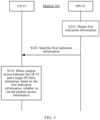
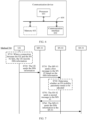
- FIG. 3 shows a communication method 300 according to this application.
- the method 300 is applicable to the multi-connectivity scenario.
- the method 300 includes the following steps.
- An MN #1 obtains first indication information, where the first indication information indicates whether UE #1 records random access information (denoted as random access information #A) between the UE #1 and a target SN when random access between the UE #1 and the target SN fails.
- random access information #A random access information
- the following describes a manner in which the MN #1 obtains the first indication information.
- the MN #1 locally generates the first indication information. Specifically, the MN #1 may locally determine whether the UE #1 records the random access information #A when the random access between the UE #1 and the target SN fails. Further, the MN #1 generates the first indication information.
- the MN #1 may determine, based on a storage capability of the UE #1, whether the UE #1 records the random access information #A.
- the MN #1 determines that the UE #1 does not record the random access information #A.
- the MN #1 may determine, based on an air interface transmission capability between the UE #1 and the MN #1, whether the UE #1 records the random access information #A.
- the MN #1 determines that the UE #1 does not record the random access information #A.
- the MN #1 may determine, based on a quantity of terminals that fail to perform random access to the target SN, whether the UE #1 records the random access information #A.
- the MN #1 determines that the UE #1 records the random access information #A.
- the MN #1 obtains the first indication information from the target SN. That is, the target SN may determine whether the UE #1 records the random access information #A. Further, the target SN sends the first indication information to the MN #1.
- the MN #1 sends the first indication information to the UE #1.
- the UE #1 receives the first indication information.
- the failure information includes secondary cell group failure information and/or a secondary cell group failure report.
- the UE #1 determines, based on the first indication information, whether to record the random access information #A in the failure information.
- the failure information when the first indication information indicates to record the random access information #A, the failure information includes the random access information #A. When the first indication information indicates not to record the random access information #A, the failure information does not include the random access information #A.
- the random access information #A may include a part or all of information in random access common information (ra-InformationCommon).
- the random access information includes a large amount of content, and occupies a large quantity signaling bits. Therefore, according to the solution of this application, the UE #1 may determine, based on the first indication information, whether to record the random access information. When the UE #1 does not need to record the random access information, storage space of the UE #1 can be saved, and less signaling is wasted.
- the method 300 further includes: S340: The UE #1 sends the failure information.
- the following describes several optional manners in which the UE #1 sends the failure information.
- the UE #1 sends the failure information to the MN #1.
- the MN #1 receives the failure information.
- the UE #1 sends the first failure information to a base station #3.
- the base station #3 receives the failure information. It should be understood that the base station #3 is different from the MN #1. In other words, the UE #1 no longer accesses the MN #1, but accesses the base station #3.
- the method further includes S350.
- the MN #1 sends the random access information #A or the failure information to the target SN.
- the MN #1 determines that the failure information includes the random access information #A between the UE #1 and the target SN, the MN #1 sends the random access information #A or the failure information to the target SN.
- the MN #1 may further send one or more of the following information to the target SN: identification information of the UE #1, information about time at which the random access between the UE #1 and the target SN fails, and configuration information of the random access between the UE #1 and the target SN.
- the identification information of the UE #1 may be any one of the following: an identifier (for example, an SeNB UE X2AP ID or an S-NG-RAN node UE XnAP ID) that is allocated by the target SN to the UE #1 and that is used to identify the UE #1 on an interface between the base stations, an identifier (for example, an M-NG-RAN node UE XnAP ID or an MeNB UE X2AP ID) that is allocated by the MN #1 to the UE #1 and that is used to identify the UE #1 on an interface between the base stations, a cell radio network temporary identifier (cell radio network temporary identifier, C-RNTI) allocated by the MN #1, identity information of a primary cell allocated by the MN #1, and identity information of a secondary cell allocated by the NM #1.
- an identifier for example, an SeNB UE X2AP ID or an S-NG-RAN node UE XnAP ID
- an identifier for example, an M-
- Identification information of a cell may be any one of the following: a cell global identifier (cell global identifier, CGI), a physical cell identifier (physical cell identifier, PCI), a frequency, a cell identifier (cell identifier, cell ID), a non-public network identifier (non-public network identifier, NPN ID), and a non-terrestrial network identifier (non-terrestrial network identifier, NTN ID). It should be understood that the identification information of the cell may also be another cell identifier.
- the CGI may include a public land mobile network (public land mobile network, PLMN ID) and a cell ID.
- the identification information of the cell is not described below.
- the method further includes S360 and S370.
- S360 The MN #1 sends the failure information to a source SN.
- the source SN determines that the failure information includes the random access information #A between the UE #1 and the target SN, the source SN sends the random access information #A or the first failure information to the target SN.
- the method further includes S370.
- the base station #3 sends the failure information to the MN #1.
- the MN #1 obtains the failure information.
- the method further includes S380.
- the base station #3 sends the failure information to the source SN.
- the source SN obtains the failure information.
- the source SN determines that the failure information includes the random access information #A between the UE #1 and the target SN, the source SN sends the random access information #A or the failure information to the target SN.
- the UE may determine, based on the first indication information, whether the random access information between the UE and the target SN needs to be recorded when the random access between the UE and the target SN fails, so that storage space of the UE is reduced when the UE does not record the random access information, to reduce a signaling waste.
- the target SN may obtain the random access information, and the target SN may optimize a random access procedure of the UE based on the random access information, to improve a communication effect.
- FIG. 4 shows a communication method 400 according to this application.
- the method 400 is applicable to a scenario in which UE performs SN handover in a multi-connectivity case, that is, a scenario in which the UE performs handover from a source SN to a target SN.
- the method 400 includes the following steps.
- the third information includes measurement information of a cell, and the measurement information of the cell includes identifier information of the cell and quality information of the cell.
- the quality information of the cell includes but is not limited to one or more of the following: received signal code power (received signal code power, RSCP), reference signal received power (reference signal received power, RSRP), reference signal received quality (reference signal received quality, RSRQ), a signal-to-noise ratio (signal noise ratio, SNR), a signal to interference plus noise ratio (signal to interference plus noise ratio, SINR), and a reference signal strength indicator (reference signal strength indication, RSSI).
- received signal code power received signal code power
- RSRP reference signal received power
- RSRQ reference signal received quality
- SNR signal-to-noise ratio
- SINR signal to interference plus noise ratio
- RSSI reference signal strength indication
- a level of the quality information of the cell may be one or more of the following: a cell level, a beam level, a synchronization signal/physical broadcast channel block (synchronization signal/physical broadcast channel block, SS/PBCH Block) level, a channel state information reference signal (channel-state information reference signal, CSI-RS) level, a numerology (numerology) level, a slicing (slicing) level, and a BWP level.
- the UE #1 may obtain the quality information of the cell by measuring one or more of the following signals: a downlink synchronization channel, a channel state information reference signal, a demodulation reference signal (demodulation reference signal, DMRS), a cell-specific reference signal (cell-specific reference signal, CRS), a synchronization signal block (synchronization signal block, SSB), and a synchronization signal/physical broadcast channel block.
- a demodulation reference signal demodulation reference signal
- DMRS demodulation reference signal
- CRS cell-specific reference signal
- SSB synchronization signal block
- SSB synchronization signal/physical broadcast channel block
- the third information further includes one or more of the following: information about a primary cell #1 and a secondary cell #1 in which the connection failure occurs, information about a primary cell #2 and a secondary cell #2 before the connection failure occurs, and duration information, where the primary cell #1 is a cell of an MN #1, and it should be understood that the primary cell #2 may be the same as the primary cell #1.
- the duration information is duration between a moment at which the UE #1 is handed over to the primary cell #2 and the secondary cell #2 to a moment at which the connection fails.
- S420 The UE #1 sends the third information.
- the MN #1 obtains the third information.
- the following describes possible manners in which the UE #1 sends the third information and the MN #1 obtains the third information.
- the UE #1 sends the third information to the MN #1.
- the MN #1 obtains the third information from the UE #1.
- the UE #1 sends the third information to a base station #4. Further, the base station #4 sends the third information to the MN #1. Correspondingly, the MN #1 obtains the third information from the base station #4.
- the base station #4 is different from the MN #1.
- the base station #4 is not described below.
- the UE #1 sends the third information to a base station #4. Further, the base station #4 sends the third information to a core network device. The core network device sends the third information to the MN #1.
- the core network device may be a core network device that manages the MN #1 and the base station #4.
- the MN #1 determines, based on the third information, whether the SN #1 is a source SN or a target SN.
- the MN #1 determines the SN #1 as the target SN. That is, a connection between the UE #1 and the target SN fails in S410.
- connection failure of the UE #1 in the target secondary cell may include an SN handover failure or a radio link failure, and certainly may further include another case.
- the MN #1 determines the SN #1 as the source SN. That is, a connection between the UE #1 and the source SN fails in S410.
- the MN #1 may determine, based on the duration information and information about a source/target secondary cell, whether the SN #1 is the source SN or the target SN. It should be understood that the duration information and the information about the source/target secondary cell may also be recorded by the MN #1.
- S440 The MN #1 sends the third information and second indication information to the SN#1.
- the second indication information indicates whether there is a direct communication interface between the MN #1 and a base station to which the cell whose measurement information is included in the third information belongs.
- the direct communication interface includes an X2 interface or an Xn interface.
- a quantity of bits included in the second indication information is the same as a quantity of cells in the cell measurement information.
- the second indication information includes two bits (denoted as a bit #A and a bit #B).
- the bit #A corresponds to the cell #A
- the bit #B corresponds to the cell #B.
- the bit #A indicates whether there is a direct communication interface between a base station to which the cell #A belongs and the MN #1.
- the bit #B indicates whether there is a direct communication interface between a base station to which the cell #B belongs and the MN #1.
- a quantity of bits included in the second indication information is greater than a quantity of cells in the cell measurement information.
- the second indication information includes three bits (denoted as a bit #A, a bit #B, and a bit #C).
- the bit #A corresponds to the cell #A
- the bit #B corresponds to the cell #B.
- the bit #A indicates whether there is a direct communication interface between a base station to which the cell #A belongs and the MN #1.
- the bit #B indicates whether there is a direct communication interface between a base station to which the cell #B belongs and the MN #1.
- the redundant bit #C in the second indication information has no indication function.
- a bit string sequence including the three bits may be (bit #A, bit #B, bit #C), or may be (bit #C, bit #B, bit #A). It should be understood that the bit string sequence may also be another bit string sequence, which is not listed one by one herein.
- the SN #1 selects an SN #2 based on the third information and the second indication information. There is a direct communication interface between the SN #2 and the MN #1.
- the SN #2 may be used as a target SN for subsequent SN handover.
- a first SN may determine, based on the third information and the second indication information, a second SN that has a direct communication interface to the MN, to improve a success rate of subsequent SN handover performed by the UE.
- the method 300 is specific to a random access process between the UE and the target SN in a multi-connectivity scenario
- the method 400 is specific to a connection process between the UE and an SN in the multi-connectivity scenario. It should be understood that if the SN #1 in the method 400 is the target SN, the method 300 and the method 400 may be combined. That is, the method 300 and the method 400 are not isolated from each other.
- the UE #1 receives the first indication information.
- the first indication information indicates whether the UE #1 records random access information between the UE #1 and the target SN when the random access between the UE #1 and the target SN fails. If the random access between the UE #1 and the target SN succeeds, and a connection between the UE #1 and the target SN then fails, the method 400 may continue to be performed.
- FIG. 7 shows a communication method 700 according to this application.
- the method 700 is applicable to a scenario in which UE performs SN handover in a multi-connectivity case, that is, a scenario in which the UE performs handover from a source SN (for example, an SN #1) to a target SN (for example, an SN #2).
- the embodiment shown in FIG. 7 mainly relates to determining, by an MN, whether to adjust an SN mobility parameter. Considering that in some scenarios, the MN may not be able to determine whether a primary secondary cell (primary secondary cell, PSCell) has changed in the SN#2, this embodiment mainly describes determining, by the SN #2, whether an SN mobility parameter needs to be adjusted.
- the method 700 includes the following steps.
- the fifth information may include measurement information of a cell.
- the measurement information of the cell refer to the description in S410.
- the measurement information of the cell includes identification information of the cell and/or quality information of the cell. Details are not described herein again. It may be understood that, in this embodiment of the present invention, S710 is an optional step.
- S720 The UE sends the fifth information.
- the UE sends the fifth information to an MN #1.
- the MN #1 receives the fifth information.
- S730 The MN #1 sends a first message to the SN #2 based on the fifth information.
- the first message indicates the SN #2 to feed back, to the MN #1, information about an SN that needs to adjust an SN mobility parameter; or the first message indicates the SN #2 to feed back, to the MN #1, whether the SN #1 needs to adjust an SN mobility parameter; or the first message indicates whether the MN #1 needs to send the fifth information to the SN #1.
- the first message includes feedback indication information, and the feedback indication information indicates the SN #2 to feed back, to the MN #1, information about an SN that needs to adjust an SN mobility parameter; or the feedback indication information indicates the SN #2 to feed back, to the MN #1, whether the SN #1 needs to adjust an SN mobility parameter; or the feedback indication information indicates whether the MN #1 needs to send the fifth information to the SN #1.
- the first message may carry the fifth information.
- S740 The SN #2 determines information about an SN that needs to adjust an SN mobility parameter. This step may be based on at least one or more of the following conditions: the fifth information, access time information of the UE on the SN #2, and whether to send an intra-SN (intra-SN2) primary secondary cell change. A person skilled in the art may understand that S740 is an optional step. In a possible implementation, the SN #2 may record the access time information of the UE on the SN #2.
- the following describes several scenarios in which the SN #2 determines that the SN #1 or the SN #2 needs to adjust an SN mobility parameter.
- Scenario 1 If the access time information of the UE on the SN #2 is greater than or equal to a time threshold, it may be determined that the SN #2 is an SN that needs to adjust an SN mobility parameter.
- Scenario 2 If the access time information of the UE on the SN #2 is less than or equal to a time threshold, quality of all cells served by the SN #2 in the cell measurement information indicated by the fifth information is less than or equal to a quality threshold #1, and there is no intra-SN #2 primary secondary cell change, the SN #2 may determine that the SN #1 is an SN that needs to adjust an SN mobility parameter.
- Scenario 3 If the access time information of the UE on the SN #2 is less than or equal to a time threshold, quality of all cells served by the SN #2 in the cell measurement information indicated by the fifth information is less than or equal to a quality threshold #1, and there is an intra-SN #2 primary secondary cell change, it may be determined that the SN #2 is an SN that needs to adjust an SN mobility parameter.
- the SN #2 is an SN that needs to adjust an SN mobility parameter. For example, the connection between the UE and the SN #2 fails because the SN #2 does not trigger an inter-SN primary secondary cell change in a timely manner, that is, the primary secondary cell of the UE is not changed to a cell served by another proper SN node in a timely manner.
- the SN #2 may determine that the SN #1 is an SN that needs to adjust an SN mobility related parameter. For example, the connection between the UE and the SN #2 fails because the SN #1 does not select a proper target SN for the UE, but incorrectly selects the SN #2. Consequently, the connection between the UE and the SN #2 fails.
- Scenario 4 If the access time information of the UE on the SN #2 is less than or equal to a time threshold, quality of at least one cell served by the SN #2 in the cell measurement information indicated by the fifth information is greater than or equal to a quality threshold #1, and there is no intra-SN #2 primary secondary cell change, it may be determined that the SN #2 is an SN that needs to adjust an SN mobility parameter SN #2.
- the connection between the UE and the SN #2 fails because the SN #2 does not select a proper primary secondary cell for the UE, or the SN #2 does not trigger an intra-SN2 primary secondary cell change in a timely manner, or the SN #2 does not trigger an inter-SN primary secondary cell change in a timely manner, that is, the primary secondary cell of the UE is not changed to a cell served by another proper SN node in a timely manner, that is, the primary secondary cell of the UE is not changed to a proper cell in a timely manner. It may be determined that the SN #2 is an SN that needs to adjust an SN mobility parameter SN #2.
- the SN #2 may determine that the SN #1 is an SN that needs to adjust an SN mobility parameter.
- Scenario 5 If the access time information of the UE on the SN #2 is less than or equal to a time threshold, quality of at least one cell served by the SN #2 in the cell measurement information indicated by the fifth information is greater than or equal to a quality threshold #1, and there is an intra-SN #2 primary secondary cell change, it may be determined that the SN #2 is an SN that needs to adjust an SN mobility parameter SN #2.
- the SN #2 triggers an intra-SN2 primary secondary cell change but does not change the primary secondary cell of the UE to a proper cell; or SN #2 does not trigger an inter-SN primary secondary cell change in a timely manner, that is, does not change the primary secondary cell of the UE to a cell served by another proper SN node in a timely manner.
- the SN #2 sends a second message to the MN #1, for example, to respond to the first message.
- the second message indicates whether the SN #2 needs to adjust an SN mobility parameter, whether the SN #1 needs to adjust an SN mobility parameter, or whether the MN #1 needs to send the fifth information to the SN #1.
- the MN #1 receives the second message from the SN #2.
- the SN #2 may not perform step 750. That is, if the MN #1 does not receive the second message, and the MN #1 determines that the SN #2 needs to adjust the SN mobility parameter, the MN #1 does not perform subsequent step 760.
- S760 The MN #1 sends the fifth information to the SN #1.
- S760 is an optional step.
- the MN #1 determines, based on the second message, whether to send the fifth information to the SN #1. If the MN #1 determines, based on the response message, that the SN #1 needs to adjust the SN mobility parameter, or determines that the fifth information needs to be sent to the SN #1, the MN #1 performs S760.
- the SN #2 may determine whether the SN mobility parameter needs to be adjusted, to ensure a success rate of subsequent SN mobility. Further, the MN #1 may determine, based on the feedback information of the SN #2, whether to send the fifth information to the SN #1, to ensure that the MN #1 sends the fifth information to a node that needs to adjust an SN mobility parameter, so that a corresponding node can also optimize the SN mobility parameter.
- FIG. 5 shows a communication apparatus according to an embodiment of this application.
- the communication apparatus includes a transceiver unit 501 and a processing unit 502.
- the transceiver unit 501 may be configured to implement a corresponding communication function.
- the transceiver unit 501 may also be referred to as a communication interface or a communication unit.
- the processing unit 502 may be configured to perform a processing operation.
- the apparatus further includes a storage unit.
- the storage unit may be configured to store instructions and/or data.
- the processing unit 502 may read the instructions and/or the data in the storage unit, so that the apparatus implements actions of the apparatus in the foregoing method embodiments.
- the apparatus may be the communication device in the foregoing embodiments, or may be a component (for example, a chip) of the communication device.
- the processing unit is configured to perform listen before talk LBT detection.
- First information includes detection information of the LBT detection.
- the transceiver unit is configured to send the first information based on a target event.
- the transceiver unit is further configured to send data and/or signaling to a network device in a reference period.
- the transceiver unit is further configured to receive negative acknowledgment NACK information or acknowledgment ACK information of the data and/or the signaling from the network device in the reference period.
- the transceiver unit is further configured to receive second information.
- the second information is used to increase a second threshold.
- the second information includes a second channel, the second information indicates to perform the LBT detection on the second channel, and a quantity of times that the target event occurs on the second channel is less than a twelfth threshold.
- the second information is used to increase a transmission priority of to-be-transmitted data.
- the second information is used to decrease the second threshold, or the second information is used to decrease the transmission priority of the to-be-transmitted data.
- the transceiver unit is further configured to receive third information.
- the third information indicates to perform communication on a licensed frequency band.
- the apparatus may be the network device in the foregoing embodiments, or may be a component (for example, a chip) of the network device.
- the transceiver unit is configured to receive first information.
- the first information includes detection information of listen before talk LBT detection.
- the processing unit is configured to determine second information based on the first information.
- the second information is used to optimize the LBT detection.
- the transceiver unit is further configured to send the second information.
- the transceiver unit is further configured to receive data and/or signaling from a communication device in a reference period.
- the transceiver unit is further configured to send negative acknowledgment NACK information or acknowledgment ACK information of the data and/or the signaling to the communication device in the reference period.
- the processing unit is configured to determine third information based on the first information.
- the third information indicates to perform communication on a licensed frequency band.
- the transceiver unit is further configured to send the third information.
- the apparatus may be the communication device in the foregoing embodiments, or may be a component (for example, a chip) of the communication device.
- the transceiver unit is configured to obtain first indication information.
- the first indication information indicates whether the communication device records random access information between the communication device and a target secondary node SN when random access between the communication device and the target SN fails.
- the processing unit is configured to determine, based on the first indication information, whether to record the random access information between the communication device and the target SN.
- the apparatus may be the master node in the foregoing embodiments, or may be a component (for example, a chip) of the master node.
- the transceiver unit is configured to obtain first indication information.
- the first indication information indicates whether a communication device records random access information between the communication device and a target secondary node SN when random access between the communication device and the target SN fails.
- the transceiver unit is further configured to send the first indication information.
- the transceiver unit is further configured to receive the random access information between the communication device and the target SN.
- the transceiver unit is further configured to send the random access information between the communication device and the target SN to the target SN or a source SN.
- the transceiver is configured to obtain the first indication information from the target SN.
- the apparatus may be the master node in the foregoing embodiments, or may be a component (for example, a chip) of the master node.
- the transceiver unit is configured to obtain third information.
- the third information is recorded by a communication device when a connection between the communication device and a first secondary node SN fails, and the third information includes measurement information of a cell.
- the processing unit is configured to determine, based on the third information, that the first SN is a source SN or a target SN when the communication device performs SN handover.
- the transceiver unit is further configured to send the third information and second indication information to the first SN.
- the second indication information indicates whether there is a direct communication interface between the MN and a base station to which the cell whose measurement information is included in the third information belongs.
- the apparatus may be the first secondary node in the foregoing embodiments, or may be a component (for example, a chip) of the first secondary node.
- the transceiver unit is configured to obtain third information and second indication information.
- the third information is recorded by a communication device when a connection between the communication device and the first SN fails, and the third information includes measurement information of a cell.
- the second indication information indicates whether there is a direct communication interface between a master node MN and a base station to which the cell whose measurement information is included in the third information belongs.
- the processing unit is configured to select a second SN based on the third information and the second indication information, and there is a direct communication interface between the second SN and the first MN.
- the apparatus may be the network device such as a master node (MN #1) in the foregoing embodiments, or may be a component (for example, a chip) of the network device.
- MN #1 master node
- the apparatus may be the network device such as a master node (MN #1) in the foregoing embodiments, or may be a component (for example, a chip) of the network device.
- the transceiver unit is configured to receive fifth information, and send a first message to a target secondary node (SN #2) based on the fifth information.
- the transceiver unit receives a second message from the SN #2.
- the second message indicates whether the SN #2 needs to adjust an SN mobility parameter, or whether a source secondary node (SN #1) needs to adjust an SN mobility parameter, or whether the MN #1 needs to send the fifth information to the SN #1.
- the second message indicates that the SN #1 needs to adjust the SN mobility parameter, or the MN #1 needs to send the fifth information to the SN #1.
- the apparatus may be the network device such as a target secondary node (SN #2) in the foregoing embodiments, or may be a component (for example, a chip) of the network device.
- SN #2 target secondary node
- the apparatus may be the network device such as a target secondary node (SN #2) in the foregoing embodiments, or may be a component (for example, a chip) of the network device.
- the transceiver unit is configured to receive a first message from an MN #1.
- the first message includes fifth information.
- the first message indicates the SN #2 to feed back, to the MN #1, an SN mobility parameter that needs to be adjusted; or the first message indicates the SN #2 to feed back, to the MN #1, whether the SN #1 needs to adjust an SN mobility parameter; or the first message indicates whether the MN #1 needs to send the fifth information to the SN #1.
- the first message includes feedback indication information, and the feedback indication information indicates the SN #2 to feed back, to the MN #1, an SN mobility parameter that needs to be adjusted; or the feedback indication information indicates the SN #2 to feed back, to the MN #1, whether the SN #1 needs to adjust an SN mobility parameter; or the feedback indication information indicates whether the MN #1 needs to send the fifth information to the SN #1.
- the determining unit is configured to determine whether an SN mobility parameter needs to be adjusted. This step may be based on at least one or more of the following conditions: the fifth information, access time information of the UE on the SN #2, and whether to send an intra-SN (intra-SN2) primary secondary cell change.
- the transceiver unit sends a second message to the MN #1.
- the second message indicates whether the SN #2 needs to adjust an SN mobility parameter, or whether a source secondary node (SN #1) needs to adjust an SN mobility parameter, or whether the MN #1 needs to send the fifth information to the SN #1.
- the second message indicates that the SN #1 needs to adjust the SN mobility parameter, or the MN #1 needs to send the fifth information to the SN #1.
- the apparatus herein is presented in a form of a functional unit.
- the term "unit" herein may refer to an application-specific integrated circuit (application-specific integrated circuit, ASIC), an electronic circuit, a processor (for example, a shared processor, a dedicated processor, or a group processor) configured to execute one or more software or firmware programs, a memory, a merged logic circuit, and/or another appropriate component that supports the described function.
- ASIC application-specific integrated circuit
- ASIC application-specific integrated circuit
- a processor for example, a shared processor, a dedicated processor, or a group processor
- the apparatus may be specifically the first network element in the foregoing embodiments, and may be configured to perform the procedures and/or steps corresponding to the first network element in the foregoing method embodiments.
- the apparatus may be specifically the network management network element in the foregoing embodiments, and may be configured to perform the procedures and/or steps corresponding to the network management network element in the foregoing method embodiments. To avoid repetition, details are not described herein again.
- the foregoing communication apparatus has a function of implementing corresponding steps performed by the apparatus in the foregoing method.
- the function may be implemented by hardware, or may be implemented by hardware executing corresponding software.
- the hardware or the software includes one or more modules corresponding to the foregoing functions.
- the transceiver unit may be replaced by a transceiver (for example, the sending unit in the transceiver unit may be replaced by a transmitter, and the receiving unit in the transceiver unit may be replaced by a receiver).
- Another unit, such as a processing unit may be replaced by a processor to separately perform a sending and receiving operation and a related processing operation in each method embodiment.
- the transceiver unit 501 may alternatively be a transceiver circuit (for example, may include a receiving circuit and a sending circuit), and the processing unit may be a processing circuit.
- the apparatus in FIG. 5 may be the apparatus in the foregoing method embodiments, or may be a chip or a chip system, for example, a system-on-a-chip (system-on-a chip, SoC).
- the transceiver unit may be an input/output circuit or a communication interface.
- the processing unit is a processor, a microprocessor, or an integrated circuit integrated on the chip. This is not limited herein.
- the communication device includes a processor 601 and a communication interface 602.
- the processor 601 is configured to execute a computer program or instructions stored in a memory 603, or read data stored in the memory 603, to perform the methods in the foregoing method embodiments.
- the communication interface 602 is configured to receive and/or send a signal.
- the processor 601 is configured to control the communication interface 602 to receive and/or send a signal.
- the communication device further includes the memory 603, and the memory 603 is configured to store a computer program or instructions and/or data.
- the memory 603 may be integrated with the processor 601, or may be disposed separately.
- the processor 601, the communication interface 602, and the memory 603 are connected to each other through a bus 604.
- the bus 604 may be a peripheral component interconnect (peripheral component interconnect, PCI) bus, an extended industry standard architecture (extended industry standard architecture, EISA) bus, or the like.
- PCI peripheral component interconnect
- EISA extended industry standard architecture
- the bus 604 may be classified into an address bus, a data bus, a control bus, and the like. For ease of representation, only one thick line represents the bus in FIG. 6 , but this does not mean that there is only one bus or only one type of bus.
- the communication device is configured to implement operations performed by the communication device, the network device, the master node, or the first secondary node in the foregoing method embodiments.
- the processor 601 is configured to execute the computer program or the instructions stored in the memory 603, to implement related operations of the communication device in the foregoing method embodiments, for example, the method performed by the UE #1 in the embodiment shown in FIG. 2 .
- the processor 601 is configured to execute the computer program or the instructions stored in the memory 603, to implement related operations of the network device in the foregoing method embodiments, for example, the method performed by the base station #1 in the embodiment shown in FIG. 2 .
- a processor such as the processor 601 mentioned in embodiments of this application may be a central processing unit (central processing unit, CPU), a network processor (network processor, NP), or a combination of a CPU and an NP.
- the processor may further include a hardware chip.
- the foregoing hardware chip may be an application-specific integrated circuit (application-specific integrated circuit, ASIC), a programmable logic device (programmable logic device, PLD), or a combination thereof.
- the PLD may be a complex programmable logic device (complex programmable logic device, CPLD), a field-programmable gate array (field-programmable gate array, FPGA), a generic logic array (generic logic array, GAL), or any combination thereof.
- a memory such as a memory 603 mentioned in embodiments of this application may be a volatile memory or a non-volatile memory, or may include a volatile memory and a non-volatile memory.
- the nonvolatile memory may be a read-only memory (read-only memory, ROM), a programmable read-only memory (programmable ROM, PROM), an erasable programmable read-only memory (erasable PROM, EPROM), an electrically erasable programmable read-only memory (electrically EPROM, EEPROM), or a flash memory.
- the volatile memory may be a random access memory (random access memory, RAM), used as an external cache.
- the disclosed system, apparatus, and method may be implemented in other manners.
- the described apparatus embodiment is merely an example.
- division into the units is merely logical function division and may be other division in actual implementation.
- a plurality of units or components may be combined or integrated into another system, or some features may be ignored or not performed.
- the displayed or discussed mutual couplings or direct couplings or communication connections may be implemented by using some interfaces.
- the indirect couplings or communication connections between the apparatuses or units may be implemented in electronic, mechanical, or other forms.
- the units described as separate parts may or may not be physically separate, and parts displayed as units may or may not be physical units, may be located in one position, or may be distributed on a plurality of network units. Some or all of the units may be selected based on actual requirements to achieve the objectives of the solutions of embodiments.
- function units in embodiments of this application may be integrated into one processing unit, each of the units may exist alone physically, or two or more units are integrated into one unit.
- the functions When the functions are implemented in the form of a software functional unit and sold or used as an independent product, the functions may be stored in a computer-readable storage medium. Based on such an understanding, the technical solutions of this application essentially, or the part contributing to the conventional technologies, or some of the technical solutions may be implemented in a form of a software product.
- the computer software product is stored in a storage medium, and includes several instructions for instructing a computer device (which may be a personal computer, a server, or a network device) to perform all or some of the steps of the methods described in embodiments of this application.
- the foregoing storage medium includes any medium that can store program code, such as a USB flash drive, a removable hard disk drive, a read-only memory (Read-Only Memory, ROM), a random access memory (Random Access Memory, RAM), a magnetic disk, or an optical disc.
- program code such as a USB flash drive, a removable hard disk drive, a read-only memory (Read-Only Memory, ROM), a random access memory (Random Access Memory, RAM), a magnetic disk, or an optical disc.
Landscapes
- Engineering & Computer Science (AREA)
- Signal Processing (AREA)
- Computer Networks & Wireless Communication (AREA)
- Mobile Radio Communication Systems (AREA)
Applications Claiming Priority (3)
| Application Number | Priority Date | Filing Date | Title |
|---|---|---|---|
| CN202111219451 | 2021-10-20 | ||
| CN202111327525.2A CN115996407A (zh) | 2021-10-20 | 2021-11-10 | 通信方法和装置 |
| PCT/CN2022/125839 WO2023066226A1 (fr) | 2021-10-20 | 2022-10-18 | Procédé et appareil de communication |
Publications (2)
| Publication Number | Publication Date |
|---|---|
| EP4408112A1 true EP4408112A1 (fr) | 2024-07-31 |
| EP4408112A4 EP4408112A4 (fr) | 2025-01-15 |
Family
ID=85989327
Family Applications (1)
| Application Number | Title | Priority Date | Filing Date |
|---|---|---|---|
| EP22882832.3A Pending EP4408112A4 (fr) | 2021-10-20 | 2022-10-18 | Procédé et appareil de communication |
Country Status (4)
| Country | Link |
|---|---|
| US (1) | US20240276548A1 (fr) |
| EP (1) | EP4408112A4 (fr) |
| CN (1) | CN115996407A (fr) |
| WO (1) | WO2023066226A1 (fr) |
Family Cites Families (7)
| Publication number | Priority date | Publication date | Assignee | Title |
|---|---|---|---|---|
| US10595276B1 (en) * | 2018-09-06 | 2020-03-17 | Verizon Patent And Licensing Inc. | Method and system for contention-based protocol and unlicensed band use |
| WO2020061866A1 (fr) * | 2018-09-26 | 2020-04-02 | 富士通株式会社 | Procédé de traitement, dispositif et système pour les défaillances de surveillance lbt |
| US12096472B2 (en) * | 2018-11-02 | 2024-09-17 | Telefonaktiebolaget Lm Ericsson (Publ) | Adaptive sensing mechanism for unlicensed networks |
| US20200221309A1 (en) * | 2019-01-07 | 2020-07-09 | Qualcomm Incorporated | Handling of channel access problems |
| TW202527586A (zh) * | 2019-10-01 | 2025-07-01 | 美商內數位專利控股公司 | 報告通道故障方法 |
| WO2021203395A1 (fr) * | 2020-04-09 | 2021-10-14 | 富士通株式会社 | Procédé et appareil d'indication de défaillance lbt |
| PL4240076T3 (pl) * | 2020-10-27 | 2025-10-06 | Guangdong Oppo Mobile Telecommunications Corp., Ltd. | Sposób transmisji i urządzenie końcowe |
-
2021
- 2021-11-10 CN CN202111327525.2A patent/CN115996407A/zh active Pending
-
2022
- 2022-10-18 EP EP22882832.3A patent/EP4408112A4/fr active Pending
- 2022-10-18 WO PCT/CN2022/125839 patent/WO2023066226A1/fr not_active Ceased
-
2024
- 2024-04-18 US US18/639,298 patent/US20240276548A1/en active Pending
Also Published As
| Publication number | Publication date |
|---|---|
| WO2023066226A1 (fr) | 2023-04-27 |
| CN115996407A (zh) | 2023-04-21 |
| US20240276548A1 (en) | 2024-08-15 |
| EP4408112A4 (fr) | 2025-01-15 |
Similar Documents
| Publication | Publication Date | Title |
|---|---|---|
| US11785557B2 (en) | Random access power control method and apparatus and communication system | |
| KR102727954B1 (ko) | 측정 방법, 단말 장비 및 네트워크 장비 | |
| US9877218B2 (en) | Method and apparatus for implementing report measurement and reporting measurement result | |
| US11956860B2 (en) | Signal transmission method, signal detection method and apparatuses thereof and communication system | |
| US10306530B2 (en) | Wireless device, radio network nodes, and methods performed therein for handling mobility in a wireless communication network | |
| CN107852611B (zh) | 对于通过共享频谱的lte的与服务质量相关的增强 | |
| EP3664501B1 (fr) | Procédé, dispositif, et système de mesure | |
| CN114390611A (zh) | 小区切换方法、终端、基站、装置和存储介质 | |
| EP3886525B1 (fr) | Procédé et dispositif de communication sans fil | |
| US20230247707A1 (en) | Wireless communication method and apparatus and system | |
| JP2024538753A (ja) | 信号を送受信する方法と装置及び通信システム | |
| KR20210002691A (ko) | 전력 결정 방법 및 디바이스 | |
| EP4080963A1 (fr) | Procédé de réalisation d'une transmission et d'une réception de signal dans un intervalle de mesures, dispositif d'élément de réseau et support de stockage lisible | |
| EP4007366B1 (fr) | Procédé et dispositif de transmission de rapport de rupture de la liaison | |
| US20250168748A1 (en) | Information transceiving method, information processing method and apparatuses thereof | |
| US20250167867A1 (en) | Information processing method, information transmitting method and apparatuses thereof | |
| WO2020088682A1 (fr) | Procédé et dispositif de communication | |
| EP4408112A1 (fr) | Procédé et appareil de communication | |
| WO2020030008A1 (fr) | Procédé et appareil de transmission de signaux | |
| EP3611958B1 (fr) | Procede de traitement des signaux, station de base et moyens de stockage informatiques | |
| WO2024067217A1 (fr) | Procédé de détermination de type de réseau de cellule voisine et dispositif associé | |
| HK40009499B (en) | Wireless communication method and device |
Legal Events
| Date | Code | Title | Description |
|---|---|---|---|
| STAA | Information on the status of an ep patent application or granted ep patent |
Free format text: STATUS: THE INTERNATIONAL PUBLICATION HAS BEEN MADE |
|
| PUAI | Public reference made under article 153(3) epc to a published international application that has entered the european phase |
Free format text: ORIGINAL CODE: 0009012 |
|
| STAA | Information on the status of an ep patent application or granted ep patent |
Free format text: STATUS: REQUEST FOR EXAMINATION WAS MADE |
|
| 17P | Request for examination filed |
Effective date: 20240424 |
|
| AK | Designated contracting states |
Kind code of ref document: A1 Designated state(s): AL AT BE BG CH CY CZ DE DK EE ES FI FR GB GR HR HU IE IS IT LI LT LU LV MC ME MK MT NL NO PL PT RO RS SE SI SK SM TR |
|
| A4 | Supplementary search report drawn up and despatched |
Effective date: 20241217 |
|
| RIC1 | Information provided on ipc code assigned before grant |
Ipc: H04W 24/10 20090101ALI20241211BHEP Ipc: H04W 24/08 20090101ALI20241211BHEP Ipc: H04W 74/08 20240101AFI20241211BHEP |
|
| DAV | Request for validation of the european patent (deleted) | ||
| DAX | Request for extension of the european patent (deleted) |