EP4410313A1 - Conjugués d'anticorps homogènes à charge utile élevée - Google Patents
Conjugués d'anticorps homogènes à charge utile élevée Download PDFInfo
- Publication number
- EP4410313A1 EP4410313A1 EP23154322.4A EP23154322A EP4410313A1 EP 4410313 A1 EP4410313 A1 EP 4410313A1 EP 23154322 A EP23154322 A EP 23154322A EP 4410313 A1 EP4410313 A1 EP 4410313A1
- Authority
- EP
- European Patent Office
- Prior art keywords
- groups
- hetero
- group
- antibody
- linker
- Prior art date
- Legal status (The legal status is an assumption and is not a legal conclusion. Google has not performed a legal analysis and makes no representation as to the accuracy of the status listed.)
- Ceased
Links
Images





Classifications
-
- A—HUMAN NECESSITIES
- A61—MEDICAL OR VETERINARY SCIENCE; HYGIENE
- A61K—PREPARATIONS FOR MEDICAL, DENTAL OR TOILETRY PURPOSES
- A61K47/00—Medicinal preparations characterised by the non-active ingredients used, e.g. carriers or inert additives; Targeting or modifying agents chemically bound to the active ingredient
- A61K47/50—Medicinal preparations characterised by the non-active ingredients used, e.g. carriers or inert additives; Targeting or modifying agents chemically bound to the active ingredient the non-active ingredient being chemically bound to the active ingredient, e.g. polymer-drug conjugates
- A61K47/51—Medicinal preparations characterised by the non-active ingredients used, e.g. carriers or inert additives; Targeting or modifying agents chemically bound to the active ingredient the non-active ingredient being chemically bound to the active ingredient, e.g. polymer-drug conjugates the non-active ingredient being a modifying agent
- A61K47/68—Medicinal preparations characterised by the non-active ingredients used, e.g. carriers or inert additives; Targeting or modifying agents chemically bound to the active ingredient the non-active ingredient being chemically bound to the active ingredient, e.g. polymer-drug conjugates the non-active ingredient being a modifying agent the modifying agent being an antibody, an immunoglobulin or a fragment thereof, e.g. an Fc-fragment
- A61K47/6889—Conjugates wherein the antibody being the modifying agent and wherein the linker, binder or spacer confers particular properties to the conjugates, e.g. peptidic enzyme-labile linkers or acid-labile linkers, providing for an acid-labile immuno conjugate wherein the drug may be released from its antibody conjugated part in an acidic, e.g. tumoural or environment
-
- A—HUMAN NECESSITIES
- A61—MEDICAL OR VETERINARY SCIENCE; HYGIENE
- A61K—PREPARATIONS FOR MEDICAL, DENTAL OR TOILETRY PURPOSES
- A61K47/00—Medicinal preparations characterised by the non-active ingredients used, e.g. carriers or inert additives; Targeting or modifying agents chemically bound to the active ingredient
- A61K47/50—Medicinal preparations characterised by the non-active ingredients used, e.g. carriers or inert additives; Targeting or modifying agents chemically bound to the active ingredient the non-active ingredient being chemically bound to the active ingredient, e.g. polymer-drug conjugates
- A61K47/51—Medicinal preparations characterised by the non-active ingredients used, e.g. carriers or inert additives; Targeting or modifying agents chemically bound to the active ingredient the non-active ingredient being chemically bound to the active ingredient, e.g. polymer-drug conjugates the non-active ingredient being a modifying agent
- A61K47/68—Medicinal preparations characterised by the non-active ingredients used, e.g. carriers or inert additives; Targeting or modifying agents chemically bound to the active ingredient the non-active ingredient being chemically bound to the active ingredient, e.g. polymer-drug conjugates the non-active ingredient being a modifying agent the modifying agent being an antibody, an immunoglobulin or a fragment thereof, e.g. an Fc-fragment
- A61K47/6835—Medicinal preparations characterised by the non-active ingredients used, e.g. carriers or inert additives; Targeting or modifying agents chemically bound to the active ingredient the non-active ingredient being chemically bound to the active ingredient, e.g. polymer-drug conjugates the non-active ingredient being a modifying agent the modifying agent being an antibody, an immunoglobulin or a fragment thereof, e.g. an Fc-fragment the modifying agent being an antibody or an immunoglobulin bearing at least one antigen-binding site
- A61K47/6851—Medicinal preparations characterised by the non-active ingredients used, e.g. carriers or inert additives; Targeting or modifying agents chemically bound to the active ingredient the non-active ingredient being chemically bound to the active ingredient, e.g. polymer-drug conjugates the non-active ingredient being a modifying agent the modifying agent being an antibody, an immunoglobulin or a fragment thereof, e.g. an Fc-fragment the modifying agent being an antibody or an immunoglobulin bearing at least one antigen-binding site the antibody targeting a determinant of a tumour cell
-
- A—HUMAN NECESSITIES
- A61—MEDICAL OR VETERINARY SCIENCE; HYGIENE
- A61K—PREPARATIONS FOR MEDICAL, DENTAL OR TOILETRY PURPOSES
- A61K47/00—Medicinal preparations characterised by the non-active ingredients used, e.g. carriers or inert additives; Targeting or modifying agents chemically bound to the active ingredient
- A61K47/50—Medicinal preparations characterised by the non-active ingredients used, e.g. carriers or inert additives; Targeting or modifying agents chemically bound to the active ingredient the non-active ingredient being chemically bound to the active ingredient, e.g. polymer-drug conjugates
- A61K47/51—Medicinal preparations characterised by the non-active ingredients used, e.g. carriers or inert additives; Targeting or modifying agents chemically bound to the active ingredient the non-active ingredient being chemically bound to the active ingredient, e.g. polymer-drug conjugates the non-active ingredient being a modifying agent
- A61K47/68—Medicinal preparations characterised by the non-active ingredients used, e.g. carriers or inert additives; Targeting or modifying agents chemically bound to the active ingredient the non-active ingredient being chemically bound to the active ingredient, e.g. polymer-drug conjugates the non-active ingredient being a modifying agent the modifying agent being an antibody, an immunoglobulin or a fragment thereof, e.g. an Fc-fragment
- A61K47/6801—Drug-antibody or immunoglobulin conjugates defined by the pharmacologically or therapeutically active agent
- A61K47/6803—Drugs conjugated to an antibody or immunoglobulin, e.g. cisplatin-antibody conjugates
-
- A—HUMAN NECESSITIES
- A61—MEDICAL OR VETERINARY SCIENCE; HYGIENE
- A61K—PREPARATIONS FOR MEDICAL, DENTAL OR TOILETRY PURPOSES
- A61K47/00—Medicinal preparations characterised by the non-active ingredients used, e.g. carriers or inert additives; Targeting or modifying agents chemically bound to the active ingredient
- A61K47/50—Medicinal preparations characterised by the non-active ingredients used, e.g. carriers or inert additives; Targeting or modifying agents chemically bound to the active ingredient the non-active ingredient being chemically bound to the active ingredient, e.g. polymer-drug conjugates
- A61K47/51—Medicinal preparations characterised by the non-active ingredients used, e.g. carriers or inert additives; Targeting or modifying agents chemically bound to the active ingredient the non-active ingredient being chemically bound to the active ingredient, e.g. polymer-drug conjugates the non-active ingredient being a modifying agent
- A61K47/68—Medicinal preparations characterised by the non-active ingredients used, e.g. carriers or inert additives; Targeting or modifying agents chemically bound to the active ingredient the non-active ingredient being chemically bound to the active ingredient, e.g. polymer-drug conjugates the non-active ingredient being a modifying agent the modifying agent being an antibody, an immunoglobulin or a fragment thereof, e.g. an Fc-fragment
- A61K47/6801—Drug-antibody or immunoglobulin conjugates defined by the pharmacologically or therapeutically active agent
- A61K47/6803—Drugs conjugated to an antibody or immunoglobulin, e.g. cisplatin-antibody conjugates
- A61K47/68037—Drugs conjugated to an antibody or immunoglobulin, e.g. cisplatin-antibody conjugates the drug being a camptothecin [CPT] or derivatives
-
- A—HUMAN NECESSITIES
- A61—MEDICAL OR VETERINARY SCIENCE; HYGIENE
- A61P—SPECIFIC THERAPEUTIC ACTIVITY OF CHEMICAL COMPOUNDS OR MEDICINAL PREPARATIONS
- A61P35/00—Antineoplastic agents
Definitions
- the present invention is in the field of medicine. More specifically, the present invention relates to antibody-conjugates with a high payload loading, that are homogeneous and do not require genetic antibody modification. Such antibody-conjugates can be applied for the more effective treatment of disease, in particular cancer.
- Antibody-drug conjugates are comprised of an antibody to which is attached a pharmaceutical agent.
- the antibodies also known as binding agents or ligands
- the antibodies can be small protein formats (scFv's, Fab fragments, DARPins, Affibodies, etc.) but are generally monoclonal antibodies (mAbs) of IgG type which have been selected based on their high selectivity and affinity for a given antigen, their long circulating half-lives, and little to no immunogenicity.
- mAbs as ligands for a carefully selected biological receptor provide an ideal targeting platform for selective delivery of pharmaceutical drugs.
- a monoclonal antibody known to bind selectively with a specific cancer-associated antigen can be used for delivery of a chemically conjugated cytotoxic agent to the tumour, via binding, internalization, intracellular processing and finally release of active catabolite.
- the cytotoxic agent may be small molecule toxin, a protein toxin or other formats, like oligonucleotides.
- an antibacterial drug antibiotic
- conjugates of anti-inflammatory drugs are under investigation for the treatment of autoimmune diseases and for example attachment of an oligonucleotide to an antibody is a potential promising approach for the treatment of neuromuscular diseases.
- the concept of targeted delivery of an active pharmaceutical drug to a specific cellular location of choice is a powerful approach for the treatment of a wide range of diseases, with many beneficial aspects versus systemic delivery of the same drug.
- ADCs are prepared by conjugation of a linker-drug to a protein, a process known as bioconjugation.
- Many technologies are known for bioconjugation, as summarized in G.T. Hermanson, "Bioconjugate Techniques", Elsevier, 3rd Ed. 2013 , incorporated by reference.
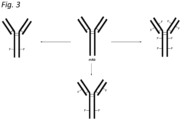
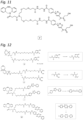
- the method the preparation of an ADC by bioconjugation entails the reaction of x number of reactive moieties F present on the antibody with a complementary reactive moiety Q present on the pharmaceutical drug (the payload), see Figure 1 .
- a chemical linker is present between Q and the payload.
- This linker needs to possess a number of key attributes, including the requirement to be stable in plasma after drug administration for an extended period of time.
- a stable linker enables localization of the ADC to the projected site or cells in the body and prevents premature release of the payload in circulation, which would indiscriminately induce undesired biological response of all kinds, thereby lowering the therapeutic index of the ADC.
- the ADC Upon internalization, the ADC should be processed such that the payload is effectively released so it can exert its mode-of-action inside the cell.
- the linker can also contain a spacer element. There are two families of linkers, non-cleavable and cleavable.
- Non-cleavable linkers consist of a chain of atoms between the antibody and the payload, which is fully stable under physiological conditions, irrespective of which organ or biological compartment the antibody-drug conjugate resides in.
- liberation of the payload from an ADC with a non-cleavable linker relies on the complete (lysosomal) degradation of the antibody after internalization of the ADC into a cell.
- the payload will be released, still carrying the linker, as well as a peptide fragment and/or the amino acid from the antibody the linker was originally attached to.
- Cleavable linkers utilize an inherent property of a cell or a cellular compartment for selective release of the payload from the ADC, which generally leaves no trace of linker after processing.
- cleavable linkers there are three commonly used mechanisms: (1) susceptibility to specific enzymes, (2) pH-sensitivity, and (3) sensitivity to redox state of a cell (or its microenvironment).
- the cleavable linker may also contain a self-immolative unit, for example based on a para -aminobenzyl alcohol group or para -hydroxybenzyl alcohol and derivatives and/or analogues thereof or a cyclization linker based on for example 1,2-diaminoethane carbamate derivatives.
- a linker may also contain an additional element, often referred to as spacer or stretcher unit, to connect the linker with a reactive group for attachment to the antibody via a reactive moiety F present on the antibody.
- the reactive moiety F can be naturally present in the antibody, for example the reactive moiety can be the side chain of lysine or cysteine, which can be employed for acylation (lysine side chain) or alkylation (cysteine side chain).
- Acylation of the ⁇ -amino group in a lysine side-chain is typically achieved by subjecting the protein to a reagent based on an activated ester or activated carbonate derivative, for example SMCC is applied for the manufacturing of Kadcyla ® .
- SMCC activated ester or activated carbonate derivative
- Kadcyla ® has an average drug-to-antibody ratio (DAR) of approximately four but in fact consists of a mixture of components with DAR 0-12. Addition of a larger quantity of acylating agents will lead to a higher average DAR, for example DAR 6 or DAR8 can be achieved, based on a stochastic distribution containing even higher DAR species (i.e. >DAR 12).
- DAR drug-to-antibody ratio
- cysteine alkylation involves for example nucleophilic substitution of haloacetamides (typically bromoacetamide or iodoacetamide), see for example Alley et al., Bioconj. Chem. 2008, 19, 759-765 , incorporated by reference, or various approaches based on nucleophilic addition on unsaturated bonds, such as reaction with acrylate reagents, see for example Bernardim et al., Nat. Commun. 2016, 7, 13128 and Ariyasu et al., Bioconj. Chem. 2017, 28, 897-902 , both incorporated by reference, reaction with phosphonamidates, see for example Kasper et al., Angew. Chem. Int. Ed.
- haloacetamides typically bromoacetamide or iodoacetamide
- reaction with allenamides see for example Abbas et al., Angew. Chem. Int. Ed. 2014, 53, 7491-7494 , incorporated by reference, reaction with cyanoethynyl reagents, see for example Kolodych et al., Bioconj. Chem. 2015, 26, 197-200 , incorporated by reference, reaction with vinylsulfones, see for example Gil de Montes et al., Chem. Sci. 2019, 10, 4515-4522 , incorporated by reference, or reaction with vinylpyridines, see for example Seki et al, Chem. Sci., 2021, 12, 9060-9068 and https://iksuda.com/science/pub/ (accessed July 26 th , 2020).
- cysteine cross-linking reagent i.e . a reagent that will react with two cysteine side-chains concurrently.
- cross-linking agents are bis-sulfone reagents, see for example Balan et al., Bioconj. Chem. 2007, 18, 61-76 and Bryant et al., Mol. Pharmaceutics 2015, 12, 1872-1879 , both incorporated by reference, mono- or bis-bromomaleimides, see for example Smith et al., J. Am. Chem. Soc. 2010, 132, 1960-1965 and Schumacher et al., Org. Biomol. Chem.
- ADCs prepared by cross-linking of cysteines have a drug-to-antibody loading of four (DAR4), which is achieved by complete alkylation of all cysteine side-chains liberated by reduction.
- DAR4 drug-to-antibody loading
- Another useful technology for conjugation to a cysteine side chain is by means of formation of a novel disulfide bond, by treatment of a liberated cysteine side-chain with thiolating agent (i.e . a non-symmetrical disulfide bond of which one thiol is part of a good leaving group), leading to a bioactivatable connection that has been utilized for reversibly connecting protein toxins, chemotherapeutic drugs, and probes to carrier molecules (see for example Pillow et al., Chem. Sci. 2017, 8, 366-370 , incorporated by reference). Similar to cysteine alkylation, the average DAR of such ADCs can be tailored to around 2-8 in case native interchain disulfide bonds are reduced.
- an unnatural reactive functionality F that can be employed for bioconjugation of linker-drugs is the oxime group, suitable for oxime ligation or the azido group, suitable for click chemistry conjugation.
- the oxime can be installed in the antibody by genetic encoding of a non-natural amino acid, e.g . p -acetophenylalanine, as for example demonstrated by Axup et al. Proc. Nat. Acad. Sci. 2012, 109, 16101-16106 , incorporated by reference, or by enzymatic alkylation of a cysteine present in a CAAX sequence with a prenyl group containing a remote keto group, as for example disclosed in WO2012153193 .
- the azide can be installed in the antibody by genetic encoding of p -azidomethylphenylalanine or p -azidophenylalanine, as for example demonstrated by Axup et al. Proc. Nat. Acad. Sci. 2012, 109, 16101-16106 , incorporated by reference.
- Zimmerman et al., Bioconj. Chem. 2014, 25, 351-361 incorporated by reference have employed a cell-free protein synthesis method to introduce p -azidomethylphenylalanine (AzPhe) into monoclonal antibodies for conversion into ADCs by means of metal-free click chemistry.
- AzPhe p -azidomethylphenylalanine
- oxidation of a specific tyrosine in a protein can give an ortho -quinone, which readily undergoes cycloaddition with strained alkenes ( e.g . TCO) or strained alkynes, see e.g. Bruins et al., Chem. Eur. J. 2017, 24, 4749-4756 , incorporated by reference.
- strained alkenes e.g . TCO
- strained alkynes see e.g. Bruins et al., Chem. Eur. J. 2017, 24, 4749-4756 , incorporated by reference.
- certain cycloheptynes are also suitable for metal-free click chemistry, as reported by Wetering et al. Chem. Sci. 2020, 11, 9011-9016 , incorporated by reference.
- a tetrazine moiety can also be introduced into a protein or a glycan by various means, for example by genetic encoding or chemical acylation, and may also undergo cycloaddition with cyclic alkenes and alkynes.
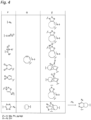
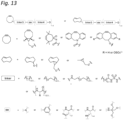
- a list of pairs of functional groups F and Q for metal-free click chemistry is provided in Figure 4 .
- the linker-drug is functionalized with a cyclic alkyne and the cycloaddition with azido-modified antibody is driven by relief of ring-strain.
- the linker-drug can be functionalized with azide and the antibody with cyclic alkyne.
- Various strained alkynes suitable for metal-free click chemistry are indicated in Figure 5 .
- a method of increasing popularity in the field of ADCs is based on enzymatic installation of a non-natural functionality F.
- Lhospice etal., Mol. Pharmaceut. 2015, 12, 1863-1871 employ the bacterial enzyme transglutaminase (BTG or TGase) for installation of an azide moiety onto an antibody.
- BCG or TGase transglutaminase
- a genetic method based on C-terminal TGase-mediated azide introduction followed by conversion in ADC with metal-free click chemistry was reported by Cheng et al., Mol. Cancer Therap. 2018, 17, 2665-2675 , incorporated by reference.
- ⁇ -Glucuronidase is an enzyme that plays a role in the breakdown of endogenous glucuronic acid-containing glycosaminoglycans and is normally localized to the lysosome of cells, including in the lysosome of first-pass tissues such as the liver and intestine.
- ⁇ -Glucuronidase concentrations in many solid tumors, including lung, breast, and gastrointestinal cancers, as well as in the tumor microenvironment are reported to be higher than those in normal tissues, and the enzyme is not found in the general circulation. In addition, these enzyme levels are elevated in necrotic regions of tumors due to release of the lysosomal enzyme into the extracellular region from dying cells.
- Lysosomal concentrations of b-glucuronidase are also high in inflammatory immune cells, including neutrophils and eosinophils, and these cells can release the enzyme at sites of inflammation, such as the necrotic regions of human tumors.
- Exploitation of ⁇ -glucuronidase overexpression in certain tumors is a well-known approach in oncology research, where ⁇ -glucuronidase-cleavable triggers have been applied to anthracyclines, auristatins, duocarmycin and camptothecins, as well as in a multi-compound releasing prodrug approach, PBD prodrugs, and ADCs.
- ⁇ -galactosidase is an enzyme that is upregulated in tumor microenvironment and can be used for the selective release of payloads capped with a ⁇ -galactoside attached to a phenolic position, for example a p- hydroxybenzyloxycarbonyl group.
- cytotoxic payloads including cathepsins, matrix metalloproteinases (MMPs), legumain and serine protease elastase, as for example summarized by M. Poreba, FEBS J., 2020, 287, 1936-1969 .
- MMPs matrix metalloproteinases
- legumain serine protease elastase
- cytotoxic payloads include for example microtubule-disrupting agents [e.g. auristatins such as monomethyl auristatin E (MMAE) and monomethyl auristatin F (MMAF), maytansinoids such as DM1 and DM4, tubulysins], DNA-damaging agents [e.g., calicheamicin, pyrrolobenzodiazepine (PBD) dimers, indolinobenzodiapine dimers, duocarmycins, anthracyclines such as PNU-159,682, topoisomerase inhibitors [e.g. DXd, exatecan, SN-38] or RNA polymerase II inhibitors [e.g. amanitin].
- auristatins such as monomethyl auristatin E (MMAE) and monomethyl auristatin F (MMAF)
- maytansinoids such as DM1 and DM4, tubulysins
- DNA-damaging agents e
- ADCs that have reached market approval include for example payloads MMAE, MMAF, DM1, DM4, calicheamicin, SN-38, DXd and a PBD dimer and a pivotal trial is running for an ADC based on duocarmycin.
- payloads MMAE, MMAF, DM1, DM4, calicheamicin, SN-38, DXd and a PBD dimer and a pivotal trial is running for an ADC based on duocarmycin.
- payloads is still under clinical evaluation or has been in clinical trials in the past, e.g . eribulin, indolinobenzodiazepine dimer, PNU-159,682, amanitin, hemi-asterlin and others.
- various ADCs in early clinical or late-stage preclinical stage are conjugated to novel payloads for example, KSP inhibitors, MMAD, cryptophycins, and others.
- Mersana Therapeutics have developed the so-called Fleximer ® technology that enables ADCs with DAR12-15, which has been employed in their lead program XMT-1536 (UpRi).
- Fleximer ® technology that enables ADCs with DAR12-15, which has been employed in their lead program XMT-1536 (UpRi).
- a polymeric, highly polar linker technology technology was developed first to be able to accommodate the multitude of hydrophobic payloads and to avoid aggregation/degradation of the high DAR ADC, which is essential to avoid severely compromised pharmacokinetic behavior of a high DAR ADC.
- XMT-1536 has a drug loading of 12-15 and is therefore the exception to this rule, however XMT-1536 is also a highly heterogenous ADC, consisting of stochastically conjugated cysteines and a highly heterogeneous polymer attached to each cysteine.
- the inventors have for the first time been able to prepare homogenous antibody-conjugates with high payload loading (high DAR) by site-specific conjugation to a single antibody N-glycan.
- the conjugates according to the invention are homogeneous, i.e. have a DAR at or close to the theoretical DAR with a narrow distribution, and do not require any genetic modification of the antibody.
- the conjugates according to the invention have a payload-to-antibody ratio (DAR) of 6 or higher, preferably 8 or higher. Conjugates with a DAR up to 64 can be readily prepared.
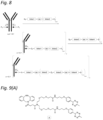
- the inventors have developed a modular, non-genetic preparation method for such conjugates, involving three simple steps and starting from any antibody (see Figure 8 ). These steps are (a) enzymatic remodeling of the glycan to give an antibody functionalized with two or four click probes (e.g. an azide) per antibody, (b) strain-promoted azide-alkyne cycloaddition with a multivalent, bifunctional reagent comprising one cyclic alkyne and at least two click probes that are not reactive towards the cyclic alkyne (e.g.
- indefinite article “a” or “an” does not exclude the possibility that more than one of the elements is present, unless the context clearly requires that there is one and only one of the elements.
- the indefinite article “a” or “an” thus usually means “at least one”.
- a linker is herein defined as a moiety that connects (covalently links) two or more elements of a compound.
- a linker may comprise one or more spacer moieties.
- a spacer-moiety is herein defined as a moiety that spaces (i.e. provides distance between) and covalently links together two (or more) parts of a linker.
- the linker may be part of e.g. a linker-construct, a linker-conjugate, a linker-payload (e.g. linker-drug) or an antibody-conjugate, as defined below.
- hydrophilic group or "polar linker” is herein defined as any molecular structure containing one or more polar functional groups that imparts improved polarity, and therefore improved aqueous solubility, to the molecule it is attached to.
- Preferred hydrophilic groups are selected from a carboxylic acid group, an alcohol group, an ether group, a polyethylene glycol group, an amino group, an ammonium group, a sulfonate group, a phosphate group, an acyl sulfamide group or a carbamoyl sulfamide group.
- hydrophilic group In addition to higher solubility other effects of the hydrophilic group include improved click conjugation efficiency, and, once incorporated into an antibody-drug conjugate: less aggregation, improved pharmacokinetics resulting in higher efficacy and in vivo tolerability.
- salt thereof means a compound formed when an acidic proton, typically a proton of an acid, is replaced by a cation, such as a metal cation or an organic cation and the like.
- the salt is a pharmaceutically acceptable salt, although this is not required for salts that are not intended for administration to a patient.
- the compound in a salt of a compound the compound may be protonated by an inorganic or organic acid to form a cation, with the conjugate base of the inorganic or organic acid as the anionic component of the salt.
- salt means a salt that is acceptable for administration to a patient, such as a mammal (salts with counterions having acceptable mammalian safety for a given dosage regime). Such salts may be derived from pharmaceutically acceptable inorganic or organic bases and from pharmaceutically acceptable inorganic or organic acids.
- “Pharmaceutically acceptable salt” refers to pharmaceutically acceptable salts of a compound, which salts are derived from a variety of organic and inorganic counter ions known in the art and include, for example, sodium, potassium, calcium, magnesium, ammonium, tetraalkylammonium, etc., and when the molecule contains a basic functionality, salts of organic or inorganic acids, such as hydrochloride, hydrobromide, formate, tartrate, besylate, mesylate, acetate, maleate, oxalate, etc.
- enediyne or “enediyne antibiotic” or “enediyne-containing cytotoxin” refers to any cytotoxin characterized by the presence of a 3-ene-1,5-diyne structural feature as part of a cyclic molecule as known in the art and include neocarzinostatin (NCS), C-1027, kedarcidin (KED), maduropeptin (MDP), N1999A2, the sporolides (SPO), the cyanosporasides (CYA and CYN), and the fijiolides, calicheamicins (CAL), the esperamicins (ESP), dynemicin (DYN), namenamicin, shishijimicin, and uncialamycin (UCM).
- NCS neocarzinostatin
- KED kedarcidin
- MDP maduropeptin
- SPO sporolides
- CYA and CYN the cyanospor
- alkylaminosugar as used herein means a tetrahydropyranyl moiety connected to an alcohol function via its 2-position, thereby forming an acetal function, and further substituted by (at least) one N-alkylamino group in position 3, 4 or 5.
- N-alkylamino group in this context refers to an amino group having one methyl, ethyl or 2-propyl group.
- click probe refers to a functional moiety that is capable of undergoing a click reaction, i.e. two compatible click probes mutually undergo a click reaction such that they are covalently linked in the product.
- Compatible probes for click reactions are known in the art, and preferably include (cyclic) alkynes and azides.
- click probe Q in the compound according to the invention is capable of reacting with click probe F on the (modified) protein, such that upon the occurrence of a click reaction, a conjugate is formed wherein the protein is conjugated to the compound according to the invention.
- F and Q are compatible click probes.
- heteroalkyl refers to alkyl groups and heteroalkyl groups.
- Heteroalkyl groups are alkyl groups wherein one or more carbon units in the alkyl chain (e.g. CH 2 , CH or C) are replaced by heteroatoms, such as O, S, S(O), S(O) 2 or NR 4 .
- the alkyl chain is interrupted with one ore more elements selected from O, S, S(O), S(O) 2 and NR 4 .
- interruptions are distinct from substituents, as they occur within the chain of an alkyl group, whereas substituents are pendant groups, monovalently attached to e.g. a carbon atom of an alkyl chain.
- the (hetero)alkyl group is an alkyl group, e.g. ethyl (Et), isopropyl (i-Pr), n-propyl (n-Pr), tert-butyl (t-Bu), isobutyl (i-Bu), n-butyl (n-Bu) or n-pentyl.
- heteroaryl refers to aryl groups and heteroaryl groups.
- Heteroaryl groups are aryl groups wherein one or more carbon units in the ring (e.g. CH) are replaced by heteroatoms, such as O, S, N or NR 4 .
- acylsulfamide moiety is herein defined as a sulfamide moiety (H 2 NSO 2 NH 2 ) that is N-acylated or N-carbamoylated on one end of the molecule and N-alkylated (mono or bis) at the other end of the molecule.
- this group is also referred to as "HS”.
- a “domain” may be any region of a protein, generally defined on the basis of sequence homologies and often related to a specific structural or functional entity.
- CEACAM family members are known to be composed of Ig-like domains.
- the term domain is used in this document to designate either individual Ig-like domains, such as "N-domain” or for groups of consecutive domains, such as "A3-B3 domain”.
- a "coding sequence” or a sequence “encoding” an expression product, such as a RNA, polypeptide, protein, or enzyme is a nucleotide sequence that, when expressed, results in the production of that RNA, polypeptide, protein, or enzyme, i.e., the nucleotide sequence encodes an amino acid sequence for that polypeptide, protein or enzyme.
- a coding sequence for a protein may include a start codon (usually ATG) and a stop codon.
- gene means a DNA sequence that codes for, or corresponds to, a particular sequence of amino acids which comprises all or part of one or more proteins or enzymes, and may or may not include regulatory DNA sequences, such as promoter sequences, which determine for example the conditions under which the gene is expressed. Some genes, which are not structural genes, may be transcribed from DNA to RNA, but are not translated into an amino acid sequence. Other genes may function as regulators of structural genes or as regulators of DNA transcription. In particular, the term gene may be intended for the genomic sequence encoding a protein, i.e. a sequence comprising regulator, promoter, intron and exon sequences.
- glycoprotein is herein used in its normal scientific meaning and refers to a protein comprising one or more monosaccharide or oligosaccharide chains (“glycans”) covalently bonded to the protein.
- a glycan may be attached to a hydroxyl group on the protein (O-linked-glycan), e.g . to the hydroxyl group of serine, threonine, tyrosine, hydroxylysine or hydroxyproline, or to an amide function on the protein ( N -glycoprotein), e.g . asparagine or arginine, or to a carbon on the protein ( C -glycoprotein), e.g . tryptophan.
- a glycoprotein may comprise more than one glycan, may comprise a combination of one or more monosaccharide and one or more oligosaccharide glycans, and may comprise a combination of N-linked, O-linked and C-linked glycans. It is estimated that more than 50% of all proteins have some form of glycosylation and therefore qualify as glycoprotein.
- glycoproteins include PSMA (prostate-specific membrane antigen), CAL (candida antartica lipase), gp41, gp120, EPO (erythropoietin), antifreeze protein and antibodies.
- glycan is herein used in its normal scientific meaning and refers to a monosaccharide or oligosaccharide chain that is linked to a protein.
- the term glycan thus refers to the carbohydrate-part of a glycoprotein.
- the glycan is attached to a protein via the C-1 carbon of one sugar, which may be without further substitution (monosaccharide) or may be further substituted at one or more of its hydroxyl groups (oligosaccharide).
- a naturally occurring glycan typically comprises 1 to about 10 saccharide moieties. However, when a longer saccharide chain is linked to a protein, said saccharide chain is herein also considered a glycan.
- a glycan of a glycoprotein may be a monosaccharide.
- a monosaccharide glycan of a glycoprotein consists of a single N-acetylglucosamine (GIcNAc), glucose (Glc), mannose (Man) or fucose (Fuc) covalently attached to the protein.
- a glycan may also be an oligosaccharide.
- An oligosaccharide chain of a glycoprotein may be linear or branched.
- the sugar that is directly attached to the protein is called the core sugar.
- a sugar that is not directly attached to the protein and is attached to at least two other sugars is called an internal sugar.
- oligosaccharide a sugar that is not directly attached to the protein but to a single other sugar, i.e . carrying no further sugar substituents at one or more of its other hydroxyl groups, is called the terminal sugar.
- a glycan may be an O-linked glycan, an N-linked glycan or a C-linked glycan.
- an O-linked glycan a monosaccharide or oligosaccharide glycan is bonded to an O-atom in an amino acid of the protein, typically via a hydroxyl group of serine (Ser) or threonine (Thr).
- a monosaccharide or oligosaccharide glycan is bonded to the protein via an N-atom in an amino acid of the protein, typically via an amide nitrogen in the side chain of asparagine (Asn) or arginine (Arg).
- a C-linked glycan a monosaccharide or oligosaccharide glycan is bonded to a C-atom in an amino acid of the protein, typically to a C-atom of tryptophan (Trp).
- antibody (AB) is herein used in its normal scientific meaning.
- An antibody is a protein generated by the immune system that is capable of recognizing and binding to a specific antigen.
- An antibody is an example of a glycoprotein.
- the term antibody herein is used in its broadest sense and specifically includes monoclonal antibodies, polyclonal antibodies, dimers, multimers, multispecific antibodies (e.g. bispecific antibodies), antibody fragments, and double and single chain antibodies.
- antibody is herein also meant to include human antibodies, humanized antibodies, chimeric antibodies and antibodies specifically binding cancer antigen.
- antibody is meant to include whole antibodies, but also fragments of an antibody, for example an antibody Fab fragment, F(ab') 2 , Fv fragment or Fc fragment from a cleaved antibody, a scFv-Fc fragment, a minibody, a diabody or a scFv.
- antibody includes genetically engineered antibodies and derivatives of an antibody.
- Antibodies, fragments of antibodies and genetically engineered antibodies may be obtained by methods that are known in the art.
- An antibody may be a natural or conventional antibody in which two heavy chains are linked to each other by disulfide bonds and each heavy chain is linked to a light chain by a disulfide bond.
- the light chain includes two domains or regions, a variable domain (VL) and a constant domain (CL).
- the heavy chain includes four domains, a variable domain (VH) and three constant domains (CH1, CH2 and CH3, collectively referred to as CH).
- the variable regions of both light (VL) and heavy (VH) chains determine binding recognition and specificity to the antigen.
- the constant region domains of the light (CL) and heavy (CH) chains confer important biological properties, such as antibody chain association, secretion, trans-placental mobility, complement binding, and binding to Fc receptors (FcR).
- the Fv fragment is the N-terminal part of the Fab fragment of an immunoglobulin and consists of the variable portions of one light chain and one heavy chain.
- the immunoglobulin can be of any type (e.g. IgG, IgE, IgM, IgD, and IgA), class (e.g. IgG1 , IgG2, IgG3, IgG4, IgA1 and IgA2) or subclass, or allotype (e.g.
- human G1m1 , G1 m2, G m3, non-G1m1 [that, is any allotype other than G1m1], G1m17, G2m23, G3m21 , G3m28, G3m1.1, G3m5, G3m13, G3m14, G3m10, G3m15, G3m16, G3m6, G3m24, G3m26, G3m27, A2m1, A2m2, Km1, Km2 and Km3) of immunoglobulin molecule.
- Preferred allotypes for administration include a non-G1m1 allotype (nG1m1), such as G1m17,1, G1m3, G1m3.1, G1m3.2 or G1m3.1.2.
- the allotype is selected from the group consisting of the G1m17, 1 or G1m3 allotype.
- the antibody may be engineered in the Fc-domain to enhance or nihilate binding to Fc-gamma receptors, as summarized by Saunders et al. Front. Immunol. 2019, 10, doi: 10.3389/fimmu.2019.01296 and Ward et al., Mol. Immunol. 2015, 67, 131-141 .
- Leu234Ala and Leu235Ala commonly called LALA mutations
- Elimination of binding to Fc-gamma receptors can also be achieved by mutation of the N297 amino acid to any other amino acid except asparagine, by mutation of the T299 amino acid to any other amino acid except threonine or serine, or by enzymatic Deglycosylation or trimming of the fully glycosylated antibody with for example PNGase F or an endoglycosidase.
- the immunoglobulins can be derived from any species, including human, murine, or rabbit origin. Each chain contains distinct sequence domains.
- a percentage of "sequence identity” may be determined by comparing the two sequences, optimally aligned over a comparison window, wherein the portion of the polynucleotide or polypeptide sequence in the comparison window may comprise additions or deletions (i.e., gaps) as compared to the reference sequence (which does not comprise additions or deletions) for optimal alignment of the two sequences.
- a sequence "at least 85% identical to a reference sequence” is a sequence having, on its entire length, 85%, or more, for instance 90%, 91%, 92%, 93%, 94%, 95%, 96%, 97%, 98% or 99% sequence identity with the entire length of the reference sequence.
- CDR refers to complementarity-determining region: the specificity of the antibody resides in the structural complementarity between the antibody combining site and the antigenic determinant.
- Antibody combining sites are made up of residues that are primarily from the hypervariable or complementarity determining regions (CDRs). Occasionally, residues from non-hypervariable or framework regions (FR) influence the overall domain structure and hence the combining site.
- Complementarity Determining Regions or CDRs therefore refer to amino acid sequences which together define the binding affinity and specificity of the natural Fv region of a native immunoglobulin binding site.
- the light and heavy chains of an immunoglobulin each have three CDRs, designated CDR1-L, CDR2-L, CDR3-L and CDR1-H, CDR2-H, CDR3-H, respectively.
- a conventional antibody antigen-binding site therefore, includes six CDRs, comprising the CDR set from each of a heavy and a light chain V region.
- monoclonal antibody refers to an antibody molecule of a single amino acid sequence, which is directed against a specific antigen, and is not to be construed as requiring production of the antibody by any particular method.
- a monoclonal antibody may be produced by a single clone of B cells or hybridoma, but may also be recombinant, i.e. produced by protein engineering.
- chimeric antibody refers to an engineered antibody which, in its broadest sense, contains one or more regions from one antibody and one or more regions from one or more other antibodies.
- a chimeric antibody comprises a VH domain and a VL domain of an antibody derived from a non-human animal, in association with a CH domain and a CL domain of another antibody, in an embodiment, a human antibody.
- the non-human animal any animal such as mouse, rat, hamster, rabbit or the like can be used.
- a chimeric antibody may also denote a multispecific antibody having specificity for at least two different antigens.
- humanised antibody refers to an antibody which is wholly or partially of non-human origin and which has been modified to replace certain amino acids, for instance in the framework regions of the VH and VL domains, in order to avoid or minimize an immune response in humans.
- the constant domains of a humanized antibody are most of the time human CH and CL domains.
- “Fragments” of (conventional) antibodies comprise a portion of an intact antibody, in particular the antigen binding region or variable region of the intact antibody. Examples of antibody fragments include Fv, Fab, F(ab')2, Fab', dsFv, (dsFv)2, scFv, sc(Fv)2, diabodies, bispecific and multispecific antibodies formed from antibody fragments.
- a fragment of a conventional antibody may also be a single domain antibody, such as a heavy chain antibody or VHH.
- multivalent refers to a linker molecule or linker part of a bigger molecule, with multiple connecting groups.
- these connecting groups are formed by reactive groups capable of covalently attaching to other molecules (e.g. payload or antibody).
- the connecting groups are covalent attachment to other parts of the molecule (e.g. payload or antibody).
- a bivalent linker has two connecting groups, a trivalent linker has three connecting groups, etc.
- bivalent is also referred to as 2-valent
- trivalent is also referred to a 3-valent, etc.
- heterofunctional refers to a linker molecule or linker part of a bigger molecule with connecting groups that are not identical and have different reactivity or are obtained by different reactivity. Typically, such connecting groups in a heterofunctional molecule are mutually nonreactive.
- the inventors have for the first time been able to prepare homogenous antibody-conjugates with high payload loading (high DAR) by site-specific conjugation to a single antibody N-glycan.
- the conjugates according to the invention are homogeneous, i.e. have a DAR at or close to the theoretical DAR with a narrow distribution, and do not require any genetic modification of the antibody.
- the conjugates according to the invention have a payload-to-antibody ratio (DAR) of 6 or higher, preferably 8 or higher. Conjugates with a DAR up to 64 can be readily prepared.
- the inventors have developed a modular, non-genetic preparation method for such conjugates, involving three simple steps and starting from any antibody. These steps are (a) enzymatic remodeling of the glycan to give an antibody functionalized with two or four click probes (e.g. an azide) per antibody, (b) strain-promoted azide-alkyne cycloaddition with a multivalent, bifunctional reagent comprising one cyclic alkyne and at least two click probes that are not reactive towards the cyclic alkyne (e.g.
- the invention concerns a process for preparing an antibody-payload-conjugate having a payload-to-antibody ratio (DAR) of 6 or higher, comprising:
- the invention concerns conjugates obtainable by the process according to the first aspect of the invention.
- the conjugates according to the second aspect can also be defined as having structure Ab(Z 1 L A (Z 2 (L B )D x ) y ) z , wherein:
- the conjugates according to the second aspect of the invention are ideally suited for the targeting of tumour cells, in particular for the treatment of cancer. Therefore, the invention also concerns a method for targeting a tumour cell expressing a specific extracellular receptor, comprising contacting the conjugate according to the second aspect of the invention with cells that may possibly express the extracellular receptor, wherein the antibody specifically targets the extracellular receptor. Likewise, the invention also concerns a method for the treatment of cancer, comprising administering to a subject in need thereof the conjugate according to the second aspect of the invention, wherein the cancer cells specifically express an extracellular receptor.
- the invention according to the present aspect further concerns a pharmaceutical composition
- a pharmaceutical composition comprising the conjugate according to the second aspect of the invention and a pharmaceutically acceptable carrier.
- the invention concerns heterobifunctional linkers having structure Q 1 L A (F 2 ) y , wherein:
- heterobifunctional linkers according to the third aspect of the invention are ideally suited as intermediates in the synthesis of the conjugates according to the second aspect.
- salts preferably pharmaceutically acceptable salts, of the conjugates and heterobifunctional linkers according to the invention.
- the conjugate according to the second aspect is first defined.
- the structural features of the conjugate according to the invention also apply to the heterobifunctional linkers according to the invention and the process for preparing an antibody-payload-conjugate according to the invention.
- the structural features of the conjugates according to the invention also apply to the heterobifunctional linkers according to the invention.
- any structure feature that is unchanged in the conjugation reaction is defined equally for each of the molecules according to the invention.
- only reactive moieties F and Q are transformed into connecting groups Z.
- the definition of the chemical moieties, as well as their preferred embodiments apply to all aspects of the invention.
- the invention concerns conjugates of general structure ( 2 ): Ab[Z 1 L A (Z 2 (L B )D x ) y ] z ( 2 ) wherein:
- Ab is an antibody.
- Antibodies are known in the art and include IgA, IgD, IgE, IgG, IgM, Fab, VHH, scFv, diabody, minibody, affibody, affylin, affimers, atrimers, fynomer, Cys-knot, DARPin, adnectin/centryin, knottin, anticalin, FN3, Kunitz domain, OBody, bicyclic peptides and tricyclic peptides.
- the antibody is a monoclonal antibody, more preferably selected from the group consisting of IgA, IgD, IgE, IgG and IgM antibodies.
- Ab is an IgG antibody.
- the IgG antibody may be of any IgG isotype.
- the antibody may be any IgG isotype, e.g. IgG1, IgG2, Igl3 or IgG4.
- Preferably Ab is a full-length antibody, but Ab may also be a Fc fragment.
- the antibody Ab is typically specific for an extracellular receptor on a tumour cell, preferably wherein the extracellular receptor on the tumour cell is selected from the group consisting of 5T4, ADAM-9, AMHRII, ASCT2, ASLG659, ASPHD1, av-integrin, Axl, B7-H3, B7-H4, BAFF-R, BCMA, BMPR1B, Brevican, c-KIT, c-Met, C4.4a, CA-IX, cadherin-6, CanAg, CD123, CD13, CD133, CD138/syndecan-1, CD166, CD19, CD20, CD203c, CD205, CD21, CD22, CD228, CD25, CD30, CD324, CD33, CD37, CD38, CD45, CD46, CD48a, CD56, CD70, CD71, CD72, CD74, CD79a, CD79b, CEACAM5, claudin-18.2, claudin-6, CLEC12A, CLL-1, Cripto
- the antibody may also be specific to an extracellular protein resulting from a viral infection, e.g . human polio virus (HPV), human cytomegalovirus (HCMV) or human papillomavirus (HPV).
- the antibody may also be specific for a tumour-associated carbohydrate antigen (TACA) that is selected from the group of Tn, STn, T-antigen, LDN, Lewis c (Le c ), Sialyl-Lewis c (SLe c ), 6-Sialyl-Lewis c (6SLe c ), LN, alpha-Gal, 3SLN, 6SLN, H-antigen, A-antigen, B-antigen, Lewis a (Le a ), Sialyl-Lewis a (SLe a ), 6-Sialyl-Lewis a (6SLe a ), Lewis b (Le b ), Sialyl-Lewis b (SLe b ), 6-Sia
- the conjugation technique used in the present invention conjugating site-specifically via the glycan of the antibody and using click reactions, provides conjugates with a narrow distribution with DAR values close to the theoretical value and with narrow standard deviation. For example, when the theoretical DAR is 8, DAR values above 7.4 or even above 7.6 are readily obtained, indicating that most antibodies in the reaction mixture have reacted completely and have a DAR of 8. No antibody conjugates with a DAR above 8 will be present.
- x is 1, 2, 3 or 4 and y is 2, 3 or 4, wherein x + y is at least 4.
- x + y is an integer in the range 4-8.
- the exact number of x and y determines the DAR.
- x is 1, 2, 3 or 4 and y is 2, 3 or 4, wherein x + y is at least 4.
- x + y is an integer in the range 4-8.
- the exact number of x and y determines the DAR.
- conjugates with a DAR in the range of DAR 6 - 64 are readily formed. Conjugates according to the invention have an even DAR.
- Preferred conjugates have a DAR in the range of 6 - 32, more preferably in the range of 6 - 16, even more preferably in the range of 6 -12.
- the conjugates according to the invention contain two connecting groups Z 1 , which is formed during a click reaction wherein the antibody of structure Ab(F 1 ) z and a heterobifunctional (y + 1)-valent linker construct of structure of Q 1 L A (F 2 ) y .
- F 1 and Q 1 react to form a covalent connection between the antibody and z ⁇ y moieties F 2 by forming connecting groups Z 1 .
- (y + 1)-valent refers to the number of connecting points, being either a reactive group F or Q (before reaction) or a connecting group Z (after reaction).
- the L A is trivalent.
- the L A is pentavalent.
- the conjugate according to the invention is preferably represented by: Ab[(L 6 )Z 1 L A (Z 2 (L B )D x ) y )] z , (3) wherein:
- Linker L 6 is preferably present, wherein reactive group F 1 may be introduced at a specific position of the antibody.
- reactive group F 1 may be introduced at a specific position of the antibody.
- This is for example the case for conjugation via an artificially introduced reactive group F 1 , such as for example using transglutaminase, using sortase or by enzymatic glycan modification (e.g. glycosyltransferase or ⁇ -1,3-mannosyl-glycoprotein-2- ⁇ -N-acetylglucosaminyl-transferase).
- a modified sugar residue S(F 1 ) 2 may be introduced at the glycan, extending the glycan with one monosaccharide residue S, which introduces two reactive groups F 1 on the glycan of an antibody.
- conjugation occurs via the glycan of the antibody.
- the site of conjugation is preferably at the heavy chain of the antibody.
- This naturally occurring glycosylation site of antibodies is preferably used, but other glycosylation sites, including artificially introduced ones, may also be used for the connection of linker L 6 .
- L 6 is connected to an amino acid of the antibody which is located at a position in the range of 250 - 350 of the heavy chain, preferably in the range of 280 - 310 of the heavy chain, more preferably in the range of 295 - 300 of the heavy chain, most preferably at position 297 of the heavy chain.
- the obtained conjugates are formed as symmetrical dimers, wherein each half antibody contains one F 2 , and both click probes F 2 will form an arm with 3 or more payloads.
- the skilled person is able to perform the enzymatic conversions in such a way that only the main glycosylation site is utilized for conjugation.
- the skilled person is able to perform the enzymatic conversion in such a way that also the second glycosylation site is utilized for conjugation, thereby doubling the DAR of the antibody-drug conjugate.
- z 4 and each half antibody contains two occurrences of F 2 , and all four click probes F 2 will form an arm with 3 or more payloads.
- L 6 is a linker that connects Ab to F 1 or Z 1 , and is represented by -GlcNAc(Fuc) w -(G) j -S-(L 7 ) w' -, wherein G is a monosaccharide, j is an integer in the range of 0 - 10, S is a sugar or a sugar derivative, GlcNAc is N-acetylglucosamine and Fuc is fucose, w is 0 or 1, w' is 0 or 1 and L 7 is - N(H)C(O)CH 2 -, -N(H)C(O)CF 2 - or-CHz-.
- L 6 is at least partly formed by the glycan of an antibody.
- the -GlcNAc(Fuc) w -(G) j - of L 6 is the glycan, or part thereof.
- GIcNAc residue may also be referred to as the core-GIcNAc residue and is the monosaccharide that is directly attached to the peptide part of the antibody.
- Such trimming of glycans is well-known in the art and can be achieved by the action of an endoglycosidase.
- there are one or more monosaccharide residues present in between the core-GlcNAc(Fuc) w moiety and S, i.e. j is an integer in the range of 1 - 10, preferably j 1-5.
- (G) j is an oligosaccharide fraction comprising j monosaccharide residues G, wherein j is an integer in the range of 2 - 5.
- (G); is a monosaccharide fraction comprising j monosaccharide residues G, wherein j is 1.
- (G) j is connected to the GIcNAc moiety of GlcNAc(Fuc) w , typically via a ⁇ -1,4 bond.
- j is 0, 1, 3, 4 or 5, more preferably, j is 0 or 1, most preferably j is 0.
- (G) j may be linear or branched.
- Preferred examples of branched oligosaccharides (G) j are ( a ), ( b ), ( c ), ( d ), ( e ), ( f ), ( h ) and ( h ) as shown below.
- (G) j is present with j > 2, it is preferred that it ends in GIcNAc or Gal, preferably GlcNAc.
- the monosaccharide residue directly connected to S is preferably GIcNAc or Gal.
- the presence of a GIcNAc moiety facilitates the synthesis of the functionalized antibody, as monosaccharide derivative S can readily be introduced by glycosyltransfer onto a terminal GIcNAc residue.
- the presence of a Gal moiety facilitates the synthesis of the functionalized antibody, as monosaccharide derivative S sialic acid can readily be introduced by sialyltransferase onto a terminal Gal residue.
- moiety S may be connected to any of the terminal GlcNAc residues, i.e. not the one with the wavy bond, which is connected to the core GlcNAc residue on the antibody.
- j 0, 1, 4, 5, 6, 7, 8, 9 or 10
- S is a sugar or sugar derivative.
- sugar derivative is herein used to indicate a derivative of a monosaccharide sugar, i.e. a monosaccharide sugar comprising substituents and/or functional groups.
- Suitable examples for S include glucose (Glc), galactose (Gal), mannose (Man), fucose (Fuc), amino sugars and sugar acids, e.g.
- glucosamine (GlcNH 2 ), galactosamine (GalNH 2 ) N-acetylglucosamine (GIcNAc), N-acetylgalactosamine (GaINAc), sialic acid (Sia) which is also referred to as N-acetylneuraminic acid (NeuNAc), and N-acetylmuramic acid (MurNAc), glucuronic acid (GlcA) and iduronic acid (IdoA).
- S is selected from Gal, GalNAc and NeuNAc.
- S is GaINAc.
- Connecting group Z 1 or reactive group F 1 may be attached directly to S, or there may be a linker L 7 present in between S and Z 1 or F 1 .
- L 7 is absent and each connecting moiety Z is directly attached to S.
- L 7 may be selected from -N(H)C(O)CH 2 -, -N(H)C(O)CF 2 - or -CH 2 -.
- Z 1 and Z 2 are connecting groups, which covalently connect the antibody with the payloads of the conjugate according to the invention.
- the term "connecting group” herein refers to the structural element, resulting from a reaction, here between Q and F, connecting one part of the conjugate with another part of the same conjugate.
- Z 1 is formed by a click reaction between Q 1 and F 1 .
- Z 2 is formed by a click reaction between Q 2 and F 2 .
- Z refers to Z 1 and Z 2
- Q refers to Q 1 and Q 2
- F refers to .
- complementary groups Q include azido groups.
- complementary groups Q include alkynyl groups.
- complementary groups Q include tetrazinyl groups.
- Z is only an intermediate structure and will expel N 2 , thereby generating a dihydropyridazine (from the reaction with alkene) or pyridazine (from the reaction with alkyne) as shown in Figure 4 .
- Connecting groups Z are obtained by a cycloaddition reaction, preferably wherein the cycloaddition is a [4+2] cycloaddition or a 1,3-dipolar cycloaddition.
- Conjugation reactions via cycloadditions are known to the skilled person, and the skilled person is capable of selecting appropriate reaction partners F and Q, and will understand the nature of the resulting connecting group Z.
- Preferred cycloadditions are a [4+2]-cycloaddition (e.g. a Diels-Alder reaction) or a [3+2]-cycloaddition (e.g. a 1,3-dipolar cycloaddition).
- the cycloaddition is the Diels-Alder reaction or the 1 ,3-dipolar cycloaddition.
- the preferred Diels-Alder reaction is the inverse electron-demand Diels-Alder cycloaddition.
- the 1,3-dipolar cycloaddition is used, more preferably the alkyne-azide cycloaddition. Cycloadditions, such as Diels-Alder reactions and 1,3-dipolar cycloadditions are known in the art, and the skilled person knows how to perform them.
- Z contains a moiety selected from the group consisting of a triazole, a cyclohexene, a cyclohexadiene, a [2.2.2]-bicyclooctadiene, a [2.2.2]-bicyclooctene, an isoxazoline, an isoxazolidine, a pyrazoline, a piperazine, a thioether, an amide or an imide group.
- Triazole moieties are especially preferred to be present in Z.
- Z comprises a (hetero)cycloalkene moiety, i.e. formed from Q comprising a (hetero)cycloalkyne moiety.
- Z comprises a (hetero)cycloalkane moiety, i.e. formed from Q comprising a (hetero)cycloalkene moiety.
- aromatic rings such as a triazole ring are considered a heterocycloalkane ring, since it is formed by reaction of an alkyne moiety and an azide moiety.
- Z has the structure (Z1):
- the bond depicted as --- is a single bond or a double bond.
- u + u' 0, 4, 5, 6, 7 or 8, more preferably 0, 4 or 5.
- u + u' 0 or 5.
- the wavy bond labelled with * is connected to CB, optionally via L 6
- the wavy bond labelled with ** is connected to L.
- Z comprises a (hetero)cycloalkene moiety, i.e. the bond depicted as - - - is a double bond.
- Z is selected from the structures (Z2) - (Z20), depicted here below:
- B (-) is an anion, preferably a pharmaceutically acceptable anion.
- B (+) is a cation, preferably a pharmaceutically acceptable cation.
- Ring Z is formed by the cycloaddition reaction, and preferably is a triazole, a cyclohexene, a cyclohexadiene, a [2.2.2]-bicyclooctadiene, a [2.2.2]-bicyclooctene, an isoxazoline, an isoxazolidine, a pyrazoline or a piperazine. Most preferably, ring Z is a triazole ring.
- Ring Z may have the structure selected from (Za) - (Zm) depicted below, wherein the carbon atoms labelled with ** correspond to the two carbon atoms of the (hetero)cycloalkane ring of (Z2) - (Z20), to which ring Z is fused. Since the connecting group Z is formed by reaction with a (hetero)cycloalkyne in the context of the present embodiment, the bond depicted above as --- is a double bond.
- R 29 is selected from hydrogen, C 1-6 alkyl, aryl, C(O)-C 1-6 alkyl, C(O)-aryl, C(O)-O-C 1-6 alkyl, C(O)-O-aryl, C(O)-NR 33 -C 1-6 alkyl and C(O)-NR 33 -aryl, wherein R 33 is H or C 1-4 alkyl.
- R 29 is selected from hydrogen, methyl, phenyl, pyridyl, pyridinyl and pyrimidinyl. It was found that R 29 is hydrogen gave optimal results in reactivity in the cycloaddition reaction, especially in case ring (Zl) is formed.
- ring Z is (Zl) wherein R 29 is selected from hydrogen, methyl, phenyl, pyridyl, pyridinyl and pyrimidinyl, more preferably R 29 is hydrogen.
- ring Z is selected from (Za), (Zj), (Zk) or (Zl), more preferably ring Z is according to structure (Za) or (Zl).
- Z is selected from the structures (Z21) - (Z38a), depicted here below:
- Structure (Z29) can be in endo or exo configuration, preferably it is in endo configuration.
- B (-) is an anion, preferably a pharmaceutically acceptable anion.
- Ring Z is selected from structures (Za) - (Zm), as defined above.
- Z comprises a (hetero)cyclooctene moiety or a (hetero)cycloheptene moiety, preferably according to structure (Z8), (Z26), (Z27), (Z28), (Z37) or (Z38a), which are optionally substituted.
- Z8 a (hetero)cyclooctene moiety or a (hetero)cycloheptene moiety, preferably according to structure (Z8), (Z26), (Z27), (Z28), (Z37) or (Z38a), which are optionally substituted.
- Z comprises a heterocycloheptene moiety according to structure (Z37), which is optionally substituted.
- the heterocycloheptene moiety according to structure (Z37) is not substituted.
- Z comprises a (hetero)cyclooctene moiety according to structure (Z8), more preferably according to (Z29), which is optionally substituted.
- the cyclooctene moiety according to structure (Z8) or (Z29) is not substituted.
- Z preferably comprises a (hetero)cyclooctene moiety according to structure (Z39) as shown below, wherein V is (CH 2 ) I and I is an integer in the range of 0 to 10, preferably in the range of 0 to 6. More preferably, I is 0, 1, 2, 3 or 4, more preferably I is 0, 1 or 2 and most preferably I is 0 or 1. In the context of group (Z39), I is most preferably 1. Most preferably, Z is according to structure (Z42), defined further below.
- Z comprises a (hetero)cyclooctene moiety according to structure (Z26), (Z27) or (Z28), which is optionally substituted.
- Z preferably comprises a (hetero)cyclooctene moiety according to structure (Z40) or (Z41) as shown below, wherein Y 1 is O or NR 11 , wherein R 11 is independently selected from the group consisting of hydrogen, a linear or branched C 1 - C 12 alkyl group or a C 4 - C 12 (hetero)aryl group.
- the aromatic rings in (Z40) are optionally O-sulfated at one or more positions, whereas the rings of (Z41) may be halogenated at one or more positions.
- the (hetero)cyclooctene moiety according to structure (Z40) or (Z41) is not further substituted.
- Z is according to structure (Z43), defined further below.
- Z comprises a heterocycloheptenyl group and is according to structure (Z37).
- Z comprises a cyclooctenyl group and is according to structure (Z42):
- Z42 is according to structure (Z42):
- R 15 is independently selected from the group consisting of hydrogen, halogen, -OR 16 , C 1 - C 6 alkyl groups, C 5 - C 6 (hetero)aryl groups, wherein R 16 is hydrogen or C 1 - C 6 alkyl, more preferably R 15 is independently selected from the group consisting of hydrogen and C 1 - C 6 alkyl, most preferably all R 15 are H.
- R 18 is independently selected from the group consisting of hydrogen, C 1 - C 6 alkyl groups, most preferably both R 18 are H.
- R 19 is H.
- I is 0 or 1, more preferably I is 1.
- Z comprises a (hetero)cyclooctenyl group and is according to structure (Z43):
- Z43 is according to structure (Z43):
- R 15 is independently selected from the group consisting of hydrogen, halogen, -OR 16 , -S(O) 3 (-) , C 1 - C 6 alkyl groups, C 5 - C 6 (hetero)aryl groups, wherein R 16 is hydrogen or C 1 - C 6 alkyl, more preferably R 15 is independently selected from the group consisting of hydrogen and -S(O) 3 (-) .
- Z comprises a heterocycloheptenyl group and is according to structure (Z37) or (Z38a), wherein ring Z is a triazole.
- connecting group Z comprises a (hetero)cycloalkane moiety, i.e. the bond depicted as - - - is a single bond.
- the (hetero)cycloalkane group may also be referred to as a heterocycloalkyl group or a cycloalkyl group, preferably a cycloalkyl group, wherein the (hetero)cycloalkyl group is optionally substituted.
- the (hetero)cycloalkyl group is a (hetero)cyclopropyl group, a (hetero)cyclobutyl group, a norbornyl group, a norbornenyl group, a (hetero)cycloheptyl group, a (hetero)cyclooctyl group, which may all optionally be substituted.
- (hetero)cyclopropyl groups Especially preferred are (hetero)cyclopropyl groups, (hetero)cycloheptyl group or (hetero)cyclooctyl groups, wherein the (hetero)cyclopropyl group, the (hetero)cycloheptyl group or the (hetero)cyclooctyl group is optionally substituted.
- Z comprises a cyclopropyl moiety according to structure (Z44), a hetereocyclobutane moiety according to structure (Z45), a norbornane or norbornene group according to structure (Z46), a (hetero)cycloheptyl moiety according to structure (Z47) or a (hetero)cyclooctyl moiety according to structure (Z48).
- Y 3 is selected from C(R 23 ) 2 , NR 23 or O, wherein each R 23 is individually hydrogen, C 1 - C 6 alkyl or is connected to L, optionally via a spacer, and the bond labelled --- is a single or double bond.
- the cyclopropyl group is according to structure (Z49).
- the (hetero)cycloheptane group is according to structure (Z50) or (Z51).
- the (hetero)cyclooctane group is according to structure (Z52), (Z53), (Z54), (Z55) or (Z56).
- the R group(s) on Si in (Z50) and (Z51) are typically alkyl or aryl, preferably C 1 -C 6 alkyl.
- Ring Z is formed during the cycloaddition reaction and is typically selected from structures (Zn) - (Zu), wherein the carbon atoms labelled with ** correspond to the two carbon atoms of the (hetero)cycloalkane ring of (Z44) - (Z56) to which ring Z is fused, and the carbon a carbon labelled with * is connected to CB. Since the connecting group Z is formed by reaction with a (hetero)cycloalkene in the context of the present embodiment, the bound depicted above asis a single bond.
- R 29 is selected from hydrogen, C 1-6 alkyl, aryl, C(O)-C 1-6 alkyl, C(O)-aryl, C(O)-O-C 1-6 alkyl, C(O)-O-aryl, C(O)-NR 33 -C 1-6 alkyl and C(O)-NR 33 -aryl, wherein R 33 is H or C 1-4 alkyl.
- R 29 is selected from hydrogen, methyl, phenyl, pyridyl, pyridinyl and pyrimidinyl. It was found that R 29 is hydrogen gave optimal results in reactivity in the cycloaddition reaction, especially in case ring (Zu) is formed.
- ring Z is (Zu) wherein R 29 is selected from hydrogen, methyl, phenyl, pyridyl, pyridinyl and pyrimidinyl, more preferably R 29 is hydrogen.
- ring Z is selected from (Zn), (Zs), (Zt) or (Zu), most preferably ring Z is according to structure (Zu).
- connection group Z comprise a moiety selected from (Z1) - (Z56), wherein ring Z is selected from (Za) - (Zu).
- Z 1 and Z 2 typically differ, as Z 1 is formed by reaction of Q 1 and F 1 , whereas Z 2 is formed by reaction of Q 2 and F 2 .
- F 2 is reactive towards Q 2 but not towards Q 1 , such that Q 1 and Q 2 should differ.
- F 1 is azide and Q 1 is a benzoannulated or tetramethylated (hetero)cycloalkyne, while F 2 is tetrazine and Q 2 is bicyclononyne.
- the reaction of F 1 and Q 1 will preferably form a connecting group Z 1 according to structure (Z5), (Z6), (Z7), (Z11), (Z17), (Z18), (Z19) or (Z19a), wherein ring Z is according to structure (Za), preferably according to structure (Z26), (Z27), (Z28), (Z32), (Z37), (Z38) or (Z38a), more preferably according to structure (Z40), (Z41) or (Z43).
- the reaction of F 2 and Q 2 will preferably form a connecting group Z 2 according to structure (Z8), wherein ring Z is according to structure (Zl), preferably according to structure (Z29), more preferably according to structure (Z42).
- Linker L A connects payloads D, via linker L B and connecting groups Z 2 , with Ab via connecting group Z 1 (in the conjugates according to the invention) or connects reactive group F 2 with reactive group Q 1 (in the linker according to the invention).
- Linkers are known in the art and may be cleavable or non-cleavable.
- Linker L A preferably is not cleavable linker, while linker L B preferably is cleavable.
- Linker L A is connected to one occurrence of Z 1 (or Q 1 ) and y occurrences of Z 2 (or F 2 ).
- the valency of linker L A is y + 1 or "(y + 1)-valent".
- “(y + 1)-valent” refers to the number of connecting points, being either a reactive group F or Q (before reaction) or a connecting group Z (after reaction).
- the L A is trivalent.
- Linker L A may be referred to as "heterobifunctional”, which means that is contains two different functionalities, referring to the chemically different connectivities to Z 1 /Q 1 and Z 2 /F 2 .
- L A is a heterobifunctional linker of structure -(L 11 )-BM(L 12 -) y wherein:
- L A is a heterobifunctional trivalent linker of structure -(L 11 )-BM(L 12 -)(L 13 -) wherein:
- L 11 , L 12 and L 13 may for example be selected from the group consisting of linear or branched C 1 -C 200 alkylene groups, C 2 -C 200 alkenylene groups, C 2 -C 200 alkynylene groups, C 3 -C 200 cycloalkylene groups, C 5 -C 200 cycloalkenylene groups, C 8 -C 200 cycloalkynylene groups, C 7 -C 200 alkylarylene groups, C 7 -C 200 arylalkylene groups, C 8 -C 200 arylalkenylene groups, C 9 -C 200 arylalkynylene groups.
- the optional substituents may be selected from polar groups, such as oxo groups, (poly)ethylene glycol diamines, (poly)ethylene glycol or (poly)ethylene oxide chains, (poly)propylene glycol or (poly)propylene oxide chains, carboxylic acid groups, carbonate groups, carbamate groups, cyclodextrins, crown ethers, saccharides (e.g. monosaccharides, oligosaccharides), phosphates or esters thereof, phosphonic acid or ester, phosphinic acid or ester, sulfoxides, sulfones, sulfonic acid or ester, sulfinic acid, or sulfenic acid.
- polar groups such as oxo groups, (poly)ethylene glycol diamines, (poly)ethylene glycol or (poly)ethylene oxide chains, (poly)propylene glycol or (poly)propylene oxide chains, carboxylic acid groups, carbonate groups
- a linker construct of structure Q 1 L A (F 2 ) y reacts with structure Ab(F 1 ) 2 , thereby performing two click reactions between F 1 and Q 1 per antibody Ab, and thus forming two connecting groups Z 1 per antibody Ab.
- an antibody-linker construct is formed containing 2 ⁇ y click probes F 2 per antibody.
- the antibody-linker construct thus formed has a structure Ab(Z 1 L A (F 2 ) y ) 2 .
- a “branching moiety” in the context of the present invention refers to a moiety that is embedded in a linker connecting three moieties.
- the branching moiety comprises at least three bonds to other moieties.
- branching moieties include a carbon atom ( BM-1 ), a nitrogen atom ( BM-3 ), a phosphorus atom (phosphine ( BM-5 ) and phosphine oxide ( BM-6 )), aromatic rings such as a phenyl ring (e.g. BM-7 ) or a pyridyl ring (e.g. BM-9 ), a (hetero)cycle (e.g. BM-11 and BM-12 ) and polycyclic moieties (e.g. BM-13, BM-14 and BM-15 ).
- BM-1 carbon atom
- BM-3 nitrogen atom
- BM-5 a phosphorus atom
- BM-6 phosphine oxide
- aromatic rings such as a phenyl ring (e.g. BM-7 ) or a pyridyl ring (e.g. BM-9 ), a (hetero)cycle (e.g. BM-11 and BM-12
- BM is selected from a carbon atom, a nitrogen atom, a phosphorus atom, a (hetero)aromatic ring, a (hetero)cycle or a polycyclic moiety, more preferably BM is a carbon atom or a nitrogen atom.
- the carbon atom is preferably part of a trivalent amino acid, such as lysine, aspartic acid or glutamic acid.
- Suitable branching moieties BM are selected from structures (BM-1) to (BM-15) depicted here below, wherein the three branches, i.e. bonds to other moieties as defined above, are indicated by * (a bond labelled with *).
- one of the branches labelled with * may be a single or a double bond, indicated with - - - - .
- branching moieties according to structure ( BM-11 ) and ( BM-12) include cyclopropyl, cyclobutyl, cyclopentyl, cyclohexyl, cycloheptyl, cyclooctyl, cyclopropenyl, cyclobutenyl, cyclopentenyl, cyclohexenyl, cycloheptenyl, cyclooctenyl, aziridine, azetidine, diazetidine, oxetane, thietane, pyrrolidine, dihydropyrrolyl, tetrahydrofuranyl, dihydrofuranyl, thiolanyl, imidazolinyl, pyrazolidinyl, oxazolidinyl, isoxazolidinyl, thiazolidinyl, isothiazolidinyl, dioxolanyl, dithiolanyl, pipe
- Preferred cyclic moieties for use as branching moiety include cyclopropenyl, cyclohexyl, oxanyl (tetrahydropyran) and dioxanyl.
- the substitution pattern of the three branches determines whether the branching moiety is of structure ( BM-11 ) or of structure ( BM-12 ).
- branching moieties according to structure ( BM-13 ) to (BM-15) include decalin, tetralin, dialin, naphthalene, indene, indane, isoindene, indole, isoindole, indoline, isoindoline, and the like.
- BM is a carbon atom.
- the carbon atom is according to structure ( BM-1 ) and has all four bonds to distinct moieties, the carbon atom is chiral. The stereochemistry of the carbon atom is not crucial for the present invention, and may be S or R . The same holds for the phosphine ( BM-6 ).
- the carbon atom is according to structure ( BM-1 ).
- One of the branches indicated with * in the carbon atom according to structure ( BM-1 ) may be a double bond, in which case the carbon atom may be part of an alkene or imine.
- BM is a carbon atom
- the carbon atom may be part of a larger functional group, such as an acetal, a ketal, a hemiketal, an orthoester, an orthocarbonate ester, an amino acid and the like.
- Preferred amino acids in this respect are Asp, Gly, Lys and iGlu.
- BM is a nitrogen or phosphorus atom, in which case it may be part of an amide, an imide, an imine, a phosphine oxide (as in BM-6 ) or a phosphotriester.
- BM is a phenyl ring.
- the phenyl ring is according to structure ( BM-7 ).
- the substitution pattern of the phenyl ring may be of any regiochemistry, such as 1,2,3-substituted phenyl rings, 1,2,4-substituted phenyl rings, or 1,3,5-substituted phenyl rings.
- the phenyl ring is according to structure ( BM-7 ), most preferably the phenyl ring is 1,3,5-substituted. The same holds for the pyridine ring of ( BM-9 ).
- BM typically contains three connection points.
- the skilled person is capable to determine corresponding BMs with four or five connection points.
- (BM-1) and (BM-7) - (BM-15) would also be suitable as BM with more connection points.
- the linker may contain more than one BM to create four or five connection points.
- the branching moiety BM is selected from a carbon atom, a nitrogen atom, a phosphorus atom, a (hetero)aromatic ring, a (hetero)cycle or a polycyclic moiety, more preferably a carbon atom or a nitrogen atom.
- Linker L B connects payload D with Ab, via connecting groups Z 2 and linker L A (in the conjugates according to the invention) or connects payload D with reactive group Q 2 (in the payload-linker construct).
- Linkers are known in the art and may be cleavable or non-cleavable.
- Linker L B preferably is cleavable linker, while linker L A preferably is not cleavable.
- Linker L B is connected to one occurrence of Z 2 (or Q 2 ) and x occurrences of D.
- the valency of linker L B is x + 1 or "(x + 1)-valent".
- “(x + 1)-valent” refers to the number of connecting points, being either a payload or reactive group Q 2 (before reaction) or a connecting group Z 2 (after reaction).
- the L B is divalent.
- Linker L B may be referred to as "hetereobifunctional”, which means that is contains two different functionalities, referring to the chemically different connectivities to Z 2 /Q 2 and D.
- L B is a heterobifunctional linker of structure -(L 1 )-(BM) r' -[(L 2 ) o -(L 3 ) p -(L 4 ) q -] x wherein:
- L B is a heterobifunctional divalent linker of structure -(L 1 )-(L 2 ) o -(L 3 ) p -(L 4 ) q - wherein:
- x 2 and L B is a heterobifunctional trivalent linker of structure -(L 1 )-(BM)-[(L 2 ) o -(L 3 ) p -(L 4 ) q -] 2 wherein:
- a payload-linker construct of structure Q 2 (L B )D x reacts with an antibody-linker construct of structure Ab(Z 1 L A (F 2 ) y ) 2 , thereby performing 2 ⁇ y click reactions between F 2 and Q 2 per antibody Ab, and thus forming 2 ⁇ y connecting groups Z 2 per antibody Ab.
- an antibody-conjugate is formed containing 2 ⁇ y ⁇ x payloads D per antibody.
- the antibody-conjugate thus formed has a structure Ab(Z 1 L A (Z 2 (L B )D x ) y ) 2 .
- Preferred embodiments for each of L 1 , L 2 , L 3 and L 4 are provided below.
- a linker, especially linker L 1 may contain one or more branch-points for attachment of multiple payloads to a single connecting group.
- the linker of the conjugate according to the invention contains a branching moiety.
- a "branching moiety" in the context of the present invention refers to a moiety that is embedded in a linker connecting three moieties.
- the branching moiety comprises at least three bonds to other moieties, typically one bond connecting to Z 1 or Q, one bond to the payload D and one bond to a second payload D.
- the branching moiety, if present, is preferably embedded in linker L 1 , more preferably part of Sp 3 or as the nitrogen atom of NR 13 .
- branching moiety is selected from a carbon atom, a nitrogen atom, a phosphorus atom, a (hetero)aromatic ring, a (hetero)cycle or a polycyclic moiety. Most preferably, the branching moiety is a nitrogen atom.
- L 1 may for example be selected from the group consisting of linear or branched C 1 -C 200 alkylene groups, C 2 -C 200 alkenylene groups, C 2 -C 200 alkynylene groups, C 3 -C 200 cycloalkylene groups, C 5 -C 200 cycloalkenylene groups, C 8 -C 200 cycloalkynylene groups, C 7 -C 200 alkylarylene groups, C 7 -C 200 arylalkylene groups, C 8 -C 200 arylalkenylene groups, C 9 -C 200 arylalkynylene groups.
- the optional substituents may be selected from polar groups, such as oxo groups, (poly)ethylene glycol diamines, (poly)ethylene glycol or (poly)ethylene oxide chains, (poly)propylene glycol or (poly)propylene oxide chains, carboxylic acid groups, carbonate groups, carbamate groups, cyclodextrins, crown ethers, saccharides (e.g. monosaccharides, oligosaccharides), phosphates or esters thereof, phosphonic acid or ester, phosphinic acid or ester, sulfoxides, sulfones, sulfonic acid or ester, sulfinic acid, or sulfenic acid.
- polar groups such as oxo groups, (poly)ethylene glycol diamines, (poly)ethylene glycol or (poly)ethylene oxide chains, (poly)propylene glycol or (poly)propylene oxide chains, carboxylic acid groups, carbonate groups
- linker L 1 contains a polar group, which may also be present in the chain of L 1 .
- the polar group may also contain an amino acid, preferably selected from Arg, Glu, Asp, Ser and Thr.
- R 13 is further defined below for structure (23) .
- Each R 30 is individually H, C 1-12 alkyl, C 1-12 aryl, C 1-12 alkaryl or C 1-12 aralkyl.
- Linker L 1 may contain more than one such polar group, such as at least two polar groups.
- the polar group may also be present in a branch of linker L 1 , which branches off a branching moiety as defined elsewhere. In the context of L 1 , a nitrogen or carbon atom is preferably used as branching moiety. It is especially preferred to have a -O(CH 2 CH 2 O) t - polar group present in a branch.
- Linker L 1 is or comprises a sulfamide group, preferably a sulfamide group according to structure ( 23 ):
- the wavy lines represent the connection to the remainder of the compound, typically to Q 2 or Z 2 and to L 2 , L 3 , L 4 or D.
- the (O) a C(O) moiety is connected to Q 2 or Z 2 and the NR 13 moiety to L 2 , L 3 , L 4 or D, preferably to L 2 .
- R 13 is selected from the group consisting of hydrogen, C 1 - C 24 alkyl groups, C 3 - C 24 cycloalkyl groups, C 2 - C 24 (hetero)aryl groups, C 3 - C 24 alkyl(hetero)aryl groups and C 3 - C 24 (hetero)arylalkyl groups, the C 1 - C 24 alkyl groups, C 3 - C 24 cycloalkyl groups, C 2 - C 24 (hetero)aryl groups, C 3 - C 24 alkyl(hetero)aryl groups and C 3 - C 24 (hetero)arylalkyl groups optionally substituted and optionally interrupted by one or more heteroatoms selected from O, S and NR 14 wherein R 14 is independently selected from the group consisting of hydrogen and C 1 - C 4 alkyl groups.
- R 13 is D connected to N optionally via a spacer moiety, preferably via Sp 2 as defined below, in one embodiment D is connected to N via -(B) e -(A) f -(B) g -C(O)-.
- R 13 is connected to elsewhere in the linker, optionally via a spacer moiety, to form a cyclic structure.
- R 13 may be connected to the linker via a CH 2 CH 2 spacer moiety to form a piperazinyl ring, where the connection to D is via the second nitrogen of the piperazinyl ring.
- R 13 is hydrogen, a C 1 - C 20 alkyl group, preferably a C 1 -- C 16 alkyl group, more preferably a C 1 - C 10 alkyl group, or connected to a further occurrence of D or to elsewhere in the linker optionally via a spacer moiety.
- the alkyl group is optionally substituted and optionally interrupted by one or more heteroatoms selected from O, S and NR 14 , preferably O, wherein R 14 is independently selected from the group consisting of hydrogen and C 1 - C 4 alkyl groups.
- R 13 is a C 1 - C 20 alkyl group, more preferably a C 1 -C 16 alkyl group, even more preferably a C 1 - C 10 alkyl group, wherein the alkyl group is optionally interrupted by one or more O-atoms, and wherein the alkyl group is optionally substituted with an -OH group, preferably a terminal -OH group.
- R 13 is a (poly)ethylene glycol chain comprising a terminal -OH group.
- R 13 is selected from the group consisting of hydrogen, methyl, ethyl, n-propyl, i-propyl, n-butyl, s-butyl and t-butyl, or connected to a further occurrence of D or to elsewhere in the linker optionally via a spacer moiety, more preferably from the group consisting of hydrogen, methyl, ethyl, n-propyl and i-propyl, or connected to a further occurrence of D or to elsewhere in the linker optionally via a spacer moiety, and even more preferably from the group consisting of hydrogen, methyl and ethyl, or connected to a further occurrence of D or to elsewhere in the linker optionally via a spacer moiety. Yet even more preferably, R 13 is hydrogen or connected to a further occurrence of D or to elsewhere in the linker optionally via a spacer moiety, and most preferably R 13 is hydrogen.
- L 1 is according to structure ( 24 ):
- a and R 13 are as defined above, Sp 1 and Sp 2 are independently spacer moieties and b and c are independently 0 or 1.
- spacers Sp 1 and Sp 2 are independently selected from the group consisting of linear or branched C 1 -C 200 alkylene groups, C 2 -C 200 alkenylene groups, C 2 -C 200 alkynylene groups, C 3 -C 200 cycloalkylene groups, C 5 -C 200 cycloalkenylene groups, C 8 -C 200 cycloalkynylene groups, C 7 -C 200 alkylarylene groups, C 7 -C 200 arylalkylene groups, C 8 -C 200 arylalkenylene groups and C 9 -C 200 arylalkynylene groups, the alkylene groups, alkenylene groups, alkynylene groups, cycloalkylene groups, cycloalkenylene groups, cycloalkynylene groups, alkylarylene groups, arylalkylene groups, arylalkenylene groups and arylalkynylene groups being optionally substituted and optionally interrupted by one
- alkylene groups, alkenylene groups, alkynylene groups, cycloalkylene groups, cycloalkenylene groups, cycloalkynylene groups, alkylarylene groups, arylalkylene groups, arylalkenylene groups and arylalkynylene groups are interrupted by one or more heteroatoms as defined above, it is preferred that said groups are interrupted by one or more O-atoms, and/or by one or more S-S groups.
- spacer moieties Sp 1 and Sp 2 are independently selected from the group consisting of linear or branched C 1 -C 100 alkylene groups, C 2 -C 100 alkenylene groups, C 2 -C 100 alkynylene groups, C 3 -C 100 cycloalkylene groups, C 5 -C 100 cycloalkenylene groups, C 8 -C 100 cycloalkynylene groups, C 7 -C 100 alkylarylene groups, C 7 -C 100 arylalkylene groups, C 8 -C 100 arylalkenylene groups and C 9 -C 100 arylalkynylene groups, the alkylene groups, alkenylene groups, alkynylene groups, cycloalkylene groups, cycloalkenylene groups, cycloalkynylene groups, alkylarylene groups, arylalkylene groups, arylalkenylene groups and arylalkynylene groups being optionally
- spacer moieties Sp 1 and Sp 2 are independently selected from the group consisting of linear or branched C 1 -C 50 alkylene groups, C 2 -C 50 alkenylene groups, C 2 -C 50 alkynylene groups, C 3 -C 50 cycloalkylene groups, C 5 -C 50 cycloalkenylene groups, C 8 -C 50 cycloalkynylene groups, C 7 -C 50 alkylarylene groups, C 7 -C 50 arylalkylene groups, C 8 -C 50 arylalkenylene groups and C 9 -C 50 arylalkynylene groups, the alkylene groups, alkenylene groups, alkynylene groups, cycloalkylene groups, cycloalkenylene groups, cycloalkynylene groups, alkylarylene groups, arylalkylene groups, arylalkenylene groups and arylalkynylene groups being optional
- spacer moieties Sp 1 and Sp 2 are independently selected from the group consisting of linear or branched C 1 -C 20 alkylene groups, C 2 -C 20 alkenylene groups, C 2 -C 20 alkynylene groups, C 3 -C 20 cycloalkylene groups, C 5 -C 20 cycloalkenylene groups, C 8 -C 20 cycloalkynylene groups, C 7 -C 20 alkylarylene groups, C 7 -C 20 arylalkylene groups, C 8 -C 20 arylalkenylene groups and C 9 -C 20 arylalkynylene groups, the alkylene groups, alkenylene groups, alkynylene groups, cycloalkylene groups, cycloalkenylene groups, cycloalkynylene groups, alkylarylene groups, arylalkylene groups, arylalkenylene groups and arylalkynylene groups being
- alkylene groups, alkenylene groups, alkynylene groups, cycloalkylene groups, cycloalkenylene groups, cycloalkynylene groups, alkylarylene groups, arylalkylene groups, arylalkenylene groups and arylalkynylene groups are unsubstituted and optionally interrupted by one or more heteroatoms selected from the group of O, S and NR 16 , preferably O, wherein R 16 is independently selected from the group consisting of hydrogen and C 1 - C 4 alkyl groups, preferably hydrogen or methyl.
- spacer moieties Sp 1 and Sp 2 are independently selected from the group consisting of linear or branched C 1 -C 20 alkylene groups, the alkylene groups being optionally substituted and optionally interrupted by one or more heteroatoms selected from the group of O, S and NR 16 , wherein R 16 is independently selected from the group consisting of hydrogen, C 1 - C 24 alkyl groups, C 2 - C 24 alkenyl groups, C 2 - C 24 alkynyl groups and C 3 - C 24 cycloalkyl groups, the alkyl groups, alkenyl groups, alkynyl groups and cycloalkyl groups being optionally substituted.
- the alkylene groups are unsubstituted and optionally interrupted by one or more heteroatoms selected from the group of O, S and NR 16 , preferably O and/or S-S, wherein R 16 is independently selected from the group consisting of hydrogen and C 1 - C 4 alkyl groups, preferably hydrogen or methyl.
- Preferred spacer moieties Sp 1 and Sp 2 thus include -(CH 2 ) r -, -(CH 2 CH 2 ) r -, -(CH 2 CH 2 O) r -, -(OCH 2 CH 2 ) r -, -(CH 2 CH 2 O) r CH 2 CH 2 -, -CH 2 CH 2 (OCH 2 CH 2 ) r -, -(CH 2 CH 2 CH 2 O) r -, -(OCH 2 CH 2 CH 2 ) r -, -(CH 2 CH 2 CH 2 O) r CH 2 CH 2 CH 2 - and -CH 2 CH 2 CH 2 (OCH 2 CH 2 CH 2 ) r -, wherein r is an integer in the range of 1 to 50, preferably in the range of 1 to 40, more preferably in the range of 1 to 30, even more preferably in the range of 1 to 20 and yet even more preferably in the range of 1 to 15. More preferably n is 1, 2, 3, 4, 5,
- preferred linkers L 1 may be represented by -(W) k -(A) d -(B) e -(A) f -(C(O)) g -, wherein:
- Preferred linkers L 1 have structure -(W) k -(A) d -(B) e -(A) f -(C(O)) g -, wherein:
- linker is structure (a).
- linker L 1 comprises a branching nitrogen atom, which is located in the backbone between Q or Z and (L 2 ) o and which contains a further moiety D as substituent, which is preferably linked to the branching nitrogen atom via a linker.
- a branching nitrogen atom is the nitrogen atom NR 13 in structure ( 23 ), wherein R 13 is connected to a second occurrence of D via a spacer moiety.
- a branching nitrogen atoms may be located within L 1 according to structure -(W) k -(A) d -(B) e -(A) f -(C(O)) g -
- L 1 is represented by -(W) k -(A) d -(B) e -(A) f -(C(O)) g -BM[-(A) d -(B) e -(A) f -(C(O)) g -] 2 , wherein A, B, W, d, e, f, g and k are as defined above and individually selected for each occurrence, and BM is a branching moiety, preferably a branching nitrogen atom, to which two instances of -(A) d -(B) e -(A) f -(C(O)) g - are connected.
- both (C(O)) g moieties are connected to -(L 2 ) o -(L 3 ) p -(L 4 ) q -D, wherein L 2 , L 3 , L 4 , o, p, q and D are as defined above and are each selected individually.
- each of L 2 , L 3 , L 4 , o, p, q and D are the same for both moieties connected to (C(O)) g .
- Preferred linkers L 1 comprising a branching nitrogen atom have structure -(W) k -(A) d -(B) e -(A) f -(C(O)) g' -N[-(A') d' -(B') e' -(A') f' -(C(O)) g' -] 2 wherein:
- the combination of a peptide spacer L 2 and a cleavable linker L 3 is well-known in the art.
- Linker L 2 functions as recognition and cleave site for cleaving-enzymes, more preferably the peptides are recognized by specific cleaving enzymes. This allows for cleavage at specific environments in which these cleaving enzymes are expressed such as specific tumors. Since different peptide sequences are cleaved by different enzymes, the L 2 group also allows customizing the conjugate for specific treatments.
- the peptide sequences may be cleaved by intracellular enzymes and/or extracellular enzymes.
- the peptide spacer may also be defined by (NH-CR 17 -CO) n , wherein R 17 represents an amino acid side chain as known in the art. Also covered within this definition is proline, which has R 17 joined with the nitrogen atom to form a cyclic moiety.
- the amino acid may be a natural or a synthetic amino acid.
- the amino acid(s) are all in their L-configuration.
- n is an integer in the range of 1 - 5, preferably in the range of 2 - 4.
- the peptide spacer contains 1 - 5 amino acids.
- R 17 represents the amino acid side chain, preferably selected from the side chains of alanine, cysteine, aspartic acid, glutamic acid, phenylalanine, glycine, histidine, isoleucine, lysine, acetyllysine, leucine, methionine, asparagine, pyrrolysine, proline, glutamine, arginine, serine, threonine, selenocysteine, valine, tryptophan, tyrosine and citrulline.
- Preferred amino acid side chains are those of Val, Cit, Ala, Lys, Arg, AcLys, Phe, Leu, Ile, Trp, Glu, Asp and Asn, more preferably from the side chains of Val, Cit, Ala, Glu and Lys.
- R 17 are CH 3 (Ala), CH 2 CH 2 CH 2 NHC(O)NH 2 (Cit), CH 2 CH 2 CH 2 CH 2 NH 2 (Lys), CH 2 CH 2 C(O)OH (Glu) and CH(CH 3 ) 2 (Val). Most preferably, R 17 is CH 3 (Ala), CH 2 CH 2 CH 2 NHC(O)NH 2 (Cit), CH 2 CH 2 CH 2 CH 2 NH 2 (Lys), or CH(CH 3 ) 2 (Val).
- the peptide spacer is selected from Val-Cit, Val-Ala, Val-Lys, Val-Arg, AcLys-Val-Cit, AcLys-Val-Ala, Glu-Val-Ala, Asp-Val-Ala, iGlu-Val-Ala, Glu-Val-Cit, Glu-Gly-Cit, Glu-Gly-Val, Asp-Val-Cit, iGlu-Val-Cit, Phe-Cit, Phe-Ala, Phe-Lys, Phe-Arg, Ala-Lys, Leu-Cit, Ile-Cit, Trp-Cit, Asn-Asn, Ala-Ala-Asn, Ala-Asn, Asn-Ala, Phe-Phe, Gly, Gly-Gly, Gly-Gly-Gly, Gly-Gly-Gly-Gly, Leu-Gly, Tyr-Gly,
- L 2 Val-Cit.
- L 2 Val-Ala.
- L 2 Asn-Ala.
- L 2 Glu-Gly-Cit.
- the amino acid side chain R 17 is substituted with a polar group, preferably selected from oxo groups, (poly)ethylene glycol diamines, (poly)ethylene glycol or (poly)ethylene oxide chains, (poly)propylene glycol or (poly)propylene oxide chains, carboxylic acid groups, carbonate groups, carbamate groups, cyclodextrins, crown ethers, saccharides (e.g.
- L 2 comprises the peptide spacer represented by general structure ( 25 ), preferably L 2 is represented by general structure ( 25 ):
- R 17 is as defined above, preferably R 17 is CH 3 (Ala) or CH 2 CH 2 CH 2 NHC(O)NH 2 (Cit).
- the wavy lines indicate the connection to (L 1 ) n and (L 3 ) p , preferably L 2 according to structure ( 25 ) is connected to (L 1 ) n via NH and to (L 3 ) p via C(O).
- Linker L 3 is a self-cleavable spacer, also referred to as self-immolative spacer.
- Cleavage of L 2 results in 1,6- ⁇ elimination in linker L 3 , resulting in decarboxylation and the release of the payload, D.
- This advantageously allows for increased probability of release of the payload in regions wherein enzymes that are able to cleave L 2 are overexpressed.
- release of a payload can induce bystander killing which is advantageous for tumours in which not all cancer cells have overexpression of the targeted receptor.
- L 3 is para-aminobenzyloxycarbonyl (PABC) derivative, more preferably a PABC derivative according to structure ( 26 ):
- PABC para-aminobenzyloxycarbonyl
- the wavy lines indicate the connection to L 1 or L 2 , and to L 4 or D.
- the PABC derivative is connected via NH to L 1 or L 2 , preferably to L 2 , and via OC(O) to L 4 or D.
- Ring A is a 5- or 6-membered aromatic or heteroaromatic ring, preferably a 6-membered aromatic or heteroaromatic ring.
- Suitable 5-membered rings are oxazole, thiazole and furan.
- Suitable 6-membered rings are phenyl and pyridyl.
- Ring A may be substituted with a substituent selected from halogen, X 2 R 4 , N(R 4 ) 2 , C 1-4 alkyl and NO 2 .
- X 2 and R 4 are as defined above, including preferred embodiments thereof.
- the optional substituent is selected from F, Cl, Br, OH, OR 4 , SH, NH 2 , Et, Me and NO 2 .
- ring A comprises 0 - 2 substituents, more preferably 0 or 1 substituent, most preferably ring A is not substituted.
- ring A is 1,4-phenyl, 1,2-phenyl, 2,5-pyridyl or 3,6-pyridyl. Most preferably, A is 1,4-phenyl.
- R 21 is selected from H, R 26 , C(O)OH and C(O)R 26 , wherein R 26 is C 1 - C 24 (hetero)alkyl groups, C 3 - C 10 (hetero)cycloalkyl groups, C 2 - C 10 (hetero)aryl groups, C 3 - C 10 alkyl(hetero)aryl groups and C 3 - C 10 (hetero)arylalkyl groups, which are optionally substituted and optionally interrupted by one or more heteroatoms selected from O, S and NR 28 wherein R 28 is independently selected from the group consisting of hydrogen and C 1 - C 4 alkyl groups.
- R 26 is C 3 - C 10 (hetero)cycloalkyl or polyalkylene glycol.
- the polyalkylene glycol is preferably a polyethylene glycol or a polypropylene glycol, more preferably -(CH 2 CH 2 O) s H or -(CH 2 CH 2 CH 2 O) s H.
- Ring A and R 21 are defined as for the PABC derivative according to structure ( 26 ).
- ring A a 6-membered aromatic or heteroaromatic ring, such as oxazole, thiazole, furan, phenyl and pyridyl.
- ring A is 1 ,3,4-phenyl, 2,4,5-pyridyl or 2,5,6-pyridyl.
- A is 1,3,4-phenyl.
- Linker L 3 according to structure ( 27 ) is cleavable by ⁇ -glucuronidase, similar to the mechanism in PABC, which results in self-immolation of the para-hydroxybenzyloxy group, decarboxylation and the release of the payload.
- An ADC comprising the glucuronide derivative according to structure ( 27 ) is especially useful for treating cancers having an overexpression of ⁇ -glucuronidase.
- ⁇ Glucuronidase concentrations in many solid tumours, including lung, breast, and gastrointestinal cancers, as well as in the tumour microenvironment, are reported to be higher than those in normal tissues, and the enzyme is not found in the general circulation.
- the conjugates according to the invention comprising the glucuronide derivative according to structure ( 27 ) are used to treat patients suffering from lung, breast, and gastrointestinal cancers.
- Linker L 4 may be an aminoalkanoic acid spacer, i.e. -NR 22 -(C x -alkylene)-C(O)-, wherein x is an integer in the range 1 to 20, preferably 1 - 10, most preferably 1 - 6.
- the aminoalkanoic acid spacer is typically connected to L 3 via the nitrogen atom and to D via the carbonyl moiety.
- L 4 6-aminohexanoic acid.
- L 4 glycine.
- R 22 is H or C 1 - C 4 alkyl, preferably R 22 is H or methyl, most preferably R 22 is H.
- linker L 4 may be an ethyleneglycol spacer according to the structure -NR 22 -(CH 2 -CH 2 -O) e6 -(CH 2 ) e7 -(C(O)-, wherein e6 is an integer in the range 1 - 10, preferably e6 is in the range 2-6, and e7 is an integer in the range 1 - 3, preferably e7 is 2.
- R 22 is H or C 1 - C 4 alkyl, preferably R 22 is H or methyl, most preferably R 22 is H.
- R 22 is H or C 1 - C 4 alkyl.
- R 22 is H or C 1 - C 4 alkyl, preferably R 22 is H or methyl, most preferably R 22 is methyl.
- h is preferably 1, in which case linker L 4 is especially suited for conjugation via a phenolic hydroxyl group present on payload D.
- Payload D also referred to in the art as the "payload” represents the compound that is or is to be connected to antibody Ab.
- Payload molecules are well-known in the art, especially in the field of antibody-drug conjugates, as the moiety that is covalently attached to the antibody and that is released therefrom upon uptake of the conjugate and/or cleavage of the linker.
- the payload is selected from the group consisting of an active substance, a reporter molecule, a polymer, a solid surface, a hydrogel, a nanoparticle, a microparticle and a biomolecule.
- Especially preferred payloads are active substances and reporter molecules, in particular active substances.
- active substance herein relates to a pharmacological and/or biological substance, i.e. a substance that is biologically and/or pharmaceutically active, for example a drug, a prodrug, a cytotoxin, a diagnostic agent, a protein, a peptide, a polypeptide, a peptide tag, an amino acid, a glycan, a lipid, a vitamin, a steroid, a nucleotide, a nucleoside, a polynucleotide, RNA or DNA.
- peptide tags include cell-penetrating peptides like human lactoferrin or polyarginine.
- An example of a glycan is oligomannose.
- An example of an amino acid is lysine.
- the active substance is preferably selected from the group consisting of drugs and prodrugs. More preferably, the active substance is selected from the group consisting of pharmaceutically active compounds, in particular low to medium molecular weight compounds (e.g. about 200 to about 2500 Da, preferably about 300 to about 1750 Da). In a further preferred embodiment, the active substance is selected from the group consisting of cytotoxins, antiviral agents, antibacterial agents, peptides and oligonucleotides.
- Preferred cytotoxins are selected from the groups of nitrogen mustards, nitrosoureas, alkylsulphonates, triazenes, platinum containing compounds, plant alkaloids, DNA topoisomerase inhibitors, anti-metabolites, hormonal therapies, kinase inhibitors, antibiotics, and further cytotoxins defined here below.
- Suitable nitrogen mustards include chlorambucil, chlornaphazine, cyclophosphamide, dacarbazine, estramustine, ifosfamide, mechlorethamine, mechlorethamine oxide hydrochloride, mannomustine, mitobronitol, melphalan, mitolactol, pipobroman, novembichin, phenesterine, prednimustine, thiotepa, trofosfamide, uracil mustard; CC-1065 (including its adozelesin, carzelesin and bizelesin synthetic analogues); duocarmycin (including the synthetic analogues, KW-2189 and CBI-TMI); benzodiazepine monomers or dimers (e.g., pyrrolobenzodiazepine (PBD), tomaymycin, indolinobenzodiazepine, isoindolinebenzodiazepine, imidazobenzothiadiazepine
- Suitable nitrosoureas include carmustine, lomustine, chlorozotocin, fotemustine, nimustine and ranimustine.
- Suitable alkylsulphonates include busulfan, treosulfan, improsulfan and piposulfan.
- Suitable triazenes include dacarbazine.
- Suitable platinum containing compounds include carboplatin, cisplatin, oxaliplatin; aziridines, such as benzodopa, carboquone, meturedopa, and uredopa; ethylenimines and methylamelamines including altretamine, triethylenemelamine, trietylenephosphoramide, triethylenethiophosphaoramide and trimethylolomelamine.
- Suitable plant alkaloids include vinca alkaloids (e.g. vincristine, vinblastine, vindesine, vinorelbine, navelbin), toxoids (e.g. paclitaxel, docetaxel and their analogs), maytansinoids and their analogs (e.g.
- DM1, DM2, DM3, DM4, maytansine and ansamitocins), cryptophycins (particularly cryptophycin 1 and cryptophycin 8), epothilones, eleutherobin, discodermolide, bryostatins, dolostatins, auristatins, tubulysins, cephalostatins, pancratistatin, sarcodictyin and spongistatin.
- Suitable DNA topoisomerase inhibitors include any camptothecin, including 9-aminocamptothecin, exatecan, DXd (DX-8951 derivative), crisnatol, daunomycin, etoposide, etoposide phosphate, irinotecan, mitoxantrone, novantrone, retinoic acids (retinols), teniposide, topotecan, 9-nitrocamptothecin (RFS 2000); mitomycins and mitomycin C.
- camptothecin including 9-aminocamptothecin, exatecan, DXd (DX-8951 derivative), crisnatol, daunomycin, etoposide, etoposide phosphate, irinotecan, mitoxantrone, novantrone, retinoic acids (retinols), teniposide, topotecan, 9-nitrocamptothecin (RFS 2000
- Suitable anti-metabolites include anti-folate, DHFR inhibitors (e.g. methotrexate, trimetrexate, denopterin, pteropterin, aminopterin (4-aminopteroic acid) or other folic acid analogues), IMP dehydrogenase inhibitors (e.g. mycophenolic acid, tiazofurin, ribavirin, EICAR), ribonucleotide reductase inhibitors (e.g. hydroxyurea, deferoxamine), pyrimidine analogs (e.g.
- DHFR inhibitors e.g. methotrexate, trimetrexate, denopterin, pteropterin, aminopterin (4-aminopteroic acid) or other folic acid analogues
- IMP dehydrogenase inhibitors e.g. mycophenolic acid, tiazofurin, ribavirin, EICAR
- uracil analogs such as ancitabine, azacitidine, 6-azauridine, capecitabine (Xeloda), carmofur, cytarabine, dideoxyuridine, doxifluridine, enocitabine, 5-fluorouracil, floxuridine, ratitrexed (Tomudex); cytosine analogs such as cytarabine, cytosine arabinoside, fludarabine; purine analogs such as azathioprine, fludarabine, mercaptopurine, thiamiprine, thioguanine), folic acid replenisher (e.g. frolinic acid).
- cytosine analogs such as cytarabine, cytosine arabinoside, fludarabine
- purine analogs such as azathioprine, fludarabine, mercaptopurine, thiamiprine, thioguanine
- folic acid replenisher e.g.
- Suitable hormonal therapies include receptor antagonists (e.g. anti-estrogen such as megestrol, raloxifene, tamoxifen, LHRH agonists such as goscrclin, leuprolide acetate; antiandrogens such as bicalutamide, flutamide, calusterone, dromostanolone propionate, epitiostanol, goserelin, leuprolide, mepitiostane, nilutamide, testolactone, trilostane and other androgens inhibitors), retinoids/deltoids (e.g.
- anti-estrogen such as megestrol, raloxifene, tamoxifen, LHRH agonists such as goscrclin, leuprolide acetate
- antiandrogens such as bicalutamide, flutamide, calusterone, dromostanolone propionate, epitiostanol, gos
- Vitamin D3 analogs such as CB 1093, EB 1089 KH 1060, cholecalciferol, ergocalciferol), photodynamic therapies (e.g. verteporfin, phthalocyanine, photosensitizer Pc4, demethoxy-hypocrellin A).
- photodynamic therapies e.g. verteporfin, phthalocyanine, photosensitizer Pc4, demethoxy-hypocrellin A.
- Suitable kinase inhibitors include BIBW 2992 (anti-EGFR/Erb2), imatinib, gefitinib, pegaptanib, sorafenib, dasatinib, sunitinib, erlotinib, nilotinib, lapatinib, axitinib, pazopanib, vandetanib, E7080 (anti-VEGFR2), mubritinib, ponatinib (AP24534), bafetinib (INNO-406), bosutinib (SKI-606), cabozantinib, vismodegib, iniparib, ruxolitinib, CYT387, axitinib, tivozanib, sorafenib and ispinesib.
- BIBW 2992 anti-EGFR/Erb2
- imatinib gefitinib, pegapt
- Suitable antibiotics include the enediyne antibiotics (e.g. calicheamicins, especially calicheamicin . ⁇ 1, ⁇ 1, ⁇ 1 and ⁇ 1), dynemicin (e.g. dynemicin A and deoxydynemicin), esperamicin, kedarcidin, C-1027, maduropeptin, as well as neocarzinostatin chromophore and related chromoprotein enediyne antiobiotic chromomophores, aclacinomysins, actinomycin, authramycin, azaserine, bleomycins, cactinomycin, carabicin, carminomycin, carzinophilin; chromomycins, dactinomycin, daunorubicin, nemorubicin, detorubicin, 6-diazo-5-oxo-L-norleucine, doxorubicin, morph
- Suitable polyketides include acetogenins (in particualr bullatacin and bullatacinone), gemcitabine, epoxomicins (e. g. carfilzomib), bortezomib, thalidomide, lenalidomide, pomalidomide, tosedostat, zybrestat, PLX4032, STA-9090, Stimuvax, allovectin-7, Xegeva and Provenge.
- acetogenins in particualr bullatacin and bullatacinone
- gemcitabine epoxomicins (e. g. carfilzomib), bortezomib, thalidomide, lenalidomide, pomalidomide, tosedostat, zybrestat, PLX4032, STA-9090, Stimuvax, allovectin-7, Xegeva and Provenge.
- the cytotoxin may further be selected from isoprenylation inhibitors (such as lovastatin), dopaminergic neurotoxins (such as 1-methyl-4-phenylpyridinium ion), cell cycle inhibitors (such as staurosporine), actinomycins (such as actinomycin D and dactinomycin), bleomycins (such as bleomycin A2, bleomycin B2, peplomycin), anthracyclines (e.g. daunorubicin, doxorubicin (adriamycin), idarubicin, epirubicin, pirarubicin, zorubicin, mitoxantrone), MDR inhibitors (e.g.
- isoprenylation inhibitors such as lovastatin
- dopaminergic neurotoxins such as 1-methyl-4-phenylpyridinium ion
- cell cycle inhibitors such as staurosporine
- actinomycins such as actinomycin D and
- thapsigargin Ca2+ ATPase inhibitors
- histone deacetylase inhibitors e.g. Vorinostat, Romidepsin, Panobinostat, Valproic acid, Mocetinostat (MGCD0103), Belinostat, PCI-24781, Entinostat, SB939, Resminostat, Givinostat, AR-42, CUDC-101, sulforaphane, Trichostatin A), thapsigargin, Celecoxib, glitazones, epigallocatechin gallate, disulfiram, salinosporamide A.; anti-adrenals (e.g.
- reporter molecule refers to a molecule whose presence is readily detected, for example a diagnostic agent, a dye, a fluorophore, a radioactive isotope label, a contrast agent, a magnetic resonance imaging agent or a mass label.
- fluorophores also referred to as fluorescent probes
- fluorescent probes A wide variety of fluorophores, also referred to as fluorescent probes, is known to a person skilled in the art.
- fluorophores are described in more detail in e.g. G.T. Hermanson, "Bioconjugate Techniques", Elsevier, 3rd Ed. 2013, Chapter 10: “Fluorescent probes", p. 395 - 463 , incorporated by reference.
- fluorophore include all kinds of Alexa Fluor (e.g. Alexa Fluor 555), cyanine dyes (e.g.
- Cy3 or Cy5 and cyanine dye derivatives, coumarin derivatives, fluorescein and fluorescein derivatives, rhodamine and rhodamine derivatives, boron dipyrromethene derivatives, pyrene derivatives, naphthalimide derivatives, phycobiliprotein derivatives (e.g. allophycocyanin), chromomycin, lanthanide chelates and quantum dot nanocrystals.
- cyanine dye derivatives coumarin derivatives, fluorescein and fluorescein derivatives, rhodamine and rhodamine derivatives, boron dipyrromethene derivatives, pyrene derivatives, naphthalimide derivatives, phycobiliprotein derivatives (e.g. allophycocyanin), chromomycin, lanthanide chelates and quantum dot nanocrystals.
- radioactive isotope label examples include 99m Tc, 111 In, 114m In, 115 In, 18 F, 14 C, 64 Cu, 131 I, 125 I, 123 I, 212 Bi, 88 Y, 90 Y, 67 Cu, 186 Rh, 188 Rh, 66 Ga, 67 Ga and 10 B, which is optionally connected via a chelating moiety such as e.g.
- DTPA diethylenetriaminepentaacetic anhydride
- DOTA diethylenetriaminepentaacetic anhydride
- DOTA diethylenetriaminepentaacetic anhydride
- DOTA diethylenetriaminepentaacetic anhydride
- DOTA diOTA
- NOTA 1,4,7-triazacyclononane N,N',N"- triacetic acid
- TETA 1,4,8,11-tetraazacyclotetradecane- N,N',N",N ′′′-tetraacetic acid
- DTTA N 1 - ( p- isothiocyanatobenzyl)-diethylenetriamine- N 1 ,N 2 ,N 3 ,N 3 -tetraacetic acid
- deferoxamine or DFA N'- [5-[[4-[[5-(acetylhydroxyamino)pentyl]amino]-1,4-dioxobutyl]hydroxyamino]pentyl]
- Isotopic labelling techniques are known to a person skilled in the art, and are described in more detail in e.g. G.T. Hermanson, "Bioconjugate Techniques", Elsevier, 3rd Ed. 2013, Chapter 12: “Isotopic labelling techniques", p. 507 - 534 , incorporated by reference.
- Polymers suitable for use as a payload D in the compound according to the invention are known to a person skilled in the art, and several examples are described in more detail in e.g. G.T. Hermanson, "Bioconjugate Techniques", Elsevier, 3rd Ed. 2013, Chapter 18: “PEGylation and synthetic polymer modification", p. 787 - 838 , incorporated by reference.
- payload D is a polymer
- payload D is preferably independently selected from the group consisting of a poly(ethyleneglycol) (PEG), a polyethylene oxide (PEG), a polypropylene glycol (PPG), a polypropylene oxide (PPO), a 1 ,q-diaminoalkane polymer (wherein q is the number of carbon atoms in the alkane, and preferably q is an integer in the range of 2 to 200, preferably 2 to 10), a (poly)ethylene glycol diamine (e.g. 1,8-diamino-3,6-dioxaoctane and equivalents comprising longer ethylene glycol chains), a polysaccharide (e.g. dextran), a poly(amino acid) (e.g. a poly(L-lysine)) and a poly(vinyl alcohol).
- PEG poly(ethyleneglycol)
- PEG polyethylene oxide
- PPG polypropylene
- Solid surfaces suitable for use as a payload D are known to a person skilled in the art.
- a solid surface is for example a functional surface (e.g. a surface of a nanomaterial, a carbon nanotube, a fullerene or a virus capsid), a metal surface (e.g. a titanium, gold, silver, copper, nickel, tin, rhodium or zinc surface), a metal alloy surface (wherein the alloy is from e.g.
- a polymer surface wherein the polymer is e.g. polystyrene, polyvinylchloride, polyethylene, polypropylene, poly(dimethylsiloxane) or polymethylmethacrylate, polyacrylamide), a glass surface, a silicone surface, a chromatography support surface (wherein the chromatography support is e.g. a silica support, an agarose support, a cellulose support or an alumina support), etc.
- D is a solid surface, it is preferred that D is independently selected from the group consisting of a functional surface or a polymer surface.
- Hydrogels are known to the person skilled in the art. Hydrogels are water-swollen networks, formed by cross-links between the polymeric constituents. See for example A. S. Hoffman, Adv. Drug Delivery Rev. 2012, 64, 18 , incorporated by reference. When the payload is a hydrogel, it is preferred that the hydrogel is composed of poly(ethylene)glycol (PEG) as the polymeric basis.
- PEG poly(ethylene)glycol
- Micro- and nanoparticles suitable for use as a payload D are known to a person skilled in the art.
- a variety of suitable micro- and nanoparticles is described in e.g. G.T. Hermanson, "Bioconjugate Techniques", Elsevier, 3rd Ed. 2013, Chapter 14: “Microparticles and nanoparticles", p. 549 - 587 , incorporated by reference.
- the micro- or nanoparticles may be of any shape, e.g. spheres, rods, tubes, cubes, triangles and cones.
- the micro- or nanoparticles are of a spherical shape.
- the chemical composition of the micro- and nanoparticles may vary.
- the micro- or nanoparticle is for example a polymeric micro- or nanoparticle, a silica micro- or nanoparticle or a gold micro- or nanoparticle.
- the polymer is preferably polystyrene or a copolymer of styrene (e.g.
- the surface of the micro- or nanoparticles is modified, e.g. with detergents, by graft polymerization of secondary polymers or by covalent attachment of another polymer or of spacer moieties, etc.
- Payload D may also be a biomolecule.
- Biomolecules and preferred embodiments thereof, are described in more detail below.
- the biomolecule is selected from the group consisting of proteins (including glycoproteins such as antibodies), polypeptides, peptides, glycans, lipids, nucleic acids, oligonucleotides, polysaccharides, oligosaccharides, enzymes, hormones, amino acids and monosaccharides.
- D is preferably, a cytotoxin, more preferably selected from the group consisting of colchicine, vinca alkaloids, anthracyclines, camptothecins, doxorubicin, daunorubicin, taxanes, calicheamicins, tubulysins, irinotecans, an inhibitory peptide, amanitins, amatoxins, duocarmycins, epothilones, mytomycins, combretastatins, maytansines, auristatins, enediynes, pyrrolobenzodiazepines (PBDs) or indolinobenzodiazepine dimers (IGN).
- a cytotoxin more preferably selected from the group consisting of colchicine, vinca alkaloids, anthracyclines, camptothecins, doxorubicin, daunorubicin, taxanes, calicheamicins, tubulysin
- the present invention is especially suitable for cytotoxic payloads with a moderate cytotoxicity.
- conjugates of such payloads need to be administered in a higher dose, but in view of the high DAR (high payload loading) of the conjugates of the present invention, even conjugates of moderately toxic payloads can be administered in a desirably low dose.
- D is preferably a payload that enables a moderate to high administered dose in patients (3-20 mg/kg) even at high DAR (DAR >> 6).
- the payload (in unconjugated form) has an average cytotoxicity (IC 50 ) of >50 nM. As such, even payloads with a lower cytotoxicity can be employed in antibody-conjugates with high efficacy.
- Especially preferred linkers L A have the structure -(L 11 )-BM(L 12 -)(L 13 -), wherein L 11 is according to any one of (i) - (x):
- Especially preferred linkers L A have the structure -(L 11 )-BM(L 12 -)(L 13 -), wherein L 12 and L 13 are according to any one of (xi) - (xv):
- linkers L 12 and L 13 both have the same structure.
- linker L 11 is according to any one of (i) - (x) and linkers L 12 and L 13 are according to any one of (xi) - (xv).
- Such preferred linkers L A can be employed in the linker-construct according to the invention, in the conjugate according to the invention and in the intermediate antibody-linker construct according to the invention.
- Q 1 is preferably according to (Q26) or (Q37) and F 2 is preferably according to (F8a), wherein R 29 is hydrogen or methyl.
- Z 1 is preferably according to (Z26) or (Z37), wherein ring Z is according to (Za), and Z 2 is preferably according to (Z29), wherein ring Z is according to (Zj), wherein R 29 is hydrogen or methyl.
- the present invention relates to a process for the preparation of the conjugate according to the invention, the process comprising:
- the reactions performed in steps (b) and (c) are click reactions, wherein click probes F react with click probes Q to form connecting groups Z.
- This conjugation technique is known to the skilled person.
- the present reactions occur under conditions such that Q is reacted with F to form covalent connections.
- Q reacts with F, forming a covalent connection between the antibody and the payloads.
- Complementary reactive groups Q and reactive groups F are known to the skilled person and are described in more detail below.
- cycloadditions are a (4+2)-cycloaddition (e.g. a Diels-Alder reaction) or a [3+2]-cycloaddition (e.g. a 1,3-dipolar cycloaddition).
- the reaction of step (b) is preferably a [3+2]-cycloaddition, more preferably a 1,3-dipolar cycloaddition.
- the 1,3-dipolar cycloaddition is preferably the alkyne-azide cycloaddition, and most preferably wherein Q is or comprises an alkyne group and F is an azido group.
- the reaction of step (c) is a [4+2]-cycloaddition, preferably a Diels-Alder reaction.
- the preferred Diels-Alder reaction is the inverse-electron demand Diels-Alder cycloaddition. Cycloadditions, such as Diels-Alder reactions and 1,3-dipolar cycloadditions are known in the art, and the skilled person knowns how to perform them.
- step (a) an antibody having the structure Ab(F 1 ) z is provided.
- two or four click probes F 1 are chemically or enzymatically introduced onto the antibody.
- z 2 and two click probes are introduced onto the antibody.
- an antibody comprising two or four, preferably two, core N-acetylglucosamine moieties is contacted with a compound of the formula S(F 1 )-P in the presence of a catalyst, wherein S(F 1 ) is a sugar derivative comprising two reactive groups F 1 capable of reacting with a reactive group Q 1 , and P is a nucleoside mono- or diphosphate, and wherein the catalyst is capable of transferring the S(F 1 ) moiety to the core-GIcNAc moiety.
- the antibody is typically an antibody that has been trimmed to a core-GIcNAc residue as described further below.
- the starting material i.e. the antibody comprising two or four, preferably two, core-GIcNAc substituents
- the process according to the invention further comprises the deglycosylation of an antibody glycan having a core N-acetylglucosamine, in the presence of an endoglycosidase, in order to obtain an antibody comprising a core N-acetylglucosamine substituent, wherein said core N-acetylglucosamine and said core N-acetylglucosamine substituent are optionally fucosylated.
- a suitable endoglycosidase may be selected depending on the nature of the glycan.
- the endoglycosidase is preferably selected from the group consisting of EndoS, EndoA, EndoE, EfEndo18A, EndoF, EndoM, EndoD, EndoH, EndoT and EndoSH and/or a combination thereof, the selection of which depends on the nature of the glycan.
- EndoSH is described in PCT/EP2017/052792 , see Examples 1 - 3, and SEQ. ID No: 1, which is incorporated by reference herein.
- Structural feature S is defined above for the conjugate according to the invention, which equally applies to the present aspect.
- Compounds of the formula S(F 1 )-P, wherein a nucleoside monophosphate or a nucleoside diphosphate P is linked to a sugar derivative S(F 1 ) are known in the art.
- S(F 1 )-P is selected from the group consisting of GalNAz-UDP, F 2 -GalNAz-UDP ( N -(azidodifluoro)acetylgalactosamine), 6-AzGal-UDP, 6-AzGaINAc-UDP (6-azido-6-deoxy-N-acetylgalactosamine-UDP), 4-AzGalNAz-UDP, 6-AzGalNAz-UDP, GIcNAz-UDP, 6-AzGlc-UDP, 6-AzGlcNAz-UDP and 2-(but-3-yonic acid amido)-2-deoxy-galactose-UDP.
- S(F 1 )-P is GalNAz-UDP or 6-AzGaINAc-UDP.
- Suitable catalyst that are capable of transferring the S(F 1 ) moiety to the core-GIcNAc moiety are known in the art.
- a suitable catalyst is a catalyst wherefore the specific sugar derivative nucleotide S(F 1 )-P in that specific process is a substrate. More specifically, the catalyst catalyses the formation of a ⁇ (1,4)-glycosidic bond.
- the catalyst is selected from the group of galactosyltransferases and N-acetylgalactosaminyltransferases, more preferably from the group of P(1,4)-N-acetylgalactosaminyltransferases (GaINAcT) and ⁇ (1,4)-galactosyltransferases (GalT), most preferably from the group of ⁇ (1,4)-N-acetylgalactosaminyltransferases having a mutant catalytic domain.
- Suitable catalysts and mutants thereof are disclosed in WO 2014/065661 , WO 2016/022027 and WO 2016/170186 , all incorporated herein by reference.
- the catalyst is a wild-type galactosyltransferase or N -acetylgalactosaminyltransferase, preferably an N-acetylgalactosaminyltransferase.
- the catalyst is a mutant galactosyltransferase or N -acetylgalactosaminyltransferases, preferably a mutant N-acetylgalactosaminyltransferase. Mutant enzymes described in WO 2016/022027 and WO 2016/170186 are especially preferred.
- sugar derivative S(F 1 ) is linked to the core-GIcNAc substituent in step (a), irrespective of whether said GIcNAc is fucosylated or not.
- Step (a) is preferably performed in a suitable buffer solution, such as for example phosphate, buffered saline (e.g. phosphate-buffered saline, tris-buffered saline), citrate, HEPES, tris and glycine.
- a suitable buffer solution such as for example phosphate, buffered saline (e.g. phosphate-buffered saline, tris-buffered saline), citrate, HEPES, tris and glycine.
- Suitable buffers are known in the art.
- the buffer solution is phosphate-buffered saline (PBS) or tris buffer.
- Step (i) is preferably performed at a temperature in the range of about 4 to about 50 °C, more preferably in the range of about 10 to about 45 °C, even more preferably in the range of about 20 to about 40 °C, and most preferably in the range of about 30 to about 37 °C.
- Step (i) is preferably performed a pH in the range of about 5 to about 9, preferably in the range of about 5.5 to about 8.5, more preferably in the range of about 6 to about 8. Most preferably, step (i) is performed at a pH in the range of about 7 to about 8.
- step (b) the modified antibody Ab(F 1 ) z is reacted with a linker construct according to the invention, comprising a reactive group Q 1 capable of reacting with reactive group F 1 , to obtain an antibody-linker construct, containing connecting group Z 1 resulting from the reaction between Q 1 and F 1 .
- a linker construct according to the invention, comprising a reactive group Q 1 capable of reacting with reactive group F 1 , to obtain an antibody-linker construct, containing connecting group Z 1 resulting from the reaction between Q 1 and F 1 .
- Such reaction occurs under condition such that reactive group Q 1 is reacted with the reactive group F 1 of the antibody to covalently link the antibody to the linker-construct.
- the reaction occurs with z equivalents of Q 1 L A (F 2 ) y , although more equivalents of Q 1 L A (F 2 ) y may be present in the reaction mixture in order to ensure complete reaction.
- the skilled person is able to determine the optimal reaction conditions and stoichiometry of
- an azide on an azide-modified antibody reacts with a benzoannulated or tetramethylated (hetero)cycloalkyne group, preferably wherein Q 1 is according to structure (Q5), (Q6), (Q7), (Q11), (Q17), (Q18), (Q19) or (Q19a), preferably according to structure (Q26), (Q27), (Q28), (Q32), (Q37), (Q38) or (Q38a), more preferably according to structure (Q40), (Q41) or (Q43), via a cycloaddition reaction.
- Q 1 is according to structure (Q5), (Q6), (Q7), (Q11), (Q17), (Q18), (Q19) or (Q19a), preferably according to structure (Q26), (Q27), (Q28), (Q32), (Q37), (Q38) or (Q38a), more preferably according to structure (Q40), (Q41) or (Q43), via a cycloa
- step (c) the modified antibody-linker construct Ab(Z 1 L A (F 2 ) y ) z is reacted with a payload-linker, comprising a reactive group Q 2 capable of reacting with reactive group F 2 , to obtain an antibody-conjugate, containing connecting group Z 2 resulting from the reaction between Q 2 and F 2 .
- a payload-linker comprising a reactive group Q 2 capable of reacting with reactive group F 2
- an antibody-conjugate containing connecting group Z 2 resulting from the reaction between Q 2 and F 2 .
- Such reaction occurs under condition such that reactive group Q 2 is reacted with the reactive group F 2 to covalently link the antibody to the payloads.
- Step (c) may also be referred to as the conjugation reaction.
- step (c) the reaction occurs with z ⁇ y equivalents of Q 2 (L B )D x , although more equivalents of Q 2 (L B )D x may be present in the reaction mixture in order to ensure complete reaction.
- the skilled person is able to determine the optimal reaction conditions and stoichiometry of the reactants in order to obtain an optimal yield.
- a 1 ,2,4,5-tetrazine on the antibody-linker construct reacts with a bicyclononyne group, preferably wherein Q 1 is according to structure (Q8), more preferably according to structure (Q29), most preferably according to structure (Q42), via a cycloaddition reaction.
- a bicyclononyne group preferably wherein Q 1 is according to structure (Q8), more preferably according to structure (Q29), most preferably according to structure (Q42), via a cycloaddition reaction.
- SPAAC strain-promoted azide-alkyne cycloaddition
- Reactive moieties Q 1 and Q 2 are click probes.
- Q refers to Q 1 and Q 2 .
- the term "reactive moiety" may refer to a chemical moiety that comprises a reactive group, but also to a reactive group itself.
- a cyclooctynyl group is a reactive group comprising a reactive group, namely a C-C triple bond.
- a reactive group for example an azido reactive group, may herein also be referred to as a reactive moiety.
- Q is reactive towards and complementary to F.
- a reactive group is denoted as "complementary" to a reactive group when said reactive group reacts with said reactive group selectively, optionally in the presence of other functional groups.
- Complementary reactive click probes are known to a person skilled in the art, and are described in more detail below. The exact nature of Q, and F, depends on the type of click reaction that is employed.
- the click probe is reactive in a cycloaddition (click reaction) and is preferably selected from an azide, a tetrazine, a triazine, a nitrone, a nitrile oxide, a nitrile imine, a diazo compound, an ortho -quinone, a dioxothiophene, a sydnone, an alkene moiety and an alkyne moiety.
- click probe Q comprises or is an alkene moiety or an alkyne moiety, more preferably wherein the alkene is a (hetero)cycloalkene and/or the alkyne is a terminal alkyne or a (hetero)cycloalkyne.
- Q comprises a cyclic (hetero)alkyne moiety.
- the alkynyl group may also be referred to as a (hetero)cycloalkynyl group, i.e. a heterocycloalkynyl group or a cycloalkynyl group, wherein the (hetero)cycloalkynyl group is optionally substituted.
- the (hetero)cycloalkynyl group is a (hetero)cycloheptynyl group, a (hetero)cyclooctynyl group, a (hetero)cyclononynyl group or a (hetero)cyclodecynyl group.
- the (hetero)cycloalkynes may optionally be substituted.
- the (hetero)cycloalkynyl group is an optionally substituted (hetero)cycloheptynyl group or an optionally substituted (hetero)cyclooctynyl group.
- the (hetero)cycloalkynyl group is a (hetero)cyclooctynyl group, wherein the (hetero)cyclooctynyl group is optionally substituted.
- Q comprises a (hetero)cycloalkynyl or (hetero)cycloalkenyl group and is according to structure (Q1):
- Q1 is a (hetero)cycloalkynyl or (hetero)cycloalkenyl group and is according to structure (Q1):
- v (u + u') ⁇ 2 (when the connection to L, depicted by the wavy bond, is via Y 2 ) or [(u + u') ⁇ 2] - 1 (when the connection to L, depicted by the wavy bond, is via one of the carbon atoms of u and u').
- reactive group Q comprises a (hetero)cycloalkynyl group and is according to structure (Q1a):
- Q is a (hetero)cycloalkynyl group selected from the group consisting of (Q2) - (Q20) depicted here below.
- connection to L may be to any available carbon or nitrogen atom of Q.
- the nitrogen atom of (Q10), (Q13), (Q14) and (Q15) may bear the connection to L, or may contain a hydrogen atom or be optionally functionalized.
- B (-) is an anion, which is preferably selected from (-) OTf, Cl (-) , Br (-) or I (-) , most preferably B (-) is (-) OTf.
- B (+) is a cation, preferably a pharmaceutically acceptable cation.
- B (-) does not need to be a pharmaceutically acceptable anion, since B (-) will exchange with the anions present in the reaction mixture anyway.
- the negatively charged counter-ion is preferably pharmaceutically acceptable upon isolation of the conjugate according to the invention, such that the conjugate is readily useable as medicament.
- Q is a (hetero)cycloalkynyl group selected from the group consisting of (Q21) - (Q38a) depicted here below.
- B (-) is an anion, which is preferably selected from (-) OTf, Cl (-) , Br (-) or I (-) , most preferably B (-) is (-) OTf.
- Q comprises a (hetero)cyclooctyne moiety or a (hetero)cycloheptyne moiety, preferably according to structure (Q8), (Q26), (Q27), (Q28), (Q37) or (Q38a), which are optionally substituted.
- structure (Q8), (Q26), (Q27), (Q28), (Q37) or (Q38a) are optionally substituted.
- Q comprises a heterocycloheptyne moiety according to structure (Q37), also referred to as a TMTHSI, which is optionally substituted.
- Q37 a heterocycloheptyne moiety according to structure (Q37)
- TMTHSI TMTHSI
- the heterocycloheptyne moiety according to structure (Q37) is not substituted.
- Q comprises a cyclooctyne moiety according to structure (Q8), more preferably according to (Q29), also referred to as a bicyclo[6.1.0]non-4-yn-9-yl] group (BCN group), which is optionally substituted.
- the cyclooctyne moiety according to structure (Q8) or (Q29) is not substituted.
- Q preferably is a (hetero)cyclooctyne moiety according to structure (Q39) as shown below, wherein V is (CH 2 ) I and I is an integer in the range of 0 to 10, preferably in the range of 0 to 6. More preferably, I is 0, 1, 2, 3 or 4, more preferably I is 0, 1 or 2 and most preferably I is 0 or 1. In the context of group (Q39), I is most preferably 1. Most preferably, Q is according to structure (Q42), defined further below.
- Q comprises a (hetero)cyclooctyne moiety according to structure (Q26), (Q27) or (Q28), also referred to as a DIBO, DIBAC, DBCO or ADIBO group, which are optionally substituted.
- Q preferably is a (hetero)cyclooctyne moiety according to structure (Q40) or (Q41) as shown below, wherein Y 1 is O or NR 11 , wherein R 11 is independently selected from the group consisting of hydrogen, a linear or branched C 1 - C 12 alkyl group or a C 4 - C 12 (hetero)aryl group.
- the aromatic rings in (Q40) are optionally O-sulfonylated at one or more positions, whereas the rings of (Q41) may be halogenated at one or more positions.
- the (hetero)cyclooctyne moiety according to structure (Q40) or (Q41) is not further substituted.
- Q is according to structure (Q43), defined further below.
- Q comprises a heterocycloheptynyl group and is according to structure (Q37).
- Q comprises a cyclooctynyl group and is according to structure (Q42):
- Q42 is according to structure (Q42):
- R 15 is independently selected from the group consisting of hydrogen, halogen, -OR 16 , C 1 - C 6 alkyl groups, C 5 - C 6 (hetero)aryl groups, wherein R 16 is hydrogen or C 1 - C 6 alkyl, more preferably R 15 is independently selected from the group consisting of hydrogen and C 1 - C 6 alkyl, most preferably all R 15 are H.
- R 18 is independently selected from the group consisting of hydrogen, C 1 - C 6 alkyl groups, most preferably both R 18 are H.
- R 19 is H.
- I is 0 or 1, more preferably I is 1.
- Q comprises a (hetero)cyclooctynyl group and is according to structure (Q43):
- Q43 structure (Q43):
- R 15 is independently selected from the group consisting of hydrogen, halogen, -OR 16 , -S(O) 3 (-) , C 1 - C 6 alkyl groups, C 5 - C 6 (hetero)aryl groups, wherein R 16 is hydrogen or C 1 - C 6 alkyl, more preferably R 15 is independently selected from the group consisting of hydrogen and -S(O) 3 (-) .
- Q comprises a cyclic alkene moiety.
- the alkenyl group Q may also be referred to as a (hetero)cycloalkenyl group, i.e. a heterocycloalkenyl group or a cycloalkenyl group, preferably a cycloalkenyl group, wherein the (hetero)cycloalkenyl group is optionally substituted.
- the (hetero)cycloalkenyl group is a (hetero)cyclopropenyl group, a (hetero)cyclobutenyl group, a norbornene group, a norbornadiene group, a trans- (hetero)cycloheptenyl group, a trans -(hetero)cyclooctenyl group, a trans -(hetero)cyclononenyl group or a trans -(hetero)cyclodecenyl group, which may all optionally be substituted.
- (hetero)cyclopropenyl groups trans -(hetero)cycloheptenyl group or trans- (hetero)cyclooctenyl groups, wherein the (hetero)cyclopropenyl group, the trans- (hetero)cycloheptenyl group or the trans -(hetero)cyclooctenyl group is optionally substituted.
- Q comprises a cyclopropenyl moiety according to structure (Q44), a hetereocyclobutene moiety according to structure (Q45), a norbornene or norbornadiene group according to structure (Q46), a trans -(hetero)cycloheptenyl moiety according to structure (Q47) or a trans- (hetero)cyclooctenyl moiety according to structure (Q48).
- Y 3 is selected from C(R 23 ) 2 , NR 23 or O, wherein each R 23 is individually hydrogen, C 1 - C 6 alkyl or is connected to L, optionally via a spacer, and the bond labelled - - - is a single or double bond.
- the cyclopropenyl group is according to structure (Q49).
- the trans-(hetero)cycloheptene group is according to structure (Q50) or (Q51).
- the trans -(hetero)cyclooctene group is according to structure (Q52), (Q53), (Q54), (Q55) or (Q56).
- the R group(s) on Si in (Q50) and (Q51) are typically alkyl or aryl, preferably C 1 -C 6 alkyl.
- Q is a thiol-reactive probe.
- Q is a reactive group compatible with cysteine conjugation.
- Such probes are known in the art and may be selected from the group consisting of a maleimide moiety, a haloacetamide moiety, an allenamide moiety, a phosphonamidite moiety, a cyanoethynyl moiety, a vinylsulfone, a vinylpyridine moiety or a methylsulfonylphenyloxadiazole moiety.
- Q comprises a maleimide moiety.
- Reagents may be monoalkylation type or may be a cross-linker for reaction with two cysteine side-chains.
- click probe QZ comprise a moiety selected from (Q1) - (Q56), more preferably is a moiety selected from (Q1) - (Q56).
- Q 1 and Q 2 should differ, as Q 1 is not reactive towards F 2 , whereas Q 2 is reactive towards F 2 .
- F 1 is azide and Q 1 is an benzoannulated or tetramethylated (hetero)cycloalkyne, while F 2 is tetrazine and Q 2 is bicyclononyne.
- Q 1 is preferably according to structure (Q5), (Q6), (Q7), (Q11), (Q17), (Q18), (Q19) or (Q19a), more preferably according to structure (Q26), (Q27), (Q28), (Q32), (Q37), (Q38) or (Q38a), most preferably according to structure (Q40), (Q41) or (Q43).
- Q 2 is preferably according to structure (Q8), more preferably according to structure (Q29), most preferably according to structure (Q42).
- Reactive moieties F 1 and F 2 are click probes.
- F refers to F 1 and F 2 .
- F is reactive towards and complementary to Q.
- a reactive group is denoted as "complementary" to a reactive group when said reactive group reacts with said reactive group selectively, optionally in the presence of other functional groups.
- Complementary reactive click probes are known to a person skilled in the art, and are described in more detail below. The exact nature of Q, and F, depends on the type of click reaction that is employed.
- the click probe is reactive in a cycloaddition (click reaction) and is preferably selected from an azide, a tetrazine, a triazine, a nitrone, a nitrile oxide, a nitrile imine, a diazo compound, an ortho -quinone, a dioxothiophene, a sydnone, an alkene moiety and an alkyne moiety.
- click probe F comprises or is an azide moiety or a tetrazine moiety.
- F is reactive towards Q in the conjugation reaction defined below, preferably wherein the conjugation reaction is a cycloaddition or a nucleophilic reaction.
- the options for F are the same as those for Q, provided that F and Q are reactive towards each other.
- F preferably comprises a click probe, a thiol, a thiol-reactive moiety, an amine or an amine-reactive moiety, more preferably F is a click probe, a thiol or an amine, most preferably F is a click probe.
- the click probe is reactive in a cycloaddition (click reaction) and is preferably selected from an azide, a tetrazine, a triazine, a nitrone, a nitrile oxide, a nitrile imine, a diazo compound, an ortho -quinone, a dioxothiophene, a sydnone, an alkene moiety and an alkyne moiety.
- the click probe comprises or is an azide, a tetrazine, a triazine, a nitrone, a nitrile oxide, a nitrile imine, a diazo compound, an ortho -quinone, a dioxothiophene or a sydnone, most preferably an azide.
- Typical thiol-reactive moieties are selected from maleimide moiety, a haloacetamide moiety, an allenamide moiety, a phosphonamidite moiety, a cyanoethynyl moiety, an ortho -quinone moiety, a vinylsulfone, a vinylpyridine moiety or a methylsulfonylphenyloxadiazole moiety.
- the thiol-reactive moiety comprises or is a maleimide moiety.
- Typical amine-reactive moieties are selected from N-hydroxysuccinimidyl esters, p -nitrophenyl carbonates, pentafluorophenyl carbonates, isocyanates, isothiocyanates and benzoyl halides.
- F is a click probe or a thiol, more preferably F is an azide or a thiol, most preferably F is an azide.
- the reactive group F on the antibody are typically introduced by a specific technique, for example a (bio)chemical or a genetic technique.
- the reactive group that is placed in the antibody is prepared by chemical synthesis, for example an azide or a terminal alkyne.
- Methods of preparing modified antibodies are known in the art, e.g. from WO 2014/065661 , WO 2016/170186 and WO 2016/053107 , which are incorporated herein by reference. From the same documents, the conjugation reaction between the modified antibody and a linker-toxin-construct is known to the skilled person.
- F is a click probe reactive towards a (hetero)cycloalkene and/or a (hetero)cycloalkyne, and is typically selected from the group consisting of azide, tetrazine, triazine, nitrone, nitrile oxide, nitrile imine, diazo compound, ortho -quinone, dioxothiophene and sydnone.
- Preferred structures for the reactive group are structures (F1) - (F10) depicted here below.
- the wavy bond represents the connection to Ab or L A .
- the payload can be connected to any one of the wavy bonds.
- the other wavy bond may then be connected to an R group selected from hydrogen, C 1 - C 24 alkyl groups, C 2 - C 24 acyl groups, C 3 - C 24 cycloalkyl groups, C 2 - C 24 (hetero)aryl groups, C 3 - C 24 alkyl(hetero)aryl groups, C 3 - C 24 (hetero)arylalkyl groups and C 1 - C 24 sulfonyl groups, each of which (except hydrogen) may optionally be substituted and optionally interrupted by one or more heteroatoms selected from O, S and NR 32 wherein R 32 is independently selected from the group consisting of hydrogen and C 1 - C 4 alkyl groups.
- R groups may be applied for each of the groups F.
- the R group connected to the nitrogen atom of (F3) may be selected from alkyl and aryl
- the R group connected to the carbon atom of (F3) may be selected from hydrogen, alkyl, aryl, acyl and sulfonyl.
- the reactive moiety F is selected from azides or tetrazines.
- F is a tetrazine according to structure (F8a):
- R 29 is selected from hydrogen, C 1-6 alkyl, aryl, C(O)-C 1-6 alkyl, C(O)-aryl, C(O)-O-C 1-6 alkyl, C(O)-O-aryl, C(O)-NR 33 -C 1-6 alkyl and C(O)-NR 33 -aryl, wherein R 33 is H or C 1-4 alkyl.
- R 29 is selected from hydrogen, methyl, phenyl, pyridyl, pyridinyl and pyrimidinyl. It was found that R 29 is hydrogen gave optimal results in reactivity in the cycloaddition reaction.
- ring F in particular F 2 , is (F8a) wherein R 29 is selected from hydrogen, methyl, phenyl, pyridyl, pyridinyl and pyrimidinyl, more preferably R 29 is hydrogen.
- click probes F 1 and F 2 are selected from the group consisting of azide, tetrazine, triazine, nitrone, nitrile oxide, nitrile imine, diazo compound, dioxothiophene, sydnone, iminosydnone and catechol.
- catechol in situ oxidized to an ortho-quinone group, which is reactive as click probe.
- tetrazine also encompasses "hydrotetrazine", a known precursor that forms tetrazine upon in situ oxidation.
- Such precursors of click probes, which in situ form reactive groups, are also covered in the present invention.
- Figure 12 gives some known examples of in situ formed click probes by oxidation.
- F 1 is an azide and F 2 is iminosydnone, catechol, which forms a ortho -quinone group in situ, or tetrazine. More preferably, F 2 is iminosydnone according to structure (F7), catechol, which forms structure (F10) in situ, or tetrazine according to structure (F8). Most preferably, F 1 is an azide according to structure (F1) and F 2 is a tetrazine according to structure (F8a).
- the invention concerns a linker-construct.
- the linker-construct according to the invention is a heterobifunctional (y + 1)-valent linker of structure (4): Q 1 L A (F 2 ) y ( 4 )
- Q 1 is a click probe
- L A is a linker
- y is 2, 3 or 4
- F 2 is a click probe that is not reactive towards Q 1 .
- Q 1 , L A , y and F 2 are defined elsewhere, and those definitions and preferred embodiments thereof are equally applicable to the linker-construct according to the invention.
- Q 1 is a benzoannulated or tetramethylated (hetero)cycloalkyne.
- Such a click probe Q 1 is preferably combined with a tetrazine as click probe F 2 .
- both Q 1 and F 2 are click probes reactive in a cycloaddition reaction, but are not reactive towards each other.
- Q 1 is preferably selected from (Q5), (Q6), (Q6a), (Q6b), (Q6c), (Q6d), (Q7), (Q18) and (Q19a) as defined above.
- F 2 is preferably a tetrazine according to structure (F8a):
- R 29 is selected from hydrogen, C 1-6 alkyl, aryl, C(O)-C 1-6 alkyl, C(O)-aryl, C(O)-O-C 1-6 alkyl, C(O)-O-aryl, C(O)-NR 33 -C 1-6 alkyl and C(O)-NR 33 -aryl, wherein R 33 is H or C 1-4 alkyl, preferably wherein R 29 is selected from hydrogen, methyl, phenyl, pyridyl, pyridinyl and pyrimidinyl.
- Integer y is 2, 3 or 4, preferably y is 2 or 3, most preferably y is 2.
- the conjugates of the present invention are especially suitable in the treatment of cancer.
- the invention further concerns a method for the treatment of cancer, comprising administering to a subject in need thereof the conjugate according to the invention.
- the subject in need thereof is typically a cancer patient.
- conjugates such as antibody-drug conjugates
- the use of conjugates, such as antibody-drug conjugates, is well-known in the field of cancer treatment, and the conjugates according to the invention are especially suited in this respect.
- the method as described is typically suited for the treatment of cancer.
- the antibody-conjugate is typically administered in a therapeutically effective dose.
- a preferred dose for administration of the conjugates according to the invention is in the range of 3 -20 mg per kg bodyweight, every three weeks, or every two weeks, or every week, preferably every three weeks.
- the present aspect of the invention can also be worded as a conjugate according to the invention for use in the treatment of cancer.
- this aspect concerns the use of a conjugate according to the invention for the preparation of a medicament or pharmaceutical composition for use in the treatment of cancer.
- treatment of cancer is envisioned to encompass treating, imaging, diagnosing, preventing the proliferation of, containing and reducing tumours.
- This aspect of the present invention may also be worded as a method for targeting a tumour cell expressing a specific extracellular receptor, comprising contacting the conjugate according to the invention with cells that may possibly express the extracellular receptor, and wherein the antibody specifically targets the extracellular receptor.
- the method according to this aspect is thus suitable to determine whether the cells are expressing the desired extracellular receptor.
- These tumour cells may be present in a subject, in which case the method comprises administering to a subject in need thereof the conjugate according to the invention. Alternatively, the method occurs ex vivo or in vitro.
- the cells that may possibly express the extracellular receptor are cells that express the extracellular receptor.
- the targeting of tumour cells preferably includes one or more of treating, imaging, diagnosing, preventing the proliferation of, containing and reducing the tumour cells.
- a conjugate containing an antibody that targets HER2, such as trastuzumab may be contacted with the cells.
- the conjugate will target the cells, while in case the tumour cells are not HER2-expressing, the conjugate will not target the cells.
- a cell-binding agent such as an antibody, is to be used that targets that specific extracellular receptor.
- the extracellular receptor is selected from the group consisting of 5T4, ADAM-9, AMHRII, ASCT2, ASLG659, ASPHD1, av-integrin, Axl, B7-H3, B7-H4, BAFF-R, BCMA, BMPR1B, Brevican, c-KIT, c-Met, C4.4a, CA-IX, cadherin-6, CanAg, CD123, CD13, CD133, CD138/syndecan-1, CD166, CD19, CD20, CD203c, CD205, CD21, CD22, CD228, CD25, CD30, CD324, CD33, CD37, CD38, CD45, CD46, CD48a, CD56, CD70, CD71, CD72, CD74, CD79a, CD79b, CEACAM5, claudin-18.2, claudin-6, CLEC12A, CLL-1, Cripto, CRIPTO, CS1, CXCR5, DLK
- the conjugates of the present invention are also especially suitable as antibiotic, antiviral, anti-inflammatory and anti-autoimmune agent.
- the invention concerns a method for the treatment of infection, inflammation of an autoimmune disorder, comprising administering to a subject in need thereof the conjugate according to the invention.
- the antibody-conjugate is typically administered in a therapeutically effective dose.
- the present aspect of the invention can also be worded as a conjugate according to the invention for use in the treatment of infection, inflammation of an autoimmune disorder.
- this aspect concerns the use of a conjugate according to the invention for the preparation of a medicament or pharmaceutical composition for use in the treatment of infection, inflammation of an autoimmune disorder.
- the infection may be bacterial or viral.
- the antibody is preferably specific to an extracellular protein resulting from a viral infection and/or tumour-associated carbohydrate antigen.
- the extracellular protein resulting from a viral infection may be human polio virus (HPV), human cytomegalovirus (HCMV) or human papillomavirus (HPV).
- the tumour-associated carbohydrate antigen may be selected from the group of Tn, STn, T-antigen, LDN, Lewis c (Le c ), Sialyl-Lewis c (SLe c ), 6-Sialyl-Lewis c (6SLe c ), LN, alpha-Gal, 3SLN, 6SLN, H-antigen, A-antigen, B-antigen, Lewis a (Le a ), Sialyl-Lewis a (SLe a ), 6-Sialyl-Lewis a (6SLe a ), Lewis b (Le b ), Sialyl-Lewis b (SLe b ), 6-Sialyl-Lewis b (6SLe b ), Lewis" (Le x ), Sialyl-Lewis x (SLe x ), 6-Sialyl-Lewis x (6SLe x ), Lewis y (Le y ), Si
- the invention also concerns a pharmaceutical composition
- a pharmaceutical composition comprising the conjugate according to the invention and a pharmaceutically acceptable carrier.
- the pharmaceutical composition typically contains the conjugate according to the invention in a pharmaceutically effective dose.
- the sample (5 ⁇ L) was injected with 0.4 mL/min onto Bioresolve RP mAb 2.1*150 mm 2.7 ⁇ m (Waters) with a column temperature of 70 °C. A linear gradient was applied in 9 minutes from 30 to 54% acetonitrile in 0.1% TFA and water. Absorbance of eluted peaks was measured at 215 nm followed by automated integration (MassLynx, Waters) to determine reaction conversion.
- a solution of 20 ⁇ g (modified) IgG was incubated for 1 hour at 37 °C with IdeS/Fabricator TM (1.25 U/ ⁇ L) in phosphate-buffered saline (PBS) pH 6.6 in a total volume of 10 ⁇ L.
- Samples were diluted to 80 ⁇ L followed by analysis electrospray ionization time-of-flight (ESI-TOF) on a JEOL AccuTOF. Deconvoluted spectra were obtained using Magtran software.
- HPLC-SEC analysis was performed on an Agilent 1100 series (Hewlett Packard) using an Xbridge BEH200A (3.5 ⁇ M, 7.8x300 mm, PN 186007640 Waters) column. The sample was diluted to 1 mg/mL in PBS and measured with 0.86 mL/min isocratic method (100 mM sodium phosphate (NaHPO 4 /Na 2 PO 4 ), 200 mM NaCl, pH 6.8, containing 10% isopropanol) for 17 minutes.
- IgG 15 mg/mL was incubated with 1% w/w EndoSH (as described in PCT/EP2017/052792 , see Examples 1 - 3, and SEQ. ID No: 1, which is incorporated by reference herein), 3% w/w His-TnGalNAcT (as described in PCT/EP2016/059194 , see Examples 3 and 4, and SEQ.
- Triethylamine (11 mg, 15 ⁇ L, 20 Eq, 0.11 mmol) was added to a solution of compound 16 (7.0 mg, 1 Eq, 5.4 ⁇ mol) in DMF (0.200 mL) and H2O (10 ⁇ L). The reaction mixture was stirred for 18 h until complete Fmoc deprotection was observed.
- TMTHSI-OSu (2.7 mg, 1.5 Eq, 8.0 ⁇ mol) was added to the reaction mixture and stirring was continued for 4 days.
- the reaction mixture was purified by prep-HPLC; (30% --> 100%, Acetonitrile/ Water + 1% AcOH, runtime 21 minutes, Column Xbridge prep C18 5 um OBD, 30x100 mm) to afford 17 (2.5 mg, 1.9 ⁇ mol, 36 %) as a pink solid.
- LCMS (ESI-) calculated for C 49 H 78 N 16 O 20 S 3 -2 (M/2-H - ) 653.2, found 653.6.
- Triethylamine (1.7 mg, 2.4 ⁇ L, 10 Eq, 17 ⁇ mol) was added to compound 20 (2.4 mg, 1.0 Eq, 1.7 ⁇ mol) in DMF (0.1 mL). The reaction mixture was stirred for 42h until Fmoc deprotection was observed. TMTH-SI-OSu (0.70 mg, 1.2 Eq, 2.1 ⁇ mol) was added to the reaction mixture stirring was continued for 92 hours. LCMS analysis indicated formation of 21. LCMS (ESI-) calculated for C 57 H 79 N 16 O 20 S 3 - (M-H - ) 1403.5, found 1403.6.
- trastuzumab obtained from the pharmacy
- trastuzumab-(6-N 3 -GalNAc) 2 was converted to trastuzumab-(6-N 3 -GalNAc) 2 .
- Mass spectral analysis of a sample after IdeS treatment showed one major Fc/2 product (observed mass 24366 Da, approximately 85% of total Fc/2 and observed mass for minor -fucose product 24220 Da, approximately 10% of the total Fc/2), corresponding to the expected product.
- trastuzumab-(6-N 3 -GalNAc) 2 (1.2 mL, 25 mg, 20.61 mg/mL in TBS pH 7.5) was added 167 ⁇ L bistetrazine compound 3 (10 mM stock solution in DMF) in propylene glycol (1.08 mL, 50% of final volume). The reaction was incubated overnight at rt. To remove the excess of bistetrazine compound 3, a HiTrap 26-10 desalting column (Cytiva) was used. The column was rinsed with 0.2M NaOH and equilibrated with TBS pH 7.5 before the injection and elution of trastuzumab-(tetrazine) 4 .
- Example 13 Conjugation of trastuzumab(6-N 3 -GalNAc) 2 with BCN-HS-PEG2-HS-(va-PAB-Ex) 2 7 to obtain conjugate DAR 4 trastuzumab-7
- trastuzumab(6-N 3 -GalNAc) 2 2846 ⁇ L, 60.0 mg, 21.08 mg/ml in TBS pH 7.5
- TBS 754 ⁇ L
- sodium deoxycholate 600 ⁇ L, 110 mM
- BCN-HS-PEG2-HS-(va-PAB-Ex) 2 7 160 ⁇ L, 10 mM solution in DMF
- propylene glycol 1640 ⁇ L
- Mass spectral analysis of the sample after IdeS treatment showed one major Fc/2 product (observed mass 26493 Da, approximately 90% of total Fc/2 and observed mass for minor-fucose product 26347 Da, approximately 10% of the total Fc/2), corresponding to the conjugate DAR 4 trastuzumab -7 .
- RP-UPLC analysis of the sample under reducing conditions showed an average DAR of 3.77.
- Example 14 Conjugation of trastuzumab(tetrazine) 4 with BCN-HS-PEG2-HS-(va-PAB-Ex) 2 7 to obtain DAR 8 conjugate DAR 8 trastuzumab- 7
- trastuzumab-(tetrazine) 4 (269 ⁇ L, 7.5 mg, 27.88 mg/ml in TBS pH 7.5) was added sodium deoxycholate (75 ⁇ L, 110 mM) and BCN-HS-PEG2-HS-(va-PAB-Ex) 2 7 (30 ⁇ L, 10 mM solution in DMF) and propylene glycol (270 ⁇ L).
- the reaction was incubated at room temperature for five minutes, an immediate colour change from pink to yellow/colourless was observed.
- the precipitate of the reaction was removed by centrifugation, the pellet was rinsed with TBS (200 ⁇ L), centrifuged and combined.
- the mixture was diluted in 1 mL 2 M (NH 4 ) 2 SO 4 in 50 mM sodium phosphate buffer pH 7.0 and subsequently filtered over a PES syringe filter (pore 0.20 ⁇ m, Corning).
- the product was then purified over a HIC, 4.6 mL Hi Screen butyl HP, column using an Akta Purifier 10.
- a gradient from 1 M (NH 4 ) 2 SO 4 in 50 mM sodium phosphate buffer pH 7.0 to 10% MeCN in 50 mM phosphate pH 7.0 was used with a flow rate of 0.7 mL/min. First, the gradient was increased from 0-75% B in 70 minutes and subsequently from 75-100% B in another 60 minutes. The product was collected at 85% B.
- Example 15 Conjugation of trastuzumab(6-N 3 -GalNAc) 2 with BCN-HS-PEG2 -(eva-PAB-Ex) 2 7 to obtain conjugate DAR 4 trastuzumab- 9
- trastuzumab(6-N 3 -GalNAc) 2 2372 ⁇ L, 50.0 mg, 21.08 mg/ml in TBS pH 7.5
- TBS 628 ⁇ L
- sodium deoxycholate 500 ⁇ L, 110 mM
- BCN-HS-PEG2-(eva-PAB-Ex) 2 9 133 ⁇ L, 10 mM solution in DMF
- propylene glycol 1367 ⁇ L
- Mass spectral analysis of the sample after IdeS treatment showed one major Fc/2 product (observed mass 26672 Da, approximately 90% of total Fc/2), corresponding to the conjugate DAR 4 trastuzumab- 9 .
- RP-UPLC analysis of the sample under reducing conditions showed an average DAR of 3.94.
- Example 16 Conjugation of trastuzumab(tetrazine) 4 with BCN-HS-PEG2-(eva-PAB-Ex) 2 9 to obtain DAR 8 conjugate DAR 8 trastuzumab- 9
- the mixture was diluted in 1 mL 2 M (NH 4 ) 2 SO 4 in 50 mM sodium phosphate buffer pH 7.0 and subsequently filtered over a PES syringe filter (pore 0.20 ⁇ m, Corning).
- the product was then purified over a HIC, 4.6 mL Hi Screen butyl HP, column using an Akta Purifier 10.
- a gradient from 1 M (NH 4 ) 2 SO 4 in 50 mM sodium phosphate buffer pH 7.0 to 10% MeCN in 50 mM phosphate pH 7.0 was used with a flow rate of 0.7 mL/min. First the gradient was increased from 0-75% B in 70 minutes. The product was collected at 65% B.
- Example 17 Aggregation study of DAR 8 and DAR 4 constructs at physiological conditions and comparison to Enhertu ®
- ADCs Stability of ADCs in mice and human serum was tested. Prior to the assay, the serum (obtained from Sigma-Aldrich) was depleted from all IgG using CaptivA ® Protein A agarose (1 mL agarose/mL serum). ADCs were added to the depleted human/mouse serum to a final concentration of 0.1 mg/mL followed by incubation at 37°C. At each time point, 0.5 mL was snap frozen and stored at -80°C until further analysis. To isolate the ADCs after incubation, 20 ⁇ l CaptivA ® Protein A agarose resin was added to the samples and incubated for 1 hour at room temperature.
- the resin was washed three times with PBS (1 mL) and subsequently 0.1 M Glycine-HCl pH 2.7 (0.4 mL) was added to elute the ADCs. After elution, the samples were immediately neutralized with 1.0 M Tris pH 8.0 (0.1 mL). The samples were spin filtrated against PBS for three times using Amicon Ultra spin-filter 0.5 mL MWCO 10 kDa (Merck Millipore) and the volume was reduced to 40 ⁇ L, yielding a final ADC concentration of approximately 1 mg/mL. Samples were analyzed on RP-HPLC (DTT reduced) to determine the DAR, tables below. Table 1.
- Samples were diluted to 1 mg/mL in PBS.
- HIC analysis is performed on an Agilent 1200 series using a TSKgel ® Butyl-NPR HPLC Column (3.5 cm ⁇ 4.6 mm, 2.5 ⁇ m). 10 ⁇ L sample is injected at a flow rate of 0.5 mL/min using a gradient starting from 100% buffer A (2 M ammonium sulfate in 50 mM potassium phosphate pH 6.0) to 100% buffer B (50 mM potassium phosphate pH 6.0 + 20% isopropanol) in 20 minutes.
- the native mAb (trastuzumab) is measured and its retention time is set as 1.
Landscapes
- Health & Medical Sciences (AREA)
- Bioinformatics & Cheminformatics (AREA)
- Engineering & Computer Science (AREA)
- Life Sciences & Earth Sciences (AREA)
- Public Health (AREA)
- Chemical & Material Sciences (AREA)
- Medicinal Chemistry (AREA)
- Veterinary Medicine (AREA)
- Pharmacology & Pharmacy (AREA)
- Animal Behavior & Ethology (AREA)
- General Health & Medical Sciences (AREA)
- Immunology (AREA)
- Epidemiology (AREA)
- Organic Chemistry (AREA)
- Nuclear Medicine, Radiotherapy & Molecular Imaging (AREA)
- General Chemical & Material Sciences (AREA)
- Chemical Kinetics & Catalysis (AREA)
- Cell Biology (AREA)
- Medicinal Preparation (AREA)
- Peptides Or Proteins (AREA)
Priority Applications (7)
| Application Number | Priority Date | Filing Date | Title |
|---|---|---|---|
| EP23154322.4A EP4410313A1 (fr) | 2023-01-31 | 2023-01-31 | Conjugués d'anticorps homogènes à charge utile élevée |
| KR1020257029074A KR20250153332A (ko) | 2023-01-31 | 2024-01-31 | 고 페이로드 로딩을 갖는 균질 항체 접합체 |
| CN202480019024.3A CN120882433A (zh) | 2023-01-31 | 2024-01-31 | 具有高有效载荷负载的均质抗体-偶联物 |
| EP24703002.6A EP4658318A1 (fr) | 2023-01-31 | 2024-01-31 | Conjugués d'anticorps homogènes à chargement de charge utile élevée |
| PCT/EP2024/052430 WO2024160926A1 (fr) | 2023-01-31 | 2024-01-31 | Conjugués d'anticorps homogènes à chargement de charge utile élevée |
| JP2025544377A JP2026505075A (ja) | 2023-01-31 | 2024-01-31 | 高いペイロード負荷を有する均一な抗体コンジュゲート |
| US19/286,170 US20260021196A1 (en) | 2023-01-31 | 2025-07-30 | Homogeneous antibody-conjugates with high payload loading |
Applications Claiming Priority (1)
| Application Number | Priority Date | Filing Date | Title |
|---|---|---|---|
| EP23154322.4A EP4410313A1 (fr) | 2023-01-31 | 2023-01-31 | Conjugués d'anticorps homogènes à charge utile élevée |
Publications (1)
| Publication Number | Publication Date |
|---|---|
| EP4410313A1 true EP4410313A1 (fr) | 2024-08-07 |
Family
ID=85150763
Family Applications (2)
| Application Number | Title | Priority Date | Filing Date |
|---|---|---|---|
| EP23154322.4A Ceased EP4410313A1 (fr) | 2023-01-31 | 2023-01-31 | Conjugués d'anticorps homogènes à charge utile élevée |
| EP24703002.6A Pending EP4658318A1 (fr) | 2023-01-31 | 2024-01-31 | Conjugués d'anticorps homogènes à chargement de charge utile élevée |
Family Applications After (1)
| Application Number | Title | Priority Date | Filing Date |
|---|---|---|---|
| EP24703002.6A Pending EP4658318A1 (fr) | 2023-01-31 | 2024-01-31 | Conjugués d'anticorps homogènes à chargement de charge utile élevée |
Country Status (6)
| Country | Link |
|---|---|
| US (1) | US20260021196A1 (fr) |
| EP (2) | EP4410313A1 (fr) |
| JP (1) | JP2026505075A (fr) |
| KR (1) | KR20250153332A (fr) |
| CN (1) | CN120882433A (fr) |
| WO (1) | WO2024160926A1 (fr) |
Cited By (2)
| Publication number | Priority date | Publication date | Assignee | Title |
|---|---|---|---|---|
| EP4537854A1 (fr) * | 2023-10-04 | 2025-04-16 | Formosa Laboratories, Inc. | Composé pour conjugaison, conjugué et composition pharmaceutique le comprenant |
| WO2026080697A1 (fr) * | 2024-10-09 | 2026-04-16 | Sutro Biopharma, Inc. | Conjugués d'anticorps à rapports élevés charge utile/anticorps, compositions les comprenant, et leurs procédés d'utilisation |
Families Citing this family (1)
| Publication number | Priority date | Publication date | Assignee | Title |
|---|---|---|---|---|
| WO2026052110A1 (fr) * | 2024-09-09 | 2026-03-12 | Genequantum Healthcare (Suzhou) Co., Ltd. | Méthode de conjugaison catalysée par enzyme de conjugués anticorps-oligonucléotides (aoc) spécifiques au site |
Citations (13)
| Publication number | Priority date | Publication date | Assignee | Title |
|---|---|---|---|---|
| WO2009102820A2 (fr) | 2008-02-11 | 2009-08-20 | Government Of The U.S A., As Represented By The Secretary, Department Of Health And Human Services | Substrats à base de sucres modifiés et procédés d’utilisation |
| WO2012153193A2 (fr) | 2011-05-08 | 2012-11-15 | Legochem Biosciences, Inc. | Conjugués protéine-principe actif et leur procédé de préparation |
| WO2013173391A1 (fr) | 2012-05-15 | 2013-11-21 | Concortis Biosystems, Corp | Conjugués de médicament, procédés de conjugaison, et utilisations associées |
| WO2014065661A1 (fr) | 2012-10-23 | 2014-05-01 | Synaffix B.V. | Anticorps modifié, anticorps-conjugué et procédé de préparation associé |
| WO2014114207A1 (fr) | 2013-01-23 | 2014-07-31 | 上海新理念生物医药科技有限公司 | Connexon tridenté et utilisation correspondante |
| WO2016022027A1 (fr) | 2014-08-04 | 2016-02-11 | Synaffix B.V. | Procédé pour la modification d'une glycoprotéine à l'aide d'une bêta-(1,4)-n-acétylgalactosaminyl-transférase ou d'un mutant correspondant |
| WO2016053107A1 (fr) | 2014-10-03 | 2016-04-07 | Synaffix B.V. | Lieur de type sulfamide, conjugués de celui-ci et procédés de préparation |
| WO2016170186A1 (fr) | 2015-04-23 | 2016-10-27 | Synaffix B.V. | Procédé pour la modification d'une glycoprotéine à l'aide d'une glycosyltransférase, une β-(1,4)-n-acétylgalactosaminyltransférase ou une enzyme dérivée de celle-ci |
| WO2022048883A1 (fr) | 2020-09-04 | 2022-03-10 | Merck Patent Gmbh | Anticorps anti-ceacam5, conjugués et leurs utilisations |
| WO2022058395A1 (fr) * | 2020-09-15 | 2022-03-24 | Synaffix B.V. | Conjugués anticorps-exatecan |
| WO2022058548A1 (fr) | 2020-09-17 | 2022-03-24 | Merck Patent Gmbh | Molécules ayant une étiquette de solubilité et procédés associés |
| WO2022108452A1 (fr) * | 2020-11-20 | 2022-05-27 | Synaffix B.V. | Conjugués d'anticorps à base de tyrosine |
| WO2022167689A1 (fr) * | 2021-02-08 | 2022-08-11 | Synaffix B.V. | Anticorps multifonctionnels |
Family Cites Families (2)
| Publication number | Priority date | Publication date | Assignee | Title |
|---|---|---|---|---|
| WO2017137457A1 (fr) | 2016-02-08 | 2017-08-17 | Synaffix B.V. | Conjugués d'anticorps à indice thérapeutique amélioré permettant de cibler des tumeurs positives pour le cd30 et méthode pour améliorer l'indice thérapeutique de conjugués d'anticorps |
| CN108883191B (zh) | 2016-02-08 | 2022-10-14 | 西纳福克斯股份有限公司 | 用于靶向cd30肿瘤的具有改善的治疗指数的抗体-缀合物以及用于改善抗体-缀合物的治疗指数的方法 |
-
2023
- 2023-01-31 EP EP23154322.4A patent/EP4410313A1/fr not_active Ceased
-
2024
- 2024-01-31 EP EP24703002.6A patent/EP4658318A1/fr active Pending
- 2024-01-31 JP JP2025544377A patent/JP2026505075A/ja active Pending
- 2024-01-31 KR KR1020257029074A patent/KR20250153332A/ko active Pending
- 2024-01-31 WO PCT/EP2024/052430 patent/WO2024160926A1/fr not_active Ceased
- 2024-01-31 CN CN202480019024.3A patent/CN120882433A/zh active Pending
-
2025
- 2025-07-30 US US19/286,170 patent/US20260021196A1/en active Pending
Patent Citations (13)
| Publication number | Priority date | Publication date | Assignee | Title |
|---|---|---|---|---|
| WO2009102820A2 (fr) | 2008-02-11 | 2009-08-20 | Government Of The U.S A., As Represented By The Secretary, Department Of Health And Human Services | Substrats à base de sucres modifiés et procédés d’utilisation |
| WO2012153193A2 (fr) | 2011-05-08 | 2012-11-15 | Legochem Biosciences, Inc. | Conjugués protéine-principe actif et leur procédé de préparation |
| WO2013173391A1 (fr) | 2012-05-15 | 2013-11-21 | Concortis Biosystems, Corp | Conjugués de médicament, procédés de conjugaison, et utilisations associées |
| WO2014065661A1 (fr) | 2012-10-23 | 2014-05-01 | Synaffix B.V. | Anticorps modifié, anticorps-conjugué et procédé de préparation associé |
| WO2014114207A1 (fr) | 2013-01-23 | 2014-07-31 | 上海新理念生物医药科技有限公司 | Connexon tridenté et utilisation correspondante |
| WO2016022027A1 (fr) | 2014-08-04 | 2016-02-11 | Synaffix B.V. | Procédé pour la modification d'une glycoprotéine à l'aide d'une bêta-(1,4)-n-acétylgalactosaminyl-transférase ou d'un mutant correspondant |
| WO2016053107A1 (fr) | 2014-10-03 | 2016-04-07 | Synaffix B.V. | Lieur de type sulfamide, conjugués de celui-ci et procédés de préparation |
| WO2016170186A1 (fr) | 2015-04-23 | 2016-10-27 | Synaffix B.V. | Procédé pour la modification d'une glycoprotéine à l'aide d'une glycosyltransférase, une β-(1,4)-n-acétylgalactosaminyltransférase ou une enzyme dérivée de celle-ci |
| WO2022048883A1 (fr) | 2020-09-04 | 2022-03-10 | Merck Patent Gmbh | Anticorps anti-ceacam5, conjugués et leurs utilisations |
| WO2022058395A1 (fr) * | 2020-09-15 | 2022-03-24 | Synaffix B.V. | Conjugués anticorps-exatecan |
| WO2022058548A1 (fr) | 2020-09-17 | 2022-03-24 | Merck Patent Gmbh | Molécules ayant une étiquette de solubilité et procédés associés |
| WO2022108452A1 (fr) * | 2020-11-20 | 2022-05-27 | Synaffix B.V. | Conjugués d'anticorps à base de tyrosine |
| WO2022167689A1 (fr) * | 2021-02-08 | 2022-08-11 | Synaffix B.V. | Anticorps multifonctionnels |
Non-Patent Citations (39)
| Title |
|---|
| A. S. HOFFMAN, ADV. DRUG DELIVERY REV., vol. 64, 2012, pages 18 |
| ABBAS ET AL., ANGEW. CHEM. INT. ED., vol. 53, 2014, pages 7491 - 7494 |
| ALLEY ET AL., BIOCONJ. CHEM., vol. 19, 2008, pages 759 - 765 |
| ARIYASU ET AL., BIOCONJ. CHEM., vol. 28, 2017, pages 897 - 902 |
| AXUP ET AL., PROC. NAT. ACAD. SCI., vol. 109, 2012, pages 16101 - 16106 |
| BALAN ET AL., BIOCONJ. CHEM., vol. 18, 2007, pages 61 - 76 |
| BERNARDIM ET AL., NAT. COMMUN., vol. 7, 2016, pages 13128 |
| BRUINS ET AL., CHEM. EUR. J., vol. 24, 2017, pages 4749 - 4756 |
| BRYANT ET AL., MOL. PHARMACEUTICS, vol. 12, 2015, pages 1872 - 1879 |
| BURKE ET AL., MOL. CANC. THER., vol. 16, 2017, pages 116 - 123 |
| CHENG ET AL., MOL. CANCER THERAP., vol. 17, 2018, pages 2665 - 2675 |
| G.T. HERMANSON: "Bioconjugate Techniques", 2013, ELSEVIER, article "PEGylation and synthetic polymer modification", pages: 549 - 587 |
| GIL DE MONTES ET AL., CHEM. SCI., vol. 10, 2019, pages 4048 - 4053 |
| HAMBLETT ET AL., CLIN. CANE. RES., vol. 10, 2004, pages 7063 - 7070 |
| JAMES CHRISTIE ET AL., J. CONTR. REL., vol. 220, 2015, pages 660 - 670 |
| KASPER ET AL., ANGEW. CHEM. INT. ED., vol. 58, 2019, pages 11625 - 11630 |
| KOLODYCH ET AL., BIOCONJ. CHEM., vol. 26, 2015, pages 2233 - 2242 |
| LHOSPICE ET AL., MOL. PHARMACEUT., vol. 12, 2015, pages 1863 - 1871 |
| LYON ET AL., NAT. BIOTECHNOL., vol. 32, 2014, pages 1059 - 1062 |
| M. POREBA, FEBS J., vol. 287, 2020, pages 1936 - 1969 |
| NAIRN ET AL., BIOCONJ. CHEM., vol. 23, 2012, pages 2087 - 2097 |
| NGUYEN ET AL., J. AM. CHEM. SOC., vol. 131, 2009, pages 8720 - 8721 |
| NGUYENPRESCHER, NATURE REV. CHEM., vol. 4, 2020, pages 476 - 489 |
| PILLER ET AL., ACS CHEM. BIOL., vol. 7, 2012, pages 753 |
| PILLER ET AL., BIOORG. MED. CHEM. LETT., vol. 15, 2005, pages 5459 - 5462 |
| PILLOW ET AL., CHEM. SCI., vol. 8, 2017, pages 366 - 370 |
| RAMOS-TOMILLERO ET AL., BIOCONJ. CHEM., vol. 29, 2018, pages 1199 - 1208 |
| ROBINSON ET AL., RSC ADVANCES, vol. 7, 2017, pages 9073 - 9077 |
| SAUNDERS ET AL., FRONT. IMMUNOL., vol. 10, 2019 |
| SCHUMACHER ET AL., ORG. BIOMOL. CHEM., vol. 37, 2014, pages 7261 - 7269 |
| SEKI ET AL., CHEM. SCI., vol. 12, 2021, pages 9060 - 9068, Retrieved from the Internet <URL:https://iksuda.com/science/permalink/> |
| SMITH ET AL., J. AM. CHEM. SOC., vol. 132, 2010, pages 1960 - 1965 |
| VERKADE ET AL., ANTIBODIES, vol. 7, 2018, pages 12 |
| WANG ET AL., CHEM. EUR. J., vol. 16, 2010, pages 13343 - 13345 |
| WARD ET AL., MOL. IMMUNOL., vol. 67, 2015, pages 131 - 141 |
| WETERING ET AL., CHEM. SCI., vol. 11, 2020, pages 9011 - 9016 |
| WIJDEVEN, MABS, vol. 14, 2022, pages 2078466 |
| YAMAZAKI CHISATO M. ET AL: "Antibody-drug conjugates with dual payloads for combating breast tumor heterogeneity and drug resistance", NATURE COMMUNICATIONS, vol. 12, no. 1, 1 December 2021 (2021-12-01), XP055940303, Retrieved from the Internet <URL:https://www.nature.com/articles/s41467-021-23793-7.pdf> DOI: 10.1038/s41467-021-23793-7 * |
| ZIMMERMAN ET AL., BIOCONJ. CHEM., vol. 25, 2014, pages 351 - 361 |
Cited By (2)
| Publication number | Priority date | Publication date | Assignee | Title |
|---|---|---|---|---|
| EP4537854A1 (fr) * | 2023-10-04 | 2025-04-16 | Formosa Laboratories, Inc. | Composé pour conjugaison, conjugué et composition pharmaceutique le comprenant |
| WO2026080697A1 (fr) * | 2024-10-09 | 2026-04-16 | Sutro Biopharma, Inc. | Conjugués d'anticorps à rapports élevés charge utile/anticorps, compositions les comprenant, et leurs procédés d'utilisation |
Also Published As
| Publication number | Publication date |
|---|---|
| KR20250153332A (ko) | 2025-10-24 |
| CN120882433A (zh) | 2025-10-31 |
| US20260021196A1 (en) | 2026-01-22 |
| WO2024160926A1 (fr) | 2024-08-08 |
| JP2026505075A (ja) | 2026-02-10 |
| EP4658318A1 (fr) | 2025-12-10 |
Similar Documents
| Publication | Publication Date | Title |
|---|---|---|
| NL2026947B1 (en) | Tyrosine-based antibody conjugates | |
| JP7807375B2 (ja) | 付加環化を介して両側官能化された抗体 | |
| US20260021196A1 (en) | Homogeneous antibody-conjugates with high payload loading | |
| JP7807376B2 (ja) | 付加環化を介して両側官能化された抗体 | |
| TWI817198B (zh) | 具溶解性標籤之分子與相關方法 | |
| US10894091B2 (en) | Linker units and molecular constructs comprising the same | |
| EP4450489A1 (fr) | Conjugués stables de 4-isoxazoline | |
| AU2023241225A1 (en) | Antibody-conjugates for targeting of tumours expressing trop-2 | |
| WO2024218164A1 (fr) | Conjugués de 4-isoxazoline stables | |
| WO2023135398A1 (fr) | Conjugues anticorps-medicament pour utilisation therapeutique | |
| EP4389152A1 (fr) | Conjugués de promédicaments de pbd | |
| HK40130637A (zh) | 具有掩蔽型pbd二聚体的抗体药物缀合物 | |
| KR20250145079A (ko) | 자가 안정화 링커 접합체 |
Legal Events
| Date | Code | Title | Description |
|---|---|---|---|
| PUAI | Public reference made under article 153(3) epc to a published international application that has entered the european phase |
Free format text: ORIGINAL CODE: 0009012 |
|
| STAA | Information on the status of an ep patent application or granted ep patent |
Free format text: STATUS: THE APPLICATION HAS BEEN PUBLISHED |
|
| AK | Designated contracting states |
Kind code of ref document: A1 Designated state(s): AL AT BE BG CH CY CZ DE DK EE ES FI FR GB GR HR HU IE IS IT LI LT LU LV MC ME MK MT NL NO PL PT RO RS SE SI SK SM TR |
|
| STAA | Information on the status of an ep patent application or granted ep patent |
Free format text: STATUS: THE APPLICATION HAS BEEN REFUSED |
|
| 18R | Application refused |
Effective date: 20240816 |