EP4410366A1 - Strahlausrüstungsteuerungssystem und strahlausrüstungsteuerungsverfahren - Google Patents
Strahlausrüstungsteuerungssystem und strahlausrüstungsteuerungsverfahren Download PDFInfo
- Publication number
- EP4410366A1 EP4410366A1 EP23183835.0A EP23183835A EP4410366A1 EP 4410366 A1 EP4410366 A1 EP 4410366A1 EP 23183835 A EP23183835 A EP 23183835A EP 4410366 A1 EP4410366 A1 EP 4410366A1
- Authority
- EP
- European Patent Office
- Prior art keywords
- neutron
- proton
- regulatory
- meets
- treatment
- Prior art date
- Legal status (The legal status is an assumption and is not a legal conclusion. Google has not performed a legal analysis and makes no representation as to the accuracy of the status listed.)
- Pending
Links
Images


Classifications
-
- A—HUMAN NECESSITIES
- A61—MEDICAL OR VETERINARY SCIENCE; HYGIENE
- A61N—ELECTROTHERAPY; MAGNETOTHERAPY; RADIATION THERAPY; ULTRASOUND THERAPY
- A61N5/00—Radiation therapy
- A61N5/10—X-ray therapy; Gamma-ray therapy; Particle-irradiation therapy
- A61N5/1048—Monitoring, verifying, controlling systems and methods
- A61N5/1064—Monitoring, verifying, controlling systems and methods for adjusting radiation treatment in response to monitoring
-
- A—HUMAN NECESSITIES
- A61—MEDICAL OR VETERINARY SCIENCE; HYGIENE
- A61N—ELECTROTHERAPY; MAGNETOTHERAPY; RADIATION THERAPY; ULTRASOUND THERAPY
- A61N5/00—Radiation therapy
- A61N5/10—X-ray therapy; Gamma-ray therapy; Particle-irradiation therapy
- A61N5/1001—X-ray therapy; Gamma-ray therapy; Particle-irradiation therapy using radiation sources introduced into or applied onto the body; brachytherapy
-
- H—ELECTRICITY
- H05—ELECTRIC TECHNIQUES NOT OTHERWISE PROVIDED FOR
- H05H—PLASMA TECHNIQUE; PRODUCTION OF ACCELERATED ELECTRICALLY-CHARGED PARTICLES OR OF NEUTRONS; PRODUCTION OR ACCELERATION OF NEUTRAL MOLECULAR OR ATOMIC BEAMS
- H05H7/00—Details of devices of the types covered by groups H05H9/00, H05H11/00, H05H13/00
- H05H7/06—Two-beam arrangements; Multi-beam arrangements storage rings; Electron rings
-
- A—HUMAN NECESSITIES
- A61—MEDICAL OR VETERINARY SCIENCE; HYGIENE
- A61N—ELECTROTHERAPY; MAGNETOTHERAPY; RADIATION THERAPY; ULTRASOUND THERAPY
- A61N5/00—Radiation therapy
- A61N5/10—X-ray therapy; Gamma-ray therapy; Particle-irradiation therapy
- A61N5/1048—Monitoring, verifying, controlling systems and methods
-
- A—HUMAN NECESSITIES
- A61—MEDICAL OR VETERINARY SCIENCE; HYGIENE
- A61N—ELECTROTHERAPY; MAGNETOTHERAPY; RADIATION THERAPY; ULTRASOUND THERAPY
- A61N5/00—Radiation therapy
- A61N5/10—X-ray therapy; Gamma-ray therapy; Particle-irradiation therapy
- A61N5/1048—Monitoring, verifying, controlling systems and methods
- A61N5/1071—Monitoring, verifying, controlling systems and methods for verifying the dose delivered by the treatment plan
-
- A—HUMAN NECESSITIES
- A61—MEDICAL OR VETERINARY SCIENCE; HYGIENE
- A61N—ELECTROTHERAPY; MAGNETOTHERAPY; RADIATION THERAPY; ULTRASOUND THERAPY
- A61N5/00—Radiation therapy
- A61N5/10—X-ray therapy; Gamma-ray therapy; Particle-irradiation therapy
- A61N5/1048—Monitoring, verifying, controlling systems and methods
- A61N5/1075—Monitoring, verifying, controlling systems and methods for testing, calibrating, or quality assurance of the radiation treatment apparatus
-
- A—HUMAN NECESSITIES
- A61—MEDICAL OR VETERINARY SCIENCE; HYGIENE
- A61N—ELECTROTHERAPY; MAGNETOTHERAPY; RADIATION THERAPY; ULTRASOUND THERAPY
- A61N5/00—Radiation therapy
- A61N5/10—X-ray therapy; Gamma-ray therapy; Particle-irradiation therapy
- A61N5/1077—Beam delivery systems
- A61N5/1078—Fixed beam systems
-
- G—PHYSICS
- G16—INFORMATION AND COMMUNICATION TECHNOLOGY [ICT] SPECIALLY ADAPTED FOR SPECIFIC APPLICATION FIELDS
- G16H—HEALTHCARE INFORMATICS, i.e. INFORMATION AND COMMUNICATION TECHNOLOGY [ICT] SPECIALLY ADAPTED FOR THE HANDLING OR PROCESSING OF MEDICAL OR HEALTHCARE DATA
- G16H20/00—ICT specially adapted for therapies or health-improving plans, e.g. for handling prescriptions, for steering therapy or for monitoring patient compliance
- G16H20/40—ICT specially adapted for therapies or health-improving plans, e.g. for handling prescriptions, for steering therapy or for monitoring patient compliance relating to mechanical, radiation or invasive therapies, e.g. surgery, laser therapy, dialysis or acupuncture
-
- G—PHYSICS
- G21—NUCLEAR PHYSICS; NUCLEAR ENGINEERING
- G21K—HANDLING OF PARTICLES OR IONISING RADIATION NOT OTHERWISE PROVIDED FOR; IRRADIATION DEVICES; GAMMA RAY OR X-RAY MICROSCOPES
- G21K1/00—Arrangements for handling particles or ionising radiation, e.g. focusing or moderating
- G21K1/08—Deviation, concentration or focusing of the beam by electric or magnetic means
-
- H—ELECTRICITY
- H05—ELECTRIC TECHNIQUES NOT OTHERWISE PROVIDED FOR
- H05H—PLASMA TECHNIQUE; PRODUCTION OF ACCELERATED ELECTRICALLY-CHARGED PARTICLES OR OF NEUTRONS; PRODUCTION OR ACCELERATION OF NEUTRAL MOLECULAR OR ATOMIC BEAMS
- H05H13/00—Magnetic resonance accelerators; Cyclotrons
- H05H13/005—Cyclotrons
-
- H—ELECTRICITY
- H05—ELECTRIC TECHNIQUES NOT OTHERWISE PROVIDED FOR
- H05H—PLASMA TECHNIQUE; PRODUCTION OF ACCELERATED ELECTRICALLY-CHARGED PARTICLES OR OF NEUTRONS; PRODUCTION OR ACCELERATION OF NEUTRAL MOLECULAR OR ATOMIC BEAMS
- H05H3/00—Production or acceleration of neutral particle beams, e.g. molecular or atomic beams
- H05H3/06—Generating neutron beams
-
- A—HUMAN NECESSITIES
- A61—MEDICAL OR VETERINARY SCIENCE; HYGIENE
- A61N—ELECTROTHERAPY; MAGNETOTHERAPY; RADIATION THERAPY; ULTRASOUND THERAPY
- A61N5/00—Radiation therapy
- A61N5/10—X-ray therapy; Gamma-ray therapy; Particle-irradiation therapy
- A61N5/1048—Monitoring, verifying, controlling systems and methods
- A61N2005/1074—Details of the control system, e.g. user interfaces
-
- A—HUMAN NECESSITIES
- A61—MEDICAL OR VETERINARY SCIENCE; HYGIENE
- A61N—ELECTROTHERAPY; MAGNETOTHERAPY; RADIATION THERAPY; ULTRASOUND THERAPY
- A61N5/00—Radiation therapy
- A61N5/10—X-ray therapy; Gamma-ray therapy; Particle-irradiation therapy
- A61N2005/1085—X-ray therapy; Gamma-ray therapy; Particle-irradiation therapy characterised by the type of particles applied to the patient
- A61N2005/1087—Ions; Protons
-
- A—HUMAN NECESSITIES
- A61—MEDICAL OR VETERINARY SCIENCE; HYGIENE
- A61N—ELECTROTHERAPY; MAGNETOTHERAPY; RADIATION THERAPY; ULTRASOUND THERAPY
- A61N5/00—Radiation therapy
- A61N5/10—X-ray therapy; Gamma-ray therapy; Particle-irradiation therapy
- A61N2005/1085—X-ray therapy; Gamma-ray therapy; Particle-irradiation therapy characterised by the type of particles applied to the patient
- A61N2005/109—Neutrons
Definitions
- the present invention relates to a beam equipment controlling system and a beam equipment controlling method.
- a piece of beam equipment is equipment that generates a beam that has energy. They are often used in the field of medicine, such as in Boron Neutron Capture Therapy (BNCT). Since the beam has penetrability and thus has certain risks, the use of beam equipment needs to be regulated to ensure that it is used under safe conditions.
- BNCT Boron Neutron Capture Therapy
- the present disclosure provides a beam equipment controlling system and method, which can control the generation of proton beams and neutron beams together to ensure that the procedures in each course of treatment are correct, to improve the safety, and to reduce the risk of personal injury and equipment damage.
- a beam equipment controlling system and method disclosed in the present disclosure, unnecessary time consumption and energy consumption can be reduced and the accuracy can be improved.
- a first aspect of the invention provides a beam equipment controlling system for controlling a cyclotron system
- the beam equipment controlling system comprises: a storage device, configured to store a treatment controlling application program; at least one processor, configured to execute the treatment controlling application program to implement following modules: a proton beam regulatory module, performing following steps when the proton beam regulatory module is implemented: determining whether to allow the cyclotron system to generate a first proton beam; and after confirming that the first proton beam meets first proton beam specifications, making the cyclotron system stop outputting the first proton beam and marking that a proton beam regulatory step has been completed; a neutron beam regulatory module, performing following steps when the neutron beam regulatory module is implemented: after confirming that the proton beam regulatory step is marked as completed and that a state of the cyclotron system meets neutron-beam generating conditions, allowing the cyclotron system to generate a first neutron beam; confirming that the first neutron beam meets first neutron beam specifications; and after making the cyclotron system stop outputting the first
- proton-beam generating conditions for the cyclotron system to generate the first proton beam comprise: a first Faraday cup is turned on, and a second Faraday cup is turned off; the neutron-beam generating conditions for the cyclotron system to generate the first neutron beam comprise: the first Faraday cup is turned on, and the second Faraday cup is turned on; and the treatment-beam generating conditions for the cyclotron system to generate the second neutron beam comprise: the first Faraday cup is turned on, and the second Faraday cup is turned on.
- the proton beam regulatory module confirming that the first proton beam meets the first proton beam specifications comprises confirming whether measurement results of a first beam profile monitor and a second beam profile monitor meet the first proton beam specifications.
- the proton beam regulatory module confirming that the first proton beam meets the first proton beam specifications comprises confirming whether a current value of a first continuous wave current transformer and a current value of a second continuous wave current transformer meet the first proton beam specifications.
- the neutron beam regulatory module confirming that the first neutron beam meets the first neutron beam specifications comprises confirming whether a measurement result of a neutron intensity detector meets the first neutron beam specifications.
- the treatment regulatory module confirming whether the second neutron beam meets treatment needs comprises confirming whether a neutron counting rate of the cyclotron system meets a preset neutron number condition.
- the proton beam regulatory module confirms whether safety conditions are met before the beam equipment controlling system allows the proton beam to be generated.
- a second aspect of the invention provides a beam equipment controlling method for controlling a cyclotron system
- the beam equipment controlling method comprises: proton beam regulatory steps, comprising: determining whether to allow the cyclotron system to generate a first proton beam; and after confirming that the first proton beam meets first proton beam specifications, making the cyclotron system stop outputting the first proton beam and marking that the proton beam regulatory steps have been completed; neutron beam regulatory steps, comprising: after confirming that the proton beam regulatory steps are marked as completed and that a state of the cyclotron system meets neutron-beam generating conditions, allowing the cyclotron system to generate a first neutron beam; confirming that the first neutron beam meets first neutron beam specifications; and after making the cyclotron system stop outputting the first neutron beam, marking that the neutron beam regulatory steps have been completed; and treatment regulatory steps, comprising: after confirming that the neutron beam regulatory steps are marked as completed and that a state of the cyclotron system meets treatment-beam generating conditions
- proton-beam generating conditions for the cyclotron system to generate the first proton beam comprise: a first Faraday cup is turned on, and a second Faraday cup is turned off; the neutron-beam generating conditions for the cyclotron system to generate the first neutron beam comprise: the first Faraday cup is turned on, and the second Faraday cup is turned on; and the treatment-beam generating conditions for the cyclotron system to generate the second neutron beam comprise: the first Faraday cup is turned on, and the second Faraday cup is turned on.
- the confirming that the first proton beam meets the first proton beam specifications comprises confirming whether measurement results of a first beam profile monitor and a second beam profile monitor meet the first proton beam specifications.
- the confirming that the first proton beam meets the first proton beam specifications comprises confirming whether a current value of a first continuous wave current transformer and a current value of a second continuous wave current transformer meet the first proton beam specifications.
- the confirming that the first neutron beam meets the first neutron beam specifications comprises confirming whether a measurement result of a neutron intensity detector meets the first neutron beam specifications.
- the confirming whether the second neutron beam meets treatment needs comprises confirming whether a neutron counting rate of the cyclotron system meets a preset neutron counting rate.
- a confirmation is made as to whether safety conditions are met before allowing the cyclotron system to generate the first neutron beam.
- An embodiment of the present invention provides a beam equipment controlling system for controlling a cyclotron system.
- the beam equipment controlling system comprises a storage device configured to store a treatment controlling application program and at least one processor configured to execute the treatment controlling application program to implement following modules: a proton beam regulatory module, a neutron beam regulatory module, and a treatment regulatory module.
- the proton beam regulatory module performs the following steps: determining whether to allow the cyclotron system to generate a first proton beam; and after confirming that the first proton beam meets first proton beam specifications, making the cyclotron system stop outputting the first proton beam and marking that a proton beam regulatory step has been completed.
- the neutron beam regulatory module When it is implemented, the neutron beam regulatory module performs the following steps: after confirming that the proton beam regulatory step is marked as completed and that a state of the cyclotron system meets neutron-beam generating conditions, allowing the cyclotron system to generate a first neutron beam; confirming that the first neutron beam meets first neutron beam specifications; and after making the cyclotron system stop outputting the first neutron beam, marking that a neutron beam regulatory step has been completed.
- the treatment regulatory module When it is implemented, the treatment regulatory module performs the following steps: after confirming that the neutron beam regulatory step is marked as completed and that a state of the cyclotron system meets treatment-beam generating conditions, ordering the cyclotron system to generate a second neutron beam; confirming whether the second neutron beam meets treatment needs; and after making the cyclotron system stop outputting the second neutron beam, marking that a treatment regulatory step has been completed.
- An embodiment of the present invention provides a beam equipment controlling method for controlling a cyclotron system.
- the beam equipment controlling method comprises proton beam regulatory steps, neutron beam regulatory steps, and treatment regulatory steps.
- the proton beam regulatory steps comprise: determining whether to allow the cyclotron system to generate a first proton beam; and after confirming that the first proton beam meets first proton beam specifications, making the cyclotron system stop outputting the first proton beam and marking that the proton beam regulatory steps have been completed.
- the neutron beam regulatory steps comprise: after confirming that the proton beam regulatory steps are marked as completed and that a state of the cyclotron system meets neutron-beam generating conditions, allowing the cyclotron system to generate a first neutron beam; confirming that the first neutron beam meets first neutron beam specifications; and after making the cyclotron system stop outputting the first neutron beam, marking that the neutron beam regulatory steps have been completed.
- the treatment regulatory steps comprise: after confirming that the neutron beam regulatory steps are marked as completed and that a state of the cyclotron system meets treatment-beam generating conditions, ordering the cyclotron system to generate a second neutron beam; confirming whether the second neutron beam meets treatment needs; and after making the cyclotron system stop outputting the second neutron beam, marking that the treatment regulatory steps have been completed.
- the embodiment 1 of the present invention is a beam equipment controlling system 1.
- the beam equipment controlling system 1 can execute a beam equipment controlling program stored in a storage device 12 by a processing device 11 to implement a proton beam regulatory module 111, a neutron beam regulatory module 112, and a treatment regulatory module 113 to control a cyclotron system 13.
- the processing device 11 is, for example, a logic operation device of hardware such as central processing unit (CPU), digital signal processor (DSP), application specific integrated circuit (ASIC), or field programmable gate array (FPGA).
- the processing device 11 may also be implemented by an electronic circuit, such as implemented by a microcontroller unit (MCU), a single chip, a single circuit, a composite circuit, a programmable processor, a parallel programmable processor, a logic IC, or a gate array (GA).
- MCU microcontroller unit
- GA gate array
- the storage device 12 is a device for storing data.
- the specific examples of the storage device 12 include solid state drive (SSD), hard disk drive (HDD), flash memory and the like.
- the beam equipment controlling application program is stored in the storage device 12, and is loaded by the processing device 11 to implement the proton beam regulatory module 111, the neutron beam regulatory module 112, and the treatment regulatory module 113.
- the beam equipment controlling application program can also first be loaded from the storage device 12 into a memory (not shown) for temporarily storing data, and then executed by the processing device 11.
- a memory not shown
- the specific example of the memory includes static random access memory (SRAM) or dynamic random access memory (DRAM).
- the beam equipment controlling system 1 first confirms that the test proton beam (first proton beam P1) generated by the cyclotron system 13 meets the specifications through the proton beam regulatory module 111. Then, the beam equipment controlling system 1 confirms that the test neutron beam (first neutron beam) generated by the cyclotron system 13 meets the specifications through the neutron beam regulatory module 112. The cyclotron system 13 is allowed to generate a treatment neutron beam (the second neutron beam) through the treatment regulatory module 113 only after the confirming on the test proton beam and test neutron beam are completed successively. The steps performed in the proton beam regulatory module 111, the neutron beam regulatory module 112, and the treatment regulatory module 113 are described in detail below.
- the steps performed by the proton beam regulatory module 111 will be described.
- the beam equipment controlling system 1 activates the proton beam regulatory module 111.
- the proton beam regulatory module 111 may determine whether the request to generate the first proton beam can be allowed according to safety conditions.
- a safety condition may be that the user performs an input using an input device (not shown) connected to the processing device 11 after confirming that the environment is safe, such as inputting specific parameters by a keyboard, or clicking a specific button on a display by a mouse.
- the safety condition may be that the cyclotron system 13 is not occupied by other irradiation rooms.
- the proton beam regulatory module 111 will reject the request of the cyclotron system 13 to generate the first proton beam.
- the cyclotron system 13 waits for the proton beam regulatory module 111 to allow generating the first proton beam.
- the cyclotron system 13 After the proton beam regulatory module 111 allows the cyclotron system 13 to generate the first proton beam, the cyclotron system 13 confirms that the current state meets proton-beam generating conditions, wherein the proton-beam generating conditions are conditions that the cyclotron system 13 is suitable for generating the proton beam. That is, the cyclotron system 13 is adjusted to a state that the proton beam can be generated.
- the cyclotron system 13 and the proton-beam generating conditions of the present embodiment will be described below.
- the structural schematic diagram of the cyclotron system 13 of the present embodiment is as shown in FIG. 2 .
- Quadrupole magnets Q1X, Q1Y, Q2X, and Q2Y are configured to focus the ion beam generated by an ion source ISIS.
- Continuous wave current transformers CWCT1 and CWCT2 are configured to monitor current curves.
- Beam profile monitors BPM1 and BPM2 are configured to monitor the profile of the beam.
- the switching state of a first Faraday cup FC1 determines whether the cyclotron system 13 can generate the proton beam.
- the switching states of the first Faraday cup FC1 and a second Faraday cup FC2 determine whether the beam generated by the ion source ISIS of the cyclotron system 13 can pass through and hit the beryllium target to generate the neutron beam.
- the proton-beam generating conditions include that the first Faraday cup FC1 is turned on and the second Faraday cup FC2 is turned off.
- the proton-beam generating conditions are not limited thereto. Any conditions may be the proton-beam generating condition as long as they are conditions enabling the cyclotron system 13 to generate the proton beam.
- the beam equipment controlling system 1 can be notified to maintain and tune the cyclotron system 13 (e.g., the beam equipment controlling system 1 sends a warning to inform the user that the system is abnormal).
- the cyclotron system 13 confirms that the proton-beam generating conditions are met, the cyclotron system 13 controls the ion source ISIS to inject current to generate a current proton beam as the first proton beam P1 for testing.
- the cyclotron system 13 confirms whether the first proton beam P1 meets first proton beam specifications.
- the first proton beam specifications include that the values of the continuous wave current transformers CWCT1 and CWCT2 reach the set values, and the beam profile monitors BPM1 and BPM2 meet the specifications.
- the cyclotron system 13 may notify the beam equipment controlling system 1 to maintain and tune the cyclotron system 13.
- the cyclotron system 13 confirms that the first proton beam P1 meets the first proton beam specifications, it reports the result indicating that the QA/QC of the first proton beam P1 has been completed to the beam equipment controlling system 1.
- the proton beam regulatory module 111 After the proton beam regulatory module 111 receives the result of "the QA/QC of the first proton beam P1 has been completed," the proton beam regulatory module 111 makes the cyclotron system 13 stop outputting the first proton beam. Next, the proton beam regulatory module 111 marks that the proton beam regulatory steps have been completed.
- the way for marking that the steps have been completed may include, for example, creating a memory space for marking that whether the proton beam regulatory steps, the neutron beam regulatory steps, and the treatment regulatory steps have been completed in a memory readable for the processing device 11, and marking with values 0 and 1.
- the steps that have been completed are marked as 1, the steps that not have been completed are marked as 0, and the default value is 0.
- the marking described above can also be stored in the storage device 12. After the proton beam regulatory module 111 marks that the proton beam regulatory steps have been completed, it cancels the allowance of the cyclotron system 13 to generate the first proton beam P1.
- the beam equipment controlling system 1 activates the neutron beam regulatory module 112.
- the neutron beam regulatory module 112 needs to first confirm that the proton beam regulatory steps are marked as completed. Then, the neutron beam regulatory module 112 requests the cyclotron system 13 to generate the first neutron beam.
- the cyclotron system 13 confirms that the current state meets the neutron-beam generating conditions.
- the neutron-beam generating conditions are conditions that the cyclotron system 13 is suitable for generating the neutron beam.
- the neutron-beam generating conditions include that the first Faraday cup FC1 is turned on, and the second Faraday cup FC2 is turned on.
- the neutron-beam generating conditions are not limited thereto. Any conditions may be the neutron-beam generating condition as long as they are conditions enabling the cyclotron system 13 to generate the neutron beam.
- the cyclotron system 13 determines that the neutron-beam generating conditions cannot be met within a period of time, it will notify the beam equipment controlling system 1 to maintain and tune the cyclotron system 13.
- the cyclotron system 13 confirms that the neutron-beam generating conditions are met, the cyclotron system 13 controls the ion source ISIS to inject the current generate the first neutron beam as the test neutron beam.
- the neutron beam regulatory module 112 confirms whether the first neutron beam meets first neutron beam specifications.
- the first neutron beam specifications include a specification of neutron intensity.
- the neutron beam regulatory module 112 may confirm whether the first neutron beam meets the neutron intensity via a neutron intensity detector 14.
- the neutron intensity detector 14 is configured to be capable of detecting the neutron beam generated by the cyclotron system 13, and transmitting the detecting result to the beam equipment controlling system 1 after detecting the neutron intensity of the neutron beam, so that the neutron beam regulatory module 112 and the treatment regulatory module 113 can read the detecting result.
- the beam equipment controlling system 1 When the first neutron beam does not meet the first neutron beam specifications within a period of time, the beam equipment controlling system 1 notifies the cyclotron system 13 of this abnormal state, so as to maintain and tune the cyclotron system 13. When the first neutron beam meets the first neutron beam specifications, the beam equipment controlling system 1 notifies the cyclotron system 13 of this result, and makes the cyclotron system 13 stop outputting the first neutron beam to end the test of the neutron beam. When make the cyclotron system 13 stop outputting the first neutron beam, for example, the beam equipment controlling system 1 notifies the cyclotron system 13 to cancel the allowance to generate the first neutron beam, and to turn off the ion source ISIS, the first Faraday cup FC1, and the second Faraday Cup FC2.
- the cyclotron system 13 After the ion source ISIS, the first Faraday cup FC1, and the second Faraday cup FC2 are turned off, the cyclotron system 13 notifies the beam equipment controlling system 1 that the cyclotron system 13 has been turned off.
- the neutron beam regulatory module 112 marks that the neutron beam regulatory steps have been complete.
- the steps performed by the treatment regulatory module 113 will be described.
- the beam equipment controlling system 1 activates the treatment regulatory module 113.
- the treatment regulatory module 113 first confirms that the proton beam regulatory steps and the neutron beam regulatory steps are marked as completed, and the current state of the cyclotron system 13 meets treatment-beam generating conditions.
- the treatment-beam generating conditions are states that the cyclotron system 13 is on standby and can start neutron beam irradiation treatment at any time.
- the treatment-beam generating conditions are that the first Faraday cup FC1 is turned on, the second Faraday cup FC2 is turned on, and the cyclotron system 13 is in a standby state (i.e., the state that can control the ion source ISIS to inject the current any time to generate the treatment neutron beam).
- the beam equipment controlling system 1 waits for a treatment activating command.
- the treatment activating command is entered by a user (e.g., medical personnel). For example, the user inputs a specific parameter or presses a specific button to input the treatment activating command to the beam equipment controlling system 1.
- the treatment regulatory module 113 may also require the user to input treatment needs.
- the treatment needs are specifications of the treatment neutron beam (the second neutron beam), and are determined according to the treatment plan instructed by the doctor.
- the treatment regulatory module 113 requires the user to input the tumor prescription dose and treatment plan instructed by the doctor as the treatment needs.
- the treatment regulatory module will calculate the required treatment time according to the treatment needs input by the user.
- the treatment needs in the present embodiment and the method of determining whether the treatment needs are met described later are just examples.
- the treatment needs and the way to achieve the treatment needs can be designed differently according to the practical needs.
- the prescribed dose of normal tissue prescribed by the doctor can also be used as the treatment needs, and the parameters are inspected and the irradiation time is adjusted during the operation of the cyclotron system 13 described later.
- the beam equipment controlling system 1 When the beam equipment controlling system 1 receives the treatment activating command issued by the user, after the beam equipment controlling system 1 transmits the treatment needs to the cyclotron system 13, and orders the cyclotron system 13 to control the ion source ISIS to inject the current to generate the treatment neutron beam (second neutron beam).
- the cyclotron system 13 operates and begins to generate the second neutron beam. If the cyclotron system 13 cannot operate normally within a period of time, it is needed to notify the beam equipment controlling system 1.
- the user e.g., medical personnel decides whether to stop the treatment (i.e., make the treatment regulatory module 113 stop performing treatment) according to the received information. After the cyclotron system 13 operates normally, the treatment regulatory module 113 continuously confirms whether the generated second neutron beam meets the treatment needs.
- the continuous wave current transformers CWCT1 and CWCT2 may be used to measure the proton number generated by the cyclotron system 13 respectively to obtain a first current value or a second current value corresponding to the proton number.
- the first current value or the second current value is compared with a preset first current value or a preset second current value, wherein the preset first current value or the preset second current value functions as a criterion of whether the treatment needs are met.
- the neutron intensity detector may be used to measure a neutron number generated by the cyclotron system 13 to obtain the neutron counting rate.
- the neutron counting rate is compared with the preset neutron number condition, wherein the preset neutron number condition functions as a criterion of whether the treatment needs are met.
- the term "neutron counting rate" refers to the neutron number measured by a device such as a proportional counter.
- the neutron number can be derived from the pulsation number measured in the proportional counter.
- the neutron number condition is a condition or a value under which the neutron number can be derived.
- the neutron counting rate is related to the proton current. When the current is greater, more neutrons are generated. Therefore, observing the current can also learn the quantity of the neutron number.
- the neutron number condition may be the neutron counting rate, a neutron yield factor described below, a neutron flux, or any value related to the neutron number.
- the treatment regulatory module 113 divides the neutron counting rate by the first current value to obtain a first neutron yield factor, and compares the first neutron yield factor with a first preset neutron yield factor. When the difference between the first neutron yield factor and the first preset neutron yield factor is greater than or equal to a first neutron yield factor threshold value, the treatment regulatory module 113 will send a notification. It is up to the user (e.g., medical personnel) to decide whether to stop the treatment (i.e., make the treatment regulatory module 113 stop performing the treatment).
- the first neutron yield factor threshold value may be 5% of the first preset neutron yield factor, but the present disclosure is not limited thereto.
- the neutron counting rate may be first converted into the neutron flux, and the neutron flux may be divided by the first current value to obtain the first neutron yield.
- the term "neutron flux” refers to the neutron number passing through a unit area per unit time. In some embodiments, "neutron flux" is equal to the product of neutron density and its average velocity.
- the first neutron yield can be compared with the first preset neutron yield. When the difference between the first neutron yield and the first preset neutron yield is greater than or equal to a first neutron yield threshold value, the treatment regulatory module 113 will send a notification.
- the treatment regulatory module 113 orders the cyclotron system 13 to stop outputting the second neutron beam, and detects whether the cyclotron system 13 has stopped outputting the second neutron beam. After the cyclotron system 13 stops outputting the second neutron beam, the treatment regulatory module 113 marks that the treatment regulatory steps have been completed.
- the embodiment 2 of the present invention is a beam equipment controlling method for controlling a cyclotron system.
- the beam equipment controlling method includes proton beam regulatory steps, neutron beam regulatory steps, and treatment regulatory steps.
- the steps described above may be implemented through a beam equipment controlling system connected with the cyclotron system.
- the beam equipment controlling system includes a processing device, the processing device is configured to perform a software stored in a storage device.
- the processing device is, for example, a logic operation device of hardware such as central processing unit (CPU), digital signal processor (DSP), application specific integrated circuit (ASIC), or field programmable gate array (FPGA).
- the processing device may also be implemented by an electronic circuit, such as implemented by a microcontroller unit (MCU), a single chip, a single circuit, a composite circuit, a programmable processor, a parallel programmable processor, a logic IC, or a gate array (GA).
- the storage device is, for example, a solid state drive (SSD), a hard disk drive (HDD), a flash memory, a static random access memory (SRAM), or a dynamic random access memory (DRAM) and the like.
- Embodiment 2 of the present invention will be described in detail with reference to FIG. 3 to FIG. 5 .
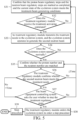
- Embodiment 2 of the present invention the proton beam regulatory steps of Embodiment 2 of the present invention are described.
- the beam equipment controlling system allows the cyclotron system to generate the first proton beam (step S11).
- the beam equipment controlling system may first confirm whether safety conditions are met, and allow the cyclotron system to generate the first proton beam when the safety conditions are met.
- the safety condition is that the user performs an input using an input device connected to the beam equipment controlling system after confirming that the environment is safe.
- the safety condition may be that the cyclotron system is not occupied by other courses of treatment or irradiation rooms.
- the cyclotron system confirms that the current state meets proton-beam generating conditions (step S12). That is, the cyclotron system confirms that it is a state where the proton beam can be generated at present.
- the proton-beam generating conditions include that the first Faraday cup FC1 is turned on and the second Faraday cup FC2 is turned off.
- the cyclotron system may notify the beam equipment controlling system to maintain and tune the cyclotron system (step S17).
- the cyclotron system After the cyclotron system confirms that the current state meets the proton-beam generating conditions, the cyclotron system generates the first proton beam (step S 13).
- the cyclotron system controls an ion source to inject the current to generate a current proton beam as the first proton beam for testing.
- the cyclotron system confirms whether the first proton beam meets the first proton beam specifications (step S14).
- the first proton beam specifications include that a value of the continuous wave current transformer reaches the set value, and a value of the beam profile monitor meets the specifications.
- the beam equipment controlling system may be notified to maintain and tune the cyclotron system (step S17).
- the cyclotron system When the cyclotron system confirms that the first proton beam meets the first proton beam specifications, it reports to the beam equipment controlling system that the first proton beam specifications have been met (step S15). Next, the beam equipment controlling system makes the cyclotron system 13 stop outputting the first proton beam (cancels the allowance of the cyclotron to generate the first neutron beam, and turns off the cyclotron system), and then marks that the proton beam regulatory steps have been completed (step S16).
- the way for marking that the steps have been completed may include, for example, creating a memory space for marking that whether the proton beam regulatory steps, the neutron beam regulatory steps, and the treatment regulatory steps have been completed in a memory readable for the processing device, and marking with values 0 and 1. The steps that have been completed are marked as 1, the steps that not have been completed are marked as 0, and the default value is 0. Alternatively, the marking described above can also be stored in the storage device 12.
- the beam equipment controlling system requests the cyclotron system to generate the first neutron beam (step S21).
- the cyclotron system confirms that the current state meets the neutron-beam generating conditions (step S22). That is, the cyclotron system confirms that it is a state where the neutron beam can be generated at present.
- the neutron-beam generating conditions include that the first Faraday cup FC1 is turned on and the second Faraday cup FC2 is turned on.
- the cyclotron system When the cyclotron system cannot meet the neutron-beam generating conditions within a period of time, it may notify the beam equipment controlling system to maintain and tune the cyclotron system (step S27). When the cyclotron system confirms that the neutron-beam generating conditions are met, the cyclotron system controls the ion source ISIS to inject the current to generate the first neutron beam as a neutron beam for testing (step S23).
- the beam equipment controlling system confirms whether the first neutron beam meets the first neutron beam specifications (step S24).
- the first neutron beam specifications include neutron intensity. Whether the first neutron beam meets the neutron intensity can be confirmed by using a neutron intensity detector connected with the beam equipment controlling system.
- the beam equipment controlling system When the first neutron beam does not meet the first neutron beam specifications within a period of time, the beam equipment controlling system notifies the cyclotron system to maintain and tune the cyclotron system (step S27).
- the beam equipment controlling system makes the cyclotron system stop outputting the first neutron beam (the beam equipment controlling system cancels the allowance to generate the first neutron beam, and notifies the cyclotron system to turn off)(step S25).
- the cyclotron system After the ion source, the first Faraday cup, and the second Faraday cup are turned off, the cyclotron system notifies the beam equipment controlling system that the cyclotron system has been turned off.
- the beam equipment controlling system marks that the neutron beam regulatory steps have been completed (step S26).
- step S31 After the proton beam regulatory steps and the neutron beam regulatory steps are marked as completed, enter the treatment regulatory steps. First, it is confirmed that the proton beam regulatory steps and the neutron beam regulatory steps are marked as completed, and the current state of the cyclotron system meets the treatment-beam generating conditions (step S31).
- the beam equipment controlling system waits for the treatment activating command from the user (step S32). For example, the beam equipment controlling system waits for the user to input a specific parameter or press a specific button to input the treatment activating command into the beam equipment controlling system. In addition, while waiting for the treatment activating command, the beam equipment controlling system may also require the user to input treatment needs.
- the treatment needs are specifications of the treatment neutron beam (the second neutron beam), and are determined according to the treatment plan instructed by the doctor. In the present embodiment, the treatment needs are the tumor prescription dose and the treatment plan instructed by the doctor.
- the beam equipment controlling system can calculate the required treatment time according to the treatment needs input by the user.
- the beam equipment controlling system When the beam equipment controlling system receives the treatment activating command issued by the user, the beam equipment controlling system orders the cyclotron system to control the ion source ISIS to inject the current, and transmits the treatment needs to the cyclotron system to make the cyclotron system start to generate the second neutron beam (step S33). At this time, it is confirmed whether the cyclotron system operates normally (step S34). If the cyclotron system cannot operate normally within a period of time, the cyclotron system notifies the beam equipment controlling system. The user (e.g., medical personnel) decides whether to stop the treatment according to the received information.
- the user e.g., medical personnel
- the cyclotron system confirms whether the proton number and the neutron number are matched (step S35). In some embodiments, it may measure the proton number through the continuous wave current transformers CWCT1 and CWCT2 respectively to obtain the first current value or the second current value. It may also measure the neutron number through the neutron intensity detector to obtain the neutron counting rate. In some embodiments, the neutron number can be derived from the pulsation number measured in the proportional counter. In addition, before the preset irradiation time ends, the beam equipment controlling system continuously confirms whether the generated second neutron beam meets the treatment needs through the neutron intensity detector (step S36).
- the beam equipment controlling system asks the user whether to stop the treatment regulatory steps (step S37).
- the user can extend the irradiation time according to the requirement, and return to the step S35.
- the beam equipment controlling system orders the cyclotron system to enter a stop procedure to stop outputting the second neutron beam (step S38).
- the stop procedure includes detecting whether the cyclotron system has stopped outputting the second neutron beam.
- the beam equipment controlling system marks that the treatment regulatory steps have been completed.
- the beam equipment controlling system can continuously order the cyclotron system to stop and detect whether the cyclotron system has been turned off. If the cyclotron system is not turned off within a period of time (e.g., 2 minutes), an emergency stop procedure is initiated.
- the stop procedure is not limited thereto, it may design different stop procedure according to the requirement.
- the embodiments described above may also be implemented in combination. Alternatively, one of the plurality of embodiments may be partially implemented. Alternatively, the plurality of embodiments may be partially combined. In addition, the configurations and steps described in the plurality of embodiments described above can be partially modified according to the requirement.
Landscapes
- Health & Medical Sciences (AREA)
- Engineering & Computer Science (AREA)
- Biomedical Technology (AREA)
- Nuclear Medicine, Radiotherapy & Molecular Imaging (AREA)
- Public Health (AREA)
- General Health & Medical Sciences (AREA)
- Physics & Mathematics (AREA)
- Animal Behavior & Ethology (AREA)
- Life Sciences & Earth Sciences (AREA)
- Pathology (AREA)
- Veterinary Medicine (AREA)
- Radiology & Medical Imaging (AREA)
- Spectroscopy & Molecular Physics (AREA)
- Plasma & Fusion (AREA)
- High Energy & Nuclear Physics (AREA)
- Surgery (AREA)
- Epidemiology (AREA)
- Medical Informatics (AREA)
- Primary Health Care (AREA)
- General Engineering & Computer Science (AREA)
- Urology & Nephrology (AREA)
- Particle Accelerators (AREA)
- Radiation-Therapy Devices (AREA)
Applications Claiming Priority (1)
| Application Number | Priority Date | Filing Date | Title |
|---|---|---|---|
| TW112103962A TWI863115B (zh) | 2023-02-04 | 2023-02-04 | 射束設備控制系統及射束設備控制方法 |
Publications (1)
| Publication Number | Publication Date |
|---|---|
| EP4410366A1 true EP4410366A1 (de) | 2024-08-07 |
Family
ID=87158364
Family Applications (1)
| Application Number | Title | Priority Date | Filing Date |
|---|---|---|---|
| EP23183835.0A Pending EP4410366A1 (de) | 2023-02-04 | 2023-07-06 | Strahlausrüstungsteuerungssystem und strahlausrüstungsteuerungsverfahren |
Country Status (6)
| Country | Link |
|---|---|
| US (1) | US12324087B2 (de) |
| EP (1) | EP4410366A1 (de) |
| JP (2) | JP7777112B2 (de) |
| KR (1) | KR102943538B1 (de) |
| CN (1) | CN118436914A (de) |
| TW (1) | TWI863115B (de) |
Families Citing this family (1)
| Publication number | Priority date | Publication date | Assignee | Title |
|---|---|---|---|---|
| TWI835521B (zh) * | 2023-01-13 | 2024-03-11 | 禾榮科技股份有限公司 | 中子束源產生系統、穩定控制系統及產生方法 |
Citations (3)
| Publication number | Priority date | Publication date | Assignee | Title |
|---|---|---|---|---|
| US20180169440A1 (en) * | 2015-09-28 | 2018-06-21 | Neuboron Medtech Ltd. | Beam diagnostic system for neutron capture therapy system |
| WO2022017193A1 (zh) * | 2020-07-20 | 2022-01-27 | 中硼(厦门)医疗器械有限公司 | 放射治疗系统及其安全联锁控制方法 |
| US20220070994A1 (en) * | 2020-08-26 | 2022-03-03 | Tae Technologies, Inc. | Ion beam paths on target surfaces for neutron beam generation |
Family Cites Families (4)
| Publication number | Priority date | Publication date | Assignee | Title |
|---|---|---|---|---|
| EP3558456A1 (de) * | 2016-12-23 | 2019-10-30 | Koninklijke Philips N.V. | Strahlverfolgung zur erkennung und vermeidung von kollisionen zwischen strahlentherapievorrichtungen und patienten |
| US10668303B2 (en) * | 2018-03-01 | 2020-06-02 | Shanghai United Imaging Healthcare Co., Ltd. | Devices and methods for measuring a radiation output rate and monitoring beam energy |
| CN113952636B (zh) * | 2020-07-20 | 2023-08-08 | 中硼(厦门)医疗器械有限公司 | 放射治疗系统及其安全联锁控制方法 |
| CN113952635B (zh) * | 2020-07-20 | 2023-02-14 | 中硼(厦门)医疗器械有限公司 | 放射治疗系统及其安全联锁控制方法 |
-
2023
- 2023-02-04 TW TW112103962A patent/TWI863115B/zh active
- 2023-03-13 CN CN202310235689.5A patent/CN118436914A/zh active Pending
- 2023-06-14 US US18/334,808 patent/US12324087B2/en active Active
- 2023-07-06 EP EP23183835.0A patent/EP4410366A1/de active Pending
- 2023-09-26 KR KR1020230129353A patent/KR102943538B1/ko active Active
- 2023-11-21 JP JP2023197342A patent/JP7777112B2/ja active Active
-
2025
- 2025-09-02 JP JP2025145354A patent/JP2025170402A/ja active Pending
Patent Citations (3)
| Publication number | Priority date | Publication date | Assignee | Title |
|---|---|---|---|---|
| US20180169440A1 (en) * | 2015-09-28 | 2018-06-21 | Neuboron Medtech Ltd. | Beam diagnostic system for neutron capture therapy system |
| WO2022017193A1 (zh) * | 2020-07-20 | 2022-01-27 | 中硼(厦门)医疗器械有限公司 | 放射治疗系统及其安全联锁控制方法 |
| US20220070994A1 (en) * | 2020-08-26 | 2022-03-03 | Tae Technologies, Inc. | Ion beam paths on target surfaces for neutron beam generation |
Also Published As
| Publication number | Publication date |
|---|---|
| US12324087B2 (en) | 2025-06-03 |
| JP2024110920A (ja) | 2024-08-16 |
| US20240268015A1 (en) | 2024-08-08 |
| KR20240122679A (ko) | 2024-08-13 |
| JP7777112B2 (ja) | 2025-11-27 |
| CN118436914A (zh) | 2024-08-06 |
| TWI863115B (zh) | 2024-11-21 |
| TW202432198A (zh) | 2024-08-16 |
| KR102943538B1 (ko) | 2026-03-24 |
| JP2025170402A (ja) | 2025-11-18 |
Similar Documents
| Publication | Publication Date | Title |
|---|---|---|
| Klein et al. | Task Group 142 report: quality assurance of medical accelerators a | |
| Netherton et al. | Experience in commissioning the halcyon linac | |
| Stell et al. | An extensive log‐file analysis of step‐and‐shoot intensity modulated radiation therapy segment delivery errors | |
| Cai et al. | A practical implementation of physics quality assurance for photon adaptive radiotherapy | |
| JP2002537032A (ja) | イオンビーム治療システムのビーム発生手段およびビーム加速手段を照合する方法 | |
| US12324087B2 (en) | Beam equipment controlling system and beam equipment controlling method | |
| Thwaites et al. | Quality assurance of external beam radiotherapy | |
| CN108525139A (zh) | 中子束检测系统及中子束检测系统的设定方法 | |
| Rahman et al. | Failure Mode and Effects Analysis for Experimental Use of FLASH on a Clinical Accelerator | |
| Baltz et al. | A hybrid method to improve efficiency of patient specific SRS and SBRT QA using 3D secondary dose verification | |
| US20210121716A1 (en) | Monitoring system for radiation therapy center | |
| JP2021101875A (ja) | 校正装置、治療計画装置及び校正方法 | |
| Hofverberg et al. | The development of a treatment control system for a passive scattering proton therapy installation | |
| Silvestri et al. | Clinical implementation of a log file-based machine and patient QA system for IMRT and VMAT treatment plans | |
| Rana et al. | Determination of machine‐specific tolerances using statistical process control analysis of long‐term uniform scanning proton machine QA results | |
| Mijnheer | EPIDs and QA of advanced treatments | |
| JP2021101873A (ja) | 中性子線測定装置、及び中性子線測定方法 | |
| CN120299218A (zh) | 一种用于医疗设备的辐射检测预警方法及系统 | |
| Novotny Jr et al. | Long‐term stability of the Leksell Gamma Knife® Perfexion™ patient positioning system (PPS) | |
| Valdes et al. | Artificial intelligence for prediction of measurement‐based patient‐specific quality assurance is ready for prime time | |
| Ranjith et al. | Assessment of pencil beam scanning proton therapy beam delivery accuracy through machine learning and log file analysis | |
| US7460640B2 (en) | Radiotherapy monitoring apparatus | |
| Alharthi et al. | An investigation of the IQM signal variation and error detection sensitivity for patient specific pre-treatment QA | |
| Mastella et al. | Clinical implementation of a secondary dose calculation system for patient-specific quality assurance of complex VMAT and SBRT treatments | |
| Megahed et al. | Problems affecting accurate dose measurement in small-field for linear accelerator |
Legal Events
| Date | Code | Title | Description |
|---|---|---|---|
| PUAI | Public reference made under article 153(3) epc to a published international application that has entered the european phase |
Free format text: ORIGINAL CODE: 0009012 |
|
| STAA | Information on the status of an ep patent application or granted ep patent |
Free format text: STATUS: REQUEST FOR EXAMINATION WAS MADE |
|
| 17P | Request for examination filed |
Effective date: 20240426 |
|
| AK | Designated contracting states |
Kind code of ref document: A1 Designated state(s): AL AT BE BG CH CY CZ DE DK EE ES FI FR GB GR HR HU IE IS IT LI LT LU LV MC ME MK MT NL NO PL PT RO RS SE SI SK SM TR |
|
| STAA | Information on the status of an ep patent application or granted ep patent |
Free format text: STATUS: EXAMINATION IS IN PROGRESS |
|
| RIC1 | Information provided on ipc code assigned before grant |
Ipc: A61N 5/10 20060101AFI20251014BHEP |
|
| 17Q | First examination report despatched |
Effective date: 20251029 |