EP4411587A1 - Détection de blancs dans des documents - Google Patents
Détection de blancs dans des documents Download PDFInfo
- Publication number
- EP4411587A1 EP4411587A1 EP23194692.2A EP23194692A EP4411587A1 EP 4411587 A1 EP4411587 A1 EP 4411587A1 EP 23194692 A EP23194692 A EP 23194692A EP 4411587 A1 EP4411587 A1 EP 4411587A1
- Authority
- EP
- European Patent Office
- Prior art keywords
- blank
- document
- prediction
- trained
- documents
- Prior art date
- Legal status (The legal status is an assumption and is not a legal conclusion. Google has not performed a legal analysis and makes no representation as to the accuracy of the status listed.)
- Pending
Links
Images



Classifications
-
- G—PHYSICS
- G06—COMPUTING OR CALCULATING; COUNTING
- G06V—IMAGE OR VIDEO RECOGNITION OR UNDERSTANDING
- G06V30/00—Character recognition; Recognising digital ink; Document-oriented image-based pattern recognition
- G06V30/40—Document-oriented image-based pattern recognition
- G06V30/41—Analysis of document content
- G06V30/412—Layout analysis of documents structured with printed lines or input boxes, e.g. business forms or tables
-
- G—PHYSICS
- G06—COMPUTING OR CALCULATING; COUNTING
- G06V—IMAGE OR VIDEO RECOGNITION OR UNDERSTANDING
- G06V30/00—Character recognition; Recognising digital ink; Document-oriented image-based pattern recognition
- G06V30/40—Document-oriented image-based pattern recognition
- G06V30/41—Analysis of document content
- G06V30/416—Extracting the logical structure, e.g. chapters, sections or page numbers; Identifying elements of the document, e.g. authors
-
- G—PHYSICS
- G06—COMPUTING OR CALCULATING; COUNTING
- G06F—ELECTRIC DIGITAL DATA PROCESSING
- G06F40/00—Handling natural language data
- G06F40/10—Text processing
- G06F40/166—Editing, e.g. inserting or deleting
- G06F40/174—Form filling; Merging
-
- G—PHYSICS
- G06—COMPUTING OR CALCULATING; COUNTING
- G06F—ELECTRIC DIGITAL DATA PROCESSING
- G06F40/00—Handling natural language data
- G06F40/20—Natural language analysis
- G06F40/279—Recognition of textual entities
-
- G—PHYSICS
- G06—COMPUTING OR CALCULATING; COUNTING
- G06N—COMPUTING ARRANGEMENTS BASED ON SPECIFIC COMPUTATIONAL MODELS
- G06N20/00—Machine learning
-
- G—PHYSICS
- G06—COMPUTING OR CALCULATING; COUNTING
- G06N—COMPUTING ARRANGEMENTS BASED ON SPECIFIC COMPUTATIONAL MODELS
- G06N3/00—Computing arrangements based on biological models
- G06N3/02—Neural networks
- G06N3/04—Architecture, e.g. interconnection topology
- G06N3/045—Combinations of networks
-
- G—PHYSICS
- G06—COMPUTING OR CALCULATING; COUNTING
- G06N—COMPUTING ARRANGEMENTS BASED ON SPECIFIC COMPUTATIONAL MODELS
- G06N3/00—Computing arrangements based on biological models
- G06N3/02—Neural networks
- G06N3/08—Learning methods
- G06N3/09—Supervised learning
-
- G—PHYSICS
- G06—COMPUTING OR CALCULATING; COUNTING
- G06V—IMAGE OR VIDEO RECOGNITION OR UNDERSTANDING
- G06V10/00—Arrangements for image or video recognition or understanding
- G06V10/70—Arrangements for image or video recognition or understanding using pattern recognition or machine learning
- G06V10/82—Arrangements for image or video recognition or understanding using pattern recognition or machine learning using neural networks
-
- G—PHYSICS
- G06—COMPUTING OR CALCULATING; COUNTING
- G06V—IMAGE OR VIDEO RECOGNITION OR UNDERSTANDING
- G06V30/00—Character recognition; Recognising digital ink; Document-oriented image-based pattern recognition
- G06V30/10—Character recognition
-
- G—PHYSICS
- G06—COMPUTING OR CALCULATING; COUNTING
- G06V—IMAGE OR VIDEO RECOGNITION OR UNDERSTANDING
- G06V30/00—Character recognition; Recognising digital ink; Document-oriented image-based pattern recognition
- G06V30/40—Document-oriented image-based pattern recognition
- G06V30/41—Analysis of document content
- G06V30/413—Classification of content, e.g. text, photographs or tables
-
- G—PHYSICS
- G06—COMPUTING OR CALCULATING; COUNTING
- G06V—IMAGE OR VIDEO RECOGNITION OR UNDERSTANDING
- G06V30/00—Character recognition; Recognising digital ink; Document-oriented image-based pattern recognition
- G06V30/40—Document-oriented image-based pattern recognition
- G06V30/41—Analysis of document content
- G06V30/414—Extracting the geometrical structure, e.g. layout tree; Block segmentation, e.g. bounding boxes for graphics or text
-
- G—PHYSICS
- G06—COMPUTING OR CALCULATING; COUNTING
- G06V—IMAGE OR VIDEO RECOGNITION OR UNDERSTANDING
- G06V30/00—Character recognition; Recognising digital ink; Document-oriented image-based pattern recognition
- G06V30/10—Character recognition
- G06V30/19—Recognition using electronic means
- G06V30/191—Design or setup of recognition systems or techniques; Extraction of features in feature space; Clustering techniques; Blind source separation
- G06V30/19147—Obtaining sets of training patterns; Bootstrap methods, e.g. bagging or boosting
Definitions
- documents include one or more fields that are present on the document so when the field is empty or missing, pre-existing systems can determine detection of blanks.
- documents also have fields which are intentionally blank, and there is no text on the document whatsoever indicating that the space is left intentionally blank; the blank classification is meant to be interpreted as being so by the reader of the document.
- the disclosure relates to a method of blank detection, the method comprising: receiving a document from a user, wherein the document comprises derived text; applying a trained blank detection model to the document to make a first prediction, wherein the first prediction indicates whether at least one field in the document is blank; comparing the first prediction with a second prediction, wherein the second prediction is made by an extraction model; and extracting the at least one field using the extraction model.
- the disclosure relates to a system for blank detection, the system comprising: a user device configured to store: a collection of one or more documents comprising at least one field, wherein the one or more documents are from a user; a cloud computing system configured to provide access to a repository storing the one or more documents; and a server communicatively connected to the cloud computing system and comprising one or more processors configured to execute instructions to: receive a document, wherein the document comprises derived text; apply a trained blank detection model to the document to make a first prediction, wherein the first prediction indicates whether the at least one field in the document is blank; compare the first prediction with a second prediction, wherein the second prediction is made by an extraction model; and extract the at least one field using the extraction model.
- the disclosure relates to a computer-readable medium comprising (e.g. storing and/or conveying) instructions executable by a processor to: receive a document from a user, wherein the document comprises derived text; apply a trained blank detection model to the document to make a first prediction, wherein the first prediction indicates whether at least one field in the document is blank; compare the first prediction with a second prediction, wherein the second prediction is made by an extraction model; and extract the at least one field using the extraction model.
- a computer-readable medium comprising (e.g. storing and/or conveying) instructions executable by a processor to: receive a document from a user, wherein the document comprises derived text; apply a trained blank detection model to the document to make a first prediction, wherein the first prediction indicates whether at least one field in the document is blank; compare the first prediction with a second prediction, wherein the second prediction is made by an extraction model; and extract the at least one field using the extraction model.
- connection may be direct or indirect.
- computer A may be directly connected to computer B by means of a direct communication link.
- Computer A may be indirectly connected to computer B by means of a common network environment to which both computers are connected.
- a connection may be wired or wireless.
- a connection may be temporary, permanent, or semi-permanent communication channel between two entities.
- An entity is an electronic device, not necessarily limited to a computer.
- Embodiments of the disclosure solve the challenge of finding blanks in documents by using a specialized Artificial Intelligence or Machine Learning based detection system that identifies which fields in a given document are blank or not by analyzing text from the document obtained by Optical Character Recognition (OCR).
- OCR Optical Character Recognition
- the disclosure leverages training data from a collection of documents, where each field is explicitly marked as being blank or not (ground truth) by using a label and/or a confidence score.
- Embodiments of the disclosure involve a blank detection model being trained using a collection of documents to predict which of the fields found in the given document are blank. Further, each document of the collection of documents may include a key-value pair indicating whether at least one field in each of the collection of documents is blank.
- the blank detection model predicts whether at least one field is populated, while the extraction model predicts the value (if any) of that field.
- the system of the disclosure compares the predictions. The two models both either indicate that a field is populated or not populated. If the predictions are inconsistent (e.g. the models give contradictory binary predictions, or inconsistent confidence scores), the user(s) are asked to review.
- the results of the blank detection model are used to constrain the extraction model (e.g. assign extracted values only to fields predicted to be non-blank).
- a W-2 form may contain numerous fields used to process tax information of an individual to complete a tax return and submit to the Internal Revenue Service (IRS).
- IRS Internal Revenue Service
- a challenge of such forms is to accurately detect which fields in a given document are left intentionally blank.
- a model to detect blanks would be able to process box 12 of the W-2 form and quickly and accurately detect that the W-2 form has a blank box 12 (for example, either not input by a user or box 12 is removed from the W-2 form so a blank would be detected).
- Some fields can be harder to extract or detect as blank than others.
- Box 12 is harder than most fields on the W-2 form to detect because the box has a tabular structure with multiple subfields. Accurately identifying blanks in documents provide a much-needed improvement to data extraction across various industries.
- embodiments of this disclosure fall under the paradigm of standard classification problems.
- the present disclosure has the advantage over the current art that the system is explicitly designed to handle blanks within a document, either at the single field level, at the multiple field level, or the entire document type using the techniques described herein.
- the figures of the disclosure show diagrams of embodiments that are in accordance with the disclosure.
- the embodiments of the figures may be combined and may include or be included within the features and embodiments described in the other figures of the application.
- the features and elements of the figures are, individually and as a combination, improving the detection of blanks in documents.
- the various elements, systems, components, and steps shown in the figures may be omitted, repeated, combined, and/or altered as shown from the figures. Accordingly, the scope of the present disclosure should not be considered limited to the specific arrangements shown in the figures.
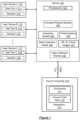
- Figure 1 shows a variety of system components configured to detect blanks in a document using a cloud computing system (170) connected to a server (120) by one or more data pipelines (116).
- the server (120) is also accessed by multiple user devices (e.g., User Device A (110), User Device B (113), and User Device C (117)), each of which is configured to upload a document ( e.g., User Doc A (111), User Doc B (114), User Doc C (117)) and configured to receive as output, in the form of a decision ( e.g., Decision (112), Decision (115), Decision (119)).
- a decision e.g., Decision (112), Decision (115), Decision (119)
- the server (120) includes one or more processor(s) (130), a Compare Results Module (156), an Extraction System (140), a Preprocessing module (153), a Blank Detection Model (140), a machine learning module for Visual Images (151), and a Data Collection Module (140).
- the cloud computing system (170) includes Documents (171) and Ground Truth Pairs (172) (also referred to as key-value pairs) stored in a repository (173).
- Figure 2 shows, in accordance with an embodiment of the disclosure, a data flow diagram of the implementation of the system capable of detecting blanks in a document.
- Figure 2 may use one or more components shown and described in relation to Figure 1 .
- Figure 2 has two diverging paths for data flow, which eventually reconverge to provide a Decision (262) as output.
- the first path shown in Figure 2 is Documents (202) being provided to the OCR Scan (220) process, which outputs a raw OCR text (222) for each of the Documents (202).
- the raw OCR text (222) is forwarded to two different models, one for Extraction (240) and the other model for Preprocessing (230).
- the Extraction Payload (242) is output from the Extraction Model (240) and is then forwarded for comparison with the Blank Detection Model (250).
- the documents/images that were forwarded to the Preprocessing (230) now are input to the Blank Detection Model (250).
- other data may be added to the raw OCR text (222) during preprocessing (230).
- a document is obtained and then OCR is performed on the document to generate payload text that is associated with coordinates (e.g., x, y space) on a page.
- OCR is performed on the document to generate payload text that is associated with coordinates (e.g., x, y space) on a page.
- a word on the document is striped to one long string that is tokenized to replace the words with numbers.
- the Blank Detection Model (250) is then able to use the numbers generated during the optional preprocessing (230).
- GT Ground Truth Pairs
- the Ground Truth Pairs begin as Ground Truth Information (209). From that information, GT Key-Value Pairs (210) are formed as well as Binary GT labels (215), which indicate whether one or more fields in a document are populated. In some embodiments, the Ground Truth Pairs are used to train the Blank Detection Model.
- the Extraction Payload (242) and the results of the Blank Detection Model (250) are sent to the Compare Results Module (260).
- the Compare Result Module (260) produces a decision to convey to the user seeking accuracy regarding the detection of a blank in a document.
- Figure 3 shows a flow chart how to perform one or more embodiments of the disclosure.
- a document or a collection of documents is received from a user where each document includes derived text (for example, via OCR).
- labels are also received to indicate which of the fields in the document are blank.
- the labels may be the same as and be referred to as confidence scores indicating the likelihood of a field being blank.
- binary labels may be accompanied by confidence scores indicating the likelihood that OCR text is correct.
- the documents obtained include training data: a collection of documents with OCR text, along with labels indicating which of the fields in the document are blank or not.
- a machine learning (ML) system (e.g., the blank detection model) is trained to predict which fields are blank. Given the training data, the machine learning system is trained to predict which fields are blank.
- the ML system is based on a generic Natural Language Processing (NLP) base system - for e.g., a transformer-based system like Bi-directional Encoder Representations from Transformers (BERT).
- NLP Natural Language Processing
- the ML system may be extended to leverage more powerful modeling schemes that take advantage of visual information in a document (like LayoutLM and its variants).
- the ML system may be constructed as a multi-label model that gives multiple predictions, one for each field.
- a trained blank detection model is applied to the document to make a first prediction, where the first prediction indicates whether at least one field in the document is blank.
- the first prediction may include a confidence score indicating a likelihood that the at least one field is blank.
- the first prediction is based on comparing a confidence score with a threshold (for example, the at least one field is predicted to be blank if the confidence score exceeds or falls below a threshold).
- the blank detection model is combined with an extraction model used to extract one or more non-blank fields in the document.
- the blank detection model that is capable of detecting blanks in a document described above and shown in Figure 2 is combined with any other extraction system used to extract the non-blank fields in the document.
- Example of use cases for this combination approach may apply to Box 12 of the W-2 tax form shown and described in relation to Figure 4 .
- This combination of the blank detection model and the extraction model may be done in a binary fashion, where blanks are first detected, and then only fields outside the detected blanks are selected from the non-blank extractor. Or if confidence scores are available, the combination can be done in a "soft" fashion where confidence scores are observed from the blank and non-blank extractor and compared, to decide which prediction to keep if the two extractors are in disagreement.
- blank detection and extraction may occur in series or in parallel. If the steps occur in series, the results of blank detection may be used to guide/constrain assigning extracted values to fields. If a prediction that one field is blank is made with some confidence, assigning any extracted value to that field can be penalized, where the penalty is proportional to the confidence.
- the ML system compares the first prediction with a second prediction, where the second prediction is made by an extraction model.
- the at least one field is extracted using the extraction model and the decision of blanks fields that are found in documents is presented to the user(s).
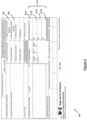
- FIG 4 shows a non-limiting example of the systems referenced in Figure 1 , Figure 2 , and Figure 3 .
- a commonly formatted W-2 Wage and Tax Statement form from the Internal Revenue Service (IRS) in the U.S. is shown.
- IRS Internal Revenue Service
- a W-2 form takes a relatively constant form, the disclosure described above is able to find blanks on a document if the order is changed, a particular box is not completed, or if a particular box is removed (either intentionally or unintentionally) from the document.
- Box 12 Upon encountering Box 12 (e.g., 412A, 412B, 412C, 412D), all the boxes within Box 12 are blank. Accordingly, the blank detection model and the system described and shown in Figure 3 will identity Box 12 as blank, but not identify Box 2 and Box 4, as blank.
- Embodiments may be implemented on a computing system specifically designed to achieve an improved technological result.
- the features and elements of the disclosure provide a significant technological advancement over computing systems that do not implement the features and elements of the disclosure.
- Any combination of mobile, desktop, server, router, switch, embedded device, or other types of hardware may be improved by including the features and elements described in the disclosure.
- the computing system (500) may include one or more computer processors (502), non-persistent storage (504), persistent storage (506), a communication interface (512) (e.g., Bluetooth interface, infrared interface, network interface, optical interface, etc. ) , and numerous other elements and functionalities that implement the features and elements of the disclosure.
- the computing system (500) may execute within and use resources of the cloud computing environment.
- the computer processor(s) (502) may be an integrated circuit for processing instructions.
- the computer processor(s) may be one or more cores or micro-cores of a processor.
- the computer processor(s) (502) includes one or more processors.
- the one or more processors may include a central processing unit (CPU), a graphics processing unit (GPU), a tensor processing unit (TPU), combinations thereof, etc.
- the input device(s) (510) may include a touchscreen, keyboard, mouse, microphone, touchpad, electronic pen, or any other type of input device.
- the input device(s) (510) may receive inputs from a user that are responsive to data and messages presented by the output device(s) (508).
- the inputs may include text input, audio input, video input, etc., which may be processed and transmitted by the computing system (500) in accordance with the disclosure.
- the communication interface (512) may include an integrated circuit for connecting the computing system (500) to a network (not shown) (e.g., a local area network (LAN), a wide area network (WAN) such as the Internet, mobile network, or any other type of network) and/or to another device, such as another computing device.
- a network not shown
- LAN local area network
- WAN wide area network
- the output device(s) (508) may include a display device, a printer, external storage, or any other output device.
- One or more of the output devices may be the same or different from the input device(s).
- the input and output device(s) may be locally or remotely connected to the computer processor(s) (502). Many different types of computing systems exist, and the aforementioned input and output device(s) may take other forms.
- the output device(s) (508) may display data and messages that are transmitted and received by the computing system (500).
- the data and messages may include text, audio, video, etc., and include the data and messages described above in the other figures of the disclosure.
- a computer-readable medium may be a computer-readable storage medium or a computer-readable transmission medium.
- a computer readable storage medium which may be termed "non-transitory” may comprise such as a CD, DVD, storage device, a diskette, a tape, flash memory, physical memory, or any other computer readable storage medium.
- a computer-readable transmission medium may include carrier waves, transmission signals or the like.
- a computer-readable transmission medium may convey instructions between components of a single computer system and/or between plural separate computer systems.
- the software instructions may correspond to computer readable program code that, when executed by a processor(s), is configured to perform one or more embodiments of the disclosure, which may include transmitting, receiving, presenting, and displaying data and messages described in the other figures of the disclosure.
- the computing system (500) in FIG. 5A may be connected to or be a part of a network.
- the network (520) may include multiple nodes (e.g., node X (522), node Y (524)).
- Each node may correspond to a computing system, such as the computing system shown in FIG. 5A , or a group of nodes combined may correspond to the computing system shown in FIG. 5A .
- embodiments may be implemented on a node of a distributed system that is connected to other nodes.
- embodiments may be implemented on a distributed computing system having multiple nodes, where each portion may be located on a different node within the distributed computing system.
- one or more elements of the aforementioned computing system (500) may be located at a remote location and connected to the other elements over a network.
- the nodes e.g., node X (522), node Y (524)) in the network (520) may be configured to provide services for a client device (526), including receiving requests and transmitting responses to the client device (526).
- the nodes may be part of a cloud computing system.
- the client device (526) may be a computing system, such as the computing system shown in FIG. 5A . Further, the client device (526) may include and/or perform all or a portion of one or more embodiments of the disclosure.
- the computing system of FIG. 5A may include functionality to present raw and/or processed data, such as results of comparisons and other processing.
- presenting data may be accomplished through various presenting methods.
- data may be presented by being displayed in a user interface, transmitted to a different computing system, and stored.
- the user interface may include a GUI that displays information on a display device.
- the GUI may include various GUI widgets that organize what data is shown as well as how data is presented to a user.
- the GUI may present data directly to the user, e.g., data presented as actual data values through text, or rendered by the computing device into a visual representation of the data, such as through visualizing a data model.
- a method for blank detection that involves receiving a document from a user, where the document includes derived text; applying a trained blank detection model to the document to make a first prediction, where the first prediction indicates whether at least one field in the document is blank; comparing the first prediction with a second prediction, where the second prediction is made by an extraction model; and extracting the at least one field using the extraction model.
- a method of blank detection comprising: receiving a document from a user, wherein the document comprises derived text; applying a trained blank detection model to the document to make a first prediction, wherein the first prediction indicates whether at least one field in the document is blank; comparing the first prediction with a second prediction, wherein the second prediction is made by an extraction model; and extracting the at least one field using the extraction model.
- Clause 2 The method of clause 1, wherein the trained blank detection model is trained, using a collection of documents, to predict which of the at least one field found in the collection of documents are blank.
- Clause 3 The method of clause 1 or 2, wherein the trained blank detection model is trained using a collection of documents, and wherein each document of the collection of documents comprises a key-value pair indicating whether the at least one field in each of the collection of documents is blank.
- Clause 4 The method of clause 1, 2 or 3, wherein the first prediction comprises a confidence score.
- Clause 5 The method of clause 4, further comprising: determining the confidence score, wherein the confidence score indicates a likelihood that the at least one field is blank.
- Clause 6 The method of any preceding clause, further comprising: presenting one or more non-blank fields found in the document.
- the trained blank detection model comprises a bidirectional encoder representations from transformers (BERT) language representation model.
- Clause 9 The method of any of clauses 1 to 7, wherein the trained blank detection model executes in series with the extraction model.
- a system for blank detection comprising: a user device configured to store: a collection of one or more documents comprising at least one field, wherein the one or more documents are from a user; a cloud computing system configured to provide access to a repository storing the one or more documents; and a server communicatively connected to the cloud computing system and comprising one or more processors configured to execute instructions to: receive a document, wherein the document comprises derived text; apply a trained blank detection model to the document to make a first prediction, wherein the first prediction indicates whether the at least one field in the document is blank; compare the first prediction with a second prediction, wherein the second prediction is made by an extraction model; and extract the at least one field using the extraction model.
- Clause 11 The system of clause 10, wherein the trained blank detection model is trained, using the collection of documents, to predict which of the at least one fields found in the collection of documents are blank.
- Clause 12 The system of clause 10 or 11, wherein the trained blank detection model is further configured to execute instructions to determine a confidence score, wherein the confidence score indicates a likelihood that the at least one field is blank in the document.
- Clause 13 The system of clause 10, 11 or 12, wherein the trained blank detection model comprises a bidirectional encoder representations from transformers (BERT) language representation model.
- the trained blank detection model comprises a bidirectional encoder representations from transformers (BERT) language representation model.
- Clause 14 The system of any of clauses 10 to 13, wherein the derived text comprises output of an optical character recognition (OCR) scanning operation.
- OCR optical character recognition
- Clause 15 The system of any of clauses 10 to 14, wherein the trained blank detection model executes in parallel with the extraction model.
- Clause 16 The system of any of clauses 10 to 14, wherein the trained blank detection model executes in series with the extraction model.
- a computer-readable medium comprising instructions executable by a processor to: receive a document from a user, wherein the document comprises derived text; apply a trained blank detection model to the document to make a first prediction, wherein the first prediction indicates whether at least one field in the document is blank; compare the first prediction with a second prediction, wherein the second prediction is made by an extraction model; and extract the at least one field using the extraction model.
- Clause 18 The computer-readable medium of clause 17, further comprising presenting one or more non-blank fields found in documents the document.
- Clause 19 The computer-readable medium of clause 17 or 18, wherein the trained blank detection model executes in parallel with the extraction model.
- Clause 20 The computer-readable medium of clause 17, 18 or 19, wherein the trained blank detection model executes in series with the extraction model.
- ordinal numbers e.g., first, second, third, etc.
- an element i. e., any noun in the application.
- the use of ordinal numbers is not to imply or create any particular ordering of the elements nor to limit any element to being only a single element unless expressly disclosed, such as by the use of the terms "before”,” after", “single”, and other such terminology. Rather, the use of ordinal numbers is to distinguish between the elements.
- a first element is distinct from a second element, and the first element may encompass more than one element and succeed (or precede) the second element in an ordering of elements.
Landscapes
- Engineering & Computer Science (AREA)
- Theoretical Computer Science (AREA)
- Physics & Mathematics (AREA)
- Computer Vision & Pattern Recognition (AREA)
- General Physics & Mathematics (AREA)
- Artificial Intelligence (AREA)
- Multimedia (AREA)
- Software Systems (AREA)
- Evolutionary Computation (AREA)
- General Engineering & Computer Science (AREA)
- General Health & Medical Sciences (AREA)
- Health & Medical Sciences (AREA)
- Computing Systems (AREA)
- Computational Linguistics (AREA)
- Data Mining & Analysis (AREA)
- Mathematical Physics (AREA)
- Medical Informatics (AREA)
- Life Sciences & Earth Sciences (AREA)
- Audiology, Speech & Language Pathology (AREA)
- Biomedical Technology (AREA)
- Biophysics (AREA)
- Molecular Biology (AREA)
- Computer Graphics (AREA)
- Geometry (AREA)
- Databases & Information Systems (AREA)
- Information Retrieval, Db Structures And Fs Structures Therefor (AREA)
- Machine Translation (AREA)
Applications Claiming Priority (1)
| Application Number | Priority Date | Filing Date | Title |
|---|---|---|---|
| US18/104,257 US11763589B1 (en) | 2023-01-31 | 2023-01-31 | Detection of blanks in documents |
Publications (1)
| Publication Number | Publication Date |
|---|---|
| EP4411587A1 true EP4411587A1 (fr) | 2024-08-07 |
Family
ID=87889789
Family Applications (1)
| Application Number | Title | Priority Date | Filing Date |
|---|---|---|---|
| EP23194692.2A Pending EP4411587A1 (fr) | 2023-01-31 | 2023-08-31 | Détection de blancs dans des documents |
Country Status (4)
| Country | Link |
|---|---|
| US (1) | US11763589B1 (fr) |
| EP (1) | EP4411587A1 (fr) |
| AU (1) | AU2023214221B2 (fr) |
| CA (1) | CA3208714A1 (fr) |
Citations (4)
| Publication number | Priority date | Publication date | Assignee | Title |
|---|---|---|---|---|
| US20110200256A1 (en) * | 2010-02-12 | 2011-08-18 | Xerox Corporation | Optical mark classification system and method |
| US20140258826A1 (en) * | 2013-03-07 | 2014-09-11 | Ricoh Co., Ltd. | Creating a Dashboard for Tracking a Workflow Process Involving Handwritten Forms |
| US20200074169A1 (en) * | 2018-08-31 | 2020-03-05 | Accenture Global Solutions Limited | System And Method For Extracting Structured Information From Image Documents |
| WO2022241190A2 (fr) * | 2021-05-14 | 2022-11-17 | H. Lee Moffitt Cancer Center And Research Institute, Inc. | Systèmes basés sur apprentissage automatique et procédés d'extraction d'informations à partir de rapports de pathologie |
Family Cites Families (4)
| Publication number | Priority date | Publication date | Assignee | Title |
|---|---|---|---|---|
| US10482174B1 (en) * | 2018-10-17 | 2019-11-19 | Capital One Services, Llc | Systems and methods for identifying form fields |
| US20230014904A1 (en) * | 2021-07-16 | 2023-01-19 | SparkCognition, Inc. | Searchable data structure for electronic documents |
| US12051256B2 (en) * | 2021-09-13 | 2024-07-30 | Microsoft Technology Licensing, Llc | Entry detection and recognition for custom forms |
| US12339908B2 (en) * | 2021-09-28 | 2025-06-24 | Nationstar Mortgage LLC | Systems and methods for machine learning-based data extraction |
-
2023
- 2023-01-31 US US18/104,257 patent/US11763589B1/en active Active
- 2023-08-07 AU AU2023214221A patent/AU2023214221B2/en active Active
- 2023-08-09 CA CA3208714A patent/CA3208714A1/fr active Pending
- 2023-08-31 EP EP23194692.2A patent/EP4411587A1/fr active Pending
Patent Citations (4)
| Publication number | Priority date | Publication date | Assignee | Title |
|---|---|---|---|---|
| US20110200256A1 (en) * | 2010-02-12 | 2011-08-18 | Xerox Corporation | Optical mark classification system and method |
| US20140258826A1 (en) * | 2013-03-07 | 2014-09-11 | Ricoh Co., Ltd. | Creating a Dashboard for Tracking a Workflow Process Involving Handwritten Forms |
| US20200074169A1 (en) * | 2018-08-31 | 2020-03-05 | Accenture Global Solutions Limited | System And Method For Extracting Structured Information From Image Documents |
| WO2022241190A2 (fr) * | 2021-05-14 | 2022-11-17 | H. Lee Moffitt Cancer Center And Research Institute, Inc. | Systèmes basés sur apprentissage automatique et procédés d'extraction d'informations à partir de rapports de pathologie |
Also Published As
| Publication number | Publication date |
|---|---|
| AU2023214221B2 (en) | 2024-09-12 |
| CA3208714A1 (fr) | 2025-04-09 |
| US11763589B1 (en) | 2023-09-19 |
| AU2023214221A1 (en) | 2024-08-15 |
Similar Documents
| Publication | Publication Date | Title |
|---|---|---|
| US12217318B2 (en) | AI-augmented auditing platform including techniques for automated document processing | |
| US12174871B2 (en) | Systems and methods for parsing log files using classification and a plurality of neural networks | |
| US10482174B1 (en) | Systems and methods for identifying form fields | |
| US11157816B2 (en) | Systems and methods for selecting and generating log parsers using neural networks | |
| US11501210B1 (en) | Adjusting confidence thresholds based on review and ML outputs | |
| US10049096B2 (en) | System and method of template creation for a data extraction tool | |
| CN110580308B (zh) | 信息审核方法及装置、电子设备、存储介质 | |
| CN107423278B (zh) | 评价要素的识别方法、装置及系统 | |
| TWI910799B (zh) | 篩選離群文字資料的資料分類方法 | |
| CN113886553B (zh) | 一种文本生成方法、装置、设备以及存储介质 | |
| CN114067343B (zh) | 一种数据集的构建方法、模型训练方法和对应装置 | |
| US20250005828A1 (en) | Method, system and computer program product for management and review of product consumer medicine information | |
| CN114612921A (zh) | 表单识别方法、装置、电子设备和计算机可读介质 | |
| US9514496B2 (en) | System for management of sentiments and methods thereof | |
| CN114495113A (zh) | 文本分类方法和文本分类模型的训练方法、装置 | |
| EP3640861A1 (fr) | Systèmes et procédés d'analyse de fichiers de journal utilisant la classification et une pluralité de réseaux neuronaux | |
| KR102185733B1 (ko) | 프로필 자동생성서버 및 방법 | |
| CN117009595A (zh) | 文本段落获取方法及其装置、存储介质、程序产品 | |
| WO2019212407A1 (fr) | Système et procédé d'extraction d'image | |
| CN102103502A (zh) | 基于经过遗留系统的踪迹来分析遗留系统的方法和系统 | |
| US11861512B1 (en) | Determining content to present for human review | |
| EP4411587A1 (fr) | Détection de blancs dans des documents | |
| JP2021125040A (ja) | 帳票仕分システム、帳票仕分方法、及びプログラム | |
| CN115017385B (zh) | 一种物品搜索方法、装置、设备和存储介质 | |
| US20240020524A1 (en) | Machine learning process to automatically label and identify mislabeled documents at large-scale |
Legal Events
| Date | Code | Title | Description |
|---|---|---|---|
| PUAI | Public reference made under article 153(3) epc to a published international application that has entered the european phase |
Free format text: ORIGINAL CODE: 0009012 |
|
| STAA | Information on the status of an ep patent application or granted ep patent |
Free format text: STATUS: THE APPLICATION HAS BEEN PUBLISHED |
|
| AK | Designated contracting states |
Kind code of ref document: A1 Designated state(s): AL AT BE BG CH CY CZ DE DK EE ES FI FR GB GR HR HU IE IS IT LI LT LU LV MC ME MK MT NL NO PL PT RO RS SE SI SK SM TR |
|
| STAA | Information on the status of an ep patent application or granted ep patent |
Free format text: STATUS: REQUEST FOR EXAMINATION WAS MADE |
|
| 17P | Request for examination filed |
Effective date: 20250207 |