EP4417258A2 - Schémas posologiques pour l'utilisation de ly3154207 dans le traitement de troubles du système nerveux central dopaminergiques - Google Patents
Schémas posologiques pour l'utilisation de ly3154207 dans le traitement de troubles du système nerveux central dopaminergiques Download PDFInfo
- Publication number
- EP4417258A2 EP4417258A2 EP24180893.0A EP24180893A EP4417258A2 EP 4417258 A2 EP4417258 A2 EP 4417258A2 EP 24180893 A EP24180893 A EP 24180893A EP 4417258 A2 EP4417258 A2 EP 4417258A2
- Authority
- EP
- European Patent Office
- Prior art keywords
- pharmaceutical composition
- patient
- dose
- per day
- administering
- Prior art date
- Legal status (The legal status is an assumption and is not a legal conclusion. Google has not performed a legal analysis and makes no representation as to the accuracy of the status listed.)
- Pending
Links
Images


Classifications
-
- A—HUMAN NECESSITIES
- A61—MEDICAL OR VETERINARY SCIENCE; HYGIENE
- A61K—PREPARATIONS FOR MEDICAL, DENTAL OR TOILETRY PURPOSES
- A61K31/00—Medicinal preparations containing organic active ingredients
- A61K31/33—Heterocyclic compounds
- A61K31/395—Heterocyclic compounds having nitrogen as a ring hetero atom, e.g. guanethidine or rifamycins
- A61K31/435—Heterocyclic compounds having nitrogen as a ring hetero atom, e.g. guanethidine or rifamycins having six-membered rings with one nitrogen as the only ring hetero atom
- A61K31/47—Quinolines; Isoquinolines
- A61K31/472—Non-condensed isoquinolines, e.g. papaverine
-
- A—HUMAN NECESSITIES
- A61—MEDICAL OR VETERINARY SCIENCE; HYGIENE
- A61K—PREPARATIONS FOR MEDICAL, DENTAL OR TOILETRY PURPOSES
- A61K9/00—Medicinal preparations characterised by special physical form
- A61K9/0012—Galenical forms characterised by the site of application
- A61K9/0053—Mouth and digestive tract, i.e. intraoral and peroral administration
-
- A—HUMAN NECESSITIES
- A61—MEDICAL OR VETERINARY SCIENCE; HYGIENE
- A61K—PREPARATIONS FOR MEDICAL, DENTAL OR TOILETRY PURPOSES
- A61K9/00—Medicinal preparations characterised by special physical form
- A61K9/20—Pills, tablets, discs, rods
- A61K9/2004—Excipients; Inactive ingredients
- A61K9/2022—Organic macromolecular compounds
- A61K9/205—Polysaccharides, e.g. alginate, gums; Cyclodextrin
- A61K9/2054—Cellulose; Cellulose derivatives, e.g. hydroxypropyl methylcellulose
-
- A—HUMAN NECESSITIES
- A61—MEDICAL OR VETERINARY SCIENCE; HYGIENE
- A61P—SPECIFIC THERAPEUTIC ACTIVITY OF CHEMICAL COMPOUNDS OR MEDICINAL PREPARATIONS
- A61P25/00—Drugs for disorders of the nervous system
- A61P25/14—Drugs for disorders of the nervous system for treating abnormal movements, e.g. chorea, dyskinesia
- A61P25/16—Anti-Parkinson drugs
-
- A—HUMAN NECESSITIES
- A61—MEDICAL OR VETERINARY SCIENCE; HYGIENE
- A61P—SPECIFIC THERAPEUTIC ACTIVITY OF CHEMICAL COMPOUNDS OR MEDICINAL PREPARATIONS
- A61P25/00—Drugs for disorders of the nervous system
- A61P25/28—Drugs for disorders of the nervous system for treating neurodegenerative disorders of the central nervous system, e.g. nootropic agents, cognition enhancers, drugs for treating Alzheimer's disease or other forms of dementia
-
- A—HUMAN NECESSITIES
- A61—MEDICAL OR VETERINARY SCIENCE; HYGIENE
- A61P—SPECIFIC THERAPEUTIC ACTIVITY OF CHEMICAL COMPOUNDS OR MEDICINAL PREPARATIONS
- A61P3/00—Drugs for disorders of the metabolism
- A61P3/04—Anorexiants; Antiobesity agents
Definitions
- the present invention provides dosing regimens and methods of using LY3154207, also described as 2-(2,6-dichlorophenyl)-1-[(1S,3R)-3-(hydroxymethyl)-5-(3-hydroxy-3-methylbutyl)-1-methyl-3,4-dihydroisoquinolin-2(1 H )-yl]ethanone, and/or pharmaceutical compositions thereof, for treatment of dopaminergic central nervous system disorders.
- Dopaminergic CNS disorders of the present dosing regimen methods include Parkinson's Disease, Alzheimer's Disease, Lewy body dementia (LBD), Vascular Dementia, Schizophrenia, ADHD, Depression, Autism, chronic musculoskeletal pain, fibromyalgia, cognitive impairment disorders, sleep disorders, excessive daytime sleepiness, narcolepsy, shift work disorder, traumatic brain injury, chronic traumatic encephalopathy, obesity and appetite regulation, mood disorders, lethargy, apathy, and addiction disorders.
- LBD Lewy body dementia
- Vascular Dementia vascular Dementia
- Schizophrenia ADHD
- Depression Autism
- chronic musculoskeletal pain fibromyalgia
- cognitive impairment disorders sleep disorders
- sleep disorders excessive daytime sleepiness
- narcolepsy shift work disorder
- traumatic brain injury chronic traumatic encephalopathy
- obesity and appetite regulation mood disorders, lethargy, apathy, and addiction disorders.
- Lewy body dementia is a progressive brain disorder in which Lewy bodies (abnormal deposits of alpha-synuclein) build up in areas of the brain that regulate behavior, cognition, and movement.
- LBD is an umbrella term that encompasses two related disorders: Parkinson's Disease Dementia (PDD) and Dementia with Lewy Bodies (DLB).
- PDD Parkinson's Disease Dementia
- DLB Dementia with Lewy Bodies
- People with LBD can be impacted by a number of symptoms spanning cognition, movement, sleep, mood, behavior, and autonomic dysfunction.
- Parkinson's disease (PD) is a well-recognized example of a dopaminergic CNS disorder arising from the dysfunction and/or loss of dopaminergic neurons, and a resulting disturbance in normal dopamine signaling.
- PD is a progressive neurodegenerative movement disorder due to degeneration of dopaminergic neurons in the substantia nigra region of the brain, and Lewy body formation, resulting in reduced dopamine levels in the striatum.
- PD manifests in tremor along with other motor symptoms (e.g. akinesia and bradykinesia, impaired ability to maintain balance) and non-motor symptoms (e.g. cognitive impairment, sleep disorders, apathy and depression).
- Executive functioning, visuospatial recognition, attention deficit, and memory and language impairment are the most frequently described cognitive domains affected and are considered to be related to fronto-striatal dopamine insufficiency, with early signs observed in 15% to 20% of subjects at the time of PD diagnosis.
- Dementia associated with PD is reported in 30% of subjects with PD, and the prevalence increases with disease progression, with a lifetime risk of up to 78%.
- Standard treatments for PD are acetylcholinesterase inhibitors (AChEI), such as rivastigmine, which offer clinical benefit in a subset of subjects with modest efficacy, but may be associated with motor side effects.
- Rivastigmine is currently the only approved treatment for mild-to-moderate dementia associated with Parkinson's disease. Therefore, improved treatments of PD and cognitive impairment due to PDD, which are effective, safe, and clinically well-tolerated, remain an unmet medical need.
- AD Alzheimer's disease
- AD is an age-related neurodegenerative disease that results in the slow decline of cognitive and behavioral functions with the characteristic symptom of memory loss in subjects.
- therapies for treatment of AD have modest benefits for the treatment of cognitive impairment, and limited or no benefit for other symptoms in mild to moderate AD patients, such as vigilance, depressive symptoms, day-time alertness, apathy, sleep disruption, memory impairment, executive function (planning/carrying out tasks), and hallucinations.
- Improved treatments of AD, and associated cognitive impairments which are effective, safe, and clinically well-tolerated, also remain an unmet medical need.
- the dopamine receptor D1 subtype (D1) is the most abundant dopamine receptor in the central nervous system, and plays an important role in multiple CNS functions, including motor activity, reward, and cognitive functions. D1 receptors in pre-frontal cortex important for cognition. D1 receptors mediate acetylcholine release in various brain regions, notably including the hippocampus, and D1 receptors on dendritic spines of cortical neurons are critical for intact working memory, attention and executive functions. For many years the modulation of dopamine signaling in dopaminergic CNS disorders has been attempted with direct D1 receptor agonists, but various D1 agonist agents have achieved very limited success as lack of efficacy, safety, tolerability, including notably unacceptable adverse effects, have limited the utility of such agents.
- D1 agonists have bell-shaped dose response curves on cognitive endpoints which complicates and confounds clinical use.
- prior attempts to develop clinically useful direct D1 receptor agonists have been largely unsuccessful due to receptor desensitization, poor ADME/PK properties, and dose limiting side effects such as hypotension.
- Direct acting dopamine therapies are also limited in effectiveness due in part to high dose associated cognition impairment, seizure risk, and tolerance development. Thus, there remains a significant unmet need for safe, effective, and clinically tolerable treatments of Parkinson's disease and other dopaminergic CNS disorders.
- LY3154207 is a dopamine D1 receptor Positive Allosteric Modulator (D1 PAM), and represents a potential first-in-class treatment for dementias and other dopaminergic CNS disorders.
- D1 PAM dopamine D1 receptor Positive Allosteric Modulator
- LY3154207 (CAS Registry No. 1638667-79-4 ) can be described chemically as 2-(2,6-dichlorophenyl)-1-[(1S,3R)-3-(hydroxymethyl)-5-(3-hydroxy-3-methylbutyl)-1-methyl-3,4-dihydroisoquinolin-2(1H)-yl]ethanone, and can be structurally represented as:
- Useful forms of LY3154207 include a crystalline form ( See WO 2017/070068 ), and a co-crystalline form comprising 2-(2,6-dichlorophenyl)-1-[(1S,3R)-3-(hydroxymethyl)-5-(3-hydroxy-3-methylbut
- LY3154207 As a positive allosteric modulator, also called a "potentiator" of the dopamine D1 receptor subtype, LY3154207 is highly selective for D1. LY3154207 shows very weak direct agonism of the D1 receptor, and is active only in the presence of dopamine, and believed to be dependent on endogenous tone and subject to normal feedback control. Thus, LY3154207 represents an innovative pharmacological agent and approach to modulating D1 signaling pathways in PD, AD, and other dopaminergic CNS disorders where D1 signaling may be deficient.
- LY3154207 has a mechanism of action that differs from other dopaminergic agents such as the direct D1 receptor agonists. LY3154207 binds to a newly discovered allosteric binding site on intracellular loop 2 of the D1 receptor, where it increases the affinity of dopamine for the D 1 receptor.
- a search of the literature to date suggests that no human clinical studies have been published for any D1 PAM agents. Due to the complexity of dopaminergic signaling in normal physiology and clinical disease, and the lack of clinical pharmacological guidance from D1 orthosteric agonists, there remains an important unmet need for clinical dosing regimens of D1 PAMs.
- a dopaminergic central nervous system disorder is one selected from the group consisting of Lewy body dementia (LBD), Parkinson's Disease, Alzheimer's' Disease, Vascular Dementia, Schizophrenia, ADHD, Depression, Autism, chronic musculoskeletal pain, fibromyalgia, cognitive impairment disorders, sleep disorders, excessive daytime sleepiness, narcolepsy, shift work disorder, traumatic brain injury, chronic traumatic encephalopathy, obesity and appetite regulation, mood disorders, lethargy, apathy, and addiction disorders.
- LBD Lewy body dementia
- Parkinson's Disease Alzheimer's' Disease
- Vascular Dementia Vascular Dementia
- Schizophrenia ADHD
- Depression Autism
- chronic musculoskeletal pain fibromyalgia
- cognitive impairment disorders sleep disorders
- sleep disorders excessive daytime sleepiness
- narcolepsy shift work disorder
- traumatic brain injury chronic traumatic encephalopathy
- obesity and appetite regulation mood disorders, lethargy, apathy, and addiction disorders
- LY3154207 is 2-(2,6-dichlorophenyl)-1-[(1S,3R)-3-(hydroxymethyl)-5-(3-hydroxy-3-methylbutyl)-1-methyl-3,4-dihydroisoquinolin-2(1H)-yl]ethanone in any form, and includes crystalline and co-crystalline forms thereof, in particular the benzoic acid co-crystalline form, and/or pharmaceutical compositions comprising these agents.
- the present invention provides a method for use of LY3154207 in the treatment of a dopaminergic central nervous system disorder in a patient, comprising administering to said patient a dose of about 0.5 mg to about 75 mg, up to a maximum total dose of 75 mg per day, of LY3154207, or pharmaceutical composition thereof.
- the present invention further provides a method for use of LY3154207 in the treatment of a dopaminergic central nervous system disorder in a patient, comprising administering to said patient a dose of about 0.5 mg to about 15 mg, up to a maximum total dose of 15 mg per day, of LY3154207, or pharmaceutical composition thereof.
- LY3154207 and a related D1 PAM compound referred to herein as DPTQ, have been studied in primates and/or human phase I studies of healthy volunteers and PD patients, and LY3154207 has entered a phase II clinical study for Parkinson's Disease Dementia (referred to as PRESENCE, NCT03305809).
- Example 1 Phase I Clinical Studies of LY3154207
- Example 2 Silicon Working Memory in the Adult Rhesus Monkey
- LY3154207 when used according to the dosing regimens of the present invention, may induce a surprisingly marked improvement in signs and symptoms of dopaminergic CNS disorders, such as treatment of PD or AD dementia, cognitive enhancement, and/or sleep or appetite regulation.
- LY3154207 when used according to the present dosing regimens, LY3154207 provides a means to improve dopamine D1 signaling in a manner that is believed to provide an effective, safe, and clinically tolerable therapeutic regimen, in a variety of dopaminergic CNS disorders.
- the dosing regimens of the present invention embody methods which provide surprising and unpredictable advantages.
- dopaminergic CNS patients have a need to avoid substantial degrees or risk of insomnia, agitation, and/or undesired cardiovascular effects, such as elevations in pulse and blood pressure, while at the same time needing the benefits of advantageous LY3154207 activities such as alertness, appetite regulation, and/or pro-cognitive or motor control effects.
- advantageous LY3154207 activities such as alertness, appetite regulation, and/or pro-cognitive or motor control effects.
- clinically useful and desirable effects of LY3154207 in dopaminergic CNS disorders such as pro-cognitive effects, motor function restoration, appetite reduction, and alertness or wakefulness, can in fact be separated from certain undesirable effects by using the clinical dosing regimens of the present invention.
- the present invention provides certain clinical dosing regimens for the daily administration of LY3154207 such that the dopaminergic central nervous system disorder patient will have relief of the signs and symptoms of their dopaminergic central nervous system disorder while avoiding other D1 PAM effects that would preempt these clinical benefits.
- the present invention provides for the chronic daily administration of LY3154207 such that the dopaminergic central nervous system disorder patient will further be able to employ either lower or higher doses of LY3154207 within the regimens of the present invention, such that effective symptomatic relief is achieved for the individual patient while undesirable effects are avoided.
- patients may benefit from a dosing regimen of the present invention where the wakefulness and/or appetite reduction effects may be maximized by employing higher doses, up to 75 mg of LY3154207 per day.
- the low dose regimen of up to 15 mg of LY3154207 per day provides a means for patients to benefit from cognitive enhancing effects without, at the same time, experiencing excessive wake promotion, agitation, and/or undesirable loss of appetite.
- the dosing regimens of the present invention provide the means for patients to benefit from D1 PAM activity, while avoiding certain undesired adverse cardiovascular activities that have been observed clinically, and may represent on-target pharmacology for D1 PAMs as a class.
- the dosing regimens of the present invention provide a means to treat patients with dopaminergic CNS disorders while at the same time decreasing the risk of drug-drug interactions with Cyp3A4 inhibitors.
- the present invention provides dosing regimens for oral daily administration of LY3154207 to a patient having a dopaminergic central nervous system disorder using certain particular doses of LY3154207 which are described in detail below.
- the present invention provides a method for use of LY3154207 in the treatment of a dopaminergic central nervous system disorder in a patient, comprising administering to said patient a dose of about 0.5 mg to about 75 mg, up to a maximum total dose of 75 mg per day, of LY3154207, or pharmaceutical composition thereof.
- the present invention provides a method for use of LY3154207 in the treatment of a dopaminergic central nervous system disorder in a patient, comprising administering to said patient a dose of about 0.5 mg to about 15 mg, up to a maximum total dose of 15 mg per day, of LY3154207, or pharmaceutical composition thereof.
- the present invention provides a method for use of LY3154207 in the treatment of a dopaminergic central nervous system disorder in a patient, comprising administering to said patient a dose per day selected from the group consisting of 0.5 mg, 1 mg, 2 mg, 3 mg, 5 mg, 10 mg, 15 mg, 20 mg, 30 mg, 50 mg, and 75 mg, of LY3154207, or pharmaceutical composition thereof.
- the present invention provides a method for use of LY3154207 in the treatment of a dopaminergic central nervous system disorder in a patient, comprising chronic daily administration to said patient a dose of about 0.5 mg to about 75 mg, up to a maximum total dose of 75 mg per day, of LY3154207, or pharmaceutical composition thereof, wherein the patient is treated for at least 21 consecutive days.
- the present invention provides a method for use of LY3154207 in the treatment of a dopaminergic central nervous system disorder in a patient, comprising chronic daily administration to said patient a dose of about 0.5 mg to about 15 mg, up to a maximum total dose of 15 mg per day, of LY3154207, or pharmaceutical composition thereof, wherein the patient is treated for at least 21 consecutive days.
- the present invention provides a method for use of LY3154207 in the treatment of a dopaminergic central nervous system disorder in a patient, comprising chronic daily administration to said patient a dose per day selected from the group consisting of 0.5 mg, 1 mg, 2 mg, 3 mg, 5 mg, 10 mg, 15 mg, 20 mg, 30 mg, 50 mg, and 75 mg, of LY3154207, or pharmaceutical composition thereof, wherein the patient is treated for at least 21 consecutive days.
- the present invention provides a method for use of LY3154207 in the treatment of a dopaminergic central nervous system disorder in a patient, comprising administering to said patient a dose of about 0.5 mg to about 75 mg, up to a maximum total dose of 75 mg per day, of LY3154207, or pharmaceutical composition thereof, wherein said dopaminergic central nervous system disorder is selected from the group consisting of Lewy body dementia (LBD), Parkinson's Disease, Alzheimer's Disease, Vascular Dementia, Schizophrenia, ADHD, Depression, Autism, chronic musculoskeletal pain, fibromyalgia, cognitive impairment disorders, excessive daytime sleepiness, narcolepsy, shift work disorder, traumatic brain injury, chronic traumatic encephalopathy, obesity and appetite regulation, mood disorders, lethargy, apathy, and addiction disorders.
- LBD Lewy body dementia
- Parkinson's Disease Alzheimer's Disease
- Vascular Dementia vascular Dementia
- Schizophrenia ADHD
- ADHD depression
- the present invention provides a method for use of LY3154207 in the treatment of a dopaminergic central nervous system disorder in a patient, comprising administering to said patient a dose of about 0.5 mg to about 15 mg, up to a maximum total dose of 15 mg per day, of LY3154207, or pharmaceutical composition thereof, wherein said dopaminergic central nervous system disorder is selected from the group consisting of Lewy body dementia (LBD), Parkinson's Disease, Alzheimer's Disease, Vascular Dementia, Schizophrenia, ADHD, Depression, Autism, chronic musculoskeletal pain, fibromyalgia, cognitive impairment disorders, excessive daytime sleepiness, narcolepsy, shift work disorder, traumatic brain injury, chronic traumatic encephalopathy, obesity and appetite regulation, mood disorders, lethargy, apathy, and addiction disorders.
- LBD Lewy body dementia
- Parkinson's Disease Alzheimer's Disease
- Vascular Dementia vascular Dementia
- Schizophrenia ADHD
- ADHD depression
- the present invention provides a method for use of LY3154207 in the treatment of a dopaminergic central nervous system disorder in a patient, comprising chronic daily administration to said patient a dose of about 0.5 mg to about 75 mg, up to a maximum total dose of 75 mg per day, of LY3154207, or pharmaceutical composition thereof, wherein said dopaminergic central nervous system disorder is selected from the group consisting of Lewy body dementia (LBD), Parkinson's Disease, Alzheimer's Disease, Vascular Dementia, Schizophrenia, ADHD, Depression, Autism, chronic musculoskeletal pain, fibromyalgia, cognitive impairment disorders, excessive daytime sleepiness, narcolepsy, shift work disorder, traumatic brain injury, chronic traumatic encephalopathy, obesity and appetite regulation, mood disorders, lethargy, apathy, and addiction disorders, wherein the patient is treated for at least 21 consecutive days.
- LBD Lewy body dementia
- Parkinson's Disease Alzheimer's Disease
- Vascular Dementia vascular Dementia
- the present invention provides a method for use of LY3154207 in the treatment of a dopaminergic central nervous system disorder in a patient, comprising administering to said patient a dose of about 0.5 mg to about 15 mg, up to a maximum total dose of 15 mg per day, of LY3154207, or pharmaceutical composition thereof, wherein said dopaminergic central nervous system disorder is selected from the group consisting of Lewy body dementia (LBD), Parkinson's Disease, Alzheimer's Disease, Vascular Dementia, Schizophrenia, ADHD, Depression, Autism, chronic musculoskeletal pain, fibromyalgia, cognitive impairment disorders, excessive daytime sleepiness, narcolepsy, shift work disorder, traumatic brain injury, chronic traumatic encephalopathy, obesity and appetite regulation, mood disorders, lethargy, apathy, and addiction disorders, wherein the patient is treated for at least 21 consecutive days.
- LBD Lewy body dementia
- Parkinson's Disease Alzheimer's Disease
- Vascular Dementia vascular Dementia
- the present invention provides a method for use of LY3154207 in the treatment of a dopaminergic central nervous system disorder in a patient, comprising administering to said patient a dose of 0.5 mg per day of LY3154207, or pharmaceutical composition thereof.
- the present invention provides a method for use of LY3154207 in the treatment of a dopaminergic central nervous system disorder in a patient, comprising administering to said patient a dose of 1 mg per day of LY3154207, or pharmaceutical composition thereof.
- the present invention provides a method for use of LY3154207 in the treatment of a dopaminergic central nervous system disorder in a patient, comprising administering to said patient a dose of 2 mg per day of LY3154207, or pharmaceutical composition thereof.
- the present invention provides a method for use of LY3154207 in the treatment of a dopaminergic central nervous system disorder in a patient, comprising administering to said patient a dose of 3 mg per day of LY3154207, or pharmaceutical composition thereof.
- the present invention provides a method for use of LY3154207 in the treatment of a dopaminergic central nervous system disorder in a patient, comprising administering to said patient a dose of 5 mg per day of LY3154207, or pharmaceutical composition thereof.
- the present invention provides a method for use of LY3154207 in the treatment of a dopaminergic central nervous system disorder in a patient, comprising administering to said patient a dose of 10 mg per day of LY3154207, or pharmaceutical composition thereof.
- the present invention provides a method for use of LY3154207 in the treatment of a dopaminergic central nervous system disorder in a patient, comprising administering to said patient a dose of 15 mg per day of LY3154207, or pharmaceutical composition thereof.
- the present invention provides a method for use of LY3154207 in the treatment of a dopaminergic central nervous system disorder in a patient, comprising administering to said patient a dose of 20 mg per day of LY3154207, or pharmaceutical composition thereof.
- the present invention provides a method for use of LY3154207 in the treatment of a dopaminergic central nervous system disorder in a patient, comprising administering to said patient a dose of 30 mg per day of LY3154207, or pharmaceutical composition thereof.
- the present invention provides a method for use of LY3154207 in the treatment of a dopaminergic central nervous system disorder in a patient, comprising administering to said patient a dose of 50 mg per day of LY3154207, or pharmaceutical composition thereof.
- the present invention provides a method of claim 1 for use of LY3154207 in the treatment of a dopaminergic central nervous system disorder in a patient, comprising administering to said patient a dose of 75 mg per day of LY3154207, or pharmaceutical compos
- the present invention provides a method for use of LY3154207 in the treatment of Parkinson's Disease in a patient, comprising administering to said patient a dose of about 0.5 mg to about 75 mg, up to a maximum total dose of 75 mg per day, of LY3154207, or pharmaceutical composition thereof.
- the present invention provides a method for use of LY3154207 in the treatment of Parkinson's Disease in a patient, comprising administering to said patient a dose of about 0.5 mg to about 15 mg, up to a maximum total dose of 15 mg per day, of LY3154207, or pharmaceutical composition thereof.
- the present invention provides a method for use of LY3154207 in the treatment of Parkinson's Disease in a patient, comprising administering to said patient a dose per day selected from the group consisting of 0.5 mg, 1 mg, 2 mg, 3 mg, 5 mg, 10 mg, 15 mg, 20 mg, 30 mg, 50 mg, and 75 mg, of LY3154207, or pharmaceutical composition thereof.
- the present invention provides a method for use of LY3154207 in the treatment of Parkinson's Disease in a patient, comprising administering to said patient a dose of about 0.5 mg to about 75 mg, up to a maximum total dose of 75 mg per day, of LY3154207, or pharmaceutical composition thereof, wherein the patient meets the revised MDS criteria for PD and mild-to-moderate dementia as defined by a decline in cognitive function with an MoCA score between 10 and 23.
- the present invention provides a method for use of LY3154207 in the treatment of Parkinson's Disease in a patient, comprising chronic daily administration to said patient a dose of about 0.5 mg to about 75 mg, up to a maximum total dose of 75 mg per day, of LY3154207, or pharmaceutical composition thereof, wherein the patient is treated for at least 21 consecutive days.
- the present invention provides a method for use of LY3154207 in the treatment of Alzheimer's Disease in a patient, comprising administering to said patient a dose of about 0.5 mg to about 75 mg, up to a maximum total dose of 75 mg per day, of LY3154207, or pharmaceutical composition thereof.
- the present invention provides a method for use of LY3154207 in the treatment of Alzheimer's Disease in a patient, comprising administering to said patient a dose of about 0.5 mg to about 15 mg, up to a maximum total dose of 15 mg per day, of LY3154207, or pharmaceutical composition thereof.
- the present invention provides a method for use of LY3154207 in the treatment of Alzheimer's Disease in a patient, comprising administering to said patient a dose per day selected from the group consisting of 0.5 mg, 1 mg, 2 mg, 3 mg, 5 mg, 10 mg, 15 mg, 20 mg, 30 mg, 50 mg, and 75 mg, of LY3154207, or pharmaceutical composition thereof.
- the present invention provides a method for use of LY3154207 in the treatment of Alzheimer's Disease in a patient, comprising chronic daily administration to said patient a dose of about 0.5 mg to about 75 mg, up to a maximum total dose of 75 mg per day, of LY3154207, or pharmaceutical composition thereof, wherein the patient is treated for at least 21 consecutive days.
- the present invention provides a method for use of LY3154207 for inducing weight loss in a patient, comprising administering to said patient a dose of about 0.5 mg to about 75 mg, up to a maximum total dose of 75 mg per day, of LY3154207, or pharmaceutical composition thereof.
- the present invention provides a method for use of LY3154207 for inducing weight loss in a patient, comprising administering to said patient a dose of about 0.5 mg to about 15 mg, up to a maximum total dose of 15 mg per day, of LY3154207, or pharmaceutical composition thereof.
- the present invention provides a method for use of LY3154207 for inducing weight loss in a patient, comprising administering to said patient a dose per day selected from the group consisting of 0.5 mg, 1 mg, 2 mg, 3 mg, 5 mg, 10 mg, 15 mg, 20 mg, 30 mg, 50 mg, and 75 mg, of LY3154207, or pharmaceutical composition thereof.
- the present invention provides a method for use of LY3154207 for inducing weight loss in a patient, comprising chronic daily administration to said patient a dose of about 0.5 mg to about 75 mg, up to a maximum total dose of 75 mg per day, of LY3154207, or pharmaceutical composition thereof, wherein the patient is treated for at least 21 consecutive days.
- the present invention provides a method for use of LY3151944 in the treatment of a dopaminergic central nervous system disorder in a patient, comprising administering to said patient a dose of about 0.5 mg to about 75 mg, up to a maximum total dose of 75 mg per day, of LY3151944, or pharmaceutical composition thereof.
- the present invention provides a method for use of LY3151944 in the treatment of a dopaminergic central nervous system disorder in a patient, comprising administering to said patient a dose of about 0.5 mg to about 15 mg, up to a maximum total dose of 15 mg per day, of LY3151944, or pharmaceutical composition thereof.
- the present invention provides LY3154207, or pharmaceutical composition thereof, for use in the treatment of a dopaminergic central nervous system disorder in a patient, comprising administering to said patient one or more doses of about 0.5 mg to about 75 mg per day, up to a maximum total dose of 75 mg per day, of LY3154207, or pharmaceutical composition thereof.
- the present invention provides LY3154207, or pharmaceutical composition thereof, for use in the treatment of a dopaminergic central nervous system disorder in a patient, comprising administering to said patient one or more doses of about 0.5 mg to about 15 mg per day, up to a maximum total dose of 15 mg per day, of LY3154207, or pharmaceutical composition thereof.
- the present invention provides LY3154207, or pharmaceutical composition thereof, for use in the treatment of a dopaminergic central nervous system disorder in a patient, comprising administering to said patient a dose per day selected from the group consisting of 0.5 mg, 1 mg, 2 mg, 3 mg, 5 mg, 10 mg, 15 mg, 20 mg, 30 mg, 50 mg, and 75 mg, of LY3154207, or pharmaceutical composition thereof.
- the present invention provides LY3154207, or pharmaceutical composition thereof, for use in the treatment of a dopaminergic central nervous system disorder in a patient, comprising chronically administering to said patient one or more doses of about 0.5 mg to about 75 mg per day, up to a maximum total dose of 75 mg per day, of LY3154207, or pharmaceutical composition thereof, wherein the patient is treated for at least 21 consecutive days.
- the present invention provides LY3154207, or pharmaceutical composition thereof, for use according to embodiments above, comprising chronically administering to said patient one or more doses of about 0.5 mg to about 15 mg per day, up to a maximum total dose of 15 mg per day, of LY3154207, or pharmaceutical composition thereof.
- the present invention provides LY3154207, or pharmaceutical composition thereof, for use according to embodiments above, comprising chronically administering to said patient a dose per day selected from the group consisting of 0.5 mg, 1 mg, 2 mg, 3 mg, 5 mg, 10 mg, 15 mg, 20 mg, 30 mg, 50 mg, and 75 mg, of LY3154207, or pharmaceutical composition thereof.
- the present invention provides LY3154207, or pharmaceutical composition thereof, for use according to embodiments above, wherein said dopaminergic central nervous system disorder is selected from the group consisting of Lewy body dementia (LBD), Parkinson's Disease, Alzheimer's Disease, Vascular Dementia, Schizophrenia, ADHD, Depression, Autism, chronic musculoskeletal pain, fibromyalgia, cognitive impairment disorders, excessive daytime sleepiness, narcolepsy, shift work disorder, traumatic brain injury, chronic traumatic encephalopathy, obesity and appetite regulation, mood disorders, lethargy, apathy, and addiction disorders.
- LBD Lewy body dementia
- Parkinson's Disease Alzheimer's Disease
- Vascular Dementia Vascular Dementia
- Schizophrenia ADHD
- Depression Autism
- chronic musculoskeletal pain fibromyalgia
- cognitive impairment disorders excessive daytime sleepiness
- narcolepsy shift work disorder
- traumatic brain injury chronic traumatic encephalopathy
- obesity and appetite regulation mood disorders
- the present invention provides LY3154207, or pharmaceutical composition thereof, for use according to embodiments above, comprising administering to said patient a dose of 0.5 mg per day of LY3154207, or pharmaceutical composition thereof.
- the present invention provides LY3154207, or pharmaceutical composition thereof, for use according to embodiments above, comprising administering to said patient a dose of 1 mg per day of LY3154207, or pharmaceutical composition thereof.
- the present invention provides LY3154207, or pharmaceutical composition thereof, for use according to embodiments above, comprising administering to said patient a dose of 2 mg per day of LY3154207, or pharmaceutical composition thereof.
- the present invention provides LY3154207, or pharmaceutical composition thereof, for use according to embodiments above, comprising administering to said patient a dose of 3 mg per day of LY3154207, or pharmaceutical composition thereof.
- the present invention provides LY3154207, or pharmaceutical composition thereof, for use according to embodiments above, comprising administering to said patient a dose of 5 mg per day of LY3154207, or pharmaceutical composition thereof.
- the present invention provides LY3154207, or pharmaceutical composition thereof, for use according to embodiments above, comprising administering to said patient a dose of 10 mg per day of LY3154207, or pharmaceutical composition thereof.
- the present invention provides LY3154207, or pharmaceutical composition thereof, for use according to embodiments above, comprising administering to said patient a dose of 15 mg per day of LY3154207, or pharmaceutical composition thereof.
- the present invention provides LY3154207, or pharmaceutical composition thereof, for use according to embodiments above, comprising administering to said patient a dose of 20 mg per day of LY3154207, or pharmaceutical composition thereof.
- the present invention provides LY3154207, or pharmaceutical composition thereof, for use according to embodiments above, comprising administering to said patient a dose of 30 mg per day of LY3154207, or pharmaceutical composition thereof.
- the present invention provides LY3154207, or pharmaceutical composition thereof, for use according to embodiments above, comprising administering to said patient a dose of 50 mg per day of LY3154207, or pharmaceutical composition thereof.
- the present invention provides LY3154207, or pharmaceutical composition thereof, for use according to embodiments above, comprising administering to said patient a dose of 75 mg per day of LY3154207, or pharmaceutical composition thereof.
- the present invention provides LY3154207, or pharmaceutical composition thereof, for use according to embodiments above, wherein said dopaminergic central nervous system disorder is Parkinson's Disease.
- the present invention provides LY3154207, or pharmaceutical composition thereof, for use according to embodiments above, wherein the patient meets the revised MDS criteria for PD and mild-to-moderate dementia as defined by a decline in cognitive function with an MoCA score between 10 and 23.
- the present invention provides LY3154207, or pharmaceutical composition thereof, for use according to embodiments above, wherein said dopaminergic central nervous system disorder is Alzheimer's Disease.
- the present invention provides LY3154207, or pharmaceutical composition thereof, for use according to embodiments above, wherein said dopaminergic central nervous system disorder is obesity.
- the present invention provides LY3154207, or pharmaceutical composition thereof, for use in the treatment of a dopaminergic central nervous system disorder in a patient, comprising administering to said patient a dose of about 0.5 mg to about 15 mg, up to a maximum total dose of 15 mg per day, of LY3154207, or pharmaceutical composition thereof.
- the present invention provides LY3154207, or pharmaceutical composition thereof, for use in the treatment of a dopaminergic central nervous system disorder in a patient, comprising administering to said patient a dose per day selected from the group consisting of 0.5 mg, 1 mg, 2 mg, 3 mg, 5 mg, 10 mg, 15 mg, 20 mg, 30 mg, 50 mg, and 75 mg, of LY3154207, or pharmaceutical composition thereof.
- the present invention provides LY3154207, or pharmaceutical composition thereof, for use in the treatment of a dopaminergic central nervous system disorder in a patient, comprising chronic daily administration to said patient a dose of about 0.5 mg to about 75 mg, up to a maximum total dose of 75 mg per day, of LY3154207, or pharmaceutical composition thereof, wherein the patient is treated for at least 21 consecutive days.
- the present invention provides LY3154207, or pharmaceutical composition thereof, for use in the treatment of a dopaminergic central nervous system disorder in a patient, comprising chronic daily administration to said patient a dose of about 0.5 mg to about 15 mg, up to a maximum total dose of 15 mg per day, of LY3154207, or pharmaceutical composition thereof, wherein the patient is treated for at least 21 consecutive days.
- the present invention provides LY3154207, or pharmaceutical composition thereof, for use in the treatment of a dopaminergic central nervous system disorder in a patient, comprising chronic daily administration to said patient a dose per day selected from the group consisting of 0.5 mg, 1 mg, 2 mg, 3 mg, 5 mg, 10 mg, 15 mg, 20 mg, 30 mg, 50 mg, and 75 mg, of LY3154207, or pharmaceutical composition thereof, wherein the patient is treated for at least 21 consecutive days.
- the present invention provides LY3154207, or pharmaceutical composition thereof, for use in the treatment of a dopaminergic central nervous system disorder in a patient, comprising administering to said patient a dose of about 0.5 mg to about 75 mg, up to a maximum total dose of 75 mg per day, of LY3154207, or pharmaceutical composition thereof, wherein said dopaminergic central nervous system disorder is selected from the group consisting of Lewy body dementia (LBD), Parkinson's Disease, Alzheimer's Disease, Vascular Dementia, Schizophrenia, ADHD, Depression, Autism, chronic musculoskeletal pain, fibromyalgia, cognitive impairment disorders, excessive daytime sleepiness, narcolepsy, shift work disorder, traumatic brain injury, chronic traumatic encephalopathy, obesity and appetite regulation, mood disorders, lethargy, apathy, and addiction disorders.
- LBD Lewy body dementia
- Parkinson's Disease Alzheimer's Disease
- Vascular Dementia vascular Dementia
- Schizophrenia ADHD
- ADHD depression
- the present invention provides LY3154207, or pharmaceutical composition thereof, for use in the treatment of a dopaminergic central nervous system disorder in a patient, comprising administering to said patient a dose of about 0.5 mg to about 15 mg, up to a maximum total dose of 15 mg per day, of LY3154207, or pharmaceutical composition thereof, wherein said dopaminergic central nervous system disorder is selected from the group consisting of Lewy body dementia (LBD), Parkinson's Disease, Alzheimer's Disease, Vascular Dementia, Schizophrenia, ADHD, Depression, Autism, chronic musculoskeletal pain, fibromyalgia, cognitive impairment disorders, excessive daytime sleepiness, narcolepsy, shift work disorder, traumatic brain injury, chronic traumatic encephalopathy, obesity and appetite regulation, mood disorders, lethargy, apathy, and addiction disorders.
- LBD Lewy body dementia
- Parkinson's Disease Alzheimer's Disease
- Vascular Dementia vascular Dementia
- Schizophrenia ADHD
- ADHD depression
- the present invention provides LY3154207, or pharmaceutical composition thereof, for use in the treatment of a dopaminergic central nervous system disorder in a patient, comprising chronic daily administration to said patient a dose of about 0.5 mg to about 75 mg, up to a maximum total dose of 75 mg per day, of LY3154207, or pharmaceutical composition thereof, wherein said dopaminergic central nervous system disorder is selected from the group consisting of Lewy body dementia (LBD), Parkinson's Disease, Alzheimer's Disease, Vascular Dementia, Schizophrenia, ADHD, Depression, Autism, chronic musculoskeletal pain, fibromyalgia, cognitive impairment disorders, excessive daytime sleepiness, narcolepsy, shift work disorder, traumatic brain injury, chronic traumatic encephalopathy, obesity and appetite regulation, mood disorders, lethargy, apathy, and addiction disorders, wherein the patient is treated for at least 21 consecutive days.
- LBD Lewy body dementia
- Parkinson's Disease Alzheimer's Disease
- Vascular Dementia vascular Dement
- the present invention provides LY3154207, or pharmaceutical composition thereof, for use in the treatment of a dopaminergic central nervous system disorder in a patient, comprising administering to said patient a dose of about 0.5 mg to about 15 mg, up to a maximum total dose of 15 mg per day, of LY3154207, or pharmaceutical composition thereof, wherein said dopaminergic central nervous system disorder is selected from the group consisting of Lewy body dementia (LBD), Parkinson's Disease, Alzheimer's Disease, Vascular Dementia, Schizophrenia, ADHD, Depression, Autism, chronic musculoskeletal pain, fibromyalgia, cognitive impairment disorders, excessive daytime sleepiness, narcolepsy, shift work disorder, traumatic brain injury, chronic traumatic encephalopathy, obesity and appetite regulation, mood disorders, lethargy, apathy, and addiction disorders, wherein the patient is treated for at least 21 consecutive days.
- LBD Lewy body dementia
- Parkinson's Disease Alzheimer's Disease
- Vascular Dementia vascular Dementi
- the present invention provides LY3154207, or pharmaceutical composition thereof, for use in the treatment of a dopaminergic central nervous system disorder in a patient, comprising administering to said patient a dose of 0.5 mg per day of LY3154207, or pharmaceutical composition thereof.
- the present invention provides LY3154207, or pharmaceutical composition thereof, for use in the treatment of a dopaminergic central nervous system disorder in a patient, comprising administering to said patient a dose of 2 mg per day of LY3154207, or pharmaceutical composition thereof.
- the present invention provides LY3154207, or pharmaceutical composition thereof, for use in the treatment of a dopaminergic central nervous system disorder in a patient, comprising administering to said patient a dose of 3 mg per day of LY3154207, or pharmaceutical composition thereof.
- the present invention provides LY3154207, or pharmaceutical composition thereof, for use in the treatment of a dopaminergic central nervous system disorder in a patient, comprising administering to said patient a dose of 5 mg per day of LY3154207, or pharmaceutical composition thereof.
- the present invention provides LY3154207, or pharmaceutical composition thereof, for use in the treatment of a dopaminergic central nervous system disorder in a patient, comprising administering to said patient a dose of 10 mg per day of LY3154207, or pharmaceutical composition thereof.
- the present invention provides LY3154207, or pharmaceutical composition thereof, for use in the treatment of a dopaminergic central nervous system disorder in a patient, comprising administering to said patient a dose of 15 mg per day of LY3154207, or pharmaceutical composition thereof.
- the present invention provides LY3154207, or pharmaceutical composition thereof, for use in the treatment of a dopaminergic central nervous system disorder in a patient, comprising administering to said patient a dose of 20 mg per day of LY3154207, or pharmaceutical composition thereof.
- the present invention provides LY3154207, or pharmaceutical composition thereof, for use in the treatment of a dopaminergic central nervous system disorder in a patient, comprising administering to said patient a dose of 30 mg per day of LY3154207, or pharmaceutical composition thereof.
- the present invention provides LY3154207, or pharmaceutical composition thereof, for use in the treatment of a dopaminergic central nervous system disorder in a patient, comprising administering to said patient a dose of 50 mg per day of LY3154207, or pharmaceutical composition thereof.
- the present invention provides LY3154207, or pharmaceutical composition thereof, for use in the treatment of a dopaminergic central nervous system disorder in a patient, comprising administering to said patient a dose of 75 mg per day of LY3154207, or pharmaceutical composition thereof.
- the present invention provides LY3154207, or pharmaceutical composition thereof, for use in the treatment of Parkinson's Disease in a patient, comprising administering to said patient a dose of about 0.5 mg to about 75 mg, up to a maximum total dose of 75 mg per day, of LY3154207, or pharmaceutical composition thereof.
- the present invention provides LY3154207, or pharmaceutical composition thereof, for use in the treatment of Parkinson's Disease in a patient, comprising administering to said patient a dose of about 0.5 mg to about 15 mg, up to a maximum total dose of 15 mg per day, of LY3154207, or pharmaceutical composition thereof.
- the present invention provides LY3154207, or pharmaceutical composition thereof, for use in the treatment of Parkinson's Disease in a patient, comprising administering to said patient a dose per day selected from the group consisting of 0.5 mg, 1 mg, 2 mg, 3 mg, 5 mg, 10 mg, 15 mg, 20 mg, 30 mg, 50 mg, and 75 mg, of LY3154207, or pharmaceutical composition thereof.
- the present invention provides LY3154207, or pharmaceutical composition thereof, for use in the treatment of Parkinson's Disease in a patient, comprising administering to said patient a dose of about 0.5 mg to about 75 mg, up to a maximum total dose of 75 mg per day, of LY3154207, or pharmaceutical composition thereof, wherein the patient meets the revised MDS criteria for PD and mild-to-moderate dementia as defined by a decline in cognitive function with an MoCA score between 10 and 23.
- the present invention provides LY3154207, or pharmaceutical composition thereof, for use in the treatment of Parkinson's Disease in a patient, comprising chronic daily administration to said patient a dose of about 0.5 mg to about 75 mg, up to a maximum total dose of 75 mg per day, of LY3154207, or pharmaceutical composition thereof, wherein the patient is treated for at least 21 consecutive days.
- the present invention provides LY3154207, or pharmaceutical composition thereof, for use in the treatment of Alzheimer's Disease in a patient, comprising administering to said patient a dose of about 0.5 mg to about 75 mg, up to a maximum total dose of 75 mg per day, of LY3154207, or pharmaceutical composition thereof.
- the present invention provides LY3154207, or pharmaceutical composition thereof, for use in the treatment of Alzheimer's Disease in a patient, comprising administering to said patient a dose of about 0.5 mg to about 15 mg, up to a maximum total dose of 15 mg per day, of LY3154207, or pharmaceutical composition thereof.
- the present invention provides LY3154207, or pharmaceutical composition thereof, for use in the treatment of Alzheimer's Disease in a patient, comprising administering to said patient a dose per day selected from the group consisting of 0.5 mg, 1 mg, 2 mg, 3 mg, 5 mg, 10 mg, 15 mg, 20 mg, 30 mg, 50 mg, and 75 mg, of LY3154207, or pharmaceutical composition thereof.
- the present invention provides LY3154207, or pharmaceutical composition thereof, for use in the treatment of Alzheimer's Disease in a patient, comprising chronic daily administration to said patient a dose of about 0.5 mg to about 75 mg, up to a maximum total dose of 75 mg per day, of LY3154207, or pharmaceutical composition thereof, wherein the patient is treated for at least 21 consecutive days.
- the present invention provides LY3154207, or pharmaceutical composition thereof, for use in inducing weight loss in a patient, comprising administering to said patient a dose of about 0.5 mg to about 75 mg, up to a maximum total dose of 75 mg per day, of LY3154207, or pharmaceutical composition thereof.
- the present invention provides LY3154207, or pharmaceutical composition thereof, for use in inducing weight loss in a patient, comprising administering to said patient a dose of about 0.5 mg to about 15 mg, up to a maximum total dose of 15 mg per day, of LY3154207, or pharmaceutical composition thereof.
- the present invention provides LY3154207, or pharmaceutical composition thereof, for use in inducing weight loss in a patient, comprising administering to said patient a dose per day selected from the group consisting of 0.5 mg, 1 mg, 2 mg, 3 mg, 5 mg, 10 mg, 15 mg, 20 mg, 30 mg, 50 mg, and 75 mg, of LY3154207, or pharmaceutical composition thereof.
- the present invention provides LY3154207, or pharmaceutical composition thereof, for use in inducing weight loss in a patient, comprising chronic daily administration to said patient a dose of about 0.5 mg to about 75 mg, up to a maximum total dose of 75 mg per day, of LY3154207, or pharmaceutical composition thereof, wherein the patient is treated for at least 21 consecutive days.
- the present invention provides LY3154207, or pharmaceutical composition thereof, for the manufacture of a medicament for use in the treatment of a dopaminergic central nervous system disorder in a patient, comprising administering to said patient a dose of about 0.5 mg to about 75 mg, up to a maximum total dose of 75 mg per day, of LY3154207, or pharmaceutical composition thereof.
- the present invention provides LY3154207, or pharmaceutical composition thereof, for the manufacture of a medicament for use in the treatment of a dopaminergic central nervous system disorder in a patient, comprising administering to said patient a dose of about 0.5 mg to about 15 mg, up to a maximum total dose of 15 mg per day, of LY3154207, or pharmaceutical composition thereof.
- the present invention provides LY3154207, or pharmaceutical composition thereof, for the manufacture of a medicament for use in the treatment of a dopaminergic central nervous system disorder in a patient, comprising administering to said patient a dose per day selected from the group consisting of 0.5 mg, 1 mg, 2 mg, 3 mg, 5 mg, 10 mg, 15 mg, 20 mg, 30 mg, 50 mg, and 75 mg, of LY3154207, or pharmaceutical composition thereof.
- the present invention provides LY3154207, or pharmaceutical composition thereof, for the manufacture of a medicament for use in the treatment of a dopaminergic central nervous system disorder in a patient, comprising chronic daily administration to said patient a dose of about 0.5 mg to about 75 mg, up to a maximum total dose of 75 mg per day, of LY3154207, or pharmaceutical composition thereof, wherein the patient is treated for at least 21 consecutive days.
- the present invention provides LY3154207, or pharmaceutical composition thereof, for the manufacture of a medicament for use in the treatment of a dopaminergic central nervous system disorder in a patient, comprising chronic daily administration to said patient a dose of about 0.5 mg to about 15 mg, up to a maximum total dose of 15 mg per day, of LY3154207, or pharmaceutical composition thereof, wherein the patient is treated for at least 21 consecutive days.
- the present invention provides LY3154207, or pharmaceutical composition thereof, for the manufacture of a medicament for use in the treatment of a dopaminergic central nervous system disorder in a patient, comprising chronic daily administration to said patient a dose per day selected from the group consisting of 0.5 mg, 1 mg, 2 mg, 3 mg, 5 mg, 10 mg, 15 mg, 20 mg, 30 mg, 50 mg, and 75 mg, of LY3154207, or pharmaceutical composition thereof, wherein the patient is treated for at least 21 consecutive days.
- the present invention provides LY3154207, or pharmaceutical composition thereof, for the manufacture of a medicament for use in the treatment of a dopaminergic central nervous system disorder in a patient, comprising administering to said patient a dose of about 0.5 mg to about 75 mg, up to a maximum total dose of 75 mg per day, of LY3154207, or pharmaceutical composition thereof, wherein said dopaminergic central nervous system disorder is selected from the group consisting of Lewy body dementia (LBD), Parkinson's Disease, Alzheimer's Disease, Vascular Dementia, Schizophrenia, ADHD, Depression, Autism, chronic musculoskeletal pain, fibromyalgia, cognitive impairment disorders, excessive daytime sleepiness, narcolepsy, shift work disorder, traumatic brain injury, chronic traumatic encephalopathy, obesity and appetite regulation, mood disorders, lethargy, apathy, and addiction disorders.
- LBD Lewy body dementia
- Parkinson's Disease Alzheimer's Disease
- Vascular Dementia vascular Dementia
- the present invention provides LY3154207, or pharmaceutical composition thereof, for the manufacture of a medicament for use in the treatment of a dopaminergic central nervous system disorder in a patient, comprising administering to said patient a dose of about 0.5 mg to about 15 mg, up to a maximum total dose of 15 mg per day, of LY3154207, or pharmaceutical composition thereof, wherein said dopaminergic central nervous system disorder is selected from the group consisting of Lewy body dementia (LBD), Parkinson's Disease, Alzheimer's Disease, Vascular Dementia, Schizophrenia, ADHD, Depression, Autism, chronic musculoskeletal pain, fibromyalgia, cognitive impairment disorders, excessive daytime sleepiness, narcolepsy, shift work disorder, traumatic brain injury, chronic traumatic encephalopathy, obesity and appetite regulation, mood disorders, lethargy, apathy, and addiction disorders.
- LBD Lewy body dementia
- Parkinson's Disease Alzheimer's Disease
- Vascular Dementia vascular Dementia
- the present invention provides LY3154207, or pharmaceutical composition thereof, for the manufacture of a medicament for use in the treatment of a dopaminergic central nervous system disorder in a patient, comprising chronic daily administration to said patient a dose of about 0.5 mg to about 75 mg, up to a maximum total dose of 75 mg per day, of LY3154207, or pharmaceutical composition thereof, wherein said dopaminergic central nervous system disorder is selected from the group consisting of Lewy body dementia (LBD), Parkinson's Disease, Alzheimer's Disease, Vascular Dementia, Schizophrenia, ADHD, Depression, Autism, chronic musculoskeletal pain, fibromyalgia, cognitive impairment disorders, excessive daytime sleepiness, narcolepsy, shift work disorder, traumatic brain injury, chronic traumatic encephalopathy, obesity and appetite regulation, mood disorders, lethargy, apathy, and addiction disorders, wherein the patient is treated for at least 21 consecutive days.
- LBD Lewy body dementia
- Parkinson's Disease Alzheimer's Disease
- the present invention provides LY3154207, or pharmaceutical composition thereof, for the manufacture of a medicament for use in the treatment of a dopaminergic central nervous system disorder in a patient, comprising administering to said patient a dose of about 0.5 mg to about 15 mg, up to a maximum total dose of 15 mg per day, of LY3154207, or pharmaceutical composition thereof, wherein said dopaminergic central nervous system disorder is selected from the group consisting of Lewy body dementia (LBD), Parkinson's Disease, Alzheimer's Disease, Vascular Dementia, Schizophrenia, ADHD, Depression, Autism, chronic musculoskeletal pain, fibromyalgia, cognitive impairment disorders, excessive daytime sleepiness, narcolepsy, shift work disorder, traumatic brain injury, chronic traumatic encephalopathy, obesity and appetite regulation, mood disorders, lethargy, apathy, and addiction disorders, wherein the patient is treated for at least 21 consecutive days.
- LBD Lewy body dementia
- Parkinson's Disease Alzheimer's Disease
- the present invention provides LY3154207, or pharmaceutical composition thereof, for the manufacture of a medicament for use in the treatment of a dopaminergic central nervous system disorder in a patient, comprising administering to said patient a dose of 0.5 mg per day of LY3154207, or pharmaceutical composition thereof.
- the present invention provides LY3154207, or pharmaceutical composition thereof, for the manufacture of a medicament for use in the treatment of a dopaminergic central nervous system disorder in a patient, comprising administering to said patient a dose of 1 mg per day of LY3154207, or pharmaceutical composition thereof.
- the present invention provides LY3154207, or pharmaceutical composition thereof, for the manufacture of a medicament for use in the treatment of a dopaminergic central nervous system disorder in a patient, comprising administering to said patient a dose of 2 mg per day of LY3154207, or pharmaceutical composition thereof.
- the present invention provides LY3154207, or pharmaceutical composition thereof, for the manufacture of a medicament for use in the treatment of a dopaminergic central nervous system disorder in a patient, comprising administering to said patient a dose of 3 mg per day of LY3154207, or pharmaceutical composition thereof.
- the present invention provides LY3154207, or pharmaceutical composition thereof, for the manufacture of a medicament for use in the treatment of a dopaminergic central nervous system disorder in a patient, comprising administering to said patient a dose of 5 mg per day of LY3154207, or pharmaceutical composition thereof.
- the present invention provides LY3154207, or pharmaceutical composition thereof, for the manufacture of a medicament for use in the treatment of a dopaminergic central nervous system disorder in a patient, comprising administering to said patient a dose of 10 mg per day of LY3154207, or pharmaceutical composition thereof.
- the present invention provides LY3154207, or pharmaceutical composition thereof, for the manufacture of a medicament for use in the treatment of a dopaminergic central nervous system disorder in a patient, comprising administering to said patient a dose of 15 mg per day of LY3154207, or pharmaceutical composition thereof.
- the present invention provides LY3154207, or pharmaceutical composition thereof, for the manufacture of a medicament for use in the treatment of a dopaminergic central nervous system disorder in a patient, comprising administering to said patient a dose of 20 mg per day of LY3154207, or pharmaceutical composition thereof.
- the present invention provides LY3154207, or pharmaceutical composition thereof, for the manufacture of a medicament for use in the treatment of a dopaminergic central nervous system disorder in a patient, comprising administering to said patient a dose of 30 mg per day of LY3154207, or pharmaceutical composition thereof.
- the present invention provides LY3154207, or pharmaceutical composition thereof, for the manufacture of a medicament for use in the treatment of a dopaminergic central nervous system disorder in a patient, comprising administering to said patient a dose of 50 mg per day of LY3154207, or pharmaceutical composition thereof.
- the present invention provides LY3154207, or pharmaceutical composition thereof, for the manufacture of a medicament for use in the treatment of a dopaminergic central nervous system disorder in a patient, comprising administering to said patient a dose of 75 mg per day of LY3154207, or pharmaceutical composition thereof.
- the present invention provides LY3154207, or pharmaceutical composition thereof, for the manufacture of a medicament for use in the treatment of Parkinson's Disease in a patient, comprising administering to said patient a dose of about 0.5 mg to about 75 mg, up to a maximum total dose of 75 mg per day, of LY3154207, or pharmaceutical composition thereof.
- the present invention provides LY3154207, or pharmaceutical composition thereof, for the manufacture of a medicament for use in the treatment of Parkinson's Disease in a patient, comprising administering to said patient a dose of about 0.5 mg to about 15 mg, up to a maximum total dose of 15 mg per day, of LY3154207, or pharmaceutical composition thereof.
- the present invention provides LY3154207, or pharmaceutical composition thereof, for the manufacture of a medicament for use in the treatment of Parkinson's Disease in a patient, comprising administering to said patient a dose per day selected from the group consisting of 0.5 mg, 1 mg, 2 mg, 3 mg, 5 mg, 10 mg, 15 mg, 20 mg, 30 mg, 50 mg, and 75 mg, of LY3154207, or pharmaceutical composition thereof.
- the present invention provides LY3154207, or pharmaceutical composition thereof, for the manufacture of a medicament for use in the treatment of Parkinson's Disease in a patient, comprising administering to said patient a dose of about 0.5 mg to about 75 mg, up to a maximum total dose of 75 mg per day, of LY3154207, or pharmaceutical composition thereof, wherein the patient meets the revised MDS criteria for PD and mild-to-moderate dementia as defined by a decline in cognitive function with an MoCA score between 10 and 23.
- the present invention provides LY3154207, or pharmaceutical composition thereof, for the manufacture of a medicament for use in the treatment of Parkinson's Disease in a patient, comprising chronic daily administration to said patient a dose of about 0.5 mg to about 75 mg, up to a maximum total dose of 75 mg per day, of LY3154207, or pharmaceutical composition thereof, wherein the patient is treated for at least 21 consecutive days.
- the present invention provides LY3154207, or pharmaceutical composition thereof, for the manufacture of a medicament for use in the treatment of Alzheimer's Disease in a patient, comprising administering to said patient a dose of about 0.5 mg to about 75 mg, up to a maximum total dose of 75 mg per day, of LY3154207, or pharmaceutical composition thereof.
- the present invention provides LY3154207, or pharmaceutical composition thereof, for the manufacture of a medicament for use in the treatment of Alzheimer's Disease in a patient, comprising administering to said patient a dose of about 0.5 mg to about 15 mg, up to a maximum total dose of 15 mg per day, of LY3154207, or pharmaceutical composition thereof.
- the present invention provides LY3154207, or pharmaceutical composition thereof, for the manufacture of a medicament for use in the treatment of Alzheimer's Disease in a patient, comprising administering to said patient a dose per day selected from the group consisting of 0.5 mg, 1 mg, 2 mg, 3 mg, 5 mg, 10 mg, 15 mg, 20 mg, 30 mg, 50 mg, and 75 mg, of LY3154207, or pharmaceutical composition thereof.
- the present invention provides LY3154207, or pharmaceutical composition thereof, for the manufacture of a medicament for use in the treatment of Alzheimer's Disease in a patient, comprising chronic daily administration to said patient a dose of about 0.5 mg to about 75 mg, up to a maximum total dose of 75 mg per day, of LY3154207, or pharmaceutical composition thereof, wherein the patient is treated for at least 21 consecutive days.
- the present invention provides LY3154207, or pharmaceutical composition thereof, for the manufacture of a medicament for use in inducing weight loss in a patient, comprising administering to said patient a dose of about 0.5 mg to about 75 mg, up to a maximum total dose of 75 mg per day, of LY3154207, or pharmaceutical composition thereof.
- the present invention provides LY3154207, or pharmaceutical composition thereof, for the manufacture of a medicament for use in inducing weight loss in a patient, comprising administering to said patient a dose of about 0.5 mg to about 15 mg, up to a maximum total dose of 15 mg per day, of LY3154207, or pharmaceutical composition thereof.
- the present invention provides LY3154207, or pharmaceutical composition thereof, for the manufacture of a medicament for use in inducing weight loss in a patient, comprising administering to said patient a dose per day selected from the group consisting of 0.5 mg, 1 mg, 2 mg, 3 mg, 5 mg, 10 mg, 15 mg, 20 mg, 30 mg, 50 mg, and 75 mg, of LY3154207, or pharmaceutical composition thereof.
- the present invention provides LY3154207, or pharmaceutical composition thereof, for the manufacture of a medicament for use in inducing weight loss in a patient, comprising chronic daily administration to said patient a dose of about 0.5 mg to about 75 mg, up to a maximum total dose of 75 mg per day, of LY3154207, or pharmaceutical composition thereof, wherein the patient is treated for at least 21 consecutive days.
- a "pharmaceutically acceptable carrier, diluent, or excipient” is a medium generally accepted in the art for the delivery of biologically active agents to mammals, e.g., humans.
- a “dose” refers to a predetermined quantity or unit dose of LY3154207 calculated to produce the desired therapeutic effect in a patient.
- “mg” refers to milligram.
- dose ranges and doses provided of LY3154207 represent the weight of the active pharmaceutical ingredient, 2-(2,6-dichlorophenyl)-1-[(1S,3R)-3-(hydroxymethyl)-5-(3-hydroxy-3-methylbutyl)-1-methyl-3,4-dihydroisoquinolin-2(1H)-yl]ethanone, regardless of the form in which it is provided, such as the free base, a cocrystalline form, or any other composition or form.
- unit doses are comprised of 2-(2,6-dichlorophenyl)-1-[(1S,3R)-3-(hydroxymethyl)-5-(3-hydroxy-3-methylbutyl)-1-methyl-3,4-dihydroisoquinolin-2(1H)-yl]ethanone and 4-hydroxybenzoic acid in cocrystalline form.
- the term "about” as used herein, means in reasonable vicinity of the stated numerical value, such as plus or minus 10% of the stated numerical value.
- LY3154207 and/or 2-(2,6-dichlorophenyl)-1-((1S,3R)-5-(2-hydroxy-2-methylpropyl)-3-(hydroxymethyl)-1-methyl-3,4-dihydroisoquinolin-2(1H)-yl)ethan-1-one are known in the art and recited for example in WO 2014/193781 and/or WO 2017/070068 .
- Methods of preparing LY3154207 and co-crystals thereof, and certain formulations and dosage forms thereof, are known to the skilled artisan, and are described in WO 2014193781 and/or WO 2017/070068 .
- WO 2014/193781 discloses certain 3,4-dihydroisoquinolin-2(1 H )-yl compounds as positive allosteric modulators (PAM) of the dopamine 1 receptor (D1), including 2-(2,6-dichlorophenyl)-1-[(1S,3R)-3-(hydroxymethyl)-5-(3-hydroxy-3-methylbutyl)-1-methyl-3,4-dihydroisoquinolin-2(1 H )-yl]ethanone and a cocrystalline form comprising 2-(2,6-dichlorophenyl)-1-[(1S,3R)-3-(hydroxymethyl)-5-(3-hydroxy-3-methylbutyl)-1-methyl-3,4-dihydroisoquinolin-2(1 H )-yl]ethanone and 4-hydroxybenzoic acid, and compositions thereof.
- PAM positive allosteric modulators
- compositions are described as having, including, or comprising specific components, it is contemplated that compositions also consist essentially of, or consist of, the recited components.
- Such pharmaceutical compositions and processes for making the same are known in the art (See, e.g., Remington: The Science and Practice of Pharmacy, L.V. Allen, Editor, 22nd Edition, Pharmaceutical Press, 2012 ).
- LY3154207 is usually mixed with an excipient, diluted by an excipient, or enclosed within such a carrier which can be in the form of a capsule, sachet, paper or other container.
- the excipient when it serves as a diluent, it can be a solid, semi-solid, or liquid material, which acts as a vehicle, carrier or medium for the active ingredient.
- the formulations can be in the form of tablets, pills, powders, lozenges, sachets, cachets, elixirs, suspensions, emulsions, solutions, syrups, aerosols (as a solid or in a liquid medium), ointments containing for example up to 10% by weight of the active compound, soft and hard gelatin capsules, gels, suppositories, sterile injectable solutions, and sterile packaged powders.
- the compounds of the invention can be formulated so as to provide quick, sustained or delayed release of the active ingredient after administration to the patient by employing procedures known in the art.
- One skilled in the art of preparing formulations can readily select the proper form and mode of administration depending upon the particular characteristics of the compound and/or form selected, the disorder or condition to be treated, the stage of the disorder or condition, and other relevant circumstances.
- the table below provides examples of selected unit dosage forms provided as tablets for oral administration according to the dosing regimens of the present invention. The skilled artisan can use these examples, along with readily known formulation methods, to provide additional formulations and/or unit dosage forms.
- the unit doses of the present invention are formulated as pharmaceutical compositions administered by any route which makes the compound bioavailable, preferably such compositions are for oral administration.
- Administration or “administering”, as used herein, includes wherein the patient self-administers LY3154207, and/or wherein LY3154207 is administered by another person, and/or wherein the patient is instructed and/or directed to consume LY3154207 according to a particular regimen.
- LY3154207 is administered in the morning.
- the indicated unit doses of LY3154207 are taken one time per day, as is indicated by the use of the term "per day”.
- LY3154207 is taken daily.
- “daily administration” includes the administration of LY3154207 as a specific treatment regimen intended to provide the beneficial effect from the long term and regular administration of LY3154207 at the specified doses.
- “daily administration” includes administration every day consecutively for not less than twenty one days in a row, or for as long as is needed to prevent the patients' signs and symptoms of a dopaminergic CNS disorder. If a patient misses an occasional day, then the patient may simply resume administration on the next day specified for administration, and such an instance would continue to represent “daily administration”.
- “daily” means LY3154207 is administered one time every 24-hour period, or one time every calendar day.
- LY3154207 is administered on an ongoing consecutive basis, where administering includes as used herein includes both when the patient administers the doses, and/or wherein the patient is instructed to administer the doses as part of a treatment regimen.
- administering includes as used herein includes both when the patient administers the doses, and/or wherein the patient is instructed to administer the doses as part of a treatment regimen.
- the term "patient” refers to a human, and patients to be treated by the present dosing regimens are dopaminergic CNS disorder patients, and as such share etiophathological aspects, wherein disturbances of dopamine signaling are known to contribute to these diseases.
- dopaminergic CNS disorders include, but are not limited to, Parkinson's Disease, Alzheimers' Disease, Lewy body dementia (LBD), Vascular Dementia, Schizophrenia, ADHD, Depression, Autism, chronic musculoskeletal pain, fibromyalgia, cognitive impairment disorders, sleep disorders, excessive daytime sleepiness, narcolepsy, shift work disorder, traumatic brain injury, chronic traumatic encephalopathy, obesity and appetite regulation, mood disorders, lethargy, apathy, and addiction disorders. Identification of patients with these dopaminergic CNS disorders can be achieved by established methods known to the skilled artisan.
- a patient is a human who has been diagnosed as having a medical risk, condition or disorder, such as a dopaminergic CNS disorder, in need of treatment with a dosing regimen described herein.
- a medical risk, condition or disorder such as a dopaminergic CNS disorder
- their classifications can be found in various well-known medical texts.
- DSM-5 the 5th edition of the Diagnostic and Statistical Manual of Mental Disorders
- ICD-10 International Classification of Diseases, Tenth Revision
- Cognitive impairment in subjects with Parkinson's disease is commonly referred to as neurocognitive disorder.
- Diagnostic criteria in DSM-5 (5th edition of the Diagnostic and Statistical Manual of Mental Disorders) describe evidence of significant cognitive decline from a previous level of performance (concern of individual or informant documented by neuropsychological testing), and the cognitive deficits may or may not interfere with independence in everyday activities. This is qualified as major or mild neurocognitive disorder.
- Weight loss refers to a reduction in body weight, and/or to chronic weight management wherein treatment promotes maintenance of body weight within a desired range.
- treatment and “treating” are intended to refer to all processes wherein there may be a slowing, interrupting, arresting, controlling, or stopping of the progression of an existing disorder and/or symptoms thereof, but does not necessarily indicate a total elimination of all symptoms.
- the attending diagnostician can readily determine the dose chosen from the dosing regimens provided herein by observing results obtained from treatment.
- a specific dose of LY3154207 from dosing regimens of the present invention a number of factors are considered, including, but not limited to the dopaminergic CNS disorder from which the patient suffers, the weight, age, and general health of the patient; the degree of involvement or the severity of the disorder; the response of the individual patient; the use of other concomitant medication; and other relevant circumstances.
- a dose regimen of the present invention may be used in combination with other drugs that are used in the treatment/prevention/suppression or amelioration of a dopaminergic CNS disorder.
- Such other drug(s) may be administered, by a route and in an amount commonly used therefore, contemporaneously or sequentially with LY3154207.
- active ingredients effective in the treatment of Parkinson's disease include, but are not limited to: (a) dopamine precursors such as levodopa; melevodopa, and etilevodopa; and (b) dopamine agonists including pramipexole, ropinirole, apomorphine, rotigotine, bromocriptine, cabergoline, and pergolide.
- LY3154207 is currently in phase 2 for cognition in Lewy Body Dementias (NCT03305809).
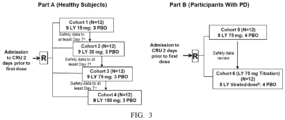
- Prior data from 3 completed clinical pharmacology phase I studies of LY3154207, Studies HBEA, HBEB, and HBEC, provide evidence of the concept for use of LY3154207 in the treatment of a dopaminergic central nervous system disorder in a patient, comprising administering to said patient a dose of about 0.5 mg to about 75 mg, up to a maximum total dose of 75 mg per day, of LY3154207, or pharmaceutical composition thereof.
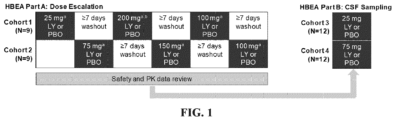
- HBEA is a single ascending dose study of a D1 receptor positive allosteric modulator LY3154207 in healthy volunteers.
- Study HBEA aims to determine the safety, tolerability, and peripheral and central pharmacokinetics (PK) of single ascending doses of LY3154207 in healthy subjects.
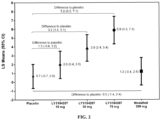
- Study HBEB aims to evaluate the effect of single-dose LY3154207 on sleep latency in sleep-deprived healthy male subjects as measured by a multiple sleep latency test (MSLT).
- MSLT multiple sleep latency test
- Subjects are dosed at 25 mg, 75 mg, 100 mg, 150 mg and 200 mg or placebo.
- Safety parameters assessed include adverse events (AEs), safety laboratories, vital signs, ambulatory blood pressure monitoring (ABPM) and electrocardiogram (ECG).
- Subjects provide blood samples after dosing to measure plasma concentrations of LY3154207 for assessment of PK.
- Subjects had a mean age (SD) of 33.6 (13.0), 16 were male (89%) and 16 white (89%).
- SD mean age
- a total of 111 treatment emergent AEs occurred and were mostly mild (101/111).
- Insomnia, decreased appetite, anxiety, dizziness, headache, nausea, upper abdominal pain, and dysgeusia were the most common AEs and the majority (69/111) occurred at doses ⁇ 100 mg.
- a dose-related signal for increases in pulse and blood pressure occurred and resolved in 24 hours.
- the Cmax and AUC was proportional with dose administered.
- the median t max and the t 1/2 were approximately 2-3 and 12 hours, respectively.
- LY3154207 The administered LY3154207 dose excreted in urine was 0.02%. Over the dose range of 25-200 mg, LY3154207 demonstrates an acceptable safety profile and a linear PK profile.
- This data from Phase 1 in healthy volunteers suggests that the dosing regimens of the present invention may provide appetite reducing effects in dopaminergic central nervous system disorders or healthy subjects.
- Data indicating a dose-related signal for increases in pulse and blood pressure also indicate the dosing regimens of the present invention may provide an improved combination of efficacy, safety, and clinical tolerability for use of LY3154207 which can avoid and/or minimize these undesirable effects.
- LY3154207 was well tolerated with an increase in AEs associated with central activation at doses ⁇ 75 mg.
- HBEA Part A treatment-related adverse events occurred primarily at doses ⁇ 100 mg and were mostly mild.
- HBEA Part B treatment-related AEs occurred only at 75 mg (25% of subjects) and were all mild: energy increased, anxiety, decreased appetite, and dizziness. No serious or severe AEs occurred.
- LY3154207 produced a dose-related increase in ambulatory blood pressure monitoring (ABPM) blood pressure and pulse rate, with preservation of the diurnal rhythm. Dose-related increases in systolic and diastolic blood pressure and pulse rate were seen from ABPM, peaking between 4 and 12 hours post-dose and mostly resolving within 24 hours.
- LY3154207 ⁇ 75 mg had acceptable safety and tolerability.
- LY3154207 produced a dose-related increase in blood pressure and pulse rate measured by ABPM, with preservation of the diurnal rhythm.
- HBEA Part B is a study of Cerebrospinal fluid (CSF) and plasma pharmacokinetic (PK) profile following a single dose of LY3154207 in healthy volunteers.
- the objective of the study is to determine the CSF and plasma PK profile of LY3154207 in a single dose study in healthy volunteers.
- This study consisted of 2 cohorts in a single-dose, single-period, placebo-controlled, randomized, double-blind, parallel-group study. Subjects were randomized to 25 mg and 75 mg and underwent serial blood and CSF sampling at 2 hours pre-dose and 24 hours post-dose to measure concentrations of LY3154207. Twenty-four subjects enrolled and all completed the study.
- LY3154207 in CSF was detectable up to 8h after a dose of 25 mg and up to 24 hours after a dose of 75 mg. At each dose about 1% of the total LY3154207 exposure in plasma was available in CSF. At 25 mg and 75 mg, central penetration of LY3154207 was confirmed by measurement of LY3154207 in CSF supporting its use according to the dosing regimens of the present invention in dopaminergic CNS disorders. LY3154207 demonstrated linear plasma PK and evidence of central penetration.
- LY3154207 showed linear plasma PK with median time of maximum concentration (tmax) approximately 2-3 hours, terminal half-life (t1/2) approximately 12 hours, apparent clearance (CL/F) 19-25 L/h across doses, and negligible renal elimination.
- LY3154207 median tmax was 3-4 hours and t1/2 was 8 hours.
- About 1% of the total LY3154207 exposure in plasma was available in CSF, with a CSF/unbound plasma ratio of 0.3. Central penetration of LY3154207 was thus confirmed by CSF PK at 25 and 75 mg doses of HBEA Part B.
- HBEB multiple sleep latency test
- LY3154207 also demonstrated a dose-dependent increase in alertness measured by the Karolinska sleepiness scale. PK is linear with a Cmax and t 1/2 of approximately 3 and 9 hours across the dose range. These results are depicted in Figure 2 .
- LY3144207 increases wakefulness in sleep-deprived healthy volunteers which provides human clinical evidence of D1 receptor signaling engagement, and resulting wake promotion, in a phase 1 sleep latency study (HBEB).
- LY3154207 improves wakefulness in a dose dependent manner in sleep deprived healthy males, supporting the use of LY3154207 in disorders associated with excessive daytime sleepiness and other dopaminergic central nervous system disorders, according to the dosing regimens of the present invention.
- Study outcomes included 24-hour ambulatory blood pressure monitoring (ABPM), treatment-emergent adverse events (TEAEs), and PK assessments in both healthy subjects and participants with PD, as well as Movement Disorder Society-United Parkinson's Disease Rating Scale (MDS-UPDRS) assessments to evaluate the impact of LY3154207 on motor function in participants with PD.
- the objective was to explore the safety, tolerability, and pharmacokinetics (PK) of multiple oral daily dosing of LY3154207 in healthy subjects (Part A) and in participants with PD (Part B).
- TEAEs were mostly mild with no severe or serious TEAEs or TEAEs leading to discontinuation.
- AEs treatment-related adverse events
- the incidence of TEAEs showed a dose-dependent increase following multiple dosing with LY3154207.
- common treatment-related AEs primarily at the 150 mg dose
- insomnia dizziness
- nausea nausea
- PK parameters of LY3154207 in healthy subjects and participants with PD demonstrate dose-dependent increases in exposure and minimal accumulation upon repeated dosing. Exposure of LY3154207 in Healthy Subjects and Participants With PD on Day 14 after LY3154207 75 mg show increases in Cmax and AUC (0-24) of 25% and 42%, respectively, in participants with PD.
- D1 positive allosteric modulators may show promise in selectively enhancing pertinent D1 activity in response to the spatiotemporal dynamics of dopamine transmission and hence may avoid these issues.
- D1 PAM compound referred to as DPTQ or LY3151944 which is 2-(2,6-dichlorophenyl)-1-((1S,3R)-5-(2-hydroxy-2-methylpropyl)-3-(hydroxymethyl)-1-methyl-3,4-dihydroisoquinolin-2(1H)-yl)ethan-1-one, is shown below, and surprisingly shows sustained improvement in spatial working memory in the adult rhesus monkey.
- DPTQ showed a trend in reducing spatial working memory performance in the rhesus macaque monkey at acute doses of 2.5 to 10 mg/kg IM, but had little effect in protecting against ketamine induced cognitive deficits.
- IM ketamine induced cognitive deficits.
- a surprisingly consistent and significant effect on performance was noticed when tested in the days following administration. Specifically, performance was substantially impaired 24 to 48 hours post injection but considerably enhanced when tested at 96 to 120 hours later.
- the Spatial Delayed Response Task is established as one of the most reliable, sensitive, and valuable models in which to test spatial working memory in primates.
- the Spatial Delayed Response Task is implemented rigidly in a completely systematic format that is uniform within and between animals and between studies.
- the Spatial Delayed Response Task is designed to normalize performance across animals such they all normally perform at ⁇ 70% correct.
- the Spatial Delayed Response Task directly challenges the same spatial working memory circuitry in human and nonhuman primates, including dorsolateral prefrontal cortex, posterior parietal cortex and MD thalamus.
- the Spatial Delayed Response Task is sensitive to multiple neuropharmacological manipulations, whether administered locally or systemically, including dopaminergic, nicotinic, glutamatergic, and GABAergic agents.
- dopaminergic, nicotinic, glutamatergic, and GABAergic agents include dopaminergic, nicotinic, glutamatergic, and GABAergic agents.
- This task one of several well locations are baited with food in view of the animal and then covered with identical plaques. An opaque shutter is then lowered for one of 5 variable delays, and then raised to allow the animal to make a response to one of the well locations to retrieve the food treat.
- Each animal is stabilized (65 - 75% correct ⁇ ⁇ 2.5%) prior to commencing any administration by varying the number of wells and the lengths of the delay.
- Each testing session consists of 20 trials, 4 trials at each of 5 delays (distributed semi-randomly) ranging from 0, 1, 2, 3, and 4 N seconds, where N is incremented from 1 to 10 according to ability.
- the number of wells ranges for 2 to 7 and thus stability is achieved by gradually varying the number of wells and the N factor.
- Original baseline is achieved on initial training and is standardized over twenty sessions, thereafter an animal typically undergoes regular testing to ensure a reasonably stable baseline.
- An absolute minimum of three baseline sessions are required prior to any experimental condition. Animals are not food deprived but instead reward for correct responses with their most preferred treats (such as yoghurt raisins, gummy bears, and almonds) and then fed their normal ration of nutritional biscuits shortly after cognitive testing.
- DPTQ was formulated as a suspension in 20% Captisol/PBS at pH8. Great care was taken to protect the compound in sonication and it was injected (at a volume of 0.2 ml/kg) via a 21G hypodermic needle (to avoid blockage) into the gluteus maximus within 2 hours of formulation (kept on ice). Vehicle was refrigerated in sterile injectable vials for up to one month. Animals were fully acclimated to all procedures prior to enrollment into any study. They were assigned on a readiness for study basis and where relevant, assignment was semirandom between vehicle and treatment arms. IM injections were performed in the animals' home cage 1 hour prior to cognitive testing. Testing is conducted in a sound attenuated chamber, based on the standard WGTA design, in dedicated procedure rooms adjacent to the animal housing.
- Vehicle data are shown in Figure 5 for a group of 10 animals. Group changes in performance varied little from baseline over the next two weeks with the deviation for the group average reaching only 5%. Vehicle given on Day 1 produces no long lasting changes in cognitive performance.
- DPTQ at 1-10 mg/kg or lower may improve spatial working memory (as even the lowest dose studied showed significant improvement).
- pro-cognitive effects were observed at the low doses in the monkey of 0.1 and 1 mg/kg, IM.
- Higher doses of DPTQ of 2.5 mg/kg and above showed a slight dip in performance during the first 48 hours, but then a sustained positive effect lasting for at least to 14 days.
- PK-PD projections estimate that the 1.0 mg/kg IM dose of DPTQ corresponds to 10 mg of LY3154207 in humans, and the 2.5 mg/kg dose of DPTQ corresponds to 25 mg of LY3154207 in humans.
- Phase I clinical data for the 15 mg dose of LY3154207 also showed a trend for better cognitive effects in the DSST task compared to higher doses.
- dosing regimens of the present invention in the low dose range of 0.5 mg to 15 mg may provide effective enhancement of certain D1 signaling mediated responses, such as pro-cognitive effects, while avoiding higher levels of stimulation observed at higher doses, such as 20 mg -75 mg, such excessive wake promotion leading to insomnia, and or certain undesirable dose related cardiovascular effects such as pulse rate and blood pressure increases, as well as a decreased risk of drug-drug interactions with Cyp3A4 inhibitors.
- phase I human studies and primate studies have led to the concept of the present invention which provides improved clinical therapeutic dosing regimens and methods of using LY3154207, and/or pharmaceutical compositions thereof, for the treatment of dopaminergic central nervous system disorders.
- daily administration of LY3154207 provides an improved means to reduce signs and symptoms of dopaminergic central nervous system disorders in a clinically advantageous manner, such that safe, tolerable and effective relief clinical signs and symptoms is achieved.
- the present invention further provides methods of using a low dose administration regimen that is believed to promote normalization of endogenous dopaminergic signaling in various dopamine mediated disease states, with a lower propensity for certain effects seen at higher doses, such as overstimulation, and less potential for development of tolerance and adverse effects associated with orthosteric D1 agonists.
- a low dose administration regimen that is believed to promote normalization of endogenous dopaminergic signaling in various dopamine mediated disease states, with a lower propensity for certain effects seen at higher doses, such as overstimulation, and less potential for development of tolerance and adverse effects associated with orthosteric D1 agonists.
- the LY3154207 clinical dosing regimens of the present invention, and in particular the low dose regimen provide improved means for treatment of a range of dopamine mediated CNS deficits, with a surprising and unexpected combination of advantageous human clinical pharmacological efficacy, safety, and tolerability.
- LY3154207 is currently in a phase 2 study for cognition in Lewy Body Dementias (NCT03305809). Results of this clinical trial may further support the surprising and unexpected advantages of the dosing regimens and doses for use in treatment of dopaminergic CNS disorders, such as LBD and PD and AD.
- Example 3 Protocol for a dose regimen study in PD -
- a D1PAM should improve cognitive performance.
- a DIPAM should have a positive impact on the motor deficits, depression, and daytime sleepiness observed in subjects with PD.
- LY3154207 may improve a variety of domains important to people with Lewy Body Dementias including signs of Parkinsonism, such motor symptoms, wakefulness, mood, and function. LY3154207 is being developed to treat the symptoms of cognitive impairment in dementias, where it may provide improvement in a relatively short period of chronic daily dosing (12 weeks or earlier). As a symptomatic agent, LY3154207 is important because even when progression slowing agents are available, patients will continue to suffer from the symptoms of dementia. By potentiating the response to the remaining brain dopamine (or administered leovdopa) in subjects with Parkinson's disease, LY3154207 is believed to improve cognitive performance, and provide treatment for Parkinson's disease subjects with neurocognitive impairment. Outcome goals for use of LY3154207 are improved cognition in PD dementia (PDD), inclusive of Dementia with Lewy Bodies (DLB), with additional benefits in motor and/or wakefulness.
- PDD PD dementia
- DLB Dementia with Lewy Bo
- the PRESENCE study is assessing three doses (10 mg, 30 mg, and/or 75 mg daily (or 50 mg based on interim analysis) (QD) oral dosing) of LY3154207 vs. placebo over 12 weeks of treatment.
- the primary outcome is a measure of cognition and we are assessing additional measures of cognition as key secondary endpoints.
- PRESENCE is a randomized placebo-controlled trial in individuals with Parkinson's disease dementia to evaluate the safety and efficacy of (three doses of study drug) LY3154207 in participants with mild-to-moderate Parkinson's disease dementia treated for 12 weeks.
- the primary outcome is a measure of cognition and additional measures of cognition are key secondary endpoints.
- the D1 PAM mechanism may impact a variety of domains important to people with Lewy Body Dementias, and measures of Parkinsonism (including motor symptoms), wakefulness, mood, and function are being assessed.
- Study HBEH will include subjects who meet the revised MDS criteria for PD (Postuma et al. 2015) and mild-to-moderate dementia as defined by a decline in cognitive function, which in the opinion of the investigator has resulted in functional impairment and a MoCA score between 10 and 23 (Trzepacz et al. 2015).
- PDD Per the revised MDS criteria, PDD can be diagnosed in the presence of dementia, regardless of the timing of dementia onset relative to PD diagnosis.
- Subjects diagnosed with dementia with Lewy bodies (DLBs) should be considered as also having PD if they meet the MDS PD criteria. Therefore, subjects may have dementia prior to, at the time of, or subsequent to the diagnosis of PD.
- DLBs Lewy bodies
- DLB and PDD are associated with similar impairments in cognition with predominant visuoperceptual abnormalities, improvement in memory with cues, and so on. Both are associated with prominent psychosis, neuroleptic sensitivity, and alterations in arousal. Prodromal features (e.g., rapid eye movement [REM] sleep behavior disorder, olfactory loss) are the same in both conditions. Non-motor symptoms with depression, anxiety, autonomic dysfunction and sleep disturbances occur with similar relative frequency in both. The same genetic mutations (alpha-synuclein duplications, glucocerebrosidase mutations) are associated with the development of either condition.
- Initial visits (Visit 3 to Visit 7) were selected to occur at a weekly interval to provide a detailed evaluation of the efficacy and safety of LY3154207 during the initial treatment.
- a dosing duration of 12 weeks was selected, as it is estimated to be the minimum duration where a beneficial effect on cognition may be observed.
- the primary objective is to test the hypothesis that LY3154207 administered at 10 mg, 30 mg, and/or 75 mg daily (or 50 mg based on interim analysis) (QD) oral dosing for 12 weeks will result in a significant improvement in cognition in subjects with mild-to-moderate PDD compared with placebo.
- Primary endpoints are changes in the CoA composite score of the CDR-CCB from baseline to Week 12. Secondary objectives are decribed below.
- Study I7S-MC-HBEH (HBEH) is a multicenter, randomized, double-blind, parallel-group, placebo-controlled, fixed-dosage, Phase 2a study comparing 3 dosages of LY3154207 (10, or 30, or 75 mg administered orally [or 50 mg based on interim analysis] once a day [QD]) with placebo over 12 weeks in subjects with mild-to-moderate PDD.
- the study includes a Screening Period (Visits 1 to 2) of a minimum of 7 days and up to 14 days, a Pretreatment Period of a minimum of 11 days and up to 17 days (Visits 2 to 3), a 12-week Treatment Period (Visits 3 to 11), and a 14-day Safety Follow-Up Period (Visits 11 to 801 or early termination [ET]/discontinuation [DC] visit to Visit 801).
- Subjects who meet entry criteria will be randomized in a 1:1:1:1 ratio to LY3154207 (10 or 30 or 75 mg QD) or placebo.
- the primary objective of the study is to test the hypothesis that LY3154207 administration for 12 weeks will result in a significant improvement in cognition as measured by the change from baseline to Week 12 in the Continuity of Attention (CoA) composite score of the Cognitive Drug Research Computerized Cognition Battery (CDR-CCB), in subjects with mild-to-moderate PDD, compared to placebo.
- the CoA has demonstrated a significant treatment effect in previous trials in subjects with PDD (Wesnes et al. 2005; Rowan et al. 2007).
- Study HBEH involves a comparison of LY3154207 10 mg, 30 mg, and 75 mg (or 50 mg based on interim analysis) administered orally QD with placebo over 12 weeks.
- Number of subjects Approximately 400 subjects will be screened to achieve 340 randomized and an estimated total of 85 evaluable subjects per treatment group.
- Efficacy Analysis All subjects in the evaluable patient population (EPP) will be considered for the efficacy analysis.
- the primary analysis on CoA will occur when all subjects complete 12 weeks of treatment.
- the analysis of CoA will utilize a Bayesian MMRM model.
- the Bayesian analysis may use uninformative priors for all terms in the model. These will be diffuse Normal distributions centered on zero. Priors for variance will follow an inverse gamma distribution. Further details of the Bayesian analysis will be provided in the SAP.
- the MMRM model will account for longitudinal data assessed throughout the study, after 1, 2, 4, 6, 8, 10, and 12 weeks of dosing. The change of CoA from the baseline to Week 12 will be the dependent variable.
- the model will comprise fixed (baseline value, treatment, visit) and random effects (subject) and the interaction terms (treatment by visit, baseline value by visit). Unstructured variance structure will be applied in the model, but if it fails to converge, other suitable structures will be investigated.
- the primary comparison will be the contrast (difference in least squares mean) between treatments and placebo for the Week 12 change from baseline.
- the secondary efficacy outcomes the change from baseline at 12-week time point of total scores (or composite values) of Alzheimer's Disease Cooperative Study - Clinician Global Impression of Change (ADCS-CGIC), CDR-CCB Power of Attention (PoA), 13-item Alzheimer's Disease Assessment Scale - Cognitive subscale (ADAS-Cog13), Montreal Cognitive Assessment (MoCA), Neuropsychiatric Inventory (NPI), Epworth Sleepiness Scale (ESS), Movement Disorder Society's Unified Parkinson's Disease Rating Scale (MDS-UPDRS), Penn Parkinson's Daily Activities Questionnaire 15 (PDAQ-15), and Delis-Kaplan Executive Function System (D-KEFS) will follow the same analysis method as above.
- ADCS-CGIC Alzheimer's Disease Cooperative Study - Clinician Global Impression of Change
- PoA CDR-CCB Power of Attention
- ADAS-Cog13 13-item Alzheimer's Disease Assessment Scale - Cognitive subscale (ADAS-Cog13), Montreal Cognitive Assessment (MoCA), Neuropsychi
- Missing records in some scales will be imputed as detailed in the statistical analysis plan. For the scales where the imputation is not done, if any item is missing, any total or sum involving that item will be considered missing. No adjustment for multiple comparisons will be made.
- Safety analyses are based on the safety population and analysis will include listings and/or summaries of the following: adverse events (AEs), serious adverse events (SAEs), treatment-emergent adverse events (TEAEs), laboratory measures, vital signs, electrocardiogram readings and number of subjects who met the potentially clinically significant vital signs criteria at 3 consecutive time points at Visit 3 (Day 1 stopping rules).
- Mixed-model repeated measures analysis will be used to compare the change in in-clinic blood pressure (BP) and pulse rate from pretreatment up to 8 hours post dose measured on the first day of study drug dosing (V3). Two baselines will be considered in the change from baseline analyses: the V3 pretreatment value and the time-matched baselines from Visit 2 (hourly value 0 to 6 hours).
- V3, 7- and 8-hour time points will use the V2 6-hour time point as their baseline value.
- a separate change from baseline analysis will be completed for each baseline approach.
- Mixed-model repeated measures analyses will also be used to compare change in in-clinic BP and pulse rate from V2 (daily average 0 to 6 hours) to Week 6/Visit 8 and Week 12/Visit 11 (daily average 0 to 6 hours), to evaluate the change in BP and pulse rate over 12 weeks of dosing.
- PK Pharmacokinetics
- Additional efficacy analyses may be conducted at the time of these safety interim analyses.
- a safety and efficacy interim analysis will be conducted when 170 randomized subjects have completed Visit 11 (Week 12) assessments. All potential efficacy analyses may be used for internal decision making, but are not planned to stop the study.
- [5] are Modified Hoehn and Yahr Stages 1 to 4.
- [6] Have a BP or pulse rate at Visit 1 and Visit 3, as determined by 3 sequential BP/pulse rate measurements in the seated position: For Subjects ⁇ 60 years old: a mean systolic blood pressure (SBP) less than or equal to 140 mmHg, a mean diastolic BP less than or equal to 90 mmHg, and a mean pulse rate less than or equal to 90 beats/min in the seated position, and each of the 3 SBP measurement must be less than 180 mmHg.
- SBP mean systolic blood pressure
- C-SSRS Columbia-Suicide Severity Rating Scale
- MDS Monitoring Cognitive Assessment
- the modified Hoehn and Yahr scale is as follows: Stage 0: No signs of disease, Stage 1: Unilateral disease, Stage 1.5: Unilateral plus axial involvement, Stage 2: Bilateral disease, without impairment of balance, Stage 2.5: Mild bilateral disease, with recovery on pull test, Stage 3: Mild-to-moderate bilateral disease; some postural instability; physically, independent, Stage 4: Severe disability; still able to walk or stand unassisted, Stage 5: Wheelchair bound or bedridden unless aided.
- Geriatric Depression Scale Enrolled individuals must have a Geriatric Depression Scale - Short Form (GDS-S) score of ⁇ 6 at screening.
- GDS is a site-administered questionnaire of depression in older adults (Yesavage et al. 1983). Users respond in a "Yes/No" format.
- 30-item scale Long Form
- 15-item scale Short Form
- the C-SSRS is a scale that captures the occurrence, severity, and frequency of suicide-related thoughts and behaviors during the corresponding assessment period.
- the C-SSRS included here as a screening assessment, is described in detail in Section 9.4.4.
- the C-SSRS "Baseline" version will be used at screening, and the findings will constitute the baseline assessment.
- the C-SSRS will be administered to the subject after the cognitive and functional assessments. Responses from subject will be considered when administering the scale. If it is determined that the subject has suicidal ideation or behavior at this baseline assessment, then the subject will not be randomized and will be discontinued from the study.
- LY3154207 is believed to be effective in improving cognitive dysfunctions in Alzheimer's disease through activation of cortical neurons, enhanced synaptic plasticity and neurotransmitter release. Other potential effects of LY3154207 such as reduced daytime sleepiness, improved mood and/or apathy, and goal-directed behaviors leading to reduced apathy (via activation of cortical and striatal D1 receptors) would also be beneficial in an Alzheimer's disease population.
- AD Using methods known to the skilled artisan, utility in AD may be demonstrated in mild to moderate AD patients (MMSE 13-26), in clinical studies of 24 weeks or more duration, where patients are administered doses of about 0.5 mg to about 75 mg, up to a maximum total dose of 75 mg per day, of LY3154207 or pharmaceutical composition thereof, and efficacy, safety and tolerability are assessed by methods known to the skilled artisan, including for example ADAS-Cog13, MMSE, ADCS-CGIC, ADCS-ADL, AD-QOL, NPI, and ESS.
Landscapes
- Health & Medical Sciences (AREA)
- Public Health (AREA)
- Animal Behavior & Ethology (AREA)
- Life Sciences & Earth Sciences (AREA)
- Pharmacology & Pharmacy (AREA)
- General Health & Medical Sciences (AREA)
- Chemical & Material Sciences (AREA)
- Veterinary Medicine (AREA)
- Medicinal Chemistry (AREA)
- Engineering & Computer Science (AREA)
- Bioinformatics & Cheminformatics (AREA)
- Biomedical Technology (AREA)
- Neurosurgery (AREA)
- Neurology (AREA)
- Epidemiology (AREA)
- Chemical Kinetics & Catalysis (AREA)
- Organic Chemistry (AREA)
- Nuclear Medicine, Radiotherapy & Molecular Imaging (AREA)
- General Chemical & Material Sciences (AREA)
- Hospice & Palliative Care (AREA)
- Psychiatry (AREA)
- Physiology (AREA)
- Nutrition Science (AREA)
- Psychology (AREA)
- Obesity (AREA)
- Hematology (AREA)
- Diabetes (AREA)
- Child & Adolescent Psychology (AREA)
- Pharmaceuticals Containing Other Organic And Inorganic Compounds (AREA)
- Medicines That Contain Protein Lipid Enzymes And Other Medicines (AREA)
- Acyclic And Carbocyclic Compounds In Medicinal Compositions (AREA)
- Medicinal Preparation (AREA)
Priority Applications (1)
| Application Number | Priority Date | Filing Date | Title |
|---|---|---|---|
| MA71651A MA71651A (fr) | 2018-12-18 | 2019-12-16 | Schémas posologiques pour l'utilisation de ly3154207 dans le traitement de troubles du système nerveux central dopaminergiques |
Applications Claiming Priority (4)
| Application Number | Priority Date | Filing Date | Title |
|---|---|---|---|
| US201862781251P | 2018-12-18 | 2018-12-18 | |
| US201962904048P | 2019-09-23 | 2019-09-23 | |
| PCT/US2019/066465 WO2020131671A1 (fr) | 2018-12-18 | 2019-12-16 | Schémas posologiques pour l'utilisation de ly3154207 dans le traitement de troubles du système nerveux central dopaminergiques |
| EP19836884.7A EP3897578B1 (fr) | 2018-12-18 | 2019-12-16 | Schémas posologiques pour l'utilisation de ly3154207 dans le traitement de troubles du système nerveux central dopaminergiques |
Related Parent Applications (2)
| Application Number | Title | Priority Date | Filing Date |
|---|---|---|---|
| EP19836884.7A Division EP3897578B1 (fr) | 2018-12-18 | 2019-12-16 | Schémas posologiques pour l'utilisation de ly3154207 dans le traitement de troubles du système nerveux central dopaminergiques |
| EP19836884.7A Division-Into EP3897578B1 (fr) | 2018-12-18 | 2019-12-16 | Schémas posologiques pour l'utilisation de ly3154207 dans le traitement de troubles du système nerveux central dopaminergiques |
Publications (2)
| Publication Number | Publication Date |
|---|---|
| EP4417258A2 true EP4417258A2 (fr) | 2024-08-21 |
| EP4417258A3 EP4417258A3 (fr) | 2024-10-30 |
Family
ID=69167914
Family Applications (2)
| Application Number | Title | Priority Date | Filing Date |
|---|---|---|---|
| EP24180893.0A Pending EP4417258A3 (fr) | 2018-12-18 | 2019-12-16 | Schémas posologiques pour l'utilisation de ly3154207 dans le traitement de troubles du système nerveux central dopaminergiques |
| EP19836884.7A Active EP3897578B1 (fr) | 2018-12-18 | 2019-12-16 | Schémas posologiques pour l'utilisation de ly3154207 dans le traitement de troubles du système nerveux central dopaminergiques |
Family Applications After (1)
| Application Number | Title | Priority Date | Filing Date |
|---|---|---|---|
| EP19836884.7A Active EP3897578B1 (fr) | 2018-12-18 | 2019-12-16 | Schémas posologiques pour l'utilisation de ly3154207 dans le traitement de troubles du système nerveux central dopaminergiques |
Country Status (28)
| Country | Link |
|---|---|
| US (1) | US20220062265A1 (fr) |
| EP (2) | EP4417258A3 (fr) |
| JP (4) | JP2022514659A (fr) |
| KR (2) | KR20250069706A (fr) |
| CN (1) | CN113347961A (fr) |
| AU (1) | AU2019402087B2 (fr) |
| BR (1) | BR112021012102A2 (fr) |
| CA (1) | CA3124416C (fr) |
| DK (1) | DK3897578T3 (fr) |
| ES (1) | ES3004543T3 (fr) |
| FI (1) | FI3897578T3 (fr) |
| HR (1) | HRP20241778T1 (fr) |
| HU (1) | HUE069782T2 (fr) |
| IL (1) | IL284175A (fr) |
| LT (1) | LT3897578T (fr) |
| MA (2) | MA54530B1 (fr) |
| MD (1) | MD3897578T2 (fr) |
| MX (1) | MX2021007442A (fr) |
| MY (1) | MY209406A (fr) |
| PL (1) | PL3897578T3 (fr) |
| PT (1) | PT3897578T (fr) |
| RS (1) | RS66337B1 (fr) |
| SG (1) | SG11202106595VA (fr) |
| SI (1) | SI3897578T1 (fr) |
| TW (3) | TWI892226B (fr) |
| UA (1) | UA126882C2 (fr) |
| WO (1) | WO2020131671A1 (fr) |
| ZA (1) | ZA202104466B (fr) |
Families Citing this family (3)
| Publication number | Priority date | Publication date | Assignee | Title |
|---|---|---|---|---|
| CN116601146A (zh) * | 2020-10-07 | 2023-08-15 | 伊莱利利公司 | 作为多巴胺d1受体正变构调节剂的苯基-3,4-二氢异喹啉-2(1h)-基-乙-1-酮衍生物 |
| AU2022234744B2 (en) * | 2021-03-08 | 2025-06-26 | Eli Lilly And Company | Use of mevidalen and other d1 positive allosteric modulators in the treatment of hallucinations and dementia-related psychosis |
| US20240165101A1 (en) * | 2021-03-09 | 2024-05-23 | Eli Lilly And Company | Use of mevidalen and other d1 positive allosteric modulators for slowing of parkinson's disease progression |
Citations (2)
| Publication number | Priority date | Publication date | Assignee | Title |
|---|---|---|---|---|
| WO2014193781A1 (fr) | 2013-05-30 | 2014-12-04 | Eli Lilly And Company | Composés de 3,4-dihydroisoquinoléin-2(1h)-yle |
| WO2017070068A1 (fr) | 2015-10-23 | 2017-04-27 | Eli Lilly And Company | Forme cristalline de 2- (2,6-dichlorophényl)-1-[(1s,3r)-3-(hydroxyméthyl)-5-(3-hydroxy-3-méthylbutyl)-1-méthyl -3,4-dihydroisoquinoléin -2 (1h)-yl)éthanone pour le traitement de la maladie de parkinson |
Family Cites Families (1)
| Publication number | Priority date | Publication date | Assignee | Title |
|---|---|---|---|---|
| ES2973289T3 (es) * | 2014-09-04 | 2024-06-19 | Lobsor Pharmaceuticals Ab | Composiciones farmacéuticas en gel que comprenden levodopa, carbidopa y entacapona |
-
2019
- 2019-12-16 PT PT198368847T patent/PT3897578T/pt unknown
- 2019-12-16 TW TW112133925A patent/TWI892226B/zh active
- 2019-12-16 CA CA3124416A patent/CA3124416C/fr active Active
- 2019-12-16 FI FIEP19836884.7T patent/FI3897578T3/fi active
- 2019-12-16 AU AU2019402087A patent/AU2019402087B2/en active Active
- 2019-12-16 DK DK19836884.7T patent/DK3897578T3/da active
- 2019-12-16 HR HRP20241778TT patent/HRP20241778T1/hr unknown
- 2019-12-16 BR BR112021012102-1A patent/BR112021012102A2/pt unknown
- 2019-12-16 RS RS20241415A patent/RS66337B1/sr unknown
- 2019-12-16 CN CN201980089891.3A patent/CN113347961A/zh active Pending
- 2019-12-16 MA MA54530A patent/MA54530B1/fr unknown
- 2019-12-16 MY MYPI2021003450A patent/MY209406A/en unknown
- 2019-12-16 EP EP24180893.0A patent/EP4417258A3/fr active Pending
- 2019-12-16 MX MX2021007442A patent/MX2021007442A/es unknown
- 2019-12-16 MA MA71651A patent/MA71651A/fr unknown
- 2019-12-16 ES ES19836884T patent/ES3004543T3/es active Active
- 2019-12-16 LT LTEPPCT/US2019/066465T patent/LT3897578T/lt unknown
- 2019-12-16 PL PL19836884.7T patent/PL3897578T3/pl unknown
- 2019-12-16 TW TW108146071A patent/TWI831896B/zh active
- 2019-12-16 HU HUE19836884A patent/HUE069782T2/hu unknown
- 2019-12-16 MD MDE20211050T patent/MD3897578T2/ro unknown
- 2019-12-16 US US17/416,320 patent/US20220062265A1/en active Pending
- 2019-12-16 KR KR1020257015518A patent/KR20250069706A/ko active Pending
- 2019-12-16 SI SI201930869T patent/SI3897578T1/sl unknown
- 2019-12-16 JP JP2021535892A patent/JP2022514659A/ja not_active Withdrawn
- 2019-12-16 UA UAA202103923A patent/UA126882C2/uk unknown
- 2019-12-16 KR KR1020217022499A patent/KR20210111783A/ko not_active Ceased
- 2019-12-16 WO PCT/US2019/066465 patent/WO2020131671A1/fr not_active Ceased
- 2019-12-16 SG SG11202106595VA patent/SG11202106595VA/en unknown
- 2019-12-16 TW TW114125471A patent/TW202606676A/zh unknown
- 2019-12-16 EP EP19836884.7A patent/EP3897578B1/fr active Active
-
2021
- 2021-06-18 IL IL284175A patent/IL284175A/en unknown
- 2021-06-28 ZA ZA2021/04466A patent/ZA202104466B/en unknown
-
2023
- 2023-01-24 JP JP2023008488A patent/JP2023055770A/ja active Pending
-
2025
- 2025-08-06 JP JP2025131198A patent/JP2025163202A/ja active Pending
- 2025-08-06 JP JP2025131199A patent/JP2025163203A/ja active Pending
Patent Citations (2)
| Publication number | Priority date | Publication date | Assignee | Title |
|---|---|---|---|---|
| WO2014193781A1 (fr) | 2013-05-30 | 2014-12-04 | Eli Lilly And Company | Composés de 3,4-dihydroisoquinoléin-2(1h)-yle |
| WO2017070068A1 (fr) | 2015-10-23 | 2017-04-27 | Eli Lilly And Company | Forme cristalline de 2- (2,6-dichlorophényl)-1-[(1s,3r)-3-(hydroxyméthyl)-5-(3-hydroxy-3-méthylbutyl)-1-méthyl -3,4-dihydroisoquinoléin -2 (1h)-yl)éthanone pour le traitement de la maladie de parkinson |
Non-Patent Citations (14)
| Title |
|---|
| "Diagnostic and statistical manual of mental disorders", 2013, AMERICAN PSYCHIATRIC ASSOCIATION |
| "Remington: The Science and Practice of Pharmacy", 2012, PHARMACEUTICAL PRESS |
| AARSLAND DBALLARD CGHALLIDAY G: "Are Parkinson's disease with dementia and dementia with Lewy bodies the same entity?", J GERIATR PSYCHIATRY NEUROL., vol. 17, no. 3, 2004, pages 137 - 145 |
| BALLARD CZIABREVA IPERRY RLARSEN JPO'BRIEN JMCKEITH IPERRY EAARSLAND D: "Differences in neuropathologic characteristics across the Lewy body dementia spectrum", NEUROLOGY, vol. 67, no. 11, 2006, pages 1931 - 1934 |
| BERG DPOSTUMA RBBLOEM BCHAN PDUBOIS BGASSER TGOETZ CGHALLIDAY GMHARDY JLANG AE: "Time to redefine PD? Introductory statement of the MDS Task Force on the definition of Parkinson's disease", MOV DISORD, vol. 29, no. 4, 2014, pages 454 - 462 |
| EMRE MAARSLAND DALBANESE ABYME EJDEUSCHL GDE DEYN PPDURIF FKULISEVSKY JVAN LAAR TLEES A: "Rivastigmine for dementia associated with Parkinson's disease", N ENGL J MED., vol. 351, no. 24, 2004, pages 2509 - 2518 |
| JOHANSEN KKWHITE LRSANDO SBAASLY JO: "Biomarkers: Parkinson disease with dementia and dementia with Lewy bodies", PARKINSONISM RELAT DISORD., vol. 16, no. 5, 2010, pages 307 - 315, XP027054547 |
| LIPPA CFDUDA JEGROSSMAN MHURTIG HIAARSLAND DBOEVE BFBROOKS DJDICKSON DWDUBOIS BEMRE M: "DLB/PDD Working Group. DLB and PDD boundary issues: diagnosis, treatment, molecular pathology, and biomarkers", NEUROLOGY, vol. 68, no. 11, 2007, pages 812 - 819 |
| MCKEITH IGDICKSON DWLOWE JEMRE MO'BRIEN JTFELDMAN HCUMMINGS JDUDA JELIPPA CPERRY EK: "Consortium on DLB. Diagnosis and management of dementia with Lewy bodies: third report of the DLB Consortium", NEUROLOGY, vol. 65, no. 12, 2005, pages 1863 - 1872 |
| POSTUMA RB, BERG D, STEM M, POEWE W, OLANOW CW, OERTEL W, OBESO J, MAREK K, LITVAN I,LANG AE, HALLIDAY G, GOETZ CG, GASSER T, DUBO: "MDS clinical diagnostic criteria for Parkinson's disease", MOV DISORD., vol. 30, no. 12, 2015, pages 1591 - 1601 |
| POSTUMA RBGAGNON JFVENDETTE MMONTPLAISIR JY: "Idiopathic REM sleep behavior disorder in the transition to degenerative disease", MOV DISORD, vol. 24, no. 15, 2009, pages 2225 - 2232 |
| SHEIKH JIYESAVAGE JA: "Geriatric Depression Scale (GDS): Recent evidence and development of a shorter version", CLIN GERONTOLOGIST, vol. 5, 1986, pages 165 - 173 |
| TRZEPACZ PTHOCHSTETLER HWANG SWALKER BSAYKIN AJ: "Alzheimer's Disease Neuroimaging Initiative. Relationship between the Montreal Cognitive Assessment and Mini-mental State Examination for assessment of mild cognitive impairment in older adults", BMC GERIATR., vol. 15, 2015, pages 107 |
| YESAVAGE JABRINK TLROSE TLLUM OHUANG VADEY M.LEIRER VO: "Development and validation of a geriatric depression screening scale: A preliminary report", J PSYCHIATR RES, vol. 17, 1983, pages 37 - 49 |
Also Published As
Similar Documents
| Publication | Publication Date | Title |
|---|---|---|
| JP2023055770A (ja) | ドーパミン作動性cns障害の治療におけるly3154207の使用のための用量レジメン | |
| AU2022234744B2 (en) | Use of mevidalen and other d1 positive allosteric modulators in the treatment of hallucinations and dementia-related psychosis | |
| JP2026016369A (ja) | パーキンソン病の進行を減速させるためのメビダレン及び他のd1ポジティブアロステリック調節因子の使用 | |
| HK40063144A (en) | Dose regimens for use of ly3154207 in the treatment of dopaminergic cns disorders | |
| HK40063144B (en) | Dose regimens for use of ly3154207 in the treatment of dopaminergic cns disorders | |
| EA048028B1 (ru) | Режимы дозирования для использования ly3154207 при лечении дофаминергических нарушений цнс | |
| HK40105809A (zh) | 美维达林和其他d1正向别构调节剂用於减缓帕金森氏病进展的用途 | |
| HK40105808A (zh) | 美维达林和其他d1正向别构调节剂在幻觉和痴呆相关精神病的治疗中的用途 |
Legal Events
| Date | Code | Title | Description |
|---|---|---|---|
| PUAI | Public reference made under article 153(3) epc to a published international application that has entered the european phase |
Free format text: ORIGINAL CODE: 0009012 |
|
| STAA | Information on the status of an ep patent application or granted ep patent |
Free format text: STATUS: THE APPLICATION HAS BEEN PUBLISHED |
|
| AC | Divisional application: reference to earlier application |
Ref document number: 3897578 Country of ref document: EP Kind code of ref document: P |
|
| AK | Designated contracting states |
Kind code of ref document: A2 Designated state(s): AL AT BE BG CH CY CZ DE DK EE ES FI FR GB GR HR HU IE IS IT LI LT LU LV MC MK MT NL NO PL PT RO RS SE SI SK SM TR |
|
| REG | Reference to a national code |
Ref country code: DE Ref legal event code: R079 Free format text: PREVIOUS MAIN CLASS: A61P0025280000 Ipc: A61K0009000000 |
|
| PUAL | Search report despatched |
Free format text: ORIGINAL CODE: 0009013 |
|
| P01 | Opt-out of the competence of the unified patent court (upc) registered |
Free format text: CASE NUMBER: APP_49857/2024 Effective date: 20240904 |
|
| AK | Designated contracting states |
Kind code of ref document: A3 Designated state(s): AL AT BE BG CH CY CZ DE DK EE ES FI FR GB GR HR HU IE IS IT LI LT LU LV MC MK MT NL NO PL PT RO RS SE SI SK SM TR |
|
| RIC1 | Information provided on ipc code assigned before grant |
Ipc: A61P 25/28 20060101ALI20240924BHEP Ipc: A61K 31/472 20060101ALI20240924BHEP Ipc: A61K 9/20 20060101ALI20240924BHEP Ipc: A61K 9/00 20060101AFI20240924BHEP |
|
| STAA | Information on the status of an ep patent application or granted ep patent |
Free format text: STATUS: REQUEST FOR EXAMINATION WAS MADE |
|
| 17P | Request for examination filed |
Effective date: 20250430 |
|
| RAV | Requested validation state of the european patent: fee paid |
Extension state: TN Effective date: 20250430 Extension state: MD Effective date: 20250430 Extension state: MA Effective date: 20250430 Extension state: KH Effective date: 20250430 |
|
| RAX | Requested extension states of the european patent have changed |
Extension state: ME Payment date: 20250430 Extension state: BA Payment date: 20250430 |
|
| STAA | Information on the status of an ep patent application or granted ep patent |
Free format text: STATUS: EXAMINATION IS IN PROGRESS |
|
| 17Q | First examination report despatched |
Effective date: 20251008 |