EP4417285A1 - Procédé de purification de nanoparticules lipidiques - Google Patents
Procédé de purification de nanoparticules lipidiques Download PDFInfo
- Publication number
- EP4417285A1 EP4417285A1 EP23157085.4A EP23157085A EP4417285A1 EP 4417285 A1 EP4417285 A1 EP 4417285A1 EP 23157085 A EP23157085 A EP 23157085A EP 4417285 A1 EP4417285 A1 EP 4417285A1
- Authority
- EP
- European Patent Office
- Prior art keywords
- lnps
- chromatographic medium
- kosmotropic
- rna
- kosmotropic agent
- Prior art date
- Legal status (The legal status is an assumption and is not a legal conclusion. Google has not performed a legal analysis and makes no representation as to the accuracy of the status listed.)
- Pending
Links
Images




Classifications
-
- B—PERFORMING OPERATIONS; TRANSPORTING
- B01—PHYSICAL OR CHEMICAL PROCESSES OR APPARATUS IN GENERAL
- B01D—SEPARATION
- B01D15/00—Separating processes involving the treatment of liquids with solid sorbents; Apparatus therefor
- B01D15/08—Selective adsorption, e.g. chromatography
- B01D15/26—Selective adsorption, e.g. chromatography characterised by the separation mechanism
- B01D15/32—Bonded phase chromatography
- B01D15/325—Reversed phase
- B01D15/327—Reversed phase with hydrophobic interaction
-
- A—HUMAN NECESSITIES
- A61—MEDICAL OR VETERINARY SCIENCE; HYGIENE
- A61K—PREPARATIONS FOR MEDICAL, DENTAL OR TOILETRY PURPOSES
- A61K9/00—Medicinal preparations characterised by special physical form
- A61K9/48—Preparations in capsules, e.g. of gelatin, of chocolate
- A61K9/50—Microcapsules having a gas, liquid or semi-solid filling; Solid microparticles or pellets surrounded by a distinct coating layer, e.g. coated microspheres, coated drug crystals
- A61K9/51—Nanocapsules; Nanoparticles
- A61K9/5107—Excipients; Inactive ingredients
- A61K9/5123—Organic compounds, e.g. fats, sugars
-
- B—PERFORMING OPERATIONS; TRANSPORTING
- B01—PHYSICAL OR CHEMICAL PROCESSES OR APPARATUS IN GENERAL
- B01D—SEPARATION
- B01D15/00—Separating processes involving the treatment of liquids with solid sorbents; Apparatus therefor
- B01D15/08—Selective adsorption, e.g. chromatography
- B01D15/10—Selective adsorption, e.g. chromatography characterised by constructional or operational features
- B01D15/12—Selective adsorption, e.g. chromatography characterised by constructional or operational features relating to the preparation of the feed
- B01D15/122—Solid phase extraction
-
- B—PERFORMING OPERATIONS; TRANSPORTING
- B01—PHYSICAL OR CHEMICAL PROCESSES OR APPARATUS IN GENERAL
- B01D—SEPARATION
- B01D15/00—Separating processes involving the treatment of liquids with solid sorbents; Apparatus therefor
- B01D15/08—Selective adsorption, e.g. chromatography
- B01D15/10—Selective adsorption, e.g. chromatography characterised by constructional or operational features
- B01D15/20—Selective adsorption, e.g. chromatography characterised by constructional or operational features relating to the conditioning of the sorbent material
-
- C—CHEMISTRY; METALLURGY
- C12—BIOCHEMISTRY; BEER; SPIRITS; WINE; VINEGAR; MICROBIOLOGY; ENZYMOLOGY; MUTATION OR GENETIC ENGINEERING
- C12N—MICROORGANISMS OR ENZYMES; COMPOSITIONS THEREOF; PROPAGATING, PRESERVING, OR MAINTAINING MICROORGANISMS; MUTATION OR GENETIC ENGINEERING; CULTURE MEDIA
- C12N15/00—Mutation or genetic engineering; DNA or RNA concerning genetic engineering, vectors, e.g. plasmids, or their isolation, preparation or purification; Use of hosts therefor
- C12N15/09—Recombinant DNA-technology
- C12N15/10—Processes for the isolation, preparation or purification of DNA or RNA
- C12N15/1003—Extracting or separating nucleic acids from biological samples, e.g. pure separation or isolation methods; Conditions, buffers or apparatuses therefor
- C12N15/1006—Extracting or separating nucleic acids from biological samples, e.g. pure separation or isolation methods; Conditions, buffers or apparatuses therefor by means of a solid support carrier, e.g. particles, polymers
- C12N15/101—Extracting or separating nucleic acids from biological samples, e.g. pure separation or isolation methods; Conditions, buffers or apparatuses therefor by means of a solid support carrier, e.g. particles, polymers by chromatography, e.g. electrophoresis, ion-exchange, reverse phase
Definitions
- the present invention relates to methods for the purification of lipid nanoparticles (LNPs) encapsulating a nucleic acid, comprising the steps of subjecting a solution containing said LNPs to a chromatographic medium with convective flow properties in the presence of at least one kosmotropic agent; and eluting LNPs from said chromatographic medium.
- the present invention further relates to respective uses of a chromatographic medium with convective flow properties for the purification of lipid nanoparticles (LNPs) encapsulating a nucleic acid.
- LNPs encapsulating nucleic acids have emerged as promising prophylactic and/or therapeutic agents, e.g. as vaccines carrying messenger RNA (mRNA), self-amplifying RNA (saRNA), or circular RNA (circRNA).
- mRNA messenger RNA
- saRNA self-amplifying RNA
- circRNA circular RNA
- LNPs are typically composed of ionizable cationic lipids, cholesterol, helper lipids and PEGylated lipids, and have typically a diameter in the range of 30 to 300 nm, e.g. 80 nm.
- LNPs usually are highly shear-sensitive.
- encapsulated mRNA for use as a vaccine consists of multiple unit operations, including microbial plasmid production, plasmid isolation, linearization, in vitro transcription reaction to produce mRNA, which is purified by precipitation, chromatography, or tangential flow filtration (TFF) and formulated in low conductivity buffer and mildly acidic conditions.
- mRNA is then encapsulated into lipid nanoparticles, which are spherical mixtures of mRNA with ionizable lipids, resulting in particles with a diameter of approximately 100 nm.
- Formulation of mRNA into LNPs is achieved by high pressure in-line mixing in a microfluidic chamber with lipids dissolved in one or more organic solvents, such as ethanol, methanol, acetone, isopropanol, ethyl acetate, or the like.
- organic solvents such as ethanol, methanol, acetone, isopropanol, ethyl acetate, or the like.
- LNPs thus produced are initially formulated in a high percentage of organic solvent (typically in a range of 10 to 50 % (v/v)), which is detrimental for the stability of nanoparticles and can alter their size.
- organic solvents need to be removed from the formulation by means of dilution or buffer exchange. This is commonly achieved by TFF, typically with molecular weight cut-off of 30 kDa to 300 kDa.
- TFF typically with molecular weight cut-off of 30 kDa to 300 kDa.
- this approach generates high shear forces and turbulences, which lead to the degradation of LNPs, consequently resulting in a low recovery of buffer-exchanged LNPs.
- the cut-off size is smaller than a typical size of mRNA, non-encapsulated mRNA is co-purified and concentrated together with LNPs.
- the technical problem underlying the present invention is the provision of methods for the purification of LNPs encapsulating nucleic acids with increased purity and yield.
- the present invention relates to a method for the purification of lipid nanoparticles (LNPs) encapsulating a nucleic acid, comprising the steps of:
- LNPs are nanoparticles that are typically composed of ionizable cationic lipids, cholesterol, helper lipids and PEGylated lipids, typically having a diameter in the range of 30 to 300 nm.
- LNPs that can be purified in the methods of the present invention are not particularly limited and encompass all LNPs that might be of interest for the delivery/administration of nucleic acids.
- nucleic acids that are encapsulated in said LNPs are not particularly limited and encompass any nucleic acids that might be of interest in a prophylactic and/or therapeutic setting.
- Respective nucleic acids encompass single- or double-stranded RNA and DNA molecules of any length, as single species or in combination of two or more species, including e.g. messenger RNA (mRNA), self-amplifying RNA (saRNA), trans-amplifying RNA (taRNA), self-replicating RNA (srRNA), circular RNA (circRNA), guide RNA (gRNA), small interfering RNA (siRNA), and mixtures thereof, wherein gRNA, mRNA, saRNA, and/or circRNA are particularly preferred.
- the nucleic acids that are encapsulated in said LNPs can also comprise any combinations of two or more encapsulated nucleic acids, e.g. gRNA and mRNA, DNA and mRNA, or the like.
- step (a) of the methods of the present invention a solution containing the LNPs is subjected to a chromatographic medium having convective flow properties in the presence of at least one kosmotropic agent.
- the term "chromatographic medium with convective flow properties" refers to chromatographic media suitable for convective mass transport, i.e., transport of the solution containing the LNPs by convection, e.g. by way of gravity or by way of a pump, and which is not governed by diffusive mass transport.
- the chromatographic medium with convective flow properties has a low hydrophobicity, more preferably a hydrophobicity in the presence of said at least one kosmotropic agent that allows for the binding of the LNPs to the chromatographic medium, but does not allow for the binding of impurities to the chromatographic medium, such as e.g.
- Suitable materials for chromatographic media are not particularly limited and are known in the art. Such materials include synthetic or natural organic polymers.
- the chromatographic medium is selected from the group consisting of unmodified or modified styrene-divinyl benzene-based materials, unmodified or modified polymethacrylate-based materials, unmodified or modified cellulose-based materials, and unmodified or modified agarose-based materials.
- Chromatographic supports can be functionalized with hydroxyl, C4, C6, C8, C12, C18, phenyl or other ligands that exhibit hydrophobic behavior in the presence of kosmotropic salts.
- Respective chromatographic media can be in the form of chromatographic supports with convective flow properties, such as monoliths, membranes, nano-fibers with pore sizes of at least 0.3 ⁇ m and up to 6 ⁇ m, preferably of 1 to 2 ⁇ m, and porous particles with pore and/or channel sizes of at least 0.3 ⁇ m and up to 10 ⁇ m, preferably about 1 ⁇ m.
- the chromatographic medium is a monolithic chromatographic medium functionalized with a hydroxyl ligand.
- the chromatographic medium can be a monolithic chromatographic medium, a membrane, a nano-fiber, a porous particle as defined above, or any other chromatographic device that exhibits convective mass transport of solutes.
- the kosmotropic agent used in step (a) of the methods of the present invention is preferably selected from the group consisting of kosmotropic salts of tetramethyl ammonium, ammonium, potassium, sodium, cesium, lithium, calcium, magnesium, guanidinium, citrates, perchlorates, nitrates, thiocyanates, fluorides, chlorides, sulfates, carbonates, phosphates including pyrophosphates, carboxylates, and combinations thereof.
- the kosmotropic salt can be tetrasodium pyrophosphate (Na 4 P 2 O 7 ), monopotassium phosphate (KH 2 PO 4 ), dipotassium phosphate (K 2 HPO 4 ), tripotassium phosphate (K 3 PO 4 ), ammonium sulfate ((NH 4 ) 2 SO 4 ), sodium chloride (NaCl), monosodium citrate (NaC 6 H 7 O 7 ), disodium citrate (Na 2 C 6 HeO 7 ), trisodium citrate (Na 3 C 6 H 5 O 7 ) or combinations thereof.
- the present invention uses a chromatography medium with convective flow properties in the presence of at least one kosmotropic agent, i.e ., under specific hydrophobic interaction chromatography (HIC) conditions, wherein these conditions enable the selective binding of the LNPs to the medium.
- HIC conditions include the presence of a kosmotropic agent in a concentration of at least 0.01 M, preferably at least 0.05 M, more preferably of 0.1 to 1 M, more preferably 0.3 to 0.5 M, e.g. about 0.4 M.
- HIC can further include a conductivity of at least 5 mS/cm and/or a pH in the range of pH 4 to pH 9, preferably pH 5 to pH 8, more preferably about pH 4.6.
- step (a) of the methods of the present invention is preferably performed at ambient temperature, e.g. at a temperature of between about 20 °C and about 25 °C.
- step (b) of the methods of the present invention the chromatographic medium is washed with a solution containing at least one kosmotropic agent.
- the kosmotropic agent used in step (b) of the methods of the present invention is preferably selected from the group consisting of kosmotropic salts of tetramethyl ammonium, ammonium, potassium, sodium, cesium, lithium, calcium, magnesium, guanidinium, citrates, perchlorates, nitrates, thiocyanates, fluorides, chlorides, sulfates, carbonates, phosphates including pyrophosphates, carboxylates, and combinations thereof.
- the kosmotropic salt can be tetrasodium pyrophosphate (Na 4 P 2 O 7 ), monopotassium phosphate (KH 2 PO 4 ), dipotassium phosphate (K 2 HPO 4 ), tripotassium phosphate (K 3 PO 4 ), ammonium sulfate ((NH 4 ) 2 SO 4 ), sodium chloride (NaCl), monosodium citrate (NaC 6 H 7 O 7 ), disodium citrate (Na 2 C 6 H 6 O 7 ), trisodium citrate (Na 3 C 6 H 5 O 7 ) or combinations thereof.
- the kosmotropic agent used in step (b) of the methods of the present invention is the same kosmotropic agent use in step (a) of the methods of the present invention.
- the solution containing at least one kosmotropic agent used in step (b) of the methods of the present invention preferably comprises the kosmotropic agent in a concentration of at least 0.01 M, preferably at least 0.05 M, more preferably of 0.1 to 1 M, more preferably 0.3 to 0.5 M, e.g. about 0.4 M.
- said solution can have a conductivity of at least 5 mS/cm and/or a pH in the range of pH 4 to pH 9, preferably pH 5 to pH 8, more preferably about pH 4.6.
- the concentration of the kosmotropic agent and/or the conductivity and/or the pH are identical to the concentration of the kosmotropic agent and/or the conductivity and/or the pH used in step (a) of the methods of the present invention.
- step (b) of the methods of the present invention is preferably performed at ambient temperature, e.g. at a temperature of between about 20 °C and about 25 °C.
- said temperature is preferably the same as in step (a) of the methods of the present invention.
- the LNPs are eluted from said chromatographic medium, preferably by decreasing the concentration of the kosmotropic agent.
- the eluent used in this step is water, a solution containing no kosmotropic agent or a low concentration of the at least one kosmotropic agent used in step (a), or a buffer with a pH in range of pH 4 to pH 9, e.g. Tris buffer, said buffer containing no kosmotropic agent or a low concentration of the at least one kosmotropic agent. If present at all, such elution might include the presence of a kosmotropic agent in a concentration of at least 0.0001 M, preferably of 0.0005 to 0.002 M, more preferably about 0.001 M.
- the solution containing LNPs used in the methods of the present invention comprises an organic solvent, e.g. ethanol, derived from the preceding LNP production process.
- the methods of the present invention can further comprise a step of diluting said solution containing said LNPs in a solution containing said at least one kosmotropic agent prior to step (a).
- the solution containing said LNPs can have an organic solvent concentration typically of between about 10% (v/v) and about 80% (v/v), preferably between about 10% (v/v) and about 50% (v/v), prior to dilution, wherein after dilution, the diluted solution has an organic solvent concentration of 10% (v/v) or less.
- the present invention relates to the use of a chromatographic medium with convective flow properties for the purification of lipid nanoparticles (LNPs) encapsulating a nucleic acid, wherein said chromatographic medium is used in the presence of at least one kosmotropic agent.
- LNPs lipid nanoparticles
- the term "about” preferably represents a modifier of the specified value of ⁇ 10%, more preferably ⁇ 8%, ⁇ 6%, ⁇ 5%, ⁇ 4%, ⁇ 3%, ⁇ 2%, ⁇ 1%, or ⁇ 0.5%.
- the term “about 100” can include the ranges of 90 to 110, 92 to 108, 94 to 106, 95 to 105, 96 to 104, 97 to 103, 98 to 102, 99 to 101, or 99.5 to 100.5.
- the present invention provides purification methods increasing the yield and purity of LNPs encapsulating nucleic acids, such as mRNA.
- Convective chromatographic media such as monoliths, membranes, and nano-fibers, are composed of interconnected flow-through channels functionalized with ligands. Porous particles with large pores (pore size or channel size larger than 0.3 ⁇ m) are also considered as convective chromatographic media. Due to laminar flow properties of mobile phase flowing through interconnected channels or large pores, analytes are exposed to relatively low shear forces compared to TFF. With a suitable choice of ligand, selectivity for the target analyte can be achieved under low shear conditions.
- the present invention combines the low shear force environment with ligand chemistry that binds LNP, but not mRNA or other free nucleic acid chains, to achieve concentration, purification and buffer exchange of LNPs after encapsulation.
- the present invention uses chromatographic media with convective flow properties and with low hydrophobicity under hydrophobic interaction chromatography (HIC) conditions to bind LNPs in the presence of kosmotropic salts, e.g. potassium phosphate, and elute them in low concentration of kosmotropic salt in the presence of buffer, or water, thereby achieving buffer exchange.
- LNPs formulated in a solution having a high concentration of organic solvent i.e., the products of the encapsulation step, e.g.
- LNPs formulated in a solution having a high concentration of organic solvent i.e. , the products of the encapsulation step
- a low-conductivity matrix e.g.
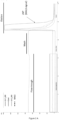
- LNPs are then eluted in a gradient or step into low conductivity buffer or water ( Fig. 1 ).
- elution of LNPs is not governed by diffusion limitations which would lead to chromatographic peak broadening; low volume of eluent (e.g. 3 to 5 column volumes) is required to achieve elution from the chromatographic medium, resulting in high concentration of LNPs in elution fraction, thus concentrating the LNPs.
- LNP-encapsulated mRNA or other nucleic acid chains is increasingly used as a stand-alone vaccine for multiple indications.
- There is a high demand for production of LNPs with a consequent pressure on increasing the yield of the production/purification process.
- Current approaches used in the art are suboptimal, as they lead to destruction of particles and do not remove critical impurities.
- LNP process yield as well as product purity can be increased, thereby increasing the total process recovery.
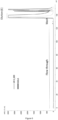
- RNA sample was directly diluted in 1 M potassium phosphate (total volume 12 mL) and loaded onto CIMmultus OH (1 mL, 2 ⁇ m pore size). During sample loading, gradual increase in UV260/280 nm signal, but not MALS signal was observed ( Fig. 2B ).
- mRNA encoding for eGFP 995 nucleotides
- LNP product 1.6 mL
- PBS phosphatidylcholine
- 15 mL of this sample was prepared for loading by diluting it in mobile phase A (15 mM Tris, 250 mM Sodium Citrate, pH 7.51) to match MPA conductivity and pH.
- mobile phase A 15 mM Tris, 250 mM Sodium Citrate, pH 7.51
- Ribogreen analysis (comparison of Ribogreen fluorescence signal of RNA before and after detergent treatment to release encapsulated RNA) of fractions indicated LNP elution recovery of at least 60%.
- Nanoparticle tracking analysis indicated the presence of particles with diameter of 140-185 nm confirming the presence of LNPs in CIMmultus OH elution.
- RNA of 4000 nucleotides 0.1 mg/mL starting concentration
- NanoAssemblr ® Ignite TM Genvoy ILM lipid mix according to manufacturer's protocol (N/P ratio 6, total flow-rate 12 mL/min, final sample volume 1.6 mL).
- LNP product (1.6 mL) was immediately diluted 10-fold in PBS to reduce the concentration of ethanol to ⁇ 3%.
- Reverse-phase chromatographic analysis demonstrated a low signal corresponding to free (unencapsulated) mRNA in flow-through, but not in elution fraction, as well as presence of LNP in elution fraction (E) and not in flow-through (FT) ( Fig. 7 ).
- Ribogreen analysis comparative of Ribogreen fluorescence signal of RNA before and after detergent treatment to release encapsulated RNA
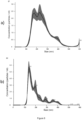
- Nanoparticle tracking analysis of load indicated the presence of a wide particle size distribution with mode value of 230 nm, concentration in load was 4.4 ⁇ 10 9 particles/mL ( Fig. 8 a) .
- Elution fraction (E) indicated the presence of particles with diameter of mode value of 142 nm ( Fig. 8 b) ; concentration of particles was 4.5 ⁇ 10 10 particles/mL, confirming the presence of LNPs and demonstrating a 10-fold concentration of particles relative to the load.
Landscapes
- Chemical & Material Sciences (AREA)
- Health & Medical Sciences (AREA)
- Engineering & Computer Science (AREA)
- Analytical Chemistry (AREA)
- Biomedical Technology (AREA)
- Life Sciences & Earth Sciences (AREA)
- Genetics & Genomics (AREA)
- Bioinformatics & Cheminformatics (AREA)
- Chemical Kinetics & Catalysis (AREA)
- Wood Science & Technology (AREA)
- Biotechnology (AREA)
- General Engineering & Computer Science (AREA)
- Organic Chemistry (AREA)
- Zoology (AREA)
- Physics & Mathematics (AREA)
- General Health & Medical Sciences (AREA)
- Biophysics (AREA)
- Microbiology (AREA)
- Biochemistry (AREA)
- Plant Pathology (AREA)
- Molecular Biology (AREA)
- Crystallography & Structural Chemistry (AREA)
- Pharmacology & Pharmacy (AREA)
- Optics & Photonics (AREA)
- Medicinal Chemistry (AREA)
- Nanotechnology (AREA)
- Epidemiology (AREA)
- Animal Behavior & Ethology (AREA)
- Public Health (AREA)
- Veterinary Medicine (AREA)
- Saccharide Compounds (AREA)
- Medicinal Preparation (AREA)
- Pharmaceuticals Containing Other Organic And Inorganic Compounds (AREA)
- Treatment Of Liquids With Adsorbents In General (AREA)
- Manufacturing Of Micro-Capsules (AREA)
Priority Applications (6)
| Application Number | Priority Date | Filing Date | Title |
|---|---|---|---|
| EP23157085.4A EP4417285A1 (fr) | 2023-02-16 | 2023-02-16 | Procédé de purification de nanoparticules lipidiques |
| CN202480008289.3A CN120676997A (zh) | 2023-02-16 | 2024-02-09 | 纯化脂质纳米粒的方法 |
| JP2025546834A JP2026509143A (ja) | 2023-02-16 | 2024-02-09 | 脂質ナノ粒子の精製方法 |
| PCT/EP2024/053336 WO2024170436A1 (fr) | 2023-02-16 | 2024-02-09 | Procédé de purification de nanoparticules lipidiques |
| KR1020257026778A KR20250129105A (ko) | 2023-02-16 | 2024-02-09 | 지질나노입자의 정제 방법 |
| AU2024223881A AU2024223881B2 (en) | 2023-02-16 | 2024-02-09 | Method for purification of lipid nanoparticles |
Applications Claiming Priority (1)
| Application Number | Priority Date | Filing Date | Title |
|---|---|---|---|
| EP23157085.4A EP4417285A1 (fr) | 2023-02-16 | 2023-02-16 | Procédé de purification de nanoparticules lipidiques |
Publications (1)
| Publication Number | Publication Date |
|---|---|
| EP4417285A1 true EP4417285A1 (fr) | 2024-08-21 |
Family
ID=85283710
Family Applications (1)
| Application Number | Title | Priority Date | Filing Date |
|---|---|---|---|
| EP23157085.4A Pending EP4417285A1 (fr) | 2023-02-16 | 2023-02-16 | Procédé de purification de nanoparticules lipidiques |
Country Status (6)
| Country | Link |
|---|---|
| EP (1) | EP4417285A1 (fr) |
| JP (1) | JP2026509143A (fr) |
| KR (1) | KR20250129105A (fr) |
| CN (1) | CN120676997A (fr) |
| AU (1) | AU2024223881B2 (fr) |
| WO (1) | WO2024170436A1 (fr) |
Citations (2)
| Publication number | Priority date | Publication date | Assignee | Title |
|---|---|---|---|---|
| WO2015094928A1 (fr) * | 2013-12-17 | 2015-06-25 | Merck Sharp & Dohme Corp. | Compositions liposomales pour inhibiteurs akt allostériques |
| WO2021158750A1 (fr) * | 2020-02-06 | 2021-08-12 | Arizona Board Of Regents On Behalf Of The University Of Arizona | Systèmes automatisés de spectrométrie de masse à échange lipidique et méthodes |
Family Cites Families (5)
| Publication number | Priority date | Publication date | Assignee | Title |
|---|---|---|---|---|
| CA2289702C (fr) * | 1997-05-14 | 2008-02-19 | Inex Pharmaceuticals Corp. | Encapsulation hautement efficace d'agents therapeutiques charges dans des vesicules lipidiques |
| EP1567007B1 (fr) * | 2002-11-13 | 2012-02-22 | Thomas Jefferson University | Compositions et procedes de diagnostic et de therapie du cancer |
| ES2888231T3 (es) * | 2010-09-20 | 2022-01-03 | Sirna Therapeutics Inc | Lípidos catiónicos de bajo peso molecular para el suministro de oligonucleótidos |
| US11279923B2 (en) * | 2016-11-28 | 2022-03-22 | Curevac Ag | Method for purifying RNA |
| IL303195A (en) * | 2020-11-25 | 2023-07-01 | Akagera Medicines Inc | Lipid nanoparticles for delivery of nucleic acids and related methods of use |
-
2023
- 2023-02-16 EP EP23157085.4A patent/EP4417285A1/fr active Pending
-
2024
- 2024-02-09 WO PCT/EP2024/053336 patent/WO2024170436A1/fr not_active Ceased
- 2024-02-09 KR KR1020257026778A patent/KR20250129105A/ko active Pending
- 2024-02-09 CN CN202480008289.3A patent/CN120676997A/zh active Pending
- 2024-02-09 JP JP2025546834A patent/JP2026509143A/ja active Pending
- 2024-02-09 AU AU2024223881A patent/AU2024223881B2/en active Active
Patent Citations (2)
| Publication number | Priority date | Publication date | Assignee | Title |
|---|---|---|---|---|
| WO2015094928A1 (fr) * | 2013-12-17 | 2015-06-25 | Merck Sharp & Dohme Corp. | Compositions liposomales pour inhibiteurs akt allostériques |
| WO2021158750A1 (fr) * | 2020-02-06 | 2021-08-12 | Arizona Board Of Regents On Behalf Of The University Of Arizona | Systèmes automatisés de spectrométrie de masse à échange lipidique et méthodes |
Non-Patent Citations (3)
| Title |
|---|
| RADU MIHAILA ET AL: "Lipid nanoparticle purification by Spin CentrifugationDialysis (SCD): A facile and high-throughput approach for small scale preparation of siRNAlipid complexes", INTERNATIONAL JOURNAL OF PHARMACEUTICS, ELSEVIER, NL, vol. 420, no. 1, 8 August 2011 (2011-08-08), pages 118 - 121, XP028317625, ISSN: 0378-5173, [retrieved on 20110827], DOI: 10.1016/J.IJPHARM.2011.08.017 * |
| RUYSSCHAERT TRISTAN ET AL: "Liposome retention in size exclusion chromatography", BMC BIOTECHNOLOGY, BIOMED CENTRAL LTD, vol. 5, no. 1, 10 May 2005 (2005-05-10), pages 11, XP021005960, ISSN: 1472-6750, DOI: 10.1186/1472-6750-5-11 * |
| VEMURI S ET AL: "Separation of liposomes by a gel filtration chromatographic technique: a preliminary evaluation", PHARMACEUTICA ACTA HELVETIAE, ELSEVIER BV, NETHERLANDS, vol. 69, no. 2, 1 October 1994 (1994-10-01), pages 107 - 113, XP023817520, ISSN: 0031-6865, [retrieved on 19941001], DOI: 10.1016/0031-6865(94)90009-4 * |
Also Published As
| Publication number | Publication date |
|---|---|
| JP2026509143A (ja) | 2026-03-17 |
| AU2024223881B2 (en) | 2025-09-11 |
| AU2024223881A1 (en) | 2025-07-31 |
| CN120676997A (zh) | 2025-09-19 |
| WO2024170436A1 (fr) | 2024-08-22 |
| KR20250129105A (ko) | 2025-08-28 |
Similar Documents
| Publication | Publication Date | Title |
|---|---|---|
| Marichal-Gallardo et al. | Steric exclusion chromatography for purification of cell culture-derived influenza A virus using regenerated cellulose membranes and polyethylene glycol | |
| US10537887B2 (en) | Adsorbent composition and use thereof | |
| WO2019178495A1 (fr) | Procédés de purification de virus adéno-associés recombinants | |
| JP6320429B2 (ja) | 負帯電粒子を用いるウイルス調製物のクロマトグラフィー精製 | |
| Urthaler et al. | Industrial scale cGMP purification of pharmaceutical grade plasmid‐DNA | |
| JP7512891B2 (ja) | ポリペプチドの分離方法、ポリペプチドの製造方法及びポリペプチドの精製装置 | |
| EP4417285A1 (fr) | Procédé de purification de nanoparticules lipidiques | |
| Kodermac et al. | Grafting chromatographic monoliths with charged linear polymers for highly productive and selective protein or plasmid DNA purification | |
| WO2008092709A1 (fr) | Procédé et dispositif de purification d'acides nucléiques | |
| TW202214852A (zh) | Rna純化法 | |
| EP4493199B1 (fr) | Méthodes et compositions de purification de petites vésicules extracellulaires | |
| US20090047734A1 (en) | Method of separation of deoxyribonucleic acids | |
| EP3995196B1 (fr) | Processus de purification pour assemblages complexes fermés de membrane lipidique | |
| Cardoso et al. | Downstream Workflows for Intermediate Purification of Lentiviral Vectors Using Tangential Flow Filtration and AEX Membrane Chromatography | |
| JP2006507825A (ja) | アンチセンスオリゴヌクレオチドの単離 | |
| EP4556572A1 (fr) | Procédé de purification d'un ou plusieurs acides nucléiques cibles | |
| US20250251376A1 (en) | Systems and methods for separation of crispr/cas components | |
| WO2005113578A1 (fr) | Systemes a membranes hautement selectives et procede d'ultrafiltration de proteines | |
| CN121574170A (zh) | 一种磷酰二胺吗啉代寡核苷酸的纯化方法 | |
| JP5931363B2 (ja) | タンパク質の精製方法 | |
| CN118871580A (zh) | 用于降低核酸纯化中的内毒素水平的方法 | |
| WO2025186218A1 (fr) | Purification et analyse d'arn | |
| TW202605148A (zh) | 純化單鏈rna的方法 | |
| JP2026503238A (ja) | 生物学的粒子の精製 | |
| WO2025149349A1 (fr) | Procédé de séparation de molécules d'acide nucléique |
Legal Events
| Date | Code | Title | Description |
|---|---|---|---|
| PUAI | Public reference made under article 153(3) epc to a published international application that has entered the european phase |
Free format text: ORIGINAL CODE: 0009012 |
|
| STAA | Information on the status of an ep patent application or granted ep patent |
Free format text: STATUS: THE APPLICATION HAS BEEN PUBLISHED |
|
| AK | Designated contracting states |
Kind code of ref document: A1 Designated state(s): AL AT BE BG CH CY CZ DE DK EE ES FI FR GB GR HR HU IE IS IT LI LT LU LV MC ME MK MT NL NO PL PT RO RS SE SI SK SM TR |
|
| STAA | Information on the status of an ep patent application or granted ep patent |
Free format text: STATUS: REQUEST FOR EXAMINATION WAS MADE |
|
| 17P | Request for examination filed |
Effective date: 20250109 |
|
| GRAP | Despatch of communication of intention to grant a patent |
Free format text: ORIGINAL CODE: EPIDOSNIGR1 |
|
| STAA | Information on the status of an ep patent application or granted ep patent |
Free format text: STATUS: GRANT OF PATENT IS INTENDED |
|
| INTG | Intention to grant announced |
Effective date: 20260122 |