EP4417343A1 - Procédé de production de pièces coulées structurelles aérospatiales ferreuses et non ferreuses sans porosités - Google Patents
Procédé de production de pièces coulées structurelles aérospatiales ferreuses et non ferreuses sans porosités Download PDFInfo
- Publication number
- EP4417343A1 EP4417343A1 EP24158489.5A EP24158489A EP4417343A1 EP 4417343 A1 EP4417343 A1 EP 4417343A1 EP 24158489 A EP24158489 A EP 24158489A EP 4417343 A1 EP4417343 A1 EP 4417343A1
- Authority
- EP
- European Patent Office
- Prior art keywords
- metal matrix
- cast metal
- layer
- void
- depositing
- Prior art date
- Legal status (The legal status is an assumption and is not a legal conclusion. Google has not performed a legal analysis and makes no representation as to the accuracy of the status listed.)
- Pending
Links
Images


Classifications
-
- C—CHEMISTRY; METALLURGY
- C23—COATING METALLIC MATERIAL; COATING MATERIAL WITH METALLIC MATERIAL; CHEMICAL SURFACE TREATMENT; DIFFUSION TREATMENT OF METALLIC MATERIAL; COATING BY VACUUM EVAPORATION, BY SPUTTERING, BY ION IMPLANTATION OR BY CHEMICAL VAPOUR DEPOSITION, IN GENERAL; INHIBITING CORROSION OF METALLIC MATERIAL OR INCRUSTATION IN GENERAL
- C23C—COATING METALLIC MATERIAL; COATING MATERIAL WITH METALLIC MATERIAL; SURFACE TREATMENT OF METALLIC MATERIAL BY DIFFUSION INTO THE SURFACE, BY CHEMICAL CONVERSION OR SUBSTITUTION; COATING BY VACUUM EVAPORATION, BY SPUTTERING, BY ION IMPLANTATION OR BY CHEMICAL VAPOUR DEPOSITION, IN GENERAL
- C23C28/00—Coating for obtaining at least two superposed coatings either by methods not provided for in a single one of groups C23C2/00 - C23C26/00 or by combinations of methods provided for in subclasses C23C and C25C or C25D
- C23C28/02—Coating for obtaining at least two superposed coatings either by methods not provided for in a single one of groups C23C2/00 - C23C26/00 or by combinations of methods provided for in subclasses C23C and C25C or C25D only coatings only including layers of metallic material
- C23C28/021—Coating for obtaining at least two superposed coatings either by methods not provided for in a single one of groups C23C2/00 - C23C26/00 or by combinations of methods provided for in subclasses C23C and C25C or C25D only coatings only including layers of metallic material including at least one metal alloy layer
-
- B—PERFORMING OPERATIONS; TRANSPORTING
- B22—CASTING; POWDER METALLURGY
- B22D—CASTING OF METALS; CASTING OF OTHER SUBSTANCES BY THE SAME PROCESSES OR DEVICES
- B22D31/00—Cutting-off surplus material, e.g. gates; Cleaning and working on castings
- B22D31/002—Cleaning, working on castings
- B22D31/005—Sealing or impregnating porous castings
-
- B—PERFORMING OPERATIONS; TRANSPORTING
- B22—CASTING; POWDER METALLURGY
- B22D—CASTING OF METALS; CASTING OF OTHER SUBSTANCES BY THE SAME PROCESSES OR DEVICES
- B22D31/00—Cutting-off surplus material, e.g. gates; Cleaning and working on castings
- B22D31/002—Cleaning, working on castings
-
- B—PERFORMING OPERATIONS; TRANSPORTING
- B22—CASTING; POWDER METALLURGY
- B22F—WORKING METALLIC POWDER; MANUFACTURE OF ARTICLES FROM METALLIC POWDER; MAKING METALLIC POWDER; APPARATUS OR DEVICES SPECIALLY ADAPTED FOR METALLIC POWDER
- B22F3/00—Manufacture of workpieces or articles from metallic powder characterised by the manner of compacting or sintering; Apparatus specially adapted therefor ; Presses and furnaces
- B22F3/12—Both compacting and sintering
- B22F3/14—Both compacting and sintering simultaneously
- B22F3/15—Hot isostatic pressing
-
- B—PERFORMING OPERATIONS; TRANSPORTING
- B23—MACHINE TOOLS; METAL-WORKING NOT OTHERWISE PROVIDED FOR
- B23P—METAL-WORKING NOT OTHERWISE PROVIDED FOR; COMBINED OPERATIONS; UNIVERSAL MACHINE TOOLS
- B23P6/00—Restoring or reconditioning objects
- B23P6/04—Repairing fractures or cracked metal parts or products, e.g. castings
- B23P6/045—Repairing fractures or cracked metal parts or products, e.g. castings of turbine components, e.g. moving or stationary blades, rotors, etc.
-
- C—CHEMISTRY; METALLURGY
- C21—METALLURGY OF IRON
- C21D—MODIFYING THE PHYSICAL STRUCTURE OF FERROUS METALS; GENERAL DEVICES FOR HEAT TREATMENT OF FERROUS OR NON-FERROUS METALS OR ALLOYS; MAKING METAL MALLEABLE, e.g. BY DECARBURISATION OR TEMPERING
- C21D8/00—Modifying the physical properties of ferrous metals or ferrous alloys by deformation combined with, or followed by, heat treatment
- C21D8/02—Modifying the physical properties of ferrous metals or ferrous alloys by deformation combined with, or followed by, heat treatment during manufacturing of plates or strips
- C21D8/0221—Modifying the physical properties of ferrous metals or ferrous alloys by deformation combined with, or followed by, heat treatment during manufacturing of plates or strips characterised by the working steps
- C21D8/0242—Flattening; Dressing; Flexing
-
- C—CHEMISTRY; METALLURGY
- C21—METALLURGY OF IRON
- C21D—MODIFYING THE PHYSICAL STRUCTURE OF FERROUS METALS; GENERAL DEVICES FOR HEAT TREATMENT OF FERROUS OR NON-FERROUS METALS OR ALLOYS; MAKING METAL MALLEABLE, e.g. BY DECARBURISATION OR TEMPERING
- C21D8/00—Modifying the physical properties of ferrous metals or ferrous alloys by deformation combined with, or followed by, heat treatment
- C21D8/02—Modifying the physical properties of ferrous metals or ferrous alloys by deformation combined with, or followed by, heat treatment during manufacturing of plates or strips
- C21D8/0278—Modifying the physical properties of ferrous metals or ferrous alloys by deformation combined with, or followed by, heat treatment during manufacturing of plates or strips involving a particular surface treatment
-
- C—CHEMISTRY; METALLURGY
- C23—COATING METALLIC MATERIAL; COATING MATERIAL WITH METALLIC MATERIAL; CHEMICAL SURFACE TREATMENT; DIFFUSION TREATMENT OF METALLIC MATERIAL; COATING BY VACUUM EVAPORATION, BY SPUTTERING, BY ION IMPLANTATION OR BY CHEMICAL VAPOUR DEPOSITION, IN GENERAL; INHIBITING CORROSION OF METALLIC MATERIAL OR INCRUSTATION IN GENERAL
- C23C—COATING METALLIC MATERIAL; COATING MATERIAL WITH METALLIC MATERIAL; SURFACE TREATMENT OF METALLIC MATERIAL BY DIFFUSION INTO THE SURFACE, BY CHEMICAL CONVERSION OR SUBSTITUTION; COATING BY VACUUM EVAPORATION, BY SPUTTERING, BY ION IMPLANTATION OR BY CHEMICAL VAPOUR DEPOSITION, IN GENERAL
- C23C18/00—Chemical coating by decomposition of either liquid compounds or solutions of the coating forming compounds, without leaving reaction products of surface material in the coating; Contact plating
- C23C18/16—Chemical coating by decomposition of either liquid compounds or solutions of the coating forming compounds, without leaving reaction products of surface material in the coating; Contact plating by reduction or substitution, e.g. electroless plating
- C23C18/1601—Process or apparatus
- C23C18/1633—Process of electroless plating
- C23C18/1646—Characteristics of the product obtained
- C23C18/165—Multilayered product
- C23C18/1653—Two or more layers with at least one layer obtained by electroless plating and one layer obtained by electroplating
-
- B—PERFORMING OPERATIONS; TRANSPORTING
- B22—CASTING; POWDER METALLURGY
- B22F—WORKING METALLIC POWDER; MANUFACTURE OF ARTICLES FROM METALLIC POWDER; MAKING METALLIC POWDER; APPARATUS OR DEVICES SPECIALLY ADAPTED FOR METALLIC POWDER
- B22F2998/00—Supplementary information concerning processes or compositions relating to powder metallurgy
- B22F2998/10—Processes characterised by the sequence of their steps
-
- B—PERFORMING OPERATIONS; TRANSPORTING
- B22—CASTING; POWDER METALLURGY
- B22F—WORKING METALLIC POWDER; MANUFACTURE OF ARTICLES FROM METALLIC POWDER; MAKING METALLIC POWDER; APPARATUS OR DEVICES SPECIALLY ADAPTED FOR METALLIC POWDER
- B22F2999/00—Aspects linked to processes or compositions used in powder metallurgy
-
- C—CHEMISTRY; METALLURGY
- C21—METALLURGY OF IRON
- C21D—MODIFYING THE PHYSICAL STRUCTURE OF FERROUS METALS; GENERAL DEVICES FOR HEAT TREATMENT OF FERROUS OR NON-FERROUS METALS OR ALLOYS; MAKING METAL MALLEABLE, e.g. BY DECARBURISATION OR TEMPERING
- C21D2251/00—Treating composite or clad material
- C21D2251/02—Clad material
-
- C—CHEMISTRY; METALLURGY
- C21—METALLURGY OF IRON
- C21D—MODIFYING THE PHYSICAL STRUCTURE OF FERROUS METALS; GENERAL DEVICES FOR HEAT TREATMENT OF FERROUS OR NON-FERROUS METALS OR ALLOYS; MAKING METAL MALLEABLE, e.g. BY DECARBURISATION OR TEMPERING
- C21D2261/00—Machining or cutting being involved
-
- F—MECHANICAL ENGINEERING; LIGHTING; HEATING; WEAPONS; BLASTING
- F01—MACHINES OR ENGINES IN GENERAL; ENGINE PLANTS IN GENERAL; STEAM ENGINES
- F01D—NON-POSITIVE DISPLACEMENT MACHINES OR ENGINES, e.g. STEAM TURBINES
- F01D25/00—Component parts, details, or accessories, not provided for in, or of interest apart from, other groups
-
- F—MECHANICAL ENGINEERING; LIGHTING; HEATING; WEAPONS; BLASTING
- F01—MACHINES OR ENGINES IN GENERAL; ENGINE PLANTS IN GENERAL; STEAM ENGINES
- F01D—NON-POSITIVE DISPLACEMENT MACHINES OR ENGINES, e.g. STEAM TURBINES
- F01D5/00—Blades; Blade-carrying members; Heating, heat-insulating, cooling or antivibration means on the blades or the members
-
- F—MECHANICAL ENGINEERING; LIGHTING; HEATING; WEAPONS; BLASTING
- F01—MACHINES OR ENGINES IN GENERAL; ENGINE PLANTS IN GENERAL; STEAM ENGINES
- F01D—NON-POSITIVE DISPLACEMENT MACHINES OR ENGINES, e.g. STEAM TURBINES
- F01D5/00—Blades; Blade-carrying members; Heating, heat-insulating, cooling or antivibration means on the blades or the members
- F01D5/005—Repairing methods or devices
-
- F—MECHANICAL ENGINEERING; LIGHTING; HEATING; WEAPONS; BLASTING
- F05—INDEXING SCHEMES RELATING TO ENGINES OR PUMPS IN VARIOUS SUBCLASSES OF CLASSES F01-F04
- F05D—INDEXING SCHEME FOR ASPECTS RELATING TO NON-POSITIVE-DISPLACEMENT MACHINES OR ENGINES, GAS-TURBINES OR JET-PROPULSION PLANTS
- F05D2230/00—Manufacture
- F05D2230/10—Manufacture by removing material
- F05D2230/11—Manufacture by removing material by electrochemical methods
-
- F—MECHANICAL ENGINEERING; LIGHTING; HEATING; WEAPONS; BLASTING
- F05—INDEXING SCHEMES RELATING TO ENGINES OR PUMPS IN VARIOUS SUBCLASSES OF CLASSES F01-F04
- F05D—INDEXING SCHEME FOR ASPECTS RELATING TO NON-POSITIVE-DISPLACEMENT MACHINES OR ENGINES, GAS-TURBINES OR JET-PROPULSION PLANTS
- F05D2230/00—Manufacture
- F05D2230/10—Manufacture by removing material
- F05D2230/14—Micromachining
-
- F—MECHANICAL ENGINEERING; LIGHTING; HEATING; WEAPONS; BLASTING
- F05—INDEXING SCHEMES RELATING TO ENGINES OR PUMPS IN VARIOUS SUBCLASSES OF CLASSES F01-F04
- F05D—INDEXING SCHEME FOR ASPECTS RELATING TO NON-POSITIVE-DISPLACEMENT MACHINES OR ENGINES, GAS-TURBINES OR JET-PROPULSION PLANTS
- F05D2230/00—Manufacture
- F05D2230/30—Manufacture with deposition of material
- F05D2230/31—Layer deposition
-
- F—MECHANICAL ENGINEERING; LIGHTING; HEATING; WEAPONS; BLASTING
- F05—INDEXING SCHEMES RELATING TO ENGINES OR PUMPS IN VARIOUS SUBCLASSES OF CLASSES F01-F04
- F05D—INDEXING SCHEME FOR ASPECTS RELATING TO NON-POSITIVE-DISPLACEMENT MACHINES OR ENGINES, GAS-TURBINES OR JET-PROPULSION PLANTS
- F05D2230/00—Manufacture
- F05D2230/40—Heat treatment
- F05D2230/42—Heat treatment by hot isostatic pressing
-
- F—MECHANICAL ENGINEERING; LIGHTING; HEATING; WEAPONS; BLASTING
- F05—INDEXING SCHEMES RELATING TO ENGINES OR PUMPS IN VARIOUS SUBCLASSES OF CLASSES F01-F04
- F05D—INDEXING SCHEME FOR ASPECTS RELATING TO NON-POSITIVE-DISPLACEMENT MACHINES OR ENGINES, GAS-TURBINES OR JET-PROPULSION PLANTS
- F05D2230/00—Manufacture
- F05D2230/80—Repairing, retrofitting or upgrading methods
-
- F—MECHANICAL ENGINEERING; LIGHTING; HEATING; WEAPONS; BLASTING
- F05—INDEXING SCHEMES RELATING TO ENGINES OR PUMPS IN VARIOUS SUBCLASSES OF CLASSES F01-F04
- F05D—INDEXING SCHEME FOR ASPECTS RELATING TO NON-POSITIVE-DISPLACEMENT MACHINES OR ENGINES, GAS-TURBINES OR JET-PROPULSION PLANTS
- F05D2230/00—Manufacture
- F05D2230/90—Coating; Surface treatment
-
- F—MECHANICAL ENGINEERING; LIGHTING; HEATING; WEAPONS; BLASTING
- F05—INDEXING SCHEMES RELATING TO ENGINES OR PUMPS IN VARIOUS SUBCLASSES OF CLASSES F01-F04
- F05D—INDEXING SCHEME FOR ASPECTS RELATING TO NON-POSITIVE-DISPLACEMENT MACHINES OR ENGINES, GAS-TURBINES OR JET-PROPULSION PLANTS
- F05D2300/00—Materials; Properties thereof
- F05D2300/10—Metals, alloys or intermetallic compounds
- F05D2300/13—Refractory metals, i.e. Ti, V, Cr, Zr, Nb, Mo, Hf, Ta, W
- F05D2300/132—Chromium
-
- F—MECHANICAL ENGINEERING; LIGHTING; HEATING; WEAPONS; BLASTING
- F05—INDEXING SCHEMES RELATING TO ENGINES OR PUMPS IN VARIOUS SUBCLASSES OF CLASSES F01-F04
- F05D—INDEXING SCHEME FOR ASPECTS RELATING TO NON-POSITIVE-DISPLACEMENT MACHINES OR ENGINES, GAS-TURBINES OR JET-PROPULSION PLANTS
- F05D2300/00—Materials; Properties thereof
- F05D2300/10—Metals, alloys or intermetallic compounds
- F05D2300/13—Refractory metals, i.e. Ti, V, Cr, Zr, Nb, Mo, Hf, Ta, W
- F05D2300/133—Titanium
-
- F—MECHANICAL ENGINEERING; LIGHTING; HEATING; WEAPONS; BLASTING
- F05—INDEXING SCHEMES RELATING TO ENGINES OR PUMPS IN VARIOUS SUBCLASSES OF CLASSES F01-F04
- F05D—INDEXING SCHEME FOR ASPECTS RELATING TO NON-POSITIVE-DISPLACEMENT MACHINES OR ENGINES, GAS-TURBINES OR JET-PROPULSION PLANTS
- F05D2300/00—Materials; Properties thereof
- F05D2300/10—Metals, alloys or intermetallic compounds
- F05D2300/17—Alloys
- F05D2300/172—Copper alloys
-
- F—MECHANICAL ENGINEERING; LIGHTING; HEATING; WEAPONS; BLASTING
- F05—INDEXING SCHEMES RELATING TO ENGINES OR PUMPS IN VARIOUS SUBCLASSES OF CLASSES F01-F04
- F05D—INDEXING SCHEME FOR ASPECTS RELATING TO NON-POSITIVE-DISPLACEMENT MACHINES OR ENGINES, GAS-TURBINES OR JET-PROPULSION PLANTS
- F05D2300/00—Materials; Properties thereof
- F05D2300/10—Metals, alloys or intermetallic compounds
- F05D2300/17—Alloys
- F05D2300/172—Copper alloys
- F05D2300/1723—Nickel-Copper alloy, e.g. Monel
-
- F—MECHANICAL ENGINEERING; LIGHTING; HEATING; WEAPONS; BLASTING
- F05—INDEXING SCHEMES RELATING TO ENGINES OR PUMPS IN VARIOUS SUBCLASSES OF CLASSES F01-F04
- F05D—INDEXING SCHEME FOR ASPECTS RELATING TO NON-POSITIVE-DISPLACEMENT MACHINES OR ENGINES, GAS-TURBINES OR JET-PROPULSION PLANTS
- F05D2300/00—Materials; Properties thereof
- F05D2300/10—Metals, alloys or intermetallic compounds
- F05D2300/17—Alloys
- F05D2300/174—Titanium alloys, e.g. TiAl
-
- F—MECHANICAL ENGINEERING; LIGHTING; HEATING; WEAPONS; BLASTING
- F05—INDEXING SCHEMES RELATING TO ENGINES OR PUMPS IN VARIOUS SUBCLASSES OF CLASSES F01-F04
- F05D—INDEXING SCHEME FOR ASPECTS RELATING TO NON-POSITIVE-DISPLACEMENT MACHINES OR ENGINES, GAS-TURBINES OR JET-PROPULSION PLANTS
- F05D2300/00—Materials; Properties thereof
- F05D2300/10—Metals, alloys or intermetallic compounds
- F05D2300/17—Alloys
- F05D2300/175—Superalloys
Definitions
- High performance precision cast parts often contain voids such as porosities, cracks, hot tears, shrinkage cavities, inter-dendritic shrinkage, sponge shrinkage, and other defects that reduce quality and structural integrity of the parts. These types of defects, together with non-metallic inclusions, constitute the most predominant sources of scrap and rework for high performance alloys used for aircraft structure.
- the unpredictable location, size, frequency, and proximity of such defects reduces confidence in castings for use as primary aircraft structural elements and thus incurs a design weight increase penalty of between approximately 25% and 50%.
- the major weight increase has resulted in limited use of castings for aircraft structure to only applications that cannot be economically produced by other means and required alloys that cannot be made by wrought processes (e.g., directionally solidified or single crystal alloys or precipitation hardened creep resistant alloys that are extremely hard to forge or roll).
- Hot isostatic pressing is often used to heal internal voids of cast metal matrices, but it does not heal outer surface-connected voids.
- Nickel plating can be used to close off outer surface-connected voids, thereby allowing hot isostatic pressing to heal them.
- this is discouraged due to complex alteration of outer surface chemistry, the additional step of plating removal, and added costs in favor of optimizing casting parameters to achieve an acceptable outer surface.
- surfaces of the closed-off outer surface-connected voids do not always form a complete metallurgical bonded joint such that even though the void has been filled, structural integrity may still be compromised. This must be discovered during inspection, resulting in significant scrap and rework cycles.
- Embodiments of the present invention solve the above-mentioned problems and other problems and provide a distinct advance in the art of treating metal castings. More particularly, embodiments of the invention provide a method of hot isostatic pressing metal castings and castings produced by such method.
- An embodiment of the invention is a method of treating a cast metal matrix of a casting. First, an outer surface of the cast metal matrix and surfaces of outer surface-connected voids are coated to create a uniform, self-fluxing first layer.
- the outer surface of the cast metal matrix and the surfaces of the outer surface-connected voids are then coated a second time to create a second layer over the first layer, thereby closing off the outer surface-connected voids.
- the cast metal matrix is then subjected to hot isostatic pressing.
- This allows internal voids (including closed-off outer surface-connected voids) to collapse under the differential pressure between atmosphere outside the casting and the internal voids.
- the surfaces of the internal voids produce a metallurgical bond via diffusion of atoms, thereby destroying the internal voids, effectively eliminating any defects, and improving mechanical properties of the casting.
- Another embodiment of the invention is a casting obtained by the following steps. First, an outer surface of the cast metal matrix and surfaces of outer surface-connected voids are coated to create a uniform, self-fluxing first layer.
- the outer surface of the cast metal matrix and the surfaces of the outer surface-connected voids are then coated a second time to create a second layer over the first layer, thereby closing off the outer surface-connected voids.
- the cast metal matrix is then subjected to hot isostatic pressing.
- This allows internal voids (including closed-off outer surface-connected voids) to collapse under the differential pressure between atmosphere outside the casting and the internal voids.
- the surfaces of the internal voids produce a metallurgical bond via diffusion of atoms, thereby destroying the internal voids, effectively eliminating any defects, and improving mechanical properties of the casting.
- the material of the self-fluxing first layer is diffused in the cast metal matrix.
- Another embodiment of the invention is a method of treating a cast metal matrix. First, an outer surface of the cast metal matrix and surfaces of a surface-connected void of the cast metal matrix are mechanically cleaned. The outer surface of the cast metal matrix and surfaces of surface-connected voids of the cast metal matrix are then chemically cleaned.
- a self-fluxing first layer of material is then autocatalytically deposited on the outer surface of the cast metal matrix and the surfaces of the outer surface-connected void.
- the cast metal matrix is then cleaned.
- a second layer of material is then electroplated onto the cast metal matrix over the first layer, thereby closing off the outer surface-connected void so that the outer surface-connected void is an effective internal void.
- the cast metal matrix is then cleaned.
- the cast metal matrix is then subjected to hot isostatic pressing so that the self-fluxing first layer facilitates healing the effective internal void and complete metallurgical bonding of the surfaces of the effective internal void.
- the second layer of material is then removed.
- the cast metal matrix is then heat treated.
- the cast metal matrix is then tested to ensure the cast metal matrix meets design requirements.
- Another embodiment of the invention is a method of treating a cast metal matrix of a casting.
- the outer surface of the cast metal matrix is mechanically cleaned to remove contaminants and scaling from the outer surface.
- the outer surface, including surfaces of outer surface-connected voids, is then chemically cleaned. This acts as a surface activation (i.e., a chemical or charge modification of a surface to improve the results of further surface treatment such as autocatalytic deposition or electroplating.
- the outer surface including the surfaces of the outer surface-connected voids, is then coated via autocatalytic deposition to create a uniform, self-fluxing first layer.
- the first layer has a controlled thickness and composition of effective melting point depressants such as boron or phosphorous.
- the autocatalytic deposition reaches deep into the outer surface-connected voids that cannot otherwise be easily accessed.
- the first layer includes nickel, nickel-chromium, nickel-cobalt, nickel-cobalt-chromium or the like in a phosphorous or boron-containing autocatalytic solution.
- the cast metal matrix, or more specifically the first layer is then mechanically and/or chemically cleaned.
- the outer surface is then subjected to electroplating to create a second layer over the outer surface, thereby closing off the outer surface-connected voids.
- the electroplating step seals the outer surface, thus effectively changing the outer surface-connected voids into internal voids (hereinafter closed-off outer surface-connected voids).
- the second layer includes nickel, cobalt, chromium, or a co-deposition thereof for iron, nickel, or cobalt base castings.
- the second layer may include copper for titanium castings.
- aluminum or other precipitation hardening elements can be co-deposited with electroplating in the form of powders that have been pre-coated with nickel.
- the cast metal matrix, or more specifically the second layer is then mechanically and/or chemically cleaned.
- the cast metal matrix is then subjected to hot isostatic pressing, which includes placing the cast metal matrix in a chamber at an elevated temperature and pressure for a duration of time.
- the heat causes the cast metal matrix to become "plastic", allowing voids to collapse under the differential pressure between atmosphere outside the casting and the internal voids (including closed-off outer surface-connected voids).
- the surfaces of the voids produce a metallurgical bond via diffusion of atoms, thereby destroying the voids, effectively eliminating any defects, and improving mechanical properties of the casting.
- the phosphorous and/or boron of the first layer diffuse out of the surfaces of the closed-off outer surface-connected voids and into the cast metal matrix. This in turn reduces their concentration at the surfaces of the closed-off outer surface-connected voids, which increases the melting temperature near the closed-off outer surface-connected voids until cast metal matrix material near the closed-off outer surface-connected voids isothermally solidifies and produces a strong metallurgical bonded joint.
- the cast metal matrix is then inspected and tested via non-destructive testing (NDI), strength testing, electrical testing, and the like, which ensures removal of all internal voids and defects.
- NDI non-destructive testing
- the cast metal matrix is also heat treated, which imparts additional desired mechanical properties, such as increased strength, to the cast metal matrix.
- the electroplated second layer may then be removed, depending on the application. This may be performed via chemical stripping, machining, or the like.
- Complete metallurgical bonding is also achieved by removing insoluble oxide or nitride films from the surfaces of the outer surface-connected voids. Bonding is facilitated by cleaning and hence surface activation that penetrates all the way through the outer surface-connected voids. This is further assisted by formation of a transient liquid phase achieved through uniform coating of the outer surface-connected voids via autocatalytic coating with solutions containing melting point depressants, which results in isothermal solidification and diffusion bonding of the adjoining surfaces of the closed-off outer surface-connected voids.
- the above-described invention helps eliminate scrap and the need for rework, thereby saving hundreds of millions of dollars in the aircraft industry alone.
- the above quality, performance, and economic enhancements greatly reduce superalloy and stainless steel casting acquisition costs and help increase share of high performance casting for aircraft and defense applications.
- the present invention is directed to a method of treating a cast metal matrix of a high-performance precision casting via hot isostatic pressing and a casting formed according to the method.
- the method improves hot isostatic pressing cast metal matrices and eliminates certain deficiencies thereof.
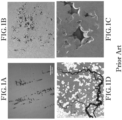
- the invention is suitable for precision castings of high-performance alloys (e.g., nickel base superalloys, maraging steels, martensitic steel, precipitation hardening ferrous alloys, titanium alloys, and the like). Such castings are useful in aircraft, spacecraft, engines, military vehicles and equipment, and the like, where defects such as the ones shown in FIGS. 1A-D are particularly undesirable. It should be understood by one having ordinary skill in the art that the invention provided herein can also be used in other industries as well to improve casted parts. To that end, the invention will be described in terms of an exemplary part 100 formed of a casting 102 having a cast metal matrix 104, as shown in FIGS. 2 and 3A-D .
- high-performance alloys e.g., nickel base superalloys, maraging steels, martensitic steel, precipitation hardening ferrous alloys, titanium alloys, and the like.
- Such castings are useful in aircraft, spacecraft, engines, military vehicles and equipment, and the like,
- the outer surface 106 including the surfaces 112 of the outer surface-connected voids 110, may be coated to create a uniform, self-fluxing first layer 114, as shown in block 200.
- the coating can be accomplished by way of autocatalytic deposition or other similar manner.
- the first layer 114 may have controlled thickness and composition of effective melting point depressants such as boron or phosphorous. The coating reaches deep into the outer surface-connected voids 110 that cannot otherwise be easily accessed.
- the first layer 114 may include nickel, nickel-chromium, nickel-cobalt, nickel-cobalt-chromium or the like via phosphorous or boron-containing autocatalytic solution.
- the first layer 114 may have a composition of between approximately 0.5% to approximately 14% phosphorous or between approximately 0.5% to approximately 12% boron.
- solutions containing boron are preferable since boron, being a small atom, can diffuse easier into the cast metal matrix 104 once thermally treated.
- phosphorous-containing solutions are preferable for alloys that are not prone to large volumetric shrinkage.
- Phosphorous-containing solutions act as self-fluxing melt point depressants with the added ability to bond adjoining defect surfaces that are highly reactive and might be prone to formation of oxides or nitride films.
- the first layer 114 may include both phosphorous and boron-containing solutions.
- Both phosphorous and boron used for autocatalytic deposition are very effective melting point depressants and allow complete bonding or adjoining void surfaces well below the melting temperature of the cast metal matrices upon subsequent diffusion bonding operations depending on the composition and thickness of the autocatalytically deposited layer.
- the first layer 114 should be relatively thin. In some embodiments, the first layer is just enough to fully cover the surfaces 112 of the outer surface-connected voids 110 with melting point depressant and auto-fluxing coating to aid full diffusion bonding and healing of the surfaces 112 as they come together via hot isostatic pressing well below the melting temperature of the cast metal matrix 104, as discussed in more detail below. In some embodiments, the first layer 114 is less than about 0.0005 inches thick. In further embodiments, the first layer 114 may have a thickness between about 0.0002 inches and about 0.002 inches. In yet other embodiments, the first layer 114 includes both types of autocatalytic solutions (phosphorous and boron) having a thickness greater than about 0.00075 inches. In further embodiments, the first layer 114 has a thickness of between 0.0002 inches and 0.0005 inches. In still other embodiments, the autocatalytic deposition creates a uniform coating regardless of surface geometry.
- the outer surface 106 of the cast metal matrix 104 may then be subjected to another coating (e.g., via electroplating) to create a second layer 116 over the outer surface 106, thereby closing off the outer surface-connected voids 110, as shown in block 202.
- this step seals the outer surface 106, thus effectively changing the outer surface-connected voids 110 into internal voids (hereinafter closed-off outer surface-connected voids).
- the second layer 116 may include nickel, cobalt, chromium, or a co-deposition thereof for iron, nickel, or cobalt base castings.
- the second layer 116 may include copper for titanium castings.
- shrink prone titanium alloy cast metal matrices such as those formed of Ti-6-2-4-2, Beta C, Ti-15-3-3-3, and Beta 21S can be electroplated with copper instead of nickel.
- aluminum or other precipitation hardening elements can be co-deposited with electroplating in the form of powders that have been pre-coated with nickel. This is especially useful for precipitation hardening nickel base superalloys.
- the thickness of the second layer 116 may vary depending on end-use application.
- Hot isostatic pressing may include placing the cast metal matrix 104 in a chamber (e.g., a high temperature furnace enclosed in a pressure vessel). Temperature, pressure, and process time may be precisely controlled to achieve optimum results.
- the cast metal matrix 104 may be heated in an inert gas, which applies pressure uniformly in all directions to the outer surface 106 of the heated cast metal matrix 104. The heat causes the cast metal matrix 104 to become "plastic", allowing internal voids (internal voids 108 and closed-off outer surface-connected voids 110) to collapse under the differential pressure between the ambient atmosphere outside the casting 102 and the internal voids.
- the surfaces of the internal voids 108, 110 produce a metallurgical bond via diffusion of atoms, thereby collapsing or destroying the internal voids 108, 110, effectively eliminating any defects, and improving mechanical properties of the casting 102.
- the cast metal matrix 104 may be pressurized between about 14,500 psi and about 45,000 psi at temperatures between about 1,950 °F to about 2,200 °F for iron, nickel, or cobalt base alloys, and at between about 14,500 psi to about 25,000 psi and between about 1,600 °F to about 1,850 °F for titanium alloys.
- the hot isostatic pressing may be performed between about 2 hours and about 5 hours at a target temperature.
- the phosphorous and/or boron of the first layer 114 diffuses out of the surfaces 112 of the closed-off outer surface-connected voids 110 and into the cast metal matrix 104. This in turn reduces their concentration at the surfaces 112 of the closed-off outer surface-connected voids 110, which increases the melting temperature near the closed-off outer surface-connected voids 110 until cast metal matrix 104 near the closed-off outer surface-connected voids 110 isothermally solidifies and produces a strong, complete metallurgical bonded joint.
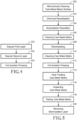
- the outer surface 106 of the cast metal matrix 104 of the casting 102 is mechanically cleaned, as shown in block 300.
- the outer surface 106 may be cleaned via sandblasting, grinding, abrasive blasting, machining, a combination thereof, or any other suitable mechanical cleaning. This removes contaminants and scaling from the outer surface 106.
- the outer surface 106 of the cast metal matrix 104 is then chemically cleaned, as shown in block 302.
- the outer surface 106 may be cleaned via degreasing, solvent cleaning, vapor degreasing, alkali cleaning, a combination thereof, or any other suitable chemical cleaning.
- Chemical cleaning may include or may be followed by etching or deoxidizing to remove oil, dirt, contaminants, oxide films. This also acts as a surface activation of the outer surface 106, including the surfaces 112 of the outer surface-connected voids 110. Surface activation in this sense is a chemical or charge modification of a surface to improve the results of further surface treatment such as autocatalytic deposition or electroplating.
- the outer surface 106 including the surfaces 112 of the outer surface-connected voids 110, is then coated via autocatalytic deposition to create a uniform, self-fluxing first layer 114, as shown in block 304.
- the first layer 114 may have controlled thickness and composition of effective melting point depressants such as boron or phosphorous.
- the autocatalytic deposition reaches deep into the outer surface-connected voids 110 that cannot otherwise be easily accessed.
- the cast metal matrix 104 or more specifically the first layer 114, is then cleaned, as shown in block 306. This may include mechanical or chemical cleaning as described above.
- the outer surface 106 of the cast metal matrix 104 is then subjected to electroplating to create a second layer 116 over the outer surface 106, thereby closing off the outer surface-connected voids 110, as shown in block 308.
- the cast metal matrix 104 or more specifically the second layer 116, is then cleaned, as shown in block 310. This may include mechanical or chemical cleaning as described above.
- the cast metal matrix 104 is then subjected to hot isostatic pressing, as shown in block 312.
- the cast metal matrix 104 is then inspected, as shown in block 314. Inspection ensures removal of all internal voids (internal voids 108 and closed-off outer surface-connected voids 110) and defects.
- the cast metal matrix 104 is then heat treated, as shown in block 316. Heat treating may impart desired mechanical properties, such as increased strength, to the cast metal matrix.
- the cast metal matrix 104 is then tested, as shown in block 318. Testing may include non-destructive testing (NDI), strength testing, electrical testing, and the like.
- NDI non-destructive testing
- the electroplated second layer 116 is then removed, as shown in block 320. This may be performed via chemical stripping, machining, or the like.
- the above-described process helps eliminate scrap and the need for rework, thereby saving hundreds of millions of dollars in the aircraft industry alone.
- the above quality, performance, and economic enhancements greatly reduce superalloy and stainless-steel casting acquisition costs and help increase share of high-performance casting for aircraft and defense applications.
Landscapes
- Chemical & Material Sciences (AREA)
- Engineering & Computer Science (AREA)
- Mechanical Engineering (AREA)
- Materials Engineering (AREA)
- Organic Chemistry (AREA)
- Metallurgy (AREA)
- Thermal Sciences (AREA)
- Crystallography & Structural Chemistry (AREA)
- Physics & Mathematics (AREA)
- Chemical Kinetics & Catalysis (AREA)
- General Chemical & Material Sciences (AREA)
- Manufacturing & Machinery (AREA)
- Other Surface Treatments For Metallic Materials (AREA)
- Manufacture Of Alloys Or Alloy Compounds (AREA)
Applications Claiming Priority (1)
| Application Number | Priority Date | Filing Date | Title |
|---|---|---|---|
| US18/111,635 US12503773B2 (en) | 2023-02-20 | 2023-02-20 | Method to produce void-free ferrous and non-ferrous aerospace structural castings |
Publications (1)
| Publication Number | Publication Date |
|---|---|
| EP4417343A1 true EP4417343A1 (fr) | 2024-08-21 |
Family
ID=90014394
Family Applications (1)
| Application Number | Title | Priority Date | Filing Date |
|---|---|---|---|
| EP24158489.5A Pending EP4417343A1 (fr) | 2023-02-20 | 2024-02-19 | Procédé de production de pièces coulées structurelles aérospatiales ferreuses et non ferreuses sans porosités |
Country Status (2)
| Country | Link |
|---|---|
| US (1) | US12503773B2 (fr) |
| EP (1) | EP4417343A1 (fr) |
Families Citing this family (1)
| Publication number | Priority date | Publication date | Assignee | Title |
|---|---|---|---|---|
| CN114619131B (zh) * | 2021-09-24 | 2023-03-31 | 上海交通大学 | 一种无焊料焊接接头及其焊接制造方法 |
Citations (4)
| Publication number | Priority date | Publication date | Assignee | Title |
|---|---|---|---|---|
| US4250610A (en) * | 1979-01-02 | 1981-02-17 | General Electric Company | Casting densification method |
| JPH03211205A (ja) * | 1990-01-17 | 1991-09-17 | Mitsubishi Heavy Ind Ltd | 熱間静水圧加圧方法 |
| JPH04309495A (ja) * | 1991-04-09 | 1992-11-02 | Mitsubishi Heavy Ind Ltd | チタン及びチタン合金鋳物の熱間静水圧加圧方法 |
| US5816090A (en) * | 1995-12-11 | 1998-10-06 | Ametek Specialty Metal Products Division | Method for pneumatic isostatic processing of a workpiece |
Family Cites Families (10)
| Publication number | Priority date | Publication date | Assignee | Title |
|---|---|---|---|---|
| US3472742A (en) | 1966-03-15 | 1969-10-14 | Webb James E | Plating nickel on aluminum castings |
| US3758347A (en) * | 1970-12-21 | 1973-09-11 | Gen Electric | Method for improving a metal casting |
| US4346128A (en) | 1980-03-31 | 1982-08-24 | The Boeing Company | Tank process for plating aluminum substrates including porous aluminum castings |
| US4659288A (en) * | 1984-12-10 | 1987-04-21 | The Garrett Corporation | Dual alloy radial turbine rotor with hub material exposed in saddle regions of blade ring |
| US5098010A (en) * | 1987-01-30 | 1992-03-24 | Carmichael Arthur O | Process using protective flux coatings for delaying joining and soldering operations |
| US5578187A (en) | 1995-10-19 | 1996-11-26 | Enthone-Omi, Inc. | Plating process for electroless nickel on zinc die castings |
| FR2787472B1 (fr) * | 1998-12-16 | 2001-03-09 | Onera (Off Nat Aerospatiale) | Procede pour produire une poudre d'alliage metallique de type mcraly et revetements obtenus avec cette poudre |
| US20040175845A1 (en) * | 2003-03-03 | 2004-09-09 | Molla Jaynal A. | Method of forming a flux concentrating layer of a magnetic device |
| US7047612B2 (en) * | 2003-05-02 | 2006-05-23 | Caterpillar Inc. | Method for repairing a casting |
| US9120150B2 (en) | 2011-12-02 | 2015-09-01 | Ati Properties, Inc. | Endplate for hot isostatic pressing canister, hot isostatic pressing canister, and hot isostatic pressing method |
-
2023
- 2023-02-20 US US18/111,635 patent/US12503773B2/en active Active
-
2024
- 2024-02-19 EP EP24158489.5A patent/EP4417343A1/fr active Pending
Patent Citations (4)
| Publication number | Priority date | Publication date | Assignee | Title |
|---|---|---|---|---|
| US4250610A (en) * | 1979-01-02 | 1981-02-17 | General Electric Company | Casting densification method |
| JPH03211205A (ja) * | 1990-01-17 | 1991-09-17 | Mitsubishi Heavy Ind Ltd | 熱間静水圧加圧方法 |
| JPH04309495A (ja) * | 1991-04-09 | 1992-11-02 | Mitsubishi Heavy Ind Ltd | チタン及びチタン合金鋳物の熱間静水圧加圧方法 |
| US5816090A (en) * | 1995-12-11 | 1998-10-06 | Ametek Specialty Metal Products Division | Method for pneumatic isostatic processing of a workpiece |
Also Published As
| Publication number | Publication date |
|---|---|
| US12503773B2 (en) | 2025-12-23 |
| US20240279815A1 (en) | 2024-08-22 |
Similar Documents
| Publication | Publication Date | Title |
|---|---|---|
| US4233720A (en) | Method of forming and ultrasonic testing articles of near net shape from powder metal | |
| Campanelli et al. | Investigation on direct laser powder deposition of 18 Ni (300) marage steel using mathematical model and experimental characterisation | |
| Yu et al. | Effects of molten aluminum on H13 dies and coatings | |
| US7367488B2 (en) | Method of repair of thin wall housings | |
| JPH07501987A (ja) | 鋳物と冶金学的に結合した挿入物 | |
| Ferreira et al. | Mechanical and microstructural characterisation of bulk Inconel 625 produced by direct laser deposition | |
| Lee et al. | A novel approach to the production of NiCrAlY bond coat onto IN625 superalloy by selective laser melting | |
| US20160340762A1 (en) | Cladding Composition and Method for Remanufacturing Components | |
| Li et al. | Effects of pouring temperature on microstructure, mechanical properties, and fracture behavior of Al/Mg bimetallic composites produced by lost foam casting process | |
| EP4417343A1 (fr) | Procédé de production de pièces coulées structurelles aérospatiales ferreuses et non ferreuses sans porosités | |
| Michla et al. | Conventional and additively manufactured stainless steels: a review | |
| EP0434580A2 (fr) | MÀ©thode de renforcement de l'intégrité structurelle d'un point d'un article coulé par pulvérisation | |
| FR2502043A1 (fr) | Procede de fabrication de diffuseur et d'aubes de turbine a gaz par pulverisation par plasma d'arc a basse pression | |
| CN104561994A (zh) | 一种甩带机铜辊的激光表面熔覆方法 | |
| EP0203198B1 (fr) | Procede de renforcement d'un article mètallique | |
| Nakamura et al. | Effect of shot and laser peening on fatigue strength of additively manufactured aluminum alloy with rough surfaces | |
| Kermani et al. | Assessment of structural defects and mechanical characteristics of IN718/St6 functionally graded material produced by direct laser deposition | |
| Soderhjelm | Multi-material metal casting: metallurgically bonding aluminum to ferrous inserts | |
| CN108097927B (zh) | 钢-铝合金镶嵌铸造的嵌件表面预处理方法 | |
| Song et al. | Mechanisms of soldering formation on coated core pins | |
| NO812605L (no) | Fremgangsmaate ved paafoering av et belegg paa et substrat | |
| CN112894113A (zh) | 一种铝-镁异质合金焊后处理工艺及其应用 | |
| Cao et al. | Properties of NiCrAlY coatings fabricated on superalloy GH4169 by electrospark deposition | |
| JPH1096084A (ja) | 摺動部材の表面処理方法 | |
| Bédard et al. | Microstructural damage during electrical discharge machining of a high silicon aluminum alloy for space applications |
Legal Events
| Date | Code | Title | Description |
|---|---|---|---|
| PUAI | Public reference made under article 153(3) epc to a published international application that has entered the european phase |
Free format text: ORIGINAL CODE: 0009012 |
|
| STAA | Information on the status of an ep patent application or granted ep patent |
Free format text: STATUS: THE APPLICATION HAS BEEN PUBLISHED |
|
| AK | Designated contracting states |
Kind code of ref document: A1 Designated state(s): AL AT BE BG CH CY CZ DE DK EE ES FI FR GB GR HR HU IE IS IT LI LT LU LV MC ME MK MT NL NO PL PT RO RS SE SI SK SM TR |
|
| STAA | Information on the status of an ep patent application or granted ep patent |
Free format text: STATUS: REQUEST FOR EXAMINATION WAS MADE |
|
| 17P | Request for examination filed |
Effective date: 20250219 |
|
| STAA | Information on the status of an ep patent application or granted ep patent |
Free format text: STATUS: EXAMINATION IS IN PROGRESS |
|
| 17Q | First examination report despatched |
Effective date: 20250723 |
|
| REG | Reference to a national code |
Ref country code: DE Ref legal event code: R079 Free format text: PREVIOUS MAIN CLASS: B22D0031000000 Ipc: B22F0003150000 |