EP4420724A2 - Edaravonsuspension zur oralen verabreichung - Google Patents
Edaravonsuspension zur oralen verabreichung Download PDFInfo
- Publication number
- EP4420724A2 EP4420724A2 EP24181935.8A EP24181935A EP4420724A2 EP 4420724 A2 EP4420724 A2 EP 4420724A2 EP 24181935 A EP24181935 A EP 24181935A EP 4420724 A2 EP4420724 A2 EP 4420724A2
- Authority
- EP
- European Patent Office
- Prior art keywords
- edaravone
- suspension
- particles
- drug product
- dispersant
- Prior art date
- Legal status (The legal status is an assumption and is not a legal conclusion. Google has not performed a legal analysis and makes no representation as to the accuracy of the status listed.)
- Pending
Links
Images
Classifications
-
- A—HUMAN NECESSITIES
- A61—MEDICAL OR VETERINARY SCIENCE; HYGIENE
- A61K—PREPARATIONS FOR MEDICAL, DENTAL OR TOILETRY PURPOSES
- A61K31/00—Medicinal preparations containing organic active ingredients
- A61K31/33—Heterocyclic compounds
- A61K31/395—Heterocyclic compounds having nitrogen as a ring hetero atom, e.g. guanethidine or rifamycins
- A61K31/41—Heterocyclic compounds having nitrogen as a ring hetero atom, e.g. guanethidine or rifamycins having five-membered rings with two or more ring hetero atoms, at least one of which being nitrogen, e.g. tetrazole
- A61K31/415—1,2-Diazoles
- A61K31/4152—1,2-Diazoles having oxo groups directly attached to the heterocyclic ring, e.g. antipyrine, phenylbutazone, sulfinpyrazone
-
- A—HUMAN NECESSITIES
- A61—MEDICAL OR VETERINARY SCIENCE; HYGIENE
- A61K—PREPARATIONS FOR MEDICAL, DENTAL OR TOILETRY PURPOSES
- A61K47/00—Medicinal preparations characterised by the non-active ingredients used, e.g. carriers or inert additives; Targeting or modifying agents chemically bound to the active ingredient
- A61K47/06—Organic compounds, e.g. natural or synthetic hydrocarbons, polyolefins, mineral oil, petrolatum or ozokerite
- A61K47/26—Carbohydrates, e.g. sugar alcohols, amino sugars, nucleic acids, mono-, di- or oligo-saccharides; Derivatives thereof, e.g. polysorbates, sorbitan fatty acid esters or glycyrrhizin
-
- A—HUMAN NECESSITIES
- A61—MEDICAL OR VETERINARY SCIENCE; HYGIENE
- A61K—PREPARATIONS FOR MEDICAL, DENTAL OR TOILETRY PURPOSES
- A61K47/00—Medicinal preparations characterised by the non-active ingredients used, e.g. carriers or inert additives; Targeting or modifying agents chemically bound to the active ingredient
- A61K47/30—Macromolecular organic or inorganic compounds, e.g. inorganic polyphosphates
- A61K47/32—Macromolecular compounds obtained by reactions only involving carbon-to-carbon unsaturated bonds, e.g. carbomers, poly(meth)acrylates, or polyvinyl pyrrolidone
-
- A—HUMAN NECESSITIES
- A61—MEDICAL OR VETERINARY SCIENCE; HYGIENE
- A61K—PREPARATIONS FOR MEDICAL, DENTAL OR TOILETRY PURPOSES
- A61K47/00—Medicinal preparations characterised by the non-active ingredients used, e.g. carriers or inert additives; Targeting or modifying agents chemically bound to the active ingredient
- A61K47/30—Macromolecular organic or inorganic compounds, e.g. inorganic polyphosphates
- A61K47/36—Polysaccharides; Derivatives thereof, e.g. gums, starch, alginate, dextrin, hyaluronic acid, chitosan, inulin, agar or pectin
-
- A—HUMAN NECESSITIES
- A61—MEDICAL OR VETERINARY SCIENCE; HYGIENE
- A61K—PREPARATIONS FOR MEDICAL, DENTAL OR TOILETRY PURPOSES
- A61K47/00—Medicinal preparations characterised by the non-active ingredients used, e.g. carriers or inert additives; Targeting or modifying agents chemically bound to the active ingredient
- A61K47/30—Macromolecular organic or inorganic compounds, e.g. inorganic polyphosphates
- A61K47/36—Polysaccharides; Derivatives thereof, e.g. gums, starch, alginate, dextrin, hyaluronic acid, chitosan, inulin, agar or pectin
- A61K47/38—Cellulose; Derivatives thereof
-
- A—HUMAN NECESSITIES
- A61—MEDICAL OR VETERINARY SCIENCE; HYGIENE
- A61K—PREPARATIONS FOR MEDICAL, DENTAL OR TOILETRY PURPOSES
- A61K9/00—Medicinal preparations characterised by special physical form
- A61K9/0012—Galenical forms characterised by the site of application
- A61K9/0053—Mouth and digestive tract, i.e. intraoral and peroral administration
-
- A—HUMAN NECESSITIES
- A61—MEDICAL OR VETERINARY SCIENCE; HYGIENE
- A61K—PREPARATIONS FOR MEDICAL, DENTAL OR TOILETRY PURPOSES
- A61K9/00—Medicinal preparations characterised by special physical form
- A61K9/0087—Galenical forms not covered by A61K9/02 - A61K9/7023
- A61K9/0095—Drinks; Beverages; Syrups; Compositions for reconstitution thereof, e.g. powders or tablets to be dispersed in a glass of water; Veterinary drenches
-
- A—HUMAN NECESSITIES
- A61—MEDICAL OR VETERINARY SCIENCE; HYGIENE
- A61K—PREPARATIONS FOR MEDICAL, DENTAL OR TOILETRY PURPOSES
- A61K9/00—Medicinal preparations characterised by special physical form
- A61K9/10—Dispersions; Emulsions
-
- A—HUMAN NECESSITIES
- A61—MEDICAL OR VETERINARY SCIENCE; HYGIENE
- A61K—PREPARATIONS FOR MEDICAL, DENTAL OR TOILETRY PURPOSES
- A61K9/00—Medicinal preparations characterised by special physical form
- A61K9/14—Particulate form, e.g. powders, Processes for size reducing of pure drugs or the resulting products, Pure drug nanoparticles
- A61K9/16—Agglomerates; Granulates; Microbeadlets ; Microspheres; Pellets; Solid products obtained by spray drying, spray freeze drying, spray congealing,(multiple) emulsion solvent evaporation or extraction
-
- A—HUMAN NECESSITIES
- A61—MEDICAL OR VETERINARY SCIENCE; HYGIENE
- A61P—SPECIFIC THERAPEUTIC ACTIVITY OF CHEMICAL COMPOUNDS OR MEDICINAL PREPARATIONS
- A61P21/00—Drugs for disorders of the muscular or neuromuscular system
-
- A—HUMAN NECESSITIES
- A61—MEDICAL OR VETERINARY SCIENCE; HYGIENE
- A61P—SPECIFIC THERAPEUTIC ACTIVITY OF CHEMICAL COMPOUNDS OR MEDICINAL PREPARATIONS
- A61P21/00—Drugs for disorders of the muscular or neuromuscular system
- A61P21/02—Muscle relaxants, e.g. for tetanus or cramps
-
- A—HUMAN NECESSITIES
- A61—MEDICAL OR VETERINARY SCIENCE; HYGIENE
- A61P—SPECIFIC THERAPEUTIC ACTIVITY OF CHEMICAL COMPOUNDS OR MEDICINAL PREPARATIONS
- A61P25/00—Drugs for disorders of the nervous system
-
- A—HUMAN NECESSITIES
- A61—MEDICAL OR VETERINARY SCIENCE; HYGIENE
- A61P—SPECIFIC THERAPEUTIC ACTIVITY OF CHEMICAL COMPOUNDS OR MEDICINAL PREPARATIONS
- A61P25/00—Drugs for disorders of the nervous system
- A61P25/28—Drugs for disorders of the nervous system for treating neurodegenerative disorders of the central nervous system, e.g. nootropic agents, cognition enhancers, drugs for treating Alzheimer's disease or other forms of dementia
Definitions
- Edaravone is 3-methyl-1-phenyl-2-pyrazolin-5-one (see formula below): and is known for its medicinal use as an ALS (amyotrophic lateral sclerosis) therapeutic agent in addition to being a brain function normalizing agent (Patent Documents 1 and 2).
- ALS as one type of motor neuron disease is an intractable disease that leads to respiratory failure from initial symptoms such as weakness in hands, movement disorders with fingers and fascicular contraction in upper limbs, through symptoms such as amyotrophia and/or muscular weakness, bulbar paralysis and fascicular contraction in muscles.
- ALS is divided into upper limb, bulbar, lower limb and mixed types, depending on a site of onset. In all of these types, as symptoms progress, a systemic muscle group is affected. Causal factors of ALS have not yet been sufficiently elucidated.
- autoimmune theory applying of an autoantibody against a Ca channel
- excitatory amino acid and/or toxication theory an increase in extracellular glutamic acid and transport disorders of glutamic acid
- oxidative stress disorder theory Cu/Zn superoxide dismutase (SOD) genetic abnormality and nerve cell damage caused by free radicals
- cytoskeleton disorder theory accumulation of neurofilament in motor nerve cells and appearance of inclusion bodies
- deficiency of neurotrophic factors have been proposed as main causal factors of ALS: (1) autoimmune theory (appearance of an autoantibody against a Ca channel); (2) excessive excitatory amino acid and/or toxication theory (an increase in extracellular glutamic acid and transport disorders of glutamic acid); (3) oxidative stress disorder theory (Cu/Zn superoxide dismutase (SOD) genetic abnormality and nerve cell damage caused by free radicals); (4) cytoskeleton disorder theory (accumulation of neurofilament in motor nerve cells and appearance of inclusion bodies); and (5) deficiency of neurotrophic factors.
- edaravone is used as an ALS therapeutic agent.
- edaravone as an ALS therapeutic agent is provided only as an injection, and an orally administered drug product is desired that is less burdensome for patients and caregivers and is preferable from a QOL perspective.
- Patent Document 3 describes an edaravone solution for oral administration using an aqueous solution of tragacanth gum, and it is described that a sufficient concentration in blood was obtained in rats. However, the concentration in blood is lower than a result of the CMC-Na suspension described in Non-Patent Documents 1- 3, and a drug product described in the document also does not have bioavailability comparable to that of an injection.
- edaravone particles can be uniformly dispersed in water and the dispersed state can be maintained, and, even when the edaravone particles have settled after storage, the edaravone particles can be quickly redispersed by light shaking, and thus, a pharmaceutically superior edaravone suspension for oral administration can be prepared.
- a prepared edaravone suspension for oral administration is a suspension considered to be disadvantageous from a perspective of bioavailability based on results of previous animal experiments. Nevertheless, the present inventors have found that the suspension exhibits unexpectedly superior bioavailability when being administered to humans, and thus accomplished the present invention.
- Means for solving the problem are the following ⁇ 1> - ⁇ 23>, but are not limited to these.
- an edaravone suspension for oral administration that can reduce burden on ALS patients and caregivers and can achieve an ALS therapeutic effect equivalent to that of an injection can be provided.
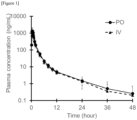
- Figure 1 is a graph showing the PK profile of unchanged edaravone in plasma at the time of administration of suspension described in Example 26 and the PK profile of unchanged edaravone in plasma at the time of administration of the edaravone injection, whereinsa PO is the suspension, and IV is the injection.
- % (w/v) means mass% with respect to a volume of a suspension unless otherwise specified, and a numerical range indicated using “-” indicates a range including numerical values before and after "-" as minimum and maximum values, respectively.
- a suspension for human oral administration of the present invention contains edaravone particles, a dispersant and water.
- the suspension of the present invention reduces burden on ALS patients and caregivers, and achieves an ALS therapeutic effect equivalent to that of an injection.
- the suspension of the present invention may further contain a thickening agent when necessary.
- Edaravone in the present invention is a commonly known compound, and can be easily synthesized by a person skilled in the art, for example, using a method described in Japanese Patent Publication No. H5-31523 .
- Particle sizes of the edaravone particles in the suspension are not particularly limited. However, from perspectives such as maintaining a stable dispersed state in the suspension, rapid in-body absorption and a smooth feeling when the suspension is taken, preferably, a D50 particle size (volume-based cumulative 50% particle size) is in a range of 10 ⁇ m - 100 ⁇ m, and a D90 particle size (volume-based cumulative 90% particle size) is in a range of 50 ⁇ m - 300 ⁇ m; and, more preferably, the D50 particle size is in a range of 20 ⁇ m - 80 ⁇ m, and the D90 particle size is in a range of 100 ⁇ m - 250 ⁇ m.
- the cumulative 50% particle size and the cumulative 90% particle size are volume-based particle sizes.
- Particle size distribution of the edaravone particles in the suspension is measured using a laser diffraction particle size distribution device (Sympatec / HELOS & CUVETTE) by dispersing a part of the suspension in a dispersion medium for measurement (edaravone saturated aqueous solution).
- a laser diffraction particle size distribution device Sympatec / HELOS & CUVETTE
- a concentration (blending amount) of the edaravone particles blended in the suspension of the present invention can be appropriately adjusted according to an optimal dose of edaravone and an amount of the suspension provided to an ALS patient (one dose, a daily dose, a weekly dose, a 10-day dose, and the like). However, an amount that allows a form as a suspension to be retained is appropriate.
- the configuration of the edaravone particles may be 2 mg/mL or more which is equal to or higher than a saturation solubility of edaravone with respect to a dispersion medium (for example, water), and is preferably 0.06% (w/v) - 36% (w/v), more preferably 0.5% (w/v) - 36% (w/v), or 0.5% (w/v) - 20% (w/v), even more preferably 1% (w/v) - 20% (w/v), or 1% (w/v) - 10% (w/v), and most preferably 1% (w/v) - 5% (w/v).
- a dispersion medium for example, water
- the suspension of the present invention contains a dispersant.
- the edaravone particles in the suspension of the present invention are in a well dispersed state, and even when the edaravone particles have settled after a long period of time of storage, the edaravone particles can be quickly redispersed by shaking (for example, manual or mechanical shaking).
- shaking for example, manual or mechanical shaking.
- a behavior of redispersion can be confirmed visually or using a spectroscopic method (for example, using a laser diffraction particle size distribution device).
- any dispersant that allows the edaravone particles to be well dispersed in water without causing the edaravone particles to form secondary agglomerates may be used.
- An example of such a dispersant is a dispersant exhibiting a transmission scattering light intensity of 1% or more.
- 1% or more means a range of 1% - 100%.
- a dispersant exhibiting a transmission scattering light intensity of X% or more means a dispersant for which, when a transmission scattering light intensity ( ⁇ T%) just below a surface of a liquid obtained by mixing 40 mL of a 0.1% (w/v) aqueous solution of the dispersant and 840 mg of edaravone is measured, the transmission scattering light intensity is X% or more.
- a dispersant exhibiting a transmission scattering light intensity of 1% or more means a dispersant for which, when a transmission scattering light intensity ( ⁇ T%) just below a surface of a liquid obtained by mixing 40 mL of a 0.1% (w/v) aqueous solution of the dispersant and 840 mg of edaravone (D50: 37 ⁇ m, D90: 143 ⁇ m) and stirring the mixture with a stirrer for 30 minutes or more is measured, the transmission scattering light intensity is 1% or more.
- the transmission scattering light intensity means a value obtained after 10 minutes after starting a measurement of a transmission scattering light intensity, the measurement being performed by filling 20 mL of the above liquid in a cylindrical sample bottle (inner diameter: 25 mm ⁇ outer diameter: 27.5 mm ⁇ height: 72 mm) and by measuring the transmission scattering light intensity at a height of 39 - 40 mm of the sample bottle using a TURBISCAN Tower (manufactured Formulaction) (25 °C).
- Examples of a dispersant exhibiting a transmission scattering light intensity of 1% or more include polyvinyl alcohol, sucrose fatty acid ester, polysorbate, methylcellulose, and hypromellose.
- a dispersant exhibiting a contact angle of 80 degrees or less can also be suitably used.
- “80 degrees or less” means a range of 0 - 80 degrees.
- a dispersant exhibiting a contact angle of 80 degrees or less means a dispersant for which, when a droplet of edaravone saturated aqueous solution containing a 0.1% (w/v) dispersant dissolved therein is dropped on an edaravone tablet, an angle (contact angle) formed between a tangent of the droplet and a surface of the edaravone tablet is 80 degrees or less.
- the edaravone tablet refers to an edaravone tablet obtained by compression-molding 120 mg of edaravone (D50: 37 ⁇ m, D90: 143 ⁇ m) in a flat punch having a diameter of 8 mm at a tableting pressure of 800 kg
- measurement of the contact angle refers to a case where the contact angle is measured using a contact angle measuring device (CAX-150 manufactured by Kyowa Interface Science) under the following conditions.
- a preferred dispersant is one or more selected from a group consisting of polyvinyl alcohol, sucrose fatty acid ester, polysorbate, methylcellulose and hypromellose.
- the dispersant is one or two selected from a group consisting of polyvinyl alcohol and methylcellulose, and most preferably, the dispersant is polyvinyl alcohol.
- a polyvinyl alcohol is preferred that has a saponification degree of 86.5 - 89.0, of which a kinematic viscosity of a 4% aqueous solution is in a range of 3 mm 2 /s - 55.7 mm 2 /s at 20 °C, and that is recommended as a pharmaceutical additive.
- the polyvinyl alcohol is not limited to this.
- Gohsenol EG-03P, EG-05P, EG-05PW, EG-18P, EG-22P, EG-30P, EG-30PW, EG-40P, EG-40PW, and EG-48P commercially available from Nippon Synthetic Chemical Industry Co., Ltd., can be used.
- These dispersants may each be independently used, or two or more of these dispersants may be used in combination.
- a blending amount of the dispersant may be selected in a range that allows the edaravone particles to be dispersed and does not adversely affect manufacturability, and is usually in a range of 0.001% (w/v) - 1.0% (w/v), preferably 0.005% (w/v) - 0.5% (w/v), and most preferably 0.01% (w/v) - 0.1% (w/v).
- a thickening agent may be blended.
- a thickening agent By containing a thickening agent, an effect is achieved that the suspension is easily swallowed without a risk of aspiration even for patients with dysphagia and, when being administered to humans, variation in drug concentration in blood among patients is greatly reduced, and a more stable drug effect can be expected.
- a pharmaceutically known thickening agent can be used.
- carmellose sodium, dextrin, tragacanth powder, xanthan gum, and the like can be used. From a perspective of storage stability of edaravone, tragacanth powder and xanthan gum are preferable, and xanthan gum is most preferable.
- These thickening agents may each be independently used, or two or more of these thickening agents may be used in combination.
- the thickening agent is xanthan gum
- the blending amount of the thickening agent may be 0.1% (w/v) - 1.2% (w/v), and preferably 0.2% (w/v) - 1.0% (w/v), and most preferably 0.3% (w/v) - 0.5% (w/v).
- Blending a thickening agent can impart viscosity to the suspension, allows even a patient with dysphagia to easily drink the suspension, and can prevent aspiration, and thus is favorable.
- the viscosity of such a suspension may be in a range not exceeding 1750 mPa • s, preferably in a range of 50 mPa • s - 1750 mPa • s, and most preferably in a range of 150 mPa • s - 900 mPa • s.
- the blending amount of the thickening agent is not limited to the above description, and can be adjusted as appropriate such that the above viscosity is achieved.
- blending the thickening agent achieves an unexpected effect that, when the suspension is administered to patients, variation in edaravone concentration transition in blood among the patients can be minimized, and thus, a stable drug effect can be expected for all the patients.
- a sweetener in the suspension for oral administration of the present invention, can be blended for purposes of adjusting taste of the suspension as a drug product for oral administration and delaying settling of the edaravone particles by increasing a solution density of the suspension.
- sugar can increase a blending ratio as compared to other additives and can contribute to increasing a solution density. Further, dissolving sugar allows a solution density to be brought close to that of the particles, and can contribute to suppressing a settling speed of the particles.
- the density of the suspension is desirably close to that of the edaravone particles, and is in a range equal to or exceeding the density of water, and is preferably in a rage of 1 g/mL - 1.5 g/mL, and most preferably in a range of 1.05 g/mL - 1.2 g/mL.
- sweetener examples include sugars, artificial sweeteners, and non-sugar sweeteners.
- sugars include mannitol, sorbitol, xylitol, maltitol, erythritol, sucrose, trehalose, lactose, maltose, glucose, glycerin, and the like.
- artificial sweeteners include sucralose, aspartame, acesulfame potassium, saccharin, and the like.
- non-sugar sweeteners include thaumatin, stevia extract, and the like. Among these, sorbitol, xylitol, or sucrose is preferable, sorbitol, or sucrose is more preferable, and sorbitol is most preferable.
- sweeteners may each be independently used, or two or more of these sweeteners may be used in combination.
- a blending amount of a sweetener can be adjusted as appropriate in consideration of preference of a recipient and suppression of settling of the particles.
- a blending amount of sorbitol is 5% (w/v) - 70% (w/v), preferably 10% (w/v) - 60% (w/v), and more preferably 20% (w/v) - 50% (w/v).
- Edaravone as a pharmaceutical ingredient in the suspension of the present invention has a property of being susceptible to oxidation by dissolved oxygen in a liquid, and thus, it is preferable to blend a known stabilizer.
- a stabilizer include antioxidants such as sulfites, bisulfites, and pyrosulfites, cysteines, methionines, polyethylene glycol, polyoxyethylene polyoxypropylene glycol, EDTA, and the like.
- Particularly preferred are stabilizers described in Japanese Patent Publication No. H7-121861 . That is, the stabilizers are one or more antioxidants selected from sulfites, bisulfites and pyrosulfites, and stabilizers selected from cysteines.
- Examples of sulphites include sodium sulfite (Na 2 SO 3 ), potassium sulfite (K 2 SO 3 ), and calcium sulfite (CaSO 3 ).
- Examples of bisulfites include sodium bisulfite (NaHSO 3 ), potassium bisulfite (KHSO 3 ), and ammonium bisulfite (NH 4 HSO 3 ).
- Examples of pyrosulfites include sodium pyrosulfite (Na 2 S 2 O 5 ) and potassium pyrosulfite (K 2 S 2 O 5 ).
- examples of cysteines include L-cysteine, DL-cysteine, N-acetylcysteine, hydrochlorides thereof, and the like. Most preferably, as an antioxidant, sodium bisulfite can be used, and as a cysteine, L-cysteine hydrochloride can be used.
- An additive amount of the antioxidant is preferably 0.001% (w/v) - 0.5% (w/v), and particularly preferably 0.01% (w/v) - 0.2% (w/v), and an additive amount of the cysteine is preferably 0.005% (w/v) - 0.5% (w/v), and particularly preferably 0.01% (w/v) - 0.2% (w/v).
- a pH regulator is preferably blended in the suspension of the present invention.
- the pH regulator can be used in an amount such that the pH of the suspension is adjusted to a range of 2.5 - 6.0, and preferably to a range 3.0-4.5.
- Either a base or an acid can be used to adjust the pH to a desired value.
- an acidic pH regulator for example, a hydrochloric acid, a phosphoric acid, an acetic acid, a citric acid, a tartaric acid, or the like, preferably a phosphoric acid
- a basic pH regulator for example, a sodium hydroxide, a potassium hydroxide, a calcium carbonate, a magnesium oxide, a magnesium hydroxide, or the like, preferably a sodium hydroxide
- a basic pH regulator for example, a sodium hydroxide, a potassium hydroxide, a calcium carbonate, a magnesium oxide, a magnesium hydroxide, or the like, preferably a sodium hydroxide
- pharmaceutically acceptable drug product additives such as fragrances, preservatives and antifoaming agents may be further blended.
- Fragrances of various flavors such as citrus flavors (such as orange, lemon, and grapefruit), peach, grape, vanilla, soda, and berry flavors (such as strawberry, cranberry, and blueberry) can be used.
- a preferred blending amount of a fragrance is, for example, 0.05% (w/v) - 0.2% (w/v).
- antifoaming agents examples include simethicone emulsions, fatty acid esters, polysorbates, ethanol, and the like.
- a blending amount of an antifoaming agent is, for example, 0.01% (w/v) - 0.05% (w/v).
- preservatives examples include methylparaben, ethylparaben, propylparaben, butylparaben, benzoic acid, sorbic acid, sodium benzoate, benzyl alcohol, phenylethanol, and the like.
- a blending amount of a preservative is, for example, 0.01% (w/v) - 0.5% (w/v).
- a liquid medium (dispersion medium) used for the suspension for oral administration of the present invention is preferably water, and may contain a pharmaceutically acceptable organic solvent.
- organic solvent examples include propylene glycol (1,2-propanediol), polyethylene glycol 300, polyethylene glycol 400, ethanol, and the like.
- Embodiments of preferred composition combinations in the suspension of the present invention are illustrated below, but are not limited thereto.
- the edaravone particles maintain a well dispersed state for a long period of time. Therefore, even when a certain amount is dispensed from the whole solution, uniformity of drug content can always be ensured. Further, the suspension of the present invention has features such as the following: even when the edaravone particles have settled after a long period of time of storage, the edaravone particles can be redispersed quickly by shaking; chemical stability of edaravone is not impaired during such a long period of time of storage; and there is no growth of bacteria even without a preservative.
- a thickening agent by further blending a thickening agent, an effect is also achieved that the drug product is imparted with a moderate viscosity and thus can be easily taken even by a patient with dysphagia and a risk of aspiration is reduced, and, when the drug product is administered to humans, variation in drug concentration in blood among the patients is reduced, and a stable drug effect can be expected.
- the suspension of the present invention exhibits excellent bioavailability. Therefore, a drug concentration transition in blood equivalent to that in a case where an edaravone injection currently used as an ALS therapeutic agent in a clinical setting, for example, "Radicut”' (registered trademark) of a Japanese brand name, was administered (60 mg as edaravone was intravenously injected over 1 hour) can be reached at a very low edaravone dose as an oral dose, specifically, 90 - 120 mg, more specifically 100 - 110 mg, and most specifically 105 mg.
- an oral dose of the suspension of the present invention as edaravone is 90-120 mg, preferably 100-110 mg, and most preferably 105 mg, and an edaravone injection as the control drug product containing 60 mg of edaravone is injected intravenously over 1 hour.
- the lower limit of the 90% confidence interval of the ratio of the Cmax geometric mean value with respect to the control drug product exceeds 0.8, and the 90% confidence interval of the ratio of the AUC 0- ⁇ geometric mean value with respect to the control drug product can be in a range of 0.8 - 1.25.
- the 90% confidence interval of the ratio of the Cmax geometric mean value with respect to the control drug product is in a range of 0.8 - 2.0, and the 90% confidence interval of the ratio of the AUC 0- ⁇ geometric mean value with respect to the control drug product can be in a range of 0.8 - 1.25.
- the 90% confidence interval of the ratio of the Cmax geometric mean value with respect to the control drug product is in a range of 0.8 - 1.5, and the 90% confidence interval of the ratio of the AUC 0- ⁇ geometric mean value with respect to the control drug product can be in a range of 0.8 - 1.25.
- a mean Cmax is in a range of 500 - 2500 ng/mL
- a mean AUC 0- ⁇ is in a range of 1000 - 2500 h*ng/mL.
- the mean Cmax is in a range of 1000 - 2000 ng/mL
- the mean AUC 0- ⁇ is in a range of 1500 - 2000 h*ng/mL.
- the mean Cmax and the mean AUC 0- ⁇ may each be an arithmetic mean value or a geometric mean value.
- Examples of a suspension equivalent to the above edaravone injection include, but are not limited to, a suspension having the following composition.
- the suspension for oral administration of the present invention can be prepared by mixing the above-described edaravone particles, dispersant and other ingredients (thickening agent, sweetener, and the like) when necessary, and water.
- the edaravone particles to be used preferably have a D50 particle size (volume-based cumulative 50% particle size) of 2 ⁇ m - 50 ⁇ m and a D90 particle size (volume-based cumulative 90% particle size) of 100 ⁇ m - 250 ⁇ m.
- a D50 particle size volume-based cumulative 50% particle size
- a D90 particle size volume-based cumulative 90% particle size
- an edaravone raw powder obtained using a method described in Japanese Patent Publication No. H5-31523 or the like can be adjusted into edaravone particles having the desired particle sizes using a known pulverizer such as a jet mill, a hammer mill, a pin mill, or a ball mill.
- the particle sizes of the edaravone particles can be measured using a dry method using a laser diffraction particle size distribution device (Sympatec / HELOS & CUVETTE).
- a D50 particle size is in a range of 10 ⁇ m - 50 ⁇ m
- a D90 particle size is in a range of 50 ⁇ m - 200 ⁇ m
- the D50 particle size is in a range of 20 ⁇ m - 40 ⁇ m and the D90 particle size in a range of 70 ⁇ m - 150 ⁇ m or less.
- test solutions First Solution, Second Solution, 0.05 mol/L of acetic acid and sodium acetate buffer solution (pH 4.0), and the like; paddle rotation speed: 50 rpm - 75 rpm
- a drug product having an edaravone dissolution rate of 80% or more 30 minutes after starting the test is obtained, and thus, a prompt drug effect can be expected.
- a homogeneous suspension can be prepared using a known mixing method such as stirring, shaking, and ultrasonic irradiation.
- An example of a suitable preparation method is a method in which edaravone particles are uniformly dispersed (suspended) in water in which a dispersant is dissolved (a dispersant solution). This case includes both putting the edaravone particles into the dispersant solution, and adding the dispersant solution to the edaravone particles.
- a thickening agent and a sweetener may be added to the dispersant solution in advance before dispersing the edaravone particles, or may be added at the same time as when the eradavone particles are dispersed, or may be added after the edaravone particles are dispersed. Further, the addition timing of these components may be different for each of the components.
- the suspension for oral administration of the present invention is provided in a state in which the edaravone particles are suspended, which is preferable since there are few operations at the time of administration.
- a kit for preparation at the time of use may also be provided in which the edaravone particles and water are separated.
- An example of such a form is a kit for preparing an edaravone suspension that includes: (A) a solid composition containing the edaravone particles; and (B) a dispersant solution.
- the kit for preparation at the time of use can be expected to have a storage stability over a longer period of time as compared to a prepared suspension.
- the solid composition containing edaravone particles may contain only edaravone particles, or may be a mixture containing also other components.
- edaravone particles those used for preparing the suspension can be used.
- the solid composition containing edaravone particles is granulated using a known method, and may be finely granulated or granulated, or compressed and tableted.
- the dispersant solution not only the dispersant to be used in the present invention, but other components such as a thickening agent and a sweetener may be added.
- a health care worker can mix (A) and (B) and shake the mixture to obtain the suspension of the present invention.
- the suspension for oral administration of the present invention may be provided in a form of a solid composition that allows the suspension of the present invention to be prepared at the time of use by only adding water, that is, in a form of a solid composition that contains the edaravone particles and the dispersant.
- this solid composition may contain other ingredients used in the suspension of the present invention such as a thickening agent and a sweetener.
- this solid composition is granulated using a known method, and may be finely granulated, or granulated, or compressed and tableted.
- a health care worker can mix the solid composition containing the edaravone particles and the dispersant with water and shake the mixture to obtain the suspension of the present invention.
- the suspension of the present invention is administered using an intermittent administration method, which is described in WO 2005/75434 and is currently used for ALS treatment using an edaravone injection in a clinical setting, that is, an administration method in which an administration period and a drug holiday period are taken as one unit and this is repeated twice or more.
- an administration period and a drug holiday period are repeated two or more times, an end of this period is always a drug holiday period. However, it is not necessary to provide the last drug holiday period.
- a drug holiday period is a period in which drug administration is not performed continuously for 7 days or more, preferably 14 days.
- An administration period can be 14 days, or 10 days out of 14 days.
- 10 days out of 14 days mean any 10 days out of 14 consecutive days.
- the 10 days in which drug administration is performed may be 10 consecutive days or 10 non-consecutive days separated by one or more periods in each of which drug administration is not performed for 1 - 4 days.
- a preferred period can be selected while observing a condition of a patient.
- an example is a method in which an initial drug holiday period of 14 days is provided after an initial administration period of 14 days, and then an administration period of 10 days out of 14 days and a drug holiday period of 14 days are repeated.
- the number of repetitions of the administration period of 10 days out of 14 days and the drug holiday period of 14 days is not particularly limited as long as the number of repetitions is 1 or more.
- a daily dose in an intermittent administration period can be selected as appropriate according to an age and a condition (for example, severity of the disease) of a patient.
- a dose of edaravone is 60 mg - 400 mg, preferably 60 mg - 300 mg, more preferably 90 mg - 210 mg, especially preferably 90 mg, 100 mg, 105 mg, 180 mg, 200 mg or 210 mg, even more preferably 105 mg or 210 mg, and most preferably 105 mg.
- the suspension of the present invention may be administered to a patient daily or nearly daily during an administration period.
- a daily dose can be selected as appropriate according to an age and a condition (for example, severity of the disease) of a patient.
- a dose of edaravone is 60 mg - 400 mg, preferably 60 mg - 300 mg, more preferably 90 mg - 210 mg, especially preferably 90 mg, 100 mg, 105 mg, 180 mg, 200 mg or 210 mg, even more preferably 105 mg or 210 mg, and most preferably 105 mg.
- the number of administrations per day is not limited, and a preferred number of administrations per day can be selected while observing a condition of the patient. However, in consideration of patient's burden and the like, the number of administrations per day is preferably 3, 2 or 1, and is more preferably 1.
- edaravone can be contained at a high content. Therefore, a dose of a drug product containing edaravone of the above dose can be reduced, and this is advantageous for patients with dysphagia.
- an ALS therapeutic agent can be prepared for which a dose of a drug product per one oral administration is 1 - 20 mL and the dose contains 50 - 210 mg of edaravone.
- the suspension of the present invention can also be used for diseases that have been reported to involve oxidative stress, for example, neurodegenerative diseases with motor dysfunction such as Parkinson's disease and spinocerebellar degeneration; muscle diseases such as muscular dystrophy; intracranial neurodegenerative diseases with cognitive impairment such as Alzheimer's disease; vascular disorders such as cerebral infarction; systemic inflammatory diseases such as multiple sclerosis and systemic scleroderma; and local inflammatory diseases such as stomatitis.
- neurodegenerative diseases with motor dysfunction such as Parkinson's disease and spinocerebellar degeneration
- muscle diseases such as muscular dystrophy
- intracranial neurodegenerative diseases with cognitive impairment such as Alzheimer's disease
- vascular disorders such as cerebral infarction
- systemic inflammatory diseases such as multiple sclerosis and systemic scleroderma
- local inflammatory diseases such as stomatitis.
- edaravone particles 100 mg was dispersed in 10 mL of the polyvinyl alcohol / xanthan gum aqueous solution to obtain an edaravone suspension.
- edaravone particles 100 mg was dispersed in 10 mL of the polyvinyl alcohol / tragacanth powder aqueous solution to obtain an edaravone suspension.
- methylcellulose Shin-Etsu Chemical Co., Ltd., SM-25
- methylcellulose Shin-Etsu Chemical Co., Ltd., SM-25
- 100 mg of edaravone particles was dispersed in 10 mL of the methylcellulose aqueous solution to obtain an edaravone suspension.
- edaravone particles 100 mg was dispersed in 10 mL of the polyvinyl alcohol / carmellose sodium aqueous solution to obtain an edaravone suspension.
- edaravone powder 40 mg of polyvinyl alcohol (Nippon Synthetic Chemical Industry Co., Ltd., EG-05P), 20 mg of simethicone emulsion (Basildon, PD30S) and 800 mg of edaravone particles (edaravone powder, D50: 37 ⁇ m, D90: 143 ⁇ m) were dissolved or dispersed in water such that a volume of the mixture became 40 mL, and an edaravone suspension for oral administration was obtained.
- polyvinyl alcohol Nippon Synthetic Chemical Industry Co., Ltd., EG-05P
- simethicone emulsion Basedon, PD30S
- 800 mg of edaravone particles edaravone powder, D50: 37 ⁇ m, D90: 143 ⁇ m
- edaravone particles edaravone powder, D50: 37 ⁇ m, D90: 143 ⁇ m
- edaravone powder edaravone powder, D50: 37 ⁇ m, D90: 143 ⁇ m
- An edaravone suspension was obtained by using edaravone particles (edaravone powder, D50: 19 ⁇ m, D90: 73 ⁇ m) instead of the edaravone particles (edaravone powder, D50: 37 ⁇ m, D90: 143 ⁇ m) in Example 19.
- An edaravone suspension was obtained by using edaravone particles (edaravone powder, D50: 32 ⁇ m, D90: 110 ⁇ m) instead of the edaravone particles (edaravone powder, D50: 37 ⁇ m, D90: 143 ⁇ m) in Example 19.
- An edaravone suspension was obtained by using edaravone particles (edaravone powder, D50: 44 ⁇ m, D90: 204 ⁇ m) instead of the edaravone particles (edaravone powder, D50: 37 ⁇ m, D90: 143 ⁇ m) in Example 19.
- An edaravone suspension was obtained by using edaravone particles (edaravone powder, D50: 17 ⁇ m, D90: 64 ⁇ m) instead of the edaravone particles (edaravone powder, D50: 37 ⁇ m, D90: 143 ⁇ m) in Example 26.
- An edaravone suspension was obtained by using edaravone particles (edaravone powder, D50: 21 ⁇ m, D90: 79 ⁇ m) instead of the edaravone particles (edaravone powder, D50: 37 ⁇ m, D90: 143 ⁇ m) in Example 26.
- An edaravone suspension was obtained by using edaravone particles (edaravone powder, D50: 31 ⁇ m, D90: 124 ⁇ m) instead of the edaravone particles (edaravone powder, D50: 37 ⁇ m, D90: 143 ⁇ m) in Example 26.
- An edaravone suspension was obtained by using edaravone particles (edaravone powder, D50: 46 ⁇ m, D90: 185 ⁇ m) instead of the edaravone particles (edaravone powder, D50: 37 ⁇ m, D90: 143 ⁇ m) in Example 26.
- An edaravone suspension was obtained by using 200 mg of tragacanth powder (Suzu Funmatsu Yakuhin K.K.) instead of 120 mg of xanthan gum (Sansho Co., Ltd., KELTROL-CG) in Example 26.
- a dispersant that can suitably disperse edaravone particles has a transmission scattering light intensity ⁇ T% of 1% or more.
- Edaravone saturated aqueous solutions in which drug product additives described in the following table that are each generally known as a substance having a function capable of dispersing solid particles in a liquid were dissolved 0.1% (w/v) therein were prepared at a room temperature, and contact angles with respect to the edaravone tablet prepared above were measured using a contact angle measurement device (Kyowa Interface Science, Inc., CAX-150). The results are shown in the following table.
- each of the suspensions obtained in Examples 15 - 17 was put in a centrifugal separator and a gravity of 4000 g was applied thereto for 6.6 hours, and the edaravone particles were forced to settle. After completion of the centrifugation, each of the suspensions was shaken lightly by hand. The edaravone particles in each of the suspensions of Examples 15 and 16 were redispersed within 10 seconds, and the edaravone particles in the drug product of Example 17 were redispersed within 40 seconds.
- the above gravity condition is equivalent to 3 years of storage.
- the edaravone suspensions (10 mL) obtained in Examples 20 - 22 were each orally administered to 6 healthy adult males in a fasting state. Blood samples were collected before and 0.25, 0.5, 1, 1.5, 2, 4, 6, 8, 12, 24, 36, and 48 hours after administration, and unchanged edaravone concentration in plasma was measured. The obtained PK profiles are shown in the following table.
- Example 20 Cmax and AUC 0-24h of Example 20 (edaravone: 120 mg) significantly exceeded Cmax (1049 ng/mL) and AUC 0-24h (1374 h*ng/mL) of an edaravone injection (60 mg) described in Amyotroph Lateral Scler Frontotemporal Degener.2017; 18 (suppl 1): 80 - 87 . It can be seen that the suspension of the present invention has excellent bioavailability as a drug product for oral administration.
- the suspensions prepared in Examples 19, 23, 24, and 25 were subjected to dissolution tests according to Dissolution Test Method 2 (Paddle Method) of Japanese Pharmacopoeia.
- the administration of the edaravone suspension of Example 26 was performed by lightly shaking a glass bottle containing the suspension, extracting 5 mL (105 mg as edaravone) of the suspension with a syringe for oral administration, and orally administering the extracted suspension to a subject in a fasting state.
- the edaravone suspension of the present invention is particularly useful as an ALS therapeutic agent. Therefore, the present invention has industrial applicability.
Landscapes
- Health & Medical Sciences (AREA)
- Chemical & Material Sciences (AREA)
- Life Sciences & Earth Sciences (AREA)
- Medicinal Chemistry (AREA)
- Veterinary Medicine (AREA)
- Public Health (AREA)
- General Health & Medical Sciences (AREA)
- Animal Behavior & Ethology (AREA)
- Pharmacology & Pharmacy (AREA)
- Epidemiology (AREA)
- Engineering & Computer Science (AREA)
- Bioinformatics & Cheminformatics (AREA)
- Inorganic Chemistry (AREA)
- General Chemical & Material Sciences (AREA)
- Chemical Kinetics & Catalysis (AREA)
- Neurology (AREA)
- Nuclear Medicine, Radiotherapy & Molecular Imaging (AREA)
- Organic Chemistry (AREA)
- Orthopedic Medicine & Surgery (AREA)
- Physical Education & Sports Medicine (AREA)
- Neurosurgery (AREA)
- Biomedical Technology (AREA)
- Dispersion Chemistry (AREA)
- Physiology (AREA)
- Nutrition Science (AREA)
- Pain & Pain Management (AREA)
- Hospice & Palliative Care (AREA)
- Psychiatry (AREA)
- Oil, Petroleum & Natural Gas (AREA)
- Molecular Biology (AREA)
- Biochemistry (AREA)
- Medicinal Preparation (AREA)
- Pharmaceuticals Containing Other Organic And Inorganic Compounds (AREA)
- Acyclic And Carbocyclic Compounds In Medicinal Compositions (AREA)
Applications Claiming Priority (3)
| Application Number | Priority Date | Filing Date | Title |
|---|---|---|---|
| JP2018207646 | 2018-11-02 | ||
| EP19880770.3A EP3875085B1 (de) | 2018-11-02 | 2019-11-01 | Edaravon-suspension zur oralen verabreichung |
| PCT/JP2019/043013 WO2020091036A1 (ja) | 2018-11-02 | 2019-11-01 | 経口投与用エダラボン懸濁剤 |
Related Parent Applications (1)
| Application Number | Title | Priority Date | Filing Date |
|---|---|---|---|
| EP19880770.3A Division EP3875085B1 (de) | 2018-11-02 | 2019-11-01 | Edaravon-suspension zur oralen verabreichung |
Publications (2)
| Publication Number | Publication Date |
|---|---|
| EP4420724A2 true EP4420724A2 (de) | 2024-08-28 |
| EP4420724A3 EP4420724A3 (de) | 2024-11-27 |
Family
ID=70463399
Family Applications (2)
| Application Number | Title | Priority Date | Filing Date |
|---|---|---|---|
| EP24181935.8A Pending EP4420724A3 (de) | 2018-11-02 | 2019-11-01 | Edaravonsuspension zur oralen verabreichung |
| EP19880770.3A Active EP3875085B1 (de) | 2018-11-02 | 2019-11-01 | Edaravon-suspension zur oralen verabreichung |
Family Applications After (1)
| Application Number | Title | Priority Date | Filing Date |
|---|---|---|---|
| EP19880770.3A Active EP3875085B1 (de) | 2018-11-02 | 2019-11-01 | Edaravon-suspension zur oralen verabreichung |
Country Status (20)
| Country | Link |
|---|---|
| US (5) | US10987341B2 (de) |
| EP (2) | EP4420724A3 (de) |
| JP (3) | JP7274502B2 (de) |
| KR (1) | KR20210087490A (de) |
| CN (4) | CN112969459B (de) |
| AR (1) | AR116967A1 (de) |
| AU (2) | AU2019369843A1 (de) |
| BR (1) | BR112021008197A2 (de) |
| DK (1) | DK3875085T3 (de) |
| ES (1) | ES2991523T3 (de) |
| FI (1) | FI3875085T3 (de) |
| HU (1) | HUE068117T2 (de) |
| IL (2) | IL282773B2 (de) |
| MX (3) | MX2021005144A (de) |
| PH (1) | PH12021550988A1 (de) |
| PL (1) | PL3875085T3 (de) |
| PT (1) | PT3875085T (de) |
| SG (1) | SG11202104365QA (de) |
| TW (1) | TW202031256A (de) |
| WO (1) | WO2020091036A1 (de) |
Families Citing this family (12)
| Publication number | Priority date | Publication date | Assignee | Title |
|---|---|---|---|---|
| WO2019167178A1 (ja) | 2018-02-28 | 2019-09-06 | 田辺三菱製薬株式会社 | 3-メチル-1-フェニル-2-ピラゾリン-5-オン原薬の分析方法、筋萎縮性側索硬化症の治療および筋萎縮性側索硬化症の進行抑制、ならびに、3-メチル-1-フェニル-2-ピラゾリン-5-オン原薬を含む薬剤の製造方法 |
| US11826352B2 (en) * | 2018-11-02 | 2023-11-28 | Mitsubishi Tanabe Pharma Corporation | Edaravone suspension for oral administration |
| CN112969459B (zh) * | 2018-11-02 | 2023-12-05 | 田边三菱制药株式会社 | 用于口服给药的依达拉奉混悬剂 |
| BR112022000914A2 (pt) * | 2019-07-18 | 2022-03-08 | Bdr Pharmaceuticals International Private Ltd | Composição farmacêutica |
| AR124062A1 (es) | 2020-11-12 | 2023-02-08 | Mitsubishi Tanabe Pharma Corp | Composición farmacéutica para la administración oral de edaravona y método para administrarla |
| US12194025B2 (en) | 2020-11-12 | 2025-01-14 | Mitsubishi Tanabe Pharma Corporation | Pharmaceutical composition for oral administration of edaravone and method of administering same |
| CN116761601A (zh) * | 2020-11-12 | 2023-09-15 | 田边三菱制药株式会社 | 依达拉奉口服给药用医药组合物及其给药方法 |
| GB202103807D0 (en) | 2021-03-18 | 2021-05-05 | Johnson Matthey Plc | A crystalline salt of edaravone, processes for the preparation and use thereof |
| EP4473965A4 (de) | 2022-02-03 | 2026-01-07 | Mitsubishi Tanabe Pharma Corp | Medizinisches mittel zur behandlung oder unterdrückung des fortschreitens von amyotropher lateralsklerose |
| CN119790165A (zh) | 2022-07-01 | 2025-04-08 | 田边三菱制药株式会社 | 用于评估依达拉奉响应性的组合物和方法 |
| WO2024172852A1 (en) | 2023-02-16 | 2024-08-22 | Slayback Pharma Llc | Stable pharmaceutical compositions of edaravone |
| CN118178328A (zh) * | 2024-03-21 | 2024-06-14 | 药云(西安)医药技术有限公司 | 依达拉奉包埋物制备方法与其口服制剂 |
Citations (6)
| Publication number | Priority date | Publication date | Assignee | Title |
|---|---|---|---|---|
| JPH0531523B2 (de) | 1985-05-20 | 1993-05-12 | Mitsubishi Chem Ind | |
| JPH07121861B2 (ja) | 1986-11-25 | 1995-12-25 | 三菱化学株式会社 | 3−メチル−1−フエニル−2−ピラゾロン−5−オンを含有する安定な注射剤 |
| JP2004091441A (ja) | 2002-09-04 | 2004-03-25 | Mitsubishi Pharma Corp | ピラゾロン誘導体を含有する経口投与製剤 |
| WO2005075434A1 (ja) | 2004-02-09 | 2005-08-18 | Mitsubishi Pharma Corporation | 筋萎縮性側索硬化症(als)又はalsに起因する疾患の新規治療剤 |
| JP3758164B2 (ja) | 2000-10-24 | 2006-03-22 | 三菱ウェルファーマ株式会社 | 筋萎縮性側索硬化症(als)治療剤 |
| WO2018134243A1 (en) | 2017-01-17 | 2018-07-26 | Treeway Tw001 B.V. | Treatment comprising oral or gastric administration of edaravone |
Family Cites Families (15)
| Publication number | Priority date | Publication date | Assignee | Title |
|---|---|---|---|---|
| JPH0531523A (ja) | 1991-07-26 | 1993-02-09 | Aichi Steel Works Ltd | ロ−ラ回転数・間隙測定可能な圧延機用ロ−ラガイド装置 |
| JP3402195B2 (ja) * | 1997-05-14 | 2003-04-28 | 千寿製薬株式会社 | 再分散性の良い水性懸濁液剤 |
| JPH1120463A (ja) | 1997-06-30 | 1999-01-26 | Zexel Corp | 車両用デュアルエアコン |
| JP5836004B2 (ja) * | 2010-08-12 | 2015-12-24 | 日新化成株式会社 | 可溶化剤 |
| CN102824356A (zh) | 2012-09-25 | 2012-12-19 | 江西中医学院 | 一种黄芩苷纳晶混悬剂、纳晶干粉及其制备方法 |
| WO2014134243A1 (en) | 2013-02-27 | 2014-09-04 | Regents Of The University Of Michigan | Pharmaceutical compounds and use of same in cancer and tauopathies |
| JP6336246B2 (ja) | 2013-03-13 | 2018-06-06 | 大同化成工業株式会社 | ナノ粒子化製剤及びその製造方法 |
| CN105878171A (zh) * | 2014-12-22 | 2016-08-24 | 南京海恒医药科技有限公司 | 一种依达拉奉新制剂及其制备方法 |
| EP3247334A1 (de) | 2015-01-20 | 2017-11-29 | Merck Patent GmbH | Feste dispersionen von verbindungen mit polyvinylalkohol als trägerpolymer |
| US11147811B2 (en) * | 2016-03-10 | 2021-10-19 | Sumitomo Dainippon Pharma Co., Ltd. | Composition comprising fine particle and process thereof |
| CN113768879A (zh) * | 2016-03-16 | 2021-12-10 | 苏州澳宗生物科技有限公司 | 依达拉奉剂型 |
| WO2018133957A1 (en) * | 2017-01-17 | 2018-07-26 | Treeway Tw001 B.V. | Medical treatment comprising enteral administration of edaravone |
| ES3059578T3 (en) * | 2017-07-06 | 2026-03-23 | Treeway Tw001 B V | Use of edaravone in oral treatment of oxidative-stress mediated neurodegenerative disorders |
| CN112969459B (zh) * | 2018-11-02 | 2023-12-05 | 田边三菱制药株式会社 | 用于口服给药的依达拉奉混悬剂 |
| BR112022000914A2 (pt) * | 2019-07-18 | 2022-03-08 | Bdr Pharmaceuticals International Private Ltd | Composição farmacêutica |
-
2019
- 2019-11-01 CN CN201980072370.7A patent/CN112969459B/zh active Active
- 2019-11-01 AR ARP190103206A patent/AR116967A1/es unknown
- 2019-11-01 FI FIEP19880770.3T patent/FI3875085T3/fi active
- 2019-11-01 ES ES19880770T patent/ES2991523T3/es active Active
- 2019-11-01 TW TW108139797A patent/TW202031256A/zh unknown
- 2019-11-01 EP EP24181935.8A patent/EP4420724A3/de active Pending
- 2019-11-01 SG SG11202104365QA patent/SG11202104365QA/en unknown
- 2019-11-01 IL IL282773A patent/IL282773B2/en unknown
- 2019-11-01 HU HUE19880770A patent/HUE068117T2/hu unknown
- 2019-11-01 PL PL19880770.3T patent/PL3875085T3/pl unknown
- 2019-11-01 MX MX2021005144A patent/MX2021005144A/es unknown
- 2019-11-01 EP EP19880770.3A patent/EP3875085B1/de active Active
- 2019-11-01 AU AU2019369843A patent/AU2019369843A1/en not_active Abandoned
- 2019-11-01 JP JP2020554977A patent/JP7274502B2/ja active Active
- 2019-11-01 IL IL319280A patent/IL319280A/en unknown
- 2019-11-01 CN CN202311552337.9A patent/CN117398346A/zh active Pending
- 2019-11-01 KR KR1020217016462A patent/KR20210087490A/ko active Pending
- 2019-11-01 BR BR112021008197-6A patent/BR112021008197A2/pt unknown
- 2019-11-01 PT PT198807703T patent/PT3875085T/pt unknown
- 2019-11-01 WO PCT/JP2019/043013 patent/WO2020091036A1/ja not_active Ceased
- 2019-11-01 CN CN202311552339.8A patent/CN117379370A/zh active Pending
- 2019-11-01 DK DK19880770.3T patent/DK3875085T3/da active
- 2019-11-01 CN CN202311552338.3A patent/CN117379369A/zh active Pending
-
2020
- 2020-05-12 US US16/872,741 patent/US10987341B2/en active Active
-
2021
- 2021-03-26 US US17/213,501 patent/US11241416B2/en active Active
- 2021-04-30 PH PH12021550988A patent/PH12021550988A1/en unknown
- 2021-04-30 MX MX2023009973A patent/MX2023009973A/es unknown
- 2021-04-30 MX MX2024000663A patent/MX2024000663A/es unknown
- 2021-12-23 US US17/560,493 patent/US11478450B2/en active Active
-
2022
- 2022-09-22 US US17/934,234 patent/US11957660B2/en active Active
-
2023
- 2023-05-01 JP JP2023075654A patent/JP7828317B2/ja active Active
-
2024
- 2024-03-26 US US18/616,227 patent/US12599586B2/en active Active
-
2025
- 2025-07-21 AU AU2025205635A patent/AU2025205635A1/en active Pending
- 2025-10-06 JP JP2025168147A patent/JP2026010001A/ja active Pending
Patent Citations (6)
| Publication number | Priority date | Publication date | Assignee | Title |
|---|---|---|---|---|
| JPH0531523B2 (de) | 1985-05-20 | 1993-05-12 | Mitsubishi Chem Ind | |
| JPH07121861B2 (ja) | 1986-11-25 | 1995-12-25 | 三菱化学株式会社 | 3−メチル−1−フエニル−2−ピラゾロン−5−オンを含有する安定な注射剤 |
| JP3758164B2 (ja) | 2000-10-24 | 2006-03-22 | 三菱ウェルファーマ株式会社 | 筋萎縮性側索硬化症(als)治療剤 |
| JP2004091441A (ja) | 2002-09-04 | 2004-03-25 | Mitsubishi Pharma Corp | ピラゾロン誘導体を含有する経口投与製剤 |
| WO2005075434A1 (ja) | 2004-02-09 | 2005-08-18 | Mitsubishi Pharma Corporation | 筋萎縮性側索硬化症(als)又はalsに起因する疾患の新規治療剤 |
| WO2018134243A1 (en) | 2017-01-17 | 2018-07-26 | Treeway Tw001 B.V. | Treatment comprising oral or gastric administration of edaravone |
Non-Patent Citations (3)
| Title |
|---|
| DRUG DELIVERY, vol. 24, no. 1, pages 962 - 978 |
| INTERNATIONAL JOURNAL OF PHARMACEUTICS, vol. 515, 2016, pages 490 - 500 |
| JOURNAL OF PHARMACEUTICAL SCIENCES, vol. 103, 2014, pages 730 - 742 |
Also Published As
Similar Documents
| Publication | Publication Date | Title |
|---|---|---|
| EP3875085B1 (de) | Edaravon-suspension zur oralen verabreichung | |
| US20250235430A1 (en) | Edaravone suspension for oral administration | |
| EA019881B1 (ru) | Стабилизированная суспензия каризбамата для применения в педиатрии | |
| EP2377523A1 (de) | Arzneiformen mit verbesserten pharmakokinetischen Eigenschaften | |
| US12569469B2 (en) | Pharmaceutical composition for oral administration of edaravone and method of administering same | |
| HK40113279A (en) | Edaravone suspension for oral administration | |
| RU2810789C2 (ru) | Суспензия эдаравона для перорального введения | |
| HK40053006A (en) | Edaravone suspension for oral administration | |
| HK40053006B (zh) | 用於口服给药的依达拉奉混悬剂 | |
| BR122024020124A2 (pt) | Suspensão de edaravone para administração oral, kit para a preparação da mesma, agente terapêutico para a ela, e seus usos | |
| WO2026028170A1 (en) | Pharmaceutical composition of edaravone |
Legal Events
| Date | Code | Title | Description |
|---|---|---|---|
| PUAI | Public reference made under article 153(3) epc to a published international application that has entered the european phase |
Free format text: ORIGINAL CODE: 0009012 |
|
| STAA | Information on the status of an ep patent application or granted ep patent |
Free format text: STATUS: THE APPLICATION HAS BEEN PUBLISHED |
|
| AC | Divisional application: reference to earlier application |
Ref document number: 3875085 Country of ref document: EP Kind code of ref document: P |
|
| AK | Designated contracting states |
Kind code of ref document: A2 Designated state(s): AL AT BE BG CH CY CZ DE DK EE ES FI FR GB GR HR HU IE IS IT LI LT LU LV MC MK MT NL NO PL PT RO RS SE SI SK SM TR |
|
| REG | Reference to a national code |
Ref country code: DE Ref legal event code: R079 Free format text: PREVIOUS MAIN CLASS: A61P0025280000 Ipc: A61K0009100000 |
|
| PUAL | Search report despatched |
Free format text: ORIGINAL CODE: 0009013 |
|
| P01 | Opt-out of the competence of the unified patent court (upc) registered |
Free format text: CASE NUMBER: APP_52842/2024 Effective date: 20240920 |
|
| AK | Designated contracting states |
Kind code of ref document: A3 Designated state(s): AL AT BE BG CH CY CZ DE DK EE ES FI FR GB GR HR HU IE IS IT LI LT LU LV MC MK MT NL NO PL PT RO RS SE SI SK SM TR |
|
| RIC1 | Information provided on ipc code assigned before grant |
Ipc: A61P 25/28 20060101ALI20241023BHEP Ipc: A61P 21/02 20060101ALI20241023BHEP Ipc: A61K 47/38 20060101ALI20241023BHEP Ipc: A61K 47/36 20060101ALI20241023BHEP Ipc: A61K 47/32 20060101ALI20241023BHEP Ipc: A61K 31/4152 20060101ALI20241023BHEP Ipc: A61K 9/10 20060101AFI20241023BHEP |
|
| REG | Reference to a national code |
Ref country code: HK Ref legal event code: DE Ref document number: 40113279 Country of ref document: HK |
|
| STAA | Information on the status of an ep patent application or granted ep patent |
Free format text: STATUS: REQUEST FOR EXAMINATION WAS MADE |
|
| 17P | Request for examination filed |
Effective date: 20250522 |
|
| STAA | Information on the status of an ep patent application or granted ep patent |
Free format text: STATUS: EXAMINATION IS IN PROGRESS |
|
| 17Q | First examination report despatched |
Effective date: 20251022 |
|
| RAP3 | Party data changed (applicant data changed or rights of an application transferred) |
Owner name: TANABE PHARMA CORPORATION |