EP4421066A1 - Angeborenes immunaktivierendes arzneimittel und verwendung davon - Google Patents
Angeborenes immunaktivierendes arzneimittel und verwendung davon Download PDFInfo
- Publication number
- EP4421066A1 EP4421066A1 EP22909712.6A EP22909712A EP4421066A1 EP 4421066 A1 EP4421066 A1 EP 4421066A1 EP 22909712 A EP22909712 A EP 22909712A EP 4421066 A1 EP4421066 A1 EP 4421066A1
- Authority
- EP
- European Patent Office
- Prior art keywords
- compound
- group
- formula
- pharmaceutically acceptable
- drug
- Prior art date
- Legal status (The legal status is an assumption and is not a legal conclusion. Google has not performed a legal analysis and makes no representation as to the accuracy of the status listed.)
- Pending
Links
Images


Classifications
-
- A—HUMAN NECESSITIES
- A61—MEDICAL OR VETERINARY SCIENCE; HYGIENE
- A61K—PREPARATIONS FOR MEDICAL, DENTAL OR TOILETRY PURPOSES
- A61K31/00—Medicinal preparations containing organic active ingredients
- A61K31/33—Heterocyclic compounds
- A61K31/395—Heterocyclic compounds having nitrogen as a ring hetero atom, e.g. guanethidine or rifamycins
- A61K31/435—Heterocyclic compounds having nitrogen as a ring hetero atom, e.g. guanethidine or rifamycins having six-membered rings with one nitrogen as the only ring hetero atom
- A61K31/47—Quinolines; Isoquinolines
- A61K31/473—Quinolines; Isoquinolines ortho- or peri-condensed with carbocyclic ring systems, e.g. acridines, phenanthridines
-
- A—HUMAN NECESSITIES
- A61—MEDICAL OR VETERINARY SCIENCE; HYGIENE
- A61K—PREPARATIONS FOR MEDICAL, DENTAL OR TOILETRY PURPOSES
- A61K45/00—Medicinal preparations containing active ingredients not provided for in groups A61K31/00 - A61K41/00
- A61K45/06—Mixtures of active ingredients without chemical characterisation, e.g. antiphlogistics and cardiaca
-
- A—HUMAN NECESSITIES
- A61—MEDICAL OR VETERINARY SCIENCE; HYGIENE
- A61P—SPECIFIC THERAPEUTIC ACTIVITY OF CHEMICAL COMPOUNDS OR MEDICINAL PREPARATIONS
- A61P31/00—Antiinfectives, i.e. antibiotics, antiseptics, chemotherapeutics
- A61P31/12—Antivirals
-
- A—HUMAN NECESSITIES
- A61—MEDICAL OR VETERINARY SCIENCE; HYGIENE
- A61P—SPECIFIC THERAPEUTIC ACTIVITY OF CHEMICAL COMPOUNDS OR MEDICINAL PREPARATIONS
- A61P31/00—Antiinfectives, i.e. antibiotics, antiseptics, chemotherapeutics
- A61P31/12—Antivirals
- A61P31/14—Antivirals for RNA viruses
-
- A—HUMAN NECESSITIES
- A61—MEDICAL OR VETERINARY SCIENCE; HYGIENE
- A61P—SPECIFIC THERAPEUTIC ACTIVITY OF CHEMICAL COMPOUNDS OR MEDICINAL PREPARATIONS
- A61P31/00—Antiinfectives, i.e. antibiotics, antiseptics, chemotherapeutics
- A61P31/12—Antivirals
- A61P31/14—Antivirals for RNA viruses
- A61P31/16—Antivirals for RNA viruses for influenza or rhinoviruses
-
- A—HUMAN NECESSITIES
- A61—MEDICAL OR VETERINARY SCIENCE; HYGIENE
- A61P—SPECIFIC THERAPEUTIC ACTIVITY OF CHEMICAL COMPOUNDS OR MEDICINAL PREPARATIONS
- A61P31/00—Antiinfectives, i.e. antibiotics, antiseptics, chemotherapeutics
- A61P31/12—Antivirals
- A61P31/20—Antivirals for DNA viruses
- A61P31/22—Antivirals for DNA viruses for herpes viruses
-
- A—HUMAN NECESSITIES
- A61—MEDICAL OR VETERINARY SCIENCE; HYGIENE
- A61P—SPECIFIC THERAPEUTIC ACTIVITY OF CHEMICAL COMPOUNDS OR MEDICINAL PREPARATIONS
- A61P35/00—Antineoplastic agents
-
- A—HUMAN NECESSITIES
- A61—MEDICAL OR VETERINARY SCIENCE; HYGIENE
- A61P—SPECIFIC THERAPEUTIC ACTIVITY OF CHEMICAL COMPOUNDS OR MEDICINAL PREPARATIONS
- A61P37/00—Drugs for immunological or allergic disorders
- A61P37/02—Immunomodulators
- A61P37/04—Immunostimulants
-
- C—CHEMISTRY; METALLURGY
- C07—ORGANIC CHEMISTRY
- C07D—HETEROCYCLIC COMPOUNDS
- C07D219/00—Heterocyclic compounds containing acridine or hydrogenated acridine ring systems
- C07D219/04—Heterocyclic compounds containing acridine or hydrogenated acridine ring systems with hetero atoms or with carbon atoms having three bonds to hetero atoms with at the most one bond to halogen, e.g. ester or nitrile radicals, directly attached to carbon atoms of the ring system
- C07D219/08—Nitrogen atoms
- C07D219/10—Nitrogen atoms attached in position 9
-
- C—CHEMISTRY; METALLURGY
- C07—ORGANIC CHEMISTRY
- C07D—HETEROCYCLIC COMPOUNDS
- C07D219/00—Heterocyclic compounds containing acridine or hydrogenated acridine ring systems
- C07D219/04—Heterocyclic compounds containing acridine or hydrogenated acridine ring systems with hetero atoms or with carbon atoms having three bonds to hetero atoms with at the most one bond to halogen, e.g. ester or nitrile radicals, directly attached to carbon atoms of the ring system
- C07D219/08—Nitrogen atoms
- C07D219/10—Nitrogen atoms attached in position 9
- C07D219/12—Amino-alkylamino radicals attached in position 9
-
- C—CHEMISTRY; METALLURGY
- C07—ORGANIC CHEMISTRY
- C07D—HETEROCYCLIC COMPOUNDS
- C07D401/00—Heterocyclic compounds containing two or more hetero rings, having nitrogen atoms as the only ring hetero atoms, at least one ring being a six-membered ring with only one nitrogen atom
- C07D401/02—Heterocyclic compounds containing two or more hetero rings, having nitrogen atoms as the only ring hetero atoms, at least one ring being a six-membered ring with only one nitrogen atom containing two hetero rings
- C07D401/12—Heterocyclic compounds containing two or more hetero rings, having nitrogen atoms as the only ring hetero atoms, at least one ring being a six-membered ring with only one nitrogen atom containing two hetero rings linked by a chain containing hetero atoms as chain links
-
- C—CHEMISTRY; METALLURGY
- C07—ORGANIC CHEMISTRY
- C07D—HETEROCYCLIC COMPOUNDS
- C07D405/00—Heterocyclic compounds containing both one or more hetero rings having oxygen atoms as the only ring hetero atoms, and one or more rings having nitrogen as the only ring hetero atom
- C07D405/02—Heterocyclic compounds containing both one or more hetero rings having oxygen atoms as the only ring hetero atoms, and one or more rings having nitrogen as the only ring hetero atom containing two hetero rings
- C07D405/12—Heterocyclic compounds containing both one or more hetero rings having oxygen atoms as the only ring hetero atoms, and one or more rings having nitrogen as the only ring hetero atom containing two hetero rings linked by a chain containing hetero atoms as chain links
-
- C—CHEMISTRY; METALLURGY
- C07—ORGANIC CHEMISTRY
- C07D—HETEROCYCLIC COMPOUNDS
- C07D487/00—Heterocyclic compounds containing nitrogen atoms as the only ring hetero atoms in the condensed system, not provided for by groups C07D451/00 - C07D477/00
- C07D487/02—Heterocyclic compounds containing nitrogen atoms as the only ring hetero atoms in the condensed system, not provided for by groups C07D451/00 - C07D477/00 in which the condensed system contains two hetero rings
- C07D487/10—Spiro-condensed systems
-
- C—CHEMISTRY; METALLURGY
- C07—ORGANIC CHEMISTRY
- C07K—PEPTIDES
- C07K16/00—Immunoglobulins [IG], e.g. monoclonal or polyclonal antibodies
- C07K16/18—Immunoglobulins [IG], e.g. monoclonal or polyclonal antibodies against material from animals or humans
- C07K16/28—Immunoglobulins [IG], e.g. monoclonal or polyclonal antibodies against material from animals or humans against receptors, cell surface antigens or cell surface determinants
- C07K16/2803—Immunoglobulins [IG], e.g. monoclonal or polyclonal antibodies against material from animals or humans against receptors, cell surface antigens or cell surface determinants against the immunoglobulin superfamily
- C07K16/2827—Immunoglobulins [IG], e.g. monoclonal or polyclonal antibodies against material from animals or humans against receptors, cell surface antigens or cell surface determinants against the immunoglobulin superfamily against B7 molecules, e.g. CD80, CD86
Definitions
- the present invention belongs to the field of medicine, and particularly relates to an innate immune-activating drug having broad-spectrum antiviral activity and used for immunotherapy, anti-tumor and immune adjuvants and use thereof.
- Viral infections can cause a wide range of diseases, and innate immune is the first natural line of defense of a host's immune system against pathogenic microorganisms.
- An antiviral innate immune response induces host cells to generate interferon to inhibit reproduction and amplification of viruses which can escape the innate immune response during evolution.
- the generation of interferon by inducing the innate immune response provides a new idea for antiviral therapy.
- interferon recombinantly expressed interferon is widely applied to the treatment of viral infections, inflammation, immune dysfunction and the like, but it is a protein peptide that lacks posttranslational modification, is structurally unstable, cannot be taken orally and has high requirements for storage conditions. It can only be administered by injection with a single mode of administration. In addition, its short half-life period and high concentration will cause serious toxic and side effects.
- the prominent drawbacks of interferons recombinantly expressed in E. coli are lack of glycosylation modification and restricted viability; however, glycosylation-containing interferons purified by eukaryotic system expression are high in cost and drug-forming price.
- the immune system of an organism can perform the function of immune surveillance against tumors; on one hand, the immune system can recognize and specifically remove malignant cells through an immune mechanism to resist the generation and development of tumor; on the other hand, malignant cells may escape immune surveillance of the organism through various mechanisms and rapidly proliferate in the organism, so that tumors are formed.
- the development and regression of tumors depend on the action results of these two aspects.
- Antibodies as therapeutic drugs for tumors have excellent therapeutic effects due to their strong specificity.
- the quantity of antibodies generated in animals is low during generation of antibodies due to factors such as slow and poor immune response of the organism to antigens, thus limiting their use and requiring the action of immune adjuvants.
- the immune adjuvant refers to an auxiliary substance injected into a body before or at the same time as an antigen, which can enhance an immune response of an organism to the antigen or change the type of an immune response.
- Immunobiological effects of adjuvants include prolongation of retention time of an antigen in an organism, enhancement of antigen processing and presentation, and enhancement and amplification of an immune response. Immune adjuvants are widely applied because they have an effect of enhancing the immune response.
- the immune adjuvants should have the following characteristics: the adjuvants should have small side effects on specific animals; the effect of the adjuvants should be long-lasting and stable; the generation cost should be as low as possible; the immune response generated should be appropriate, and it is preferable to induce an organism to produce cellular immune response or humoral immune response which should meet protection requirements. Therefore, development of a new immune adjuvant having high efficiency and low toxicity and capable of enhancing an immune level, cytokine secretion and immunological memory of an organism is one of hot spots in current research.
- the present invention is to solve the current technical problem that there is no new drug that can effectively enhance the innate immune of a human body, and to provide an innate immune-activating drug that can not only induce interferon generation against viral infections, but also promote tumor immunotherapy while serving as an immune adjuvant.
- a compound of formula I or a tautomer, a mesomer, a racemate, an enantiomer, a diastereoisomer or a mixture thereof, or a pharmaceutically acceptable salt thereof, or a prodrug thereof for preparing an innate immune-activating drug wherein R1, R2, R3, R4, R5, R6, R7, R8, R9 and R10 are each independently selected from hydrogen, halogen, alkyl, cycloalkyl, aryl, heteroaryl, heterocyclyl, alkenyl, alkynyl, amino, hydroxy, hydrosulfuryl, carboxy, alkoxy, cycloalkoxy, haloalkyl, cyano, thioalkyl, sulpho, sulfuryl, sulfoxide group and phosphate group, and the alkyl, cycloalkyl, alkoxy, cycloalkoxy, amino, heterocyclyl, ary
- substituted means that one or more (preferably 1, 2, 3, 4, 5, 6, 7 or 8) hydrogen atoms on a ring or group are substituted with a substituent selected from the group consisting of hydroxyl, halogen, alkyl, alkoxy, cycloalkyl, cycloalkoxy, heterocyclyl, aryl, haloaryl, haloalkyl, heteroaryl, alkenyl, alkynyl, amino, sulfydryl, carboxy, ester group, alkoxycarbonyl, acyloxy, acylamino, carbamido, alkylsulfonyl, aryl sulfonyl, cyano, nitro, nitroso, thiocyanato, isothiocyanato, thioalkyl, sulfonic group, phosphoryl group, phosphonic acid group, alkyl phosphate group, alkyl phosphonic acid group, aryl
- the heteroaryl has 1-4 (preferably 1, 2, 3 or 4) heteroatoms selected from N, O and S on the heterocycle.
- R1, R2, R5, R7 and R10 are each independently hydrogen, substituted or unsubstituted C1-C10 alkyl, and substituted or unsubstituted C3-C12 cycloalkyl.
- R1, R2, R5, R7 and R10 are each independently hydrogen, substituted or unsubstituted C1-C8 alkyl, and substituted or unsubstituted C3-C8 cycloalkyl.
- R1, R2, R5, R7 and R10 are each independently hydrogen, substituted or unsubstituted C1-C6 alkyl, and substituted or unsubstituted C3-C8 cycloalkyl.
- R1, R2, R5, R7 and R10 are each independently hydrogen, substituted or unsubstituted C1-C4 alkyl, and substituted or unsubstituted C3-C8 cycloalkyl.
- R1, R2, R5, R7 and R10 are each independently hydrogen, methyl, ethyl, propyl or butyl.
- R3 and R4 are each independently hydrogen, substituted or unsubstituted C1-C8 alkoxy, and substituted or unsubstituted C1-C8 alkylthio.
- R3 and R4 are each independently hydrogen, substituted or unsubstituted C1-C6 alkoxy, and substituted or unsubstituted C1-C6 alkylthio.
- R3 and R4 are each independently hydrogen, substituted or unsubstituted C1-C4 alkoxy, and substituted or unsubstituted C1-C4 alkylthio.
- R3 and R4 are each independently hydrogen, substituted or unsubstituted C1-C2 alkoxy, and substituted or unsubstituted C1-C2 alkylthio.
- R6 is substituted or unsubstituted amino, substituted or unsubstituted heterocyclyl, heterocyclic alkyl or an alkyl heterocyclyl.
- R8 is halogenated alkyl.
- R9 is hydrogen, halogen or amino.
- the compound of formula I includes:
- the pharmaceutically acceptable salt of the compound of formula I includes:
- the innate immune-activating drug includes:
- the cytokine is selected from the group consisting of interferon, tumor necrosis factor and interleukin, or a combination thereof.
- the interferon is selected from the group consisting of type I interferon, type II interferon and type III interferon, or a combination thereof.
- the interferon is selected from the group consisting of IFN ⁇ (interferon- ⁇ ), IFNA (interferon- ⁇ ) and TNF ⁇ (tumor necrosis factor- ⁇ ), or a combination thereof.
- the interleukin is selected from the group consisting of IL6 (interleukin-6) and IL1 ⁇ (interleukin-1 ⁇ ), or a combination thereof.
- the cytokines include cytokines in blood, serum or plasma.
- the cytokine inducer increases the level or content of cytokines.
- the blood includes peripheral blood.
- the inducer includes:
- the inducer includes inducing elevation of cytokines in peripheral blood.
- the adjuvant includes an antibody adjuvant.
- the immune adjuvant is used to enhance the immune titer of an antibody.
- the immune adjuvant is used to promote the generation of antibodies or used as an antibody-producing promoter.
- the antibodies include a serum antibody.
- the antigen against which the antibody is directed includes a protein antigen.
- the protein antigen includes an albumin antigen.
- the albumin antigen includes an ovalbumin antigen.
- the immune adjuvant is used to prepare antibodies, vaccines, immunotherapeutic drugs and/or immune activators.
- the antibody is selected from the group consisting of IgG, IgM, or a combination thereof.
- the IgG includes IgG1.
- the vaccine includes a tumor vaccine.
- the type I interferon-related diseases refer to diseases ameliorated, treated or prevented by increasing the level of type I interferon in human bodies.
- the type I interferon (IFN)-related diseases include: viral infections, and multiple sclerosis and/or chronic granulocytic leukemia.
- the viruses include DNA viruses and RNA viruses.
- the DNA viruses include: HSV (Herpes Simplex Virus), HBV (Hepatitis B Virus), HAV (Hepatitis A Virus), HPV (Human Papilloma Virus) and/or EBV (Epstein-Barr Virus).
- HSV Herpes Simplex Virus
- HBV Hepatitis B Virus
- HAV Hepatitis A Virus
- HPV Human Papilloma Virus
- EBV Epstein-Barr Virus
- the RNA viruses include: VSV (Vesicular Stomatitis Virus), HCV (Hepatitis C Virus), EMCV (Encephalomyocarditis Virus), EBOV (Ebola Virus), HIV (Human Immunodeficiency Virus), and/or ZIKV (Zika Virus).
- a method for inducing generation of type I interferon in a subject includes a step of: contacting a subject with a compound of formula I to induce generation of type I interferon in the subject.
- the subject is a cell.
- the cell includes: Vero cells, THP-1 cells, HEK293 cells, HEK293T cells, and/or A549 cells.
- the method is an in vitro non-therapeutic method.
- the method includes a step of: cultivating the subject in a system containing a compound of formula I to induce generation of interferon in the subject.
- the concentration of the compound of formula I in the system containing the compound of formula I is ⁇ 1 ⁇ M; preferably, ⁇ 3 ⁇ M.
- the incubation time is 10 min to 48 h.
- the type I interferon includes IFN ⁇ .
- a method for inhibiting viral infections includes a step of: contacting a subject with a compound of formula I to inhibit infection of the subject by a virus.
- the subject is a cell.
- the cell includes: Vero cells, THP-1 cells, HEK293 cells, HEK293T cells, and/or A549 cells.
- the viruses include DNA viruses and RNA viruses.
- the DNA viruses include: HSV (Herpes Simplex Virus), HBV (Hepatitis B Virus), HAV (Hepatitis A Virus), HPV (Human Papilloma Virus) and/or EBV (Epstein-Barr Virus) and the like.
- HSV Herpes Simplex Virus
- HBV Hepatitis B Virus
- HAV Hepatitis A Virus
- HPV Human Papilloma Virus
- EBV Epstein-Barr Virus
- the RNA viruses include: VSV (Vesicular Stomatitis Virus), HCV (Hepatitis C Virus), EMCV (Encephalomyocarditis Virus), EBOV (Ebola Virus), HIV (Human Immunodeficiency Virus), and/or Zika virus (ZIKV) and the like.
- VSV Vesicular Stomatitis Virus
- HCV Hepatitis C Virus
- EMCV ncephalomyocarditis Virus
- EBOV Ebola Virus
- HIV Human Immunodeficiency Virus
- ZIKV Zika virus
- the method is an in vitro non-therapeutic method.
- the method includes a step of: cultivating the subject in a system containing a compound of formula I to induce generation of interferon in the subject.
- a method for increasing the level of type I interferon in a human body includes a step of: administering to a subject in need thereof a compound of formula I, or a pharmaceutically acceptable salt thereof.
- the subject is a mammal; preferably, the subject is selected from the group consisting of humans, mice and rats.
- broad-spectrum antiviral pharmaceutical composition wherein the pharmaceutical composition contains: a compound of formula I or a tautomer, a mesomer, a racemate, an enantiomer, a diastereoisomer or a mixture thereof, or a pharmaceutically acceptable salt thereof, or a prodrug thereof, and one or more pharmaceutically acceptable carriers, diluents or excipients.
- an immune composition wherein the immune composition contains: a compound of formula I or a tautomer, a mesomer, a racemate, an enantiomer, a diastereoisomer or a mixture thereof, or a pharmaceutically acceptable salt thereof, or a prodrug thereof; and an antigen.
- the antigen includes a protein antigen.
- the protein antigen includes an albumin antigen.
- the albumin antigen includes an ovalbumin antigen.
- an anti-tumor pharmaceutical composition wherein the pharmaceutical composition contains: a compound of formula I or a tautomer, a mesomer, a racemate, an enantiomer, a diastereoisomer or a mixture thereof, or a pharmaceutically acceptable salt thereof, or a prodrug thereof, and one or more pharmaceutically acceptable carriers, diluents or excipients.
- composition wherein the composition comprises:
- kit wherein the kit comprises:
- the immunotherapeutic activator includes a PD-1 or PD-L1 antibody, and the compound of formula I of the present invention and the PD-1 or PD-L1 antibody can used together to exert a synergistic effect, increase an inhibitory effect on tumour growth significantly, and lenghthen a survival period obviously.
- composition or kit for preparing innate immune-activating drugs wherein the drugs include:
- a class of ternary heterocyclic compounds are capable of activating a host's innate immune and inducing different cells to express or generate cytokines, such as type I interferon IFN ⁇ . Furthermore, such compounds have a broad-spectrum inhibitory effect (dose-related) on RNA virus (such as VSV) and DNA virus (such as HSV) infections.
- RNA virus such as VSV
- DNA virus such as HSV
- the compound of formula I described herein can also be used as an immune adjuvant to increase the immune titer of an antibody significantly and promote the generation of the antibody, so as to be used to prepare antibodies, vaccines, immunotherapeutic drugs and immune activators and to improve the application value of the antibody.
- a host's innate immune is the first line of defense of the immune system against pathogenic microorganisms.
- a virus in nature is a pathogen capable of causing various diseases, and the antiviral innate immune response of host cells can induce interferon generation to inhibit reproduction and amplification of the virus.
- the antiviral innate immune response is mediated by a signal transduction pathway, and previous research reveals how the innate immune system recognizes virus invasion and rapidly triggers an immune defensive function to achieve virus clearance effectively. This is important research in the field of life sciences and medicine, which provides a theoretical basis for the design of relevant drugs and brings new hope for prevention and treatment of viral infections.
- host cells After detecting pathogenic microorganisms, host cells induce generation of interferons, proinflammatory factors and chemokines through an innate immune signalling pathway, and on one hand, these effectors can inhibit pathogen replication to play a role in controlling pathogen proliferation rapidly; on the other hand, these cytokines can mobilize other immune cells of the host, including antigen-presenting cells in the adaptive immune system as well as T and B lymphocytes, to activate adaptive immunity.
- the induced activation of the innate immune response has an anti-tumor effect and enhances the effects of radiotherapy and chemotherapy.
- the innate immune signalling pathways begin with recognition of relevant molecular patterns of pathogenic microorganisms by pattern recognition receptors in host cells.
- the innate immune signalling pathways having been identified in relation to viral infection mainly include a RLR-MAVS signalling pathway for recognizing RNA viruses and a cGAS-STING signalling pathway for recognizing DNA viruses in cytoplasms, as well as a TLRs signalling pathway.
- both signalling pathways, RLRs and cGAS recruit and activate TBK1 through downstream transduction proteins, TBK1 phosphorylates a transcription factor IRF3, which leads to IRF3 translocation into the nucleus, to induce generation of type I interferon, and an effect of virus suppression is achieved ultimately.
- Some viruses have also acquired some mechanisms for escaping the innate immune response over a long period of evolution.
- Innate immune is of important instructive significance for both research of vaccines and development of drugs since innate immune plays an important role in every link of life activities of an organism.
- compound of the present invention refers to a compound of formula I.
- the term also includes various crystal forms, pharmaceutically acceptable salts, isomers, hydrates, solvates or prodrugs of the compound of formula I.
- pharmaceutically usable salt or “pharmaceutically acceptable salt” refers to a salt suitable for use as a drug formed from the compound of the present invention and an acid or base.
- Pharmaceutically acceptable salts include inorganic and organic salts.
- a preferred class of salts are those formed from the compound of the present invention and acids.
- Acids suitable for formation of salts include, but are not limited to: inorganic acids, such as hydrochloric, hydrobromic, hydrofluoric, sulfuric, nitric and phosphoric acids; organic acids, such as formic, acetic, trifluoroacetic, propionic, oxalic, malonic, succinic, fumaric, maleic, lactic, malic, tartaric, citric, picric, benzoic, methanesulphonic, ethanesulfonic, p-toluenesulphonic, benzenesulphonic, naphthalene sulphonic acids; and amino acids, such as proline, phenylalanine, aspartic acid and glutamic acid.
- inorganic acids such as hydrochloric, hydrobromic, hydrofluoric, sulfuric, nitric and phosphoric acids
- organic acids such as formic, acetic, trifluoroacetic, propionic, oxalic, malonic,
- alkali metal salts e.g., sodium or potassium salts
- alkaline-earth metal salts e.g., magnesium or calcium salts
- ammonium salts e.g., lower alkanolammonium salts and other pharmaceutically acceptable amine salts
- methylamine salts e.g., methylamine salts, ethylamine salts, propylamine salts, dimethylamine salts, trimethylamine salts, diethylamine salts, triethylamine salts, tertiary butylamine salts, ethylenediamine salts, hydroxyethylamine salts, dihydroxyethylamine salts, trihydroxyethylamine salts, as well as amine salts formed from morpholine, piperazine and lysine, respectively.
- alkali metal salts e.g., sodium or potassium salts
- alkaline-earth metal salts e.g., magnesium or calcium salts
- the compound of formula I described herein may be converted into its pharmaceutically acceptable salts by conventional methods.
- a solution of a corresponding acid can be added to a solution of the above-mentioned compound, and a corresponding salt of the compound described herein is obtained by removing the solvent after the salt is completely formed.
- prodrug as used herein includes a prodrug, which may be biologically active or inactive itself, which, when administered by an appropriate method, is metabolised or undergoes a chemical reaction, and is converted in a human body to a class of compound of formula I, or to a salt or solution consisting of one compound of formula I.
- the predrugs include (but are not limited to) the forms of carboxylic acid esters, carbonate esters, phosphate esters, nitrate esters, sulphate esters, sulfone esters, sulfoxide esters, amino compounds, carbamates, azoic compounds, phosphamides, glucosides, ethers, acetals and the like of the compound.
- the first active ingredient of the present invention is the compound of formula I, or a pharmaceutically acceptable salt thereof, or an optical isomer thereof, or a racemate thereof, or a solvate thereof, or a prodrug thereof.
- the "compound of the present invention”, “compound of formula I of the present invention” and “compound of formula I” are interchangeable, which refers to a compound of formula I, or a tautomer, a mesomer, a racemate, an enantiomer, a diastereoisomer or a mixture thereof, or a pharmaceutically acceptable salt thereof, or a prodrug thereof. It should be understood that the term also includes mixture of the above-mentioned components.
- R1, R2, R3, R4, R5, R6, R7, R8, R9 and R10 are each independently selected from hydrogen, halogen, alkyl, cycloalkyl, aryl, heteroaryl, heterocyclyl, alkenyl, alkynyl, amino, hydroxy, hydrosulfuryl, carboxy, alkoxy, cycloalkoxy, haloalkyl, cyano, thioalkyl, sulpho, sulfuryl, sulfoxide group and phosphate group, and the alkyl, cycloalkyl, alkoxy, cycloalkoxy, amino, heterocyclyl, aryl or heteroaryl may be substituted with one or more substituents selected from one or more of hydroxyl, halogen, alkyl, alkoxy, cycloalkyl, cycloalkoxy, heterocyclyl, aryl, haloaryl, haloalkyl, heteroaryl, alkenyl, alkyl, al
- Preferred compounds of the present invention include:
- compositions of the preferred compounds of the present invention include:
- the second active ingredient of the present invention is an antiviral, anti-tumor, immunomodulatory and immune-adjuvant drug, which can be used in combination with the PD-1 or PD-L1 antibody for immunotherapy.
- PD-L1 refers to programmed cell death-ligand 1, which is an important immunosuppressive molecule, and PD-L1 will be expressed on the surface of tumors and binds to PD-1 on the surface of T-cells to inhibit T-cell proliferation and cytokine secretion, regulate lymphocyte activation negatively and participate in immune escape of tumors.
- compositions and methods for administration are provided.
- the compound of the present invention has an excellent ability to induce type I interferon
- the compound of the present invention and various crystal forms thereof, pharmaceutically acceptable inorganic or organic salts, hydrates or solvates, as well as pharmaceutical compositions containing the compound of the present invention as the main active ingredient can be used to treat, prevent and alleviate type I interferon-related diseases (particularly those that can be ameliorated, treated or prevented by regulating the levels of interferon in vivo, such as increasing the levels of interferon).
- the compound of the present invention can be used to treat the following diseases: virus infection, multiple sclerosis, systemic lupus erythematosus and chronic granulocytic leukemia and the like.
- the terms “induce generation of interferons”, “induce generation of type I interferon”, “induce generation of type I interferon” or “inducing generation of interferons” are interchangeable and are intended to include: improving the expression, transcription or protein content level of type I interferon or a protein, cytokine and the like associated with type I interferon.
- compositions of the present invention include a safe and effective amount of a compound of the present invention or a pharmacologically acceptable salt thereof and a pharmacologically acceptable excipient or carrier.
- safe and effective amount refers to an amount of the compound that is sufficient for significant improvement of the condition without causing serious side effects.
- the pharmaceutical compositions contain 1 -2000 mg of the compound/agent of the present invention, and preferably 10-500 mg of the compound/agent of the present invention.
- "a dose" is one capsule or tablet.
- pharmaceutically acceptable carrier refers to one or more compatible solid or liquid fillers or gel substances which are suitable for use in human and must have sufficient purity and sufficiently low toxicity.
- compatibil herein refers to the ability of the components in a composition to be admixed with the compound of the present invention and with each other without significantly reducing the efficacy of the compound.
- Some examples of pharmaceutically acceptable carriers are cellulose and derivatives thereof (such as sodium carboxymethylcellulose, sodium ethylcellulose, cellulose acetate and the like), gelatin, talc, solid lubricants (such as stearic acid, magnesium stearate), calcium sulphate, vegetable oils (such as soya bean oil, sesame oil, peanut oil, olive oil and the like), polyols (such as propylene glycol, glycerol, mannitol, sorbitol and the like), emulsifiers (such as Tween ® ), wetting agents (such as sodium dodecyl sulphate), coloring agents, flavoring agents, stabilizers, antioxidants, preservatives, pyrogen-free water and the like.
- solid lubricants such as stearic acid, magnesium stearate
- calcium sulphate such as soya bean oil, sesame oil, peanut oil, olive oil and the like
- vegetable oils such as soya bean oil,
- modes of administration of the compound or pharmaceutical composition of the present invention include (but are not limited to): oral, intratumoral, rectal, parenteral (intravenous, intramuscular or subcutaneous) and topical administration.
- Solid dosage forms for oral administration include capsules, tablets, pills, powders and granules.
- the active compound is mixed with at least one conventional inert excipient (or carrier), such as sodium citrate or dicalcium phosphate, or mixed with the following ingredients: (a) fillers or bulking agents, e.g., starch, lactose, sucrose, glucose, mannitol, and silicic acid; (b) binders, e.g., hydroxymethyl cellulose, alginate, gelatin, polyvinyl pyrrolidone, sucrose, and Arabic gum; (c) humectants, e.g., glycerol; (d) disintegrants, e.g., agar, calcium carbonate, potato starch or tapioca starch, alginate, and certain complex silicates ) humectants, e.g., glycerol; (d) disintegrants, e.g., a), calcium carbonate
- Solid dosage forms such as tablets, sugared pills, capsules, pills and granules, may be prepared from coatings and shell materials, such as enteric coats and other materials well known in the art. They may contain opacifying agents, and active compounds or compounds in such compositions may be released in a delayed manner in a portion of the digestive tract. Examples of available embedding components are polymeric substances and waxy substances. The active compound may also be formed into a microencapsulated form with one or more of the above-mentioned excipients as necessary.
- Liquid dosage forms for oral administration include pharmaceutically acceptable emulsions, solutions, suspensions, syrups or tinctures.
- the liquid dosage forms may contain inert diluents conventionally used in the art, such as water or other solvents, solubilizers and emulsifiers, for example, ethanol, isopropanol, ethyl carbonate, ethyl acetate, propylene glycol, 1,3-butylene glycol, dimethylformamide and oils, particularly cottonseed oil, peanut oil, maize embryo oil, olive oil, castor oil and sesame oil, or mixtures of these substances and the like.
- inert diluents conventionally used in the art, such as water or other solvents, solubilizers and emulsifiers, for example, ethanol, isopropanol, ethyl carbonate, ethyl acetate, propylene glycol, 1,3-butylene glycol, dimethylformamide and oils,
- compositions may also contain additives, such as wetting agents, emulsifiers and suspending agents, sweeteners, corrective agents and fragrances.
- the suspensions may contain suspending agents, such as ethoxylated isooctadecanol, polyoxyethylene sorbitol and dehydrated sorbitan ester, microcrystalline cellulose, aluminum methoxide and agar or mixtures of these substances and the like.
- suspending agents such as ethoxylated isooctadecanol, polyoxyethylene sorbitol and dehydrated sorbitan ester, microcrystalline cellulose, aluminum methoxide and agar or mixtures of these substances and the like.
- compositions for parenteral injection may contain physiologically acceptable sterile aqueous or anhydrous solutions, dispersions, suspensions or emulsions, and sterile powders for redissolution into sterile injectable solutions or dispersions.
- aqueous and non-aqueous carriers, diluents, solvents or excipients include water, ethanol, polyols and appropriate mixtures thereof.
- Dosage forms of the compounds of the present invention for topical administration include ointments, powders, patches, spraying agents and inhalants. Under sterile conditions, the active ingredient is mixed together with a physiologically acceptable carrier and any preservatives, buffers, or, if necessary, propellants as potentially required.
- the compounds of the present invention may be administered alone, or in combination with other pharmaceutically acceptable compounds.
- a pharmaceutical composition means that a safe and effective amount of the compounds of the present invention is administered to a mammal (e.g., a human) to be treated, wherein the dose at the time of administration is an effective dosage of administration in a pharmaceutical sense, and the daily dosage of administration is typically 1-2,000 mg, preferably 20-500 mg, for a human with a body weight of 60 kg.
- the specific dosage should also take into account factors, such as the route of administration and the health condition of a patient, which are all within the skill of a skilled physician.
- compositions or formulation, combination of active ingredients and kit and methods of administration are provided.
- the present invention also provides a composition or formulation, a combination of active ingredients and a kit, wherein the composition or formulation, combination of active ingredients and kit can be used to prepare an innate immune-activating drug including: a) a broad-spectrum antiviral drug; b) an anti-tumor drug; c) a drug for preventing and/or treating cancer; d) a drug for treating or preventing type I interferon-related diseases; e) an immune adjuvant; and/or (f) a cytokine inducer.
- an innate immune-activating drug including: a) a broad-spectrum antiviral drug; b) an anti-tumor drug; c) a drug for preventing and/or treating cancer; d) a drug for treating or preventing type I interferon-related diseases; e) an immune adjuvant; and/or (f) a cytokine inducer.
- compositions described herein are preferably pharmaceutical compositions.
- the compositions described herein may include pharmaceutically acceptable carriers.
- the pharmaceutical formulation should be matched with the mode of administration, preferably oral administration, injectable administration (e.g., intratumoral injection), and when used, a therapeutically effective amount of drug is administered to a desired subject (e.g., a human or a non-human mammal).
- a therapeutically effective amount refers to an amount that is functional or active in humans and/or animals and acceptable to humans and/or animals. It should be understood by those of ordinary skill in the art that the "therapeutically effective amount” may vary with the form of a pharmaceutical composition, the route of administration, the excipients of a drug used, the severity of a disease, medication in combination with other drugs and the like.
- a safe and effective daily application dosage of the first active ingredient is typically at least about 0.1 mg, and not more than about 2,500 mg in most cases.
- this dosage is 1 mg-500 mg; the safe and effective amount of the second active ingredient is typically at least about 0.01 mg and not more than 2,500 mg in most cases.
- the dosage ranges from 0.1 mg to 2,500 mg.
- the specific dosage should also take into account factors, such as the route of administration and the health condition of a patient, which are all within the skill of a skilled physician.
- Example 1 Secretion of interferon in cells induced by compounds of the present invention
- LD001 - LD011 the following 11 newly synthesized small molecule compounds (LD001 - LD011) were tested for activity in inducing generation of type I interferon in different types of cells, such as HEK293T, HeLa, A549 and PEM.
- the 293T cell line, HeLa cell line and A549 cell line used were all purchased from Cell Bank of Shanghai Institutes for Biological Sciences, Chinese Academy of Sciences.
- Cell monolayers were cultured at 37 °C in a 5% CO 2 incubator, and cells grew in DMEM medium containing 10% FBS and 100 U/ml penicillin and 100 ⁇ g/ml streptomycin.
- PEM cells were macrophages isolated from the peritoneal cavity of C57BL/6 mice.
- Various cells such as HEK293T, HeLa, A549 and PEM cells in logarithmic growth phase, were spread in 12-well cell culture plates at an inoculum density of 80-90% respectively; after the cells had been attached to the wall for 6 h, the cell culture supernatant was replaced with a medium containing the various small molecule compounds LD001-LD011 with a final concentration of 10 ⁇ M, the cells continued to be cultured for 12 h and finally collected, and the total cellular RNA was extracted.
- LD002 could promote the transcription of type I interferon in three kinds of cells, i.e., HEK293T, HeLa and A549, more significantly, and the transcriptional level of interleukin-6 was also elevated to a certain extent ( FIG. 1, FIG. 2 and FIG. 3 ).
- the results showed that LD007 and LD010 could remarkably induce expression of type I interferon in HEK293T and PEM cells, and LD005 could significantly induce expression of type I interferon in PEM cells ( FIG. 4 and FIG. 5 ).
- the compounds LD001-LD011 have the activity of inducing expression of type I interferon or interleukin-6 in HEK293T, HeLa, A549 or PEM cells.
- compound LD002 was selected as a representative compound in the present invention for research on subsequent embodiments.
- Example 1 The results of Example 1 above have demonstrated that LD002 could induce the expression of type I interferon in cells more significantly, and next, the inhibiting effect of LD002 on virus amplification was detected by a cellular model of virus infection.
- VSV Vesicular stomatitis virus
- IAV influenza virus
- A549 cells in logarithmic growth phase were spread in 12-well cell culture plates at an inoculum density of 80-90%; after the cells had been attached to the wall for 6 hours, a dilution of VSV with a multiplicity of infection (MOI) of 0.5 was added.
- the cells were treated with different concentrations of the compound LD002 of the present invention one hour after virus infection, and whole-cell RNA extraction and detection of virus amplification were performed after 12 hours.
- the EC 50 Median Effective Concentration
- SI Selection Index
- A549 cells in logarithmic growth phase were spread in 12-well cell culture plates at an inoculum density of 80-90%; after the cells had been attached to the wall for 6 hours, a dilution of H1N1-IAV with a multiplicity of infection (MOI) of 0.5 was added.
- the cells were treated with different concentrations of the compound LD002 of the present invention one hour after virus infection, and whole-cell RNA extraction and detection of virus amplification were performed after 12 hours.
- the EC 50 Median Effective Concentration
- SI Selection Index
- Herpes Simplex Virus was selected as a representative of DNA viruses; specifically, an HSV-1-GFP virus strain was used and capable of expressing the green fluorescent protein (GFP) by itself and indicating the viral proliferation and load.
- HSV Herpes Simplex Virus
- A549 cells in logarithmic growth phase were spread in 12-well cell culture plates at an inoculum density of 80-90%; after the cells had been attached to the wall for 6 hours, a dilution of the HSV with a multiplicity of infection (MOI) of 0.5 was added.
- the cells were treated with different concentrations of the compound LD002 of the present invention one hour after virus infection, and whole-cell RNA extraction and detection of virus amplification were performed after 12 hours.
- the EC 50 Median Effective Concentration
- SI Selection Index
- mice used in all experiments were 6 to 8-week-old male C57BL/6 mice provided by the Animal Experiment Technology Platform of the Center for Excellence in Molecular Cell Science.
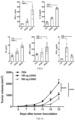
- the mice were injected intraperitoneally with different doses (100 ⁇ g or 300 ⁇ g) of the compound LD002 of the present invention, and changes in contents of various cytokines in serum were detected by ELISA after 6 hours.
- B16-F10 melanoma cell strains used in this experiment were purchased from the cell bank of Chinese Academy of Sciences Shanghai Branch, conventionally cultured in a DMEM medium containing 10% FBS, and placed in a 5% CO 2 incubator for culturing at 37°C.
- Cells in the exponential proliferation phase were digested with 0.25% trypsin, centrifuged, resuspended in PBS and counted, the cell survival rate was detected to be above 95%, and the concentration of cell suspension was adjusted to 2*10 ⁇ 6 mL -1 after viable cells were counted. Resuspended tumor cells were dispensed into sterile EP tubes and placed on ice for later use.
- mice The hair on the backs of the mice was removed with an electric shaver, and the hair removal area was about 9 cm 2 .
- the prepared B16-F10 cells mentioned above were taken, and 100 ⁇ L of tumor cell suspension was injected subcutaneously into the back of each mouse. Tumor growth in the mice was observed on a daily basis, the formation of melanoma was visible to the naked eye on Day 4, mice in which no tumor had been formed were excluded, the remaining mice were divided into 7 groups randomly, and the number of mice in each experimental group was five.
- Groups in Experiment I respectivelyincluded a control group, a group of 100 ⁇ g of the compound LD002 of the present invention, and a group of 300 ⁇ g of the compound LD002 of the present invention;
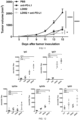
- groups in Experiment II respectively included a control group, a group of 100 ⁇ g of the compound LD002 of the present invention, a group of 200 ⁇ g of the anti-PD-L1 antibody (B7-H1) (Clone: 10F.9G2), a group of 100 ⁇ g of the compound LD002 of the present invention + a group of 200 ⁇ g of the anti-PD-L1 antibody (B7-H1) (Clone: 10F.9G2), with 6-8 mice in each group.
- the experimental method was that: administration to tumor-bearing mice was performed on Day 5 after tumor cell injection based on the groups, LD002 was injected intraperitoneally, and two dose groups were set: 100 ⁇ g/mouse and 300 ⁇ g/mouse. An anti-PD-L1 antibody was administered by intraperitoneal injection, and one dose group was set: 200 ⁇ g/mouse.
- the solvent-buffer system for administration was a PBS buffer solution. The same volume of PBS buffer solution was administered to the control groups by gavage. For the compound drugs of the present invention, each mouse was administered once every 2 days for a total of 3 doses. The administration volume was 100 ⁇ L.
- each mouse was administered once every 2 days for a total of 3 doses.
- the administration volume was 50 ⁇ L. Specifically, the administration was performed on Day 5, Day 7 and Day 9, respectively at an interval of 2 days for a total of 3 doses. Tumor sizes were measured every other day, survival periods of the mice were observed, related data were recorded, tumor volumes were measured with electronic calipers, and the volume was calculated by the formula of ⁇ /6 ⁇ length ⁇ width ⁇ height. When the tumor volume was greater than 2,000 mm 3 , the tumor-bearing mice were killed.
- the compound LD002 of the present invention inhibited the growth of subcutaneous melanoma in mice and extended the survival period of the tumor-bearing mice.
- the Anti-PD-L1 was capable of significantly enhancing the inhibiting effect of the compounds of the present invention on melanoma growth and extending the survival period of the mice compared with the control groups and administration of the compound LD002 of the present invention alone. It can be seen from the resulting data that the compounds LD002 of the present invention and anti-PD-L1 were capable of exerting synergistic effects jointly, having a more significant inhibiting effect on melanoma growth, and extending the survival period of the mice ( FIG. 11 ).
- the compound LD002 of the present invention was capable of inducing an increase in various cytokines, such as interferon, in the peripheral blood, having an excellent inhibiting effect on tumors, such as melanoma, and extending the survival period.
- the combination of the compound LD002 of the present invention and anti-PD-L1 had a synergistic effect in inhibiting tumor growth and extending the survival period.
- the compound of the present invention is capable of functioning as a drug which induces various cytokines, such as interferon, and has an anti-tumor effect and a function of promoting tumor immunotherapy.
- Example 6 Compound LD002 of the present invention has immune adjuvant activity
- the experiment was divided into a blank group (injected with the same volume of PBS), an antigen group and an antigen group/a group of the compound of the present invention (containing different concentration gradients), with 5 mice in each group.
- Antigen ovalbumin (OVA) and the compound LD002 of the present invention were dissolved in PBS respectively to obtain an antigen solution and a solution of the compound of the present invention, and solutions containing the antigen and the compound of the present invention with different concentration gradients were prepared according to concentration requirements.
- Each mouse in the experimental group was immunized with 100 ⁇ l of antigen solution or antigen solution and LD002 solution each time by intramuscular injection. Mice in the blank group were injected with the same volume of PBS solution as the experimental group.
- the first immunization was set to be performed on Day 0, and was enhanced once on Day 7 and Day 14, respectively.
- blood was collected from the orbits of the mice, serum was collected from the mice and diluted, and the diluted serum was tested for an antibody content in the serum of the mice by ELISA.
- OVA alone did not generate a protective humoral immune response after immunization compared with the antigen group, and when the mice were immunized with OVA combined with the compound of the present invention, the total amount of OVA-specific IgG, IgG1 and IgG2b antibodies could be significantly increased, indicating that the compound of the present invention had remarkable immune adjuvant activity ( FIG. 12 ).
Landscapes
- Health & Medical Sciences (AREA)
- Chemical & Material Sciences (AREA)
- Organic Chemistry (AREA)
- Life Sciences & Earth Sciences (AREA)
- Medicinal Chemistry (AREA)
- General Health & Medical Sciences (AREA)
- Veterinary Medicine (AREA)
- Pharmacology & Pharmacy (AREA)
- Animal Behavior & Ethology (AREA)
- Public Health (AREA)
- Virology (AREA)
- Chemical Kinetics & Catalysis (AREA)
- General Chemical & Material Sciences (AREA)
- Nuclear Medicine, Radiotherapy & Molecular Imaging (AREA)
- Immunology (AREA)
- Molecular Biology (AREA)
- Communicable Diseases (AREA)
- Oncology (AREA)
- Epidemiology (AREA)
- Engineering & Computer Science (AREA)
- Pulmonology (AREA)
- Bioinformatics & Cheminformatics (AREA)
- Biotechnology (AREA)
- Biochemistry (AREA)
- Biophysics (AREA)
- Genetics & Genomics (AREA)
- Proteomics, Peptides & Aminoacids (AREA)
- Pharmaceuticals Containing Other Organic And Inorganic Compounds (AREA)
- Medicines That Contain Protein Lipid Enzymes And Other Medicines (AREA)
- Medicines Containing Antibodies Or Antigens For Use As Internal Diagnostic Agents (AREA)
Applications Claiming Priority (2)
| Application Number | Priority Date | Filing Date | Title |
|---|---|---|---|
| CN202111605896.2A CN119241434A (zh) | 2021-12-25 | 2021-12-25 | 固有免疫激活药物及其用途 |
| PCT/CN2022/136399 WO2023116397A1 (zh) | 2021-12-25 | 2022-12-02 | 固有免疫激活药物及其用途 |
Publications (2)
| Publication Number | Publication Date |
|---|---|
| EP4421066A1 true EP4421066A1 (de) | 2024-08-28 |
| EP4421066A4 EP4421066A4 (de) | 2025-03-05 |
Family
ID=86352936
Family Applications (1)
| Application Number | Title | Priority Date | Filing Date |
|---|---|---|---|
| EP22909712.6A Pending EP4421066A4 (de) | 2021-12-25 | 2022-12-02 | Angeborenes immunaktivierendes arzneimittel und verwendung davon |
Country Status (4)
| Country | Link |
|---|---|
| US (1) | US20250248992A1 (de) |
| EP (1) | EP4421066A4 (de) |
| JP (1) | JP2024543668A (de) |
| CN (1) | CN116157126A (de) |
Family Cites Families (3)
| Publication number | Priority date | Publication date | Assignee | Title |
|---|---|---|---|---|
| WO2011094693A1 (en) * | 2010-02-01 | 2011-08-04 | Mount Sinai School Of Medicine | Interferon-inducing compounds and uses thereof |
| TWI635860B (zh) * | 2016-09-08 | 2018-09-21 | 新光醫療財團法人新光吳火獅紀念醫院 | 吖啶衍生物在製備治療泌尿道上皮癌之醫藥組合物的用途 |
| CN113940933A (zh) * | 2020-07-17 | 2022-01-18 | 中国科学院分子细胞科学卓越创新中心 | 抗新型冠状病毒的药物 |
-
2022
- 2022-12-02 US US18/724,009 patent/US20250248992A1/en active Pending
- 2022-12-02 CN CN202280004982.4A patent/CN116157126A/zh active Pending
- 2022-12-02 JP JP2024535186A patent/JP2024543668A/ja active Pending
- 2022-12-02 EP EP22909712.6A patent/EP4421066A4/de active Pending
Also Published As
| Publication number | Publication date |
|---|---|
| JP2024543668A (ja) | 2024-11-21 |
| US20250248992A1 (en) | 2025-08-07 |
| CN116157126A (zh) | 2023-05-23 |
| EP4421066A4 (de) | 2025-03-05 |
Similar Documents
| Publication | Publication Date | Title |
|---|---|---|
| EP1931352B1 (de) | Tlr-agonisten | |
| CA3072733C (en) | Bisdiazabicyclo compound for treatment and/or prevention of hepatitis virus-related diseases or disorders | |
| JP7564572B2 (ja) | 単離された組換え体腫瘍溶解性ワクシニアウイルスとnk細胞を含む治療薬、その使用およびそれを適用したキット | |
| JP2008255121A (ja) | 抗b型肝炎ウイルス活性を有するヌクレオシド | |
| RU2008126305A (ru) | Новый пептид | |
| JP2025526003A (ja) | ピペラジン化合物とpd-1阻害剤またはpd-l1阻害剤との組成物、および腫瘍治療におけるその使用 | |
| CN106902346A (zh) | 药物组合物及其制药用途 | |
| EP4421066A1 (de) | Angeborenes immunaktivierendes arzneimittel und verwendung davon | |
| AU2019392742B2 (en) | Anti-cancer activity of adamantane derivatives | |
| WO2023116397A1 (zh) | 固有免疫激活药物及其用途 | |
| CN113842386A (zh) | 具有广谱抗病毒活性的药物 | |
| Hu et al. | Novel therapeutics in discovery and development for treatment of chronic HBV infection | |
| US20230165870A1 (en) | 6,8-dioxa-3-azabicyclo[3.2.l]Octane Carboxylic Acids And Their Derivatives For Use In The Treatment Of Inflammations | |
| CN113940933A (zh) | 抗新型冠状病毒的药物 | |
| JPH0278621A (ja) | 免疫促進活性を有する製薬組成物の調製に於けるアデノシン誘導体の使用 | |
| US20030147850A1 (en) | Composition and methods for potentiating therapeutic effects of interferons | |
| EP0471057A4 (en) | Methods and compositions for the prophylaxis and treatment of cytomegalovirus infections | |
| Yang et al. | Novel Therapeutics in Discovery and Development for Treatment | |
| CN119679953A (zh) | 含tlr7/8选择性激动剂和hbv衣壳装配抑制剂的药物组合物及其用途 | |
| AU2006283524B2 (en) | TLR agonists | |
| WO2022116999A1 (en) | Fused heterocyclic derivatives and their use in the treatment of hbv infection | |
| Davies et al. | Isatoribine | |
| WO2022116998A1 (en) | Fused heterocyclic derivatives as hbv inhibitors | |
| HK1262528A1 (en) | Diazabicyclo compounds for use in the treatment and/or prevention of diseases or conditions associated with hepatitis viruses | |
| HK1252670A1 (zh) | 用於治疗和/或预防与肝炎病毒相关的疾病或病症的双二氮杂双环化合物 |
Legal Events
| Date | Code | Title | Description |
|---|---|---|---|
| STAA | Information on the status of an ep patent application or granted ep patent |
Free format text: STATUS: THE INTERNATIONAL PUBLICATION HAS BEEN MADE |
|
| PUAI | Public reference made under article 153(3) epc to a published international application that has entered the european phase |
Free format text: ORIGINAL CODE: 0009012 |
|
| STAA | Information on the status of an ep patent application or granted ep patent |
Free format text: STATUS: REQUEST FOR EXAMINATION WAS MADE |
|
| 17P | Request for examination filed |
Effective date: 20240523 |
|
| AK | Designated contracting states |
Kind code of ref document: A1 Designated state(s): AL AT BE BG CH CY CZ DE DK EE ES FI FR GB GR HR HU IE IS IT LI LT LU LV MC ME MK MT NL NO PL PT RO RS SE SI SK SM TR |
|
| REG | Reference to a national code |
Ref country code: DE Ref legal event code: R079 Free format text: PREVIOUS MAIN CLASS: C07D0219120000 Ipc: A61K0031473000 |
|
| A4 | Supplementary search report drawn up and despatched |
Effective date: 20250131 |
|
| RIC1 | Information provided on ipc code assigned before grant |
Ipc: C07D 487/10 20060101ALI20250127BHEP Ipc: C07D 405/12 20060101ALI20250127BHEP Ipc: C07D 219/10 20060101ALI20250127BHEP Ipc: A61P 35/00 20060101ALI20250127BHEP Ipc: A61P 31/12 20060101ALI20250127BHEP Ipc: C07D 219/12 20060101ALI20250127BHEP Ipc: A61K 31/473 20060101AFI20250127BHEP |
|
| DAV | Request for validation of the european patent (deleted) | ||
| DAX | Request for extension of the european patent (deleted) |