EP4425850A1 - Paketverarbeitung - Google Patents
Paketverarbeitung Download PDFInfo
- Publication number
- EP4425850A1 EP4425850A1 EP22948258.3A EP22948258A EP4425850A1 EP 4425850 A1 EP4425850 A1 EP 4425850A1 EP 22948258 A EP22948258 A EP 22948258A EP 4425850 A1 EP4425850 A1 EP 4425850A1
- Authority
- EP
- European Patent Office
- Prior art keywords
- packet
- information
- sid
- head node
- encapsulation information
- Prior art date
- Legal status (The legal status is an assumption and is not a legal conclusion. Google has not performed a legal analysis and makes no representation as to the accuracy of the status listed.)
- Pending
Links
Images


Classifications
-
- H—ELECTRICITY
- H04—ELECTRIC COMMUNICATION TECHNIQUE
- H04L—TRANSMISSION OF DIGITAL INFORMATION, e.g. TELEGRAPHIC COMMUNICATION
- H04L12/00—Data switching networks
- H04L12/28—Data switching networks characterised by path configuration, e.g. LAN [Local Area Networks] or WAN [Wide Area Networks]
- H04L12/46—Interconnection of networks
-
- H—ELECTRICITY
- H04—ELECTRIC COMMUNICATION TECHNIQUE
- H04L—TRANSMISSION OF DIGITAL INFORMATION, e.g. TELEGRAPHIC COMMUNICATION
- H04L45/00—Routing or path finding of packets in data switching networks
- H04L45/74—Address processing for routing
- H04L45/742—Route cache; Operation thereof
-
- H—ELECTRICITY
- H04—ELECTRIC COMMUNICATION TECHNIQUE
- H04L—TRANSMISSION OF DIGITAL INFORMATION, e.g. TELEGRAPHIC COMMUNICATION
- H04L45/00—Routing or path finding of packets in data switching networks
- H04L45/02—Topology update or discovery
- H04L45/036—Updating the topology between route computation elements, e.g. between OpenFlow controllers
- H04L45/037—Routes obligatorily traversing service-related nodes
- H04L45/0377—Routes obligatorily traversing service-related nodes for service chaining
-
- H—ELECTRICITY
- H04—ELECTRIC COMMUNICATION TECHNIQUE
- H04L—TRANSMISSION OF DIGITAL INFORMATION, e.g. TELEGRAPHIC COMMUNICATION
- H04L45/00—Routing or path finding of packets in data switching networks
- H04L45/34—Source routing
-
- H—ELECTRICITY
- H04—ELECTRIC COMMUNICATION TECHNIQUE
- H04L—TRANSMISSION OF DIGITAL INFORMATION, e.g. TELEGRAPHIC COMMUNICATION
- H04L45/00—Routing or path finding of packets in data switching networks
- H04L45/645—Splitting route computation layer and forwarding layer, e.g. routing according to path computational element [PCE] or based on OpenFlow functionality
-
- H—ELECTRICITY
- H04—ELECTRIC COMMUNICATION TECHNIQUE
- H04L—TRANSMISSION OF DIGITAL INFORMATION, e.g. TELEGRAPHIC COMMUNICATION
- H04L45/00—Routing or path finding of packets in data switching networks
- H04L45/74—Address processing for routing
- H04L45/741—Routing in networks with a plurality of addressing schemes, e.g. with both IPv4 and IPv6
-
- H—ELECTRICITY
- H04—ELECTRIC COMMUNICATION TECHNIQUE
- H04L—TRANSMISSION OF DIGITAL INFORMATION, e.g. TELEGRAPHIC COMMUNICATION
- H04L2212/00—Encapsulation of packets
-
- H—ELECTRICITY
- H04—ELECTRIC COMMUNICATION TECHNIQUE
- H04L—TRANSMISSION OF DIGITAL INFORMATION, e.g. TELEGRAPHIC COMMUNICATION
- H04L45/00—Routing or path finding of packets in data switching networks
- H04L45/50—Routing or path finding of packets in data switching networks using label swapping, e.g. multi-protocol label switch [MPLS]
Definitions
- the present disclosure relates to the technical field of communications, and in particular to packet processing.
- a head node After receiving an original service packet, a head node can encapsulate an IPv6 header and a segment routing header (SRH) on the outer layer of the original service packet.
- the segment routing header includes a segment list, which indicates a forwarding path of the service packet in the SRv6 network, and then the nodes in the SRv6 network can forward the service packet based on the forwarding path.
- Service Function Chain means that in the process of forwarding service packets, service packets need to be forwarded to service function (SF) nodes of value-added services according to a planning sequence number and processed by SF nodes.
- the service function may specifically be a billing function, a firewall, and the like.
- the SRv6 network can be combined with the SFC.
- some endpoint nodes in the SRv6 network can be used as Service Function Forwarder (SFF) nodes, and the SFF nodes are connected with Service Function (SF) nodes.
- SFF Service Function Forwarder
- SF Service Function
- An SRv6 SID and its corresponding function are newly defined in the existing RFC protocol, namely End.AD SID.
- the SFF can strip off the IPv6 header and SRH encapsulated on the outer layer of the service packet, and send the original service packet to the SF nodes.
- the SFF nodes cache the IPv6 header and SRH information (also called encapsulation information) on the data plane.
- the SFF nodes After receiving the service packet processed by the SF nodes, the SFF nodes re-encapsulate the IPv6 header and SRH for the processed service packet based on the cached encapsulation information, and continue to forward the re-encapsulated service packet.
- the SFF nodes need to learn the encapsulation information in the data plane.
- the above learning process imposes high requirements on the data plane and is not practical.
- there is a misconfiguration in the network for example, on two different head nodes, there are segment lists composed of two different paths but including the same End.AD SID of the same SFF.
- the head nodes encapsulate the packets respectively according to the two segment lists including the same End.AD SID, that is, when the packets reach the same SFF node, the destination addresses of the packets are the same End.AD SID.
- the encapsulation information cached by the SFF node will overlap each other due to two different service flows, and the subsequent forwarding path of the service packet processed by the SF node is unclear and may be an incorrect path.
- the examples of the present disclosure aim for packet processing, so as to avoid the problem that the subsequent forwarding path of a service packet processed by a SF node is not clear and may be a wrong path.
- the specific technical solution is as follows.
- an example of the present disclosure provides a packet processing method, which is applied to a control plane of a network device and includes:
- the first cache entry further includes third encapsulation information, and the third encapsulation information and the second encapsulation information include same content; before sending the first encapsulation information to the data plane, the method further includes:
- the method after receiving the first packet sent by the data plane of the network device, the method further includes: if there is a first cache entry associated with the first SID locally and the second head node address included in the first cache entry is different from the first head node address, sending a network configuration error prompt to a management platform.
- the notification information further includes first indication information, a first sequence number and first life time; after receiving the first packet sent by the data plane of the network device, the method further includes:
- the first cache entry further includes a timestamp; after determining whether there is a first cache entry associated with the first SID locally, the method further includes: if there is a first cache entry associated with the first SID locally, updating the timestamp to current time.
- the first cache entry further includes second life time; the method further includes:
- the method after receiving the first packet sent by the data plane of the network device, the method further includes:
- the notification information further includes second indication information; the method further includes: if a value of the second indication information is a second value, sending a second packet to a first head node indicated by the first head node address, wherein the second packet includes a processing result of the control plane on the first encapsulation information.
- the first packet is a specified protocol packet; or, the first packet is a BFD packet; the first packet further includes a first DOH that carries the notification information; or, the first packet further includes a first SRH including a first TLV structure that carries the notification information.
- the notification information includes a flags field, a sequence number field, a life time field, and a head node address field;
- the first packet includes an IPv6 header and an SRH
- the first encapsulation information includes information indicated by the IPv6 header and information indicated by the SRH.
- an example of the present disclosure provides a packet processing method, which is applied to a data plane of a network device and includes:
- the notification information further includes a first sequence number
- sending the copied first packet to the control plane of the network device includes: if the first sequence number is different from a second sequence number recorded locally, or the first head node address is different from a second head node address recorded locally, or if there is no encapsulation information associated with the first SID locally, sending the copied first packet to the control plane.
- the method further includes:
- the first packet further includes a first SRH including a first segment list used to indicate a forwarding path; after receiving the first packet, the method further includes: forwarding the first packet on the forwarding path.
- an example of the present disclosure provides a packet processing method, which is applied to a first head node and includes:
- the method before sending the first packet on the forwarding path indicated by the SRv6, the method further includes:
- the method after receiving the first configuration instruction and the second configuration instruction, the method further includes:
- the notification information includes a flags field, a sequence number field, a life time field, and a head node address field;
- the first cache entry further includes third encapsulation information, and the third encapsulation information and the second encapsulation information include same content; the apparatus further includes:
- the first cache entry further includes a timestamp; the update module is further to: if the judgment module determines there is a first cache entry associated with the first SID locally, update the timestamp to current time.
- the first cache entry further includes second life time; the apparatus further includes:
- the sending module is further to: if a value of the second indication information is a second value, send a second packet to a first head node indicated by the first head node address, wherein the second packet includes a processing result of the control plane on the first encapsulation information.
- the first packet is a specified protocol packet; or, the first packet is a BFD packet; the first packet further includes a first DOH that carries the notification information; or, the first packet further includes a first SRH including a first TLV structure that carries the notification information.
- an example of the present disclosure provides a packet processing apparatus, which is applied to a data plane of a network device and includes:
- the notification information further includes a first sequence number; the sending module is specifically to: if the first sequence number is different from a second sequence number recorded locally, or the first head node address is different from a second head node address recorded locally, or if there is no encapsulation information associated with the first SID locally, send the copied first packet to the control plane.
- the apparatus further includes a cache module
- the first packet further includes a first SRH including a first segment list
- the sending module is further to: forward the first packet on the forwarding path.
- an example of the present disclosure provides a packet processing apparatus, which is applied to a first head node and includes:
- the apparatus further includes:
- the apparatus further includes:
- the type of the first packet is a specified protocol packet or a BFD packet
- the notification information includes a flags field, a sequence number field, a life time field, and a head node address field;
- the receiving module is further to: receive a second packet sent by the network device, wherein the second packet includes a processing result of the control plane of the network device on the first encapsulation information.
- an example of the present disclosure provides a network device, including:
- the first cache entry further includes third encapsulation information, and the third encapsulation information and the second encapsulation information include same content; the machine executable instructions further cause the processor to:
- the machine executable instructions further cause the processor to: if there is a first cache entry associated with the first SID locally, and the second head node address included in the first cache entry is different from the first head node address, send a network configuration error prompt to a management platform through the transceiver.
- the notification information further includes first indication information, a first sequence number and first life time; the machine executable instructions further cause the processor to:
- the first cache entry further includes a timestamp; the machine executable instructions further cause the processor to: if there is a first cache entry associated with the first SID locally, update the timestamp to current time.
- the first cache entry further includes second life time; the machine executable instructions further cause the processor to:
- machine executable instructions further cause the processor to:
- the notification information further includes second indication information; the machine executable instructions further cause the processor to: if a value of the second indication information is a second value, send a second packet to a first head node indicated by the first head node address through the transceiver, wherein the second packet includes a processing result of the control plane on the first encapsulation information.
- the first packet is a specified protocol packet; or, the first packet is a BFD packet; the first packet further includes a first DOH that carries the notification information; or, the first packet further includes a first SRH including a first TLV structure that carries the notification information.
- the notification information includes a flags field, a sequence number field, a life time field, and a head node address field;
- the first packet includes an IPv6 header and an SRH
- the first encapsulation information includes information indicated by the IPv6 header and information indicated by the SRH.
- an example of the present disclosure provides a network device, including:
- the notification information further includes a first sequence number; the machine executable instructions further cause the processor to: if the first sequence number is different from a second sequence number recorded locally, or the first head node address is different from a second head node address recorded locally, or if there is no encapsulation information associated with the first SID locally, send the copied first packet to the control plane through the transceiver.
- machine executable instructions further cause the processor to:
- the first packet further includes a first SRH, including a first segment list used to indicate a forwarding path; the machine executable instructions further cause the processor to: forward the first packet on the forwarding path through the transceiver.
- an example of the present disclosure provides a head node including:
- machine executable instructions further cause the processor to:
- machine executable instructions further cause the processor to:
- the type of the first packet is a specified protocol packet or a BFD packet
- the notification information includes a flags field, a sequence number field, a life time field, and a head node address field;
- the machine executable instructions further cause the processor to: receive a second packet sent by the network device through the transceiver, wherein the second packet includes a processing result of the control plane of the network device on the first encapsulation information.
- an example of the present disclosure provides a machine-readable storage medium storing machine executable instructions that, when invoked and executed by a processor, cause the processor to implement the method of any one of the above first, second, or third aspect.
- the data plane is triggered to update the encapsulation information, which can prevent the data plane from learning wrong encapsulation information, thereby avoiding the problem that the subsequent forwarding path of the service packet processed by the SF node is not clear and may be a wrong path.
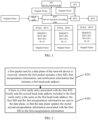
- SRv6 is a source routing technology.
- the head node of an SRv6 network can add SRH encapsulation to traffic, and guide the traffic to be forwarded according to a specified path through an Segment List in the SRH header.
- the service chain function can be combined with SRv6, that is, the service chain function can be implemented in the SRv6 network, and the service chain can be arranged through the Segment List of SRv6.
- the head node that is, the Classifier in the scenario of the service chain function
- IPv6 Internet Protocol Version 6
- SFF1::SF1 is a segment ID (SID) of SFF1 whose type may be End.AD, End.AS, or End.AM, and is used to instruct SFF1 to send the packet to SF1.
- SID segment ID
- SFF2::SF2 is the SID of SFF2 whose type may be End.AD, End.AS, or End.AM, and is used to instruct SFF2 to send the packet to SF2.
- SFF3 is the SID of SFF3, and the type may be a common End type.
- the head node can forward the packet encapsulated with the IPv6 header and SRH to SFF1. If the type of SFF1 is End.AD or End.AS, SFF1 can forward the original packet to SF1. After processing the original packet, SF1 sends the processed original packet to SFF1, and then SFF1 re-encapsulates the IPv6 header and SRH for the processed original packet and sends them to SFF2.
- SFF2 The processing of packets by SFF2 is similar to that of SFF1, and is not described in detail here.
- the above End.AD is an SRv6 SID, which is used to indicate that the node to which End.AD belongs, as an SR proxy (Segment Routing Proxy), deletes the IPv6 header and SRH from the packet temporarily before forwarding the packet to a SF node for processing, and then forwards the packet to the SF node.
- the packet After receiving the packet processed by the SF node, the packet is re-encapsulated with the IPv6 header and the SRH based on the information of the IPv6 header and SRH cached in a dynamic cache. That is to say, the node to which End.AD belongs may act as a dynamic proxy node and maintain a dynamic cache for each service chain in the dynamic cache.
- End.AS is another SRv6 SID, which is used to indicate that the node to which End.AS belongs, as an SR proxy, can implement packet processing functions similar to End.AD, which is different from End.AD in that, the node to which End.AS belongs re-encapsulates the IPv6 header and SRH for the packet through static configuration information, and there is no need to maintain the dynamic cache.
- End.AM is another SRv6 SID, which is used to indicate that the SFF node to which End.AM belongs, as an SR proxy, can be connected to an SF node with the ability to identify the SRH.
- the above-mentioned End.AD type SFF needs to learn the encapsulation information of the packet on the data plane, and cache the encapsulation information of the packet locally.
- the learning process imposes high requirements on the data plane and is not practical.
- there is a misconfiguration in the network for example, on two different head nodes, there are segment lists composed of two different paths but including the same End.AD SID of the same SFF.
- the head nodes encapsulate the packets respectively according to the two segment lists including the same End.AD SID, that is, when the packets reach the same SFF node, the destination addresses of the packets are the same End.AD SID.
- the encapsulation information cached by the SFF node will overlap each other due to two different service flows, and the subsequent forwarding path of the service packet processed by the SF node is unclear and may be an incorrect path.
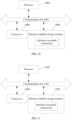
- an example of the present disclosure provides a packet processing method, which is applied to a control plane of a network device, as shown in FIG. 2 .
- the method includes the following blocks.
- a first packet sent by a data plane of the network device is received, wherein the first packet includes a first SID, first encapsulation information, and notification information that includes a first head node address.
- the first SID is the destination address in the IPv6 header of the first packet.
- the first SID and the first encapsulation information are sent to the data plane, so that the data plane updates the stored second encapsulation information associated with the first SID to the first encapsulation information.
- the control plane of the network device can send the first encapsulation information to the data plane, so that the data plane updates the second encapsulation information to the first encapsulation information.
- the control plane is used to learn the encapsulation information, which can reduce the requirements on the data plane and improve the applicability, and only in the case that the control plane determines that the first head node address is the same as the second head node address, the data plane is triggered to update the encapsulation information, which can prevent the data plane from learning wrong encapsulation information, thereby avoiding the problem that the subsequent forwarding path of the service packet processed by the SF node is not clear and may be a wrong path.
- the method further includes: if there is a first cache entry associated with the first SID locally and the second head node address included in the first cache entry is different from the first head node address, sending a network configuration error prompt to a management platform.
- the network device may also discard the first packet.
- control plane can generate and send syslog logs to a management platform for current network configuration error prompt.
- the administrator can check the current network configuration according to the syslog logs.
- the network configuration error prompt can be implemented through other mechanisms. In this way, it can be avoided that the network device learns wrong encapsulation information due to network configuration errors.
- the first packet includes an IPv6 header and an SRH
- the first encapsulation information includes information indicated by the IPv6 header and information indicated by the SRH.
- the first packet in the example of the present disclosure is a specified protocol packet; or, the first packet is a BFD packet.
- the first packet further includes a first DOH which carries the notification information; or, the first packet further includes a first SRH including a first TLV structure that carries the notification information.
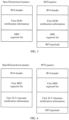
- the first DOH may be a newly defined DOH extension header (which may be called SRv6-SFC-Advertising Option), and the first DOH is encapsulated in the outer layer of the SRH, that is, the first DOH needs to be processed by each of endpoint nodes indicated by the segment list included in the SRH.
- the specified protocol packet when the first packet is a specified protocol packet, the specified protocol packet includes an IPv6 header, a first DOH and an SRH.
- the first DOH carries notification information
- the SRH carries a segment list.
- the BFD packet When the first packet is a BFD packet, the BFD packet includes an IPv6 header, a first DOH, an SRH, and a BFD payload.
- the first DOH carries notification information
- the SRH carries a segment list
- the BFD payload carries BFD information.
- the IPv6 header and the SRH are set according to existing SRv6 related protocols
- the first DOH is set according to existing DOH related protocols
- each header includes a Next Header field for indicating the next adjacent header.
- the specified protocol packet when the first packet is a specified protocol packet, the specified protocol packet includes an IPv6 header, and a first SRH that includes a first TLV structure.
- the first SRH also carries a segment list, and the first TLV structure carries notification information.
- the BFD packet When the first packet is a BFD packet, the BFD packet includes an IPv6 header, a first SRH, and a BFD payload.
- the first SRH includes a TLV structure and also carries a segment list
- the first TLV structure carries notification information
- the BFD payload carries BFD information.
- each header includes a Next Header field for indicating the next adjacent header.
- the first encapsulation information includes information indicated by the IPv6 header and information indicated by the SRH.
- the information indicated by the IPv6 header includes but is not limited to field contents such as source and destination addresses, Hoplimit, and FlowLabel, etc.
- the information indicated by the SRH includes but is not limited to field contents such as a segment list, segment left, Last Entry, and Flags, etc.
- the notification information is described below.
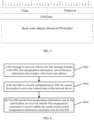
- FIG. 5 is a schematic diagram of a format of a notification information according to an example of the present disclosure.
- the notification information includes a flags (Flags) field, a sequence number (Sequence) field, a life time (LifeTime) field and a head node address (Headend IPv6Addr) field.
- Flags flags
- Sequence sequence number
- LifeTime life time
- Headend IPv6Addr head node address
- the sequence number field includes 16 bits for carrying a sequence number.
- the life time field includes 32 bits for carrying life time of encapsulation information.
- LifeTime is second life time described above, in seconds or milliseconds.
- the head node address (Headend IPv6Addr) field includes 128 bits for carrying a head node address.
- the data plane of the network device after receiving the first packet, the data plane of the network device obtains the first SID from the destination address field of the IPv6 header, and the type of the first SID may be End.AD.
- the data plane identifies whether the first SID is a locally configured SID, and if so, identifies whether the first packet includes notification information, and if the notification information is included, copies the first packet and sends the copied first packet to the control plane. At the same time, the data plane also forwards the first packet according to a forwarding mode specified by the existing SRv6 protocol.
- the first cache entry further includes third encapsulation information, and the third encapsulation information and the second encapsulation information include the same content. That is, after having learned the encapsulation information according to the received packet, the control plane sends the learned encapsulation information to the data plane, so that the content of the encapsulation information stored in the control plane and the data plane is the same.
- the method further includes: determining whether the third encapsulation information is the same as the first encapsulation information; if they are different, updating the third encapsulation information to the first encapsulation information, and performing the above S202 of sending the first SID and the first encapsulation information to the data plane.
- control plane determines that the second head node address included in the first cache entry is the same as the first head node address, and the third encapsulation information is different from the first encapsulation information, it means that the path information indicated by the SRv6 policy of the head node has changed. Therefore, the control plane can update the third encapsulation information in the first cache entry to the first encapsulation information, and send the first SID and the first encapsulation information to the data plane.
- control plane may determine whether the third encapsulation information is the same as the first encapsulation information by comparing the contents of the third encapsulation information and the first encapsulation information.
- control plane may also compare the sequence number cached in the first cache entry and the sequence number included in the notification information to determine whether they are the same, and if they are different, it can be determined that the third encapsulation information is different from the first encapsulation information.
- the notification information further includes first indication information, a first sequence number, and first life time.
- the first cache entry further includes second life time, which is obtained by the control plane from the notification information of the received historical packet, that is, the value of the LifeTime field included in the notification information.
- the first cache entry has an aging mechanism. If it is determined according to the timestamp of the first cache entry that the first cache entry has not been updated within the second life time, the first cache entry is deleted and the first SID is sent to the data plane, so that the data plane deletes the encapsulation information associated with the first SID.
- the control plane can delete the first cache entry and send the first SID to the data plane, so that the data plane deletes the encapsulation information associated with the first SID. In this way, the storage space of the control plane and the data plane will not be occupied by the first cache entry after aging, thereby saving the storage space.
- the above-mentioned example introduces the update operation on the encapsulation information.
- the head node may also actively withdraw the encapsulation information that has been learned by the network device.
- the method further includes:
- the head node can control the control plane and data plane of the network device to delete the third encapsulation information through the notification information, that is, the head node can flexibly control the deletion of the encapsulation information, and the service chain path can be quickly updated after the change, and it can be avoided that the control plane and the data plane of the network device store the encapsulation information that has not been used, which further prevents the network device from performing wrong encapsulation on the packet processed by the SF node.
- the above notification information further includes second indication information. If the value of the second indication information is the second value (that is, Bit1 in the Flags field in FIG. 5 is set), a second packet is sent to the first head node indicated by the first head node address, wherein the second packet includes a processing result of the control plane on the first encapsulation information.
- control plane may send the second packet to the first head node after determining that the control plane and the data plane successfully learn the encapsulation information carried in the first packet.
- the processing result is that the learning is successful.
- control plane may also send the second packet to the first head node after determining that the control plane and the data plane delete the locally stored encapsulation information.
- the processing result is that the deletion is successful.
- the control plane sends the processing result of the control plane on the encapsulation information to the first head node, which enables the head node to obtain the state of the network device learning the encapsulation information in time.
- An example of the present disclosure further provides a packet processing method, which is applied to a control plane of a network device, as shown in FIG. 6 .
- the method includes the following blocks.
- a first packet is received, wherein the first packet includes a first SID, first encapsulation information, and notification information that includes a first head node address.
- the copied first packet is sent to the control plane of the network device.
- the first SID and the first encapsulation information sent by the control plane are received, and the first encapsulation information is used to update the locally stored second encapsulation information associated with the first SID.
- the first SID and the first encapsulation information are sent by the control plane when determining that there is a first cache entry associated with the first SID locally and the second head node address included in the first cache entry is the same as the first head node address.
- the control plane of the network device can receive a first packet, wherein the first packet includes a first SID, first encapsulation information, and notification information that includes a first head node address. If the first SID is a locally configured proxy SID, the copied first packet is sent to the control plane, so that after receiving the first packet, if it is determined that there is a first cache entry associated with the first SID locally and the second head node address included in the first cache entry is the same as the first head node address, the control plane sends the first encapsulation information to the data plane so that the data plane uses the first encapsulation information to update the locally stored second encapsulation information associated with the first SID.
- the data plane sends the copied first packet to the control plane so that the control plane learns the encapsulation information, which can reduce requirements on the data plane and improve applicability.
- the first SID and the first encapsulation information are sent by the control plane when determining that there is a first cache entry associated with the first SID locally and the second head node address included in the first cache entry is the same as the first head node address, which can prevent the data plane from learning the wrong encapsulation information, so as to avoid the problem that the forwarding path of the service packet processed by the SF node is unclear and may be a wrong path.
- the notification information included in the first packet further includes a first sequence number
- the data plane also stores a first SID, a second head node address, a second sequence number and second encapsulation information correspondingly.
- the above S602 of sending the copied first packet to the control plane of the network device can be specifically implemented as: if the first sequence number is different from the second sequence number recorded locally, or if the first head node address is different from the second head node address recorded locally, or if there is no encapsulation information associated with the first SID locally, sending the copied first packet to the control plane.
- the data plane may send the copied first packet to the control plane, so as to trigger the control plane to learn the updated encapsulation information.
- the data plane may not send the copied first packet to the control plane, which can prevent protocol packets from being frequently sent to the control plane and affect the processing performance of the CPU.
- the data plane can record the timestamp of the received first packet, so that the control plane can query the timestamp and use the timestamp to update the timestamp in the cache entry, so that the aging operation is performed exactly according to the life time recorded in the cache entry.
- the copied first packet needs to be reported to the control plane, so that the control plane sends a network configuration error prompt to the management platform, thereby avoiding the control plane and the data plane from using the wrong encapsulation information.
- the copied first packet needs to be reported to the control plane, which then learns the encapsulation information associated with the first SID, and triggers the data plane to learn the encapsulation information associated with the first SID so that the data plane can subsequently encapsulate the packet processed by the SF node based on the learned encapsulation information so that the packet processed by the SF node is correctly forwarded.
- the data plane may further receive the second SID cached by the control plane and the third encapsulation information associated with the second SID, and cache the second SID and the third encapsulation information.
- the data plane receives a packet carrying the second SID and the third encapsulation information and there is no third encapsulation information associated with the second SID locally, the packet is copied and the copied packet is sent to the control plane. If the control plane determines that the cache entry corresponding to the second SID is not stored locally, it will cache third encapsulation information corresponding to the second SID, and send the second SID and the third encapsulation information to the data plane, so that the data plane can store the second SID and the third encapsulation information.
- An example of the present disclosure also provides a packet processing method, which is applied to a first head node.
- the method includes: sending a first packet on a forwarding path indicated by an SRv6 policy, wherein the first packet includes a first SID, first encapsulation information, and notification information that includes a first head node address.
- the notification information is used to make the data plane of the network device receiving the first packet to send the copied first packet to the control plane of the network device after determining that the first SID is a locally configured proxy SID, and receive the first encapsulation information sent by the control plane, and use the first encapsulation information to update the locally cached second encapsulation information.
- the first head node sends a first packet on the forwarding path indicated by the SRv6 policy, wherein the first packet includes a first SID, first encapsulation information, and notification information that includes a first head node address, wherein the notification information is used to make the data plane of the network device that receives the first packet to send the copied first packet to the control plane of the network device after determining that the first SID is a locally configured proxy SID, and receive the first encapsulation information sent by the control plane, and use the first encapsulation information to update the locally cached second encapsulation information.
- the data plane sends the copied first packet to the control plane so that the control plane learns the encapsulation information according to the notification information sent by the first head node, which can reduce requirements on the data plane and improve applicability.
- the data plane receives the first encapsulation information sent by the control plane, and uses the first encapsulation information to update the locally cached second encapsulation information, which can prevent the data plane from learning wrong encapsulation information, so as to avoid the problem that the forwarding path of the service packet processed by the SF node is unclear and may be a wrong path.
- the method before sending the first packet on the forwarding path indicated by the SRv6 policy, it may also be pre-configured. As shown in FIG. 7 , the method includes the following blocks.
- a first configuration instruction and a second configuration instruction are received, wherein the first configuration instruction includes an SRv6 policy.
- the SRv6 policy includes a forwarding path indicated by a segment list, and at least one SID in the segment list is a segment of the End.AD type.
- the first configuration instruction and the second configuration instruction may be issued by a controller, or may be issued by a command line.
- a notification function is started according to the second configuration instruction.
- the head node may create a notification instance, and bind the notification instance with the SRv6 policy.
- the type of the first packet can be determined and the first notification information can be generated according to the notification instance.
- the SRH can be generated according to the SRv6 related protocol, and then the first packet can be generated according to the type of the first packet, and the first packet includes the SRH.
- the notification instance includes a head node address, life time, a packet sending time interval, whether the network device responds to a packet and the type of a packet.
- the head node uses the IPv6 source address by default when adding SRv6 encapsulation to the packet.
- the packet sending time interval is a time interval at which the head node sends the packet with the notification information, and the unit can be seconds.
- the life time is LifeTime introduced in the above example,
- the value of LifeTime may be three times larger than the packet sending time interval.
- the type of a packet can be a specified protocol packet or a BFD packet.
- the first packet is sent on the forwarding path indicated by the SRv6 policy with the notification function.
- the head node may send the first packet on the forwarding path indicated by the SRv6 policy according to the packet sending time interval included in the notification instance.
- the tail node of the forwarding path will not be the SFF node at the same time, it is not necessary to process the notification information.
- the tail node can discard the first packet to avoid the tail node from forwarding the first packet of the specified protocol outside an SRv6 domain.
- the first head node may also receive a second packet sent by the network device, wherein the second packet includes the processing result of the control plane of the network device on the first encapsulation information, so that the head node can determine that the service chain deployment is completed after receiving the processing result indicating the successful encapsulation information learning of all SFF nodes on the forwarding path.
- the head node may present the processing result for each of SFF nodes on the current service chain path based on the received processing result.
- the head node after receiving the first configuration instruction and the second configuration instruction, the head node starts the notification function, and sends the first packet on the forwarding path indicated by the SRv6 policy, so that after determining that the first SID is a locally configured proxy SID, the data plane of the network device sends the copied first packet to the control plane of the network device, receives the first encapsulation information sent by the control plane, and uses the first encapsulation information to update the locally cached second encapsulation information, so that the control plane learns the encapsulation information, which can reduce the complexity of the data plane, and increase the fault tolerance, control, and security capabilities, and prevent the data plane from learning wrong encapsulation information, so as to avoid the problem that the forwarding path of the service packet processed by the SF node is unclear and may be a wrong path.
- an example of the present disclosure provides a packet processing apparatus, which is applied to a control plane of a network device, as shown in FIG. 8 .
- the apparatus includes:
- the first cache entry further includes third encapsulation information, and the third encapsulation information and the second encapsulation information include the same content; the apparatus further includes:
- the sending module is further to: if there is a first cache entry associated with the first SID locally, and the second head node address included in the first cache entry is different from the first head node address, send a network configuration error prompt to a management platform.
- the notification information further includes first indication information, a first sequence number, and first life time; the apparatus further includes:
- the first cache entry further includes a timestamp; the update module is further to: if the judgment module determines there is a first cache entry associated with the first SID locally, update the timestamp to current time.
- the apparatus further includes: a deletion module
- the notification information further includes second indication information; the sending module 802 is further to: if the value of the second indication information is a second value, send a second packet to the first head node indicated by the first head node address, wherein the second packet includes a processing result of the control plane on the first encapsulation information.
- the first packet is a specified protocol packet; or, the first packet is a BFD packet; the first packet further includes a first DOH that carries the notification information; or, the first packet further includes a first SRH including a first TLV structure that carries the notification information.
- the notification information includes a flags field, a sequence number field, a life time field, and a head node address field;
- the first packet includes an IPv6 header and an SRH
- the first encapsulation information includes information indicated by the IPv6 header and information indicated by the SRH.
- An example of the present disclosure further provides a packet processing apparatus, which is applied to a data plane of a network device, as shown in FIG. 9 .
- the apparatus includes:
- the notification information further includes a first sequence number; the sending module 902 is specifically to: if the first sequence number is different from the second sequence number recorded locally, or the first head node address is different from the second head node address recorded locally, or if there is no encapsulation information associated with the first SID locally, send the copied first packet to the control plane.
- the apparatus further includes: a cache module
- the first packet further includes a first SRH, which includes a first segment list
- the sending module is further to: forward the first packet on the forwarding path.
- An example of the present disclosure provides a packet processing apparatus, which is applied to a first head node.
- the apparatus includes:
- the notification information is used to make the data plane of the network device receiving the first packet to send the copied first packet to the control plane of the network device after determining that the first SID is a locally configured proxy SID, and receive the first encapsulation information sent by the control plane, and use the first encapsulation information to update the locally cached second encapsulation information.
- the apparatus further includes:
- the apparatus further includes:
- the type of the first packet is a specified protocol packet or a BFD packet
- the notification information includes a flags field, a sequence number field, a life time field, and a head node address field;
- the receiving module is further to: receive a second packet sent by the network device, wherein the second packet includes a processing result of the control plane of the network device on the first encapsulation information.
- the network device includes:
- the first cache entry further includes third encapsulation information, and the third encapsulation information and the second encapsulation information include the same content; the machine executable instructions further cause the processor 1001 to:
- the machine executable instructions further cause the processor 1001 to: if there is a first cache entry associated with the first SID locally, and the second head node address included in the first cache entry is different from the first head node address, send a network configuration error prompt to a management platform through the transceiver 1004.
- the notification information further includes first indication information, a first sequence number, and first life time; the machine executable instructions further cause the processor 1001 to:
- the first cache entry further includes a timestamp; the machine executable instructions further cause the processor 1001 to: if there is a first cache entry associated with the first SID locally, update the timestamp to current time.
- the first cache entry further includes second life time; the machine executable instructions further cause the processor 1001 to:
- machine executable instructions further cause the processor 1001 to:
- the notification information further includes second indication information; the machine executable instructions further cause the processor 1001 to: if the value of the second indication information is a second value, send a second packet to the first head node indicated by the first head node address through the transceiver 1004, wherein the second packet includes a processing result of the control plane on the first encapsulation information.
- the first packet is a specified protocol packet; or, the first packet is a BFD packet; the first packet further includes a first DOH that carries the notification information; or, the first packet further includes a first SRH including a first TLV structure that carries the notification information.
- the notification information includes a flags field, a sequence number field, a life time field, and a head node address field;
- the first packet includes an IPv6 header and an SRH
- the first encapsulation information includes information indicated by the IPv6 header and information indicated by the SRH.
- the network device includes:
- the notification information further includes a first sequence number; the machine executable instructions further cause the processor 1101 to: if the first sequence number is different from the second sequence number recorded locally, or the first head node address is different from the second head node address recorded locally, or if there is no encapsulation information associated with the first SID locally, send the copied first packet to the control plane through the transceiver 1104.
- machine executable instructions further cause the processor 1101 to
- the first packet further includes a first SRH including a first segment list used to indicate a forwarding path; the machine executable instructions further cause the processor 1101 to: forward the first packet on the forwarding path through the transceiver 1104.
- the head node includes:
- the notification information is used to make the data plane of the network device receiving the first packet to send the copied first packet to the control plane of the network device after determining that the first SID is a locally configured proxy SID, and receive the first encapsulation information sent by the control plane, and use the first encapsulation information to update the locally cached second encapsulation information.
- machine executable instructions further cause the processor 1201 to:
- machine executable instructions further cause the processor 1201 to:
- the type of the first packet is a specified protocol packet or a BFD packet
- the notification information includes a flags field, a sequence number field, a life time field, and a head node address field;
- the machine executable instructions further cause the processor 1201 to: receive a second packet sent by the network device through the transceiver 1204, wherein the second packet includes a processing result of the control plane of the network device on the first encapsulation information.
- the processor, the machine-readable storage medium, and the transceiver communicate with each other through the communication bus.
- the communication bus may be a Peripheral Component Interconnect (PCI) bus or an Extended Industry Standard Architecture (EISA) bus, etc.
- PCI Peripheral Component Interconnect
- EISA Extended Industry Standard Architecture
- the communication bus can include an address bus, a data bus, a control bus, or the like.
- the transceiver may be a wireless communication module, and the transceiver performs data interaction with other devices under the control of the processor.
- the machine-readable storage medium can include a random access memory (RAM), or can include a non-volatile memory (NVM), for example at least one disk memory.
- the machine-readable storage medium can also be at least one storage device located away from the processor described above.
- the aforementioned processor can be a general-purpose processor, such as a central processing unit (CPU), a network processor (NP), or the like; it can also be a digital signal processor (DSP), an application specific integrated circuit (ASIC), a field-programmable gate array (FPGA) or other programmable logic device, a discrete gate or transistor logic device, a discrete hardware component.
- CPU central processing unit
- NP network processor
- DSP digital signal processor
- ASIC application specific integrated circuit
- FPGA field-programmable gate array
- the examples of the present disclosure further provide a machine-readable storage medium, which stores machine executable instructions that can be executed by the processor.
- the processor is caused by the machine executable instructions to implement any of the above packet processing methods.
Landscapes
- Engineering & Computer Science (AREA)
- Computer Networks & Wireless Communication (AREA)
- Signal Processing (AREA)
- Computing Systems (AREA)
- Theoretical Computer Science (AREA)
- Data Exchanges In Wide-Area Networks (AREA)
Applications Claiming Priority (1)
| Application Number | Priority Date | Filing Date | Title |
|---|---|---|---|
| PCT/CN2022/101717 WO2024000135A1 (zh) | 2022-06-28 | 2022-06-28 | 报文处理 |
Publications (2)
| Publication Number | Publication Date |
|---|---|
| EP4425850A1 true EP4425850A1 (de) | 2024-09-04 |
| EP4425850A4 EP4425850A4 (de) | 2025-01-08 |
Family
ID=89383686
Family Applications (1)
| Application Number | Title | Priority Date | Filing Date |
|---|---|---|---|
| EP22948258.3A Pending EP4425850A4 (de) | 2022-06-28 | 2022-06-28 | Paketverarbeitung |
Country Status (4)
| Country | Link |
|---|---|
| US (1) | US20250055794A1 (de) |
| EP (1) | EP4425850A4 (de) |
| CN (1) | CN117643018A (de) |
| WO (1) | WO2024000135A1 (de) |
Families Citing this family (2)
| Publication number | Priority date | Publication date | Assignee | Title |
|---|---|---|---|---|
| CN118827526B (zh) * | 2024-03-28 | 2026-04-17 | 中国移动通信有限公司研究院 | 数据传输方法、装置、节点、存储介质及计算机程序产品 |
| CN118555191B (zh) * | 2024-06-25 | 2025-11-07 | 新华三技术有限公司 | 一种sf故障切换的方法和网络设备 |
Family Cites Families (10)
| Publication number | Priority date | Publication date | Assignee | Title |
|---|---|---|---|---|
| CN107040472B (zh) * | 2017-03-07 | 2020-07-03 | 浙江工商大学 | 一种sdn中控制面表项与流表及各类转发表项转发同步的方法 |
| WO2019210769A1 (en) * | 2018-05-03 | 2019-11-07 | Huawei Technologies Co., Ltd. | Explicit routing with network function encoding |
| CN111857945B (zh) * | 2019-04-30 | 2025-04-29 | 中兴通讯股份有限公司 | 数据包传输、管理方法、装置及数据转发设备、存储介质 |
| GB2585062B (en) * | 2019-06-27 | 2022-02-16 | Metaswitch Networks Ltd | Operating a service provider network node |
| CN112787931B (zh) * | 2019-11-06 | 2022-09-23 | 华为技术有限公司 | 报文传输方法、代理节点及存储介质 |
| CN112787921B (zh) * | 2019-11-08 | 2023-05-19 | 华为技术有限公司 | 报文传输方法、代理节点及存储介质 |
| CN112511483B (zh) * | 2020-03-02 | 2024-11-05 | 中兴通讯股份有限公司 | 一种数据转发方法、设备和存储介质 |
| CN111935014B (zh) * | 2020-10-19 | 2020-12-29 | 网络通信与安全紫金山实验室 | 基于SRv6网络的报文转发方法、装置、存储介质及电子设备 |
| CN112953831A (zh) * | 2021-01-22 | 2021-06-11 | 新华三大数据技术有限公司 | 一种报文转发方法及装置 |
| CN113709031B (zh) * | 2021-08-30 | 2022-10-21 | 烽火通信科技股份有限公司 | 一种约束路由传输分发的方法和装置 |
-
2022
- 2022-06-28 CN CN202280001937.3A patent/CN117643018A/zh active Pending
- 2022-06-28 WO PCT/CN2022/101717 patent/WO2024000135A1/zh not_active Ceased
- 2022-06-28 EP EP22948258.3A patent/EP4425850A4/de active Pending
- 2022-06-28 US US18/715,044 patent/US20250055794A1/en active Pending
Also Published As
| Publication number | Publication date |
|---|---|
| CN117643018A (zh) | 2024-03-01 |
| WO2024000135A1 (zh) | 2024-01-04 |
| EP4425850A4 (de) | 2025-01-08 |
| US20250055794A1 (en) | 2025-02-13 |
Similar Documents
| Publication | Publication Date | Title |
|---|---|---|
| US11050667B2 (en) | Packet forwarding method, device, switch, apparatus, and storage medium | |
| WO2019057199A1 (zh) | 一种报文转发的方法及网络设备 | |
| US11956148B2 (en) | Packet transmission method and device | |
| US10917337B1 (en) | Time to live (TTL) handing for segment routing ping/traceroute | |
| KR102535474B1 (ko) | 운영, 관리 및 유지 (ioam) 패킷 송신 방법 및 관련된 장치 | |
| US11057290B2 (en) | Ping/traceroute for static label switched paths (LSPs) and static segment routing traffic engineering (SRTE) tunnels | |
| CN111988223B (zh) | 虚拟机迁移方法与网络系统 | |
| EP4425850A1 (de) | Paketverarbeitung | |
| WO2020073685A1 (zh) | 转发路径确定方法、装置、系统、计算机设备及存储介质 | |
| JP7636440B2 (ja) | パケット処理方法、デバイス、およびシステム | |
| CN112887229B (zh) | 一种会话信息同步方法及装置 | |
| US11323310B2 (en) | Method, device, and system for providing hot reservation for in-line deployed network functions with multiple network interfaces | |
| CN110932934A (zh) | 一种网络丢包的检测方法和装置 | |
| CN101969404B (zh) | 报文处理的方法及设备 | |
| CN115134285A (zh) | 路径跟踪方法、设备和存储介质 | |
| EP4425852A1 (de) | Nachrichtenübertragung | |
| CN115484204A (zh) | 网络故障恢复方法、装置、系统、电子设备及存储介质 | |
| WO2024000139A1 (zh) | 报文转发 | |
| CN115277529B (zh) | 通信方法及装置 | |
| US20240283740A1 (en) | Recursive bitstring structure addressing | |
| WO2025152824A1 (zh) | 一种流量调度方法、装置、通信节点和存储介质 | |
| CN115834472B (zh) | 一种报文处理方法、转发策略获取方法及装置 | |
| CN117201640A (zh) | 处理报文的方法、通信装置及通信系统 | |
| CN116996368B (zh) | 一种云内外通信的方法、系统、设备及存储介质 | |
| CN118413493A (zh) | 一种针对vxlan网络的传输流量测试方法、系统及介质 |
Legal Events
| Date | Code | Title | Description |
|---|---|---|---|
| STAA | Information on the status of an ep patent application or granted ep patent |
Free format text: STATUS: THE INTERNATIONAL PUBLICATION HAS BEEN MADE |
|
| PUAI | Public reference made under article 153(3) epc to a published international application that has entered the european phase |
Free format text: ORIGINAL CODE: 0009012 |
|
| STAA | Information on the status of an ep patent application or granted ep patent |
Free format text: STATUS: REQUEST FOR EXAMINATION WAS MADE |
|
| 17P | Request for examination filed |
Effective date: 20240530 |
|
| AK | Designated contracting states |
Kind code of ref document: A1 Designated state(s): AL AT BE BG CH CY CZ DE DK EE ES FI FR GB GR HR HU IE IS IT LI LT LU LV MC MK MT NL NO PL PT RO RS SE SI SK SM TR |
|
| A4 | Supplementary search report drawn up and despatched |
Effective date: 20241206 |
|
| RIC1 | Information provided on ipc code assigned before grant |
Ipc: H04L 61/00 20220101ALI20241202BHEP Ipc: H04L 45/50 20220101ALI20241202BHEP Ipc: H04L 45/74 20220101ALI20241202BHEP Ipc: H04L 45/645 20220101ALI20241202BHEP Ipc: H04L 45/0377 20220101ALI20241202BHEP Ipc: H04L 101/659 20220101ALI20241202BHEP Ipc: H04L 45/00 20220101ALI20241202BHEP Ipc: H04L 12/46 20060101AFI20241202BHEP |
|
| DAV | Request for validation of the european patent (deleted) | ||
| DAX | Request for extension of the european patent (deleted) |