EP4427729A1 - Konservierungsmittel zur externen hautanwendung mit magnolol, honokiol oder einer kombination davon und kosmetische zusammensetzung damit - Google Patents
Konservierungsmittel zur externen hautanwendung mit magnolol, honokiol oder einer kombination davon und kosmetische zusammensetzung damit Download PDFInfo
- Publication number
- EP4427729A1 EP4427729A1 EP22890218.5A EP22890218A EP4427729A1 EP 4427729 A1 EP4427729 A1 EP 4427729A1 EP 22890218 A EP22890218 A EP 22890218A EP 4427729 A1 EP4427729 A1 EP 4427729A1
- Authority
- EP
- European Patent Office
- Prior art keywords
- preservative
- external skin
- magnolol
- honokiol
- skin application
- Prior art date
- Legal status (The legal status is an assumption and is not a legal conclusion. Google has not performed a legal analysis and makes no representation as to the accuracy of the status listed.)
- Pending
Links
Images

Classifications
-
- A—HUMAN NECESSITIES
- A61—MEDICAL OR VETERINARY SCIENCE; HYGIENE
- A61K—PREPARATIONS FOR MEDICAL, DENTAL OR TOILETRY PURPOSES
- A61K8/00—Cosmetics or similar toiletry preparations
- A61K8/18—Cosmetics or similar toiletry preparations characterised by the composition
- A61K8/30—Cosmetics or similar toiletry preparations characterised by the composition containing organic compounds
- A61K8/33—Cosmetics or similar toiletry preparations characterised by the composition containing organic compounds containing oxygen
- A61K8/34—Alcohols
-
- A—HUMAN NECESSITIES
- A61—MEDICAL OR VETERINARY SCIENCE; HYGIENE
- A61K—PREPARATIONS FOR MEDICAL, DENTAL OR TOILETRY PURPOSES
- A61K8/00—Cosmetics or similar toiletry preparations
- A61K8/18—Cosmetics or similar toiletry preparations characterised by the composition
- A61K8/30—Cosmetics or similar toiletry preparations characterised by the composition containing organic compounds
- A61K8/33—Cosmetics or similar toiletry preparations characterised by the composition containing organic compounds containing oxygen
- A61K8/34—Alcohols
- A61K8/345—Alcohols containing more than one hydroxy group
-
- A—HUMAN NECESSITIES
- A61—MEDICAL OR VETERINARY SCIENCE; HYGIENE
- A61K—PREPARATIONS FOR MEDICAL, DENTAL OR TOILETRY PURPOSES
- A61K8/00—Cosmetics or similar toiletry preparations
- A61K8/18—Cosmetics or similar toiletry preparations characterised by the composition
- A61K8/30—Cosmetics or similar toiletry preparations characterised by the composition containing organic compounds
- A61K8/33—Cosmetics or similar toiletry preparations characterised by the composition containing organic compounds containing oxygen
- A61K8/34—Alcohols
- A61K8/347—Phenols
-
- A—HUMAN NECESSITIES
- A61—MEDICAL OR VETERINARY SCIENCE; HYGIENE
- A61K—PREPARATIONS FOR MEDICAL, DENTAL OR TOILETRY PURPOSES
- A61K8/00—Cosmetics or similar toiletry preparations
- A61K8/18—Cosmetics or similar toiletry preparations characterised by the composition
- A61K8/30—Cosmetics or similar toiletry preparations characterised by the composition containing organic compounds
- A61K8/33—Cosmetics or similar toiletry preparations characterised by the composition containing organic compounds containing oxygen
- A61K8/35—Ketones, e.g. benzophenone
-
- A—HUMAN NECESSITIES
- A61—MEDICAL OR VETERINARY SCIENCE; HYGIENE
- A61K—PREPARATIONS FOR MEDICAL, DENTAL OR TOILETRY PURPOSES
- A61K8/00—Cosmetics or similar toiletry preparations
- A61K8/18—Cosmetics or similar toiletry preparations characterised by the composition
- A61K8/30—Cosmetics or similar toiletry preparations characterised by the composition containing organic compounds
- A61K8/33—Cosmetics or similar toiletry preparations characterised by the composition containing organic compounds containing oxygen
- A61K8/37—Esters of carboxylic acids
-
- A—HUMAN NECESSITIES
- A61—MEDICAL OR VETERINARY SCIENCE; HYGIENE
- A61K—PREPARATIONS FOR MEDICAL, DENTAL OR TOILETRY PURPOSES
- A61K8/00—Cosmetics or similar toiletry preparations
- A61K8/18—Cosmetics or similar toiletry preparations characterised by the composition
- A61K8/30—Cosmetics or similar toiletry preparations characterised by the composition containing organic compounds
- A61K8/49—Cosmetics or similar toiletry preparations characterised by the composition containing organic compounds containing heterocyclic compounds
-
- A—HUMAN NECESSITIES
- A61—MEDICAL OR VETERINARY SCIENCE; HYGIENE
- A61Q—SPECIFIC USE OF COSMETICS OR SIMILAR TOILETRY PREPARATIONS
- A61Q17/00—Barrier preparations; Preparations brought into direct contact with the skin for affording protection against external influences, e.g. sunlight, X-rays or other harmful rays, corrosive materials, bacteria or insect stings
- A61Q17/005—Antimicrobial preparations
-
- A—HUMAN NECESSITIES
- A61—MEDICAL OR VETERINARY SCIENCE; HYGIENE
- A61K—PREPARATIONS FOR MEDICAL, DENTAL OR TOILETRY PURPOSES
- A61K2800/00—Properties of cosmetic compositions or active ingredients thereof or formulation aids used therein and process related aspects
- A61K2800/40—Chemical, physico-chemical or functional or structural properties of particular ingredients
- A61K2800/52—Stabilizers
- A61K2800/524—Preservatives
Definitions
- the present disclosure relates to a preservative for external skin application including magnolol, honokiol, or a combination thereof, and a cosmetic composition including the same.
- a preservative improving preservation effect of products is essentially required in the manufacture of cosmetic products, because contamination caused by microorganisms cannot be avoided during processes of manufacturing and using the cosmetic products.
- preservatives paraben preservatives, imidazolidinyl urea, phenoxyethanol, and the like are widely used.
- drawbacks of the above-described preservatives such as toxicity, skin irritation, and allergy, are also widely known. Therefore, there is a need to develop a safe preservative effect with excellent preservation ability without causing skin irritation.
- magnolol and honokiol obtained from stems of magnolias, have been reported to have anxiety relief effects, anticancer effects, and antiplatelet effects, and are also known to be used for increasing skin volume and relieving wrinkles ( Korean Patent No. 10-2046331 ).
- magnolol and honokiol are not commercially used at all due to the issue of complete insolubility in water or oil.
- Precipitation occurs over time even in emulsions or other suspensions using a sufficient amount of a surfactant or solvent at a concentration of about 0.1% or more, and precipitation also occurs within a short period of time even in a solubilized liquid formulation (medicines, cosmetics, food, household goods, disinfectants, pesticides, and the like). Once precipitation occurs, activity of magnolol and honokiol is lost in any case. Therefore, if it is possible to manufacture a product by dissolving these two substances in water or oil by reducing insolubility thereof without losing the activity thereof, the substances may be sufficiently commercially available, but this has still not been achieved.
- the present inventors have found a preservative for external skin application including magnolol, honokiol, or a combination thereof, wherein because the preservative for external skin application has excellent formulation stability capable of maintaining a stable transparent, liquid state without precipitation and solidification, the preservative may solve the issue of insolubility of magnolol and honokiol and may be stably applied to a cosmetic composition to provide excellent antibacterial or antiseptic effects, thereby completing the present disclosure.
- a preservative for external skin application including at least one compound selected from the group consisting of magnolol and honokiol; and at least one solvent selected from the group consisting of heptyl undecylenate, propanediol, butyleneglycol, ethylhexylglycerin, and glyceryl caprylate.
- a cosmetic composition including the preservative for external skin application.
- a method of preparing a preservative for external skin application including at least one compound selected from the group consisting of magnolol and honokiol; and at least one solvent selected from the group consisting of heptyl undecylenate, propanediol, butyleneglycol, ethylhexylglycerin, and glyceryl caprylate.
- a method of preparing a cosmetic composition including adding the preservative for external skin application.
- a method of applying antibacterial, preservative, or antiseptic treatment to a cosmetic composition including adding the preservative for external skin application.
- compositions including at least one compound selected from the group consisting of magnolol and honokiol; and at least one solvent selected from the group consisting of heptyl undecylenate, propanediol, butyleneglycol, ethylhexylglycerin, and glyceryl caprylate, for antibacterial, preservative, or antiseptic treatment of an agent for external skin application or a cosmetic composition.
- compositions including at least one compound selected from the group consisting of magnolol and honokiol; and at least one solvent selected from the group consisting of heptyl undecylenate, propanediol, butyleneglycol, ethylhexylglycerin, and glyceryl caprylate, for preparing a preservative for external skin application or an antibacterial or antiseptic cosmetic composition.
- a preservative for external skin application includes at least one compound selected from the group consisting of magnolol and honokiol; and at least one solvent selected from the group consisting of heptyl undecylenate, propanediol, butyleneglycol, ethylhexylglycerin, and glyceryl caprylate.
- magnolol is an organic compound classified as lignin referring to a biologically active compound found in back of Magnolia officinalis or M. grandiflora. Specifically, the magnolol may be a compound having a structure of Formula 1 below:
- the magnolol may have a molecular formula of C 18 H 18 O 2 and a molecular weight of about 260 to 270 g/mol.
- honokiol is an organic compound classified as lignin referring to a biologically active compound found in barks, seeds, and leaves of trees belonging to magnolia.
- the honokiol may be a compound having a structure of Formula 2 below:
- the honokiol may have a molecular formula of C 18 H 18 O 2 and a molecular weight of 260 to 270 g/mol.
- the preservative for external skin application may include the at least one compound selected from the group consisting of magnolol and honokiol in an amount of more than about 0.5 but less than 12 wt% based on a total weight.
- the preservative for external skin application may include the at least one compound selected from the group consisting of magnolol and honokiol in an amount of about 1 or more but less than 12, 1 to 11, 1 to 10, 1 to 7, 1 to 5, 1 to 3, 3 or more but less than 12, 3 to 11, 3 to 10, 3 to 7, 3 to 5, 5 or more but less than 12, 5 to 11, 5 to 10, 5 to 7, 7 or more but less than 12, 7 to 11, or 7 to 10 wt% based on the total weight.
- the preservative for external skin application includes the at least one compound selected from the group consisting of magnolol and honokiol in an amount of about 0.5 wt% or less based on the total weight, antibacterial or antiseptic effects may decrease. If the amount is about 12 wt% or more, deterioration in stability, such as occurrence of solidification or precipitation, decrease in solubility, or reduction in emulsifying or solubilizing activity may be caused.
- the preservative for external skin application may include the at least one solvent selected from the group consisting of heptyl undecylenate, propanediol, butyleneglycol, ethylhexylglycerin, and glyceryl caprylate in an amount of more than about 88 but less than 99.5 wt% based on the total weight.
- the preservative for external skin application may include the at least one solvent selected from the group consisting of heptyl undecylenate, propanediol, butyleneglycol, ethylhexylglycerin, and glyceryl caprylate in an amount of about 89 to 99, 90 to 99, 93 to 99, 95 to 99, 97 to 99, 89 to 97, 90 to 97, 93 to 97, 95 to 97, 89 to 95, 90 to 95, 93 to 95, 89 to 93, 90 to 93, 89 to 90, more than 88 but not more than 97, more than 88 but not more than 95, 95, or 90 wt% based on the total weight.
- the at least one solvent selected from the group consisting of heptyl undecylenate, propanediol, butyleneglycol, ethylhexylglycerin, and glyceryl caprylate in an amount of about
- the preservative for external skin application includes the at least one solvent selected from the group consisting of heptyl undecylenate, propanediol, butyleneglycol, ethylhexylglycerin, and glyceryl caprylate in an amount of about 88 wt% or less based on the total weight
- the amount of the at least one compound selected from the group consisting of magnolol and honokiol may inevitably increase, thereby causing deterioration in stability, such as occurrence of solidification or precipitation, decrease in solubility, or reduction in emulsifying or solubilizing activity.
- the amount is about 99.5 wt% or more, the amount of the at least one compound selected from the group consisting of magnolol and honokiol may inevitably decrease, resulting in a decrease in antibacterial or antiseptic effects.
- the preservative for external skin application may include about 1 to 10, 5 to 10, 3 or more but less than 12, 3 to 11, 5 or more but less than 12, 5 to 11, 10, or 5 wt% of a total amount of the at least one compound selected from the group consisting of magnolol and honokiol; and about 90 to 99, 90 to 95, 89 to 97, 89 to 95, more than 88 but not more then 97, more than 88 but not more than 95, 95, or 90 wt% of a total amount of the at least one solvent selected from the group consisting of heptyl undecylenate, propanediol, butyleneglycol, ethylhexylglycerin, and glyceryl caprylate, based on the total weight.
- the preservative for external skin application may include about 1 to 10, 5 to 10, 3 or more but less than 12, 3 to 11, 5 or more but less than 12, 5 to 11, 10, or 5 parts by weight of a total weight of the at least one compound selected from the group consisting of magnolol and honokiol; and about 90 to 99, 90 to 95, 89 to 97, 89 to 95, more than 88 but not more than 97, more than 88 but not more than 95, 95, or 90 parts by weight of a total amount of the at least one solvent selected from the group consisting of heptyl undecylenate, propanediol, butyleneglycol, ethylhexylglycerin, and glyceryl caprylate.
- a weight ratio of the total amount of the at least one compound selected from the group consisting of magnolol and honokiol to the total amount of the at least one solvent selected from the group consisting of heptyl undecylenate, propanediol, butyleneglycol, ethylhexylglycerin, and glyceryl caprylate contained in the preservative for external skin application may be about 1 to 10:90 to 99.
- the weight ratio of the total amount of the at least one compound selected from the group consisting of magnolol and honokiol to the total amount of the at least one solvent selected from the group consisting of heptyl undecylenate, propanediol, butyleneglycol, ethylhexylglycerin, and glyceryl caprylate may be about 5 to 10:90 to 95; 1:8 to 150; 1:9 to 100; 1:9 to 99; 1:9; or 1:19.
- the weight ratio of the total amount of the at least one compound selected from the group consisting of magnolol and honokiol to the total amount of the at least one solvent selected from the group consisting of heptyl undecylenate, propanediol, butyleneglycol, ethylhexylglycerin, and glyceryl caprylate, which are contained in the preservative for external skin application is out of the above weight ratio ranges, antibacterial or antiseptic effects of the preservative for external skin application may significantly decrease, or solidification or precipitation, decrease in solubility, or reduction in emulsifying or solubilizing activity may occur, resulting in significant deterioration in stability of the preservative for external skin application.
- the preservative for external skin application may include: magnolol; honokiol; and at least one solvent selected from the group consisting of heptyl undecylenate, propanediol, butyleneglycol, ethylhexylglycerin, and glyceryl caprylate.
- the preservative for external skin application may include the magnolol in an amount more than about 0.25 but less than 6 wt% based on the total weight. Specifically, the preservative for external skin application may include the magnolol in an amount of about 0.5 or more but less than 6, 0.5 to 5.5, 0.5 to 5, 0.5 to 4.5, 0.5 to 4, 0.5 to 3.5, 0.5 to 3, 0.5 to 2.5, 0.5 to 2, 0.5 to 1.5, 0.5 to 1, 1 or more but less than 6, 1 to 5.5, 1 to 5, 1 to 4.5, 1 to 4, 1 to 3.5, 1 to 3, 1 to 2.5, 1 to 2, 1 to 1.5, 1.5 or more but less than 6, 1.5 to 5.5, 1.5 to 5, 1.5 to 4.5, 1.5 to 4, 1.5 to 3.5, 1.5 to 3, 1.5 to 2.5, 1.5 to 2, 2 or more but less than 6, 2 to 5.5, 2 to 5, 2 to 4.5, 2 to 4, 2 to 3.5, 2 to 3, 2 to 2.5, 2.5 to 5.5, 2.5, 2.5 to 5, 2.5 to 5, 2.5 to 4.5, 2.5 to
- the preservative for external skin application includes the magnolol in an amount of about 0.25 wt% or less based on the total weight, antibacterial or antiseptic effects may decrease. If the amount is about 6 wt% or more, deterioration in stability, such as occurrence of solidification or precipitation, decrease in solubility, or reduction in emulsifying or solubilizing activity may be caused.
- the preservative for external skin application may include the honokiol in an amount of about more than 0.25 but less than 6 wt% based on the total weight. Specifically, the preservative for external skin application may include the honokiol in an amount of about 0.5 or more but less than 6, 0.5 to 5.5, 0.5 to 5, 0.5 to 4.5, 0.5 to 4, 0.5 to 3.5, 0.5 to 3, 0.5 to 2.5, 0.5 to 2, 0.5 to 1.5, 0.5 to 1, 1 or more but less than 6, 1 to 5.5, 1 to 5, 1 to 4.5, 1 to 4, 1 to 3.5, 1 to 3, 1 to 2.5, 1 to 2, 1 to 1.5, 1.5 or more but less than 6, 1.5 to 5.5, 1.5 to 5, 1.5 to 4.5, 1.5 to 4, 1.5 to 3.5, 1.5 to 3, 1.5 to 2.5, 1.5 to 2, 2 or more but less than 6, 2 to 5.5, 2 to 5, 2 to 4.5, 2 to 4, 2 to 3.5, 2 to 3, 2 to 2.5, 2.5 to 5.5, 2 to 5.5, 2 to 5, 2 to 4.5
- the preservative for external skin application includes the honokiol in an amount of about 0.25 wt% or less based on the total weight, antibacterial or antiseptic effects may decrease. If the amount is about 6 wt% or more, deterioration in stability, such as occurrence of solidification or precipitation, decrease in solubility, or reduction in emulsifying or solubilizing activity may be caused.
- the preservative for external skin application may include about 0.5 to 5, 2.5 to 5, 1.5 or more but less than to 6, 1.5 to 5.5, 2.5 or more but less than 6, 2.5 to 5.5, 5, or 2.5 wt% of magnolol; about 0.5 to 5, 2.5 to 5, 1.5 or more but less than 6, 1.5 to 5.5, 2.5 or more but less than 6, 2.5 to 5.5, 5, or 2.5 wt% of honokiol; and about 90 to 99, 90 to 95, 89 to 97, 89 to 95, more than 88 but not more than 97, more than 88 but not more than 95, 95, or 90 wt% of the at least one solvent selected from the group consisting of heptyl undecylenate, propanediol, butyleneglycol, ethylhexylglycerin, and glyceryl caprylate, based on the total weight.
- the preservative for external skin application may include about 0.5 to 5, 2.5 to 5, 1.5 or more but less than 6, 1.5 to 5.5, 2.5 or more but less than 6, 2.5 to 5.5, 5, or 2.5 parts by weight of magnolol; about 0.5 to 5, 2.5 to 5, 1.5 or more but less than 6, 1.5 to 5.5, 2.5 or more but less than 6, 2.5 to 5.5, 5, or 2.5 parts by weight of honokiol; and about 90 to 99, 90 to 95, 89 to 97, 89 to 95, more than 88 but not more than 97, more than 88 but not more than 95, 95, or 90 parts by weight of the at least one solvent selected from the group consisting of heptyl undecylenate, propanediol, butyleneglycol, ethylhexylglycerin, and glyceryl caprylate.
- the at least one solvent selected from the group consisting of heptyl undecylenate, propanediol, butyleneglycol, eth
- the amounts or ratio of the magnolol; the honokiol; and the total amount of the at least one solvent selected from the group consisting of heptyl undecylenate, propanediol, butyleneglycol, ethylhexylglycerin, and glyceryl caprylate, included in the preservative for external skin application is out of the wt% or parts by weight, antibacterial or antiseptic effects of the preservative for external skin application may significantly decrease, or solidification or precipitation, decrease in solubility, or reduction in emulsifying or solubilizing activity may occur, resulting in significant deterioration in stability of the preservative for external skin application.
- a weight ratio of the magnolol; the honokiol; and the total amount of the at least one solvent selected from the group consisting of heptyl undecylenate, propanediol, butyleneglycol, ethylhexylglycerin, and glyceryl caprylate, included in the preservative for external skin application, may be 0.5 to 5:0.5 to 5:90 to 99.
- the weight ratio of the magnolol; the honokiol; and the total amount of the at least one solvent selected from the group consisting of heptyl undecylenate, propanediol, butyleneglycol, ethylhexylglycerin, and glyceryl caprylate may be about 2.5 to 5:2.5 to 5:90 to 95; 1:1:15 to 250; 1:1:18 to 200; 1:1:18to 198; 1:1:18; or 1:1:38.
- the weight ratio of the magnolol; the honokiol; and the total amount of the at least one solvent selected from the group consisting of heptyl undecylenate, propanediol, butyleneglycol, ethylhexylglycerin, and glyceryl caprylate, included in the preservative for external skin application is out of the weight ratio range, antibacterial or antiseptic effects of the preservative for external skin application may significantly decrease, or solidification or precipitation, decrease in solubility, or reduction in emulsifying or solubilizing activity may occur, resulting in significant deterioration in stability of the preservative for external skin application.
- the preservative for external skin application may include magnolol; honokiol; and heptyl undecylenate.
- the preservative for external skin application may include about 0.5 to 5, 2.5 to 5, 1.5 or more but less than 6, 1.5 to 5.5, 2.5 or more but less than 6, 2.5 to 5.5, 5, or 2.5 wt% of magnolol; about 0.5 to 5, 2.5 to 5, 1.5 or more but less than 6, 1.5 to 5.5, 2.5 or more but less than 6, 2.5 to 5.5, 5, or 2.5 wt% of honokiol; and about 90 to 99, 90 to 95, 89 to 97, 89 to 95, more than 88 but not more than 97, more than 88 but not more than 95, 95, or 90 wt% of heptyl undecylenate, based on the total weight.
- the preservative for external skin application may include about 0.5 to 5, 2.5 to 5, 1.5 or more but less than 6, 1.5 to 5.5, 2.5 or more but less than 6, 2.5 to 5.5, 5, or 2.5 parts by weight of magnolol; about 0.5 to 5, 2.5 to 5, 1.5 or more but less than 6, 1.5 to 5.5, 2.5 or more but less than 6, 2.5 to 5.5, 5, or 2.5 parts by weight of honokiol; and about 90 to 99, 90 to 95, 89 to 97, 89 to 95, more than 88 but not more than 97, more than 88 but not more than 95, 95, or 90 parts by weight of heptyl undecylenate.
- antibacterial or antiseptic effects of the preservative for external skin application may significantly decrease, or solidification or precipitation, decrease in solubility, or reduction in emulsifying or solubilizing activity may occur, resulting in significant deterioration in stability of the preservative for external skin application.
- the weight ratio of the magnolol; the honokiol; and the heptyl undecylenate included in the preservative for external skin application may be 0.5 to 5:0.5 to 5:90 to 99, 2.5 to 5:2.5 to 5:90 to 95; 1:1:15 to 250; 1:1:18 to 200; 1:1:18 to 198; 1:1:18; or 1:1:38.
- the weight ratio of the magnolol; the honokiol; and the heptyl undecylenate included in the preservative for external skin application is out of the weight ratio range, antibacterial or antiseptic effects of the preservative for external skin application may significantly decrease, or solidification or precipitation, decrease in solubility, or reduction in emulsifying or solubilizing activity may occur, resulting in significant deterioration in stability of the preservative for external skin application.
- the preservative for external skin application may be used as a preservative, an antiseptic agent, or an antiseptic adjuvant safe for skin in the case of being applied to a cosmetic composition.
- the preservative for external skin application includes at least one compound selected from the group consisting of magnolol and honokiol; and at least one solvent selected from the group consisting of heptyl undecylenate, propanediol, butyleneglycol, ethylhexylglycerin, and glyceryl caprylate
- the preservative has excellent formulation stability capable of maintaining a stable, transparent liquid state without causing discoloration, off-flavor, precipitation, and solidification under various temperature conditions, specifically, under room temperature and refrigeration conditions, thereby solving the solidification or precipitation phenomenon, i.e., insolubility issue of magnolol and honokiol, that may be caused in the case of mixing magnolol, honokiol, or a combination thereof with a solvent. Therefore, the preservative for external skin application may be stably applied to cosmetic compositions to exhibit excellent antibacterial or antiseptic effects.
- the preservative for external skin application may have excellent antibacterial or antiseptic effects on various types of microorganisms (specifically, contaminating microorganisms). Specifically, the preservative for external skin application may suppress the growth of or kill gram-positive bacteria and fungi (e.g., yeast and mold). Specifically, the preservative for external skin application may have excellent antibacterial or antiseptic effects on Staphylococcus aureus, Cutibacterium acnes, Candida albicans, Malassezia furfur, Trichophyton rubrum, and Aspergillus brasiliensis, and the like, without being limited thereto.
- gram-positive bacteria and fungi e.g., yeast and mold
- the preservative for external skin application may have excellent antibacterial or antiseptic effects on Staphylococcus aureus, Cutibacterium acnes, Candida albicans, Malassezia furfur, Trichophyton rubrum, and Aspergillus brasiliensis, and the like, without being
- the preservative for external skin application has excellent safety for external skin application due to significantly low skin irritation, compared to use of preservatives commonly used in conventional cosmetic products (such as paraben preservatives, imidazolidinyl urea, and phenoxyethanol), octanediol, caprylylglycerylether, or ethylhexylglycerin alone.
- the term "agent for external skin application” is a concept including compositions applied to skin, for example, a concept including various cosmetics such as basic cosmetics, makeup cosmetics, and hair cosmetics; and pharmaceutical compositions for topical administration including medicines and quasi-drug products such as ointments, creams, and lotions.
- preservative for external skin application may be used interchangeably with “antibacterial agent”, “antiseptic agent “, “antibacterial preservative”, “antiseptic preservative”, “antibacterial composition”, “antiseptic composition”, “antibacterial or antiseptic composition”, “antibacterial cosmetic composition”, “antiseptic cosmetic composition”, and “antibacterial or antiseptic cosmetic composition”.
- antibacterial refers to resistant to all contaminating microorganisms such as bacteria, mold, and yeast
- antibacterial activity refers to defensive ability or defensive effect on the contaminating microorganisms
- antiseptic activity refers to defensive ability or defensive effect on decomposition caused by contamination of microorganisms as a concept including antibacterial activity or antibacterial effect.
- the term "preservative” refers to a substance having antiseptic activity or antioxidant properties capable of inhibiting denaturation of a product and maintaining the original state of the product for a long period of time
- the "preservation ability” refers to a defensive ability to prevent denaturation of a product and maintain the original state thereof for a long time.
- the preservative for external skin application may further include an additive such as purified water, a carrier, an emulsifier, a moisturizer, a skin conditioner, a surfactant, a chelating agent, an antioxidant, an antiseptic agent, a disinfectant, a stabilizer, a preservative, a pH regulator, a lubricant, a solubilizer, and a solvent.
- the preservative for external skin application may further include a substance capable of additionally providing essential nutrients, a substance capable of improving the condition of skin, e.g., a functional substance having effects on reducing wrinkles or improving whitening.
- the preservative for external skin application may further include an adjuvant such as natural fragrance, cosmetic fragrance, or plant extract without being limited thereto.
- a cosmetic composition includes the preservative for external skin application.
- the cosmetic composition may include the preservative for external skin application in an amount of about 0.0001 to 50 wt% based on a total weight of the cosmetic composition.
- the cosmetic composition may include the preservative for external skin application in an amount of about 0.0001 to 0.001, 0.001 to 0.01, 0.01 to 0.1, 0.1 to 1, 1 to 10, 10 to 20, 20 to 30, 30 to 40, or 40 to 50 wt% based on the total weight of the cosmetic composition.
- the cosmetic composition includes the preservative for external skin application in an amount less than about 0.0001 wt% based on the total weight of the cosmetic composition, antibacterial or antiseptic effects may decrease.
- the cosmetic composition includes the preservative for external skin application in an amount more than about 50 wt% based on the total weight of the cosmetic composition, deterioration in stability such as occurrence of solidification or precipitation, decrease in solubility, or reduction in emulsifying or solubilizing activity may be caused.
- the cosmetic composition may be a composition of cosmetic raw materials used to manufacture cosmetics.
- the cosmetic composition may be a cosmetic composition having a final cosmetic formulation.
- the cosmetic composition may further include an additive selected from the group consisting of purified water, carriers, emulsifiers, moisturizers, skin conditioners, surfactants, chelating agents, antioxidants, antiseptic agents, disinfectants, stabilizers, preservatives, pH regulators, lubricants, solubilizers, solvents, and combinations thereof, without being limited thereto.
- the cosmetic composition may further include a substance capable of additionally providing essential nutrients, a substance capable of improving skin condition, e.g., a functional substance having effects on reducing wrinkles or improving whitening.
- the cosmetic composition may further include an adjuvant such as natural fragrance, cosmetic fragrance, or plant extract without being limited thereto.
- the cosmetic composition may be prepared in any formation commonly prepared in the art.
- the cosmetic composition may be in a formulation such as solution, emulsion, suspension, softening lotion, nourishing lotion, massage cream, nourishing cream, pack, gel, skin-adhesive cosmetics, lipstick, powder, makeup base, foundation, shampoo, rinse, scalp cleaner, scalp lotion, scalp cream, scalp pack, scalp gel, scalp ointment, scalp gel, body cleanser, soap, toothpaste, mouthwash, paste, lotion, gel, cream, patch, spry, or aerosol, without being limited thereto.
- the carrier included in the cosmetic composition may be selectively used depending on the formation of cosmetics.
- cosmetics in a formulation of ointment, paste, cream, or gel are manufactured, wax, paraffin, starch, tragacanth, cellulose derivative, polyethylene glycol, silicone, bentonites, silica, talc, zinc oxide, and the like may be used alone or in combination as a carrier component.
- lactose, talc, silica, aluminum hydroxide, calcium silicate, polyamide powder, chlorofluorohydrocarbon, propane/butane, dimethyl ether and the like may be used alone or in combination as a carrier component.
- water, ethanol, isopropanol, ethyl carbonate, ethyl acetate, benzyl alcohol, benzyl benzoate, propylene glycol, 1,3-butylglycol oil, cottonseed oil, peanut oil, corn germ oil, olive oil, caster oil, sesame oil, glycerol aliphatic ester, polyethylene glycol, sorbitan and the like may be used alone or in combination as a carrier component.
- a method of preparing a preservative for external skin application includes mixing at least one compound selected from the group consisting of magnolol and honokiol; and at least one solvent selected from the group consisting of heptyl undecylenate, propanediol, butyleneglycol, ethylhexylglycerin, and glyceryl caprylate.
- a method of preparing a cosmetic composition includes adding the preservative for external skin application.
- a method of performing antibacterial, preservative, or antiseptic treatment on a cosmetic composition includes adding the preservative for external skin application.
- the mixing weight ratio, wt%, or parts by weight of the components are as described above in the preservative for external skin application.
- a use of a composition including at least one compound selected from the group consisting of magnolol and honokiol; and at least one solvent selected from the group consisting of heptyl undecylenate, propanediol, butyleneglycol, ethylhexylglycerin, and glyceryl caprylate is for antibacterial, preservative, or antiseptic treatment of an agent for external skin application or a cosmetic composition.
- a use of a composition including at least one compound selected from the group consisting of magnolol and honokiol; and at least one solvent selected from the group consisting of heptyl undecylenate, propanediol, butyleneglycol, ethylhexylglycerin, and glyceryl caprylate is for preparing a preservative for external skin application or an antibacterial or antiseptic cosmetic composition.
- the mixing weight ratio, wt%, or parts by weight of the components of the composition including the at least one compound selected from the group consisting of magnolol and honokiol; and at least one solvent selected from the group consisting of heptyl undecylenate, propanediol, butyleneglycol, ethylhexylglycerin, and glyceryl caprylate are as described above in the preservative for external skin application.
- the preservative for external skin application including magnolol, honokiol, or a combination thereof according to an embodiment may be used as a preservative, an antiseptic agent, or an antiseptic adjuvant safe for skin when applied to a cosmetic composition.
- the preservative for external skin application has excellent formulation stability capable of maintaining a stable, transparent liquid state without causing discoloration, off-flavor, precipitation, and solidification under various temperature conditions, specifically, under room temperature and refrigeration conditions, the solidification or precipitation phenomenon, i.e., insolubility issue, of magnolol and honokiol, which may be caused in the case of mixing magnolol, honokiol, or a combination thereof with a solvent may be solved. Therefore, the preservative for external skin application including magnolol, honokiol, or a combination thereof may be stably applied to cosmetic compositions and exhibit excellent antibacterial or antiseptic effects.
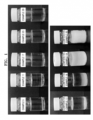
- Example 1 Example 3
- preservatives for external skin application including magnolol, honokiol, or a combination thereof were prepared.
- magnolol, honokiol, or a combination thereof; and a solvent were mixed at room temperature and stirred to prepare a preservative for external skin application, and then 53 types of preservatives for external skin application (Examples 1 to 33 and Comparative Examples 1 to 20) were obtained by varying weight ratio (wt% of the mixed raw materials and types of the solvent. The results are shown in Tables 1 to 5 below.
- solvent one selected from heptyl undecylenate, propanediol, butyleneglycol, ethylhexylglycerin, glyceryl caprylate, pentylene glycol, hexanediol, carprylyl glycol, and decanediol was used.
- Antibacterial effects of the prepared preservatives for external skin application on bacteria or fungi such as Staphylococcus aureus (ATCC 6538), Cutibacterium acnes (ATCC 6919), Candida albicans (ATCC 10231), Malassezia furfur (ATCC 14521), Trichophyton rubrum (ATCC 28188), and Aspergillus brasiliensis (ATCC 16404) were identified.
- Staphylococcus aureus ATCC 6538
- Cutibacterium acnes ATCC 6919
- Candida albicans ATCC 10231
- Malassezia furfur ATCC 14521
- Trichophyton rubrum ATCC 28188
- Aspergillus brasiliensis ATCC 16404
- the plate culture on which Staphylococcus aureus or Malassezia furfur was smeared was incubated at about 37 °C under aerobic conditions
- the plate culture on which Cutibacterium acnes was smeared was incubated at about 37 °C under anaerobic conditions
- the plate culture on which Candida albicans, Trichophyton rubrum, or Aspergillus brasiliensis was smeared was incubated at about 25 °C under aerobic conditions.
- diameters (including the diameter (6 mm) of the well) of inhibition zones formed on the surface of each plate culture were measured.
- the plate culture for smearing and culturing of Staphylococcus aureus was prepared by using Tryptic Soy Agar
- the plate culture for smearing and culturing of Cutibacterium acnes was prepared by using Reinforced Clostridial Agar
- the plate culture for smearing and culturing of Malassezia furfur was prepared by using Leeming and Notman Agar
- the plate culture for smearing and culturing of Candida albicans, Trichophyton rubrum, or Aspergillus brasiliensis was prepared by using Potato Dextrose Agar.
- the preservatives for external skin application including about 5 wt% of magnolol; about 5 wt% of honokiol; and about 90 wt% of heptyl undecylenate, propanediol, butyleneglycol, ethylhexylglycerin, or glyceryl caprylate, the highest antibacterial effect on the Gram-positive bacteria and fungi was confirmed.
- Example 34 Example 34 - Example 42. Preparation of Cosmetic Composition Including Preservative for External Skin Application
- cosmetic compositions including the prepared preservative for external skin application and further including cosmetic raw materials were prepared.
- one of the preservatives for external skin application of Examples 1 to 9 was mixed with cosmetic raw materials, followed by stirring to obtain a cosmetic composition in a formulation of W/O type emulsion (foundation). That is, various types of cosmetic compositions including about 1 wt% of one of the preservatives for external skin application of Examples 1 to 9, in which weight percent (wt%) of each of the other cosmetic raw materials additionally added was maintained at the same level, and the results are shown in Tables 13 and 14 below. More specifically, after sufficiently stirring Phases A and B of Tables 13 and 14 below, respectively, Phase C was added to Phase B, followed by stirring, and then Phase A was slowly added to the mixture of Phase B and Phase C while stirring.
- each cosmetic composition included about 1 wt% of one of the following preservatives: a preservative for external skin application including about 0.5 wt% of magnolol or honokiol and about 99.5 wt% of heptyl undecylenate; a preservative for external skin application including about 12 wt% of magnolol or honokiol and about 88 wt% of heptyl undecylenate; a preservative for external skin application including about 50 wt% of magnolol and about 50 wt% of honokiol; a preservative for external skin application including 100 wt% of magnolol; a preservative for external skin application including 100 wt% of honokiol; a
- a culture broth of each of Cutibacterium acnes (ATCC 6919) and Candida albicans (ATCC 10231) was mixed by inoculation with each of the cosmetic compositions of Examples 34 to 42 and Comparative Examples 21 to 31, such that an initial concentration thereof per each sample was about 10 6 CFU/g.
- each sample was incubated at about 37 °C under anaerobic conditions (Cutibacterium acnes) or at about 25 °C under aerobic conditions (Candida albicans) for about 4 weeks, about 1 g of each sample was collected at every 7 days to measure viable cell count.
- a culture broth of Aspergillus brasiliensis (ATCC 16404), which is Eumycetes, was mixed by inoculation with each of the cosmetic compositions of Examples 34 to 42 and Comparative Examples 21 to 31, such that an initial concentration thereof per each sample was about 10 5 CFU/g. Subsequently, while each sample was incubated at about 25 °C under aerobic conditions for about 4 weeks, off-flavor and spores on the surface of the sample were observed at every 7 days.
- the preservative for external skin application including magnolol, honokiol, or a combination thereof; and heptyl undecylenate, propanediol, butyleneglycol, ethylhexylglycerin, or glyceryl caprylate has superior formulation stability, excellent antibacterial and antiseptic effects, and also safety due to low skin irritation, and thus the preservative is suitable for use in cosmetic compositions.
Landscapes
- Health & Medical Sciences (AREA)
- Life Sciences & Earth Sciences (AREA)
- Animal Behavior & Ethology (AREA)
- General Health & Medical Sciences (AREA)
- Public Health (AREA)
- Veterinary Medicine (AREA)
- Birds (AREA)
- Epidemiology (AREA)
- Emergency Medicine (AREA)
- Dermatology (AREA)
- Cosmetics (AREA)
Applications Claiming Priority (2)
| Application Number | Priority Date | Filing Date | Title |
|---|---|---|---|
| KR1020210151182A KR102465358B1 (ko) | 2021-11-05 | 2021-11-05 | 마그놀올, 호노키올, 또는 이의 조합을 포함하는 피부 외용제용 보존제 및 이를 포함하는 화장료 조성물 |
| PCT/KR2022/015689 WO2023080483A1 (ko) | 2021-11-05 | 2022-10-17 | 마그놀올, 호노키올, 또는 이의 조합을 포함하는 피부 외용제용 보존제 및 이를 포함하는 화장료 조성물 |
Publications (2)
| Publication Number | Publication Date |
|---|---|
| EP4427729A1 true EP4427729A1 (de) | 2024-09-11 |
| EP4427729A4 EP4427729A4 (de) | 2025-10-15 |
Family
ID=84042807
Family Applications (1)
| Application Number | Title | Priority Date | Filing Date |
|---|---|---|---|
| EP22890218.5A Pending EP4427729A4 (de) | 2021-11-05 | 2022-10-17 | Konservierungsmittel zur externen hautanwendung mit magnolol, honokiol oder einer kombination davon und kosmetische zusammensetzung damit |
Country Status (3)
| Country | Link |
|---|---|
| EP (1) | EP4427729A4 (de) |
| KR (1) | KR102465358B1 (de) |
| WO (1) | WO2023080483A1 (de) |
Families Citing this family (1)
| Publication number | Priority date | Publication date | Assignee | Title |
|---|---|---|---|---|
| WO2025009863A2 (ko) * | 2023-07-03 | 2025-01-09 | 코스맥스 주식회사 | 호노키올 및 폴리올을 포함하는 피부 개선용 화장료 조성물 및 피부 손상 예방 또는 치료용 약제학적 조성물 |
Family Cites Families (15)
| Publication number | Priority date | Publication date | Assignee | Title |
|---|---|---|---|---|
| KR20060014203A (ko) * | 2004-08-10 | 2006-02-15 | 바이오스펙트럼 주식회사 | 여드름용 유효성분으로서의 마그놀롤 (magnolol)과 호노키올(honokiol) |
| TWI422382B (zh) * | 2010-02-24 | 2014-01-11 | Colgate Palmolive Co | 加強木蘭活性物之溶解度及傳送的組成物 |
| KR20120114540A (ko) * | 2011-04-07 | 2012-10-17 | 주식회사 코리아나화장품 | 노화 방지, 주름 개선, 미백, 항염 및 항균 효과를 가지는 화장료 조성물 |
| KR101285797B1 (ko) * | 2011-09-07 | 2013-07-12 | 주식회사 코리아나화장품 | 피페리틸마그놀올을 함유하는 항산화, 주름 개선, 미백, 항염 및 항균 효과를 가지는 화장료 조성물 |
| KR102046331B1 (ko) | 2013-10-10 | 2019-11-19 | 주식회사 엘지생활건강 | 마그놀롤 또는 히노키플라본을 포함하는 피부 볼륨증가 및 주름개선용 화장료 또는 약학 조성물 |
| US10045925B2 (en) * | 2014-11-03 | 2018-08-14 | Stella & Dot Llc | Skincare formulations and regimens |
| CN106176480A (zh) * | 2016-08-30 | 2016-12-07 | 广州品赫化妆品有限公司 | 一种具有防腐活性的食品级组合物及其在化妆品中的应用 |
| KR102026810B1 (ko) * | 2017-12-12 | 2019-09-30 | 주식회사 크로파세 | 피부 외용제용 보존제 및 이를 포함하는 화장료 조성물, 약학 조성물 |
| KR101919113B1 (ko) * | 2018-04-27 | 2018-11-15 | (주)셀트리온 | 연 캘러스 추출물을 포함하는 피부장벽 강화용 조성물 |
| CN111096932B (zh) * | 2018-10-29 | 2022-07-15 | 好维股份有限公司 | 一种口腔护理组合物 |
| EP3721894A1 (de) | 2019-04-10 | 2020-10-14 | Deutsches Krebsforschungszentrum, Stiftung des öffentlichen Rechts | Interleukin-4-induziertes gen 1 (il4i1) als biomarker und verwendungen davon |
| CN111228169A (zh) * | 2020-01-15 | 2020-06-05 | 云南贝泰妮生物科技集团股份有限公司 | 一种厚朴植物防腐抑菌组合物及其制备工艺与应用 |
| CN112587458A (zh) * | 2020-12-29 | 2021-04-02 | 花安堂生物科技集团有限公司 | 防腐剂组合物及其制备方法和应用 |
| FR3122580B1 (fr) * | 2021-05-10 | 2024-03-01 | Tomcat International Ltd | Composition cosmétique anti-vieillissement à base de resvératrol et de magnolia |
| DE102022205087A1 (de) * | 2022-05-20 | 2023-11-23 | Cosphatec Gmbh | Kosmetische oder Körperpflegezusammensetzung umfassend eine Kombination von aw-senkenden Substanzen |
-
2021
- 2021-11-05 KR KR1020210151182A patent/KR102465358B1/ko active Active
-
2022
- 2022-10-17 EP EP22890218.5A patent/EP4427729A4/de active Pending
- 2022-10-17 WO PCT/KR2022/015689 patent/WO2023080483A1/ko not_active Ceased
Also Published As
| Publication number | Publication date |
|---|---|
| WO2023080483A1 (ko) | 2023-05-11 |
| KR102465358B1 (ko) | 2022-11-11 |
| EP4427729A4 (de) | 2025-10-15 |
Similar Documents
| Publication | Publication Date | Title |
|---|---|---|
| KR102456647B1 (ko) | 카프릴하이드록사믹애씨드, 4'-하이드록시아세토페논, 및 폴리올을 포함하는 피부 외용제용 보존제 및 이를 포함하는 화장료 조성물 | |
| KR20170002744A (ko) | 방부제 조성물 및 이를 포함하는 화장료 조성물 | |
| EP2664318B1 (de) | Antimikrobielle zubereitungen enthaltend eine zinkverbindung, glycerinmonoalkylether und einen antioxidant | |
| KR101699468B1 (ko) | 활성 성분으로 피이지-2 페닐에테르를 함유하는 보존제 조성물 | |
| KR102419145B1 (ko) | 피부 외용제용 보존제, 이를 포함하는 화장료 조성물 및 약학 조성물 | |
| EP4427729A1 (de) | Konservierungsmittel zur externen hautanwendung mit magnolol, honokiol oder einer kombination davon und kosmetische zusammensetzung damit | |
| KR101702648B1 (ko) | 피부 외용제용 보존제, 이를 포함하는 화장료 조성물 및 약학 조성물 | |
| KR101945987B1 (ko) | 티로솔을 포함하는 피부 외용제용 보존제, 이를 포함하는 화장료 조성물 및 약학 조성물 | |
| KR20160044071A (ko) | 활성 성분으로 메칠3-아세틸-4-하이드록시벤조에이트를 함유하는 보존제 조성물 | |
| KR101779131B1 (ko) | 피부 외용제용 보존제, 이를 포함하는 화장료 조성물 및 약학 조성물 | |
| KR20220058468A (ko) | 알칸디올, 및 카프릴릴글리세릴에터 또는 에틸헥실글리세린을 포함하는 피부 외용제용 보존제 및 이를 포함하는 화장료 조성물 | |
| KR102093827B1 (ko) | 폴리(부틸시아노아크릴레이트)를 포함하는 화장료 보존제 조성물 | |
| KR101585795B1 (ko) | 활성 성분으로 디에칠렌글라이콜모노벤질에텔을 함유하는 보존제 조성물 | |
| KR20220058469A (ko) | 폴리라이신 및 카프릴릴글리세릴에터를 포함하는 피부 외용제용 보존제 및 이를 포함하는 화장료 조성물 | |
| KR102394120B1 (ko) | 알칸디올 및 루테린을 포함하는 항균용 조성물 및 이의 용도 | |
| KR101788179B1 (ko) | 방부력이 우수한 저자극성 피부 외용제 조성물 | |
| KR20230101482A (ko) | 피부 외용제용 보존제, 이를 포함하는 화장료 조성물 및 약학적 조성물 | |
| KR102227751B1 (ko) | 오미자, 백리향 및 꽃향유의 추출 혼합물을 유효성분으로 함유하는 천연 방부대체제 및 이의 용도 | |
| KR102566760B1 (ko) | 천연 추출물을 포함하는 방부제 조성물 및 이를 포함하는 화장료 조성물 | |
| KR102879842B1 (ko) | 1,2-헥산디올 및 글리세릴카프릴레이트를 포함하는 항균용 조성물 | |
| KR102566759B1 (ko) | 방부제 조성물 및 이를 포함하는 화장료 조성물 | |
| EP2624808B1 (de) | Verwendung von substituierten methoxyalkoxyphenylalkylderivaten als konservierungsmittel, konservierungsverfahren, verbindungen und zusammensetzung | |
| EP4701417A1 (de) | Antimikrobielle zusammensetzungen mit einem kationischen antimikrobiellen mittel und einem sauren glykolipid | |
| KR20230101481A (ko) | 피부 외용제용 보존제, 이를 포함하는 화장료 조성물 및 약학적 조성물 | |
| KR102160205B1 (ko) | 메틸차비콜을 포함하는 피부 외용제용 보존제, 이를 포함하는 화장료 조성물 및 약학 조성물 |
Legal Events
| Date | Code | Title | Description |
|---|---|---|---|
| STAA | Information on the status of an ep patent application or granted ep patent |
Free format text: STATUS: THE INTERNATIONAL PUBLICATION HAS BEEN MADE |
|
| PUAI | Public reference made under article 153(3) epc to a published international application that has entered the european phase |
Free format text: ORIGINAL CODE: 0009012 |
|
| STAA | Information on the status of an ep patent application or granted ep patent |
Free format text: STATUS: REQUEST FOR EXAMINATION WAS MADE |
|
| 17P | Request for examination filed |
Effective date: 20240520 |
|
| AK | Designated contracting states |
Kind code of ref document: A1 Designated state(s): AL AT BE BG CH CY CZ DE DK EE ES FI FR GB GR HR HU IE IS IT LI LT LU LV MC ME MK MT NL NO PL PT RO RS SE SI SK SM TR |
|
| DAV | Request for validation of the european patent (deleted) | ||
| DAX | Request for extension of the european patent (deleted) | ||
| A4 | Supplementary search report drawn up and despatched |
Effective date: 20250916 |
|
| RIC1 | Information provided on ipc code assigned before grant |
Ipc: A61K 8/34 20060101AFI20250910BHEP Ipc: A61K 8/37 20060101ALI20250910BHEP Ipc: A61Q 19/00 20060101ALI20250910BHEP Ipc: A61K 8/35 20060101ALI20250910BHEP Ipc: A61K 8/49 20060101ALI20250910BHEP Ipc: A61Q 17/00 20060101ALI20250910BHEP |