EP4427921A1 - Mehrschichtiges kissenmaterial mit hoher atmungsfähigkeit und mehrstufiger stütze - Google Patents
Mehrschichtiges kissenmaterial mit hoher atmungsfähigkeit und mehrstufiger stütze Download PDFInfo
- Publication number
- EP4427921A1 EP4427921A1 EP24154859.3A EP24154859A EP4427921A1 EP 4427921 A1 EP4427921 A1 EP 4427921A1 EP 24154859 A EP24154859 A EP 24154859A EP 4427921 A1 EP4427921 A1 EP 4427921A1
- Authority
- EP
- European Patent Office
- Prior art keywords
- layer
- warp
- cushion material
- composite cushion
- fabric
- Prior art date
- Legal status (The legal status is an assumption and is not a legal conclusion. Google has not performed a legal analysis and makes no representation as to the accuracy of the status listed.)
- Pending
Links
Images



Classifications
-
- B—PERFORMING OPERATIONS; TRANSPORTING
- B32—LAYERED PRODUCTS
- B32B—LAYERED PRODUCTS, i.e. PRODUCTS BUILT-UP OF STRATA OF FLAT OR NON-FLAT, e.g. CELLULAR OR HONEYCOMB, FORM
- B32B5/00—Layered products characterised by the non- homogeneity or physical structure, i.e. comprising a fibrous, filamentary, particulate or foam layer; Layered products characterised by having a layer differing constitutionally or physically in different parts
- B32B5/02—Layered products characterised by the non- homogeneity or physical structure, i.e. comprising a fibrous, filamentary, particulate or foam layer; Layered products characterised by having a layer differing constitutionally or physically in different parts characterised by structural features of a fibrous or filamentary layer
-
- B—PERFORMING OPERATIONS; TRANSPORTING
- B32—LAYERED PRODUCTS
- B32B—LAYERED PRODUCTS, i.e. PRODUCTS BUILT-UP OF STRATA OF FLAT OR NON-FLAT, e.g. CELLULAR OR HONEYCOMB, FORM
- B32B3/00—Layered products comprising a layer with external or internal discontinuities or unevennesses, or a layer of non-planar shape; Layered products comprising a layer having particular features of form
- B32B3/26—Layered products comprising a layer with external or internal discontinuities or unevennesses, or a layer of non-planar shape; Layered products comprising a layer having particular features of form characterised by a particular shape of the outline of the cross-section of a continuous layer; characterised by a layer with cavities or internal voids ; characterised by an apertured layer
- B32B3/266—Layered products comprising a layer with external or internal discontinuities or unevennesses, or a layer of non-planar shape; Layered products comprising a layer having particular features of form characterised by a particular shape of the outline of the cross-section of a continuous layer; characterised by a layer with cavities or internal voids ; characterised by an apertured layer characterised by an apertured layer, the apertures going through the whole thickness of the layer, e.g. expanded metal, perforated layer, slit layer regular cells B32B3/12
-
- B—PERFORMING OPERATIONS; TRANSPORTING
- B32—LAYERED PRODUCTS
- B32B—LAYERED PRODUCTS, i.e. PRODUCTS BUILT-UP OF STRATA OF FLAT OR NON-FLAT, e.g. CELLULAR OR HONEYCOMB, FORM
- B32B37/00—Methods or apparatus for laminating, e.g. by curing or by ultrasonic bonding
-
- B—PERFORMING OPERATIONS; TRANSPORTING
- B32—LAYERED PRODUCTS
- B32B—LAYERED PRODUCTS, i.e. PRODUCTS BUILT-UP OF STRATA OF FLAT OR NON-FLAT, e.g. CELLULAR OR HONEYCOMB, FORM
- B32B37/00—Methods or apparatus for laminating, e.g. by curing or by ultrasonic bonding
- B32B37/10—Methods or apparatus for laminating, e.g. by curing or by ultrasonic bonding characterised by the pressing technique, e.g. using action of vacuum or fluid pressure
-
- B—PERFORMING OPERATIONS; TRANSPORTING
- B32—LAYERED PRODUCTS
- B32B—LAYERED PRODUCTS, i.e. PRODUCTS BUILT-UP OF STRATA OF FLAT OR NON-FLAT, e.g. CELLULAR OR HONEYCOMB, FORM
- B32B37/00—Methods or apparatus for laminating, e.g. by curing or by ultrasonic bonding
- B32B37/12—Methods or apparatus for laminating, e.g. by curing or by ultrasonic bonding characterised by using adhesives
-
- B—PERFORMING OPERATIONS; TRANSPORTING
- B32—LAYERED PRODUCTS
- B32B—LAYERED PRODUCTS, i.e. PRODUCTS BUILT-UP OF STRATA OF FLAT OR NON-FLAT, e.g. CELLULAR OR HONEYCOMB, FORM
- B32B37/00—Methods or apparatus for laminating, e.g. by curing or by ultrasonic bonding
- B32B37/14—Methods or apparatus for laminating, e.g. by curing or by ultrasonic bonding characterised by the properties of the layers
- B32B37/16—Methods or apparatus for laminating, e.g. by curing or by ultrasonic bonding characterised by the properties of the layers with all layers existing as coherent layers before laminating
-
- B—PERFORMING OPERATIONS; TRANSPORTING
- B32—LAYERED PRODUCTS
- B32B—LAYERED PRODUCTS, i.e. PRODUCTS BUILT-UP OF STRATA OF FLAT OR NON-FLAT, e.g. CELLULAR OR HONEYCOMB, FORM
- B32B38/00—Ancillary operations in connection with laminating processes
- B32B38/0004—Cutting, tearing or severing, e.g. bursting; Cutter details
-
- B—PERFORMING OPERATIONS; TRANSPORTING
- B32—LAYERED PRODUCTS
- B32B—LAYERED PRODUCTS, i.e. PRODUCTS BUILT-UP OF STRATA OF FLAT OR NON-FLAT, e.g. CELLULAR OR HONEYCOMB, FORM
- B32B38/00—Ancillary operations in connection with laminating processes
- B32B38/0012—Mechanical treatment, e.g. roughening, deforming, stretching
-
- B—PERFORMING OPERATIONS; TRANSPORTING
- B32—LAYERED PRODUCTS
- B32B—LAYERED PRODUCTS, i.e. PRODUCTS BUILT-UP OF STRATA OF FLAT OR NON-FLAT, e.g. CELLULAR OR HONEYCOMB, FORM
- B32B38/00—Ancillary operations in connection with laminating processes
- B32B38/10—Removing layers, or parts of layers, mechanically or chemically
- B32B38/105—Removing layers, or parts of layers, mechanically or chemically on edges
-
- B—PERFORMING OPERATIONS; TRANSPORTING
- B32—LAYERED PRODUCTS
- B32B—LAYERED PRODUCTS, i.e. PRODUCTS BUILT-UP OF STRATA OF FLAT OR NON-FLAT, e.g. CELLULAR OR HONEYCOMB, FORM
- B32B5/00—Layered products characterised by the non- homogeneity or physical structure, i.e. comprising a fibrous, filamentary, particulate or foam layer; Layered products characterised by having a layer differing constitutionally or physically in different parts
- B32B5/02—Layered products characterised by the non- homogeneity or physical structure, i.e. comprising a fibrous, filamentary, particulate or foam layer; Layered products characterised by having a layer differing constitutionally or physically in different parts characterised by structural features of a fibrous or filamentary layer
- B32B5/022—Non-woven fabric
-
- B—PERFORMING OPERATIONS; TRANSPORTING
- B32—LAYERED PRODUCTS
- B32B—LAYERED PRODUCTS, i.e. PRODUCTS BUILT-UP OF STRATA OF FLAT OR NON-FLAT, e.g. CELLULAR OR HONEYCOMB, FORM
- B32B5/00—Layered products characterised by the non- homogeneity or physical structure, i.e. comprising a fibrous, filamentary, particulate or foam layer; Layered products characterised by having a layer differing constitutionally or physically in different parts
- B32B5/02—Layered products characterised by the non- homogeneity or physical structure, i.e. comprising a fibrous, filamentary, particulate or foam layer; Layered products characterised by having a layer differing constitutionally or physically in different parts characterised by structural features of a fibrous or filamentary layer
- B32B5/026—Knitted fabric
-
- B—PERFORMING OPERATIONS; TRANSPORTING
- B32—LAYERED PRODUCTS
- B32B—LAYERED PRODUCTS, i.e. PRODUCTS BUILT-UP OF STRATA OF FLAT OR NON-FLAT, e.g. CELLULAR OR HONEYCOMB, FORM
- B32B5/00—Layered products characterised by the non- homogeneity or physical structure, i.e. comprising a fibrous, filamentary, particulate or foam layer; Layered products characterised by having a layer differing constitutionally or physically in different parts
- B32B5/02—Layered products characterised by the non- homogeneity or physical structure, i.e. comprising a fibrous, filamentary, particulate or foam layer; Layered products characterised by having a layer differing constitutionally or physically in different parts characterised by structural features of a fibrous or filamentary layer
- B32B5/028—Net structure, e.g. spaced apart filaments bonded at the crossing points
-
- B—PERFORMING OPERATIONS; TRANSPORTING
- B32—LAYERED PRODUCTS
- B32B—LAYERED PRODUCTS, i.e. PRODUCTS BUILT-UP OF STRATA OF FLAT OR NON-FLAT, e.g. CELLULAR OR HONEYCOMB, FORM
- B32B5/00—Layered products characterised by the non- homogeneity or physical structure, i.e. comprising a fibrous, filamentary, particulate or foam layer; Layered products characterised by having a layer differing constitutionally or physically in different parts
- B32B5/02—Layered products characterised by the non- homogeneity or physical structure, i.e. comprising a fibrous, filamentary, particulate or foam layer; Layered products characterised by having a layer differing constitutionally or physically in different parts characterised by structural features of a fibrous or filamentary layer
- B32B5/06—Layered products characterised by the non- homogeneity or physical structure, i.e. comprising a fibrous, filamentary, particulate or foam layer; Layered products characterised by having a layer differing constitutionally or physically in different parts characterised by structural features of a fibrous or filamentary layer characterised by a fibrous or filamentary layer mechanically connected, e.g. by needling to another layer, e.g. of fibres, of paper
-
- B—PERFORMING OPERATIONS; TRANSPORTING
- B32—LAYERED PRODUCTS
- B32B—LAYERED PRODUCTS, i.e. PRODUCTS BUILT-UP OF STRATA OF FLAT OR NON-FLAT, e.g. CELLULAR OR HONEYCOMB, FORM
- B32B5/00—Layered products characterised by the non- homogeneity or physical structure, i.e. comprising a fibrous, filamentary, particulate or foam layer; Layered products characterised by having a layer differing constitutionally or physically in different parts
- B32B5/02—Layered products characterised by the non- homogeneity or physical structure, i.e. comprising a fibrous, filamentary, particulate or foam layer; Layered products characterised by having a layer differing constitutionally or physically in different parts characterised by structural features of a fibrous or filamentary layer
- B32B5/06—Layered products characterised by the non- homogeneity or physical structure, i.e. comprising a fibrous, filamentary, particulate or foam layer; Layered products characterised by having a layer differing constitutionally or physically in different parts characterised by structural features of a fibrous or filamentary layer characterised by a fibrous or filamentary layer mechanically connected, e.g. by needling to another layer, e.g. of fibres, of paper
- B32B5/073—Layered products characterised by the non- homogeneity or physical structure, i.e. comprising a fibrous, filamentary, particulate or foam layer; Layered products characterised by having a layer differing constitutionally or physically in different parts characterised by structural features of a fibrous or filamentary layer characterised by a fibrous or filamentary layer mechanically connected, e.g. by needling to another layer, e.g. of fibres, of paper characterised by the fibrous or filamentary layer being mechanically connected to another layer by sewing, stitching, hook-and-loop fastening or stitchbonding
-
- B—PERFORMING OPERATIONS; TRANSPORTING
- B32—LAYERED PRODUCTS
- B32B—LAYERED PRODUCTS, i.e. PRODUCTS BUILT-UP OF STRATA OF FLAT OR NON-FLAT, e.g. CELLULAR OR HONEYCOMB, FORM
- B32B5/00—Layered products characterised by the non- homogeneity or physical structure, i.e. comprising a fibrous, filamentary, particulate or foam layer; Layered products characterised by having a layer differing constitutionally or physically in different parts
- B32B5/18—Layered products characterised by the non- homogeneity or physical structure, i.e. comprising a fibrous, filamentary, particulate or foam layer; Layered products characterised by having a layer differing constitutionally or physically in different parts characterised by features of a layer of foamed material
-
- B—PERFORMING OPERATIONS; TRANSPORTING
- B32—LAYERED PRODUCTS
- B32B—LAYERED PRODUCTS, i.e. PRODUCTS BUILT-UP OF STRATA OF FLAT OR NON-FLAT, e.g. CELLULAR OR HONEYCOMB, FORM
- B32B5/00—Layered products characterised by the non- homogeneity or physical structure, i.e. comprising a fibrous, filamentary, particulate or foam layer; Layered products characterised by having a layer differing constitutionally or physically in different parts
- B32B5/22—Layered products characterised by the non- homogeneity or physical structure, i.e. comprising a fibrous, filamentary, particulate or foam layer; Layered products characterised by having a layer differing constitutionally or physically in different parts characterised by the presence of two or more layers which are next to each other and are fibrous, filamentary, formed of particles or foamed
- B32B5/24—Layered products characterised by the non- homogeneity or physical structure, i.e. comprising a fibrous, filamentary, particulate or foam layer; Layered products characterised by having a layer differing constitutionally or physically in different parts characterised by the presence of two or more layers which are next to each other and are fibrous, filamentary, formed of particles or foamed one layer being a fibrous or filamentary layer
- B32B5/245—Layered products characterised by the non- homogeneity or physical structure, i.e. comprising a fibrous, filamentary, particulate or foam layer; Layered products characterised by having a layer differing constitutionally or physically in different parts characterised by the presence of two or more layers which are next to each other and are fibrous, filamentary, formed of particles or foamed one layer being a fibrous or filamentary layer another layer next to it being a foam layer
-
- B—PERFORMING OPERATIONS; TRANSPORTING
- B32—LAYERED PRODUCTS
- B32B—LAYERED PRODUCTS, i.e. PRODUCTS BUILT-UP OF STRATA OF FLAT OR NON-FLAT, e.g. CELLULAR OR HONEYCOMB, FORM
- B32B5/00—Layered products characterised by the non- homogeneity or physical structure, i.e. comprising a fibrous, filamentary, particulate or foam layer; Layered products characterised by having a layer differing constitutionally or physically in different parts
- B32B5/22—Layered products characterised by the non- homogeneity or physical structure, i.e. comprising a fibrous, filamentary, particulate or foam layer; Layered products characterised by having a layer differing constitutionally or physically in different parts characterised by the presence of two or more layers which are next to each other and are fibrous, filamentary, formed of particles or foamed
- B32B5/24—Layered products characterised by the non- homogeneity or physical structure, i.e. comprising a fibrous, filamentary, particulate or foam layer; Layered products characterised by having a layer differing constitutionally or physically in different parts characterised by the presence of two or more layers which are next to each other and are fibrous, filamentary, formed of particles or foamed one layer being a fibrous or filamentary layer
- B32B5/26—Layered products characterised by the non- homogeneity or physical structure, i.e. comprising a fibrous, filamentary, particulate or foam layer; Layered products characterised by having a layer differing constitutionally or physically in different parts characterised by the presence of two or more layers which are next to each other and are fibrous, filamentary, formed of particles or foamed one layer being a fibrous or filamentary layer another layer next to it also being fibrous or filamentary
- B32B5/265—Layered products characterised by the non- homogeneity or physical structure, i.e. comprising a fibrous, filamentary, particulate or foam layer; Layered products characterised by having a layer differing constitutionally or physically in different parts characterised by the presence of two or more layers which are next to each other and are fibrous, filamentary, formed of particles or foamed one layer being a fibrous or filamentary layer another layer next to it also being fibrous or filamentary characterised by one fibrous or filamentary layer being a non-woven fabric layer
-
- B—PERFORMING OPERATIONS; TRANSPORTING
- B32—LAYERED PRODUCTS
- B32B—LAYERED PRODUCTS, i.e. PRODUCTS BUILT-UP OF STRATA OF FLAT OR NON-FLAT, e.g. CELLULAR OR HONEYCOMB, FORM
- B32B5/00—Layered products characterised by the non- homogeneity or physical structure, i.e. comprising a fibrous, filamentary, particulate or foam layer; Layered products characterised by having a layer differing constitutionally or physically in different parts
- B32B5/22—Layered products characterised by the non- homogeneity or physical structure, i.e. comprising a fibrous, filamentary, particulate or foam layer; Layered products characterised by having a layer differing constitutionally or physically in different parts characterised by the presence of two or more layers which are next to each other and are fibrous, filamentary, formed of particles or foamed
- B32B5/24—Layered products characterised by the non- homogeneity or physical structure, i.e. comprising a fibrous, filamentary, particulate or foam layer; Layered products characterised by having a layer differing constitutionally or physically in different parts characterised by the presence of two or more layers which are next to each other and are fibrous, filamentary, formed of particles or foamed one layer being a fibrous or filamentary layer
- B32B5/26—Layered products characterised by the non- homogeneity or physical structure, i.e. comprising a fibrous, filamentary, particulate or foam layer; Layered products characterised by having a layer differing constitutionally or physically in different parts characterised by the presence of two or more layers which are next to each other and are fibrous, filamentary, formed of particles or foamed one layer being a fibrous or filamentary layer another layer next to it also being fibrous or filamentary
- B32B5/279—Layered products characterised by the non- homogeneity or physical structure, i.e. comprising a fibrous, filamentary, particulate or foam layer; Layered products characterised by having a layer differing constitutionally or physically in different parts characterised by the presence of two or more layers which are next to each other and are fibrous, filamentary, formed of particles or foamed one layer being a fibrous or filamentary layer another layer next to it also being fibrous or filamentary characterised by a knit fabric layer next to a non-woven fabric layer
-
- B—PERFORMING OPERATIONS; TRANSPORTING
- B32—LAYERED PRODUCTS
- B32B—LAYERED PRODUCTS, i.e. PRODUCTS BUILT-UP OF STRATA OF FLAT OR NON-FLAT, e.g. CELLULAR OR HONEYCOMB, FORM
- B32B7/00—Layered products characterised by the relation between layers; Layered products characterised by the relative orientation of features between layers, or by the relative values of a measurable parameter between layers, i.e. products comprising layers having different physical, chemical or physicochemical properties; Layered products characterised by the interconnection of layers
- B32B7/04—Interconnection of layers
- B32B7/08—Interconnection of layers by mechanical means
- B32B7/09—Interconnection of layers by mechanical means by stitching, needling or sewing
-
- B—PERFORMING OPERATIONS; TRANSPORTING
- B32—LAYERED PRODUCTS
- B32B—LAYERED PRODUCTS, i.e. PRODUCTS BUILT-UP OF STRATA OF FLAT OR NON-FLAT, e.g. CELLULAR OR HONEYCOMB, FORM
- B32B7/00—Layered products characterised by the relation between layers; Layered products characterised by the relative orientation of features between layers, or by the relative values of a measurable parameter between layers, i.e. products comprising layers having different physical, chemical or physicochemical properties; Layered products characterised by the interconnection of layers
- B32B7/04—Interconnection of layers
- B32B7/12—Interconnection of layers using interposed adhesives or interposed materials with bonding properties
-
- D—TEXTILES; PAPER
- D04—BRAIDING; LACE-MAKING; KNITTING; TRIMMINGS; NON-WOVEN FABRICS
- D04B—KNITTING
- D04B21/00—Warp knitting processes for the production of fabrics or articles not dependent on the use of particular machines; Fabrics or articles defined by such processes
- D04B21/06—Patterned fabrics or articles
- D04B21/08—Patterned fabrics or articles characterised by thread material
-
- D—TEXTILES; PAPER
- D04—BRAIDING; LACE-MAKING; KNITTING; TRIMMINGS; NON-WOVEN FABRICS
- D04B—KNITTING
- D04B21/00—Warp knitting processes for the production of fabrics or articles not dependent on the use of particular machines; Fabrics or articles defined by such processes
- D04B21/10—Open-work fabrics
- D04B21/12—Open-work fabrics characterised by thread material
-
- D—TEXTILES; PAPER
- D04—BRAIDING; LACE-MAKING; KNITTING; TRIMMINGS; NON-WOVEN FABRICS
- D04B—KNITTING
- D04B21/00—Warp knitting processes for the production of fabrics or articles not dependent on the use of particular machines; Fabrics or articles defined by such processes
- D04B21/14—Fabrics characterised by the incorporation by knitting, in one or more thread, fleece, or fabric layers, of reinforcing, binding, or decorative threads; Fabrics incorporating small auxiliary elements, e.g. for decorative purposes
- D04B21/16—Fabrics characterised by the incorporation by knitting, in one or more thread, fleece, or fabric layers, of reinforcing, binding, or decorative threads; Fabrics incorporating small auxiliary elements, e.g. for decorative purposes incorporating synthetic threads
-
- D—TEXTILES; PAPER
- D04—BRAIDING; LACE-MAKING; KNITTING; TRIMMINGS; NON-WOVEN FABRICS
- D04B—KNITTING
- D04B21/00—Warp knitting processes for the production of fabrics or articles not dependent on the use of particular machines; Fabrics or articles defined by such processes
- D04B21/20—Warp knitting processes for the production of fabrics or articles not dependent on the use of particular machines; Fabrics or articles defined by such processes specially adapted for knitting articles of particular configuration
-
- D—TEXTILES; PAPER
- D04—BRAIDING; LACE-MAKING; KNITTING; TRIMMINGS; NON-WOVEN FABRICS
- D04H—MAKING TEXTILE FABRICS, e.g. FROM FIBRES OR FILAMENTARY MATERIAL; FABRICS MADE BY SUCH PROCESSES OR APPARATUS, e.g. FELTS, NON-WOVEN FABRICS; COTTON-WOOL; WADDING ; NON-WOVEN FABRICS FROM STAPLE FIBRES, FILAMENTS OR YARNS, BONDED WITH AT LEAST ONE WEB-LIKE MATERIAL DURING THEIR CONSOLIDATION
- D04H1/00—Non-woven fabrics formed wholly or mainly of staple fibres or like relatively short fibres
- D04H1/40—Non-woven fabrics formed wholly or mainly of staple fibres or like relatively short fibres from fleeces or layers composed of fibres without existing or potential cohesive properties
- D04H1/42—Non-woven fabrics formed wholly or mainly of staple fibres or like relatively short fibres from fleeces or layers composed of fibres without existing or potential cohesive properties characterised by the use of certain kinds of fibres insofar as this use has no preponderant influence on the consolidation of the fleece
- D04H1/4326—Condensation or reaction polymers
- D04H1/435—Polyesters
-
- B—PERFORMING OPERATIONS; TRANSPORTING
- B32—LAYERED PRODUCTS
- B32B—LAYERED PRODUCTS, i.e. PRODUCTS BUILT-UP OF STRATA OF FLAT OR NON-FLAT, e.g. CELLULAR OR HONEYCOMB, FORM
- B32B38/00—Ancillary operations in connection with laminating processes
- B32B2038/0052—Other operations not otherwise provided for
- B32B2038/008—Sewing, stitching
-
- B—PERFORMING OPERATIONS; TRANSPORTING
- B32—LAYERED PRODUCTS
- B32B—LAYERED PRODUCTS, i.e. PRODUCTS BUILT-UP OF STRATA OF FLAT OR NON-FLAT, e.g. CELLULAR OR HONEYCOMB, FORM
- B32B2262/00—Composition or structural features of fibres which form a fibrous or filamentary layer or are present as additives
- B32B2262/02—Synthetic macromolecular fibres
- B32B2262/0253—Polyolefin fibres
-
- B—PERFORMING OPERATIONS; TRANSPORTING
- B32—LAYERED PRODUCTS
- B32B—LAYERED PRODUCTS, i.e. PRODUCTS BUILT-UP OF STRATA OF FLAT OR NON-FLAT, e.g. CELLULAR OR HONEYCOMB, FORM
- B32B2262/00—Composition or structural features of fibres which form a fibrous or filamentary layer or are present as additives
- B32B2262/02—Synthetic macromolecular fibres
- B32B2262/0261—Polyamide fibres
-
- B—PERFORMING OPERATIONS; TRANSPORTING
- B32—LAYERED PRODUCTS
- B32B—LAYERED PRODUCTS, i.e. PRODUCTS BUILT-UP OF STRATA OF FLAT OR NON-FLAT, e.g. CELLULAR OR HONEYCOMB, FORM
- B32B2262/00—Composition or structural features of fibres which form a fibrous or filamentary layer or are present as additives
- B32B2262/02—Synthetic macromolecular fibres
- B32B2262/0276—Polyester fibres
-
- B—PERFORMING OPERATIONS; TRANSPORTING
- B32—LAYERED PRODUCTS
- B32B—LAYERED PRODUCTS, i.e. PRODUCTS BUILT-UP OF STRATA OF FLAT OR NON-FLAT, e.g. CELLULAR OR HONEYCOMB, FORM
- B32B2262/00—Composition or structural features of fibres which form a fibrous or filamentary layer or are present as additives
- B32B2262/02—Synthetic macromolecular fibres
- B32B2262/0276—Polyester fibres
- B32B2262/0284—Polyethylene terephthalate [PET] or polybutylene terephthalate [PBT]
-
- B—PERFORMING OPERATIONS; TRANSPORTING
- B32—LAYERED PRODUCTS
- B32B—LAYERED PRODUCTS, i.e. PRODUCTS BUILT-UP OF STRATA OF FLAT OR NON-FLAT, e.g. CELLULAR OR HONEYCOMB, FORM
- B32B2262/00—Composition or structural features of fibres which form a fibrous or filamentary layer or are present as additives
- B32B2262/04—Cellulosic plastic fibres, e.g. rayon
-
- B—PERFORMING OPERATIONS; TRANSPORTING
- B32—LAYERED PRODUCTS
- B32B—LAYERED PRODUCTS, i.e. PRODUCTS BUILT-UP OF STRATA OF FLAT OR NON-FLAT, e.g. CELLULAR OR HONEYCOMB, FORM
- B32B2262/00—Composition or structural features of fibres which form a fibrous or filamentary layer or are present as additives
- B32B2262/06—Vegetal fibres
- B32B2262/062—Cellulose fibres, e.g. cotton
-
- B—PERFORMING OPERATIONS; TRANSPORTING
- B32—LAYERED PRODUCTS
- B32B—LAYERED PRODUCTS, i.e. PRODUCTS BUILT-UP OF STRATA OF FLAT OR NON-FLAT, e.g. CELLULAR OR HONEYCOMB, FORM
- B32B2262/00—Composition or structural features of fibres which form a fibrous or filamentary layer or are present as additives
- B32B2262/08—Animal fibres, e.g. hair, wool, silk
-
- B—PERFORMING OPERATIONS; TRANSPORTING
- B32—LAYERED PRODUCTS
- B32B—LAYERED PRODUCTS, i.e. PRODUCTS BUILT-UP OF STRATA OF FLAT OR NON-FLAT, e.g. CELLULAR OR HONEYCOMB, FORM
- B32B2266/00—Composition of foam
- B32B2266/02—Organic
- B32B2266/0214—Materials belonging to B32B27/00
- B32B2266/0221—Vinyl resin
-
- B—PERFORMING OPERATIONS; TRANSPORTING
- B32—LAYERED PRODUCTS
- B32B—LAYERED PRODUCTS, i.e. PRODUCTS BUILT-UP OF STRATA OF FLAT OR NON-FLAT, e.g. CELLULAR OR HONEYCOMB, FORM
- B32B2305/00—Condition, form or state of the layers or laminate
- B32B2305/02—Cellular or porous
- B32B2305/022—Foam
-
- B—PERFORMING OPERATIONS; TRANSPORTING
- B32—LAYERED PRODUCTS
- B32B—LAYERED PRODUCTS, i.e. PRODUCTS BUILT-UP OF STRATA OF FLAT OR NON-FLAT, e.g. CELLULAR OR HONEYCOMB, FORM
- B32B2305/00—Condition, form or state of the layers or laminate
- B32B2305/10—Fibres of continuous length
- B32B2305/18—Fabrics, textiles
- B32B2305/186—Knitted fabrics
-
- B—PERFORMING OPERATIONS; TRANSPORTING
- B32—LAYERED PRODUCTS
- B32B—LAYERED PRODUCTS, i.e. PRODUCTS BUILT-UP OF STRATA OF FLAT OR NON-FLAT, e.g. CELLULAR OR HONEYCOMB, FORM
- B32B2305/00—Condition, form or state of the layers or laminate
- B32B2305/22—Fibres of short length
- B32B2305/28—Fibres of short length in the form of a mat
-
- B—PERFORMING OPERATIONS; TRANSPORTING
- B32—LAYERED PRODUCTS
- B32B—LAYERED PRODUCTS, i.e. PRODUCTS BUILT-UP OF STRATA OF FLAT OR NON-FLAT, e.g. CELLULAR OR HONEYCOMB, FORM
- B32B2307/00—Properties of the layers or laminate
- B32B2307/50—Properties of the layers or laminate having particular mechanical properties
- B32B2307/536—Hardness
-
- B—PERFORMING OPERATIONS; TRANSPORTING
- B32—LAYERED PRODUCTS
- B32B—LAYERED PRODUCTS, i.e. PRODUCTS BUILT-UP OF STRATA OF FLAT OR NON-FLAT, e.g. CELLULAR OR HONEYCOMB, FORM
- B32B2307/00—Properties of the layers or laminate
- B32B2307/70—Other properties
- B32B2307/72—Density
-
- B—PERFORMING OPERATIONS; TRANSPORTING
- B32—LAYERED PRODUCTS
- B32B—LAYERED PRODUCTS, i.e. PRODUCTS BUILT-UP OF STRATA OF FLAT OR NON-FLAT, e.g. CELLULAR OR HONEYCOMB, FORM
- B32B2307/00—Properties of the layers or laminate
- B32B2307/70—Other properties
- B32B2307/724—Permeability to gases, adsorption
-
- B—PERFORMING OPERATIONS; TRANSPORTING
- B32—LAYERED PRODUCTS
- B32B—LAYERED PRODUCTS, i.e. PRODUCTS BUILT-UP OF STRATA OF FLAT OR NON-FLAT, e.g. CELLULAR OR HONEYCOMB, FORM
- B32B2307/00—Properties of the layers or laminate
- B32B2307/70—Other properties
- B32B2307/724—Permeability to gases, adsorption
- B32B2307/7242—Non-permeable
- B32B2307/7246—Water vapor barrier
-
- B—PERFORMING OPERATIONS; TRANSPORTING
- B32—LAYERED PRODUCTS
- B32B—LAYERED PRODUCTS, i.e. PRODUCTS BUILT-UP OF STRATA OF FLAT OR NON-FLAT, e.g. CELLULAR OR HONEYCOMB, FORM
- B32B2307/00—Properties of the layers or laminate
- B32B2307/70—Other properties
- B32B2307/732—Dimensional properties
- B32B2307/737—Dimensions, e.g. volume or area
- B32B2307/7375—Linear, e.g. length, distance or width
- B32B2307/7376—Thickness
-
- B—PERFORMING OPERATIONS; TRANSPORTING
- B32—LAYERED PRODUCTS
- B32B—LAYERED PRODUCTS, i.e. PRODUCTS BUILT-UP OF STRATA OF FLAT OR NON-FLAT, e.g. CELLULAR OR HONEYCOMB, FORM
- B32B2331/00—Polyvinylesters
- B32B2331/04—Polymers of vinyl acetate, e.g. PVA
-
- B—PERFORMING OPERATIONS; TRANSPORTING
- B32—LAYERED PRODUCTS
- B32B—LAYERED PRODUCTS, i.e. PRODUCTS BUILT-UP OF STRATA OF FLAT OR NON-FLAT, e.g. CELLULAR OR HONEYCOMB, FORM
- B32B2367/00—Polyesters, e.g. PET, i.e. polyethylene terephthalate
-
- B—PERFORMING OPERATIONS; TRANSPORTING
- B32—LAYERED PRODUCTS
- B32B—LAYERED PRODUCTS, i.e. PRODUCTS BUILT-UP OF STRATA OF FLAT OR NON-FLAT, e.g. CELLULAR OR HONEYCOMB, FORM
- B32B2437/00—Clothing
-
- B—PERFORMING OPERATIONS; TRANSPORTING
- B32—LAYERED PRODUCTS
- B32B—LAYERED PRODUCTS, i.e. PRODUCTS BUILT-UP OF STRATA OF FLAT OR NON-FLAT, e.g. CELLULAR OR HONEYCOMB, FORM
- B32B2571/00—Protective equipment
-
- B—PERFORMING OPERATIONS; TRANSPORTING
- B32—LAYERED PRODUCTS
- B32B—LAYERED PRODUCTS, i.e. PRODUCTS BUILT-UP OF STRATA OF FLAT OR NON-FLAT, e.g. CELLULAR OR HONEYCOMB, FORM
- B32B2571/00—Protective equipment
- B32B2571/02—Protective equipment defensive, e.g. armour plates or anti-ballistic clothing
-
- B—PERFORMING OPERATIONS; TRANSPORTING
- B32—LAYERED PRODUCTS
- B32B—LAYERED PRODUCTS, i.e. PRODUCTS BUILT-UP OF STRATA OF FLAT OR NON-FLAT, e.g. CELLULAR OR HONEYCOMB, FORM
- B32B2601/00—Upholstery
-
- D—TEXTILES; PAPER
- D10—INDEXING SCHEME ASSOCIATED WITH SUBLASSES OF SECTION D, RELATING TO TEXTILES
- D10B—INDEXING SCHEME ASSOCIATED WITH SUBLASSES OF SECTION D, RELATING TO TEXTILES
- D10B2331/00—Fibres made from polymers obtained otherwise than by reactions only involving carbon-to-carbon unsaturated bonds, e.g. polycondensation products
- D10B2331/04—Fibres made from polymers obtained otherwise than by reactions only involving carbon-to-carbon unsaturated bonds, e.g. polycondensation products polyesters, e.g. polyethylene terephthalate [PET]
-
- D—TEXTILES; PAPER
- D10—INDEXING SCHEME ASSOCIATED WITH SUBLASSES OF SECTION D, RELATING TO TEXTILES
- D10B—INDEXING SCHEME ASSOCIATED WITH SUBLASSES OF SECTION D, RELATING TO TEXTILES
- D10B2501/00—Wearing apparel
-
- D—TEXTILES; PAPER
- D10—INDEXING SCHEME ASSOCIATED WITH SUBLASSES OF SECTION D, RELATING TO TEXTILES
- D10B—INDEXING SCHEME ASSOCIATED WITH SUBLASSES OF SECTION D, RELATING TO TEXTILES
- D10B2505/00—Industrial
- D10B2505/08—Upholstery, mattresses
Definitions
- Cushions made from flexible closed-cell cellular polymeric materials such as polyurethane (PU) or ethylene-vinyl acetate (EVA) foam are supportive but unbreathable without any through-holes across the material.
- PU polyurethane
- EVA ethylene-vinyl acetate
- a traditional three-dimensional (3D)-nonwoven material is breathable and soft but has a lack of support.
- US20040142619A1 reports a cushion comprising only a three-dimensional spacer fabric.
- CN211334932U reports a multilayer cushion material comprising an upper knitted mesh layer, a nano silver ion fiber a layer, a sponge layer embedded with elastic hose, a metal fiber layer, and a lower knitted mesh fabric layer, where the layers are sewn together.
- US20200360210A1 reports a multi-layer support system comprising two 3D spacer fabric layers, a non-viscoelastic layer, and layers comprising foam.
- WO2012071581A2 reports a composite cushion material comprising a resilient cushion material between synthetic nonwoven fabric layers.
- CN1799870A reports a multi-layer cushion comprising a top layer of woven fabric, nonwoven fabric, or knitted fabric, a buffer layer of foam, and a back nonwoven layer.
- the invention provides a composite cushion material, the composite cushion material comprising four layers, a first layer, a second layer, a third layer, and a fourth layer, wherein the first layer comprises a warp-knitted sandwich fabric comprising a top surface layer, a bottom surface layer and a middle connecting layer, the second layer comprises a three-dimensional (3D) nonwoven fabric, the third layer comprises a perforated ethylene-vinyl acetate (EVA) foam, and the fourth layer comprises a warp-knitted mesh fabric; wherein the second layer is positioned between the first layer and the third layer, and wherein the third layer is positioned between the second layer and the fourth layer.
- the first layer comprises a warp-knitted sandwich fabric comprising a top surface layer, a bottom surface layer and a middle connecting layer
- the second layer comprises a three-dimensional (3D) nonwoven fabric
- the third layer comprises a perforated ethylene-vinyl acetate (EVA) foam
- EVA perforated
- Some composite cushion materials further comprise a glue between the between the first and second layers, between the second and third layers, and between the third and fourth layers.
- the glue comprises organosiloxane or chloroprene rubber (CR) polymer.
- the composite cushion material is bonded by pressing.
- the four layers are sewn together with a thread.
- the thread can be 80TEX polyester thread, 100TEX polyester thread, or 210TEX polyester thread.
- the top surface layer and the bottom surface layer of the warp-knitted sandwich fabric comprise a monofilament yarn, a multifilament yarn, or a staple fiber yarn.
- the monofilament yarn can comprise polyester, nylon, polypropylene, or polyethylene.
- the multifilament yarn can comprise polyester, nylon, polypropylene, or polyethylene.
- the staple fiber yarn can comprise cotton, wool, or viscose.
- the top surface layer and the bottom surface layer of the warp-knitted sandwich fabric comprise a yarn of a linear mass density of about 30D to about 600D.
- the multifilament yarn is 100% polyethylene terephthalate (PET) yarn.
- PET polyethylene terephthalate
- the 100% PET multifilament yarn is of a linear mass density of about 30D.
- the middle connecting layer of the warp-knitted sandwich fabric comprises a multifilament yarn, a monofilament yarn, or a staple fiber yarn.
- the multifilament yarn can comprise polyester, nylon, polyethylene, or polypropylene.
- the monofilament yarn can comprise polyethylene terephthalate (PET), thermoplastic polyether ester elastomer (TPEE), polyamine/ thermoplastic polyurethane (PA/TPU), or polypropylene (PP).
- the staple fiber yarn can comprise cotton, wool, or viscose.
- the middle connecting layer of the warp-knitted sandwich fabric comprises a yarn of a linear mass density of about 30D to about 250D.
- the middle connecting layer of the warp-knitted sandwich fabric comprises a yarn of a diameter of about 0.05 mm to about 0.15 mm.
- the multifilament yarn is 100% polyethylene terephthalate (PET) yarn.
- the 100% polyethylene terephthalate (PET) yarn is of a linear mass density of about 150D.
- the warp-knitted sandwich fabric has a thickness of about 1 mm to about 5 mm.
- the thickness of the warp-knitted sandwich fabric can be about 1.5 mm.
- the warp-knitted sandwich fabric has a pattern selected from the group consisting of plain, rhombic, circular, and comb.
- the warp-knitted sandwich fabric can have a rhombic pattern.
- the top surface layer and the bottom surface layer of the warp-knitted sandwich fabric comprise 100% PET multifilament yarn of a linear mass density of about 30D
- the middle connecting layer comprises 100% PET multifilament yarn of a linear mass density of about 150D
- the warp-knitted sandwich fabric has a thickness of about 1.5 mm
- the warp-knitted fabric has a rhombic pattern.
- the 3D nonwoven material comprises a fiber selected from the group consisting of polyester, polyethylene (PE), polypropylene (PP), Poly Lactic Acid (PLA), and viscose.
- the 3D nonwoven material comprises polyethylene terephthalate (PET) fiber.
- the 3D nonwoven material has a thickness of about 2 mm to about 100 mm.
- the thickness of the 3D nonwoven material can be about 20 mm.
- the 3D nonwoven material has a density of about 12 kg/m 3 to about 30 kg/m 3 .
- the density of the 3D nonwoven material can be about 20 kg/m 3 .
- the 3D nonwoven material comprises 100% PET fiber, has a thickness of about 20 mm, and has a density of about 20 kg/m 3 .
- the perforated EVA foam has a hardness of about 45HC to about 70HC.
- the hardness of the perforated EVA foam can be about 45HC.
- the perforated EVA foam has a thickness of about 2 mm to about 20 mm.
- the thickness of the perforated EVA foam can be about 13 mm.
- the perforated EVA foam has a density before perforation of about 50 kg/m 3 to about 200 kg/m 3 .
- the density of the perforated EVA foam before perforation can be about 50 kg/m 3 .
- the perforated EVA foam comprises holes of a diameter of about 4 mm to about 10 mm.
- the diameter of the holes in the perforated EVA can be about 6 ⁇ 0.6mm.
- the perforated EVA foam comprises holes of a pitch of about 6 mm to about 15 mm.
- the pitch of the holes in the perforated EVA foam can be about 11 ⁇ 1.5mm.
- the diameter of the holes in the perforated EVA foam can be about 6 ⁇ 0.6mm and the pitch of the holes in the perforated EVA foam can be about 11 ⁇ 1.5mm.
- the perforated EVA foam has a hardness of about 45HC, has a thickness of about 13 mm, has a density before perforation of about 50 kg/m 3 , and has holes of a diameter of about 6 ⁇ 0.6mm and a pitch of about 11 ⁇ 1.5mm.
- the warp-knitted mesh fabric comprises a monofilament yarn, a multifilament yarn, or a staple fiber yarn.
- the monofilament yarn can comprise polyethylene terephthalate (PET), thermoplastic polyether ester elastomer (TPEE), polyamine/ thermoplastic polyurethane (PA/TPU), or polypropylene (PP).
- the multifilament yarn can comprise polyester, nylon, polypropylene, or polyethylene.
- the staple fiber yarn can comprise cotton, wool, or viscose.
- the warp-knitted mesh fabric comprises a yarn of a linear mass density of about 30D to about 300D. In some composite cushion materials, the warp-knitted mesh fabric comprises a yarn of a diameter of about 0.05 mm to about 0.18 mm.
- the multifilament yarn is 100% polyethylene terephthalate (PET) yarn.
- the 100% polyethylene terephthalate (PET) yarn comprises a 300D FDY multifilament yarn and a 75D/72F multifilament yarn.
- the warp-knitted mesh fabric has a thickness of about 0.5 mm to about 2 mm.
- the thickness of the warp-knitted mesh fabric can be about 0.5 mm.
- the warp-knitted mesh fabric has a pattern selected from the group consisting of rhombic, circular, hexagonal, and comb.
- the pattern of the warp-knitted mesh fabric can be hexagonal.
- the warp-knitted mesh fabric comprises 100% PET multifilament yarn comprising a 300D FDY multifilament yarn and a 75D/72F multifilament yarn, has a thickness of about 0.5 mm, and has a hexagonal pattern.
- the top surface layer and the bottom surface layer of the warp-knitted sandwich fabric comprise 100% PET multifilament yarn of a linear mass density of about 30D
- the middle connecting layer of the of the warp-knitted sandwich fabric comprises 100% PET multifilament yarn of a linear mass density of about 150D
- the warp-knitted sandwich fabric has a thickness of about 1.5 mm
- the warp-knitted sandwich fabric has a rhombic pattern
- the 3D nonwoven material comprises 100% PET fiber, has a thickness of about 20 mm, and has a density of about 20 kg/m 3
- the perforated EVA foam has a hardness of about 45HC, has a thickness of about 13 mm, has a density before perforation of about 50 kg/m 3 , and has holes of a diameter of about 6 ⁇ 0.6mm and a pitch of about 11 ⁇ 1.5mm
- the warp-knitted mesh fabric comprises 100% PET multifilament yarn comprising a 300D FDY multifilament
- Some composite cushion materials are processed in a mold to impart a three-dimensional shape to the composite cushion material. Some composite cushion materials are processed in a mold to impart a three-dimensional shape to the composite cushion material and cut along an edge of the composite cushion material. Some composite cushion materials are processed by cold pressing, heat pressing, ultrasonic welding, or high frequency welding. Some composite cushion materials are cut with a knife cutting mold or by laser cutting.
- the invention provides a method for manufacturing a composite cushion material comprising four layers, the method comprising: (a) providing a first layer, a second layer, a third layer, and a fourth layer, wherein the first layer comprises a warp-knitted sandwich fabric comprising a top surface layer, a bottom surface layer and a middle connecting layer, the second layer comprises a three-dimensional (3D) nonwoven fabric, the third layer comprises a perforated ethylene-vinyl acetate (EVA) foam, and the fourth layer comprises a warp-knitted mesh fabric; (b) assembling the layers such that that the second layer is positioned between the first layer and the third layer, and the third layer is positioned between the second layer and the fourth layer; (c) applying a glue between the first layer and the second layer, between the second layer and the third layer, and between the third layer and the fourth layer, to provide a glued composite material; and (e) pressing the glued composite material to bond the first layer, second layer, third layer, and fourth layer, where
- the invention provides a method for manufacturing a composite cushion material comprising four layers, the method comprising: (a) providing a first layer, a second layer, a third layer, and a fourth layer, wherein the first layer comprises a warp-knitted sandwich fabric comprising a top surface layer, a bottom surface layer and a middle connecting layer, the second layer comprises a three-dimensional (3D) nonwoven fabric, the third layer comprises a perforated ethylene-vinyl acetate (EVA) foam, and the fourth layer comprises a warp-knitted mesh fabric; (b) assembling the layers such that that the second layer is positioned between the first layer and the third layer, and the third layer is positioned between the second layer and the fourth layer; (c) sewing together the four layers to produce the composite cushion material
- the four layers are sewn together with 80TEX polyester thread, 100TEX polyester thread, or 210TEX polyester thread.
- the top surface layer and the bottom surface layer of the warp-knitted sandwich fabric comprise a monofilament yarn, a multifilament yarn, or a staple fiber yarn.
- the monofilament yarn can comprise polyester, nylon, polypropylene, or polyethylene.
- the multifilament yarn can comprise polyester, nylon, polypropylene, or polyethylene.
- the staple fiber yarn can comprise cotton, wool, or viscose.
- the top surface layer and the bottom surface layer of the warp-knitted sandwich fabric comprise a yarn of a linear mass density of about 30D to about 600D.
- the multifilament yarn is 100% polyethylene terephthalate (PET) yarn. In some methods, the 100% PET multifilament yarn is of a linear mass density of about 30D.
- PET polyethylene terephthalate
- the middle connecting layer of the warp-knitted sandwich fabric comprises a multifilament yarn, a monofilament yarn, or a staple fiber yarn.
- the multifilament yarn can comprise polyester, nylon, polyethylene, or polypropylene.
- the monofilament yarn can comprise polyethylene terephthalate (PET), thermoplastic polyether ester elastomer (TPEE), polyamine/ thermoplastic polyurethane (PA/TPU), or polypropylene (PP).
- the staple fiber yarn can comprise cotton, wool, or viscose.
- the middle connecting layer of the warp-knitted sandwich fabric comprises a yarn of a linear mass density of about 30D to about 250D.
- the middle connecting layer of the warp-knitted sandwich fabric comprises a yarn of a diameter of about 0.05 mm to about 0.15 mm.
- the multifilament yarn is 100% polyethylene terephthalate (PET) yarn.
- the 100% polyethylene terephthalate (PET) yarn is of a linear mass density of about 150D.
- the warp-knitted sandwich fabric has a thickness of about 1 mm to about 5 mm.
- the thickness of the warp-knitted sandwich fabric can be about 1.5 mm.
- the warp-knitted sandwich fabric has a pattern selected from the group consisting of plain, rhombic, circular, and comb.
- the warp-knitted sandwich fabric can have a rhombic pattern.
- the top surface layer and the bottom surface layer of the warp-knitted sandwich fabric comprise 100% PET multifilament yarn of a linear mass density of about 30D
- the middle connecting layer comprises 100% PET multifilament yarn of a linear mass density of about 150D
- the warp-knitted sandwich fabric has a thickness of about 1.5 mm
- the warp-knitted fabric has a rhombic pattern.
- the 3D nonwoven material comprises a fiber selected from the group consisting of polyester, polyethylene (PE), polypropylene (PP), Poly Lactic Acid (PLA), and viscose.
- the 3D nonwoven material comprises polyethylene terephthalate (PET) fiber.
- the 3D nonwoven material has a thickness of about 2 mm to about 100 mm.
- the thickness of the 3D nonwoven material can be about 20 mm.
- the 3D nonwoven material has a density of about 12 kg/m 3 to about 30 kg/m 3 .
- the density of the 3D nonwoven material can be about 20 kg/m 3 .
- the 3D nonwoven material comprises 100% PET fiber, has a thickness of about 20 mm, and has a density of about 20 kg/m 3 .
- the perforated EVA foam has a hardness of about 45HC to about 70HC.
- the hardness of the perforated EVA foam can be about 45HC.
- the perforated EVA foam has a thickness of about 2 mm to about 20 mm.
- the thickness of the perforated EVA foam can be about 13 mm.
- the perforated EVA foam has a density before perforation of about 50 kg/m 3 to about 200 kg/m 3 .
- the density of the perforated EVA foam before perforation can be about 50 kg/m 3 .
- the perforated EVA foam comprises holes of a diameter of about 4 mm to about 10 mm.
- the diameter of the holes in the perforated EVA can be about 6 ⁇ 0.6mm.
- the perforated EVA foam comprises holes of a pitch of about 6 mm to about 15 mm.
- the pitch of the holes in the perforated EVA foam can be about 11 ⁇ 1.5mm.
- the diameter of the holes in the perforated EVA foam can be about 6 ⁇ 0.6mm and the pitch of the holes in the perforated EVA foam can be about 11 ⁇ 1.5mm.
- the perforated EVA foam has a hardness of about 45HC, has a thickness of about 13 mm, has a density before perforation of about 50 kg/m 3 , and has holes of a diameter of about 6 ⁇ 0.6mm and a pitch of about 11 ⁇ 1.5mm.
- the warp-knitted mesh fabric comprises a monofilament yarn, a multifilament yarn, or a staple fiber yarn.
- the monofilament yarn can comprise polyethylene terephthalate (PET), thermoplastic polyether ester elastomer (TPEE), polyamine/ thermoplastic polyurethane (PA/TPU), or polypropylene (PP).
- the multifilament yarn can comprise polyester, nylon, polypropylene, or polyethylene.
- the staple fiber yarn can comprise cotton, wool, or viscose.
- the warp-knitted mesh fabric comprises a yarn of a linear mass density of about 30D to about 300D. In some methods, the warp-knitted mesh fabric comprises a yarn of a diameter of about 0.05 mm to about 0.18 mm.
- the multifilament yarn is 100% polyethylene terephthalate (PET) yarn.
- the 100% polyethylene terephthalate (PET) yarn comprises a 300D FDY multifilament yarn and a 75D/72F multifilament yarn.
- the warp-knitted mesh fabric has a thickness of about 0.5 mm to about 2 mm.
- the thickness of the warp-knitted mesh fabric can be about 0.5 mm.
- the warp-knitted mesh fabric has a pattern selected from the group consisting of rhombic, circular, hexagonal, and comb.
- the pattern of the warp-knitted mesh fabric can be hexagonal.
- the warp-knitted mesh fabric comprises 100% PET multifilament yarn comprising a 300D FDY multifilament yarn and a 75D/72F multifilament yarn, has a thickness of about 0.5 mm, and has a hexagonal pattern.
- the top surface layer and the bottom surface layer of the warp-knitted sandwich fabric comprise 100% PET multifilament yarn of a linear mass density of about 30D
- the middle connecting layer of the of the warp-knitted sandwich fabric comprises 100% PET multifilament yarn of a linear mass density of about 150D
- the warp-knitted sandwich fabric has a thickness of about 1.5 mm
- the warp-knitted sandwich fabric has a rhombic pattern
- the 3D nonwoven material comprises 100% PET fiber, has a thickness of about 20 mm, and has a density of about 20 kg/m 3
- the perforated EVA foam has a hardness of about 45HC, has a thickness of about 13 mm, has a density before perforation of about 50 kg/m 3 , and has holes of a diameter of about 6 ⁇ 0.6mm and a pitch of about 11 ⁇ 1.5mm
- the warp-knitted mesh fabric comprises 100% PET multifilament yarn comprising a 300D FDY multifilament yarn and
- Some methods further comprise processing the composite cushion material in a mold to impart a three-dimensional shape to the composite cushion material. Some methods further comprise cutting along an edge of the processed composite cushion material.
- the processing can be cold pressing, heat pressing, ultrasonic welding, or high frequency welding.
- the cutting can be with a knife cutting mold.
- the cutting can be laser cutting.
- the invention provides an article of manufacture comprising any of the he composite cushion materials described herein.
- the article of manufacture can be an item of clothing.
- the item of clothing can be a kneepad, an elbow pad, or a shoe.
- the article of manufacture can be an item of furniture.
- the item of furniture can be a cushion, mattress, pillow, or table mat.
- the item of clothing can be a safety harness.
- the safety harness can comprise a padding.
- the padding can comprise any of the composite cushion materials described herein.
- warp knitted refers to a fabric produced by machine with the yarns running in a lengthwise direction. Warp knitting is the sequential formation and interlinking of loops in an axial direction on a lateral array of needles with at least one separate thread being supplied to each needle. The loops are joined together in a width-wise direction by moving the threads back and forth between adjacent needles. The needles produce parallel rows of loops simultaneously that are interlocked in a zigzag pattern.
- wicking refers to the action of absorbing or drawing off liquid by capillary action.
- wicking yarn refers to a yarn that absorbs or draws off liquid by capillary action.
- eco-friendly glue refers to a glue that passes REACH SVHC(substances of very high concern) certification.
- exemplary eco-friendly glues include a glue comprising organosiloxane (for example a glue supplied by Anhui East New Materials Co. Ltd, L0877) and a glue comprising chloroprene rubber (CR) polymer (for example, that supplied by Saba Adhesives & Sealants, catalog "Sababond 3802").
- PET polyethylene terephthalate
- HC or "° hardness” refers to the hardness unit in Shore C hardness scale.
- D refers to a unit of measure for the linear mass density or fineness of a fiber, filament, or yarn, and is defined as the mass in grams per 9000 meters of the fiber, filament, or yarn.
- FDY refers to a fully drawn yarn
- a multifilament yarn defined as "xD/yF” refers to a yarn of x denier and comprising y filament fiber strands.
- a multifilament yarn described as 75D/72F is 75 denier and comprises 72 filament fiber strands.
- compositions or methods "comprising” or “including” one or more recited elements may include other elements not specifically recited.
- the disclosure refers to a feature comprising specified elements, the disclosure should alternatively be understood as referring to the feature consisting essentially of or consisting of the specified elements.
- Designation of a range of values includes all integers within or defining the range, and all subranges defined by integers within the range.
- the term "about” encompasses insubstantial variations, such as values within a standard margin of error of measurement (e.g., SEM) of a stated value.
- the invention provides composite cushion material compositions with properties of breathability and multistep softness and support and methods of making the compositions.
- the composite cushion material combines 3D nonwoven fabric, perforated EVA foam, and warp-knitted fabrics.
- the top outer surface of the composite cushion material comprises a warp-knitted sandwich fabric.
- the interior of the composite cushion material comprises a layer of 3D nonwoven fabric and a layer of perforated EVA foam.
- the bottom outer surface of the composite cushion material comprises a warp-knitted mesh fabric.
- the composite cushion material compositions comprise four layers, a first (top) layer, a second (first middle) layer, a third (second middle) layer, and a fourth (bottom) layer.
- the first (top) layer comprises a warp-knitted sandwich fabric and is closest to the skin of the wearer.
- the second (first middle) layer comprises a 3D nonwoven spacer fabric and is positioned between the first layer and the third layer.
- the third (second middle) layer comprises a perforated EVA foam and is positioned between the second layer and the fourth layer.
- the fourth (bottom) layer comprises a warp-knitted mesh fabric and is farthest from the skin of the wearer.
- the four layers are combined for example by gluing or by sewing to produce the composite cushion material.
- the composite cushion material may be treated (post-processing) to mold into a three-dimensional shape.
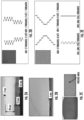
- An exemplary composite cushion material is depicted as a 3D sketch on left side of Figure 1A , showing the four layers from top to bottom, and on right side of Figure 1B showing a top-down view of each layer, and in Figure 1B in cross-section view after the layers are combined by gluing, and in Figure 1C showing a cross-section after the composite cushion material is molded into a three-dimensional shape by post-processing steps.
- Cushion materials reported in the art do not have the same structure, and do not provide the improved breathability and multistep softness and support, as composite cushion materials of the invention.
- US20040142619A1 reports a cushion comprising only a three-dimensional spacer fabric having only one level of softness. Every piece of US20040142619A1 cushion material has a spring content, which means there is only one level of softness for each cushion material.
- CN211334932U reports a multilayer cushion material comprising an upper knitted mesh layer, a nano silver ion fiber a layer, a sponge layer embedded with elastic hose, a metal fiber layer, and a lower knitted mesh fabric layer, where the layers are sewn together.
- This high-elastic antibacterial composite knitted mesh cloth is not developed as a cushion material to support heavy weight, but rather for advertising on the walls of tall buildings.
- the sponge cushion layer embedded with the elastic hose increases elasticity, but the material does not have multistep stress relief properties.
- a metal fiber layer (non-woven fabric layer) located between the sponge layer and the knitted mesh fabric layer is a flat layer, which does not provide as much support or softness as for example the 3D nonwoven layer of the composite cushion material of the invention.
- the layers of the CN211334932U multilayer cushion material are sewn together, which is more cost- and time-consuming than using adhesive glue in the composite cushion material of the invention.
- US20200360210A1 reports a multi-layer support system comprising two 3D spacer fabric layers, a non-viscoelastic layer, and layers comprising foam.
- US20200360210A1 's non-viscoelastic pressure relieving layer (50 grams per square inch to about 200 grams per square inch (corresponds to 77500 gsm (grams per square meter) to about 310000 gsm) in weight and compressed thickness of about 0.5 inches to about 1.5 inches (corresponds to about 1.27cm to about3.81 cm) is much heavier and thicker than the first pressure-relieving layer (3D nonwoven fabric; weight about 40gsm to about 2000gsm, thickness about 2mm to about 100mm) or the second pressure-relieving layer (perforated EVA foam; weight about 100gsm to about 1000gsm, thickness about 2mm to 20mm) of the composite cushion materials of the invention.
- the first pressure-relieving layer (3D nonwoven fabric; weight about 40gsm to about 2000gs
- the base layers of US20200360210A1 's multi-layer support system are made of a polyurethane foam which is unbreathable, in contrast to the composite cushion material of the invention where each layer is breathable.
- the composite cushion material of the invention is much lighter and more breathable than the cushion material in US20200360210A1 .
- WO2012071581A2 reports a composite cushion material comprising a single resilient cushion material between synthetic nonwoven fabric layers.
- WO2012071581A2 's composite cushion material includes only one layer of cushion material, and the synthetic non-woven fabric sandwiching the cushion material is too thin to have cushioning properties.
- the composite cushion material of the invention which comprises both a 3D nonwoven layer and a perforated EVA foam layer, provides improved support for a wearer over the composite cushion material of WO2012071581A2 .
- CN1799870A reports a multi-layer cushion comprising a top layer of woven fabric, nonwoven fabric, or knitted fabric, a buffer layer (cushion layer) of foam, and a back nonwoven layer.
- CN1799870A 's cushion layer is made of a polyurethane foam, which is unbreathable, and its back non-woven fabric layer has no cushioning properties.
- the composite cushion material of the invention is much more breathable than the cushion material in CN1799870A and will provide better support when used in wearable equipment.
- Composite cushion material compositions of the invention provide improvements over traditional cushion materials in properties of breathability and multilevel softness and support.
- 3D nonwoven fabric is combined with perforated EVA foam and warp-knitted fabrics in the composite cushion material.
- Composite cushion material compositions of the invention provide excellent breathability. Knitted sandwich fabric of the first layer can wick moisture (e.g., liquid sweat) away from wearer. Moisture is absorbed by the first layer fabric (warp-knitted sandwich fabric) next to skin, and wicks away through fibers of the first layer fabric that connect together.
- first layer As moisture wicks through the first layer (warp-knitted sandwich fabric), moisture will also evaporate from first layer fibers (warp-knitted sandwich fabric) to the outside. Moisture (e.g., liquid sweat) also evaporates from skin, transforming to water vapor, and gets through the four layers of the composite cushion material as shown by arrows in Figure 1B .
- the first layer has densely distributed holes to permeate air.
- 3D nonwoven spacer fabric of the second layer is made of short fibers. The fibers are vertically laid and entangled together. The shape of the fibers in the 3D nonwoven spacer fabric may not be perfectly “vertical", that is, the actual shape may be curled but not straight..
- the fibers of the3D nonwoven spacer fabric are incompactly entangled together.
- the air channel of the 3D nonwoven spacer fabric is extended in all directions. Air can pass beside every single fiber of the 3D nonwoven spacer fabric, and there are countless through-holes created among incompactly entangled fibers on all directions of the fabric of the second layer. Liquid moisture can wick through fibers of the 2 nd layer.
- the third layer of perforated EVA is breathable through punched holes.
- the warp-knitted mesh fabric of the fourth layer is also breathable with the knitted porous structure. Fibers in each of the 1 st , 2 nd , and 4 th layers can also catch and condense moisture vapor into liquid, wick that liquid moisture, and then evaporate it, which further provides moisture management in the composite cushion material..
- Composite cushion material compositions of the invention provide multistep softness and support.
- the warp-knitted sandwich fabric of the first layer provides soft touch, in that the fabric is soft to the touch.
- 3D nonwoven spacer fabric of the second layer is thick and soft.
- the 3D nonwoven spacer fabric fits a body (for example a human body) well and makes as much contact as possible to distribute pressure.
- the hardness of the perforated EVA of the third layer is greater than the hardness of the 3D nonwoven fabric of the second layer.
- the perforated EVA of the second layer provides reliable support, in that the EVA foam can distribute pressure and support heavy weight, such as the weight of a human body, with small deformation.
- Composite cushion material compositions of the invention provide good resilience, in that the composite material has multistep softness and support under compression, and can recover to almost original thickness as shown in Figure 5C and Figure 6C .
- Composite cushion material compositions of the invention provide durability, in that the composite material can recover to almost original thickness after long time of heavy load, and still provide support.
- the warp-knitted mesh fabric of the fourth layer resists abrasion from outside and protects the composite cushion material.
- Composite cushion material compositions of the invention are light weight. Manufacturing cost of composite cushion materials of the invention is low because each layer is easy to fabricate on a normal commercially available textile machines (for example, textile machines including single-bed warp-knitting machines, double-bed warp knitting machines, nonwoven vertical lap-forming and pendulum-type folding machines, and non-woven heat setting machines) and because each layer can be fabricated by mature techniques (for example, techniques for making warp-knitted fabrics, techniques for making 3D nonwoven fabrics and techniques for combining them together as exemplified for example in Examples 2-3, 5, and 6-7).
- An exemplary composite cushion material is depicted as a 3D sketch in Figure 1A (left), showing the four layers from top to bottom and in Figure 1A (right) showing a top-down view of each layer.
- FIG. 1C depicts an exemplary combined material after gluing, in cross-section view.
- Glue for example an eco-friendly glue, can be attached between each layer and cold-pressed to press the entire materials to bond.
- the composite cushion material is molded into a three-dimensional shape by post processing methods.
- Figure 1C shows a cross-section of an exemplary composite cushion material after molding into a three-dimensional shape by post-processing steps.
- a desired shape or pattern of cushion can be formed by cold pressing, heat pressing, ultrasonic welding, or high frequency welding.
- the composite cushion material molded into a desired pattern or shape can be cut along the edge, for example with a knife cutting mold or by laser cutting.
- Figure 2 shows images of an exemplary composite cushion material.
- the specifications of each layer are as in Table 1, Example 1, with EVA foam perforated as in Example 4, and the composite cushion material post-processed as in Example 6.
- Figure 2A shows a cross-section view of the composite cushion material.
- Figure 2B shows a cross-section view of the edge after post processing (cold pressing and cutting).
- Figure 2C top shows view of the back side (1 st layer showing), and 2C (bottom) shows front side (4 th layer showing) of a composite cushion.
- Figure 2D (left side) shows a view of the first surface (top surface) of a warp-knitted mesh fabric used as a 4 th layer in the exemplary composite cushion material.
- Figure 2D shows guide bar threading pattern for knitting a warp-knitted mesh fabric.
- Figure 2E shows an exemplary warp-knitted rhombic sandwich fabric used as a 1 st layer in the exemplary composite cushion material.
- Figure 2E shows guide bar threading pattern for knitting warp-knitted rhombic sandwich fabric.
- Warp-knitted sandwich fabrics are a class of knitted fabric having two face layers and a middle filler layer which connects the top and bottom face layers by spacer yarns that run between the top and bottom face layers.
- a yarn used in a top or bottom surface (top and bottom face layer) can be a monofilament yarn, a multifilament yarn or a staple fiber yarn.
- Exemplary monofilament yarns comprise polyester, nylon, polypropylene, or polyethylene.
- Exemplary multifilament yarns comprise polyester, nylon, polypropylene, or polyethylene.
- Exemplary staple yarns comprise cotton, wool, or viscose.
- the multifilament yarn comprises polyethylene terephthalate (PET).
- PET polyethylene terephthalate
- a yarn used in a top or bottom surface (top and bottom face layer) can have a linear mass density of about 30D to about 600D).
- Linear mass density of a yarn used in a top or bottom surface of the warp-knitted sandwich fabric can be about 30D, about 50D, about 75D, about 100D, about 150D, about 200D, about 300D, about 400D, about 500D, or about 600D.
- a yarn used in a top and bottom surfaces layers of a warp-knitted sandwich fabric can be a100% polyethylene terephthalate (PET) multifilament yarn of linear mass density of about 30D.
- PET polyethylene terephthalate
- a yarn used in a middle filler layer (middle connecting layer) of a warp-knitted sandwich fabric can be a multifilament yarn, e.g., polyester (for example polyethylene terephthalate (PET)), nylon, polypropylene, or polyethylene, or a staple yarn, e.g., cotton, wool, or viscose, or a bouncy monofilament yarn, e.g., polyethylene terephthalate (PET), thermoplastic polyether ester elastomer (TPEE), polyamine/ thermoplastic polyurethane (PA/TPU), polyethylene (PE), or polypropylene (PP).
- the multifilament yarn comprises polyethylene terephthalate (PET).
- a yarn used in a middle filler can have a diameter of about 0.05 mm to about 0.15mm.
- a yarn used in a middle filler (middle connecting layer) can have a diameter of about 0.05 mm, about 0.06 mm, about 0.07 mm, about 0.08 mm, about 0.09 mm, about 0.1 mm, about 0.11 mm, about 0.12 mm, about 0.13 mm, about 0.14 mm, or about 0.15 mm.
- a yarn used in a middle filler can be a monofilament yarn of diameter of about 0.05 mm, about 0.06 mm, about 0.07 mm, about 0.08 mm, about 0.09 mm, about 0.1 mm, about 0.11 mm, about 0.12 mm, about 0.13 mm, about 0.14 mm, or about 0.15 mm.
- a yarn used in a middle filler (middle connecting layer) can have a linear mass density of about 30D to about 250D.
- a yarn used in a middle filler (middle connecting layer) can have a linear mass density of about 30D, about 50D, about 75D, about 100D, about 150D, about 200D, or about 250D.
- a yarn used in a middle filler (middle connecting layer) can be a multifilament yarn or staple fiber yarn of linear mass density of about 30D, about 50D, about 75D, about 100D, about 150D, about 200D, or about 250D.
- a yarn used in a middle filler layer (middle connecting layer) of a warp-knitted sandwich fabric can be a 100% polyethylene terephthalate multifilament yarn of about 0.1 mm diameter (150D).
- Warp knitted fabrics can be knitted for example on a double-bed warp knitting machine, e.g., a Karl Mayer (China) Ltd., Model No. HD6 /20-35.
- a double-bed warp-knitting machine has at least 3 bars to lead yarn systems. At least 1 bar is used for each layer, i.e., top surface layer, bottom surface layer and middle connecting layer.
- Knitting pattern of the warp-knitted sandwich fabric can be, e.g., plain, rhombic, circular, or comb.
- a "plain" pattern refers to the basic pattern of warp knitting, where parallel yarns zigzag lengthwise along the fabric, each loop securing a loop of an adjacent strand from the previous row.
- Thickness of the warp-knitted sandwich fabric can be from about 1 mm to about 5 mm. Thickness is adjustable from about 1 mm to about 5 mm by double-bed warp knitting machine settings. Thickness of the warp-knitted sandwich fabric can be about 1 mm, about 1.5 mm, about 2 mm, about 2.5 mm, about 3 mm, about 3.5 mm, about 4 mm, about 4.5 mm, or about 5 mm.
- the thickness of the warp-knitted sandwich fabric can be about 1.5 mm.
- the thickness of the warp-knitted sandwich fabric can be 1.5 mm.
- An exemplary warp-knitted sandwich fabric comprises 100% polyethylene terephthalate (PET) multifilament yarn of linear mass density of about 30D (top and bottom surface layers),100% polyethylene terephthalate (PET) multifilament yarn of linear mass density of about 150D (middle connecting layer), has rhombic pattern, and is 1.5 mm thick.
- PET polyethylene terephthalate
- An exemplary warp-knitted sandwich fabric is supplied by Shanghai Huaju Textile Co., Ltd., Catalog No. HJ210408.
- a 3D nonwoven fabric is a class of nonwoven fabric having vertical fiber net structure, different from the parallel fiber net structure of traditional nonwoven materials.
- a fiber used in a 3D nonwoven fabric can be, for example, a polyester, (for example polyethylene terephthalate (PET)), polyethylene (PE), polypropylene (PP), Poly Lactic Acid (PLA), or viscose.
- 3D nonwoven fabrics can comprise a low-melting point fiber and other fibers.
- a low-melting point fiber is a polymer fiber whose melting-point equals or is lower than 110C°, for example, a core-shell structure PET short fiber with a 110C° melting point.
- Other fibers in a 3D nonwoven fabric have a higher melting point than the low-melting point fiber, at least higher than 110C°.
- the material type of the low-melting point and high-melting point fibers are the same, e.g., low-melting point (110C°) PET fiber mixed with high-melting point PET (220C°) fiber.
- the material type of the low-melting point and of the high-melting point fibers are different, e.g., low-melting point (110C°) PET fiber mixed with high-melting point (160C°) PP fiber.
- a 3D nonwoven fabric can comprise 100% PET fiber.
- a 3D nonwoven fabric can be produced by mixing a low melting point fiber and other fibers; opening, scotching, feeding fiber, carding and delivering to a vertical lap forming machine to process vertical forming. With a pendulum-type folding machine swinging back and forth, the fiber net is continuously folded and descended in a forming curtain, becoming vertically arranged continuous fiber net layers in a steer passage. Finally, after heat setting and cooling setting, the three-dimensional nonwoven spacer is made. A conventional non-woven heat setting machine is used.
- a 3D nonwoven fabric can be fabricated using vertical lap-forming and pendulum-type folding machine, for example a Qingdao Chenwei Machinery Co., Catalog No. LF3000KW, and a (conventional) non-woven heat setting machine for example a Qingdao Chenwei Machinery Co., Ltd, Catalog No. HS2000mm.
- Thickness of the 3D nonwoven fabric is adjustable from about 2 mm to about 100 mm. Thickness of the 3D nonwoven fabric can be about 2 mm to about 100 mm. Thickness can be about 2 mm, about 3 mm, about 4 mm, about 5 mm, about 6 mm, about 7 mm, about 8 mm, about 9 mm, about 10 mm, about 11 mm, about 12 mm, about 13 mm, about 14 mm, about 15 mm, about 16 mm, about 17 mm, about 18 mm, about 19 mm, about 20 mm, about 21 mm, about 22 mm, about 23 mm, about 24 mm, about 25 mm, about 26 mm, about 27 mm, about 28 mm, about 29 mm, about 30 mm, about 31 mm, about 32 mm, about 33 mm, about 34 mm, about 35 mm, about 36 mm, about 37 mm, about 38 mm, about 39 mm, about 40 mm, about 41 mm, about 42 mm
- Density of the 3D nonwoven fabric is adjustable from about 12 kg/m 3 to about 30 kg/m 3 .
- Density of the 3D nonwoven fabric is about 12 kg/m 3 to about 30 kg/m 3 .
- Density can be about 12 kg/m 3 , about 13 kg/m 3 , about 14 kg/m3, about 15 kg/m 3 , about 16 kg/m 3 , about 17 kg/m 3 , about 18 kg/m 3 , about 19 kg/m 3 , about 20 kg/m 3 , about 21 kg/m 3 , about 22 kg/m 3 , about 23 kg/m 3 , about 24 kg/m 3 , about 25 kg/m 3 , about 26 kg/m 3 , about 27 kg/m 3 , about 28 kg/m 3 , about 29 kg/m 3 , or about 30 kg/m 3 .
- the density of the 3D nonwoven spacer fabric can be about 20kg/m 3 .
- the density of the 3D nonwoven spacer fabric can be 20kg
- the weight of the 3D nonwoven fabric can be about 40 gsm to about 2000 gsm.
- Exemplary weights of a 3D nonwoven fabric of density 20kg/m 3 are 40 gsm, about 60 gsm, about 80 gsm, about 100 gsm, about 120 gsm, about 140 gsm, about 160 gsm, about 180 gsm, about 200 gsm, about 300 gsm, about 400 gsm, about 500 gsm, about 600 gsm, about 700 gsm, about 800 gsm, about 900 gsm, about 1000 gsm, about 1100 gsm, about 1200 gsm, about 1300 gsm, about 1400 gsm, about 1500 gsm, about 1600 gsm, about 1700 gsm, about 1800 gsm, about
- An exemplary 3D nonwoven fabric comprises 100% PET fiber, has a thickness of about 20 mM, has a density of about 20kg/m 3 , and has a weight of about 400 gsm.
- An exemplary 3D nonwoven fabric is supplied by DEESTAR Fiber Technology Co., Ltd., Catalog No. DS3DNWE3020.
- EVA foam can be foamed and cut to sheet with a desired thickness. Thickness of EVA foam is adjustable from about 2 mm to about 20mm. Thickness can be about 2 mm, about 3 mm, about 4 mm, about 5 mm, about 6 mm, about 7 mm, about 8 mm, about 9 mm, about 10 mm, about 11 mm, about 12 mm, about 13 mm, about 14 mm, about 15 mm, about 16 mm, about 17 mm, about 18 mm, about 19 mm, or about 20 mm.
- An exemplary EVA foam has thickness of about 13 mm.
- An exemplary EVA foam has thickness of 13 mm.
- Hardness of the EVA foam is adjustable from about 45HC to about 70 HC. Hardness of the EVA foam is about 45HC to about 70 HC. Hardness can be about 45HC, about 50 HC, about 55 HC, about 60 HC, about 65 HC, or about 70 HC. An exemplary EVA foam has about 45° (45HC) hardness, In some embodiments, the EVA foam has about 70HC hardness.
- Density of the EVA foam before perforation can be about 50 kg/m 3 to about 200 kg/m 3 . Density of the EVA foam before perforation can be about 50 kg/m 3 , about 60 kg/m 3 , about 70 kg/m 3 , about 80 kg/m 3 , about 90 kg/m 3 , about 100 kg/m 3 , about 110 kg/m 3 , about 120 kg/m 3 , about 130 kg/m 3 , about 140 kg/m 3 , about 150 kg/m 3 , about 160 kg/m 3 , about 170 kg/m 3 , about 180 kg/m 3 , about 190 kg/m 3 , or about 200 kg/m 3 .
- the density of the EVA foam before perforation can be about 50 kg/m 3 .
- the density of the EVA foam before perforation can be 50 kg/m 3 .
- the EVA foam has density before perforation of about 50 kg/m3 (45HC). In some embodiments, the EVA foam has density before perforation of about 200 kg/m3 (70HC).
- the weight of the EVA foam can be about 100 gsm to about 1000 gsm.
- Exemplary weights of an EVA foam of density 50 kg/m 3 are about 100 gsm, about 150 gsm, about 200 gsm, about 250 gsm, about 300 gsm, about 350 gsm, about 400 gsm, about 450 gsm, about 500 gsm, about 550 gsm, about 600.
- the weight of the EVA foam having density about 50kg/m 3 and thickness about 13 mm can be about 650 gsm.
- the weight of the EVA foam can be about 400 gsm to about 4000 gsm.
- Exemplary weights of an EVA foam of density 200 kg/m 3 are about 400 gsm, about 600 gsm, about 800 gsm, about 1000 gsm, about 1200 gsm, about 1400 gsm, about 1600 gsm, about 1800 gsm, about 2000 gsm, about 2200 gsm, about 2400 gsm, about 2600 gsm, about 2800 gsm, about 3000 gsm, about 3200 gsm, about 3400 gsm, about 3600 gsm, about 3800, or about 4000 gsm.
- An exemplary EVA foam has 45° (45HC) hardness, thickness of about 13 mm, density before perforation of about 50kg/m 3 , and weight before perforation of about 650 gsm.
- An exemplary EVA foam is supplied by Shanghai Moyuan Industrial Co., Ltd., Catalog No. MYEVA45HC.
- a specially designed perforating mold can be used to puncture regular holes on an EVA foam sheet.
- An exemplary perforating mold can have two lines of punching needles. One punch creates two rows of holes in the EVA foam sheet. The machine feeds the EVA foam by the designed distance after each punch for the next punch.
- An exemplary perforating machine is supplied by Dongguan Lianhong Machinery Co., Ltd, Catalog No. LH-1600, and an exemplary specially designed perforating mold is supplied by Dongguan Hongtai hardware Co., Ltd.
- the hole diameters can be from about 4 mm to about 10 mm. In some embodiments, the hole pitch can be from about 6 mm to about 15 mm.
- An exemplary perforated EVA foam has hole diameter of 6 ⁇ 0.6mm, and pitch of holes of 11 ⁇ 1.5mm.
- a warp-knitted mesh fabric is a fabric with mesh-shaped holes. The holes are made by the motions of yarn guide bars during warp knitting.
- a yarn used in a warp-knitted mesh fabric can be a multifilament yarn, a monofilament yarn, or a staple fiber yarn.
- Exemplary multifilament yarns comprise polyester (for example PET), nylon, polypropylene, or polyethylene.
- Exemplary monofilament yarns comprise polyethylene terephthalate (PET), thermoplastic polyether ester elastomer (TPEE), polyamine/ thermoplastic polyurethane (PA/TPU), or polypropylene (PP).
- Exemplary staple yarns comprise cotton, wool, or viscose.
- the multifilament yarn comprises polyethylene terephthalate (PET).
- a yarn used in a warp-knitted mesh fabric can have a diameter of about 0.05 mm to about 0.18 mm.
- a yarn used in a warp-knitted mesh fabric can have a diameter of about 0.05 mm, about 0.06 mm, about 0.07 mm, about 0.08 mm, about 0.09 mm, about 0.1 mm, about 0.11 mm, about 0.12 mm, about 0.13 mm, about 0.14 mm, about 0.15 mm, about 0.16 mm, about 0.17 mm, or about 0.18 mm.
- a yarn used in a warp-knitted mesh fabric can be a monofilament yarn of diameter of about 0.05 mm, about 0.06 mm, about 0.07 mm, about 0.08 mm, about 0.09 mm, about 0.1 mm, about 0.11 mm, about 0.12 mm, about 0.13 mm, about 0.14 mm, about 0.15 mm, about 0.16 mm, about 0.17 mm, or about 0.18 mm.
- a yarn used in a warp-knitted mesh fabric can have a linear mass density of about 30D to about 300D.
- a yarn used in a warp-knitted mesh fabric can have a linear mass density of about 30D, about 50D, about 75D, about 100D, about 150D, about 200D, about 250D, or about 300D.
- a yarn used in a warp-knitted mesh fabric can be a multifilament or staple fiber yarn of a linear mass density of about 30D, about 50D, about 75D, about 100D, about 150D, about 200D, about 250D, or about 300D.
- a warp-knitted mesh fabric can comprise 100% PET multifilament yarn comprising a 300D FDY multifilament yarn and a 75D/72F multifilament yarn.
- Warp knitted mesh fabrics can be knitted for example on a single bed warp knitting machine, for example a Karl Mayer (China) Ltd HKS 3-M.
- a single-bed warp knitting machine has at least 2 bars to lead yarn systems.
- Knitting pattern of the warp-knitted mesh fabric can be, e.g., rhombic, circular, or hexagonal, or comb.
- Thickness of the warp-knitted mesh fabric can be from about 0.5 mm to about 2 mm, depending on the fineness of the yarn. Thickness is adjustable from about 0.5 mm to about 2 mm, depending on the fineness of the yarn. Thickness of the warp-knitted mesh fabric can be about 0.5 mm, about 0.6.mm, about 0.7 mm, about 0.8 mm, about 0.9 mm, about 1 mm, about 1.1 mm, about 1.2 mm, about 1.3 mm, about 1.4 mm, about 1.5 mm, about 1.6 mm, about 1.7 mm, about 1.8 mm, about 1.9 mm, or about 2 mm.
- the thickness of the warp-knitted mesh fabric can be about 0.5 mm.
- the thickness of the warp-knitted sandwich fabric can be 0.5 mm.
- An exemplary warp-knitted mesh fabric comprises 100% PET multifilament yarn comprising a 300D FDY multifilament yarn and a 75D/72F multifilament yarn, is hexagonal pattern, and is 0.5 ⁇ 0.05mm thick.
- An exemplary warp-knitted mesh fabric is supplied by Fujian Jinjiang Huayu Weaving Co., Catalog No. HN082501.
- An exemplary warp-knitted mesh fabric has a first surface (top surface) which is smoother to touch and a second surface (bottom surface) which is rougher to touch.
- the first surface (top surface) has loop pillars on the surface of the fabric.
- the first surface (top surface) is smoother when touched along the warp direction because the loop pillars on the surface are arranged along the warp direction continuously.
- the second surface (bottom surface) has discontinuous underlap on its surface, and is rougher to touch.
- the first surface of the warp-knitted mesh fabric faces away from the skin of the wearer and the second surface of the warp-knitted mesh fabric faces the perforated EVA foam third layer.
- Some composite cushion materials comprise a yarn of a linear mass density of about 30D to about 600D. Some composite cushion materials comprise a yarn of a linear mass density of about 30D to about 250D. Some composite cushion materials comprise a yarn of a linear mass density of about 30D to about 300D. Some composite cushion materials comprise a yarn of a diameter of about 0.05 mm to about 0.15 mm. Some composite cushion materials comprise a yarn of a diameter of about 0.05 mm to about 0.18 mm.
- the four layers can be combined for example by gluing or sewing.
- an eco-friendly glue can be attached between the first and second layers, between the second and third layers, and between the third and fourth layers and the entire combined material pressed to bond the layers.
- exemplary eco-friendly glues include a glue comprising organosiloxane (for example a glue supplied by Anhui East New Materials Co. Ltd, Catalog # L0877) and a glue comprising chloroprene rubber (CR) polymer (for example, that supplied by Saba Adhesives & Sealants, catalog # "Sababond 3802").
- An exemplary cold-bonding machine is supplied by Yancheng Xiehe Machinery Co., Ltd., Catalog No. SH-2010AB.
- Figure 1B is a schematic showing a composite cushion material after gluing and bonding.
- the four layers can also be adhered to each other for example by sewing.
- Exemplary thread for sewing is 80TEX polyester thread, 100TEX polyester thread, or 210TEX polyester thread.
- Exemplary equipment for sewing layers is a Brother computerized sewing machine or a Mitsubishi automatic industrial sewing machine.
- the composite cushion may be treated by post-processing methods to impart a three-dimensional shape.
- a specially designed mold for example a metal mold, can be used, for example, with cold-pressing, heat pressing, ultrasonic welding, or high frequency welding to impart a three-dimensional shape to the composite cushion material.
- Figure 1C is a schematic showing a composite cushion material after post-processing. Heat pressing can use for example a vulcanizing machine. A thin edge of the composite cushion material after post-processing pressing (see for example indentation (5) in Figure 1C , referred to as a pressed edge), can make it easier to sew the post-processed composite cushion material into an article of clothing or an article of manufacture than an unpressed edge.
- the post-processing can further comprise cutting along the edge with a knife cutting mold or by laser cutting.
- Exemplary equipment for post-processing is shown in Table 3 in Example 7 and in Figures 3A-C .
- Exemplary post-processing conditions are shown in Table 4, in Example 7, and in Figure 3D .
- a metal mold is depicted in Figure 3D (left and middle panels) as .
- Composite cushion materials may be tested for breathability by standard tests, for example by an ISO 11092 test (Example 8), for compression stress and strain by standard tests, for example by an ISO 3386-1 test (Example 9), and for compression set by standard tests, for example by an ISO 1856 test (Example 10).
- the composite cushion material of the present invention is designed for breathability and moisture management, and to absorb and wick body fluids such as sweat, urine, blood, and mucus and is designed to provide multistep softness and support for the user.
- An article of manufacture, including an article of clothing comprising the composite cushion material is permeable to body fluids and comfortable for the user.
- the composite cushion material of the invention can be used in industrial, medical, and consumer products for breathability, moisture management, softness, multistep support, and compression.
- the composite cushion material of the invention is useful in products for individuals who work for extended periods in hot sun, under conditions of high solar radiation and/or high temperature.
- the composite cushion material of the invention with its ability to form a desired 3D shape and moisture management properties provides breathability, moisture management, softness, multistep support, and compression in products for individuals in high solar radiation and/or high temperature environment.
- compositions of the invention useful in providing breathability, moisture management, softness, multistep support, and compression to individuals in high solar radiation and/or high temperature environments.
- the individual is a utility worker, construction worker, or general industrial worker.
- the composite cushion material of the invention may be used in personal protective equipment for industry.
- the composite cushion material of the invention may be used in protective article of clothing, for example a safety harness, a fall protection harness, a seat, a safety helmet or hat, or a safety shoe.
- An exemplary use is in a utility harness, for example a Honeywell Miller H700 Utility Harness (Honeywell Industrial Safety, Fort Mill, SC, USA).
- Some safety harnesses comprise a composite cushion material of the invention as a breathable and supportive padding.
- a wearable padding in a safety harness may comprise a composite cushion material of the invention .
- a safety helmet or hat may comprise the composite cushion material in a helmet or hat cushion.
- a safety shoe may comprise the composite cushion material of the invention in a safety shoe insole.
- Other exemplary uses are in consumer products (e.g., clothing, hats, vests, shoes) to provide breathability, moisture management, softness, multistep support, and compression to individuals, for example to individuals in high solar radiation environments and/or high temperature environments.
- Exemplary uses are in consumer products such as an elbow pad, kneepad, or sole of a shoe, or a hat.
- Exemplary uses are in sporting equipment, for example, in a kneepad, an elbow pad, a sports shoe, or a sole of sports shoe.
- Other exemplary uses are in furniture products, for example, a seat cushion, a back cushion, a mattress, or a pillow, or as a layer in furniture.
- Example 1 Materials used in preparation of a composite cushion material
- Table 1 Materials of an Composite Cushion Material Material Specifications commercial source catalog number warp-knitted rhombic sandwich fabric (as used in 1 st layer) Top surface layer and bottom surface layer: 100% PET multifilament yarn, 30D Shanghai Huaju Textile Co., Ltd. HJ210408 Middle connecting layer: 100% PET multifilament yarn, 150D (0.1 mm diameter) Thickness: 1.5 mm Pattern: Rhombic 3D nonwoven fabric (as used in 2 nd layer) 100% PET fiber DEESTAR Fiber Technology Co., Ltd.
- DS3DNWE3020 Thickness 20 mm Density 20 kg/m 3 Weight: 400 gsm EVA foam (as used in 3 rd layer after perforation as in Example 4) 45° hardness Shanghai Moyuan Industrial Co., Ltd. MYEVA45HC Thickness: 13 mm Density before perforation 50 kg/m 3 Weight before perforation: 650 gsm warp-knitted mesh fabric (as used in 4 th layer) 100% PET multifilament yarn, comprising a first multifilament yarn that is 300D FDY) and a second multifilament yarn that is 75D/72F Fujian Jinjiang Huayu Weaving Co., Ltd. HN082501 Thickness: 0.5 ⁇ 0.05mm eco-friendly glue comprises organosiloxane Anhui East New Materials Co., Ltd. L0877 Total thickness: 35mm ⁇ 1mm
- a warp knitted sandwich fabric is fabricated on a double needle bed warp knitting machine, for example a Karl Mayer (China) Ltd., Model No. HD6 /20-35.
- a 3D nonwoven fabric is fabricated using vertical lap-forming and pendulum-type folding machine, for example a Qingdao Chenwei Machinery Co., Catalog No. LF3000KW, and a (conventional) non-woven heat setting machine for example a Qingdao Chenwei Machinery Co., Ltd, Catalog No. HS2000mm.
- vertical lap-forming and pendulum-type folding machine for example a Qingdao Chenwei Machinery Co., Catalog No. LF3000KW
- a (conventional) non-woven heat setting machine for example a Qingdao Chenwei Machinery Co., Ltd, Catalog No. HS2000mm.
- EVA 45° (45HC) hardness
- EVA was foamed and cut to sheet a thickness of 13 mm. Density of the EVA foam sheet before perforation was 50kg/m 3 . Weight of EVA foam before perforation was 650 gsm. A specially designed perforating mold was used to puncture regular holes on EVA foam sheet. The hole diameter is 6 ⁇ 0.6mm, and pitch of holes is 11 ⁇ 1.5mm. Weight of EVA foam after perforation was 250 gsm.
- the perforating mold has two lines of punching needles. One punch creates two rows of holes in the EVA foam sheet. The machine feeds the EVA foam by the designed distance after each punch for the next punch. Table 2.
- Equipment used for perforating EVA foam sheet Tool commercial source catalog number Perforating machine Dongguan Lianhong Machinery Co., Ltd LH-1600 specially designed perforating mold Dongguan Hongtai hardware Co., Ltd N/A (specially designed pattern)
- a warp knitted mesh fabric is fabricated on a single-needle bed warp knitting machine, for example a Karl Mayer (China) Ltd., Model No. HKS 3-M.
- Example 6 Combination of Warp-Knitted Sandwich Fabric, 3D Nonwoven Fabric, Perforated EVA Foam, and Warp-Knitted Mesh Fabric Into Composite Cushion Material and Post-Processing and Cutting
- Composite cushion material shown in Figure 2A and tested in Examples 8 and 10 was prepared by this procedure.
- the pressed composite cushion was post-processed by cold-pressing using a cold-pressing machine from Dongguan Yuanju Machine Manufactory Co., Ltd, YJH01-01.
- Cold-pressing included two steps: 1) heat up the composite material in the oven; 2) press the heated material in the pressing machine.
- the pressing machine has no heating function, and thus this is called cold-pressing.
- the pressure used is about 50KPa to 20 MPa, depending on the thickness and the density of the material.
- the cold-pressed composite cushion material was cut using a knife cutting machine from Fuliyuan Machinery Co., Ltd, FLY-100T; knife cutting mold from Dongguan Hongtai hardware Co., Ltd.
- Example 7 Post-Processing of Composite Cushion Material to set the material into a 3D shape
- Post-processing of composite cushion material to set into a 3D shape is performed using equipment as in Table 3 below.
- Table 3 Examples of Equipment for Post-Processing Tool commercial source catalog number cold-pressing machine Dongguan Yuanju Machine Manufactory Co., Ltd YJH01-01 heat-pressing machine Pan Stone Hydraulic Indus. Co., Ltd. XLB-Y5000 ultrasonic welding machine Changzhou Futan Machinery Co., Ltd FT8000W high frequency welding machine Shanghai Jiuluo Mechanical and Electrical Equipment Co., Ltd JL-B10K specially designed metal mold for pressing Dongguan Hongtai hardware Co., Ltd N/A (specially designed pattern)
- Table 4 shows exemplary conditions for heat pressing Table 4 Example of Post Processing Example of Heat-pressing condition for the sample Pressure 70Kpa Pressing time 15s Pressing board temperature 225°C (middle) 230°C (side)
- Figure 3A shows an exemplary vulcanizing machine (Four Column Type Top Plunger Transfer Molding Machine from Pan Stone Hydraulic Indus. Co., Ltd, PV1002RT2PCD),
- Figure 3B shows a two-piece metal mold (comprising a top piece and a bottom piece) for pressing.
- Top panel of Figure 3B shows bottom piece of mold when machine is not pressing material), and bottom panel of Figure 3B shows top and bottom pieces of mold pressed together when machine is pressing the material. Material is put between the top and bottom plate during the pressing.
- Figures 3D-F are a schematic of post-processing. Metal mold is shown as hatched with wide-spaced right-leaning lines in Figure 3D left and middle panels. Pressed area in Figure 3D right panel is marked with an arrow.
- Figure 4A shows samples tested. From left to right, A) 3D nonwoven alone, (B) perforated EVA alone, (C) 4-layer composite cushion material, showing top view (1 st layer showing) on left and bottom view (4 th layer showing) on right, (D) imperforated EVA alone.
- Figure 4B is a bar graph showing water vapor resistance (Ret (Pa ⁇ m 2 /W ) for each of (A) 3D nonwoven alone, (B) perforated EVA alone, (C) composite cushion material, (D) imperforate EVA alone.
- the Composite Cushion Material with 3D nonwoven and perforated EVA material has lower Ret than imperforate EVA alone.
- the Composite Cushion Material has excellent breathability and thermal comfort.
- Figures 5A, 5B, and 5C depict testing and results from ISO 3386-1 Compression Stress and Strain Tests.
- 5A (3D nonwoven alone), 5B (perforated EVA alone), 5C (3D nonwoven + EVA).
- Left panels of 5A-5C shows Instron 5967 test equipment and right panels of 5A-5C are graphs of extension vs. load. 4 specimens were tested for each material: 3D nonwoven alone, perforated EVA alone, and 3D nonwoven + EVA.
- Figures 6A, 6B, and 6C depict testing and results from ISO Compression Set Tests. 6A (3D nonwoven alone), 6B (perforated EVA alone), and 6C (composite cushion material). Left panels of 6A-6C show material before test, middle panels of 6A-6C show material during test, and right panels of 6A-6C show material after test, with measured thicknesses indicated.
- 3D nonwoven alone (6A) has better compression set resistance than perforated EVA foam alone (6B).
- the Composite Cushion Material (6C) with 3D nonwoven in it has increased resilience and durability over perforated EVA foam alone (6B).
Landscapes
- Engineering & Computer Science (AREA)
- Textile Engineering (AREA)
- Mechanical Engineering (AREA)
- Chemical & Material Sciences (AREA)
- Chemical Kinetics & Catalysis (AREA)
- Physics & Mathematics (AREA)
- Fluid Mechanics (AREA)
- Laminated Bodies (AREA)
Applications Claiming Priority (1)
| Application Number | Priority Date | Filing Date | Title |
|---|---|---|---|
| CN202310257527.1A CN118617820A (zh) | 2023-03-09 | 2023-03-09 | 具有高透气性和多级支撑的复合缓冲材料 |
Publications (1)
| Publication Number | Publication Date |
|---|---|
| EP4427921A1 true EP4427921A1 (de) | 2024-09-11 |
Family
ID=89772024
Family Applications (1)
| Application Number | Title | Priority Date | Filing Date |
|---|---|---|---|
| EP24154859.3A Pending EP4427921A1 (de) | 2023-03-09 | 2024-01-30 | Mehrschichtiges kissenmaterial mit hoher atmungsfähigkeit und mehrstufiger stütze |
Country Status (3)
| Country | Link |
|---|---|
| US (1) | US20240300212A1 (de) |
| EP (1) | EP4427921A1 (de) |
| CN (1) | CN118617820A (de) |
Citations (7)
| Publication number | Priority date | Publication date | Assignee | Title |
|---|---|---|---|---|
| US20040142619A1 (en) | 2001-05-16 | 2004-07-22 | Yoshiyuki Ueno | Cushion structure |
| CN1799870A (zh) | 2004-12-30 | 2006-07-12 | 河西工业株式会社 | 汽车用内饰部件及其制造方法 |
| WO2012071581A2 (en) | 2010-11-24 | 2012-05-31 | Applied Ft Composite Solutions Inc. | Composite cushioning material and jigless method for making the same |
| US20120186433A1 (en) * | 2009-04-06 | 2012-07-26 | Scapa North America | Protective shield material |
| US20130244526A1 (en) * | 2012-03-19 | 2013-09-19 | G-Form, LLC | Protective impact absorbing structures with internal reinforcement and materials therefor |
| CN211334932U (zh) | 2019-12-10 | 2020-08-25 | 石狮耀翔织造有限公司 | 一种高弹抗菌复合针织网格布 |
| US20200360210A1 (en) | 2019-05-14 | 2020-11-19 | Ige, Llc | Support system including layers of spacer fabric and non-viscoelastic pressure relief material, and method for measuring pressure and pressure distribution properties of a support system |
-
2023
- 2023-03-09 CN CN202310257527.1A patent/CN118617820A/zh active Pending
-
2024
- 2024-01-30 EP EP24154859.3A patent/EP4427921A1/de active Pending
- 2024-02-23 US US18/585,521 patent/US20240300212A1/en active Pending
Patent Citations (7)
| Publication number | Priority date | Publication date | Assignee | Title |
|---|---|---|---|---|
| US20040142619A1 (en) | 2001-05-16 | 2004-07-22 | Yoshiyuki Ueno | Cushion structure |
| CN1799870A (zh) | 2004-12-30 | 2006-07-12 | 河西工业株式会社 | 汽车用内饰部件及其制造方法 |
| US20120186433A1 (en) * | 2009-04-06 | 2012-07-26 | Scapa North America | Protective shield material |
| WO2012071581A2 (en) | 2010-11-24 | 2012-05-31 | Applied Ft Composite Solutions Inc. | Composite cushioning material and jigless method for making the same |
| US20130244526A1 (en) * | 2012-03-19 | 2013-09-19 | G-Form, LLC | Protective impact absorbing structures with internal reinforcement and materials therefor |
| US20200360210A1 (en) | 2019-05-14 | 2020-11-19 | Ige, Llc | Support system including layers of spacer fabric and non-viscoelastic pressure relief material, and method for measuring pressure and pressure distribution properties of a support system |
| CN211334932U (zh) | 2019-12-10 | 2020-08-25 | 石狮耀翔织造有限公司 | 一种高弹抗菌复合针织网格布 |
Also Published As
| Publication number | Publication date |
|---|---|
| CN118617820A (zh) | 2024-09-10 |
| US20240300212A1 (en) | 2024-09-12 |
Similar Documents
| Publication | Publication Date | Title |
|---|---|---|
| US20230180871A1 (en) | Breathable, wicking nonwoven material | |
| US5874159A (en) | Durable spunlaced fabric structures | |
| ES2753363T3 (es) | Revestimiento para mueble acolchado | |
| EP0763418B1 (de) | Verfahren zum Herstellen einer mehrlagigen Bahn insbesondere als Polsterbezugsmaterial für Fahrzeugsitze | |
| CA2798141C (en) | A combined compression and absorption dressing/bandage | |
| EP3377687B1 (de) | Flammhemmende auskleidung für polstermöbel | |
| EP0230097A2 (de) | Aktivierte Kohlenstoffasern enthaltendes genadeltes Schichtmaterial | |
| US20070144221A1 (en) | 3-D fabric knitted stretch spacer material having molded domed patterns and method of making | |
| EP1610942A2 (de) | Abriebbeständige verbundwerkstoffe mit insitu-aktiviertem bindemittelharz | |
| EP2188126A1 (de) | Abriebfeste verbundstoffe mit in-situ-aktiviertem matrixharz | |
| US20220047023A1 (en) | Weather Resistant Insulative Apparel Fabrics | |
| GB2549634A (en) | A mattress or mattress topper | |
| EP4427921A1 (de) | Mehrschichtiges kissenmaterial mit hoher atmungsfähigkeit und mehrstufiger stütze | |
| Gokarneshan et al. | Some significant advances in spacer fabric technology for newer areas of applications | |
| EP4357501B1 (de) | Saugfähige struktur für 3d-gestrickte oder gewirkte abstandstextilien und ein dazu geeignetes herstellungsverfahren | |
| Gokarneshan | Design of Warp Knit Spacer Fabrics –Recent research insights on technical applications | |
| US20250179703A1 (en) | Nonwoven Material with Three-Dimensional Active Wicking and Evaporation | |
| GB2477571A (en) | Incontinence pad for use in a garment | |
| JP3151737U (ja) | 寝具 | |
| Umair et al. | Comparison of mechanical and comfort properties of natural fiber-based spacer fabrics for shoe insole | |
| JP4749757B2 (ja) | クッション材 | |
| US20230312333A1 (en) | Moisture wicking and absorbing saddle pad or pad for saddle pad | |
| JP2007230086A (ja) | 積層体およびクッション材 | |
| Arumugam et al. | Experimental study on compressibility of 3D spacer fabrics for cushioning applications | |
| JP2006257622A (ja) | キルティング縫製品およびクッション材 |
Legal Events
| Date | Code | Title | Description |
|---|---|---|---|
| PUAI | Public reference made under article 153(3) epc to a published international application that has entered the european phase |
Free format text: ORIGINAL CODE: 0009012 |
|
| STAA | Information on the status of an ep patent application or granted ep patent |
Free format text: STATUS: REQUEST FOR EXAMINATION WAS MADE |
|
| 17P | Request for examination filed |
Effective date: 20240130 |
|
| AK | Designated contracting states |
Kind code of ref document: A1 Designated state(s): AL AT BE BG CH CY CZ DE DK EE ES FI FR GB GR HR HU IE IS IT LI LT LU LV MC ME MK MT NL NO PL PT RO RS SE SI SK SM TR |