EP4428131A1 - Benzimidazole derivative compound and uses thereof - Google Patents
Benzimidazole derivative compound and uses thereof Download PDFInfo
- Publication number
- EP4428131A1 EP4428131A1 EP22904670.1A EP22904670A EP4428131A1 EP 4428131 A1 EP4428131 A1 EP 4428131A1 EP 22904670 A EP22904670 A EP 22904670A EP 4428131 A1 EP4428131 A1 EP 4428131A1
- Authority
- EP
- European Patent Office
- Prior art keywords
- methyl
- pharmaceutically acceptable
- benzimidazole derivative
- acceptable salt
- derivative compound
- Prior art date
- Legal status (The legal status is an assumption and is not a legal conclusion. Google has not performed a legal analysis and makes no representation as to the accuracy of the status listed.)
- Granted
Links
Classifications
-
- C—CHEMISTRY; METALLURGY
- C07—ORGANIC CHEMISTRY
- C07D—HETEROCYCLIC COMPOUNDS
- C07D405/00—Heterocyclic compounds containing both one or more hetero rings having oxygen atoms as the only ring hetero atoms, and one or more rings having nitrogen as the only ring hetero atom
- C07D405/14—Heterocyclic compounds containing both one or more hetero rings having oxygen atoms as the only ring hetero atoms, and one or more rings having nitrogen as the only ring hetero atom containing three or more hetero rings
-
- A—HUMAN NECESSITIES
- A23—FOODS OR FOODSTUFFS; TREATMENT THEREOF, NOT COVERED BY OTHER CLASSES
- A23L—FOODS, FOODSTUFFS OR NON-ALCOHOLIC BEVERAGES, NOT OTHERWISE PROVIDED FOR; PREPARATION OR TREATMENT THEREOF
- A23L33/00—Modifying nutritive qualities of foods; Dietetic products; Preparation or treatment thereof
- A23L33/10—Modifying nutritive qualities of foods; Dietetic products; Preparation or treatment thereof using additives
-
- A—HUMAN NECESSITIES
- A61—MEDICAL OR VETERINARY SCIENCE; HYGIENE
- A61K—PREPARATIONS FOR MEDICAL, DENTAL OR TOILETRY PURPOSES
- A61K31/00—Medicinal preparations containing organic active ingredients
- A61K31/33—Heterocyclic compounds
- A61K31/395—Heterocyclic compounds having nitrogen as a ring hetero atom, e.g. guanethidine or rifamycins
- A61K31/41—Heterocyclic compounds having nitrogen as a ring hetero atom, e.g. guanethidine or rifamycins having five-membered rings with two or more ring hetero atoms, at least one of which being nitrogen, e.g. tetrazole
- A61K31/4164—1,3-Diazoles
- A61K31/4184—1,3-Diazoles condensed with carbocyclic rings, e.g. benzimidazoles
-
- A—HUMAN NECESSITIES
- A61—MEDICAL OR VETERINARY SCIENCE; HYGIENE
- A61K—PREPARATIONS FOR MEDICAL, DENTAL OR TOILETRY PURPOSES
- A61K31/00—Medicinal preparations containing organic active ingredients
- A61K31/66—Phosphorus compounds
- A61K31/675—Phosphorus compounds having nitrogen as a ring hetero atom, e.g. pyridoxal phosphate
-
- A—HUMAN NECESSITIES
- A61—MEDICAL OR VETERINARY SCIENCE; HYGIENE
- A61K—PREPARATIONS FOR MEDICAL, DENTAL OR TOILETRY PURPOSES
- A61K31/00—Medicinal preparations containing organic active ingredients
- A61K31/66—Phosphorus compounds
- A61K31/683—Diesters of a phosphorus acid with two hydroxy compounds, e.g. phosphatidylinositols
- A61K31/685—Diesters of a phosphorus acid with two hydroxy compounds, e.g. phosphatidylinositols one of the hydroxy compounds having nitrogen atoms, e.g. phosphatidylserine, lecithin
-
- A—HUMAN NECESSITIES
- A61—MEDICAL OR VETERINARY SCIENCE; HYGIENE
- A61P—SPECIFIC THERAPEUTIC ACTIVITY OF CHEMICAL COMPOUNDS OR MEDICINAL PREPARATIONS
- A61P1/00—Drugs for disorders of the alimentary tract or the digestive system
- A61P1/04—Drugs for disorders of the alimentary tract or the digestive system for ulcers, gastritis or reflux esophagitis, e.g. antacids, inhibitors of acid secretion, mucosal protectants
-
- C—CHEMISTRY; METALLURGY
- C07—ORGANIC CHEMISTRY
- C07D—HETEROCYCLIC COMPOUNDS
- C07D405/00—Heterocyclic compounds containing both one or more hetero rings having oxygen atoms as the only ring hetero atoms, and one or more rings having nitrogen as the only ring hetero atom
- C07D405/02—Heterocyclic compounds containing both one or more hetero rings having oxygen atoms as the only ring hetero atoms, and one or more rings having nitrogen as the only ring hetero atom containing two hetero rings
- C07D405/04—Heterocyclic compounds containing both one or more hetero rings having oxygen atoms as the only ring hetero atoms, and one or more rings having nitrogen as the only ring hetero atom containing two hetero rings directly linked by a ring-member-to-ring-member bond
-
- C—CHEMISTRY; METALLURGY
- C07—ORGANIC CHEMISTRY
- C07F—ACYCLIC, CARBOCYCLIC OR HETEROCYCLIC COMPOUNDS CONTAINING ELEMENTS OTHER THAN CARBON, HYDROGEN, HALOGEN, OXYGEN, NITROGEN, SULFUR, SELENIUM OR TELLURIUM
- C07F9/00—Compounds containing elements of Groups 5 or 15 of the Periodic Table
- C07F9/02—Phosphorus compounds
- C07F9/547—Heterocyclic compounds, e.g. containing phosphorus as a ring hetero atom
- C07F9/6558—Heterocyclic compounds, e.g. containing phosphorus as a ring hetero atom containing at least two different or differently substituted hetero rings neither condensed among themselves nor condensed with a common carbocyclic ring or ring system
- C07F9/65586—Heterocyclic compounds, e.g. containing phosphorus as a ring hetero atom containing at least two different or differently substituted hetero rings neither condensed among themselves nor condensed with a common carbocyclic ring or ring system at least one of the hetero rings does not contain nitrogen as ring hetero atom
-
- C—CHEMISTRY; METALLURGY
- C07—ORGANIC CHEMISTRY
- C07F—ACYCLIC, CARBOCYCLIC OR HETEROCYCLIC COMPOUNDS CONTAINING ELEMENTS OTHER THAN CARBON, HYDROGEN, HALOGEN, OXYGEN, NITROGEN, SULFUR, SELENIUM OR TELLURIUM
- C07F9/00—Compounds containing elements of Groups 5 or 15 of the Periodic Table
- C07F9/02—Phosphorus compounds
- C07F9/547—Heterocyclic compounds, e.g. containing phosphorus as a ring hetero atom
- C07F9/6561—Heterocyclic compounds, e.g. containing phosphorus as a ring hetero atom containing systems of two or more relevant hetero rings condensed among themselves or condensed with a common carbocyclic ring or ring system, with or without other non-condensed hetero rings
Definitions
- the invention relates to a benzimidazole derivative compound and use thereof, more specifically to the following the benzimidazole derivative compound represented by Formula 1 or Formula 2, or a pharmaceutically acceptable salt thereof or a stereoisomer thereof and use thereof: in the Formula above, wherein R 1 is the same as defined in the specification.
- a gastric acid plays a positive role in digesting proteins, absorbing minerals such as calcium and iron, and sterilizing harmful microorganisms in ingested food.
- gastric acid is a very strong acid with a pH of around 1 to 2, excessive gastric acid secretion or reflux into the esophagus can cause gastritis, gastric ulcers, and gastroesophageal reflux disease (GERD).
- GFD gastroesophageal reflux disease
- the gastric acid secretion is made with the proton pump (H+/K+-ATPase) of parietal cells existing in the gastric mucosa. Due to various gastric acid secretion stimulating factors, the proton pump consumes ATP and excretes hydrogen ions into the gastric cavity by exchanging hydrogen ions in the cytoplasm and potassium ions in the stomach lumen.
- the proton pump H+/K+-ATPase
- H2 receptor blockers H2 receptor antagonists, H2 RAs
- PPIs proton pump inhibitors
- H2 RA does not directly inhibit the proton pump, but only blocks the histamine pathway that stimulates gastric acid secretion, so it has a partial effect.
- PPIs are prodrugs and must be taken before meals because they exert their effects after being activated by stomach acid, Because the onset of action is slow and the half-life is short, there are limitations in suppressing the symptoms of nocturnal acid breakthrough (NAB). Therefore, there is a need to develop drugs that inhibit gastric acid secretion with a new mechanism that can compensate for these shortcomings.
- P-CAB potential-competive acid blocker
- P-CAB class drugs have a 5 to 100-fold improvement in the ability to inhibit the proton pump that secretes gastric acid compared to existing PPIs, demonstrating stronger efficacy than PPIs.
- existing PPIs are precursors (prodrugs) and require an activation process in acid, but P-CAB does not require an activation process.
- P-CAB has the advantage of having a very fast onset time, a long duration of action, and being able to be taken regardless of diet by bonding reversibly.
- tegoprazan Korean
- pH-dependent water solubility is a poorly soluble drug with significantly low solubility, especially in neutral aqueous solutions. Due to these characteristics, when the pH in the gastric cavity rises to neutral, such as during a meal, the solubility of the drug decreases, which reduces bioavailability and makes it difficult to formulate various formulations such as neutral injections.
- the purpose of the present invention is to provide a novel benzimidazole derivative compound represented by Formula 1 or Formula 2 that exhibits gastric acid secretion inhibition activity.
- Another object of the present invention is to provide a pharmaceutical composition for inhibiting gastric acid secretion, comprising the above compound as an active ingredient.
- Another object of the present invention is to provide a pharmaceutical composition for preventing or treating diseases caused by gastric acid secretion disorders, comprising the above compound as an active ingredient.
- the benzimidazole derivative compound of Formula 1 or Formula 2 according to the present invention can form a pharmaceutically acceptable salt.
- the pharmaceutically acceptable salts may include, but are not limited to, alkali metal or alkaline earth metal salts formed by, for example, sodium, lithium, potassium, calcium, magnesium, etc.
- the benzimidazole derivative compound of Formula 1 or Formula 2 according to the present invention can be converted into its salt by a conventional method.
- the compounds according to the present invention may have an asymmetric carbon center and therefore may exist as R or S isomers, racemates, diastereomeric mixtures and individual diastereomers, and all of these isomers and mixtures are included in the scope of the present invention.
- the benzimidazole derivative compound of Formula 1 or Formula 2 is used to include the compound of Formula 1 or Formula 2, and pharmaceutically acceptable salts and stereoisomers thereof.
- alkyl refers to a radical the saturated aliphatic hydrocarbon group having the straight-chain or the branched, for example, the carbon atom of 1 to 7 in the present application.
- alkyl group methyl, ethyl, n-propyl, isopropyl, n-butyl, isobutyl, sec-butyl, tert-butyl, n-pentyl, isopentyl, neopentyl, tert-pentyl, 1-methylbuthyl, 2-methylbuthyl, 1-ethylpropyl and 1,2-dimethylpropyl etc. are included but it is not limited thereto.
- cycloalkyl refers to a radical of the group of cyclic, for example, saturated aliphatic hydrocarbons having 3 to 7 carbon atoms.
- cyclopropyl, cyclobutyl, cyclopentyl, cyclohexyl etc is included but it is not limited thereto.
- R 2 and R 3 may each independently be hydrogen, C 1 -C 7 alkyl or C 3 -C 7 cycloalkyl.
- R 2 and R 3 may each independently be hydrogen or C 1 -C 5 alkyl.
- Representative benzimidazole derivative compounds of Formula 1 or Formula 2 according to the present invention may include, but are not limited to, the following compounds:
- a pharmaceutical composition for the inhibition of gastric acid secretion comprising the benzimidazole derivative compound of the Formula 1 or Formula 2, or a pharmaceutically acceptable salt thereof or a stereoisomer thereof as an active ingredient, with a pharmaceutically acceptable carrier provided.
- a pharmaceutical composition for the preventing or treating diseases caused by disorders of gastric acid secretion comprising the benzimidazole derivative compound of the Formula 1 or Formula 2, or a pharmaceutically acceptable salt thereof or a stereoisomer thereof as an active ingredient, with a pharmaceutically acceptable carrier provided.
- pharmaceutical composition may include other chemical components such as carriers, diluents, excipients, etc. in addition to the active compound according to the present invention. Accordingly, the pharmaceutical composition may include a pharmaceutically acceptable carrier, diluent, excipient, or a combination thereof, if necessary.
- the diseases caused by gastric acid secretion disorders include gastrointestinal diseases, gastroesophageal diseases, gastroesophageal reflux disease (GERD), peptic ulcers, gastric ulcers, duodenal ulcers, NSAID-induced ulcers, gastritis, and Helicobacter pylori.
- GGI gastroesophageal diseases
- peptic ulcers gastric ulcers
- duodenal ulcers e.ophageal reflux disease
- NSAID-induced ulcers gastritis
- Helicobacter pylori infection indigestion, functional dyspepsia, Zollinger-Ellison syndrome, non-erosive reflux disease (NERD), visceral pain, heartburn, nausea, esophagitis, dysphagia, drooling, airway disorder, or asthma, but is not limited thereto.
- the benzimidazole derivative compound represented by Formula 1 or Formula 2 according to the present invention exhibits an effect of suppressing gastric acid secretion, it can function as a potassium-competitive acid blocker (P-CAB) and inhibits gastric acid secretion. It can be used as a secretion inhibitor or as a preventive or treatment agent for diseases caused by gastric acid secretion disorders.
- the benzimidazole derivative compound represented by Formula 1 or Formula 2 according to the present invention has significantly improved neutral water solubility than tegoprazan, which was previously developed as a gastric acid suppressing drug, and is not affected by pH in vivo, such as diet, and it is facilitated in the formulation including the injection agent.
- experimental example 1 water solubility test (pH 6.8).
- the compounds of Examples 3 and 4 according to the present invention showed 128 times improved water solubility (pH 6.8) compared to the comparative compounds, and Examples 2, 5, and The compound of Example 6 showed 256 times improved water solubility (pH 6.8) compared to the comparative compound. Therefore, the new benzimidazole derivative compound of the present invention, which has significantly improved water solubility, has no effect on solubility even when the pH in the gastric cavity increases due to diet, and furthermore, it can be easily formulated, including injections.
- experimental example 2 gastric acid releasing suppression ability qualification test by the oral administration.
- test animals (rats) were purchased and acclimatized. After acclimatization, food was removed the day before the test and fasting was performed for 24 hours using a fasting plate. The weight of each individual was measured, weight ranking was sequentially assigned to each group, and the average value of each group was randomly distributed so that the average value was evenly distributed.
- Test material (the embodiment compound and comparison compound) were used by dissolving them in 0.5% methylcellulose solution, and tegoprazan was used as a comparative compound. The prepared test material was orally administered to test animals at an amount of 3mg/5mL/kg, and 30 minutes later, inhalation anesthesia (30 isoflurane) was performed for 3 minutes using an inhalation anesthesia machine.
- the stomach was exposed, and the pyloric ring, which is the connection between the stomach and the duodenum, was ligated.
- the stomach and duodenum were restored to their original positions, and the laparotomy site was sutured well with surgical staplers.
- Histamine (7.5mg/2.5mL/head) was slowly administered subcutaneously to the back of the neck to promote gastric acid secretion. 3 hours after the surgery, the experimental animals were anesthetized with isoflurane and the stomach was removed through laparotomy.
- experimental example 3 gastric acid releasing suppression ability qualification test by the administration in the duodenum.
- test animals (rats) were purchased and acclimatized. After acclimatization, food was removed the day before the test and fasting was performed for 24 hours using a fasting plate. The weight of each individual was measured, weight ranking was sequentially assigned to each group, and the average value of each group was randomly distributed so that the average value was evenly distributed.
- Test material (the embodiment compound and comparison compound) were used by dissolving them in 0.5% methylcellulose solution, and tegoprazan was used as a comparative compound. Experimental animals were subjected to inhalation anesthesia (3% isoflurane) for 3 minutes using an inhalation anesthesia machine.
- the stomach was exposed, and the pyloric ring, which is the connection between the stomach and the duodenum, was ligated.
- the prepared drug was administered into the duodenum in an amount of 1mg/5mL/kg, the stomach and duodenum were restored to their original positions, and the laparotomy site was sutured well with a surgical stapler. Histamine (7.5mg/2.5mL/head) was slowly administered subcutaneously to the back of the neck to promote gastric acid secretion.
- the compound of embodiment 6 according to the present invention showed an improved ability to inhibit gastric acid secretion compared to the comparative compound when the drug was administered to the duodenum with a neutral pH. Therefore, the compound of embodiment 6 according to the present invention is expected to exert the same effect regardless of pH even after a meal or in various biological environments in which the pH in the stomach cavity is neutral.
Landscapes
- Health & Medical Sciences (AREA)
- Chemical & Material Sciences (AREA)
- Organic Chemistry (AREA)
- Life Sciences & Earth Sciences (AREA)
- General Health & Medical Sciences (AREA)
- Veterinary Medicine (AREA)
- Animal Behavior & Ethology (AREA)
- Public Health (AREA)
- Medicinal Chemistry (AREA)
- Pharmacology & Pharmacy (AREA)
- Epidemiology (AREA)
- Engineering & Computer Science (AREA)
- Molecular Biology (AREA)
- Biochemistry (AREA)
- Nuclear Medicine, Radiotherapy & Molecular Imaging (AREA)
- General Chemical & Material Sciences (AREA)
- Chemical Kinetics & Catalysis (AREA)
- Bioinformatics & Cheminformatics (AREA)
- Mycology (AREA)
- Nutrition Science (AREA)
- Food Science & Technology (AREA)
- Polymers & Plastics (AREA)
- Pharmaceuticals Containing Other Organic And Inorganic Compounds (AREA)
- Plural Heterocyclic Compounds (AREA)
Abstract
Description
- The invention relates to a benzimidazole derivative compound and use thereof, more specifically to the following the benzimidazole derivative compound represented by Formula 1 or Formula 2, or a pharmaceutically acceptable salt thereof or a stereoisomer thereof and use thereof:


wherein R1 is the same as defined in the specification. - A gastric acid plays a positive role in digesting proteins, absorbing minerals such as calcium and iron, and sterilizing harmful microorganisms in ingested food. However, because gastric acid is a very strong acid with a pH of around 1 to 2, excessive gastric acid secretion or reflux into the esophagus can cause gastritis, gastric ulcers, and gastroesophageal reflux disease (GERD).
- The gastric acid secretion is made with the proton pump (H+/K+-ATPase) of parietal cells existing in the gastric mucosa. Due to various gastric acid secretion stimulating factors, the proton pump consumes ATP and excretes hydrogen ions into the gastric cavity by exchanging hydrogen ions in the cytoplasm and potassium ions in the stomach lumen.
- As drugs to suppress gastric acid secretion, H2 receptor blockers(H2 receptor antagonists, H2 RAs) and proton pump inhibitors(PPIs) have been commonly used. However, H2 RA does not directly inhibit the proton pump, but only blocks the histamine pathway that stimulates gastric acid secretion, so it has a partial effect. In addition, PPIs are prodrugs and must be taken before meals because they exert their effects after being activated by stomach acid, Because the onset of action is slow and the half-life is short, there are limitations in suppressing the symptoms of nocturnal acid breakthrough (NAB). Therefore, there is a need to develop drugs that inhibit gastric acid secretion with a new mechanism that can compensate for these shortcomings.
- Recently, vonoprazan (Japan, 2015) and tegoprazan (Korea, 2019) were released as a new class of gastric acid suppressing drugs, P-CAB (potassium-competive acid blocker). P-CAB class drugs have a 5 to 100-fold improvement in the ability to inhibit the proton pump that secretes gastric acid compared to existing PPIs, demonstrating stronger efficacy than PPIs. In addition, in the mechanism of action, existing PPIs are precursors (prodrugs) and require an activation process in acid, but P-CAB does not require an activation process. In particular, while PPI has an irreversible covalent bond with the proton pump, P-CAB has the advantage of having a very fast onset time, a long duration of action, and being able to be taken regardless of diet by bonding reversibly.
- However, among the P-CAB class drugs, tegoprazan (Korea, 2019) has pH-dependent water solubility and is a poorly soluble drug with significantly low solubility, especially in neutral aqueous solutions. Due to these characteristics, when the pH in the gastric cavity rises to neutral, such as during a meal, the solubility of the drug decreases, which reduces bioavailability and makes it difficult to formulate various formulations such as neutral injections.
- The purpose of the present invention is to provide a novel benzimidazole derivative compound represented by Formula 1 or Formula 2 that exhibits gastric acid secretion inhibition activity.
- Another object of the present invention is to provide a pharmaceutical composition for inhibiting gastric acid secretion, comprising the above compound as an active ingredient.
- Another object of the present invention is to provide a pharmaceutical composition for preventing or treating diseases caused by gastric acid secretion disorders, comprising the above compound as an active ingredient.
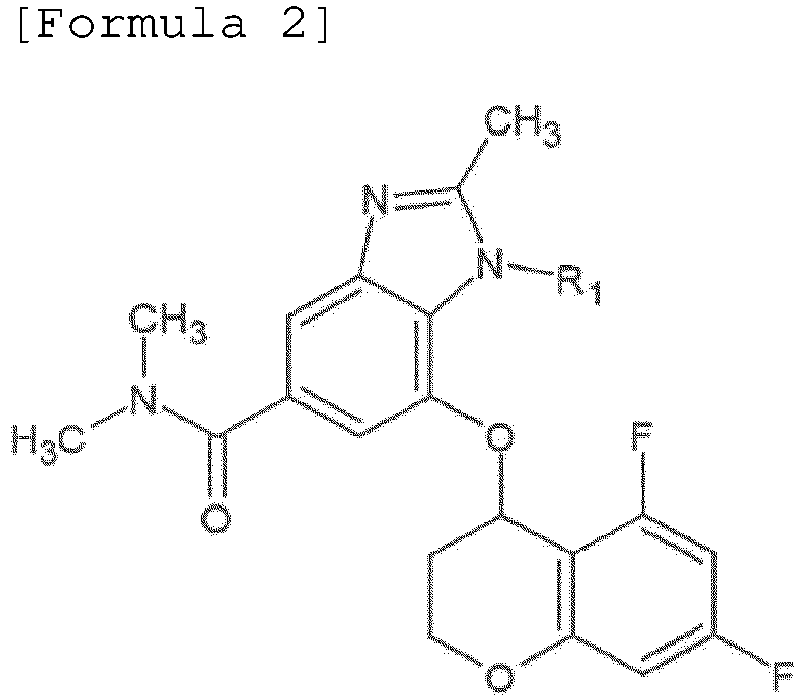
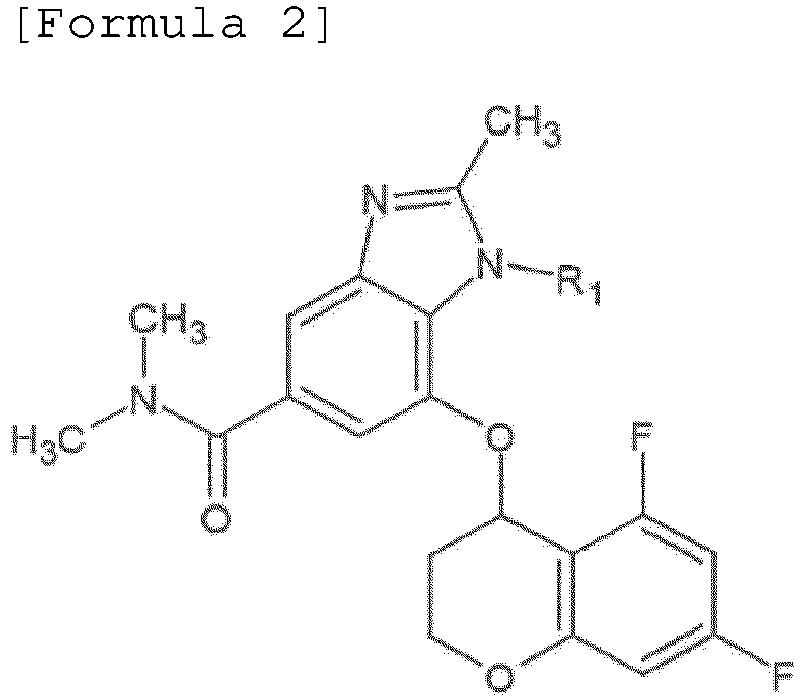
- According to one aspect of the present invention, a benzimidazole derivative compound represented by Formula 1 or Formula 2, or a pharmaceutically acceptable salt thereof or a stereoisomer thereof provided:


- The benzimidazole derivative compound of Formula 1 or Formula 2 according to the present invention can form a pharmaceutically acceptable salt. The pharmaceutically acceptable salts may include, but are not limited to, alkali metal or alkaline earth metal salts formed by, for example, sodium, lithium, potassium, calcium, magnesium, etc. The benzimidazole derivative compound of Formula 1 or Formula 2 according to the present invention can be converted into its salt by a conventional method.
- In the meantime, the compounds according to the present invention may have an asymmetric carbon center and therefore may exist as R or S isomers, racemates, diastereomeric mixtures and individual diastereomers, and all of these isomers and mixtures are included in the scope of the present invention.
- In this specification, unless otherwise specified for convenience, the benzimidazole derivative compound of Formula 1 or Formula 2 is used to include the compound of Formula 1 or Formula 2, and pharmaceutically acceptable salts and stereoisomers thereof.
- In defining the benzimidazole derivative compound of Formula 1 or Formula 2 throughout this specification, the following concepts defined for substituents are used.
- Unless otherwise stated, the term "alkyl" herein refers to a radical the saturated aliphatic hydrocarbon group having the straight-chain or the branched, for example, the carbon atom of 1 to 7 in the present application. As an example of the alkyl group, methyl, ethyl, n-propyl, isopropyl, n-butyl, isobutyl, sec-butyl, tert-butyl, n-pentyl, isopentyl, neopentyl, tert-pentyl, 1-methylbuthyl, 2-methylbuthyl, 1-ethylpropyl and 1,2-dimethylpropyl etc. are included but it is not limited thereto.
- Unless otherwise stated, the term "cycloalkyl" herein refers to a radical of the group of cyclic, for example, saturated aliphatic hydrocarbons having 3 to 7 carbon atoms. As an example of the cycloalkyl group, cyclopropyl, cyclobutyl, cyclopentyl, cyclohexyl etc is included but it is not limited thereto.
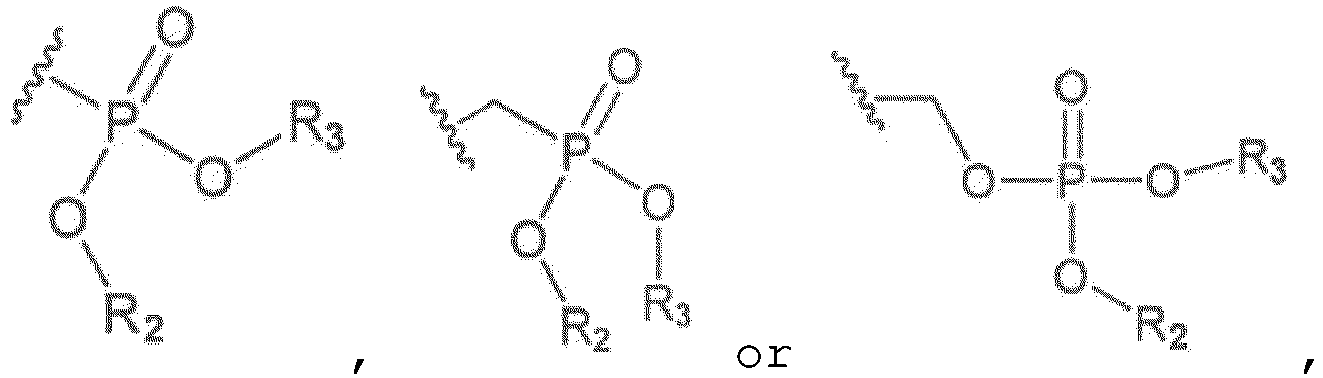
- According to one embodiment of the invention, in Formula 1 or Formula 2, R2 and R3 may each independently be hydrogen, C1-C7 alkyl or C3-C7 cycloalkyl.
- According to another embodiment of the present invention, in Formula 1 or Formula 2, R2 and R3 may each independently be hydrogen or C1-C5 alkyl.
- Representative benzimidazole derivative compounds of Formula 1 or Formula 2 according to the present invention may include, but are not limited to, the following compounds:
- diisopropyl(S)-(4-((5,7-difluorochroman-4-yl)oxy)-6-(dimethylcarbamoyl)-2-methyl-1H-benzo[d]imidazol-1-yl)phosphonate;
- (S)-di-tert-butyl((4-((5,7-difluorochroman-4-yl)oxy)-6-(dimethylcarbamoyl)-2-methyl-1H-benzo[d]imidazol-1-yl)methyl)phosphate;
- tert-butyl((4-(((S)-5,7-difluorochroman-4-yl)oxy)-6-(dimethylcarbamoyl)-2-methyl-1H-benzo[d]imidazol-1-yl)methyl)hydrogen phosphate;
- (S)-(4-((5,7-difluorochroman-4-yl)oxy)-6-(dimethylcarbamoyl)-2-methyl-1H-benzo[d]imidazol-1-yl)methyl dihydrogen phosphate;
- sodium(S)-tert-butyl ((4-((5,7-difluorochroman-4-yl)oxy)-6-(dimethylcarbamoyl)-2-methyl-1H-benzo[d]imidazol-1-yl)methyl) phosphate;
- sodium(S)-(4-((5,7-difluorochroman-4-yl)oxy)-6-(dimethylcarbamoyl)-2-methyl-1H-benzo[d]imidazol-1-yl)methyl phosphate.
- According to another aspect of the present invention, a pharmaceutical composition for the inhibition of gastric acid secretion comprising the benzimidazole derivative compound of the Formula 1 or Formula 2, or a pharmaceutically acceptable salt thereof or a stereoisomer thereof as an active ingredient, with a pharmaceutically acceptable carrier provided.
- According to another aspect of the present invention, a pharmaceutical composition for the preventing or treating diseases caused by disorders of gastric acid secretion comprising the benzimidazole derivative compound of the Formula 1 or Formula 2, or a pharmaceutically acceptable salt thereof or a stereoisomer thereof as an active ingredient, with a pharmaceutically acceptable carrier provided.
- In the present invention, "pharmaceutical composition" may include other chemical components such as carriers, diluents, excipients, etc. in addition to the active compound according to the present invention. Accordingly, the pharmaceutical composition may include a pharmaceutically acceptable carrier, diluent, excipient, or a combination thereof, if necessary.
- According to another embodiment of the present invention, the diseases caused by gastric acid secretion disorders include gastrointestinal diseases, gastroesophageal diseases, gastroesophageal reflux disease (GERD), peptic ulcers, gastric ulcers, duodenal ulcers, NSAID-induced ulcers, gastritis, and Helicobacter pylori. Helicobacter pylori infection, indigestion, functional dyspepsia, Zollinger-Ellison syndrome, non-erosive reflux disease (NERD), visceral pain, heartburn, nausea, esophagitis, dysphagia, drooling, airway disorder, or asthma, but is not limited thereto.
- Since the benzimidazole derivative compound represented by Formula 1 or Formula 2 according to the present invention exhibits an effect of suppressing gastric acid secretion, it can function as a potassium-competitive acid blocker (P-CAB) and inhibits gastric acid secretion. It can be used as a secretion inhibitor or as a preventive or treatment agent for diseases caused by gastric acid secretion disorders. In addition, the benzimidazole derivative compound represented by Formula 1 or Formula 2 according to the present invention has significantly improved neutral water solubility than tegoprazan, which was previously developed as a gastric acid suppressing drug, and is not affected by pH in vivo, such as diet, and it is facilitated in the formulation including the injection agent.
- Hereinafter, the present invention will be described in more detail through preparation examples and examples. However, these examples are only illustrative of the present invention, and the scope of the present invention is not limited thereto.
- An explanation of the abbreviations used in the examples below is as follows:
- ACN: acetonitrile.
- DMF: N,N- dimethylformamid.
- EtOAc: ethyl acetate.
- FA: formic acid
- MeOH: methanol.
-

- NMR(DMSO-d6): 7.13 (1H), 6.93(s, 1H), 6.83(t, 1H), 6.70(d, 1H), 6.03(s, 1H), 4.43~4.37(m, 3H), 4.25(t, 1H), 2.97(s, 6H), 2.45(s, 3H), 2.24(d, 1H), 2.07(t, 1H), 1.24(d, 12H); MS+:552.44
-

- NMR(DMSO-d6): 7.30(s, 1H), 6.94(s, 1H), 6.81(t, 1H), 6.76(d, 1H), 6.14(s, 1H), 6.02(d, 2H), 4.36(d, 1H), 4.22(d, 1H), 2.97(s, 6H), 2.61(s, 3H), 2.22(d, 1H), 2.07(t, 1H), 1.38~1.26(m, 18H); MS+: 610.33
-

- NMR(DMSO-d6): 7.31(s, 1H), 6.94(s, 1H), 6.81(t, 1H), 6.71(d, 1H), 6.15(s, 1H), 5.96(d, 2H), 4.37(d, 1H), 4.23(t, 1H), 2.98(s, 6H), 2.64(s, 3H), 2.24(d, 1H), 2.07(m, 1H), 1.26(s, 9H); MS+:554.47
-

- NMR(DMSO-d6): 7.31(s, 1H), 6.94(s, 1H), 6.81(t, 1H), 6.71(d, 1H), 6.14(s, 1H), 5.95(d, 2H), 4.37(d, 1H), 4.22(t, 1H), 2.98(s, 6H), 2.64(d, 3H), 2.25(d, 1H), 2.07(m, 1H); MS+:498.29
-
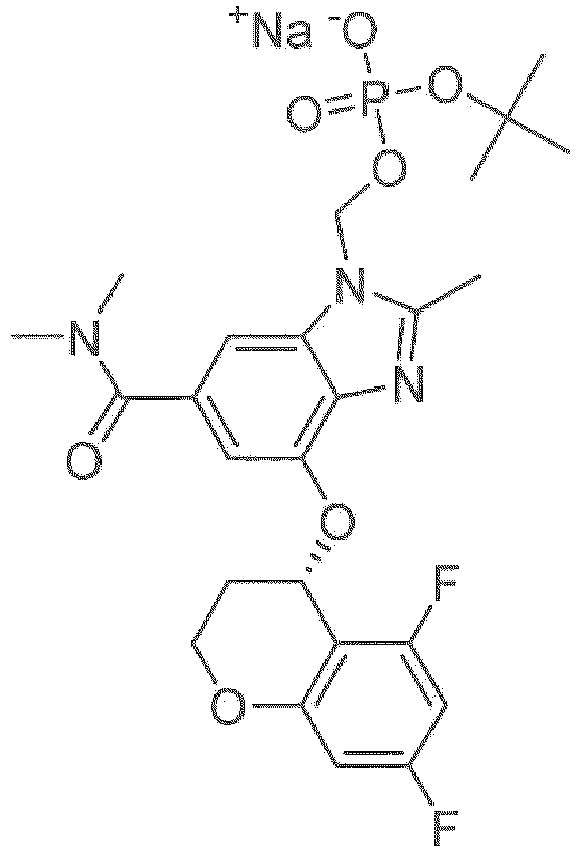
- NMR(D2O): 7.47(s, 1H), 7.13(s, 1H), 6.65~6.56(m, 2H), 5.96~5.93(m, 3H), 4.51~4.45(m, 2H), 3.15(s, 3H), 3.05(s, 3H), 2.72(s, 3H), 2.39(d, 1H), 2.22~2.14(m, 1H), 1.04(s, 9H); MS+: 554.35
-

- NMR(D2O: 7.52(s, 1H), 7.11(s, 1H), 6.65~6.58(m, 2H), 5.95(s, 1H), 5.84(d, 2H), 4.48~4.45(m, 2H), 3.15(s, 3H), 3.06(s, 3H), 2.71(s, 3H), 2.41(d, 1H), 2.22~2.13(m, 1H); MS+: 498.33
- After it measured so that each testing material was concentrated by 5.12 mg/ml in the glass vial, 0.5M Tris-HCl (pH 6.8, T&I, BTH-9168) was added and it processed in for one minute mixing, and treated in a sonicator for 30 minutes the solution was prepared. The solution was observed with the naked eye and recorded in photographs. If it was not completely dissolved, additional buffer was added to prepare a solution and the observation was repeated. Solubility was evaluated by checking the concentration when completely dissolved. Tegoprazan was used as a comparison compound. The measured results are shown in Table 1 below.
[Table 1] Compound Solubility, pH 6.8(mg/ml) Comparison compound 0.02 Embodiment 1 0.01 Embodiment 2 5.12 Embodiment 3 2.56 Embodiment 4 2.56 Embodiment 5 5.12 Embodiment 6 5.12 - As shown in Table 1, the compounds of Examples 3 and 4 according to the present invention showed 128 times improved water solubility (pH 6.8) compared to the comparative compounds, and Examples 2, 5, and The compound of Example 6 showed 256 times improved water solubility (pH 6.8) compared to the comparative compound. Therefore, the new benzimidazole derivative compound of the present invention, which has significantly improved water solubility, has no effect on solubility even when the pH in the gastric cavity increases due to diet, and furthermore, it can be easily formulated, including injections.
- A week before the test, test animals (rats) were purchased and acclimatized. After acclimatization, food was removed the day before the test and fasting was performed for 24 hours using a fasting plate. The weight of each individual was measured, weight ranking was sequentially assigned to each group, and the average value of each group was randomly distributed so that the average value was evenly distributed. Test material (the embodiment compound and comparison compound) were used by dissolving them in 0.5% methylcellulose solution, and tegoprazan was used as a comparative compound. The prepared test material was orally administered to test animals at an amount of 3mg/5mL/kg, and 30 minutes later, inhalation anesthesia (30 isoflurane) was performed for 3 minutes using an inhalation anesthesia machine. After making a minimal incision in the upper abdomen about 1 cm below the left side of the sternum of an anesthetized test animal, the stomach was exposed, and the pyloric ring, which is the connection between the stomach and the duodenum, was ligated. The stomach and duodenum were restored to their original positions, and the laparotomy site was sutured well with surgical staplers. Histamine (7.5mg/2.5mL/head) was slowly administered subcutaneously to the back of the neck to promote gastric acid secretion. 3 hours after the surgery, the experimental animals were anesthetized with isoflurane and the stomach was removed through laparotomy. Gastric fluid obtained from the extracted stomach was transferred to a 15 mL conical tube, centrifuged at 5,000 rpm for 10 minutes, and only the supernatant was separated. 0.2 mL of the separated gastric fluid was diluted in 24.8 mL of distilled water to make a total dilution of 25 mL, and then 0.01N NaOH was added in small amounts to titrate until the pH reached 7. Efficacy was evaluated by calculating total acidity by combining the amount of gastric fluid and the amount of 0.01N NaOH required for titration.

- The measured result was shown in the following table 2.
[Table 2] Compound gastric acid releasing suppression ability(% INH, Mean±SD) Comparison compound 100 ± 0.0 *** Embodiment 1 99.7 ± 0.2 *** Embodiment 2 2 6.8 ± 9.2 * Embodiment 3 23.9 ± 3.3 * Embodiment 4 100.0 ± 0.0 *** Embodiment 5 12.7 ± 10.9 * Embodiment 6 92.8 ± 4.8 *** *, *** : p < 0.05, p < 0.001 (vs Excipient control) - As shown in the table 2, it was confirmed that the compounds of embodiments 1, 4, and 6 according to the present invention have the powerful gastric acid releasing suppression ability in the gastric acid secretion animal model.
- A week before the test, test animals (rats) were purchased and acclimatized. After acclimatization, food was removed the day before the test and fasting was performed for 24 hours using a fasting plate. The weight of each individual was measured, weight ranking was sequentially assigned to each group, and the average value of each group was randomly distributed so that the average value was evenly distributed. Test material (the embodiment compound and comparison compound) were used by dissolving them in 0.5% methylcellulose solution, and tegoprazan was used as a comparative compound. Experimental animals were subjected to inhalation anesthesia (3% isoflurane) for 3 minutes using an inhalation anesthesia machine. After making a minimal incision in the upper abdomen about 1 cm below the left side of the sternum of an anesthetized test animal, the stomach was exposed, and the pyloric ring, which is the connection between the stomach and the duodenum, was ligated. The prepared drug was administered into the duodenum in an amount of 1mg/5mL/kg, the stomach and duodenum were restored to their original positions, and the laparotomy site was sutured well with a surgical stapler. Histamine (7.5mg/2.5mL/head) was slowly administered subcutaneously to the back of the neck to promote gastric acid secretion. 3 hours after the surgery, the experimental animals were anesthetized with isoflurane and the stomach was removed through laparotomy. Gastric fluid obtained from the extracted stomach was transferred to a 15 mL conical tube, centrifuged at 5,000 rpm for 10 minutes, and only the supernatant was separated. 0.2 mL of the separated gastric fluid was diluted in 24.8 mL of distilled water to make a total dilution of 25 mL, and then 0.01N NaOH was added in small amounts to titrate until the pH reached 7. Efficacy was evaluated by calculating total acidity by combining the amount of gastric fluid and the amount of 0.01N NaOH required for titration.

- The measured result was shown in the following table 3.
[Table 3] Compound gastric acid releasing suppression ability(% INH, Mean±SD) Comparison compound 29.8 ± 9.1 Embodiment 6 43.7 ± 8.7 * * : p < 0.05 (vs Excipient control) - As shown in the table 3, the compound of embodiment 6 according to the present invention showed an improved ability to inhibit gastric acid secretion compared to the comparative compound when the drug was administered to the duodenum with a neutral pH. Therefore, the compound of embodiment 6 according to the present invention is expected to exert the same effect regardless of pH even after a meal or in various biological environments in which the pH in the stomach cavity is neutral.
Claims (9)
- A benzimidazole derivative compound represented by Formula 1 or Formula 2, or a pharmaceutically acceptable salt thereof or a stereoisomer thereof:

- The benzimidazole derivative compound, or a pharmaceutically acceptable salt thereof or a stereoisomer thereof according to claim 1, wherein
R2 and R3 are each independently hydrogen, C1-C7 alkyl or C3-C7 cycloalkyl. - The benzimidazole derivative compound, or a pharmaceutically acceptable salt thereof or a stereoisomer thereof according to claim 2, wherein
R2 and R3 are each independently hydrogen, or C1-C5 alkyl. - The benzimidazole derivative compound, or a pharmaceutically acceptable salt thereof or a stereoisomer thereof according to claim 1, wherein
the pharmaceutically acceptable salt is alkali metal or alkaline-earth metal salt selected from the group consisting of sodium, lithium, potassium, calcium and magnesium. - The benzimidazole derivative compound, or a pharmaceutically acceptable salt thereof or a stereoisomer thereof according to claim 4, wherein
the pharmaceutically acceptable salt is sodium salt. - The benzimidazole derivative compound, or a pharmaceutically acceptable salt thereof or a stereoisomer thereof according to claim 1, wherein
the benzimidazole derivative compound represented by Formula 1 or Formula 2 is selected from the following group:diisopropyl(S)-(4-((5,7-difluorochroman-4-yl)oxy)-6-(dimethylcarbamoyl)-2-methyl-1H-benzo[d]imidazol-1-yl)phosphonate;(S)-di-tert-butyl((4-((5,7-difluorochroman-4-yl)oxy)-6-(dimethylcarbamoyl)-2-methyl-1H-benzo[d]imidazol-1-yl)methyl)phosphate;tert-butyl((4-(((S)-5,7-difluorochroman-4-yl)oxy)-6-(dimethylcarbamoyl)-2-methyl-1H-benzo[d]imidazol-1-yl)methyl)hydrogen phosphate;(S)-(4-((5,7-difluorochroman-4-yl)oxy)-6-(dimethylcarbamoyl)-2-methyl-1H-benzo[d]imidazol-1-yl)methyl dihydrogen phosphate;sodium(S)-tert-butyl ((4-((5,7-difluorochroman-4-yl)oxy)-6-(dimethylcarbamoyl)-2-methyl-1H-benzo[d]imidazol-1-yl)methyl) phosphate;sodium(S)-(4-((5,7-difluorochroman-4-yl)oxy)-6-(dimethylcarbamoyl)-2-methyl-1H-benzo[d]imidazol-1-yl)methyl phosphate. - A pharmaceutical composition for the inhibition of gastric acid secretion comprising the benzimidazole derivative compound, or a pharmaceutically acceptable salt thereof or a stereoisomer thereof according to claim 1 to claim 6 as an active ingredient, with a pharmaceutically acceptable carrier.
- A pharmaceutical composition for the preventing or treating diseases caused by disorders of gastric acid secretion comprising the benzimidazole derivative compound, or a pharmaceutically acceptable salt thereof or a stereoisomer thereof according to claim 1 to claim 6 as an active ingredient, with a pharmaceutically acceptable carrier.
- The pharmaceutical composition of claim 8, wherein
the disease caused by disorders of gastric acid secretion is selected from the group consisting of gastrointestinal disease, gastroesophageal disease, gastroesophageal reflux disease(GERD), peptic ulcer, gastric ulcer, duodenal ulcer, NSAID-induced ulcer, gastritis, Helicobacter pylori infection, dyspepsia, functional dyspepsia, Zollinger-Ellison syndrome, non-erosive reflux disease(NERD), referred visceral pain, heartburn, nausea, esophagitis, dysphagia, drooling, airway disorders and asthma.
Applications Claiming Priority (2)
| Application Number | Priority Date | Filing Date | Title |
|---|---|---|---|
| KR20210174301 | 2021-12-08 | ||
| PCT/KR2022/019846 WO2023106841A1 (en) | 2021-12-08 | 2022-12-07 | Benzimidazole derivative compound and uses thereof |
Publications (3)
| Publication Number | Publication Date |
|---|---|
| EP4428131A1 true EP4428131A1 (en) | 2024-09-11 |
| EP4428131A4 EP4428131A4 (en) | 2025-07-16 |
| EP4428131B1 EP4428131B1 (en) | 2026-04-08 |
Family
ID=86730937
Family Applications (1)
| Application Number | Title | Priority Date | Filing Date |
|---|---|---|---|
| EP22904670.1A Active EP4428131B1 (en) | 2021-12-08 | 2022-12-07 | Benzimidazole derivative compound and uses thereof |
Country Status (7)
| Country | Link |
|---|---|
| US (1) | US20250051376A1 (en) |
| EP (1) | EP4428131B1 (en) |
| JP (1) | JP7863187B2 (en) |
| KR (2) | KR102648314B1 (en) |
| CN (1) | CN118355013A (en) |
| ES (1) | ES3071790T3 (en) |
| WO (2) | WO2023106841A1 (en) |
Families Citing this family (2)
| Publication number | Priority date | Publication date | Assignee | Title |
|---|---|---|---|---|
| KR20260061471A (en) * | 2023-06-09 | 2026-05-06 | 이니스트에스티 주식회사 | Cocrystal Solid Comprising a Chromane-Substituted Benzimidazole Derivative and Zinc Chloride, and Method for Preparing the Same |
| KR20250148061A (en) | 2024-04-04 | 2025-10-14 | (주) 팜젠사이언스 | Benzimidazole derivative compounds and pharmaceutical composition for suppressing gastric acid secretion comprising the same |
Family Cites Families (8)
| Publication number | Priority date | Publication date | Assignee | Title |
|---|---|---|---|---|
| ES2332534T3 (en) * | 2005-06-14 | 2010-02-08 | Raqualia Pharma Inc | BENCIMIDAZOL DERIVATIVES REPLACED WITH CHROMAN AS ANTAGONISTS OF THE ACID PUMP. |
| BRPI0620081B8 (en) * | 2005-12-19 | 2021-05-25 | Pfizer | compound and pharmaceutical composition. |
| CN102470126A (en) * | 2009-07-09 | 2012-05-23 | 拉夸里亚创药株式会社 | Acid pump antagonists for the treatment of disorders associated with abnormal gastrointestinal motility |
| CN118557572A (en) * | 2015-06-08 | 2024-08-30 | 怡诺安有限公司 | Use of benzimidazole derivatives for night-time acid breakthrough |
| PE20180605A1 (en) | 2015-07-30 | 2018-04-09 | Takeda Pharmaceuticals Co | TABLET |
| KR101829706B1 (en) * | 2016-09-21 | 2018-02-19 | 씨제이헬스케어 주식회사 | Acid addition salts of (S)-4-(5,7-difluorochroman-4-yloxy)-N,N,2-trimethyl-1H-benzo[d]imidazole-6-carboxamide |
| KR102262743B1 (en) | 2017-07-07 | 2021-06-09 | 에이치케이이노엔 주식회사 | Composition for injection |
| WO2020210878A1 (en) * | 2019-04-18 | 2020-10-22 | Borody Thomas J | Compositions and methods for treating, ameliorating and preventing h. pylori infections |
-
2022
- 2022-12-07 EP EP22904670.1A patent/EP4428131B1/en active Active
- 2022-12-07 CN CN202280080697.0A patent/CN118355013A/en active Pending
- 2022-12-07 KR KR1020220169909A patent/KR102648314B1/en active Active
- 2022-12-07 US US18/717,626 patent/US20250051376A1/en active Pending
- 2022-12-07 ES ES22904670T patent/ES3071790T3/en active Active
- 2022-12-07 WO PCT/KR2022/019846 patent/WO2023106841A1/en not_active Ceased
- 2022-12-07 WO PCT/KR2022/019851 patent/WO2023106842A1/en not_active Ceased
- 2022-12-07 KR KR1020220170024A patent/KR102648315B1/en active Active
- 2022-12-07 JP JP2024532846A patent/JP7863187B2/en active Active
Also Published As
| Publication number | Publication date |
|---|---|
| WO2023106842A1 (en) | 2023-06-15 |
| EP4428131B1 (en) | 2026-04-08 |
| KR20230086621A (en) | 2023-06-15 |
| KR102648314B9 (en) | 2024-08-30 |
| KR102648315B1 (en) | 2024-03-15 |
| CN118355013A (en) | 2024-07-16 |
| JP7863187B2 (en) | 2026-05-20 |
| KR20230086623A (en) | 2023-06-15 |
| WO2023106841A1 (en) | 2023-06-15 |
| US20250051376A1 (en) | 2025-02-13 |
| ES3071790T3 (en) | 2026-06-25 |
| JP2024542760A (en) | 2024-11-15 |
| KR102648314B1 (en) | 2024-03-15 |
| EP4428131A4 (en) | 2025-07-16 |
Similar Documents
| Publication | Publication Date | Title |
|---|---|---|
| EP4428131B1 (en) | Benzimidazole derivative compound and uses thereof | |
| US12709606B2 (en) | Acid secretion inhibitor and use thereof | |
| US8993589B2 (en) | Imidazopyridine derivatives which inhibit the secretion of gastric acid | |
| CN109769392A (en) | The acid-addition salts of benzimidizole derivatives | |
| KR20090029849A (en) | New signs for direct thrombin inhibitors in the cardiovascular field | |
| BG65255B1 (en) | Novel salt form of pantoprazole | |
| RS56243B1 (en) | DICARBOXYLIC ACID UNIT | |
| EP1527066B1 (en) | Salt of (S)-pantoprazole and its hydrates | |
| US20060189590A1 (en) | Alkaline salts of proton pump inhibitors | |
| EP2530068A1 (en) | New strontium salts, synthesis and use thereof in the treatment of osteoporosis | |
| KR20250148061A (en) | Benzimidazole derivative compounds and pharmaceutical composition for suppressing gastric acid secretion comprising the same | |
| KR20240170933A (en) | Method for preparing 6-methoxypyridin-3-yl derivatives | |
| RU2348634C2 (en) | New imidazopyridine compound i with therapeutic effect | |
| RU2815697C1 (en) | Novel acid secretion inhibitor and its use | |
| CA3182882C (en) | Acid secretion inhibitor and use thereof | |
| KR20240164400A (en) | Co-crystal solid comprising chromane substituted benzimidazole derivative and zinc acetate | |
| CN121248676A (en) | Imidazo [1,2-a ] pyridine compound, preparation method and application thereof | |
| KR20250147590A (en) | N-substituted pyrrol derivatives and pharmaceutical composition comprising the same | |
| CA2968483A1 (en) | Hydrosoluble hydroxybisphosphonic derivatives of doxorubicin | |
| KR20240174813A (en) | Co-crystal solid comprising chromene-substituted benzimidazole derivative and zinc chloride and method for producing the same | |
| KR20000016484A (en) | New compounds | |
| HK40007683A (en) | Acid addition salt of benzimidazole derivative | |
| HK40007683B (en) | Acid addition salt of benzimidazole derivative | |
| AU2014201644A1 (en) | Imidazopyridine derivatives which inhibit the secretion of gastric acid | |
| HK1240925A1 (en) | Salt of dicarboxylic acid compound |
Legal Events
| Date | Code | Title | Description |
|---|---|---|---|
| STAA | Information on the status of an ep patent application or granted ep patent |
Free format text: STATUS: THE INTERNATIONAL PUBLICATION HAS BEEN MADE |
|
| PUAI | Public reference made under article 153(3) epc to a published international application that has entered the european phase |
Free format text: ORIGINAL CODE: 0009012 |
|
| STAA | Information on the status of an ep patent application or granted ep patent |
Free format text: STATUS: REQUEST FOR EXAMINATION WAS MADE |
|
| 17P | Request for examination filed |
Effective date: 20240603 |
|
| AK | Designated contracting states |
Kind code of ref document: A1 Designated state(s): AL AT BE BG CH CY CZ DE DK EE ES FI FR GB GR HR HU IE IS IT LI LT LU LV MC ME MK MT NL NO PL PT RO RS SE SI SK SM TR |
|
| DAV | Request for validation of the european patent (deleted) | ||
| DAX | Request for extension of the european patent (deleted) | ||
| A4 | Supplementary search report drawn up and despatched |
Effective date: 20250616 |
|
| RIC1 | Information provided on ipc code assigned before grant |
Ipc: C07D 405/14 20060101AFI20250610BHEP Ipc: A61K 31/4184 20060101ALI20250610BHEP Ipc: A61P 1/04 20060101ALI20250610BHEP Ipc: C07D 405/04 20060101ALI20250610BHEP Ipc: A23L 33/105 20160101ALI20250610BHEP Ipc: C07F 9/6558 20060101ALI20250610BHEP Ipc: A23L 33/10 20160101ALI20250610BHEP Ipc: A61K 31/675 20060101ALI20250610BHEP Ipc: A61K 31/683 20060101ALI20250610BHEP Ipc: A61K 31/685 20060101ALI20250610BHEP |
|
| REG | Reference to a national code |
Ref country code: DE Ref legal event code: R079 Free format text: PREVIOUS MAIN CLASS: C07D0405140000 Ipc: C07F0009656100 Ref document number: 602022034344 Country of ref document: DE |
|
| GRAP | Despatch of communication of intention to grant a patent |
Free format text: ORIGINAL CODE: EPIDOSNIGR1 |
|
| STAA | Information on the status of an ep patent application or granted ep patent |
Free format text: STATUS: GRANT OF PATENT IS INTENDED |
|
| RIC1 | Information provided on ipc code assigned before grant |
Ipc: C07F 9/6561 20060101AFI20251128BHEP Ipc: C07D 405/14 20060101ALI20251128BHEP Ipc: A61K 31/4184 20060101ALI20251128BHEP Ipc: A61P 1/04 20060101ALI20251128BHEP Ipc: C07D 405/04 20060101ALI20251128BHEP Ipc: A23L 33/105 20160101ALI20251128BHEP Ipc: C07F 9/6558 20060101ALI20251128BHEP Ipc: A23L 33/10 20160101ALI20251128BHEP Ipc: A61K 31/675 20060101ALI20251128BHEP Ipc: A61K 31/683 20060101ALI20251128BHEP Ipc: A61K 31/685 20060101ALI20251128BHEP |
|
| INTG | Intention to grant announced |
Effective date: 20251217 |
|
| GRAS | Grant fee paid |
Free format text: ORIGINAL CODE: EPIDOSNIGR3 |
|
| GRAA | (expected) grant |
Free format text: ORIGINAL CODE: 0009210 |
|
| STAA | Information on the status of an ep patent application or granted ep patent |
Free format text: STATUS: THE PATENT HAS BEEN GRANTED |
|
| AK | Designated contracting states |
Kind code of ref document: B1 Designated state(s): AL AT BE BG CH CY CZ DE DK EE ES FI FR GB GR HR HU IE IS IT LI LT LU LV MC ME MK MT NL NO PL PT RO RS SE SI SK SM TR |
|
| REG | Reference to a national code |
Ref country code: CH Ref legal event code: F10 Free format text: ST27 STATUS EVENT CODE: U-0-0-F10-F00 (AS PROVIDED BY THE NATIONAL OFFICE) Effective date: 20260408 Ref country code: GB Ref legal event code: FG4D |
|
| REG | Reference to a national code |
Ref country code: DE Ref legal event code: R096 Ref document number: 602022034344 Country of ref document: DE |
|
| REG | Reference to a national code |
Ref country code: IE Ref legal event code: FG4D |
|
| REG | Reference to a national code |
Ref country code: ES Ref legal event code: FG2A Ref document number: 3071790 Country of ref document: ES Kind code of ref document: T3 Effective date: 20260625 |
|
| REG | Reference to a national code |
Ref country code: NL Ref legal event code: MP Effective date: 20260408 |
|
| PG25 | Lapsed in a contracting state [announced via postgrant information from national office to epo] |
Ref country code: PL Free format text: LAPSE BECAUSE OF FAILURE TO SUBMIT A TRANSLATION OF THE DESCRIPTION OR TO PAY THE FEE WITHIN THE PRESCRIBED TIME-LIMIT Effective date: 20260408 |
|
| REG | Reference to a national code |
Ref country code: AT Ref legal event code: MK05 Ref document number: 1907160 Country of ref document: AT Kind code of ref document: T Effective date: 20260408 |
|
| PG25 | Lapsed in a contracting state [announced via postgrant information from national office to epo] |
Ref country code: NL Free format text: LAPSE BECAUSE OF FAILURE TO SUBMIT A TRANSLATION OF THE DESCRIPTION OR TO PAY THE FEE WITHIN THE PRESCRIBED TIME-LIMIT Effective date: 20260408 |