EP4428146A1 - Verwendung einer proteinsequenz zur bindung an ein substrat bei der herstellung eines produkts zur hemmung der fibrinanordnung - Google Patents
Verwendung einer proteinsequenz zur bindung an ein substrat bei der herstellung eines produkts zur hemmung der fibrinanordnung Download PDFInfo
- Publication number
- EP4428146A1 EP4428146A1 EP21962927.6A EP21962927A EP4428146A1 EP 4428146 A1 EP4428146 A1 EP 4428146A1 EP 21962927 A EP21962927 A EP 21962927A EP 4428146 A1 EP4428146 A1 EP 4428146A1
- Authority
- EP
- European Patent Office
- Prior art keywords
- protein
- fibrinogen
- fgl1
- amino acid
- preparation
- Prior art date
- Legal status (The legal status is an assumption and is not a legal conclusion. Google has not performed a legal analysis and makes no representation as to the accuracy of the status listed.)
- Pending
Links
Images





Classifications
-
- C—CHEMISTRY; METALLURGY
- C07—ORGANIC CHEMISTRY
- C07K—PEPTIDES
- C07K14/00—Peptides having more than 20 amino acids; Gastrins; Somatostatins; Melanotropins; Derivatives thereof
- C07K14/435—Peptides having more than 20 amino acids; Gastrins; Somatostatins; Melanotropins; Derivatives thereof from animals; from humans
- C07K14/745—Blood coagulation or fibrinolysis factors
- C07K14/75—Fibrinogen
-
- A—HUMAN NECESSITIES
- A61—MEDICAL OR VETERINARY SCIENCE; HYGIENE
- A61K—PREPARATIONS FOR MEDICAL, DENTAL OR TOILETRY PURPOSES
- A61K39/00—Medicinal preparations containing antigens or antibodies
-
- A—HUMAN NECESSITIES
- A61—MEDICAL OR VETERINARY SCIENCE; HYGIENE
- A61K—PREPARATIONS FOR MEDICAL, DENTAL OR TOILETRY PURPOSES
- A61K45/00—Medicinal preparations containing active ingredients not provided for in groups A61K31/00 - A61K41/00
- A61K45/06—Mixtures of active ingredients without chemical characterisation, e.g. antiphlogistics and cardiaca
-
- A—HUMAN NECESSITIES
- A61—MEDICAL OR VETERINARY SCIENCE; HYGIENE
- A61K—PREPARATIONS FOR MEDICAL, DENTAL OR TOILETRY PURPOSES
- A61K47/00—Medicinal preparations characterised by the non-active ingredients used, e.g. carriers or inert additives; Targeting or modifying agents chemically bound to the active ingredient
- A61K47/50—Medicinal preparations characterised by the non-active ingredients used, e.g. carriers or inert additives; Targeting or modifying agents chemically bound to the active ingredient the non-active ingredient being chemically bound to the active ingredient, e.g. polymer-drug conjugates
- A61K47/51—Medicinal preparations characterised by the non-active ingredients used, e.g. carriers or inert additives; Targeting or modifying agents chemically bound to the active ingredient the non-active ingredient being chemically bound to the active ingredient, e.g. polymer-drug conjugates the non-active ingredient being a modifying agent
- A61K47/62—Medicinal preparations characterised by the non-active ingredients used, e.g. carriers or inert additives; Targeting or modifying agents chemically bound to the active ingredient the non-active ingredient being chemically bound to the active ingredient, e.g. polymer-drug conjugates the non-active ingredient being a modifying agent the modifying agent being a protein, peptide or polyamino acid
- A61K47/64—Drug-peptide, drug-protein or drug-polyamino acid conjugates, i.e. the modifying agent being a peptide, protein or polyamino acid which is covalently bonded or complexed to a therapeutically active agent
-
- A—HUMAN NECESSITIES
- A61—MEDICAL OR VETERINARY SCIENCE; HYGIENE
- A61K—PREPARATIONS FOR MEDICAL, DENTAL OR TOILETRY PURPOSES
- A61K47/00—Medicinal preparations characterised by the non-active ingredients used, e.g. carriers or inert additives; Targeting or modifying agents chemically bound to the active ingredient
- A61K47/50—Medicinal preparations characterised by the non-active ingredients used, e.g. carriers or inert additives; Targeting or modifying agents chemically bound to the active ingredient the non-active ingredient being chemically bound to the active ingredient, e.g. polymer-drug conjugates
- A61K47/51—Medicinal preparations characterised by the non-active ingredients used, e.g. carriers or inert additives; Targeting or modifying agents chemically bound to the active ingredient the non-active ingredient being chemically bound to the active ingredient, e.g. polymer-drug conjugates the non-active ingredient being a modifying agent
- A61K47/62—Medicinal preparations characterised by the non-active ingredients used, e.g. carriers or inert additives; Targeting or modifying agents chemically bound to the active ingredient the non-active ingredient being chemically bound to the active ingredient, e.g. polymer-drug conjugates the non-active ingredient being a modifying agent the modifying agent being a protein, peptide or polyamino acid
- A61K47/64—Drug-peptide, drug-protein or drug-polyamino acid conjugates, i.e. the modifying agent being a peptide, protein or polyamino acid which is covalently bonded or complexed to a therapeutically active agent
- A61K47/644—Transferrin, e.g. a lactoferrin or ovotransferrin
-
- A—HUMAN NECESSITIES
- A61—MEDICAL OR VETERINARY SCIENCE; HYGIENE
- A61K—PREPARATIONS FOR MEDICAL, DENTAL OR TOILETRY PURPOSES
- A61K48/00—Medicinal preparations containing genetic material which is inserted into cells of the living body to treat genetic diseases; Gene therapy
- A61K48/005—Medicinal preparations containing genetic material which is inserted into cells of the living body to treat genetic diseases; Gene therapy characterised by an aspect of the 'active' part of the composition delivered, i.e. the nucleic acid delivered
-
- A—HUMAN NECESSITIES
- A61—MEDICAL OR VETERINARY SCIENCE; HYGIENE
- A61P—SPECIFIC THERAPEUTIC ACTIVITY OF CHEMICAL COMPOUNDS OR MEDICINAL PREPARATIONS
- A61P7/00—Drugs for disorders of the blood or the extracellular fluid
- A61P7/02—Antithrombotic agents; Anticoagulants; Platelet aggregation inhibitors
-
- C—CHEMISTRY; METALLURGY
- C07—ORGANIC CHEMISTRY
- C07K—PEPTIDES
- C07K1/00—General methods for the preparation of peptides, i.e. processes for the organic chemical preparation of peptides or proteins of any length
- C07K1/14—Extraction; Separation; Purification
- C07K1/16—Extraction; Separation; Purification by chromatography
- C07K1/22—Affinity chromatography or related techniques based upon selective absorption processes
-
- C—CHEMISTRY; METALLURGY
- C07—ORGANIC CHEMISTRY
- C07K—PEPTIDES
- C07K14/00—Peptides having more than 20 amino acids; Gastrins; Somatostatins; Melanotropins; Derivatives thereof
- C07K14/435—Peptides having more than 20 amino acids; Gastrins; Somatostatins; Melanotropins; Derivatives thereof from animals; from humans
- C07K14/475—Growth factors; Growth regulators
-
- C—CHEMISTRY; METALLURGY
- C07—ORGANIC CHEMISTRY
- C07K—PEPTIDES
- C07K14/00—Peptides having more than 20 amino acids; Gastrins; Somatostatins; Melanotropins; Derivatives thereof
- C07K14/435—Peptides having more than 20 amino acids; Gastrins; Somatostatins; Melanotropins; Derivatives thereof from animals; from humans
- C07K14/745—Blood coagulation or fibrinolysis factors
-
- C—CHEMISTRY; METALLURGY
- C12—BIOCHEMISTRY; BEER; SPIRITS; WINE; VINEGAR; MICROBIOLOGY; ENZYMOLOGY; MUTATION OR GENETIC ENGINEERING
- C12N—MICROORGANISMS OR ENZYMES; COMPOSITIONS THEREOF; PROPAGATING, PRESERVING, OR MAINTAINING MICROORGANISMS; MUTATION OR GENETIC ENGINEERING; CULTURE MEDIA
- C12N15/00—Mutation or genetic engineering; DNA or RNA concerning genetic engineering, vectors, e.g. plasmids, or their isolation, preparation or purification; Use of hosts therefor
- C12N15/09—Recombinant DNA-technology
- C12N15/63—Introduction of foreign genetic material using vectors; Vectors; Use of hosts therefor; Regulation of expression
-
- C—CHEMISTRY; METALLURGY
- C12—BIOCHEMISTRY; BEER; SPIRITS; WINE; VINEGAR; MICROBIOLOGY; ENZYMOLOGY; MUTATION OR GENETIC ENGINEERING
- C12N—MICROORGANISMS OR ENZYMES; COMPOSITIONS THEREOF; PROPAGATING, PRESERVING, OR MAINTAINING MICROORGANISMS; MUTATION OR GENETIC ENGINEERING; CULTURE MEDIA
- C12N15/00—Mutation or genetic engineering; DNA or RNA concerning genetic engineering, vectors, e.g. plasmids, or their isolation, preparation or purification; Use of hosts therefor
- C12N15/09—Recombinant DNA-technology
- C12N15/63—Introduction of foreign genetic material using vectors; Vectors; Use of hosts therefor; Regulation of expression
- C12N15/79—Vectors or expression systems specially adapted for eukaryotic hosts
- C12N15/85—Vectors or expression systems specially adapted for eukaryotic hosts for animal cells
-
- A—HUMAN NECESSITIES
- A61—MEDICAL OR VETERINARY SCIENCE; HYGIENE
- A61K—PREPARATIONS FOR MEDICAL, DENTAL OR TOILETRY PURPOSES
- A61K38/00—Medicinal preparations containing peptides
-
- C—CHEMISTRY; METALLURGY
- C07—ORGANIC CHEMISTRY
- C07K—PEPTIDES
- C07K2319/00—Fusion polypeptide
-
- Y—GENERAL TAGGING OF NEW TECHNOLOGICAL DEVELOPMENTS; GENERAL TAGGING OF CROSS-SECTIONAL TECHNOLOGIES SPANNING OVER SEVERAL SECTIONS OF THE IPC; TECHNICAL SUBJECTS COVERED BY FORMER USPC CROSS-REFERENCE ART COLLECTIONS [XRACs] AND DIGESTS
- Y02—TECHNOLOGIES OR APPLICATIONS FOR MITIGATION OR ADAPTATION AGAINST CLIMATE CHANGE
- Y02A—TECHNOLOGIES FOR ADAPTATION TO CLIMATE CHANGE
- Y02A50/00—TECHNOLOGIES FOR ADAPTATION TO CLIMATE CHANGE in human health protection, e.g. against extreme weather
- Y02A50/30—Against vector-borne diseases, e.g. mosquito-borne, fly-borne, tick-borne or waterborne diseases whose impact is exacerbated by climate change
Definitions
- the present invention relates to a protein sequence capable of binding to a substrate, fibrinogen-like protein 1, which comprises the protein sequence, and the application of the active structural domain thereof in preparing products that inhibit fibrin assembly.
- a thrombus is a small mass formed by blood flow on the inner surface of a vessel of the cardiovascular system at the site of denudation or repair.
- VFDPs variable flow-dependent patterns
- thrombi consist of insoluble fibrin, deposited platelets, accumulated leukocytes, and trapped red blood cells.
- Thrombosis is a multifactorial process of change in which a set of genetic and environmental factors interact and influence each other. The most important characteristics of patients with common clinical thrombosis are familial inheritance, recurrent episodes, the severity of symptoms, abnormal site of thrombosis, and youthful onset.
- Antithrombotic therapy involves using thrombolytic drugs, antiplatelet drugs, and anticoagulants to inhibit the formation of blood clots or to break down clots that have already formed.
- Antithrombotic drugs can be divided into three categories: anticoagulants, antiplatelet aggregation drugs and thrombolytic drugs:
- Fibrinogen also known as plasma fibrinogen
- plasma fibrinogen is a glycoprotein ( ⁇ 2 ⁇ 2 ⁇ 2) synthesized and secreted by liver cells; vital protein fibrin is involved in coagulation and hemostasis. It is a monomeric protein generated by the thrombin excision of fibrinopeptides A and B in plasma fibrinogen during coagulation. Hyperfibrinogen is a significant risk factor for various thrombotic diseases and is considered a marker of a disease state in clinical practice.
- FGL1 fibrinogen like protein 1
- the structure of the amino acid sequence is as follows: tryptophan - 17 amino acids-tyrosine-3 amino acids - cysteine - 2 amino acids - glutamic acid -aspartic acid - 8 amino acids - cysteine - histidine - 17 amino acids - aspartic acid - 5 amino acids -tyrosine - 4 amino acids -tryptophan.
- any 17 amino acids connected between tryptophan and tyrosine any 3 amino acids connected between tyrosine and cysteine, any 2 amino acids connected between cysteine and glutamic acid, a direct connection between glutamic acid and aspartic acid, any 8 amino acids connected between aspartic acid and another cysteine, a direct connection between another cysteine and histidine, any 17 amino acids connected between histidine and another aspartic acid, any 5 amino acids connected between another aspartic acid and another tyrosine, and any 4 amino acids connected between another tyrosine and another tryptophan.
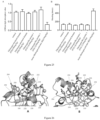
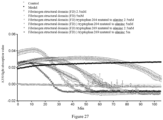
- the amino acid sequence contained in this protein can bind to the peptide segment of the substrate GPRP, under the condition that the existence of the key sites of this amino acid sequence as well as the same structure or 80% of the same structure is guaranteed, the AA in the amino acid sequence can be any functional amino acid, and the adoption of AA with different functions will also bring about different compounding efficacies to the said protein; at the same time, the mutation of certain key sites in the amino acid sequence of this protein may also achieve the effect of enhancing its thrombosis inhibition function, such as in the case where tryptophan at position 204 and/or 269 is mutated to alanine, the cleavage of aggregated fibrin by the mutant is significantly enhanced compared to that in the non-mutated form (shown in Figure 27 ).
- the amino acid sequence comprises tryptophan at position 204, tyrosine at position 222, cysteine at position 226, glutamic acid at position 229, aspartic acid at position 230, cysteine at position 239, histidine at position 240, aspartic acid at position 258, tyrosine at position 264, and tryptophan at position 269.
- the amino acid sites listed in the above amino acid sequences are key amino acid sites that can bind to the substrate GPRP (Gly-Pro-Arg-Pro) peptide.
- the amino acid sequences can specifically and competitively bind to the substrate GPRP by hydrophobic bonding, hydrogen bonding, or salt bonding through these key amino acid sites, as shown in Figure 26 , which competitively occupy the binding sites of the peptide that can bind to the fibrinopeptide A, thus achieving the effect of inhibiting thrombosis or of slowing down the progress of thrombosis by inhibiting the assembly of fibrin and inhibiting the activity of fibrin.
- a second point of the present invention is to provide Fibrinogen like protein 1, being the protein shown in any one of the following items and comprising the amino acid sequence as previously described:
- Fibrinogen like protein 1 comprises a fibrinogen structural domain protein (FD), and the FD structural domain protein alone also has the same or a similar function as FGL1; wherein the amino acid sequence of FGL1 is as shown in SEQ ID No. 1 in the sequence table, and the amino acid sequence of the FD structural domain protein alone is as shown at positions 48-290 in the sequence table in SEQ ID No. 1.
- Fibrinogen like protein 1 FGL1
- SEQ ID No. 1 SEQ ID No. 1:
- a third point of the present invention is the provision of nucleic acid molecules encoding the said Fibrinogen like protein 1.
- said nucleic acid molecule is a gene; said gene is a DNA molecule described in any one of the following:
- Fibrinogen like protein 1 FGL1
- the nucleic acid sequence of the Fibrinogen structural domain protein (FD) is shown below, SEQ ID No. 4:
- a fourth point of the present invention is the provision of expression cassettes, recombinant vectors, recombinant bacteria, or transgenic cell lines comprising said nucleic acid molecules.
- a fifth point of the present invention is the provision of an application of the above-described Fibrinogen like protein 1 (FGL1) or of the above-described nucleic acid molecules or the above-described recombinant vectors, recombinant bacteria, or transgenic cell line, said application being at least any one of the following:
- Fibrinogen like protein 1 FGL1
- fibrinogen structural domain protein FD
- said drug for treating a thrombosis-related disease is a drug having Fibrinogen like protein 1 (FGL1) or fibrinogen structural domain protein (FD) as an active ingredient.
- Said drug for the treatment of thrombosis-related disorders can be used for the treatment of thrombotic diseases caused by a variety of reasons, as well as for the prevention of thrombotic diseases, at the same time, and for the prevention and treatment of a variety of disorders associated with increased fibrin activity, decreased fibrinolytic capacity, and shortening of the plasma's activated partial thromboplastin time and/or plasminogen time and/or prothrombin time.
- Fibrinogen like protein 1 comprises Fibrinogen structural domain proteins (FDs), and its mechanism of action is that it can inhibit fibrin assembly during thrombosis by competing for binding of the fibrin ⁇ subunit to fibrinopeptide A.
- FDs Fibrinogen structural domain proteins
- Fibrinogen like protein 1 may also be mutated to increase its affinity for fibrinopeptide A, thereby improving the drug's efficacy.
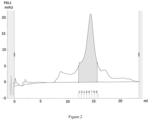
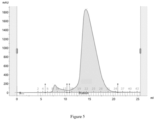
- the method of preparation of said protein is to clone the gene encoding said protein into a eukaryotic expression vector, to culture eukaryotic cells to express said protein in serum-free medium, purify the protein by using a Ni-NTA affinity column, and then further purify the protein by gel filtration using a Superdex 200 10/300 GL chromatographic column, to obtain a highly purified protein.
- said product is a pharmaceutical product, said pharmaceutical product comprising a vaccine product.
- said type of drug product comprises a DNA drug, an mRNA drug, a protein drug, or an adenovirus drug.
- Said drug product for the prevention or treatment of thrombotic diseases including but not limited to the types as mentioned above of products, which may be administered in various forms of carriers, such as plasmid encapsulation, microsphere encapsulation, exosome carrying, etc., and may also be administered in multiple forms of protein-carrying delivery modes, such as protein-compound conjugation delivery, protein-peptide conjugation delivery, protein-small-molecule-drug conjugation delivery, etc., which ultimately aim to ensure the biological activity of said Fibrinogen like protein 1 (FGL1) or said fibrinogen structural domain protein (FD) described in the present invention, and ingesting the active ingredient through different delivery methods to inhibit the assembly of fibrin.
- FGL1 Fibrinogen like protein 1
- FD fibrinogen structural domain protein
- said product is modified with a structure for crossing the blood-brain barrier.
- said structure modified for crossing the blood-brain barrier is a brain-targeting ligand.
- the brain-targeting ligand includes but is not limited to, RVG peptide, stearic acid-transferrin, and carrier protein E.
- the said pharmaceutical product for preventing or treating thrombotic disease can also be combined with a variety of targeting ligands, and a more prominent targeting ligand modification is to combine the protein or the structural domain protein with the brain-targeting ligand to facilitate its breakthrough of the blood-brain barrier (BBB), thereby realizing supply of drugs to the organism for treatment for brain thrombosis.
- BBB blood-brain barrier
- the present invention is not limited to this, as it can likewise be combined with other structures or forms of targeting ligands, thereby realizing targeted therapy for different lesions.
- said drug also comprises a therapeutic agent that can be combined.
- said combinable therapeutic agents are urokinase, streptokinase,reteplase, tissue fibrinogen activator, respectively.
- Fibrinogen like protein 1 FGL1
- FGL1 Fibrinogen like protein 1
- existing antithrombotic drugs urokinase and tissue fibrinogen activator, etc.
- a sixth point of the present invention is to provide a biomaterial; said biomaterial is a nucleic acid molecule capable of expressing said Fibrinogen like protein 1 (FGL1) or an expression cassette, a recombinant vector, a recombinant bacterium, or a transgenic cell line containing said nucleic acid molecule.
- FGL1 Fibrinogen like protein 1
- antithrombotic drugs can be categorized into three groups according to different mechanisms of action, which respectively are:
- the present invention provides proteins containing an amino acid sequence that can bind to a peptide fragment of the substrate GPRP, Fibrinogen like protein 1 (FGL1) containing this amino acid sequence, and its active structural domain (FD), and the application of the proteins mentioned above in the preparation of a product for inhibiting the assembly of fibrin, said proteins containing an amino acid sequence that can bind to the peptide fragment of the substrate GPRP, Fibrinogen like protein 1 (FGL1), its fibrinogen structural domain (FD), and mutants thereof, which have different mechanisms of action from existing drugs, can inhibit fibrin assembly during thrombosis by competing for the fibrin substrate-binding pocket, and through mutation, can be made to have a stronger affinity for the substrate, which can effectively enhance the effectiveness of the use of thrombosis therapy drugs.
- FGL1 Fibrinogen like protein 1
- FD fibrinogen structural domain
- the mechanism of action of FGL1 and FD is to destroy the assembly process of fibrin, so it has an excellent thrombolytic effect compared with the existing thrombolytic drugs.
- the thrombolytic process is gentler and does not produce side effects like bleeding. That is to say, the present invention is to act on fibrin, not Fibrinogen, which also avoids the technological problem caused by the existing thrombosis therapy drug in the use of the process due to the action on Fibrinogen, which leads to very easily cause bleeding as a side effect of the drug; it is also due to this mechanism of action, the present invention will provide the FGL1 and the FD and a variety of existing thrombosis therapy drugs (such as alteplase, etc.) when used in conjunction, can synergistically treat thrombotic diseases, and at the same time, it can also substantially reduce the incidence of the prevalent bleeding side effects of the existing antithrombotic drugs, expanding a new avenue for the treatment of thrombotic diseases.
- any 17 amino acids connected between tryptophan and tyrosine any 3 amino acids connected between tyrosine and cysteine, any 2 amino acids connected between cysteine and glutamic acid, a direct connection between glutamic acid and aspartic acid, any 8 amino acids connected between aspartic acid and another cysteine, a direct connection between another cysteine and histidine, any 17 amino acids connected between histidine and another aspartic acid, any 5 amino acids connected between another aspartic acid and another tyrosine, and any 4 amino acids connected between another tyrosine and another tryptophan.
- fibrinogen like protein 1 being the protein shown in any one of the following items and containing the amino acid sequence as previously described in example 1:
- Fibrinogen like protein 1 (FGL1) is shown below:
- the amino acid sequence of the fibrinogen structural domain protein (FD) is shown below:
- the amino acid sequence comprises tryptophan at position 204, tyrosine at position 222, cysteine at position 226, glutamic acid at position 229, aspartic acid at position 230, cysteine at position 239, histidine at position 240, aspartic acid at position 258, tyrosine at position 264, and tryptophan at position 269.
- the amino acid sites listed in the above amino acid sequences are key amino acid sites that can bind to the substrate GPRP (Gly-Pro-Arg-Pro) peptide.
- the amino acid sequences can specifically and competitively bind to the substrate GPRP by hydrophobic bonding, hydrogen bonding, or salt bonding through these key amino acid sites, as shown in Figure 26 , which competitively occupy the binding sites of the peptide that can bind to the fibrinopeptide A, thus achieving the effect of inhibiting thrombosis or of slowing down the progress of thrombosis by inhibiting the assembly of fibrin and inhibiting the activity of fibrin.
- the present invention also provides nucleic acid molecules encoding Fibrinogen like protein 1.
- the nucleic acid molecule is a gene; the gene is a DNA molecule described in any one of the following:
- Fibrinogen like protein 1 (FGL1) is shown below:
- the nucleic acid sequence of the fibrinogen structural domain protein (FD) is shown below:
- the present invention also provides expression cassettes, recombinant vectors, recombinant bacteria or transgenic cell lines comprising the above nucleic acid molecules.
- the present invention provides an application of the above-described Fibrinogen like protein 1 or of the above-described nucleic acid molecules or the above-described recombinant vectors, recombinant bacteria, or transgenic cell line, the application being at least any one of the following:
- the drug for treating a thrombosis-related disease is a drug having Fibrinogen like protein 1 (FGL1) or fibrinogen structural domain protein (FD) as an active ingredient.
- FGL1 Fibrinogen like protein 1
- FD fibrinogen structural domain protein
- the drug for the treatment of thrombosis-related disorders can be used for the treatment of thrombotic diseases caused by a variety of reasons, as well as for the prevention of thrombotic diseases, at the same time, and for the prevention and treatment of a variety of disorders associated with increased fibrin activity, decreased fibrinolytic capacity, and shortening of the plasma's activated partial thromboplastin time and/or plasminogen time and/or prothrombin time.
- Fibrinogen like protein 1 comprises Fibrinogen structural domain proteins (FDs), and its mechanism of action is that it can inhibit fibrin assembly during thrombosis by competing for binding of the fibrin ⁇ subunit to fibrinopeptide A.
- FDs Fibrinogen structural domain proteins
- the method of preparation of the protein is to clone the gene encoding the protein into a eukaryotic expression vector, culture eukaryotic cells to express the protein in serum-free medium, purify the protein by using a Ni-NTA affinity column, and then further purify the protein by gel filtration using a Superdex 200 10/300 GL chromatographic column, to obtain a highly purified protein.
- the structure modified for crossing the blood-brain barrier is a brain-targeting ligand.
- the brain-targeting ligand includes but is not limited to RVG peptide, stearic acid-transferrin, and carrier protein E.
- the pharmaceutical product for preventing or treating thrombotic disease can also be combined with a variety of targeting ligands.
- a more prominent targeting ligand modification is to combine the protein or the structural domain protein with the brain-targeting ligand to facilitate its breakthrough of the blood-brain barrier (BBB), thereby realizing supply of drugs to the organism for treatment for brain thrombosis.
- BBB blood-brain barrier
- the present invention is not limited to this, as it can likewise be combined with other structures or forms of targeting ligands, thereby realizing targeted therapy for different lesions.
- the drug also comprises a therapeutic agent that can be used in combination.
- the combinable therapeutic agents are urokinase, streptokinase,reteplase, reteplase or tissue fibrinogen activator, respectively.
- Fibrinogen like protein 1 FGL1
- FGL1 Fibrinogen like protein 1
- existing antithrombotic drugs urokinase and tissue fibrinogen activator, etc.
- the present invention provides a biomaterial, the biomaterial being a nucleic acid molecule capable of expressing the above-described protein or an expression cassette, a recombinant vector, a recombinant bacterium, or a transgenic cell line containing the nucleic acid molecule.
- Fibrinogen like protein 1 FGL1
- fibrinogen structural domain FD
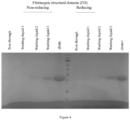
- the gene encoding the Fibrinogen like protein 1 (FGL1) protein was cloned into a eukaryotic expression vector, and eukaryotic cells were cultured in serum-free medium to express the said protein, which was purified by using a Ni-NTA affinity column. Then the protein was further purified by gel filtration using a Superdex 200 10/300 GL chromatographic column, to obtain the high purity of purified protein, which was verified with SDS- PAGE.
- FGL1 Fibrinogen like protein 1
- fibrinogen structural domain protein the gene coding for Fibrinogen like protein 1 (FGL1) protein was used as a template, and the expression vector was obtained using PCR and homologous recombination.
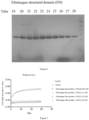
- Eukaryotic cells were cultured in serum-free medium to express the proteins, which were purified using a Ni-NTA affinity column. Then the proteins were further purified by gel filtration using a Superdex 200 10/300 GL chromatographic column to obtain high-purity purified proteins, which was verified by SDS-PAGE.
- Fibrinogen like protein 1 (FGL1) inhibits fibrin aggregation:
- Fibrinogen protein also called coagulation factor I
- Fibrinogen protein is a hexameric complex composed of three subunits of ⁇ 2 ⁇ 2 ⁇ 2, an important thrombus component. Fibrin aggregation is mainly mediated by thrombin and coagulation factor 13.
- Coagulation factor 13 catalyzes the covalent linkage of amino acids in the C-terminal structural domain of the ⁇ or ⁇ subunit.
- Thrombin cleaves the ⁇ and ⁇ subunits of fibrin, exposing fibrinopeptide A (Knob A) and fibrinopeptide B (Knob B).
- the exposed fibrinopeptide A (Knob A) and fibrinopeptide B (Knob B) insert into the C-terminal structural domains of the ⁇ and ⁇ subunits, respectively, of another fibrin molecule, thereby promoting fibrin aggregation.
- tissue plasminogen activator tPA can directly target and degrade fibrin, the effect of some inhibitory factors makes it used with large dosages in clinical practice, causing side effects mainly including neurotoxicity and bleeding. Studies have shown that the loose structure of fibrin helps to enhance the degradation of tissue plasminogen activator tPA.
- Fibrinogen like protein 1 (FGL1) can inhibit fibrin aggregation by targeting fibrin.
- Multifunctional enzyme marker M200PRO detected the light scattering process, and the instrument excitation light was adjusted to 350 nm and emission light to 350 nm.
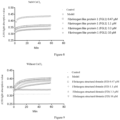
- 3.3 ⁇ M of Fibrinogen in the control group 3.3 ⁇ M of Fibrinogen and 2.5 U/ml of thrombin in the model group and 3.3 ⁇ M of Fibrinogen and 2.5 U/ml thrombin and different dose of Fibrinogen related protein 1 (FGL1). All the above systems were in 20 mM Tris-HCl, pH 7.4, 150 mM NaCl ⁇ 5 mM CaCl 2 solution in a 100 ⁇ l/well (96-well plate). The kinetic curve was measured by assaying every minute at 25°C.
- Figure 7 shows the effect of fibrinogen-like protein 1 (FGL1) on fibrin aggregation in the absence of calcium chloride.
- Fibrinogen like protein 1 FGL1
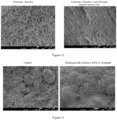
- Figure 11 shows a comparative graph of the effect of fibrinogen like protein 1 (FGL1) on fibrin aggregation observed by scanning electron microscopy.
- FGL1 fibrinogen like protein 1
- Fibrinogen structural domain (FD) inhibits fibrin aggregation:
- fibrinogen structural domain can inhibit fibrin aggregation by targeting fibrin.
- Multifunctional enzyme marker M200PRO detected the light scattering process; the instrument excitation light was adjusted to 350 nm, and the emission light was adjusted to 350 nm.
- 3.3 ⁇ M of Fibrinogen in the control group 3.3 ⁇ M of Fibrinogen and 2.5 U/ml of thrombin in the model group, and 3.3 ⁇ M of Fibrinogen and 2.5 U/ml thrombin and different dose of fibrinogen structural domain (FD).
- the above systems were in 20 mM Tris-HCl, pH 7.4, 150 mM NaCl ⁇ 5 mM CaCl 2 solution. The kinetic curves were measured at 25°C by detecting the A350 absorption values every minute.
- Figure 9 shows the effect of the fibrinogen structural domain (FD) on fibrin aggregation in the absence of calcium chloride.
- Figure 12 shows a comparative graph of the effect of fibrinogen structural domain (FD) on fibrin aggregation observed by scanning electron microscopy.
- the thrombus formed by fibrin aggregation becomes thinner and looser in structure under the treatment of fibrinogen structural domain (FD).
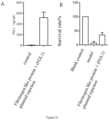
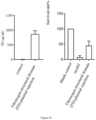
- Thrombin 15 U/200 ⁇ l PBS/ per mouse was injected into the tail vein for modelling, and the number of mice in each group that died within 1 hour after injection was recorded to calculate the protection rate of Fibrinogen like protein 1 (FGL1) overexpression.
- FGL1 Fibrinogen like protein 1
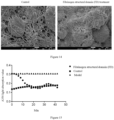
- Figure 13 shows a comparative graph of the effect of fibrinogen like protein 1 (FGL1) on thrombus morphology in mice, as observed by scanning electron microscopy.
- FGL1 fibrinogen like protein 1
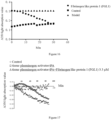
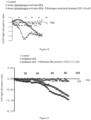
- a control plot of the effect of action of Fibrinogen like protein 1 (FGL1) on the cleavage of aggregated fibrin is shown in Figure 16 .
- Figure 14 shows a scanning electron microscopy observation of the effect of fibrinogen structural domain (FD) on the morphology of mouse thrombus. Under the treatment of fibrinogen structural domain (FD), the thrombus becomes thinner and looser in structure.
- FD fibrinogen structural domain
- Figure 15 shows a control plot of the effect of the action of the fibrinogen structural domain (FD) on the cleavage of aggregated fibrin.
- Figure 22 shows statistical graphs of data from the thrombin-induced thrombus model improved by overexpression of the fibrinogen structural domain (FD) plasmid injected into mice.
- FD fibrinogen structural domain
- Figure 23 shows an operational procedure for Fibrinogen like protein 1 (FGL1) modified by RVG peptide and Cy5.5 fluorescence.
- FGL1 Fibrinogen like protein 1
- a graph of the results of the distribution assay of Fibrinogen like protein 1 (FGL1) in mouse brain tissue promoted by modification of RVG peptide is shown in Figure 24 .
- Figure 17 shows a comparative plot of fibrinogen like protein 1 (FGL1) synergistically dissolving fibrin aggregates with tissue fibrinogen activator tPA.
- FGL1 fibrinogen like protein 1
- a comparative plot of fibrinogen structural domain (FD) synergistically dissolving fibrin aggregates with tissue fibrinogen activator tPA is shown in Figure 18 .
- FIG. 19 A comparative plot of Fibrinogen like protein 1 (FGL1) synergistically dissolving fibrin aggregates with urokinase uPA is shown in Figure 19 .
- Figure 20 shows a comparative plot of fibrinogen structural domain (FD) synergistically dissolving fibrin aggregates with urokinase uPA.
- FD fibrinogen structural domain
- mice Sixty female eight-week-old BALB/c mice (18-22 g) were randomly divided into five groups, i.e., normal control, Fibrinogen like protein 1 (FGL1) 100 mg/kg, Fibrinogen like protein 1 (FGL1) 30 mg/kg fibrinogen structural domain (FD) 100 mg/kg, fibrinogen structural domain (FD) 30 mg/kg and alteplase 10 mg/kg, tail vein administration was administered for 1 hr. Mice were anaesthetized with sodium pentobarbital, and bleeding time was measured. The tails were severed at 5 mm from the tip of the mouse's tail, while a stopwatch was used for timing.
- FGL1 Fibrinogen like protein 1
- FGL1 Fibrinogen like protein 1
- FD fibrinogen structural domain
- FD fibrinogen structural domain
- Fibrinogen like protein 1 FGL1
- FD fibrinogen structural domain fibrinogen structural domain
- Mutation of certain key sites in this protein's amino acid sequence can also enhance its function of inhibiting thrombosis.
- the tryptophan mutation at the key sites of position 204 and 269 was mutated to alanine, and then the method of Example 6 was applied to the mutated fibrinogen structural domain (FD), and comparison of the cleavage effect of the obtained fibrinogen structural domain (FD) mutant on aggregated fibrin is shown in Figure 27 ; as can be seen from the comparison results in Figure 27 , the cleavage of aggregated fibrin by the mutant was significantly enhanced compared to that in the unmutated form.
Landscapes
- Health & Medical Sciences (AREA)
- Life Sciences & Earth Sciences (AREA)
- Chemical & Material Sciences (AREA)
- General Health & Medical Sciences (AREA)
- Organic Chemistry (AREA)
- Genetics & Genomics (AREA)
- Engineering & Computer Science (AREA)
- Medicinal Chemistry (AREA)
- Molecular Biology (AREA)
- Bioinformatics & Cheminformatics (AREA)
- Pharmacology & Pharmacy (AREA)
- Animal Behavior & Ethology (AREA)
- Public Health (AREA)
- Veterinary Medicine (AREA)
- Proteomics, Peptides & Aminoacids (AREA)
- Zoology (AREA)
- Epidemiology (AREA)
- Biophysics (AREA)
- Biochemistry (AREA)
- Biotechnology (AREA)
- Hematology (AREA)
- Wood Science & Technology (AREA)
- General Engineering & Computer Science (AREA)
- Biomedical Technology (AREA)
- Toxicology (AREA)
- Gastroenterology & Hepatology (AREA)
- Microbiology (AREA)
- Plant Pathology (AREA)
- Diabetes (AREA)
- Chemical Kinetics & Catalysis (AREA)
- General Chemical & Material Sciences (AREA)
- Nuclear Medicine, Radiotherapy & Molecular Imaging (AREA)
- Physics & Mathematics (AREA)
- Analytical Chemistry (AREA)
- Immunology (AREA)
- Mycology (AREA)
- Peptides Or Proteins (AREA)
- Medicines That Contain Protein Lipid Enzymes And Other Medicines (AREA)
- Preparation Of Compounds By Using Micro-Organisms (AREA)
- Micro-Organisms Or Cultivation Processes Thereof (AREA)
Applications Claiming Priority (2)
| Application Number | Priority Date | Filing Date | Title |
|---|---|---|---|
| CN202111290823.9A CN113968901A (zh) | 2021-11-02 | 2021-11-02 | 可与底物结合的蛋白序列在制备抑制纤维蛋白组装的产品中的应用 |
| PCT/CN2021/128944 WO2023077413A1 (zh) | 2021-11-02 | 2021-11-05 | 可与底物结合的蛋白序列在制备抑制纤维蛋白组装的产品中的应用 |
Publications (2)
| Publication Number | Publication Date |
|---|---|
| EP4428146A1 true EP4428146A1 (de) | 2024-09-11 |
| EP4428146A4 EP4428146A4 (de) | 2025-10-01 |
Family
ID=79589409
Family Applications (1)
| Application Number | Title | Priority Date | Filing Date |
|---|---|---|---|
| EP21962927.6A Pending EP4428146A4 (de) | 2021-11-02 | 2021-11-05 | Verwendung einer proteinsequenz zur bindung an ein substrat bei der herstellung eines produkts zur hemmung der fibrinanordnung |
Country Status (7)
| Country | Link |
|---|---|
| US (1) | US20240352090A1 (de) |
| EP (1) | EP4428146A4 (de) |
| JP (1) | JP2024539393A (de) |
| KR (1) | KR20240067133A (de) |
| CN (2) | CN113968901A (de) |
| MX (1) | MX2024005316A (de) |
| WO (2) | WO2023077413A1 (de) |
Families Citing this family (2)
| Publication number | Priority date | Publication date | Assignee | Title |
|---|---|---|---|---|
| CN113968901A (zh) * | 2021-11-02 | 2022-01-25 | 南京大学 | 可与底物结合的蛋白序列在制备抑制纤维蛋白组装的产品中的应用 |
| WO2024170500A1 (en) * | 2023-02-13 | 2024-08-22 | Institut National de la Santé et de la Recherche Médicale | Methods of treating iron deficiency-related diseases |
Family Cites Families (8)
| Publication number | Priority date | Publication date | Assignee | Title |
|---|---|---|---|---|
| AU3533295A (en) * | 1994-09-22 | 1996-04-09 | Taisho Pharmaceutical Co., Ltd. | Process for producing recombinant hepatocyte proliferating substance |
| CN1800382A (zh) * | 2005-01-07 | 2006-07-12 | 中国人民解放军军事医学科学院放射医学研究所 | 重组人生肝素的制备方法及其在制备抗肝损伤药物中的用途 |
| WO2017078318A1 (ko) * | 2015-11-03 | 2017-05-11 | 한국원자력의학원 | 소라페닙 민감성 예측용 바이오마커 조성물 |
| CN108404119B (zh) * | 2018-05-07 | 2020-09-25 | 江苏康缘瑞翱生物医药科技有限公司 | Fgf-21类似物的制备及在血栓治疗中的应用 |
| CN113166972A (zh) * | 2018-06-11 | 2021-07-23 | 耶鲁大学 | 新型免疫检查点抑制剂 |
| CN110029168B (zh) * | 2019-05-09 | 2020-02-14 | 山东省立医院 | 基因fgl1在制备结直肠癌和肺癌诊断试剂盒的应用及试剂盒 |
| CN115335087A (zh) * | 2020-04-01 | 2022-11-11 | 南京传奇生物科技有限公司 | 用于减少同种异体细胞疗法中的移植物排斥的组合物和方法 |
| CN113968901A (zh) * | 2021-11-02 | 2022-01-25 | 南京大学 | 可与底物结合的蛋白序列在制备抑制纤维蛋白组装的产品中的应用 |
-
2021
- 2021-11-02 CN CN202111290823.9A patent/CN113968901A/zh active Pending
- 2021-11-05 MX MX2024005316A patent/MX2024005316A/es unknown
- 2021-11-05 KR KR1020247014707A patent/KR20240067133A/ko active Pending
- 2021-11-05 EP EP21962927.6A patent/EP4428146A4/de active Pending
- 2021-11-05 JP JP2024526724A patent/JP2024539393A/ja active Pending
- 2021-11-05 WO PCT/CN2021/128944 patent/WO2023077413A1/zh not_active Ceased
-
2022
- 2022-11-01 CN CN202211357807.1A patent/CN116478267B/zh active Active
-
2023
- 2023-10-30 WO PCT/CN2023/127768 patent/WO2024093915A1/zh not_active Ceased
-
2024
- 2024-04-29 US US18/650,037 patent/US20240352090A1/en active Pending
Also Published As
| Publication number | Publication date |
|---|---|
| WO2023077413A1 (zh) | 2023-05-11 |
| JP2024539393A (ja) | 2024-10-28 |
| MX2024005316A (es) | 2024-05-17 |
| US20240352090A1 (en) | 2024-10-24 |
| EP4428146A4 (de) | 2025-10-01 |
| CN113968901A (zh) | 2022-01-25 |
| CN116478267A (zh) | 2023-07-25 |
| CN116478267B (zh) | 2024-07-02 |
| KR20240067133A (ko) | 2024-05-16 |
| WO2024093915A1 (zh) | 2024-05-10 |
Similar Documents
| Publication | Publication Date | Title |
|---|---|---|
| CN102316893B (zh) | 因子Xa抑制剂的解毒剂及其与血液凝固剂组合使用的方法 | |
| JP7000394B2 (ja) | 補因子の非存在下で凝固活性を有する、及び/又は、第ix因子凝固活性が増加した第ix因子変異体、並びに、出血性疾患を処置するためのその使用 | |
| US12527836B2 (en) | Gla domains as targeting agents | |
| US20240352090A1 (en) | Use of protein sequence capable of binding to substrate in preparation of product for inhibiting fibrin assembly | |
| JP5558106B2 (ja) | 凝固第vii因子関連ポリペプチドの皮下投与 | |
| EP1651252A2 (de) | Aktivierte protein c varianten mit normaler zytoprotektiver aktivität aber verringerter gerinnungshemmender aktivität | |
| JPH10510271A (ja) | ジスルフィド−シクロ−[H−Cys−Glu−Gln−Tyr−Cys−OH]および血液凝固障害におけるその用途 | |
| HK40012733A (en) | Gla domains as therapeutic agents | |
| HK40012732A (en) | Gla domains as targeting agents | |
| WO2003084466A2 (en) | FACTORVIIa COMPOSITIONS | |
| HK1161138A (en) | Antidotes for factor xa inhibitors and methods of using the same in combination with blood coagulating agents | |
| HK1161138B (en) | Antidotes for factor xa inhibitors and methods of using the same in combination with blood coagulating agents | |
| NZ751494B2 (en) | Gla domains as therapeutic agents | |
| HK1216649B (zh) | 作为治疗试剂的gla结构域 | |
| NZ710958B2 (en) | Gla domains as therapeutic agents | |
| HK1215263B (zh) | 作为靶向试剂的gla结构域 |
Legal Events
| Date | Code | Title | Description |
|---|---|---|---|
| STAA | Information on the status of an ep patent application or granted ep patent |
Free format text: STATUS: THE INTERNATIONAL PUBLICATION HAS BEEN MADE |
|
| PUAI | Public reference made under article 153(3) epc to a published international application that has entered the european phase |
Free format text: ORIGINAL CODE: 0009012 |
|
| STAA | Information on the status of an ep patent application or granted ep patent |
Free format text: STATUS: REQUEST FOR EXAMINATION WAS MADE |
|
| 17P | Request for examination filed |
Effective date: 20240424 |
|
| AK | Designated contracting states |
Kind code of ref document: A1 Designated state(s): AL AT BE BG CH CY CZ DE DK EE ES FI FR GB GR HR HU IE IS IT LI LT LU LV MC MK MT NL NO PL PT RO RS SE SI SK SM TR |
|
| DAV | Request for validation of the european patent (deleted) | ||
| DAX | Request for extension of the european patent (deleted) | ||
| STAA | Information on the status of an ep patent application or granted ep patent |
Free format text: STATUS: EXAMINATION IS IN PROGRESS |
|
| A4 | Supplementary search report drawn up and despatched |
Effective date: 20250829 |
|
| RIC1 | Information provided on ipc code assigned before grant |
Ipc: C07K 14/475 20060101AFI20250825BHEP Ipc: C07K 1/22 20060101ALI20250825BHEP Ipc: C07K 1/16 20060101ALI20250825BHEP Ipc: C12N 15/12 20060101ALI20250825BHEP Ipc: C12N 15/85 20060101ALI20250825BHEP Ipc: A61K 48/00 20060101ALI20250825BHEP Ipc: A61K 39/00 20060101ALI20250825BHEP Ipc: A61K 38/18 20060101ALI20250825BHEP Ipc: A61K 47/64 20170101ALI20250825BHEP Ipc: A61K 45/06 20060101ALI20250825BHEP Ipc: A61P 7/02 20060101ALI20250825BHEP |
|
| 17Q | First examination report despatched |
Effective date: 20250910 |