EP4428302A2 - Revêtement de sol à base d'aragonite - Google Patents
Revêtement de sol à base d'aragonite Download PDFInfo
- Publication number
- EP4428302A2 EP4428302A2 EP24191779.8A EP24191779A EP4428302A2 EP 4428302 A2 EP4428302 A2 EP 4428302A2 EP 24191779 A EP24191779 A EP 24191779A EP 4428302 A2 EP4428302 A2 EP 4428302A2
- Authority
- EP
- European Patent Office
- Prior art keywords
- aragonite
- oolitic
- particles
- microporous
- oolitic aragonite
- Prior art date
- Legal status (The legal status is an assumption and is not a legal conclusion. Google has not performed a legal analysis and makes no representation as to the accuracy of the status listed.)
- Pending
Links
Images

Classifications
-
- A—HUMAN NECESSITIES
- A01—AGRICULTURE; FORESTRY; ANIMAL HUSBANDRY; HUNTING; TRAPPING; FISHING
- A01G—HORTICULTURE; CULTIVATION OF VEGETABLES, FLOWERS, RICE, FRUIT, VINES, HOPS OR SEAWEED; FORESTRY; WATERING
- A01G20/00—Cultivation of turf, lawn or the like; Apparatus or methods therefor
-
- A—HUMAN NECESSITIES
- A01—AGRICULTURE; FORESTRY; ANIMAL HUSBANDRY; HUNTING; TRAPPING; FISHING
- A01G—HORTICULTURE; CULTIVATION OF VEGETABLES, FLOWERS, RICE, FRUIT, VINES, HOPS OR SEAWEED; FORESTRY; WATERING
- A01G24/00—Growth substrates; Culture media; Apparatus or methods therefor
- A01G24/10—Growth substrates; Culture media; Apparatus or methods therefor based on or containing inorganic material
-
- A—HUMAN NECESSITIES
- A01—AGRICULTURE; FORESTRY; ANIMAL HUSBANDRY; HUNTING; TRAPPING; FISHING
- A01G—HORTICULTURE; CULTIVATION OF VEGETABLES, FLOWERS, RICE, FRUIT, VINES, HOPS OR SEAWEED; FORESTRY; WATERING
- A01G24/00—Growth substrates; Culture media; Apparatus or methods therefor
- A01G24/40—Growth substrates; Culture media; Apparatus or methods therefor characterised by their structure
- A01G24/42—Growth substrates; Culture media; Apparatus or methods therefor characterised by their structure of granular or aggregated structure
-
- A—HUMAN NECESSITIES
- A01—AGRICULTURE; FORESTRY; ANIMAL HUSBANDRY; HUNTING; TRAPPING; FISHING
- A01G—HORTICULTURE; CULTIVATION OF VEGETABLES, FLOWERS, RICE, FRUIT, VINES, HOPS OR SEAWEED; FORESTRY; WATERING
- A01G9/00—Cultivation in receptacles, forcing-frames or greenhouses; Edging for beds, lawn or the like
- A01G9/02—Receptacles, e.g. flower-pots or boxes; Glasses for cultivating flowers
- A01G9/033—Flat containers for turf, lawn or the like, e.g. for covering roofs
-
- C—CHEMISTRY; METALLURGY
- C05—FERTILISERS; MANUFACTURE THEREOF
- C05D—INORGANIC FERTILISERS NOT COVERED BY SUBCLASSES C05B, C05C; FERTILISERS PRODUCING CARBON DIOXIDE
- C05D3/00—Calcareous fertilisers
- C05D3/02—Calcareous fertilisers from limestone, calcium carbonate, calcium hydrate, slaked lime, calcium oxide, waste calcium products
-
- C—CHEMISTRY; METALLURGY
- C08—ORGANIC MACROMOLECULAR COMPOUNDS; THEIR PREPARATION OR CHEMICAL WORKING-UP; COMPOSITIONS BASED THEREON
- C08J—WORKING-UP; GENERAL PROCESSES OF COMPOUNDING; AFTER-TREATMENT NOT COVERED BY SUBCLASSES C08B, C08C, C08F, C08G or C08H
- C08J9/00—Working-up of macromolecular substances to porous or cellular articles or materials; After-treatment thereof
- C08J9/04—Working-up of macromolecular substances to porous or cellular articles or materials; After-treatment thereof using blowing gases generated by a previously added blowing agent
-
- E—FIXED CONSTRUCTIONS
- E01—CONSTRUCTION OF ROADS, RAILWAYS, OR BRIDGES
- E01C—CONSTRUCTION OF, OR SURFACES FOR, ROADS, SPORTS GROUNDS, OR THE LIKE; MACHINES OR AUXILIARY TOOLS FOR CONSTRUCTION OR REPAIR
- E01C13/00—Pavings or foundations specially adapted for playgrounds or sports grounds; Drainage, irrigation or heating of sports grounds
- E01C13/02—Foundations, e.g. with drainage or heating arrangements
-
- E—FIXED CONSTRUCTIONS
- E01—CONSTRUCTION OF ROADS, RAILWAYS, OR BRIDGES
- E01C—CONSTRUCTION OF, OR SURFACES FOR, ROADS, SPORTS GROUNDS, OR THE LIKE; MACHINES OR AUXILIARY TOOLS FOR CONSTRUCTION OR REPAIR
- E01C13/00—Pavings or foundations specially adapted for playgrounds or sports grounds; Drainage, irrigation or heating of sports grounds
- E01C13/08—Surfaces simulating grass ; Grass-grown sports grounds
-
- E—FIXED CONSTRUCTIONS
- E01—CONSTRUCTION OF ROADS, RAILWAYS, OR BRIDGES
- E01C—CONSTRUCTION OF, OR SURFACES FOR, ROADS, SPORTS GROUNDS, OR THE LIKE; MACHINES OR AUXILIARY TOOLS FOR CONSTRUCTION OR REPAIR
- E01C13/00—Pavings or foundations specially adapted for playgrounds or sports grounds; Drainage, irrigation or heating of sports grounds
- E01C13/08—Surfaces simulating grass ; Grass-grown sports grounds
- E01C13/083—Construction of grass-grown sports grounds; Drainage, irrigation or heating arrangements therefor
-
- C—CHEMISTRY; METALLURGY
- C04—CEMENTS; CONCRETE; ARTIFICIAL STONE; CERAMICS; REFRACTORIES
- C04B—LIME, MAGNESIA; SLAG; CEMENTS; COMPOSITIONS THEREOF, e.g. MORTARS, CONCRETE OR LIKE BUILDING MATERIALS; ARTIFICIAL STONE; CERAMICS; REFRACTORIES; TREATMENT OF NATURAL STONE
- C04B2111/00—Mortars, concrete or artificial stone or mixtures to prepare them, characterised by specific function, property or use
- C04B2111/00474—Uses not provided for elsewhere in C04B2111/00
- C04B2111/00767—Uses not provided for elsewhere in C04B2111/00 for waste stabilisation purposes
Definitions
- the present disclosure relates to compositions, systems, and methods of use of aragonite, and especially oolitic aragonite as infill material for artificial grass/turf, and/or as sub-growth substrate for natural grass.
- Artificial turf has become an increasingly attractive solution for many venues to reduce water consumption, enhance durability, and improve resistance to pet waste. Moreover, in dry conditions, artificial turf provides an 'evergreen' grass-like ground cover. However, mixed artificial grass materials and/or relatively long artificial grass blades require infill materials to stabilize the blades in a substantially natural looking manner and to prevent matting. To that end, several different infills are currently known in the art.
- crumb rubber can be used as a filler and is typically produced from recycled tires and so contains a number of known carcinogens. Moreover, due to its black color, the filler material will be very hot when exposed to the sun. Additionally, known rubber-based infill has no significant ammonia neutralization capabilities. Crumb rubber can be coated to render the product more acceptable as described, for example, in EP 1416009 and US 2005/0003193 . However, even with coating, numerous undesirable problems remain-in particular, the undesirable heating and the inability to neutralize ammonia from sources such as urine. Still further, crumb rubber has been suspected to leach toxic chemicals into waterways posing a risk to the environment, animals, and humans.
- silica sand can be used as infill material. Most silica sand is rough and angular in shape, resulting in compaction under pressure, which ultimately will compromise drainage capability. Moreover, most silica sand fillers are prone to dust formation upon installation and use, which may lead to silicosis. In addition, silica sand is known to heat up to undesirably high temperatures under sun exposure. While ceramic materials have been used instead of silica sand as disclosed in US 6818274 , dust formation is still problematic, and neither silica sand nor ceramics have ammonia neutralization capabilities.
- WO2008/115085 discloses composite filler materials comprising coconut shell, matured coconut husk, young coconut shell, young coconut husk, Manila hemp, lignin and cassava. Such materials may further be coated with antimicrobial agents as described in US 2010/0055461 . Unfortunately, even with a coating, nut-based fillers may trigger allergic reactions and are still prone to dust formation.
- infill materials can be attempted with water-filled superabsorbent materials such as polyacrylamide or polyacrylate as described in US 2006/0172092 .
- these materials are typically mechanically unstable and require replacement or refill.
- hollow cylindrical infill material has been used as described in US 2009/0286017 , but these materials are typically subject to compaction over time.
- Still other polymeric fillers are shaped as hollow spheres to provide shock absorption as disclosed in US 2011/0135851 . While such materials avoid at least some of the problems noted above, most or all of them still lack environmental compatibility and ammonia neutralization capabilities. As such, compaction, proper disposal, and/or pet waste remain significant issues.
- aragonite and especially microporous oolitic aragonite can be used as an infill material for artificial turf that is environmentally friendly, resists compaction, provides desirable thermal control, and enables ammonia neutralization.
- oolitic aragonite is relatively heavy, it will weigh down artificial grass effectively.
- the inventors have observed that oolitic aragonite is approximately 20 degrees Fahrenheit cooler than typical infill material and advantageously provides ammonia neutralization properties without toxicity or dusting.
- the aragonite particles comprise oolitic aragonite, which may be processed to a desired size or size rage ( e.g., micronized oolitic aragonite).
- the aragonite particles may have an average size of less than 1 mm, or may have an average size of between 250 micrometer and 500 micrometer.
- the aragonite particles will have a surface area of at least 0.9 m 2 /g, or at least 1.2 m 2 /g, or at least 1.5 m 2 /g. Additionally, the microporous oolitic aragonite particles have a uniformity constant of between about 1.2 to about 1.8.
- the at least some of the aragonite particles may be colored and/or comprise an antimicrobial agent (e.g., via coating or impregnation). Further contemplated aragonite particles comprise water or are even water saturated (particularly to control temperature). Therefore, in other embodiments the backing may have drainage holes or comprises a water permeable material.
- the inventors also contemplate a method of reducing temperature excursions of an artificial turf structure that includes the steps of providing an artificial turf structure that comprises a plurality of turf fibers coupled to a backing, and at least partially filling a space between the turf fibers with a plurality of aragonite particles to thereby reduce temperature excursions as compared to the artificial turf structure with a silica filler.
- such methods may reduce the temperature excursion by at least 10, or at least 20 °F
- the inventors contemplate a method of neutralizing ammonia from urine in an artificial turf structure that includes a step of providing an artificial turf structure that comprises a plurality of turf fibers coupled to a backing, and another step of at least partially filling a space between the turf fibers with a plurality of microporous oolitic aragonite particles, where advantageously, the microporous oolitic aragonite particles provide reactive calcium to thereby suppress ammonia volatilization from urea hydrolysis.
- the inventors also contemplate a method of reducing compaction, wrinkling, or matting of an artificial turf structure that includes a step of providing an artificial turf structure that comprises a plurality of turf fibers coupled to a backing, and another step of at least partially filling a space between the turf fibers with a plurality of aragonite particles to thereby reduce compaction or matting as compared to the artificial turf structure with a silica filler.
- the microporous oolitic aragonite particles have a uniformity constant of between about 1.2 to about 1.8.
- the microporous oolitic aragonite particles have a uniformity constant of between about 1.4 to 1.6.
- the inventors also contemplate a method of enhancing water drainage of an artificial turf structure that includes a step of providing an artificial turf structure that comprises a plurality of turf fibers coupled to a backing, and another step of at least partially filling a space between the turf fibers with a plurality of oolitic aragonite particles to thereby enhance water drainage as compared to the artificial turf structure with a silica filler.
- the enhanced drainage includes an artificial turf made with a plurality of microporous oolitic aragonite particles having an aeration porosity of between about 15% to about 30% at depth of about 6 inches to about 8 inches, and/or a saturation constant (K sat ) of at least 50 in/hr.
- the aragonite particles are contacted or even saturated with water.
- the aragonite particles comprise oolitic aragonite, which may be micronized to a desired size.
- suitable microporous oolitic aragonite particles may have an average size of between 250 micrometer and 500 micrometer.
- contemplated microporous oolitic aragonite particles may have a surface area of at least 0.9 m 2 /g, or at least 1.2 m 2 /g, or 1.5 m 2 /g.
- the microporous oolitic aragonite particles have a uniformity constant of between about 1.2 to about 1.8, and a saturation constant (K sat ) of at least 50 in/hr.
- the inventors contemplate a method of building a natural grass landscape that includes a step of providing or laying down a sub-growth substrate for natural grass that comprises a plurality of aragonite particles, and a further step of depositing and/or growing turf or topsoil with grass seed onto the sub-growth substrate.
- drainage conduits may be installed within the sub-growth substrate to assist proper drainage.
- aragonite and particularly oolitic aragonite will provide numerous benefits over conventional filler materials when used in ground covers. Most significantly, oolitic aragonite provided superior drainability, cooling (via reflectivity and water evaporation properties), dimensional stability in a layer (as oolitic aragonite will not significantly compact), and ammonia neutralization capabilities (which is especially desirable where pet or other animal waste is present).
- oolitic aragonite While not limiting to a particular theory or hypothesis, the inventors contemplate that these and other advantages of oolitic aragonite are at least in part attributable to the unique character of aragonite. More specifically, oolitic aragonite is typically spherical and highly microporous, thus endowing exceptional drainage capabilities to the material. In addition, oolitic aragonite also has an extremely high surface area of about 1.7 m 2 /g (125,000 in 2 /in 3 ), which means the maximum area to promote the neutralizing of ammonia and cooling effect.
- aragonite is not only a non-toxic natural product, but is also a sustainable resource.
- Oolitic aragonite is generated through the chemical fixation of Carbon Dioxide (CO 2 ) to the naturally present Calcium (Ca 2+ ) in the ocean's water, which results in the precipitation of Calcium Carbonate (CaCO 3 ). This process is fueled by the photosynthesis within the blooms of phytoplankton; picoplankton: specifically cyanobacteria and unicellular green algae as they drift across the warm water banks of the Bahamas.
- Cyanobacteria have a Carbon Dioxide Concentrating Mechanism (CCM) that raises the concentration of CO 2 at the site of the carboxylating enzyme ribulose bisphosphate carboxylase (RUBISCO) by up to 1,000 times the surrounding medium.
- CCM Carbon Dioxide Concentrating Mechanism
- RUBISCO ribulose bisphosphate carboxylase
- cyanobacteria excrete organic polymeric substances to form extracellular formations.
- EPS Exopolymeric Substances serve as a nucleation surface for mineralization, accelerating the calcium carbonate generation process.
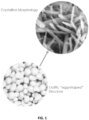
- FIG.1 is an exemplary photograph of the macroscopic appearance of oolitic aragonite, and further shows a SEM image of the crystalline morphology at high magnification.
- oolitic aragonite is dried and screened to a consistent gradation of 10 mesh to +30 or +40 mesh. The so obtained aragonite is then combined with artificial and turf grass to provide weight, to keep the synthetic grass fibers upright, to provide cooling properties and ammonia neutralization capabilities. While oolitic aragonite is typically used as described above, the aragonite can be further processed prior to use.
- aragonite may be reduced in size (e.g., micronized an average particle size of less than 1 mm, or equal or less than 500 micrometer, or equal or less than 300 micrometer, or equal or less than 100 micrometer, or equal or less than 50 micrometer, or equal or less than 25 micrometer), colored with one or more dyes or pigments, coated or otherwise treated with antimicrobial agents and/or scented agents, or impregnated or coated with one or more agriculturally relevant agents or chemicals (e.g., fungicide, insecticide, herbicide, fertilizer, etc.). Still further contemplated modifications include restructuring of aragonite as is described in WO 2020/150274 ( US 62/792,735 ), which is incorporated by reference herein.
- suitable milled aragonite may include oolitic aragonite having an average particle size of between 5-20 micrometer, or between 20-50 micrometer, or between 50-200 micrometer, or between 200-500 micrometer, or between 500-700 micrometer. NMOtably, such micronized particles will still retain the benefits as noted herein and described in more detail below.
- oolitic aragonite With respect to the cooling effect of oolitic aragonite it should be appreciated that the microporosity present in the ooids (each particle grain) will help trap water, which in turn acts like suspended water droplets with very high surface area, creating mini-natural air conditioning cooling units as wind passes over or through them. Moreover, the color of oolitic aragonite is close to white, resulting in a highly reflective surface while scattering light multi-directionally due to the crystalline morphology of the aragonite surface crystals as can be seen in FIG.1 . Notably, milling oolitic aragonite will produce an even whiter product as compared to raw oolitic aragonite.
- the temperature of the so filled artificial grass was approximately 20 degrees Fahrenheit cooler than standard infill based on silica sand.
- the temperature excursion of the ground cover made of artificial turf and microporous oolitic aragonite particles upon exposure to sun is 20 degrees cooler than artificial turf with silica sand or without infill.
- the temperature excursion of the ground cover made of artificial turf and microporous oolitic aragonite particles is about 10 to 20 degrees (F) cooler.
- the temperature excursion of the ground cover made of artificial turf and microporous oolitic aragonite particles is 10, 11, 12, 13, 14, 15, 16, 17, 18, 19, or 20 degrees F cooler than a ground cover made with the same artificial turf without infill or made with silica sand.
- the total porosity of the microporous oolitic aragonite particles is desirable.
- aeration porosity is made up of relatively large pores that conduct water under saturated conditions. When drained, they are filled with air, providing the oxygen that is necessary for root growth.
- the capillary porosity is made up of small pores that hold water against the force of gravity, retaining much of it for plant use.
- a root zone mix would contain a nearly equal distribution of air and water filled pore space after free drainage.
- the aeration porosity of the microporous oolitic aragonite particles is of between about 15% to about 30%.
- the aeration porosity of the microporous oolitic particles is about 15%, 20%, 21%, 22%, 23%, 24%, 25%, 26%, 27%, 28%, 29%, or 30%.
- oolitic aragonite and micronized/milled oolitic aragonite had also a remarkable dimensional stability.
- the oolitic aragonite particles and the micronized/milled oolitic aragonite particles had a uniformity coefficient (Cu) of about 1.51, which is typically regarded a uniformly graded sand that contains particles of the same size and hence more volume of voids.
- the disclosed oolitic aragonite particles e.g., micronize/milled oolitic aragonite particles
- the oolitic aragonite particles have a Cu that does not exceed 1.8.
- the oolitic aragonite particles have a Cu of or between about 1.2 to about 1.8.
- the oolitic aragaonite particles have a Cu that does not exceed 1.6.
- the oolitic aragonite particles have a Cu of or between about 1.2 to about 1.6.
- the oolitic aragonite particles have a Cu of or between about 1.2, 1.25, 1.3, 1.35, 1.4, 1.41, 1.42, 1.43, 1.44, 1.45, 1.46, 1.47, 1.48, 1.49, 1.5, 1.51, 1.52, 1.53, 1.54, 1.55, 1.56, 1.57, 1.58, 1.59, 1.6, 1.65, 1.70, 1.75, or 1.80.
- the oolitic aragonite particles have a Cu of or between about 1.4 to about 1.55.
- the oolitic aragonite particles have a Cu of 1.45, 1.46, 1.47, 1.48, 1.49, 1.5, 1.51, 1.52, 1.53, 1.54, or 1.55.
- the uniformity of the oolitic aragonite particles results not only in significantly reduced compaction or even no measurable compaction, but also in very high hydraulic conductivity (water movement) through a layer formed by the aragonite.
- aragonite ooids are generally smooth and round in structure, unlike the angular and rough surface of silica sand.
- the desirable uniformity coefficient (Cu) of aragonite allows for a maximum number of particles of the same size which together with the increased volume of voids between the particles (which are substantial factors in both drainage and compaction), the disclosed oolitic aragonite does not compact under pressure like angular sands (silica). Indeed, the saturation constant (K sat ) of oolitic aragonite was measured to be at least 50 inches per hour (in/hr), indicating excellent drainage capabilities.
- the K sat of the oolitic aragonite particles is about 45, about 46, about 47, about 48, about 49, about 50, about 51, about 52, about 53, about 54, about 55, about 56, about 57, about 58, about 59, about 60, about 61, about 62, about 63, about 64, about 65, about 66, about 67, about 68, about 69, or about 70 in/hr. More preferably, the K sat of the oolitic aragonite particles is of from about 50 in/hr to about 60 in/hr. For example, the K sat of the oolitic aragonite particles is about 50, 51, 52, 53, 54, 55, 56, 57, 58, 59, or 60 in/hr.
- oolitic aragonite also provided excellent neutralization of ammonia smell, typically due to decomposition of urea found in human, livestock, and pet urine.
- Urine commonly has a pH of 4.8 to 8.0 and contains urea (CO(NH 2 ) 2 ). Hydrolysis of urea results in the formation of ammonia and ammonium molecules, causing the undesirable urine smell.
- Oolitic aragonite has high levels of exchangeable calcium (Ca 2+ ), which can offset the pH increase caused by urea hydrolysis and as such prevents or reduces the volatilization of the ammonia molecules.
- artificial turf and lawn products with oolitic aragonite infill will not only have a higher durability and resist wrinkling and matting, but also reduce or even entirely prevent malodors due to animal urine decomposition.
- the inventors also contemplate reduction of urea volatilization losses via application of oolitic aragonite at the time of fertilizer application.
- all top-dressed ammonia- and ammonium-based nitrogen (N) fertilizers can volatilize.
- the greatest potential to volatilize lies with urea and fluids containing urea such as urea-ammonium nitrate (UAN; 28-0-0 or 32-0-0).
- UAN urea-ammonium nitrate
- Any technology that has the potential to reduce the amount of volatilization losses represents a potential benefit to farmers and the environment in general.
- urea is hydrolyzed by reacting with water and a H + ion, leading to the production of two molecules of ammonium and a single bicarbonate ion.
- Ammonium exists in equilibrium with ammonia that is directly related to the pH of the solution.
- Low pH favors ammonium and high pH favors ammonia which is available for volatilization.
- the pH of the solution is raised by the adsorption of the H + ion during urea hydration.
- the increase in soil pH can result in NH 3 volatilization from soils with an initial pH as low as 6.5.
- Soils with high Cation Exchange Capacity often have high levels of exchangeable calcium (Ca 2+ ), which can offset the pH increase caused by urea hydrolysis as shown in the equation below.
- aragonite in a sub-growth substrate for natural grass where a base layer of (milled) oolitic aragonite is employed as a drainage layer as well as a retention layer for fertilizer.
- the aragonite layer will maintain a higher pH without the constant addition of chemicals.
- aragonite holds the highest pH of any gravel or sand and has up to 30 times the buffering capacity of Dolomite, Calcite, or Oyster shell.
- aragonite will not require any replacement, buffering the soil for the life of placement.
- the K sat values for hydraulic conductivity were above 50 in/hr, indicating excellent drainage capabilities.
- the oolitic aragonite can be readily spread in most mechanical spreaders due to both the uniformity in size and quick moisture conductivity.
- Aragonite can also act as a high capacity bio-filter. Aragonite is extremely porous, with about 20,000 square inches of surface area per cubic inch. This is why aragonite also has significant capability in reducing nitrates, nitrites, and ammonia, allowing a bio-load many times greater than other substrates. Finally, aragonite has also a high adsorption capability. There are three main parameters that define the adsorptive capacity of oolitic aragonite. These are (1) solubility and buffering capacity, (2) zeta potential (surface charge), and (3) surface area and void ratio.
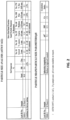
- Oolitic aragonite was analyzed for particle size distribution and particle shape, and exemplary results are provided in FIG.2 .
- the material was very uniform in particle size, with most of the particles falling into the medium size fraction.
- the uniformity of the particle size is illustrated by the uniformity coefficient (Cu).
- the aragonite material had a particle size distribution that was substantially more uniform than typical other silica based materials.
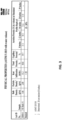
- the particle shape was determined to be mostly rounded. Selected physical properties of the aragonite sample, as determined on compacted cores, are shown in FIG.3 .
- aeration porosity is made up of relatively large pores that conduct water under saturated conditions. When drained, they are filled with air, providing the oxygen that is necessary for root growth.
- the capillary porosity is made up of small pores that hold water against the force of gravity, retaining much of it for plant use. Ideally, a root zone mix would contain a nearly equal distribution of air and water filled pore space after free drainage.
- the inventors performed a water release curve on the sand sample.
- a sand or sand based mix profile the deeper the profile depth the greater the aeration porosity will be because of a greater hydraulic head or pressure.
- the inventors applied increasing levels of energy to the sample to extract water from it, simulating varying depths of sand. By doing this, the inventors can identify a minimum plating depth that will provide desirable physical properties.
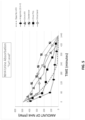
- the graph in FIG.4 shows the aeration and capillary porosity values at different simulated depths. As can be clearly seen, the sample had an aeration porosity of 15% at a depth of about 6 inches with an optimum depth of 8 inches. Plating the sand at a depth less than the minimum would run the risk of the sand retaining too much water at the expense of air.
- the collected information was qualified by measuring the amount of ammonium (NH4) in ppm present in the ambient environment above the artificial turf after each of the artificial turf samples were injected with coyote urine. More specifically, 2.5 lbs of the indicated infill (or no infill for Baseline) was added to each 12" x 12" piece of artificial turf. The infill was spread over the respective turf piece and allowed to settle. Each artificial turf piece with infill was dosed with 20ml of coyote urine with each turf being placed under a fume hood. The ammonia meter was positioned 12" above the test turf, and readings were collected every hour for 7 hours (420 minutes). Readings were also taken at 24 hours as necessary to determine when the ammonia had stabilized within the sample.
- NH4 ammonium
- the artificial turf with the aragonite infill was capable of neutralizing the ammonia at a faster rate compared to the artificial turf with no infill, the Envirofill ® , the (4) Zeoderizer infill, the Olive pits infill, and the Silica Sand infill.
Landscapes
- Engineering & Computer Science (AREA)
- Architecture (AREA)
- Civil Engineering (AREA)
- Structural Engineering (AREA)
- Chemical & Material Sciences (AREA)
- Environmental Sciences (AREA)
- Life Sciences & Earth Sciences (AREA)
- Chemical Kinetics & Catalysis (AREA)
- Organic Chemistry (AREA)
- Inorganic Chemistry (AREA)
- Health & Medical Sciences (AREA)
- Medicinal Chemistry (AREA)
- Polymers & Plastics (AREA)
- Materials Engineering (AREA)
- Road Paving Structures (AREA)
- Compounds Of Alkaline-Earth Elements, Aluminum Or Rare-Earth Metals (AREA)
- Cultivation Of Plants (AREA)
Applications Claiming Priority (2)
| Application Number | Priority Date | Filing Date | Title |
|---|---|---|---|
| US201962948746P | 2019-12-16 | 2019-12-16 | |
| EP20207574.3A EP3839142B1 (fr) | 2019-12-16 | 2020-11-13 | Gazon synthetique avec remplissage à base d'aragonite et procédé de réduction de variations de température d'une structure de gazon artificiel |
Related Parent Applications (2)
| Application Number | Title | Priority Date | Filing Date |
|---|---|---|---|
| EP20207574.3A Division EP3839142B1 (fr) | 2019-12-16 | 2020-11-13 | Gazon synthetique avec remplissage à base d'aragonite et procédé de réduction de variations de température d'une structure de gazon artificiel |
| EP20207574.3A Division-Into EP3839142B1 (fr) | 2019-12-16 | 2020-11-13 | Gazon synthetique avec remplissage à base d'aragonite et procédé de réduction de variations de température d'une structure de gazon artificiel |
Publications (2)
| Publication Number | Publication Date |
|---|---|
| EP4428302A2 true EP4428302A2 (fr) | 2024-09-11 |
| EP4428302A3 EP4428302A3 (fr) | 2024-12-11 |
Family
ID=73448951
Family Applications (3)
| Application Number | Title | Priority Date | Filing Date |
|---|---|---|---|
| EP24191779.8A Pending EP4428302A3 (fr) | 2019-12-16 | 2020-11-13 | Revêtement de sol à base d'aragonite |
| EP20207574.3A Active EP3839142B1 (fr) | 2019-12-16 | 2020-11-13 | Gazon synthetique avec remplissage à base d'aragonite et procédé de réduction de variations de température d'une structure de gazon artificiel |
| EP24192155.0A Pending EP4431660A3 (fr) | 2019-12-16 | 2020-11-13 | Revêtement de sol à base d'aragonite |
Family Applications After (2)
| Application Number | Title | Priority Date | Filing Date |
|---|---|---|---|
| EP20207574.3A Active EP3839142B1 (fr) | 2019-12-16 | 2020-11-13 | Gazon synthetique avec remplissage à base d'aragonite et procédé de réduction de variations de température d'une structure de gazon artificiel |
| EP24192155.0A Pending EP4431660A3 (fr) | 2019-12-16 | 2020-11-13 | Revêtement de sol à base d'aragonite |
Country Status (4)
| Country | Link |
|---|---|
| US (4) | US11427971B2 (fr) |
| EP (3) | EP4428302A3 (fr) |
| CA (1) | CA3158398A1 (fr) |
| WO (1) | WO2021123951A1 (fr) |
Families Citing this family (5)
| Publication number | Priority date | Publication date | Assignee | Title |
|---|---|---|---|---|
| EP4053340A4 (fr) * | 2019-11-01 | 2023-12-06 | Coool Co., Ltd. | Gazon artificiel, charge pour gazon artificiel et procédé de production de gazon artificiel |
| WO2021123951A1 (fr) | 2019-12-16 | 2021-06-24 | Calcean Minerals and Materials, LLC | Revêtement de sol à base d'aragonite |
| US12116735B2 (en) * | 2022-02-04 | 2024-10-15 | Duo HAN | Grass ski carpet, spiral grass assembly, and spiral grass |
| EP4339368A1 (fr) * | 2022-09-09 | 2024-03-20 | Polytex Sportbeläge Produktions-GmbH | Procédé de fabrication d'un remplissage de gazon artificiel avec des fragments de noyaux d'olive arrondis |
| US12221214B1 (en) | 2023-09-12 | 2025-02-11 | Nant Holdings Ip, Llc | Drone-based payload management |
Citations (9)
| Publication number | Priority date | Publication date | Assignee | Title |
|---|---|---|---|---|
| EP1416009A1 (fr) | 2002-11-04 | 2004-05-06 | Mülsener Recycling- und Handelsgesellschaft mbH | Particules de caoutchouc enrobées |
| US6818274B1 (en) | 2003-01-16 | 2004-11-16 | Bright Intellectual Asset Management, Llc | Artificial turf system using support material for infill layer |
| US20050003193A1 (en) | 2003-06-10 | 2005-01-06 | Mondo S.P.A. | Infill material for synthetic-grass structures, corresponding synthetic-grass structure and process of preparation |
| US20060172092A1 (en) | 2005-02-03 | 2006-08-03 | Christopher Tetrault | Synthetic Turf Having Cooling Layer |
| WO2008115085A1 (fr) | 2007-03-20 | 2008-09-25 | David Kim Amado | Matériau de remplissage pour système de gazon artificiel |
| US20090286017A1 (en) | 2008-05-13 | 2009-11-19 | Horio Takashi | Artificial grass granulated infill and artificial grass structure using the same |
| US20100055461A1 (en) | 2008-08-26 | 2010-03-04 | Daluise Daniel A | Artificial turf infill |
| US20110135851A1 (en) | 2008-03-27 | 2011-06-09 | So.F.Ter.-S.P.A. | Polymer granules suitable as infill material for artificial turf structures |
| WO2020150274A1 (fr) | 2019-01-15 | 2020-07-23 | Nant Holdings Ip, Llc | Compositions d'aragonite, procédés et utilisations de celles-ci |
Family Cites Families (23)
| Publication number | Priority date | Publication date | Assignee | Title |
|---|---|---|---|---|
| US3920800A (en) | 1973-10-12 | 1975-11-18 | Cyprus Mines Corp | Production of purified calcium carbonate |
| US6029397A (en) * | 1997-06-06 | 2000-02-29 | Technology Licensing Corp. | Stabilized natural turf for athletic field |
| KR100428513B1 (ko) * | 2001-06-30 | 2004-04-28 | 주식회사 경동네트웍 | 식물배지용 코팅 퍼라이트 |
| EP1570715A1 (fr) | 2004-03-02 | 2005-09-07 | Eurochem N.V. | Semences enrobées et des sols pour cultiver des plantes |
| NL1026444C2 (nl) | 2004-06-17 | 2005-12-20 | Ten Cate Thiolon Bv | Kunstgrassportveld voorzien van een instrooimateriaal alsmede een dergelijk instrooimateriaal. |
| US20100279032A1 (en) * | 2007-09-24 | 2010-11-04 | Dow Global Technologies Inc. | Synthetic turf with shock absorption layer |
| FR2932196A1 (fr) * | 2008-06-04 | 2009-12-11 | Cyril Rene Lucien Moussard | Gazon synthetique et naturel et methode de mise en oeuvre |
| KR20100024629A (ko) * | 2008-08-26 | 2010-03-08 | 고재호 | 친환경 무농약 그린 |
| DE102008039671A1 (de) | 2008-08-26 | 2010-03-04 | Melos Gmbh | Verwendung eines Granulats als Einstreugranulat für Kunstrasen |
| EP2374917B1 (fr) * | 2010-04-07 | 2013-02-13 | Dow Global Technologies LLC | Fil de gazon artificiel |
| WO2012058555A2 (fr) * | 2010-10-29 | 2012-05-03 | The Quantum Group, Inc. | Systèmes de gazon artificiel et applications associées |
| CN102696306B (zh) | 2012-06-18 | 2013-06-05 | 中国科学院遗传与发育生物学研究所 | 滨海中重度盐碱地杂交谷子高产栽培方法 |
| KR101435184B1 (ko) | 2013-12-10 | 2014-08-29 | 김정애 | 건식과 습식 병행이 가능한 경사면 녹화토 및 이를 이용한 경사면 녹화 공법 |
| CN104429458A (zh) * | 2014-10-30 | 2015-03-25 | 刘瑞华 | 一种游憩草坪建植方法 |
| EP3380549A4 (fr) | 2015-11-19 | 2019-09-11 | Bloom Holdings, LLC | Mousse souple dérivée d'algues, et son procédé de fabrication |
| US20170191230A1 (en) * | 2016-01-06 | 2017-07-06 | BunkersPlus LLC | Golf bunker liner |
| US20170233956A1 (en) * | 2016-02-17 | 2017-08-17 | The Hanson Group Llc | Cooling infill for synthetic turf applications |
| ES2989073T3 (es) * | 2018-04-02 | 2024-11-25 | Shaw Ind Group Inc | Almohadilla antiimpactos para césped sintético y métodos de fabricación de la misma |
| EP3566577A1 (fr) * | 2018-05-09 | 2019-11-13 | Polytex Sportbeläge Produktions-GmbH | Matériau de remplissage de gazon artificiel pour désinfecter des gazons artificiels |
| EP3873628A4 (fr) * | 2018-10-29 | 2022-08-03 | Shaw Industries Group, Inc. | Ensembles et systèmes de surface de jeu et leurs procédés de fabrication et d'utilisation |
| US20220202660A1 (en) * | 2019-04-26 | 2022-06-30 | Calcean Minerals and Materials, LLC | Oolitic Aragonite Beads and Methods Therefor |
| US11383988B2 (en) * | 2019-04-26 | 2022-07-12 | Nant Holdings IP, LLP | Oolitic aragonite beads and methods therefor |
| WO2021123951A1 (fr) | 2019-12-16 | 2021-06-24 | Calcean Minerals and Materials, LLC | Revêtement de sol à base d'aragonite |
-
2020
- 2020-11-13 WO PCT/IB2020/060721 patent/WO2021123951A1/fr not_active Ceased
- 2020-11-13 EP EP24191779.8A patent/EP4428302A3/fr active Pending
- 2020-11-13 CA CA3158398A patent/CA3158398A1/fr active Pending
- 2020-11-13 EP EP20207574.3A patent/EP3839142B1/fr active Active
- 2020-11-13 EP EP24192155.0A patent/EP4431660A3/fr active Pending
- 2020-11-13 US US17/098,097 patent/US11427971B2/en active Active
-
2021
- 2021-04-13 US US17/229,733 patent/US11566386B2/en active Active
-
2022
- 2022-07-19 US US17/868,613 patent/US11649593B2/en active Active
-
2023
- 2023-01-17 US US18/155,275 patent/US12565740B2/en active Active
Patent Citations (9)
| Publication number | Priority date | Publication date | Assignee | Title |
|---|---|---|---|---|
| EP1416009A1 (fr) | 2002-11-04 | 2004-05-06 | Mülsener Recycling- und Handelsgesellschaft mbH | Particules de caoutchouc enrobées |
| US6818274B1 (en) | 2003-01-16 | 2004-11-16 | Bright Intellectual Asset Management, Llc | Artificial turf system using support material for infill layer |
| US20050003193A1 (en) | 2003-06-10 | 2005-01-06 | Mondo S.P.A. | Infill material for synthetic-grass structures, corresponding synthetic-grass structure and process of preparation |
| US20060172092A1 (en) | 2005-02-03 | 2006-08-03 | Christopher Tetrault | Synthetic Turf Having Cooling Layer |
| WO2008115085A1 (fr) | 2007-03-20 | 2008-09-25 | David Kim Amado | Matériau de remplissage pour système de gazon artificiel |
| US20110135851A1 (en) | 2008-03-27 | 2011-06-09 | So.F.Ter.-S.P.A. | Polymer granules suitable as infill material for artificial turf structures |
| US20090286017A1 (en) | 2008-05-13 | 2009-11-19 | Horio Takashi | Artificial grass granulated infill and artificial grass structure using the same |
| US20100055461A1 (en) | 2008-08-26 | 2010-03-04 | Daluise Daniel A | Artificial turf infill |
| WO2020150274A1 (fr) | 2019-01-15 | 2020-07-23 | Nant Holdings Ip, Llc | Compositions d'aragonite, procédés et utilisations de celles-ci |
Also Published As
| Publication number | Publication date |
|---|---|
| CA3158398A1 (fr) | 2021-06-24 |
| US11566386B2 (en) | 2023-01-31 |
| US20210180270A1 (en) | 2021-06-17 |
| EP4431660A2 (fr) | 2024-09-18 |
| US11649593B2 (en) | 2023-05-16 |
| EP4428302A3 (fr) | 2024-12-11 |
| EP3839142C0 (fr) | 2024-10-09 |
| US20230160149A1 (en) | 2023-05-25 |
| EP4431660A3 (fr) | 2024-12-18 |
| US11427971B2 (en) | 2022-08-30 |
| EP3839142A1 (fr) | 2021-06-23 |
| US20220349131A1 (en) | 2022-11-03 |
| US12565740B2 (en) | 2026-03-03 |
| WO2021123951A1 (fr) | 2021-06-24 |
| EP3839142B1 (fr) | 2024-10-09 |
| US20210230815A1 (en) | 2021-07-29 |
Similar Documents
| Publication | Publication Date | Title |
|---|---|---|
| US12565740B2 (en) | Aragonite based ground covering | |
| Abdelhak | Soil improvement in arid and semiarid regions for sustainable development | |
| Craul | Urban soil in landscape design | |
| Otero et al. | Loss of soil and nutrients by surface runoff in two agro-ecosystems within an Andean paramo area | |
| Querejeta et al. | Soil water availability improved by site preparation in a Pinus halepensis afforestation under semiarid climate | |
| Patil et al. | Impact of climate change on soil health: A review | |
| Confalonieri et al. | Scientific contribution on combining biophysical criteria underpinning the delineation of agricultural areas affected by specific constraints | |
| Zgallai et al. | Mitigating soil water deficit using organic waste compost and commercial water retainer: a comparative study under semiarid conditions | |
| Jankowska-Huflejt | The function of permanent grasslands in water resources protection | |
| JP2009011190A (ja) | 軽量人工土壌の製造方法および軽量人工土壌基盤の造成方法 | |
| Saluz et al. | Quality and suitability of fecal biochar in structurally stable urban tree substrates | |
| Jim | Edaphic properties and horticultural applications of some common growing media | |
| Do et al. | Roadside devegetation by microbially induced carbonate precipitation using osmosis, ammonium toxicity, and cementation effects | |
| Rajakaruna et al. | The edaphic factor in ecology | |
| Šařec et al. | Influence of manure and activators of organic matter biological transformation on selected soil physical properties of Modal Luvisol. | |
| CN106212100B (zh) | 含有种植基质的护坡植生型沥青混合料及其制备方法和应用 | |
| Jayasingha et al. | Fate of urea fertilizers in sandy aquifers: laboratory and field case study from Kalpitiya, Sri Lanka | |
| Nweke et al. | Cultivation and land use changes their implications in soil productivity management and crop yield | |
| KR102876251B1 (ko) | 인공토양 조성물 | |
| CN107044079B (zh) | 植生海绵型沥青混合料路面结构 | |
| Buchkina et al. | N2O emission from loamy grey soil under different tillage in Vladimir region of Russia | |
| Ambadi et al. | Soil properties and crop root patterns | |
| CN118592301B (zh) | 一种适用于荒漠藻种植方法 | |
| Matschke | Phosphorus losses in leachate from three agricultural soils as affected by varying fertilizer application methods and soil wetting and drying cycles | |
| Hatfield et al. | Soiltivity, purifyinga water, biodegradationimportant |
Legal Events
| Date | Code | Title | Description |
|---|---|---|---|
| PUAI | Public reference made under article 153(3) epc to a published international application that has entered the european phase |
Free format text: ORIGINAL CODE: 0009012 |
|
| STAA | Information on the status of an ep patent application or granted ep patent |
Free format text: STATUS: THE APPLICATION HAS BEEN PUBLISHED |
|
| AC | Divisional application: reference to earlier application |
Ref document number: 3839142 Country of ref document: EP Kind code of ref document: P |
|
| AK | Designated contracting states |
Kind code of ref document: A2 Designated state(s): AL AT BE BG CH CY CZ DE DK EE ES FI FR GB GR HR HU IE IS IT LI LT LU LV MC MK MT NL NO PL PT RO RS SE SI SK SM TR |
|
| REG | Reference to a national code |
Ref country code: DE Ref legal event code: R079 Free format text: PREVIOUS MAIN CLASS: E01C0013080000 Ipc: A01G0020000000 |
|
| PUAL | Search report despatched |
Free format text: ORIGINAL CODE: 0009013 |
|
| AK | Designated contracting states |
Kind code of ref document: A3 Designated state(s): AL AT BE BG CH CY CZ DE DK EE ES FI FR GB GR HR HU IE IS IT LI LT LU LV MC MK MT NL NO PL PT RO RS SE SI SK SM TR |
|
| RIC1 | Information provided on ipc code assigned before grant |
Ipc: E01C 13/08 20060101ALN20241105BHEP Ipc: E01C 13/02 20060101ALI20241105BHEP Ipc: C05D 3/02 20060101ALI20241105BHEP Ipc: A01G 24/10 20180101ALI20241105BHEP Ipc: A01G 20/00 20180101AFI20241105BHEP |
|
| STAA | Information on the status of an ep patent application or granted ep patent |
Free format text: STATUS: REQUEST FOR EXAMINATION WAS MADE |
|
| 17P | Request for examination filed |
Effective date: 20250509 |
|
| STAA | Information on the status of an ep patent application or granted ep patent |
Free format text: STATUS: EXAMINATION IS IN PROGRESS |