EP4429151A1 - Ressourcenkonfigurationsverfahren und -vorrichtung, netzwerkvorrichtung und endgerätevorrichtung - Google Patents
Ressourcenkonfigurationsverfahren und -vorrichtung, netzwerkvorrichtung und endgerätevorrichtung Download PDFInfo
- Publication number
- EP4429151A1 EP4429151A1 EP22889280.8A EP22889280A EP4429151A1 EP 4429151 A1 EP4429151 A1 EP 4429151A1 EP 22889280 A EP22889280 A EP 22889280A EP 4429151 A1 EP4429151 A1 EP 4429151A1
- Authority
- EP
- European Patent Office
- Prior art keywords
- reference signal
- target reference
- resource
- parameter set
- information
- Prior art date
- Legal status (The legal status is an assumption and is not a legal conclusion. Google has not performed a legal analysis and makes no representation as to the accuracy of the status listed.)
- Pending
Links
Images




Classifications
-
- H—ELECTRICITY
- H04—ELECTRIC COMMUNICATION TECHNIQUE
- H04L—TRANSMISSION OF DIGITAL INFORMATION, e.g. TELEGRAPHIC COMMUNICATION
- H04L5/00—Arrangements affording multiple use of the transmission path
-
- H—ELECTRICITY
- H04—ELECTRIC COMMUNICATION TECHNIQUE
- H04L—TRANSMISSION OF DIGITAL INFORMATION, e.g. TELEGRAPHIC COMMUNICATION
- H04L5/00—Arrangements affording multiple use of the transmission path
- H04L5/003—Arrangements for allocating sub-channels of the transmission path
- H04L5/0048—Allocation of pilot signals, i.e. of signals known to the receiver
- H04L5/0051—Allocation of pilot signals, i.e. of signals known to the receiver of dedicated pilots, i.e. pilots destined for a single user or terminal
-
- H—ELECTRICITY
- H04—ELECTRIC COMMUNICATION TECHNIQUE
- H04L—TRANSMISSION OF DIGITAL INFORMATION, e.g. TELEGRAPHIC COMMUNICATION
- H04L5/00—Arrangements affording multiple use of the transmission path
- H04L5/003—Arrangements for allocating sub-channels of the transmission path
- H04L5/0048—Allocation of pilot signals, i.e. of signals known to the receiver
-
- H—ELECTRICITY
- H04—ELECTRIC COMMUNICATION TECHNIQUE
- H04L—TRANSMISSION OF DIGITAL INFORMATION, e.g. TELEGRAPHIC COMMUNICATION
- H04L5/00—Arrangements affording multiple use of the transmission path
- H04L5/0091—Signalling for the administration of the divided path, e.g. signalling of configuration information
- H04L5/0094—Indication of how sub-channels of the path are allocated
-
- H—ELECTRICITY
- H04—ELECTRIC COMMUNICATION TECHNIQUE
- H04W—WIRELESS COMMUNICATION NETWORKS
- H04W24/00—Supervisory, monitoring or testing arrangements
- H04W24/02—Arrangements for optimising operational condition
-
- Y—GENERAL TAGGING OF NEW TECHNOLOGICAL DEVELOPMENTS; GENERAL TAGGING OF CROSS-SECTIONAL TECHNOLOGIES SPANNING OVER SEVERAL SECTIONS OF THE IPC; TECHNICAL SUBJECTS COVERED BY FORMER USPC CROSS-REFERENCE ART COLLECTIONS [XRACs] AND DIGESTS
- Y02—TECHNOLOGIES OR APPLICATIONS FOR MITIGATION OR ADAPTATION AGAINST CLIMATE CHANGE
- Y02D—CLIMATE CHANGE MITIGATION TECHNOLOGIES IN INFORMATION AND COMMUNICATION TECHNOLOGIES [ICT], I.E. INFORMATION AND COMMUNICATION TECHNOLOGIES AIMING AT THE REDUCTION OF THEIR OWN ENERGY USE
- Y02D30/00—Reducing energy consumption in communication networks
- Y02D30/70—Reducing energy consumption in communication networks in wireless communication networks
Definitions
- the present disclosure relates to the field of communication technologies, in particular, relates to a resource configuration method, a resource configuration apparatus, a network device, and a terminal device.
- CSI-RS Channel-State-Information Reference Signal
- the parameter information of CSI-RS is configured for the terminal in Idle/inactive mode through System Information Block (SIB) messages.
- SIB System Information Block
- SIB CSI-RS/tracking reference signal
- TRS Track Reference Signal
- the SIB message will be further divided and transmitted through multiple physical downlink shared channels (Physical Downlink Shared Channel, PDSCH).
- PDSCH Physical Downlink Shared Channel
- SIB messages can be obtained by the terminal through receiving multiple PDSCHs, which increases the time required to obtain SIB messages. Once an error occurs in one of the SIB messages (with an error rate of 10%), more time is required, which can result in a higher latency and power consumption when the terminal receives the SIB messages.
- Embodiments of the present disclosure provide a resource configuration method and apparatus, a network device, and a terminal device, to solve the problem of the related art that it is not able to achieve energy saving and reduce system overhead when configuring parameter information of reference signals for a terminal in Idle/inactive mode.
- the embodiments of the present disclosure provide a resource configuration method performed by a network device, including: sending configuration indication information and/or resource configuration information of a target reference signal to a terminal device in an idle mode or an inactive mode, by a system information block SIB message; where the configuration indication information is configured to indicate a generation method of the resource configuration information of the target reference signal.
- the resource configuration information includes at least one of the following: a first parameter set applied to a single target reference signal resource; or a second parameter set applied to each target reference signal resource in a target reference signal resource set; or a third parameter set applied to each target reference signal resource in each target reference signal resource set in a target reference signal resource set group.
- the resource configuration information includes: configuration information generated using a first method; or configuration information generated using a second method.
- the configuration indication information is configured to indicate whether the resource configuration information is generated by the first method or the second method.
- the resource configuration information when the resource configuration information is generated by using the first method, the resource configuration information satisfies one of the following: there are simultaneously the first parameter set, the second parameter set and the third parameter set; or there are simultaneously the second parameter set and the third parameter set; or, there is only the first parameter set and/or there are simultaneously the second parameter set and the third parameter set.
- the target reference signal includes: channel-state-information reference signal CSI-RS.
- the CSI-RS is a channel tracking reference signal TRS.
- the first parameter set includes at least one of the following parameters: scrambling identification of the target reference signal; or a validity duration of the target reference signal based on layer-one signaling indication.
- the second parameter set includes at least one of the following parameters: scrambling identification of the target reference signal; or periodicity and an offset value of the target reference signal; or quasi co-location QCL reference; or quantity of slots in which the target reference signal is located; or identification of the target reference signal resource set; or a validity duration of the target reference signal based on layer-one signaling indication.
- the quantity of slots in which the target reference signal is located satisfies at least one of the following: occupying 0 to 2 bits; or being indicated through an explicit or implicit manner.
- the third parameter set includes at least one of the following parameters: periodicity and an offset value of the target reference signal; or a value of frequency-domain starting resource block RB; or quantity of RBs occupied by the frequency domain; or a validity duration of the target reference signal based on layer-one signaling indication; or a quantity of slots in which the target reference signal is located; or a ratio of power of each resource element in a non-zero power target reference signal to power of each resource element in synchronization signal/physical broadcast channel block SS/PBCH block; or identification of the target reference signal resource set group.
- the validity duration of the target reference signal based on layer-one signaling indication satisfies at least one of the following: a quantity of occupied bits is less than or equal to 4; or the maximum quantity is less than or equal to 16.
- the target reference signal resource set group satisfies at least one of the following: the maximum quantity is less than or equal to 6; or a quantity of bits occupied is less than or equal to 3.
- the target reference signal resource set satisfies at least one of the following: the maximum quantity is less than or equal to 128; or a quantity of bits occupied is less than or equal to 7.
- the target reference signal resource satisfies at least one of the following: the maximum quantity is less than or equal to 89; or a quantity of bits occupied is less than or equal to 7.
- the method further includes: sending receiving indication information to the terminal device, where the receiving indication information is configured to indicate whether the terminal device is receiving the target reference signal.
- sending the receiving indication information to the terminal device includes: determining layer-one signaling used for sending receiving indication information; sending the receiving indication information to the terminal device through the layer-one signaling.
- determining the layer-one signaling used for sending receiving indication information includes: determining the layer-one signaling used for sending receiving indication information through first information; where, the first information includes at least one of the following: terminal capability information; or second information.
- the second information includes: indication information of a sending method, the indication information of the sending method is configured to indicate that at least one of paging early indication PEI and paging downlink control information DCI is used to send the receiving indication information to the terminal device.
- the terminal capability information refers to whether the terminal device supports an ability to detect the receiving indication information carried by at least one of PEI and paging DCI.
- the embodiments of the present disclosure further provide a resource configuration method performed by a terminal device, including:
- the resource configuration information includes at least one of the following: a first parameter set applied to a single target reference signal resource; a second parameter set applied to each target reference signal resource in a target reference signal resource set; or a third parameter set applied to each target reference signal resource in each target reference signal resource set in a target reference signal resource set group.
- the resource configuration information includes: configuration information generated using a first method; or configuration information generated using a second method.
- the configuration indication information is configured to indicate whether the resource configuration information is generated by using the first method or the second method.
- the resource configuration information when the resource configuration information is generated by using the first method, the resource configuration information satisfies one of the following: there are simultaneously the first parameter set, the second parameter set, and the third parameter set; there are simultaneously the second parameter set and the third parameter set; or there is only the first parameter set and/or there are simultaneously the second parameter set and the third parameter set.
- the target reference signal includes: channel-state-information reference signal CSI-RS.
- the CSI-RS is a channel tracking reference signal TRS.
- the first parameter set includes at least one of the following parameters: scrambling identification of the target reference signal; or validity duration of the target reference signal based on layer-one signaling indication.
- the second parameter set includes at least one of the following parameters: scrambling identification of the target reference signal; periodicity and an offset value of the target reference signal; quasi co-location QCL reference; quantity of slots in which the target reference signal is located; identification of the target reference signal resource set; or a validity duration of the target reference signal based on layer-one signaling indication.
- the quantity of slots in which the target reference signal is located satisfies at least one of the following: occupying 0 to 2 bits; or being indicated through an explicit or implicit manner.
- the third parameter set includes at least one of the following parameters: periodicity and an offset value of the target reference signal; a value of frequency-domain starting resource block RB; a quantity of RBs occupied by the frequency domain; a validity duration of the target reference signal based on layer-one signaling indication; or a quantity of slots in which the target reference signal is located; a ratio of power of each resource element in a non-zero power target reference signal to power of each resource element in synchronization signal/physical broadcast channel block SS/PBCH block; or identification of the target reference signal resource set group.
- the validity duration of the target reference signal based on layer-one signaling indication satisfies at least one of the following: a quantity of occupied bits is less than or equal to 4; or the maximum quantity is less than or equal to 16.
- the target reference signal resource set group satisfies at least one of the following: the maximum quantity is less than or equal to 6; or a quantity of bits occupied is less than or equal to 3.
- the target reference signal resource set satisfies at least one of the following: the maximum quantity is less than or equal to 128; or a quantity of bits occupied is less than or equal to 7.
- the target reference signal resource satisfies at least one of the following: the maximum quantity is less than or equal to 89; or a quantity of bits occupied is less than or equal to 7.
- the method further includes: receiving, from the network device, receiving indication information, where the receiving indication information is configured to indicate whether the terminal device is receiving the target reference signal; where when the receiving indication information indicates the terminal device to receive the target reference signal, the target reference signal is received based on the resource configuration information of the target reference signal.
- the embodiments of the present disclosure further provide a network device including a memory, a transceiver, and a processor.
- the memory is configured to store a computer program;
- the transceiver is configured to receive and send data under a control of the processor;
- the processor is configured to read the computer program in the memory and perform the following processes:
- the resource configuration information includes at least one of the following: a first parameter set applied to a single target reference signal resource; a second parameter set applied to each target reference signal resource in a target reference signal resource set; or a third parameter set applied to each target reference signal resource in each target reference signal resource set in a target reference signal resource set group.
- the resource configuration information includes: configuration information generated using a first method; or configuration information generated using a second method.
- the configuration indication information is configured to indicate whether the resource configuration information is generated by the first method or the second method.
- the resource configuration information when the resource configuration information is generated by using the first method, the resource configuration information satisfies one of the following: there are simultaneously the first parameter set, the second parameter set and the third parameter set; or there are simultaneously the second parameter set and the third parameter set; or, there is only the first parameter set and/or there are simultaneously the second parameter set and the third parameter set.
- the target reference signal includes: channel-state-information reference signal CSI-RS.
- the CSI-RS is a channel tracking reference signal TRS.
- the first parameter set includes at least one of the following parameters: scrambling identification of the target reference signal; or validity duration of the target reference signal based on layer-one signaling indication.
- the second parameter set includes at least one of the following parameters: scrambling identification of the target reference signal; or periodicity and an offset value of the target reference signal; or quasi co-location QCL reference; or quantity of slots in which the target reference signal is located; or identification of the target reference signal resource set; or a validity duration of the target reference signal based on layer-one signaling indication.
- the quantity of slots in which the target reference signal is located satisfies at least one of the following: occupying 0 to 2 bits; or being indicated through an explicit or implicit manner.
- the third parameter set includes at least one of the following parameters: periodicity and an offset value of the target reference signal; or a value of frequency-domain starting resource block RB; or a quantity of RBs occupied by the frequency domain; or a validity duration of the target reference signal based on layer-one signaling indication; or a quantity of slots in which the target reference signal is located; or a ratio of power of each resource element in a non-zero power target reference signal to power of each resource element in synchronization signal/physical broadcast channel block SS/PBCH block; or identification of the target reference signal resource set group.
- the validity duration of the target reference signal based on layer-one signaling indication satisfies at least one of the following: a quantity of occupied bits is less than or equal to 4; or the maximum quantity is less than or equal to 16.
- the target reference signal resource set group satisfies at least one of the following: the maximum quantity is less than or equal to 6; or a quantity of bits occupied is less than or equal to 3.
- the target reference signal resource set satisfies at least one of the following: the maximum quantity is less than or equal to 128; or a quantity of bits occupied is less than or equal to 7.
- the target reference signal resource satisfies at least one of the following: the maximum quantity is less than or equal to 89; or a quantity of bits occupied is less than or equal to 7.
- the processor is configured to read the computer program in the memory and perform the following operations: sending receiving indication information to the terminal device through the transceiver, wherein the receiving indication information is configured to indicate whether the terminal device is receiving the target reference signal.
- the processor is configured to read the computer program in the memory and perform the following operations:
- the processor is configured to read the computer program in the memory and perform the following operations: determining the layer-one signaling used for sending receiving indication information through first information; where, the first information includes at least one of the following: terminal capability information; or second information.
- the second information includes: indication information of a sending method, the indication information of the sending method is configured to indicate that at least one of paging early indication PEI and paging downlink control information DCI sends the receiving indication information to the terminal device
- the terminal capability information refers to whether the terminal device supports an ability to detect the receiving indication information carried by at least one of PEI and paging DCI.
- the embodiments of the present disclosure further provide a terminal device including a memory, a transceiver, and a processor.
- the memory is configured to store a computer program;
- the transceiver is configured to receive and send data under a control of the processor;
- the processor is configured to read the computer program in the memory and perform the following processes:
- the resource configuration information includes at least one of the following: a first parameter set applied to a single target reference signal resource; a second parameter set applied to each target reference signal resource in a target reference signal resource set; or a third parameter set applied to each target reference signal resource in each target reference signal resource set in a target reference signal resource set group.
- the resource configuration information includes: configuration information generated using a first method; or configuration information generated using a second method.
- the configuration indication information is configured to indicate whether the resource configuration information is generated by using the first method or the second method.
- the resource configuration information when the resource configuration information is generated by using the first method, the resource configuration information satisfies one of the following: there are simultaneously the first parameter set, the second parameter set, and the third parameter set; there are simultaneously the second parameter set and the third parameter set; or there is only the first parameter set and/or there are simultaneously the second parameter set and the third parameter set.
- the target reference signal includes: channel-state-information reference signal CSI-RS.
- the CSI-RS is a channel tracking reference signal TRS.
- the first parameter set includes at least one of the following parameters: scrambling identification of the target reference signal; or a validity duration of the target reference signal based on layer-one signaling indication.
- the second parameter set includes at least one of the following parameters: scrambling identification of the target reference signal; periodicity and an offset value of the target reference signal; quasi co-location QCL reference; quantity of slots in which the target reference signal is located; identification of the target reference signal resource set; or validity duration of the target reference signal based on layer-one signaling indication.
- the quantity of slots in which the target reference signal is located satisfies at least one of the following: occupying 0 to 2 bits; or being indicated through an explicit or implicit manner.
- the third parameter set includes at least one of the following parameters: periodicity and an offset value of the target reference signal; a value of frequency-domain starting resource block RB; a quantity of RBs occupied by the frequency domain; a validity duration of the target reference signal based on layer-one signaling indication; or a quantity of slots in which the target reference signal is located; a ratio of power of each resource element in a non-zero power target reference signal to power of each resource element in synchronization signal/physical broadcast channel block SS/PBCH block; or identification of the target reference signal resource set group.
- the validity duration of the target reference signal based on layer-one signaling indication satisfies at least one of the following: a quantity of occupied bits is less than or equal to 4; or the maximum quantity is less than or equal to 16.
- the target reference signal resource set group satisfies at least one of the following: the maximum quantity is less than or equal to 6; or a quantity of bits occupied is less than or equal to 3.
- the target reference signal resource set satisfies at least one of the following: the maximum quantity is less than or equal to 128; or a quantity of bits occupied is less than or equal to 7.
- the target reference signal resource satisfies at least one of the following: the maximum quantity is less than or equal to 89; or a quantity of bits occupied is less than or equal to 7.
- the processor is configured to read the computer program in the memory and perform the following operations:
- the embodiments of the present disclosure further provide a resource configuration apparatus applied to a network device, including:
- the resource configuration information includes at least one of the following: a first parameter set applied to a single target reference signal resource; a second parameter set applied to each target reference signal resource in a target reference signal resource set; or a third parameter set applied to each target reference signal resource in each target reference signal resource set in a target reference signal resource set group.
- the embodiments of the present disclosure further provide a resource configuration apparatus applied to a terminal device, the apparatus includes: a first receiving unit, configured to receive configuration indication information and/or resource configuration information of a target reference signal sent by a network device through system information block SIB messages; where, the configuration indication information is configured to indicate a generation method of resource configuration information of the target reference signal.
- the resource configuration information includes at least one of the following: a first parameter set applied to a single target reference signal resource; or a second parameter set applied to each target reference signal resource in a target reference signal resource set; or a third parameter set applied to each target reference signal resource in each target reference signal resource set in a target reference signal resource set group.
- the embodiments of the present disclosure further provide a processor-readable storage medium, where the processor-readable storage medium stores a computer program, and the computer program is configured to cause the processor to perform the abovementioned method.
- the above solutions send configuration indication information and/or resource configuration information of a target reference signal to a terminal device in an idle mode or an inactive mode by using one or more SIB messages, so as to ensure energy saving and reduce system overhead when configuring resource configuration information of reference signals for the terminal device in an idle mode or an inactive mode.
- words such as “exemplary” or “for example” are used as examples, illustrations or explanations. Any embodiment or design described as “exemplary” or “for example” in the embodiments of the present disclosure shall not be construed as being preferred or advantageous over other embodiments or designs. Exactly, the use of words such as “exemplary” or “such as” is intended to present related concepts in a concrete manner.
- the resource configuration method, the resource configuration apparatus, the network device, and the terminal device provided by the embodiments of the present disclosure may be applied in a radio communication system.
- the radio communication system may be a system (hereinafter referred to as 5G system for short) adopting the fifth generation (5G) mobile communication technology, those skilled in the art can understand that the 5G NR system is only used as an example and not as a limitation.
- Fig. 1 is a structural diagram of a network system applicable to an embodiment of the present disclosure. As shown in Fig. 1 , it includes a user terminal 11 and a base station 12, where the user terminal 11 may be a user equipment (User Equipment, UE), for example: the user terminal 11 may be a mobile phone, a Tablet Personal Computer, a Laptop Computer, a personal digital assistant (referred to as PDA), a Mobile Internet Device (MID) or a wearable device and other terminal side devices.
- PDA personal digital assistant
- MID Mobile Internet Device
- wearable device wearable device and other terminal side devices.
- the specific type of the user terminal 11 is not limited in the embodiment of the present disclosure.
- the above-mentioned base station 12 may be a base station (for example, gNB, 5G NR NB) of 5G and later versions, or a base station in other communication system, or called Node B. It should be noted that, in the embodiment of the present disclosure, only the 5G base station is taken as an example, but the specific type of the base station 12 is not limited.
- Radio resource control IDLE radio resource control IDLE
- RRC_Inactive radio resource control Inactive
- UE user equipment
- SI system information
- NR terminals do not have a common reference signal (CRS) in RRC_IDLE/RRC_Inactive mode.
- the terminal before receiving paging information at a corresponding paging occasion (PO), the terminal needs to first receive a synchronization signal block (SSB) to perform time/frequency tracking (T/F tracking) and Automatic Gain Control (AGC) operations to improve receiving performance of Paging messages (including Paging downlink control information (DCI) and Paging Physical Downlink Shared Channel (PDSCH)), as shown in Fig. 2 .
- SSB synchronization signal block
- T/F tracking time/frequency tracking
- AGC Automatic Gain Control
- PSS Primary Synchronisation Signal
- SSS Secondary Synchronisation Signal
- PRBs Physical Resource Blocks
- the terminal in practice, especially in low signal-to-noise ratio situations, it often needs multiple (such as 3) SSBs to perform T/F tracking to improve synchronization accuracy, while the default cycle of SSBs in the idle mode is 20ms, so the terminal often need to wake up 60ms in advance to receive a SSB, which undoubtedly greatly increases the power consumption of the terminal.
- the SSB is far from the PO, the accuracy of time/frequency tracking will to some extent deteriorate the receiving performance of paging messages. Additionally, the terminal cannot sleep and save power after receiving the SSB, which will also lead to an increase in power consumption of the terminal.
- SI in NR includes a Master Information Block (MIB) and its System Information Blocks (SIBs). SIBs are divided into SIB1 and other system information (other SIB) (currently the NR protocol includes SIB2-SIB9), where SIB1 is also known as Remaining Minimum SI (RMSI).
- MIB Master Information Block
- SIBs System Information Blocks
- SIB1 is also known as Remaining Minimum SI (RMSI).
- the base station configures various reference signals RSs (Reference Signal) for UE for channel quality measurement and beam management with various purposes.
- the RSs can include CSI-RS for tracking (i.e. CSI-RS for tracking, i.e. Tracking RS (TRS)), where the base station configures TRS resources for the terminal and the terminal uses the TRS configured by the base station to perform channel tracking operations.
- the RSs can also include CSI-RS (i.e. CSI-RS for mobility) for mobility measurement, where the terminal uses the CSI-RS for mobility configured by the base station to perform Radio Resource Management (RRM) measurement operations.
- RRM Radio Resource Management
- the RSs may also include CSI-RSs for channel quality, measurement reporting, and beam management.
- NR release 15 i.e. Rel-15
- release 16 i.e. Rel-16
- the base station utilizes high-level signaling "CSI-ResourceConfig" and non-zero power CSI-RS resource set "NZP-CSI-RS-ResourceSet” to configure one or more NZP CSI-RS resource sets (up to 16 NZP CSI-RS resource sets in a CSI configuration) for terminals in the connected mode.
- Each resource set contains KsS 1 NZP CSI-RS resources (up to 64, 128 NZP CSI-RS resources in a resource set).
- the high-level parameters related to CSI-RS resources including CSI measurement configuration (CSI-MeasConfig), CSI resource configuration (CSI-ResourceConfig), NZP-CSI-RS ResourceSet and non-zero power CSI-RS resource (NZP-CSI-RS resource), and the structure of NZP CSI-RS resources configured for UE, are shown in Fig. 3 .
- the parameters specifically includes:
- all CSI-RS resources except for NZP CSI-RSs used for interference measurement have the same quantity of ports (nrofPorts) and frequency-domain density, and have the same starting position of Resource blocks (RBs), quantity of RBs, and the same CDM type.
- UE assumes that the antenna ports with the same port index for NZP CSI-RS resources configured in the NZP CSI-RS resource set are the same.
- UE can be configured with one or more NZP CSI-RS sets, where one NZP CSI-RS resource set consists of four periodic NZP CSI-RS resources occupying two consecutive slots. Each slot contains two periodic NZP CSI-RS resources.
- UE can also be configured with one or more NZP CSI-RS sets, where one NZP CSI-RS resource set can be composed of two periodic CSI-RS resources in one slot, or four periodic NZP CSI-RS resources in two consecutive slots. If the trs-Info is configured in the periodic NZP CSI-RS resource set, then UE does not need to be configured with CSI reporting configuration CSI ReportConfig. UE does not need to support the simultaneous configuration of trs-Info and replication in NZP CSI RS ResourceSet.
- the UE in the RRC-Idle/inactive mode is configured with CSI-RSs at least for channel tracking (channel tracking)/AGC and other operations.
- the base station is not sure which cell the UE resides in, and there is no dedicated RRC signaling similar to that in the connected mode. Therefore, currently in the NR terminal energy-saving project, for UE in the idle mode, CSI-RS configuration is only based on system messages in principle, without any specific configuration plan.
- the latest progress of 3GPP introduces a paging early indication (Paging Early Indication, PEI) signal for paging messages.
- PEI Paging Early Indication
- the PEI is sent before the paging, and if the terminal detects the PEI, it wakes up a receiver to receive the paging message, so the base station also needs to configure the PEI for the terminal in the idle mode.
- the method of configuring the PEI is similar to that for the CSI-RS, and there is a certain correlation.
- Table 1 shows the CSI-RS resource information configured for UE in the connected mode and specific required bit indications, specifically: Table 1: correspondence between CSI-RS resource information configured for UE in the connected mode and specific required bit indication Index Configuration parameters Bits number 1 Ratio of power to the power of each resource element in synchronization signal/physical broadcast channel block (SS/PBCH block) (powerControlOffsetSS): ⁇ -3, 0, 3, 6 ⁇ dB 2 2 Scrambling ID: 0 to 1023 10 3 First OFDM symbol in time domain (firstOFDMSymbolInTimeDomain): 0 to 9 4 4 Value of frequency-domain starting resource block RB (startingRB): 0 to 274 9 5 nrofRBs: 24 to 276 9 6 Periodicity and offset value (periodicityAndOffset): ⁇ 10, 20, 40, 80 ⁇ ms 12 7 Frequency domain allocation for row1 with applicable values from ⁇ 0, 1, 2, 3 ⁇ to indicate the offset of the first RE to RE#0 in an RB (frequencyDomainAl
- the required quantity of bits is:
- the embodiments of the present disclosure provide a resource configuration method, a resource configuration apparatus, a network device, and a terminal device, to solve the problem of the related art not being able to achieve energy saving and reduce system overhead when not configuring parameter information of reference signals for a terminal in Idle/inactive mode.
- the method and the apparatus are based on the same application concept. As the principle of solving problems by the method or the apparatus is similar, the implementation of the apparatus and the method can refer to each other, and the repetition between the method and the apparatus will not be repeated.
- the embodiments of the present disclosure provide a resource configuration method performed by a network device.
- the method includes following steps.
- Step S401 send configuration indication information and/or resource configuration information of a target reference signal to a terminal device in an idle mode or an inactive mode, by using system information block SIB messages.
- the configuration indication information is configured to indicate a generation method of the resource configuration information of the target reference signal
- the resource configuration information includes at least one of the following:
- A11-A13 the hierarchical relationship between A11-A13 mentioned above is: A11 ⁇ A12 ⁇ A13, where A11 is the smallest level of the parameter sets. From the hierarchical relationship, A11 can be attributed to A12 and/or A13.
- the target reference signal in the embodiments of the present disclosure includes: channel-state-information reference signals (CSI-RS), that is, A11 is the first parameter set applied to each CSI-RS resource, A12 is the second parameter set applied to each CSI-RS resource in a CSI-RS resource set, and A13 is the third parameter set applied to each CSI-RS resource set in a CSI-RS resource set group.
- CSI-RS channel-state-information reference signals
- the CSI-RS is a channel tracking reference signal (TRS), which is the resource configuration information of the TRS sent by the network device in this case. That is to say, when the terminal device receives such CSI-RS, it will use the CSI-RS for channel tracking.
- TRS channel tracking reference signal
- resource configuration information includes one of the following:
- the configuration indication information is configured to indicate whether the resource configuration information is generated by the first method or the second method.
- the configuration indication information occupies 0 ⁇ N bits. Taking 1 bit as an example, the "0" value indicates that the resource configuration information of the target reference signal is generated using the second method, and the "1" value indicates that the resource configuration information of the target reference signal is generated by using the first method.
- the generation method of configuration information in the idle mode is defined by a protocol. Taking 2 bits as an example, different values indicate different configuration methods. For example, “00" indicates that the configuration method is the first method, and "01" indicates that the configuration method is the second method.
- the configuration indication information is configured to indicate that in a case where the resource configuration information is generated by the first method
- the terminal device uses the resource configuration information generated by the first method, which is the B11 previously sent by the network device.
- the configuration indication information is configured to indicate that in a case where the resource configuration information is generated by the second method, the terminal device uses by default the resource configuration information generated by the second method, which is the B12 previously sent by the network device.
- the system information overhead can be significantly reduced due to the fact that the configuration indication information occupies fewer bits.
- the resource configuration information can be B11 or B12, for example, the network device can use B11 or B12 by default.
- the configuration indication information when the configuration indication information is the default, it can use by default the first method to generate configuration information or use the second method to generate configuration information.
- the generation method of the resource configuration information indicated by the configuration indication information is consistent with the actual generation method of the resource configuration information. That is to say, when the configuration indication information indicates that the resource configuration information adopts the first method, the resource configuration information is B11, and when the configuration indication information indicates that the resource configuration information adopts the second method, the resource configuration information is B 12.
- the bits occupied by the resource configuration information will not exceed the maximum quantity of bits carried by the SIB messages, which is 2976 bits (372 bytes).
- the resource configuration information when the resource configuration information is generated by using the first method, the resource configuration information satisfies one of the following:
- a separate scrambling identification of the target reference signal is configured for each resource, and the values of the scrambling identification of the target reference signal for different resources are different.
- validity duration (Validity duration) of the target reference signal based on layer-one signaling indication; That is to say, in this case, a separate validity duration is configured for each resource, and the values of the validity duration for different resources are different.
- the validity duration of the target reference signal based on layer-one signaling indication is the validity duration of CSI-RS based on layer-one signaling indication.
- the validity duration of the target reference signal based on layer-one signaling indication satisfies at least one of the following:
- the validity duration contains M selected values, each of values is [x(1), x(2), x(3), x(4), ... X(M)] ⁇ T.
- the T value can be a pre-configured parameter in the system or a value agreed upon in the protocol; it can be a common parameter for multiple users, or it can be a user-specific parameter.
- DRX discontinuous Reception
- the second parameter set it includes at least one of the following parameters:
- the scrambling identification of the target reference signal is CSI-RS scrambling identification.
- periodicity and an offset value of the target reference signal (periodicity AndOffset); That is to say, in this case, a separate periodicityAndOffset is configured for each resource set, and the values of the periodicityAndOffset for different resources in the same resource set are the same.
- the periodicity and offset value of the target reference signal is CSI periodicity and an offset value.
- QCL reference quasi co-location (QCL) reference
- slot number quantity of slots in which the target reference signal is located (Slot number); That is to say, in this case, a separate Slot number is configured for each resource set, and the values of the Slot number for different resources in the same resource set are the same.
- the quantity of slots in which the target reference signal is located is equal to the quantity of slots in which CSI-RS is located.
- the quantity of slots in which the target reference signal is located satisfies at least one of the following:
- the value of the quantity of slots is 0-1 bits.
- identification of the target reference signal resource set is a target reference signal resource set ID.
- a separate target reference signal resource set ID is configured for each resource set.
- the values of the target reference signal resource set ID for different resource sets are different, and the values of the target reference signal resource set ID for different resources in the same resource set are the same.
- D26 validity duration of the target reference signal based on layer-one signaling indication; That is to say, in this case, a separate validity duration is configured for each resource set, and the validity duration values of different resources in the same resource set are the same.
- the validity duration of the target reference signal based on layer-one signaling indication is the validity duration of the CSI-RS based on layer-one signaling indication.
- the third parameter set it includes at least one of the following parameters:
- the periodicity and an offset value of the target reference signal is CSI-RS periodicity and offset value.
- startingRB frequency-domain starting resource block RB
- nrofRBs quantity of RBs occupied by the frequency domain (nrofRBs); That is to say, in this case, separate nrofRBs are configured for each resource set group, and the values of nrofRBs for different resources in the same resource set group are the same.
- D34 validity duration of the target reference signal based on layer-one signaling indication; That is to say, in this case, a separate validity duration is configured for each resource set group, and the validity duration values for different resources in the same resource set group are the same.
- the validity duration of the target reference signal based on layer-one signaling indication is the validity duration of CSI-RS based on layer-one signaling indication.
- powerControlOffsetSS a ratio of a power of each resource element in the non-zero power target reference signal to a power of each resource element in the synchronization signal/physical broadcast channel block (SS/PBCH block) (powerControlOffsetSS); That is to say, in this case, a separate powerControlOffsetSS is configured for each resource set group, and the values of powerControlOffsetSS for different resources in the same resource set group are the same.
- the ratio of the power of each resource element in the non-zero power target reference signal to the power of each resource element in the SS/PBCH block is the ratio of the power of each resource element in the non-zero power CSI-RS to the power of each resource element in the SS/PBCH block.
- identification of target reference signal resource set group can be the identification of target reference signal resource set group.
- a separate identification of target reference signal resource set group is configured for each resource set group, and the values of the identification of target reference signal resource set group for different resources in the same resource set group are the same.
- the identification of target reference signal resource set group is identification of CSI-RS resource set group.
- the quantity of slots in which the target reference signal is located is equal to the quantity of slots in which CSI-RS is located.
- the target reference signal scrambling ID of the target reference signal can appear in the first parameter set or the second parameter set, but cannot appear in both the first parameter set and second parameter set at the same time.
- the target reference signal resource set group satisfies at least one of the following:
- the target reference signal resource set satisfies at least one of the following:
- the quantity of target reference signal resource sets in the embodiments of the present disclosure is 64.
- the target reference signal resource satisfies at least one of the following:
- the above constraints on the target reference signal resource set group, the target reference signal resource set, the target reference signal resource, the Validity duration, and the Slot number can ensure that the generated resource configuration information does not exceed the maximum number of bits carried by one SIB, which can avoid the problem that decoding multiple SIBs by a terminal leads to increased terminal power consumption and the base station side overhead, choosing the appropriate maximum value for each of the target reference signal resource set group, the target reference signal resource set, the target reference signal resource, the Validity duration, and the Slot number will further reduce signaling overhead.
- the method may further include: send receiving indication information to the terminal device, wherein the receiving indication information is configured to indicate whether the terminal device is to receive the target reference signal.
- the terminal device can determine whether to receive the target reference signal based on the receiving indication information.
- the receiving indication information indicates the need for receiving the target reference signal
- the terminal device can receive the target reference signal based on the resource configuration information of the target reference signal.
- the target reference signal is the CSI-RS
- the terminal device receives the CSI-RS for channel tracking and/or channel measurement.
- corresponding CSI-RS detection will be performed according to the resource configuration information of CSI-RS configured in the SIB messages. Otherwise, the terminal device does not need to undergo corresponding CSI-RS detection.
- sending the receiving indication information to the terminal device includes: determining layer-one signaling used for sending the receiving indication information; sending the receiving indication information to the terminal device through the layer-one signaling.
- the layer-one signaling in the embodiments of the present disclosure includes at least one of paging early indication (PEI) and paging downlink control information (DCI).
- PEI paging early indication
- DCI paging downlink control information
- the implementation of determining the layer-one signaling used for sending the receiving indication information mainly includes: determining, through first information, the layer-one signaling used for sending the receiving indication information.
- the first information includes at least one of the following: terminal capability information and second information.
- the terminal capability information can be pre-saved by the network device, or can be terminal capability information sent by the core network device and received by the network device.
- the terminal capability information refers to whether the terminal device supports the ability to detect the receiving indication information carried by at least one of PEI and paging DCI.
- the second information includes but is not limited to one of the following: indication information of a sending method, the indication information of the sending method is configured to indicate that at least one of the paging early indication PEI and paging downlink control information DCI is used to send the receiving indication information to the terminal device.
- the terminal capability information can be explicitly carried receiving indication information of the target reference signal, or it can be version information of the terminal.
- Rel-16 UE does not support Paging DCI carrying the receiving indication information of the CSI-RS by default, while UE after Rel-17 supports PEI and/or Paging DCI carrying the receiving indication information of CSI-RS.
- the network device (such as a base station) indicates, based on the first information and/or terminal capability information sent by the core network device, that the terminal device can support receiving indication information of the CSI-RS carried by PEI carrying and carried by the Paging DCI
- the network device determines to send the receiving indication information of the CSI-RS to the UE through PEI and/or Paging DCI.
- the UE is configured with a monitoring cycle of Paging, the UE needs to monitor.
- the base station side can indicate CSI-RS through Paging DCI, which can reduce the cost of PEI, improve the receiving performance of PEI, and increase the energy-saving gain of the terminal.
- the base station can simultaneously send the receiving indication information of the CSI-RS on both PEI and Paging DCI.
- the base station when the base station sends PEI to the UE, it can simultaneously send the receiving indication information of the CSI-RS to avoid unnecessary receiving the CSI-RS by the UE.
- the base station configures at least one TRS resource set group for a terminal in idle/inactive mode, and indicates the at least one TRS resource set group through layer-one signaling.
- Each TRS resource set group consists of one or more first parameter sets exclusive to TRS resources, one or more second parameter sets exclusive to TRS resource sets, and one or more third parameter sets exclusive to TRS resource set groups.
- the first parameter set exclusive to TRS resources includes at least: a CSI-RS scrambling ID and a CSI-RS scrambling ID.
- the second parameter set exclusive to a TRS resource set includes at least: a CSI-RS scrambling ID, a CSI-RS resource set ID, CSI-RS periodicity and offset value (periodicityAndOffset), ratio of NZP CSI-RS EPRE to SS/PBCH block EPRE (powerControlOffsetSS), QCL reference, and validity time.
- the third parameter set exclusive to a TRS resource set group includes at least one of the following: Slot number, CSI-RS periodicity and offset value (periodicityAndOffset), frequency-domain starting RB value (startingRB), quantity of RBs occupied by the frequency domain (nrofRBs), validity duration of CSI-RS/TRS based on L1 signaling indication, ratio of NZP CSI-RS EPRE to SS/PBCH block EPRE (powerControlOffsetSS), and a CSI-RS resource set group ID.
- the quantity of SIBs configuring the resource configuration information of TRS by the base station does not exceed 1
- the quantity of TRS resource sets does not exceed the preset value of 16, following is included.
- Example of configuring the slot number for the time domain information of the TRS resource set, for example, when configuration is the same as that of TRS in the connected mode, the position of time-domain symbol resources occupied in time domain is specified as occupying a total of four symbols in two consecutive slots by TRS in FR1.
- the symbol position in each slot is as follows. In FR2, TRS can occupy one slot, totaling two symbols, or two consecutive slots, totaling four symbols.
- the specific position of symbols in each slot is:
- each slot corresponds to the same TRS symbol position.
- the time-domain information of the TRS resource set can configure a parameter exclusive to a TRS resource, that is, a time domain position of the first symbol firstOFDMSymbolInTimeDomain, and/or a second parameter exclusive to a TRS resource set, that is, the Slot number, to obtain 2 or 4 CSI-RS time-domain resources.
- Slot number can be indicated explicitly or implicitly, through 0-2 bits, specifically: Explicit indication: 0-2 bits. For example: 1 bit: “0" represents 1 slot, "1" represents 2 slots. Optionally, 2 bits: decimal “1" indicates 1 slot, and “2" indicates 2 slots. Optionally, bit mapping to 2 slots, "10” indicates 1 slot and "01" indicates 2 slots.
- the quantity of symbols occupied by TRS can be indicated by 1 bit, specifically as: 1 slot or 2 slots.
- Implicit indication If the UE is configured with the FR1 frequency band, the TRS configured with 2 slots does not need an explicit configuration.
- the indication method for the quantity of Slots and the position of the first symbol is also applicable to the indication method for reference signals with a fixed symbol pattern or a slot pattern.
- the specific configuration method for CSI-RS/TRS is as follows:
- the TRS resource ID information field in the third parameter set is optional, occupying 0-2 bits.
- the TRS resource ID information field can be a default or configured specifically.
- the resource configuration information of TRS in this situation is as follows:
- the beneficial effect of the application situation is that configuring TRS for the terminal in idle/inactive mode, which can accurately indicate TRS information when no more than 2 SIB messages carry the resource configuration information of the TRS.
- the base station configures at least one TRS resource set group for a terminal in idle/inactive mode, and indicates at least one TRS resource set group through layer-one signaling.
- Each TRS resource set group consists of a second parameter set exclusive to one or more TRS resource sets.
- the second parameter set exclusive to the one or more TRS resource sets includes at least one of the following: CSI-RS scrambling ID, Slot number, CSI-RS resource set ID, CSI-RS periodicity and offset value (periodicityAndOffset), QCL reference;
- the third parameter set exclusive to the one or more TRS resource set groups includes at least one of the following: startingRB, nrofRBs, Validity time, Slot number, CSI-RS resource set group ID, CSI-RS periodicity and offset value (periodicityAndOffset).
- the resource configuration information of the TRS in this situation is as follows:
- each TRS Resource set group supports up to 128 TRS Resource sets, and can indicate up to 128 beams through 7 bits.
- each TRS Resource set group can support a maximum of 11 TRS Resource sets which are indicated through 4 bits, and part of the TRS Resource sets can also be configured.
- the slot number is indicated through the explicit indication, which is 1 bit of indication.
- the beneficial effect of the application situation is that configuring TRS for the terminal in idle/inactive mode can be controlled within one SIB message, avoiding the generation method of resource configuration information for TRS applied in the connected mode exceeding the limit of data carried by the SIB message, and accurately indicating information of TRS.
- the base station configures at least one TRS resource set group for the terminal in idle/inactive mode, and indicates at least one TRS resource set group through layer-one signaling.
- the base station independently configures each TRS resource set group through the first parameter set exclusive to TRS resources, that is, each TRS resource set group only contains a first parameter set exclusive to one or more TRS resources, or, configures the sending resources corresponding to the TRS resource set group by simultaneously configuring the second parameter set exclusive to one or more TRS resource sets and the third parameter set exclusive to one or more TRS resource set groups.
- the first parameter set should at least include: CSI-RS scrambling ID, CSI-RS resource ID, QCL reference, CSI-RS periodicity and offset value (periodicityAndOffset), startingRB, nrofRBs, Validity time, Slot number, and powerControlOffsetSS.
- the CSI-RS ResourceId information field in the third parameter set is optional. For example, 0-2 bits.
- the CSI-ResourceId information field can be the default or be configured specifically.
- the second parameter set exclusive to the TRS resource sets should at least include: CSI-RS scrambling ID, CSI-RS resource set ID.
- Configuring the TRS resource set groups by the third parameter set exclusive to the TRS resource set groups includes at least: validity duration (Validity duration) of the TRS based on L1 signaling indication, Slot number, CSI-RS periodicity and offset value, frequency-domain starting RB value (startingRB), the number of RBs occupied by the frequency domain (nrofRBs), and ratio of NZP CSI-RS EPRE to SS/PBCH block EPRE (powerControlOffsetSS).
- the specific resource configuration information for a TRS is as follows.
- SIBs specific configuration can be carried out based on the first parameter set, that is, parameter configuration can be carried out according to the CSI-RS parameter in the first parameter set, and transmission using more than one SIB can be performed.
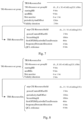
- the implementation method For configuring the TRS resource set group by at least using the second parameter set exclusive to the TRS resource sets and the third parameter set exclusive to the TRS resource set groups, the implementation method is the same as that in the specific application situation 2, and the other implementation method is shown in Fig. 10 .
- the specific resource configuration information of the TRS is as follows:
- the beneficial effect of the application situation is that configuring TRS for the terminal in idle/inactive mode can be controlled within one SIB message, avoiding the configuration of TRS in the connected mode exceeding the limit of data carried by the SIB message, and accurately indicating the information of the TRS.
- the embodiments of the present disclosure provide binding of the resource configuration information of CSI-RS/TRS with the paging/SSB, which is beneficial for terminal energy conservation and can significantly reduce the system message signaling overhead.
- the embodiments of the present application may be applicable to various systems, especially 5G systems.
- the applicable systems may be: global system of mobile communication (global system of mobile communication, GSM) system, code division multiple access (code division multiple access, CDMA) system, wideband code division multiple access (Wideband Code Division Multiple Access, WCDMA) general packet radio service (general packet radio service GPRS) system, long term evolution (long term evolution, LTE) system, LTE frequency division duplex (frequency division duplex, FDD) system, LTE time division duplex (time division duplex, TDD) system, long term evolution advanced (long term evolution advanced, LTE-A) system, universal mobile telecommunication system (universal mobile telecommunication system, UMTS), worldwide interoperability for microwave access (worldwide interoperability for microwave access, WiMAX) system, 5G new radio (New Radio, NR) system, etc. All of these systems include terminal devices and network devices.
- the systems can also include core network components, such as evolved packet system (Evolved Packet System,
- the terminal device involved in the embodiments of the present application may be a device for providing the voice and/or data connectivity to the user, a handheld device with the wireless connection function, or other processing device connected to the wireless modem.
- the terminal device may have different names.
- the terminal device may be referred to as user equipment (User Equipment, UE).
- the wireless terminal device may communicate with one or more core networks (Core Network, CN) via the radio access network (Radio Access Network, RAN), and the wireless terminal device may be a mobile terminal, such as a mobile telephone (or called "cellular" telephone), and a computer with the mobile terminal, for example, may be a portable, pocket, handheld, computer built-in or vehicle-carried mobile device, and they exchange the voice and/or data with the RAN.
- CN Core Network
- RAN Radio Access Network
- RAN Radio Access Network
- the wireless terminal device may also be called system, subscriber device (subscriber unit), subscriber station (subscriber station), mobile station (mobile station), mobile (mobile), remote station (remote station), access point (access point), remote terminal (remote terminal), access terminal (access terminal), user terminal (user terminal), user agent (user agent), user device (user device), which is not limited in the embodiments of the present application.
- the network device involved in the embodiments of the present application may be a base station, which may include cells that provide services for terminals.
- the base station may also be called access point, or may refer to a device in the access network communicating with the wireless terminal via one or more sectors over an air interface, or may have other names.
- the network device may be configured to perform the interconversion between the received air frame and internet protocol (Internet Protocol, IP) packet, and used as the router between the wireless terminal device and the rest of the access network.
- IP Internet Protocol
- the rest of the access network may include IP (IP) networks.
- IP IP
- the network device may further coordinate the attribute management of the air interface.
- the network device involved in the embodiments of the present application can be a network device (Base Transceiver Station, BIS) in the global system for mobile communications (Global System for Mobile communications, GSM) system or code division multiple access (Code Division Multiple Access, CDMA) system, or can be a network device (NodeB) in the wide-band code division multiple access (Wide-band Code Division Multiple Access, WCDMA) system, or can be an evolutional Node B (evolutional Node B, eNB or e-NodeB) in the long term evolution (long term evolution, LTE) system, a 5G base station (gNB) in the 5G network architecture (next generation system), or can be a home evolved Node B (Home evolved Node B, HeNB), a relay node (relay node), femto (femto), pico (pico), etc., which is not limited in the embodiments of the present application.
- network devices can include centralized unit (centralized unit, CU) nodes and
- the network device and the terminal device can each use one or more antennas for multi input multi output (Multi Input Multi Output, MIMO) transmission, which can be single user MIMO (Single User MIMO, SU-MIMO) or multiple user MIMO (Multiple User MIMO, MU-MIMO).
- MIMO transmission can be two-dimensional MIMO (2Dimension MIMO, 2D MIMO), three-dimensional MIMO (3Dimension MIMO, 3D MIMO), full dimension MIMO (Full Dimension MIMO, FD MIMO) or ultra large scale MIMO (massive-MIMO), as well as diversity transmission, pre-coding transmission, or beamforming transmission.
- the embodiments of the present disclosure provide a resource configuration method performed by a terminal device, including:
- the resource configuration information includes: configuration information generated using a first method; or configuration information generated using a second method.
- the configuration indication information is configured to indicate whether the resource configuration information is generated by using the first method or the second method.
- the resource configuration information when the resource configuration information is generated by using the first method, the resource configuration information satisfies one of the following: there are simultaneously the first parameter set, the second parameter set, and the third parameter set; or there are simultaneously the second parameter set and the third parameter set; or there is only the first parameter set and/or there are simultaneously the second parameter set and the third parameter set.
- the target reference signal includes a channel-state-information reference signal CSI-RS.
- the CSI-RS is a channel tracking reference signal TRS.
- the first parameter set includes at least one of the following parameters: scrambling identification of the target reference signal; or a validity duration of the target reference signal based on layer-one signaling indication.
- the second parameter set includes at least one of the following parameters: scrambling identification of the target reference signal; or periodicity and an offset value of the target reference signal; or Quasi co-location QCL reference; or Quantity of slots in which the target reference signal is located; or identification of the target reference signal resource set; or a validity duration of the target reference signal based on layer-one signaling indication.
- the quantity of slots in which the target reference signal is located satisfies at least one of the following: occupying 0 to 2 bits; or being indicated through an explicit or implicit manner.
- the third parameter set includes at least one of the following parameters: periodicity and an offset value of the target reference signal; or a value of the frequency-domain starting resource block RB; or the quantity of RBs occupied by the frequency domain; or the validity duration of the target reference signal based on layer-one signaling indication; or the quantity of slots in which the target reference signal is located; or the ratio of the power of each resource element in the non-zero power target reference signal to the power of each resource element in the synchronization signal/physical broadcast channel block SS/PBCH block; or identification of the target reference signal resource set group.
- the validity duration of the target reference signal based on layer-one signaling indication satisfies at least one of the following: the quantity of occupied bits is less than or equal to 4; or the maximum quantity is less than or equal to 16.
- the target reference signal resource set group satisfies at least one of the following: the maximum quantity is less than or equal to 6; or the quantity of bits occupied is less than or equal to 3.
- the target reference signal resource set satisfies at least one of the following: the maximum quantity is less than or equal to 128; or the quantity of bits occupied is less than or equal to 7.
- the target reference signal resources satisfy at least one of the following: the maximum quantity is less than or equal to 89; or the quantity of bits occupied is less than or equal to 7.
- the method further includes: receiving receiving indication information sent by the network device, the receiving indication information is configured to indicate whether the terminal device is to receive the target reference signal;
- the target reference signal is received based on the resource configuration information of the target reference signal.
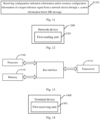
- the embodiments of the present disclosure provide a network device 1200, including: a first sending unit 1201, configured to send configuration indication information and/or resource configuration information of a target reference signal to a terminal device in an idle mode or an inactive mode, by a system information block SIB message.
- a first sending unit 1201 configured to send configuration indication information and/or resource configuration information of a target reference signal to a terminal device in an idle mode or an inactive mode, by a system information block SIB message.
- the configuration indication information is configured to indicate a generation method of the resource configuration information of the target reference signal.
- the resource configuration information includes at least one of the following: a first parameter set applied to a single target reference signal resource; or a second parameter set applied to each target reference signal resource in a target reference signal resource set; or a third parameter set applied to each target reference signal resource in each target reference signal resource set in a target reference signal resource set group.
- the resource configuration information includes: configuration information generated using a first method; or configuration information generated using a second method.
- the configuration indication information is configured to indicate whether the resource configuration information is generated by using the first method or the second method.
- the resource configuration information when the resource configuration information is generated by using the first method, the resource configuration information satisfies one of the following: there are simultaneously the first parameter set, the second parameter set, and the third parameter set; or there are simultaneously the second parameter set and the third parameter set; or there is only the first parameter set and/or there are simultaneously the second parameter set and the third parameter set.
- the target reference signal includes a channel-state-information reference signal CSI-RS.
- the CSI-RS is a channel tracking reference signal TRS.
- the first parameter set includes at least one of the following parameters: scrambling identification of the target reference signal; or validity duration of the target reference signal based on layer-one signaling indication.
- the second parameter set includes at least one of the following parameters: scrambling identification of the target reference signal; or periodicity and an offset value of the target reference signal; or Quasi co-location QCL reference; or quantity of slots in which the target reference signal is located; or identification of the target reference signal resource set; or the validity duration of the target reference signal based on layer-one signaling indication.
- the quantity of slots in which the target reference signal is located satisfies at least one of the following: occupying 0 to 2 bits; or indicating through an explicit or implicit method.
- the third parameter set includes at least one of the following parameters: periodicity and an offset value of the target reference signal; or a value of the frequency-domain starting resource block RB; or quantity of RBs occupied by the frequency domain; or a validity duration of the target reference signal based on layer-one signaling indication; or quantity of slots in which the target reference signal is located; or the ratio of the power of each resource element in the non-zero power target reference signal to the power of each resource element in the synchronization signal/physical broadcast channel block SS/PBCH block; or identification of the target reference signal resource set group.
- the validity duration of the target reference signal based on layer-one signaling indication satisfies at least one of the following: the quantity of occupied bits is less than or equal to 4; or the maximum quantity is less than or equal to 16.
- the target reference signal resource set group satisfies at least one of the following: the maximum quantity is less than or equal to 6; or the quantity of bits occupied is less than or equal to 3.
- the target reference signal resource set satisfies at least one of the following: the maximum quantity is less than or equal to 128; or the quantity of bits occupied is less than or equal to 7.
- the target reference signal resource satisfies at least one of the following: the maximum quantity is less than or equal to 89; or the quantity of bits occupied is less than or equal to 7.
- the network device further includes: a second sending unit, configured to send receiving indication information to the terminal device, the receiving indication information is configured to indicate whether the terminal device is to receive the target reference signal.
- a second sending unit configured to send receiving indication information to the terminal device, the receiving indication information is configured to indicate whether the terminal device is to receive the target reference signal.
- the second sending unit is specifically configured to implement: determining the layer-one signaling used for sending the receiving indication information; sending the receiving indication information to the terminal device through the layer-one signaling.
- the implementation method of determining the layer-one signaling used for sending the receiving indication information by the second sending unit includes: determining the layer-one signaling used for sending the receiving indication information through first information;
- the first information includes at least one of the following: terminal capability information and second information.
- the second information includes: indication information of a sending method, the indication information of the sending method is configured to indicate that at least one of the paging early indication PEI and paging downlink control information DCI is used to send the receiving indication information to the terminal device.
- the terminal capability information refers to whether the terminal device supports the ability to detect the receiving indication information carried by at least one of PEI and paging DCI.
- the embodiments of the network device corresponds one-to-one to the above method embodiments. All implementation methods in the above method embodiments are applicable to the embodiments of the network device and can also achieve the same technical effect.
- each functional unit can be integrated into one processing unit, each unit can exist physically alone, or two or more units can be integrated into one unit.
- the integrated units mentioned above can be implemented in both hardware and software functional units.
- the integrated unit is implemented in the form of a software functional unit and sold or used as an independent product, it can be stored in a processor readable storage medium.
- the technical solutions disclosed herein can essentially or in part contribute to the relevant technology, or all or part of the technical solutions, be reflected in the form of a software product.
- the computer software product is stored in a storage medium, including several instructions to enable a computer device (which can be a personal computer, server, or network device, etc.) or processor (processor) to perform all or part of the steps of the methods described in the various embodiments of the present disclosure.
- the aforementioned storage medium includes: U disk, mobile hard drive, read-only memory (Read-Only Memory, ROM), random access memory (Random Access Memory, RAM), disks or CDs, and other media that can store program code.
- the embodiments of the present disclosure further provide a network device including a processor 1300, a transceiver 1310, a memory 1320, and a program stored in the memory 1320 and executed by the processor 1300; where, the transceiver 1310 is connected to the processor 1300 and the memory 1320 through a bus interface, where, the processor 1300 is configured to read the program in the memory and perform the following processes: sending configuration indication information and/or resource configuration information of a target reference signal to a terminal device in an idle mode or an inactive mode by a system information block SIB message through the transceiver 1310.
- the configuration indication information is configured to indicate a generation method of the resource configuration information of the target reference signal
- the resource configuration information includes at least one of the following: a first parameter set applied to a single target reference signal resource; or a second parameter set applied to each target reference signal resource in a target reference signal resource set; or a third parameter set applied to each target reference signal resource in each target reference signal resource set in a target reference signal resource set group.
- the transceiver 1310 is configured to receive and send data under the control of processor 1300.
- bus architecture can include any quantity of interconnected buses and bridges, specifically one or more processors represented by processor 1300 and various circuits of memory represented by memory 1320 connected together.
- the bus architecture can also link various other circuits such as peripheral devices, regulators, and power management circuits together, which are well-known in this field. Therefore, this article will not further describe them.
- the bus interface provides an interface.
- the transceiver 1310 can be multiple components, including a transmitter and a receiver, providing a unit for communicating with various other devices on a transmission medium, including wireless channels, wired channels, optical cables, and other transmission media.
- the processor 1300 is responsible for managing the bus architecture and typical processing, while the memory 1320 can store the data used by the processor 1300 during operations.
- the processor 1300 can be a central processing unit (Central Processing Unit, CPU), application specific integrated circuit (Application Specific Integrated Circuit, ASIC), field-programmable gate array (Field-Programmable Gate Array, FPGA), or complex programmable logic device (Complex Programmable Logic Device, CPLD), and the processor can also adopt a multi-core architecture.
- CPU Central Processing Unit
- ASIC Application Specific Integrated Circuit
- FPGA Field-Programmable Gate Array
- CPLD Complex Programmable Logic Device
- the resource configuration information includes: configuration information generated using a first method; or configuration information generated using a second method.
- the configuration indication information is configured to indicate whether the resource configuration information is generated by using the first method or the second method.
- the resource configuration information when the resource configuration information is generated by using the first method, the resource configuration information satisfies one of the following: there are simultaneously the first parameter set, the second parameter set, and the third parameter set; or there are simultaneously the second parameter set and the third parameter set; or there is only the first parameter set and/or there are simultaneously the second parameter set and the third parameter set.
- the target reference signal includes a channel-state-information reference signal CSI-RS.
- the CSI-RS is a channel tracking reference signal TRS.
- the first parameter set includes at least one of the following parameters: scrambling identification of the target reference signal; or validity duration of the target reference signal based on layer-one signaling indication.
- the second parameter set includes at least one of the following parameters: scrambling identification of the target reference signal; or periodicity and an offset value of the target reference signal; or Quasi co-location QCL reference; or quantity of slots in which the target reference signal is located; or identification of the target reference signal resource set; or validity duration of the target reference signal based on layer-one signaling indication.
- the quantity of slots in which the target reference signal is located satisfies at least one of the following: occupying 0 to 2 bits; or being indicated through an explicit or implicit manner.
- the third parameter set includes at least one of the following parameters: periodicity and an offset value of the target reference signal; or a value of the frequency-domain starting resource block RB; or quantity of RBs occupied by the frequency domain; or a validity duration of the target reference signal based on layer-one signaling indication; or quantity of slots in which the target reference signal is located; or a ratio of the power of each resource element in the non-zero power target reference signal to the power of each resource element in the synchronization signal/physical broadcast channel block SS/PBCH block; or identification of the target reference signal resource set group.
- the validity duration of the target reference signal based on layer-one signaling indication satisfies at least one of the following: the quantity of occupied bits is less than or equal to 4; or the maximum quantity is less than or equal to 16.
- the target reference signal resource set group satisfies at least one of the following: the maximum quantity is less than or equal to 6; or the quantity of bits occupied is less than or equal to 3.
- the target reference signal resource set satisfies at least one of the following: the maximum quantity is less than or equal to 128; or the quantity of bits occupied is less than or equal to 7.
- the target reference signal resource satisfies at least one of the following: the maximum quantity is less than or equal to 89; or the quantity of bits occupied is less than or equal to 7.
- the processor is configured to read the computer program in the memory and perform the following operations: sending the receiving indication information to the terminal device through the transceiver, the receiving indication information is configured to indicate whether the terminal device is to receive the target reference signal.
- the processor is configured to read the computer program in the memory and perform the following operations:
- the processor is configured to read the computer program in the memory and perform the following operations: determining the layer-one signaling used for sending the receiving indication information through first information.
- the first information includes at least one of the following: terminal capability information; or second information.
- the second information includes: indication information of a sending method, the indication information of the sending method is configured to indicate that at least one of the paging early indication PEI and paging downlink control information DCI is used to send the receiving indication information to the terminal device.
- the terminal capability information refers to whether the terminal device supports the ability to detect the receiving indication information carried by at least one of PEI and paging DCI.
- the embodiments of the present disclosure also provide a computer-readable storage medium on which a computer program is stored, where when the computer program is executed by a processor, the steps of the resource configuration method applied to a network device are implemented.
- the processor-readable storage medium can be any available medium or data storage device that can be accessed by a processor, which includes but not limited to magnetic memory (such as floppy disk, hard disk, magnetic tape, magneto-optical disk (Magneto-Optical Disk, MO), etc.), optical storage (such as CD, DVD, BD, HVD, etc.), as well as semiconductor memory (such as ROM, EPROM, EEPROM, non-volatile memory (NAND FLASH), solid state disk (SSD)), etc.
- magnetic memory such as floppy disk, hard disk, magnetic tape, magneto-optical disk (Magneto-Optical Disk, MO), etc.
- optical storage such as CD, DVD, BD, HVD, etc.
- semiconductor memory such as ROM, EPROM, EEPROM,
- the embodiments of the present disclosure provide a terminal device 1400, including: a first receiving unit 1401, configured to receive configuration indication information and/or resource configuration information of a target reference signal sent by a network device through a system information block SIB message.
- the configuration indication information is configured to indicate a generation method of resource configuration information of the target reference signal.
- the resource configuration information includes at least one of the following: a first parameter set applied to a single target reference signal resource; or a second parameter set applied to each target reference signal resource in a target reference signal resource set; or a third parameter set applied to each target reference signal resource in each target reference signal resource set in a target reference signal resource set group.
- the resource configuration information includes: configuration information generated using a first method; or configuration information generated using a second method.
- the configuration indication information is configured to indicate whether the resource configuration information is generated by using the first method or the second method.
- the resource configuration information when the resource configuration information is generated by using the first method, the resource configuration information satisfies one of the following: there are simultaneously the first parameter set, the second parameter set, and the third parameter set; or there are simultaneously the second parameter set and the third parameter set; or there is only the first parameter set and/or there are simultaneously the second parameter set and the third parameter set.
- the target reference signal includes a channel-state-information reference signal CSI-RS.
- the CSI-RS is a channel tracking reference signal TRS.
- the first parameter set includes at least one of the following parameters: scrambling identification of the target reference signal; or validity duration of the target reference signal based on layer-one signaling indication.
- the second parameter set includes at least one of the following parameters: scrambling identification of the target reference signal; or periodicity and an offset value of the target reference signal; or Quasi co-location QCL reference; or quantity of slots in which the target reference signal is located; or identification of the target reference signal resource set; or a validity duration of the target reference signal based on layer-one signaling indication.
- the quantity of slots in which the target reference signal is located satisfies at least one of the following: occupying 0 to 2 bits; or being indicated through an explicit or implicit manner.
- the third parameter set includes at least one of the following parameters: periodicity and an offset value of the target reference signal; or a value of the frequency-domain starting resource block RB; or quantity of RBs occupied by the frequency domain; or a validity duration of the target reference signal based on layer-one signaling indication; or quantity of slots in which the target reference signal is located; or the ratio of the power of each resource element in the non-zero power target reference signal to the power of each resource element in the synchronization signal/physical broadcast channel block SS/PBCH block; or identification of the target reference signal resource set group.
- the validity duration of the target reference signal based on layer-one signaling indication satisfies at least one of the following: the quantity of occupied bits is less than or equal to 4; or the maximum quantity is less than or equal to 16.
- the target reference signal resource set group satisfies at least one of the following: the maximum quantity is less than or equal to 6; or the quantity of bits occupied is less than or equal to 3.
- the target reference signal resource set satisfies at least one of the following: the maximum quantity is less than or equal to 128; or the quantity of bits occupied is less than or equal to 7.
- the target reference signal resource satisfies at least one of the following: the maximum quantity is less than or equal to 89; or the quantity of bits occupied is less than or equal to 7.
- the terminal device further includes:
- the embodiments of the terminal device corresponds one-to-one to the above method embodiments. All implementation methods in the above method embodiments are applicable to the embodiments of the terminal device and can also achieve the same technical effect.
- each functional unit can be integrated into one processing unit, each unit can exist physically alone, or two or more units can be integrated into one unit.
- the integrated units mentioned above can be implemented in both hardware and software functional units.
- the integrated unit is implemented in the form of a software functional unit and sold or used as an independent product, it can be stored in a processor readable storage medium.
- the computer software product is stored in a storage medium, including several instructions to enable a computer device (which can be a personal computer, server, or network device, etc.) or processor (processor) to perform all or part of the steps of the methods described in the various embodiments of the present disclosure.
- the aforementioned storage medium includes: U disk, mobile hard drive, read-only memory (Read-Only Memory, ROM), random access memory (Random Access Memory, RAM), disks or CDs, and other media that can store program code.
- the embodiments of the present disclosure further provide a terminal device including a processor 1500, a transceiver 1510, a memory 1520, and a program stored in the memory 1520 and executed by the processor 1500; where, the transceiver 1510 is connected to the processor 1500 and the memory 1520 through a bus interface, where the processor 1500 is configured to read the program in the memory and perform the following processes: receiving, through transceiver 1510, configuration indication information and/or resource configuration information of a target reference signal sent by a network device through a system information block SIB message.
- the configuration indication information is configured to indicate a generation method of the resource configuration information of the target reference signal
- the resource configuration information includes at least one of the following: a first parameter set applied to a single target reference signal resource; or a second parameter set applied to each target reference signal resource in a target reference signal resource set; or a third parameter set applied to each target reference signal resource in each target reference signal resource set in a target reference signal resource set group.
- the transceiver 1510 is configured to receive and send data under the control of processor 1500.
- bus architecture can include any quantity of interconnected buses and bridges, specifically one or more processors represented by processor 1500 and various circuits of memory represented by memory 1520 connected together.
- the bus architecture can also link various other circuits such as peripheral devices, regulators, and power management circuits together, which are well-known in this field. Therefore, the present application will not further describe them.
- the bus interface provides an interface.
- the transceiver 1510 can be multiple components, including a transmitter and a receiver, providing a unit for communicating with various other devices on a transmission medium, including wireless channels, wired channels, optical cables, and other transmission media.
- the user interface 1530 can also be an interface that can connect external and internal devices, including but not limited to keyboards, displays, speakers, microphones, joysticks, etc.
- the processor 1500 is responsible for managing the bus architecture and typical processing, while the memory 1520 can store the data used by the processor 1500 during operations.
- the processor 1500 can be a central processing unit (Central Processing Unit, CPU), application specific integrated circuit (Application Specific Integrated Circuit, ASIC), field-programmable gate array (Field-Programmable Gate Array, FPGA), or complex programmable logic device (Complex Programmable Logic Device, CPLD), and the processor can also adopt a multi-core architecture.
- CPU Central Processing Unit
- ASIC Application Specific Integrated Circuit
- FPGA Field-Programmable Gate Array
- CPLD Complex Programmable Logic Device
- the processor is configured to execute any of the methods provided in the present disclosure by calling the computer program stored in memory and executing the obtained executable instructions.
- the processor and memory can also be physically arranged separately.
- the resource configuration information includes: configuration information generated using a first method; or configuration information generated using a second method.
- the configuration indication information is configured to indicate whether the resource configuration information is generated by using the first method or the second method.
- the resource configuration information when the resource configuration information is generated by using the first method, the resource configuration information satisfies one of the following: there are simultaneously the first parameter set, the second parameter set, and the third parameter set; or there are simultaneously the second parameter set and the third parameter set; or there is only the first parameter set and/or there are simultaneously the second parameter set and the third parameter set.
- the target reference signal includes a channel-state-information reference signal CSI-RS.
- the CSI-RS is a channel tracking reference signal TRS.
- the first parameter set includes at least one of the following parameters: scrambling identification of the target reference signal; or a validity duration of the target reference signal based on layer-one signaling indication.
- the second parameter set includes at least one of the following parameters: scrambling identification of the target reference signal; or periodicity and an offset value of the target reference signal; or Quasi co-location QCL reference; or quantity of slots in which the target reference signal is located; or identification of the target reference signal resource set; or the validity duration of the target reference signal based on layer-one signaling indication.
- the quantity of slots in which the target reference signal is located satisfies at least one of the following: occupying 0 to 2 bits; or being indicated through an explicit or implicit manner.
- the third parameter set includes at least one of the following parameters: periodicity and an offset value of the target reference signal; or a value of the frequency-domain starting resource block RB; or quantity of RBs occupied by the frequency domain; or a validity duration of the target reference signal based on layer-one signaling indication; or the quantity of slots in which the target reference signal is located; or the ratio of the power of each resource element in the non-zero power target reference signal to the power of each resource element in the synchronization signal/physical broadcast channel block SS/PBCH block; or identification of the target reference signal resource set group.
- the validity duration of the target reference signal based on layer-one signaling indication satisfies at least one of the following: the quantity of occupied bits is less than or equal to 4; or the maximum quantity is less than or equal to 16.
- the target reference signal resource set group satisfies at least one of the following: the maximum quantity is less than or equal to 6; or the quantity of bits occupied is less than or equal to 3.
- the target reference signal resource set satisfies at least one of the following: the maximum quantity is less than or equal to 128; or the quantity of bits occupied is less than or equal to 7.
- the target reference signal resource satisfies at least one of the following: the maximum quantity is less than or equal to 89; or the quantity of bits occupied is less than or equal to 7.
- the processor is configured to read the computer program in the memory and perform the following operations: receiving, through the transceiver, receiving indication information sent by the network device, wherein the receiving indication information is configured to indicate whether the terminal device is to receive the target reference signal;
- the target reference signal is received based on the resource configuration information of the target reference signal.
- the terminal device provided in the embodiments of the present disclosure is capable of implementing all the method steps implemented in the above method embodiments and achieving the same technical effects. Therefore, the same parts and beneficial effects as in the method embodiments in this embodiment will not be elaborated in detail.
- An embodiment of the present disclosure further provides a computer-readable storage medium on which a computer program is stored, where when the computer program is executed by a processor, the steps of the resource configuration method applied to a terminal device are implemented.
- the processor-readable storage medium may be any available medium or data storage device that can be accessed by a processor, which includes but not limited to magnetic storage (such as floppy disk, hard disk, magnetic tape, magneto-optical disk (Magneto-Optical Disk, MO), etc.), optical storage (such as compact disk (Compact Disk, CD), digital versatile disc (Digital Versatile Disc, DVD), blu-ray disc (Blu-ray Disc, BD), high-definition versatile disc (High-Definition Versatile Disc, HVD), etc.), and semiconductor memory (such as read-only memory (Read-Only Memory, ROM), erasable programmable ROM (Erasable Programmable ROM, EPROM), electrically EPROM (Electrically EPROM, EEPROM), non-vol
- the embodiments of the present disclosure may be provided as methods, systems, or computer program products. Therefore, the present disclosure can take the form of a full hardware embodiment, a full software embodiment, or an embodiment combining software and hardware aspects. Furthermore, the present disclosure may take the form of a computer program product embodied on one or more computer-usable storage media (including but not limited to magnetic disk storage and optical storage, etc.) having computer-usable program code embodied therein.
- a computer-usable storage media including but not limited to magnetic disk storage and optical storage, etc.
- processor-executable instructions may also be stored in a processor-readable memory capable of directing a computer or other programmable data processing device to operate in a specific manner, such that the instructions stored in the processor-readable memory produce an article of manufacture including instruction means, these instruction means implements the functions specified in one or more processes of the flowchart and/or one or more blocks of the block diagram.
- processor-executable instructions can also be loaded onto a computer or other programmable data processing device, which enables a series of operational steps to be performed on the computer or other programmable device to produce a computer-implemented process, so that the instructions executed on the computer or other programmable devices provide steps for realizing the functions specified in one or more processes of the flowchart and/or one or more blocks of the block diagram.
- the division of the above modules is only a division of logical functions, and may be fully or partially integrated into a physical entity or physically separated during actual implementation. And these modules can all be implemented in the form of calling software through processing elements; or these modules can all be implemented in the form of hardware; some modules can also be implemented in the form of calling software through processing elements, and some modules can be implemented in the form of hardware.
- the determining module may be a separate processing element, or may be integrated in a chip of the above-mentioned device.
- the determining module may also be stored in the memory of the above-mentioned device in the form of program code, and a certain processing element of the above-mentioned device may call and execute the functions of the above-mentioned determining modules.
- the implementation of other modules is similar.
- all or part of these modules can be integrated together, and can also be implemented independently.
- the processing element mentioned here may be an integrated circuit with signal processing capabilities.
- each step of the above method or each module above can be completed by an integrated logic circuit of hardware in the processor element or an instruction in the form of software.
- each module, unit, subunit or submodule may be one or more integrated circuits configured to implement the above method, for example: one or more specific integrated circuits (Application Specific Integrated Circuit, ASIC), or, one or more microprocessors (digital signal processor, DSP), or, one or more field programmable gate arrays (Field Programmable Gate Array, FPGA), etc.
- ASIC Application Specific Integrated Circuit
- DSP digital signal processor
- FPGA Field Programmable Gate Array
- the processing element may be a general-purpose processor, such as a central processing unit (Central Processing Unit, CPU) or other processors that can call program codes.
- these modules can be integrated together and implemented in the form of a system-on-a-chip (system-on-a-chip, SOC).
Landscapes
- Engineering & Computer Science (AREA)
- Signal Processing (AREA)
- Computer Networks & Wireless Communication (AREA)
- Mobile Radio Communication Systems (AREA)
Applications Claiming Priority (2)
| Application Number | Priority Date | Filing Date | Title |
|---|---|---|---|
| CN202111308795.9A CN116094676B (zh) | 2021-11-05 | 2021-11-05 | 资源配置方法、装置、网络设备及终端设备 |
| PCT/CN2022/129054 WO2023078257A1 (zh) | 2021-11-05 | 2022-11-01 | 资源配置方法、装置、网络设备及终端设备 |
Publications (2)
| Publication Number | Publication Date |
|---|---|
| EP4429151A1 true EP4429151A1 (de) | 2024-09-11 |
| EP4429151A4 EP4429151A4 (de) | 2025-01-22 |
Family
ID=86185509
Family Applications (1)
| Application Number | Title | Priority Date | Filing Date |
|---|---|---|---|
| EP22889280.8A Pending EP4429151A4 (de) | 2021-11-05 | 2022-11-01 | Ressourcenkonfigurationsverfahren und -vorrichtung, netzwerkvorrichtung und endgerätevorrichtung |
Country Status (6)
| Country | Link |
|---|---|
| US (1) | US20250007667A1 (de) |
| EP (1) | EP4429151A4 (de) |
| CN (1) | CN116094676B (de) |
| AU (1) | AU2022380980B2 (de) |
| TW (2) | TWI900917B (de) |
| WO (1) | WO2023078257A1 (de) |
Families Citing this family (10)
| Publication number | Priority date | Publication date | Assignee | Title |
|---|---|---|---|---|
| CN113973375A (zh) * | 2020-07-24 | 2022-01-25 | 大唐移动通信设备有限公司 | 信号的传输方法、装置、终端、基站及存储介质 |
| US12598526B2 (en) * | 2022-07-25 | 2026-04-07 | Mediatek Inc. | Method and apparatus for cell reselection for network energy saving in mobile communications |
| WO2025010727A1 (zh) * | 2023-07-13 | 2025-01-16 | 北京小米移动软件有限公司 | 确定方法及装置、通信设备、通信系统、存储介质 |
| WO2025024994A1 (zh) * | 2023-07-28 | 2025-02-06 | 富士通株式会社 | 资源映射方法以及装置 |
| WO2025024986A1 (zh) * | 2023-07-28 | 2025-02-06 | 富士通株式会社 | 资源指示方法以及装置 |
| CN120378913A (zh) * | 2023-08-11 | 2025-07-25 | 中国电信股份有限公司技术创新中心 | 测量方法、用户设备、通信系统和存储介质 |
| CN119729849A (zh) * | 2023-09-26 | 2025-03-28 | 华为技术有限公司 | 一种通信方法及装置 |
| WO2025160712A1 (en) * | 2024-01-29 | 2025-08-07 | Apple Inc. | Channel state information reference signal port indexing and mapping for wireless communication |
| CN120110620A (zh) * | 2024-07-23 | 2025-06-06 | 中兴通讯股份有限公司 | 信道状态信息的处理方法、装置、存储介质及程序产品 |
| WO2026029905A1 (en) * | 2024-08-01 | 2026-02-05 | Qualcomm Incorporated | Cell-specific tracking reference signals for active user equipment |
Family Cites Families (10)
| Publication number | Priority date | Publication date | Assignee | Title |
|---|---|---|---|---|
| KR102658360B1 (ko) * | 2015-04-09 | 2024-04-17 | 삼성전자주식회사 | 비면허 대역을 사용하는 셀룰러 네트워크에서의 자원할당 방법 및 그 장치 |
| US20190075546A1 (en) * | 2015-11-05 | 2019-03-07 | Ntt Docomo, Inc. | User apparatus, base station, signal transmission method, and resource allocation method |
| US10708028B2 (en) * | 2017-03-08 | 2020-07-07 | Samsung Electronics Co., Ltd. | Method and apparatus for reference signals in wireless system |
| US10979186B2 (en) * | 2017-05-01 | 2021-04-13 | Lg Electronics Inc. | Method of sounding a terminal in a wireless communication system and apparatus therefor |
| CN109842937B (zh) * | 2017-09-20 | 2021-11-19 | 维沃移动通信有限公司 | 信息传输方法、网络设备、终端及计算机可读存储介质 |
| CN110072285A (zh) * | 2018-01-22 | 2019-07-30 | 维沃移动通信有限公司 | 频域资源的配置方法、终端和基站 |
| CN110661601B (zh) * | 2018-06-28 | 2020-09-22 | 维沃移动通信有限公司 | 定位参考信号配置方法、网络侧设备和终端设备 |
| CN113259071B (zh) * | 2020-02-07 | 2022-12-13 | 大唐移动通信设备有限公司 | 信号传输方法及装置 |
| CN115918015B (zh) * | 2020-04-10 | 2025-01-07 | 瑞典爱立信有限公司 | 用于nr ue的紧凑型trs配置的方法 |
| US12284664B2 (en) * | 2020-10-23 | 2025-04-22 | Qualcomm Incorporated | Techniques for deriving a sounding reference signal-based multi-transmission and reception point downlink precoding |
-
2021
- 2021-11-05 CN CN202111308795.9A patent/CN116094676B/zh active Active
-
2022
- 2022-11-01 US US18/707,830 patent/US20250007667A1/en active Pending
- 2022-11-01 AU AU2022380980A patent/AU2022380980B2/en active Active
- 2022-11-01 WO PCT/CN2022/129054 patent/WO2023078257A1/zh not_active Ceased
- 2022-11-01 EP EP22889280.8A patent/EP4429151A4/de active Pending
- 2022-11-03 TW TW112140993A patent/TWI900917B/zh active
- 2022-11-03 TW TW111141973A patent/TWI823660B/zh active
Also Published As
| Publication number | Publication date |
|---|---|
| AU2022380980B2 (en) | 2025-09-11 |
| TW202408293A (zh) | 2024-02-16 |
| US20250007667A1 (en) | 2025-01-02 |
| TW202320576A (zh) | 2023-05-16 |
| EP4429151A4 (de) | 2025-01-22 |
| TWI900917B (zh) | 2025-10-11 |
| AU2022380980A1 (en) | 2024-06-20 |
| WO2023078257A1 (zh) | 2023-05-11 |
| CN116094676B (zh) | 2025-01-14 |
| TWI823660B (zh) | 2023-11-21 |
| CN116094676A (zh) | 2023-05-09 |
Similar Documents
| Publication | Publication Date | Title |
|---|---|---|
| EP4429151A1 (de) | Ressourcenkonfigurationsverfahren und -vorrichtung, netzwerkvorrichtung und endgerätevorrichtung | |
| CN115915167A (zh) | 一种通信方法及通信装置 | |
| US11653369B2 (en) | Explicit configuration of paging and control channel in system information | |
| CN117202324A (zh) | Dci的发送方法、接收方法、装置、网络侧设备及终端 | |
| TW201902156A (zh) | 涉及無線通信網絡中的通道狀態資訊報告的方法和裝置 | |
| CN115134950B (zh) | 寻呼方法、装置及存储介质 | |
| CN111757336A (zh) | 覆盖调整方法、装置及系统 | |
| US20240049281A1 (en) | Mode indication method, terminal device and network device | |
| WO2022237540A1 (zh) | 信息指示、获取方法及装置 | |
| EP4513933A1 (de) | Informationsverarbeitungsverfahren, netzwerkseitige vorrichtung und endgerät | |
| WO2023005897A1 (zh) | 信息指示方法、获取方法、装置、网络侧设备及终端 | |
| CN115833896A (zh) | 波束指示方法、波束确定方法、装置、网络设备及终端 | |
| US20240097846A1 (en) | Method for determining sending position, communications device and storage medium | |
| EP4572416A1 (de) | Informationsübertragungsverfahren, vorrichtung, netzwerkseitige vorrichtung und endgerät | |
| CN116470999A (zh) | Rs传输方法、装置及存储介质 | |
| CN115707101B (zh) | 信息传输方法、装置、终端设备及网络设备 | |
| EP4498729A1 (de) | Trägerumschaltverfahren und -vorrichtung sowie endgerätevorrichtung | |
| WO2024032396A1 (zh) | 通信方法与装置 | |
| WO2025092285A1 (zh) | 信号测量、传输方法、装置及设备 | |
| WO2026067382A1 (zh) | 唤醒信息获取、传输方法、装置、终端及网络设备 | |
| WO2023051689A1 (zh) | 上行信息发送方法、接收方法、终端和网络设备 | |
| WO2024235079A1 (zh) | 信息传输方法、装置、终端及网络设备 | |
| CN116095829A (zh) | Pei的资源位置确定方法、装置、终端及网络侧设备 | |
| CN118524490A (zh) | 配置方法、终端、网络设备、装置和存储介质 |
Legal Events
| Date | Code | Title | Description |
|---|---|---|---|
| STAA | Information on the status of an ep patent application or granted ep patent |
Free format text: STATUS: THE INTERNATIONAL PUBLICATION HAS BEEN MADE |
|
| PUAI | Public reference made under article 153(3) epc to a published international application that has entered the european phase |
Free format text: ORIGINAL CODE: 0009012 |
|
| STAA | Information on the status of an ep patent application or granted ep patent |
Free format text: STATUS: REQUEST FOR EXAMINATION WAS MADE |
|
| 17P | Request for examination filed |
Effective date: 20240605 |
|
| AK | Designated contracting states |
Kind code of ref document: A1 Designated state(s): AL AT BE BG CH CY CZ DE DK EE ES FI FR GB GR HR HU IE IS IT LI LT LU LV MC ME MK MT NL NO PL PT RO RS SE SI SK SM TR |
|
| A4 | Supplementary search report drawn up and despatched |
Effective date: 20250102 |
|
| RIC1 | Information provided on ipc code assigned before grant |
Ipc: H04W 24/02 20090101ALI20241219BHEP Ipc: H04L 5/00 20060101AFI20241219BHEP |
|
| DAV | Request for validation of the european patent (deleted) | ||
| DAX | Request for extension of the european patent (deleted) |