EP4431099A1 - Composition contenant de l'acide taurodésoxycholique ou un sel pharmaceutiquement acceptable de celui-ci en tant que principe actif pour la prévention ou le traitement de maladies infectieuses virales - Google Patents
Composition contenant de l'acide taurodésoxycholique ou un sel pharmaceutiquement acceptable de celui-ci en tant que principe actif pour la prévention ou le traitement de maladies infectieuses virales Download PDFInfo
- Publication number
- EP4431099A1 EP4431099A1 EP22893086.3A EP22893086A EP4431099A1 EP 4431099 A1 EP4431099 A1 EP 4431099A1 EP 22893086 A EP22893086 A EP 22893086A EP 4431099 A1 EP4431099 A1 EP 4431099A1
- Authority
- EP
- European Patent Office
- Prior art keywords
- virus infection
- prevention
- treatment
- infection diseases
- pharmaceutical composition
- Prior art date
- Legal status (The legal status is an assumption and is not a legal conclusion. Google has not performed a legal analysis and makes no representation as to the accuracy of the status listed.)
- Pending
Links
Images



Classifications
-
- A—HUMAN NECESSITIES
- A23—FOODS OR FOODSTUFFS; TREATMENT THEREOF, NOT COVERED BY OTHER CLASSES
- A23L—FOODS, FOODSTUFFS OR NON-ALCOHOLIC BEVERAGES, NOT OTHERWISE PROVIDED FOR; PREPARATION OR TREATMENT THEREOF
- A23L33/00—Modifying nutritive qualities of foods; Dietetic products; Preparation or treatment thereof
- A23L33/10—Modifying nutritive qualities of foods; Dietetic products; Preparation or treatment thereof using additives
-
- A—HUMAN NECESSITIES
- A61—MEDICAL OR VETERINARY SCIENCE; HYGIENE
- A61K—PREPARATIONS FOR MEDICAL, DENTAL OR TOILETRY PURPOSES
- A61K31/00—Medicinal preparations containing organic active ingredients
- A61K31/56—Compounds containing cyclopenta[a]hydrophenanthrene ring systems; Derivatives thereof, e.g. steroids
- A61K31/575—Compounds containing cyclopenta[a]hydrophenanthrene ring systems; Derivatives thereof, e.g. steroids substituted in position 17 beta by a chain of three or more carbon atoms, e.g. cholane, cholestane, ergosterol, sitosterol
-
- A—HUMAN NECESSITIES
- A61—MEDICAL OR VETERINARY SCIENCE; HYGIENE
- A61P—SPECIFIC THERAPEUTIC ACTIVITY OF CHEMICAL COMPOUNDS OR MEDICINAL PREPARATIONS
- A61P31/00—Antiinfectives, i.e. antibiotics, antiseptics, chemotherapeutics
- A61P31/12—Antivirals
-
- A—HUMAN NECESSITIES
- A61—MEDICAL OR VETERINARY SCIENCE; HYGIENE
- A61P—SPECIFIC THERAPEUTIC ACTIVITY OF CHEMICAL COMPOUNDS OR MEDICINAL PREPARATIONS
- A61P31/00—Antiinfectives, i.e. antibiotics, antiseptics, chemotherapeutics
- A61P31/12—Antivirals
- A61P31/14—Antivirals for RNA viruses
- A61P31/16—Antivirals for RNA viruses for influenza or rhinoviruses
-
- A—HUMAN NECESSITIES
- A23—FOODS OR FOODSTUFFS; TREATMENT THEREOF, NOT COVERED BY OTHER CLASSES
- A23V—INDEXING SCHEME RELATING TO FOODS, FOODSTUFFS OR NON-ALCOHOLIC BEVERAGES AND LACTIC OR PROPIONIC ACID BACTERIA USED IN FOODSTUFFS OR FOOD PREPARATION
- A23V2002/00—Food compositions, function of food ingredients or processes for food or foodstuffs
-
- A—HUMAN NECESSITIES
- A23—FOODS OR FOODSTUFFS; TREATMENT THEREOF, NOT COVERED BY OTHER CLASSES
- A23V—INDEXING SCHEME RELATING TO FOODS, FOODSTUFFS OR NON-ALCOHOLIC BEVERAGES AND LACTIC OR PROPIONIC ACID BACTERIA USED IN FOODSTUFFS OR FOOD PREPARATION
- A23V2200/00—Function of food ingredients
- A23V2200/30—Foods, ingredients or supplements having a functional effect on health
- A23V2200/324—Foods, ingredients or supplements having a functional effect on health having an effect on the immune system
Definitions
- the present invention relates to a composition for the prevention or treatment of virus infection diseases containing taurodeoxycholic acid or a pharmaceutically acceptable salt thereof as an active ingredient. More specifically, the present invention pertains to a composition for the prevention or treatment of virus infection diseases containing a inflammasome inhibitor comprising taurodeoxycholic acid or a pharmaceutically acceptable salt thereof as an active ingredient.
- Viral diseases encompass a wide spectrum of illnesses, each manifesting distinct symptoms depending on the type of virus.
- Viruses causing respiratory infections include influenza viruses, coronaviruses, and rhinoviruses, while those leading to gastrointestinal conditions such as diarrhea include rotaviruses and enteroviruses.
- Retroviruses are associated with immune disorders, and adenoviruses, papillomaviruses, hepatitis B and C viruses are linked to cancer. Additionally, herpesviruses can cause eruptions on the face or genital skin.
- Influenza virus which causes respiratory diseases among humans, belongs to the Orthomyxoviridae family, a group of RNA viruses. It is classified into three types: A, B, and C. Among these, Type A infects mammals such as humans and pigs, as well as various species of poultry and wild birds. The natural hosts for Type A influenza viruses are known to be wild waterfowl such as ducks. Epidemiological studies on influenza infection in wild birds have confirmed the presence of 16 subtypes of hemagglutinin (HA) and 9 subtypes of neuraminidase (NA) influenza viruses among wild avian populations.
- HA hemagglutinin
- NA neuraminidase
- influenza virus undergoes periodic slight variations, infecting over 10% of the population each year, predominantly during late autumn to winter. This leads to increased mortality rates, particularly among the elderly and those with chronic illnesses. Additionally, every 10 to 40 years, significant antigenic shifts occur, resulting in the emergence of new viruses that most of the population has not previously encountered. As a result, most individuals lack immunity to the new virus, facilitating person-to-person transmission and causing widespread infection, with mortality rates escalating during severe pandemics affecting over 20 to 50% of the population.
- controlling influenza involves direct and indirect measures related to controlling influenza viruses infecting animals.
- active global efforts are underway for the development of therapeutics and vaccines, which are being successfully commercialized and applied to both humans and animals.
- the overactivation of the NLRP3 inflammasome due to P2X7 receptor activation following virus infection is a major cause of pneumonia as a respiratory disease.
- P2X7 receptors are distributed systemically in immune cells, pulmonary epithelial cells, and central nervous system cells.
- the proliferation of the virus induces cell death, leading to the release of ATP, which activates P2X7 receptors, triggering excessive activation of the NLRP3 inflammasome in the respiratory system and thereby progressing to severe illness.
- the P2X7 receptor is an ion channel receptor composed of complexes belonging to the P2Xn purinergic receptor family. Stimulation of P2X7 promotes the extracellular release of potassium ions and facilitates the rapid inward movement of calcium and sodium ions into the cell. In diseased states such as infection, extracellular ATP concentrations significantly increase, leading to P2X7 receptor activation, which triggers the efflux of potassium ions and intracellular ion imbalance, promoting the NLRP3 inflammasome. Consequently, pro-IL-1 ⁇ /18 is activated by the NLRP3 inflammasome, exacerbating cell death and inflammation in the surrounding tissue.
- P2X7 antagonists have not yet been developed.
- GPCR19 forms complexes with P2X7 receptors on the cell membrane in keratinocytes, T cells, and mast cells, among others.
- the expression of GPCR19 decreases significantly in inflamed cells, while the expression of P2X7 receptors increases significantly, leading to amplified inflammatory responses.
- amantadine, rimantadine, zanamivir, and oseltamivir are used as therapeutic agents for influenza virus infections.
- antiviral agents such as vomiting and dizziness
- post-influenza virus infection, viral neutralization or inhibition of replication is necessary for viral clearance, but it is also essential to regulate the exacerbation of inflammatory responses in the respiratory tract, as described above.
- the inventors have endeavored to develop a safe and low side-effect treatment for viral infectious respiratory diseases, such as influenza virus infections, which induce excessive inflammation in the respiratory tract.
- viral infectious respiratory diseases such as influenza virus infections
- they have confirmed a reduction in inflammatory cells and inflammatory cytokines in the lungs of influenza virus-infected mouse models treated with pharmacologically acceptable doses of taurodeoxycholic acid. Therefore, by demonstrating the potential use of taurodeoxycholic acid or its pharmacologically acceptable salts as inhibitors of the NLRP3 inflammasome, aimed at regulating inflammatory responses to alleviate the severity of respiratory symptoms caused by virus infections, the inventors have arrived at this patent application.
- This disclosure highlights the potential utility of thauridineoxycholic acid or its pharmacologically acceptable salts as effective components of compositions for the prevention or treatment of virus infection diseases.
- Virus infection diseases such as influenza virus infections, which induce excessive inflammation in the respiratory tract, can progress severely due to excessive inflammatory responses in the respiratory system. Therefore, there is a need to regulate respiratory tract inflammation to alleviate this condition.
- the objective of the present invention is to provide compositions for the prevention, treatment, or improvement of virus infection diseases by regulating inflammatory responses in the respiratory tract.
- a pharmaceutical composition for the prevention or treatment of virus infection diseases comprising an inflammasome inhibitor as an effective ingredient.
- the present invention provides a health functional food composition for the prevention or improvement of virus infection diseases comprising an inflammasome inhibitor as an effective ingredient.
- the present invention offers a method for the prevention or treatment of virus infection diseases involving administering an inflammasome inhibitor to an individual.
- the present invention provides the use of an inflammasome inhibitor for the pharmaceutical composition for the prevention or treatment of virus infection diseases.
- the present invention offers the use of an inflammasome inhibitor for the health functional food composition for the prevention or improvement of virus infection diseases.
- the present invention provides the use of an inflammasome inhibitor for the manufacture of the pharmaceutical composition for the prevention or treatment of virus infection diseases.
- the present invention offers the use of an inflammasome inhibitor for the manufacture of the health functional food composition for the prevention or improvement of virus infection diseases.
- the inventors administered pharmacologically acceptable salts of taurodeoxycholic acid to influenza virus-infected mouse models with the aim of alleviating severe manifestations of virus infection by regulating inflammatory responses through the inhibition of NLRP3 inflammasome activation. As a result, they observed a reduction in inflammatory cells and inflammatory cytokines in the lungs, indicating the potential of the aforementioned inflammasome inhibitors comprising taurodeoxycholic acid or its pharmacologically acceptable salt as effective components of compositions for the prevention or treatment of virus infection diseases.
- prevention refers to all acts of inhibiting or delaying the occurrence, spread, and recurrence of virus infection diseases through the administration of compositions of the present invention.
- treatment refers to all acts of symptom improvement or beneficial alteration of the aforementioned diseases through the administration of compositions of the present invention.
- the term "administration" refers to the provision of a specified substance to a patient through any suitable method, and the route of administration of the compositions of the present invention can be orally or non-orally through any common route that can reach the target tissue. Additionally, the compositions can be administered through any device that allows the active ingredients to reach the target cells.
- the present invention provides a pharmaceutical composition for the prevention or treatment of virus infection diseases comprising an inflammasome inhibitor as an effective ingredient.
- the present invention provides a method for the prevention or treatment of virus infection diseases, comprising the step of administering an inflammasome inhibitor to an individual.
- the present invention provides the use of an inflammasome inhibitor for the pharmaceutical composition for the prevention or treatment of virus infection diseases.
- the present invention provides the use of an inflammasome inhibitor for the manufacture of the pharmaceutical composition for the prevention or treatment of virus infection diseases.
- the term "inflammasome inhibitor” refers to an NLRP3 inflammasome inhibitor, which can inhibit the formation or activation of the NLRP3 inflammasome.
- the inflammasome inhibitor can comprise taurodeoxycholic acid or its pharmaceutically acceptable salt.
- the taurodeoxycholic acid is a type of bile acid, which is a taurine-conjugated deoxycholic acid, having a chemical structure represented by [Chemical Formula 1], more specifically having a chemical structure represented by [Chemical Formula 2]:
- the taurodeoxycholic acid can be obtained from animal carcasses, such as cattle, pigs, sheep, dogs, goats, or rabbits, available commercially, or synthesized, all of which are acceptable for use.
- the virus can be an influenza virus.
- influenza virus mentioned above is classified into influenza virus type
- influenza virus type B and influenza virus type C.
- type A is primarily known to infect humans, while type B or C is observed to infect pigs, other mammals, and various wild birds compared to type A. Additionally, it includes viruses such as avian influenza virus, swine influenza virus, and novel influenza A virus subtypes H1N1, which have recently become global concerns. Specifically, the influenza virus mentioned above can be influenza virus type A.
- influenza virus type A can include at least one type selected from the group consisting of H1N1, H1N2, H2N2, H3N2, H5N1, H5N2, H7N2, H7N3, H7N7, H7N9, H9N2, and H10N7, specifically H1N1, without being limited thereto.
- the virus infection diseases include, for example, influenza, common cold, novel flu, pharyngitis, bronchitis, pneumonia, enteritis, foot-and-mouth disease, viral meningitis, encephalitis, neurogenic pulmonary edema, conjunctivitis, myocarditis, hepatitis, poliomyelitis, paralysis, smallpox, variola, chronic obstructive pulmonary disease, abscess, otitis media, rinderpest, African swine fever, chickenpox, herpes, norovirus gastroenteritis, avian influenza, and swine flu, among others, induced by viruses.
- influenza common cold, pharyngitis, bronchitis, or pneumonia caused by influenza virus infection
- it can include pneumonia caused by influenza virus infection, without limitation thereto.
- the inflammasome inhibitor can inhibit the production of inflammatory cytokines in the respiratory tract, such as IL-1 ⁇ .
- IL-1 ⁇ can be generated by the activation of NLRP3 inflammasome.
- the inflammasome inhibitor of the present invention encompasses pharmaceutically acceptable salts, and solvates, hydrates, racemates or stereoisomers that can be derived therefrom.
- the inflammasome inhibitor of the present invention can be used in the form of pharmaceutically acceptable salts.
- the acid addition salts formed by pharmaceutically acceptable free acids are particularly useful.
- Acid addition salts are obtained from inorganic acids such as hydrochloric acid, nitric acid, phosphoric acid, sulfuric acid, hydrobromic acid, hydroiodic acid, nitrous acid or phosphorous acid, as well as from non-toxic organic acids such as aliphatic mono- or di-carboxylates, phenyl-substituted alkanoates, hydroxyalkanoates, alkandioates, aromatic acids, or aliphatic and aromatic sulfonic acids.
- Such pharmaceutically non-toxic salts include sulfates, pyrophosphates, bisulfates, sulfites, bisulfites, nitrates, phosphates, monohydrogen phosphates, dihydrogen phosphates, metaphosphates, pyrophosphates, chlorides, bromides, iodides, fluorides, acetates, propionates, decanoates, caprylates, acrylates, formates, isobutyrates, caprates, heptanoates, propiolates, oxalates, malonates, succinates, suberates, sebacates, fumarates, maleates, butane-1,4-dioates, hexane-1,6-dioates, benzoates, chlorobenzoates, methyl benzoates, dinitrobenzoates, hydroxybenzoates, methoxybenzoates, phthalates, terephthalates, benzene-sulfonates
- acid addition salts can be prepared by conventional methods, such as dissolving the inflammasome inhibitor of the present invention in an excess of acid solution and precipitating the salt with a water-miscible organic solvent, such as methanol, ethanol, acetone, or acetonitrile. Additionally, the solvent or excess acid can be evaporated from this mixture to dryness or the precipitated salt can be isolated by suction filtration for preparation.
- a water-miscible organic solvent such as methanol, ethanol, acetone, or acetonitrile.
- a pharmaceutically acceptable metal salts can be made using a base.
- the alkali metal or alkaline earth metal salts are obtained by dissolving the compound in an excess of alkali metal hydroxide or alkaline earth metal hydroxide solution, filtering the non-dissolved compound salt, and evaporating and drying the filtrate.
- it is pharmaceutically suitable to prepare a sodium, potassium, or calcium salt as the metal salt, and more specifically, in the case of taurodeoxycholic acid, it is suitable to prepare a sodium salt.
- a silver salt corresponding thereto is obtained by reacting the alkali metal or alkaline earth metal salt with an appropriate silver salt (e.g., silver nitrate)
- composition When the composition is formulated, it is prepared by using diluents or excipients such as a commonly used filler, a thickener, a binder, a wetting agent, a disintegrating agent, and a surfactant.
- diluents or excipients such as a commonly used filler, a thickener, a binder, a wetting agent, a disintegrating agent, and a surfactant.
- the formulation can be formulated into a formulation selected from the group consisting of tablets, capsules, injections, troches, powders, granules, liquid, suspensions, oral liquids, emulsions, syrups, suppositories, vaginal tablets, and pills, but is not limited thereto and can be formulated into appropriate formulations as needed.
- a solid preparation for oral administration includes a tablet, a pill, a powder, a granule agent, a capsule agent, a troche agent, and the like, and such a solid preparation is prepared by mixing at least one excipient in the compound of the present invention, for example, starch, calcium carbonate, sucrose, lactose or gelatin.
- lubricants such as magnesium stearate or talc are also used in addition to simple excipients.
- Liquid preparations for oral administration include suspensions, oral liquids, emulsions or syrups, among others. Besides commonly used diluents like water and liquid paraffin, various excipients such as wetting agents, sweetening agents, flavoring agents, and preservatives can be included..
- Preparations for non-oral administration include sterile solutions, non-aqueous solutions, suspensions, emulsions, lyophilized formulations, suppositories, etc.
- Non-aqueous solutions such as propylene glycol, polyethylene glycol, vegetable oils like olive oil, injectable esters like ethyl oleate can be used.
- As the suppository base witepsol, macrogol, tween 61, cocoa butter, laurinji, glycerol, gelatin and the like can be employed.
- composition according to the present invention is administered in a pharmaceutically effective amount.
- pharmaceutically effective amount refers to a quantity sufficient to treat a disease with a rational ratio of benefit to risk applicable to medical therapy.
- the effective dosage level can be determined based on factors such as the type and severity of the patient's condition, the activity of the drug, the sensitivity to the drug, the time and route of administration, elimination rate, duration of treatment, concomitant medications, and other factors well known in the medical field.
- the composition of the present invention can be administered as a single therapy or in combination with other therapies, either sequentially or concurrently with conventional therapies, and can be administered singly or multiply. It is important to administer the minimum amount with minimal side effects to achieve maximum efficacy, considering all of the above factors, which can be readily determined by those skilled in the art.
- the effective dose of the compound according to the present invention may vary depending on factors such as the patient's age, gender, and weight, and it may be administered daily, every other day, or divided into 1 to 3 doses per day.
- the dosage can increase or decrease depending on the route of administration, severity, gender, weight, age, etc., so the aforementioned doses do not limit the scope of the present invention in any way.
- the inventors administered a sodium salt of taurodeoxycholic acid at low (1 mpk) or high (4 mpk) doses to a mouse model of influenza virus infection with the aim of alleviating the severity of respiratory symptoms caused by viral infection by modulating the inflammatory response through the inhibition of NLRP3 inflammasome activation.
- a sodium salt of taurodeoxycholic acid at low (1 mpk) or high (4 mpk) doses to a mouse model of influenza virus infection with the aim of alleviating the severity of respiratory symptoms caused by viral infection by modulating the inflammatory response through the inhibition of NLRP3 inflammasome activation.
- the inventors have confirmed that pharmaceutically acceptable salts of taurodeoxycholic acid, as inflammasome inhibitors, alleviate the respiratory inflammatory response induced by influenza virus infection.
- the inflammasome inhibitor can be utilized as an effective component of pharmaceutical compositions for the prevention or treatment of viral infections such as influenza virus.
- the present invention provides a health functional food composition for the prevention or improvement of virus infection diseases comprising an inflammasome inhibitor as an effective ingredient.
- the present invention provides the use of an inflammasome inhibitor for the health functional food composition for the prevention or improvement of virus infection diseases.
- the present invention provides the use of an inflammasome inhibitor for the manufacture of the health functional food composition for the prevention or improvement of virus infection diseases.
- the inventors have confirmed that the pharmaceutically acceptable salt of taurodeoxycholic acid, as an inflammasome inhibitor, alleviates the respiratory inflammatory response induced by influenza virus infection. Therefore, the aforementioned inflammasome inhibitor can be used as an effective component of health functional food compositions for the prevention or improvement of viral infectious diseases such as influenza virus infection.
- the health functional food composition of the present invention can be prepared in any one formulation selected from powder, granules, pills, tablets, capsules, candies, syrups, and beverages, but is not limited thereto.
- the health functional food composition is not particularly limited as long as it can be consumed to prevent or improve a viral infectious disease.
- the health functional food composition of the present invention can be added as it is or used together with other food or food ingredients, and can be appropriately used according to a conventional method.
- the active ingredient can be appropriately used according to the purpose of use (prevention or improvement).
- food or beverage is prepared, it is added in an amount of 15 parts by weight or less, preferably 10 parts by weight or less, based on the health functional food composition of the present invention.
- the amount may be less than or equal to the above range, and since there is no problem in terms of safety, the active ingredient may be used in an amount greater than or equal to the above range.
- the kind of food There is no particular limitation on the kind of food. Examples of foods to which the above health functional food composition can be added include meat, sausages, bread, chocolate, candies, snacks, confectionery, pizza, ramen, other noodles, gum, dairy products comprising ice cream, various soups, beverages, tea drinks, alcohol drinks, and vitamin composites, and include all health foods in a conventional sense.
- the health functional food composition of the present invention can be prepared as a food, especially a functional food.
- the functional food of the present invention includes ingredients conventionally added in the production of the food and includes, for example, proteins, carbohydrates, fats, nutrients, and seasoning agents.
- natural carbohydrates or flavoring agents can be included as additional ingredients in addition to the active ingredients.
- the natural carbohydrates can be monosaccharides (e.g., glucose, fructose, etc.), disaccharides (e.g., maltose, sucrose, etc.), oligosaccharides, polysaccharides (e.g., dextrin, cyclodextrin, etc.) or sugar alcohols (e.g., xylitol, sorbitol, erythritol, etc.).
- the flavoring agent can use a natural flavoring agent (e.g., taumartin, stevia extract, etc.) and a synthetic flavoring agent (e.g., saccharin, aspartame, etc.).
- a natural flavoring agent e.g., taumartin, stevia extract, etc.
- a synthetic flavoring agent e.g., saccharin, aspartame, etc.
- various nutritional agents, vitamins, electrolytes, flavoring agents, colorants, pectic acids and salts thereof, alginic acids and salts thereof, organic acids, protective colloidal thickeners, pH regulators, stabilizers, preservatives, glycerin, alcohols, carbonated agents used in carbonated beverages, and the like can be further contained.
- Example 1 Preparation of an Influenza Virus Infection Animal Model and Administration of Sodium Taurodeoxycholate
- TDCA taurodeoxycholic acid
- HY209 the sodium salt of TDCA
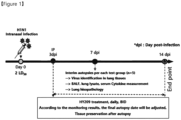
- mice Female BLAB/C mice aged 7 weeks were purchased and allowed to acclimate for one week before the experiments commenced.
- the experimental animals were housed under conditions of 22 ⁇ 2°C temperature, 55 ⁇ 5% relative humidity, and a 12-hour light-dark cycle. Water was provided ad libitum, and sterilized feed was freely accessible.
- influenza virus CA04 human H1N1
- 2LD 50 30 ⁇ l /mouse
- the drug was administered by dividing into four groups as shown in [Table 1] below.
- the positive control group was administered dexamethasone, an anti-inflammatory drug, as a drug
- the experimental group was administered HY209 as a low dose (1 mpk) or a high dose (4 mpk) as a drug.
- the drug was administered intraperitoneally at a dose of 100 ⁇ l/mouse on the third day after virus infection.
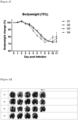
- the body weight was measured every day during the experiment of each test group in ⁇ Example 1>, and the measured body weight was checked with the start as 100%.
- mice in the influenza virus infection group (G1) exhibited a decrease in body weight, with no significant difference in weight loss observed among the drug treatment groups (G2, G3, and G4). It was confirmed that the influenza virus infection concentration used was suitable for inducing weight loss following influenza virus infection.
- Influenza virus infection is known to cause excessive inflammation in the respiratory tract. Lung lesions were identified by separating the lungs of each of the test groups of ⁇ Example 1>.
- each of the test groups of Example 1 was autopsied on the 7th day (7 dpi), 10th day (10 dpi), and 11th day (11 dpi) of viral infection, and then the lungs were separated.
- the separated lung lesions were visually confirmed ( Figures 3a to 3c ), and lung lesions were scored according to the pathological scoring criteria of Table 2 below, and then graphed ( Figures 4a and 4b ).
- the virus infection group (G1 or control) scored 2.8 ⁇ 0.84, the positive control group (G2 or Dexa 1 mpk) scored 1.8 ⁇ 0.45, the low-dose experimental group (G3 or HY209 1 mpk) scored 2.6 ⁇ 0.55, and the high-dose experimental group (G4 or HY209 4 mpk) scored 1.8 ⁇ 0.45.
- virus infection group (G1) exhibited inflammatory cell infiltration and edema, and as time progressed to day 11 post-infection, the density of inflammatory cell infiltration increased, along with thickening of the alveolar walls.
- the positive control group (G2), low-dose experimental group (G3), and high-dose experimental group (G4) an overall decrease in the number of inflammatory cells was observed.
- each of the test groups of ⁇ Example 1> was autopsy performed on the 7th day (7 dpi) and 11th days (11 dpi) of viral infection, and then lungs were separated.
- a lung sample was obtained by homogenizing the separated lungs with 1 ml of PBS.
- blood collected before autopsy was centrifuged (MF-80, Hanil Science Industrial, Incheon, Korea) at 3,000 rpm for 20 minutes for serum separation.
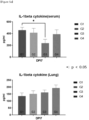
- the expression levels of IL-1 ⁇ in the lung sample and the serum sample were measured according to the manufacturer's procedure using a DuoSet ELISA kit (R&D system).
- the levels of IL-1 ⁇ in serum samples decreased in all drug-treated groups (G2, G3, and G4) compared to the virus infection group (G1).
- the levels of IL-1 ⁇ in serum samples decreased in all drug-treated groups (G2, G3, and G4) compared to the virus infection group (G1).
- the levels of IL-1 ⁇ in serum samples decreased in all drug-treated groups (G2, G3, and G4) compared to the virus infection group (G1).
- a significant decrease in IL-1 ⁇ levels was observed in the experimental groups (G3 and G4) treated with HY209 compared to the virus infection group (G1).
- HY209 suppresses the expression of inflammatory cytokines in the lungs, which are increased by influenza virus infection.
- HY209 alleviates the severity of inflammation responses, particularly in the lungs, induced by influenza virus infection. Therefore, TDCA or its pharmaceutically acceptable salts can be utilized as active ingredients in compositions for the prevention or treatment of influenza virus infection.
Landscapes
- Health & Medical Sciences (AREA)
- Life Sciences & Earth Sciences (AREA)
- Virology (AREA)
- Chemical & Material Sciences (AREA)
- Medicinal Chemistry (AREA)
- Veterinary Medicine (AREA)
- Public Health (AREA)
- General Health & Medical Sciences (AREA)
- Animal Behavior & Ethology (AREA)
- Pharmacology & Pharmacy (AREA)
- Organic Chemistry (AREA)
- Nuclear Medicine, Radiotherapy & Molecular Imaging (AREA)
- General Chemical & Material Sciences (AREA)
- Chemical Kinetics & Catalysis (AREA)
- Oncology (AREA)
- Communicable Diseases (AREA)
- Pulmonology (AREA)
- Molecular Biology (AREA)
- Epidemiology (AREA)
- Mycology (AREA)
- Nutrition Science (AREA)
- Engineering & Computer Science (AREA)
- Food Science & Technology (AREA)
- Polymers & Plastics (AREA)
- Pharmaceuticals Containing Other Organic And Inorganic Compounds (AREA)
Applications Claiming Priority (2)
| Application Number | Priority Date | Filing Date | Title |
|---|---|---|---|
| KR1020210152864A KR20230067118A (ko) | 2021-11-09 | 2021-11-09 | 타우로데옥시콜린산 또는 이의 약학적으로 허용가능한 염을 유효성분으로 함유하는 바이러스 감염 질환 예방 또는 치료용 조성물 |
| PCT/KR2022/016721 WO2023085664A1 (fr) | 2021-11-09 | 2022-10-28 | Composition contenant de l'acide taurodésoxycholique ou un sel pharmaceutiquement acceptable de celui-ci en tant que principe actif pour la prévention ou le traitement de maladies infectieuses virales |
Publications (2)
| Publication Number | Publication Date |
|---|---|
| EP4431099A1 true EP4431099A1 (fr) | 2024-09-18 |
| EP4431099A4 EP4431099A4 (fr) | 2025-11-12 |
Family
ID=86336398
Family Applications (1)
| Application Number | Title | Priority Date | Filing Date |
|---|---|---|---|
| EP22893086.3A Pending EP4431099A4 (fr) | 2021-11-09 | 2022-10-28 | Composition contenant de l'acide taurodésoxycholique ou un sel pharmaceutiquement acceptable de celui-ci en tant que principe actif pour la prévention ou le traitement de maladies infectieuses virales |
Country Status (4)
| Country | Link |
|---|---|
| US (1) | US20250000877A1 (fr) |
| EP (1) | EP4431099A4 (fr) |
| KR (1) | KR20230067118A (fr) |
| WO (1) | WO2023085664A1 (fr) |
Family Cites Families (5)
| Publication number | Priority date | Publication date | Assignee | Title |
|---|---|---|---|---|
| EP2280690A2 (fr) * | 2008-04-18 | 2011-02-09 | Nanobio Corporation | Méthodes de traitement d'infections dues au virus de l'herpès |
| KR101494275B1 (ko) * | 2013-08-26 | 2015-02-24 | 서울대학교기술지주 주식회사 | Gpcr19 경로의 활성화에 의한 골수 유래 면역 조절 세포 및 면역 조절 b 림프구의 체내외 증폭 |
| KR102204406B1 (ko) * | 2019-01-23 | 2021-01-18 | (주)샤페론 | 타우로데옥시콜린산 또는 이의 약학적으로 허용가능한 염을 유효성분으로 함유하는 염증성 장질환 예방 또는 치료용 조성물 |
| US20250262225A1 (en) * | 2021-05-20 | 2025-08-21 | Shaperon Inc. | Composition for treatment of covid-19 comprising taurodeoxycholic acid or pharmaceutically acceptable salt thereof as active ingredient |
| KR102866922B1 (ko) * | 2021-09-24 | 2025-10-01 | (주)샤페론 | 타우로데옥시콜린산 또는 이의 약학적으로 허용가능한 염 및 항바이러스제를 유효성분으로 함유하는 코로나바이러스감염증-19(covid-19) 치료용 조성물 |
-
2021
- 2021-11-09 KR KR1020210152864A patent/KR20230067118A/ko active Pending
-
2022
- 2022-10-28 US US18/708,357 patent/US20250000877A1/en active Pending
- 2022-10-28 EP EP22893086.3A patent/EP4431099A4/fr active Pending
- 2022-10-28 WO PCT/KR2022/016721 patent/WO2023085664A1/fr not_active Ceased
Also Published As
| Publication number | Publication date |
|---|---|
| EP4431099A4 (fr) | 2025-11-12 |
| US20250000877A1 (en) | 2025-01-02 |
| KR20230067118A (ko) | 2023-05-16 |
| WO2023085664A1 (fr) | 2023-05-19 |
Similar Documents
| Publication | Publication Date | Title |
|---|---|---|
| CN102573870B (zh) | 预防和治疗流感病毒感染的组合物和含姜黄提取物的用于抑制神经氨酸苷酶活性的组合物 | |
| KR102607599B1 (ko) | 인플루엔자의 치료 방법 | |
| Hayashi et al. | Inhibitory effect of cinnamaldehyde, derived from Cinnamomi cortex, on the growth of influenza A/PR/8 virus in vitro and in vivo | |
| CN102264222B (zh) | 抗病毒补剂 | |
| EP3900717B1 (fr) | Vidofludimus à utiliser dans le traitement ou la prévention de maladies virales | |
| KR101782532B1 (ko) | 백지 추출물 또는 이로부터 분리된 퓨라노쿠마린을 함유하는 조류 인플루엔자, 돼지 인플루엔자 또는 코로나 바이러스의 예방 또는 치료용 조성물 | |
| CN113679726A (zh) | 丹参提取物和醌类化合物在抗冠状病毒中的应用 | |
| AU2016287580A2 (en) | Compositions and methods for the treatment of viral infection | |
| US20230233498A1 (en) | Compositions and methods for the treatment of covid-19 | |
| WO2022228651A1 (fr) | Esters de pyruvate destinés au traitement de maladies virales | |
| CN112969457B (zh) | 流感病毒复制抑制剂的组合 | |
| EP4431099A1 (fr) | Composition contenant de l'acide taurodésoxycholique ou un sel pharmaceutiquement acceptable de celui-ci en tant que principe actif pour la prévention ou le traitement de maladies infectieuses virales | |
| CA2465062C (fr) | Agent preventif et/ou therapeutique contre les infections virales | |
| US11980632B2 (en) | Antiviral composition containing fucosyllactose as active ingredient | |
| US10136663B2 (en) | Curcuminoid-based compound/stevioside-containing complex for the prevention and treatment of an influenza virus infection | |
| KR20110057010A (ko) | 폴리페놀성 화합물을 포함하는 인플루엔자 바이러스 감염의 예방 및 치료용 조성물 및 뉴라미니데이즈 활성의 억제용 조성물 | |
| US11197912B2 (en) | Prevention and treatment of viral infection and viral infection-induced organ failure | |
| CN118574614A (zh) | 治疗sars-cov-2感染的方法 | |
| TWI469784B (zh) | 可治療癌症之藥學組合物 | |
| KR101115063B1 (ko) | 인플루엔자 바이러스 감염의 예방 및 치료용 조성물 및 뉴라미니데이즈 활성의 억제용 조성물 | |
| KR20230143964A (ko) | 바이러스 감염증의 예방 또는 치료용 약학 조성물 | |
| HK40062780A (en) | Vidofludimus for use in the treatment or prevention of viral diseases | |
| CN117838698A (zh) | 奥拉替尼在制备治疗流感病毒感染的药物中的应用 | |
| WO2019080383A1 (fr) | Composition pour perdre du poids et diminuer les lipides et sa méthode de préparation et son utilisation |
Legal Events
| Date | Code | Title | Description |
|---|---|---|---|
| STAA | Information on the status of an ep patent application or granted ep patent |
Free format text: STATUS: THE INTERNATIONAL PUBLICATION HAS BEEN MADE |
|
| PUAI | Public reference made under article 153(3) epc to a published international application that has entered the european phase |
Free format text: ORIGINAL CODE: 0009012 |
|
| STAA | Information on the status of an ep patent application or granted ep patent |
Free format text: STATUS: REQUEST FOR EXAMINATION WAS MADE |
|
| 17P | Request for examination filed |
Effective date: 20240529 |
|
| AK | Designated contracting states |
Kind code of ref document: A1 Designated state(s): AL AT BE BG CH CY CZ DE DK EE ES FI FR GB GR HR HU IE IS IT LI LT LU LV MC ME MK MT NL NO PL PT RO RS SE SI SK SM TR |
|
| DAV | Request for validation of the european patent (deleted) | ||
| DAX | Request for extension of the european patent (deleted) | ||
| A4 | Supplementary search report drawn up and despatched |
Effective date: 20251015 |
|
| RIC1 | Information provided on ipc code assigned before grant |
Ipc: A61K 31/575 20060101AFI20251009BHEP Ipc: A23L 33/10 20160101ALI20251009BHEP Ipc: A61P 31/12 20060101ALI20251009BHEP Ipc: A61P 31/16 20060101ALI20251009BHEP |
|
| RAP1 | Party data changed (applicant data changed or rights of an application transferred) |
Owner name: SHAPERON INC. |