EP4431416A2 - Récipient à portion pour substances extractables destiné à la fabrication d'une boisson - Google Patents
Récipient à portion pour substances extractables destiné à la fabrication d'une boisson Download PDFInfo
- Publication number
- EP4431416A2 EP4431416A2 EP24187215.9A EP24187215A EP4431416A2 EP 4431416 A2 EP4431416 A2 EP 4431416A2 EP 24187215 A EP24187215 A EP 24187215A EP 4431416 A2 EP4431416 A2 EP 4431416A2
- Authority
- EP
- European Patent Office
- Prior art keywords
- container
- container wall
- wall
- container according
- biodegradable
- Prior art date
- Legal status (The legal status is an assumption and is not a legal conclusion. Google has not performed a legal analysis and makes no representation as to the accuracy of the status listed.)
- Pending
Links
Images
Classifications
-
- B—PERFORMING OPERATIONS; TRANSPORTING
- B65—CONVEYING; PACKING; STORING; HANDLING THIN OR FILAMENTARY MATERIAL
- B65D—CONTAINERS FOR STORAGE OR TRANSPORT OF ARTICLES OR MATERIALS, e.g. BAGS, BARRELS, BOTTLES, BOXES, CANS, CARTONS, CRATES, DRUMS, JARS, TANKS, HOPPERS, FORWARDING CONTAINERS; ACCESSORIES, CLOSURES, OR FITTINGS THEREFOR; PACKAGING ELEMENTS; PACKAGES
- B65D65/00—Wrappers or flexible covers; Packaging materials of special type or form
- B65D65/38—Packaging materials of special type or form
- B65D65/46—Applications of disintegrable, dissolvable or edible materials
- B65D65/466—Bio- or photodegradable packaging materials
-
- B—PERFORMING OPERATIONS; TRANSPORTING
- B65—CONVEYING; PACKING; STORING; HANDLING THIN OR FILAMENTARY MATERIAL
- B65D—CONTAINERS FOR STORAGE OR TRANSPORT OF ARTICLES OR MATERIALS, e.g. BAGS, BARRELS, BOTTLES, BOXES, CANS, CARTONS, CRATES, DRUMS, JARS, TANKS, HOPPERS, FORWARDING CONTAINERS; ACCESSORIES, CLOSURES, OR FITTINGS THEREFOR; PACKAGING ELEMENTS; PACKAGES
- B65D85/00—Containers, packaging elements or packages, specially adapted for particular articles or materials
- B65D85/70—Containers, packaging elements or packages, specially adapted for particular articles or materials for materials not otherwise provided for
- B65D85/804—Disposable containers or packages with contents which are mixed, infused or dissolved in situ, i.e. without having been previously removed from the package
- B65D85/8043—Packages adapted to allow liquid to pass through the contents
-
- B—PERFORMING OPERATIONS; TRANSPORTING
- B65—CONVEYING; PACKING; STORING; HANDLING THIN OR FILAMENTARY MATERIAL
- B65D—CONTAINERS FOR STORAGE OR TRANSPORT OF ARTICLES OR MATERIALS, e.g. BAGS, BARRELS, BOTTLES, BOXES, CANS, CARTONS, CRATES, DRUMS, JARS, TANKS, HOPPERS, FORWARDING CONTAINERS; ACCESSORIES, CLOSURES, OR FITTINGS THEREFOR; PACKAGING ELEMENTS; PACKAGES
- B65D85/00—Containers, packaging elements or packages, specially adapted for particular articles or materials
- B65D85/70—Containers, packaging elements or packages, specially adapted for particular articles or materials for materials not otherwise provided for
- B65D85/804—Disposable containers or packages with contents which are mixed, infused or dissolved in situ, i.e. without having been previously removed from the package
- B65D85/8043—Packages adapted to allow liquid to pass through the contents
- B65D85/8046—Pods, i.e. closed containers made only of filter paper or similar material
-
- B—PERFORMING OPERATIONS; TRANSPORTING
- B65—CONVEYING; PACKING; STORING; HANDLING THIN OR FILAMENTARY MATERIAL
- B65D—CONTAINERS FOR STORAGE OR TRANSPORT OF ARTICLES OR MATERIALS, e.g. BAGS, BARRELS, BOTTLES, BOXES, CANS, CARTONS, CRATES, DRUMS, JARS, TANKS, HOPPERS, FORWARDING CONTAINERS; ACCESSORIES, CLOSURES, OR FITTINGS THEREFOR; PACKAGING ELEMENTS; PACKAGES
- B65D85/00—Containers, packaging elements or packages, specially adapted for particular articles or materials
- B65D85/70—Containers, packaging elements or packages, specially adapted for particular articles or materials for materials not otherwise provided for
- B65D85/804—Disposable containers or packages with contents which are mixed, infused or dissolved in situ, i.e. without having been previously removed from the package
- B65D85/8043—Packages adapted to allow liquid to pass through the contents
- B65D85/8061—Filters
-
- Y—GENERAL TAGGING OF NEW TECHNOLOGICAL DEVELOPMENTS; GENERAL TAGGING OF CROSS-SECTIONAL TECHNOLOGIES SPANNING OVER SEVERAL SECTIONS OF THE IPC; TECHNICAL SUBJECTS COVERED BY FORMER USPC CROSS-REFERENCE ART COLLECTIONS [XRACs] AND DIGESTS
- Y02—TECHNOLOGIES OR APPLICATIONS FOR MITIGATION OR ADAPTATION AGAINST CLIMATE CHANGE
- Y02A—TECHNOLOGIES FOR ADAPTATION TO CLIMATE CHANGE
- Y02A40/00—Adaptation technologies in agriculture, forestry, livestock or agroalimentary production
- Y02A40/90—Adaptation technologies in agriculture, forestry, livestock or agroalimentary production in food processing or handling, e.g. food conservation
-
- Y—GENERAL TAGGING OF NEW TECHNOLOGICAL DEVELOPMENTS; GENERAL TAGGING OF CROSS-SECTIONAL TECHNOLOGIES SPANNING OVER SEVERAL SECTIONS OF THE IPC; TECHNICAL SUBJECTS COVERED BY FORMER USPC CROSS-REFERENCE ART COLLECTIONS [XRACs] AND DIGESTS
- Y02—TECHNOLOGIES OR APPLICATIONS FOR MITIGATION OR ADAPTATION AGAINST CLIMATE CHANGE
- Y02W—CLIMATE CHANGE MITIGATION TECHNOLOGIES RELATED TO WASTEWATER TREATMENT OR WASTE MANAGEMENT
- Y02W90/00—Enabling technologies or technologies with a potential or indirect contribution to greenhouse gas [GHG] emissions mitigation
- Y02W90/10—Bio-packaging, e.g. packing containers made from renewable resources or bio-plastics
Definitions
- the invention relates to a portion container for extractable substances, in particular for producing a beverage according to the preamble of claim 1.
- the portion containers for extractable substances described here are typically used to produce drinks or brewed beverages. Since the drinks are mostly coffee, such containers are also referred to as "coffee capsules".
- the corresponding substance to be extracted is therefore located in the interior of the portion container, i.e. surrounded by a container wall.
- it can be plant components, such as coffee, tea, cocoa and the like, which are particularly present in dried form.
- the basic way in which the corresponding brewing machines work is that water is heated and pressed under pressure through a portion container inserted into the machine. This means that the hot water is also pressed through the substance to be extracted, so that an aroma extract can be produced.
- the portion container must have at least two openings to be able to press the brewing water through. For this purpose, corresponding openings are usually automatically cut into the containers when they are inserted into the machine. Typically, the openings are arranged at least essentially opposite one another, i.e. in particular on the top and bottom of the portion container.
- the capsules or portion containers are sealed aroma-tight to prevent the aroma of the substances in the container from evaporating.
- aroma-tight and therefore preferably gas-tight materials are usually used to manufacture the portion containers.
- aluminum foil is typically used.
- All recyclable materials proposed for such capsules to date offer no protection against aroma loss, and are therefore not aroma-tight.
- the portion containers are individually wrapped in plastic film, which must be removed separately and also produces additional waste.
- the disadvantage of the well-known portion containers or capsules is that they produce large amounts of waste.
- the well-known portion containers are aroma-tight or at least packaged in an aroma-tight manner, but are made from a mix of materials that is not very environmentally friendly.
- the environmental compatibility should be improved.
- a portion container for extractable substances with the features of claim 1.
- Such a portion container for extractable substances in particular for producing a beverage, has an interior space surrounded by a container wall or container wall for at least essentially aroma-tight accommodation of the at least one extractable substance.
- the extractable substance is preferably selected from coffee, tea, cocoa, chocolate or similar edible products.
- the portion container according to the invention is characterized in that the container wall is completely biodegradable. This achieves a significant advantage in terms of environmental compatibility compared to the prior art.
- the prior art Known containers are not completely biodegradable or not aroma-tight.
- the container wall is made of at least one biodegradable material.
- the material is constructed in particular in sections and/or layers, preferably several materials are connected to one another, preferably glued.
- the at least one biodegradable material can in particular contain or consist of cellulose and/or wood pulp and/or cellulose pulp and/or sugar cane pulp and/or combinations thereof.
- the container can be made of paper or cardboard. These materials are preferred according to the invention for producing the container because they solve the problem stated at the beginning.
- a mixture of bamboo fibers and sugar cane fibers is used to produce the capsules, in particular the container wall.
- the ratio of bamboo fibers to sugar cane fibers is preferably between 90% to 10% and 50% to 50%, more preferably around 30% to 70%. These mixing ratios of bamboo fibers to sugar cane fibers have proven particularly effective according to the invention. This allows durable and/or aroma-tight and/or biodegradable capsules to be produced.
- the container wall and/or the biodegradable material has a biodegradable coating and/or casing.
- This is preferably a casing based on starch or starch flour.
- Such a casing ensures particularly good aroma sealing. It can further improve the tightness of the materials used. At the same time, it is biodegradable.
- pulp or cellulose is provided as the container wall with a starch coating.
- This design has proven to be particularly stable and tight. It fulfills the advantages of the invention to a particularly high degree.
- the interior is preferably surrounded by a coating or lining or casing.
- the coating or lining or casing is applied in particular to the inner surfaces of the container wall. According to the invention, such a coating improves the properties of the base material of the container wall.
- the interior is preferably sealed against the environment in an aroma-tight or at least almost aroma-tight manner. Sealing or sealing of the interior against the environment is thus achieved by suitable design and/or treatment of the container wall.
- At least one biodegradable insert is arranged in the interior.
- a biodegradable filter and/or filter element is arranged for the at least one extractable substance.
- the insert and the filter serve to prevent the substance to be extracted from escaping from the container.
- the filter or insert therefore has a structure that prevents the substance from passing through.
- the pores of the filter or insert are sufficiently small, preferably smaller than 0.5 mm, more preferably smaller than 0.1 mm.
- the thickness of the insert or filter or filter element is preferably approximately between 1 ⁇ m and 1000 ⁇ m, particularly preferably approximately between 10 ⁇ m and 150 ⁇ m.
- the container wall is preferably made up of several container parts. This preferably involves at least one container base and one container lid.
- the container parts in particular the container base and the container lid, are connected to one another, preferably permanently. This makes filling easy. At the same time, an aroma-tight seal can be ensured.
- a container shape is sometimes also referred to as a bowl.
- the container lid can preferably be made from a filter paper, preferably a single- or multi-layer filter paper.
- the filter paper has a basis weight of between 20 g/m2 and 100 g/m2.
- At least one biodegradable reinforcing element is provided.
- this is at least one rib-like reinforcing element.
- a large number of reinforcing elements are provided. This serves to stabilize the container wall against mechanical impact.
- Individual reinforcing ribs can be provided, which are applied to the inside of the container wall, for example. However, a more or less complete framework arranged in the interior can also be provided.
- the container wall preferably the container bottom part, is in particular cylindrical and/or conical in shape at least in sections.
- the container wall is preferably formed from at least two interconnected cylindrical sections and/or conical sections.
- the conical sections have different opening angles. This enables a stable and extraction-friendly design of the capsule.
- the container wall in particular the container bottom part, is preferably formed from two sections with different cross-sections, wherein a circumferential step or edge is formed between the two sections.
- the container wall in particular the container bottom, has several openings for the passage of brewing liquid.
- These are preferably slot-shaped openings, whereby the openings can preferably be arranged in the area of the peripheral edge or step and/or in a base and/or bottom area of the container bottom.
- the openings can already be prefabricated or only introduced in the area of the brewing machine, for example by suitable cutting devices or perforation devices.
- the base and/or bottom area of the container bottom is designed to be flat, if necessary as a flat surface. This can ensure a suitable and preferably large-area passage of the brewing water. This ensures optimal extraction of the extractable substance in the capsule.
- the openings preferably have a width of 0.01 mm to 1 mm, particularly preferably 0.05 mm to 0.2 mm.
- the length-width ratio of the particularly slot-shaped Openings is preferably between 1 and 50, particularly preferably between 5 and 20.
- the number of openings in the edge or step is preferably between 1 and 100, particularly preferably between 10 and 30.
- the container wall particularly preferably has a circumferential flange, preferably at the end area of the container base with the largest cross-section.
- the flange can be used for sealing in the brewing machine. On the other hand, it can serve as a connection area between the container lid and the container base.
- the container lid can be glued to the container base, preferably in the area of the flange.
- a circumferential seal is provided, in particular a seal in the form of an O-ring. The seal ensures that the capsule is sealed during extraction in the machine.
- the seal is provided in particular on the underside of the flange.
- Typical wall thicknesses of the portion containers described here are between 0.1 mm and 3 mm, preferably between 0.3 mm and 1.5 mm. This represents a compromise between rigidity and tightness on the one hand and material consumption or large wall thickness on the other. The actual thicknesses can, however, deviate upwards or downwards from this.
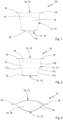
- a portion container 10 is shown in the form of a so-called "coffee capsule".
- the container lid 12 and the container base 11 together form the container wall 13.
- This container wall 13 thus surrounds the interior space 14 arranged inside.
- the extractable substance 15 is also filled into the interior space 14. Its upper fill level is indicated by a dotted line.
- portion container 10 In the lower area of the portion container 10 there is also an insert in the form of a filter 16 or filter element. This serves to prevent the extractable substance 15 from escaping from the portion container 10 together with the brewing water when the capsule 10 is used in the corresponding brewing machine.
- water is usually supplied to the portion container 10 at the top in the area of the container lid 12, which is typically under pressure and heated.
- several openings are usually created in the area of the lid 12 using appropriate cutting tools when inserting it into the brewing machine.
- Such perforation can preferably be in the form of holes or slots. The water can then penetrate into the portion container 10 through these.
- This outlet point 18 is typically provided with a corresponding outlet opening when the portion container 10 is inserted. The water with the aroma extract injected into the top of the container 10 can then exit through such an outlet opening.
- a circumferential flange 19 is provided in the upper area of the container 10. This primarily serves to achieve an appropriate seal in a brewing machine.
- the individual components of the portion container 10, in particular the container base 11 on the one hand and the container lid 12 on the other hand, are generally firmly connected to one another. This allows an aroma-tight formation This is ensured by ensuring that all components of the container wall are sufficiently sealed against aroma loss.
- the flange 19 usually represents the contact point between the container lid 12 and the container base 11.
- the design of the container wall 13 according to the invention is characterized in that the entire portion container 10 is biodegradable. This means in particular that composting can be carried out without further ado. There are no residues or non-biodegradable components. Thus, classic recycling, as is usually required for aluminum components, plastics or the like, is not necessary here. Instead, the entire portion container 10, including the extractable substances 15 contained therein, can be put directly into the organic waste or on the compost heap, for example. Since the extractable substance 15 is typically coffee powder or tea, it can be composted without further ado.
- compostability should of course also apply to the filter 16 or the filter element. This is made from a material that is also biodegradable.
- Cellulose or cellulose materials are particularly suggested as the preferred material for producing the portion container 10. Ideally, the same material or at least the same base material is used for all components of the container 10.
- the aroma-tightness can be improved by additionally coating the components of the portion container 10. It can also be an impregnation of the corresponding material of the container wall 13. In this case, such a coating or impregnation should also be biodegradable. Only in this way can the object of the invention be achieved.
- Such a coating can be applied either to the inside of the container wall or to its outside. A coating on both sides may also be considered. If the coating faces the interior 14, this coating may possibly come into contact with the extractable substance 15, i.e. in particular the coffee powder or tea. This is not the case with a coating applied from the outside. The tightness should be able to be guaranteed by both variants.
- the Fig. 2 The embodiment shown has a slightly modified structure compared to the usual ones in Fig.1 capsules shown.
- An upper container base 11a merges into a lower container base 11b in the area of a container edge 11b.
- the container edge is designed like a step.
- the upper container base 11a and the lower container base 11b are each essentially conical. As can be seen here, the pitch angles of the walls 13 of the upper container base 11a and the lower container base 11b are aligned at slightly different angles. This means that a high level of accuracy can be achieved in a corresponding brewing machine.
- the base area 17 of the portion container 10 shown here is designed as a flat disc. Above this, too, a corresponding filter 16 is arranged, which ensures that the substance 15 is retained during the brewing process.
- a large-area perforation of the container base 17 can be carried out in order to achieve a uniform extraction. This can possibly achieve a better flushing of the entire interior 14 of the portion container 10.
- the Fig.3 shows a further alternative embodiment of the invention.
- the portion container 10 does not have a substantially cylindrical or conical base body, but a bag-like base body.
- the container base 11 which is designed with a stronger curvature, forms the corresponding capsule 10 together with a container lid 12 that is also curved.
- a circumferential flange 19 is shown for sealing.
- the special portion container 10 shown here can also be perforated in the brewing machine using a corresponding opening tool.
- the brewing water can flow from top to bottom or vice versa in the drawing plane.
- the substance 15 to be extracted is provided inside this portion container 10. If necessary, the corresponding filter 16 can be provided on both the top and the bottom. In principle, in this case, it is advisable to completely fill the interior 14 with the substance 15 in order to increase the overall stability of the portion container 10. This is not necessary in the rather rigid embodiments described above.
- various cellulose-based materials can be considered as the material for the capsules.
- these can be cellulose, wood pulp, cellulose pulp and/or sugar cane pulp. Combinations of these can also be used. or form a container.
- the container can also be made of paper or cardboard.
- a mixture of bamboo fibers and sugar cane fibers has proven to be particularly suitable for producing the capsules, especially the container walls.
- the ratio of bamboo fibers to sugar cane fibers is preferably between 90% to 10% and 50% to 50%.
- a particularly preferred embodiment uses a mixture of around 30% to 70%. This makes it possible to produce capsules that are durable, aroma-tight and at the same time biodegradable.
- the production of the material for making the capsules is similar to paper production.
- the fibers are softened, typically mechanically and chemically, to form a fiber slurry, known as pulp. This is then pressed into a sheet to squeeze out the water. The sheet is then pulled into shape and finally dried. This creates a smooth side and a rough side. The rough side is created by pressing the pulp through a fine-mesh net or grid.
Landscapes
- Mechanical Engineering (AREA)
- Engineering & Computer Science (AREA)
- Life Sciences & Earth Sciences (AREA)
- Biodiversity & Conservation Biology (AREA)
- Apparatus For Making Beverages (AREA)
- Packages (AREA)
- Packging For Living Organisms, Food Or Medicinal Products That Are Sensitive To Environmental Conditiond (AREA)
- Closures For Containers (AREA)
- Confectionery (AREA)
- Wrappers (AREA)
- Tea And Coffee (AREA)
- Formation And Processing Of Food Products (AREA)
- Table Devices Or Equipment (AREA)
Applications Claiming Priority (4)
| Application Number | Priority Date | Filing Date | Title |
|---|---|---|---|
| DE102016112135.5A DE102016112135A1 (de) | 2016-07-01 | 2016-07-01 | Portionsbehälter für extrahierbare Substanzen zur Herstellung eines Getränks |
| EP17734297.9A EP3400184B2 (fr) | 2016-07-01 | 2017-06-29 | Recipient pour la preparation des boissons |
| EP20184470.1A EP3744660B8 (fr) | 2016-07-01 | 2017-06-29 | Récipient à portion pour substances extractables destiné à la fabrication d'une boisson |
| PCT/EP2017/066132 WO2018002223A1 (fr) | 2016-07-01 | 2017-06-29 | Contenant monodose pour substances à extraire, pour la préparation d'une boisson |
Related Parent Applications (4)
| Application Number | Title | Priority Date | Filing Date |
|---|---|---|---|
| EP17734297.9A Division EP3400184B2 (fr) | 2016-07-01 | 2017-06-29 | Recipient pour la preparation des boissons |
| EP20184470.1A Division-Into EP3744660B8 (fr) | 2016-07-01 | 2017-06-29 | Récipient à portion pour substances extractables destiné à la fabrication d'une boisson |
| EP20184470.1A Division EP3744660B8 (fr) | 2016-07-01 | 2017-06-29 | Récipient à portion pour substances extractables destiné à la fabrication d'une boisson |
| EP20184470.1A Previously-Filed-Application EP3744660B8 (fr) | 2016-07-01 | 2017-06-29 | Récipient à portion pour substances extractables destiné à la fabrication d'une boisson |
Publications (2)
| Publication Number | Publication Date |
|---|---|
| EP4431416A2 true EP4431416A2 (fr) | 2024-09-18 |
| EP4431416A3 EP4431416A3 (fr) | 2024-10-09 |
Family
ID=59069440
Family Applications (3)
| Application Number | Title | Priority Date | Filing Date |
|---|---|---|---|
| EP17734297.9A Active EP3400184B2 (fr) | 2016-07-01 | 2017-06-29 | Recipient pour la preparation des boissons |
| EP24187215.9A Pending EP4431416A3 (fr) | 2016-07-01 | 2017-06-29 | Récipient à portion pour substances extractables destiné à la fabrication d'une boisson |
| EP20184470.1A Active EP3744660B8 (fr) | 2016-07-01 | 2017-06-29 | Récipient à portion pour substances extractables destiné à la fabrication d'une boisson |
Family Applications Before (1)
| Application Number | Title | Priority Date | Filing Date |
|---|---|---|---|
| EP17734297.9A Active EP3400184B2 (fr) | 2016-07-01 | 2017-06-29 | Recipient pour la preparation des boissons |
Family Applications After (1)
| Application Number | Title | Priority Date | Filing Date |
|---|---|---|---|
| EP20184470.1A Active EP3744660B8 (fr) | 2016-07-01 | 2017-06-29 | Récipient à portion pour substances extractables destiné à la fabrication d'une boisson |
Country Status (12)
| Country | Link |
|---|---|
| EP (3) | EP3400184B2 (fr) |
| DE (2) | DE102016112135A1 (fr) |
| DK (1) | DK3400184T4 (fr) |
| ES (2) | ES2992318T3 (fr) |
| FI (1) | FI3400184T4 (fr) |
| HR (2) | HRP20201294T4 (fr) |
| HU (1) | HUE068908T2 (fr) |
| PL (2) | PL3400184T5 (fr) |
| PT (1) | PT3400184T (fr) |
| RS (1) | RS66125B1 (fr) |
| SM (1) | SMT202400461T1 (fr) |
| WO (1) | WO2018002223A1 (fr) |
Families Citing this family (15)
| Publication number | Priority date | Publication date | Assignee | Title |
|---|---|---|---|---|
| DE102016112135A1 (de) | 2016-07-01 | 2018-01-04 | Bbc Bremer Bagasse Company Gmbh & Co. Kg | Portionsbehälter für extrahierbare Substanzen zur Herstellung eines Getränks |
| US20180044084A1 (en) * | 2016-08-14 | 2018-02-15 | Anthony J. Orler | Cellulose-based beverage cartridge |
| GB2567418B (en) * | 2017-09-28 | 2020-09-30 | Hpc Healthline Uk Ltd | A biodegradable single-serve beverage cartridge |
| CH714423A2 (de) | 2017-12-12 | 2019-06-14 | Pacovis Ag | Kapsel. |
| DE102018201187B3 (de) | 2018-01-25 | 2019-04-04 | rezemo GmbH | Portionsbehälter aus mit Biokunststoff compoundiertem Holzmaterial |
| IT201800002976A1 (it) | 2018-02-23 | 2019-08-23 | Bruno Bardazzi | Sistema per la preparazione di bevande |
| AT521488B1 (de) * | 2018-07-17 | 2020-02-15 | Josef Haas | Grundkörper für eine Getränkeportionskapsel |
| AT521900B1 (de) * | 2018-12-14 | 2023-01-15 | Mondi Ag | Heißextraktionspapier |
| EP3788884A1 (fr) * | 2019-09-05 | 2021-03-10 | Delica AG | Capsule compostable ainsi que sa fabrication et son utilisation |
| DE102019127556A1 (de) | 2019-10-14 | 2021-04-15 | Kiefel Gmbh | Portionierbehältnis aus umweltverträglich abbaubarem fasermaterial |
| WO2023286007A1 (fr) * | 2021-07-16 | 2023-01-19 | Sarong Societa' Per Azioni | Capsule permettant de préparer des boissons |
| TW202329857A (zh) * | 2021-09-30 | 2023-08-01 | 瑞士商雀巢製品股份有限公司 | 飲料或食物製備系統 |
| TW202329858A (zh) * | 2021-09-30 | 2023-08-01 | 瑞士商雀巢製品股份有限公司 | 飲料或食物製備系統 |
| IT202200004358A1 (it) | 2022-03-08 | 2023-09-08 | Caffe Pascucci Torrefazione S P A | Carica preconfezionata di materiale edibile in polvere, e sistema per la preparazione di bevande che utilizza detta carica |
| CN121712700A (zh) * | 2023-03-20 | 2026-03-20 | 雀巢产品有限公司 | 用于制备饮料的胶囊 |
Family Cites Families (22)
| Publication number | Priority date | Publication date | Assignee | Title |
|---|---|---|---|---|
| DE10049665B4 (de) * | 2000-07-03 | 2004-04-29 | Fraunhofer-Gesellschaft zur Förderung der angewandten Forschung e.V. | Mehrschichtige Verpackung für fettende Güter und Verwendung eines Stärkederivats hierfür |
| KR100566714B1 (ko) * | 2000-09-13 | 2006-04-03 | 니세이 가부시끼 가이샤 | 생분해성 성형물 및 이것의 제조방법 |
| ES2252113T3 (es) * | 2001-06-28 | 2006-05-16 | Societe Des Produits Nestle S.A. | Capsula flexible cerrada. |
| EP2218653A1 (fr) * | 2009-02-17 | 2010-08-18 | Uwe Wons | Emballage biodégradable et son procédé de fabrication |
| EP2364930B1 (fr) | 2009-03-19 | 2018-12-05 | Nestec S.A. | Capsule pour la préparation de café dans un dispositif comportant un support de cartouche avec libération et éléments encastrés |
| CN104321193B (zh) * | 2012-05-15 | 2016-08-17 | 曼特洛斯-霍伊泽尔有限公司 | 基于海藻的食品包装涂层 |
| WO2015059022A1 (fr) * | 2013-10-22 | 2015-04-30 | Nestec S.A. | Capsule de préparation d'une boisson telle que du café et analogue |
| WO2015082982A1 (fr) * | 2013-12-03 | 2015-06-11 | Biserkon Holdings Ltd. | Capsule et dispositif pour la préparation de boissons et procédé de production d'une capsule |
| WO2015121489A1 (fr) * | 2014-02-17 | 2015-08-20 | Ritter Gmbh | Récipient en matériau biodégradable à fonction barrière |
| DE112015000820A5 (de) * | 2014-02-17 | 2016-11-10 | Ritter Gmbh | Kaffeekapsel mit Mikrostruktur |
| EP2927158A1 (fr) * | 2014-03-31 | 2015-10-07 | Gerhard Brücker | Capsule de filtre |
| ES2895106T3 (es) * | 2014-04-24 | 2022-02-17 | Fi Plast S R L | Cápsula biodegradable y compostable |
| WO2015170358A2 (fr) * | 2014-05-07 | 2015-11-12 | Rossomando Matteo | Récipient ou capsule biodégradable |
| ES2859908T3 (es) * | 2014-05-23 | 2021-10-04 | Advanced Tech Assets B V | Cápsula y dispositivo para preparar bebidas y método para fabricar una cápsula |
| EP3152134B1 (fr) * | 2014-06-04 | 2022-02-09 | Gino Rapparini | Bague de renfort pour capsules pour obtenir des boissons |
| WO2016012914A1 (fr) * | 2014-07-21 | 2016-01-28 | Illycaffe' Spa | Cartouche pour extraire une boisson |
| DE102015214766A1 (de) * | 2014-08-04 | 2016-02-04 | Norbert Kuhl | Lebensmittelbehälter |
| WO2016033682A1 (fr) † | 2014-09-03 | 2016-03-10 | Mcmunn Kevin Ralph | Contenant, conditionnement, et leur procédé de production |
| KR20170107966A (ko) * | 2014-11-19 | 2017-09-26 | 코스웰 에스.피.에이. | 음료 분배용 캡슐 및 그 제조방법 |
| WO2016103104A1 (fr) * | 2014-12-22 | 2016-06-30 | Luigi Lavazza S.P.A. | Cartouche permettant la préparation de produits liquides |
| US20160325898A1 (en) † | 2015-04-24 | 2016-11-10 | Darren Joseph Footz | Beverage cartridge and method of manufacture thereof |
| DE102016112135A1 (de) | 2016-07-01 | 2018-01-04 | Bbc Bremer Bagasse Company Gmbh & Co. Kg | Portionsbehälter für extrahierbare Substanzen zur Herstellung eines Getränks |
-
2016
- 2016-07-01 DE DE102016112135.5A patent/DE102016112135A1/de active Pending
-
2017
- 2017-05-02 DE DE202017102574.8U patent/DE202017102574U1/de active Active
- 2017-06-29 DK DK17734297.9T patent/DK3400184T4/da active
- 2017-06-29 PL PL17734297.9T patent/PL3400184T5/pl unknown
- 2017-06-29 FI FIEP17734297.9T patent/FI3400184T4/fi active
- 2017-06-29 EP EP17734297.9A patent/EP3400184B2/fr active Active
- 2017-06-29 EP EP24187215.9A patent/EP4431416A3/fr active Pending
- 2017-06-29 WO PCT/EP2017/066132 patent/WO2018002223A1/fr not_active Ceased
- 2017-06-29 RS RS20241158A patent/RS66125B1/sr unknown
- 2017-06-29 HR HRP20201294TT patent/HRP20201294T4/hr unknown
- 2017-06-29 EP EP20184470.1A patent/EP3744660B8/fr active Active
- 2017-06-29 ES ES20184470T patent/ES2992318T3/es active Active
- 2017-06-29 HR HRP20241449TT patent/HRP20241449T1/hr unknown
- 2017-06-29 PL PL20184470.1T patent/PL3744660T3/pl unknown
- 2017-06-29 HU HUE20184470A patent/HUE068908T2/hu unknown
- 2017-06-29 SM SM20240461T patent/SMT202400461T1/it unknown
- 2017-06-29 ES ES17734297T patent/ES2817404T5/es active Active
- 2017-06-29 PT PT177342979T patent/PT3400184T/pt unknown
Also Published As
| Publication number | Publication date |
|---|---|
| DK3400184T3 (da) | 2020-08-24 |
| HUE068908T2 (hu) | 2025-02-28 |
| EP3744660C0 (fr) | 2024-08-14 |
| EP3400184B1 (fr) | 2020-07-22 |
| ES2992318T3 (es) | 2024-12-11 |
| ES2817404T3 (es) | 2021-04-07 |
| EP3744660B8 (fr) | 2024-10-09 |
| DE102016112135A1 (de) | 2018-01-04 |
| PL3400184T3 (pl) | 2021-03-08 |
| EP3400184B2 (fr) | 2023-11-15 |
| DE202017102574U1 (de) | 2017-05-29 |
| HRP20201294T1 (hr) | 2020-11-13 |
| DK3400184T4 (da) | 2024-02-19 |
| HRP20201294T4 (hr) | 2024-03-15 |
| EP4431416A3 (fr) | 2024-10-09 |
| SMT202400461T1 (it) | 2025-01-14 |
| PL3400184T5 (pl) | 2024-03-04 |
| ES2817404T5 (es) | 2024-06-13 |
| RS66125B1 (sr) | 2024-11-29 |
| FI3400184T4 (fi) | 2024-02-15 |
| EP3400184A1 (fr) | 2018-11-14 |
| WO2018002223A1 (fr) | 2018-01-04 |
| PL3744660T3 (pl) | 2025-02-03 |
| PT3400184T (pt) | 2020-08-21 |
| EP3744660A1 (fr) | 2020-12-02 |
| HRP20241449T1 (hr) | 2025-01-03 |
| EP3744660B1 (fr) | 2024-08-14 |
Similar Documents
| Publication | Publication Date | Title |
|---|---|---|
| EP3744660B1 (fr) | Récipient à portion pour substances extractables destiné à la fabrication d'une boisson | |
| DE102007060150B4 (de) | Geschlossene Portionspackung mit Dichtring und Verpackung zur Herstellung derselben | |
| DE202009018817U1 (de) | System und Kapsel zum Zubereiten eines Getränks | |
| DE1586593A1 (de) | Eierschachtel | |
| DE1429974A1 (de) | Kaffeefiltervorrichtung | |
| DE202009018819U1 (de) | Kaffeekapsel | |
| DE2917814A1 (de) | Stoffloeser zur herstellung von papierstoffsuspensionen | |
| EP2904951A1 (fr) | Système de préparation d'un produit ébouillanté | |
| EP4301672A1 (fr) | Capsule à usage unique biodégradable | |
| EP3743358B1 (fr) | Emballage pour une portion et procédé pour la production d'une boisson | |
| EP2030914B1 (fr) | Procédé de fabrication d'une capsule pour un dispositif de production d'aliments liquides | |
| EP3724101A1 (fr) | Capsule | |
| CH704029A2 (de) | Trennvorrichtung für Deckfolien von Kapseln. | |
| DE102019207644A1 (de) | Behälter aus Papier oder papierähnlichem Material und Verfahren | |
| DE102019119570A1 (de) | Kapselkörper und Kapsel, System und Verwendungen zum Zubereiten eines Getränks | |
| WO2012145854A1 (fr) | Capsule pour l'extraction de denrées alimentaires déshydratées | |
| EP3166872B1 (fr) | Capsule avec un corps de symetrie rotational | |
| AT525891B1 (de) | Außenteil und damit ausgestatteter Kombi-Verpackungsbehälter, Verfahren zur Herstellung und | |
| DE449484C (de) | Verfahren und Vorrichtung zum Herstellen von Behaelterschalen aus Pappe | |
| DE102024121178A1 (de) | Verfahren und Formwerkzeug zum Einbringen mindestens einer Öffnung in einen Formkörper aus einem faserhaltigen Material und Formkörper | |
| DE202009008984U1 (de) | Kaffeeportionsbehälter des Wegwerftyps | |
| EP1757213A2 (fr) | Filtre à thé | |
| EP1704981A1 (fr) | Procédé et dispositif de fabrication de panneaux de construction | |
| DE202017101451U1 (de) | Verrottbare Aschekapsel | |
| DE102005058362B4 (de) | Aggregat aus Filterbehälter und Filtereinsatz |
Legal Events
| Date | Code | Title | Description |
|---|---|---|---|
| PUAI | Public reference made under article 153(3) epc to a published international application that has entered the european phase |
Free format text: ORIGINAL CODE: 0009012 |
|
| STAA | Information on the status of an ep patent application or granted ep patent |
Free format text: STATUS: REQUEST FOR EXAMINATION WAS MADE |
|
| PUAL | Search report despatched |
Free format text: ORIGINAL CODE: 0009013 |
|
| 17P | Request for examination filed |
Effective date: 20240708 |
|
| AC | Divisional application: reference to earlier application |
Ref document number: 3400184 Country of ref document: EP Kind code of ref document: P Ref document number: 3744660 Country of ref document: EP Kind code of ref document: P |
|
| AK | Designated contracting states |
Kind code of ref document: A2 Designated state(s): AL AT BE BG CH CY CZ DE DK EE ES FI FR GB GR HR HU IE IS IT LI LT LU LV MC MK MT NL NO PL PT RO RS SE SI SK SM TR |
|
| AK | Designated contracting states |
Kind code of ref document: A3 Designated state(s): AL AT BE BG CH CY CZ DE DK EE ES FI FR GB GR HR HU IE IS IT LI LT LU LV MC MK MT NL NO PL PT RO RS SE SI SK SM TR |
|
| RIC1 | Information provided on ipc code assigned before grant |
Ipc: B65D 85/804 20060101AFI20240904BHEP |