EP4432065A1 - Procédé et appareil de vérification de légitimité d'intention - Google Patents
Procédé et appareil de vérification de légitimité d'intention Download PDFInfo
- Publication number
- EP4432065A1 EP4432065A1 EP22906344.1A EP22906344A EP4432065A1 EP 4432065 A1 EP4432065 A1 EP 4432065A1 EP 22906344 A EP22906344 A EP 22906344A EP 4432065 A1 EP4432065 A1 EP 4432065A1
- Authority
- EP
- European Patent Office
- Prior art keywords
- intent
- attribute
- expression
- template
- conflict
- Prior art date
- Legal status (The legal status is an assumption and is not a legal conclusion. Google has not performed a legal analysis and makes no representation as to the accuracy of the status listed.)
- Pending
Links
Images



Classifications
-
- G—PHYSICS
- G06—COMPUTING OR CALCULATING; COUNTING
- G06F—ELECTRIC DIGITAL DATA PROCESSING
- G06F3/00—Input arrangements for transferring data to be processed into a form capable of being handled by the computer; Output arrangements for transferring data from processing unit to output unit, e.g. interface arrangements
- G06F3/01—Input arrangements or combined input and output arrangements for interaction between user and computer
- G06F3/048—Interaction techniques based on graphical user interfaces [GUI]
- G06F3/0484—Interaction techniques based on graphical user interfaces [GUI] for the control of specific functions or operations, e.g. selecting or manipulating an object, an image or a displayed text element, setting a parameter value or selecting a range
- G06F3/04845—Interaction techniques based on graphical user interfaces [GUI] for the control of specific functions or operations, e.g. selecting or manipulating an object, an image or a displayed text element, setting a parameter value or selecting a range for image manipulation, e.g. dragging, rotation, expansion or change of colour
-
- G—PHYSICS
- G06—COMPUTING OR CALCULATING; COUNTING
- G06F—ELECTRIC DIGITAL DATA PROCESSING
- G06F40/00—Handling natural language data
- G06F40/20—Natural language analysis
- G06F40/253—Grammatical analysis; Style critique
-
- G—PHYSICS
- G06—COMPUTING OR CALCULATING; COUNTING
- G06F—ELECTRIC DIGITAL DATA PROCESSING
- G06F40/00—Handling natural language data
- G06F40/30—Semantic analysis
-
- G—PHYSICS
- G06—COMPUTING OR CALCULATING; COUNTING
- G06F—ELECTRIC DIGITAL DATA PROCESSING
- G06F40/00—Handling natural language data
- G06F40/10—Text processing
- G06F40/166—Editing, e.g. inserting or deleting
- G06F40/186—Templates
-
- H—ELECTRICITY
- H04—ELECTRIC COMMUNICATION TECHNIQUE
- H04L—TRANSMISSION OF DIGITAL INFORMATION, e.g. TELEGRAPHIC COMMUNICATION
- H04L41/00—Arrangements for maintenance, administration or management of data switching networks, e.g. of packet switching networks
- H04L41/08—Configuration management of networks or network elements
- H04L41/0866—Checking the configuration
- H04L41/0869—Validating the configuration within one network element
-
- H—ELECTRICITY
- H04—ELECTRIC COMMUNICATION TECHNIQUE
- H04L—TRANSMISSION OF DIGITAL INFORMATION, e.g. TELEGRAPHIC COMMUNICATION
- H04L41/00—Arrangements for maintenance, administration or management of data switching networks, e.g. of packet switching networks
- H04L41/08—Configuration management of networks or network elements
- H04L41/0866—Checking the configuration
- H04L41/0873—Checking configuration conflicts between network elements
-
- H—ELECTRICITY
- H04—ELECTRIC COMMUNICATION TECHNIQUE
- H04L—TRANSMISSION OF DIGITAL INFORMATION, e.g. TELEGRAPHIC COMMUNICATION
- H04L41/00—Arrangements for maintenance, administration or management of data switching networks, e.g. of packet switching networks
- H04L41/08—Configuration management of networks or network elements
- H04L41/0894—Policy-based network configuration management
-
- H—ELECTRICITY
- H04—ELECTRIC COMMUNICATION TECHNIQUE
- H04L—TRANSMISSION OF DIGITAL INFORMATION, e.g. TELEGRAPHIC COMMUNICATION
- H04L41/00—Arrangements for maintenance, administration or management of data switching networks, e.g. of packet switching networks
- H04L41/34—Signalling channels for network management communication
-
- H—ELECTRICITY
- H04—ELECTRIC COMMUNICATION TECHNIQUE
- H04L—TRANSMISSION OF DIGITAL INFORMATION, e.g. TELEGRAPHIC COMMUNICATION
- H04L69/00—Network arrangements, protocols or services independent of the application payload and not provided for in the other groups of this subclass
- H04L69/06—Notations for structuring of protocol data, e.g. abstract syntax notation one [ASN.1]
Definitions
- This application relates to the field of communication technologies, and in particular, to a method and an apparatus for checking intent validity.
- a service and system aspect work group 5 (service and system aspect work group 5, SA5) of the 3rd Generation Partnership Project (the 3rd generation partnership project, 3GPP) uses a manner of full-scale modeling of network resources and full-scale management of network objects in terms of a definition of a conventional northbound interface (itf-N).
- a network management system network management system, NMS directly creates, reads, updates, and deletes all southbound management objects by using operations of types such as configuration management (configuration management, CM), performance management (performance management, PM), and fault management (fault management, FM).
- the 3GPP SA5 starts researches on an intent-driven management service (intent driven management service, IDMS):
- intent driven management service IDMS
- IDMS intent driven management service
- the NMS retains only an intent model, and transfers only an intent expression on a northbound interface.
- An intent is expressed in a declarative manner, and operation and maintenance personnel only need to declare, by using the intent expression, effect to be achieved, and do not need to determine how to achieve the effect. This helps lower an operation and maintenance threshold.
- an intent producer that is, an equipment management system (equipment management system, EMS)
- equipment management system equipment management system
- the EMS may translate, based on a network status, the intent expression into a requirement on a network and a specific execution operation, and execute the requirement and the specific execution operation to achieve the intent.
- the EMS may fail to create the intent instance. Therefore, the EMS notifies the NMS that creation of the intent instance fails. However, the NMS does not know a cause of the current creation failure. Consequently, the NMS cannot properly modify the intent expression based on the cause of the failure.
- This application provides a method and an apparatus for checking intent validity, to resolve a problem in a conventional technology that an intent consumer cannot properly modify an intent expression because the intent consumer cannot learn a cause of a failure in creation of an intent instance.
- this application provides a method for checking intent validity.
- the method may be performed by a first device, the first device may be an intent producer, and the intent producer may be specifically an EMS, an IDMS producer, or a management service producer (management service producer, MnS producer).
- the method includes: The first device receives a first intent expression from a second device, where the first intent expression is used to create an intent instance; and the first device sends failure information to the second device based on the first intent expression, where the failure information is used to indicate a cause of a failure in creation of the intent instance, the first intent expression includes a plurality of attributes, the cause of the failure includes that there are conflicting attributes in the first intent expression, and the attribute is a target or a constraint condition.
- the first device may send the failure information to the second device based on the first intent expression, to notify the second device of a reason why the first intent expression cannot be used to successfully create the intent instance. In this way, this helps the second device send, to the first device, an intent expression that can be used to successfully create the intent instance, thereby improving a success rate of creating an intent.
- that the first device sends the failure information to the second device based on the first intent expression includes: The first device performs a validity check on the first intent expression; and after determining that the first intent expression fails to pass the validity check, the first device generates the failure information based on a reason why the first intent expression fails to pass the validity check.
- the first device may perform the validity check on the first intent expression, and when determining that the first intent expression fails to pass the validity check, the first device does not need to create the intent instance based on the first intent expression, thereby helping prevent the first device from performing an unnecessary operation.
- the first device may further generate the failure information based on the reason why the first intent expression fails to pass the validity check, thereby helping notify the second device of a reason why the intent instance cannot be successfully created.
- the cause of the failure includes that there are a first attribute and a second attribute that conflict with each other in the first intent expression, the first attribute includes a first attribute name and a first attribute range, and the second attribute includes a second attribute name and a second attribute range; and a type of the conflict includes one or more of the following: a syntax conflict, used to indicate that the first attribute name is the same as the second attribute name and an intersection set of the first attribute range and the second attribute range is empty; an operation conflict, used to indicate that an operation indicated by the first attribute name and the first attribute range is mutually exclusive with an operation indicated by the second attribute name and the second attribute range, where for example, if an operation 1 is "turn on a symbol off switch", and an operation 2 is "turn off a symbol off switch", the operation 1 and the operation 2 are mutually exclusive; or an effect conflict, used to indicate that when the operation indicated by the first attribute name and the first attribute range and the operation indicated by the second attribute name and the second attribute range are simultaneously performed, effect achieved by the two operations is mutual
- the failure information includes the first attribute, the second attribute, and the type of the conflict between the first attribute and the second attribute.
- the type of the conflict may be the syntax conflict, the operation conflict, or the effect conflict.
- the first device may determine, from the first intent expression based on the three types of conflicts, the first attribute and the second attribute that conflict with each other, thereby helping improve accuracy of identifying conflicting attributes. Further, the first device notifies the second device of this attribute conflict by using the failure information, so that the second device can obtain, based on the failure information, a reason why the first intent expression cannot be used to successfully create the intent instance, and therefore the intent expression is modified in a targeted manner, thereby helping improve a success rate of creating an intent.
- the cause of the failure further includes that a third attribute in the first intent expression does not accord with an intent template in the first device;
- the intent template includes a plurality of template attribute names and template attribute ranges respectively corresponding to the plurality of template attribute names;
- the third attribute includes a third attribute name and a third attribute range; and that the third attribute in the first intent expression does not accord with the intent template in the first device includes: the third attribute name is not included in the plurality of template attribute names in the intent template; or the third attribute range exceeds a template attribute range that is in the intent template and that is corresponding to the third attribute.
- the failure information further includes the third attribute.
- the first device may determine the third attribute that is included in the first intent expression and that does not accord with the intent template, and notify the second device of the third attribute by using the failure information, thereby helping improve a success rate of creating an intent.
- the method further includes: The first device sends a recommended intent expression to the second device based on the first intent expression; and after determining that the second device accepts the recommended intent expression, the first device creates the intent instance based on the recommended intent expression.
- the first device may further send the recommended intent expression to the second device, to recommend, to the second device, an intent expression that can pass the validity check, and when the second device accepts the recommended intent expression, the first device may create the intent instance based on the recommended intent expression, thereby helping improve efficiency and a success rate of creating the intent instance.
- the method further includes: The first device receives a second intent expression from the second device, where the second intent expression is obtained after the second device modifies the first intent expression based on the cause of the failure.
- the first device may further receive the second intent expression obtained after the second device modifies the first intent expression based on the failure information, so that the first device can further perform a validity check on the second intent expression. In this way, a success rate of passing the validity check by the intent expression can be improved.
- the second device may choose whether to use the recommended intent expression, thereby improving flexibility of creating the intent instance.
- the first intent expression is included in an intent create request
- the failure information is included in an intent create response
- the second intent expression is included in an intent modify request or an intent create request.
- the intent create request further includes a check indication, and the check indication is used to indicate the first device to perform the validity check on the first intent expression.
- the check indication is added to the intent create request, and the check indication may be used to indicate the first device to perform the validity check on the first intent expression in the intent create request.
- the first intent expression is included in an intent validity check request, and the failure information is included in an intent validity check response.
- the second intent expression is included in the intent validity check request or the intent create request.
- the first device may receive the intent validity check request from the second device, and the intent validity check request may be used to indicate the first device to perform the validity check on the first intent expression in the intent validity check request.
- the failure information includes one or more of the following: conflicting attributes, a type of a conflict between conflicting attributes, or an attribute whose attribute name and/or attribute range are/is not included in the intent template.
- the failure information is used to indicate the cause of the failure in creation of the intent instance, so that the second device can be indicated to modify the first intent expression based on the failure information, thereby helping the first device receive the second intent expression that meets the validity check, and improving a success rate of creating the intent instance.
- this application provides a method for checking intent validity.
- the method may be performed by a second device, the second device may be an intent consumer, and the intent consumer may be specifically an NMS, an IDMS consumer, or a management service consumer (management service consumer, MnS consumer).
- the method includes: The second device sends a first intent expression to a first device, where the first intent expression is used to create an intent instance; and the second device receives failure information from the second device, where the failure information is used to indicate a cause of a failure in creation of the intent instance, the first intent expression includes a plurality of attributes, the cause of the failure includes that there are conflicting attributes in the first intent expression, and the attribute is a target or a constraint condition.
- the cause of the failure includes that there are a first attribute and a second attribute that conflict with each other in the first intent expression, the first attribute includes a first attribute name and a first attribute range, and the second attribute includes a second attribute name and a second attribute range; and a type of the conflict includes one or more of the following: a syntax conflict, used to indicate that the first attribute name is the same as the second attribute name and an intersection set of the first attribute range and the second attribute range is empty; an operation conflict, used to indicate that an operation indicated by the first attribute name and the first attribute range is mutually exclusive with an operation indicated by the second attribute name and the second attribute range; or an effect conflict, used to indicate that when the operation indicated by the first attribute name and the first attribute range and the operation indicated by the second attribute name and the second attribute range are simultaneously performed, effect achieved by the two operations is mutually exclusive.
- a syntax conflict used to indicate that the first attribute name is the same as the second attribute name and an intersection set of the first attribute range and the second attribute range is empty
- an operation conflict used to indicate that
- the failure information includes the first attribute, the second attribute, and the type of the conflict between the first attribute and the second attribute.
- the cause of the failure further includes that a third attribute in the first intent expression does not accord with an intent template in the first device;
- the intent template includes a plurality of template attribute names and template attribute ranges respectively corresponding to the plurality of template attribute names;
- the third attribute includes a third attribute name and a third attribute range; and that the third attribute in the first intent expression does not accord with the intent template in the first device includes: the third attribute name is not included in the plurality of template attribute names in the intent template; or the third attribute range exceeds a template attribute range that is in the intent template and that is corresponding to the third attribute.
- the failure information further includes the third attribute.
- the method further includes: The second device receives a recommended intent expression from the first device; and the second device sends an indication of accepting the recommended intent expression to the first device, where the recommended intent expression is used to create the intent instance.
- the method further includes: The second device modifies the first intent expression based on the cause of the failure to obtain a second intent expression, and sends the second intent expression to the first device.
- the first intent expression is included in an intent create request
- the failure information is included in an intent create response
- the second intent expression is included in an intent modify request.
- the intent create request further includes a check indication, and the check indication is used to indicate the first device to perform a validity check on the first intent expression.
- the first intent expression is included in an intent validity check request
- the failure information is included in an intent validity check response
- the second intent expression is included in an intent create request.
- the failure information includes one or more of the following: conflicting attributes, a type of a conflict between conflicting attributes, or an attribute whose attribute name and/or attribute range are/is not included in the intent template.
- an embodiment of this application provides a communication apparatus.
- the apparatus has a function of implementing the first device in the first aspect or any possible implementation of the first aspect.
- the first device may be an intent producer, and the apparatus may be the first device or a chip in the first device.
- the communication apparatus may alternatively have a function of implementing the second device in the second aspect or any possible implementation of the second aspect.
- the second device may be an intent consumer, and the apparatus may be the second device or a chip in the second device.
- Functions of the foregoing communication apparatus may be implemented by hardware, or may be implemented by hardware executing corresponding software.
- the hardware or the software includes one or more modules, units, or means (means) corresponding to the foregoing functions.
- a structure of the apparatus includes a processing module and a transceiver module.
- the processing module is configured to support the apparatus in performing a corresponding function of the first device in the first aspect or any implementation of the first aspect, or performing a corresponding function of the second device in the second aspect or any implementation of the second aspect.
- the transceiver module is configured to support communication between the apparatus and another communication device. For example, when the apparatus is the first device, the apparatus may receive a first intent expression from the second device.
- the communication apparatus may further include a storage module.
- the storage module is coupled to the processing module, and stores program instructions and data that are necessary for the apparatus.
- the processing module may be a processor
- the communication module may be a transceiver
- the storage module may be a memory
- the memory may be integrated with the processor, or may be disposed separately from the processor.
- a structure of the apparatus includes a processor, and may further include a memory.
- the processor is coupled to the memory, and may be configured to execute computer program instructions stored in the memory, so that the apparatus is enabled to perform the method according to the first aspect or any possible implementation of the first aspect, or the method in the second aspect or any possible implementation of the second aspect.
- the apparatus further includes a communication interface, and the processor is coupled to the communication interface.
- the communication interface may be a transceiver or an input/output interface.
- the communication interface may be an input/output interface of the chip.
- the transceiver may be a transceiver circuit, and the input/output interface may be an input/output circuit.
- an embodiment of this application provides a chip system, including a processor and a memory.
- the processor is coupled to the memory, the memory is configured to store a program or instructions, and when the program or the instructions are executed by the processor, the chip system is enabled to implement the method in the first aspect or any possible implementation of the first aspect, or implement the method in the second aspect or any possible implementation of the second aspect.
- the chip system further includes an interface circuit, and the interface circuit is configured to exchange code or instructions with the processor.
- processors in the chip system there may be one or more processors in the chip system, and the processor may be implemented by using hardware or may be implemented by using software.
- the processor When the processor is implemented by using the hardware, the processor may be a logic circuit, an integrated circuit, or the like.
- the processor When the processor is implemented by using the software, the processor may be a general-purpose processor, and is implemented by reading software code stored in the memory.
- the memory may be integrated with the processor, or may be disposed separately from the processor.
- the memory may be a non-transitory processor, for example, a read-only memory ROM.
- the memory and the processor may be integrated on a same chip, or may be disposed on different chips respectively.
- an embodiment of this application provides a communication apparatus, including a processor.
- the processor is connected to a memory, the memory is configured to store a computer program, and the processor is configured to execute the computer program stored in the memory, to enable the apparatus to implement the method in the first aspect or any possible implementation of the first aspect, or the method in the second aspect or any possible implementation of the second aspect.
- an embodiment of this application provides a computer-readable storage medium.
- the computer-readable storage medium stores a computer program or instructions.
- the computer program or the instructions are executed by a communication apparatus, the method in the first aspect or any possible implementation of the first aspect is implemented, or the method in the second aspect or any possible implementation of the second aspect is implemented.
- an embodiment of this application provides a computer program product.
- the computer program product includes a computer program or instructions.
- the computer program or the instructions are executed by a communication apparatus, the method in the first aspect or any possible implementation of the first aspect is implemented, or the method in the second aspect or any possible implementation of the second aspect is implemented.
- this application provides a communication system.
- the communication system includes a first device and a second device.
- the first device may be configured to perform the method in the first aspect or any possible implementation of the first aspect
- the second device may be configured to perform the method in the second aspect or any possible implementation of the second aspect.
- the intent expression may include an action and an object.
- the action is a network operation abstracted and simplified based on the intent, and may include an intent-driven action (intent driven action, IDA) name (name) and a series of related properties (for example, IDA properties, IDA properties).
- the object is management object information provided based on the intent, and may include an intent-driven object (intent driven object, IDO) name (name) and a series of properties (for example, IDO properties, IDO properties) used to identify the object.
- a target value of the intent may be included in the action or the object; or the intent expression includes the action, the object, and the target value.
- the intent is to optimize a downlink rate of a cell.
- the action is "optimize", the object is "cell”, and the target value is a specific value of the downlink rate of the cell.
- the intent expression includes only a description of a target, and a specific implementation method of the intent is obtained by an intent producer by parsing and translating the intent expression.
- the intent producer may determine a solution to be used to meet the expectation. In other words, the intent producer may determine a solution to be used to meet the intent.
- Intent conflict When two intents cannot be met simultaneously due to mutual exclusion, the two intents conflict with each other.
- the intent conflict may include one or more of a syntax conflict, an operation conflict, or an effect conflict.
- the syntax conflict means that there is a conflict between intent expressions of two intents.
- the intent expressions of the two intents describe mutually exclusive targets of a same object (such as a cell or a base station) under a same effect taking condition. For example, if an intent expression of one intent reflects a target of increasing a downlink rate of a cell, and an intent expression of the other intent reflects a target of reducing the downlink rate of the cell, there is a syntax conflict between the two intents.
- the operation conflict is a conflict between two intents in terms of translated execution operations (intent operation).
- intent operation operations of the two intents cannot be simultaneously performed.
- solutions respectively corresponding to the two intents include mutually exclusive operations on a same parameter and/or attribute of a same network element. For example, when a solution of an intent 1 requires that a network configuration parameter A be increased, and a solution of an intent 2 requires that the network configuration parameter A be decreased, there is an operation conflict between the intent 1 and the intent 2.
- the effect conflict means that translated execution operations of two intents are mutually exclusive in terms of effect.
- Intent creation means to create an intent instance in an intent system and create corresponding intent context.
- the intent consumer is a device that manages the intent. Specifically, the intent consumer may generate the intent, and send, to the intent producer, an intent expression used to carry the intent.
- the intent may be a requirement of the intent consumer for a network in which a device executing an intent solution is located.
- the intent may reflect a requirement of the intent consumer for at least one key performance indicator (key performance indicator, KPI) in the network in which the device executing the intent solution is located.
- KPI key performance indicator
- the intent producer is a device that processes the intent. Specifically, after receiving the intent expression from the intent consumer, the intent producer may generate a plurality of solutions that can meet the intent, and select one of the solutions for execution. Then, the intent producer may send the selected solution to the device executing the intent, so that the device executing the intent executes the selected solution.
- the intent consumer and/or the intent producer may be AN devices, or may be CN devices.
- the intent consumer may be a network management service (network management service, NMS), an IDMS consumer (IDMS consumer), or a management service consumer (management service consumer, MnS consumer)
- the intent producer may be an element management service (element management service, EMS), an IDMS producer (IDMS producer), or a management service producer (management service producer, MnS producer).
- intent consumer and the intent producer may alternatively use other names provided that same functions are possessed. This is not limited in this application.
- FIG. 1 shows a possible architecture of a communication system according to an example of this application.
- the communication system includes an IDMS consumer and an IDMS producer.
- the IDMS consumer may implement a function of an intent consumer, and the IDMS producer may implement a function of an intent producer.
- the IDMS consumer may implement a function of an intent consumer
- the IDMS producer may implement a function of an intent producer.
- the IDMS producer may include an intent translation (intent translation, IT) module, an intent evaluation (intent evaluation, IEv) module, an intent conflict resolution (intent conflict resolution, ICR) module, and an intent decision (intent decision, ID) module.
- intent translation module, the intent evaluation module, the intent conflict resolution module, and the intent decision module may be independent entities, or may be virtual modules in one or more entities.
- the intent translation module may be configured to translate an intent and generate a solution that can meet the intent.
- the intent translation module may obtain information required for intent translation, and the information may be a correspondence between an intent and a policy; the intent translation module may determine a policy of the intent based on the correspondence and the intent obtained from the IDMS consumer; and then, the intent translation module may generate, based on the policy of the intent, at least one solution that can meet the intent.
- the intent evaluation module can evaluate an implementation situation of the intent.
- the intent conflict resolution module may process an intent conflict. For example, the intent conflict resolution module may determine whether there is an intent conflict between two intents.
- the intent decision module may determine a to-be-executed solution of the intent. For example, when the intent translation module generates at least one solution that can meet the intent, the intent decision module may randomly select, from the at least one solution, a solution that has no intent conflict with another intent for execution, or select, based on a preset policy, a solution that has no intent conflict with another intent for execution (for example, a solution with a minimum delay or a solution with minimum energy consumption).
- FIG. 2 is a schematic flowchart of intent creation according to this application.
- the intent create request may be used to indicate a to-be-created intent instance.
- the intent create request may include an intent expression, and the intent expression may further include a plurality of attributes.
- One attribute may be represented by using a key-value pair, for example, the key-value pair is [attribute, value], where attribute represents an attribute name, value represents an attribute range, and the key-value pair may be used to indicate a created attribute name and an attribute range corresponding to the attribute name.
- Step 203 The IDMS producer sends an intent create response to the IDMS consumer.
- the intent create response sent to the IDMS consumer may be used to indicate that the intent instance is successfully created.
- the intent create response sent to the IDMS consumer may be used to indicate that the intent instance fails to be created.
- the IDMS consumer can know only whether the current intent instance is successfully created. However, when the creation fails, the IDMS consumer cannot know a cause of the creation failure, and therefore cannot properly modify the intent expression in the intent create request.
- this application provides a method for checking intent validity.
- a first device may check an intent expression, determine a reason why the intent expression fails to pass a validity check, and notify a second device of the reason why the intent expression fails to pass the validity check.
- the second device may modify the intent expression in a targeted manner based on the reason why the first intent expression fails to pass the validity check, and request, based on the modified intent expression, the first device to create an intent.
- FIG. 3 is a flowchart of a method for checking intent validity.
- the first intent expression is used to create an intent instance.
- the first intent expression includes a plurality of attributes, and the attribute may be a target or a constraint condition.
- an attribute may include an attribute name and an attribute range corresponding to the attribute name.
- the target may be "throughput rate > 5 kbps", where an attribute name is “throughput rate”, and an attribute range corresponding to the attribute name is "> 5 kbps”.
- the constraint condition may be "users > 80%", where an attribute name is "users”, and an attribute range corresponding to the attribute name is "> 80%”.
- the constraint condition and the target may be in a correspondence, and the constraint condition is used to constrain an effect taking condition of the target corresponding to the constraint condition. For example, if the constraint condition "users > 80%" is in a correspondence with the target "throughput rate > 5 kbps", it may indicate that "throughput rates corresponding to more than 80% of users need to be greater than 5 kbps".
- Step 302 The first device performs a validity check on the first intent expression.
- the validity check may be used to indicate whether the first device further creates a corresponding intent instance based on the first intent expression. For example, when the first intent expression passes the validity check, the first device may create the intent instance based on the first intent expression, and may successfully create the intent instance; and when the first intent expression fails to pass the validity check, the first device does not need to create the intent instance based on the first intent expression.
- the validity check may include at least one or more of an attribute conflict check or a syntax and lexicon check.
- the attribute conflict check and the syntax and lexicon check are first explained as follows.
- Conflict types of a conflict between attributes may include one or more of a syntax conflict, an operation conflict, or a semantic conflict.
- Two attributes are used as an example below for explanation.
- the syntax conflict means that attribute names of the two attributes are the same, and an intersection set of an attribute range of one attribute and an attribute range of the other attribute is empty. For example, if one attribute is "throughput rate > 5 kbit/s" and the other attribute is "throughput rate ⁇ 5 kbit/s", attribute names corresponding to the two attributes are both "throughput rate”, there is no intersection set between corresponding attribute ranges, and there is a syntax conflict between the two attributes.
- the operation conflict means that an operation indicated by an attribute name and an attribute range of one attribute and an operation indicated by an attribute name and an attribute range of the other attribute are mutually exclusive (in other words, the two operations cannot be simultaneously performed).
- one attribute is "energy efficiency level: level 2", where an attribute name is “energy efficiency level”, an attribute range is "level 2”, and an operation jointly indicated by the attribute name and the attribute range is: turning on a symbol off switch; and the other attribute is "throughput rate ⁇ 10 kbps", where an attribute name is "throughput rate”, an attribute range is " ⁇ 10 kbps”, and an operation jointly indicated by the attribute name and the attribute range is: turning off the symbol off switch. Therefore, the two operations cannot be simultaneously performed; in other words, there is an operation conflict.
- the semantic conflict means that when an operation indicated by an attribute name and an attribute range of one attribute and an operation indicated by an attribute name and an attribute range of the other attribute are simultaneously performed, effect that can be achieved by the two operations is mutually exclusive (in other words, the two operations cannot simultaneously achieve expected effect).
- one attribute is "energy efficiency level: level 2", where an attribute name is “energy efficiency level”, and an attribute range is "level 2”; and the other attribute is "throughput rate ⁇ 10 kbps", where an attribute name is "throughput rate”, and an attribute range is " ⁇ 10 kbps”.
- the energy efficiency level is level 2
- a corresponding throughput rate needs to be less than 10 kbps. In this way, expected effect corresponding to the two attributes cannot be simultaneously achieved.
- the foregoing conflict may be a conflict between two attributes, or may be a conflict among a plurality of attributes.
- an attribute 1 is "throughput rate ⁇ 5 kbit/s”
- an attribute 2 is "5 kbit/s ⁇ throughput rate ⁇ 10 kbit/s”
- an attribute 3 is "10 kbit/s ⁇ throughput rate”
- this application may further include other examples in which there is a conflict among a plurality of attributes. The examples are not described one by one.
- the syntax conflict, the operation conflict, and the semantic conflict respectively correspond to a syntax conflict check, an operation conflict check, and a semantic conflict check.
- the first device may specifically perform one or more of the syntax conflict check, the operation conflict check, or the semantic conflict check.
- the first device performs the syntax conflict check, the operation conflict check, and the semantic conflict check on the first intent expression. If the first device determines that the first intent expression passes the three conflict checks, the first device may determine that the first intent expression passes the attribute conflict check; or if the first device determines that the first intent expression fails to pass one of the three conflict checks, the first device may determine that the first intent expression fails to pass the attribute conflict check.
- the first device may further perform one conflict check in the syntax conflict check, the operation conflict check, and the semantic conflict check on the first intent expression; when the first intent expression passes the conflict check, determine that the first intent expression passes the attribute conflict check; and when the first intent expression fails to pass the conflict check, determine that the first intent expression fails to pass the attribute conflict check.
- the first device may further perform two conflict checks in the syntax conflict check, the operation conflict check, and the semantic conflict check on the first intent expression. For details, refer to the foregoing description. Details are not described again.
- the first device may check whether an attribute that does not accord with the syntax and lexicon check exists in a plurality of attributes included in the first intent expression.
- the syntax and lexicon check may be performed based on an intent template in the first device.
- the intent template may include a plurality of template attribute names and template attribute ranges corresponding to the plurality of template attribute names.
- the intent template includes N template attribute names, where N is a positive integer, and the N template attribute names may respectively correspond to template attribute ranges of the template attribute names.
- the intent template includes a template attribute name 1 and a template attribute range 1 corresponding to the template attribute name 1, a template attribute name 2 and a template attribute range 2 corresponding to the template attribute name 2, ..., and a template attribute name N and a template attribute range N corresponding to the template attribute name N.
- the intent template may be preconfigured in the first device, or may be dynamically loaded by the first device from an intent system management device. In the latter case, the intent template may be updated periodically, or may be updated by a system administrator when necessary.
- the first device may perform the following operations for an attribute in the first intent expression: determining whether an attribute name of the attribute is in the intent template; and after determining that the attribute name of the attribute is in the intent template, determining whether an attribute range of the attribute exceeds a template attribute range that is in the intent template and that is corresponding to the attribute name of the attribute.
- the first device may determine that the attribute passes the syntax and lexicon check; in other words, syntax and lexicon of the attribute are correct. If the first device determines that the attribute name of the attribute is not in the intent template, or if the first device determines that the attribute name is in the intent template but the attribute range exceeds the corresponding template attribute range in the intent template, the first device may determine that the attribute fails to pass the syntax and lexicon check; in other words, syntax and lexicon of the attribute are wrong.
- the first device may consider that an error type is a syntax error; and if the first device determines that the attribute range in the attribute exceeds the corresponding template attribute range in the intent template, the first device may consider that the error type is a lexicon error.
- the first device may determine that the syntax and lexicon of the attribute are correct.
- the first device may determine that the attribute name is in the intent template, but the attribute range exceeds the template attribute range that is in the intent template and that is corresponding to the attribute; in other words, the attribute has a syntax and lexicon error, and an error type is specifically a lexicon error.
- the first device may perform the attribute conflict check and the syntax and lexicon check, and when determining that the first intent expression fails to pass one of the checks, determine that the first intent expression fails to pass the validity check.
- the first intent expression passes the attribute conflict check and the syntax and lexicon check, it is determined that the first intent expression passes the validity check.
- the first intent expression includes the first attribute and the second attribute that conflict with each other may also be understood as that the first device cannot generate the intent instance based on the first attribute name and the first attribute range in the first attribute and the second attribute name and the second attribute range in the second attribute.
- Both the first attribute and the second attribute may be targets; in other words, the first intent expression includes a first target and a second target that conflict with each other.
- both the first attribute and the second attribute may be constraint conditions; in other words, the first intent expression includes a first constraint condition and a second constraint condition that conflict with each other.
- the target means an objective that is to be achieved by the intent, and the constraint condition is a constraint condition for achieving the target.
- the first device may determine that there is a conflict between the first attribute and the second attribute in the first intent expression, and a conflict type of the conflict between the first attribute and the second attribute may be one or more of a syntax conflict, an operation conflict, or a semantic conflict.
- the first intent expression may include a third attribute
- the third attribute may include a third attribute name and a third attribute range
- the third attribute does not accord with the intent template in the first device.
- the first device may determine that the third attribute name is not included in the plurality of template attribute names in the intent template; or after determining that the third attribute name is included in the plurality of template attribute names in the intent template, the first device determines that the third attribute range exceeds a template attribute range that is in the intent template and that is corresponding to the third attribute.
- Step 303 If the first device determines that the first intent expression fails to pass the validity check, the first device may send failure information to the second device, where the failure information may be used to indicate that the first intent expression cannot be used to successfully create the intent instance.
- the failure information may be creation failure information, and the creation failure information may be used to indicate a reason why the first intent expression cannot be used to successfully create the intent instance, or a reason why creation of the intent instance fails.
- the failure information may be alternatively check failure information, and the check failure information may be used to indicate a cause of a failure that the first intent expression fails to pass the validity check, or a reason why the validity check performed by the first device on the first intent expression fails.
- the first intent expression fails to pass the validity check, the first intent expression cannot be used to successfully create the intent instance. It may also be understood that the creation failure information and the check failure information are same information. For the second device, after receiving the failure information from the first device, the second device may learn that the current first intent expression cannot be used to successfully create the intent instance. For ease of description, the failure information is used below as an example.
- the failure information may include one or more of the following fields: an attribute conflict field or a syntax and lexicon error field.
- the attribute conflict field may be used to indicate that the failure reason why the first intent expression fails to pass the validity check includes that there are conflicting attributes in the first intent expression.
- the attribute conflict field may include attributes that conflict with each other, and the type of the conflict between the attributes that conflict with each other.
- the first intent expression includes a first attribute and a second attribute that conflict with each other.
- the attribute conflict field may include the first attribute, the second attribute, and the type of the conflict between the first attribute and the second attribute.
- the first attribute is "throughput rate ⁇ 5 kbps”
- the second attribute is "throughput rate > 5 kbps”.
- the attribute conflict field may include the two attributes, that is, "throughput rate ⁇ 5 kbps" and “throughput rate > 5 kbps", and a conflict type "syntax conflict".
- the syntax and lexicon error may be used to indicate that the cause of the failure that the first intent expression fails to pass the validity check includes that there is an attribute with a syntax and lexicon error in the first intent expression.
- the syntax and lexicon error field may include an attribute whose attribute name and/or attribute range are/is not included in the intent template.
- the first intent expression includes a third attribute with a syntax and lexicon error
- the syntax and lexicon error field may include the third attribute and an error type of the third attribute. For example, if the third attribute is "10 kbps ⁇ throughput rate", and the attribute range in the third attribute exceeds a template attribute range that is in the intent template and that is corresponding to "throughput rate”, the syntax and lexicon error field is "10 kbps ⁇ throughput rate", and the error type is a lexicon error.
- the failure information may further include a failure indication field.
- the failure indication field may be used to indicate, to the second device, that the first intent expression fails to pass the validity check, or indicate, to the second device, that the first device cannot successfully create the intent instance based on the first intent expression.
- Implementation 1 The second device may modify the first intent expression based on the failure information to obtain a second intent expression, and then send the second intent expression to the first device.
- the first device receives the second intent expression, and the first device performs a validity check on the second intent expression.
- first intent expression is replaced with "second intent expression”.
- the first device determines that the second intent expression fails to pass validity verification, the first device continues to send the failure information to the second device, and the first device continues to modify the intent expression. In this way, actions of the first device and the second device in the foregoing steps are cyclically performed until the first device determines that an intent expression of the second device passes the validity verification.
- the second device sends the first intent expression to the first device, and the first device may perform the validity check on the first intent expression; and when determining that the first intent expression fails to pass the validity check, the first device sends the failure information to the second device, that is, notifies the second device of the reason why the first intent expression fails to pass the validity verification. Therefore, the second device may perform targeted modification on the first intent expression based on the error cause. This helps the second device send, to the first device, an intent expression that can pass the validity check.
- the first device may create a corresponding intent instance based on the intent expression that passes the validity check, thereby improving a success rate of creating an intent.
- Implementation 2 The first device sends a recommended intent expression to the second device based on the first intent expression, where the recommended intent expression can pass the validity check.
- the first device may generate the recommended intent expression based on conflicting attributes and/or an attribute with a syntax and lexicon error in the first intent expression.
- the first attribute and the second attribute that conflict with each other and the third attribute with the syntax and lexicon error are used as examples below for description.
- the second device receives the recommended intent expression from the first device, determines whether to accept the recommended intent expression, and then sends an accept indication or a refuse indication to the first device.
- the accept indication may be used to indicate that the second device accepts the recommended intent expression
- the refuse indication may be used to indicate that the second device refuses to use the recommended intent expression.
- the first device may receive the accept indication from the second device.
- the first device may further generate the intent instance based on the recommended intent expression, and send, to the first device, creation success information about creating the intent instance.
- the second device may further generate the second intent expression based on the failure information and the first intent expression, and then send the second intent expression to the first device.
- the second device may further generate the second intent expression based on the failure information and the first intent expression, and then send the second intent expression to the first device.
- the second device may include the refuse indication and the second intent expression to a same message, or may include the refuse indication and the second intent expression to two messages respectively.
- the second intent expression may be understood as a refuse indication, and when the second device refuses to use the recommended intent expression, the second intent expression may be directly sent to the first device, to notify the first device that the second device refuses to use the recommended intent expression, and indicate the first device to continue to perform the validity check on the second intent expression.
- the second device sends the first intent expression to the first device, and the first device may perform the validity check on the first intent expression.
- the first device sends the recommended intent expression to the second device, that is, recommends, to the second device, the intent expression that can pass the validity check.
- the second device may accept the recommended intent expression, and the first device may create the intent instance based on the recommended intent expression. This helps improve efficiency and a success rate of creating the intent instance.
- the first device may further send the cause of the failure to the second device.
- the second device refuses the recommended intent expression, the second device may perform targeted modification on the first intent expression based on the error cause. In this way, the second device may send, to the first device, the intent expression that can pass the validity check. This helps improve flexibility of creating the intent instance.
- the foregoing information may be transferred by using different messages between the first device and the second device. Two examples are provided below.
- Example 1 An intent create request and an intent create response.
- the first intent expression sent by the second device to the first device may be included in an intent create request.
- the intent create request indicates the first device to create the intent instance based on the first intent expression in the intent create request. Further, the intent create request further includes a check indication (flag), and the check indication may be used to indicate the first device to perform a validity check on the first intent expression before creating the intent instance.
- the first device may create the intent instance based on the first intent expression, and send an intent create response to the second device after the intent instance is successfully created.
- the intent create response includes creation success information, to indicate that the intent instance corresponding to the first intent expression is successfully created.
- the first device may send, to the second device, check success information used to indicate that the validity check succeeds; and after creating the intent instance, send, to the second device, an intent create response including creation success information, where the intent create response may be used to indicate that the intent instance is successfully created.
- the first device may send failure information to the second device.
- the failure information is included in the intent create response.
- the second device may send the intent create request including the second intent expression to the first device again, and the first device checks whether the second intent expression in the intent create request passes the validity check.
- the second device may send an intent modify request including the second intent expression to the first device, and the first device performs a validity check based on the second intent expression in the intent modify request.
- the first device may not send an intent create response including creation success information to the second device.
- the second device may determine that the intent create response including the failure information is not received from the first device after preset duration expires, the second device may determine that the intent instance corresponding to the first intent expression has been successfully created.
- the first device may alternatively not perform the validity check, but directly create the intent instance based on the first intent expression. If the intent instance fails to be created, the first device may send creation failure information (which is distinguished from the check failure information herein) to the second device.
- the creation failure information may include a reason why the first intent expression cannot be used to successfully create the intent instance.
- Example 2 An intent validity check request and an intent validity check response.
- the first intent expression sent by the second device to the first device may be included in an intent validity check request, and the intent validity check request may be used to indicate the first device to perform a validity check on the first intent expression.
- the first device may send, to the second device, an intent validity check response including check success information.
- the intent validity check response may be used to indicate that the first intent expression passes the validity check.
- the second device may further send an intent create request to the first device, and the first device creates the intent instance based on the intent create request.
- the intent create request may include the first intent expression.
- the first device sends an intent validity check response including failure information to the second device.
- the intent validity check response may be used to indicate that the first intent expression fails to pass the validity check.
- the second device may further send an intent validity check request including the second intent expression to the first device, to indicate the first device to perform a validity check again on the second intent expression.
- the first device may alternatively not send an intent validity check response including check success information to the second device.
- the second device may determine that the intent validity check response including the failure information is not received from the first device after preset duration expires, the second device may determine that the first intent expression passes the validity check, and may continue to send the intent create request to the first device.
- the first intent expression may be alternatively included in another message, for example, an intent expression error check request, an intent error check request, or an intent attribute conflict check request.
- a check result corresponding to the first intent expression may be included in a corresponding response.
- a first device is an IDMS producer
- a second device is an IDMS consumer
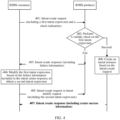
- Embodiment 1 An IDMS consumer sends an intent create request to an IDMS producer, and the IDMS producer performs a validity check on a first intent expression in the intent create request. For details, refer to a schematic flowchart of FIG. 4 .
- Step 401 An IDMS consumer sends an intent create request to an IDMS producer.
- the intent create request includes a first intent expression and a check indication (flag), and the check indication is used to indicate an IDMS producer to perform a validity check on the first intent expression.
- a check indication for a specific implementation, refer to the descriptions in step 301.
- Step 402 The IDMS producer performs the validity check on the first intent expression.
- the IDMS producer may perform a lexicon and syntax check and an attribute conflict check on the first intent expression. For a specific implementation, refer to the descriptions in step 302.
- step 403 to step 405 are performed.
- step 406 and step 407 are performed.
- Step 403 The IDMS producer sends an intent create response to the IDMS consumer, where the intent create response includes failure information, to indicate that the first intent expression fails to pass the validity check and indicate a reason why the first intent expression fails to pass the validity check.
- the failure information includes at least the following fields: a failure indication field, a syntax and lexicon error field, and an attribute conflict field.
- a failure indication field For a specific implementation, refer to the descriptions in step 303.
- Step 404 The IDMS consumer modifies the first intent expression based on the failure information included in the intent create response, to obtain a second intent expression.
- the IDMS consumer modifies the first intent expression based on the failure information included in the intent create response, to obtain a second intent expression.
- Step 405 The IDMS consumer sends an intent create request or an intent modify request to the IDMS producer, where the intent create request or the intent modify request includes the second intent expression.
- the intent create request or the intent modify request may further include a check indication (flag).
- Step 406 The IDMS producer creates an intent instance based on the intent create request.
- Step 407 The IDMS producer sends an intent create response to the IDMS consumer, where the intent create response includes creation success information, to notify the IDMS consumer that the intent instance is successfully created.
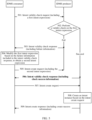
- Embodiment 2 An IDMS consumer sends an intent validity check request to an IDMS producer, and the IDMS producer performs a validity check on a first intent expression in the intent validity check request.
- an IDMS consumer sends an intent validity check request to an IDMS producer, and the IDMS producer performs a validity check on a first intent expression in the intent validity check request.
- Step 501 An IDMS consumer sends an intent validity check request to an IDMS producer, where the intent validity check request indicates the IDMS producer to perform a validity check on a first intent expression included in the intent validity check request.
- the intent validity check request indicates the IDMS producer to perform a validity check on a first intent expression included in the intent validity check request.
- Step 502 The IDMS producer performs the validity check on the first intent expression.
- the IDMS producer may perform a lexicon and syntax check and an attribute conflict check on the first intent expression. For a specific implementation, refer to the descriptions in step 302.
- step 503 to step 505 are performed.
- step 506 and step 509 are performed.
- Step 503 The IDMS producer sends an intent validity check response to the IDMS consumer, where the intent validity check response includes failure information (which may be specifically check failure information), to indicate that the first intent expression fails to pass the validity check and indicate a reason why the first intent expression fails to pass the validity check.
- failure information which may be specifically check failure information
- the failure information includes at least the following fields: a failure indication field, a syntax and lexicon error field, and an attribute conflict field.
- a failure indication field For a specific implementation, refer to the descriptions in step 303.
- Step 504 The IDMS consumer modifies the first intent expression based on the failure information included in the intent validity check response, to obtain a second intent expression.
- the IDMS consumer modifies the first intent expression based on the failure information included in the intent validity check response, to obtain a second intent expression.
- Step 505 The IDMS consumer sends an intent create request to the IDMS producer, where the intent create request includes the second intent expression.
- the IDMS consumer may further send the intent validity check request to the IDMS producer again, to indicate the IDMS producer to perform a validity check on the second intent expression included in the intent validity check request.
- Step 506 The IDMS producer sends an intent validity check response to the IDMS consumer, where the intent validity check response includes check success information, to indicate that the first intent expression passes the validity check.
- Step 507 The IDMS consumer sends an intent create request to the IDMS producer, to indicate the IDMS producer to create an intent instance based on the first intent expression.
- the intent create request includes the first intent expression.
- Step 508 The IDMS consumer creates the intent instance based on the intent create request.
- Step 509 The IDMS consumer sends an intent create response to the IDMS producer, where the intent create response includes creation success information, to notify the IDMS consumer that the intent instance is successfully created.
- step 505 to step 509 For all implementations that are not described in detail in step 505 to step 509, refer to the descriptions in the related embodiment in FIG. 3 .
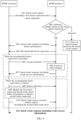
- Embodiment 3 An IDMS consumer sends an intent create request to an IDMS producer, and the IDMS producer performs a validity check on a first intent expression in the intent create request, and sends a recommended intent expression to the IDMS consumer after determining that the first intent expression fails to pass the validity check.
- an IDMS consumer sends an intent create request to an IDMS producer, and the IDMS producer performs a validity check on a first intent expression in the intent create request, and sends a recommended intent expression to the IDMS consumer after determining that the first intent expression fails to pass the validity check.
- Step 601 An IDMS consumer sends an intent create request to an IDMS producer, where the intent create request includes a first intent expression and a check indication (flag), and the check indication is used to indicate the IDMS producer to perform a validity check on the first intent expression.
- the intent create request includes a first intent expression and a check indication (flag)
- the check indication is used to indicate the IDMS producer to perform a validity check on the first intent expression.
- Step 602 The IDMS producer performs the validity check on the first intent expression.
- the IDMS producer may perform a lexicon and syntax check and an attribute conflict check on the first intent expression. For a specific implementation, refer to the descriptions in step 302.
- step 603 to step 610 are performed.
- step 611 and step 612 are performed.
- Step 603 The IDMS producer sends an intent create response to the IDMS consumer, where the intent create response includes failure information, to indicate that the first intent expression fails to pass the validity check and indicate a reason why the first intent expression fails to pass the validity check.
- the failure information includes at least the following fields: a failure indication field, a syntax and lexicon error field, and an attribute conflict field.
- a failure indication field For a specific implementation, refer to the descriptions in step 303.
- Step 604 The IDMS producer generates a recommended intent expression based on the first intent expression, and sends the recommended intent expression to the second device, where the recommended intent expression can pass the validity check.
- the IDMS consumer may determine, based on the recommended intent expression from the IDMS producer, whether to receive the recommended intent expression. There are two cases as follows:
- Step 605 The IDMS consumer sends an accept indication to the IDMS producer, to indicate that the IDMS consumer accepts the recommended intent expression.
- Step 606 The IDMS producer creates an intent instance based on the recommended intent expression.
- Step 607 The IDMS producer sends an intent create response to the IDMS consumer, where the intent create response includes creation success information, to notify the IDMS consumer that the intent instance is successfully created.
- Step 608 The IDMS consumer sends a refuse indication to the IDMS producer, to indicate that the IDMS consumer refuses the recommended intent expression.
- Step 609 The IDMS consumer modifies the first intent expression based on the failure information included in the intent create response, to obtain a second intent expression.
- Step 610 The IDMS consumer sends an intent create request or an intent modify request to the IDMS producer, where the intent create request or the intent modify request includes the second intent expression.
- the intent create request or the intent modify request may further include a check indication (flag).
- Step 611 The IDMS producer creates an intent instance based on the intent create request.
- Step 612 The IDMS producer sends an intent create response to the IDMS consumer, where the intent create response includes creation success information, to notify the IDMS consumer that the intent instance is successfully created.
- step 603 is an optional step, or step 604 may be directly performed after step 602.
- a sequence in which the IDMS producer sends the intent create response including the failure information to the IDMS consumer and sends the recommended intent expression to the IDMS consumer may not be limited.
- the intent create response including the failure information may further include the recommended intent expression or another manner.
- step 604 to step 612 For all implementations that are not described in detail in step 604 to step 612, refer to the descriptions in the related embodiment in FIG. 3 .
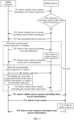
- Embodiment 4 An IDMS consumer sends an intent validity check request to an IDMS producer, and the IDMS producer performs a validity check on a first intent expression in the intent validity check request, and recommends an intent expression to the IDMS consumer after determining that the first intent expression fails to pass the validity check.
- an IDMS consumer sends an intent validity check request to an IDMS producer, and the IDMS producer performs a validity check on a first intent expression in the intent validity check request, and recommends an intent expression to the IDMS consumer after determining that the first intent expression fails to pass the validity check.
- Step 701 An IDMS consumer sends an intent validity check request to an IDMS producer, where the intent validity check request is used to indicate the IDMS producer to perform a validity check on a first intent expression in the intent validity check request.
- the intent validity check request is used to indicate the IDMS producer to perform a validity check on a first intent expression in the intent validity check request.
- Step 702 The IDMS producer performs the validity check on the first intent expression.
- the IDMS producer may perform a lexicon and syntax check and an attribute conflict check on the first intent expression. For a specific implementation, refer to the descriptions in step 302.
- step 703 to step 710 are performed.
- step 711 to step 714 are performed.
- Step 703 The IDMS producer sends an intent validity check response to the IDMS consumer.
- the intent validity check response includes failure information (which may be specifically check failure information), to indicate that the first intent expression fails to pass the validity check and indicate a reason why the first intent expression fails to pass the validity check.
- failure information which may be specifically check failure information
- the failure information includes at least the following fields: a failure indication field, a syntax and lexicon error field, and an attribute conflict field.
- a failure indication field For a specific implementation, refer to the descriptions in step 303.
- Step 704 The IDMS producer generates a recommended intent expression based on the first intent expression, and sends the recommended intent expression to the second device, where the recommended intent expression can pass the validity check.
- the IDMS consumer may determine, based on the recommended intent expression from the IDMS producer, whether to receive the recommended intent expression. There are two cases as follows:
- Step 705 The IDMS consumer sends an intent create request to the IDMS producer, where the intent create request includes an accept indication, to indicate that the IDMS consumer accepts the recommended intent expression, and indicate the IDMS producer to create an intent instance based on the recommended intent expression.
- Step 706 The IDMS producer creates the intent instance based on the recommended intent expression.
- Step 707 The IDMS producer sends an intent create response to the IDMS consumer, where the intent create response includes creation success information, to indicate that the IDMS producer has successfully created the intent instance.
- Step 708 The IDMS consumer sends a refuse indication to the IDMS producer, to indicate that the IDMS consumer refuses the recommended intent expression.
- Step 709 The IDMS consumer modifies the first intent expression based on the failure information included in the intent validity check response, to obtain a second intent expression.
- Step 710 The IDMS consumer sends an intent validity check request to the IDMS producer, to indicate the IDMS producer to perform a validity check on the second intent expression included in the intent validity check request.
- Step 711 The IDMS producer sends an intent validity check response to the IDMS consumer, where the intent validity check response includes check success information, to indicate that the first intent expression passes the validity check.
- Step 712 The IDMS consumer sends an intent create request to the IDMS producer, to indicate the IDMS producer to create an intent instance based on the first intent expression.
- the intent create request includes the first intent expression.
- Step 713 The IDMS producer creates the intent instance based on the intent create request.
- Step 714 The IDMS producer sends an intent create response to the IDMS consumer, where the intent create response includes creation success information, to indicate that the IDMS producer has successfully created the intent instance.
- step 704 to step 714 For all implementations that are not described in detail in step 704 to step 714, refer to the descriptions in the related embodiment in FIG. 3 .
- FIG. 8 and FIG. 9 are diagrams of structures of possible communication apparatuses according to this application. These communication apparatuses may be configured to implement functions in the foregoing method embodiments, and therefore can also implement beneficial effect of the foregoing method embodiments. As shown in FIG. 8 , the communication apparatus 800 may include a processing module 801 and a transceiver module 802.
- the communication apparatus 800 is configured to implement functions of the first device in the method embodiment shown in FIG. 3 , or is configured to implement functions of the IDMS producer in FIG. 4 to FIG. 7 , there is the following case:
- the processing module 801 is configured to control the transceiver module 802 to receive a first intent expression from a second device, where the first intent expression is used to create an intent instance; and the processing module 801 is further configured to control, based on the first intent expression, the transceiver module 802 to send failure information to the second device, where the failure information is used to indicate a cause of a failure in creation of the intent instance, the first intent expression includes a plurality of attributes, the cause of the failure includes that there are conflicting attributes in the first intent expression, and the attribute is a target or a constraint condition.
- the processing module 801 when controlling, based on the first intent expression, the transceiver module 802 to send the failure information to the second device, the processing module 801 is specifically configured to: perform a validity check on the first intent expression; and after determining that the first intent expression fails to pass the validity check, generate the failure information based on a reason why the first intent expression fails to pass the validity check.
- the cause of the failure includes that there are a first attribute and a second attribute that conflict with each other in the first intent expression, the first attribute includes a first attribute name and a first attribute range, and the second attribute includes a second attribute name and a second attribute range; and a type of the conflict includes one or more of the following: a syntax conflict, used to indicate that the first attribute name is the same as the second attribute name and an intersection set of the first attribute range and the second attribute range is empty; an operation conflict, used to indicate that an operation indicated by the first attribute name and the first attribute range is mutually exclusive with an operation indicated by the second attribute name and the second attribute range; or an effect conflict, used to indicate that when the operation indicated by the first attribute name and the first attribute range and the operation indicated by the second attribute name and the second attribute range are simultaneously performed, effect achieved by the two operations is mutually exclusive.
- a syntax conflict used to indicate that the first attribute name is the same as the second attribute name and an intersection set of the first attribute range and the second attribute range is empty
- an operation conflict used to indicate that
- the failure information includes the first attribute, the second attribute, and the type of the conflict between the first attribute and the second attribute.
- the cause of the failure further includes that a third attribute in the first intent expression does not accord with an intent template in the communication apparatus 800;
- the intent template includes a plurality of template attribute names and template attribute ranges respectively corresponding to the plurality of template attribute names;
- the third attribute includes a third attribute name and a third attribute range; and that the third attribute in the first intent expression does not accord with the intent template in the communication apparatus 800 includes: the third attribute name is not included in the plurality of template attribute names in the intent template; or the third attribute range exceeds a template attribute range that is in the intent template and that is corresponding to the third attribute.
- the failure information further includes the third attribute.
- the processing module 801 is further configured to: control, based on the first intent expression, the transceiver module 802 to send a recommended intent expression to the second device; and after determining that the second device accepts the recommended intent expression, create the intent instance based on the recommended intent expression.
- the processing module 801 is further configured to control the transceiver module 802 to receive a second intent expression from the second device, where the second intent expression is obtained after the second device modifies the first intent expression based on the cause of the failure.
- the intent create request further includes a check indication, and the check indication is used to indicate the communication apparatus 800 to perform the validity check on the first intent expression.
- the failure information includes one or more of the following: conflicting attributes, a type of a conflict between conflicting attributes, or an attribute whose attribute name and/or attribute range are/is not included in the intent template.
- the communication apparatus 800 is configured to implement functions of the second device in the method embodiment shown in FIG. 3 , or is configured to implement functions of the IDMS consumer in FIG. 4 to FIG. 7 , there is the following case:
- the processing module 801 is configured to control the transceiver module 802 to send a first intent expression to a first device, where the first intent expression is used to create an intent instance; and the processing module 801 is further configured to control the transceiver module 802 to receive failure information from the first device, where the failure information is used to indicate a cause of a failure in creation of the intent instance, the first intent expression includes a plurality of attributes, the cause of the failure includes that there are conflicting attributes in the first intent expression, and the attribute is a target or a constraint condition.
- the processing module 801 is further configured to control the transceiver module 802 to modify the first intent expression based on the cause of the failure to obtain a second intent expression, and send the second intent expression to the first device.
- FIG. 9 shows an apparatus 900 according to an embodiment of this application.
- the apparatus shown in FIG. 9 may be an implementation of a hardware circuit of the apparatus shown in FIG. 8 .
- the apparatus may be applicable to performing functions in the foregoing method embodiments in the flowchart shown above.
- FIG. 9 shows only main components of the apparatus.
- the apparatus 900 shown in FIG. 9 includes a communication interface 910, a processor 920, and a memory 930.
- the memory 930 is configured to store program instructions and/or data.
- the processor 920 may operate in collaboration with the memory 930.
- the processor 920 may execute the program instructions stored in the memory 930.
- the processor 920 is configured to perform operations performed by the processing module 801 in the foregoing embodiment
- the communication interface 910 is configured to perform operations performed by the transceiver module 802 in the foregoing embodiment.
- the memory 930 is coupled to the processor 920.
- the coupling in this embodiment of this application may be indirect coupling or a communication connection between apparatuses, units, or modules in an electrical form, a mechanical form, or another form, and is used for information exchange between the apparatuses, the units, or the modules.
- At least one of the memories 930 may be included in the processor 920.
- the communication interface may be a transceiver, a circuit, a bus, a module, or a communication interface of another type.
- the transceiver when the communication interface is a transceiver, the transceiver may include an independent receiver and an independent transmitter, or may be a transceiver integrated with a transceiver function or a communication interface.
- the apparatus 900 may further include a communication line 940.
- the communication interface 910, the processor 920, and the memory 930 may be interconnected by using the communication line 940.
- the communication line 940 may be a peripheral component interconnect (peripheral component interconnect, PCI for short) bus, an extended industry standard architecture (extended industry standard architecture, EISA for short) bus, or the like.
- the communication line 940 may be classified into an address bus, a data bus, a control bus, and the like. For ease of representation, only one thick line is used to represent the bus in FIG. 9 , but this does not mean that there is only one bus or only one type of bus.
Landscapes
- Engineering & Computer Science (AREA)
- Theoretical Computer Science (AREA)
- General Engineering & Computer Science (AREA)
- Physics & Mathematics (AREA)
- General Physics & Mathematics (AREA)
- Health & Medical Sciences (AREA)
- Computational Linguistics (AREA)
- General Health & Medical Sciences (AREA)
- Audiology, Speech & Language Pathology (AREA)
- Artificial Intelligence (AREA)
- Signal Processing (AREA)
- Computer Networks & Wireless Communication (AREA)
- Human Computer Interaction (AREA)
- Machine Translation (AREA)
Applications Claiming Priority (2)
| Application Number | Priority Date | Filing Date | Title |
|---|---|---|---|
| CN202111548435.6A CN116266267A (zh) | 2021-12-17 | 2021-12-17 | 一种意图合法性检查方法及装置 |
| PCT/CN2022/137016 WO2023109594A1 (fr) | 2021-12-17 | 2022-12-06 | Procédé et appareil de vérification de légitimité d'intention |
Publications (2)
| Publication Number | Publication Date |
|---|---|
| EP4432065A1 true EP4432065A1 (fr) | 2024-09-18 |
| EP4432065A4 EP4432065A4 (fr) | 2025-03-26 |
Family
ID=86743465
Family Applications (1)
| Application Number | Title | Priority Date | Filing Date |
|---|---|---|---|
| EP22906344.1A Pending EP4432065A4 (fr) | 2021-12-17 | 2022-12-06 | Procédé et appareil de vérification de légitimité d'intention |
Country Status (5)
| Country | Link |
|---|---|
| US (1) | US20240330594A1 (fr) |
| EP (1) | EP4432065A4 (fr) |
| KR (1) | KR20240113612A (fr) |
| CN (1) | CN116266267A (fr) |
| WO (1) | WO2023109594A1 (fr) |
Families Citing this family (1)
| Publication number | Priority date | Publication date | Assignee | Title |
|---|---|---|---|---|
| WO2024216987A1 (fr) * | 2023-11-30 | 2024-10-24 | Zte Corporation | Procédé, dispositif et produit-programme informatique pour communication sans fil |
Family Cites Families (11)
| Publication number | Priority date | Publication date | Assignee | Title |
|---|---|---|---|---|
| US10581694B2 (en) * | 2017-05-31 | 2020-03-03 | Cisco Technology, Inc. | Generation of counter examples for network intent formal equivalence failures |
| US20180351806A1 (en) * | 2017-05-31 | 2018-12-06 | Cisco Technology, Inc. | Intent specification checks for inconsistencies |
| US10439875B2 (en) * | 2017-05-31 | 2019-10-08 | Cisco Technology, Inc. | Identification of conflict rules in a network intent formal equivalence failure |
| CN109376847A (zh) * | 2018-08-31 | 2019-02-22 | 深圳壹账通智能科技有限公司 | 用户意图识别方法、装置、终端及计算机可读存储介质 |
| CN111565114B (zh) * | 2019-02-14 | 2022-05-13 | 华为技术有限公司 | 一种意图处理方法、装置及系统 |
| US20220295353A1 (en) * | 2019-08-08 | 2022-09-15 | Samsung Electronics Co., Ltd. | Method and system for intent driven deployment and management of communication service in a wireless communication system |
| CN112822699B (zh) * | 2019-11-15 | 2022-09-02 | 华为技术有限公司 | 执行意图的方法及装置 |
| CN111277442B (zh) * | 2020-01-21 | 2023-04-07 | 赣江新区智慧物联研究院有限公司 | 无线意图驱动网络的管理方法、装置及系统 |
| EP4107909A1 (fr) * | 2020-02-20 | 2022-12-28 | Nokia Solutions and Networks Oy | Spécification d'intention permettant une commande automatisée de réseaux de communication |
| WO2021213632A1 (fr) * | 2020-04-21 | 2021-10-28 | Nokia Solutions And Networks Oy | Exécution d'intention pour commande automatisée de réseaux de communication |
| WO2023011735A1 (fr) * | 2021-08-06 | 2023-02-09 | Telefonaktiebolaget Lm Ericsson (Publ) | Communication entre une hiérarchie de systèmes de gestion |
-
2021
- 2021-12-17 CN CN202111548435.6A patent/CN116266267A/zh active Pending
-
2022
- 2022-12-06 WO PCT/CN2022/137016 patent/WO2023109594A1/fr not_active Ceased
- 2022-12-06 EP EP22906344.1A patent/EP4432065A4/fr active Pending
- 2022-12-06 KR KR1020247023216A patent/KR20240113612A/ko not_active Ceased
-
2024
- 2024-06-14 US US18/743,357 patent/US20240330594A1/en active Pending
Also Published As
| Publication number | Publication date |
|---|---|
| CN116266267A (zh) | 2023-06-20 |
| WO2023109594A1 (fr) | 2023-06-22 |
| US20240330594A1 (en) | 2024-10-03 |
| KR20240113612A (ko) | 2024-07-22 |
| EP4432065A4 (fr) | 2025-03-26 |
Similar Documents
| Publication | Publication Date | Title |
|---|---|---|
| US10887067B2 (en) | Coding scheme determining method and apparatus | |
| EP3661291A1 (fr) | Procédé de gestion d'un composant de réseau, et dispositif réseau | |
| RU2636112C1 (ru) | Объект службы управления интерфейсом, объект службы функций и способ управления элементами | |
| US20230164034A1 (en) | Intent Negotiation Method and Apparatus | |
| CN113407444B (zh) | 一种接口的测试用例生成方法、装置、设备及存储介质 | |
| US20240330594A1 (en) | Method and apparatus for checking intent validity | |
| CN111225414A (zh) | 多模通信装置及其通信方法、多模通信系统 | |
| CN117279068A (zh) | 通信方法、系统、网络侧设备和物联网终端 | |
| CN111246406A (zh) | 一种短信发送方法、系统、存储介质及终端设备 | |
| WO2023207534A1 (fr) | Procédé, appareil et système de gestion de réseau, et support de stockage | |
| CN111629040A (zh) | 云边协同方法、装置、系统、设备和介质 | |
| US20230284009A1 (en) | Data Processing Method, Data Processing Apparatus, Electronic Device And computer Readable Storage Medium | |
| CN113448744B (zh) | 一种应用程序选择方法及装置 | |
| WO2021151849A1 (fr) | Reprise après défaillance pour une partie de largeur de bande dormante | |
| CN114302436B (zh) | 一种物理层测试方法、装置、芯片及模组设备 | |
| CN115589366B (zh) | 数据处理方法、装置及系统 | |
| US20240267304A1 (en) | Intent pre-evaluation method and apparatus | |
| US12556891B2 (en) | Process signaling sending method and apparatus, storage medium, and electronic device | |
| EP3550891B1 (fr) | Procédé et dispositif de codage d'informations | |
| CN113055123A (zh) | 盲检方法、系统以及终端 | |
| CN114554501B (zh) | 通信控制方法、装置、系统和存储介质 | |
| CN115454731A (zh) | 建置测试档的装置及方法 | |
| EP4287674A1 (fr) | Procédé et appareil d?échange d?informations caractéristiques d?un module d?identification d?abonné multiple, et dispositif de communication | |
| CN112448932B (zh) | 消息处理的方法及装置 | |
| CN115277558B (zh) | 报文发送方法、装置、计算机存储介质及电子设备 |
Legal Events
| Date | Code | Title | Description |
|---|---|---|---|
| STAA | Information on the status of an ep patent application or granted ep patent |
Free format text: STATUS: THE INTERNATIONAL PUBLICATION HAS BEEN MADE |
|
| PUAI | Public reference made under article 153(3) epc to a published international application that has entered the european phase |
Free format text: ORIGINAL CODE: 0009012 |
|
| STAA | Information on the status of an ep patent application or granted ep patent |
Free format text: STATUS: REQUEST FOR EXAMINATION WAS MADE |
|
| 17P | Request for examination filed |
Effective date: 20240611 |
|
| AK | Designated contracting states |
Kind code of ref document: A1 Designated state(s): AL AT BE BG CH CY CZ DE DK EE ES FI FR GB GR HR HU IE IS IT LI LT LU LV MC ME MK MT NL NO PL PT RO RS SE SI SK SM TR |
|
| REG | Reference to a national code |
Ref country code: DE Ref legal event code: R079 Free format text: PREVIOUS MAIN CLASS: G06F0003048450 Ipc: H04L0041086900 |
|
| A4 | Supplementary search report drawn up and despatched |
Effective date: 20250224 |
|
| DAV | Request for validation of the european patent (deleted) | ||
| DAX | Request for extension of the european patent (deleted) | ||
| RIC1 | Information provided on ipc code assigned before grant |
Ipc: H04L 41/34 20220101ALN20250218BHEP Ipc: H04L 69/06 20220101ALN20250218BHEP Ipc: G06F 40/253 20200101ALI20250218BHEP Ipc: G06F 40/186 20200101ALI20250218BHEP Ipc: G06F 40/30 20200101ALI20250218BHEP Ipc: G06F 3/04845 20220101ALI20250218BHEP Ipc: H04L 41/0894 20220101ALI20250218BHEP Ipc: H04L 41/0873 20220101ALI20250218BHEP Ipc: H04L 41/0869 20220101AFI20250218BHEP |