EP4432143A1 - Dispositif électronique pour fournir une fonction de sécurité et son procédé de fonctionnement - Google Patents
Dispositif électronique pour fournir une fonction de sécurité et son procédé de fonctionnement Download PDFInfo
- Publication number
- EP4432143A1 EP4432143A1 EP22925115.2A EP22925115A EP4432143A1 EP 4432143 A1 EP4432143 A1 EP 4432143A1 EP 22925115 A EP22925115 A EP 22925115A EP 4432143 A1 EP4432143 A1 EP 4432143A1
- Authority
- EP
- European Patent Office
- Prior art keywords
- electronic device
- certificate
- certificate chain
- processor
- security function
- Prior art date
- Legal status (The legal status is an assumption and is not a legal conclusion. Google has not performed a legal analysis and makes no representation as to the accuracy of the status listed.)
- Pending
Links
Images





Classifications
-
- H—ELECTRICITY
- H04—ELECTRIC COMMUNICATION TECHNIQUE
- H04L—TRANSMISSION OF DIGITAL INFORMATION, e.g. TELEGRAPHIC COMMUNICATION
- H04L9/00—Cryptographic mechanisms or cryptographic arrangements for secret or secure communications; Network security protocols
- H04L9/32—Cryptographic mechanisms or cryptographic arrangements for secret or secure communications; Network security protocols including means for verifying the identity or authority of a user of the system or for message authentication, e.g. authorization, entity authentication, data integrity or data verification, non-repudiation, key authentication or verification of credentials
-
- H—ELECTRICITY
- H04—ELECTRIC COMMUNICATION TECHNIQUE
- H04L—TRANSMISSION OF DIGITAL INFORMATION, e.g. TELEGRAPHIC COMMUNICATION
- H04L63/00—Network architectures or network communication protocols for network security
- H04L63/08—Network architectures or network communication protocols for network security for authentication of entities
- H04L63/0823—Network architectures or network communication protocols for network security for authentication of entities using certificates
-
- G—PHYSICS
- G06—COMPUTING OR CALCULATING; COUNTING
- G06F—ELECTRIC DIGITAL DATA PROCESSING
- G06F21/00—Security arrangements for protecting computers, components thereof, programs or data against unauthorised activity
- G06F21/30—Authentication, i.e. establishing the identity or authorisation of security principals
- G06F21/44—Program or device authentication
-
- H—ELECTRICITY
- H04—ELECTRIC COMMUNICATION TECHNIQUE
- H04L—TRANSMISSION OF DIGITAL INFORMATION, e.g. TELEGRAPHIC COMMUNICATION
- H04L9/00—Cryptographic mechanisms or cryptographic arrangements for secret or secure communications; Network security protocols
- H04L9/32—Cryptographic mechanisms or cryptographic arrangements for secret or secure communications; Network security protocols including means for verifying the identity or authority of a user of the system or for message authentication, e.g. authorization, entity authentication, data integrity or data verification, non-repudiation, key authentication or verification of credentials
- H04L9/3247—Cryptographic mechanisms or cryptographic arrangements for secret or secure communications; Network security protocols including means for verifying the identity or authority of a user of the system or for message authentication, e.g. authorization, entity authentication, data integrity or data verification, non-repudiation, key authentication or verification of credentials involving digital signatures
-
- H—ELECTRICITY
- H04—ELECTRIC COMMUNICATION TECHNIQUE
- H04L—TRANSMISSION OF DIGITAL INFORMATION, e.g. TELEGRAPHIC COMMUNICATION
- H04L9/00—Cryptographic mechanisms or cryptographic arrangements for secret or secure communications; Network security protocols
- H04L9/32—Cryptographic mechanisms or cryptographic arrangements for secret or secure communications; Network security protocols including means for verifying the identity or authority of a user of the system or for message authentication, e.g. authorization, entity authentication, data integrity or data verification, non-repudiation, key authentication or verification of credentials
- H04L9/3263—Cryptographic mechanisms or cryptographic arrangements for secret or secure communications; Network security protocols including means for verifying the identity or authority of a user of the system or for message authentication, e.g. authorization, entity authentication, data integrity or data verification, non-repudiation, key authentication or verification of credentials involving certificates, e.g. public key certificate [PKC] or attribute certificate [AC]; Public key infrastructure [PKI] arrangements
- H04L9/3265—Cryptographic mechanisms or cryptographic arrangements for secret or secure communications; Network security protocols including means for verifying the identity or authority of a user of the system or for message authentication, e.g. authorization, entity authentication, data integrity or data verification, non-repudiation, key authentication or verification of credentials involving certificates, e.g. public key certificate [PKC] or attribute certificate [AC]; Public key infrastructure [PKI] arrangements using certificate chains, trees or paths; Hierarchical trust model
-
- H—ELECTRICITY
- H04—ELECTRIC COMMUNICATION TECHNIQUE
- H04L—TRANSMISSION OF DIGITAL INFORMATION, e.g. TELEGRAPHIC COMMUNICATION
- H04L9/00—Cryptographic mechanisms or cryptographic arrangements for secret or secure communications; Network security protocols
- H04L9/32—Cryptographic mechanisms or cryptographic arrangements for secret or secure communications; Network security protocols including means for verifying the identity or authority of a user of the system or for message authentication, e.g. authorization, entity authentication, data integrity or data verification, non-repudiation, key authentication or verification of credentials
- H04L9/3263—Cryptographic mechanisms or cryptographic arrangements for secret or secure communications; Network security protocols including means for verifying the identity or authority of a user of the system or for message authentication, e.g. authorization, entity authentication, data integrity or data verification, non-repudiation, key authentication or verification of credentials involving certificates, e.g. public key certificate [PKC] or attribute certificate [AC]; Public key infrastructure [PKI] arrangements
- H04L9/3268—Cryptographic mechanisms or cryptographic arrangements for secret or secure communications; Network security protocols including means for verifying the identity or authority of a user of the system or for message authentication, e.g. authorization, entity authentication, data integrity or data verification, non-repudiation, key authentication or verification of credentials involving certificates, e.g. public key certificate [PKC] or attribute certificate [AC]; Public key infrastructure [PKI] arrangements using certificate validation, registration, distribution or revocation, e.g. certificate revocation list [CRL]
-
- H—ELECTRICITY
- H04—ELECTRIC COMMUNICATION TECHNIQUE
- H04L—TRANSMISSION OF DIGITAL INFORMATION, e.g. TELEGRAPHIC COMMUNICATION
- H04L9/00—Cryptographic mechanisms or cryptographic arrangements for secret or secure communications; Network security protocols
- H04L9/32—Cryptographic mechanisms or cryptographic arrangements for secret or secure communications; Network security protocols including means for verifying the identity or authority of a user of the system or for message authentication, e.g. authorization, entity authentication, data integrity or data verification, non-repudiation, key authentication or verification of credentials
- H04L9/3271—Cryptographic mechanisms or cryptographic arrangements for secret or secure communications; Network security protocols including means for verifying the identity or authority of a user of the system or for message authentication, e.g. authorization, entity authentication, data integrity or data verification, non-repudiation, key authentication or verification of credentials using challenge-response
-
- H—ELECTRICITY
- H04—ELECTRIC COMMUNICATION TECHNIQUE
- H04W—WIRELESS COMMUNICATION NETWORKS
- H04W12/00—Security arrangements; Authentication; Protecting privacy or anonymity
- H04W12/06—Authentication
- H04W12/069—Authentication using certificates or pre-shared keys
Definitions
- a wearable device (or an accessory device) (e.g., a smart watch or Bluetooth earphones) may be used by connecting to a host electronic device (e.g. a smart phone). When a wearable device is lost, someone else may obtain the wearable device and use the wearable device without permission after initializing the wearable device.
- a host electronic device e.g. a smart phone
- Wearable devices that support network communication may support a function that prevents device initialization and connection to other host devices by using a scheme of connecting to a network and authenticating an account. For example, by registering a wearable device to an online account and requesting a user to authenticate the account (e.g., log in) when performing device initialization or disconnection from the host device, device initialization or disconnection from a host device may be performed after changing the settings of registered device items in the account. In addition, in order to connect to a new host device after initializing the device, the online account registered before initialization may be required to be authenticated before the connection with the new host device begins.
- the account registered before initialization may be required to be authenticated before the connection with the new host device begins.
- a wearable device that supports a universal integrated circuit card may support a function that prevents unauthorized use using information about the wearable device including a UICC.
- UICC universal integrated circuit card
- eSIM embedded SIM
- a locking application program may be automatically executed to perform locking processing for the wearable device.
- a first electronic device includes a wireless communication circuit that communicates with a second electronic device, a processor operatively connected to the wireless communication circuit, and a memory operatively connected to the processor, wherein the memory stores instructions which, when executed, cause the processor to receive a certificate chain request including a challenge value from the second electronic device through the wireless communication circuit when receiving a user input of requesting activation of a security function through the first electronic device or the second electronic device, wherein the security function functions to cause the second electronic device to perform a verification process of a certificate chain when there is a user request for an operation of requiring security for the second electronic device, and form the certificate chain including the challenge value and a unique ID of the first electronic device and transmit the certificate chain to the second electronic device through the wireless communication circuit.
- FIG. 1 is a block diagram illustrating an electronic device 101 in a network environment 100 according to various embodiments.
- the electronic device 101 in the network environment 100 may communicate with an electronic device 102 via a first network 198 (e.g., a short-range wireless communication network), or an electronic device 104 or a server 108 via a second network 199 (e.g., a long-range wireless communication network).
- the electronic device 101 may communicate with the electronic device 104 via the server 108.
- the electronic device 101 may include a processor 120, a memory 130, an input module 150, a sound output module 155, a display module 160, an audio module 170, a sensor module 176, an interface 177, a connecting terminal 178, a haptic module 179, a camera module 180, a power management module 188, a battery 189, a communication module 190, a subscriber identification module (SIM) 196, or an antenna module 197.
- at least one (e.g., the connecting terminal 178) of the components may be omitted from the electronic device 101, or one or more other components may be added in the electronic device 101.
- some of the components may be implemented as single integrated circuitry.
- some (e.g., the sensor module 176, the camera module 180, or the antenna module 197) of the components may be implemented as embedded in the display module 160 (e.g., a display).
- the processor 120 may execute, for example, software (e.g., a program 140) to control at least one other component (e.g., a hardware or software component) of the electronic device 101 coupled with the processor 120, and may perform various data processing or computation. According to an embodiment, as at least part of the data processing or computation, the processor 120 may load a command or data received from another component (e.g., the sensor module 176 or the communication module 190) in a volatile memory 132, process the command or the data stored in the volatile memory 132, and store resulting data in a non-volatile memory 134.
- software e.g., a program 140
- the processor 120 may load a command or data received from another component (e.g., the sensor module 176 or the communication module 190) in a volatile memory 132, process the command or the data stored in the volatile memory 132, and store resulting data in a non-volatile memory 134.
- the processor 120 may include a main processor 121 (e.g., a central processing unit (CPU) or an application processor (AP)), and an auxiliary processor 123 (e.g., a graphics processing unit (GPU), a neural processing unit (NPU), an image signal processor (ISP), a sensor hub processor, or a communication processor (CP)) that is operable independently from, or in conjunction with, the main processor 121.
- a main processor 121 e.g., a central processing unit (CPU) or an application processor (AP)
- auxiliary processor 123 e.g., a graphics processing unit (GPU), a neural processing unit (NPU), an image signal processor (ISP), a sensor hub processor, or a communication processor (CP)
- the auxiliary processor 123 may be adapted to consume less power than the main processor 121, or to be specific to a specified function.
- the auxiliary processor 123 may be implemented as separate from, or as part of the main processor 121.
- the auxiliary processor 123 may control at least some of functions or states related to at least one component (e.g., the display module 160, the sensor module 176, or the communication module 190) among the components of the electronic device 101, instead of the main processor 121 while the main processor 121 is in an inactive (e.g., sleep) state, or together with the main processor 121 while the main processor 121 is in an active state (e.g., executing an application).
- the auxiliary processor 123 e.g., an image signal processor or a communication processor
- the auxiliary processor 123 may include a hardware structure specified for processing an artificial intelligence (AI) model.
- the AI model may be generated through machine learning.
- the learning may be performed by the electronic device 101 performing the AI, and may be performed through an additional server (e.g., the server 108).
- a learning algorithm may include, for example, a supervised learning algorithm, an unsupervised learning algorithm, a semi-supervised learning algorithm, or a reinforcement learning algorithm, but the disclosure is not limited thereto.
- the AI model may include a plurality of artificial neural network (ANN) layers.
- ANN artificial neural network
- the ANN may include a deep neural network (DNN), a convolutional neural network (CNN), a recurrent neural network (RNN), a restricted boltzman machine (RBM), a deep belief network (DBN), a bidirectional recurrent deep neural network (BRDNN), a deep Q-networks or the combination of the above networks, but the disclosure is not limited thereto.
- the AI model may additionally or alternatively include a software structure, in addition to a hardware structure.
- the memory 130 may store various data used by at least one component (e.g., the processor 120 or the sensor module 176) of the electronic device 101.
- the various data may include, for example, software (e.g., the program 140) and input data or output data for a command related thererto.
- the memory 130 may include the volatile memory 132 or the non-volatile memory 134.
- the program 140 may be stored in the memory 130 as software, and may include, for example, an operating system (OS) 142, middleware 144, or an application 146.
- OS operating system
- middleware middleware
- application application
- the input module 150 may receive a command or data to be used by other component (e.g., the processor 120) of the electronic device 101, from the outside (e.g., a user) of the electronic device 101.
- the input module 150 may include, for example, a microphone, a mouse, a keyboard, a key (e.g., a button), or a digital pen (e.g., a stylus pen).
- the sound output module 155 may output sound signals to the outside of the electronic device 101.
- the sound output module 155 may include, for example, a speaker or a receiver.
- the speaker may be used for general purposes, such as playing multimedia or playing record, and the receiver may be used for an incoming calls. According to an embodiment, the receiver may be implemented as separate from, or as part of the speaker.
- the display module 160 may visually provide information to the outside (e.g., a user) of the electronic device 101.
- the display module 160 may include, for example, a display, a hologram device, or a projector and control circuitry to control a corresponding one of the display, hologram device, and projector.
- the display module 160 may include touch sensor adapted to detect a touch, or a pressure sensor adapted to measure the intensity of force incurred by the touch.
- the audio module 170 may convert a sound into an electrical signal and vice versa. According to an embodiment, the audio module 170 may obtain the sound via the input module 150, or output the sound via the sound output module 155 or an external electronic device (e.g., the electronic device 102) (e.g., speaker of headphone) directly (e.g., wiredly) or wirelessly coupled with the electronic device 101.
- an external electronic device e.g., the electronic device 102
- the electronic device 102 e.g., speaker of headphone
- the sensor module 176 may detect an operational state (e.g., power or temperature) of the electronic device 101 or an environmental state (e.g., a state of a user) external to the electronic device 101, and then generate an electrical signal or data value corresponding to the detected state.
- the sensor module 176 may include, for example, a gesture sensor, a gyro sensor, an atmospheric pressure sensor, a magnetic sensor, an acceleration sensor, a grip sensor, a proximity sensor, a color sensor, an infrared (IR) sensor, a biometric sensor, a temperature sensor, a humidity sensor, or an illuminance sensor.
- the interface 177 may support one or more specified protocols to be used for the electronic device 101 to be coupled with the external electronic device (e.g., the electronic device 102) directly (e.g., wiredly) or wirelessly.
- the interface 177 may include, for example, a high definition multimedia interface (HDMI), a universal serial bus (USB) interface, a secure digital (SD) card interface, or an audio interface.
- HDMI high definition multimedia interface
- USB universal serial bus
- SD secure digital
- a connecting terminal 178 may include a connector via which the electronic device 101 may be physically connected with the external electronic device (e.g., the electronic device 102).
- the connecting terminal 178 may include, for example, a HDMI connector, a USB connector, a SD card connector, or an audio connector (e.g., a headphone connector).
- the power management module 188 may manage power supplied to the electronic device 101.
- the power management module 188 may be implemented as at least part of, for example, a power management integrated circuit (PMIC).
- PMIC power management integrated circuit
- the battery 189 may supply power to at least one component of the electronic device 101.
- the battery 189 may include, for example, a primary cell which is not rechargeable, a secondary cell which is rechargeable, or a fuel cell.
- the communication module 190 may support establishing a direct (e.g., wired) communication channel or a wireless communication channel between the electronic device 101 and the external electronic device (e.g., the electronic device 102, the electronic device 104, or the server 108) and performing communication via the established communication channel.
- the communication module 190 may include one or more communication processors that are operable independently from the processor 120 (e.g., the application processor (AP)) and supports a direct (e.g., wired) communication or a wireless communication.
- AP application processor
- the communication module 190 may include a wireless communication module 192 (e.g., a cellular communication module, a short-range wireless communication module, or a global navigation satellite system (GNSS) communication module) or a wired communication module 194 (e.g., a local area network (LAN) communication module or a power line communication (PLC) module).
- a wireless communication module 192 e.g., a cellular communication module, a short-range wireless communication module, or a global navigation satellite system (GNSS) communication module
- GNSS global navigation satellite system
- wired communication module 194 e.g., a local area network (LAN) communication module or a power line communication (PLC) module.
- LAN local area network
- PLC power line communication
- the communication module among these communication modules may communicate with the external electronic device 104 via the first network 198 (e.g., a short-range communication network, such as Bluetooth TM , wireless-fidelity (WiFi) direct, or infrared data association (IrDA)) or the second network 199 (e.g., a long-range communication network, such as a legacy cellular network, 5G network, next generation communication network, the Internet, or a computer network (e.g., LAN or wide area network (WAN)).
- a short-range communication network such as Bluetooth TM , wireless-fidelity (WiFi) direct, or infrared data association (IrDA)
- the second network 199 e.g., a long-range communication network, such as a legacy cellular network, 5G network, next generation communication network, the Internet, or a computer network (e.g., LAN or wide area network (WAN)
- These various types of communication modules may be implemented as a single component (e.g., a single chip
- the wireless communication module 192 may identify or authenticate the electronic device 101 in a communication network, such as the first network 198 or the second network 199, using subscriber information (e.g., international mobile subscriber identity (IMSI)) stored in the subscriber identification module 196.
- subscriber information e.g., international mobile subscriber identity (IMSI)
- the wireless communication module 192 may support a 5G network and a next-generation communication technology, for example, a new radio (NR) access technology after a 4G network.
- the NR access technology may support high-speed transmission for high capacity data (enhanced mobile broadband; eMBB), terminal power minimizing and multiple terminal access (massive machine type communication; mMTC), or ultra-reliable and low-latency communications (URLLC).
- the wireless communication module 192 may support a highfrequency band (e.g., mmWave band) to achieve, for example, a higher data rate.
- a highfrequency band e.g., mmWave band
- the wireless communication module 192 may support various technologies, for example, beamforming, massive multiple-input and multiple-output (MIMO), Full-dimensional MIMO, an array antenna, analog beam-forming, or a large-scale antenna, to secure performance in high frequency bands.
- the wireless communication module 192 may support various requirements defined in the electronic device 101, the external electronic device (e.g., the electronic device 104) or the network system (e.g., the second network 199).
- the wireless communication module 192 may support a peak data rate (e.g., 20Gbps or more) for eMBB realization, loss coverage (e.g., 164 dB or less) for mMTC realization, or U-plane latency (e.g., 0.5 ms or less, or the round trip of 1 ms or less in each of a downlink (DL) and an uplink (UL)) for URLCC realization.
- a peak data rate e.g., 20Gbps or more
- loss coverage e.g., 164 dB or less
- U-plane latency e.g., 0.5 ms or less, or the round trip of 1 ms or less in each of a downlink (DL) and an uplink (UL) for URLCC realization.
- the antenna module 197 may transmit or receive a signal or power to or from the outside (e.g., the external electronic device) of the electronic device 101.
- the antenna module 197 may include an antenna including a radiating element composed of a conductive material or a conductive pattern formed in or on a substrate (e.g., PCB).
- the antenna module 197 may include a plurality of antennas (e.g., an array antenna). In such a case, at least one antenna appropriate for a communication scheme used in the communication network, such as the first network 198 or the second network 199, may be selected, for example, by the communication module 190 from the plurality of antennas.
- the signal or the power may then be transmitted or received between the communication module 190 and the external electronic device via the selected at least one antenna.
- another component e.g., a radio frequency integrated circuit (RFIC)
- RFIC radio frequency integrated circuit
- the antenna module 197 may form an mmWave antenna module.
- the mmWave antenna module may include a printed circuit board, an RFIC disposed on a first surface (e.g., a bottom surface) of the printed circuit board, or disposed adjacent to the first surface to support the specific high frequency band (e.g., mmWave band), and a plurality of antennas (e.g., an array antenna) disposed on a second surface (e.g., a top surface or a side surface) of the printed circuit board or disposed adjacent to the second surface to transmit or receive a signal having the specified high frequency band.
- a first surface e.g., a bottom surface
- the specific high frequency band e.g., mmWave band
- a plurality of antennas e.g., an array antenna
- At least some of the above-described components may be coupled mutually and communicate signals (e.g., commands or data) therebetween via an inter-peripheral communication scheme (e.g., a bus, general purpose input and output (GPIO), serial peripheral interface (SPI), or mobile industry processor interface (MIPI)).
- an inter-peripheral communication scheme e.g., a bus, general purpose input and output (GPIO), serial peripheral interface (SPI), or mobile industry processor interface (MIPI)
- commands or data may be transmitted or received between the electronic device 101 and the external electronic device 104 via the server 108 coupled with the second network 199.
- Each of the external electronic devices 102 or 104 may be a device of a same type as, or a different type, from the electronic device 101.
- all or some of operations to be executed at the electronic device 101 may be executed at one or more of the external electronic devices 102, 104, or 108.
- the electronic device 101 instead of, or in addition to, executing the function or the service, may request the one or more external electronic devices to perform at least part of the function or the service.
- the one or more external electronic devices receiving the request may perform the at least part of the function or the service requested, or an additional function or an additional service related to the request, and transfer an outcome of the performing to the electronic device 101.
- the electronic device 101 may provide the outcome, with or without further processing of the outcome, as at least part of a reply to the request.
- a cloud computing, distributed computing, mobile edge computing (MEC), or client-server computing technology may be used, for example.
- the electronic device 101 may provide an ultra-latency service by using, for example, distributed computing or mobile edge computing.
- the external electronic device 104 may include the Internet of things (IoT).
- the server 108 may be an artificial server using machine learning and/or a neural network.
- the external electronic device 104 or the server 108 may be included in the second network 199.
- the electronic device 101 may be applied to an artificial intelligence service (e.g., a smart home, a smart city, a smart car, or healthcare service) based on the 5G communication technology and the IoT-related technology.
- an artificial intelligence service e.g., a smart home, a smart city, a smart car, or healthcare service
- the electronic device may be one of various types of electronic devices.
- the electronic devices may include, for example, a portable communication device (e.g., a smartphone), a computer device, a portable multimedia device, a portable medical device, a camera, a wearable device, or a home appliance. According to an embodiment of the disclosure, the electronic devices are not limited to those described above.
- each of such phrases as “A or B,” “at least one of A and B,” “at least one of A or B,” “A, B, or C,” “at least one of A, B, and C,” and “at least one of A, B, or C,” may include any one of, or all possible combinations of the items enumerated together in a corresponding one of the phrases.
- such terms as “1st” and “2nd,” or “first” and “second” may be used to simply distinguish a corresponding component from another, and does not limit the components in other aspect (e.g., importance or order).
- an element e.g., a first element
- the element may be coupled with the other element directly (e.g., wiredly), wirelessly, or via a third element.
- module may include a unit implemented in hardware, software, or firmware, and may interchangeably be used with other terms, for example, “logic,” “logic block,” “part,” or “circuitry”.
- a module may be a single integral component, or a minimum unit or part thereof, adapted to perform one or more functions.
- the module may be implemented in a form of an application-specific integrated circuit (ASIC).
- ASIC application-specific integrated circuit
- Various embodiments as set forth herein may be implemented as software (e.g., the program 140) including one or more instructions that are stored in a storage medium (e.g., internal memory 136 or external memory 138) that is readable by a machine (e.g., the electronic device 101).
- a processor(e.g., the processor 120) of the machine e.g., the electronic device 101
- the one or more instructions may include a code generated by a compiler or a code executable by an interpreter.
- the machine-readable storage medium may be provided in the form of a non-transitory storage medium.
- non-transitory simply means that the storage medium is a tangible device, and does not include a signal (e.g., an electromagnetic wave), but this term does not differentiate between where data is semi-permanently stored in the storage medium and where the data is temporarily stored in the storage medium.
- a method may be included and provided in a computer program product.
- the computer program product may be traded as a product between a seller and a buyer.
- the computer program product may be distributed in the form of a machine-readable storage medium (e.g., compact disc read only memory (CD-ROM)), or be distributed (e.g., downloaded or uploaded) online via an application store (e.g., PlayStore TM ), or between two user devices (e.g., smart phones) directly. If distributed online, at least part of the computer program product may be temporarily generated or at least temporarily stored in the machine-readable storage medium, such as memory of the manufacturer's server, a server of the application store, or a relay server.
- CD-ROM compact disc read only memory
- an application store e.g., PlayStore TM
- two user devices e.g., smart phones
- each component e.g., a module or a program of the above-described components may include a single entity or multiple entities and some of multiple entities may be separately disposed on the other components.
- one or more of the above-described components may be omitted, or one or more other components may be added.
- a plurality of components e.g., modules or programs
- the integrated component may still perform one or more functions of each of the plurality of components in the same or similar manner as they are performed by a corresponding one of the plurality of components before the integration.
- operations performed by the module, the program, or another component may be carried out sequentially, in parallel, repeatedly, or heuristically, or one or more of the operations may be executed in a different order or omitted, or one or more other operations may be added.
- FIGS. 2 , 3 , and 4 an electronic device and an operation thereof according to one or more embodiments will be described with reference to FIGS. 2 , 3 , and 4 .
- FIG. 2 is a block diagram illustrating the configurations of electronic devices according to one or more embodiments.
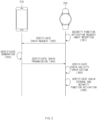
- FIG. 3 is a flow diagram illustrating operations of electronic devices according to one or more embodiments.
- FIG. 4 is a diagram illustrating a certificate chain of an electronic device according to one or more embodiments.
- the operations of the electronic devices may be performed by processors (e.g., a first processor 215 and a second processor 225) of each electronic device.
- a first electronic device 210 may include a first Bluetooth module 211, a wearable device management module 212, a certificate generation module 213, a first secure memory 214, and the first processor 215.
- the first processor 215 may be connected to the first Bluetooth module 211, the wearable device management module 212, the certificate generation module 213, and the first secure memory 214.
- Each of the first Bluetooth module 211, the wearable device management module 212, and the certificate generation module 213 may include a hardware module and/or a software module, and may be controlled or executed by the connected first processor 215.
- the first electronic device 210 which is a host electronic device, may be one of a portable communication device (e.g., a smartphone), a computer device, a portable multimedia device, a portable medical device, a camera, or a home appliance device.
- a portable communication device e.g., a smartphone
- a computer device e.g., a laptop, a desktop, a tablet, or a smart phone
- portable multimedia device e.g., a portable multimedia device
- portable medical device e.g., a portable medical device
- camera e.g., a camera
- a home appliance device e.g., a portable medical device
- a second electronic device 220 may include a second Bluetooth module 221, a certificate issuance request module 222, a certificate verification module 223, a second secure memory 224, and the second processor 225.
- the second processor 225 may be connected to the second Bluetooth module 221, the certificate issuance request module 222, the certificate verification module 223, and the second secure memory 224.
- Each of the second Bluetooth module 221, the certificate issuance request module 222, and the certificate verification module 223 may include a hardware module and/or a software module, and may be controlled or executed by the connected second processor 225.
- the second electronic device 220 may be a wearable device and may be one of a smart watch, Bluetooth earphones, or a head mounted display.
- the second electronic device 220 according to one or more embodiments is not limited to the above-described devices, and may be sufficient as an accessory electronic device of the first electronic device 210 even when it is not worn by a user.
- the first Bluetooth module 211 may support establishment of a Bluetooth communication channel between the first electronic device 210 and an external electronic device (e.g., the second electronic device 220), and communication through the established communication channel.
- the first Bluetooth module 211 may operate independently from the first processor 215 and may include one or more communication processors that support wireless communication, but the embodiment is not limited thereto.
- the first Bluetooth module 211 may perform Bluetooth communication by pairing with the second electronic device 220 through a Bluetooth network.
- the wearable device management module 212 may receive a request for a function from the second electronic device 220 and transmit the request to a module appropriate for the requested function.
- the wearable device management module 212 may include a wearable device management application that receives a certificate chain generation request from a wearable device, and the wearable device management application may receive the certificate chain generation request from the second electronic device 220 and transmit a challenge value received together with the request to the certificate generation module 213.
- the certificate generation module 213 may include an interface unit that receives a request from the application and an operation unit that generates a certificate and a certificate chain.
- the operation unit may ensure the security of the certificate chain by being executed in the first secure memory 214 to form a certificate chain, and the interface unit may serve as a passage connecting the application and the operation unit.
- the first secure memory 214 may be a trusted execution environment (TEE) or a hardware storage space that provides a security level equal to or higher than that of TEE.
- TEE trusted execution environment
- the first secure memory 214 may store a unique attestation key unique to the first electronic device 210 (hereinafter, used with the same sense as the second attestation key in various embodiments) and a unique attestation key certificate (hereinafter, used in the same sense as the second certificate in various embodiments), which is a pair certificate of the unique attestation key.
- the second attestation key and the second certificate may be stored in the first secure memory 214 and protected from the outside.
- the second attestation key and the second certificate may be stored in the first secure memory 214 when manufacturing the first electronic device 210.
- the second certificate may be signed with a root key (hereinafter, used with the same sense as the first attestation key in various embodiments) in a separate hardware security module when manufacturing the first electronic device 210 and may be stored in the first secure memory 214.
- a root certificate hereinafter, used with the same sense as the first certificate in various embodiments
- which is a pair certificate of the first attestation key may also be stored together in the first secure memory 214.
- the unique attestation key (the second attestation key), which is the unique attestation key stored in the first electronic device 210 by the manufacturer of the first electronic device 210 when manufacturing the first electronic device 210, may be different for every electronic device of the manufacturer, and unless the first processor 215 of the first electronic device 210 is changed, the unique attestation key may remain the same within the first electronic device 210 after manufacturing the first electronic device 210.
- the second Bluetooth module 221 may support establishment of a Bluetooth communication channel between the second electronic device 220 and the first electronic device 210, and communication through the established communication channel. And, the description of the second Bluetooth module 221 may be at least partially the same as the description of the first Bluetooth module 211.
- the certificate issuance request module 222 may request the issuance of a certificate chain from a host electronic device (e.g., the first electronic device 210) connected through Bluetooth communication.
- the certificate issuance request module 222 may transmit a certificate chain issuance request message and a challenge value together to the first electronic device 210.
- the challenge value may be a one-time value randomly generated that is unpredictable and not-repeating.
- the certificate verification module 223 may verify the validity of the certificate chain received from the first electronic device 210.
- the validation process of the certificate chain will be described below.
- a validated certificate chain may be stored in the second secure memory 224, and the second secure memory 224 may be a non-volatile memory.
- the description of the second secure memory 224 may be at least partially the same as the description of the first secure memory 214.
- the security function of the second electronic device 220 is currently disabled.
- the security function may be a function that prevents unauthorized use of the second electronic device 220 and maintains the security of the second electronic device 220 in situations such as theft by performing a verification operation through a host device (e.g., the first electronic device 210) to determine whether the user who requested the corresponding request is the rightful owner of the second electronic device 220 when there is a request to initialize the software of the second electronic device 220, to disconnect the second electronic device 220 from the host device, and/or to deactivate the security function of the second electronic device 220.
- a host device e.g., the first electronic device 210
- the second electronic device 220 may receive an input of requesting activation of a security function from a user.
- the second electronic device 220 e.g., the second processor 225 of the second electronic device 220 in FIG. 2
- the second electronic device 220 may request a certificate chain from the connected first electronic device 210.
- the second electronic device 220 may transmit a certificate chain request (e.g., a request message) to the first electronic device 210 together with a challenge value.
- the first electronic device 210 may generate the certificate chain in response to receiving the certificate chain request from the second electronic device 220.
- FIG. 4 illustrates a first certificate 410, a second certificate 420, a third certificate 430, an example 411 of the details of the first certificate 410, an example 421 of the details of the second certificate 420, and an example 431 of the details of the third certificate 430.
- the certificate chain may include three certificates 410, 420 and 430.
- the second certificate 420 may be a certificate which is stored in the secure memory (e.g., the first secure memory 214 of FIG. 2 ) of the first electronic device 210 when the certificate is generated by the first electronic device 210.
- the second certificate 420 may be a unique attestation key certificate that is a pair certificate of the unique attestation key (second attestation key) of the first electronic device 210.
- the second certificate may be signed with a root key
- first attestation key in a separate hardware security module (HSM) when manufacturing the first electronic device 210 and may be stored in the first electronic device 210.
- HSM hardware security module
- the first certificate 410 may be a root certificate that is a pair certificate of the root key with which the second certificate 420 is signed, and may be a certificate stored in the secure memory (e.g., the first secure memory 214 of FIG. 2 ) of the first electronic device 210 when the certificate is generated by the first electronic device 210.
- the first electronic device 210 may generate an application key (hereinafter, used with the same meaning as the third attestation key in various embodiments) and an application certificate (hereinafter, used with the same meaning as the third certificate in various embodiments) that is a pair certificate of the application key.
- an application key hereinafter, used with the same meaning as the third attestation key in various embodiments
- an application certificate hereinafter, used with the same meaning as the third certificate in various embodiments
- the first electronic device 210 may include a challenge value 433 received from the second electronic device 220 in the third certificate 430, and the third certificate 430 may be signed with the second attestation key of the second certificate 420.
- the first electronic device 210 when generating the third certificate 430, may include a unique identifier (ID) 432 of the first electronic device 210 in the third certificate 430.
- the first electronic device 210 may additionally perform an operation of determining whether the value of the unique identifier 432 of the first electronic device 210 is valid, and may include, in the third certificate 430, the value 434 determined to be valid for the unique identifier 432.
- the first electronic device 210 may complete the generation of the certificate chain by completing the signature on the third certificate 430.
- the generated certificate chain may include the public key of the first certificate 410 and the public key of the second certificate 420.
- the first electronic device 210 may transmit the generated certificate chain to the second electronic device 220.
- the second electronic device 220 may verify the validity of the received certificate chain. According to one or more embodiments, the second electronic device 220 may verify the validity of the certificate chain by determining whether the signature of the corresponding certificate is valid with the public key of the issuer indicated on the certificate of the received certificate chain.
- the second electronic device 220 may verify whether the signature of the second certificate 420 is valid with the public key of the first certificate 410, which is the issuer indicated in the second certificate 420 of the received certificate chain. According to one or more embodiments, the second electronic device 220 may verify whether the signature of the third certificate 430 is valid with the public key of the second certificate 420, which is the issuer indicated in the third certificate 430 of the received certificate chain.
- the second electronic device 220 may determine whether the challenge value 433 included in the third certificate 430 is the same as the challenge value which the second electronic device 220 transmits to the first electronic device 210.
- the second electronic device 220 may identify the unique identifier 432 included in the third certificate 430 to determine whether the certificate chain is transmitted from a trusted device.
- a trusted device e.g., a device with a connection history, and the like
- the second electronic device 220 may store the certificate chain in the secure memory (e.g., the second secure memory 224 in FIG. 2 ) and may activate the security function of the second electronic device 220.
- the second electronic device 220 may store, in the secure memory, the certificate chain of which the validity is certified for use in the verification process.
- the second electronic device 220 may register the unique identifier 432 of the first electronic device 210 included in the third certificate 430 in the second electronic device 220 as a trusted device.
- the registration operation of the device identifier may be omitted.
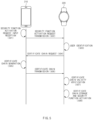
- FIG. 5 is a flow diagram illustrating operations of electronic devices according to one or more embodiments.
- the first electronic device 210 may receive an input of requesting activation of a security function of the second electronic device 220 from a user.
- the first electronic device 210 may identify that there is a request to activate the security function through the user input for activating a menu of the security function
- the first electronic device 210 may transmit, to the connected second electronic device 220, which is the target of a security function activation request, the fact that the activation of the security function activation is requested. For example, the first electronic device 210 may transmit a security function activation request message to the second electronic device 220.
- the second electronic device 220 may receive the user's confirmation of the security function activation request.
- the second electronic device 220 may display the security function activation request of the second electronic device 220 on the display device of the second electronic device 220, and may receive a confirmation (approval) input of the user for the request.
- the second electronic device 220 may request a certificate chain from the connected first electronic device 210.
- the second electronic device 220 may transmit a certificate chain request to the first electronic device 210 together with a challenge value.
- the first electronic device 210 may generate the certificate chain in response to receiving the certificate chain request from the second electronic device 220.
- the operation of the first electronic device 210 for forming a certificate chain may be the same as the content previously described with reference to FIGS. 3 and 4 .
- the first electronic device 210 may generate an application certificate (third certificate) and an attestation key (third attestation key), and sign the application certificate with a unique attestation key (second attestation key) stored in the secure memory, thereby forming a certificate chain including a root certificate (first certificate), a unique attestation key certificate (second certificate), and the application certificate (third certificate).
- the application certificate (third certificate) may include a challenge value received from the second electronic device 220 and a unique identifier of the first electronic device 210.
- the first electronic device 210 may transmit the generated certificate chain to the second electronic device 220.
- the second electronic device 220 may verify the validity of the received certificate chain.
- the operation of the second electronic device 220 for verifying the validity of the certificate chain may be the same as the content previously described with reference to FIGS. 3 and 4 .
- the second electronic device 220 may verify the validity of the second certificate by using the public key included in the first certificate and may verify the validity of the third certificate by using the public key included in the second certificate. After completing the verification of the certificate validity, the second electronic device 220 may identify the challenge value included in the third certificate and the unique identifier of the second electronic device 220.
- the second electronic device 220 may store the certificate chain in the secure memory (e.g., the second secure memory 224 in FIG. 2 ) and may activate the security function of the second electronic device 220.
- the second electronic device 220 may store, in the secure memory, the certificate chain of which the validity is certified for use in the verification process.
- the second electronic device 220 may register the unique identifier 432 of the first electronic device 210 included in the third certificate 430 in the second electronic device 220 as a trusted device.
- the registration operation of the device identifier may be omitted.
- FIG. 6 is a flow diagram illustrating operations of electronic devices according to one or more embodiments.
- the second electronic device 220 may receive an input of requesting deactivation of a security function of the second electronic device 220 from a user.
- the second electronic device 220 is illustrated as receiving a request of deactivating the security function of the second electronic device 220.
- the first electronic device 210 may receive a request of deactivating the security function of the second electronic device 220 and transmit the request to the second electronic device 220.
- the second electronic device 220 may request a certificate chain from the connected first electronic device 210.
- the second electronic device 220 may transmit a certificate chain request to the first electronic device 210 together with a challenge value.
- the first electronic device 210 may generate the certificate chain in response to receiving the certificate chain request from the second electronic device 220.
- the operation of the first electronic device 210 for forming a certificate chain may be the same as the content previously described with reference to FIGS. 3 and 4 .
- the first electronic device 210 may generate an application certificate (third certificate) and an attestation key (third attestation key), and sign the application certificate with a unique attestation key (second attestation key) stored in the secure memory, thereby forming a certificate chain including a root certificate (first certificate), a unique attestation key certificate (second certificate), and the application certificate (third certificate).
- the application certificate (third certificate) may include a challenge value received from the second electronic device 220 and a unique identifier of the first electronic device 210.
- the first electronic device 210 may transmit the generated certificate chain to the second electronic device 220.
- the second electronic device 220 may verify the validity of the received certificate chain.
- the operation of the second electronic device 220 for verifying the validity of the certificate chain may be the same as the content previously described with reference to FIGS. 3 and 4 .
- the second electronic device 220 may verify the validity of the second certificate by using the public key included in the first certificate and may verify the validity of the third certificate by using the public key included in the second certificate.
- the second electronic device 220 may determine whether the challenge value included in the third certificate is the same as the challenge value transmitted by the second electronic device 220 to the first electronic device 210.
- the second electronic device 220 may determine whether the unique identifier of the first electronic device 210 included in the third certificate is identical with an identifier stored in the secure memory (e.g., the second secure memory 224 in FIG. 2 ) of the second electronic device 220.
- the identifier of at least one electronic device as a trusted device may be stored in the secure memory of the second electronic device 220.
- the identifier stored in the secure memory of the second electronic device 220 may be stored in the operation of activating the security function of the second electronic device 220.
- the second electronic device 220 in the operation of activating the security function of the second electronic device 220, may store, in the secure memory, an identifier included in the certificate chain received from the first electronic device 210 and verified for validity.
- the second electronic device 220 may identify that the second electronic device 220 that desires to deactivate the security function is connected to the same electronic device as the first electronic device 210 that was connected at the time of activating the security function.
- the second electronic device 220 may identify that the user of the second electronic device 220 who currently desires to deactivate the security function is identical with the user of the second electronic device 220 at the time of activating the security function (not only a substantially identical user, but also a user with legitimate authority even when the user is not substantially the same).
- the second electronic device 220 may receive a certificate chain from another electronic device (not the first electronic device 210) and determine that the electronic device identifier included in the certificate chain is different from the electronic device identifier stored in the second electronic device 220. Accordingly, the second electronic device 220 may determine that the received certificate chain is invalid and determine that the user of the second electronic device 220 does not have legitimate authority.
- the second electronic device 220 may deactivate the security function and delete the certificate chain stored in the secure memory.
- the owner of the second electronic device 220 may voluntarily deactivate the security function of the second electronic device 220 before transferring ownership of the second electronic device 220, so that the second electronic device 220 may be initialized and to enable the new legitimate owner to set the security function of the second electronic device 220 in relation to his/her electronic device.
- FIG. 6 when the security function deactivation request input is received while the security function of the second electronic device 220 is activated is described. However, even in the case where a request input for disconnecting the second electronic device 220 from the first electronic device 210 is received while the security function of the second electronic device 220 is activated, the same process as in FIG. 6 may be performed. For example, when a request input for disconnecting the second electronic device 220 from the first electronic device 210 is received, the second electronic device 220 may request a certificate chain from the first electronic device 210.
- the first electronic device 210 may generate a certificate chain and transmit the certificate chain to the second electronic device 220, and the second electronic device 220 may verify the validity of the certificate chain and then, release the connection with the first electronic device 210 only when verifying the validity of the certification chain.
- FIG. 6 a case where the security function deactivation request input is received while the security function of the second electronic device 220 is activated is described, but the second electronic device 220 may perform the same process as in FIG. 6 even when an input of requesting the second electronic device 220 to connect to the host device is received while the security function of the second electronic device 220 is activated.
- the second electronic device 220 may request a certificate chain from the host device, and the host device may generate the certificate chain and transmit the certificate chain to the second electronic device 220.
- the second electronic device 220 may compare the device identifier stored in the second electronic device 220 with the device identifier in the certificate chain and may disallow connection with the host device when the device identifier stored in the second electronic device 220 is different from the device identifier in the certificate chain.
- the host device is a device that does not provide a certificate chain function
- the second electronic device 220 may not receive a response to the certificate chain request and thus may also disallow the connection with the host device.
- FIG. 7 is a flow diagram illustrating operations of electronic devices according to one or more embodiments.
- the second electronic device 220 may receive a device initialization request input of the second electronic device 220 from the user.
- device initialization may mean resetting the software to the factory default state by deleting all information stored in the device after shipment from the factory, and may also be referred to as factory initialization, hard reset, or master reset.
- the second electronic device 220 may request a certificate chain from the connected first electronic device 210.
- the second electronic device 220 may transmit a certificate chain request to the first electronic device 210 together with a challenge value.
- the first electronic device 210 may display a user interface (UI) for receiving a device initialization consent input from the second electronic device 220 on the display device of the first electronic device 210.
- UI user interface
- the first electronic device 210 may generate a certificate chain upon receiving the device initialization consent input from the second electronic device 220 through the UI.
- the operation of the first electronic device 210 for forming a certificate chain may be the same as the content previously described with reference to FIGS. 3 and 4 .
- the first electronic device 210 may generate an application certificate (third certificate) and an attestation key (third attestation key), and sign the application certificate with a unique attestation key (second attestation key) stored in the secure memory, thereby forming a certificate chain including a root certificate (first certificate), a unique attestation key certificate (second certificate), and the application certificate (third certificate).
- the application certificate (third certificate) may include a challenge value received from the second electronic device 220 and a unique identifier of the first electronic device 210.
- the first electronic device 210 may transmit the generated certificate chain to the second electronic device 220.
- the second electronic device 220 may verify the validity of the received certificate chain.
- the operation of the second electronic device 220 for verifying the validity of the certificate chain may be the same as the content previously described with reference to FIGS. 3 and 4 .
- the second electronic device 220 may verify the validity of the second certificate by using the public key included in the first certificate and may verify the validity of the third certificate by using the public key included in the second certificate.
- the second electronic device 220 may determine whether the challenge value included in the third certificate is the same as the challenge value transmitted by the second electronic device 220 to the first electronic device 210.
- the second electronic device 220 may determine whether the unique identifier of the first electronic device 210 included in the third certificate is identical with an identifier stored in the secure memory (e.g., the second secure memory 224 in FIG. 2 ) of the second electronic device 220.
- the identifier of at least one electronic device as a trusted device may be stored in the secure memory of the second electronic device 220
- the identifier stored in the secure memory of the second electronic device 220 may be stored in the operation of activating the security function of the second electronic device 220.
- the second electronic device 220 in the operation of activating the security function of the second electronic device 220, may store, in the secure memory, an identifier included in the certificate chain received from the first electronic device 210 and verified for validity.
- the second electronic device 220 may identify that the second electronic device 220 that desires to deactivate the security function is connected to the same electronic device as the first electronic device 210 that was connected at the time of activating the security function.
- the second electronic device 220 may identify that the user of the second electronic device 220 who currently desires to perform device initialization of the second electronic device 220 is identical with the user of the second electronic device 220 at the time of activating the security function (not only a substantially identical user, but also a user with legitimate authority even when the user is not substantially the same).
- the second electronic device 220 may receive a certificate chain from another electronic device (not the first electronic device 210) and determine that the electronic device identifier included in the certificate chain is different from the electronic device identifier stored in the second electronic device 220. Accordingly, the second electronic device 220 may determine that the received certificate chain is invalid and determine that the current user of the second electronic device 220 does not have legitimate authority.
- the second electronic device 220 may perform device initialization of the second electronic device 220.
- the owner of the second electronic device 220 may perform device initialization of the second electronic device 220 according to the process of FIG. 7 before voluntarily transferring ownership of the second electronic device 220.
- the second electronic device 220 may determine that the certificate is invalid through the certificate verification process, so the second electronic device 220 may prevent a device initialization command from being executed as it is determined that the certificate is invalid.
- a first electronic device e.g., the first electronic device 210 in FIG. 2
- a first electronic device e.g., the first electronic device 210 in FIG. 2
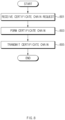
- FIG. 8 the operation of a first electronic device according to one or more embodiments will be described with reference to FIG. 8 .
- FIG. 8 is a flow diagram illustrating the operation of a first electronic device according to one or more embodiments. The operations of FIG. 8 may be performed by a first processor (e.g., the first processor 215 in FIG. 2 ) of the first electronic device.
- a first processor e.g., the first processor 215 in FIG. 2
- the first electronic device or the second electronic device may receive an input of requesting activation of a security function from a user.
- the second processor e.g., the second processor 225 in FIG. 2
- the second electronic device may transmit a certificate chain request to the first processor of the first electronic device.
- the first processor of the first electronic device may receive the certificate chain request from the second electronic device.
- the first processor of the first electronic device may receive a certificate chain request (e.g., a request message) and a challenge value together.
- the first processor of the first electronic device may generate a certificate chain upon receiving the certificate chain request from the second electronic device.
- the scheme of forming a certificate chain by the first electronic device may be the same as the content previously described with reference to FIG. 4 .
- the first processor of the first electronic device may transmit the generated certificate chain to the second electronic device.
- a second electronic device e.g., the second electronic device 220 in FIG. 2
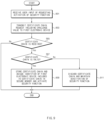
- the operation of a second electronic device will be described with reference to FIG. 9 . Descriptions of the same configuration as the previously described embodiment may be omitted.
- FIG. 9 is a flow diagram illustrating the operation of a second electronic device according to one or more embodiments. The operations of FIG. 9 may be performed by a second processor (e.g., the second processor 225 in FIG. 2 ) of the second electronic device.
- a second processor e.g., the second processor 225 in FIG. 2
- the second processor of the second electronic device may receive a user input of requesting activation of the security function.
- the second processor of the second electronic device may receive the user input of requesting activation of the security function directly through the second electronic device or may receive it through the first electronic device.
- the second processor of the second electronic device may transmit a certificate chain request to the first processor of the first electronic device when identifying the input of requesting activation of the security function.
- the second processor of the second electronic device may transmit a certificate chain request (e.g., a request message) and a challenge value together.
- the second processor of the second electronic device may determine whether a certificate chain is received.
- the second processor of the second electronic device may terminate the process when determining that the certificate chain is not received.
- the second processor of the second electronic device may proceed to operation 907 when determining that the certificate chain is received.
- the second processor of the second electronic device may verify the validity of the received certificate chain.
- the scheme of verifying the validity of the certificate chain by the second processor of the second electronic device may be the same as that previously described with reference to FIG. 3 .
- the second processor of the second electronic device may store the certificate chain and the unique identifier of the first electronic device in a secure memory (e.g., the second secure memory 224 in FIG. 2 ) as a trusted device and activate the security function of the second electronic device.
- a secure memory e.g., the second secure memory 224 in FIG. 2
- the second processor of the second electronic device may discard the certificate chain and maintain the deactivation state of the security function of the second electronic device.
- a wearable device may store the certificate chain and unique identifier of a host device while activating the security function.
- unauthorized use of the wearable device may be prevented and the security of the wearable device may be maintained in situations such as theft, and the like by allowing the wearable device to perform the verification process in terms of whether the user who transmits the corresponding request is the rightful owner of the second electronic device 220 and whether the wearable device is connected to the same host device as the host device that performs the verification process.
- the host device may use the unique attestation key and unique attestation key certificate stored in the host device at the time of manufacturing the host device to generate the certificate chain, so that the security function to the wearable device may be provided.
- the wearable device is a device that does not support a network communication function and UICC or a device that does not support an account authentication scheme
- the wearable device and the host device may be requested to perform a process of verifying the certificate chain, so that the security function of determining whether a requested operation is valid may be provided.
- the wearable device may be lost, others may be prevented from intentionally initializing the device, and loss of connection status and unauthorized use of connection with another host device may be prevented.
- a first electronic device may include a wireless communication circuit configured to communicate with a second electronic device, a processor operatively connected to the wireless communication circuit, and a memory operatively connected to the processor, wherein the memory stores instructions which, when executed, cause the processor to receive a certificate chain request including a challenge value from the second electronic device through the wireless communication circuit when receiving a user input of requesting activation of a security function through the first electronic device or the second electronic device, wherein the security function functions to cause the second electronic device to perform a verification process of the certificate chain when there is a user request for an operation of requiring security for the second electronic device, and form the certificate chain including the challenge value and a unique ID of the first electronic device and transmit the certificate chain to the second electronic device through the wireless communication circuit.
- the memory may include a first secure memory, wherein the first secure memory stores a second attestation key corresponding to a unique attestation key of the first electronic device and second certificate corresponding to a pair certificate of the second attestation key.
- the second certificate may be signed with a first attestation key corresponding to a root key in a manufacturing process of the first electronic device and stored in the first secure memory.
- the memory may store instructions which, when executed, cause the processor to form a third attestation key and a third certificate corresponding to a pair certificate of the third attestation key when receiving the certificate chain request, include the challenge value and the unique identifier of the first electronic device in the third certificate, and form the certificate chain by signing the third certificate with the second attestation key.
- the operation of requesting the security may include at least one of the activation of the security function, deactivation of the security function, a connection with a host device, a disconnection from the host device, and software initialization.
- the certificate chain may include a first certificate corresponding to a pair certificate of the first attestation key, a first public key of the first certificate, the second certificate, a second public key of the second certificate, and the third certificate.
- the verification process of the certificate chain may include verifying validity of the second certificate with the first public key and verifying validity of the third certificate with the second public key.
- a second electronic device may include a wireless communication circuit configured to communicate with a first electronic device, a processor operatively connected to the wireless communication circuit, and a memory operatively connected to the processor, wherein the memory stores instructions which, when executed, cause the processor to transmit a certificate chain request including a challenge value through the wireless communication circuit when receiving a user input of requesting activation of a security function through the first electronic device or the second electronic device, verify validity of a certificate chain received from the first electronic device, and store the certificate chain and a unique identifier of the first electronic device included in the certificate chain in a second secure memory of the memory and activate the security function when validity of the certificate chain is verified.
- the certificate chain may include a second certificate signed with a first attestation key that is a root key in a process of manufacturing the first electronic device, a first certificate that is a pair certificate of the first attestation key, and a third certificate signed with a second attestation key that is a pair attestation key of the second certificate and corresponds to a unique attestation key of the first electronic device.
- the certificate chain may include a first public key of the first certificate, and a second public key of the second certificate.
- the memory may store instructions which, when executed, cause the processor to verify validity of the second certificate with the first public key and verify validity of the third certificate with the second public key to verify the validity of the certificate chain.
- the third certificate may include the challenge value and the unique identifier of the first electronic device.
- the memory may store instructions which, when executed, cause the processor to determine whether the challenge value included in the third certificate and the challenge value included in the certificate chain request are same to verify the validity of the certificate chain.
- the memory may store instructions which, when executed, cause the processor to transmit a certificate chain request to a host device when there is a user request for an operation of requiring security while the security function is activated.
- the memory may store instructions which, when executed, cause the processor to verify the validity of a certificate included in the certificate chain received from the host device with a public key included in the certificate chain received from the host device, to verify the validity of the certificate chain received from the host device.
- the memory may store instructions which, when executed, cause the processor to determine whether a challenge value included in the certificate chain received from the host device and a challenge value included in the certificate chain request to the host device are the same to verify the validity of the certificate chain received from the host device.
- the memory may store instructions which, when executed, cause the processor to determine whether the electronic device identifier included in the certificate chain received from the host device and the unique identifier of the first electronic device stored in the second secure memory are same in order to verify the validity of the certificate chain received from the host device.
- the memory may store instructions which, when executed, cause the processor to determine that the certificate chain received from the host device is valid when it is determined that an identifier of the electronic device and the unique identifier of the first electronic device are the same.
- the memory may store instructions which, when executed, cause the processor to perform an operation of requesting the security when it determined that the certificate chain received from the host device is valid.
- the operation of requesting security may include at least one of the activation of the security function, deactivation of the security function, a connection with the host device, a disconnection from the host device, and software initialization of the second electronic device.
Landscapes
- Engineering & Computer Science (AREA)
- Computer Security & Cryptography (AREA)
- Computer Networks & Wireless Communication (AREA)
- Signal Processing (AREA)
- General Engineering & Computer Science (AREA)
- Computer Hardware Design (AREA)
- Theoretical Computer Science (AREA)
- Computing Systems (AREA)
- Physics & Mathematics (AREA)
- General Physics & Mathematics (AREA)
- Software Systems (AREA)
- Telephone Function (AREA)
- Mobile Radio Communication Systems (AREA)
Applications Claiming Priority (3)
| Application Number | Priority Date | Filing Date | Title |
|---|---|---|---|
| KR20220015610 | 2022-02-07 | ||
| KR1020220030661A KR20230119569A (ko) | 2022-02-07 | 2022-03-11 | 보안 기능을 제공하는 전자 장치 및 그의 동작 방법 |
| PCT/KR2022/020128 WO2023149648A1 (fr) | 2022-02-07 | 2022-12-12 | Dispositif électronique pour fournir une fonction de sécurité et son procédé de fonctionnement |
Publications (2)
| Publication Number | Publication Date |
|---|---|
| EP4432143A1 true EP4432143A1 (fr) | 2024-09-18 |
| EP4432143A4 EP4432143A4 (fr) | 2025-03-19 |
Family
ID=87552483
Family Applications (1)
| Application Number | Title | Priority Date | Filing Date |
|---|---|---|---|
| EP22925115.2A Pending EP4432143A4 (fr) | 2022-02-07 | 2022-12-12 | Dispositif électronique pour fournir une fonction de sécurité et son procédé de fonctionnement |
Country Status (3)
| Country | Link |
|---|---|
| US (1) | US20240372850A1 (fr) |
| EP (1) | EP4432143A4 (fr) |
| WO (1) | WO2023149648A1 (fr) |
Families Citing this family (2)
| Publication number | Priority date | Publication date | Assignee | Title |
|---|---|---|---|---|
| US12250099B2 (en) * | 2021-09-08 | 2025-03-11 | PassiveLogic, Inc. | External activation of quiescent device |
| US12438707B2 (en) * | 2023-12-06 | 2025-10-07 | Wells Fargo Bank, N.A. | Public key infrastructure using quantum computers (PKIQC) |
Family Cites Families (7)
| Publication number | Priority date | Publication date | Assignee | Title |
|---|---|---|---|---|
| KR102312725B1 (ko) * | 2014-02-05 | 2021-10-13 | 애플 인크. | 제어기와 액세서리 사이의 통신을 위한 균일한 통신 프로토콜 |
| US10169591B2 (en) * | 2015-12-07 | 2019-01-01 | Amazon Technologies, Inc. | Chained security systems |
| JP2019131000A (ja) * | 2018-01-30 | 2019-08-08 | 株式会社デンソー | リング型ウェアラブルデバイス及び車両用システム |
| KR102044401B1 (ko) * | 2018-10-23 | 2019-12-02 | 정해진 | 웨어러블 단말기, 스마트 단말기 및 웨어러블 단말기에 의한 스마트 단말기 간편 사용 인증 방법 |
| KR102216158B1 (ko) * | 2019-05-02 | 2021-02-15 | 연세대학교 산학협력단 | 복수의 컴퓨팅 장치에 내장된 센서를 활용한 사용자 인증 시스템 |
| CN111726782B (zh) * | 2020-05-22 | 2023-12-29 | 浙江吉利汽车研究院有限公司 | 一种安全认证方法及系统 |
| JP7532128B2 (ja) * | 2020-07-21 | 2024-08-13 | 株式会社東芝 | 認証装置 |
-
2022
- 2022-12-12 EP EP22925115.2A patent/EP4432143A4/fr active Pending
- 2022-12-12 WO PCT/KR2022/020128 patent/WO2023149648A1/fr not_active Ceased
-
2024
- 2024-06-28 US US18/758,987 patent/US20240372850A1/en active Pending
Also Published As
| Publication number | Publication date |
|---|---|
| US20240372850A1 (en) | 2024-11-07 |
| WO2023149648A1 (fr) | 2023-08-10 |
| EP4432143A4 (fr) | 2025-03-19 |
Similar Documents
| Publication | Publication Date | Title |
|---|---|---|
| US11496900B2 (en) | Electronic device and method for storing user identification information | |
| US12380231B2 (en) | Method of processing secure data and electronic device supporting the same | |
| US20240372850A1 (en) | Electronic device for providing security function, and operating method thereof | |
| US12603878B2 (en) | Electronic device and method for controlling vehicle based on driver authentication | |
| US12219066B2 (en) | Electronic device for sharing id and password, method for operating thereof, and server | |
| KR102907966B1 (ko) | 로그인 정보의 제공 방법 및 상기 방법을 수행하는 전자 장치 | |
| US20230396604A1 (en) | Method for performing user authentication and device for performing same | |
| US12260401B2 (en) | Electronic device for transmitting transaction by using external device and operation method thereof | |
| US12314369B2 (en) | Electronic device, method, and non-transitory computer-readable storage media for executing setup via communication with another device | |
| EP4395273A1 (fr) | Dispositif électronique permettant d'assurer une fonction rcs et son procédé de fonctionnement | |
| US20250193167A1 (en) | Electronic device and method for performing user authentication on electronic device | |
| KR20230119569A (ko) | 보안 기능을 제공하는 전자 장치 및 그의 동작 방법 | |
| KR102838305B1 (ko) | 인증 방법 및 전자 장치 | |
| US12026064B2 (en) | Electronic device and method of backing up secure element | |
| US12457487B2 (en) | Electronic device and method for installing eSIM profile in electronic device | |
| US20230106384A1 (en) | Electronic device, method, and non-transitory computer readable storage medium for adaptively providing authentication scheme of service based on context | |
| KR20240080059A (ko) | 멀티 디바이스 환경의 전자 장치들이 보안 레벨을 상호 증명하는 방법 | |
| US20230042496A1 (en) | Electronic device for performing different login process according to authentication type and control method thereof | |
| US11550963B2 (en) | Method of processing secure data and electronic device supporting the same | |
| US12574256B2 (en) | Method for mutually attesting security levels of electronic devices in multi device environment | |
| US20240112193A1 (en) | Method and device for transmitting data based on blockchain | |
| US20260050678A1 (en) | Electronic device and method for controlling access to applet | |
| US20260044593A1 (en) | Electronic device for providing target applet by verifying applet and operating method thereof | |
| US20250047653A1 (en) | Method for authenticating electronic device, and electronic device therefor | |
| KR102929966B1 (ko) | 인증 타입에 따라 상이한 로그인 프로세스를 수행하는 전자 장치 및 그 제어 방법 |
Legal Events
| Date | Code | Title | Description |
|---|---|---|---|
| STAA | Information on the status of an ep patent application or granted ep patent |
Free format text: STATUS: THE INTERNATIONAL PUBLICATION HAS BEEN MADE |
|
| PUAI | Public reference made under article 153(3) epc to a published international application that has entered the european phase |
Free format text: ORIGINAL CODE: 0009012 |
|
| STAA | Information on the status of an ep patent application or granted ep patent |
Free format text: STATUS: REQUEST FOR EXAMINATION WAS MADE |
|
| 17P | Request for examination filed |
Effective date: 20240613 |
|
| AK | Designated contracting states |
Kind code of ref document: A1 Designated state(s): AL AT BE BG CH CY CZ DE DK EE ES FI FR GB GR HR HU IE IS IT LI LT LU LV MC ME MK MT NL NO PL PT RO RS SE SI SK SM TR |
|
| A4 | Supplementary search report drawn up and despatched |
Effective date: 20250213 |
|
| RIC1 | Information provided on ipc code assigned before grant |
Ipc: G06F 21/44 20130101ALI20250207BHEP Ipc: H04W 12/069 20210101ALI20250207BHEP Ipc: H04L 9/32 20060101ALI20250207BHEP Ipc: G06F 21/64 20130101ALI20250207BHEP Ipc: G06F 21/33 20130101ALI20250207BHEP Ipc: G06F 21/35 20130101AFI20250207BHEP |
|
| DAV | Request for validation of the european patent (deleted) | ||
| DAX | Request for extension of the european patent (deleted) | ||
| STAA | Information on the status of an ep patent application or granted ep patent |
Free format text: STATUS: EXAMINATION IS IN PROGRESS |
|
| 17Q | First examination report despatched |
Effective date: 20260227 |