EP4432155A1 - Procédé et appareil d'entraînement de modèle intelligent, dispositif électronique et support de stockage - Google Patents
Procédé et appareil d'entraînement de modèle intelligent, dispositif électronique et support de stockage Download PDFInfo
- Publication number
- EP4432155A1 EP4432155A1 EP22892034.4A EP22892034A EP4432155A1 EP 4432155 A1 EP4432155 A1 EP 4432155A1 EP 22892034 A EP22892034 A EP 22892034A EP 4432155 A1 EP4432155 A1 EP 4432155A1
- Authority
- EP
- European Patent Office
- Prior art keywords
- training
- model
- neural network
- intelligent
- network
- Prior art date
- Legal status (The legal status is an assumption and is not a legal conclusion. Google has not performed a legal analysis and makes no representation as to the accuracy of the status listed.)
- Granted
Links
Images



Classifications
-
- G—PHYSICS
- G06—COMPUTING OR CALCULATING; COUNTING
- G06F—ELECTRIC DIGITAL DATA PROCESSING
- G06F18/00—Pattern recognition
- G06F18/20—Analysing
- G06F18/21—Design or setup of recognition systems or techniques; Extraction of features in feature space; Blind source separation
- G06F18/214—Generating training patterns; Bootstrap methods, e.g. bagging or boosting
-
- G—PHYSICS
- G06—COMPUTING OR CALCULATING; COUNTING
- G06F—ELECTRIC DIGITAL DATA PROCESSING
- G06F18/00—Pattern recognition
- G06F18/20—Analysing
- G06F18/24—Classification techniques
- G06F18/241—Classification techniques relating to the classification model, e.g. parametric or non-parametric approaches
-
- G—PHYSICS
- G06—COMPUTING OR CALCULATING; COUNTING
- G06N—COMPUTING ARRANGEMENTS BASED ON SPECIFIC COMPUTATIONAL MODELS
- G06N3/00—Computing arrangements based on biological models
- G06N3/02—Neural networks
- G06N3/04—Architecture, e.g. interconnection topology
- G06N3/045—Combinations of networks
-
- G—PHYSICS
- G06—COMPUTING OR CALCULATING; COUNTING
- G06N—COMPUTING ARRANGEMENTS BASED ON SPECIFIC COMPUTATIONAL MODELS
- G06N3/00—Computing arrangements based on biological models
- G06N3/02—Neural networks
- G06N3/04—Architecture, e.g. interconnection topology
- G06N3/0464—Convolutional networks [CNN, ConvNet]
-
- G—PHYSICS
- G06—COMPUTING OR CALCULATING; COUNTING
- G06N—COMPUTING ARRANGEMENTS BASED ON SPECIFIC COMPUTATIONAL MODELS
- G06N3/00—Computing arrangements based on biological models
- G06N3/02—Neural networks
- G06N3/08—Learning methods
- G06N3/0895—Weakly supervised learning, e.g. semi-supervised or self-supervised learning
-
- G—PHYSICS
- G06—COMPUTING OR CALCULATING; COUNTING
- G06N—COMPUTING ARRANGEMENTS BASED ON SPECIFIC COMPUTATIONAL MODELS
- G06N3/00—Computing arrangements based on biological models
- G06N3/02—Neural networks
- G06N3/08—Learning methods
- G06N3/098—Distributed learning, e.g. federated learning
-
- G—PHYSICS
- G06—COMPUTING OR CALCULATING; COUNTING
- G06V—IMAGE OR VIDEO RECOGNITION OR UNDERSTANDING
- G06V10/00—Arrangements for image or video recognition or understanding
- G06V10/70—Arrangements for image or video recognition or understanding using pattern recognition or machine learning
- G06V10/82—Arrangements for image or video recognition or understanding using pattern recognition or machine learning using neural networks
-
- G—PHYSICS
- G06—COMPUTING OR CALCULATING; COUNTING
- G06V—IMAGE OR VIDEO RECOGNITION OR UNDERSTANDING
- G06V20/00—Scenes; Scene-specific elements
- G06V20/60—Type of objects
- G06V20/62—Text, e.g. of license plates, overlay texts or captions on TV images
- G06V20/625—License plates
-
- G—PHYSICS
- G06—COMPUTING OR CALCULATING; COUNTING
- G06N—COMPUTING ARRANGEMENTS BASED ON SPECIFIC COMPUTATIONAL MODELS
- G06N3/00—Computing arrangements based on biological models
- G06N3/02—Neural networks
- G06N3/06—Physical realisation, i.e. hardware implementation of neural networks, neurons or parts of neurons
- G06N3/063—Physical realisation, i.e. hardware implementation of neural networks, neurons or parts of neurons using electronic means
Definitions
- the present application relates to the field of computers, and in particular to methods, apparatuses for training an intelligent model, and electronic devices and machine-readable storage media.
- Training samples include labeled training samples and unlabeled training samples.
- a labeled training sample include sample data and a label
- an unlabeled training sample include sample data.
- the training samples are samples for training license plates
- a labeled training sample includes a license plate image and a label
- the label is used for a license plate position in the license plate image
- an unlabeled training sample includes the license plate image.
- a neural network can be trained with multiple training samples, including labeled training samples.
- multiple training samples include both labeled training samples and unlabeled training samples, how to train an intelligent model with the same superiority is an urgent problem to be solved at present.
- embodiments of the present application provide methods and apparatuses for training an intelligent model, and electronic devices and machine-readable storage media.
- the present application provides a method for training an intelligent model, including: acquiring a first network set and a second network set from a first neural network, where the first network set includes the first neural network and m-1 second neural networks, m is an integer greater than 1, the second network set includes m second neural networks, the m-1 second neural networks and the m second neural networks are different sub-networks in the first neural network, and a network size of each neural network in the first network set is larger than a network size of each neural network in the second network set; obtaining a first model set by training each neural network in the first network set based on a first sample set and a second sample set, where the first sample set includes a plurality of first training samples, each of the first training samples includes first training data and a label to indicate a target in the first training data, the second sample set includes a plurality of second training samples, each of the second training samples includes second training data, and the first model set includes a first intelligent model obtained by training the first neural network and m-1 second intelligent
- obtaining the first model set by training each neural network in the first network set based on the first sample set and the second sample set includes: for any one to-be-trained neural network in the first network set, training, based on the first sample set, parameters of a convolutional layer and parameters of a fully connected layer included in the to-be-trained neural network, where values of the trained parameters of the convolutional layer are first parameter values and values of the trained parameters of the fully connected layer are second parameter values; training, with fixing the values of the parameters of the convolutional layer to the first parameter values, the parameters of fully connected layer included in the to-be-trained neural network based on the first sample set and the second sample set, so to change the values of the trained parameters of the fully connected layer from the second parameter values to third parameter values; and training, with fixing the values of the parameters of the fully connected layer to the third parameter values, the parameters of convolutional layer in the to-be-trained neural network based on the first sample set and the second sample set, so to obtain an intelligent model corresponding to
- training the parameters of the fully connected layer included in the to-be-trained neural network based on the first sample set and the second sample set includes: for each of the first training samples in the first sample set, acquiring a first output result corresponding to the first training sample output from the to-be-trained neural network by inputting the first training sample into the to-be-trained neural network, and for each of the second training samples in the second sample set, acquiring a first output result corresponding to the second training sample by inputting the second training sample into the to-be-trained neural network; acquiring a first loss function value through a first loss function based on the first output result corresponding to each of the first training samples and the label included in each of the first training samples, and acquiring a second loss function value through a distance loss function based on the first output result corresponding to each of the second training samples, where the first loss function includes a loss function other than the distance loss function; and when a loss function value of the fully connected layer is not minimum, adjusting the values of parameters of the fully connected
- training the parameters of the convolutional layer in the to-be-trained neural network based on the first sample set and the second sample set includes: for each of the first training samples in the first sample set, acquiring a second output result corresponding to the first training sample output from the to-be-trained neural network by inputting the first training sample into the to-be-trained neural network, and for each of the second training samples in the second sample set, acquiring a second output result corresponding to the second training sample by inputting the second training sample into the to-be-trained neural network; acquiring a third loss function value through the first loss function based on the second output result corresponding to each of the first training samples and the label included in each of the first training samples, and acquiring a fourth loss function value through the distance loss function based on the second output result corresponding to each of the second training samples; and when a loss function value of the convolutional layer is not minimum, adjusting the values of parameters of the convolutional layer based on the loss function value of the convolutional layer, where the
- obtaining the second model set by training each neural network in the second network set based on the first sample set, the second sample set and the first model set includes: for each of the intelligent models in the first model set, acquiring a plurality of third output results corresponding to the second training samples in the second sample set output by the intelligent model by inputting each of the second training samples into the intelligent model; for each of the second training samples, acquiring a label for the second training sample based on the plurality of third output results corresponding to the second training sample; and obtaining the second model set by training each neural network in the second network set based on the first sample set, each of the second training samples, and the label for each of the second training samples.
- the method further includes: for each of the n first devices, determining a third model set corresponding to the first device based on resource information of the first device, where the third model set corresponding to the first device includes one or more second intelligent models, and resources of the first device cover resources required by each of the one or more second intelligent models, and n is an integer greater than 1; and selecting a second intelligent model for the first device from the third model set corresponding to the first device based on the first intelligent model.
- selecting a second intelligent model for the first device from the third model set corresponding to the first device based on the first intelligent model includes: acquiring, based on the second sample set, difference information between the first intelligent model and each of the one or more second intelligent models in the third model set corresponding to the first device; and selecting a second intelligent model from the one or more second intelligent models based on the difference information between the first intelligent model and each of the one or more second intelligent models.
- acquiring, based on the second sample set, difference information between the first intelligent model and each of the one or more second intelligent models in the third model set corresponding to the first device includes: acquiring a fourth output result corresponding to each of the second training samples in the second sample set output by the first intelligent model by inputting each of the second training samples into the first intelligent model; acquiring a fifth output result corresponding to each of the second training samples in the second sample set output by a target intelligent model by inputting each of the second training samples into the target intelligent model, where the target intelligent model is one of the one or more second intelligent models in the third model set corresponding to the first device; and acquiring difference information between the first intelligent model and the target intelligent model based on the fourth output result and the fifth output result corresponding to each of the second training samples.
- the method is applied to a system with an architecture of central computing-edge devices, the system includes a central device and a plurality of edge intelligent devices, the edge intelligent devices are deployed in different areas, and computing power and storage capacity of the central device both are greater than computing power and storage capacity of each of the edge intelligent devices, the method is performed by the central device, and the second training samples in the second sample set include data collected by each of the edge intelligent devices and received by the central device.
- the present application provides an apparatus for training an intelligent model, including: an acquiring module, configured to acquire a first network set and a second network set from a first neural network, where the first network set includes the first neural network and m-1 second neural networks, m is an integer greater than 1, the second network set includes m second neural networks, the m-1 second neural networks and the m second neural networks are different sub-networks in the first neural network, and a network size of each neural network in the first network set is larger than a network size of each neural network in the second network set; a first training module, configured to obtain a first model set by training each neural network in the first network set based on a first sample set and a second sample set, where the first sample set includes a plurality of first training samples, each of the first training samples includes first training data and a label to indicate a target in the first training data, the second sample set includes a plurality of second training samples, each of the second training samples includes second training data, and the first model set includes a first intelligent model obtained
- the first training module is configured to: for any one to-be-trained neural network in the first network set, train, based on the first sample set, parameters of a convolutional layer and parameters of a fully connected layer included in the to-be-trained neural network, where values of the trained parameters of the convolutional layer are first parameter values and values of the trained parameters of the fully connected layer are second parameter values; train, with fixing the values of the parameters of the convolutional layer to the first parameter values, the parameters of the fully connected layer included in the to-be-trained neural network based on the first sample set and the second sample set, so as change the values of the trained parameters of the fully connected layer from the second parameter values to third parameter values; and train, with fixing the values of the parameters of the fully connected layer to the third parameter values, the parameters of the convolutional layer in the to-be-trained neural network based on the first sample set and the second sample set, so to obtain an intelligent model corresponding to the to-be-trained neural network.
- the first training module is configured to: for each of the first training samples in the first sample set, acquire a first output result corresponding to the first training sample output from the to-be-trained neural network by inputting the first training sample into the to-be-trained neural network, and for each of the second training samples in the second sample set, acquire a first output result corresponding to the second training sample by inputting the second training sample into the to-be-trained neural network; acquire a first loss function value through a first loss function based on the first output result corresponding to each of the first training samples and the label included in each of the first training samples, and acquire a second loss function value through a distance loss function based on the first output result corresponding to each of the second training samples, where the first loss function includes a loss function other than the distance loss function; and when a loss function value of the fully connected layer is not minimum, adjust the values of parameters of the fully connected layer based on the loss function value of the fully connected layer, where the loss function value of the fully connected layer includes the first loss function value value of
- the first training module is configured to: for each of the first training samples in the first sample set, acquire a second output result corresponding to the first training sample output from the to-be-trained neural network by inputting the first training sample into the to-be-trained neural network, and for each of the second training samples in the second sample set, acquire a second output result corresponding to the second training sample by inputting the second training sample into the to-be-trained neural network; acquire a third loss function value through the first loss function based on the second output result corresponding to each of the first training samples and the label included in each of the first training samples, and acquire a fourth loss function value through the distance loss function based on the second output result corresponding to each of the second training samples; and when a loss function value of the convolutional layer is not minimum, adjust the values of parameters of the convolutional layer based on the loss function value of the convolutional layer, where the loss function value of the convolutional layer includes the third loss function value and the fourth loss function value.
- the second training module is configured to: for each of the intelligent models in the first model set, acquire a plurality of third output results corresponding to the second training samples in the second sample set output by the intelligent model by inputting each of the second training samples into the intelligent model; for each of the second training samples, acquire a label for the second training sample based on the plurality of third output results corresponding to the second training sample; and obtain the second model set by training each neural network in the second network set based on the first sample set, each of the second training samples, and the label for each of the second training samples.
- the apparatus further includes: a determining module, configured to for each of the n first devices, determine a third model set corresponding to the first device based on the resource information of the first device, where the third model set corresponding to the first device includes one or more second intelligent models, and the resources of the first devices cover resources required by each of the one or more second intelligent models, and n is an integer greater than 1; a selecting module, configured to select a second intelligent model for the first device from the third model set corresponding to the first device based on the first intelligent model.
- a determining module configured to for each of the n first devices, determine a third model set corresponding to the first device based on the resource information of the first device, where the third model set corresponding to the first device includes one or more second intelligent models, and the resources of the first devices cover resources required by each of the one or more second intelligent models, and n is an integer greater than 1
- a selecting module configured to select a second intelligent model for the first device from the third model set corresponding to the first device based on the
- the selecting module is configured to: acquire, based on the second sample set, difference information between the first intelligent model and each of the one or more second intelligent models in the third model set corresponding to the first device; and select a second intelligent model from the one or more second intelligent models based on the difference information between the first intelligent model and each of the one or more second intelligent models.
- the selecting module is configured to: acquire a fourth output result corresponding to each of the second training samples in the second sample set output by the first intelligent model by inputting each of the second training samples into the first intelligent model; acquire a fifth output result corresponding to each of the second training samples in the second sample set output by a target intelligent model by inputting each of the second training samples into the target intelligent model, where the target intelligent model is one of the one or more second intelligent models in the third model set corresponding to the first device; and acquire difference information between the first intelligent model and the target intelligent model based on the fourth output result and the fifth output result corresponding to each of the second training samples.
- the present application provides an electronic device including a processor and a memory; the memory is configured to store machine-executable instructions; the processor is configured to read and execute the machine-executable instructions stored in the memory, so as to implement the method of training an intelligent model as described above.
- the present application provides a machine-readable storage medium, and machine-executable instructions are stored in the machine-readable storage medium, and the machine-executable instructions, when executed by a processor, realize the method of training an intelligent model as described above.
- a first neural network is divided into a first network set and a second network set, the first neural network includes the first neural network and m-1 second neural networks, and the second network set includes m second neural networks.
- the first training samples included in the first sample set are labeled training samples, and the second training samples included in the second sample set are unlabeled training samples. Since the scales of the neural networks in the first network set are all larger than those in the second network set, that is, the second training samples in the second sample set are used as the unlabeled training sample, each neural network in the first network set can also be trained by using the first sample set and the second sample set to obtain the intelligent model corresponding to each neural network in the first network set, and the first model set can be obtained.
- each neural network in the second network set with smaller network scale is trained by using the first model set, the first sample set and the second sample set, so that the intelligent model corresponding to each neural network in the second network set can be trained, so that both labeled training samples and unlabeled training samples can be included, and the intelligent model with superior performance can also be trained.
- a first neural network is a large-scale neural network, and the first neural network can be named as a hypernetwork.
- the first neural network includes a large number of sub-networks.
- the first neural network includes a large number of neurons. By dividing the neurons included in the first neural network according to different depths, widths, convolutions, and sizes, a large number of sub-networks can be divided in the first neural network.
- neurons in the first neural network are divided into a plurality of different sub-networks by different depths.
- neurons in the hypernetwork are divided into a plurality of different sub-networks by dividing the first neural network by different widths.
- Each sub-network in the first neural network is a neural network, and training samples are used to train the neural network to obtain an intelligent model with required functions. For example, in order to be able to recognize a license plate, the neural network can be trained with training samples, and a license plate recognition model with license plate recognition function can be obtained.
- the neural network includes a convolutional layer and a fully connected layer, and the convolutional layer is used to extract features from training samples.
- the fully connected layer processes targets in the training samples based on the extracted features. For example, the fully connected layer classifies a target in the training sample based on the extracted features.
- the convolutional layer includes a feature extractor, and the fully connected layer includes a plurality of classifiers.
- the feature extractor belongs to the convolutional layer in the neural network and is configured to extract features from the training samples. For each classifier, the classifier classifies the target in the training sample based on the features extracted by the feature extractor.
- the training samples are divided into two categories: labeled training samples and unlabeled training samples.
- the labeled training samples include training data and labels, and the labels are used to indicate the targets in the training data.
- training data in the training sample is a picture including a license plate
- a label in the training sample is used to indicate a location of the license plate in the picture
- the training sample is a labeled training sample.
- the unlabeled training samples include training data.
- the training sample includes a picture, the picture includes a license plate image, and the training sample is an unlabeled training sample.
- the above intelligent model takes the license plate recognition model as an example, but the intelligent model can further be an intelligent model for semantic segmentation, an intelligent model for target detection, an intelligent model for key point detection and/or an intelligent model for video understanding. These intelligent models can be obtained by training neural networks with training samples.
- the classifiers of the fully connected layer classify the training data in the training samples.
- the classifiers classify each image in the training sample. When a certain image is classified as a license plate image in the training sample, a location of that license plate image is used as a license plate location.
- the classifiers classify semantics of each data content in the training sample and classify the data content with different semantics to realize semantic segmentation.
- An embodiment of the present application provides a first sample set and a second sample set, where the first sample set includes a plurality of first training samples, each first training sample includes first training data and a label, and the label indicates a target in the first training data, the second sample set includes a plurality of second training samples, each second training sample includes second training data.
- Each first training sample in the first sample set is a labeled training sample, and each second training sample in the second sample set is an unlabeled training sample.
- a first neural network and each sub-network included in the first neural network are trained to obtain an intelligent model corresponding to the first neural network and an intelligent model corresponding to each sub-network. Since a scale of each sub-network of the first neural network is different, a scale of the intelligent model corresponding to the trained first neural network is different from that of the intelligent model corresponding to each sub-network, so that intelligent models with different scales can be deployed on devices with different hardware performance.
- the first training sample in the first sample set and the second training sample in the second sample set may be training samples in different environments.
- each first training sample in the first sample set may be a sample obtained by shooting various license plates in daytime
- each second training sample in the second sample set may be a sample obtained by shooting various license plates at night.
- the license plate recognition model trained by the first sample set and the second sample set can not only recognize the license plate during the day, but also recognize the license plate at night.
- an embodiment of the present application provides a network architecture that includes a central device and a plurality of edge intelligent devices, each edge intelligent device communicating with the central device.
- each edge intelligent device and central device are connected to a communication network, and each edge intelligent device establishes a network connection with the central device in the communication network, so as to realize communication between each edge intelligent device and the central device.
- each edge intelligent device establishes a network connection with the central device in the communication network, so as to realize communication between each edge intelligent device and the central device.
- the computing power and storage capacity of each edge intelligent device are far less than those of the central device respectively, and the computing power and storage capacity of each edge intelligent device may be different.
- the central device includes a first sample set, in which each first training sample includes first training data and label (s), the label(s) is used to indicate target(s) included in the first training data.
- the label(s) included in each first training sample may be obtained by labeling each first training sample separately using manual means.
- Each edge intelligent device is deployed in a different area, and each edge intelligent device collects the area where it is located, takes the collected data as a second training sample, and sends the second training sample to the central device. Because the number of edge intelligent devices is often large, each edge intelligent device collects a large number of second training samples, so the central device will get a large number of second training samples. If the second training samples continue to be labeled manually, the labor cost is too high, so the central device takes the data collected by each edge intelligent device directly as the second training sample, and composes each second training sample into a second sample set. Then, the central device trains a hypernetwork based on the first and second sample sets, and trains the hypernetwork into multiple intelligent models of different scales. Each intelligent model requires different computing and storage capabilities of the device. The central device installs different intelligent models to different edge intelligent devices.
- each edge intelligent device For each edge intelligent device, each edge intelligent device is deployed in a different scene. Since each edge intelligent device is affected by the environment in which it is located, a scene corresponding to the second training sample collected by each edge intelligent device is different from a scene corresponding to the respective first training sample in the central device.
- the central device is a central server.
- the central device is a cloud computing server or a cloud computing server cluster.
- the edge intelligent device is a smart camera, a computer or a single-chip computer.
- the network architecture is a central computing-edge device system architecture, for example, it can be a cloud center computing-edge device system architecture, that is, a central device is a server or server cluster with large-scale computing and storage capabilities (for example, a server cluster consists of 200 graphics cards, 100 CPUs and 100T storage hard disks), and a plurality of edge intelligent devices refer to edge devices with multiple small-scale computing and storage capabilities, e.g., an edge intelligent device is a server with a smaller scale than a server cluster (e.g., a computer with no or fewer graphics cards; a microcontroller), a camera with a certain intelligent model-carrying capability, or smart glasses with smaller computing power.
- a server or server cluster with large-scale computing and storage capabilities for example, a server cluster consists of 200 graphics cards, 100 CPUs and 100T storage hard disks
- a plurality of edge intelligent devices refer to edge devices with multiple small-scale computing and storage capabilities, e.g., an edge intelligent device is a server with a smaller
- the network architecture shown in FIG. 4 is applied to an intelligent wildlife protection monitoring system.
- the system consists of a cloud computing center (as the central device) and multiple edge intelligent devices.
- the cloud computing center is a server cluster, which has strong hardware computing capacity and storage capacity, and can use a pre-selected tagged wildlife data (the first training sample).
- the cloud computing center can train the hypernetwork using labeled first training samples to obtain a hypernetwork model.
- Edge intelligent devices including smart cameras installed in different wildlife protection areas, are configured to collect and process image data, and identify and monitor potential wildlife. Smart cameras, with different models, are devices with an ability to run intelligent models, so their computing and storage capabilities are different.
- computing and storage capabilities of the smart cameras are very limited, and they may not be able to directly run the hypernetwork model trained by the cloud computing center to complete a task.
- the amount of data collected by smart cameras is huge, and it is expensive to label wildlife targets in the images by manpower.
- Different smart cameras are affected by their environment, and the data collected and processed by the smart cameras have different scenes compared with the first training samples in the cloud computing center.
- Different smart cameras need to send their own computing and storage condition information and a series of collected unlabeled image information (as the second training samples) to the cloud computing center, then the cloud computing center trains the hypernetwork according to these unlabeled image information and the first training samples included by itself through the training method provided by the present application, and trains an intelligent model that meets the computing power, storage capacity and scene conditions of each smart camera.
- a camera can be equipped with an intelligent model that meets the conditions (its own computing power, storage capacity and scene conditions), and then process the collected images to perform the task of intelligent wildlife monitoring.
- the training method of the present application only trains a hypernetwork model, and a customized intelligent model can be obtained by collecting the computing power and storage capacity information of different smart cameras and the collected unlabeled data (i.e., the second training samples). It saves separate training cost of different models required by different smart cameras and manual labeling cost of different scene data collected by different smart cameras.
- the intelligent wildlife protection monitoring system mentioned above can also be replaced by other tasks.
- monitoring tasks in dangerous environments such as person/object intrusion warning systems in ultra-high voltage power grid substation areas, identification systems for operations that violate safety regulations on large-scale production lines, etc.
- It can also be a smart transportation system composed of smart city public service system, different road monitoring devices, smart traffic command center and different road electronic camera devices.
- an embodiment of the present application provides a method for training an intelligent model, which is applied to the network architecture shown in FIG. 3 , and an execution subject of the method is the central device in the network architecture, and the method is used for training a first neural network to obtain a first intelligent model corresponding to the first neural network and a second intelligent model corresponding to each of a plurality of sub-networks in the first neural network, including the following steps.
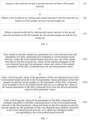
- a first network set and a second network set are acquired from a first neural network, where the first network set includes the first neural network and m-1 second neural networks, m is an integer greater than 1, the second network set includes m second neural networks, the m-1 second neural networks and the m second neural networks are different sub-networks in the first neural network, and a network size of each neural network in the first network set is larger than a network size of each neural network in the second network set.
- a first model set is obtained by training each neural network in the first network set based on a first sample set and a second sample set, where the first sample set includes a plurality of first training samples, each of the first training samples includes first training data and a label to indicate a target in the first training data, the second sample set includes a plurality of second training samples, each of the second training samples includes second training data, and the first model set includes a first intelligent model obtained by training the first neural network and m-1 second intelligent models obtained by training the m-1 second neural networks.
- the central device receives data collected by each edge intelligent device and takes the data collected by each edge intelligent device as the second training sample.
- the data collected by each edge intelligent device is pictures, etc.
- a second model set is obtained by training each neural network in the second network set based on the first sample set, the second sample set and the first model set, where the second model set includes m second intelligent models obtained by training the m second neural networks.
- a first neural network is divided into a first network set and a second network set, the first neural network includes the first neural network and m-1 second neural networks, and the second network set includes m second neural networks.
- the first training samples included in the first sample set are labeled training samples, and the second training samples included in the second sample set are unlabeled training samples. Since the scales of the neural networks in the first network set are all larger than those in the second network set, that is, the second training samples in the second sample set are used as the unlabeled training samples, each neural network in the first network set can also be trained by using the first sample set and the second sample set to obtain the intelligent model corresponding to each neural network in the first network set, and the first model set can be obtained.
- each neural network in the second network set with smaller network scale is trained by using the first model set, the first sample set and the second sample set, so that the intelligent model corresponding to each neural network in the second network set can be trained, so that both labeled training samples and unlabeled training samples can be included, and the intelligent model with superior performance can also be trained.
- the unlabeled training samples are all collected from different edge intelligent devices, and each edge intelligent device is deployed in a different region, so each edge intelligent device is in a different scene.
- These unlabeled training samples constitute the second sample set, and the embodiment of the present application trains intelligent models with different scales based on the first sample set and the second sample set, so that each intelligent model can meet different scene conditions. Because intelligent models with different scales have different requirements for computing power and storage capacity of edge intelligent devices, intelligent models with different scales can be deployed on different edge intelligent devices.
- the training data in the second training sample is classified through the first model set including m intelligent models to obtain m processing results corresponding to each second training sample, and the label for each second training sample is obtained based on the m processing results corresponding to each second training sample, so that each neural network in the second network set can be trained based on each first training sample and the label for each second training sample, thus making each intelligent model in the second model set have a superior performance.
- a first network set and a second network set are acquired from a first neural network, where the first network set includes the first neural network and m-1 second neural networks, the second network set includes m second neural networks, the m-1 second neural networks and the m second neural networks are different sub-networks of the first neural network, m is an integer greater than 1, and a network size of each neural network in the first network set is larger than a network size of each neural network in the second network set.
- 2m neural networks are randomly selected from the hypernetwork.
- the 2m neural networks include the first neural network and 2m-1 sub-networks.
- the 2m-1 sub-networks are 2m-1 second neural networks.
- the first neural network has the largest scale. From these 2m neural networks, m neural networks with the largest size are selected, the m neural networks include the first neural network and m-1 second neural networks with the largest size, the first neural network and the selected m-1 second neural networks are formed into a first network set, and the remaining m unselected second neural networks are formed into a second network set.
- the number of sub-networks included in the first neural network is more than or equal to 2m-1, so after the above steps 301-303 are performed, 2m-1 second neural networks can be randomly selected from the first neural network, and the first neural network and the 2m-1 second neural networks will continue to perform the above operations of 301-303 until each sub-network in the first neural network is trained, and an intelligent model corresponding to each sub-network is obtained.
- step 302 is realized by the following operations from 3021 to 3024.
- the operations of 3021 to 3024 are as follows.
- step 3021 based on the first sample set, parameters of a convolutional layer and parameters of a fully connected layer included in a to-be-trained neural network are trained, where the to-be-trained neural network is any one of the neural networks in the first network set, values of the trained parameters of the convolutional layer are first parameter values and values of the trained parameters of the fully connected layer are second parameter values.
- the essence of training the parameters of convolutional layer is to train the parameters of feature extractor included in the convolutional layer, and the essence of training the parameters of fully connected layer is to train the parameters of each classifier included in the fully connected layer.
- step 3021 step 3021 is realized by the following operations from 11 to 14.
- the operations of 11 to 14 are as follows.
- the first training sample is input into the to-be-trained neural network, so that the to-be-trained neural network classifies a target included in the first training data in the first training sample to obtain a sixth output result corresponding to the first training sample.
- the sixth output result corresponding to the first training sample is used to indicate the target included in the first training data in the first training sample.
- the to-be-trained neural network includes a convolutional layer and a fully connected layer.
- the convolutional layer in the to-be-trained neural network extracts a feature from the first training data in the first training sample, and inputs the feature to the fully connected layer in the to-be-trained neural network.
- the fully connected layer Based on the feature, the fully connected layer performs a classification process on a target included in the first training data in the first training sample and outputs a processing result, and the output processing result is the sixth output result corresponding to the first training sample.
- Each classifier included in the fully connected layer performs a classification process on the target included in the first training sample based on this feature, so the sixth output result corresponding to the first training sample output by the to-be-trained neural network includes the processing result output by each classifier.
- the feature extractor in the convolutional layer extracts a feature from the first training data in the first training sample, inputs the feature to each classifier in the to-be-trained neural network, and each classifier carries out a classification process on a target included in the first training data in the first training sample based on the feature, and outputs a processing result.
- the sixth output result corresponding to the first training sample includes the output result of each classifier.
- a fifth loss function value is obtained according to the following first loss function.
- S 1 is a fifth loss function value
- F d is a feature extractor in the convolutional layer
- C di is an i-th classifier in the fully connected layer
- ( x s , y s ) is a first sample set
- ( x , y ) is a first training sample
- x is first training data in the first training sample
- y is a label in the first training sample
- L ce,F d ,C di is a cross-entropy loss function of the feature extractor F d and the i-th classifier C di
- K represents a total number of classes
- y represents a label
- the first loss function may be, for example, a cross-entropy loss function.
- Adjusting the values of the parameters of the convolutional layer includes adjusting the values of the parameters of the feature extractor in the to-be-trained neural network. Adjusting the values of the parameters of the fully connected layer includes adjusting the values of the parameters of each classifier in the to-be-trained neural network.
- the to-be-trained neural network is a network in the first neural network and the feature extractor in the to-be-trained neural network may also be a feature extractor in other neural networks, when the parameters of the feature extractor in the to-be-trained neural network are adjusted, the parameters of the feature extractor in other neural networks are also adjusted.
- the classifiers of the to-be-trained neural network may also be the classifiers in other neural networks, so when the parameters of the classifiers in the to-be-trained neural network are adjusted, the parameters of the classifiers in other neural networks are also adjusted.
- the fifth loss function value is the minimum value of the first loss function
- the values of the parameters of the convolutional layer in the to-be-trained neural network are named as the first parameter values
- the values of the parameters of the fully connected layer in the to-be-trained neural network are named as the second parameter values.
- step 3022 after fixing the values of the parameters of the convolutional layer in the to-be-trained neural network to the first parameter values, the parameters of the fully connected layer included in the to-be-trained neural network are trained based on the first sample set and the second sample set, and the values of the trained parameters of the fully connected layer are changed from the second parameter values to third parameter values.
- fixing the values of the parameters of the convolutional layer in the to-be-trained neural network to the first parameter values includes fixing the values of the parameters of the feature extractor in the to-be-trained neural network to the first parameter values.
- the parameters of each classifier included in the to-be-trained neural network are trained, and the values of the trained parameters of each classifier are changed from the second parameter values to the third parameter values.
- the third parameter value of each classifier may be the same or different.
- step 3022 the parameters of the fully connected layer included in the to-be-trained neural network is trained according to the following operations 21 to 26.
- the operations of 21 to 26 are as follows.
- the first training sample is input into the to-be-trained neural network, so that the to-be-trained neural network classifies a target included in the first training data in the first training sample to obtain a first output result corresponding to the first training sample.
- each first training sample in the first sample set is input into the to-be-trained neural network, so that the to-be-trained neural network classifies a target included in the first training data in each first training sample to obtain a first output result corresponding to each first training sample.
- the first output result corresponding to the first training sample is used to indicate the target included in the first training data in the first training sample.
- the convolutional layer (feature extractor) in the to-be-trained neural network extracts a feature from the first training data in the first training sample, and inputs the feature to the fully connected layer (each classifier in the fully connected layer) in the to-be-trained neural network, the fully connected layer (each classifier) performs a classification process on a target included in the first training data in the first training sample based on the feature, and outputs a processing result, and the first output result corresponding to the first training sample includes an output result of each classifier.
- the second training sample is input into the to-be-trained neural network, so that the to-be-trained neural network processes a target included in the second training data in the second training sample to obtain a first output result corresponding to the second training sample.
- the first output result corresponding to the second training sample is used to indicate the target included in the second training data in the second training sample.
- the convolutional layer (feature extractor) in the to-be-trained neural network extracts a feature from the second training data in the second training sample, and inputs the feature to the fully connected layer (the fully connected layer includes each classifier) in the to-be-trained neural network, the fully connected layer (each classifier) performs a classification process, based on the feature, on a target included in the second training data in the second training sample, and outputs a processing result, and the first output result corresponding to the second training sample includes an output result of each classifier.
- a first loss function value is acquired according to the first loss function.
- a second loss function value is obtained by the following distance loss function, and the first loss function is different from the distance loss function.
- S 2 is a second loss function value
- ⁇ x t ⁇ is a second sample set
- ( x ) is a second training sample.
- the values of parameters of the fully connected layer are adjusted based on the loss function value of the fully connected layer, and return to operation 21, where the loss function value of the fully connected layer includes the first loss function value and the second loss function value.
- the operation ends.
- the values of the parameters of the convolutional layer (feature extractor) of the to-be-trained neural network are named as the first parameter values
- the values of the parameters of the fully connected layer (multiple classifiers in the fully connected layer) of the to-be-trained neural network are named as the third parameter values.
- an intelligent model corresponding to the to-be-trained neural network is obtained by training the parameters of the convolutional layer (feature extractor) of the to-be-trained neural network based on the first sample set and the second sample set.
- step 3023 the parameters of the convolutional layer (feature extractor) included in the to-be-trained neural network is trained according to the following operations 31 to 36.
- the operations of 31 to 36 are as follows.
- the first training sample is input into the to-be-trained neural network, so that the to-be-trained neural network processes a target included in the first training data in the first training sample to obtain a second output result corresponding to the first training sample.
- the second output result corresponding to the first training sample is used to indicate the target included in the first training data in the first training sample.
- the convolutional layer (feature extractor) in the to-be-trained neural network extracts a feature from the first training data in the first training sample, and inputs the feature to the fully connected layer (each classifier in the fully connected layer) in the to-be-trained neural network, the fully connected layer (each classifier in the fully connected layer) identifies a target included in the first training data in the first training sample based on the feature, and outputs a processing result, and the second output result corresponding to the first training sample includes an output result of the fully connected layer (each classifier in the fully connected layer).
- the second training sample is input into the to-be-trained neural network, so that the to-be-trained neural network processes a target included in the second training data in the second training sample to obtain a second output result corresponding to the second training sample.
- the second output result corresponding to the second training sample is used to indicate the target included in the second training data in the second training sample.
- the convolutional layer (feature extractor) in the to-be-trained neural network extracts a feature from the second training data in the second training sample, and inputs the feature to the fully connected layer (each classifier in the fully connected layer) in the to-be-trained neural network, the fully connected layer (each classifier in the fully connected layer) identifies a target included in the second training data in the second training sample based on the feature, and outputs a processing result, and the second output result corresponding to the second training sample includes an output result of each classifier.
- a third loss function value is acquired according to the first loss function.
- a fourth loss function value is obtained through the distance loss function.
- the values of parameters of the convolutional layer (feature extractor) of the to-be-trained neural network are adjusted based on the loss function value of the convolutional layer, and return to operation 31, where the loss function value of the convolutional layer includes the third loss function value and the fourth loss function value.
- the flow of the above steps 3021-3023 is executed for each neural network to obtain m intelligent models.
- the m intelligent models include a first intelligent model obtained by training the first neural network and m-1 second intelligent models obtained by training the m-1 second neural networks respectively.
- step 303 is realized by the following operations from 3031 to 3033.
- the operations of 3031 to 3033 are as follows.
- step 3031 for each second training sample in the second sample set, a plurality of third output results corresponding to the second training sample output from each intelligent model in the first model set are acquired by inputting the second training sample in to the each intelligent model.
- the first model set includes m intelligent models, and for each second training sample in the second sample set, the second training sample is respectively input into each of the m intelligent models.
- Each intelligent model processes the target in the second training data included in the second training sample and outputs a processing result.
- the processing results output by the m intelligent models are obtained, there are m processing results in total, and the m processing results are used as m third output results corresponding to the second training sample.
- the above operations are performed to obtain m third output results corresponding to each second training sample in the second sample set.
- a label for the second training sample is acquired based on the plurality of third output results corresponding to the second training sample.
- the second training sample corresponds to m third output results, and an average value of the m third output results is calculated, or a maximum value or minimum value is selected from the m third output results. Taking the average value, the maximum value or the minimum value as the label corresponding to the second training sample. For each second training sample of the second sample set, the label corresponding to each second training sample is acquired according to the above operation.
- the second model set is obtained by training each neural network in the second network set based on the first sample set, the each second training sample, and the label for the each second training sample.
- the second neural network can be trained according to the following operations 41-44.
- the operations of 41 to 44 are as follows.
- the training sample is input into the second neural network, so that the second neural network process a target included in training data in the training sample to obtain a seventh output result corresponding to the training sample, and the each training sample includes each first training sample in the first sample set and each second training sample in the second sample set.
- the seventh output result corresponding to the training sample is used to indicate the target included in the training data in the training sample.
- the convolutional layer (feature extractor) in the second neural network extracts a feature from the training data in the second training sample, inputs the feature to the fully connected layer (each classifier in the fully connected layer) in the second neural network, and the fully connected layer (each classifier in the fully connected layer) processes a target included in the training data in the training sample based on the feature, outputs a processing result, and the seventh output corresponding to the training sample includes an output result of the fully-connected layer.
- a loss function value is acquired according to the first loss function.
- the operation ends and the second neural network at this time is taken as a second intelligent model.
- training can be carried out according to the above operations of 41-44 to obtain the second intelligent model corresponding to each second neural network, and a total of m second intelligent models can be obtained.
- the first intelligent model corresponding to the first neural network and the second intelligent model corresponding to each sub-network in the first neural network are trained through the flow of the above steps 301-303, the scale of each second intelligent model is different, and the second intelligent models with different scales are suitable for devices with different hardware performance. Assuming that there are n devices with different hardware performance, n is an integer greater than 1, and the number of second intelligent models is large, one second intelligent model can be selected for each device from many second intelligent models. Referring to FIG. 7 , an embodiment of the present application provides the following method of selecting an intelligent model, including the following steps.
- n third model sets are determined, and the n devices are in one-to-one correspondence with the n third model sets.
- the n devices include a first device, a third model set corresponding to the first device includes one or more second intelligent models, and resources of the first device cover resources required by each of the one or more second intelligent models.
- the resource information of the first device includes a size of idle memory and/or the number of CPU processing cores, etc.
- the resource information of the first device is used to indicate the resources on the device.
- step 601 based on the resource information of the first device and the scale of each trained second intelligent model, at least one second intelligent model that can run on the first device is determined (for example, the resources of the first device need to meet the resources required by each determined second intelligent model), and a model set including the at least one second intelligent model is determined as the third model set corresponding to the first device.
- the above operations are respectively performed on other n-1 devices to obtain a third model set corresponding to each of the n-1 devices.
- a second intelligent model is selected for the first device from the third model set corresponding to the first device based on the first intelligent model.
- a fourth output result corresponding to each of the second training samples in the second sample set output by the first intelligent model is acquired by inputting each of the second training samples into the first intelligent model.
- a fifth output result corresponding to each of the second training samples in the second sample set output by a target intelligent model is acquired by inputting each of the second training samples into the target intelligent model, where the target intelligent model is one of the one or more second intelligent models in the third model set corresponding to the first device.
- Difference information between the first intelligent model and the target intelligent model is acquired based on the fourth output result and the fifth output result corresponding to each of the second training samples.
- difference information between the first intelligent model and each second intelligent model in the third model set corresponding to the first device is acquired.
- a second intelligent model is selected from the at least one second intelligent model based on the difference information between the first intelligent model and each of the second intelligent models.
- a difference between the fourth output result and the fifth output result of the second training sample is calculated, that is, a difference corresponding to the second training sample is calculated.
- An average difference is calculated based on the difference corresponding to each of the second training samples, and the average difference is used as the difference information between the first intelligent model and the target intelligent model.
- an embodiment of the present application provides an apparatus 700 for training an intelligent model, and the apparatus 700 includes:
- the first training module 702 is configured to: for any one to-be-trained neural network in the first network set, train, based on the first sample set, parameters of a convolutional layer and parameters of a fully connected layer included in the to-be-trained neural network, where values of the trained parameters of the convolutional layer are first parameter values and values of the trained parameters of the fully connected layer are second parameter values; train, with fixing the values of the parameters of the convolutional layer to the first parameter values, the parameters of the fully connected layer included in the to-be-trained neural network based on the first sample set and the second sample set, so as change the values of the trained parameters of the fully connected layer from the second parameter values to third parameter values; and train, with fixing the values of the parameters of the fully connected layer to the third parameter values, the parameters of the convolutional layer in the to-be-trained neural network based on the first sample set and the second sample set, so to obtain an intelligent model corresponding to the to-be-trained neural network.
- the first training module 702 is configured to: for each of the first training samples in the first sample set, acquire a first output result corresponding to the first training sample output from the to-be-trained neural network by inputting the first training sample into the to-be-trained neural network, and for each of the second training samples in the second sample set, acquire a first output result corresponding to the second training sample by inputting the second training sample into the to-be-trained neural network; acquire a first loss function value through a first loss function based on the first output result corresponding to each of the first training samples and the label included in each of the first training samples, and acquire a second loss function value through a distance loss function based on the first output result corresponding to each of the second training samples, where the first loss function includes a loss function other than the distance loss function; and when a loss function value of the fully connected layer is not minimum, adjust the values of parameters of the fully connected layer based on the loss function value of the fully connected layer, where the loss function value of the fully connected layer includes the first loss
- the first training module 702 is configured to: for each of the first training samples in the first sample set, acquire a second output result corresponding to the first training sample output from the to-be-trained neural network by inputting the first training sample into the to-be-trained neural network, and for each of the second training samples in the second sample set, acquire a second output result corresponding to the second training sample by inputting the second training sample into the to-be-trained neural network; acquire a third loss function value through the first loss function based on the second output result corresponding to each of the first training samples and the label included in each of the first training samples, and acquire a fourth loss function value through the distance loss function based on the second output result corresponding to each of the second training samples; and when a loss function value of the convolutional layer is not minimum, adjust the values of parameters of the convolutional layer based on the loss function value of the convolutional layer, where the loss function value of the convolutional layer includes the third loss function value and the fourth loss function value.
- the second training module 703 is configured to: for each of the intelligent models in the first model set, acquire a plurality of third output results corresponding to the second training samples in the second sample set output by the intelligent model by inputting each of the second training samples into the intelligent model; for each of the second training samples, acquire a label for the second training sample based on the plurality of third output results corresponding to the second training sample; and obtain the second model set by training each neural network in the second network set based on the first sample set, each of the second training samples, and the label for each of the second training samples.
- the apparatus 700 further includes: a determining module, configured to or each of the n first devices, determine a third model set corresponding to the first device based on the resource information of the first device, where the third model set corresponding to the first device includes one or more second intelligent models, and the resources of the first devices cover resources required by each of the one or more second intelligent models, and n is an integer greater than 1; a selecting module, configured to select a second intelligent model for the first device from the third model set corresponding to the first device based on the first intelligent model.
- a determining module configured to or each of the n first devices, determine a third model set corresponding to the first device based on the resource information of the first device, where the third model set corresponding to the first device includes one or more second intelligent models, and the resources of the first devices cover resources required by each of the one or more second intelligent models, and n is an integer greater than 1
- a selecting module configured to select a second intelligent model for the first device from the third model set corresponding to the first device based on
- the selecting module is configured to: acquire, based on the second sample set, difference information between the first intelligent model and each of the one or more second intelligent models in the third model set corresponding to the first device; and select a second intelligent model from the one or more second intelligent models based on the difference information between the first intelligent model and each of the one or more second intelligent models.
- the selecting module is configured to: acquire a fourth output result corresponding to each of the second training samples in the second sample set output by the first intelligent model by inputting each of the second training samples into the first intelligent model; acquire a fifth output result corresponding to each of the second training samples in the second sample set output by a target intelligent model by inputting each of the second training samples into the target intelligent model, where the target intelligent model is one of the one or more second intelligent models in the third model set corresponding to the first device; and acquire difference information between the first intelligent model and the target intelligent model based on the fourth output result and the fifth output result corresponding to each of the second training samples.
- each neural network in the first network set can be trained by using the first sample set and the second sample set to obtain the intelligent model corresponding to each neural network in the first network set, and the first model set can be obtained. Then, each neural network in the second network set with smaller network scale can be trained by using the first model set, the first sample set and the second sample set, so that the intelligent model corresponding to each neural network in the second network set can be trained, so that both labeled training samples and unlabeled training samples can be included, and the intelligent model with superior performance can also be trained.
- FIG. 9 shows a structural block diagram of an electronic device 800 provided by an exemplary embodiment of the present application.
- the electronic device 800 can be a portable mobile terminal, such as a smart phone, a tablet computer, an MP3 (moving picture experts group audio layer III) player, an MP4 player (moving picture experts group audio layer IV), a laptop or a desktop computer.
- the electronic device 800 may also be named as user equipment, portable terminal, laptop terminal, desktop terminal and other names.
- the electronic device 800 includes: a processor 801 and a memory 802.
- the processor 801 may include one or more processing cores, such as a 4-core processor, an 8-core processor, and the like.
- the processor 801 can be implemented in at least one hardware form of digital signal processing (DSP), field-programmable gate array (FPGA) or programmable logic array (PLA).
- DSP digital signal processing
- FPGA field-programmable gate array
- PDA programmable logic array
- the processor 801 may also include a main processor and a co-processor.
- the main processor is a processor for processing the data in an awake state, also named as central processing unit (CPU).
- the co-processor is a low-power processor for processing data in a standby state.
- the processor 801 may be integrated with a graphics processing unit (GPU), and the GPU is responsible for rendering and drawing the content to be displayed on a display screen.
- the processor 801 may further include an artificial intelligence (AI) processor, which is used for processing computing operations related to machine learning.
- AI artificial intelligence
- the memory 802 may include one or more computer-readable storage media, which may be non-transitory.
- the memory 802 may also include high-speed random access memory, and non-volatile memory, such as one or more magnetic disk storage devices and flash memory storage devices.
- the non-transitory computer-readable storage medium in the memory 802 is configured to store at least one instruction, the at least one instruction being used to be executed by the processor 801 to implement the method of training an intelligent model provided by the method embodiments in the present application.
- the electronic device 800 further optionally includes a peripheral device interface 803 and at least one peripheral device.
- the processor 801, the memory 802, and the peripheral device interface 803 may be connected to each other through a bus or signal line.
- Each peripheral device can be connected to the peripheral device interface 803 through a bus, a signal line or a circuit board.
- the peripheral device includes at least one of a radio frequency circuit 804, a display screen 805, a camera component 806, an audio circuit 807, a positioning component 808 and a power supply 809.
- the peripheral device interface 803 can be configured to connect at least one peripheral device related to input/output (I/O) to the processor 801 and the memory 802.
- the processor 801, the memory 802 and the peripheral device interface 803 are integrated on a same circuit board; In some other embodiments, any one or two of the processor 801, the memory 802 and the peripheral device interface 803 can be implemented on separate circuit boards, which is not limited in this embodiment.
- the radio frequency circuit 804 is configured to receive and transmit radio frequency (RF) signals, also named as electromagnetic signals.
- the RF circuit 804 communicates with a communication network and other communication devices through electromagnetic signals.
- the RF circuit 804 converts an electrical signal into an electromagnetic signal for transmission, or, converts a received electromagnetic signal into an electrical signal.
- the RF circuit 804 includes an antenna system, an RF transceiver, one or more amplifiers, a tuner, an oscillator, a digital signal processor, a codec, a subscriber identity module card, and the like.
- the RF circuit 804 can communicate with other terminals through at least one wireless communication protocol.
- the wireless communication protocol includes but is not limited to: World Wide Web, metropolitan area network, intranet, mobile communication networks of all generations (2G, 3G, 4G and 5G), wireless local area network and/or wireless fidelity (WiFi) network.
- the RF circuit 804 may further include a circuit related to near field communication (NFC), which is not limited in the present application.
- NFC near field communication
- the display screen 805 is configured to display a user interface (UI).
- the UI may include graphics, text, icons, videos and any combination thereof.
- the display screen 805 further has the ability to collect touch signals on or above a surface of the display screen 805.
- the touch signal can be input to the processor 801 as a control signal for processing.
- the display screen 805 can further be configured to provide virtual buttons and/or virtual keyboards, also named as soft buttons and/or soft keyboards.
- the display screen 805 can be one, which is arranged on a front panel of the electronic device 800. In other embodiments, there may be at least two display screens 805, which are respectively arranged on different surfaces of the electronic device 800 or in a folded design.
- the display screen 805 may be a flexible display screen disposed on a curved surface or a folded surface of the electronic device 800. Even, the display screen 805 can further be set as a non-rectangular irregular pattern, that is, a special-shaped screen.
- the display screen 805 can be made of materials such as liquid crystal display (LCD) and organic light-emitting diode (OLED).
- the camera component 806 is configured to capture images or videos.
- the camera component 806 includes a front camera and a rear camera.
- the front camera is provided on a front panel of the terminal and the rear camera is provided on a back of the terminal.
- there are at least two rear cameras which are any one of a main camera, a depth-of field camera, a wide-angle camera and a telephoto camera, so as to realize a fusion of the main camera and the depth-of-field camera to realize a background blur function, a fusion of the main camera and the wide-angle camera to realize a panoramic shooting, virtual reality (VR) shooting function or other fusion shooting functions.
- the camera component 806 may further include a flash.
- the flash can be a single color temperature flash or a dual color temperature flash.
- the dual color temperature flash refers to a combination of warm light flash and cold light flash, which can be used for light compensation under different color temperatures.
- the audio circuit 807 may include a microphone and a speaker.
- the microphone is configured to collect sound waves from users and the environment, and convert the sound waves into electrical signals and input them to the processor 801 for processing, or to the RF circuit 804 for voice communication.
- the microphone can further be an array microphone or an omnidirectional acquisition microphone.
- the speaker is configured to convert the electrical signal from the processor 801 or the RF circuit 804 into sound waves.
- the speaker can be a traditional thin film speaker or a piezoelectric ceramic speaker.
- the speaker When the speaker is a piezoelectric ceramic speaker, it can not only convert electrical signals into audible sound waves, but also convert electrical signals into inaudible sound waves for ranging and other purposes.
- the audio circuit 807 may further include an earphone jack.
- the positioning component 808 is used for positioning a current geographical position of the electronic device 800 to realize navigation or location based service (LBS).
- the positioning component 808 can be a positioning component based on global positioning system (GPS) in the United States, Beidou system in China or Galileo system in Russia.
- GPS global positioning system
- the power supply 809 is configured to supply power to various components in the electronic device 800.
- the power supply 809 may be alternating current, direct current, disposable battery or rechargeable battery.
- the rechargeable battery may be a wired rechargeable battery or a wireless rechargeable battery.
- the wired rechargeable battery is a battery charged by a wired line
- the wireless rechargeable battery is a battery charged by a wireless coil.
- the rechargeable battery can further be configured to support fast charging technology.
- the electronic device 800 further includes one or more sensors 810.
- the one or more sensors 810 include, but are not limited to, an acceleration sensor 811, a gyro sensor 812, a pressure sensor 813, a fingerprint sensor 814, an optical sensor 815 and a proximity sensor 816.
- the acceleration sensor 811 can detect a magnitude of acceleration on three coordinate axes of a coordinate system established by the electronic device 800.
- the acceleration sensor 811 can be used to detect components of gravity acceleration on three coordinate axes.
- the processor 801 can control the display screen 805 to display the user interface in a landscape view or a portrait view according to a gravity acceleration signal collected by the acceleration sensor 811.
- the acceleration sensor 811 may further be used for collecting motion data in games or for users.
- the gyro sensor 812 can detect a body direction and rotation angle of the electronic device 800, and the gyro sensor 812 can cooperate with the acceleration sensor 811 to collect 3D actions of the user on the electronic device 800. Based on the data collected by the gyro sensor 812, the processor 801 can realize the following functions: motion sensing (such as changing the UI according to a user's tilt operation), image stabilization during shooting, game control and inertial navigation.
- motion sensing such as changing the UI according to a user's tilt operation
- image stabilization during shooting game control and inertial navigation.
- the pressure sensor 813 may be disposed on a side frame of the electronic device 800 and/or a lower layer of the display screen 805.
- the pressure sensor 813 can detect the user's grip signal on the electronic device 800, and the processor 801 can recognize left and right hands or perform quick operation according to the grip signal collected by the pressure sensor 813.
- the processor 801 controls operability controls on the UI interface according to the user's pressure operation on the display screen 805.
- the operability control includes at least one of a button control, a scroll bar control, an icon control or a menu control.
- the fingerprint sensor 814 is configured to collect the user's fingerprint, and the processor 801 can identify the user's identity according to a fingerprint collected by the fingerprint sensor 814, or the fingerprint sensor 814 can identify the user's identity according to the collected fingerprint. When the user's identity is recognized as a trusted identity, the processor 801 authorizes the user to perform relevant sensitive operations, including unlocking the screen, viewing encrypted information, downloading software, paying and changing settings.
- the fingerprint sensor 814 may be disposed on the front, back or side of the electronic device 800. When the electronic device 800 is provided with a physical key or a manufacturer Logo, the fingerprint sensor 814 may be integrated with the physical key or the manufacturer Logo.
- the optical sensor 815 is configured to collect ambient light intensity.
- the processor 801 can control display brightness of the display screen 805 according to the ambient light intensity collected by the optical sensor 815. Specifically, when the ambient light intensity is high, the display brightness of the display screen 805 is increased. When the ambient light intensity is low, the display brightness of the display screen 805 is lowered.
- the processor 801 can further dynamically adjust shooting parameters of the camera component 806 according to the ambient light intensity collected by the optical sensor 815.
- the proximity sensor 816 also known as a distance sensor, is typically provided on the front panel of the electronic device 800.
- the proximity sensor 816 is configured to collect a distance between the user and the front of the electronic device 800.
- the processor 801 controls the display screen 805 to switch from a screen-on state to a screen-off state.
- the processor 801 controls the display screen 805 to switch from the screen-off state to the screen-on state.
- FIG. 9 does not constitute a limitation to the electronic device 800, and may include more or less components than shown, or combine some components, or adopt different component arrangements.
- An embodiment of the present application further provides a machine-readable storage medium, and machine-executable instructions are stored in the machine-readable storage medium, and the machine-executable instructions, when executed by a processor, realize the method of training an intelligent model described above.
- the machine-readable storage medium can be ROM, RAM, CD-ROM, magnetic tape, floppy disk, optical data storage device, etc.
Landscapes
- Engineering & Computer Science (AREA)
- Theoretical Computer Science (AREA)
- Physics & Mathematics (AREA)
- Data Mining & Analysis (AREA)
- Evolutionary Computation (AREA)
- General Physics & Mathematics (AREA)
- Artificial Intelligence (AREA)
- Life Sciences & Earth Sciences (AREA)
- General Engineering & Computer Science (AREA)
- Health & Medical Sciences (AREA)
- Software Systems (AREA)
- General Health & Medical Sciences (AREA)
- Computing Systems (AREA)
- Biophysics (AREA)
- Molecular Biology (AREA)
- Mathematical Physics (AREA)
- Computational Linguistics (AREA)
- Biomedical Technology (AREA)
- Computer Vision & Pattern Recognition (AREA)
- Bioinformatics & Cheminformatics (AREA)
- Bioinformatics & Computational Biology (AREA)
- Evolutionary Biology (AREA)
- Multimedia (AREA)
- Databases & Information Systems (AREA)
- Medical Informatics (AREA)
- Image Analysis (AREA)
Applications Claiming Priority (2)
| Application Number | Priority Date | Filing Date | Title |
|---|---|---|---|
| CN202111329061.9A CN114118236B (zh) | 2021-11-10 | 2021-11-10 | 训练智能模型的方法及装置 |
| PCT/CN2022/131038 WO2023083240A1 (fr) | 2021-11-10 | 2022-11-10 | Procédé et appareil d'entraînement de modèle intelligent, dispositif électronique et support de stockage |
Publications (3)
| Publication Number | Publication Date |
|---|---|
| EP4432155A1 true EP4432155A1 (fr) | 2024-09-18 |
| EP4432155A4 EP4432155A4 (fr) | 2025-03-05 |
| EP4432155B1 EP4432155B1 (fr) | 2026-02-25 |
Family
ID=80378256
Family Applications (1)
| Application Number | Title | Priority Date | Filing Date |
|---|---|---|---|
| EP22892034.4A Active EP4432155B1 (fr) | 2021-11-10 | 2022-11-10 | Procédé et appareil d'entraînement de modèle intelligent, dispositif électronique et support de stockage |
Country Status (3)
| Country | Link |
|---|---|
| EP (1) | EP4432155B1 (fr) |
| CN (1) | CN114118236B (fr) |
| WO (1) | WO2023083240A1 (fr) |
Families Citing this family (6)
| Publication number | Priority date | Publication date | Assignee | Title |
|---|---|---|---|---|
| CN114118236B (zh) * | 2021-11-10 | 2025-04-11 | 杭州海康威视数字技术股份有限公司 | 训练智能模型的方法及装置 |
| CN114821716A (zh) * | 2022-04-12 | 2022-07-29 | 咪咕文化科技有限公司 | 人脸识别方法、装置、设备及存储介质 |
| CN118921144A (zh) * | 2023-05-06 | 2024-11-08 | 维沃软件技术有限公司 | 模型处理方法、装置及通信设备 |
| CN116979705B (zh) * | 2023-08-11 | 2024-12-31 | 华夏天信智能物联股份有限公司 | 用于分布式飞轮储能装置的智能协同控制方法 |
| CN117139822B (zh) * | 2023-08-15 | 2026-04-14 | 华中科技大学 | 温度场耦合的钢轨三丝熔嘴电渣焊形性控制方法及系统 |
| CN119772096B (zh) * | 2024-12-30 | 2025-11-14 | 贵州安大航空锻造有限责任公司 | 真空等温锻坯料加热炉的顶杆上升速率智能控制方法 |
Family Cites Families (11)
| Publication number | Priority date | Publication date | Assignee | Title |
|---|---|---|---|---|
| US10878320B2 (en) * | 2015-07-22 | 2020-12-29 | Qualcomm Incorporated | Transfer learning in neural networks |
| US11836610B2 (en) * | 2017-12-13 | 2023-12-05 | Advanced Micro Devices, Inc. | Concurrent training of functional subnetworks of a neural network |
| KR102235745B1 (ko) * | 2018-08-10 | 2021-04-02 | 네이버 주식회사 | 컨볼루션 순환 신경망을 훈련시키는 방법 및 훈련된 컨볼루션 순환 신경망을 사용하는 입력된 비디오의 의미적 세그먼트화 방법 |
| CN111091175A (zh) * | 2018-10-23 | 2020-05-01 | 北京嘀嘀无限科技发展有限公司 | 神经网络模型训练方法、分类方法、装置和电子设备 |
| US10867210B2 (en) * | 2018-12-21 | 2020-12-15 | Waymo Llc | Neural networks for coarse- and fine-object classifications |
| US11599792B2 (en) * | 2019-09-24 | 2023-03-07 | Salesforce.Com, Inc. | System and method for learning with noisy labels as semi-supervised learning |
| CN112836714B (zh) * | 2019-11-22 | 2024-05-10 | 杭州海康威视数字技术股份有限公司 | 一种智能模型的训练方法及装置 |
| CN112070207B (zh) * | 2020-07-31 | 2024-11-19 | 华为技术有限公司 | 一种模型训练方法及装置 |
| CN112580720B (zh) * | 2020-12-18 | 2024-07-09 | 华为技术有限公司 | 一种模型训练方法及装置 |
| CN112990211B (zh) * | 2021-01-29 | 2023-07-11 | 华为技术有限公司 | 一种神经网络的训练方法、图像处理方法以及装置 |
| CN114118236B (zh) * | 2021-11-10 | 2025-04-11 | 杭州海康威视数字技术股份有限公司 | 训练智能模型的方法及装置 |
-
2021
- 2021-11-10 CN CN202111329061.9A patent/CN114118236B/zh active Active
-
2022
- 2022-11-10 EP EP22892034.4A patent/EP4432155B1/fr active Active
- 2022-11-10 WO PCT/CN2022/131038 patent/WO2023083240A1/fr not_active Ceased
Also Published As
| Publication number | Publication date |
|---|---|
| EP4432155A4 (fr) | 2025-03-05 |
| EP4432155B1 (fr) | 2026-02-25 |
| CN114118236A (zh) | 2022-03-01 |
| CN114118236B (zh) | 2025-04-11 |
| WO2023083240A1 (fr) | 2023-05-19 |
Similar Documents
| Publication | Publication Date | Title |
|---|---|---|
| EP4432155A1 (fr) | Procédé et appareil d'entraînement de modèle intelligent, dispositif électronique et support de stockage | |
| CN111091132B (zh) | 基于人工智能的图像识别方法、装置、计算机设备及介质 | |
| CN110807361B (zh) | 人体识别方法、装置、计算机设备及存储介质 | |
| CN111738365B (zh) | 图像分类模型训练方法、装置、计算机设备及存储介质 | |
| CN110490179B (zh) | 车牌识别方法、装置及存储介质 | |
| CN115168643B (zh) | 音频处理方法、装置、设备及计算机可读存储介质 | |
| CN112818979B (zh) | 文本识别方法、装置、设备及存储介质 | |
| CN113343709B (zh) | 意图识别模型的训练方法、意图识别方法、装置及设备 | |
| CN114283310A (zh) | 图像识别模型的获取方法、图像识别方法、装置及介质 | |
| CN111753813B (zh) | 图像处理方法、装置、设备及存储介质 | |
| CN113936240B (zh) | 确定样本图像的方法、装置、设备及存储介质 | |
| CN111931712B (zh) | 人脸识别方法、装置、抓拍机及系统 | |
| CN113392688B (zh) | 数据处理方法、装置、计算机设备及存储介质 | |
| CN113920222A (zh) | 获取地图建图数据的方法、装置、设备及可读存储介质 | |
| CN112818243A (zh) | 导航路线的推荐方法、装置、设备及存储介质 | |
| CN111429106A (zh) | 资源转移凭证的处理方法、服务器、电子设备及存储介质 | |
| CN113239901B (zh) | 场景识别方法、装置、设备及存储介质 | |
| CN112836714B (zh) | 一种智能模型的训练方法及装置 | |
| CN111259252B (zh) | 用户标识识别方法、装置、计算机设备及存储介质 | |
| CN115937738A (zh) | 视频标注模型的训练方法、装置、设备及存储介质 | |
| CN110728275B (zh) | 车牌识别方法、装置及存储介质 | |
| CN118887492B (zh) | 车辆的状态识别模型的训练方法、系统、设备及存储介质 | |
| CN112817768B (zh) | 动画处理方法、装置、设备及计算机可读存储介质 | |
| HK40043529A (en) | Text recognition method and apparatus, device, and storage medium | |
| HK40072969A (en) | Method and apparatus for acquiring image recognition model, image recognition method and apparatus, and medium |
Legal Events
| Date | Code | Title | Description |
|---|---|---|---|
| STAA | Information on the status of an ep patent application or granted ep patent |
Free format text: STATUS: THE INTERNATIONAL PUBLICATION HAS BEEN MADE |
|
| PUAI | Public reference made under article 153(3) epc to a published international application that has entered the european phase |
Free format text: ORIGINAL CODE: 0009012 |
|
| STAA | Information on the status of an ep patent application or granted ep patent |
Free format text: STATUS: REQUEST FOR EXAMINATION WAS MADE |
|
| 17P | Request for examination filed |
Effective date: 20240607 |
|
| AK | Designated contracting states |
Kind code of ref document: A1 Designated state(s): AL AT BE BG CH CY CZ DE DK EE ES FI FR GB GR HR HU IE IS IT LI LT LU LV MC ME MK MT NL NO PL PT RO RS SE SI SK SM TR |
|
| DAV | Request for validation of the european patent (deleted) | ||
| DAX | Request for extension of the european patent (deleted) | ||
| A4 | Supplementary search report drawn up and despatched |
Effective date: 20250131 |
|
| RIC1 | Information provided on ipc code assigned before grant |
Ipc: G06N 3/063 20230101ALN20250127BHEP Ipc: G06F 18/214 20230101ALI20250127BHEP Ipc: G06V 20/62 20220101ALI20250127BHEP Ipc: G06V 10/82 20220101ALI20250127BHEP Ipc: G06N 3/0895 20230101ALI20250127BHEP Ipc: G06N 3/098 20230101ALI20250127BHEP Ipc: G06N 3/0464 20230101ALI20250127BHEP Ipc: G06N 3/045 20230101ALI20250127BHEP Ipc: G06F 30/27 20200101AFI20250127BHEP |
|
| GRAP | Despatch of communication of intention to grant a patent |
Free format text: ORIGINAL CODE: EPIDOSNIGR1 |
|
| STAA | Information on the status of an ep patent application or granted ep patent |
Free format text: STATUS: GRANT OF PATENT IS INTENDED |
|
| RIC1 | Information provided on ipc code assigned before grant |
Ipc: G06F 30/27 20200101AFI20250827BHEP Ipc: G06N 3/045 20230101ALI20250827BHEP Ipc: G06N 3/0464 20230101ALI20250827BHEP Ipc: G06N 3/098 20230101ALI20250827BHEP Ipc: G06N 3/0895 20230101ALI20250827BHEP Ipc: G06V 10/82 20220101ALI20250827BHEP Ipc: G06V 20/62 20220101ALI20250827BHEP Ipc: G06F 18/214 20230101ALI20250827BHEP Ipc: G06N 3/063 20230101ALN20250827BHEP |
|
| RIC1 | Information provided on ipc code assigned before grant |
Ipc: G06F 30/27 20200101AFI20250902BHEP Ipc: G06N 3/045 20230101ALI20250902BHEP Ipc: G06N 3/0464 20230101ALI20250902BHEP Ipc: G06N 3/098 20230101ALI20250902BHEP Ipc: G06N 3/0895 20230101ALI20250902BHEP Ipc: G06V 10/82 20220101ALI20250902BHEP Ipc: G06V 20/62 20220101ALI20250902BHEP Ipc: G06F 18/214 20230101ALI20250902BHEP Ipc: G06N 3/063 20230101ALN20250902BHEP |
|
| INTG | Intention to grant announced |
Effective date: 20250915 |
|
| GRAS | Grant fee paid |
Free format text: ORIGINAL CODE: EPIDOSNIGR3 |
|
| GRAA | (expected) grant |
Free format text: ORIGINAL CODE: 0009210 |
|
| STAA | Information on the status of an ep patent application or granted ep patent |
Free format text: STATUS: THE PATENT HAS BEEN GRANTED |
|
| P01 | Opt-out of the competence of the unified patent court (upc) registered |
Free format text: CASE NUMBER: UPC_APP_0000667_4432155/2026 Effective date: 20260108 |
|
| AK | Designated contracting states |
Kind code of ref document: B1 Designated state(s): AL AT BE BG CH CY CZ DE DK EE ES FI FR GB GR HR HU IE IS IT LI LT LU LV MC ME MK MT NL NO PL PT RO RS SE SI SK SM TR |
|
| REG | Reference to a national code |
Ref country code: CH Ref legal event code: F10 Free format text: ST27 STATUS EVENT CODE: U-0-0-F10-F00 (AS PROVIDED BY THE NATIONAL OFFICE) Effective date: 20260225 Ref country code: GB Ref legal event code: FG4D |
|
| REG | Reference to a national code |
Ref country code: DE Ref legal event code: R096 Ref document number: 602022031355 Country of ref document: DE |
|
| REG | Reference to a national code |
Ref country code: IE Ref legal event code: FG4D |
|
| REG | Reference to a national code |
Ref country code: NL Ref legal event code: FP |