EP4432199A1 - Bereitstellung eines kryptographischen dienstes in einem dezentralisierten transaktionssystem - Google Patents
Bereitstellung eines kryptographischen dienstes in einem dezentralisierten transaktionssystem Download PDFInfo
- Publication number
- EP4432199A1 EP4432199A1 EP23305333.9A EP23305333A EP4432199A1 EP 4432199 A1 EP4432199 A1 EP 4432199A1 EP 23305333 A EP23305333 A EP 23305333A EP 4432199 A1 EP4432199 A1 EP 4432199A1
- Authority
- EP
- European Patent Office
- Prior art keywords
- transaction
- data
- format
- cryptographic
- cryptographic service
- Prior art date
- Legal status (The legal status is an assumption and is not a legal conclusion. Google has not performed a legal analysis and makes no representation as to the accuracy of the status listed.)
- Pending
Links
Images










Classifications
-
- G—PHYSICS
- G06—COMPUTING OR CALCULATING; COUNTING
- G06Q—INFORMATION AND COMMUNICATION TECHNOLOGY [ICT] SPECIALLY ADAPTED FOR ADMINISTRATIVE, COMMERCIAL, FINANCIAL, MANAGERIAL OR SUPERVISORY PURPOSES; SYSTEMS OR METHODS SPECIALLY ADAPTED FOR ADMINISTRATIVE, COMMERCIAL, FINANCIAL, MANAGERIAL OR SUPERVISORY PURPOSES, NOT OTHERWISE PROVIDED FOR
- G06Q20/00—Payment architectures, schemes or protocols
- G06Q20/38—Payment protocols; Details thereof
- G06Q20/382—Payment protocols; Details thereof insuring higher security of transaction
- G06Q20/3829—Payment protocols; Details thereof insuring higher security of transaction involving key management
-
- G—PHYSICS
- G06—COMPUTING OR CALCULATING; COUNTING
- G06Q—INFORMATION AND COMMUNICATION TECHNOLOGY [ICT] SPECIALLY ADAPTED FOR ADMINISTRATIVE, COMMERCIAL, FINANCIAL, MANAGERIAL OR SUPERVISORY PURPOSES; SYSTEMS OR METHODS SPECIALLY ADAPTED FOR ADMINISTRATIVE, COMMERCIAL, FINANCIAL, MANAGERIAL OR SUPERVISORY PURPOSES, NOT OTHERWISE PROVIDED FOR
- G06Q20/00—Payment architectures, schemes or protocols
- G06Q20/38—Payment protocols; Details thereof
- G06Q20/382—Payment protocols; Details thereof insuring higher security of transaction
- G06Q20/3821—Electronic credentials
- G06Q20/38215—Use of certificates or encrypted proofs of transaction rights
-
- G—PHYSICS
- G06—COMPUTING OR CALCULATING; COUNTING
- G06Q—INFORMATION AND COMMUNICATION TECHNOLOGY [ICT] SPECIALLY ADAPTED FOR ADMINISTRATIVE, COMMERCIAL, FINANCIAL, MANAGERIAL OR SUPERVISORY PURPOSES; SYSTEMS OR METHODS SPECIALLY ADAPTED FOR ADMINISTRATIVE, COMMERCIAL, FINANCIAL, MANAGERIAL OR SUPERVISORY PURPOSES, NOT OTHERWISE PROVIDED FOR
- G06Q20/00—Payment architectures, schemes or protocols
- G06Q20/38—Payment protocols; Details thereof
- G06Q20/40—Authorisation, e.g. identification of payer or payee, verification of customer or shop credentials; Review and approval of payers, e.g. check credit lines or negative lists
- G06Q20/401—Transaction verification
- G06Q20/4018—Transaction verification using the card verification value [CVV] associated with the card
Definitions
- the present disclosure relates to cryptographic service delivery in a decentralized transaction system.
- Such decentralisation may use any suitable architecture using geographically distributed servers - or data centres - to deliver services to clients (this may be public cloud, private cloud, or simply a private distributed system).
- the architecture may be considered as comprising a number of nodes - when using such a distributed architecture, a node may be an aggregation of a number of computers and may cover more than one data centre with "real-time" connectivity and data sharing within a given node.
- Decentralisation may itself be problematic, particularly if different service instances need to relate to each other in some way - for example, if a service needs to establish details of how a past service has been performed. This may require, for example other clients (or other system nodes) need to refer back to the service providing node or otherwise understand how, the service providing node performed that service. This is particularly challenging when the service is a cryptographic service.
- a credential is typically generated by a cryptographic process and then validated in the authorisation of a transaction using a matching cryptographic process
- validation of a credential will typically require such information concerning the generation of the credential.
- Credential management of this kind may be even more challenging when these services may be called in a number of different contexts - for example, for different transaction types involving different transaction flows that may involve different messaging and different forms of involvement from parties involved with the transaction.
- a further difficulty here is that in order to use long-established transaction protocols used by an installed base of computer systems, there may be very severe constraints on the amount of data that can be used, or the way in which particular data is provided. It would be desirable to address such concerns efficiently without making fundamental changes that would prevent use of the system by an installed base of computer devices and systems.
- the disclosure provides a method of providing a cryptographic service at a computing node for a requesting party external to the computing node in relation to a transaction, wherein the cryptographic service operates on transaction data in a cryptographic service format, the method comprising at the computing node: receiving a service request from a requesting party, wherein the service request comprises a request to perform a cryptographic service in relation to the transaction, and wherein the request comprises transaction data in a transaction format; detecting from the transaction data in the transaction format that it comprises transaction data in a cryptographic service format, and extracting the transaction data in the cryptographic service from one or more data fields of the transaction format, wherein the one or more data fields have been repurposed to contain the transaction data in the cryptographic service format; and processing the transaction data in the cryptographic service format to perform the cryptographic service.
- transaction data in a format that can be used by the cryptographic service is embedded in a pre-existing transaction format - this can be done by repurposing of appropriate repurposing of fields in the pre-existing transaction format such that the transaction format message meets the formal requirements of the transaction format, and consequently is not interpreted as being an error in the conventional transaction infrastructure.
- This allows the cryptographic service to be provided effectively without the need for any compromise in working with a pre-existing transaction infrastructure.
- the one or more of the repurposed data fields of the transaction format relate to transaction parameters carried in equivalent data fields in the cryptographic service format.
- These one or more repurposed data fields of the transaction format may relate to transaction parameters carried in equivalent data fields in the cryptographic service format relating to one or more of a counter, a random value or an application cryptogram.
- a first repurposed data field of the transaction format may identify the transaction data in the transaction format as having one or more data fields repurposed to contain the transaction data in the cryptographic service format.
- the cryptographic data format may be one of a plurality of cryptographic data formats, and the first repurposed data field may then identify which of the plurality of cryptographic data formats is used.
- This transaction format may be an EMV data format in which transaction data is carried in the DE55 data element.
- the transaction may be a cardless ATM transaction.
- a second repurposed data field of the transaction format may identify the computing node.
- the disclosure provides computing apparatus comprising a processor and a memory and adapted to operate as a computing node to perform the method of the first aspect.
- the disclosure provides a method of performing a transaction at computing apparatus of a transacting party, comprising: creating transaction data for which a cryptographic service is required, wherein the cryptographic service is to be provided by a computing node; compiling the transaction data in a cryptographic service format; preparing a message in a transaction data format used for performing the transaction, wherein one or more data fields of the message in the transaction data format are repurposed to contain the transaction data in the cryptographic service format; and identifying in the transaction data format that the one or more data fields have been repurposed to contain the transaction data in the cryptographic service format.
- one or more of the repurposed data fields of the transaction format may relate to transaction parameters carried in equivalent data fields in the cryptographic service format.
- Such repurposed data fields of the transaction format relating to transaction parameters carried in equivalent data fields in the cryptographic service format may relate to one or more of a counter, a random value or an application cryptogram.
- a first repurposed data field of the transaction format may identify the transaction data in the transaction format as having one or more data fields repurposed to contain the transaction data in the cryptographic service format.
- the cryptographic data format may be one of a plurality of cryptographic data formats, and the first repurposed data field may then identify which of the plurality of cryptographic data formats is used.
- the transaction format may be an EMV data format in which transaction data is carried in the DE55 data element.
- One such transaction may be a cardless ATM transaction.
- a second repurposed data field of the transaction format may identify a computing node designated to provide the cryptographic service.
- the disclosure provides computing apparatus comprising a processor and a memory and adapted to perform the method of the third aspect.
- Figure 1 shows a central system performing functions in response to requests from a very large number of geographically distributed entities. This places intense demand on the central system in relation to processing capability, storage and messaging, and will typically lead to significant load on the system overall because of bottlenecks and messaging requirements. This is in addition to the problem of network latency resulting from travel time when a request is coming from a geographically distant requester communicating with a centralized system.
- Figure 2 shows an alternative arrangement in which the role of the central system is replicated so that the same functions are performed by a distributed set of nodes, each with the capability to perform some or all of the functions provided by the central system.
- Individual nodes should see a significantly lower demand than the central system, and as entities should be able to interact with a more local node than the central system, there is potential to reduce network latency.
- there are significant technical challenges in achieving this benefit - in particular, there would for straightforward replication be a need to distribute all the same information to all the nodes replicating the centralized system, generally making the overall position worse rather than better.
- the nodes are shown communicating between each other with a particular messaging format F1 which contains all the information necessary to perform the relevant services.
- the product of the first service performed by the first user is valuable information - such as the proof of a payment made by the first user to be used by a second user in completing a transaction - then risks of system failure or compromise by, for example, use of a proof at multiple nodes by multiple second users to complete a relevant transaction, need to be addressed.
- This situation is made still more complex when different types of client action may require use of this service, particularly where one type of client action has very specific messaging requirements.
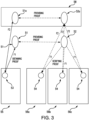
- a first user 51 requests execution of a first service 53 - in this case, the creation of a credential such as a proof of an event such as a payment from a particular account - and a second user 52 requests validation of the proof of this event, for example to determine that a payment is validly made, from a second service 54.
- the first user 51 has invoked the first service 53 at a first node 55.
- the second user will typically not have a choice of where to invoke the second service 54 - this may be a matter of geography or other administrative factors - and in particular may not be able to invoke the second service 54 at the first node 55 (though this may be a possibility).
- the second service 54 will then be invoked at a further node 56a, 56b, 56c that has sufficient information to achieve the validation process.
- this will involve access to a common set of cryptographic keys together with the minimal set of information required to regenerate the proof or otherwise determine that the proof is correct - as discussed below, in embodiments a limited set of keys may be used.
- Situations in which such a proof, or an object claiming to be such a proof, is presented to one or more second services at one or more nodes need to be addressed for such a system to function reliably and securely. Complexity is created by the existence of a client process 58 that requires use of a particular format F2 - this will therefore be used by both first user 51a and second user 52a in interacting with the service.
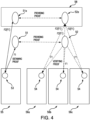
- FIG. 4 An approach to resolving this issue is shown in Figure 4 . This is that while communication by the first user 51a and 52a meets the formal requirements of F2, the F2 messaging is here used to contain an F1 message. This F1 message is extracted by the first service 53 and the second service 54, so the decentralized system can use its preferred messaging approach F1. It should be noted that some of the same information may be provided for in both the F2 format and the F1 format. This approach is extremely flexible, and may be used for multiple types of service (so the F2 format could potentially contain an F3 format message, an F4 format message, and so on), and also decouples the F1 format from the F2 format so that the F2 format can evolve over time independently of any evolution of the F1 format.
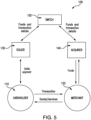
- Figure 5 is a block diagram of a typical four-party model or four-party payment transaction scheme. The diagram illustrates the entities present in the model and the interactions occurring between entities operating in a card scheme.
- card schemes - payment networks linked to payment cards - are based on one of two models: a three-party model or a four-party model (adopted by the present applicant).
- a three-party model or a four-party model (adopted by the present applicant).
- the four-party model is described in further detail below.
- the four-party model may be used as a basis for the transaction network.
- the model comprises four entity types: cardholder 110, merchant 120, issuer 130 and acquirer 140.
- the cardholder 110 purchases goods or services from the merchant 120.
- the issuer 130 is the bank or any other financial institution that issued the card to the cardholder 110.
- the acquirer 140 provides services for card processing to the merchant 120.
- the model also comprises a central switch 150 - interactions between the issuer 130 and the acquirer 140 are routed via the switch 150.
- the switch 150 enables a merchant 120 associated with one particular bank acquirer 140 to accept payment transactions from a cardholder 110 associated with a different bank issuer 130.
- a typical transaction between the entities in the four-party model can be divided into two main stages: authorisation and settlement.
- the cardholder 110 initiates a purchase of a good or service from the merchant 120 using their card. Details of the card and the transaction are sent to the issuer 130 via the acquirer 140 and the switch 150 to authorise the transaction.
- the cardholder 110 may have provided verification information in the transaction, and in some circumstances may be required to undergo an additional verification process to verify their identity (such as 3-D Secure in the case of an online transaction). Once the additional verification process is complete the transaction is authorised.
- the transaction details are submitted by the merchant 120 to the acquirer 140 for settlement.
- the transaction details are then routed to the relevant issuer 130 by the acquirer 140 via the switch 150.
- the issuer 130 Upon receipt of these transaction details, the issuer 130 provides the settlement funds to the switch 150, which in turn forwards these funds to the merchant 120 via the acquirer 140.
- the issuer 130 and the cardholder 110 settle the payment amount between them.
- a service fee is paid to the acquirer 140 by the merchant 120 for each transaction, and an interchange fee is paid to the issuer 130 by the acquirer 140 in return for the settlement of funds.
- the roles of a specific party may involve multiple elements acting together. This is typically the case in implementations that have developed beyond a contact-based interaction between a customer card and a merchant terminal to digital implementations using proxy or virtual cards on user computing devices such as a smart phone.
- Figure 6 shows an architecture according to an embodiment of the disclosure appropriate for interaction between a cardholder and a merchant.
- This Figure shows a general-purpose architecture for reference but shows in particular elements of an architecture used when a cardholder carries out an online transaction with a merchant server.
- a cardholder will use their payment card 6 - or a mobile computing device such as smartphone 11 adapted for use as a payment device - to transact with a POS terminal 7 of a merchant 2 or to interact with an ATM 8.
- the cardholder will use his or her computing device - which may be any or all of a cellular telephone handset, a tablet, a laptop, a static personal computer or any other suitable computing device (here cellular telephone handset or smartphone 11 is shown) - and other computing devices such as a smart watch or other wearable device may also be used) - to act either as a proxy for a physical payment card 6 or as a virtual payment card operating only in a digital domain.
- the smartphone 11 may achieve this with a mobile payment application and a digital wallet, as described below - these may be accessed through a banking app 11a on the smartphone 11.
- the smart phone 11 can use this to transact with a merchant POS terminal 7 using NFC (or another contactless technology), or to make a payment in association with its wallet service as discussed below.
- NFC or another contactless technology
- online transactions with a merchant are of particular interest in connection with embodiments of the disclosure, rather than contact or contactless transactions with a merchant POS terminal 7.
- the smartphone 11 may also be able to interact with a merchant server 12 representing the merchant 2 over any appropriate network connection, such as the public internet - the connection to the merchant may be provided by an app or application on the computing device.
- a further use case of interest here is that of cardless ATM.
- the cardholder will communicate with their issuer 4, typically using the banking app 11a on their smartphone 11, to enable a contactless cash withdrawal from the ATM 8.
- the transaction scheme infrastructure (transaction infrastructure) 5 here provides not only the computing infrastructure necessary to operate the card scheme and provide routing of transactions and other messaging to parties such as the acquirer 3 and the issuer 4, but also a wallet service 17 to support a digital wallet on the cardholder computing device, and an internet gateway 18 to accept internet based transactions for processing by the transaction infrastructure.
- the wallet service 17 may be provided similarly by a third party with an appropriate trust relationship with the transaction scheme provider.
- a token service provider 19 is present (again, this is shown as part of transaction infrastructure 5 but may be provided by a third party with appropriate trust relationships), and the transaction scheme infrastructure provides a digital enablement service 16 to support the performance of tokenized digital transactions, and to interact with other elements of the system to allow transactions to be performed correctly - this digital enablement service may include other elements, such as token service provision.
- the transaction is validated in the transaction scheme by mapping the cardholder token to their card PAN, checking the status of the token (to ensure that it is in date and otherwise valid) and any customer verification approach used. This allows the issuer to authorise the transaction in the normal manner.
- FIG. 7 shows elements of a transaction infrastructure to support digitized payments from a mobile device in more detail.
- This Figure shows as a specific example the applicant's Mastercard Cloud-Based Payment (MCBP) architecture - this is exemplary rather than specific to the disclosure, and illustrates how the architecture is used to support a mobile payment application 215 on a mobile device (such as smartphone 11) - here the mobile payment application 215 is shown as contained within a wallet application or digital wallet 41.
- a digital wallet 41 may communicate with a wallet server 17 to allow management of the mobile payment application, and it also can be used to request digitization of a payment card 6 to be used by the mobile device 11.
- the Mastercard Digital Enablement Service (MDES) 42 performs a variety of functions to support mobile payments and digitized transactions. As indicated above, the MDES 42 is exemplary only - other embodiments may use digitization, tokenization and provisioning services associated with other transaction processing infrastructures, for example.
- the wallet server 17 is not a part of the MDES 42 - and need not be present, for example if the mobile payment application 215 is not embedded within a digital wallet 41 - but acts as an interface between the mobile device 11 and the MDES 42.
- the MDES 42 also mediates tokenized transactions so that they can be processed through the transaction scheme as for conventional card transactions.
- the following functional elements shown within the MDES 42 the Account Enablement System (AES) 43, the Credentials Management System (CMS) 44, the Token Vault 45, and the Transaction Management System (TMS) 46. These will be described briefly below.
- the Account Enablement System (AES) 43 is used in card digitization and user establishment. It will interact with the mobile payment application (here through the wallet server 17) for card digitization requests, and it will populate the Token Vault 45 on tokenization and will interact with the CMS 44 to establish a card profile with associated keys for digital use of the card.
- AES Account Enablement System
- the Credentials Management System (CMS) 44 supports management of cardholder credentials and is a key system within the MDES 42.
- the core system 441 manages synchronisation with the transaction system as a whole through interaction with the TMS 46 and manages the channel to the AES 43.
- the dedicated system 442 provides delivery of necessary elements to the mobile payment application such as the digitized card and credentials and keys in the form needed for use. This system may also interact with the wallet server 17 for management of the mobile payment application.
- the Token Vault 45 - which is shown here as within the MDES 42, but which may be a separate element under separate control - is the repository for token information including the correspondence between a token and the associated card.
- the MDES 42 will reference the Token Vault 45, and tokenization of a card will result in creation of a new entry in the Token Vault 45.
- TMS 46 Transaction Management System 46 is used when processing tokenized transactions. If a transaction is identified by the transaction scheme as being tokenized, it is routed to the TMS 46 which detokenizes the transaction by using the Token Vault 45. The detokenized transaction is then routed to the issuer (here represented by Financial Authorisation System 47) for authorisation in the conventional manner.
- the TMS 46 also interacts with the CMS 44 to ensure synchronisation in relation to the cardholder account and credentials.
- cardless ATM is a particular functionality of interest.
- a transaction flow for cardless ATM is indicated in Figure 8 .
- a cardholder initiates 800 the withdrawal by using their banking app 11a and indicating a sum to be withdrawn. This is communicated 805 to the issuer 4 for the cardholder through the banking app 11a, and the issuer 4 establishes 810 that a contactless withdrawal is to follow.
- the cardholder presses 815 a cardless ATM button (or other suitable interface) - this results in the generation of a QR code that is displayed 820 on the ATM screen, the QR code identifying the ATM and indicating that it is ready to perform cardless ATM.
- the issuer 4 determines 835 the details of the proposed cardless withdrawal, and if it the withdrawal is authorised 840 by the issuer (for example, after determining that the cardholder has funds available and that the ATM is legitimate), the transaction details and any associated fees are presented to the cardholder to accept on the screen of their smartphone 11.
- the user accepts 845 (or rejects) the transaction using the screen of the smartphone 11, and if the transaction is accepted the banking app 11a notifies 850 the issuer 4, who subsequently approves 855 the transaction to the ATM 8, and funds are dispensed 860 to the cardholder.
- the mechanics of such a transaction - and the consequences for decentralization - are discussed further below.
- Figure 9 shows a decentralised system of computing nodes Nx, each capable of both generating G and validating V credentials. These credentials can be valid across the whole system (unless restricted to some nodes as result of on-soil regulation or the like), and in this case are associated with transactions for a set of users (clients) whose transactions are routed to that node, typically through geographic proximity. Nodes provide credential generation G and credential validation V as services to clients, and they need to be able to generate the credentials securely and validate them securely while they are valid at least. In the architecture shown, credentials are not stored - they are generated on request and validated on the fly.
- key management K and monitoring M can be considered as services both locally at a node and across the system, and access control AC will typically be required to allow access to a service.
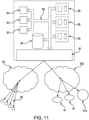
- the node 80 comprises at least one networking connection 81 to allow communication to clients 90 and other nodes 91 as well as (in this example) a central node 91a. Communication is shown here as being through separate networks to each set of other parties - through a first network cloud 92 for connection to clients, and a second network cloud 92a for connection to other nodes within the distributed system. This reflects that these networks may be physically different, or that they may have different security requirements and protocols.
- the node 80 contains a plurality of conventional servers 83 (which will contain their own processors and memories - not shown - along with other components as would normally be found in a server) and a memory 84 containing a central database. Also comprised within the node 80 are a plurality of hardware security modules 85 (HSMs), adapted to hold cryptographic material in the form of keys needed to perform cryptographic functions and to perform cryptographic functions securely. Here elements within the node 80 are shown communicating by means of a bus 86.
- HSMs hardware security modules
- the node 80 in this case is represented as a single data centre, this is not required - the "bus" may be, for example, comprise a dedicated network connection between a group of related data centres that allows them to provide a real-time response such that they will appear to other entities communicating with the node to be part of an integrated whole.
- This distributed approach is supported by replacing the binding of a token to a specific hierarchically derived key, allowing instead the first available key from a stack of keys to be allocated to a tokenized transaction.
- This approach using flexible and dynamic key management, allows for a scalable solution. Monitoring can be carried out in such a way as to ensure that the distributed architecture is secure without requiring the transmission or replication of large quantities of sensitive information.
- This approach can also be carried out in a standard HSM using fully FIPS compliant processes - for example, DES and 3DES need not be used. This approach is described in more detail below.
- the device security model is also used by the present applicant for fully digital transactions.
- This security model involves Issuer Master Keys (IMKs) being stored in the transaction system HSMs and used to derive Card Master Keys (CMKs) from the relevant IMK and a card PAN (Primary Account Number). These CMKs are then stored in a device (typically a Secure Element or substitute technology).
- IMKs Issuer Master Keys
- CMKs Card Master Keys
- PAN Primary Account Number
- CMKs Card Master Keys
- SK Session Key
- ATC Application Transaction Counter
- CMS Credentials Management System
- the main purpose of the cryptographic function is to provide a guarantee - this covers both integrity of the data and authentication.
- the transaction related data protected by a cryptographic data includes identification of a transaction and the associated token, along with an indication of any cryptographic processes used and any relevant financial data (along with any other aspect of the transaction that needs to be guaranteed).
- This is represented by a transaction credential - this needs to be generated G and subsequently validated V, with these processes being monitored M to ensure overall system integrity and supported by a key management system K of some kind.
- the present disclosure relates to an approach to monitoring which is effective to address the consequences of erroneous or malicious action by appropriate detection, messaging and reaction - as will be described, this largely takes place separately from the actual performance of a transaction.
- This approach allows for decentralisation of the credential system from a complex central server into a number of nodes providing services.
- These nodes will typically be geographically distributed but may extend over a number of data centres (for example, by use of a cloud infrastructure to achieve data sharing within a node).
- These nodes provide services - in relation to credentials, a generation service G and a validation service V - with defined rules for access control to the services.
- the merchant or PSP communicates with the generation service G to obtain credentials, which are then used in a standard authorisation process carried out over the payment network of the payment system, with the validating service V being called upon where necessary to validate the credential.
- These services have access to the computing infrastructure (HSMs, databases) of a node.
- Monitoring M and key management K services are also provided - these may be centrally organised or comprise a mix of central and local functionality.
- nodes have both a generation service G and a validation service V - this need not be the case.
- nodes are shown which provide only generation or only validation services. Both of these arrangements may well occur, and an environment in which there are significantly more nodes providing validation services V than generation services G is relatively likely.
- Access control to services can be provided in an essentially conventional manner.
- a general set of controls can be defined for a node, with the possibility of local modification - for example, to meet local regulatory or other specific security requirements. This approach makes it easy to implement localised policies, for example, by constraining all traffic for a particular country to a particular set of nodes, or by taking other region- or market-specific actions.
- Access control can be performed at more than one level (for example, for individual services, but also for a node), and there may be specific rules or checks for specific service types.
- Access control is potentially very granular and may provide specific solutions in a versatile way - for example, it could be used to allow a given merchant to perform a maximum number of transaction credential generation operations during a defined time for a given token.
- the key management mechanism shown in Figure 14 illustrates how a limited number of keys can be allocated to a node while providing a deterministic process in order to pick a key to generate credentials. The same process can be used by a validation entity to determine the key that was used by the generator so that it can validate any cryptographic material that is part of the credentials submitted for validation.
- the HSMs contain keys that are each uniquely identified by a set of key identifiers (KeyId).
- KeyId may be a label, a value, an explicitly unique value such as a UUID, or anything else with appropriate properties.
- These KeyId values are stored in uniquely identified (Identifier) key lists - these key lists provide a list of relationships between an identifier ( Id ) and a stored key (KeyId).
- the identifiers ( Id ) are what will be determined by the deterministic process in order to establish what key is to be used, as will be described further below.
- each key list is guaranteed using a seal (Seal) - if the key lists are provisioned from a central location, this may be applied by a trusted party associated with that central location.
- a trusted party being a local functionality instead of a central location.
- a node will typically have a number of key lists available, but with only one active for generating credentials (G) at a given time - it will however generally be necessary for the validation service (V) to be able to access any key list that may be associated with a credential that is still valid. Key rotation in this approach is extremely straightforward - it may simply involve replacement of the active key list with another key list.
- Figure 14 illustrates an exemplary arrangement for Node Ni, which has two generation services G able to generate credentials associated with transactions.
- these services G will be required to use a given key list - say Key List A in the first instance.
- This uses the yellow and blue keys, so these keys must be loaded in the HSMs used by the generation services G.
- the key rotation process may for example mandate the use of Key List B - this uses yellow and blue keys, but also the green key, so the green key must be loaded in the relevant HSMs if not already present.
- the generation services G do not need Key List A after key rotation, the validation services V still do - they require access to any key list that relates to a potentially valid credential.
- the validation services V must be able to establish exactly which key was used to generate a credential by the generation services G in order to validate a credential.
- the transaction related data to be protected cryptographically includes identification of the token associated with the transaction, but also identification of the transaction itself. For this, some kind of transaction identifier is required.
- the credential generation and validation services have access to a local database which can be used to manage such data.
- any generation of transaction credentials for a given token should be associated with a unique transaction identifier for each transaction. This may be a UUID or any appropriate identifier structure (such as a concatenation of an n bit node identifier, an e bit epoch time, and a c bit local counter).
- the size of data to be carried in transaction credentials could however be reduced to a few digits by use of a local transaction counter. This could simply be stored in the local database of a node and the local (rather than a global) value incremented when a local generation service G generates new transaction credentials for a token, a process shown in general terms in Figure 15 .
- a generation service G has access to a set of keys in local HSMs and uses keys in accordance with its currently active key list.
- This key list is itself uniquely identified (by Identifier ) and contains a list of entries which correspond to relationships between an identifier ( Id ) and a stored key, represented by KeyId.
- Id an identifier
- KeyId a stored key
- LTC local transaction counter
- Id LTC MOD 10
- Any validation service V with access to the transaction counter value in transaction data can then determine the logical key identifier that was used by the generation service G that generated the credential and access the correct stored key without any trial and error mechanism.
- Associating the deterministic process function (referred to below as keyList.GetIdFunction, or GetId) to the attributes of a key list in this way allows a scalable solution that can accept any number of logical key identifiers for a given key list.
- the HSM cryptographic function should be appropriate to ensure data integrity and authentication through credential generation and validation.
- the cryptographic function operates on the chosen transaction data, using the key, and provides an output which does not expose the key.
- Various alternative cryptographic functions could be used - HMAC is a particularly effective choice with several options regarding the hashing function, but CMAC, CBC MAC are among possible alternatives not even talking about solutions using asymmetric cryptography.
- the cryptographic function used should be specified in the key list (as keyList.CryptoFunction ) and is also driven by the capabilities of the HSMs used for generation and validation. On-soil regulations, cryptographic material export or other security considerations may lead to the choice of specific cryptographic functions.
- Legacy transaction use cases provide a solution when the Merchant and/or the PSP are only able to manage PAN, Expiry Date and CVC2 as part of the transaction flow, and do not have access to more recent developments.
- the UCAF use case aims to leverage the Universal Cardholder Authentication Field to carry more data as part of the transaction flow.
- the DPD use case covers the recently introduced Digital Payment Data, a container able to carry all the data needed as part of the transaction flow.
- the additional capabilities of formats such as UCAF can support embodiments of the disclosure in providing additional capabilities.
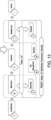
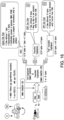
- FIG. 16 A full set of cryptographic mechanisms is shown in Figure 16 .
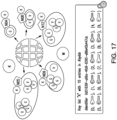
- Key management is discussed with reference to Figure 17 .
- the key lists are sensitive assets while keys are considered as secret assets - the key lists define the keys to be used for generation and validation of cryptograms. Keys require end to end security with secure transport of the keys using wrapping/unwrapping techniques when loading the keys in HSMs. Their use should not be compromised by the key lists in case an attacker would like to change the content of a key list in order to alter the key selection process.
- a seal is provided for a key list by the generating party or an associated trusted party, will involve a suitable cryptographic process (such as HMAC with an appropriate dedicated key or using for example a digital signature generated using asymmetric algorithms such as RSA, ECC, SM27), and has the effect that any relevant part of the system can have confidence that the key list was generated by an appropriate party and has not been modified.
- the key list seals can be used in the generation and validation of cryptograms to secure the credentials.
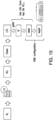
- Monitoring is shown in general terms in Figure 18 .
- monitoring is complementary to security actions taken directly in a service to prevent fraud or misuse (such as the basic purpose of the service - generation of a credential using a cryptogram with subsequent validation).
- Such monitoring aims to detect security anomalies associated with a transaction - it can then trigger appropriate reaction mechanisms to contain any security risk and identify any attacker. In principle, this may have both local and central aspects. It is found that a hybrid approach is particularly effective in order both to provide effective detection of any issue and to produce reaction effective to counter risks associated with a fully distributed architecture.
- UCAF Universal Cardholder Authentication Field
- DSRP Digital Secure Remote Payments
- UCAF is used to carry the cryptographic data in the authorisation request.
- a UCAF data format will carry a predefined set of data objects in specific fields - between different UCAF data formats, the set of data objects may differ, as may the space allocated to different data objects.
- UCAF Format 0 was developed initially, and is used by particular technologies of the applicant (for example, Mastercard Cloud-Based Payment, TEE-Based Payment and some varieties of Mobile PayPass). This format contains necessary cryptographic information (such as the application cryptogram, application transaction code and the unpredictable number) but no merchant binding.
- UCAF Format 0+ (used by later versions of Mastercard Cloud-Based Payment) expands this to inclusion of a card verification result, but still provides no merchant binding.
- UCAF Format 1 (used by MChip Mobile) also does not have any merchant binding, but does include a pin try counter result.
- Merchant binding is provided in UCAF Format 3, which comprises a merchant ID hash and also an approximate amount (this is used for newer versions of transaction protocols that require merchant binding).
- UCAF Format 3+ also includes a card verification result.
- the UCAF is base 64 encoded when carried in the payment network - it is carried as a 28 character alphanumeric character string. It therefore needs to be base 64 decoded before processing.
- DXD Digital By Default
- UCAF Format 6 One architecture that uses a very full set of capabilities is the DXD (Digital By Default) architecture for digital transactions for specific country environments.
- DXD Digital By Default
- UCAF Format 6 A particular UCAF format, UCAF Format 6, has been developed for this purpose with a very full set of capabilities - more cryptographic material can be used, a larger number of nodes can be used without node identification becoming a problematic issue because of limited available space in transaction data as defined in electronic transaction protocol requirements, and it may also be possible to rotate key lists more frequently than 24 hours, as there is the space to use more than one bit for key list identification for validation services.
- Additional features can be delivered leveraging the available space in transaction data, for example by supporting merchant locking techniques (when the transaction is effectively bound to a given merchant using some form of merchant identification), by including additional components in the cryptographic process such as by using some pseudo-random element or variable content between the generator and the validator, or by taking additional measures to provide full compliance with any regulatory requirements.
- This UCAF Format 6 structure is shown in Figure 19 . This is not an embodiment of the disclosure, but is shown here simply as a comparative of the type of data that can be carried in such a format, and how it can be carried.
- the UCAF Format 6 structure comprises an encrypted part 241 and an unencrypted part 242.
- the encrypted part 241 contains the credential (the cryptogram) and also certain transaction data, which allows certain elements to be held only in encrypted form.
- the unencrypted part 242 allows the transaction and its provenance to be identified.
- the unencrypted part 241 contains 4 bytes of information that establishes the version, the node (and information related to the node), the transaction and certain merchant information.
- Version information 2411 is a 4-bit field allowing multiple versions of the format to be used.
- Information relating to the node includes a 6-bit node identifier 2412, and the key list references associated with the node - as indicated previously, these include a 2-bit transaction key list reference 2413 and a 6-bit encryption key list reference 2414.
- the transaction itself is identified by 1-byte of Local Transaction Counter (LTC) 2415. As described above, this information is sufficient to allow a node to perform validation (if permitted to do so) by regenerating the credential/cryptogram.
- Merchant binding to the token is provided by a Merchant ID Hash divided between a 13-bit unencrypted part 2416 and a 3-bit encrypted part 2421. Creation of the Merchant ID Hash is described in more detail below.
- the encrypted data 242 comprises 16 bytes of data, the first three bits of which is the encrypted part 2421 of the Merchant ID Hash as identified above.
- the cryptogram 2422 forms another 22 bits of the encrypted data. One bit is used as an SCA Flag 2423 to indicate whether Strong Customer Authentication is used for the transaction.
- Another 74 bits relate to card information 2425. This includes the PAN (63 bits) and the PSN (4 bits, which is sufficient for one digit value) which can be provided in full. 7 bits are used to carry expiry date information - this therefore needs to be a partial expiry date, which is discussed below-the embodiment described below also supports delivery of the partial expiry date being optional at time of generation of the transaction credentials.
- a further element in the encrypted data in this case is a checksum 2426.
- the Merchant ID may use the Remote Commerce Acceptor Identifier, which is a relatively new EMV field used to identify merchants (for example, by business website URL or reverse domain), if available.
- the Merchant ID Hash is provided in the following way:
- an expiry date value is optional. If it is provided, then encoding and decoding activity will be carried out by the NODES system if it is valid - otherwise an error will be returned. If it is not provided, information must be carried that will prevent the system from returning an expiry date value in validation or decryption.
- All other values -1 [0000001b] to 127 [1111111b] - are simply used to indicate the number of months from the baseline value to the provided expiry date (on generation) to provide reliable decoding on validation or any other decryption. If a supplied expiry date is returned which is lower or equal to the baseline value, or exceeds 127 months after the baseline, this is invalid, and an error is returned.
- the encrypted data also comprises a checksum. This is provided as in some circumstances it may be desirable to obtain assurance on decryption of the integrity of the data beyond that which is provided by validation of the cryptogram.
- the UCAF Format 6 illustrated in Figure 19 indicates the types of information that can be carried if all relevant parties support such a format.
- the credential generation and validation infrastructure may in practice need to support service requests from a variety of parties using a number of different transaction flows and transaction types. In some cases, all parties will be able to support a structure of the type shown in Figure 18 .
- Another UCAF Format type, UCAF Format 5 (not shown), has many common features with UCAF Format 5, but differs in some material respects.
- the DPAN token
- token token
- a TUR Token Unique Reference
- a DPAN may be used instead of a DPAN to identify the token, again, together with a token expiry date (and token sequence number PSN) - in the UCAF Format 5 case, no DPAN information is received in the NODES call, but only the TUR information.
- NODES architecture is generally designed to operate using later UCAF formats - here UCAF Format 5 and UCAF Format 6, as described above - earlier digital transaction solutions are more limited in their capabilities.
- a "legacy" access to the NODES architecture may use other elements of ISO 8583 messaging: here, the PAN (DE02), the Expiry Date (DE14) and the Cardholder Validation Code (CVC - DE48SE92). This range of possibilities is shown in Figure 20 .
- a practical challenge is therefore to address contexts that require data to be present in the DE55 field for processing - such as cardless ATM - while also allowing use of a NODES architecture - which has specific data requirements, may require different information (and data formats) for different service requesting entities, and which typically uses other data fields (of different sizes) to convey these - for provision of necessary generation and validation of credentials.
- This context is illustrated generally in Figure 20 , which shows different transaction routes. Most of these are for digital transactions supported by the Mastercard Digital Enablement Service - as discussed earlier in the specification, this is used for online transactions and relies on card tokenisation.
- the token is here referred to as a digital Primary Account Number (DPAN), and in some architectures may be identified by a Token Unique Reference (TUR) rather than a DPAN.
- DPAN digital Primary Account Number
- TUR Token Unique Reference
- M4M MDES for Merchants
- SRC Secure Remote Commerce
- MMS Mastercard Checkout Services
- Figure 21 shows a modification to the arrangement of Figure 20 illustrating the situation addressed by embodiments of the disclosure. Services requiring a DE55-based solution are shown as yet a further pathway into the NODES architecture, reflecting that there is the same variety in service requesting nodes as for the variety of MDES transactions also supported.
- the present inventors have appreciated that a repurposing of the DE55 field can be achieved so that it is formally compliant with EMV requirements for the field - so the message will not be rejected as not EMV-compliant - but such that the data required by NODES (and specifically by one of the indicated NODES data formats) can be carried.
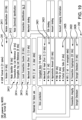
- Figure 22 which shows an EMV implementation of DE55, while some fields in DE55 are optional, others are mandatory. The implementation therefore needs to "contain" all mandatory fields to be compliant.
- the approach taken involves for the UCAF Format 5 and the UCAF Format 6 cases completely repurposing key parts of the DE55 field - this is used as a carrier for the UCAF Format 5 and the UCAF Format 6 data, and the data fields of DE55 are themselves not meaningful, even where some of these data fields relate to data actually carried in the UCAF Format 5 or the UCAF Format 6 information.
- DE55 As there is more space available in DE55 than in DE104SE001 (32 bytes as opposed to 21 bytes), it is possible to reorganise the UCAF data to fit not only DE55 generally, but also with a data usage that respects the field arrangement required by EMV for DE55.
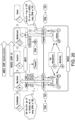
- the information to be stored in DE55 can be split into NODES-related and transaction-related information, as shown in Figure 23 .
- the NODES-related information 220 - or rather, the information set by NODES - can be divided into three groups: information 2201 used to identify a NODES transaction carried by DE55 (referenced as [NODES]); carrier information 2202 used by NODES to carry transaction credentials information ([CARRIER]); and static information 2203 used to achieve DE55 compliance ([STATIC]).
- the transaction-related information 221 can be divided into two broad types: dynamic information 2211 related to the context of the transaction ([DYNAMIC]), such as CDCVM information, or a dedicated filename for an application (AID) used to carry it out; and information specific to the transaction 2212 ([TX]) such as transaction date, transaction type, transaction currency code and transaction amount or specific to the issuer 2213 ([ISSUER]) such as issuer dynamic discretionary data.
- the identifying information 2201 is provided by two DE55 fields: KeyDerivationlndex (KDI) and CryptogramVersionNumber (CVN).
- KDI KeyDerivationlndex
- CVN CryptogramVersionNumber
- KDI is a 1-byte field that is appropriately sized for use for a Node Identifier, so the correct node is associated with the service provision (and hence for routing).
- CVN is also a 1-byte field, and can here be used for identifying the format version that is carried: in the embodiment shown here, this may be UCAF Format 5, UCAF Format 6, or a custom format UCAF Format C - as 1-byte is available, many other formats can be created and made available for use here.
- NODES-set information is the static information 2203, which is constrained for DE55 compliance, and so essentially involves specific value choices for DE55 fields, in particular the following:
- Table 1 The remaining fields - respectively dynamic and transaction information, rather than information set by NODES - are handled as indicated in Table 1 below.
- Table 1 Population of non-NODES related fields in DE55 Information Type Field Tag Size (byte) Default and Meaning Dynamic CdcvmInfo 9F10 (bytes 9-10) 2 0000 - last byte meaning "CDCVM Info not supported” OR set using supplied CDCVM information Dynamic DedicatedFileName 84 5-16 Generally used to carry AID (Application Identifier), proprietary use.
- Transaction TransactionDate 9A 3 Defaulted to 000000 if not provided Transaction TransactionType 9C 1 Defaulted to 00 (Purchase) if not provided Transaction TransactionCurrencyCode 5F2A 2 Defaulted to 0000 if not provided Transaction AmountAuthorized 9F02 6 Defaulted to 000000000000 if not provided Transaction AmountOther 9F03 6 Defaulted to 000000000000 if not provided Issuer !ssuerDynamic DiscretionaryData 9F10 (bytes 27-28) 2 Defaulted to 0000 if not provided
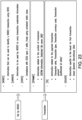
- DE55 is being used as a carrier for the UCAF Format 5 information, which can simply be carried in bytes 1-21 of the carrier information part.
- the DE55 message will be routed correctly to the NODES architecture by virtue of the KD! field (acting as a node identifier) and the CVN field (which identifies the message as not standard DE55, but instead a NODES message with a UCAF Format 5 message carried by a DE55 message).
- KD! field acting as a node identifier
- CVN field which identifies the message as not standard DE55, but instead a NODES message with a UCAF Format 5 message carried by a DE55 message.
- This still leaves bytes 22-30 of the carrier information field as reserved for future use, so this solution is compatible with a significant amount of future development.
- UCAF Format 6 essentially the same considerations apply - the embedded message here now is in UCAF Format 6, and this should again be indicated by the CVN field.
- Additional format can be defined externally to the carrier information itself by using other space that is available within DE55 - for example, additional fits that are available in the IAD field.
- KD1 will be used for node identifier and CVN for the use case (in this case, NODES DE55 format, custom) - these need to be consistent as they are used for routing all NODES DE55 format messages.
- the following types of information can be held in the carrier as needed:
- Figure 24 shows the whole cardless ATM "ecosystem”: the issuer interacts with the consumer through their mobile banking app, with the mobile app provider as a relevant intermediary.
- the ATM is under control of an ATM operator acting for an acquirer bank.
- the third is the digital transaction infrastructure - here identified as MDES - which provides two key functions - tokenisation to allow the "cardless" interaction, which is provided by known tokenisation mechanisms described earlier in connection with MDES, and provision of application cryptogram based credentials, which is here provided through the NODES architecture.
- MDES digital transaction infrastructure
- Figure 25 indicates the flow after the consumer has scanned the QR code at the ATM - they agree to proceed with the transaction (including any fees) on the mobile banking app, which communicates with the issuer via the mobile app provider.
- the issuer then requests the cryptogram using a DE55 format, and this request is received by an appropriate node - this may be the nearest node, or a node designated for this purpose in a specific geography, or a node chosen according to some other strategy - and the cryptogram is generated and returned to the issuer and then to the mobile app - the mobile app feeds this information into the cardless engine to configure the transaction for approval through the transaction network in a conventional way.
- cardless ATM is only one example of a class of transactions in which the application cryptogram supports a server-based process more as a form of authentication than as a guarantee of transaction details (which are determined according to a separate logic).
- key elements of the process are handled by the mobile app in connection with the server-based "cardless engine” - the application cryptogram is needed to ensure that the transaction is still adapted to pass through the existing transaction network structures effectively.
- DE55 (or another transaction format) must be used, and used in a way that will be determined to be "valid", while having information in another format embedded to allow use of a system such as NODES to provide credentials for necessary purposes such as application cryptogram provision - can therefore be used at least for other transactions of this type, and potentially for other transaction types too.
- the embodiments described above are exemplary, and further embodiments falling within the spirit and scope of the disclosure may be developed by the skilled person working from the principles and examples set out above.
- the embodiments described in detail above relate particularly to the generation and validation of credentials, and the encryption and decryption of those credentials with other data, where both the credentials and the other data are used in financial transactions.
- Generation and validation of credentials, and encryption of credentials with other data in this way is not limited to financial transactions, and nor is the requirement for messaging to meet specific formats, with different formats being used in different parts of a heterogenous system - this approach may be used in any distributed system where it is necessary for one party to confirm that a legitimate action has been taken by another party and where such constraints apply.
Landscapes
- Business, Economics & Management (AREA)
- Engineering & Computer Science (AREA)
- Accounting & Taxation (AREA)
- Computer Security & Cryptography (AREA)
- Finance (AREA)
- Strategic Management (AREA)
- Physics & Mathematics (AREA)
- General Business, Economics & Management (AREA)
- General Physics & Mathematics (AREA)
- Theoretical Computer Science (AREA)
- Financial Or Insurance-Related Operations Such As Payment And Settlement (AREA)
Priority Applications (3)
| Application Number | Priority Date | Filing Date | Title |
|---|---|---|---|
| EP23305333.9A EP4432199A1 (de) | 2023-03-13 | 2023-03-13 | Bereitstellung eines kryptographischen dienstes in einem dezentralisierten transaktionssystem |
| PCT/US2024/012353 WO2024191506A1 (en) | 2023-03-13 | 2024-01-22 | Cryptographic service delivery in a decentralized transaction system |
| CN202480018593.6A CN121336227A (zh) | 2023-03-13 | 2024-01-22 | 去中心化交易系统中的密码服务递送 |
Applications Claiming Priority (1)
| Application Number | Priority Date | Filing Date | Title |
|---|---|---|---|
| EP23305333.9A EP4432199A1 (de) | 2023-03-13 | 2023-03-13 | Bereitstellung eines kryptographischen dienstes in einem dezentralisierten transaktionssystem |
Publications (1)
| Publication Number | Publication Date |
|---|---|
| EP4432199A1 true EP4432199A1 (de) | 2024-09-18 |
Family
ID=86693005
Family Applications (1)
| Application Number | Title | Priority Date | Filing Date |
|---|---|---|---|
| EP23305333.9A Pending EP4432199A1 (de) | 2023-03-13 | 2023-03-13 | Bereitstellung eines kryptographischen dienstes in einem dezentralisierten transaktionssystem |
Country Status (3)
| Country | Link |
|---|---|
| EP (1) | EP4432199A1 (de) |
| CN (1) | CN121336227A (de) |
| WO (1) | WO2024191506A1 (de) |
Citations (3)
| Publication number | Priority date | Publication date | Assignee | Title |
|---|---|---|---|---|
| EP3748525A1 (de) * | 2019-06-05 | 2020-12-09 | Mastercard International Incorporated | Berechtigungsverwaltung in einem verteilten rechensystem |
| US20210042743A1 (en) * | 2019-08-09 | 2021-02-11 | Its, Inc. | Interoperable mobile-initiated transactions with dynamic authentication |
| WO2022250716A1 (en) | 2021-05-28 | 2022-12-01 | Mastercard International Incorporated | Data management and encryption in a distributed computing system |
Family Cites Families (5)
| Publication number | Priority date | Publication date | Assignee | Title |
|---|---|---|---|---|
| US11601498B2 (en) * | 2016-09-12 | 2023-03-07 | Baton Systems, Inc. | Reconciliation of data stored on permissioned database storage across independent computing nodes |
| EP3743874A1 (de) * | 2018-01-22 | 2020-12-02 | Baton Systems, Inc. | Räumsysteme und verfahren |
| EP3864601B1 (de) * | 2018-10-08 | 2024-10-02 | Visa International Service Association | Verfahren für tokennahe transaktionen |
| SG10201903114RA (en) * | 2019-04-08 | 2020-11-27 | Mastercard International Inc | Methods and systems for facilitating microservices for cryptographic operations |
| WO2020247093A1 (en) * | 2019-06-05 | 2020-12-10 | Mastercard International Incorporated | Security model for distributed computing system |
-
2023
- 2023-03-13 EP EP23305333.9A patent/EP4432199A1/de active Pending
-
2024
- 2024-01-22 CN CN202480018593.6A patent/CN121336227A/zh active Pending
- 2024-01-22 WO PCT/US2024/012353 patent/WO2024191506A1/en not_active Ceased
Patent Citations (3)
| Publication number | Priority date | Publication date | Assignee | Title |
|---|---|---|---|---|
| EP3748525A1 (de) * | 2019-06-05 | 2020-12-09 | Mastercard International Incorporated | Berechtigungsverwaltung in einem verteilten rechensystem |
| US20210042743A1 (en) * | 2019-08-09 | 2021-02-11 | Its, Inc. | Interoperable mobile-initiated transactions with dynamic authentication |
| WO2022250716A1 (en) | 2021-05-28 | 2022-12-01 | Mastercard International Incorporated | Data management and encryption in a distributed computing system |
Also Published As
| Publication number | Publication date |
|---|---|
| CN121336227A (zh) | 2026-01-13 |
| WO2024191506A1 (en) | 2024-09-19 |
Similar Documents
| Publication | Publication Date | Title |
|---|---|---|
| CN113344570B (zh) | 传输和处理交易消息的方法及数据处理装置 | |
| US11997190B2 (en) | Credential management in distributed computing system | |
| US12537665B2 (en) | Data management and encryption in a distributed computing system based on a service request | |
| EP3748525B1 (de) | Berechtigungsverwaltung in einem verteilten rechensystem | |
| US12562895B2 (en) | Data management and encryption in a distributed computing system | |
| US12155753B2 (en) | Event management in distributed computing system | |
| EP3748526A1 (de) | Sicherheitsmodell für verteiltes computing-system | |
| EP3819766A1 (de) | Eregnisverwaltung in einem verteilten computersystem | |
| EP4432199A1 (de) | Bereitstellung eines kryptographischen dienstes in einem dezentralisierten transaktionssystem | |
| EP4432141B1 (de) | Berechtigungsnachweisverwaltung in einem dezentralisierten heterogenen transaktionssystem | |
| EP4440029A1 (de) | Bereitstellung eines kryptographischen dienstes | |
| EP4175216A1 (de) | Datenübertragung und kryptographische operationen unter verwendung eines beschränkten datenkanals | |
| RU2857608C2 (ru) | Управление учетными данными в децентрализованной гетерогенной системе транзакций | |
| WO2025240053A1 (en) | Identity management in cryptographic service provision | |
| RU2796046C1 (ru) | Управление учетными данными в распределенной вычислительной системе | |
| EP4307611A1 (de) | Datenkommunikation und kryptographische operationen zur sicheren drahtlosen interaktion |
Legal Events
| Date | Code | Title | Description |
|---|---|---|---|
| PUAI | Public reference made under article 153(3) epc to a published international application that has entered the european phase |
Free format text: ORIGINAL CODE: 0009012 |
|
| STAA | Information on the status of an ep patent application or granted ep patent |
Free format text: STATUS: THE APPLICATION HAS BEEN PUBLISHED |
|
| AK | Designated contracting states |
Kind code of ref document: A1 Designated state(s): AL AT BE BG CH CY CZ DE DK EE ES FI FR GB GR HR HU IE IS IT LI LT LU LV MC ME MK MT NL NO PL PT RO RS SE SI SK SM TR |
|
| STAA | Information on the status of an ep patent application or granted ep patent |
Free format text: STATUS: REQUEST FOR EXAMINATION WAS MADE |
|
| 17P | Request for examination filed |
Effective date: 20241219 |
|
| STAA | Information on the status of an ep patent application or granted ep patent |
Free format text: STATUS: EXAMINATION IS IN PROGRESS |
|
| 17Q | First examination report despatched |
Effective date: 20251027 |