EP4432618A2 - Détection de balayage de port - Google Patents
Détection de balayage de port Download PDFInfo
- Publication number
- EP4432618A2 EP4432618A2 EP24191124.7A EP24191124A EP4432618A2 EP 4432618 A2 EP4432618 A2 EP 4432618A2 EP 24191124 A EP24191124 A EP 24191124A EP 4432618 A2 EP4432618 A2 EP 4432618A2
- Authority
- EP
- European Patent Office
- Prior art keywords
- given
- port
- source node
- nodes
- accessed
- Prior art date
- Legal status (The legal status is an assumption and is not a legal conclusion. Google has not performed a legal analysis and makes no representation as to the accuracy of the status listed.)
- Pending
Links
Images




Classifications
-
- H—ELECTRICITY
- H04—ELECTRIC COMMUNICATION TECHNIQUE
- H04L—TRANSMISSION OF DIGITAL INFORMATION, e.g. TELEGRAPHIC COMMUNICATION
- H04L41/00—Arrangements for maintenance, administration or management of data switching networks, e.g. of packet switching networks
- H04L41/06—Management of faults, events, alarms or notifications
- H04L41/0604—Management of faults, events, alarms or notifications using filtering, e.g. reduction of information by using priority, element types, position or time
-
- H—ELECTRICITY
- H04—ELECTRIC COMMUNICATION TECHNIQUE
- H04L—TRANSMISSION OF DIGITAL INFORMATION, e.g. TELEGRAPHIC COMMUNICATION
- H04L63/00—Network architectures or network communication protocols for network security
- H04L63/02—Network architectures or network communication protocols for network security for separating internal from external traffic, e.g. firewalls
- H04L63/0227—Filtering policies
- H04L63/0236—Filtering by address, protocol, port number or service, e.g. IP-address or URL
-
- H—ELECTRICITY
- H04—ELECTRIC COMMUNICATION TECHNIQUE
- H04L—TRANSMISSION OF DIGITAL INFORMATION, e.g. TELEGRAPHIC COMMUNICATION
- H04L63/00—Network architectures or network communication protocols for network security
- H04L63/14—Network architectures or network communication protocols for network security for detecting or protecting against malicious traffic
- H04L63/1408—Network architectures or network communication protocols for network security for detecting or protecting against malicious traffic by monitoring network traffic
- H04L63/1425—Traffic logging, e.g. anomaly detection
-
- H—ELECTRICITY
- H04—ELECTRIC COMMUNICATION TECHNIQUE
- H04L—TRANSMISSION OF DIGITAL INFORMATION, e.g. TELEGRAPHIC COMMUNICATION
- H04L63/00—Network architectures or network communication protocols for network security
- H04L63/14—Network architectures or network communication protocols for network security for detecting or protecting against malicious traffic
- H04L63/1441—Countermeasures against malicious traffic
- H04L63/1466—Active attacks involving interception, injection, modification, spoofing of data unit addresses, e.g. hijacking, packet injection or TCP sequence number attacks
-
- H—ELECTRICITY
- H04—ELECTRIC COMMUNICATION TECHNIQUE
- H04L—TRANSMISSION OF DIGITAL INFORMATION, e.g. TELEGRAPHIC COMMUNICATION
- H04L43/00—Arrangements for monitoring or testing data switching networks
- H04L43/02—Capturing of monitoring data
- H04L43/026—Capturing of monitoring data using flow identification
-
- H—ELECTRICITY
- H04—ELECTRIC COMMUNICATION TECHNIQUE
- H04L—TRANSMISSION OF DIGITAL INFORMATION, e.g. TELEGRAPHIC COMMUNICATION
- H04L63/00—Network architectures or network communication protocols for network security
- H04L63/10—Network architectures or network communication protocols for network security for controlling access to devices or network resources
Definitions
- the present invention relates generally to computer security, and particularly to detecting port scan attacks.
- the present invention particularly relates to a method, an apparatus, and a computer software product.
- a communication port is a logical communication endpoint on the network that, from a software standpoint, identifies a specific resource (e.g., a process or a type of service) executing on a given computer in the network.
- Communication ports also referred to herein simply as ports or port numbers
- ports are typically defined by a communications protocol.
- ports are one of the Layer 4 (i.e., the Transport Layer) protocols in the Open Systems Interconnection (OSI) model, and are used to define network sessions in client-server application architectures.
- OSI Open Systems Interconnection
- Ports provide a multiplexing service for multiple services or multiple communication sessions at one network address.
- ports are part of the addressing information used to identify sources and destinations of messages transmitted over a network.
- each "open" port is typically associated with a specific service such as have a service that is connected to them such as a database service, an email service or a communication service.
- Network port scanning is a method for determining which ports on a network are open. Running a port scan on a network or server reveals which ports are open and configured to receive and/or send information. Network professionals can use port scanning tools to measure their exposure to attackers and to monitor devices and services. Hackers, on the other hand, scan ports to probe networks for open ports that may be exploitable and to map which services run on each device. For example, a hacker can send a message to multiple ports, and analyze the responses from each given port in order to determine if the port is being used, and if so, what service is using the given port.
- Embodiments of the present invention provide methods and systems for identifying port scans on a data network. As described hereinbelow, while monitoring data traffic transmitted between multiple nodes that communicate over a network, a set of pairs of source and destination nodes are identified, each pair consisting of a given source node and a given destination node, and one or more communication ports accessed in the data traffic between the source and destination nodes in each pair. For each pair in the set, a respective baseline level and a respective test score are computed.
- the respective baseline level is indicative of a first number of the communication ports that source nodes other than the given source node in the pair accessed on the given destination node a first time period, and the respective test score that is indicative of a difference between a second number of the communication ports that the given source node in the pair accessed on the given destination node during a second time period and the baseline level.
- a preventive action can be initiated with respect to the given source node in any of the pairs for which the test score is greater than a specified level.
- Embodiments of the present invention also provide methods and systems for detecting if any of the identified port scans comprise an anomalous combination of ports that can indicate a malicious port scan.
- anomalous combination of ports include, but are not limited to, port pairs and port groups.
- the analysis to detect the suspicious port scans may be based on source profiles, port profiles, port pair profiles and scanner probe profiles.
- FIG. 1 is a block diagram that schematically shows a computing facility 20 comprising a malicious port scan detection system 22 that collects and monitors data packets 24 transmitted between multiple nodes 26 coupled to a data network 28 in order to identify malicious port scans, in accordance with an embodiment of the present invention.
- each node 26 comprises any type of device (i.e., physical or virtual) that is configured to communicate over the network, and has an IP address assigned for this purpose.
- the nodes comprise workstations 26 and a public network 30 such as the Internet.
- embodiments of the present invention aggregate the data packets into communication sessions, identify any of the communication sessions that comprise port scans 32, and generate an alert for any of the port scans that are suspected of being malicious.
- nodes comprising workstations 26, nodes 26 comprising other types of devices that communicate over network 28 and Internet 30 are considered to be within the spirit and scope of the present invention.
- the nodes may comprise devices such as servers, wireless devices such as smartphones, routers and network switches.
- Each workstation 26 may comprise, for example, a workstation identifier (ID) 34, a workstation processor 36, a workstation memory 38 that stores a plurality of communication ports 40 (also referred to herein simply as ports). Unlike physical ports, ports 40 are logical entities that are defined by a communications protocol such as TCP/IP.
- workstation IDs 34 include, but are not limited to, a media access control (MAC) addresses and Internet Protocol (IP) addresses that can be used to uniquely identify each of the workstations. While any given time, each given workstation 26 is assigned a unique IP address, the given workstation may be associated with multiple IP addresses over an extended time period. For example, the IP address for a given workstation 26 may change after a reboot of the given workstation.
- processor 36 executes, from memory 38, an operating system 42 (e.g., Linux) and one or more software applications 44 (e.g., a database server).
- an operating system 42 e.g., Linux
- software applications 44 e.g., a database server
- memory 38 also stores a whitelist 80 that stores the identifiers for one or more workstations 26. As described in the description referencing Figures 4 and 7 hereinbelow, embodiments of the present invention can ignore any suspicious port scan 32 that is initiated by any workstation 26 in the whitelist.
- Workstations 26 communicate over data network 28 (e.g., a local area network) that is also coupled to an Internet gateway 46.
- Gateway 46 couples computing facility 20 to public networks 30 such as the Internet, and comprises communications circuitry (not shown) that enables communication between workstations 26 and sites/computers (not shown) on the Internet.
- malicious port scan detection system 22 comprises a system processor 48 and a system memory 50, which are coupled by a system bus (not shown) to a network interface controller (NIC) 52 that couples the computer system to network 28.
- NIC network interface controller
- malicious port scan detection system 22 may comprise a user interface (UI) device 54 (e.g., an LED display) or another type of output interface.
- UI user interface
- malicious port scan detection system 22 comprises a probe 56 that collects information on data packets 24 transmitted over network 28. While the example in Figure 1 shows probe 56 as a module of malicious port scan detection system 22, the probe can be implemented either as a standalone device coupled to network 28, or as a module in another device coupled to the network. Probe 56 optionally collects data packets 24 from network 28 and processes the collected data packets to extract information, using any of the methods described, in U.S. Patent Application 2014/0165207 to Engel et al . and U.S. Patent Application 2015/0358344 to Mumcuoglu et al. , whose disclosures are incorporated herein by reference.
- Memory 50 stores respective pluralities of communication sessions 68, aggregated communication sessions 58 and port lists 60.
- processor 48 is configured to collect the data packets from probe 56, to group the data packets into communication sessions 68, to aggregate the communication sessions into aggregated communication sessions 58, and to identify any of the aggregated communication sessions that indicate a given port scan 32.
- port lists 60 which store respective pluralities of ports 40 (i.e., port numbers), is described in the description referencing Figure 5 , hereinbelow.
- memory 50 also stores a whitelist 80 that stores the identifiers for one or more workstations 26. As described in the description referencing Figures 4 and 7 hereinbelow, embodiments of the present invention can ignore any suspicious port scan 32 that is initiated by any workstation 26 in the whitelist.
- Each communication session 68 optionally comprises a source node identifier 64, a destination port identifier 66, a time 84, a source port identifier 70, a destination port identifier 72, a protocol 74, a status 76, a volume 88 (source to destination), a reverse-volume 78 (also referred to as rvolume, destination to source), and a time 84.
- Each aggregated communication session 58 optionally comprises a port scan time period 62, a subset 86 of the communication sessions, and a signature 82.
- source node 64 stores the identifier of a first given workstation 26
- destination node 66 stores the identifier of a second given workstation 26
- source port 70 refers to a given port 40 on the first given workstation that is being used to communicate with the second given workstation during the given communication session
- the destination port 72 refers to a given port 40 on the second given workstation that is being accessed during the given communication session
- the protocol 74 refers to a given communications protocol (e.g., NFS, SSH, KERBEROS, LDAP) that is used by the given communication session
- the status 76 indicates whether the given communication session completed successfully
- volume 88 indicates an amount of data transmitted from the first given workstation to the second given workstation during the given communication session
- reverse volume 78 indicates an amount of data transmitted from the second given workstation to the first given workstation during the given communication session.
- source node 64 may be used to refer to the first given workstation, and destination node 66 may be used to refer to the second given workstation.
- processor can identify the source and the destination ports for a given communication session 68 based on information stored in a given data packet 24 storing the TCP header.
- the port scan time period 62 comprise specified time period (e.g., a specific number of hours or days), and subset 86 refers to a plurality of communication sessions 68.
- Signatures 82 are described in the description referencing Figure 7 , hereinbelow.
- the tasks of collecting the data packets, grouping the data packets into the communication sessions, aggregating the communication sessions and identifying the aggregated communication sessions that comprise port scans 32 may be split among multiple devices within computing facility 20 (e.g., workstations 26) or external to the computing facility (e.g., a data cloud based application).
- the functionality of some or all of workstations 26 and/or malicious port scan detection system 22 may be deployed in computing facility 20 as virtual machines.
- Examples of memories 38 and 50 include dynamic random-access memories and nonvolatile random-access memories.
- the memories may comprise nonvolatile storage devices such as hard disk drives and solid-state disk drives.
- Processors 36 and 48 comprise general-purpose central processing units (CPU) or special-purpose embedded processors, which are programmed in software or firmware to carry out the functions described herein.
- This software may be downloaded to computers 22 and 26 in electronic form, over a network, for example. Additionally or alternatively, the software may be stored on tangible, non-transitory computer-readable media, such as optical, magnetic, or electronic memory media. Further additionally or alternatively, at least some of the functions of processors 36 and 48 may be carried out by hard-wired or programmable digital logic circuits.
- FIG. 2 is a flow diagram that schematically illustrates a method for identifying suspicious port scans 32 on network 28, in accordance with an embodiment of the present invention.
- a suspicious port scan comprises a source workstation 26 that accesses an anomalous combination of communication ports 40 on a destination workstation 26 within a predetermined time period.
- processor 48 uses probe 56 to collect data packets 24 that are transmitted between nodes 26 on network 28 during a time period that comprises multiple sub-periods.
- the time period may comprise seven consecutive days (i.e., one week), and each sub-period may comprise any 24 hour period (e.g., one day) during the week.
- processor 48 groups and stores the collected data packets as individual communication sessions 68 between respective pairs of source and destination nodes 26.
- the communication session typically comprises a sequence of data packets 24 that a first given workstation 26 transmits to a given port 40 on a second given workstation 26.
- processor 48 Upon detecting a given sequence of data packets, processor 48 defines a new communication session 68, and stores, to the new communication session, the identifier for the first given workstation to source node 64, the identifier for the second given workstation to destination node 66, the date and time that the given sequence of data packets were collected to time 84, the port number for the first given workstation in the TCP header to source port 70, the port for the second given workstation in the TCP header to destination port 72, a communications protocol used by the sequence of data packets to protocol 74, a status (e.g., succeeded/failed) of the communication session to status 76, and a first amount of data (e.g., 600 bytes) that the first given workstation transmitted to the second given workstation in the sequence of data packets to volume 88.
- a communications protocol used by the sequence of data packets to protocol 74 e.g., succeeded/failed
- sequence of data packets may also comprise a second volume of data (e.g., 200 bytes) that the second given workstation transmits to the first given workstation.
- Process 48 can store the second amount of data to rvolume 78.
- processor 48 can group the packets according to the IP addresses (not shown) in the packets, such that the system processor can group together packets 24 having the same source and destination addresses or having the same source address, source port, destination address, destination port and protocol.
- processor 48 can manage a table (not shown) which correlates between addresses in packets and respective IDs 34 of nodes 26, for example as described in U.S. Patent Application 2016/0234167 , which is incorporated herein by reference, and groups together packets according to the IDs corresponding to the addresses in the packets.
- An example for grouping the collected data packets 68 is described in U.S. Patent Application 15/950,234, filed April 11, 2018 , which is incorporated herein by reference.
- processor 48 aggregates the communication sessions into a plurality of aggregated communication sessions 58, so that each of the aggregated communication sessions comprises the data in the communication sessions for each unique pair of source and destination nodes that communicated with each other during a given sub-period.
- each sub-period typically comprises a predefined time period (e.g., one hour, two hours or 24 hours).
- processor 48 can identify and flag any of the communication sessions to a given port 40 that failed. In embodiments herein, these flagged communication sessions may be referred to as failed connections.
- a communication session to a given port 40 can be flagged as a failed connection if no response is received from the given port, or if a response is received indicating that the given port is closed.
- a failed connection is typically a result of a faulty configuration of a given node 26, and a given port 40 can be identified as a failed port by detecting that there are no successful connections to the given port on the given node. For example, if given node 26 comprises an email server that is configured with a wrong IP address, other nodes 26 on the network will generate failed connections when they attempt to access a wrong destination port on the email server.
- a successful communication session comprises (a) a given source node 64 transmitting a "SYN" command to a given destination node 66, (b) the given destination node transmitting a "SYN-ACK” command to the given source node in response to receiving the "SYN” command, and (c) the given source node transmits an "ACK" command to the given destination node in response to receiving the "SYN-ACK” command.
- processor 48 can identify a failed connection by detecting a given communication session 68 that is missing a "SYN-ACK" command transmitted from a given destination node 66 to a given source node 64 and/or is missing an "ACK" command transmitted from the given source node to the given destination node.
- processor 48 can use failed connection information to determine if any of the aggregated communication sessions comprise any port scans. For example, if all the communication sessions in a given aggregated communication session 58 are successful (i.e., have successful transmissions of the "SYN", "SYN-ACK” and "ACK” commands), them there is a low likelihood that the given aggregated communication session comprises a port scan. However, if all the connections in the given aggregated communication session comprise failed connections on different ports 40 (as detected using embodiments described supra), then there is a high likelihood that the given aggregated communication session comprises a port scan.
- processor 48 "cleans" the data in port scan records in order to retain the data that is relevant for analysis.
- processor 48 can clean the data by filtering out any of the communication sessions comprising port scans having source ports 70 and protocols 74 that are known to have activity in numerous destination ports 72. For example, based on parameters provided by a systems administrator, processor 48 can filter out any of the port scans whose protocol is NFS and whose source port numbers are either "829", "2049" or "20048".
- a given port list 60 may comprise a set of ports 40 that are used by services available on network 28, and processor 48 can filter out any scans of ports 40 in the given port list.
- processor 48 identifies one or more aggregated port communication sessions 58 that comprise respective port scans 32.
- processor 48 can use destination profiles to identify a given port scan, as described in the description referencing Figure 3 hereinbelow.
- processor 48 can initiate, for the source node in each identified port scan 32, a first preventive action.
- processor 48 can initiate the first preventive action by presenting, on user interface device 54, an alert message indicating that the identified source node is performing suspicious port scans.
- processor 48 can initiate the first preventive action by restricting the identified source node from accessing network 28 (e.g., by conveying an instruction to a network switch or a firewall coupling the identified source node to network 28).
- processor 48 can initiate the first preventive action by transmitting the identifier of the given source node to an alert management system (not shown) such as a security information and event management (SIEM) system.
- processor 8 can generate the alert by storing the identifier of the given source node to a data structure (not shown) that an alert management system (e.g., a SIEM system) can extract via an API (not shown).
- an alert management system e.g., a SIEM system
- processor 48 can identify a user (e.g., via login credentials) of the source node in an identified port scan, and initiate the preventive action with respect to the given user. In another variation of the embodiments described hereinabove, processor 48 can identify, on the source node in an identified port scan, a software process that accessed the ports in the identified port scan, and initiate the preventive action with respect to the software process.
- processor 48 identifies a given identified port scan that comprises a given source node 64 that scanned an anomalous combination of destination ports 72 on a given destination node 66 during the time period (i.e., a test period).
- time period i.e., a test period.
- the port scan identified in step 90 may also be referred to herein as a suspicious port scan.
- step 104 in response to identifying the anomalous port scans in step 102, processor 48 can initiate a second preventive action for the source nodes in the anomalous port scans, and the method ends. Examples of preventative actions are described supra.
- processor 48 can use destination profiles to detect port scans 32. As described hereinbelow, processor 48 can generate, based on data packets 24 collected during a specified time period, destination profiles for each given destination node 66 that indicates a typical number of ports 40 (i.e., destination ports 72) scanned on the given destination node, and use the destination profiles to detect any subsequently collected port scans that are anomalous.
- FIG. 3 is a flow diagram that schematically illustrates a method for computing destination profile scores, and using the computed scores to identify port scans 32, in accordance with an embodiment of the present invention.
- processor 48 identifies a set of port scans. To identify the set of port scans, processor 48 collects communication sessions 68 and aggregates them into aggregated communication sessions 58. Each aggregated communication session 58 comprises a given port scan 32 having a first given workstation 26 accessing at least one given communication port 40 on a second given destination 26.
- Processor 48 collects the communication sessions during multiple time periods that include a training period (also referred to herein as a first time period) and a test period (also referred to herein as a second time period).
- the test and training periods may have substantially identical (e.g., within 10%) time durations.
- the test and training periods may comprise 24 hour periods.
- the test period is subsequent to the training period.
- the training and the test periods may overlap partially of completely (i.e., the same time period).
- processor 48 identifies any of the source nodes in the aggregated communication sessions that are "noisy scanners".
- a given source node 64 can be classified as a noisy scanner if the given source node accesses (i.e., "scans") at least a first number (e.g., at least 20, at least 25, at least 30, at least 35, or at least 40) of destination ports 72 on at least a second number (e.g., 80, 90, 100, or 110) of destination nodes 66 during the training period. In some embodiments, the second number is greater than the first number.
- processor 48 can ignore any source node 64 that the system processor classified as a noisy scanner.
- processor 48 computes, for each pair of a given source node 64 and a given destination node 66 in the aggregated communication sessions, a baseline score (also referred to herein as a baseline level) that indicates a typical number of ports 40 that remaining first source nodes (i.e., excluding the given source node and in some embodiments, any of the source nodes that identified as noisy scanners) accessed on the given destination node during a given sub-period (e.g., one day) in the training period.
- a baseline score also referred to herein as a baseline level
- processor 48 can compute Equation (1) for a single training period D or for a training period having multiple sub-periods D .
- the training and the test periods may have substantially identical time durations
- the sub-periods and the test periods may have substantially identical time durations.
- processor 48 computes, for each pair of a given source node 64 and a given destination node 66 in the second aggregated communication sessions, a destination profile score that can be used to identify, based on the destination ports on the destination nodes accessed by the source nodes during the training and the test periods, any of the source nodes that are suspected of performing port scans 32.
- a higher destination profile score for a given pair indicates that number of ports 40 that a given source node i scanned on a given destination node j during the test period was greater than the ports on the given destination node that the given source node scanned during the training period.
- a higher Score i,j indicates a higher probability that the source node i is performing a port scan on the destination node j .
- processor 48 can identify a given pair of source and destination nodes whose destination profile score exceeds a specified threshold (i.e., a level), thereby indicating suspicious port scans, and the method ends.
- a specified threshold i.e., a level
- the threshold may comprise a large score value (e.g., 7, 8, 9 or 10) for the score.
- the threshold may comprise a low score value (e.g., 4, 5 or 6) and the number of failed connections between the source and destination nodes during the test period is greater than a low failed connection value (e.g., 0, 1 or 2).
- processor 48 can use source profiles to detect potentially malicious port scans. As described hereinbelow, processor 48 can generate, based on ports scans 24 collected during a specified time period, a source profile for each given source node 64 that indicates nodes whether or not a given source node is either an aggressive scanner or a periodic scanner. In embodiments of the present invention, scans from aggressive and periodic scanners are not considered to be suspicious, and the aggressive and periodic scanners can be whitelisted.
- Computer networks such as network 28 typically comprise workstations 28 that can execute processes that perform legitimate port scans or perform legitimate activities that resemble ports scans (i.e. with a different intention). Since these services or activities sometimes originate from the same source node 64, embodiments of the present invention can generate and use source profiles to detect these source nodes in order to whitelist their legitimate port scanning activity.
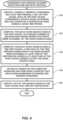
- FIG 4 is a flow diagram that schematically illustrates a method for computing source profiles, and using the computed source profiles to detect and whitelist any source nodes 64 that are aggressive or periodic scanners, in accordance with an embodiment of the present invention.
- processor 48 identifies a set of port scans. To identify the set of port scans, processor 48 collects, during a timespan comprising multiple predefined time periods, communication sessions 68 and aggregates them into aggregated communication sessions 58. Each aggregated communication session 58 comprises a given port scan 32 having a first given workstation 26 accessing at least one given communication port 40 on a second given destination 26 during a given time period.
- the predefined time periods may have substantially identical time durations (e.g., one day).
- processor 48 computes, for each given source node "i" in the port scans, scanned_dests_average i that indicates an average number of destination nodes 66 whose respective communication ports 40 were accessed by the given source node during any given scan by the given source node.
- scanned_dests_average i comprises an average number of the destination nodes that the given source node scanned per time period, omitting time periods where no scans were performed by the given source node.
- processor 48 whitelists, based on the computed scanned_dests_average i averages and scan_ratio i fractions, any of the source nodes that are classified either as aggressive or periodic scanners, as described in the criteria hereinbelow, To whitelist a given source node 64, processor 48 adds the given source node (i.e., the corresponding port number) to whitelist 80.
- an aggressive scanner can be defined as a given source node 64 that scans a few destination nodes 66 during every time period (e.g., every day).
- processor 48 can first identify scan_days i as a number of days the given source node performed at least one scan, and can classify the given source node as an aggressive scanner if Vi: scanned_dests_average i exceeds a first low threshold (e.g., 2, 3, 4, 5, 6, 7) and/or scan_ratio i exceeds a first high threshold (e.g., 0.5, 0.6, 0.7, 0.8).
- a first low threshold e.g., 2, 3, 4, 5, 6,
- scan_ratio i e.g., 0.5, 0.6, 0.7, 0.8.
- a periodic scanner can be defined as a given source node 64 that scans many destinations with less frequency (e.g., once a week).
- a periodic scanner may scan ports 40 on all the nodes (e.g., workstations 26) on network 28 on a weekly basis to see if there are any changes such as if any new ports 40 are open or if there are any respective vulnerabilities in the nodes.
- processor 48 can first identify scan_days i , and can classify the given source node as a periodic scanner if ⁇ i : scanned_dests_average i exceeds a second high threshold (e.g., 10, 15, 20, 25, 30, 35) and/or scan_ratio i exceeds a second low threshold (e.g., 0.10, 0.15, 0.2, 0.25).
- a second high threshold e.g. 10, 15, 20, 25, 30, 35
- scan_ratio i e.g., 0.10, 0.15, 0.2, 0.25
- the second high threshold is 30
- the first second low threshold is 0.1
- the daily number of destination nodes 66 scanned by a given source node 64 is [0,0,1314,0,0,0]
- processor 48 can receive an input (e.g., from a system administrator) that specifies the first and second low thresholds and the first and the second high thresholds. In another embodiment, processor 48 can dynamically set these thresholds based on the respective distributions of the computed values (i.e., scanned_dests_average i and scan_ratio i ) . For example, processor 48 can dynamically set the threshold based on (e.g., a fixed percentage) of outliers in the respective distributions of the computed values.
- processor 48 identifies any of the source nodes in the port scans (i.e., that were identified in step 120) that are not in whitelist 80, and the method ends.
- processor 48 can perform step 128 during any given time period in order to identify a given non-whitelisted source node that performed a port scan during the given time period.
- the time periods comprise one or more first time periods followed by a second time period, and processor 48 can perform steps 120-126 on the one or more first time periods, and perform step 128 on the second time period.
- Embodiments described herein can use port profiles to detect potentially malicious port scans.
- Port profiles indicate which combinations of ports 40 are not likely to be a part of "normal" user activity, but rather part of a network scan.
- the concept behind port profiles is that there are combinations of ports that are suspicious if they are scanned during a short period of time (e.g., one day). For example, if a legitimate user wants to access a specific network service provided by a given workstation 26 on network 28, the user typically knows what software application is providing the service, and any port(s) 40 the software application is using.
- the service (also referred to herein as a software category) comprises an operating system.
- the service also referred to herein as a software category
- the service comprises an operating system.
- the Windows TM operating system produced by Microsoft Corporation, Redmond, Washington
- the user can use port number "3389” which is for the remote desktop protocol (RDP) service.
- RDP remote desktop protocol
- SSH secure shell
- the service comprises database management systems (DBMS).
- DBMS database management systems
- a first given workstation 26 communicates with a DBMS application executing on a second given workstation 26 via a given port 40 on the second given workstation that is associated with the DBMS application.
- a suspicious port scan may comprise the first given workstation communicating with a large number of ports 40 (i.e., on the second given workstation) that are associated with a corresponding large number of different DBMS applications.
- This type of activity may be caused by an attacker conducting a service enumeration, which, for example, tries to identify all the available DBMS applications on a specific server.
- suspicious port scan activity is different in the two embodiments described supra.
- a small number of port scans that cross different operating system port groups may be suspicious. This is because a given workstation 26 typically executes a single operating system.
- a suspicious port scan may require a large number of port scans that cross different DBMS port scan groups in order to be labeled as suspicious. This is because a given workstation 26 may execute more than one DBMS application.
- processor 48 can define a plurality of port lists 60 for a corresponding plurality of operating system 42.
- Each port list 60 comprises multiple port numbers 40 that are commonly used by a given operating system 42. Therefore, each given port list 60 for a given operating system 42 comprises port number 40 that are typically used by the given operating system, and are either never or rarely used by other operating systems 42.
- Examples of operating systems 42 that can have respective port lists 60 include, but are not limited to Windows TM (produced by Microsoft Corporation, Redmond, Washington), Linux TM , Android TM (produced by Alphabet Inc., Mountain View, California), macOS TM (also known as OS-X TM , produced by Apple Inc., Cupertino California).
- the rationale for defining the port lists in the first port profile embodiment is that an attacker typically does not know the operating system executing on a given workstation 26 that they are scanning, and one goal of the attacker is to identify operating system 42. Therefore, the attacker may scan a few ports 40 from more than one port list 60 in order to identify the operating system executing on the given workstation.
- processor 48 can compute a tuple (N _Windows, N_Linux, N_macOS ) that represent respective counts of the port numbers in the port lists that, during a test period (there is no need for a training period) were scanned on the given destination node by the given source node.
- N _Windows, N_Linux, N_macOS a tuple that represent respective counts of the port numbers in the port lists that, during a test period (there is no need for a training period) were scanned on the given destination node by the given source node.
- processor 48 can use specified thresholds for the mix of counts in the tuples to identify suspicious port scans 32 that "cross" a plurality of operating systems.
- processor 48 can flag the port scans in a given tuple as suspicious if the given tuple indicates a threshold number (e.g., >3, >4 or >5) of scans of ports 40 that are associated with one of the operating systems, and positive numbers of scans of any the ports associated with the remaining operating systems.
- processor 48 can flag the port scans in a given tuple as suspicious if the given tuple indicates respective large numbers (e.g., >3, >4 or >5) of scans of ports 40 that are associated with least 2 different operating systems.
- processor can flag a port scan that results in the tuple (4,1,2) as suspicious
- the processor can flag the port scan that results in the tuple (0,4,3) as suspicious.
- processor 48 can use methods such as confidence interval or Laplace smoothing in order to improve estimation.
- processor 48 can compute an entropy of probabilities_tuple for a given tuple, and flag the port scans in the tuple as suspicious (i.e., in that they are accessing a suspicious combination of the ports in more than one of the sets) if the entropy exceeds a specified threshold (e.g., 0.1, 0.2).
- processor 48 can define a plurality of port lists 60 for a corresponding plurality of software applications 44.
- Each port list 60 comprises multiple port numbers 40 that are commonly used by a specific family of software applications 44. Therefore, each given port list 60 for a given software application 44 comprises ports that are typically used by the given software application, and are either never or rarely used by other software applications 44.
- families (also known as categories) of software applications 44 include, but are not limited to, database services, email services and remote access services (also known as remote session services).
- the port list for the database servers may comprise:
- a given node e.g., a given workstation 26 or a server
- processor 48 detects that a given source node 64 is scanning, on a given destination node 66, at least a threshold number (e.g., at least 3, at least 4 or at least 5) of ports 40 from different port lists 60 for database servers, this may indicate that given source node is looking for "any" database server, and therefore does not know which one is executing on the given destination profile.
- a threshold number e.g., at least 3, at least 4 or at least 5
- successful sessions can increase suspiciousness.
- processor 48 can use additional criteria such as a number of detected failed connections correlated to different ports 40.
- processor 48 can flag (i.e., as suspicious) a port scan that scans a large number (e.g., at least four or at least five) of ports 40 from different port lists 60 for database servers.
- processor 48 can flag a port scan that scans a small number (e.g., at least two or at least three) of ports 40 from different port lists 60 for database servers as suspicious wherein at least one of the port scans has a failed connection (as described supra). Note that these examples are typically for port scans that are performed within a short timeframe (e.g., less than one hour, less than two hours or less than three hours).
- the threshold may comprise a large number such as at least 5, at least 6 or at least 7.
- the threshold may comprise a small number (e.g., at least 2, at least 3 or at least 4) of ports in different port lists, and at least 1 failed connection on any of the port numbers in any of the port lists (i.e., for the family).
- the port scans in the first and second embodiments are typically within a short time period (e.g., one, two or three hours).
- each port list 60 comprises one or more ports 40 used by an operating system such as Windows TM , Linux TM or macOS TM .
- each port list 60 comprises one or more ports 40 used by a DBMS application such as MySQL TM , PostgreSQL TM or Cassandra TM .
- processor 48 identifies a set of port scans. To identify the set of port scans, processor 48 collects, during a predefined time period (e.g., one hour or one day), communication sessions 68 and aggregates them into aggregated communication sessions 58. Each aggregated communication session 58 comprises a given port scan 32 having a first given workstation 26 accessing at least one given communication port 40 on a second given destination 26.
- a predefined time period e.g., one hour or one day
- processor 48 identifies, in the identified port scans (i.e., in step 134), a given source node 64 that accesses at least one of the communication ports in a first port list 60 and at least one of the communication ports in a second port list 60, and the method ends.
- Embodiments described herein can compute a distribution of port usage in network 28, and use the computed distribution to identify suspicious port scans on the network. For example, during a training period, processor 48 can detect that the port numbers "22" and "3389" are used frequently, but rarely together. During a subsequent test period, if processor 48 detects that a given source node 64 scanned, those two ports 40 on a given destination node 66, then the system processor can generate an alert for the given source node.
- FIG. 6 is a flow diagram that schematically illustrates a method of detecting port scans 32 comprising outlier pairs of ports 40, in accordance with an embodiment of the present invention.
- processor 48 identifies a set of port scans. To identify the set of port scans, processor 48 collects, during a predefined time period, communication sessions 68 and aggregates them into aggregated communication sessions 58. Each aggregated communication session 58 comprises a given port scan 32 having a first given workstation 26 accessing at least one given communication port 40 on a second given destination 26.
- processor 48 computes, for each given port p scanned during the predefined time period, a probability P p that that a given source node 64 accessed a given port p on a given destination node 66 in any port scan 32 during the predefined time period.
- processor 48 computes, for each pair of ports p1 and p2, a joint probability JP p1,p2 of a connection between a given source node 64 and the ports p1 and p2 on a given destination node 66 in any port scan 32 during the predefined time period.
- processor 48 Upon computing JP p1,p2 for each pair of ports 40 that were scanned during the training period, in step 146, processor 48 computes a Port Pair Score ( PPS ) that the system processor can use to identify pairs of ports p1 and p2 that have the following characteristics:
- the threshold for a high PPS score can be a high value.
- the threshold can be greater than 20, greater than 30 or greater than 40.
- processor 48 identifies any of the source nodes that, during the predefined time period, scanned a pair of ports 40 having a high Port Pair Score, and the method ends.
- a scanned a pair of ports 40 having a high Port Pair Score indicates that respective JP p1,p2 for the pair of ports p1 and p2 is lower than a threshold dependent upon the respective probabilities P p of ports p1 and p2.
- the predefined time period may comprise multiple sub-periods that may have substantially identical time durations.
- processor 48 can perform step 150 during any given sub-period in order to identify a given source node 64 that, during the given sub-period, scanned a pair of ports 40 having a high Port Pair Score.
- the sub-periods comprise one or more first sub-periods followed by a second sub-period, and processor 48 can perform steps 140-146 on the one or more first sub-periods, and perform step 148 on the second sub-period.
- Some scanning tools use a port scanning probe that comprises a given software application 44 loaded on one or more nodes 26 and is configured to scan other nodes 26 on the network, and to report results of a scan to a scanning server (e.g., a given node 26).
- Scanning probes can be deployed in networks having nodes 26 that the scanning server cannot access directly with all the ports required for the scan (e.g., due to a firewall protecting a subset of the network).
- probes can be deployed on numerous network endpoints (i.e., nodes 26) to randomly perform port scans, and then transmit results of the scans back to a given node (i.e., a server). Since scans performed by scanner probes may generate alerts, embodiments of the present invention enable processor 48 to whitelist scans performed by a given scanner probe.
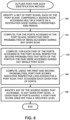
- FIG. 7 is a flow diagram that schematically illustrates a method detecting any deployed scanner probes, in accordance with an embodiment of the present invention.
- processor 48 identifies a set of port scans. To identify the set of port scans, processor 48 collects, during a predefined time period, communication sessions 68 and aggregates them into aggregated communication sessions 58. Each aggregated communication session 58 comprises a given port scan 32 having a first given workstation 26 accessing at least one given communication port 40 on a second given destination 26.
- processor 48 identifies, in the identified port scans, a group of high traffic ports 40.
- processor 48 can classify a given port 40 as having high traffic if the amount data traffic passing through the given port during the predefined time period exceeds a predefined threshold. Examples of predetermined thresholds include, but are not limited to 200, 400 and 600 bytes.
- the given port can be on a given node 26. In other words processor 48 can classify the combination of the given node and the given port as having high traffic.
- processor 48 can use volume 88 and/or rvolume 78 in the communication sessions of the aggregated port scan (i.e., corresponding to a given port scan 32) to determine if the data traffic in a given port scan 32 exceeds the predefined threshold.
- processor 48 can classify a given port 40 as having high traffic if the maximum amount of data passing through the given port in any given communication session (i.e., during a given port scan 32) exceeds the predefined threshold.
- processor 48 In step 154, processor 48 generates, for the identified port scans, respective signatures 82 indicative of the communication ports other than the high-traffic ports that were accessed in each of the port scans.
- a given signature 82 for a given port scan 32 may comprise a set of the communication ports that were accessed during the given port scan and that were not classified as having high traffic.
- processor 48 computes a respective frequency of occurrence of each of the signatures over the set of the port scans, and in step 158 the processor assembles whitelist 80 by initializing the whitelist and then adding, to the whitelist, the signatures for which the respective frequency of occurrence is greater than a predefined threshold.
- the frequency of occurrence for a given signature 82 may include information such as:
- examples of specific thresholds include, but are not limited to:
- processor 48 can use a combination of the thresholds to identify the signatures to add to the whitelist. For example, a given combination may be:
- processor 48 identifies any of the source nodes in the identified port scans having respective signatures not in the whitelist, and the method ends.
- the predefined time period may comprise multiple sub-periods that may have substantially identical time durations.
- processor 48 can perform step 160 during any given sub-period in order to identify, in the given sub-period, a identified port scan 32 having respective signatures not in the whitelist.
- the sub-periods comprise one or more first sub-periods followed by a second sub-period, and processor 48 can perform steps 150-158 on the one or more first sub-periods, and perform step 160 on the second sub-period.
Landscapes
- Engineering & Computer Science (AREA)
- Computer Security & Cryptography (AREA)
- Computer Networks & Wireless Communication (AREA)
- Signal Processing (AREA)
- Computer Hardware Design (AREA)
- Computing Systems (AREA)
- General Engineering & Computer Science (AREA)
- Data Exchanges In Wide-Area Networks (AREA)
- Small-Scale Networks (AREA)
Applications Claiming Priority (7)
| Application Number | Priority Date | Filing Date | Title |
|---|---|---|---|
| US16/261,606 US11184376B2 (en) | 2019-01-30 | 2019-01-30 | Port scan detection using destination profiles |
| US16/261,655 US11184378B2 (en) | 2019-01-30 | 2019-01-30 | Scanner probe detection |
| US16/261,642 US11070569B2 (en) | 2019-01-30 | 2019-01-30 | Detecting outlier pairs of scanned ports |
| US16/261,634 US11316872B2 (en) | 2019-01-30 | 2019-01-30 | Malicious port scan detection using port profiles |
| US16/261,608 US11184377B2 (en) | 2019-01-30 | 2019-01-30 | Malicious port scan detection using source profiles |
| PCT/IB2019/060538 WO2020157561A1 (fr) | 2019-01-30 | 2019-12-08 | Détection par balayage de ports |
| EP19832439.4A EP3918762B1 (fr) | 2019-01-30 | 2019-12-08 | Détection par balayage de ports |
Related Parent Applications (2)
| Application Number | Title | Priority Date | Filing Date |
|---|---|---|---|
| EP19832439.4A Division EP3918762B1 (fr) | 2019-01-30 | 2019-12-08 | Détection par balayage de ports |
| EP19832439.4A Division-Into EP3918762B1 (fr) | 2019-01-30 | 2019-12-08 | Détection par balayage de ports |
Publications (2)
| Publication Number | Publication Date |
|---|---|
| EP4432618A2 true EP4432618A2 (fr) | 2024-09-18 |
| EP4432618A3 EP4432618A3 (fr) | 2024-11-20 |
Family
ID=69137938
Family Applications (2)
| Application Number | Title | Priority Date | Filing Date |
|---|---|---|---|
| EP24191124.7A Pending EP4432618A3 (fr) | 2019-01-30 | 2019-12-08 | Détection de balayage de port |
| EP19832439.4A Active EP3918762B1 (fr) | 2019-01-30 | 2019-12-08 | Détection par balayage de ports |
Family Applications After (1)
| Application Number | Title | Priority Date | Filing Date |
|---|---|---|---|
| EP19832439.4A Active EP3918762B1 (fr) | 2019-01-30 | 2019-12-08 | Détection par balayage de ports |
Country Status (3)
| Country | Link |
|---|---|
| EP (2) | EP4432618A3 (fr) |
| CN (5) | CN113678419B (fr) |
| WO (1) | WO2020157561A1 (fr) |
Families Citing this family (3)
| Publication number | Priority date | Publication date | Assignee | Title |
|---|---|---|---|---|
| CN112187720B (zh) * | 2020-09-01 | 2022-11-15 | 杭州安恒信息技术股份有限公司 | 一种二级攻击链的生成方法、装置、电子装置和存储介质 |
| CN114301668B (zh) * | 2021-12-28 | 2023-07-21 | 北京安天网络安全技术有限公司 | 流量检测方法及装置、电子设备和计算机可读存储介质 |
| CN115733653B (zh) * | 2022-09-07 | 2025-09-05 | 武汉思普崚技术有限公司 | 一种基于端口复用的风险评估方法及相关设备 |
Citations (3)
| Publication number | Priority date | Publication date | Assignee | Title |
|---|---|---|---|---|
| US20140165207A1 (en) | 2011-07-26 | 2014-06-12 | Light Cyber Ltd. | Method for detecting anomaly action within a computer network |
| US20150358344A1 (en) | 2013-01-16 | 2015-12-10 | Light Cyber Ltd. | Automated forensics of computer systems using behavioral intelligence |
| US20160234167A1 (en) | 2011-07-26 | 2016-08-11 | Light Cyber Ltd. | Detecting anomaly action within a computer network |
Family Cites Families (27)
| Publication number | Priority date | Publication date | Assignee | Title |
|---|---|---|---|---|
| US7543056B2 (en) * | 2002-01-15 | 2009-06-02 | Mcafee, Inc. | System and method for network vulnerability detection and reporting |
| US7716737B2 (en) * | 2002-11-04 | 2010-05-11 | Riverbed Technology, Inc. | Connection based detection of scanning attacks |
| US7463590B2 (en) * | 2003-07-25 | 2008-12-09 | Reflex Security, Inc. | System and method for threat detection and response |
| US7725936B2 (en) * | 2003-10-31 | 2010-05-25 | International Business Machines Corporation | Host-based network intrusion detection systems |
| GB2410402B (en) * | 2004-01-23 | 2007-01-24 | Rxtxtech Ltd | A system and method for limiting simultaneous access to a network service |
| US7225468B2 (en) * | 2004-05-07 | 2007-05-29 | Digital Security Networks, Llc | Methods and apparatus for computer network security using intrusion detection and prevention |
| US7908655B1 (en) * | 2005-08-16 | 2011-03-15 | Sprint Communications Company L.P. | Connectionless port scan detection on a network |
| CN1917426B (zh) * | 2005-08-17 | 2010-12-08 | 国际商业机器公司 | 端口扫描方法与设备及其检测方法与设备、端口扫描系统 |
| US8516573B1 (en) * | 2005-12-22 | 2013-08-20 | At&T Intellectual Property Ii, L.P. | Method and apparatus for port scan detection in a network |
| US8914885B2 (en) * | 2006-11-03 | 2014-12-16 | Alcatel Lucent | Methods and apparatus for delivering control messages during a malicious attack in one or more packet networks |
| US7962957B2 (en) * | 2007-04-23 | 2011-06-14 | International Business Machines Corporation | Method and apparatus for detecting port scans with fake source address |
| JP4948359B2 (ja) * | 2007-10-26 | 2012-06-06 | 三菱電機株式会社 | 不正アクセス検知装置及び不正アクセス検知方法及びプログラム |
| US9479522B1 (en) * | 2011-05-06 | 2016-10-25 | Tellabs, Inc. | Method and apparatus for managing content distribution using content signatures |
| US9154958B2 (en) * | 2011-09-06 | 2015-10-06 | Whitserve Llc | Security system for cloud computing |
| CN103561048B (zh) * | 2013-09-02 | 2016-08-31 | 北京东土科技股份有限公司 | 一种确定tcp端口扫描的方法及装置 |
| CN104639520B (zh) * | 2013-11-15 | 2019-01-25 | 中国电信股份有限公司 | 上网地址类型自动控制方法、系统和radius服务器 |
| US9369360B1 (en) * | 2014-05-12 | 2016-06-14 | Google Inc. | Systems and methods for fault detection in large scale networks |
| US9948661B2 (en) * | 2014-10-29 | 2018-04-17 | At&T Intellectual Property I, L.P. | Method and apparatus for detecting port scans in a network |
| US9118582B1 (en) * | 2014-12-10 | 2015-08-25 | Iboss, Inc. | Network traffic management using port number redirection |
| GB2562423B (en) * | 2016-02-25 | 2020-04-29 | Sas Inst Inc | Cybersecurity system |
| CN106131050B (zh) * | 2016-08-17 | 2022-12-09 | 裴志永 | 数据包快速处理系统 |
| CN106330944B (zh) * | 2016-08-31 | 2020-01-03 | 杭州迪普科技股份有限公司 | 恶意系统漏洞扫描器的识别方法和装置 |
| CN106506557B (zh) * | 2016-12-29 | 2019-09-17 | 北京神州绿盟信息安全科技股份有限公司 | 一种端口扫描检测方法及装置 |
| CN107154940A (zh) * | 2017-05-11 | 2017-09-12 | 济南大学 | 一种物联网漏洞扫描系统及扫描方法 |
| CN109104395B (zh) * | 2017-06-21 | 2022-08-23 | 亿阳安全技术有限公司 | 互联网资产扫描发现与服务识别的方法和装置 |
| CN109274638A (zh) * | 2018-05-22 | 2019-01-25 | 四川斐讯信息技术有限公司 | 一种攻击源接入自动识别处理的方法和路由器 |
| CN109120634B (zh) * | 2018-09-05 | 2021-02-05 | 广州视源电子科技股份有限公司 | 一种端口扫描检测的方法、装置、计算机设备和存储介质 |
-
2019
- 2019-12-08 EP EP24191124.7A patent/EP4432618A3/fr active Pending
- 2019-12-08 CN CN201980090243.XA patent/CN113678419B/zh active Active
- 2019-12-08 CN CN202310649332.1A patent/CN116527389B/zh active Active
- 2019-12-08 WO PCT/IB2019/060538 patent/WO2020157561A1/fr not_active Ceased
- 2019-12-08 CN CN202511879154.7A patent/CN121690743A/zh active Pending
- 2019-12-08 CN CN202310649426.9A patent/CN116527390B/zh active Active
- 2019-12-08 EP EP19832439.4A patent/EP3918762B1/fr active Active
- 2019-12-08 CN CN202310649492.6A patent/CN116527391B/zh active Active
Patent Citations (3)
| Publication number | Priority date | Publication date | Assignee | Title |
|---|---|---|---|---|
| US20140165207A1 (en) | 2011-07-26 | 2014-06-12 | Light Cyber Ltd. | Method for detecting anomaly action within a computer network |
| US20160234167A1 (en) | 2011-07-26 | 2016-08-11 | Light Cyber Ltd. | Detecting anomaly action within a computer network |
| US20150358344A1 (en) | 2013-01-16 | 2015-12-10 | Light Cyber Ltd. | Automated forensics of computer systems using behavioral intelligence |
Also Published As
| Publication number | Publication date |
|---|---|
| CN116527391B (zh) | 2025-12-05 |
| CN116527389A (zh) | 2023-08-01 |
| CN116527390A (zh) | 2023-08-01 |
| CN113678419A (zh) | 2021-11-19 |
| EP4432618A3 (fr) | 2024-11-20 |
| CN116527391A (zh) | 2023-08-01 |
| CN116527389B (zh) | 2025-11-25 |
| EP3918762B1 (fr) | 2024-09-25 |
| CN121690743A (zh) | 2026-03-17 |
| CN116527390B (zh) | 2026-01-06 |
| EP3918762A1 (fr) | 2021-12-08 |
| WO2020157561A1 (fr) | 2020-08-06 |
| CN113678419B (zh) | 2023-06-23 |
Similar Documents
| Publication | Publication Date | Title |
|---|---|---|
| US11070569B2 (en) | Detecting outlier pairs of scanned ports | |
| US11770397B2 (en) | Malicious port scan detection using source profiles | |
| US11711389B2 (en) | Scanner probe detection | |
| US12542789B2 (en) | Malicious port scan detection using port profiles | |
| US11770396B2 (en) | Port scan detection using destination profiles | |
| US8874763B2 (en) | Methods, devices and computer program products for actionable alerting of malevolent network addresses based on generalized traffic anomaly analysis of IP address aggregates | |
| US9712555B2 (en) | Automated responses to security threats | |
| US9565203B2 (en) | Systems and methods for detection of anomalous network behavior | |
| US10771500B2 (en) | System and method of determining DDOS attacks | |
| JP6714314B2 (ja) | 応答のない発信ネットワークトラフィックの解析を介する感染したネットワークデバイスの検出 | |
| CN109194680B (zh) | 一种网络攻击识别方法、装置及设备 | |
| US10257213B2 (en) | Extraction criterion determination method, communication monitoring system, extraction criterion determination apparatus and extraction criterion determination program | |
| TW201406106A (zh) | 網路訊務處理系統 | |
| EP3918762B1 (fr) | Détection par balayage de ports | |
| CN112910825B (zh) | 一种蠕虫检测方法及网络设备 | |
| EP3432544A1 (fr) | Système et procédé de détermination d'attaques ddos | |
| Weaver | Identifying Anomalous Port-Specific Network Behavior | |
| HK40001652A (en) | Method, apparatus and device for recognizing network attack | |
| HK40001652B (en) | Method, apparatus and device for recognizing network attack |
Legal Events
| Date | Code | Title | Description |
|---|---|---|---|
| PUAI | Public reference made under article 153(3) epc to a published international application that has entered the european phase |
Free format text: ORIGINAL CODE: 0009012 |
|
| STAA | Information on the status of an ep patent application or granted ep patent |
Free format text: STATUS: REQUEST FOR EXAMINATION WAS MADE |
|
| 17P | Request for examination filed |
Effective date: 20240726 |
|
| AC | Divisional application: reference to earlier application |
Ref document number: 3918762 Country of ref document: EP Kind code of ref document: P |
|
| AK | Designated contracting states |
Kind code of ref document: A2 Designated state(s): AL AT BE BG CH CY CZ DE DK EE ES FI FR GB GR HR HU IE IS IT LI LT LU LV MC MK MT NL NO PL PT RO RS SE SI SK SM TR |
|
| REG | Reference to a national code |
Ref country code: DE Ref legal event code: R079 Free format text: PREVIOUS MAIN CLASS: H04L0043026000 Ipc: H04L0041060400 |
|
| PUAL | Search report despatched |
Free format text: ORIGINAL CODE: 0009013 |
|
| AK | Designated contracting states |
Kind code of ref document: A3 Designated state(s): AL AT BE BG CH CY CZ DE DK EE ES FI FR GB GR HR HU IE IS IT LI LT LU LV MC MK MT NL NO PL PT RO RS SE SI SK SM TR |
|
| RIC1 | Information provided on ipc code assigned before grant |
Ipc: H04L 43/026 20220101ALN20241016BHEP Ipc: H04L 9/40 20220101ALI20241016BHEP Ipc: H04L 41/0604 20220101AFI20241016BHEP |
|
| RAP1 | Party data changed (applicant data changed or rights of an application transferred) |
Owner name: PALO ALTO NETWORKS, INC. |