EP4434583A2 - (r)-5-carbamoylpyridin-3-yl-2-méthyl-4-(3-(trifluorométhoxy)benzyl) pipérazine-1-carboxylate cristallin, compositions et procédés d'utilisation de celui-ci - Google Patents
(r)-5-carbamoylpyridin-3-yl-2-méthyl-4-(3-(trifluorométhoxy)benzyl) pipérazine-1-carboxylate cristallin, compositions et procédés d'utilisation de celui-ci Download PDFInfo
- Publication number
- EP4434583A2 EP4434583A2 EP24185102.1A EP24185102A EP4434583A2 EP 4434583 A2 EP4434583 A2 EP 4434583A2 EP 24185102 A EP24185102 A EP 24185102A EP 4434583 A2 EP4434583 A2 EP 4434583A2
- Authority
- EP
- European Patent Office
- Prior art keywords
- crystalline
- dosage form
- methyl
- benzyl
- carbamoylpyridin
- Prior art date
- Legal status (The legal status is an assumption and is not a legal conclusion. Google has not performed a legal analysis and makes no representation as to the accuracy of the status listed.)
- Granted
Links
Images







Classifications
-
- C—CHEMISTRY; METALLURGY
- C07—ORGANIC CHEMISTRY
- C07D—HETEROCYCLIC COMPOUNDS
- C07D211/00—Heterocyclic compounds containing hydrogenated pyridine rings, not condensed with other rings
- C07D211/92—Heterocyclic compounds containing hydrogenated pyridine rings, not condensed with other rings with a hetero atom directly attached to the ring nitrogen atom
- C07D211/94—Oxygen atom, e.g. piperidine N-oxide
-
- C—CHEMISTRY; METALLURGY
- C07—ORGANIC CHEMISTRY
- C07D—HETEROCYCLIC COMPOUNDS
- C07D401/00—Heterocyclic compounds containing two or more hetero rings, having nitrogen atoms as the only ring hetero atoms, at least one ring being a six-membered ring with only one nitrogen atom
- C07D401/02—Heterocyclic compounds containing two or more hetero rings, having nitrogen atoms as the only ring hetero atoms, at least one ring being a six-membered ring with only one nitrogen atom containing two hetero rings
- C07D401/12—Heterocyclic compounds containing two or more hetero rings, having nitrogen atoms as the only ring hetero atoms, at least one ring being a six-membered ring with only one nitrogen atom containing two hetero rings linked by a chain containing hetero atoms as chain links
-
- A—HUMAN NECESSITIES
- A61—MEDICAL OR VETERINARY SCIENCE; HYGIENE
- A61K—PREPARATIONS FOR MEDICAL, DENTAL OR TOILETRY PURPOSES
- A61K31/00—Medicinal preparations containing organic active ingredients
- A61K31/33—Heterocyclic compounds
- A61K31/395—Heterocyclic compounds having nitrogen as a ring hetero atom, e.g. guanethidine or rifamycins
- A61K31/495—Heterocyclic compounds having nitrogen as a ring hetero atom, e.g. guanethidine or rifamycins having six-membered rings with two or more nitrogen atoms as the only ring heteroatoms, e.g. piperazine or tetrazines
- A61K31/496—Non-condensed piperazines containing further heterocyclic rings, e.g. rifampin, thiothixene or sparfloxacin
-
- A—HUMAN NECESSITIES
- A61—MEDICAL OR VETERINARY SCIENCE; HYGIENE
- A61P—SPECIFIC THERAPEUTIC ACTIVITY OF CHEMICAL COMPOUNDS OR MEDICINAL PREPARATIONS
- A61P1/00—Drugs for disorders of the alimentary tract or the digestive system
-
- A—HUMAN NECESSITIES
- A61—MEDICAL OR VETERINARY SCIENCE; HYGIENE
- A61P—SPECIFIC THERAPEUTIC ACTIVITY OF CHEMICAL COMPOUNDS OR MEDICINAL PREPARATIONS
- A61P25/00—Drugs for disorders of the nervous system
-
- A—HUMAN NECESSITIES
- A61—MEDICAL OR VETERINARY SCIENCE; HYGIENE
- A61P—SPECIFIC THERAPEUTIC ACTIVITY OF CHEMICAL COMPOUNDS OR MEDICINAL PREPARATIONS
- A61P25/00—Drugs for disorders of the nervous system
- A61P25/04—Centrally acting analgesics, e.g. opioids
-
- A—HUMAN NECESSITIES
- A61—MEDICAL OR VETERINARY SCIENCE; HYGIENE
- A61P—SPECIFIC THERAPEUTIC ACTIVITY OF CHEMICAL COMPOUNDS OR MEDICINAL PREPARATIONS
- A61P25/00—Drugs for disorders of the nervous system
- A61P25/22—Anxiolytics
-
- A—HUMAN NECESSITIES
- A61—MEDICAL OR VETERINARY SCIENCE; HYGIENE
- A61P—SPECIFIC THERAPEUTIC ACTIVITY OF CHEMICAL COMPOUNDS OR MEDICINAL PREPARATIONS
- A61P29/00—Non-central analgesic, antipyretic or antiinflammatory agents, e.g. antirheumatic agents; Non-steroidal antiinflammatory drugs [NSAID]
-
- A—HUMAN NECESSITIES
- A61—MEDICAL OR VETERINARY SCIENCE; HYGIENE
- A61P—SPECIFIC THERAPEUTIC ACTIVITY OF CHEMICAL COMPOUNDS OR MEDICINAL PREPARATIONS
- A61P35/00—Antineoplastic agents
-
- A—HUMAN NECESSITIES
- A61—MEDICAL OR VETERINARY SCIENCE; HYGIENE
- A61P—SPECIFIC THERAPEUTIC ACTIVITY OF CHEMICAL COMPOUNDS OR MEDICINAL PREPARATIONS
- A61P35/00—Antineoplastic agents
- A61P35/04—Antineoplastic agents specific for metastasis
-
- C—CHEMISTRY; METALLURGY
- C07—ORGANIC CHEMISTRY
- C07B—GENERAL METHODS OF ORGANIC CHEMISTRY; APPARATUS THEREFOR
- C07B2200/00—Indexing scheme relating to specific properties of organic compounds
- C07B2200/13—Crystalline forms, e.g. polymorphs
Definitions
- solid forms of ( R )-5-carbamoylpyridin-3-yl-2-methyl-4-(3-(trifluoromethoxy)benzyl)piperazine-1-carboxylate are also provided herein.
- Many compounds can exist in different crystal forms, or polymorphs, which exhibit different physical, chemical, and spectroscopic properties.
- certain polymorphs of a compound may be more readily soluble in particular solvents, may flow more readily, or may compress more easily than others. See, e.g., P. DiMartino, et al., J. Thermal Anal., 48:447-458 (1997 ).
- certain solid forms may be more bioavailable than others, while others may be more stable under certain manufacturing, storage, and biological conditions.
- Polymorphic forms of a compound are known in the pharmaceutical arts to affect, for example, the solubility, stability, flowability, fractability, and compressibility of the compound, as well as the safety and efficacy of drug products comprising it. See, e.g., Knapman, K. Modern Drug Discoveries, 2000, 53 . Therefore, the discovery of new polymorphs of a drug can provide a variety of advantages.
- a solid form of a pharmaceutical compound are complex, given that a change in solid form may affect a variety of physical and chemical properties, which may provide benefits or drawbacks in processing, formulation, stability, bioavailability, storage, handling ( e.g. , shipping), among other important pharmaceutical characteristics.
- Useful pharmaceutical solids include crystalline solids and amorphous solids, depending on the product and its mode of administration. Amorphous solids are characterized by a lack of long-range structural order, whereas crystalline solids are characterized by structural periodicity.
- the desired class of pharmaceutical solid depends upon the specific application; amorphous solids are sometimes selected on the basis of, e.g., an enhanced dissolution profile, while crystalline solids may be desirable for properties such as, e.g., physical or chemical stability.
- ( R )-5-Carbamoylpyridin-3-yl-2-methyl-4-(3-(trifluoromethoxy)benzyl)piperazine-1-carboxylate is a compound which is a dual MAGL and FAAH inhibitor, and may be used in treating various disorders.
- Novel crystalline forms of ( R )-5-carbamoylpyridin-3-yl-2-methyl-4-(3-(trifluoromethoxy)benzyl)piperazine-1-carboxylate are described herein.
- New polymorphic forms of ( R )-5-carbamoylpyridin-3-yl-2-methyl-4-(3-(trifluoromethoxy)benzyl)piperazine-1-carboxylate can further the development of formulations for the treatment of various illnesses, and may yield numerous formulation, manufacturing and therapeutic benefits.
- compositions comprising crystalline forms of ( R )-5-carbamoylpyridin-3-yl-2-methyl-4-(3-(trifluoromethoxy)benzyl)piperazine-1-carboxylate.
- methods of treating or preventing a variety of disease and disorders which comprise administering to a patient a therapeutically effective amount of a crystalline form of ( R )-5-carbamoylpyridin-3-yl-2-methyl-4-(3-(trifluoromethoxy)benzyl)piperazine-1-carboxylate.
- crystalline when used to describe a substance, component, product, or form, mean that the substance, component, product, or form is substantially crystalline, for example, as determined by X-ray diffraction. (see, e.g., Remington's Pharmaceutical Sciences, 20th ed., Lippincott Williams & Wilkins, Philadelphia PA, 173 (2000 ); The United States Pharmacopeia, 37th ed., 503-509 (2014 )).
- the terms “about” and “approximately,” when used in connection with a numeric value or range of values which is provided to characterize a particular solid form e.g., a specific temperature or temperature range, such as, for example, that describes a melting, dehydration, desolvation, or glass transition temperature; a mass change, such as, for example, a mass change as a function of temperature or humidity; a solvent or water content, in terms of, for example, mass or a percentage; or a peak position, such as, for example, in analysis by, for example, IR or Raman spectroscopy or XRPD; indicate that the value or range of values may deviate to an extent deemed reasonable to one of ordinary skill in the art while still describing the solid form.
- Techniques for characterizing crystal forms and amorphous forms include, but are not limited to, thermal gravimetric analysis (TGA), differential scanning calorimetry (DSC), X-ray powder diffractometry (XRPD), single-crystal X-ray diffractometry, vibrational spectroscopy, e.g., infrared (IR) and Raman spectroscopy, solid-state and solution nuclear magnetic resonance (NMR) spectroscopy, optical microscopy, hot stage optical microscopy, scanning electron microscopy (SEM), electron crystallography and quantitative analysis, particle size analysis (PSA), surface area analysis, solubility studies, and dissolution studies.
- TGA thermal gravimetric analysis
- DSC differential scanning calorimetry
- XRPD X-ray powder diffractometry
- IR infrared
- Raman spectroscopy solid-state and solution nuclear magnetic resonance (NMR) spectroscopy
- optical microscopy hot stage optical microscopy
- SEM scanning electron microscopy
- PSA
- the terms "about” and “approximately,” when used in this context, indicate that the numeric value or range of values may vary within 30%, 20%, 15%, 10%, 9%, 8%, 7%, 6%, 5%, 4%, 3%, 2%, 1.5%, 1%, 0.5%, or 0.25% of the recited value or range of values.
- “about” and “approximately” indicate that the numeric value or range of values may vary within 20%, 15%, 10%, 9%, 8%, 7%, 6%, 5%, 4%, 3%, 2%, 1.5%, 1%, 0.5%, or 0.25% of the recited value or range of values.
- the numerical values of the peaks of an X-ray powder diffraction pattern may vary from one machine to another, or from one sample to another, and so the values quoted are not to be construed as absolute, but with an allowable variability, such as ⁇ 0.2 degrees two theta (°2 ⁇ ), or more.
- the value of an XRPD peak position may vary by up to ⁇ 0.2 degrees 2 ⁇ while still describing the particular XRPD peak.
- a solid form that is “substantially physically pure” is substantially free from other solid forms.
- a crystal form that is substantially physically pure contains less than about 50%, 45%, 40%, 35%, 30%, 25%, 20%, 15%, 10%, 9%, 8%, 7%, 6%, 5%, 4%, 3%, 2%, 1%, 0.5%, 0.4%, 0.3%, 0.2%, 0.1%, 0.05%, or 0.01% of one or more other solid forms on a weight basis.
- the detection of other solid forms can be accomplished by any method apparent to a person of ordinary skill in the art, including, but not limited to, diffraction analysis, thermal analysis, elemental combustion analysis and/or spectroscopic analysis.
- a solid form that is “substantially chemically pure” is substantially free from other chemical compounds (i.e., chemical impurities).
- a solid form that is substantially chemically pure contains less than about 50%, 45%, 40%, 35%, 30%, 25%, 20%, 15%, 10%, 9%, 8%, 7%, 6%, 5%, 4%, 3%, 2%, 1%, 0.5%, 0.4%, 0.3%, 0.2%, 0.1%, 0.05%, or 0.01% of one or more other chemical compounds on a weight basis.
- the detection of other chemical compounds can be accomplished by any method apparent to a person of ordinary skill in the art, including, but not limited to, methods of chemical analysis, such as, e.g., mass spectrometry analysis, spectroscopic analysis, thermal analysis, elemental combustion analysis and/or chromatographic analysis.
- methods of chemical analysis such as, e.g., mass spectrometry analysis, spectroscopic analysis, thermal analysis, elemental combustion analysis and/or chromatographic analysis.
- a chemical compound, solid form, or composition that is "substantially free” of another chemical compound, solid form, or composition means that the compound, solid form, or composition contains, in certain embodiments, less than about 50%, 45%, 40%, 35%, 30%, 25%, 20%, 15%, 10%, 9%, 8%, 7%, 6%, 5%, 4%, 3%, 2%, 1%, 0.5%, 0.4%, 0.3%, 0.2% 0.1%, 0.05%, or 0.01% by weight of the other compound, solid form, or composition.
- anhydrate and “anhydrous” as used herein, refer to a solid form of a substance which does not contain water in its crystal lattice.
- the terms “treat,” “treating” and “treatment” refer to the eradication or amelioration of a disease or disorder, or of one or more symptoms associated with the disease or disorder. In certain embodiments, the terms refer to minimizing the spread or worsening of the disease or disorder resulting from the administration of one or more prophylactic or therapeutic agents to a subject with such a disease or disorder. In some embodiments, the terms refer to the administration of a compound provided herein, with or without other additional active agents, after the onset of symptoms of a particular disease.
- composition as used herein is intended to encompass a product comprising the specified ingredient(s) (and in the specified amount(s), if indicated), as well as any product which results, directly or indirectly, from combination of the specified ingredient(s) in the specified amount(s).
- pharmaceutically acceptable it is meant a diluent, excipient, or carrier in a formulation must be compatible with the other ingredient(s) of the formulation and not deleterious to the recipient thereof.
- the term "subject” is defined herein to include animals, such as mammals, including, but not limited to, primates (e.g., humans), cows, sheep, goats, horses, dogs, cats, rabbits, rats, mice, and the like. In specific embodiments, the subject is a human.
- solid forms of ( R )-5-carbamoylpyridin-3-yl-2-methyl-4-(3-(trifluoromethoxy)benzyl)piperazine-1-carboxylate are solid forms of ( R )-5-carbamoylpyridin-3-yl-2-methyl-4-(3-(trifluoromethoxy)benzyl)piperazine-1-carboxylate.
- the solid form is crystalline.
- the solid form is a single-component solid form.
- the solid form is an anhydrate.
- Crystalline forms of ( R )-5-carbamoylpyridin-3-yl-2-methyl-4-(3-(trifluoromethoxy)benzyl)piperazine-1-carboxylate can be prepared by the methods described herein, including the methods described in the Examples below, or by techniques known in the art, including heating, cooling, freeze drying, lyophilization, solvent evaporation, solvent recrystallization, antisolvent addition, slurry recrystallization, rapid cooling, slow cooling, exposure to solvent and/or water, and drying.
- the particle size of the resulting solid forms which can vary, e.g., from nanometer dimensions to millimeter dimensions, can be controlled, e.g., by varying crystallization conditions, such as, e.g., the rate of crystallization and/or the crystallization solvent system, or by particle-size reduction techniques, e.g., grinding, milling, micronizing or sonication.
- crystallization conditions such as, e.g., the rate of crystallization and/or the crystallization solvent system
- particle-size reduction techniques e.g., grinding, milling, micronizing or sonication.
- crystalline forms of ( R )-5-carbamoylpyridin-3-yl-2-methyl-4-(3-(trifluoromethoxy)benzyl)piperazine-1-carboxylate are characterized by physical properties, e.g., stability, solubility and dissolution rate, appropriate for pharmaceutical and therapeutic dosage forms.
- crystalline forms of ( R )-5-carbamoylpyridin-3-yl-2-methyl-4-(3-(trifluoromethoxy)benzyl)piperazine-1-carboxylate are characterized by physical properties (e.g., density, compressibility, hardness, morphology, cleavage, stickiness, solubility, water uptake, electrical properties, thermal behavior, solid-state reactivity, physical stability, and chemical stability) affecting particular processes (e.g., yield, filtration, washing, drying, milling, mixing, tableting, flowability, dissolution, formulation, and lyophilization) which make certain crystalline forms suitable for the manufacture of a dosage form.
- Such properties can be determined using particular analytical chemical techniques, including solid-state analytical techniques (e.g., X-ray diffraction, microscopy, spectroscopy and thermal analysis), as described herein and known in the art.
- compositions comprising crystalline ( R )-5-carbamoylpyridin-3-yl-2-methyl-4-(3-(trifluoromethoxy)benzyl)piperazine-1-carboxylate.
- Certain embodiments provide methods of using these compositions in the treatment, prevention or management of diseases and disorders including, but not limited to, diseases and disorders related to MAGL and/or FAAH activity.
- Certain embodiments herein provide methods of using crystalline forms of ( R )-5-carbamoylpyridin-3-yl-2-methyl-4-(3-(trifluoromethoxy)benzyl)piperazine-1-carboxylate in the treatment, prevention, or management of pain, neurological disorders, anxiety, inflammatory bowel disease, neuropathic pain, and the proliferation and migration of cancer cells.
- Certain embodiments herein provide crystalline ( R )-5-carbamoylpyridin-3-yl-2-methyl-4-(3-(trifluoromethoxy)benzyl)piperazine-1-carboxylate Form A.
- crystalline ( R )-5-carbamoylpyridin-3-yl-2-methyl-4-(3-(trifluoromethoxy)benzyl)piperazine-1-carboxylate Form A can be obtained from methanol. In one embodiment provided herein, crystalline ( R )-5-carbamoylpyridin-3-yl-2-methyl-4-(3-(trifluoromethoxy)benzyl)piperazine-1-carboxylate Form A can be obtained from isopropyl acetate.
- crystalline ( R )-5-carbamoylpyridin-3-yl-2-methyl-4-(3-(trifluoromethoxy)benzyl)piperazine-1-carboxylate Form A can be obtained from a 9:1 ethanol/water mixture.
- crystalline ( R )-5-carbamoylpyridin-3-yl-2-methyl-4-(3-(trifluoromethoxy)benzyl)piperazine-1-carboxylate Form A can be obtained from toluene.
- crystalline ( R )-5-carbamoylpyridin-3-yl-2-methyl-4-(3-(trifluoromethoxy)benzyl)piperazine-1-carboxylate Form A may be characterized by X-ray powder diffraction analysis.
- crystalline ( R )-5-carbamoylpyridin-3-yl-2-methyl-4-(3-(trifluoromethoxy)benzyl)piperazine-1-carboxylate Form A having an X-ray powder diffraction pattern comprising peaks at 16.5, 20.1, and 22.3 degrees 2 ⁇ ⁇ 0.2 degrees 2 ⁇ .
- crystalline ( R )-5-carbamoylpyridin-3-yl-2-methyl-4-(3-(trifluoromethoxy)benzyl)piperazine-1-carboxylate Form A having an X-ray powder diffraction pattern comprising peaks at 16.4, 20.1, and 22.3 degrees 2 ⁇ ⁇ 0.2 degrees 2 ⁇ .
- crystalline ( R )-5-carbamoylpyridin-3-yl-2-methyl-4-(3-(trifluoromethoxy)benzyl)piperazine-1-carboxylate Form A having an X-ray powder diffraction pattern comprising peaks at 18.1, 20.1, and 22.3 degrees 2 ⁇ ⁇ 0.2 degrees 2 ⁇ .
- crystalline ( R )-5-carbamoylpyridin-3-yl-2-methyl-4-(3-(trifluoromethoxy)benzyl)piperazine-1-carboxylate Form A is characterized by XRPD peaks located at one, two, three, four, five, six, seven, eight, nine, ten, eleven, twelve, thirteen, or fourteen of the following approximate positions: 9.9, 13.3, 13.9, 14.8, 16.4, 18.0, 19.9, 20.1, 22.3, 23.0, 24.4, 24.6, 26.9, and 29.3 degrees 2 ⁇ .
- crystalline ( R )-5-carbamoylpyridin-3-yl-2-methyl-4-(3-(trifluoromethoxy)benzyl)piperazine-1-carboxylate Form A is characterized by an XRPD pattern having 1, 2, 3, 4, 5, 6, 7, 8, 9, 10, 11, 12, 13, 14, 15, 16, 17, 18, 19, 20, 21, 22, 23, 24 or 25 peaks matching peaks in the representative XRPD pattern provided herein.
- crystalline ( R )-5-carbamoylpyridin-3-yl-2-methyl-4-(3-(trifluoromethoxy)benzyl)piperazine-1-carboxylate Form A is characterized by XRPD peaks located at one, two, three, four, five, six, seven, eight, nine, ten, eleven, twelve, thirteen, fourteen, fifteen, sixteen, seventeen, eighteen, nineteen, twenty, or twenty-one of the following approximate positions: 9.9, 13.4, 14.0, 14.2, 14.9, 16.0, 16.5, 17.3, 18.1, 19.3, 19.9, 20.1, 20.6, 21.4, 22.3, 23.1, 24.1, 24.7, 27.0, 27.2, and 29.3 degrees 2 ⁇ .
- crystalline ( R )-5-carbamoylpyridin-3-yl-2-methyl-4-(3-(trifluoromethoxy)benzyl)piperazine-1-carboxylate Form A is characterized by an XRPD pattern having 1, 2, 3, 4, 5, 6, 7, 8, 9, 10, 11, 12, 13, 14, 15, 16, 17, 18, 19, 20, 21, 22, 23, 24 or 25 peaks matching peaks in the representative XRPD pattern provided herein.
- crystalline ( R )-5-carbamoylpyridin-3-yl-2-methyl-4-(3-(trifluoromethoxy)benzyl)piperazine-1-carboxylate Form A having an X-ray powder diffraction pattern corresponding to the representative X-ray powder diffraction pattern depicted in FIG. 1 .
- crystalline ( R )-5-carbamoylpyridin-3-yl-2-methyl-4-(3-(trifluoromethoxy)benzyl)piperazine-1-carboxylate Form A may be characterized by thermal analysis.
- crystalline ( R )-5-carbamoylpyridin-3-yl-2-methyl-4-(3-(trifluoromethoxy)benzyl)piperazine-1-carboxylate Form A having a differential scanning calorimetry thermogram comprising an endotherm with a maximum at about 113° C.
- crystalline ( R )-5-carbamoylpyridin-3-yl-2-methyl-4-(3-(trifluoromethoxy)benzyl)piperazine-1-carboxylate Form A having a differential scanning calorimetry thermogram comprising an endotherm with a maximum at about 112° C.
- crystalline ( R )-5-carbamoylpyridin-3-yl-2-methyl-4-(3-(trifluoromethoxy)benzyl)piperazine-1-carboxylate Form A having a differential scanning calorimetry thermogram comprising an endotherm with an onset at about 112° C.
- crystalline ( R )-5-carbamoylpyridin-3-yl-2-methyl-4-(3-(trifluoromethoxy)benzyl)piperazine-1-carboxylate Form A having a differential scanning calorimetry thermogram comprising an endotherm with an onset at about 111° C.
- crystalline ( R )-5-carbamoylpyridin-3-yl-2-methyl-4-(3-(trifluoromethoxy)benzyl)piperazine-1-carboxylate having a differential scanning calorimetry thermogram corresponding to the representative differential scanning calorimetry thermogram depicted in FIG. 2 .
- crystalline ( R )-5-carbamoylpyridin-3-yl-2-methyl-4-(3-(trifluoromethoxy)benzyl)piperazine-1-carboxylate Form A which is anhydrous.
- crystalline ( R )-5-carbamoylpyridin-3-yl-2-methyl-4-(3-(trifluoromethoxy)benzyl)piperazine-1-carboxylate Form A having a thermogravimetric analysis thermogram comprising a weight loss of less than about 1.22% when heated from about 25° C to about 100° C.
- crystalline ( R )-5-carbamoylpyridin-3-yl-2-methyl-4-(3-(trifluoromethoxy)benzyl)piperazine-1-carboxylate Form A having a thermogravimetric analysis thermogram comprising a weight loss of less than about 1.0% when heated from about 30° C to about 150° C.
- crystalline ( R )-5-carbamoylpyridin-3-yl-2-methyl-4-(3-(trifluoromethoxy)benzyl)piperazine-1-carboxylate Form A having a thermogravimetric analysis thermogram comprising a weight loss of less than about 0.1% when heated from about 30° C to about 150° C.
- thermogravimetric analysis thermogram corresponding to the representative thermogravimetric analysis thermogram depicted in FIG. 2 .
- crystalline ( R )-5-carbamoylpyridin-3-yl-2-methyl-4-(3-(trifluoromethoxy)benzyl)piperazine-1-carboxylate Form A which is substantially physically pure.
- crystalline ( R )-5-carbamoylpyridin-3-yl-2-methyl-4-(3-(trifluoromethoxy)benzyl)piperazine-1-carboxylate Form A which is substantially chemically pure.
- a pharmaceutical composition comprising crystalline ( R )-5-carbamoylpyridin-3-yl-2-methyl-4-(3-(trifluoromethoxy)benzyl)piperazine-1-carboxylate Form A.
- Certain embodiments herein provide crystalline ( R )-5-carbamoylpyridin-3-yl-2-methyl-4-(3-(trifluoromethoxy)benzyl)piperazine-1-carboxylate Form B.
- crystalline ( R )-5-carbamoylpyridin-3-yl-2-methyl-4-(3-(trifluoromethoxy)benzyl)piperazine-1-carboxylate Form B can be obtained from a 9:1 acetonitrile/water mixture.
- crystalline ( R )-5-carbamoylpyridin-3-yl-2-methyl-4-(3-(trifluoromethoxy)benzyl)piperazine-1-carboxylate Form B can be obtained from an ethyl acetate/n-heptane mixture, methyl acetate, acetone or methylene chloride.
- crystalline ( R )-5-carbamoylpyridin-3-yl-2-methyl-4-(3-(trifluoromethoxy)benzyl)piperazine-1-carboxylate Form B may be characterized by X-ray powder diffraction analysis.
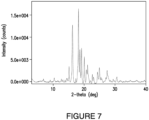
- crystalline ( R )-5-carbamoylpyridin-3-yl-2-methyl-4-(3-(trifluoromethoxy)benzyl)piperazine-1-carboxylate Form B having an X-ray powder diffraction pattern comprising peaks at 16.2, 18.2, and 19.2 degrees 2 ⁇ ⁇ 0.2 degrees 2 ⁇ .
- crystalline ( R )-5-carbamoylpyridin-3-yl-2-methyl-4-(3-(trifluoromethoxy)benzyl)piperazine-1-carboxylate Form B is characterized by XRPD peaks located at one, two, three, four, five, six, seven, eight, nine, ten, eleven or twelve of the following approximate positions: 15.1, 16.2, 17.9, 18.2, 18.7, 19.2, 20.1, 21.1, 24.3, 25.0, 27.4, and 27.6 degrees 2 ⁇ .
- crystalline ( R )-5-carbamoylpyridin-3-yl-2-methyl-4-(3-(trifluoromethoxy)benzyl)piperazine-1-carboxylate Form B is characterized by an XRPD pattern having 1, 2, 3, 4, 5, 6, 7, 8, 9, 10, 11, 12, 13, 14, 15, 16, 17, 18, 19, 20, 21, 22, 23, 24 or 25 peaks matching peaks in the representative XRPD pattern provided herein.
- crystalline ( R )-5-carbamoylpyridin-3-yl-2-methyl-4-(3-(trifluoromethoxy)benzyl)piperazine-1-carboxylate Form B having an X-ray powder diffraction pattern corresponding to the representative X-ray powder diffraction patterns depicted in FIG. 7 .
- crystalline ( R )-5-carbamoylpyridin-3-yl-2-methyl-4-(3-(trifluoromethoxy)benzyl)piperazine-1-carboxylate Form B may be characterized by thermal analysis.
- crystalline ( R )-5-carbamoylpyridin-3-yl-2-methyl-4-(3-(trifluoromethoxy)benzyl)piperazine-1-carboxylate Form B having a differential scanning calorimetry thermogram comprising an endotherm with a maximum at about 95° C.
- crystalline ( R )-5-carbamoylpyridin-3-yl-2-methyl-4-(3-(trifluoromethoxy)benzyl)piperazine-1-carboxylate Form B having a differential scanning calorimetry thermogram comprising an endotherm with an onset at about 91° C.
- crystalline ( R )-5-carbamoylpyridin-3-yl-2-methyl-4-(3-(trifluoromethoxy)benzyl)piperazine-1-carboxylate Form B having a differential scanning calorimetry thermogram corresponding to the representative differential scanning calorimetry thermogram depicted in FIG. 8 .
- crystalline ( R )-5-carbamoylpyridin-3-yl-2-methyl-4-(3-(trifluoromethoxy)benzyl)piperazine-1-carboxylate Form B which is anhydrous.
- crystalline ( R )-5-carbamoylpyridin-3-yl-2-methyl-4-(3-(trifluoromethoxy)benzyl)piperazine-1-carboxylate Form B having a thermogravimetric analysis thermogram comprising a weight loss of less than about 2.5% when heated from about 30° C to about 100° C.
- crystalline ( R )-5-carbamoylpyridin-3-yl-2-methyl-4-(3-(trifluoromethoxy)benzyl)piperazine-1-carboxylate Form B having a thermogravimetric analysis thermogram comprising a weight loss of less than about 1.0% when heated from about 30° C to about 150° C.
- crystalline ( R )-5-carbamoylpyridin-3-yl-2-methyl-4-(3-(trifluoromethoxy)benzyl)piperazine-1-carboxylate Form B having a thermogravimetric analysis thermogram comprising a weight loss of less than about 0.1% when heated from about 30° C to about 150° C.
- thermogravimetric analysis thermogram corresponding to the representative thermogravimetric analysis thermogram depicted in FIG. 8 .
- crystalline ( R )-5-carbamoylpyridin-3-yl-2-methyl-4-(3-(trifluoromethoxy)benzyl)piperazine-1-carboxylate Form B which is substantially physically pure.
- crystalline ( R )-5-carbamoylpyridin-3-yl-2-methyl-4-(3-(trifluoromethoxy)benzyl)piperazine-1-carboxylate Form B which is substantially chemically pure.
- a pharmaceutical composition comprising a crystalline ( R )-5-carbamoylpyridin-3-yl-2-methyl-4-(3-(trifluoromethoxy)benzyl)piperazine-1-carboxylate Form B.
- Certain embodiments herein provide crystalline ( R )-5-carbamoylpyridin-3-yl-2-methyl-4-(3-(trifluoromethoxy)benzyl)piperazine-1-carboxylate Form C.
- crystalline ( R )-5-carbamoylpyridin-3-yl-2-methyl-4-(3-(trifluoromethoxy)benzyl)piperazine-1-carboxylate Form C can be obtained from a 1:3 chloroform/hexane mixture.
- crystalline ( R )-5-carbamoylpyridin-3-yl-2-methyl-4-(3-(trifluoromethoxy)benzyl)piperazine-1-carboxylate can be obtained from a 1:1 ethanol/water mixture.
- crystalline ( R )-5-carbamoylpyridin-3-yl-2-methyl-4-(3-(trifluoromethoxy)benzyl)piperazine-1-carboxylate can be obtained from a 3:1 acetonitrile/water mixture.
- crystalline ( R )-5-carbamoylpyridin-3-yl-2-methyl-4-(3-(trifluoromethoxy)benzyl)piperazine-1-carboxylate can be obtained from slurrying Form B in FaSSIF.
- crystalline ( R )-5-carbamoylpyridin-3-yl-2-methyl-4-(3-(trifluoromethoxy)benzyl)piperazine-1-carboxylate can be obtained from slurrying Form B in FeSSIF.
- crystalline ( R )-5-carbamoylpyridin-3-yl-2-methyl-4-(3-(trifluoromethoxy)benzyl)piperazine-1-carboxylate Form C may be characterized by X-ray powder diffraction analysis.
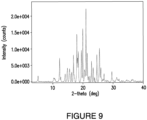
- crystalline ( R )-5-carbamoylpyridin-3-yl-2-methyl-4-(3-(trifluoromethoxy)benzyl)piperazine-1-carboxylate Form C having an X-ray powder diffraction pattern comprising peaks at 18.0, 20.0, and 21.0 degrees 2 ⁇ ⁇ 0.2 degrees 2 ⁇ .
- crystalline ( R )-5-carbamoylpyridin-3-yl-2-methyl-4-(3-(trifluoromethoxy)benzyl)piperazine-1-carboxylate Form C is characterized by XRPD peaks located at one, two, three, four, five, six, seven, eight, nine, ten, eleven, twelve, thirteen, fourteen, fifteen, sixteen, seventeen, eighteen, nineteen, twenty, twenty-one, or twenty-two of the following approximate positions: 12.3, 14.1, 14.7, 14.8, 15.5, 15.7, 16.2, 16.8, 17.1, 18.0, 18.2, 18.5, 19.5, 20.0, 20.5, 21.0, 21.4, 22.8, 24.6, 25.5, 25.9, and 29.6 degrees 2 ⁇ .
- crystalline ( R )-5-carbamoylpyridin-3-yl-2-methyl-4-(3-(trifluoromethoxy)benzyl)piperazine-1-carboxylate Form C is characterized by an XRPD pattern having 1, 2, 3, 4, 5, 6, 7, 8, 9, 10, 11, 12, 13, 14, 15, 16, 17, 18, 19, 20, 21, 22, 23, 24 or 25 peaks matching peaks in the representative XRPD pattern provided herein.
- crystalline ( R )-5-carbamoylpyridin-3-yl-2-methyl-4-(3-(trifluoromethoxy)benzyl)piperazine-1-carboxylate Form C having an X-ray powder diffraction pattern corresponding to the representative X-ray powder diffraction patterns depicted in FIG. 9 .
- crystalline ( R )-5-carbamoylpyridin-3-yl-2-methyl-4-(3-(trifluoromethoxy)benzyl)piperazine-1-carboxylate Form C may be characterized by thermal analysis.
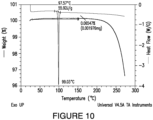
- crystalline ( R )-5-carbamoylpyridin-3-yl-2-methyl-4-(3-(trifluoromethoxy)benzyl)piperazine-1-carboxylate Form C having a differential scanning calorimetry thermogram comprising an endotherm with a maximum at about 99° C.
- crystalline ( R )-5-carbamoylpyridin-3-yl-2-methyl-4-(3-(trifluoromethoxy)benzyl)piperazine-1-carboxylate Form C having a differential scanning calorimetry thermogram comprising an endotherm with an onset at about 98° C.
- crystalline ( R )-5-carbamoylpyridin-3-yl-2-methyl-4-(3-(trifluoromethoxy)benzyl)piperazine-1-carboxylate Form C having a differential scanning calorimetry thermogram corresponding to the representative differential scanning calorimetry thermograms depicted in FIG. 10 .
- crystalline ( R )-5-carbamoylpyridin-3-yl-2-methyl-4-(3-(trifluoromethoxy)benzyl)piperazine-1-carboxylate Form C which is anhydrous.
- crystalline ( R )-5-carbamoylpyridin-3-yl-2-methyl-4-(3-(trifluoromethoxy)benzyl)piperazine-1-carboxylate Form C having a thermogravimetric analysis thermogram comprising a weight loss of about 0.149% when heated from about 30° C to about 150° C.
- crystalline ( R )-5-carbamoylpyridin-3-yl-2-methyl-4-(3-(trifluoromethoxy)benzyl)piperazine-1-carboxylate Form C having a thermogravimetric analysis thermogram comprising a weight loss of less than about 1.0% when heated from about 30° C to about 150° C.
- crystalline ( R )-5-carbamoylpyridin-3-yl-2-methyl-4-(3-(trifluoromethoxy)benzyl)piperazine-1-carboxylate Form C having a thermogravimetric analysis thermogram comprising a weight loss of about 0.15% when heated from about 30° C to about 150° C.
- thermogravimetric analysis thermogram corresponding to the representative thermogravimetric analysis thermogram depicted in FIG. 10 .
- crystalline ( R )-5-carbamoylpyridin-3-yl-2-methyl-4-(3-(trifluoromethoxy)benzyl)piperazine-1-carboxylate Form C which is substantially physically pure.
- crystalline ( R )-5-carbamoylpyridin-3-yl-2-methyl-4-(3-(trifluoromethoxy)benzyl)piperazine-1-carboxylate Form C which is substantially chemically pure.
- a pharmaceutical composition comprising crystalline ( R )-5-carbamoylpyridin-3-yl-2-methyl-4-(3-(trifluoromethoxy)benzyl)piperazine-1-carboxylate Form C.
- Certain embodiments herein provide crystalline ( R )-5-carbamoylpyridin-3-yl-2-methyl-4-(3-(trifluoromethoxy)benzyl)piperazine-1-carboxylate Form D.
- crystalline ( R )-5-carbamoylpyridin-3-yl-2-methyl-4-(3-(trifluoromethoxy)benzyl)piperazine-1-carboxylate Form D can be obtained from slurrying Form B in methyl tert-butyl ether (MTBE).
- crystalline ( R )-5-carbamoylpyridin-3-yl-2-methyl-4-(3-(trifluoromethoxy)benzyl)piperazine-1-carboxylate Form D may be characterized by X-ray powder diffraction analysis.
- crystalline ( R )-5-carbamoylpyridin-3-yl-2-methyl-4-(3-(trifluoromethoxy)benzyl)piperazine-1-carboxylate Form D having an X-ray powder diffraction pattern comprising peaks at 13.4, 21.0, and 23.8 degrees 2 ⁇ ⁇ 0.2 degrees 2 ⁇ .
- crystalline ( R )-5-carbamoylpyridin-3-yl-2-methyl-4-(3-(trifluoromethoxy)benzyl)piperazine-1-carboxylate Form D is characterized by XRPD peaks located at one, two, three, four, five, six, seven, eight, nine, ten, eleven, twelve, thirteen, fourteen, fifteen, sixteen, or seventeen of the following approximate positions: 13.4, 14.0, 14.8, 16.1, 16.8, 18.0, 18.3, 18.6, 19.5, 19.8, 20.7, 21.0, 22.8, 23.8, 24.4, 26.7, and 29.5 degrees 2 ⁇ .
- crystalline ( R )-5-carbamoylpyridin-3-yl-2-methyl-4-(3-(trifluoromethoxy)benzyl)piperazine-1-carboxylate Form D is characterized by an XRPD pattern having 1, 2, 3, 4, 5, 6, 7, 8, 9, 10, 11, 12, 13, 14, 15, 16, 17, 18, 19, 20, 21, 22, 23, 24 or 25 peaks matching peaks in the representative XRPD pattern provided herein.
- crystalline ( R )-5-carbamoylpyridin-3-yl-2-methyl-4-(3-(trifluoromethoxy)benzyl)piperazine-1-carboxylate Form D having an X-ray powder diffraction pattern corresponding to the representative X-ray powder diffraction patterns depicted in FIG. 11 .
- crystalline ( R )-5-carbamoylpyridin-3-yl-2-methyl-4-(3-(trifluoromethoxy)benzyl)piperazine-1-carboxylate Form D may be characterized by thermal analysis.
- crystalline ( R )-5-carbamoylpyridin-3-yl-2-methyl-4-(3-(trifluoromethoxy)benzyl)piperazine-1-carboxylate Form D having a differential scanning calorimetry thermogram comprising an endotherm with a maximum at about 101° C.
- crystalline ( R )-5-carbamoylpyridin-3-yl-2-methyl-4-(3-(trifluoromethoxy)benzyl)piperazine-1-carboxylate Form D having a differential scanning calorimetry thermogram comprising an endotherm with an onset at about 99° C.
- crystalline ( R )-5-carbamoylpyridin-3-yl-2-methyl-4-(3-(trifluoromethoxy)benzyl)piperazine-1-carboxylate Form D having a differential scanning calorimetry thermogram corresponding to the representative differential scanning calorimetry thermogram depicted in FIG. 12 .
- crystalline ( R )-5-carbamoylpyridin-3-yl-2-methyl-4-(3-(trifluoromethoxy)benzyl)piperazine-1-carboxylate Form D which is anhydrous.
- crystalline ( R )-5-carbamoylpyridin-3-yl-2-methyl-4-(3-(trifluoromethoxy)benzyl)piperazine-1-carboxylate Form D having a thermogravimetric analysis thermogram comprising a weight loss of about 0.054% when heated from about 30° C to about 150° C.
- crystalline ( R )-5-carbamoylpyridin-3-yl-2-methyl-4-(3-(trifluoromethoxy)benzyl)piperazine-1-carboxylate Form D having a thermogravimetric analysis thermogram comprising a weight loss of less than about 0.1% when heated from about 30° C to about 150° C.
- thermogravimetric analysis thermogram corresponding to the representative thermogravimetric analysis thermogram depicted in FIG. 12 .
- crystalline ( R )-5-carbamoylpyridin-3-yl-2-methyl-4-(3-(trifluoromethoxy)benzyl)piperazine-1-carboxylate Form D which is substantially physically pure.
- crystalline ( R )-5-carbamoylpyridin-3-yl-2-methyl-4-(3-(trifluoromethoxy)benzyl)piperazine-1-carboxylate Form D which is substantially chemically pure.
- a pharmaceutical composition comprising crystalline ( R )-5-carbamoylpyridin-3-yl-2-methyl-4-(3-(trifluoromethoxy)benzyl)piperazine-1-carboxylate Form D.
- Certain embodiments herein provide crystalline ( R )-5-carbamoylpyridin-3-yl-2-methyl-4-(3-(trifluoromethoxy)benzyl)piperazine-1-carboxylate Form E.
- crystalline ( R )-5-carbamoylpyridin-3-yl-2-methyl-4-(3-(trifluoromethoxy)benzyl)piperazine-1-carboxylate Form E can be obtained from a chloroform/hexane mixture.
- crystalline ( R )-5-carbamoylpyridin-3-yl-2-methyl-4-(3-(trifluoromethoxy)benzyl)piperazine-1-carboxylate Form E may be characterized by X-ray powder diffraction analysis.
- crystalline ( R )-5-carbamoylpyridin-3-yl-2-methyl-4-(3-(trifluoromethoxy)benzyl)piperazine-1-carboxylate Form E having an X-ray powder diffraction pattern comprising peaks at 17.8, 21.3, and 22.8 degrees 2 ⁇ ⁇ 0.2 degrees 2 ⁇ .
- crystalline ( R )-5-carbamoylpyridin-3-yl-2-methyl-4-(3-(trifluoromethoxy)benzyl)piperazine-1-carboxylate Form E is characterized by XRPD peaks located at one, two, three, four, five, six, seven, eight, nine, ten, eleven or twelve of the following approximate positions: 10.9, 12.7, 15.8, 17.2, 17.8, 18.4, 19.7 21.3, 21.9, 22.8, 24.2, and 25.6 degrees 2 ⁇ .
- crystalline ( R )-5-carbamoylpyridin-3-yl-2-methyl-4-(3-(trifluoromethoxy)benzyl)piperazine-1-carboxylate is characterized by an XRPD pattern having 1, 2, 3, 4, 5, 6, 7, 8, 9, 10, 11, 12, 13, 14, 15, 16, 17, 18, 19, 20, 21, 22, 23, 24 or 25 peaks matching peaks in the representative XRPD pattern provided herein.
- crystalline ( R )-5-carbamoylpyridin-3-yl-2-methyl-4-(3-(trifluoromethoxy)benzyl)piperazine-1-carboxylate Form E having an X-ray powder diffraction pattern corresponding to the representative X-ray powder diffraction patterns depicted in FIG. 13 .
- crystalline ( R )-5-carbamoylpyridin-3-yl-2-methyl-4-(3-(trifluoromethoxy)benzyl)piperazine-1-carboxylate Form E may be characterized by thermal analysis.
- crystalline ( R )-5-carbamoylpyridin-3-yl-2-methyl-4-(3-(trifluoromethoxy)benzyl)piperazine-1-carboxylate Form E having a differential scanning calorimetry thermogram comprising an endotherm with a maximum at about 104° C.
- crystalline ( R )-5-carbamoylpyridin-3-yl-2-methyl-4-(3-(trifluoromethoxy)benzyl)piperazine-1-carboxylate Form E having a differential scanning calorimetry thermogram comprising an endotherm with an onset at about 102° C.
- crystalline ( R )-5-carbamoylpyridin-3-yl-2-methyl-4-(3-(trifluoromethoxy)benzyl)piperazine-1-carboxylate Form E having a differential scanning calorimetry thermogram corresponding to the representative differential scanning calorimetry thermograms depicted in FIG. 14 .
- crystalline ( R )-5-carbamoylpyridin-3-yl-2-methyl-4-(3-(trifluoromethoxy)benzyl)piperazine-1-carboxylate Form E which is anhydrous.
- crystalline ( R )-5-carbamoylpyridin-3-yl-2-methyl-4-(3-(trifluoromethoxy)benzyl)piperazine-1-carboxylate Form E having a thermogravimetric analysis thermogram comprising a weight loss of about 0.37% when heated from about 30° C to about 150° C.
- crystalline ( R )-5-carbamoylpyridin-3-yl-2-methyl-4-(3-(trifluoromethoxy)benzyl)piperazine-1-carboxylate Form E having a thermogravimetric analysis thermogram comprising a weight loss of less than about 1.0% when heated from about 30° C to about 150° C.
- thermogravimetric analysis thermogram corresponding to the representative thermogravimetric analysis thermogram depicted in FIG. 14 .
- crystalline ( R )-5-carbamoylpyridin-3-yl-2-methyl-4-(3-(trifluoromethoxy)benzyl)piperazine-1-carboxylate Form E which is substantially physically pure.
- crystalline ( R )-5-carbamoylpyridin-3-yl-2-methyl-4-(3-(trifluoromethoxy)benzyl)piperazine-1-carboxylate Form E which is substantially chemically pure.
- a pharmaceutical composition comprising crystalline ( R )-5-carbamoylpyridin-3-yl-2-methyl-4-(3-(trifluoromethoxy)benzyl)piperazine-1-carboxylate Form E.
- compositions and single unit dosage forms comprising crystalline forms of ( R )-5-carbamoylpyridin-3-yl-2-methyl-4-(3-(trifluoromethoxy)benzyl)piperazine-1-carboxylate are provided herein. Also provided herein are methods for preparing pharmaceutical compositions and single unit dosage forms comprising crystalline forms of ( R )-5-carbamoylpyridin-3-yl-2-methyl-4-(3-(trifluoromethoxy)benzyl)piperazine-1-carboxylate.
- individual dosage forms comprising crystalline ( R )-5-carbamoylpyridin-3-yl-2-methyl-4-(3-(trifluoromethoxy)benzyl)piperazine-1-carboxylate provided herein or prepared using crystalline forms of ( R )-5-carbamoylpyridin-3-yl-2-methyl-4-(3-(trifluoromethoxy)benzyl)piperazine-1-carboxylate provided herein may be suitable for oral, mucosal (including rectal, nasal, or vaginal), parenteral (including subcutaneous, intramuscular, bolus injection, intraarterial, or intravenous), sublingual, transdermal, buccal, or topical administration.
- mucosal including rectal, nasal, or vaginal
- parenteral including subcutaneous, intramuscular, bolus injection, intraarterial, or intravenous
- sublingual, transdermal, buccal, or topical administration may be suitable for oral, mucosal (including rectal,
- compositions and dosage forms provided herein comprise crystalline forms of ( R )-5-carbamoylpyridin-3-yl-2-methyl-4-(3-(trifluoromethoxy)benzyl)piperazine-1-carboxylate.
- Certain embodiments herein provide pharmaceutical compositions and dosage forms comprising crystalline form of (R)-5- carbamoylpyridin-3-yl-2-methyl-4-(3-(trifluoromethoxy)benzyl)piperazine-1-carboxylate, wherein the crystalline form of ( R )-5-carbamoylpyridin-3-yl-2-methyl-4-(3-(trifluoromethoxy)benzyl)piperazine-1-carboxylate is substantially pure.
- compositions and dosage forms comprising crystalline form of ( R )-5-carbamoylpyridin-3-yl-2-methyl-4-(3-(trifluoromethoxy)benzyl)piperazine-1-carboxylate as provided herein, which is substantially free of other crystalline solid forms of ( R )-5-carbamoylpyridin-3-yl-2-methyl-4-(3-(trifluoromethoxy)benzyl)piperazine-1-carboxylate and/or amorphous solid forms of ( R )-5-carbamoylpyridin-3-yl-2-methyl-4-(3-(trifluoromethoxy)benzyl)piperazine-1-carboxylate.
- Pharmaceutical compositions and dosage forms provided herein typically also comprise one or more pharmaceutically acceptable excipients, diluents or carriers.
- Single unit dosage forms provided herein are suitable for oral or parenteral (e.g., subcutaneous, intravenous, bolus injection, intramuscular, or intraarterial) administration to a patient.
- dosage forms include, but are not limited to: tablets; caplets; capsules, such as soft elastic gelatin capsules; powders and sterile solids that can be reconstituted to provide liquid dosage forms suitable for parenteral administration to a patient.
- composition, shape, and type of dosage forms provided herein will typically vary depending on their use.
- a parenteral dosage form may contain smaller amounts of one or more of the active ingredients it comprises than an oral dosage form used to treat the same disease or disorder.
- Typical pharmaceutical compositions and dosage forms comprise one or more excipients.
- Suitable excipients are well known to those skilled in the art of pharmacy, and nonlimiting examples of suitable excipients are provided herein. Whether a particular excipient is suitable for incorporation into a pharmaceutical composition or dosage form depends on a variety of factors well known in the art including, but not limited to, the way in which the dosage form will be administered to a patient.
- oral dosage forms such as tablets may contain excipients not suited for use in parenteral dosage forms. The suitability of a particular excipient may also depend on the specific active ingredients in the dosage form.
- the amounts and specific types of active ingredients in a dosage form may differ depending on factors such as, but not limited to, the route by which it is to be administered to patients.
- typical dosage forms provided herein lie within the range of from about 0.1 mg to about 1,000 mg per day, given as a single once-a-day dose in the morning or as divided doses throughout the day. More specifically, the daily dose may be administered twice, three times, or four times daily in equally divided doses.
- a daily dose range may be from about 0.1 mg to about 500 mg per day, more specifically, between about 0.1 mg and about 200 mg per day.
- a daily dose range may be 1 mg, 2 mg, 3 mg, 4 mg, or 5 mg.
- the therapy may be initiated at a lower dose, perhaps about 1 mg to about 25 mg, and increased if necessary up to about 200 mg to about 1,000 mg per day as either a single dose or divided doses, depending on the patient's global response.
- compositions provided herein that are suitable for oral administration can be presented as discrete dosage forms, such as, but are not limited to, tablets (e.g., chewable tablets), caplets, capsules, and liquids (e.g., flavored syrups).
- dosage forms contain predetermined amounts of active ingredients, and may be prepared by methods of pharmacy well known to those skilled in the art. See generally Remington's Pharmaceutical Sciences, 18th ed., Mack Publishing, Easton Pa. (1990 ).
- Typical oral dosage forms provided herein are prepared by combining the active ingredient(s) in an intimate admixture with at least one excipient according to conventional pharmaceutical compounding techniques.
- Excipients can take a wide variety of forms depending on the form of preparation desired for administration.
- excipients suitable for use in oral liquid or aerosol dosage forms include, but are not limited to, water, glycols, oils, alcohols, flavoring agents, preservatives, and coloring agents.
- excipients suitable for use in solid oral dosage forms include, but are not limited to, starches, sugars, micro-crystalline cellulose, diluents, granulating agents, lubricants, binders, and disintegrating agents.
- tablets can be coated by standard aqueous or nonaqueous techniques.
- dosage forms can be prepared by any of the methods of pharmacy.
- pharmaceutical compositions and dosage forms are prepared by uniformly and intimately admixing the active ingredients with liquid carriers, finely divided solid carriers, or both, and then shaping the product into the desired presentation if necessary.
- a tablet can be prepared by compression or molding.
- Compressed tablets can be prepared by compressing in a suitable machine the active ingredients in a free-flowing form such as powder or granules, optionally mixed with an excipient.
- Molded tablets can be made by molding in a suitable machine a mixture of the powdered compound moistened with an inert liquid diluent.
- excipients that can be used in oral dosage forms of the invention include, but are not limited to, binders, fillers, disintegrants, and lubricants.
- Binders suitable for use in pharmaceutical compositions and dosage forms include, but are not limited to, corn starch, potato starch, or other starches, gelatin, natural and synthetic gums such as acacia, sodium alginate, alginic acid, other alginates, powdered tragacanth, guar gum, cellulose and its derivatives (e.g., ethyl cellulose, cellulose acetate, carboxymethyl cellulose calcium, sodium carboxymethyl cellulose), polyvinyl pyrrolidone, methyl cellulose, pre-gelatinized starch, hydroxypropyl methyl cellulose, (e.g., Nos. 2208, 2906, 2910), microcrystalline cellulose, and mixtures thereof.
- fillers suitable for use in the pharmaceutical compositions and dosage forms disclosed herein include, but are not limited to, talc, calcium carbonate (e.g., granules or powder), microcrystalline cellulose, powdered cellulose, dextrates, kaolin, mannitol, silicic acid, sorbitol, starch, pre-gelatinized starch, and mixtures thereof.
- the binder or filler in pharmaceutical compositions of the invention is typically present in from about 50 to about 99 weight percent of the pharmaceutical composition or dosage form.
- Suitable forms of microcrystalline cellulose include, but are not limited to, the materials sold as AVICEL-PH-101 TM , AVICEL-PH-103 TM , AVICEL RC-581 TM , AVICEL-PH-105 TM (available from FMC Corporation, American Viscose Division, Avicel Sales, Marcus Hook, Pa.), and mixtures thereof.
- a specific binder is a mixture of microcrystalline cellulose and sodium carboxymethyl cellulose sold as AVICEL RC-58 TM .
- Suitable anhydrous or low moisture excipients or additives include AVICEL-PH-103 TM and Starch 1500 LM TM .
- Disintegrants are used in the compositions provided herein to provide tablets that disintegrate when exposed to an aqueous environment. Tablets that contain too much disintegrant may disintegrate in storage, while those that contain too little may not disintegrate at a desired rate or under the desired conditions. Thus, a sufficient amount of disintegrant that is neither too much nor too little to detrimentally alter the release of the active ingredients should be used to form solid oral dosage forms of the invention.
- the amount of disintegrant used varies based upon the type of formulation, and is readily discernible to those of ordinary skill in the art.
- Typical pharmaceutical compositions comprise from about 0.5 to about 15 weight percent of disintegrant, specifically from about 1 to about 5 weight percent of disintegrant.
- Disintegrants that can be used in pharmaceutical compositions and dosage forms provided herein include, but are not limited to, agar-agar, alginic acid, calcium carbonate, microcrystalline cellulose, croscarmellose sodium, crospovidone, polacrilin potassium, sodium starch glycolate, potato or tapioca starch, pre-gelatinized starch, other starches, clays, other algins, other celluloses, gums, and mixtures thereof.
- Lubricants that can be used in pharmaceutical compositions and dosage forms provided herein include, but are not limited to, calcium stearate, magnesium stearate, mineral oil, light mineral oil, glycerin, sorbitol, mannitol, polyethylene glycol, other glycols, stearic acid, sodium lauryl sulfate, talc, hydrogenated vegetable oil (e.g., peanut oil, cottonseed oil, sunflower oil, sesame oil, olive oil, corn oil, and soybean oil), zinc stearate, ethyl oleate, ethyl laureate, agar, and mixtures thereof.
- calcium stearate e.g., magnesium stearate, mineral oil, light mineral oil, glycerin, sorbitol, mannitol, polyethylene glycol, other glycols, stearic acid, sodium lauryl sulfate, talc
- hydrogenated vegetable oil e.g., peanut oil, cottonseed oil
- Additional lubricants include, for example, a syloid silica gel (AEROSII, 200 TM , manufactured by W.R. Grace Co. of Baltimore, Md.), a coagulated aerosol of synthetic silica (marketed by Degussa Co. of Plano, Tex.), CAB-O-SIL TM (a pyrogenic silicon dioxide product sold by Cabot Co. of Boston, Mass.), and mixtures thereof. If used at all, lubricants are typically used in an amount of less than about one weight percent of the pharmaceutical compositions or dosage forms into which they are incorporated.
- Parenteral dosage forms can be administered to patients by various routes including, but not limited to, subcutaneous, intravenous (including bolus injection), intramuscular, and intraarterial injection. Because their administration typically bypasses patients' natural defenses against contaminants, parenteral dosage forms are preferably sterile or capable of being sterilized prior to administration to a patient. Examples of parenteral dosage forms include, but are not limited to, solutions ready for injection, dry products ready to be dissolved or suspended in a pharmaceutically acceptable vehicle for injection, suspensions ready for injection, and emulsions.
- Suitable vehicles that can be used to provide parenteral dosage forms provided herien are well known to those skilled in the art. Examples include, but are not limited to: Water for Injection USP; aqueous vehicles such as, but not limited to, Sodium Chloride Injection, Ringer's Injection, Dextrose Injection, Dextrose and Sodium Chloride Injection, and Lactated Ringer's Injection; water-miscible vehicles such as, but not limited to, ethyl alcohol, polyethylene glycol, and polypropylene glycol; and non-aqueous vehicles such as, but not limited to, corn oil, cottonseed oil, peanut oil, sesame oil, ethyl oleate, isopropyl myristate, and benzyl benzoate.
- water for Injection USP Water for Injection USP
- aqueous vehicles such as, but not limited to, Sodium Chloride Injection, Ringer's Injection, Dextrose Injection, Dextrose and Sodium Chlor
- combination therapies for example, co-administering a disclosed compound and an additional active agent, as part of a specific treatment regimen intended to provide the beneficial effect from the co-action of these therapeutic agents.
- the beneficial effect of the combination includes, but is not limited to, pharmacokinetic or pharmacodynamic co-action resulting from the combination of therapeutic agents.
- Administration of these therapeutic agents in combination typically is carried out over a defined time period (usually weeks, months, or years depending upon the combination selected).
- Combination therapy is intended to embrace administration of multiple therapeutic agents in a sequential manner, that is, wherein each therapeutic agent is administered at a different time, as well as administration of these therapeutic agents, or at least two of the therapeutic agents, in a substantially simultaneous manner.
- Substantially simultaneous administration is accomplished, for example, by administering to the subject a single formulation or composition, (e.g. , a tablet or capsule having a fixed ratio of each therapeutic agent or in multiple, single formulations ( e.g ., capsules) for each of the therapeutic agents.
- Sequential or substantially simultaneous administration of each therapeutic agent is effected by any appropriate route including, but not limited to, oral routes, intravenous routes, intramuscular routes, and direct absorption through mucous membrane tissues.
- the therapeutic agents are administered by the same route or by different routes.
- a first therapeutic agent of the combination selected is administered by intravenous injection while the other therapeutic agents of the combination are administered orally.
- all therapeutic agents are administered orally or all therapeutic agents are administered by intravenous injection.
- Combination therapy also embraces the administration of the therapeutic agents as described above in further combination with other biologically active ingredients and non-drug therapies.
- the combination therapy further comprises a non-drug treatment
- the non-drug treatment is conducted at any suitable time so long as a beneficial effect from the co-action of the combination of the therapeutic agents and non-drug treatment is achieved.
- the beneficial effect is still achieved when the non-drug treatment is temporally removed from the administration of the therapeutic agents, perhaps by days or even weeks.
- the components of the combination are administered to a patient simultaneously or sequentially. It will be appreciated that the components are present in the same pharmaceutically acceptable carrier and, therefore, are administered simultaneously. Alternatively, the active ingredients are present in separate pharmaceutical carriers, such as conventional oral dosage forms, that are administered either simultaneously or sequentially.
- a disclosed compound is co-administered with another therapeutic for pain such as an opioid, a cannabinoid receptor (CB-1 or CB-2) modulator, a COX-2 inhibitor, acetaminophen, and/or a non-steroidal antiinflammatory agent.
- additional therapeutics e.g ., for the treatment of pain that are co-administered, include morphine, codeine, hydromorphone, hydrocodone, oxymorphone, fentanyl, tramadol, and levorphanol.
- contemplated therapeutics for co-administration include aspirin, naproxen, ibuprofen, salsalate, diflunisal, dexibuprofen, fenoprofen, ketoprofen, oxaprozin, loxoprofen, indomethacin, tolmetin, sulindac, etodolac, ketorolac, piroxicam, meloxicam, tenoxicam, droxicam, lornoxicam, celecoxib, parecoxib, rimonabant, and/or etoricoxib.
- Form A was obtained with several solvents, including methanol, isopropyl acetate, and a 9:1 mixture of ethanol/water. Form A was also prepared by slurrying starting material (a mixture of Form A/C) in toluene at RT for 1 day. NMR spectra of Form A indicates trace amount of surface toluene. HPLC purity of Form A sample was measured to be 99.87 area%.
- Form A has a differential scanning calorimetry thermogram comprising an endotherm with an onset of about 111-112° C and a maximum at about 113° C (shown in FIG. 2 ).
- Form A has a thermogravimetric analysis thermogram comprising a weight loss of less than about 0.1% when heated from about 30° C to about 100° C, indicating anhydrous material (shown in FIG. 2 ).
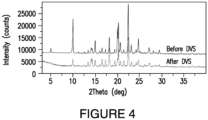
- the dynamic vapor sorption (DVS) isotherm plot of Form A was collected at 25 °C between 0 and 95% RH (shown in FIG. 3 ). A water uptake of 0.05% was observed at 25 °C/80% RH. The XRPD comparison indicated that no form change was observed for Form A after the DVS test (shown in FIG. 4 ).
- Form A sample showed good physical and chemical stability under accelerated conditions of 25 °C/60%RH and 40 °C/75%RH for 3 months.
- X-ray powder diffractograms comparing Form A before and after accelerated conditions is shown in FIG. 5 .
- XRPD peaks for Form A are shown in Tables 1 and 2 (different XRPD instruments and samples; peaks below a certain amplitude are omitted for clarity). Table 1.
- Form B was obtained with a 9:1 mixture of acetonitrile/water. Form B was also obtained via liquid vapor diffusion from mixture of ethyl acetate/n-heptane as well as evaporation in neat methyl acetate, acetone, or methylene chloride.
- the XRPD peaks for Form B are displayed in Table 3. A weight loss of less than 1.0% was observed when heated from about 30° C to about 100° C. The DSC result exhibited a sharp endotherm onset at 91 °C and an endotherm with a maximum at about 95° C. Based on the low TGA weight loss and the single sharp DSC endotherm, Form B was postulated to be an anhydrate. Table 3. XRPD peaks of Form B. No.
- Form C was obtained when Form B was slurried in FaSSIF-v2 or FeSSIF-v2 at 37 °C for 2 hr.
- Form C can also be obtained with a 1:3 chloroform/hexane mixture.
- the DSC shows an endotherm with a maximum at about 99° C, and the TGA shows a weight loss of less than about 0.15% when heated from about 30° C to about 150° C, indicating Form C is an anhydrate.
- XRPD peaks for Form C are shown in Table 4. Table 4. XRPD peaks of Form C. No.
- Form D can be obtained from slurrying Form B in MTBE at room temperature for 10 days.
- the DSC shows an endotherm with a maximum at about 101° C, and the TGA shows a weight loss of about 0.054% when heated from about 30° C to about 150° C, indicating Form D is an anhydrate.
- XRPD peaks for Form D are shown in Table 5. Table 5. XRPD peaks of Form D. No.
- Form E can be obtained from slurring Form C in a chloroform/hexane mixture at rt for 9 days.
- the DSC shows an endotherm with a maximum at about 104° C, and the TGA shows a weight loss of about 0.37% when heated from about 30° C to about 150° C, indicating Form E is an anhydrate.
- XRPD peaks for Form E are shown in Table 6. Table 6. XRPD peaks for Form E. No.
- a solution stability test of Form A was performed to assess substantial degradation of ( R )-5-carbamoylpyridin-3-yl-2-methyl-4-(3-(trifluoromethoxy)benzyl)piperazine-1-carboxylate in physiologically relevant media.
- a solution of ( R )-5-carbamoylpyridin-3-yl-2-methyl-4-(3-(trifluoromethoxy)benzyl)piperazine-1-carboxylate (1 mg/mL) was prepared in acetonitrile/water (50/50 v/v). Test medium (1990 ⁇ L) was added to a vial.
- Test media evaluated included buffers pH 1-8, simulated gastric fluid (SGF), fasted state simulated intestinal fluid (FaSSIF), and fed state simulated intestinal fluid (FeSSIF).
- Stock solution (10 ⁇ L) was added to the vial containing the medium. This mixture was stirred to mix well and transferred to a HPLC vial, which was placed in the autosampler maintained at 37 °C. The vial was injected repeatedly every 4 hr for 24 hr. Results are shown in Table 7. Solubility is shown in Table 8. Table 7.
- Solubility was evaluated at 2 hr and 24 hr for Form A in FaSSIF-v2 and FeSSIF-v2 at 37 °C. Approximately 40 mg of Form A sample was added in 2.0 mL of corresponding bio-medium to form a suspension, followed by shaking at 500 rpm at 37 °C. After 2 hr and 24 hr, the supernatants were isolated by centrifugation (7000 rpm for 5 min) followed by filtration through 0.45 mm PTFE membrane and were tested by HPLC concentration and pH. The residual solids were characterized by XRPD.
- Solid-state stability evaluation (accelerated conditions) was performed on Form A under conditions of 25 °C/60%RH and 40 °C/75%RH.
- the detailed procedure utilized for stability evaluation is listed below:
- Solubility of Form B was evaluated at 2 hr for Form B in FaSSIF-v2 and FeSSIF-v2 at 37 °C. Approximately 10 to 20 mg of Form B sample was added in 0.8 mL of corresponding bio-relevant medium to form a suspension, followed by shaking at 500 rpm at 37 °C. After 2 hr, the supernatants were isolated by centrifugation (7200 rpm for 5 min) followed by filtration through 0.45 mm PTFE membrane and were tested by HPLC concentration and pH. The residual solids were characterized by XRPD.
- Form B converted to a new form (Form C) after solubility evaluation, while the solubility in FaSSIF-v2 and FeSSIF-v2 was measured to be 0.12 and 0.080 mg/mL, respectively.
- Anti-solvent addition experiments were performed. A total of 8 anti-solvent addition experiments were carried out. Approximately 15 mg of Form A was dissolved in 0.5 mL solvent to obtain a clear solution, and the solution was magnetically stirred, followed by the addition of the anti-solvent to induce precipitation until the total amount of anti-solvent reached 10 mL. The precipitate was isolated for XRPD analysis. Clear solutions were transferred to -20°C for 5 hr. Results summarized in Table 19 showed that only Form A was obtained. Table 19. Summary of anti-solvent addition experiments.
- XRPD X-Ray Powder Diffraction
- determining whether two XRPD patterns match or whether individual peaks in two XRPD patterns match may require consideration of individual variables and parameters such as, but not limited to, preferred orientation, phase impurities, degree of crystallinity, particle size, variation in diffractometer instrument setup, variation in XRPD data collection parameters, and/or variation in XRPD data processing, among others.
- the determination of whether two patterns match may be performed by eye and/or by computer analysis.
- An example of an XRPD pattern collected and analyzed using these methods and parameters is provided herein, e.g., as FIG. 1 .
- DSC Differential Scanning Calorimetry
- TGA Thermal Gravimetric Analyses
- Dynamic vapor sorption was performed on a Surface Measurement Systems DVS Intrinsic. The relative humidity at 25 °C were calibrated against deliquescence point of LiCl, Mg(NO 3 ) 2 , and KCI. Sample sizes were between 10-20 mg. Gas and flow rate was nitrogen, 200 mL/min; dm/dt: 0.002%/min.
- HPLC HPLC was performed with Agilent 1100/1260.
- the analysis for Form A was determined with a Phenomenex Gemini C18, 150x4.6 mm, 3 ⁇ m (column).
- the mobile phase was 0.1% formic acid in water; flow rate of 1.0 mL/min; column temperature of 40 °C; and UV detector at 270 nm.
- the analysis for Form B was determined with a Kinetex 5 ⁇ m EVO C18, 150x4.6 mm, 5 ⁇ m (column).
- the mobile phase was 0.1% formic acid in acetonitrile; flow rate of 1.0 mL/min; column temperature of 40 °C; and UV detector at 210 nm.
Landscapes
- Health & Medical Sciences (AREA)
- Chemical & Material Sciences (AREA)
- Organic Chemistry (AREA)
- Veterinary Medicine (AREA)
- Medicinal Chemistry (AREA)
- Pharmacology & Pharmacy (AREA)
- Life Sciences & Earth Sciences (AREA)
- Animal Behavior & Ethology (AREA)
- General Health & Medical Sciences (AREA)
- Public Health (AREA)
- Nuclear Medicine, Radiotherapy & Molecular Imaging (AREA)
- General Chemical & Material Sciences (AREA)
- Chemical Kinetics & Catalysis (AREA)
- Bioinformatics & Cheminformatics (AREA)
- Engineering & Computer Science (AREA)
- Biomedical Technology (AREA)
- Neurology (AREA)
- Neurosurgery (AREA)
- Pain & Pain Management (AREA)
- Rheumatology (AREA)
- Epidemiology (AREA)
- Oncology (AREA)
- Pharmaceuticals Containing Other Organic And Inorganic Compounds (AREA)
- Plural Heterocyclic Compounds (AREA)
Applications Claiming Priority (3)
| Application Number | Priority Date | Filing Date | Title |
|---|---|---|---|
| US201862731014P | 2018-09-13 | 2018-09-13 | |
| EP19778721.1A EP3849970B1 (fr) | 2018-09-13 | 2019-09-12 | (r)-5-carbamoylpyridin-3-yl-2-methyl-4-(3-(trifluoromethoxy)benzyl)piperazine-1-carboxylate cristallin, compositions et procedes pour leur utilisaton. |
| PCT/US2019/050771 WO2020056105A1 (fr) | 2018-09-13 | 2019-09-12 | (r)-5-carbamoylpyridin-3-yl-2-méthyl-4-(3-(trifluorométhoxy)benzyl) pipérazine-1-carboxylate cristallin, compositions et procédés d'utilisation associés |
Related Parent Applications (1)
| Application Number | Title | Priority Date | Filing Date |
|---|---|---|---|
| EP19778721.1A Division EP3849970B1 (fr) | 2018-09-13 | 2019-09-12 | (r)-5-carbamoylpyridin-3-yl-2-methyl-4-(3-(trifluoromethoxy)benzyl)piperazine-1-carboxylate cristallin, compositions et procedes pour leur utilisaton. |
Related Child Applications (1)
| Application Number | Title | Priority Date | Filing Date |
|---|---|---|---|
| EP26160625.5 Division-Into | 2026-02-25 |
Publications (3)
| Publication Number | Publication Date |
|---|---|
| EP4434583A2 true EP4434583A2 (fr) | 2024-09-25 |
| EP4434583A3 EP4434583A3 (fr) | 2024-11-20 |
| EP4434583B1 EP4434583B1 (fr) | 2026-04-01 |
Family
ID=68069873
Family Applications (2)
| Application Number | Title | Priority Date | Filing Date |
|---|---|---|---|
| EP19778721.1A Active EP3849970B1 (fr) | 2018-09-13 | 2019-09-12 | (r)-5-carbamoylpyridin-3-yl-2-methyl-4-(3-(trifluoromethoxy)benzyl)piperazine-1-carboxylate cristallin, compositions et procedes pour leur utilisaton. |
| EP24185102.1A Active EP4434583B1 (fr) | 2018-09-13 | 2019-09-12 | (r)-5-carbamoylpyridin-3-yl-2-méthyl-4-(3-(trifluorométhoxy)benzyl) pipérazine-1-carboxylate cristallin, compositions et procédés d'utilisation de celui-ci |
Family Applications Before (1)
| Application Number | Title | Priority Date | Filing Date |
|---|---|---|---|
| EP19778721.1A Active EP3849970B1 (fr) | 2018-09-13 | 2019-09-12 | (r)-5-carbamoylpyridin-3-yl-2-methyl-4-(3-(trifluoromethoxy)benzyl)piperazine-1-carboxylate cristallin, compositions et procedes pour leur utilisaton. |
Country Status (28)
| Country | Link |
|---|---|
| US (4) | US11053199B2 (fr) |
| EP (2) | EP3849970B1 (fr) |
| JP (1) | JP7405840B2 (fr) |
| KR (1) | KR102844245B1 (fr) |
| CN (3) | CN118561814A (fr) |
| AU (1) | AU2019337623B2 (fr) |
| BR (1) | BR112021004340A2 (fr) |
| CA (1) | CA3112200A1 (fr) |
| CL (1) | CL2021000596A1 (fr) |
| CO (1) | CO2021003295A2 (fr) |
| DK (1) | DK3849970T3 (fr) |
| EA (1) | EA202190511A1 (fr) |
| ES (1) | ES2993173T3 (fr) |
| FI (1) | FI3849970T3 (fr) |
| HR (1) | HRP20241294T1 (fr) |
| HU (1) | HUE068147T2 (fr) |
| IL (1) | IL281276B2 (fr) |
| LT (1) | LT3849970T (fr) |
| MA (1) | MA53607B1 (fr) |
| MX (1) | MX2021002923A (fr) |
| MY (2) | MY210363A (fr) |
| PL (1) | PL3849970T3 (fr) |
| PT (1) | PT3849970T (fr) |
| RS (1) | RS65967B1 (fr) |
| SG (1) | SG11202102143RA (fr) |
| SI (1) | SI3849970T1 (fr) |
| SM (1) | SMT202400369T1 (fr) |
| WO (1) | WO2020056105A1 (fr) |
Families Citing this family (1)
| Publication number | Priority date | Publication date | Assignee | Title |
|---|---|---|---|---|
| CN118561814A (zh) * | 2018-09-13 | 2024-08-30 | 细胞基因公司 | 结晶(r)-2-甲基-4-(3-(三氟甲氧基)苄基)哌嗪-1-甲酸5-氨基甲酰基吡啶-3-基酯、其组合物及使用方法 |
Family Cites Families (4)
| Publication number | Priority date | Publication date | Assignee | Title |
|---|---|---|---|---|
| MX2007010076A (es) | 2005-02-17 | 2007-10-16 | Astellas Pharma Inc | Derivado de heterociclico-1-carboxilato que contiene nitrogeno no aromatico de piridilo. |
| WO2015116774A1 (fr) * | 2014-01-29 | 2015-08-06 | Synta Pharmaceuticals Corp. | Agents thérapeutiques cibles |
| CN110709084A (zh) * | 2017-03-13 | 2020-01-17 | 阿比德治疗公司 | 双重magl和faah抑制剂 |
| CN118561814A (zh) | 2018-09-13 | 2024-08-30 | 细胞基因公司 | 结晶(r)-2-甲基-4-(3-(三氟甲氧基)苄基)哌嗪-1-甲酸5-氨基甲酰基吡啶-3-基酯、其组合物及使用方法 |
-
2019
- 2019-09-12 CN CN202410683425.0A patent/CN118561814A/zh active Pending
- 2019-09-12 SM SM20240369T patent/SMT202400369T1/it unknown
- 2019-09-12 RS RS20241039A patent/RS65967B1/sr unknown
- 2019-09-12 CA CA3112200A patent/CA3112200A1/fr active Pending
- 2019-09-12 FI FIEP19778721.1T patent/FI3849970T3/fi active
- 2019-09-12 SI SI201930824T patent/SI3849970T1/sl unknown
- 2019-09-12 PL PL19778721.1T patent/PL3849970T3/pl unknown
- 2019-09-12 AU AU2019337623A patent/AU2019337623B2/en active Active
- 2019-09-12 EP EP19778721.1A patent/EP3849970B1/fr active Active
- 2019-09-12 KR KR1020217010747A patent/KR102844245B1/ko active Active
- 2019-09-12 SG SG11202102143RA patent/SG11202102143RA/en unknown
- 2019-09-12 HU HUE19778721A patent/HUE068147T2/hu unknown
- 2019-09-12 EP EP24185102.1A patent/EP4434583B1/fr active Active
- 2019-09-12 MY MYPI2024007477A patent/MY210363A/en unknown
- 2019-09-12 LT LTEPPCT/US2019/050771T patent/LT3849970T/lt unknown
- 2019-09-12 HR HRP20241294TT patent/HRP20241294T1/hr unknown
- 2019-09-12 CN CN201980060119.9A patent/CN113227069B/zh active Active
- 2019-09-12 JP JP2021514123A patent/JP7405840B2/ja active Active
- 2019-09-12 ES ES19778721T patent/ES2993173T3/es active Active
- 2019-09-12 PT PT197787211T patent/PT3849970T/pt unknown
- 2019-09-12 CN CN202410683444.3A patent/CN118530218A/zh active Pending
- 2019-09-12 MA MA53607A patent/MA53607B1/fr unknown
- 2019-09-12 IL IL281276A patent/IL281276B2/en unknown
- 2019-09-12 DK DK19778721.1T patent/DK3849970T3/da active
- 2019-09-12 BR BR112021004340-3A patent/BR112021004340A2/pt unknown
- 2019-09-12 MX MX2021002923A patent/MX2021002923A/es unknown
- 2019-09-12 WO PCT/US2019/050771 patent/WO2020056105A1/fr not_active Ceased
- 2019-09-12 MY MYPI2021001295A patent/MY208901A/en unknown
- 2019-09-12 EA EA202190511A patent/EA202190511A1/ru unknown
- 2019-09-12 US US16/569,578 patent/US11053199B2/en active Active
-
2021
- 2021-03-10 CL CL2021000596A patent/CL2021000596A1/es unknown
- 2021-03-12 CO CONC2021/0003295A patent/CO2021003295A2/es unknown
- 2021-06-03 US US17/338,182 patent/US11680046B2/en active Active
-
2023
- 2023-05-05 US US18/143,765 patent/US12410133B2/en active Active
-
2025
- 2025-08-06 US US19/292,473 patent/US20260062384A1/en active Pending
Non-Patent Citations (8)
| Title |
|---|
| "Remington's Pharmaceutical Sciences", 1990, LIPPINCOTT WILLIAMS & WILKINS, pages: 173 |
| "The United States Pharmacopeia", 2014, pages: 503 - 509 |
| BERNSTEIN: "Crystal Structure Prediction and Polymorphism", ACA TRANSACTIONS, vol. 39, 2004, pages 14 - 23 |
| BRAGAGREPIONI: "Making crystals from crystals: a green route to crystal engineering and polymorphism", CHEM. COMMUN., 2005, pages 3635 - 3645 |
| JONES ET AL.: "Pharmaceutical Cocrystals: An Emerging Approach to Physical Property Enhancement", MRS BULLETIN, vol. 31, 2006, pages 875 - 879, XP055497500, DOI: 10.1557/mrs2006.206 |
| P. DIMARTINO ET AL., J. THERMAL ANAL., vol. 48, 1997, pages 447 - 458 |
| PRICE: "The computational prediction of pharmaceutical crystal structures and polymorphism", ADVANCED DRUG DELIVERY REVIEWS, vol. 56, 2004, pages 301 - 319, XP009077658, DOI: 10.1016/j.addr.2003.10.006 |
| S. R. CHEMBURKAR ET AL., ORG. PROCESS RES. DEV., vol. 4, 2000, pages 413 - 417 |
Also Published As
Similar Documents
| Publication | Publication Date | Title |
|---|---|---|
| US20260062384A1 (en) | Crystalline (r)-5-carbamoylpyridin-3-yl-2-methyl-4-(3-(trifluoromethoxy)benzyl)piperazine-1-carboxylate, compositions and methods of use thereof | |
| US11518753B2 (en) | Crystalline 4-amino-2-(2,6-dioxopiperidine-3-yl)isoindoline-1,3-dione dihydrate, compositions and methods of use thereof | |
| US10919873B2 (en) | Crystalline 4-amino-2-(2,6-dioxopiperidine-3-yl)isoindoline-1,3-dione monohydrate, compositions and methods of use thereof | |
| US10829472B2 (en) | Crystalline 4-amino-2-(2,6-dioxopiperidine-3-yl)isoindoline-1,3-dione hemihydrate, compositions and methods of use thereof | |
| HK40111401A (en) | Crystalline (r)-5-carbamoylpyridin-3-yl-2-methyl-4-(3-(trifluoromethoxy)benzyl) piperazine-1-carboxylate, compositions and methods of use thereof | |
| HK40053390A (en) | Crystalline (r)-5-carbamoylpyridin-3-yl-2-methyl-4-(3-(trifluoromethoxy)benzyl) piperazine-1-carboxylate, compositions and methods of use thereof | |
| HK40053390B (en) | Crystalline (r)-5-carbamoylpyridin-3-yl-2-methyl-4-(3-(trifluoromethoxy)benzyl) piperazine-1-carboxylate, compositions and methods of use thereof | |
| KR20240090188A (ko) | 모노아실글리세롤 리파제 억제제의 결정질 형태 | |
| EA043074B1 (ru) | Кристаллический (r)-5-карбамоилпиридин-3-ил-2-метил-4-(3-(трифторметокси)бензил)пиперазин-1-карбоксилат, его композиции и способы применения | |
| JP2023524622A (ja) | 6-クロロ-7-(4-(4-クロロベンジル)ピペラジン-1-イル)-2-(1,3-ジメチル-1H-ピラゾール-4-イル)-3H-イミダゾ[4,5-b]ピリジンの塩及び多形体 |
Legal Events
| Date | Code | Title | Description |
|---|---|---|---|
| PUAI | Public reference made under article 153(3) epc to a published international application that has entered the european phase |
Free format text: ORIGINAL CODE: 0009012 |
|
| STAA | Information on the status of an ep patent application or granted ep patent |
Free format text: STATUS: THE APPLICATION HAS BEEN PUBLISHED |
|
| AC | Divisional application: reference to earlier application |
Ref document number: 3849970 Country of ref document: EP Kind code of ref document: P |
|
| AK | Designated contracting states |
Kind code of ref document: A2 Designated state(s): AL AT BE BG CH CY CZ DE DK EE ES FI FR GB GR HR HU IE IS IT LI LT LU LV MC MK MT NL NO PL PT RO RS SE SI SK SM TR |
|
| REG | Reference to a national code |
Ref legal event code: R079 Free format text: PREVIOUS MAIN CLASS: A61P0025040000 Ipc: C07D0401120000 Ref country code: DE Ref document number: 602019083295 Country of ref document: DE |
|
| PUAL | Search report despatched |
Free format text: ORIGINAL CODE: 0009013 |
|
| AK | Designated contracting states |
Kind code of ref document: A3 Designated state(s): AL AT BE BG CH CY CZ DE DK EE ES FI FR GB GR HR HU IE IS IT LI LT LU LV MC MK MT NL NO PL PT RO RS SE SI SK SM TR |
|
| RIC1 | Information provided on ipc code assigned before grant |
Ipc: A61P 25/04 20060101ALI20241014BHEP Ipc: A61K 31/496 20060101ALI20241014BHEP Ipc: C07D 401/12 20060101AFI20241014BHEP |
|
| REG | Reference to a national code |
Ref country code: HK Ref legal event code: DE Ref document number: 40111401 Country of ref document: HK |
|
| STAA | Information on the status of an ep patent application or granted ep patent |
Free format text: STATUS: REQUEST FOR EXAMINATION WAS MADE |
|
| 17P | Request for examination filed |
Effective date: 20250519 |
|
| RAV | Requested validation state of the european patent: fee paid |
Extension state: MA Effective date: 20250519 |
|
| RAX | Requested extension states of the european patent have changed |
Extension state: ME Payment date: 20250519 Extension state: BA Payment date: 20250519 |
|
| GRAP | Despatch of communication of intention to grant a patent |
Free format text: ORIGINAL CODE: EPIDOSNIGR1 |
|
| STAA | Information on the status of an ep patent application or granted ep patent |
Free format text: STATUS: GRANT OF PATENT IS INTENDED |
|
| INTG | Intention to grant announced |
Effective date: 20250919 |
|
| P01 | Opt-out of the competence of the unified patent court (upc) registered |
Free format text: CASE NUMBER: UPC_APP_0012898_4434583/2025 Effective date: 20251111 |
|
| GRAJ | Information related to disapproval of communication of intention to grant by the applicant or resumption of examination proceedings by the epo deleted |
Free format text: ORIGINAL CODE: EPIDOSDIGR1 |
|
| STAA | Information on the status of an ep patent application or granted ep patent |
Free format text: STATUS: REQUEST FOR EXAMINATION WAS MADE |
|
| GRAP | Despatch of communication of intention to grant a patent |
Free format text: ORIGINAL CODE: EPIDOSNIGR1 |
|
| STAA | Information on the status of an ep patent application or granted ep patent |
Free format text: STATUS: GRANT OF PATENT IS INTENDED |
|
| INTC | Intention to grant announced (deleted) | ||
| GRAS | Grant fee paid |
Free format text: ORIGINAL CODE: EPIDOSNIGR3 |
|
| GRAA | (expected) grant |
Free format text: ORIGINAL CODE: 0009210 |
|
| STAA | Information on the status of an ep patent application or granted ep patent |
Free format text: STATUS: THE PATENT HAS BEEN GRANTED |
|
| INTG | Intention to grant announced |
Effective date: 20260204 |
|
| AC | Divisional application: reference to earlier application |
Ref document number: 3849970 Country of ref document: EP Kind code of ref document: P |
|
| AK | Designated contracting states |
Kind code of ref document: B1 Designated state(s): AL AT BE BG CH CY CZ DE DK EE ES FI FR GB GR HR HU IE IS IT LI LT LU LV MC MK MT NL NO PL PT RO RS SE SI SK SM TR |
|
| REG | Reference to a national code |
Ref country code: CH Ref legal event code: F10 Free format text: ST27 STATUS EVENT CODE: U-0-0-F10-F00 (AS PROVIDED BY THE NATIONAL OFFICE) Effective date: 20260401 Ref country code: GB Ref legal event code: FG4D |
|
| REG | Reference to a national code |
Ref country code: IE Ref legal event code: FG4D |
|
| REG | Reference to a national code |
Ref country code: DE Ref legal event code: R096 Ref document number: 602019083295 Country of ref document: DE |