EP4434986A1 - 15-pgdh-hemmer und verwendung davon - Google Patents
15-pgdh-hemmer und verwendung davon Download PDFInfo
- Publication number
- EP4434986A1 EP4434986A1 EP22894954.1A EP22894954A EP4434986A1 EP 4434986 A1 EP4434986 A1 EP 4434986A1 EP 22894954 A EP22894954 A EP 22894954A EP 4434986 A1 EP4434986 A1 EP 4434986A1
- Authority
- EP
- European Patent Office
- Prior art keywords
- alkyl
- alkoxy
- halo
- disease
- formula
- Prior art date
- Legal status (The legal status is an assumption and is not a legal conclusion. Google has not performed a legal analysis and makes no representation as to the accuracy of the status listed.)
- Pending
Links
Images


Classifications
-
- A—HUMAN NECESSITIES
- A61—MEDICAL OR VETERINARY SCIENCE; HYGIENE
- A61K—PREPARATIONS FOR MEDICAL, DENTAL OR TOILETRY PURPOSES
- A61K31/00—Medicinal preparations containing organic active ingredients
- A61K31/33—Heterocyclic compounds
- A61K31/395—Heterocyclic compounds having nitrogen as a ring hetero atom, e.g. guanethidine or rifamycins
- A61K31/435—Heterocyclic compounds having nitrogen as a ring hetero atom, e.g. guanethidine or rifamycins having six-membered rings with one nitrogen as the only ring hetero atom
- A61K31/4353—Heterocyclic compounds having nitrogen as a ring hetero atom, e.g. guanethidine or rifamycins having six-membered rings with one nitrogen as the only ring hetero atom ortho- or peri-condensed with heterocyclic ring systems
- A61K31/437—Heterocyclic compounds having nitrogen as a ring hetero atom, e.g. guanethidine or rifamycins having six-membered rings with one nitrogen as the only ring hetero atom ortho- or peri-condensed with heterocyclic ring systems the heterocyclic ring system containing a five-membered ring having nitrogen as a ring hetero atom, e.g. indolizine, beta-carboline
-
- C—CHEMISTRY; METALLURGY
- C07—ORGANIC CHEMISTRY
- C07D—HETEROCYCLIC COMPOUNDS
- C07D471/00—Heterocyclic compounds containing nitrogen atoms as the only ring hetero atoms in the condensed system, at least one ring being a six-membered ring with one nitrogen atom, not provided for by groups C07D451/00 - C07D463/00
- C07D471/02—Heterocyclic compounds containing nitrogen atoms as the only ring hetero atoms in the condensed system, at least one ring being a six-membered ring with one nitrogen atom, not provided for by groups C07D451/00 - C07D463/00 in which the condensed system contains two hetero rings
- C07D471/04—Ortho-condensed systems
-
- A—HUMAN NECESSITIES
- A61—MEDICAL OR VETERINARY SCIENCE; HYGIENE
- A61K—PREPARATIONS FOR MEDICAL, DENTAL OR TOILETRY PURPOSES
- A61K31/00—Medicinal preparations containing organic active ingredients
- A61K31/33—Heterocyclic compounds
- A61K31/395—Heterocyclic compounds having nitrogen as a ring hetero atom, e.g. guanethidine or rifamycins
- A61K31/435—Heterocyclic compounds having nitrogen as a ring hetero atom, e.g. guanethidine or rifamycins having six-membered rings with one nitrogen as the only ring hetero atom
- A61K31/4353—Heterocyclic compounds having nitrogen as a ring hetero atom, e.g. guanethidine or rifamycins having six-membered rings with one nitrogen as the only ring hetero atom ortho- or peri-condensed with heterocyclic ring systems
- A61K31/4375—Heterocyclic compounds having nitrogen as a ring hetero atom, e.g. guanethidine or rifamycins having six-membered rings with one nitrogen as the only ring hetero atom ortho- or peri-condensed with heterocyclic ring systems the heterocyclic ring system containing a six-membered ring having nitrogen as a ring heteroatom, e.g. quinolizines, naphthyridines, berberine, vincamine
-
- A—HUMAN NECESSITIES
- A61—MEDICAL OR VETERINARY SCIENCE; HYGIENE
- A61K—PREPARATIONS FOR MEDICAL, DENTAL OR TOILETRY PURPOSES
- A61K31/00—Medicinal preparations containing organic active ingredients
- A61K31/33—Heterocyclic compounds
- A61K31/395—Heterocyclic compounds having nitrogen as a ring hetero atom, e.g. guanethidine or rifamycins
- A61K31/435—Heterocyclic compounds having nitrogen as a ring hetero atom, e.g. guanethidine or rifamycins having six-membered rings with one nitrogen as the only ring hetero atom
- A61K31/438—The ring being spiro-condensed with carbocyclic or heterocyclic ring systems
-
- A—HUMAN NECESSITIES
- A61—MEDICAL OR VETERINARY SCIENCE; HYGIENE
- A61K—PREPARATIONS FOR MEDICAL, DENTAL OR TOILETRY PURPOSES
- A61K31/00—Medicinal preparations containing organic active ingredients
- A61K31/33—Heterocyclic compounds
- A61K31/395—Heterocyclic compounds having nitrogen as a ring hetero atom, e.g. guanethidine or rifamycins
- A61K31/435—Heterocyclic compounds having nitrogen as a ring hetero atom, e.g. guanethidine or rifamycins having six-membered rings with one nitrogen as the only ring hetero atom
- A61K31/44—Non condensed pyridines; Hydrogenated derivatives thereof
- A61K31/445—Non condensed piperidines, e.g. piperocaine
- A61K31/4523—Non condensed piperidines, e.g. piperocaine containing further heterocyclic ring systems
- A61K31/4545—Non condensed piperidines, e.g. piperocaine containing further heterocyclic ring systems containing a six-membered ring with nitrogen as a ring hetero atom, e.g. pipamperone, anabasine
-
- A—HUMAN NECESSITIES
- A61—MEDICAL OR VETERINARY SCIENCE; HYGIENE
- A61K—PREPARATIONS FOR MEDICAL, DENTAL OR TOILETRY PURPOSES
- A61K31/00—Medicinal preparations containing organic active ingredients
- A61K31/33—Heterocyclic compounds
- A61K31/395—Heterocyclic compounds having nitrogen as a ring hetero atom, e.g. guanethidine or rifamycins
- A61K31/435—Heterocyclic compounds having nitrogen as a ring hetero atom, e.g. guanethidine or rifamycins having six-membered rings with one nitrogen as the only ring hetero atom
- A61K31/47—Quinolines; Isoquinolines
- A61K31/472—Non-condensed isoquinolines, e.g. papaverine
- A61K31/4725—Non-condensed isoquinolines, e.g. papaverine containing further heterocyclic rings
-
- A—HUMAN NECESSITIES
- A61—MEDICAL OR VETERINARY SCIENCE; HYGIENE
- A61K—PREPARATIONS FOR MEDICAL, DENTAL OR TOILETRY PURPOSES
- A61K31/00—Medicinal preparations containing organic active ingredients
- A61K31/33—Heterocyclic compounds
- A61K31/395—Heterocyclic compounds having nitrogen as a ring hetero atom, e.g. guanethidine or rifamycins
- A61K31/495—Heterocyclic compounds having nitrogen as a ring hetero atom, e.g. guanethidine or rifamycins having six-membered rings with two or more nitrogen atoms as the only ring heteroatoms, e.g. piperazine or tetrazines
- A61K31/50—Pyridazines; Hydrogenated pyridazines
- A61K31/502—Pyridazines; Hydrogenated pyridazines ortho- or peri-condensed with carbocyclic ring systems, e.g. cinnoline, phthalazine
-
- A—HUMAN NECESSITIES
- A61—MEDICAL OR VETERINARY SCIENCE; HYGIENE
- A61K—PREPARATIONS FOR MEDICAL, DENTAL OR TOILETRY PURPOSES
- A61K31/00—Medicinal preparations containing organic active ingredients
- A61K31/33—Heterocyclic compounds
- A61K31/395—Heterocyclic compounds having nitrogen as a ring hetero atom, e.g. guanethidine or rifamycins
- A61K31/495—Heterocyclic compounds having nitrogen as a ring hetero atom, e.g. guanethidine or rifamycins having six-membered rings with two or more nitrogen atoms as the only ring heteroatoms, e.g. piperazine or tetrazines
- A61K31/50—Pyridazines; Hydrogenated pyridazines
- A61K31/5025—Pyridazines; Hydrogenated pyridazines ortho- or peri-condensed with heterocyclic ring systems
-
- A—HUMAN NECESSITIES
- A61—MEDICAL OR VETERINARY SCIENCE; HYGIENE
- A61K—PREPARATIONS FOR MEDICAL, DENTAL OR TOILETRY PURPOSES
- A61K31/00—Medicinal preparations containing organic active ingredients
- A61K31/33—Heterocyclic compounds
- A61K31/395—Heterocyclic compounds having nitrogen as a ring hetero atom, e.g. guanethidine or rifamycins
- A61K31/495—Heterocyclic compounds having nitrogen as a ring hetero atom, e.g. guanethidine or rifamycins having six-membered rings with two or more nitrogen atoms as the only ring heteroatoms, e.g. piperazine or tetrazines
- A61K31/505—Pyrimidines; Hydrogenated pyrimidines, e.g. trimethoprim
- A61K31/517—Pyrimidines; Hydrogenated pyrimidines, e.g. trimethoprim ortho- or peri-condensed with carbocyclic ring systems, e.g. quinazoline, perimidine
-
- A—HUMAN NECESSITIES
- A61—MEDICAL OR VETERINARY SCIENCE; HYGIENE
- A61K—PREPARATIONS FOR MEDICAL, DENTAL OR TOILETRY PURPOSES
- A61K31/00—Medicinal preparations containing organic active ingredients
- A61K31/33—Heterocyclic compounds
- A61K31/395—Heterocyclic compounds having nitrogen as a ring hetero atom, e.g. guanethidine or rifamycins
- A61K31/495—Heterocyclic compounds having nitrogen as a ring hetero atom, e.g. guanethidine or rifamycins having six-membered rings with two or more nitrogen atoms as the only ring heteroatoms, e.g. piperazine or tetrazines
- A61K31/505—Pyrimidines; Hydrogenated pyrimidines, e.g. trimethoprim
- A61K31/519—Pyrimidines; Hydrogenated pyrimidines, e.g. trimethoprim ortho- or peri-condensed with heterocyclic rings
-
- A—HUMAN NECESSITIES
- A61—MEDICAL OR VETERINARY SCIENCE; HYGIENE
- A61K—PREPARATIONS FOR MEDICAL, DENTAL OR TOILETRY PURPOSES
- A61K31/00—Medicinal preparations containing organic active ingredients
- A61K31/33—Heterocyclic compounds
- A61K31/395—Heterocyclic compounds having nitrogen as a ring hetero atom, e.g. guanethidine or rifamycins
- A61K31/535—Heterocyclic compounds having nitrogen as a ring hetero atom, e.g. guanethidine or rifamycins having six-membered rings with at least one nitrogen and one oxygen as the ring hetero atoms, e.g. 1,2-oxazines
- A61K31/5375—1,4-Oxazines, e.g. morpholine
- A61K31/5377—1,4-Oxazines, e.g. morpholine not condensed and containing further heterocyclic rings, e.g. timolol
-
- A—HUMAN NECESSITIES
- A61—MEDICAL OR VETERINARY SCIENCE; HYGIENE
- A61P—SPECIFIC THERAPEUTIC ACTIVITY OF CHEMICAL COMPOUNDS OR MEDICINAL PREPARATIONS
- A61P1/00—Drugs for disorders of the alimentary tract or the digestive system
-
- A—HUMAN NECESSITIES
- A61—MEDICAL OR VETERINARY SCIENCE; HYGIENE
- A61P—SPECIFIC THERAPEUTIC ACTIVITY OF CHEMICAL COMPOUNDS OR MEDICINAL PREPARATIONS
- A61P1/00—Drugs for disorders of the alimentary tract or the digestive system
- A61P1/04—Drugs for disorders of the alimentary tract or the digestive system for ulcers, gastritis or reflux esophagitis, e.g. antacids, inhibitors of acid secretion, mucosal protectants
-
- A—HUMAN NECESSITIES
- A61—MEDICAL OR VETERINARY SCIENCE; HYGIENE
- A61P—SPECIFIC THERAPEUTIC ACTIVITY OF CHEMICAL COMPOUNDS OR MEDICINAL PREPARATIONS
- A61P1/00—Drugs for disorders of the alimentary tract or the digestive system
- A61P1/16—Drugs for disorders of the alimentary tract or the digestive system for liver or gallbladder disorders, e.g. hepatoprotective agents, cholagogues, litholytics
-
- A—HUMAN NECESSITIES
- A61—MEDICAL OR VETERINARY SCIENCE; HYGIENE
- A61P—SPECIFIC THERAPEUTIC ACTIVITY OF CHEMICAL COMPOUNDS OR MEDICINAL PREPARATIONS
- A61P11/00—Drugs for disorders of the respiratory system
-
- A—HUMAN NECESSITIES
- A61—MEDICAL OR VETERINARY SCIENCE; HYGIENE
- A61P—SPECIFIC THERAPEUTIC ACTIVITY OF CHEMICAL COMPOUNDS OR MEDICINAL PREPARATIONS
- A61P11/00—Drugs for disorders of the respiratory system
- A61P11/06—Antiasthmatics
-
- A—HUMAN NECESSITIES
- A61—MEDICAL OR VETERINARY SCIENCE; HYGIENE
- A61P—SPECIFIC THERAPEUTIC ACTIVITY OF CHEMICAL COMPOUNDS OR MEDICINAL PREPARATIONS
- A61P13/00—Drugs for disorders of the urinary system
- A61P13/08—Drugs for disorders of the urinary system of the prostate
-
- A—HUMAN NECESSITIES
- A61—MEDICAL OR VETERINARY SCIENCE; HYGIENE
- A61P—SPECIFIC THERAPEUTIC ACTIVITY OF CHEMICAL COMPOUNDS OR MEDICINAL PREPARATIONS
- A61P13/00—Drugs for disorders of the urinary system
- A61P13/10—Drugs for disorders of the urinary system of the bladder
-
- A—HUMAN NECESSITIES
- A61—MEDICAL OR VETERINARY SCIENCE; HYGIENE
- A61P—SPECIFIC THERAPEUTIC ACTIVITY OF CHEMICAL COMPOUNDS OR MEDICINAL PREPARATIONS
- A61P13/00—Drugs for disorders of the urinary system
- A61P13/12—Drugs for disorders of the urinary system of the kidneys
-
- A—HUMAN NECESSITIES
- A61—MEDICAL OR VETERINARY SCIENCE; HYGIENE
- A61P—SPECIFIC THERAPEUTIC ACTIVITY OF CHEMICAL COMPOUNDS OR MEDICINAL PREPARATIONS
- A61P17/00—Drugs for dermatological disorders
-
- A—HUMAN NECESSITIES
- A61—MEDICAL OR VETERINARY SCIENCE; HYGIENE
- A61P—SPECIFIC THERAPEUTIC ACTIVITY OF CHEMICAL COMPOUNDS OR MEDICINAL PREPARATIONS
- A61P17/00—Drugs for dermatological disorders
- A61P17/02—Drugs for dermatological disorders for treating wounds, ulcers, burns, scars, keloids, or the like
-
- A—HUMAN NECESSITIES
- A61—MEDICAL OR VETERINARY SCIENCE; HYGIENE
- A61P—SPECIFIC THERAPEUTIC ACTIVITY OF CHEMICAL COMPOUNDS OR MEDICINAL PREPARATIONS
- A61P17/00—Drugs for dermatological disorders
- A61P17/06—Antipsoriatics
-
- A—HUMAN NECESSITIES
- A61—MEDICAL OR VETERINARY SCIENCE; HYGIENE
- A61P—SPECIFIC THERAPEUTIC ACTIVITY OF CHEMICAL COMPOUNDS OR MEDICINAL PREPARATIONS
- A61P19/00—Drugs for skeletal disorders
- A61P19/02—Drugs for skeletal disorders for joint disorders, e.g. arthritis, arthrosis
-
- A—HUMAN NECESSITIES
- A61—MEDICAL OR VETERINARY SCIENCE; HYGIENE
- A61P—SPECIFIC THERAPEUTIC ACTIVITY OF CHEMICAL COMPOUNDS OR MEDICINAL PREPARATIONS
- A61P21/00—Drugs for disorders of the muscular or neuromuscular system
-
- A—HUMAN NECESSITIES
- A61—MEDICAL OR VETERINARY SCIENCE; HYGIENE
- A61P—SPECIFIC THERAPEUTIC ACTIVITY OF CHEMICAL COMPOUNDS OR MEDICINAL PREPARATIONS
- A61P25/00—Drugs for disorders of the nervous system
-
- A—HUMAN NECESSITIES
- A61—MEDICAL OR VETERINARY SCIENCE; HYGIENE
- A61P—SPECIFIC THERAPEUTIC ACTIVITY OF CHEMICAL COMPOUNDS OR MEDICINAL PREPARATIONS
- A61P25/00—Drugs for disorders of the nervous system
- A61P25/04—Centrally acting analgesics, e.g. opioids
-
- A—HUMAN NECESSITIES
- A61—MEDICAL OR VETERINARY SCIENCE; HYGIENE
- A61P—SPECIFIC THERAPEUTIC ACTIVITY OF CHEMICAL COMPOUNDS OR MEDICINAL PREPARATIONS
- A61P27/00—Drugs for disorders of the senses
- A61P27/02—Ophthalmic agents
-
- A—HUMAN NECESSITIES
- A61—MEDICAL OR VETERINARY SCIENCE; HYGIENE
- A61P—SPECIFIC THERAPEUTIC ACTIVITY OF CHEMICAL COMPOUNDS OR MEDICINAL PREPARATIONS
- A61P27/00—Drugs for disorders of the senses
- A61P27/02—Ophthalmic agents
- A61P27/04—Artificial tears; Irrigation solutions
-
- A—HUMAN NECESSITIES
- A61—MEDICAL OR VETERINARY SCIENCE; HYGIENE
- A61P—SPECIFIC THERAPEUTIC ACTIVITY OF CHEMICAL COMPOUNDS OR MEDICINAL PREPARATIONS
- A61P27/00—Drugs for disorders of the senses
- A61P27/02—Ophthalmic agents
- A61P27/06—Antiglaucoma agents or miotics
-
- A—HUMAN NECESSITIES
- A61—MEDICAL OR VETERINARY SCIENCE; HYGIENE
- A61P—SPECIFIC THERAPEUTIC ACTIVITY OF CHEMICAL COMPOUNDS OR MEDICINAL PREPARATIONS
- A61P27/00—Drugs for disorders of the senses
- A61P27/16—Otologicals
-
- A—HUMAN NECESSITIES
- A61—MEDICAL OR VETERINARY SCIENCE; HYGIENE
- A61P—SPECIFIC THERAPEUTIC ACTIVITY OF CHEMICAL COMPOUNDS OR MEDICINAL PREPARATIONS
- A61P29/00—Non-central analgesic, antipyretic or antiinflammatory agents, e.g. antirheumatic agents; Non-steroidal antiinflammatory drugs [NSAID]
-
- A—HUMAN NECESSITIES
- A61—MEDICAL OR VETERINARY SCIENCE; HYGIENE
- A61P—SPECIFIC THERAPEUTIC ACTIVITY OF CHEMICAL COMPOUNDS OR MEDICINAL PREPARATIONS
- A61P3/00—Drugs for disorders of the metabolism
- A61P3/08—Drugs for disorders of the metabolism for glucose homeostasis
- A61P3/10—Drugs for disorders of the metabolism for glucose homeostasis for hyperglycaemia, e.g. antidiabetics
-
- A—HUMAN NECESSITIES
- A61—MEDICAL OR VETERINARY SCIENCE; HYGIENE
- A61P—SPECIFIC THERAPEUTIC ACTIVITY OF CHEMICAL COMPOUNDS OR MEDICINAL PREPARATIONS
- A61P43/00—Drugs for specific purposes, not provided for in groups A61P1/00-A61P41/00
-
- A—HUMAN NECESSITIES
- A61—MEDICAL OR VETERINARY SCIENCE; HYGIENE
- A61P—SPECIFIC THERAPEUTIC ACTIVITY OF CHEMICAL COMPOUNDS OR MEDICINAL PREPARATIONS
- A61P9/00—Drugs for disorders of the cardiovascular system
-
- A—HUMAN NECESSITIES
- A61—MEDICAL OR VETERINARY SCIENCE; HYGIENE
- A61P—SPECIFIC THERAPEUTIC ACTIVITY OF CHEMICAL COMPOUNDS OR MEDICINAL PREPARATIONS
- A61P9/00—Drugs for disorders of the cardiovascular system
- A61P9/04—Inotropic agents, i.e. stimulants of cardiac contraction; Drugs for heart failure
-
- A—HUMAN NECESSITIES
- A61—MEDICAL OR VETERINARY SCIENCE; HYGIENE
- A61P—SPECIFIC THERAPEUTIC ACTIVITY OF CHEMICAL COMPOUNDS OR MEDICINAL PREPARATIONS
- A61P9/00—Drugs for disorders of the cardiovascular system
- A61P9/10—Drugs for disorders of the cardiovascular system for treating ischaemic or atherosclerotic diseases, e.g. antianginal drugs, coronary vasodilators, drugs for myocardial infarction, retinopathy, cerebrovascula insufficiency, renal arteriosclerosis
-
- A—HUMAN NECESSITIES
- A61—MEDICAL OR VETERINARY SCIENCE; HYGIENE
- A61P—SPECIFIC THERAPEUTIC ACTIVITY OF CHEMICAL COMPOUNDS OR MEDICINAL PREPARATIONS
- A61P9/00—Drugs for disorders of the cardiovascular system
- A61P9/12—Antihypertensives
-
- C—CHEMISTRY; METALLURGY
- C07—ORGANIC CHEMISTRY
- C07D—HETEROCYCLIC COMPOUNDS
- C07D487/00—Heterocyclic compounds containing nitrogen atoms as the only ring hetero atoms in the condensed system, not provided for by groups C07D451/00 - C07D477/00
- C07D487/02—Heterocyclic compounds containing nitrogen atoms as the only ring hetero atoms in the condensed system, not provided for by groups C07D451/00 - C07D477/00 in which the condensed system contains two hetero rings
- C07D487/04—Ortho-condensed systems
-
- C—CHEMISTRY; METALLURGY
- C07—ORGANIC CHEMISTRY
- C07D—HETEROCYCLIC COMPOUNDS
- C07D519/00—Heterocyclic compounds containing more than one system of two or more relevant hetero rings condensed among themselves or condensed with a common carbocyclic ring system not provided for in groups C07D453/00 or C07D455/00
Definitions
- the present disclosure belongs to the field of medicine, specifically, the present disclosure relates to a 15-PGDH inhibitor and a use thereof.
- the 15-hydroxyprostaglandin dehydrogenase (15-PGDH) gene spans approximately 31 kb on the 4q34 to q35 of chromosome 4 and contains 7 exons with a molecular weight of 29 kD.
- 15-PGDH consists of 266 amino acids and belongs to the short-chain dehydrogenases (SDR) family, which is a dimer composed of two identical subunits, but some people believe that 15-PGDH only has enzymatic activity when 15-PGDH exists as a monomer.
- SDR short-chain dehydrogenases
- 15-PGDH is a key enzyme in the degradation and inactivation of prostaglandins (PGs) and related eicosane bioactive substances, which is widely found in normal tissues such as lungs, kidneys, gastrointestinal tracts, thyroids, prostates, and placentas in humans and mammals.
- PGs prostaglandins
- 15-PGDH can catalyze the oxidation of active 15-hydroxyprostaglandin into 15-keto-prostaglandin with greatly reduced activity
- 15-PGDH can degrade a number of other non-prostaglandin polycyclic aromatic hydrocarbons in the presence of NAD + coenzyme factors, reducing carcinogens and procarcinogens produced under physiological or pathological conditions through oxidative reactions.
- the technical problem to be solved by the present disclosure is to overcome the shortcomings of the prior art in that there are no drugs for the treatment of numerous conditions including fibrosis through the 15-PGDH inhibitory pathway, and therefore a 15-PGDH inhibitor and a use thereof is provided.
- the compounds of the present disclosure have good inhibitory effect on 15-PGDH.
- the present disclosure solves the above technical problem by the following technical solutions.
- the purpose of the present disclosure is to provide a novel compound for use as a 15-PGDH inhibitor.
- a first aspect of the present disclosure provides a heterocyclic compound of formula I, a solvate, a pharmaceutically acceptable salt, a solvate of the pharmaceutically acceptable salt, or a prodrug thereof: wherein
- a second aspect of the present disclosure provides a compound of formula I', a solvate, a pharmaceutically acceptable salt, a solvate of the pharmaceutically acceptable salt, or a prodrug thereof: in formula I', Z 1 , Z 2 , Z 3 , Z 4 , and Z 5 each independently represent a ring atom;
- the heteroatom in the 3- to 11-membered heterocycloalkyl ring, 5-membered heteroaromatic ring, and 6-membered heteroaromatic ring is one or more than one of N, O, or S, and the number of heteroatoms is 1, 2, 3, or 4.
- a 6-membered heteroalkyl ring substituted by cyclopropane having 1 heteroatom selected from N and O is "a 6-membered heteroalkyl ring substituted by cyclopropane having 1 heteroatom selected from N and O".
- a 6-membered heteroalkyl ring substituted by cyclopropane having 1 heteroatom selected from N and O or "a 6-membered heteroalkyl ring substituted by cyclopropane having 1 heteroatom selected from N", such as a pyridine ring.
- the rings of and are connected to form ( e.g. , ) or ( e.g. , ).
- the heterocyclic compound of formula I has a structure of formula I-1 or formula I-2:
- the solvate is a hydrate.
- the R 1 and R 2 together with the N atom to which they are attached form a 3- to 11-membered heterocycloalkyl ring, in which the heterocycloalkyl ring is a monocyclic heterocycloalkyl ring, a bridged bicyclic heterocycloalkyl ring, or a spiro bicyclic heterocycloalkyl ring.
- the R 1 and R 2 together with the N atom to which they are attached form a 3- to 11-membered heterocycloalkyl ring, in which the heteroatom is one or more than one of N, O, or S, and the number of heteroatoms is 1, 2, 3, or 4.
- the R 1 and R 2 together with the N atom to which they are attached form a 3- to 11-membered heterocycloalkyl ring further substituted by one or more than one R 1-1 .
- the R 1 and R 2 together with the N atom to which they are attached form a 3- to 8-membered heterocycloalkyl ring.
- the 3- to 8-membered heterocycloalkyl ring is a monocyclic 3- to 8-membered heterocycloalkyl ring, a fused bicyclic 3- to 8-membered heterocycloalkyl ring, or a 3- to 8-membered heterocycloalkyl ring optionally comprising a bridged or spiro bicyclic ring.
- the 3- to 8-membered heterocycloalkyl ring further has 1 to 3 heteroatoms selected from one or more than one of N, O, and S.
- the 3- to 8-membered heterocycloalkyl ring is further substituted by halogen or halo-C 1 -C 6 alkyl, or the 3- to 8-membered heterocycloalkyl ring is further substituted by halogen and/or halo-C 1 -C 6 alkyl.
- the 3- to 8-membered heterocycloalkyl ring is a monocyclic 3- to 6-membered heterocycloalkyl ring, a bridged bicyclic 6- to 8-membered heterocycloalkyl ring, or a spiro bicyclic 8-membered heterocycloalkyl ring
- the heterocycloalkyl ring has 1 or 2 heteroatoms being N and/or O, such as azetidinyl, pyrrolidinyl, piperidinyl, morpholinyl, pyrrolidinyl-fused cyclopropyl, oxazaspiro[2.5]octyl, azaspiro[2.5]octyl, or octahydrocyclopenta[c]pyrrolidinyl.
- the 3- to 8-membered heterocycloalkyl ring is further substituted by C 1 -C 6 alkyl.
- the substitutions are 0, 1, 2, or 3.
- the halogen and the halogen in the halo-C 1 -C 6 alkyl are each independently F, Cl, or Br, such as F.
- the C 1 -C 6 alkyl and the C 1 -C 6 alkyl in the halo-C 1 -C 6 alkyl are each independently methyl, ethyl, n-propyl, isopropyl, n-butyl, isobutyl, sec-butyl, or tert-butyl, such as methyl.
- the halo-C 1 -C 6 alkyl is trifluoromethyl, difluoromethyl, or monofluoromethyl ( e.g. , ).
- R 1 and R 2 together with the N atom to which they are attached form the following groups:
- R 1 and R 2 together with the N atom to which they are attached form the following groups:
- each halogen is independently F, Cl, or Br, such as F.
- each C 1 -C 6 alkyl in the aminocarbonyl optionally having 1 or 2 C 1 -C 6 alkyl groups is independently methyl, ethyl, n-propyl, isopropyl, n-butyl, isobutyl, sec-butyl, or tert-butyl, such as methyl.
- each aminocarbonyl optionally having 1 or 2 C 1 -C 6 alkyl groups is independently
- the A together with the ring atoms X 4 and X 5 forms a 3- to 11-membered heterocycloalkyl ring, in which the heterocycloalkyl ring is a monocyclic cycloalkyl ring or a spiro bicyclic heterocycloalkyl ring.
- the A together with the ring atoms X 4 and X 5 forms a 3- to 11-membered heterocycloalkyl ring, in which the number of heteroatoms in the heterocycloalkyl ring is 1, 2, 3, or 4.
- the A together with the ring atoms X 4 and X 5 forms a 3- to 11-membered heterocycloalkyl ring, in which the 3- to 11-membered heterocycloalkyl ring is a 3- to 7-membered heterocycloalkyl ring.
- the A together with the ring atoms X 4 and X 5 forms a 3- to 11-membered heterocycloalkyl ring, in which the 3- to 11-membered heterocycloalkyl ring is a monocyclic 3- to 6-membered heterocycloalkyl ring or a spiro bicyclic 7-membered heterocycloalkyl ring, and the heterocycloalkyl ring has 1, 2, or 3 heteroatoms independently being N and/or O, such as pyrrolidinyl or azaspiro[2.4]heptyl.
- the A together with the ring atoms X 4 and X 5 forms a 5-membered heteroaromatic ring or 6-membered heteroaromatic ring, in which the number of heteroatoms is 1, 2, 3, or 4.
- the A together with the ring atoms X 4 and X 5 forms a 5-membered heteroaromatic ring or 6-membered heteroaromatic ring, and the heteroaromatic ring has 1, 2, or 3 heteroatoms being N, such as a pyridine ring, a pyrimidine ring, or a triazole ring.
- the halogen in the halo-C 1 -C 6 alkyl is F, Cl, or Br, such as F.
- the C 1 -C 6 alkyl and the C 1 -C 6 alkyl in the halo-C 1 -C 6 alkyl and C 1 -C 6 deuteroalkyl are each independently methyl, ethyl, n -propyl, isopropyl, n -butyl, isobutyl, sec -butyl, or tert -butyl, such as methyl or ethyl.
- the halo-C 1 -C 6 alkyl is
- the C 1 -C 6 deuteroalkyl is -CD 3 .
- the cycloalkyl in the C 3 -C 8 cycloalkyl is monocyclic cycloalkyl.
- the cycloalkyl in the C 3 -C 8 cycloalkyl is cyclopropyl, cyclobutyl, cyclopentyl, or cyclohexyl.
- Z 1 , Z 2 , and Z 3 are each independently N, CH, or C.
- Z 4 and Z 5 are each independently N, NH, CH 2 , or CH.
- R 1 and R 2 together with the N atom to which they are attached form a 3- to 11-membered heterocycloalkyl ring; wherein the 3- to 11-membered heterocycloalkyl ring is further substituted by 0, 1, or more than one R 1-1 .
- R 1-1 is halogen, C 1 -C 6 alkyl, or halo-C 1 -C 6 alkyl.
- R 4 and R 5 are independently halogen, cyano, or aminocarbonyl optionally having 1 or 2 C 1 -C 6 alkyl groups.
- the heterocyclic compound of formula I is selected from the following structure: wherein R 3 is H, halogen, hydroxyl, amino, nitro, cyano, carbonyl, oxo, carboxyl, C 1 -C 6 alkyl, C 1 -C 6 deuteroalkyl, C 2 -C 6 alkynyl, halo-C 1 -C 6 alkyl, hydroxy-C 1 -C 6 alkyl, C 1 -C 6 alkylcarbonyl, C 1 -C 6 alkoxy, or halo-C 1 -C 6 alkoxy;
- the heterocyclic compound of formula I is selected from the following structure: wherein Z 1 , Z 2 , Z 3 , X 1 , X 2 , X 3 , R 1 , R 2 , R 3 , R 3-1 , R a , R b , m, and n are as defined in the first aspect of the present disclosure.
- the heterocyclic compound of formula I is selected from the following structure: wherein Z 1 , Z 2 , Z 3 , X 1 , X 2 , X 3 , R 1 , R 2 , R 3 , R 3-1 , R a , R b , m, and n are as defined in the first aspect of the present disclosure.
- the heterocyclic compound of formula I is selected from the following structure: wherein Z 1 , Z 2 , Z 3 , X 1 , X 2 , X 3 , R 1 , R 2 , R 3 , R 3-1 , R a , R b , m, and n are as defined in the first aspect of the present disclosure.
- the heterocyclic compound of formula I is selected from the following structure: wherein Z 1 , Z 2 , Z 3 , X 1 , X 2 , X 3 , R 1 , R 2 , R 3 , R 3-1 , R a , R b , m, and n are as defined in the first aspect of the present disclosure.
- the heterocyclic compound of formula I is selected from the following structure: wherein Z 1 , Z 2 , Z 3 , X 1 , X 2 , X 3 , R 1 , R 2 , R 3 , R 3-1 , R a , R b , m, and n are as defined in the first aspect of the present disclosure.
- the heterocyclic compound of formula I is selected from the following structure: wherein Z 1 , Z 2 , Z 3 , X 1 , X 2 , X 3 , R 1 , R 2 , R 3 , R 3-1 , R a , R b , m, and n are as defined in the first aspect of the present disclosure.
- the heterocyclic compound of formula I is selected from the following structure: wherein Z 1 , Z 2 , Z 3 , X 1 , X 2 , X 3 , R 1 , R 2 , R 3 , R 3-1 , R a , R b , m, and n are as defined in the first aspect of the present disclosure.
- the heterocyclic compound of formula I is selected from the following structure: wherein Z 1 , Z 2 , Z 3 , X 1 , X 2 , X 3 , R 1 , R 2 , R 3 , R 3-1 , R a , R b , m, and n are as defined in the first aspect of the present disclosure.
- the heterocyclic compound of formula I is selected from the following structure: wherein Z 1 , Z 2 , Z 3 , X 1 , X 2 , X 3 , R 1 , R 2 , R 3 , R 3-1 , R a , R b , m, and n are as defined in the first aspect of the present disclosure.
- heterocyclic compound of formula I is selected from any one of the following compounds:
- heterocyclic compound of formula I is selected from any one of the following compounds:
- heterocyclic compound of formula I is selected from any one of the following compounds:
- heterocyclic compound of formula I is selected from any one of the following compounds:
- heterocyclic compound of formula I is selected from any one of the following compounds:
- the is with a total pulmonary fibrosis score of 3.34 under the conditions of test example 3.
- the is with a C max of 4480 ng/mL under the conditions of test example 5.
- the is with an AUC (0-t) of 33173 h ⁇ ng/mL under the conditions of test example 5.
- a third aspect of the present disclosure provides a pharmaceutical composition, comprising: the compound of formula I, the solvate, the pharmaceutically acceptable salt, the solvate of the pharmaceutically acceptable salt, or the prodrug thereof according to the first aspect of the present disclosure; and a pharmaceutically acceptable carrier.
- a fourth aspect of the present disclosure provides a use of the compound of formula I, the solvate, the pharmaceutically acceptable salt, the solvate of the pharmaceutically acceptable salt, or the prodrug thereof according to the first aspect of the present disclosure, or a use of the pharmaceutical composition according to the fifth aspect of the present disclosure, comprising: inhibiting 15-PGDH; and/or, preventing and/or treating a disease related to 15-PGDH; and/or, acting as a 15-PGDH inhibitor; and/or, preparing a drug, pharmaceutical composition, or formulation for preventing and/or treating the disease related to 15-PGDH.
- the disease related to 15-PGDH includes, but is not limited to, one, two, or more of fibrotic disease, inflammatory disease, cardiovascular disease, trauma, autoimmune disease, graft-versus-host disease, hair growth, osteoporosis, ear disease, eye disease, neutropenia, diabetes, underactive bladder, implant promotion in stem cell or bone marrow transplantation or organ transplantation, neurogenesis and neuronal cell death, hematopoietic reconstruction, tissue injury, cervical disease, and kidney disease.
- fibrotic disease inflammatory disease
- cardiovascular disease trauma, autoimmune disease, graft-versus-host disease, hair growth, osteoporosis, ear disease, eye disease, neutropenia, diabetes, underactive bladder, implant promotion in stem cell or bone marrow transplantation or organ transplantation, neurogenesis and neuronal cell death, hematopoietic reconstruction, tissue injury, cervical disease, and kidney disease.
- the disease related to 15-PGDH includes, but is not limited to, one, two, or more of fibrotic disease (e.g., pulmonary fibrosis, including idiopathic pulmonary fibrosis, liver fibrosis, renal fibrosis, myocardial fibrosis, scleroderma, and myelofibrosis), inflammatory disease (e.g., chronic obstructive pulmonary disease (COPD), acute lung injury, sepsis, exacerbation of asthma and pulmonary disease, inflammatory bowel disease (IBD) (e.g., ulcerative colitis and Crohn's disease), peptic ulcer (e.g., NSAID-induced ulcer), autoinflammatory disease (e.g., Behcet's disease), vasculitis syndrome, acute liver injury, acute kidney injury, non-alcoholic fatty liver disease (NASH), atopic dermatitis, psoriasis, interstitial cystitis, prostatitis syndrome (e.g.,
- the tissue injury is liver injury and/or muscle injury (e.g., muscle atrophy and muscular dystrophy).
- the disease related to 15-PGDH includes, but is not limited to, idiopathic pulmonary fibrosis (IPF).
- IPF idiopathic pulmonary fibrosis
- the prevention and/or treatment of the disease related to 15-PGDH includes, but is not limited to, liver regeneration.
- the disease related to 15-PGDH includes, but is not limited to, liver injury.
- the disease related to 15-PGDH includes, but is not limited to, IBD.
- a fifth aspect of the present disclosure provides a use of the compound of formula I, the solvate, the pharmaceutically acceptable salt, the solvate of the pharmaceutically acceptable salt, or the prodrug thereof in the preparation of a drug for preventing or treating a disease as follows; the disease is one or more than one of fibrotic disease, inflammatory disease, or tissue injury.
- the fibrotic disease, the inflammatory disease, and the tissue injury may be as described above.
- a sixth aspect of the present disclosure provides a method for inhibiting 15-PGDH, or preventing and/or treating a disease related to 15-PGDH, comprising the steps of: administering to a subject in need the compound of formula I, the solvate, the pharmaceutically acceptable salt, the solvate of the pharmaceutically acceptable salt, or the prodrug thereof according to the first aspect of the present disclosure.
- the disease related to 15-PGDH is as described above.
- a seventh aspect of the present disclosure provides a method for preventing or treating a disease, comprising the steps of: administering to a subject in need the compound of formula I, the solvate, the pharmaceutically acceptable salt, the solvate of the pharmaceutically acceptable salt, or the prodrug thereof according to the first aspect of the present disclosure; the disease is one or more than one of fibrotic disease, inflammatory disease, or tissue injury.
- the fibrotic disease and the inflammatory disease may be as described above.
- reaction and purification can be carried out according to the manufacturer's instructions for use of the kit, or in a manner known in the art, or the description of the present disclosure.
- the above techniques and methods can be implemented according to the descriptions in a number of summary and more specific documents cited and discussed in the present disclosure according to conventional methods well-known in the art.
- groups and substituents thereof can be selected by those skilled in the art to provide stable structural moieties and compounds.
- substituent When a substituent is described by a conventional chemical formula written from left to right, the substituent also includes the chemically equivalent substituent obtained when the structural formula is written from right to left.
- CH 2 O is equivalent to OCH 2 .
- R 1 ", R1", and R 1 " have the same meaning and can be interchanged. For other symbols such as R 2 , similar definitions have the same meaning.
- integers it should be understood as recording the two endpoints of the range and all integers in the range.
- integers an “integer from 1 to 6” should be understood as recording every integer of 0, 1, 2, 3, 4, 5, and 6.
- numbers it should be understood as recording the two endpoints of the range as well as all integers in the range and all decimals in the range.
- a "number from 1 to 10" should be understood as recording not only every integer of 1, 2, 3, 4, 5, 6, 7, 8, 9, and 10, but also at least the sum of each of these integers with 0.1, 0.2, 0.3, 0.4, 0.5, 0.6, 0.7, 0.8, and 0.9, respectively; for example, 1 to 3 should be understood as 1, 2, and 3.
- halogen alone or as part of another substituent refers to fluorine, chlorine, bromine, or iodine; preferably fluorine or chlorine.
- alkyl alone or as part of another substituent refers to a linear or branched hydrocarbon chain group consisting only of carbon atoms and hydrogen atoms, free of unsaturated bonds, having, for example, 1 to 6 carbon atoms, and connected to the rest of the molecule by a single bond.
- alkyl include, but are not limited to, methyl, ethyl, n-propyl, isopropyl, n-butyl, isobutyl, tert-butyl, pentyl, isopentyl, neopentyl, and hexyl.
- alkenyl refers to an unbranched or branched monovalent hydrocarbon chain that contains one or more than one carbon-carbon double bond.
- alkynyl refers to an unbranched or branched monovalent hydrocarbon chain that contains one or more than one carbon-carbon triple bond.
- C 1 -C 6 alkyl should be understood to mean a linear or branched saturated monovalent hydrocarbon group having 1, 2, 3, 4, 5 or 6 carbon atoms.
- the alkyl is, for example, methyl, ethyl, propyl, butyl, pentyl, hexyl, isopropyl, isobutyl, sec-butyl, tert-butyl, isopentyl, 2-methylbutyl, 1-methylbutyl, 1-ethylpropyl, 1,2-dimethylpropyl, neopentyl, 1,1-dimethylpropyl, 4-methylpentyl, 3-methylpentyl, 2-methylpentyl, 1-methylpentyl, 2-ethylbutyl, 1-ethylbutyl, 3,3-dimethylbutyl, 2,2-dimethylbutyl, 1,1-dimethylbutyl, 2,3-dimethylbutyl,
- cycloalkyl alone or as part of another substituent refers to a cyclic alkyl group.
- m- to n-membered cycloalkyl or "C m -C n cycloalkyl” should be understood to mean a saturated carbocyclic ring having m to n atoms.
- 3- to 15-membered cycloalkyl or "C 3 -C 15 cycloalkyl” refers to a cyclic alkyl group containing 3 to 15, 3 to 9, 3 to 6, or 3 to 5 carbon atoms, which may contain 1 to 4 rings.
- "3- to 10-membered cycloalkyl contains 3 to 10 carbon atoms.
- cycloalkyl includes, but are not limited to, cyclopropyl, cyclobutyl, cyclopentyl, cyclohexyl, and adamantyl, or bicyclic hydrocarbyl such as decahydronaphthalene ring.
- cycloalkyl and “carbocyclyl” can be used interchangeably.
- heterocycloalkyl alone or as part of another substituent refers to cycloalkyl in which one or more than one (in some embodiments, 1 to 3) carbon atom is replaced by heteroatoms such as, but not limited to, N, O, S, and P.
- m- to n-membered heterocycloalkyl or "C m -C n heterocycloalkyl” should be understood to mean a saturated ring having m to n atoms, wherein the heterocyclic atoms are selected from N, O, S, or P, preferably selected from N, O, or S.
- the term "4- to 8-membered heterocycloalkyl” or “C 4 -C 8 heterocycloalkyl” should be understood to mean a saturated ring having 4 to 8 ring atoms, wherein 1, 2, 3, or 4 ring atoms are selected from N, O, S, or P, preferably selected from N, O, or S.
- "4- to 10-membered heterocyclyl” refers to a saturated ring having 4 to 10 ring atoms. When a prefix such as 4- to 8-membered or 4- to 10-membered is used to indicate heterocycloalkyl, the number of carbons is also meant to include heteroatoms.
- heterocycloalkyl It includes a monocyclic, bicyclic, tricyclic, spiro, or bridged ring.
- heterocycloalkyl examples include: pyrrolidinyl, tetrahydrofuranyl, tetrahydropyranyl, tetrahydrothienyl, tetrahydropyridyl, tetrahydropyrrolyl, azetidinyl, thiazolidinyl, oxazolidinyl, piperidinyl, morpholinyl, thiomorpholinyl, piperazinyl, azepanyl, diazepanyl, oxazepanyl, etc.
- heterocycloalkyl and “heteroalkyl ring” can be used interchangeably.
- alkenyl alone or as part of another substituent refers to a linear or branched monovalent hydrocarbon group (for example, C 2 -C 6 alkenyl; for another example, C 2 -C 4 alkenyl) of 2 to 40 carbon atoms having at least one carbon-carbon sp2 double bond, and includes groups having "cis” and “trans” orientations or " E ' and " Z " orientations.
- alkenyl include, but are not limited to, vinyl and allyl.
- alkynyl alone or as part of another substituent refers to a linear or branched monovalent hydrocarbon group (for example, C 2 -C 6 alkynyl; for another example, C 2 -C 4 alkynyl) of 2 to 40 carbon atoms having at least one carbon-carbon sp triple bond.
- alkynyl include, but are not limited to, ethynyl and propynyl.
- alkoxy alone or as part of another substituent refers to the group -O-R X , wherein R X is the “alkyl” as defined above.
- oxo alone or as part of another substituent means that two H on methylene are substituted by O, that is, methylene is substituted by carbonyl.
- aryl alone or as part of another substituent refers to a monocyclic or polycyclic carbocyclic ring having 6 to 20 carbon atoms, wherein at least one of the rings is an aromatic ring. When one of the rings is a non-aromatic ring, the group can be attached by an aromatic ring or by a non-aromatic ring.
- aryl include, but are not limited to, phenyl, naphthyl, tetrahydronaphthyl, 2,3-dihydroindenyl, biphenyl, phenanthryl, anthracenyl, and acenaphthyl.
- heteromatic ring alone or as part of another substituent refers to a monocyclic or polycyclic carbocyclic ring, wherein at least one ring atom is a heteroatom independently selected from O, S, and N, and the remaining ring atoms are C, and wherein at least one ring is an aromatic ring.
- the group may be a carbon group or a heteroatom group (i.e., it may be C-linked or N-linked, insofar as this is possible).
- the group can be attached by an aromatic ring or by a non-aromatic ring.
- heteroaryl examples include, but are not limited to, imidazolyl, acridinyl, carbazolyl, cinnolinyl, quinoxalinyl, pyrazolyl, indolyl, benzotriazolyl, furyl, thienyl, benzothienyl, benzofuryl, quinolyl, isoquinolyl, oxazolyl, isoxazolyl, indolyl, pyrazinyl, pyridazinyl, pyridyl, pyrimidinyl, pyrrolyl, N- methylpyrrolyl, and tetrahydroquinolyl.
- the terms “heteroaromatic ring”, “heteroaryl”, or “heteroaromatic ring group” can be used interchangeably.
- heteroalkenyl ring alone or as part of another substituent refers to a monocyclic group having a heteroatom (the monocyclic group has a double bond but is not aromatic), preferably a monocyclic ring containing 1, 2, or 3 ring heteroatoms independently selected from N, O, and S.
- heterocycloalkenyl examples include: dihydrofuryl, dihydrothienyl, dihydropyrrolyl, dioxolyl, dihydroimidazolyl, dihydropyrazolyl, dihydrothiazolyl, dihydroisothiazolyl, dihydrooxadiazolyl, dihydrothiadiazolyl, dihydrotriazolyl, dihydrotetrazolyl, tetrahydropyridyl, 3,4-dihydro-2H-pyran, pyranyl, thiopyranyl, dihydropyridyl, dihydropyrazinyl, dihydropyrimidinyl, oxazinyl, dihydrotetrazolyl, etc.
- heteroalkenyl ring and the term “heterocycloalkenyl” can be used interchangeably.
- spiro ring alone or as part of another substituent refers to a polycyclic group that shares one carbon atom (called spiro atom) between monocyclic rings, which may contain one or more than one double bond, but none of the rings has a fully conjugated ⁇ -electron system.
- Spirocycloalkyl can be divided into monospirocycloalkyl, bispirocycloalkyl, or multispirocycloalkyl according to the number of spiro atoms shared between rings, preferably monospirocycloalkyl and bispirocycloalkyl.
- Non-limiting examples of spirocycloalkyl include:
- Spirocycloalkyl in which monospirocycloalkyl shares a spiro atom with heterocycloalkyl is also included.
- Non-limiting examples include: and
- bridged ring refers to a cyclic hydrocarbon in which any two rings in a compound share two carbon atoms that are not directly connected, and can be divided into bicyclic hydrocarbon, tricyclic hydrocarbon, tetracyclic hydrocarbon, etc. according to the number of constituent rings.
- Non-limiting examples include:
- haloalkyl include, but are not limited to, trifluoromethyl, trichloromethyl, pentafluoroethyl, pentachloroethyl, 2,2,2-trifluoroethyl, heptafluoropropyl, and heptachloropropyl.
- Deuteroalkyl alone or as part of another substituent refers to alkyl substituted by one or more than one deuterium atom, wherein alkyl is as defined above.
- salt or “pharmaceutically acceptable salt” includes a pharmaceutically acceptable acid addition salt and a pharmaceutically acceptable base addition salt.
- pharmaceutically acceptable refers to that for those compounds, materials, compositions and/or dosage forms, they are suitable for use in contact with the tissues of human and animal without excess toxicity, irritation, allergic reactions, or other problems or complications within the scope of reliable medical judgment, and are commensurate with a reasonable benefit/risk ratio.
- “Pharmaceutically acceptable acid addition salt” refers to a salt which retains the biological effectiveness of the free base without other side effects and is formed with an inorganic or organic acid.
- “Pharmaceutically acceptable base addition salt” refers to a salt which retains the biological effectiveness of the free acid without other side effects and is formed with an inorganic or organic base.
- other salts may be adopted in the present disclosure. The other salts can serve as intermediates in the purification of compounds or in the preparation of other pharmaceutically acceptable salts or can be used for identifying, characterizing, or purifying the compounds of the present disclosure.
- solvate refers to the compound of the present disclosure or a salt thereof including a stoichiometric or non-stoichiometric solvent bonded through an intermolecular non-covalent force.
- solvent is water
- the solvate is a hydrate.
- solvate of pharmaceutically acceptable salt means a substance formed by combining a compound with a pharmaceutically acceptable acid or base, and a solvent, which includes, but is not limited to, water, methanol, ethanol, etc.
- the amount of solvent can be stoichiometric or non-stoichiometric.
- the solvate of the pharmaceutically acceptable salt includes, but is not limited to, monohydrochloride monohydrate.
- prodrug can be converted into the compound of the present disclosure having biological activity under physiological conditions or through solvolysis.
- the prodrug of the present disclosure is prepared by modifying the functional groups in the compound, and the modification can be removed by conventional operations or in vivo, so as to obtain the parent compound.
- the prodrug includes a compound formed by attaching a hydroxyl or amino group in the compound of the present disclosure to any group.
- the prodrug of the compound of the present disclosure is administered to a mammal individual, the prodrug is dissociated to form a free hydroxyl group and a free amino group, respectively.
- composition refers to a formulation of the compound of the present disclosure with a medium generally accepted in the art for delivering a biologically active compound to a mammal ( e . g ., a human).
- the medium includes a pharmaceutically acceptable carrier.
- the purpose of the pharmaceutical composition is to promote the administration to an organism, facilitate the absorption of the active ingredient and thus exert its biological activity.
- pharmaceutically acceptable carrier includes, but is not limited to, any acceptable adjuvants, carriers, excipients, glidants, sweeteners, diluents, preservatives, dyes/coloring agents, flavoring agents, surfactants, wetting agents, dispersants, suspending agents, stabilizers, isotonic agents, solvents, or emulsifiers for humans or livestocks as licensed by relevant governmental administrations.
- excipient refers to a pharmaceutically acceptable inert ingredient.
- categories of the term “excipient” include, but are not limited to, binders, disintegrants, lubricants, glidants, stabilizers, fillers, diluents, etc. Excipients can enhance operation properties of the pharmaceutical formulation, i .e., allowing the formulation to be more suitable for direct compression by increasing fluidity and/or adhesion.
- treatment refers to therapeutic therapy.
- treatment refers to: (1) ameliorating one or more than one biological manifestation of the disease or disorder, (2) interfering with (a) one or more than one point in the biological cascade leading to or causing the disorder or (b) one or more than one biological manifestation of the disorder, (3) ameliorating one or more than one symptom, effect, or side effect associated with the disorder, or one or more than one symptom, effect, or side effect associated with the disorder or its treatment, or (4) slowing the progression of the disorder or one or more than one biological manifestation of the disorder.
- prevention refers to the reduction of the risk of acquiring or developing a disease or disorder.
- patient refers to any animal that will or has received the administration of the compound or composition according to the example of the present disclosure, preferably a mammal.
- mammal includes any mammal. Examples of mammals include, but are not limited to, cows, horses, sheep, pigs, cats, dogs, mice, rats, rabbits, guinea pigs, monkeys, humans, etc., preferably humans.
- terapéuticaally effective amount refers to the amount of a compound that is sufficient to effectively treat the disease or disorder described herein when administered to a patient.
- the “therapeutically effective amount” will vary according to the compound, the disease and its severity, and the age of the patient to be treated, but it can be adjusted by those skilled in the art as needed.
- inflammatory bowel disease refers to IBD and is used to describe diseases involving chronic inflammation of the digestive tract. It mainly includes: ulcerative colitis and Crohn's disease. Ulcerative colitis causes inflammation and ulcers in the superficial lining of the large intestine (colon) and rectum. Crohn's disease is characterized by inflammation of the lining of the digestive tract, and the inflammation usually affects the deeper layers of the digestive tract.
- the reaction temperature can be appropriately selected according to the solvent, starting material, reagent, etc.
- the reaction time can also be appropriately selected according to the reaction temperature, solvent, starting material, reagent, etc.
- the target compound can be separated and purified from the reaction system by common methods, such as filtration, extraction, recrystallization, washing, silica gel column chromatography, and other methods. Without affecting the next reaction step, the target compound can also be directly used in the next reaction step without separation and purification.
- the positive and progressive effect of the present disclosure lies in the fact that after extensive and in-depth research, the present inventors unexpectedly developed a heterocyclic compound or a pharmaceutically acceptable salt thereof, a preparation method therefor, and a use thereof.
- the compound of formula I of the present disclosure has at least one of the following effect advantages:
- Step 1 Synthesis of 5-bromo-2-methylisoindolin-1-one ( A1-2 )
- Step 2 Synthesis of 6'-bromo-2'-methylspiro[cyclopropane-1,1'-isoindolin]-3'-one ( A1 )
- Methyl 5-bromo-3-methylpyridine-2-carboxylate (A3-1) (5 g, 21.73 mmol) was dissolved in carbon tetrachloride (50 mL), then azobisisobutyronitrile (0.71 g, 4.35 mmol) and NBS (4.64 g, 26.1 mmol) were added thereto, and the reaction mixture was reacted at 80°C for 5 hours.
- the reaction mixture was diluted with water (100 mL), and extracted with ethyl acetate (100 mL). The organic phases were combined, washed with saturated brine (100 mL), dried over anhydrous sodium sulfate, filtered, and concentrated under reduced pressure to obtain a crude product.
- Step 2 Synthesis of 3-bromo-6-methyl-5,6-dihydro-7 H -pyrrolo[3,4- b ]pyridin-7-one ( A3-3 )
- Step 3 Synthesis of 3'-bromo-6'-methylspiro[cyclopropane-1,5'-pyrrolo[3,4- b ]pyridin]-7'(6' H )-one ( A3 )
- the synthetic route of target compound 1-1 was as follows:
- Step 1 Synthesis of 6-bromo-1-(4-methoxybenzyl)-1,8-naphthyridin-2(1 H )-one (B1-2)
- 6-Bromo-1,8-naphthyridin-2(1 H )-one 500 mg, 2.22 mmol was dissolved in tetrahydrofuran (5 mL), then sodium hydride (133 mg, 3.33 mmol, content: 60%) was added thereto at 0 to 5°C under nitrogen atmosphere, and the reaction mixture was reacted at 0 to 5°C for 1 hour.
- 1-(Chloromethyl)-4-methoxybenzene (522 mg, 3.33 mmol) was added thereto at 0 to 10°C, and then the reaction mixture was reacted at 25°C for 5 hours.
- reaction mixture was added with saturated ammonium chloride (50 mL) to quench at 0 to 10°C under nitrogen atmosphere, and then extracted with ethyl acetate (50 mL * 2).
- the organic phases were combined, washed with saturated brine (50 mL), dried over anhydrous sodium sulfate, filtered, and concentrated to obtain 6-bromo-1-(4-methoxybenzyl)-1,8-naphthyridin-2(1 H )-one (B1-2) (700 mg, yellow crude product), which was directly used in the next step.
- Step 2 Synthesis of 6-bromo-3-(4-methoxybenzyl)-1,1a,3,7b-tetrahydro-2 H- cyclopropa[c][1,8]naphthyridin-2-one ( B1-3 )
- Step 3 Synthesis of 6-bromo-3-(4-methoxybenzyl)-1a,2,3,7b-tetrahydro-1 H- cyclopropa[ c ][1,8]naphthyridine (B1-4)
- Step 4 Synthesis of methyl 3-(4-methoxybenzyl)-1a,2,3,7b-tetrahydro-1 H- cyclopropa[c][1,8]naphthyridine-6-carboxylate ( B1-5 )
- Step 5 Synthesis of 3-(4-methoxybenzyl)-1a,2,3,7b-tetrahydro-1 H- cyclopropa[c][1,8]naphthyridine-6-carboxylic acid ( B1-6 )
- Step 6 Synthesis of (4,4-difluoropiperidin-1-yl)(3-(4-methoxybenzyl)-1a,2,3,7b-tetrahydro-1 H -cyclopropa[ c ][1,8]naphthyridin-6-yl)methanone ( B1-7 )
- Step 7 Synthesis of (4,4-difluoropiperidin-1-yl)(1a,2,3,7b-tetrahydro-1 H- cyclopropa[c][1,8]naphthyridin-6-yl)methanone ( B1-8 )
- Step 8 5-(6-(4,4-Difluoropiperidine-1-carbonyl)-1,1a,2,7b-tetrahydro-3 H- cyclopropa[ c ][1,8]naphthyridin-3-yl)-2-methylisoindolin-1-one (I-1)
- Example 3 Preparation of 7-(6-(4,4-difluoropiperidine-1-carbonyl)-1,1a,2,7b-tetrahydro-3 H -cyclopropa[c][1,8]naphthyridin-3-yl)-2-methyl-[1,2,4]triazolo[4,3-a]pyridin-3(2 H )-one (I-3)
- Step 2 7-Bromo-[1,2,4]triazolo[4,3- a ]pyridin-3(2 H )-one (B3-3)
- Step 3 7-Bromo-2-methyl-[1,2,4]triazolo[4,3- a ]pyridin-3(2 H )-one (B3-4)
- Step 4 7-(6-(4,4-Difluoropiperidine-1-carbonyl)-1,1a,2,7b-tetrahydro-3 H- cyclopropa[ c ][1,8]naphthyridin-3-yl)-2-methyl-[1,2,4]triazolo[4,3- a ]pyridin-3(2 H )-one (I-3)
- reaction mixture was stirred and reacted at 100°C for 12 hours, and then concentrated to obtain a crude product.
- Step 1 7-Bromo-2-cyclopropyl-[1,2,4]triazolo[4,3- a ]pyridin-3(2 H )-one (B4-1)
- Step 4 2-Cyclopropyl-7-(6-(4,4-difluoropiperidine-1-carbonyl)-1,1a,2,7b-tetrahydro-3 H -cyclopropa[ c ][1,8]naphthyridin-3-yl)-[1,2,4]triazolo[4,3- a ]pyridin-3(2 H )-one ( I-4 )
- the reaction mixture was stirred and reacted at 100°C for 12 hours, and then concentrated to obtain a crude product.
- reaction mixture was stirred and reacted at 100°C for 12 hours, and then concentrated to obtain a crude product.
- Example 6 Preparation of 6'-(6-(4,4-difluoropiperidine-1-carbonyl)-1,1a,2,7b-tetrahydro-3 H -cyclopropa[ c ][1,8]naphthyridin-3-yl)-2'-(deuteromethyl)spiro[cyclopropane-1,1'-isoindolin]-3'-one (I-6)
- reaction mixture was stirred and reacted at 100°C for 12 hours, and then concentrated to obtain a crude product.
- Example 7 Preparation of 7-(6-(4,4-difluoropiperidine-1-carbonyl)-1,1a,2,7b-tetrahydro-3 H -cyclopropa[c][1,8]naphthyridin-3-yl)-2-(2,2,2-trifluoroethyl)-[1,2,4]triazolo[4,3- a ]pyridin-3(2 H )-one (I-7)
- reaction mixture was stirred and reacted at 100°C for 12 hours, and then concentrated to obtain a crude product.
- reaction mixture was stirred and reacted at 100°C for 12 hours, and then concentrated to obtain a crude product.
- reaction mixture was stirred and reacted at 100°C for 12 hours, and then concentrated to obtain a crude product.
- reaction mixture was stirred and reacted at 100°C for 12 hours, and then concentrated to obtain a crude product.
- the synthetic route of target compound 1-12 was as follows:
- reaction mixture was stirred and reacted at 100°C for 12 hours, and then concentrated to obtain a crude product.
- Compound 1-13 was synthesized with reference to compound 1-1 by replacing A1-2 with intermediate B13-1, which was synthesized with reference to patent WO2021016333 .
- Compound 1-14 was synthesized with reference to compound 1-1 by replacing A1-2 with intermediate B14-1, which was synthesized with reference to patent WO2021016333 .
- Compound 1-15 was synthesized with reference to compound 1-1 by replacing A1-2 with intermediate B15-1, which was synthesized with reference to patent WO2021016333 .
- Compound 1-16 was synthesized with reference to compound 1-1 by replacing A1-2 with intermediate B16-1.
- Example 17 Preparation of (3-([1,2,4]triazolo[4,3- a ]pyridin-7-yl)-1a,2,3,7b-tetrahydro-1 H -cyclopropa[ c ][1,8]naphthyridin-6-yl)(4,4-difluoropiperidin-1-yl)methanone (I-17)
- Compound 1-17 was synthesized with reference to compound 1-1 by replacing A1-2 with intermediate B17-1.
- N,N- Dimethylformamide (12 mL, 155.2 mmol) was then added dropwise thereto at -78°C, and the reaction mixture was slowly warmed to room temperature and stirred overnight.
- the reaction mixture was added with 2 N HCl to quench at 0°C and to adjust the pH to 7, subjected to rotary evaporation to remove most of the tetrahydrofuran solvent, then added with 2 N HCl to adjust the pH to 3 and to precipitate a large amount of solid, and filtered.
- Step 2 Synthesis of 6-chloro-2-methyl-1,2-dihydro-3 H -pyrrolo[3,4- c ]pyridin-3-one (B18-3)
- reaction mixture was added with ethyl acetate (30 mL), washed with 1 M sodium carbonate solution (30 mL), washed with water (30 mL), washed with saturated brine (30 mL), dried over anhydrous sodium sulfate, and concentrated to obtain compound 6-chloro-2-methyl-1,2-dihydro-3 H -pyrrolo[3,4- c ]pyridin-3-one (B18-3) (light yellow solid, 312.2 mg, yield: 61%).
- Step 3 Synthesis of 6-(6-(4,4-difluoropiperidine-1-carbonyl)-1,1a,2,7b-tetrahydro-3 H -cyclopropa[ c ][1,8]naphthyridin-3-yl)-2-methyl-1,2-dihydro-3 H -pyrrolo[3,4- c ]pyridin-3-one (I-18)
- Example 20 Preparation of 7-(6-(3-fluoro-3-methylazetidine-1-carbonyl)-1a,2-dihydro-1 H -cyclopropa[ c ][1,8]naphthyridin-3(7b H )-yl)-2-methyl-[1,2,4]triazolo[4,3- a ]pyridin-3(2 H )-one (I-20)
- the synthetic route of target compound 1-20 was as follows:
- Step 1 Methyl 1a,2,3,7b-tetrahydro-1 H -cyclopropa[ c ][1,8]naphthyridine-6-carboxylate (B20-1)
- Step 2 Methyl 3-(2-methyl-3-oxo-2,3-dihydro-[1,2,4]triazolo[4,3- a ]pyridin-7-yl)-1a,2,3,7b-tetrahydro-1 H- cyclopropa[ c ][1,8]naphthyridine-6-carboxylate (B20-2)
- the reaction mixture was stirred and reacted at 85°C for 12 hours, filtered, and the filtrate was concentrated to obtain a crude product.
- the crude product was added with ethyl acetate (90 mL) and petroleum ether (180 mL), stirred and slurried for 2 hours, and filtered to obtain methyl 3-(2-methyl-3-oxo-2,3-dihydro-[1,2,4]triazolo[4,3- a ]pyridin-7-yl)-1a,2,3,7b-tetrahydro-1 H- cyclopropa[ c ][1,8]naphthyridine-6-carboxylate (44 g, crude product).
- Step 3 3-(2-Methyl-3-oxo-2,3-dihydro-[1,2,4]triazolo[4,3- a ]pyridin-7-yl)-1a,2,3,7b-tetrahydro-1 H -cyclopropa[ c ][1,8]naphthyridine-6-carboxylic acid (B20-3)
- Step 4 7-(6-(3-Fluoro-3-methylazetidine-1-carbonyl)-1a,2-dihydro-1 H- cyclopropa[ c ][1,8]naphthyridin-3(7b H )-yl)-2-methyl-[1,2,4]triazolo[4,3- a ]pyridin-3(2 H )-one (I-20)
- reaction mixture was added with water (50 mL), and then extracted with ethyl acetate (60 mL * 2). The organic phases were combined, dried over anhydrous sodium sulfate, filtered, and concentrated to obtain a crude product.
- reaction mixture was diluted with water (20 mL), and extracted three times with ethyl acetate (90 mL). The organic phases were combined, washed with saturated brine (30 mL), dried over anhydrous sodium sulfate, filtered, and concentrated to obtain a crude product.
- reaction mixture was diluted with water (20 mL), and extracted three times with ethyl acetate (90 mL). The organic phases were combined, washed with saturated brine (30 mL), dried over anhydrous sodium sulfate, filtered, and concentrated to obtain a crude product.
- Example 23 Preparation of 7-(6-(3-(difluoromethyl)piperidine-1-carbonyl)-1,1a,2,7b-tetrahydro-3 H -cyclopropa[ c ][1,8]naphthyridin-3-yl)-2-methyl-[1,2,4]triazolo[4,3- a ]pyridin-3(2 H )-one (I-23)
- reaction mixture was diluted with water (20 mL), and extracted three times with ethyl acetate (90 mL). The organic phases were combined, washed with saturated brine (30 mL), dried over anhydrous sodium sulfate, filtered, and concentrated to obtain a crude product.
- reaction mixture was diluted with water (20 mL), and extracted three times with ethyl acetate (10 mL). The organic phases were combined, washed with saturated brine (30 mL), dried over anhydrous sodium sulfate, filtered, and concentrated to obtain a crude product.
- Example 25 Preparation of 7-(6-(4,4-difluoropiperidine-1-carbonyl)-1,1a,2,7b-tetrahydro-3 H -cyclopropa[ c ][1,8]naphthyridin-3-yl)-2-(methyl- d 3 )-[1,2,4]triazolo[4,3- a ]pyridin-3(2 H )-one (I-25)
- Compound 1-25 was synthesized with reference to compound 1-3 by replacing iodomethane with deuterated iodomethane, LC-MS, M/Z (ESI): 444.2 [M+H] + .
- Example 27 Preparation of 7-(6-(3-fluoropiperidine-1-carbonyl)-1,1a,2,7b-tetrahydro-3 H -cyclopropa[ c ][1,8]naphthyridin-3-yl)-2-methyl-[1,2,4]triazolo[4,3- a ]pyridin-3(2 H )-one (I-27)
- Example 28 Preparation of 7-(6-(6-azaspiro[2.5]octane-6-carbonyl)-1,1a,2,7b-tetrahydro-3 H -cyclopropa[ c ][1,8]naphthyridin-3-yl)-2-methyl-[1,2,4]triazolo[4,3- a ]pyridin-3(2 H )-one (I-28)
- Example 29 Preparation of 7-(6-(3-azabicyclo[3.1.0]hexane-3-carbonyl)-1,1a,2,7b-tetrahydro-3 H -cyclopropa[ c ][1,8]naphthyridin-3-yl)-2-methyl-[1,2,4]triazolo[4,3- a ]pyridin-3(2 H )-one (I-29)
- Example 30 Preparation of 7-(6-(( R )-3-(fluoromethyl)piperidine-1-carbonyl)-1,1a,2,7b-tetrahydro-3 H -cyclopropa[ c ][1,8]naphthyridin-3-yl)-2-methyl-[1,2,4]triazolo[4,3- a ]pyridin-3(2 H )-one (I-30)
- the synthetic route of target compound 1-30 was as follows:
- reaction mixture was diluted with water (20 mL), and extracted three times with ethyl acetate (90 mL). The organic phases were combined, washed with saturated brine (30 mL), dried over anhydrous sodium sulfate, filtered, and concentrated to obtain a crude product.
- Example 31 Preparation of 7-(6-((S)-3-(fluoromethyl)piperidine-1-carbonyl)-1,1a,2,7b-tetrahydro-3 H -cyclopropa[ c ][1,8]naphthyridin-3-yl)-2-methyl-[1,2,4]triazolo[4,3- a ]pyridin-3(2 H )-one (I-31)
- reaction mixture was diluted with water (20 mL), and extracted three times with ethyl acetate (90 mL). The organic phases were combined, washed with saturated brine (30 mL), dried over anhydrous sodium sulfate, filtered, and concentrated to obtain a crude product.
- Example 32 Preparation of 7-(6-(4,4-difluoropiperidine-1-carbonyl)-1,1a,2,7b-tetrahydro-3 H -cyclopropa[ c ][1,8]naphthyridin-3-yl)-2-ethyl-[1,2,4]triazolo[4,3- a ]pyridin-3(2 H )-one (I-32)
- Step 1 Synthesis of 7-bromo-2-ethyl-[1,2,4]triazolo[4,3- a ]pyridin-3(2 H )-one (B32-1)
- Step 2 Synthesis of 7-(6-(4,4-difluoropiperidine-1-carbonyl)-1,1a,2,7b-tetrahydro-3 H -cyclopropa[ c ][1,8]naphthyridin-3-yl)-2-ethyl-[1,2,4]triazolo[4,3- a ]pyridin-3(2 H )-one (I-32)
- reaction mixture was poured into water (10 mL), and extracted with ethyl acetate (10 mL ⁇ 3). The organic phases were combined, washed with saturated brine (10 mL), dried over anhydrous sodium sulfate, filtered, and concentrated to obtain a crude product.
- Test example 1 Inhibition test of compounds on 15-PGDH enzyme
- 15-PGDH (R&D Systems, Cat. No.: 5660-DH-010) was prepared to twice the final concentration, i.e ., 30 nM, using Assay Buffer (50 mM Tris-HCl, pH 7.5, 0.01vol% Tween 20). The obtained mixture was then added to a 384-well white plate (Cisbio Bioassays, Cat. No. 66PL3 84025) at 8 ⁇ L/well. Negative control wells (with Assay Buffer only and without enzyme) were set. The compound was then prepared to 4 times the final concentration using Assay Buffer, i.e., diluted 3-fold to 10 concentrations starting from 4000 nM.
- Assay Buffer 50 mM Tris-HCl, pH 7.5, 0.01vol% Tween 20
- Negative control wells (with Assay Buffer only and without enzyme) were set.
- the compound was then prepared to 4 times the final concentration using Assay Buffer, i.e., diluted 3-fold to 10
- the obtained mixture was added to the above white plate at 4 ⁇ L/well, mixed well, centrifuged at 1000 rpm for 1 minute, and incubated at 25°C for 10 minutes. Both positive control wells (with 15-PGDH only) and negative control wells (without 15-PGDH) were set.
- NAD + and PGE 2 were prepared to four times their final concentrations, i.e., 2 mM and 0.12 mM, respectively, using Assay Buffer.
- A549 cells (Procell, Wuhan) were cultured in F12K + 10% FBS. The cells with good status in log phase were selected for the experiment, digested, counted, and inoculated into a 24-well plate at 8000 cells per well. The cells were cultured in a 37°C, 5% CO 2 incubator overnight. After adherence, the cells were transferred to a culture medium containing 0.5% FBS and cultured for about 10 hours. IL-1 ⁇ was added to each well (final concentration of 20 ng/mL, 1 mL per well), and a control group (without IL-1 ⁇ ) was set up.
- Test example 3 Efficacy test on mouse IPF prevention model
- mice Male mice were adaptively fed for 1 to 2 weeks and after reaching the standard weight (25 g), the IPF model (idiopathic pulmonary fibrosis model) was induced with a certain dose of Bleomycin.
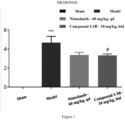
- the animals On the day of modeling, the animals were randomly divided into a model group and an administration group according to their weight, in which the administration groups were administered Nintedanib (60 mg/kg, once a day (qd)) and compound I-3B of the present disclosure (2.5 mg/kg, twice a day (bid)) by oral gavage for 21 consecutive days while the vehicle control group was administered blank vehicle.
- the animals were weighed every 3 days. At the end of the last day of administration, the animals were euthanized.
- the lungs were removed from the thyroid cartilage (without perfusion), slowly perfused with 10% formalin until both lungs were filled, and fixed in 10% formalin 5 to 10 times the volume of the tissues after the trachea was ligated.
- the left lung tissues were embedded in paraffin wax, sectioned, and stained with HE and Masson Trichrome.
- the sections were subjected to panoramic scanning using a Hamamatsu NanoZoomer Digital Pathology (S210) slide scanner for pathological analysis.
- Table 3 Indicators for pathological evaluation of pulmonary fibrosis Fibrosis grade Ashcroft scoring criteria 0 Alveolar septum: no fibrotic lesions; lung structure: normal.
- Alveolar septum isolated gentle fibrotic changes (thickened alveolar septum, but less than three times that of normal lung); lung structure: partly enlarged alveolar cavity, small amount of exudate, no fibrotic material.
- Alveolar septum definite fibrotic changes (thickened alveolar septum, larger than three times that of normal lung), formation of small nodules, but not connected; lung structure: partly enlarged alveolar cavity, small amount of exudate, no fibrotic material.
- Alveolar septum non-intermittent fibrosis (thickened alveolar septum, larger than three times that of normal lung) is visible in almost all alveolar walls in each high-power field; lung structure: partly enlarged alveolar cavity, small amount of exudate, no fibrotic material. 4 Alveolar septum: still visible; lung structure: isolated fibrotic nodules in alveolar cavity ( ⁇ 10% of high-power field). 5 Alveolar septum: still visible; lung structure: confluent fibrotic nodules in alveolar cavity (>10% to ⁇ 50% of high-power field), lung architecture severely damaged but still existent. 6 Alveolar septum: visible but almost non-existent.
- lung structure large contiguous fibrotic nodules (>50% of high-power field), lung architecture almost non-existent. 7 Alveolar septum: non-existent; lung structure: alveolar cavity almost filled with fibrotic material but still existing up to five vacuole-like structures. 8 Alveolar septum: non-existent; lung structure: alveolar cavity filled with fibrotic tissue in high-power field.
- Table 4 Summary of pulmonary fibrosis scores (mean) Group Total pulmonary fibrosis score G1 sham operation group (sham) 0 G2 model group 4.69 G3 Nintedanib 3.39 Compound I-3B 3.34
- the experimental results show that the compounds of the present disclosure can significantly reduce the degree of fibrosis in the mouse IPF prevention model.
- Test example 4 Efficacy test on mouse IPF treatment model
- mice Male mice were adaptively fed for 1 to 2 weeks and after reaching the standard weight (25 g), the IPF model (idiopathic pulmonary fibrosis model) was induced with a certain dose of Bleomycin.
- the animals On the day of modeling, the animals were randomly divided into a model group and an administration group according to their weight, in which the administration groups were administered Nintedanib (60 mg/kg, qd), low-dose compound I-3B of the present disclosure (1 mg/kg, bid), and high-dose compound I-3B of the present disclosure (2.5 mg/kg, bid) by oral gavage for 14 consecutive days starting from Day 7 while the vehicle control group was administered blank vehicle.
- the animals were weighed twice a week.
- Alveolar septum isolated gentle fibrotic changes (thickened alveolar septum, but less than three times that of normal lung); lung structure: partly enlarged alveolar cavity, small amount of exudate, no fibrotic material.
- Alveolar septum definite fibrotic changes (thickened alveolar septum, larger than three times that of normal lung), formation of small nodules, but not connected; lung structure: partly enlarged alveolar cavity, small amount of exudate, no fibrotic material.
- Alveolar septum non-intermittent fibrosis (thickened alveolar septum, larger than three times that of normal lung) is visible in almost all alveolar walls in each high-power field; lung structure: partly enlarged alveolar cavity, small amount of exudate, no fibrotic material. 4 Alveolar septum: still visible; lung structure: isolated fibrotic nodules in alveolar cavity ( ⁇ 10% of high-power field). 5 Alveolar septum: still visible; lung structure: confluent fibrotic nodules in alveolar cavity (>10% to ⁇ 50% of high-power field), lung architecture severely damaged but still existent. 6 Alveolar septum: visible but almost non-existent.
- lung structure large contiguous fibrotic nodules (>50% of high-power field), lung architecture almost non-existent. 7 Alveolar septum: non-existent; lung structure: alveolar cavity almost filled with fibrotic material but still existing up to five vacuole-like structures. 8 Alveolar septum: non-existent; lung structure: alveolar cavity filled with fibrotic tissue in high-power field.
- Table 6 Summary of pulmonary fibrosis scores (mean) Group Total pulmonary fibrosis score G1 sham 0 G2 model group 3.68 G3 Nintedanib 2.84 G4 low-dose compound I-3B group 2.74 G4 high-dose compound I-3B group 2.6
- the experimental results show that the compounds of the present disclosure can significantly reduce the degree of fibrosis in the mouse IPF treatment model.
- Test example 5 Efficacy test on mouse liver regeneration after resection
- mice of 8 weeks old (20 to 24 g) were anesthetized and fixed with the abdomen facing upwards.
- the surgical site was shaved and disinfected with iodophor.
- a transverse incision of about 1.5 to 2 cm was made at the abdomen, and the epigastric arteries on both sides were clamped with a hemostat.
- each liver lobe was freed, and the hilum of the liver lobe to be resected was ligated with surgical suture.
- the left outer lobe and middle lobe of the liver were resected as the color became darker.
- the residual blood in the abdominal cavity was cleaned up, and the muscle layer and fur layer were sutured layer by layer. Postoperative care should be taken into consideration.
- Administration was started on the day of modeling, and 8 animals were killed on day 1 and day 3 of the administration, respectively. Intact liver tissues were collected and weighed for comparison with the model group to evaluate the effect of the drug on promoting liver regeneration.
- mice The pharmacokinetic properties of the compounds of the present disclosure in mice were determined with reference to the following experimental methods.
- mice Three male CD-1 mice were used, administered at a dose of 10 mg/kg, the route of administration was by gavage, and the vehicle was 5% DMSO + 10% Solutol + 85% Saline. The mice were fasted overnight, and the time points of blood collection were before administration and at 15 minutes, 30 minutes, 1 hour, 2 hours, 4 hours, 8 hours, and 24 hours after administration. Blood samples were centrifuged at 6800 g for 6 minutes at 2 to 8°C, and plasma was collected and stored at -80°C. 10 ⁇ L of plasma at each time point was taken, and added with 200 ⁇ L of methanol containing 100 ng/mL internal standard.
- mice show that the compounds of the present disclosure exhibit excellent pharmacokinetic properties in mice.
- Test example 7 Efficacy on IBD in mice
- mice aged 6 to 8 weeks were divided into 5 groups of G1 to G5, namely normal control group, model control group, positive control group, low-dose compound I-3B group, and high-dose compound I-3B group, respectively.
- the mice in G2 to G6 were given 2% DSS aqueous solution on day 0 to day 6, normal water on day 0 to day 10, vehicle/positive/test substance on day 0 to day 9, and euthanized on day 10 for necropsy.
- Colon weight (CW) and colon length (CL) were measured and colon tissues (BW) were subjected to histopathological examination.
- test results showed that compared with the animals in the G2 model group, there was a significant increase in body weight of the animals in the G3-positive control group (cyclosporine CsA 25 mg/kg-qd); there was a significant decrease in DAI, a significant increase in CL, and a significant decrease in CW, CL/CW/BW, and CL/CW of the model animals; the results of the histopathological examination of colon tissues of the model animals showed that there was a decrease in inflammatory cell infiltration and tissue injury scores, but there was no significant difference.
- Table 8 Summary of colon length (CL), colon weight (CW), CL/CW/BW, and CW/CL of animals in each group
- Group Colon length CL (cm) Colon weight CW (g) CW/CL/BW * 1000 CW/CL * 10
- G1-normal control group 6.90 0.15 1.11 0.21
- G2-model control group 5.52 0.21 2.31 0.38
- G3-CsA group 25 mg/kg 6.70 0.18 1.42 0.27
- G4-low-dose compound I-3B group 6.67 0.17 1.39 0.26
Landscapes
- Health & Medical Sciences (AREA)
- Chemical & Material Sciences (AREA)
- Organic Chemistry (AREA)
- Medicinal Chemistry (AREA)
- Pharmacology & Pharmacy (AREA)
- Life Sciences & Earth Sciences (AREA)
- Animal Behavior & Ethology (AREA)
- General Health & Medical Sciences (AREA)
- Public Health (AREA)
- Veterinary Medicine (AREA)
- Engineering & Computer Science (AREA)
- Bioinformatics & Cheminformatics (AREA)
- Nuclear Medicine, Radiotherapy & Molecular Imaging (AREA)
- Chemical Kinetics & Catalysis (AREA)
- General Chemical & Material Sciences (AREA)
- Epidemiology (AREA)
- Cardiology (AREA)
- Ophthalmology & Optometry (AREA)
- Heart & Thoracic Surgery (AREA)
- Urology & Nephrology (AREA)
- Pulmonology (AREA)
- Dermatology (AREA)
- Neurology (AREA)
- Diabetes (AREA)
- Rheumatology (AREA)
- Pain & Pain Management (AREA)
- Physical Education & Sports Medicine (AREA)
- Neurosurgery (AREA)
- Orthopedic Medicine & Surgery (AREA)
- Biomedical Technology (AREA)
- Gastroenterology & Hepatology (AREA)
- Vascular Medicine (AREA)
- Hospice & Palliative Care (AREA)
- Immunology (AREA)
- Emergency Medicine (AREA)
- Endocrinology (AREA)
- Hematology (AREA)
- Obesity (AREA)
- Pharmaceuticals Containing Other Organic And Inorganic Compounds (AREA)
Applications Claiming Priority (4)
| Application Number | Priority Date | Filing Date | Title |
|---|---|---|---|
| CN202111372073 | 2021-11-18 | ||
| CN202210837015 | 2022-07-15 | ||
| CN202211408212 | 2022-11-10 | ||
| PCT/CN2022/132863 WO2023088425A1 (zh) | 2021-11-18 | 2022-11-18 | 15-pgdh抑制剂及用途 |
Publications (2)
| Publication Number | Publication Date |
|---|---|
| EP4434986A1 true EP4434986A1 (de) | 2024-09-25 |
| EP4434986A4 EP4434986A4 (de) | 2025-12-10 |
Family
ID=86334445
Family Applications (1)
| Application Number | Title | Priority Date | Filing Date |
|---|---|---|---|
| EP22894954.1A Pending EP4434986A4 (de) | 2021-11-18 | 2022-11-18 | 15-pgdh-hemmer und verwendung davon |
Country Status (12)
| Country | Link |
|---|---|
| US (1) | US20250034134A1 (de) |
| EP (1) | EP4434986A4 (de) |
| JP (1) | JP2024542221A (de) |
| KR (1) | KR20240107333A (de) |
| CN (1) | CN116135856A (de) |
| AU (1) | AU2022392348B2 (de) |
| CA (1) | CA3238595A1 (de) |
| IL (1) | IL312896A (de) |
| MX (1) | MX2024006086A (de) |
| TW (1) | TW202325292A (de) |
| WO (1) | WO2023088425A1 (de) |
| ZA (1) | ZA202404669B (de) |
Families Citing this family (1)
| Publication number | Priority date | Publication date | Assignee | Title |
|---|---|---|---|---|
| WO2026006830A1 (en) * | 2024-06-28 | 2026-01-02 | Case Western Reserve University | Compositions and methods of treating diseases and disorders characterized by blood-brain barrier deterioration or reactive oxygen species generation |
Family Cites Families (5)
| Publication number | Priority date | Publication date | Assignee | Title |
|---|---|---|---|---|
| PL358623A1 (en) * | 2000-04-10 | 2004-08-09 | Pfizer Products Inc. | Benzoamide piperidine compounds as substance p antagonists |
| CA3125900A1 (en) * | 2019-01-08 | 2020-07-16 | Kyorin Pharmaceutical Co., Ltd. | 15-pgdh inhibitor |
| US12304897B2 (en) * | 2019-01-31 | 2025-05-20 | Kyorin Pharmaceutical Co., Ltd. | 15-PGDH inhibitors |
| WO2021016333A1 (en) | 2019-07-22 | 2021-01-28 | University Of Hawaii | Aryl sulfonamides as small molecule stat3 inhibitors |
| CA3168494A1 (en) * | 2020-01-23 | 2021-07-29 | Roopa Rai | Pgdh inhibitors and methods of making and using |
-
2022
- 2022-11-18 TW TW111144257A patent/TW202325292A/zh unknown
- 2022-11-18 IL IL312896A patent/IL312896A/en unknown
- 2022-11-18 EP EP22894954.1A patent/EP4434986A4/de active Pending
- 2022-11-18 KR KR1020247020064A patent/KR20240107333A/ko active Pending
- 2022-11-18 WO PCT/CN2022/132863 patent/WO2023088425A1/zh not_active Ceased
- 2022-11-18 CA CA3238595A patent/CA3238595A1/en active Pending
- 2022-11-18 US US18/711,172 patent/US20250034134A1/en active Pending
- 2022-11-18 CN CN202211449273.5A patent/CN116135856A/zh active Pending
- 2022-11-18 JP JP2024529715A patent/JP2024542221A/ja active Pending
- 2022-11-18 MX MX2024006086A patent/MX2024006086A/es unknown
- 2022-11-18 AU AU2022392348A patent/AU2022392348B2/en active Active
-
2024
- 2024-06-14 ZA ZA2024/04669A patent/ZA202404669B/en unknown
Also Published As
| Publication number | Publication date |
|---|---|
| ZA202404669B (en) | 2025-02-26 |
| CA3238595A1 (en) | 2023-05-25 |
| KR20240107333A (ko) | 2024-07-09 |
| WO2023088425A1 (zh) | 2023-05-25 |
| US20250034134A1 (en) | 2025-01-30 |
| JP2024542221A (ja) | 2024-11-13 |
| TW202325292A (zh) | 2023-07-01 |
| AU2022392348A1 (en) | 2024-07-04 |
| IL312896A (en) | 2024-07-01 |
| CN116135856A (zh) | 2023-05-19 |
| MX2024006086A (es) | 2024-08-09 |
| AU2022392348B2 (en) | 2026-04-23 |
| EP4434986A4 (de) | 2025-12-10 |
Similar Documents
| Publication | Publication Date | Title |
|---|---|---|
| EP3442977B1 (de) | Inhibitoren der activin-rezeptor-like-kinase | |
| CN116162099A (zh) | 杂环类衍生物及其制备方法和用途 | |
| US20240165243A1 (en) | Egfr degraders and methods of use | |
| AU2018208231B2 (en) | Imidazopyrazine compound, preparation method therefor and use thereof | |
| WO2007055418A1 (ja) | アザ置換スピロ誘導体 | |
| CN113164475A (zh) | Dyrk1a的大环抑制剂 | |
| CN116157400B (zh) | 杂环类衍生物及其制备方法和用途 | |
| TW202321247A (zh) | 用於治療杭丁頓氏舞蹈症的雜芳基化合物 | |
| CN111295380B (zh) | 一种高活性csf1r抑制剂化合物 | |
| WO2019158070A1 (zh) | A2a和/或a2b受体拮抗剂 | |
| TW202321219A (zh) | 雜環衍生物及其組合物和藥學上的應用 | |
| CN115703792B (zh) | 一种并三环类衍生物及其制备方法和医药用途 | |
| US20250206760A1 (en) | Nitrogen-containing heterocyclic compound, preparation method therefor, and pharmaceutical application thereof | |
| EP4434986A1 (de) | 15-pgdh-hemmer und verwendung davon | |
| CN120865197A (zh) | 杂环炔基取代的酰胺衍生物、其制备方法及其应用 | |
| HK40110628A (en) | 15-pgdh inhibitor and use thereof | |
| CN116120285A (zh) | 杂环类化合物及其制备方法和用途 | |
| CN111440148B (zh) | 一种腺苷受体拮抗剂的制备方法 | |
| WO2022162034A1 (en) | Pyrazoleamide derivatives | |
| EA051544B1 (ru) | Ингибитор 15-pgdh и его применение | |
| CN107001360B (zh) | 4H-吡啶并[1,2-a]嘧啶-4-酮化合物 | |
| WO2026026956A1 (zh) | Tacc抑制剂化合物、药物组合物及其制备方法和应用 | |
| WO2025162221A1 (zh) | 基于取代的异吲哚啉酮新颖骨架化合物、含有其的双功能蛋白降解剂及它们的应用 | |
| TW202428270A (zh) | 15-pgdh抑制劑 | |
| TW202434211A (zh) | 亞碸類化合物及其用途 |
Legal Events
| Date | Code | Title | Description |
|---|---|---|---|
| STAA | Information on the status of an ep patent application or granted ep patent |
Free format text: STATUS: THE INTERNATIONAL PUBLICATION HAS BEEN MADE |
|
| PUAI | Public reference made under article 153(3) epc to a published international application that has entered the european phase |
Free format text: ORIGINAL CODE: 0009012 |
|
| STAA | Information on the status of an ep patent application or granted ep patent |
Free format text: STATUS: REQUEST FOR EXAMINATION WAS MADE |
|
| 17P | Request for examination filed |
Effective date: 20240522 |
|
| AK | Designated contracting states |
Kind code of ref document: A1 Designated state(s): AL AT BE BG CH CY CZ DE DK EE ES FI FR GB GR HR HU IE IS IT LI LT LU LV MC ME MK MT NL NO PL PT RO RS SE SI SK SM TR |
|
| REG | Reference to a national code |
Ref country code: HK Ref legal event code: DE Ref document number: 40110628 Country of ref document: HK |
|
| DAV | Request for validation of the european patent (deleted) | ||
| DAX | Request for extension of the european patent (deleted) | ||
| A4 | Supplementary search report drawn up and despatched |
Effective date: 20251110 |
|
| RIC1 | Information provided on ipc code assigned before grant |
Ipc: C07D 471/04 20060101AFI20251104BHEP Ipc: C07D 487/04 20060101ALI20251104BHEP Ipc: A61K 31/437 20060101ALI20251104BHEP Ipc: A61K 31/4375 20060101ALI20251104BHEP Ipc: A61K 31/517 20060101ALI20251104BHEP Ipc: A61P 1/04 20060101ALI20251104BHEP Ipc: A61P 9/00 20060101ALI20251104BHEP Ipc: A61P 1/16 20060101ALI20251104BHEP Ipc: A61P 29/00 20060101ALI20251104BHEP |