EP4435683A1 - Systèmes et procédés de surveillance et de gestion de versions de fermes et de mesure de portabilité pour des fermes cibles - Google Patents
Systèmes et procédés de surveillance et de gestion de versions de fermes et de mesure de portabilité pour des fermes cibles Download PDFInfo
- Publication number
- EP4435683A1 EP4435683A1 EP23195732.5A EP23195732A EP4435683A1 EP 4435683 A1 EP4435683 A1 EP 4435683A1 EP 23195732 A EP23195732 A EP 23195732A EP 4435683 A1 EP4435683 A1 EP 4435683A1
- Authority
- EP
- European Patent Office
- Prior art keywords
- farms
- farm
- target
- instructions
- parameters
- Prior art date
- Legal status (The legal status is an assumption and is not a legal conclusion. Google has not performed a legal analysis and makes no representation as to the accuracy of the status listed.)
- Pending
Links
Images


Classifications
-
- G—PHYSICS
- G06—COMPUTING OR CALCULATING; COUNTING
- G06Q—INFORMATION AND COMMUNICATION TECHNOLOGY [ICT] SPECIALLY ADAPTED FOR ADMINISTRATIVE, COMMERCIAL, FINANCIAL, MANAGERIAL OR SUPERVISORY PURPOSES; SYSTEMS OR METHODS SPECIALLY ADAPTED FOR ADMINISTRATIVE, COMMERCIAL, FINANCIAL, MANAGERIAL OR SUPERVISORY PURPOSES, NOT OTHERWISE PROVIDED FOR
- G06Q10/00—Administration; Management
-
- G—PHYSICS
- G06—COMPUTING OR CALCULATING; COUNTING
- G06Q—INFORMATION AND COMMUNICATION TECHNOLOGY [ICT] SPECIALLY ADAPTED FOR ADMINISTRATIVE, COMMERCIAL, FINANCIAL, MANAGERIAL OR SUPERVISORY PURPOSES; SYSTEMS OR METHODS SPECIALLY ADAPTED FOR ADMINISTRATIVE, COMMERCIAL, FINANCIAL, MANAGERIAL OR SUPERVISORY PURPOSES, NOT OTHERWISE PROVIDED FOR
- G06Q10/00—Administration; Management
- G06Q10/06—Resources, workflows, human or project management; Enterprise or organisation planning; Enterprise or organisation modelling
- G06Q10/063—Operations research, analysis or management
- G06Q10/0637—Strategic management or analysis, e.g. setting a goal or target of an organisation; Planning actions based on goals; Analysis or evaluation of effectiveness of goals
-
- G—PHYSICS
- G06—COMPUTING OR CALCULATING; COUNTING
- G06Q—INFORMATION AND COMMUNICATION TECHNOLOGY [ICT] SPECIALLY ADAPTED FOR ADMINISTRATIVE, COMMERCIAL, FINANCIAL, MANAGERIAL OR SUPERVISORY PURPOSES; SYSTEMS OR METHODS SPECIALLY ADAPTED FOR ADMINISTRATIVE, COMMERCIAL, FINANCIAL, MANAGERIAL OR SUPERVISORY PURPOSES, NOT OTHERWISE PROVIDED FOR
- G06Q10/00—Administration; Management
- G06Q10/04—Forecasting or optimisation specially adapted for administrative or management purposes, e.g. linear programming or "cutting stock problem"
-
- G—PHYSICS
- G06—COMPUTING OR CALCULATING; COUNTING
- G06Q—INFORMATION AND COMMUNICATION TECHNOLOGY [ICT] SPECIALLY ADAPTED FOR ADMINISTRATIVE, COMMERCIAL, FINANCIAL, MANAGERIAL OR SUPERVISORY PURPOSES; SYSTEMS OR METHODS SPECIALLY ADAPTED FOR ADMINISTRATIVE, COMMERCIAL, FINANCIAL, MANAGERIAL OR SUPERVISORY PURPOSES, NOT OTHERWISE PROVIDED FOR
- G06Q10/00—Administration; Management
- G06Q10/06—Resources, workflows, human or project management; Enterprise or organisation planning; Enterprise or organisation modelling
-
- G—PHYSICS
- G06—COMPUTING OR CALCULATING; COUNTING
- G06Q—INFORMATION AND COMMUNICATION TECHNOLOGY [ICT] SPECIALLY ADAPTED FOR ADMINISTRATIVE, COMMERCIAL, FINANCIAL, MANAGERIAL OR SUPERVISORY PURPOSES; SYSTEMS OR METHODS SPECIALLY ADAPTED FOR ADMINISTRATIVE, COMMERCIAL, FINANCIAL, MANAGERIAL OR SUPERVISORY PURPOSES, NOT OTHERWISE PROVIDED FOR
- G06Q50/00—Information and communication technology [ICT] specially adapted for implementation of business processes of specific business sectors, e.g. utilities or tourism
- G06Q50/02—Agriculture; Fishing; Forestry; Mining
Definitions
- the disclosure herein generally relates to farm versioning and portability, and, more particularly, to systems and method for methods for monitoring and managing farm versions and measuring portability to target farms.
- Embodiments of the present disclosure present technological improvements as solutions to one or more of the above-mentioned technical problems recognized by the inventors in conventional systems.
- a processor implemented method for monitoring and managing farm versions and measuring portability to target farms comprises receiving, via one or more hardware processors, a plurality of parameters of a plurality of farms, wherein the plurality of parameters are captured using one or more sensing devices at a plurality of time periods; pre-processing, via the one or more hardware processors, the plurality of parameters to obtain a set of pre-processed data comprising a plurality of versions of the plurality of farms, wherein each version from the plurality of versions comprises (i) an associated state of each farm amongst the plurality of farms, and (ii) one or more associated events; determining, via the one or more hardware processors, at least a subset of parameters amongst the plurality of parameters based on the set of pre-processed data comprising the plurality of versions of the plurality of farms; computing, via the one or more hardware processors, a farm portability score for each of the plurality of farms based on at least the subset of
- the optimal traversal route comprises a first set of instructions to be performed by each of the one or more target farms.
- the method further comprises monitoring the current state, and one or more intermediary states of the one or more target farms based on the first set of instructions being performed.
- the method further comprises identifying one or more deviations in the one or more intermediary states of each of the one or more target farms based on the first set of instructions being performed. In an embodiment, the one or more deviations are identified based on a comparison of the one or more intermediary states and one or more reference intermediary states.
- the method further comprises generating an updated optimal traversal route comprising a second set of instructions to be performed by each of the one or more target farms based on the comparison.
- the second set of instructions comprises instructions that are (i) different from the first set of instructions, or (ii) at least a subset of the first set of instructions.
- the first set of instructions and the second set of instructions are generated using at least one of one or more semantic ontological database, and one or more knowledge graphs.
- the optimal state is attained by each of the one or more target farms when one or more associated performance affecting parameters reach an associated predefined threshold.
- a processor implemented system for monitoring and managing farm versions and measuring portability to target farms.
- the system comprises: a memory storing instructions; one or more communication interfaces; and one or more hardware processors coupled to the memory via the one or more communication interfaces, wherein the one or more hardware processors are configured by the instructions to: receive a plurality of parameters of a plurality of farms, wherein the plurality of parameters are captured using one or more sensing devices at a plurality of time periods; pre-processing the plurality of parameters to obtain a set of pre-processed data comprising a plurality of versions of the plurality of farms, wherein each version from the plurality of versions comprises (i) an associated state of each farm amongst the plurality of farms, and (ii) one or more associated events; determining at least a subset of parameters amongst the plurality of parameters based on the set of pre-processed data comprising the plurality of versions of the plurality of farms; computing a farm portability score for each of the plurality of farms
- the optimal traversal route comprises a first set of instructions to be performed by each of the one or more target farms.
- the one or more hardware processors are further configured by the instructions to monitor the current state, and one or more intermediary states of the one or more target farms based on the first set of instructions being performed.
- the one or more hardware processors are further configured by the instructions to identify one or more deviations in the one or more intermediary states of each of the one or more target farms based on the first set of instructions being performed. In an embodiment, the one or more deviations are identified based on a comparison of the one or more intermediary states and one or more reference intermediary states.
- the one or more hardware processors are further configured by the instructions to generate an updated optimal traversal route comprising a second set of instructions to be performed by each of the one or more target farms based on the comparison.
- the second set of instructions comprises instructions that are (i) different from the first set of instructions, or (ii) at least a subset of the first set of instructions.
- the first set of instructions and the second set of instructions are generated using at least one of one or more semantic ontological database, and one or more knowledge graphs.
- the optimal state is attained by each of the one or more target farms when one or more associated performance affecting parameters reach an associated predefined threshold.
- one or more non-transitory machine-readable information storage mediums comprising one or more instructions which when executed by one or more hardware processors cause monitoring and managing farm versions and measuring portability to target farms by receiving a plurality of parameters of a plurality of farms, wherein the plurality of parameters are captured using one or more sensing devices at a plurality of time periods; pre-processing the plurality of parameters to obtain a set of pre-processed data comprising a plurality of versions of the plurality of farms, wherein each version from the plurality of versions comprises (i) an associated state of each farm amongst the plurality of farms, and (ii) one or more associated events; determining at least a subset of parameters amongst the plurality of parameters based on the set of pre-processed data comprising the plurality of versions of the plurality of farms; computing a farm portability score for each of the plurality of farms based on at least the subset of parameters; identifying, via the one or more hardware processors, one or more target
- the optimal traversal route comprises a first set of instructions to be performed by each of the one or more target farms.
- the one or more instructions which when executed by one or more hardware processors further cause monitoring the current state, and one or more intermediary states of the one or more target farms based on the first set of instructions being performed.
- the one or more instructions which when executed by one or more hardware processors further cause identifying one or more deviations in the one or more intermediary states of each of the one or more target farms based on the first set of instructions being performed. In an embodiment, the one or more deviations are identified based on a comparison of the one or more intermediary states and one or more reference intermediary states.
- the one or more instructions which when executed by one or more hardware processors further cause generating an updated optimal traversal route comprising a second set of instructions to be performed by each of the one or more target farms based on the comparison.
- the second set of instructions comprises instructions that are (i) different from the first set of instructions, or (ii) at least a subset of the first set of instructions.
- the first set of instructions and the second set of instructions are generated using at least one of one or more semantic ontological database, and one or more knowledge graphs.
- the optimal state is attained by each of the one or more target farms when one or more associated performance affecting parameters reach an associated predefined threshold.
- Embodiments of the present disclosure present systems and methods that codify and store farm parameters, associated versions and farm interactions in a systematic manner, along with associated knowledge, inferences, that bring changes to a farm's state, which can be referred as farm versions.
- This codified information contains cause-effect relationships between the effect, i.e., each farm's version details, along with the causes, i.e., the factors that led to change in the version, which sort of creates a version management system for various farms.
- all these semantic inferences and relationships are stored in the system as states, farm configurations, data, metadata, and the like.
- the system uses these inferences, indicators and relationships between the farm configurations, versions and several other factors to generate farm portability score for each farm and identify farm state portability or the k nearest neighbor farms that are compatible for portability of farm states.
- the system further creates an optimized routing mechanism to help a farmer or allied entity to define their current and starting state, and the desired end-goal in terms of performance affecting parameters, for examples, yield, quality, return on investment (RoI), sequestered carbon, and the like.
- the system continually monitors progress of the intermediary states to predict and identify the most optimal route that the farmer or allied entity can take to reach the desired end-goal.
- the target farm state or the associated performance affecting parameters reach an associated threshold, the target farm state may be determined as the desired target farm state.
- FIG. 1 through 4 where similar reference characters denote corresponding features consistently throughout the figures, there are shown preferred embodiments and these embodiments are described in the context of the following exemplary system and/or method.
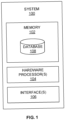
- FIG. 1 depicts an exemplary system 100 for monitoring and managing farm versions and measuring portability to target farms, in accordance with an embodiment of the present disclosure.
- the system 100 may also be referred as ⁇ farm monitoring system', ⁇ farm version managing and portability system', and interchangeably used hereinafter.
- the system 100 includes one or more hardware processors 104, communication interface device(s) or input/output (I/O) interface(s) 106 (also referred as interface(s)), and one or more data storage devices or memory 102 operatively coupled to the one or more hardware processors 104.
- the one or more processors 104 may be one or more software processing components and/or hardware processors.
- the hardware processors can be implemented as one or more microprocessors, microcomputers, microcontrollers, digital signal processors, central processing units, state machines, logic circuitries, and/or any devices that manipulate signals based on operational instructions.
- the processor(s) is/are configured to fetch and execute computer-readable instructions stored in the memory.
- the system 100 can be implemented in a variety of computing systems, such as laptop computers, notebooks, hand-held devices (e.g., smartphones, tablet phones, mobile communication devices, and the like), workstations, mainframe computers, servers, a network cloud, and the like.
- the I/O interface device(s) 106 can include a variety of software and hardware interfaces, for example, a web interface, a graphical user interface, and the like and can facilitate multiple communications within a wide variety of networks N/W and protocol types, including wired networks, for example, LAN, cable, etc., and wireless networks, such as WLAN, cellular, or satellite.
- the I/O interface device(s) can include one or more ports for connecting a number of devices to one another or to another server.
- the database 108 further comprises pre-processed parameters that are converted into one or more versions for each of the farms, farm portability score for each farm, spatial and temporal similarity of one or more source farms and the one or more target farms, optimal state for each target farm, optimal traversal route for each farm to transform its current state to desired state, and the like.
- the memory 102 further stores various techniques for instance, one or more pre-processing technique(s), one or more farm portability score computation techniques, one or more farm portability similarity index computation techniques, one or more optimal traversal route determine technique, and the like which when executed by the one or more hardware processors 104 enable the system 100 to perform the method described herein.
- the memory 102 further comprises (or may further comprise) information pertaining to input(s)/output(s) of each step performed by the systems and methods of the present disclosure.
- input(s) fed at each step and output(s) generated at each step are comprised in the memory 102 and can be utilized in further processing and analysis.
- FIG. 2 depicts an exemplary flow chart illustrating a method for monitoring and managing farm versions and measuring portability to target farms, using the system 100 of FIG. 1 , in accordance with an embodiment of the present disclosure.
- the system(s) 100 comprises one or more data storage devices or the memory 102 operatively coupled to the one or more hardware processors 104 and is configured to store instructions for execution of steps of the method by the one or more processors 104.
- the steps of the method of the present disclosure will now be explained with reference to components of the system 100 of FIG. 1 , and the flow diagram as depicted in FIG. 2 .
- the one or more hardware processors 104 receive a plurality of parameters of a plurality of farms.
- the plurality of parameters are captured using one or more sensing devices at a plurality of time periods.
- the one or more sensing devices may include, but are not limited to, sensors deployed in and around the plurality of farms, remotely connected servers/computer systems that are enabled with sensors to capture the plurality of parameters, drones, satellites, image capturing devices, and the like.
- the plurality of parameters include, but are not limited to all the information associated with the plurality of farm such as (i) various field operations and observations carried out by farmer(s), laborers or other stakeholders, (ii) natural events, (iii) data monitored using non-invasive and on-field sensors such as satellite images, data on soil nutrients (N, P, K, etc.), soil organic carbon (SOC), moisture, temperature, pH, EC, CO2 sensors etc., (iv) data provided by the farmers via human sensing, (v) various intermediate states, (vi) inferences generated out of various actions, and the like.
- Table 1 illustrates parameters captured from various sensing devices pertaining to various farms.
- the one or more hardware processors 104 pre-process the plurality of parameters to obtain a set of pre-processed data comprising a plurality of versions of the plurality of farms.
- Each version from the plurality of versions comprises (i) an associated state of each farm amongst the plurality of farms, and (ii) one or more associated events.
- the system 100 preprocesses (or codifies) using the one or more pre-processing techniques as known in the art to obtain the set of pre-processed data comprising the plurality of versions of the plurality of farms which is stored in systematic manner all these interactions with farms, along with knowledge and inferences, that bring changes to a farm's state, that is referred as farm versions.
- the set of pre-processed data further includes cause-effect relationships between the effect, i.e., each farm's version details, along with the causes, referred as one or more factors that led to change in the version.
- the one or more hardware processors 104 determining at least a subset of parameters amongst the plurality of parameters based on the set of pre-processed data comprising the plurality of versions of the plurality of farms.
- the subset of parameters may include, temporal soil health, yield improvement over period of time or multiple seasons, storage of soil carbon over the seasons, reduction in the carbon footprint, farm's resilience to calamities, and the like.
- Table 2 illustrates two farms with various states/versions attained during the season. The state/version changes for the farms for SOC and Soil Moisture as shown as two parameters.
- the one or more hardware processors 104 computing, via the one or more hardware processors, a farm portability score for each of the plurality of farms based on the at least the subset of parameters and the associated versions.
- the farm portability score is computed as a function of the subset of parameters, in one example embodiment.
- the subset of parameters includes, but is not limited to, temporal soil health, crop yield from multiple seasons, greenhouse gas (GHG) emissions over multiple seasons or years, ability of the farm to handle pest(s), disease(s), or other natural calamities.
- the farm portability score (FPS) f(temporal soil health (TSH), crop yield (CY) from multiple seasons, greenhouse gas (GHG) emissions over multiple seasons or years, ability of the farm to handle pest(s), disease(s) or other natural calamities etc.).
- temporary soil health refers to the health of the soil in terms of one or more soil attributes such as soil carbon, Nitrogen, pH, electrical conductivity, and the like. Temporal change in these parameters after cultivation of various crops may be (or will be) considered. Positive change or increase in parameters such as soil carbon, nitrogen etc. denotes good soil health being maintained and is further contributing positively to the FPS computation.
- crop yield from multiple seasons refers to 'yield' which could be obtained from non-invasive ways such as based on regression-based models (e.g., models as known in the art) derived using satellite and weather datasets for each season/crop. Additionally yield could be also measured from the ground or estimated from other techniques such as physical process-based models as known in the art. An average yield from the region can also be considered which contributes positively to the FPS computation.
- GHG emissions over multiple years refers to emissions wherein adopted farming practices across each season and crop have significant impact on the carbon, N2O, CO2, CH4 emissions.
- Any available carbon models such as Century, DeNitrification-DeComposition (DNDC), HOLOS (e.g., a whole-farm model that estimates greenhouse gas (GHG) emissions), and the like would be used along with remote sensing indicators obtained during each season for estimation of sequestrations or emissions of these GHG's. Positive temporal change over multiple years leads to better FPS computation.
- FPS can have score between 0 to 100 where 100 indicates ideal farm for portability (which might be rarest case). Values towards 100 are better for portable farms, however values towards 0 are not suitable for portable farms and those farms cannot be portable at present. Estimation of FPS is carried out temporally that is every season which may add or remove farms into the subset of portable (target) farms.
- w1, w2, w3 are the weights for temporal soil health, crop yield and GHG emissions respectively. It is to be understood by a person having ordinary skill in the art or person skilled in the art the above representation of computing the FPS shall not be construed as limiting the scope of the present disclosure.
- TSH has the values between 0 to 100. For each of the monitoring seasons, TSH will have one value between 0 to 100 and the normalized value of TSH or average TSH is estimated and represented as TSH for calculation.
- Crop Yield has values between 0 to 100. Crop yield for each season is compared with regional average yield and converted to the scale of 0 to 100. Normalized yield or average yield is estimated for a farm and represented as CY for calculation.
- GHG emissions has values between 0 to 100. If there is emission from the farms, values will be towards zero and if there is sequestration, values will be towards 100. Each crop/season there will be net amount of carbon emission or carbon sequestration. Depending upon the carbon emission or carbon sequestration, each farm for each season gets value between 0 to 100. Normalized GHG value or average GHG is estimated for a farm and represented as GHG for calculation.
- Table 3 illustrates the FPS for sample farms.
- Table 3 Farms TSH CY GHG FPS P1 91.59 94.52 93.01 93.11 P2 89.11 83.8 87.55 86.7 P3 75.65 78.23 82.65 79 P1 61.95 64.67 65.76 64.23 P2 49.09 41.81 34.45 41.41
- the one or more hardware processors 104 identify one or more target farms amongst the plurality of farms based on the farm portability score. If the threshold for portability is 70, then P1, P2, P3 are the portable farms based on the above Table 1. It is to be understood by a person having ordinary skill in the art or person skilled in the art that the above Table 1 is an exemplary depiction of farms, parameters, and FPS and such table shall not be construed as limiting the scope of the present disclosure.
- the one or more hardware processors 104 analyze spatial and temporal similarity of one or more source farms and the one or more target farms to obtain a farm portability similarity index for each of the one or more target farms.
- the one or more hardware processors 104 determine an optimal state for each of the one or more target farms based on the farm portability similarity index and identifying an optimal traversal route for each of the one or more target farms to transform each target farm from a current state to attain the optimal state.
- the one or more source farms refer to a farm that has executed various instructions generated by the system 100 to attain desired farm state and that meets the required performance affecting parameters.
- the source farms are cultivating crops as intended and desired state during each season is achieved.
- Such source farm may be either co-located with respect to target farms, or may be in a different region (e.g., distance between the target farm and source farm is say 'x', where value of 'x' may be in meters, kilometers and may be either within same village, city, state, country, or may be in a different village, state, country, and the like).
- Target farm refers to a farm that is currently not cultivating crops as intended or is not in a desired state as per the observations and analysis carried out by the system 100.
- Computation of the farm portability similarity index may be better understood by way of following description.
- farm portability similarity index (SI or FPSI) is a function of spatial similarity and temporal similarity between the one or more source farms and the one or more target farms.
- farm portability similarity index (Spatial similarity, temporal similarity).
- SI indicates, a match between the target farm and k th neighbor farm, where k can be any farm in the vicinity of the source farm to be ported.
- Spatial similarity refers to a similarity in terms of spatial location of portable and kth neighbor farm in terms of agroclimatic zone, weather patterns, soil, and the like.
- Temporal similarity refers to a similarity in terms of various parameters, activities happening over the portable farm and k th neighbor farm over period.
- the 'temporal similarity' is dynamic in nature as compared to ⁇ spatial similarity'.
- FPSI may have a value between 0 to 100 where values towards 100 indicates high similarity between source and target farm, however values towards 0 indicate poor (or not so good) similarity between source and target farm.
- w1 and w2 are the weights assigned to spatial and temporal similarity.
- Spatial similarity is calculated in terms of static parameters such as agro-climatic zone, weather pattern, soil, and the like.
- SS is the weighted average of all the static parameters available for the source farm and target farm and may have values between 0 to 100.
- Temporal similarity is calculated based on activities happening over the source farm and target farm and may have values between 0 to 100.
- source farm P1 can be ported to five target farms (F1, F2, F4, F7 and F9)
- source farm P2 can be ported to two target farms F5 and F8
- source farm P3 can be ported to target farms F3, F6 and F9.
- the optimal traversal routes practiced by the above source farms may be followed by the target farms that are to be ported.
- the optimal traversal route comprises a first set of instructions to be performed by each of the one or more target farms.
- the first set of instructions may comprise, but is not limited to various field operations, activities, and the like that are followed by the source farms. These operations, activities and various practices are continually monitored by the system 100.
- the system 100 monitors the current state, and one or more intermediary states of the one or more target farms during the execution of the first set of instructions.
- the system 100 identifies identifying one or more deviations in the one or more intermediary states of each of the one or more target farms.
- the one or more deviations are identified based on a comparison of the one or more intermediary states and one or more reference intermediary states.
- the system 100 stores benchmark values/states that are desired optimal/end states for various farms which serve as reference intermediary states.
- the intermediary states and the current states of each target farm (or output of each state) are compared with the reference intermediary states to determine the one or more deviations. If there are no deviations, then the target farms are operating and following the intended/desired practices to cultivate desired crops in terms of yield, ROI, and the like.
- the desired optimal state is attained by a target farm under consideration when the target farm's performance affecting parameters reach an associated threshold.
- the associated performance affecting parameters may include, soil health and fertility, yield, quality, RoI, water intake threshold, greenhouse gas (GHS) emission, sequestered carbon, and the like. It is to be understood by a person having ordinary skill in the art or person skilled in the art that the above examples of performance affecting parameters of each target/source farm shall not be construed as limiting the scope of the present disclosure. Below Table 7, Table 8 and Table 9 show the example variations between expected and actual states of parameters. Expected SOC is the SOC attained or expected to attain after following the practices/operations/activities suggested by the system. Actual SOC is the SOC attained in actual at each state/version.
- Table 7 Case 1 represents the farm who is not following the system 100 and hence lagging to reach the desired end state as suggested by the system 100. Due to variations between what was suggested and what was followed, the mentioned farm will need one or more state / season to reach the desired end state. State Current State Inter1 Inter2 Inter3 Target State ... Version F0.9 F1.9 F2.7 F3.6 F4.0 F4.4 Expected SOC 2.1 2.2 2.4 2.7 3 Actual Progress 2.1 2.2 2.35 2.61 2.89 3
- Table 8 Case 2 is the ideal case where farmer / entity has followed the practices suggested by the system 100, hence actual SOC attained at each state is matching with what was expected by the system.
- the system 100 In case, the one or more deviations are determined from the comparison between the current state, the one or more intermediary states of the target farms and a reference current state and the reference intermediary states, then the system 100 generate an updated optimal traversal route comprising a second set of instructions to be performed by each of the one or more target farms.
- the second set of instructions comprises instructions that are (i) different from the first set of instructions, or (ii) at least a subset of the first set of instructions.
- an entirely new set of practices, field operations, activities are generated by the system 100 that are provided to the farmer/laborer of the target farms to carry out such that the target farms attain the desired optimal state.
- the system 100 may request the farmer/laborer of specific target farms to continue with some or all of the practices, field operations, activities that are part of the first set of instructions and additionally also communicate a new set of instructions (e.g., the second set of instructions), which may include new field practices, operations, and new activities to be performed such that the target farms attain the desired optimal state.
- the first set of instructions and the second set of instructions are generated using at least one of one or more semantic ontological database, and one or more knowledge graphs.
- the one or more semantic ontological database and the one or more knowledge graphs include information on each farm, and such information includes real-time parameters, near real-time parameters, historical data, pertaining to each farm, the pre-processed parameters that are converted into one or more versions for each of the farms, farm portability score for each farm, spatial and temporal similarity of one or more source farms and the one or more target farms, optimal state for each target farm, optimal traversal route for each farm to transform its current state to desired state, various field operations and observations carried out by farmer(s), laborers or other stakeholders, natural events, data monitored using non-invasive and on-field sensors such as satellite images, data on soil nutrient (N, P, K, etc.) and moisture, temperature, pH, EC, CO2 sensors etc., data provided by the farmers via human sensing, various intermediate states, inferences generated out of various actions, and the like.
- non-invasive and on-field sensors such as satellite images, data on soil nutrient (N, P, K, etc.) and moisture, temperature, pH, EC
- FIG. 3 depicts an exemplary view of farm portability similarity index between one or more source farms and one or more target farms, in accordance with an embodiment of the present disclosure.
- FIG. 4 depicts an exemplary view of the one or more source farms and the one or more target farms and associated versions for which instructions need to be ported to attain desired optimal state, with respective farm portability similarity index and farm portability score computed therein, in accordance with an embodiment of the present disclosure.
- the instructions are generated by the system 100 for one or more versions of the one or more target farms. These instructions or subset of instructions are executed for the one or more versions based on their respective farm states.
- the system 100 and method to estimate the optimal traversal route for performing farm operations to reach the desired optimal state such as high carbon sequestration with optimal yield may have data for multiple farms all stored in multiple versions and across multiple seasons. Moreover, current, or present state of the farm is also available for all individual farms. All of these has been managed into semantic ontological database.
- the system 100 Depending on the current or present state (and associated version) of the farm and desired end state by the user, the system 100 generates an optimized traversal route (set of operations and activities that needs to be followed) by making use of the one or more semantic ontological databases and the one or more knowledge graphs.
- the optimized traversal route generation is better understood by way of following scenarios described herein.
- Scenario A Only desired end state is known from a user/farmer (for example, improvement of soil organic carbon (SOC) by p% (e.g., 30%)).
- the system 100 plans to make use of the information available from feature 1 on the current state of the farm (say farm is currently at version 2.1).
- data on temporal trend of soil organic carbon after each associated activity, crops grown, practices followed (in terms of tillage, crop cultivated, crop density, management of crop residue, irrigation, etc.) during each of the past season stored in the semantic ontological database is also accessed by the system 100.
- the method of the present disclosure and the system 100 determine practices/operations which impact on the farms SOC and devises an optimal traversal route or a plan of action to improve the SOC by 30%.
- this can be achieved in single or multiple seasons depending upon the overall performance of the target farm, desired end state and current state of the target farm.
- Scenario B Use of available versions from nearby farms (e.g., source farms) to reach the desired end state (for example, improvement of soil organic carbon by 30%).
- desired end state for example, improvement of soil organic carbon by 30%.
- current version of the target farm based on the available information from feature 1 is say 2.1.
- the system 100 has the historical information/data and performance of the crop in terms of SOC.
- information on neighboring (or source) farms across various versions and seasons is also available and stored in the memory 102 or the database.
- the system 100 and the method detect the best suitable neighbor farm (or source farm) and specific operations from that source farm to ensure the target farm reaches the desired end state.
- the system 100 makes use of knowledge/information available from surrounding farms and version associated with end state can also be known.
- Scenario C Desired end state with certain constraints (for example, improvement of soil organic carbon by 30% in two seasons).
- Approach proposed in scenario A is modified with a constraint to achieve the desired end state in two seasons.
- optimized traversal route (set of operations) is modified however cost component may get added to it as the time to reach the desired end state is reduced by the farmer.
- Embodiments of the present disclosure provide system and method that monitor and manage farms in versioned manner, wherein the system 100 considers current and historical data and devises a plan of action at a particular instant in current season. It is to be noted that not all desired states are possible to achieve in single season. However, the system and method of the present disclosure, considers desired end state and identifies/generates an optimal traversal route for target farms to achieve desired optimal end state over one or multiple seasons. Moreover, the system 100 implement the method as described herein to decide the target farms for portability to transform itself from current state to desired optimal state which best represent the region in terms of achieving better yield, soil health, more carbon sequestration based on farm portability score, and the like. This is achieved by identifying source farms which are compatible with target farms. The system 100 and method of the present disclosure further measure extent of the instructions performed by the farms to attain the desired optimal state. This measure gives an indication of performance of each farm.
- Such computer-readable storage means contain program-code means for implementation of one or more steps of the method, when the program runs on a server or mobile device or any suitable programmable device.
- the hardware device can be any kind of device which can be programmed including e.g., any kind of computer like a server or a personal computer, or the like, or any combination thereof.
- the device may also include means which could be e.g., hardware means like e.g., an applicationspecific integrated circuit (ASIC), a field-programmable gate array (FPGA), or a combination of hardware and software means, e.g., an ASIC and an FPGA, or at least one microprocessor and at least one memory with software processing components located therein.
- the means can include both hardware means and software means.
- the method embodiments described herein could be implemented in hardware and software.
- the device may also include software means. Alternatively, the embodiments may be implemented on different hardware devices, e.g., using a plurality of CPUs.
- the embodiments herein can comprise hardware and software elements.
- the embodiments that are implemented in software include but are not limited to, firmware, resident software, microcode, etc.
- the functions performed by various components described herein may be implemented in other components or combinations of other components.
- a computerusable or computer readable medium can be any apparatus that can comprise, store, communicate, propagate, or transport the program for use by or in connection with the instruction execution system, apparatus, or device.
- a computer-readable storage medium refers to any type of physical memory on which information or data readable by a processor may be stored.
- a computer-readable storage medium may store instructions for execution by one or more processors, including instructions for causing the processor(s) to perform steps or stages consistent with the embodiments described herein.
- the term "computer-readable medium” should be understood to include tangible items and exclude carrier waves and transient signals, i.e., be non-transitory. Examples include random access memory (RAM), read-only memory (ROM), volatile memory, nonvolatile memory, hard drives, CD ROMs, DVDs, flash drives, disks, and any other known physical storage media.
Landscapes
- Business, Economics & Management (AREA)
- Engineering & Computer Science (AREA)
- Human Resources & Organizations (AREA)
- Strategic Management (AREA)
- Economics (AREA)
- Entrepreneurship & Innovation (AREA)
- Tourism & Hospitality (AREA)
- Physics & Mathematics (AREA)
- Theoretical Computer Science (AREA)
- Marketing (AREA)
- General Physics & Mathematics (AREA)
- General Business, Economics & Management (AREA)
- Quality & Reliability (AREA)
- Operations Research (AREA)
- Educational Administration (AREA)
- Game Theory and Decision Science (AREA)
- Development Economics (AREA)
- Animal Husbandry (AREA)
- Agronomy & Crop Science (AREA)
- Life Sciences & Earth Sciences (AREA)
- Marine Sciences & Fisheries (AREA)
- Mining & Mineral Resources (AREA)
- Health & Medical Sciences (AREA)
- General Health & Medical Sciences (AREA)
- Primary Health Care (AREA)
- Management, Administration, Business Operations System, And Electronic Commerce (AREA)
Applications Claiming Priority (1)
| Application Number | Priority Date | Filing Date | Title |
|---|---|---|---|
| IN202321020023 | 2023-03-22 |
Publications (1)
| Publication Number | Publication Date |
|---|---|
| EP4435683A1 true EP4435683A1 (fr) | 2024-09-25 |
Family
ID=87933834
Family Applications (1)
| Application Number | Title | Priority Date | Filing Date |
|---|---|---|---|
| EP23195732.5A Pending EP4435683A1 (fr) | 2023-03-22 | 2023-09-06 | Systèmes et procédés de surveillance et de gestion de versions de fermes et de mesure de portabilité pour des fermes cibles |
Country Status (2)
| Country | Link |
|---|---|
| US (1) | US20240320590A1 (fr) |
| EP (1) | EP4435683A1 (fr) |
Cited By (1)
| Publication number | Priority date | Publication date | Assignee | Title |
|---|---|---|---|---|
| US20250022074A1 (en) * | 2023-07-12 | 2025-01-16 | International Business Machines Corporation | Method to cultivate green energy practices and predict risk from terrace-based agriculture |
Citations (3)
| Publication number | Priority date | Publication date | Assignee | Title |
|---|---|---|---|---|
| US20160078375A1 (en) * | 2014-09-12 | 2016-03-17 | The Climate Corporation | Methods and systems for recommending agricultural activities |
| US20210068334A1 (en) * | 2019-09-09 | 2021-03-11 | International Business Machines Corporation | Farm cultivation quality |
| US20220061236A1 (en) * | 2020-08-25 | 2022-03-03 | The Board Of Trustees Of The University Of Illinois | Accessing agriculture productivity and sustainability |
Family Cites Families (10)
| Publication number | Priority date | Publication date | Assignee | Title |
|---|---|---|---|---|
| US11216758B2 (en) * | 2015-05-14 | 2022-01-04 | Board Of Trustees Of Michigan State University | Methods and systems for crop land evaluation and crop growth management |
| US11294940B2 (en) * | 2016-02-12 | 2022-04-05 | Tata Consultancy Services Limited | Methods and systems for automated identification of agro-climatic zones |
| US10719638B2 (en) * | 2016-08-11 | 2020-07-21 | The Climate Corporation | Delineating management zones based on historical yield maps |
| US10398096B2 (en) * | 2016-11-16 | 2019-09-03 | The Climate Corporation | Identifying management zones in agricultural fields and generating planting plans for the zones |
| US10028451B2 (en) * | 2016-11-16 | 2018-07-24 | The Climate Corporation | Identifying management zones in agricultural fields and generating planting plans for the zones |
| EP3673448A4 (fr) * | 2017-08-21 | 2021-08-11 | The Climate Corporation | Modélisation numérique et suivi de champs agricoles pour la mise en oeuvre d'essais de champs agricoles |
| US10999967B2 (en) * | 2018-05-25 | 2021-05-11 | The Climate Corporation | Cross-grower study and field targeting |
| AR118178A1 (es) * | 2019-02-21 | 2021-09-22 | Climate Corp | Seguimiento y modelo digital de campos agrícolas para la implementación de ensayos de campo agrícolas |
| US20210097423A1 (en) * | 2019-09-26 | 2021-04-01 | International Business Machines Corporation | Plot evaluation for farm performance |
| US12001988B2 (en) * | 2020-11-23 | 2024-06-04 | Jerome D. Johnson | Automated process to identify optimal conditions and practices to grow plants with specific attributes |
-
2023
- 2023-09-06 EP EP23195732.5A patent/EP4435683A1/fr active Pending
- 2023-09-07 US US18/462,782 patent/US20240320590A1/en active Pending
Patent Citations (3)
| Publication number | Priority date | Publication date | Assignee | Title |
|---|---|---|---|---|
| US20160078375A1 (en) * | 2014-09-12 | 2016-03-17 | The Climate Corporation | Methods and systems for recommending agricultural activities |
| US20210068334A1 (en) * | 2019-09-09 | 2021-03-11 | International Business Machines Corporation | Farm cultivation quality |
| US20220061236A1 (en) * | 2020-08-25 | 2022-03-03 | The Board Of Trustees Of The University Of Illinois | Accessing agriculture productivity and sustainability |
Cited By (1)
| Publication number | Priority date | Publication date | Assignee | Title |
|---|---|---|---|---|
| US20250022074A1 (en) * | 2023-07-12 | 2025-01-16 | International Business Machines Corporation | Method to cultivate green energy practices and predict risk from terrace-based agriculture |
Also Published As
| Publication number | Publication date |
|---|---|
| US20240320590A1 (en) | 2024-09-26 |
Similar Documents
| Publication | Publication Date | Title |
|---|---|---|
| US11432531B2 (en) | Systems, methods, and apparatuses for implementing real time beef cattle monitoring utilizing radio-frequency identification (RFID) based technologies | |
| CN107609666B (zh) | 使用历史农药使用信息进行害虫预测的系统和方法 | |
| US20230089304A1 (en) | Method and system for assessing soil carbon sequestration of a farm based on remote sensing | |
| US12213395B2 (en) | Monitoring and intelligence generation for farm field | |
| US20230100511A1 (en) | Agricultural sensor placement and fault detection in wireless sensor networks | |
| Johnson et al. | Social network analysis and the study of sociality in bats | |
| JP2018185800A (ja) | 推奨作物のプロトコルに対する順守度を推測するシステムおよび方法 | |
| Manideep et al. | Smart agriculture farming with image capturing module | |
| US20240320590A1 (en) | Systems and methods for monitoring and managing farm versions and measuring portability to target farms | |
| Divya et al. | Reliable AI-based smart sensors for managing irrigation resources in agriculture—a review | |
| Giroux et al. | A high-frequency mobile phone data collection approach for research in social-environmental systems: Applications in climate variability and food security in sub-Saharan Africa | |
| Kumar et al. | Integrating wireless sensing and decision support technologies for real-time farmland monitoring and support for effective decision making: Designing and deployment of WSN and DSS for sustainable growth of Indian agriculture | |
| Routis et al. | Data-driven and interoperable smart agriculture: an IoT-based use-case for arable crops | |
| CN114332613A (zh) | 基于遥感影像的农地健康状态预测方法、装置、设备和存储介质 | |
| Sivagnanasundaram et al. | Farmers as sensors: A crowdsensing platform to generate agricultural pest incidence reports | |
| Simran et al. | Agrotech: optimizing farm management with data-driven insights and relational database integration through web application for enhanced soil analysis, weather projection, and crop yield outcomes | |
| Prabha et al. | A deep dive into the modern perspective of agricultural IoT | |
| Joshi et al. | Farmedge: A unified edge computing framework enabling digital agriculture | |
| Khan et al. | Drip fertigation technologies | |
| Tsoulias et al. | Digital Farming and Field Robots | |
| US12298739B2 (en) | Method and system for micro-climate management | |
| CN117853919A (zh) | 一种苜蓿田间长势智能监测方法及其智能监测系统 | |
| Brown-Brandl et al. | Depth cameras for animal monitoring | |
| Wysel | Data Sharing Platforms: How Value Is Created from Data Produced by Smart Agriculture | |
| Rathi et al. | Revolutionizing Agriculture with IoT–A Review |
Legal Events
| Date | Code | Title | Description |
|---|---|---|---|
| PUAI | Public reference made under article 153(3) epc to a published international application that has entered the european phase |
Free format text: ORIGINAL CODE: 0009012 |
|
| STAA | Information on the status of an ep patent application or granted ep patent |
Free format text: STATUS: REQUEST FOR EXAMINATION WAS MADE |
|
| 17P | Request for examination filed |
Effective date: 20240701 |
|
| AK | Designated contracting states |
Kind code of ref document: A1 Designated state(s): AL AT BE BG CH CY CZ DE DK EE ES FI FR GB GR HR HU IE IS IT LI LT LU LV MC ME MK MT NL NO PL PT RO RS SE SI SK SM TR |