EP4436231A1 - Procédé et appareil de planification de données autorisées, et dispositif côté réseau - Google Patents
Procédé et appareil de planification de données autorisées, et dispositif côté réseau Download PDFInfo
- Publication number
- EP4436231A1 EP4436231A1 EP22894698.4A EP22894698A EP4436231A1 EP 4436231 A1 EP4436231 A1 EP 4436231A1 EP 22894698 A EP22894698 A EP 22894698A EP 4436231 A1 EP4436231 A1 EP 4436231A1
- Authority
- EP
- European Patent Office
- Prior art keywords
- data
- network element
- information
- consent
- target
- Prior art date
- Legal status (The legal status is an assumption and is not a legal conclusion. Google has not performed a legal analysis and makes no representation as to the accuracy of the status listed.)
- Pending
Links
Images



Classifications
-
- H—ELECTRICITY
- H04—ELECTRIC COMMUNICATION TECHNIQUE
- H04W—WIRELESS COMMUNICATION NETWORKS
- H04W12/00—Security arrangements; Authentication; Protecting privacy or anonymity
- H04W12/06—Authentication
-
- H—ELECTRICITY
- H04—ELECTRIC COMMUNICATION TECHNIQUE
- H04W—WIRELESS COMMUNICATION NETWORKS
- H04W12/00—Security arrangements; Authentication; Protecting privacy or anonymity
- H04W12/08—Access security
-
- H—ELECTRICITY
- H04—ELECTRIC COMMUNICATION TECHNIQUE
- H04L—TRANSMISSION OF DIGITAL INFORMATION, e.g. TELEGRAPHIC COMMUNICATION
- H04L9/00—Cryptographic mechanisms or cryptographic arrangements for secret or secure communications; Network security protocols
- H04L9/40—Network security protocols
-
- H—ELECTRICITY
- H04—ELECTRIC COMMUNICATION TECHNIQUE
- H04L—TRANSMISSION OF DIGITAL INFORMATION, e.g. TELEGRAPHIC COMMUNICATION
- H04L63/00—Network architectures or network communication protocols for network security
- H04L63/08—Network architectures or network communication protocols for network security for authentication of entities
-
- H—ELECTRICITY
- H04—ELECTRIC COMMUNICATION TECHNIQUE
- H04L—TRANSMISSION OF DIGITAL INFORMATION, e.g. TELEGRAPHIC COMMUNICATION
- H04L63/00—Network architectures or network communication protocols for network security
- H04L63/10—Network architectures or network communication protocols for network security for controlling access to devices or network resources
-
- H—ELECTRICITY
- H04—ELECTRIC COMMUNICATION TECHNIQUE
- H04W—WIRELESS COMMUNICATION NETWORKS
- H04W12/00—Security arrangements; Authentication; Protecting privacy or anonymity
- H04W12/02—Protecting privacy or anonymity, e.g. protecting personally identifiable information [PII]
-
- H—ELECTRICITY
- H04—ELECTRIC COMMUNICATION TECHNIQUE
- H04W—WIRELESS COMMUNICATION NETWORKS
- H04W12/00—Security arrangements; Authentication; Protecting privacy or anonymity
- H04W12/08—Access security
- H04W12/084—Access security using delegated authorisation, e.g. open authorisation [OAuth] protocol
-
- H—ELECTRICITY
- H04—ELECTRIC COMMUNICATION TECHNIQUE
- H04W—WIRELESS COMMUNICATION NETWORKS
- H04W12/00—Security arrangements; Authentication; Protecting privacy or anonymity
- H04W12/60—Context-dependent security
- H04W12/69—Identity-dependent
-
- H—ELECTRICITY
- H04—ELECTRIC COMMUNICATION TECHNIQUE
- H04W—WIRELESS COMMUNICATION NETWORKS
- H04W8/00—Network data management
- H04W8/18—Processing of user or subscriber data, e.g. subscribed services, user preferences or user profiles; Transfer of user or subscriber data
-
- H—ELECTRICITY
- H04—ELECTRIC COMMUNICATION TECHNIQUE
- H04W—WIRELESS COMMUNICATION NETWORKS
- H04W8/00—Network data management
- H04W8/22—Processing or transfer of terminal data, e.g. status or physical capabilities
-
- H—ELECTRICITY
- H04—ELECTRIC COMMUNICATION TECHNIQUE
- H04W—WIRELESS COMMUNICATION NETWORKS
- H04W88/00—Devices specially adapted for wireless communication networks, e.g. terminals, base stations or access point devices
- H04W88/14—Backbone network devices
-
- H—ELECTRICITY
- H04—ELECTRIC COMMUNICATION TECHNIQUE
- H04L—TRANSMISSION OF DIGITAL INFORMATION, e.g. TELEGRAPHIC COMMUNICATION
- H04L67/00—Network arrangements or protocols for supporting network services or applications
- H04L67/2866—Architectures; Arrangements
- H04L67/30—Profiles
- H04L67/306—User profiles
Definitions
- This application pertains to the field of wireless communication technologies and specifically relates to a consent data scheduling method and apparatus, and a network-side device.
- personal data of users are personal assets of the users and should not be obtained or used arbitrarily.
- user-related data generated during wireless network communication such as data from user terminals, data in service servers, and network data generated in a network by users
- a unified database such as a unified data management (Unified Data Management, UDM) or a unified data repository (Unified Data Repository, UDR)
- UDM Unified Data Management
- UDR Unified Data Repository
- Embodiments of this application provide a consent data scheduling method and apparatus, and a network-side device, so as to solve the problem that a data proxy network element is unclear about its behavior.
- a consent data scheduling method including: receiving, by a first network element, a data request message sent by a second network element, where the data request message is used for requesting target data, and the target data is related data, of a target user, stored in the first network element or in a data warehouse; and performing, by the first network element, a first operation based on consent information of the target user, where the first operation includes refusing to provide the target data to the second network element or sending the target data to the second network element.
- a consent data scheduling method including: receiving, by a first network element, a data request message sent by a second network element, where the data request message is used for requesting target data, the data request message includes at least consent information of a target user, and the target data is related data of the target user; and performing, by the first network element, a first operation based on the consent information of the target user, where the first operation includes refusing to provide the target data to the second network element or sending the target data to the second network element.
- a consent data scheduling method including: sending, by a second network element, a data request message to a first network element, where the data request message is used for requesting target data, the data request message includes at least consent information of a target user, and the target data is related data of the target user.
- a consent data scheduling apparatus is provided and applied to a first network element, where the apparatus includes: a first transmission module configured to receive a data request message sent by a second network element, where the data request message is used for requesting target data, and the target data is related data, of a target user, stored in the first network element or in a data warehouse; and a first execution module configured to perform a first operation based on consent information of the target user, where the first operation includes refusing to provide the target data to the second network element or sending the target data to the second network element.
- a consent data scheduling apparatus is provided and applied to a first network element, where the apparatus includes: a second transmission module configured to receive a data request message sent by a second network element, where the data request message is used for requesting target data, the data request message includes at least consent information of a target user, and the target data is related data of the target user; and a second execution module configured to perform a first operation based on the consent information of the target user, where the first operation includes refusing to provide the target data to the second network element or sending the target data to the second network element.
- a consent data scheduling apparatus is provided and applied to a second network element, where the apparatus includes a third transmission module configured to send a data request message to a first network element, where the data request message is used for requesting target data, the data request message includes at least consent information of a target user, and the target data is related data of the target user.
- a network-side device where the terminal includes a processor, a memory, and a program or instructions stored in the memory and executable on the processor, and when the program or instructions are executed by the processor, the steps of the method according to the first aspect, second aspect, or third aspect are implemented.
- a network-side device including a processor and a communication interface, where the communication interface is coupled to the processor, and the processor is configured to run a program or instructions to implement the steps of the method according to the first aspect or the steps of the method according to the third aspect.
- a readable storage medium where a program or instructions are stored in the readable storage medium, and when the program or instructions are executed by a processor, the steps of the method according to the first aspect, the steps of the method according to the second aspect, or the steps of the method according to the third aspect are implemented.
- a chip is provided, where the chip includes a processor and a communication interface, the communication interface is coupled to the processor, and the processor is configured to run a program or instructions to implement the steps of the method according to the first aspect, the steps of the method according to the second aspect, or the steps of the method according to the third aspect.
- a computer program product or program product is provided, where the computer program or program product is stored in a non-transient storage medium, and the computer program or program product is executed by at least one processor so as to implement the steps of the method according to the first aspect, the steps of the method according to the second aspect, or the steps of the method according to the third aspect.
- the first network element before sharing user-related data it has already stored with the second network element, needs to determine, based on the user consent information, whether the user-related data can be shared, thereby not only making the first network element clear about its own behavior but also ensuring the security of user data, thus making the network more compliant.
- first, second, and the like in the specification and claims of this application are used to distinguish between similar objects rather than to describe a specific order or sequence. It should be understood that the terms used in this way are interchangeable in appropriate circumstances such that the embodiments of this application can be implemented in other orders than the order illustrated or described herein.
- objects distinguished by “first” and “second” are generally of a same type, and the quantities of the objects are not limited. For example, there may be one or more first objects.
- “and/or” indicates at least one of the connected objects, and the character “/” generally indicates an "or” relationship between the contextually associated objects.
- technologies described in the embodiments of this application are not limited to a long term evolution (Long Term Evolution, LTE) or LTE-Advanced (LTE-Advanced, LTE-A) system, and may also be applied to other wireless communication systems, for example, code division multiple access (Code Division Multiple Access, CDMA), time division multiple access (Time Division Multiple Access, TDMA), frequency division multiple access (Frequency Division Multiple Access, FDMA), orthogonal frequency division multiple access (Orthogonal Frequency Division Multiple Access, OFDMA), single-carrier frequency-division multiple access (Single-carrier Frequency-Division Multiple Access, SC-FDMA), and other systems.
- code division multiple access Code Division Multiple Access
- TDMA time division multiple access
- FDMA frequency division multiple access
- OFDMA Orthogonal frequency division multiple access
- SC-FDMA single-carrier Frequency-Division Multiple Access
- system and “network” in the embodiments of this application are often used interchangeably, and the technologies described herein may be used in the above-mentioned systems and radio technologies as well as other systems and radio technologies.
- NR New Radio
- NR terms are used in most of the following descriptions, although these technologies may also be applied to other applications than the NR system application, for example, to the 6th generation (6th Generation, 6G) communication system.
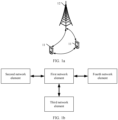
- FIG. 1a is a schematic structural diagram of a wireless communication system to which embodiments of this application are applicable.
- the wireless communication system includes a terminal 11 and a network-side device 12.
- the terminal 11 may also be referred to as a terminal device or user equipment (User Equipment, UE).
- UE User Equipment
- the terminal 11 may be a terminal-side device such as a mobile phone, a tablet personal computer (Tablet Personal Computer), a laptop computer (Laptop Computer) or notebook computer, a personal digital assistant (Personal Digital Assistant, PDA), a palmtop computer, a netbook, an ultra-mobile personal computer (ultra-mobile personal computer, UMPC), a mobile internet device (Mobile Internet Device, MID), a wearable device (Wearable Device), vehicular user equipment (VUE), or pedestrian user equipment (PUE).
- the wearable device includes a smart watch, a wrist band, earphones, glasses, or the like. It should be noted that the specific type of the terminal 11 is not limited in the embodiments of this application.
- the network-side device 12 may be a base station or a core network.
- the base station may be referred to as a NodeB, an evolved NodeB, an access point, a base transceiver station (Base Transceiver Station, BTS), a radio base station, a radio transceiver, a basic service set (Basic Service Set, BSS), an extended service set (Extended Service Set, ESS), a Node B, an evolved node B (eNB), a home NodeB, a home evolved NodeB, a WLAN access point, a Wi-Fi node, a transmission reception point (Transmitting Receiving Point, TRP), or other appropriate terms in the art.
- the base station is not limited to any specific technical term. It should be noted that in the embodiments of this application, only the base station in the NR system is used as an example, although the specific type of the base station is not limited.
- the scheduling system may include a first network element, a second network element, a third network element, and a fourth network element.
- the first network element may be a network element or data proxy element that stores (or saves or caches) one or more pieces of user-related data (such as user historical data), for example, a network data analytics function (Network Data Analytics Function, NWDAF), a data collection coordination function (Data Collection Coordination Function, DCCF), an analytics data repository function (Analytics Data Repository Function, ADRF), or other functional network elements within a network such as an access and mobility management function (Access and Mobility Management Function, AMF), or a session management function (Session Management Function, SMF).
- NWDAF Network Data Analytics Function
- DCCF Data Collection Coordination Function
- ADRF analytics data repository function
- AMF Access and Mobility Management Function
- SMF Session Management Function
- the DCCF and NWDAF can provide data management (data management) services, the AMF is used to store mobility management data related to UE, and the SMF is used to store session management data related to UE.
- the second network element is a network element or entity that needs to obtain user-related data (such as user historical data), and the purpose or objective for obtaining user-related data is determined by the second network element based on different communication scenarios.
- the purpose or objective of obtaining user-related data by the second network element may be: to use the data as input data for training a particular AI model (identified by an analytic ID).
- the purpose or objective of obtaining user-related data may be: to analyze the obtained user historical data as reference information for executing a particular policy decision, for example, the PCF obtaining user equipment historical mobility analytics (UE historical mobility analytics) and user equipment historical service behavior analytics (UE historical service behavior analytics) generated by the first network element (such as NWDAF), for generating a more suitable network camping policy (RFSP index) for UE.
- Policy Control Function Policy Control Function
- AMF Access Management Function
- AF Application Function
- the second network element can also be understood as a data consumer (Data consumer).
- the third network element is a network element that stores at least one piece of user consent information (user consent information), for example, a UDM and a UDR.
- user consent information for example, a UDM and a UDR.
- consent information of each user can be stored in the UDM or the UDR as part of subscription data of the user.
- the fourth network element is a network element in the network that can provide (one or more pieces of) user-related data (such as user historical data), for example, an AMF, a radio access network (Radio Access Network, RAN), an SMF, or an NWDAF.
- AMF or the RAN can provide data related to UE mobility (UE mobility)
- the SMF can provide data related to protocol data unit session (Protocol Data Unit session, PDU session)
- the NWDAF can provide a particular data analytics result (such as a user service behavior analytics result).
- the fourth network element can also be understood as a data source (Data Source), a data warehouse, or the like. This is not limited herein.
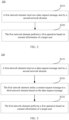
- FIG. 2 is a schematic flowchart of a consent data scheduling method 200 according to an example embodiment of this application.
- the method 200 may, but is not limited to, be executed by a first network element, specifically by hardware and/or software installed on the first network element.
- the method 200 may include at least the following steps.
- the first network element receives a data request message sent by a second network element.
- the data request message is used for requesting target data, and the target data is related data, of a target user, stored in the first network element or in a data warehouse.
- the target data may be user historical data related to the target user that the first network element has already obtained and stored in the first network element or in a data warehouse. This is not limited herein.
- the data request message may include at least one of the following (11) to (17).
- (13) and (14) correspond to different user granularities.
- the target data is related data of the user(s) corresponding to the identification information of at least one terminal device.
- the target data is related data of each user in the area corresponding to the area information.
- the second time is later than the first time, or the second time is after the first time.
- Purpose information (or objective information) of obtaining the target data by the second network element may be determined by the second network element based on a communication scenario, for example, model training, inference task, or generating a data analytics result for a particular analytics ID.
- the first network element performs a first operation based on consent information of the target user.
- the first operation includes refusing (which can also be understood as stopping or canceling) to provide the target data to the second network element or sending the target data to the second network element.
- the first network element refuses to provide the target data to the second network element.
- the first network element sends the target data to the second network element.
- the consent information of the target user may be obtained by the first network element from a third network element, or may be selected from consent information of one or more users cached by the first network element. This is not limited in this embodiment.
- the consent information of one or more users cached by the first network element can be understood as having been obtained by the first network element from the third network element in the past (which may be a time before the first network element receives the data request information).
- the first network element for example, an NWDAF
- the first network element may have obtained the consent information of the related user from the third network element for other reasons (for example, for the need for model training or data inference by the first network element).
- the first network element determines, based on the consent information of the target user, to send the target data to the second network element, if the target data is the related data, of the target user, stored in the first network element, the first network element obtains the target data from itself and sends the target data to the second network element.
- the target data stored in the first network element can be understood as: before performing the foregoing step S210, the first network element has already obtained related data of the target user from the data warehouse (for example, a data source) for some needs of the first network element or other network elements, that is, the target data.
- the first network element for example, an NWDAF
- the first network element may have obtained location data of particular UE from the data warehouse (for example, an AMF) as training input data for the need of training a UE mobility trajectory model by the first network element.
- the first network element can send a data obtaining request message to the data warehouse to obtain the target data.
- the data obtaining request message can be determined based on the data request message, for example, may include type information of the target data, identification information of the target data, identification information of at least one terminal device, and the like.
- the first network element before sharing user-related data it has already stored with the second network element, can determine, based on the user consent information, whether the user-related data can be shared, thereby not only making the first network element clear about its own behavior but also ensuring the security of user data, thus making the network more compliant.
- FIG. 3 is a schematic flowchart of a consent data scheduling method 300 according to an example embodiment of this application.
- the method 300 may, but is not limited to, be executed by a first network element, specifically by hardware and/or software installed on the first network element.
- the method 300 may include at least the following steps.
- the first network element receives a data request message sent by a second network element.
- the data request message is used for requesting target data, and the target data is related data, of a target user, stored in the first network element or in a data warehouse.
- the first network element sends a consent request message to a third network element based on the data request message.
- the consent request message is used for obtaining consent information of the target user.
- the consent request message may be Nudm_SDM_Get.
- the consent request message may include at least one of the following (21) to (27).
- the consent information of the user may be divided into different types or ranges, for example, whether to consent to data obtaining, whether to consent to data usage, whether to consent to data sharing, and whether to consent to data processing.
- the requested user consent type information may be obtained from the received data request message.
- the third network element can determine, based on the information included in the consent request message, whether to authorize the first network element to share the target data with the second network element and feed back the consent information of the target user to the first network element.
- the consent information of the target user may include at least agree information or disagree information, where "agree information" indicates that the target user allows the first network element to share the target data with the second network element; and “disagree information” indicates that the target user does not allow the first network element to share the target data with the second network element.
- the information included in the consent information of the target user can be determined based on the information included in the consent request information.
- the consent information of the target user may include at least one of the following (31) to (34).
- the second network element when the consent usage range, consent usage time, or consent storage time is exceeded, the second network element is not allowed to continue using/storing the target data, for example, the second network element can delete the target data.
- the consent information of the target user may include at least one of the fifth information, sixth information, and seventh information; otherwise, the consent information of the target user may include only the fourth information. This is not limited in this application.
- the first network element performs a first operation based on the consent information of the target user.
- the first operation includes refusing to provide the target data to the second network element or sending the target data to the second network element.
- the first network element in a case that the consent information of the target user indicates that the target user disagrees with data sharing for the target data, the first network element can refuse or stop provision of the target data to the second network element and send a first response message to the second network element.
- the first response message is used to at least indicate to the second network element that the first network element refuses or stops provision of the target data.
- the first response message includes at least one of the following (41) to (44).
- Eighth information for indicating that the first network element refuses or stops provision of the target data to the second network element. It can be understood that the eighth information is refusal/error indication information for indicating failure of obtaining the target data.
- Ninth information for indicating a reason why the first network element refuses or stops provision of the target data.
- the target user does not consent data sharing (that is, the target user does not allow the first network element to share the already obtained or stored target data with the second network element).
- the data request message sent by the second network element may be a persistent subscription message or a non-persistent subscription message (that is, a message for single obtaining of data), and then, in a case that the data request message sent by the second network element is a persistent subscription message, the first response message may include the tenth information to indicate the second network element to cancel or delete the subscription request for the target data.
- the first response message sent by the first network element to the second network element may be a notification message
- the eighth information included therein is used to notify the second network element that the first network element will no longer continue to provide the target data of the target user
- the ninth information is that the target user no longer consents data sharing (meaning that the target user does not allow the first network element to share the already obtained or stored data with the second network element)
- the tenth information is a cancellation of subscription indication message for requiring the second network element to cancel the data subscription for the target user.
- the first network element in a case that the consent information of the target user indicates that the target user agrees with data sharing for the target data, the first network element sends a second response message to the second network element; where the second response message includes at least the target data, and the target data may be data stored by the first network element itself, or data stored in a data warehouse.
- the second response message further includes at least one of the following (51) to (53).
- the second network element when the consent usage range, consent usage time, or consent storage time is exceeded, the second network element is not allowed to continue using/storing the target data, for example, the second network element can delete the target data.
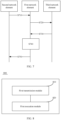
- the implementation processes of the foregoing method embodiments 200 and 300 are illustrated in examples again with reference to FIG. 4 as follows. It is assumed that the target data is related data, of the target user, stored in the first network element.
- the second network element sends a data request message to the first network element.
- the first network element sends a consent request message to the third network element based on the data request message.
- the third network element feeds back consent information of the target user to the first network element based on the consent request message.
- the first network element feeds back a first response message to the second network element.
- the first network element feeds back a second response message to the second network element.
- the consent data scheduling method 400 provided in this embodiment may include but is not limited to the foregoing steps S410 to S440, for example, including more or fewer steps than S410 to S440. This is not limited in this embodiment.
- FIG. 5 is a schematic flowchart of a consent data scheduling method 500 according to an example embodiment of this application.
- the method 500 may, but is not limited to, be executed by a first network element, specifically by hardware and/or software installed on the first network element.
- the method 500 may include at least the following steps.
- the first network element receives a data request message sent by a second network element.
- the data request message is used for requesting target data, the data request message includes at least consent information of a target user, and the target data is related data of the target user.
- the consent information of the target user may be whether the target user agrees with data processing for related data of the target user, for example, data obtaining, data usage, data sharing, and data storage, allowing the first network element to determine, based on the consent information of the target user, whether the target user agrees with data obtaining, data usage, data sharing, data storage, and the like for the related data of the target user (for example, the target data), so as to avoid exchange of already obtained user consent information between different network elements, thereby avoiding repeated detection and reducing signaling overheads.
- the consent information of the target user may have been obtained by the second network element from the third network element in advance before the second network element sends a data obtaining request, or may be pre-configured in the second network element through protocol prescription or the like. This is not limited in this application.
- the data request message may further include at least one of the following (61) to (67).
- (63) and (64) correspond to different user granularities.
- the target data is related data of the user(s) corresponding to the identification information of at least one terminal device.
- the target data is related data of each user in the area corresponding to the area information.
- the second time is later than the first time, or the second time is after the first time.
- Purpose information (or objective information) of obtaining the target data by the second network element may be determined by the second network element based on a communication scenario, for example, model training, inference task, or generating a data analytics result for a particular analytics ID.
- the first network element performs a first operation based on the consent information of the target user, where the first operation includes refusing to provide the target data to the second network element or sending the target data to the second network element.
- the first operation includes refusing (which can also be understood as stopping or canceling) to provide the target data to the second network element or sending the target data to the second network element. For example, in a case that the consent information of the target user indicates that the target user disagrees with data processing for the target data, the first network element refuses to provide the target data to the second network element. For another example, in a case that the consent information of the target user indicates that the target user agrees with data processing for the target data, the first network element sends the target data to the second network element.
- the target data may be the related data, of the target user, stored in the first network element or in a data warehouse, or data that the first network element obtains instantly (or in real time) from a data warehouse (for example, an AMF).
- a data warehouse for example, an AMF
- the target data stored in the first network element can be understood as: before performing the foregoing step S510, the first network element has already obtained related data of the target user from the data warehouse (for example, a data source) for some needs of the first network element or other network elements, that is, the target data.
- the first network element for example, an NWDAF
- the first network element may have obtained location data of particular UE from the data warehouse (for example, an AMF) as training input data for the need of training a UE mobility trajectory model by the first network element.
- the target data that the first network element has obtained instantly (or in real time) from a data source, data warehouse, or the like can be understood as: in a case that the consent information of the target user indicates that the target user agrees with data processing (for example, data obtaining, data usage, data sharing, and data storage) for the target data, the first network element sends a data obtaining request message to the data warehouse to obtain the target data. For example, the first network element sends a data obtaining request message to an AMF to obtain the requested terminal device location (UE location) data.
- data processing for example, data obtaining, data usage, data sharing, and data storage
- the data obtaining request message can be determined based on the data request message, for example, may include type information of the target data, identification information of the target data, identification information of at least one terminal device, and the like.
- the consent information of the target user being included in the data request message sent by the second network element allows for the first network element to determine, based on the consent information of the target user, whether the target user agrees with data processing such as data obtaining, data usage, data sharing, and data storage for the related data of the target user (for example, the target data).
- data processing such as data obtaining, data usage, data sharing, and data storage for the related data of the target user (for example, the target data).
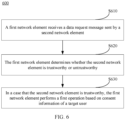
- FIG. 6 is a schematic flowchart of a consent data scheduling method 600 according to an example embodiment of this application.
- the method 600 may, but is not limited to, be executed by a first network element, specifically by hardware and/or software installed on the first network element.
- the method 600 may include at least the following steps.
- the first network element receives a data request message sent by a second network element.
- the data request message is used for requesting target data, the data request message includes at least consent information of a target user, and the target data is related data of the target user.
- the consent information of the target user further includes at least one of the following (71) to (74).
- the second network element when the consent usage range, consent usage time, or consent storage time is exceeded, the second network element is not allowed to continue using/storing the target data, for example, the second network element can delete the target data.
- the first network element determines whether the second network element is trustworthy or untrustworthy.
- S630 is performed. It should be noted that after the first network element receives the data request message, it may be considered by default that the first network element performs the first operation according to the consent information of the target data included in the data request message, or as described in S620, the first network element first determines whether the second network element is trustworthy or untrustworthy, and in the case that the second network element is trustworthy, proceed to S630. This is not limited in this embodiment.
- the first network element ignores the consent information of the target user included in the data request message and re-obtains consent information of the target user from a third network element; or the first network element refuses the data request message and sends a third response message to the second network element, where the third response message includes at least a reason why the first network element refuses the data request message, for example, the consent information of the target user included in the data request message is different or untrustworthy.
- the first network element in the case that the first network element determines that the second network element is trustworthy, the first network element can set the second network element as a trustworthy network element, so that in subsequent reception of a data request message sent by the second network element, the first network element may not perform consent confirmation, and proceed to S610.
- the first network element can set the second network element as an untrustworthy network element, so that in subsequent reception of a data request message sent by the second network element, regardless of whether consent information from the target user is included therein, the first network element ignores this consent information and always obtains consent information of the target user from the third network element.
- the first network element can determine whether the second network element is trustworthy or untrustworthy based on a secure priority process. For example, the first network element obtains the consent information of the target user from the third network element, then determines whether the consent information of the target user included in the data request message matches the consent information of the target user obtained from the third network element; and in a case of match (for example, content in the information are the same), determines that the second network element is trustworthy; or in a case of mismatch (for example, content in the information are different), determines that the second network element is untrustworthy and the first network element refuses the data request message from the second network element.
- a case of match for example, content in the information are the same
- mismatch for example, content in the information are different
- the first network element when obtaining the consent information of the target user from the third network element, can send a consent request message to the third network element based on the data request message.
- the consent request message may be Nudm_SDM_Get.
- the consent request message may include at least one of the following (81) to (87).
- the requested user consent type information may be obtained from the received data request message.
- the third network element can determine, based on the information included in the consent request message, whether to consent to data processing for the target data by the first network element and feed back the consent information of the target user to the first network element.
- the consent information of the target user may include at least agree information or disagree information, where "agree information" indicates that the target user allows data processing for the target data by the first network element; and “disagree information” indicates that the target user does not allow data processing for the target data by the first network element.
- the aforementioned data processing includes data usage, data sharing, data storage, data obtaining, and the like.
- the first network element performs a first operation based on the consent information of the target user.
- the first operation includes refusing to provide the target data to the second network element or sending the target data to the second network element.
- the first network element in a case that the consent information of the target user indicates that the target user disagrees with data processing for the target data, the first network element can refuse or stop provision of the target data to the second network element and send a fourth response message to the second network element.
- the fourth response message is used to at least indicate to the second network element that the first network element refuses or stops provision of the target data.
- the fourth response message includes at least one of the following (91) to (94).
- the data request message sent by the second network element may be a persistent subscription message or a non-persistent subscription message (that is, a message for single obtaining of data), and then, in a case that the data request message sent by the second network element is a persistent subscription message, the first response message may include the tenth information to indicate the second network element to cancel or delete the subscription request for the target data.
- the first network element obtains the target data and sends a fifth response message to the second network element.
- the fifth response message includes at least the target data, and the target data may be data stored by the first network element itself, data stored in a data warehouse, or data that the first network element obtains instantly from a data warehouse (for example, an AMF).
- the fifth response message includes at least one of the following (101) to (103).
- the second network element when the consent usage range, consent usage time, or consent storage time is exceeded, the second network element is not allowed to continue using/storing the target data, for example, the second network element can delete the target data.
- the implementation processes of the foregoing method embodiments 500 and 600 are illustrated in examples again with reference to FIG. 7 as follows. It is assumed that the target data is related data, of the target user, stored in the first network element.
- the second network element sends a data request message to the first network element, where the data request message includes at least the consent information of the target user.
- the first network element sends a consent request message to the third network element based on the data request message.
- the third network element feeds back consent information of the target user to the first network element based on the consent request message.
- the first network element determines whether the second network element is trustworthy or untrustworthy based on the consent information of the target user fed back by the third network element and the consent information of the target user included in the data request message.
- the first network element feeds back a fourth response message to the second network element.
- the first network element feeds back a fifth response message to the second network element.
- the first network element feeds back a third response message to the second network element to indicate that the first network element refuses the data request message.
- the consent data scheduling method 700 provided in this embodiment may include but is not limited to the foregoing steps S710 to S750, for example, including more or fewer steps than S710 to S750. This is not limited in this embodiment.
- the consent data scheduling methods 200 to 700 may be executed by a consent data scheduling apparatus or a control module for executing the consent data scheduling methods 200 to 700 in the consent data scheduling apparatus.
- the consent data scheduling methods 200 to 700 being executed by the consent data scheduling apparatus is used as an example to describe the consent data scheduling apparatus according to the embodiments of this application.
- FIG. 8 is a schematic structural diagram of a consent data scheduling apparatus 800 according to an example embodiment of this application.
- the apparatus 800 includes: a first transmission module 810 configured to receive a data request message sent by a second network element, where the data request message is used for requesting target data, and the target data is related data, of a target user, stored in a first network element or in a data warehouse; and a first execution module 820 configured to perform a first operation based on consent information of the target user, where the first operation includes refusing to provide the target data to the second network element or sending the target data to the second network element.
- the first transmission module 810 is further configured to send a consent request message to a third network element based on the data request message, where the consent request message is used for obtaining the consent information of the target user.
- the consent request message includes at least one of the following: at least one piece of identification information for indicating obtaining of the consent information of the target user corresponding to the identification information; requested user consent type information, where the user consent type includes at least data sharing; first time for indicating that the target data is data generated within the first time; purpose information of obtaining the target data by the second network element; first information for indicating a consent usage range; second information for indicating a consent usage time; and third information for indicating a consent storage time.
- the consent information of the target user includes at least one of the following: fourth information for indicating whether the target user agrees or disagrees with data sharing; fifth information for indicating a consent usage range; sixth information for indicating a consent usage time; and seventh information for indicating a consent storage time.
- the first execution module 820 is configured to: in a case that the consent information of the target user indicates that the target user disagrees with data sharing for the target data, send a first response message to the second network element; where the first response message is used to at least indicate to the second network element that the first network element refuses or stops provision of the target data.
- the first response message includes at least one of the following: eighth information for indicating that the first network element refuses or stops provision of the target data to the second network element; ninth information for indicating a reason why the first network element refuses or stops provision of the target data; tenth information for indicating the second network element to cancel or delete a subscription request for the target data; and eleventh information for indicating a waiting time before the second network element requests for the target data from the first network element again.
- the first execution module 820 is further configured to: in a case that the consent information of the target user indicates that the target user agrees with data sharing for the target data, send a second response message to the second network element; where the second response message includes at least the target data.
- the second response message further includes at least one of the following: twelfth information for indicating a consent usage range; thirteenth information for indicating a consent usage time; and fourteenth information for indicating a consent storage time.
- the first transmission module 810 is further configured to: in a case that the target data is related data, of the target user, stored in a data warehouse, obtain the target data stored in the data warehouse.
- FIG. 9 is a schematic structural diagram of a consent data scheduling apparatus 900 according to an example embodiment of this application.
- the apparatus includes: a second transmission module 910 configured to receive a data request message sent by a second network element, where the data request message is used for requesting target data, the data request message includes at least consent information of a target user, and the target data is related data of the target user; and a second execution module 920 configured to perform a first operation based on the consent information of the target user, where the first operation includes refusing to provide the target data to the second network element or sending the target data to the second network element.
- the consent information of the target user includes at least one of the following: fifteenth information for indicating whether the target user agrees or disagrees with data processing, where the data processing includes at least one of data obtaining, data usage, data storage, and data sharing; sixteenth information for indicating a consent usage range; seventeenth information for indicating a consent usage time; and eighteenth information for indicating a consent storage time.
- the second execution module 920 is further configured to: determine whether the second network element is trustworthy or untrustworthy; and in a case that the second network element is trustworthy, perform the step of performing a first operation based on the consent information of the target user; or in a case that the second network element is untrustworthy, ignore the consent information of the target user included in the data request message and re-obtain consent information of the target user from a third network element, or refuse the data request message and send a third response message to the second network element, where the third response message includes at least a reason why the first network element refuses the data request message.
- the second execution module 920 is configured to: obtain the consent information of the target user from the third network element; determine whether the consent information of the target user included in the data request message matches the consent information of the target user obtained from the third network element; and in a case of match, determine that the second network element is trustworthy; or in a case of mismatch, determine that the second network element is untrustworthy.
- the second execution module 920 is configured to: in a case that the consent information of the target user indicates that the target user disagrees with data processing for the target data, send a fourth response message to the second network element; where the fourth response message is used to at least indicate to the second network element that the first network element refuses or stops provision of the target data.
- the fourth response message includes at least one of the following: nineteenth information for indicating that the first network element refuses or stops provision of the target data to the second network element; twentieth information for indicating a reason why the first network element refuses or stops provision of the target data; twenty-first information for indicating the second network element to cancel or delete a subscription request for the target data; and twenty-second information for indicating a waiting time before the second network element requests for the target data from the first network element again.
- the second execution module 920 is configured to: in a case that the consent information of the target user indicates that the target user agrees with data processing for the target data, obtain the target data and send a fifth response message to the second network element; where the fifth response message includes at least the target data.
- the fifth response message further includes at least one of the following: twenty-third information for indicating a consent usage range; twenty-fourth information for indicating a consent usage time; and twenty-fifth information for indicating a consent storage time.
- FIG. 10 is a schematic structural diagram of a consent data scheduling apparatus 1000 according to an example embodiment of this application.
- the apparatus includes a third transmission module 1010 configured to send a data request message to a first network element, where the data request message is used for requesting target data, the data request message includes at least consent information of a target user, and the target data is related data of the target user.
- the consent information of the target user includes at least one of the following: fifteenth information for indicating whether the target user agrees or disagrees with data processing, where the data processing includes at least one of data obtaining, data usage, data storage, and data sharing; sixteenth information for indicating a consent usage range; seventeenth information for indicating a consent usage time; and eighteenth information for indicating a consent storage time.
- the consent data scheduling apparatuses 800 to 1000 in the embodiments of this application may be an apparatus, or a network-side device having an operating system. This is not specifically limited in the embodiments of this application.
- the consent data scheduling apparatuses 800 to 1000 provided in the embodiments of this application can implement the processes implemented in the method embodiments in FIGs. 2 to 7 , with the same technical effects achieved. To avoid repetition, details are not described herein again.
- an embodiment of this application further provides a network-side device, where the network-side device may include a processor and a communication interface, the communication interface is coupled to the processor, and the processor is configured to run a program or instructions so as to implement the steps of the methods according to the embodiments 200 to 700.
- This network-side device embodiment corresponds to the foregoing network-side device method embodiment. All processes and implementations in the foregoing method embodiment can be applicable to this network-side device embodiment, with the same technical effects achieved.
- the network-side device 1100 includes an antenna 1101, a radio frequency apparatus 1102, and a baseband apparatus 1103.
- the antenna 1101 is connected to the radio frequency apparatus 1102.
- Uplink the radio frequency apparatus 1102 receives information through the antenna 1101, and sends the received information to the baseband apparatus 1103 for processing.
- Downlink the baseband apparatus 1103 processes to-be-sent information, and sends the information to the radio frequency apparatus 1102; and the radio frequency apparatus 1102 processes the received information and then sends the information out through the antenna 1101.
- the frequency band processing apparatus may be located in the baseband apparatus 1103.
- the method executed by the network-side device in the foregoing embodiments may be implemented in the baseband apparatus 1103, and the baseband apparatus 1103 includes a processor 1104 and a memory 1105.
- the baseband apparatus 1103 may include, for example, at least one baseband board, where multiple chips are disposed on the baseband board. As shown in FIG. 11 , one of the chips is, for example, the processor 1104, connected to the memory 1105, to invoke a program in the memory 1105 to perform the operation of the network shown in the foregoing method embodiment.
- the baseband apparatus 1103 may further include a network interface 1106 configured to exchange information with the radio frequency apparatus 1102, where the interface is, for example, a common public radio interface (common public radio interface, CPRI for short).
- a common public radio interface common public radio interface, CPRI for short.
- the network-side device in this embodiment of the present invention further includes an instruction or program stored in the memory 1105 and executable on the processor 1104.
- the processor 1104 invokes the instruction or program in the memory 1105 to execute the method executed by the modules shown in FIG. 8 , 9, or 10 , with the same technical effects achieved. To avoid repetition, details are not described herein again.
- An embodiment of this application further provides a readable storage medium, where a program or instructions are stored in the readable storage medium, and when the program or instructions are executed by a processor, the processes of the foregoing consent data scheduling method embodiments are implemented, with the same technical effects achieved. To avoid repetition, details are not described herein again.
- the processor is a processor in the terminal described in the foregoing embodiment.
- the readable storage medium includes a computer-readable storage medium, for example, a computer read-only memory (Read-Only Memory, ROM).
- An embodiment of this application further provides a chip, where the chip includes a processor and a communication interface, the communication interface is coupled to the processor, and the processor is configured to run a program or instructions of a network-side device to implement the processes of the foregoing consent data scheduling method embodiments, with the same technical effects achieved. To avoid repetition, details are not described herein again.
- the chip mentioned in this embodiment of this application may also be referred to as a system-level chip, a system chip, a chip system, a system-on-chip, or the like.
- An embodiment of this application further provides a computer program product, where the computer program product includes a processor, a memory, and a program or instructions stored in the memory and executable on the processor, and when the program or instructions are executed by the processor, the processes in the foregoing consent data scheduling method embodiments are implemented, with the same technical effects achieved. To avoid repetition, details are not described herein again.
- the technical solutions of this application essentially or the part contributing to the prior art may be implemented in a form of a computer software product.
- the software product is stored in a storage medium (such as a ROM/RAM, a magnetic disk, or an optical disc), and includes several instructions for instructing a terminal (which may be a mobile phone, a computer, a server, an air conditioner, a network device, or the like) to perform the methods described in the embodiments of this application.
Landscapes
- Engineering & Computer Science (AREA)
- Computer Security & Cryptography (AREA)
- Computer Networks & Wireless Communication (AREA)
- Signal Processing (AREA)
- Computer Hardware Design (AREA)
- Computing Systems (AREA)
- General Engineering & Computer Science (AREA)
- Databases & Information Systems (AREA)
- Mobile Radio Communication Systems (AREA)
Applications Claiming Priority (2)
| Application Number | Priority Date | Filing Date | Title |
|---|---|---|---|
| CN202111355388.3A CN116137571A (zh) | 2021-11-16 | 2021-11-16 | 授权数据的调度方法、装置及网络侧设备 |
| PCT/CN2022/131064 WO2023088161A1 (fr) | 2021-11-16 | 2022-11-10 | Procédé et appareil de planification de données autorisées, et dispositif côté réseau |
Publications (2)
| Publication Number | Publication Date |
|---|---|
| EP4436231A1 true EP4436231A1 (fr) | 2024-09-25 |
| EP4436231A4 EP4436231A4 (fr) | 2025-02-26 |
Family
ID=86334074
Family Applications (1)
| Application Number | Title | Priority Date | Filing Date |
|---|---|---|---|
| EP22894698.4A Pending EP4436231A4 (fr) | 2021-11-16 | 2022-11-10 | Procédé et appareil de planification de données autorisées, et dispositif côté réseau |
Country Status (6)
| Country | Link |
|---|---|
| US (1) | US20240381091A1 (fr) |
| EP (1) | EP4436231A4 (fr) |
| JP (1) | JP7781275B2 (fr) |
| KR (1) | KR20240099506A (fr) |
| CN (1) | CN116137571A (fr) |
| WO (1) | WO2023088161A1 (fr) |
Families Citing this family (2)
| Publication number | Priority date | Publication date | Assignee | Title |
|---|---|---|---|---|
| CN118803892A (zh) * | 2023-10-31 | 2024-10-18 | 中国移动通信有限公司研究院 | 一种数据处理方法、装置、设备及可读存储介质 |
| CN120729819A (zh) * | 2024-03-29 | 2025-09-30 | 维沃移动通信有限公司 | 数据共享方法、装置及通信设备 |
Family Cites Families (7)
| Publication number | Priority date | Publication date | Assignee | Title |
|---|---|---|---|---|
| CN109511115B (zh) * | 2017-09-14 | 2020-09-29 | 华为技术有限公司 | 一种授权方法和网元 |
| CN113169897B (zh) * | 2018-10-05 | 2024-07-05 | 瑞典爱立信有限公司 | 用于分析功能发现的方法和设备 |
| US12004254B2 (en) * | 2019-01-09 | 2024-06-04 | Nec Corporation | Core network node and method |
| WO2021062793A1 (fr) * | 2019-09-30 | 2021-04-08 | 华为技术有限公司 | Procédé, dispositif et système de communication et support de stockage |
| CN112752254B (zh) * | 2019-10-31 | 2022-05-06 | 大唐移动通信设备有限公司 | 一种信息处理方法、装置、设备及计算机可读存储介质 |
| CN112887260A (zh) * | 2019-11-30 | 2021-06-01 | 华为技术有限公司 | 授权方法及装置 |
| AU2020462414A1 (en) | 2020-08-06 | 2023-03-16 | Huawei Technologies Co., Ltd. | Communication method, device and system |
-
2021
- 2021-11-16 CN CN202111355388.3A patent/CN116137571A/zh active Pending
-
2022
- 2022-11-10 WO PCT/CN2022/131064 patent/WO2023088161A1/fr not_active Ceased
- 2022-11-10 KR KR1020247020009A patent/KR20240099506A/ko active Pending
- 2022-11-10 EP EP22894698.4A patent/EP4436231A4/fr active Pending
- 2022-11-10 JP JP2024529426A patent/JP7781275B2/ja active Active
-
2024
- 2024-05-15 US US18/665,176 patent/US20240381091A1/en active Pending
Also Published As
| Publication number | Publication date |
|---|---|
| WO2023088161A1 (fr) | 2023-05-25 |
| JP2024540503A (ja) | 2024-10-31 |
| JP7781275B2 (ja) | 2025-12-05 |
| KR20240099506A (ko) | 2024-06-28 |
| EP4436231A4 (fr) | 2025-02-26 |
| CN116137571A (zh) | 2023-05-19 |
| US20240381091A1 (en) | 2024-11-14 |
Similar Documents
| Publication | Publication Date | Title |
|---|---|---|
| US20240381091A1 (en) | Consent Data Scheduling Method and Network-Side Device | |
| US11622383B2 (en) | Method and device for channel sensing and signal transmission | |
| US8811213B1 (en) | Avoiding satellite interference to long term evolution systems | |
| EP4412268A1 (fr) | Procédé et appareil d'abonnement à des données, et élément de réseau | |
| US12401690B2 (en) | Mechanism for dynamic authorization | |
| WO2023207785A1 (fr) | Procédé et appareil de fonctionnement de terminal, terminal et dispositif côté réseau | |
| US11785531B2 (en) | Method and device for transmitting system information | |
| US20240364145A1 (en) | Location Detection and Tracking Using Ambient Electromagnetic Power Harvesting | |
| KR20200002506A (ko) | 무선 통신 시스템에서 통신 방법 및 장치 | |
| MX2015006136A (es) | Aparato y metodos para descubrimiento de dispositivo pareado anonimo y sistemas de comunicaciones inalambricas. | |
| CN114554624A (zh) | 通信指示方法、装置及网络侧设备 | |
| WO2023185756A9 (fr) | Procédés et appareil de transmission d'informations, terminal et dispositif côté réseau | |
| WO2023179709A1 (fr) | Procédé et appareil de traitement d'informations, dispositif de communication et support de stockage lisible | |
| US20250071543A1 (en) | Privacy protection information processing method and apparatus, and communication device | |
| US12149931B2 (en) | Methods and devices for utilizing an exposure function of a wireless communications network | |
| US12593284B2 (en) | Apparatus, methods, and computer programs | |
| US20240357566A1 (en) | Control channel monitoring method, terminal, and network-side device | |
| CN118158732A (zh) | 非周期cli汇报方法及装置、计算机可读存储介质 | |
| CN118282883A (zh) | 参与数据采集的用户设备ue的确定方法、装置、网络侧设备及介质 | |
| WO2025236290A1 (fr) | Optimisation de performance avec analyse de corrélation et d'association | |
| WO2025200027A1 (fr) | Contrôle d'accès sur le service d'exposition de canal de données du sous-système multimédia de protocole internet | |
| WO2026073835A1 (fr) | Procédé, appareil et programme informatique | |
| EP4325772A1 (fr) | Utilisation d'un jeton d'accès dans une architecture basée sur un service | |
| US20240080723A1 (en) | Information processing method and apparatus, terminal, and network side device | |
| CN114698017B (zh) | 信息上报方法、装置及网络侧设备 |
Legal Events
| Date | Code | Title | Description |
|---|---|---|---|
| STAA | Information on the status of an ep patent application or granted ep patent |
Free format text: STATUS: THE INTERNATIONAL PUBLICATION HAS BEEN MADE |
|
| PUAI | Public reference made under article 153(3) epc to a published international application that has entered the european phase |
Free format text: ORIGINAL CODE: 0009012 |
|
| STAA | Information on the status of an ep patent application or granted ep patent |
Free format text: STATUS: REQUEST FOR EXAMINATION WAS MADE |
|
| 17P | Request for examination filed |
Effective date: 20240613 |
|
| AK | Designated contracting states |
Kind code of ref document: A1 Designated state(s): AL AT BE BG CH CY CZ DE DK EE ES FI FR GB GR HR HU IE IS IT LI LT LU LV MC ME MK MT NL NO PL PT RO RS SE SI SK SM TR |
|
| REG | Reference to a national code |
Ref country code: DE Ref legal event code: R079 Free format text: PREVIOUS MAIN CLASS: H04W0012060000 Ipc: H04W0012020000 |
|
| DAV | Request for validation of the european patent (deleted) | ||
| DAX | Request for extension of the european patent (deleted) | ||
| A4 | Supplementary search report drawn up and despatched |
Effective date: 20250127 |
|
| RIC1 | Information provided on ipc code assigned before grant |
Ipc: H04W 12/084 20210101ALI20250121BHEP Ipc: H04L 9/40 20220101ALI20250121BHEP Ipc: H04W 12/02 20090101AFI20250121BHEP |